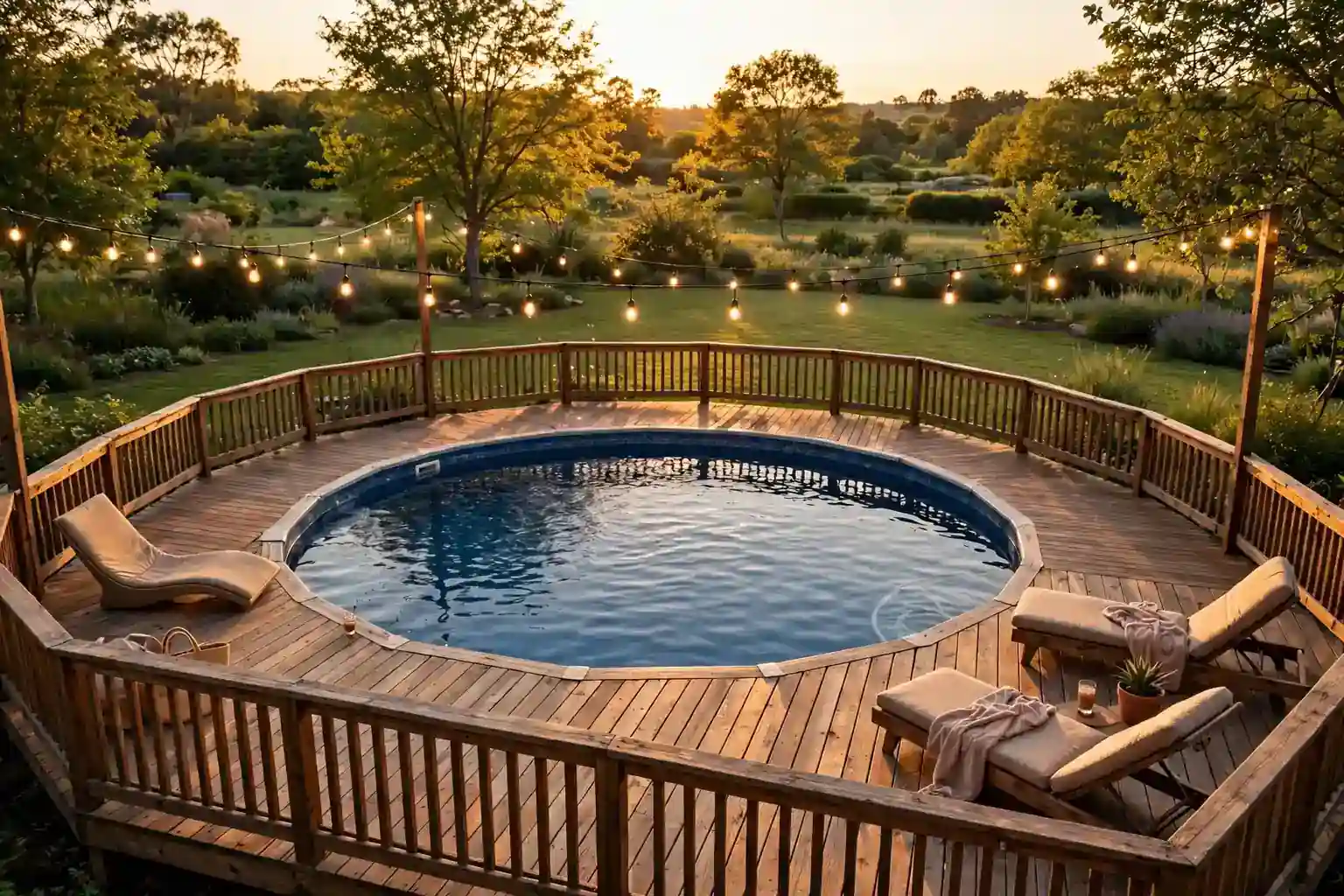
An above ground pool deck changes how a pool feels, because it gives you a level place to step in, a dry spot for towels and drinks, and a place to sit that is not just wet grass. Without a deck, the pool wall can feel like a barrier. With one, the pool becomes part of the yard. These 16 above ground pool deck ideas cover wraparound platforms, partial decks, steps, shade, seating, storage, lighting, and planting for round and oval pools. Start with safe entry and a dry walking surface, then add the comfort details that make you stay outside longer.
Key Takeaways
- Put safe entry first: wide steps, a firm handrail, a slip resistant surface, and a gate that keeps unsupervised access closed.
- Match the deck shape to the pool: a wraparound deck suits a pool used daily, while a partial deck suits a small yard and a tight budget.
- Keep boards, fixings, and the pool wall clear of soil and standing water, with air moving under the deck frame.
- Give the deck zones: one for entry, one for sitting or eating, and one for towels, toys, and gear, so wet and dry areas stay separate.
- Add shade and soft evening light early, since comfort decides whether the deck gets used after the first swim.
- Soften the pool wall with skirting, planters, or a planted edge, so the pool reads as part of the garden rather than a bare tank.
1. Wraparound Deck Around the Whole Pool
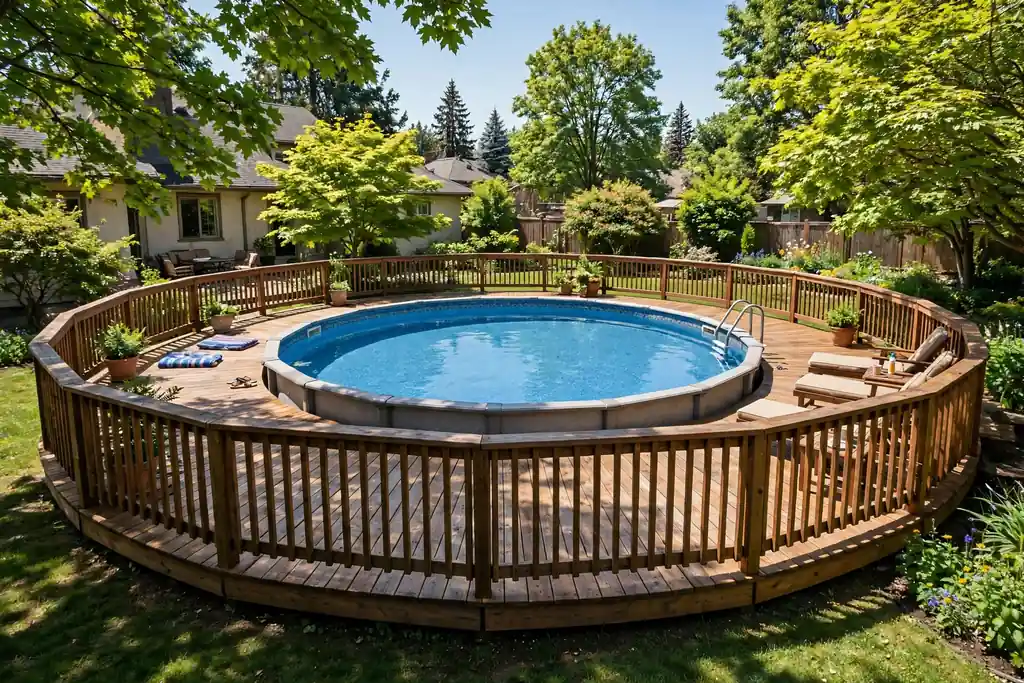
Build a deck that runs all the way around the pool, so you can enter from any side and walk the full circle without stepping onto grass. A wraparound deck suits a pool used daily, since it gives room for loungers on one side, a table on another, and a clear entry path that never crosses a seating area. Keep the deck surface level with the top rail or just below it, so the step into the pool stays short and steady.
Leave a small gap between the deck edge and the pool wall for access and for the pool to move slightly with water and temperature changes, and never fix deck boards tightly against the pool liner or top rail. Use a removable board or a hinged section near the pump, filter, and skimmer, so routine care stays easy. Sweep the deck after swimming, since wet leaves and grit make boards slippery.
2. Partial Deck on One Side of the Pool
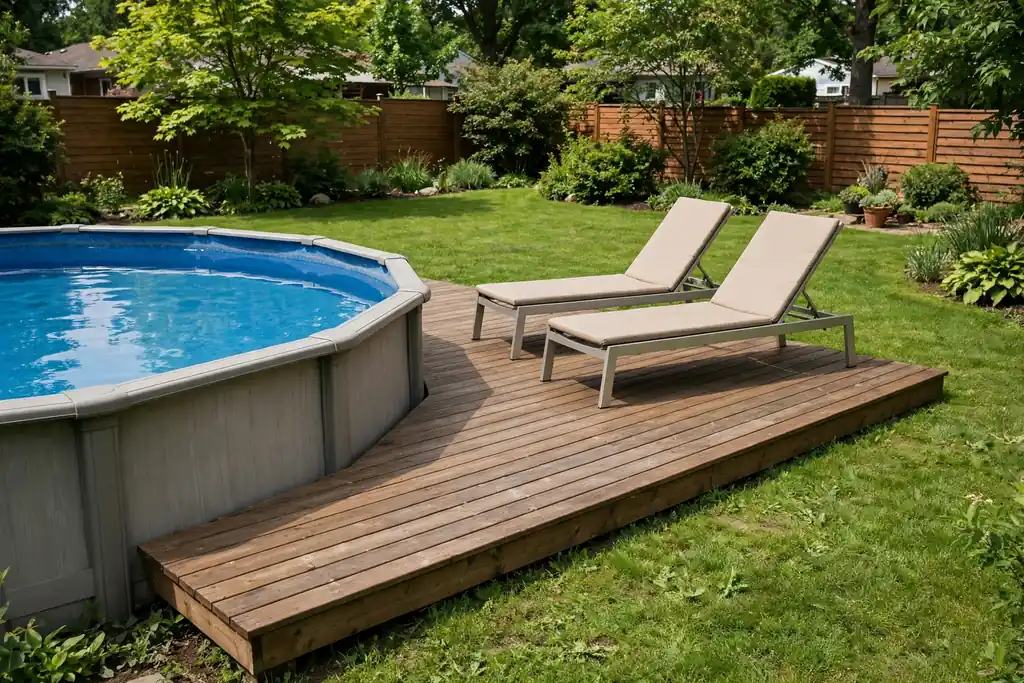
Build a deck along one side of the pool only, usually the side nearest the house or the sunniest side, when a full wraparound deck would fill the yard. A partial deck gives you a proper entry, a place for two loungers, and a towel rail, without paving the whole garden. It also costs less in boards and framing, and it leaves lawn on the other sides for play and planting.
Place the partial deck where you enter the pool most often, and make it wide enough for a chair, a step, and a person passing behind it. Add a simple skirt or planted pots along the exposed pool wall on the other sides, so the pool still looks finished from the lawn. If you later extend the deck, keep the board direction and height the same, so the join reads as one design.
3. Freestanding Platform Deck Beside the Pool
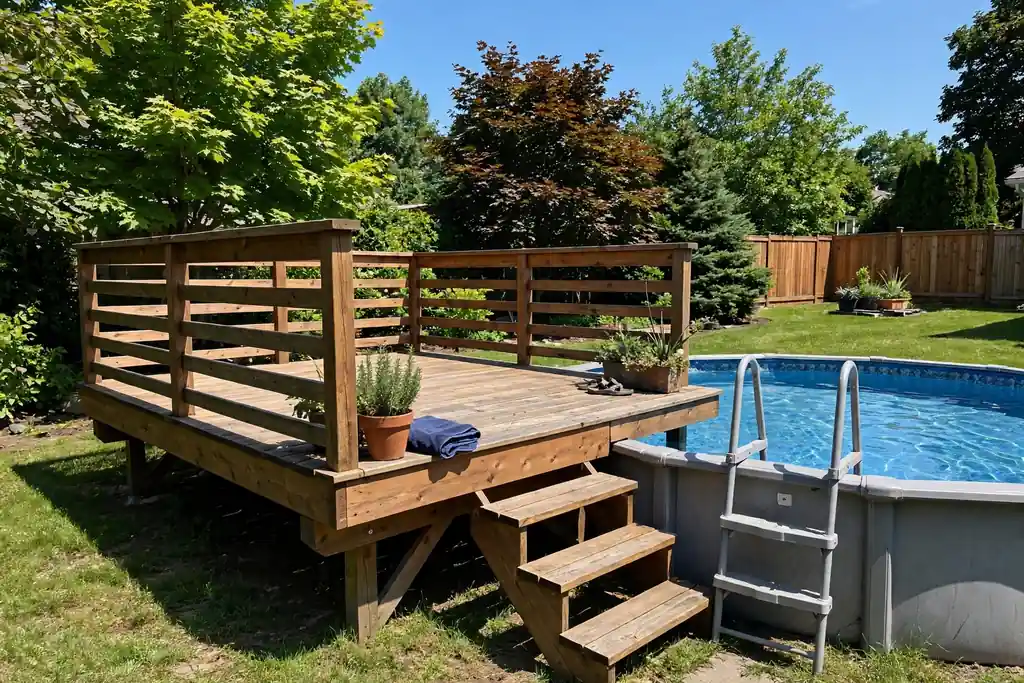
Set a freestanding platform deck beside the pool, rather than fixing it to the pool wall, so the deck stands on its own posts and the pool stays fully accessible for liner changes and repairs. A freestanding deck suits renters, pools that may move, and yards where the ground slopes, since the platform can be levelled on its own footings. Keep a short, stable step between the platform and the pool ladder or entry steps.
Leave a clear gap between the platform and the pool wall, wide enough to reach a hand in for cleaning but narrow enough that a foot cannot slip through. Anchor the platform firmly, check it for rocking after heavy rain, and add a handrail on the open side where the drop to the lawn is more than a low step. A freestanding deck also makes it easy to add a second platform later, joined by a step.
4. Two Level Deck with a Sun Deck and a Lower Lounge
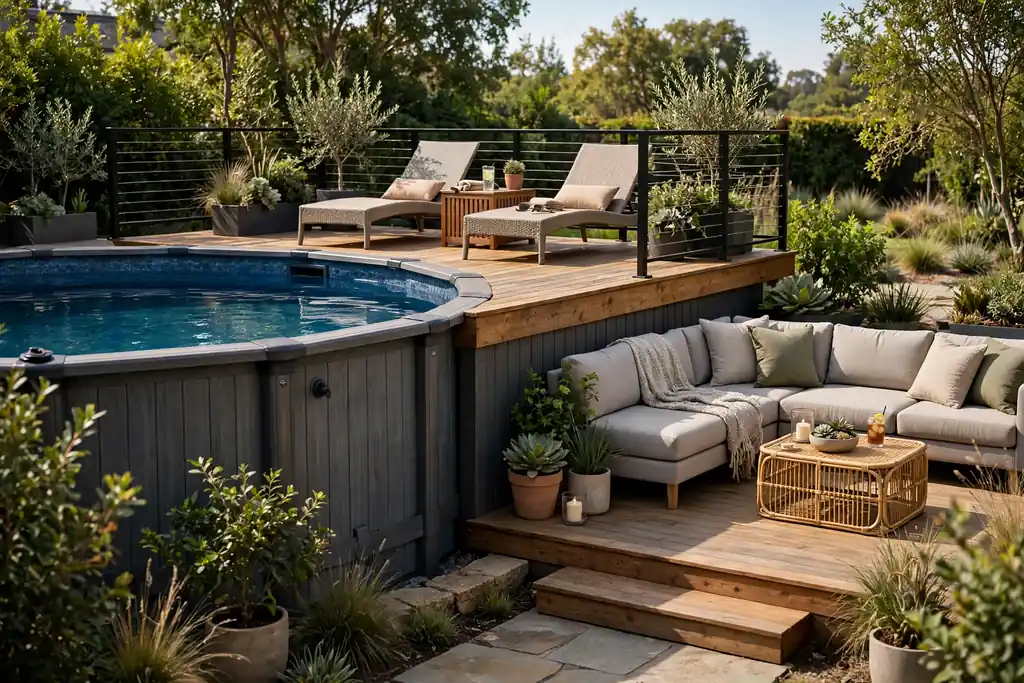
Split the pool deck into two levels, with an upper sun deck beside the pool and a lower lounge a step down, to give a long or wide deck two clear jobs without a staircase. The upper level holds entry steps, loungers, and towels, while the lower level holds a table, shade, and a quiet seat away from splashes. One shallow step between levels marks the change without blocking movement.
Keep the step low, deep, and clearly edged, and use the same boards on both levels so the deck still reads as one design. Place the level you use most nearest the house, and the quieter level toward the garden view. For yards where the ground itself slopes, the ideas in these tiered garden ideas show how to give each level a clear job and a safe step between them.
5. Wide Entry Steps with a Firm Handrail
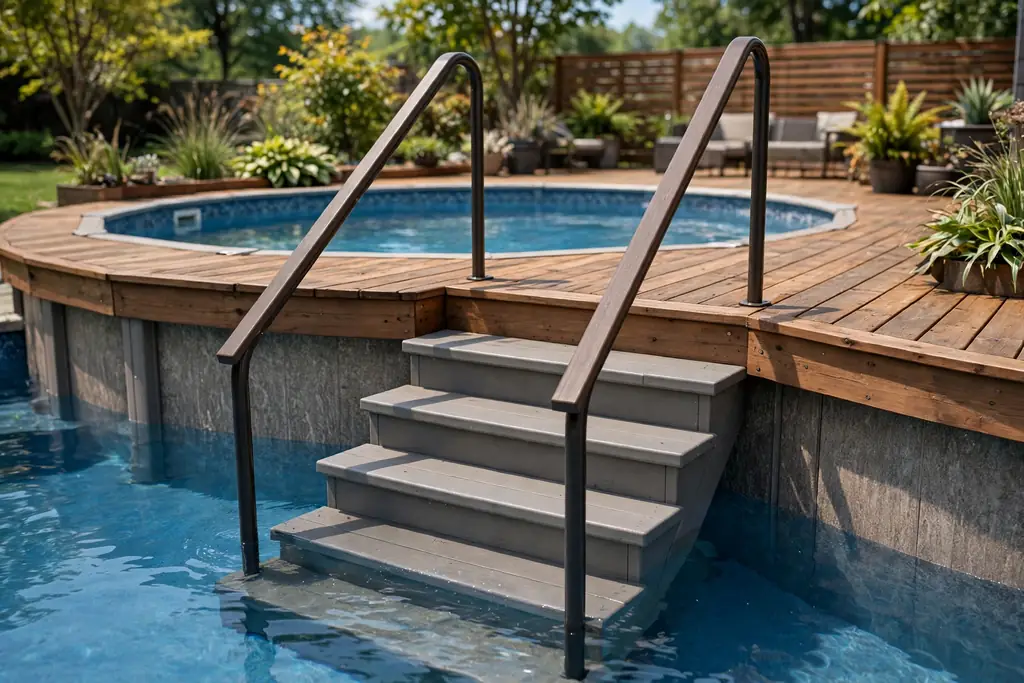
Build wide entry steps from the deck into the pool area, with a firm handrail on at least one side, so children, older swimmers, and anyone carrying a towel can enter steadily. Wide steps suit above ground pools better than a narrow ladder, since they give a full foot on each tread and a place to pause before the last step into the water. Keep each tread deep, level, and slip resistant, and use a contrasting nosing so the step edge reads clearly when wet.
Fix the handrail to the deck frame, not to the pool wall alone, and check it for wobble each spring. Keep the steps clear of toys, shoes, and pool floats, and add a small landing at the top where a swimmer can stand dry before turning to the deck. If the pool has a ladder as well, keep the ladder as a second exit, not the only one, so the steps stay the main route.
6. Privacy Screen Wall on the Overlooked Side
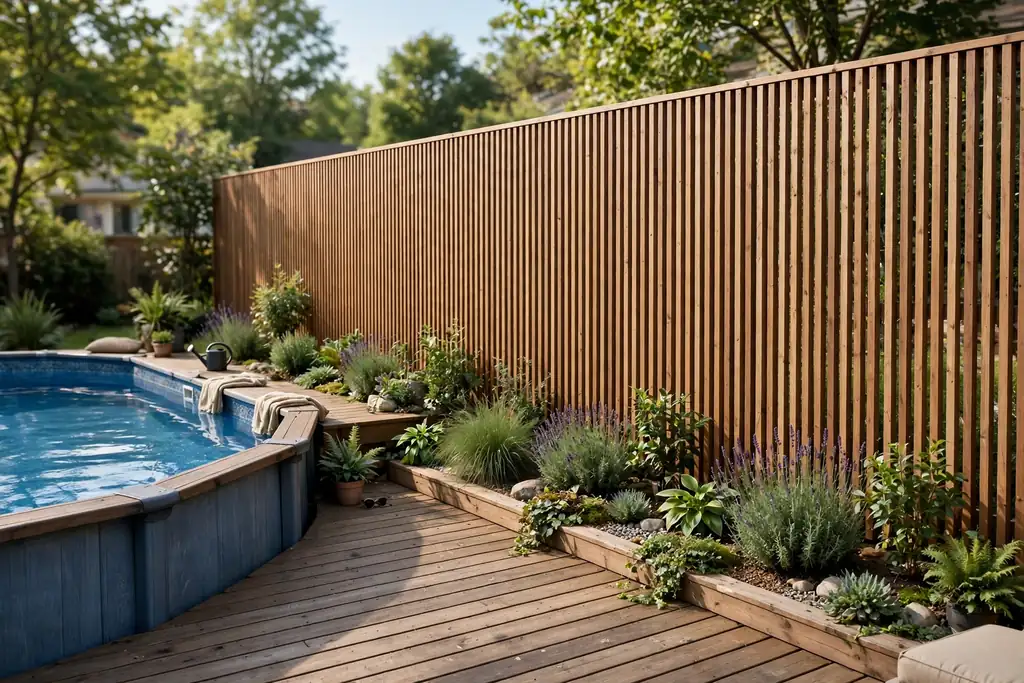
Stand a privacy screen along the overlooked or windy side of the pool deck to cut wind and give swimmers privacy without building a solid wall around the whole pool. Screens suit decks close to neighbours, and they give climbers a place to grow while still letting air through. Choose panels that let some air pass, since a solid screen catches more wind and puts more load on its fixings.
Fix screens firmly to posts set beside the deck frame, and check that they do not block the pump, filter, or access to the pool wall. Plant climbers at the base for a green screen in summer, and keep the panels clear of the grill and any heat source. A screen on the windward side often makes the whole deck feel calmer, even before plants cover it, and it gives towel hooks and a small shelf a useful home.
7. Pergola Over the Deck Lounge Area
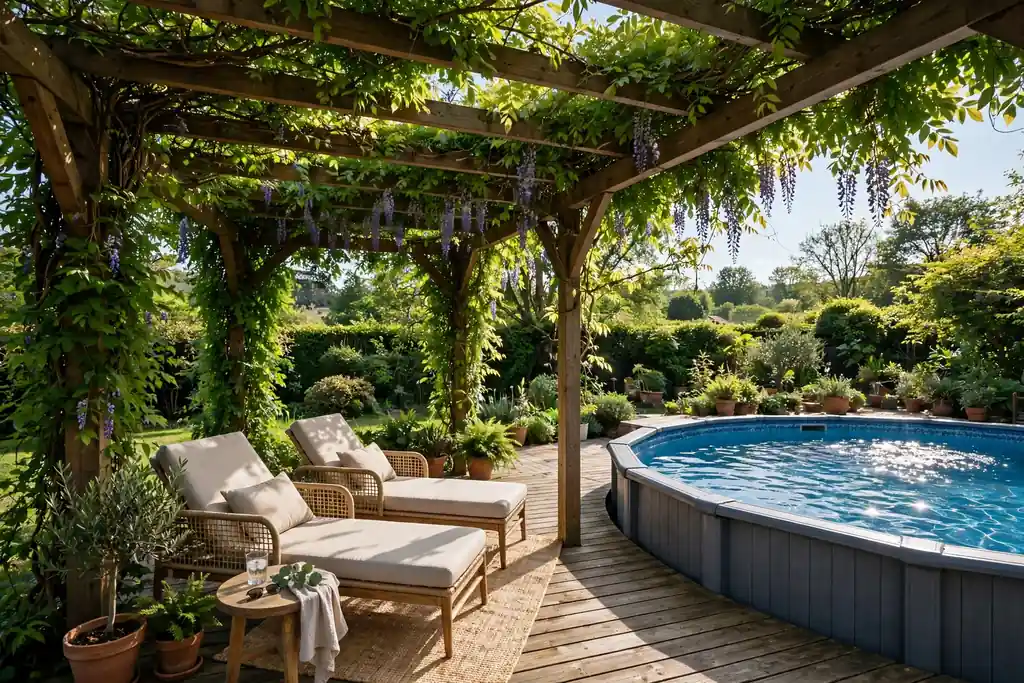
Build a pergola over the lounge part of the pool deck, away from the splash zone, to give dappled shade, a sense of enclosure, and a frame for climbing plants and string lights. A pergola suits a pool deck because its posts can sit on or beside the deck frame, and it marks the sitting zone clearly apart from the wet entry zone. Choose timber or metal posts that suit the house style, and fix them firmly so wind does not rock the frame.
Train climbers such as jasmine or grape vine along the top beams, tying stems loosely as they grow, and keep climbers clear of gutters and the pool skimmer, since leaves in the water mean extra cleaning. Leave headroom under the beams so tall guests can stand comfortably, and keep the pergola roof open rather than solid over the pool itself, so rain and light still reach the water. A rug and two chairs below a pergola often make a bare deck feel like a room.
8. Shade Sail Over the Sunny Corner
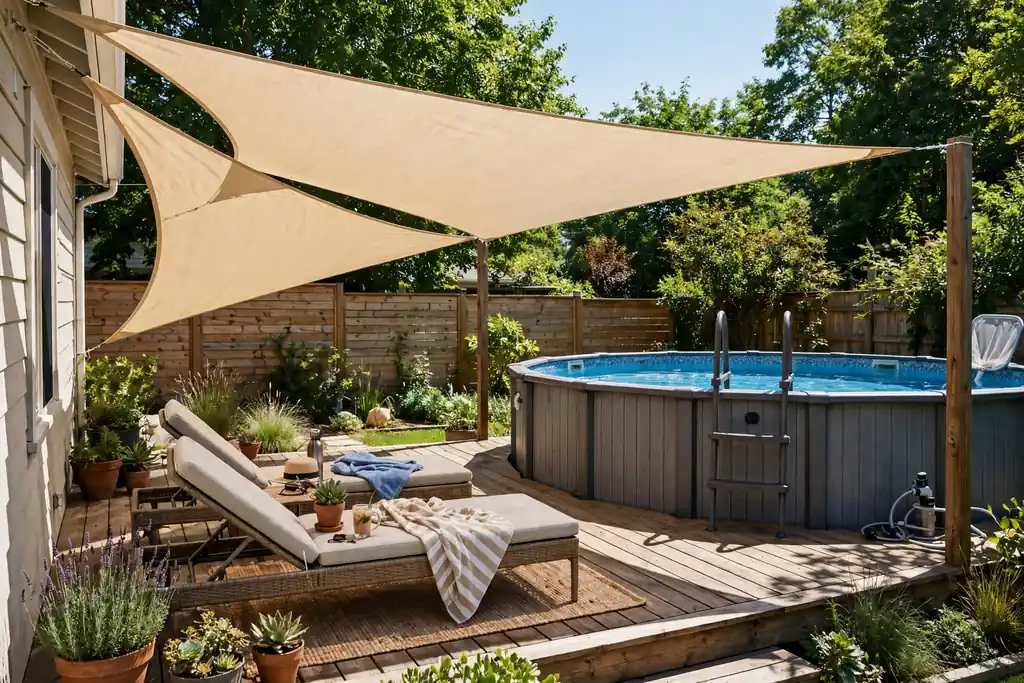
Stretch a shade sail over the sunniest corner of the pool deck for instant shade where a pergola would be too fixed or too heavy. A sail gives broad shade, moves gently in the breeze, and can be taken down in storms, which suits decks that need shade only in high summer. Fix it to strong posts or wall points rated for wind load, with a slight slope so rain runs off one side rather than pooling in the middle.
Choose a light, breathable fabric in a warm neutral, and test the shade pattern at midday before fixing the final points. Keep the sail clear of the pool water where possible, since a sail dripping after rain can chill swimmers, and store it dry over winter. A sail plus a screen on the windward side often makes a hot, exposed deck comfortable for most of the day, without shading the whole pool.
9. Built-In Bench Around the Deck Edge
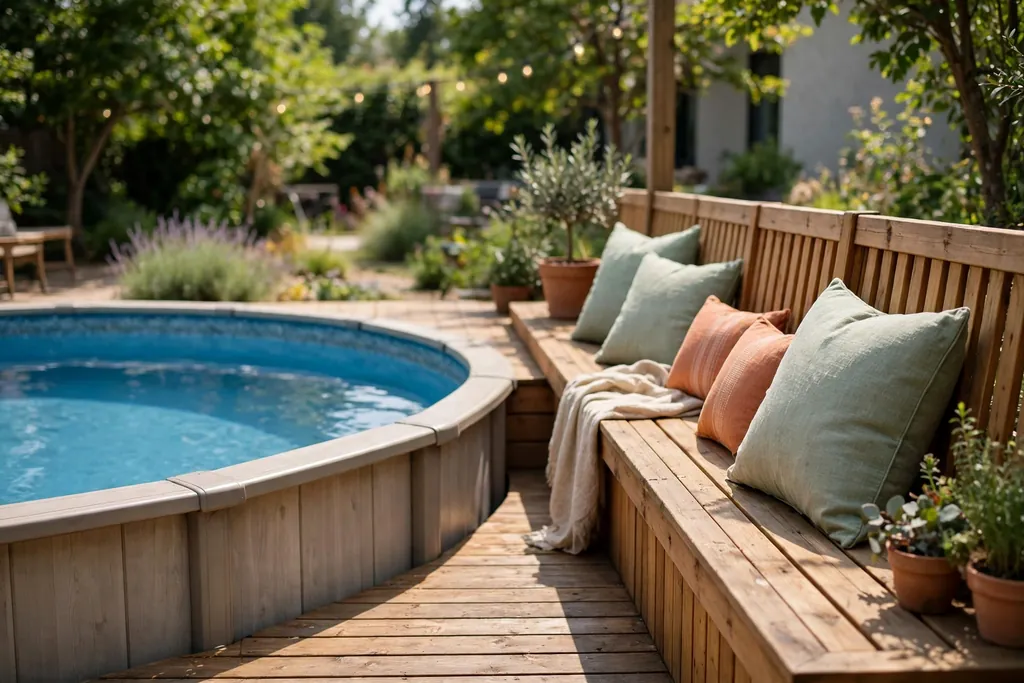
Run a built-in bench along one edge of the pool deck to give seating that never needs to be carried in or out, and that leaves the middle of the deck open for entry and play. A fixed bench suits small pool decks, where loose chairs would crowd the space, and it doubles as a boundary that marks where the deck ends and the lawn begins. For seating that works in gardens as well as on decks, these garden bench ideas show how to choose a spot first and match the seat to it.
Build the bench at a comfortable sitting height, with a back rest only where the deck faces a view you want to lean into, since a backless bench is easier to sit on from either side. Leave a gap under the bench front for feet, and choose boards that match or tone with the deck so the bench reads as part of the structure. Add loose cushions for comfort, and store them nearby in a dry box, since poolside cushions soak up splashes fast.
10. Storage Bench and Under Deck Storage for Pool Gear
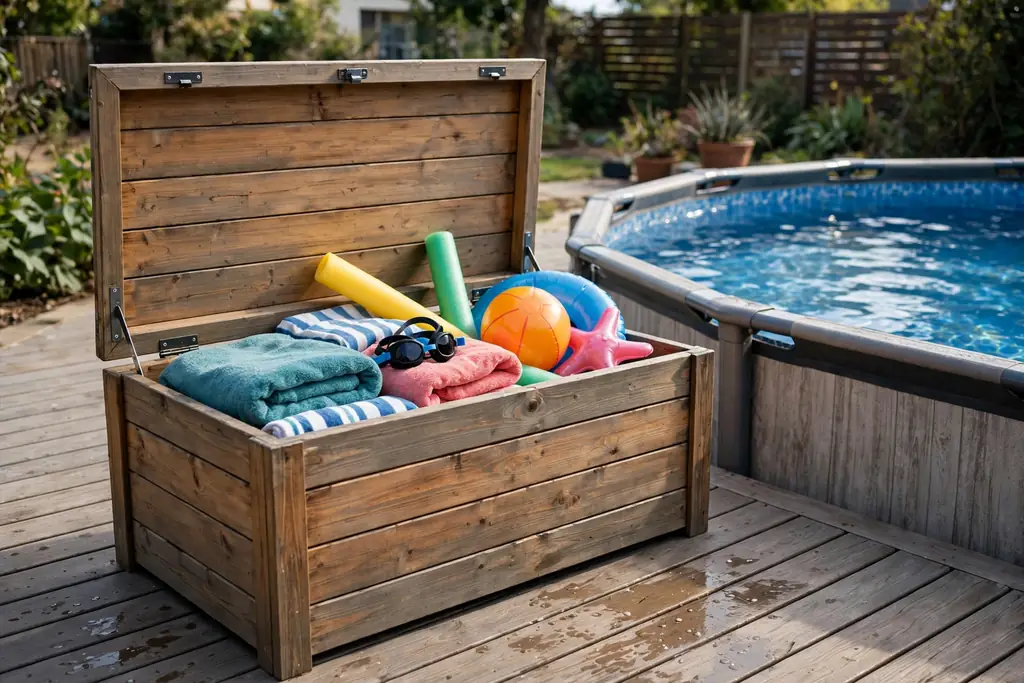
Use the space under a low deck edge for a storage hatch, or build bench boxes into the deck seating, to hide towels, pool toys, goggles, and cleaning gear. Pool gear gathers fast, and hidden storage keeps it dry and out of sight without taking a whole shed. Choose boxes made for outdoor use, with lids that close fully to keep rain out, and keep heavy items at the bottom so boxes stay stable.
Leave clearance behind bench boxes so lids open fully, and never seal the whole under deck space, since air must still move under the boards to keep the frame dry. Label one box for towels and one for toys, so the right box opens first after a swim. Storage close to the entry steps means towels are close at hand, so swimmers are less likely to drip through the house.
11. Dining Deck Near the Pool but Clear of Splashes
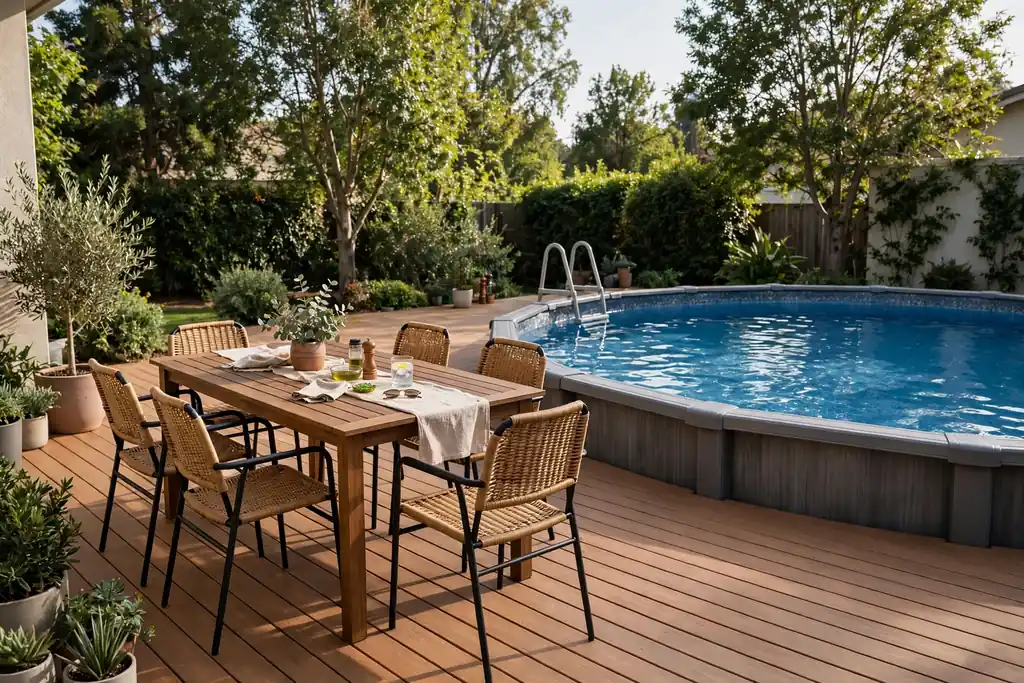
Place a dining table and chairs on the deck section furthest from the main splash zone, so meals stay dry while swimmers stay close. A poolside dining deck earns its place fastest in summer, when lunch moves outside, and it only needs a flat area, a table that seats your household, and a shade option for midday. Keep the table clear of the entry steps and leave room to pull chairs out without stepping off the deck edge.
Choose a table with a top that wipes clean and chairs that stack or fold for stormy days, and add a low centerpiece pot that still lets people see across the table. A washable outdoor rug under the table defines the dining zone and catches crumbs, and a small side bench gives extra seats for guests without a second table. Keep food and glass away from the pool edge, so a knocked drink does not land in the water.
12. Lounge Deck with Loungers and a Washable Rug
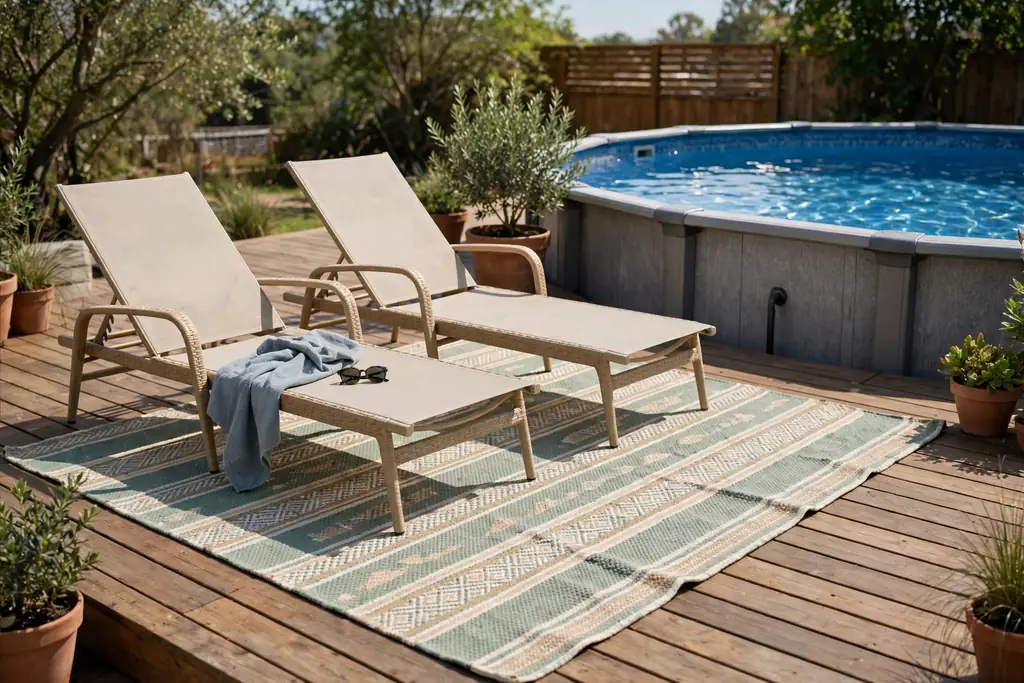
Set two loungers, a small side table, and a large washable outdoor rug on the deck to make a lounge that invites long sits between swims. A rug softens boards underfoot, defines the seating zone, and adds colour that can change with the seasons. Choose weather resistant cushions with removable covers, and bring them inside during long wet spells so they stay fresh.
Face the loungers toward the sun at the time you use them most, and leave a clear path behind them for access to the entry steps. A side table at each end holds drinks, sunscreen, and a book, and a basket for towels keeps the lounge ready without extra furniture. Keep the rug flat and grippy, so it does not curl at the edges and trip bare feet, and rinse it after a dusty week so grit does not scratch the boards.
13. String Lights and Solar Post Lights for Evenings
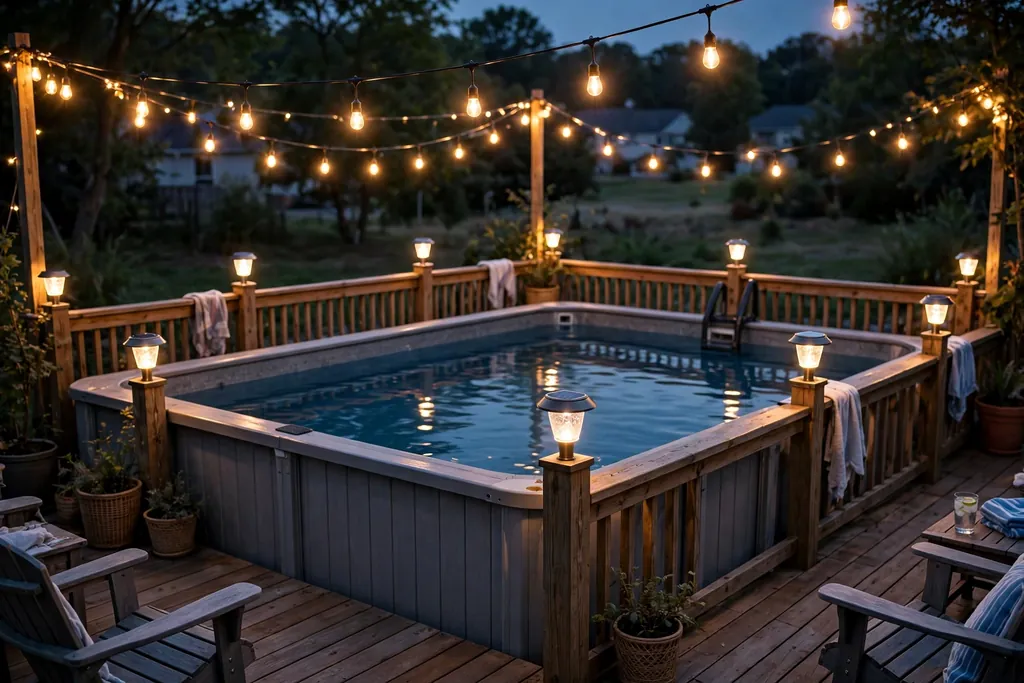
Fix string lights along deck posts, a pergola, or a simple post and wire run to keep the pool deck usable after sunset with soft, warm light. Light at deck level should be low and warm, so it feels relaxed rather than harsh, and so it does not glare into neighbouring windows. Solar or plug-in strings both suit a pool deck, as long as cables are kept out of walkways and solar panels get sun during the day.
Drape strings in gentle swags rather than tight straight lines, so the light feels relaxed and the wire does not strain at the fixings. Add solar post cap lights along the deck edge and near each step, since a missed step is most likely where light is lowest. Test the light level at dusk before guests arrive, and keep all electrical fittings rated for outdoor use and clear of the pool water. Never run a mains cable across a wet deck.
14. Planters and Skirting to Soften the Pool Wall
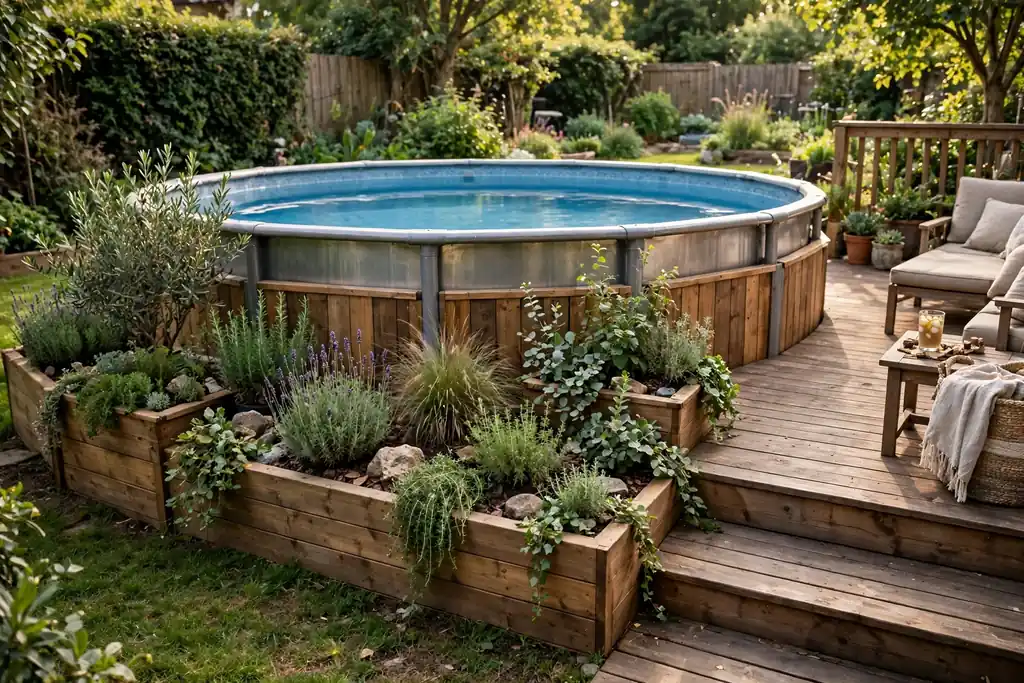
Set planters along the deck edge and add skirting boards below the deck to hide the pool wall, pipes, and framing, so the pool reads as part of the garden rather than a bare tank. Skirting suits above ground pools best, since the wall height is the hardest part to make look finished, and a simple vertical board skirt with gaps for air gives a tidy finish. Planters on the deck above the skirt add colour at eye level.
Line each planter so soil does not sit against the deck frame, and give every planter drainage holes that lead away from the boards. Plant a mix of one upright plant, one mid height plant, and one trailing plant per planter for a full look, and water planters more often than beds, since they dry out fast in sun and wind. Keep planters clear of the entry steps, the gate swing, and the pump access panel.
15. Safety Gate and Slip Resistant Deck Surface
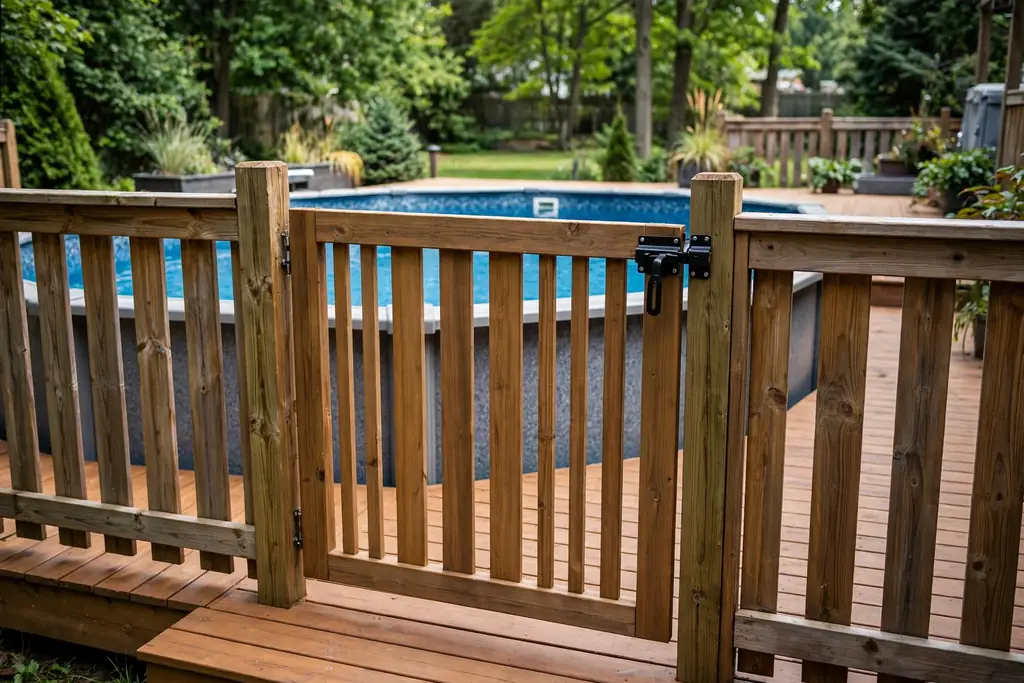
Fit a self closing, self latching gate at the deck entry, and choose a slip resistant deck surface, to make the pool area safer for children and for bare feet. A gate matters most when the deck gives access to the pool, since it keeps unsupervised entry closed even when the yard gate is open. Check local pool safety rules first, since gate height, latch height, and fencing rules vary by area.
Choose boards with a grippy finish, keep the surface swept clear of leaves and algae, and wash the deck a few times each season so a slippery film does not build up. Keep the gate latch working every week in summer, test it after storms, and never prop the gate open during a gathering unless an adult is watching the pool. A clear, dry path from the house to the gate also helps, since wet feet on grass carry mud onto the deck.
16. Rinse Station and Towel Rail by the Entry
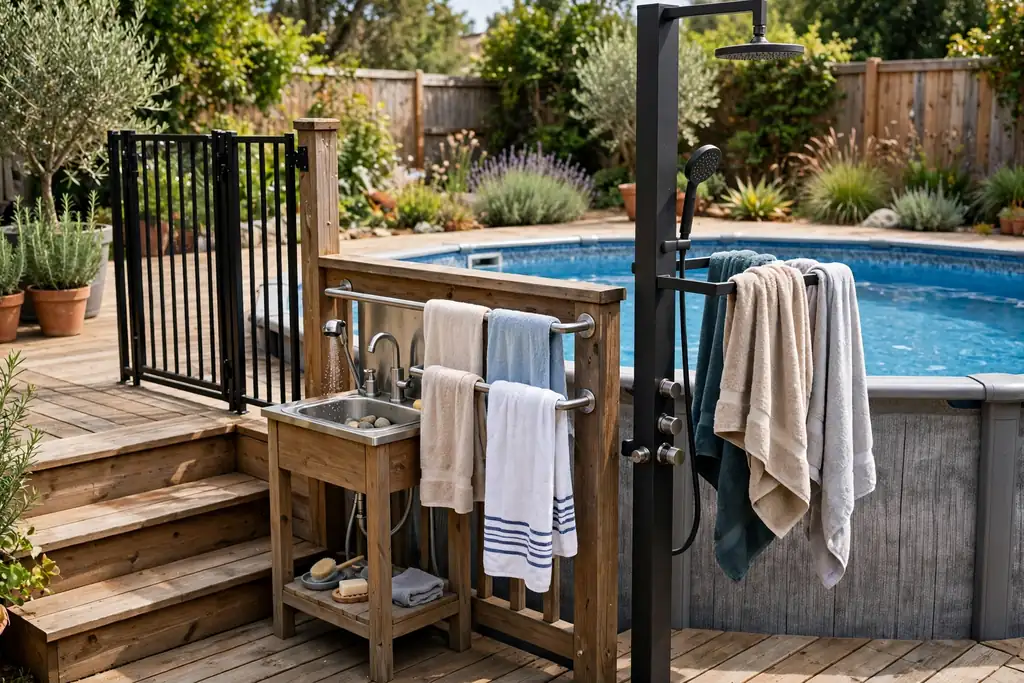
Set a simple rinse station and a towel rail beside the deck entry, so swimmers rinse off grass and sunscreen before they go inside, and towels have a dry home. A rinse station can be a short outdoor shower head on a post, a foot wash tap, or a bucket and hose point on a gravel pad, as long as water drains away from the deck boards and the pool pump. Keep the rinse area off the main deck, so the deck itself stays dry.
Fix a towel rail or a row of hooks to the privacy screen or a post near the entry, at a height children can reach, and add a small bench or stool for changing shoes. Drain the rinse pipe before frost if your winters freeze, and keep soap and shampoo away from the pool water, since they affect water care. A rinse station by the entry often saves the most indoor cleaning of any pool deck addition.
Conclusion
A good above ground pool deck starts with safe entry, not the shopping list. Keep it level, slip resistant, and well drained, then choose a deck shape that fits the pool and the yard, one comfortable seat, and one shade option. Add zones for entry, sitting, and gear, and keep steps, gates, drains, and pump access clear. Pick one idea from this list, set it where you will actually swim and sit, and add lighting, planting, and comfort details only after that first seat and step feel right.
Save this list on Pinterest before your next garden trip, and work through it one area at a time: structure first, then entry and safety, then the shade and seating that make the deck yours.
FAQs
How wide should an above ground pool deck be?
A pool deck should be wide enough for a person to walk past a seated person and for the entry steps to land clear of furniture. A narrow strip beside the pool quickly feels crowded, while a deck wide enough for a lounger, a side table, and a passing route feels usable all day. Measure from the pool wall outward, mark the width with tape on the ground, and walk the route with a chair in place before you build.
Can a deck be attached directly to an above ground pool?
Some decks are built to meet the pool top rail, and others stand freestanding beside the pool, and the right choice depends on the pool maker guidance, the pool wall strength, and local rules. Never fix heavy deck framing tightly to a pool wall or liner, and leave a small gap plus a removable section near the pump, filter, and skimmer. If in doubt, build freestanding and ask a professional or the pool maker before attaching anything to the pool.
What is the best deck surface for bare feet around a pool?
A slip resistant surface matters more than the board material alone, since every pool deck gets wet. Timber with a grippy finish feels warm underfoot, while composite with a textured finish needs less upkeep and resists splinters. Whichever surface you choose, sweep it clear, wash off algae and sunscreen film regularly, and keep the deck clear of standing water and soil.
Do I need a gate or fence around an above ground pool deck?
Rules vary by area, and they often depend on pool depth, deck height, distance from property lines, and whether children can reach the pool from the yard. A self closing, self latching gate at the deck entry is a sensible step in most family gardens, even where the yard is already fenced. Check local pool safety rules and, if in doubt, ask your local office before you build, especially for decks used by children.
How do I stop an above ground pool deck from rotting?
Keep air moving under the deck, keep boards clear of soil and mulch, and sweep leaves so damp debris does not sit on the surface. Use timber rated for outdoor ground contact or composite boards as the maker directs, fix drainage so rain runs away from the house and off the deck, and check the frame and board fixings each spring. Replace any soft board before rot spreads, and keep skirting gaps open for air.
How can I hide the side of an above ground pool?
Skirting boards below the deck, planters along the deck edge, and a planted border around the exposed wall all help the pool blend into the garden. Keep skirting gaps open for air, leave access to the pump and filter, and avoid piling soil against the pool wall. A mix of low edging plants at the front and taller plants behind the pool wall reads as a garden border rather than a cover up, and it still leaves room for care and cleaning.