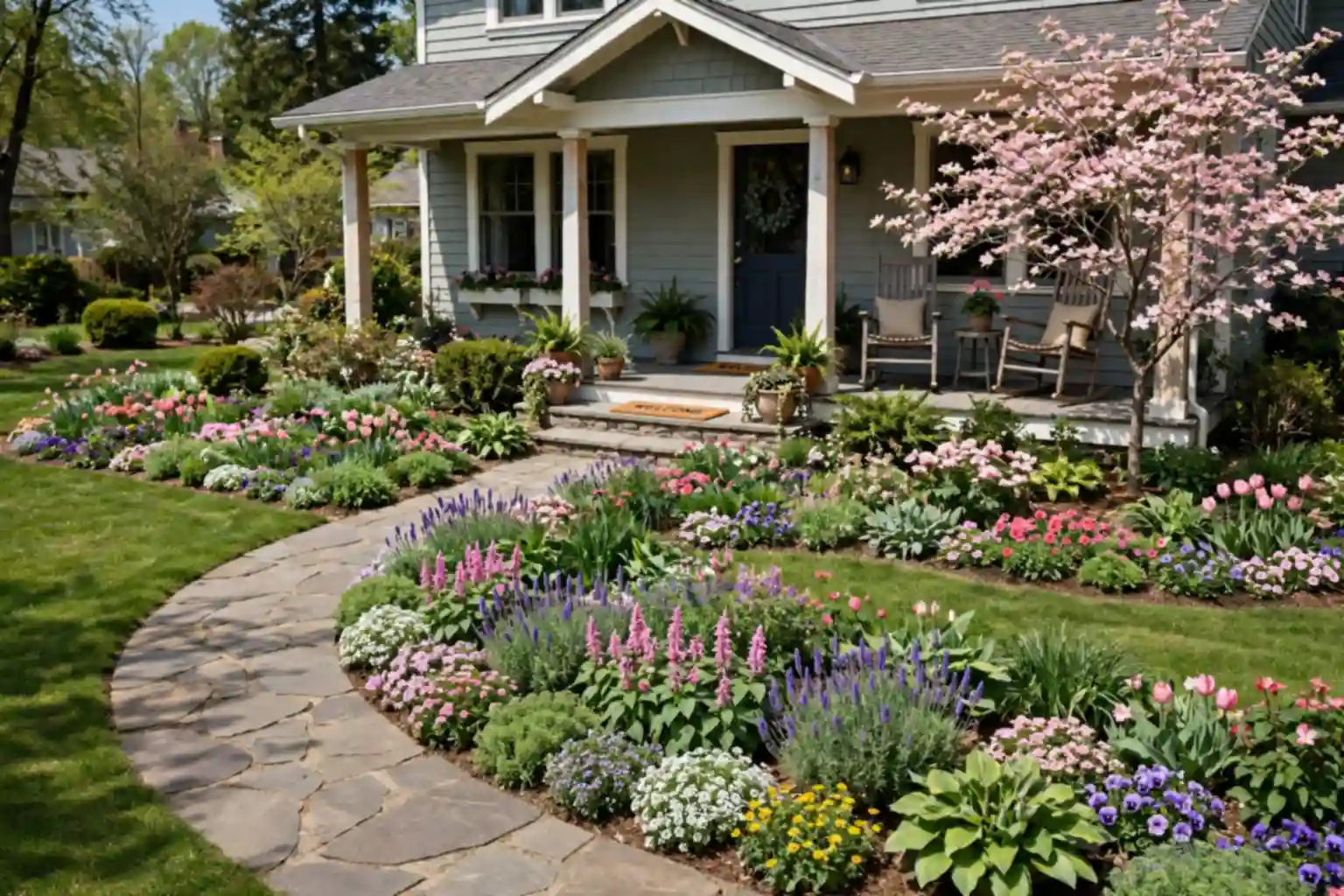
The front yard is the first part of a home most visitors see, yet it often gets less care than the back garden. A plain lawn and a single shrub by the door can leave a house looking unfinished, even when the inside is full of care. These 18 front yard landscaping ideas give the front of a home a clear shape, color through the seasons, and a path that feels welcoming. They cover beds, paths, trees, lighting, seating, and low care planting for small yards, slopes, shady plots, and dry sunny fronts. Start with the path and the entry, then build planting around them one bed at a time.
Key Takeaways
- Start with the route to the door: a clear, wide, well lit path sets the tone for the whole front yard.
- Layer planting by height, with low edging at the front, mid height shrubs and flowers in the middle, and a tree or tall shrub at the back or corner.
- Repeat one or two colors and one edging material across the yard so separate beds read as one plan.
- Mix evergreen structure with seasonal flowers, so the yard looks cared for in winter as well as in summer.
- Keep house numbers, the mailbox, and the door visible, and keep plants clear of paths, driveways, and sight lines at the street.
- Choose plants for your sun, soil, and watering routine first, and add high care plants only where you will enjoy tending them.
1. Layered Foundation Beds
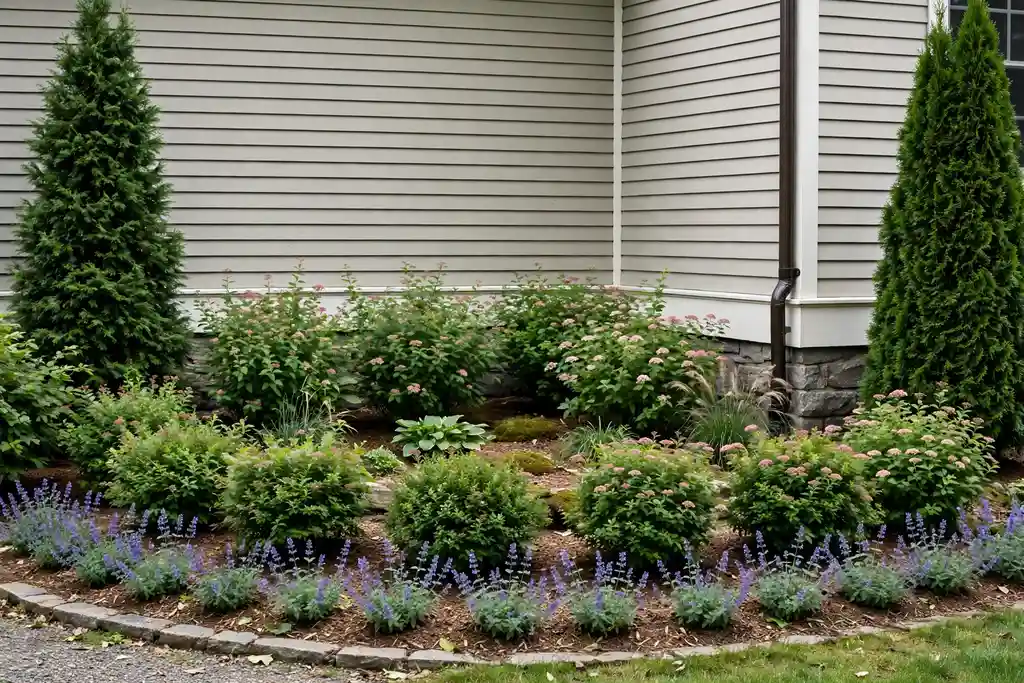
Plant foundation beds in layers so the house wall never shows a single flat row of shrubs. Put low edging plants such as creeping thyme, small hostas in shade, or dwarf mondo grass at the front, mid height shrubs and perennials in the middle, and taller shrubs near corners and beside the door. This stepped shape gives depth from the street and keeps the bed looking full even when one plant is out of flower.
Leave a gap of soil or gravel between the house wall and the first plants for air flow and for reaching the wall for repairs. Water new shrubs deeply until roots settle, then mulch to hold moisture and cut weeds. Prune lightly to keep shrubs below window sills, and replace any plant that blocks a window or crowds the path.
2. Curved Walkway with Clean Edging
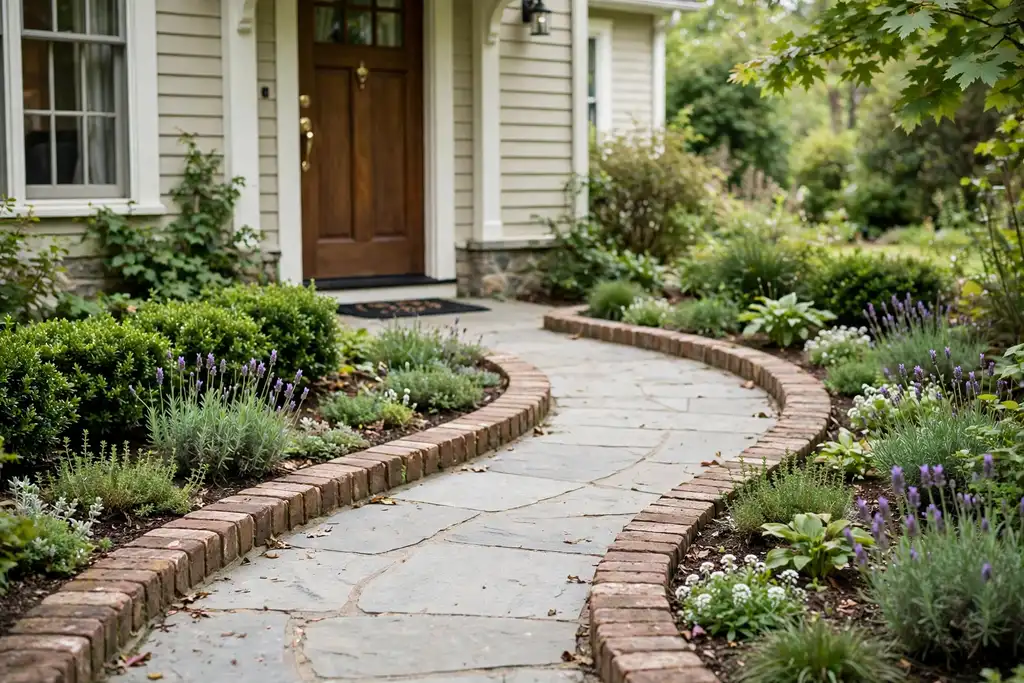
Replace a straight, cracked concrete path with a gently curved walkway edged in brick, stone, or steel. A curve slows the eye, makes a small yard feel larger, and gives room for planting pockets on both sides of the path. Keep the curve gentle, since a path that zigzags sharply is tiring to walk and hard to mow beside.
Lay pavers or flagstones on a firm, level base with a slight fall away from the house for drainage. Edge the path firmly so soil and mulch stay out of the joints, and keep the walking width wide enough for two people or a stroller. Plant low, tough edging plants beside the path, but keep them trimmed back so they never narrow the walk.
3. Planting that Frames the Front Door
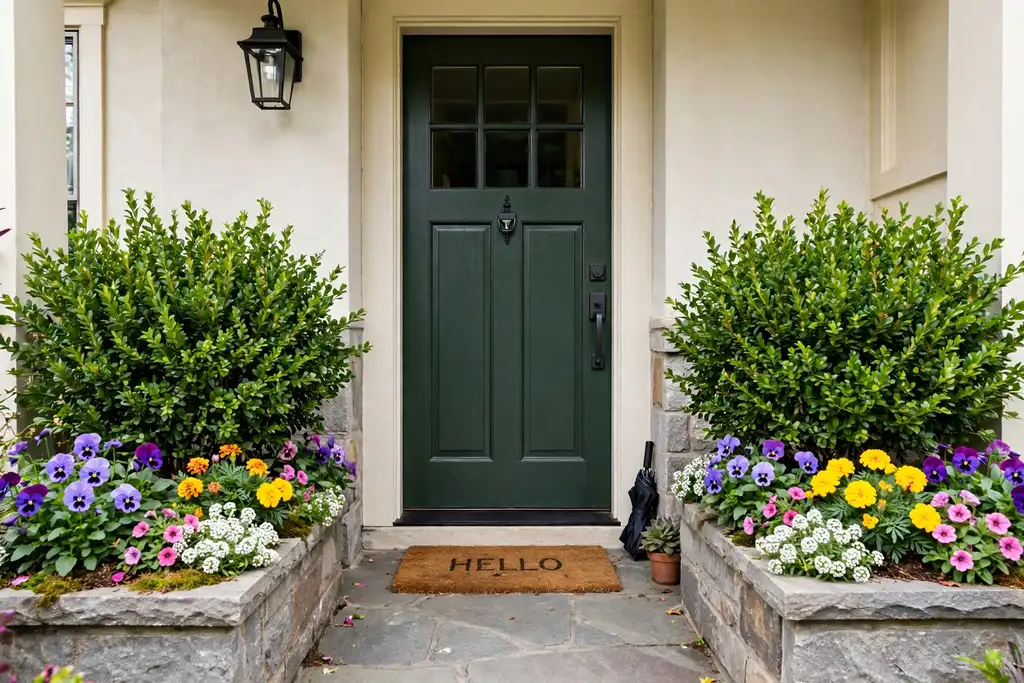
Frame the front door with a pair of planters, two matching shrubs, or a bed that steps up to the porch, so visitors know at once where to go. Symmetrical planters suit formal houses, while a looser group of pots in varied heights suits cottages and bungalows. Choose plants that stay neat by the door, since overgrown stems can block the handle, the lock, or the doorbell.
Add a splash of door color to finish the entry, and the shade guide in these blue front door colors shows how undertone and hardware change the way a color reads on a real door. Keep the door step clear, sweep leaves from the threshold often, and swap seasonal pots at the door so the entry always looks tended.
4. Low Hedge Frame for the Whole Yard
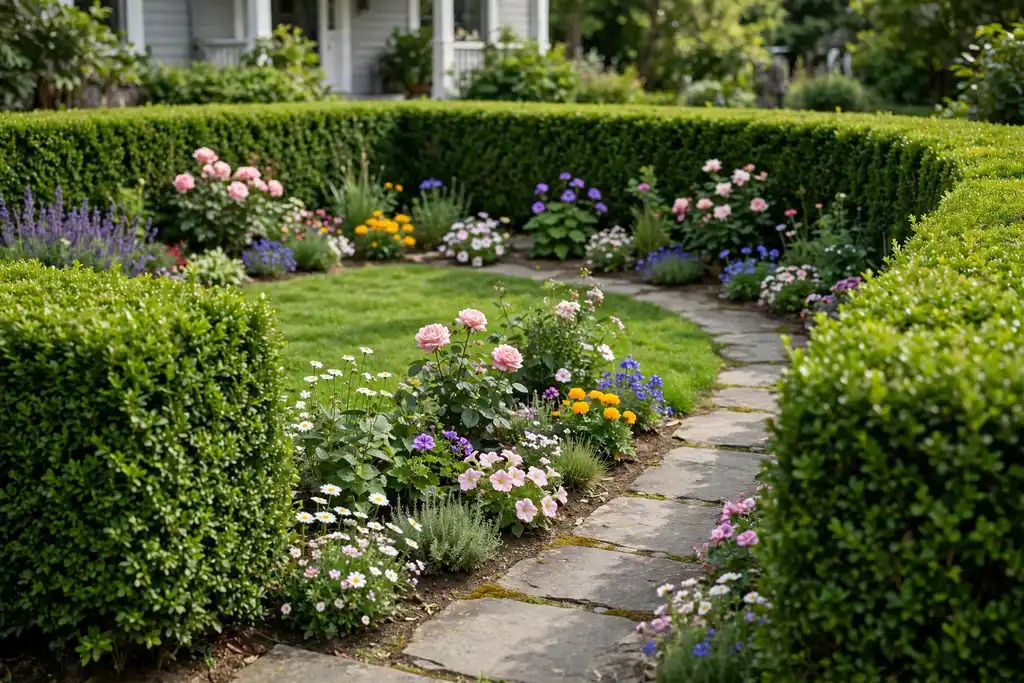
Plant a low hedge along the front boundary or along the path to give the yard a frame without closing it off. A hedge of boxwood, dwarf holly, or lavender, kept at knee to waist height, marks the edge of the property, hides a plain fence base, and makes lawn and beds read as one garden. Low hedges also keep sight lines open for drivers and walkers at the street.
Space plants by their mature width, not by how they look in the pot, and water well in the first year. Clip once or twice a year to keep the top level, and feed in spring if growth looks pale. Where winters are harsh, choose a hedge plant proven hardy in your area rather than one that needs wrapping each year.
5. Ornamental Tree as a Focal Point
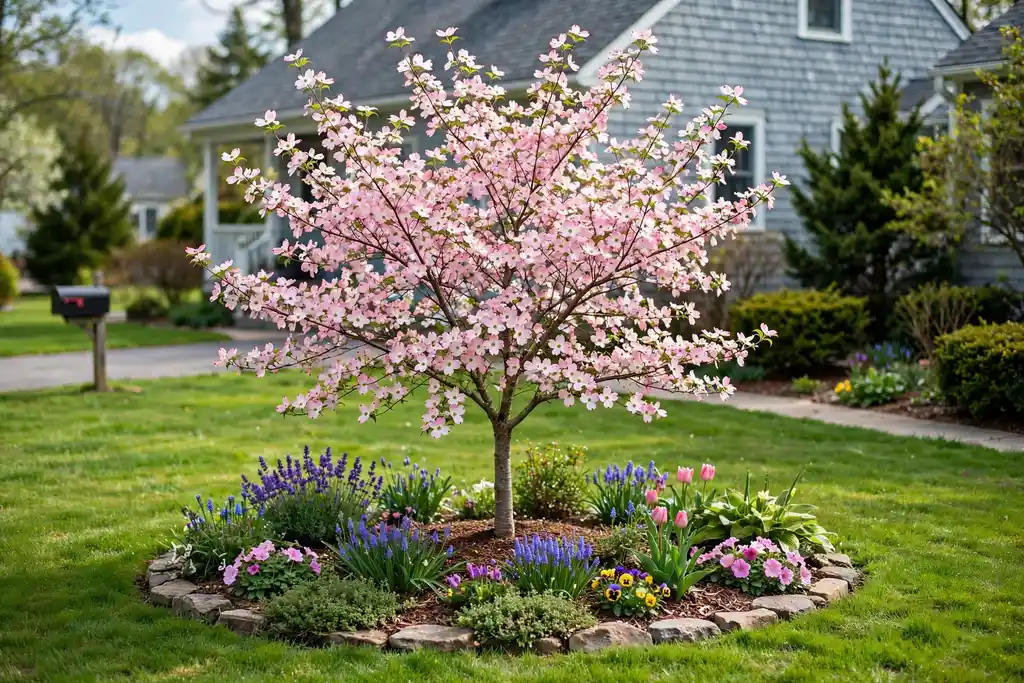
Plant one ornamental tree, such as a flowering cherry, a small maple, or a crepe myrtle suited to your climate, as the focal point of the front yard. A single tree gives shade, seasonal color, and a sense of scale that shrubs alone cannot give. Place it where it frames the house from the street, not where it blocks the front windows or drops heavy fruit on the path.
Check mature height and spread before planting, and keep the tree clear of power lines, driveways, and underground utilities. Stake a young tree for its first year or two, water deeply in dry spells, and mulch in a wide ring without piling mulch against the trunk. Prune to keep one clear trunk and a balanced crown.
6. Seasonal Flower Drifts
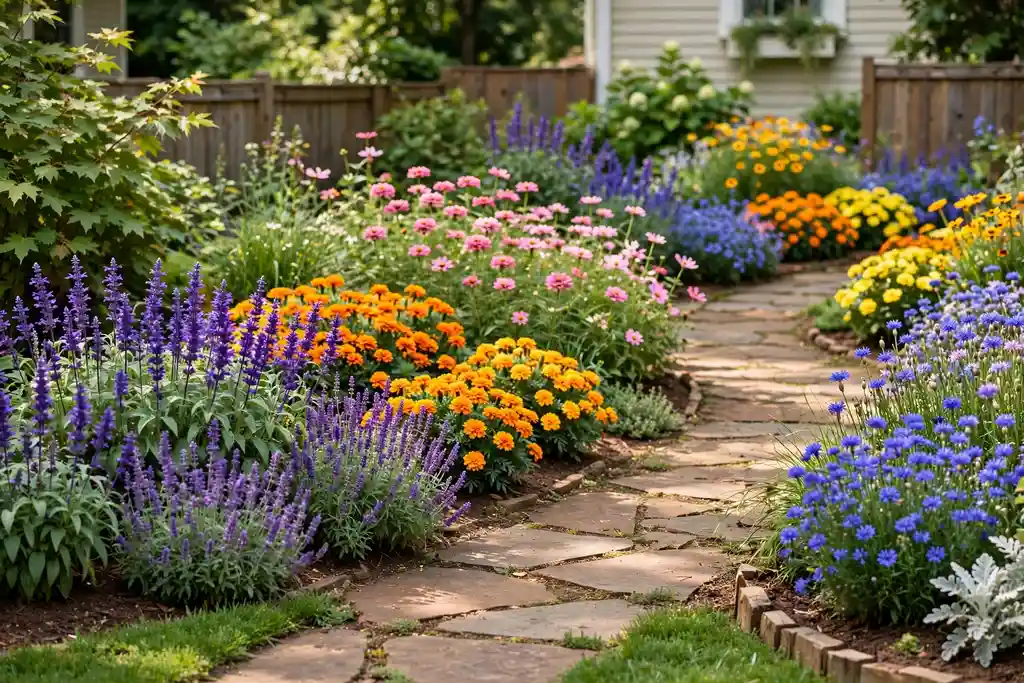
Plant flowers in drifts of five or more of one type, rather than single plants dotted across a bed, so color reads clearly from the street. Tulips and daffodils for spring, coneflowers and black eyed Susans for summer, and asters and mums for autumn give a long run of color if you mix types in the same bed. Repeat the same drift in two or three spots to tie the yard together.
For tall, cheerful summer color beside a front path, the planting notes in these sunflower garden ideas show how height and spacing keep tall flowers upright and tidy. Deadhead spent blooms, cut back tired stems, and refresh mulch each spring. Keep flower beds edged so lawn grass does not creep into the planting.
7. Rock and Gravel Bed for Dry Sunny Spots
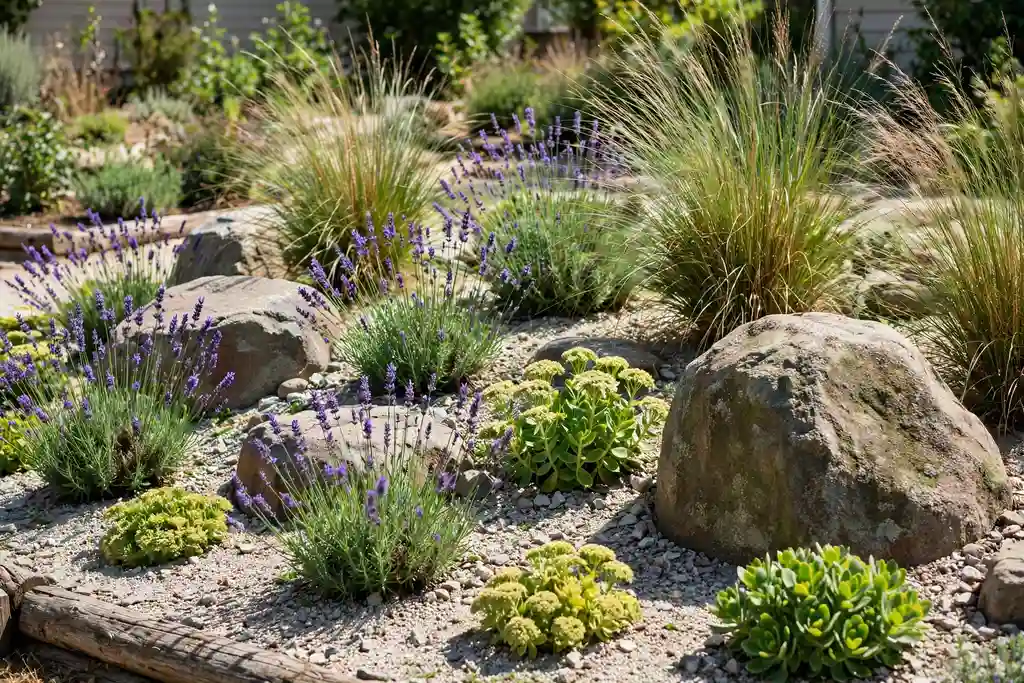
Turn a dry, sunny strip where grass struggles into a rock and gravel bed with drought tolerant plants. Lavender, sedum, ornamental grasses, and agave types suited to your climate need far less water than lawn, and gravel mulch keeps weeds down and shows off stone color. This idea suits south facing fronts, narrow strips beside driveways, and yards where watering is limited.
Lay landscape fabric only if weeds are severe, since it can block water over time, and use a gravel depth that stays in place in wind and rain. Set a few larger feature stones first, then plant in groups around them. Keep gravel out of the lawn and path with a firm edge, and top up gravel every year or two as it settles.
8. Terraced Beds for a Sloped Front Yard
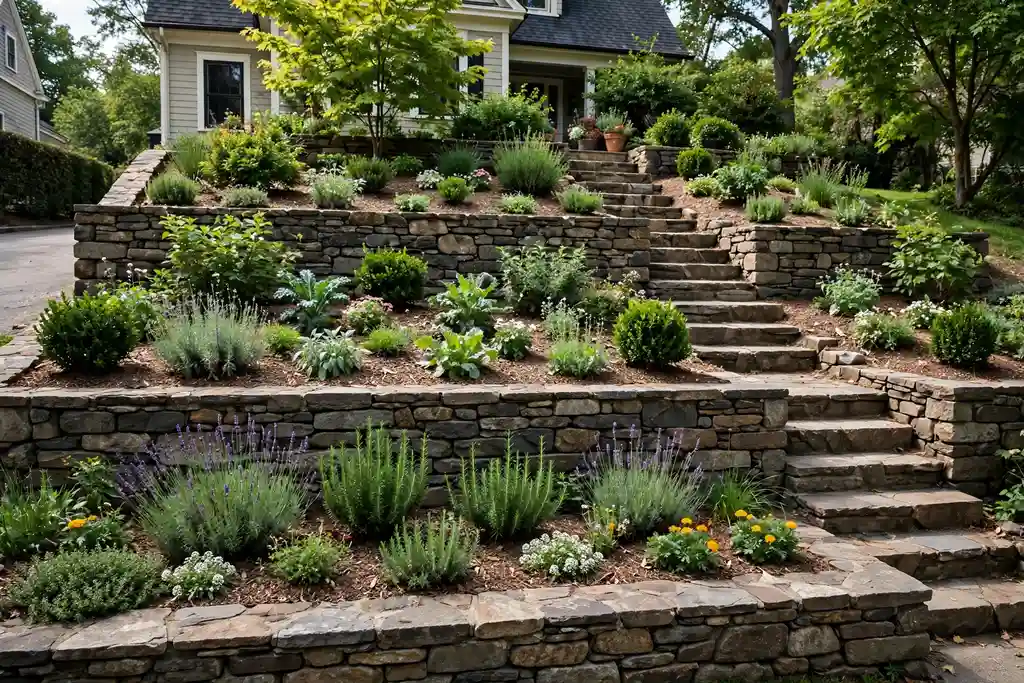
Step a sloped front yard into two or three low terraces with stone, brick, or timber walls, so each level holds soil, water, and plants instead of letting rain wash them to the street. Low terraces also give flat places to plant and make mowing or weeding safer than working on a steep bank. Keep each wall low, generally knee height or less, unless a professional builds it.
The stepped layouts in these tiered garden ideas show how to give each level a clear job, from flowers near the street to shrubs near the house. Build from the bottom level up, add drainage behind each wall, and leave a step or path between levels for access. Plant ground cover on the wall tops to soften the hard edges.
9. Mailbox Garden Bed
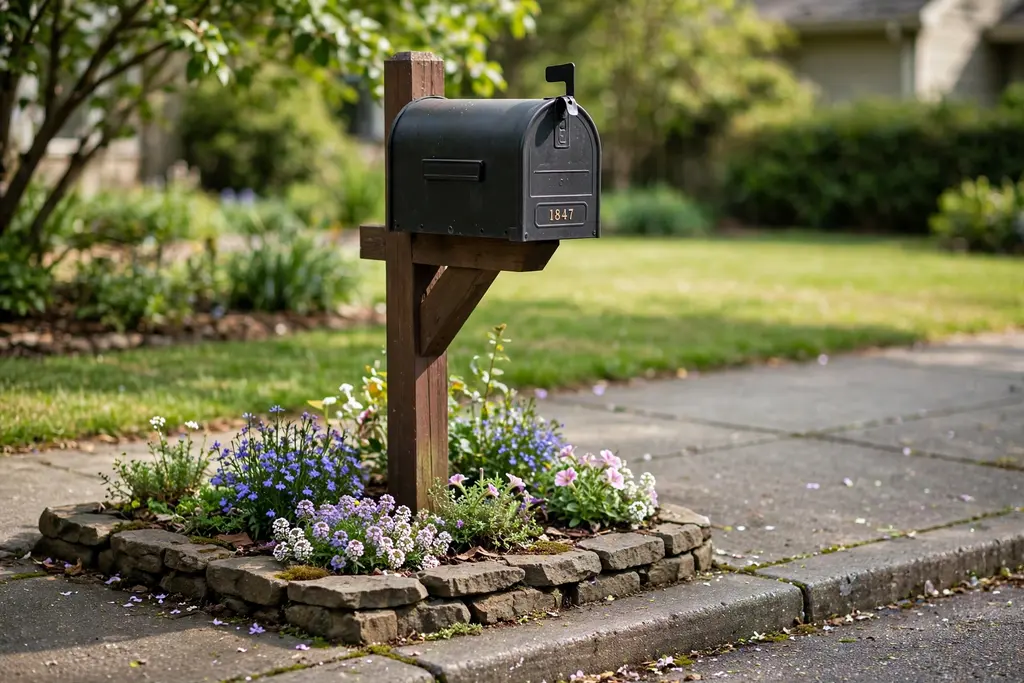
Turn the patch around the mailbox into a small, tidy garden bed that greets visitors before they reach the house. Plant low flowers, dwarf shrubs, or ornamental grasses that stay clear of the mailbox door, the house number, and the path used by the mail carrier. A bed edged in stone or brick keeps soil off the pavement and gives the spot a finished look.
Choose plants that cope with road salt, heat from pavement, and occasional splashes in winter if your street is treated. Keep plants below the mailbox so mail stays easy to reach, and trim any stems that lean over the pavement. One or two pots beside the post give the same effect where the ground is paved or the soil is poor.
10. Front Yard Seating Nook
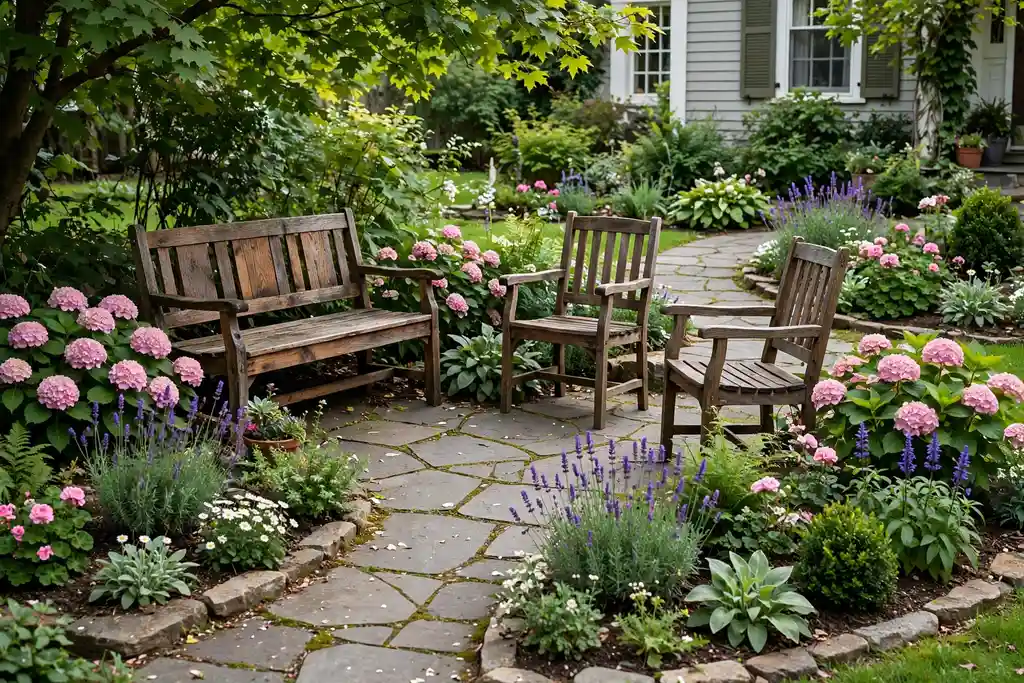
Set a bench or two chairs in a front yard nook where you can watch the street, greet neighbors, and enjoy morning sun. A seat near the path, under a tree, or beside a flower bed turns the front yard from a display into a place people actually use. Choose weather resistant seating with a firm, level base, and add a small side table for a cup or a book.
Keep the seat clear of the main path so walkers can pass, and plant scented flowers or herbs nearby for evening scent. A low hedge or a pair of planters behind the seat gives a sense of enclosure without blocking views. Bring cushions inside in wet weather, and sweep the seating pad often so it stays inviting.
11. Path Lighting for a Warm Entry
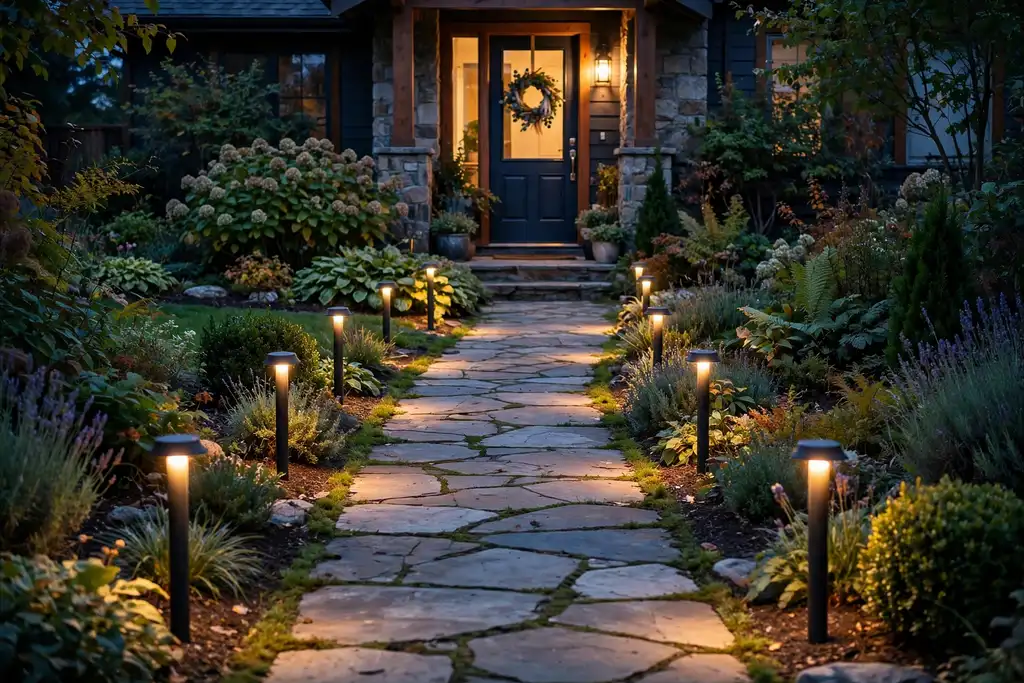
Line the front path with low solar or low voltage lights, and add a lantern or wall light by the door, so the entry feels warm and safe after dark. Light should mark the path edges and steps, not flood the whole yard, and warm white light suits most house styles better than harsh blue white light. Place lights where they will not be hit by mowers or snow shovels.
Check solar lights get sun on their panels during the day, and clean panels each season. For wired lights, keep cables buried and clear of digging zones, and use a timer or dusk sensor so lights switch on without daily effort. Test the light level at dusk before guests arrive, and add one brighter light at any step or change of level.
12. Privacy Planting Without a Tall Fence
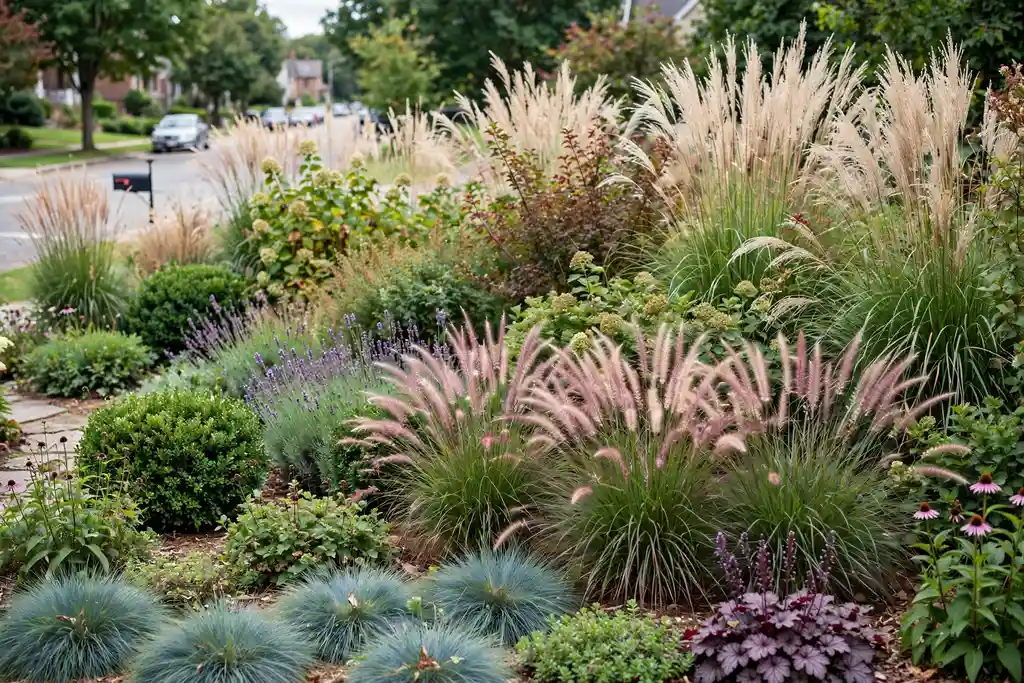
Use layered shrubs, ornamental grasses, and a small tree to soften views into the front yard without building a tall solid fence. A staggered row of shrubs at varied heights gives privacy from the street while letting air and light through, and it looks softer than a fence from both sides. This approach also avoids fence height rules that vary by street and neighborhood.
Plant the tallest shrubs furthest from the path and lower plants in front, so the screen reads as planting, not as a wall. Leave gaps for the driveway sight line and for access to utilities. Prune to keep the screen below window height where you want light indoors, and choose evergreen shrubs for year round screening in at least part of the row.
13. Evergreen Structure for Winter Interest
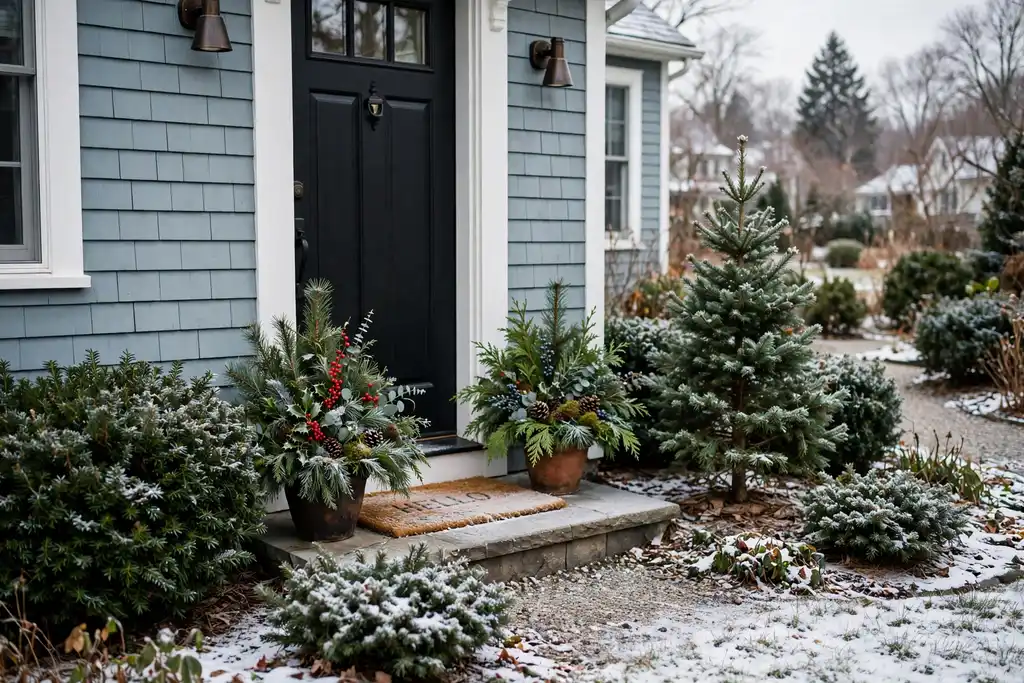
Add evergreen shrubs, small conifers, or broadleaf evergreens so the front yard keeps its shape in winter when flowers and leaves are gone. Boxwood balls, dwarf spruce, holly, and yew give form, color, and a backdrop for seasonal pots by the door. Evergreens also make spring bulbs and summer flowers look better, since they anchor each bed.
Place evergreens at corners, beside the door, and at bed ends where their shape matters most. Water new evergreens well before winter, especially in dry autumns, and mulch to protect roots from freeze and thaw cycles. Clip lightly to keep their natural shape, and avoid shearing every evergreen into a ball unless that formal look suits the house.
14. Pollinator Friendly Front Border
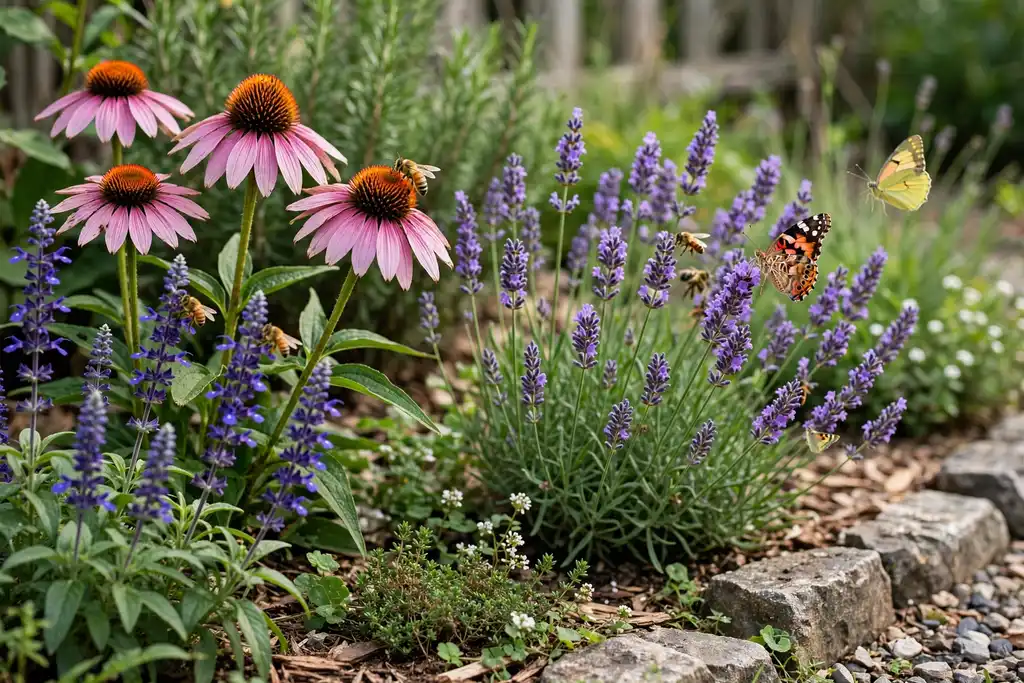
Plant a front border with flowers that feed bees, butterflies, and other pollinators through the seasons, using native or well adapted plants where possible. Coneflowers, salvias, lavender, catmint, and asters give nectar from spring into autumn, while a mix of flower shapes suits different insects. A pollinator border also adds color and movement to the front of the house.
Avoid spraying the border, leave some seed heads standing into autumn for birds, and include a shallow water dish with stones for insects to land on. Group the same flower in drifts, as in idea 6, so pollinators find food easily. Keep the border edged and weeded so it reads as a planned garden, not as a wild patch.
15. Mulch and Stone Ground Cover
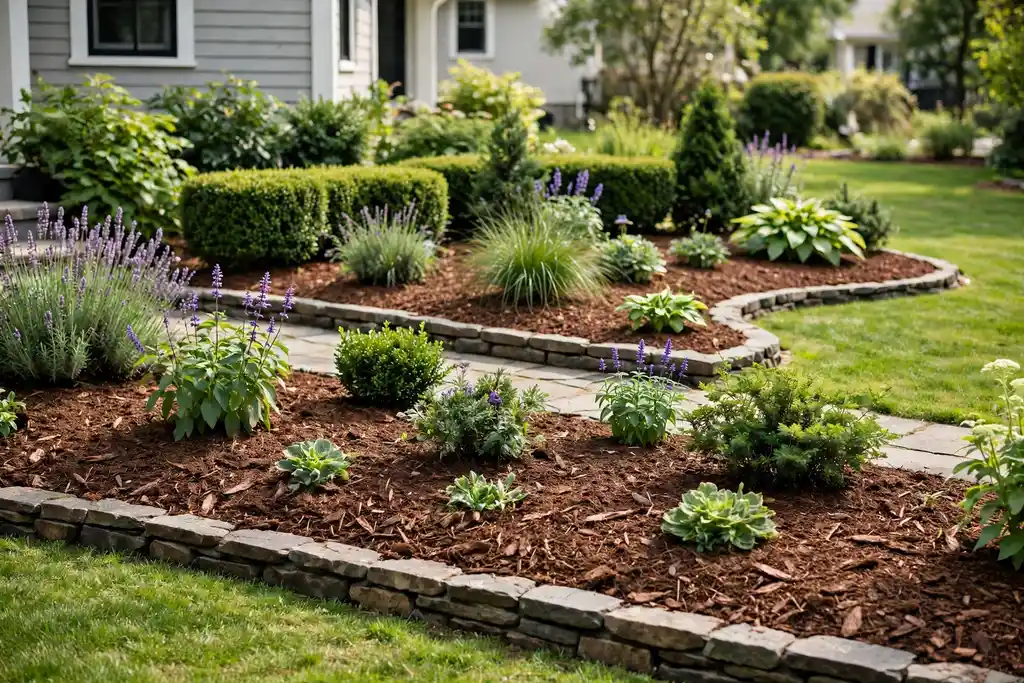
Refresh mulch in beds and use stone in paths and dry zones to give the front yard a tidy, finished surface with less weeding. Bark mulch holds moisture, feeds soil as it breaks down, and makes bed edges look clean, while stone suits paths, drainage strips, and areas under eaves where rain drips. A consistent ground cover color across beds ties the whole yard together.
Spread bark mulch two to three inches deep, keeping it clear of tree trunks and shrub stems. Top up mulch each spring, and pull weeds before mulching so they do not grow through. Where stone is used, keep it out of lawn areas with a firm edge, and rinse dusty stone after laying so its true color shows.
16. Raised Planter Boxes Along the Facade
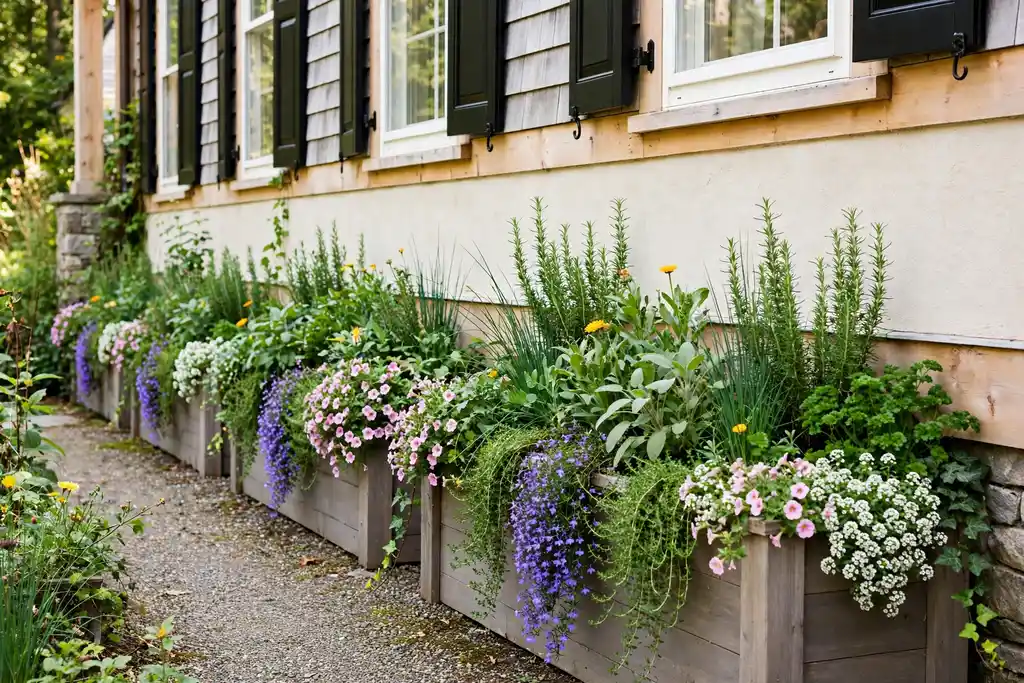
Build low raised planter boxes along the front facade or beside the porch to lift flowers and herbs to a comfortable height and to add structure to a plain wall. Raised boxes suit houses with poor soil, shallow roots from nearby trees, or a high foundation that leaves a bare strip. They also make planting easy to reach for watering and deadheading.
Use rot resistant timber or stone for the boxes, add drainage holes or a gravel base, and fill with a mix of garden soil and compost. Plant trailing flowers at the front edge so they soften the box, and taller plants at the back near the wall. Water raised boxes more often than ground beds, since they dry out faster in sun and wind.
17. Small Water Feature Near the Entry
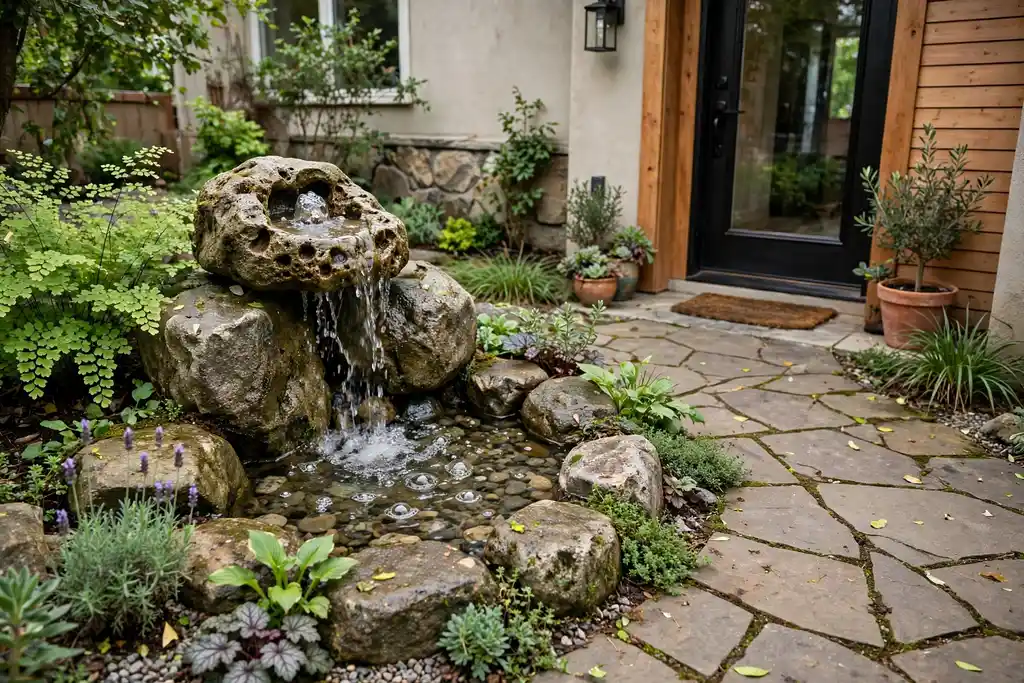
Place a small bubbling rock, a wall fountain, or a ceramic bubbler near the entry to add sound and movement that makes the front yard feel calm and cared for. Moving water also masks street noise on a busy road, which makes a front seating nook more pleasant. Keep the feature small and simple, since a large pond needs far more care and safety planning.
Site the feature on a level, stable base where you can reach the pump for cleaning, and keep it clear of paths so splashes do not make paving slippery. Run it on a timer, clean leaves and algae often, and drain it before hard frosts if the maker advises it. In a family yard, keep water shallow and edges rounded.
18. Low Care Native Planting Plan
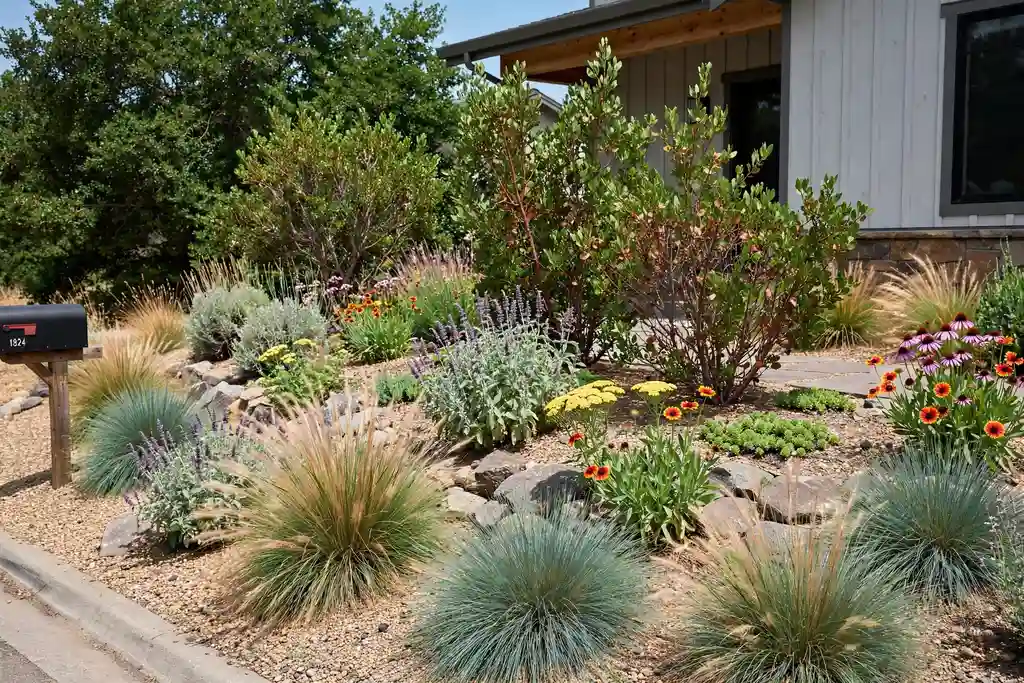
Build the front yard around native or well adapted plants that suit your soil, rainfall, and sun, so the yard needs less water, less feeding, and less fuss through the year. Native grasses, shrubs, and perennials often cope better with local pests and weather than tender imports, and they support local birds and insects. Start by noting which parts of the yard are sunny, shady, wet, or dry, then match plants to each spot.
Group plants with similar water needs together, so one bed is not overwatered to suit a single thirsty plant. Mulch well, water new plants until established, then cut back to occasional deep watering. Keep a simple sketch of what is planted where, so you can replace failures with plants that have already proved themselves in your yard.
Conclusion
A front yard with character does not need a full rebuild or a large budget. It needs a clear path to the door, planting layered by height, a focal point such as a tree or a well planted bed, and details such as lighting, edging, and seating that show the space is used and cared for. Pick the two or three ideas that fit your sun, slope, and routine first, such as a curved path, layered beds, and path lighting, then add one idea each season. Over time, those small, steady changes build a front yard that welcomes visitors, suits the house, and stays easy to look after. Save this guide to Pinterest for later, and use it as a checklist as you plan your next front yard project.
FAQs
What is the easiest front yard landscaping idea to start with?
Start with layered foundation beds, a clean path edge, and fresh mulch. These three steps need no building work, they make the yard look tended at once, and they give a base for later ideas such as lighting, a tree, or a seating nook. Work on the bed nearest the door first, since that is the area visitors see most.
How can I add curb appeal on a small budget?
Focus on edging, mulch, and a few drifts of seasonal flowers, then add path lighting and a pair of planters by the door. These low cost steps change how the yard reads from the street without new paths or walls. Repeat one flower color and one edging material across the yard so the result looks planned rather than patched together.
What plants work best for a low maintenance front yard?
Choose evergreen shrubs for structure, ornamental grasses for movement, and drought tolerant perennials such as lavender, sedum, and coneflowers for color, matched to your sun and soil. Native and well adapted plants usually need less water and care than tender types. Avoid plants that need frequent clipping or watering unless they sit where you enjoy tending them.
How do I landscape a sloped front yard?
Step the slope into low terraces, plant ground cover to hold soil, and add a path with steps between levels. Terraces stop soil and mulch washing to the street, and each level gives a flat place to plant. Keep walls low or use a professional for taller walls, and plan drainage behind each wall so water does not build up after heavy rain.
How can I get privacy in a front yard without a tall fence?
Use layered shrubs, ornamental grasses, and a small tree in staggered rows to soften views while letting light and air through. Keep the screen below window height where you want indoor light, and leave the driveway sight line clear. Check local fence and planting rules before building anything solid near the street.
What front yard landscaping mistakes should I avoid?
Avoid planting trees too close to the house, blocking the door or house number with shrubs, and choosing plants that need far more water or sun than the spot gives. Also avoid paths that are too narrow, lighting that glares into neighbors windows, and beds with no edging, since mulch and soil soon spread onto paths and lawn. Plan for mature plant size, not pot size, before you plant.