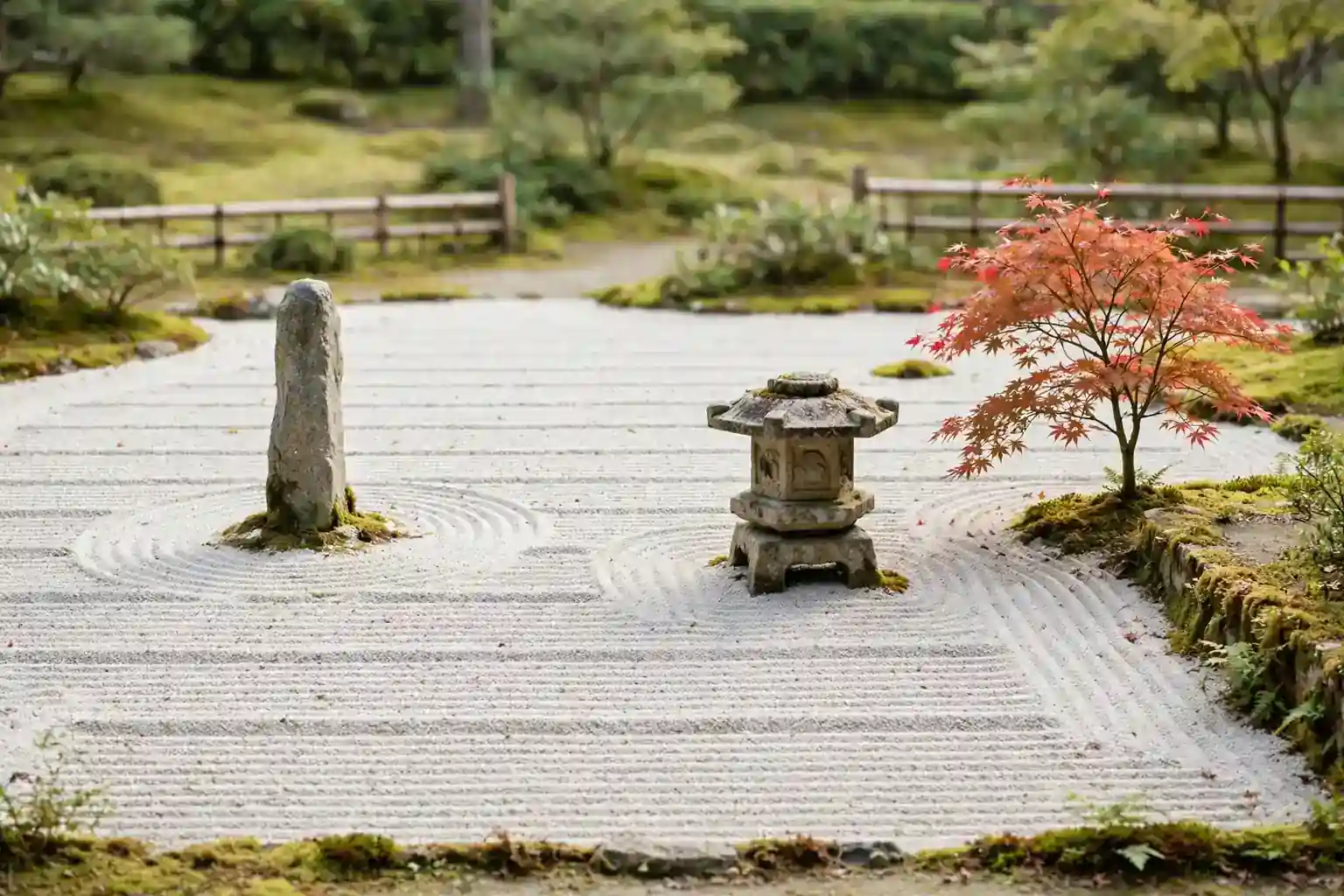
A small zen garden does not need a large yard. It needs a clear edge, a few honest materials, and one place for the eye to rest. Gravel, stone, moss, bamboo, and a single well placed plant can do more in a tiny plot than a long list of ornaments. These 18 small zen garden ideas cover balconies, courtyards, side yards, and tabletops, with options for sun, shade, renters, and small budgets. Start with the space you have, pick one focal point, and leave empty space on purpose. That empty space is part of the design, not a gap to fill.
Key Takeaways
- Give the garden a clear edge, such as timber, stone, or a low border, so the calm area reads as one intentional space.
- Pick one focal point per garden, such as a lantern, a standing stone, or a single maple, and keep the rest quiet.
- Use a small set of materials, gravel, stone, moss, and wood, repeated across the whole space.
- Leave open gravel or sand unplanted so the raked pattern and the stones can be seen.
- Choose plants for your light and watering habits, and keep the plant list short.
- Plan for upkeep: raking, weeding, and sweeping take only minutes in a small garden if the layout stays simple.
1. Classic Raked Gravel Bed with One Standing Stone
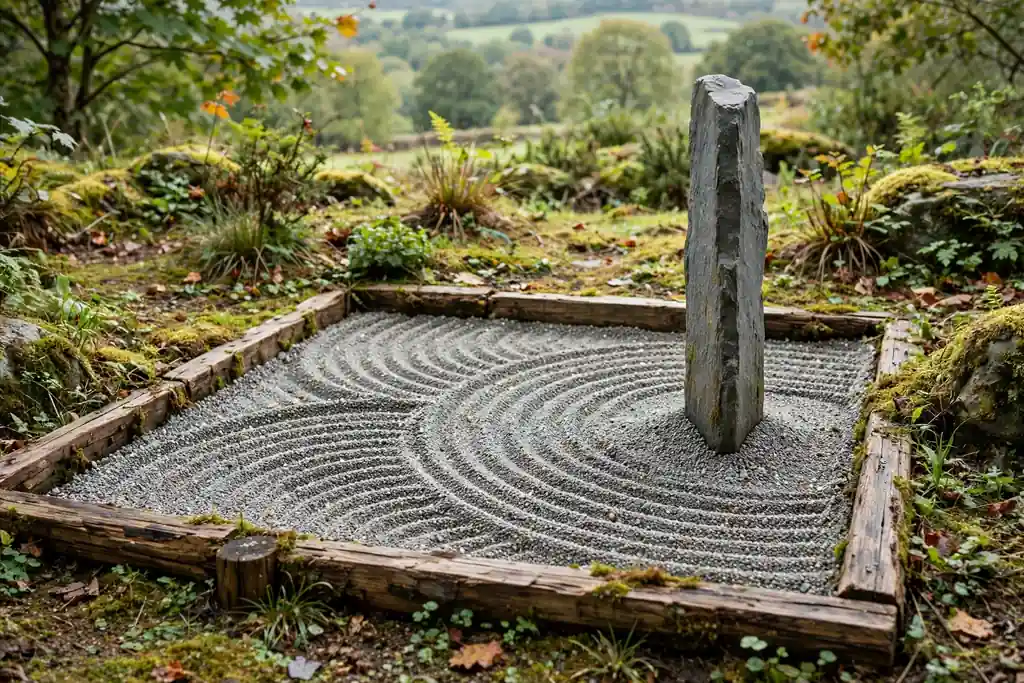
Lay a shallow bed of fine gravel in a timber frame, set one upright stone off center, and rake lines around it in slow curves. The gravel reads as water, the stone reads as an island, and the rake pattern gives the whole bed a finished look with very little planting. This is the classic small zen garden, and it suits a flat corner of a courtyard or a side yard.
Keep the gravel layer even and weed free by lining the bed first, and choose a stone with a shape you like from every angle, since it will be the only tall element. Rake after rain or wind, and vary the pattern now and then, from straight lines to rings around the stone, so the bed never looks tired.
2. Tabletop Tray Garden for a Desk or Shelf
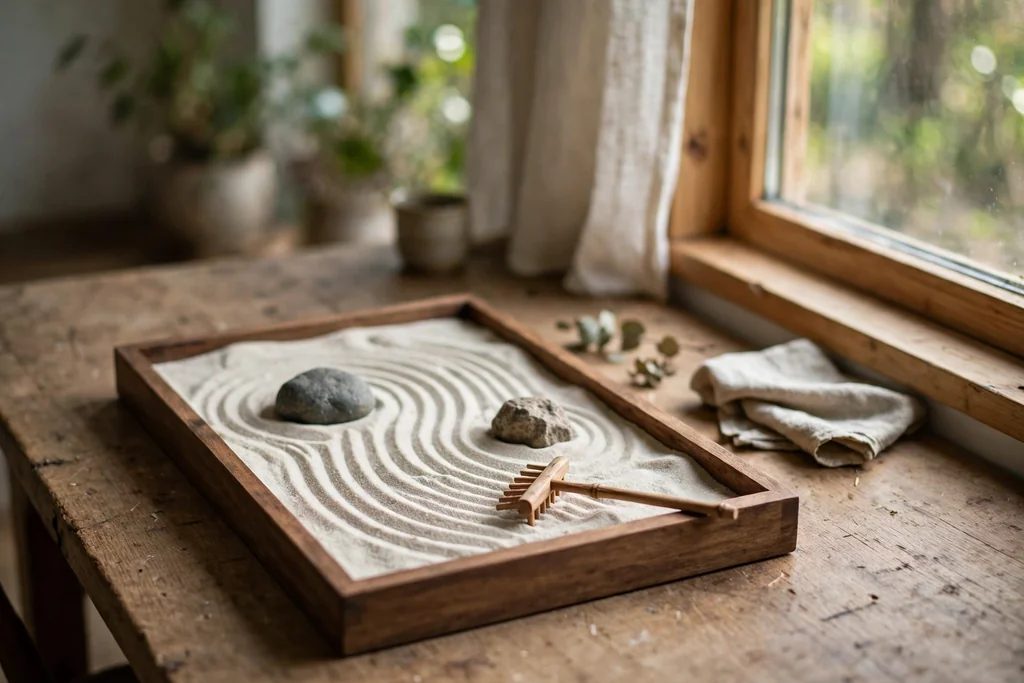
Build a miniature zen garden in a shallow wooden tray with fine sand, two or three small stones, and a tiny rake. It fits on a desk, a shelf, or a windowsill, and it gives you a calm five minute ritual at the start or end of the day. This is the best option when you have no outdoor space at all.
Use dry sand so it holds a rake pattern, and keep the tray on a mat or a felt pad to catch stray grains. Add one small plant, such as a tiny succulent or a sprig of moss in a separate pot, rather than planting into the sand. Move the stones when the pattern starts to feel familiar, since a small change keeps the tray interesting.
3. Balcony Corner Garden Behind a Bamboo Screen
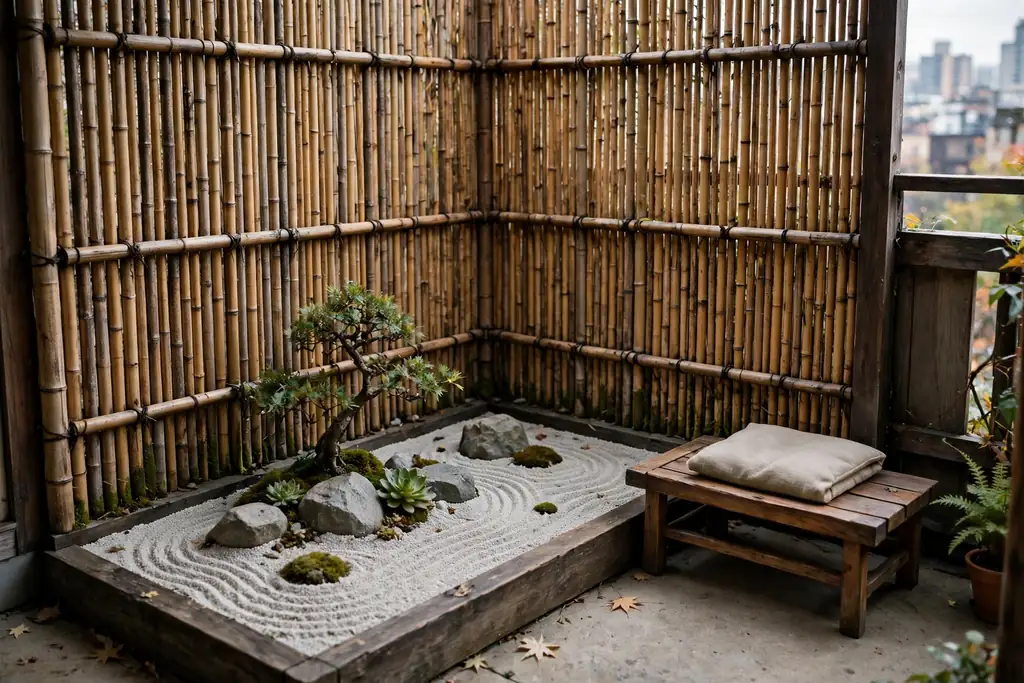
Turn a balcony corner into a private zen nook with a bamboo screen, a gravel tray or a large shallow planter, and a low seat. The screen blocks the view of neighbouring balconies, softens wind, and gives the corner a garden feel even on a concrete floor. This suits renters, since the screen and planters can move with you.
Keep the weight in mind and spread it across the floor rather than loading one spot, and use lightweight planters and a gravel tray with a solid base. The zoning advice in these studio apartment decorating ideas helps a balcony garden share a small home with seating and storage. Water plants over a tray, and sweep gravel back into the bed after windy days.
4. Courtyard Gravel Garden with Stepping Stones
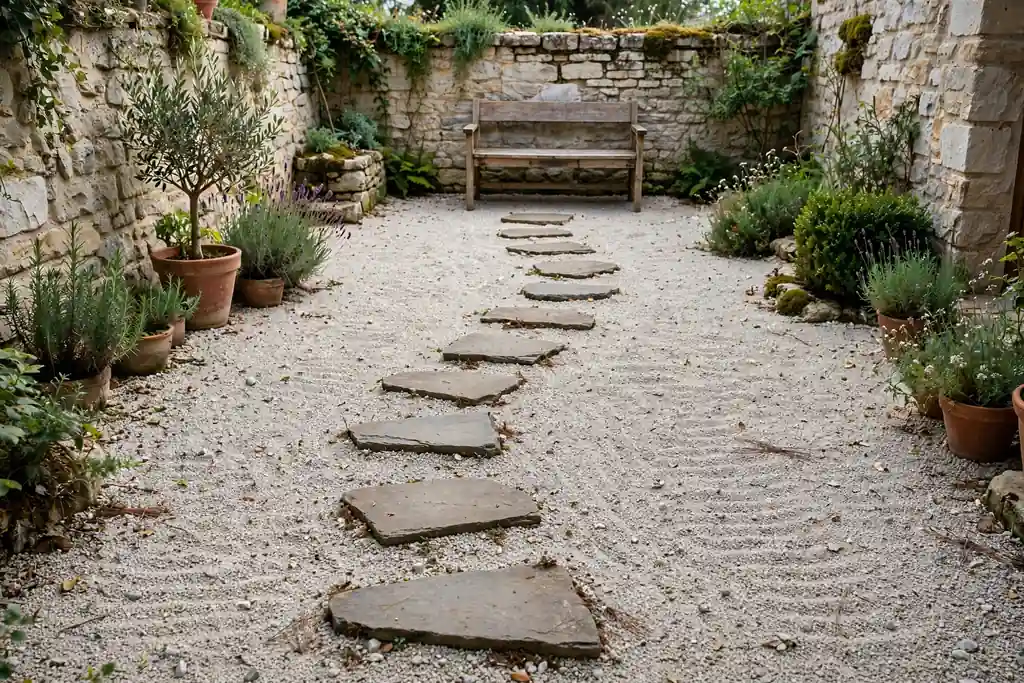
Cover a small courtyard in pale gravel and lay a path of flat stepping stones from the door to a seat or a focal stone. The stones give you a dry route across the gravel, and their spacing sets a slow walking pace, which suits the mood of the garden. This works well in a paved courtyard where full planting beds would crowd the space.
Set each stone level and firm, with gaps wide enough for a comfortable step, and rake the gravel between them in lines that follow the path. Keep the edges tidy with a stone or timber border so gravel stays off the path to the house. One potted maple or bamboo at the end of the path gives the walk a destination.
5. Moss Garden for a Shady Corner
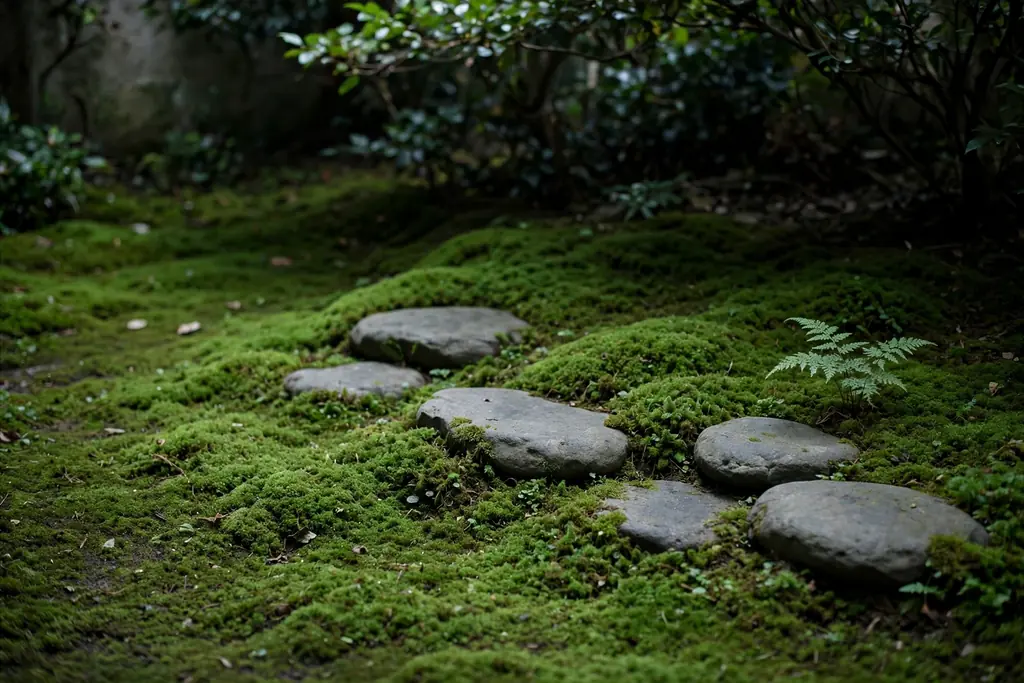
Plant a carpet of moss in a shady, damp corner where grass and flowers struggle, and add a few low stones and a small fern. Moss stays green without mowing, needs no flowers to look finished, and suits the quiet, soft character of a zen garden. It is a good answer for a north facing side yard or a spot under a tree.
Keep the soil moist while the moss settles, and clear fallen leaves by hand so they do not smother it. Avoid walking on the moss daily, and lay a single flat stone as a stepping spot if you need to cross it. In dry spells, a gentle watering keeps the green colour, and moss usually recovers well after a short dry period.
6. Dry Stream of River Rocks
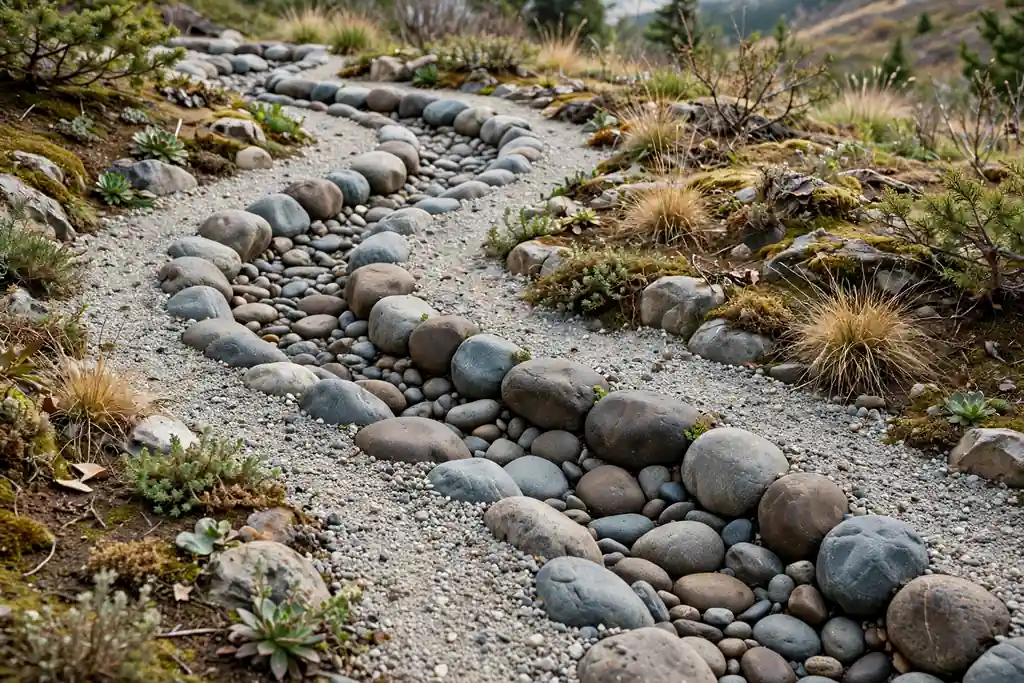
Shape a winding dry stream of smooth river rocks through a small bed, with larger boulders at the bends and finer gravel along the edges. The stream suggests flowing water without any plumbing, and it leads the eye across the garden in a natural curve. This suits a long narrow side yard or a slope where a straight bed would look stiff.
Dig a shallow channel first so the rocks sit below the surrounding soil, and use a mix of sizes so the stream looks gathered by nature rather than poured from a bag. Place the largest rocks where the stream would turn, and tuck a low grass or fern beside one bend for softness. Rake the surrounding gravel in lines that run with the stream, not across it.
7. Stone Lantern as a Single Focal Point
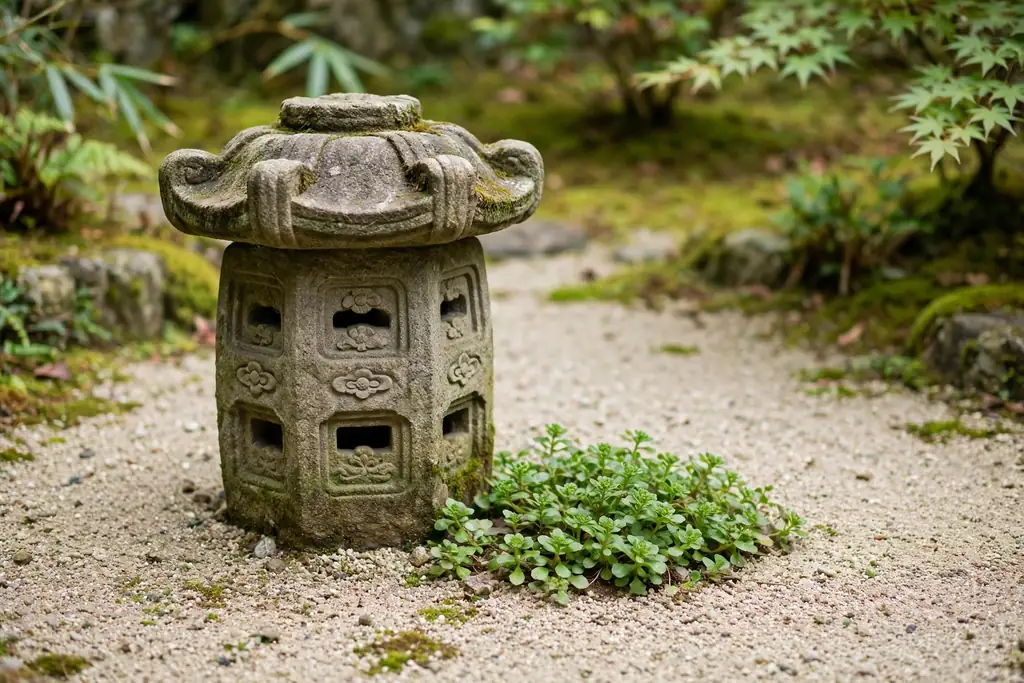
Place one stone lantern at the end of a path or beside a seat, and keep the ground around it simple with gravel and one low plant. A lantern gives a small garden a clear destination and a sense of age, even when the rest of the planting is new. It also works as a soft light source in the evening if you add a small candle or solar light inside.
Set the lantern on a firm, level base of compacted gravel or a flat stone so it cannot tilt, and keep tall plants away from it so its shape stays visible. Choose a size that fits the space, since a large lantern can crowd a tiny garden, while a small one can sit on a plinth or a low rock. Clean moss or algae off the stone once a season to keep the carved lines clear.
8. Bamboo Fountain Beside a Gravel Bed
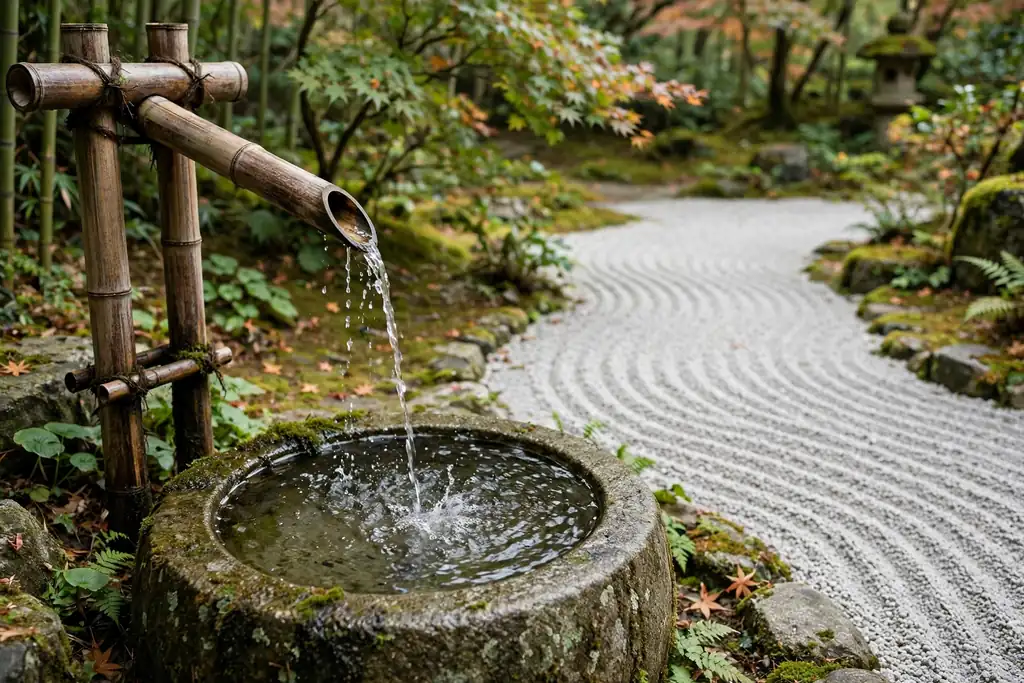
Add a small bamboo fountain, with water tipping from one bamboo pipe into a stone basin, beside a gravel bed. The sound of moving water masks street noise and gives the garden a living centre, while the bamboo keeps the whole feature natural and simple. This suits a courtyard corner near a seat, where you can hear the water without seeing pipes or pumps.
Use a small recirculating pump hidden in the basin, and top up the water in hot weather, since shallow basins lose water fast. Keep the basin level and clear of leaves, and bring the pump indoors if hard frost is expected. Pair the fountain with one upright stone and a raked gravel edge, and leave the rest of the bed open so the sound, not clutter, fills the space.
9. Sand and Stone Spiral Pattern
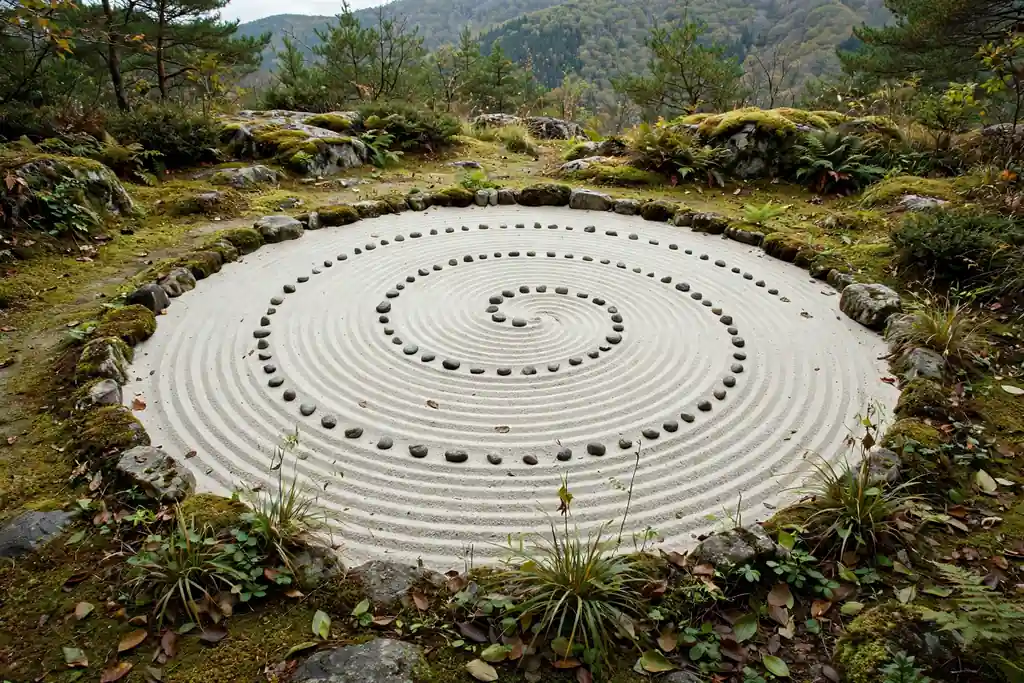
Rake a spiral pattern into a round sand bed, with stones placed along the spiral at widening gaps. The spiral draws the eye inward and makes a very small bed feel designed rather than empty, which helps when you only have a metre or two to work with. This idea suits a round planter, a circular bed, or a tray garden scaled up for a patio.
Start the spiral at the centre with a single upright stone, and rake outward in one smooth motion so the lines stay even. Place the outer stones farther apart than the inner ones, matching the widening curve. Refresh the pattern after rain, and keep the sand dry and fine, since coarse sand holds a weaker line.
10. Raised Wooden Frame Bed for Easy Raking
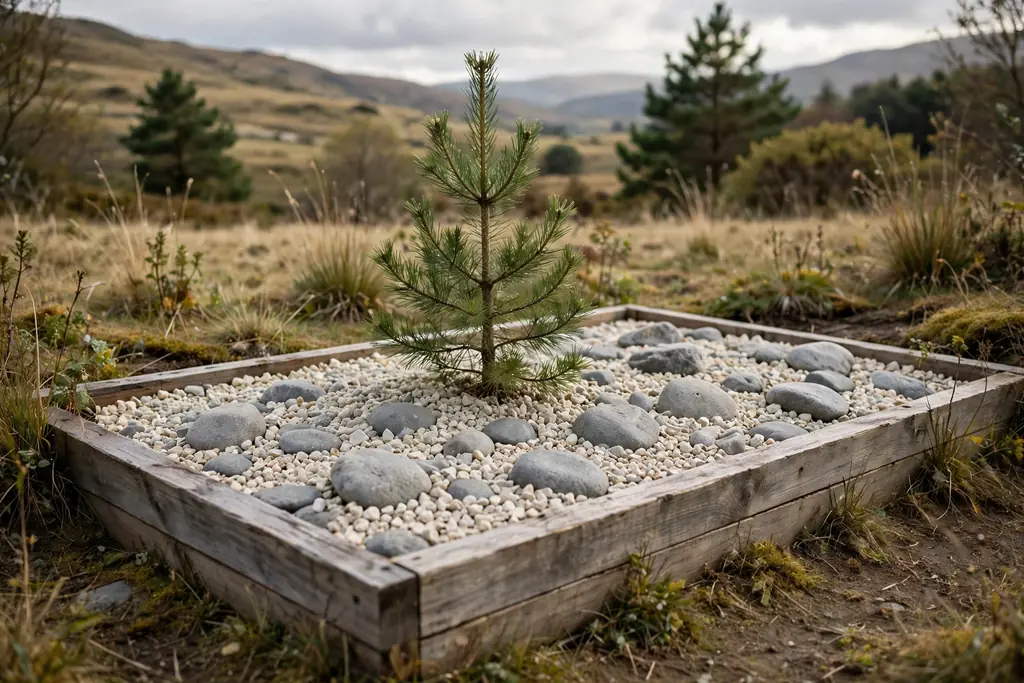
Build a low raised bed from cedar or treated timber, fill it with gravel and sand, and arrange stones and a few plants inside the frame. The raised edge keeps gravel in place, gives you a seat height edge to sit on while raking, and makes the garden easy to tend without kneeling. This is a practical choice for a patio, a deck, or a garden with poor soil.
Line the base to stop weeds, and leave a small drainage gap so rain does not pool in the bed. Keep the frame depth shallow, since a deep bed needs far more gravel than a small garden warrants. One low shrub or a small pine at one end gives height, and the rest of the bed can stay open for raking.
11. Single Potted Japanese Maple as the Star
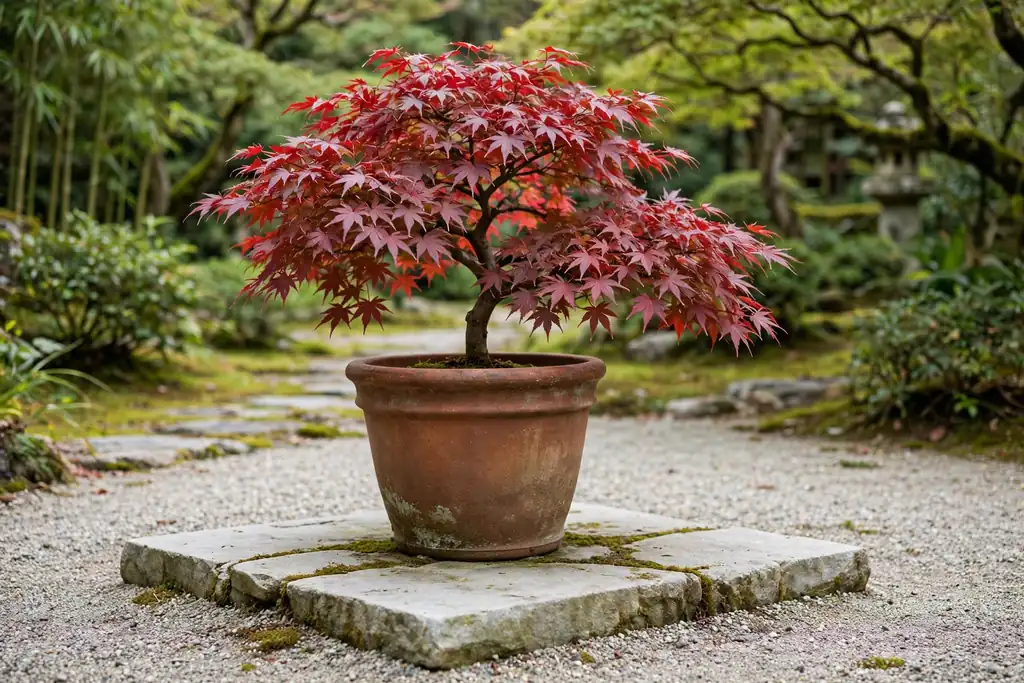
Grow one Japanese maple in a large pot, set it in a gravel bed or on a stone plinth, and let it be the only tall plant in the garden. The maple gives seasonal colour, soft shade, and a graceful shape, and a single specimen always looks more considered than several competing plants. This suits a balcony, a courtyard, or a front step where a planted tree is not possible.
Choose a pot wide enough to stay stable in wind, with drainage holes and a tray, and water steadily in summer since pots dry out fast. Prune lightly to keep an open shape, removing only crossed or dead branches. Underplant the pot with nothing, or with a thin ring of moss, so the trunk and the gravel around it stay visible.
12. Vertical Zen Wall with Small Planters
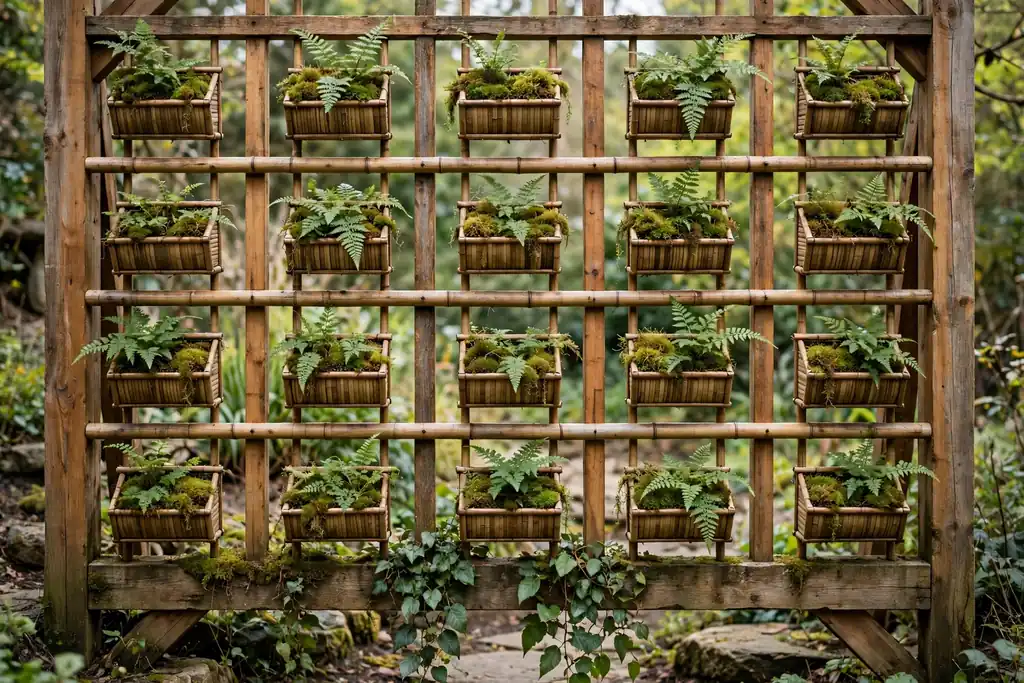
Fix a simple timber or bamboo panel to a wall or fence, and hang small planters of moss, ferns, and trailing plants in a calm grid. A vertical garden adds green to a balcony or a narrow passage without using floor space, and the panel itself becomes the garden frame. This suits renters if the panel hangs from hooks rather than fixed screws.
Keep the plant list to three or four types so the wall looks calm, not crowded, and water each planter over a tray to protect the wall behind it. Leave gaps between planters so the timber shows, and place one small stone or lantern at the base to anchor the display. Check the fixings can carry the weight of wet soil before you fill every planter.
13. Low Bench Seating Nook for Quiet Sitting
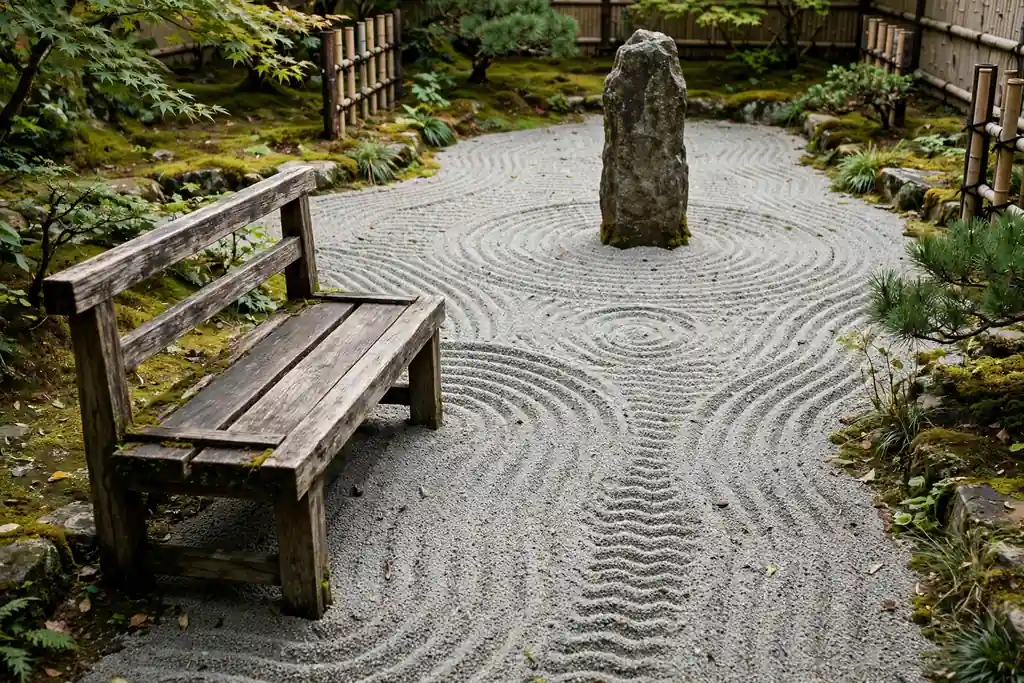
Place a low wooden bench or a flat stone seat beside a gravel bed, facing the focal stone or lantern, with a small side surface for tea. A seat turns a garden you look at into a garden you use, and it gives the space a purpose beyond decoration. This suits a courtyard corner or the end of a side yard path.
Face the seat toward the calmest view, not toward the house or the street, and keep the ground under it firm with gravel or a flat stone. Add a cushion in a washable cover if you sit out often, and store it indoors in wet weather. One low plant beside the bench softens the edge without blocking the view, and a small lantern nearby makes the nook usable in the evening.
14. Stone Water Basin for Ritual Hand Washing
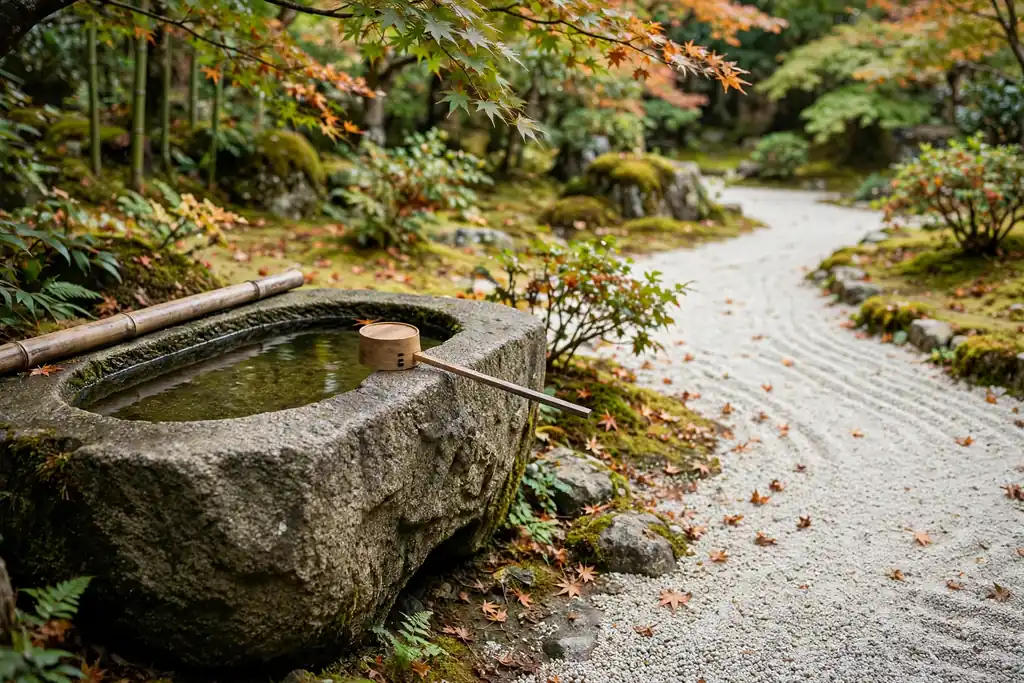
Set a carved stone basin, with a bamboo ladle and a small bamboo pipe feeding it, beside a path or a seat. The basin borrows a traditional garden feature, gives visitors a moment to pause and wash their hands, and adds still water that reflects the sky. This suits a garden entrance or a quiet corner near a seating nook.
Keep the basin on a level stone base, with gravel underneath to catch splashes, and top up the water often in summer. Clean the basin regularly so algae does not build up, and empty it before hard frost if it is shallow. Surround it with one fern or a patch of moss, and keep the rest of the ground open so the basin stays the focus.
15. White Pebble Border Along a Garden Path
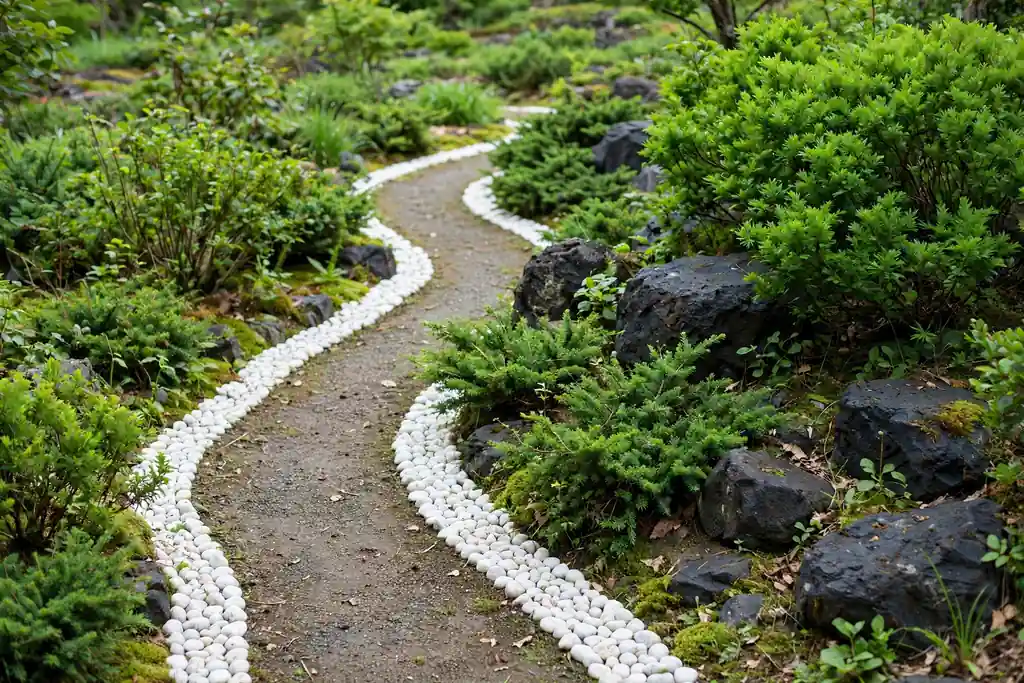
Edge a garden path or a planting bed with a band of white pebbles, laid between a timber or stone border and the lawn or gravel. The pale band gives a crisp, clean edge, brightens a shady path, and separates planting from walking space without a fence. This suits a small front garden or a path that otherwise blurs into the lawn.
Lay a weed barrier under the pebbles, and keep the band narrow, about one hand span wide, so it reads as an edge rather than a second path. Rinse the pebbles once a season to keep them pale, and top up any thin spots after heavy rain. Pair the white band with darker stones or green planting nearby, since the contrast is what makes the edge stand out.
16. Indoor Meditation Corner with a Mini Garden
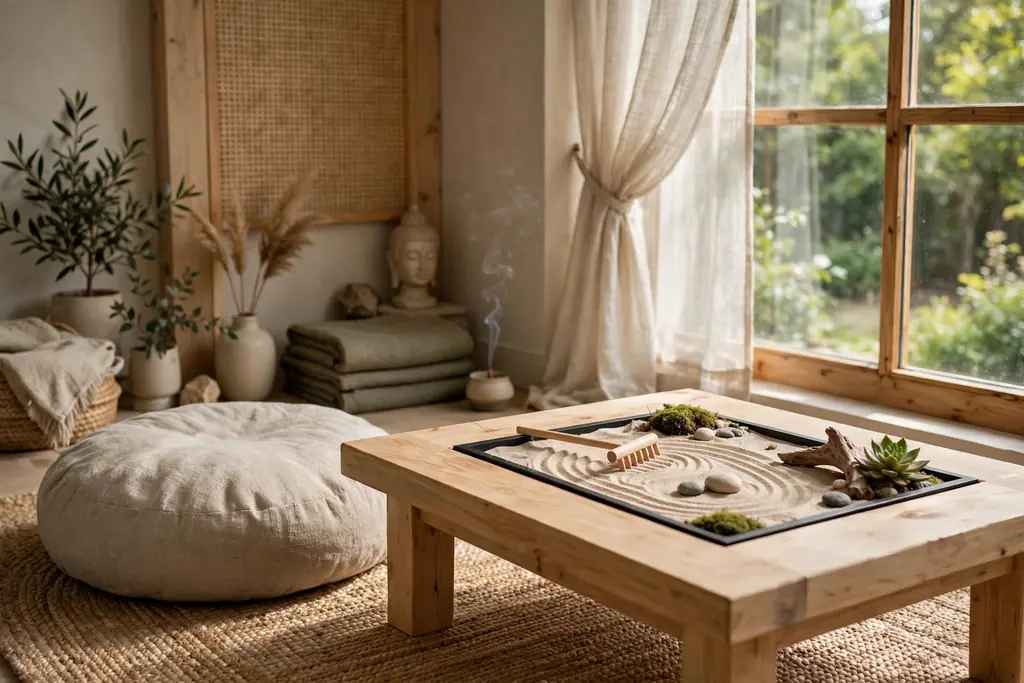
Set a small zen tray garden on a low table beside a floor cushion, with a candle and one plant nearby, to make an indoor meditation corner. The tray gives your eyes a calm focus, the cushion marks the sitting spot, and the whole corner takes up no more room than a single chair. This suits a bedroom corner, a quiet living room spot, or a home office.
Keep the corner free of clutter, with only the tray, the cushion, and one or two items you use for sitting practice. Rake the tray before you sit, since the short ritual helps mark the start of quiet time. Place the corner near a window for daylight if you can, and keep the plant simple, such as a small fern or a bamboo stem in water.
17. Ornamental Grasses and Stone Garden
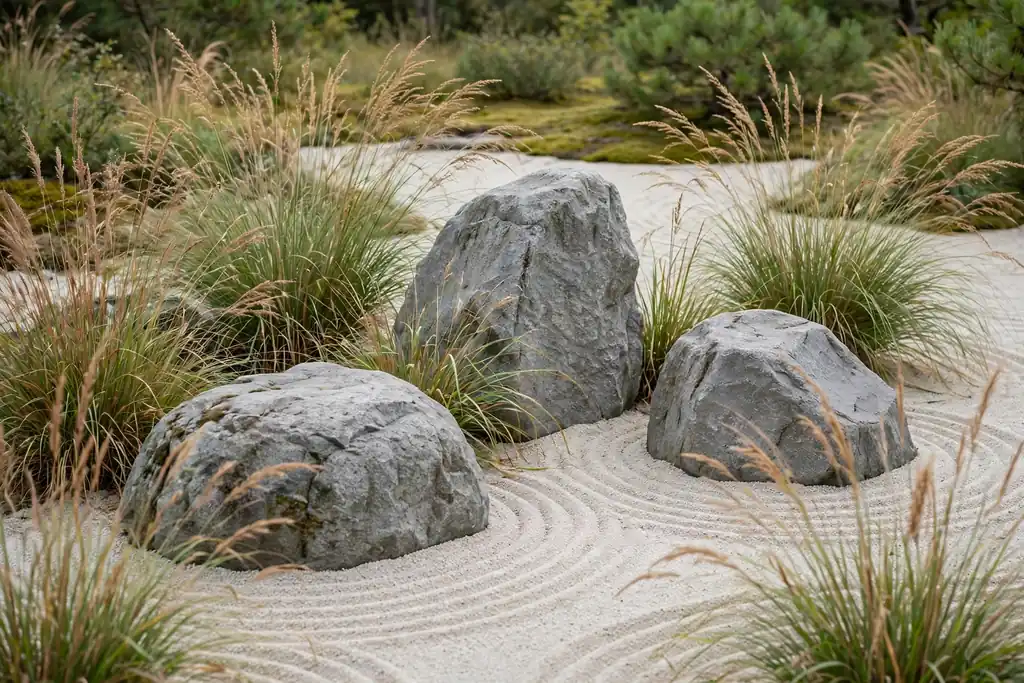
Plant a small group of ornamental grasses with a few large stones in gravel, and let the grasses move in the wind while the stones stay still. The contrast of soft movement and hard stillness is at the heart of a zen garden, and grasses need far less care than flower beds. This suits a sunny, dry spot where moss would struggle.
Choose grasses that stay compact, such as small fountain grass or blue fescue, and leave space between clumps so each one keeps its shape. Cut the grasses back once a year in late winter before new growth starts, and rake the gravel around the stones after trimming. Keep the stone count low, three or five large stones, so the grasses, not a rock pile, fill the bed.
18. Soft Evening Lighting for a Night Garden
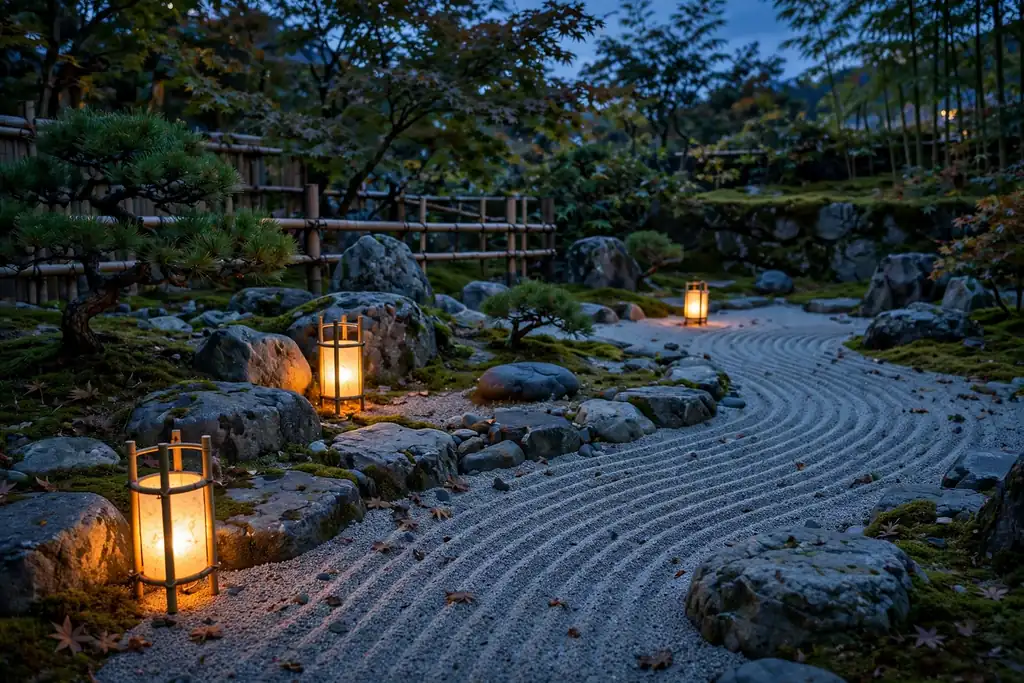
Light a small zen garden at night with a few low solar lanterns or small ground lights placed beside stones, a lantern, and the path. Soft light lets you enjoy the garden after dark, picks out the shapes of stones and plants, and makes a tiny garden feel larger in the evening. This suits any small garden with a seat, since the lit view becomes the evening focus.
Keep the lights low and warm, and point them at stones or plants rather than at the seat, so you are not dazzled while sitting. Use solar lights where wiring is awkward, and check they charge in daylight before relying on them for a path. Fewer lights, well placed, always look calmer than a row of bright spots, so start with three and add one at a time.
Conclusion
A small zen garden works when every element earns its place and empty space is treated as part of the design. Pick a clear edge, one focal point, and a short list of materials, then build the garden in a size you can rake, water, and sweep in a few minutes. Whether you start with a tabletop tray, a balcony corner, or a courtyard gravel bed, keep the layout simple and let it settle before adding more. For small homes, the zoning advice in these studio apartment decorating ideas can help a garden corner sit well beside seating and storage. Return to the garden often, rake the pattern again, and enjoy the quiet it brings to a small space.
FAQs
What is the smallest size for a zen garden?
A tray garden can be as small as a dinner plate, and an outdoor gravel bed can work in about one square metre. The key is a clear edge, one focal point, and open gravel, not a large area. Start small and expand only if the space and upkeep allow it.
What gravel is best for a small zen garden?
Fine, pale gravel or crushed granite in a small grain size holds a rake pattern well and looks calm. Avoid large, mixed colour stones for the main bed, since they break up the pattern. Use larger river rocks only as accents, such as a dry stream or a border.
Do zen gardens need a lot of upkeep?
A small zen garden needs little upkeep if the layout stays simple. Rake the gravel after wind or rain, pull weeds while they are small, sweep the edges, and water plants as needed. Most small beds take only a few minutes a week, plus a seasonal tidy.
Can I make a zen garden on a balcony?
Yes, if you keep weight low and use planters, a shallow gravel tray, and a bamboo screen rather than a full soil bed. Spread the weight across the floor, use a tray under planters, and check balcony rules before fixing anything to walls or rails.
What plants suit a small zen garden?
Moss suits shade and damp, ornamental grasses suit sun and dry soil, and a single Japanese maple suits a pot in a sheltered spot. Keep the plant list short, with three or four types at most, and choose plants that fit your light, watering habits, and climate.
How do I keep a zen garden looking calm, not empty?
Leave open gravel on purpose, and let one focal point, such as a lantern or a standing stone, carry the design. Limit colours to stone, gravel, wood, and green, and remove any ornament that does not add to the scene. Empty space is part of the look, not a problem to solve.