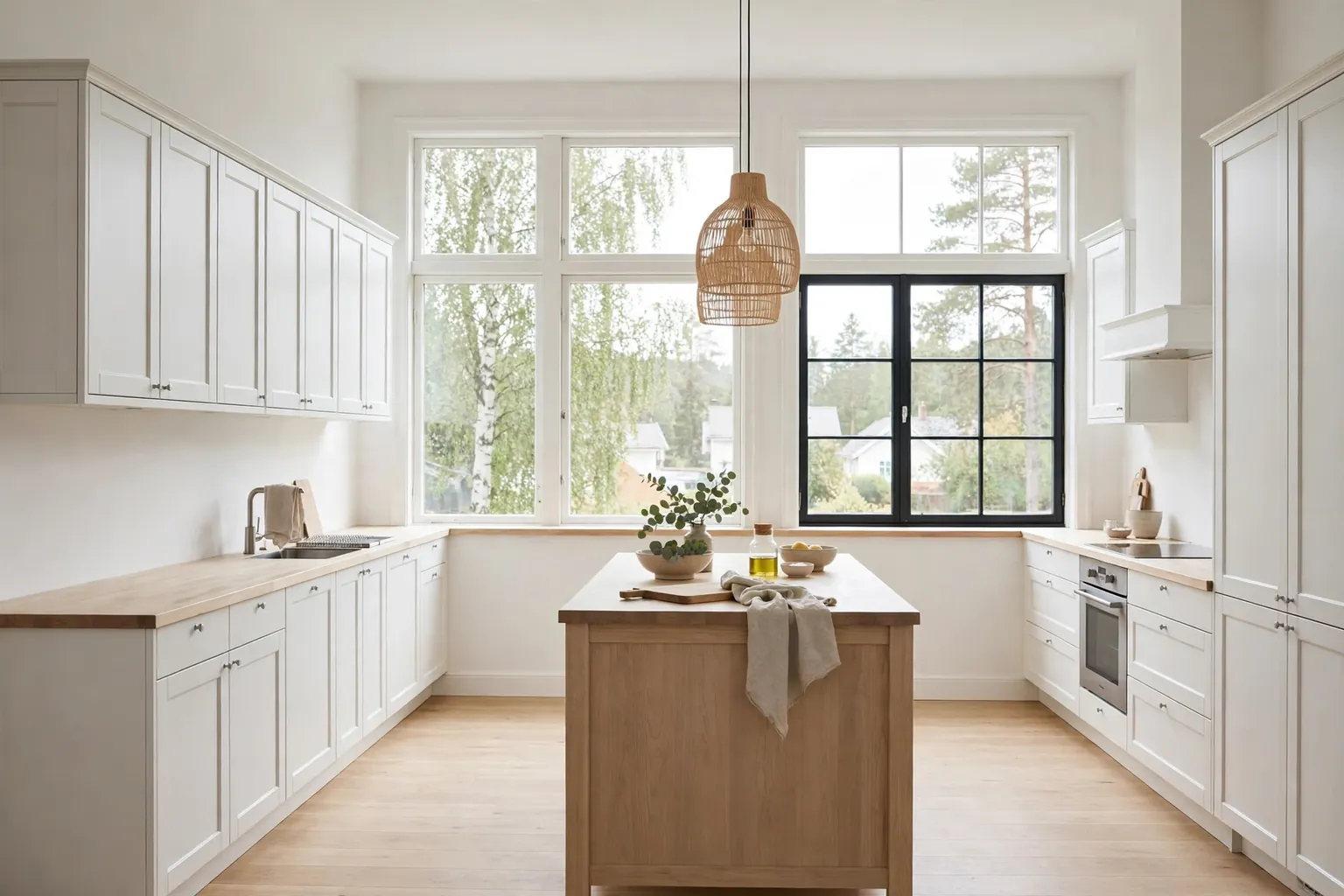
A Swedish kitchen starts with light. White walls, pale wood, and clear counters do most of the work, while small details in blue, black, or natural linen give the room its character. Nothing needs to be grand or costly. A painted cabinet run, a wood counter, a linen curtain, or a well placed plant can shift a plain kitchen toward the calm, polished look Swedish rooms are known for. These 26 Swedish kitchen ideas cover cabinets, counters, tile, seating, windows, storage, and small finishing touches, so you can start with one change or build a full scheme over time. Begin with the change that fixes your biggest problem, test paint and tile samples in daylight and evening light, and keep work surfaces clear so cooking stays easy.
Key Takeaways
- Start with light: white or pale walls, a pale floor, and clear glass let daylight carry the room.
- Pair white cabinets with one warm material, such as pale oak or birch, so the kitchen feels calm rather than cold.
- Repeat one accent, such as muted blue, black hardware, or striped linen, in two or three places for a planned look.
- Keep work surfaces plain and easy to clean, and store everyday items in closed cabinets or glass jars.
- Test paint, tile, and wood samples beside your floor and counter in daylight and evening light before a large change.
- Small, removable changes like curtains, towels, plants, and a fika tray suit renters and small budgets.
1. White Shaker Cabinets with Pale Wood Floors
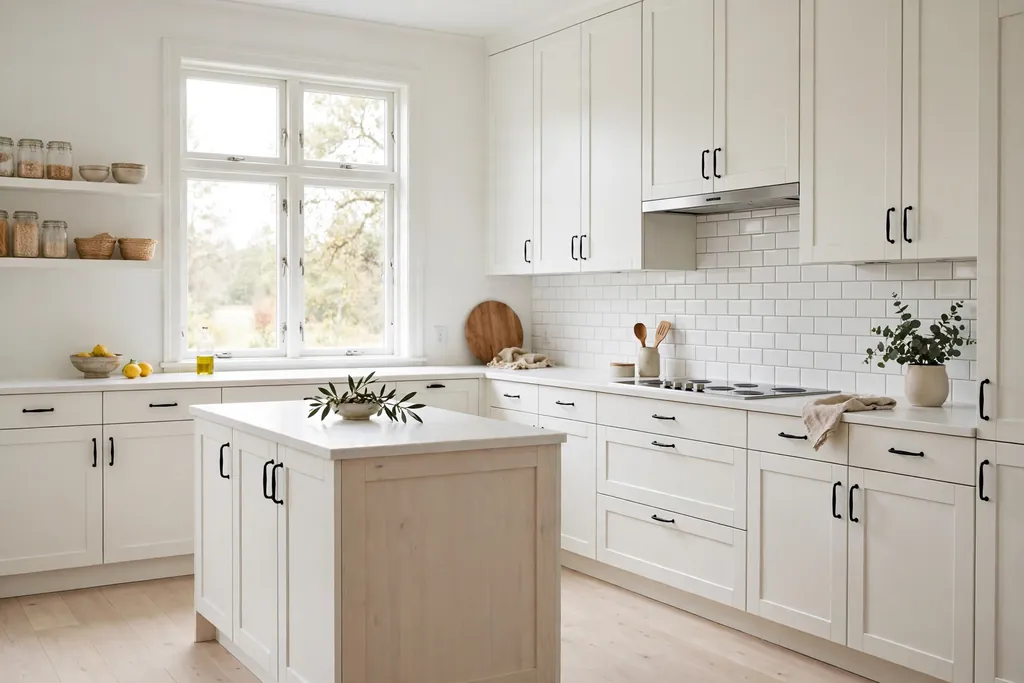
Paint shaker cabinets white for a kitchen that feels bright and orderly without looking bare. Shaker doors add simple shape, and a pale wood floor warms the white so the room feels lived in rather than clinical. This suits kitchens with good daylight, where white reads as fresh rather than stark.
Keep handles simple in black or brushed steel, and choose a counter in pale wood or white stone so the cabinets stay the focus. If you worry about upkeep, paint one run first and live with it for a week before painting the rest. Wipe doors near the stove each week, since white shows cooking splashes.
2. Light Oak Flat Front Cabinets
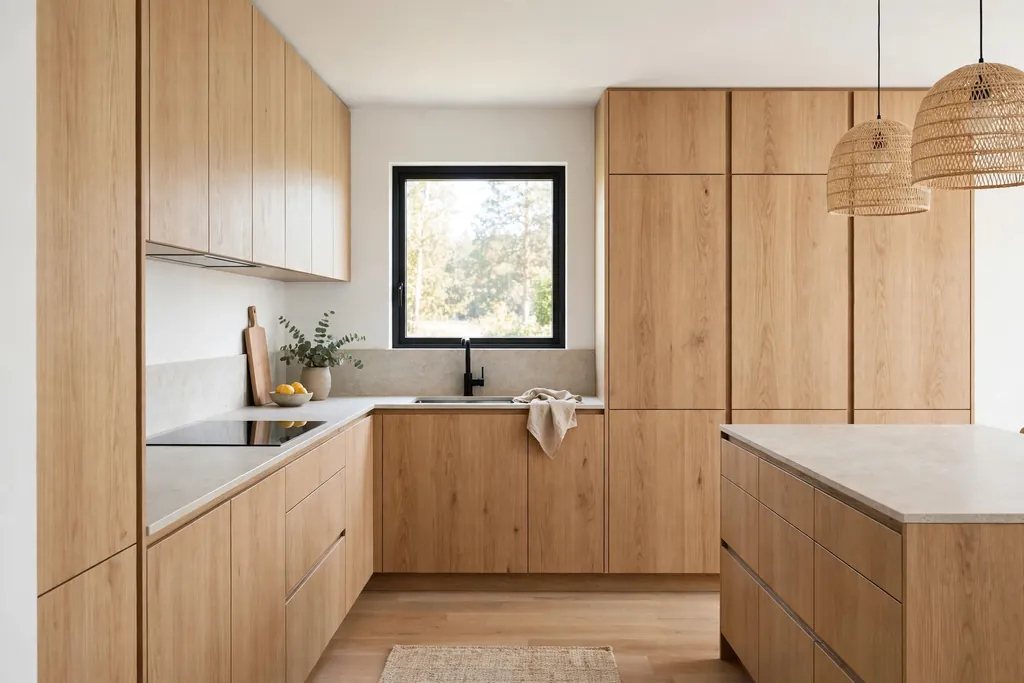
Choose light oak flat front cabinets for a modern Swedish kitchen with a quiet wall of wood. Without framed doors breaking the surface, the grain itself becomes the feature, which suits open plan rooms where the kitchen stays in view. A pale oak keeps the room bright, while a deeper oak suits a larger kitchen with strong daylight.
Keep one texture in the room to stop flat fronts from feeling flat, such as a stone counter or a woven runner. Clean the fronts with a soft cloth, since fingerprints show more on flat doors than on framed ones. For help choosing the right undertone for the rest of the room, see these ideas for colors for your kitchen cabinets.
3. Two Tone White Uppers and Wood Lowers
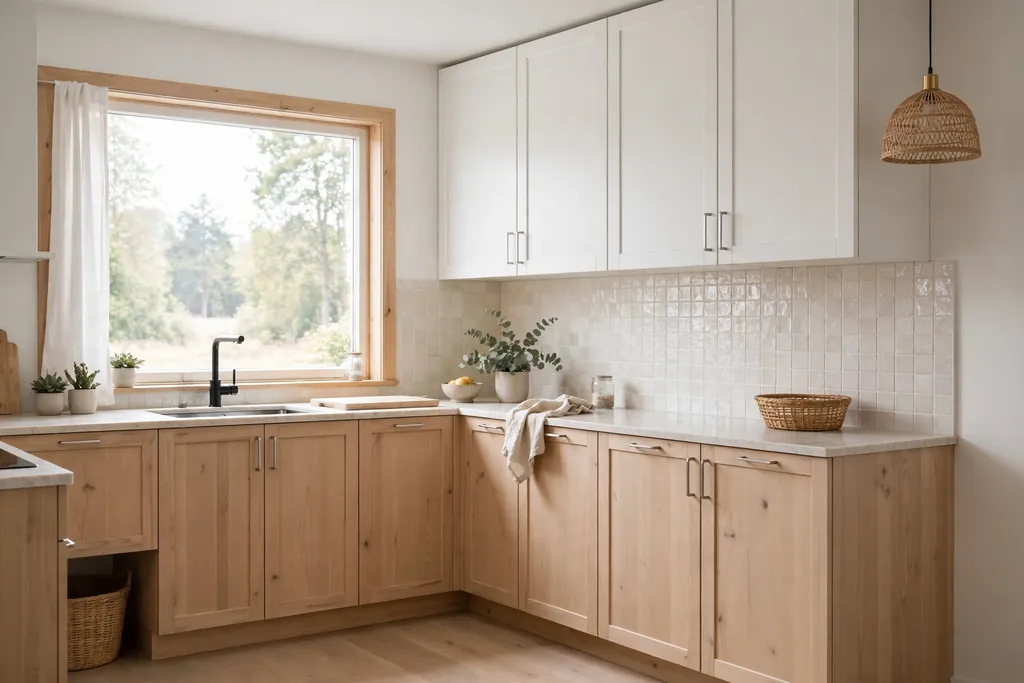
Use white on the upper cabinets and light wood on the lowers for a lighter take on a wood kitchen. The white uppers keep the eye moving up and make a small kitchen feel taller, while the wood base grounds the room. This split also makes repainting easier later, since only half the cabinets need a new color.
Pair the scheme with a pale backsplash and a white or wood counter. A black or steel handle on the lower cabinets ties the two tones together. Keep the wall color plain so the two cabinet materials can do the work.
4. Muted Swedish Blue Island
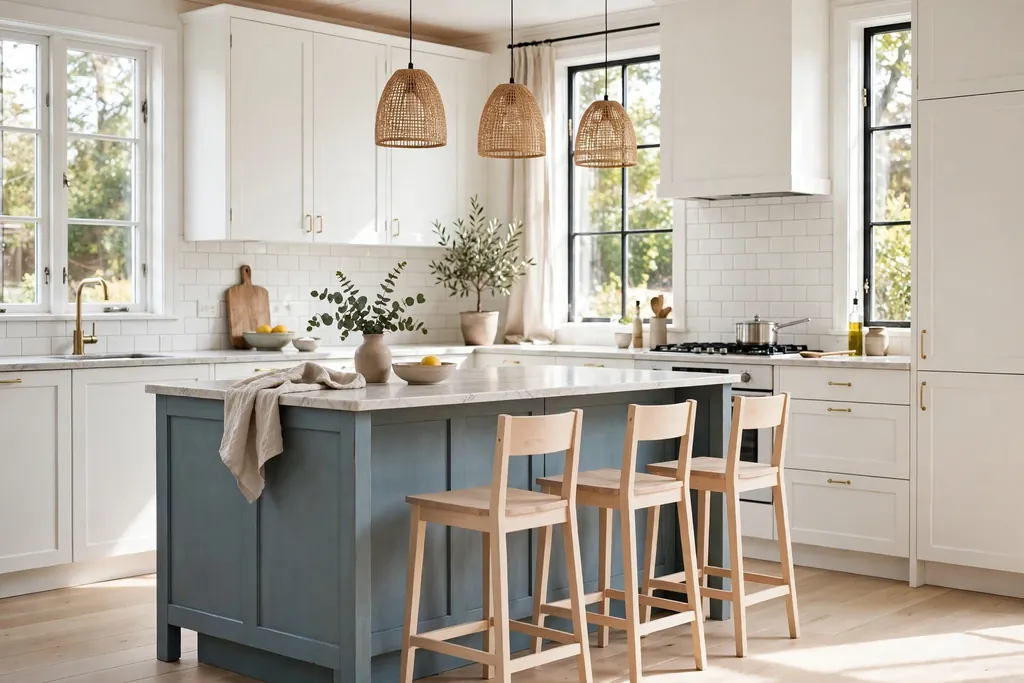
Paint only the island in a muted Swedish blue for color in one clear place. The blue reads as calm rather than bold, and it pairs well with white cabinets, pale wood stools, and a light counter. A blue island suits a white kitchen that feels too plain, and it is easier to repaint later than a full set of cabinets.
Repeat the blue once more, in a rug, a vase, or a tea towel, so it looks planned rather than random. Choose a hard wearing counter for the island, since it takes the most daily use. Keep the rest of the room neutral, so the island stays the single color note.
5. Open Light Wood Shelves with White Dishes
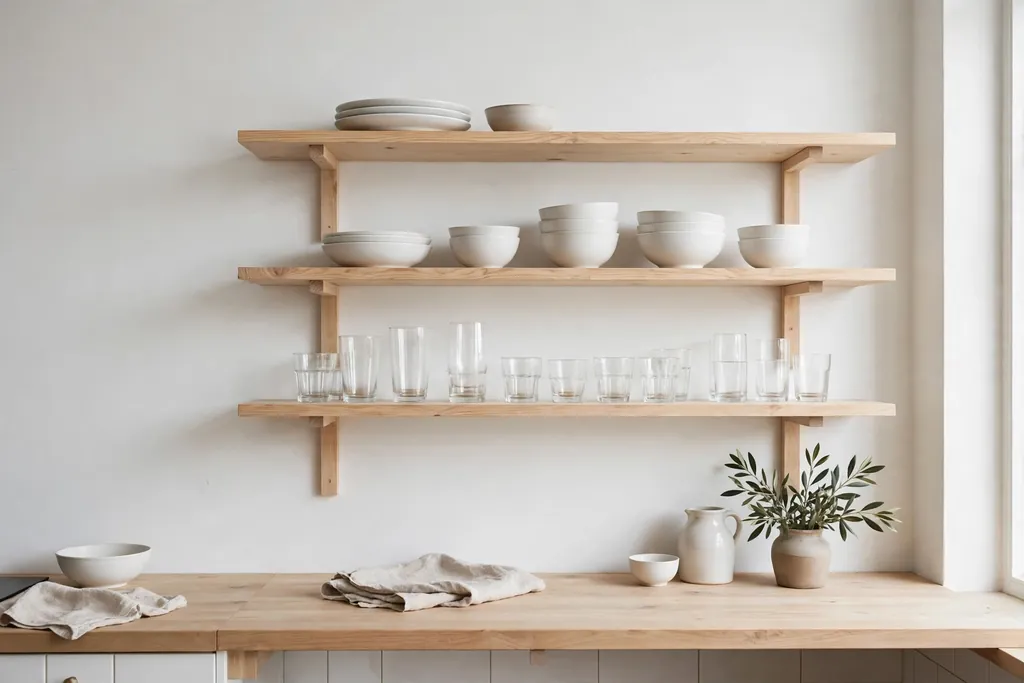
Fit open light wood shelves on one wall and display white plates, bowls, and clear glasses against them. The wood warms the wall and adds display space without painting a single cabinet. This suits a kitchen with one blank wall or a short run above a counter.
Keep the shelf items to daily pieces you actually use, and leave breathing room between groups so shelves read as tidy, not crowded. Our guide to how to style open shelves shows how to group by type and height. Dust open shelves weekly, since open storage collects cooking film.
6. White Subway Tile Backsplash
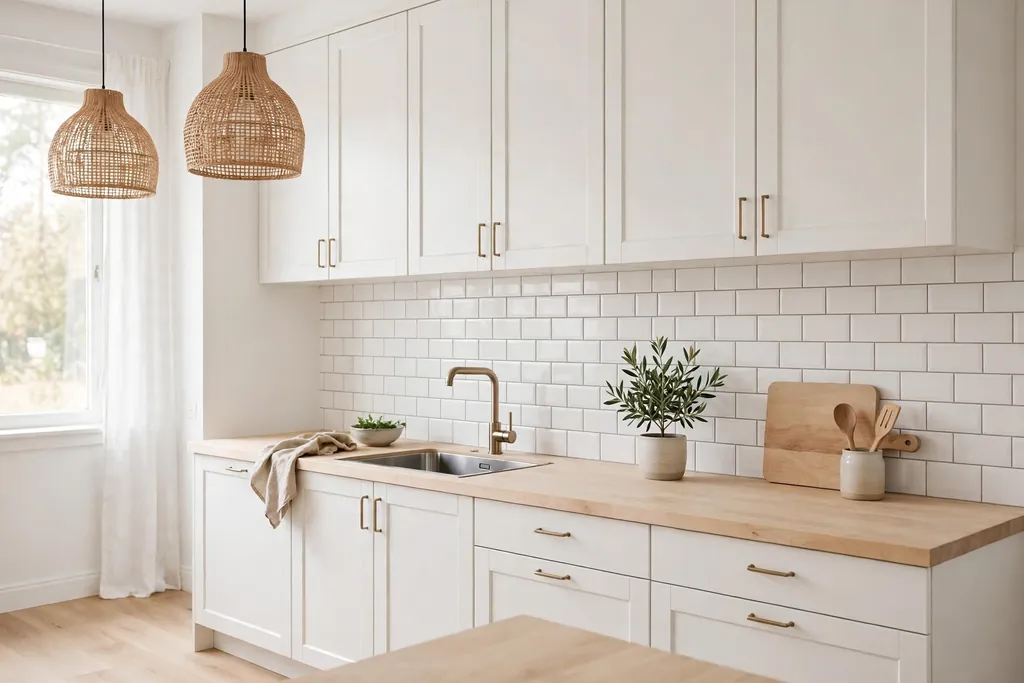
Lay white subway tiles as a backsplash for a classic shape that suits almost any Swedish kitchen. A white tile with a pale grout feels soft and calm, while a white tile with a darker grout makes the brick pattern clearer. Subway tiles suit most kitchens because the shape is familiar and the size works around sockets and windows.
Pair white tile with white cabinets and a pale wood counter, so the wall stays quiet. Order a few spare tiles for future repairs, and seal grout in the splash zone behind the sink and cooker. Check a tile sample under kitchen lights at night as well as in daylight, since white tiles shift tone between lights.
7. Pale Butcher Block Counters
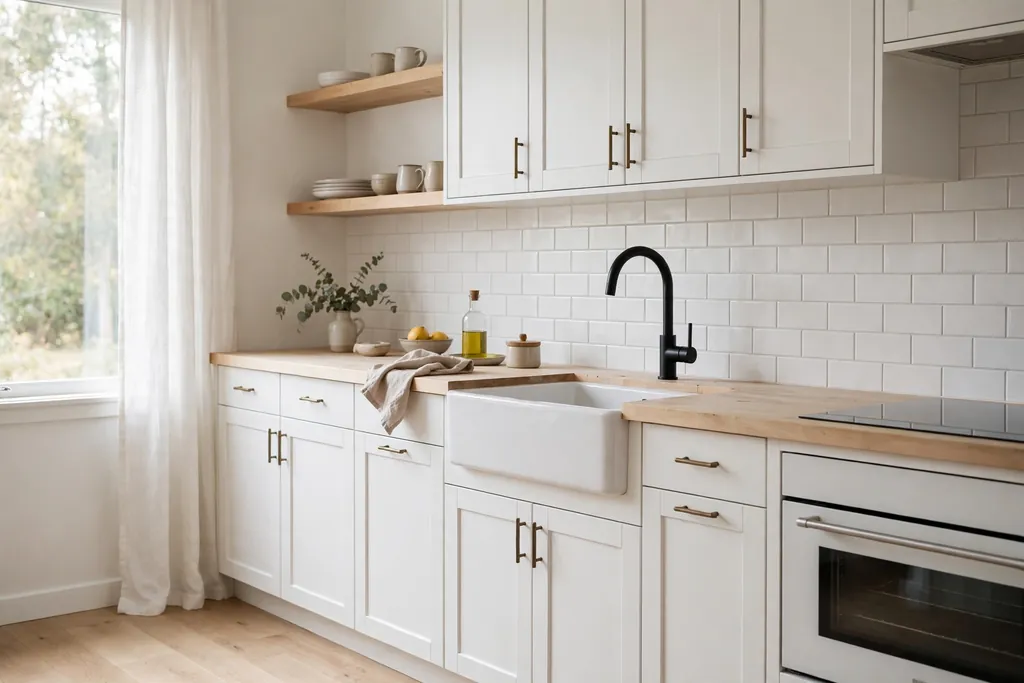
Use a pale butcher block counter for warmth at hand level in a white kitchen. Light wood counters suit white cabinets, black handles, and white tile, and they give a work surface that feels softer than stone. This is a good choice for a kitchen where the counter is the main warm material in the room.
Oil or seal the wood near the sink and stove, and wipe spills promptly so the surface stays even. Use boards for chopping and hot pans, and keep the backsplash simple so the wood grain stays clear. If a full wood counter is out of reach, use wood on the island only, with a pale stone counter on the main runs.
8. White Ceramic Farmhouse Sink
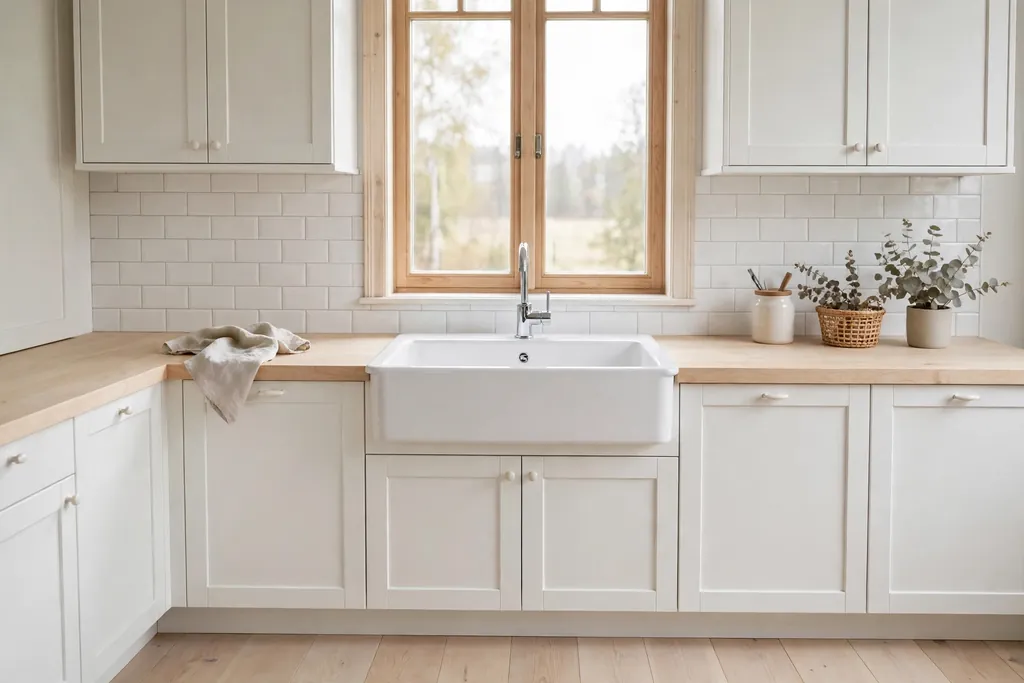
Fit a white ceramic farmhouse sink, with its deep bowl and front panel on show, for a practical sink that also suits a Swedish kitchen. A white sink suits white or wood cabinets, and it pairs well with a simple chrome or steel tap. The front panel is visible from across the room, so it acts as a decor piece as well as a sink.
Keep the counter around the sink plain, and choose a tap finish that matches your cabinet handles. A farmhouse sink needs a cabinet made to fit it, so check sizes before ordering. Clean the sink with a soft cloth and mild cleaner to protect the glaze, and avoid harsh pads that can dull it.
9. Light Wood Breakfast Nook Bench
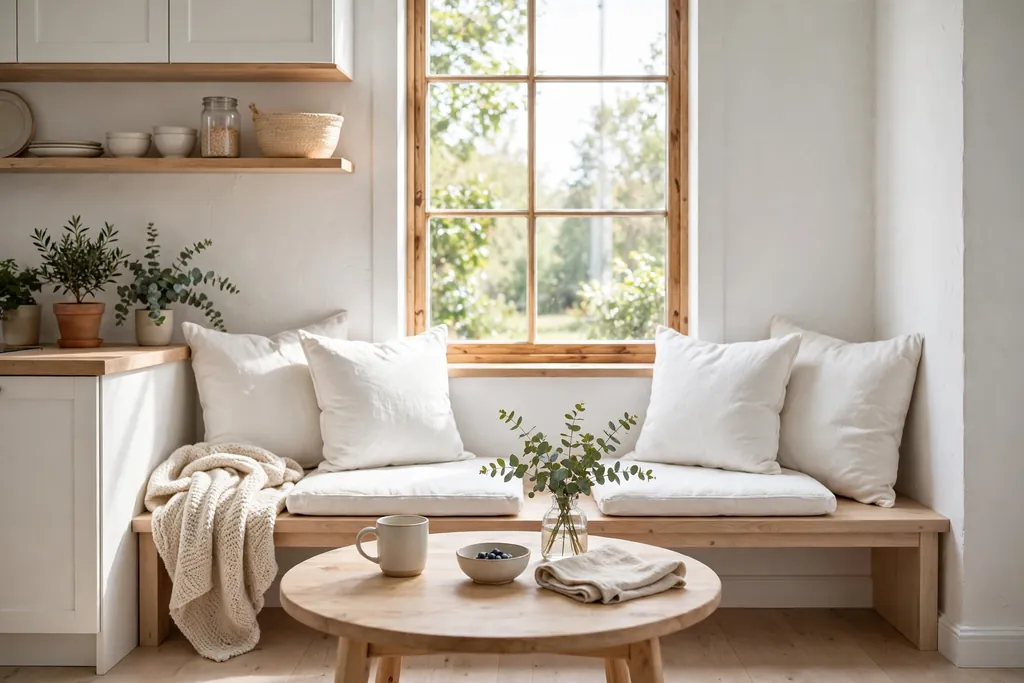
Build or buy a light wood bench for a breakfast nook, with white cushions and a small wood table beside a bright window. A bench seats more people than chairs in the same footprint, and it suits a small kitchen where a full dining table would crowd the room. This is a good way to add seating that stays in view from the kitchen.
Keep cushions washable, since kitchen seating takes daily spills, and add storage under the bench lid if your bench allows it. Keep the table small enough to slide in and out, and leave room to walk past the bench without turning sideways. A plain runner or a single vase keeps the nook calm.
10. White Paper Pendants Over the Island
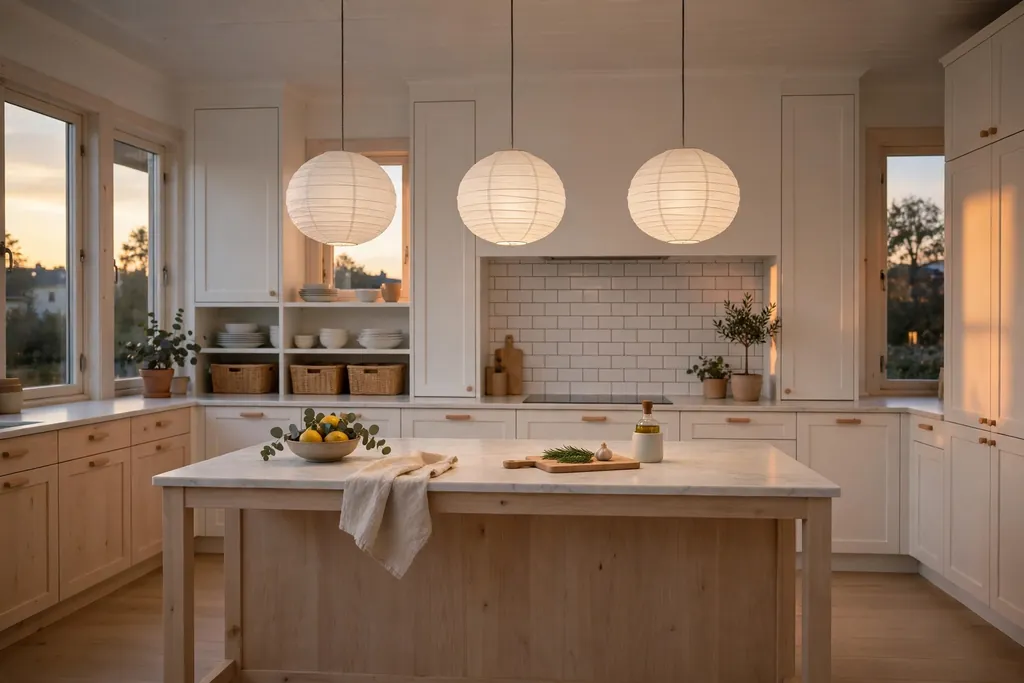
Hang two or three white paper pendants over the island for soft light and a clear Swedish note at eye level. Pendants work well in a row, spaced evenly, with the lowest point well above head height and clear of steam from the hob. A round paper shade suits most kitchens, while a slim drum shade suits a longer island.
Match the pendant cord to the room, in white or black, and keep the rest of the ceiling lights plain. Use warm white bulbs so the paper glows warm in the evening, not cold. Dust the shades often, since kitchen pendants collect grease film over time.
11. Sheer Linen Cafe Curtains
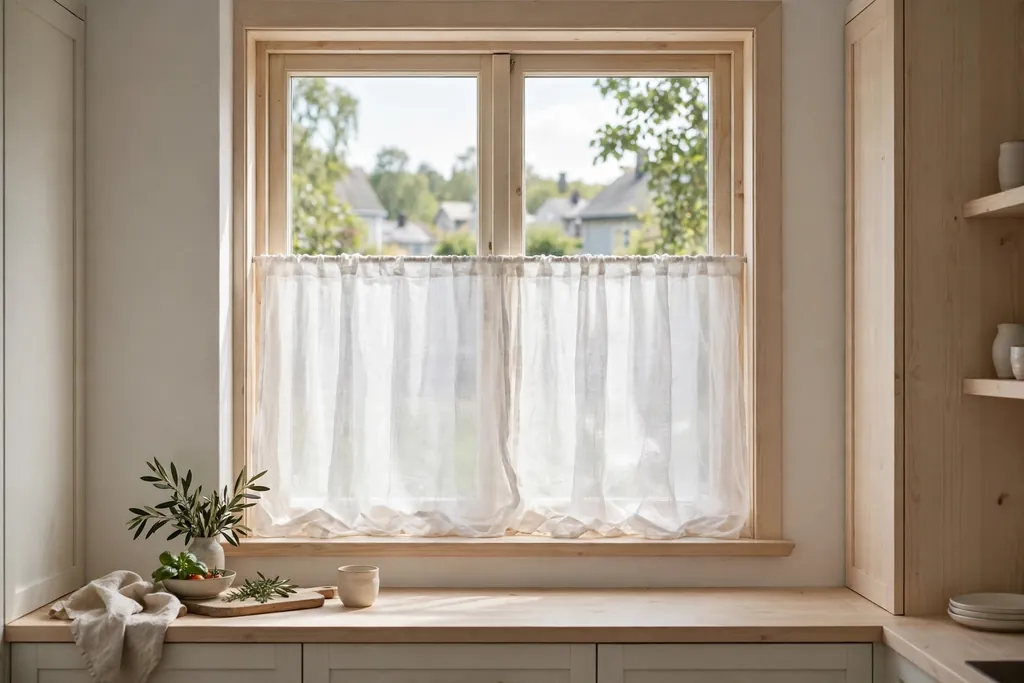
Hang sheer linen cafe curtains on the lower half of the window for privacy at counter height while the top half stays open for daylight. Linen suits a Swedish kitchen because it softens the glass without a formal drape, and a plain natural color hides light splashes better than bright white. Hang the panels on a slim tension rod inside the frame if you rent, or on a small fixed rod if you own.
Keep the hem just above the sill so fabric does not sit in water near the sink. Choose washable fabric, because kitchen curtains pick up grease film over time and need a regular wash. Keep fabric well clear of the stove and open flames.
12. Herb Pots on the Windowsill
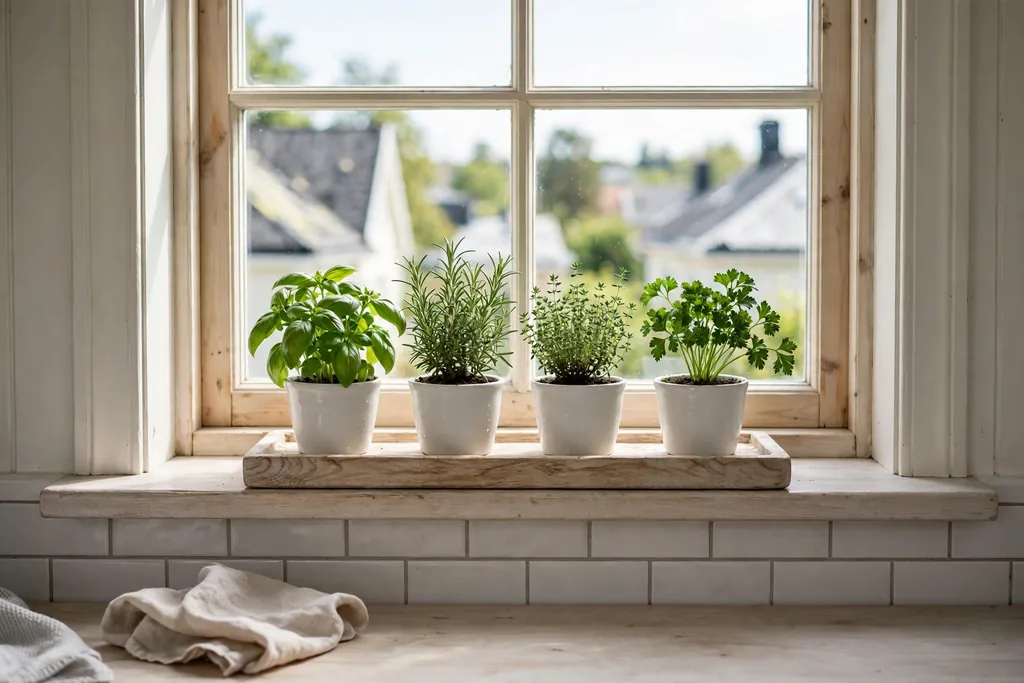
Line up small herb pots in white ceramic on the kitchen windowsill. The plants get strong light and stay within reach while you cook, and the white pots tie the sill to the rest of the room. Use pots of a similar size and material, so the row looks calm rather than collected at random.
Set the pots on a narrow tray or saucers to protect the sill from water marks. Choose herbs based on the light your window actually gets, and keep the sill clear of the faucet splash zone where possible. For more ways to dress the window without blocking light, see these kitchen window decor ideas.
13. Pale Wood Plank Flooring
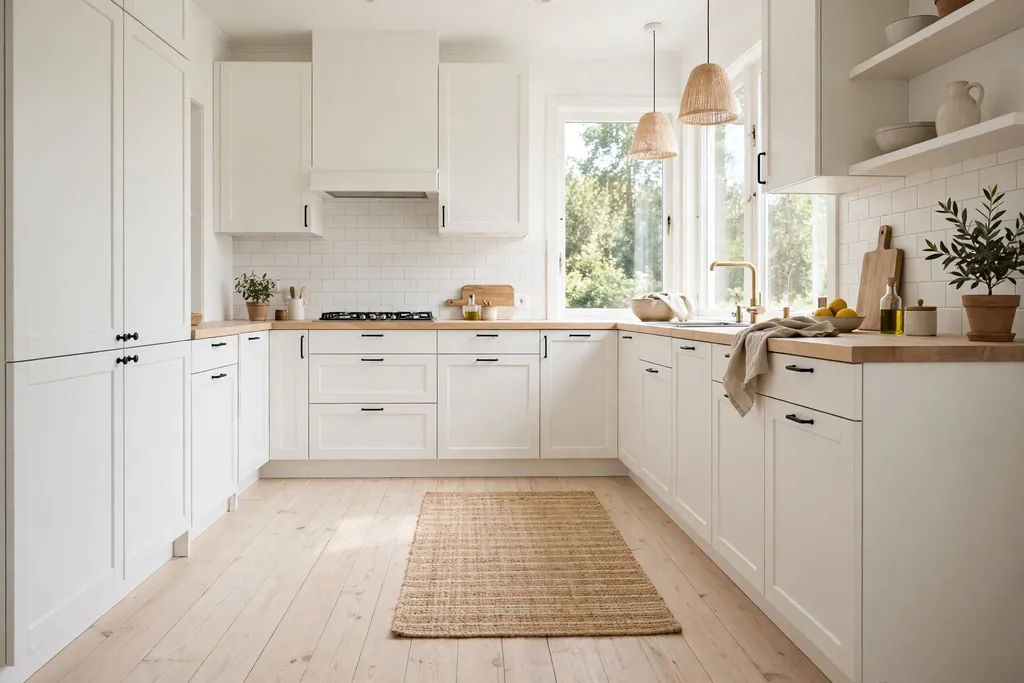
Lay pale wood plank flooring, or refresh an existing pale floor, for a kitchen floor that lifts the whole room. Light wood suits white cabinets, pale counters, and black or steel handles, and it makes a small kitchen feel larger than a dark floor would. A pale floor also links the kitchen to adjoining rooms in an open plan home.
Use a finish suited to kitchens, with easy cleaning and grip, and keep spare boards for repairs. Choose a low pile runner in a plain tone over the floor in the main work zone if the wood feels cold underfoot. Wipe spills promptly near the sink and stove, since water marks show on light wood.
14. White Glass Front Cabinets
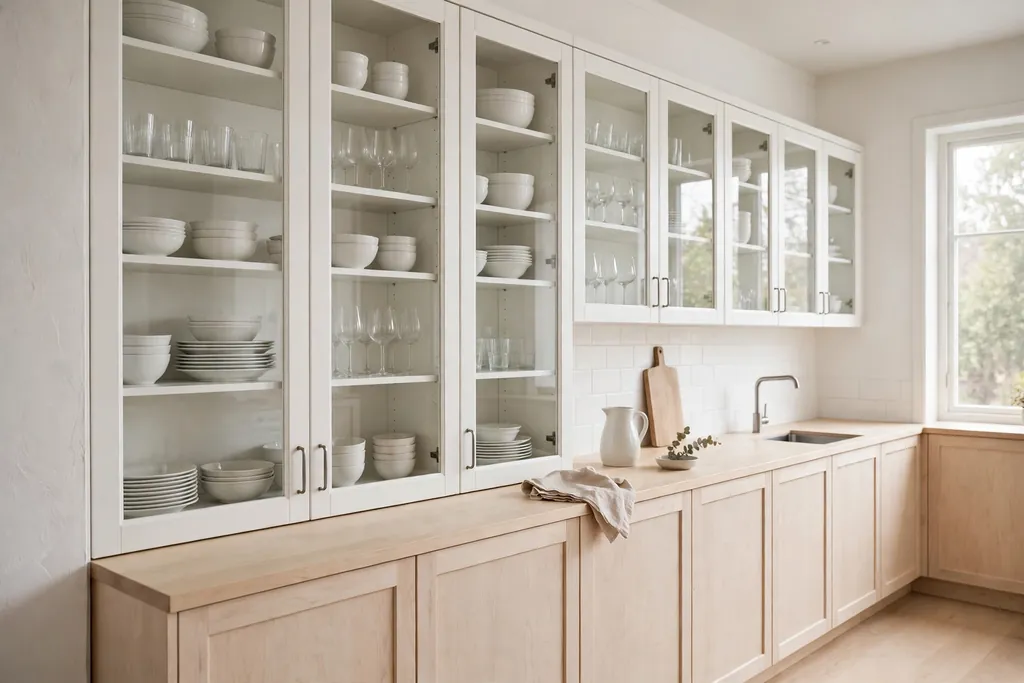
Paint the frames of glass front cabinets white, and keep the doors and cabinet bodies white or pale wood. When the doors close, you get a clear view of white dishes and glasses, which suits a Swedish kitchen because the display stays light. This idea suits a kitchen that already has glass fronts, or one cabinet you can change as a test.
Use white or clear dishes inside so the display stays calm, and keep the display simple with one or two stacks per shelf. If the glass feels too open, use glass on one cabinet only, with closed doors on the rest. This is a low cost way to add display space in a rented or recently fitted kitchen.
15. Simple Black or Wood Hardware
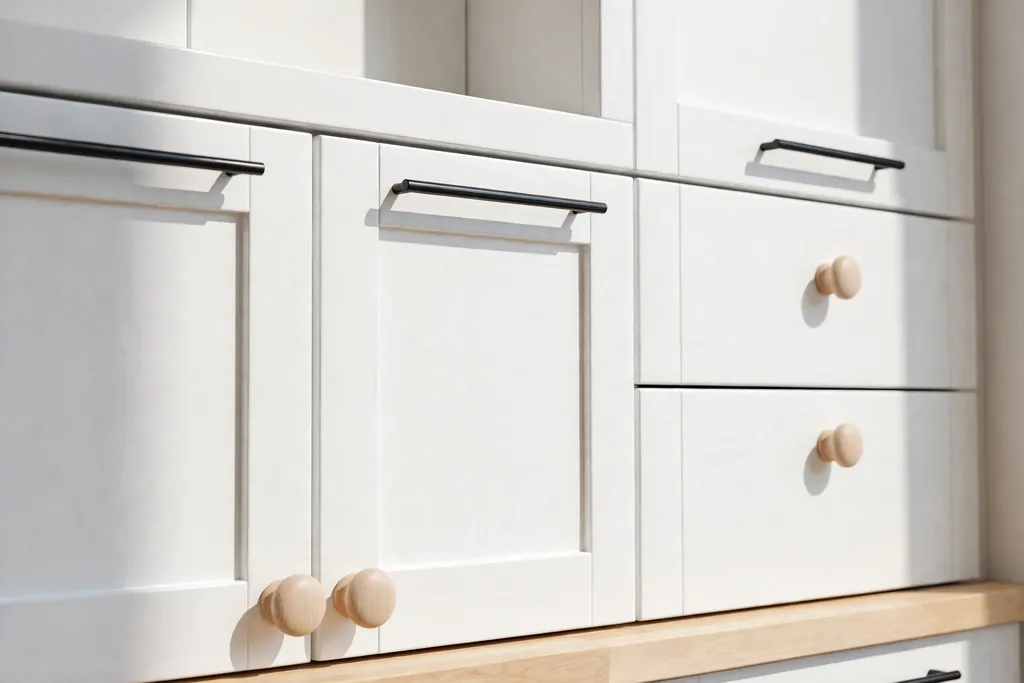
Swap cabinet knobs and drawer pulls for slim black bars or pale wood knobs for a small, reversible change. Simple hardware suits white, cream, or pale wood cabinets, and it lets you set the tone of the room without painting. This is a good weekend job, and it costs far less than new cabinets.
Keep all the hardware in the same finish and style, so the change looks planned. Save the old hardware in a labelled bag in case you want to swap it back. Check that new pulls match your existing screw spacing, and wipe them often near the stove, since kitchen grease dulls metal and wood.
16. Pale Stone Island with Wood Stools
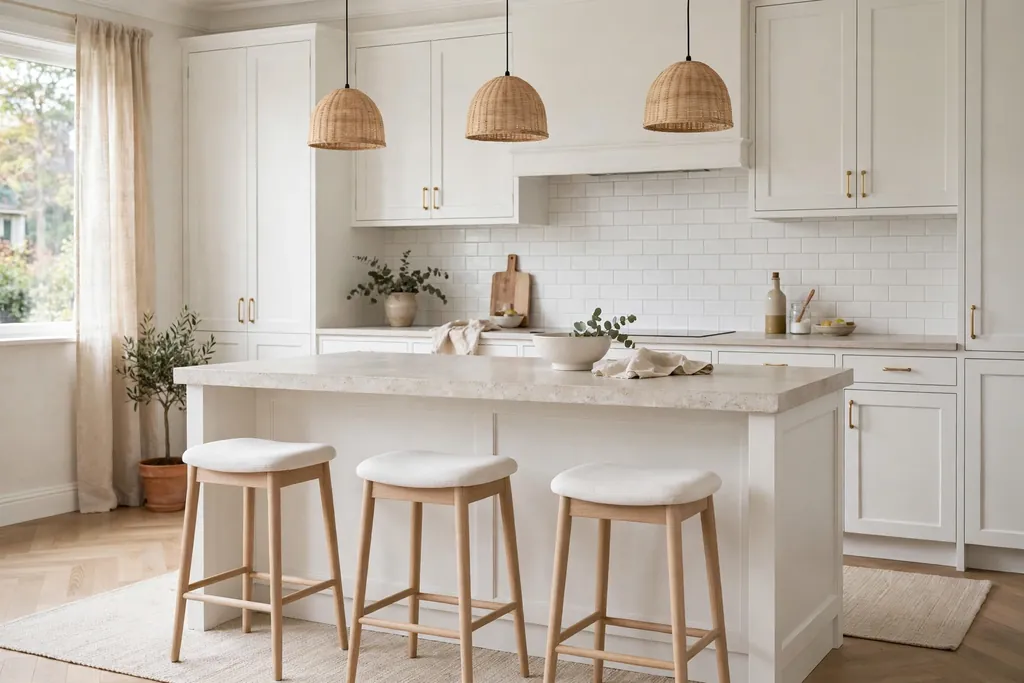
Keep the main cabinets white or wood, and add an island with a pale stone top and light wood stools. The island becomes a clear working center and a place to gather, without repainting every cabinet. A pale stone top keeps prep work visible, and wood stools add warmth at seating height.
Choose stools that slide fully under the island overhang, so the walkway stays clear. Keep the stool count to the island length, usually two for a short island and three for a long one, and leave room between seats. Wipe the stone top promptly after prep, and keep the island top clear apart from one tray or bowl.
17. Light Wood Dining Table with White Chairs
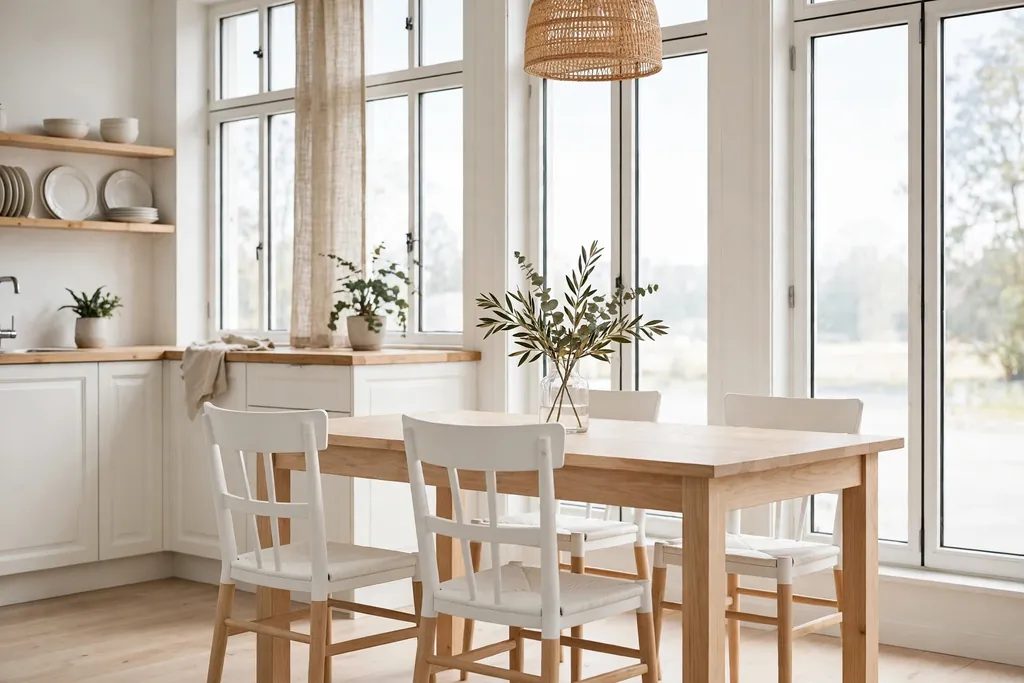
Use a light wood dining table with white chairs in the kitchen dining area for a seating area that feels bright without new cabinets. A simple wood tabletop suits a small table for four, and it pairs well with white chairs and a plain runner. This is a good way to bring Swedish style into an open plan kitchen where the eating area stays in view.
Keep chair cushions washable, since kitchen chairs take daily spills, and check that chair legs have floor protectors so they do not scratch pale wood or tile. If the table feels too plain on its own, add a single vase or a low candle lantern. Keep one chair spare for guests rather than crowding the table.
18. Blue and White Striped Linens
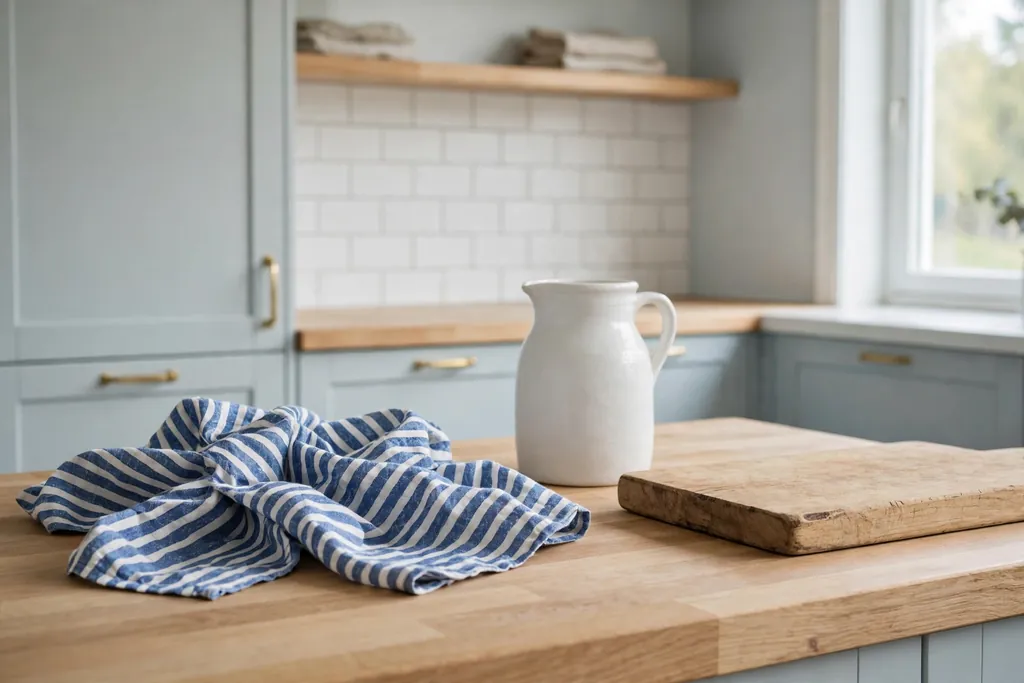
Swap everyday tea towels for linen or cotton towels in blue and white stripes, and add a matching runner on the table or counter. Striped linens are the fastest Swedish change in a kitchen because they move through the room all day and wash easily. Hang them where they are used most: the oven handle, a hook by the sink, or the dishwasher bar.
Keep two sets in rotation so a wet or stained set never stays on display. Store the folded spare set in a drawer, not on the counter. Keep towel ends well clear of burners, and never leave a towel draped where it can slip toward a hot pan.
19. Potted Greenery Through the Kitchen
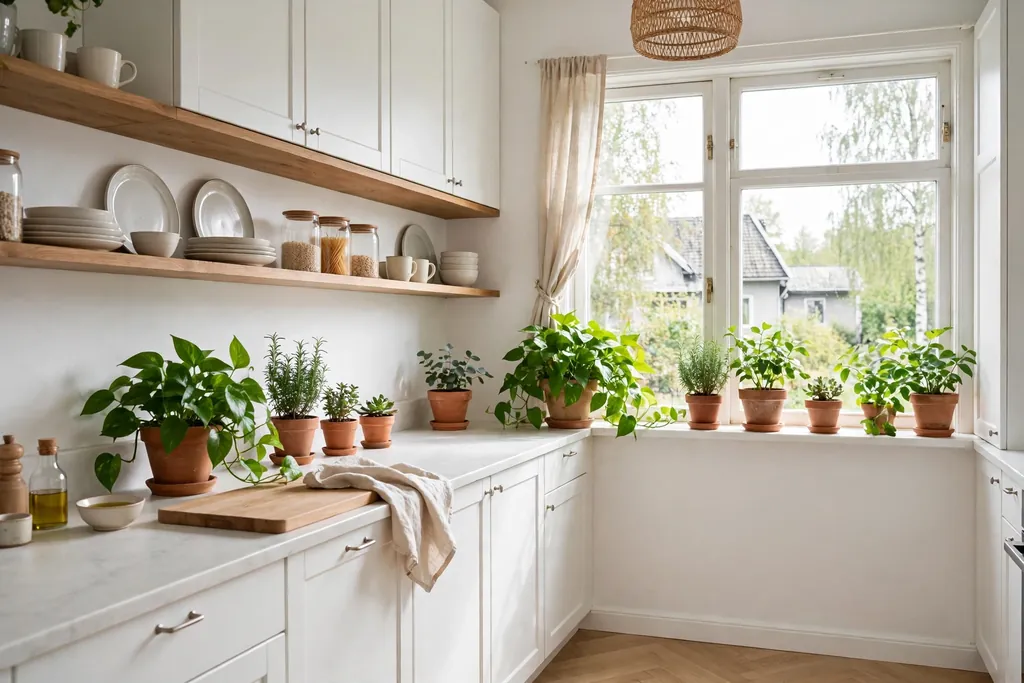
Add potted green plants through the kitchen, on the windowsill, on open shelves, and on top of tall cabinets where light reaches them. Greenery softens white walls and pale wood, and it gives a Swedish kitchen its fresh, lived in feel. This suits a kitchen with at least one bright window, where plants can thrive without extra lights.
Choose plants based on the light each spot actually gets, and keep pots on trays or saucers to protect wood and paint from water marks. Keep plants clear of direct stove steam and the sink splash zone where possible. Water on a set day each week, and wipe leaves when dust builds up.
20. Candle Lanterns for Evening Light
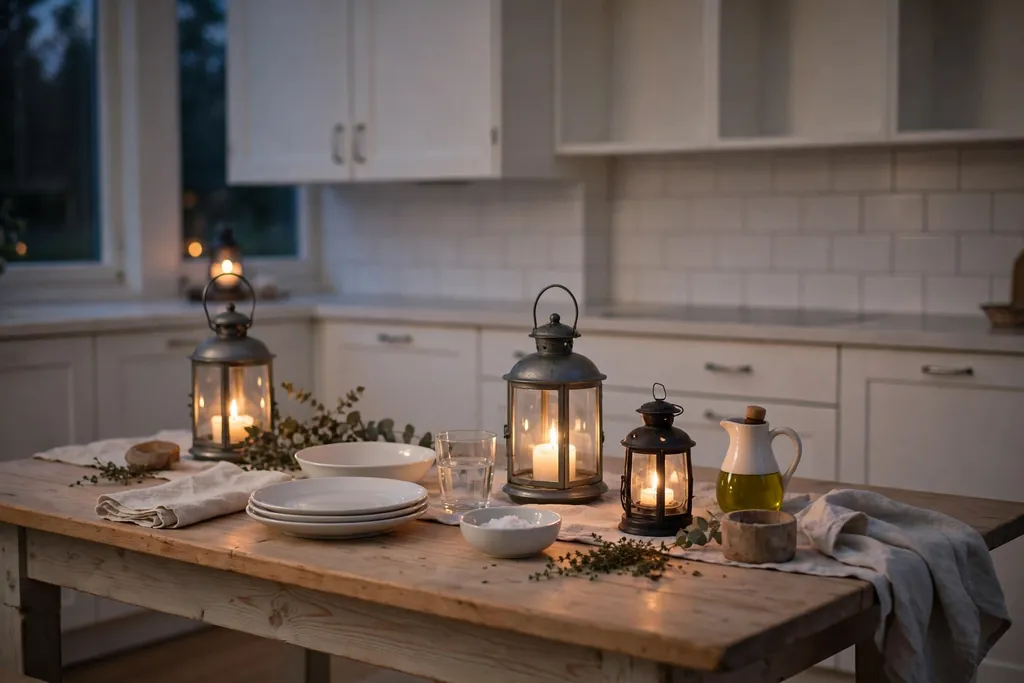
Set candle lanterns on the kitchen table and windowsill for soft evening light, a long standing Swedish habit for dark winter evenings. Lanterns suit a white kitchen because the glass and metal add a warm glow without a strong color. Use flameless candles in a kitchen, since real flames near table linen and dried stems are a risk.
Keep lanterns clear of the hob and the sink splash zone, and lift them off the table in one move when the table is needed for prep or homework. Change the lantern placement by season, with one on the table in winter and one on the sill in summer. Keep spare batteries or candles in a drawer so the evening light never runs out.
21. Glass Jars and Woven Baskets for Pantry Storage
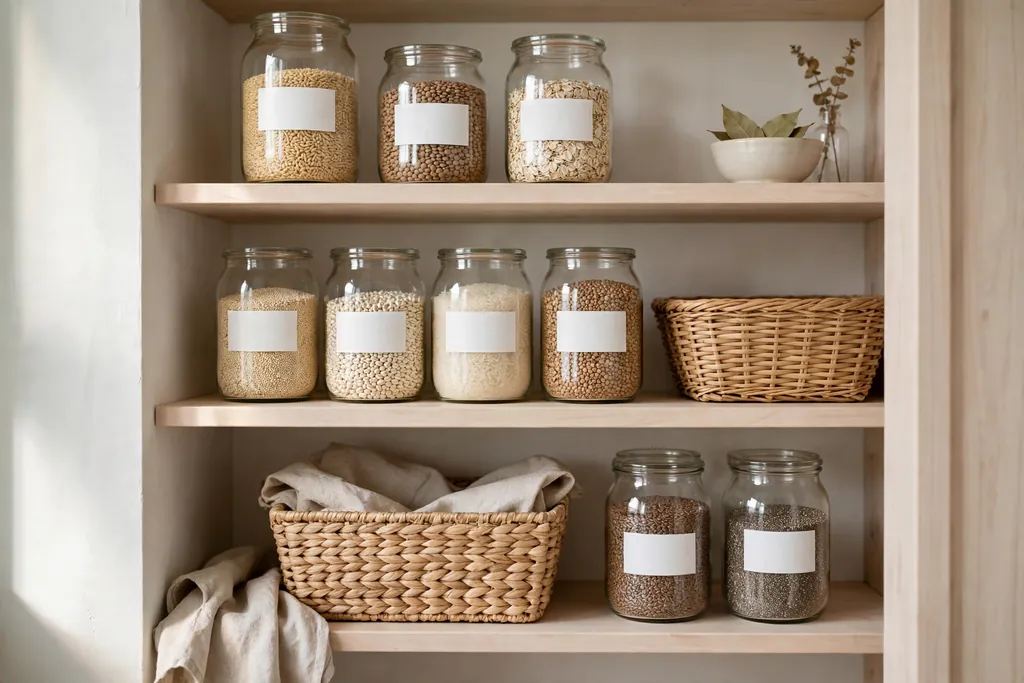
Store dry food in clear glass jars on light wood shelves, and use woven baskets for bread, onions, and small items that do not need a jar. Glass jars let you see what you have at a glance, and baskets add natural texture that suits a Swedish kitchen. This suits a kitchen where closed pantry space is short and everyday food needs to stay in reach.
Keep the jars to the foods you use weekly, and store the rest in closed cabinets, so the shelves stay calm. Label the jars if more than one person cooks, so items return to the same spot. Wipe jars and baskets weekly, since open storage collects cooking film, and check basket bases for crumbs.
22. One Small Swedish Folk Accent
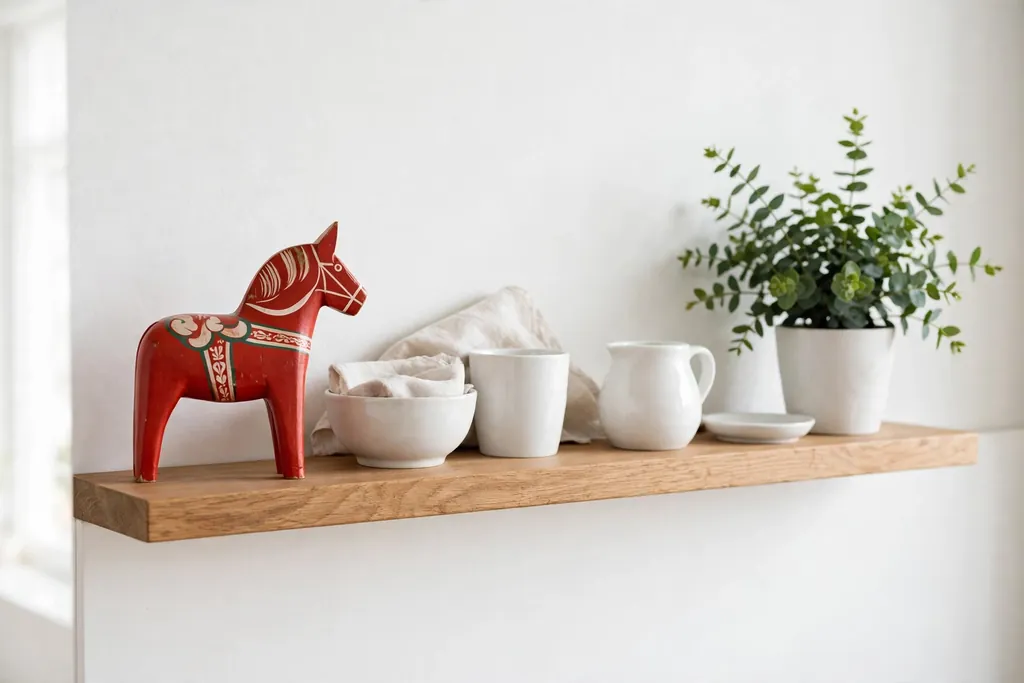
Add one small Swedish folk accent, such as a small red painted wooden horse on a shelf, a folk patterned cushion, or a single blue and white print in a wood frame. One accent gives the room a clear Swedish note, while a whole shelf of folk pieces can feel like a theme display. This suits a kitchen that already has white and wood in place, where one strong color can stand out.
Keep the accent in the same red or blue family as your other small touches, such as striped linens or a blue island, so it links to the room. Place it where it is seen but not in the work zone, such as a shelf end or a wall above the dining table. If the accent feels too strong on its own, pair it with a plain white vase beside it.
23. Blue and White Patterned Tile Backsplash
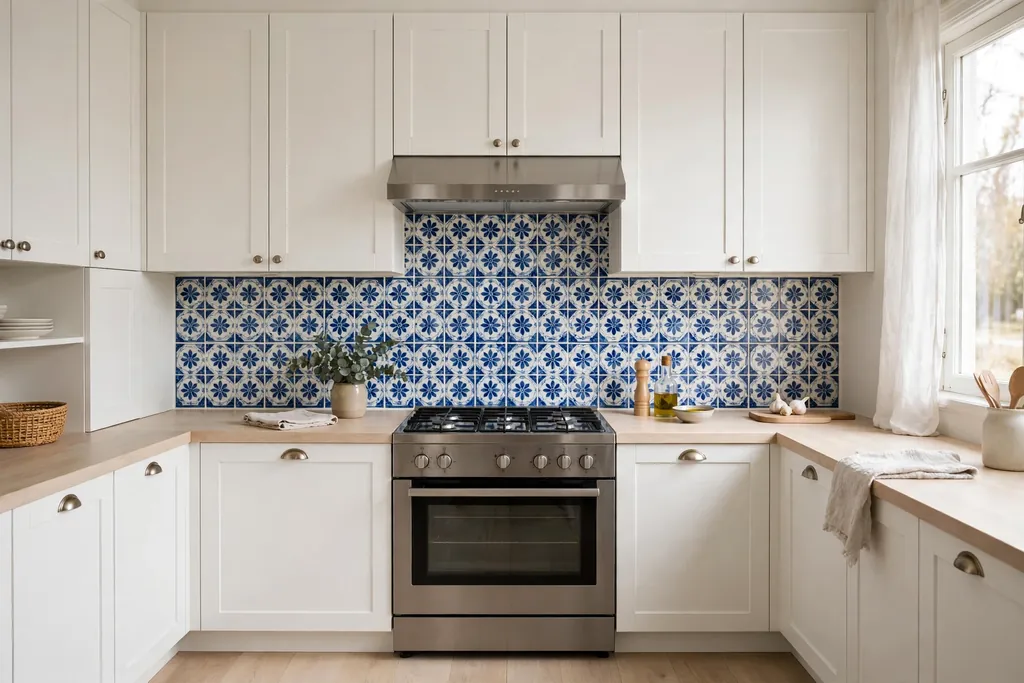
Choose a patterned tile with blue and white in the design, such as a simple geometric or floral print, for a backsplash with more detail than plain white tile. Patterned tile works best on one wall, usually behind the cooker or sink, with plain tile or paint on the other walls. The pattern adds interest without needing blue cabinets.
Keep counters and cabinet fronts plain, and pick one blue from the tile to repeat in a towel or a small accessory. Patterned tile can date faster than plain tile, so choose a pattern you like for its shape as well as its color. Ask your tiler about sealing, since some patterned tiles need extra care, and order spare tiles for repairs.
24. A Fika Corner on the Counter
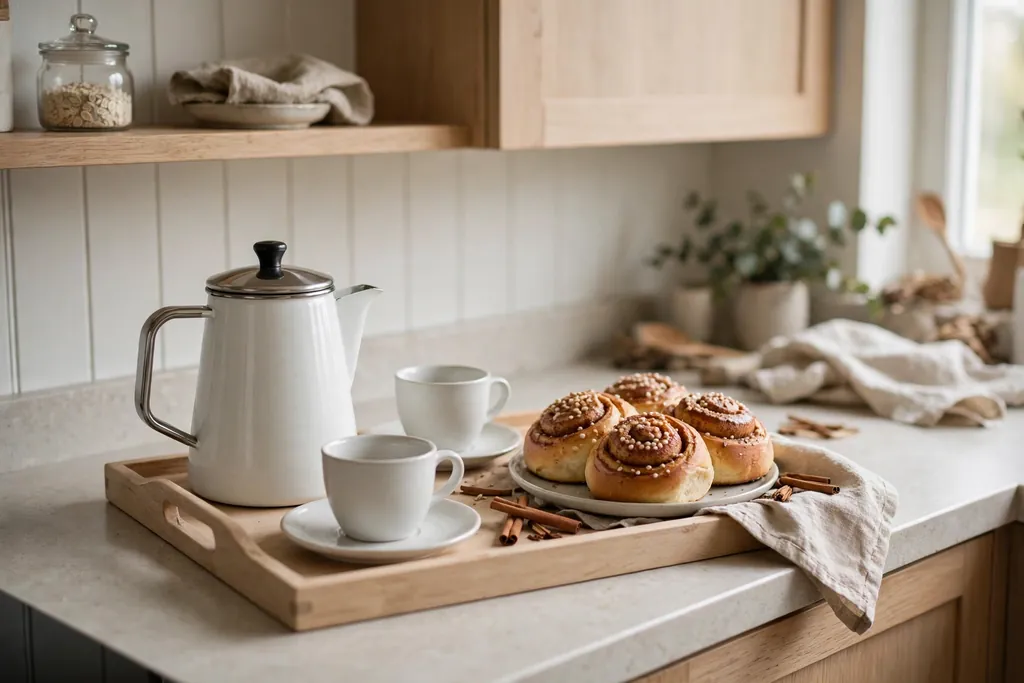
Group your coffee items on one light wood tray on a small section of counter, with a white pot, two cups, and a plate for buns or biscuits. A fika corner, the Swedish coffee break, gives the kitchen a daily ritual spot, and the tray keeps small items from spreading. A defined corner feels dressed when you add a small plant or a striped towel beside it.
Keep the tray away from the sink splash zone and the stove, and wipe it often, since drink areas gather drips. Lift the whole tray aside in one move when you need the counter for prep. If the counter is short, shrink the corner to a mug stand and one jar on a small tray.
25. Wall Mounted Drop Leaf Table for a Small Kitchen
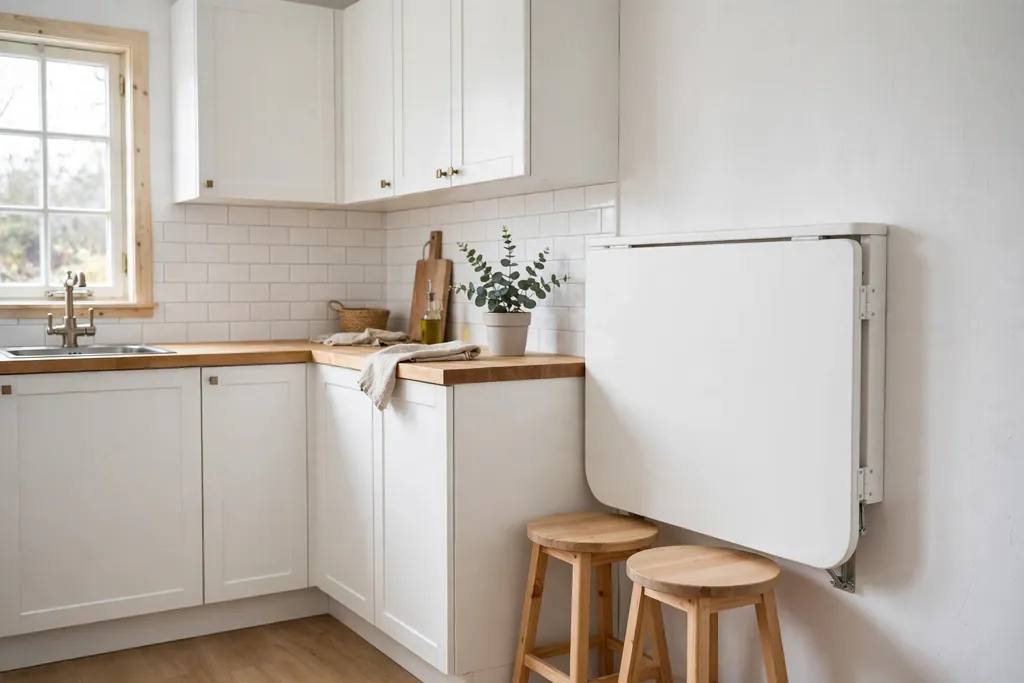
Fit a wall mounted drop leaf table in a small kitchen for a table that folds up when you need the floor back. A white or pale wood leaf suits a Swedish kitchen, and two light stools beside it give seating without a fixed table. This is a good choice for a galley kitchen or a studio kitchen, where a full table would block the walkway.
Fix the table securely into wall studs, and check that it holds the weight of plates and cups without sagging. Keep the leaf folded up when it is not in use, and store the stools against the wall. Wipe the leaf after meals, since a small table takes daily use in a small room.
26. Removable Swedish Touches in a Rental Kitchen
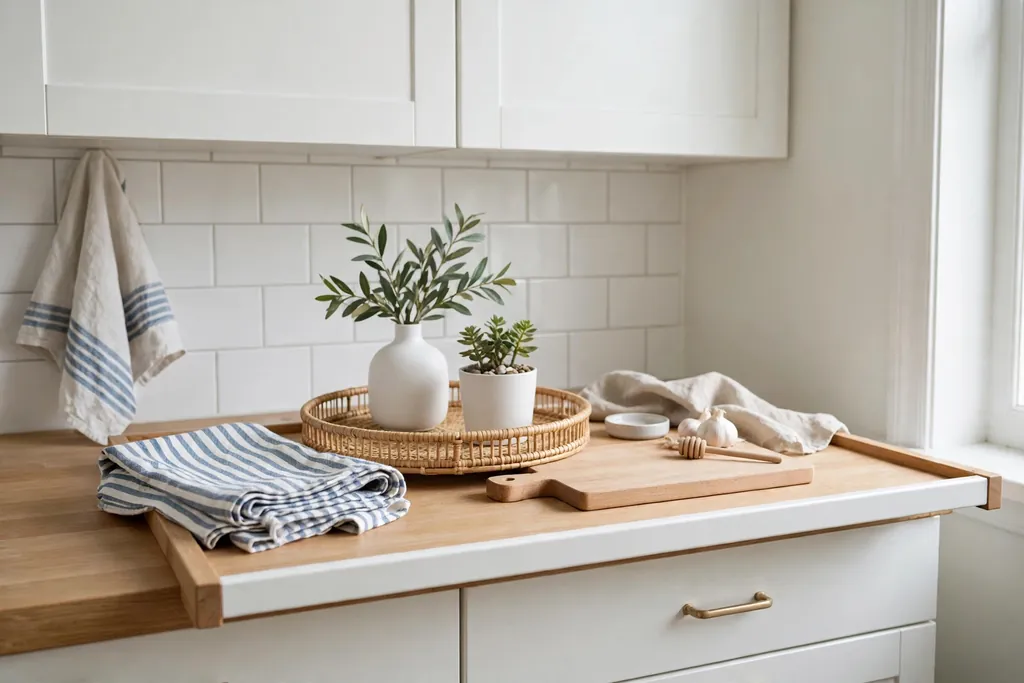
Finish a rental kitchen with small, removable Swedish touches: a tray, a white vase, a small plant, striped towels, and a single framed print, all in white, pale wood, and muted blue. These pieces sit on existing surfaces and leave with you, so no landlord approval is needed for fixed work. Group them in twos and threes, with one cluster per surface at most, so the room stays calm.
Hang nothing with fixed screws if your lease forbids it, and use removable hooks or freestanding pieces instead. Keep wood and linen away from the stove and sink splash zone where possible, and wipe small pieces weekly. When you move, pack the set together in one box, so the next kitchen gets the same scheme in one short job.
Conclusion
A Swedish kitchen works best when light has a clear job and a calm background. Start with white cabinets or pale wood, since those are the surfaces you see most, then repeat one accent in seating, tile, or linens. White, pale oak, and muted blue keep the room bright rather than cold, and plain work surfaces keep cooking easy. Small changes like curtains, towels, plants, and a fika tray let you test the style before a larger change, and they suit renters as well as owners. For a cooler balance to the warm wood, see these grey kitchen ideas for cabinets, counters, and islands that sit well beside a Swedish scheme.
Save this list on Pinterest for your next free hour in the kitchen, and work through it in order: cabinets and counters first, then tile and lighting, then seating and windows, and finally the small table and tray touches.
FAQs
What makes a kitchen Swedish rather than just white?
A Swedish kitchen pairs white with pale wood, natural linen, and simple shapes, rather than using white on its own. Light wood floors or counters, sheer curtains, plants, and one muted accent such as blue or black give the room warmth and character. Keep patterns simple, keep work surfaces clear, and let daylight do most of the work. If the room feels cold, add wood or greenery before adding color.
What colors pair best with a Swedish kitchen?
White, pale oak, birch, cream, and muted blue pair best with a Swedish kitchen, because they keep the room bright without competing with each other. Black hardware, steel taps, and natural linen add contrast in small amounts. Avoid adding many strong colors at once, since a Swedish scheme relies on one accent repeated in a few places. Use one other color only in small amounts, such as red in a single folk accent, and keep the main palette to three colors plus wood.
Does a Swedish kitchen suit a small or dark kitchen?
Yes, if you keep it to light surfaces and a few well placed pieces. In a small or dark kitchen, use white cabinets, a pale floor, sheer curtains, and one light wood element, and skip a dark island or a large patterned tile wall. A drop leaf table, open shelves on one wall only, and a single plant group keep the room easy to cook in. Test a large painted sample in your actual light, since white and pale wood shift tone between daylight and evening light.
How do I keep a white Swedish kitchen clean?
White kitchens need the same care as other pale kitchens, with a little extra care near the stove and sink. Wipe cabinet doors, taps, and handles with a soft damp cloth each week, and wipe spills on wood counters promptly so marks do not set. Choose washable paint and fabric for cabinets and curtains, and keep tea towels and runners washable, so the scheme stays fresh with routine cleaning. Glass jars and open shelves need a weekly dust, since open storage collects cooking film.
Can renters create a Swedish kitchen without fixed changes?
Yes. Renters can cover most of this list with no permanent work at all. Curtains on a tension rod, striped towels, a fika tray, plants, a drop leaf table on removable fixings where allowed, and a bench or stools all move with you. Hang framed prints with removable fixings if your lease allows them, and check your lease before fixing any shelf, rail, or table. Keep the old hardware in a labelled bag, so the kitchen returns to its original state at the end of the tenancy.
How do I test a Swedish paint or tile sample before committing?
Order or borrow a sample in the exact finish you plan to use, and place it beside your floor, counter, and cabinet color in the kitchen itself. Check it in morning daylight, afternoon light, and evening light under your usual bulbs, since white, blue, and wood tones shift a lot between lights. Live with the sample for a few days, and check it beside the tap and handles you already own. If the sample looks too cold in one light and too warm in another, choose a softer, warmer white or a paler wood, which tends to read more evenly through the day.