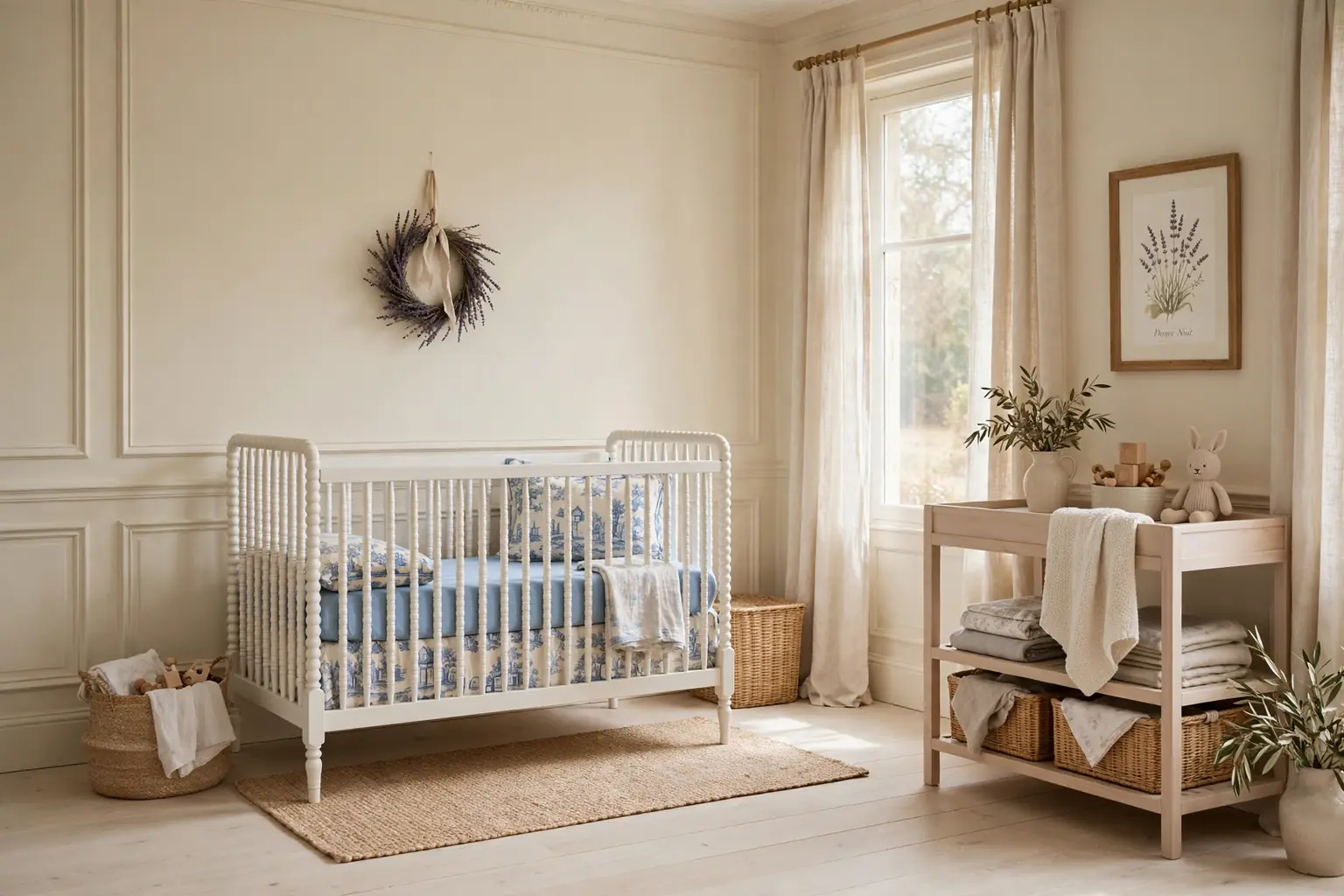
A French nursery starts with soft color, natural fabric, and furniture that looks collected over time. Cream walls, washed linen, pale wood, and one or two vintage details give the room a calm base, while toile, rattan, and gilt add the French country character. These 24 French nursery ideas cover the crib, the changing area, the walls, storage, and lighting, so you can plan a full room or pick one change at a time. Keep safety first throughout: the crib stays bare except for a fitted sheet, cords stay out of reach, and heavy pieces are fixed to the wall. For a similar soft, vintage feel in an adult bedroom, see these shabby chic bedroom ideas.
Key Takeaways
- Start with a pale base of cream, white, or soft grey, then add one French pattern, such as toile, and one natural texture, such as linen or rattan.
- Keep the crib area simple and safe, with a fitted sheet only, no loose bedding, pillows, or bumpers in the crib, and cords kept well away.
- Choose furniture that can grow with the child, such as a dresser that works as a changing table now and as bedroom storage later.
- Repeat each accent twice, for example gilt on a mirror and a frame, so the French details look planned rather than random.
- Use washable fabrics wherever you can, since nursery bedding, curtains, and chair covers need frequent washing.
- Leave clear floor space around the crib and the changing area, so night feeds and nappy changes stay easy in low light.
1. Start with Toile Crib Bedding
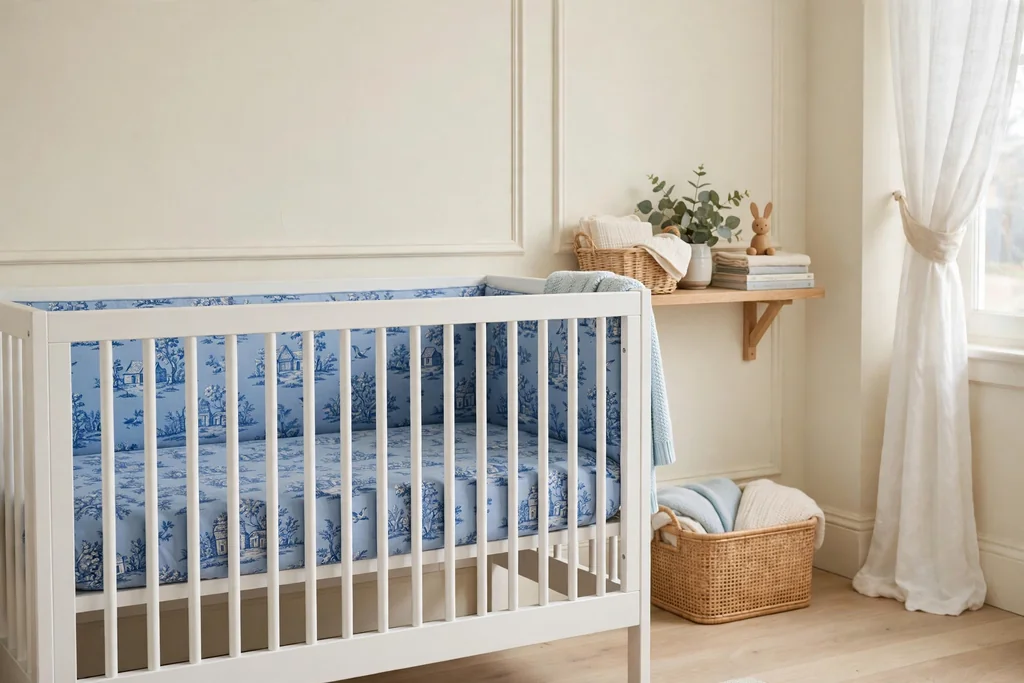
Toile bedding is the quickest way to set a French tone in a nursery, since the classic blue, grey, or pink pastoral print reads as French at once. Use it on a fitted crib sheet and, for the changing area or a chair cushion, on a matching cover, and keep the rest of the bedding plain. A toile print in one color on a cream ground suits a small room best, because it adds pattern without darkening the walls.
Choose a washable cotton toile, and keep spare fitted sheets in the same print so a night change keeps the look intact. Pair the bedding with plain cream walls and pale wood, and let the toile carry the pattern for the whole room. If you add a second print later, keep it small, such as a stripe on a cushion, so the toile stays the clear focus.
2. Choose a White Spindle Crib with a Linen Skirt
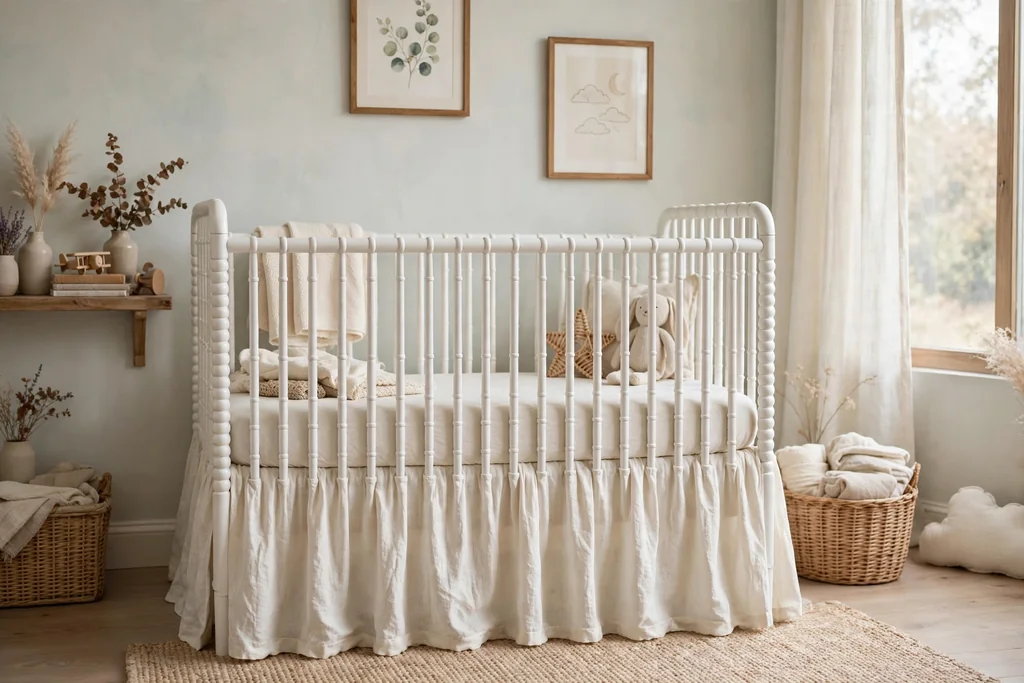
A white spindle crib gives a French nursery its light, open center, since the slim spindles let light through and keep the room feeling airy. Pair it with a simple linen crib skirt in cream or soft grey, which hides under-crib storage and softens the hard lines of the frame. The skirt should just brush the floor, so it does not bunch under the crib legs.
Check that the crib meets current safety standards and that the mattress fits snugly with no gaps at the sides. Keep the area inside the crib bare apart from a fitted sheet, and use the skirt only on the outside of the frame. A skirt in washed linen is easy to remove and wash, which matters when spills and dust build up near the floor.
3. Paint a Pale Blue Grey Panel Wall Behind the Crib
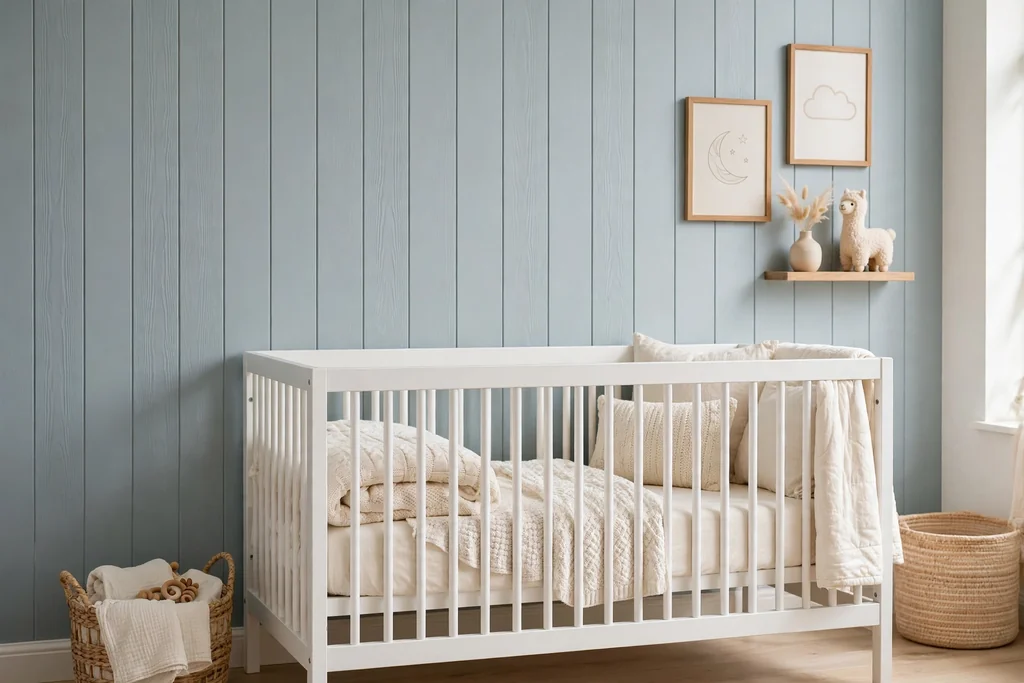
Simple wall panels painted in pale blue grey give the crib wall structure without a busy pattern. Fit plain rectangular panels behind the crib, paint them the same blue grey, and keep the other walls cream or white so the panel wall stays the focus. The soft grey blue reads as French country, especially beside white bedding and pale wood furniture.
Center the panels on the crib, not on the whole room, and stop them clear of the ceiling for a finished edge. If you rent, use removable panel kits made for your wall type, and test one panel in a hidden spot first. Keep wall art off the panel wall, since the panels already give the wall its detail, and hang art on a plainer wall instead.
4. Use a French Provincial Dresser as a Changing Table
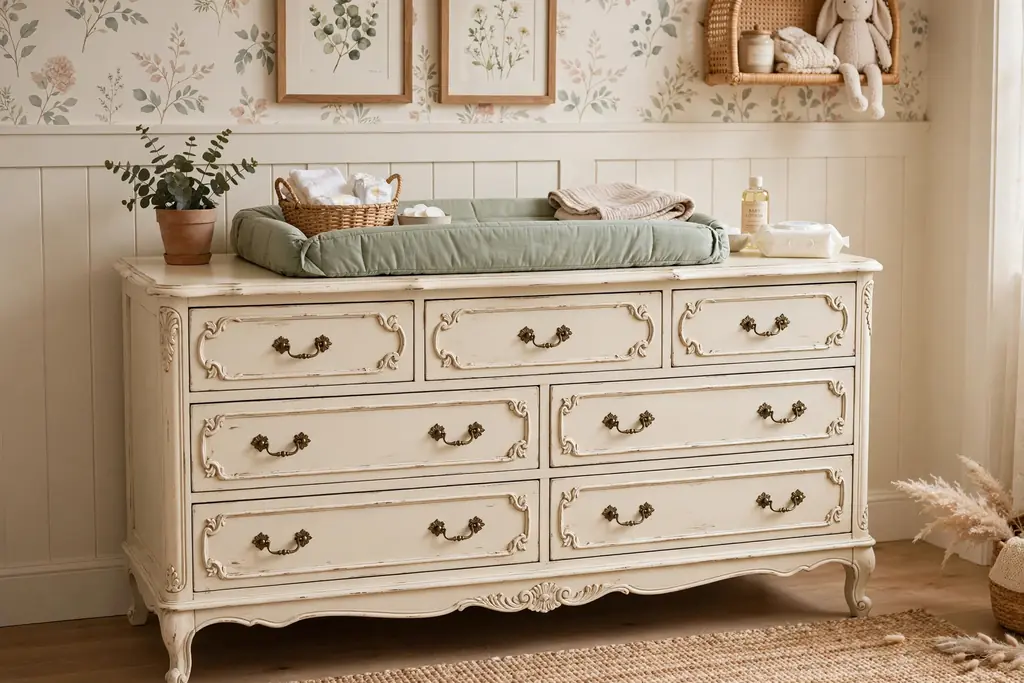
A French provincial dresser, with curved legs and small drawer pulls, makes a changing table that stays useful long after nappy changes end. Add a contoured changing pad on top, secured to the dresser, with a safety strap, and keep nappies, wipes, and creams in the top drawer within arm’s reach. A dresser in cream, white, or pale grey fits the French palette and hides clutter behind closed drawers.
Fix the dresser to the wall with an anti-tip kit, since a child will pull up on drawer fronts before long. Keep the changing pad at a height that lets you work without bending, and never leave the baby unattended on the pad. When the changing stage passes, remove the pad and the dresser becomes ordinary bedroom storage with no further work.
5. Hang a Gilded Oval Mirror Above the Dresser
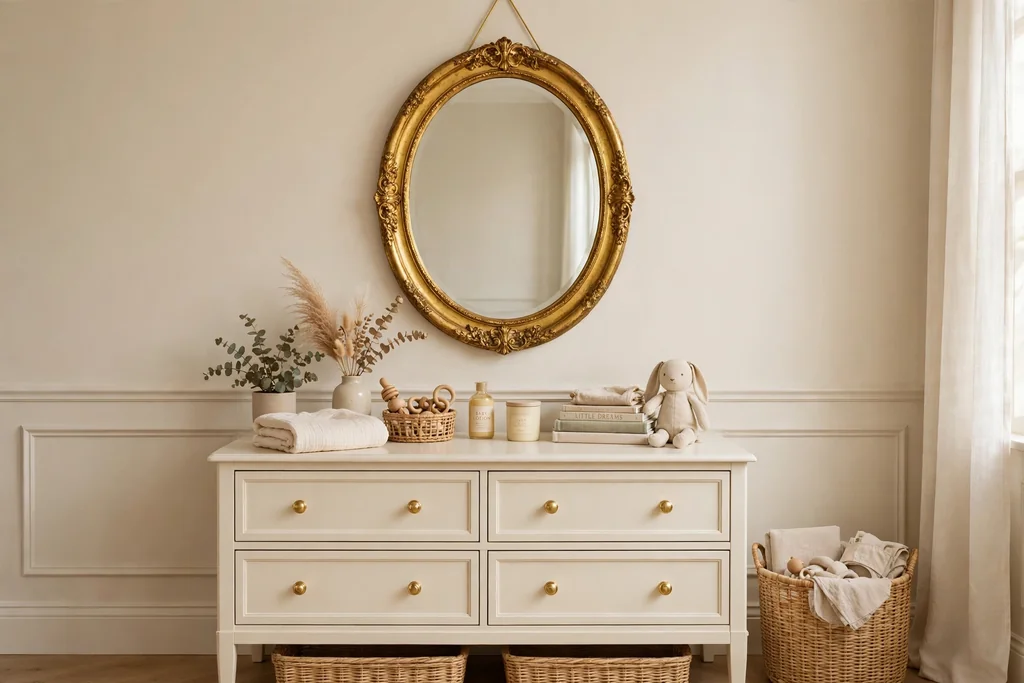
A gilded oval mirror above the dresser adds a French vintage note in one piece, and it bounces daylight around a small nursery. Choose a medium oval in soft gold, with a simple frame rather than a heavily carved one, so it suits a baby’s room and does not dominate the wall. Hang it centered above the dresser, high enough that a standing toddler cannot reach it.
Fix the mirror with a hook rated for its weight, and check the fixing into a stud or a proper wall anchor. Keep the mirror away from the crib wall, so it never hangs above the baby’s head. A mirror also helps during changing, since you can check the room behind you without turning away from the baby.
6. Drape a Soft Linen Canopy Over the Crib
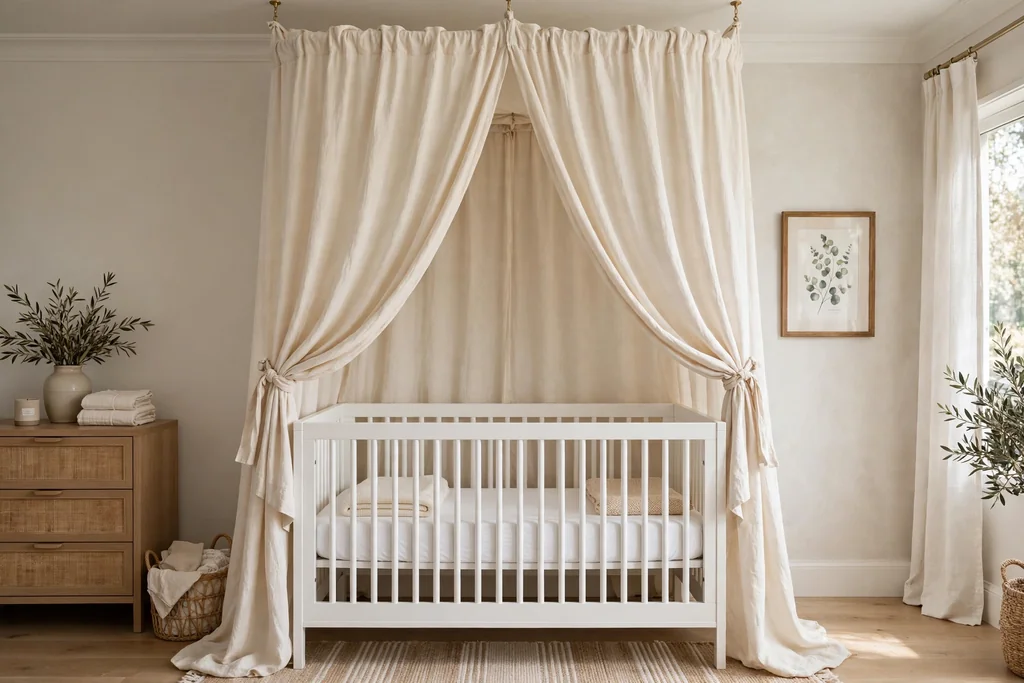
A linen canopy over the crib adds a soft, tent-like frame to the sleeping area, and it suits a French nursery when kept light and simple. Hang a plain cream or white linen canopy from a ceiling hook above the head end of the crib, with the fabric falling to just above the mattress level on the sides. Choose a breathable, lightweight linen, and keep the fabric gathered to the sides during sleep if the canopy could fall into the crib.
Safety comes first here: the canopy must be firmly fixed, well out of the baby’s reach, and never draped across the sleeping surface. Many parents prefer a canopy that frames the crib from the wall or ceiling and stays clear of the mattress entirely. If that cannot be arranged safely, skip the canopy over the crib and use the same linen as a wall drape behind a reading chair instead.
7. Paper One Wall in Toile Wallpaper
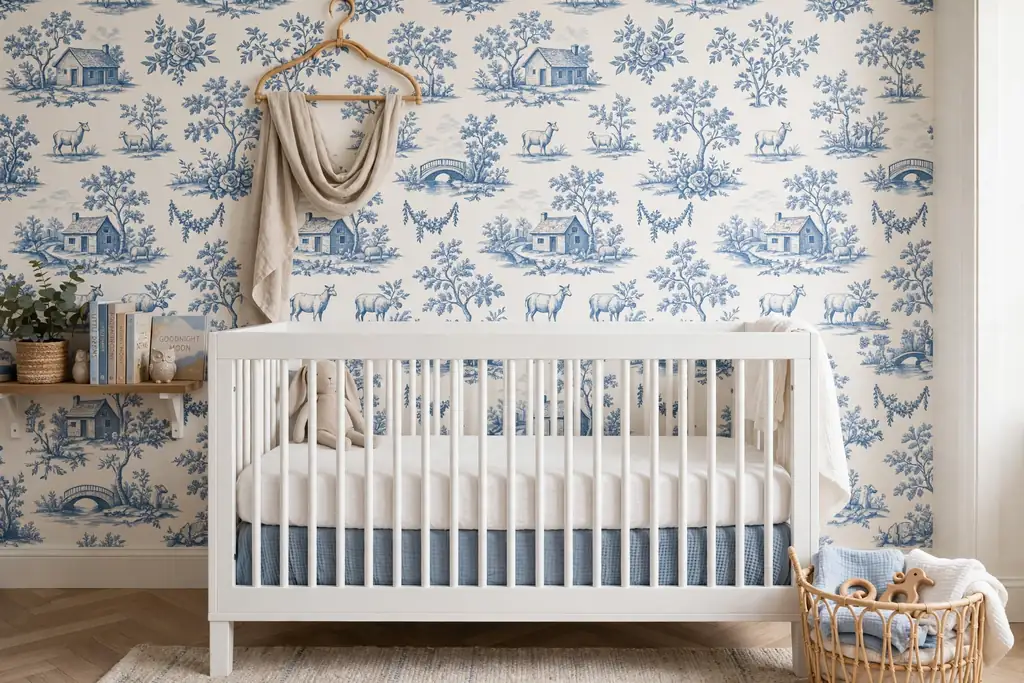
A toile wallpaper on one wall gives a French nursery its pattern anchor, especially behind the crib or the changing dresser. Choose a toile in one soft color on a cream ground, with a medium scale print, so the pattern reads clearly from the door without crowding a small room. Paper only the feature wall, and paint the other walls in a tone pulled from the paper, such as cream or pale grey.
Order a sample first and pin it to the wall for a few days, checking it in daylight and lamplight, since toile prints shift between light types. If you rent or want a reversible change, use a peel and stick toile made for smooth walls, and test it on a hidden patch first. Keep bedding mostly plain when the wall is patterned, with one toile cushion that echoes the paper.
8. Create a Nursing Corner with a Vintage French Armchair
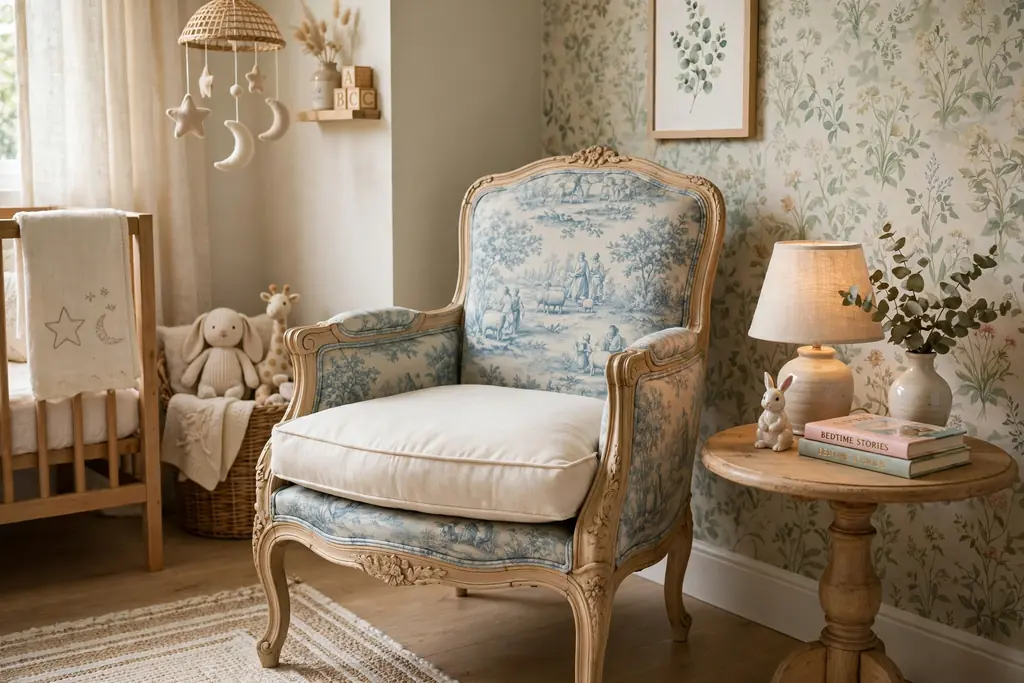
A vintage French armchair, with a curved back and wooden legs, gives night feeds a comfortable, dedicated spot. Place the chair in a corner near a small side table and a floor lamp, with a cushion for lower back support and a basket of muslins beside it. A chair in cream linen, or re-covered in a washable cream fabric, suits the French palette and hides the wear of daily use.
Check the chair frame and joints before daily use, since a vintage chair must hold steady when you stand up holding a baby. Keep the seat height low enough that your feet rest flat on the floor, and add a footstool if they do not. A small side table for water, a book, and a phone keeps everything within reach, so you do not need to get up mid-feed. For more calm bedroom seating ideas, see these elegant bedroom ideas.
9. Place a Wicker Bassinet Beside the Bed

A wicker bassinet beside the parents’ bed gives a newborn a close, cozy sleeping spot for the first months. Choose a sturdy bassinet with a firm, flat mattress that fits snugly, and dress it with a plain fitted sheet in white or cream. A light linen drape over the hood, kept well clear of the baby’s face and sleeping area, softens the wicker and suits the French country look.
Follow the bassinet maker’s weight and age limits, and move the baby to a crib once they can push up or roll, or when they reach the stated limit. Keep the bassinet area free of loose blankets, pillows, and toys, and place it clear of curtains, cords, and heaters. When the bassinet stage ends, the wicker basket can hold soft toys or blankets in the nursery.
10. Hang a Small Crystal Chandelier with a Dimmer
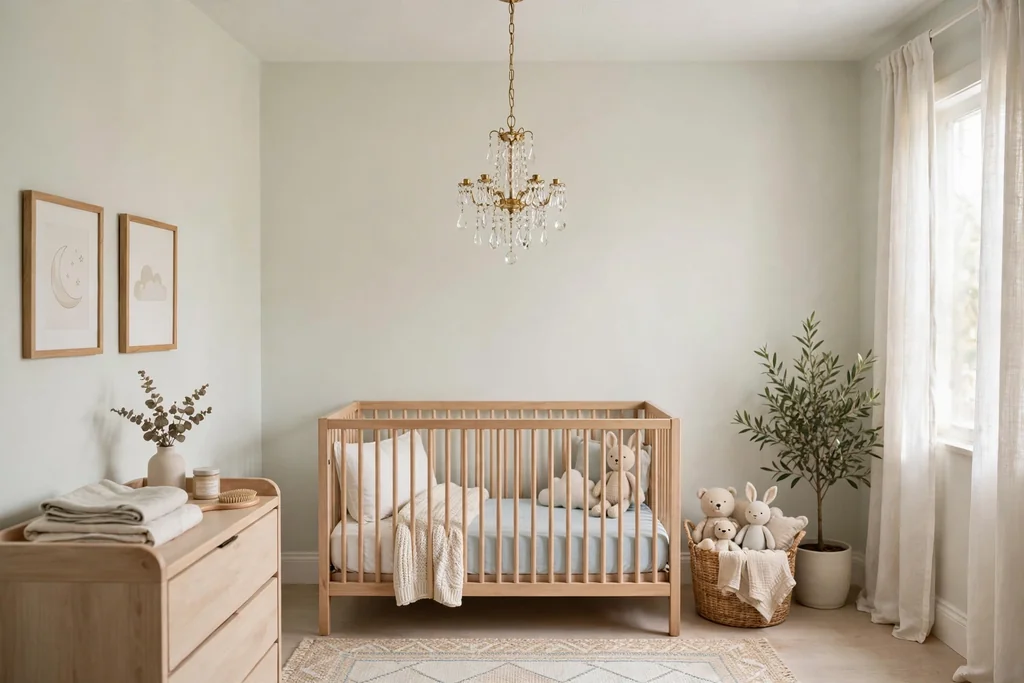
A small crystal chandelier brings a French glamour note to a nursery ceiling, with glass drops that catch daylight and lamplight. Choose a small fitting, hung in the center of the room rather than above the crib, and fit a dimmer so the light can drop low for night feeds. Warm white bulbs keep the glow soft in the evening, rather than bright and harsh.
Check the wiring and ceiling fixing before you hang any older fitting, and have an electrician look at it if the wiring looks worn or the fitting is heavy. Keep cords and chains out of reach, and pair the chandelier with a small bedside or table lamp for middle of the night changes, so you are not relying on the ceiling light alone. A dimmer also lets the room shift from play light to sleep light without a second fitting.
11. Lay a Braided Rug on a Pale Wood Floor
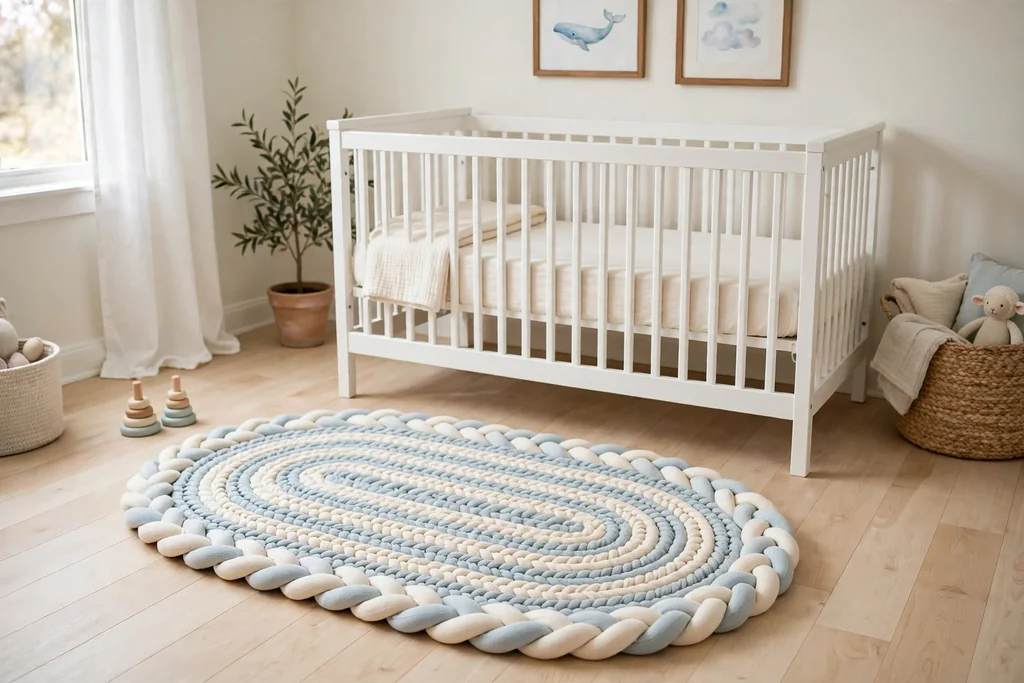
A braided rug in cream, soft grey, and pale blue warms a pale wood floor and marks the play area in a French nursery. Choose a flat, low pile braided rug large enough to sit under the crib side and extend into the room, so your feet land on something soft during night visits. A rug pad underneath stops the rug from slipping on smooth wood.
Keep the rug low pile and washable where possible, since nursery floors see spills, crawling, and toy traffic. Vacuum the braiding regularly, since crumbs collect in the grooves, and spot clean marks early so they do not set. If the room is small, one runner beside the crib gives the same soft first step for less cost and less cleaning.
12. Fit a Low Storybook Shelf at Child Height
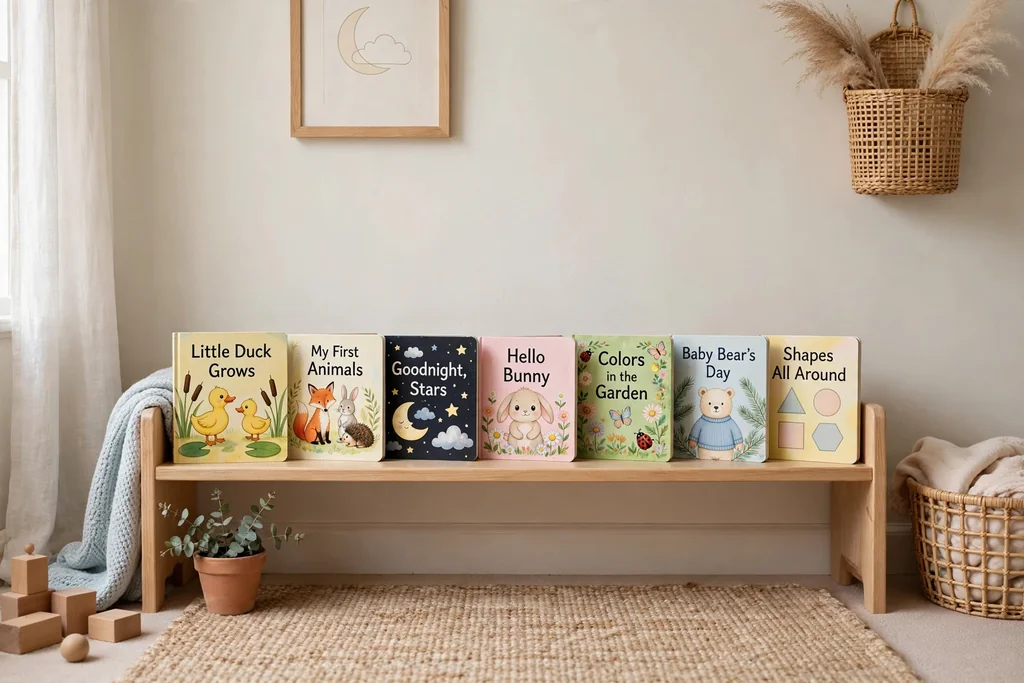
A low, forward facing storybook shelf lets a toddler see book covers and choose a book without pulling a stack off a high shelf. Fit two or three shallow shelves on one wall at child height, with a picture ledge deep enough to hold board books upright. Fill the shelves with a small rotation of books, including French storybooks and classics, and swap the selection every few weeks to keep it fresh.
Fix the shelves firmly to the wall, since a climbing toddler will test them, and keep heavy books on the lowest shelf. Leave one shelf partly empty, so books can be returned without a struggle, and add a small basket below for books that are out of rotation. A low shelf also works as a display for a few soft toys, as long as the display stays within reach and safe to handle.
13. Hang Floor Length Linen Curtains High and Wide
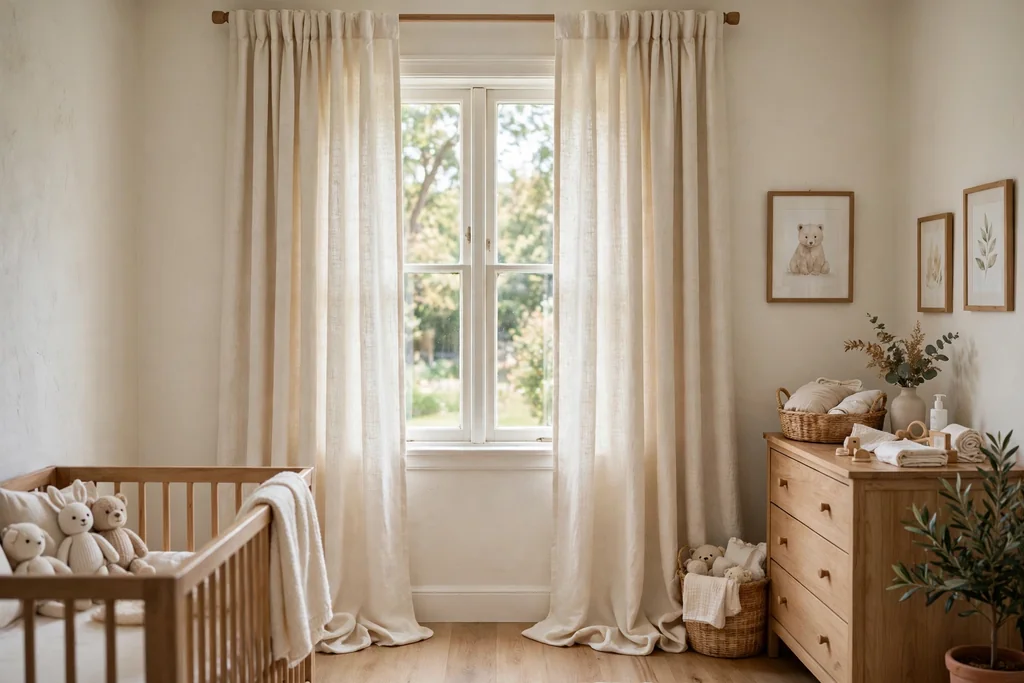
Floor length linen curtains in cream or soft white give a French nursery tall, soft windows and better light control at nap time. Hang the rod near the ceiling and wider than the window frame, so the panels stack on the wall when open and cover the full frame when closed. Linen falls in gentle folds and suits the French country palette, especially beside pale wood and toile.
Keep curtain cords, ties, and chains completely out of reach of the crib and any climbing furniture, and use cordless or child safe fittings throughout. Layer a plain blackout blind behind the linen if you need darkness for daytime naps, so the linen stays decorative while the blind does the darkening work. For more hanging guidance, see these bedroom curtain ideas. Wash the linen panels before hanging, since washed linen softens and keeps its size after later washes.
14. Rock in a Rattan Chair by the Window
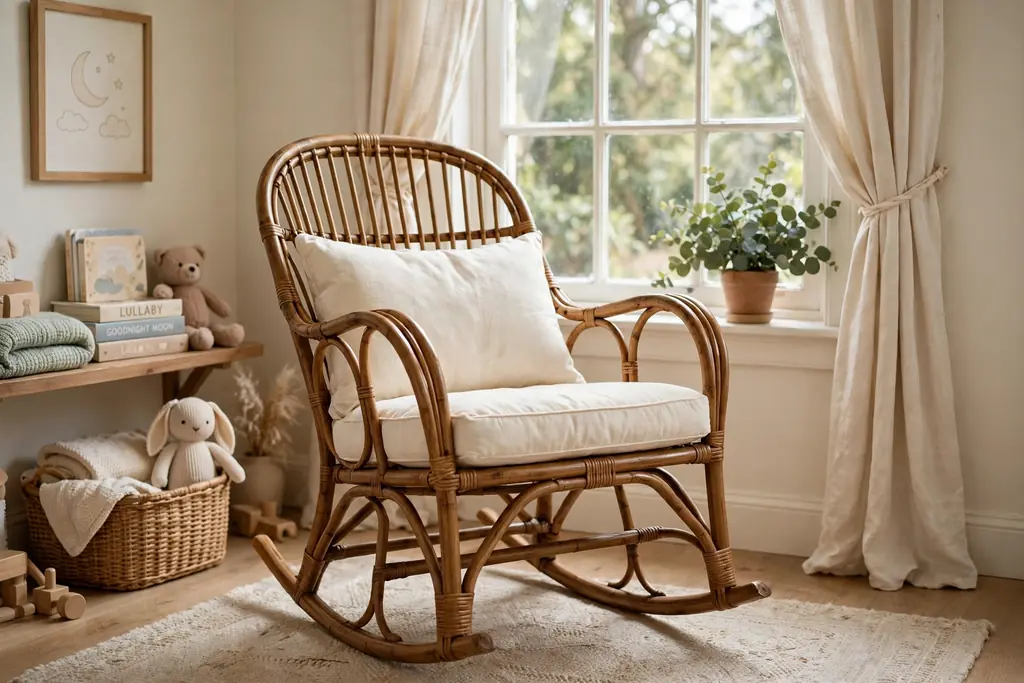
A rattan rocking chair by the window gives a French nursery a light, natural seat for feeds, stories, and quiet moments. Rattan suits the French country palette, and the open weave keeps the chair from looking heavy in a small room. Place the chair where it catches daylight but stays clear of curtain cords, radiators, and the crib, with room to rock without hitting the wall.
Add a thin cushion in cream linen for comfort, tied to the chair so it does not slip, and keep a small basket of muslins nearby. Check the rockers and joints before daily use, since a chair used for night feeds must move smoothly and sit level. A rattan chair also moves easily to another room later, which makes it a practical buy beyond the nursery years.
15. Build a Paris Print Gallery in Slim Frames

A small gallery of Paris prints, in slim gold or black frames, gives a French nursery a grown up wall detail that still suits a baby’s room. Choose three to five simple prints, such as the Eiffel Tower, a Paris street, a French garden, or a vintage map, in soft colors that match the bedding. Hang them in a loose row above a dresser or beside the changing area, with even gaps between frames.
Lay the frames on the floor first to plan the arrangement, then hang the largest print first and build around it. Keep the center of the group at adult eye level, and never hang heavy frames above the crib. Use picture hooks rated for each frame weight, and keep glass out of reach where possible, since a nursery wall should stay safe if a frame is knocked.
16. Store Toys and Blankets in Woven Baskets
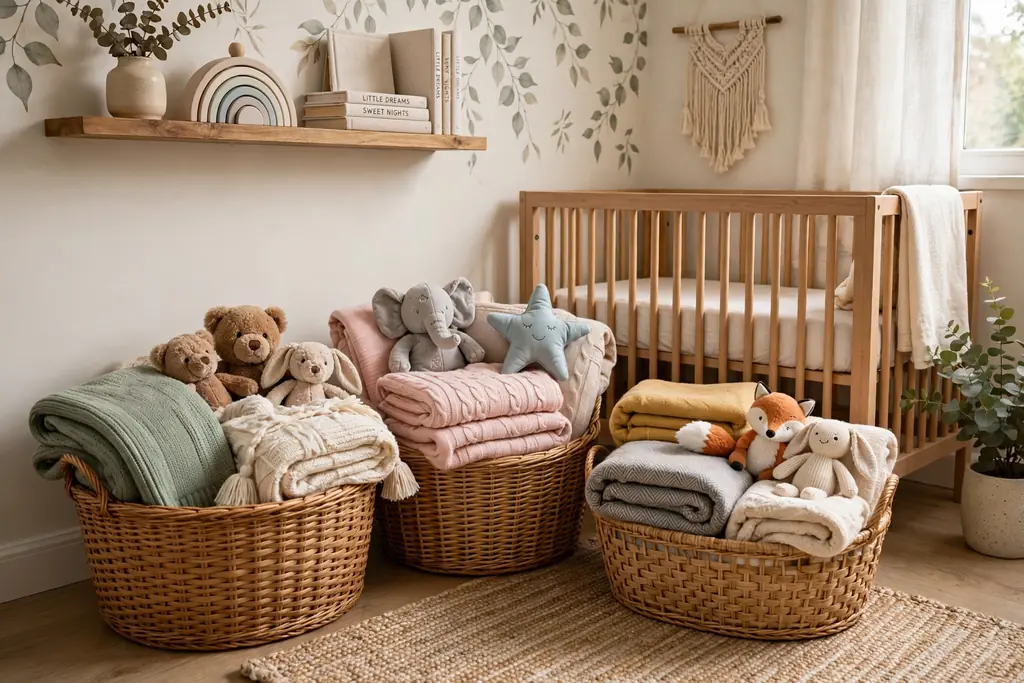
Woven baskets in seagrass, cotton rope, or wicker give a French nursery soft, natural storage that fits the country look. Use one large basket for soft toys, one medium basket for blankets, and a small basket on the changing dresser for creams and brushes. Baskets with handles are easy to carry to the washing pile or to another room, and open tops let a toddler see what is inside.
Label baskets with a simple picture tag, such as a toy or a blanket, so a young child can help with tidy up time. Keep baskets on the floor or on low shelves, never stacked high where they could topple, and check woven edges for sharp splinters before use. A basket that holds only one category stays tidy far longer than a single large toy box that collects everything.
17. Set Up a Linen Changing Station with Muslins
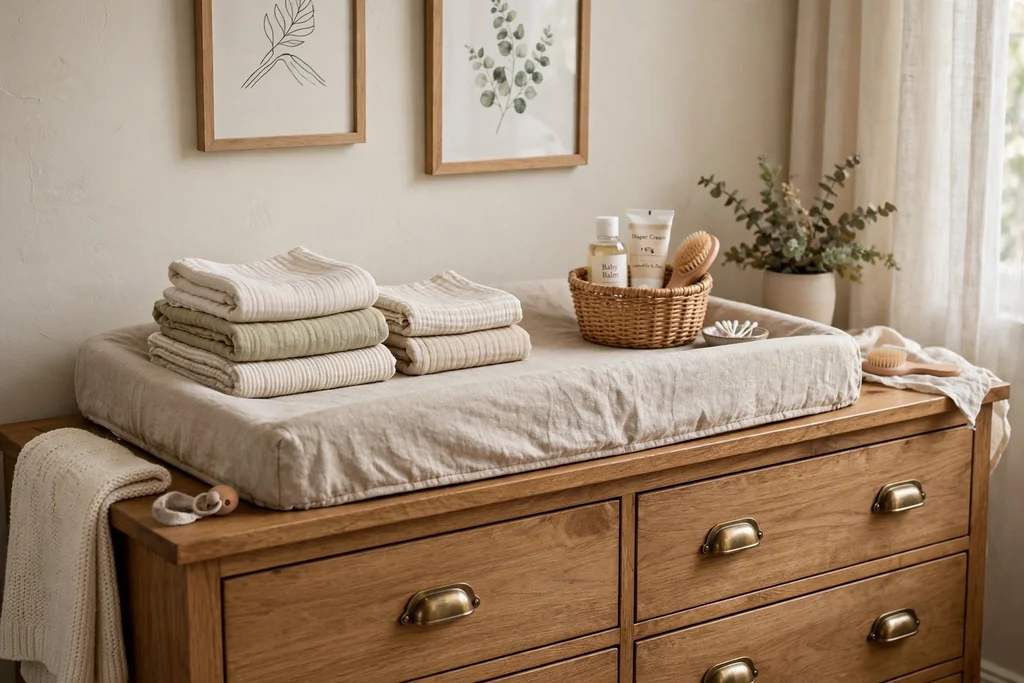
A linen changing station keeps nappy changes calm and organized, with everything in one place on the dresser top. Use a washable linen cover on the changing pad, a stack of folded muslins, a small basket of nappies, and a lidded bin for used items beside the dresser. Keep the layout the same every time, so you can reach what you need without looking away from the baby.
Wash the pad cover and muslins often, and keep two spare covers folded in the top drawer for quick swaps. Store creams and lotions in the small basket rather than loose on the dresser top, so the surface stays clear and nothing rolls off. A tray under the basket catches drips and makes wiping the dresser top a one minute job.
18. Add Dried Lavender Bundles Away from the Crib

Dried lavender bundles bring a French country scent and color to a nursery without a plug in device or a spray. Tie small bundles with cotton string and hang them on a wall hook, a door handle, or a shelf, well away from the crib and out of a baby’s reach. The soft purple suits cream walls and pale wood, and the bundles dry further in place, keeping their shape for months.
Keep lavender out of the crib, the bassinet, and any spot where a baby could pull it down, since dried stems can break into small pieces. Replace bundles when they lose their scent or start to shed, and dust them gently with a soft brush. If anyone in the household is sensitive to scent, keep the bundles in a hallway or a closed basket instead, and rely on the color alone.
19. Hang a Linen Cloud and Star Mobile

A linen cloud and star mobile adds a soft focal point above the changing area or the reading corner, without hanging over the crib. Choose a mobile in cream linen, felt, and wood, with clouds, stars, and a moon in muted tones, hung from a ceiling hook or a wall bracket. Keep it high enough that a standing toddler cannot reach it, and fix it firmly so it cannot fall.
A mobile over the changing table gives the baby something calm to look at during changes, and a mobile in the reading corner suits story time. Avoid hanging a mobile directly above the crib once the baby can sit up or reach, and move it to a wall bracket at that stage. Check strings and fixings monthly, since nursery mobiles see daily movement and dust.
20. Spell the Name in Wooden Script Letters

Wooden script letters spelling the baby’s name give a French nursery a personal wall detail that suits the classic style. Choose letters in pale wood, white, or soft gold, in a flowing script, and mount them above the dresser, the reading shelf, or the door. Keep the name at adult eye level and on a wall the baby cannot reach, with each letter fixed separately so the spacing stays even.
Lay the letters on the floor first, measure the full width, and mark light pencil guides on the wall before fixing. Use fixings rated for each letter, and avoid adhesive strips on freshly painted walls, since they can peel paint when removed. If the name is long, use a smaller letter size or split it across two lines, so the wall does not look crowded.
21. Make a Reading Nook with Floor Cushions
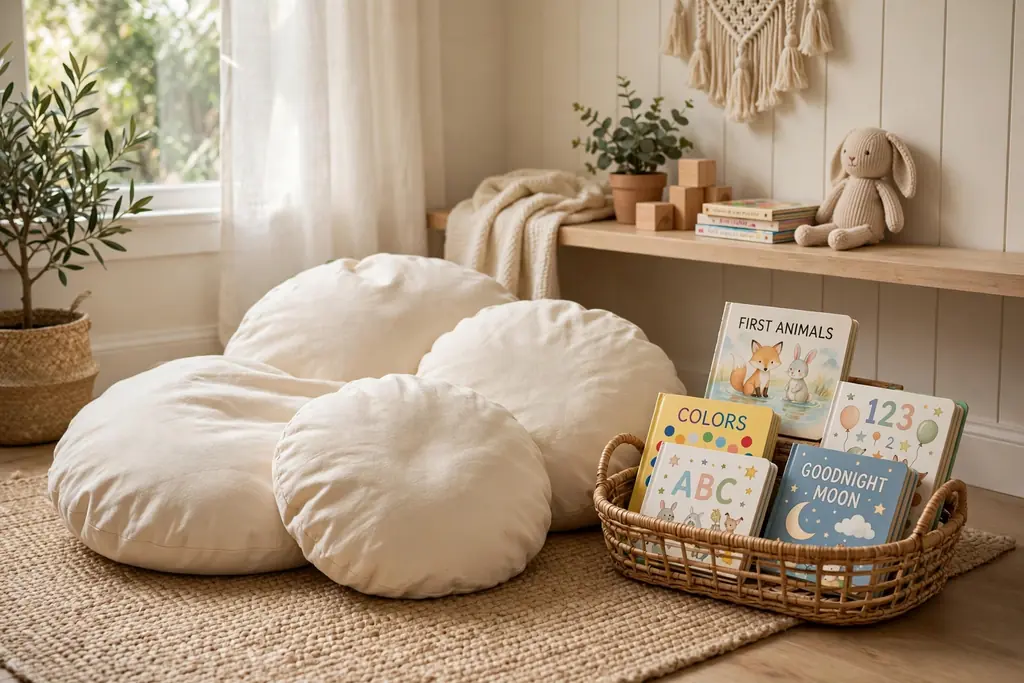
A reading nook with large floor cushions gives a French nursery a soft corner for stories, even before the baby can sit up alone. Place two or three floor cushions in cream linen and soft blue against a wall, with a low basket of board books beside them and a small wall shelf above for a few favorites. A cushion with a removable, washable cover stays practical as the child grows and the nook gets daily use.
Keep the nook clear of the crib and the changing area, so it has its own job in the room, and add a small rug underneath to mark the spot. As the child grows, the same cushions work for independent reading, and the basket can hold a larger book rotation. A reading nook also gives visiting grandparents a comfortable place to sit for a story.
22. Tuck Soft Toys into a French Market Basket
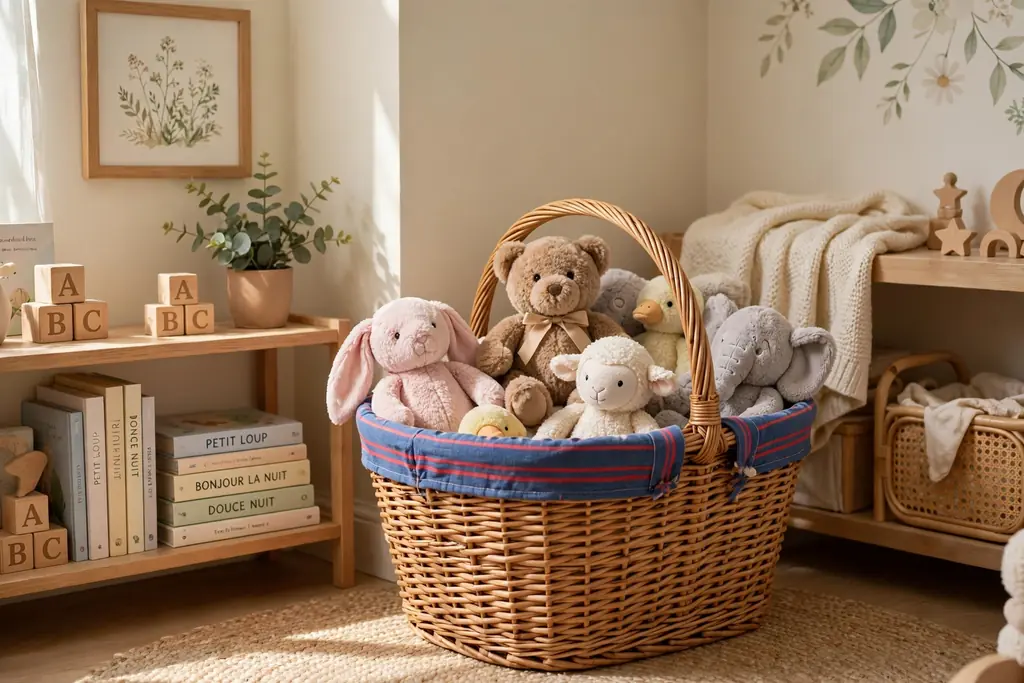
A French market basket, in woven straw with leather handles, holds soft toys in a way that looks like part of the room rather than storage. Place the basket in a corner near the reading nook, with the most loved toys on top and larger toys below, so a toddler can reach in and choose. The natural straw suits cream walls, pale wood, and linen, and the basket carries easily to another room for play.
Keep the basket on the floor, not on a shelf, so it cannot fall, and check the handles and weave for sharp ends before use. Rotate the toys every few weeks, keeping a few in a cupboard, so the basket never overflows and old favorites feel new again. A market basket also works later as laundry or blanket storage, which makes it a useful long term piece.
23. Hang a Vintage Wall Clock and a Growth Chart

A vintage wall clock and a simple growth chart give a French nursery two practical wall pieces with classic character. Choose a round clock with a cream face and slim hands, and a wooden or linen growth chart marked in centimeters, hung side by side on a plain wall. The clock helps with feed and nap routines, and the chart turns height checks into a small family ritual.
Hang both pieces firmly, at a height where the chart starts at floor level and the clock sits above it, clear of the crib and climbing furniture. Mark heights with a pencil first, then ink the marks once you are sure of the placement, so the chart stays neat over the years. If the chart is fabric, fix it flat to the wall so it does not curl at the edges.
24. Sling Toys into a Corner Linen Hammock

A corner linen hammock, strung between two walls, holds soft toys up off the floor and frees space for play. Choose a plain cream or striped linen sling, fixed to wall studs with hooks rated for the load, and fill it with light soft toys only. The hammock suits a French nursery because the linen matches the bedding and curtains, and the corner placement keeps the main floor clear.
Keep the hammock well above a toddler’s head height, so toys cannot be pulled down, and never hang it above the crib. Check the hooks and fabric monthly, since the load grows as toys are added, and empty the hammock before washing the sling. A toy hammock also makes tidy up simple, since toys go back into the sling in one motion at the end of play.
Conclusion
A French nursery works best when the base stays pale and calm, the fabrics stay natural and washable, and the French details stay limited to a few clear pieces. Start with the crib wall and the changing dresser, since those two areas get used every day, then add the chair, the curtains, and the storage baskets one at a time. Keep safety checks part of the routine, with furniture fixed to walls, cords out of reach, and the crib kept bare. With those basics in place, the room can grow with the child, from a bassinet corner to a reading nook, without a full redecoration.
FAQs
What colors work best in a French nursery?
Cream, white, soft grey, pale blue grey, sage, and blush form the classic French nursery palette. Start with cream or white on the large surfaces, add one soft color on the crib wall or the bedding, and repeat that color once in a cushion or a curtain. Keep strong colors to small accents, so the room stays calm for sleep.
Is toile safe and practical for a nursery?
Toile works well on fitted sheets, cushion covers, and one wallpaper wall, as long as the fabric is washable cotton. Keep toile out of the crib apart from a fitted sheet, and avoid loose toile blankets, pillows, or bumpers in the crib. A washable toile keeps the French look without adding extra laundry worry.
How do I make a French nursery safe for a baby?
Fix heavy furniture, shelves, mirrors, and the dresser to the wall, keep cords, strings, and curtain ties out of reach, and keep the crib bare except for a fitted sheet. Hang art, mirrors, and mobiles away from the crib, and check fixings monthly as the baby starts to pull up and climb. Follow the safety guidance that comes with the crib, bassinet, and changing pad.
Can I create a French nursery in a small room or a rental?
Yes. A small room suits the French style, since pale walls, a spindle crib, and linen curtains keep it feeling light. In a rental, use peel and stick toile, removable wall panels, a dresser as a changing table, and baskets for storage, so the main changes are furniture and fabric rather than permanent work. Keep one French pattern and one natural texture, and the room will read as French without a full renovation.
What furniture should I buy first for a French nursery?
Buy the crib, the changing dresser, and a comfortable chair first, since those three pieces get used every day and night. Add a low bookshelf, baskets, and curtains next, then finish with the mirror, the gallery wall, and the smaller details. Buying in that order keeps the room usable from the first night, even if the decorating takes longer.
How do I keep a French nursery from looking too formal?
Mix the classic pieces with soft, everyday textures, such as washed linen, braided rugs, woven baskets, and floor cushions. Leave some plain space on the walls and the dresser, and let a few well used items, such as books and soft toys, stay visible. A nursery that looks lived in, with washable fabrics and easy storage, will feel welcoming rather than formal.