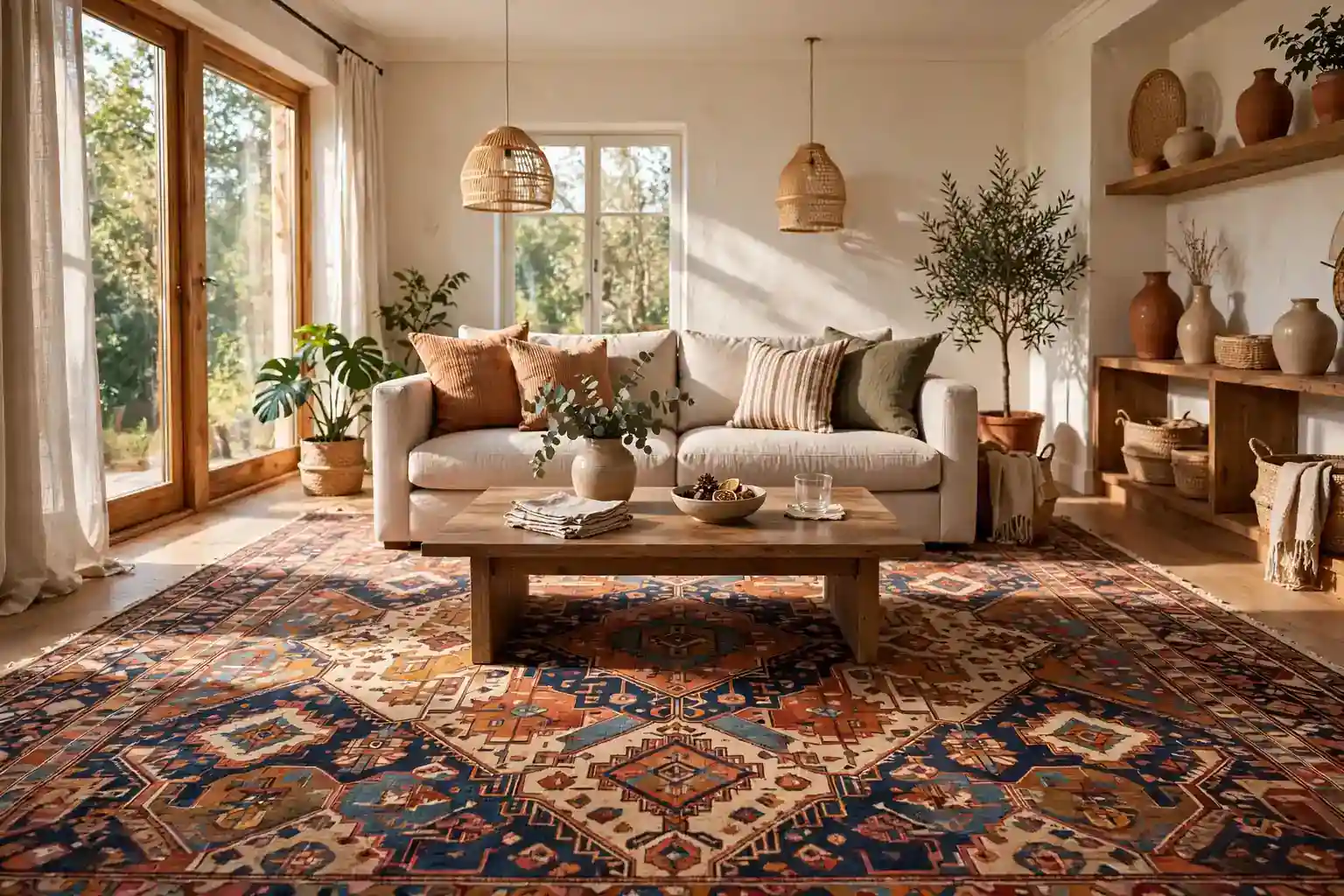
A rug is the fastest way to give a living room a point of view. It sets the seating zone, adds color or texture underfoot, and ties furniture together that might otherwise look like separate pieces. These 32 living room rug ideas cover size and placement first, then color, pattern, material, and style, so you can find one that fits your room, your budget, and the way you actually live. Before you buy, tape the rug size on the floor, walk around it, and check that doors and drawers still open freely.
Key Takeaways
- Size the rug to the seating group, not to the floor: the front legs of the sofa and chairs should rest on it.
- One strong rug choice at a time keeps the room calm. Pick a bold color, a strong pattern, or a rich texture, and keep the rest simpler.
- Layer a smaller rug over a large plain base when you want pattern without covering the whole floor.
- Choose the material for the traffic it will get: flatweave or washable rugs suit pets, kids, and busy doorways, while thick wool suits a quiet seating corner.
- Let the rug repeat one color already in the room, such as a cushion, a throw, or a piece of art, so it looks planned rather than added at random.
1. Rest the Front Legs of the Sofa on the Rug
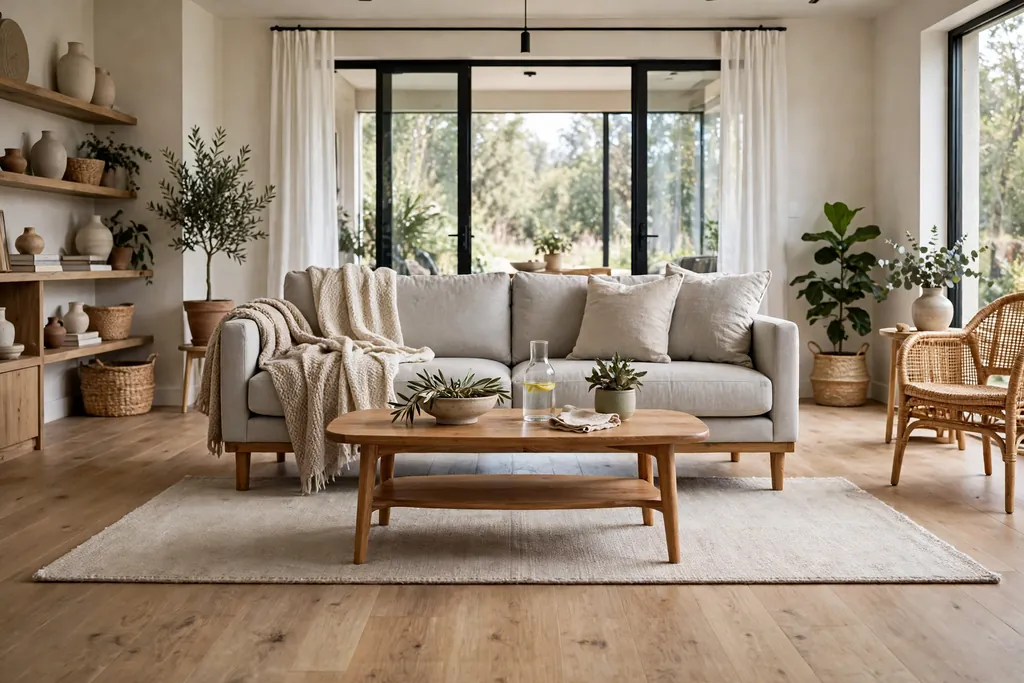
The front legs rule is the most useful rug placement guide for a standard living room. Choose a rug large enough that the front legs of the sofa and any armchairs sit on it, with the back legs on the floor behind. This links the seating into one group and stops the rug from looking like a small mat floating in front of the sofa.
Measure from the front of the sofa out to where the coffee table ends, then add a little extra on each side. If the rug you love is too small for the full group, try it under the coffee table only, or save it for a smaller room. A rug that fits the seating group makes the whole room feel more settled.
2. Anchor an Open Plan Room With an Oversized Rug
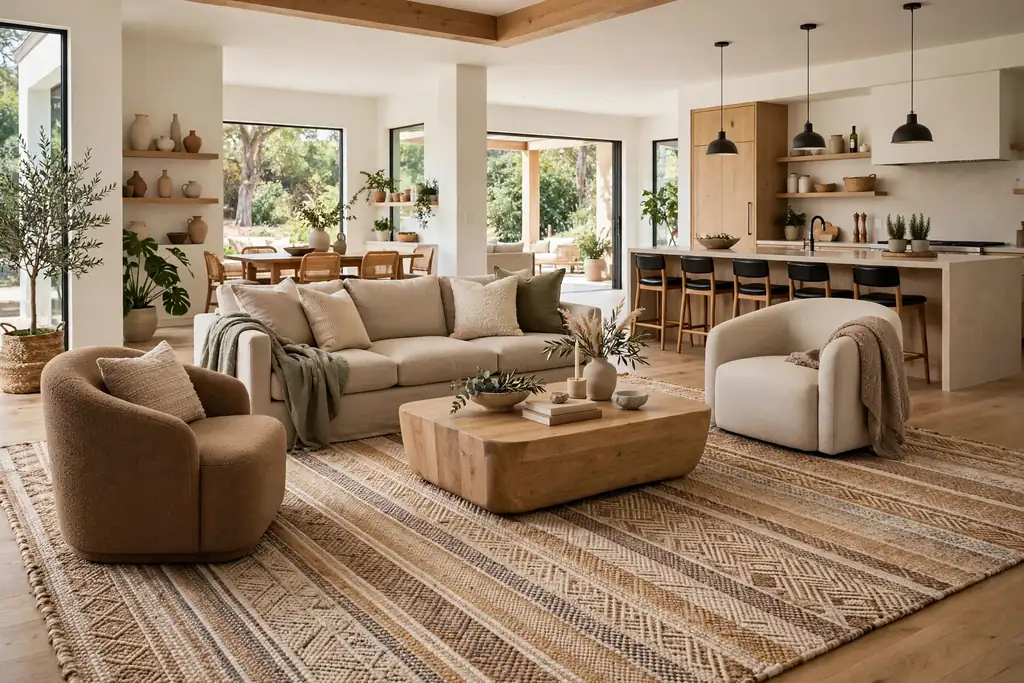
In an open plan room, a large rug does the job of a wall: it marks where the living area starts and ends. Pick a rug that fits under the sofa, chairs, and coffee table with room to spare on each side, so the whole group sits inside its edges. This gives a big room a clear center and keeps furniture from drifting apart.
Keep the rug color fairly calm if it covers a lot of floor, and let cushions or art carry the stronger color. Leave a border of bare floor around the rug so the room does not feel carpeted wall to wall. This idea suits a room that also holds a dining table or a work corner nearby.
3. Use a Round Rug Under a Round Coffee Table
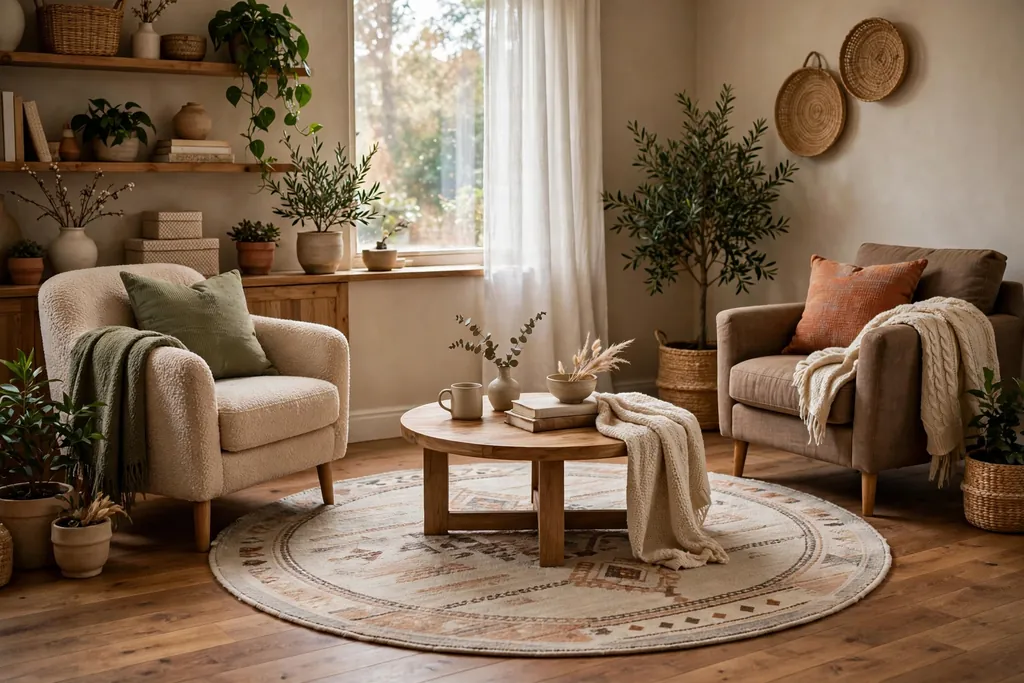
A round rug suits a round coffee table and a curved seating group far better than a rectangular rug, which leaves awkward corners sticking out. Place the round rug so the table sits in the center and the front legs of the chairs rest on its edge. The curve softens a room full of straight lines and works well in a bay window or a small corner group.
Round rugs also suit a single armchair and a side table, where a rectangular rug would look oversized. Check the diameter before you buy: the rug should reach at least to the front legs of the seating, not just under the table. A small round rug under a table alone can look lost in a large room.
4. Run a Runner Rug Along a Narrow Living Room
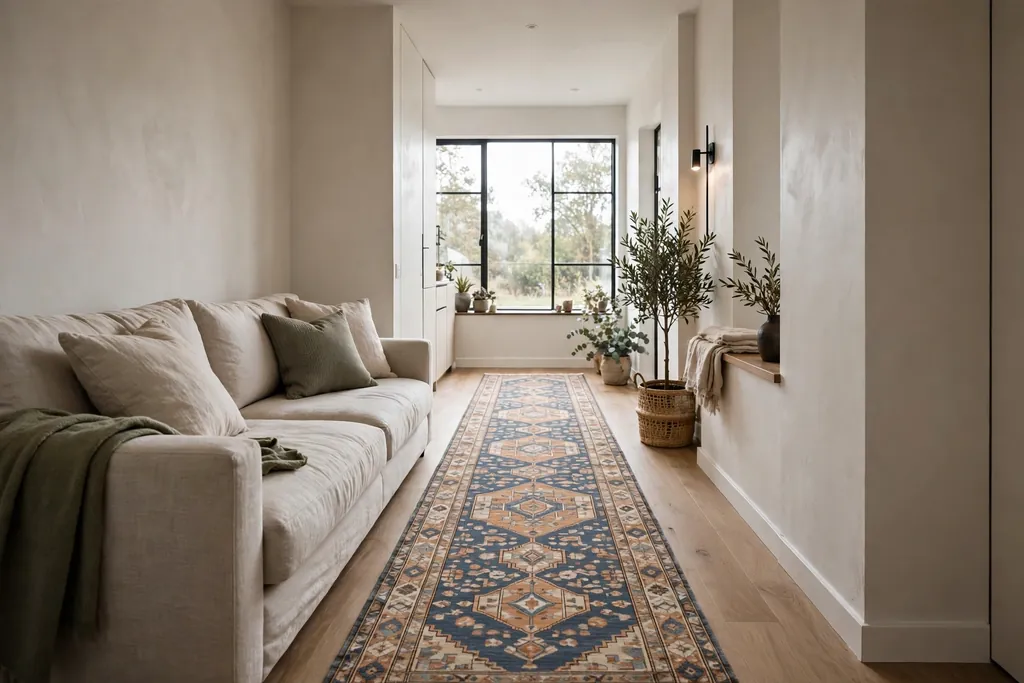
A long, narrow living room can feel like a corridor, and a runner rug helps it read as a room instead. Lay the runner along the length of the seating area, beside or under the sofa, so it draws the eye toward the window or the fireplace at the far end. This works well in a galley style room where a wide rug would crowd the walking route.
Keep furniture to one side of the runner so the walking route stays clear on the other side. A runner with a simple pattern adds interest without chopping the room into pieces. If the room is very narrow, a runner in a pale tone keeps the floor feeling open.
5. Layer a Small Patterned Rug Over a Large Plain Base
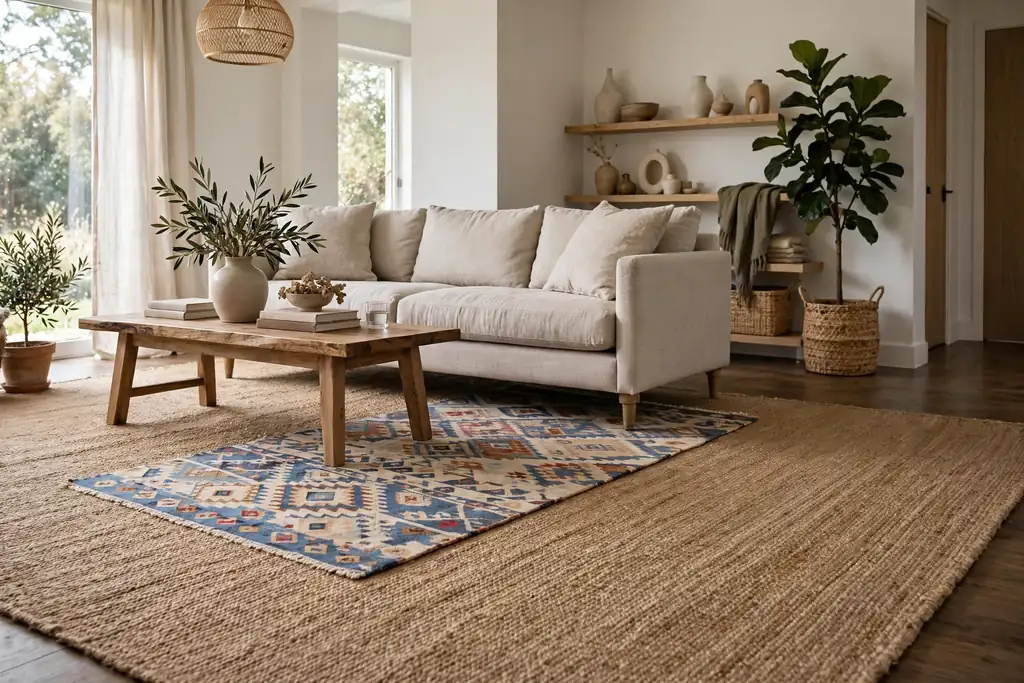
Layering solves a common problem: you love a patterned rug, but the only size that fits the room is plain. Start with a large flat rug in jute, sisal, or plain wool, then lay a smaller patterned rug on top at a slight angle. The base rug handles the size, the top rug adds the color and pattern, and the combination looks collected rather than matched.
Keep the top rug smaller than the base by a clear margin on all sides, and use a rug pad or gripper underneath so the top layer does not slide. This is also a good way to use a rug you already own in a new room: buy a plain base to fit, and let the old rug become the top layer.
6. Angle a Rug to Open Up the Walking Route
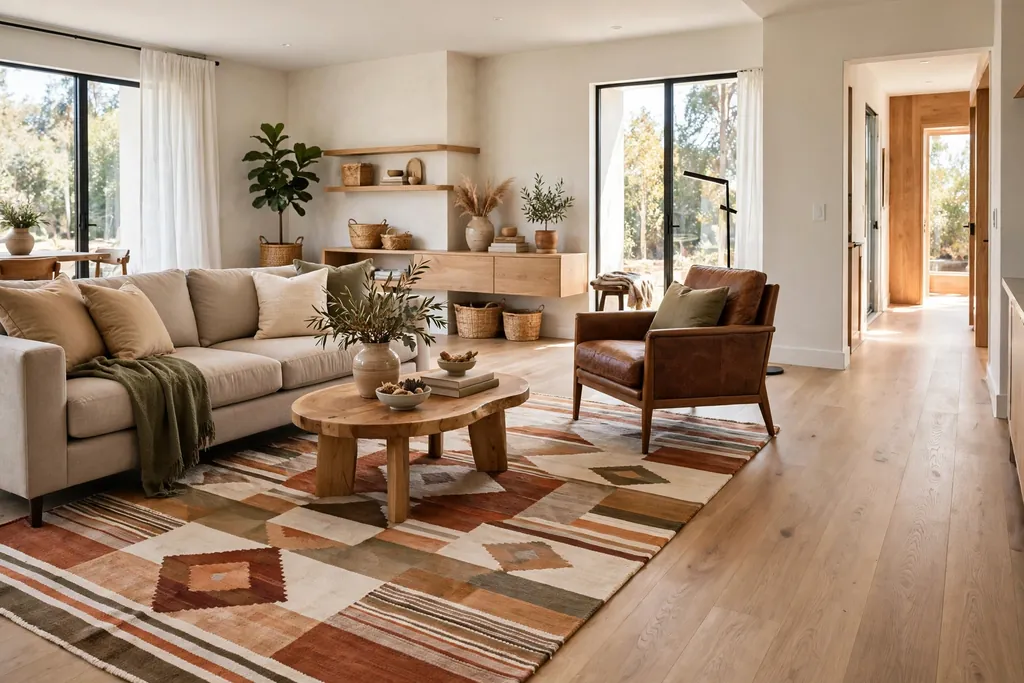
Most rugs sit square to the walls, but angling a rug slightly can open a tight corner or a blocked walking route. Try turning the rug a few degrees so one corner points toward the door or the window, and arrange the seating to follow the rug rather than the walls. This suits a room with a diagonal fireplace, a bay window, or furniture that does not line up with the walls.
Keep the angle gentle, since a rug turned too far looks accidental. The coffee table should still sit square to the sofa, even if the rug beneath it is angled. Tape the outline on the floor first and walk the route before you commit to the angle.
7. Float a Small Rug Under the Coffee Table Only
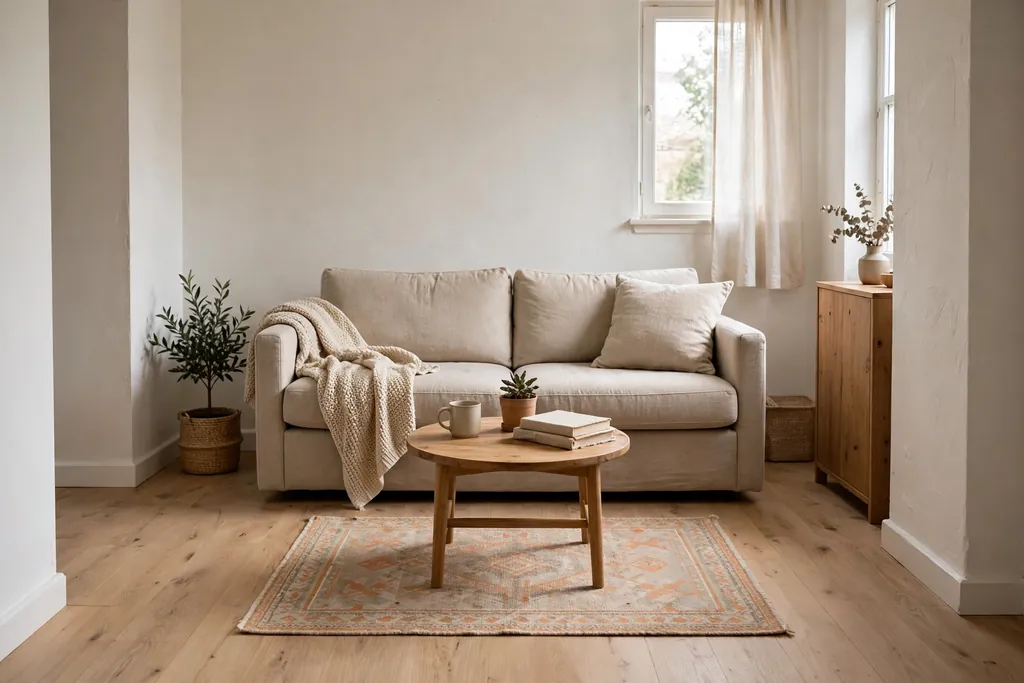
In a small living room, a rug that tries to fit under every chair can end up covering the whole floor. Instead, float a compact rug under the coffee table only, leaving the sofa and chairs on the bare floor around it. This defines the center of the room without shrinking it, and it works well where the floor itself is worth showing, such as wood or tile.
Choose a rug just larger than the coffee table on all sides, so the table does not look like it is perched on a mat. Keep the rug pattern simple, since it sits in the middle of the room and draws the eye. This idea suits a studio or a small apartment, where a large rug would leave almost no bare floor. For more small room seating ideas, see these cozy apartment living room ideas.
8. Frame a Fireplace Seating Group With a Rug
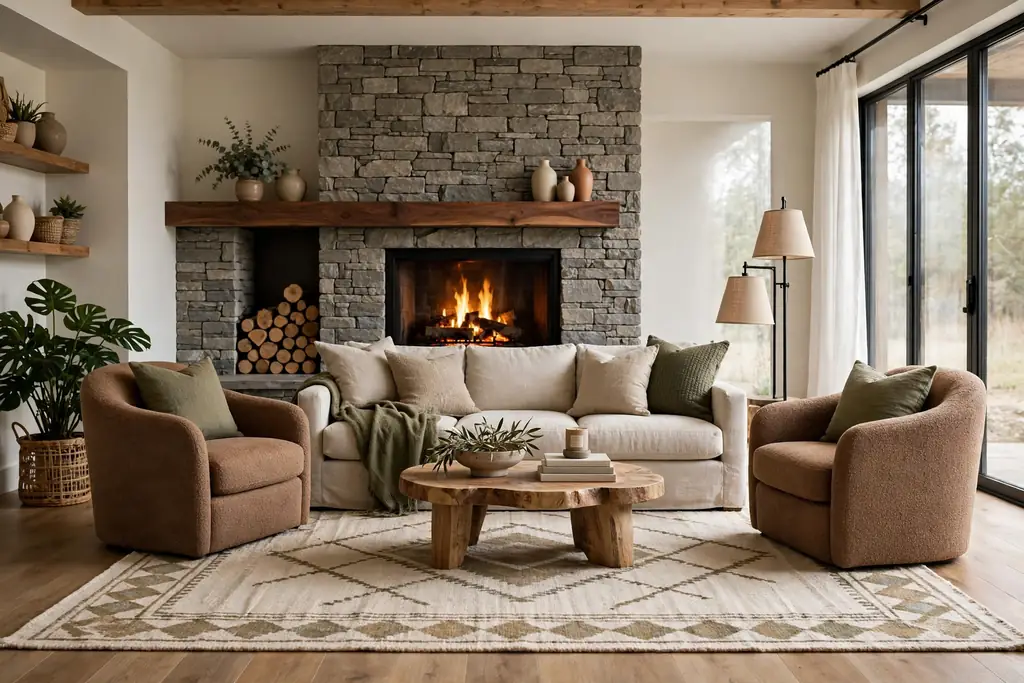
A fireplace already pulls chairs toward it, and a rug under that group makes the arrangement feel intentional. Place the rug so it runs from the fireplace out to the front legs of the facing chairs, with the coffee table in the middle. The rug should be wide enough for the chairs on both sides, not just the sofa.
Keep the rug clear of the hearth by a safe margin, and choose a low pile that chairs can slide over without catching. A rug with a border pattern suits this layout, since the border frames the group like a picture. This is a good layout for a room where conversation, not the television, is the main focus.
9. Let One Bold Solid Color Carry the Room
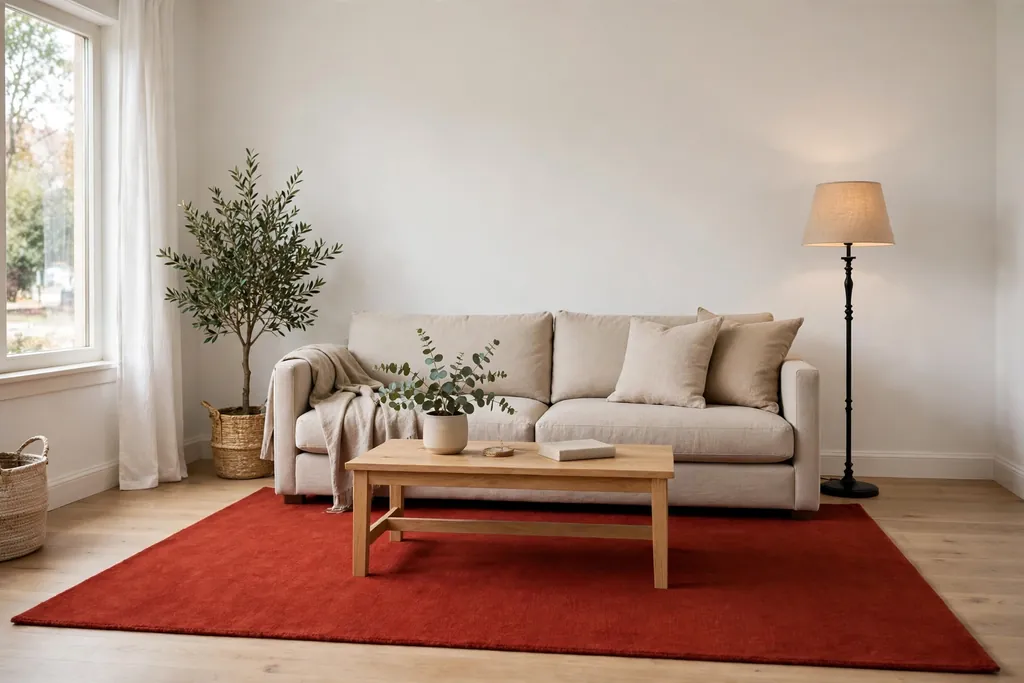
A solid rug in one strong color, such as rust, deep green, or navy, gives a plain room an instant focal point. Keep the sofa and walls neutral, then let the rug supply the color story, repeated once in a cushion or a throw. A solid color is easier to live with than a busy pattern, since it does not compete with patterned cushions or art.
Test the color in daylight and lamplight before you buy, since strong colors shift a lot between the two. If the room is small, a bold rug still works, as long as the rest of the room stays calm. This is the simplest way to add personality when you do not want a pattern.
10. Choose a Classic Persian Style Pattern
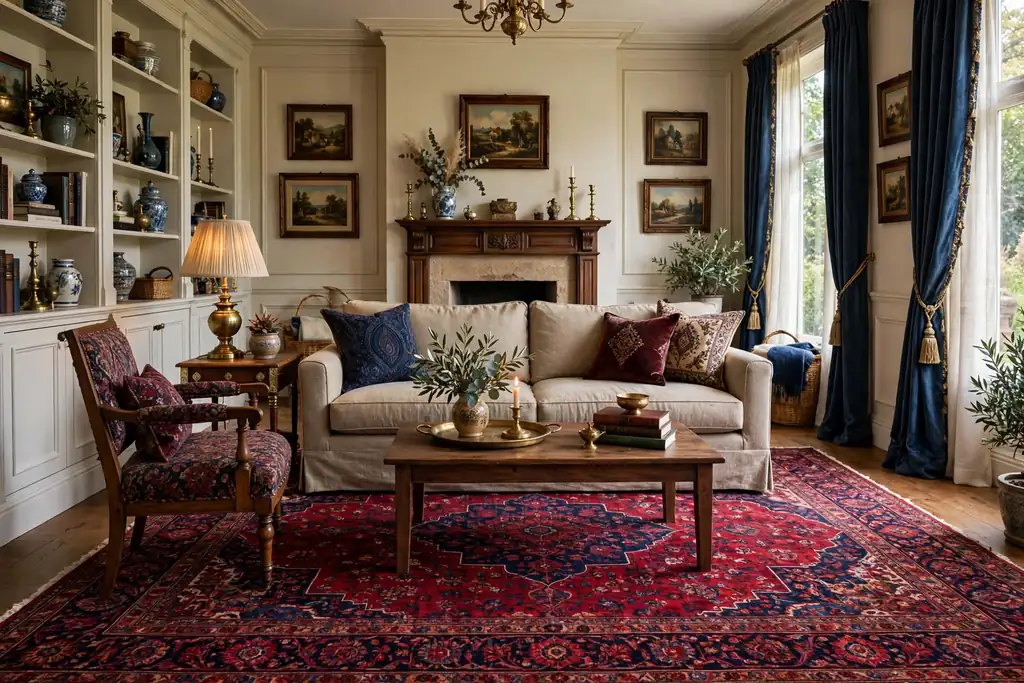
A Persian style rug brings a detailed, traditional pattern in deep reds, navy, and cream, and it suits both classic and modern rooms. The busy pattern hides everyday marks well, which helps in a room that gets daily use. Pair it with plain upholstery and simple curtains so the rug stays the main pattern in the room.
A genuine hand knotted rug is a long term piece, so check the size and colors at home before you commit. If the budget is tighter, a machine made rug in a Persian style pattern gives a similar look for a lower cost. Either way, keep the rest of the room quiet so the pattern has room to breathe.
11. Add a Geometric Pattern in Muted Tones
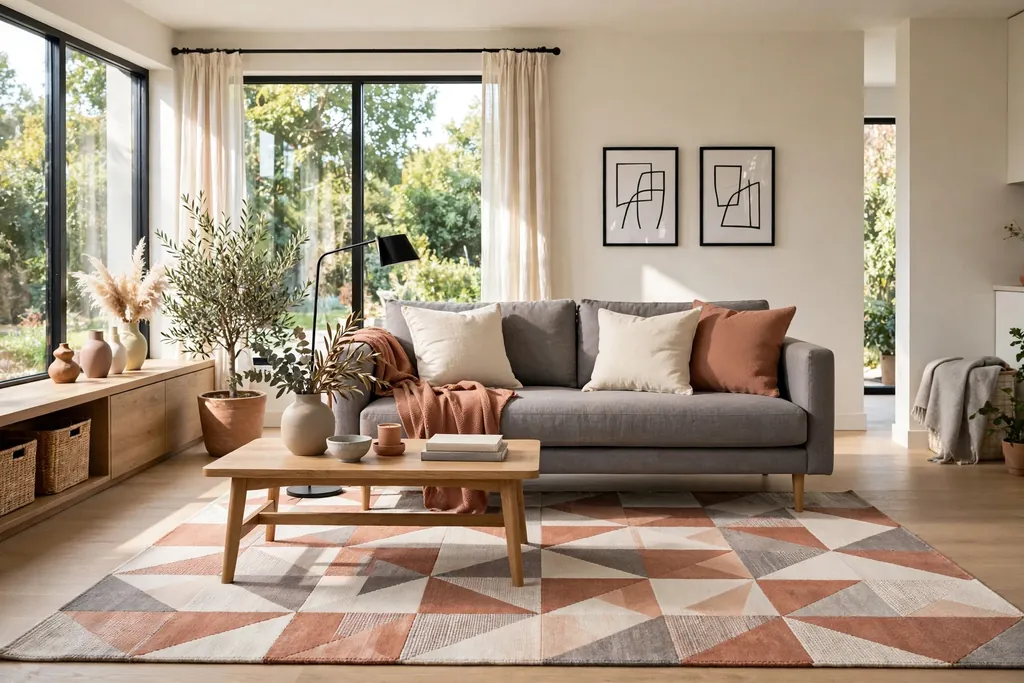
Geometric rugs use diamonds, triangles, or blocks in a regular repeat, and they suit a modern room better than a floral pattern. Choose muted tones, such as terracotta, cream, and grey, so the pattern adds structure without shouting. A geometric rug pairs well with a plain sofa and straight lined furniture.
Keep the scale of the pattern in proportion to the room: large shapes suit a large room, while small repeats suit a small room. If the cushions are also patterned, pick one pattern family only, and keep the other plain. This idea adds energy to a room that feels flat without changing the furniture.
12. Lay Down Wide Stripes for a Relaxed Look
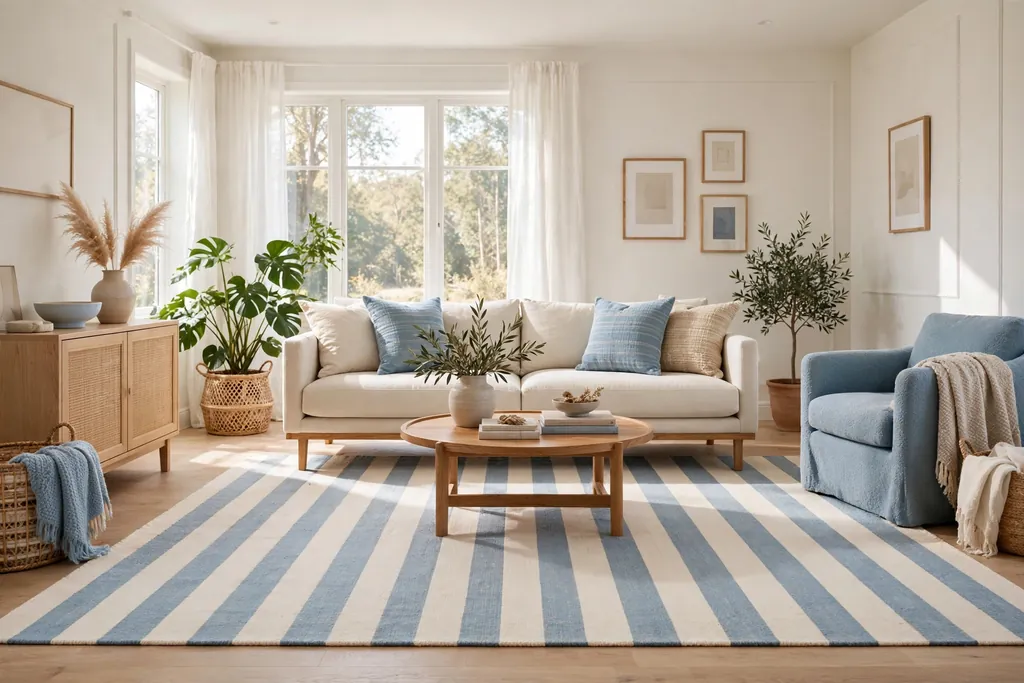
Striped rugs feel relaxed and work well in a room with plain walls and simple furniture. Wide stripes in two close tones, such as cream and soft blue, look calm; narrow stripes in stronger contrast look livelier. Run the stripes across the room to make it feel wider, or toward the window to draw the eye outward.
Stripes also help a rug look less flat than a solid color, while still being easy to match. Keep the rest of the room plain if the stripes are strong, and repeat one stripe color in a cushion. A striped flatweave rug is a practical pick for a room with a lot of foot traffic, since it hides wear between cleanings.
13. Pick a Rug With a Strong Border Pattern
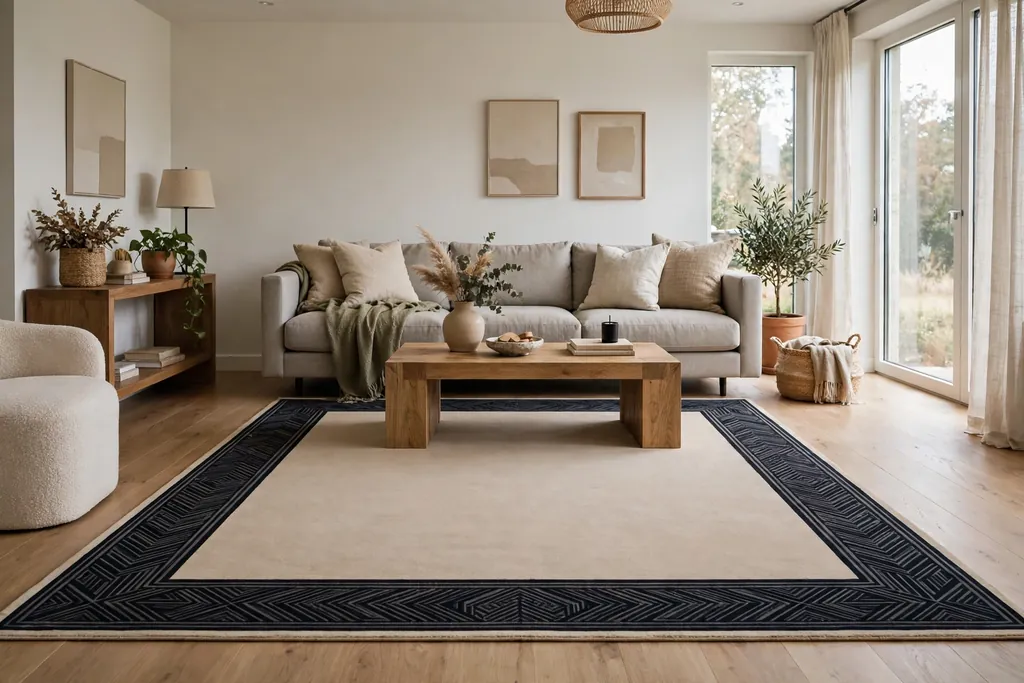
A border rug has a plain center and a patterned edge, which frames the seating group like a picture frame. This suits a room where the coffee table and sofa already carry detail, since the center of the rug stays quiet under the table. The border adds interest at the edges, where it is most visible.
Choose a border color that repeats a color in the room, such as the curtain tone or a cushion color. A dark border on a pale rug also helps the rug read as a defined zone on a pale floor. Keep the border width in proportion to the rug size, so a small rug does not end up all border and no center.
14. Try an Abstract Painterly Rug as Art for the Floor
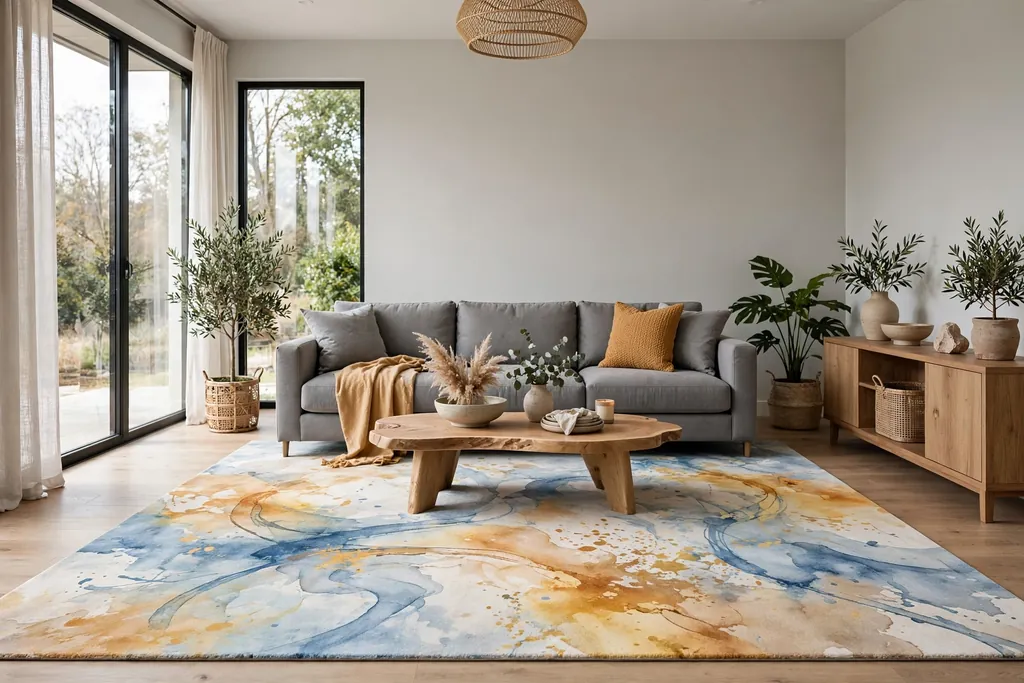
An abstract rug looks like a painting, with soft washes of color and no regular repeat. It suits a contemporary room with plain furniture, where the rug becomes the main artwork. Choose colors that echo the room, such as a blue from the curtains or an ochre from a cushion, so the rug feels linked to the scheme.
Keep the walls and upholstery plain, since an abstract rug already carries a lot of visual movement. This idea works best on a large rug, where the full design is visible around the coffee table. If the rug is small, the pattern gets hidden under furniture and the effect is lost.
15. Keep It Calm With a Two Tone Neutral Rug
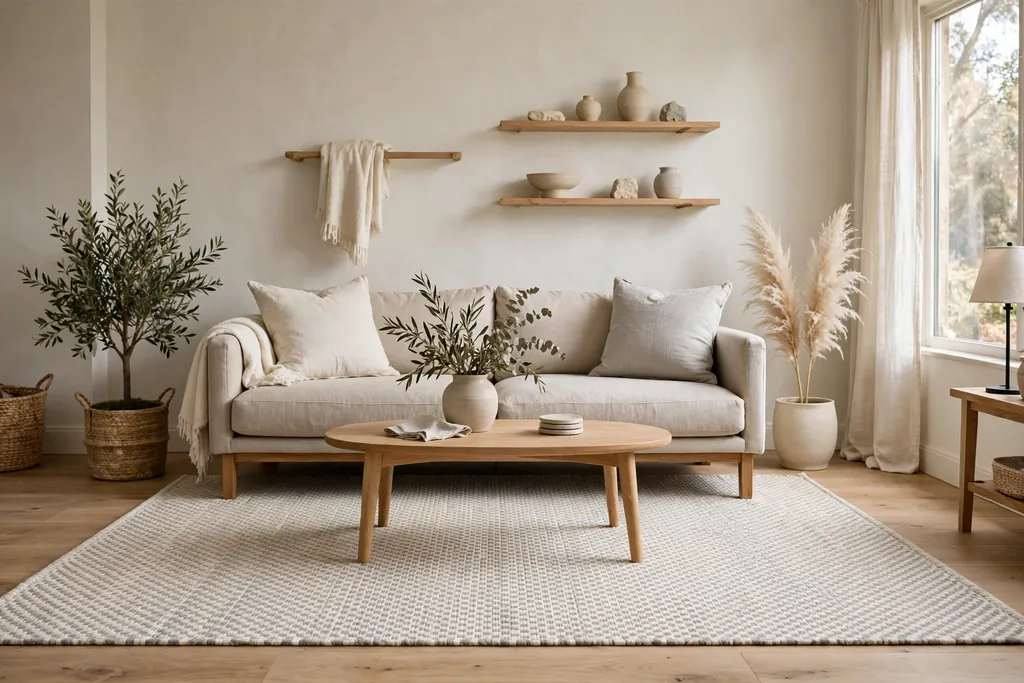
A two tone rug in cream and light grey, or oatmeal and stone, adds subtle depth without a strong pattern. The woven texture gives the eye something to look at, while the neutral tones suit almost any sofa color. This is a safe choice for a room where you change cushions and throws with the seasons.
A two tone rug also suits a rental, since it will work with furniture you already own and with pieces you buy later. Add personality through cushions, art, and plants rather than through the rug itself. Vacuum regularly, since pale rugs show dust and crumbs faster than darker ones.
16. Soften the Room With a Faded Vintage Rug
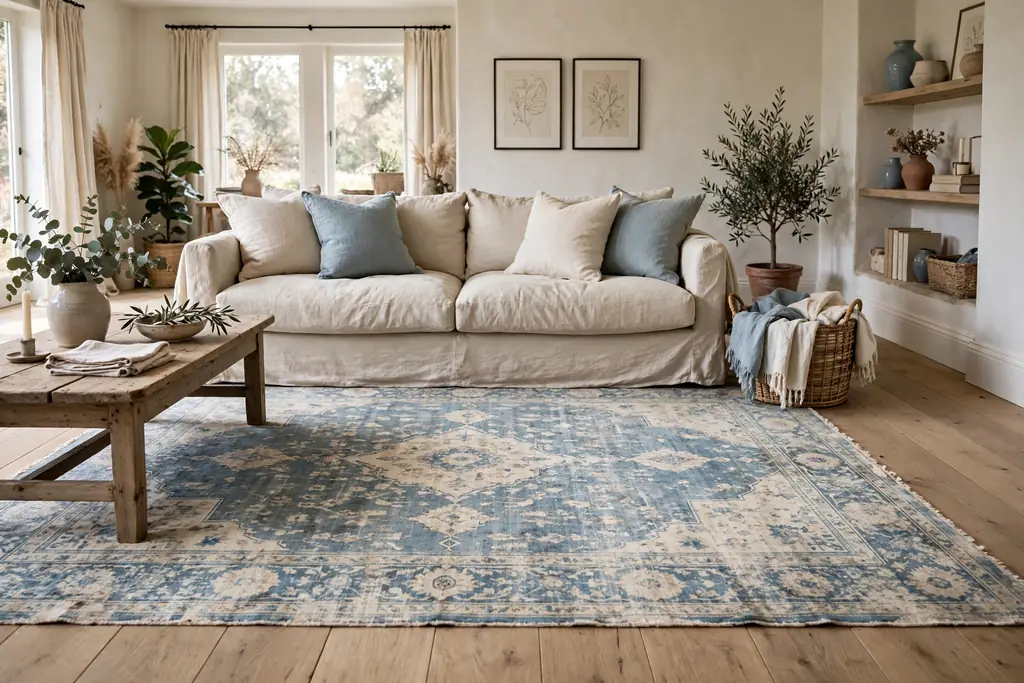
A faded vintage rug, or a new rug made to look vintage, has soft, worn colors that sit easily in a lived in room. The muted blues, creams, and rusts suit linen sofas, wood furniture, and plants. Because the colors are already softened, a vintage rug rarely clashes with other pieces in the room.
Check the back and edges before buying a genuine vintage rug, and plan for a rug pad to protect both the rug and the floor. If the rug is thin, layer it over a plain base rug for extra cushioning. This idea suits a room that already mixes old and new furniture.
17. Choose Thick Wool Pile for Comfort Underfoot
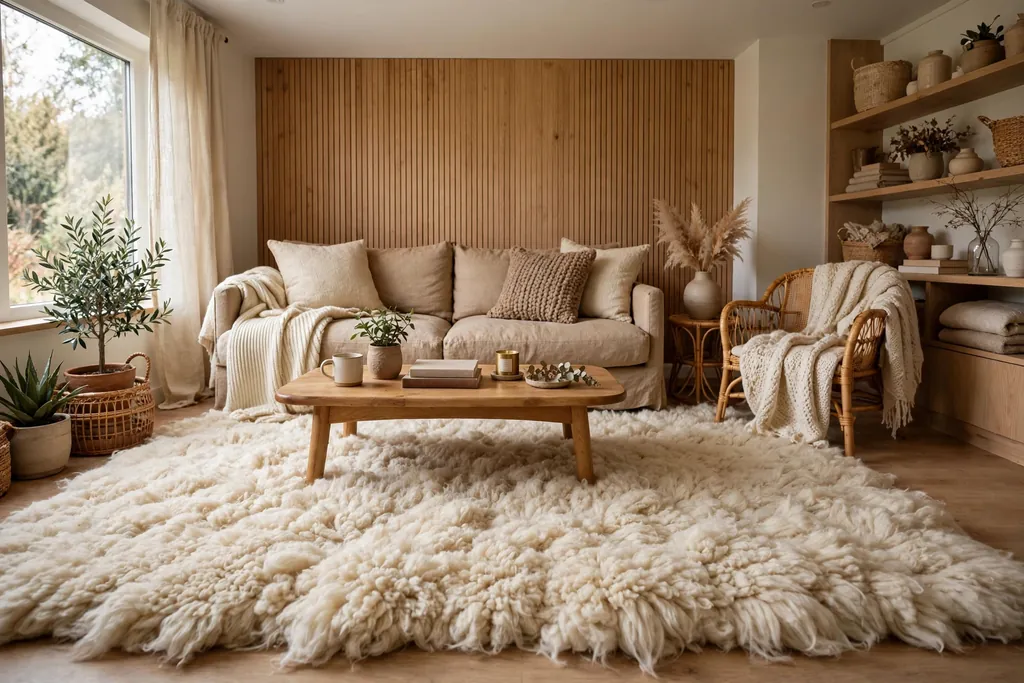
Wool pile rugs feel soft and warm under bare feet, and wool holds its shape well under furniture. A thick wool rug in a warm cream or soft grey suits a seating area used for reading and relaxing, where comfort matters more than easy cleaning. Wool also handles everyday wear better than many synthetic fibers.
Keep a wool rug out of damp spots and very sunny windows, since both can damage the fibers over time. Vacuum without a beater bar on a high pile, and blot spills quickly rather than rubbing them. This is a good choice for a main seating area that does not double as a dining space.
18. Use a Flatweave Cotton Rug for Easy Care
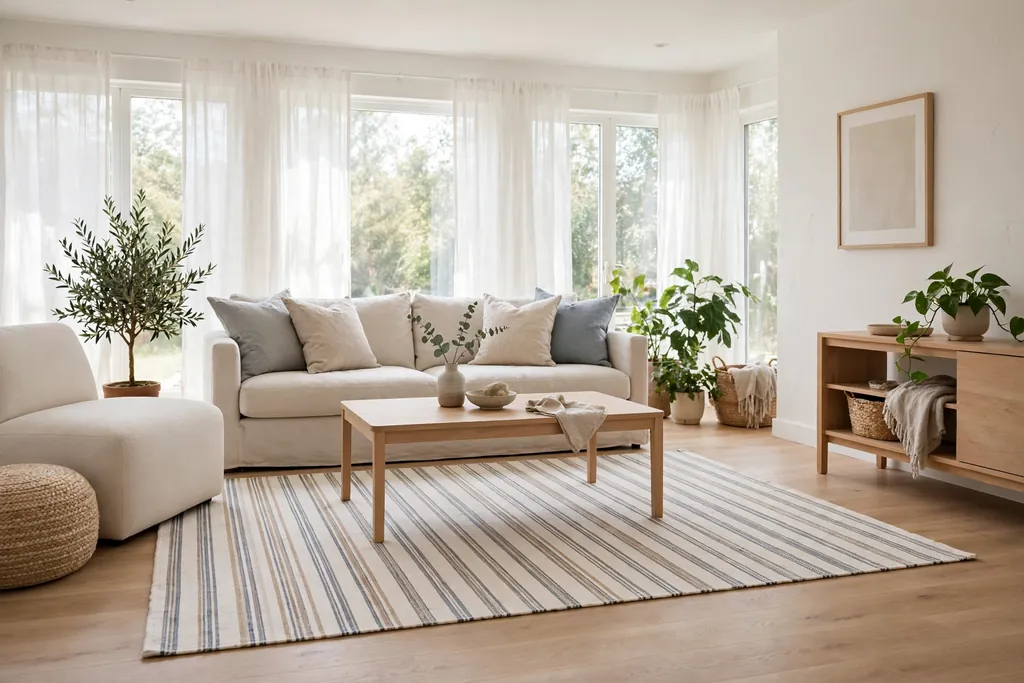
Flatweave cotton rugs are thin, light, and easy to move, which makes them practical for a busy living room. They slide under low furniture and doorways without catching, and many can be shaken out or washed at home. A flatweave rug suits a room where chairs move often, such as a room used for games or family gatherings.
The trade off is less cushioning underfoot, so add a rug pad if the floor is hard. Flatweave rugs also suit a layered look, since their thin profile sits neatly over a thicker base rug. Choose a simple stripe or plain color for the easiest match with changing furniture.
19. Bring in Natural Texture With a Jute Rug
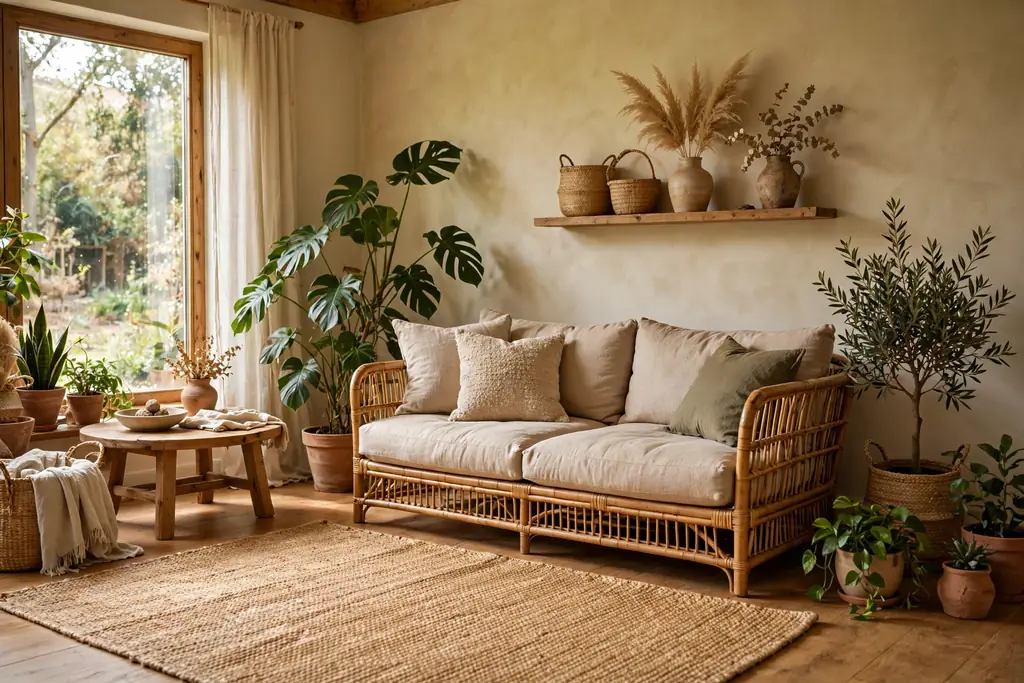
Jute rugs add a warm, golden texture that suits a natural or coastal room. The woven fibers bring an earthy tone to the floor and pair well with rattan, wood, and linen. A jute rug works best as a large base layer, with a smaller patterned rug on top if you want extra color.
Jute is not the best pick for a damp room or a spot where spills are likely, since the fibers stain and hold moisture. Keep it in a dry seating area, and use a pad underneath to stop it sliding on a smooth floor. The texture alone adds plenty of personality, so keep the rest of the room simple.
20. Sink Your Feet Into a High Pile Shag Rug
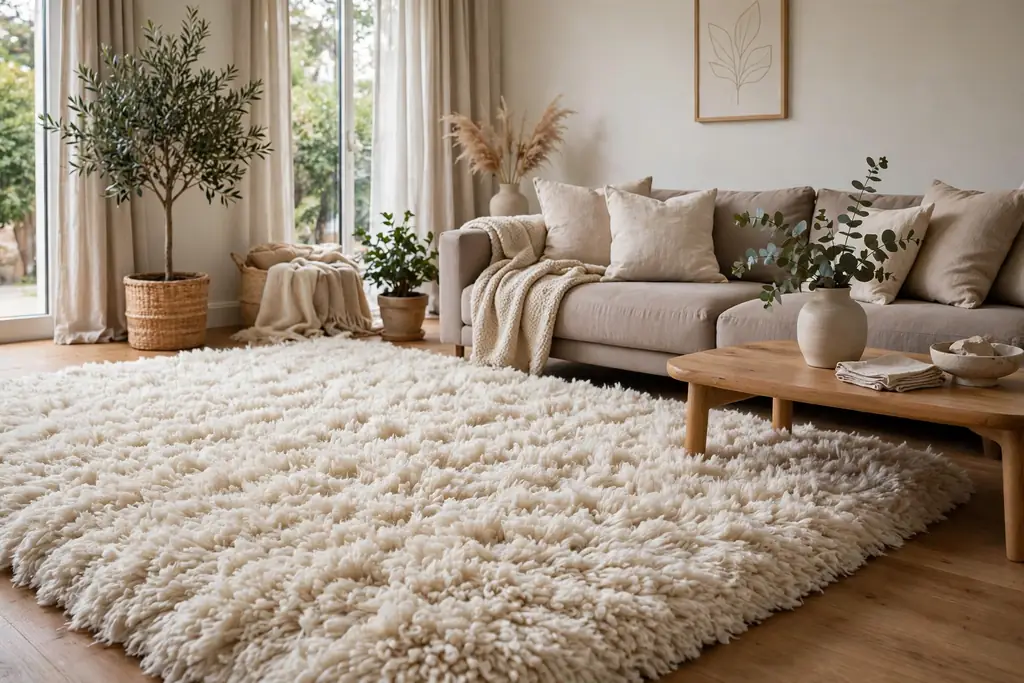
A high pile shag rug adds softness and a sense of luxury to a seating corner. The deep fibers feel good underfoot and suit a room used for relaxing, reading, or watching films. Choose a pale tone, such as ivory or soft grey, to keep the room feeling light, since a dark shag rug can look heavy.
Shag rugs need more care than flat rugs: shake them outside, vacuum with a suction only setting, and keep them out of dining areas where food drops easily. They suit a quiet corner better than a main walkway. Pair a shag rug with low, simple furniture so the texture stays the star.
21. Add a Cowhide Rug as a Natural Accent
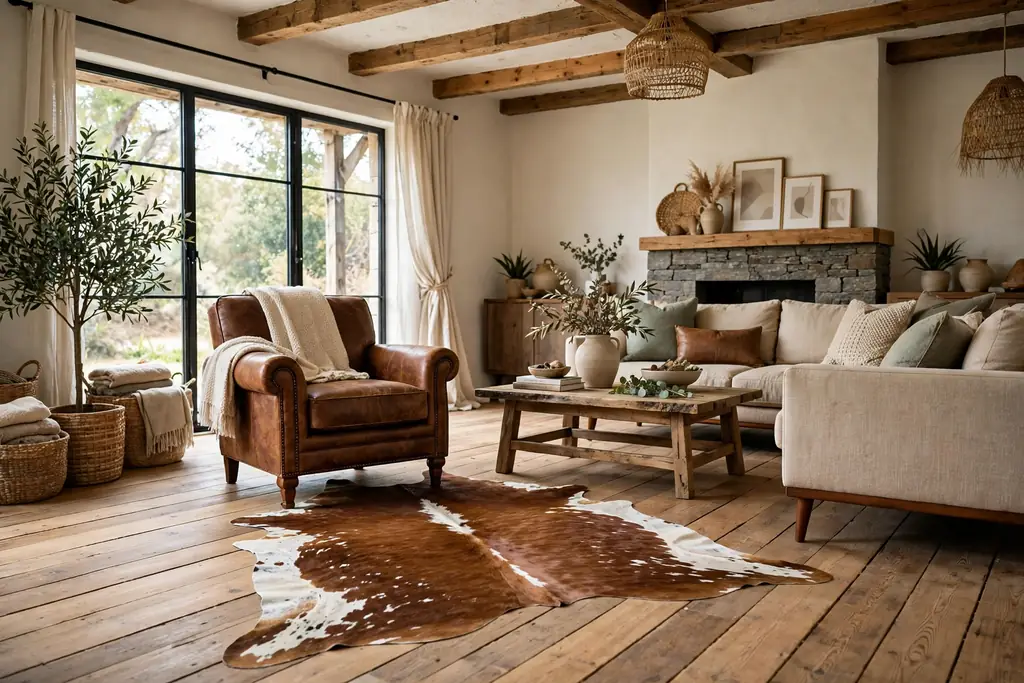
A cowhide rug has an irregular shape and a natural patchwork of tones, which makes it a strong accent in a rustic or modern room. It works well beside a leather armchair, under a small side table, or layered over a larger plain rug. Because of its shape, a cowhide rug suits a corner or a single chair group better than a full sofa set.
Keep the rest of the room simple, since the hide pattern is already busy. Check that the rug lies flat and does not curl at the edges, and keep it out of damp areas. This is a good way to add personality without committing to a large patterned rug.
22. Invest in a Hand Knotted Rug for the Long Term
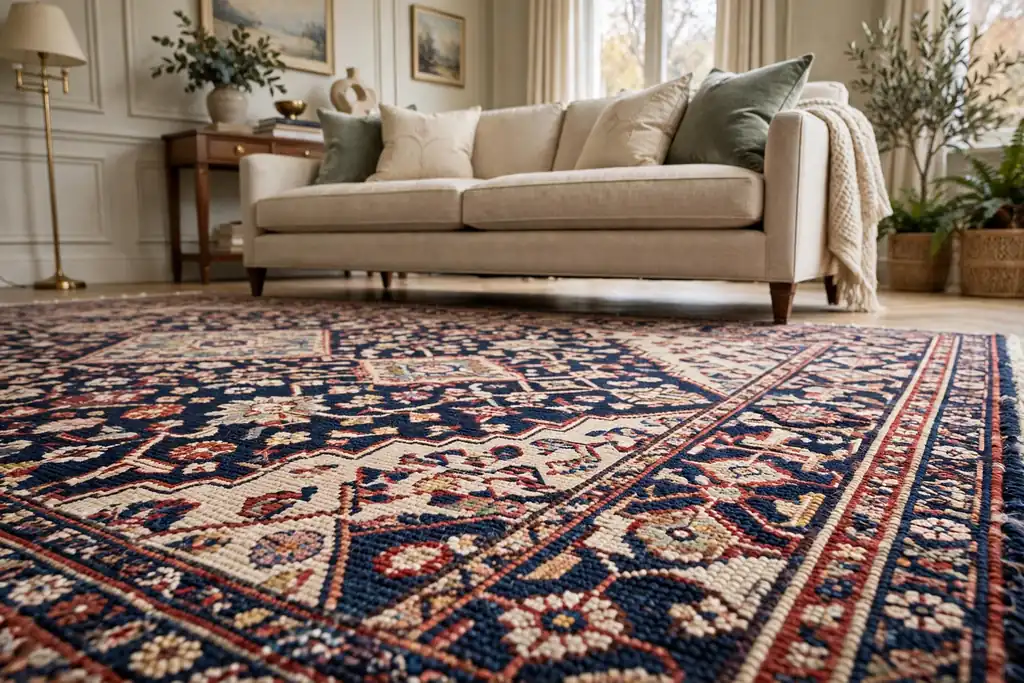
A hand knotted rug is made knot by knot, which gives it a dense weave and a detailed pattern that lasts for years. It suits a room where the rug will stay in place long term, such as a main living room with a settled layout. The cost is higher, but the rug can move with you to a new home and suit a different room.
Before buying, check the size against your seating group with tape on the floor, and look at the rug in your own light. Keep the pattern as the main design feature of the room, with plain upholstery around it. A hand knotted rug rewards a calm room, since its detail shows best without competition.
23. Pick a Washable Rug for Pets and Kids
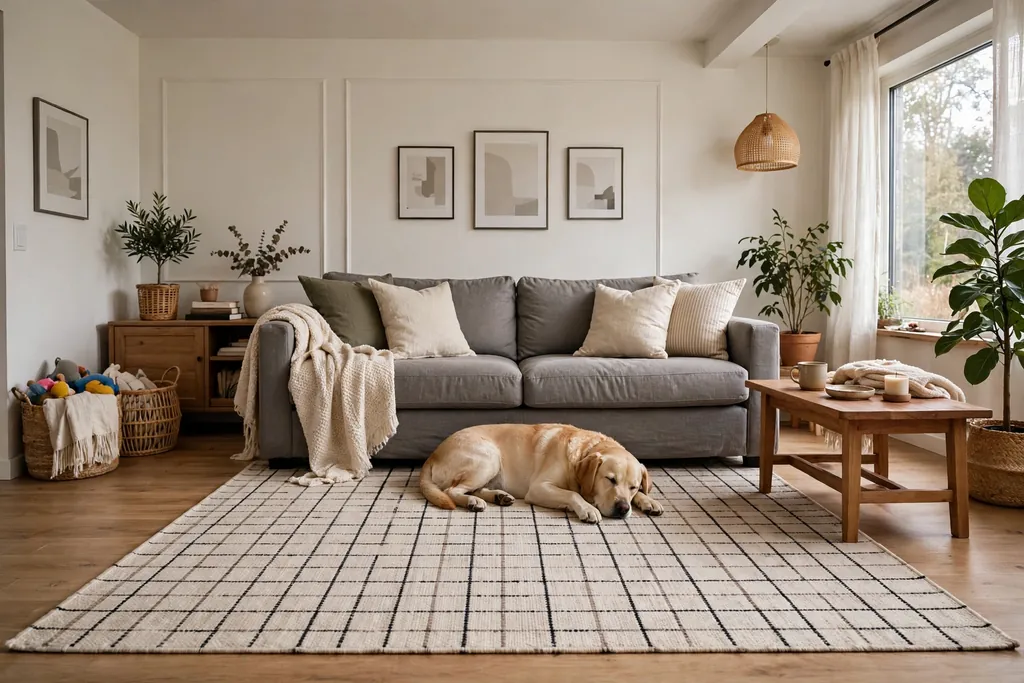
A washable rug is the practical answer for a living room shared with pets or young children. Spills, muddy paws, and crumbs can be dealt with by removing the rug and washing it, rather than spot cleaning a fixed rug. Choose a simple pattern that hides marks between washes, and keep a spare cover or second rug for wash day.
Check the washing instructions before you buy, including whether the rug fits a home machine or needs a larger one. Use a rug pad underneath to keep the rug in place, since washable rugs are often lighter than traditional ones. This idea removes the worry from a room that gets hard daily use.
24. Use a Durable Indoor Outdoor Rug by a Busy Doorway
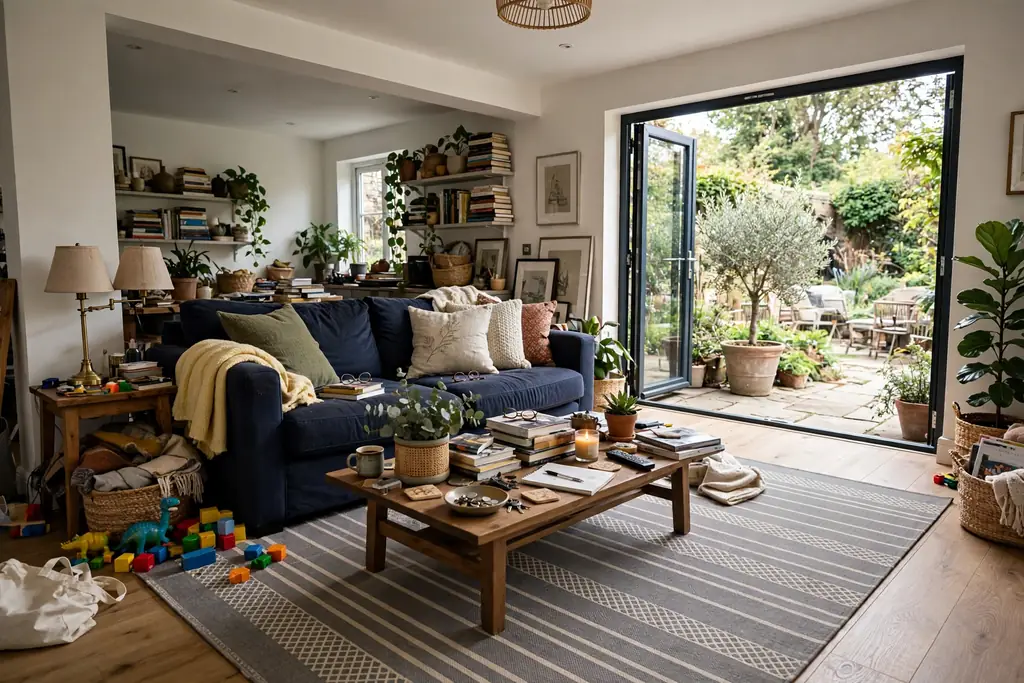
A living room near a garden door or a main entrance gets more dirt and moisture than a quiet seating area. An indoor outdoor rug, made for tougher use, handles that traffic without looking like a doormat. Choose a simple pattern in a mid tone that hides dust, and keep the weave flat so the door can open over it.
These rugs also suit a room that opens onto a patio, since the same style can run inside and out. Clean them by shaking outside or hosing down, following the maker instructions. Pair the rug with washable cushion covers for a room that stays easy to care for.
25. Add Global Character With a Kilim Rug
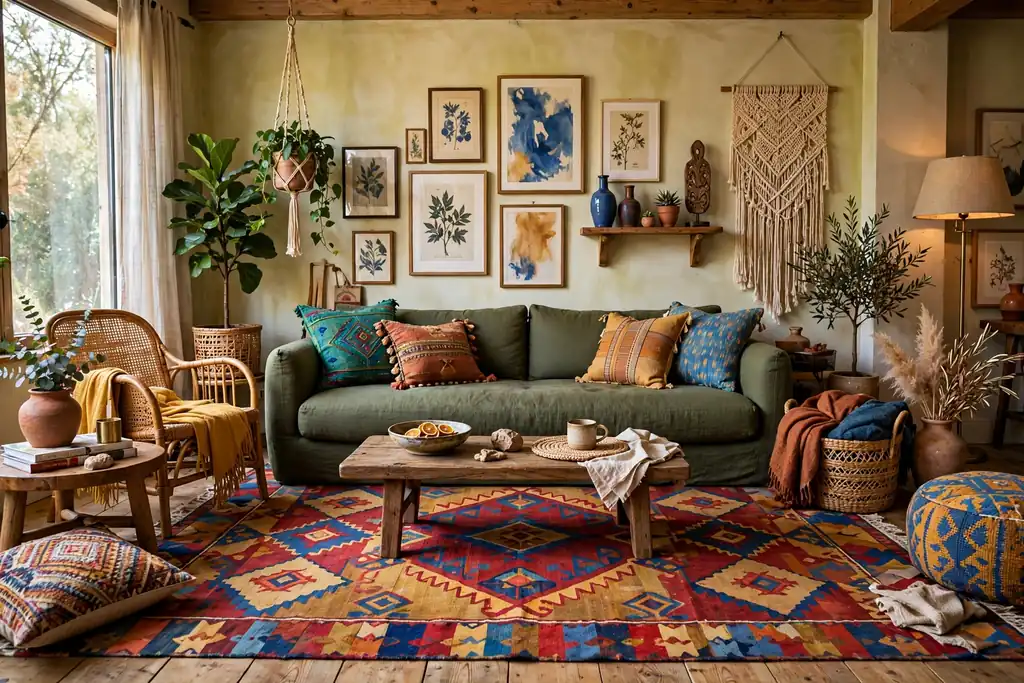
A kilim is a flatweave rug with bold, colorful geometric motifs in red, blue, and ochre. It brings a collected, global feel to a room and suits an eclectic mix of furniture, plants, and wood. A kilim works well as the main pattern in a room with plain walls and a simple sofa.
Because kilims are thin, they layer well over a larger plain rug and slide under low furniture. Keep the rest of the room fairly plain, since the kilim pattern is strong on its own. This is a good choice when you want color and pattern but prefer a flat, easy to clean rug.
26. Lighten the Room With a Coastal Woven Rug
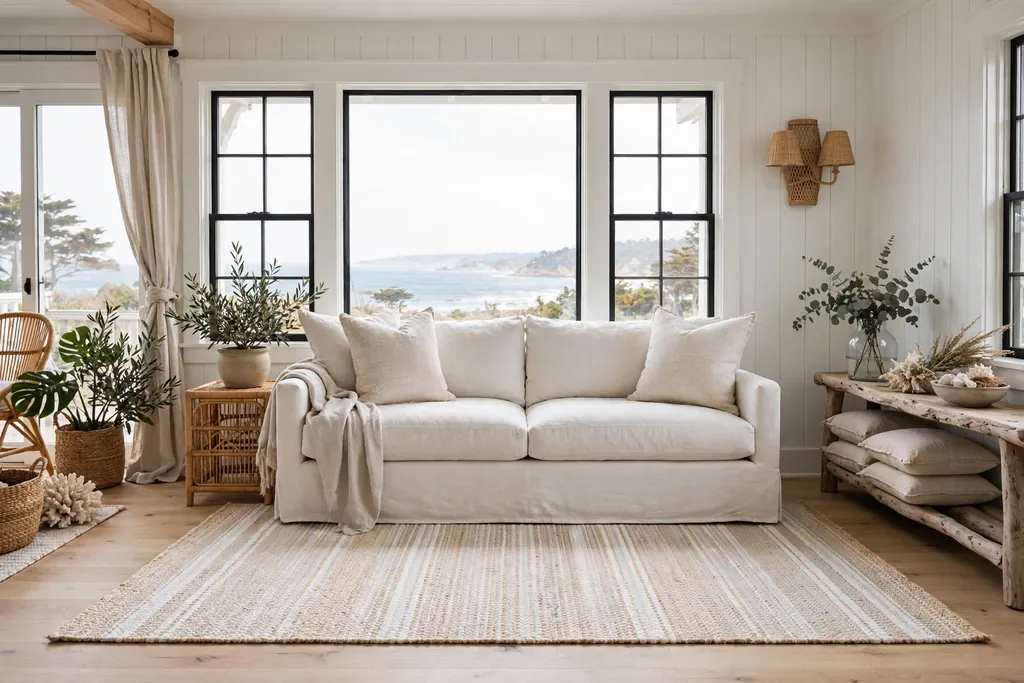
A coastal rug in sand, white, and pale blue tones keeps a living room feeling light and airy. The woven texture suits light wood, linen, and plants, and it works well in a room with a lot of daylight. Choose a simple weave rather than a busy pattern, so the room stays calm.
This idea suits a room with a sea facing window or a light, beach inspired scheme, but it also works in any bright room. Keep the rug clean with regular vacuuming, since pale tones show marks. Add one blue accent, such as a cushion, to link the rug to the rest of the room.
27. Finish With Fringe and Tassels for a Relaxed Boho Feel
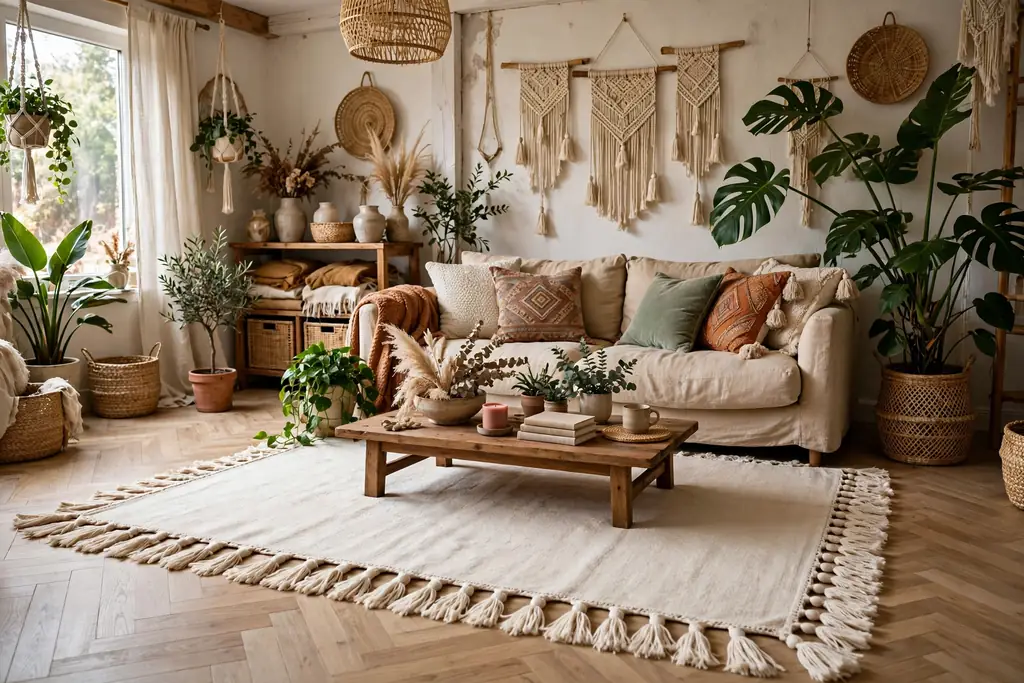
Fringe and tassels along the edges of a rug add a relaxed, handmade feel that suits a bohemian room. A cream rug with long tassels softens the edges of the seating area and pairs well with plants, baskets, and mixed cushions. The fringe draws the eye to the floor and makes the rug feel less formal.
Keep fringe away from vacuum beater bars, which can catch and pull the tassels. Trim any loose threads rather than pulling them, and keep the rug out of a main doorway where feet catch the fringe. This small detail adds personality without changing the rug color or pattern.
28. Echo Mid Century Style With a Muted Abstract Rug
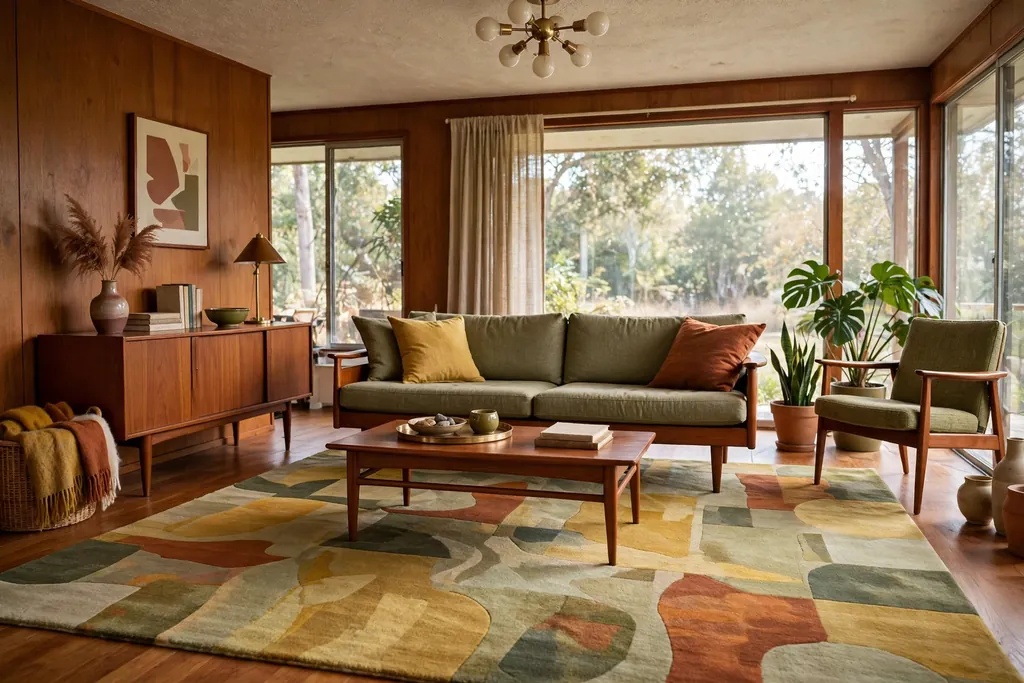
A mid century style rug uses muted mustard, olive, and rust in abstract shapes that suit a low teak sofa and simple furniture. The pattern adds warmth without the formality of a traditional rug, and the muted tones sit well with wood and leather. This idea suits a room with vintage furniture or a retro inspired scheme.
Keep the rug as the main pattern and the upholstery plain, since the abstract shapes already carry movement. Choose a size that fits the low seating group, with the front legs on the rug. A mid century rug also pairs well with a plain wall color, such as warm white or soft grey.
29. Go Graphic With a Black and White Rug
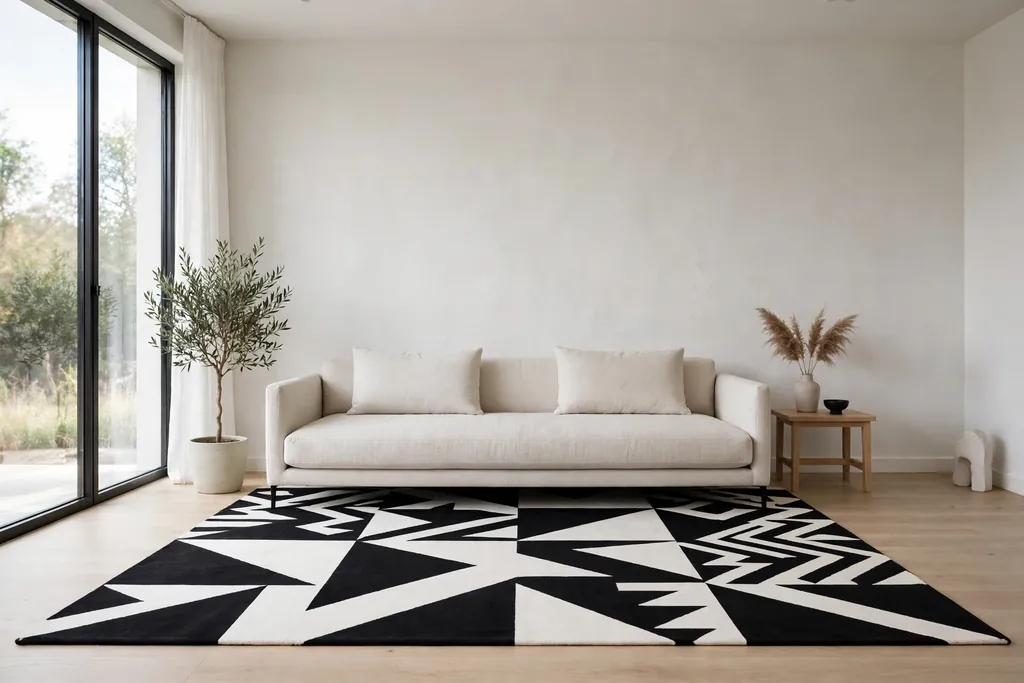
A black and white rug makes a clear graphic statement in a minimal room. The strong contrast suits a plain sofa, white walls, and simple furniture, where the rug becomes the main pattern. Choose a bold shape, such as large blocks or a strong repeat, rather than a small fussy pattern.
Keep the rest of the room calm, since black and white already carries a lot of contrast. Add one warm detail, such as wood or a plant, so the room does not feel cold. This idea works well in a room where you want a modern look without adding color.
30. Hang a Rug on the Wall as Textile Art
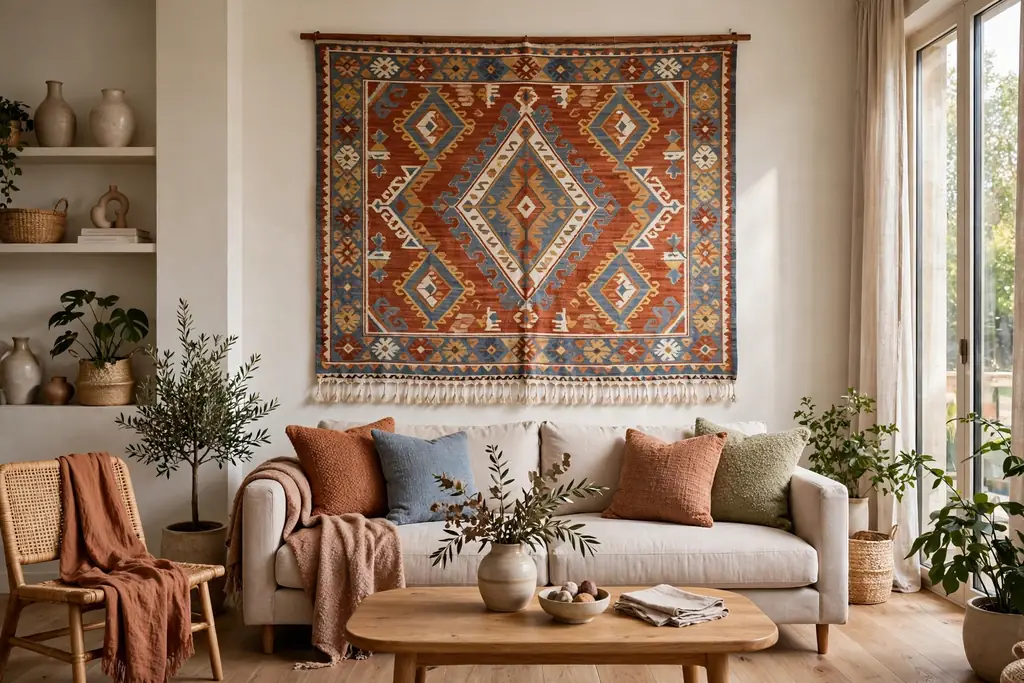
A beautiful rug does not have to stay on the floor. Hanging a patterned rug on the wall turns it into large textile art, adds warmth to a bare wall, and protects a delicate rug from foot traffic. Choose a rug with a pattern that reads well from a distance, and hang it above a sofa or on a feature wall.
Use a proper hanging method, such as a sleeve and rod or clips made for textiles, so the rug hangs evenly and the weight is spread. Keep it out of direct sun to protect the colors. This idea suits a rug you love but cannot use on the floor, such as a thin vintage piece.
31. Swap Rugs With the Seasons
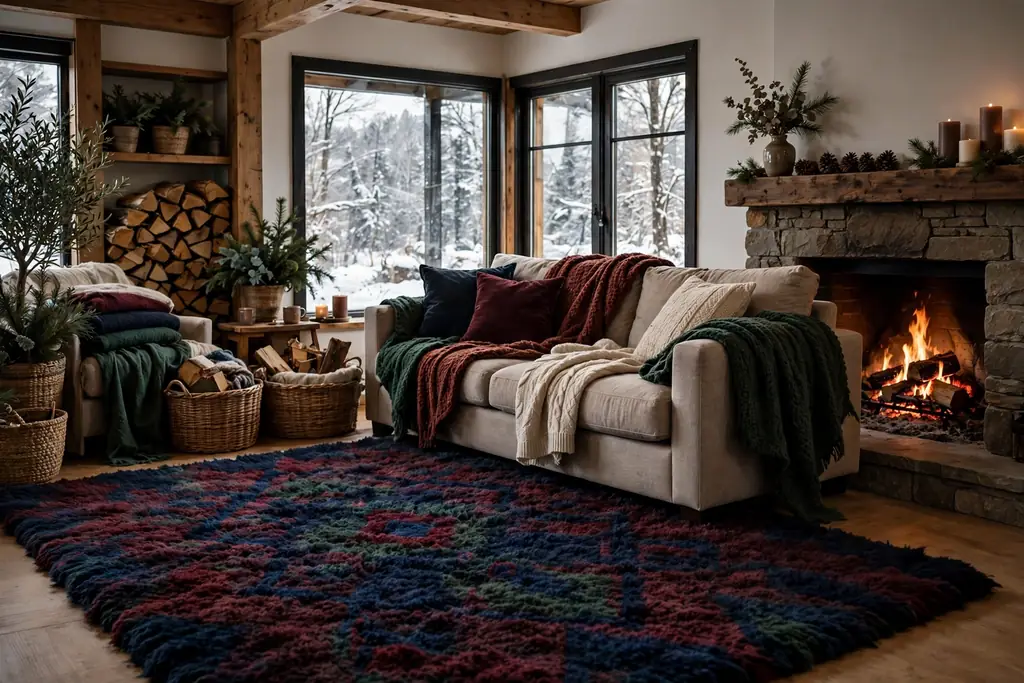
Swapping rugs with the seasons is a simple way to refresh a living room without new furniture. Use a thick, warm rug in deep tones for winter, and a light flatweave in pale tones for summer. Store the spare rug rolled, not folded, in a dry place so it keeps its shape.
This approach also extends the life of both rugs, since each one gets a rest for part of the year. Keep the same size for both rugs, so the furniture layout does not need to change. A seasonal swap suits a room where you already change throws and cushions through the year.
32. Mix Vintage Pieces Into a Patchwork Rug
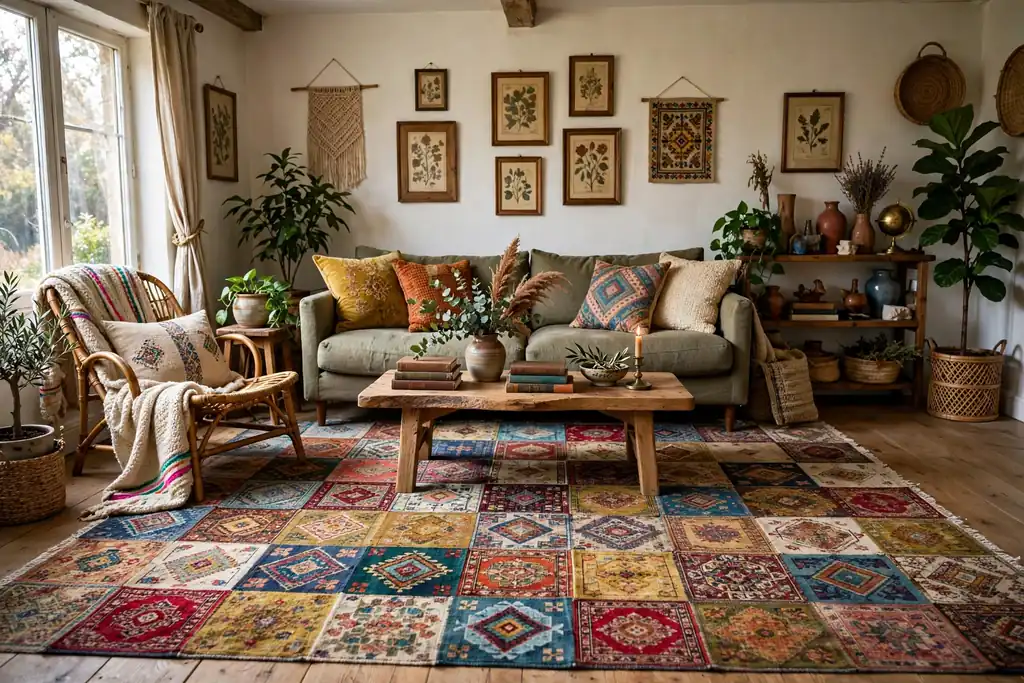
A patchwork rug joins squares from different vintage rugs into one piece, so no two are exactly alike. The mix of colors and patterns adds a collected, personal feel that suits an eclectic room. It works well with plain furniture, since the rug itself carries the pattern story.
Keep the walls and upholstery simple, and pick out one or two colors from the rug for cushions. Check that the joins lie flat and the rug has a backing or pad underneath. This idea is a good way to enjoy vintage patterns in a room that gets daily use, since the mixed colors hide wear well.
Conclusion
A living room rug works hardest when it fits the seating group, suits the traffic in the room, and repeats one color or texture already present. Start with size and placement, then choose color, pattern, or material based on how the room is used. Measure with tape on the floor, check the rug in your own light, and live with the choice before adding more pattern elsewhere. One well chosen rug can carry the personality of the whole room.
Save this list on Pinterest before your next rug search, and use it as a checklist: size first, then material for your household, then the color or pattern that makes the room feel like yours.
FAQs
What size rug should I choose for a living room?
Measure the seating group, not just the floor. In most rooms, a rug that fits under the front legs of the sofa and chairs works well. For a large open plan room, a bigger rug that fits the whole group inside its edges marks the living zone more clearly. Tape the size on the floor and walk around it before you buy, and check that doors and drawers still open.
Should a living room rug go under the sofa?
In most layouts, yes, at least the front legs of the sofa should rest on the rug. This links the seating together and stops the rug from looking like a small mat in front of the sofa. In a very small room, a compact rug under the coffee table only can work, as long as the table sits fully on the rug with room to spare.
What is the best rug material for a home with pets?
A low pile, washable, or flatweave rug is usually the easiest choice for a home with pets. These rugs handle muddy paws and spills better than high pile wool or shag, and they are simpler to clean. Choose a mid tone or a simple pattern that hides marks between washes, and use a rug pad to keep the rug in place.
How do I keep a rug from sliding on a hard floor?
Use a rug pad cut slightly smaller than the rug, or rug grippers at the corners. A pad also adds cushioning and protects the floor underneath. Check the pad type suits your floor, since some pads can mark certain finishes. For a layered rug, add grip between the layers as well as underneath the base rug.
Can I layer rugs in a living room?
Yes. Start with a large plain base rug in jute, sisal, or plain wool, then add a smaller patterned rug on top at a slight angle. Keep a clear margin of the base rug visible on all sides, and use a pad or gripper so the top rug does not slide. Layering is a good way to use a rug you already own with a new base rug that fits the room.
How do I clean a jute or natural fiber rug?
Vacuum a jute rug regularly without a beater bar, and blot spills at once with a dry cloth rather than soaking the fibers. Keep natural fiber rugs out of damp areas, since moisture can stain and weaken them. For a deep clean, follow the maker instructions, and test any cleaning product on a hidden corner first.