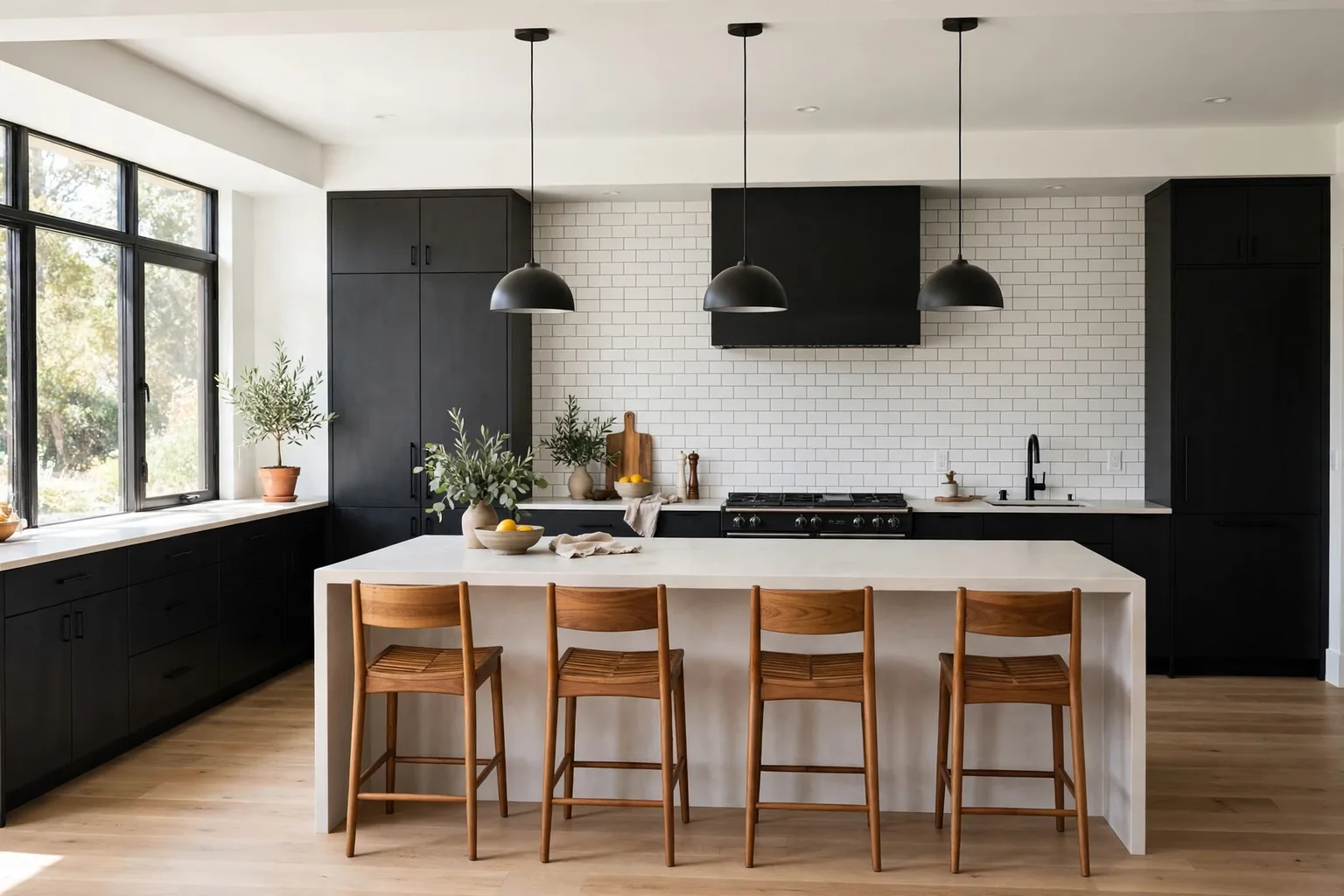
Black cabinets give a kitchen instant depth, but the finish, layout, and lighting decide whether the room feels calm or heavy. This list of 22 black kitchen cabinet ideas covers matte and gloss doors, two-tone layouts, glass fronts, open shelving, pantry walls, and lighting plans, so you can pick an approach that fits your room size and light. Each idea names the counters, hardware, and backsplash that suit it, plus one care note from daily use. Test a large sample door in your own light before you commit, because black reads very differently in a bright room and a dim one.
Key Takeaways
- Finish changes everything. Matte black hides fingerprints better than gloss, while gloss bounces light around a small or dim kitchen.
- Pair black cabinets with pale counters, a light backsplash, or pale uppers so the room stays easy to work in.
- Lighting is part of the design, not an afterthought. Under-cabinet lights, pendants, and toe-kick lights keep a dark kitchen practical.
- Two-tone layouts and a black island give you the depth of black without covering every wall in a dark color.
- Test a large sample door beside your floor and counters in morning and evening light before ordering paint or cabinets.
- Matte black shows dust and flour, and gloss shows smudges, so pick the finish whose upkeep you will actually keep up with.
1. Matte Black Shaker Cabinets
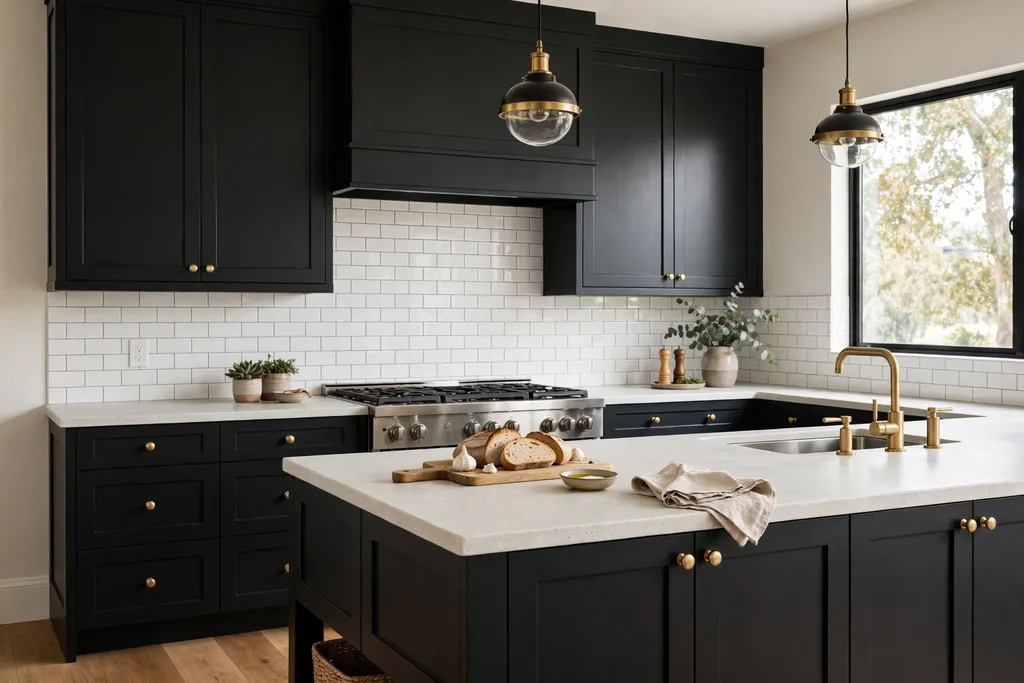
Matte black shaker doors are the most forgiving way into black cabinets. The simple framed panel suits older homes and new builds alike, and the flat finish softens the look so the room does not feel stark. Pair them with white subway tile, pale stone counters, and brass knobs for warmth, or with black bar pulls for a quieter look. Matte paint hides fingerprints better than gloss, but it shows dust and flour, so wipe the doors near your prep area once a week with a damp cloth.
2. High-Gloss Handleless Cabinets
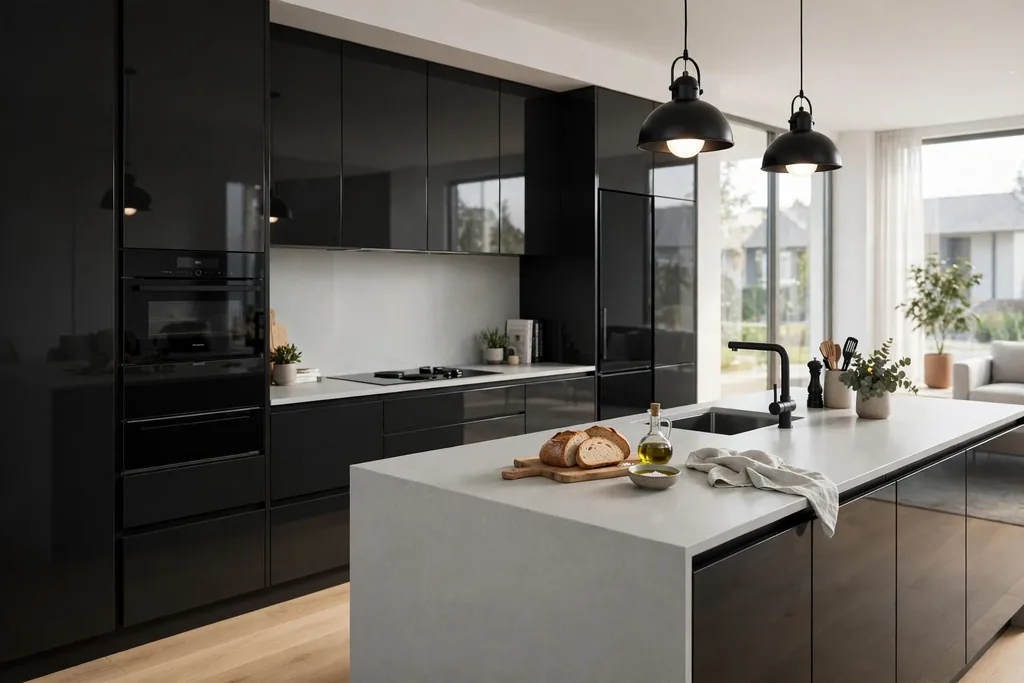
High-gloss flat-front cabinets with push-to-open doors give a clean, modern kitchen with no visible hardware to break up the run. The shine reflects light, which helps a small or north-facing room, and the flat fronts are quick to wipe down. Pair gloss black with pale gray counters, a simple white backsplash, and integrated appliances so nothing interrupts the smooth surfaces. Gloss shows smudges and fingerprints more than matte, so keep a microfiber cloth handy near the fridge and dishwasher.
3. Black Lower Cabinets With Pale Uppers
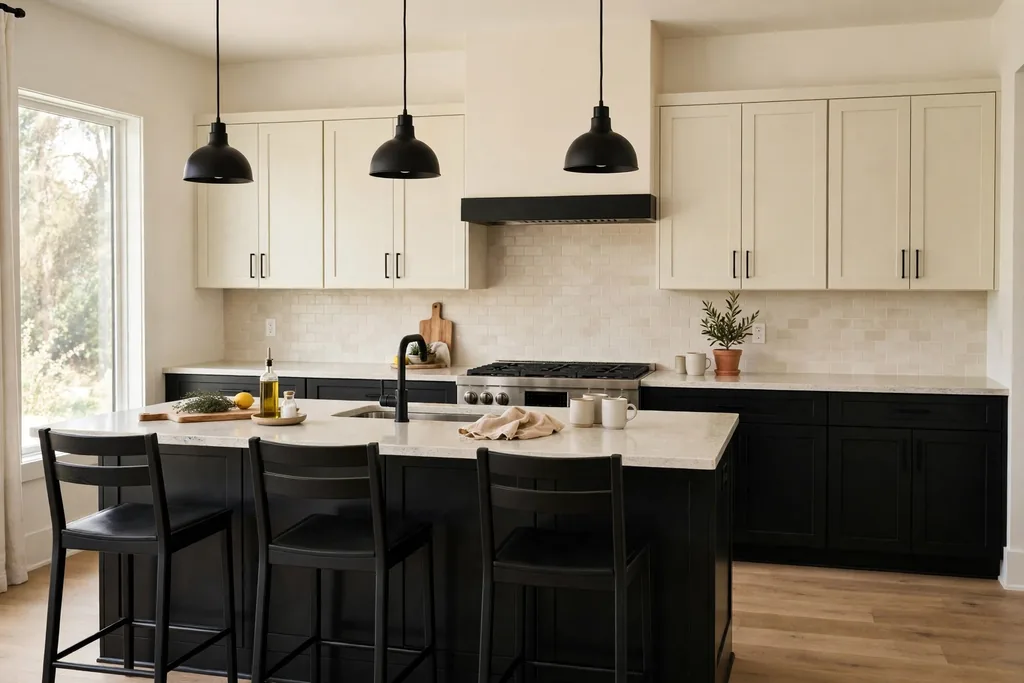
If a full black kitchen feels too heavy, keep black on the lower cabinets and use pale uppers, such as warm white or pale oak. The dark base grounds the room and hides scuffs from feet, pets, and the vacuum, while the pale uppers keep the wall feeling light. Use one counter material across both runs and repeat the black in a small detail, such as bar stools or a range hood trim, so the split looks planned. This layout suits smaller kitchens well, because the eye reads the pale upper wall first.
4. A Black Island in a Pale Kitchen
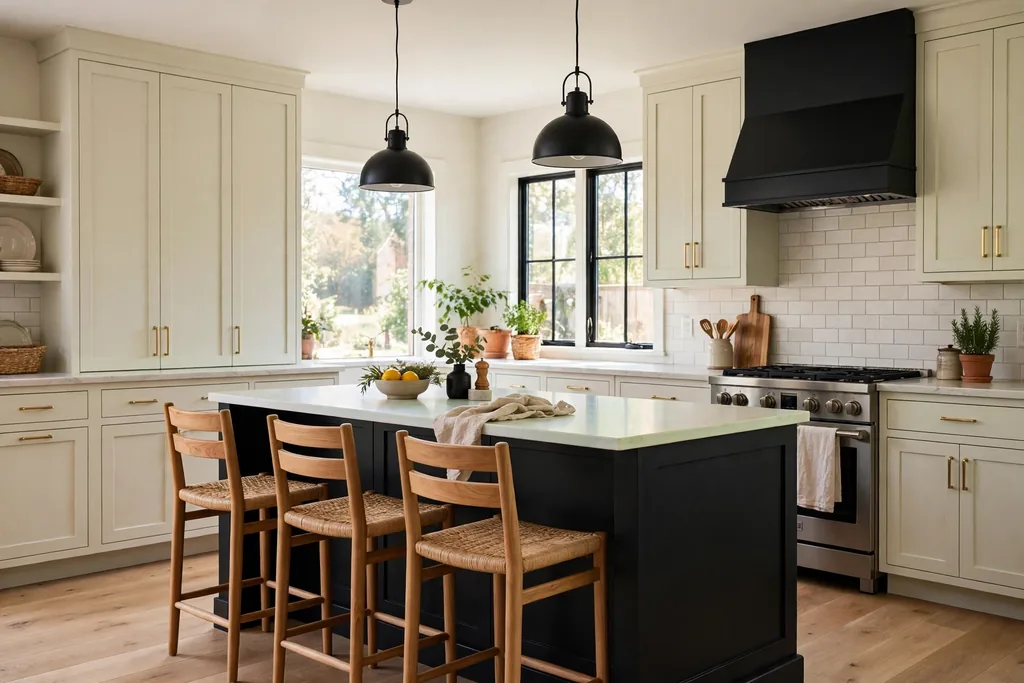
A black island gives you the drama of black cabinets without repainting the whole room. The island becomes the work zone and the gathering spot, and a pale perimeter keeps the walls light. Choose a pale counter for the island so chopping, homework, and serving stay visible, and add seating on one side if space allows. Repeat the black once more in the room, in pendant lights or stool frames, so the island does not look like a lone dark block. For more ways to carry a dark accent through a room, see these black and gold kitchen ideas.
5. Black Cabinets With Butcher Block Counters
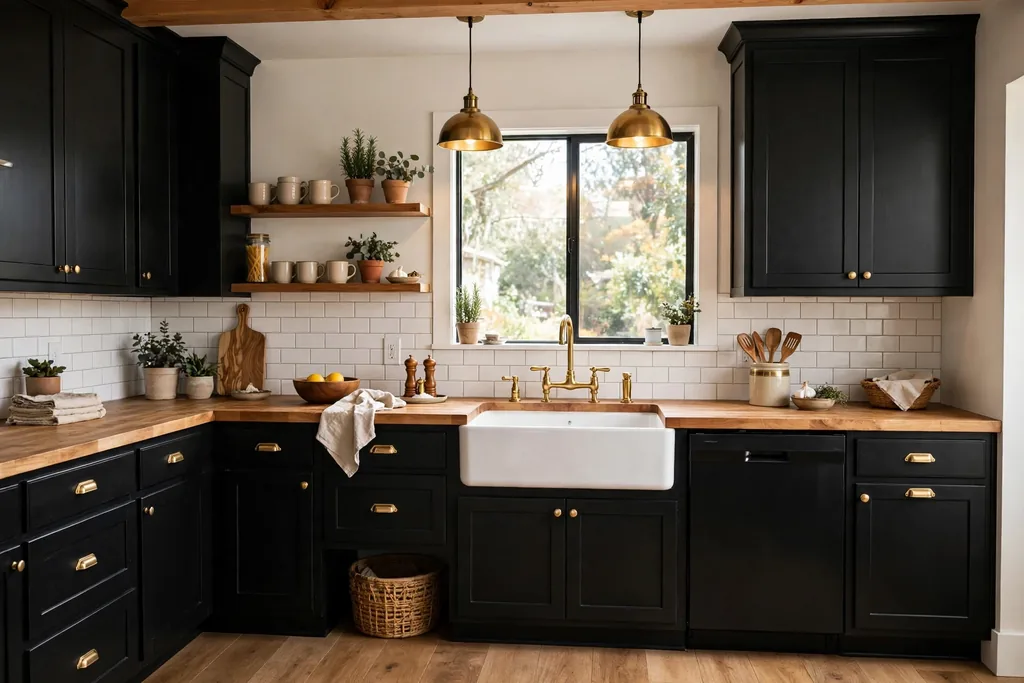
Warm wood counters take the edge off black cabinets and suit a relaxed, lived-in kitchen. Butcher block pairs well with matte black shaker doors, a farmhouse sink, and black or brass hardware, and it gives a warm surface for rolling dough and serving boards. Wood counters need more care than stone: oil them on a regular schedule, wipe up water promptly, and use boards for cutting. Keep the backsplash simple, such as white tile, so the wood and the black stay the focus of the room.
6. Black Cabinets With White Marble Counters
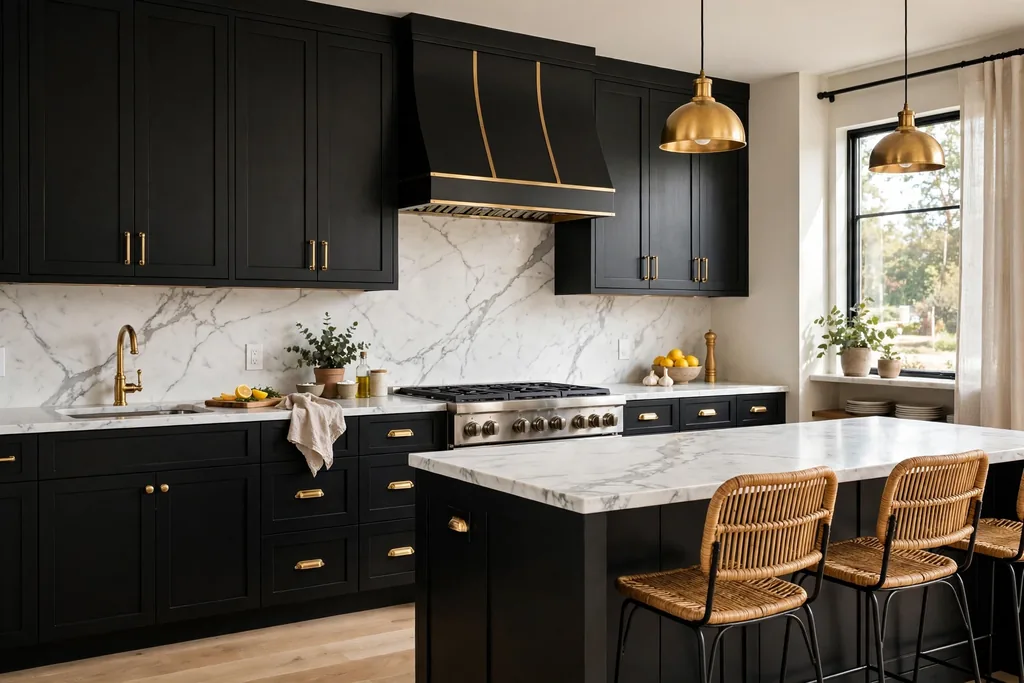
White marble, or a marble-look stone, is the classic partner for black cabinets, because the pale veined surface keeps the contrast crisp. Use it on counters and carry it up the wall as a backsplash for a calm, continuous look, and add brass or polished nickel hardware to warm the pairing. Marble marks and etches more easily than quartz, so seal it, wipe up acidic spills quickly, and use trivets under hot pans. If upkeep worries you, a marble-look quartz gives a similar look with less care.
7. Black Glass-Front Display Cabinets
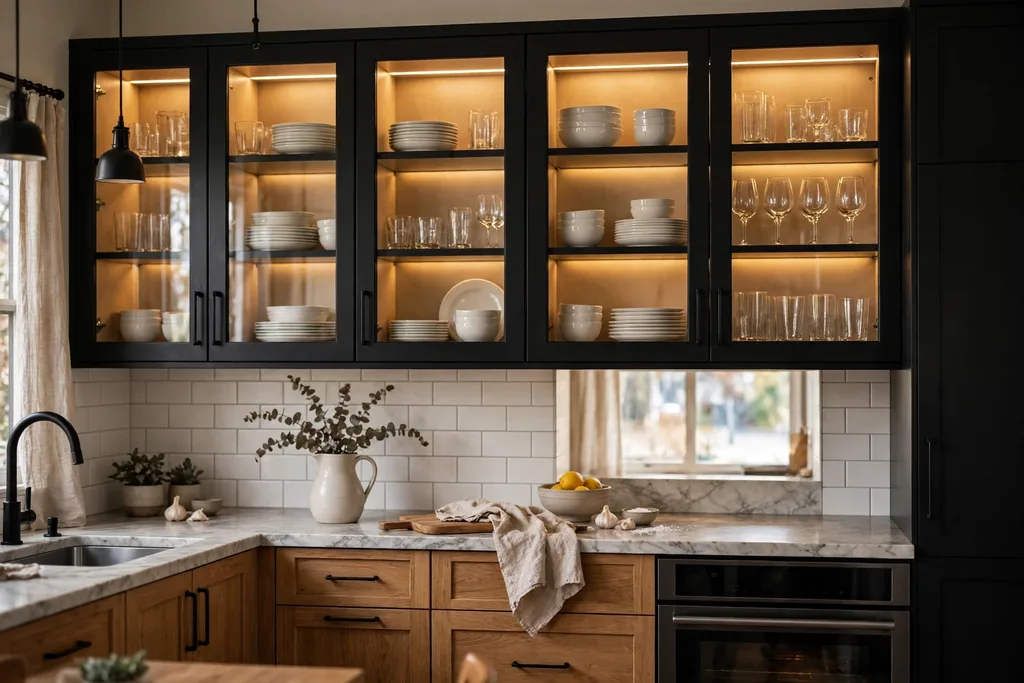
Glass-front black uppers turn storage into display and break up a long run of solid doors. Use them for everyday glassware, white dishes, or a small collection, and keep the inside tidy, because glass shows everything. Clear glass suits a collected look, while reeded or frosted glass hides clutter and still lets light through. Add a small light inside each cabinet so the contents glow in the evening. Keep the rest of the uppers solid so the display stays a feature rather than a demand to curate every shelf.
8. Black Cabinets Mixed With Open Wood Shelving
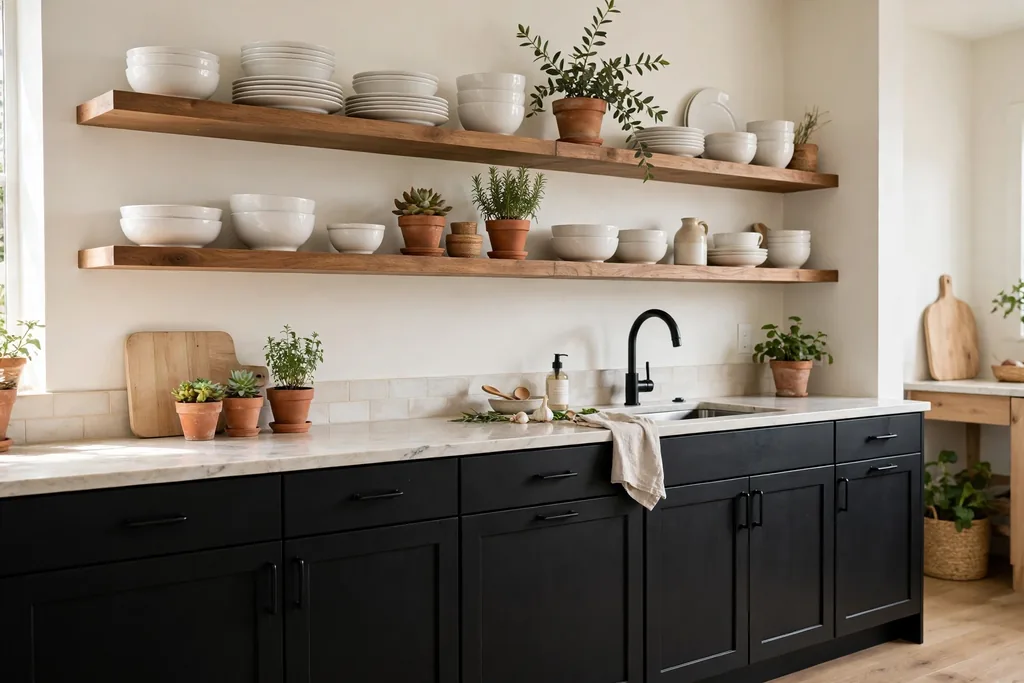
Replacing some uppers with open wood shelves lightens a black kitchen and gives a spot for daily dishes, plants, and cookbooks. The wood warms the black, and the open shelves make a small kitchen feel less boxed in. Keep shelves to one or two runs, style them loosely, and leave breathing room between groups so they do not look crowded. Open shelves collect dust and cooking grease, so put everyday items there and keep rarely used pieces behind closed doors. For styling help, see how to style open shelves.
9. Black Farmhouse Cabinets With an Apron Sink
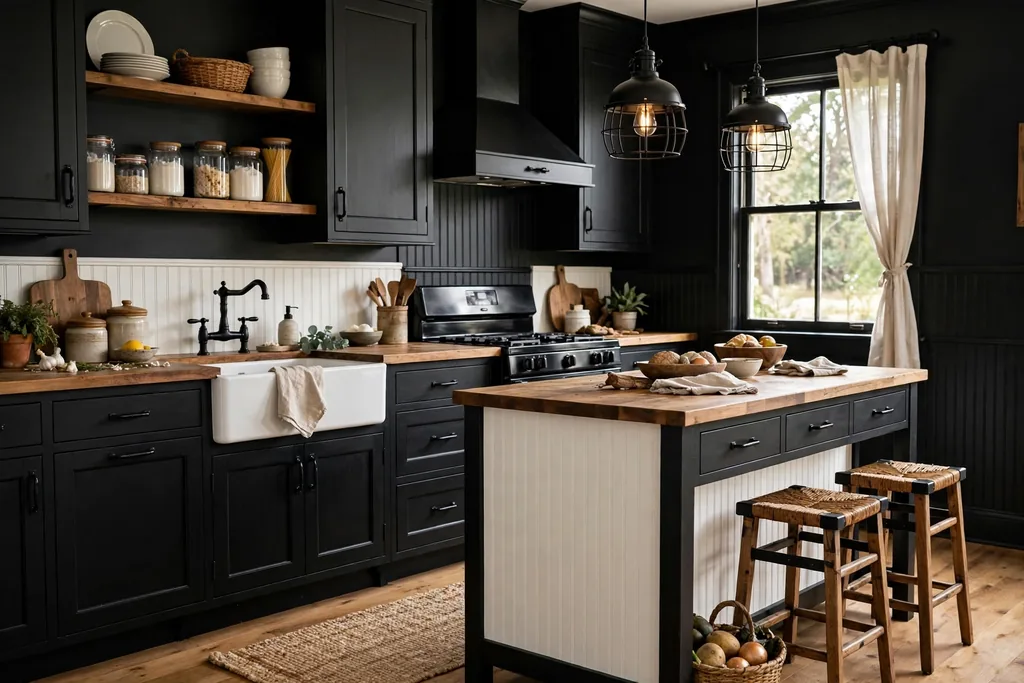
A black farmhouse kitchen pairs matte black cabinets with a white apron-front sink, beadboard details, and warm wood accents. The white sink breaks up the dark run and gives a practical, deep basin for large pots and baking trays. Add a wood counter or wood shelf, a simple bridge faucet, and black hardware to hold the scheme together. Farmhouse style suits a room with some natural texture, such as a wood floor or a brick chimney breast, which stops the black from feeling flat. Wipe the sink surround often, because water marks show on black paint near the tap.
10. Black Cabinets in a Galley Kitchen
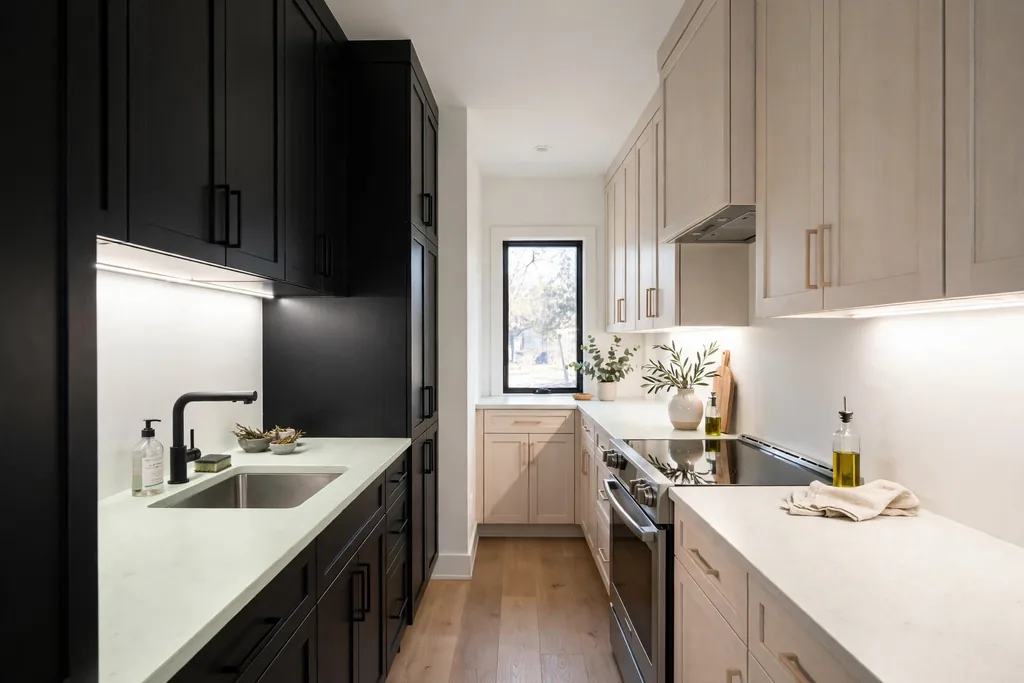
A galley kitchen can carry black cabinets if you plan the light carefully. Use black on one run only, keep the opposite run pale, and add a pale counter, a light backsplash, and bright under-cabinet lighting on both sides. A mirrored or glossy backsplash on one wall bounces light down the narrow room, and a pale floor keeps the passage feeling open. Avoid dark counters here, because a dark floor, dark cabinets, and dark counters together will close the space in. Keep the passage clear of stools and bins so the galley stays easy to move through.
11. Black Cabinets With a Patterned Tile Backsplash
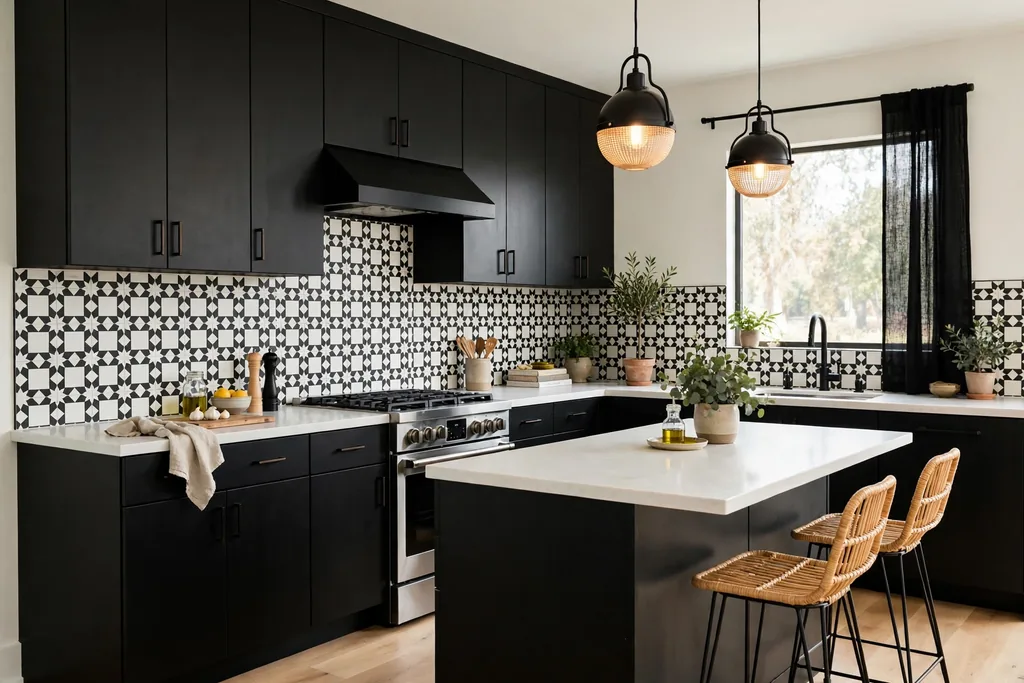
A patterned tile backsplash gives a black kitchen a focal wall without adding another cabinet color. Black and white geometric tiles suit a modern room, while hand-painted style tiles suit a softer, collected kitchen. Keep the pattern to the main cooking wall or the sink wall, and use plain tile elsewhere, so the pattern reads as a feature rather than noise. Patterned tile hides splashes well, but grout lines need a scrub now and then, so choose a grout color that will not show every mark. Pale counters keep the tile as the star.
12. A Statement Range Hood Wall
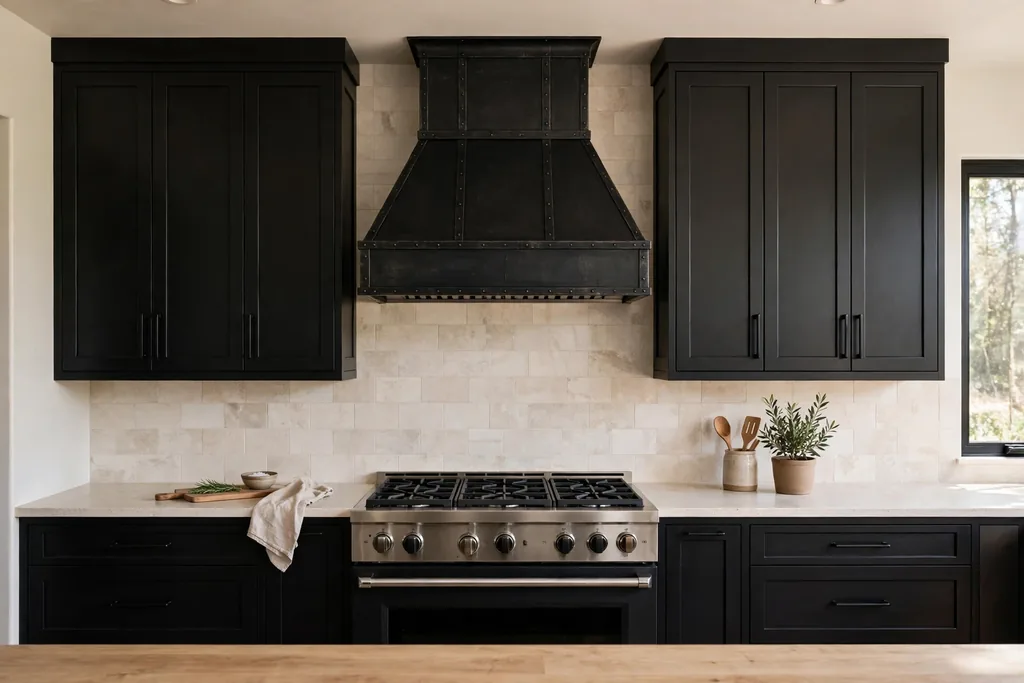
Build the kitchen around a black range hood wall, with black cabinets flanking a bold hood in black metal, brass-trimmed black, or plaster painted to match. The hood becomes the focal point, so keep the surrounding cabinets simple and the hardware quiet. A pale stone backsplash behind the range keeps the cooking zone readable and easy to clean. Check the hood size against your range before ordering, and plan ducting early, because a statement hood is hard to resize later. This idea suits a room with a long, uninterrupted cooking wall.
13. Black Cabinets With a Herb and Plant Wall
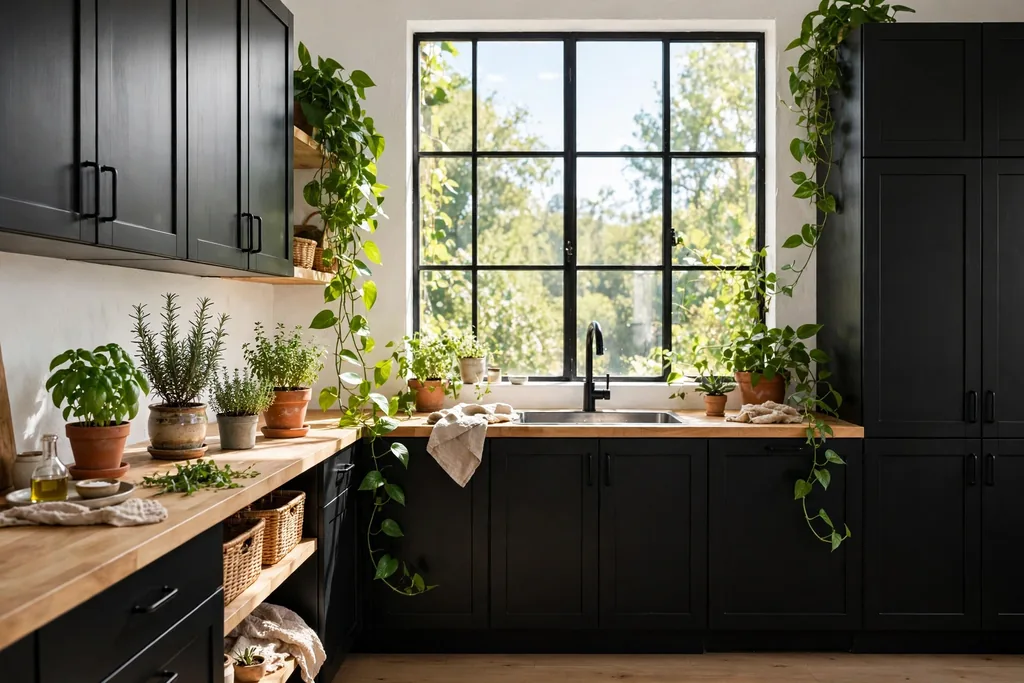
Plants soften black cabinets more than any other accessory. A row of herbs on a sunny windowsill, trailing plants on top of tall cabinets, or a small wall-mounted herb rail adds green life against the dark doors. Choose herbs you cook with, such as basil, parsley, and mint, and keep them near the prep area so they get used. Plants need light and watering, so place them where you will see them daily and use pots with drainage. If your kitchen window is small, a single large plant on the floor beside the cabinet run can do the same job. For window ideas, see these kitchen window decor ideas.
14. Layered Lighting for Black Cabinets
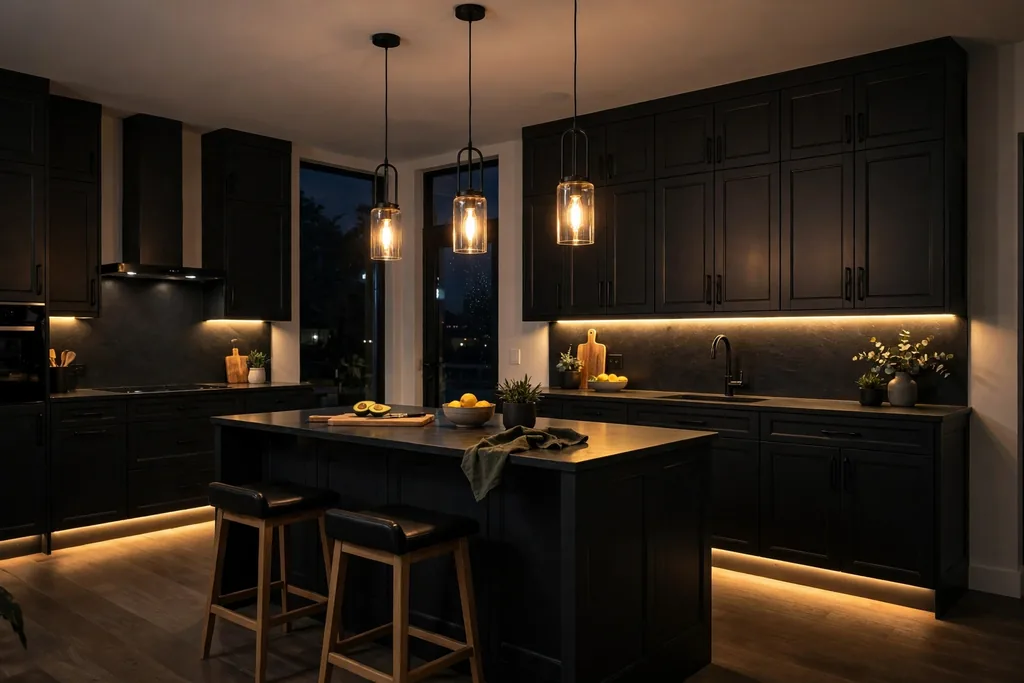
Lighting decides whether black cabinets feel moody or simply dark. Plan three layers: under-cabinet strips for food prep, pendants over an island or table for evening light, and toe-kick strips that wash the floor and make the cabinets appear to float. Warm white bulbs suit black cabinets better than cold blue light, which can make the paint look gray. Put the layers on separate dimmers so you can brighten the room for cooking and soften it for dinner. Check the lighting at night before finalizing paint, because black changes the most after dark.
15. Floor-to-Ceiling Black Cabinets in a Small Kitchen
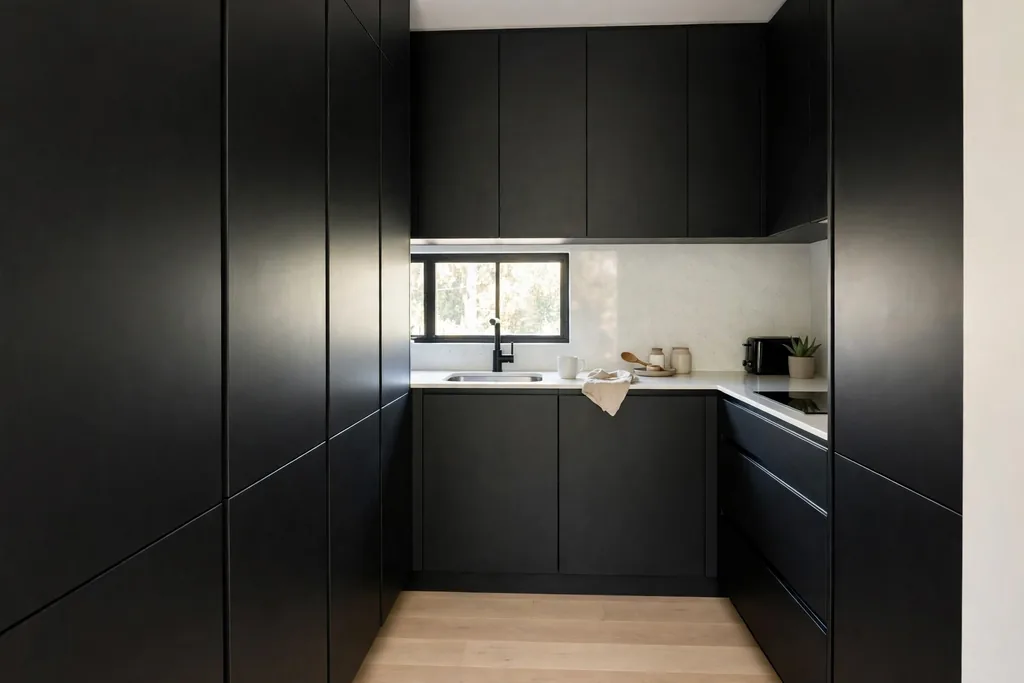
In a small kitchen, taking black cabinets all the way to the ceiling removes the dusty gap above the uppers and adds a full extra row of storage. Use the top row for rarely used items, such as holiday dishes and large serving platters, and keep daily items at waist and eye level. Add a slim step stool stored in a tall cabinet so the top row stays reachable. Pale counters and a light floor stop the tall dark wall from closing the room in. Keep the door fronts flat and the hardware minimal so the tall run reads as one calm wall.
16. A Black Pantry Wall
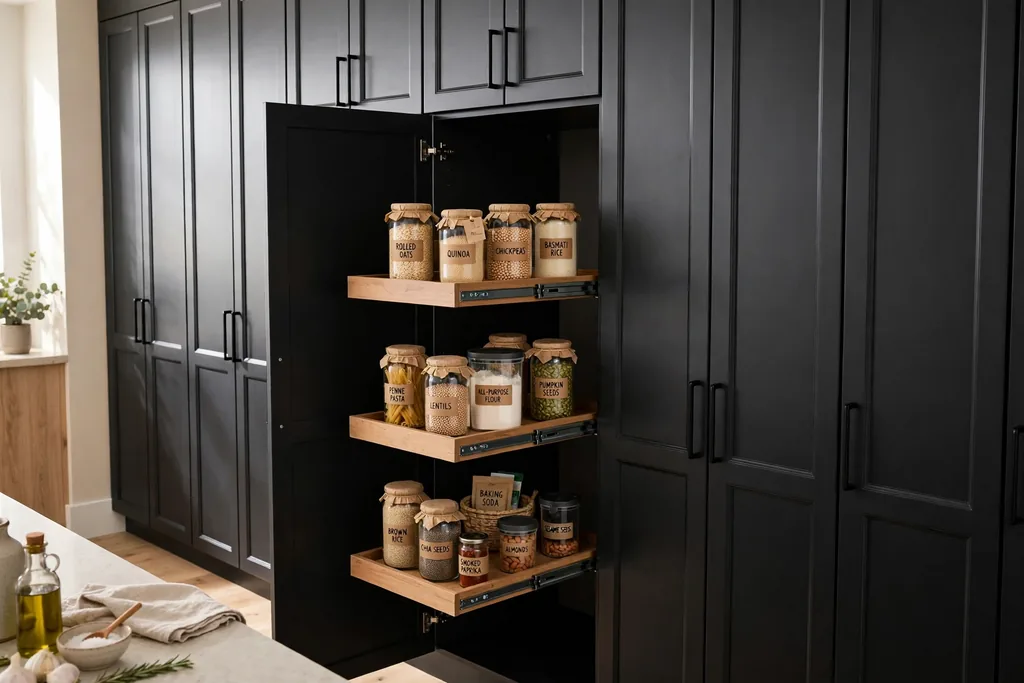
A full wall of tall black cabinets makes a pantry that hides food, small appliances, and cleaning supplies behind closed doors. Plan a mix inside: deep drawers for heavy items, pull-out shelves for cans and jars, and one tall section for a vacuum or broom. Label the inside of doors or use clear bins so the pantry stays usable rather than a dark cupboard of forgotten food. A pantry wall suits a kitchen with a spare wall near the fridge, and it frees the main cooking run from tall, bulky storage. Keep a pale counter nearby for unpacking shopping bags.
17. Black Cabinets With a Breakfast Nook
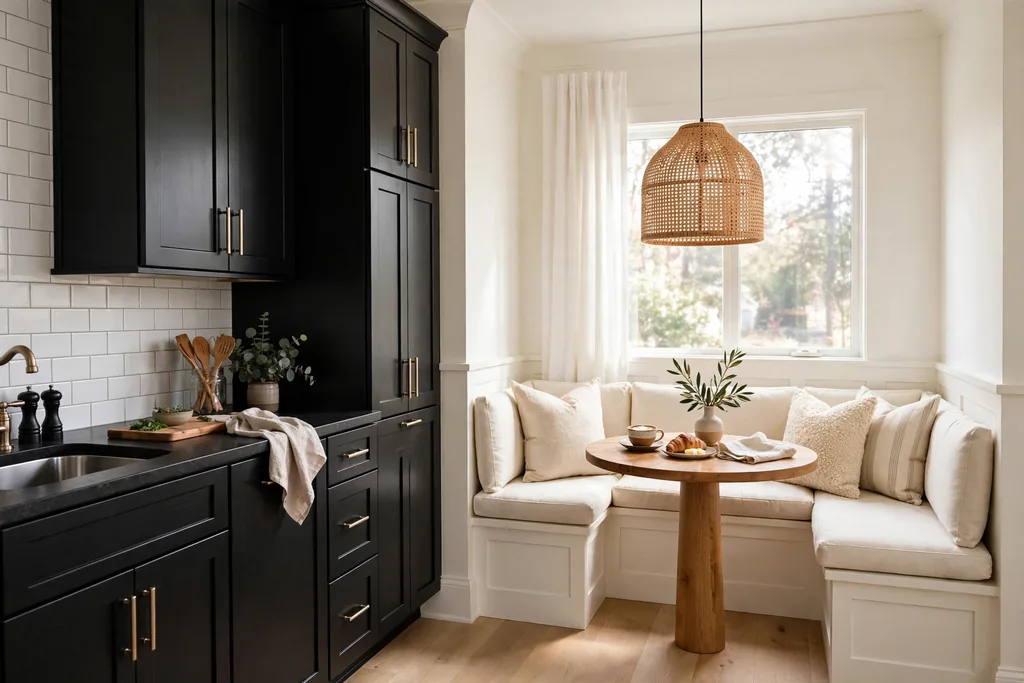
Pair black cabinets with a breakfast nook and the kitchen gains a soft, social corner that balances the dark cabinetry. A built-in banquette in pale wood or cream upholstery, a small round table, and a pendant light make a spot for morning coffee and homework. Repeat the black in the table base or the pendant so the nook ties back to the cabinets. Banquette seating also adds storage underneath for table linens and board games. Keep the nook cushions washable, because a breakfast spot earns crumbs faster than any other seat in the house.
18. Industrial Black Cabinets With Concrete and Steel
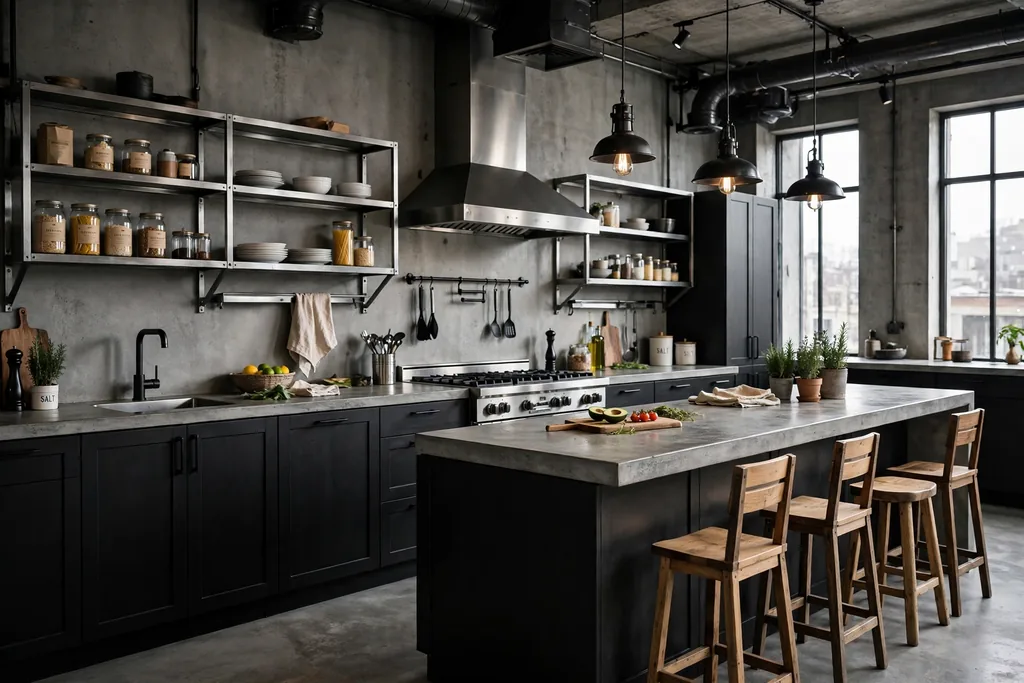
An industrial kitchen pairs flat-front black cabinets with concrete-look counters, steel shelving, and exposed hardware. The mix of matte black, gray concrete, and brushed steel feels honest and hard-wearing, and it suits a loft or a modern extension. Concrete-look counters need sealing and prompt wipe-ups, like real stone, so check the care routine before ordering. Add warm wood in one place, such as stools or a chopping board, so the room does not feel cold. Keep the layout simple and the surfaces clear, because industrial style depends on strong lines.
19. Fluted and Reeded Black Cabinet Fronts
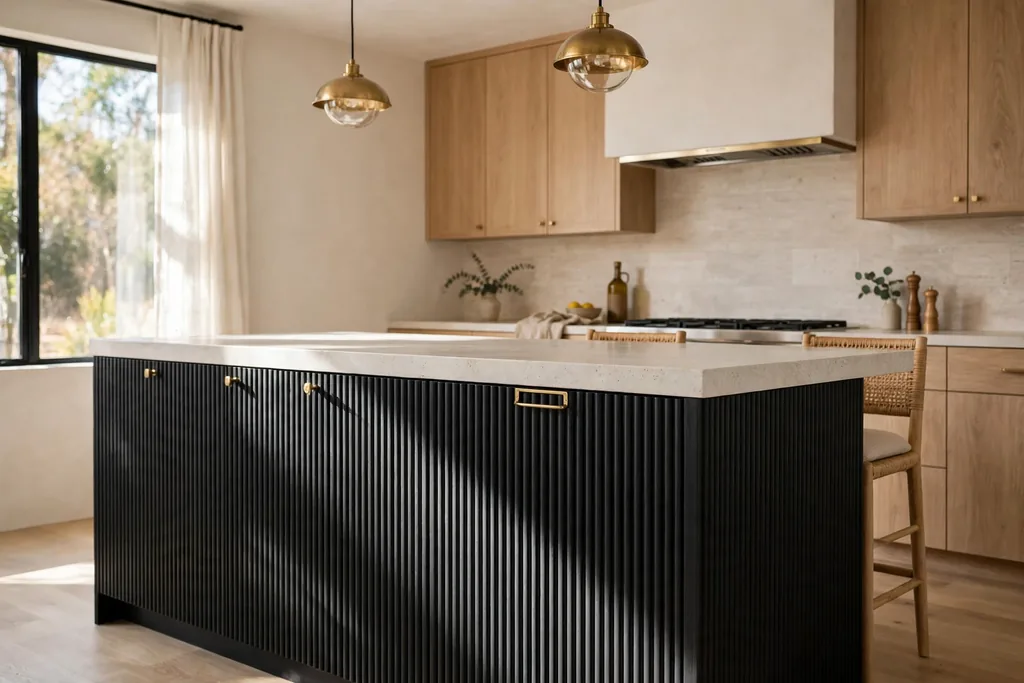
Fluted or reeded door fronts add texture to black cabinets without adding color. The vertical grooves catch light and shadow, so the doors look richer than flat black paint, and they suit both modern and classic rooms. Use fluted fronts on an island or a single run as a feature, and keep the remaining cabinets flat so the texture stays special. Dust can settle in the grooves, so a soft brush or a vacuum brush attachment helps at cleaning time. Pair fluted fronts with simple hardware, because busy handles fight the texture.
20. A Beverage Station Built Into Black Cabinetry
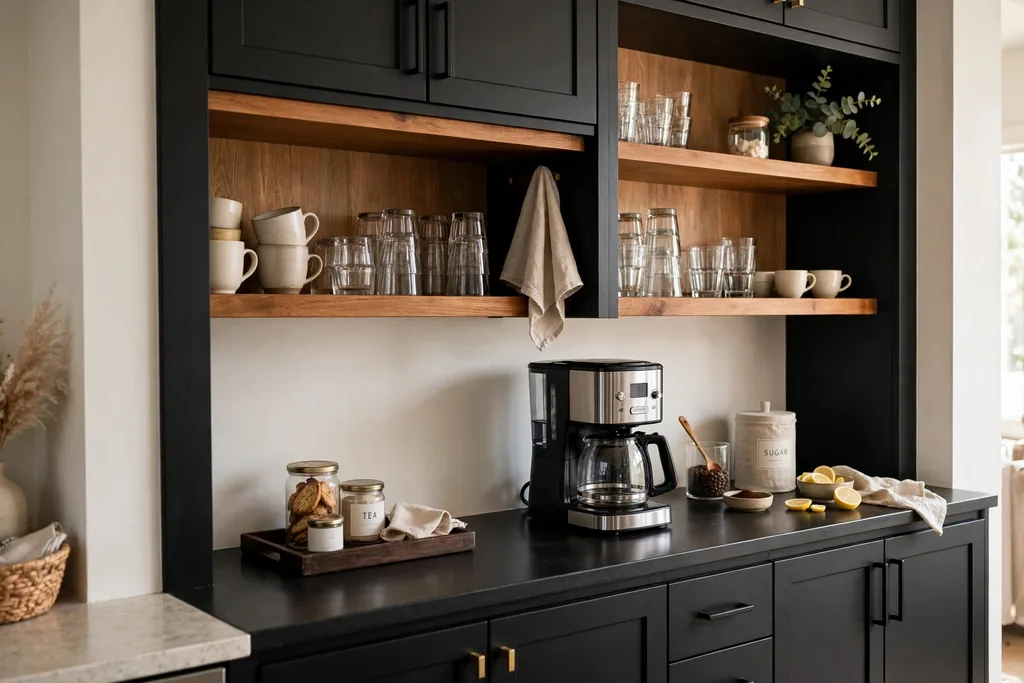
A beverage station turns a stretch of black cabinets into a coffee bar, tea station, or wine nook. Plan a counter section with a small sink or a water source nearby, open or glass-front uppers for cups and glasses, and drawers for pods, filters, and accessories. A wine fridge or a beverage cooler can sit under the counter if you entertain often. Keep the station away from the main cooking triangle so morning coffee does not block dinner prep. Wipe the counter often, because coffee and wine marks show quickly on a dark surface near a pale counter edge.
21. Black Cabinets Balanced With Warm Wood Floors
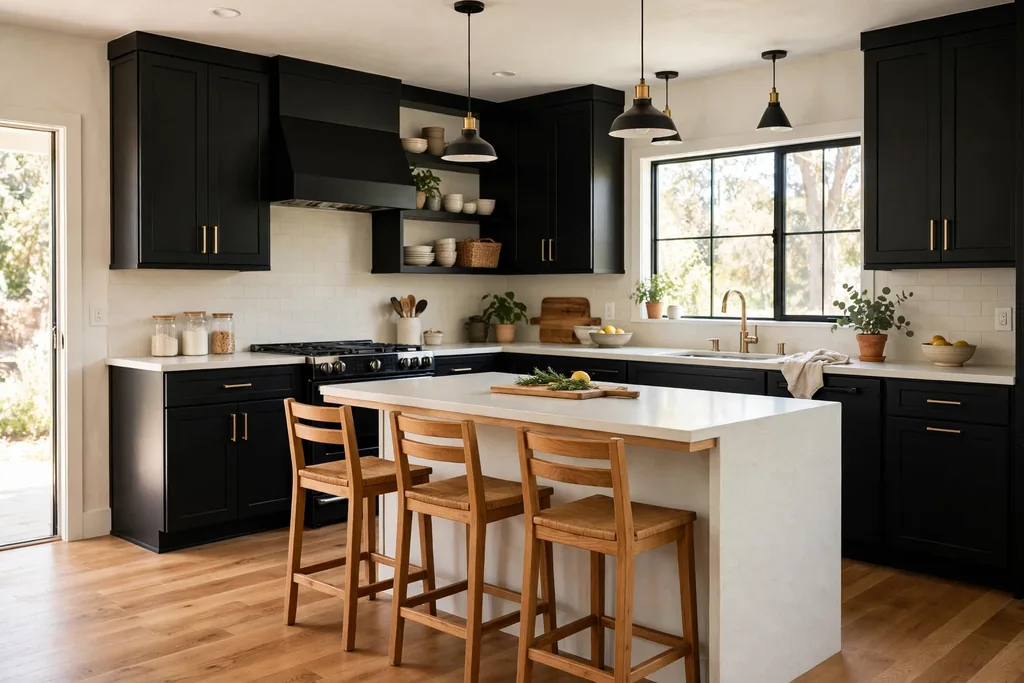
Warm wood floors are the simplest way to keep a black kitchen feeling welcoming. Oak or warm-toned wood underfoot adds color and texture that black cabinets lack on their own, and it ties in with wood counters, shelves, or stools. Choose a floor finish that can handle kitchen spills and mop up water promptly near the sink and dishwasher. If a full wood floor is not practical, a large washable runner in a warm tone gives a similar lift and protects the floor in the busiest stretch. Keep rugs flat and low pile so chairs and feet move freely.
22. Pull-Out Organization Inside Black Cabinets
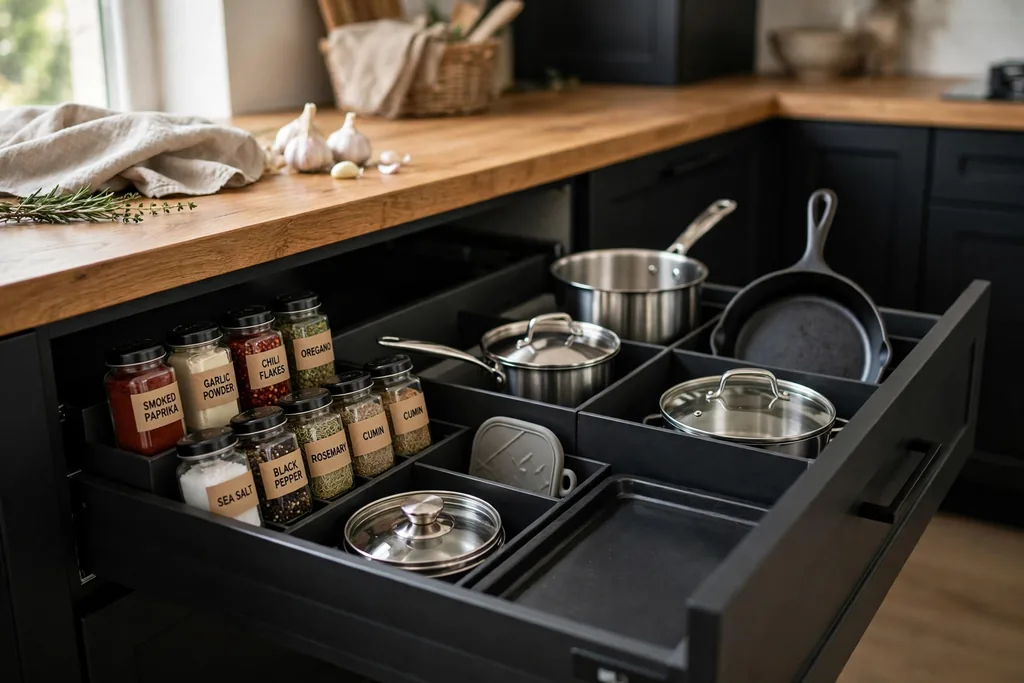
The inside of black cabinets matters as much as the doors, because dark interiors can swallow small items. Fit pull-out drawers, corner carousels, spice pull-outs beside the range, and deep drawer dividers for pots and lids. Light interiors or a light shelf liner help you see contents at a glance, and full-extension runners let you reach the back without crouching. Plan the inserts before ordering cabinets, because retrofitting drawers into fixed shelves costs more later. For tight corners, a well-planned carousel or blind-corner pull-out beats a deep, dark cupboard. For more cabinet layout ideas, see these corner kitchen cabinet ideas.
Conclusion
Black cabinets work when the finish, the counters, and the lighting are chosen together rather than one at a time. Start with the layout that fits your room: a black island or black lowers for a small or dim kitchen, a full black run for a bright room with pale counters. Then pick a finish you can live with, matte for a softer look and easier fingerprint care, or gloss for light and a modern edge. Add pale counters, warm wood, or plants to balance the dark doors, and plan layered lighting before you order. If you are choosing between cabinet colors overall, these colors for your kitchen cabinets put black beside the paler options. Save this list on Pinterest while you gather sample doors, and compare your finalists in your own light before you commit.
FAQs
Do black kitchen cabinets make a kitchen look smaller?
Black cabinets can make a dim, small kitchen feel heavier, but they do not have to. Pale counters, a light backsplash, good under-cabinet lighting, and keeping black to lowers or an island will hold the balance. A well-lit dark kitchen feels larger than a dim pale one, and a large window makes a full run of black cabinets much easier to carry.
Are matte or gloss black cabinets easier to keep clean?
Matte black hides fingerprints and smudges better than gloss, but it shows dust, flour, and water marks. Gloss wipes clean easily and reflects light, but every fingerprint shows. Pick the finish whose upkeep suits you: matte if you dislike wiping handles daily, gloss if you prefer a quick wipe that leaves a clean shine. Either way, a washable paint finish and a soft cloth make daily care simple.
What counter color works best with black cabinets?
Pale counters work best in most kitchens, because they keep food prep visible and stop the room from feeling dark. White marble, pale quartz, and butcher block are the most common partners. Dark counters can work in a large, bright kitchen with a light backsplash, but in a small room they add a second dark layer that closes the space in.
What hardware suits black kitchen cabinets?
Brass and gold hardware warms black cabinets and suits classic and farmhouse rooms. Black hardware gives a quiet, modern look but can disappear against the doors, so choose a shape with enough size to grip. Polished nickel and chrome suit a crisp, modern kitchen. Whichever metal you pick, use it consistently across the room, including taps and light fittings, for a finished look.
Can I mix black cabinets with another cabinet color?
Yes. The most common mix is black lowers with pale uppers, or a black island with a pale perimeter. Pick the second color from a warm or cool family that matches your floor and counters, and repeat the black somewhere small, such as stools, pendants, or a hood trim, so the split looks planned. Avoid adding a third cabinet color, which can make the room feel unsettled.
How do I test a black cabinet color before committing?
Order or paint a large sample door, not a small chip, and move it around the kitchen. Check it in morning light, midday light, and under your evening bulbs, and hold it beside the floor, counters, and appliances it will live with. Black looks stronger across a full run of cabinets than on a single door, so if you are torn between a soft black and a true black, test both at full door size before ordering.