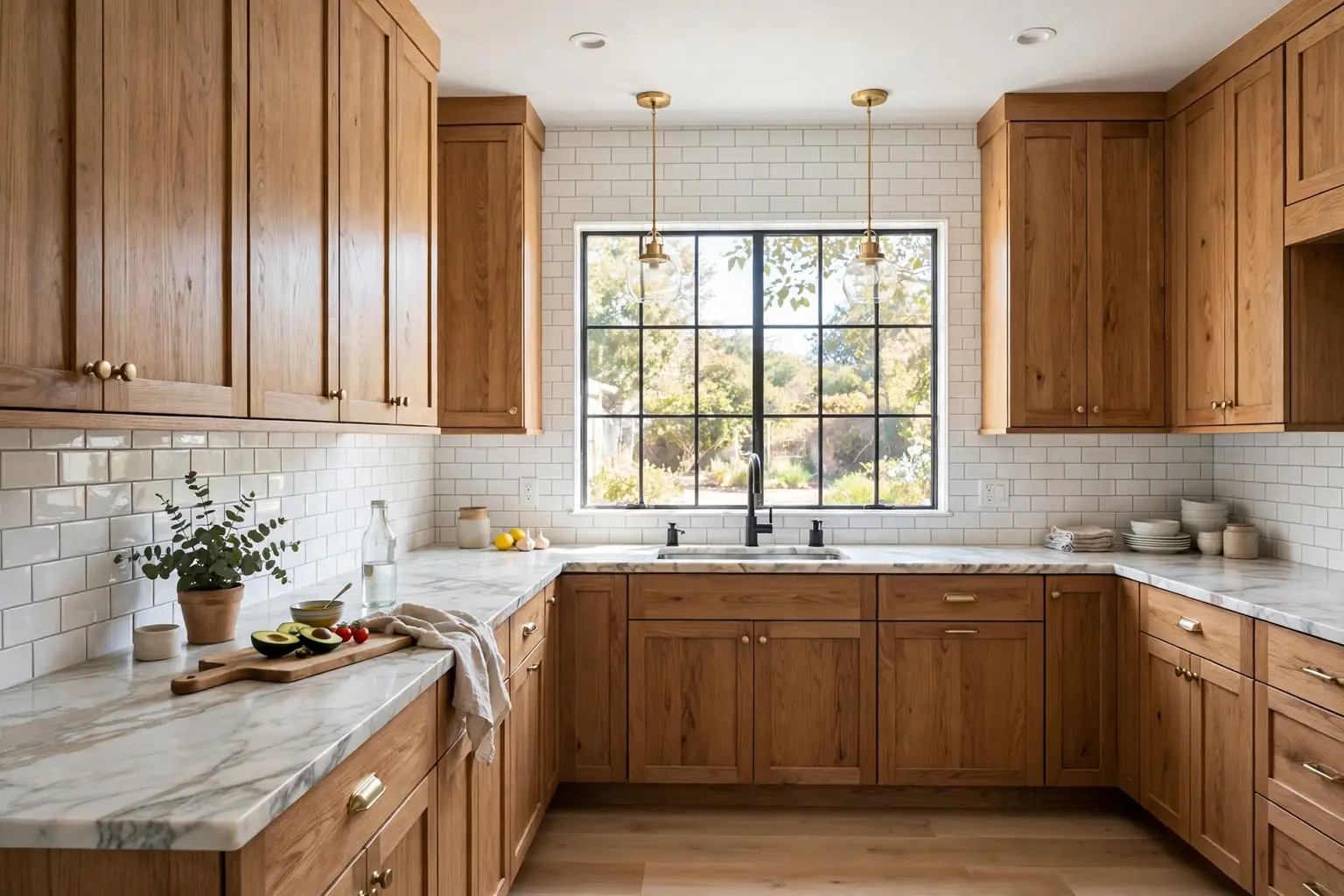
A backsplash has a hard job. It sits behind the sink and the stove, catches splashes and steam, and still has to look right with the cabinets, counters, and floor. The best kitchen backsplash ideas balance those two jobs, so the surface is easy to wipe and the pattern or material adds something real to the room. These 16 ideas cover tile, stone, wood, metal, and renter friendly options, with notes on cleaning, grout, and where each one works best. Before you choose, hold a sample against your counter in daylight and check how it looks when it is wet, since a backsplash spends much of its life damp.
Key Takeaways
- Pick the backsplash after the counter and cabinets, not before, so the new surface links to materials already in the room.
- In a busy cooking zone, favor smooth, sealed surfaces with few grout lines, since they wipe clean faster after frying and simmering.
- Test a sample wet and dry, in daylight and evening light, before you order enough tile for the full wall.
- Use one strong backsplash idea at a time. A bold pattern, a veined slab, or a bright color each make a clear point on their own.
- Keep grout in mind from the start. Dark grout hides stains on a subway tile wall, while pale grout on a patterned tile needs sealing and regular cleaning.
1. Classic White Subway Tile With Dark Grout
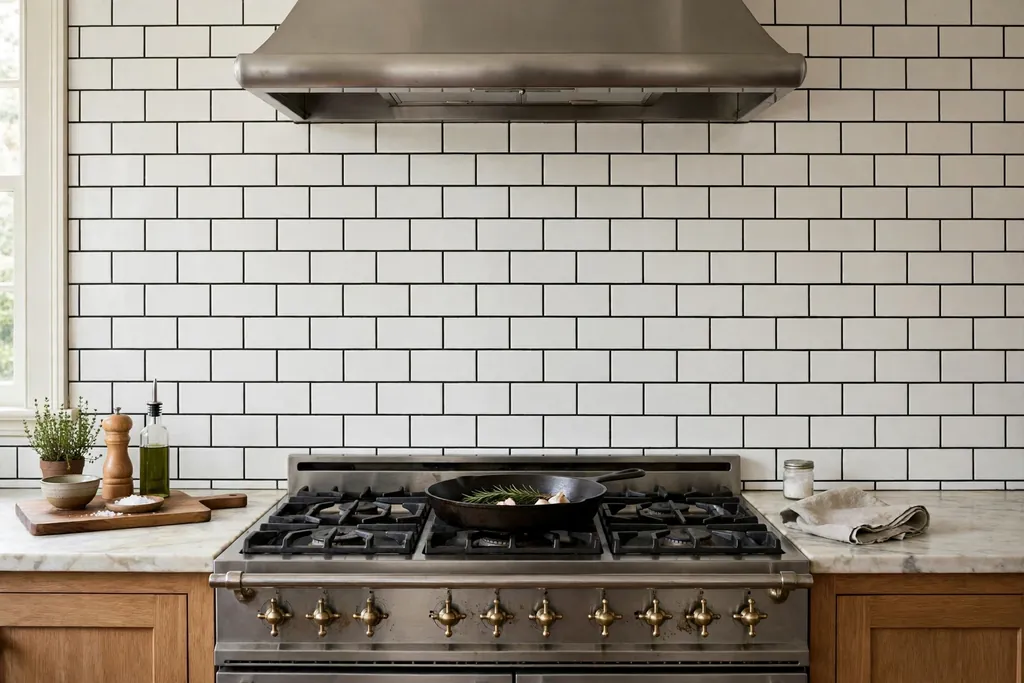
White subway tile is a kitchen staple because it is bright, simple, and easy to match with almost any cabinet color. Laid in a running brick pattern, it gives the wall a steady rhythm without a loud pattern. Dark grout changes the look completely: it outlines each tile, hides cooking stains, and suits kitchens where the stove gets heavy daily use.
Use a standard 3 by 6 inch tile for a familiar look, or a slightly longer tile if you want fewer grout lines. Seal the grout after it cures, and wipe the wall after frying so grease does not settle into the joints. This idea suits a white or wood kitchen best, since the crisp tile and dark lines keep a plain scheme from looking flat. For help planning the wall around a window, see these kitchen window decor ideas.
2. Full Height Marble Slab Behind the Range
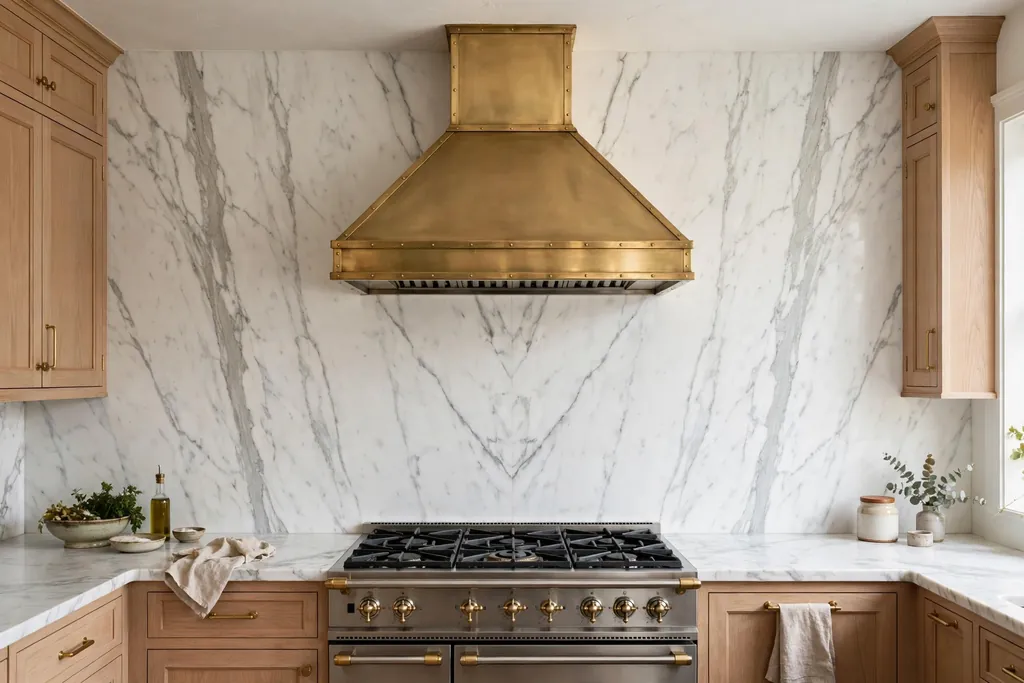
A full height marble slab runs from the counter to the underside of the range hood or cabinets in one unbroken piece, with no grout lines to clean. The natural veining becomes the main feature of the cooking wall, so the rest of the kitchen can stay plain. This is a good choice behind a range, where splashes land in one concentrated area and a smooth stone surface wipes clean in one pass.
Choose a slab with veining you like at full size, since a small sample will not show how the pattern moves across the wall. Seal the marble and reseal it on the schedule the supplier suggests, because marble can stain from tomato, wine, and oil. Keep the counters in a quiet stone or a solid color so the veined wall stays the focus. A slab costs more than tile, so measure carefully and order the piece only after the range and hood positions are fixed.
3. Handmade Zellige Tiles in Soft Green
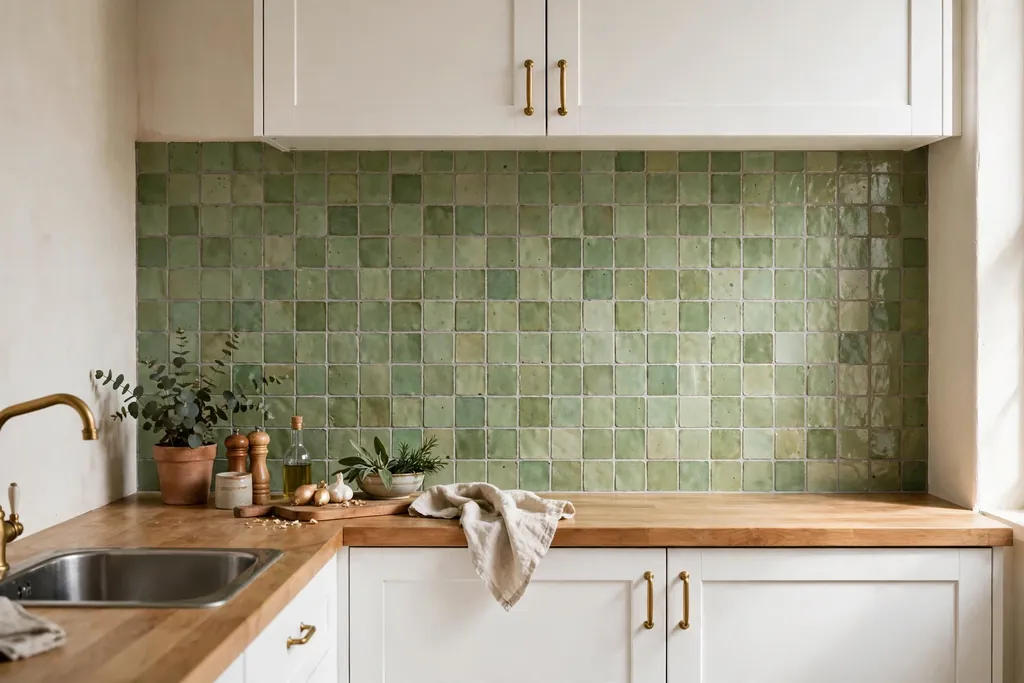
Zellige tiles are handmade, so each tile has slight differences in color, thickness, and surface shine. In a soft green, those differences read as gentle movement across the wall rather than a flat block of color. The glazed surface wipes clean, which makes zellige a practical pick as well as a pretty one, and the small size suits both a full wall and a short backsplash strip.
Lay the tiles close together with a narrow grout joint so the handmade edges stay visible. Expect some tiles to arrive darker or lighter than others, and mix tiles from several boxes before fixing so no one patch looks uneven. Pair soft green zellige with white cabinets and a wood counter, or with pale oak and brass taps, for a calm kitchen that still has texture. Avoid a busy counter pattern here, since the tile already carries plenty of detail.
4. Painted Beadboard Panels for a Cottage Kitchen
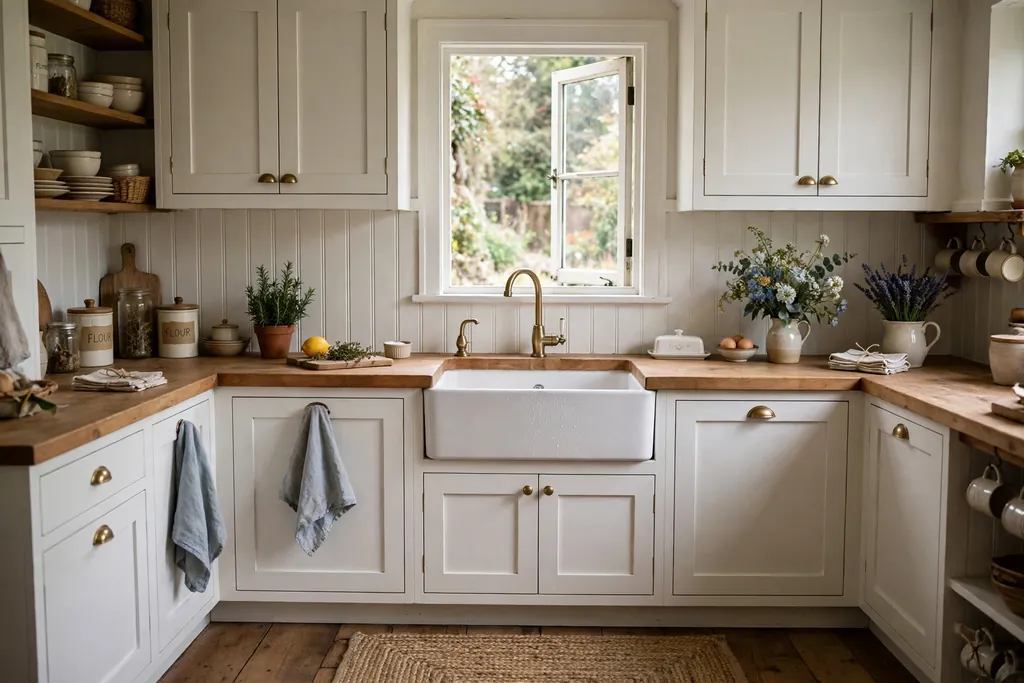
Beadboard panels give a kitchen a cottage feel through vertical grooves that add texture without a tile pattern. Painted in white or a pale cream, beadboard suits a kitchen with shaker cabinets, a farmhouse sink, and wood details. It is also one of the simpler backsplashes to fit, since panels cover a large area quickly and paint can be refreshed later without removing tile.
Use beadboard made for kitchens, or seal standard panels well, and paint with a washable kitchen paint so splashes wipe off. Pay attention to the joints behind the sink and stove, since water can sit in the grooves if the seal fails. Caulk the edges where the panels meet the counter and the cabinets. This idea works best in a kitchen where cooking is moderate and the wall does not face constant steam, and it pairs well with open shelving above.
5. Sealed Exposed Brick for Warmth and Texture
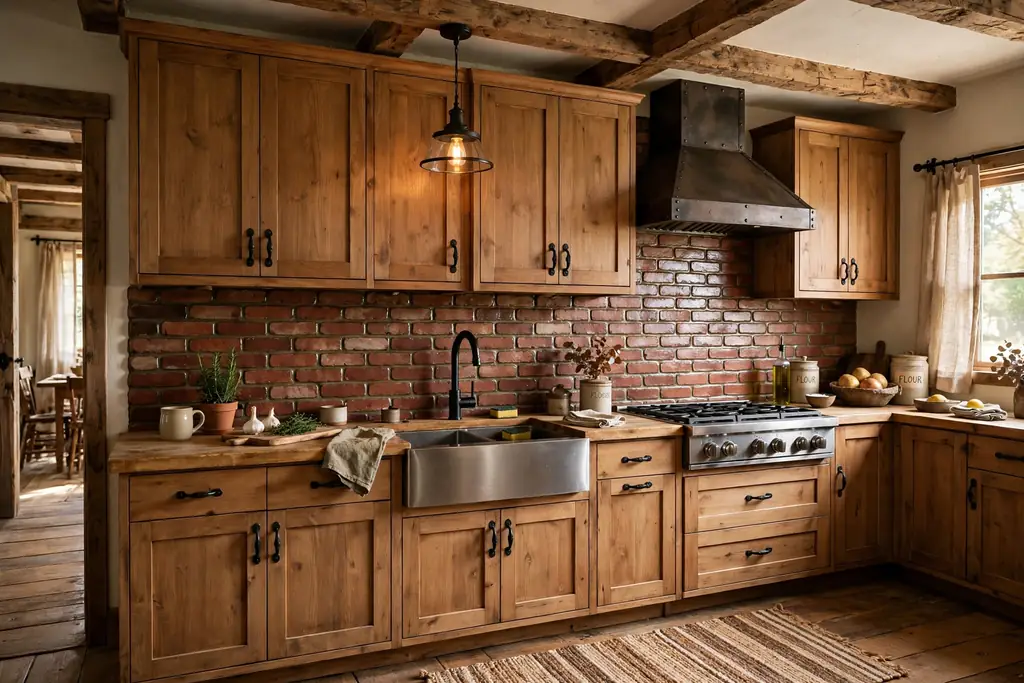
Exposed brick brings warmth and a rough texture that tile cannot match, and it suits kitchens with wood beams, iron details, or a rustic range. The brick itself is not wipe clean, so sealing is the step that makes this idea practical. A good masonry sealer fills the pores, keeps grease from soaking in, and lets you wipe the surface with a damp cloth.
Check the brick condition before you start, and repair loose mortar first. Apply the sealer in thin coats and test it behind the stove, where heat and grease are strongest. Keep the rest of the kitchen simple, with plain cabinets and a solid counter, so the brick stays the main texture. If the brick is uneven or damaged, a thin brick veneer gives the same look with a flatter, easier to seal surface.
6. Herringbone Marble Mosaic for a Quiet Pattern
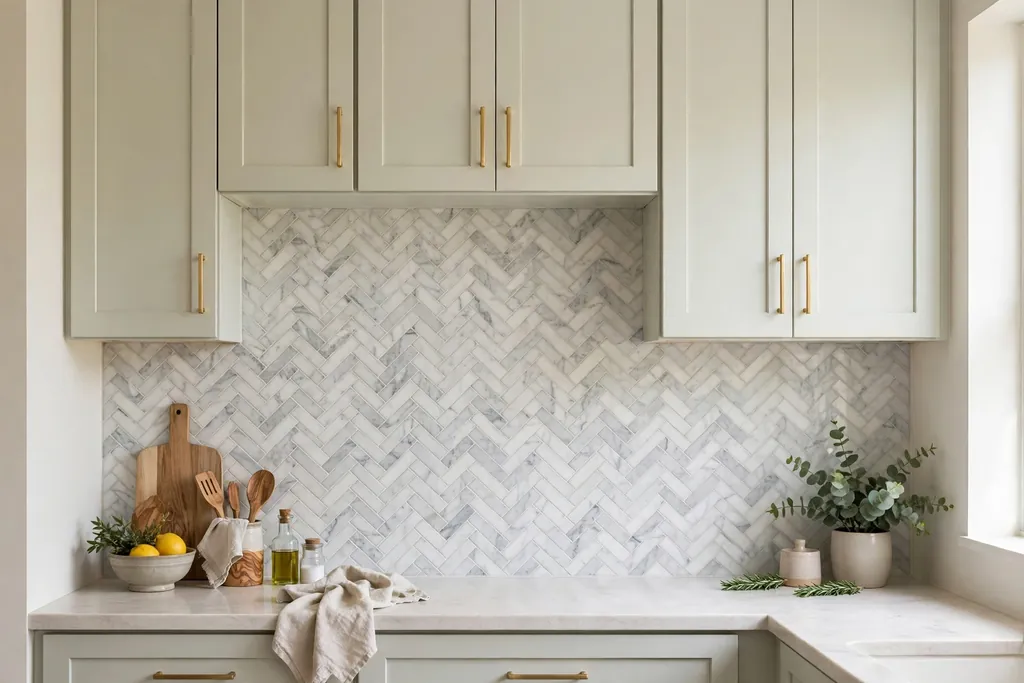
Herringbone is a zigzag layout that turns small marble pieces into a clear pattern without a strong color. It suits a kitchen where you want movement on the wall but not a bold print, and it works with white, grey, or wood cabinets. The marble pieces are usually sold on mesh sheets, which keeps the pattern even and speeds up fitting.
Use a pale grout so the pattern reads as one calm surface rather than a grid of lines, and seal both the marble and the grout. Because herringbone has many joints, wipe the wall after cooking and avoid letting acidic splashes sit on the stone. This layout suits a full wall behind a range, or a shorter strip between counter and cabinets, and it pairs well with a plain counter that does not compete with the zigzag.
7. Large Format Porcelain Panels With Almost No Joints
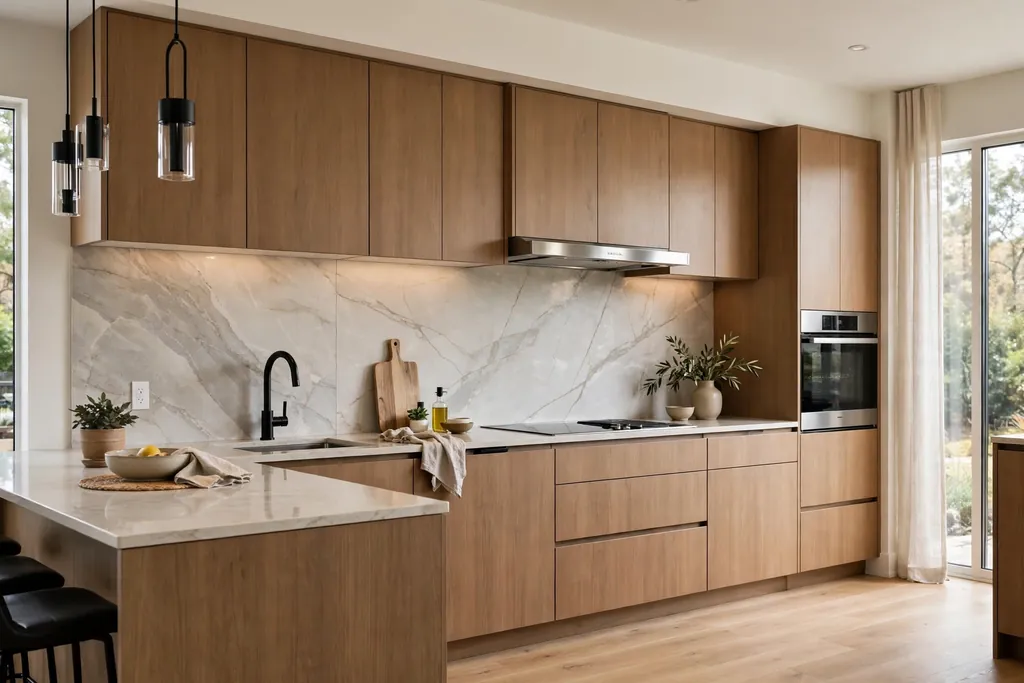
Large format porcelain panels cover a wall in a few big pieces, so the backsplash has very few grout lines and a calm, modern look. Many panels copy marble, concrete, or stone, which gives you the look of a slab with a lighter, stain resistant surface. Porcelain resists heat and stains, so it is a strong pick behind a range and around a sink.
Fitting needs care, since large panels are heavy and break if they flex. Measure the wall exactly, including outlets and the hood, and let a skilled fitter cut and fix the panels. Choose a panel tone that matches the counter rather than matching it exactly, so the two surfaces sit together without looking like a failed match. This idea suits a modern kitchen with flat front cabinets, where the lack of joints keeps the whole wall quiet.
8. Peel and Stick Tiles for Renters and Quick Updates
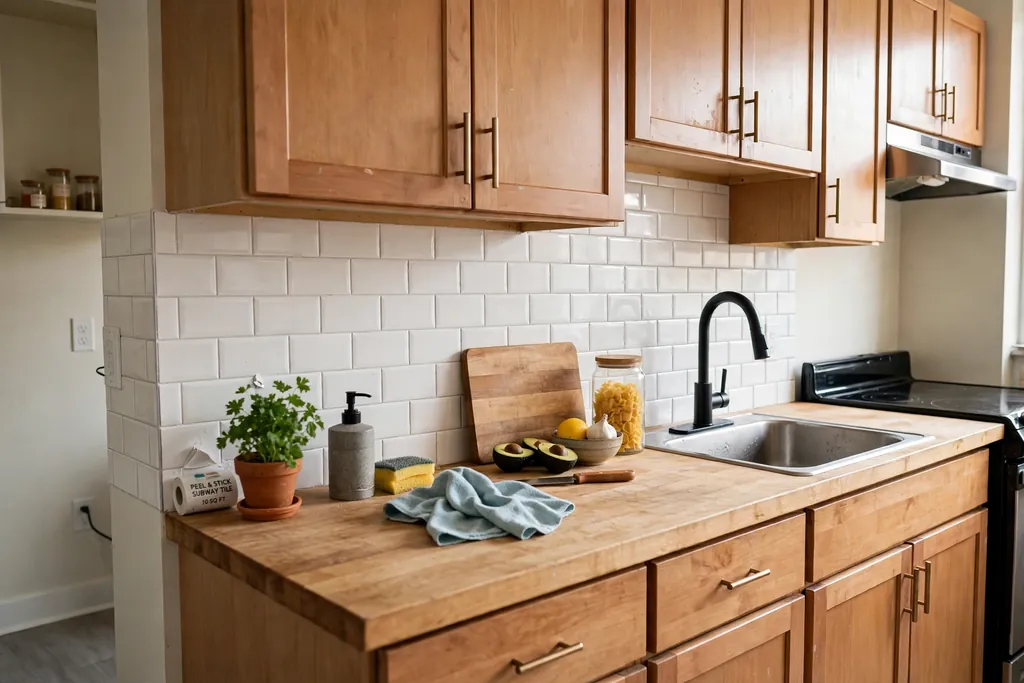
Peel and stick tiles are thin panels with an adhesive back, made to look like subway tile, mosaic, or stone. They suit renters and anyone who wants a fast update without grout, dust, or a tiler. Most types wipe clean with a damp cloth, and many can be removed later with heat and care, which makes them a low risk way to test a look.
Clean and dry the wall first, and press each panel firmly from the center outward so no air sits behind it. Avoid placing peel and stick tiles directly behind a gas hob where heat is intense, and check the maker guidance for your stove type. Plan the layout from the center of the wall so cut pieces at the edges look even. If you like the look after a few months, you can keep the panels or use them as a trial before a fixed tile job.
9. Stainless Steel Sheet Behind the Range
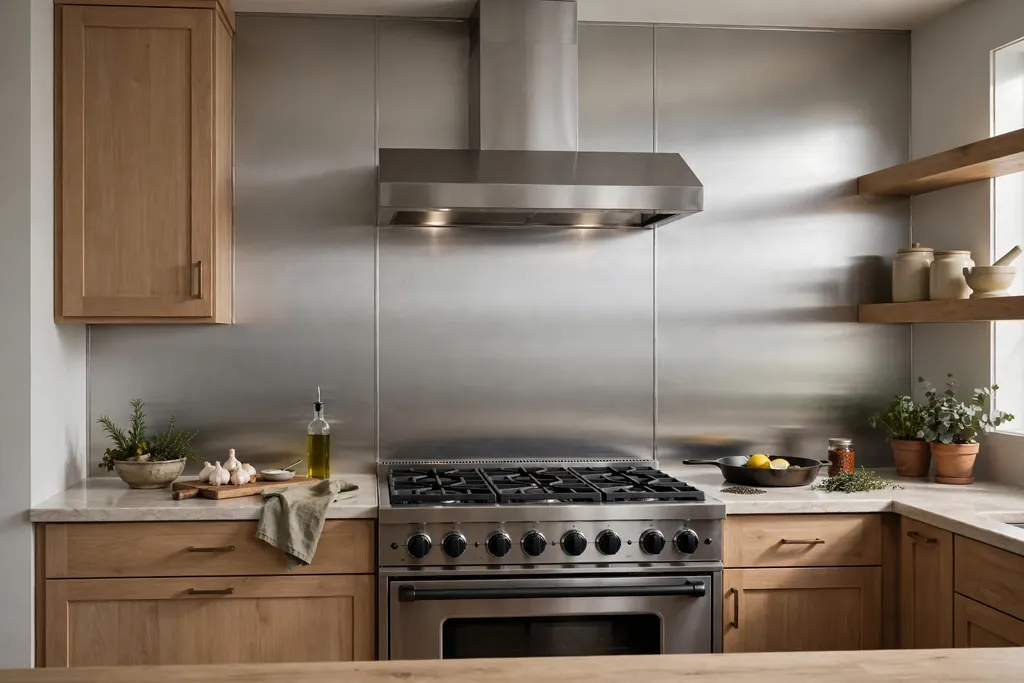
A stainless steel sheet behind the range is built for the hardest working part of the kitchen. It resists heat, wipes clean after frying, and has no grout lines at all. The brushed finish suits a kitchen with steel appliances, and it keeps a professional cooking zone looking tidy with very little effort.
Fix the sheet with a small gap at the edges for expansion, and use a soft cloth with warm soapy water for cleaning, since harsh pads scratch the brushed surface. Fingerprints show on steel, so wipe in the direction of the grain and dry the sheet after cleaning. Keep the rest of the backsplash in tile or another quiet material, and reserve the steel for the range wall only, where its practical strength matters most.
10. Glass Mosaic Tiles in Sea Tones
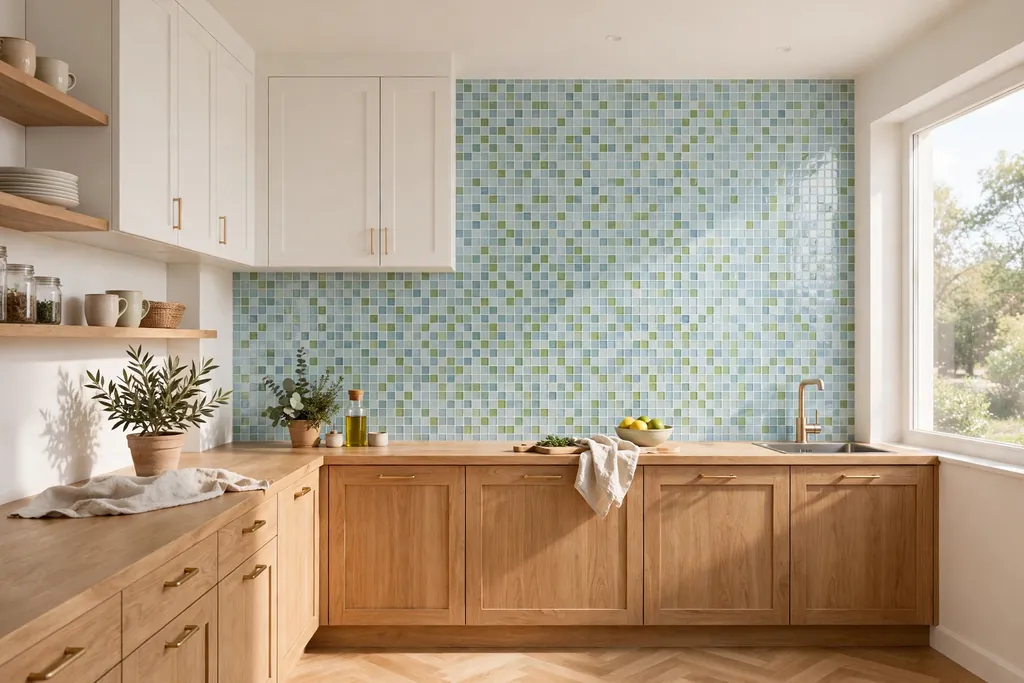
Glass mosaic tiles catch light and add a soft shine that suits a kitchen with limited daylight. In sea tones of pale blue, aqua, and soft green, the small tiles read as calm color rather than a loud pattern, especially when mixed in one mesh sheet. Glass is non porous, so it wipes clean and resists stains from cooking splashes.
Use a white adhesive behind pale glass tiles, since a grey adhesive can dull the color from behind. Keep the grout pale and seal it, and avoid harsh abrasive pads that can scratch the glass surface. This idea suits a coastal or light filled kitchen, and it pairs well with white cabinets and a pale counter. For a quieter version, use the mosaic as a single stripe above the counter, with plain tile below and above it.
11. Terracotta Square Tiles for a Warm Rustic Wall
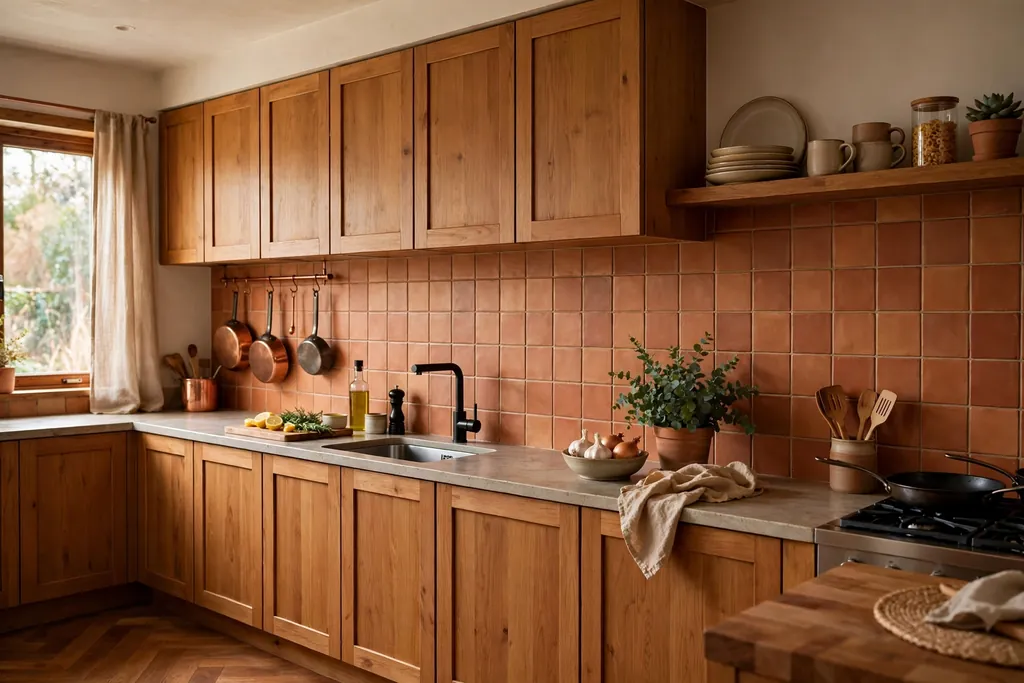
Terracotta tiles bring an earthy, handmade warmth that suits kitchens with wood cabinets, cream walls, and natural fibers. The square shape keeps the layout simple, while the color variation from tile to tile gives the wall depth. Terracotta is porous, so sealing before and after grouting is essential, and it turns this rustic material into a usable kitchen surface.
Choose a matte sealer if you want to keep the natural clay look, and test the sealer on one tile first. Expect the color to deepen slightly after sealing, and check it beside your counter before you seal the whole wall. Pair terracotta with a plain stone or wood counter, since a patterned counter plus a varied tile wall can look busy. This idea suits a kitchen that already uses warm tones, and it looks best with brass or black taps.
12. Horizontal Shiplap Boards for a Relaxed Look
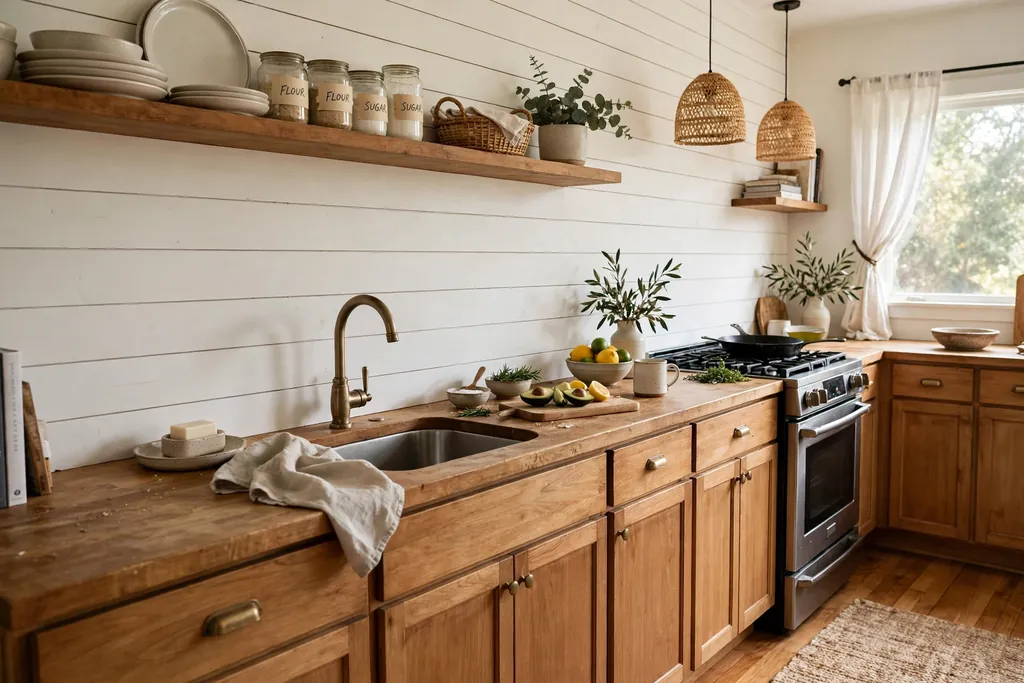
Horizontal shiplap boards run across the wall in long lines, which can make a narrow kitchen feel wider. Painted white or in a pale color, shiplap suits a relaxed kitchen with wood counters and simple cabinets. Unlike beadboard, which runs vertically, shiplap gives a calmer, more horizontal rhythm that suits a long counter run.
Use boards made for damp areas, or seal and paint standard boards with washable kitchen paint. Caulk the gaps at the counter and at the ends, and wipe the boards after cooking so grease does not sit in the joints. This idea works best where the stove has a good hood, since steam and grease reach the wall less directly. Keep the shelves and cabinets plain so the board lines stay the main detail on the wall.
13. Penny Round Mosaic for a Playful Small Scale Pattern
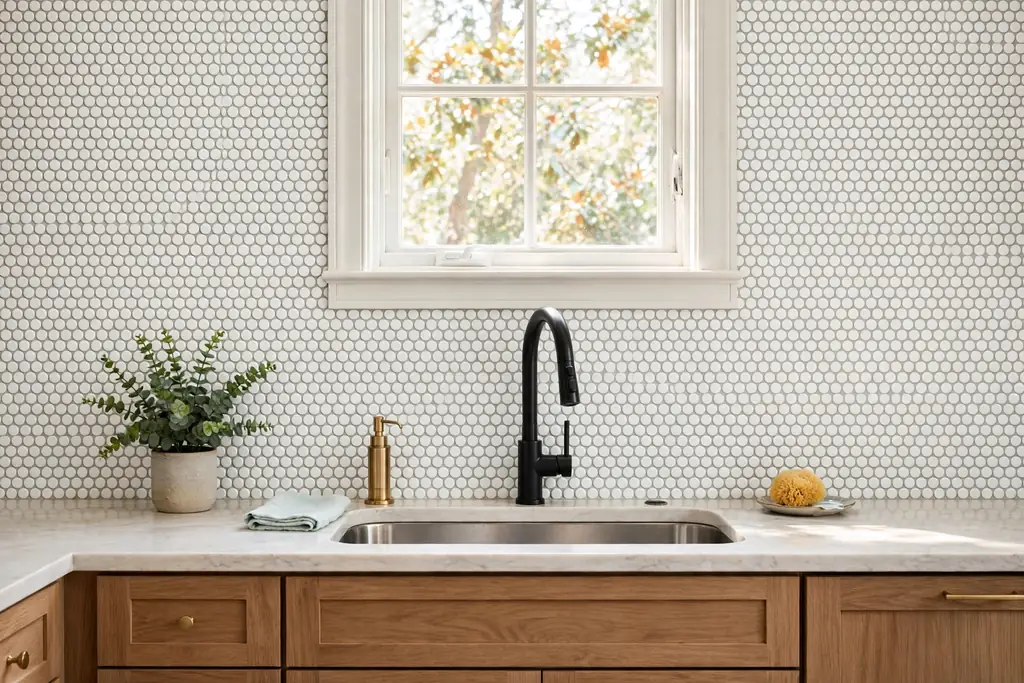
Penny round tiles are small circles on a mesh sheet, and they give a backsplash a playful, dotted pattern at a small scale. In white, they read as a quiet texture; in a soft color, they add a gentle point of interest without a large print. The round shape suits a kitchen with curved details, such as an arched window or rounded cabinet handles.
Use a grout color close to the tile color for a calm look, or a contrasting grout if you want each circle to stand out. Because the tiles are small, there are many grout joints, so seal the grout and wipe the wall after cooking. Penny rounds suit a sink wall well, where the small scale looks neat around taps and outlets. Pair them with a plain counter, since the dotted pattern already gives the wall plenty of movement.
14. Patterned Encaustic Cement Tiles as a Feature Panel
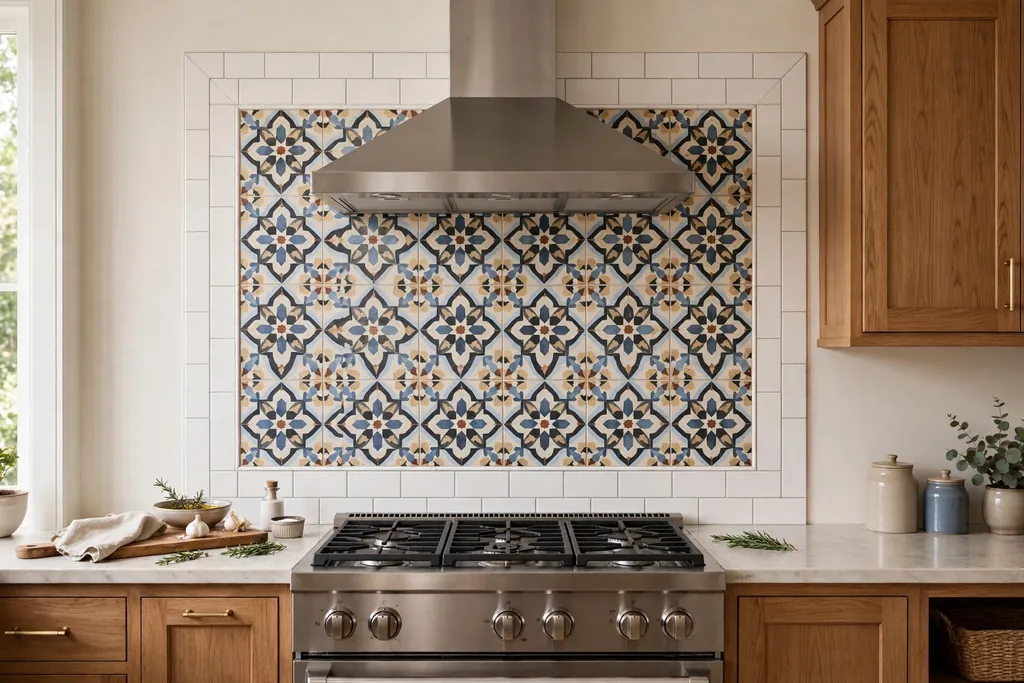
Patterned encaustic tiles use bold geometric or floral designs pressed into cement, and they work best as a feature panel rather than a full kitchen wall. A panel behind the range, framed by plain tile on each side, gives the kitchen a clear focal point while keeping the rest of the wall easy to clean. The pattern also suits kitchens with plain cabinets, where one strong panel can carry the whole scheme.
Seal cement tiles before grouting and again after, since cement absorbs stains fast. Keep the panel size modest, often the width of the range plus a small margin, so the pattern does not overwhelm a small kitchen. Repeat one color from the tile in a tea towel, a rug, or a small accessory, and keep the counters plain. This idea suits a kitchen with a simple layout, where the feature panel has room to be seen from across the room.
15. Antiqued Mirror Panels to Bounce Light
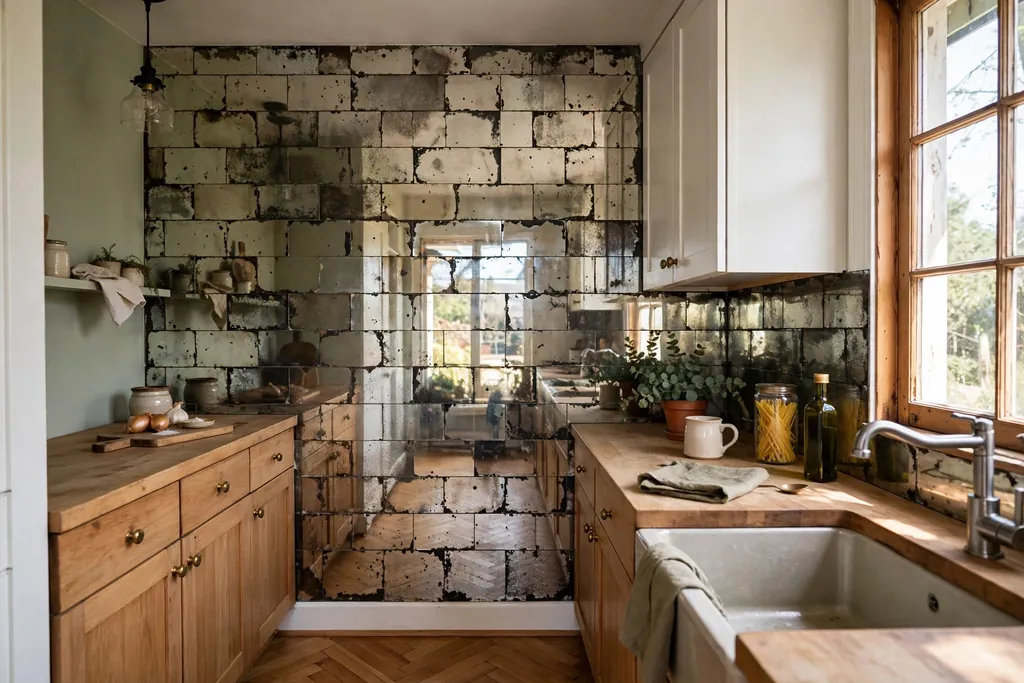
Antiqued mirror panels reflect light and make a small or dark kitchen feel larger, while the mottled finish hides splashes better than a clear mirror. The aged spots give the wall a soft, vintage character that suits kitchens with brass details, glass cabinets, and pale wood. Mirror also pairs well with a window wall, since it doubles the daylight in the room.
Fix mirror panels with a suitable adhesive and support, and clean them with a soft cloth and glass cleaner, avoiding abrasive pads. Keep mirror to one wall, often the sink wall or a short run, rather than the full kitchen, so the reflections stay calm. For ideas on cabinet colors that sit well with a reflective wall, see these colors for your kitchen cabinets. Avoid mirror directly behind a range, where heat and grease make cleaning a constant job.
16. Pressed Metal Tin Tiles for Vintage Character
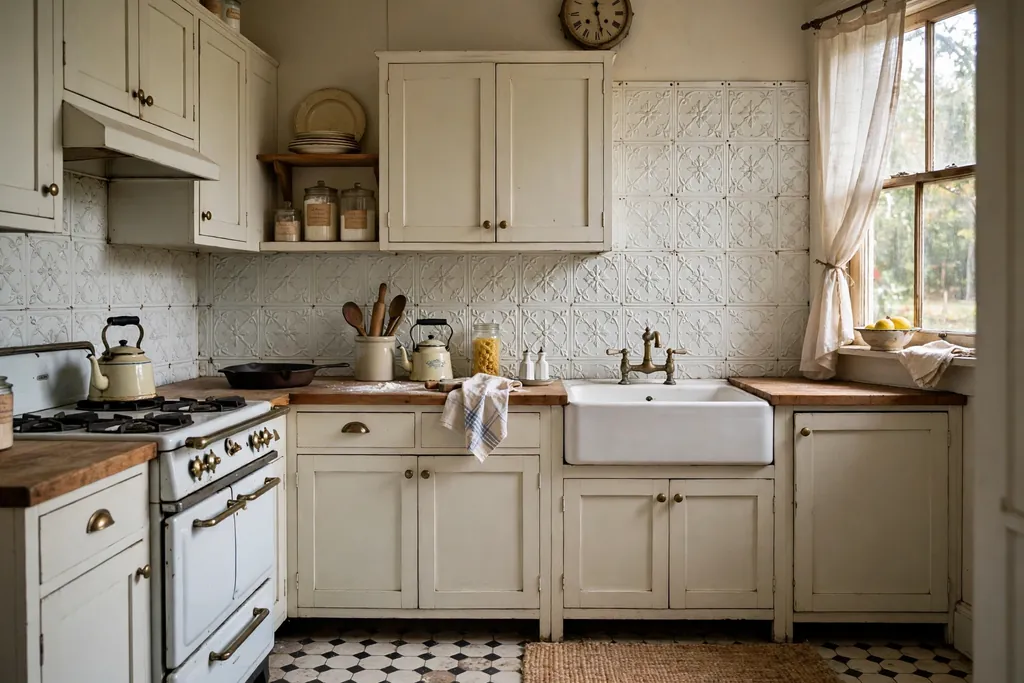
Pressed metal tiles, often called tin tiles, carry a raised pattern stamped into thin metal sheets. Painted white, they suit a vintage kitchen with simple cabinets and a farmhouse sink; left in a metal finish, they suit a kitchen with industrial details. The pattern adds texture without color, and the metal surface wipes clean with a damp cloth.
Fix the tiles to a flat backing board first, then fix the board to the wall, so the thin metal stays flat and even. Paint the tiles after fitting if you want a single color, and seal the edges near the sink so water cannot sit behind the metal. This idea suits a kitchen where you want texture at low cost, and it pairs well with plain counters and simple hardware. For storage ideas that keep a patterned wall visible, see these kitchen wall storage ideas and these corner kitchen cabinet ideas.
Conclusion
The right backsplash is the one that survives your cooking and still pleases you when you walk into the kitchen each morning. Start with the counter and cabinets you already have, then pick a material that cleans well in the spots that get splashed most. Order a sample, test it wet, and check the grout or sealant it needs before you buy for the full wall. A simple tile laid well will serve you better than a bold material that stains or needs constant care.
Save this list on Pinterest before your next kitchen update, and work through it one idea at a time: material first, then layout and grout, then the spots behind the range and sink where practical strength matters most.
FAQs
What is the easiest kitchen backsplash to clean?
A smooth surface with few joints is easiest to clean, such as a marble or porcelain slab, a stainless steel sheet, or large format porcelain panels. Tile with small joints needs more wiping, and porous materials such as brick, terracotta, and cement tile need sealing first. Whatever material you choose, wipe splashes soon after cooking so grease and acidic foods do not set into grout or stone.
How high should a kitchen backsplash be?
A standard backsplash runs from the counter to the underside of the wall cabinets, usually about 18 inches high. A full height backsplash runs to the ceiling or to the range hood, and it suits a range wall or a kitchen with no upper cabinets. Measure your cabinet height before you order tile, since the gap between counter and cabinets varies from kitchen to kitchen.
Can I put a backsplash over existing tile?
In many cases yes, if the existing tile is sound, flat, and firmly fixed. Clean and roughen the old surface so the new adhesive grips, and check that outlets and trim still sit correctly with the extra thickness. Peel and stick tiles are often used over old tile for a fast update. If the old tile is loose, cracked, or uneven, remove it first so the new backsplash has a sound base.
What backsplash works best for a white kitchen?
A white kitchen can take almost any backsplash, so the choice depends on the look you want. White subway tile with dark grout keeps the room crisp, soft green zellige adds gentle color, and a veined marble slab adds a natural feature. Avoid a backsplash that matches the cabinets exactly in white, since the wall can disappear. Pick a material with a different texture, such as handmade tile or stone veining, so the wall still reads as its own surface.
Is a backsplash needed behind a stove?
A backsplash behind a stove is strongly recommended, since that wall takes the most heat, grease, and food splashes. A heat resistant, wipe clean surface such as tile, stone, porcelain, or stainless steel protects the wall and makes cleaning far easier. Check the heat guidance for peel and stick tiles, wood, and mirror before using them behind a stove, since not every material suits that spot.
How do I choose a grout color for a backsplash?
Match the grout to the tile for a calm, unified wall, or use a contrasting grout to outline the tile shape, as with white subway tile and dark grout. Pale grout shows stains more readily, so seal it and wipe it after cooking. Dark grout hides stains but can make a small tile pattern look busy. Test grout on a few spare tiles beside your counter before you grout the full wall.