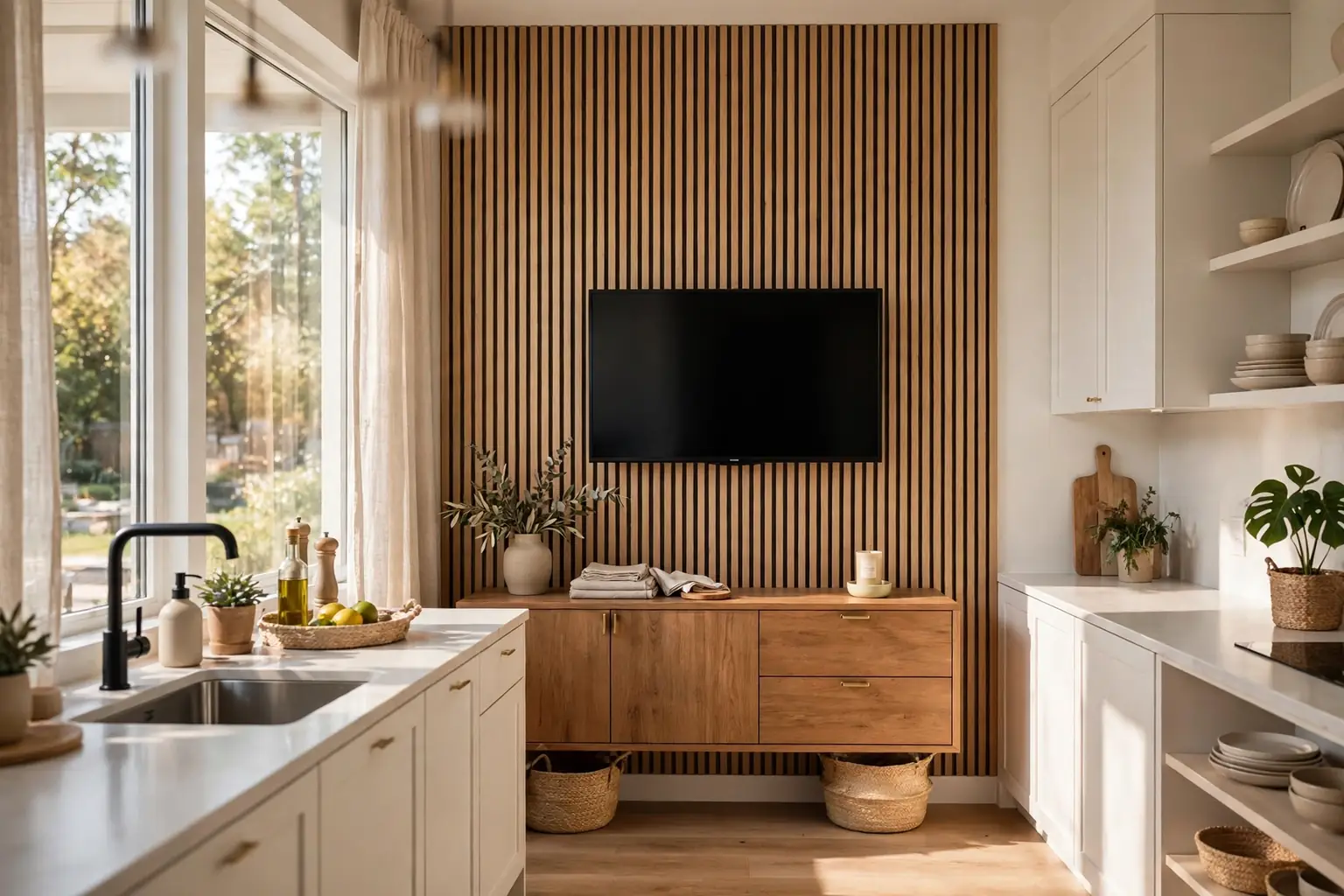
A television in the kitchen can be handy for recipes, news and family shows, but a bare screen on a blank wall can look unfinished. The fix is to plan the wall around the screen, not just hang the TV and stop there. These 14 kitchen TV wall ideas cover flush mounts, wood slats, hidden panels, shelves and cabinet pairings, so you can match the setup to your layout, your seating and how often you watch. Pick the wall you face most while cooking or eating, check the viewing height and glare, and hide the cables before you call the job done.
Key Takeaways
- Mount the TV where you can watch it without craning your neck, and test the height from your usual cooking and seating spots before fixing the mount.
- Hide cables in a channel, inside the wall where your wall type allows it, or behind a shelf or panel, so the wall reads as finished.
- Give the screen a frame of shelves, panels, cabinets or art so it looks like part of the kitchen design rather than an add-on.
- Keep the TV clear of direct stove heat, steam and sink splashes, and leave space for air to move around the back of the set.
- If you watch rarely, choose a hidden or art-style setup; if you watch daily, choose a simple flush or swivel mount that is easy to adjust.
1. Flush Mount Above a Low Sideboard
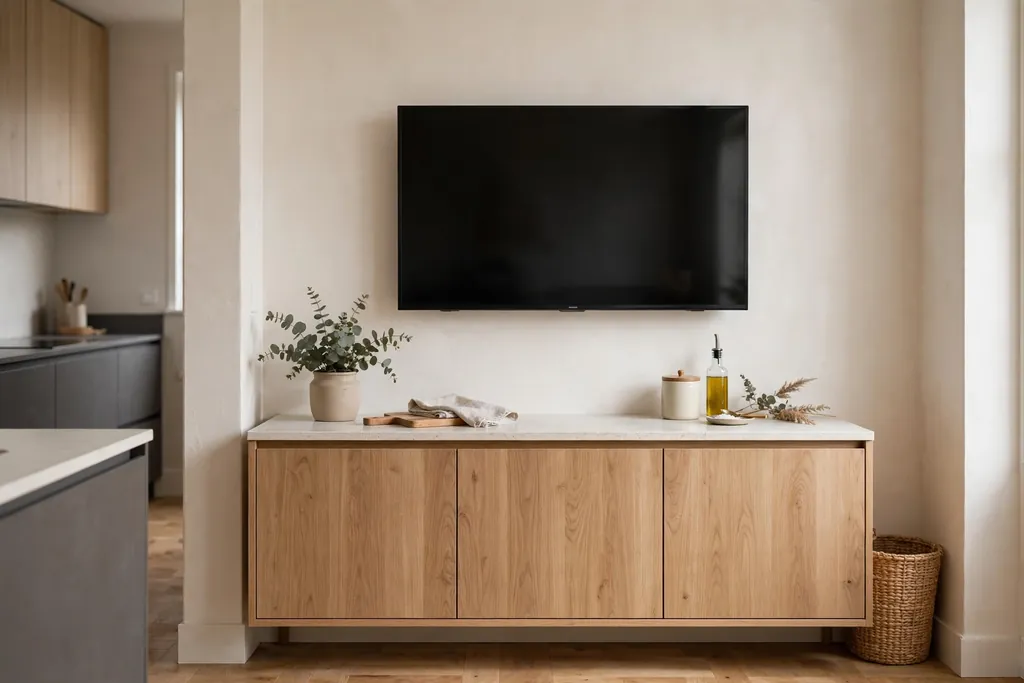
A flush mount above a low sideboard is the simplest way to make a kitchen TV look planned. The sideboard gives the screen a base, hides media boxes and remotes in closed storage, and keeps the wall below the TV from looking empty. Choose a sideboard that is at least as wide as the TV so the screen does not overhang the furniture below it.
Mount the TV so the middle of the screen sits close to eye level from your main seat. Run cables down behind the sideboard or through a cable channel painted to match the wall. Leave the top of the sideboard mostly clear, with just one small plant or a short stack of cookbooks at one end, so the screen stays the focus.
2. Warm Wood Slat Accent Wall
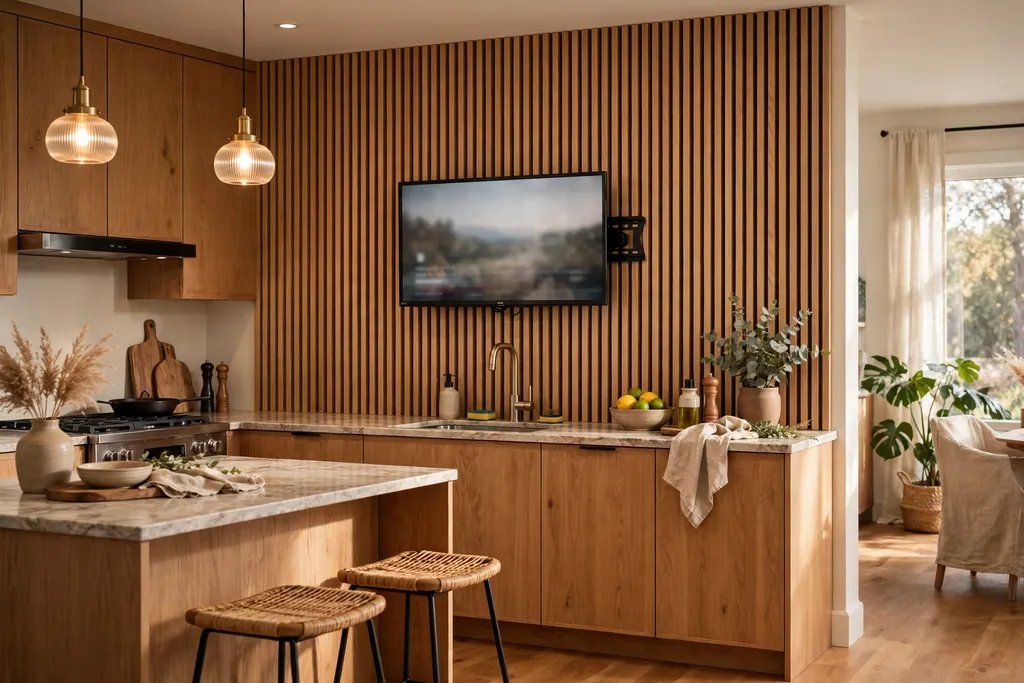
Vertical wood slats turn a plain wall into a backdrop that suits a TV well. The slats add texture and warmth, break up a large blank wall, and help the dark screen blend in when it is switched off. Use slats in a warm wood tone that matches your floor or open shelving, and keep the slat spacing even across the full wall section.
Fix the TV mount through the slats into studs or solid backing, since slats alone may not hold the weight. Hide cables behind the slats where the design allows it, or use a matching wood cable cover. Keep nearby decor simple, since the slat pattern already gives the wall plenty of interest.
3. Recessed Niche With Shelves on Each Side
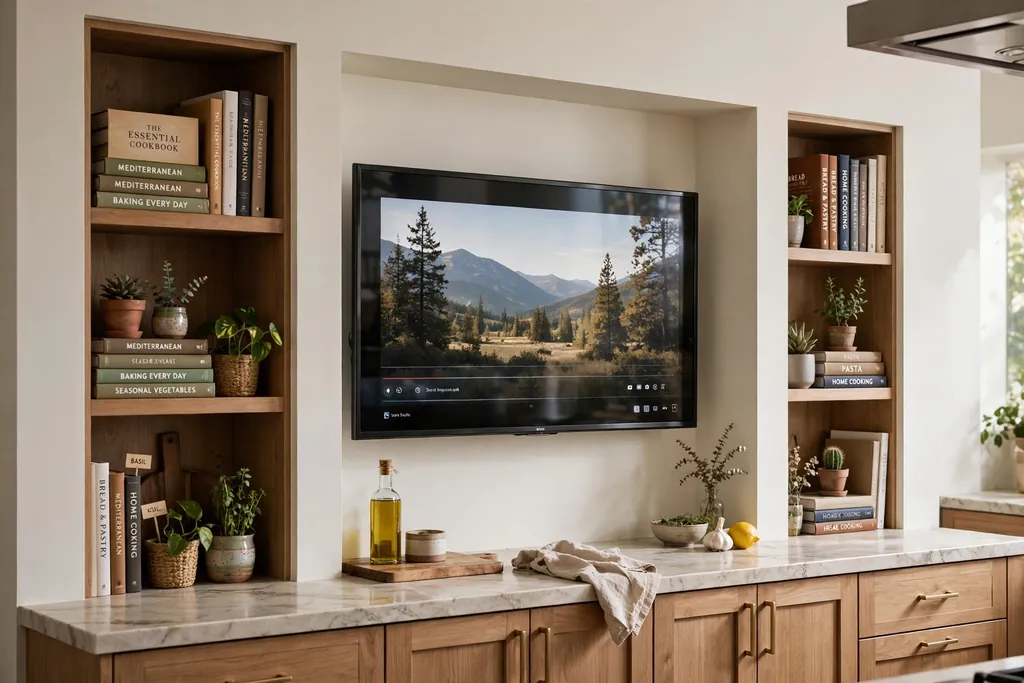
A recessed niche sets the TV back into the wall so it sits almost flush with the surface around it. Shelves or shallow cabinets on each side of the niche balance the screen and give you a home for cookbooks, small plants and serving bowls. This setup works best on a wall with enough depth for a recess, and you should check for pipes and wires before cutting into any wall.
Finish the inside of the niche in the same paint as the wall, or in a slightly darker tone to help the screen blend in. Keep the side shelves neat and leave some empty space, so the niche looks calm rather than crowded. A small light strip inside the niche can soften the edges in the evening, but keep it dim so it does not compete with the screen.
4. TV Above Open Shelves
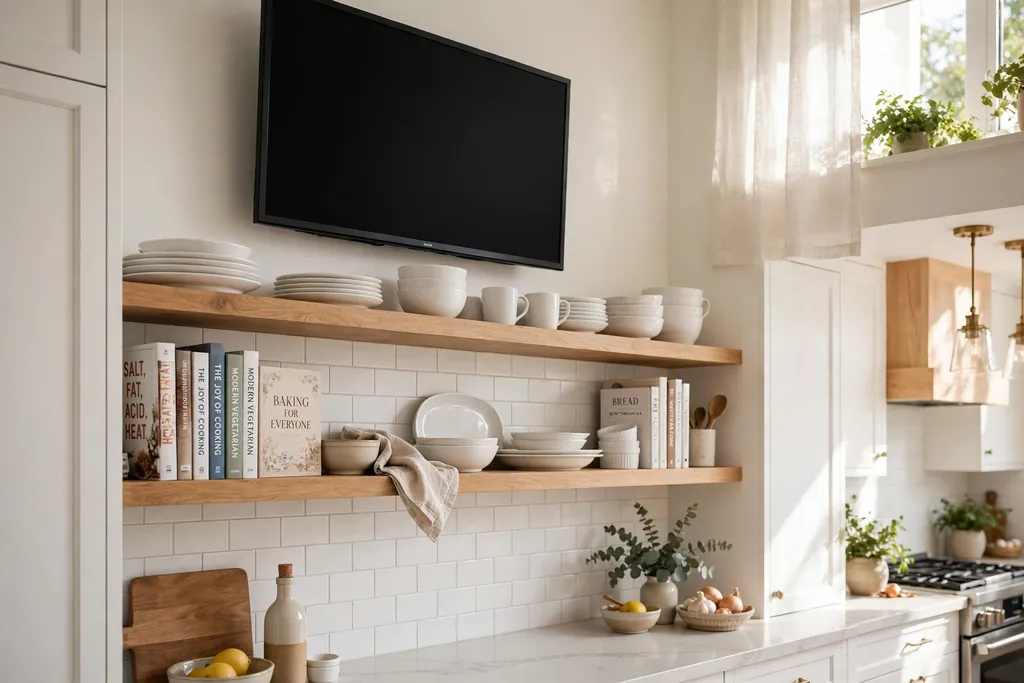
Mounting the TV above a run of open shelves pairs the screen with useful storage. The shelves below can hold daily dishes, glasses or cookbooks, and the TV sits in the same visual zone as items you already use in the kitchen. Keep the shelves shorter than the TV width, or match the run to the screen width, so the arrangement looks balanced from across the room.
Style the shelves with grouped items and clear gaps, as shown in our guide to how to style open shelves. Avoid placing fragile or tall items directly below the screen where they could be knocked while you adjust the TV. Keep the bottom shelf high enough that steam from the counter below does not reach the screen often.
5. TV Hidden Behind Sliding Panels
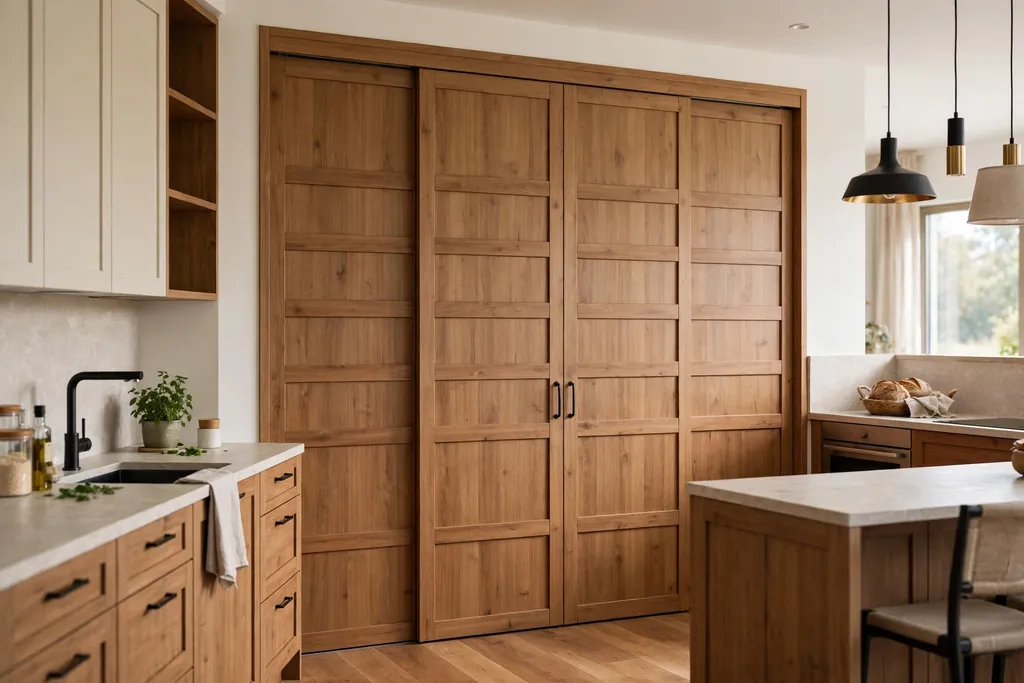
Sliding panels let you hide the TV completely when it is not in use. Two wood or painted panels slide across the screen on a track, and when closed they read as wall paneling or cabinet fronts. This idea suits kitchens where the TV is used only for occasional shows or weekend cooking sessions, and where a dark screen would clash with the room the rest of the time.
Choose panels that match your cabinets or wall color so the closed wall looks intentional. Make sure the track is fixed into studs and that the panels slide freely without catching on the TV mount or cables. Leave a small finger gap at the meeting point so you can open the panels easily, and test the full slide before you finish the trim.
6. Swivel Mount in a Corner Nook
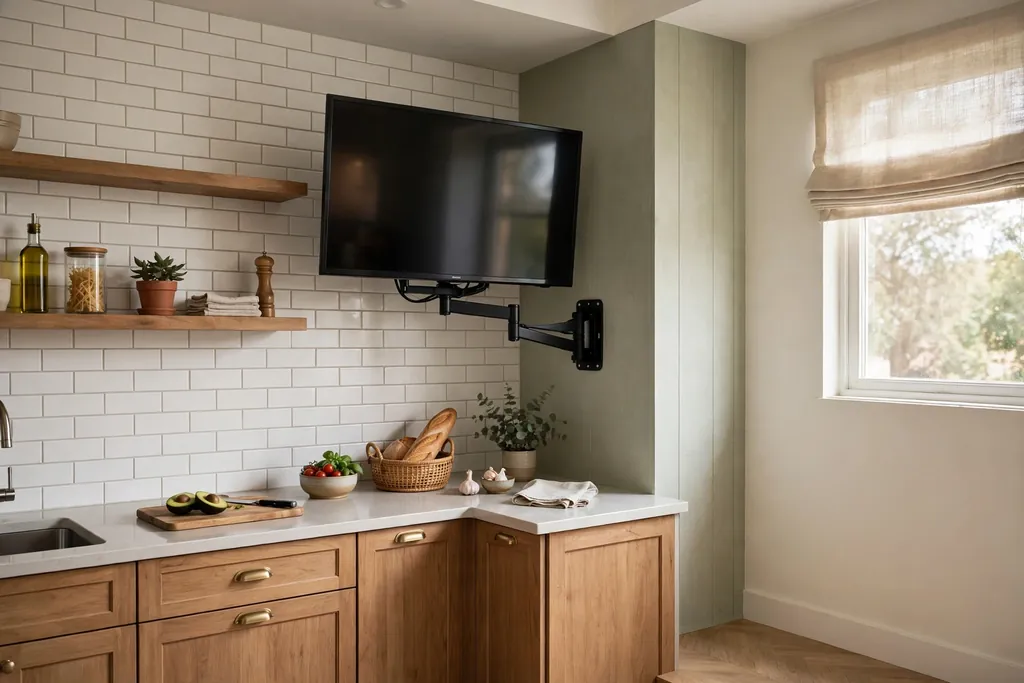
A corner nook can be a smart TV spot in a kitchen with an L shaped layout, because one screen can serve both the prep counter and a small table. A swivel mount lets you angle the TV toward the cook in the morning and toward diners at mealtimes. Fix the mount into a stud on one corner wall, and choose a mount rated for your TV size and weight.
Pair the nook with corner storage below, and see our corner kitchen cabinet ideas for ways to use the awkward space under the screen. Check glare from windows at different times of day, and our kitchen window decor ideas can help you plan window treatments that cut reflections. Keep the swivel range modest so cables are not pulled tight at either end of the turn.
7. TV Set Into a Tiled Backsplash Wall
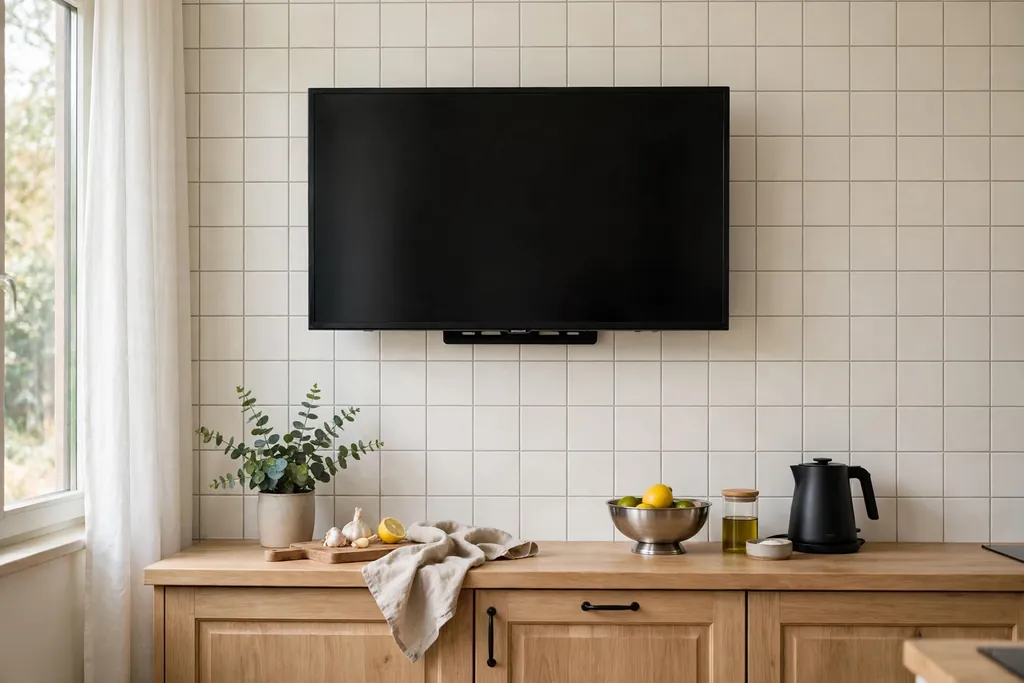
A tiled wall gives a kitchen TV a durable, easy to clean backdrop that ties the screen to the rest of the kitchen. Large format tiles or a simple subway pattern work well, since a busy tile pattern can fight with the moving picture. The tile also protects the wall behind the screen from splashes if the TV sits near a counter or sink run.
Plan the tile layout around the mount before tiling, so the mount fixings land on solid backing and not on a grout line that could crack. Use a cable channel that matches the tile color, or run cables behind the wall if your wall type allows it. Keep the tile area a little wider than the TV on each side so the screen sits inside a clear tiled frame.
8. Gallery Frame and Art Mode Display
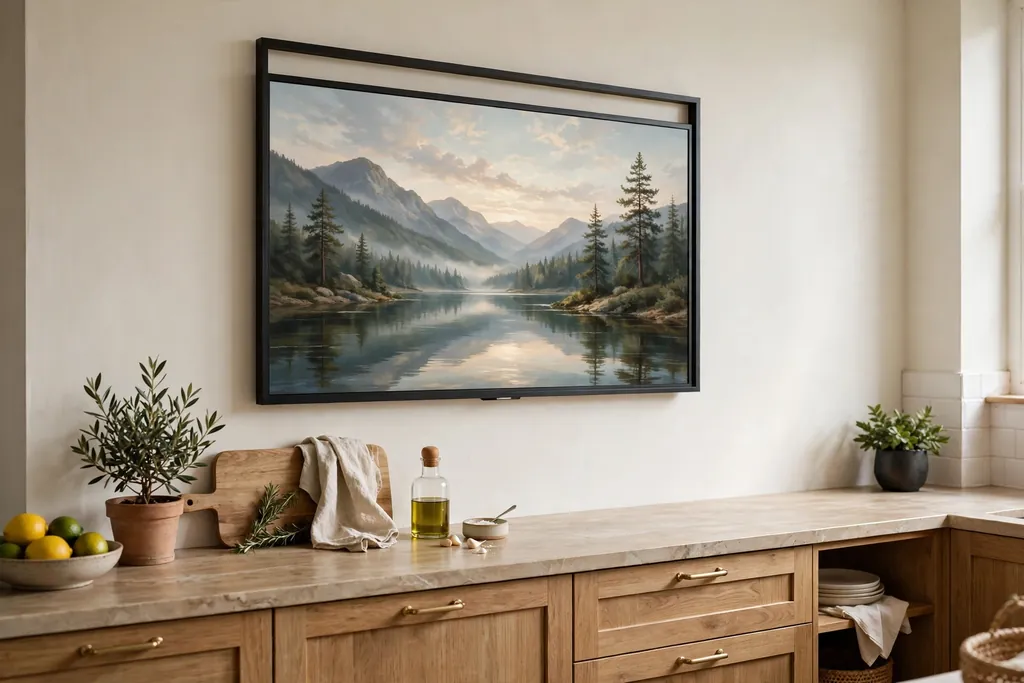
A slim gallery frame around the TV makes the screen read as framed art when it is not showing a show. Many TVs offer an art or photo mode that displays still images, so the wall looks like a picture gallery between programs. Choose a frame in wood, black or brass that matches other frames or hardware in your kitchen.
Hang a small piece of real art or a print beside the framed TV to strengthen the gallery effect, and keep the frame depth shallow so it does not catch dust or block vents on the back of the set. Pick calm, simple images for art mode, since bright or busy pictures can distract while you cook. This idea works best for a TV that spends much of the day switched off or on a still image.
9. TV Above a Breakfast Bar
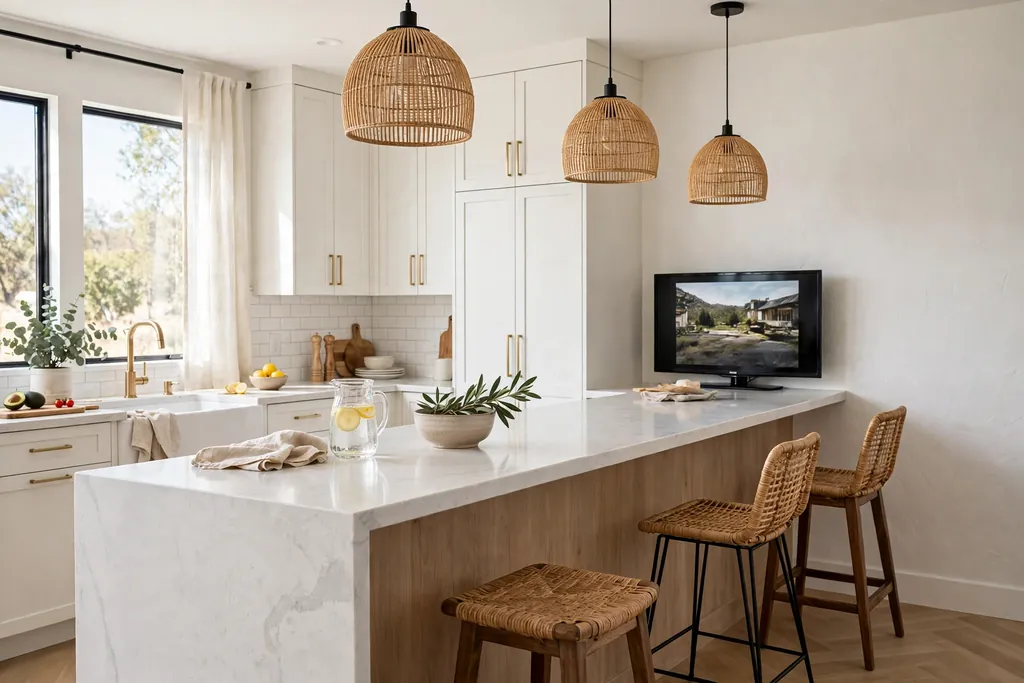
A TV on the wall at the end of a breakfast bar gives diners a clear view without taking counter space. The bar seating faces the screen naturally, and the TV sits above the level of plates and glasses, so it stays clear of spills. This setup suits an open kitchen where the bar separates cooking from eating.
Mount the screen at a height that works for seated viewers, not standing cooks, since the bar seats are the main audience here. Hide cables behind the bar panel or in a channel down to a nearby outlet, and keep the wall around the TV free of hanging items that could block the view from the end seats. A small shelf below the TV can hold remotes so they stay off the bar top.
10. Pull Down Mount Above the Counter
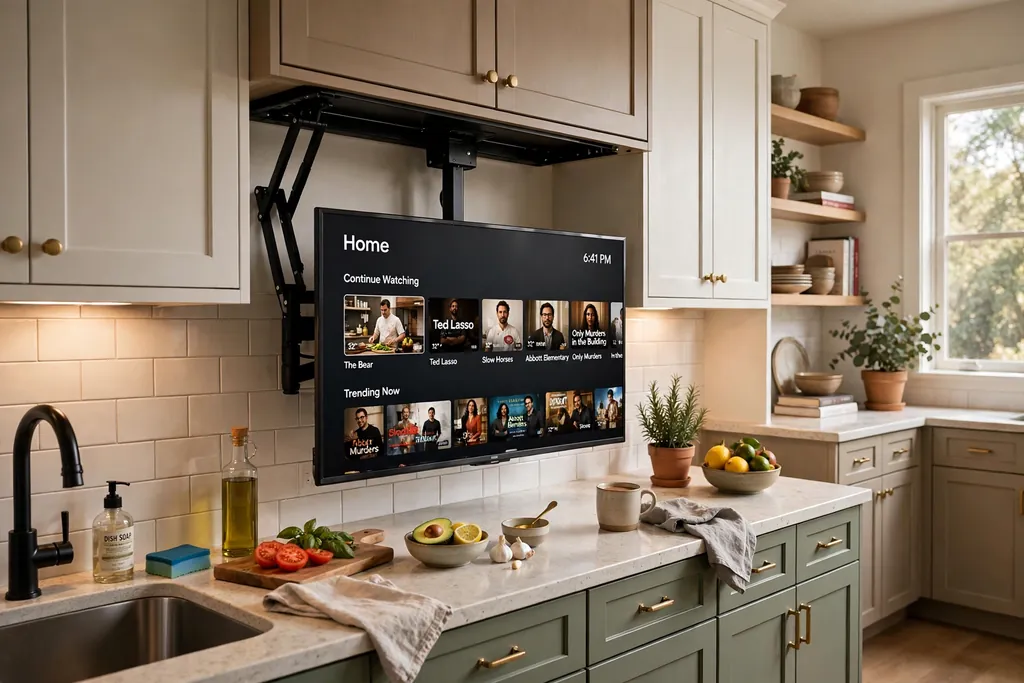
A pull down mount lets a TV sit high on the wall, clear of the work surface, and drop down to a comfortable viewing height when you want to watch. This suits a kitchen where wall space is tight and the only free spot is above a counter or a tall cabinet run. Pull the screen down for a recipe video or a show, then push it back up when cooking is done.
Check that the mount clears any shelf, window catch or cabinet door in its path, and that cables have enough slack for the full drop. Keep the area below the TV clear of tall items that could block the lowered screen. Test the mount with the TV attached before you rely on it daily, and tighten all joints so the screen stays level at its lowered height.
11. TV Flanked by Glass Front Cabinets
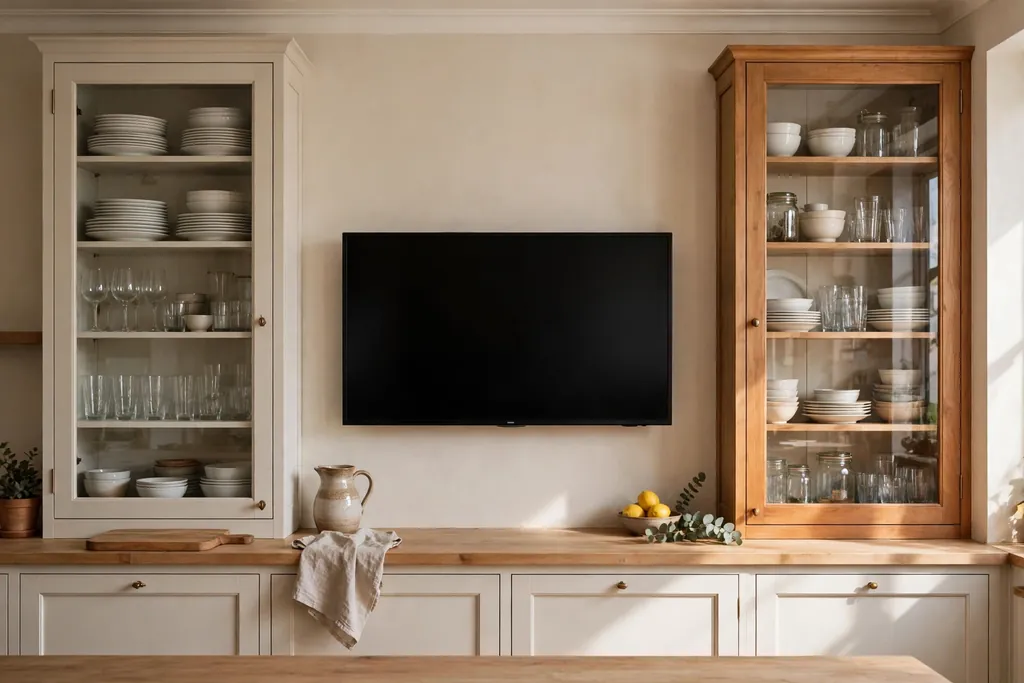
Glass front cabinets on each side of the TV give the screen a built in, furniture-like feel. The cabinets store dishes and glasses behind glass, so the wall looks layered and useful rather than like a bare screen on plaster. Match the cabinet frames to your kitchen cabinets, and keep the glass sections the same height as the TV for a tidy line.
Style the cabinets simply, with matching dish sets or a few clear glasses, so the contents do not compete with the picture. Put everyday dishes in the cabinet nearest the dishwasher or sink, and display pieces higher up or farther from daily reach. Leave a gap of a few inches between the cabinets and the screen so heat can escape and you can reach the TV controls.
12. TV on a Shiplap Feature Wall
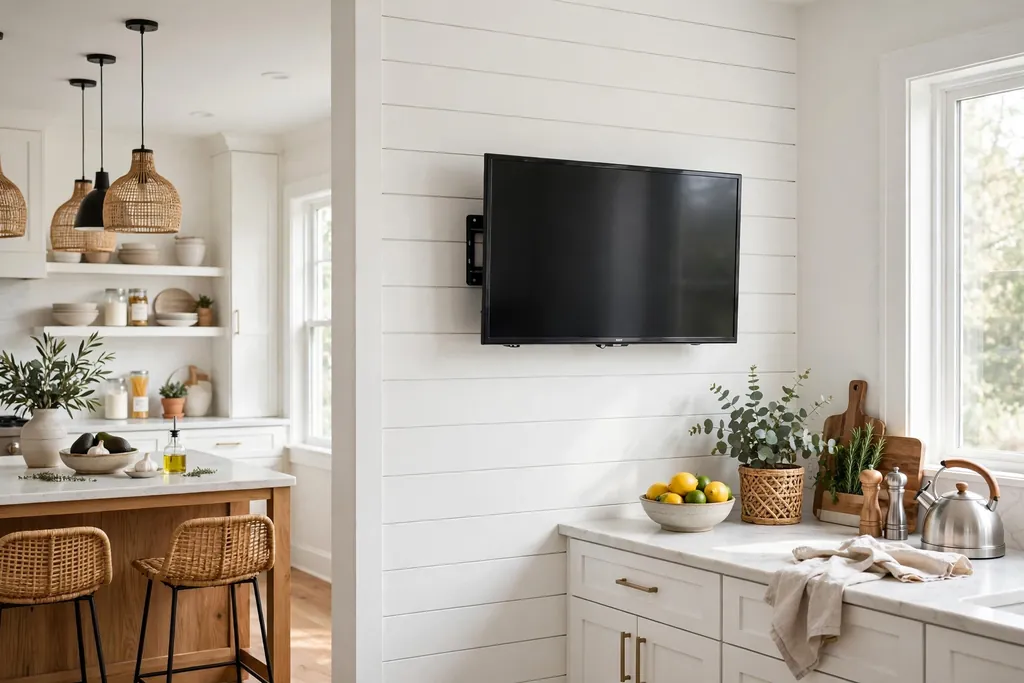
Horizontal shiplap boards give a kitchen TV wall a relaxed, cottage feel and add just enough texture to make the screen look at home. Paint the shiplap white, cream or a soft sage to keep the kitchen bright, and run the boards across the full TV wall rather than stopping just behind the screen. A full wall of shiplap looks planned, while a small patch behind the TV can look like an afterthought.
Fix the mount through the shiplap into studs, and use a paintable cable channel so wires blend with the boards. Keep the rest of the wall decor light, since shiplap already adds lines and shadow to the room. A single small wall light or a short shelf beside the TV is enough to finish the wall without crowding it.
13. TV Integrated Into the Upper Cabinet Run
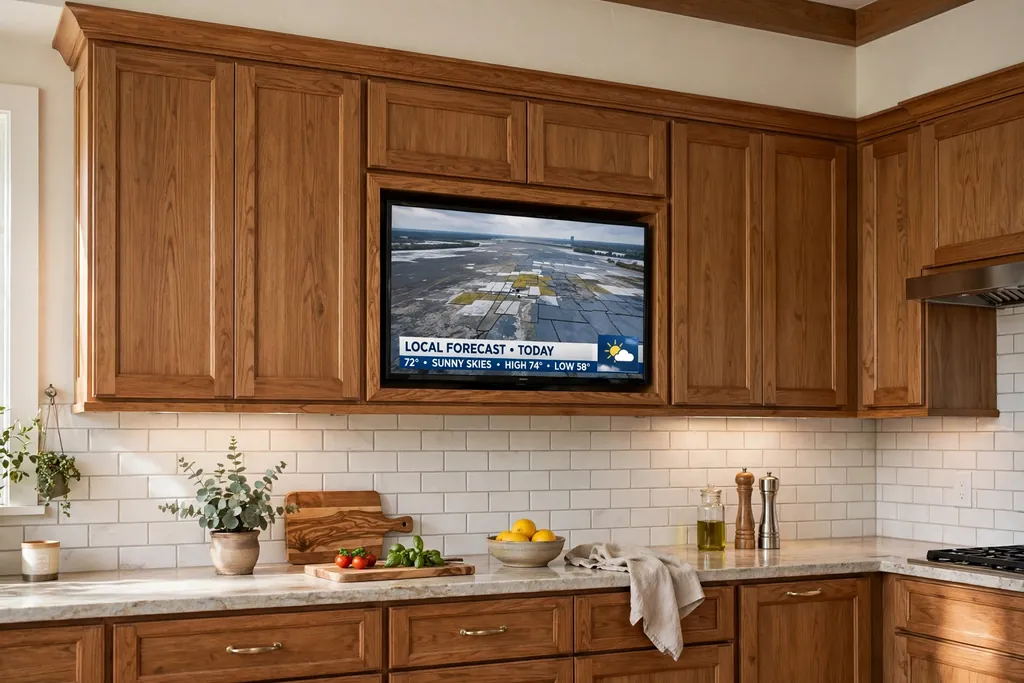
Building the TV into the upper cabinet run makes it look like part of the kitchen itself. The screen sits between two cabinet sections, or in a cabinet sized opening, with matching trim around it. This idea suits a kitchen renovation or a cabinet refresh, since the opening needs to fit the TV size and leave room for air flow and cable access.
Leave a removable back or access panel behind the TV so you can reach cables and the mount without removing cabinets. Match the trim to your cabinet doors, and keep the cabinet doors beside the TV free of handles that stick out toward the screen. If you plan to replace the TV later, size the opening for a common screen size rather than one exact model, so a new set still fits.
14. Dark Painted Accent Wall With Soft Lighting
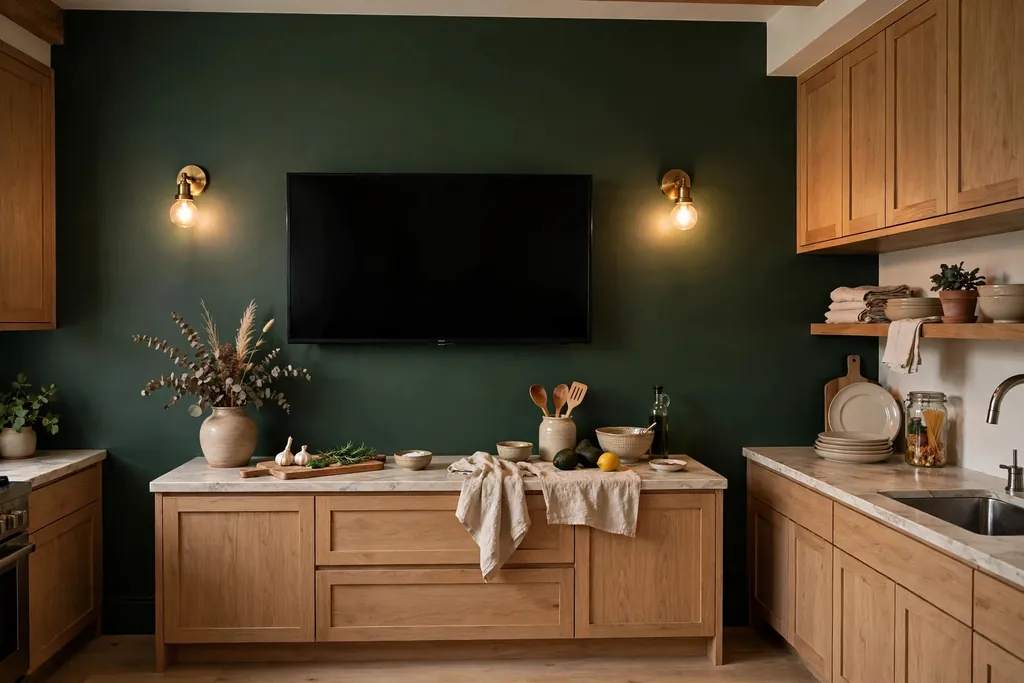
A dark painted accent wall helps a TV blend in, since the black screen edge disappears against a deep green, navy or charcoal wall. Soft wall lights or a picture light above the screen add warmth in the evening and stop the dark wall from feeling heavy. This idea suits a kitchen with good daylight or light cabinets, where one dark wall adds contrast without darkening the whole room.
Pick a paint color that works with your cabinets, and see our colors for your kitchen cabinets for pairings that keep the room balanced. Paint the full wall, not just the area behind the TV, so the accent looks intentional. Keep lighting warm and dimmable, and angle lights at the wall rather than at the screen, so you avoid glare on the picture.
Conclusion
The best kitchen TV wall is the one that fits how you actually use the room. A flush mount suits daily viewing, a hidden panel suits occasional use, and shelves or cabinets suit a kitchen that needs storage as well as a screen. Measure your seating distance, check glare at different times of day, and hide the cables before you finish. For seasonal styling around the wall, our fall kitchen decor ideas show how small swaps can refresh the space without moving the TV. Save this list, pick one idea to start with, and live with the setup for a week before adding more decor around it.
FAQs
Where is the best place to put a TV in a kitchen?
The best spot is the wall you face most while cooking or eating, with the screen at a comfortable height and clear of stove heat, steam and sink splashes. Test the view from your usual seats and from the main prep counter before fixing the mount, and check glare from windows in the morning and afternoon. A wall that serves both cooking and dining, such as a breakfast bar wall, often works better than a wall only one person faces.
How high should a kitchen TV be mounted?
Mount the TV so the middle of the screen sits near eye level from your main viewing seat, which usually means lower than people expect. If you watch mainly while standing at a counter, test the height while standing there too, and pick a middle ground if both spots matter. A tilt or swivel mount helps when one height cannot suit both seated and standing viewers.
How do I hide TV cables on a kitchen wall?
Use a paintable cable channel for a simple fix, run cables behind a shelf, panel or sideboard, or route them inside the wall if your wall type and local rules allow it. Keep cables away from heat sources and leave enough slack for a swivel or pull down mount to move fully. Label the cables at the outlet end so you can trace them later without pulling the TV off the wall.
Can a TV go above a stove or near a sink?
It is best to avoid placing a TV directly above a stove, where heat, steam and cooking grease can damage the set and make viewing uncomfortable. Near a sink, keep the TV clear of the main splash zone and choose a wall spot where water cannot reach the screen or the outlet. If space is tight, a side wall or a breakfast bar wall is usually a safer choice than a wall directly over heat or water.
What size TV works best in a kitchen?
A modest screen usually suits a kitchen better than a very large one, since viewing distance is short and a huge screen can dominate the wall. Measure the distance from your main seat to the wall, check that the TV fits its planned frame of shelves or cabinets, and leave space around it for air flow. If you are unsure, a smaller screen that fits the wall well looks more polished than a larger screen that crowds it.
How do I stop a kitchen TV looking out of place?
Give the screen a frame of shelves, panels, cabinets, tile or paint so it reads as part of the wall design. Hide the cables, keep the area around the TV tidy, and match the mount and trim to your kitchen finishes. When the TV is off, an art mode, a gallery frame or sliding panels can help the dark screen blend in instead of standing out.