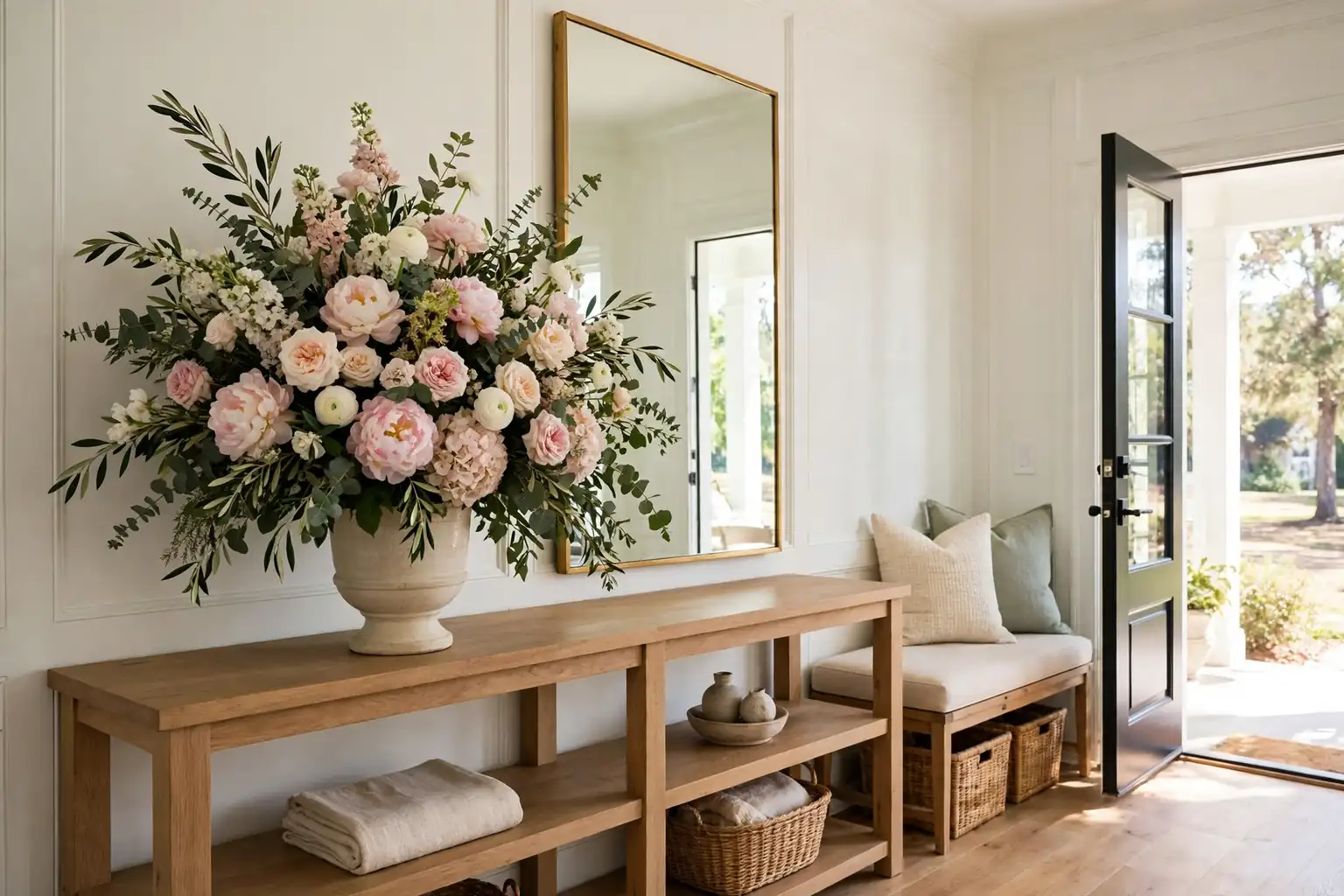
Large flower arrangements work best when the container, height, and placement match the spot: keep dining table displays low and wide so guests can see across, and give entryway displays height in a heavy, stable vase. Build around one focal bloom, add supporting stems at varied heights, and keep the palette to two or three colors for a planned look.
A large arrangement earns its size by filling a space that a small bouquet cannot. A wide console, a long dining table, or an empty entry corner all swallow a single bunch, while a full display with varied heights and a clear shape holds the eye from across the room. The ideas below cover both jobs: table displays that stay useful during a meal, and entryway displays that greet people at the door. For seasonal flower ideas to pair with these layouts, see these fall flower arrangements and these Thanksgiving flower arrangements.
Key Takeaways
- Match height to the spot: low and wide for dining tables, tall and grounded for entryways.
- Use a heavy, stable container for tall or wide arrangements, and set it on a tray or mat where water could mark the surface.
- Build around one focal bloom, add supporting blooms at varied heights, and finish with filler greens or branches.
- Keep the palette to two or three colors so a large display reads as one plan rather than a crowded mix.
- Check sightlines from a seat at the table and from the room door before you settle an arrangement.
- Give a large arrangement room to breathe: clear space around the container matters as much as the flowers in it.
- Fresh stems need water checks every two days; dried stems suit entryways that are rarely tended.
1. Low Wide Compote Bowl Centerpiece
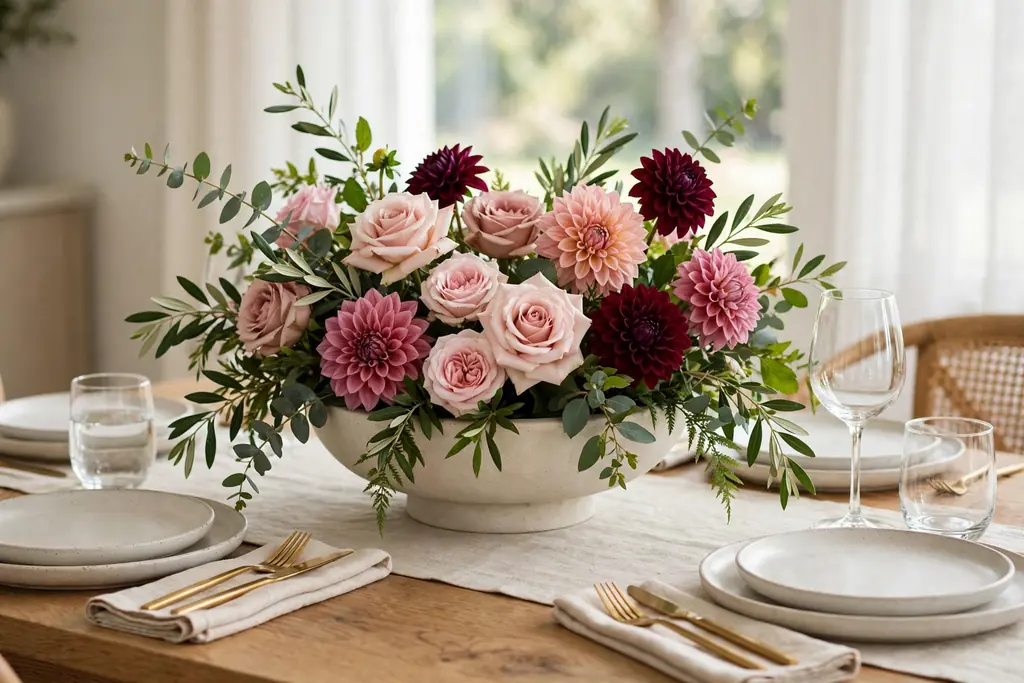
A low, wide compote bowl is the most useful large centerpiece for a dining table. The foot lifts the blooms just enough to read as a display, while the wide bowl holds plenty of stems without rising above eye level when seated. Fill it with a ring of greenery first, then set focal blooms such as roses, dahlias, or peonies in the center, and tuck smaller blooms around the edge so the shape stays round and full from every seat.
Keep the tallest stem below the seated eye line, and leave clear space at each place for plates and glasses. A compote bowl suits a round or square table best, since its round shape echoes the table. Check the water level before a meal, since a wide bowl holds a shallow pool that runs low faster than a tall vase.
2. Tall Floor Vase with Branches for the Entryway
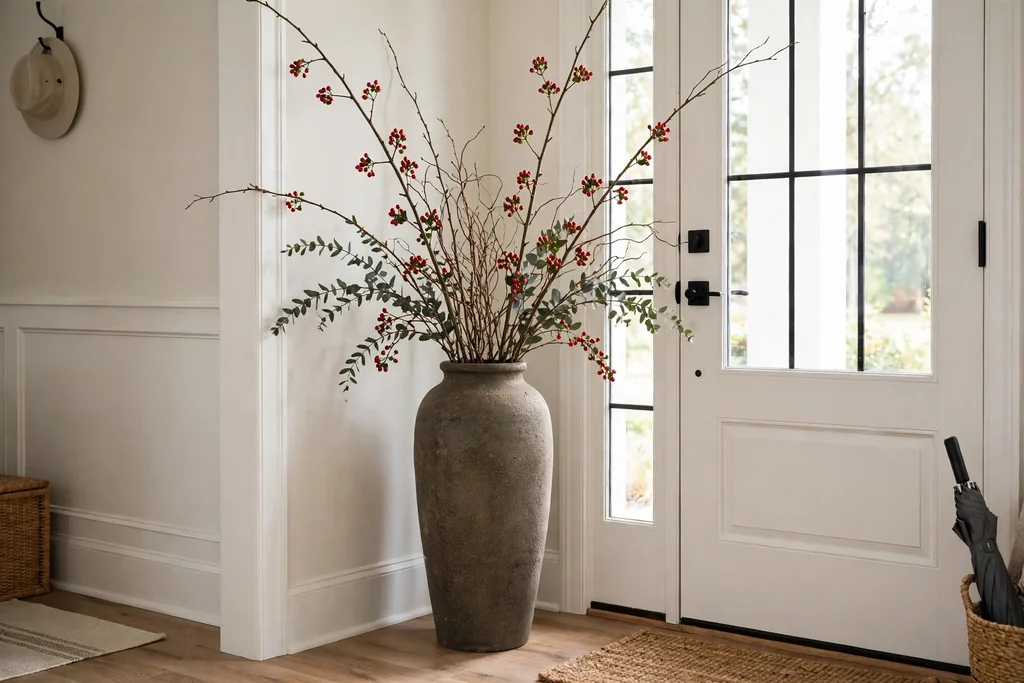
A tall floor vase with branches gives an entryway height without the weight and water needs of a huge bouquet. Place five to seven tall branches, such as birch, willow, or eucalyptus, in a heavy floor vase, and add a few stems of berries or dried grasses for color near the top. The branches draw the eye upward and fill a bare corner beside a door or bench.
The vase must be heavy enough that the branches cannot tip it when someone brushes past with a bag or a coat. Set it against a wall or in a corner rather than in the walking path, and trim branches so at least a hand width of clear space remains below the ceiling. Swap branches as they dry and drop leaves.
3. Ceramic Urn on a Console Table
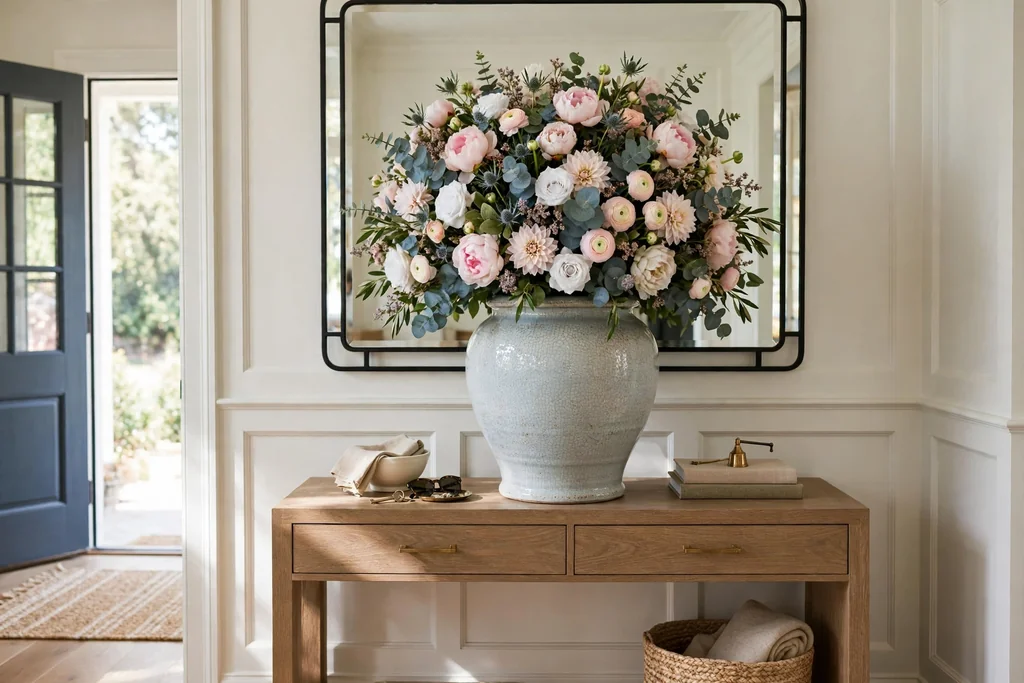
A large ceramic urn suits a console table in an entryway or living room because its solid shape anchors the surface. Choose an urn with a mouth wide enough for a full bunch, and build a domed shape: tall stems in the center, medium stems around them, and trailing greenery at the edge to soften the rim. The ceramic hides stems and water, so the blooms lead and the mechanics stay out of sight.
An urn also adds weight, which helps a console display survive bumps from keys and bags. Place the urn at one end of the console or in the center under a mirror, and leave room beside it for a tray or a small lamp. Wipe the outside dry after watering, since a wet urn can mark a wood console.
4. Long Low Trough for a Rectangular Table
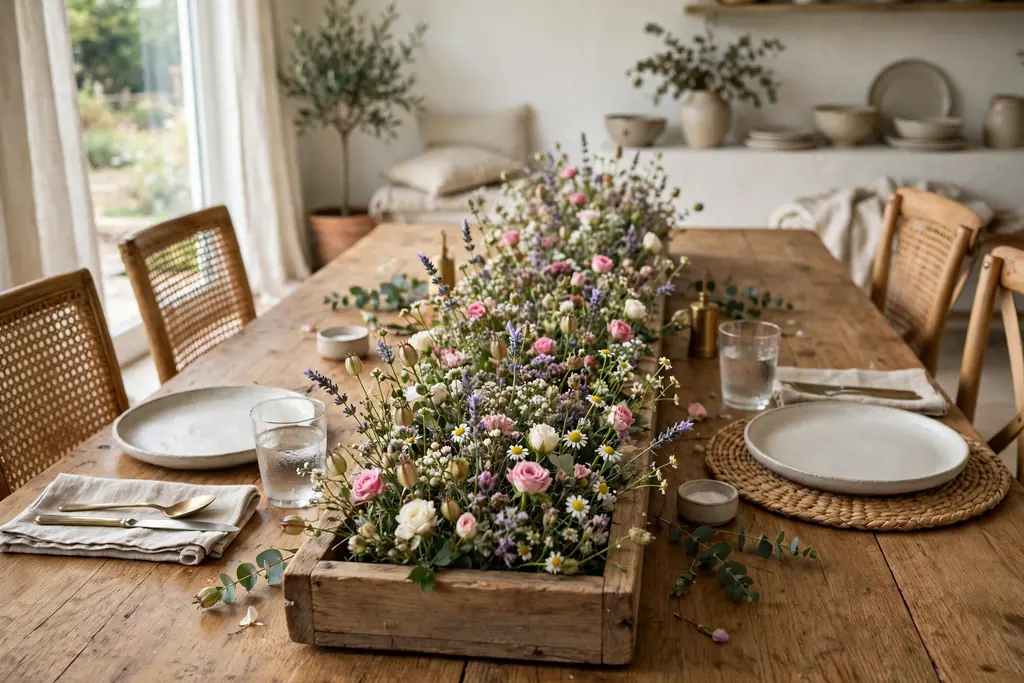
A long, low trough runs down the center of a rectangular table and keeps a large display from blocking conversation. Line a wooden or metal trough with small jars of water, then fill each jar with short stems so the whole trough reads as one continuous arrangement. Use one flower type repeated along the trough for a calm look, or repeat a small mixed bunch at intervals for a fuller effect.
Leave clear space at each end of the trough for serving dishes, and keep every stem below seated eye level. A trough suits a long table better than a single round bowl, since it follows the table shape and leaves room for plates on both sides. Lift the trough off in one move when you need the full surface for serving.
5. Three Matching Large Vases Down a Long Table
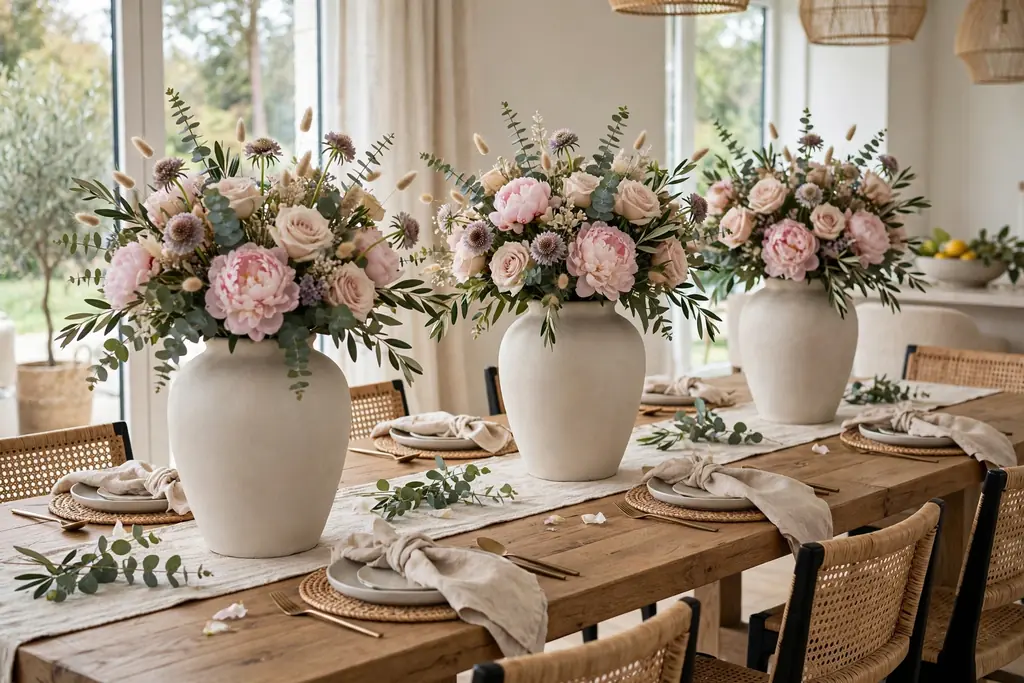
Three matching large vases repeat one arrangement along a long table instead of building one very wide centerpiece. Fill each vase with the same mix, such as roses, greenery, and one filler, and space the vases evenly down the center, with room between them for serving dishes and candles. The repeat gives a long table rhythm and lets guests see across between the vases.
This layout works for a table where a single huge display would crowd the food. Use vases of the same shape and color so the three read as one plan, and keep each vase narrow enough that plates still fit on both sides. When the meal ends, the vases can move to other rooms as separate displays.
6. Raised Pedestal Arrangement for an Entry Table
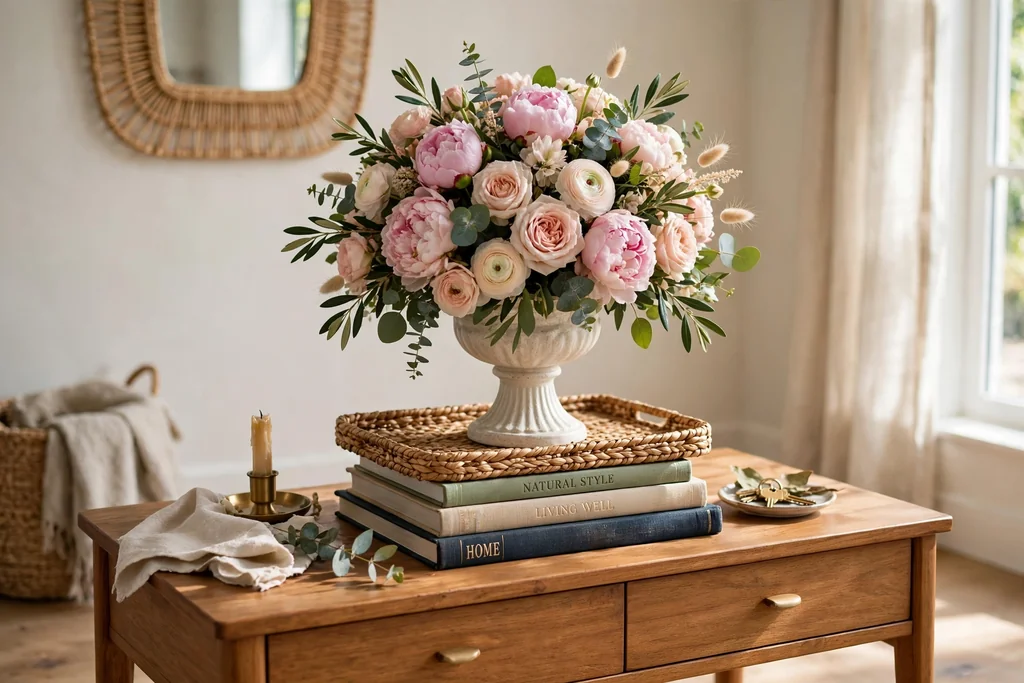
A raised pedestal arrangement lifts a large display above an entry table, which suits a table that already holds a tray, a lamp, or a stack of books. Set a footed stand or a tall, narrow pedestal vase on the table, and build a full, rounded shape on top, with blooms facing outward on all sides. The height makes the display visible from the door, even when the table surface is busy.
Check the total height against the mirror or artwork above the table, and leave clear space below it so the pedestal does not crowd the frame. A pedestal display needs a stable base, since the raised weight can tip more easily than a low bowl. Keep it near the wall side of the table, away from the path where coats and bags swing.
7. Large Clear Glass Cylinder with Layered Stems
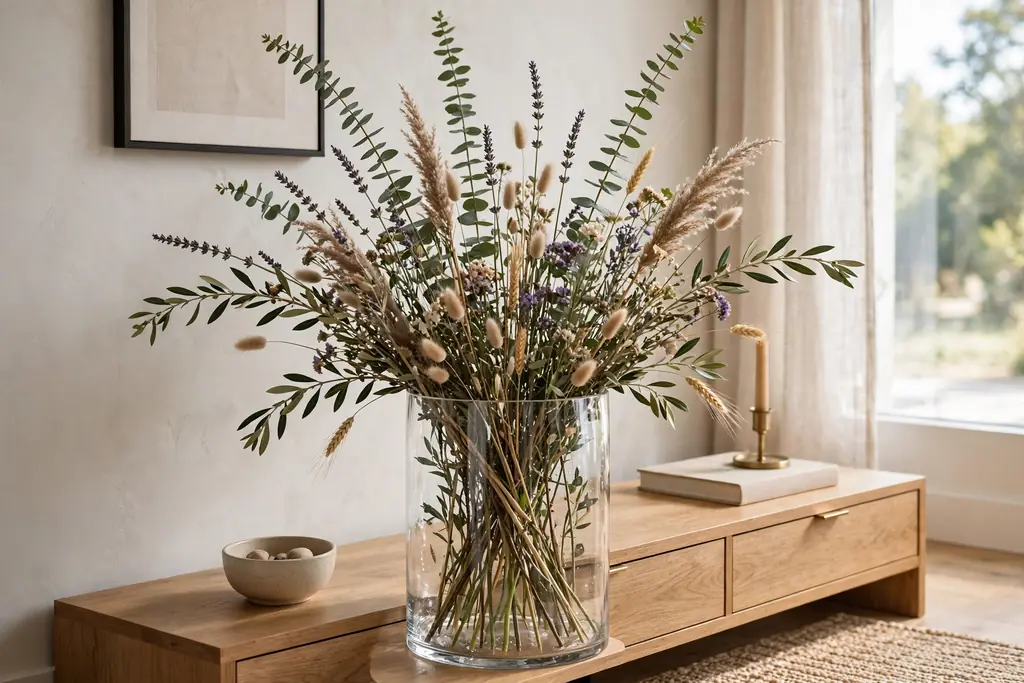
A large clear glass cylinder suits a modern table or console because the glass shows the stems and water as part of the display. Layer the stems by length: tall stems at the back, medium stems in the middle, and short blooms at the front, so the arrangement reads clearly through the glass from the side. Use one or two flower types in a limited palette, since the clear glass adds visual detail of its own.
Clear glass needs clean water and wiped sides to stay neat, since cloudy water shows at once. Change the water every two days and trim stems at an angle each time. Set the cylinder on a tray or mat, and keep it out of direct sun, which warms the water and shortens bloom life.
8. Woven Basket Arrangement Beside an Entryway Bench
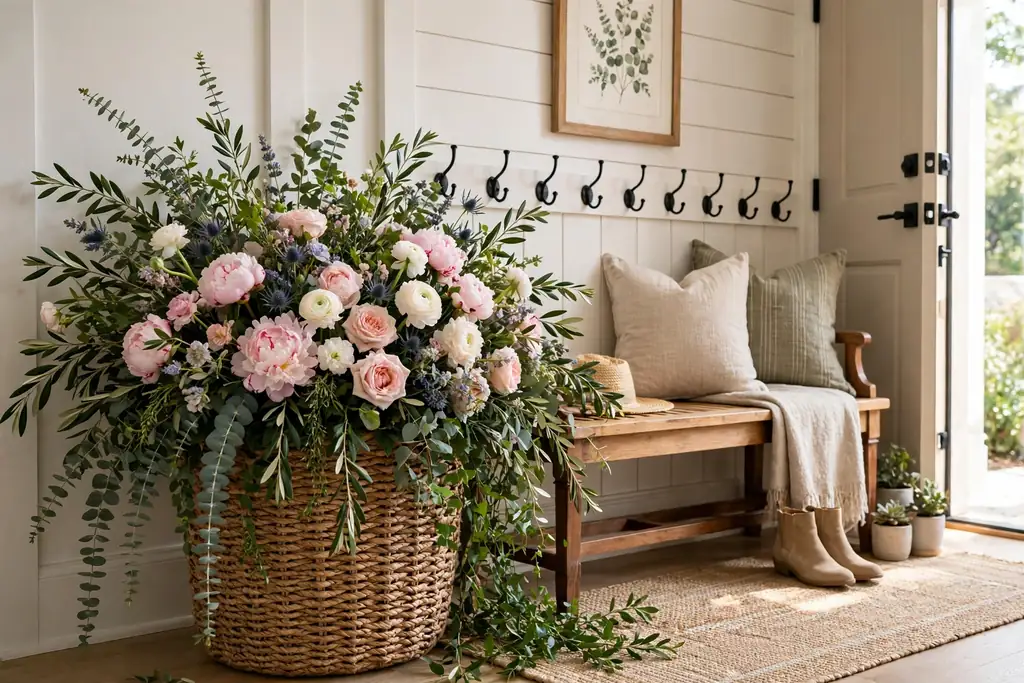
A large woven basket arrangement softens an entryway bench and gives a big display a relaxed, gathered feel. Line a wide basket with a waterproof tray, set a jar of water inside, and arrange full blooms such as dahlias or chrysanthemums with filler greens, letting a few stems spill over the basket edge. The basket shape suits a bench, a hearth side, or a hallway corner where a formal vase would feel stiff.
Check the water level often, since a basket hides the jar from view. Keep the basket low enough to see over from a standing position, and place a tray under it to catch dropped petals. When the fresh blooms fade, keep the basket and refill it with dried stems for a no-water version.
9. All-White Massed Hydrangea Bowl for a Formal Table
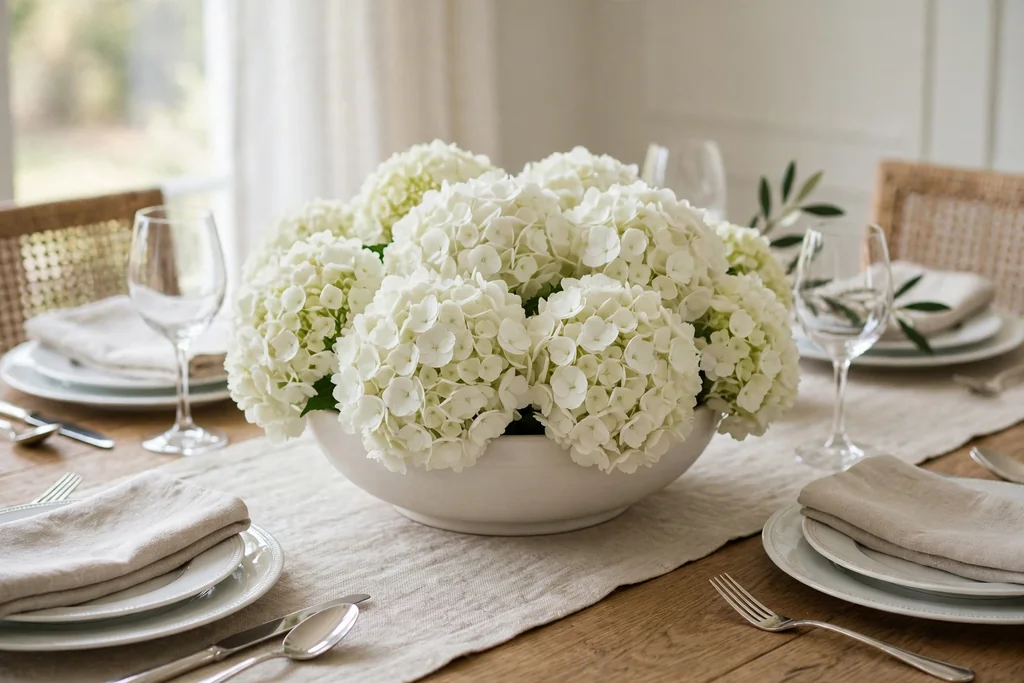
A massed hydrangea bowl uses one flower type in large numbers for a formal table display. Fill a low, wide bowl with hydrangea heads packed close together, so the surface reads as one cloud of white, and add only a little greenery at the base to hide the stems. The single-flower massing gives a large display a calm, formal look that suits white plates, linen napkins, and a dressed up meal.
Hydrangeas drink heavily, so check the water daily and mist the heads lightly if the room is dry. Keep the bowl low enough to see across the table, and set it on a charger or tray to protect the tablecloth. Replace any head that browns promptly, since one faded head stands out in a single-color display.
10. Asymmetric Garden-Style Arrangement for a Round Table
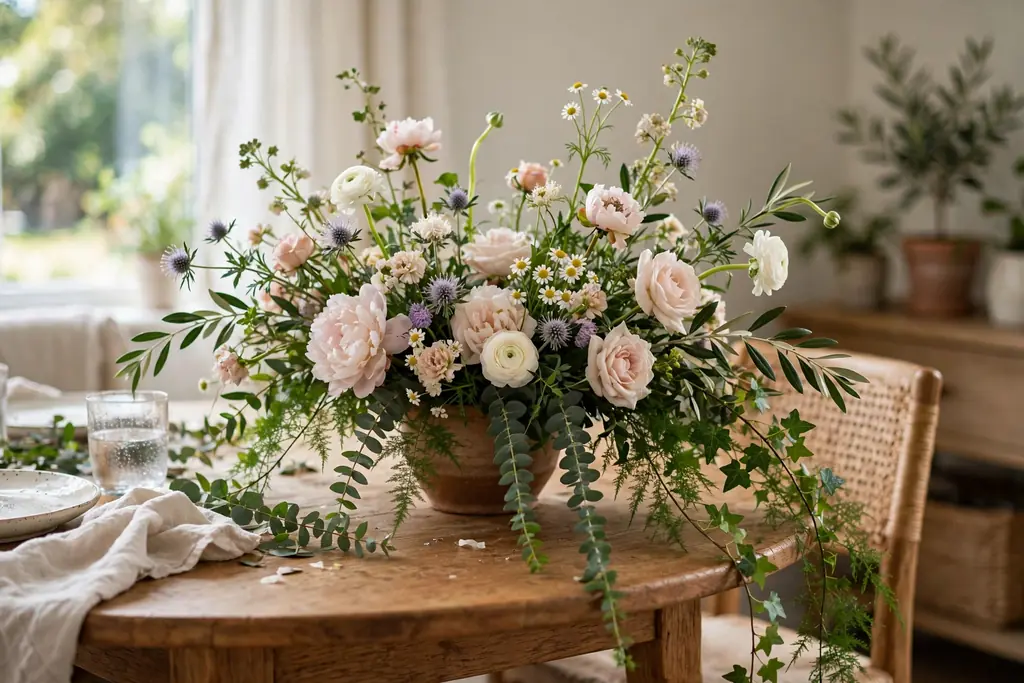
An asymmetric garden-style arrangement suits a round table, where a display is seen from all sides and a strict dome can look stiff. Build the shape with varied stem lengths and a relaxed outline: a tall focal stem leaning slightly to one side, supporting blooms at mixed heights, and trailing greenery that falls over the rim on one side only. The uneven shape keeps the eye moving around the table.
Use a plain ceramic or stoneware container so the loose shape, not the vase, carries the interest. Turn the arrangement as you build it, checking the shape from each seat, and trim any stem that blocks a view across the table. This style suits a casual gathering, where a formal centerpiece would feel too rigid.
11. Large Arrangement with Fruit and Branch Accents for a Console
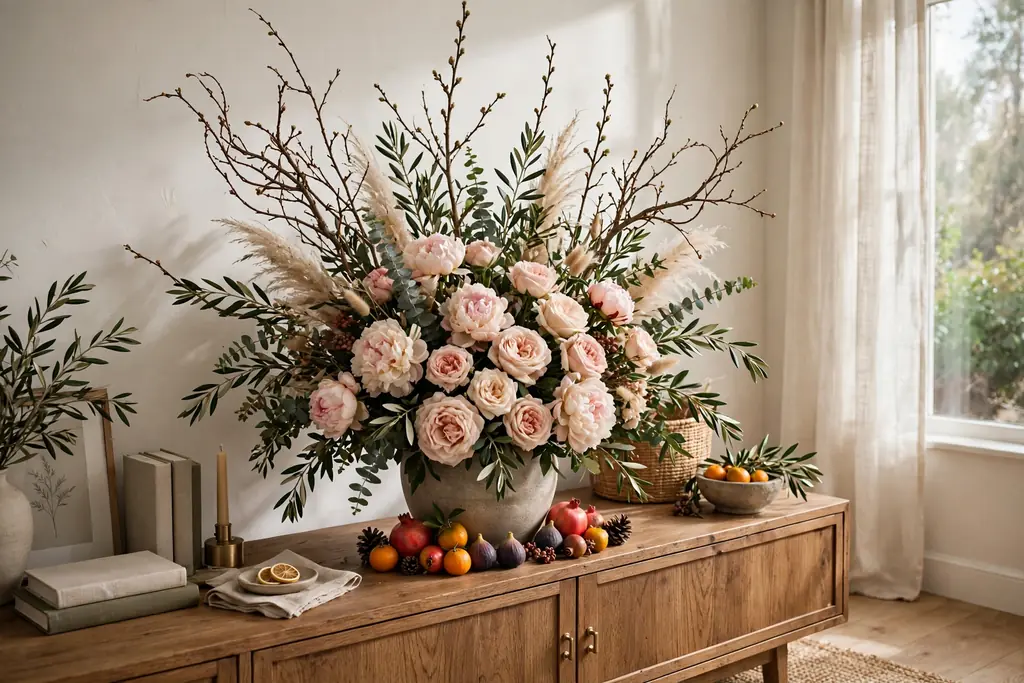
A large console arrangement with fruit and branch accents adds texture and a seasonal feel to an entryway or sideboard. Build a full base of blooms and greenery in a wide vase or urn, then tuck in a few branches with berries and two or three firm decorative fruits, such as small apples or lemons, placed where they can be seen but not hidden inside the blooms. The fruit gives the display weight at the base and a color link to the room.
Use decorative fruit only, and keep it separate from fruit that will be eaten, since it sits against wet stems and foliage. Anchor the branches so they cannot slip, and check the fruit often, removing any piece that softens. This arrangement suits a sideboard or buffet, where guests walk past it, better than a dining table, where fruit takes up serving space.
12. Dried Large Arrangement for a Low-Care Entryway
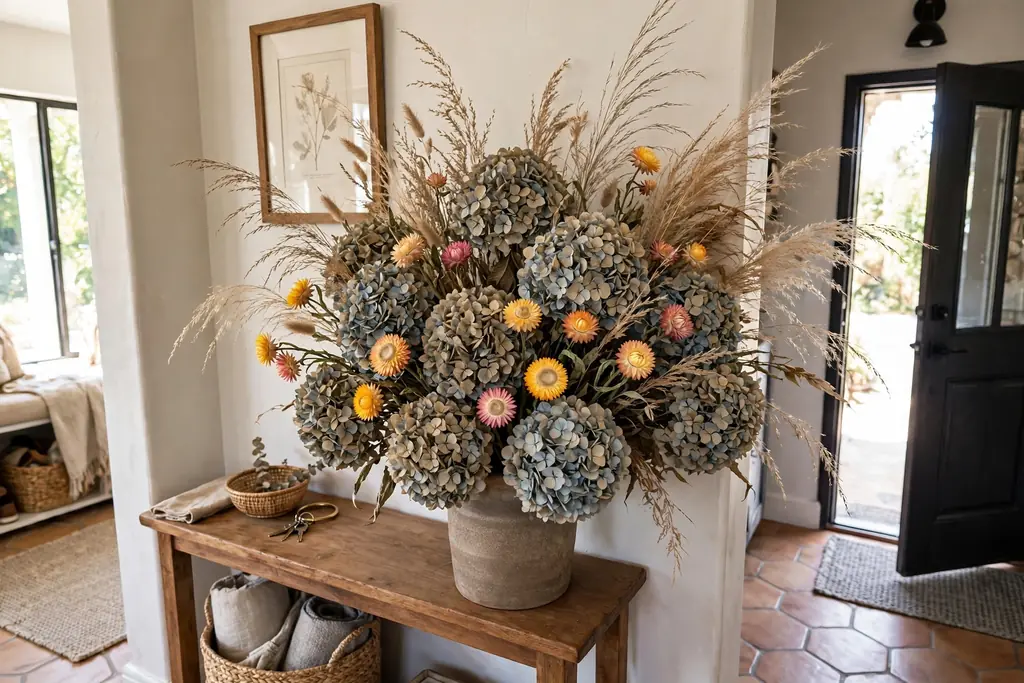
A large dried arrangement suits an entryway that is rarely tended, such as a guest room hall or a high shelf above a console. Combine dried hydrangea heads, grasses, wheat, and strawflowers in a dry vase with no water, building height with tall grasses at the back and full heads at the front. Dried stems hold their shape for months, so the display needs no watering and no stem trimming.
Keep dried arrangements out of damp rooms and away from open flames and strong heat, since dry material is flammable and damp air softens it. Dust the stems gently with a soft brush or a cool hair dryer now and then. When the season changes, store the arrangement in a box to protect it, and reuse the stems next year.
13. Stone Planter Arrangement for a Wide Entry Hall
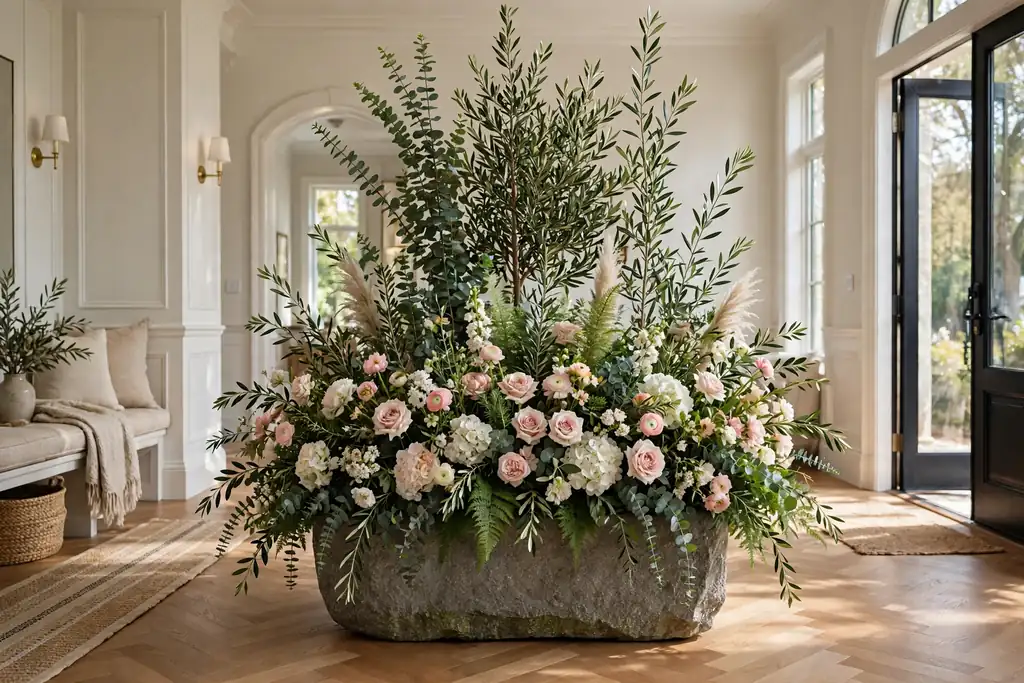
A large stone or concrete planter suits a wide entry hall, where a light vase would look lost against the scale of the space. Set a heavy planter on the floor or on a low stand, fill it with a wide, full arrangement of blooms and tall greenery, and let the shape spread outward to match the width of the hall. The weight and rough texture of stone ground the display and suit a hall with tile or wood floors.
A stone planter needs a waterproof liner or an inner jar, since stone can be porous and heavy to move once filled. Place it where it cannot be bumped by a door swing, and leave a clear walking path beside it. Water in place and empty any tray under the liner so the floor stays dry.
14. Paired Large Vases Flanking a Mirror
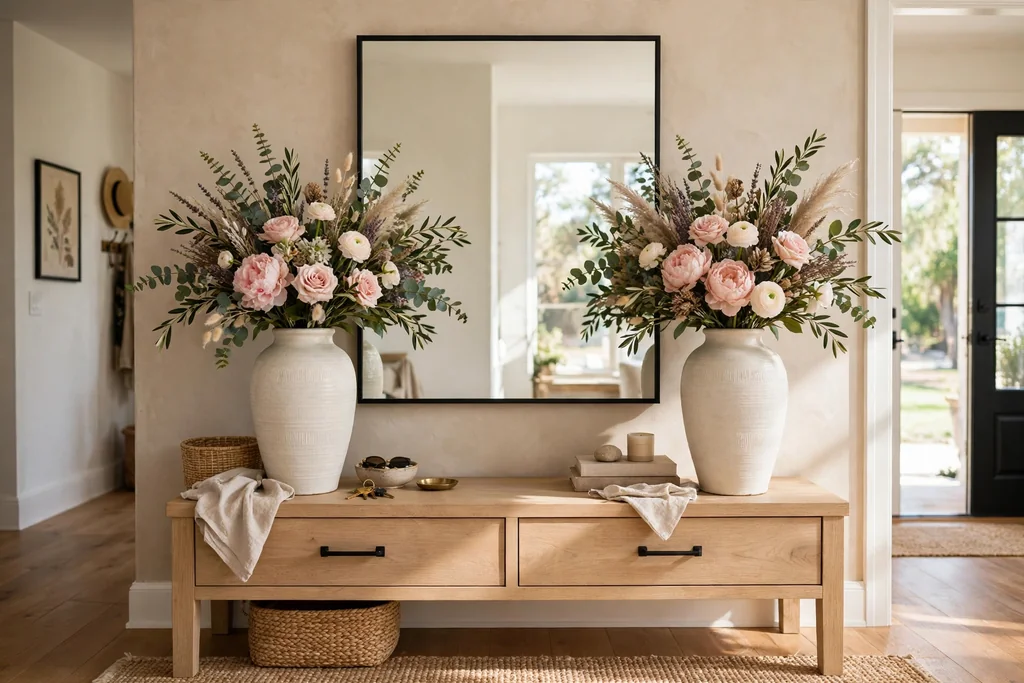
Paired large vases flanking a mirror frame an entryway console and give the wall a balanced, finished look. Place one large vase on each side of the console, fill both with the same flower mix and a similar height, and keep the mirror or artwork above clear between them. The pair reads as one display and makes a narrow console feel wider and more planned.
Match the two vases in shape and color, and build both arrangements to a similar height and fullness, so neither side looks heavier than the other. Leave room in the center of the console for a tray or a small lamp, and check the pair from the room door, where the symmetry first shows. This layout suits a console under a mirror better than a dining table, where a pair would crowd the center.
15. Tall Centerpiece with Low Satellite Posies
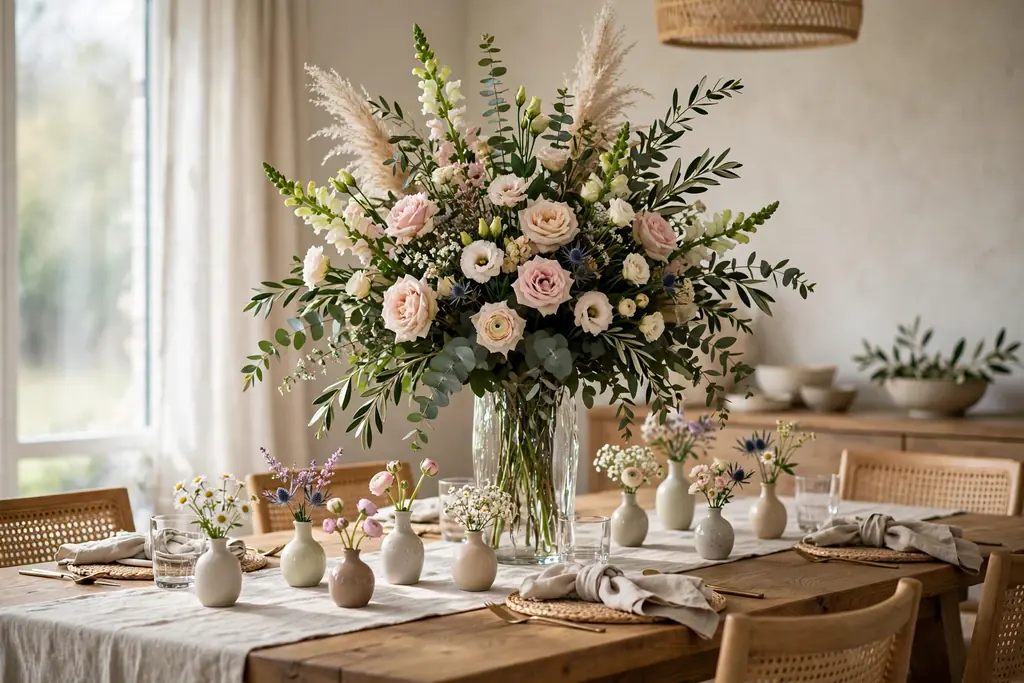
A tall centerpiece with low satellite posies gives a large table both height and table-level detail. Build one tall, full arrangement in the center of the table, then place small posies in bud vases or short jars at intervals around it, using the same flowers in smaller numbers. The tall center draws the eye, while the low posies fill the table without blocking views.
This layout works best on a large round or long table, where the center arrangement alone would leave the ends bare. Keep the satellites low, below seated eye level, and leave clear space at each place setting. Guests can take a posy home at the end of a gathering, which makes the layout do double duty as a small favor.
16. Large Kitchen Island Arrangement Seen from All Sides
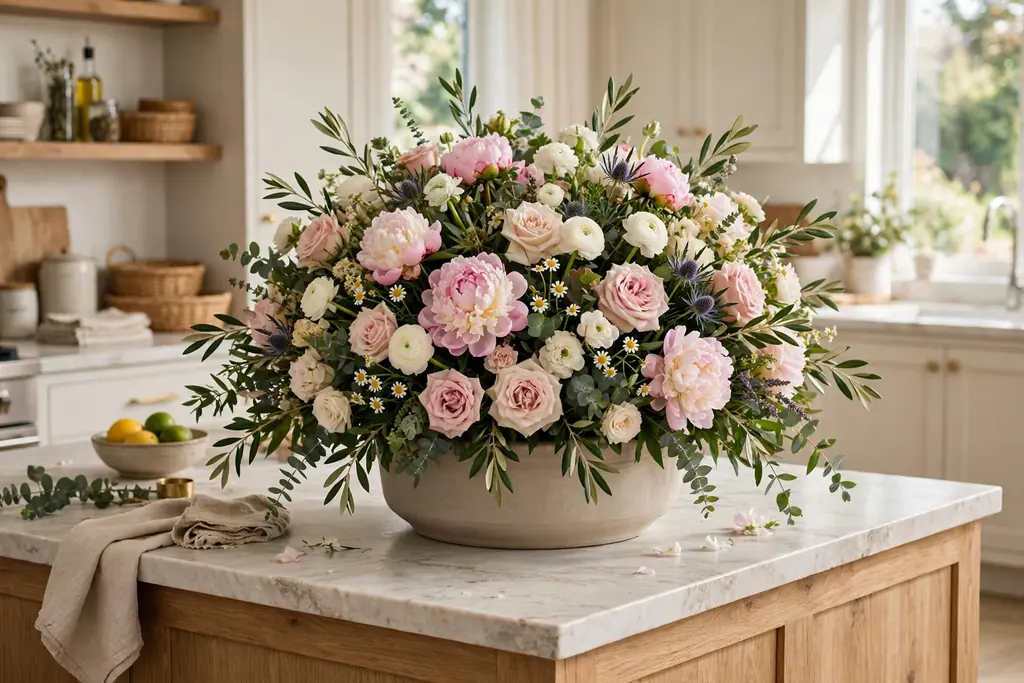
A large kitchen island arrangement must look full from every side, since an island is walked around rather than sat across from. Build a rounded shape in a wide, stable container, with focal blooms spread around the whole arrangement, not grouped on one face, and trailing greenery at the edge all the way around. Turn the container as you build it, and check the shape from each side of the island.
Keep the height low enough that cooks can see across the island while working, and leave clear counter space on at least one side for prep and serving. A heavy container matters here, since an island gets bumped often. Set the arrangement on a tray so it can slide aside in one move when the full counter is needed.
17. Large Corner Arrangement that Anchors an Entryway
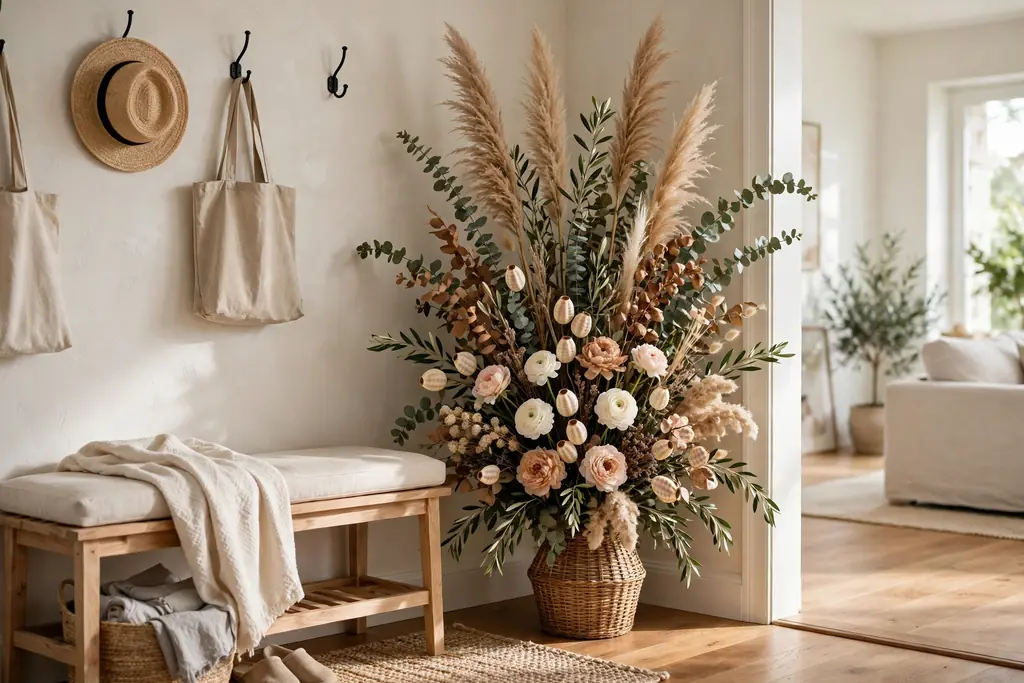
A large corner arrangement anchors an entryway where a bare corner meets two walls and a plain console would leave the space empty. Place a tall, wide container in the corner itself, angled so the fullest face points into the room, and build a shape that spreads toward both walls: tall stems at the back near the corner, medium blooms in the middle, and lower stems spilling forward. The corner gives the arrangement support on two sides and keeps it out of the walking path.
Trim stems so the tallest point leaves clear space below the ceiling, and keep the front of the display low enough to see over from the door. A corner arrangement suits a hall with no console, or a corner beside a bench where a table would crowd the path. Check it from the front door, where guests first see it, and shift a stem if one side looks heavier than the other.
Conclusion
Large flower arrangements work when the container, height, and placement fit the spot. Keep dining table displays low and wide, give entryway displays height in a heavy, stable vase, and build around one focal bloom with supporting stems at varied heights. Choose a layout from the ideas above that matches your table shape and your entryway, test it from the views people will actually have, and keep fresh stems watered and dried stems dusted. A large display built this way fills a room without crowding it, and it holds its shape from the door to the table.
FAQs
How large should a flower arrangement be for a dining table?
Start with the table size: a large dining table suits a display about one third of the table length, kept low enough to see across when seated. A low, wide bowl or a long trough usually fits better than one tall vase, since it fills the center without blocking conversation or crowding plates.
What container is best for a large flower arrangement?
Use a heavy, stable container that matches the display: a low compote bowl or trough for a table, and a tall urn, floor vase, or stone planter for an entryway. The container should hold enough water for fresh stems, or hold a jar inside, and it should sit on a tray or mat where water could mark the surface.
How do I keep a large arrangement from looking crowded?
Limit the palette to two or three colors, build around one focal bloom, and leave space between stems so each bloom can be seen. Step back and check the shape from the distance it will usually be seen, then remove or trim any stem that makes one side look heavier than the other.
Can I use a large flower arrangement in a small entryway?
Yes, but choose height over width in a small entryway, so the display fills the vertical space without blocking the path. A tall, narrow vase with branches against a wall works better than a wide bowl, and a corner placement keeps the arrangement out of the way of coats and bags.
How often should I change the water in a large fresh arrangement?
Change the water every two days, trim stems at an angle each time, and remove leaves below the waterline. Wide, shallow containers run low faster than tall vases, so check the water level daily for low bowls and troughs, and top it up before a meal or a gathering.
Do large dried arrangements last longer than fresh ones?
Yes, dried arrangements last for months with no water, which makes them a good choice for entryways that are rarely tended. Keep them out of damp rooms and away from open flames, dust them gently now and then, and store them in a box between seasons to protect the stems.