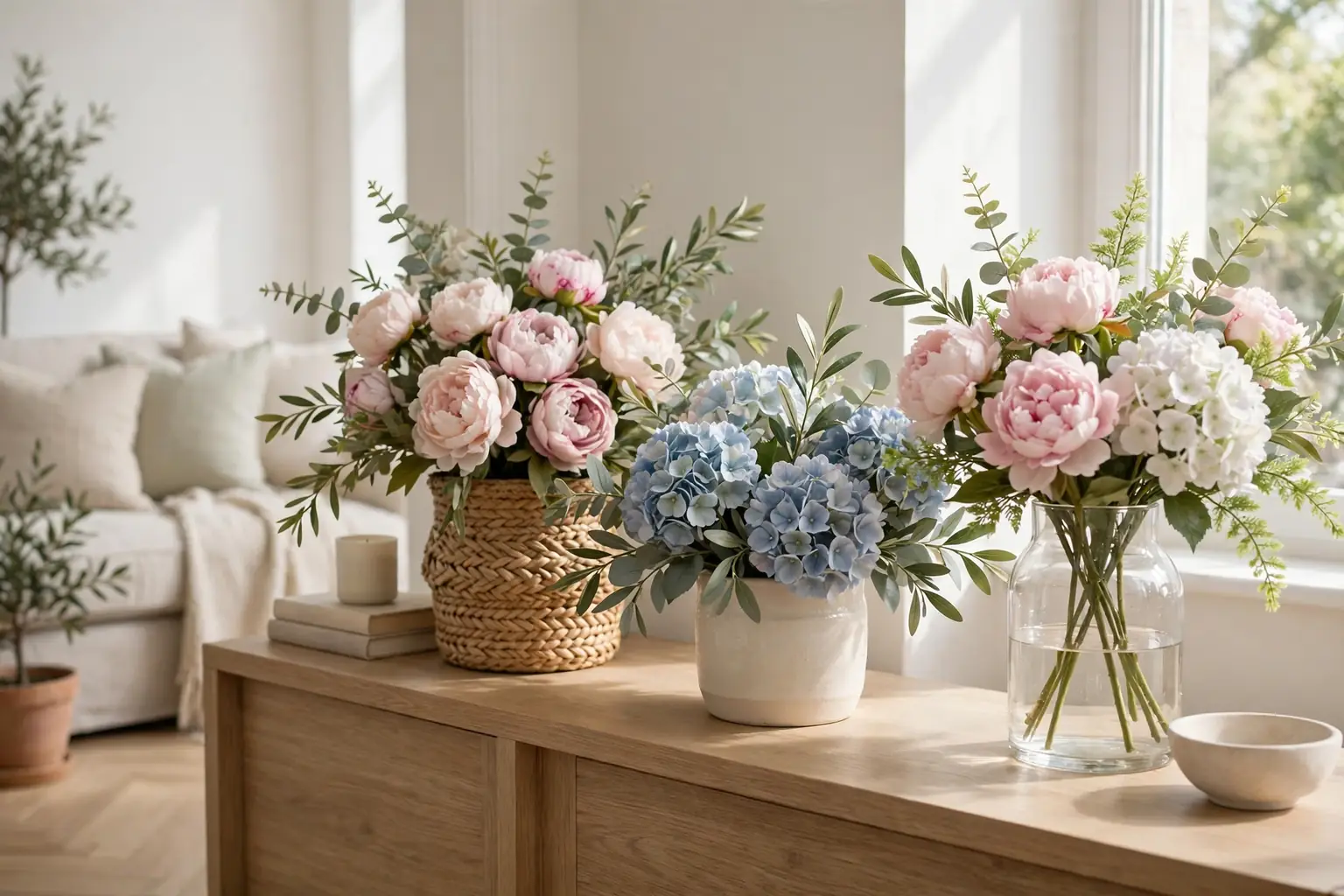
Artificial flower arrangements look natural when you choose realistic stems with varied petal shapes, mix bloom sizes with greenery, and set them in a container that fits the spot. Bend stems to different heights, keep the palette to two or three colors, and leave space between blooms so the shape reads as a loose bunch, not a stiff bundle.
The difference between a convincing arrangement and one that looks flat usually comes down to a few small choices. Real flowers are never perfectly even, so a good faux arrangement should not be either. Vary the stem heights, turn some blooms to the side, add a few leaves and filler stems, and check the shape from across the room, not just up close. For seasonal color ideas to pair with these arrangements, see these fall flower arrangements and these artificial fall flower arrangements.
Key Takeaways
- Choose realistic stems first: varied petal shapes, soft colors, and flexible stems that bend without creasing.
- Mix bloom sizes with greenery and filler, so the arrangement has depth instead of one flat layer of color.
- Bend stems to different heights and turn some blooms sideways, the way real flowers grow.
- Keep the palette to two or three colors, and repeat one color in the room for a planned look.
- Match the container and the total height to the spot: low for a dining table, tall for a corner, small for a desk.
- Dust stems now and then, keep faux flowers out of direct sun, and store them upright so they hold their shape.
- One set of stems can serve several displays if you swap containers and filler with the seasons.
1. Real Touch Peonies in a Ceramic Vase
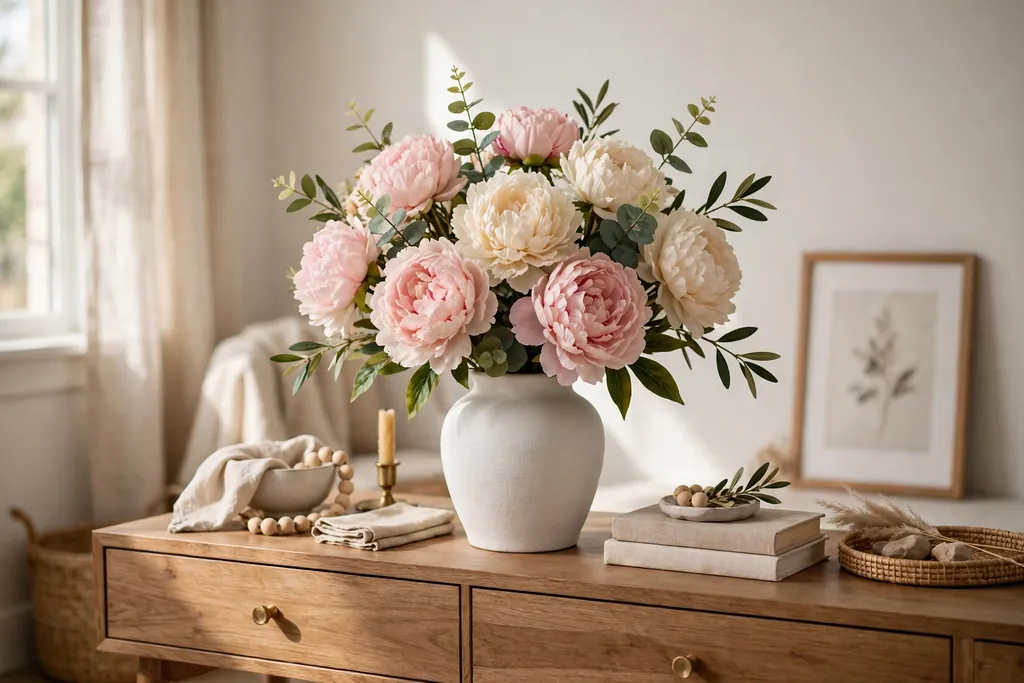
Real touch peonies are the easiest way to start, because their layered petals and soft colors already read as real from a normal viewing distance. Choose five to seven stems in blush, cream, or soft pink, add two or three leafy stems, and set them in a mid height ceramic vase in white, cream, or sage. The solid vase hides the stem ends and grounds the soft blooms.
Trim the stems so the tallest bloom sits about one and a half times the vase height, then bend the outer stems slightly outward for a rounded shape. Turn the vase as you build, and check it from the side guests will see most. Place it on a living room console, a sideboard, or a coffee table where it can be enjoyed up close.
2. Wildflower Mix in a Glass Pitcher
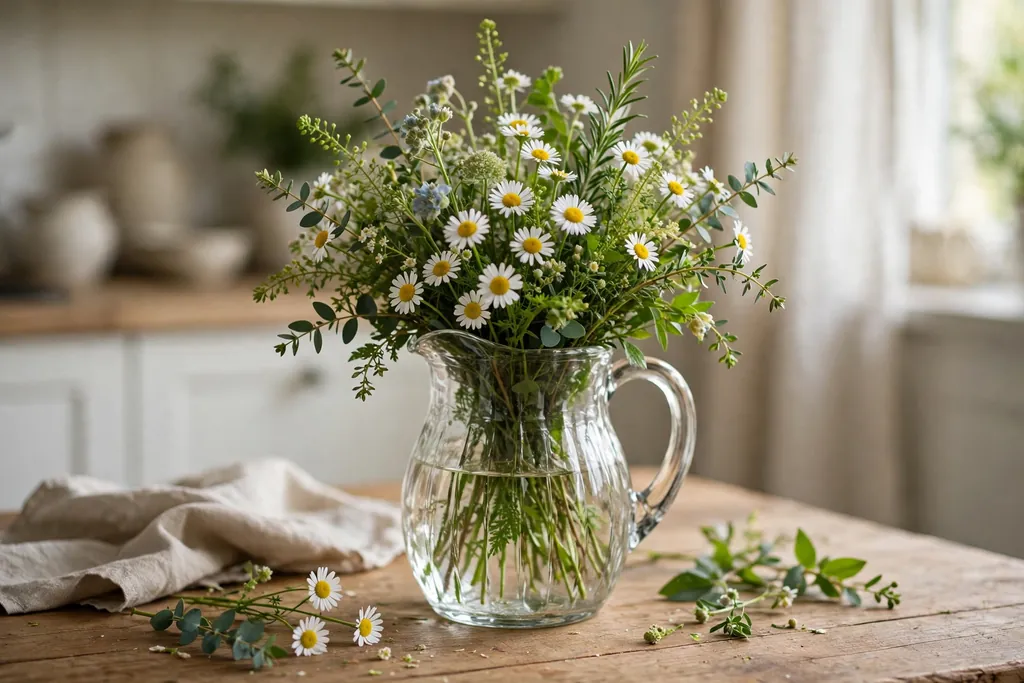
A wildflower mix in a glass pitcher suits a kitchen table or an open shelf, where a relaxed bunch feels right. Combine small faux daisies, cosmos style blooms, and a few sprigs of greenery in cream, pale yellow, and dusty pink, and stand them in a clear glass pitcher. The pitcher shape gathers the stems without forcing them into a tight dome.
Keep the stems loose and uneven, with a few taller stems rising above the rest. Glass shows the stems, so trim them cleanly and remove any loose leaves inside the pitcher. This arrangement lifts away in one move when the table is needed, and it pairs well with wood tables and simple tableware.
3. Single Orchid Stem in a Tall Slim Vase
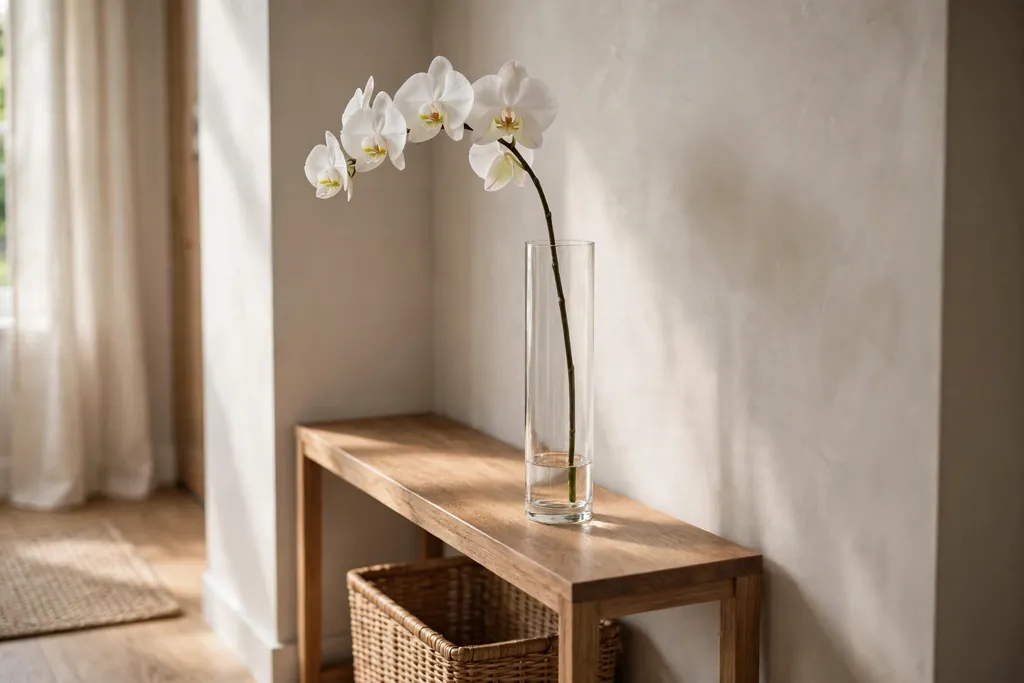
A single orchid stem is the most restrained arrangement in this list, and it works where a full bouquet would crowd the spot. Choose one realistic phalaenopsis style stem with several open blooms and a couple of buds, and stand it in a tall, slim vase in clear glass or white ceramic. A single stem needs no filler, and adding more would weaken the clean look.
Set the vase on an entryway console, a bathroom shelf, or a narrow hallway table, where its height draws the eye without taking up much depth. Keep the stem upright and slightly curved, as a real orchid grows, and dust the blooms gently now and then. If the stem leans, add a small stone or a short piece of foam inside the vase to hold it steady.
4. Low Trough of Eucalyptus and White Roses
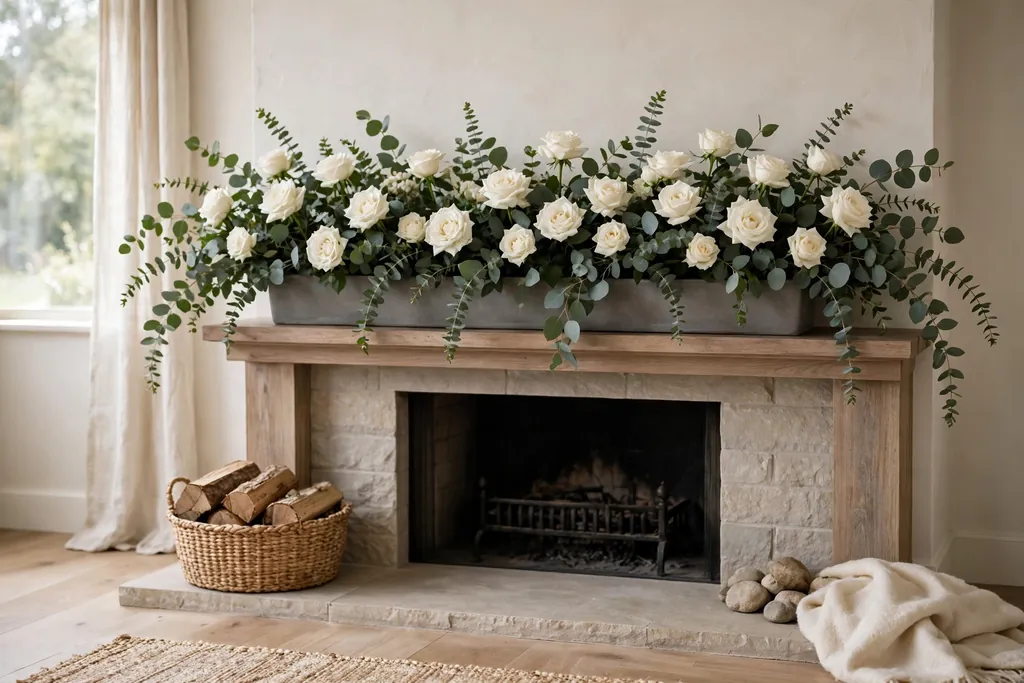
A long, low trough of eucalyptus and white roses suits a mantel, a sideboard, or a long console, where a round bouquet would leave the ends bare. Lay a strip of floral foam along a wood or ceramic trough, then set short white rose stems along it, with eucalyptus sprigs between them and a few stems trailing slightly over the ends.
Keep the total height low so the trough does not block a mirror or artwork above the mantel. This shape also works as a dining table runner when the trough is short enough to leave room for plates. For table arrangements that need to stay low for conversation, see these Thanksgiving flower arrangements.
5. Hydrangeas in a Woven Basket
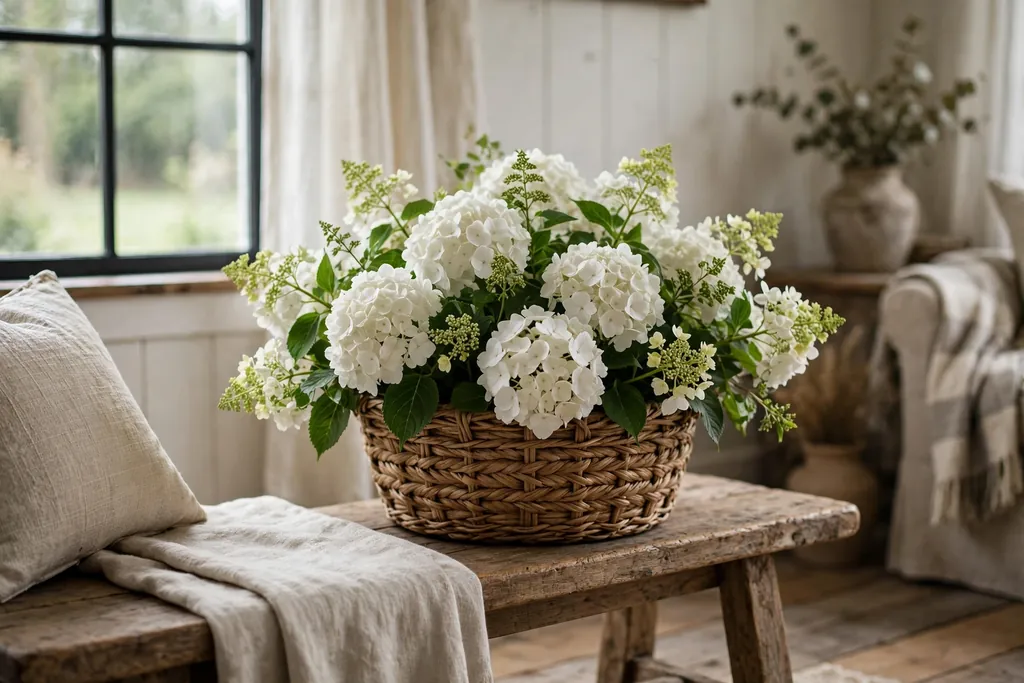
Hydrangeas in a woven basket give a farmhouse living room a full, gathered look without a formal vase. Fill a basket with three to five large faux hydrangea heads in white, pale blue, or dusty pink, add a few leafy stems to fill gaps, and set the basket on a bench, a side table, or the floor beside a fireplace. The basket hides foam and stem ends well.
Choose a basket with a sturdy base so the wide hydrangea heads cannot tip it forward, and set a mat underneath if the basket sits on a wood surface. This arrangement suits rooms with wood furniture and linen fabrics, and it can move from a living room to a bedroom in seconds when you want a change.
6. Tulips in a Clear Cylinder With a Faux Water Line
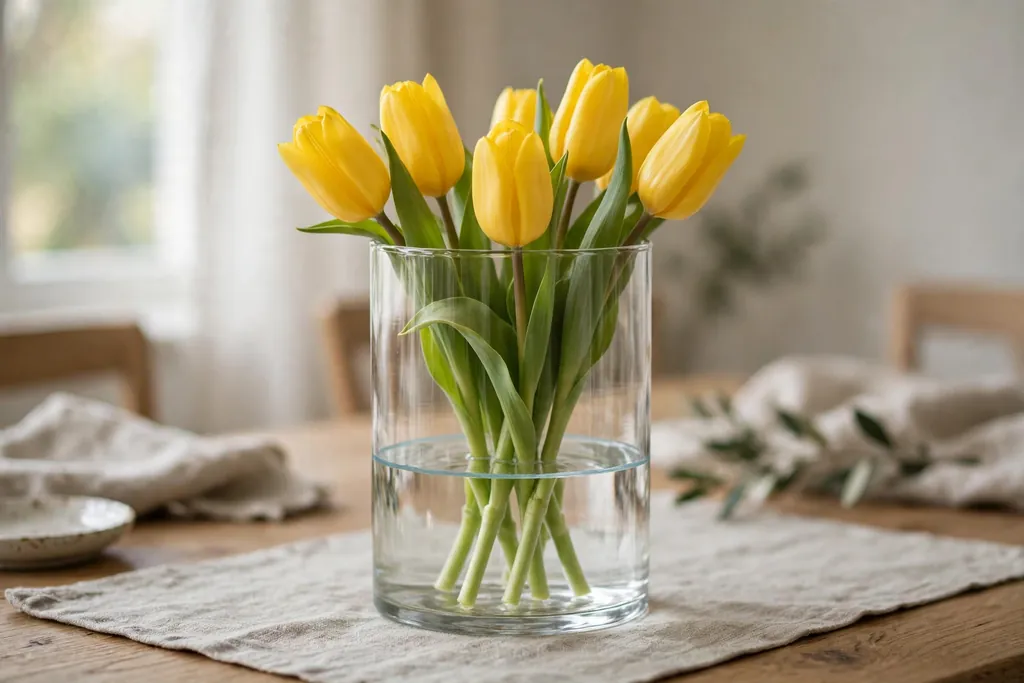
Tulips in a clear cylinder look most convincing when the stems appear to stand in water, even though no water is needed. Choose a straight sided glass cylinder, add a short inner layer of clear gel beads or a clear acrylic disc near the base, and stand six to nine faux tulips in it so the stems pass through that layer. The effect reads as fresh cut stems in water from across the room.
Keep the tulip colors simple, such as all white, all soft yellow, or a mix of pink and white, and let the stems lean slightly in different directions. Set the cylinder on a dining table, a console, or a windowsill in indirect light, since strong sun can fade faux petals over time. Wipe the glass now and then, since fingerprints show more on clear cylinders than on ceramic.
7. Sunflowers in a Galvanized Bucket for the Porch
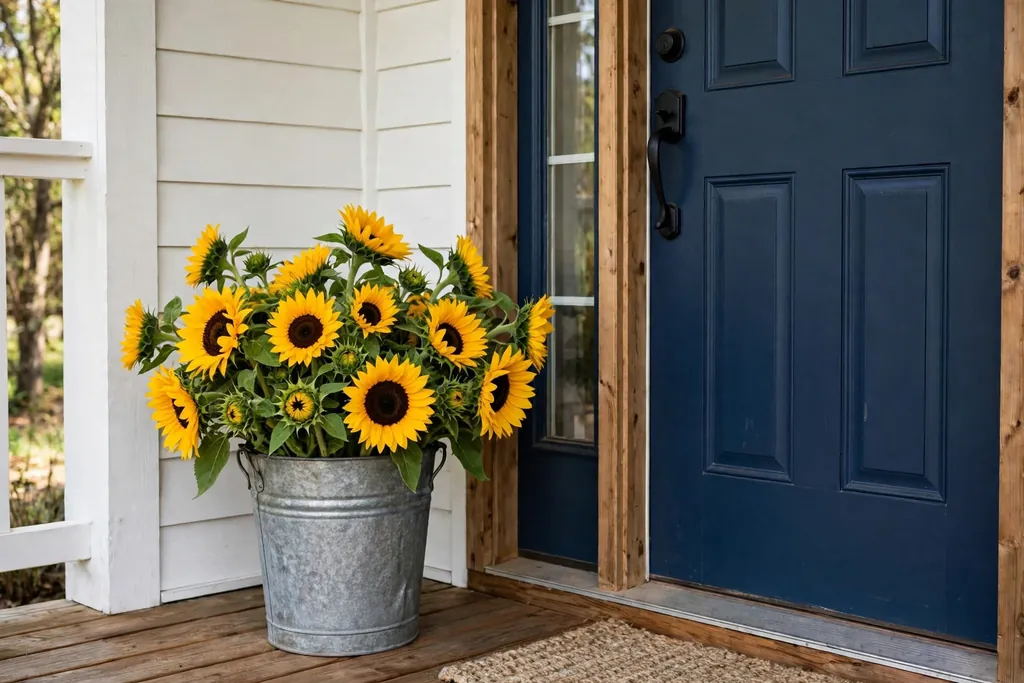
Sunflowers in a galvanized bucket bring artificial flower arrangements outside, where fresh blooms fade fast in sun and wind. Fill a galvanized bucket with tall faux sunflowers, add a few wheat stems and leafy branches for fullness, and weight the base with stones so wind does not tip it. Set the bucket beside a front door or on a porch step.
Choose stems suited to outdoor use where possible, and bring the bucket under cover in heavy rain or strong wind to keep the blooms in shape. A metal bucket suits farmhouse, rustic, and cottage porches, and it pairs well with a plain doormat and a wooden bench. Check the stems after storms and replace any that have faded badly.
8. Lavender Bundles in Terracotta Pots Along a Windowsill
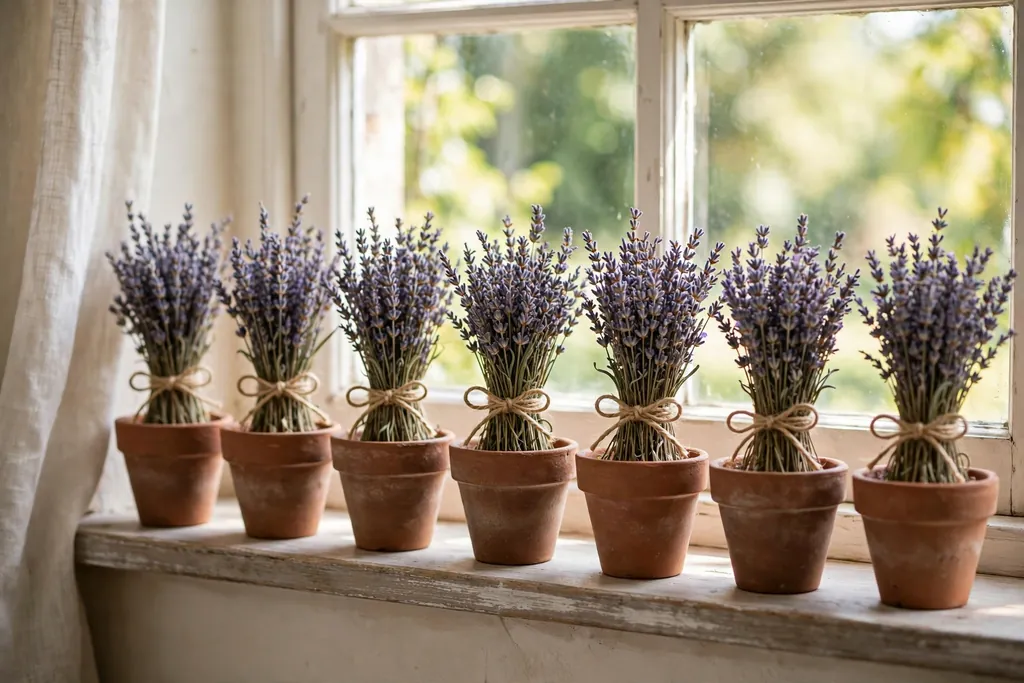
Lavender bundles in terracotta pots suit a windowsill, a kitchen shelf, or a bathroom ledge, where a large bouquet would crowd the space. Fill three small terracotta pots with short faux lavender bundles, one bundle per pot, and line them along the sill with small gaps between them. Add a few green stems to each pot so the lavender looks rooted rather than stuck in place.
Terracotta warms up a white or pale windowsill, and the small scale suits rooms where fresh flowers would struggle with steam or low light. Set each pot on a small saucer to protect the sill, and keep the pots clear of window handles and curtains. This row also works on a narrow mantel, where three small pots read as one display.
9. White Lilies in a Tall Floor Vase for a Corner
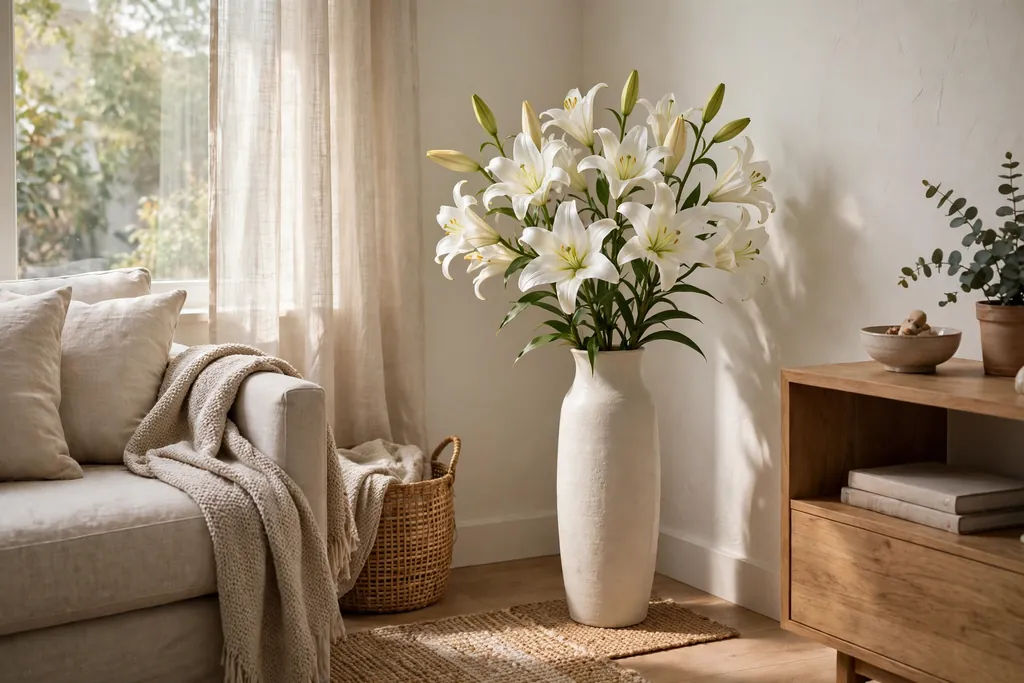
White lilies in a tall floor vase give a bare corner height and a clean focal point without a table. Choose a heavy floor vase that will not tip, then add five to seven long faux lily stems with a few leafy branches for width. Keep the total height below door frames and light fixtures, and place the vase where it will not be brushed by bags or coats.
Keep the palette quiet, white lilies with green leaves, since height alone makes this arrangement a focal point. Skip small filler pieces that would get lost at this scale, and dust the stems with a dry cloth now and then. Straighten any bent stems after moving the vase, and step back to check the shape from the seating area.
10. Roses and Ranunculus in a Low Gold Compote
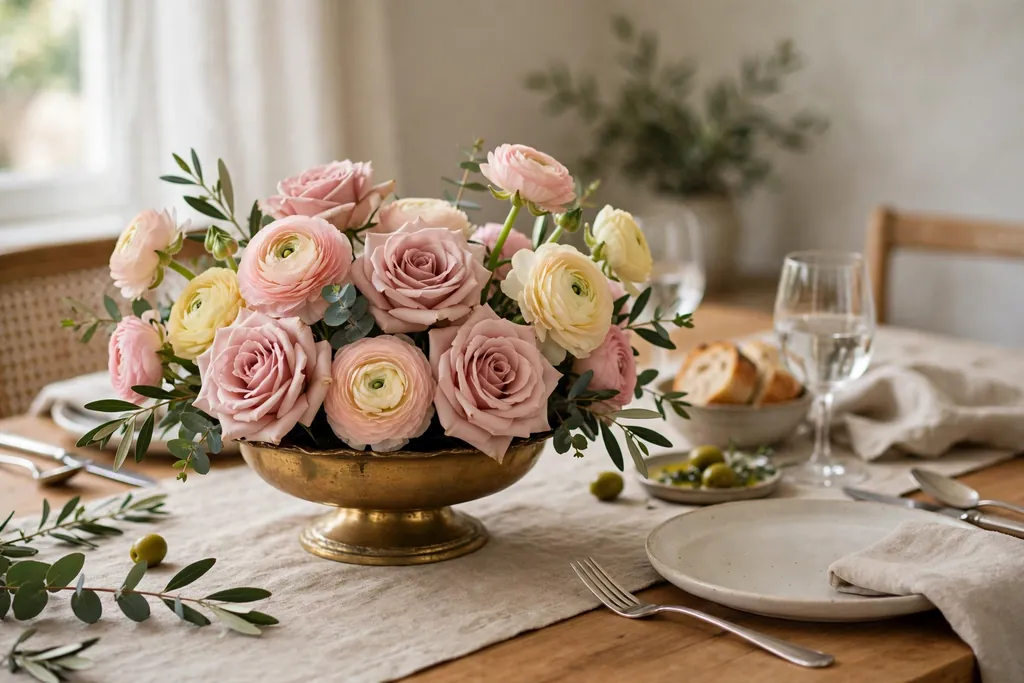
Roses and ranunculus in a low gold compote make a dressed up dining table centerpiece that still leaves sightlines clear. Set a low, wide compote on a charger or a tray, arrange faux roses as focal blooms, add ranunculus style blooms in a matching or softer tone, and finish with a few small leaves. Keep the tallest stem below eye level when seated.
This palette suits a dining room with warm wood and soft lighting, and it pairs well with cream plates and linen napkins. Because the arrangement is low, guests can see across the table without leaning around it. Lift the whole compote away in one move when the table needs clearing for serving.
11. Pampas Grass and Dried Look Stems in a Tall Vase
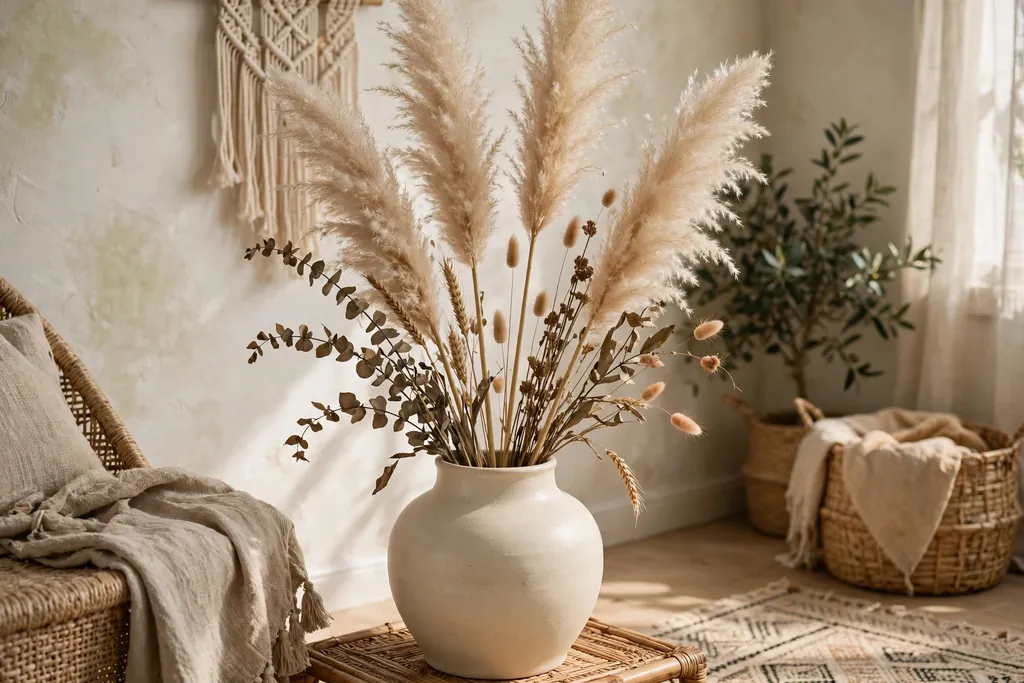
Pampas grass and dried look stems give a boho corner texture without the shedding that real dried grasses bring. Choose a tall ceramic vase in cream, sand, or terracotta, then add five to nine tall faux pampas plumes with a few dried look wheat stems and palm style leaves. Fan the stems out so the vase mouth is filled but the plumes still move freely.
Set the vase in a living room corner, beside a reading chair, or at the end of a console, where its height frames the seating area. Keep faux grasses away from open flames and strong heat, and shake the plumes outdoors now and then to remove dust. This arrangement needs no water and no trimming, which suits a spot that is hard to reach.
12. One Vase, Four Seasons of Stem Sets
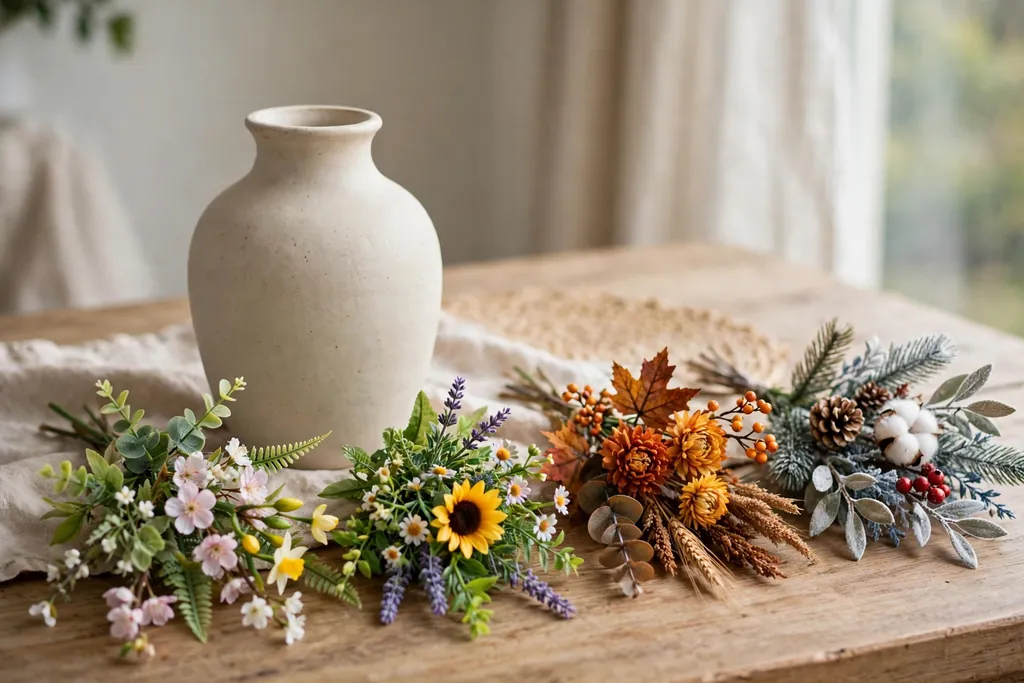
One vase with four sets of stems is a technique, not a single bouquet, and it saves both money and storage space. Choose one good vase in a neutral color, then build four small stem sets: spring tulips and blossom branches, summer wildflowers, autumn mums and berries, and winter greenery with white blooms. Store each set upright in a labeled bag or box.
Swap the sets when the season changes, keeping the same filler greenery where it suits more than one season. This approach works best when the vase is simple, since a strongly seasonal vase would fight with at least one set. Label each set as you pack it away, so the next swap takes minutes rather than a search through stored stems.
13. Wall Pocket Arrangement for a Narrow Hallway
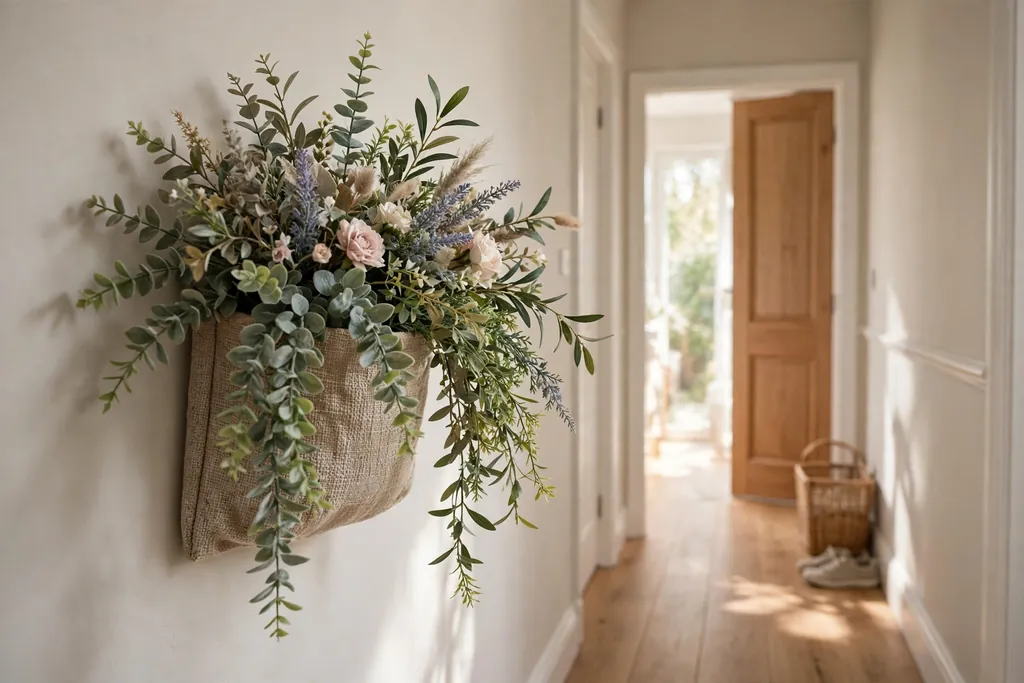
A wall pocket arrangement solves a hallway or a small entry where there is no floor or table space for a vase. Hang a flat backed wall pocket or a half basket planter on the wall, then fill it with faux blooms and leafy sprays that spill slightly over the front edge. Keep the arrangement shallow so it does not catch coats, bags, or shoulders passing by.
Choose a wall fixing rated for the weight of the pocket and stems, and hang it at eye level or slightly above, clear of door swings. This idea suits hallways, stair landings, and small entries, and it pairs well with a mirror or a row of hooks below it. Take the pocket down now and then to dust the wall behind it and check the fixing.
14. Bud Vase Trio for a Vanity or Bedside Table
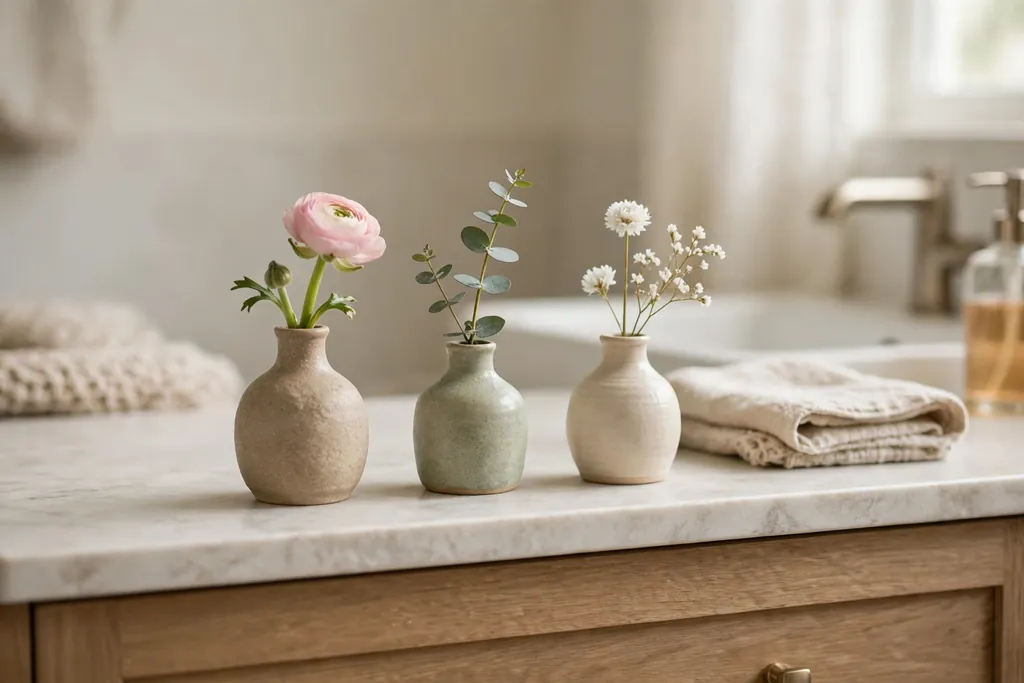
A bud vase trio suits a bathroom vanity, a bedside table, or a narrow shelf, where one large arrangement would crowd the surface. Use three small vases in different heights, put one or two short stems in each, and keep the flowers in one color family, such as cream, blush, and pale green. The small scale makes this a good use for leftover stems from a larger bouquet.
Group the vases close together so they read as one display, not three separate items. If a stem is too tall for its vase, trim it so the bloom sits just above the rim. In a bathroom, faux stems have a clear advantage, since steam and low light do not affect them, and the trio can stay out all year with only occasional dusting.
15. Vintage Teapot Arrangement for a Tea Table
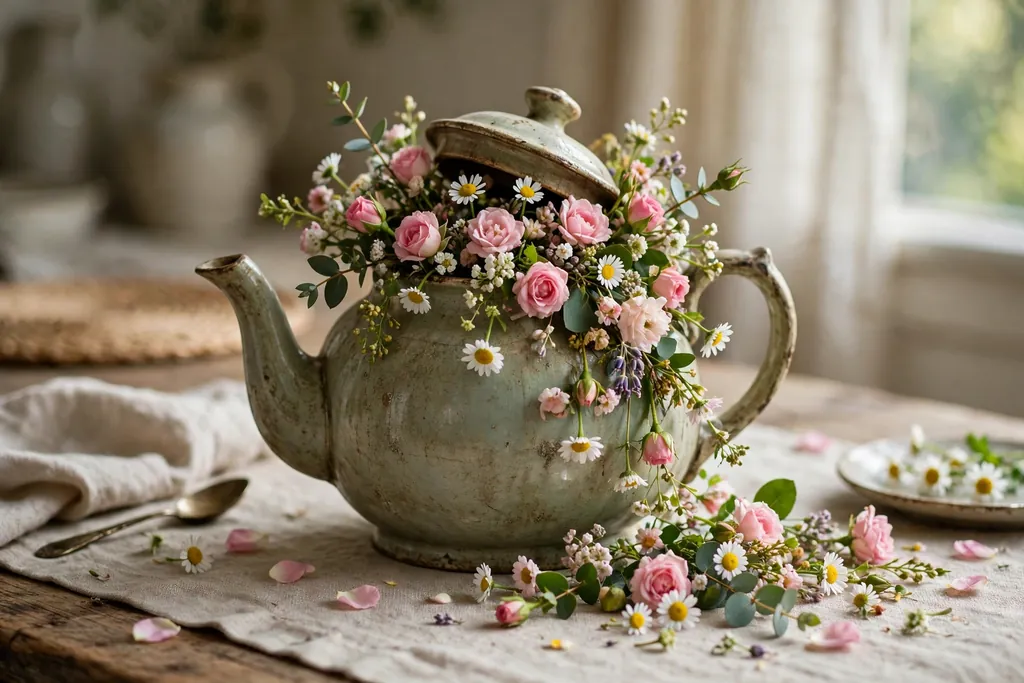
A vintage teapot arrangement turns a shelf find into a talking point for a tea table or a display shelf. Set a small block of foam inside a teapot, then add short faux roses, small daisies, and a few leafy sprigs so the blooms spill gently from the spout side and the open lid. Keep the arrangement compact, so the teapot shape still reads clearly.
Place the teapot on a tea table, a bookshelf, or a kitchen hutch, where it can be seen up close. This idea suits cottage, vintage, and traditional rooms, and it pairs well with a stack of books or a small tray underneath. Because the teapot is small, choose short stems and small blooms, and avoid tall stems that would hide the teapot itself.
16. All White Monochrome Arrangement for a Formal Table
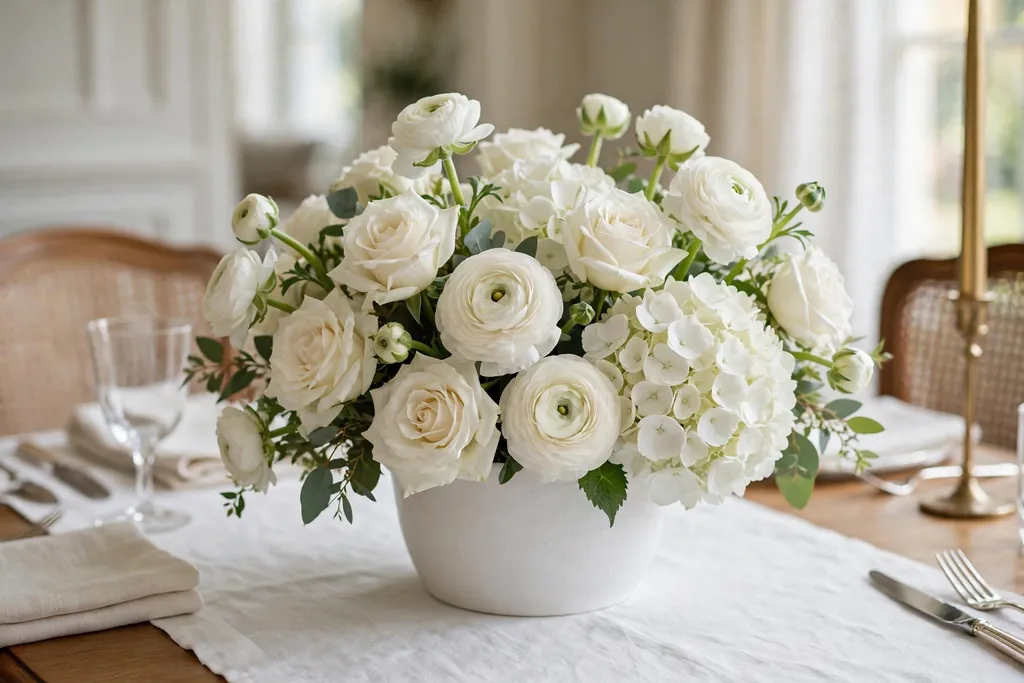
An all white monochrome arrangement suits a formal table, a wedding style gathering, or a room with strong patterned plates, where color would compete with the tableware. Combine white faux roses, ranunculus, and hydrangea heads with pale green leaves, and set them in a white or clear container. Leave space between the stems so each bloom can be seen.
Restraint is the point here: no mixed colors, no bright filler, and no extra decoration. The white palette keeps the table calm and lets the plates, glassware, and linen carry the color. Keep the arrangement low on a dining table, and save a taller version for a sideboard or a console, where height does not block conversation.
17. Tropical Stems in a Matte Black Vase
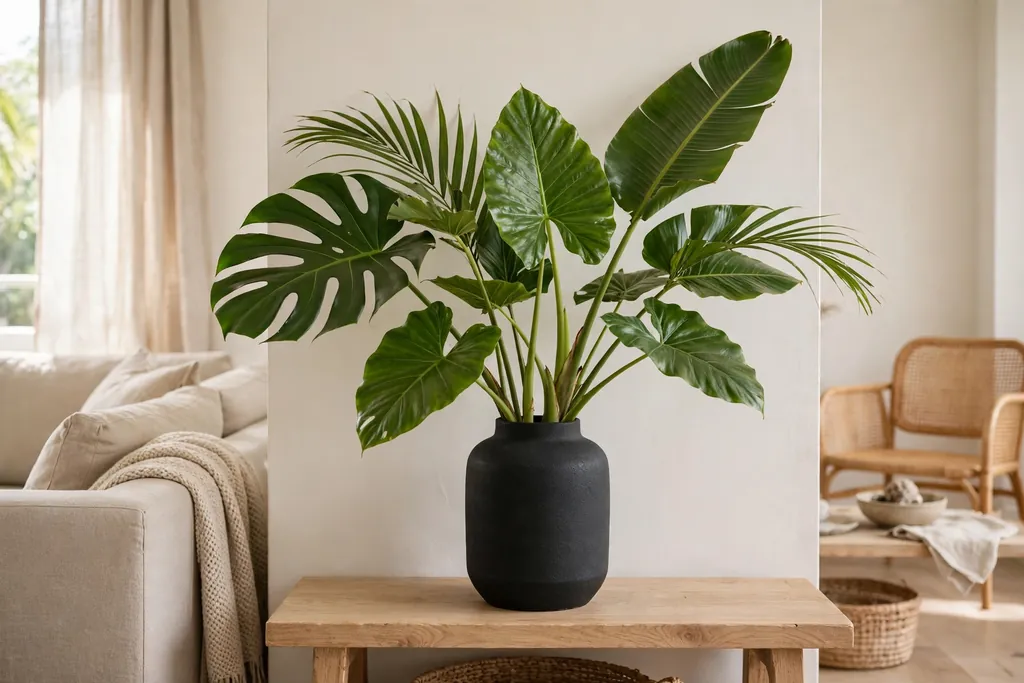
Tropical stems in a matte black vase suit a modern living room, where a soft pastel bouquet might look out of place. Choose faux bird of paradise style blooms, monstera style leaves, and a few tall palm fronds, and set them in a matte black ceramic or metal vase. The dark vase makes the green leaves and bold bloom shapes stand out.
Keep the arrangement tall and architectural, with a few stems rising well above the rest and clear space between them. Set the vase on a console, a side table, or a floor stand against a light wall, where the dark container reads as a deliberate accent. Dust the large leaves with a dry cloth, since dust shows more on broad, smooth leaves than on small petals.
18. Faux Succulents and Small Blooms in a Shallow Bowl
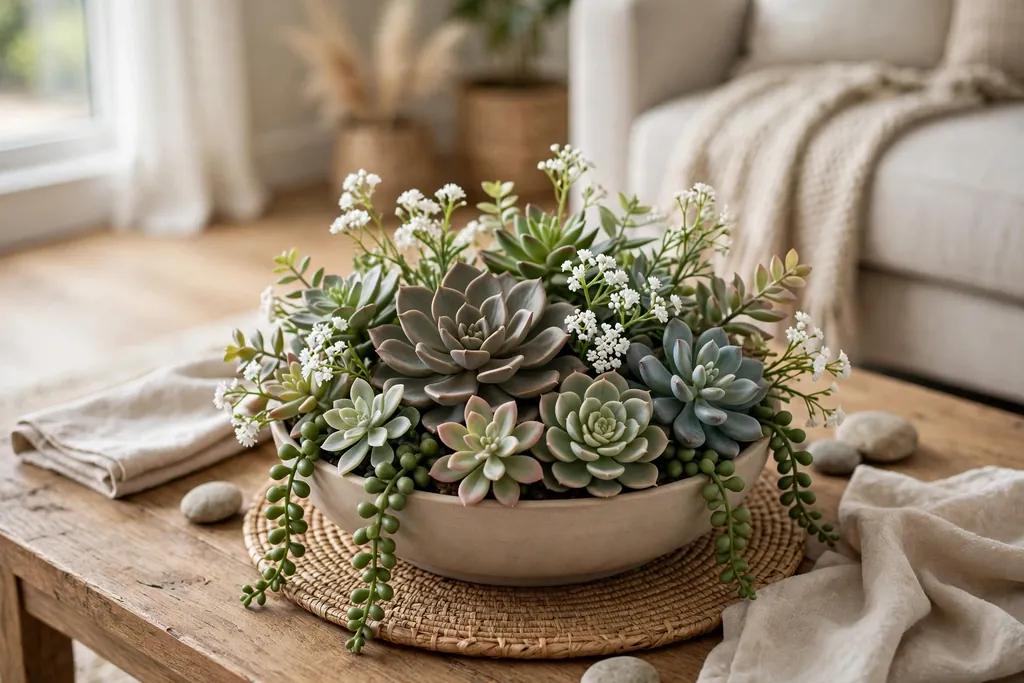
Faux succulents and small blooms in a shallow bowl suit a coffee table, where a tall arrangement would block the television or conversation. Fill a wide, shallow bowl with a layer of foam, set two or three faux succulent rosettes in it, and tuck small white or blush blooms and a few pebbles between them. Keep the whole display low and wide.
This arrangement suits modern, desert style, and relaxed living rooms, and it needs no watering, which matters on a table that also holds books and cups. Lift the whole bowl aside when the table is needed, and return it after. Choose a bowl finish that matches other decor in the room, and dust the succulent leaves before guests arrive.
19. Asymmetrical Branch Arrangement for an Entry Console
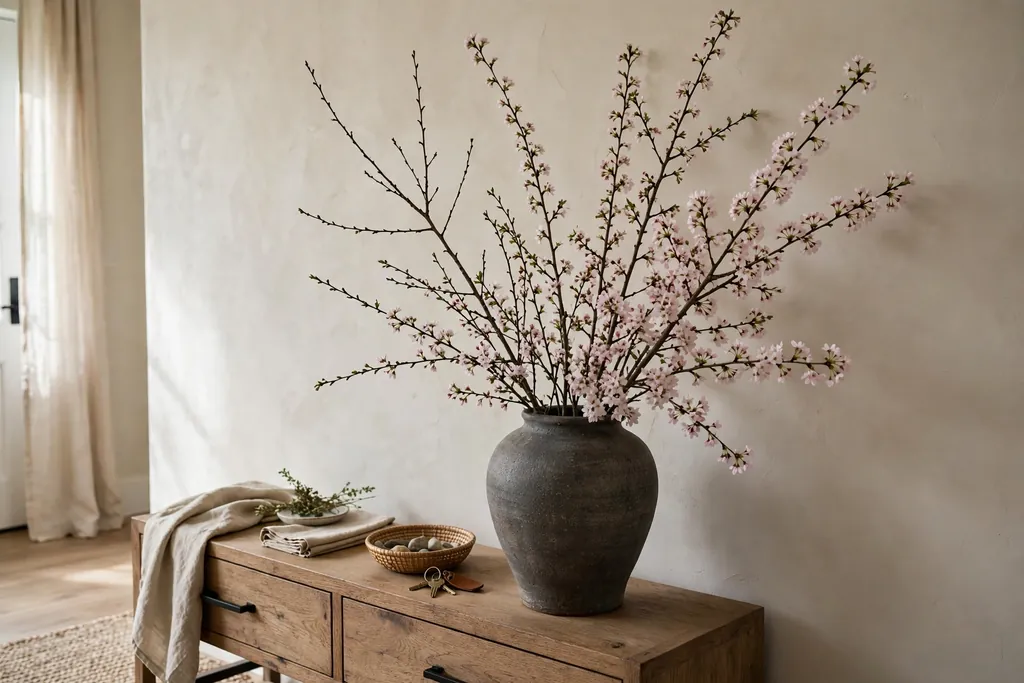
An asymmetrical branch arrangement gives an entry console height and movement without a dense bouquet. Choose a tall, heavy vase, then add three to five long faux branches, such as blossom, willow, or birch style branches, with a few small blooms clustered on one side only. Let one branch rise higher than the rest, and let another lean outward, so the shape feels grown rather than arranged.
Set the arrangement at one end of the console so keys, mail, and a small tray still have room. Trim branches to fit the ceiling height, leaving clear space above the tallest stem. This idea differs from a single orchid stem because the branches create a wide, airy outline, and it differs from a floor vase of lilies because the blooms are sparse and the branches do the work.
20. Arrangement Inside a Lantern for Evening Glow
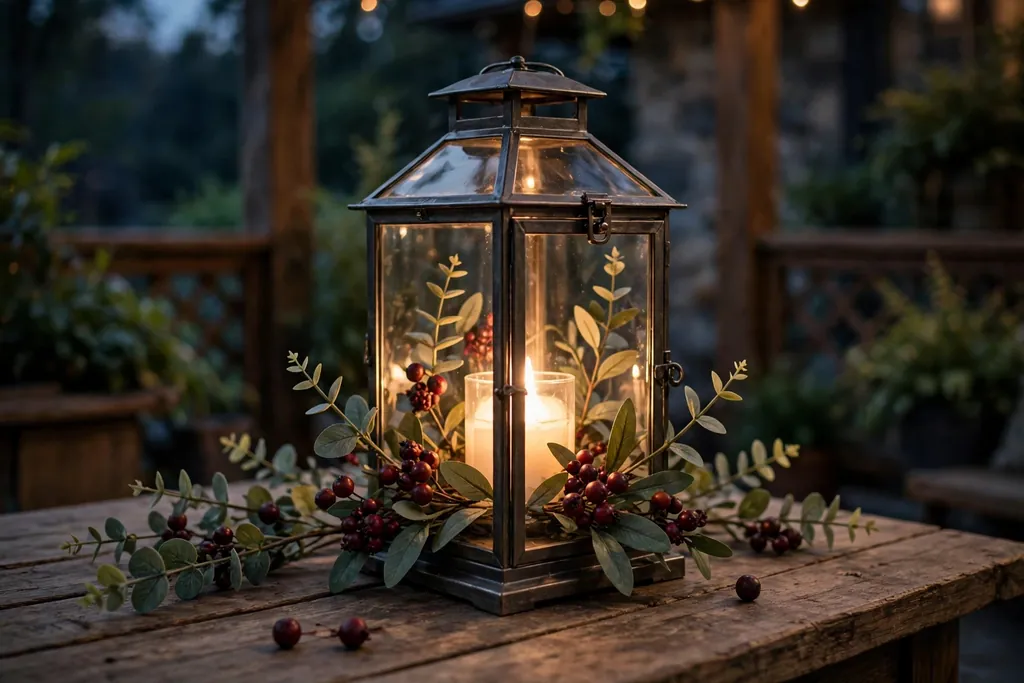
An arrangement inside a lantern suits a porch, a hearth, or a side table in the evening, when light matters as much as flowers. Place a small bunch of faux leaves, berries, and one or two short blooms inside an open glass lantern, then add a battery candle in the center so the display glows after dark. Keep the stems short and clear of the candle, and use battery candles only, never a real flame near faux foliage.
Choose a lantern size that fits the spot, with glass panels that show the leaves from all sides. This idea works well where a full vase would feel too formal, such as a porch step or a bathroom shelf. Switch the battery candle on in the evening for a warm glow, and dust the glass panels so the display stays clear.
21. Small Stoneware Pot Arrangement for a Desk
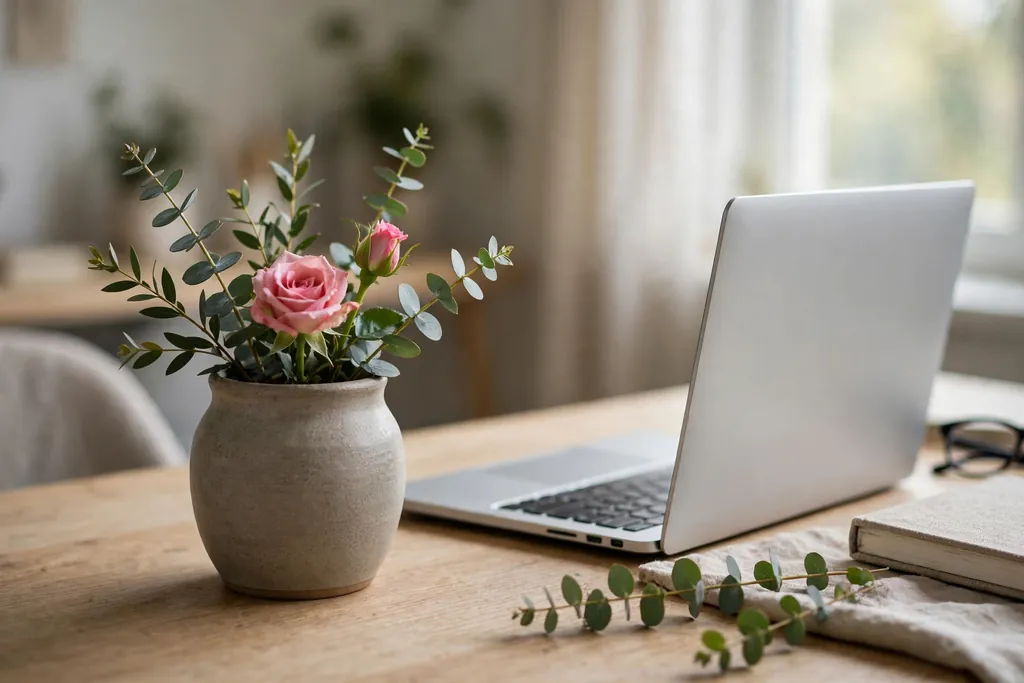
A small stoneware pot arrangement suits a desk or a home office, where a large bouquet would crowd papers and a screen. Choose a small stoneware pot, add two or three short faux stems, such as a small rose, a sprig of eucalyptus, and a tiny filler bloom, and set the pot to one side of the desk, clear of the keyboard and mug. Keep the total height below eye level when seated.
This small scale has a practical benefit: it adds color to a work spot without blocking light or reaching into the work area. Pick a calm color, such as cream or soft green, so the arrangement does not distract during video calls. Dust the stems weekly, since a desk gathers dust faster than a display shelf, and swap the stems when you want a fresh look without buying a new pot.
Conclusion
Artificial flower arrangements look natural when the stems, the container, and the spot work together. Start with realistic stems, vary the heights, keep the palette to two or three colors, and match the total height to the room. Try one idea from this list, live with it for a few days, and adjust a stem or two until the shape reads well from across the room. With those habits, a faux arrangement can stay out all year, move between rooms, and still look planned rather than stiff.
FAQs
How do I make artificial flower arrangements look less fake?
Start with realistic stems that have varied petal shapes and soft, uneven colors, then bend stems to different heights and turn some blooms sideways. Add greenery and filler between blooms, keep the palette to two or three colors, and check the shape from across the room, since a bunch that looks even up close often looks stiff from a distance.
What are the best flowers for realistic artificial arrangements?
Peonies, roses, hydrangeas, tulips, orchids, and lilies tend to look most convincing, because their petal shapes and colors are easy to copy well. Choose stems with layered petals, slight color variation within each bloom, and flexible stems you can bend, and avoid stems with flat, shiny petals or colors that look too bright for a real flower.
How do I arrange fake flowers in a vase so they look natural?
Start with one focal bloom in the center, add supporting blooms at varied heights around it, and finish with greenery and filler to fill gaps without crowding the blooms. Bend outer stems slightly outward, turn some blooms to the side, and step back to check the outline, then trim or bend any stem that sticks out too far.
Can artificial flower arrangements go outside?
Yes, if you choose stems suited to outdoor use and protect them from the worst weather. Weight the container so wind cannot tip it, bring the arrangement under cover in heavy rain or strong wind, and keep faux stems out of constant direct sun, which fades colors over time. Check the stems after storms and replace any that have faded badly.
How do I clean artificial flower arrangements?
Dust stems with a dry cloth, a soft brush, or a cool hair dryer held at a distance, working from the top of each stem down to the base. For a deeper clean, wipe leaves and petals with a slightly damp cloth and let the arrangement dry fully before returning it to its spot, and avoid soaking foam or fabric blooms, which can hold dampness.
How long do artificial flower arrangements last?
A well made artificial arrangement can last several years with basic care, since it does not wilt, drop petals, or need water. Its life depends on sun exposure, dust, and handling: arrangements kept out of direct sun, dusted now and then, and stored upright between seasons hold their shape and color far longer than ones left in a sunny window or packed flat.