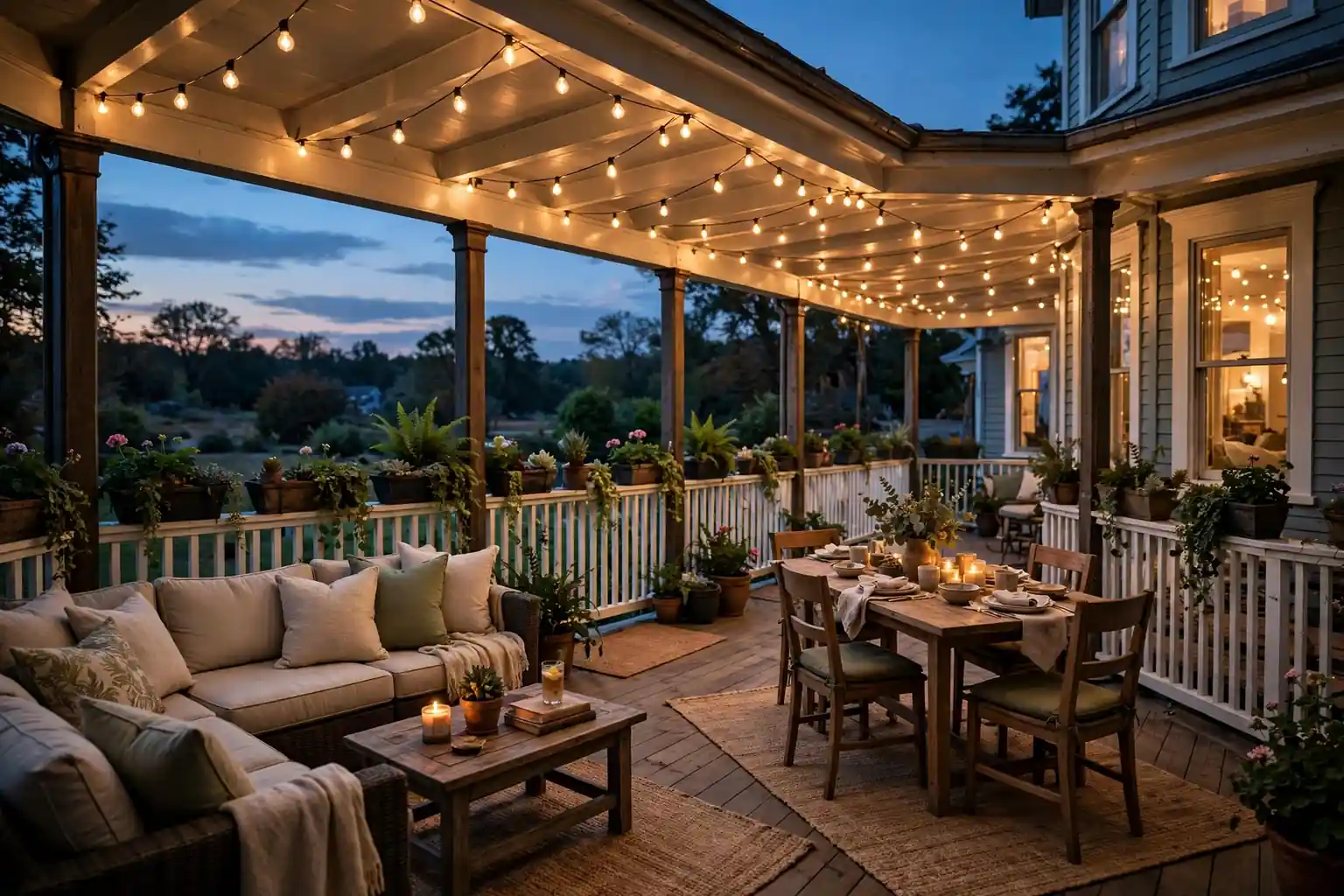
A wrap around porch works best when each side has a clear job, such as seating on the sunny side, dining near the kitchen door, and a quiet chair at the far end. Start with one seating group, add shade and light, then use rugs and planters to mark each zone.
The 19 ideas below suit porches that run along two or more sides of a house, from a narrow deck to a wide, covered porch. Many of them scale down to one chair and one planter, or up to a full dining group, and the same zoning approach that makes a fall porch ideas list feel welcoming works here all year, with seasonal pieces swapped as the weather changes. A farmhouse decor palette of wood, cream, and green keeps the zones feeling connected, even when each side serves a different purpose.
Key Takeaways
- Give each side of the porch a job: seating, dining, reading, or a quiet corner, so no stretch of decking sits unused.
- Put the main seating group where the view and the breeze are best, and keep the path to each door clear.
- Use outdoor rugs, planters, and light to mark zones, rather than walls or screens that block airflow.
- Choose outdoor rated fabrics, fans, and lights, or bring cushions and throws indoors in rain, so the porch stays tidy.
- Repeat two or three colors, such as cream, sage green, and warm wood, across textiles, pots, and cushions.
- Keep one side flexible, with a bench or a small table that can serve guests, games, or extra dining seats.
1. Rocking Chairs at the Corner Bend
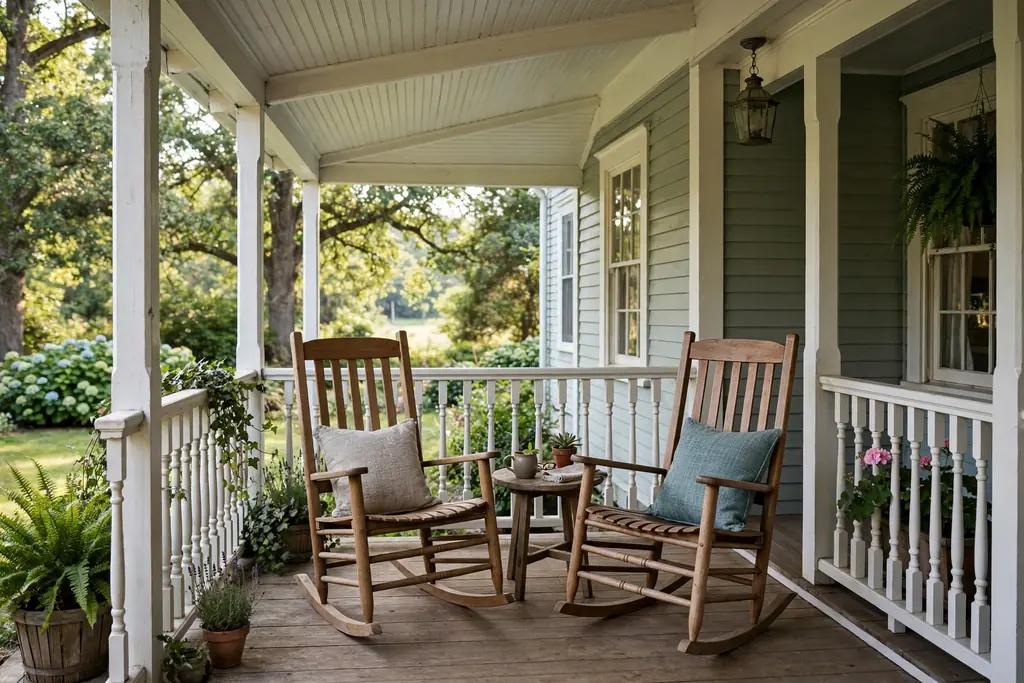
Two rocking chairs at the corner bend make the turn of the porch a natural place to sit and watch the yard from two directions. Set the chairs at a slight angle to each other, with a small table between them for drinks, and leave enough room behind each chair for the rockers to move freely. The corner gives each chair a different view, so two people can sit together without facing the same way.
Choose chairs rated for outdoor use, and add cushions with removable, washable covers, since porch cushions gather dust and pollen. If the corner is narrow, one rocking chair still works, placed beside the railing with a small side table. Add a folded throw over one chair arm for cool evenings.
2. Porch Swing on the Long Side
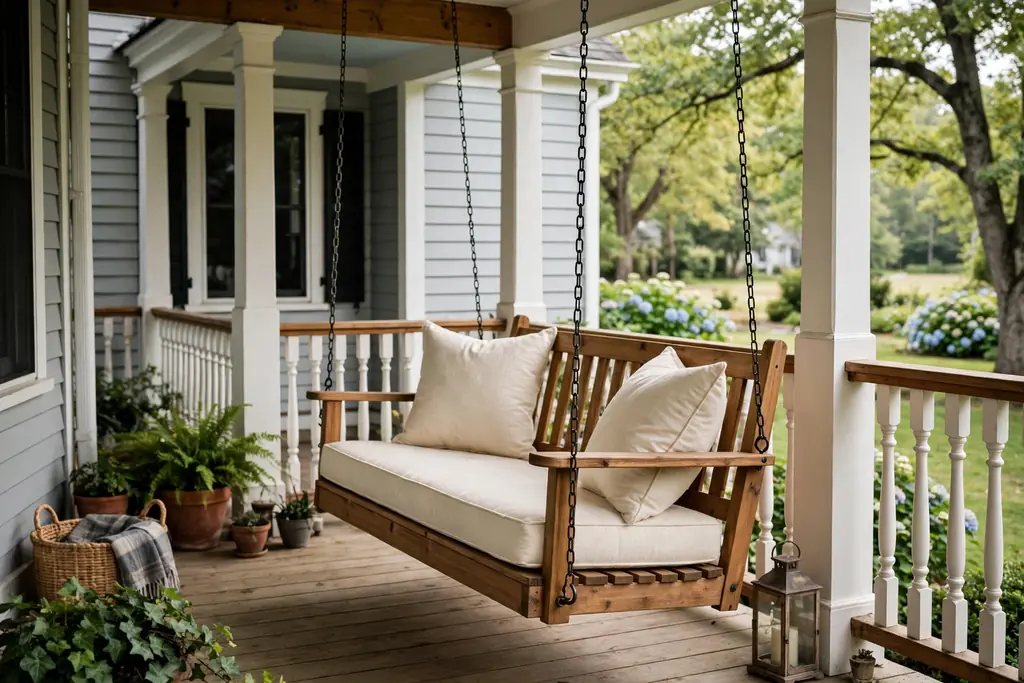
A porch swing on the long side of the house gives the porch its most inviting seat, with room to sway and a view down the length of the deck. Hang the swing from sturdy ceiling joists, with chains rated for the weight, and add a seat cushion and two back cushions in cream or natural linen. The long side suits a swing best, since it can move freely without hitting a wall or a door.
Check the chains and hooks each season for rust or wear, and tighten them as needed. If the swing faces rain, use quick dry foam cushions or bring the cushions indoors at night. Keep one end of the swing clear of planters, so guests can step on and off with ease.
3. Outdoor Sectional for a Living Room Zone
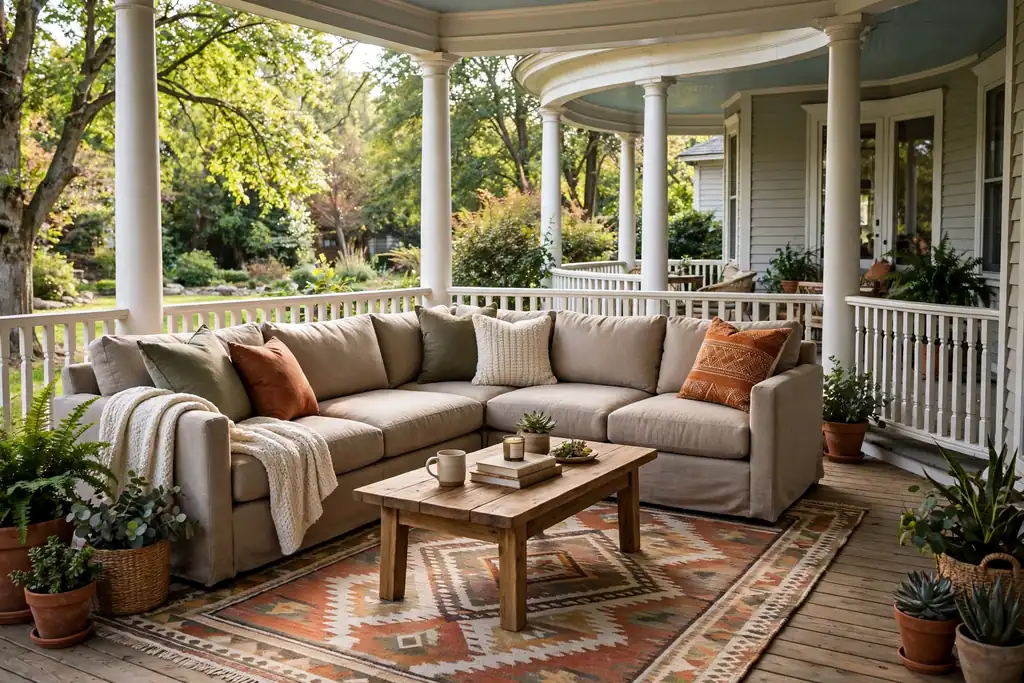
An outdoor sectional turns one stretch of the porch into a living room, with a sofa, a corner seat, and a coffee table grouped on one rug. Set the sectional against the house wall, facing the yard, with the coffee table in reach of every seat. The grouped layout suits a wide porch best, where the sectional can sit clear of the walking path.
Choose a sectional with outdoor rated cushions and a frame that handles rain, and keep a storage box nearby for extra cushions. If the porch is narrow, a two seat sofa and one chair give the same living room feel in less space. Add one throw and one lantern on the table to finish the group.
4. Long Dining Table for Gatherings
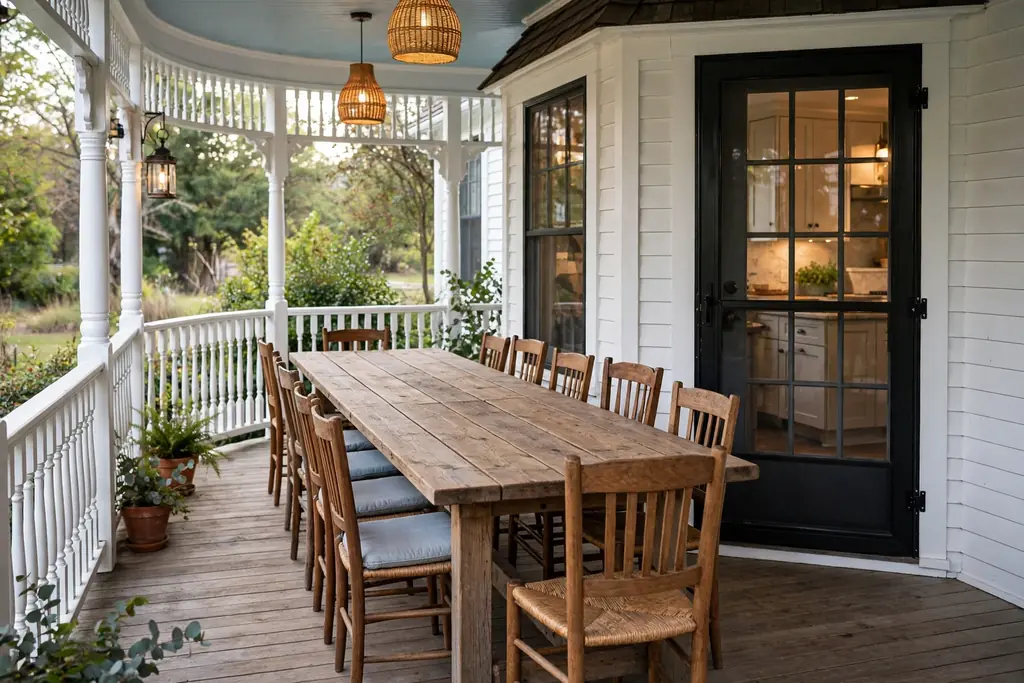
A long dining table near the kitchen door turns the porch into the main place for family meals in warm weather. Set a wood or metal table with six to eight chairs along the wall, so guests can reach the kitchen with ease, and leave room behind each chair to pull out. The long shape suits a wrap around porch, since it fits the length of the deck better than a round table.
Use placemats and a simple centerpiece, such as a low planter or a group of candles in glass holders, so the table stays clear for serving. If the table sits outside the roof line, choose a table rated for outdoor use and bring table linens indoors after meals. A bench on one side adds seats for children without extra chairs.
5. Daybed for Afternoon Rests
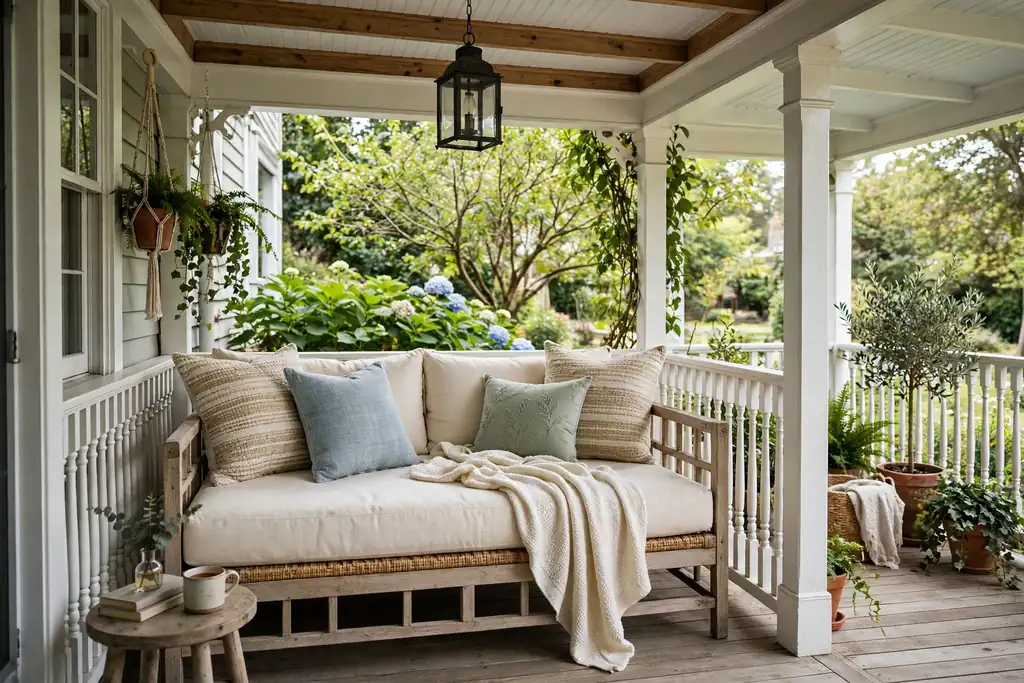
A porch daybed gives the quiet end of the porch a place for naps, reading, and long afternoon rests. Set the daybed against the house wall, with a thick mattress, several pillows, and a light throw, and keep a small side table nearby for a book and a drink. The daybed suits a covered corner best, where it stays dry and shaded through the day.
Choose a mattress cover that can be removed and washed, and bring pillows indoors in rain or overnight in wet weather. If a full daybed feels too large, a wide chaise lounge gives the same restful seat in a smaller footprint. Place the daybed where the breeze reaches it, so it stays cool on warm afternoons.
6. Bistro Set for Morning Coffee
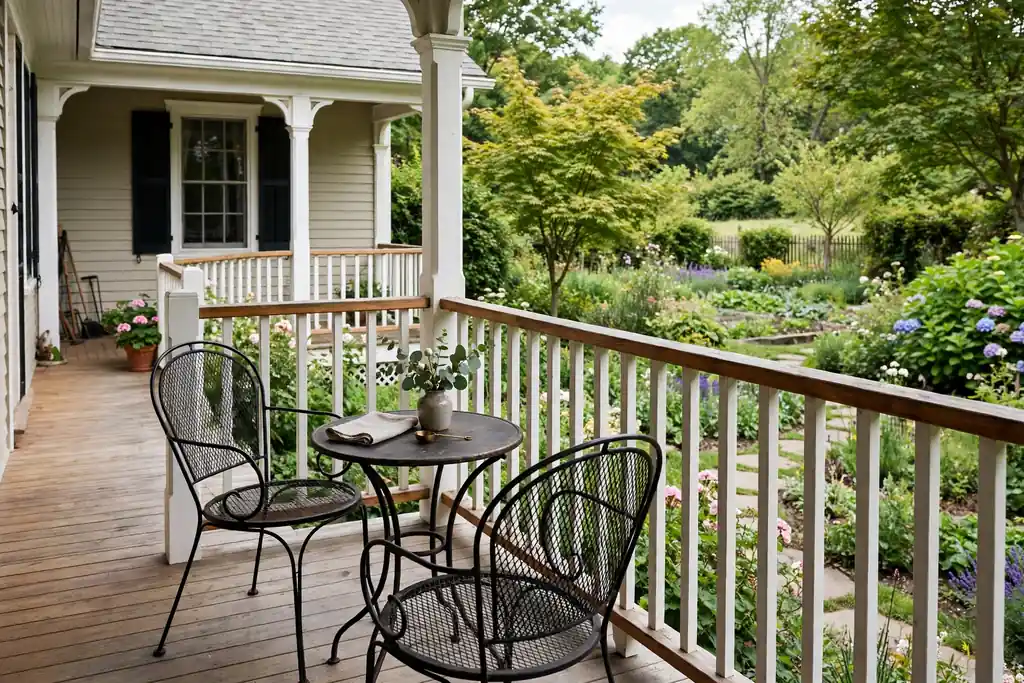
A small bistro set at the side of the porch makes a simple spot for morning coffee, with two chairs and a round table that fit a narrow stretch of decking. Set the table near the railing, facing the garden, with one chair on each side, and keep the path behind the chairs clear. The small scale suits a side porch that cannot hold a full seating group.
Choose a metal or wood set rated for outdoor use, and add one cushion to each chair for comfort. If the spot faces morning sun, add a small shade, such as a porch curtain or a tall planter, so the table stays pleasant through breakfast. Bring paper and fabric items indoors after use, since damp fabric can stain if left out overnight.
7. Reading Chair with a Lamp and Side Table
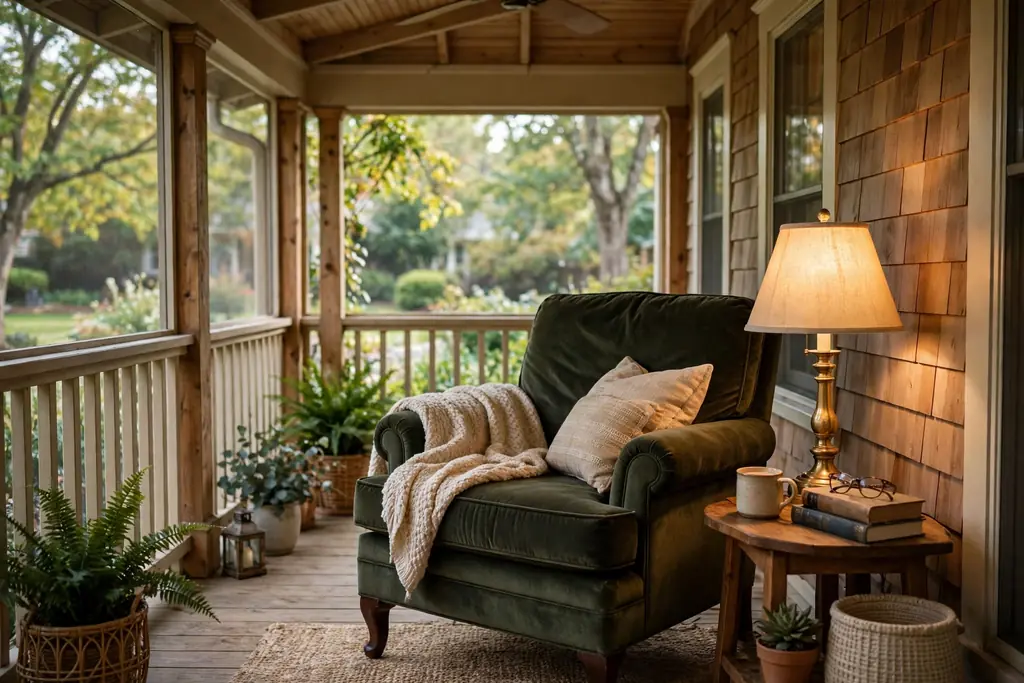
A reading chair with a lamp and a side table turns a sheltered corner into a private reading spot, away from the main seating group. Set a deep armchair near a post or a wall, with a small table for a book and a drink, and a portable or battery lamp for evening reading. The single chair needs little floor space, so it fits corners that larger groups cannot use.
Pick a chair with outdoor rated fabric, or keep a washable cover on it, and bring the lamp indoors in rain if it is not rated for outdoor use. Add a small basket beside the chair for books and magazines, so the corner stays tidy. A footrest or a low stool makes long reading sessions more comfortable.
8. Fire Table Seating for Cool Evenings
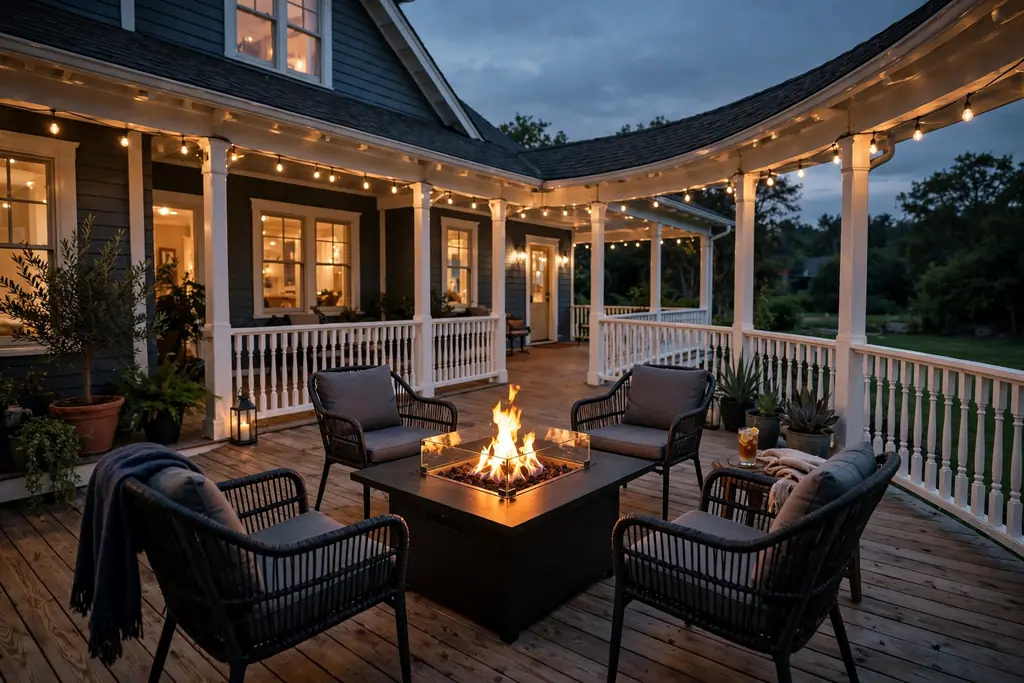
A fire table with four chairs extends porch use into cool evenings, with warmth at the center of a small seating circle. Set the fire table on a flat, stable part of the deck, with chairs pulled close enough to feel the warmth, and keep the table clear of fabric, dried plants, and paper. The fire table suits a wide, open stretch of porch, where smoke and heat can rise freely.
Follow the maker’s safety guidance for clearance and fuel, and never leave a lit fire table unattended. Use a cover when the table is not in use, and keep a clear path to the door, so guests can move away from the heat with ease. If open flame is not practical for your porch, a group of large lanterns gives a similar warm glow without fire.
9. Hanging Egg Chair at the Quiet End
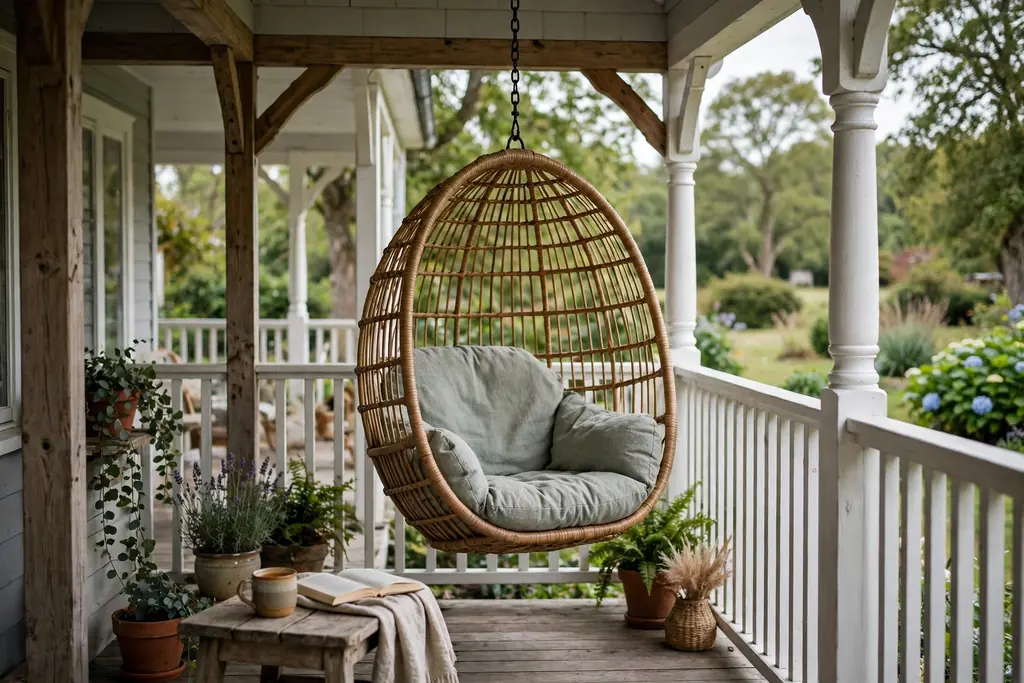
A hanging egg chair at the quiet end of the porch gives one person a sheltered, swaying seat for reading or resting. Hang the chair from its own stand or from a sturdy ceiling joist, with enough clearance to swing gently without hitting the wall or railing. The rounded shape suits a far corner, where it can sit apart from the main seating group.
Check the stand and hooks for weight and wear each season, and add a seat cushion and a small pillow for comfort. If the chair faces rain, bring the cushion indoors at night, and keep the chair under the roof line when possible. One egg chair also gives children a favorite porch seat, so place it where adults can see it from the main group.
10. Built-In Bench Along the Railing
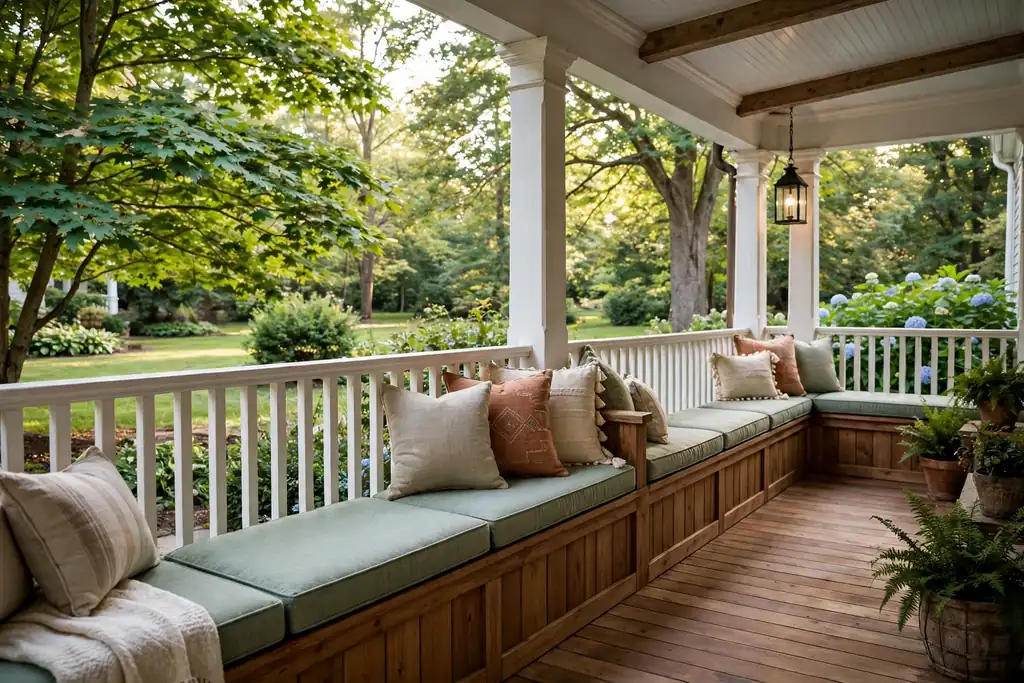
A built-in bench along the railing adds seating without filling the porch with loose chairs, and it follows the line of the porch itself. Build or place a wood bench against the railing on a long side, with a seat cushion and two or three back pillows, and leave the walking path clear in front of it. The bench suits narrow porches best, since it uses the edge of the deck rather than the center.
Add storage under the bench seat, if the design allows, for cushions, throws, or small garden tools. If the bench sits in sun, use a light cushion color that stays cool, and bring cushions indoors in heavy rain. A bench also gives extra seats at dining time, when guests can carry a plate to the railing side.
11. Outdoor Rugs to Mark Separate Zones
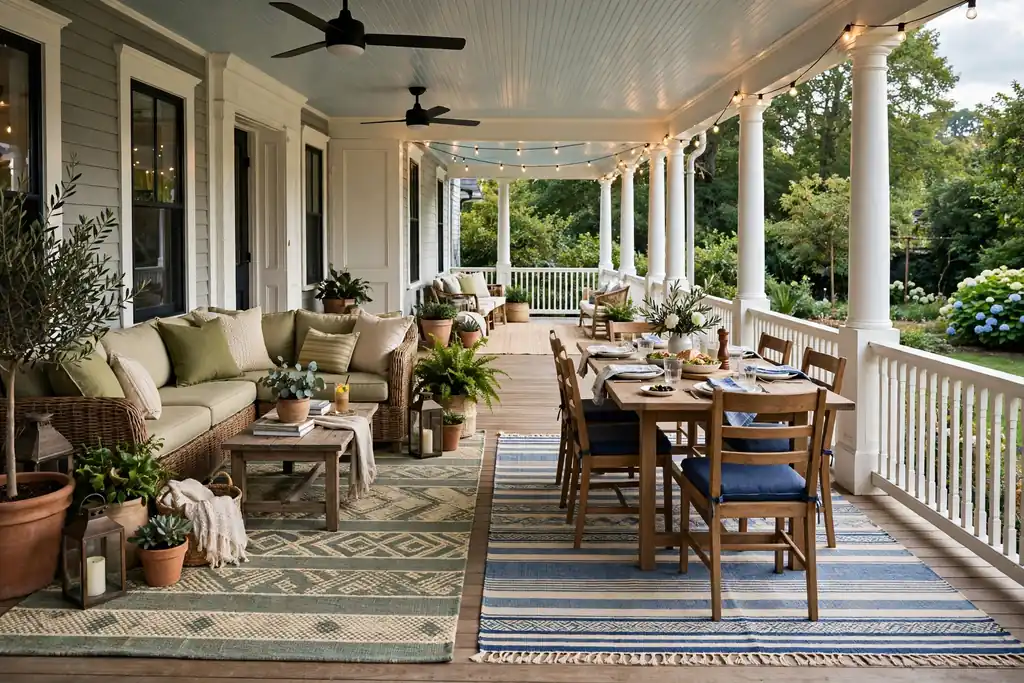
Outdoor rugs mark separate zones on a long porch in one move, so the seating, dining, and reading areas read as distinct rooms. Lay one rug under the sectional, a second under the dining table, and a smaller rug at the reading chair, each large enough to sit under the front legs of the furniture. The rugs define each zone clearly, even on a porch with more than one use.
Pick rugs rated for outdoor use, so they dry quickly after rain, and shake them out weekly so leaves and dirt do not build up underneath. If a rug sits on painted wood, lift it now and then to check for damp marks. Repeat one color across the rugs, such as cream or sage, so the zones feel connected rather than separate.
12. Ceiling Fans for Airflow on Still Days
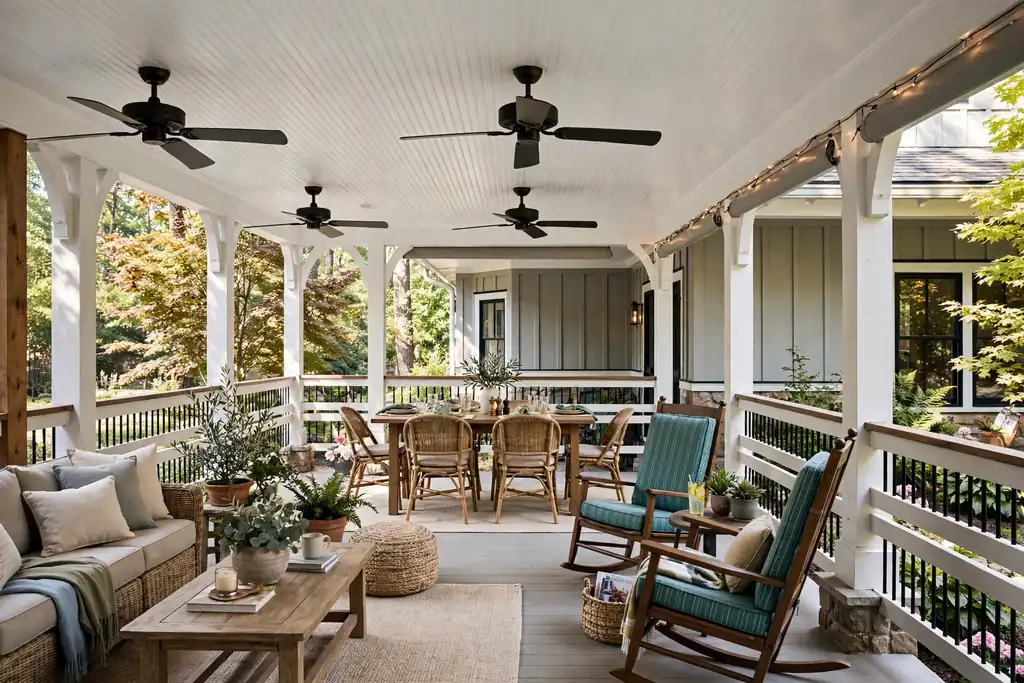
Ceiling fans keep a covered wrap around porch comfortable on still, warm days, when a long porch can feel hot despite the shade. Mount one fan over each main seating zone, sized to the porch width, with outdoor rated motors and blades, and set the fans to move air down over the seats. Fans suit a covered porch best, where they can hang from the ceiling joists.
Check the fan mounts and blades each season for wear, and clean the blades so dust does not settle on the seating below. If wiring a new fan feels like a large job, a portable outdoor fan gives airflow to one zone without new wiring. Pair fans with shade on the sunny side, so the porch stays cool through the afternoon.
13. String Lights and Lanterns for Evenings
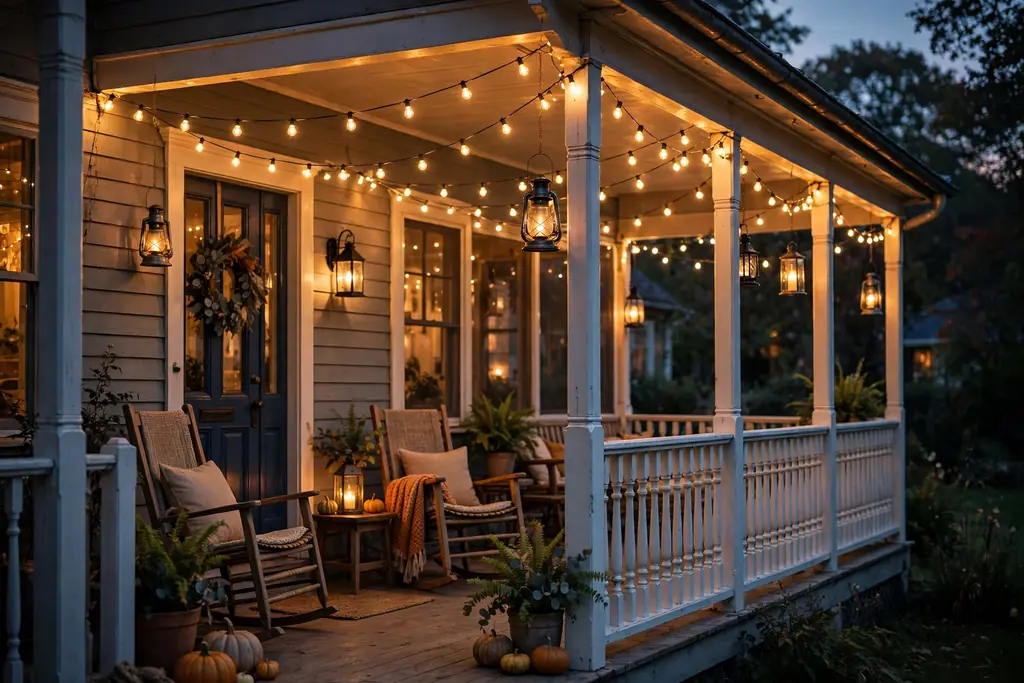
String lights and lanterns give a wrap around porch a warm glow after dark, when guests most often use it. Drape warm white string lights along the porch ceiling edge, around posts, or across a beam, with the cord tucked out of the walking path, and set lanterns on tables and steps for light at seat height. The two layers of light make the whole porch usable after sunset.
Choose outdoor rated lights and a timer so they switch on at dusk without daily effort. Keep bulbs clear of dried leaves, curtains, and fabric, and check cords each season for wear. Warm white suits a porch better than cool white, since it echoes candlelight and keeps the porch feeling calm. Battery candles inside lanterns are a safe choice where wind or children make real flames risky.
14. Outdoor Curtains for Shade and Privacy
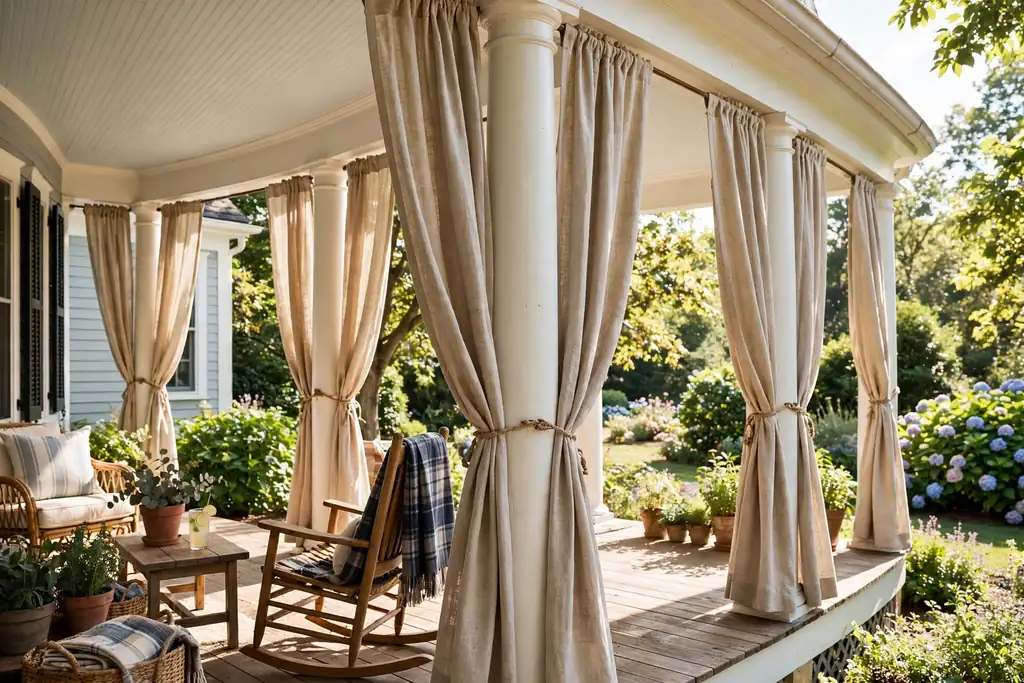
Outdoor curtains give a wrap around porch shade, privacy, and shelter from wind, without closing off the view entirely. Hang weather resistant curtains from a rod or wire along the sunny or street facing side, and tie them back when you want the porch open. The curtains suit a porch that faces a road or a neighbor, where privacy matters as much as shade.
Choose curtains rated for outdoor use, in a light color that blocks sun without darkening the porch, and wash them as needed so pollen does not build up. Weight the hems or use tiebacks, so a breeze does not lift the fabric onto tables or lights. Keep curtains clear of fire tables, candles, and heaters, and bring them indoors in storms if they are not rated for high wind.
15. Planters and Hanging Baskets Along the Railing
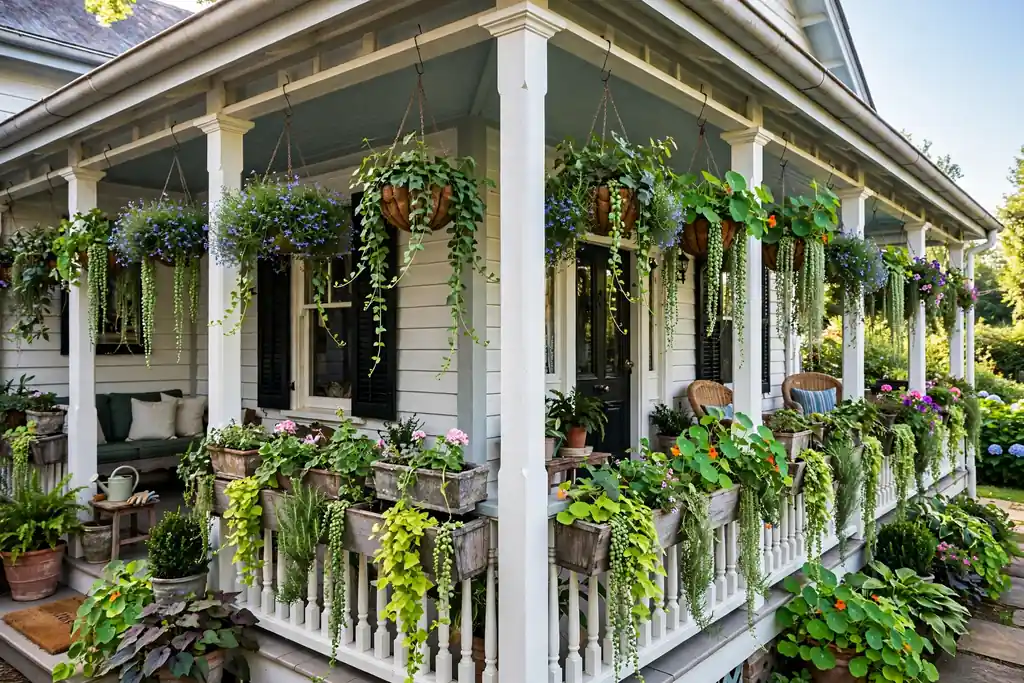
Planters and hanging baskets along the railing add living color to every side of a wrap around porch, and they soften the long line of the deck. Set large planters at the corners and beside the steps, with smaller pots spaced along the railing, and hang one basket from each post or ceiling hook, with trailing plants that spill over the rim. The plants draw the eye along the porch and tie it to the garden.
Water hanging baskets more often than floor pots, since they dry out faster in wind and sun, and set each floor planter on a saucer or a flat stone to protect the decking. Match the plant to the light on each side: ferns and ivy for shade, geraniums and ornamental grass for sun. In cold weather, move tender plants close to the house wall for shelter, as in many exterior decorating for fall plans.
16. Serving Station Near the Kitchen Door
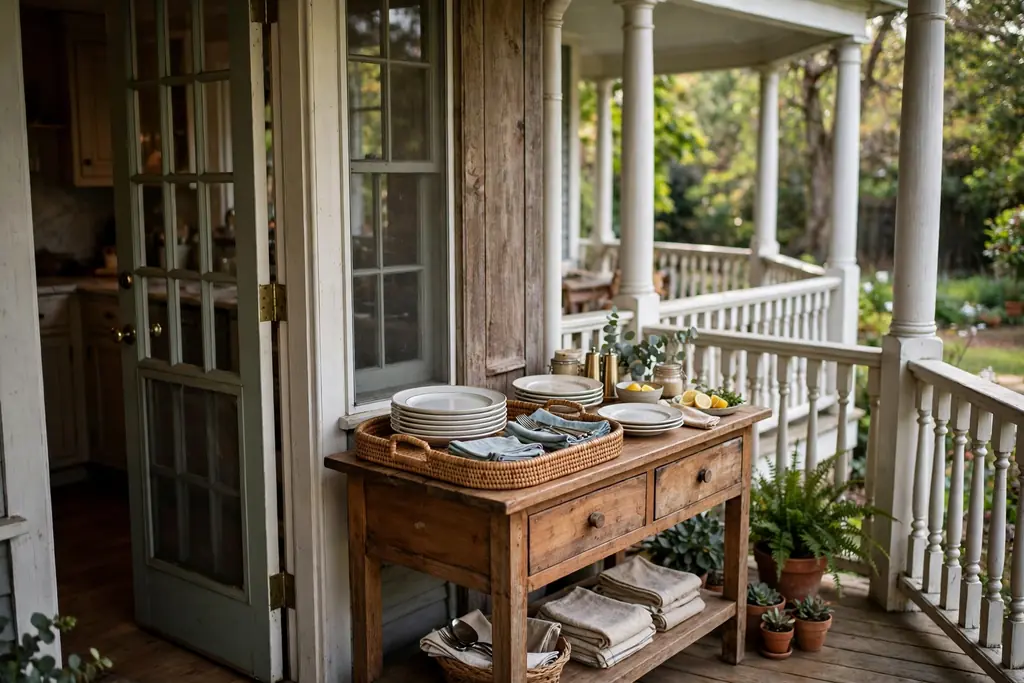
A serving station near the kitchen door makes porch dining simple, with drinks, plates, and serving dishes within easy reach of the table. Set a console table, a bar cart, or a sideboard against the wall beside the kitchen door, with a tray for drinks, a stack of plates, and a small planter on top. The station keeps the dining table clear for guests, since serving pieces stay off the table itself.
Keep the station tidy and restock it before meals, so guests can help themselves without trips indoors. Choose a station rated for outdoor use, or bring it under the roof line in rain, and wipe it clean after meals. A cart with wheels suits a long porch best, since it can move to the seating zone for drinks and back to the door for serving.
17. Games Table for Family Evenings
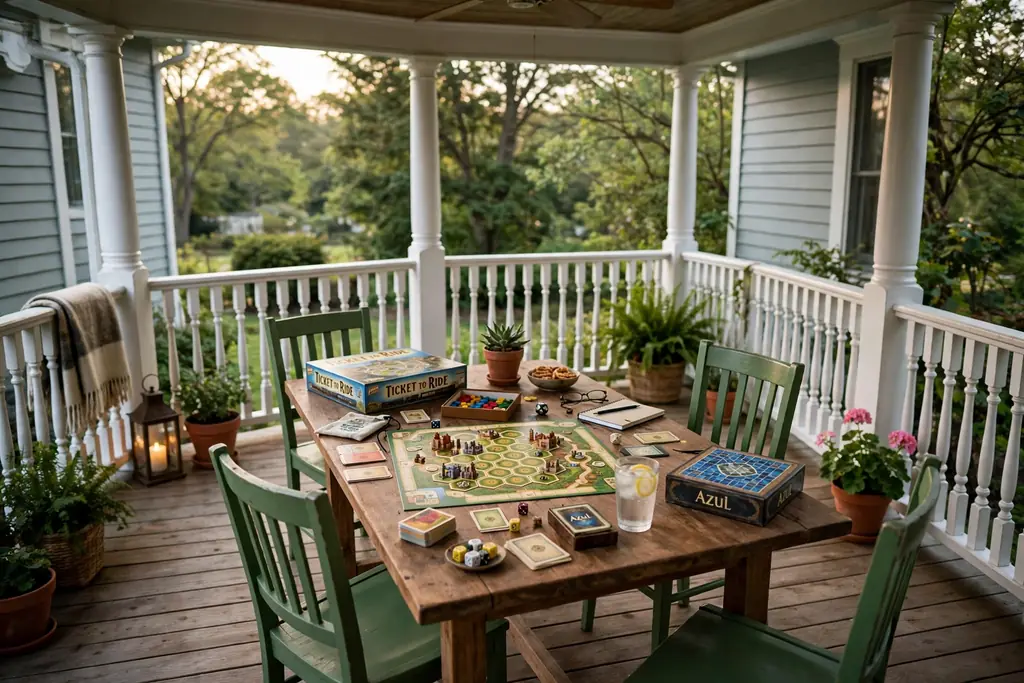
A games table gives the porch a shared activity for family evenings, with a small table and four chairs set apart from the main seating group. Set a sturdy table near the railing, with chairs on all sides, and keep a basket or a box nearby for board games, cards, and puzzles. The table suits a side of the porch that gets evening light, so games can run after dinner.
Choose a table with a wipe clean top, since drinks and snacks sit beside the games, and pick chairs that can be moved to the dining group when extra seats are needed. If the table sits outside the roof line, bring games indoors after play, so damp does not damage boards and cards. A games table also gives teenagers a porch spot of their own, away from adult conversation.
18. Herb Pots by the Kitchen Door
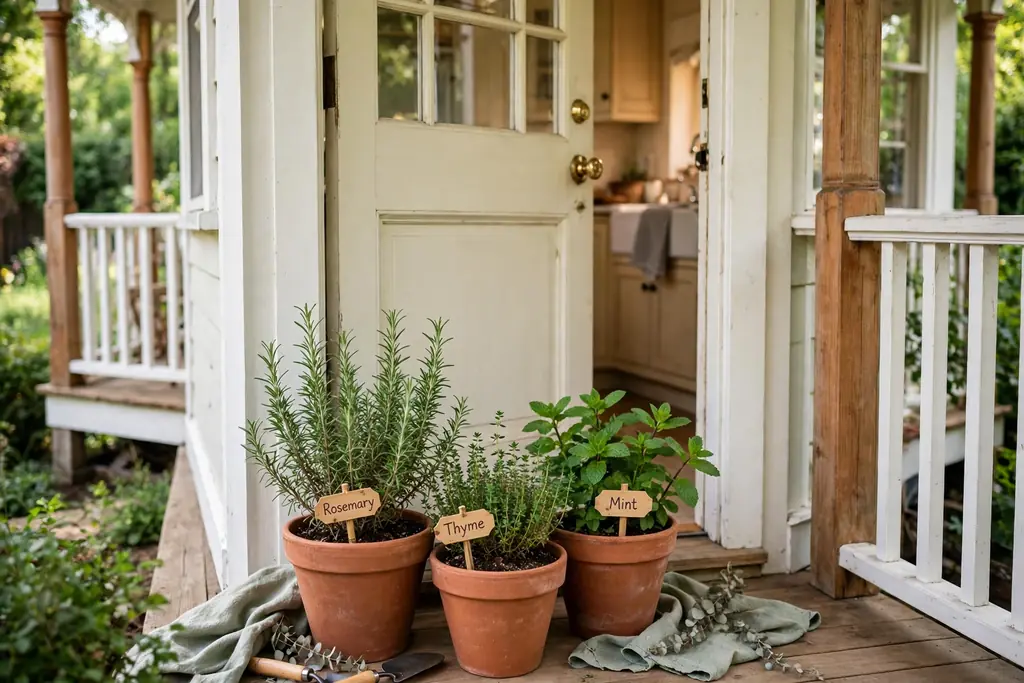
Herb pots by the kitchen door add scent and useful green to the porch, and they sit within easy reach of cooking. Group three pots of different heights near the kitchen door, with rosemary, thyme, and mint, and water them in the morning so the soil stays damp but not soaked. Guests brush past the scent on the way to the dining table, and the herbs can go to the kitchen after.
Set each pot on a saucer to protect the decking, and trim herbs often, since regular picking keeps the plants bushy. Mint spreads fast, so keep it in its own pot rather than sharing a planter. In cold weather, move tender herbs close to the house wall for shelter, or bring them indoors overnight in frost.
19. Four Season Corner with Heaters, Throws, and Storage
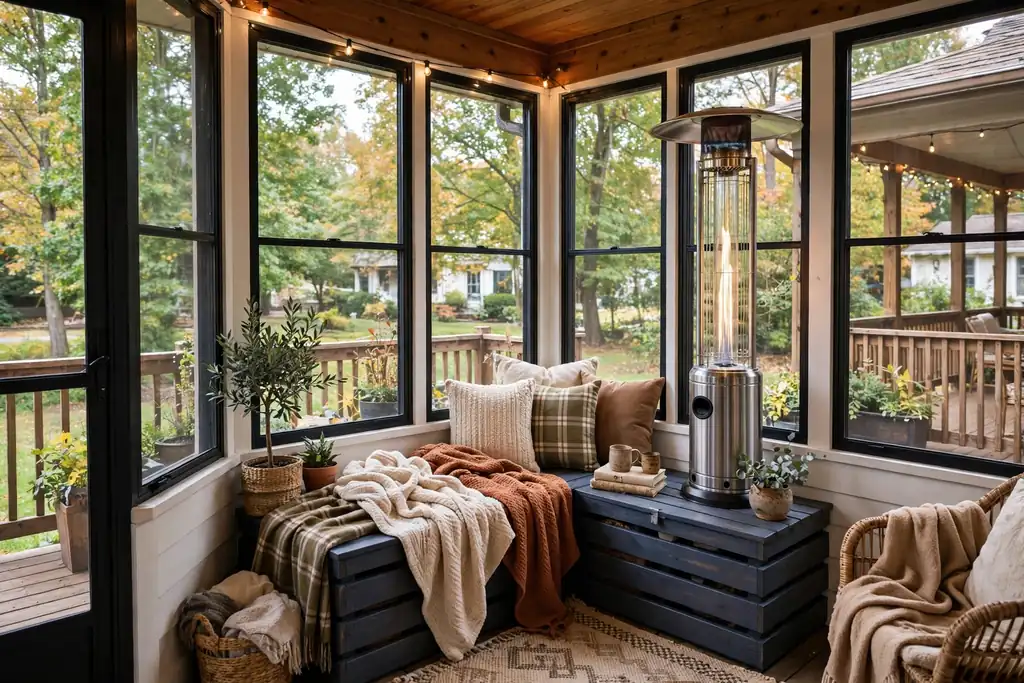
A four season corner keeps one part of the porch usable through cold months, with a heater, warm throws, and a storage bench for cushions. Set a small seating group in the most sheltered corner, with an outdoor rated heater placed at a safe distance from fabric and furniture, and a bench or box nearby for throws and cushion covers. The corner suits a covered side best, where wind and rain reach it least.
Follow the heater maker’s safety guidance for clearance, and never leave a heater running unattended. Bring throws indoors in wet weather, and store cushions in the bench when the porch is not in use, so the corner stays ready for a mild winter day. Swap the throws and the planter contents with the season, and keep the seating and the heater in place all year.
Conclusion
A comfortable wrap around porch does not need new furniture on every side or a full redesign. Pick one seating group, one dining spot, and one quiet corner, then use rugs, planters, and light to mark each zone and keep the paths to the doors clear. Start with the side you use most this week, and add shade or light next, so the porch grows into a set of small outdoor rooms you use every day.
FAQs
What is a wrap around porch?
A wrap around porch is a porch that runs along two or more sides of a house, often around a corner, giving access and outdoor living space on more than one side. It differs from a front porch, which covers only the entrance, since a wrap around porch can hold seating, dining, and quiet corners on separate sides.
How do you arrange furniture on a wrap around porch?
Arrange furniture on a wrap around porch by giving each side a job, such as seating on the sunny side, dining near the kitchen door, and a reading chair at the quiet end. Use rugs and planters to mark each zone, keep the paths to every door clear, and place the largest group where the view and the breeze are best.
What furniture works best on a wrap around porch?
Rocking chairs, a porch swing, an outdoor sectional, a long dining table, and a daybed work best on a wrap around porch, since they suit different sides and uses. Choose outdoor rated frames and cushions, add a storage bench for throws and cushion covers, and keep one side flexible with a bench or a small table for extra guests.
How do you keep a wrap around porch comfortable in summer?
Keep a wrap around porch comfortable in summer with ceiling fans for airflow, outdoor curtains or shade on the sunny side, and light colored cushions that stay cool. Place seating where the breeze reaches it, water plants in the morning, and bring cushions indoors in heavy rain so the porch stays dry and tidy.
How do you light a wrap around porch for evenings?
Light a wrap around porch for evenings with string lights along the ceiling edge for overall glow, plus lanterns on tables and steps for light at seat height. Use warm white, outdoor rated lights on a timer, keep cords out of walking paths, and add battery candles inside lanterns where wind or children make real flames risky.
Can a wrap around porch be used in cold weather?
A wrap around porch can be used in cold weather in its most sheltered corner, with an outdoor rated heater, warm throws, and a storage bench for cushions. Follow the heater maker’s safety guidance for clearance, keep fabric clear of the heater, bring throws indoors in wet weather, and swap planter contents with the season.