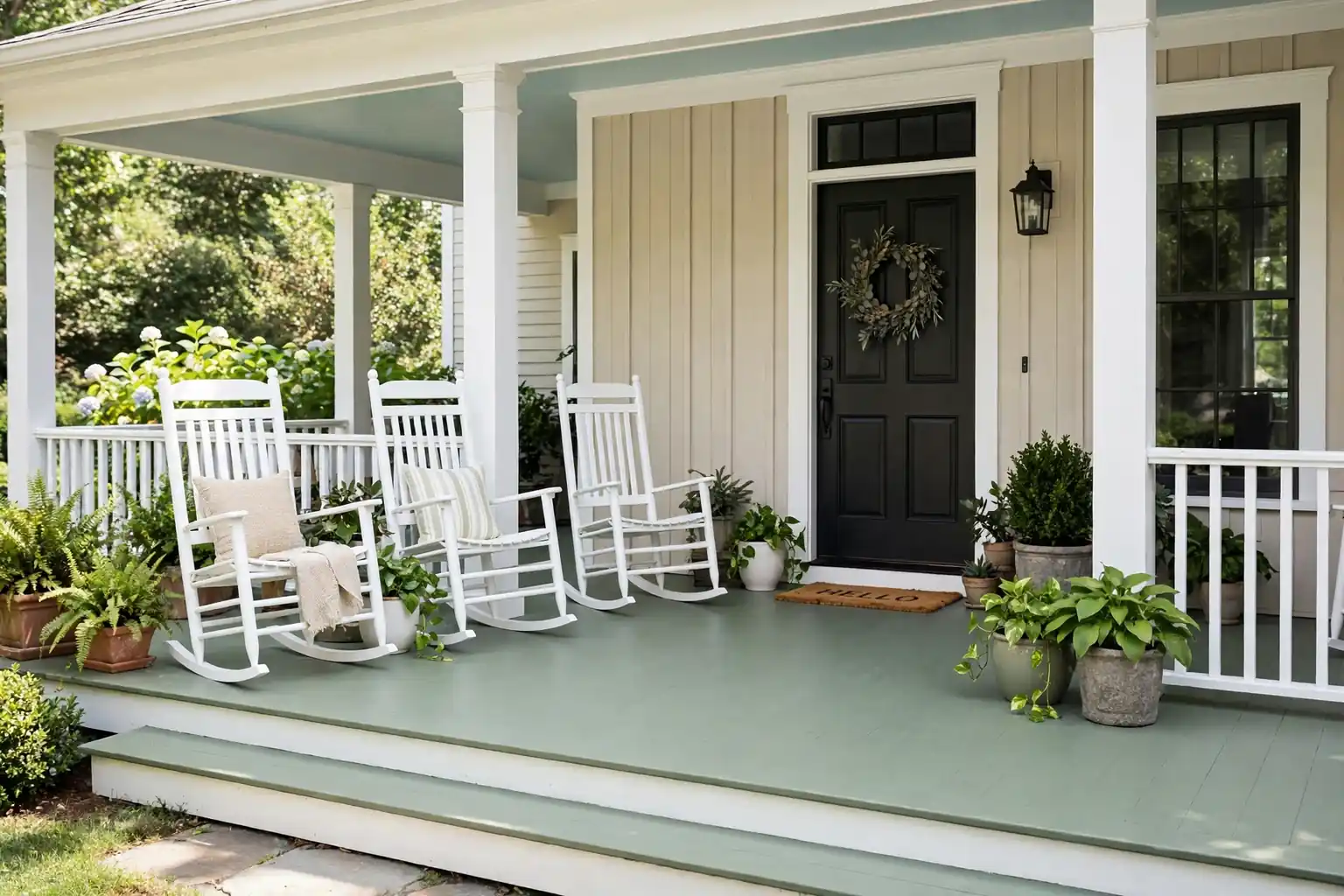
Painted porch floors refresh an entrance by adding color, pattern, and a clean finish to worn wood or concrete, and the best choice depends on your house color, porch size, and how much upkeep you accept. Solid colors suit small porches, while checkerboard, stripes, and stencils suit larger floors with room for pattern to breathe.
The 17 ideas below cover solid colors, classic patterns, stencils, and two tone schemes, so you can pick one that fits your porch size and your house style. Start with the floor color, then add the door, planters, and seating around it, since the floor sets the tone for the whole entrance. The same layered approach that works for a fall front porch applies here: one strong floor choice, repeated in small touches, reads as one plan rather than a collection of separate pieces.
Key Takeaways
- Pick the floor color first, then repeat it in small touches, such as the door, planters, or cushions, so the entrance reads as one plan.
- Solid colors suit small porches, while bold patterns, such as checkerboard and wide stripes, need a larger floor to breathe.
- Clean, sand, and prime the floor before painting, and use paint rated for floors and outdoor use, so the finish lasts through foot traffic and weather.
- Test a color in daylight and at dusk before painting the whole floor, since porch light changes how a color looks.
- Keep the walking path clear of decor, and add a mat at the door to protect the painted finish from grit and wet shoes.
- Touch up high traffic areas, such as the steps and the threshold, once a season, so small chips do not spread.
1. Classic White Porch Floor
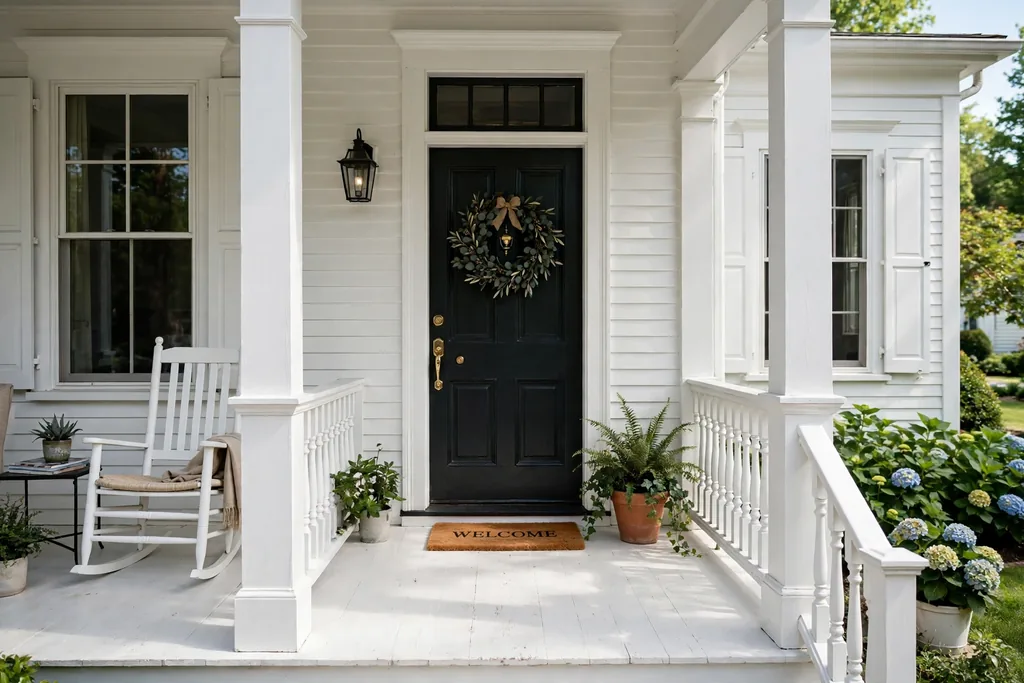
A classic white porch floor brightens a shaded entrance and makes the whole porch feel clean and open. Paint the boards in a warm white, not a cold blue white, so the floor suits wood siding, brick, and painted trim alike. White works best on covered porches, where it stays cleaner longer.
Clean the boards well before painting, and fill gaps and nail holes so the finish looks smooth. Two thin coats give a more even result than one thick coat, and a floor rated topcoat helps the white resist scuffs. Pair a white floor with a dark door or dark planters for contrast, and sweep it weekly, since dust shows fast on white.
2. Soft Sage Green Boards
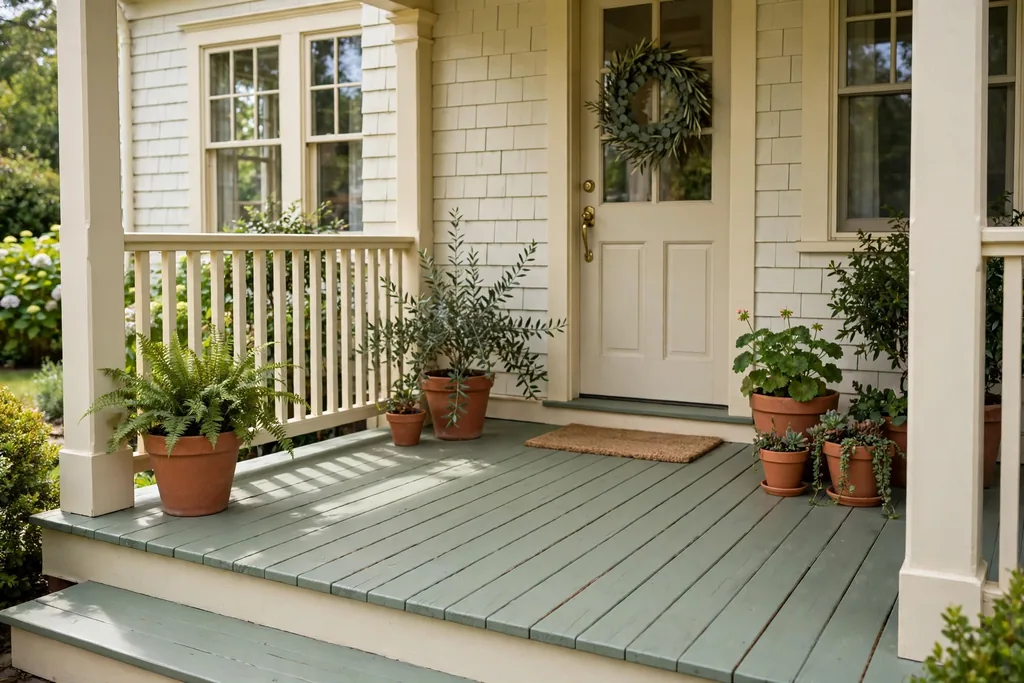
Soft sage green boards give a porch a calm, garden linked color that suits cream trim and natural wood. Paint each board in the same sage tone, with the grain still faintly visible, so the floor reads as painted wood rather than a flat slab. Sage suits houses with green yards and muted siding.
Test the sage in daylight, since some greens turn grey in shade and yellow in sun. Keep the door and trim in cream or warm white, so the green stays the main color. Sage pairs well with terracotta pots and plain wood chairs, and it hides dust better than white or pale grey.
3. Black and White Checkerboard
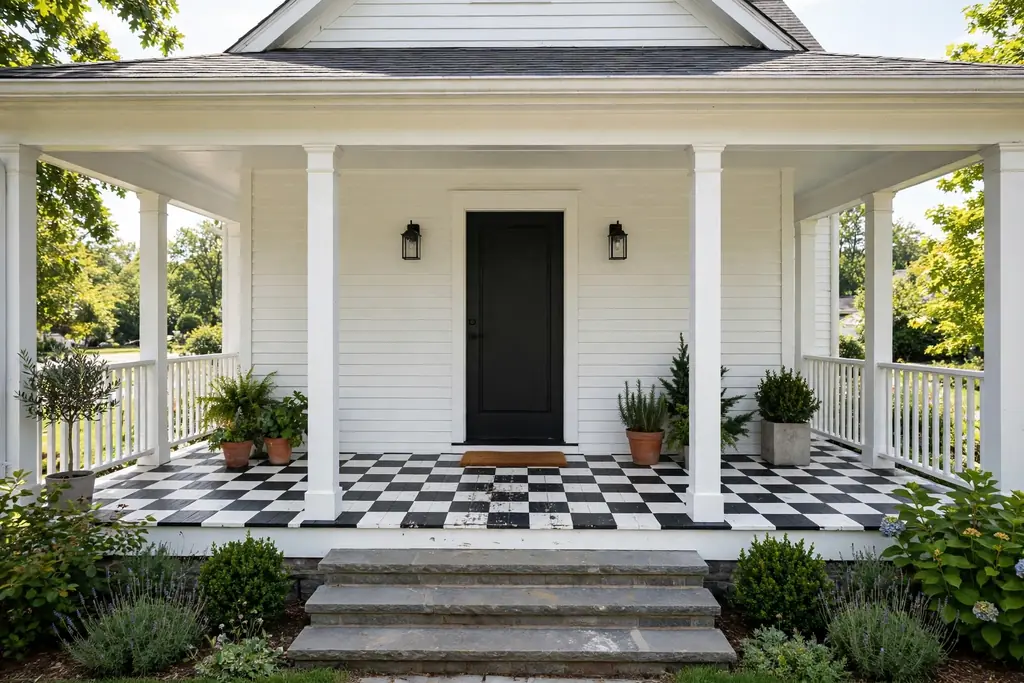
A black and white checkerboard floor is the boldest classic porch pattern, and it suits a wide porch with a plain door and simple furniture. Paint the squares in equal sizes, sized to the porch so the pattern ends in full squares at the edges where possible. Large squares suit large porches, while smaller squares suit a narrow porch.
Mark the grid with chalk lines and tape before painting, and paint the lighter color first, then the darker color. Check the grid from the street, since a crooked line shows at once in a checkerboard. Keep furniture and planters simple, since the floor already carries the pattern, and use a dark mat at the door to ground the scheme.
4. Wide Navy and White Stripes
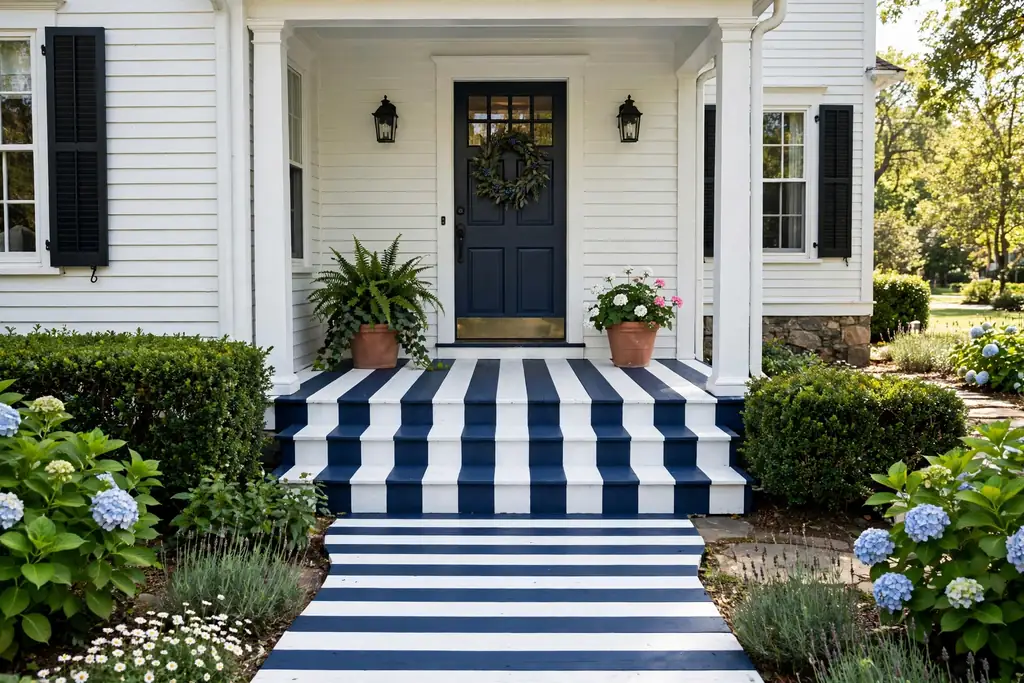
Wide navy and white stripes run along the porch boards and draw the eye toward the door. Paint stripes across the width of the porch, in bands of equal width, so the pattern feels calm rather than busy. Navy suits white houses, grey siding, and coastal style homes.
Tape each stripe carefully and press the tape edges down, so paint does not bleed under the tape. Paint the white bands first, let them dry fully, then tape and paint the navy bands. A striped floor pairs well with plain cushions and a simple wreath, and it suits a porch where the door is already a strong color.
5. Warm Terracotta Solid Color
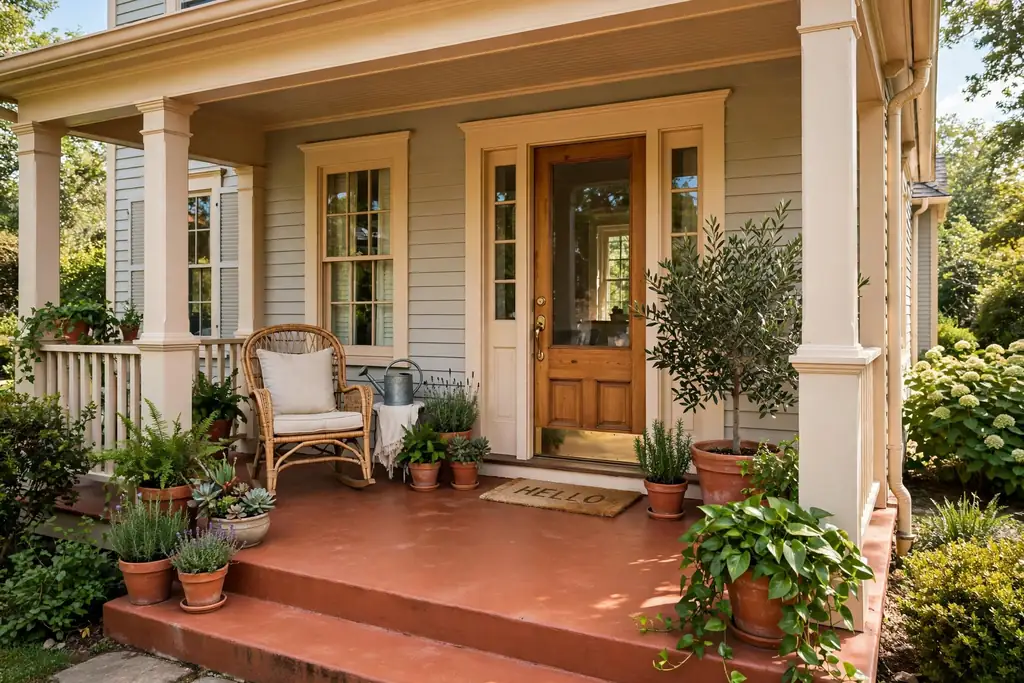
A warm terracotta floor brings sun baked color to a porch and suits brick houses, stucco walls, and wood siding. Paint the whole floor in one terracotta tone, and keep the trim in warm white, so the color reads as warm rather than loud. Terracotta suits porches that get strong sun, where cooler colors can look washed out.
Choose a terracotta with a brown base rather than an orange base, so it sits calmly next to plants and wood. Terracotta hides dust and leaf marks better than pale colors, which helps on an open porch. Pair it with cream planters and dark green plants for a garden feel.
6. Weathered Grey Wash
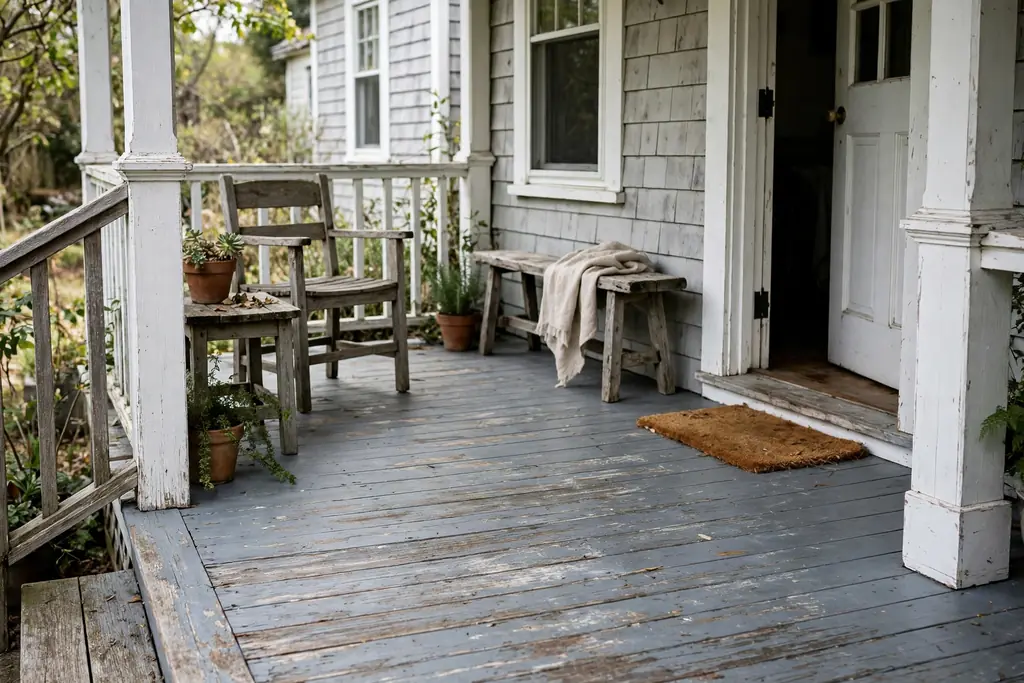
A weathered grey wash lets wood grain show through a thin coat of grey paint, for a soft, aged look. Brush on a thinned grey coat, wipe off the excess, and repeat until the tone is even, rather than painting a solid opaque layer. This suits older wood porches where a solid coat would hide character.
A grey wash works best on wood in fair shape, since it does not hide cracks or stains the way a solid coat can. Seal the wash with a clear outdoor floor finish, so rain and foot traffic do not wear it away fast. Pair a grey wash floor with white trim and simple wood furniture for a quiet, coastal feel.
7. Faux Tile Squares with a Stencil
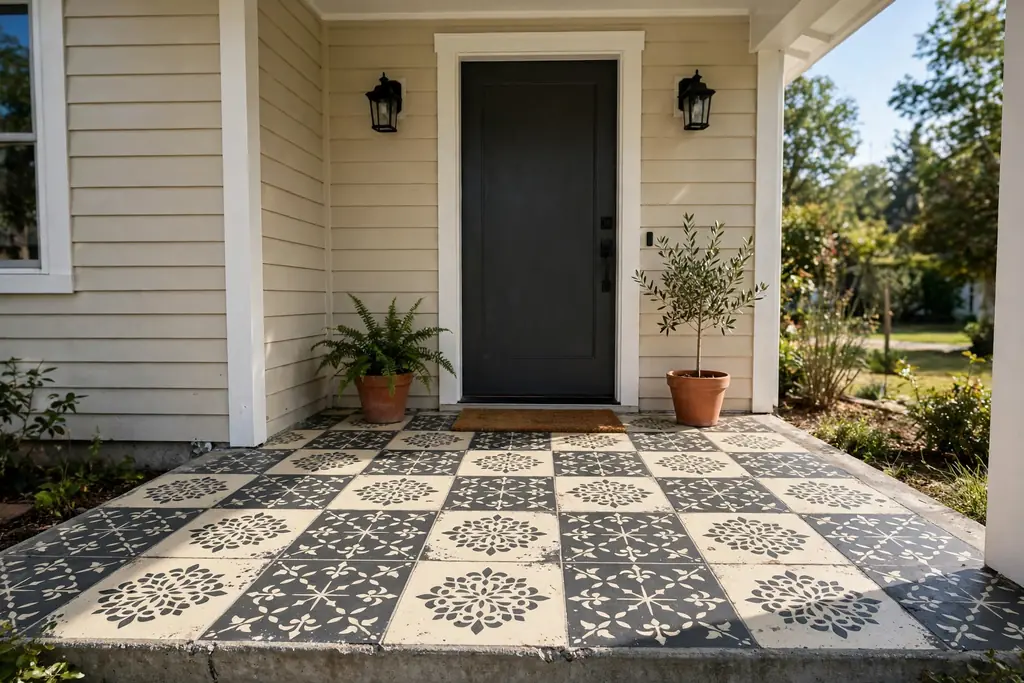
A stencil that mimics tile squares gives a wood or concrete porch the look of tile without the cost or weight of real tile. Choose a square stencil with a simple pattern, in two colors, such as cream and charcoal, and repeat it in a grid across the floor. This suits concrete porches especially well, where the flat surface takes a stencil cleanly.
Start in the center of the porch and work outward, so the pattern stays centered at the door. Use a dense foam roller and very little paint per pass, so the stencil edges stay crisp. Seal the finished floor with a clear topcoat, since stenciled paint wears faster than a solid coat under foot traffic.
8. Herringbone Painted Pattern
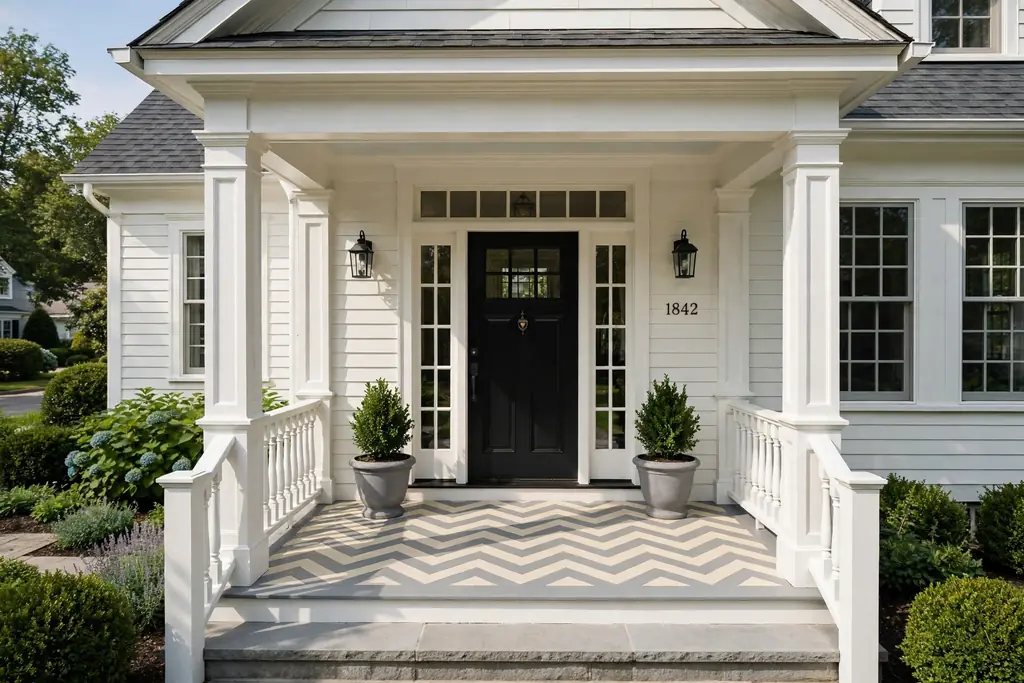
A herringbone pattern paints short boards or rectangles in a zigzag layout, for a tailored floor that suits a formal entrance. Paint the rectangles in two tones, such as cream and soft grey, or in one color with a darker grout style line between each piece. Herringbone suits a rectangular porch where the pattern can run in full rows.
Plan the layout on paper first, and mark the center lines on the floor before taping, since herringbone goes wrong fast without a guide. Keep the rest of the porch plain, with one pair of planters and a simple mat, so the floor stays the focus. This pattern takes more time than stripes or solids, so it suits a porch you plan to keep for years.
9. Haint Blue Porch Floor
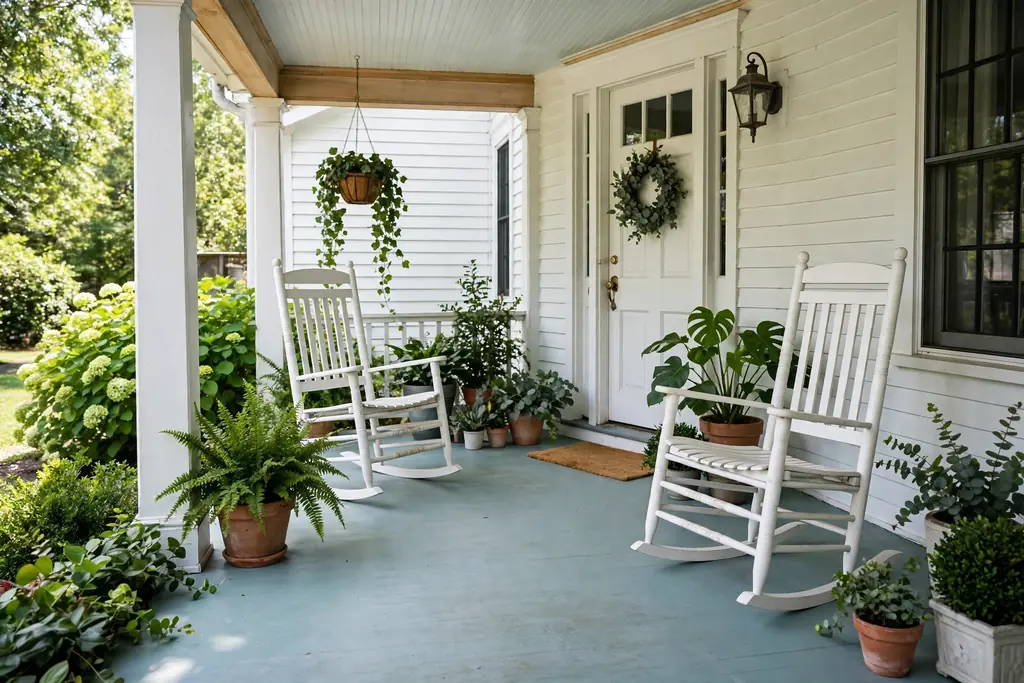
Haint blue, a soft blue green with a long history on Southern porches, gives an entrance a calm, sky linked color. Paint the floor in a pale blue green, and keep the ceiling and trim in white or the same blue, for a porch that feels light even in shade. Haint blue suits white houses, brick houses, and homes with deep porch roofs.
Test the blue on a board in place, since porch shade can make it look grey, and sun can make it look bright. Pair it with white rocking chairs and green plants, and keep the door in a contrasting color, such as dark green or black, so the entrance still has a focal point.
10. Brick Red Porch Floor
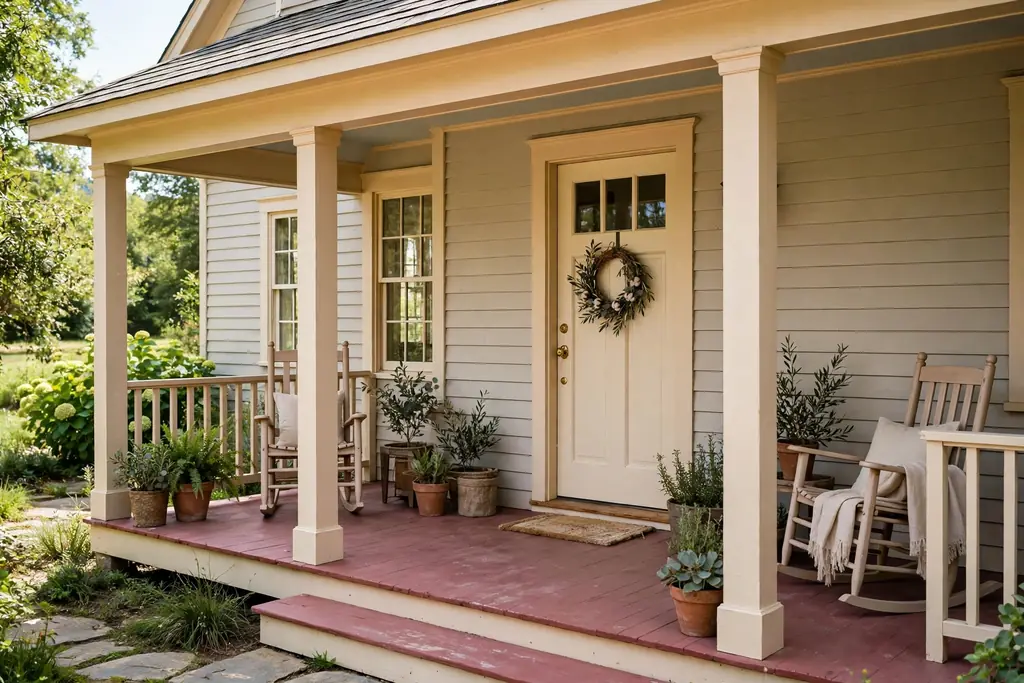
A brick red floor ties a porch to a brick house, a brick path, or red toned siding, and it grounds the entrance with a warm, earthy color. Paint the floor in a muted brick red, not a bright post box red, so it reads as a natural tone next to plants and wood. Brick red suits farmhouse and cottage style homes.
Brick red hides dirt well, which helps on porches near gardens and gravel paths. Keep the trim in warm white and the door in cream, black, or dark green, so the red does not compete with the door color. A brick red floor pairs well with terracotta pots and dark wood furniture.
11. Painted Border Frame
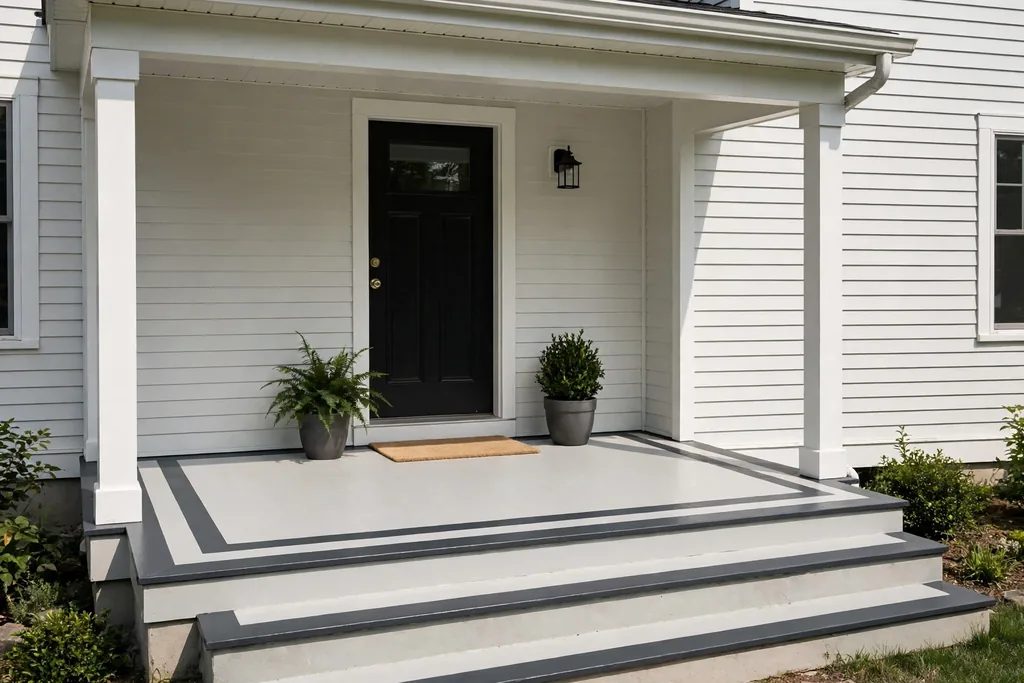
A painted border frames the porch floor with a contrasting edge, for a finished look without painting the whole floor a new color. Paint the main floor in a pale tone, then paint a border band, about the width of one board, around the edge in a darker tone, such as charcoal or navy. This suits porches where the floor is in good shape but looks plain.
Measure the border from the edge inward and tape both sides of the band, so the lines stay straight at the corners. Miter the corners by taping at a diagonal, or square them off for a simpler look. A border pairs well with a plain mat at the door and planters set inside the border line.
12. Painted Rug at the Door
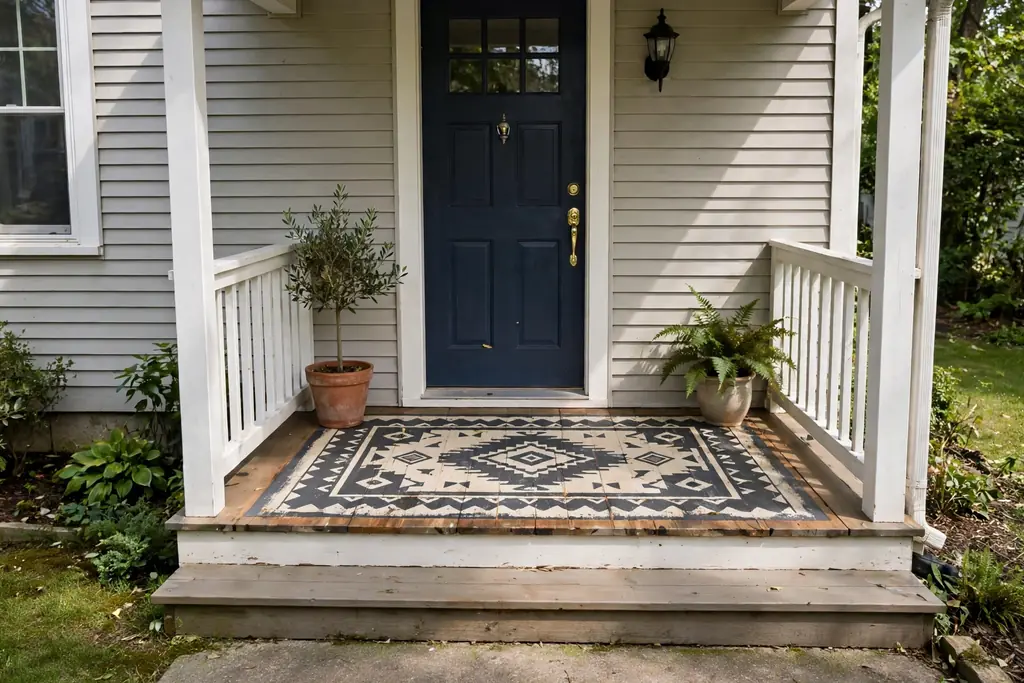
A painted rug is a flat rectangle painted on the floor at the door, in a pattern such as stripes or a simple border, that never needs shaking out. Paint the rectangle in a color that contrasts with the main floor, such as charcoal on cream, or cream on sage, and add a thin border line inside the edge. This suits small porches where a real rug would bunch or blow away.
Size the painted rug to the door, about as wide as the door plus a small margin on each side, and long enough for two steps. Keep the pattern simple, since a busy painted rug competes with the door itself. A painted rug also gives a useful landing zone for shoes and parcels, and it can be repainted when the pattern wears.
13. Two Tone Floor and Steps
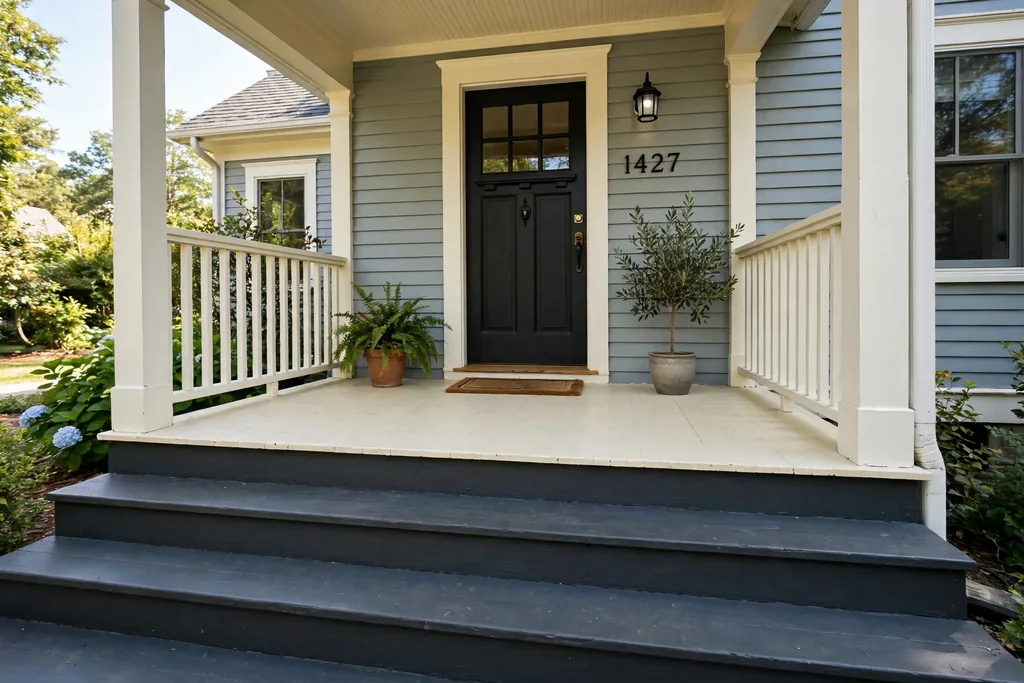
A two tone scheme paints the porch floor one color and the steps a second color, for a clear, layered entrance. Try a pale floor with darker steps, such as cream boards with charcoal steps, or a sage floor with white steps, so the change of level reads clearly. This suits porches with three or more steps, where the steps are a visible part of the entrance.
Paint the steps with extra care at the edges, since step edges wear fastest, and add a non slip additive to the step paint if the porch gets wet. Keep the handrail and trim in one of the two colors, so the scheme stays to two tones plus white. A two tone floor also helps guests see the steps at dusk.
14. Diamond Lattice Stencil
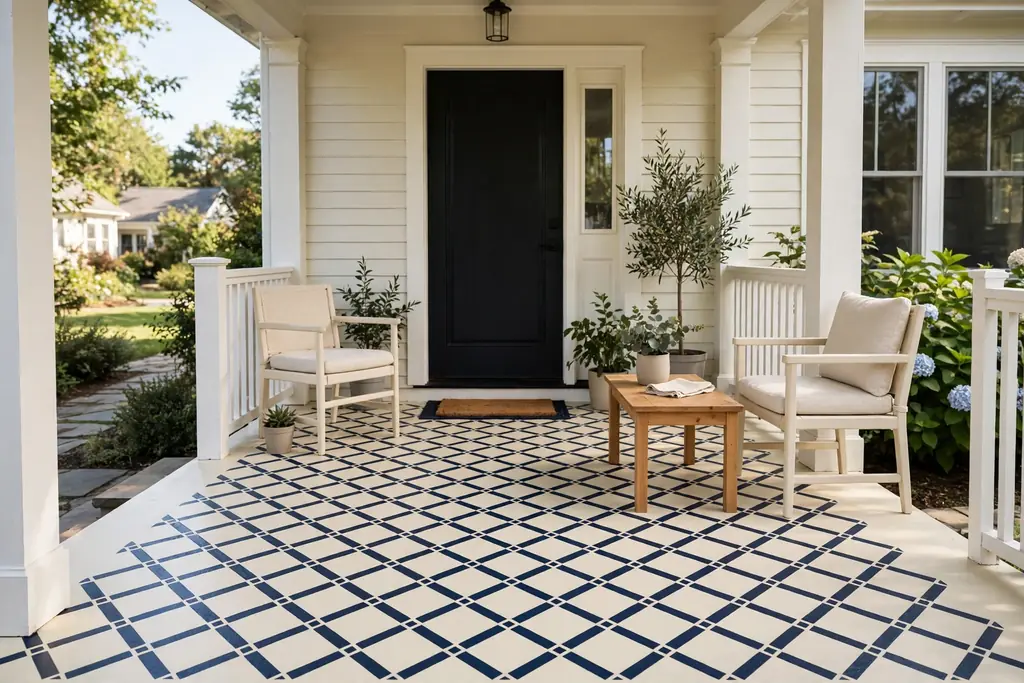
A diamond lattice stencil paints a repeating diamond grid across the floor, for a pattern that feels dressier than stripes but calmer than checkerboard. Choose a stencil with open diamonds in one accent color over a pale base, such as navy diamonds on cream, or charcoal diamonds on soft grey. This suits a porch with plain furniture and a simple door.
Align the stencil rows with chalk lines, and check the first row from the door before continuing, since a drift in the first row repeats across the floor. Use a light hand with the roller, and lift the stencil straight up to avoid smudging. Seal the floor well, since the fine lines of a lattice wear faster than broad bands of color.
15. Dark Charcoal Modern Floor
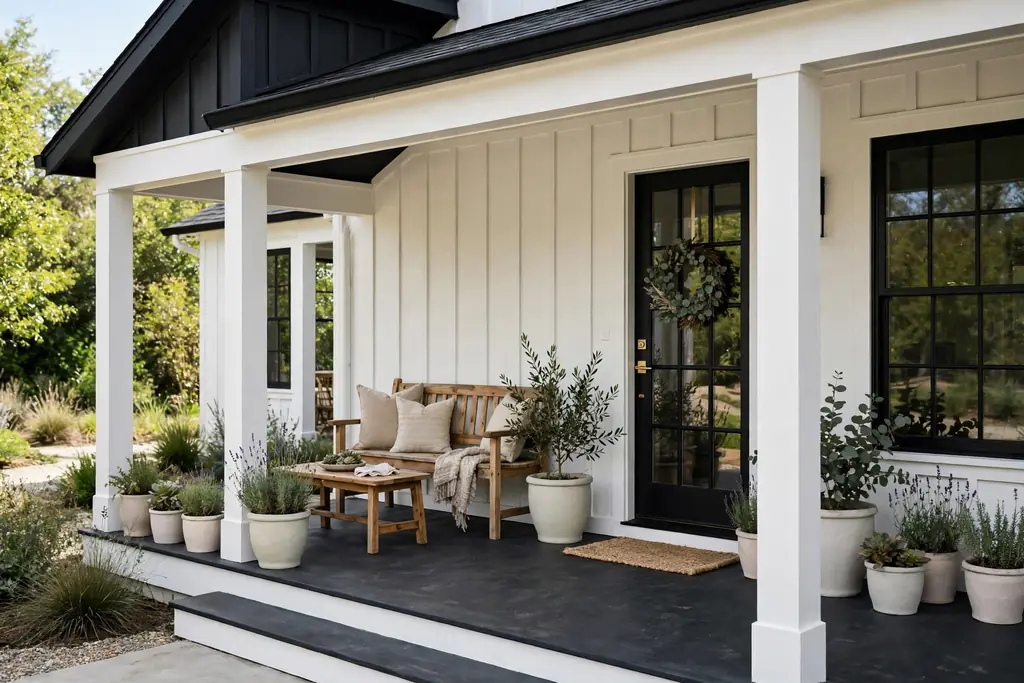
A dark charcoal floor gives a porch a modern, grounded look and makes white trim, light doors, and green plants stand out. Paint the whole floor in a flat charcoal tone, and keep the walls and trim pale, so the porch does not feel dark. Charcoal suits modern farmhouse homes and houses with black window frames or black doors.
Charcoal shows dust and pollen more than mid tones, so sweep it often, and expect to touch up scuffs near the door. Pair it with pale planters, a light mat, and wood furniture, so the porch keeps a warm note. A charcoal floor also suits a porch with strong sun, where pale floors can glare.
16. Soft Butter Yellow Floor
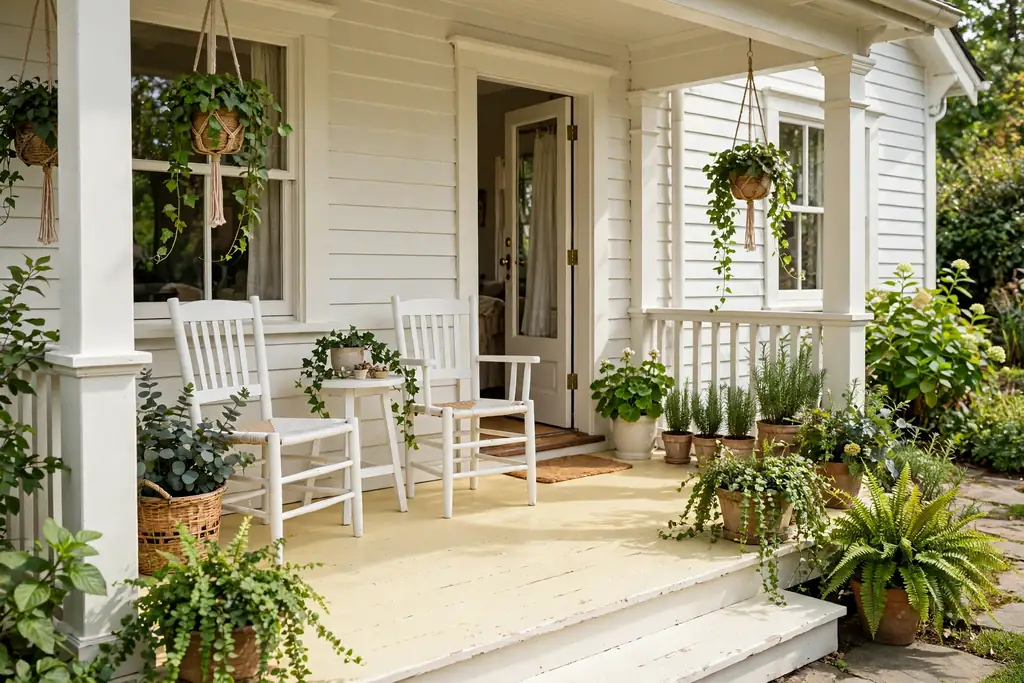
A soft butter yellow floor adds a gentle, sunny note to a porch without the boldness of a bright yellow. Paint the boards in a pale, creamy yellow, and keep the trim in warm white, so the color reads as soft rather than loud. Butter yellow suits cottage style homes, white siding, and porches that face north and need warmth.
Test the yellow in shade, since it can look cream on a bright day and mustard in deep shade. Pair it with white chairs, green plants, and a door in sage or navy for contrast. Butter yellow hides light dust better than white, but shows dark soil marks, so keep a mat at the door.
17. Alternating Accent Boards
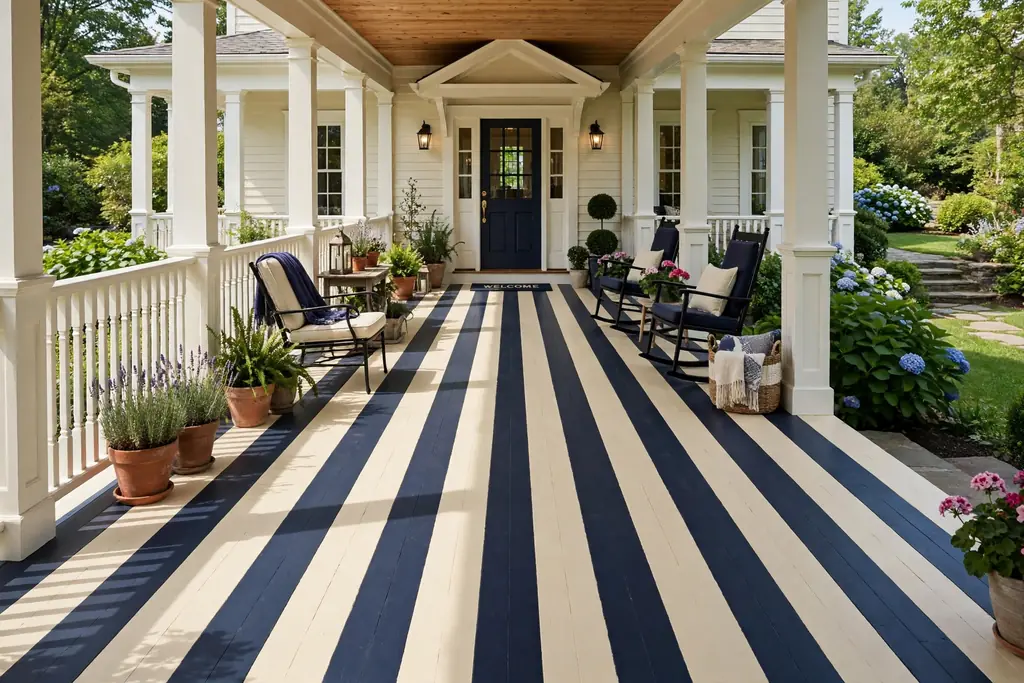
Alternating accent boards paint every third or fourth board in an accent color, with the rest in a neutral tone, for a subtle rhythm across the floor. Try navy accent boards on a cream floor, or terracotta accent boards on a warm grey floor, keeping the accent boards evenly spaced. This suits a porch where a full pattern would feel too busy, but a solid color feels too plain.
Count the boards and mark the accent boards before painting, so the spacing stays even across the whole floor. Paint the neutral boards first, then the accent boards, and keep the door and planters in the neutral tone, so the accent color stays a rhythm rather than a theme. This idea also suits a long porch, where the repeated accent boards lead the eye to the door.
Conclusion
Painted porch floors work best when the color or pattern fits the house, the porch size, and the amount of upkeep you accept. Start with one idea from this list, test the color in place, and prep the floor well before you paint, since prep decides how long the finish lasts. A solid color is the safest first step, while checkerboard, stripes, and stencils reward a larger porch and a steadier hand. Whichever idea you pick, keep the door, planters, and seating calm, so the floor can carry the entrance, and touch up the high traffic spots once a season. For a seasonal take on the same entrance, the farmhouse fall palette of rust, cream, and olive pairs well with most of these floor colors.
FAQs
What paint should I use for a painted porch floor?
Use paint rated for floors and outdoor use, with a primer suited to your floor material, wood or concrete, and a clear topcoat if the paint maker advises one. Floor rated paint resists scuffs and foot traffic better than wall paint, and outdoor rated paint handles rain and sun. Check the label for porch, deck, or concrete floor use before you buy, and follow the drying times between coats.
How do I prepare a porch floor before painting?
Prepare a porch floor by sweeping it clean, washing off dirt and mildew, sanding rough or peeling spots, and filling cracks and nail holes, then priming bare wood or bare concrete. Let the floor dry fully before priming, since trapped damp lifts paint. On a previously painted floor, sand glossy areas lightly so the new coat grips, and remove any loose paint first.
Do painted porch floors last, and how do I keep them looking good?
Painted porch floors last well on covered porches with good prep, and less long on open porches in harsh weather, but most last a few seasons before they need touch ups. Sweep weekly, keep a mat at the door to catch grit, and touch up chips at the threshold and step edges once a season. Repaint the whole floor when wear covers large areas rather than small spots.
What is the best painted porch floor color for a small porch?
The best painted porch floor color for a small porch is a pale solid, such as warm white, soft sage, or pale grey, since pale colors make a small floor feel open. Keep the pattern simple, with a border or a painted rug rather than a bold checkerboard, and repeat the floor color in one small touch, such as a planter or a cushion, so the small porch reads as planned.
Can I paint a concrete porch floor?
You can paint a concrete porch floor with concrete rated floor paint, after cleaning the surface, etching or priming it as the paint label directs, and letting it dry fully. Concrete takes stencils well, since the flat surface gives crisp edges, and solid colors look smooth on concrete. Avoid painting concrete that stays damp, since damp lifts paint, and use a non slip additive on steps.
How do I choose between a solid color and a pattern for my porch floor?
Choose a solid color if your porch is small, your door is already bold, or you want a quick refresh, and choose a pattern, such as checkerboard, stripes, or a stencil, if your porch is large and the rest of the entrance is plain. Patterns need a larger floor to breathe and more prep time, while solids suit a first painting project and hide small flaws better.