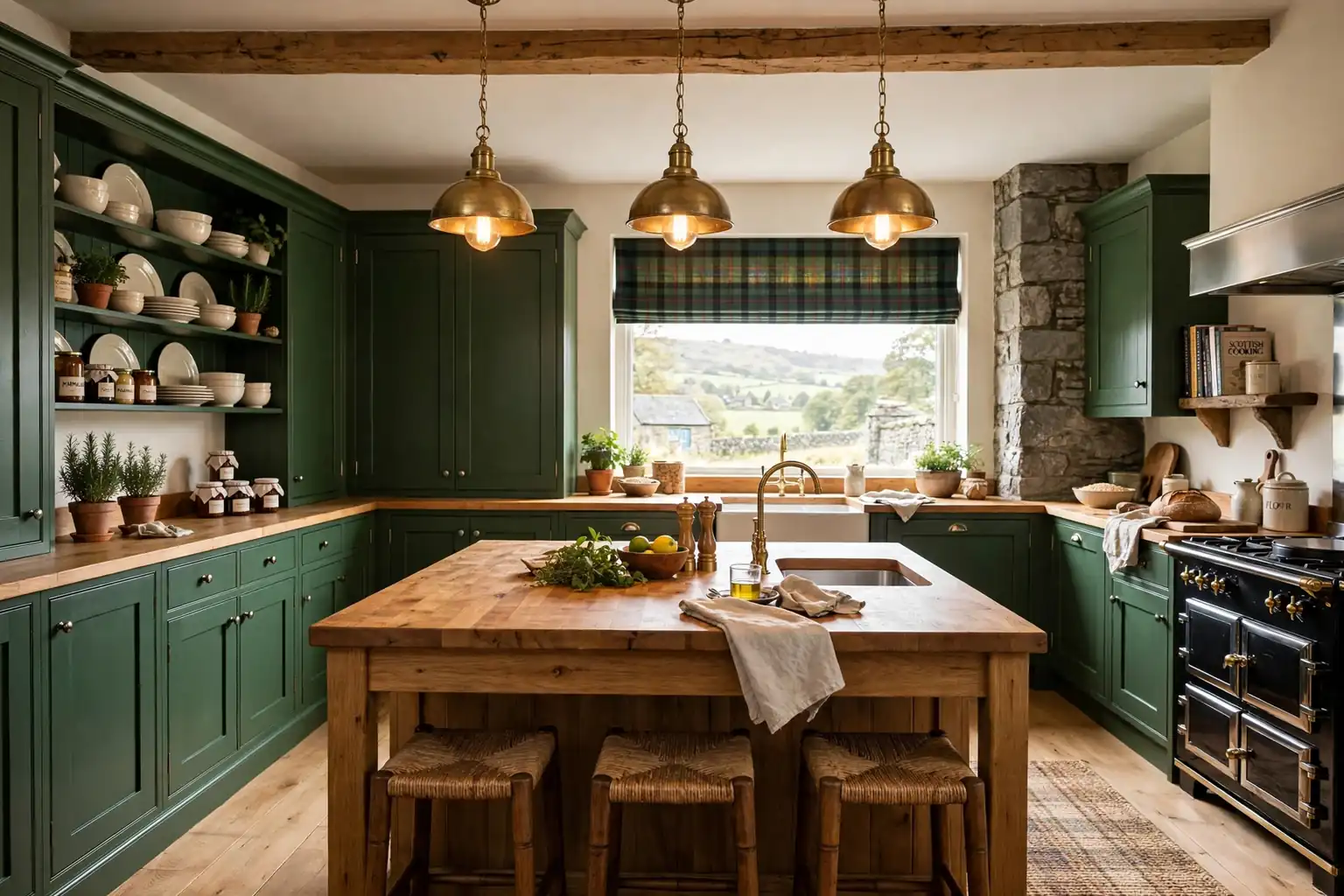
Scottish character in a kitchen comes from honest materials used well: wood, stone, wool, tartan, and colours borrowed from hills, heather, and lochs. It does not need a castle theme or a room full of pattern. One tartan shade at the window, a wood panelled wall, or a freestanding larder can set the tone, while plain worktops and calm walls keep the room easy to cook in. These 30 Scottish kitchen ideas cover cabinets, walls, floors, sinks, storage, seating, and small details, so you can start with one change or build a layered scheme over time. Pick the ideas that suit your room size and light first, then repeat one or two colours from your tartan in solid pieces.
Key Takeaways
- Start with one main Scottish piece, usually wood cabinets, a stone sink, or a tartan textile, and build solids around it.
- Use wood, stone, wool, and linen for texture, and keep bright pattern to one or two places in the room.
- Repeat one or two colours from your tartan in cushions, curtains, or a rug so the scheme looks planned.
- Pair deep green, heather purple, or navy with cream, oat, and warm wood so dark colours stay cosy, not heavy.
- Choose washable, practical textiles near the sink and stove, since kitchen fabrics get daily splashes.
- Renters can get the same character from textiles, baskets, and freestanding pieces, with no paint or fixed work.
1. Paint Shaker Cabinets in Deep Highland Green
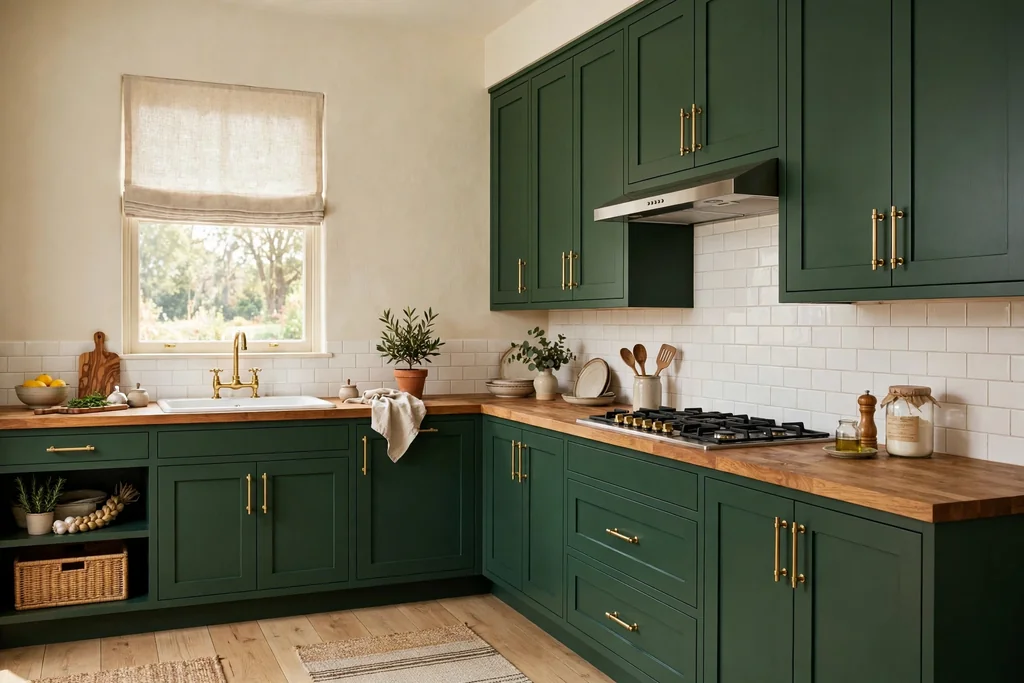
Paint Shaker cabinets in a deep green for a Highland feel that still works with plain worktops and wood floors. The flat panel doors keep the look calm, while the green gives the kitchen a clear identity. Test the paint beside your floor and worktop in daylight and lamplight, since green can look much darker at night.
Pair the green cabinets with cream walls, brass handles, and one tartan accent, so the room stays cosy rather than dark. In a small or low light kitchen, use the deep green on the lower cabinets only, and keep the upper cabinets cream. Renters can get a similar depth from dark green cushions and a table runner instead of paint.
2. Hang a Tartan Roman Shade at the Kitchen Window
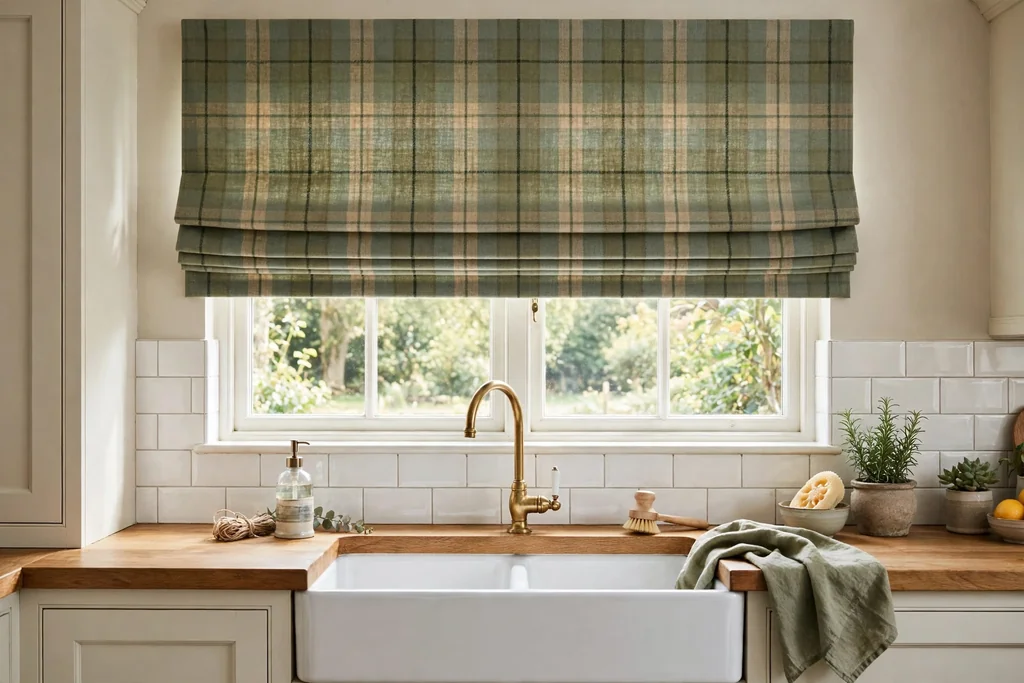
Fit a tartan Roman shade at the kitchen window for pattern and privacy without taking floor space. Choose a flat shade rather than soft folds if the check is large, so the repeat stays readable when the shade is raised. A muted green or navy tartan suits most wall colours, while a bold red tartan needs plain cabinets nearby.
Use a cordless or child safe fitting where needed, and keep the shade hem clear of the sink splash zone. Add a plain roller behind the shade if you need full darkness in the evening. Measure the window frame carefully, so the shade covers the glass fully when lowered.
3. Build a Range Alcove With a Wood Mantel
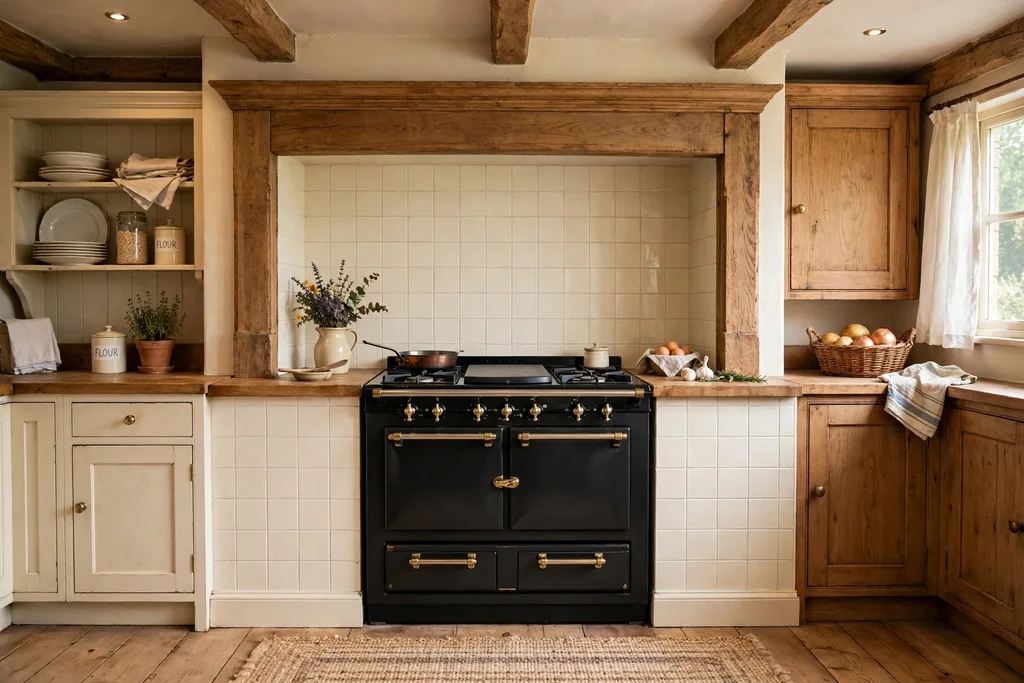
Build or dress a range alcove with a simple wood mantel shelf above the cooker for a cottage focal point. The shelf gives a home to a clock, a small plant, or a jug, and the alcove frames the cooking zone. Keep the mantel clear of hanging items that could catch heat, and choose a wipeable finish near the stove.
Size the alcove to the cooker width, and follow the cooker maker guidance for clearance above the hob. Pair the wood mantel with plain tile inside the alcove, so the shelf stays the focus. If fixed work is not practical, a freestanding shelf unit beside the range gives a smaller version of the same effect.
4. Top a Butcher Block Island With Turned Legs
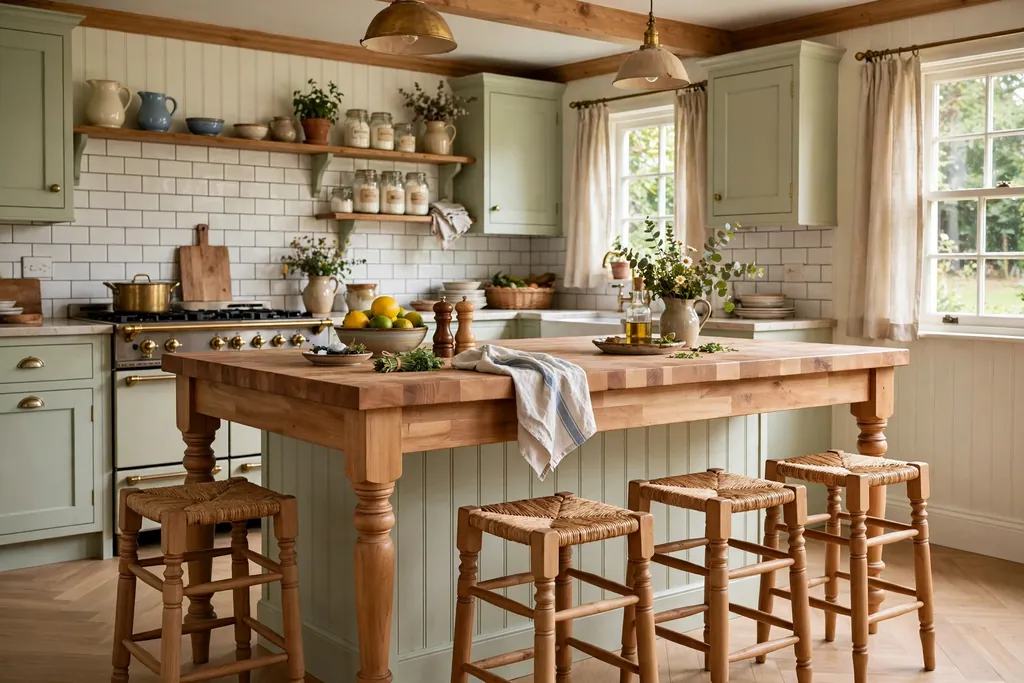
Use a butcher block island with turned legs at the corners for a furniture look that suits a Scottish cottage kitchen. The wood top tolerates daily prep, while the legs stop the island reading as a plain box. Plan seating on one side only, and leave clear walkways around the island for safe movement with hot pans.
Seal the wood top against spills, and use boards for citrus and tomato prep. Paint the island base a deeper tone than the wall cabinets, such as sage or navy, for a classic two tone scheme. Keep the counter in the same wood or stone as the rest of the room for a settled result.
5. Display Stoneware on a Freestanding Kitchen Dresser
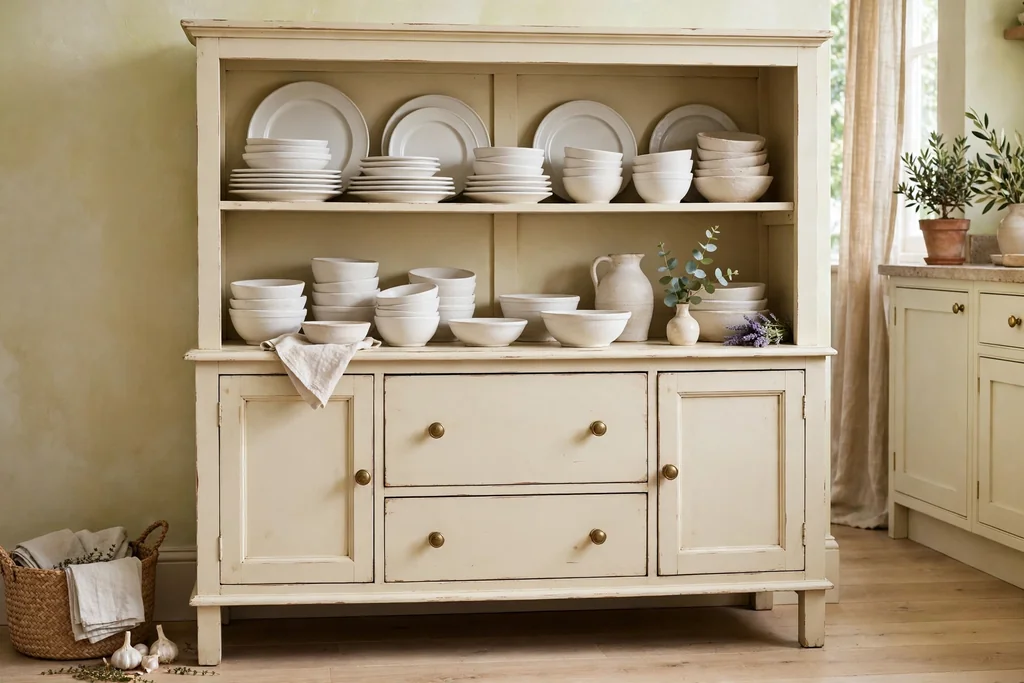
Place a freestanding dresser or hutch in the kitchen for plates, bowls, and jugs, with the upper shelves open and the lower cupboard closed. A painted dresser in cream or muted green links to the cabinets without matching them exactly, and it suits a Scottish kitchen because older kitchens often mixed fitted cabinets with separate furniture.
Measure the wall and door swing before you buy, since a dresser is deep and needs clear space in front. Fix tall pieces to the wall if the household includes children, and keep the top shelf for light items you reach for rarely. Keep the display edited, with one colour family of dishes, so it reads as calm rather than crowded.
6. Dress a Breakfast Nook With Tartan Bench Cushions
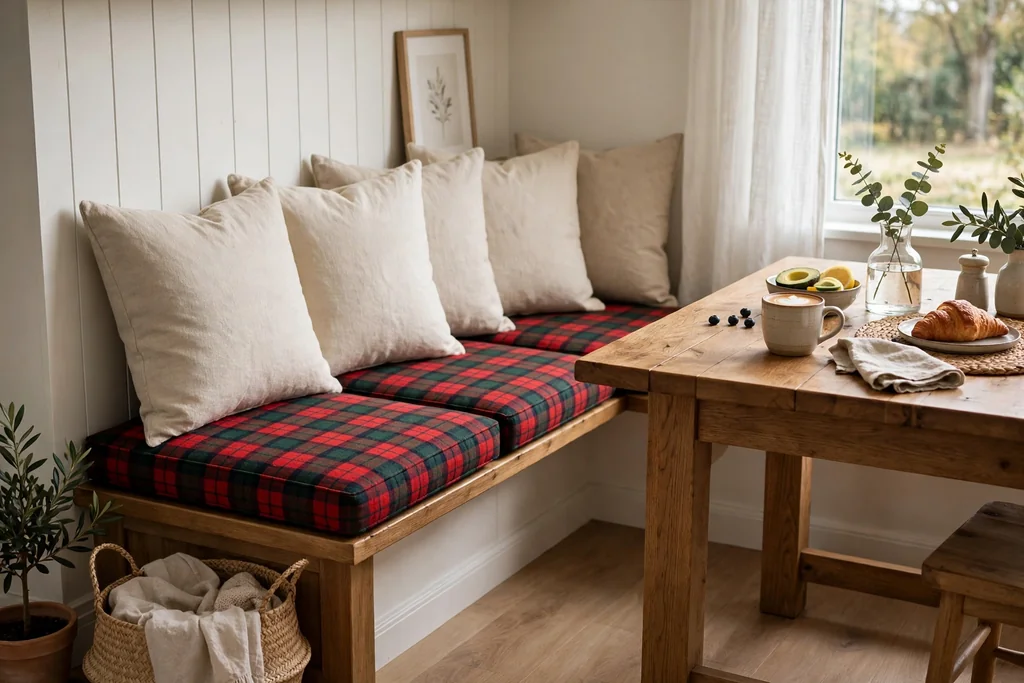
Dress a breakfast nook bench with tartan seat cushions and plain back cushions, so the eating corner carries Scottish pattern without repainting. Use a muted tartan on the seat pads and solid cushions behind, so the seat stays comfortable and the pattern stays controlled. For more nook layouts, see these kitchen nook ideas.
Choose seat pads with removable, washable covers, since a nook seat gets daily use and food spills. Keep the table top wipeable, and leave a clear route in and out of the bench. In a kitchen with no built in bench, a low bench with the same tartan pads beside a small table gives a similar result.
7. Lay a Tartan Table Runner for Everyday Meals
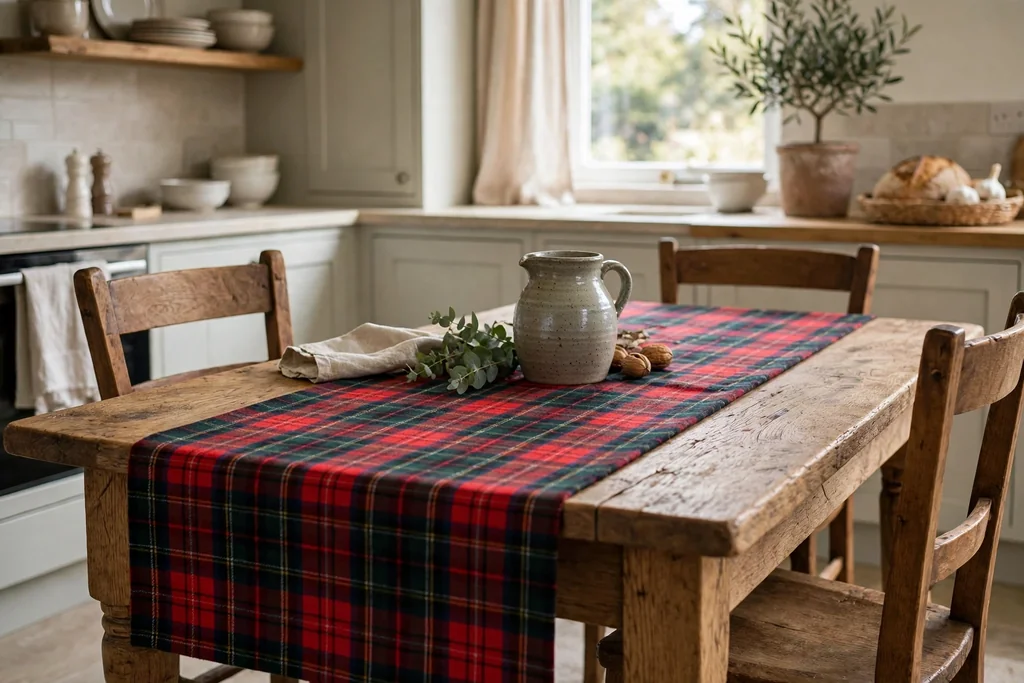
Lay a tartan runner down the centre of the kitchen table to soften a hard surface, protect it from scratches, and link the table to the window or bench colours. Choose a runner that stops short of the table ends, so plates and placemats still have room. Leave clear zones for daily items, instead of covering the whole table with decor.
A washable runner is the practical choice in a kitchen, since spills reach the table daily. Keep the runner colour close to one tartan accent in the room, and pair it with one small jug or a plain candle holder, rather than a crowded display. Fold the runner away for a plainer look when you want a change.
8. Use Heather Purple as a Muted Kitchen Accent
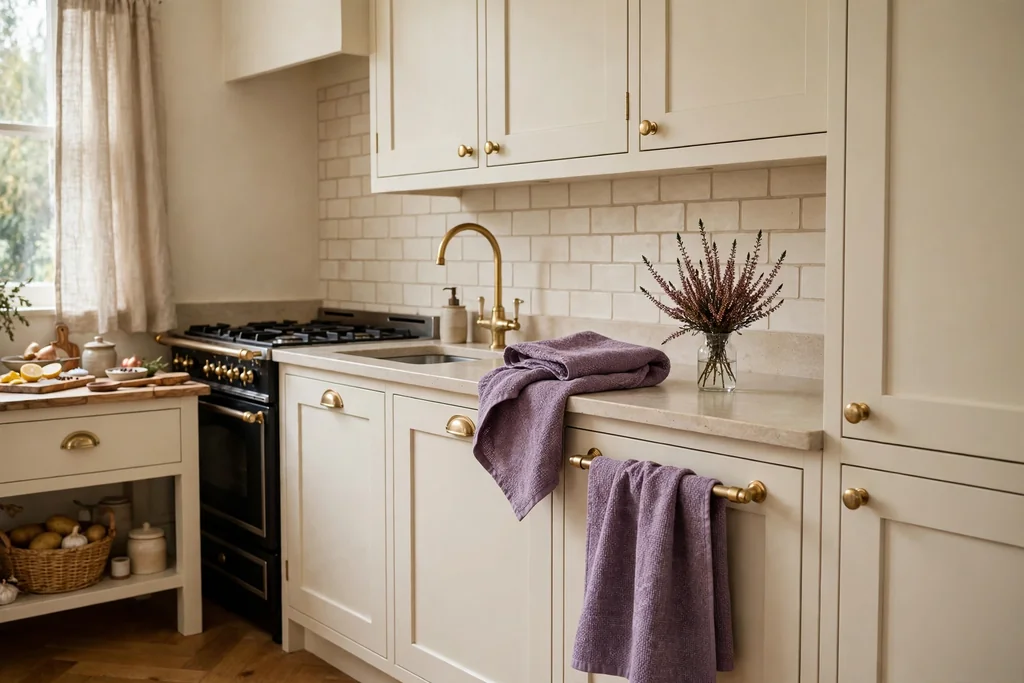
Bring heather tones into the kitchen through two or three soft purple pieces, such as a kettle cover, a tea towel set, or a small vase of dried stems, paired with cream cabinets and light wood. Heather purple reads as a Scottish moor colour without needing tartan, and it suits kitchens that already have grey or oat tones.
Repeat the same purple in only one more place, such as a cushion in the nook, and keep the rest of the room neutral. Sample the fabric beside your cabinets first, since purple can shift under warm kitchen lighting. If purple feels too strong, use it on one towel only and keep the rest of the textiles in oat or cream.
9. Lay Flagstone or Stone Look Floor Tiles
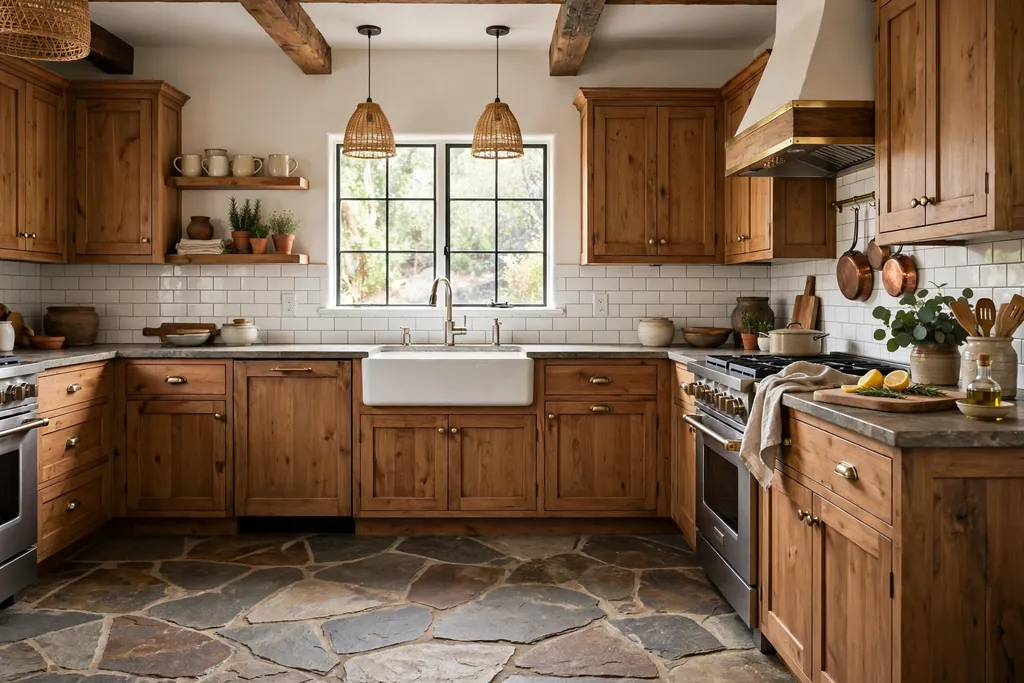
Lay flagstone or stone look floor tiles for a cool, hard wearing kitchen floor that suits wood cabinets and a farmhouse sink. Large tiles suit a bigger floor, while smaller tiles suit a compact kitchen or a hallway run. The stone tones ground cream cabinets and wood counters, and they hide crumbs better than a plain pale floor.
Use tile rather than a printed sheet if the floor sees heavy wear, and choose a grout colour close to the main tile tone to keep the floor calm. Seal the grout, and keep a spare box of tiles for repairs. If a full stone floor feels too cold, add a washable rug runner in the main walkway for warmth underfoot.
10. Panel One Wall With Painted Beadboard
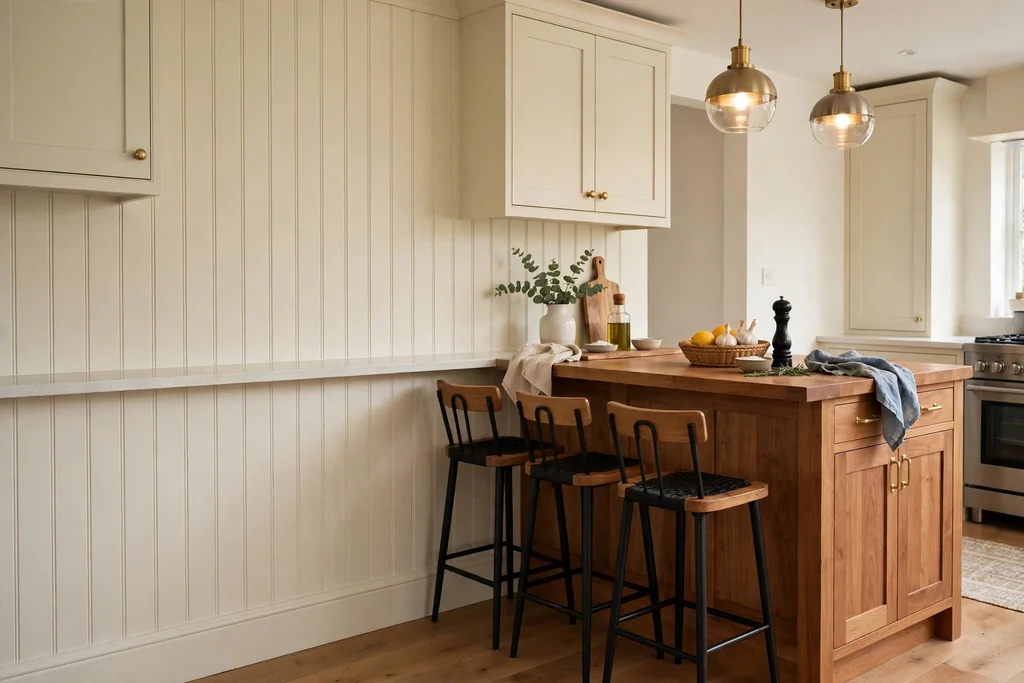
Panel one kitchen wall, or the back of an island, with painted beadboard for lined cottage texture that flat plaster cannot match. Painted beadboard in cream or soft white brightens the work zone, while a natural wood finish warms a kitchen with pale cabinets. The vertical lines draw the eye up and make a low ceiling feel a little taller.
Seal painted beadboard well, especially near the sink and stove, where steam and splashes land daily. Use a wipeable paint finish so cooking grease comes off with a damp cloth. If you like the lined look but want tile near the stove, use beadboard on the remaining walls and tile only in the splash zone.
11. Fit a Belfast Sink With a Brass Bridge Tap
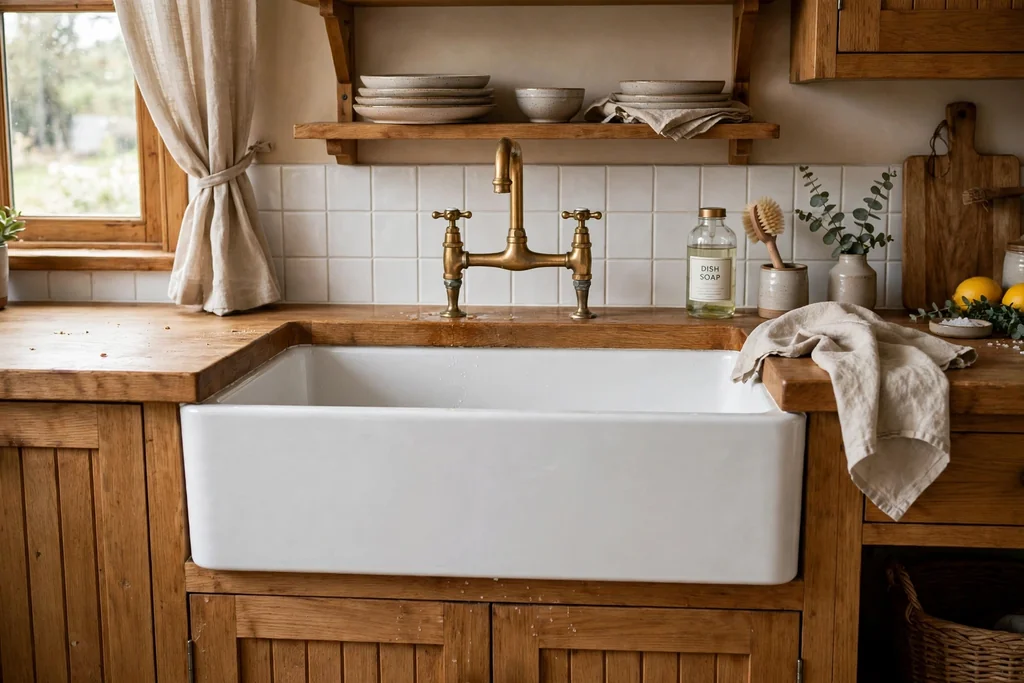
Fit a deep Belfast or farmhouse sink with a brass bridge tap for a traditional kitchen workhorse. The sink sits forward of the cabinet line, so you can stand close while washing large pots and baking trays, and the exposed front panel becomes a feature in itself. A single large bowl is more useful for most cooks than two small bowls, since it fits roasting pans flat.
Check the cabinet below before you choose, because a heavy sink needs a special base cabinet and solid support. Fit a grid or mat in the base to protect the surface from heavy pans, and wipe the front panel when you clean the counters. Choose a tap finish that matches your other hardware, so the sink area reads as one planned group.
12. Hang Copper Pans on a Wall Rail
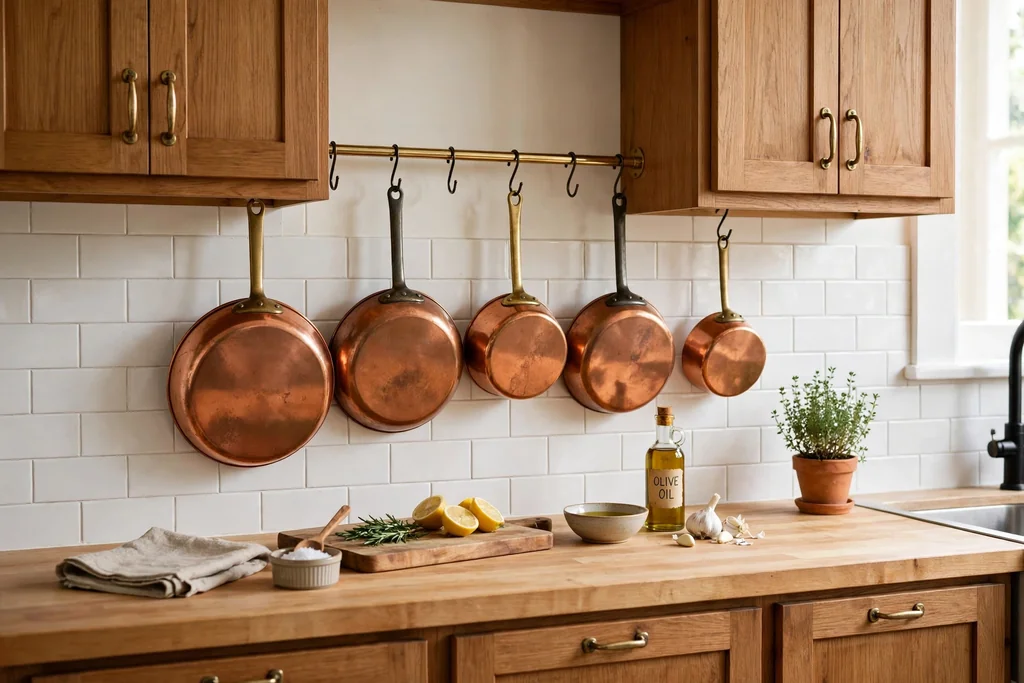
Hang copper and cast iron pans on a sturdy wall rail above a worktop for storage that is also a display. The warm metal suits wood cabinets and stone worktops, and keeping pans in reach shortens prep time. Fix the rail into wall studs or solid masonry, and check the weight rating before you load it with heavy pans.
Keep the rail near the cooker, but clear of direct steam and splash, and leave the most used pan at the easiest height. Wipe the pans after use, since kitchen air leaves a film on metal. If wall space is short, a ceiling pot rack over an island gives a similar result, with head clearance checked first.
13. Lay Warm Oak Plank Flooring
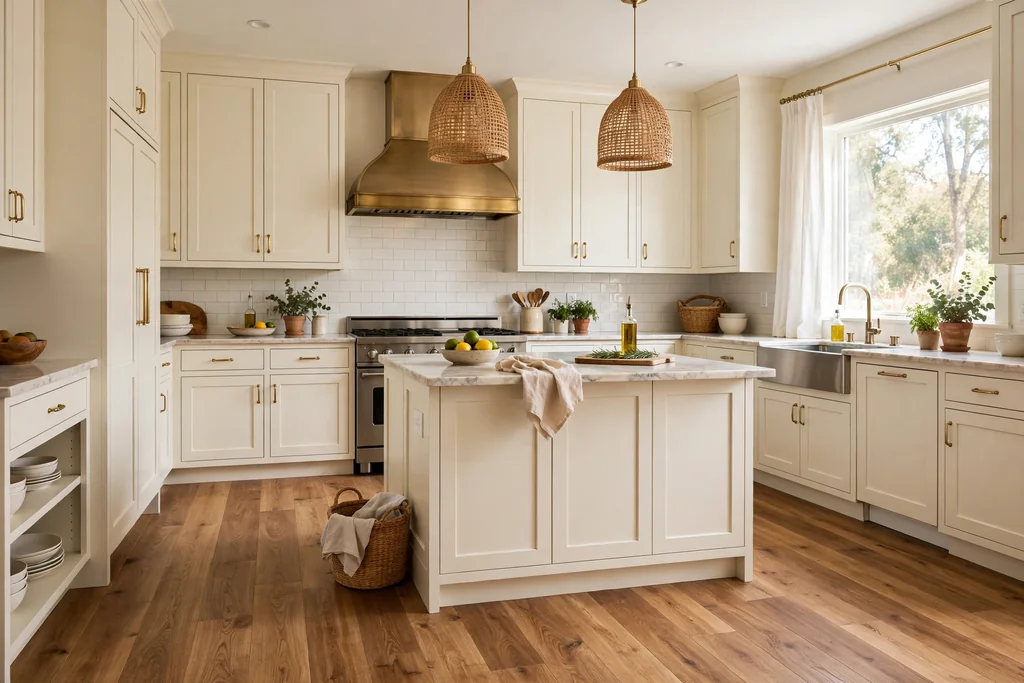
Lay wide plank oak flooring in a warm tone to ground a Scottish kitchen and soften the hard surfaces of stone and tile. Choose a matte or low sheen finish, which hides scratches better than high gloss, and run the planks in the direction of the longest wall to make the room feel larger. Protect the floor at the sink and dishwasher with a washable rug or mat.
Wipe spills promptly, since standing water marks wood over time. If solid wood feels risky in a busy kitchen, engineered planks with a thick wear layer give a similar look with more stability. Repeat the oak tone once more, in a table top or a shelf, so the floor does not look isolated.
14. Keep a Freestanding Larder for Pantry Storage
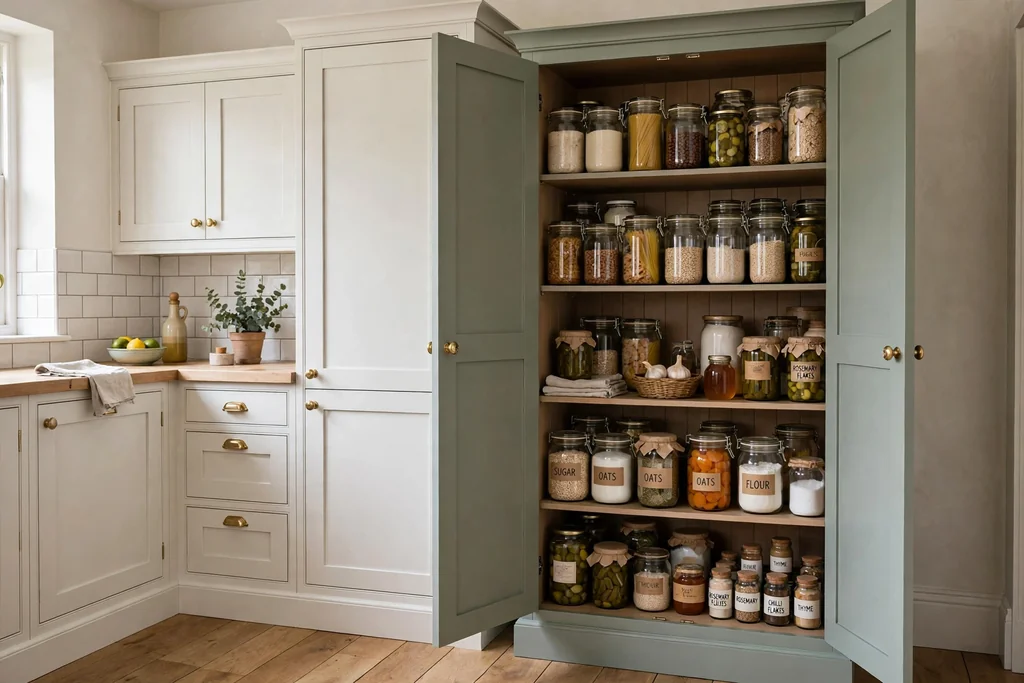
Keep a tall freestanding larder cabinet for dry goods, baking supplies, and preserves behind closed doors. A larder with adjustable shelves, a few drawers, and door racks for jars and spices gives a Scottish kitchen flexible storage without a full remodel. Place it near the prep zone, not across the room, and label shelf edges or use matching jars so the contents stay easy to find.
A painted larder in the island colour, or a stained wood one that matches the floor, reads as furniture rather than extra cabinetry. Fix tall pieces to the wall where needed, and keep the top clear except for one light item. For more traditional storage ideas, see these traditional kitchen ideas.
15. Use Glass Front Cabinets With Mullioned Doors
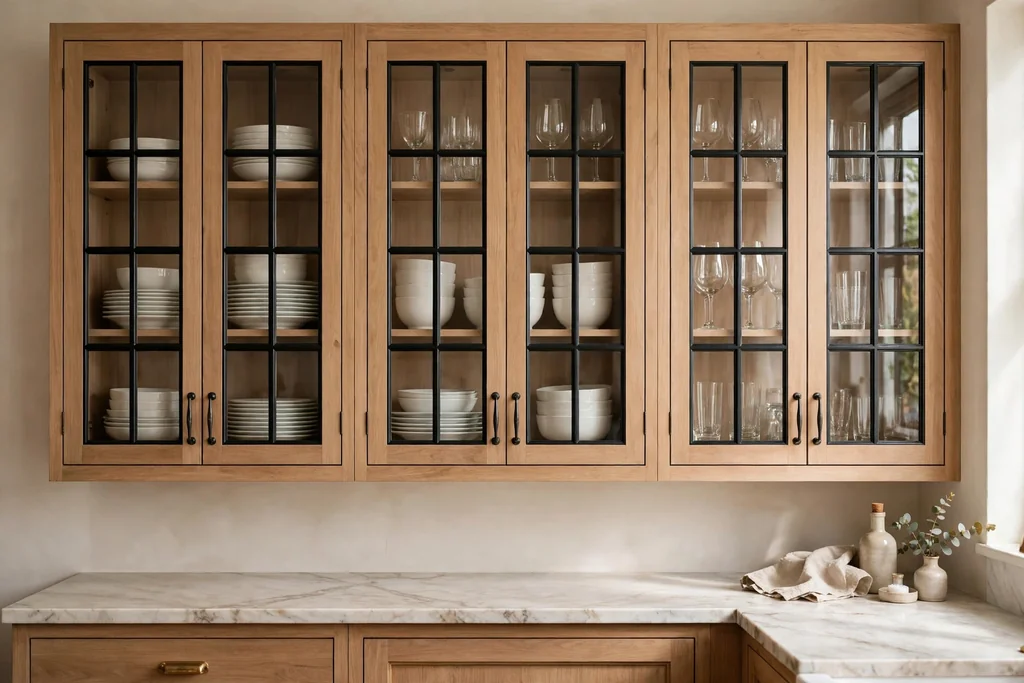
Use glass front upper cabinets with mullioned doors to break up a long run of solid doors and give you a place to show everyday dishes and glassware. Mullioned doors, with thin wood bars dividing the glass into small panes, look more traditional than a single large sheet of glass. Keep the contents simple: matching white dishes, clear glasses, and one repeated accent, with space between groups.
Add a small light inside the cabinet if wiring allows, and keep the glass clean, since fingerprints show more here than on solid doors. Use glass on one run of uppers, or on a single cabinet beside the sink, and keep the rest solid for everyday clutter. This balance keeps the kitchen warm without feeling like a display room.
16. Choose a Thistle Motif Tile Backsplash
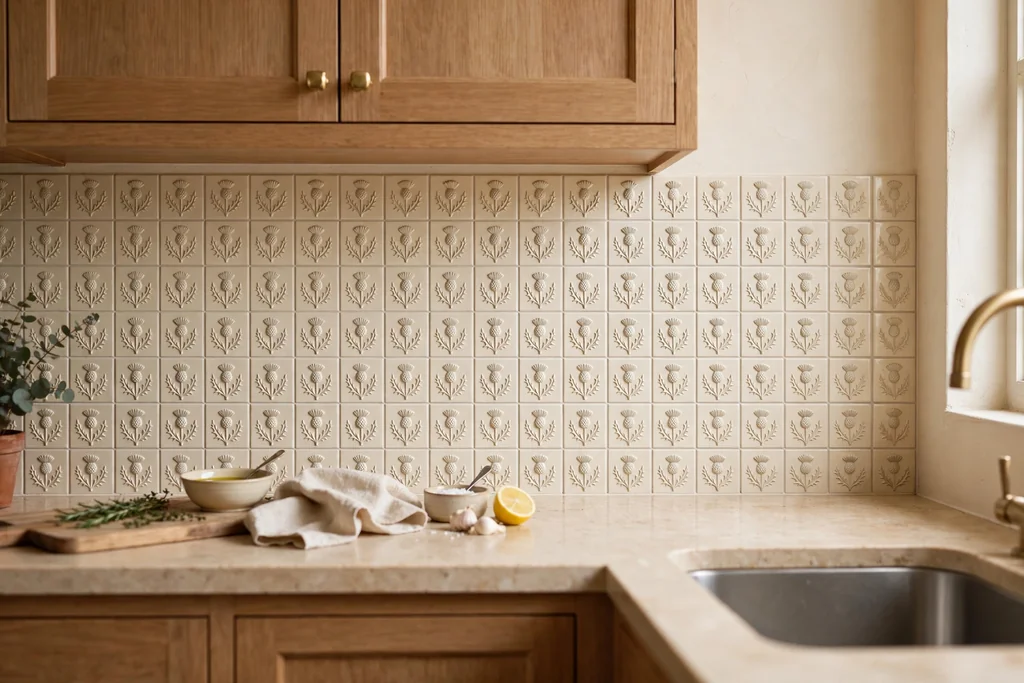
Choose a tile backsplash with a small thistle motif, or a plain tile with one thistle accent tile repeated at intervals, for a clear Scottish note at eye level. A muted green or blue motif on a cream tile suits wood cabinets, while a large coloured tile suits a plain kitchen that needs one focal point. Keep the motif small and repeated evenly, so it reads as pattern rather than a picture.
Run the tile to the underside of the upper cabinets, and finish exposed edges with a matching trim tile. Seal the grout in the cooking zone, and keep a spare box of tiles from the same batch for future repairs. If a motif tile feels too strong, use it only behind the range and plain tile elsewhere.
17. Make a Cast Iron Range the Focal Point
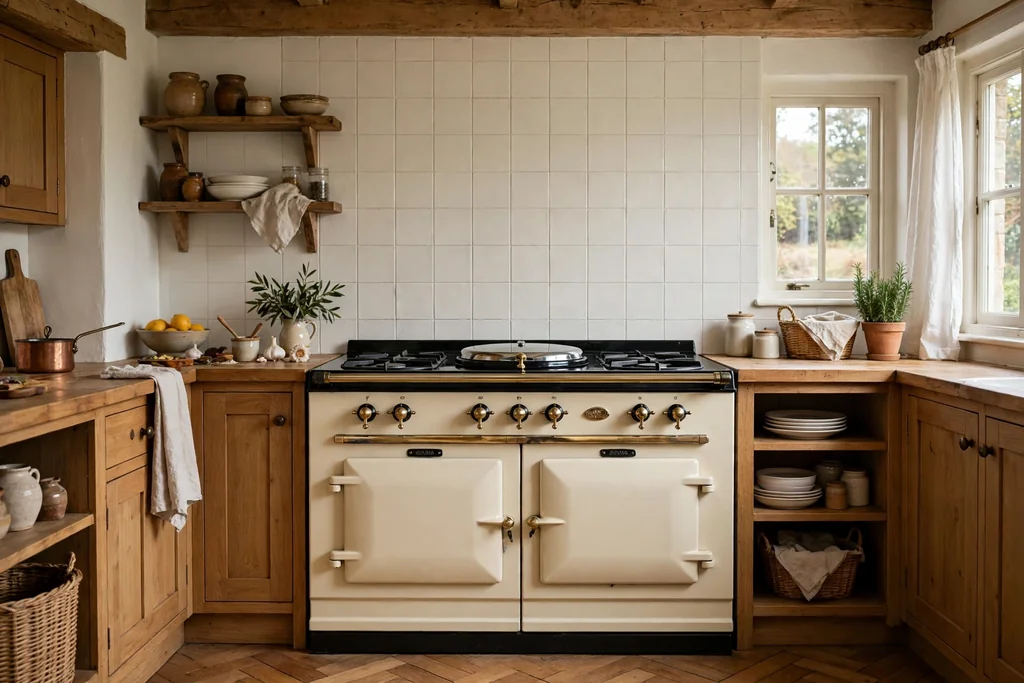
Make a cast iron range cooker the focal point of the kitchen, with plain cabinets and a simple tile wall behind it so the range stays the feature. A range with a cream or soft green finish suits a Scottish cottage kitchen, and its solid shape gives the room a settled centre. Choose the width to match your cooking, since a wider range suits cooks who use several pans at once.
Before you buy, check the fuel type, the venting route, and the clearance your maker specifies around the range. Keep the wall behind it simple, with plain tile or beadboard, and keep the worktop beside it clear as a landing spot for hot trays. A range is a long term choice, so live with the colour sample in your kitchen light first.
18. Swap in Tartan Tea Towels and an Oven Glove
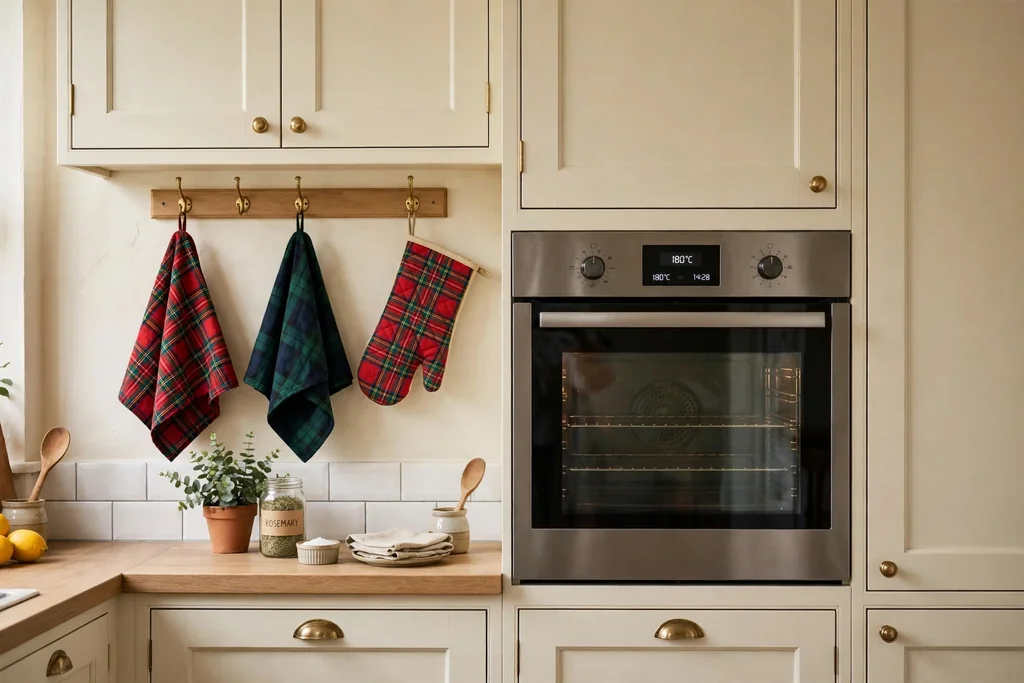
Swap in tartan tea towels, a matching oven glove, and a pot holder for Scottish pattern you can change in seconds and wash often. The textiles add colour at the oven and sink, where the eye naturally lands, without changing cabinets or walls. Choose a washable cotton tartan, since kitchen textiles see spills and steam daily.
Keep the rest of the textiles plain when the tartan set is out, so the pattern stays controlled. Hang towels on a rail clear of the hob, and keep a second set ready to swap in on laundry day. This is a good first tartan step for readers who like the pattern but worry it will look too strong on a larger surface.
19. Grow Herbs on a Sunny Kitchen Windowsill
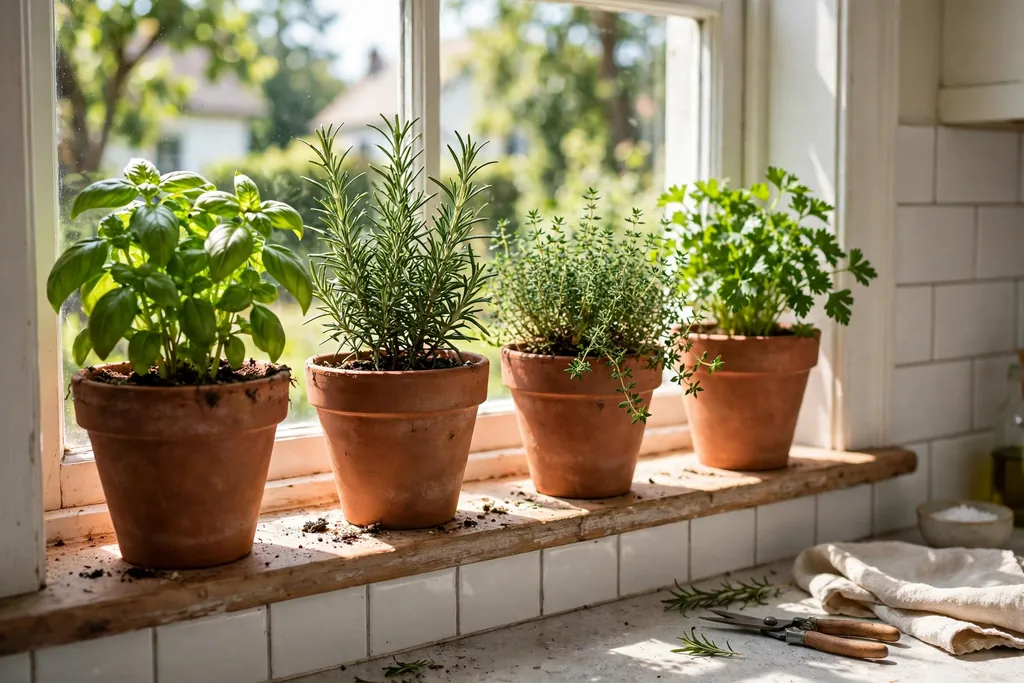
Grow herbs on a sunny kitchen windowsill in terracotta pots, so fresh flavour stays within reach while you cook. Parsley, chives, mint, and thyme suit a kitchen sill, and the green pots soften hard kitchen surfaces. Use pots with saucers to protect wood and paint, and water the plants over the sink, not at the table.
Keep plants off the main worktop, except for one small pot that lifts away for cleaning, so prep space stays full. Choose pots in one material and similar sizes, so the sill reads as planned rather than crowded. If the sill is narrow, a single shelf above the sink holds the same pots with no loss of worktop space.
20. Set Up a Baking Station for Shortbread and Oatcakes
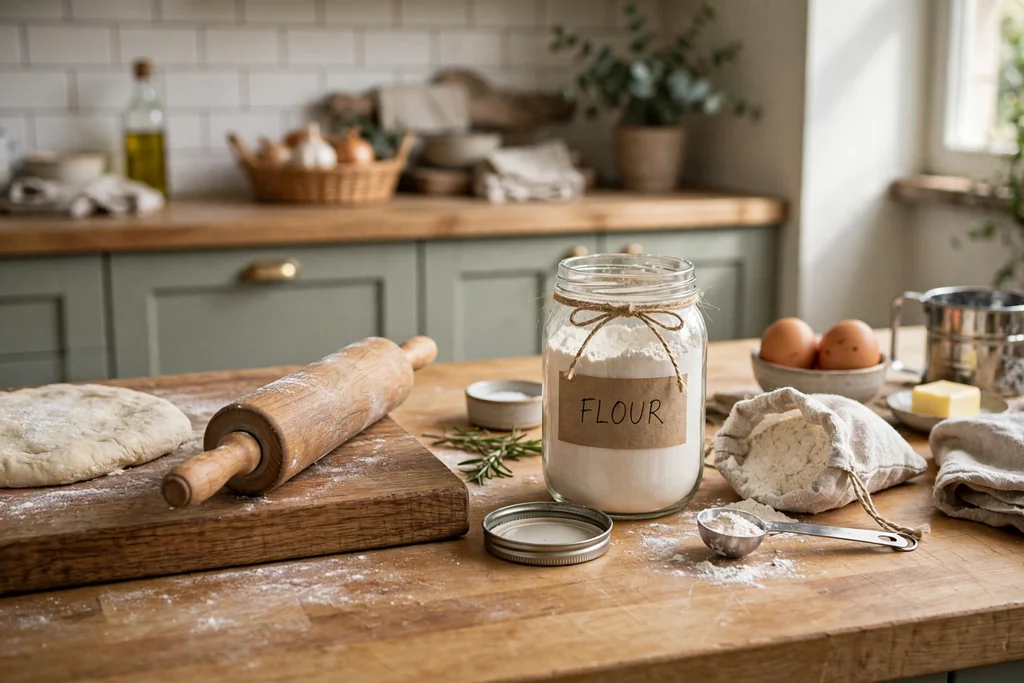
Set up a baking station on one stretch of worktop with a wood board, a rolling pin, flour in a sealed jar, and a tray within reach, so shortbread and oatcake baking has a set place. A marble or wood board gives a cool, flat surface for pastry, while a jar of flour and a small bowl of sugar keep the station ready without cluttering the whole counter.
Keep the station to one worktop zone, and clear it fully after baking, so the kitchen stays usable for daily cooking. Store baking trays in the drawer below, and keep a tea towel folded nearby for wiping flour. This station also suits bread baking, since the same board and jars serve both uses.
21. Create a Hearth Bench Beside the Fireplace
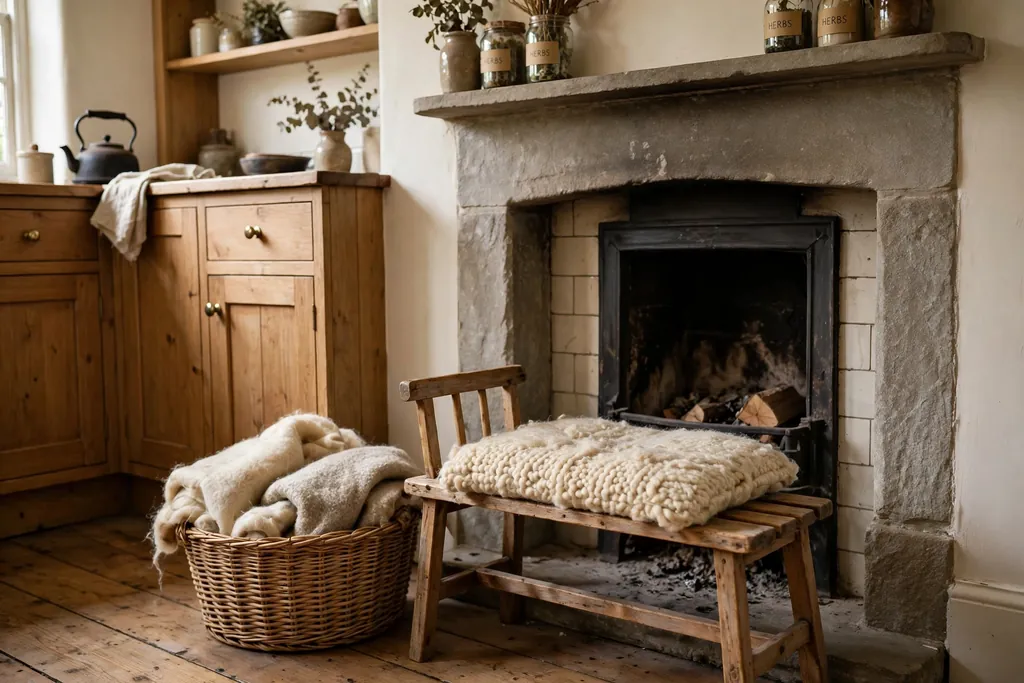
Create a small bench seat beside a kitchen fireplace or range, with a wool cushion and a basket for kindling or logs, so the warmest corner becomes a sitting spot. The bench gives the cook company without blocking the work zone, and it suits a cottage kitchen where the fire is already a focal point. Keep the bench clear of the fire opening, following the fire maker guidance for safe distances.
Use a washable cushion cover, since a hearth seat collects dust and ash, and keep the route to the cooker clear. If there is no fireplace, a bench beside a sunny window gives a similar warm corner, with a lamp for evening use. Keep the bench depth shallow enough to sit upright without feeling wedged.
22. Add a Plate Rack Above the Counter
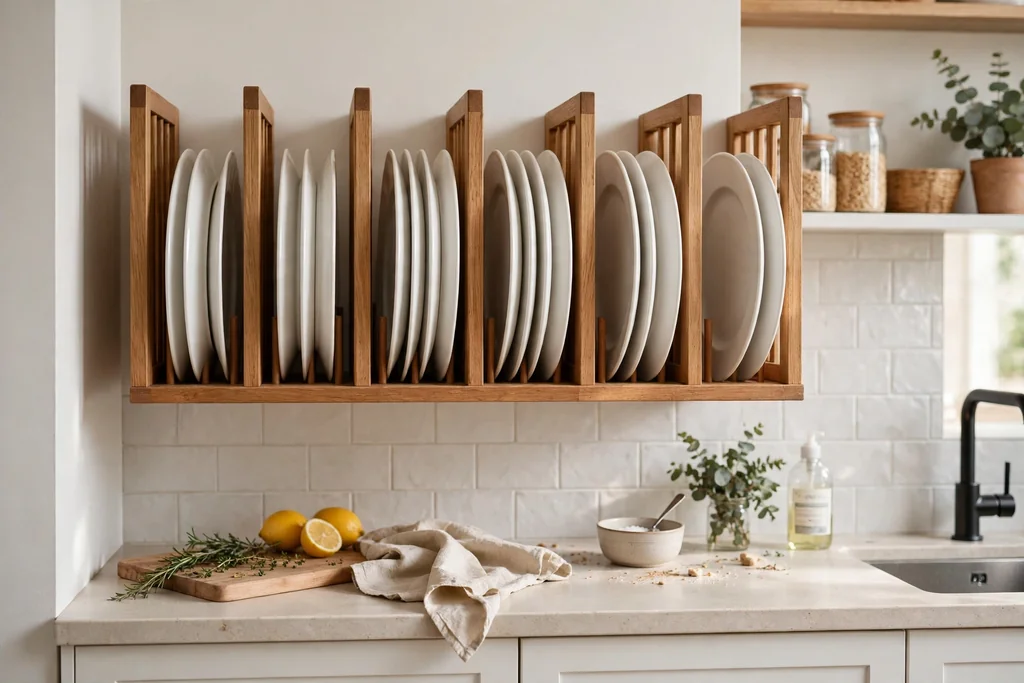
Fit a plate rack above the counter, built into the wall or into an upper cabinet, to keep everyday plates upright, visible, and easy to grab. Fit vertical dividers sized to your largest dinner plates, with a grooved shelf below to catch drips from just washed plates. Keep the rack near the dishwasher or the serving area, not over the stove.
Limit the rack to one plate style in a single colour, so the display reads as calm. Leave gaps between groups, and repeat one material, such as wood or brass, so the display stays tidy. This suits a traditional kitchen better than stacking plates in a deep drawer, since plates are reached daily.
23. Use Two Tone Cabinets in Green and Cream
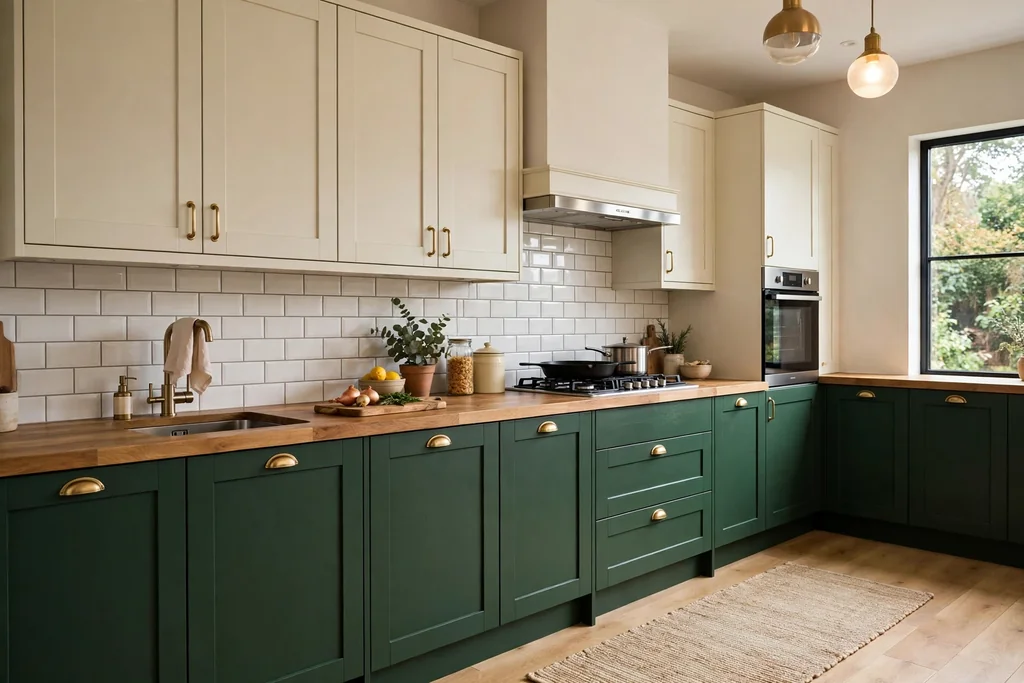
Use two tone cabinets, with deep green on the lower cabinets and cream on the upper cabinets, for a Scottish kitchen that stays bright. The dark base grounds the room, while the pale uppers keep the wall feeling open and make the ceiling feel higher. Repeat the green once more, in the island base or a nook bench, so the scheme looks planned.
Keep the worktop and backsplash plain, so the two cabinet colours stay the focus. Test both paints beside your floor in daylight and lamplight before you commit, since green shifts a lot between the two. For more vintage cabinet pairings, see these vintage kitchen ideas.
24. Top Counters With Slate or Dark Stone
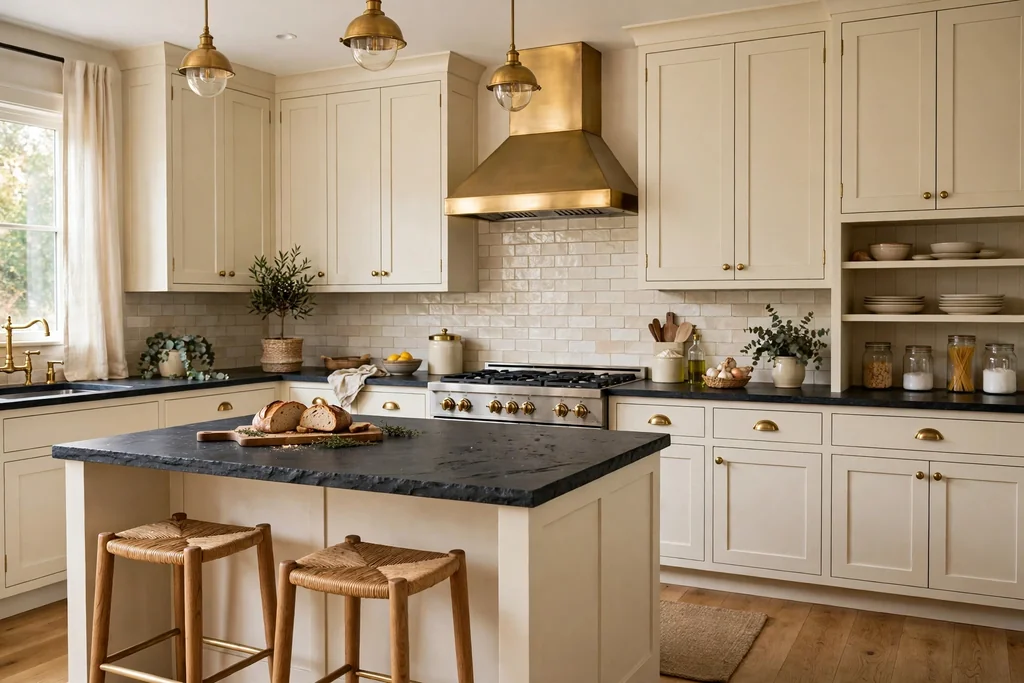
Top counters with slate or dark stone for a cool, hard wearing work surface that suits wood cabinets and a farmhouse sink. A dark counter gives contrast against cream cabinets, and its matte finish hides small marks better than high gloss. Ask the supplier about sealing and care before installation, since stone can stain if spills sit on it.
Use boards for citrus and tomato prep, wipe spills promptly, and keep a trivet near the stove for hot pans. If daily upkeep worries you, use dark stone on the island only, and a harder, lighter stone on the main prep run. Pair the dark counter with brass hardware, so the metal warms the stone.
25. Hang Brass Pendants Over the Island
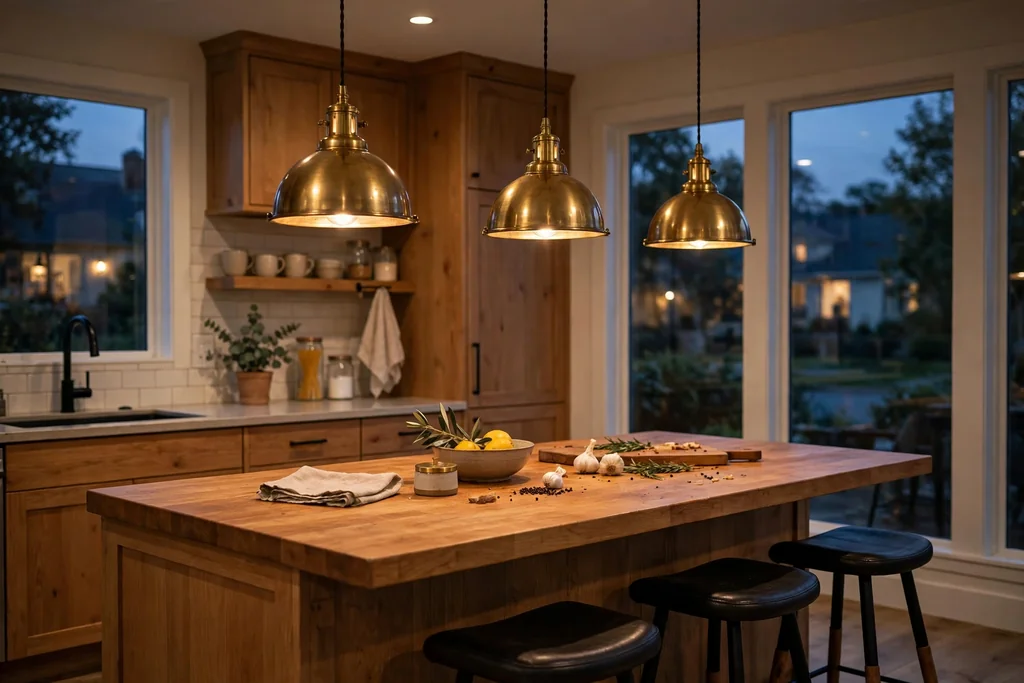
Hang two or three brass pendant lights over the island for task light and a warm metal note that suits wood and stone. Hang the shades about 30 to 36 inches above the counter, so the light falls on the work surface and the shades stay clear of sight lines. Use warm white bulbs and a dimmer, so the same pendants work for prep in the morning and for a quiet evening meal.
Match the pendant metal to your hardware for a connected look, and keep cords or rods straight and level, since uneven pendants are easy to spot. Wipe the shades often, since kitchen air leaves a film on glass and metal. If space is tight, a single wide brass pendant over a small island gives most of the same effect.
26. Store Root Vegetables in Wicker Baskets
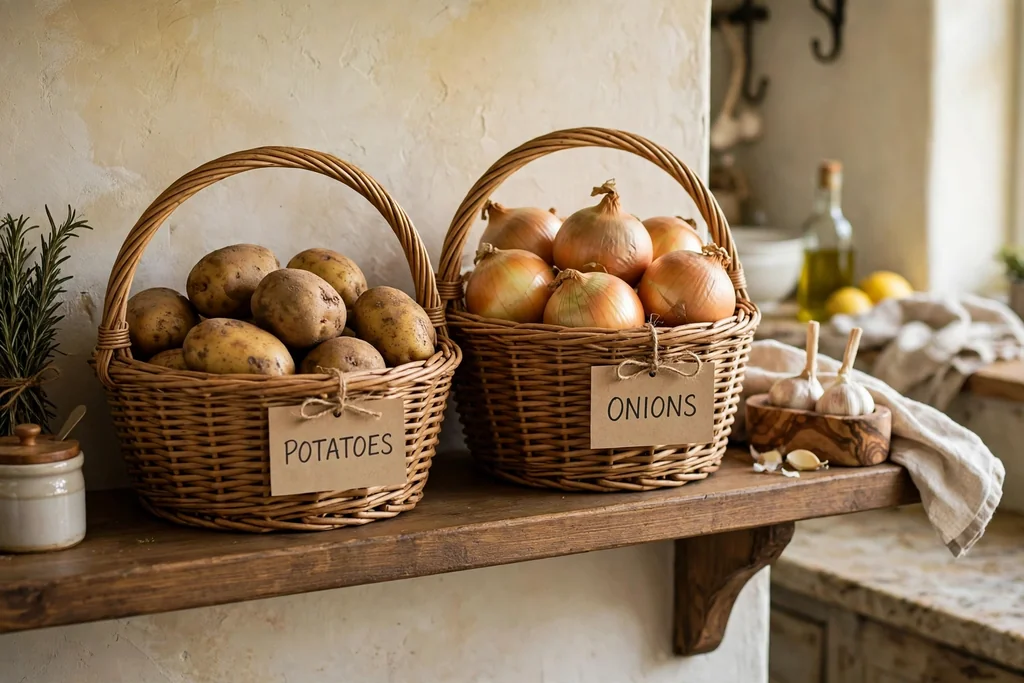
Store potatoes, onions, and other root vegetables in labelled wicker baskets on a shelf or in the larder, so they stay ventilated and easy to reach. Wicker suits a Scottish cottage kitchen, and baskets keep bulky vegetables out of drawers that are better used for utensils. Line the baskets if needed, and keep them in a cool, dark spot away from the cooker.
Use baskets with handles if you move them for cleaning, and keep them to vegetables you use each week, so nothing sits forgotten. Label each basket, so the cook can find onions without lifting every lid. In a small kitchen, one basket for onions and one for potatoes is enough, with the rest of the produce in the fridge.
27. Upholster a Dining Chair Set in Tartan
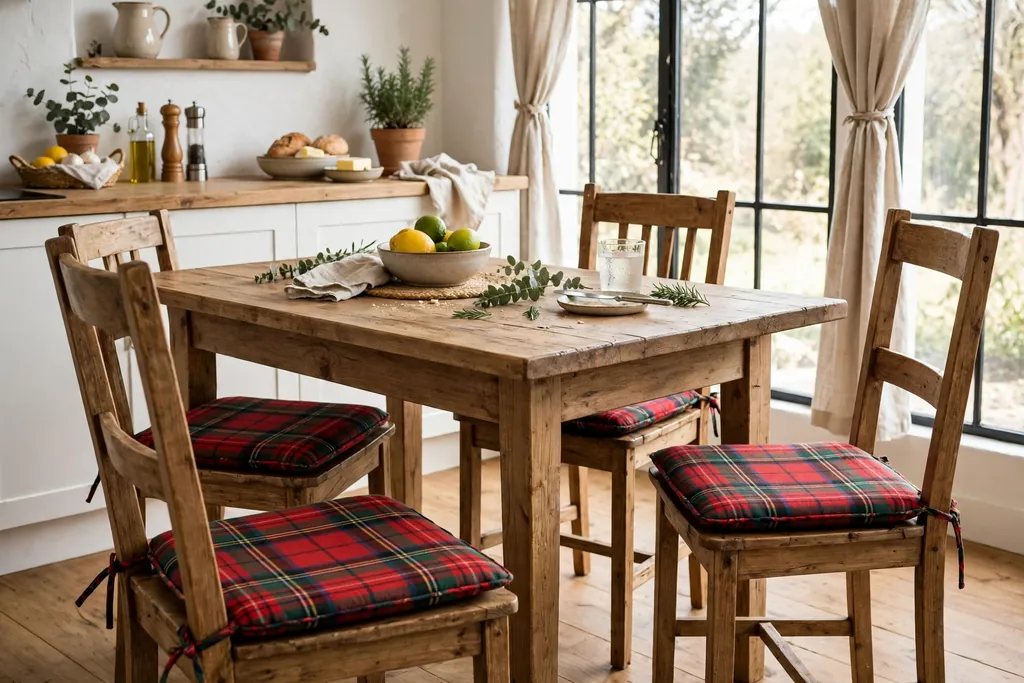
Upholster dining chair seats, or add tartan seat pads, in a muted check for Scottish pattern at table height. The check links the table to the window shade or nook bench, while the chair frames stay in plain wood. Choose a washable fabric, since dining chairs see food spills, and use a check that shares a colour with the table runner.
Keep the table top plain when the chairs are patterned, so the table setting stays calm. If the tartan is bold, upholster two chairs only, such as the end chairs, and keep the side chairs in a solid colour from the check. This is a good way to test tartan in a kitchen before committing to a larger textile.
28. Build a Bothy Style Breakfast Corner
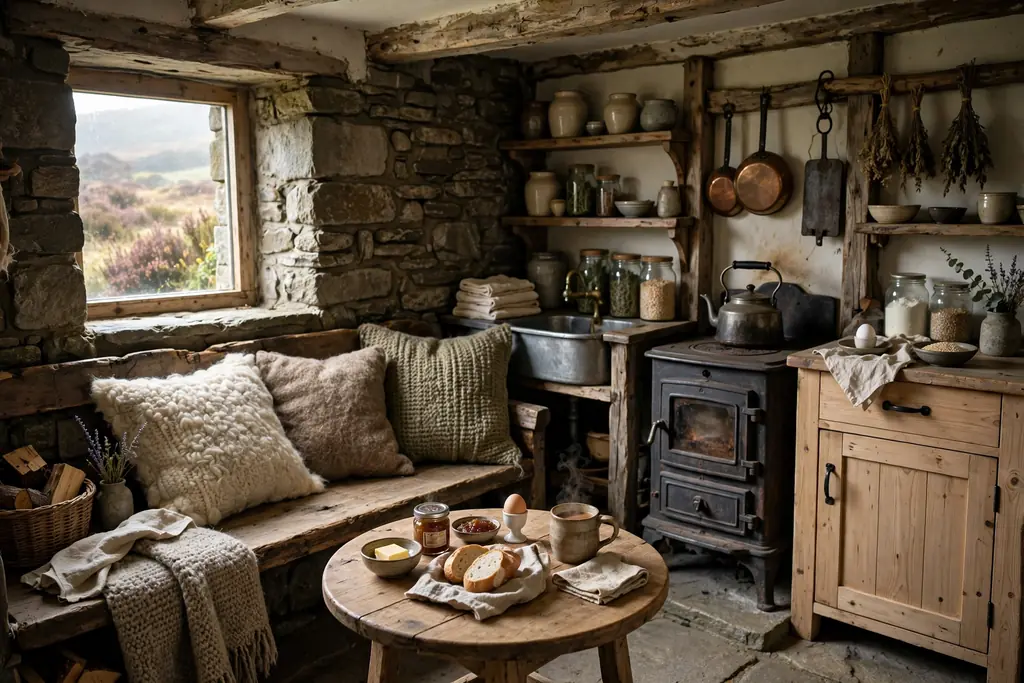
Build a bothy style breakfast corner with a low wood bench, a small round table, wool cushions, and a lantern style lamp on the wall, for a sheltered eating spot in a cottage kitchen. Keep the colours muted, with cream cushions, a tartan throw over the bench back, and dark wood, so the corner feels sheltered rather than crowded. Leave the wall above the bench mostly plain, with one small print.
Keep the corner practical: a clear path to the cooker, a lamp you can reach from the table, and storage for the extra cushions close by. Use a safe lamp, not an open flame, near textiles and curtains. This idea suits a small kitchen or a kitchen diner, where a low bench makes the ceiling feel higher.
29. Place Dried Heather in a Jug on the Table
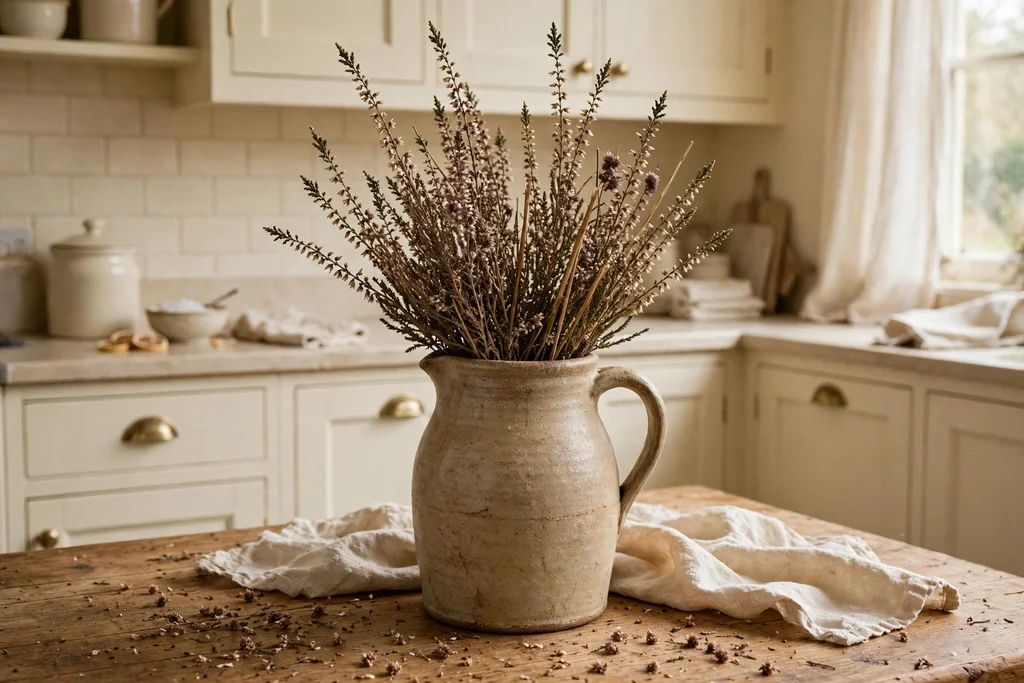
Place a small bunch of dried heather stems in a sturdy jug on the kitchen table for a simple Scottish plant note that needs no watering. Heather suits a stoneware or wood jug, and its muted purple tones link to heather accents elsewhere in the kitchen. Keep the arrangement small, with space around it, so the table still works for daily meals.
Dust the stems gently now and then, and replace them when they shed too much. If dried stems bother allergies in your household, use a framed heather print on the wall instead, or a small potted herb that suits your home. Keep the jug away from the edge of the table, so it cannot be knocked off easily.
30. Keep a Rental Kitchen Scottish With Textiles Only
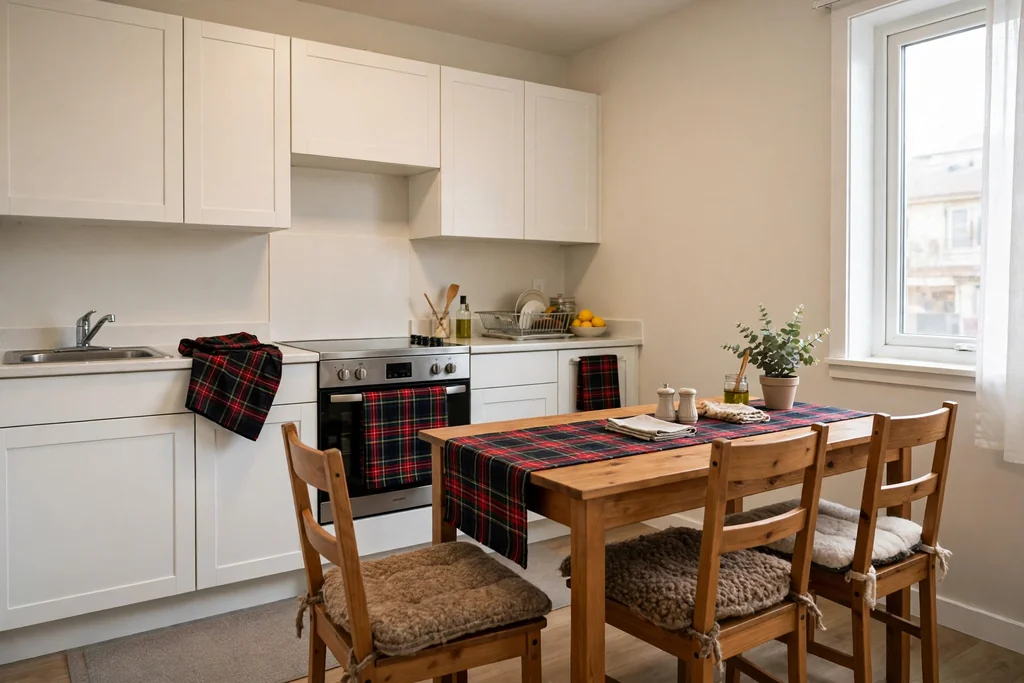
Build a Scottish kitchen from textiles alone, with no paint, panels, or fixed work: tartan towels, a table runner, wool seat pads, a washable rug runner, and a basket of blankets for the nook bench. Textiles can be changed with the season, washed easily, and taken with you when you move, which makes them ideal for rentals. Start with the table, then add the window and one seating textile.
Keep the base calm with plain cabinets and plain worktops, so the tartan and wool pieces stand out. Store any original fittings safely, and check your lease before changing anything fixed, so the kitchen can be returned to its original state. This controlled dose suits modern kitchens as well as traditional ones.
Conclusion
A Scottish kitchen works best when a few honest materials do the work: tartan in one or two places, wood cabinets and floors with visible grain, stone sinks and worktops, and colours borrowed from hills and heather. Start with the cabinets, add one wall or window change, and finish with storage and a seating corner if space allows. Live with each change for a few days before adding the next, and keep the base calm so the character pieces stand out. Save this list on Pinterest, and work through it one area at a time: cabinets, walls, floors, then storage and small details.
FAQs
What makes a kitchen look Scottish without looking themed?
A Scottish kitchen looks characterful rather than themed when you use a few real materials and muted colours, not a room full of symbols. Tartan textiles, wood cabinets, stone sinks, and heather or deep green accents give the character, while plain worktops and cream walls keep the room restful. Limit tartan to one or two places, repeat one or two colours from the tartan in solids, and leave most surfaces plain. That balance gives a Scottish feel you can live with daily, rather than a display that tires quickly.
Which tartan colours work best in a kitchen?
Muted tartans in green, navy, or red with cream or grey lines work best in a kitchen, since they pair well with plain cabinets and wood worktops. A classic red tartan suits a table runner or tea towels that should be a focal point, while a muted green or navy tartan suits a Roman shade, seat pads, or a nook bench in a calmer room. Test the fabric beside your cabinets in daylight and lamplight, since tartan can look stronger at night. If you are unsure, start with a muted check on towels or a runner, and add a larger tartan piece only if the room still needs it.
How can I add Scottish character to a small kitchen?
Use tartan in one place only, keep the walls pale, and let wood texture do the rest. A folded tartan runner, a pair of tartan seat pads, or a tartan Roman shade gives character without closing in the room, while a plain rug and light wood keep the space feeling open. Avoid tartan on the window, the table, and the chairs at the same time in a small kitchen. A basket of vegetables, a small framed landscape print, and one warm pendant add character without taking worktop space.
Can renters create a Scottish kitchen without painting or drilling?
Yes, renters can build the whole look from textiles and freestanding pieces. Tartan towels and a runner, wool seat pads, a washable rug runner, a freestanding larder, and a tartan curtain on a tension rod all work without paint or fixed fittings. Use a freestanding dresser, a leaning framed print, and a bench in the nook for furniture character. Keep any original doors and fittings stored safely, and check your lease before removing anything fixed, so the kitchen can be returned to its original state.
What worktops suit a Scottish kitchen best?
Wood, slate, and dark stone all suit a Scottish kitchen, since each pairs well with wood cabinets and muted colours. Butcher block gives warmth and is easy to repair with a light sand and fresh oil, while slate and dark stone give a cool, hard wearing surface for pastry and hot pans. Keep the area near the sink well sealed, wipe up standing water promptly, and use boards for acidic prep. If you are unsure, use wood on the island and stone on the main prep run, so you get both looks in one kitchen.
How do I mix tartan with other patterns in a kitchen?
Mix tartan with one other pattern at most, vary the scale, and share a colour between the two. A large tartan check pairs well with a small stripe or a plain texture, while a small tartan pairs well with a larger, simple shape such as a knit or a wood grain. Keep the second pattern to one place, such as a cushion or a rug, and leave the rest of the room in solids. If the tartan is bold, skip a second pattern and use texture instead, such as wood, linen, or wool, to give depth without visual competition.