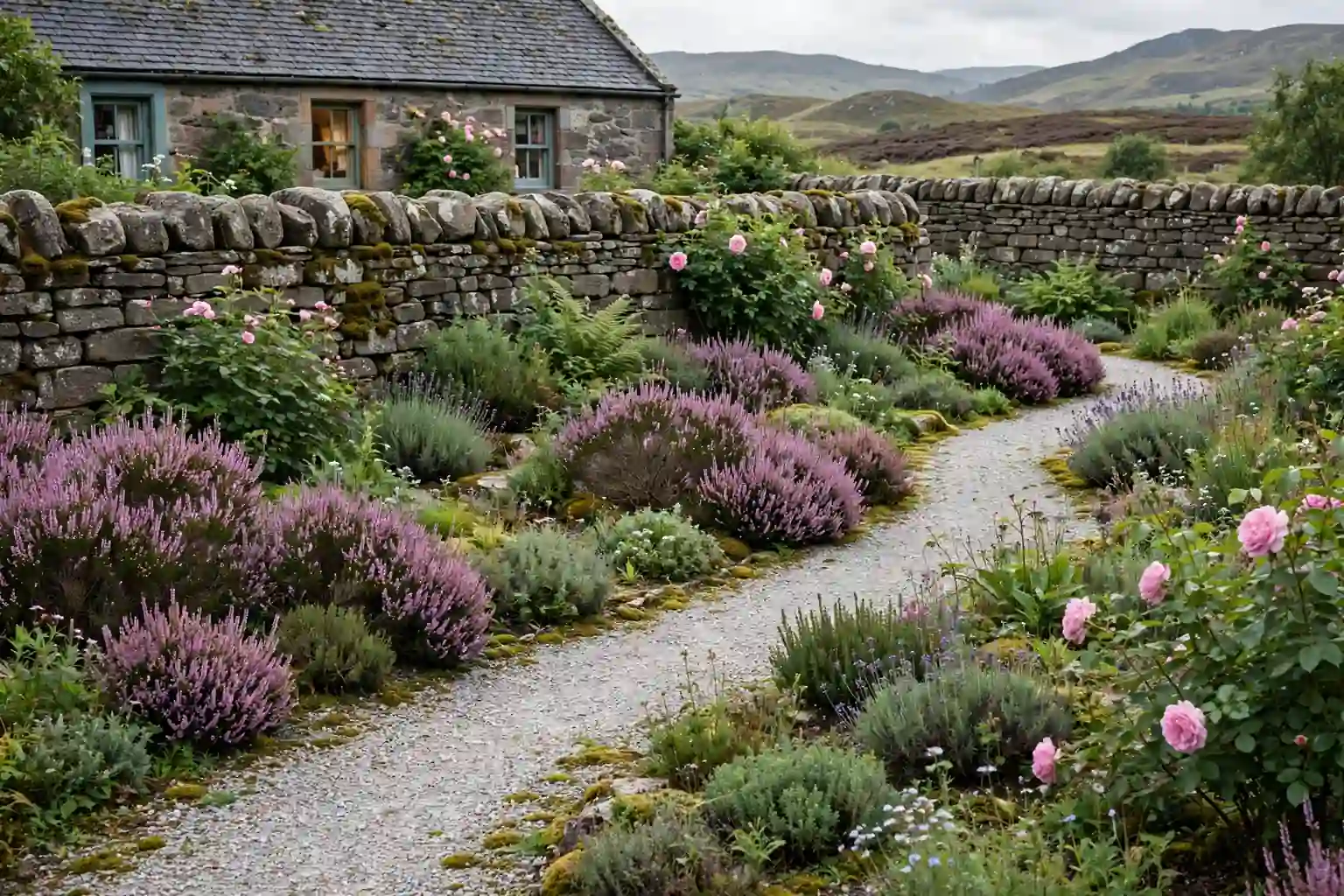
A Scottish garden has to earn its keep in rain, wind, and short summers, and that is exactly what makes it so rewarding. Stone walls, heather, ferns, and hardy roses suit the climate rather than fighting it, and a garden built around them looks settled in every season. These 32 Scottish garden ideas cover cottage borders, walled kitchen gardens, coastal plots, slopes, and small spaces, so you can start with one bed or one path and build from there. Pick the ideas that match your soil, your light, and the time you have each week, and let the garden grow into itself.
Key Takeaways
- Start with structure first: walls, paths, and shelter, then fill in with planting that suits your soil and exposure.
- Choose plants that cope with rain and wind, such as heather, ferns, roses, and hardy herbs, rather than plants that need constant protection.
- Use local stone, slate, and gravel so the garden looks rooted in its place and weathers well.
- Give wet corners a job with a rain garden or pond instead of fighting drainage every year.
- Keep one sheltered seat, even in a small garden, so the space is used in all but the worst weather.
- Plan for winter too, with evergreens, berries, bark, and a clear path, so the garden still looks cared for in January.
1. Edge Beds With a Dry Stone Wall
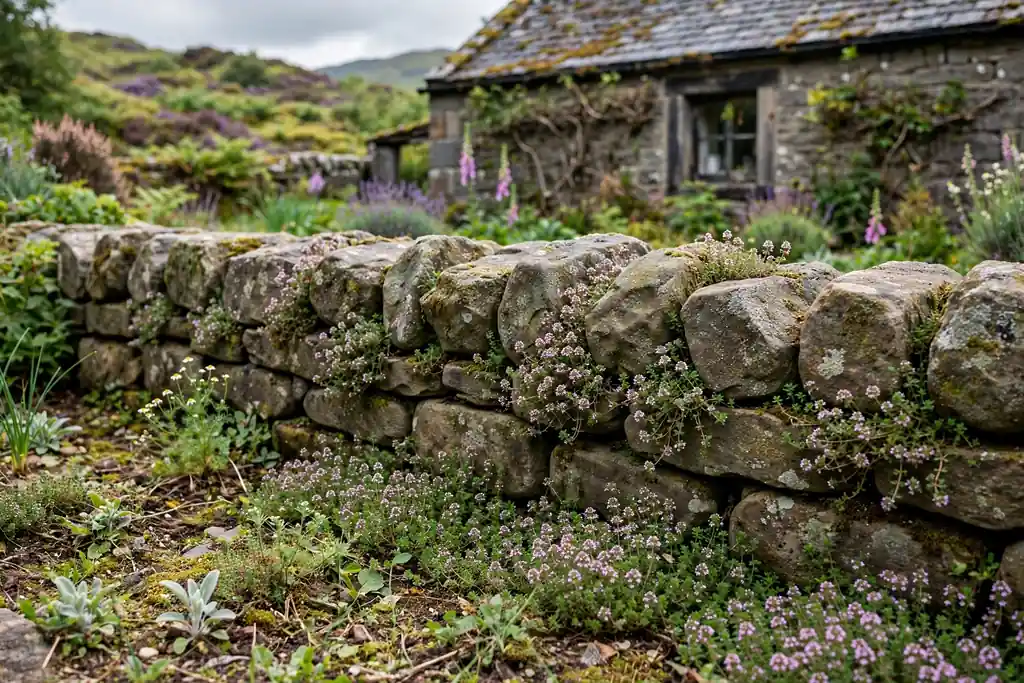
Build low dry stone walls around beds or along a boundary for a boundary that looks right in a Scottish garden and needs no mortar. Stack local stone with a slight inward lean, fill the core with smaller stones, and cap the top with flat coping stones laid on edge or flat. A wall up to knee height is a good first project, while taller walls belong with an experienced waller.
Plant the gaps near the top with creeping thyme, aubrieta, or small sedums, which root into the crevices and soften the hard edge. Keep soil from piling against the wall face, and leave the base clear so rain can drain away. Over time the stone weathers and mosses settle in, which only improves the look.
2. Plant a Heather and Heath Bed

Plant a heather bed for colour that lasts through autumn and winter, when many gardens go quiet. Mix summer flowering heathers with winter flowering heaths, and add a few dwarf conifers or grasses for height and shape between the low mounds. Heather needs acid, free draining soil, so dig in ericaceous compost and grit if your soil is heavy or lime rich.
Keep the bed in sun where possible, and trim lightly after flowering to keep the plants compact. A heather bed suits a bank, a front garden, or a sunny corner that is too poor for fussier plants. For a softer indoor echo of the same palette, see these Scottish bedroom ideas.
3. Grow a Cottage Border of Roses and Foxgloves
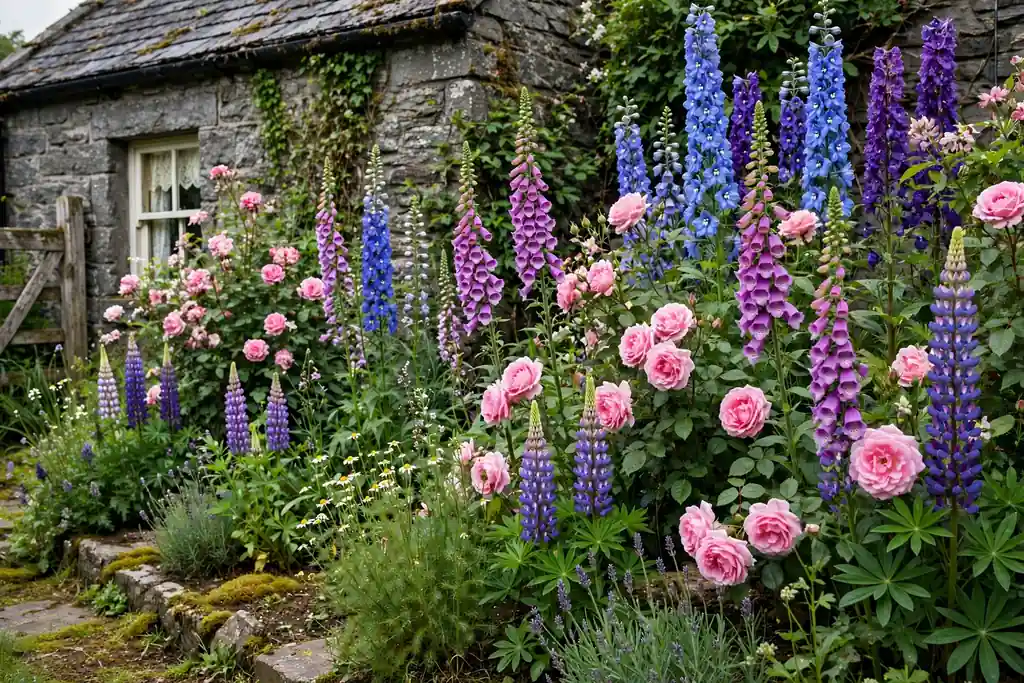
Grow a cottage border packed with roses, foxgloves, lupins, and delphiniums for the classic Scottish cottage look. Plant tall foxgloves and delphiniums at the back, shrub roses in the middle, and low geraniums and catmint at the front, so the border reads as one full planting rather than separate rows. Repeat one or two colours through the border to tie it together.
Stake tall stems early, before wind bends them, and deadhead roses and lupins to keep flowers coming. Foxgloves self seed freely, so leave a few seed heads each year and pull seedlings that land in paths. This border suits a sunny wall or a front garden where it can be seen from the house.
4. Build a Walled Kitchen Garden
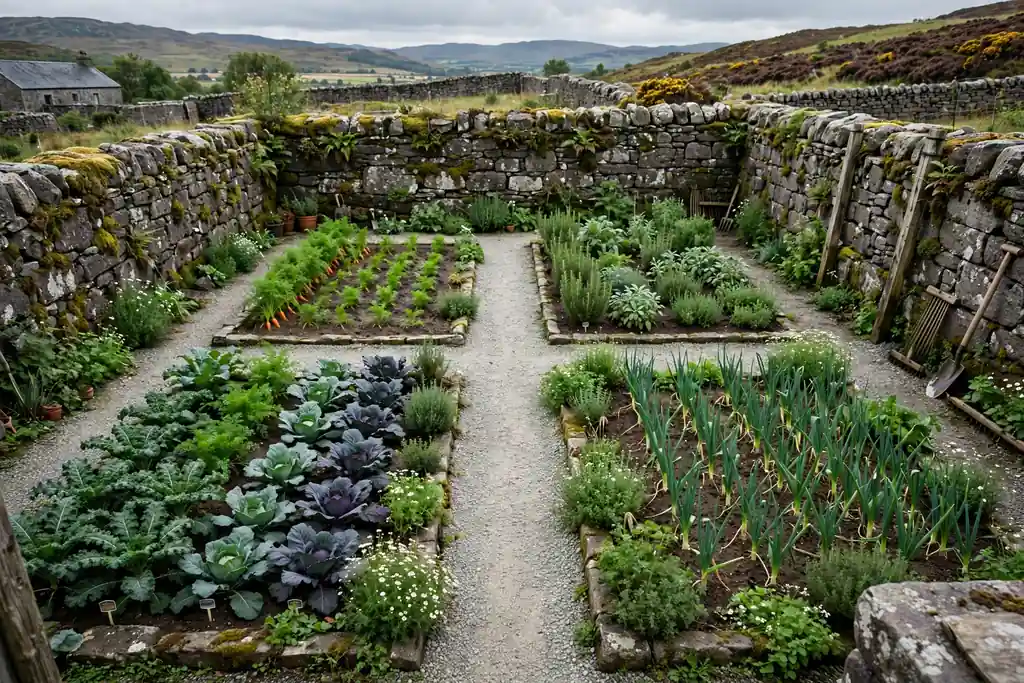
Build a walled kitchen garden, even a small one, with beds for salads, herbs, and soft fruit inside low walls or hedging. Walls shelter crops from wind, hold daytime warmth, and give you somewhere to train fruit or hang tools. Divide the space into four simple beds so you can rotate crops year by year without a complicated plan.
Keep the paths wide enough for a wheelbarrow, and put the beds you pick from daily nearest the gate. A cold frame in one corner extends the salad season well into autumn. If your garden slopes, the terracing advice in these tiered garden ideas helps you level beds that would otherwise wash out in heavy rain.
5. Sow a Wildflower Meadow Strip
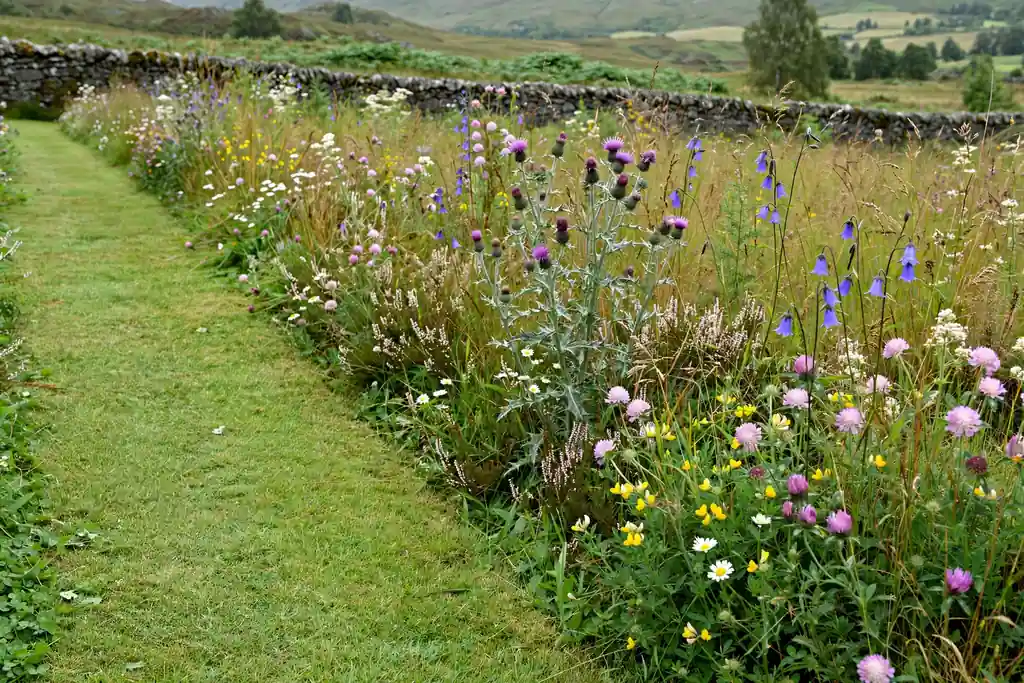
Sow a wildflower meadow strip along a fence, a bank, or the far end of the lawn for colour with very little upkeep. Choose a Scottish native seed mix suited to your soil, and sow onto bare, low fertility soil, since rich soil favours grass over flowers. Cut the strip once in late summer, after seed has set, and remove the cuttings so fertility stays low.
A meadow strip suits gardens where a full lawn feels like a chore, and it brings bees and butterflies in from the first summer. Leave a mown path through or beside the strip so you can walk among the flowers without trampling them. Avoid sowing under trees, where shade and leaf litter will thin the flowers out.
6. Make a Rain Garden for Wet Corners
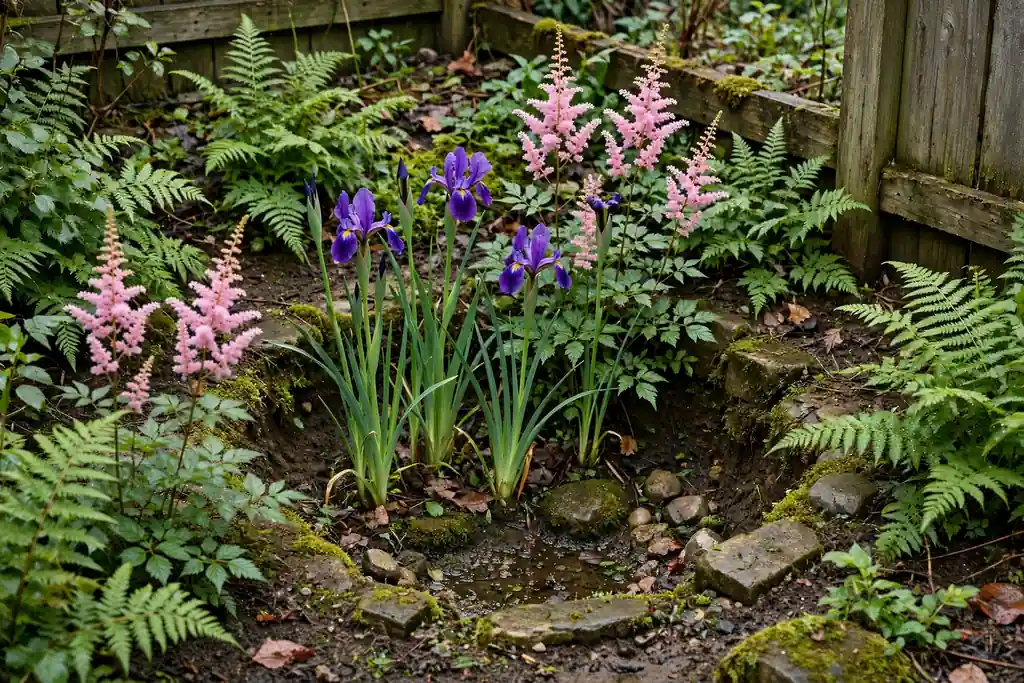
Make a rain garden in the corner where water always gathers, with moisture loving plants such as irises, astilbe, ligularia, and ferns. Shape a shallow hollow, fill it with a mix of soil and gravel so water soaks away slowly, and direct a downpipe or path runoff into it rather than onto the lawn. The plants drink the water and the hollow stops the rest of the garden turning to mud.
Keep the centre open and the edges planted densely, so the hollow reads as a planted bed rather than a puddle. Check after heavy rain in the first year, and adjust the inflow if water stands for more than a day or two. A rain garden suits clay soils and low spots that no amount of lawn care will fix.
7. Shelter a Coastal Garden With Windbreak Hedging
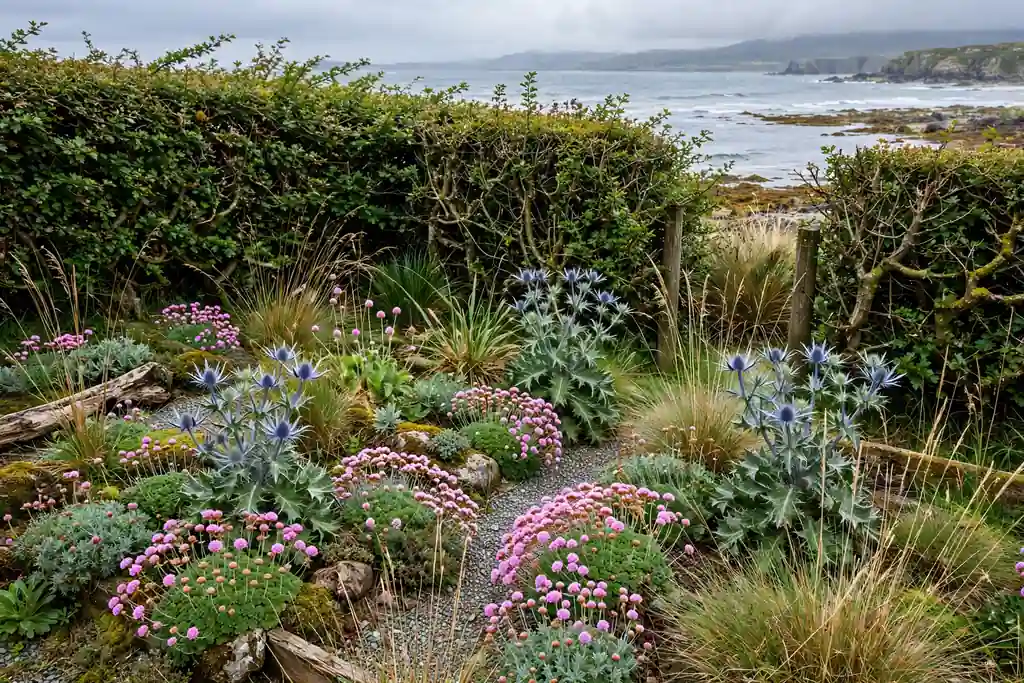
Shelter a coastal garden with windbreak hedging before you plant anything delicate, since salt wind will scorch soft leaves in a single storm. Plant a double row of tough hedging such as escallonia, griselinia, or hawthorn, with the tallest row on the windward side, and let it establish for a season or two before adding tender plants behind it. A hedge with small gaps filters wind better than a solid wall, which only sends gusts over the top.
Behind the hedge, use salt tolerant plants such as thrift, sea holly, and hardy grasses, and keep seating in the lee of the hedge. Wash salt off furniture and pots after storms, and check ties on young trees each spring. Coastal shelter is the single change that makes the rest of a seaside garden possible.
8. Build a Highland Rock Garden
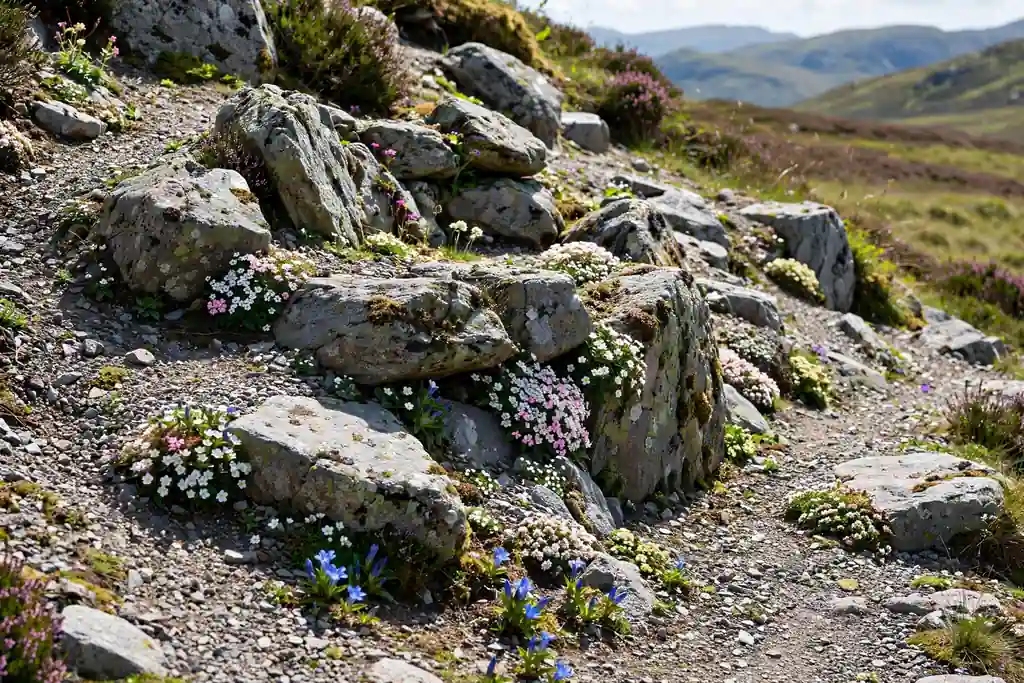
Build a rock garden on a sunny bank or slope with large feature stones and small alpine plants that want sharp drainage. Bury at least a third of each large stone so it looks settled rather than perched, and fill behind the stones with gritty soil mixed with gravel. Plant alpines, small sedums, and creeping thyme in the pockets between rocks, keeping the planting low so the stones stay visible.
Top dress with gravel to keep plant crowns dry and to show off the stone colours in dry weather. Avoid rich compost, which holds water around alpine roots and rots them in winter. A rock garden near a path gives you a close view of small flowers that would be lost in a big border.
9. Plant a Woodland Shade Garden of Ferns
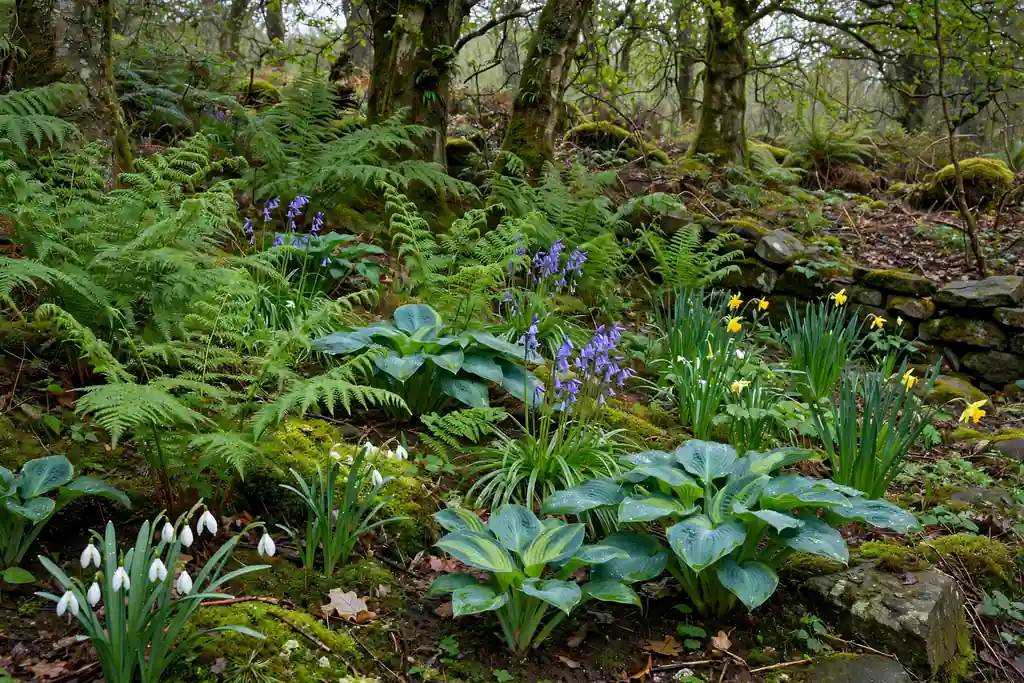
Plant a woodland shade garden under trees or on a north facing wall with ferns, hostas, and spring bulbs for a garden that thrives without sun. Use a mix of fern heights, from low hardy ferns at the front to taller royal ferns at the back, and add snowdrops and bluebells for spring colour before the canopy closes. Mulch with leaf mould each autumn to feed the soil and hold moisture.
Keep paths through the shade garden clear of fallen leaves in wet months, since wet leaves on stone get slippery. This garden suits the damp, shaded corners that frustrate sun loving plants, and it looks good from the first year, since ferns unfurl early and stay green late. Water new ferns well in their first dry spell, even in shade.
10. Keep a Herb Garden by the Kitchen Door
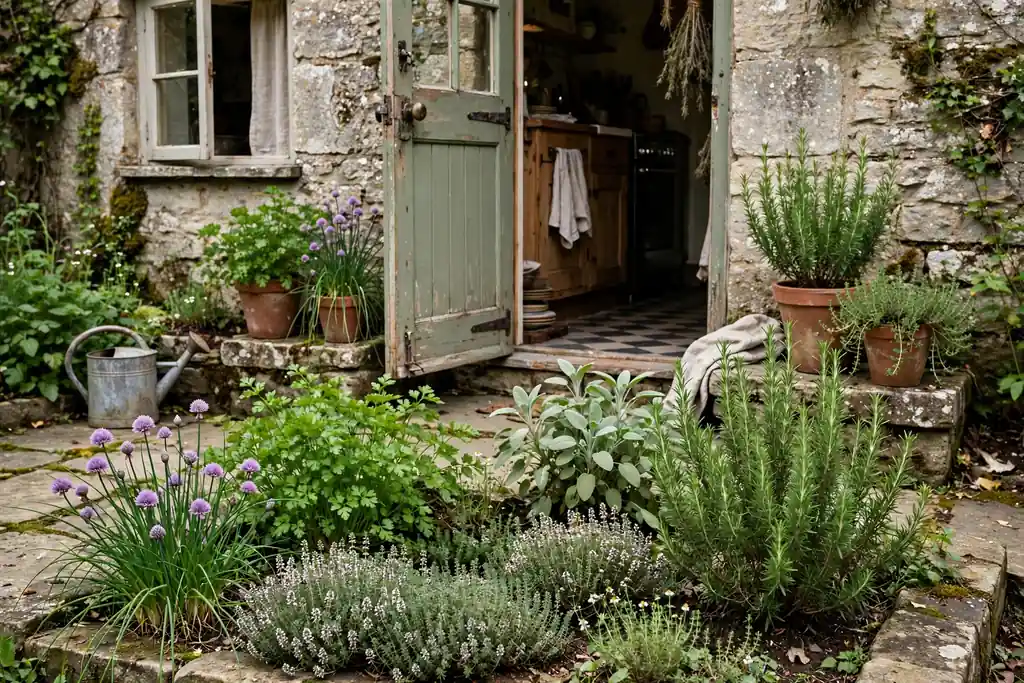
Keep a herb garden by the kitchen door with thyme, rosemary, sage, parsley, and chives in one sunny, sheltered bed or a set of pots. Put Mediterranean herbs such as rosemary and thyme in the sunniest, best drained spot, and moisture lovers such as parsley and chives where water settles. Grow mint in its own pot sunk into the bed so it does not spread into its neighbours.
Pick little and often, which keeps plants bushy and gives you fresh leaves for cooking all summer. Cut herbs back lightly in spring, and replace woody rosemary plants every few years rather than trying to revive a bare stem. A kitchen door herb bed is the most used part of many Scottish gardens, so keep its path clear and level.
11. Raise Beds in Stone and Slate
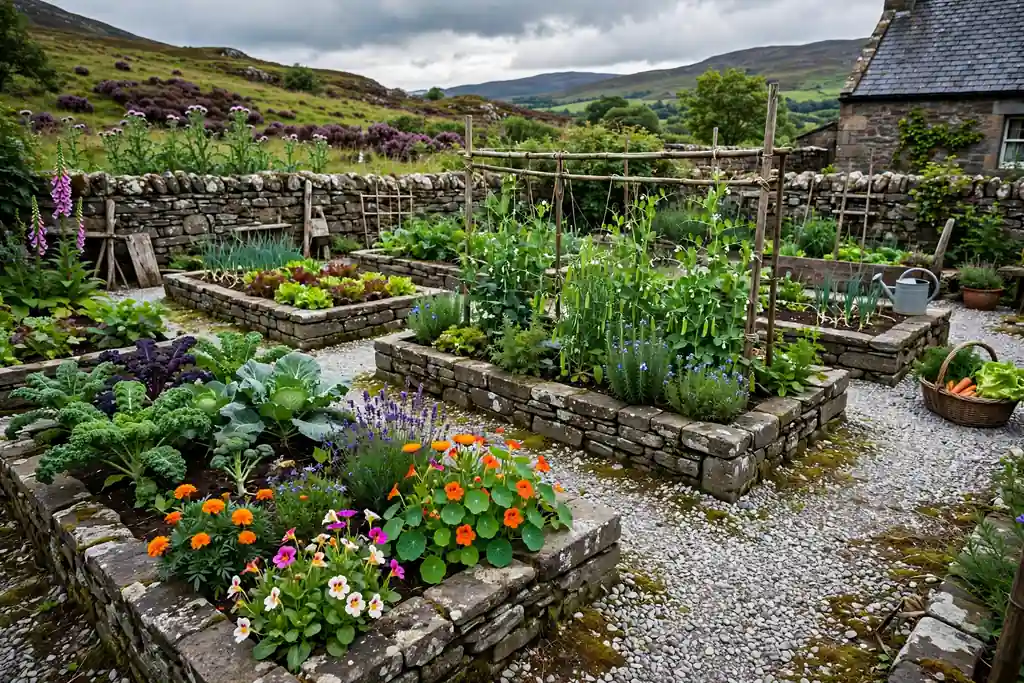
Raise beds in stone or slate for vegetables and flowers that need better drainage than your soil gives. Stone raised beds hold warmth, keep soil level on a slope, and look far more settled than timber boxes in a Scottish garden. Build them no wider than you can reach across from one side, and leave paths wide enough for a wheelbarrow between beds.
Fill the beds with a mix of topsoil and compost, and mulch the surface to hold moisture in dry spells. Raised beds suit older gardeners and small gardens alike, since they cut down on bending and on weeding. Keep one bed for salads near the house, so picking takes a minute rather than a walk to the far end.
12. Lay a Gravel Garden of Grasses and Thrift
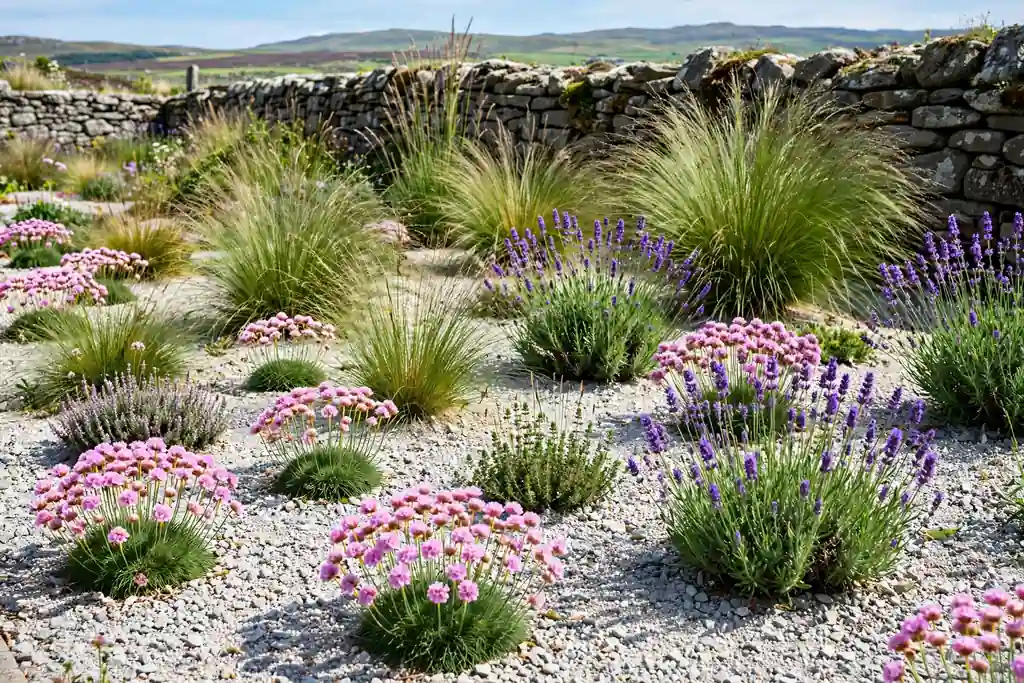
Lay a gravel garden in a sunny, free draining spot with ornamental grasses, thrift, lavender, and sedums planted through a gravel mulch. Dig out weeds, lay a weed membrane if needed, spread a thick gravel layer, and plant through slits in the membrane. Gravel keeps crowns dry, suppresses weeds, and suits gardens where watering is limited or soil is thin.
Choose grasses that move in the wind, such as miscanthus and festuca, and mix in low mounds of thyme and sedum for ground cover. A gravel garden suits a front garden, a sunny side passage, or the strip beside a drive, where a lawn would struggle. Top up the gravel every couple of years as it settles into the soil.
13. Dig a Wildlife Pond With a Stone Edge
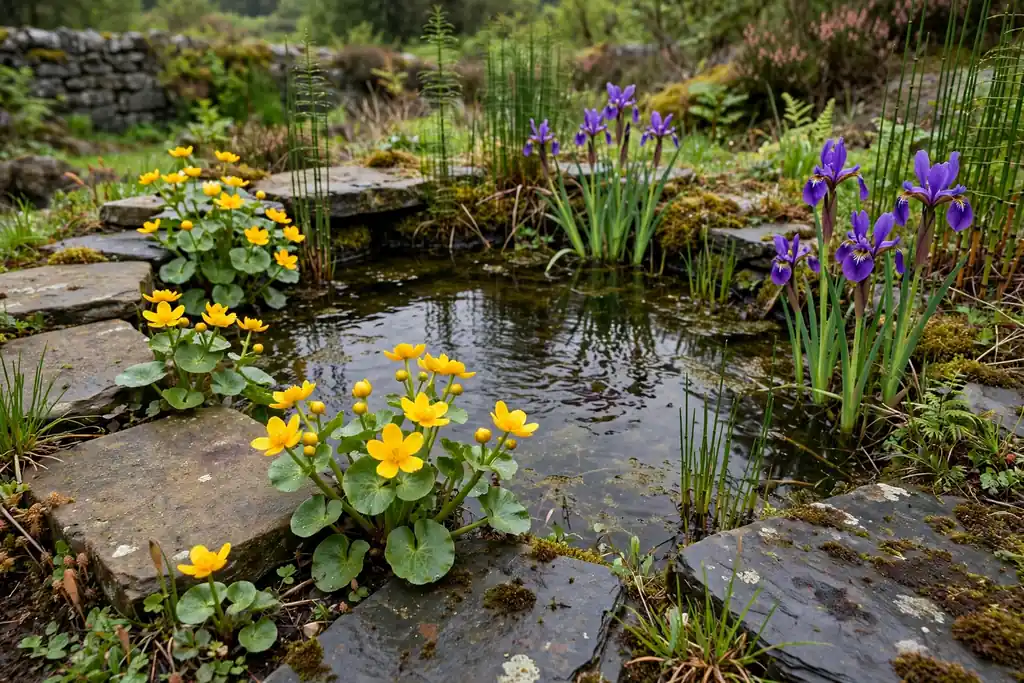
Dig a wildlife pond with a shallow stone edge, so birds can drink, frogs can climb out, and newts have shelter. Shape the pond with a shallow shelf around the edge and a deeper centre, line it well, and edge it with flat stones that sit level with the water. Plant native oxygenators and marginal plants such as marsh marigold and water iris, and leave one side open for access.
Avoid fish in a small wildlife pond, since they eat tadpoles and stir up the water. Keep the pond clear of fallen leaves in autumn with a net for a few weeks, and top up with rainwater rather than tap water where possible. A pond brings more wildlife into a Scottish garden than almost any other single feature.
14. Net a Soft Fruit Cage
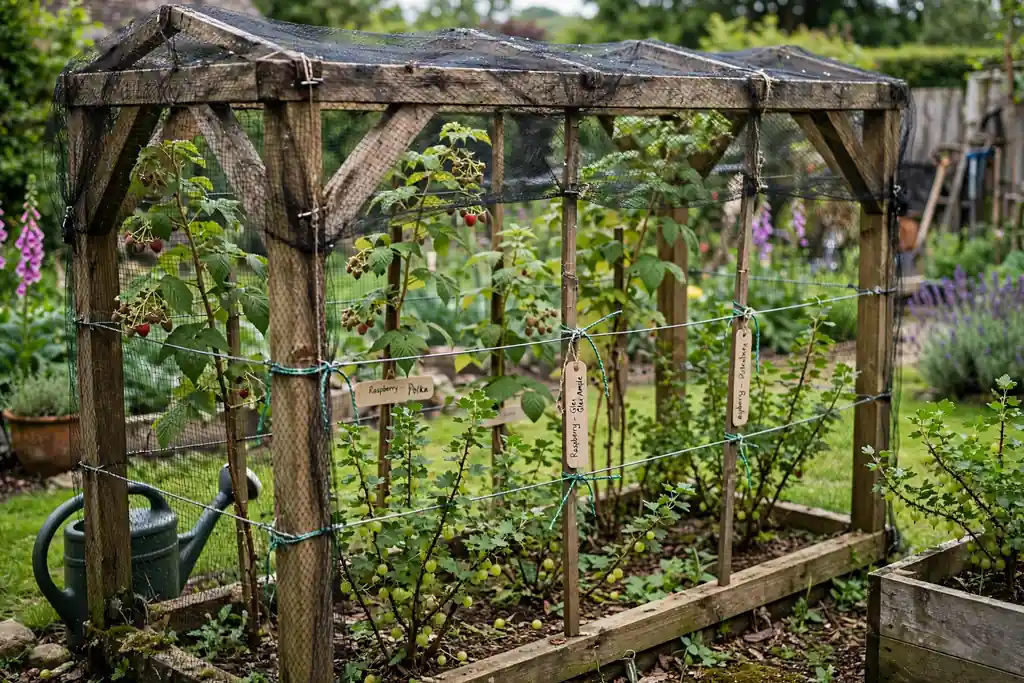
Net a soft fruit cage for raspberries, gooseberries, redcurrants, and blackcurrants, so birds do not take the crop before you do. Build a simple frame from timber or metal poles, cover it with bird netting, and leave a door tall enough to walk through with a picking basket. Plant raspberries along one side where canes can be tied to wires, and bush fruit in the middle where you can reach all round.
Prune by fruit type each winter, mulch in spring, and water in dry spells while fruit swells. A fruit cage suits a sunny corner of a kitchen garden, and the harvest, eaten fresh or frozen for winter, repays the building effort in the first full year. Check the netting each spring for holes before fruit ripens.
15. Train Climbing Roses on a Stone Wall
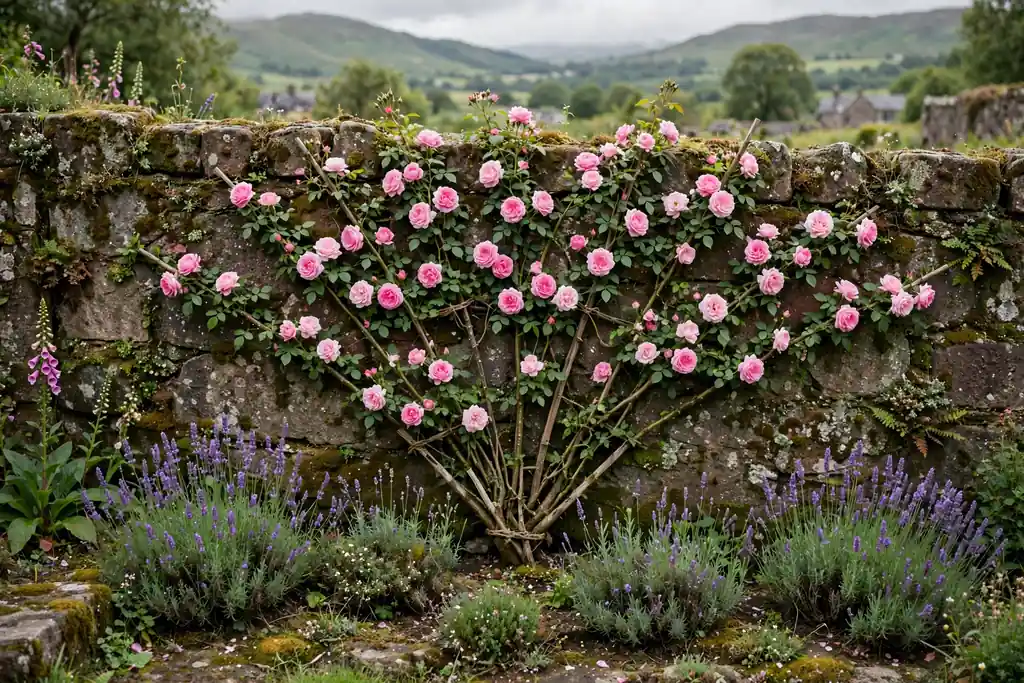
Train climbing roses on a stone wall or trellis for height, scent, and colour that no freestanding shrub gives. Fix horizontal wires to the wall, tie stems in a fan shape, and prune to keep new growth coming from low down rather than only at the top. Choose repeat flowering varieties for a longer season, and underplant with lavender or catmint to cover bare lower stems.
Feed and mulch in spring, water at the base in dry spells, and deadhead through summer to keep flowers coming. A climbing rose suits a house wall, a garden wall, or a sturdy arch, and it turns a plain stone face into the main feature of the garden. Check ties each year, since stems thicken and tight ties can cut into them.
16. Clip a Small Boxwood Parterre
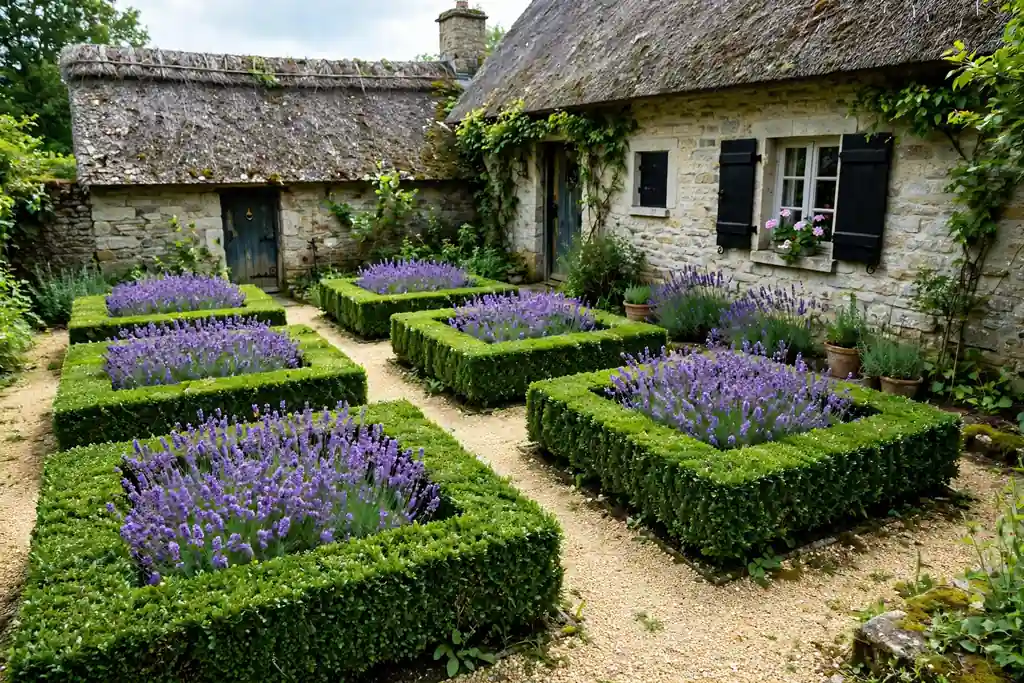
Clip a small boxwood parterre near the house for a formal note in an otherwise loose Scottish garden. Lay out a simple pattern of squares or a cross in low box hedging, fill the beds with lavender, roses, or seasonal bedding, and keep the paths between them in gravel. A parterre suits a flat, sunny spot by a door or a window, where its pattern can be seen from above as well as from the path.
Clip twice a year, in late spring and late summer, and feed after clipping to keep growth dense. Watch for box blight and box moth, and remove affected leaves promptly, since a small parterre is easier to check than a long hedge. If box worries you, use yew or holly cut low for a similar formal outline.
17. Grow a Vegetable Patch of Kale and Potatoes
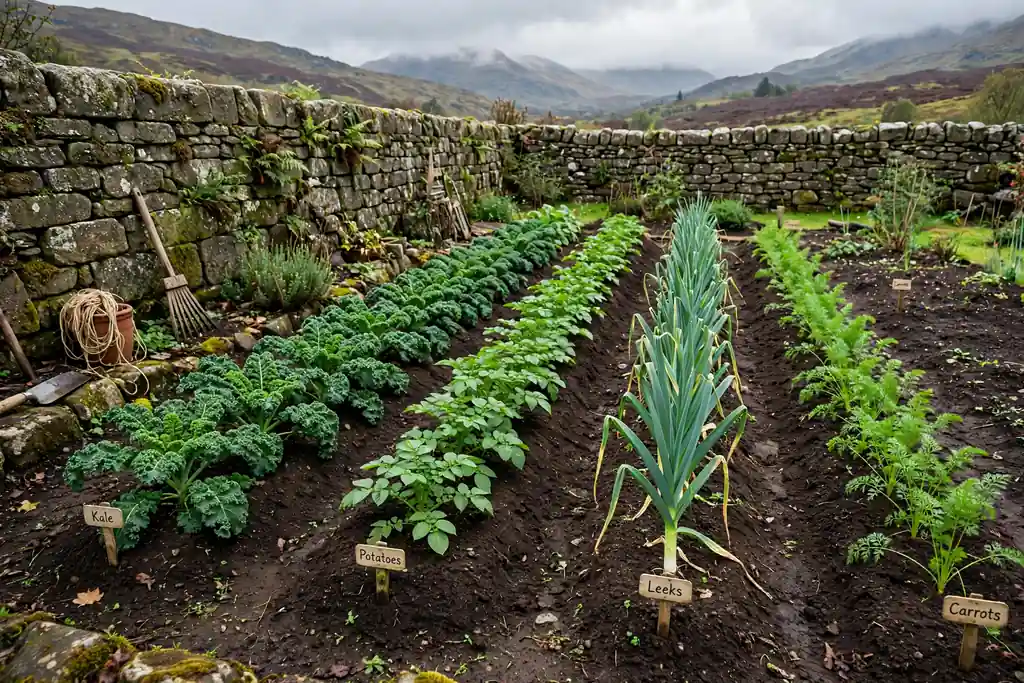
Grow a vegetable patch of kale, potatoes, leeks, and carrots, the crops that suit Scottish soil and weather best. Rotate beds each year so the same family does not grow in the same soil season after season, and dig in compost each autumn to feed the soil for spring. Plant potatoes in rows you can earth up easily, and kale where it can stand through winter for picking in cold months.
Net brassicas against cabbage white butterflies, and water carrots evenly so roots do not split. A vegetable patch does not need to be large: two or three beds give a family regular picking through summer and autumn. Keep a simple sketch of what grew where, so rotation stays easy to track from year to year.
18. Plant a Cutting Garden for the House
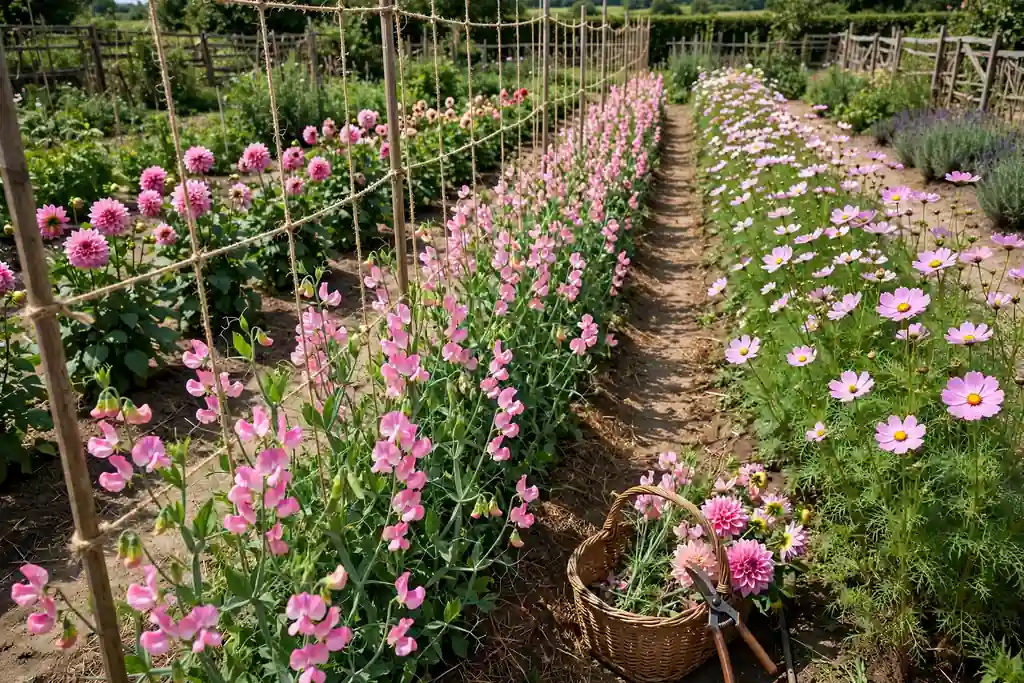
Plant a cutting garden in a sunny bed with sweet peas, cosmos, dahlias, and zinnias, grown in rows for picking rather than for display. Grow in straight rows with paths between them, stake sweet peas and dahlias early, and pick often, since cutting keeps flowers coming. A cutting bed suits a corner of a kitchen garden or the far end of a lawn, where rows look workmanlike rather than out of place.
Bring cut stems indoors the same day, strip lower leaves, and change vase water every couple of days to keep bunches fresh. For a softer indoor echo of the garden palette, see these Scottish living room ideas. Grow one or two scented flowers, such as sweet peas or stocks, in every cutting bed, since scent is what makes a home bunch feel special.
19. Make a Stone Bench and Fire Bowl Nook
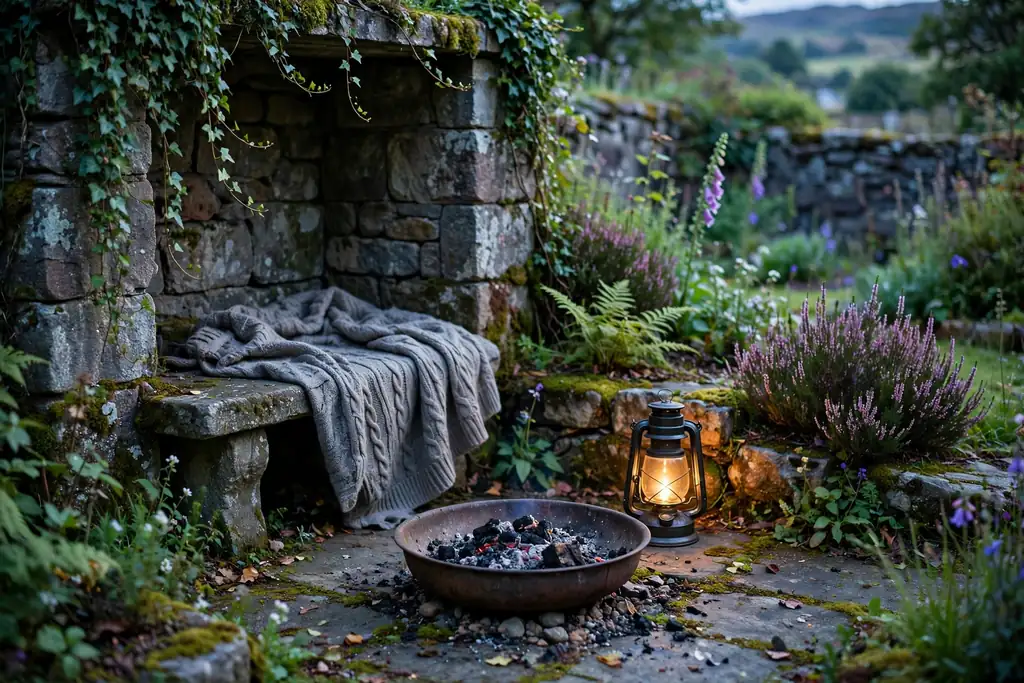
Make a sheltered nook with a stone bench and a fire bowl, so the garden can be used on cool evenings as well as warm days. Site the nook out of the prevailing wind, with its back to a wall or hedge, and lay a level gravel or stone base under the bench and bowl. Keep the fire bowl clear of overhanging branches and soft furnishings, and follow the maker guidance for safe use.
Add a small side table for mugs, a basket for blankets, and a lantern for light, so the nook works without a trip back indoors for every comfort. A fire nook suits a corner that catches evening sun, and it gives a small garden a clear destination, which makes the whole space feel larger and more used.
20. Lay a Whinstone and Slate Chip Path
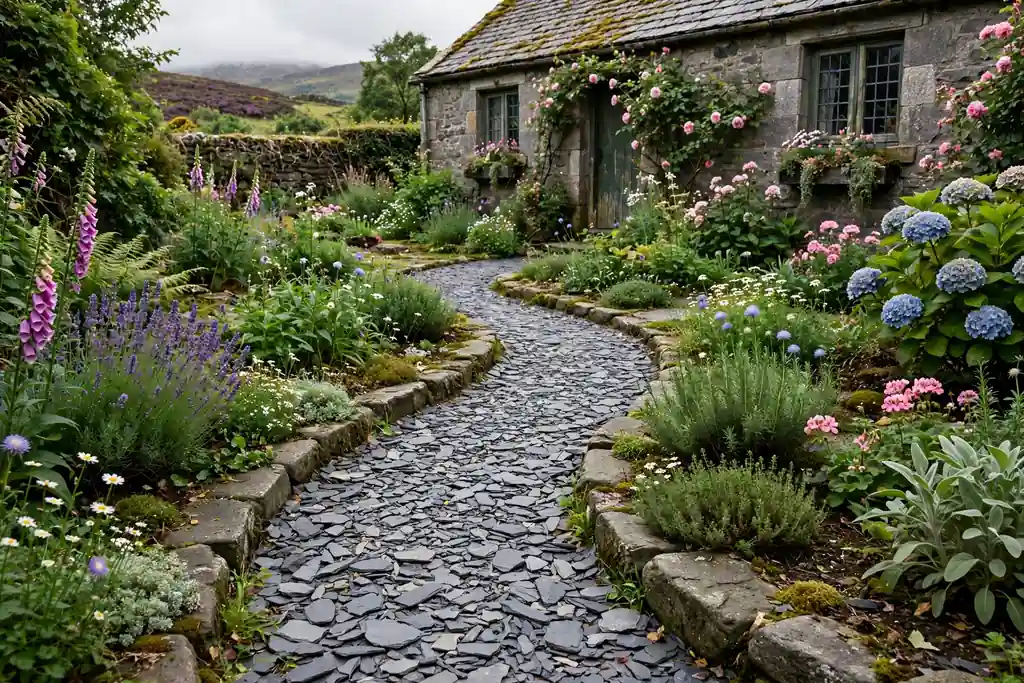
Lay a path of whinstone or slate chips for a surface that suits Scottish stone, drains freely, and stays firm underfoot. Dig out the route, lay a compacted base, edge it with stone or timber, and spread chips to a depth that covers the base without shifting underfoot. A chip path suits a kitchen garden, a woodland walk, or a route to a seat, where a paved path would look too formal.
Top up chips each spring where they have thinned, and weed the edges before weeds seed into the gravel. Keep the path wide enough for a wheelbarrow on working routes, and narrower on walks where a single person strolls. A good path is what turns a garden from a view into a place you actually walk through daily.
21. Leave a Wildlife Corner With a Log Pile
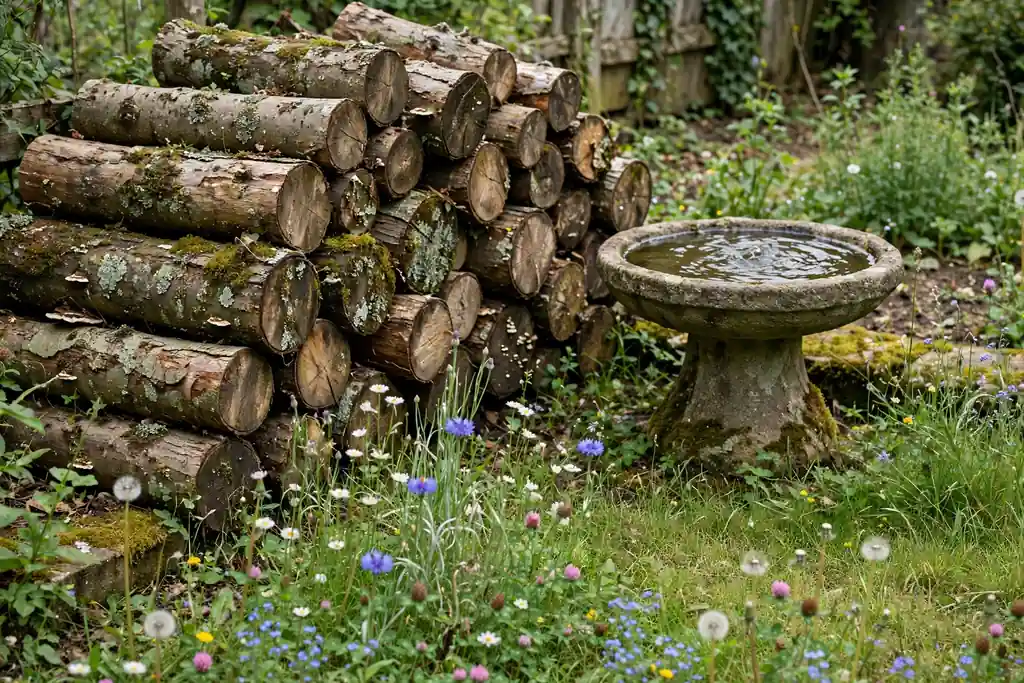
Leave a wildlife corner with a log pile, a bird bath, and a patch of unmown grass, and let it stay a little untidy on purpose. Stack logs in a shady corner for beetles and fungi, keep the bird bath topped up with fresh water, and leave one grass patch uncut until late summer for insects and seed eating birds. This corner suits the far end of a garden, where a wilder look does not fight with tidy beds near the house.
Add a few bee friendly plants nearby, such as foxgloves, comfrey, and single flowered roses, so pollinators have food from spring to autumn. Avoid pesticides in and around the wildlife corner, and check the bird bath in freezing weather, breaking ice so birds can drink. A wildlife corner costs almost nothing and brings the garden alive.
22. Frame a Front Garden With a Low Wall and Gate
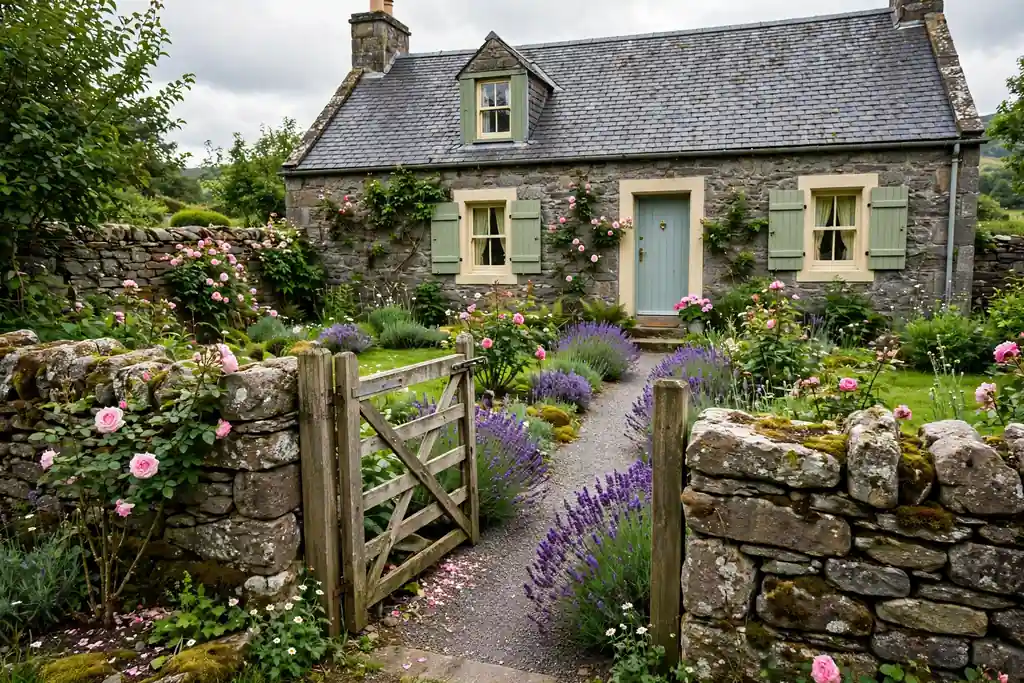
Frame a front garden with a low stone wall and a simple gate for a boundary that looks welcoming rather than closed off. Keep the wall low enough to see over, so the garden still connects with the street, and choose a gate wide enough for a wheelbarrow and a pram. Plant the front beds with tough, low plants such as lavender, geraniums, and dwarf roses, which cope with street dust and need little care.
Keep the path to the door clear and level, with a light by the gate for dark evenings. A front garden with a low wall suits cottages and town houses alike, and it gives the house a finished edge that a bare lawn does not. Sweep leaves off the path in autumn, since wet leaves on stone get slippery fast.
23. Grow Containers on Patio Steps
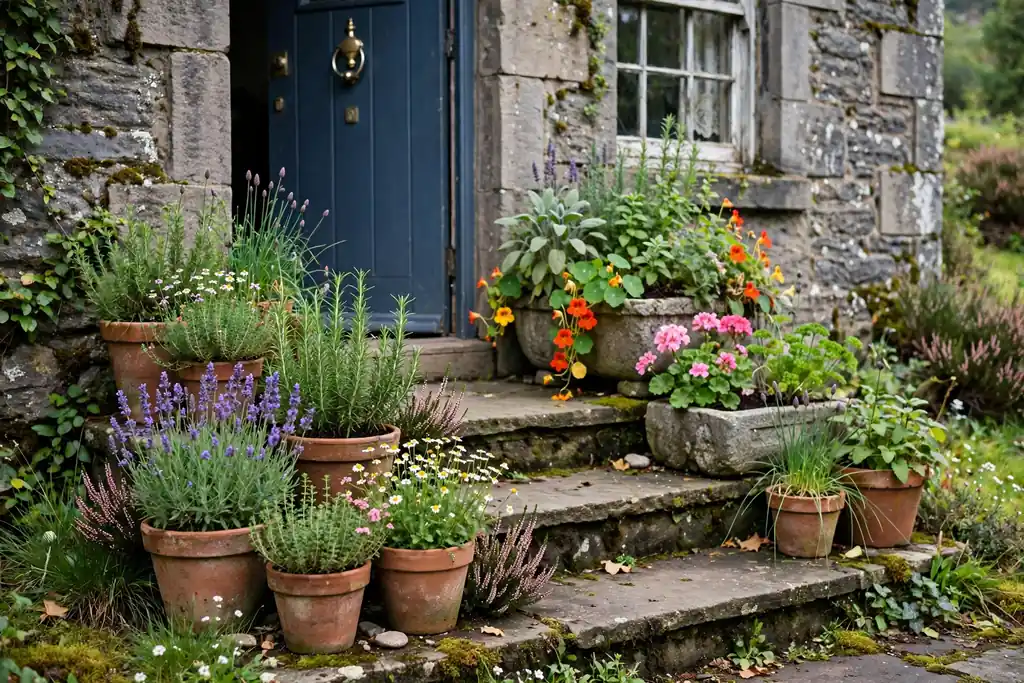
Grow containers on patio steps and beside a door for a Scottish garden in a small space or a yard with no soil. Use large, frost proof pots, fill them with free draining compost, and plant with a mix of herbs, trailing lobelia, and dwarf shrubs that cope with wind on an exposed step. Group pots in odd numbers and vary their heights, so the display reads as one planting rather than a row of single pots.
Water pots in dry spells, since pots dry out faster than beds even in Scotland, and feed every couple of weeks in summer. Move tender pots to a sheltered wall in winter, and raise pots on feet so rain drains freely. Containers suit renters too, since the whole garden can move in a day.
24. Cultivate a Moss Garden in Deep Shade

Cultivate a moss garden in deep shade where grass thins and few plants thrive, and let moss be the planting rather than the problem. Keep the area damp and free of fallen leaves, press moss patches into bare soil, and add ferns and small hostas for height among the soft green carpet. Moss suits a north facing wall, a shaded corner, or the ground under a large tree, where it stays green all year with almost no care.
Avoid walking on the moss daily, since it compacts, and keep a stepping stone route through it for access. A moss garden pairs well with a stone lantern or a simple bench, and it turns the hardest corner of a Scottish garden into one of its quietest pleasures. Water in long dry spells to keep the moss soft and green.
25. Plant an Orchard Corner of Apples and Plums
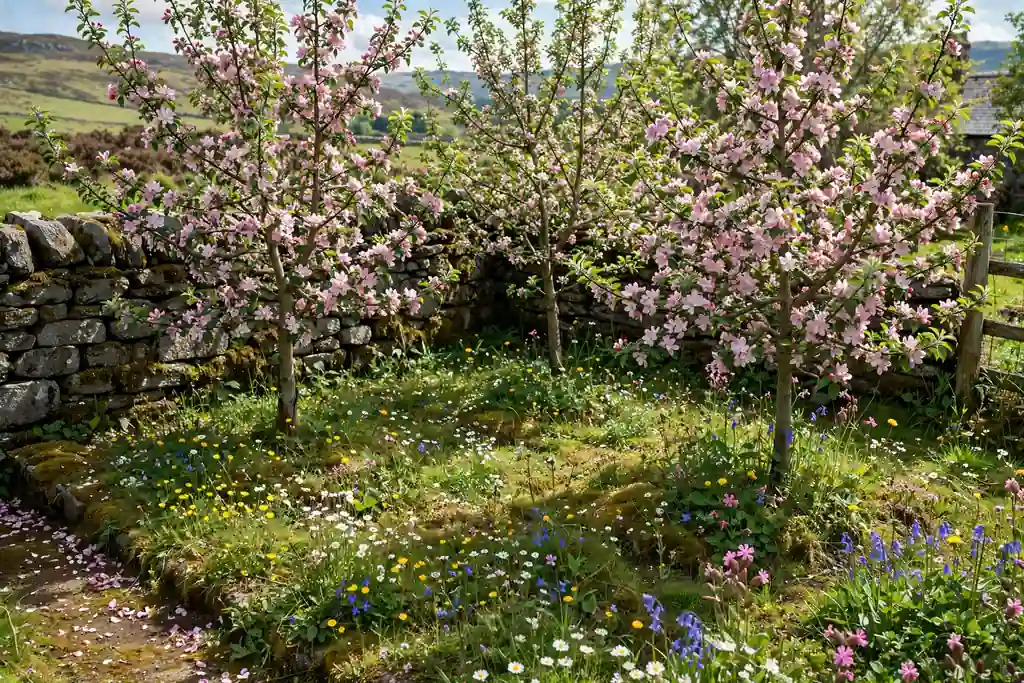
Plant an orchard corner with two or three small apple or plum trees, chosen for varieties that ripen in a Scottish climate. Plant on dwarf or semi dwarf rootstocks so trees stay pickable without a tall ladder, and space them for their mature spread, not for how they look in the pot. Underplant with low wildflowers or herbs, and keep grass or mulch clear of the trunks.
Prune each winter, feed in spring, and thin fruit in early summer so the remaining apples size up well. Choose varieties that ripen in different months so the harvest spreads across late summer and autumn. An orchard corner suits a sunny, sheltered lawn edge, and a single well chosen tree gives more fruit than three crowded ones.
26. Terrace a Slope With Stone and Steps
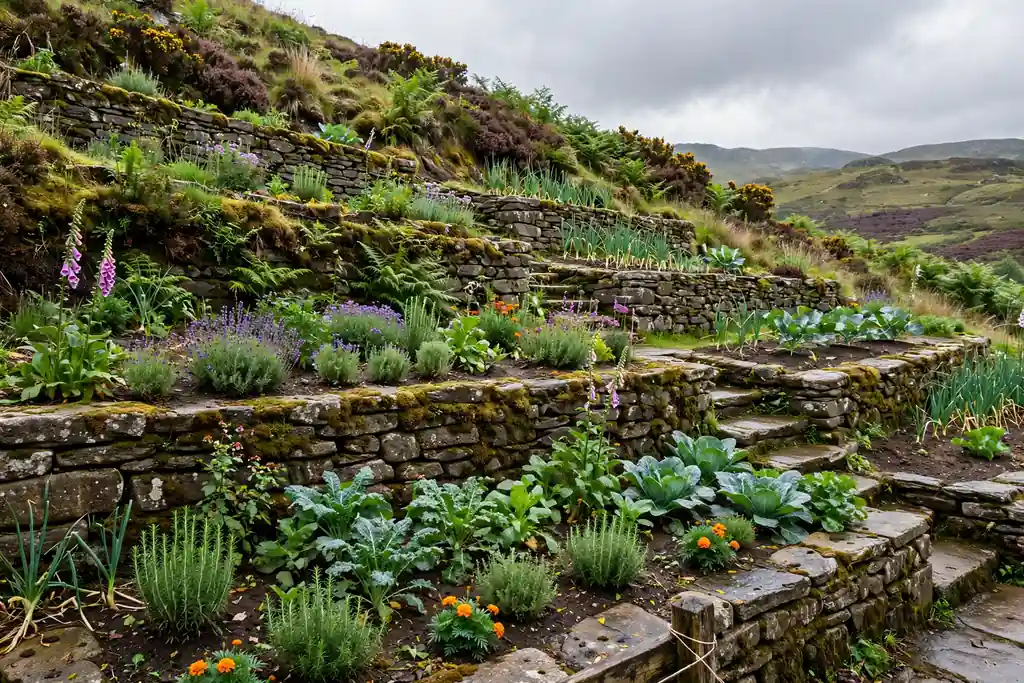
Terrace a slope with stone walls and steps, turning a bank that is hard to mow into a series of flat, usable levels. Build from the bottom up, so each level supports the one above, and make every terrace wide enough to stand on and reach across. Put vegetables or herbs on the sunniest level, flowers in the middle, and seating on the level nearest the house.
Add steps with a handhold on steep slopes, and leave drainage behind each wall so heavy rain does not push it out. For the full method, from wall building to planting each level, see these tiered garden ideas. Terraces suit Scottish hillside gardens well, since they hold soil, slow water, and give every plant a level bed.
27. Plan a Winter Interest Garden
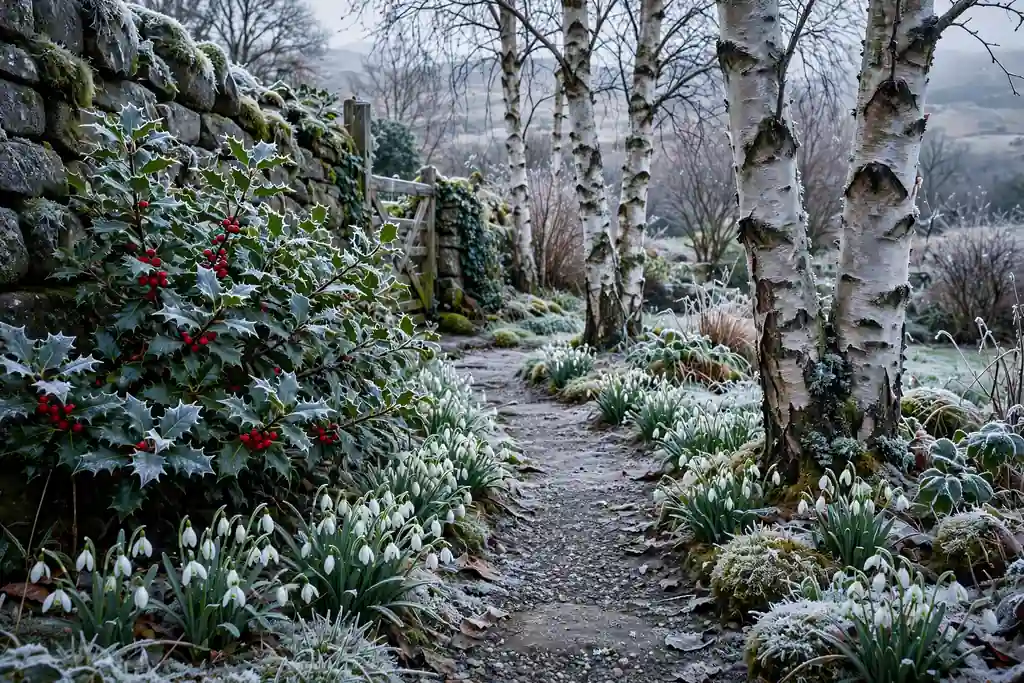
Plan a winter interest garden with evergreens, berries, coloured bark, and early bulbs, so the garden still looks cared for in January. Use holly and yew for green structure, rowan and cotoneaster for berries, and birch or willow for bark colour against grey skies. Add snowdrops and winter aconites at path edges, where they can be seen from the house on short days.
Keep one path clear and gritted in frost, and leave seed heads standing through winter for birds and for frost patterns on cold mornings. A winter garden suits every Scottish garden, since winter is long, and it costs little extra if you choose winter plants when planting new beds in spring. Cut back spent stems in late winter, before spring growth starts.
28. Extend the Season With Cold Frames
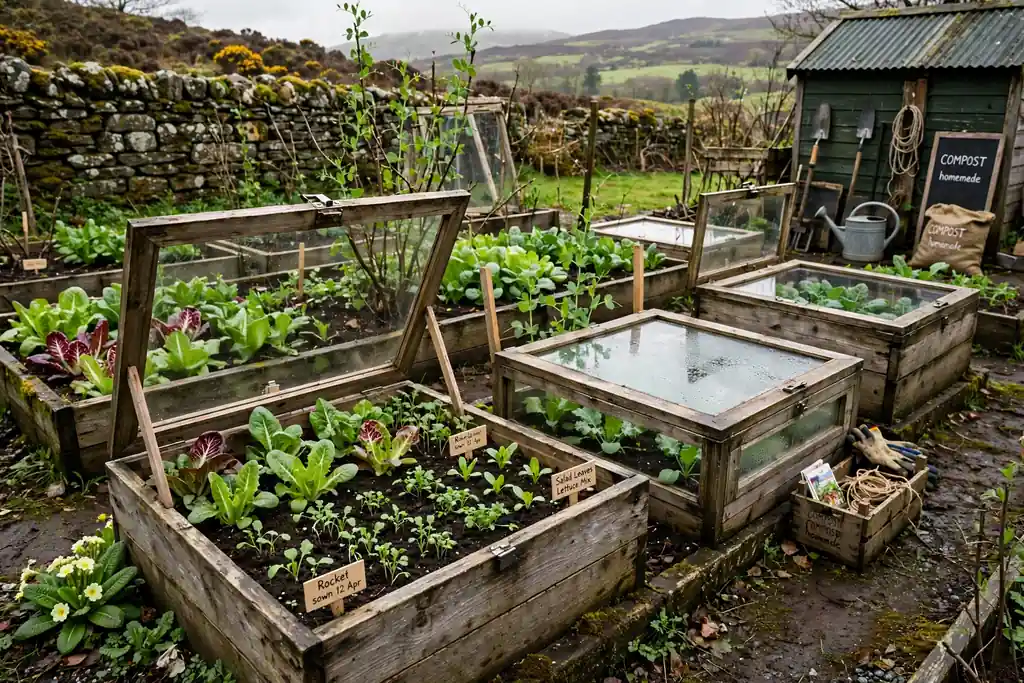
Extend the season with cold frames on allotment style beds, giving salads and young plants shelter from wind and late frost. Site frames in sun, facing south where possible, and fill them with free draining compost for seedlings and cuttings. Harden plants off by opening the lids wider each day before moving them outside, so they do not wilt in the first wind.
Use one frame for salads through winter, one for hardening off spring seedlings, and one for cuttings, so each frame has a clear job. Close lids at dusk in frost, and water sparingly in winter, since cold wet compost rots seedlings faster than cold alone. Cold frames suit Scottish gardens well, since they add weeks to both ends of the growing season for very little cost.
29. Build a Woodland Play Corner

Build a woodland play corner with log seats, a simple den frame, and a patch of bark, so children have a garden space of their own. Site it under trees or in a sheltered corner, away from ponds and vegetable beds, and use rounded logs and bark for soft landings. Keep the corner simple: a den frame, a few logs to sit on, and room to dig, which children use far more than fixed play equipment.
Check logs each spring for rot and sharp edges, and keep the corner visible from the house so play stays supervised. A play corner suits family gardens where a full lawn would be trampled, and it can grow back into a fern garden later, when children outgrow it, with very little replanting.
30. Line a Path With Lavender
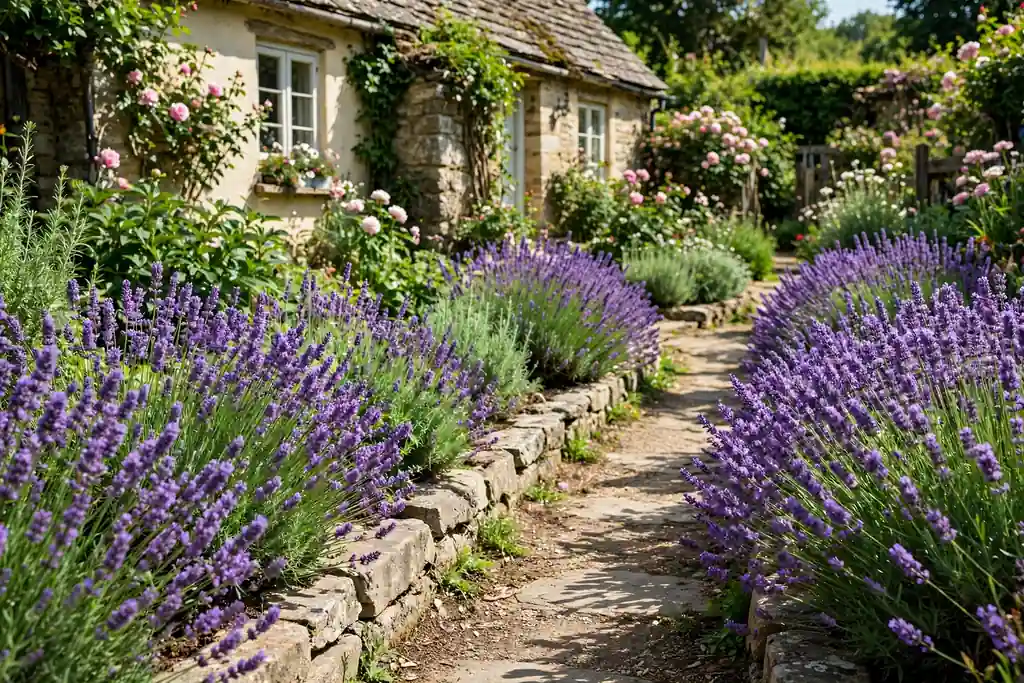
Line a path with lavender for scent, colour, and bees, in the sunniest, best drained spot in the garden. Plant lavender in a single row or a double row along a path edge, spacing plants by the label so they form a continuous hedge without crowding. Lavender needs sun and sharp drainage, so dig in grit on heavy soil and avoid planting it in a wet hollow.
Trim lightly after flowering and again in spring, cutting back to green growth rather than into old wood, to keep plants compact. A lavender path suits a front garden, a kitchen garden edge, or the route to a seat, where brushing past releases scent. Replace plants that grow woody after several years, since young lavender flowers far better.
31. Dine Under a Pergola of Climbing Plants
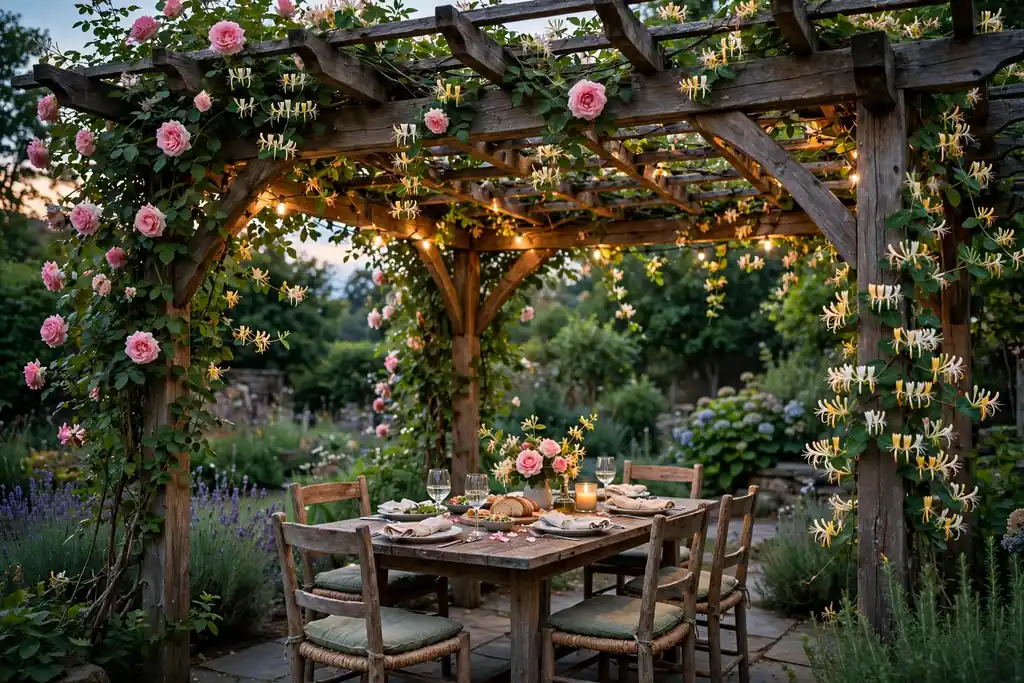
Dine under a pergola of climbing plants, with roses, honeysuckle, or clematis trained over a timber frame above a table and chairs. Site the pergola where it catches evening sun, and build it sturdy enough to carry mature climbers, which grow heavy in wet years. Train stems along the top beams, and prune each year to keep growth from shading the table completely.
Add a gravel or stone base under the table, a lantern for evenings, and pots of herbs nearby for cooking. A pergola suits a patio near the house, and it gives outdoor meals shelter from light rain and low sun without closing the garden in. Check fixings each spring, since wind loads on a leafy pergola are higher than on a bare frame.
32. Work From a Greenhouse Potting Corner
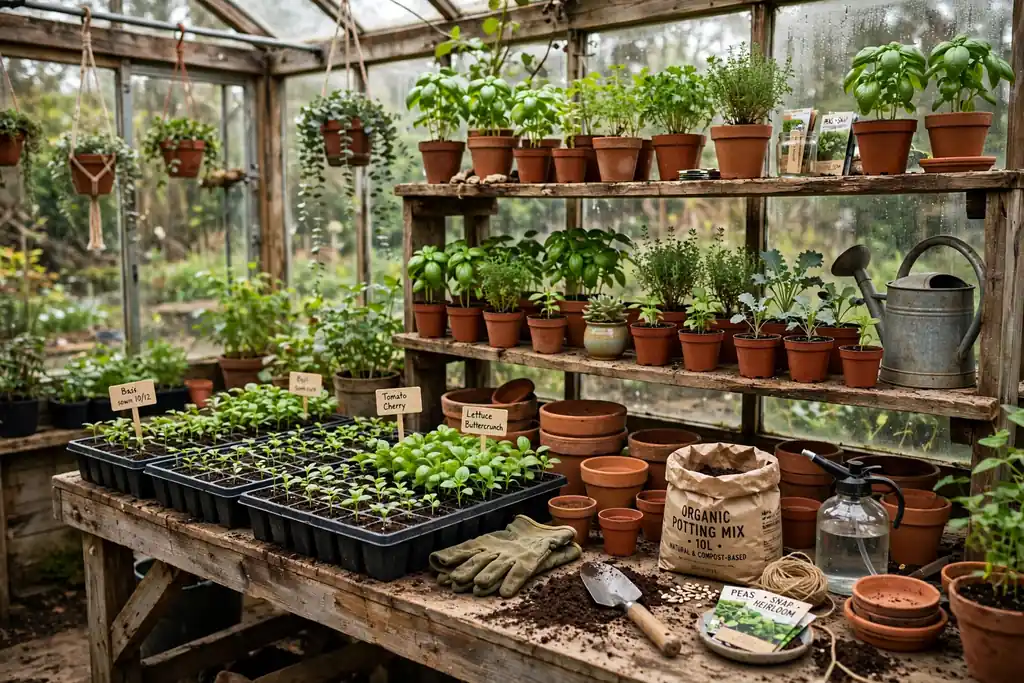
Work from a greenhouse potting corner with a bench, a sink or bucket, and shelves for seed trays, so sowing and potting have a home of their own. Site the greenhouse in sun, sheltered from the prevailing wind, and keep one bench clear for daily work rather than filling every surface with stored pots. A small heater or a fleece roll extends sowing into early spring, when nights are still cold.
Keep tools, labels, and twine in one box by the bench, and wash trays before reuse to cut down on disease. A greenhouse suits Scottish gardens well, since it gives tender plants a start and salads a home through winter. Even a small lean to greenhouse against a south wall gives most of the benefit for a fraction of the space.
Conclusion
A good Scottish garden starts with shelter, stone, and plants that suit the weather, then grows more personal year by year. Begin with one wall, one path, or one bed from this list, and let the next idea follow once the first is settled. The gardens that last are rarely finished in one season; they are the ones where each change suits the soil, the wind, and the way you actually use the space. Save this list, pick your first three ideas, and work through them in order: structure first, planting second, and a sheltered seat somewhere in between, so the garden is ready to enjoy long before it is complete.
FAQs
What plants grow best in a Scottish garden?
Heather, ferns, roses, foxgloves, hostas, hardy herbs, and native wildflowers grow well in most Scottish gardens, since they cope with rain, wind, and cool summers. Choose plants suited to your soil and exposure first, and add tender plants only behind shelter, such as a wall or a windbreak hedge. Local nurseries stock varieties proven in Scottish conditions, which is a safer guide than a catalogue photo alone.
How do I deal with a wet, boggy Scottish garden?
Give wet ground a planted job rather than fighting it: a rain garden, a pond, or a bog bed with irises, astilbe, and ferns turns standing water into a feature. Improve drainage only where it is practical, such as a French drain along a path, and avoid raising beds on waterlogged ground without a drainage route. Check where water stands after heavy rain before planting, since that tells you more than any soil test alone.
What is the best windbreak for a Scottish coastal garden?
A double row of tough hedging, such as escallonia, griselinia, or hawthorn, makes the best coastal windbreak, since a hedge with small gaps filters wind rather than sending gusts over the top. Let the hedge establish for a season or two before planting tender plants behind it, and keep salt tolerant plants, such as thrift and sea holly, nearest the sea. Check ties and stakes each spring after winter storms.
Can I grow lavender in Scotland?
Yes, lavender grows well in Scotland in a sunny, free draining spot, such as a south facing path edge or a raised bed with grit dug into the soil. It fails mainly in wet, heavy soil and in deep shade, so avoid hollows where water stands in winter. Trim after flowering and again in spring, and replace woody plants after several years, since young lavender flowers far better than old, bare stems.
How do I make a small Scottish garden feel larger?
Use one clear path, one sheltered seat, and a few large pots rather than many small ones, so the eye has somewhere to rest. Keep boundaries green with hedging or climbers instead of bare fences, and repeat one or two colours through the planting to tie the space together. A mirror is rarely needed outdoors; a seat with a view into the garden, plus a tall plant in the far corner, draws the eye across the whole plot.
When should I start a Scottish garden?
Start structural work, such as walls, paths, and terraces, in autumn or early spring, when soil is workable and plants are dormant. Sow hardy annuals and plant bare root trees and hedging in autumn, plant most perennials in spring, and sow wildflower seed in late summer or autumn for flowers the following year. Keep a simple notebook of what you planted and where, so each season builds on the last instead of starting over.