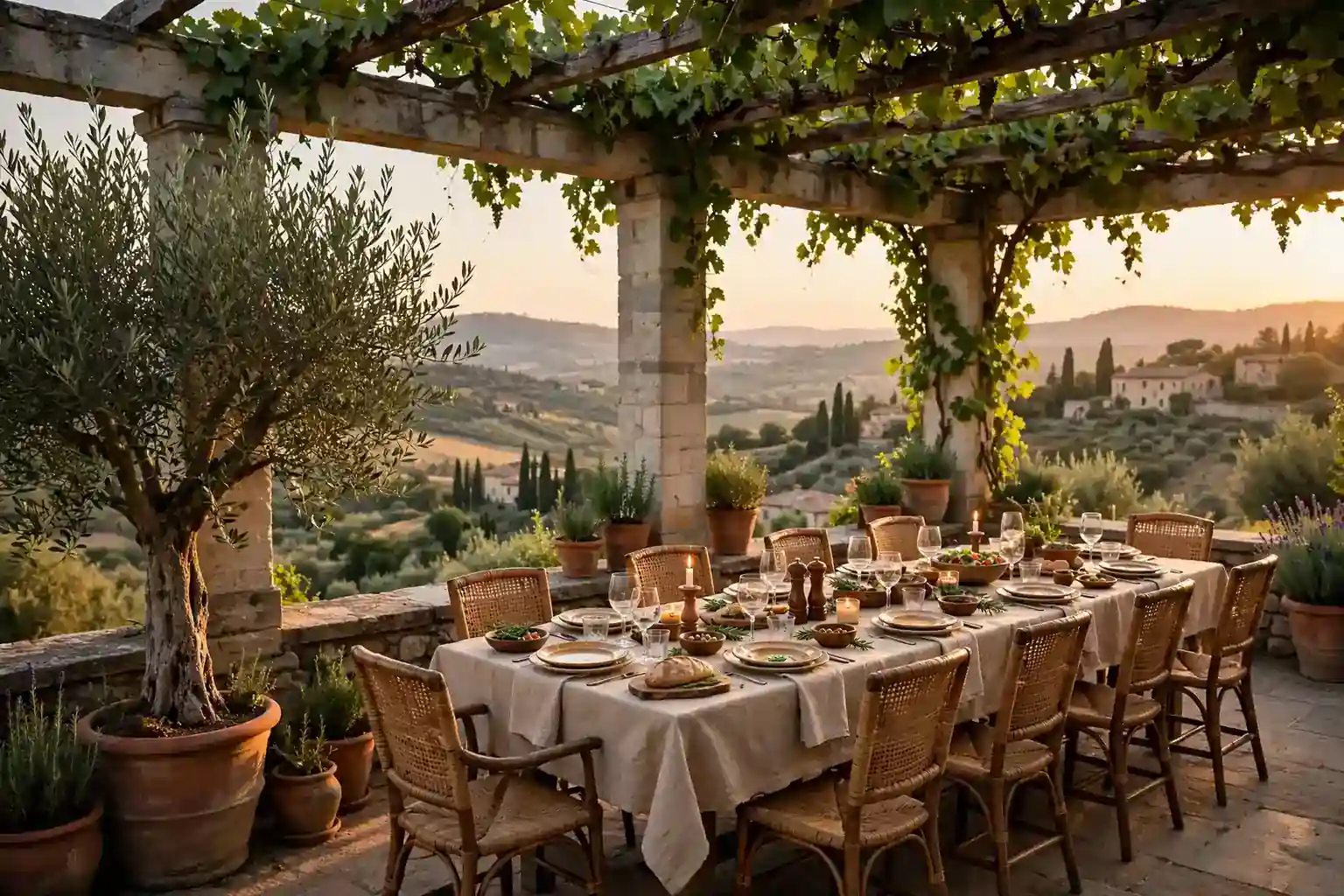
An Italian garden is less about strict formality and more about warmth: sun on stone, the scent of herbs by a path, a shady seat, and a table set for a long meal. These 22 Italian garden ideas cover courtyards, small patios, slopes, and larger yards, so you can start with a single terracotta pot by the door or plan a full terrace around an olive tree. Pick the structure first, then the plants that suit your sun, soil, and watering routine, and repeat one or two materials, such as terracotta and warm stone, so the whole space feels settled rather than busy.
Key Takeaways
- Start with structure: a wall, a pergola, a path, or a seating spot, then add plants around it.
- Use a small palette: warm terracotta, cream and ochre walls, grey green olive leaves, and deep green cypress carry the Italian look without clutter.
- Choose sun loving plants that cope with dry soil, such as olive, lavender, rosemary, thyme, citrus in pots, and agave, for sunny spots.
- Stone, gravel, and terracotta keep beds tidy and cut down on watering and mowing.
- Pots make the style possible on a balcony or rented patio, where beds are not an option.
- Plan shade and scent for evenings: a vine, a fig, jasmine, and simple lighting stretch the hours you use the garden.
1. Cluster Terracotta Pots in a Sunny Courtyard
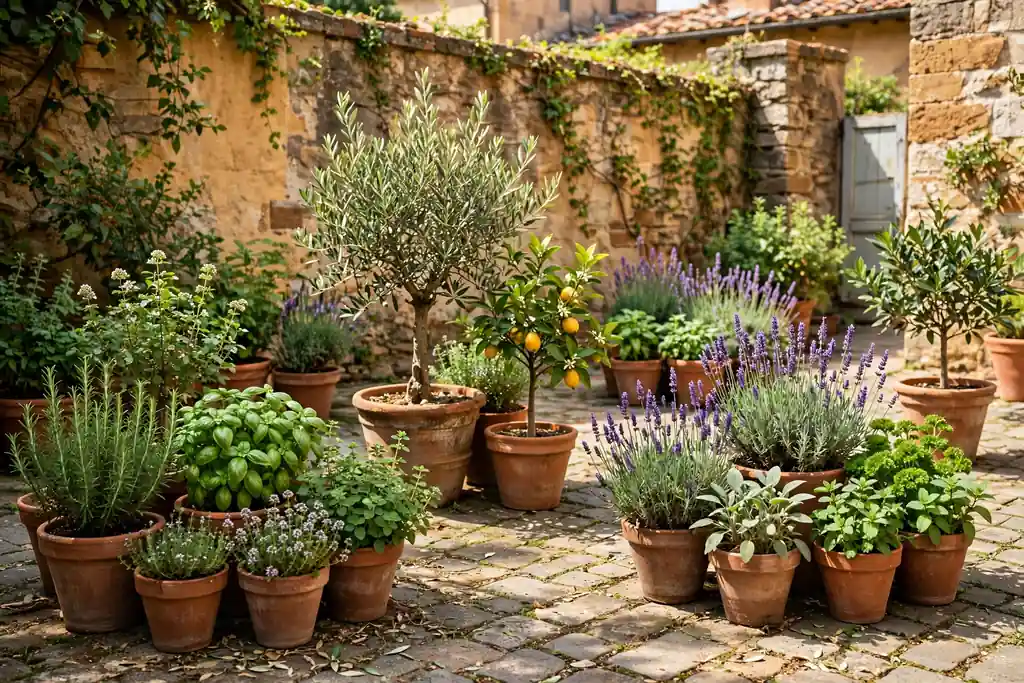
Group terracotta pots in clusters of three or five near a door, steps, or seating corner to give a courtyard instant Italian character. Use pots in two or three sizes, all in the same warm clay tone, and plant each with a simple mix so the group reads as one design rather than a jumble. Terracotta dries fast, so check the soil before watering and use saucers on painted steps.
Mix one tall plant, such as a small olive or bay, with mid height herbs and one trailing plant per large pot for a full look. Keep the heaviest pots near walls or on level paving, and leave a clear path through the cluster. For layout lessons on giving each level and cluster a clear job, the ideas in these tiered garden ideas show how structure comes before planting.
2. Make One Olive Tree the Focal Point
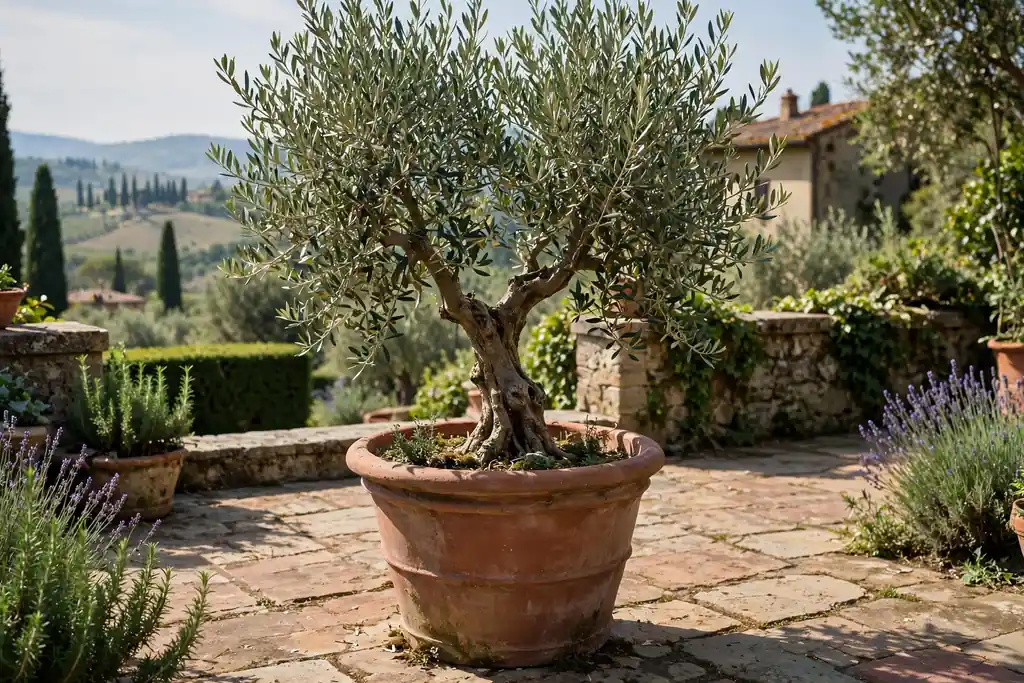
Plant a single olive tree in the ground or in a wide terracotta pot to anchor a terrace without needing a bed. Choose a pot with drainage holes, use a gritty, free draining mix, and water deeply, then let the top of the mix dry before watering again. Olives need full sun and air movement, and they suit a sheltered corner away from cold wind.
Prune lightly to keep an open shape, and underplant with thyme or small stones for a finished surface that also keeps weeds down. In cold areas, keep the olive in a pot and move it under cover for winter, so you keep the silvery leaves without risking the tree. One olive, well placed, does more for the look than a row of small plants.
3. Line a Path With Tall Cypress Trees
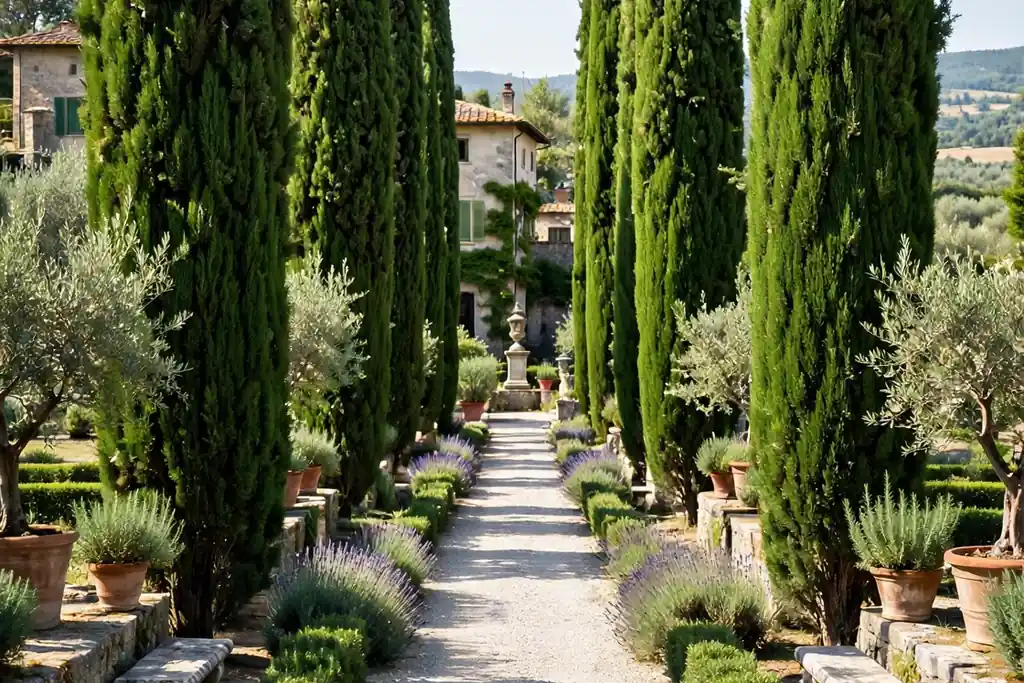
Plant a row of tall, narrow cypress trees along a straight path or drive to frame the view and give the garden a classic Italian line. Space the trees by the label, not by how they look in the pot, since a crowded row soon loses its clean shape. Cypress suits sunny, well drained soil and needs little pruning if the variety is naturally narrow.
Keep the path surface simple, such as gravel or large stone slabs, so the dark green line stays the focus. Underplant only at the ends of the row, where low lavender or rosemary softens the base without breaking the line. Check the mature height before planting near wires or a boundary, and keep the trees clear of gutters and drains.
4. Grow a Grapevine Over a Pergola for Dining Shade
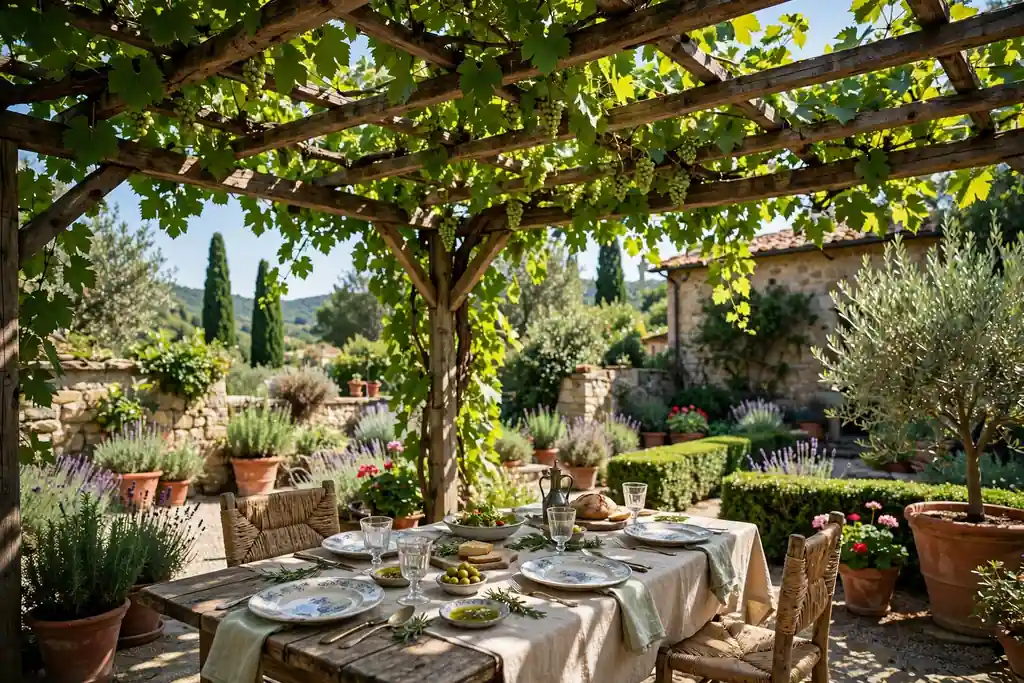
Build a pergola over the main dining area and train a grapevine over the top for shade that changes with the season: leaves in summer, open sky in winter after leaf fall. Build the pergola from sturdy posts and beams, run wires along the top, and train one or two main stems along the beams, tying in side shoots as they grow.
Prune in winter to keep fruiting wood near the frame, and leave headroom so the vine can be pruned from below with a step ladder. Site the pergola over a table, not over a roof drain, and keep the ground beneath level for chairs. A grapevine pergola also marks the dining zone, which helps the rest of the garden feel organized around it.
5. Grow a Lemon Tree in a Large Terracotta Pot
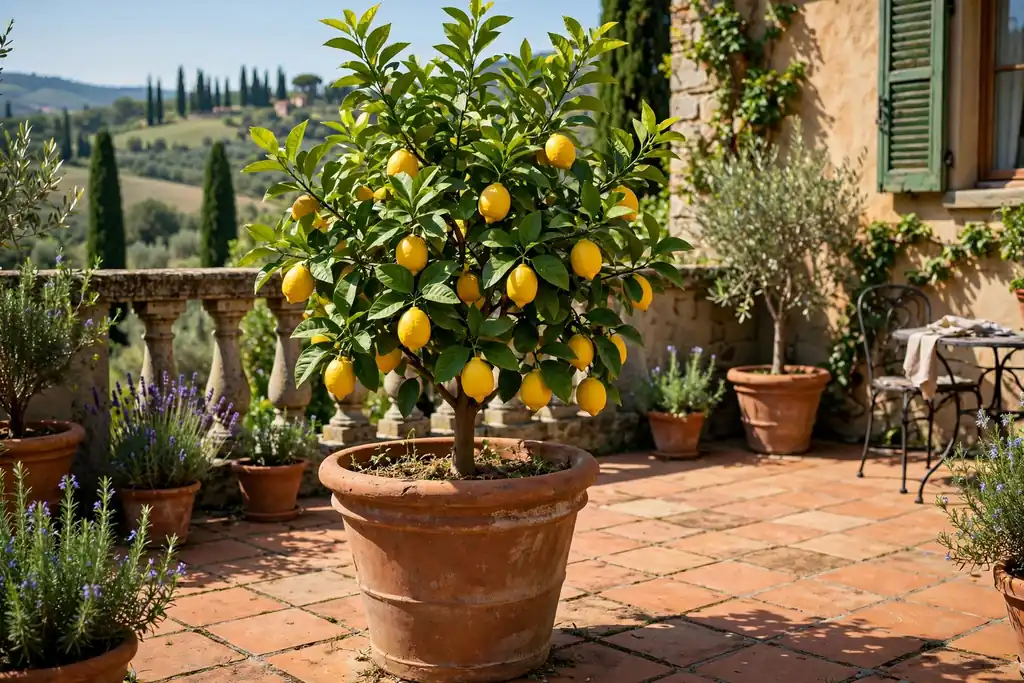
Grow a lemon tree in a large pot for blossom scent, glossy leaves, and fruit on a patio or balcony. Choose the sunniest sheltered spot, use a pot with drainage and a free draining mix, and water deeply, then let the top dry before watering again. Feed during the growing season following the product label.
Move the pot indoors or wrap it if your winters are cold, since lemons are tender. Pick fruit as it colors so the tree keeps producing, and prune lightly to keep an open shape you can reach around. A lemon in a pot also works as a pair flanking a door, where the scent greets everyone who arrives.
6. Set a Wall Fountain in a Courtyard
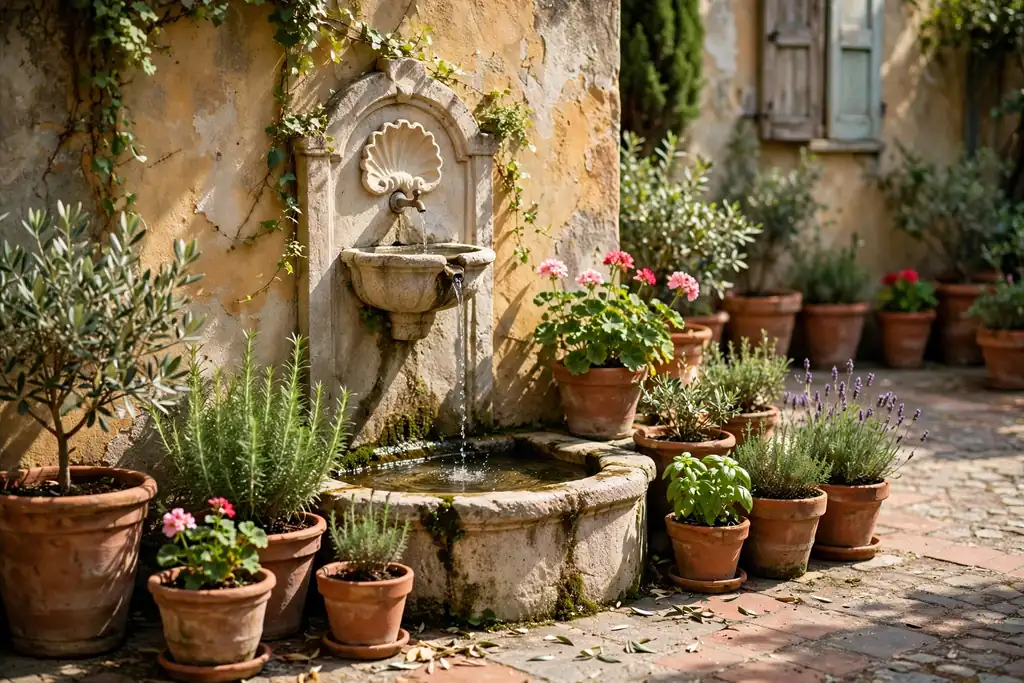
Fix a small wall fountain to a courtyard wall, or set a freestanding fountain against it, for sound, movement, and a cool focal point. Place it where you can reach the pump for cleaning, surround the base with terracotta pots of different heights, and keep the basin shallow enough to clean easily. Top up the water in hot weather, and drain or cover the fountain before hard frost if it is not frost proof.
If plumbing is a problem, a solar pump in a shallow bowl gives a similar trickle without a mains connection. Keep the fountain away from seating cushions and electrical items, and refresh the water often so it stays clear. Even a small fountain changes how a courtyard feels on a hot day.
7. Plant a Kitchen Herb Bed With Basil, Rosemary, and Oregano
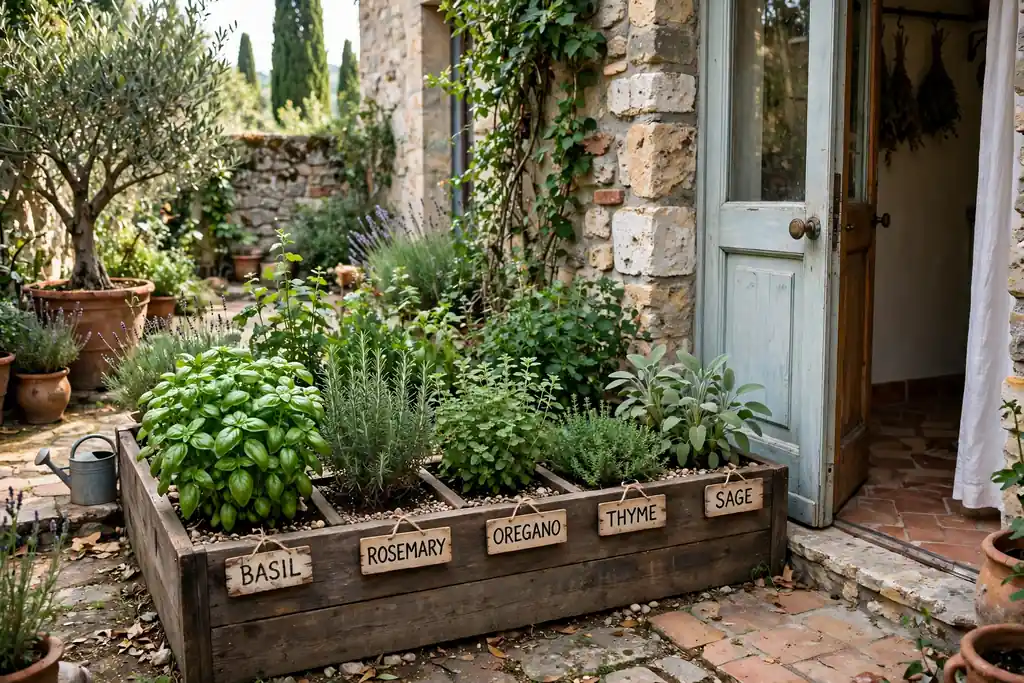
Plant a raised herb bed near the kitchen door for everyday cooking, with basil, rosemary, oregano, thyme, and sage in full sun and free draining soil. Keep mint in its own pot, since it spreads fast and can take over a shared bed. Harvest little and often, snipping stems in the morning, and replace woody plants every few years when they stop producing fresh growth.
A stone or terracotta edging keeps the bed tidy and stops soil washing onto paths in heavy rain. Label herbs while they are young, since many look alike before they flower. For a looser, mixed planting style that still suits herbs, these hippie garden ideas show how herbs can sit happily among flowers rather than in a separate bed.
8. Lay a Lavender Gravel Garden
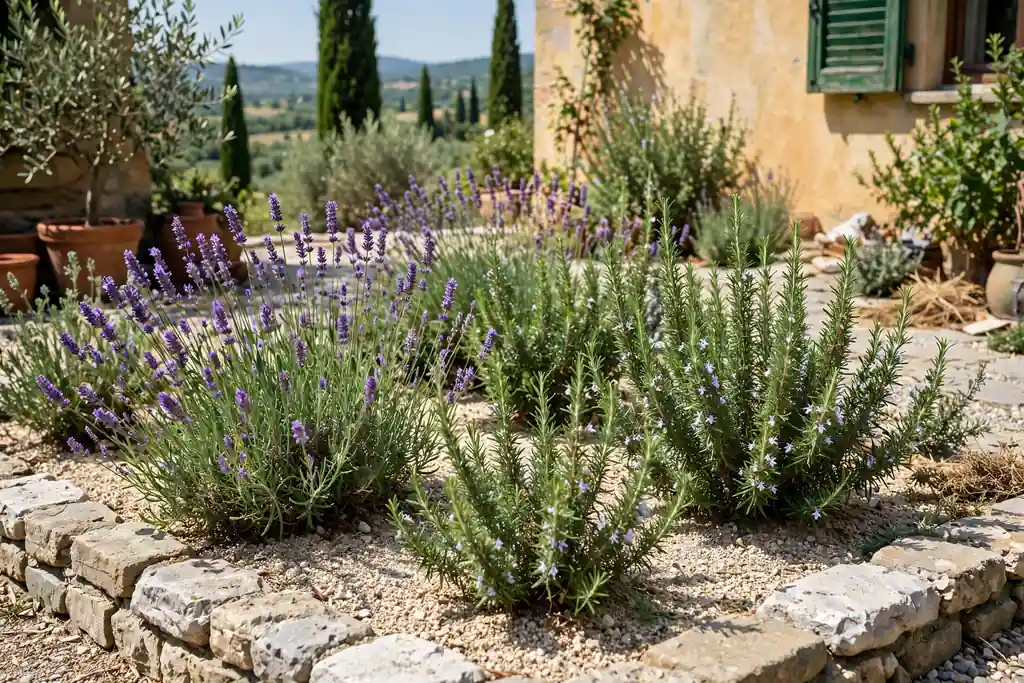
Spread gravel over a weed membrane and plant lavender, rosemary, and santolina in groups of three or five for a dry, scented Italian bed. Gravel suits sunny spots because it drains fast, stays tidy, and needs little watering once plants settle. Use a shallow layer of gravel over a free draining mix, and keep the planting open so the stones stay visible.
Trim lavender lightly after flowering and rosemary after growth starts in spring, but avoid cutting into old bare wood. Bees visit both plants through summer, so site the bed where you can enjoy the scent from a path or seat. Top dress with gravel each spring to keep plant crowns dry and suppress weeds.
9. Terrace a Slope With Stone Beds
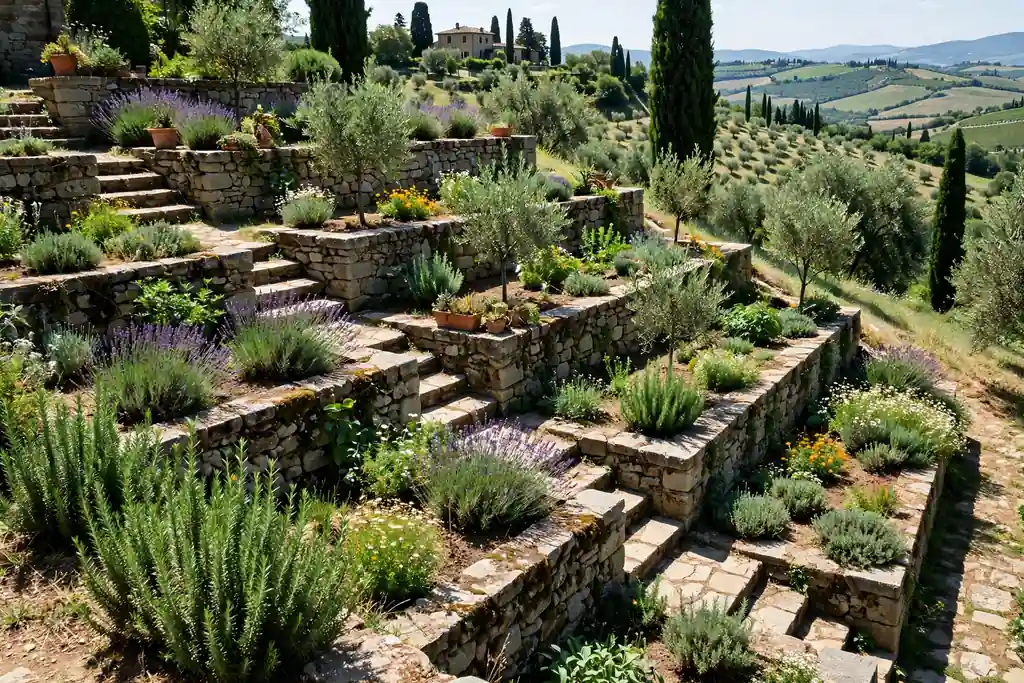
Step a series of stone edged beds down a slope like a staircase, with a path or grass strip between each bed, to give a hillside garden the terraced look of an Italian hillside. Each bed stays at a comfortable working height, the soil stays level inside each box, and you can reach the middle of every bed from the path beside it. Start at the lowest level and build upward so every level has solid support.
Make the beds no wider than you can reach across from one side, and leave paths wide enough for a wheelbarrow. Put the beds you visit daily, such as salad leaves and herbs, nearest the house, and beds you visit weekly further down. Keep a narrow access strip behind the tallest level so you can weed and cut back without stepping on the plants in front.
10. Set a Long Table for Outdoor Meals
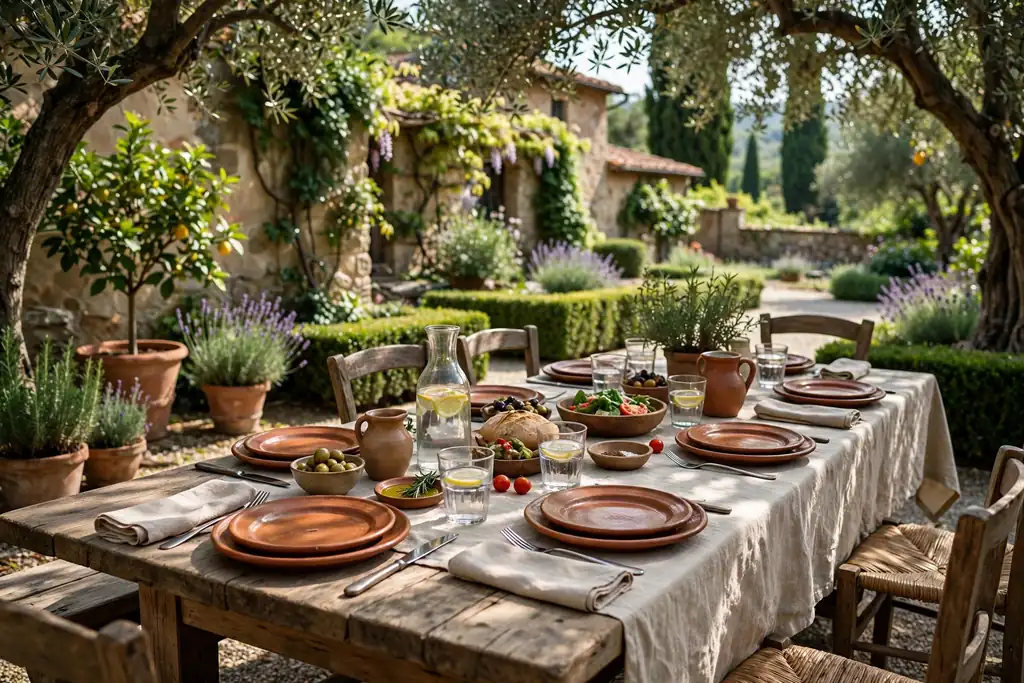
Set a long wooden table with chairs in the flattest, least windy part of the garden for meals outside, under a pergola or a tree where possible. Keep the table in the shade for lunch, use a plain linen cloth and terracotta or cream plates, and leave room to pull chairs out without hitting posts or pots. A low centerpiece of herbs in a shallow bowl is more practical than tall flowers, since guests can see each other across it.
Store cushions indoors overnight, and sweep leaves from the table area so the space is ready without a long tidy up. Keep the table near the door or the cooking area if you can, so carrying food is short and safe. A long table is the social heart of an Italian garden, even when the table itself is simple.
11. Train Jasmine Over an Arch on a Walkway
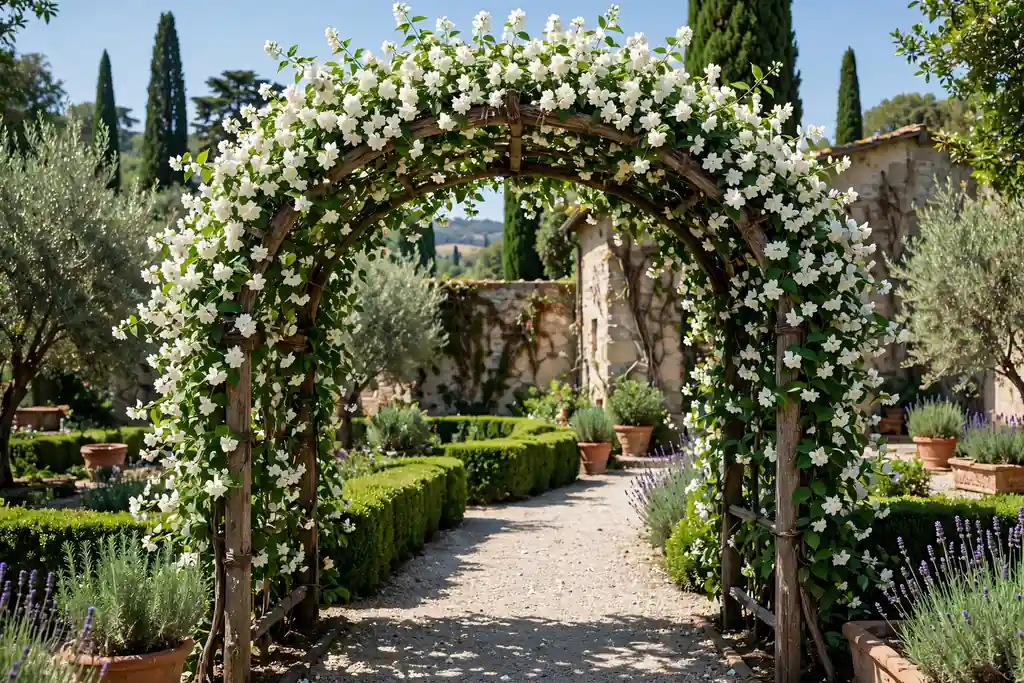
Place a light metal or wood arch over a garden walkway and train jasmine over it for scent at the step from one garden area into another. Unlike a wall vine, an arch frames the view ahead, so keep the opening clear and prune side shoots that hang into the walkway. Fix the arch firmly, since a mature vine is heavy, and plant on the sunny side so flowers face the path.
Plant jasmine at the base of each post, tie stems in as they grow, and prune after flowering to keep it tidy. Jasmine needs sun for the best flowers, but its roots prefer cool, moist soil, so mulch the base and water in dry spells. Choose a variety suited to your winter cold, since tenderness varies between types.
12. Clip Boxwood Into a Simple Parterre
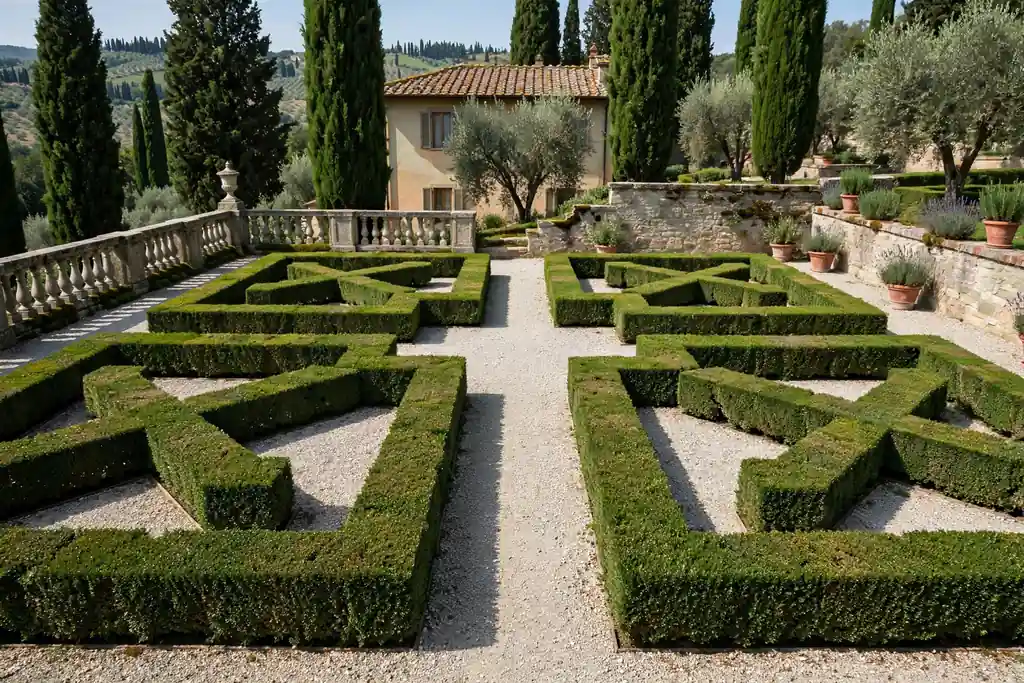
Clip boxwood into low, simple shapes, such as squares or circles, to make a formal parterre bed near the house or around a fountain. Fill each shape with gravel, lavender, or seasonal flowers, and keep the boxwood trimmed to a neat edge so the pattern reads clearly from above and from the path. Boxwood suits sun or light shade and needs soil that does not stay wet.
Trim lightly two or three times in the growing season, and feed and mulch in spring. Keep the pattern simple: one or two shapes repeated beat a complex design that is hard to keep tidy. A parterre near a seat gives a formal anchor, while the rest of the garden can stay looser around it.
13. Grow an Orto Vegetable Patch With Tomatoes and Basil
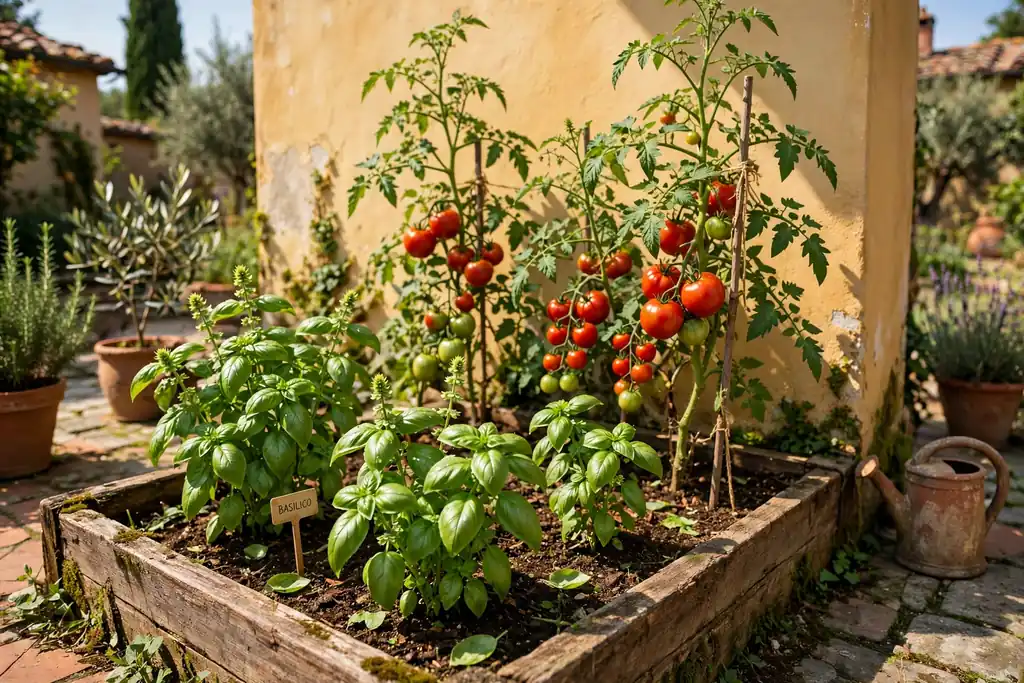
Grow a small vegetable patch, an orto, with tomatoes, basil, peppers, and courgettes in a raised bed or large pots against a sunny wall. Stake tomatoes early, water the soil, not the leaves, to reduce disease, and pick basil leaves regularly to keep plants bushy. Harvest tomatoes as they color so the plant keeps producing.
Keep the patch close to the kitchen door, so picking for a meal takes a minute rather than a trip across the yard. Rotate crops between beds each year so the same family does not grow in the same soil season after season. Underplant the edges with parsley and chives, which suit the same sun and watering routine.
14. Grow Climbing Roses on a Warm Sunny Wall
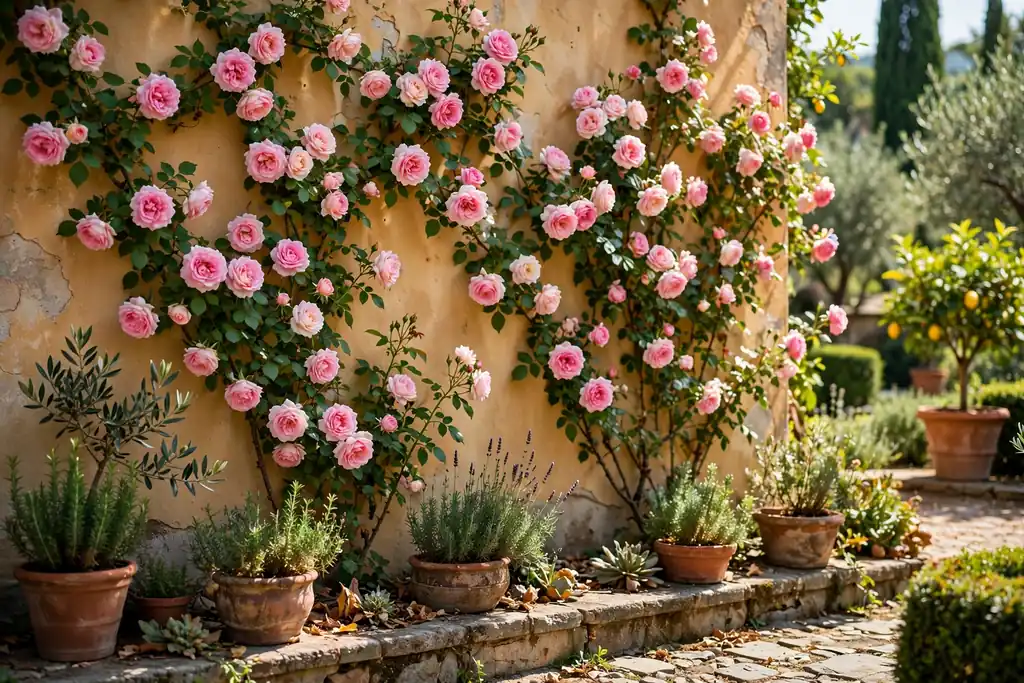
Train climbing roses along wires on a warm, sunny wall for color and scent from late spring into autumn. Fix horizontal wires to the wall with a gap behind them so air can move, and tie stems in as they grow, fanning them out rather than letting them bunch at one point. Space the plants by the label, since a crowded rose wall invites disease.
Feed and mulch in spring, prune by rose type in late winter or early spring, and water at the base rather than over the leaves. Keep shorter companion plants such as lavender or catmint in front to cover bare stems. For a Mediterranean neighbor with the same warm wall logic, these Greek garden ideas show how white walls, stone, and sun loving plants work together.
15. Build an Outdoor Cooking Corner With a Pizza Oven
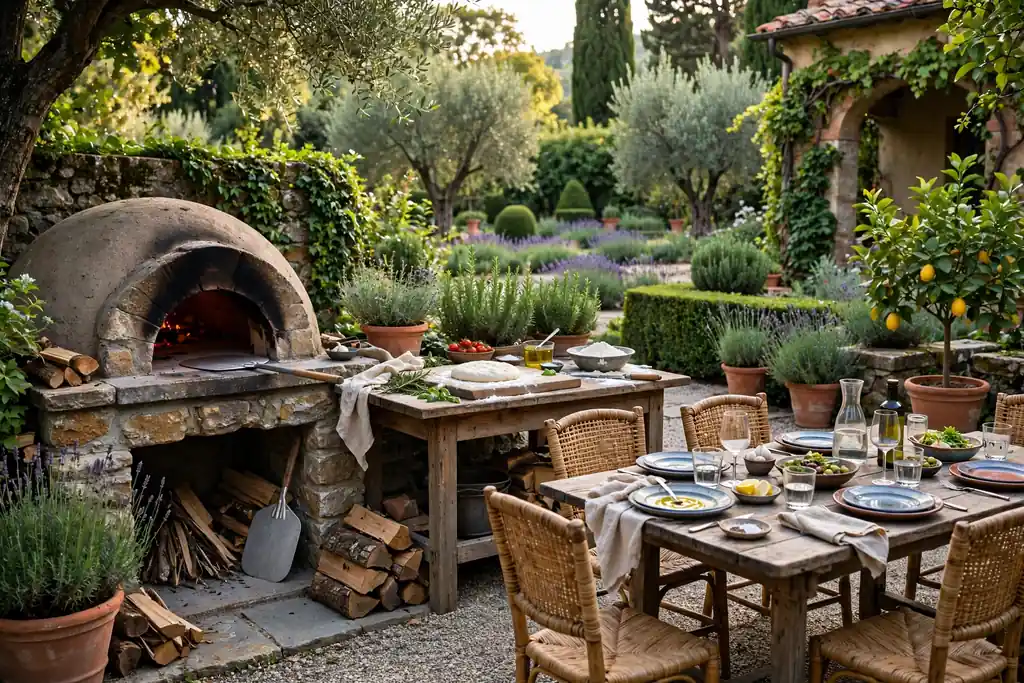
Set aside a cooking corner near the dining table for a pizza oven or a small outdoor grill, on a level, heat resistant base away from plants, cushions, and overhanging climbers. Keep a work surface beside the oven for dough and toppings, a stack of dry wood or fuel in a covered store nearby, and a clear route from the kitchen so carrying trays is safe.
Use the oven only in calm weather, keep water nearby, and never leave it lit unattended. If a full oven is not practical, a grill plus a prep table gives the same outdoor cooking habit on a smaller footprint. Store tools and covers in a dry box beside the corner so the area is ready to use without a long setup.
16. Tuck a Stone Bench Into a Sunny Nook
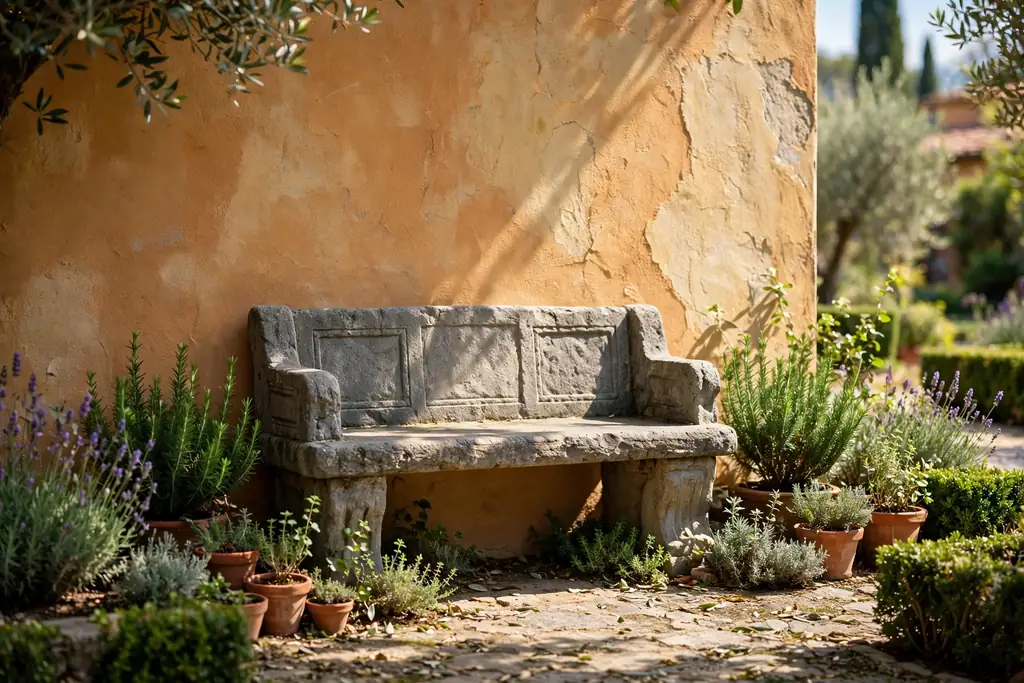
Set a stone bench in a sunny nook, at the end of a path or against a warm wall, as a quiet focal point for the garden. Stone stays cool in sun, needs little care beyond an occasional wash, and gives the garden structure even in winter when planting is bare. Set the bench on a level, firm base so it does not rock or sink, and think about delivery and placement first, since stone pieces are heavy and awkward to move later.
Keep the planting around it low at the front so the seat stays easy to reach, and add a folded blanket or a thin cushion if you plan to sit there for a long stretch. For more seat placement ideas, these garden bench ideas show how to choose the spot first and match the seat to it.
17. Shade a Loggia Lounge With Vines
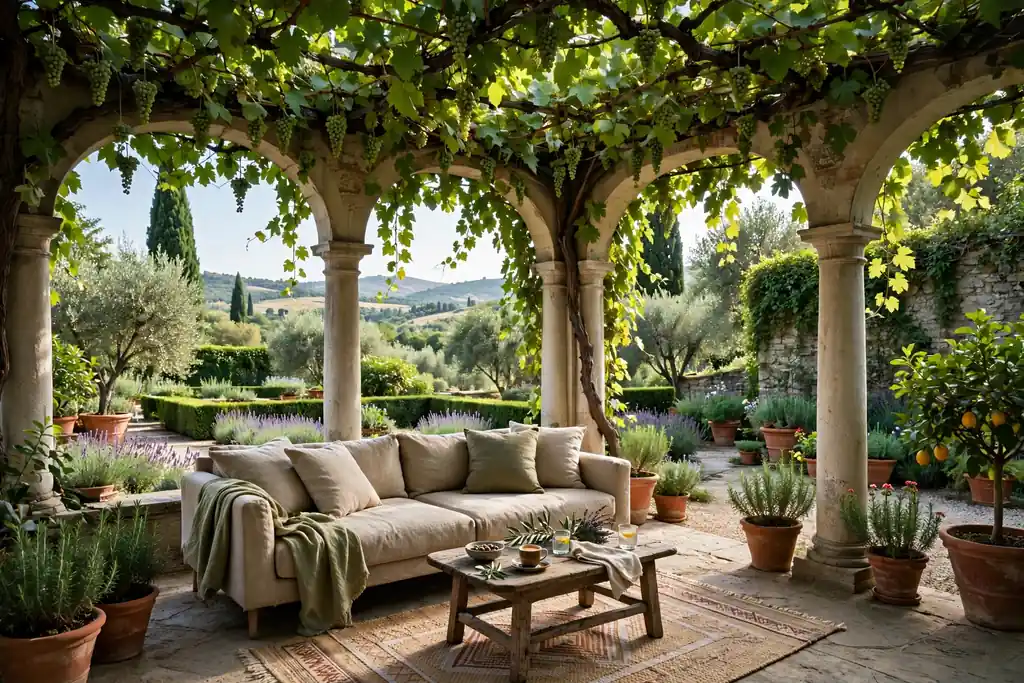
Turn a covered loggia, porch, or deep veranda into a lounge by training vines over its open sides and furnishing it with a low sofa, a rug, and a small table. The roof gives shade and rain cover, while the vines soften the edges and cool the air. Choose weather resistant cushions with removable covers, and store them in a dry box when rain is forecast.
Add a rug under the sofa to soften paving and define the zone, and keep one side open to the garden view so the loggia feels connected to the planting rather than shut off from it. Site a lantern or a small side table within reach of the sofa, and keep the route from the house clear so the loggia gets used daily, not only for guests.
18. Lay a Pebble Mosaic Path
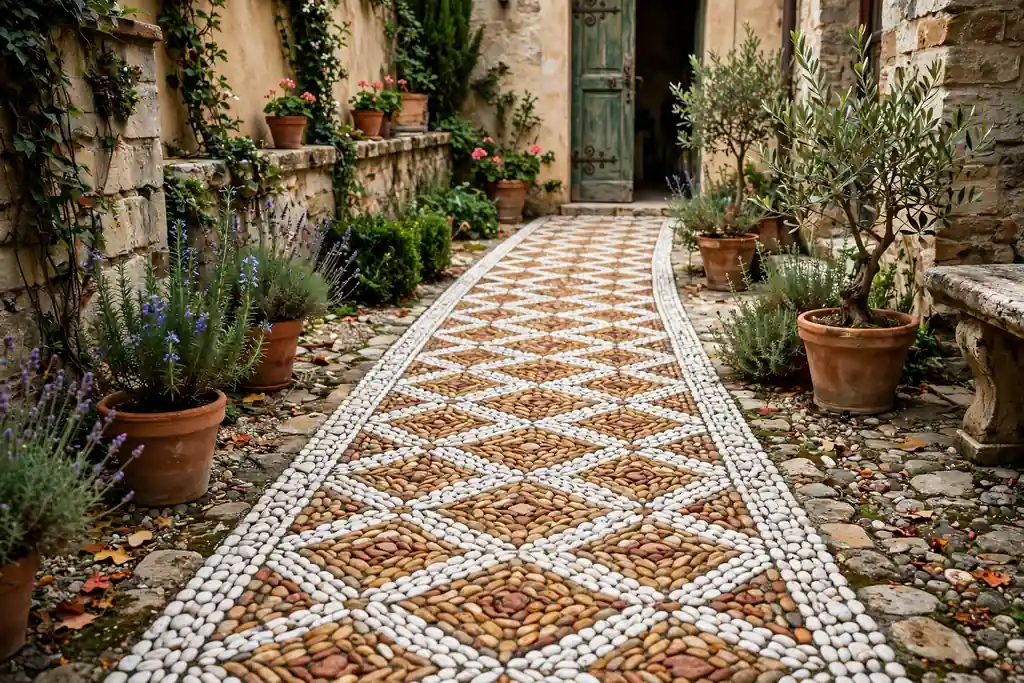
Lay a pebble mosaic path, with white and warm stones set in a simple pattern against grey, to add craft to a courtyard or entrance. Lay the pattern on a firm mortar bed, keep the design simple, such as a border, a star, or a wave, and grout the gaps so the surface stays safe to walk on. Pebble paths suit courtyards and entrances best, where they are seen up close.
Check the finished surface for loose stones before regular use, and sweep it clear of soil so weeds do not take hold in the joints. Keep the mosaic to one path or one courtyard panel rather than every path in the garden, so it stays a feature rather than a trip hazard across the whole yard.
19. Line Steps With Potted Citrus and Herbs
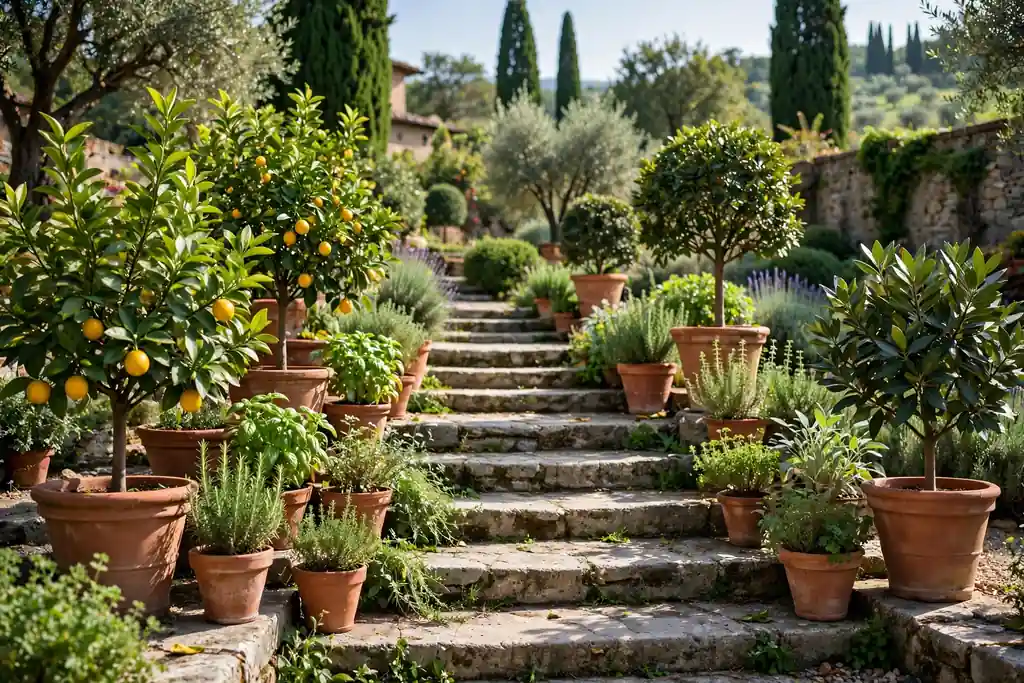
Line garden steps with potted citrus, bay, and herbs in matching terracotta pots to turn a plain stair into a planted feature. Use pots in two sizes, with the largest at the bottom of the steps and smaller pots higher up, and keep every pot clear of the walking line so the steps stay safe. Citrus and bay suit this spot because they hold their shape and scent the air as you pass.
Water pots often in hot weather, since small pots dry fast, and move tender citrus under cover before the first hard frost. Add one trailing plant, such as trailing rosemary, at the top step to soften the edge. Keep the step surface dry and free of fallen leaves, since wet steps and pots together can be slippery.
20. Light Evenings With Lanterns and String Lights
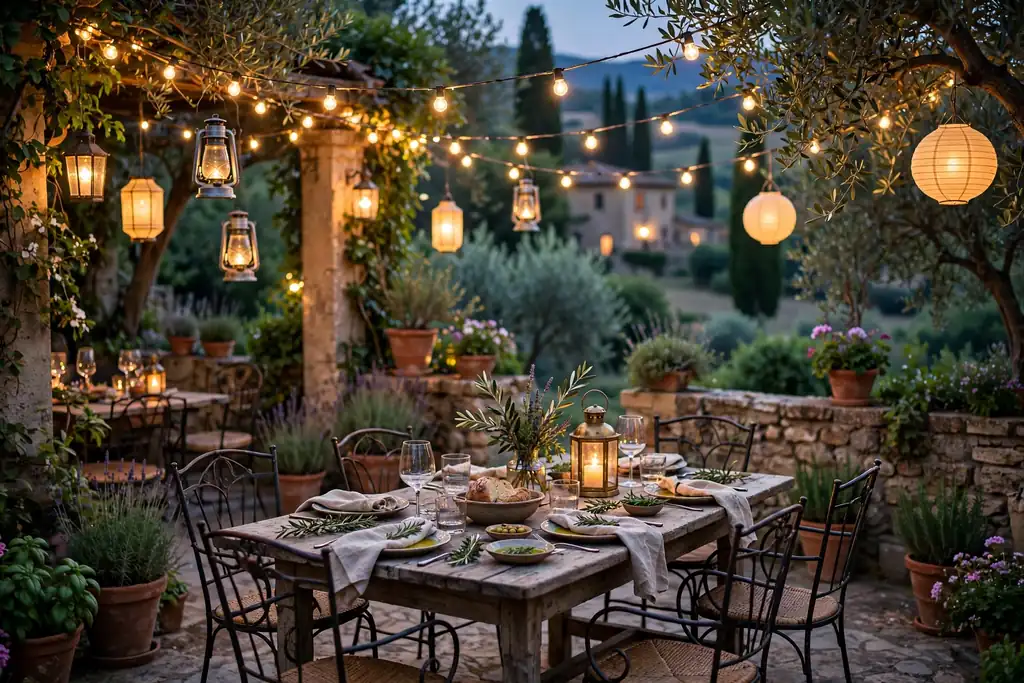
String warm white lights along a pergola, a wall, or a vine arch, and add lanterns along paths and near seats, to keep the garden usable after sunset. Light should be soft and low, so it feels warm rather than harsh, and so it does not glare into neighboring windows. Solar lanterns suit garden paths because they need no new wiring, but they need sun on their panels during the day.
Place lanterns where they mark steps and edges, and keep cables out of walkways. Bring battery lights inside in winter if the maker advises it. Test the light level at dusk before guests arrive, and add one brighter task light near a cooking or reading spot if needed.
21. Make a Fig Tree the Center of a Reading Corner
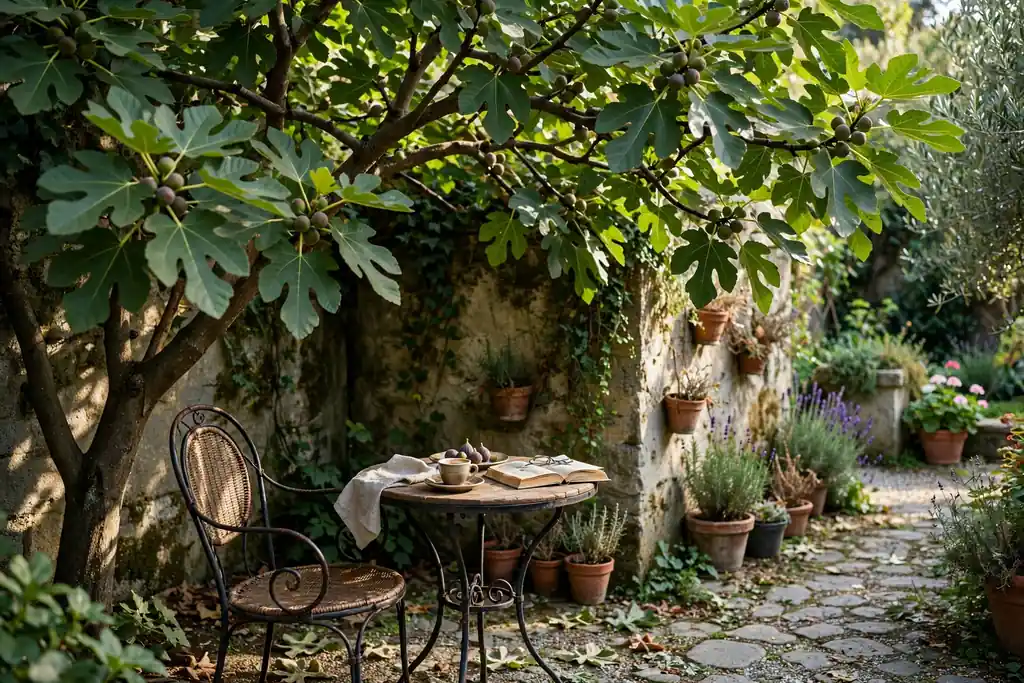
Plant a fig tree in a quiet corner with a chair and a small table for a shaded reading spot with broad leaves, deep summer shade, and fruit. Plant it in the ground where space allows, or in a large pot to limit its size, and prune to keep an open shape with room to sit beneath. Figs need sun and warmth to ripen, and they fruit best on a sheltered wall.
Fallen fruit can stain paving, so site the chair slightly to one side, not directly under the heaviest branches. Keep a small side table within reach for a book and a drink, and sweep fallen leaves from the seat area so the corner stays inviting through summer.
22. Plant an Agave and Succulent Dry Corner
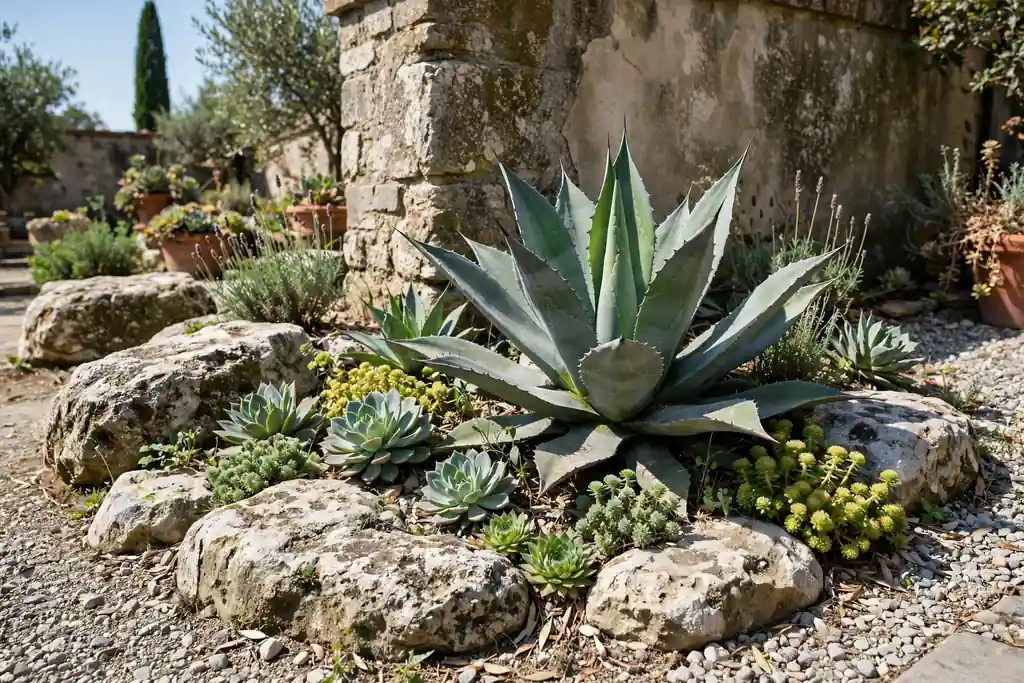
Plant agave, aloe, and other sculptural succulents in a dry, sunny corner with gravel and large stones for a low water Italian look. Use one large agave as a focal point, rather than a row of small ones, and pair it with a low gravel surface so the shape reads clearly. Agave needs sharp drainage and full sun, and it should not sit in wet soil over winter.
Wear gloves when handling spiky leaves, and site the planter where children and pets will not brush against it. Top dress with gravel to keep plant crowns dry and suppress weeds, and water only while plants settle. A dry corner near a path gives a close view of leaf shapes that would be lost in a large border.
Conclusion
A good Italian garden starts with warmth, structure, and one place to sit, not a long shopping list. Choose a sunny wall or terrace, add stone or gravel underfoot, plant an olive, a lemon, or a vine for shade and scent, and set a table where you will actually eat outside. Add herbs by the kitchen door, water for sound, and warm light for evenings, and keep paths, steps, and drains clear. Pick one idea from this list, set it where you will actually use it, and add planting, shade, and color only after that first seat feels right.
Save this list on Pinterest before your next garden trip, and work through it one area at a time: structure first, then planting, then the comfort details that make the garden yours.
FAQs
What plants define an Italian garden?
Olive, cypress, citrus in pots, lavender, rosemary, thyme, sage, jasmine, grapevine, and fig are the plants most often linked with Italian gardens. They share a need for sun, air, and free draining soil, and they give scent, shade, and structure through the year. In cold areas, grow tender plants such as lemon and olive in pots so they can move under cover for winter.
Can I make an Italian garden on a small patio or balcony?
Yes. Start with terracotta pots, one olive or lemon in a large pot, herbs by the door, and a vine on a trellis or arch. Gravel in a shallow tray, a small wall fountain with a solar pump, and string lights add the look without beds or building work. Keep the palette to terracotta, warm stone, and green, and leave a clear path so the small space still feels easy to use.
Do Italian gardens need a lot of water?
No, once settled, many Italian garden plants prefer dry soil and suffer if they stay wet. Water new plants until they root, then water deeply and less often, letting the top of the soil dry between waterings. Pots dry faster than beds, so check pot soil often in hot weather, and use gravel mulch to hold moisture and keep plant crowns dry.
How do I keep terracotta pots from cracking in winter?
Empty tender plants or move pots under cover before hard frost, since wet soil expands when it freezes and can crack clay. Raise pots on feet so water drains freely, use a free draining mix, and avoid saucers that hold water through winter. If a pot must stay outside, wrap it and keep the soil only lightly moist through cold spells.
What is the easiest Italian garden idea to start with?
A cluster of terracotta pots by the door is the easiest start. Choose three or five pots in one clay tone, plant herbs and one taller plant such as bay or a small olive, and add gravel on the surface for a finished look. It needs no building work, it can move with the seasons, and it gives scent and color from the first day.
How can I add shade to an Italian garden without building a pergola?
A vine trained over an arch, a fig or olive tree in a large pot, a shade sail over a seating zone, or a loggia with vines on its open sides all give shade without a full pergola build. Place shade over the seat you use most, at the time of day you use it, and keep the shade clear of drains, wires, and walkways. A movable shade option also lets you follow the sun through the seasons.