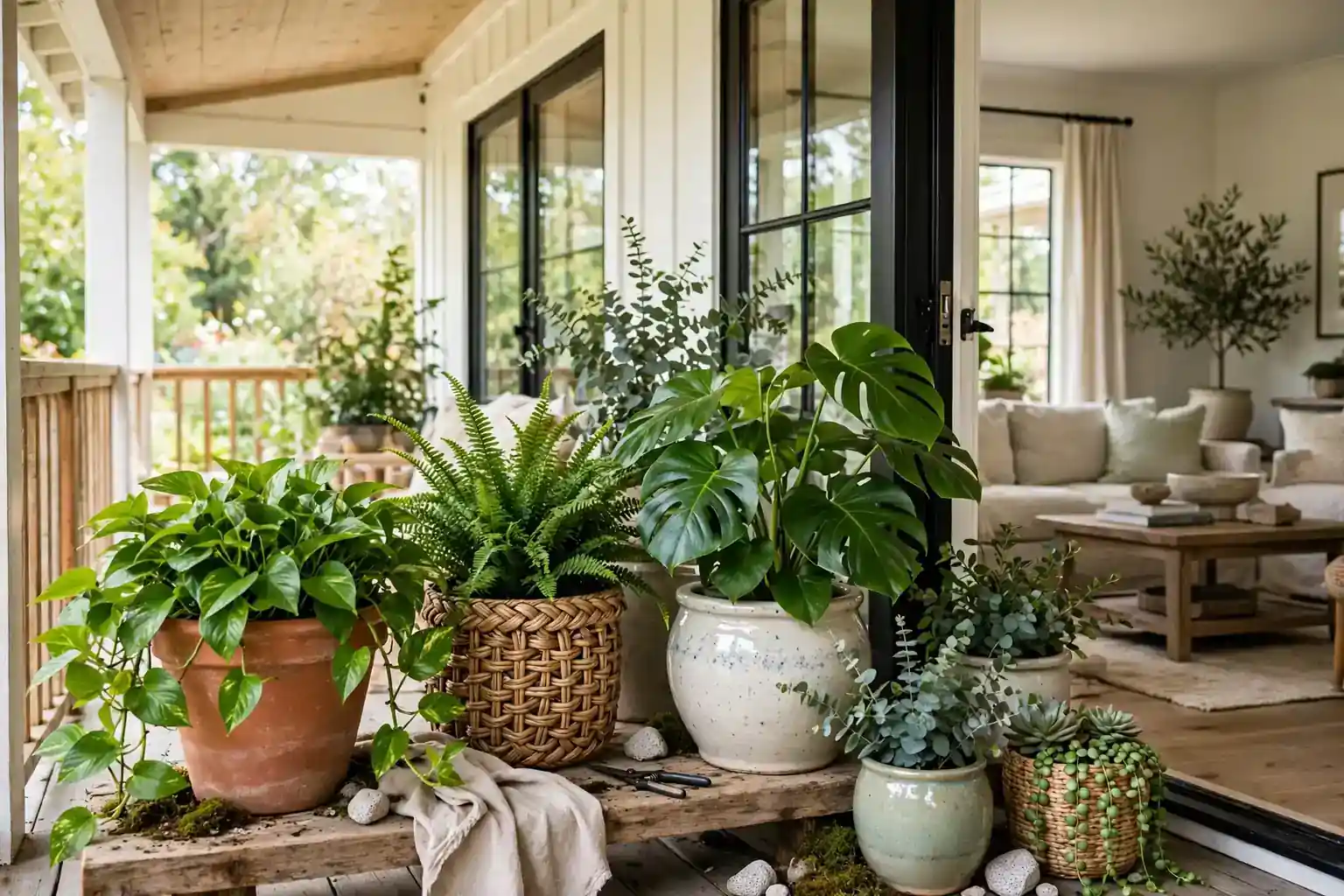
Planter decoration works best when the pot, the plant, and the spot fit together: choose a container that suits the light and scale of the space, match the plant to indoor or outdoor conditions, and group planters by height so the display reads as planned rather than random.
A planter is more than a holder for soil. Its material, color, and shape set the tone of a corner, a porch, or a table, and its size decides whether a plant looks settled or cramped. The ideas below cover small indoor groups, large outdoor statements, and simple methods for changing a display with the seasons. Start with the spot you see most often, then build out from there.
Key Takeaways
- Match the planter to the light, scale, and water needs of the spot before you choose a plant.
- Group planters in odd numbers and varied heights so a display looks planned from the main viewpoint.
- Use drainage holes and saucers or trays, especially indoors, to protect floors and furniture.
- Repeat one material or color across a group to tie separate planters together.
- Place tall and trailing plants where they have room to grow without blocking paths or light.
- Change a planter display with the seasons by swapping plants, not by buying new pots each time.
1. Terracotta Cluster by the Front Door
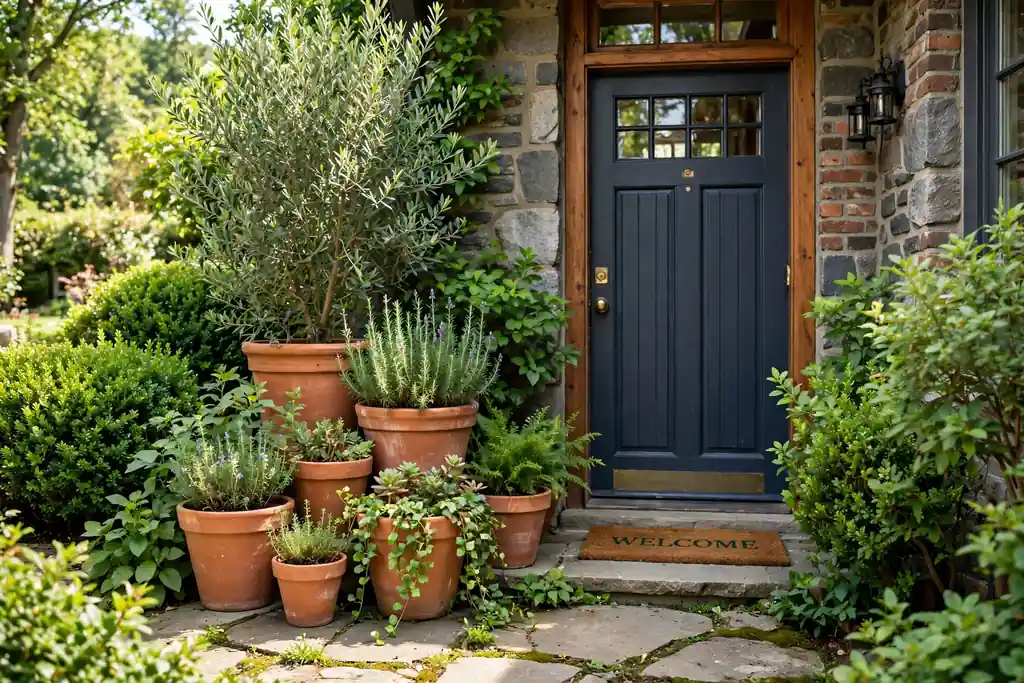
Group three or five terracotta pots of varied heights beside the front door, with the tallest at the back and the smallest at the front. Terracotta suits an entry because its warm clay color works with brick, wood, and painted doors, and its weight keeps pots steady in wind. Use plants that suit the light at the door, such as hardy shrubs for a sunny step or shade tolerant ferns for a covered porch.
Keep the cluster clear of the swing of the door and the main walking path. Set pots on a tray or on pot feet outdoors so water drains away from the step, and check soil moisture more often in hot weather, since clay pots dry out faster than plastic or glazed pots. A cluster reads as one welcome display when the pots share the same material, even if the plants differ.
2. Tall Ceramic Planters in a Living Room Corner
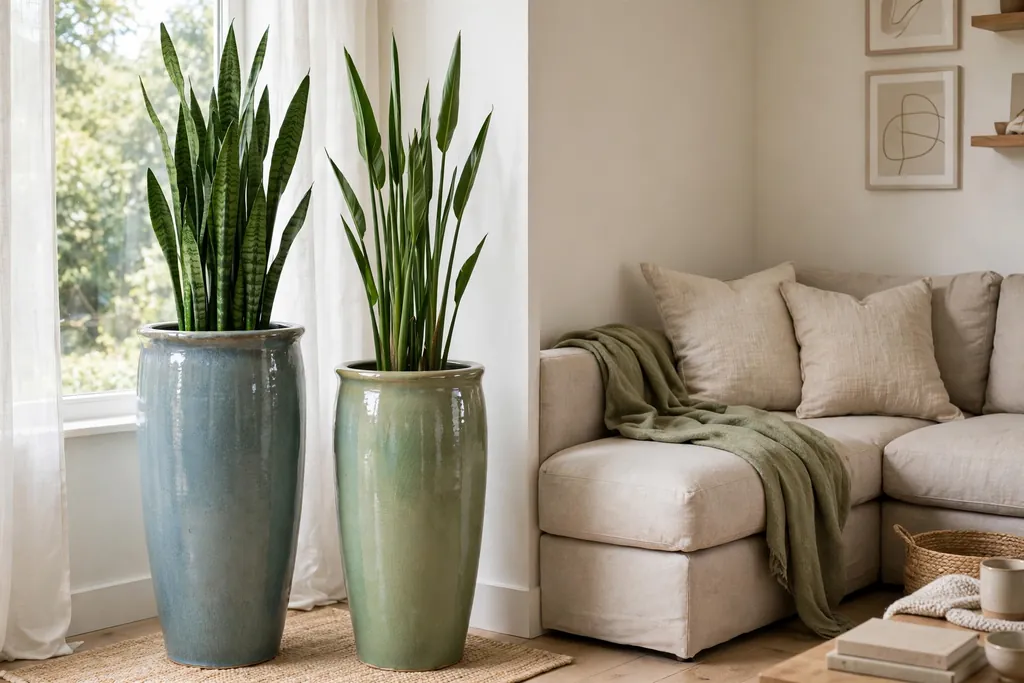
Place two tall ceramic planters in an empty living room corner to give the room height and a clear focal point. Glazed ceramic holds moisture longer than terracotta, which suits indoor plants that prefer steady soil moisture, and its smooth finish suits rooms with polished furniture and soft fabrics. Choose a plant with an upright shape, such as a snake plant or a fiddle leaf fig, so the height of the pot and the plant work together.
Set the planters where they get the light the plant needs, and keep them clear of heating vents and cold drafts from exterior doors. Use a saucer inside a decorative outer pot, or a pot with a drainage hole set on a waterproof tray, so watering does not mark the floor. Two matching planters look settled, while two different heights add movement to a corner that otherwise sits empty.
3. Hanging Planters in a Bright Window
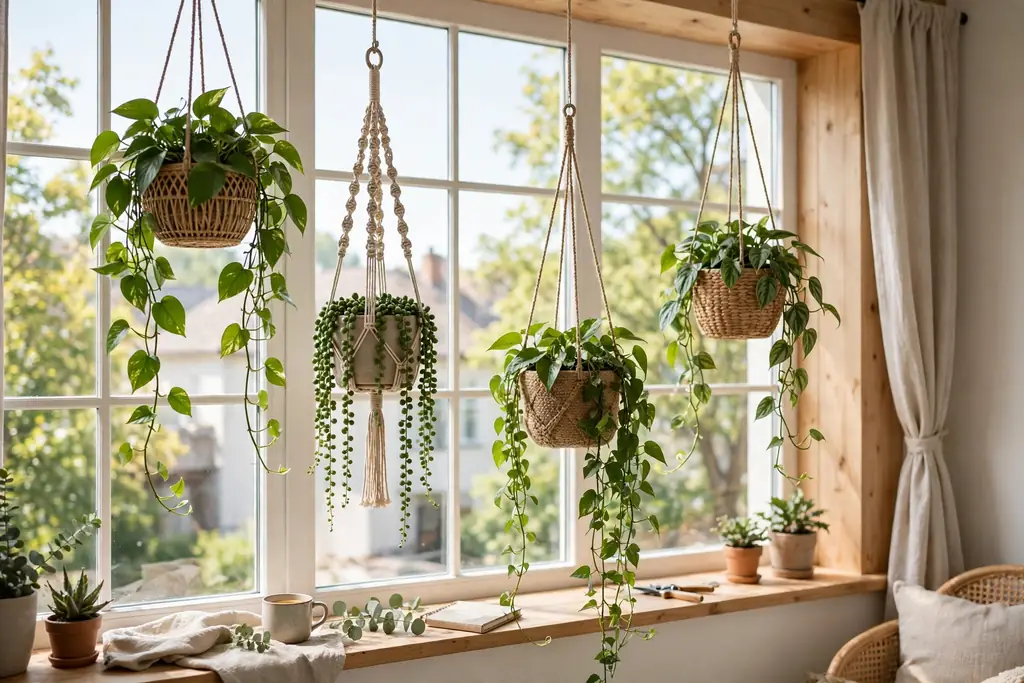
Hang two or three planters at varied heights in front of a bright window to use vertical space that floor pots cannot reach. Trailing plants such as pothos or string of pearls suit hanging planters, since their stems fall below the pot and soften the window frame. Choose hangers with a secure hook fixed into a stud or a ceiling anchor rated for the weight of a watered pot.
Hang the lowest planter high enough that no one walks into it, and keep a small watering can nearby, since hanging pots dry out faster in sun and moving air. Rotate each planter a quarter turn every week or two so growth stays even on all sides. A window group works best when the plants share similar light and water needs, so one watering routine suits them all.
4. Wall Mounted Planters Above a Hallway Console
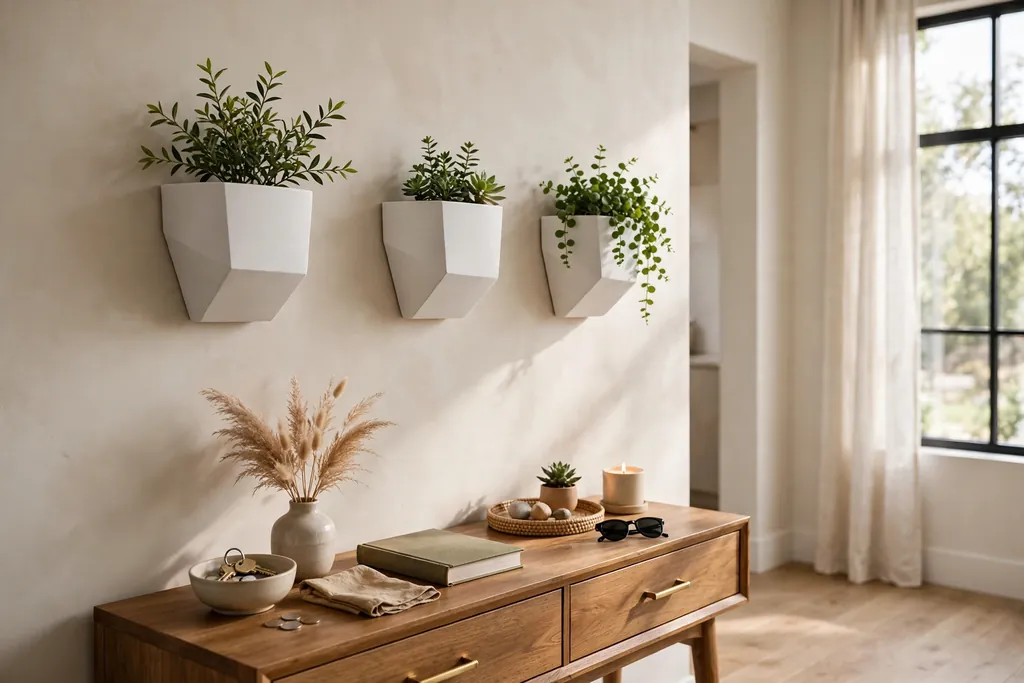
Fix wall mounted planters above a hallway console table to add green at eye level without taking up floor or table space. Shallow wall planters suit small trailing or compact plants, and a row of three keeps the display tidy in a narrow hall. Mount the brackets firmly into studs or use wall anchors rated for the weight of soil, plant, and water.
Choose plants that cope with the light in the hall, and keep watering simple by using planters with a removable inner pot that you can lift out, water, and drain before putting back. Place a small tray on the console below only if drips are a risk, and wipe the wall behind the planters now and then to catch dust and water marks. This idea suits rented homes too, provided the fixings suit the wall type and the landlord rules allow them.
5. Tiered Plant Stand in an Empty Corner
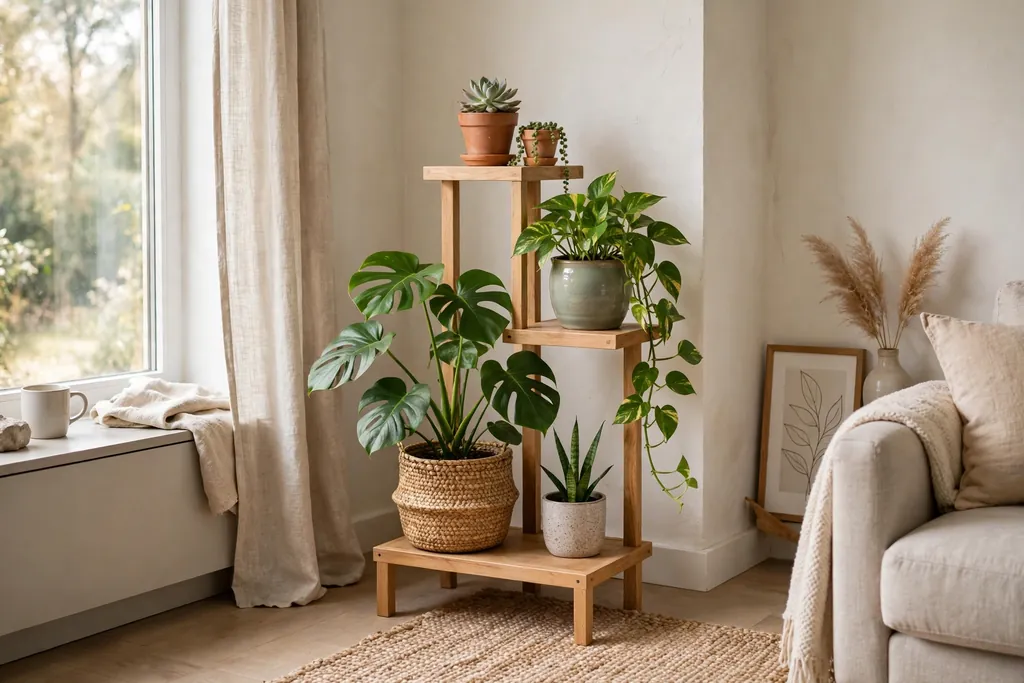
Use a tiered plant stand to turn an empty corner into a layered planter display. A stand with three or four levels holds small and medium pots at different heights, so every plant gets light and air, and the group takes up less floor space than the same pots spread in a row. Place sun loving plants on the top tier and plants that cope with less light lower down.
Check the stand for stability before you load it, and keep heavier pots low if the stand feels top heavy. Water each pot in place over a tray, or lift pots to a sink and return them once they have drained, to protect the floor. A tiered stand suits a living room, a bedroom corner, or a covered porch, and it makes it easy to move the whole display for cleaning or for a change of season.
6. Woven Basket Planters in a Bedroom
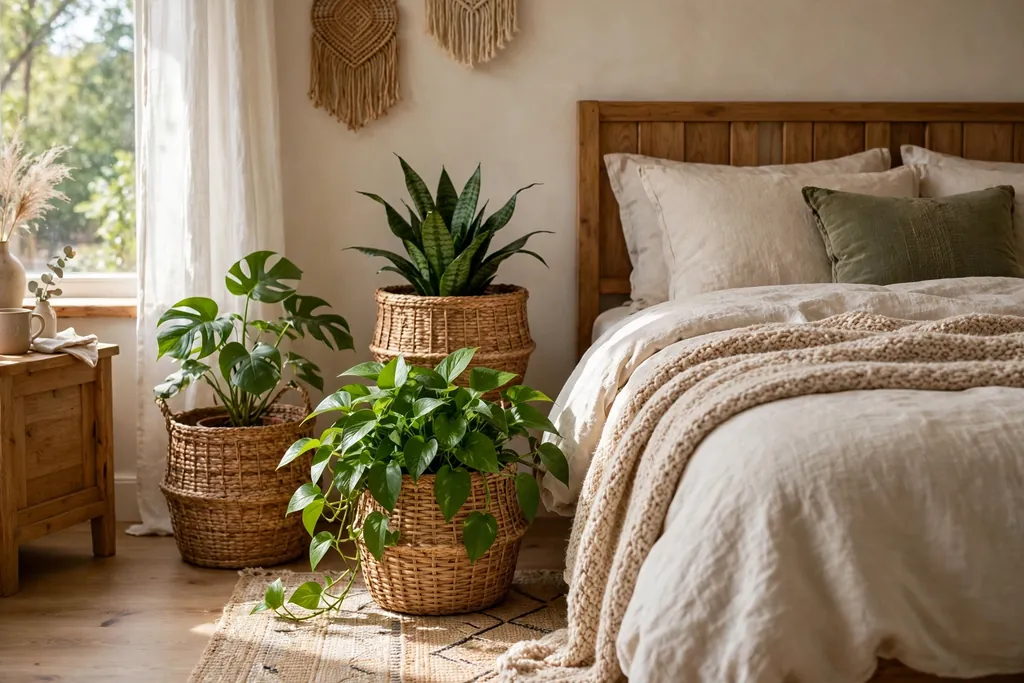
Set potted plants inside woven baskets to soften a bedroom with natural texture. Baskets suit bedrooms because their woven surface reads as warm and quiet beside bedding and wood furniture, and they hide plain nursery pots without repotting. Use a plastic liner or a saucer inside each basket so watering does not soak the weave.
Choose low maintenance plants for a bedroom, such as a snake plant or a pothos, and place baskets where they get indirect light rather than harsh midday sun through a south facing window. Keep baskets off damp floors and check the liner after watering, since trapped water can stain the basket or the floor below. One large basket planter beside a dresser and one small basket on a nightstand give a bedroom a matched pair without crowding it.
7. Concrete Planters for a Patio Seating Area
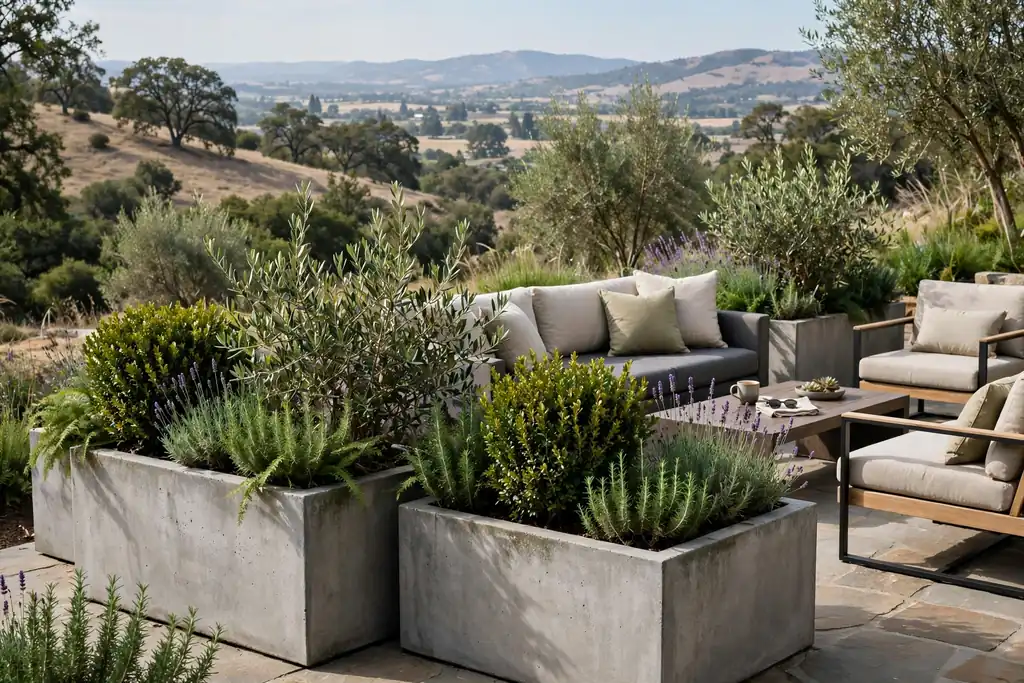
Use concrete planters around a patio seating area to add weight, structure, and a clear edge to the space. Concrete suits outdoor seating because it stands up to wind and rain, and its plain gray tone pairs with wood, metal, and woven outdoor furniture. Place a pair of large concrete planters beside a sofa or dining table, with a small tree, a shrub, or a tall grass in each.
Concrete pots are heavy once filled, so set them in their final spot before you add soil and plants. Use pot feet or a riser under each planter so water drains and the patio surface does not stain. For more patio planter ideas, see Outdoor Patio Decorating Ideas. In winter, move tender plants indoors or protect the planter from repeated freezing and thawing, since trapped water can crack concrete over time.
8. Wooden Trough Planters Along a Patio Edge
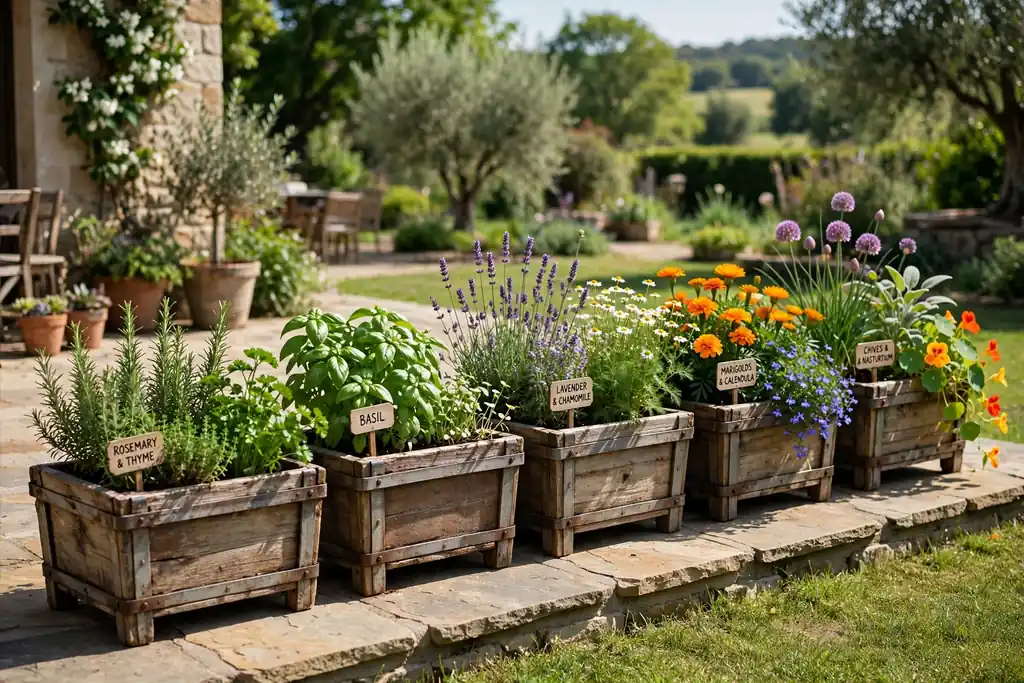
Line a patio edge with wooden trough planters to mark a border between seating and garden without building a fence. A long trough holds a row of plants at one height, which reads as a low hedge and softens a hard patio edge. Wood suits patios with decking or wooden furniture, and a trough can hold herbs, flowers, or small shrubs in one shared bed.
Line the inside of a wooden trough with a waterproof liner that still allows drainage, and drill drainage holes if the trough lacks them, since standing water rots wood and plant roots alike. Water the whole trough evenly, and check the ends, which dry out faster than the middle in sun and wind. Replace the liner or the trough boards when they show rot, and keep the trough clear of walkways so guests do not trip over it.
9. Raised Planter Bed for a Small Patio Garden
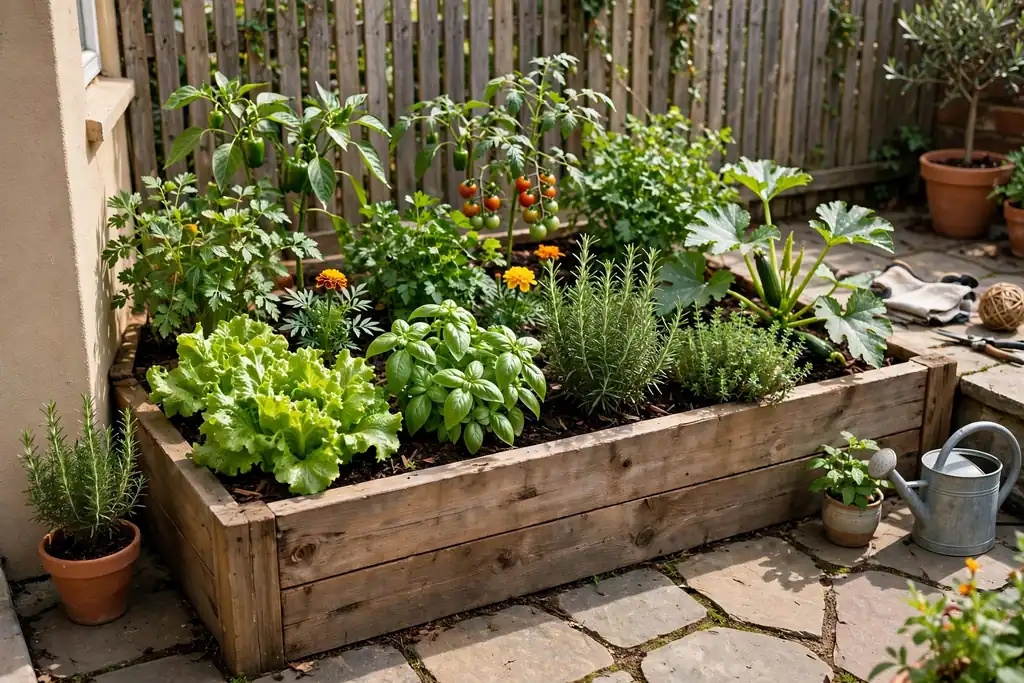
Build or buy a raised planter bed to give a small patio a garden bed that sits at a comfortable working height. A raised bed suits patios because it keeps soil contained, lifts plants off hot paving, and makes watering, weeding, and harvesting easier on knees and back. Fill it with a mix suited to what you plan to grow, such as vegetables, herbs, or cut flowers.
Place the bed where it gets the sun your chosen plants need, and leave walking room on at least one long side for care and harvesting. Water raised beds more often than ground beds, since their soil warms and dries faster, and top up the soil level each season as it settles. A raised bed with a simple wood frame suits most patios, while a metal bed suits a more modern outdoor space.
10. Vintage Metal Containers as Porch Planters
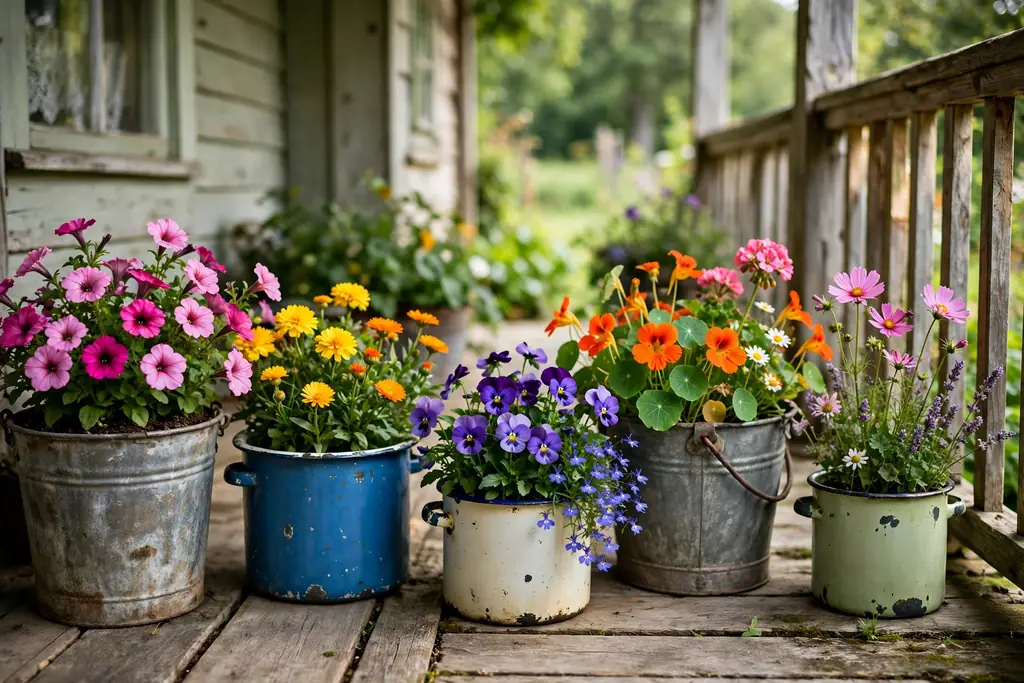
Turn vintage metal containers, such as old buckets, watering cans, or enamel pots, into porch planters with a story. Metal containers suit a porch because their worn finish pairs with wood steps, rocking chairs, and seasonal door decor, and each piece differs in shape and patina. Use them for annual flowers or herbs that you can replace each season, so the container stays the feature.
Drill drainage holes in the base of any container that lacks them, and set it on a saucer or a small stand to protect porch boards from rust marks. Check for sharp edges before planting, and line the inside with a pot or a liner if the metal has rust that could stain soil or hands. Keep metal planters out of the hottest afternoon sun if you grow tender plants, since metal heats up fast and dries soil quickly.
11. Vertical Pocket Planter Wall on a Balcony
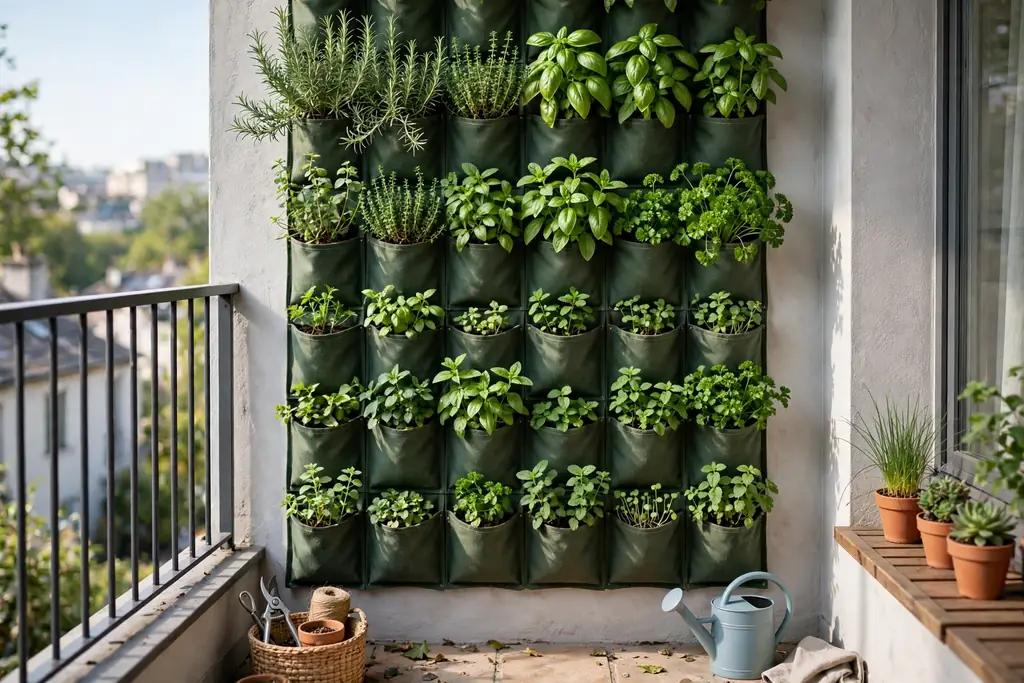
Hang a pocket planter wall on a balcony railing or wall to grow many plants in a small footprint. Felt or fabric pockets hold one plant each in a vertical grid, which suits balconies where floor space is short but wall space is free. Use herbs, small flowers, or trailing plants, and place sun lovers at the top and shade tolerant plants lower down, where upper pockets cast shade.
Water a pocket wall slowly from the top, so water reaches each pocket without flooding the lowest row, and check the wall behind it for damp after watering. Feed plants lightly through the growing season, since pocket soil dries out fast and holds few nutrients. Take the wall down or protect tender plants before frost, and fix it firmly so wind cannot pull it from its hooks.
12. Glass Terrarium Planters on Open Shelving
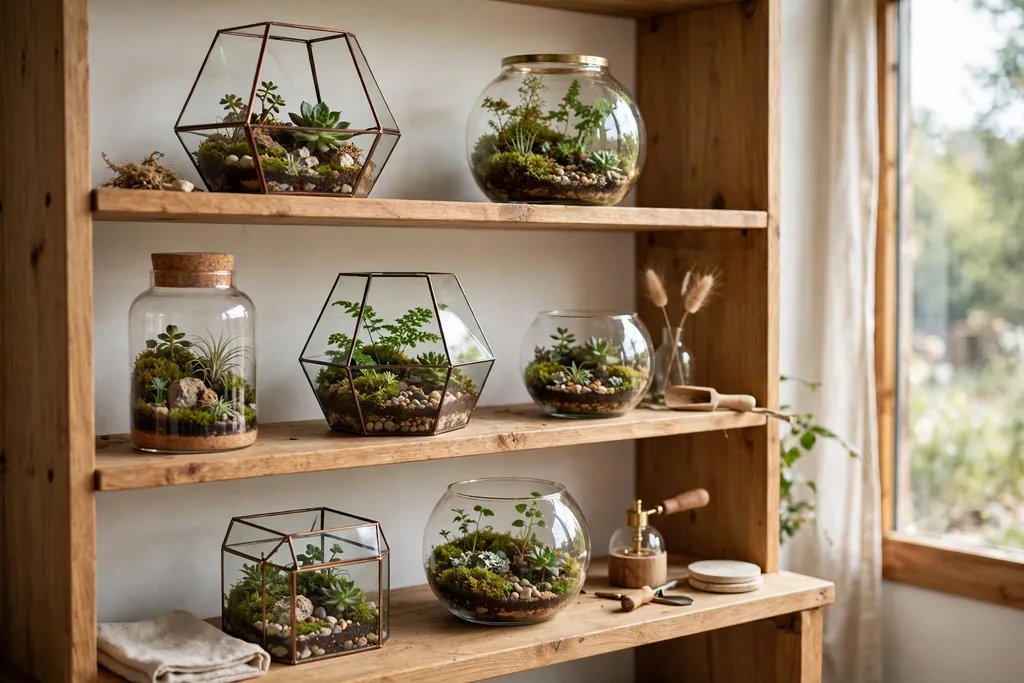
Place glass terrarium planters on open shelving to add small planted displays that do not need floor space. A terrarium suits a shelf because its glass walls show the layers of soil, stones, and plants from every side, and its small size fits between books, vases, and framed photos. Use plants that suit the terrarium type: open terrariums for succulents and cacti, closed terrariums for plants that like humidity.
Keep terrariums out of direct sun, since glass heats up and can scorch leaves, and water sparingly, since a terrarium has no drainage hole and excess water has nowhere to go. Open the lid of a closed terrarium now and then to let fresh air in and to check for mold on the soil surface. One terrarium per shelf keeps the display calm, while a pair of different sizes adds interest without clutter.
13. Stone Planters Lining Garden Steps
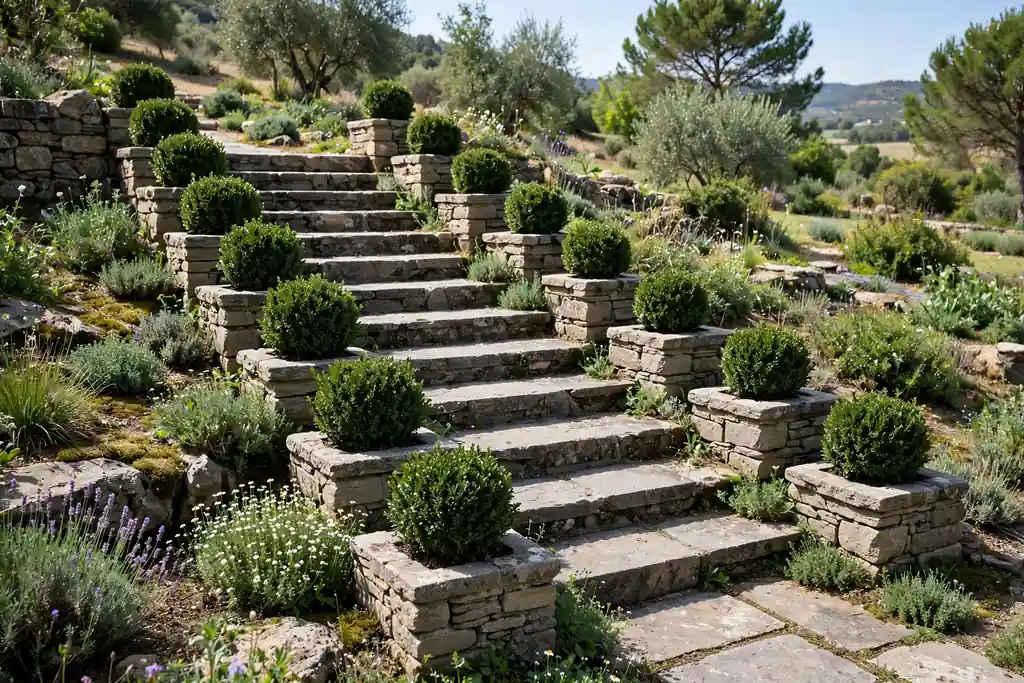
Set stone planters along garden steps to frame the path and to guide the eye up or down the garden. Stone suits steps because its weight keeps planters steady, and its natural color blends with paving, gravel, and garden walls. Use one planter on each side of the bottom step and one on each side of the top step, or a single planter at each landing, so the path stays clear.
Choose compact plants that do not spill across the steps, such as small shrubs, lavender, or clipped boxwood, and trim them back so they never narrow the walking width. Use pot feet under stone planters to help drainage and to stop them staining the steps. In winter, check that water does not freeze in the pots and crack the stone, and move tender plants to shelter before hard frost.
14. Rattan Planters in a Sunroom
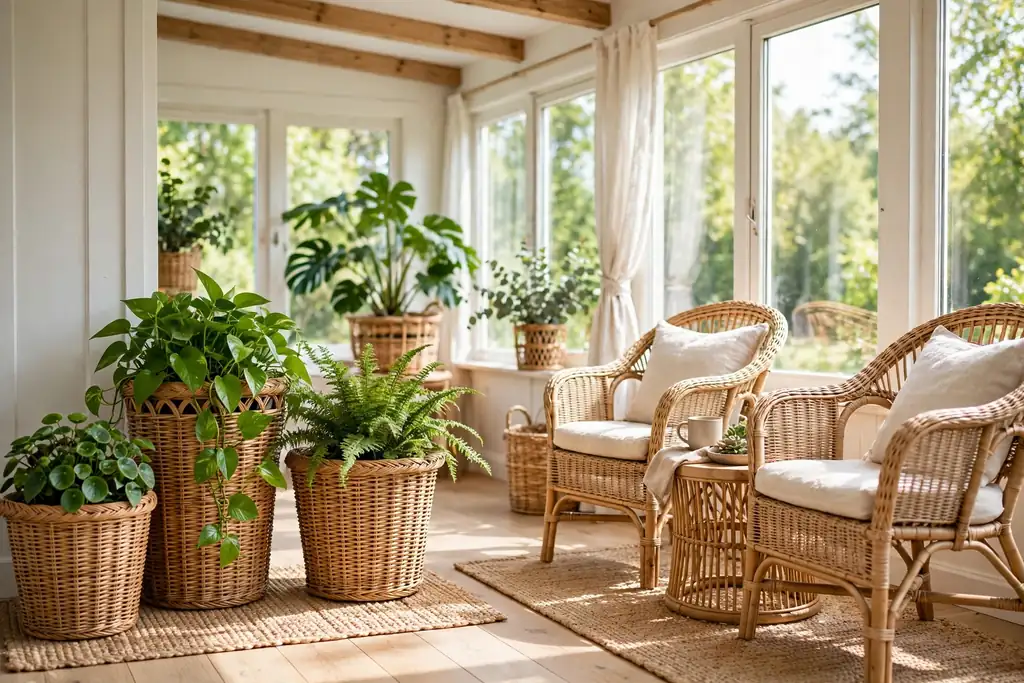
Use rattan planters in a sunroom to add woven texture that suits bright, plant filled rooms. Rattan suits a sunroom because its light, open weave pairs with wicker chairs, light curtains, and wood floors, and it softens the look of plain plastic nursery pots. Place a large rattan planter beside a chair and smaller ones on a side table or a plant stand.
Keep rattan planters indoors or in a covered sunroom, since rain and long sun exposure can dry and weaken the weave. Use a liner or a saucer inside each planter, and lift the pot out for watering so the rattan stays dry. Choose plants that like bright indirect light for a sunroom, and rotate them now and then so growth stays even toward the windows.
15. Trailing Planters on Top of a Tall Bookcase
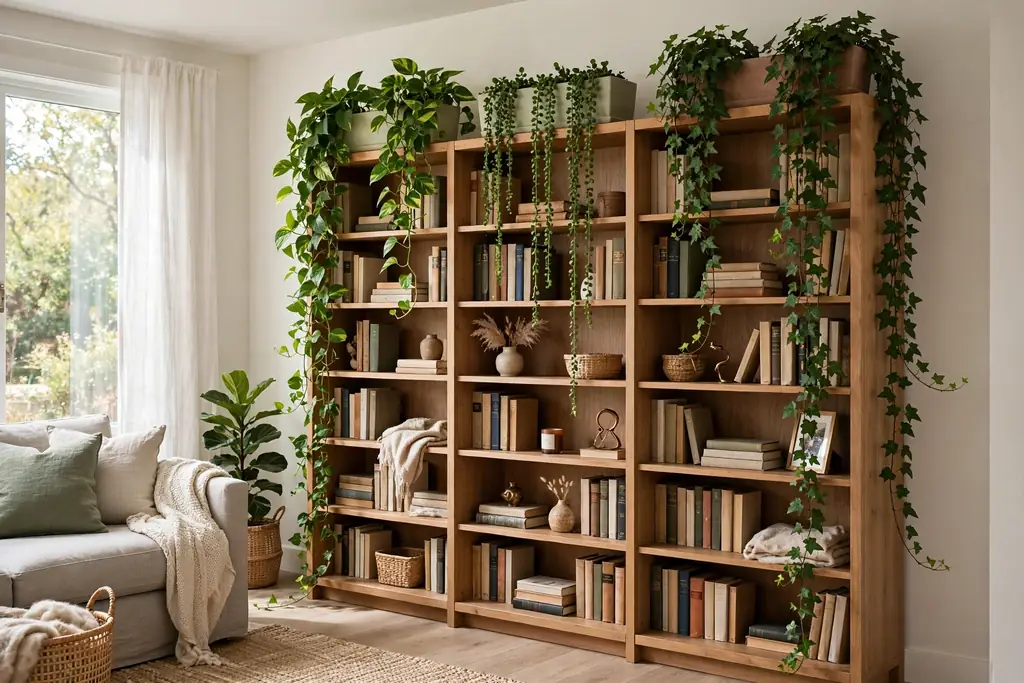
Place trailing planters on top of a tall bookcase to use high space that often sits empty. Trailing plants such as pothos, philodendron, or ivy fall down the sides of the bookcase and soften its straight edges, while the pots themselves stay out of the main living area. This idea suits rooms where floor space is tight but wall height is free.
Water trailing planters with care, since drips fall a long way: lift the pot down to water it, or use a pot with a saucer and water slowly until the soil is damp but not soaked. Check that the bookcase is fixed to the wall if it is tall, and keep the top clear of heavy pots that could tip if the case is bumped. Trim trailing stems now and then to keep them from tangling with books or blocking a light fixture.
16. Mini Succulent Planters on a Coffee Table Tray
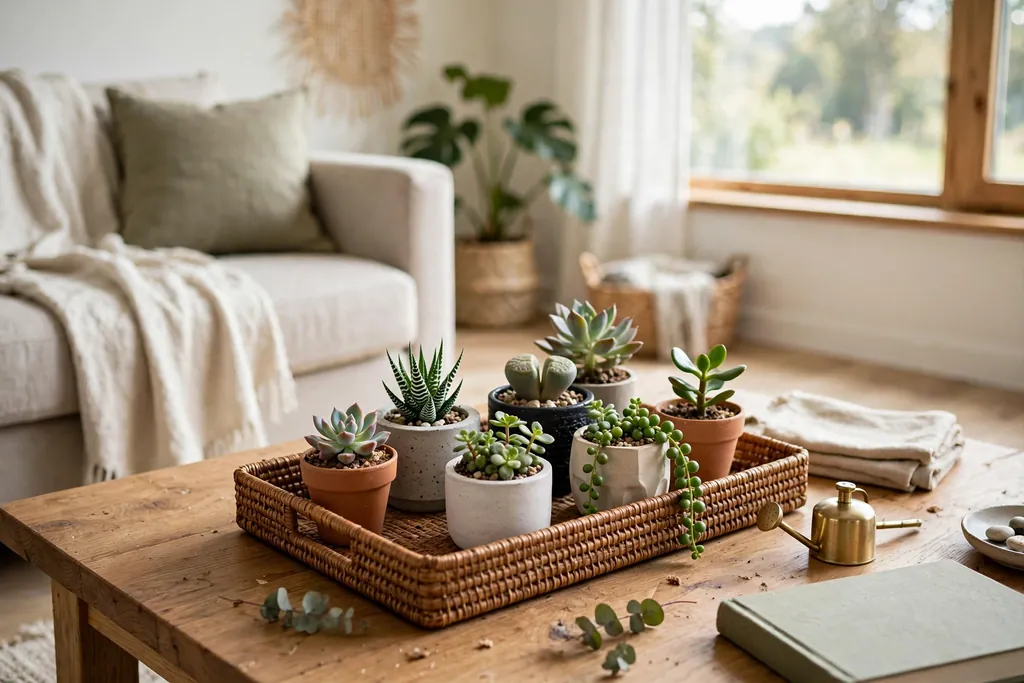
Group mini succulent planters on a tray on a coffee table to make a low display that guests can see without blocking conversation. Small succulents suit a coffee table because they need little water, stay compact, and come in varied leaf shapes and colors. A tray keeps the group together, protects the table from water marks, and lets you move the whole display for cleaning or for a meal.
Use pots with drainage holes set on the tray, and water succulents only when the soil feels dry right through, since overwatering is the main cause of failure indoors. Keep the tray near a window or in a bright room, and rotate it weekly so plants do not lean toward the light. Three or five mini planters suit most coffee tables, while more than that can crowd the surface and leave no room for cups or books.
17. Tabletop Centerpiece Planters for Dining
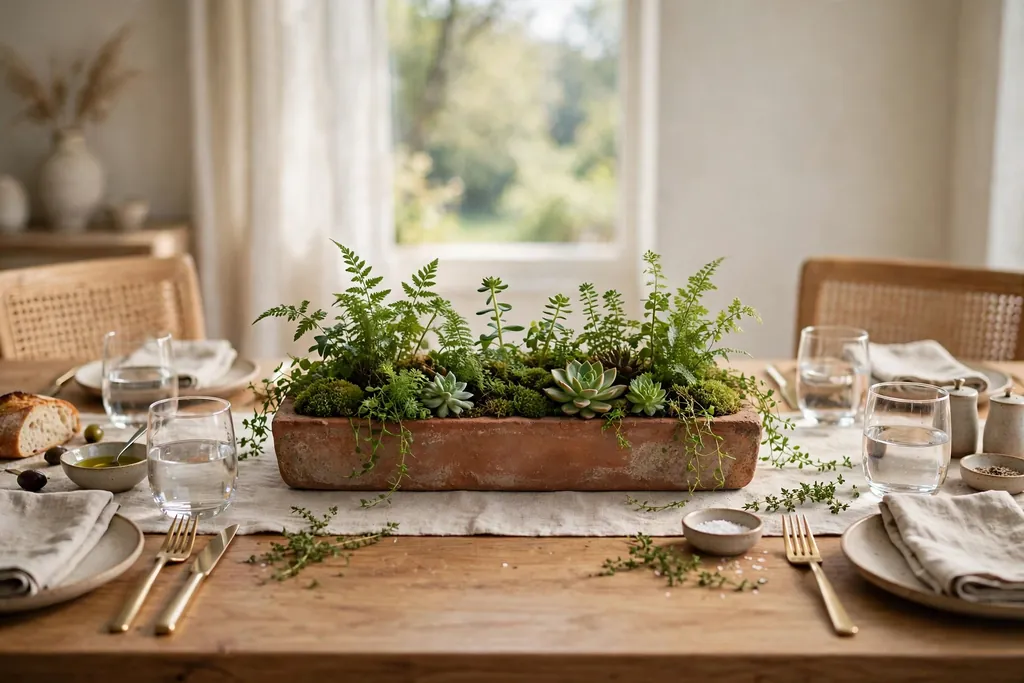
Use low planters as a dining table centerpiece to bring green to meals without blocking views across the table. A long low trough, or three small pots in a row, suits a dining table because the display stays below eye level when guests sit down. Use herbs, small flowering plants, or succulents, and keep the arrangement narrow so plates, glasses, and serving dishes still fit.
Choose plants without strong scent for a dining centerpiece, since heavy fragrance can clash with food, and wipe leaves now and then to keep dust off the table. Move the centerpiece to a sideboard when you need the full table for a large meal, and return it afterward so the table still looks dressed between meals. This idea works indoors at a dining table and outdoors on a patio table, provided the plants suit the light in each spot.
18. Oversized Planter with an Indoor Tree in the Entry
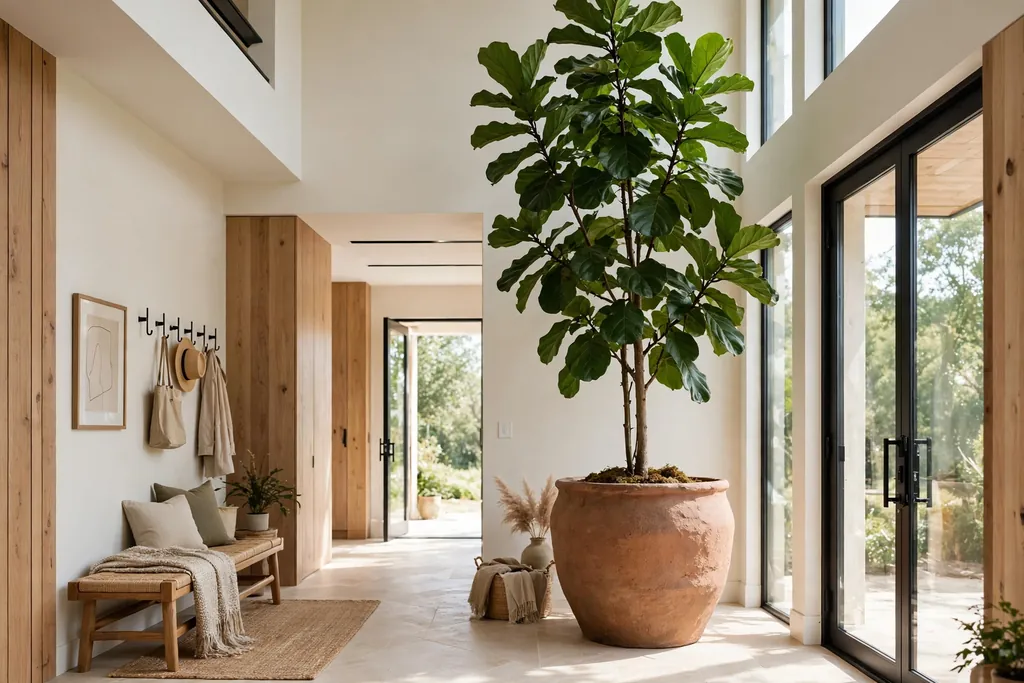
Place one oversized planter with an indoor tree in an entry hall to give the space a clear focal point on arrival. A large planter suits an entry because it fills a corner that small pots would leave looking empty, and a tree adds height that draws the eye up and makes the hall feel taller. Choose a tree suited to the light in the hall, such as a fiddle leaf fig for bright light or a dracaena for lower light.
Set the planter on a wheeled saucer or a plant caddy if you need to move it for cleaning, since a filled oversized pot is heavy. Check the ceiling height and the door swing before you buy, so the tree has room to grow without touching a light fixture or blocking the door. Water slowly and check drainage, since a large pot holds a lot of soil and can stay wet at the bottom long after the surface feels dry.
19. Seasonal Rotation Planters by the Door
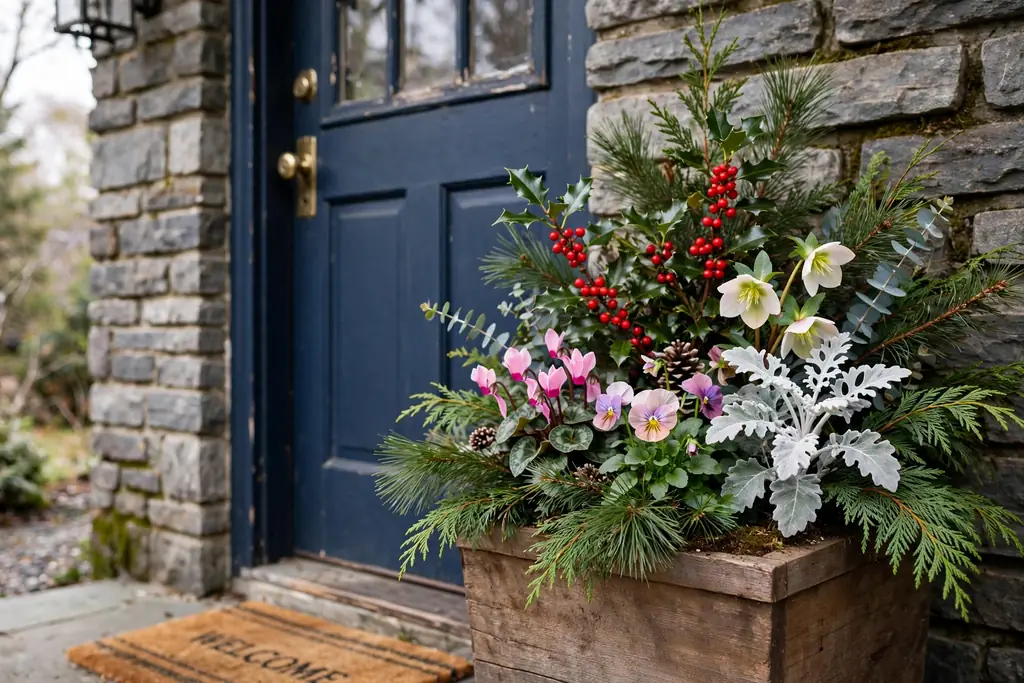
Keep one or two planters by the door for seasonal rotation, and change only the plants as the seasons change. This method suits entries and porches because the pots stay in place while the display changes: spring bulbs and pansies, summer geraniums or petunias, fall mums and ornamental kale, and winter evergreen branches with pinecones. Rotation keeps a display fresh without buying new pots each season.
Plan the rotation in advance, and keep a note of what grew well in each pot, so next year you can repeat successes and drop plants that struggled. Clear out spent plants fully before replanting, top up the soil, and check drainage holes for blockages. Store empty pots under cover in winter if they are not in use, and bring tender plants indoors before the first frost in your area.
20. Hand Painted Patterned Planters as Focal Points
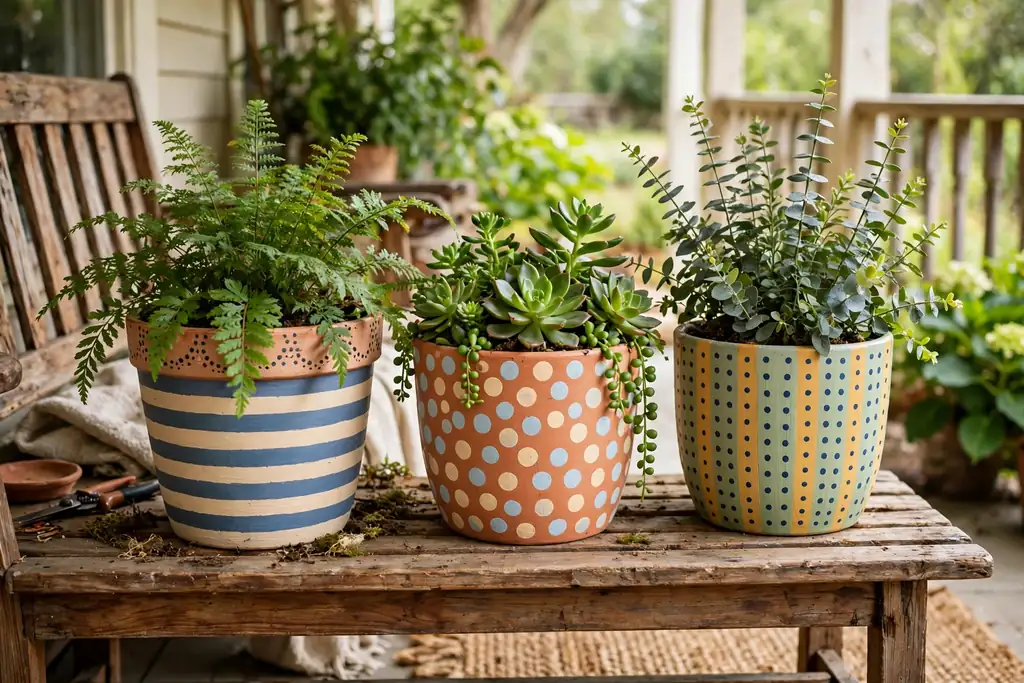
Paint plain planters with a simple pattern, such as stripes, dots, or a band of color around the rim, to make them focal points in their own right. Hand painted planters suit a porch bench, a patio table, or a bright kitchen shelf, where a bold pattern can carry the display even with a simple green plant inside. Keep the pattern to one or two colors so the planter reads as deliberate rather than busy.
Use paint suited to the planter material and to outdoor use if the planter will sit outside, and seal it if the maker instructions call for a sealant. Paint the outside only, and keep paint away from the drainage hole and the inside soil area, so plant roots stay clear of paint. Let planters dry fully before planting, and touch up chips at the start of each season to keep the pattern looking fresh.
21. Window Box Planters on a Kitchen Windowsill
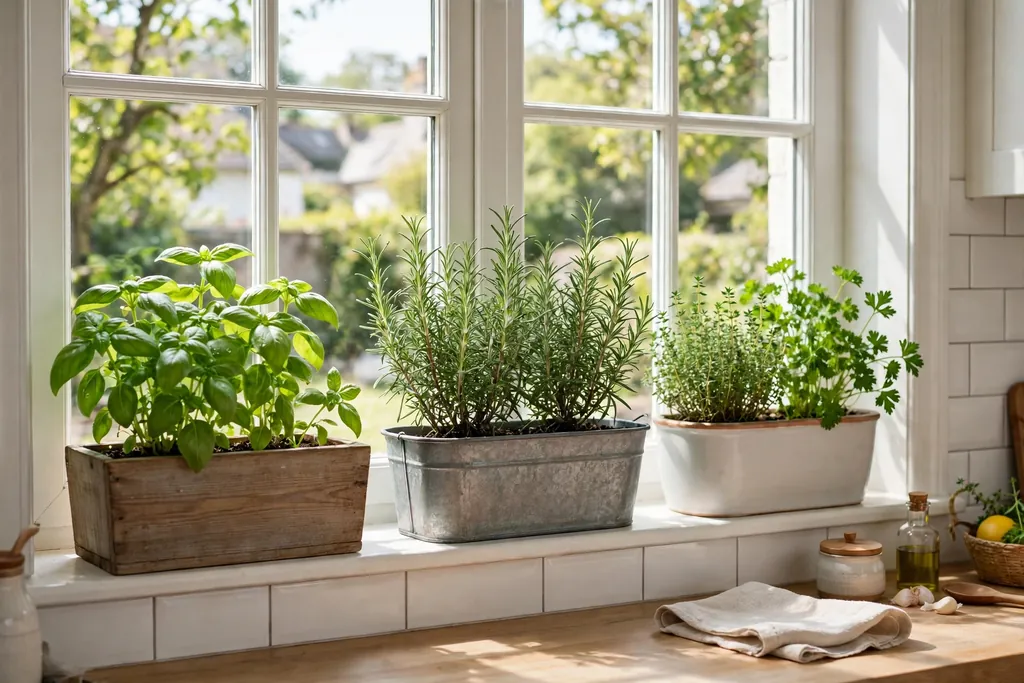
Set window box planters on a kitchen windowsill to keep herbs and small flowers within reach while you cook. A window box suits a kitchen because its long, narrow shape fits a sill, holds several small plants in one container, and keeps them in the light they need. Grow herbs you use often, such as basil, parsley, and chives, in separate sections or in their own small pots inside the box.
Check the sill width and weight before you fill the box, and use a tray under it to catch water and protect the sill paint. Water window boxes more often than floor pots, since sill soil warms in sun and dries fast, and snip herbs from the top so plants stay bushy. If the window opens inward, keep the box clear of the opening path, and move tender herbs away from cold drafts in winter.
Conclusion
Planter decoration comes down to a few steady choices: a container that suits the material and scale of the room or garden, a plant that suits the light and water of the spot, and a grouping that leaves room to walk, sit, and care for the plants. Start with one spot you use every day, such as a front door, a kitchen sill, or a patio corner, and build a display there before you spread planters through the whole home. With drainage sorted and a simple watering routine in place, a planter display can stay fresh through the seasons with only small changes to plants and placement.
FAQs
What is the easiest way to start with planter decoration?
Start with three pots of varied heights in one material, placed where you see them daily. This small group is easy to water and to adjust, and it shows you how much light and water the spot offers before you add more planters.
Do planters need drainage holes?
Yes, most planters need drainage holes so excess water can leave the soil. Without drainage, roots can sit in wet soil and rot, especially indoors. If a decorative pot has no hole, use it as an outer cover and keep the plant in an inner pot with holes that you lift out to water and drain.
How do I choose a planter size for a plant?
Choose a pot one size larger than the current root ball, with room for fresh soil around it but not so much empty soil that it stays wet. A pot that is too large holds excess water, while a pot that is too small dries out fast and limits growth. Repot when roots fill the pot and water runs straight through.
What plants work best in indoor planters?
Snake plants, pothos, philodendron, and ZZ plants suit many indoor planters because they cope with varied light and need less frequent watering. Match the plant to your room light: bright indirect light suits most houseplants, while low light rooms suit snake plants and ZZ plants better than sun loving succulents.
How do I keep outdoor planters looking good through the seasons?
Use the seasonal rotation method in idea 19: keep the pots in place and swap the plants as the seasons change. Top up soil, clear drainage holes, and check for frost damage each season, and move tender plants indoors before hard frost.
Can I mix planter materials in one display?
Yes, you can mix materials, provided one element repeats across the group, such as a shared color, a similar shape, or a matched plant type. Without a repeat element, mixed materials can look random, so start with one shared material or color and add a second material in small amounts.