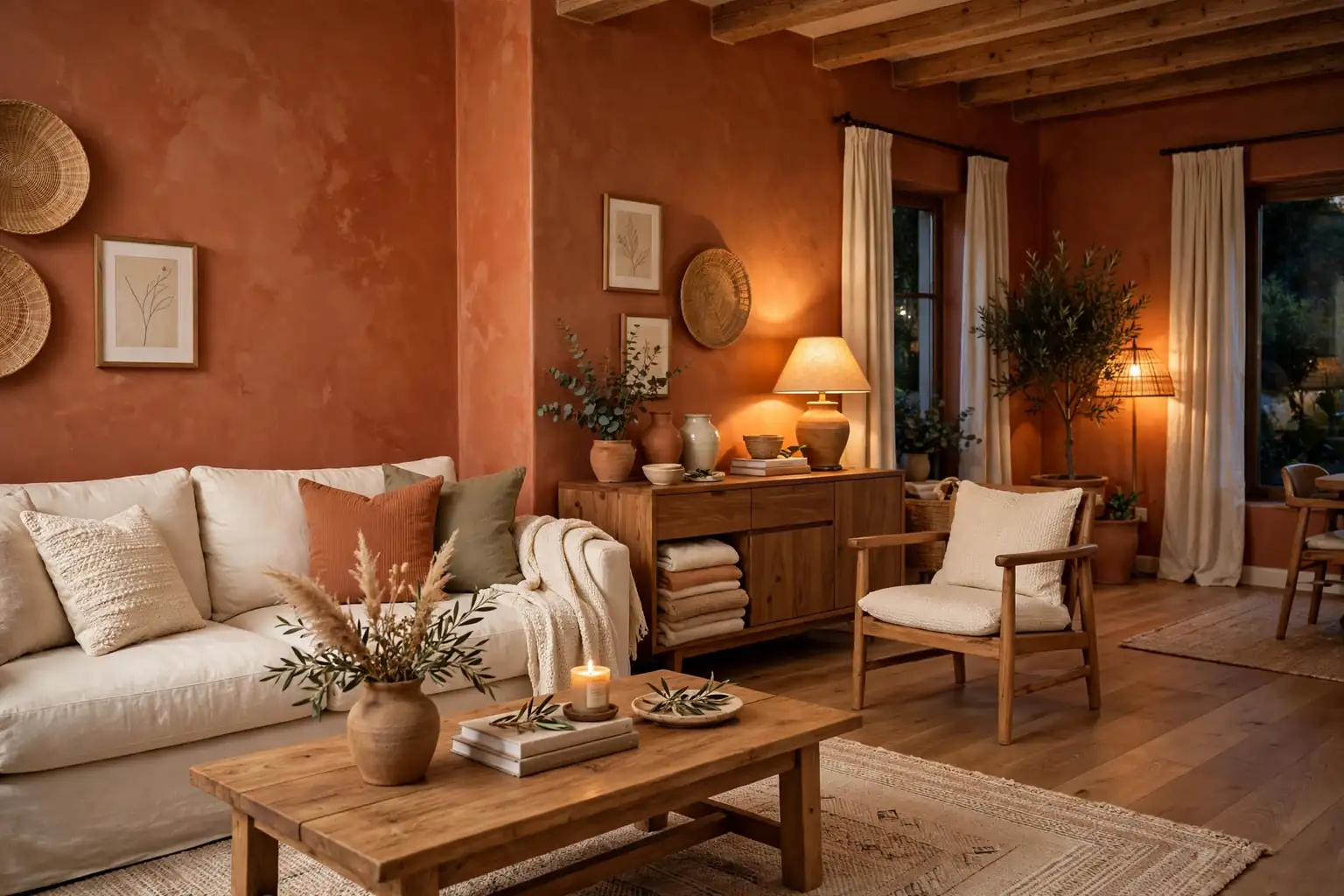
A seasonal update does not need a full redecoration. In most living rooms, one wall color, one sofa color, and two or three accents set the whole mood, and swapping the accents is enough to carry the room from one season to the next. These 28 living room color scheme ideas cover warm walls, deep sofas, soft neutrals, and bold accents, so you can pick a scheme that fits your light, your furniture, and the way you actually use the room. Start with the largest surface you are willing to change, then repeat your accent color in two or three smaller places, such as cushions, a rug, or art.
Key Takeaways
- Pick one main color for the largest surface, such as walls or the sofa, and keep the rest of the room calm so the scheme reads as planned.
- Repeat each accent color in two or three places, such as a cushion, a throw, and a piece of art, rather than using it once and nowhere else.
- Warm colors such as terracotta, ochre, and caramel suit rooms that need coziness, while cool colors such as sage, slate blue, and navy suit rooms that need calm.
- Test paint and fabric in daylight and lamplight before you commit, since most colors shift a lot between the two.
- Keep the base neutral if you like to change things by season, since cushion covers, throws, and rugs are far cheaper to swap than a sofa or a wall color.
1. Warm Terracotta Walls With a Cream Sofa
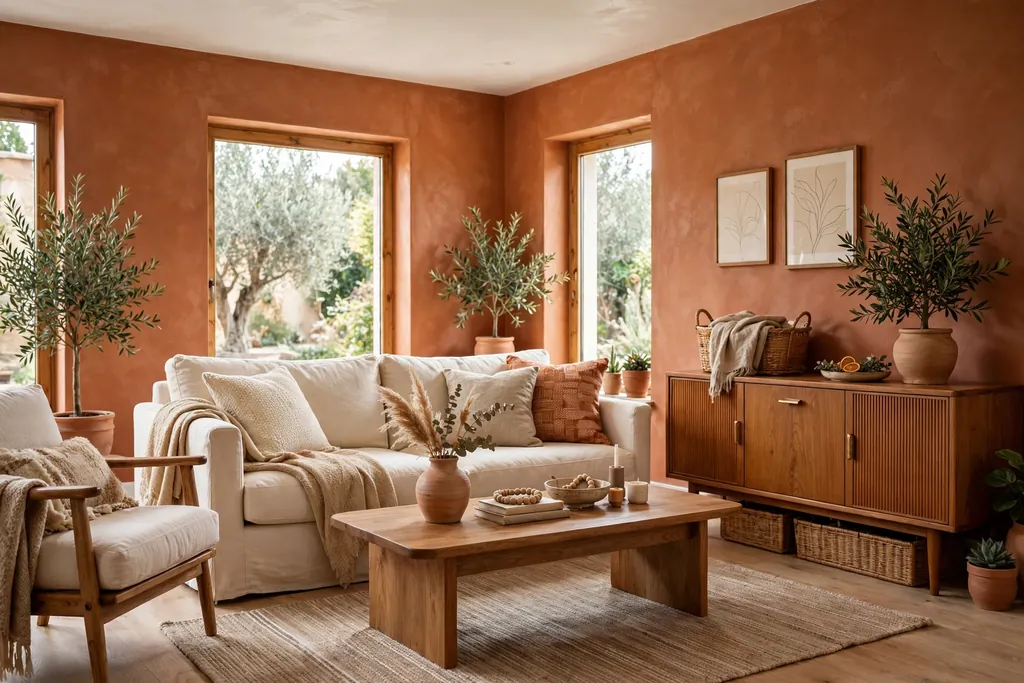
Terracotta walls give a living room instant warmth, and a cream sofa keeps the result soft rather than heavy. Paint all four walls in a muted terracotta, not a bright orange, and keep the ceiling, trim, and rug in cream or warm white. The cream sofa then reads as a calm island in a warm room, and wood furniture adds a natural mid tone between the two.
Keep the accents simple: one terracotta cushion, one cream throw, and a plant or two. If the room is small or dim, paint only the sofa wall in terracotta and keep the other walls cream, so the warmth stays without closing the room in.
2. Sage Green Sofa Against White Walls
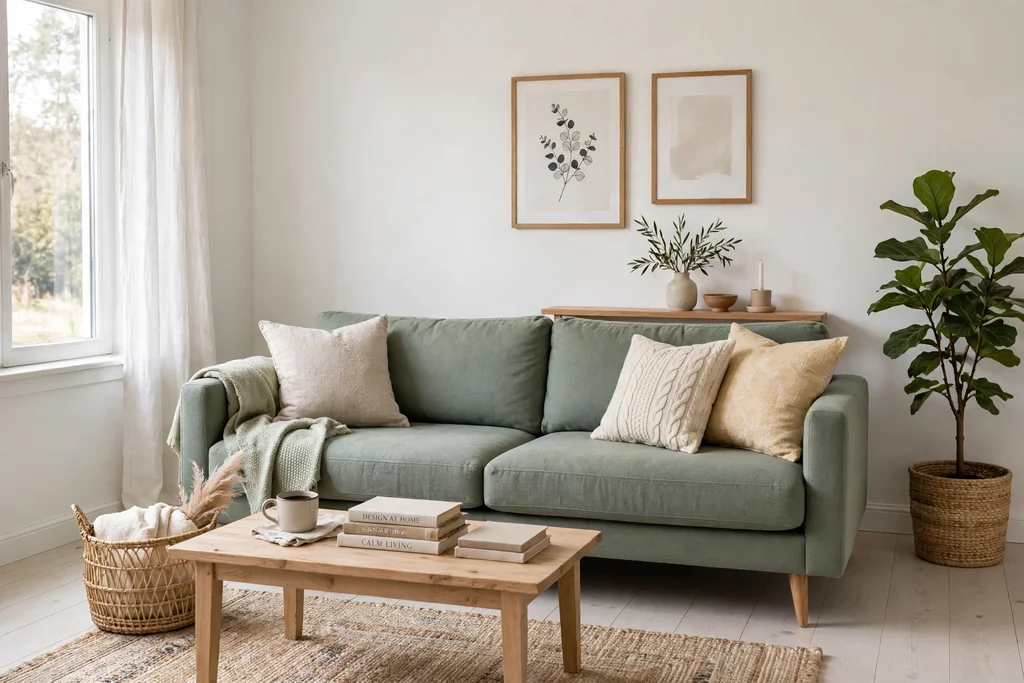
A sage green sofa is a gentle way to bring color into a room without painting a wall. The soft grey green suits white walls, pale wood floors, and cream rugs, and it pairs well with plants, which pick up the same green family. Choose a sofa fabric in a mid sage, since very pale sage can look grey in dim light and very dark sage can read as forest green.
Add cream and oatmeal cushions, and one deeper green throw for contrast. This scheme suits a room that gets good daylight, and it works through the year, since sage reads as fresh in spring and calm in winter.
3. Navy Accent Wall Behind the Sofa
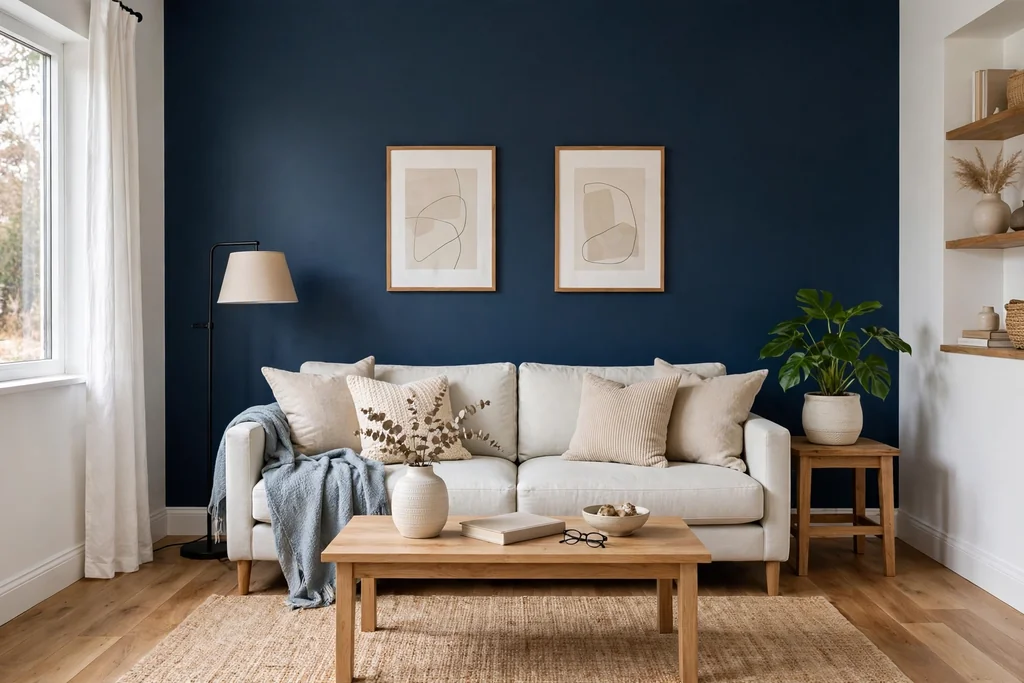
One navy wall behind the sofa gives a living room depth and a clear focal point, without the commitment of a fully dark room. Paint the sofa wall in a deep navy, keep the other walls white or pale grey, and hang one large piece of art or a mirror on the navy so the wall does not feel bare. A pale sofa stands out well against navy, and brass or wood details warm the contrast.
Keep the rug pale or patterned in cream and navy, so the floor does not compete with the wall. This idea suits a room with a sofa that faces a television or fireplace, since the navy wall anchors the seating group.
4. Blush Pink and Soft Grey Pairing
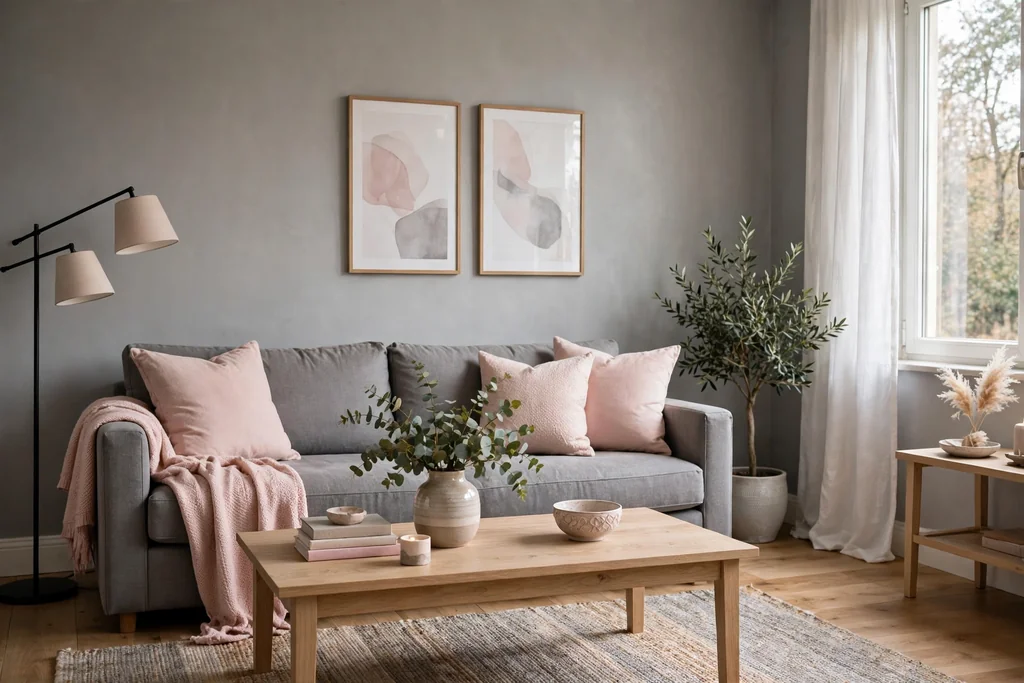
Blush pink and soft grey make a calm, gentle living room that still has color. Use soft grey on the walls and the sofa, then add blush in cushions, a throw, and one piece of art. The pink should stay pale and dusty, not bright, so the room feels restful rather than sugary. White curtains and pale wood keep the palette light.
This pairing suits a room that should feel relaxing in the evening, and it works well with a grey sofa you already own. If blush feels too soft on its own, add one darker piece, such as a walnut side table or a black frame, to ground the scheme.
5. Charcoal Sofa With Mustard Cushions
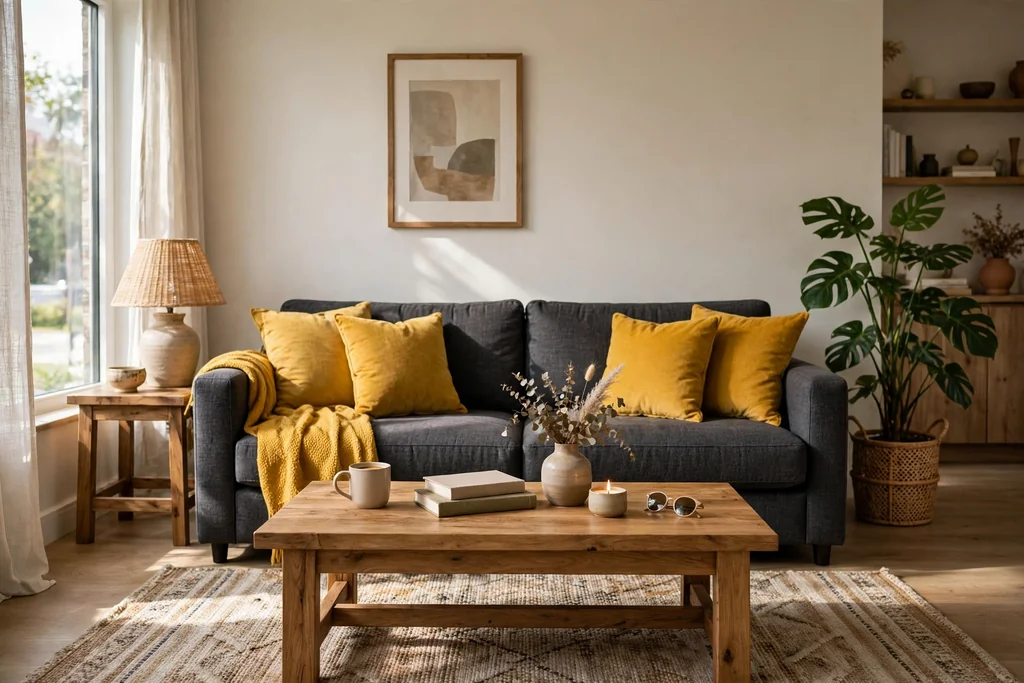
A charcoal sofa with mustard cushions is a reliable warm and grounded pairing. The dark sofa hides everyday marks well, while two or three mustard cushions and a mustard throw add warmth without repainting a wall. Keep the walls pale, add a wood coffee table, and let the mustard repeat once more in a piece of art or a rug detail. For more ways to style a dark sofa, see these grey couch living room ideas.
This scheme suits a room that feels cool or north facing, since mustard adds sunshine to a dark base. If mustard feels too strong, start with a muted ochre cushion and add a second one only if the room still needs warmth.
6. Olive Green Walls With Wood Furniture
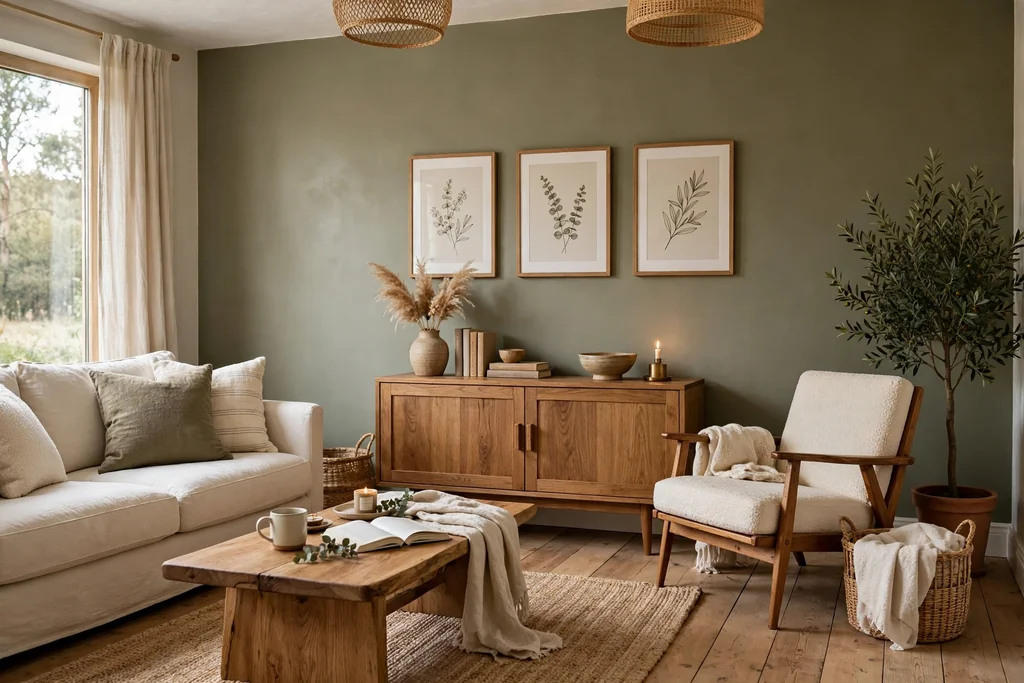
Olive green walls with wood furniture give a living room a grounded, natural feel. Paint the walls in a muted olive, not a bright green, and let oak or walnut furniture supply the warm contrast. Cream upholstery and a cream or jute rug keep the room light, since olive can darken a dim room if everything else is dark too.
Add brass or black details in lamps and frames, and keep the cushions in cream, rust, or one deeper green. This scheme suits a room with plants and natural fibers, and it carries well into the colder months, when the green reads as cozy rather than summery.
7. Cream and Caramel Layered Neutrals
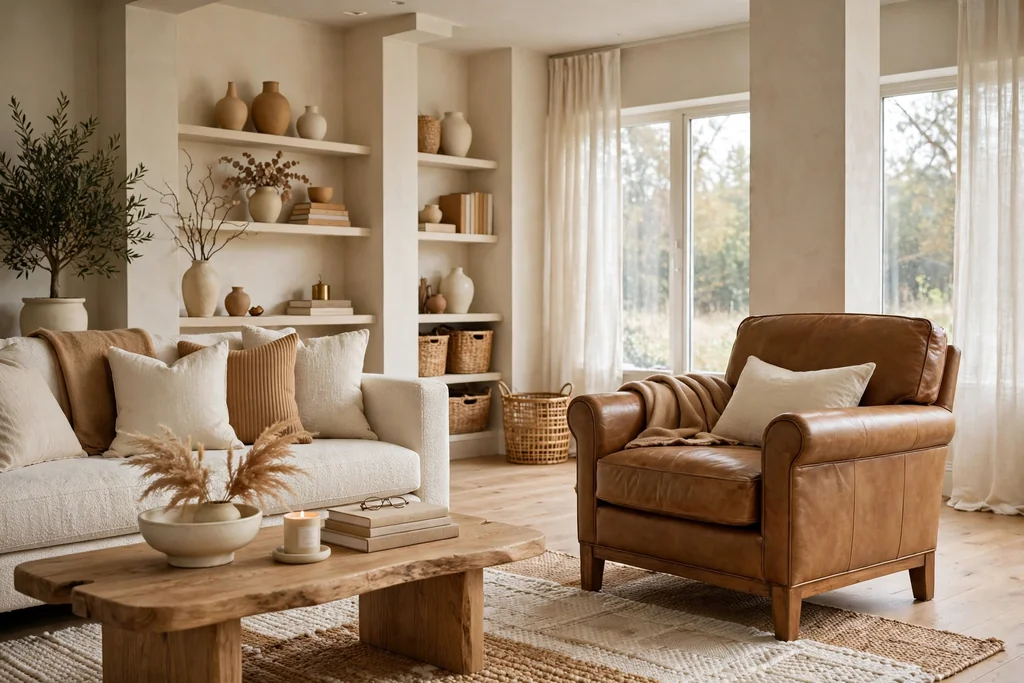
A cream and caramel scheme layers warm neutrals instead of relying on one strong color. Use cream on the walls, caramel on a leather chair or a set of cushions, and oatmeal and tan in the rug and throws. The layers of tone give the room depth without a bold hue, and the warm base suits wood floors and brass details.
This idea suits a room where you want a calm backdrop for art or books, since the neutral base does not compete with them. To keep it from feeling flat, vary the textures: smooth leather, woven wool, linen, and wood all read as different layers even in close colors.
8. Dusty Blue Curtains Over White Walls
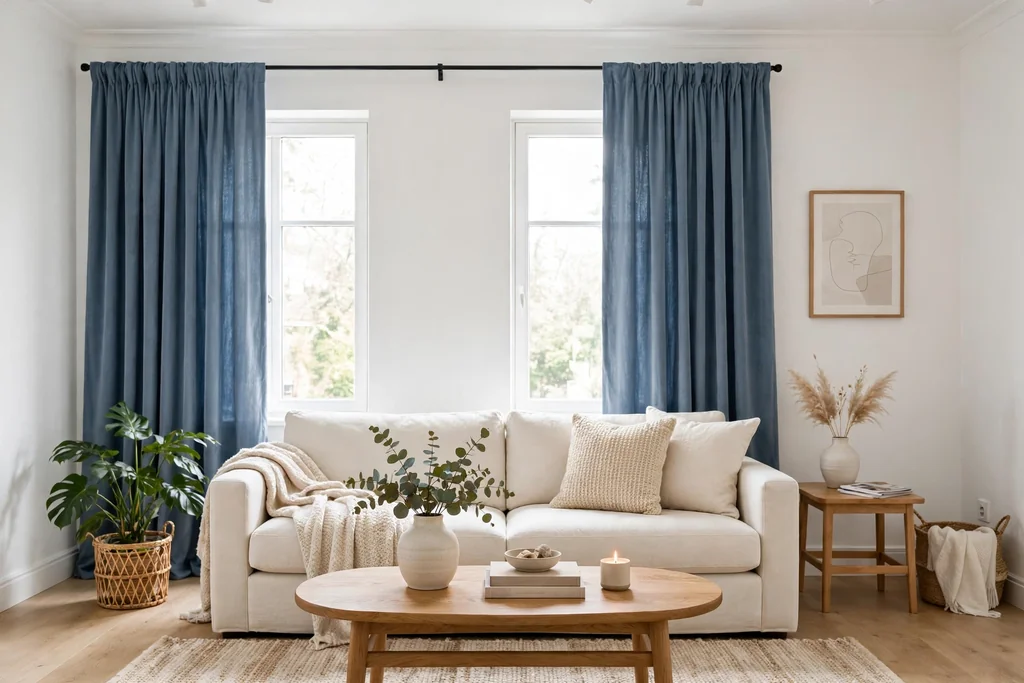
Dusty blue curtains over white walls add color at the window, where it frames the room rather than covering it. Hang full length curtains in a soft dusty blue, keep the walls white, and repeat the blue once in a cushion or a throw. The window becomes the color feature, and the rest of the room can stay neutral.
This idea suits a renter or anyone who does not want to paint, since curtains are easy to change by season. In a small room, keep the curtains the same blue family as one cushion, and avoid adding a second strong color, so the scheme stays calm.
9. Brick Red Fireplace Wall With Cream Seating
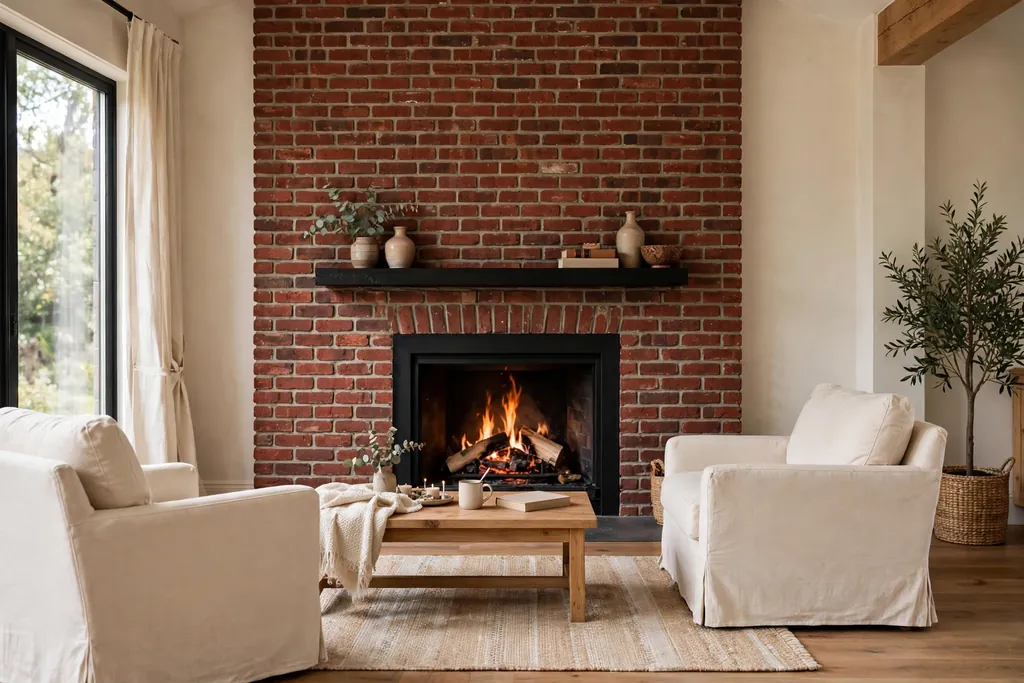
A brick red fireplace wall with cream seating makes the fireplace the warm center of the room. If the fireplace is already brick, clean it and leave it exposed; if it is painted, a brick red paint on the chimney breast gives a similar effect. Place a cream sofa and cream armchairs facing the fire, and add rust or terracotta cushions to link the seating to the wall.
Keep the other walls warm white, and use a wood mantel and dark metal fire tools to finish the look. This scheme suits a traditional room and a home where the fire is lit often, since the red reads as welcoming in the evening.
10. Forest Green Velvet Armchairs
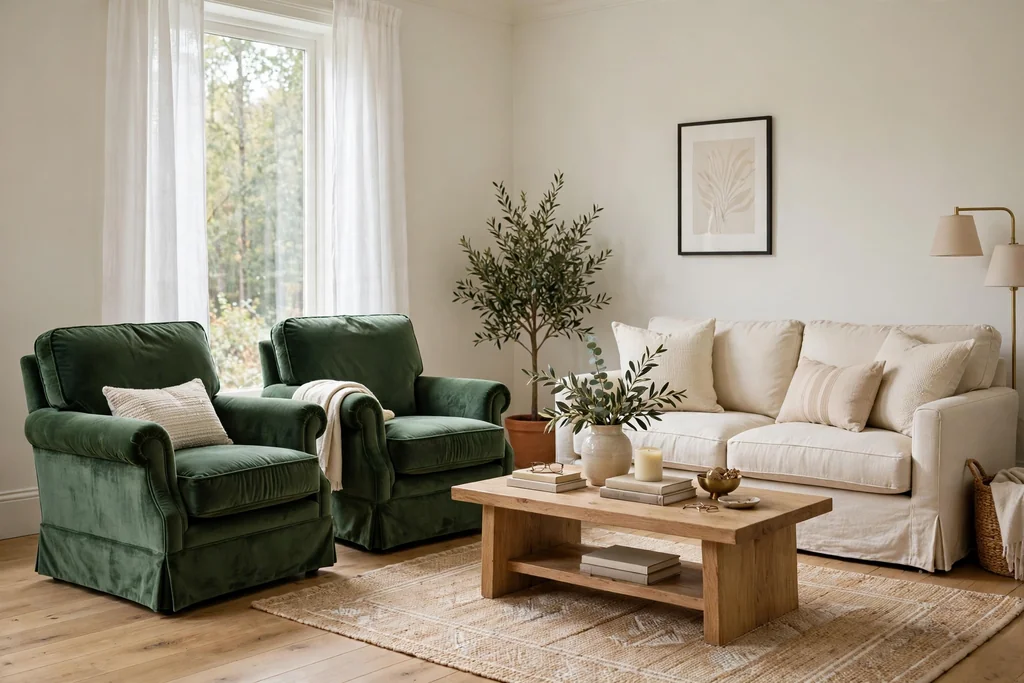
Forest green velvet armchairs add a rich accent to a neutral living room without changing the sofa or the walls. Place two velvet chairs opposite a cream or grey sofa, and keep the walls pale so the green stands out. The velvet catches lamplight in the evening, which makes the chairs feel plush after dark.
Pair the chairs with brass side tables or a wood coffee table, and repeat the green once in a cushion on the sofa. This idea suits a room that needs one strong piece, and it works well in a larger room where two chairs fit without crowding the walkway.
11. Ochre and Rust Cushions on a Beige Sofa
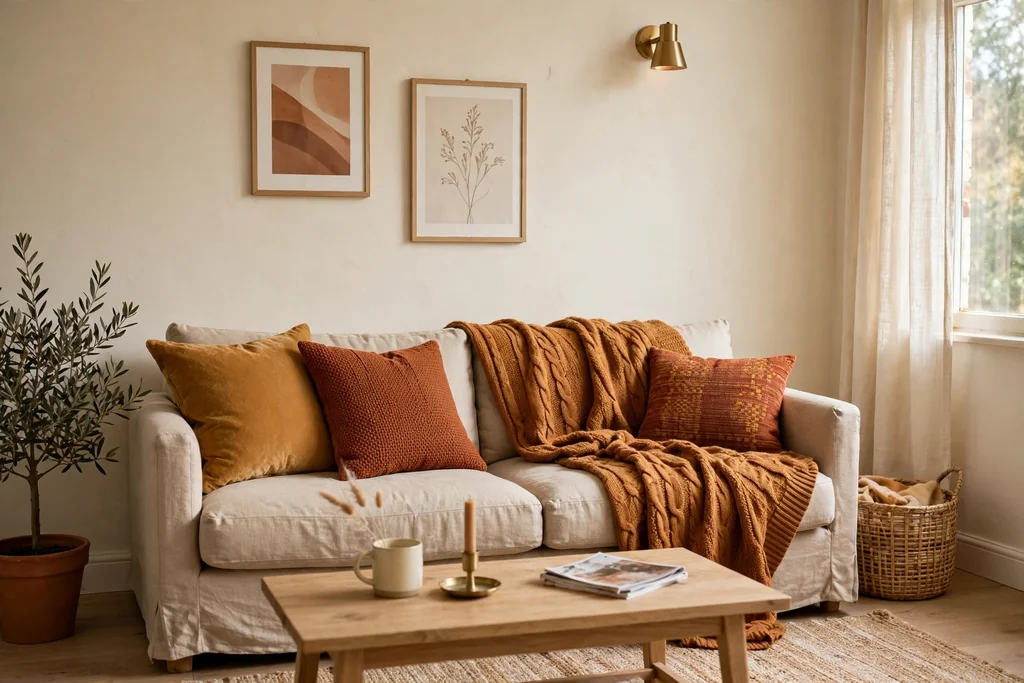
Ochre and rust cushions on a beige sofa are the fastest seasonal update in this list, since they need no paint and no new furniture. Use a beige or oatmeal sofa as the base, then add two ochre cushions, two rust cushions, and a rust or ochre throw. The warm tones suit autumn and winter, and they pair well with wood floors and cream walls.
Keep the rug neutral so the cushions lead the scheme, and swap the covers back to cream or sage in spring if you like a lighter feel. This idea suits a room where the sofa must stay practical, since cushion covers are washable and cheap to change.
12. Pale Pink Feature Wall in a Small Room
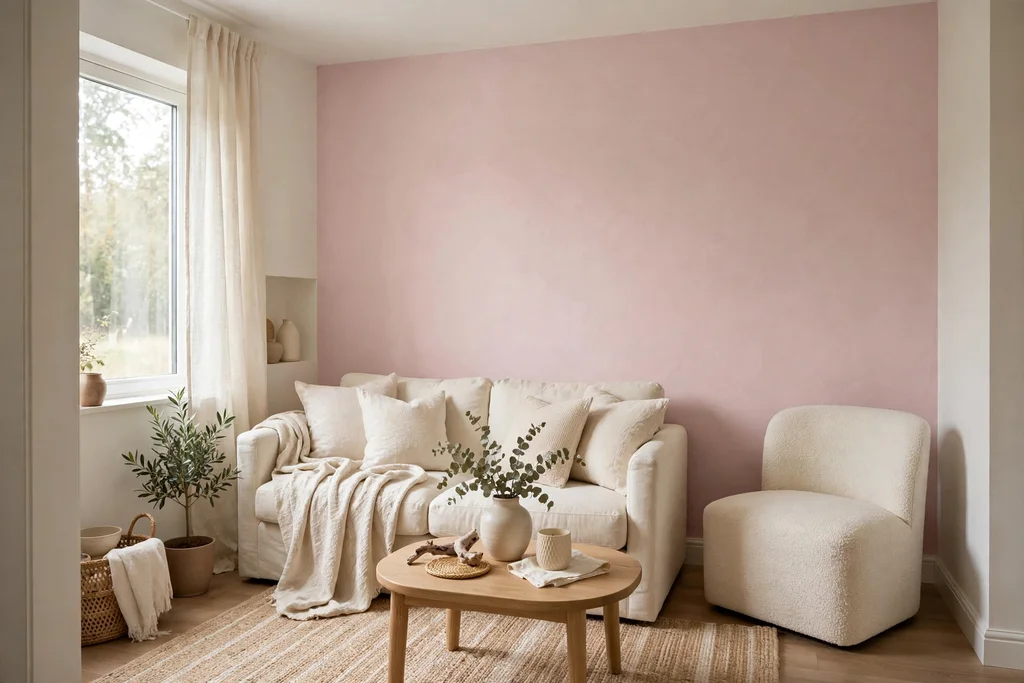
A pale pink feature wall in a small room adds warmth without shrinking the space, as long as the pink stays light. Paint the wall behind the sofa or the fireplace in a soft dusty pink, keep the other walls white, and use cream and pale grey furniture. The pink reads as warm light rather than as a strong color, and it suits rooms that get little sun.
Keep the curtains white or cream, and avoid pairing the pink with other pastels at full strength, or the room can look sugary. One wood piece, such as a side table, adds enough contrast to keep the soft palette grounded.
13. Black and White With One Warm Wood Tone
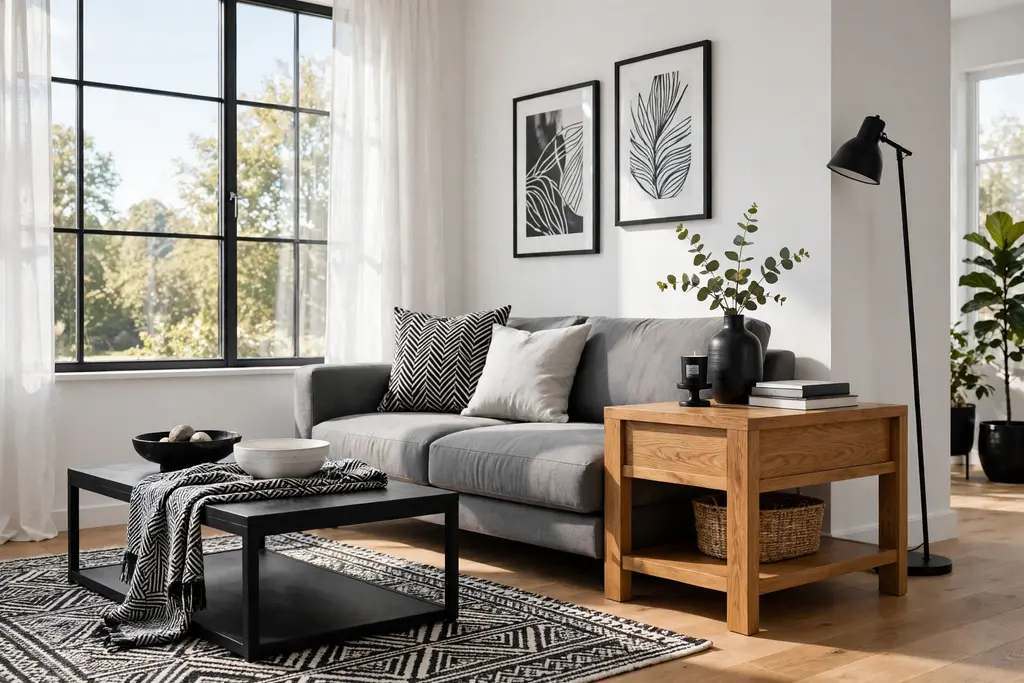
A black and white scheme with one warm wood tone is simple to get right, because the wood stops the contrast from feeling cold. Use white walls, a black coffee table or black frames, and a grey or white sofa, then add warm oak or walnut in the floor, a side table, or a set of shelves. The wood becomes the warm note in an otherwise sharp room.
Keep the pattern simple: one striped or geometric cushion is enough, since black and white already carry strong contrast. This scheme suits a modern room and a home where art and books supply most of the personality.
14. Teal Sofa With Brass and Cream
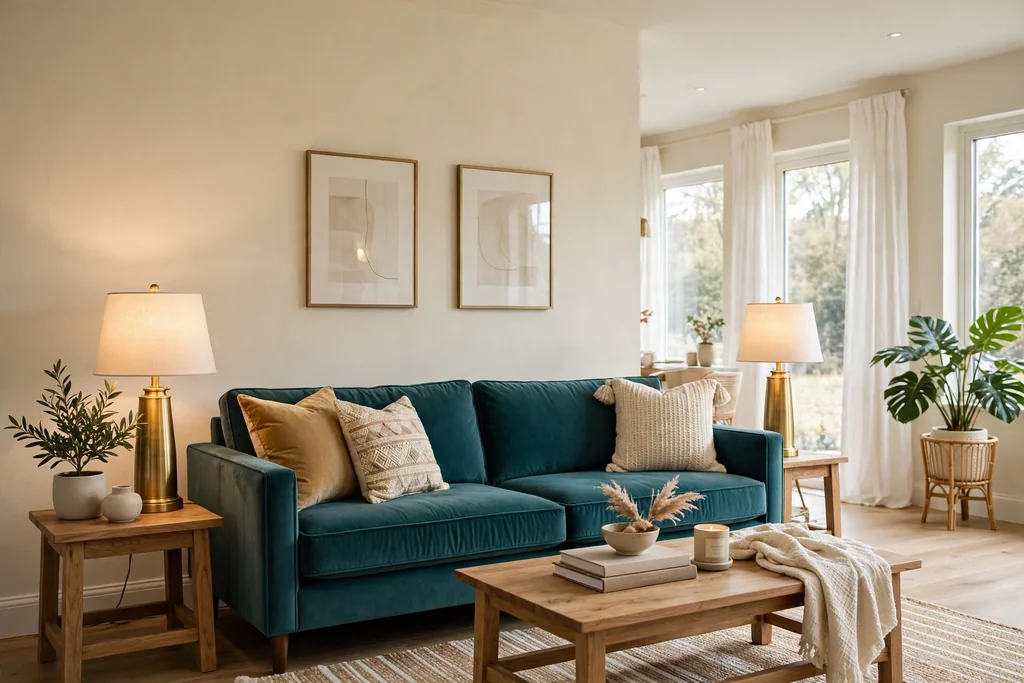
A teal sofa with brass and cream details gives a living room a rich, slightly formal feel. The deep blue green sofa works against cream walls, and brass lamps, frames, or side tables warm the cool teal. Keep the rug in cream or a muted pattern that includes teal, so the sofa and the floor clearly belong together.
This pairing suits a room used for hosting, and a room with good lamplight, since teal looks richer under warm light than under a single ceiling light. If teal feels bold, try it on a loveseat first, and keep the main sofa cream.
15. Warm Greige Walls With a Terracotta Rug
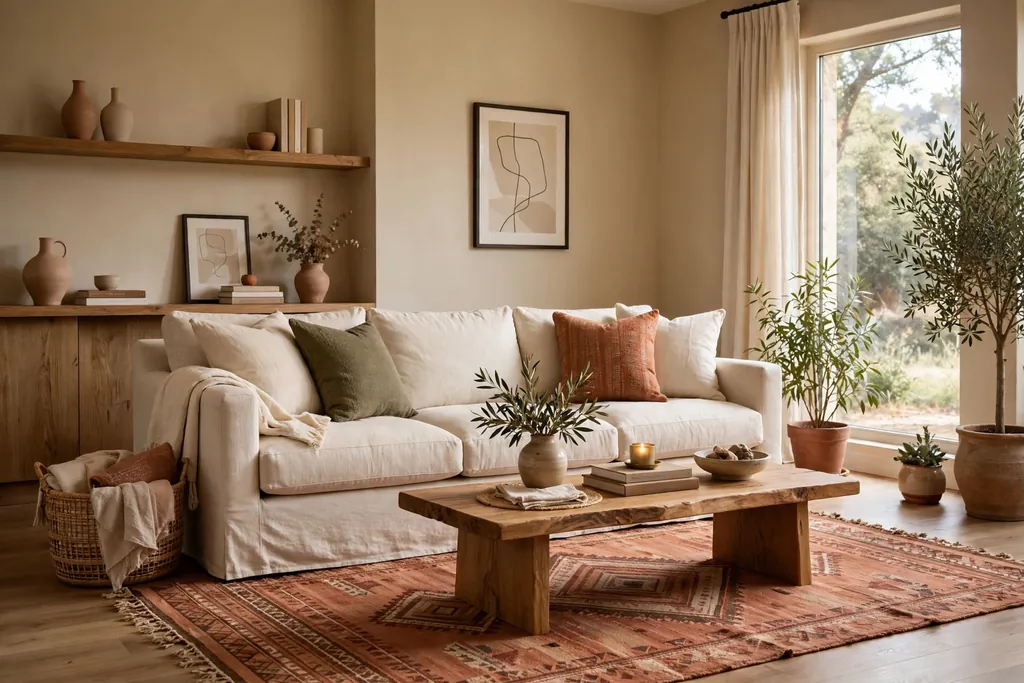
Warm greige walls, a mix of grey and beige, with a terracotta rug give a room a warm neutral base and one clear color note on the floor. Paint the walls in a warm greige, keep the sofa cream or oatmeal, and let a terracotta rug carry the color. The rug should be large enough for the front legs of the sofa to sit on it, so the seating group reads as one zone. For more rug sizes and placements, see these living room rug ideas.
Repeat the terracotta once in a cushion or a throw, and keep the curtains cream. This scheme suits a room where the floor is the easiest surface to change, and it works well with wood furniture.
16. Plum Accents on a Neutral Base
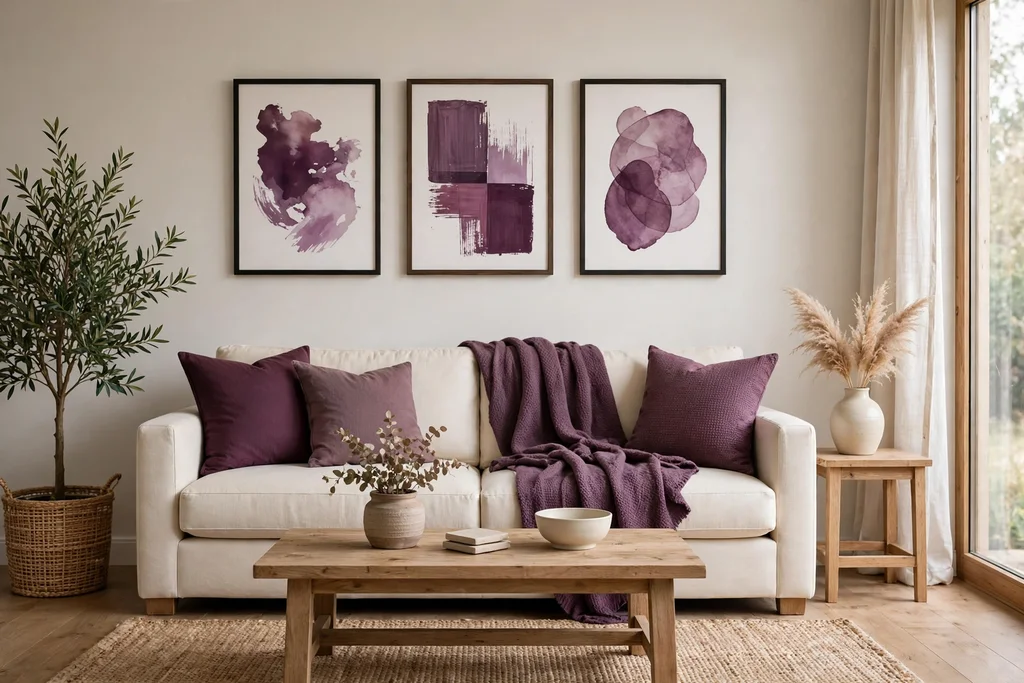
Plum accents on a neutral base add depth to a living room without darkening the whole room. Keep the walls warm white and the sofa cream or light grey, then add plum in cushions, a throw, and one piece of art. The deep purple reads as cozy in the evening, especially under warm lamps, and it pairs well with wood and brass.
Use plum in two or three places only, and keep the rest of the accents cream or soft grey, so the plum stays a clear accent rather than a competing color. This idea suits a room that needs a winter update, since plum feels richer in low light than in bright summer sun.
17. Butter Yellow Walls for a Sunny Corner
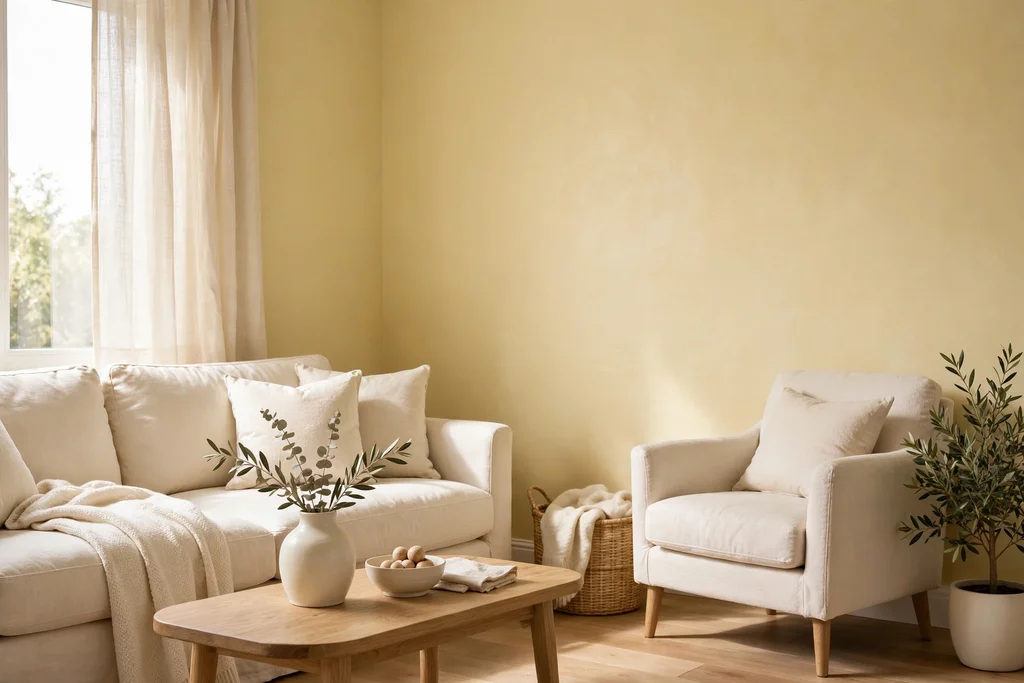
Butter yellow walls for a sunny corner add gentle warmth to a room that gets little direct sun. Paint the walls in a soft butter yellow, not a bright gold, and pair it with cream furniture and pale wood. The yellow lifts a north facing room and makes white trim look crisp, while staying pale enough to live with every day.
Keep the curtains white and the rug cream or pale grey, so the yellow stays the only warm note. If a whole room in yellow feels too much, paint only the wall that catches the most light, and keep the rest cream.
18. Chocolate Brown Leather With Cream Walls
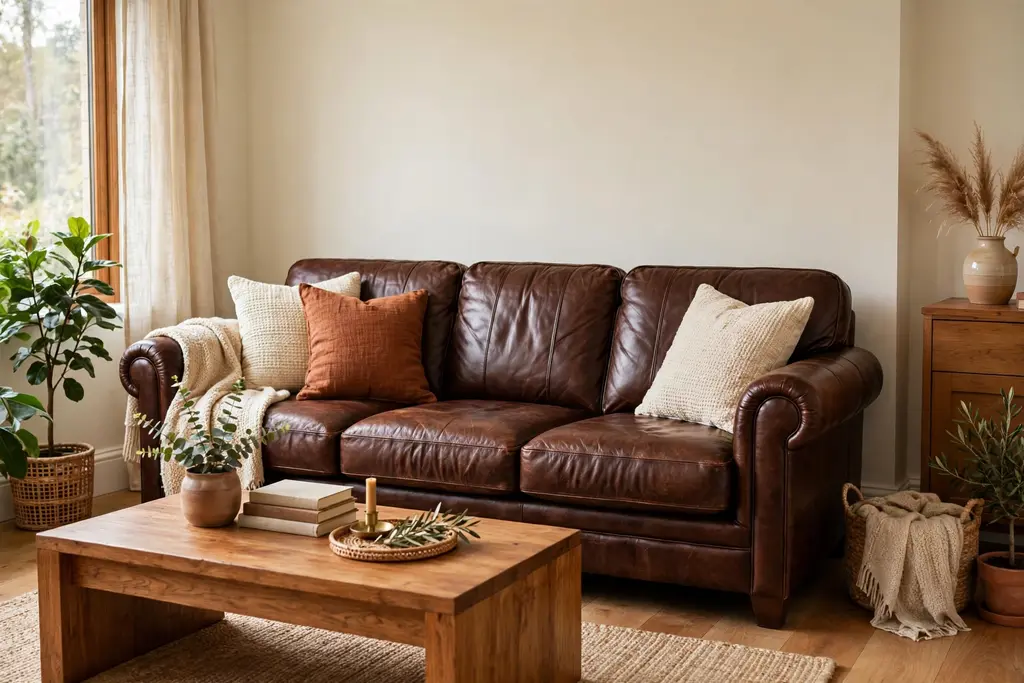
Chocolate brown leather with cream walls is a classic pairing that suits a room used every day. A brown leather sofa or armchair adds a deep warm tone, and cream walls keep the room light around it. Add a wood coffee table, a cream rug, and cushions in cream, rust, or sage to soften the leather.
This scheme suits a family room, since leather wipes clean and hides wear well. Keep the leather to one or two pieces, and use fabric on the other seats, so the room does not feel heavy with leather on every surface.
19. Slate Blue Walls With White Trim
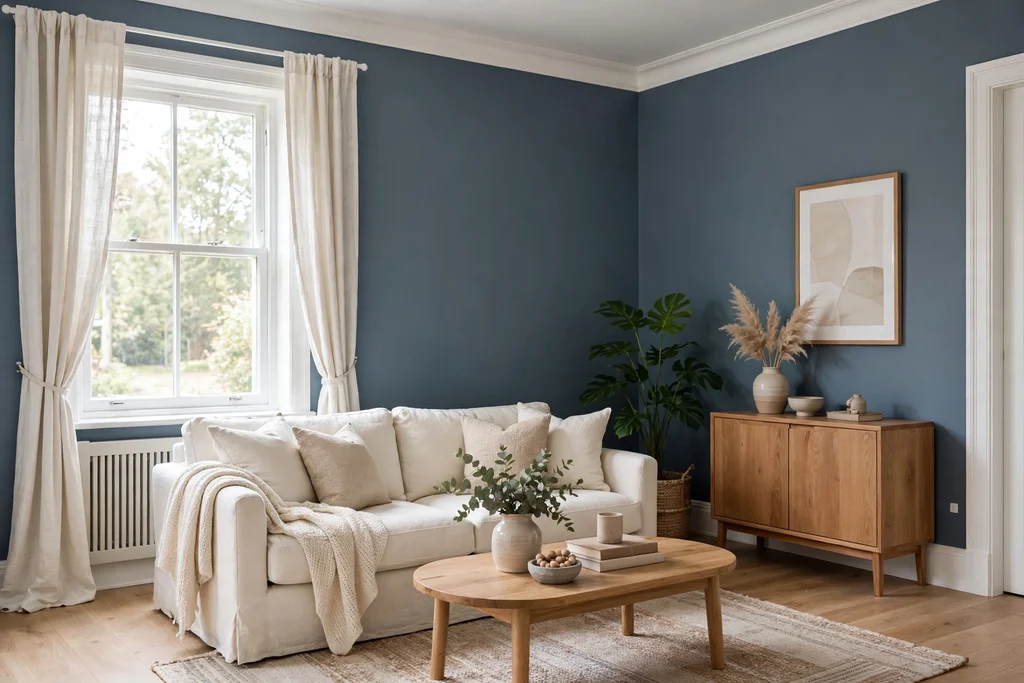
Slate blue walls with white trim give a living room a calm, tailored feel. Paint the walls in a muted slate blue, keep the trim, ceiling, and doors bright white, and use a cream or light grey sofa. The white trim frames the blue and keeps the room crisp, while wood or brass details add warmth.
This scheme suits a room with good trim work, such as baseboards and window frames, since the white against blue shows it off. In a small room, paint only the lower half of the walls in slate blue with a white chair rail, so the upper walls stay light.
20. Burnt Orange Throw and Art on Grey Walls
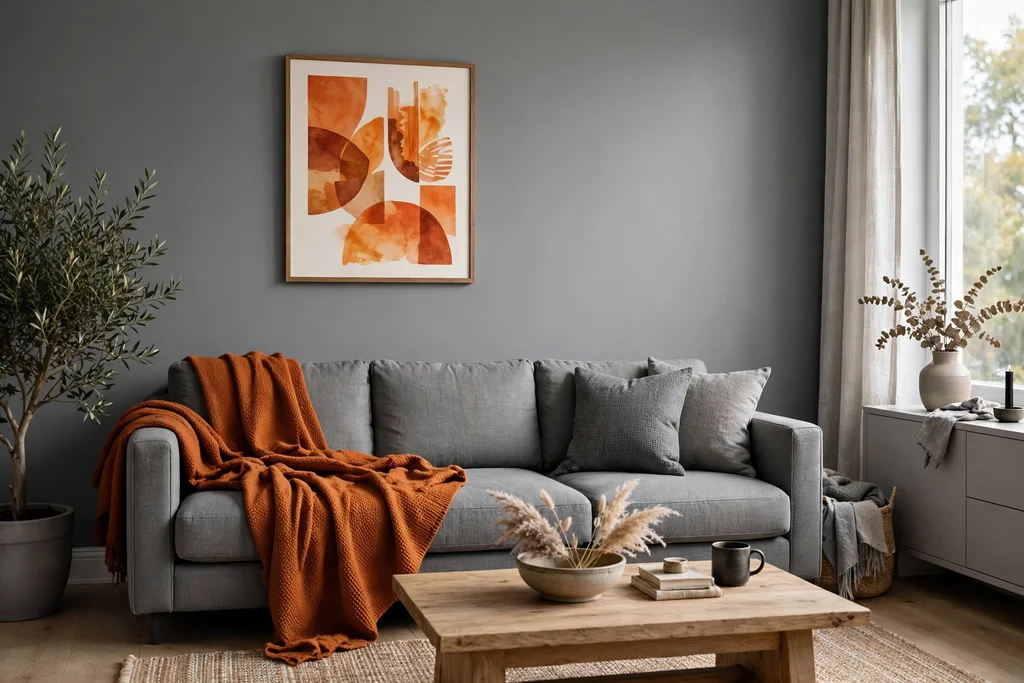
A burnt orange throw and art on grey walls add warmth to a cool room without repainting. Keep the walls mid grey and the sofa light grey or cream, then add a burnt orange throw over one sofa arm, two orange cushions, and one piece of art that includes orange. The orange reads as a clear seasonal accent against the grey.
This idea suits a room where the sofa and walls are already grey and you want a fast autumn update. Keep the orange to those three places, and avoid adding a second bright color, so the scheme stays focused.
21. Moss Green and Clay in a Reading Corner
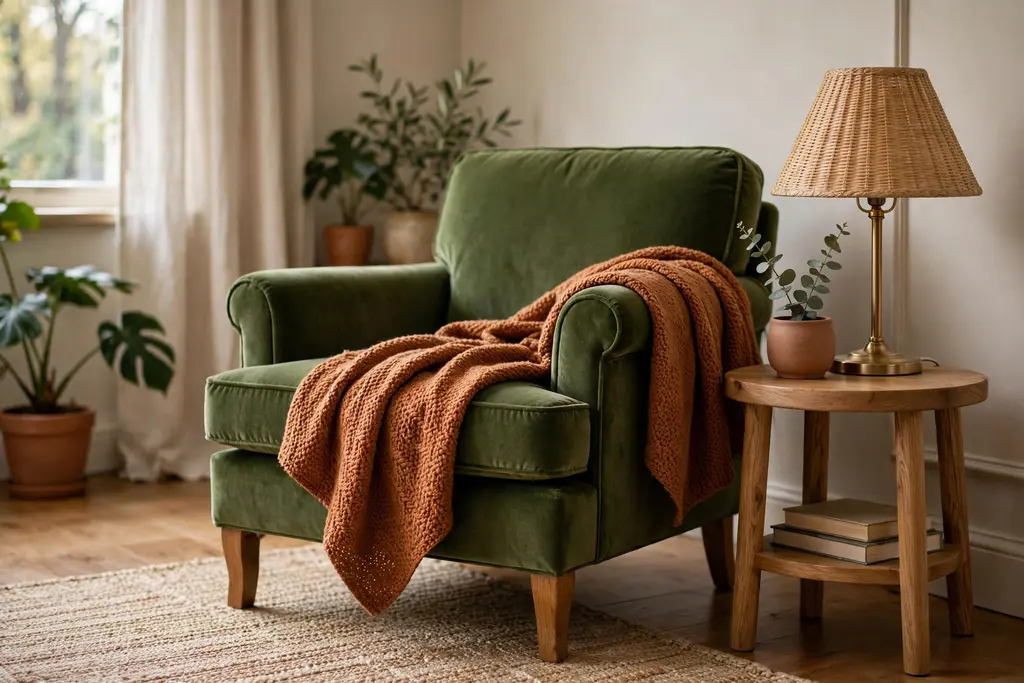
Moss green and clay in a reading corner turn one corner of the living room into a distinct zone. Paint the corner walls in moss green, or use a moss green armchair and a clay colored throw, and add a wood side table and a reading lamp. The green and clay pairing feels natural and calm, and it marks the corner as a place to sit and read.
Keep the rest of the room neutral, so the corner reads as a deliberate nook rather than a competing scheme. This idea suits an open plan room, where one corner needs its own identity without a wall or screen.
22. Soft Lavender Grey for a Calm Evening Room
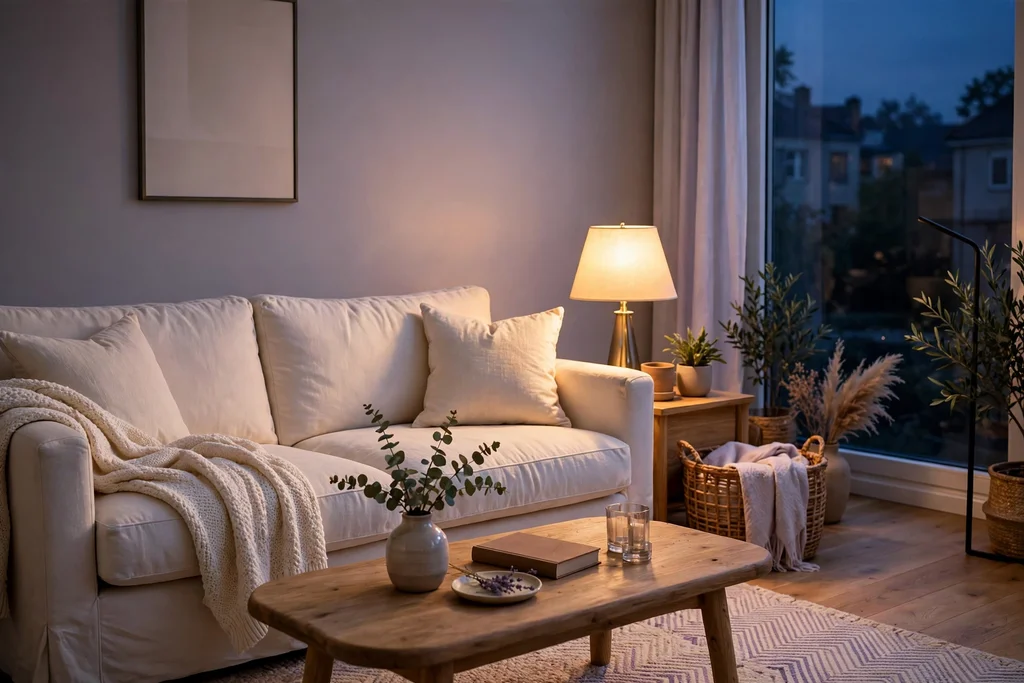
Soft lavender grey for a calm evening room gives a living room a gentle color that suits low light. Paint the walls in a pale lavender grey, use a cream or light grey sofa, and add cushions in soft purple and silver grey. The lavender should stay muted, close to grey, so the room feels calm rather than colorful.
This scheme suits a room used mainly in the evening, since the soft purple reads as soothing under lamps. Keep the curtains cream and the rug pale, and add one wood piece to stop the palette from feeling too cool.
23. Deep Red Rug Anchoring a Cream Room
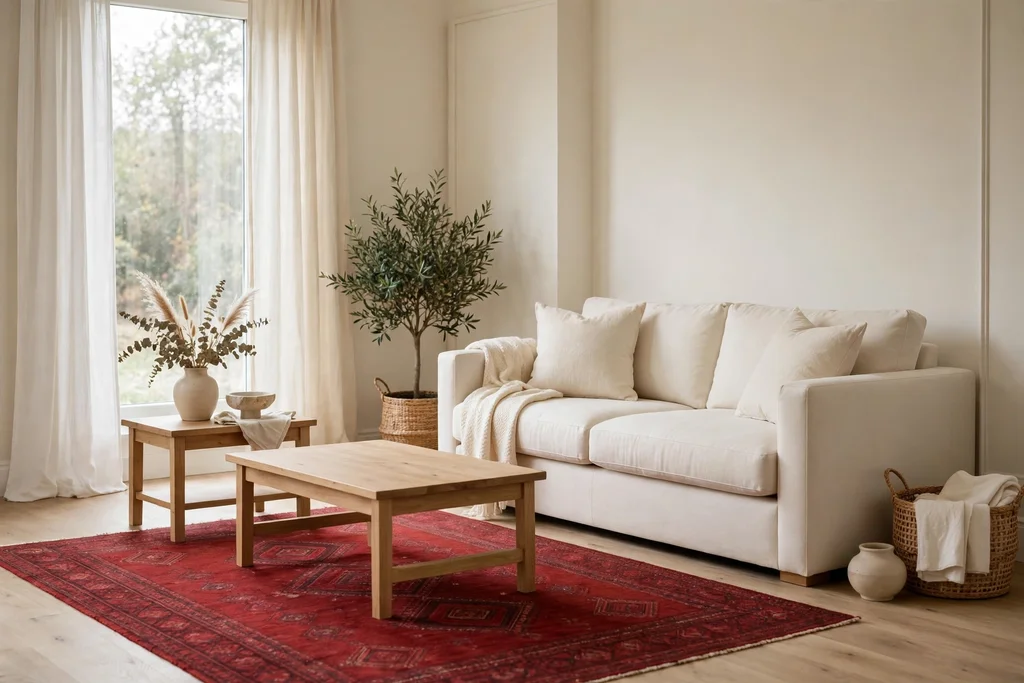
A deep red rug anchoring a cream room gives a plain room a strong center in one move. Use cream walls and a cream or beige sofa, then lay a deep red rug, patterned or plain, under the coffee table and the front legs of the seating. The red becomes the focal point, and the cream around it keeps the room light.
Repeat the red once in a cushion or a piece of art, and keep the curtains cream. This idea suits a traditional room and a room where the floor is the easiest surface to change, since a rug needs no paint and no fitting.
24. Two Tone Walls in Cream and Green
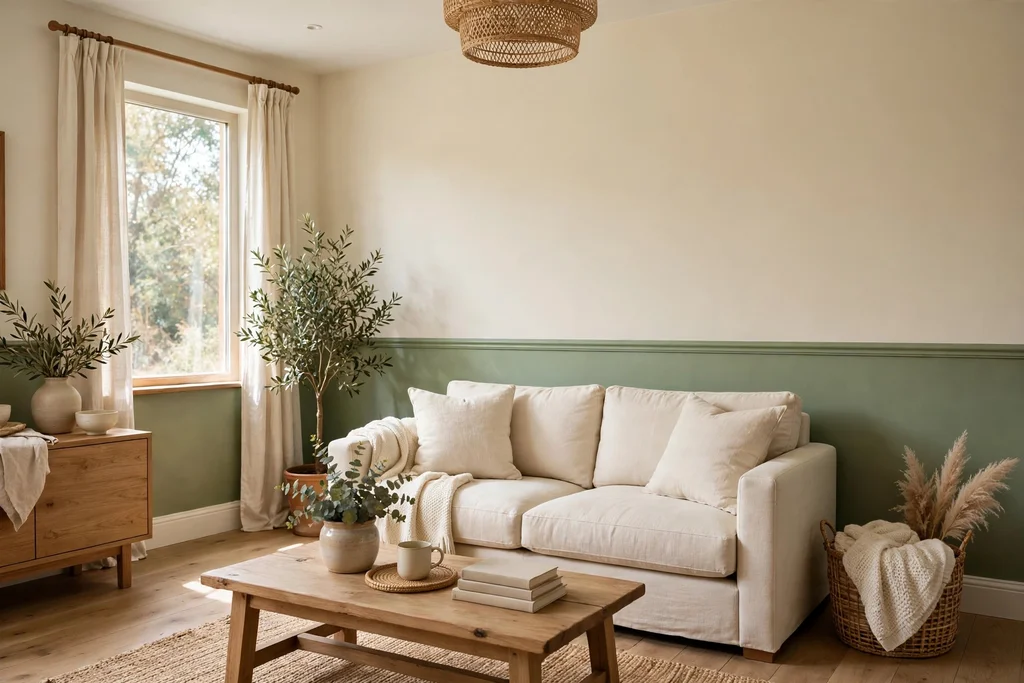
Two tone walls in cream and green give a living room structure without a bold feature wall. Paint the upper walls cream and the lower walls, up to a chair rail or picture rail, in a muted green such as sage or olive. Keep the sofa cream or oatmeal, and add green cushions to link the seating to the lower wall color.
This scheme suits a room with a chair rail or paneling, since the rail gives a natural break point for the two colors. If the room has no rail, use a painted dado line at about a third of the wall height, and keep the line level and neat.
25. Golden Wood Floors With Cream and Sage
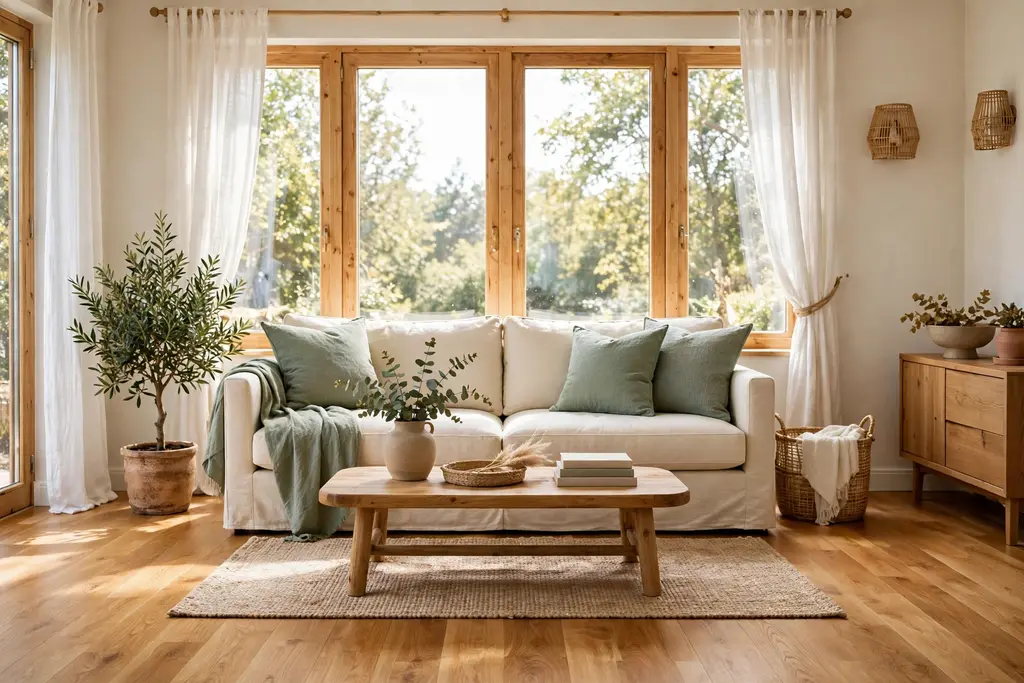
Golden wood floors with cream and sage give a living room a warm base that needs little else. Let the wood floor supply the warm tone, use cream on the walls and the sofa, and add sage in cushions, a throw, and plants. The combination feels natural and light, and it suits rooms with large windows, since daylight brings out the gold in the wood.
Keep the rug in cream or jute, so the wood floor stays visible around the seating group. This idea suits a room where the floor is already wood and worth showing, rather than covering with a large dark rug.
26. Navy and White Striped Cushions for a Crisp Look
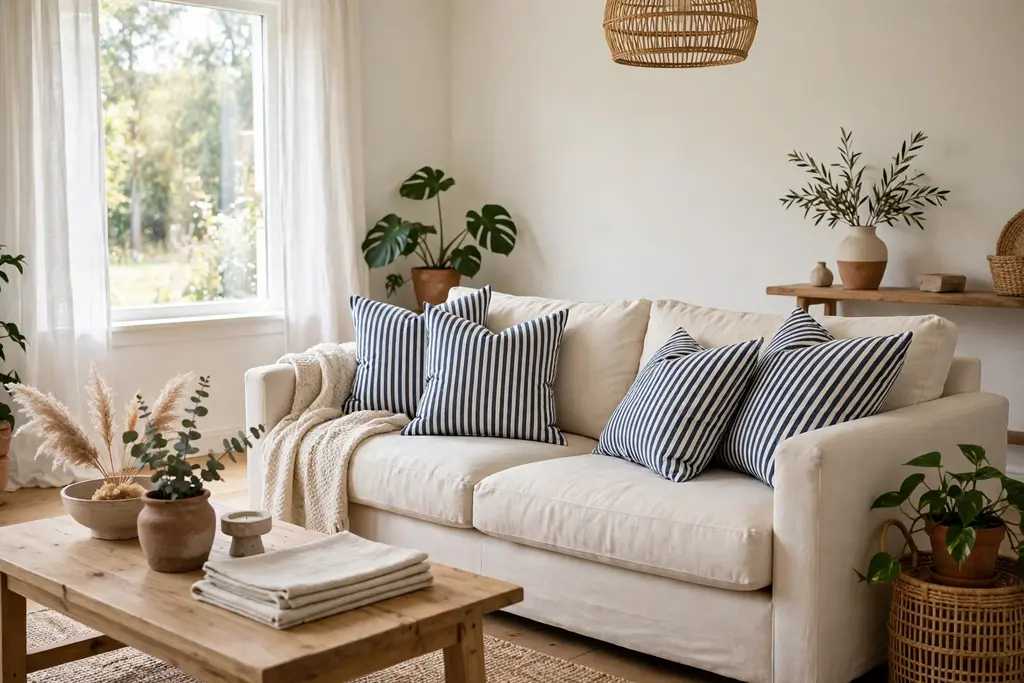
Navy and white striped cushions for a crisp look add pattern and color to a plain sofa in one step. Use a cream or light grey sofa as the base, then add two striped cushions in navy and white, plus one plain navy cushion. The stripes feel fresh and tailored, and they pair well with white walls and wood floors.
Keep the rest of the room plain, since the stripes already carry pattern, and repeat the navy once in a throw or a piece of art. This idea suits a coastal or classic room, and it is easy to swap out by season, since cushion covers change in minutes.
27. Copper and Warm Brown Metallic Accents
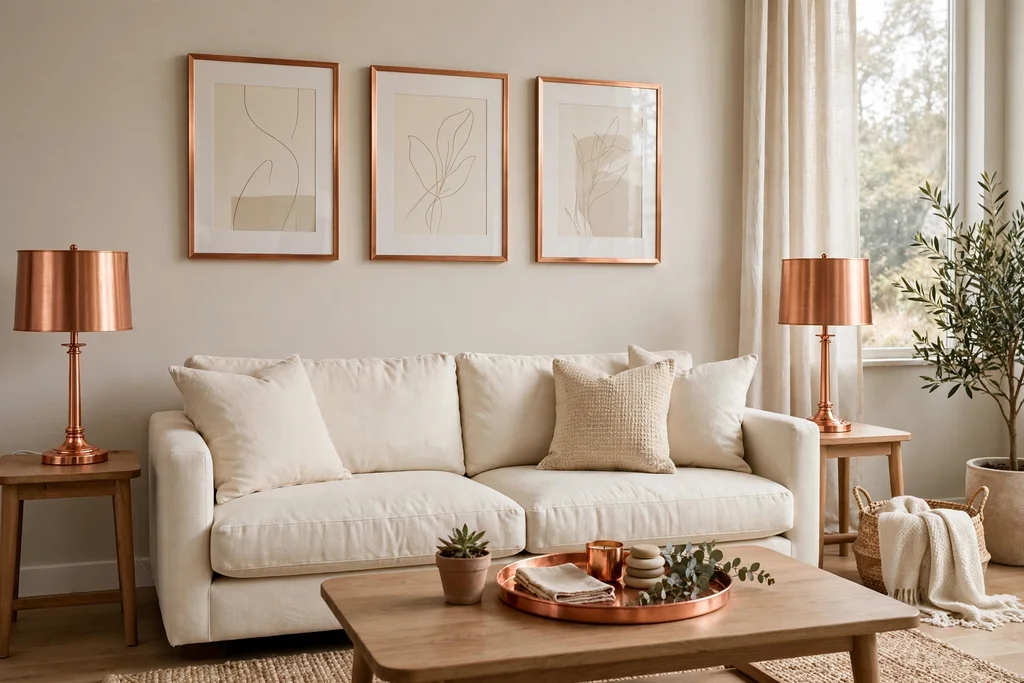
Copper and warm brown metallic accents warm a neutral living room through lamps, frames, and small details. Keep the walls cream or warm white and the sofa beige or grey, then add copper in a floor lamp, picture frames, and a tray on the coffee table. The warm metal catches lamplight and gives the room a glow in the evening.
Pair the copper with warm brown wood and rust or caramel cushions, so the metal feels part of the scheme rather than an afterthought. Keep the copper to a few pieces, since too much metal can look busy, and mix it with wood and fabric to keep the room soft.
28. One Neutral Base With Rotating Seasonal Accents
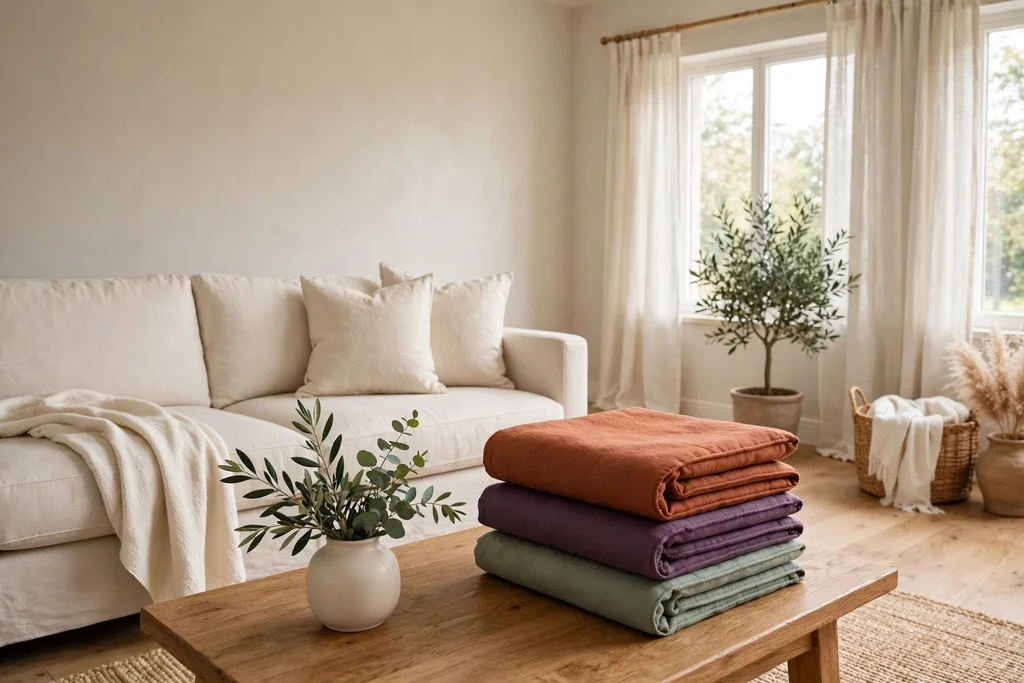
One neutral base with rotating seasonal accents is the most practical scheme in this list, since it plans the seasonal update in advance. Keep the walls warm white, the sofa cream or light grey, and the rug neutral, then change only the accents by season: rust and ochre cushions for autumn, deep red and plum for winter, sage and cream for spring, and dusty blue and white for summer.
Store each set of cushion covers and throws in one labeled box, so the swap takes an afternoon rather than a shopping trip. This idea suits anyone who likes a fresh room each season but does not want to repaint or buy new furniture, since the base stays the same and only the small pieces change.
Conclusion
A cozy seasonal update starts with one honest choice: which surface will carry the color, and which surfaces will stay calm. A warm wall, a deep sofa, or a strong rug can each set the mood, and the rest of the room only needs two or three repeats of the accent to feel finished. Test your colors in daylight and lamplight, keep the base neutral if you like to change things often, and start with the swap that costs least, such as cushions, a throw, or a rug. Save the schemes that fit your light, your furniture, and your budget, and build the room in stages so each step still feels like a finished room.
FAQs
How do I choose a living room color scheme for a seasonal update?
Start with what you are willing to change. If you will paint, pick one wall color and build the accents around it. If you will not paint, pick a sofa or rug color and change only cushions, throws, and art. In both cases, keep one calm base, repeat each accent in two or three places, and test every color in daylight and lamplight before you commit.
What colors make a living room feel cozy in autumn and winter?
Warm colors such as terracotta, ochre, rust, caramel, plum, and deep red read as cozy in low light, especially when paired with wood, wool, and warm lamps. Use them on one large surface, such as a wall or a rug, or in cushions and throws if you want a smaller change. Keep the walls pale if the room is small, so the warm accents do not close the space in.
How can I update my living room colors without repainting?
Change the soft furnishings first: cushion covers, throws, curtains, and a rug are the fastest swaps, and they cost far less than paint or a new sofa. A striped or patterned cushion set, a warm throw, and one piece of art in the same color family can shift the whole scheme in an afternoon. Store each seasonal set together so the next swap is quick.
How many colors should a living room scheme include?
Three colors are usually enough: one main color for the largest surface, one secondary color for the sofa or rug, and one accent color repeated in small pieces. A fourth color can work if it is a neutral, such as cream or wood, that ties the others together. More than four strong colors in one room tend to look busy, so keep extra colors muted and close in tone.
What living room colors work in a small or dark room?
Pale walls in cream, butter yellow, or soft greige keep a small room light, while one deeper accent, such as a navy cushion set or a terracotta rug, adds character without darkening the walls. Pale pink and sage also suit small rooms, as long as they stay muted. Avoid painting all four walls in a dark color in a small room, and use mirrors and lamps to lift the light.
How do I make a neutral living room look less plain?
Vary the textures, not just the colors: smooth leather, woven wool, linen, wood, and brass all read as different layers even in close neutral tones. Add one warm wood piece, one patterned cushion, and one plant, and repeat one accent color, such as rust or sage, in two or three small places. A rug large enough for the sofa legs also grounds the room and stops it from feeling bare.