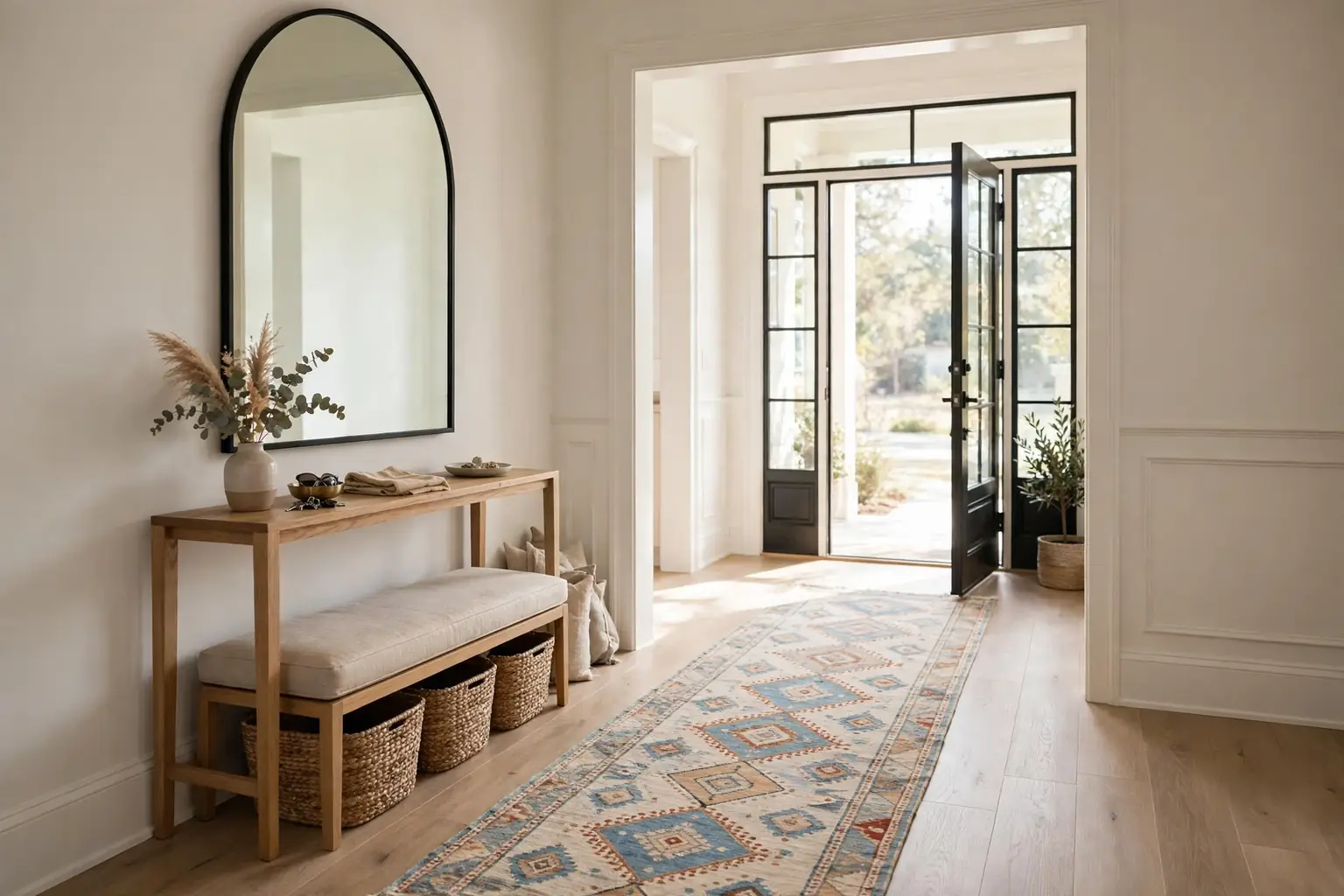
The entryway is the first room you step into and the last one you leave, yet it often gets left with bare walls, a pile of shoes, and nowhere to put keys. A good makeover does not need a remodel. With a clear landing spot, one piece of useful storage, and a little light and color, a narrow entry can feel calm and welcoming. These 16 DIY entryway makeover ideas cover paint, storage, mirrors, lighting, and small styling moves, so you can pick one weekend project or build up a full refresh. Start by clearing the space and measuring the wall and floor, then choose the ideas that fit your width, your budget, and the way you come home.
Key Takeaways
- Give every daily item a home at the door: keys, coats, shoes, and bags each need one fixed spot.
- Keep the walkway clear and put storage on the wall or in one shallow piece, never in the path.
- Start with light and paint, since those two changes affect the whole entry more than decor alone.
- Repeat one wood tone and one metal finish so a mix of small pieces still reads as planned.
- Measure width, depth, and door swing before buying or building anything for a narrow entry.
- Do one idea at a time and live with it for a few days before adding the next piece.
1. Set a Slim Console Table as a Landing Spot
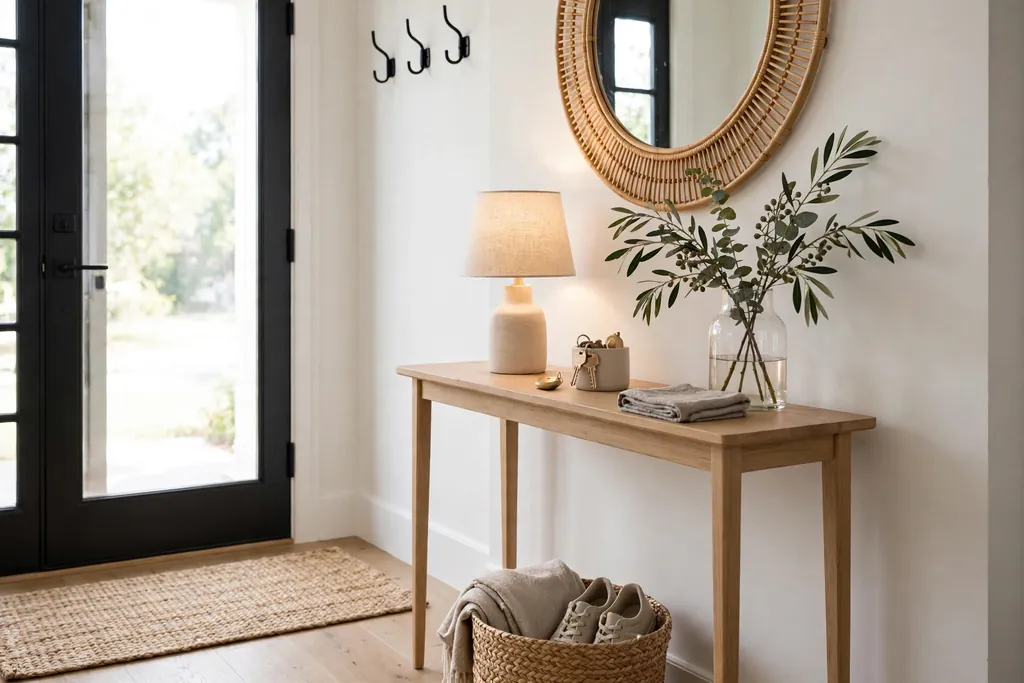
Set a slim console table against the entry wall and use it as the landing spot for keys, mail, and a small lamp. A console gives the entry a clear purpose the moment you walk in, and a shallow depth keeps the walkway open. This suits an entry with a blank wall and at least enough depth for a table plus a clear path past it.
Keep the top to three items at most: a tray or bowl for keys, one lamp or candle, and one small plant or vase. Choose a table no deeper than a dinner plate is wide if the entry is narrow, and check that it does not block a door swing. A drawer in the console is useful for spare keys, batteries, and other small items you want out of sight.
2. Fix a Peg Rail for Coats and Bags
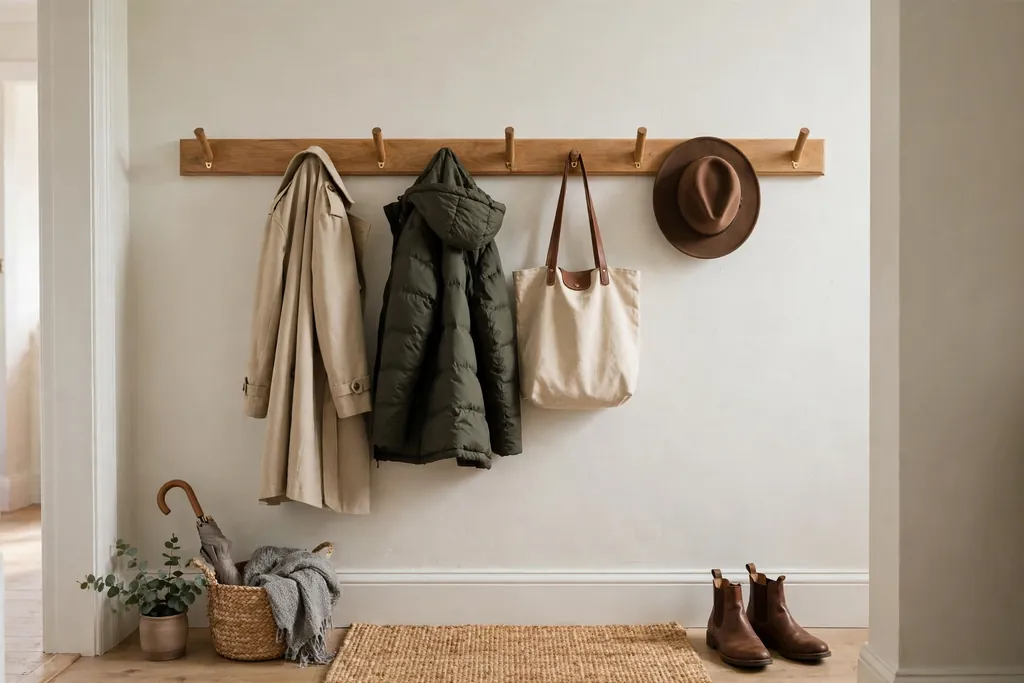
Fix a wooden peg rail along the entry wall for coats, bags, and hats. A rail uses wall space instead of floor space, which matters in a narrow entry, and it gives every daily item a fixed home. Space the pegs wide enough that a coat on one peg does not cover the next.
Fix the rail into studs so it holds a wet coat and a heavy tote without pulling loose. Keep one peg free for guests, and move out of season coats to a closet so the rail never fills up completely. A rail in warm wood also adds a natural material at eye level, which softens a plain painted wall.
3. Add a Storage Bench With Baskets Below
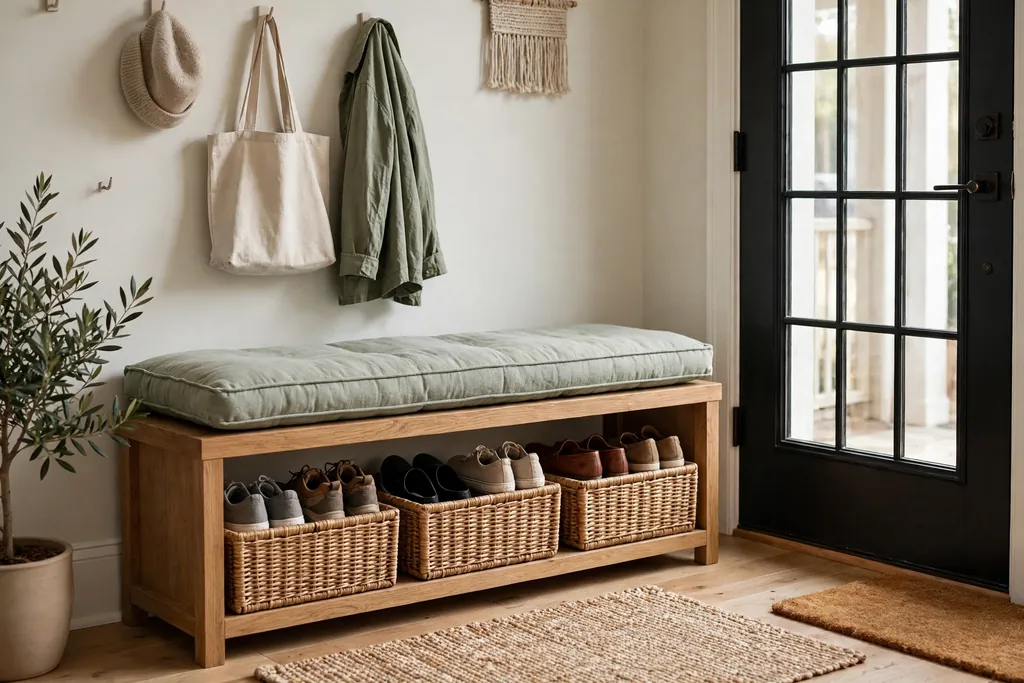
Add a low bench with baskets or open cubbies below it for shoes and bags. A bench gives you a seat for putting shoes on, and the storage below stops shoes from lining the walkway. This is the single most useful piece for a busy family entry.
Keep the bench shallow so the walkway stays clear, and limit the shoes below to one pair per person. Use matching baskets so the open storage reads as tidy, and add a cushion in a washable cover for comfort. If the bench sits by the front door, wipe the baskets and the floor below them often, since entry storage collects dirt fast.
4. Paint One Entry Wall a Warm Color
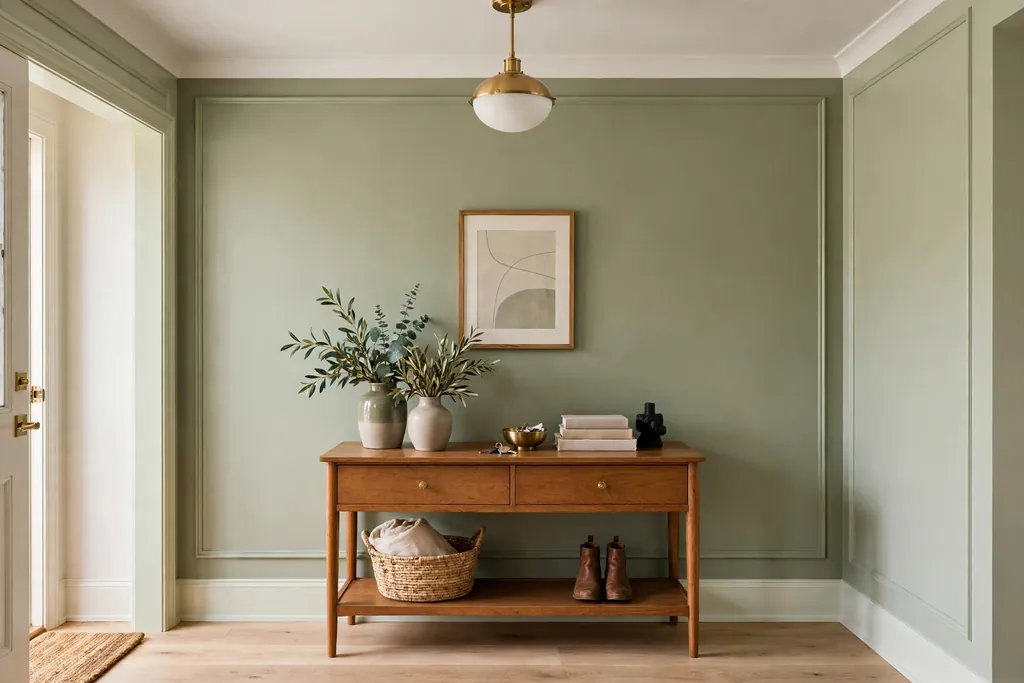
Paint one entry wall a warm, mid tone color and keep the other walls pale for a clear focal point without a full repaint. A single painted wall frames the console or bench zone and makes a plain entry feel finished. This suits an entry where a full color change would feel like too much, or where the budget allows only one wall.
Choose a color with some warmth, such as sage, warm grey, or muted clay, so the wall feels welcoming rather than cold. Paint a test patch and check it in daylight and at night under your usual bulbs before you commit. Keep the trim and ceiling pale, so the painted wall has a clean edge and the entry still feels open.
5. Lay a Washable Runner to Mark the Path
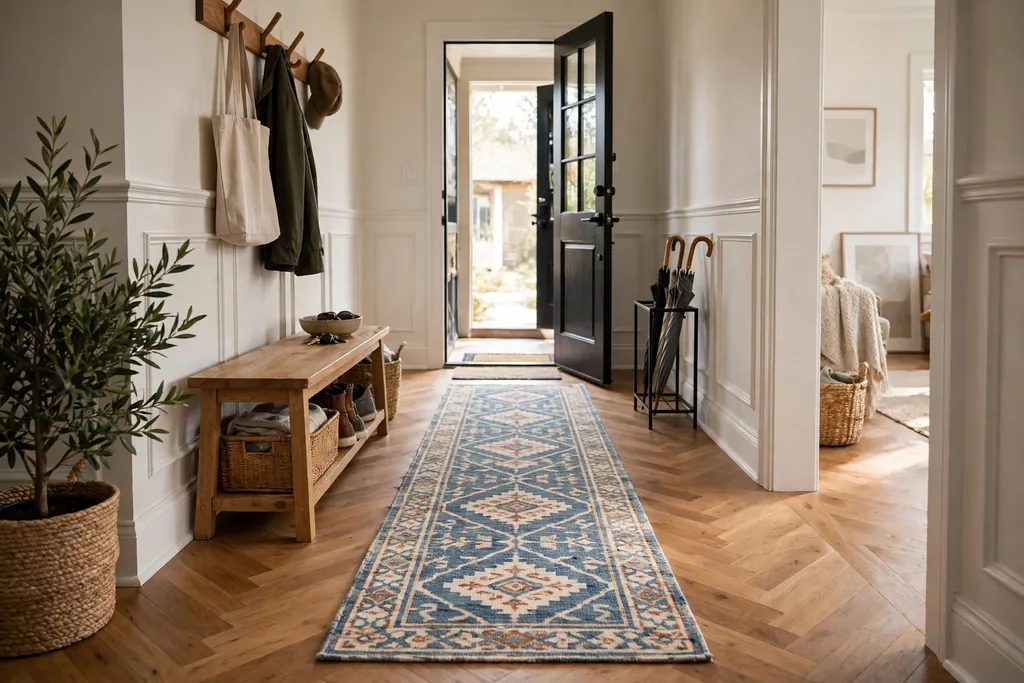
Lay a low pile runner down the center of the entry floor to mark the walking path and protect the floor. A runner softens footsteps, catches dirt from shoes, and gives a narrow entry a clear direction from the door into the home. A pattern hides marks better than a solid pale color.
Choose a washable runner with a nonslip backing, and measure around door swings before you buy. Leave a margin of bare floor on each side so the runner does not look squeezed against the walls. Shake it outside weekly and wash it when the season changes, since entry runners collect dirt faster than rugs in other rooms.
6. Hang a Floating Shelf With One Piece of Art
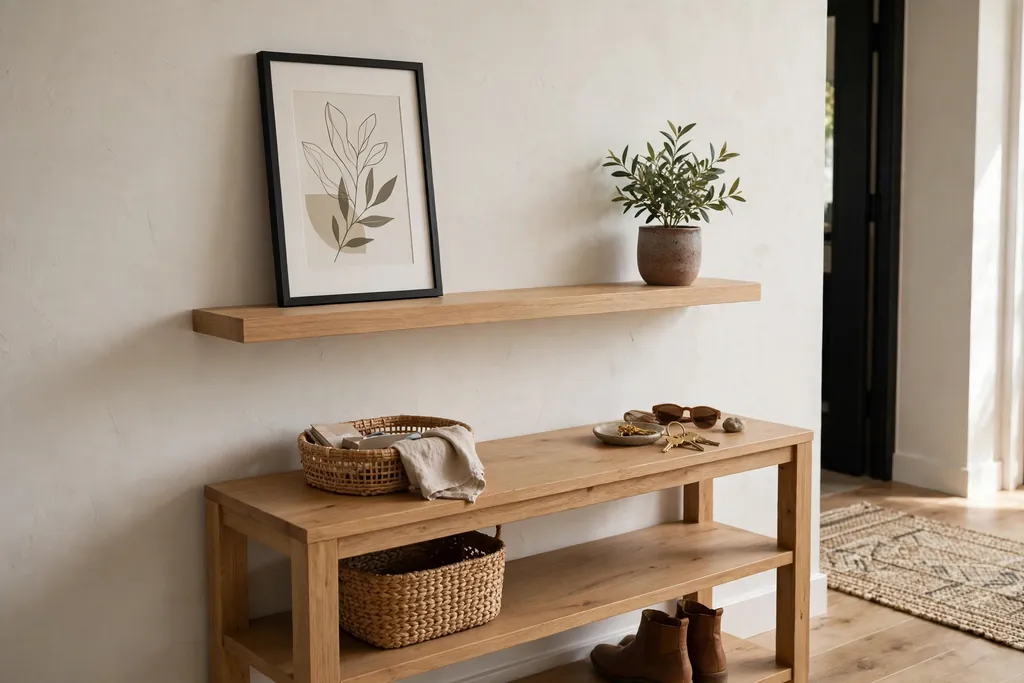
Hang a single floating shelf above the console or bench and style it with one framed print and one small plant or vase. A shelf adds a display spot without a bulky cabinet, and it draws the eye up, which helps a small entry feel taller. This suits a renter friendly refresh, since one shelf needs only a few fixings.
Keep the shelf shallow and the items light, since a loaded shelf above a walkway takes knocks from passing bags. Place the largest item at the back and smaller items in front, and leave a gap at each end so the shelf does not run into a door frame. Dust the shelf weekly, since entry shelves collect dust from the door.
7. Fit a Tall Narrow Shoe Cabinet
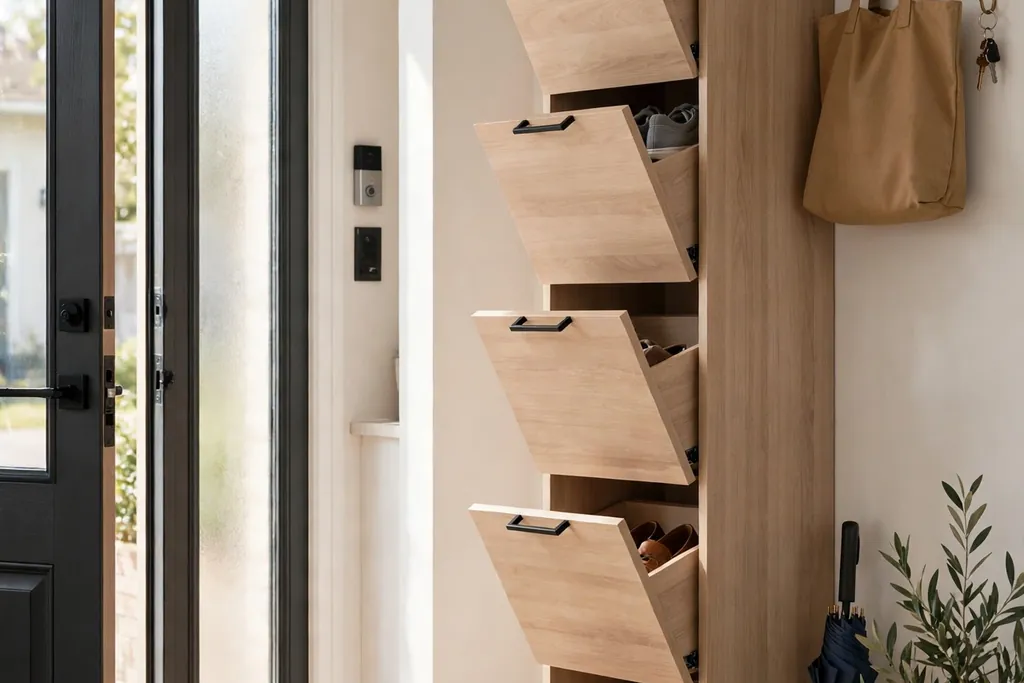
Fit a tall, narrow shoe cabinet with tilt out drawers against the entry wall for shoes that would otherwise pile by the door. Tilt out drawers hold several pairs in a shallow depth, so the cabinet takes far less floor space than an open shoe rack. This suits an entry with a blank wall and no closet nearby.
Sort shoes by person or by use, such as daily pairs in the top drawer and less worn pairs below. Wipe shoes before putting them away, so dirt does not build up inside the drawers. If the cabinet is taller than the console beside it, keep the top clear or add one small plant, so the tall piece does not look top heavy.
8. Build a Wall Mounted Key and Mail Station
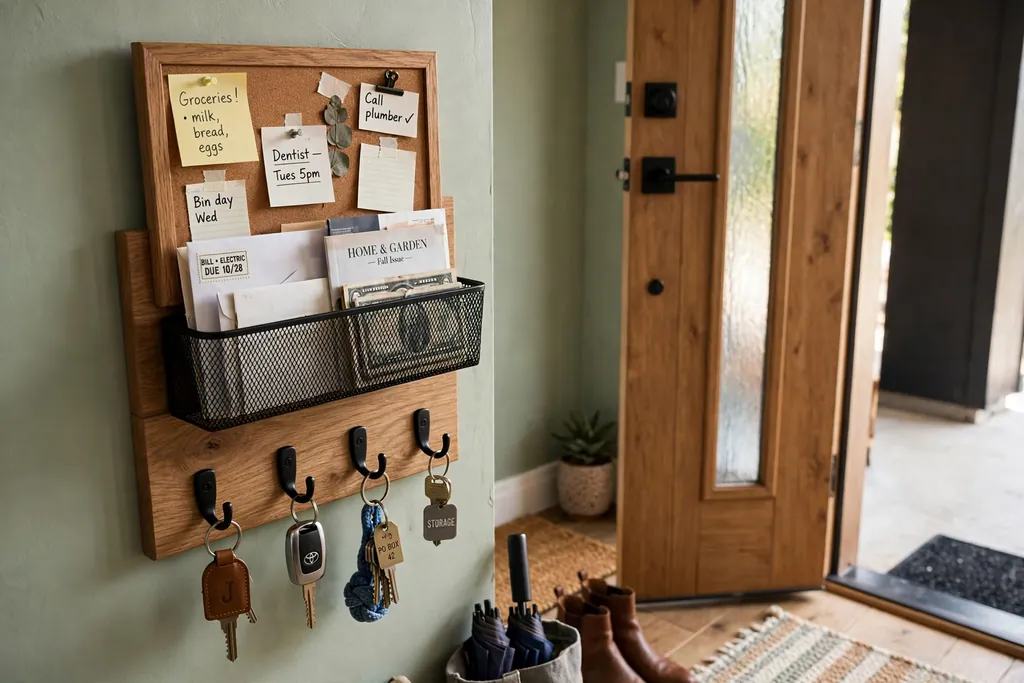
Build a small wall mounted station with hooks for keys, a slot or tray for mail, and a small chalkboard or note holder. A station stops keys and letters from landing on the first table inside the door, and it keeps the daily paper trail in one visible place. This suits a household where mail and keys tend to drift into the living room.
Fix the station at hand height near the door you use most, and keep it to the items you handle daily. Sort mail at the station each evening, and move bills and letters to their proper place the same day, so the tray does not grow into a pile. For more small space storage ideas that work on the same principle, see these creative closet ideas for small spaces.
9. Lean a Large Arched Mirror by the Door
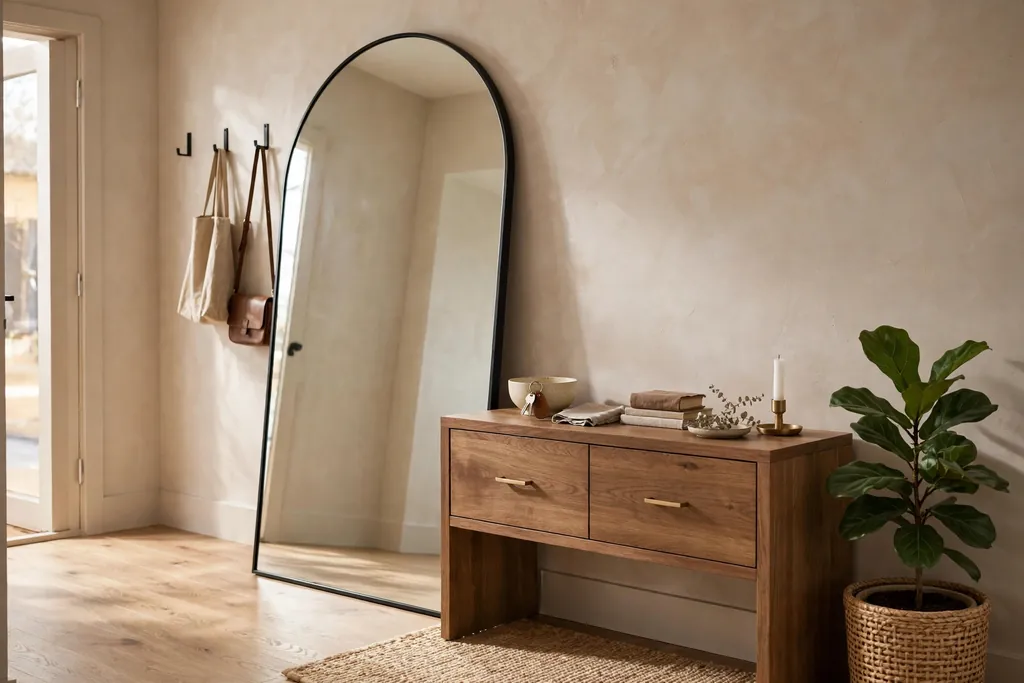
Lean a large arched mirror against the entry wall, secured at the top so it cannot slide, for a last check before you leave and a sense of depth in a small entry. A mirror bounces daylight from the door or a nearby window deeper into the space, and the arched shape softens a boxy entry. This suits an entry with a blank wall and little daylight.
Check what the mirror reflects before you fix its position, since a mirror facing a cluttered corner doubles the clutter. Aim it toward a window, a plant, or a calm stretch of wall where possible. One large mirror usually works better than several small ones scattered along the wall, since a single reflection reads as calm rather than busy.
10. Style a Tray and Bowl Landing Zone
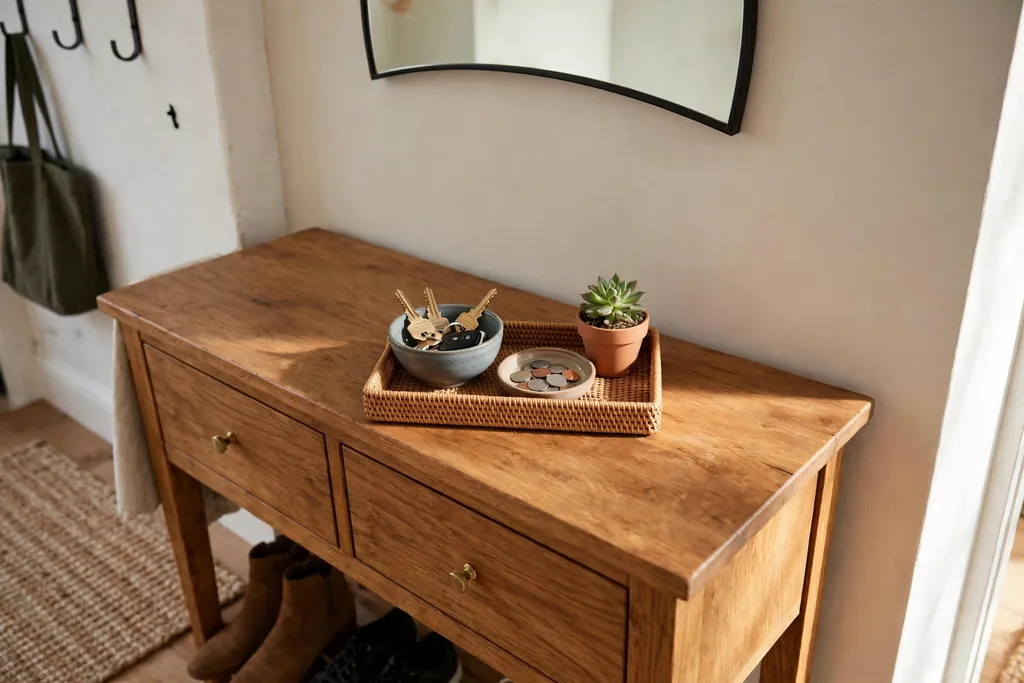
Style a small tray on the console with a bowl for keys, a dish for coins, and a hook or clip for a dog lead or lanyard. A tray marks the boundary of the landing zone, so small items stay together instead of spreading across the table. This is a low cost first step if a larger makeover is still a few weeks away.
Keep the tray to daily items only, and clear it each evening, since a one minute reset keeps it from growing back into a pile. Choose a tray in a material that matches the console, such as wood with a wood table or metal with a metal frame, so the zone reads as planned. If the household has children, add a low hook they can reach for their own keys or bag.
11. Add Board and Batten to the Entry Wall
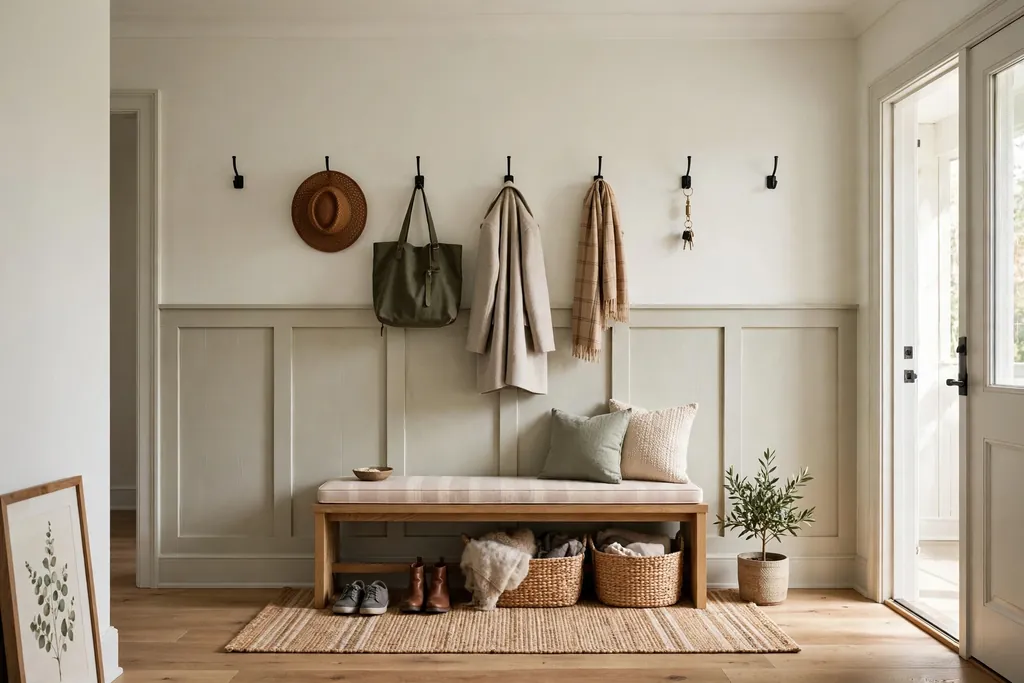
Add board and batten paneling to the lower half of the entry wall, with paint above, for a crafted look that also protects the wall from scuffs. The paneling covers the part of the wall that takes the most knocks from shoes and bags, and the vertical boards add rhythm to a plain entry. This suits an entry with flat walls and a simple, classic style.
Paint the paneling the same color as the trim for a calm look, or a slightly deeper tone for more contrast, and keep the upper wall pale. Use a washable paint finish, since entry walls take marks from coats and bags. Measure the board spacing on paper first, so the boards sit evenly around outlets and door frames.
12. Build an Open Cubby Wall Unit
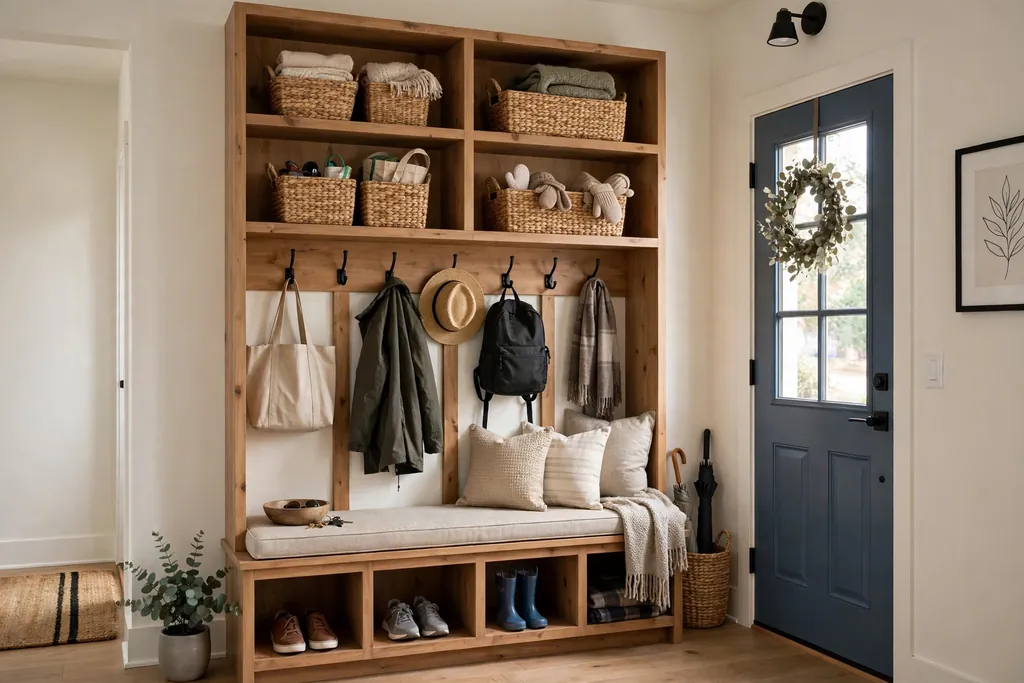
Build an open cubby unit on one entry wall, with a bench seat at the bottom, hooks above, and a cubby or shelf at the top for each person. A cubby unit gives every household member one column for coats, bags, and shoes, which stops shared storage from turning into a mixed pile. This suits a family entry with a wide enough wall for two or three columns.
Keep each column to one person and label the top cubby if more than one person uses the unit. Put daily items at easy reach, seasonal items up high, and rarely used pieces out of the main flow. Anchor the unit to the wall following the maker instructions, since a tall freestanding unit can tip. For a wider look at hallway storage that follows the same rules, see these dark hallway ideas.
13. Swap the Ceiling Light for a Pendant
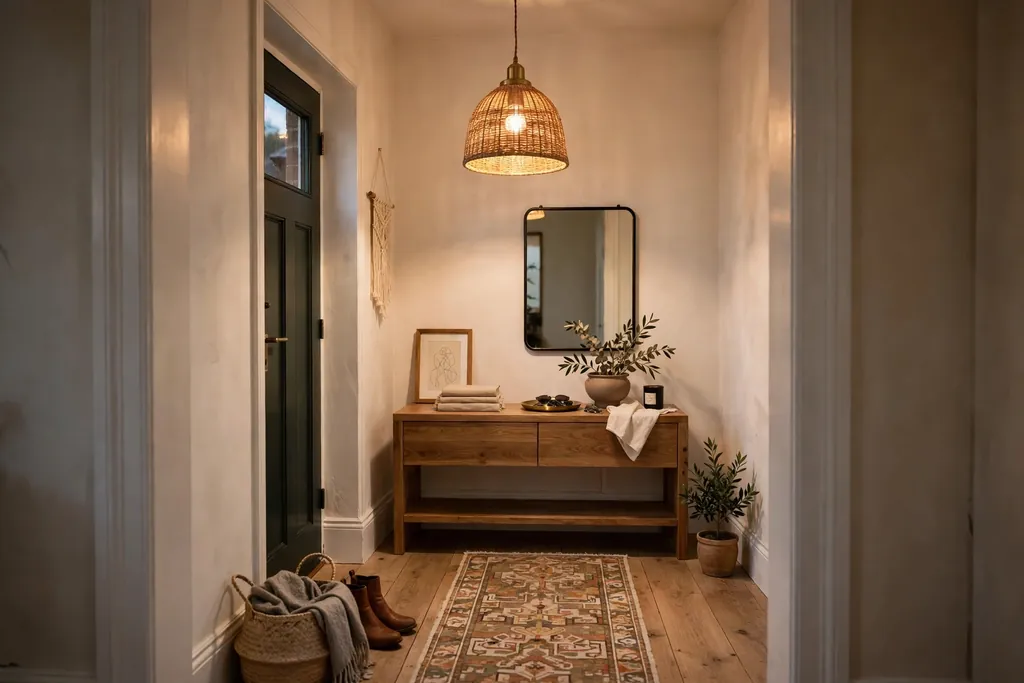
Swap a plain ceiling light for a pendant or a small flush mount with warm bulbs to give the entry a clear focal point overhead. Light at the entry sets the mood for the whole home, and a pendant draws the eye up in a small space. This suits an entry with a ceiling high enough for a pendant to hang clear of heads and the door swing.
Choose warm white bulbs and a shade that spreads light along the walls rather than glaring into your eyes. If wiring a new fitting is not possible, a plug in wall sconce or a battery pendant with a remote gives a similar glow with no new wiring. Keep the fitting simple in shape, so it suits the console and mirror below it rather than competing with them.
14. Add Plants and Natural Texture at the Door
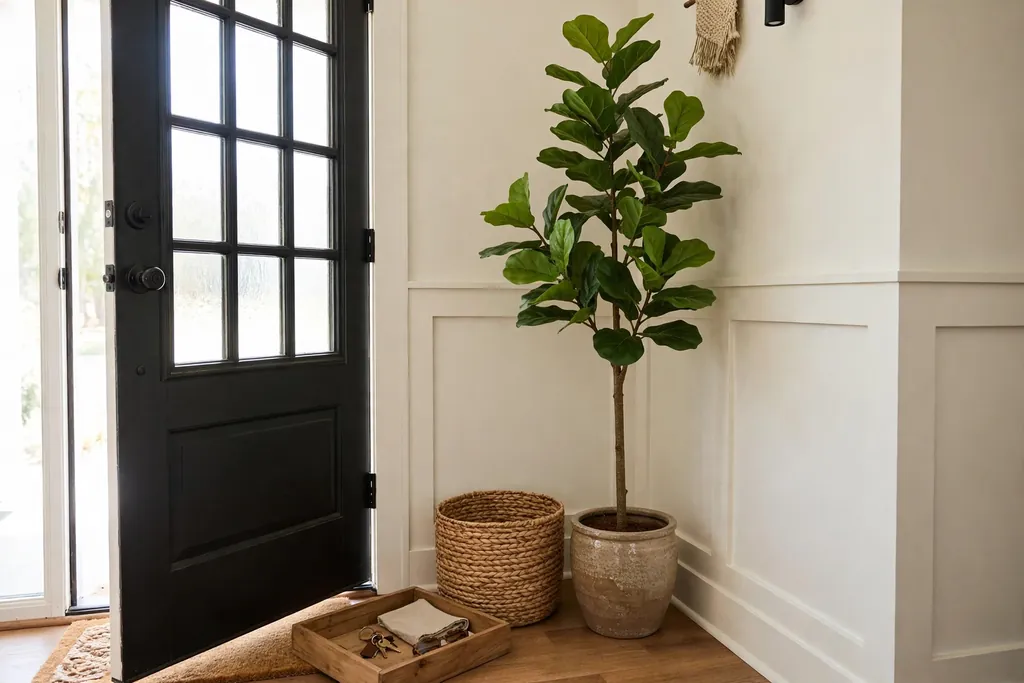
Add one tall plant in a corner and a woven basket or a wood tray near the door for natural texture in a hard surfaced entry. Plants soften a space full of paint, wood, and metal, and woven texture keeps a small entry from feeling bare. This suits an entry with some daylight, even if it is only from a glazed door or a nearby window.
Choose a plant that suits the light you actually have, such as a snake plant or pothos for low light, and keep the pot in a tray so watering does not mark the floor. Use one woven basket for umbrellas or spare bags, and keep the plant pot in the same wood or natural tone as the bench or console. Wipe leaves often, since entry plants collect dust from the door.
15. Create a Rotating Seasonal Display
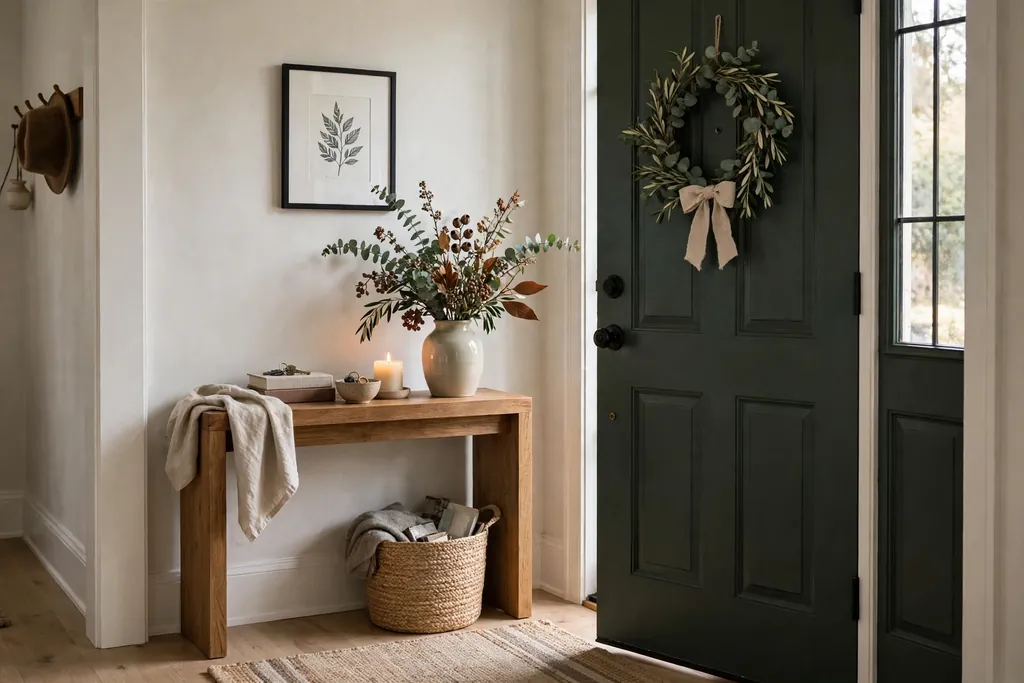
Create one small seasonal display spot, such as a wreath on the door, a vase of seasonal stems on the console, or a framed print you swap each season. A single display spot lets the entry feel fresh through the year without redecorating the whole space, and it gives you a reason to clear and reset the console each season. This suits a reader who likes to change decor often but wants to keep the rest of the entry steady.
Keep the display to one change at a time, such as stems in spring and a wreath in winter, and store the out of season pieces in one labeled box. Use the seasonal swap as a chance to wipe the console, check hooks and baskets, and move out items that no longer belong at the door. Avoid adding a second display spot, since two seasonal corners can make a small entry feel crowded.
16. Paint the Front Door a New Color
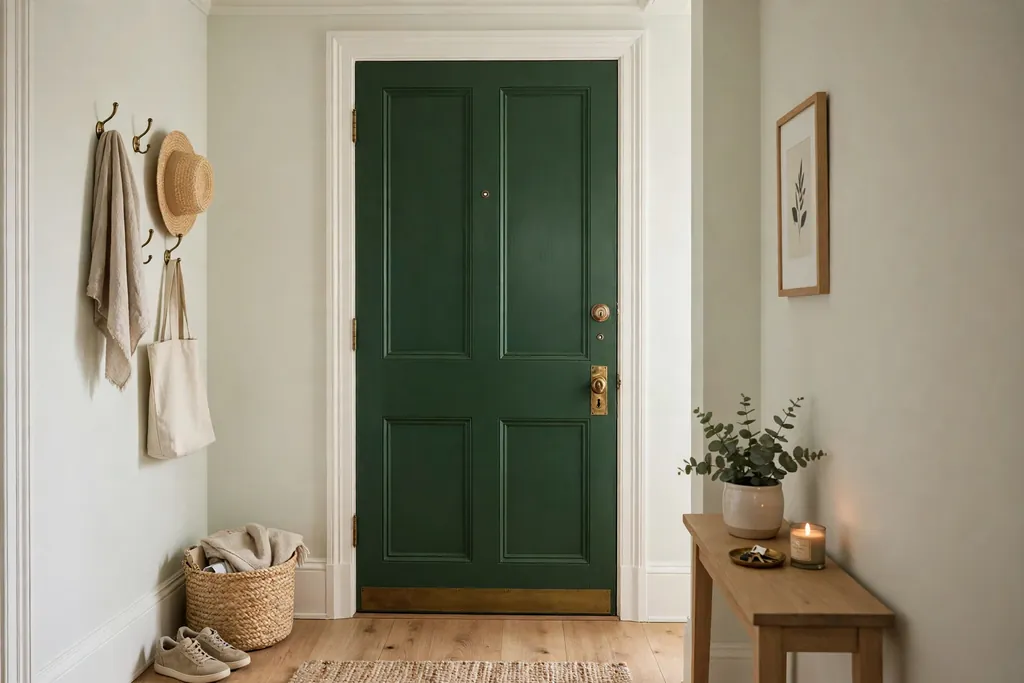
Paint the inside face of the front door, or the full door if you own the home, a new color that works with the entry wall and the console. A painted door turns a plain slab into a feature, and it costs far less than replacing the door. This suits an entry where the walls and storage are already settled and the door is the last plain surface.
Choose a color that sits well with the wall color, such as deep green with warm white walls or navy with pale grey walls, and use a paint made for doors so it stands up to daily use. Paint a test patch on the door edge first, and check it in daylight and at night. Keep the hardware in one finish, such as brass or black, so the new door color reads as a deliberate choice. For a calm base palette across a small home that the entry can match, see these minimalist small apartment ideas.
Conclusion
A good entryway makeover is less about buying more pieces and more about giving the door zone a clear job. Pick the idea that solves your biggest daily annoyance first, whether that is shoes by the door, keys with no home, or a dark, bare wall. Measure the space, keep the walkway clear, and repeat one wood tone and one metal finish so the result reads as planned. Add one idea at a time, live with it for a few days, and let the entry grow into a calm, welcoming start to the home.
Frequently Asked Questions
What is the easiest DIY entryway makeover to start with?
Start with a landing zone: a small tray and bowl for keys, a hook rail for coats, and a washable runner. These three pieces cost little, need few tools, and solve the most common entry problems in one afternoon. Once the landing zone works, add storage or paint as a second step.
How do I make over a very narrow entryway?
Keep storage on the wall or in one shallow piece, and leave a clear walking path at all times. Use a peg rail, a slim console no deeper than a dinner plate is wide, and a mirror to bounce light. Avoid a bench and a console on opposite walls in a narrow entry, since that can close the path.
How much should I budget for a DIY entryway makeover?
A small refresh with a tray, hooks, and a runner can be low cost, while a bench, shoe cabinet, and paint will cost more. Set the budget by project, not by room: price the landing zone first, then storage, then paint and lighting, and stop when the entry works for daily life. No single budget fits every home, so compare options for each piece before you buy.
What color should I paint a small entryway?
Pale warm white, sage, or warm grey work well in a small entry, since they keep the space bright while adding a little color. Paint one wall a mid tone color and keep the rest pale if you want a focal point without closing the room in. Test paint in daylight and at night, since entry light changes a lot through the day.
How do I keep an entryway tidy after the makeover?
Give every daily item one fixed home and reset the entry each evening, which takes about one minute. Sort mail at the door, limit shoes below the bench to one pair per person, and move out of season coats to a closet. When a spot fills up, that is a signal to pass on items you no longer use at the door.
Can I make over a rental entryway without damage?
Yes. Use removable hooks, a freestanding bench or shoe cabinet, a leaning mirror secured at the top, and a washable runner, all of which leave the walls and floors intact. For walls, use a single floating shelf with proper anchors only if your lease allows it, or lean art against the wall instead. Check your lease before drilling, and keep the original door hardware so you can restore it when you leave.