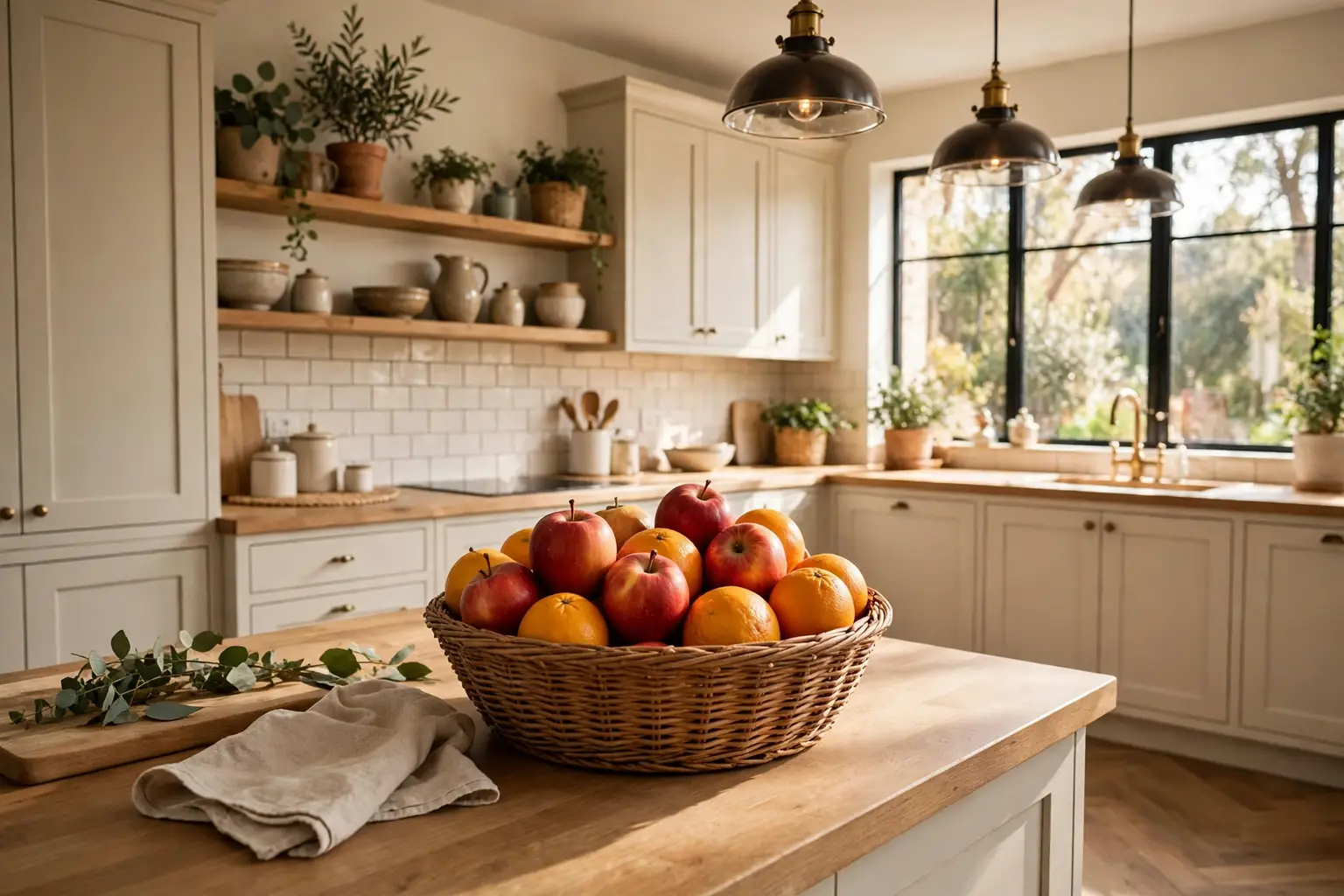
A fruit basket is one of the few pieces of decor you use every day. It holds breakfast, adds color to a plain counter, and gives guests something to reach for without opening a cupboard. These 27 creative fruit basket ideas cover the kitchen first, then the dining room, living room, entryway, and other rooms where a small bowl of fruit makes the space feel lived in. Start with the basket you already own, put it where you pass it most, and let the fruit do the work. For a kitchen that already carries a seasonal palette, these fall kitchen decor ideas show how a basket fits in with towels, trays, and warm light.
Key Takeaways
- Put the main fruit basket where you pass it daily, usually the kitchen counter or island, so fruit gets eaten instead of forgotten.
- Choose an open weave or shallow bowl for fruit you eat within a few days, and keep the basket out of direct sun and away from the stove.
- Use one basket per zone, such as counter, table, and entryway, rather than filling every surface at once.
- Mix sizes and colors for the table, but keep everyday baskets simple, with two or three kinds of fruit at most.
- Check the basket every few days, remove anything soft, and wash the basket or liner before refilling it.
- Repeat one material from the room, such as wood, wicker, or ceramic, so the basket looks planned rather than added on.
1. Classic Woven Basket on the Kitchen Counter
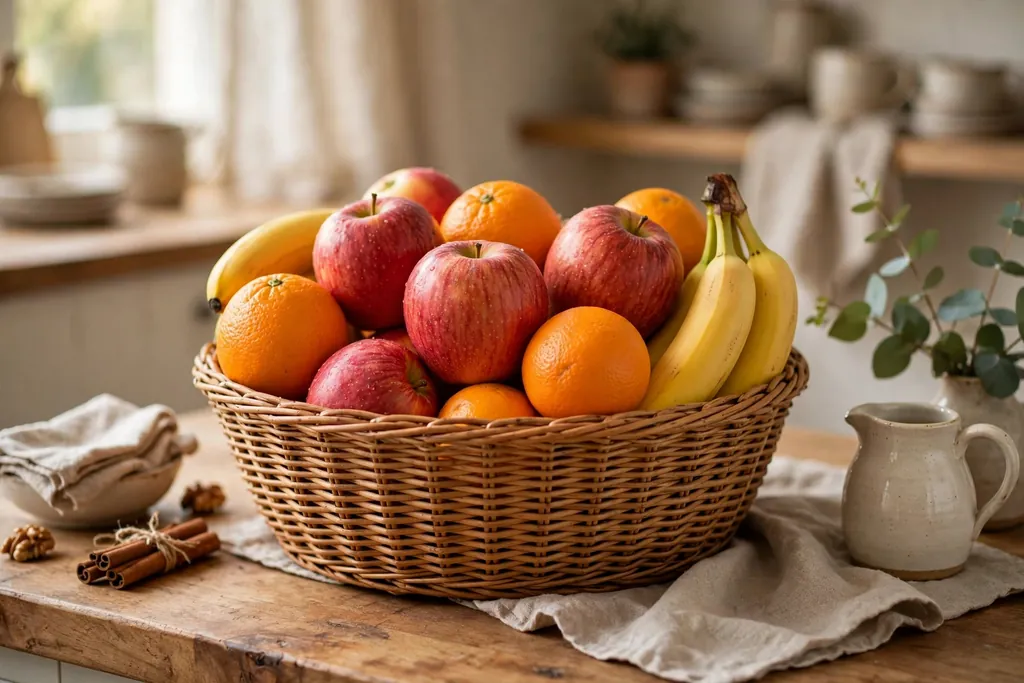
Set a wide woven basket on the kitchen counter for the fruit you reach for daily, such as apples, oranges, and bananas. The open weave lets air move around the fruit, and the low sides make it easy to see what needs eating first. This suits almost any kitchen, since a woven basket sits well with wood, stone, and painted cabinets alike.
Line the basket with a plain cloth if the weave snags, and keep it away from the sink splash zone and the stove. Put heavier fruit at the bottom and softer fruit on top, and refill from the back so older pieces come forward first. A basket this size holds a few days of fruit for a household without crowding the prep area.
2. Two Tier Stand That Saves Counter Space
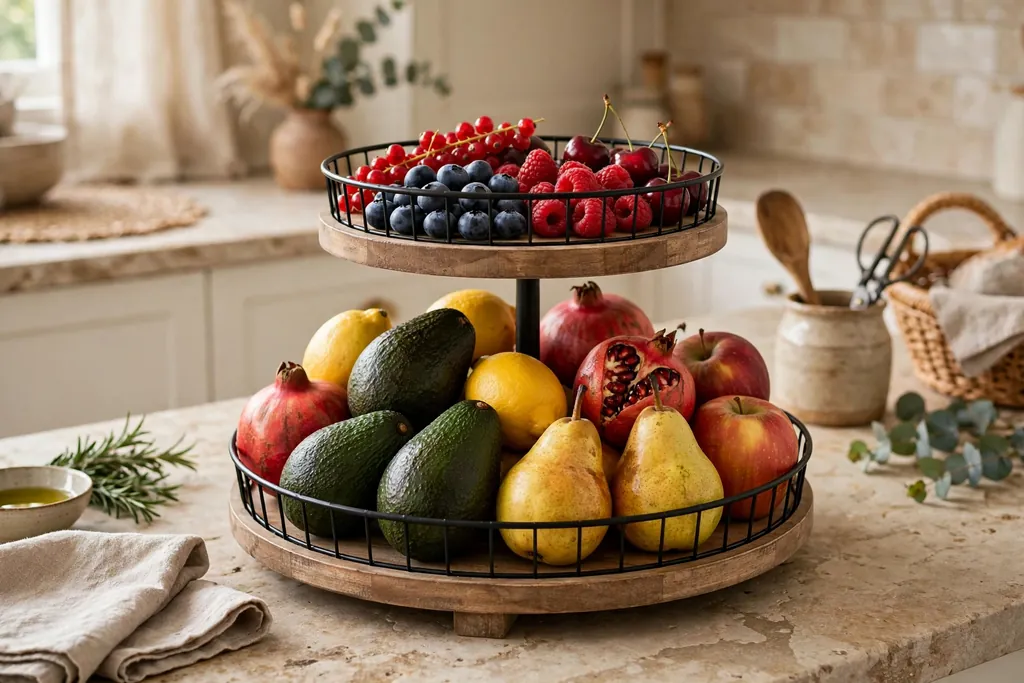
Use a two tier fruit stand when counter space is short, with larger fruit on the bottom tier and smaller fruit, such as plums or clementines, on the top. The vertical shape holds the same amount of fruit in a smaller footprint, and it keeps the counter clear beside the stand for chopping and serving.
Choose a stand with a steady base, since a tall stand tips more easily than a flat basket. Keep it on a clear stretch of counter, not beside the stove where heat and steam reach it. Wash the tiers when you refill them, and move any soft fruit out promptly so it does not mark the tier below.
3. Wood Dough Bowl on the Island
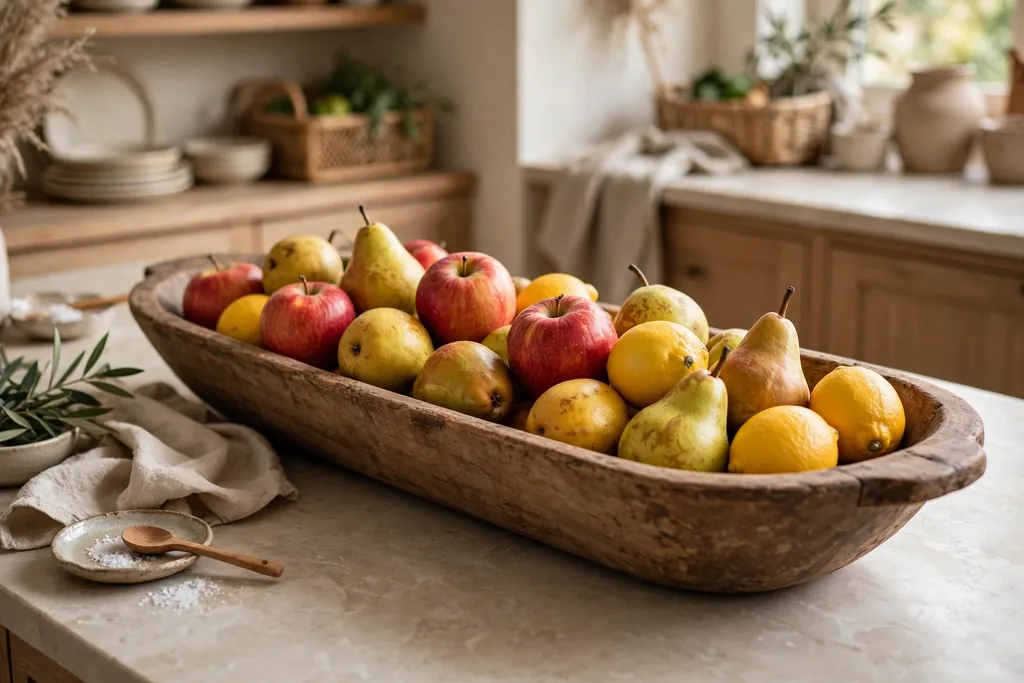
Place a long wood dough bowl on the kitchen island and fill it with a loose mix of apples, pears, and lemons. The low, wide shape suits an island because it reads as a centerpiece from every side, and the wood grain adds warmth that a plain bowl cannot. It also lifts off in one move when the island is needed for prep or serving.
Keep the bowl to one layer of fruit where possible, so pieces do not bruise each other under weight. If the bowl is antique or unsealed, line it with a cloth before adding fruit. The same island styling logic appears in these kitchen window decor ideas, where one clear group beats a crowded sill.
4. Ceramic Pedestal Bowl for the Dining Room
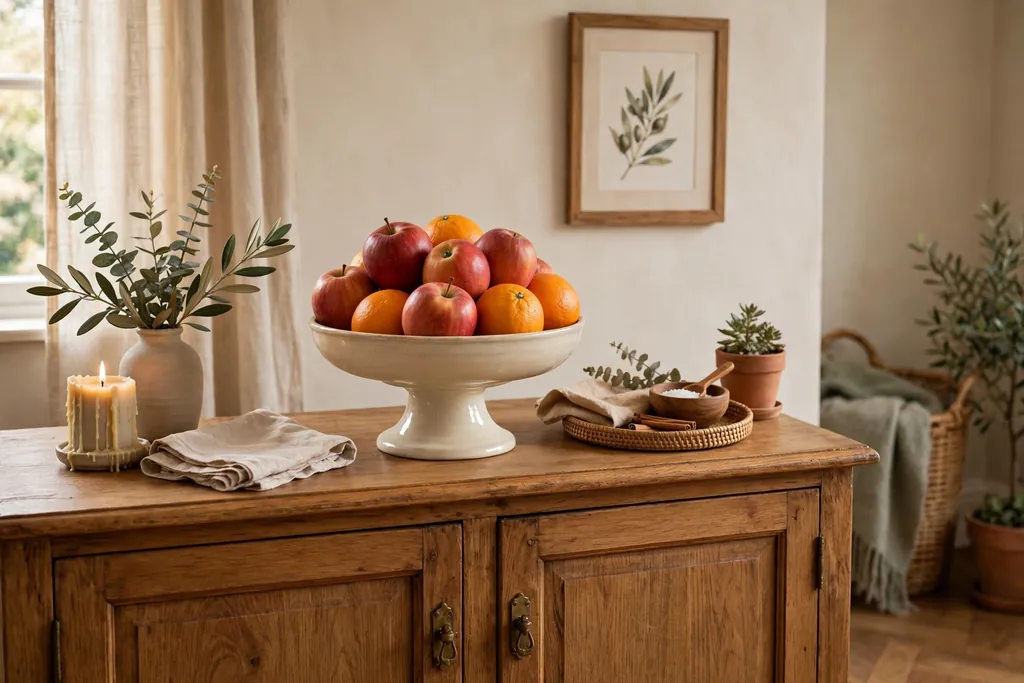
Use a ceramic pedestal bowl in the dining room, raised just enough to give fruit height on a sideboard or a table. A pedestal bowl turns everyday fruit into a display, and a plain cream or stoneware finish lets the fruit colors carry the look. It works well for fruit you serve at meals, since guests can reach it without moving a centerpiece.
Keep the bowl to fruit with firm skins, such as apples, oranges, and lemons, so pieces do not mark the glaze. Set it on a mat if the table is polished wood, and wash the bowl before refilling. For a formal table, one pedestal bowl is enough, with candles or a runner doing the rest of the work.
5. Clear Glass Bowl of Citrus Only
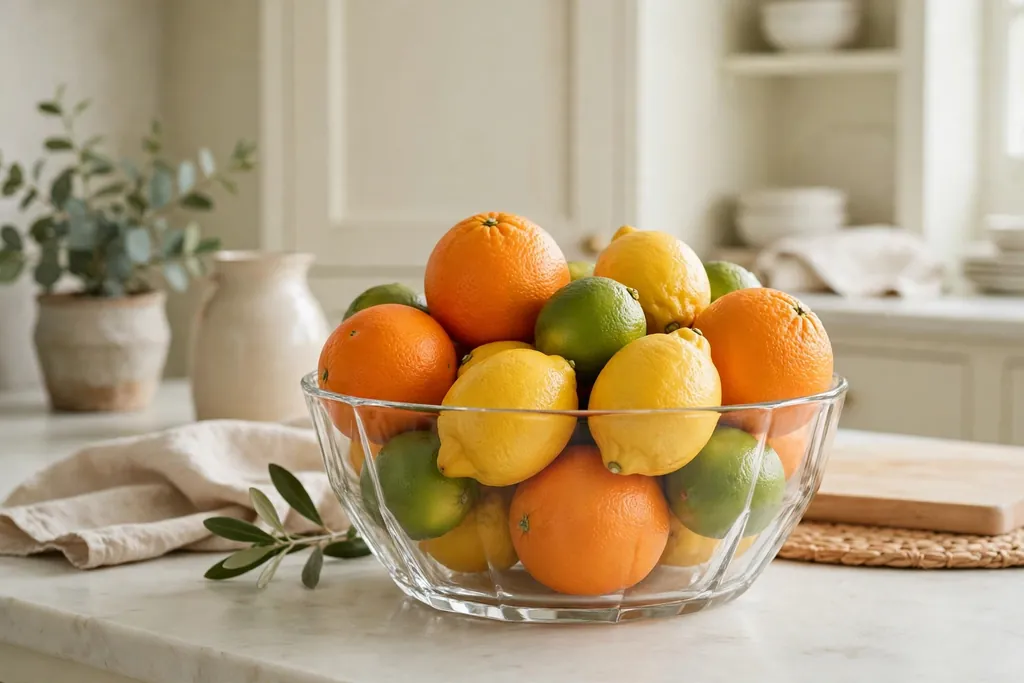
Fill a clear glass bowl with citrus only, such as oranges, lemons, and limes, for a sharp block of color in a pale kitchen. The glass shows the fruit from every angle, so the arrangement needs no extra styling, and the citrus scent is a bonus when you pass the bowl. This is a good choice when the rest of the kitchen is plain and needs one bright note.
Keep the bowl out of strong sun, since glass can warm the fruit, and wash the bowl often, as glass shows fingerprints and juice marks fast. Roll a lemon or two to the front as they ripen, and replace any piece that softens. A glass bowl also suits a bathroom-free rule: keep it in food rooms only, where fruit belongs.
6. Hanging Wire Basket by the Prep Area
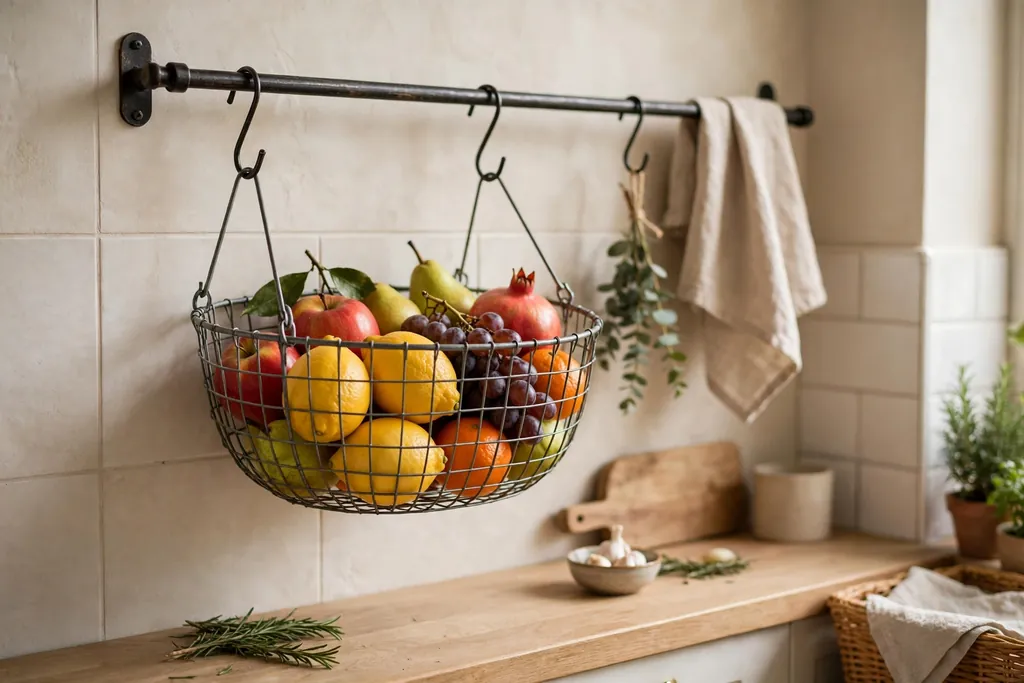
Hang a wire basket on a wall hook or a rail near the prep area, and use it for onions, garlic, or firm fruit that keeps well at room temperature. A hanging basket frees counter space completely, which matters in a small kitchen, and it keeps produce visible so nothing hides in a dark cupboard.
Fix the hook into a stud or use hardware rated for the weight of a full basket, and keep the basket clear of the stove and the sink. Line it if small fruit slips through the wires, and check the contents often, since a hanging basket is easy to overlook. This is a strong fit for renters when a removable rail hook is used.
7. Entryway Console Bowl for Guests
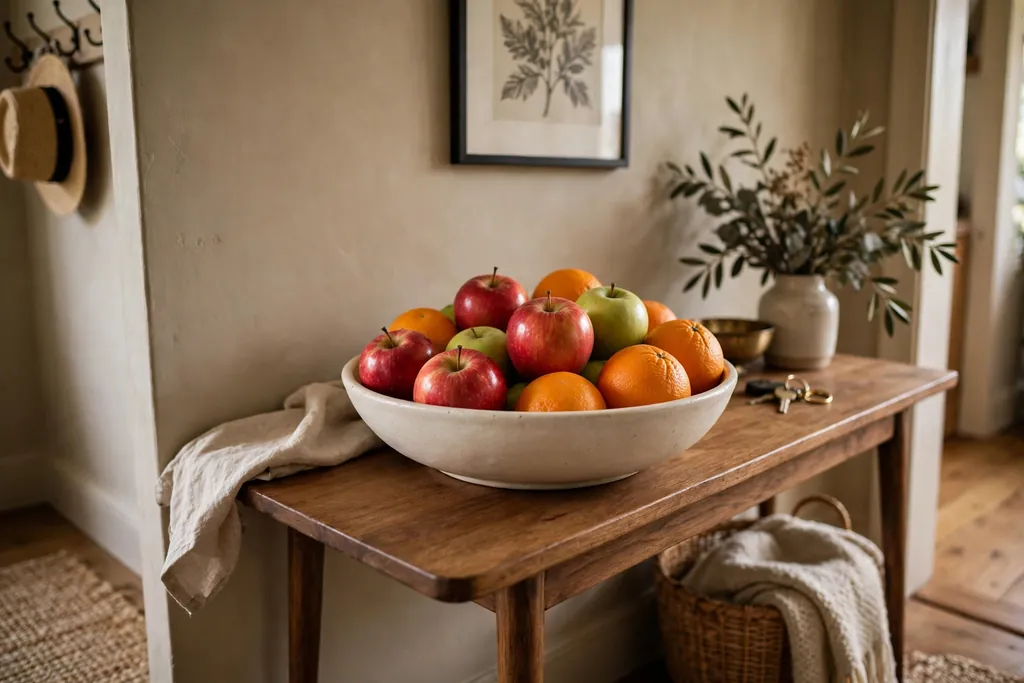
Set a shallow bowl of fruit on the entryway console, with a few apples or oranges and a small stack of napkins beside it. Guests feel welcome when something edible waits near the door, and the bowl gives the console a purpose beyond keys and mail. Choose fruit with firm skins that survive handling and a few days at room temperature.
Keep the bowl small, so the console still holds keys and a bag, and wipe the console under it weekly. Replace the fruit often, since an entryway bowl is the first thing visitors see. If the entryway is warm or sunny, choose a smaller bowl and refill it more often rather than leaving a large display to soften.
8. Low Dining Table Centerpiece With Greenery
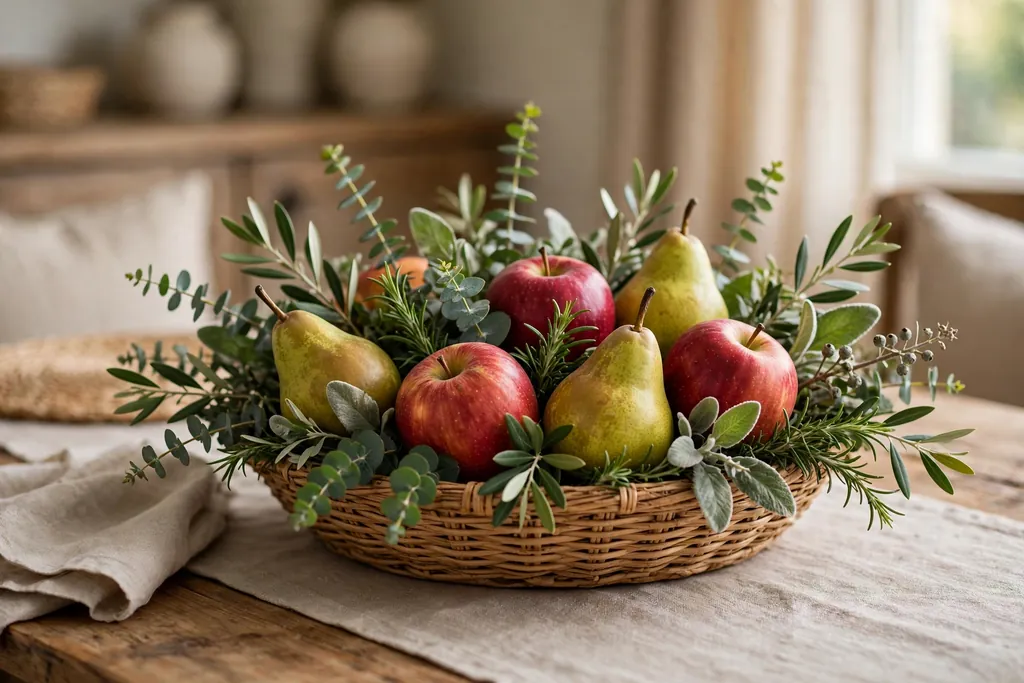
Build a low dining table centerpiece from a shallow basket, a few apples and pears, and short sprigs of greenery tucked between the fruit. The greenery softens the basket edge and links the fruit to the rest of the table, while the low height keeps sight lines open across the table. This suits everyday meals as well as guests, since it lifts off in one move.
Use greenery that is safe around food and keep it clear of plates, or use faux sprigs if real leaves shed. Keep the centerpiece short enough that people can see each other, and remove it when serving dishes need the middle of the table. The table basics in these thanksgiving kitchen decor ideas use the same low, liftable approach for a busy table.
9. Low Basket on the Living Room Coffee Table
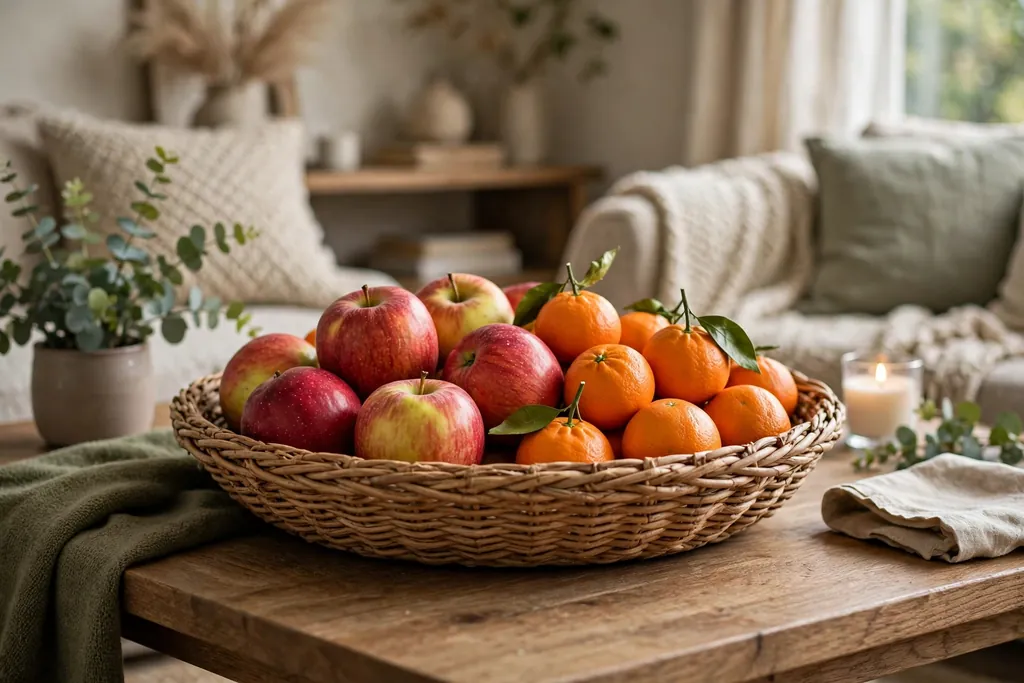
Place a low, wide basket of fruit on the living room coffee table, with apples, clementines, and a small cloth napkin folded beside it. A coffee table basket invites people to snack while they talk, and it adds natural color to a room that often relies on books and trays alone. Choose a basket with a flat base so it sits steady on the table.
Keep the basket to a few pieces, not a tall pile, so it does not block conversation or the television. Use a liner to protect the table from juice marks, and refill the basket from the kitchen stock rather than keeping a large second supply in the living room. Remove the basket at mealtimes if the table is needed for food and drinks.
10. Breakfast Nook Tray Basket
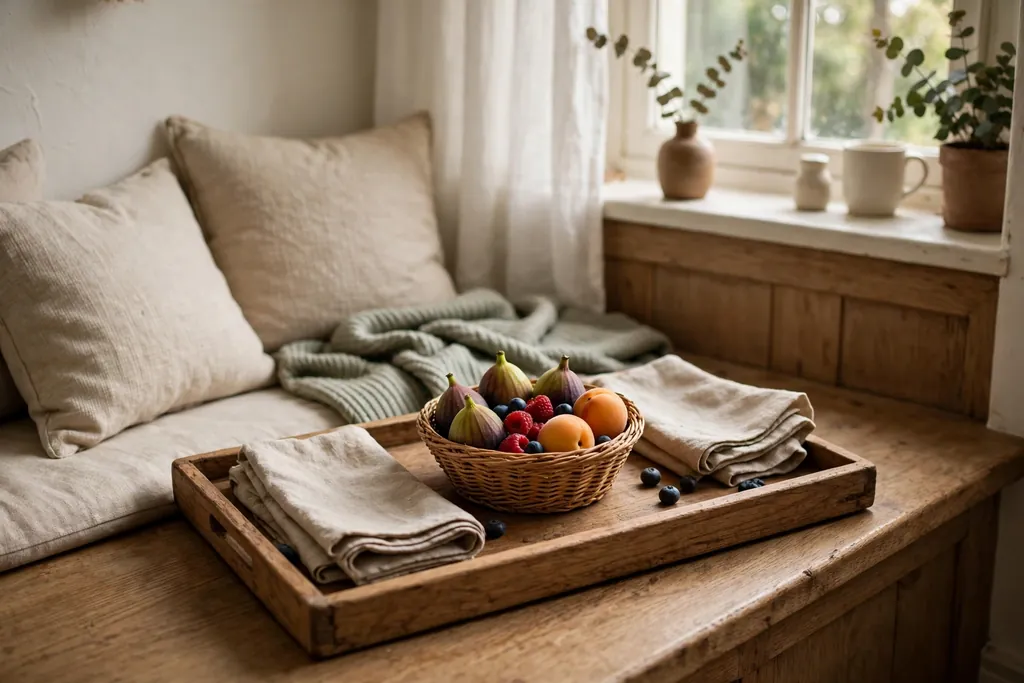
Set a small basket on a tray in the breakfast nook, with the fruit for the morning, a jar of spoons, and a folded napkin. The tray keeps the nook tidy, since the basket, cutlery, and napkins move as one unit when the table is cleared. It also makes breakfast feel planned, even on a rushed weekday.
Choose a tray with a raised lip so the basket does not slide, and keep the fruit to what the household eats at breakfast, such as bananas, apples, or berries in a small bowl inside the basket. Wash the tray weekly, since breakfast tables gather crumbs and spills. If the nook gets morning sun, move the tray out of the direct light once breakfast is over.
11. Pantry Shelf Basket Row
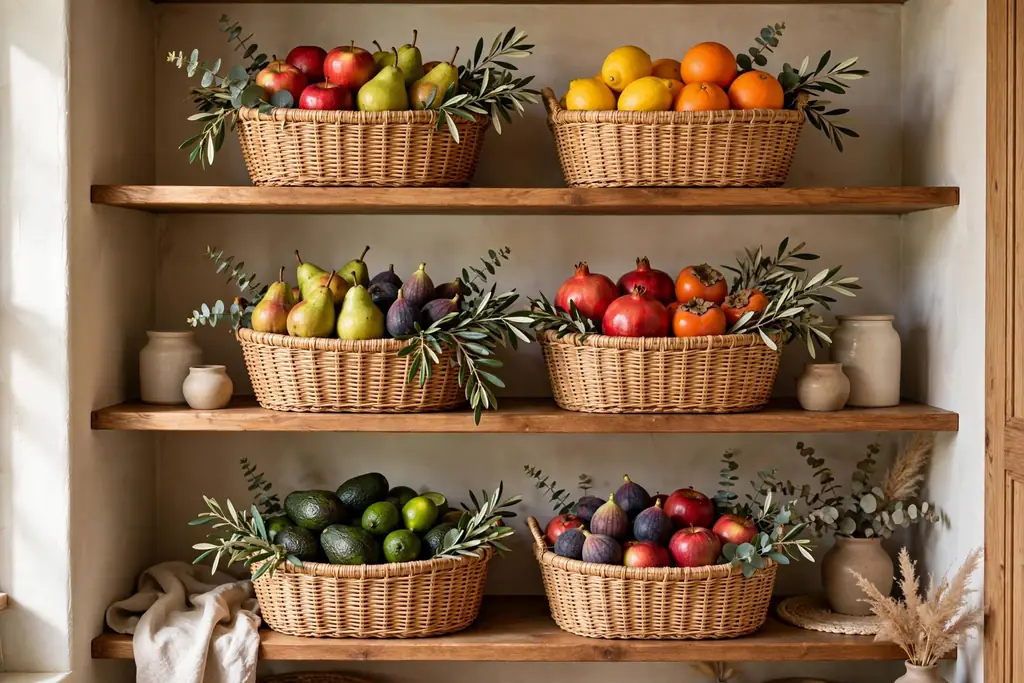
Line pantry shelves with labeled baskets, one for fruit that keeps at room temperature and one for fruit waiting to ripen. A basket row stops loose fruit from rolling to the back of a shelf, and it makes stock easy to count at a glance before shopping. Use open baskets so you can see ripeness without pulling each piece out.
Keep the row to the shelves you reach most, and put heavier baskets low. Label each basket simply, such as eat now and ripen, and check the ripening basket daily. Move fruit to the counter basket as it ripens, so the pantry row stays a holding area rather than a second display.
12. Windowsill Basket With Herbs and Fruit
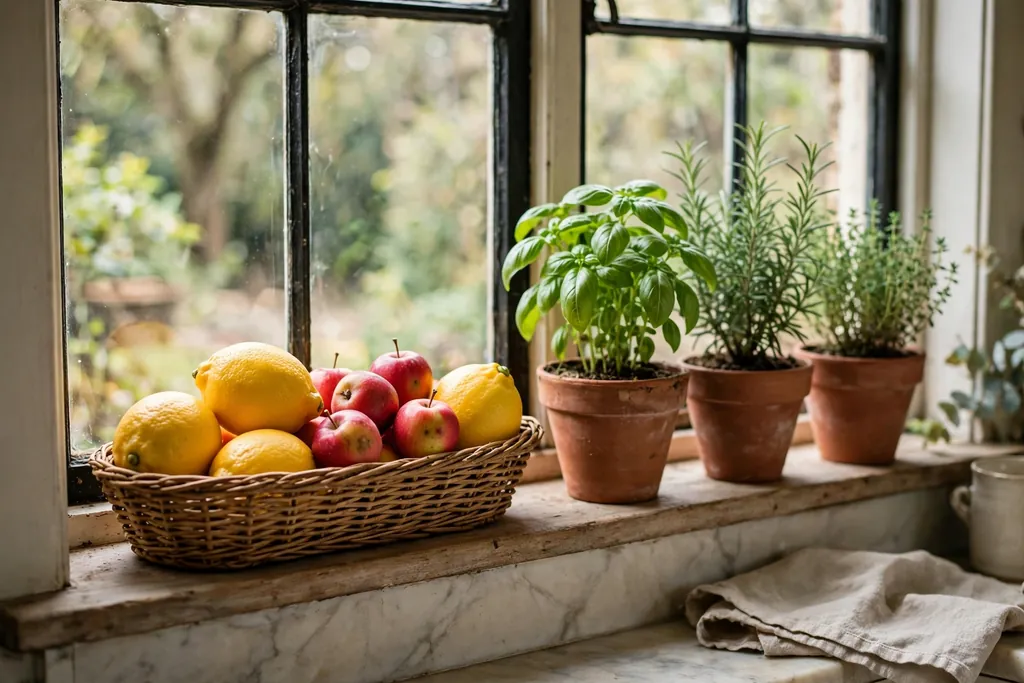
Place a narrow basket on a deep kitchen windowsill, with a few lemons or small apples beside a potted herb. The windowsill is useful space because it never reduces prep room, and daylight makes simple fruit look good. Herbs and fruit together also put two cooking ingredients within reach of the sink and stove.
Set the basket on a small mat to protect the sill from marks, and keep it clear of the faucet swing. If the sill gets strong sun, use a small basket and refill it often, since heat shortens fruit life. The sill styling rules in these kitchen window decor ideas apply here too: one group, clear space around it, and nothing that blocks the window latch.
13. Sideboard Basket for Serving and Snacks
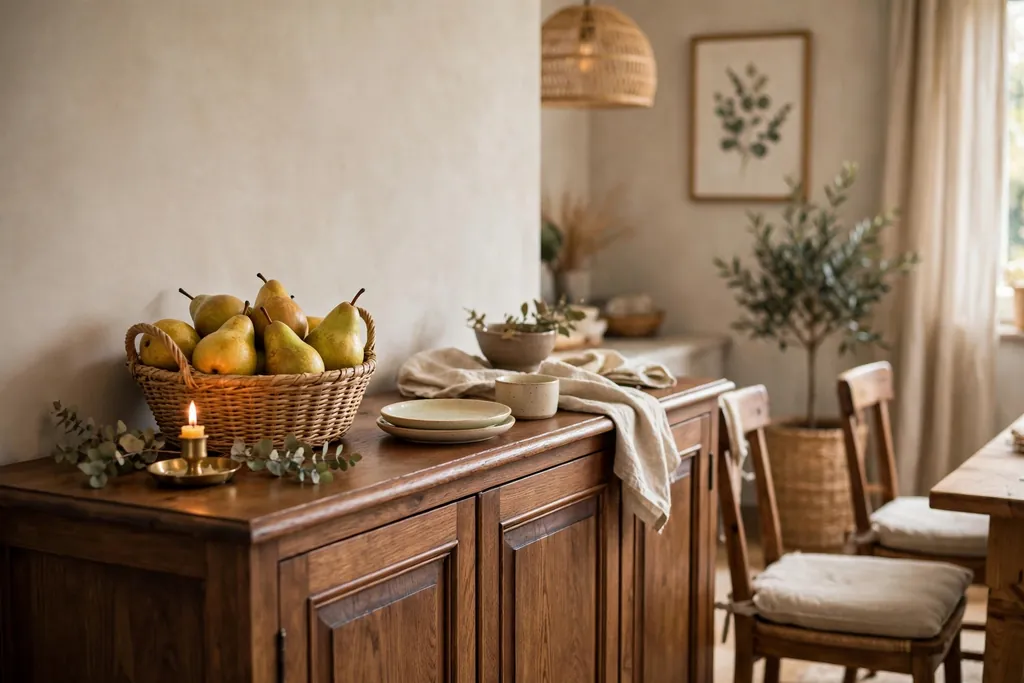
Use a sideboard basket in the dining room for fruit served after meals, with a small knife and a stack of small plates tucked beside it. A sideboard basket keeps serving fruit off the table until it is needed, which leaves the table clear for the main meal. It also gives guests a clear place to help themselves once dessert is offered.
Choose a basket that matches the sideboard material, such as wood on wood or wicker on painted furniture, and keep a cloth inside for wiping juice. Refill the basket from the kitchen before guests arrive, and clear soft pieces before the next meal. A sideboard basket works best when it holds one kind of fruit well, such as pears, rather than a mixed pile.
14. Home Office Desk Snack Basket
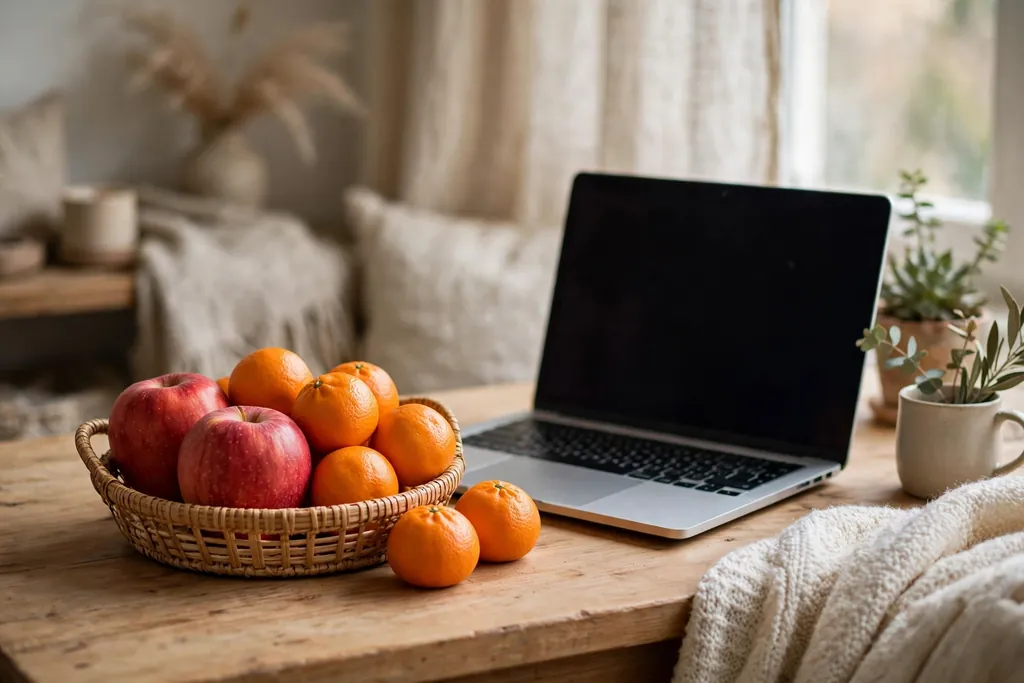
Keep a small basket on a desk or a nearby shelf for desk snacks, with apples, clementines, and a few nuts in a separate small dish. A desk basket stops trips to the kitchen during focused work, and it keeps snacks in one place instead of scattered across papers and cables. Choose a small, flat basket that fits the desk without crowding the keyboard.
Keep the basket to fruit with little mess, and avoid very soft fruit at a desk, since juice marks papers and keyboards. Refill it in the morning from the kitchen basket, and clear it at the end of the day so old fruit does not sit overnight. If the desk is near a window, keep the basket out of direct sun.
15. Bedside Basket for a Slow Morning
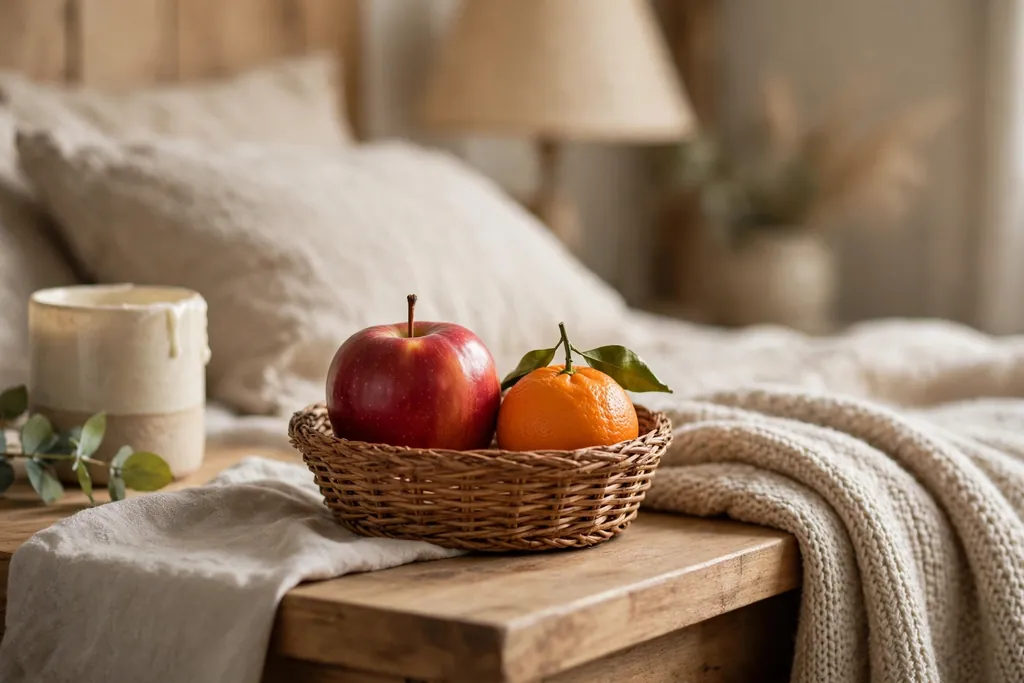
Place a tiny basket on a bedside table or a bedroom chair, with one or two pieces of fruit for a slow morning, such as an apple and a clementine. A bedside basket suits weekends and guest rooms, where a small edible welcome feels more personal than a decorative object alone. Keep it tiny, since a bedroom table has little room to spare.
Use fruit with firm skins and no strong scent, and clear the basket daily, since bedrooms are warm and fruit softens faster there. Put a small napkin under the basket to protect the table, and do not keep a bedside basket as a permanent store. Refill it only when the room is in use, and return leftover fruit to the kitchen.
16. Patio Basket for Outdoor Snacks
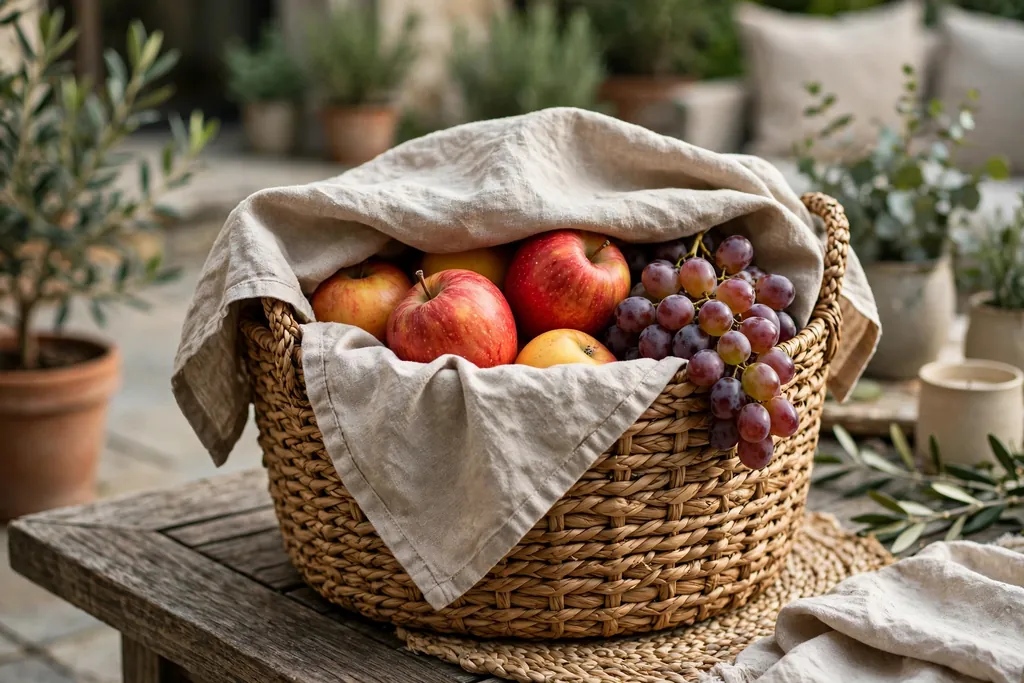
Take a sturdy basket of fruit to the patio for outdoor snacks, with apples, grapes in a small bowl, and a cloth cover to keep insects off. An outdoor basket makes a patio feel like a room, and it saves trips inside during warm afternoons. Choose a basket with handles, so it carries out and back in one trip.
Bring the basket inside after use, since sun and heat spoil fruit fast outdoors, and wash the basket before the next outing. Use a cover or a napkin over the fruit while it sits outside, and avoid very soft fruit in heat. A patio basket works best as a short outing display, not as all day storage.
17. Picnic Basket Display at Home
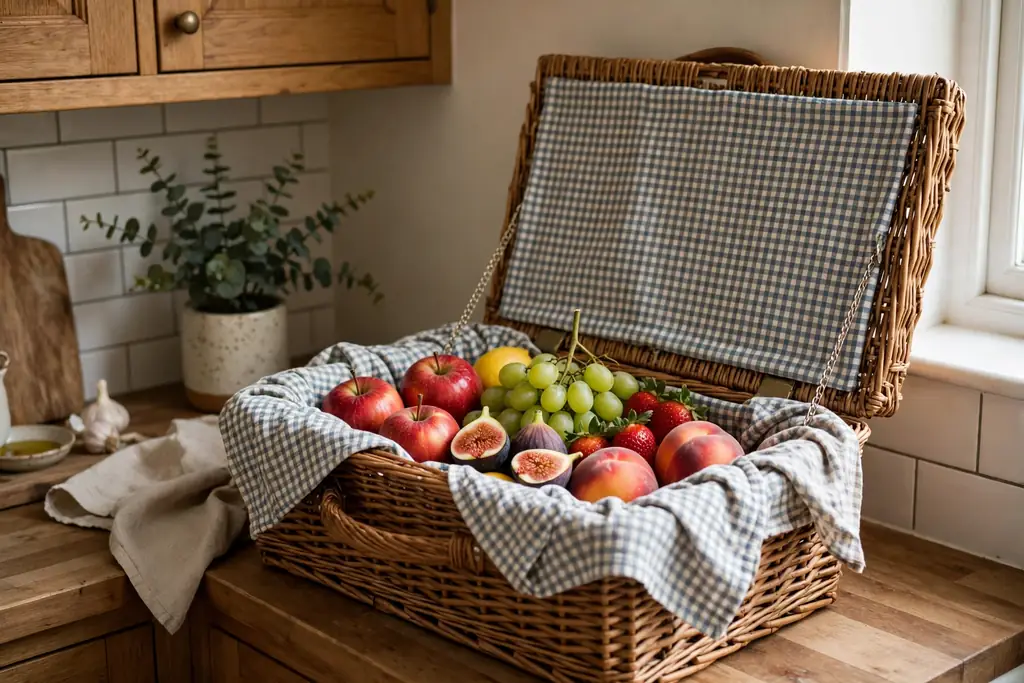
Use a lidded picnic basket as a display piece in a kitchen corner or mudroom, opened to show a cloth lining and a few pieces of fruit. A picnic basket adds a story to the room, since it suggests outings and shared meals, and it stores flat items such as napkins and a blanket when closed. It suits a corner that needs warmth without another piece of furniture.
Keep the fruit inside to a few firm pieces, and close the lid when the room is not in use, so dust stays out. Line the basket before adding fruit, and air it out now and then. If the basket is old or fragile, use it for display only and keep everyday fruit in a sturdier counter basket.
18. Low Kids Snack Station Basket
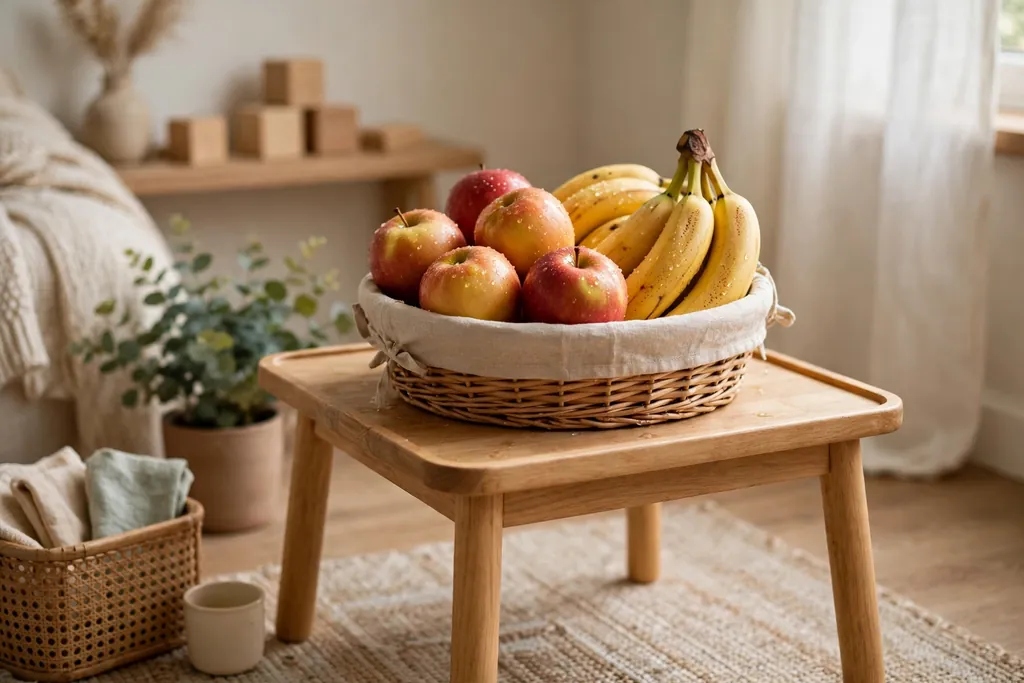
Set a low basket on a shelf or a small table children can reach, with washed apples, bananas, and clementines they can take themselves. A kids snack station builds independence, since children choose their own snack without opening cupboards or asking each time. Keep the basket at a height children reach safely, with no climbing needed.
Wash the fruit before it goes in the basket, and refill it daily with fresh pieces. Keep the basket to fruit children like and can peel or eat without a knife, and keep a small bin nearby for peels. Check the basket each evening, and move soft pieces out before the next morning.
19. Tea Station Basket With Citrus and Herbs
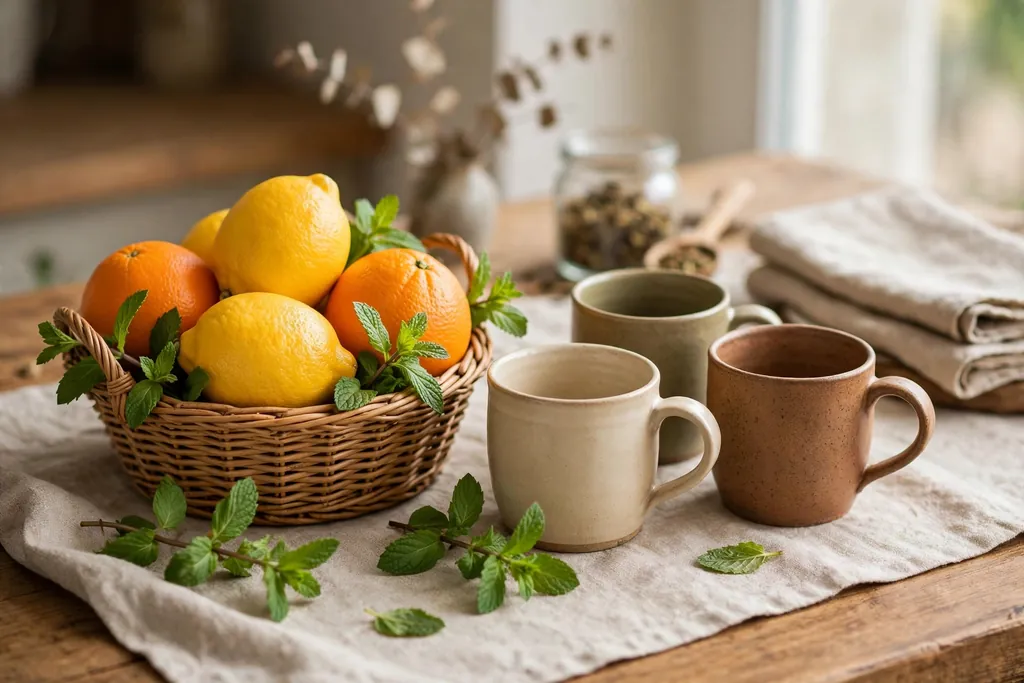
Add a small basket to a tea station, with lemons, a few oranges, and fresh mint in a small jar beside the mugs. Citrus and herbs turn a tea station into a full drink station, since guests can add lemon to tea or hot water without hunting through the fridge. The basket also adds color to a station that is often all mugs and jars.
Keep the basket small, so it does not crowd the kettle or mugs, and refill the citrus often, since a tea station basket is used daily. Keep herbs in water or a damp cloth, and replace them when they wilt. Wipe the station tray under the basket weekly, since tea areas gather drips.
20. Baking Station Basket for Apples and Lemons
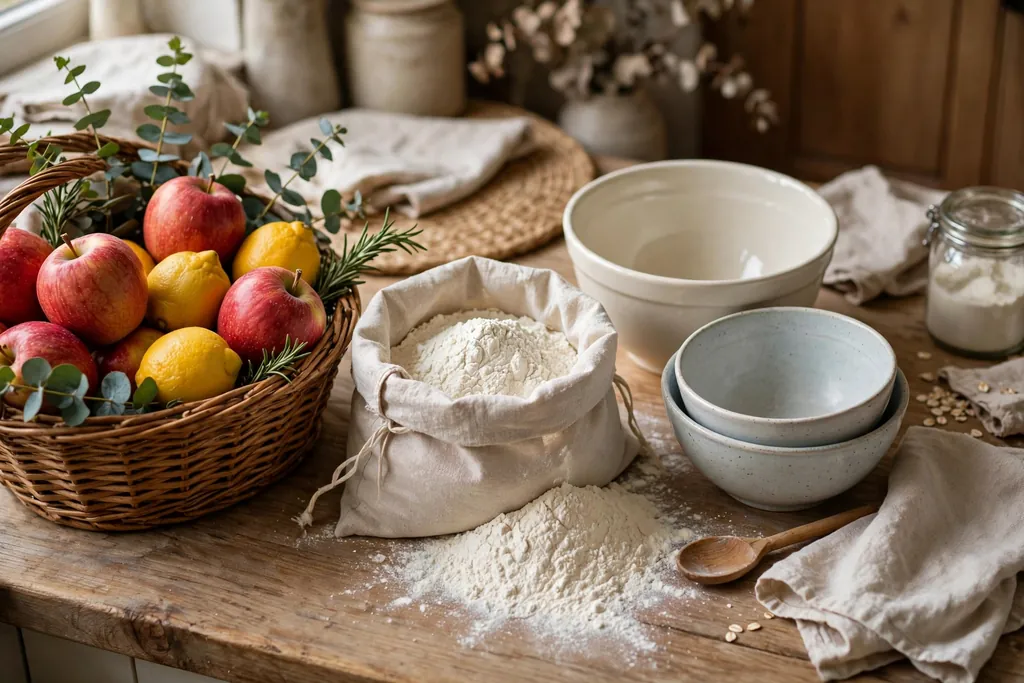
Keep a baking station basket with the fruit baking uses most, such as apples for pies and lemons for zest, beside the flour and mixing bowls. A baking basket saves time during a bake, since the key fruit is already grouped with the tools, and it reminds you what to use before it softens. It suits a baker who bakes weekly more than an occasional baker.
Refill the basket from the main fruit supply before a bake, and return unused fruit to the counter basket after. Keep the basket clear of flour dust by wiping it after baking, and line it if flour settles in the weave. Use firm fruit for baking baskets, since soft fruit bruises when moved with heavy bowls.
21. Cheese Board Pairing Basket
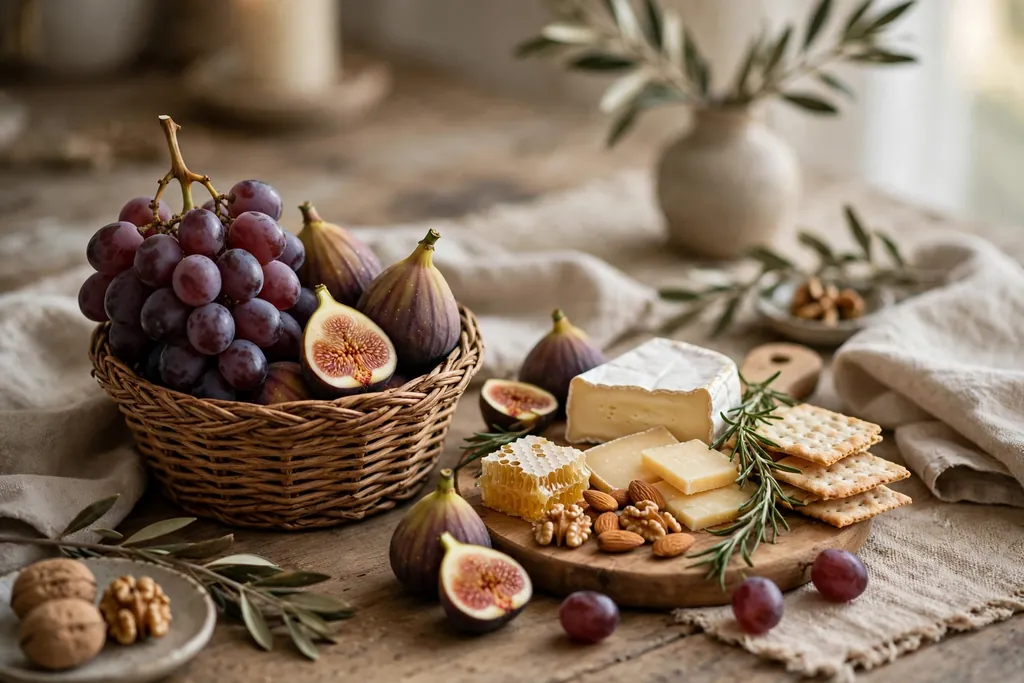
Pair a small fruit basket with a cheese board, with grapes, figs, and apple slices in a bowl beside the board. Fruit and cheese belong together, and a small basket keeps the fruit separate from the cheese, so flavors stay clean and the board stays tidy. This suits a supper table or a drinks evening, where guests graze rather than sit to a full meal.
Use a small bowl inside the basket for grapes or berries, so they do not roll onto the board. Keep the basket to fruit that pairs well and holds up at room temperature for an evening, and clear it after guests leave. Wash the bowl before the next use, since cheese crumbs and juice mix fast.
22. Autumn Basket With Apples, Pears, and Leaves
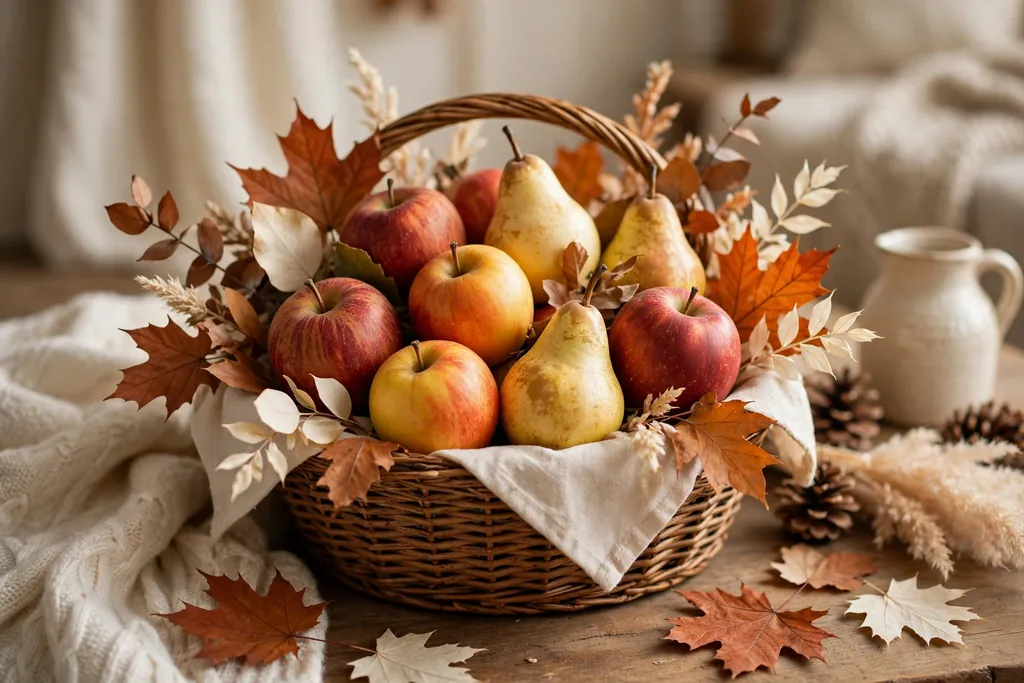
Build an autumn basket with apples, pears, and a few faux or dried leaves tucked at the edges, in rust, cream, and warm wood tones. The leaves add a seasonal note without taking over the basket, and the fruit stays the focus, so the display still works as food. This is a simple way to mark the season in a kitchen that already uses warm textiles.
Keep the leaves clear of the fruit you plan to eat, or use faux leaves only, and wash fruit before eating. The seasonal styling in these fall kitchen decor ideas uses the same limited palette, so the basket links to the rest of the room. Swap the leaves out when the season turns, and keep the basket itself year round.
23. Single Color Citrus Block Basket
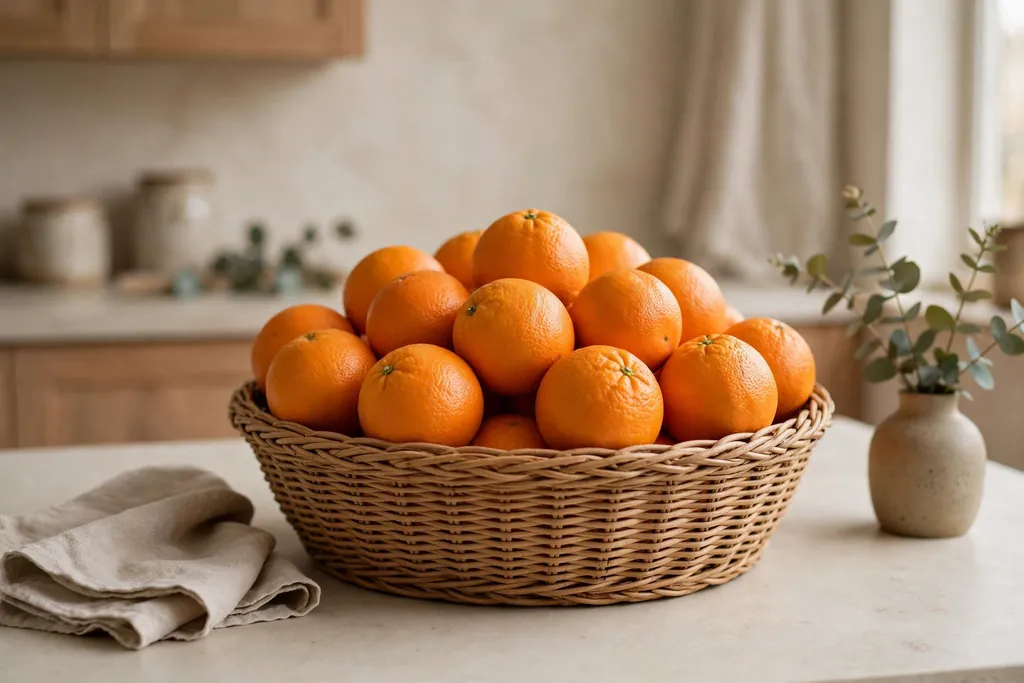
Fill a basket with one color of citrus, such as all oranges or all lemons, for a bold block of color on a plain counter. A single color basket reads as intentional, since the eye sees one shape and one color at once, and it suits a modern kitchen where mixed fruit might look busy. It also makes it easy to see when the basket needs refilling.
Choose fruit of similar size, so the pile looks even, and keep the basket shallow, so the color reads as a flat block rather than a tall heap. Refill with the same fruit to keep the block intact, and move the basket out of strong sun. A single color basket works best for a week at a time, then switch colors for a fresh look.
24. Tropical Basket With Pineapple and Mango
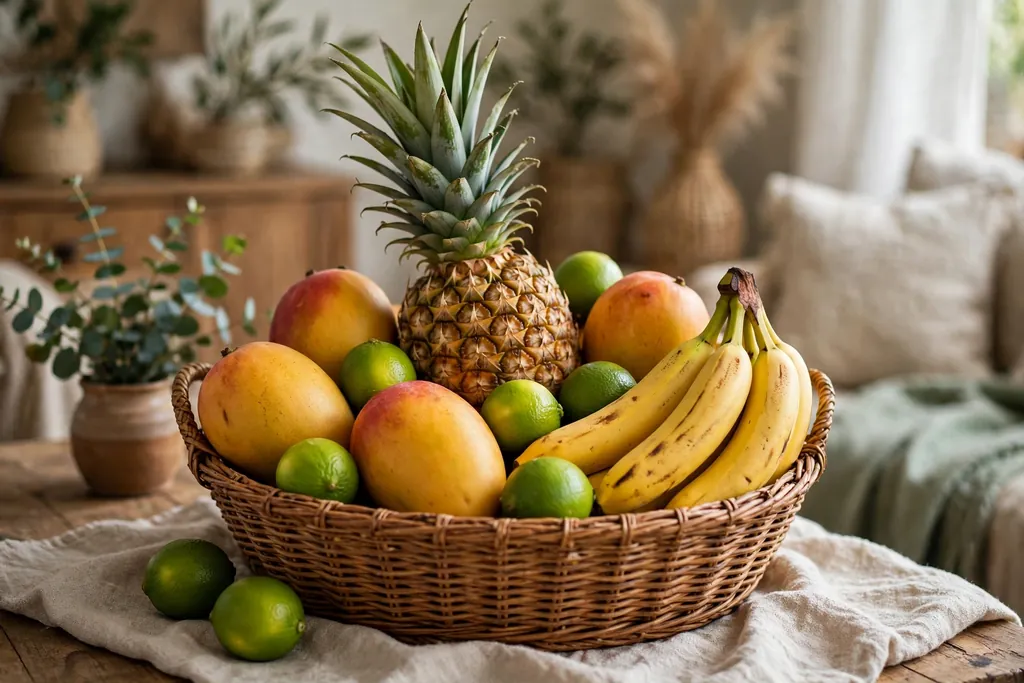
Make a tropical basket with a whole pineapple as the centerpiece, plus mangoes, bananas, and limes around it. The pineapple gives height and a clear focal point, while the smaller fruit fills the base, so the basket reads as generous without a tall pile. This suits a summer table or a bright kitchen that needs a warm, sunny note.
Keep the basket to fruit that ripens at room temperature, and check mangoes daily, since they soften fast once ripe. Set the basket on a tray to catch juice, and cut the pineapple before it overripens rather than leaving it as display. A tropical basket is best as a short, joyful display for a gathering, not as long term storage.
25. One Fruit Only Apple Basket
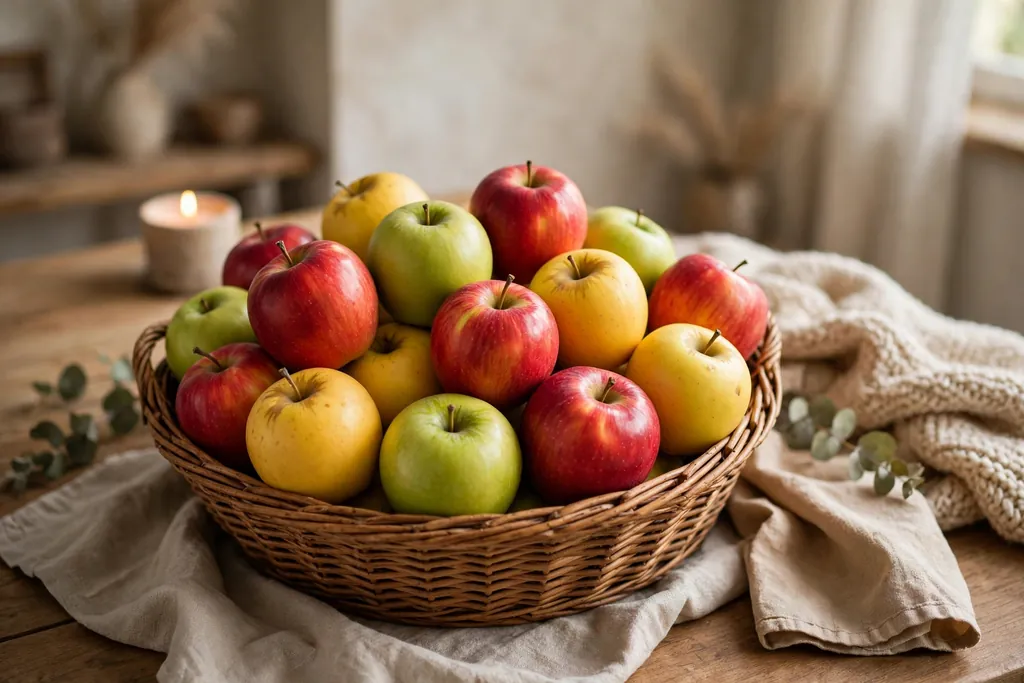
Fill a basket with apples only, mixing red, green, and golden varieties for color without mixing fruit types. A one fruit basket looks calm and generous, and it makes shopping simple, since you buy one fruit well rather than small amounts of many. It suits households that eat apples daily, for snacks, lunchboxes, and baking.
Sort the apples by ripeness, with the ripest on top, and check them every few days, since one soft apple affects the rest. Keep the basket on the counter, not in the fridge, if the apples are eaten within a few days, and move any soft pieces to baking. A one fruit basket also works with pears or oranges alone, using the same sorting rule.
26. Orchard Mix Basket With Leaves and Twigs
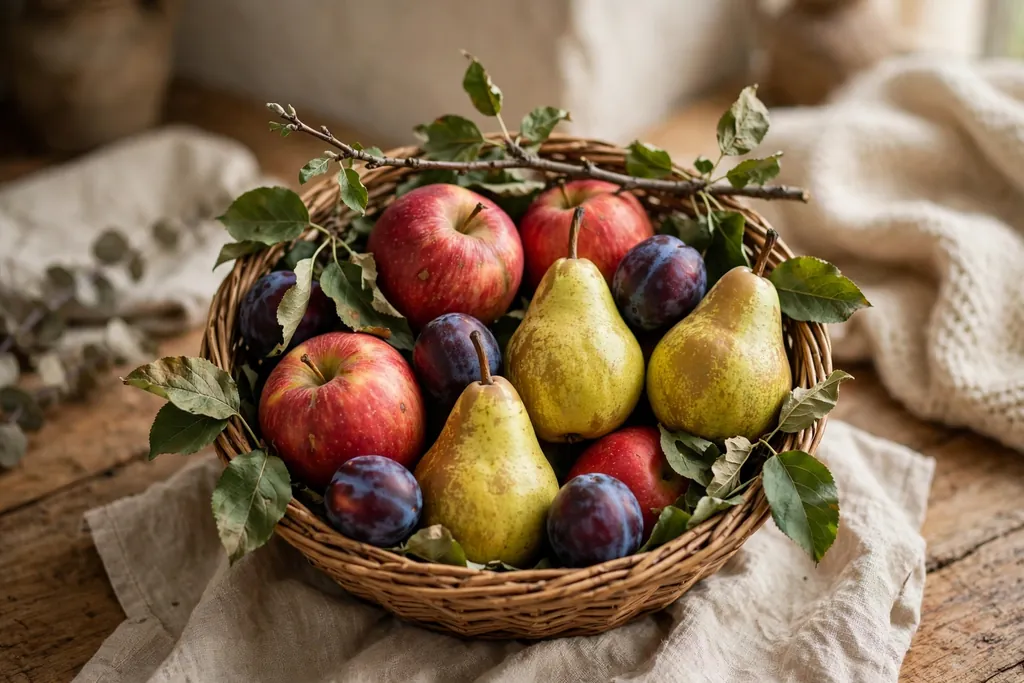
Build an orchard mix basket with apples, pears, and plums, plus a few clean leaves and a short twig tucked at the edge for a just picked look. The leaves and twig suggest a garden harvest, which suits a rustic kitchen or a farmhouse table, and they cost nothing if they come from your own garden. Keep the display loose, not packed tight, so each fruit shows.
Use leaves only as decoration around the edge, wash all fruit before eating, and remove leaves that wilt or shed. Keep the basket away from heat, since leaves dry fast near a stove. Refresh the leaves weekly, and keep the fruit itself to pieces you plan to eat within a few days.
27. Weekly Refill Station Basket System
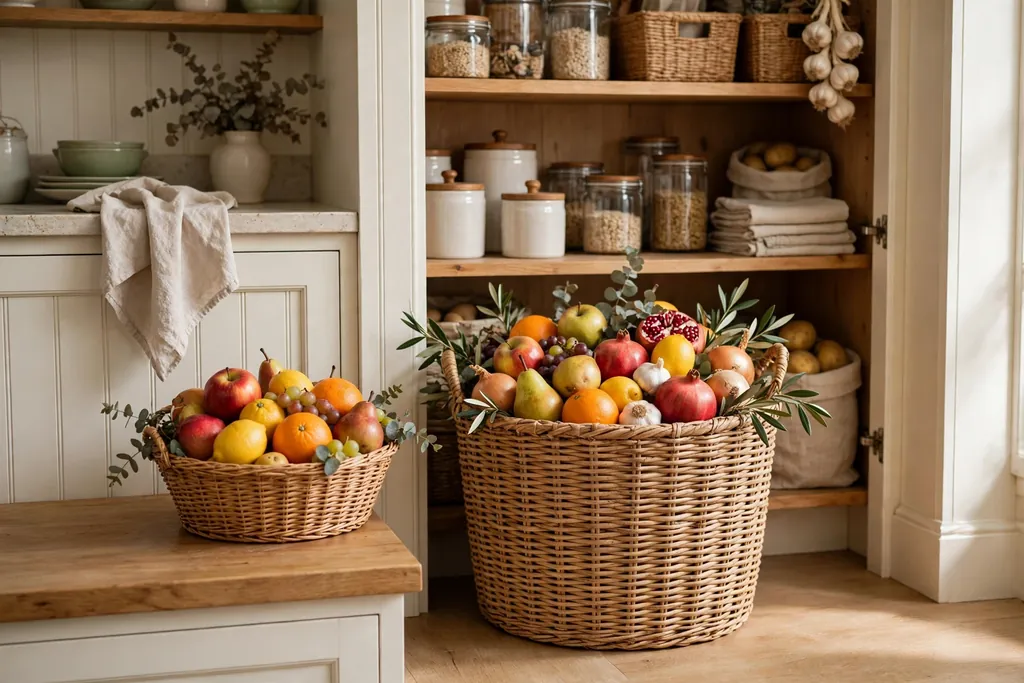
Set up a refill station system with one main basket on the counter and a larger basket in the pantry holding the week’s spare fruit. Each morning, top up the counter basket from the pantry stock, moving the ripest pieces forward, and check the pantry basket for anything soft. The system keeps the counter basket looking full without overbuying, and it stops fruit from hiding in bags in the fridge.
Label the pantry basket simply, such as spare fruit, and shop once a week to refill it. Wash both baskets when they empty, and keep a small list on the fridge of what needs buying next. This system suits busy households best, since it turns fruit care into a one minute morning habit rather than a weekly clear out.
Conclusion
A fruit basket works best when it is easy to reach, easy to see, and easy to refill. Start with one basket on the kitchen counter, add a second spot only when the first one gets used daily, and keep the fruit to pieces you actually eat within a few days. Match the basket material to the room, keep the display low and liftable, and check it every few days so soft fruit never spoils the rest. For a kitchen refresh that pairs well with a new basket, the layering advice in these fall kitchen decor ideas and kitchen window decor ideas shows how one natural group can warm a whole room.
Save this list on Pinterest for your next kitchen tidy, and start with the basket you already own: clear it, wash it, fill it with two or three kinds of fruit, and put it where you pass it most.
FAQs
Where is the best place to put a fruit basket?
The kitchen counter or island is usually best, since that is where fruit gets eaten and refilled. Put the basket where you pass it daily, near the breakfast spot or the prep area, but clear of the stove, the sink splash zone, and strong sun. A second small basket works well on a dining table or entryway console once the main counter basket is used daily.
What fruit keeps best in a basket at room temperature?
Apples, oranges, lemons, bananas, and pears keep well at room temperature for a few days, with firm skins that survive handling. Softer fruit, such as berries and ripe stone fruit, lasts longer in the fridge and should only go in a basket for a short display or the day it will be eaten. Check the basket every few days and move any soft pieces to the fridge or to baking.
How do I keep a fruit basket from attracting insects?
Keep the basket clean, remove soft or damaged fruit promptly, and cover the basket with a cloth or a mesh cover in warm weather, especially outdoors. Wash the basket or liner before refilling, and avoid leaving very ripe fruit out for days. A smaller basket refilled often attracts fewer insects than a large basket left to soften.
What kind of basket is best for fruit?
An open weave basket or a shallow bowl works best, since air moves around the fruit and you can see what needs eating first. Woven baskets suit rustic kitchens, wood bowls suit islands and tables, and ceramic or glass bowls suit dining rooms where the basket is also a display. Choose a basket with a flat, steady base and sides low enough to reach the fruit easily.
How often should I refill and clean a fruit basket?
Refill the counter basket every few days from pantry or fridge stock, moving the ripest pieces to the front. Wash the basket or liner each time it empties, and wipe the surface under it weekly. A quick daily check for soft fruit takes under a minute and stops one bad piece from affecting the rest.
Can a fruit basket work as decor in rooms other than the kitchen?
Yes, with a small basket and firm fruit. An entryway bowl welcomes guests, a dining table basket doubles as a centerpiece, a coffee table basket invites snacking, and a bedside or desk basket suits a guest room or home office. Keep non kitchen baskets small, refill them often, and return leftover fruit to the kitchen, since other rooms are warmer and fruit softens faster there.