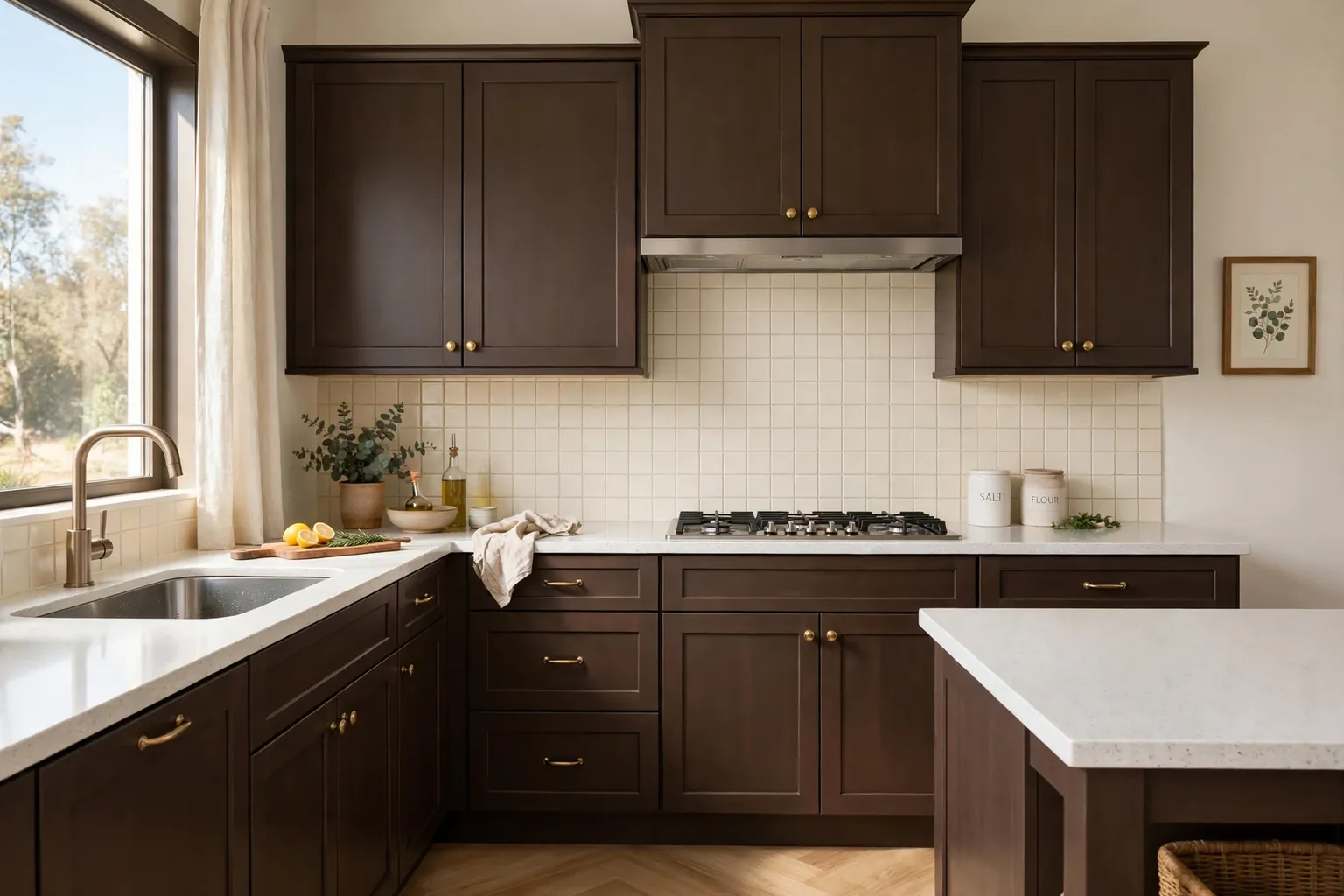
Dark brown cabinets bring warmth, depth, and a solid, furniture-like feel to a kitchen, but they need the right partners to stay bright. Light counters, warm metal, good lighting, and a pale wall or floor can keep the room welcoming instead of closed in. These 22 dark brown kitchen cabinet ideas cover classic shaker fronts, modern flat panels, two-tone layouts, islands, pantry walls, and small kitchens, so you can pick one starting point or combine a few. Start with the cabinet style you like, then choose a counter and hardware that repeat through the room. A close cousin to this look, with the same balance of dark bases and light surfaces, is covered in these dark grey kitchen ideas.
Key Takeaways
- Keep one light surface in the room at all times, such as a pale counter, a light backsplash, or cream walls, so dark brown cabinets read as warm rather than heavy.
- Repeat one metal finish across hardware, faucet, and lights, so the room looks planned even when styles mix.
- Add warm under-cabinet light, because dark fronts absorb light that pale cabinets would reflect.
- In a small kitchen, keep dark brown low, leave uppers light or open, and use glass or glossy tile to bounce light around.
- Test a dark brown sample on a door front in morning and evening light before you commit to a full run.
- Balance the weight with natural texture: wood, linen, stone, and plants soften dark cabinets better than more dark finishes.
1. Classic Shaker Dark Brown Cabinets with Brass Hardware
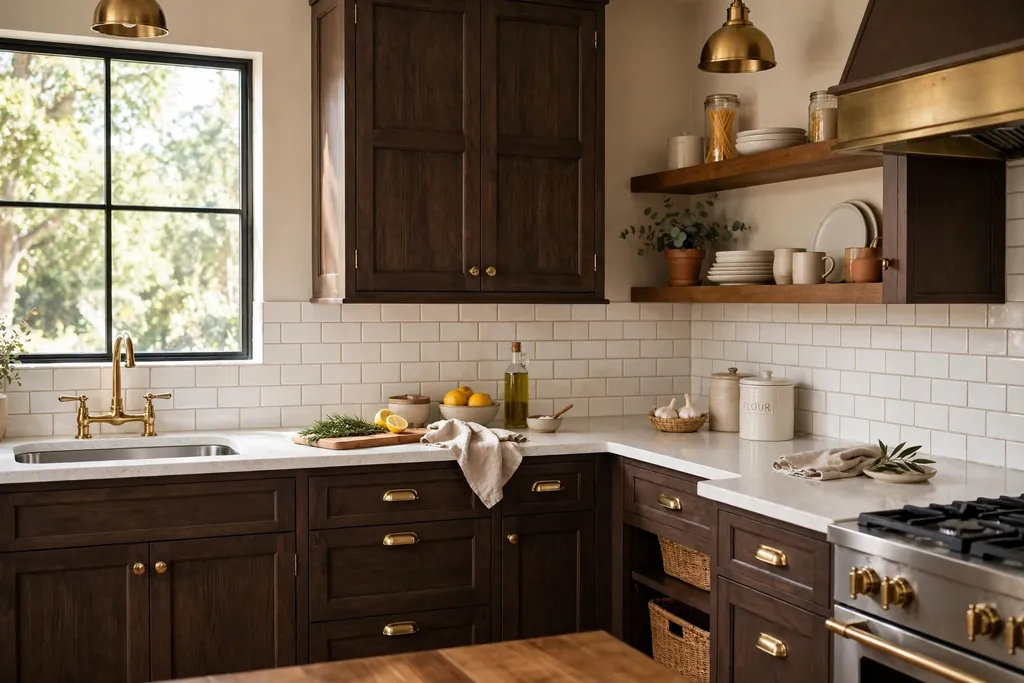
Shaker cabinets are a safe starting point for dark brown, because the simple framed front keeps the color calm and classic. A mid to dark brown with a warm base suits wood floors and cream walls, while a cooler brown suits grey stone and stainless steel. Paint or order the full run in one shade, including end panels and the toe kick, so the line looks continuous.
Add brushed brass bar pulls on drawers and knobs on doors for small points of warm metal. Keep the counter light, such as white quartz or pale wood, so the cabinets read as a solid base rather than a dark block. If you are unsure about the shade, paint one door and live with it for a week before you order the rest.
2. Dark Brown Cabinets with White Quartz Counters
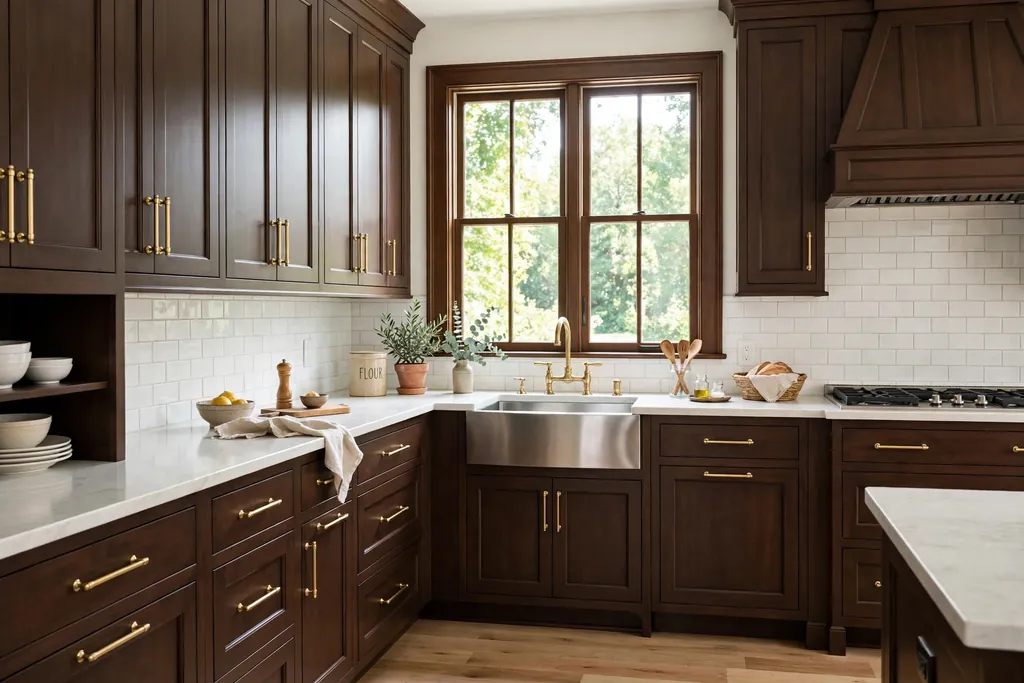
White quartz is the simplest partner for dark brown cabinets, because the pale top gives a sharp, clean edge to the dark base. The plain surface also lets the wood grain and cabinet color do the visual work, which suits both classic and modern fronts. Choose a quartz with soft warm veining rather than a busy pattern, so the counter links to the cabinets instead of fighting them.
Keep the backsplash simple too, such as plain cream tile or a short quartz upstand, so the counter stays the focus. Quartz needs less sealing than natural stone, which helps in a busy kitchen. Wipe spills promptly and keep a chopping board out for daily prep, so the pale top stays looking fresh beside the dark cabinets.
3. Two-Tone Dark Brown Below and Cream Above
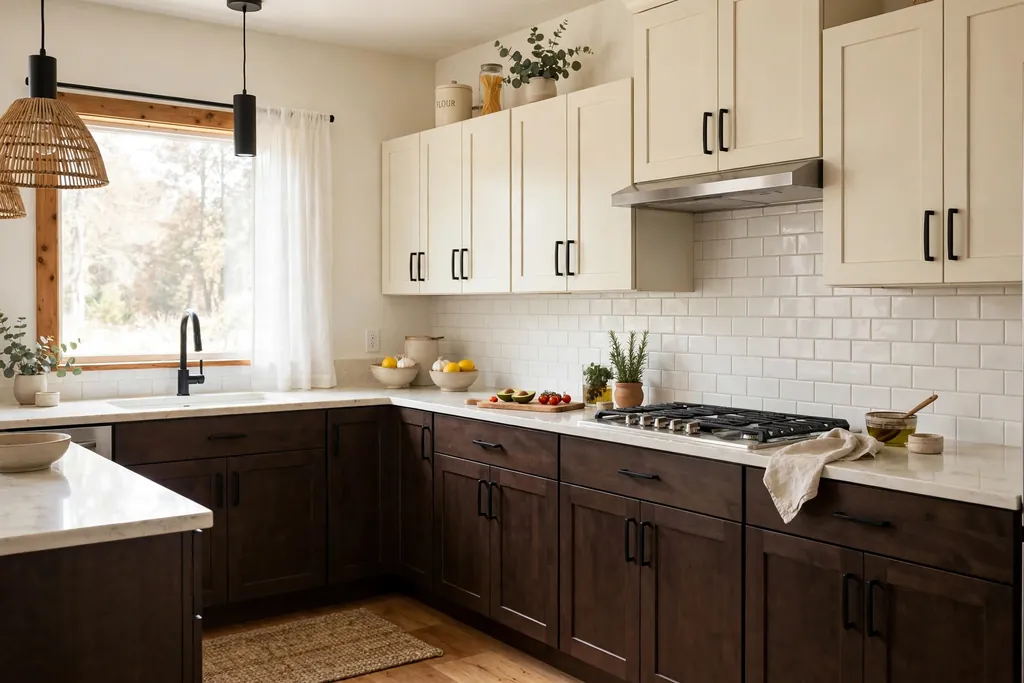
Two-tone cabinets put dark brown where it is most useful and cream where light matters most. Dark brown base cabinets ground the room and hide scuffs near the floor, while cream uppers keep the wall line bright. This split also suits a kitchen with low ceilings, because the eye reads the upper half as open.
Keep the counter between the two tones in a light stone or pale wood so the change does not look abrupt. Use the same hardware finish on both rows to tie them together. If your kitchen has a tall pantry unit, paint it dark brown to match the base run and let the cream uppers stop at the wall cabinets.
4. Dark Brown Cabinets with a Warm Oak Island
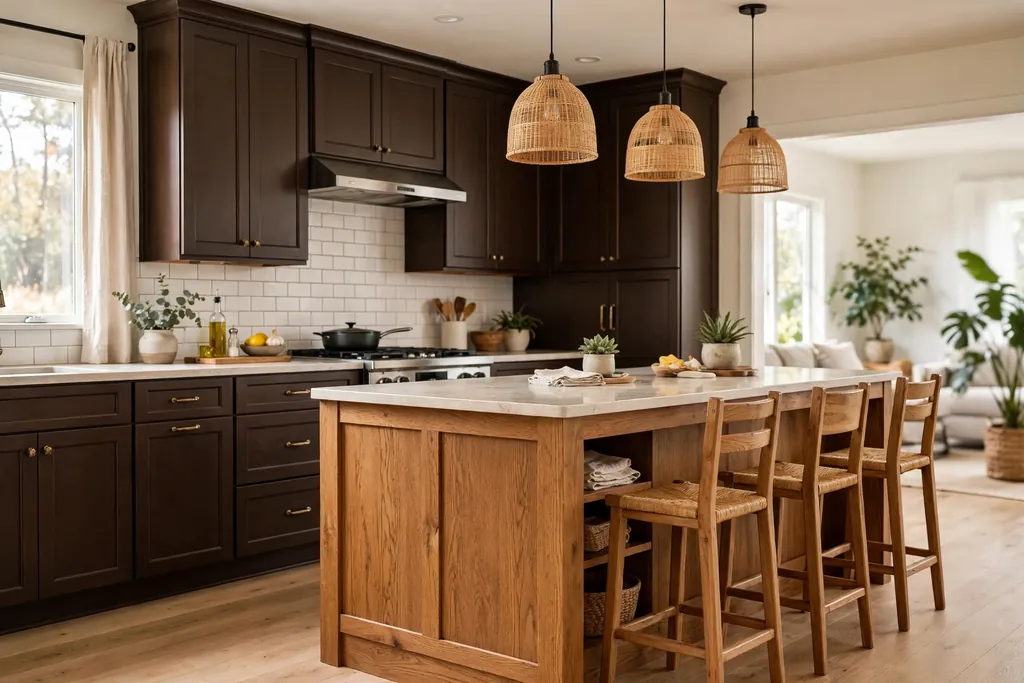
If a full dark brown kitchen feels like too much, keep the perimeter cabinets dark brown and add a warm oak island, or the reverse: a dark brown island in a lighter kitchen. The island becomes a piece of furniture in the middle of the room, while the surrounding cabinets set the tone. Oak adds grain and warmth that flat paint cannot give on its own.
Choose an island counter lighter than its base, such as white quartz or pale wood, so the top edge is clear. Add two or three stools that repeat a material from elsewhere in the room, such as wood seats or woven rush. Keep the island ends clear of clutter so the dark brown block stays clean and easy to walk around.
5. Flat-Panel Handleless Dark Brown Cabinets
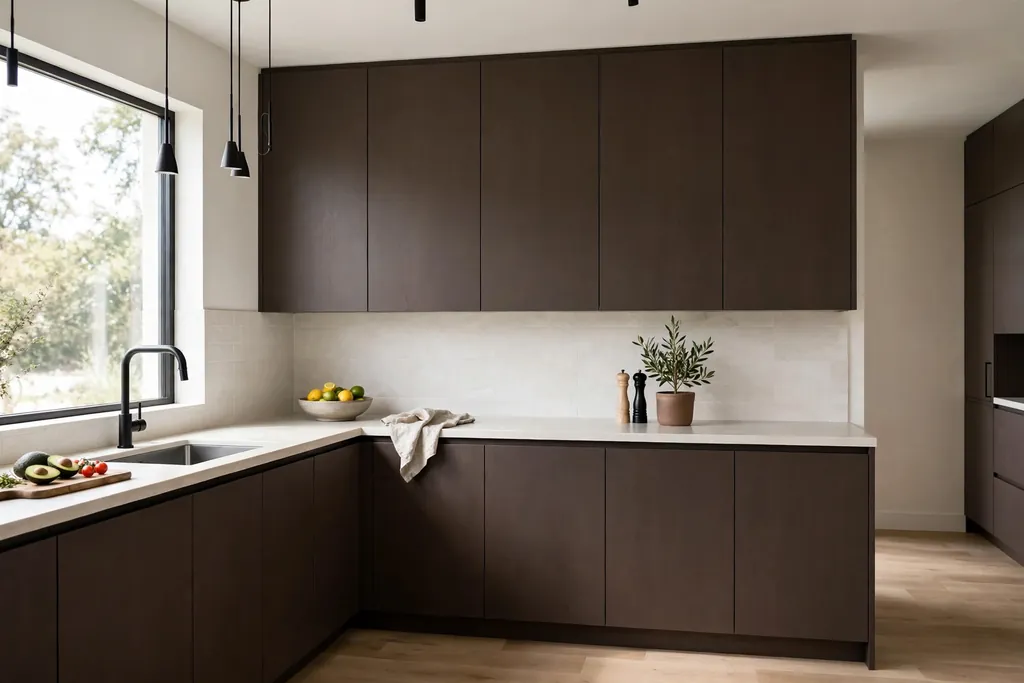
Flat-panel handleless cabinets give dark brown a clean modern line. With no frames or visible handles, the color becomes one smooth surface, which suits a kitchen with simple counters and a plain backsplash. Push-to-open doors or a routed finger pull at the top of each door keep the fronts free of hardware.
This style shows dust and fingerprints more than a framed door, so a matte finish is a practical choice. Keep the layout simple, with long drawer runs and few small doors, so the flat fronts read as panels rather than a patchwork. Pair the cabinets with a pale worktop and one warm material, such as wood stools, to stop the room from feeling stark.
6. Glass-Front Upper Cabinets Above Dark Brown Bases
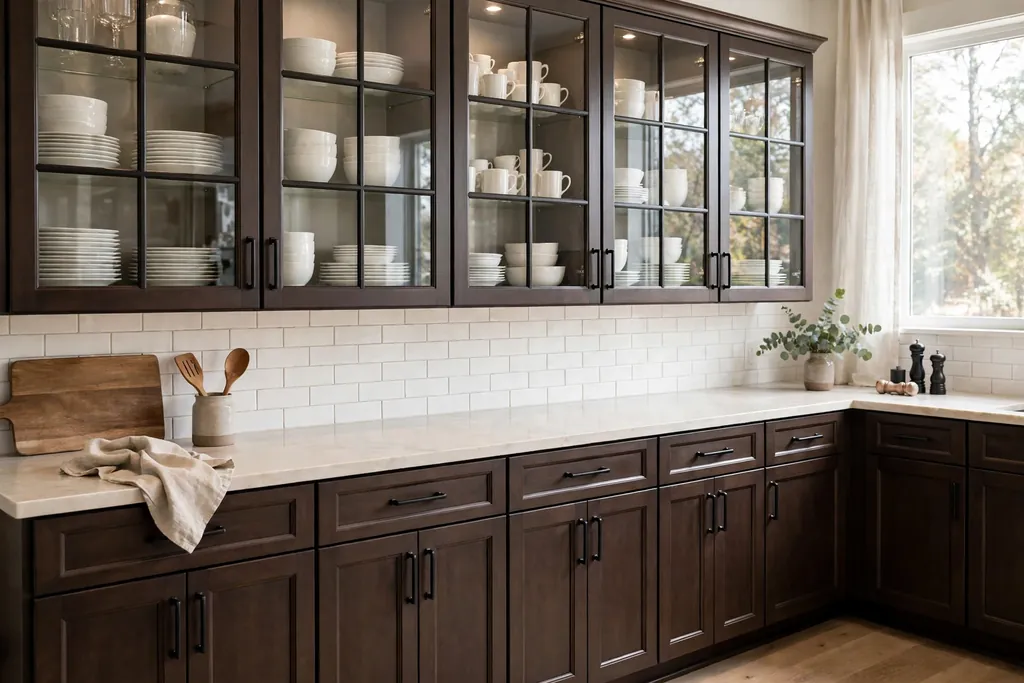
Glass-front upper cabinets lighten a dark brown wall run without removing storage. The glass breaks the solid block of color, and the items inside add pale shapes that lift the whole wall. Use clear glass if your dishes are neat and mostly white, or fluted glass if you want the shapes softened and less exact.
Light the inside of one or two glass cabinets if you want the display to work in the evening. Keep the rest of the uppers solid so the glass section reads as a feature, not as a full wall of display. Store everyday glasses and plates here, and keep rarely used pieces in closed cabinets where dust is less of a job.
7. Dark Brown Cabinets with Butcher Block Counters
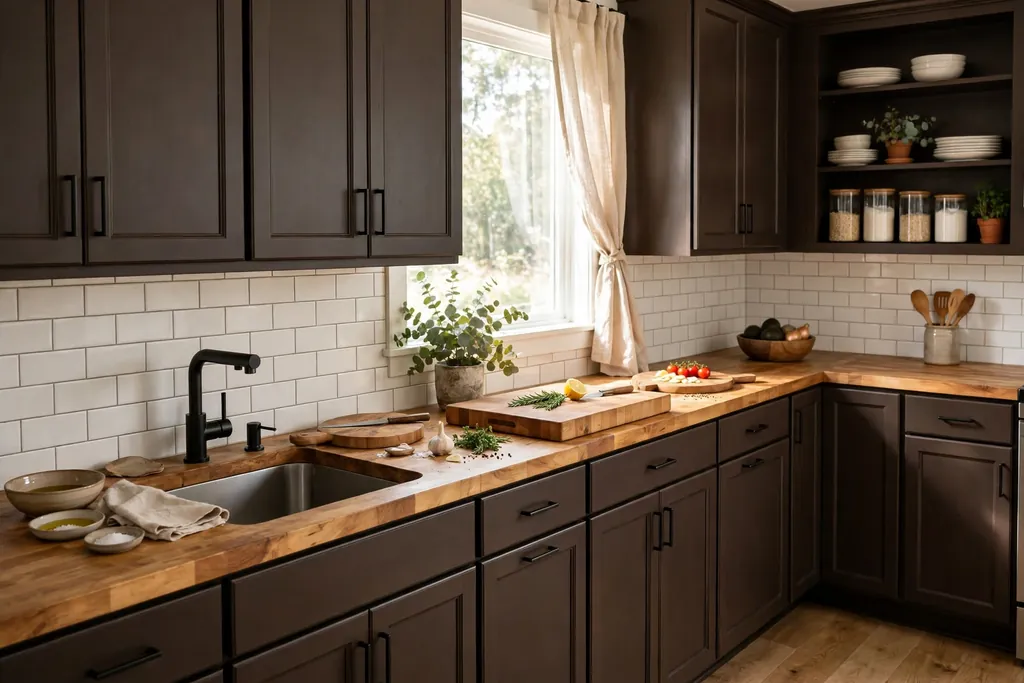
Butcher block counters warm dark brown cabinets at once, because wood on wood feels natural and lived in. A mid tone block, such as maple or oak, gives contrast against the dark base without the hard edge of white stone. This pairing suits farmhouse, cottage, and rustic kitchens best, but it also softens a plain modern run.
Oil the block as the maker directs, and keep a separate board for raw meat prep so the counter stays hygienic. Expect some marks over time, and treat them as part of the surface, or sand and re-oil the block once a year to refresh it. Keep the sink zone in stone or steel if you want one area that handles water with less care.
8. Dark Brown Cabinets with Marble Look Counters and Backsplash
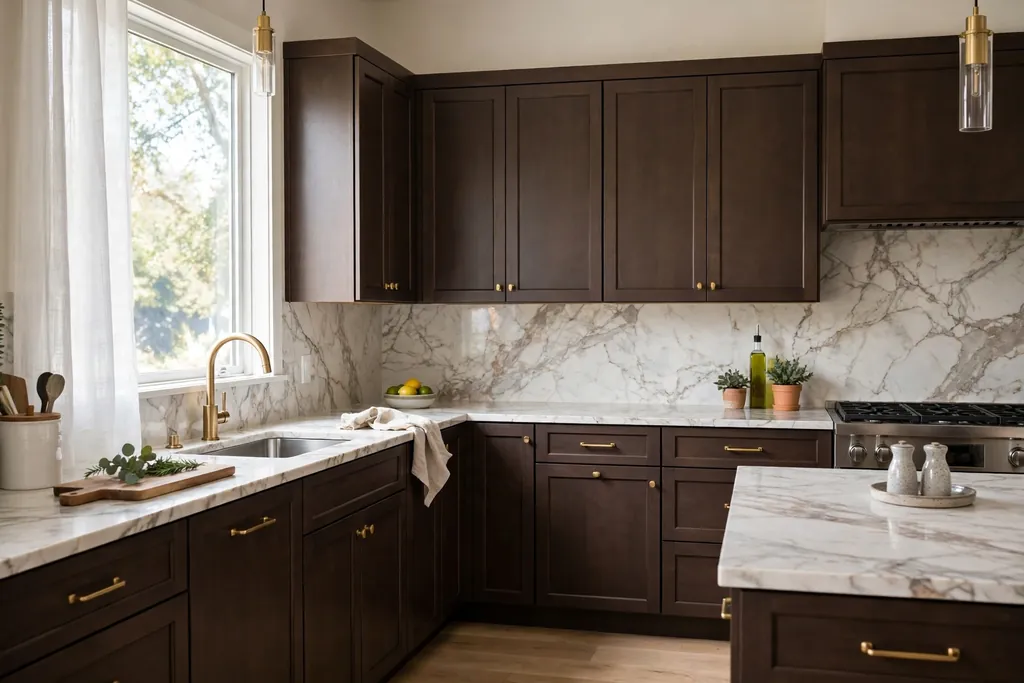
A marble look counter and matching backsplash give dark brown cabinets a polished, classic finish. The pale stone with soft veining adds movement that plain dark brown lacks, and the light band between counter and uppers keeps the wall from feeling heavy. This pairing suits shaker cabinets best, but it also works with flat fronts if the veining stays soft.
Choose a marble look quartz for lower upkeep, or seal natural marble as the maker directs and wipe spills promptly. Keep the rest of the kitchen plain when the stone has strong veining, with simple hardware and a solid floor, so the pattern has room to stand out. Repeat the stone on a windowsill or a small shelf edge to tie the scheme together.
9. Warm Under-Cabinet Lighting on Dark Brown Cabinets
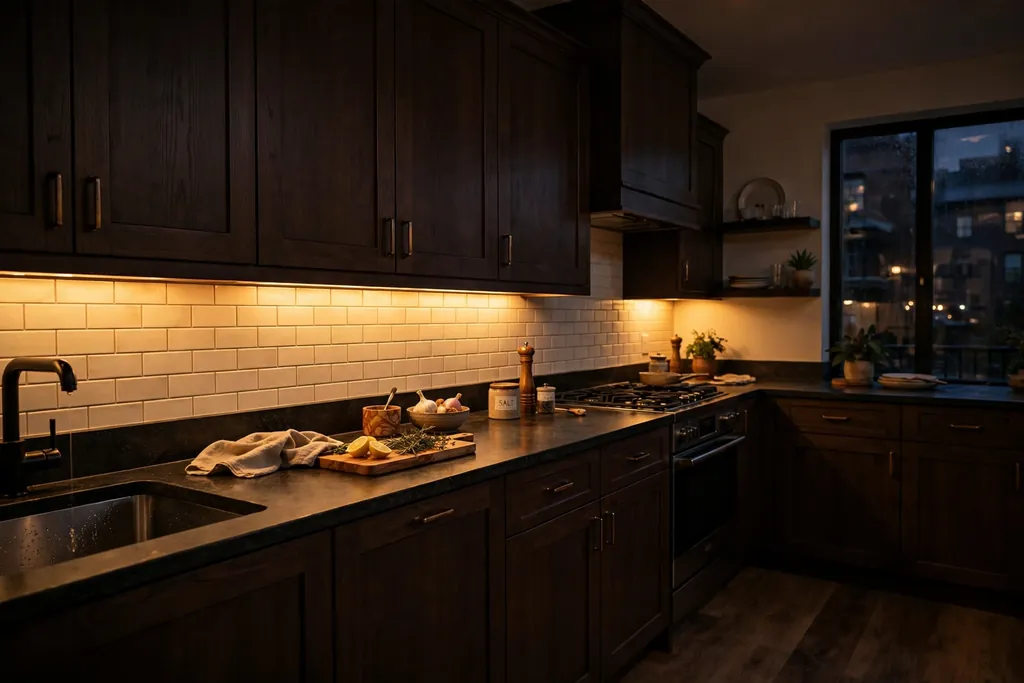
Warm under-cabinet lighting is essential with dark brown, because dark fronts absorb light that pale cabinets would reflect. Fit LED strips under the upper cabinets so the counter is lit for prep, and the light washes down over the dark doors below. Choose a warm white, around 2700 to 3000 kelvin, so the brown reads warm rather than cold.
Put the strips on a separate switch or dimmer from the ceiling lights, so you can light the work zone in the evening without lighting the whole room. Hide the strip behind a small lip under the cabinet so you see the glow, not the fitting. Add the same warm tone in pendant lights over the island, so the whole kitchen shares one light color.
10. Open Wood Shelves Beside Dark Brown Cabinets
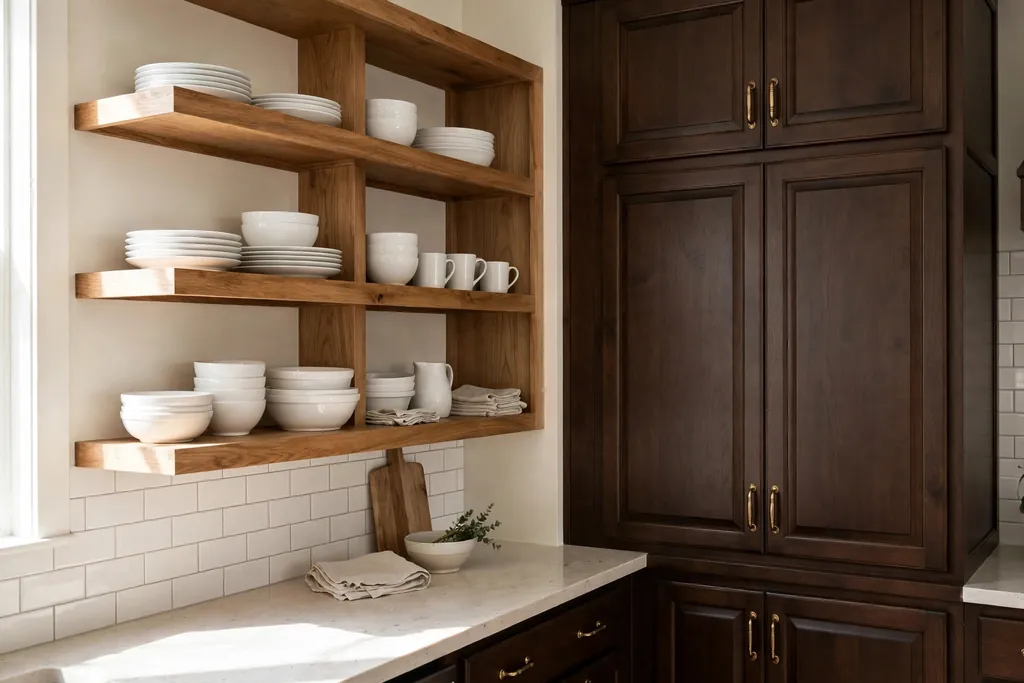
Open wood shelves beside dark brown cabinets break up a long wall run and give everyday dishes a visible home. The wood grain adds a natural pattern, and open shelves hold the items you use most without another row of closed doors. Fit one or two shelves beside a window or above a short counter run, rather than across the whole wall, so the room does not lose storage.
Use oak or a warm wood for the shelf boards, and keep shelf items to one color family, such as white, cream, and pale wood, so the display stays calm against the brown. Leave clear gaps between groups, a rule that also helps in these kitchen wall storage ideas. Keep shelves away from the stove, where steam and grease settle fastest.
11. Floor-to-Ceiling Dark Brown Pantry Wall
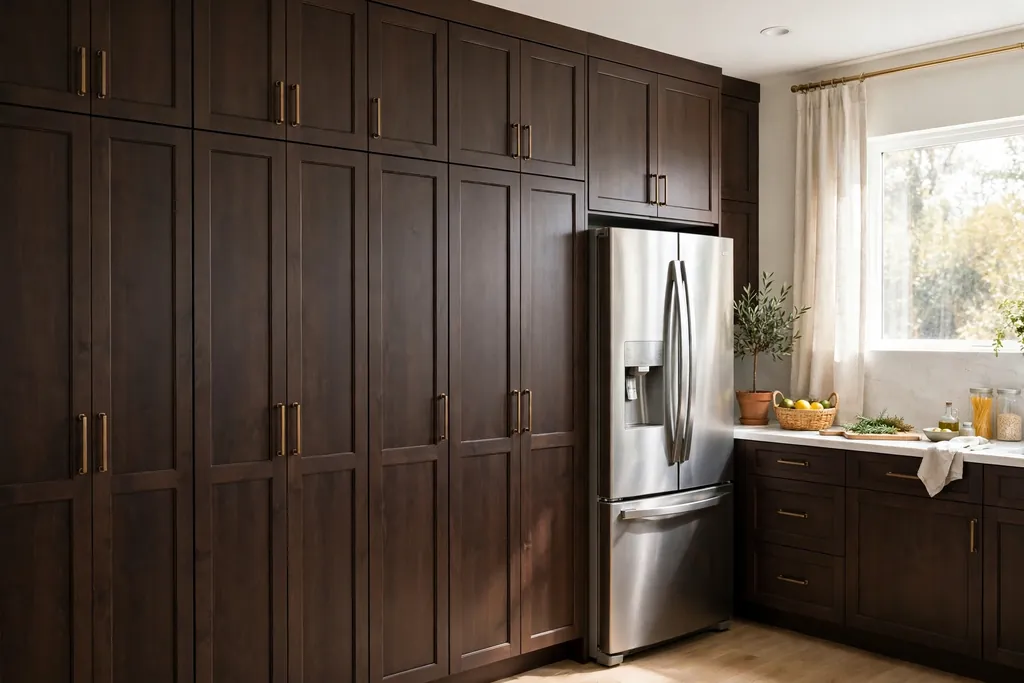
A pantry wall in dark brown turns storage into a feature. Tall units in one shade, from floor to ceiling, give a kitchen a strong vertical line and hide a large amount of food, small appliances, and cleaning items behind closed doors. This suits a kitchen with a blank end wall or a wall beside the fridge.
Use the same door style as the rest of the kitchen so the pantry wall does not look like a separate piece of furniture. Fit pull-out shelves or tall larder units inside, so deep storage stays easy to reach. Keep the floor in front of the pantry clear, and add a light counter or a pale wall beside it so the tall dark block does not close in the room.
12. Dark Brown Cabinet Coffee Bar Nook
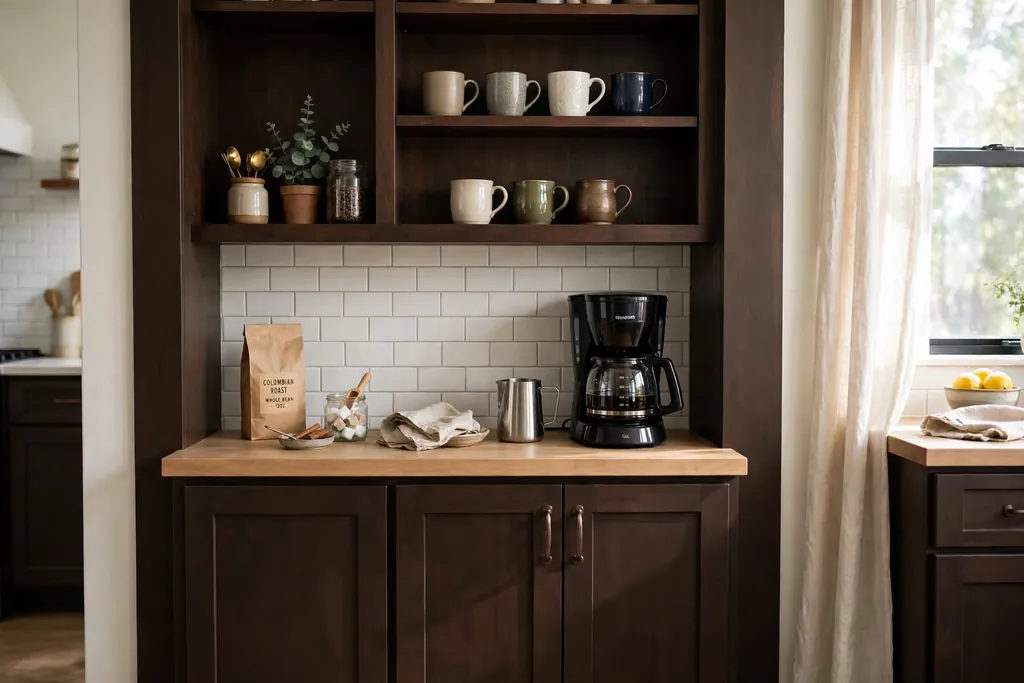
Turn one section of dark brown cabinets into a coffee bar nook, with a short counter, open shelving above, and closed storage below for cups, filters, and beans. The dark cabinets make the nook feel like a small cafe corner, especially with a warm light under the shelf and mugs hung on hooks. This works well at the end of a counter run or in a shallow alcove.
Keep the coffee maker on a tray so spills stay contained, and give the nook its own small bin for grounds and filters. Store daily mugs on hooks or on the open shelf, and keep spare supplies in the cabinet below. A small plant or a framed print on the shelf keeps the nook feeling like part of the kitchen, not a workstation.
13. Dark Brown Cabinets with a White Farmhouse Sink
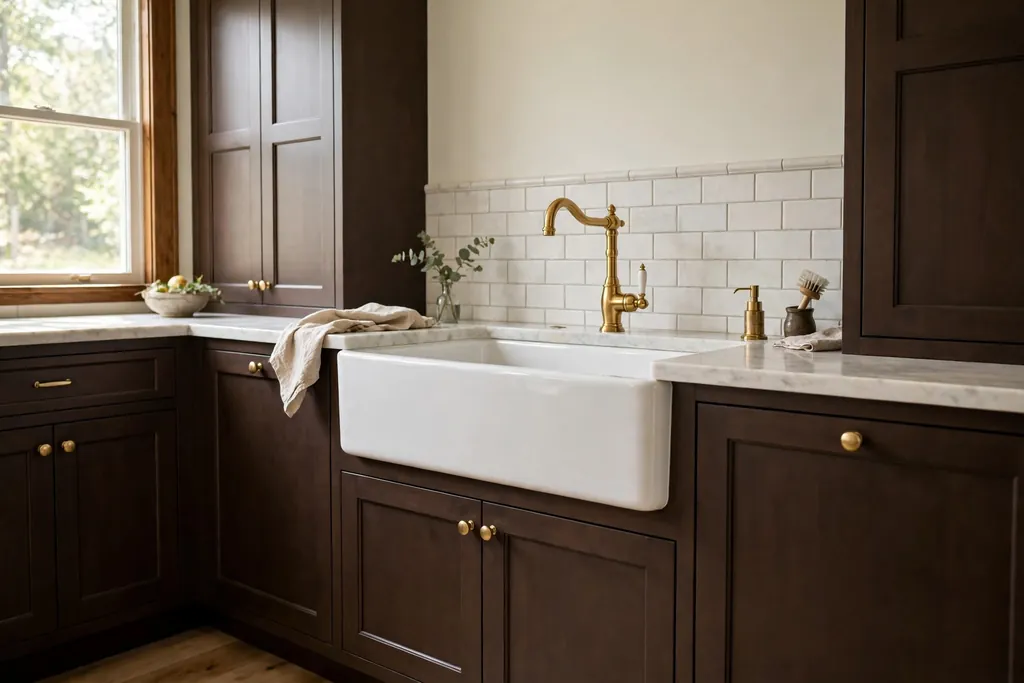
A white farmhouse sink gives a dark brown cabinet run a clear focal point. The wide white front breaks the dark line at the sink, which is the spot you stand at most, and it pairs well with a traditional shaker kitchen. Choose a sink deep enough for large pans, and check the cabinet below can support its weight before you order.
Fit a simple bridge or single lever faucet in brass, black, or chrome to match your hardware. Keep the counter on either side of the sink clear, with a small tray for soap and a brush, so the white front stays visible. A farmhouse sink also suits a kitchen with a window above it, where the white ceramic catches daylight.
14. Matte Black Hardware on Dark Brown Cabinets
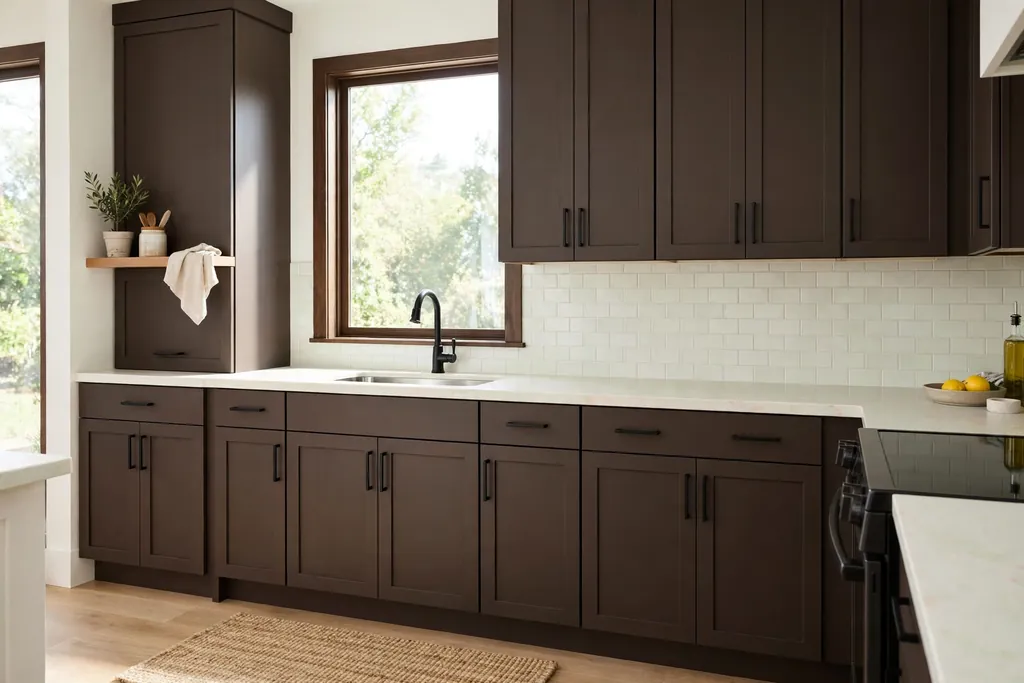
Matte black handles on dark brown cabinets give a calm, single color scheme with texture doing the work instead of contrast. The handles are visible because of their shape and shadow, not because of a bright metal. This suits a modern kitchen where you want the room to feel settled and uncluttered.
Use black for the faucet, cabinet pulls, and light fittings so the scheme stays consistent. Add a pale counter and a white or cream backsplash, because a fully dark scheme needs a light surface to rest the eye. Wipe matte black handles with a damp cloth, since they can show dust and fingerprints in strong side light.
15. Dark Brown Cabinets with a Deep Green Island
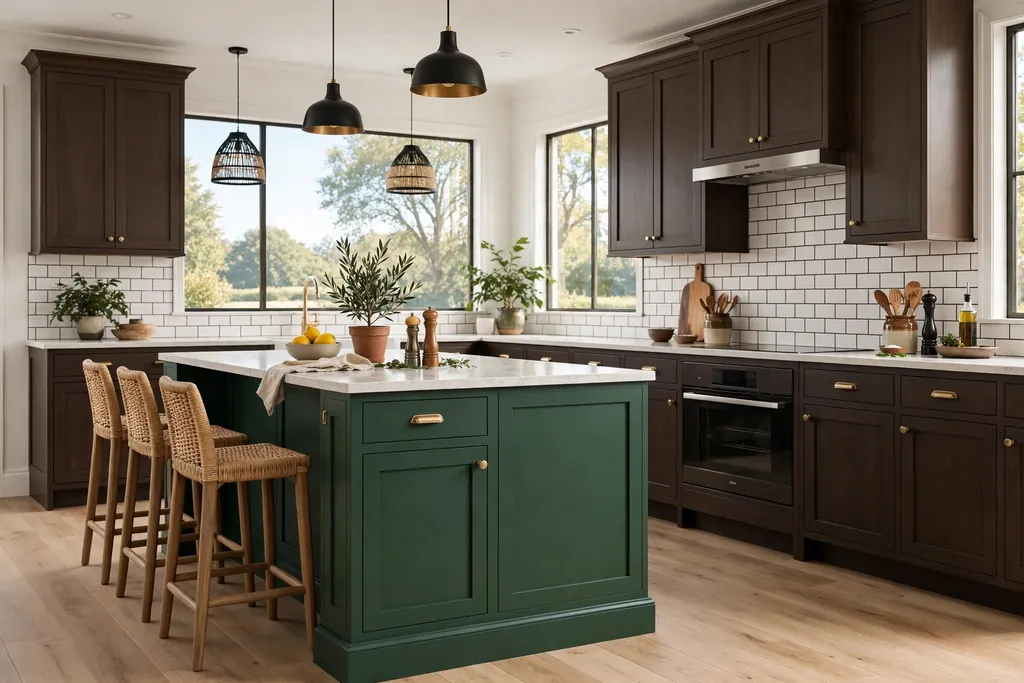
A deep green island beside dark brown perimeter cabinets adds color without breaking the warm, natural feel of the room. Green and brown sit well together because both come from wood and plants, so the island reads as a bold accent rather than a clash. This works best when the island is the only painted color in the room.
Keep the island counter pale, such as white quartz or light wood, so the green stays clear against the brown cabinets. Repeat the green in one small place, such as a plant pot, a stool cushion, or a tea towel, so the island does not look isolated. If the room is small, keep the island compact and the walkways clear on all sides.
16. Brass Pendants and Faucet with Dark Brown Cabinets
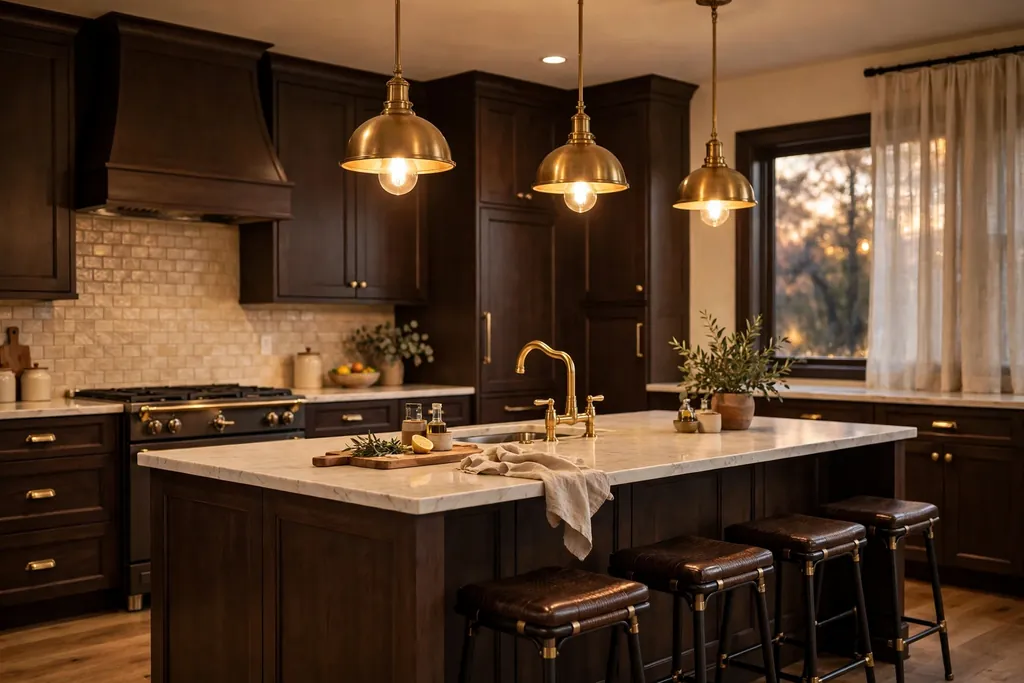
Brass pendant lights over an island or a peninsula warm dark brown cabinets from above, while a brass faucet repeats the metal at the sink. Two or three pendants in a simple shape, such as a dome or a cone, give focused light for prep and a warm glow in the evening. Use a brushed or satin brass rather than a high shine finish, which is easier to live with and shows fewer water marks.
Repeat brass in just two or three places, such as pendants, faucet, and cabinet handles, and keep other metals out of the main view. If your appliances are stainless steel, that is fine, because steel reads as a working material rather than a decorative metal. Clean brass with a soft cloth and avoid harsh pads that strip the finish.
17. Dark Brown Cabinets in a Small Kitchen with Light Walls
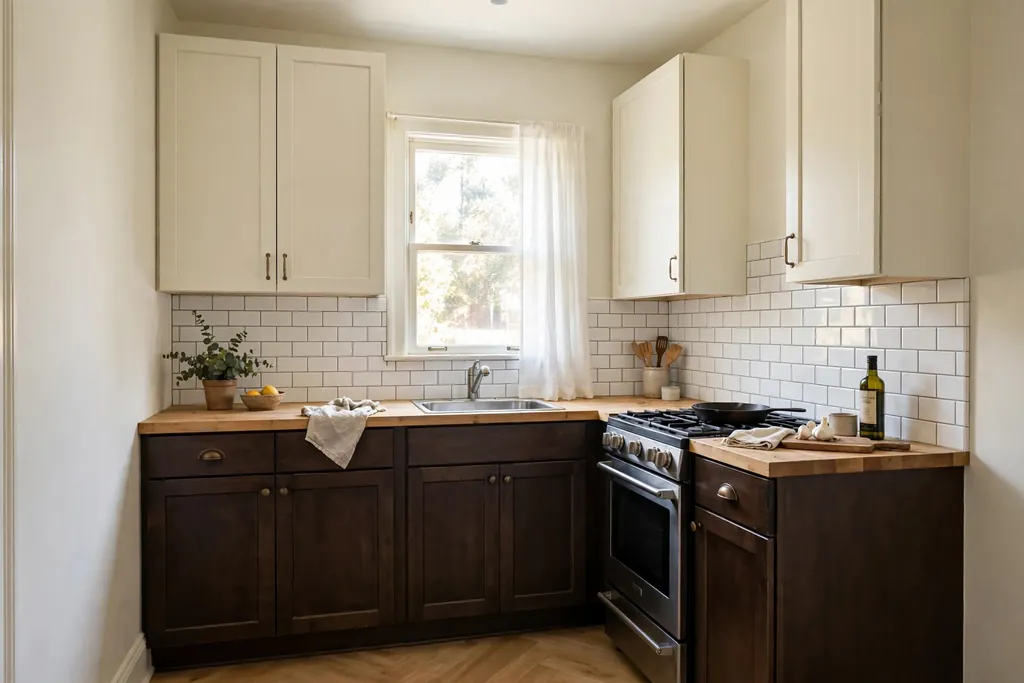
A small kitchen can carry dark brown cabinets if the rest of the room stays light. Keep dark brown on the base cabinets, leave the uppers cream or open, and paint the walls a warm white so daylight bounces around. A glossy cream tile backsplash or a glass splashback also helps, because it reflects light that matte paint absorbs.
Choose a pale floor, such as light wood or pale tile, and keep the counter light, so the dark base sits between two light bands. Fit as much storage as you can into drawers and tall units, so the counter stays clear and the small room feels larger. A single open shelf for daily dishes stops the wall from feeling like a solid dark block.
18. Dark Brown Cabinets with a Breakfast Nook Bench
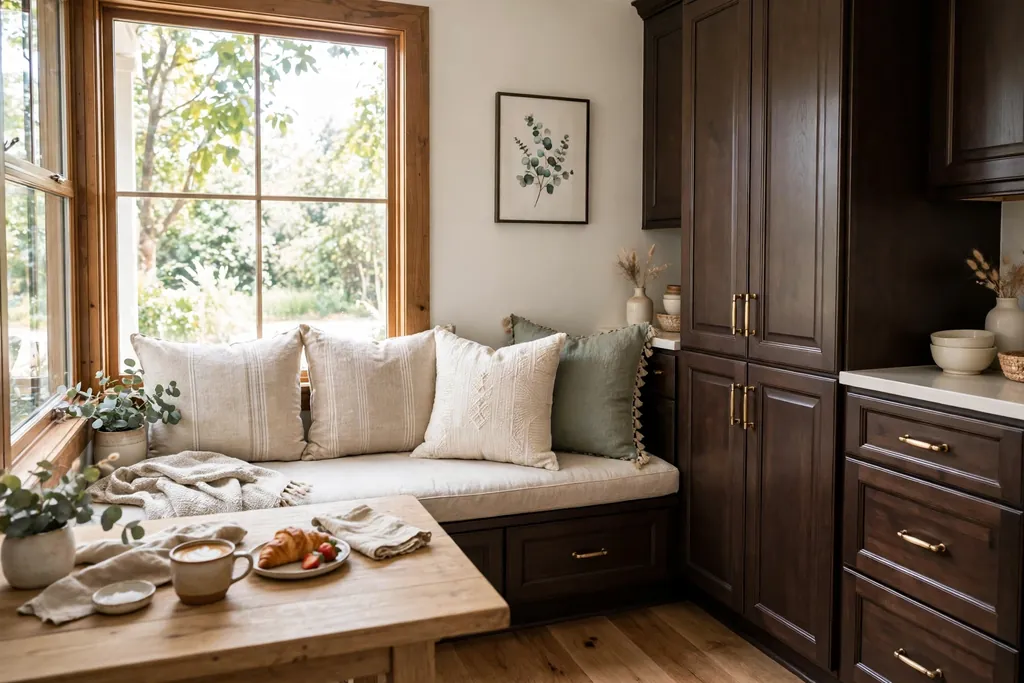
A breakfast nook bench beside dark brown cabinets turns a corner into a place to sit, not just a place to cook. Build the bench in the same dark brown as the cabinets, or in a warm wood that matches the floor, and add cream cushions and a small table. The nook suits a kitchen with a window corner or a blank wall at the end of a counter run.
Add storage inside the bench for table linens, cookbooks, or rarely used pans, so the seat earns its floor space. Keep the table small and round if the nook is tight, so chairs or a bench slide in easily. A pendant light over the table and a washable cushion cover make the nook practical for daily breakfasts, not just weekends.
19. Dark Brown Cabinets with a Wood Range Hood Feature
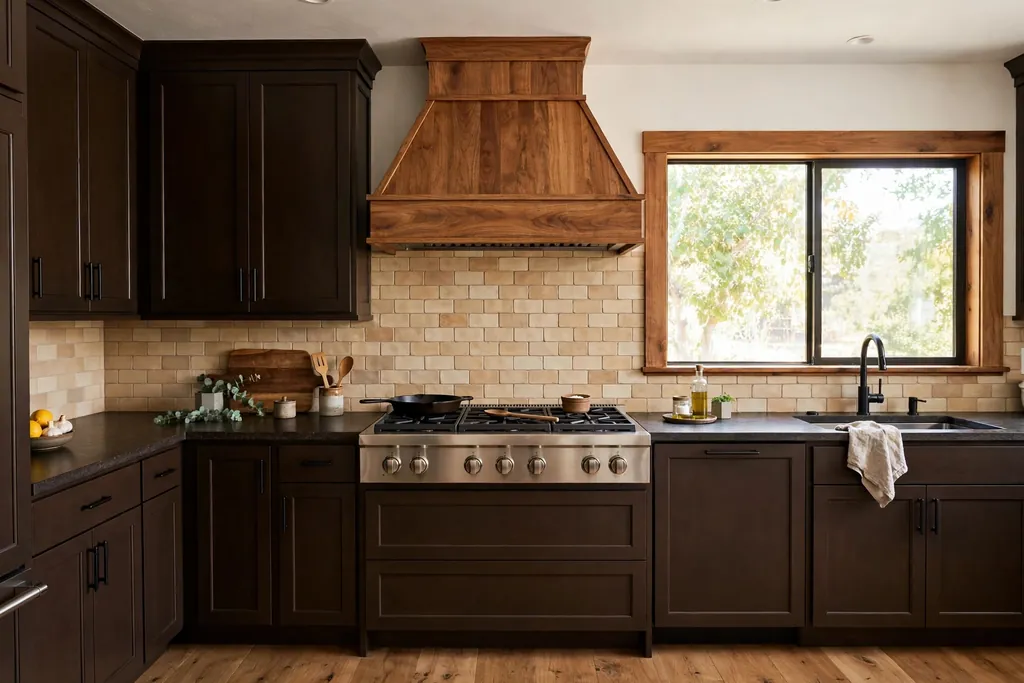
A wood range hood in a warm brown tone turns the stove wall into the focal point of a dark brown kitchen. The hood can match the cabinets exactly for a seamless wall, or use a slightly lighter wood so it stands out as a feature. A simple shape, such as a straight chimney or a gentle taper, suits most kitchens better than a heavily carved hood.
Keep the backsplash behind the stove simple, such as plain cream tile, so the hood stays the focus. Add a shelf on the hood or a small rail beside it for a cooking oil bottle and a timer, but keep the rest of the stove wall clear. Check the hood size against the stove width and the maker guidance for height, since a hood that is too small or too low is hard to live with.
20. Dark Brown Cabinets with a Built-In Wine and Bar Section
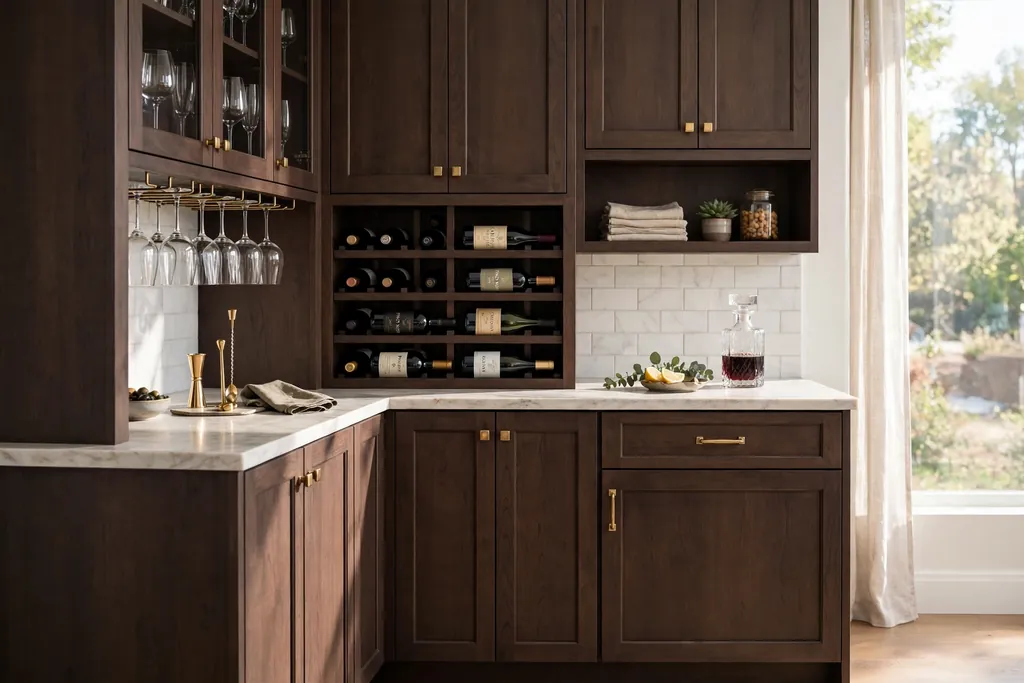
A built-in wine and bar section gives dark brown cabinets a grown-up, furniture-like role beyond daily cooking. Use one tall unit or a short counter section with a wine rack, glass storage, and a small counter for mixing drinks. Dark brown suits this use well, because it reads like a traditional bar cabinet or a library shelf.
Fit the rack so bottles lie flat and stay out of direct sunlight, and keep glasses on a shelf or a stemware rack above the counter. Add a small tray for bottles in use and a cloth for spills, so the bar counter stays tidy. If children use the kitchen often, fit a lock or a high latch on the bar cabinet and keep the section at adult height.
21. Herringbone Tile Backsplash with Dark Brown Cabinets
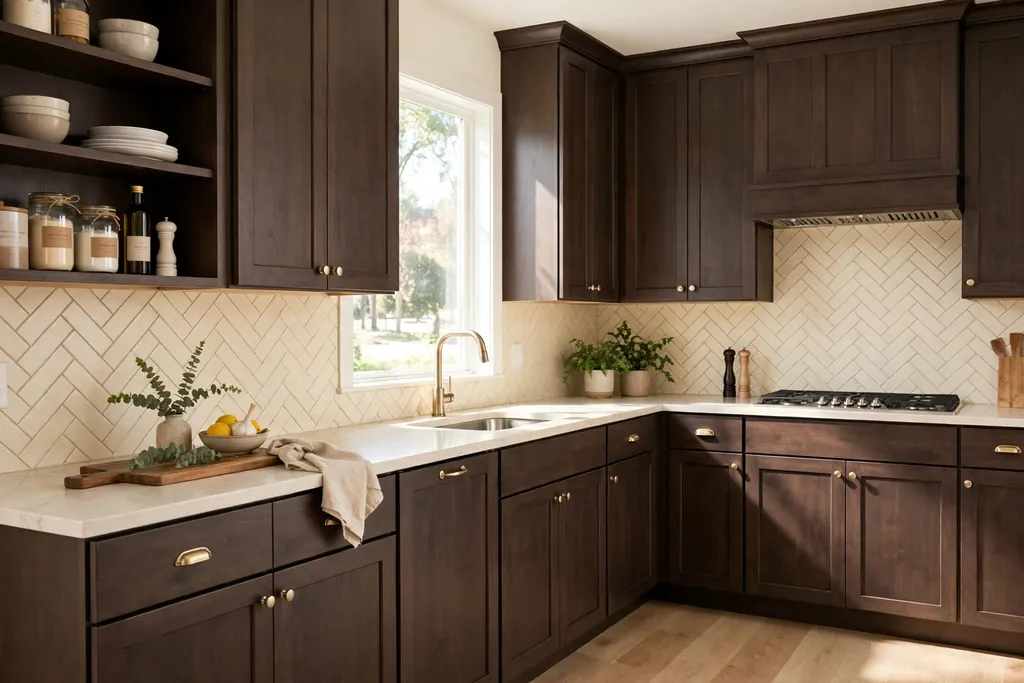
Herringbone tile gives a dark brown kitchen pattern without adding a new color. Lay small cream or pale grey tiles in a herringbone pattern behind the stove or across the full backsplash, using two close shades for a quiet depth. The angled pattern catches light in a way that flat tile does not, which helps a dark room feel less flat.
Keep the rest of the kitchen plain when you use a patterned backsplash, with simple cabinets and a solid counter, so the pattern has room to stand out. Use a grout color close to the tile shade to keep the pattern soft, or a slightly darker grout if you want the angles to read more clearly. Seal the grout in the stove zone, where splashes are most likely.
22. Cream Walls, Copper Accents, and Warm Textiles with Dark Brown Cabinets
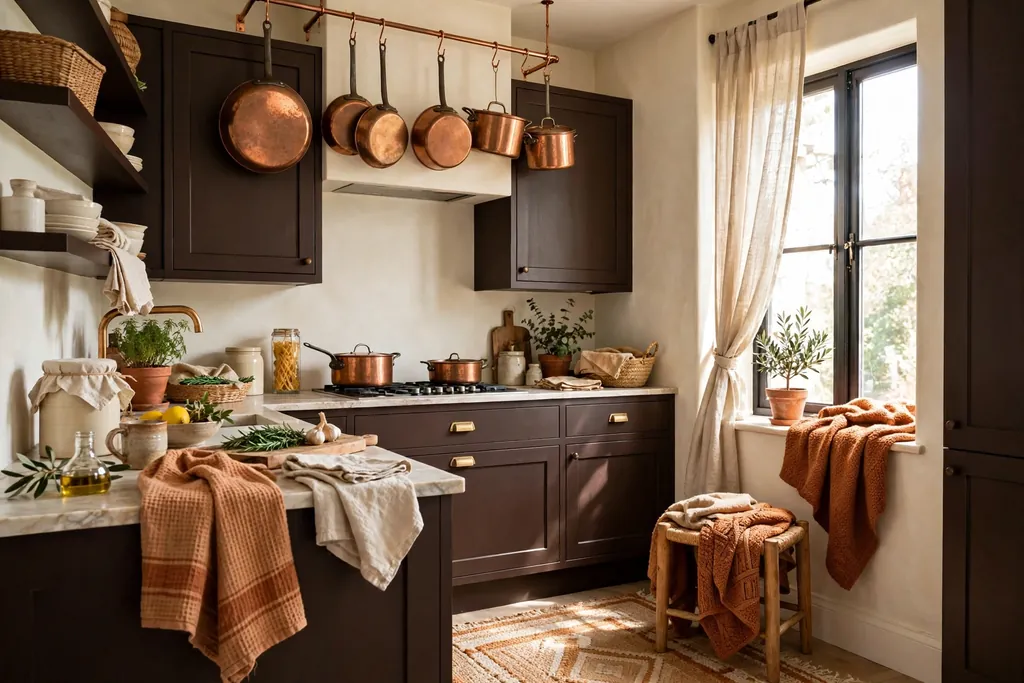
For a lived-in finish, pair dark brown cabinets with cream walls, copper accents, and warm textiles. Copper pots, a copper faucet, or a copper pendant add a warm metal that is softer than brass and richer than steel. Cream walls keep the room bright, while linen curtains, a woven runner, and wood boards add texture at eye level and underfoot.
Repeat copper in two or three places only, so it reads as a set, and keep the textiles washable, since kitchen fabric picks up cooking smells fast. A patterned runner in cream and brown ties the floor to the cabinets, and a plant on the windowsill adds green against the warm palette. This finish suits a kitchen you want to feel welcoming at the end of the day, not just practical at meal times.
Conclusion
Dark brown cabinets work best when the rest of the room gives them light, warmth, and one repeated metal to hold the scheme together. Start with the cabinet style that fits your home, then add a pale counter, warm lighting, and hardware you will enjoy touching every day. Small choices, such as glass uppers, open shelves, or a light island top, can keep a dark kitchen bright without removing the depth that made you choose brown in the first place. For more dark cabinet balance, revisit these dark grey kitchen ideas and the storage help in these kitchen wall storage ideas. Save the ideas that fit your layout, test a sample in your own light, and build the kitchen one corner at a time.
FAQs
1. Do dark brown kitchen cabinets make a kitchen look smaller?
They can, if every surface is dark, but they do not have to. Keep dark brown on the base cabinets, use cream uppers or open shelves above, and paint the walls a warm white. A pale counter and a light floor add two bright bands that keep the room feeling open, even in a small kitchen.
2. What countertop color works best with dark brown cabinets?
White quartz is the safest partner, because it gives a clean edge and keeps the room bright. Pale wood, such as maple or oak butcher block, adds warmth, while a marble look quartz adds a classic pattern. Avoid a very dark counter unless the backsplash and walls are pale, since a dark counter on dark cabinets can merge into one heavy block.
3. What hardware finish suits dark brown cabinets?
Brushed brass warms dark brown at once and suits classic shaker kitchens. Matte black gives a calm, modern look with texture instead of contrast. Copper suits a lived-in, rustic kitchen. Whichever finish you choose, repeat it on the faucet and lights, and keep other metals out of the main view, so the hardware reads as a set.
4. Are dark brown cabinets hard to keep clean?
Dark brown hides everyday marks better than white, but it can show dust and fingerprints in strong side light, especially on a matte finish. Wipe fronts with a soft damp cloth and a mild cleaner, and avoid harsh pads that dull the finish. A satin or semi-gloss finish shows fewer marks than a flat matte finish in a busy kitchen.
5. Can I mix dark brown cabinets with a different island color?
Yes, and it is one of the easiest ways to use dark brown without a full dark kitchen. A warm oak island, a deep green island, or a cream island all sit well beside dark brown perimeter cabinets. Keep the island counter pale, repeat one material from elsewhere in the room on the island, and keep the island the only contrasting color in the scheme.
6. What wall color goes with dark brown kitchen cabinets?
Warm white and cream are the most reliable choices, because they bounce light and keep the brown looking warm. Pale sage and soft grey also work, as long as they stay light. Avoid a mid tone wall color that is close to the cabinet shade, since it can make the room feel flat and the cabinets harder to see.