
Color in a bedroom works best when it has a clear job. One bold wall, one bright bedspread, or one painted dresser can wake up a plain room, while the rest of the room stays calm enough for sleep. These 28 colorful bedroom ideas cover walls, bedding, furniture, art, lighting, and small swaps, so you can add color in one place or build a full palette over time. Start with the change that fixes what bothers you most, test it in daylight and lamplight, then add a second color only where the room still feels flat.
Key Takeaways
- Give each color a job: use one main color for the bed or the wall, a second color for smaller repeats, and a quiet base for the rest.
- Put the strongest color where you see it first, such as the bed wall or the bedding, and keep the ceiling pale so the room still feels open.
- Repeat each color at least twice, in bedding and art, or in curtains and a cushion, so the palette looks planned rather than random.
- Test paint and fabric in morning light and evening lamplight before you commit, since colors shift a lot during the day.
- Start with bedding, cushions, and curtains for a no-paint refresh, and save walls and painted furniture for a weekend project.
- Keep one calm surface in the room, such as plain sheets or a plain rug, so bold color has somewhere to rest and the room still feels cozy at night.
1. Paint One Accent Wall Behind the Bed

Paint the wall behind the bed in a saturated color, such as teal, terracotta, or mustard, and keep the other walls warm white. The bed wall becomes the clear focal point, and the plain side walls keep the room from feeling closed in. This suits a room with plain furniture, since the wall does the color work and nothing else needs to change.
Choose a matte or eggshell finish so the wall does not shine under lamplight, and paint the trim in the same pale tone as the other walls for a clean edge. Test a large sample on the bed wall first, and look at it in the morning and again at night, since a color that looks bright by day can look much deeper in lamplight.
2. Layer Color-Blocked Bedding

Build the bed in blocks of color: a plain duvet in one tone, a folded throw in a second tone, and one or two cushions in a third. The blocks read as deliberate, and you can swap the throw or the cushions when you want a new mood without buying new bedding. This suits a room where the walls must stay pale, such as a rental.
Keep sleeping pillows in a plain tone close to the duvet, and put the brightest block at the foot of the bed, where it is easy to fold back at night. Wash the throw and cushion covers together so the colors stay even, and store spare covers in a basket so a seasonal swap takes minutes.
3. Add a Multicolor Patchwork Quilt

A patchwork quilt brings many colors to the bed in one piece, which suits a room with plain walls and simple furniture. The mixed squares add pattern and warmth, and the quilt can fold back to show plain sheets beneath when the room needs a calmer look. Look for a quilt with one color that repeats most often, so the mix still has a clear thread.
Let the quilt lead and keep the rest of the bed plain, with solid cushions in one tone taken from the quilt. If the quilt feels busy, fold it across the lower half of the bed only, so the top half stays quiet. A quilt also suits a guest room, since it makes the bed look finished with little else in the room.
4. Paint a Pair of Mismatched Nightstands
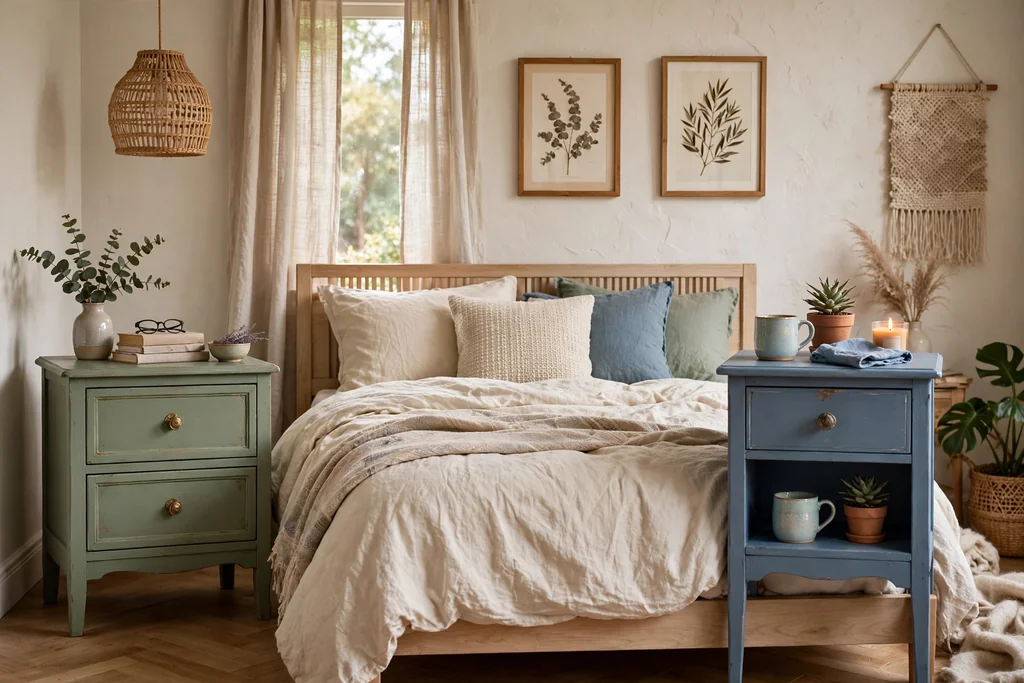
Paint two nightstands in two different colors, such as sage and dusty blue, and keep the lamps and bedding shared between them. The pair feels collected rather than matched, and the room gains color at bed height, where you see it from the door and from the bed. This suits a room where a full repaint feels like too much.
Sand and prime the pieces first, and use a paint made for furniture so the finish stands up to daily use. Repeat each nightstand color once more in the room, in a cushion or a small frame, so neither color looks like a mistake. Keep the tops mostly clear, so the painted color stays easy to see.
5. Build a Rainbow Gallery Wall

Hang a set of prints in a loose grid or a single row, with each print carrying a different bright color against a plain wall. The wall becomes the color story of the room, while the bedding and furniture can stay simple. This suits a bedroom with one large empty wall and little else on it, since the art fills the space without new furniture.
Use matching frames and equal gaps, so the mix of colors looks ordered rather than scattered. For more ways to size and hang art above a bed or a dresser, see these bedroom wall art ideas. Lay the frames on the floor first, measure the full block, and mark the wall with painter tape before you hang anything.
6. Hang Patterned Colorful Curtains

Choose curtains in a bold pattern, such as wide stripes, large florals, or a bright check, and keep the bedding mostly plain. The window becomes a block of color and pattern, which suits a room with white walls and solid furniture. Pick a pattern that shares one color with the rug or a cushion, so the window links to the rest of the room.
Hang the rod high and wide, so the panels stack clear of the glass when open and daylight still fills the room. For fabric, length, and lining choices that suit different windows, see these bedroom curtain ideas. Wash patterned curtains as advised on the label, since bright prints can fade in strong sun.
7. Paint a Wardrobe or Dresser in a Bold Tone
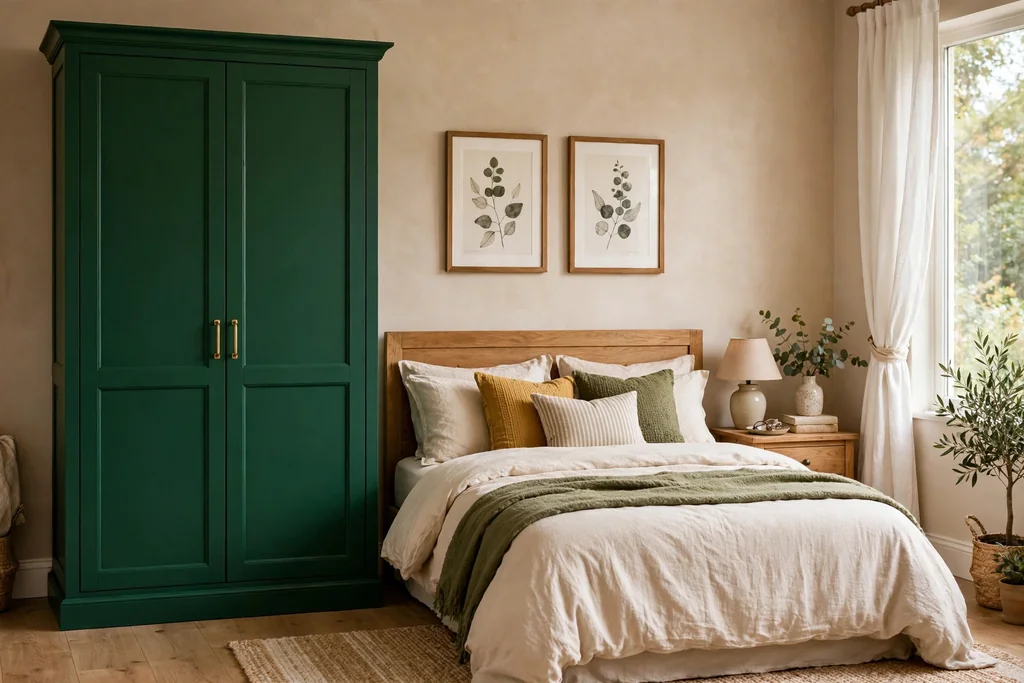
Paint one large furniture piece, such as a wardrobe or a dresser, in a bold tone like deep green, navy, or coral, and keep the walls pale. The piece anchors the room like a painted accent wall, but it can move with you, which suits a rental or a room you plan to rearrange. The color also hides small marks better than a pale finish.
Remove the handles before painting, and paint the inside of the doors only if you want the color to show when the piece is open. Put the handles back in a simple finish, such as wood or brushed brass, so the color stays the focus. Keep the top of the piece mostly clear, with one tray or one vase, so the painted surface reads clearly.
8. Anchor the Room With a Colorful Rug

Place a large rug with a strong pattern or a bright border under the lower two thirds of the bed, extending out on both sides. The rug gives the room a color base at floor level, which suits a bedroom with pale walls and plain bedding. A rug that is too small makes the bed look as if it is floating, so measure for a clear border on each side before you buy.
Choose a low pile rug that doors and drawers can clear, and use a rug pad on smooth floors to reduce slipping. Repeat one rug color in the bedding or a cushion, so the floor color connects to the bed. Vacuum often, since a bright rug shows dust and lint more than a dark or plain one.
9. Choose a Jewel-Tone Velvet Headboard
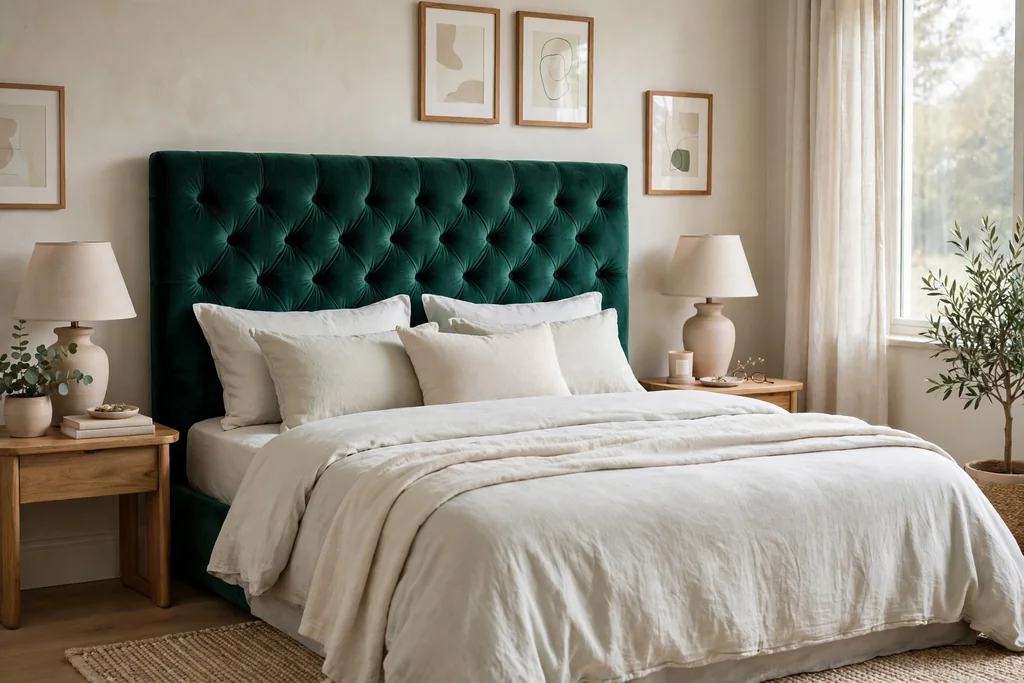
A headboard in emerald, sapphire, or plum velvet adds deep color and softness behind the bed, without any paint. The rich tone suits a room with plain walls and warm lamplight, and it makes sitting up to read more comfortable than a hard wall. Keep the bedding in a paler tone, so the headboard stays the clear focal point.
Measure the bed width and the wall space before you buy, and leave room for bedside tables on both sides. Vacuum the headboard gently now and then, since velvet holds dust, and keep the cover removable if possible. Add one cushion in the headboard color to link the bed to the wall behind it.
10. Paint the Ceiling in a Soft Bright Color
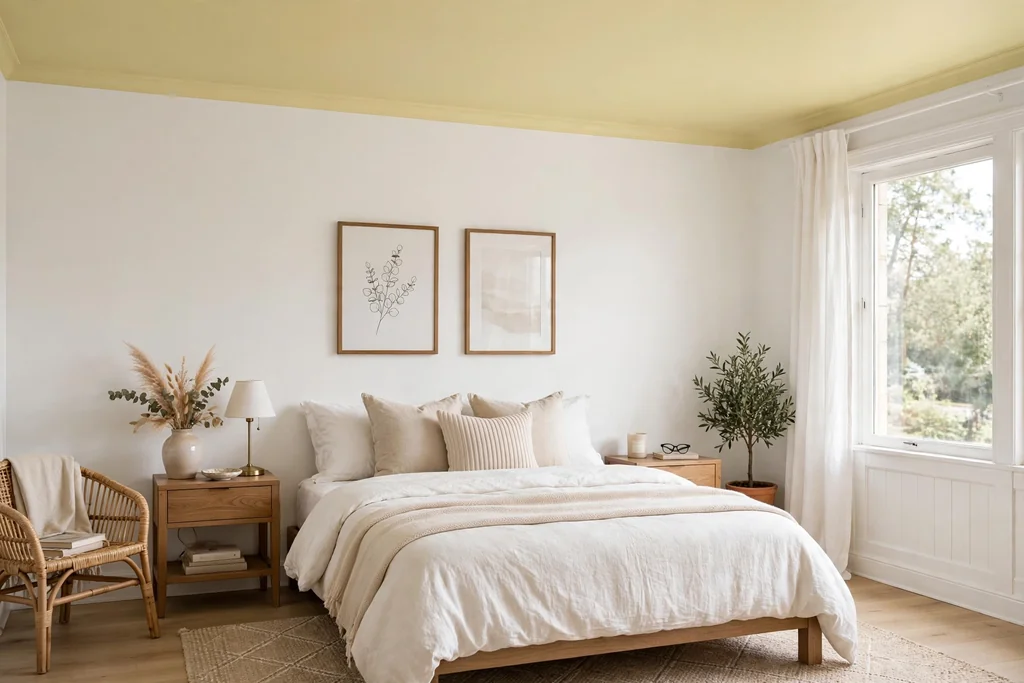
Paint the ceiling in a soft bright color, such as pale butter yellow, sky blue, or blush, and keep the walls warm white. The color overhead feels playful when you lie in bed, but it stays out of the main sightline from the door, so the room still feels calm on entry. This suits a room with plain walls that needs one surprise.
Keep the color pale rather than saturated, since a dark ceiling can make a low room feel lower. Paint the trim white for a clean edge, and test the color on a large board held overhead before you paint the full ceiling. Pair the ceiling with one cushion or throw in the same tone, so the color feels linked to the bed.
11. Try an Ombre Wall That Fades to White

Paint one wall so a strong color at the bottom fades upward into white near the ceiling. The gradient adds color without a hard edge, which suits a bedroom where a flat block of bold paint feels too strong. The fade also keeps the top of the wall bright, so the room still feels open.
Blend the paint in horizontal bands while each band is still damp, and step back often to check the fade from across the room. Keep the furniture against this wall simple, so the gradient stays easy to see, and keep the other walls plain. This idea takes patience, so practice on a board first if you have not blended paint before.
12. Rotate Bright Throws and Cushions by Season

Keep a small set of bright throws and cushion covers, and swap them by season: warm rust and gold in autumn, fresh green and coral in spring. The bed changes mood with one basket swap, which suits a room where walls and furniture must stay the same. This also lets you test a bold color for a few weeks before you commit to paint.
Store the off-season set in a lidded basket or a shelf box, folded and clean, so the swap takes minutes. Keep sleeping pillows plain all year, and change only the decorative cushions and the throw, so the bed stays easy to make. Wash new covers before the first use, since bright dyes can mark pale sheets at first.
13. Paint the Bed Frame in a Cheerful Color
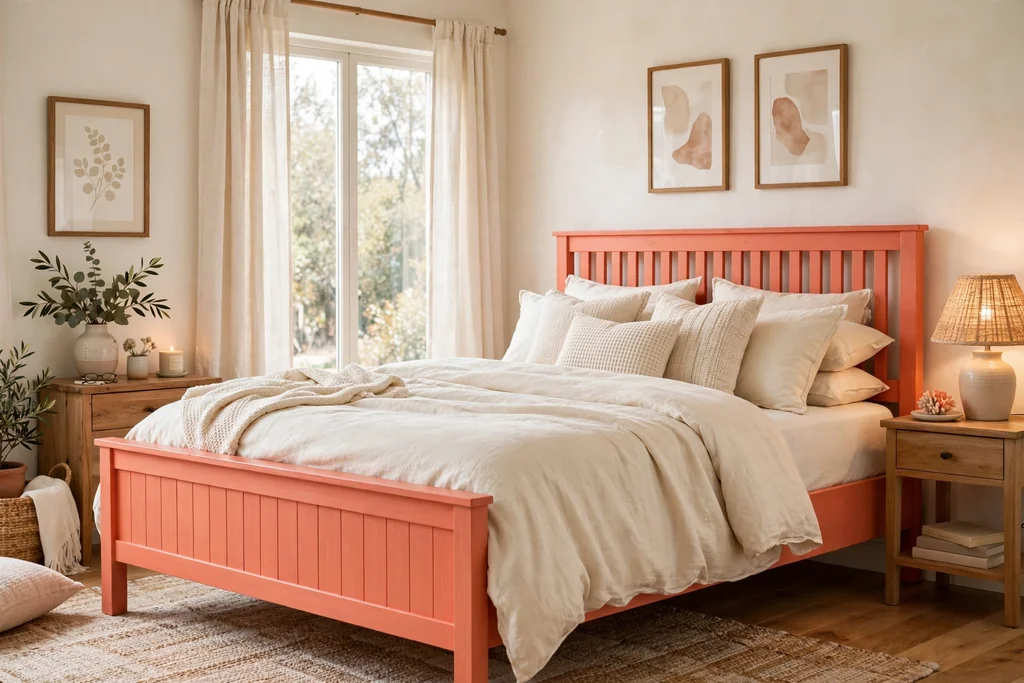
Paint a wood bed frame in a cheerful color, such as sunny yellow, coral, or sky blue, and keep the bedding in a calmer tone. The frame becomes a bright outline for the bed, which suits a simple room with plain walls and little furniture. This works best on a wood frame with clean lines, where the color can show clearly.
Sand and prime the frame first, and paint the headboard and footboard in the same color for a finished look. Keep the side rails in the same tone, or the frame can look unfinished from the door. Add one cushion in the frame color to the bed, so the bright outline feels planned rather than random.
14. Make a Bright Reading Chair the Corner Focus
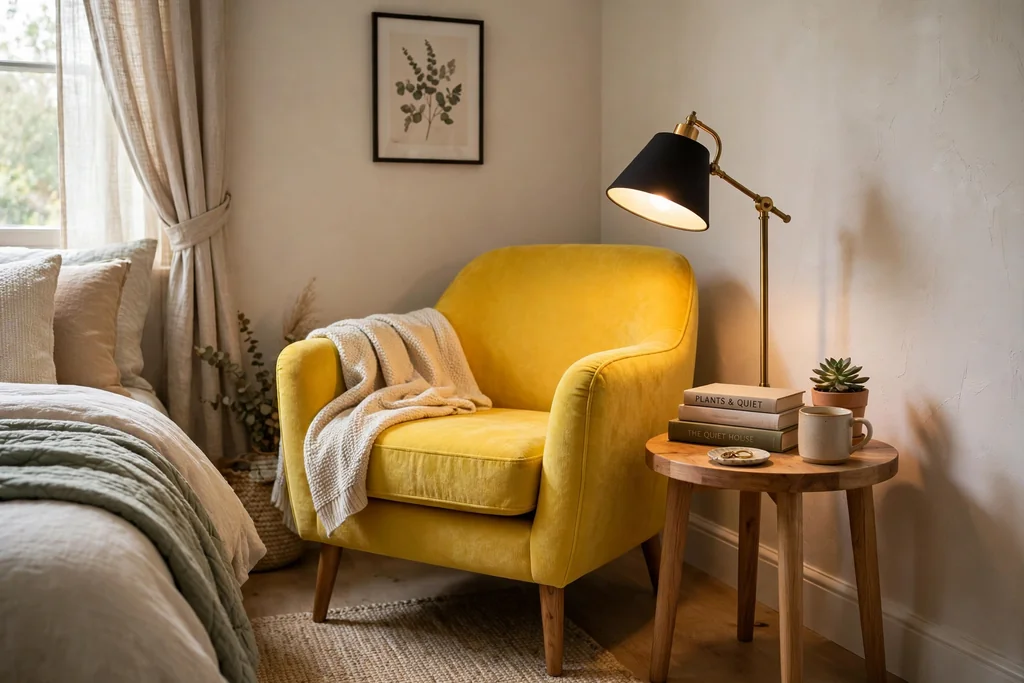
Place one armchair in a bright fabric or a bold painted wood in a bedroom corner, with a small side table and a reading lamp. The chair gives the room a second color focus away from the bed, which suits a larger bedroom or a room with an empty corner. A bright chair also makes the corner an invitation to sit, rather than a spot for bags and laundry.
Angle the chair slightly toward the room, and keep it clear of clothes, so it stays usable. Repeat the chair color once, in a cushion on the bed or a print on the wall, so the corner does not look cut off from the room. Choose a washable cover if the chair will get daily use.
15. Paper One Wall With Bold Peel-and-Stick Wallpaper

Use peel-and-stick wallpaper with a bold pattern, such as large florals, wide stripes, or a bright geometric print, on the bed wall only. The pattern adds color and detail without paint, and it peels off when you move or tire of it, which suits a rental. Keep the other walls plain, so the papered wall stays the focus.
Measure the wall and order a little extra paper for pattern matching at the seams. Start at the center of the bed wall and work outward, smoothing each strip as you go, so the pattern stays centered on the bed. If a strip bubbles, lift it and reapply it while the adhesive is still fresh, rather than pressing the bubble flat.
16. Mix Colorful Lampshades and Warm Bulbs

Swap plain lampshades for shades in bright colors or bold patterns, and use warm bulbs so the color glows softly at night. The shades add color at eye level in the evening, when wall color matters less, which suits a room that feels plain after dark. This is a quick change, since it needs no paint and no new furniture.
Keep both bedside shades the same color or in two close tones, so the bed still looks balanced. Check that the shade size suits the lamp base, since a shade that is too large can block light or look top heavy. Keep bulb color consistent across the room, since mixed warm and cool bulbs make a palette look uneven.
17. Style Colorful Open Shelves Above a Dresser
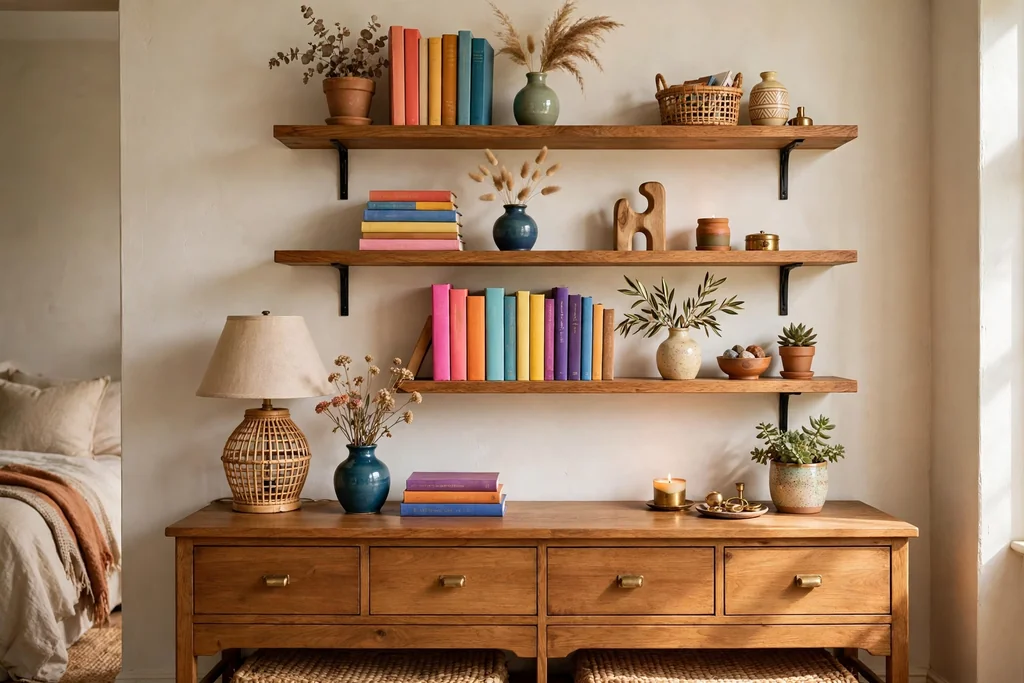
Fit one or two open shelves above a dresser, and style them with books, vases, and small objects in a few bright colors. The shelves become a color display that you can change without repainting, which suits a room where the walls must stay pale. Group objects in threes, and leave one end of each shelf empty, so the display does not look packed.
Repeat the shelf colors in the bedding or a cushion, so the shelves link to the rest of the room. Keep daily items, such as chargers and brushes, off the shelves, so the color groups stay clear. Dust the shelves often, since open displays collect dust faster than closed storage.
18. Dress the Bed in Bold Floral Bedding

Choose a duvet set with a large-scale floral print in bright colors, and keep the walls and curtains plain. The bed becomes a garden of color, which suits a room with white walls and simple furniture. Pick a print with a pale background, so the bright blooms read clearly without making the bed feel heavy.
Keep cushions to one or two solid tones taken from the print, and keep the throw plain, so the floral stays the focus. Wash the set as advised on the label, since bright floral dyes can fade in strong sun or hot washes. If the print feels strong at night, fold the duvet back to show plain sheets at the top.
19. Use Woven Baskets in Bright Colors for Storage

Replace plain storage boxes with woven baskets in bright colors, for throws, spare bedding, and laundry. The baskets add color at floor level and keep clutter out of sight, which suits a small bedroom where storage must stay on show. Choose baskets with lids for laundry and open baskets for throws you reach for daily.
Keep basket colors to two or three tones that already appear in the room, so the storage looks planned. Label the inside of a lidded basket if it holds seasonal bedding, so you can find it without emptying every basket. Wipe woven baskets with a damp cloth, since dust settles into the weave.
20. Paint the Bedroom Door and Trim a Bright Accent
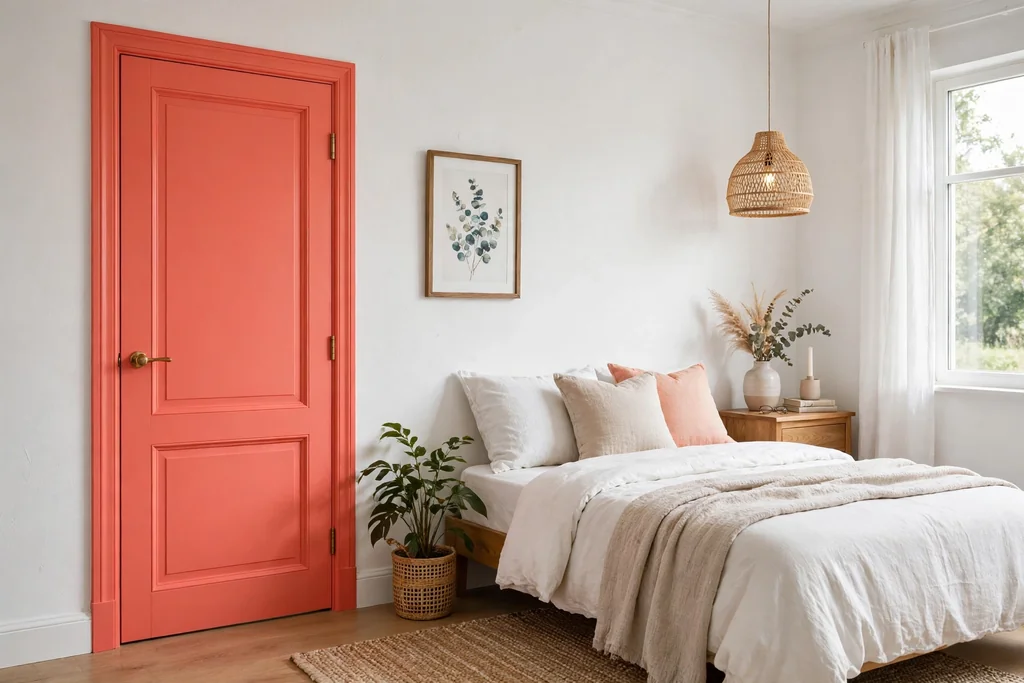
Paint the bedroom door, or just the trim around it, in a bright accent color, and keep the walls pale. The door becomes a framed block of color that you see every time you enter, which suits a room where the bed wall already has art or a headboard that should stay the focus. This is a small paint job, so it suits a weekend.
Paint the door in the same finish as the trim for a clean edge, and remove the handles before you start. Repeat the door color once in the room, in a cushion or a small frame, so the bright door does not look isolated. Keep the hallway side of the door in a neutral tone if the rest of the house is pale.
21. Hang a Colorful Bed Canopy or Drape
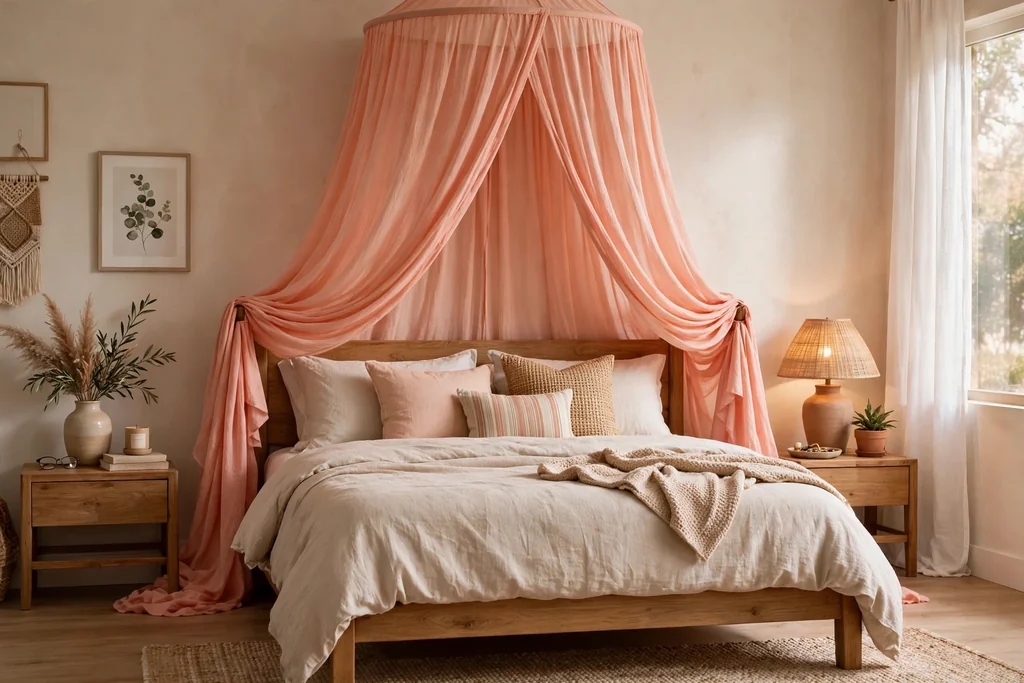
Hang a light canopy or a draped fabric panel above the bed in a bright color, such as coral, teal, or sunny yellow. The fabric adds color overhead and softens the bed, which suits a room with a plain ceiling and simple bedding. Choose a light fabric that lets air move, so the canopy feels airy rather than heavy.
Fix the canopy to the ceiling with fixings suited to the ceiling type, and keep it clear of bedside lamps, since fabric near a hot bulb is a risk. Wash the fabric often, since a canopy collects dust above the bed. If a full canopy feels like too much, drape one panel on one side of the bed only, for color without enclosure.
22. Style a Vanity Corner in Bright Tones
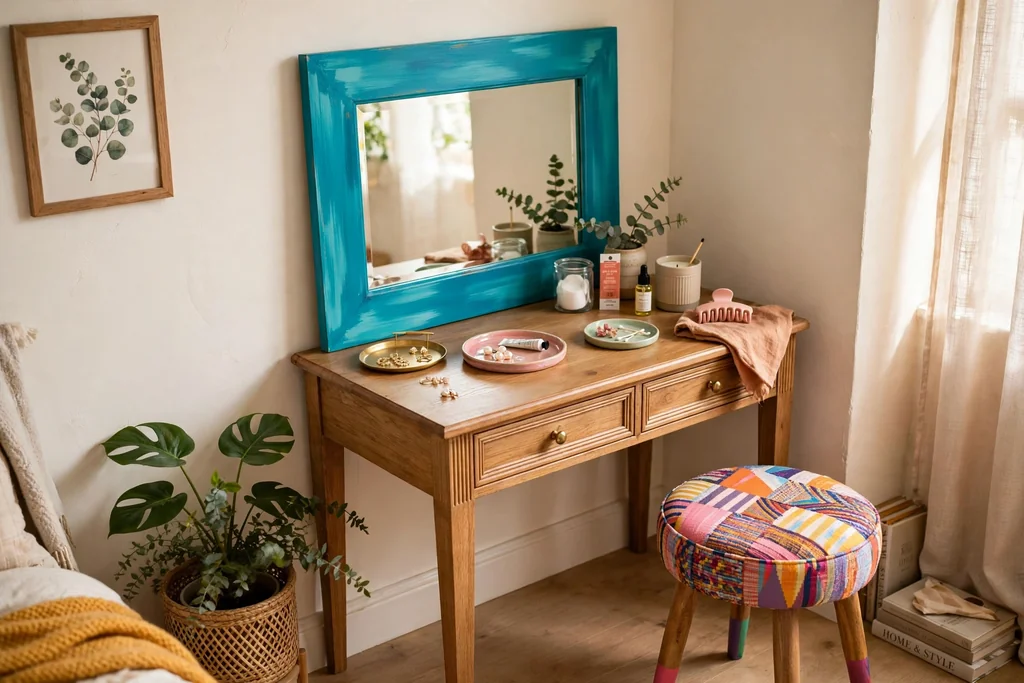
Set a small dressing table or vanity in a bedroom corner, with a bright painted frame, a colorful stool, and a few jars or trays in matching tones. The corner becomes a cheerful dressing spot, which suits a bedroom with an empty corner near a window. Keep the mirror frame simple, so the color comes from the furniture and the small items, not from a busy frame.
Keep the vanity top mostly clear, with a tray for daily items, so the corner stays usable and easy to clean. Repeat one vanity color in the bedding or a cushion, so the corner links to the bed. If space is tight, use a wall-mounted shelf as the vanity top and a stool that slides underneath.
23. Add Color at Floor Level With Painted Floorboards

Paint a section of wood floorboards, or a wide border around a rug, in a bright color, and keep the walls and bedding calm. The floor becomes the bold surface, which suits a room where the walls must stay pale and the bed already has a strong headboard. This works best in a room with wood floors in good condition.
Sand and prime the boards first, and use a floor paint made for foot traffic, so the color lasts. Keep the painted area clear of heavy furniture where possible, since dragged furniture marks floor paint fast. Add a plain rug on top for the area where your feet land first in the morning.
24. Build a Color Palette Around One Favorite Object

Start with one favorite object, such as a bright quilt, a painted vase, or a bold print, and build the room palette from its colors. Use the main color for bedding or a cushion, the second color for curtains or a throw, and keep the rest pale. This suits a room that feels random, since one object gives every later choice a clear test: does it share a tone with the starting piece?
Put the starting object where you see it daily, such as on the bed or the dresser, so the palette stays visible. For more pairing ideas that start from two colors, see these amazing bedroom color combos. If a new item does not share a tone with the starting piece, leave it out or move it to another room.
25. Create a Colorful Desk Corner for Work and Reading
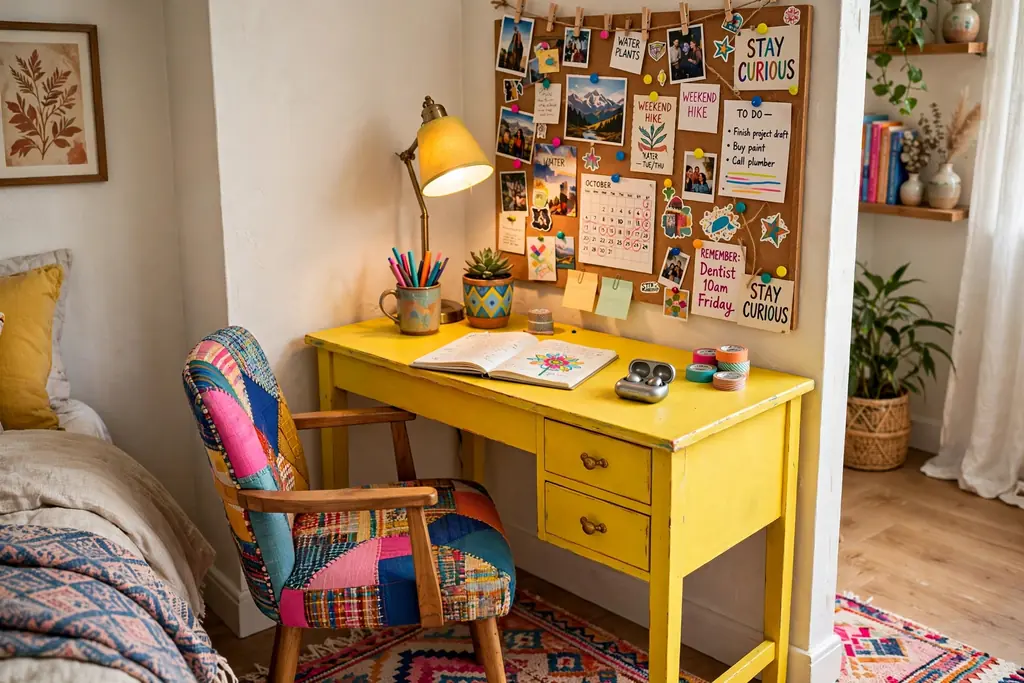
Place a small desk in a bedroom corner, with a bright painted desk or a colorful chair, a pinboard in a bold tone, and a lamp in a matching color. The corner becomes a clear work spot, which suits a bedroom that must also serve as a study or a reading room. Keep the work corner in the same palette as the bed, so the room still reads as one space.
Keep the desk top mostly clear, with a tray for pens and papers, so the corner stays usable. For a calm base under a bright desk, see these elegant bedroom ideas, which show how plain bedding and clear surfaces keep a busy room restful. Put the desk near a window if you can, so daylight helps during the day and the lamp takes over at night.
26. Group Colorful Plants and Pots on a Windowsill
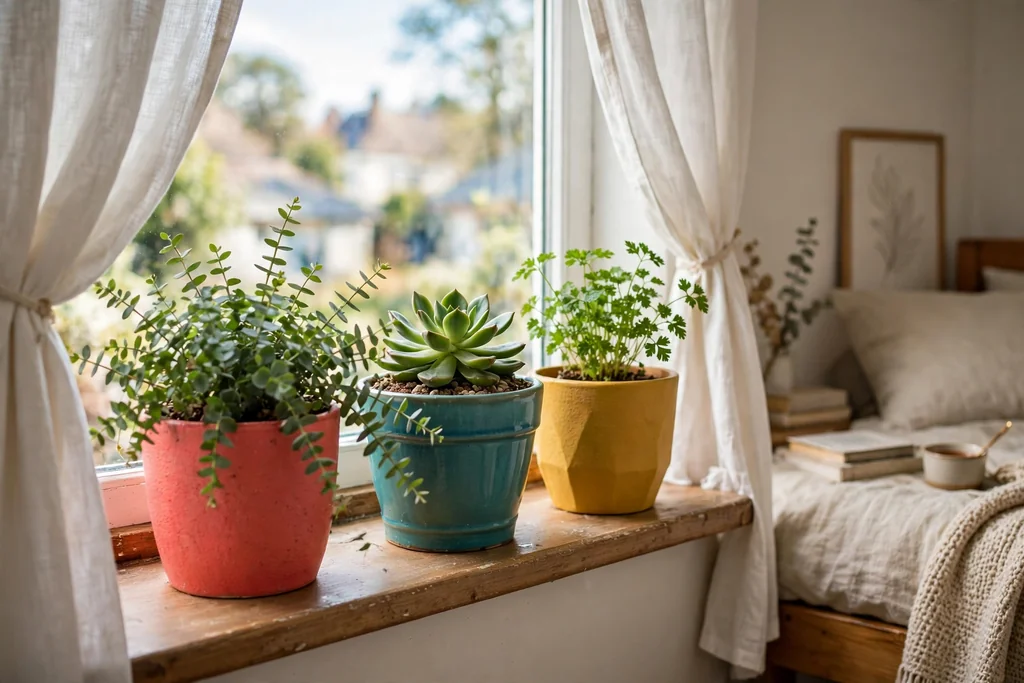
Group three to five potted plants in bright pots on a windowsill or a plant stand, with trailing leaves and upright stems mixed together. The plants add living green plus pot color, which suits a room with pale walls and plain bedding. Choose pots in two or three tones from the room palette, so the group looks planned.
Keep plants in pots with drainage, and put a tray under the group to protect the sill. Water plants over a sink where possible, so the sill stays dry, and rotate the pots now and then, so growth stays even. If the windowsill is narrow, use a plant stand beside the window instead, so pots do not crowd the glass.
27. Hang Fabric Wall Panels in Bright Colors
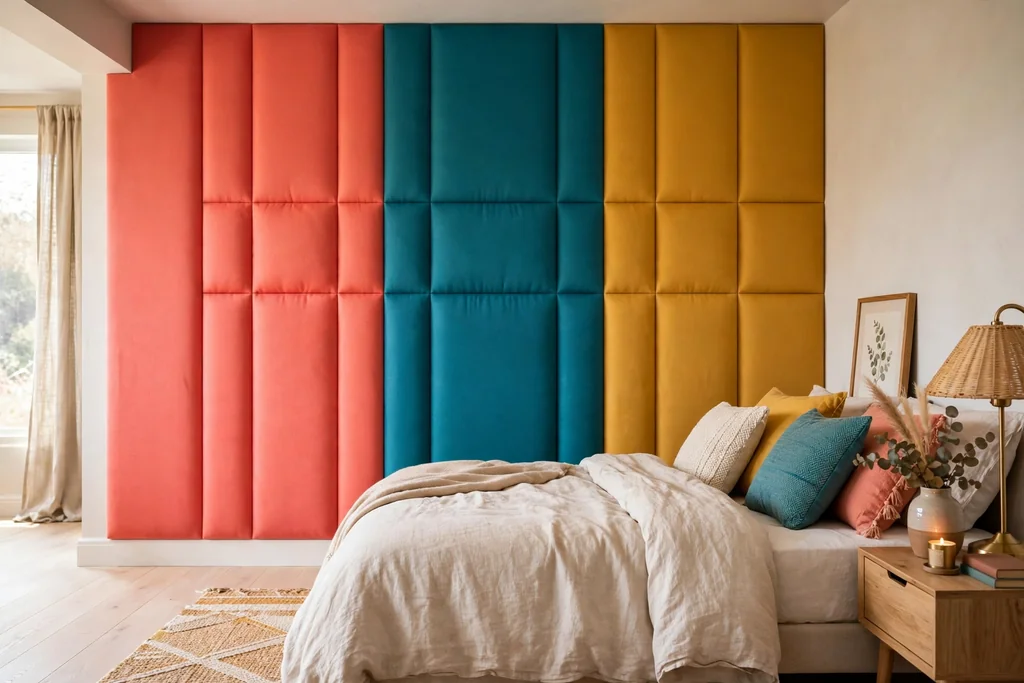
Hang two or three fabric panels, stretched over boards or hung from a slim rod, on the wall beside the bed or above a dresser. The panels add large blocks of color and soft texture, without paint or wallpaper, which suits a rental or a room where you want to test a bold color first. Choose fabrics with a clear pattern that reads from across the room.
Keep the panel frames or rods simple, so the fabric stays the focus, and hang the panels at the same height for a tidy row. If the fabric fades in sun, hang the panels on a wall that does not get direct afternoon light. Swap one panel by season, for a quick color change that needs no new furniture.
28. Mix Thrifted Pieces in a Collected Color Story
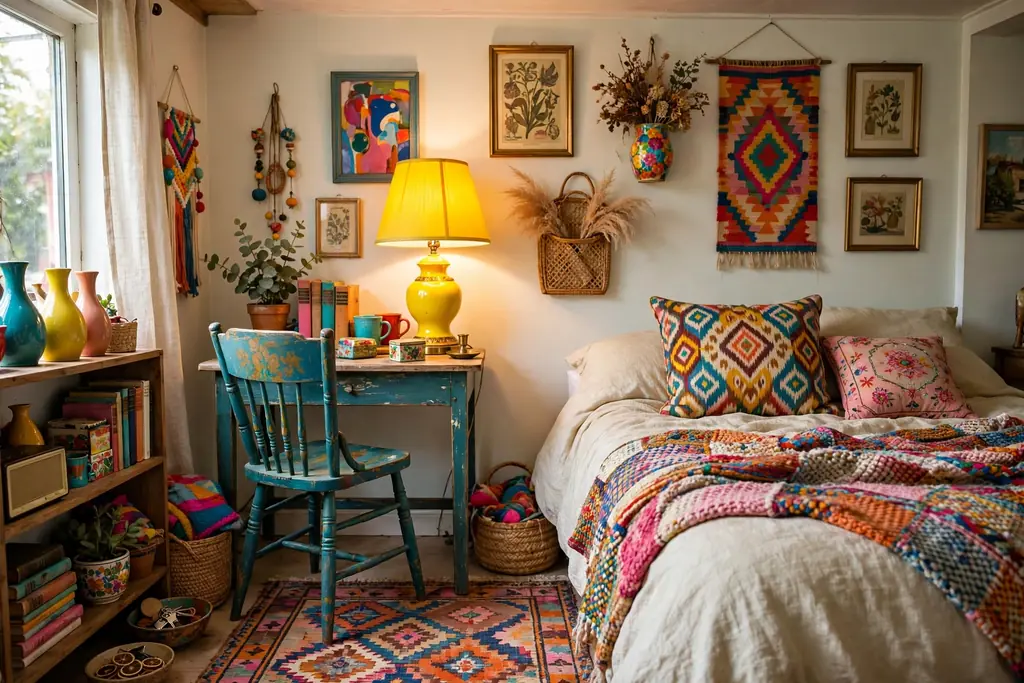
Gather secondhand pieces, such as a painted chair, a bright lamp, and a patterned cushion, in a shared palette of three or four colors. The mix feels collected over time, which suits a room with plain walls and a low budget, since each piece can arrive one at a time. The shared palette is what keeps the mix from looking random.
Check secondhand wood pieces for wobble and rough edges before they go near the bed, and clean fabric pieces well before use. Paint one piece if its color falls outside the palette, so the group stays linked. Keep the bed and the rug plain, so the collected pieces have a calm base to sit against.
Conclusion
A colorful bedroom does not need color on every surface. Pick one strong place for color, such as the bed wall, the bedding, or one painted piece, then repeat that color once or twice in smaller items and keep the rest of the room calm. Test paint and fabric in daylight and lamplight, start with bedding and cushions when you want a quick change, and save walls and furniture for a weekend project. Save the ideas that fit your room size, your light, and how much color you want to wake up to, and build a bedroom that feels bright by day and cozy at night.
FAQs
How much color should a bedroom have?
Use one main color, one second color, and a quiet base, and repeat each color at least twice so the room looks planned. Put the strongest color on the bed wall or the bedding, keep the ceiling pale, and leave one calm surface, such as plain sheets or a plain rug, so the room still feels restful at night. If the room starts to feel busy, remove one bright item before you add another.
What is the easiest way to add color without painting?
Start with bedding, cushions, a throw, and curtains, since these swap in minutes and need no paint. A bright rug, colorful baskets, or a set of prints on one wall can also add a lot of color without touching the walls. Keep the new items in a shared palette of two or three colors, so the room looks planned even though nothing was painted.
Which colors work best for a cozy bedroom?
Warm tones, such as terracotta, mustard, dusty rose, and deep green, tend to feel cozy, especially with warm lamplight and soft textures like velvet, wool, and linen. Cooler tones, such as teal, navy, and sky blue, can also feel cozy when paired with warm wood and warm bulbs. Test any color in evening light, since a tone that looks fresh by day can feel cold or harsh at night.
How do I mix bright colors without making the room look messy?
Limit the palette to two or three main colors, and use one of them as the clear lead on the bed or the wall. Repeat each color in at least two places, keep frames and furniture lines simple, and leave empty space on walls and surfaces, so bold color has room to breathe. If two bright patterns fight each other, keep one pattern large and the other small, or make one of them solid.
Can a small bedroom handle bold color?
Yes, if the bold color stays in one place, such as one accent wall, the bedding, or a rug, while the other walls and the ceiling stay pale. A small room also suits color in smaller doses, such as bright cushions, a painted nightstand, or colorful art above the bed. Keep the floor clear and the surfaces mostly tidy, since clutter makes a small colorful room feel crowded faster than a large one.
How do I keep a colorful bedroom restful at night?
Use warm bulbs, plain sleeping pillows, and a plain top sheet, so the bed feels calm even when the room has bright color elsewhere. Close bright curtains at night if they face a streetlight, and keep the brightest color off the wall directly opposite the bed if it catches lamplight. A dimmer on the bedside lamps helps too, since lower light softens strong colors in the evening.