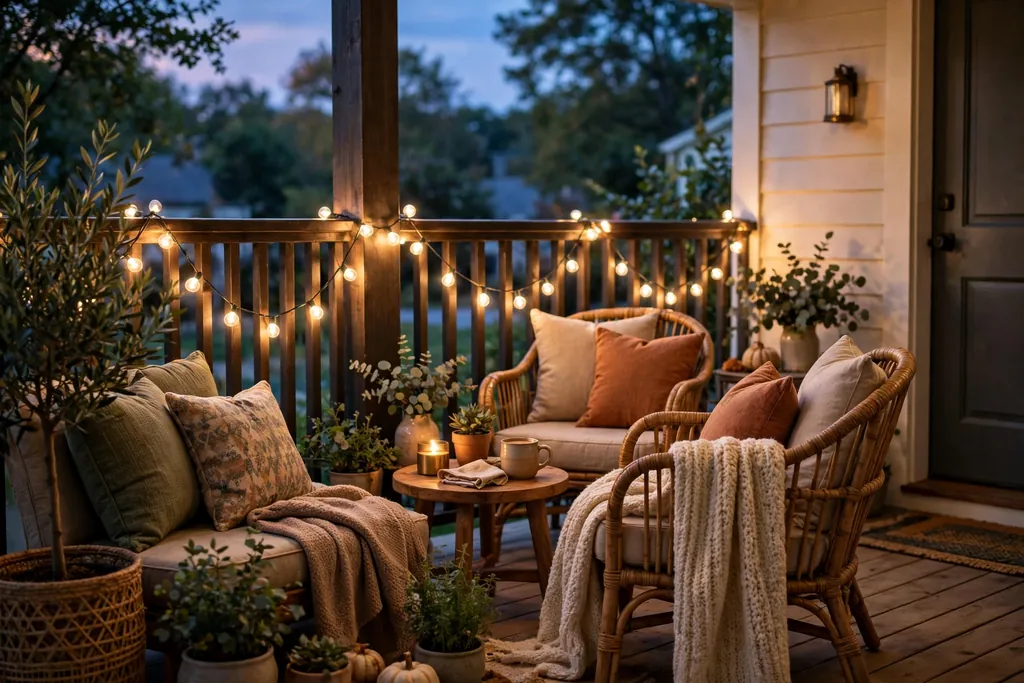
Category: Seasonal Decor

Thoughtful seasonal touches, tablescapes, and holiday decorating ideas.

  • 25 Outdoor Patio Decorating Ideas for a Comfortable Retreat

    25 Outdoor Patio Decorating Ideas for a Comfortable Retreat

    A comfortable outdoor patio starts with shaded seating, a clear place to eat, soft light for evenings, and plants that soften hard edges. Choose weatherproof furniture sized to your patio, add a rug to mark the seating area, layer light with string lights and lanterns, and finish with pots, shade, and a heat source for cool nights.

    The 25 ideas below work for a small concrete slab as well as a large paved patio, since most of them scale down to one chair and one pot, or up to a full seating and dining group. Start with seating and shade, then add light and plants. Keep a clear path from the house door to the seating area, and leave room to pull out chairs and walk around the table with ease.

    Key Takeaways

    • Start with seating and shade, since a patio that is too hot or has nowhere comfortable to sit will go unused.
    • Size furniture to the patio, leaving clear walkways around chairs, tables, and planters.
    • Use an outdoor rug to mark the seating area and to make hard paving feel softer underfoot.
    • Layer light with overhead string lights, lanterns, and solar path lights, so the patio works after dark.
    • Repeat two or three colors across cushions, pots, and throws, so many separate pieces read as one planned space.
    • Choose weatherproof fabrics and finishes, or store cushions and throws in a bench or basket when rain is expected.
    • Add plants at different heights, from ground pots to a trellis wall, to soften fences and walls.

    1. Deep Seat Sofa Group with Washable Cushions
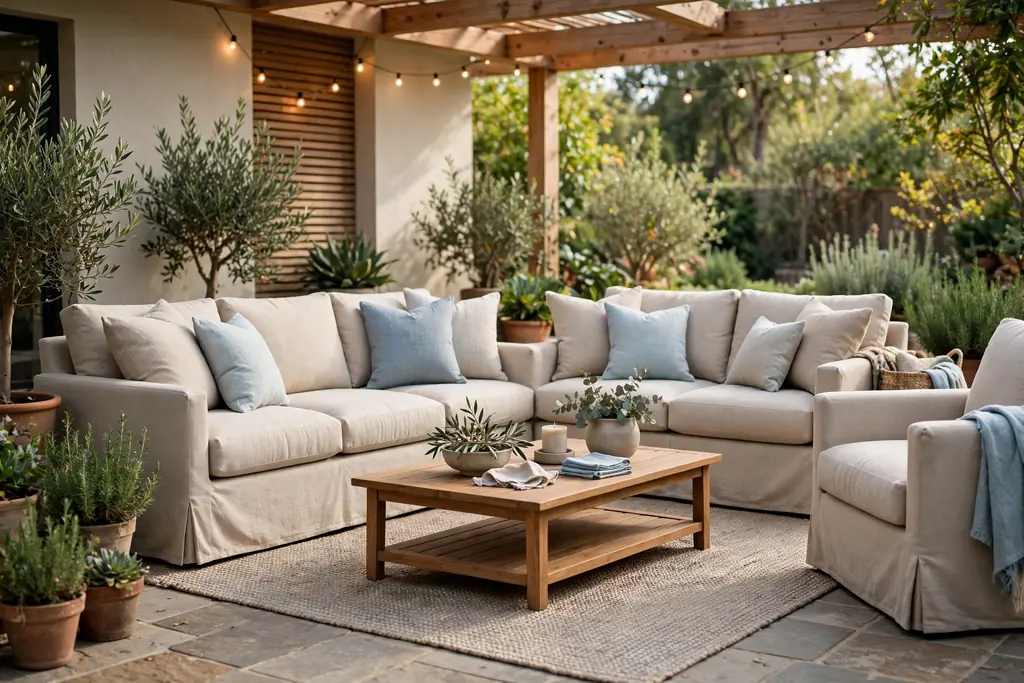
    Deep seat outdoor sofa group with washable cushions around a low coffee table on a patio.

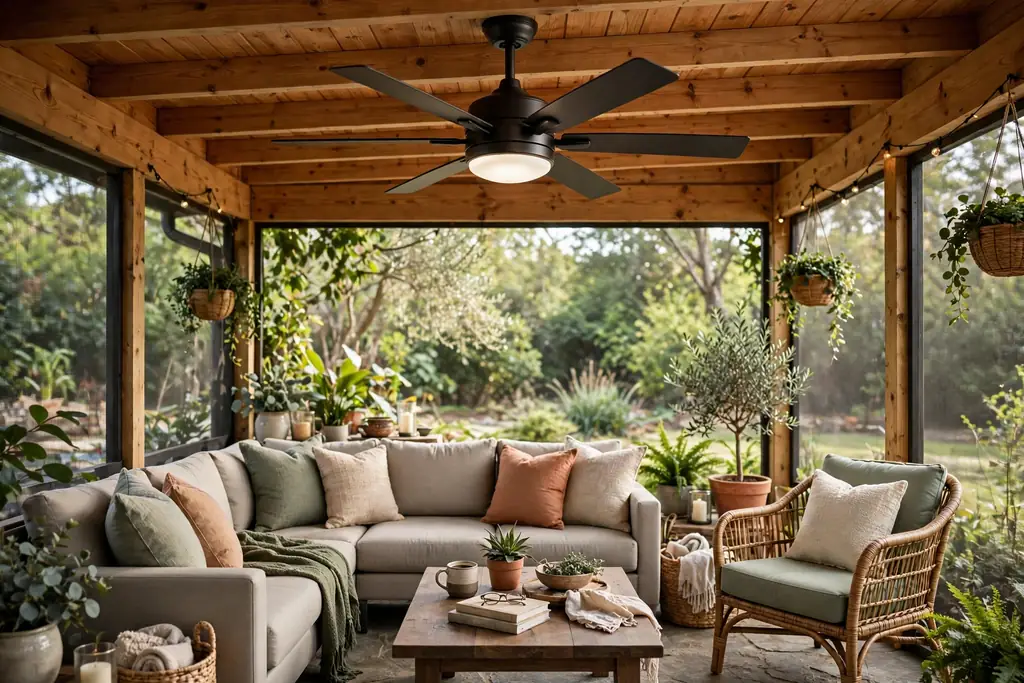
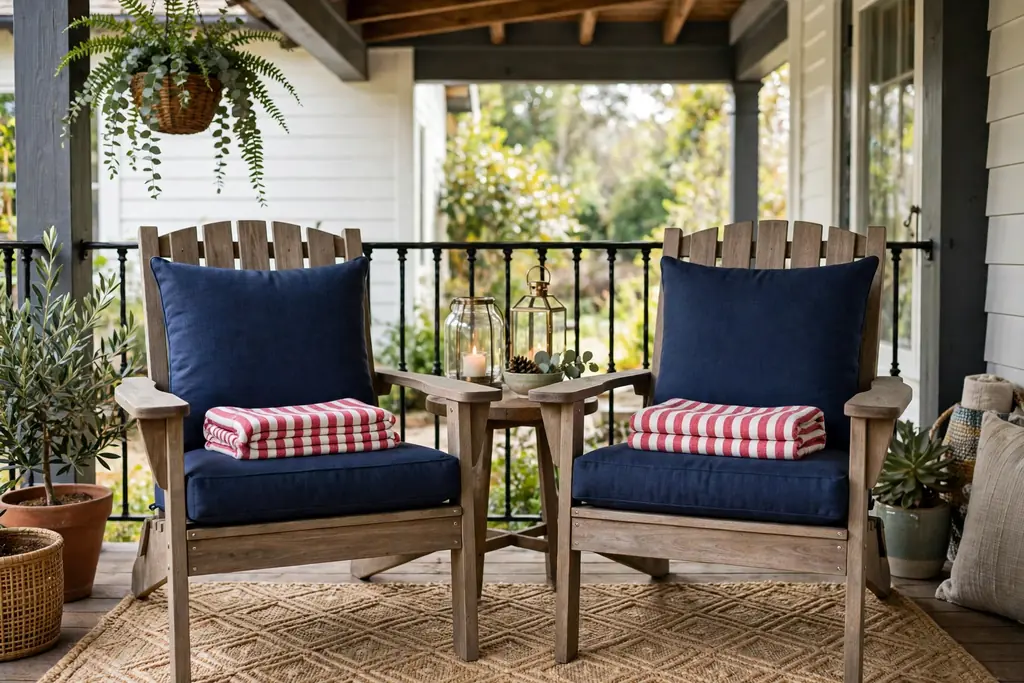
    A deep seat sofa group turns a patio into an outdoor living room. Set a two or three seat sofa with two armchairs around a low coffee table, facing each other so conversation feels natural. Thick seat cushions make the group comfortable for long sits, and a coffee table holds drinks, books, and a small lantern within reach.

    Choose cushions with removable, washable covers, since outdoor cushions gather dust, pollen, and spills. Measure the group before buying, and leave at least 60 centimeters of walking space around the seating. If the patio is small, a loveseat with one chair gives the same living room feel in less space.

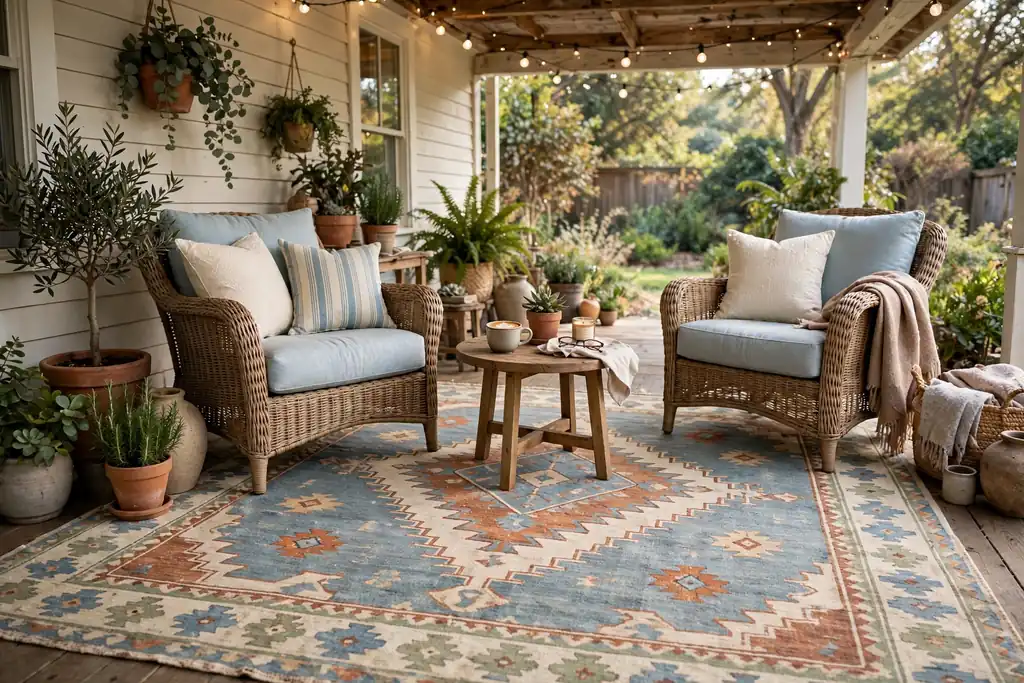
    2. Layered Outdoor Rugs for a Softer Floor
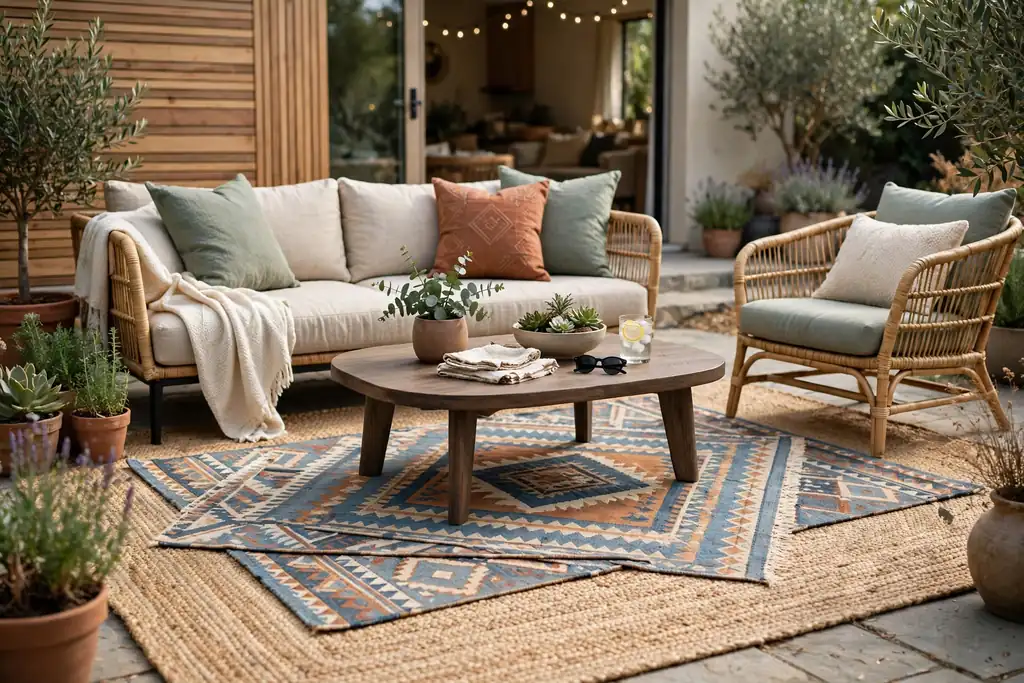
    Layered outdoor rugs under a patio coffee table and seating group.

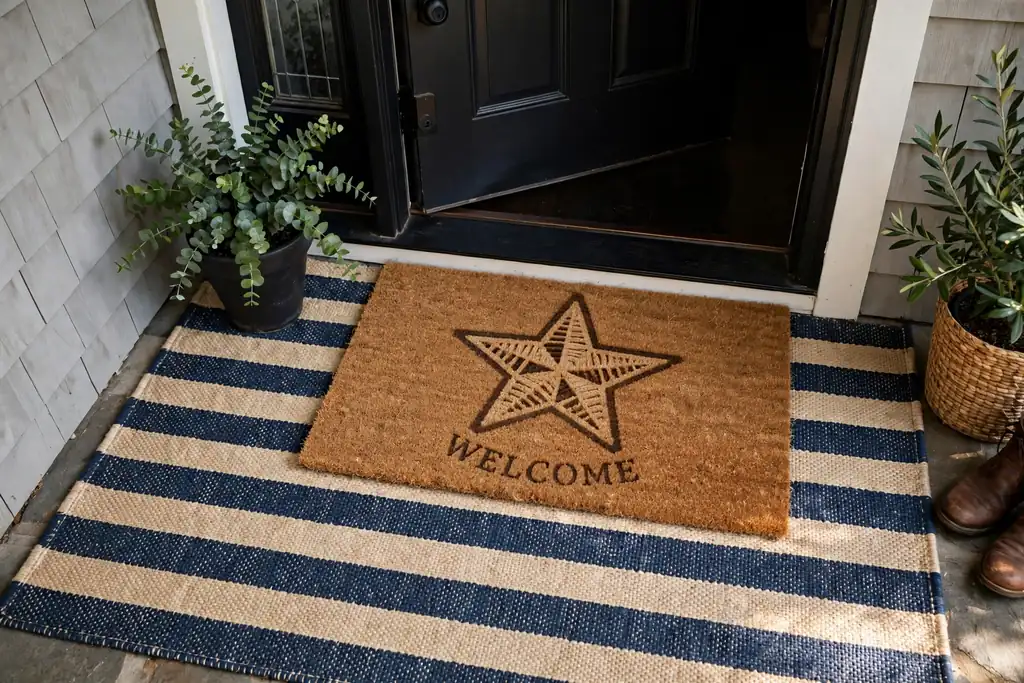
    Layered outdoor rugs soften a concrete or stone patio in one step. Lay a larger flat rug in a plain color first, then add a smaller patterned rug on top, centered under the coffee table. The layers mark the seating area clearly, even on a long patio that also holds a dining table and a grill.

    Pick rugs rated for outdoor use, so they dry after rain and resist fading in sun. Shake them out weekly, and lift them now and then to check for damp marks on the paving below. A rug with a simple stripe or border pairs well with plain cushions, since the rug carries the pattern.

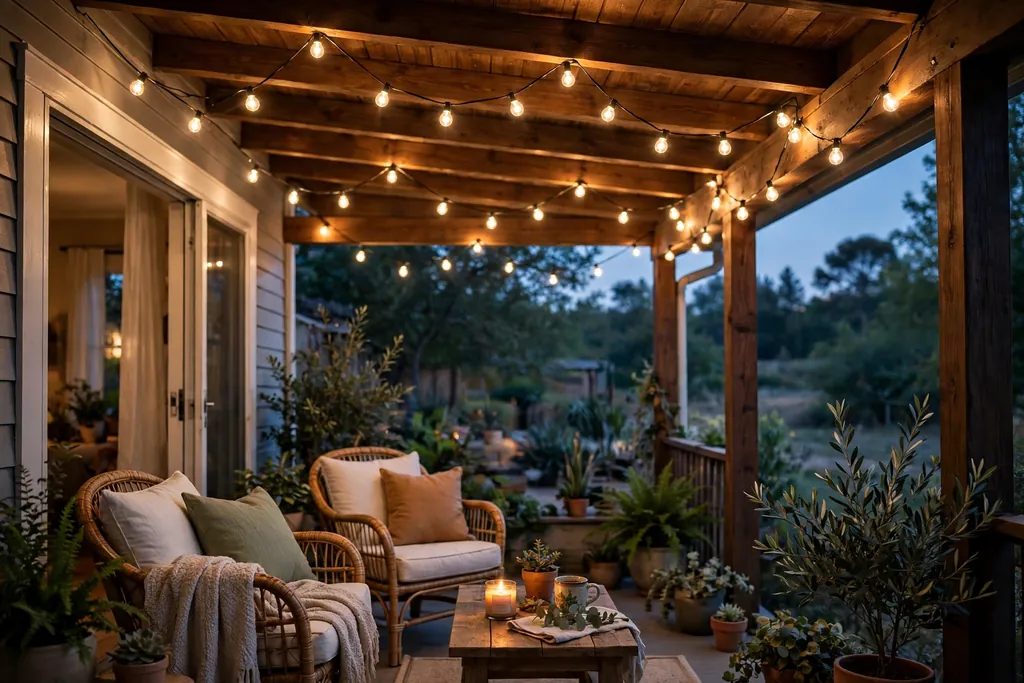
    3. Overhead String Lights for Evening Glow
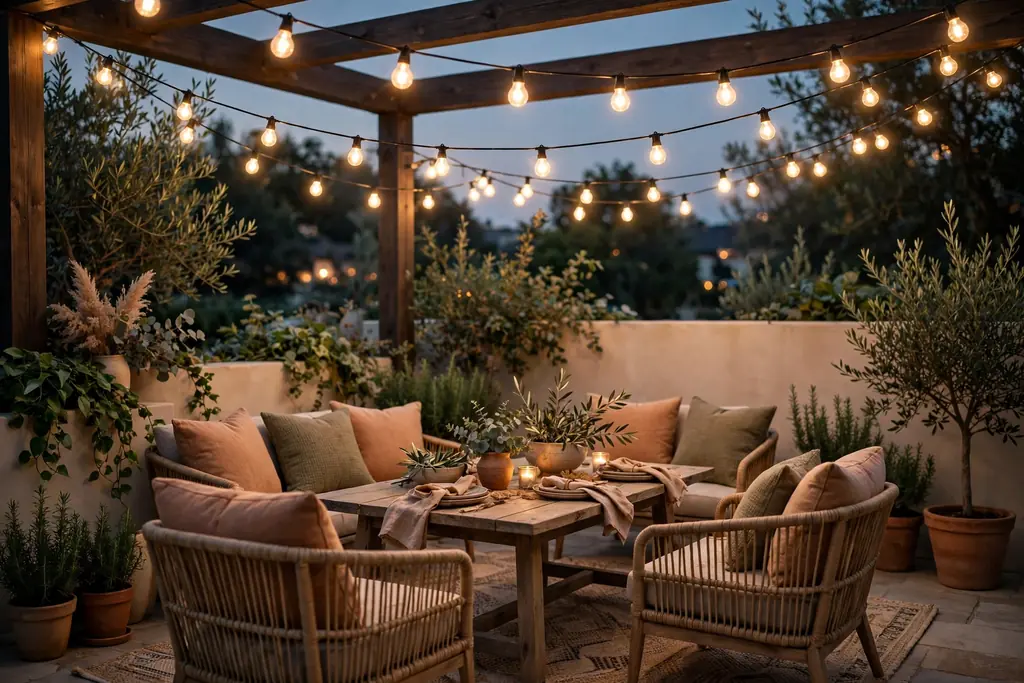
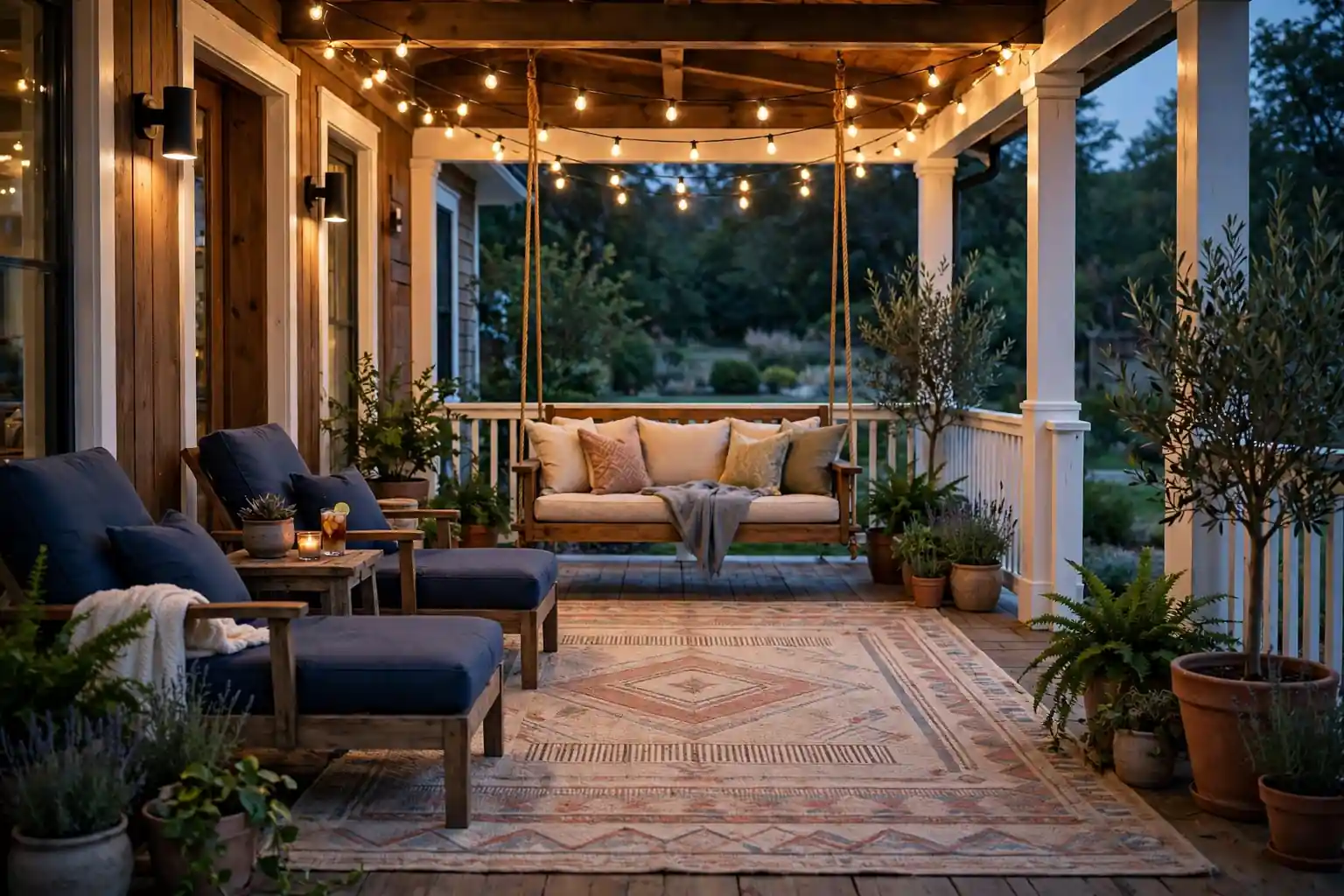
    Warm string lights hung over a patio seating area at dusk.

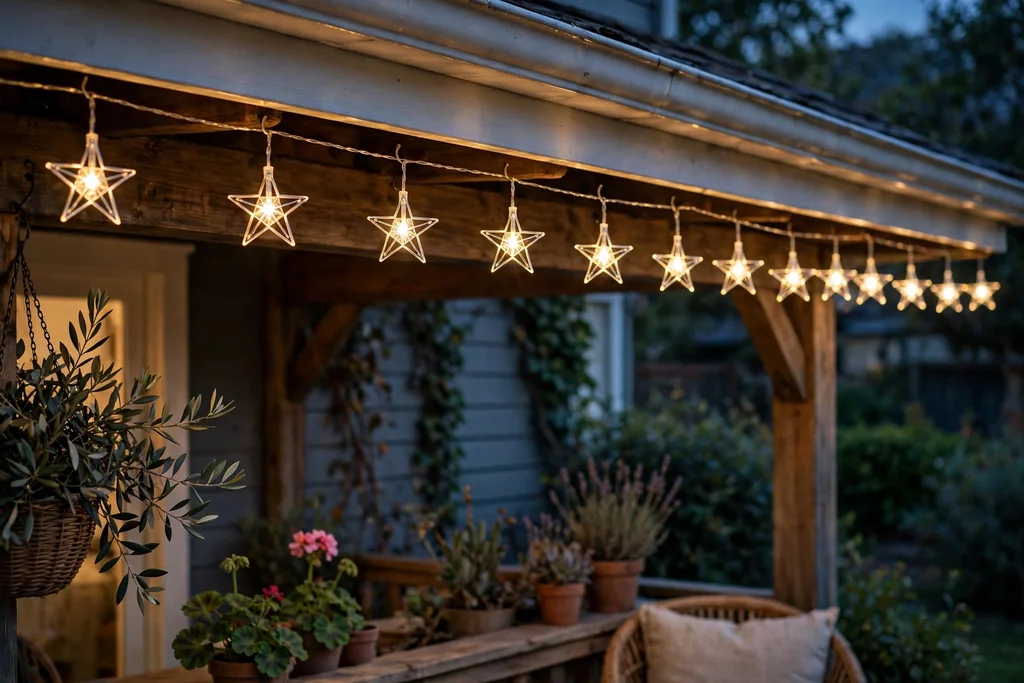
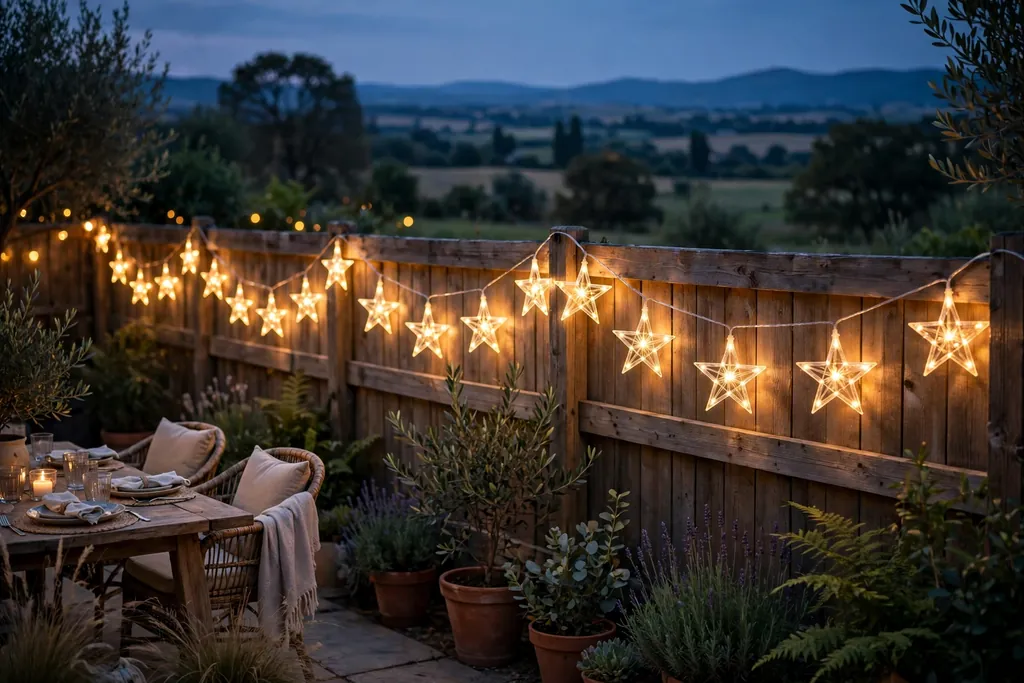
    Overhead string lights give a patio a warm glow after dark and make evening sits feel planned rather than improvised. Hang them in straight lines or a gentle zigzag from the house wall to posts, a pergola, or a fence, high enough that no one walks into them. Warm white bulbs suit most patios and flatter wood, stone, and plants alike.

    Use outdoor rated lights and a weatherproof outlet or timer, and check the span before fixing hooks so the lights do not sag into the seating area. Keep one run over the seating group and another over the dining table, so both areas are lit. In winter, take the lights down or check them for damage before switching them on again.

    4. Pergola with Climbing Vines for Natural Shade
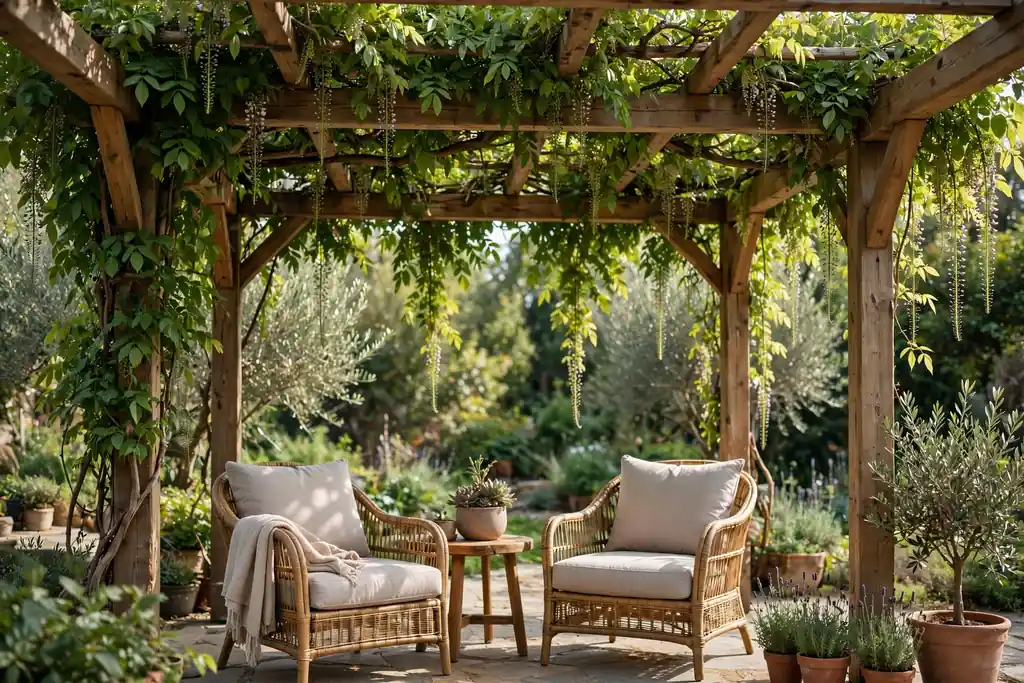
    Wood pergola with climbing vines shading patio chairs.

    A pergola with climbing vines gives shade that grows fuller each year and softens a plain patio roofline. Set the pergola over the seating area, with posts fixed firmly to the patio or to footings, and train vines such as jasmine, grape, or climbing roses along the top beams. The leaves filter sun in summer and let more light through when they thin in cooler months.

    Prune the vines once or twice a year to keep growth off gutters and to stop heavy stems from pulling on the beams. Choose a vine suited to your light and climate, and give it a trellis or wires to climb at first. A pergola also gives a clear place to hang string lights and outdoor curtains.

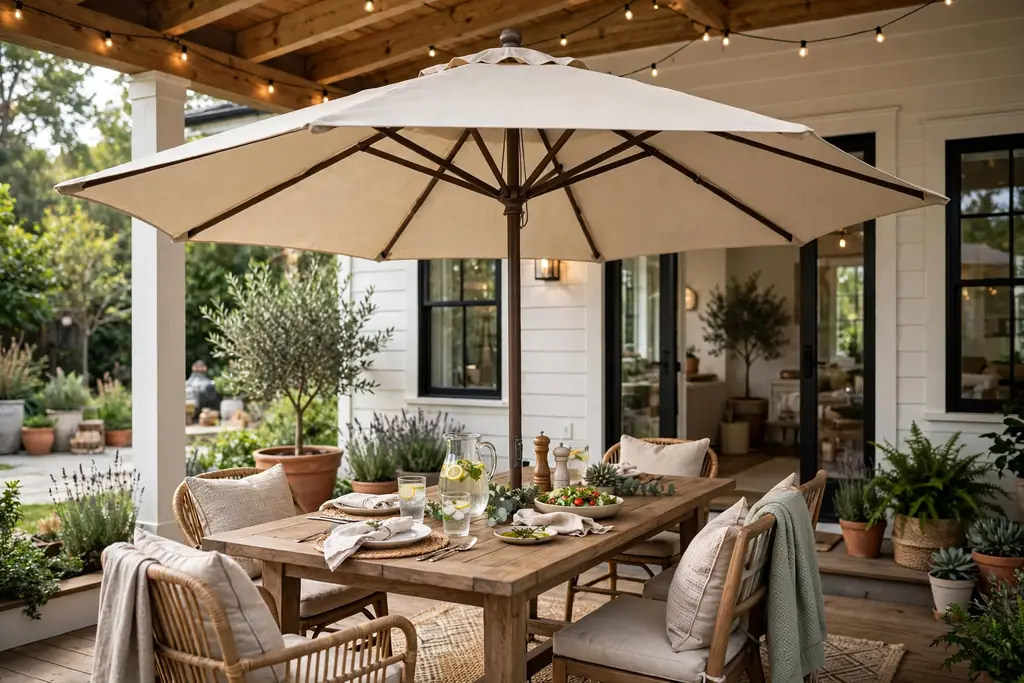
    5. Cantilever Umbrella for Flexible Shade
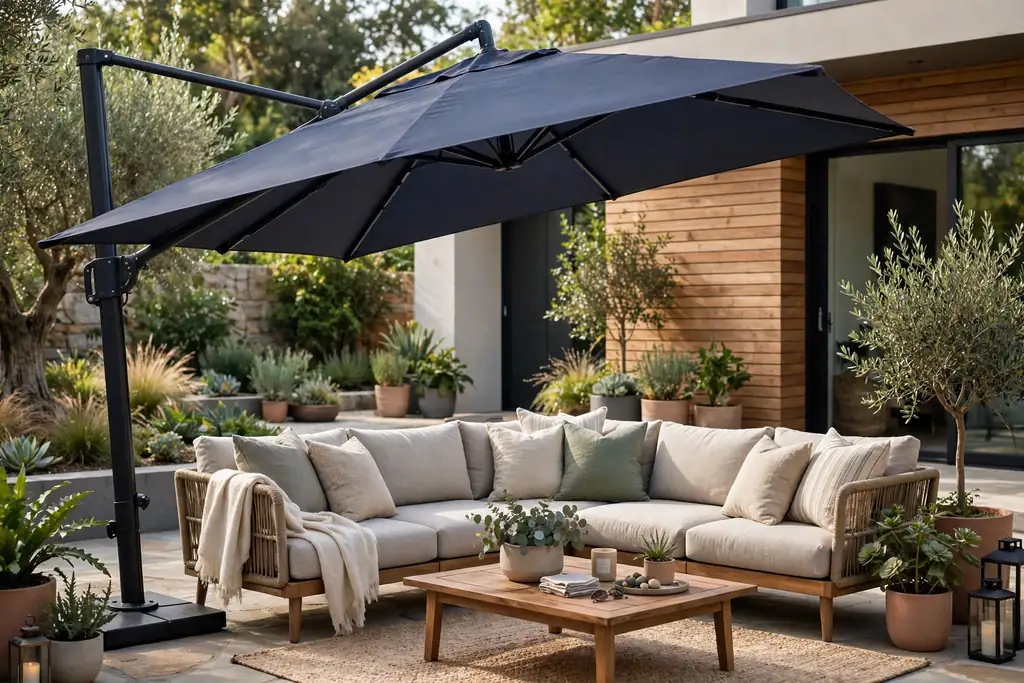
    Cantilever umbrella shading a patio sofa group.

    A cantilever umbrella shades a seating group without a pole in the middle of the table or chairs. The offset pole stands to one side, with a heavy base, and the canopy swings over the sofa or dining table as the sun moves. This makes it easy to shade a corner seat in the morning and a dining table at midday with the same umbrella.

    Choose a base weight rated for the canopy size, and close the umbrella in strong wind so it cannot tip or lift. A light colored canopy reflects heat and keeps the shade cooler, while a tilt function lets you angle the shade as the sun drops. Keep the base clear of walkways so no one trips over it.

    6. Fire Pit Conversation Circle
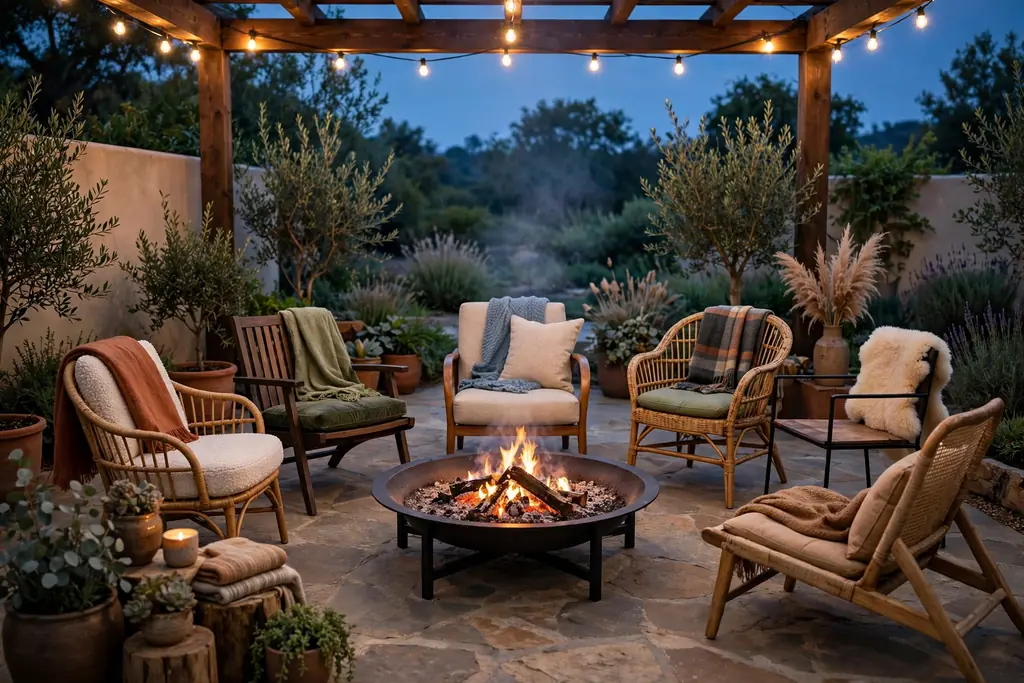
    Chairs in a circle around a patio fire pit at dusk.

    A fire pit conversation circle gives the patio a clear evening focus. Set low chairs in a circle around a fire pit, with enough room to stretch legs and to reach a side table for drinks. The circle suits cool evenings, when guests gather around the heat, and it works on a paved area away from overhangs and dry plants.

    Follow local rules for open flames, and keep the fire pit on a nonflammable surface with a safe distance from furniture, fences, and house walls. Use a spark screen when the fire is lit, and let ashes cool fully before clearing them. A portable fire bowl gives the same circle on a smaller patio, with chairs pulled in close.

    7. Outdoor Dining Table for Shared Meals
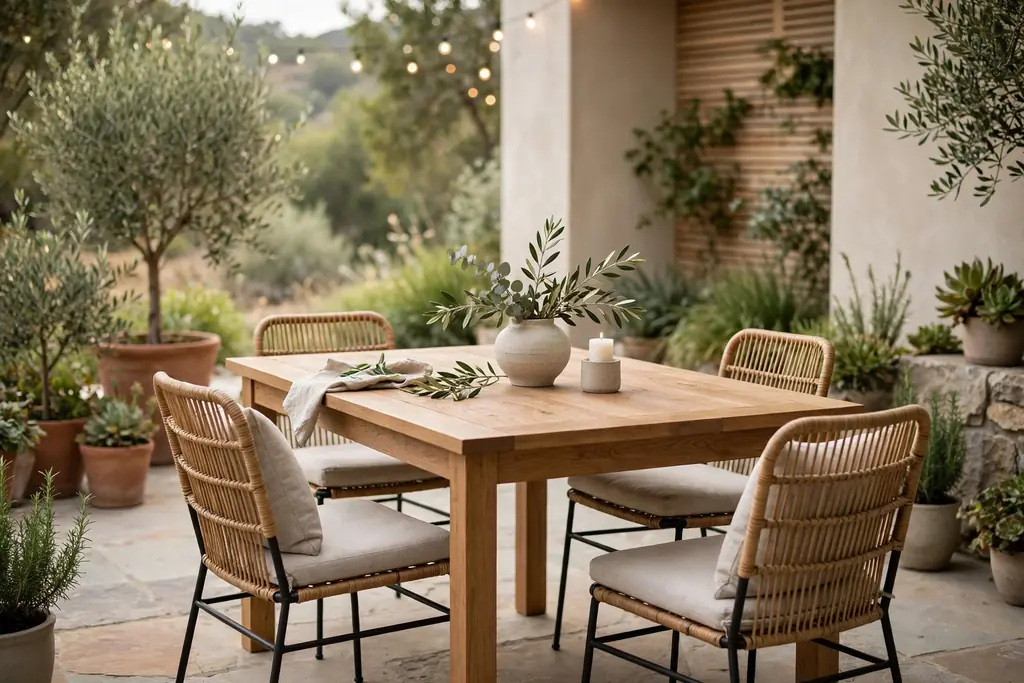
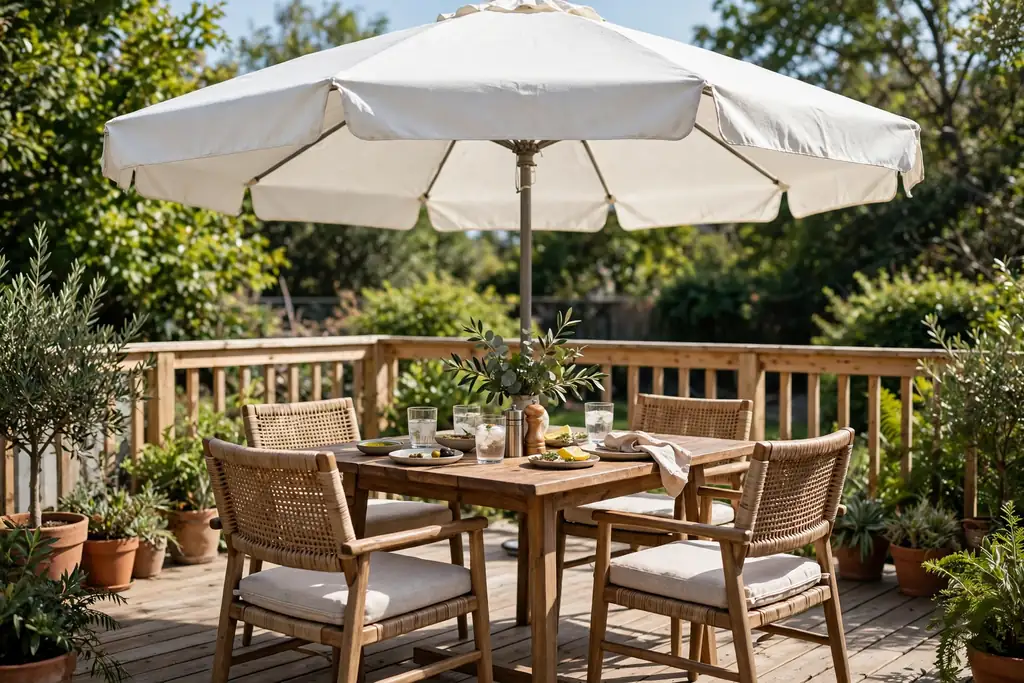
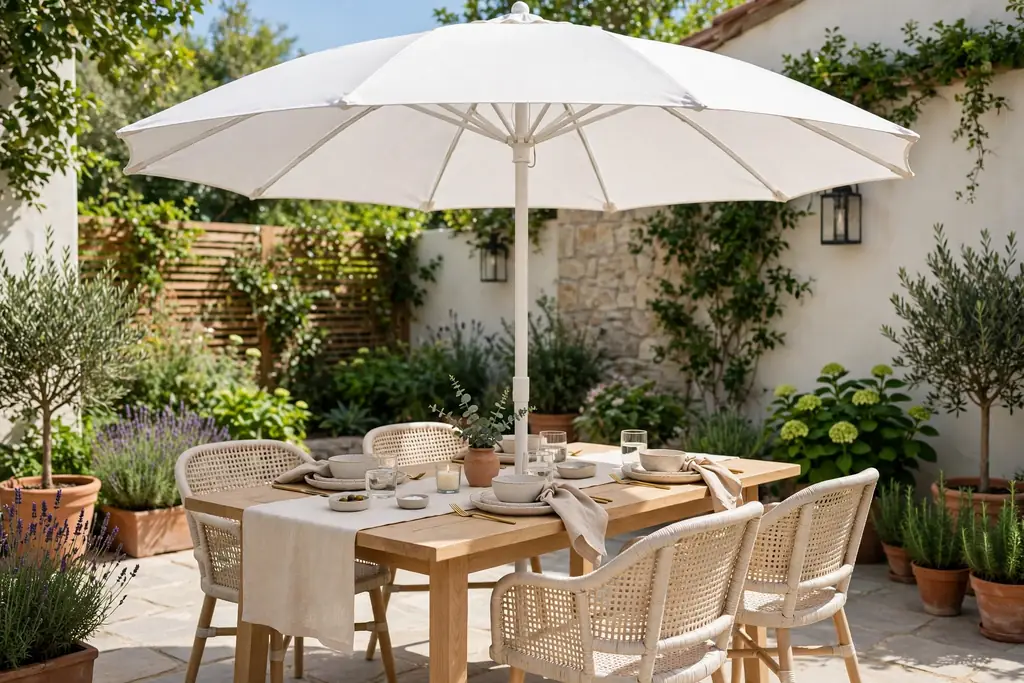
    Outdoor dining table with chairs and a simple centerpiece on a patio.

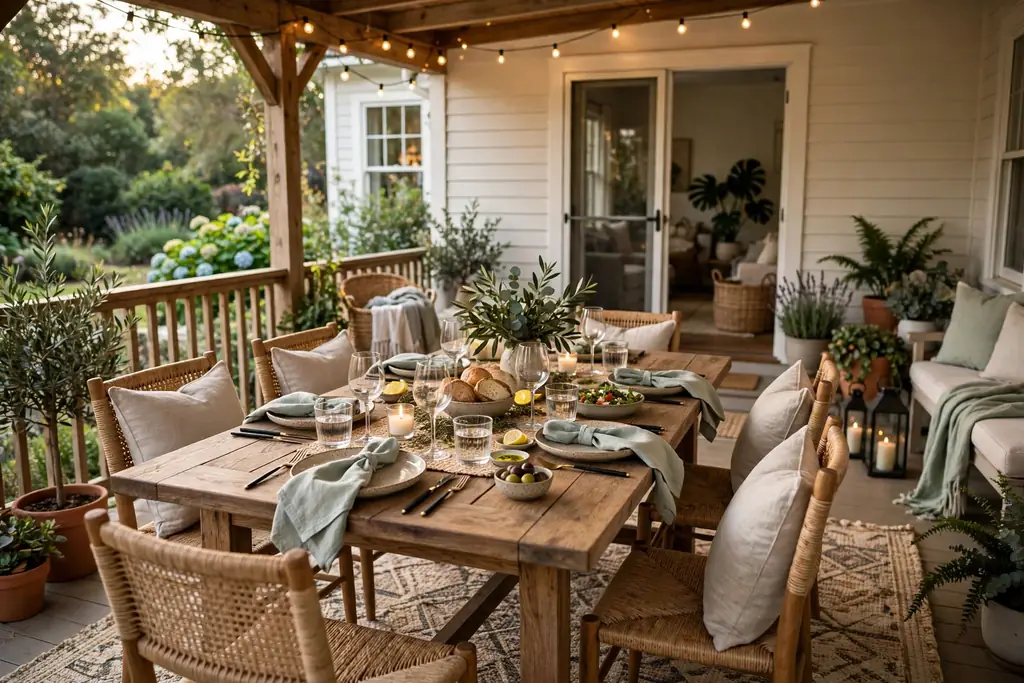
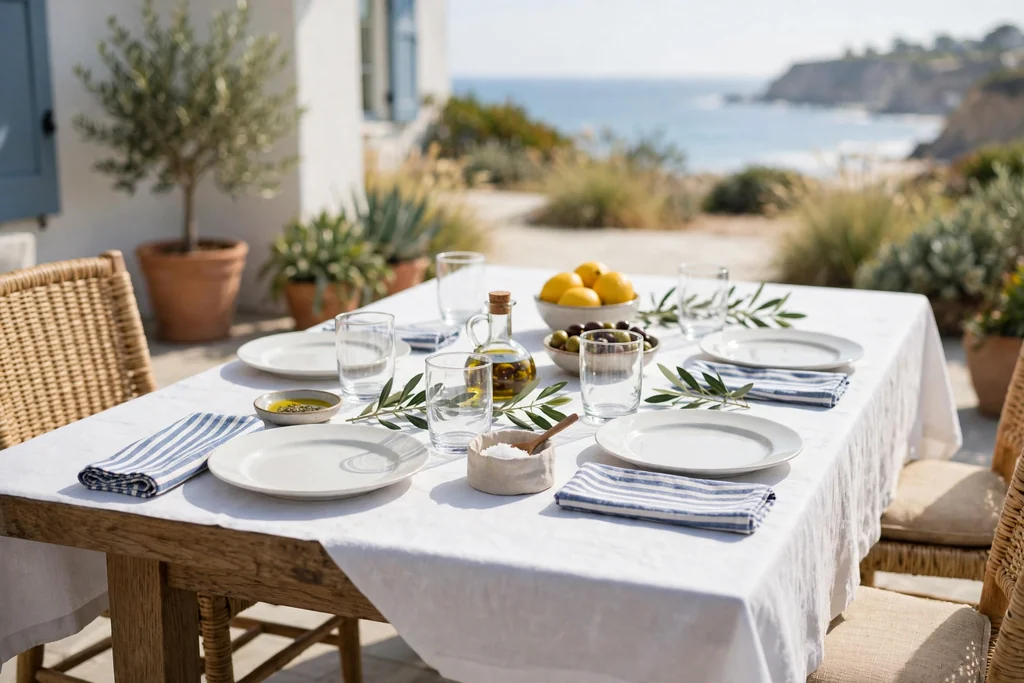
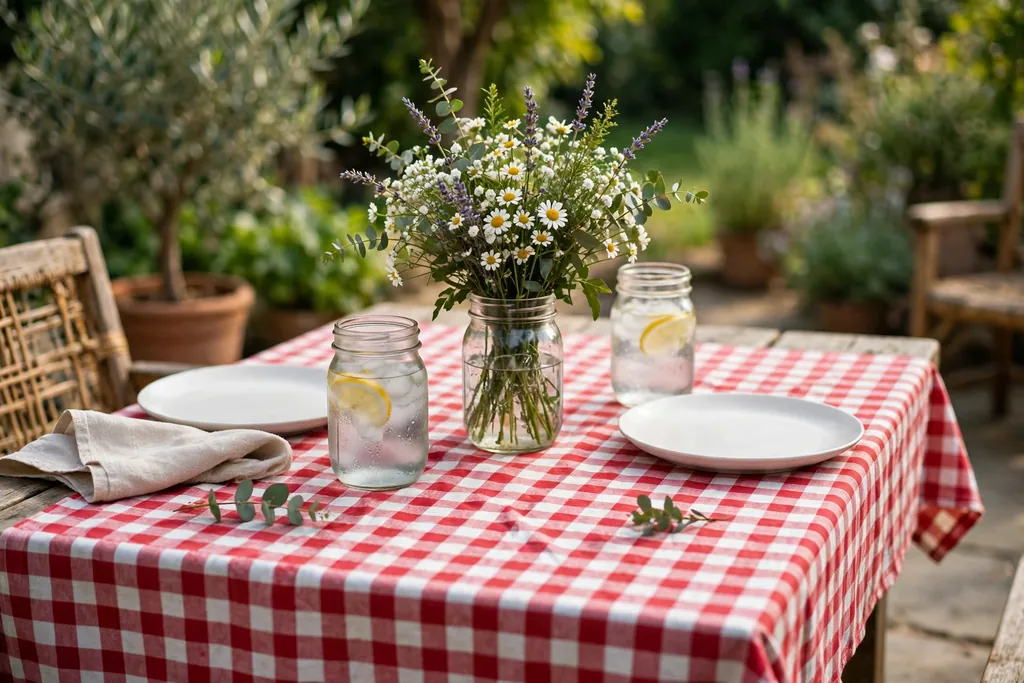
    An outdoor dining table makes the patio a place for shared meals, not only for sitting. Choose a table sized to your usual group, with chairs that slide out with ease and leave walking room behind them. A wood or metal table with a simple centerpiece, such as a low bowl of lemons or a small potted herb, keeps the table usable without a full table setting every day.

    Protect the table with a cover in heavy rain if the finish needs it, and wipe spills promptly so they do not stain. If the patio is narrow, a rectangular table against a wall with a bench on one side seats more people in less space. Add a shade umbrella or pergola over the table so midday meals stay comfortable.

    8. Bistro Set for a Small Patio
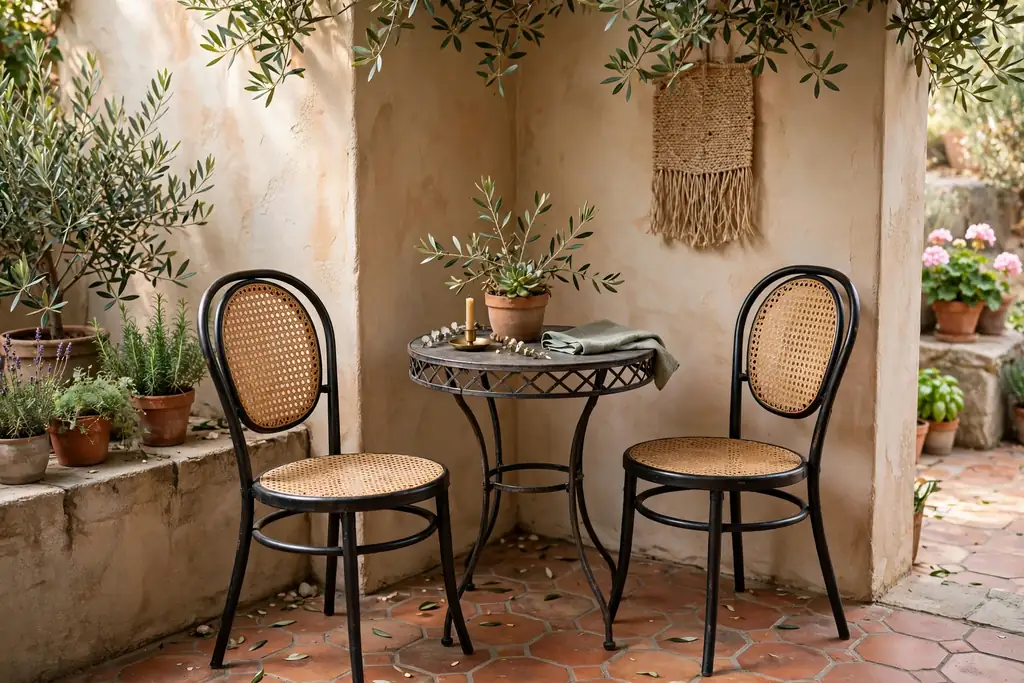
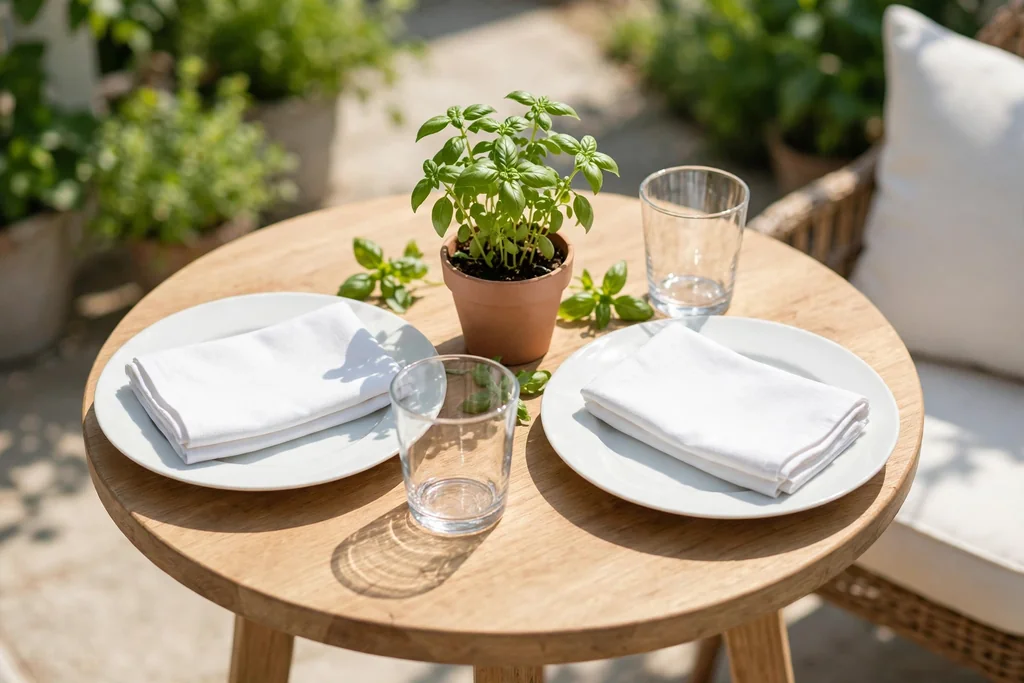
    Small bistro set with two chairs and a round table in a patio corner.

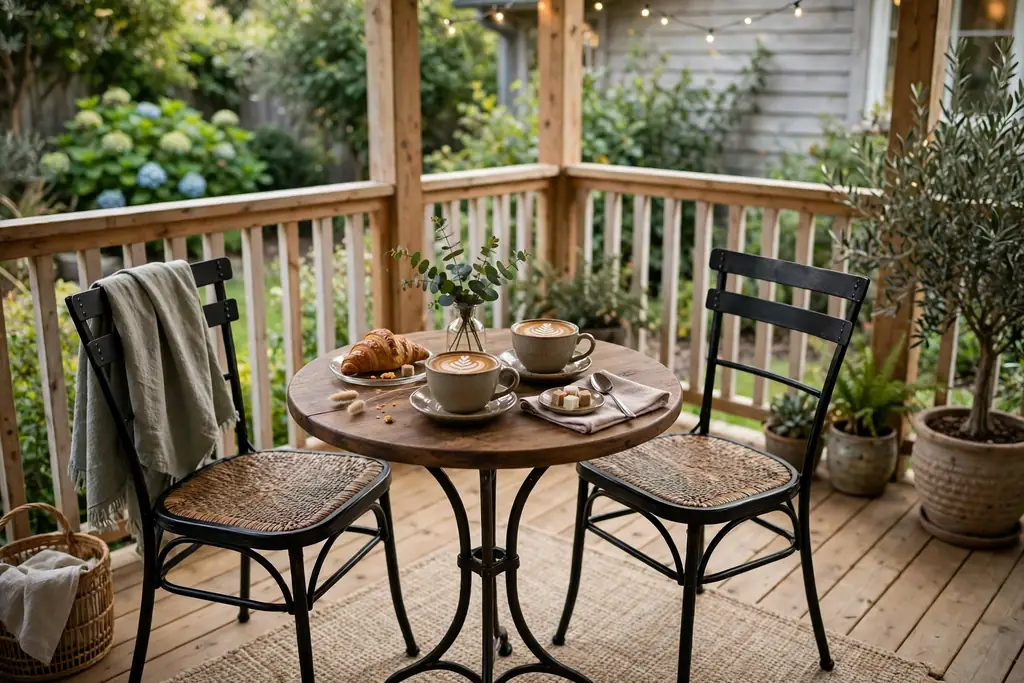
    A bistro set suits a small patio, a balcony edge, or a narrow side yard where a full dining set would crowd the space. Two chairs and a small round table fit in a corner, leaving room for a pot or two and a clear path to the door. The set works for morning coffee, reading, and a light lunch for two.

    Choose folding chairs if the set must be stored in winter, and pick a table top that wipes clean after meals. A bistro set in metal or wood suits most house styles, and a single patterned cushion on each chair adds color without extra pieces. Keep the set near the door, so it is easy to use on a short break.

    9. Hanging Egg Chair for a Cozy Corner
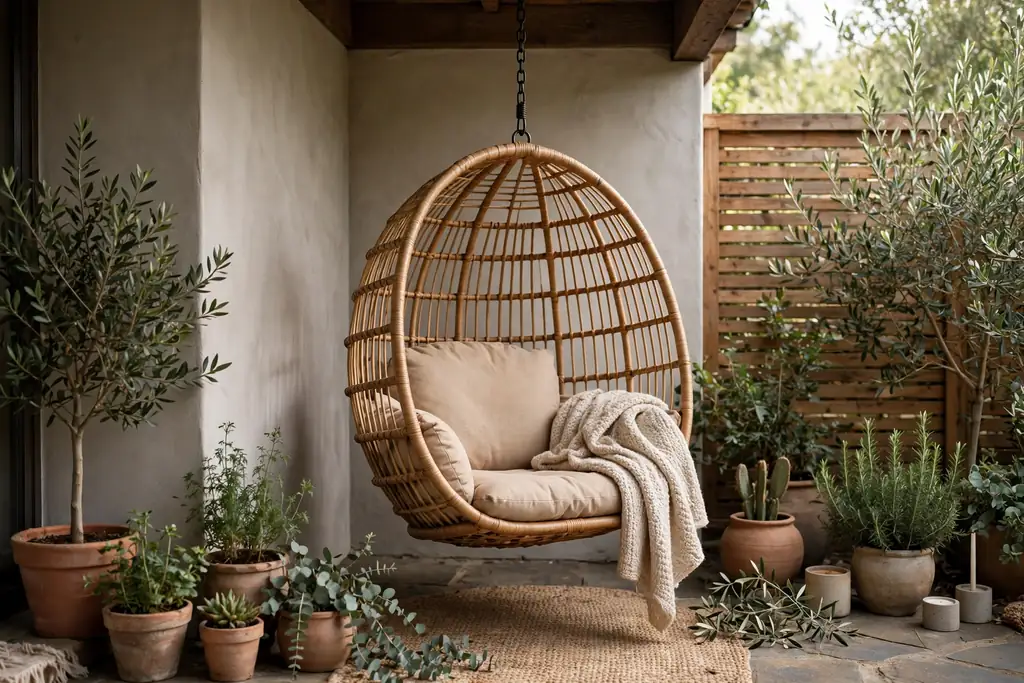
    Hanging egg chair with a cushion and throw in a patio corner.

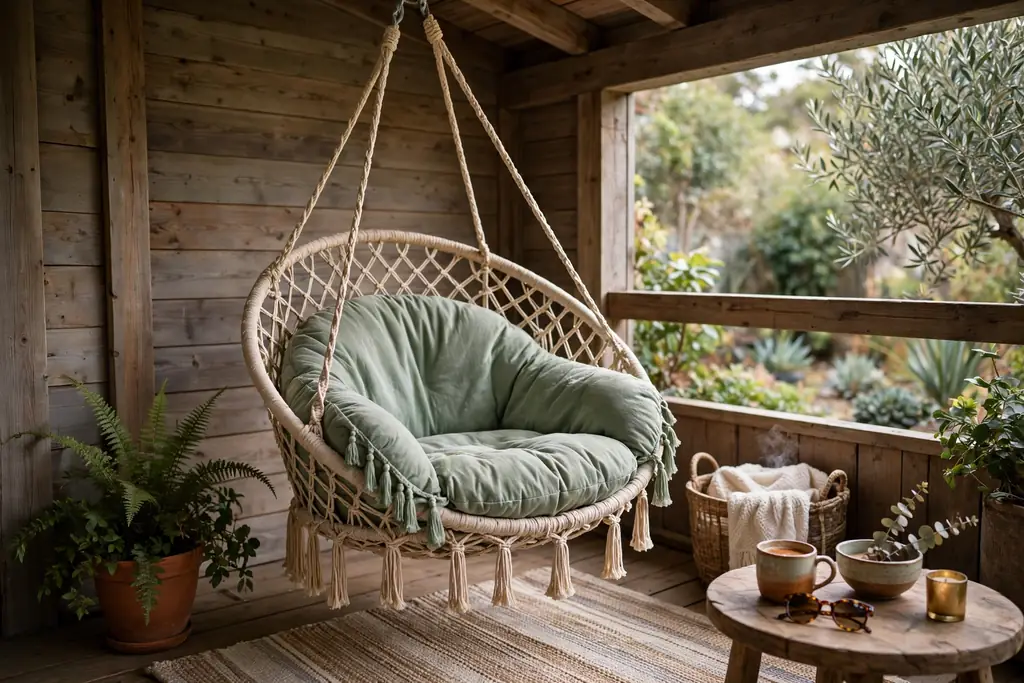
    A hanging egg chair fills a patio corner with a cozy seat that feels separate from the main group. Hang the chair from its own sturdy stand, with a thick seat cushion and a small throw, and place it where it can swing a little without hitting a wall, a planter, or a railing. The curved shape shelters the sitter and suits reading and quiet breaks.

    Check the stand and hanging point for weight rating and wear each season, and keep the swing path clear of children running past. A cushion in a plain color lets the chair shape stand out, while a patterned throw adds warmth on cool evenings. If the chair sits in rain, bring the cushion indoors or use a quick dry fill.

    10. Hammock for Lazy Afternoons
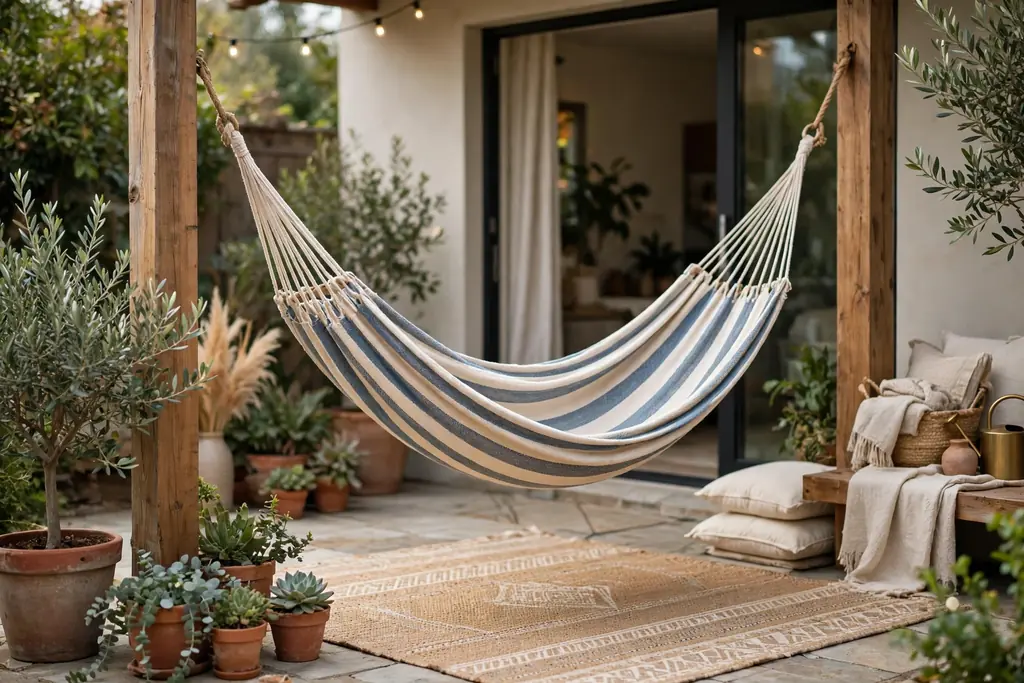
    Striped hammock hung between posts on a patio.

    A hammock gives a patio a relaxed seat for lazy afternoons and naps. Hang it between two sturdy posts, trees, or a freestanding stand, with the ends fixed at a height that lets the middle hang low enough to sit into with ease. A striped or plain cotton hammock suits most patios, and a small pillow at one end makes it comfortable for reading.

    Check ropes, hooks, and fabric for wear before each season, and take the hammock down in storms or winter. Keep the ground below clear of sharp stones and pots, so stepping out of the hammock is safe. A hammock with a stand works where there are no trees or posts, and it can move to follow shade through the day.

    11. Sun Loungers with a Shared Side Table
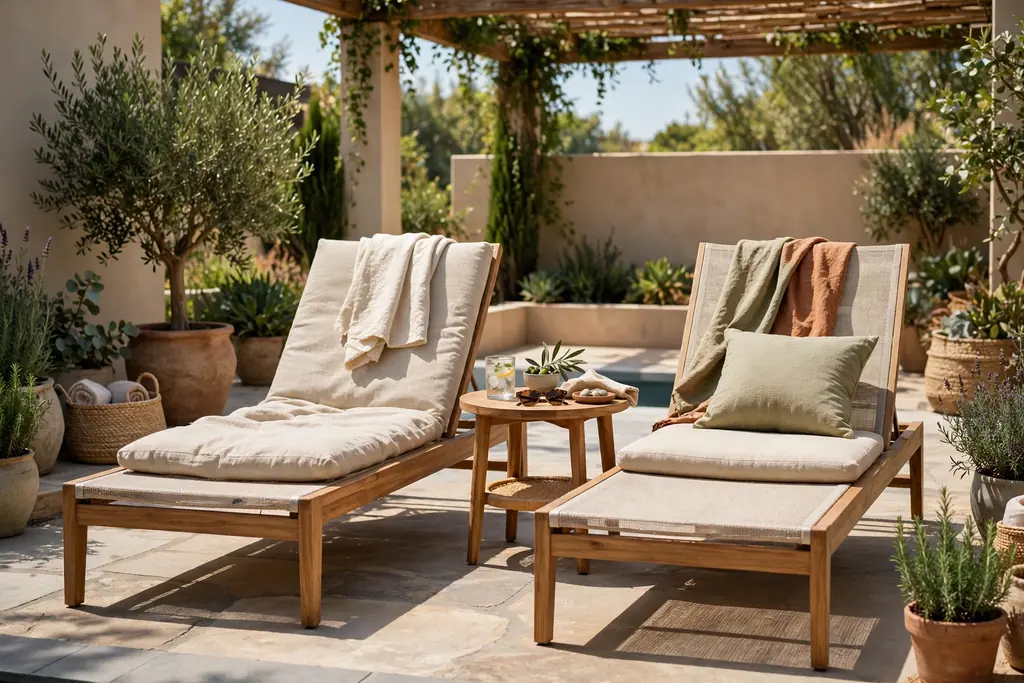
    Two sun loungers with a shared side table on a sunny patio.

    Sun loungers with a shared side table make a sunny patio corner easy to use all afternoon. Set two loungers side by side, facing the sun or the garden, with one low side table between them for drinks, sunscreen, and a book. Adjustable backs let each person sit up to read or lie flat to rest, without moving the whole lounger.

    Choose loungers with weatherproof frames and quick dry cushions, and fold or stack them in winter if storage is tight. A small side table with a lower shelf holds extra towels and keeps the top clear. Place loungers where they do not block the path to the dining area, and leave room to walk around the foot of each lounger.

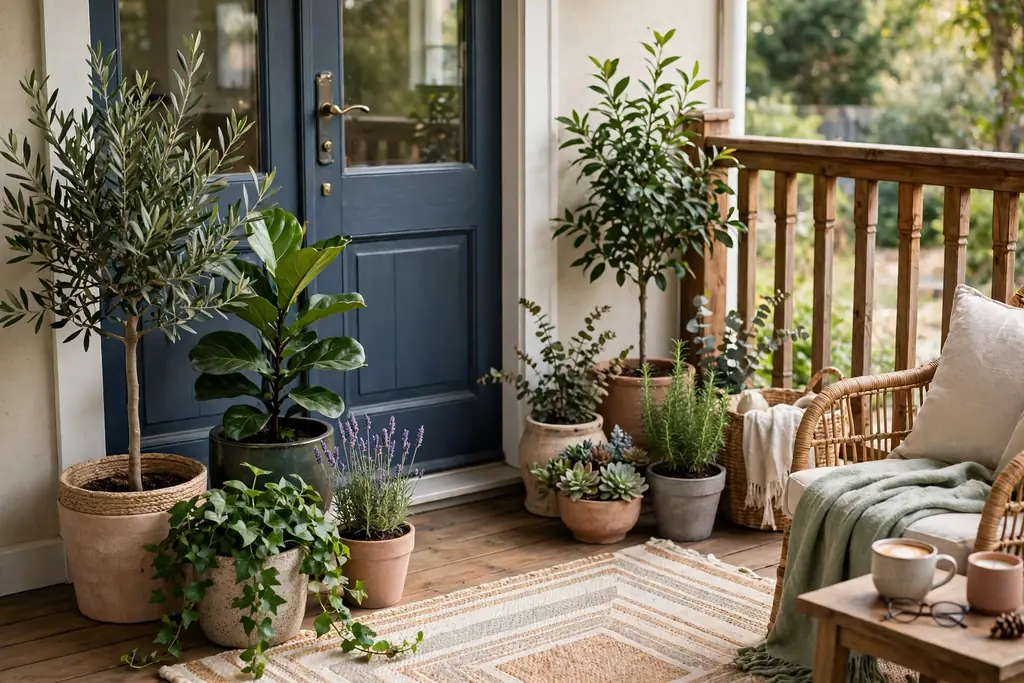
    12. Planter Clusters at Different Heights
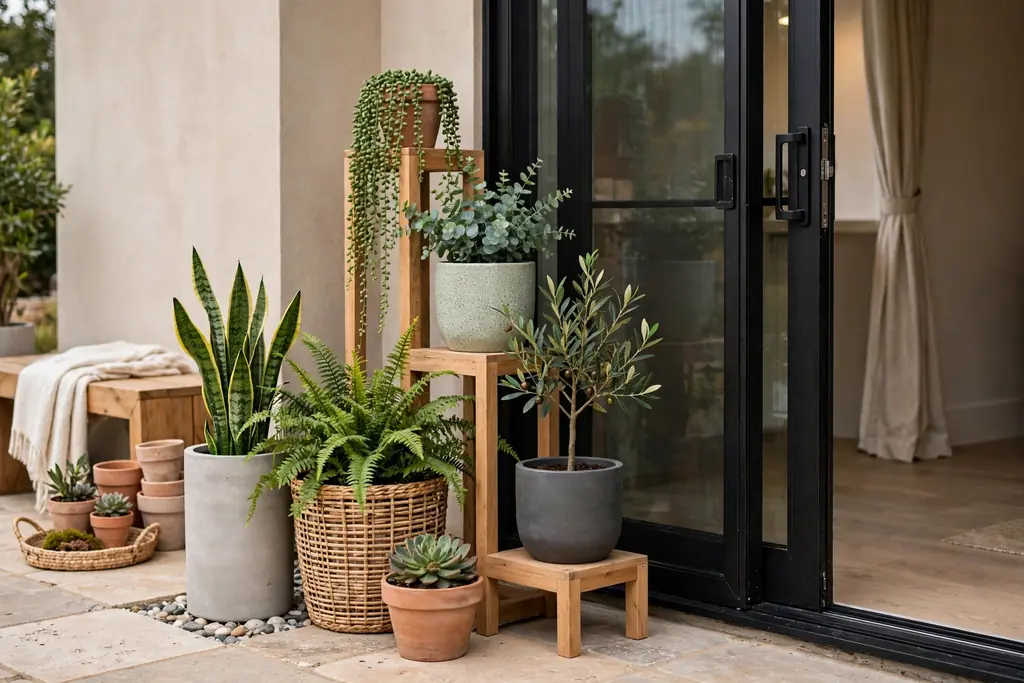
    Cluster of planters at different heights beside a patio door.

    Planter clusters at different heights add green to a patio without a garden bed. Group three or five pots of varied heights in a corner or beside the door, with a tall plant at the back, medium plants in the middle, and trailing plants at the front. The mix of heights draws the eye up and softens a plain wall or fence.

    Use pots with drain holes and saucers, and match the plants to the light the spot gets, with sun lovers in open spots and shade plants near walls. Water when the top of the soil feels dry, and feed plants through the growing season as the pot label directs. Keep the cluster clear of walkways, and move tender pots indoors before frost.

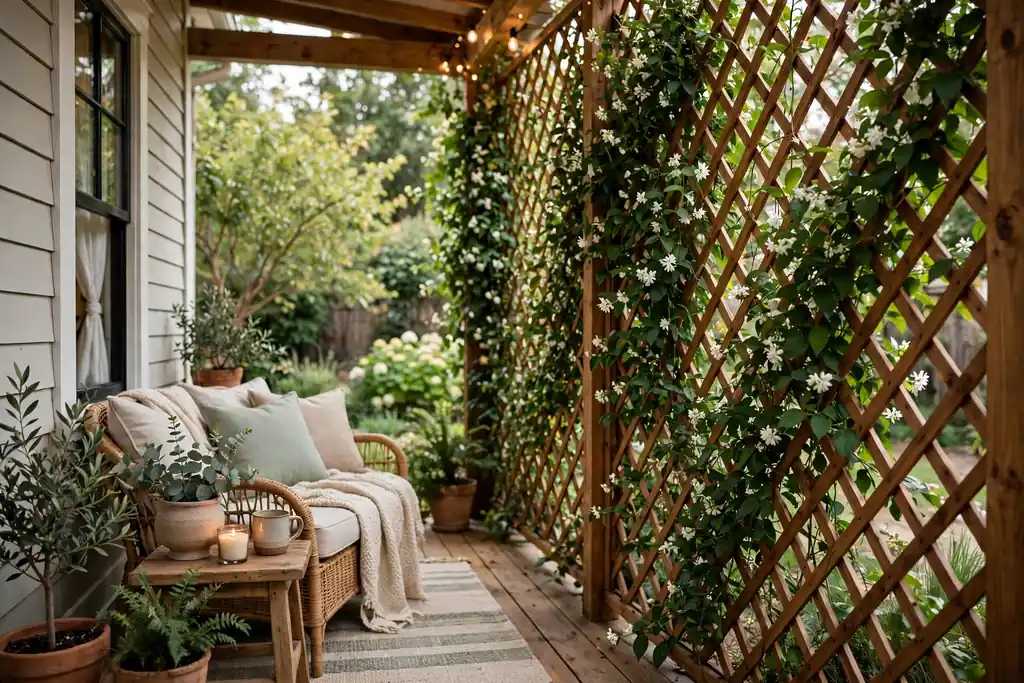
    13. Trellis Garden Wall for Green Privacy
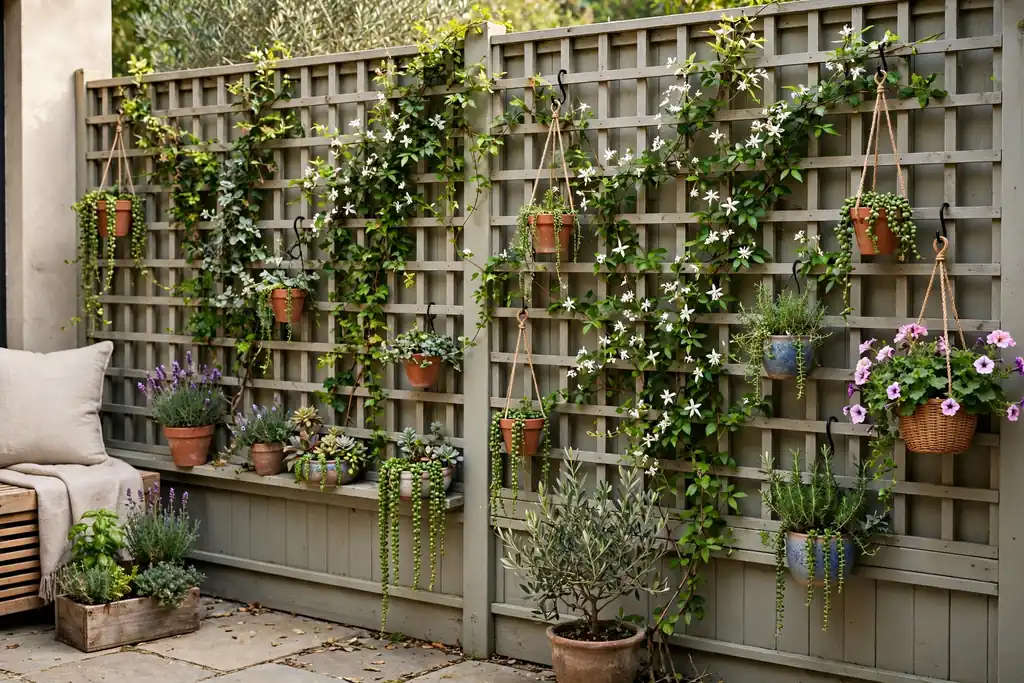
    Trellis garden wall with climbers and hanging pots on a patio fence.

    A trellis garden wall covers a plain fence or wall with living green and gives a patio a garden feel in a small footprint. Fix a wood or metal trellis to the wall, with a small gap behind it for air, and plant climbers at the base or hang small pots from the trellis frame. The wall suits narrow patios where floor space for pots is short.

    Water climbers at the base, and tie new stems to the trellis as they grow so the cover stays even. Prune once a year to keep the wall tidy and to stop growth from blocking windows or lights. A trellis with potted herbs and small flowers gives color at eye level, while a climber alone gives a fuller green screen.

    14. Herb Pots by the Door for Cooking and Scent
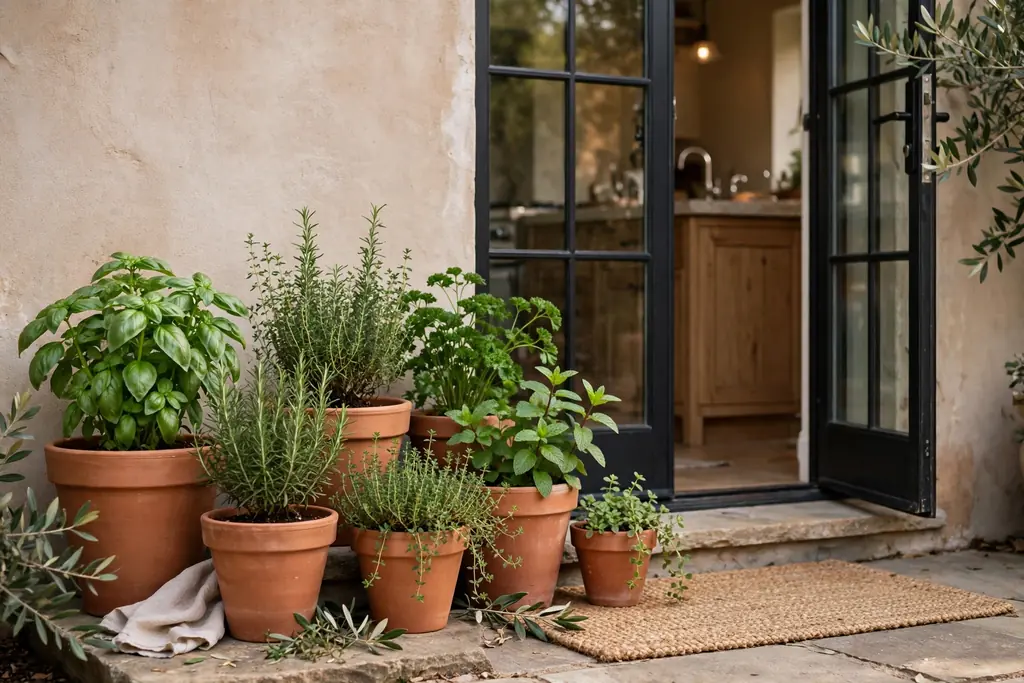
    Herb pots in terracotta beside a patio kitchen door.

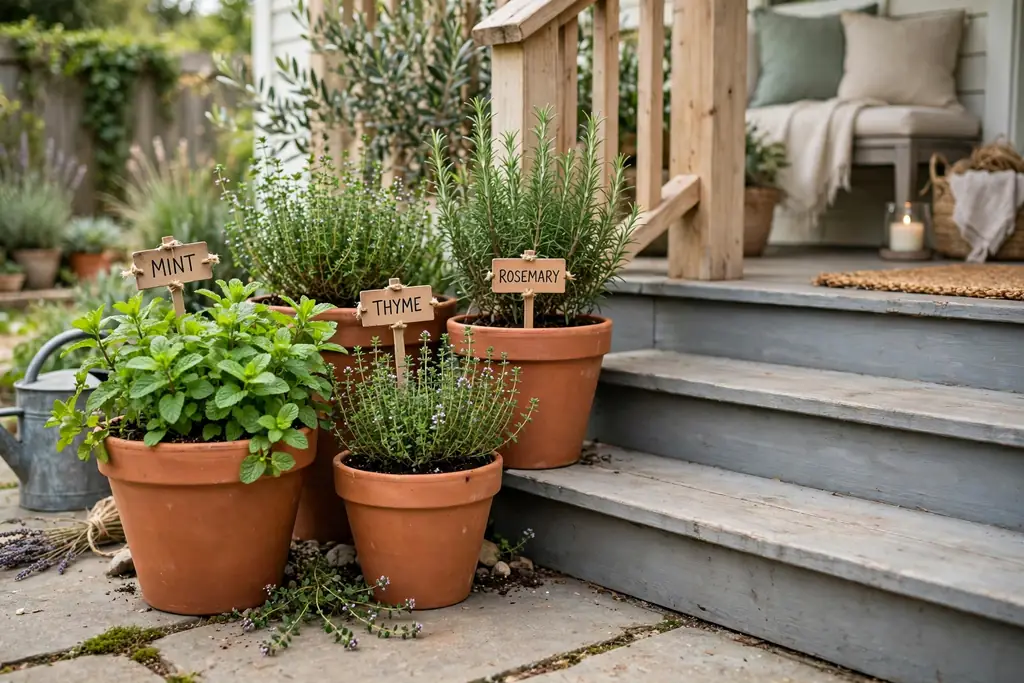
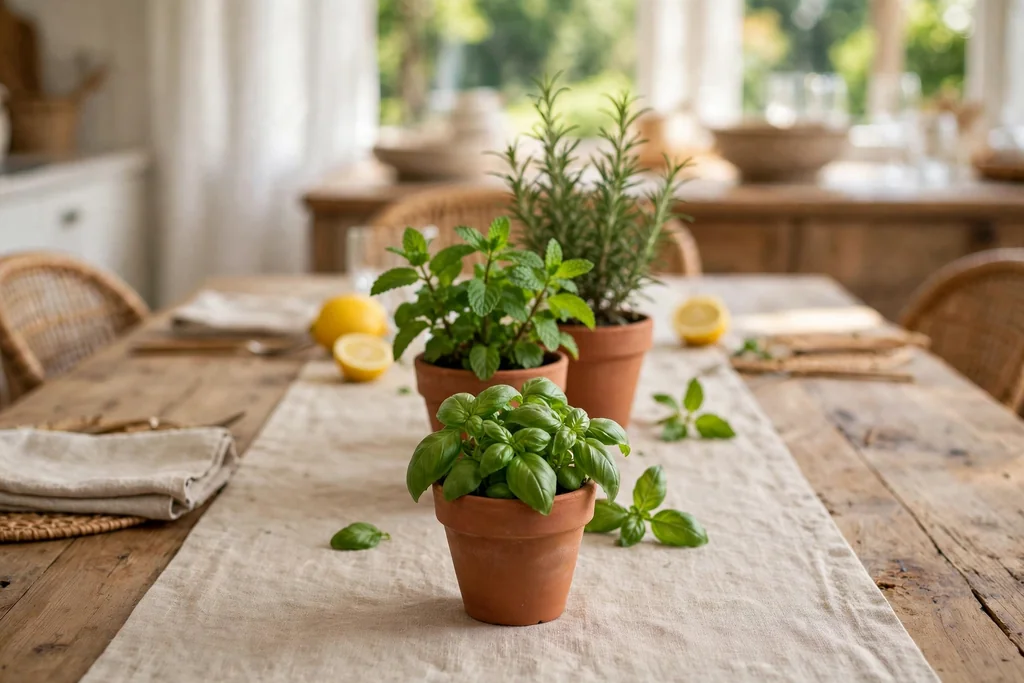
    Herb pots by the door give a patio scent, green, and fresh leaves for cooking in one small group. Set pots of basil, mint, rosemary, thyme, and parsley near the kitchen door or beside the dining table, where they are easy to reach while cooking. Mint grows fast, so give it its own pot to stop it from crowding other herbs.

    Water herbs when the top of the soil feels dry, and snip leaves from the top so the plants stay bushy. Most herbs need sun for at least part of the day, so place the pots where they get morning or midday light. Label the pots if guests cook with you, and bring tender herbs indoors before frost.

    15. Privacy Lattice Screens for a Sheltered Feel
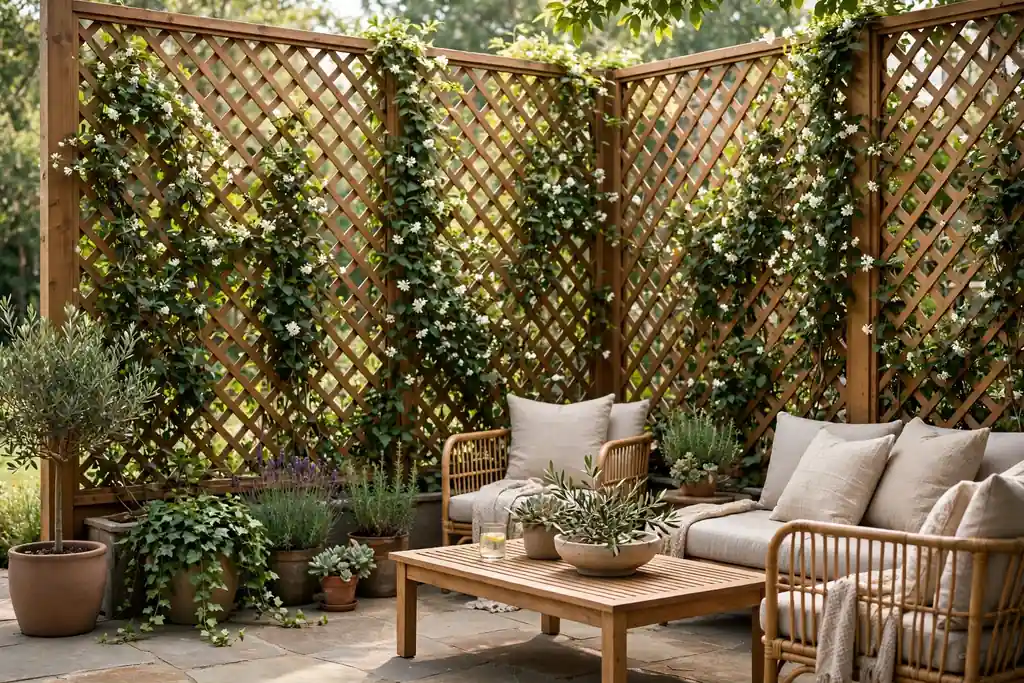
    Lattice privacy screens with climbing plants along a patio edge.

    Privacy lattice screens shelter a patio from neighbors and wind without building a solid wall. Set freestanding lattice panels along one side of the patio, fixed to posts or heavy planters, and let climbing plants or hanging pots soften the frame. The open pattern lets air and light through while breaking the direct view.

    Check that the screens are stable in wind, with posts set firmly or bases weighted, and keep them clear of walkways and fire pits. A lattice screen also gives a place to hang lanterns, small pots, or outdoor art. Paint or stain the lattice to match the fence or furniture, so it reads as part of the patio rather than a temporary fix.

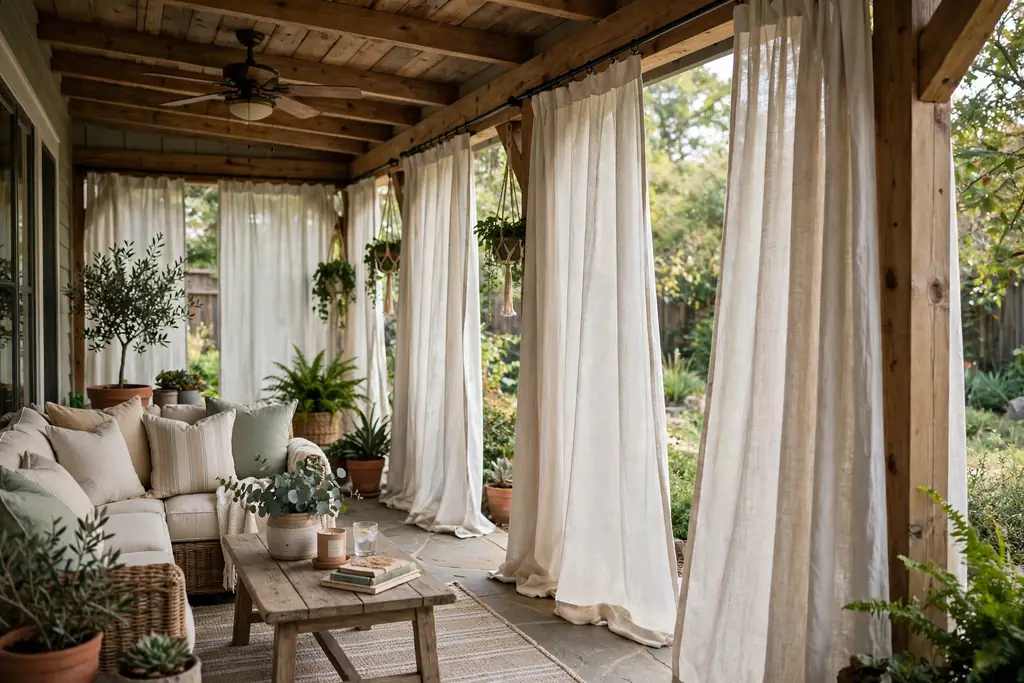
    16. Outdoor Curtains for Soft Shade and Privacy
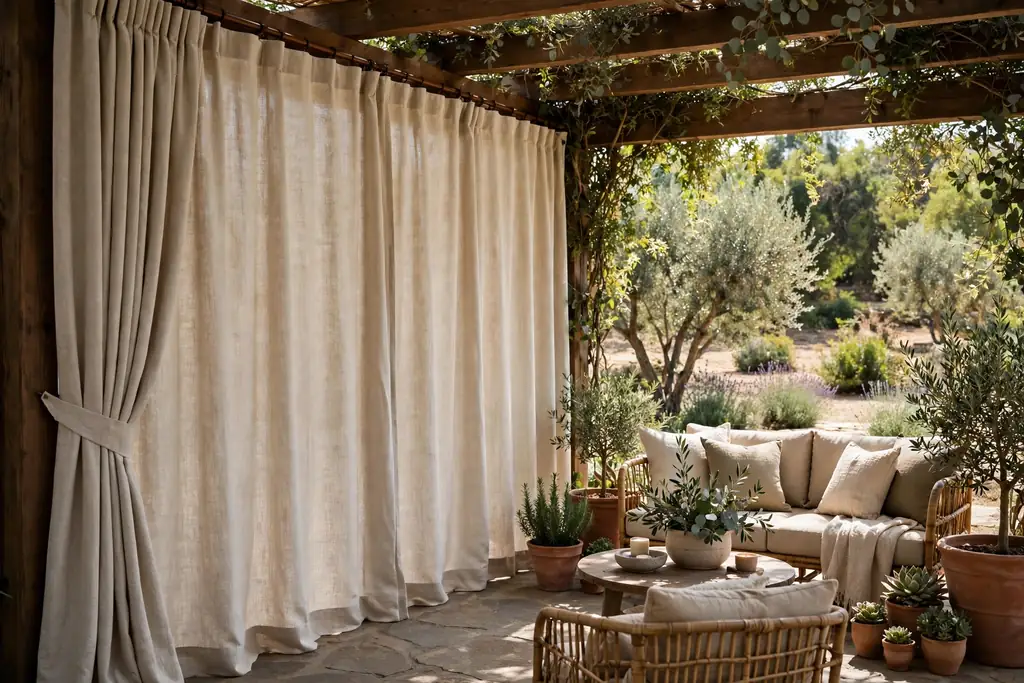
    Outdoor curtains drawn across one side of a shaded patio.

    Outdoor curtains on a rod or wire give a patio soft shade and privacy that can be opened or closed as needed. Hang weatherproof curtains from a pergola beam, a wall mounted rod, or a freestanding frame, and draw them across the sunny or overlooked side in the afternoon. Light colors keep the shade bright, while a heavier weave blocks more sun and wind.

    Use curtains rated for outdoor use, and tie them back in strong wind so they do not pull on the rod. Wash or hose them down at the start of the season, and take them down in winter to keep the fabric fresh. Curtains pair well with string lights, since the fabric softens the light in the evening.

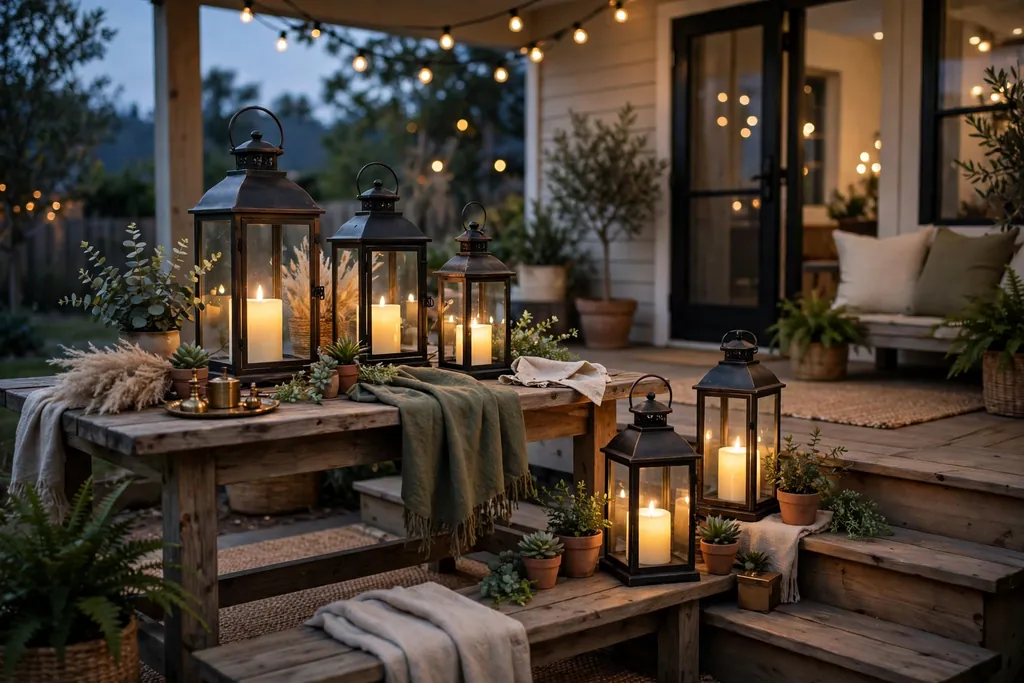
    17. Lanterns with Battery Candles for Table Light
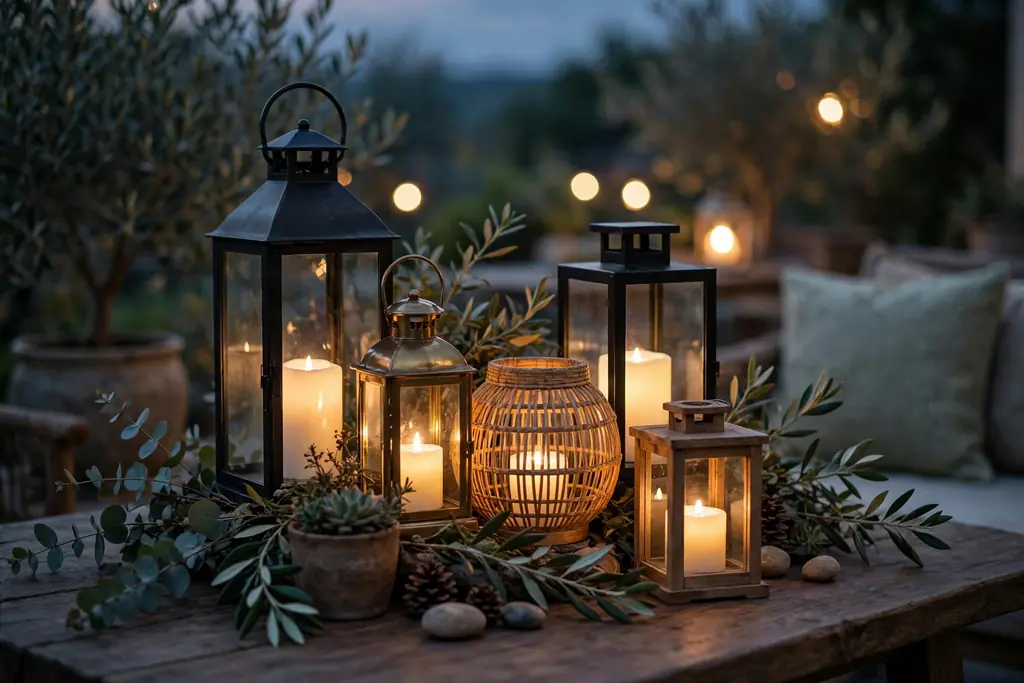
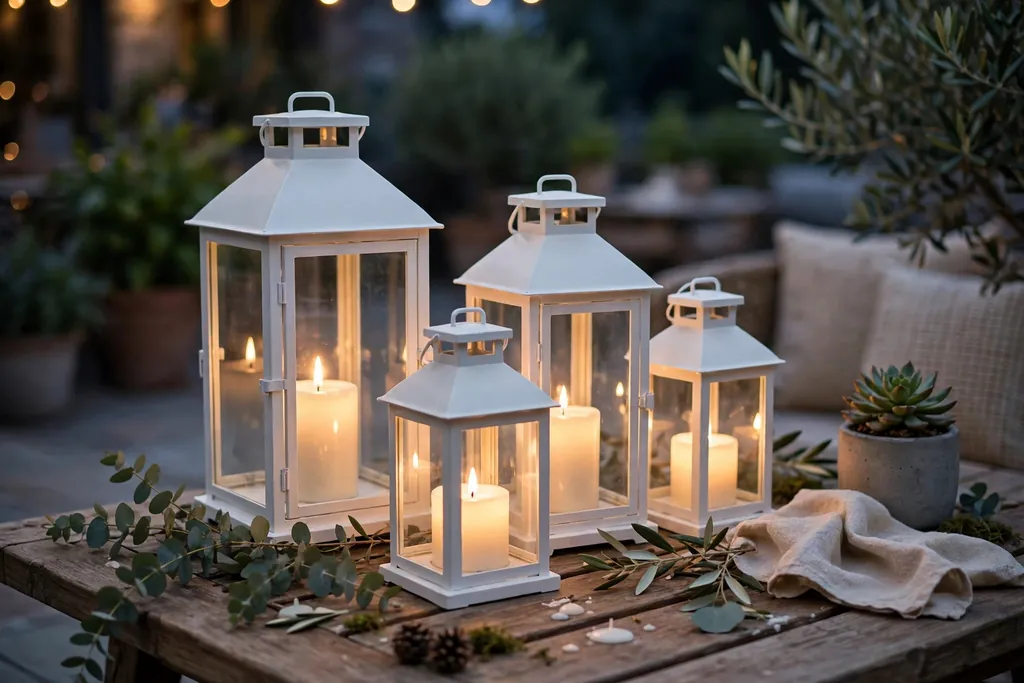
    Lanterns with battery candles grouped on a patio table at dusk.

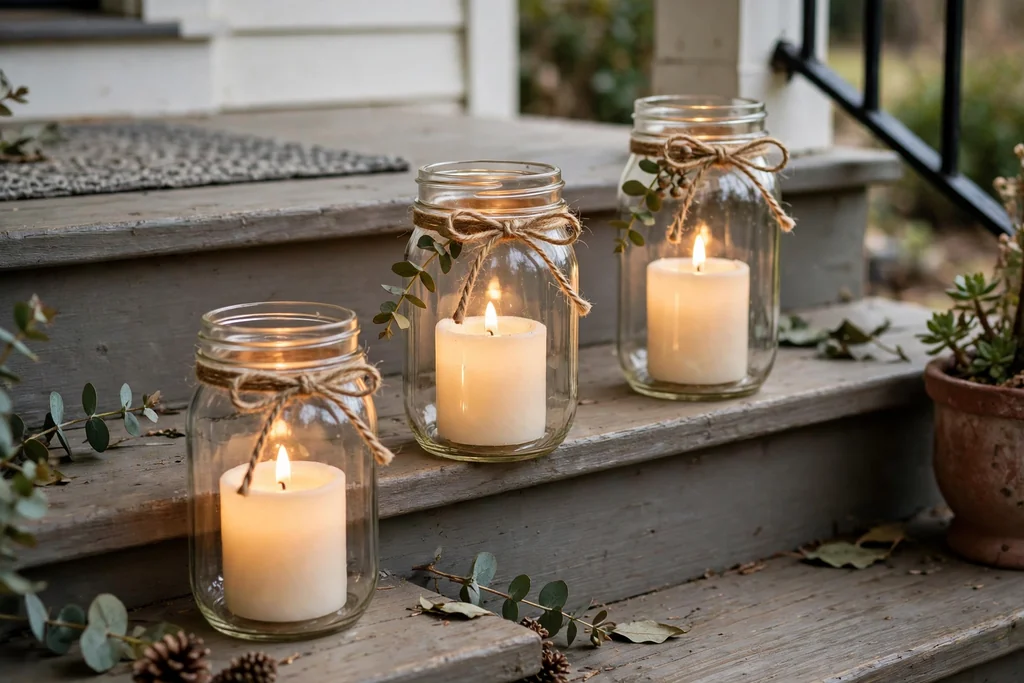
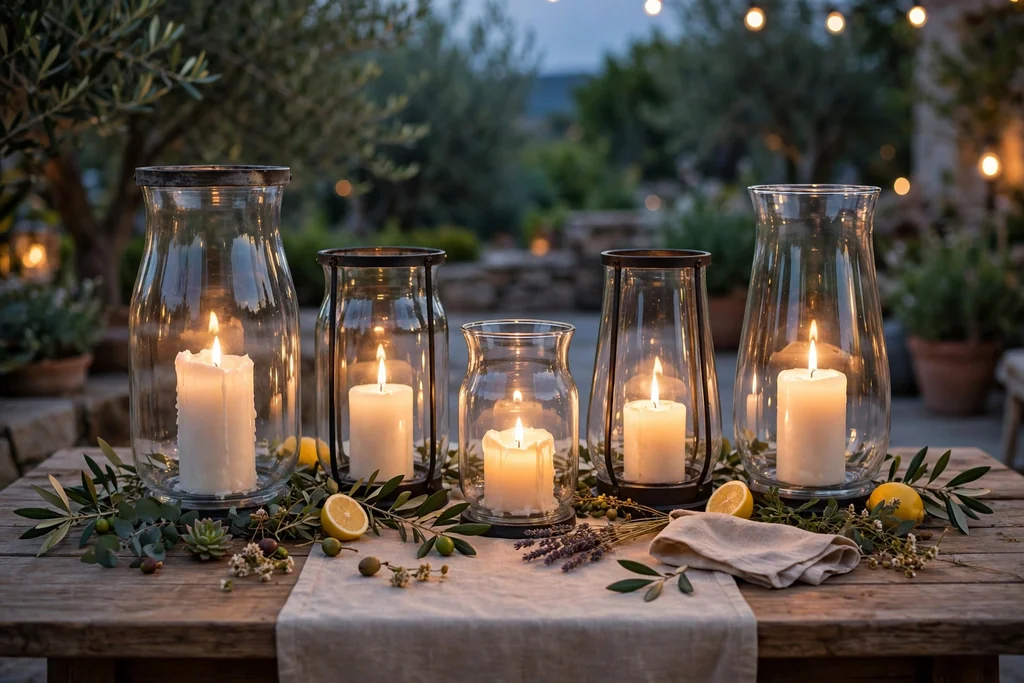
    Lanterns with battery candles give a patio safe table light that can move from the dining table to the seating group as the evening goes on. Group three lanterns of varied heights on a table or along a low wall, with battery candles inside for a steady glow. The glass protects the flame effect from wind, and the light flatters food, faces, and plants alike.

    Use battery candles where wind, children, or pets make real flames risky, and keep real candles inside glass with a stable base if you use them. Bring lanterns indoors in storms, and wipe the glass clean so the light stays bright. Black metal lanterns suit most patios, while wood or brass lanterns warm a rustic space.

    18. Solar Path Lights Along the Walkway
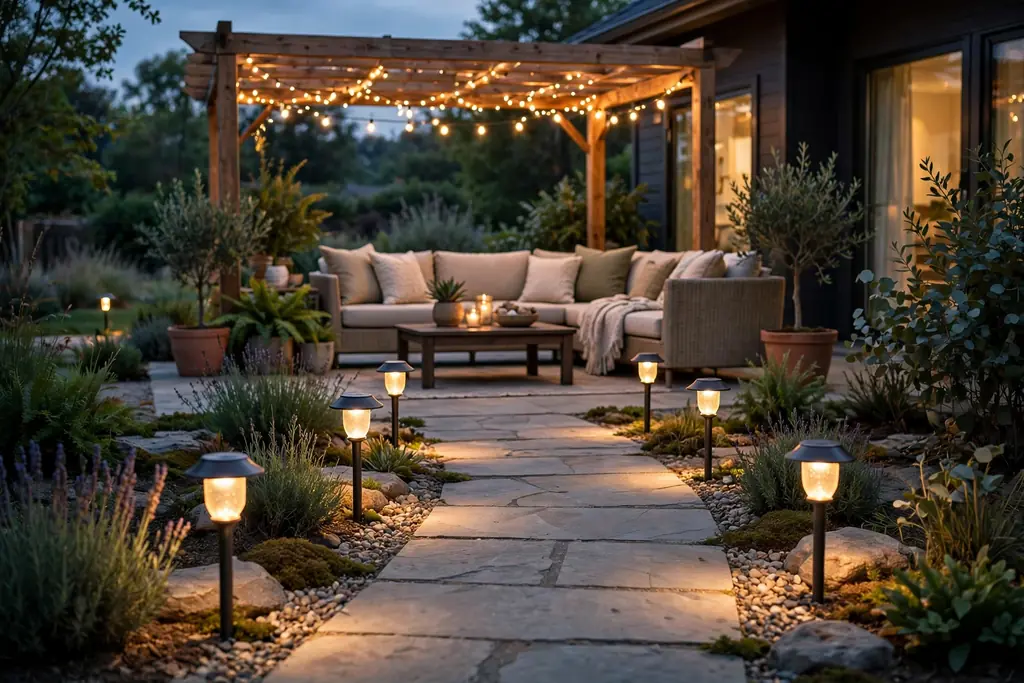
    Solar path lights along a walkway to a patio seating area at dusk.

    Solar path lights along the walkway make a patio safe and welcoming after dark, without wiring or running costs. Set small stake lights along the path from the door to the seating area, spaced evenly and clear of mowing and foot traffic. The lights charge in daylight and switch on at dusk, marking the edges of the path.

    Choose lights with a warm white glow, and keep the solar panels clear of leaves and shade from pots. Replace rechargeable batteries when the light fades, and move a light that sits in deep shade to a sunnier spot. Path lights work best as a guide, with string lights or lanterns giving the main light in the seating area.

    19. Chiminea for Warmth on Cool Evenings
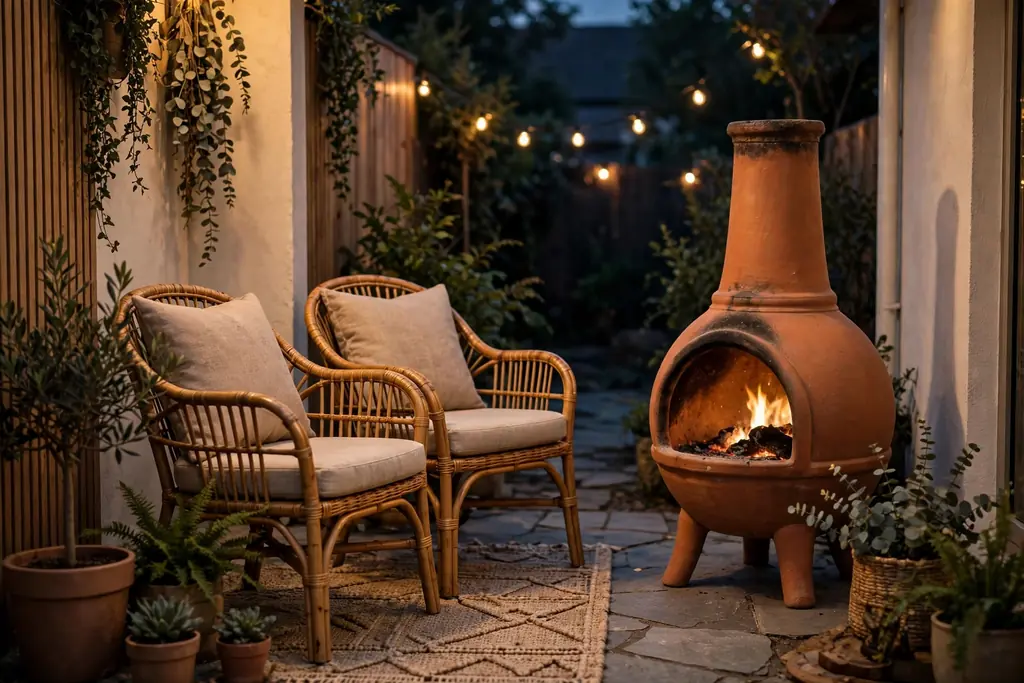
    Chiminea beside two chairs on a small patio in the evening.

    A chiminea gives a patio warmth on cool evenings in a compact shape that suits smaller spaces than a full fire pit. Set the chiminea on a nonflammable surface, away from overhangs, fences, and dry plants, with a clear space around it for safety. The chimney directs smoke up and away from seats, so guests can sit close without smoke in their faces.

    Burn only dry wood suited to the chiminea, and let ashes cool fully before clearing them. Cover the chiminea in rain to protect the finish, and check the chimney and body for cracks each season. A chiminea beside one or two chairs makes a quiet evening corner, while a larger fire pit suits a full group.

    20. Storage Bench for Cushions and Throws
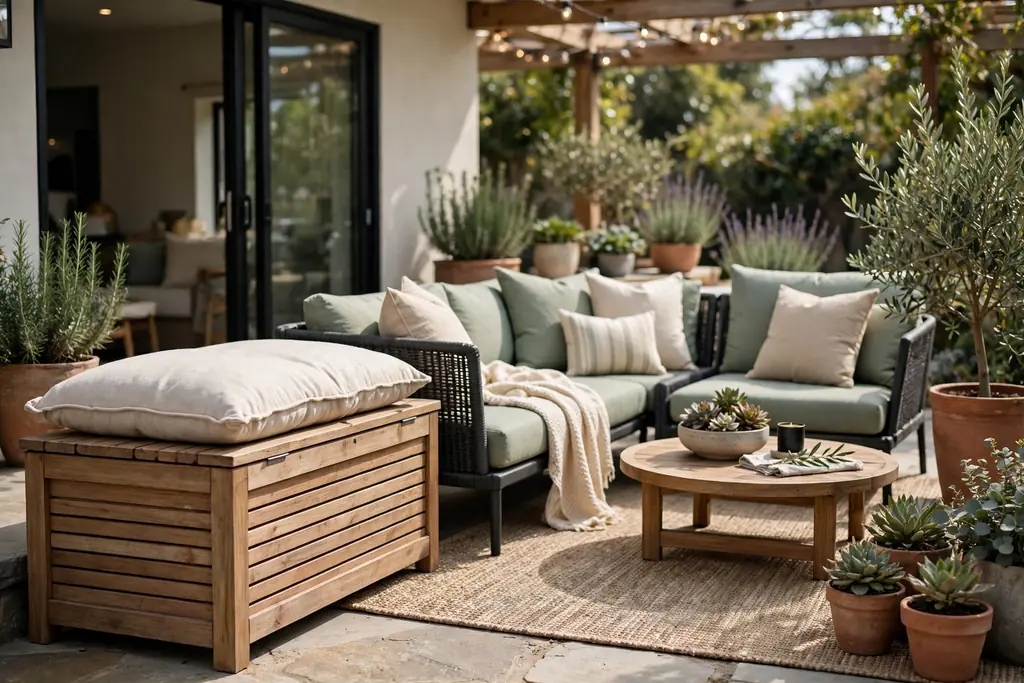
    Storage bench with a cushion beside a patio seating group.

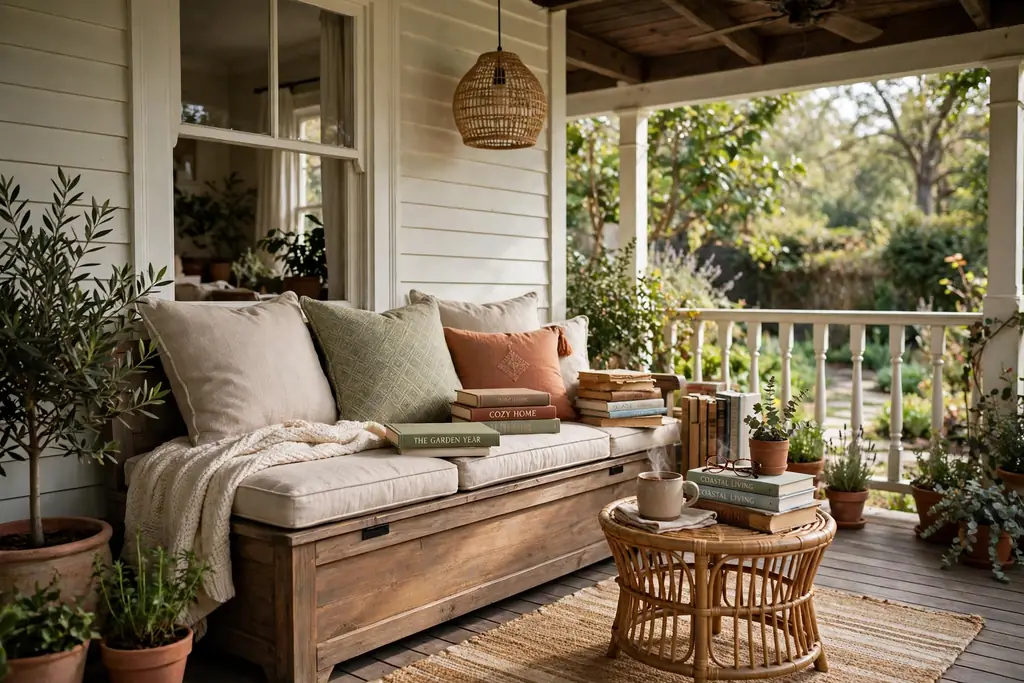
    A storage bench holds cushions, throws, and small outdoor games, and gives guests an extra seat. Set a wood or resin bench beside the seating group or against a wall, with a hinged lid that lifts with ease. Inside, keep cushions in a dry bag or basket, so they stay clean and ready to use.

    Check the bench lid for water leaks after rain, and wipe the inside dry if needed. A bench with a cushion on top reads as seating, while a plain bench top can hold a tray of drinks or a lantern. Keep heavy items at the bottom of the bench, and leave the top clear so the bench can seat guests at short notice.

    21. Side Tables at Every Seat
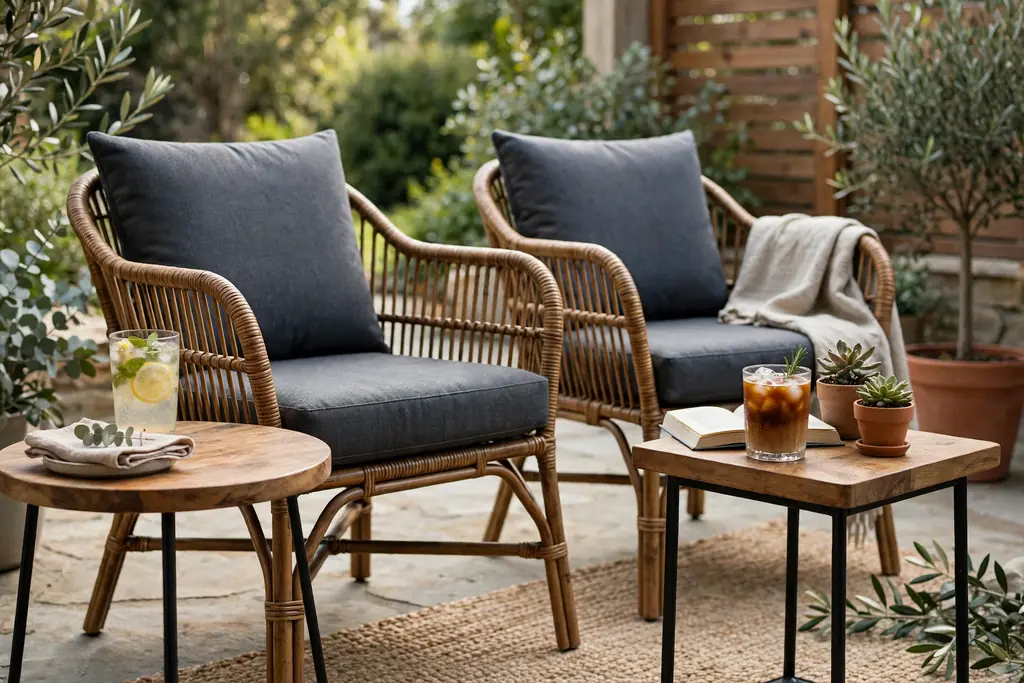
    Small side tables beside patio chairs holding drinks and a book.

    Side tables at every seat mean no one has to balance a drink on an armrest or the ground. Place a small table beside each chair and at each end of a sofa, sized to hold a drink, a book, and a phone. Tables in the same material as the main furniture tie the group together, while a mix of wood and metal adds a collected look.

    Choose tables with a stable base that will not tip on uneven paving, and keep the tops clear of clutter so guests can set things down. A side table with a lower shelf holds a spare throw or a small lantern. On a small patio, one shared table between two chairs still gives each seat a place within reach.

    22. Drinks Station on a Rolling Cart
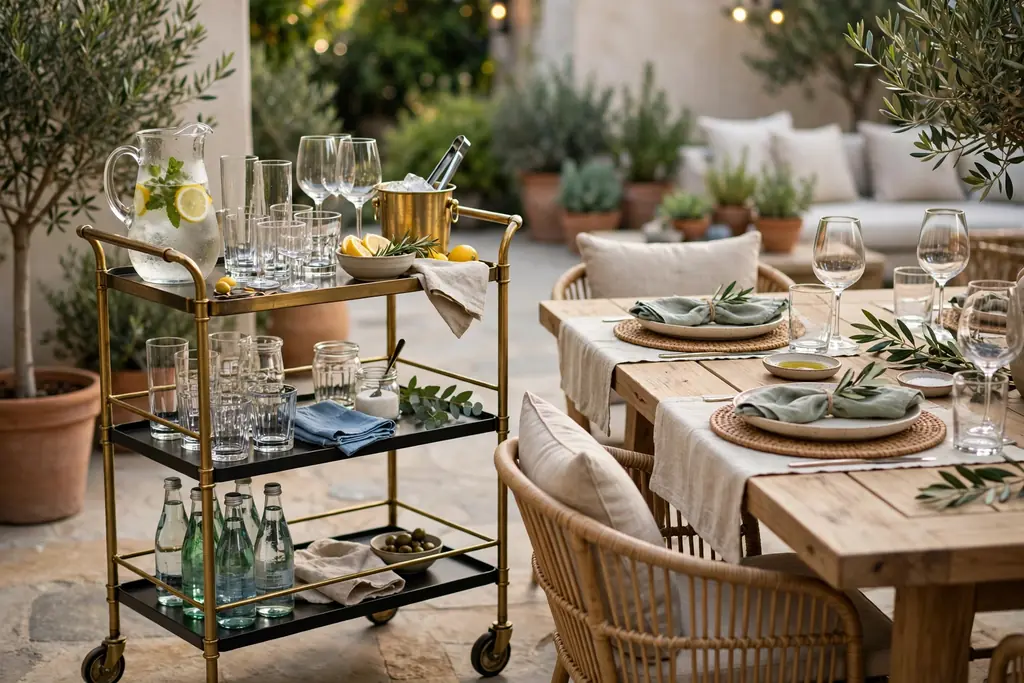
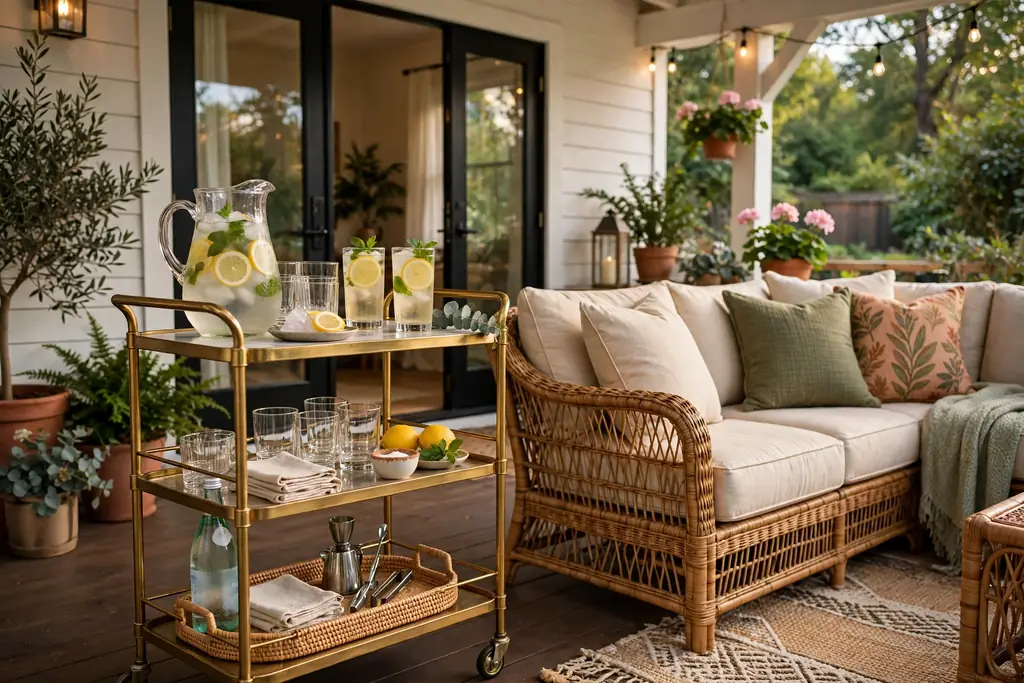
    Rolling drinks cart with glasses and a pitcher near a patio dining table.

    A drinks station on a rolling cart keeps glasses, a pitcher, and snacks in one place and lets the host stay with guests. Set a bar cart or a small side table near the dining area, with glasses on top, bottles or a pitcher below, and a small tray for napkins. The cart rolls to the table for meals and back to a corner when the meal ends.

    Keep the cart stable on level paving, and lock the wheels when it is in use. Use unbreakable glasses outdoors where children play, and bring glassware indoors at night. A cart with a removable tray doubles as a serving tray, so food and drinks can move from the kitchen to the patio in one trip.

    23. Basket of Throws for Cool Evenings
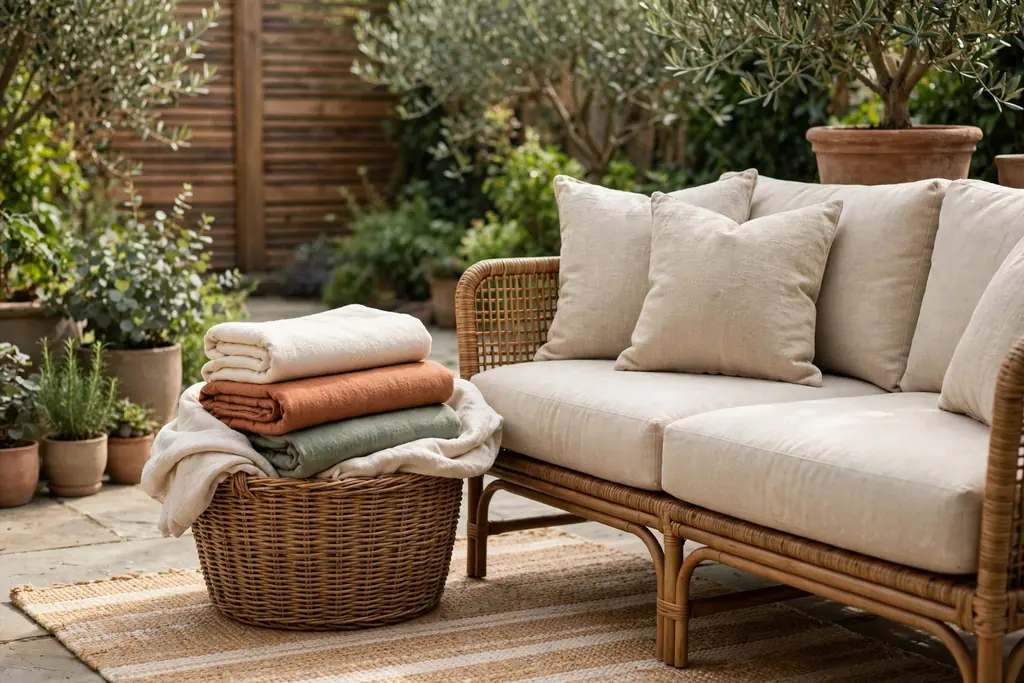
    Woven basket of folded throws beside a patio sofa.

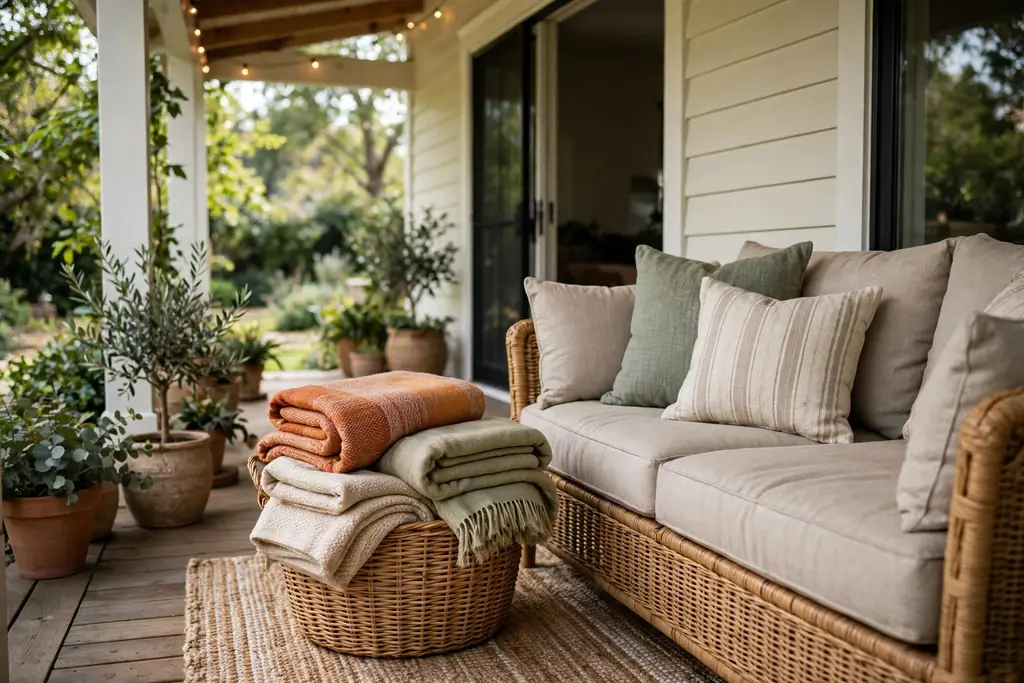
    A basket of throws keeps a patio usable when the temperature drops after sunset. Set a large woven basket beside the sofa or the fire pit, filled with two or three washable throws in the patio palette. Guests can take a throw as they sit down, and the basket keeps the throws tidy during the day.

    Choose throws that wash well and dry quickly, and bring the basket indoors in rain. A basket with handles moves from the seating group to the fire pit as the evening goes on. Keep the basket clear of walkways, and fold the throws neatly so the basket reads as decor, not storage alone.

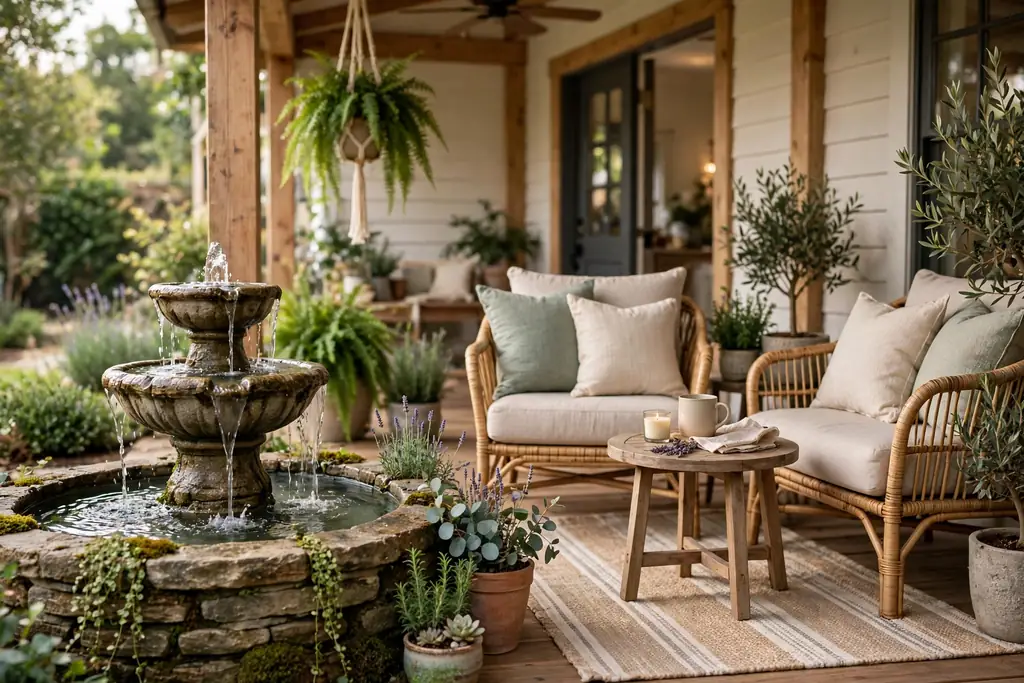
    24. Tabletop Fountain for Gentle Sound
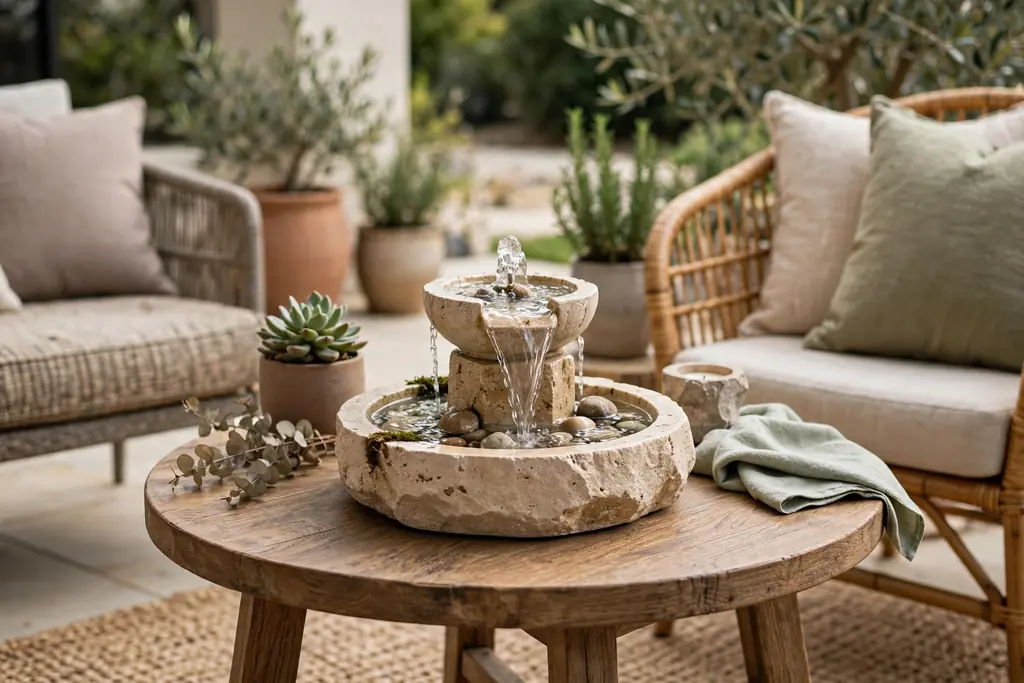
    Small tabletop fountain on a patio side table near seating.

    A tabletop fountain adds gentle water sound to a patio and masks street noise without taking floor space. Set a small solar or plug in fountain on a side table or a low wall, where the sound can be heard from the seating group but the splash stays clear of cushions. The moving water also draws birds to the patio during the day.

    Keep the water level topped up, and clean the pump and basin as the maker directs so the flow stays steady. Place the fountain on a level surface with a tray beneath it if it sits near wood furniture. In frost, empty the fountain and store it indoors so ice cannot crack the basin.

    25. Outdoor Mirror and Wall Decor for Light
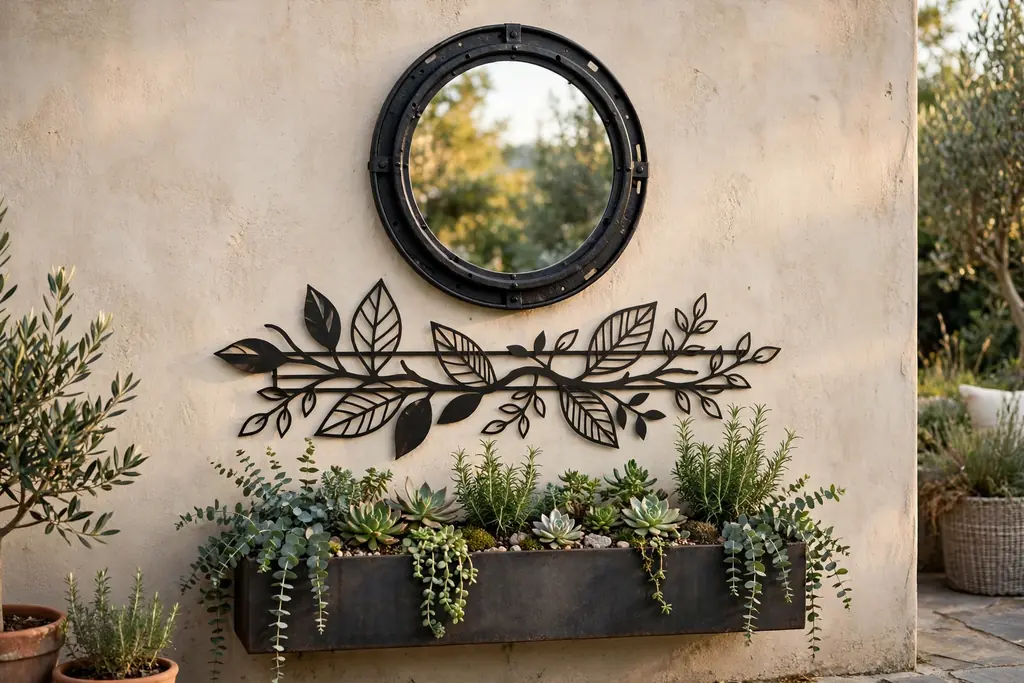
    Weatherproof outdoor mirror and metal wall decor above a planter on a patio wall.

    Outdoor mirror and wall decor reflect light and give a plain patio wall a focal point. Hang a weatherproof mirror or a set of metal wall pieces on a sheltered wall, facing the seating area so it reflects plants and light rather than a fence. The reflection makes a small patio feel wider and brighter, especially in a shaded corner.

    Fix wall decor firmly, with fixings suited to the wall material, and check them after storms. Choose pieces rated for outdoor use, since indoor mirrors and art can tarnish or warp outside. Keep wall decor clear of the fire pit and the grill, and pair it with a planter below so the wall display feels grounded.

    Conclusion

    A comfortable patio does not need a full redesign. Pick seating that fits the space, add shade for the hottest part of the day, layer light for evenings, and finish with plants and a heat source. Start with one seating group and one shade idea, then add the smaller touches, such as lanterns, a throw basket, and herb pots, as you learn how you use the patio. With those layers in place, the patio can serve as a second living room through much of the year, for quiet mornings, shared meals, and relaxed evenings outside.

    FAQs

    What is the first step in decorating an outdoor patio?

    The first step is to measure the patio and decide how you will use it, for sitting, eating, or both. Seating and shade come next, since they set the size and layout of everything else, from rugs to planters and lights.

    How do I make a small patio feel comfortable?

    A small patio feels comfortable with a bistro set or a loveseat, one shade source, and plants at different heights. Keep walkways clear, use a rug to mark the seating area, and choose folding or stackable pieces that can be stored when not in use.

    What kind of furniture lasts best on a patio?

    Weatherproof furniture lasts best on a patio, with frames in metal, teak, or resin and cushions in outdoor rated fabric. Removable, washable cushion covers help, since outdoor cushions gather dust and spills, and a storage bench keeps cushions dry in rain.

    How can I add shade to a patio without a pergola?

    You can add shade to a patio without a pergola with a cantilever umbrella, a shade sail, or outdoor curtains on a frame. Each option shades a seating or dining area, and an umbrella or sail can move or come down as the sun and seasons change.

    What lighting works best for a patio at night?

    String lights, lanterns, and solar path lights work best together for a patio at night. String lights give the main glow over seating and dining areas, lanterns add movable table light, and solar path lights mark the walkway safely.

    How do I keep patio plants alive through the season?

    Patio plants stay alive with the right light, drain holes, and watering when the top of the soil feels dry. Match plants to the sun the spot gets, feed them through the growing season as the pot label directs, and move tender pots indoors before frost.
  • 17 Painted Porch Floor Ideas to Refresh Your Entrance

    17 Painted Porch Floor Ideas to Refresh Your Entrance

    Painted porch floors refresh an entrance by adding color, pattern, and a clean finish to worn wood or concrete, and the best choice depends on your house color, porch size, and how much upkeep you accept. Solid colors suit small porches, while checkerboard, stripes, and stencils suit larger floors with room for pattern to breathe.

    The 17 ideas below cover solid colors, classic patterns, stencils, and two tone schemes, so you can pick one that fits your porch size and your house style. Start with the floor color, then add the door, planters, and seating around it, since the floor sets the tone for the whole entrance. The same layered approach that works for a fall front porch applies here: one strong floor choice, repeated in small touches, reads as one plan rather than a collection of separate pieces.

    Key Takeaways

    • Pick the floor color first, then repeat it in small touches, such as the door, planters, or cushions, so the entrance reads as one plan.
    • Solid colors suit small porches, while bold patterns, such as checkerboard and wide stripes, need a larger floor to breathe.
    • Clean, sand, and prime the floor before painting, and use paint rated for floors and outdoor use, so the finish lasts through foot traffic and weather.
    • Test a color in daylight and at dusk before painting the whole floor, since porch light changes how a color looks.
    • Keep the walking path clear of decor, and add a mat at the door to protect the painted finish from grit and wet shoes.
    • Touch up high traffic areas, such as the steps and the threshold, once a season, so small chips do not spread.

    1. Classic White Porch Floor

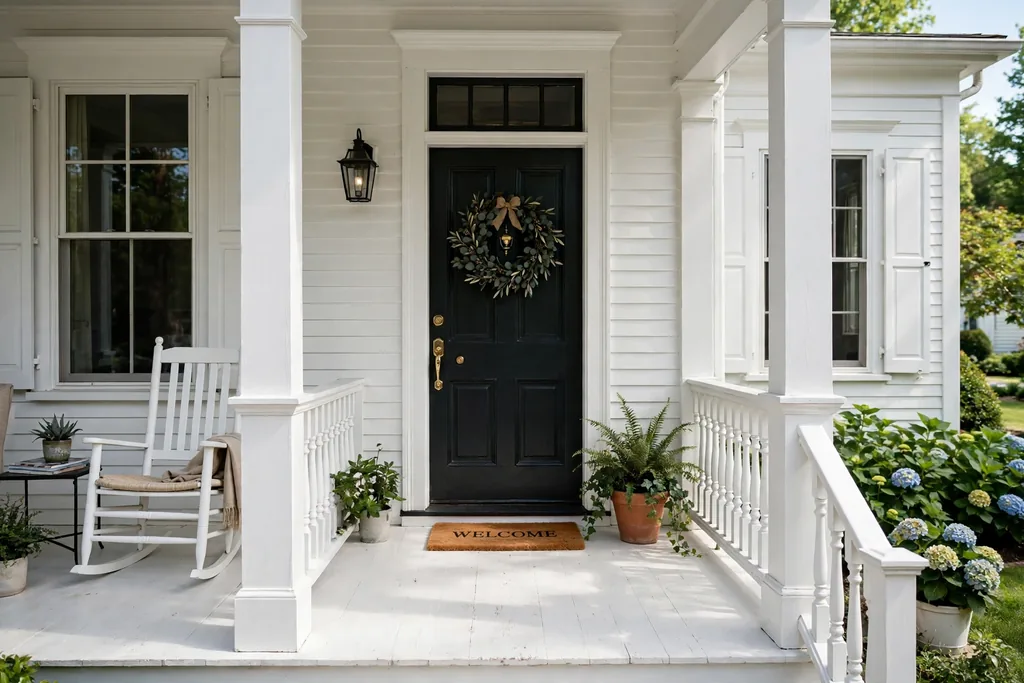
    Front porch with a classic white painted wood floor, white trim, and a dark front door.

    A classic white porch floor brightens a shaded entrance and makes the whole porch feel clean and open. Paint the boards in a warm white, not a cold blue white, so the floor suits wood siding, brick, and painted trim alike. White works best on covered porches, where it stays cleaner longer.

    Clean the boards well before painting, and fill gaps and nail holes so the finish looks smooth. Two thin coats give a more even result than one thick coat, and a floor rated topcoat helps the white resist scuffs. Pair a white floor with a dark door or dark planters for contrast, and sweep it weekly, since dust shows fast on white.

    2. Soft Sage Green Boards

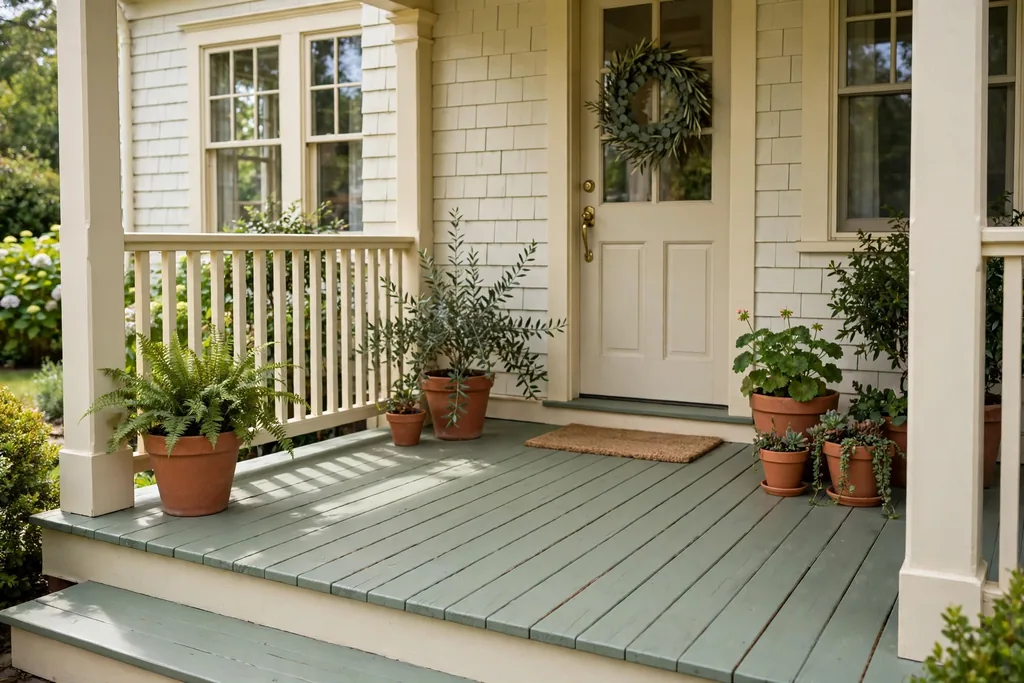
    Front porch with soft sage green painted floor boards, cream trim, and terracotta pots.

    Soft sage green boards give a porch a calm, garden linked color that suits cream trim and natural wood. Paint each board in the same sage tone, with the grain still faintly visible, so the floor reads as painted wood rather than a flat slab. Sage suits houses with green yards and muted siding.

    Test the sage in daylight, since some greens turn grey in shade and yellow in sun. Keep the door and trim in cream or warm white, so the green stays the main color. Sage pairs well with terracotta pots and plain wood chairs, and it hides dust better than white or pale grey.

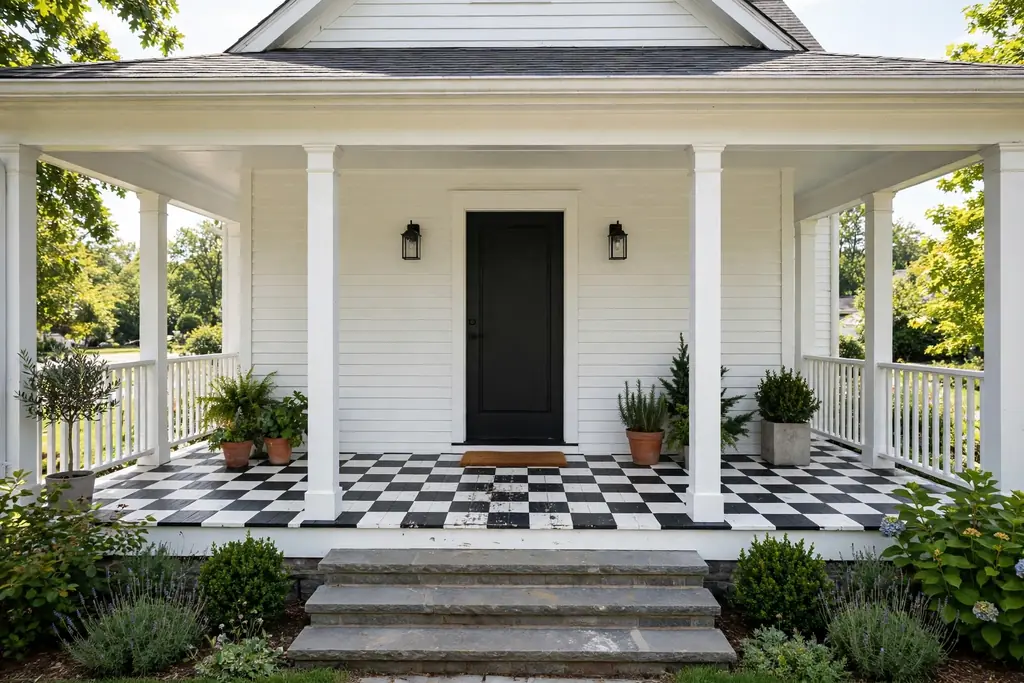
    3. Black and White Checkerboard

    Wide front porch with a black and white checkerboard painted floor and a plain front door.

    A black and white checkerboard floor is the boldest classic porch pattern, and it suits a wide porch with a plain door and simple furniture. Paint the squares in equal sizes, sized to the porch so the pattern ends in full squares at the edges where possible. Large squares suit large porches, while smaller squares suit a narrow porch.

    Mark the grid with chalk lines and tape before painting, and paint the lighter color first, then the darker color. Check the grid from the street, since a crooked line shows at once in a checkerboard. Keep furniture and planters simple, since the floor already carries the pattern, and use a dark mat at the door to ground the scheme.

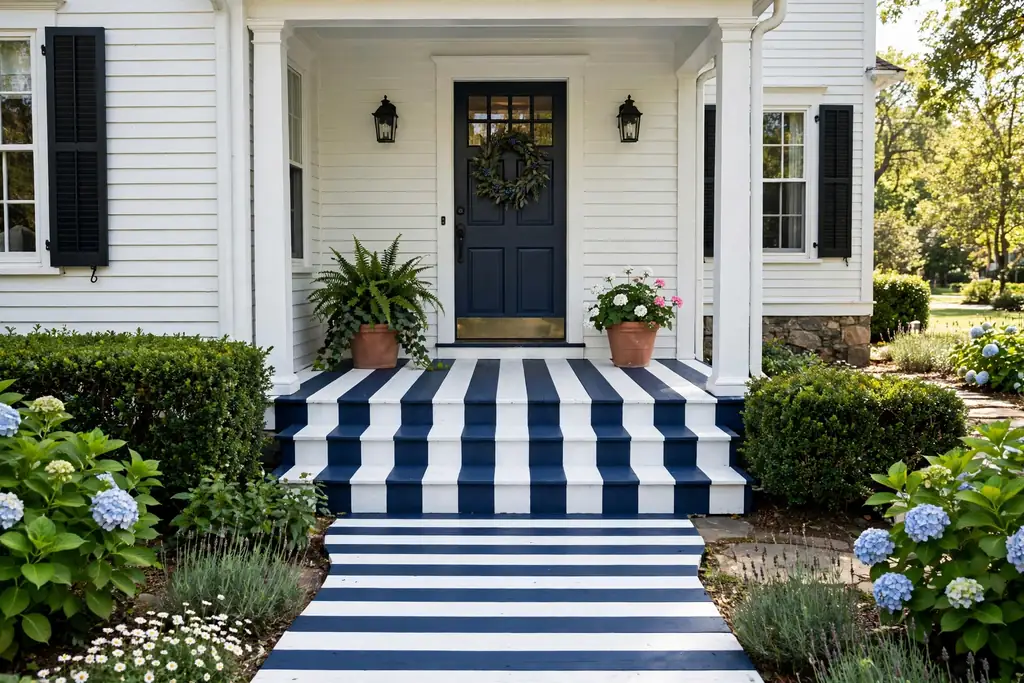
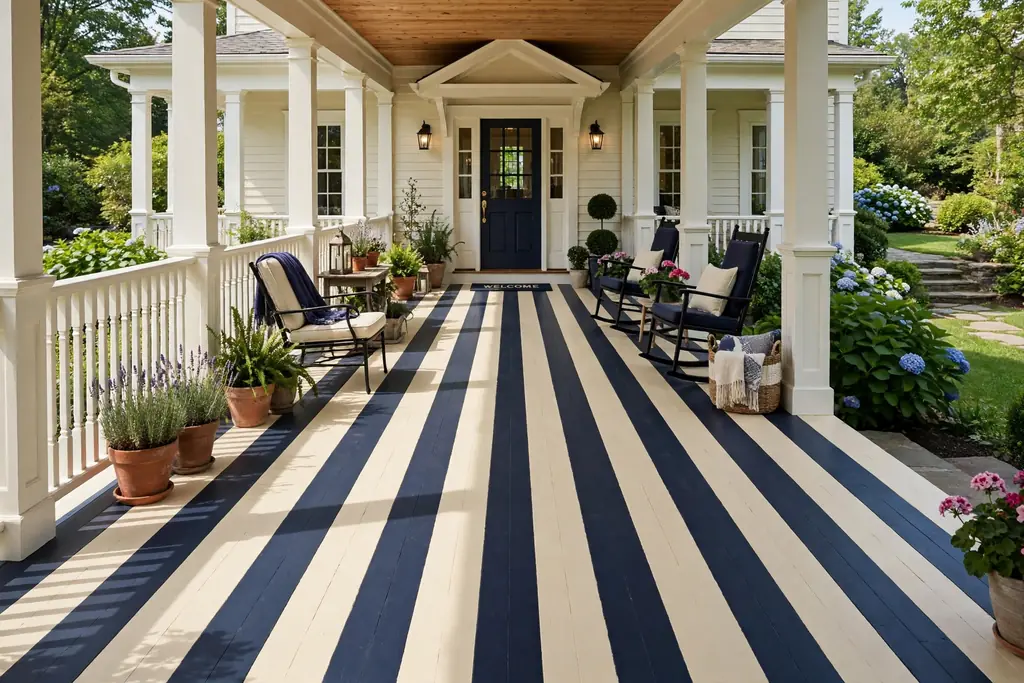
    4. Wide Navy and White Stripes

    Front porch with wide navy and white striped painted floor boards leading to the front door.

    Wide navy and white stripes run along the porch boards and draw the eye toward the door. Paint stripes across the width of the porch, in bands of equal width, so the pattern feels calm rather than busy. Navy suits white houses, grey siding, and coastal style homes.

    Tape each stripe carefully and press the tape edges down, so paint does not bleed under the tape. Paint the white bands first, let them dry fully, then tape and paint the navy bands. A striped floor pairs well with plain cushions and a simple wreath, and it suits a porch where the door is already a strong color.

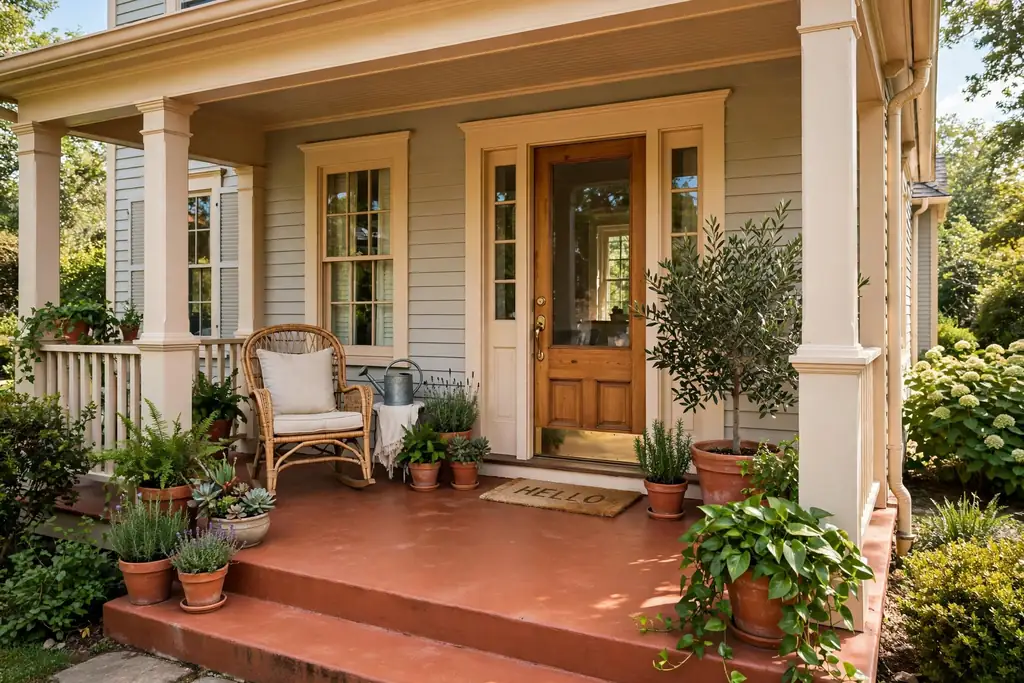
    5. Warm Terracotta Solid Color

    Front porch with a warm terracotta painted floor, warm white trim, and green plants.

    A warm terracotta floor brings sun baked color to a porch and suits brick houses, stucco walls, and wood siding. Paint the whole floor in one terracotta tone, and keep the trim in warm white, so the color reads as warm rather than loud. Terracotta suits porches that get strong sun, where cooler colors can look washed out.

    Choose a terracotta with a brown base rather than an orange base, so it sits calmly next to plants and wood. Terracotta hides dust and leaf marks better than pale colors, which helps on an open porch. Pair it with cream planters and dark green plants for a garden feel.

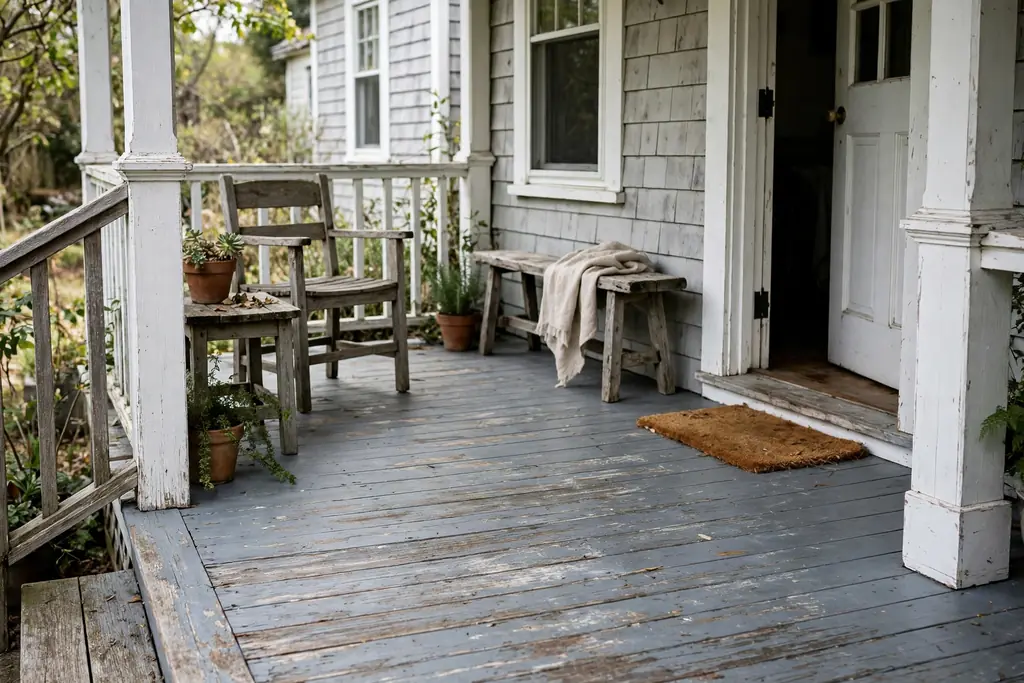
    6. Weathered Grey Wash

    Older wood porch with a weathered grey wash painted floor showing wood grain and simple wood furniture.

    A weathered grey wash lets wood grain show through a thin coat of grey paint, for a soft, aged look. Brush on a thinned grey coat, wipe off the excess, and repeat until the tone is even, rather than painting a solid opaque layer. This suits older wood porches where a solid coat would hide character.

    A grey wash works best on wood in fair shape, since it does not hide cracks or stains the way a solid coat can. Seal the wash with a clear outdoor floor finish, so rain and foot traffic do not wear it away fast. Pair a grey wash floor with white trim and simple wood furniture for a quiet, coastal feel.
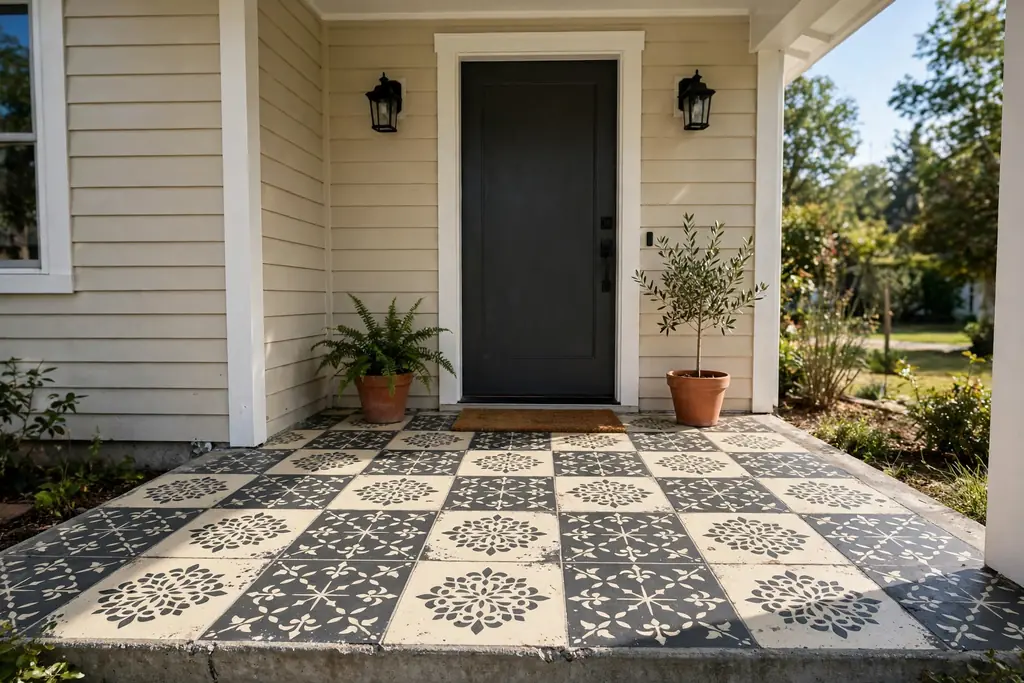
    7. Faux Tile Squares with a Stencil

    Concrete porch with cream and charcoal faux tile squares painted with a stencil.

    A stencil that mimics tile squares gives a wood or concrete porch the look of tile without the cost or weight of real tile. Choose a square stencil with a simple pattern, in two colors, such as cream and charcoal, and repeat it in a grid across the floor. This suits concrete porches especially well, where the flat surface takes a stencil cleanly.

    Start in the center of the porch and work outward, so the pattern stays centered at the door. Use a dense foam roller and very little paint per pass, so the stencil edges stay crisp. Seal the finished floor with a clear topcoat, since stenciled paint wears faster than a solid coat under foot traffic.

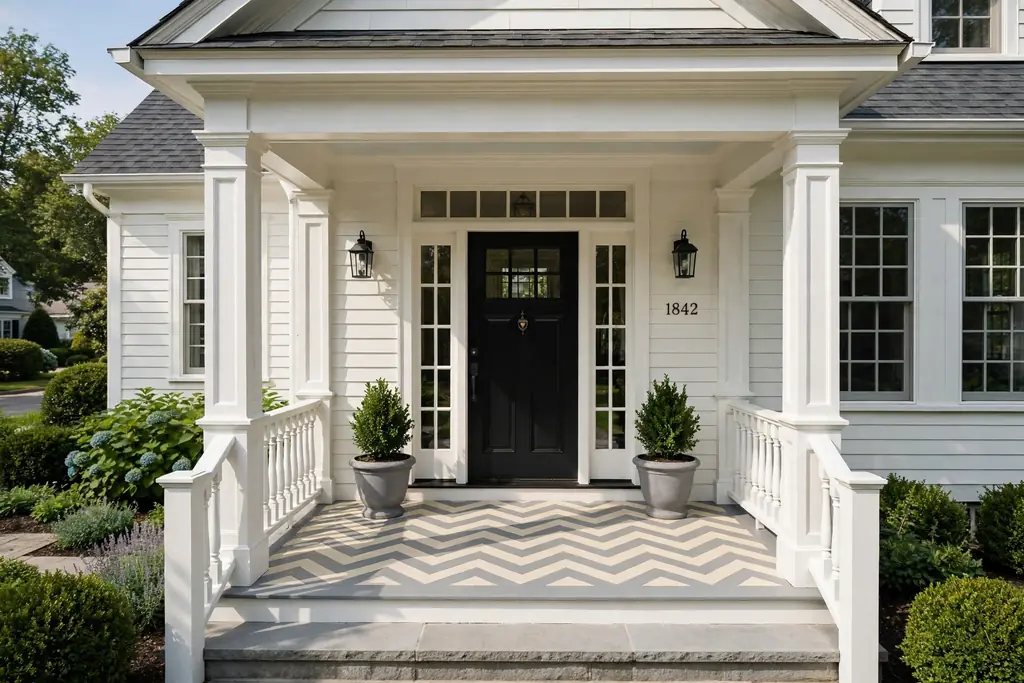
    8. Herringbone Painted Pattern

    Formal front porch with a herringbone painted pattern in cream and soft grey.

    A herringbone pattern paints short boards or rectangles in a zigzag layout, for a tailored floor that suits a formal entrance. Paint the rectangles in two tones, such as cream and soft grey, or in one color with a darker grout style line between each piece. Herringbone suits a rectangular porch where the pattern can run in full rows.

    Plan the layout on paper first, and mark the center lines on the floor before taping, since herringbone goes wrong fast without a guide. Keep the rest of the porch plain, with one pair of planters and a simple mat, so the floor stays the focus. This pattern takes more time than stripes or solids, so it suits a porch you plan to keep for years.

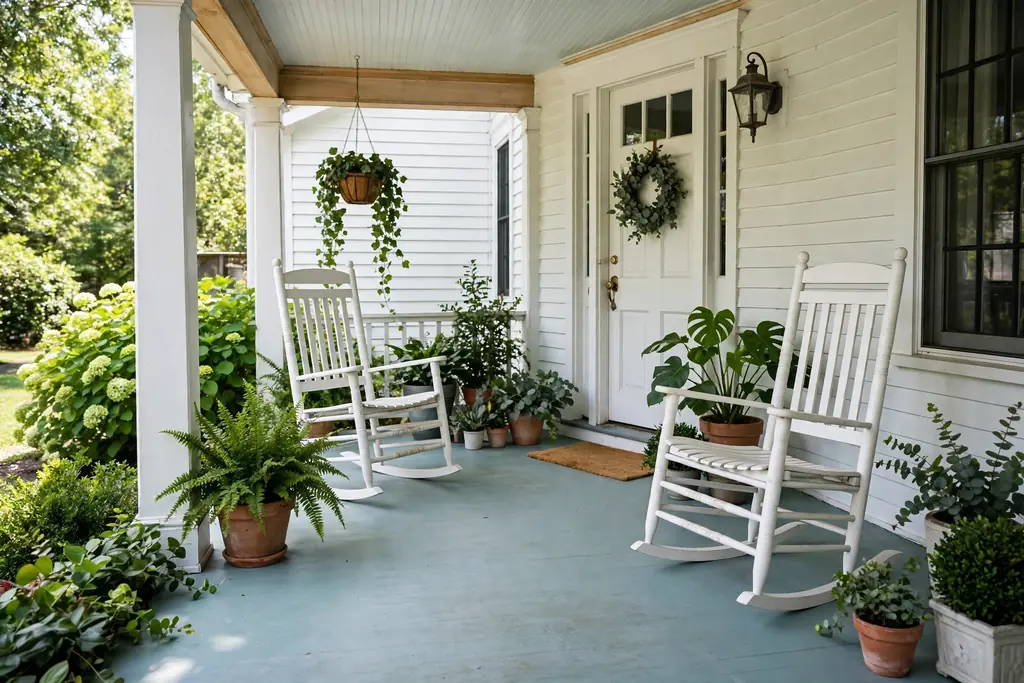
    9. Haint Blue Porch Floor

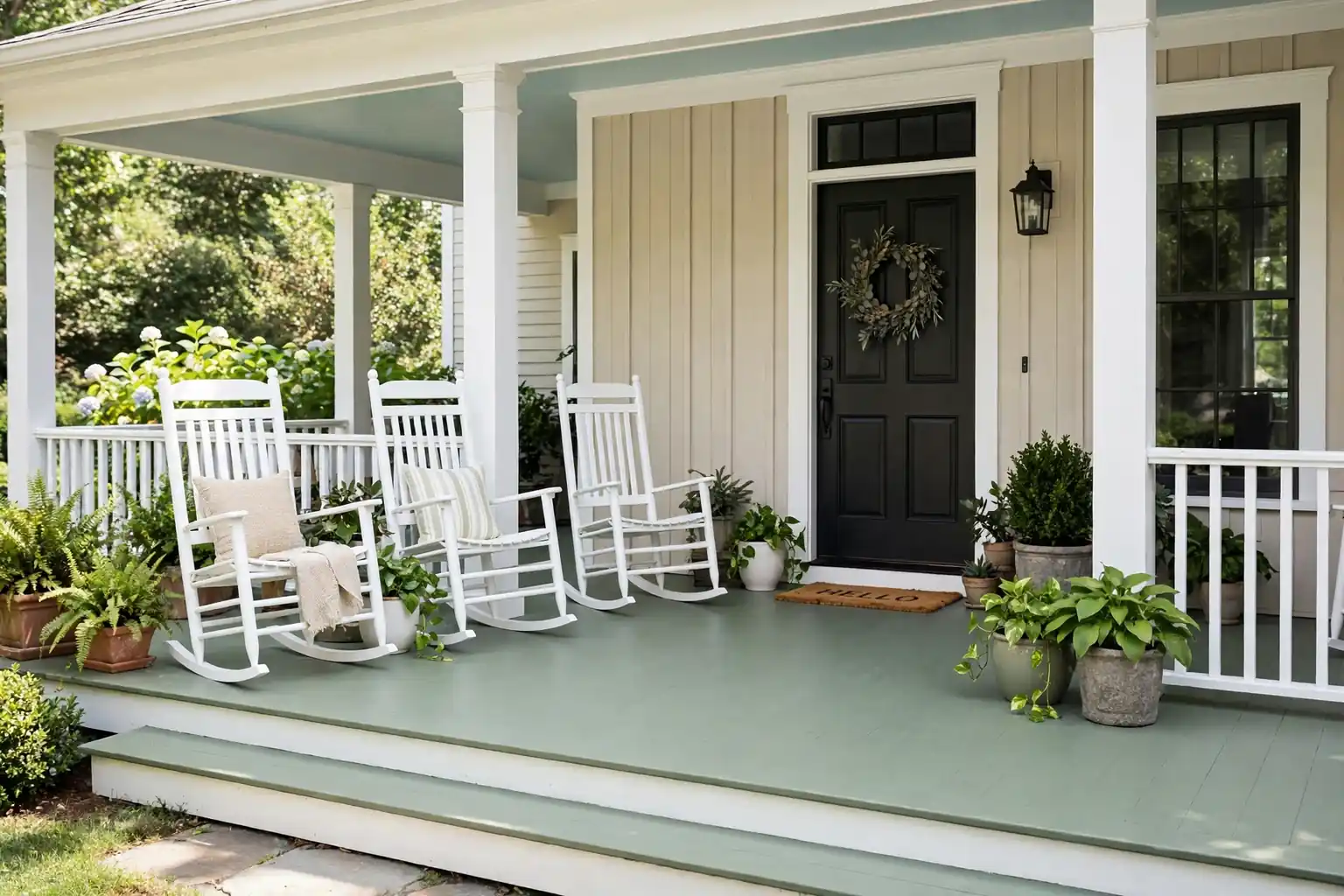
    Front porch with a pale blue green haint blue painted floor, white rocking chairs, and green plants.

    Haint blue, a soft blue green with a long history on Southern porches, gives an entrance a calm, sky linked color. Paint the floor in a pale blue green, and keep the ceiling and trim in white or the same blue, for a porch that feels light even in shade. Haint blue suits white houses, brick houses, and homes with deep porch roofs.

    Test the blue on a board in place, since porch shade can make it look grey, and sun can make it look bright. Pair it with white rocking chairs and green plants, and keep the door in a contrasting color, such as dark green or black, so the entrance still has a focal point.
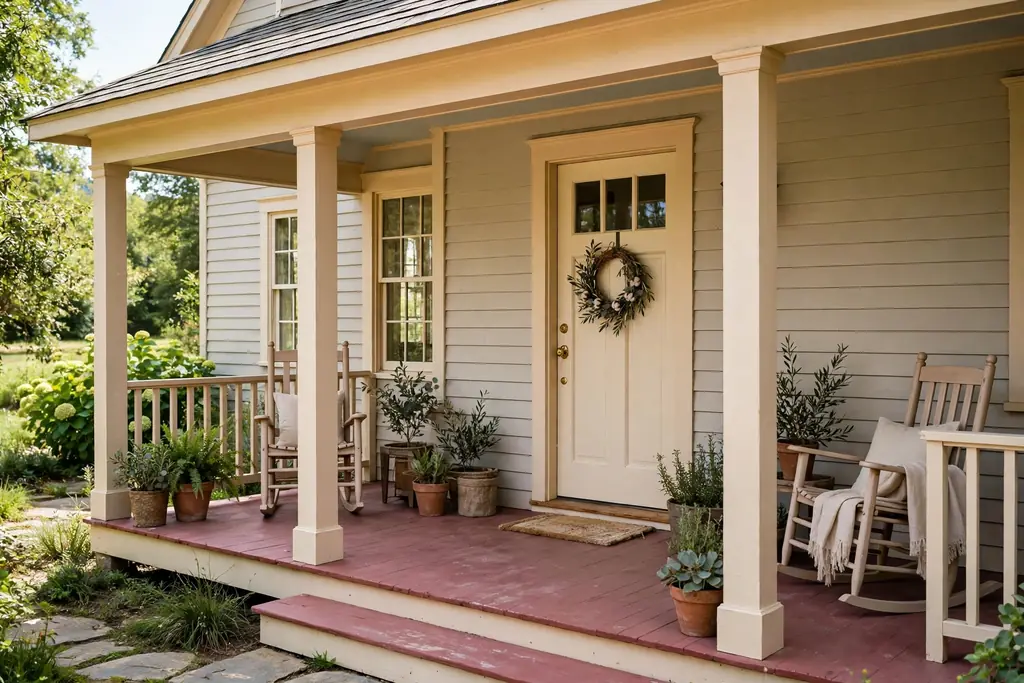
    10. Brick Red Porch Floor

    Farmhouse porch with a muted brick red painted floor, warm white trim, and a cream front door.

    A brick red floor ties a porch to a brick house, a brick path, or red toned siding, and it grounds the entrance with a warm, earthy color. Paint the floor in a muted brick red, not a bright post box red, so it reads as a natural tone next to plants and wood. Brick red suits farmhouse and cottage style homes.

    Brick red hides dirt well, which helps on porches near gardens and gravel paths. Keep the trim in warm white and the door in cream, black, or dark green, so the red does not compete with the door color. A brick red floor pairs well with terracotta pots and dark wood furniture.

    11. Painted Border Frame

    Front porch with a pale floor and a dark charcoal painted border frame around the edge.

    A painted border frames the porch floor with a contrasting edge, for a finished look without painting the whole floor a new color. Paint the main floor in a pale tone, then paint a border band, about the width of one board, around the edge in a darker tone, such as charcoal or navy. This suits porches where the floor is in good shape but looks plain.

    Measure the border from the edge inward and tape both sides of the band, so the lines stay straight at the corners. Miter the corners by taping at a diagonal, or square them off for a simpler look. A border pairs well with a plain mat at the door and planters set inside the border line.

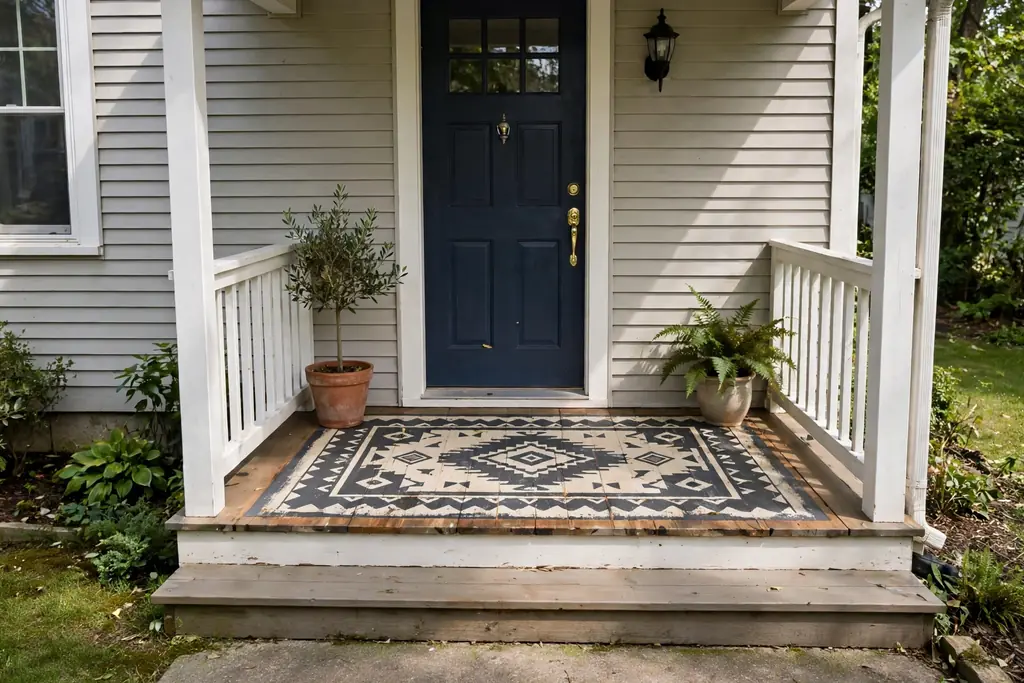
    12. Painted Rug at the Door

    Small front porch with a painted rug rectangle in charcoal and cream on the floor at the door.

    A painted rug is a flat rectangle painted on the floor at the door, in a pattern such as stripes or a simple border, that never needs shaking out. Paint the rectangle in a color that contrasts with the main floor, such as charcoal on cream, or cream on sage, and add a thin border line inside the edge. This suits small porches where a real rug would bunch or blow away.

    Size the painted rug to the door, about as wide as the door plus a small margin on each side, and long enough for two steps. Keep the pattern simple, since a busy painted rug competes with the door itself. A painted rug also gives a useful landing zone for shoes and parcels, and it can be repainted when the pattern wears.

    13. Two Tone Floor and Steps

    Front porch with a cream painted floor and darker charcoal painted steps leading to the door.

    A two tone scheme paints the porch floor one color and the steps a second color, for a clear, layered entrance. Try a pale floor with darker steps, such as cream boards with charcoal steps, or a sage floor with white steps, so the change of level reads clearly. This suits porches with three or more steps, where the steps are a visible part of the entrance.

    Paint the steps with extra care at the edges, since step edges wear fastest, and add a non slip additive to the step paint if the porch gets wet. Keep the handrail and trim in one of the two colors, so the scheme stays to two tones plus white. A two tone floor also helps guests see the steps at dusk.

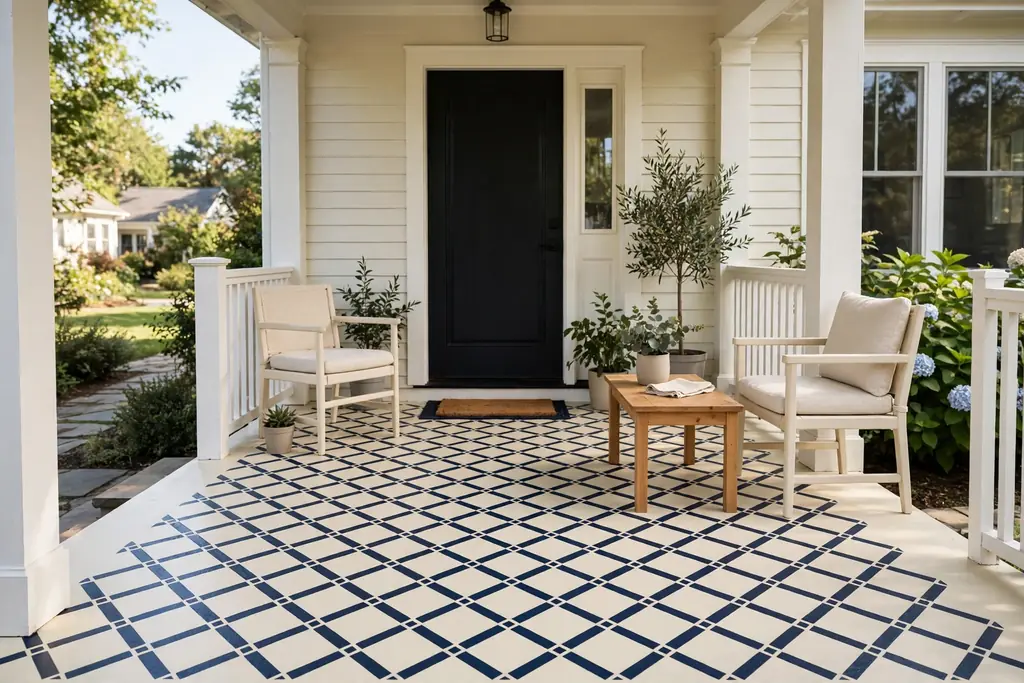
    14. Diamond Lattice Stencil

    Front porch with a navy diamond lattice stencil painted on a cream floor.

    A diamond lattice stencil paints a repeating diamond grid across the floor, for a pattern that feels dressier than stripes but calmer than checkerboard. Choose a stencil with open diamonds in one accent color over a pale base, such as navy diamonds on cream, or charcoal diamonds on soft grey. This suits a porch with plain furniture and a simple door.

    Align the stencil rows with chalk lines, and check the first row from the door before continuing, since a drift in the first row repeats across the floor. Use a light hand with the roller, and lift the stencil straight up to avoid smudging. Seal the floor well, since the fine lines of a lattice wear faster than broad bands of color.

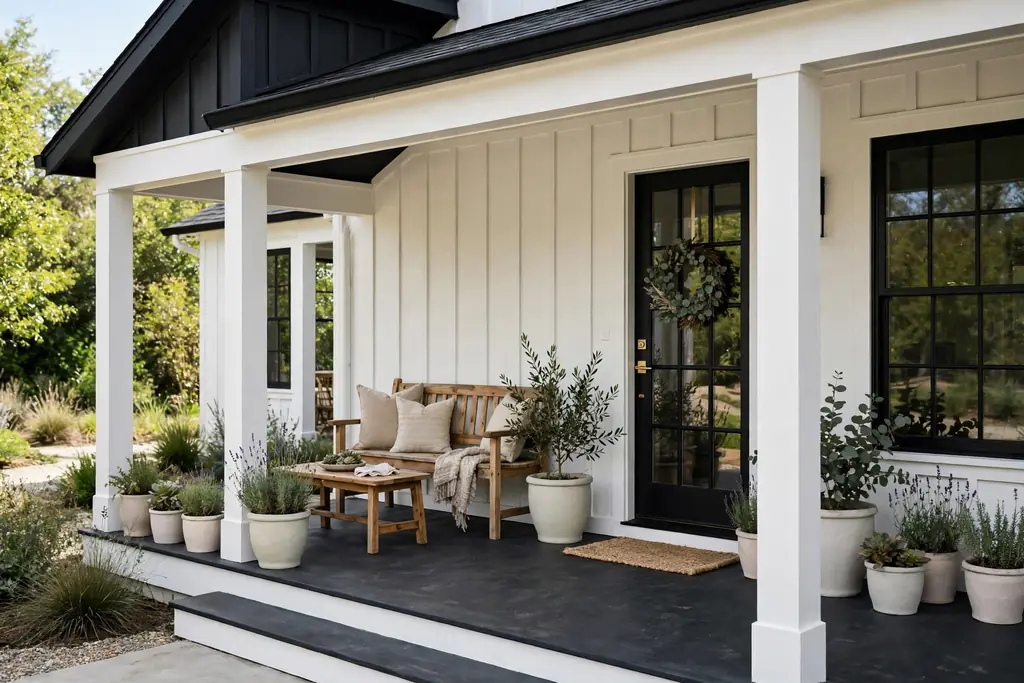
    15. Dark Charcoal Modern Floor

    Modern farmhouse porch with a dark charcoal painted floor, white trim, and pale planters.

    A dark charcoal floor gives a porch a modern, grounded look and makes white trim, light doors, and green plants stand out. Paint the whole floor in a flat charcoal tone, and keep the walls and trim pale, so the porch does not feel dark. Charcoal suits modern farmhouse homes and houses with black window frames or black doors.

    Charcoal shows dust and pollen more than mid tones, so sweep it often, and expect to touch up scuffs near the door. Pair it with pale planters, a light mat, and wood furniture, so the porch keeps a warm note. A charcoal floor also suits a porch with strong sun, where pale floors can glare.

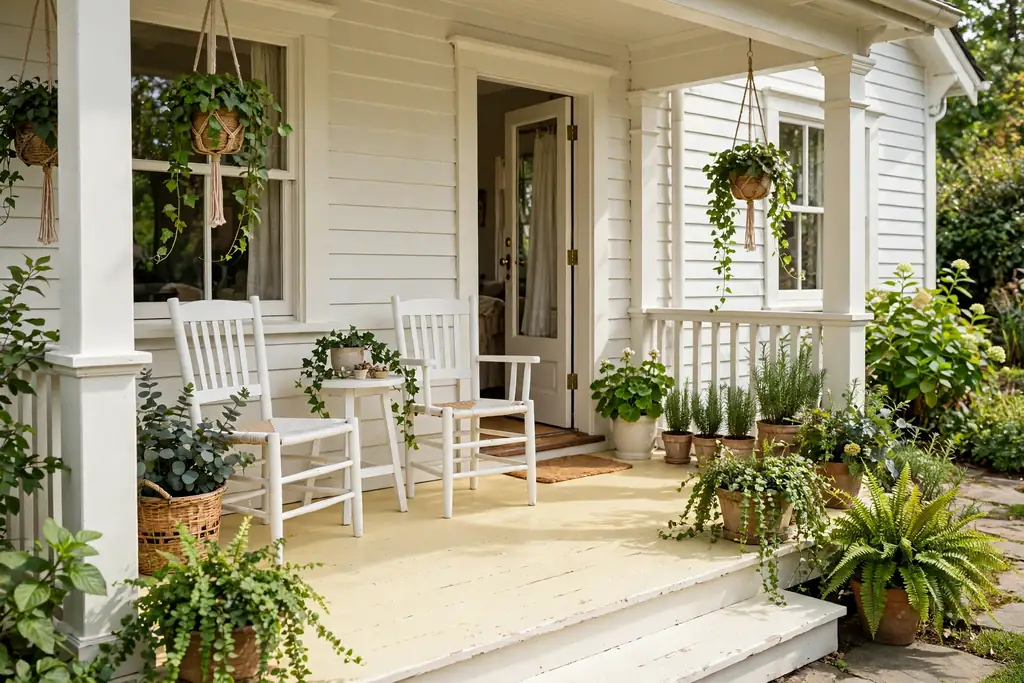
    16. Soft Butter Yellow Floor

    Cottage porch with a soft butter yellow painted floor, warm white trim, and white chairs.

    A soft butter yellow floor adds a gentle, sunny note to a porch without the boldness of a bright yellow. Paint the boards in a pale, creamy yellow, and keep the trim in warm white, so the color reads as soft rather than loud. Butter yellow suits cottage style homes, white siding, and porches that face north and need warmth.

    Test the yellow in shade, since it can look cream on a bright day and mustard in deep shade. Pair it with white chairs, green plants, and a door in sage or navy for contrast. Butter yellow hides light dust better than white, but shows dark soil marks, so keep a mat at the door.

    17. Alternating Accent Boards

    Long front porch with alternating navy accent boards on a cream painted floor.

    Alternating accent boards paint every third or fourth board in an accent color, with the rest in a neutral tone, for a subtle rhythm across the floor. Try navy accent boards on a cream floor, or terracotta accent boards on a warm grey floor, keeping the accent boards evenly spaced. This suits a porch where a full pattern would feel too busy, but a solid color feels too plain.

    Count the boards and mark the accent boards before painting, so the spacing stays even across the whole floor. Paint the neutral boards first, then the accent boards, and keep the door and planters in the neutral tone, so the accent color stays a rhythm rather than a theme. This idea also suits a long porch, where the repeated accent boards lead the eye to the door.

    Conclusion

    Painted porch floors work best when the color or pattern fits the house, the porch size, and the amount of upkeep you accept. Start with one idea from this list, test the color in place, and prep the floor well before you paint, since prep decides how long the finish lasts. A solid color is the safest first step, while checkerboard, stripes, and stencils reward a larger porch and a steadier hand. Whichever idea you pick, keep the door, planters, and seating calm, so the floor can carry the entrance, and touch up the high traffic spots once a season. For a seasonal take on the same entrance, the farmhouse fall palette of rust, cream, and olive pairs well with most of these floor colors.


    FAQs

    What paint should I use for a painted porch floor?

    Use paint rated for floors and outdoor use, with a primer suited to your floor material, wood or concrete, and a clear topcoat if the paint maker advises one. Floor rated paint resists scuffs and foot traffic better than wall paint, and outdoor rated paint handles rain and sun. Check the label for porch, deck, or concrete floor use before you buy, and follow the drying times between coats.

    How do I prepare a porch floor before painting?

    Prepare a porch floor by sweeping it clean, washing off dirt and mildew, sanding rough or peeling spots, and filling cracks and nail holes, then priming bare wood or bare concrete. Let the floor dry fully before priming, since trapped damp lifts paint. On a previously painted floor, sand glossy areas lightly so the new coat grips, and remove any loose paint first.

    Do painted porch floors last, and how do I keep them looking good?

    Painted porch floors last well on covered porches with good prep, and less long on open porches in harsh weather, but most last a few seasons before they need touch ups. Sweep weekly, keep a mat at the door to catch grit, and touch up chips at the threshold and step edges once a season. Repaint the whole floor when wear covers large areas rather than small spots.

    What is the best painted porch floor color for a small porch?

    The best painted porch floor color for a small porch is a pale solid, such as warm white, soft sage, or pale grey, since pale colors make a small floor feel open. Keep the pattern simple, with a border or a painted rug rather than a bold checkerboard, and repeat the floor color in one small touch, such as a planter or a cushion, so the small porch reads as planned.

    Can I paint a concrete porch floor?

    You can paint a concrete porch floor with concrete rated floor paint, after cleaning the surface, etching or priming it as the paint label directs, and letting it dry fully. Concrete takes stencils well, since the flat surface gives crisp edges, and solid colors look smooth on concrete. Avoid painting concrete that stays damp, since damp lifts paint, and use a non slip additive on steps.

    How do I choose between a solid color and a pattern for my porch floor?

    Choose a solid color if your porch is small, your door is already bold, or you want a quick refresh, and choose a pattern, such as checkerboard, stripes, or a stencil, if your porch is large and the rest of the entrance is plain. Patterns need a larger floor to breathe and more prep time, while solids suit a first painting project and hide small flaws better.


  • 21 Back Porch Decorating Ideas for a Relaxing Outdoor Space

    21 Back Porch Decorating Ideas for a Relaxing Outdoor Space

    Back porch decorating ideas work best when you start with comfortable seating, shade, soft light, and plants, then add one calm focal point such as a rug, a swing, or a fountain. Keep the walking path clear, repeat two or three colors, and choose outdoor rated pieces so the porch stays inviting in sun and rain.

    The 21 ideas below suit small back porches as well as wide ones, since most of them scale down to one chair and one planter, or up to a full seating and dining group. Pick one seating idea and one light idea first, then add shade and plants. The same layered approach that makes fall porch ideas feel welcoming works on a back porch all year, and a fall front porch palette can guide the colors you repeat out back.

    Key Takeaways

    • Start with seating you want to sit in: deep chairs, a swing, or a daybed, not decor alone.
    • Give the porch one clear zone for sitting and one clear path to the yard, so nothing blocks the door or the steps.
    • Repeat two or three colors, such as cream, sage green, and warm wood, across cushions, pots, and textiles.
    • Add shade and soft light early, since a porch that is too bright at noon or too dark at dusk gets little use.
    • Choose outdoor rated fabrics and finishes, or bring cushions and throws indoors in rain, so the porch stays tidy.
    • Add plants at varied heights, and keep one calm focal point, such as a rug, a fountain, or a swing, so the porch reads as one plan.

    1. Deep-Seated Lounge Chairs with Weatherproof Cushions

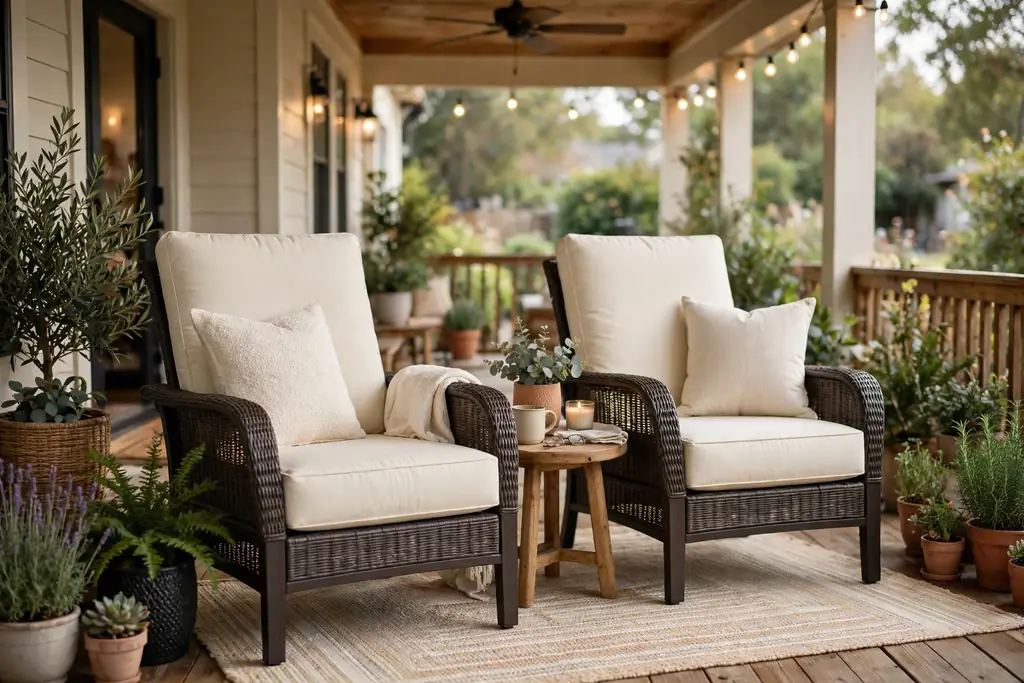
    Two deep seated lounge chairs with weatherproof cushions and a small table on a back porch.

    Deep-seated lounge chairs are the simplest way to make a back porch feel like a room. Choose two chairs with thick seat cushions, a low back, and armrests at a height that supports a book or a drink. Place them at a slight angle toward the yard, with a small table between them, so conversation feels natural and the view stays open.

    Pick cushions with removable, washable covers and quick dry fills, since porch cushions gather dust and pollen. If the porch is narrow, one deep chair still gives the same restful feel, placed beside a side table and a planter. Add a folded throw over one arm for cool evenings, and keep the chair feet on a rug or flat stones so they do not mark decking.

    2. Wooden Porch Swing with Soft Cushions

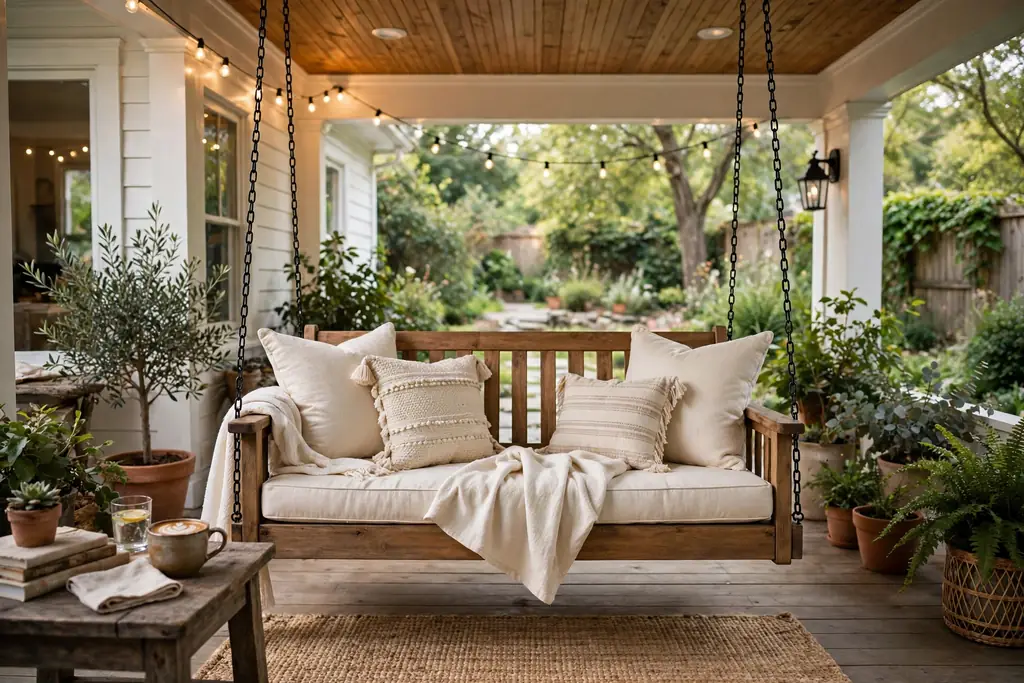
    Wooden porch swing with soft cream cushions hanging on a back porch.

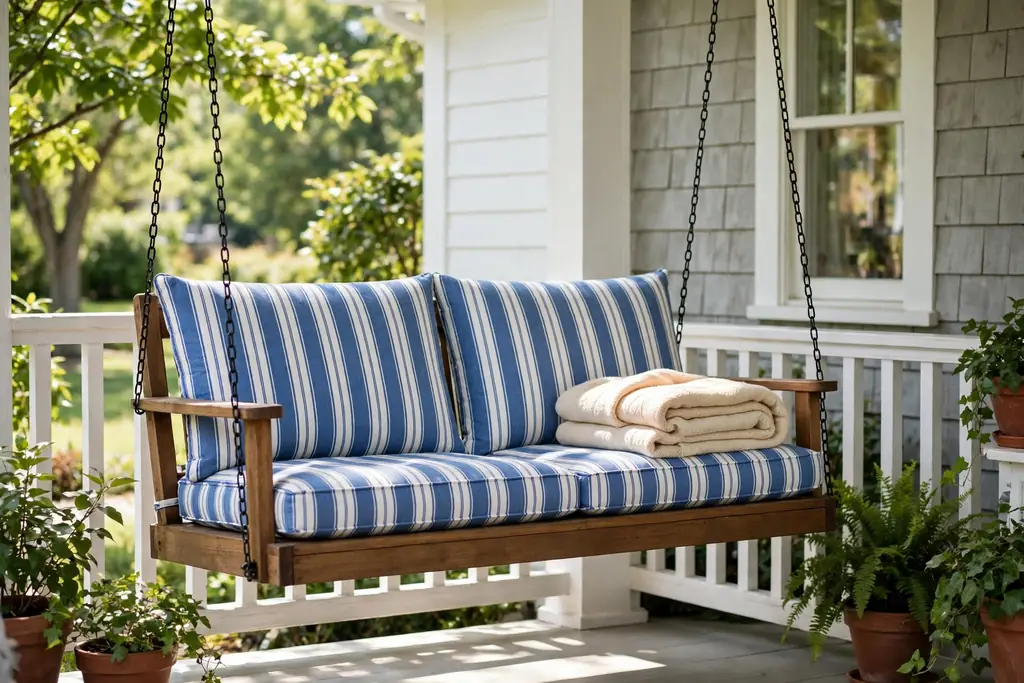
    A wooden porch swing turns a back porch into a place to sit and stay. Hang the swing from sturdy ceiling joists, with chains rated for the weight, and add a seat cushion and two back cushions in cream or natural linen. The gentle motion suits a wide porch best, where the swing can move freely without hitting the wall or railing.

    Check the chains and hooks each season for rust or wear, and tighten them as needed. If the swing faces rain, use quick dry foam cushions or bring the cushions indoors at night. Keep one end of the swing clear of planters, so guests can step on and off with ease, and place a small rug under the swing to catch dust from shoes.

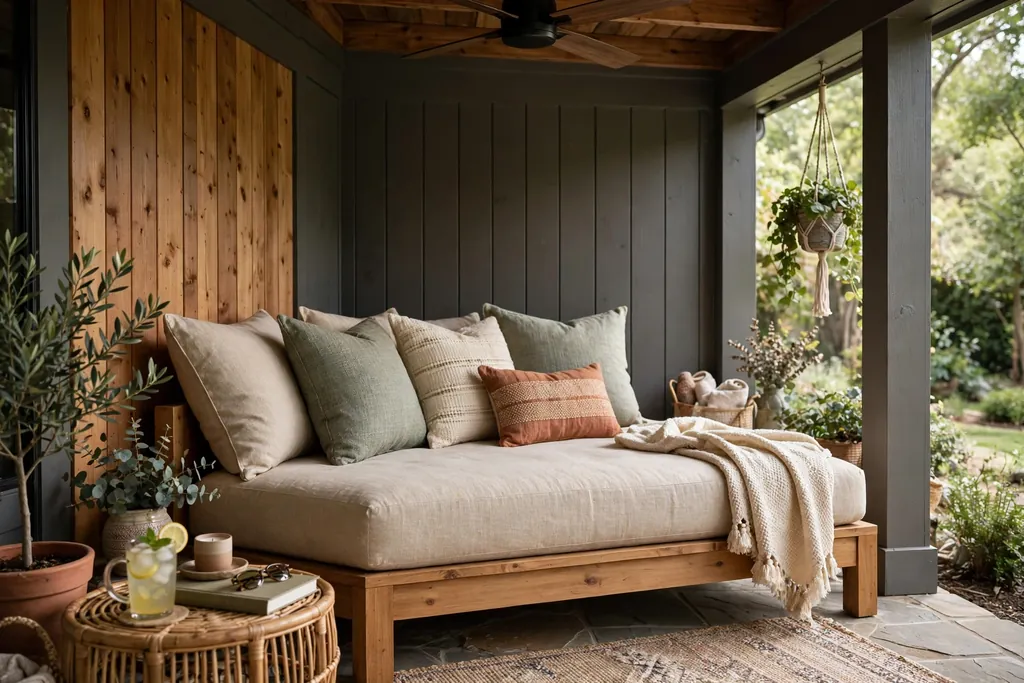
    3. Outdoor Daybed for Afternoon Rests

    Outdoor daybed with a firm base cushion and back pillows in a shaded back porch corner.

    An outdoor daybed gives a back porch a clear spot for naps, reading, and long sits. Choose a daybed with a firm base cushion, a back cushion along one side, and a few smaller pillows for support. Place it against the house wall or in a shaded corner, with a side table close by for water, glasses, or a book.

    Use outdoor rated fabric for the base and back cushions, and store extra pillows in a dry box when rain is forecast. If space is tight, a single daybed can replace two chairs, since it seats two people for a chat and one person stretched out for a rest. Keep a light blanket folded at the foot of the daybed for cool afternoons.

    4. Layered Outdoor Rug Under the Seating Group

    Large patterned outdoor rug under back porch chairs and a small table.

    A large outdoor rug under the seating group defines the porch living area in one move. Lay a flat, washable rug in cream and sage, navy, or rust stripes, large enough to sit under the front legs of chairs and a table. The rug marks the seating zone clearly, even on a long porch with more than one use.

    Pick a rug rated for outdoor use, so it dries quickly after rain, and shake it out weekly so leaves and dirt do not build up underneath. If the rug sits on painted wood, lift it now and then to check for damp marks. A patterned rug pairs well with plain cushions, since the rug carries the pattern while the chairs stay calm.

    5. String Lights Across the Porch Ceiling

    Warm string lights draped across a back porch ceiling at dusk.

    String lights across the porch ceiling give the porch a gentle glow that flatters every other piece on display. Drape warm white lights along the ceiling edge, around posts, or across a beam, with the cord tucked out of the walking path. The light makes the porch usable after sunset and highlights plants and seating.

    Choose outdoor rated lights and a timer so they switch on at dusk without daily effort. Keep bulbs clear of dried leaves, curtains, and fabric, and check the cord each season for wear. Warm white suits a relaxing porch better than cool white, since it echoes candlelight and keeps the porch feeling calm.

    6. Lantern Clusters on Tables and Steps

    Lanterns with battery candles grouped on a back porch table and steps.

    Lanterns with battery candles add warm light at table height and at the steps, where guests most often arrive. Group three lanterns of varied heights on a side table or at the base of the steps, with battery candles inside for safety. The glow softens the whole porch and makes the door and steps easier to find after dark.

    Use battery candles on porches where wind or children make real flames risky, and keep real candles inside glass with a stable base if you use them. Bring lanterns indoors in storms, and wipe the glass clean so the light stays bright. Black metal lanterns suit most house styles, while wood or brass lanterns warm a rustic porch.

    7. Outdoor Curtains for Shade and Privacy

    Outdoor curtains in a light color hanging along the open side of a back porch.

    Outdoor curtains give a back porch shade, privacy, and a soft room feel in one step. Hang weatherproof curtain panels from a rod or wire along the open side of the porch, and draw them closed on the sunny side or the side facing neighbors. The fabric softens hard posts and railings and cuts glare on bright afternoons.

    Choose curtains rated for outdoor use, in a light color that still lets some daylight through, and tie them back with simple ties when you want the view open. Wash the panels now and then, and bring them indoors in storms if they are not rated for heavy rain. Curtains also help a porch feel enclosed on cool evenings, when paired with lantern light.

    8. Large Patio Umbrella Over a Dining Spot

    Large patio umbrella shading a back porch dining table and chairs.

    A large patio umbrella shades a back porch dining spot without a fixed roof change. Set a heavy base under the table, open the umbrella so it covers the table and chairs, and tilt it in late afternoon so the shade follows the sun. The umbrella suits a porch with an open edge or a deck beyond the roof line best.

    Choose a base heavy enough that wind cannot tip the umbrella, and close it in storms or strong gusts. If the table sits near the house wall, a half umbrella or a wall mounted shade may fit better than a full round one. Keep the umbrella fabric clean and dry before storing it, so it stays free of marks through the season.

    9. Potted Plants in Varied Heights

    Potted plants in varied heights grouped near a back porch door and railing.

    Potted plants in varied heights give a back porch living color with a clear plan. Group pots of different heights near the door, the railing, and the seating, with tall plants at the back, mid height plants in the middle, and trailing plants at the front. The mix keeps the porch from looking flat, even with a small plant count.

    Water plants when the top of the soil feels dry, and set each pot on a saucer or flat stone to protect steps and decking. Match the plant to the light: shade loving plants for a covered porch, sun loving plants for an open edge. When a plant finishes, the same pots can hold evergreen cuttings or seasonal flowers, so the structure stays in place.

    10. Hanging Planters from Porch Posts

    Hanging planters with trailing plants hanging from back porch posts.

    Hanging planters add green at eye level and above, where floor space is short. Hang one planter from each porch post or ceiling hook, with trailing ivy, ferns, or flowering plants that spill over the rim. The planters soften plain posts and draw the eye up to the porch roof.

    Water hanging planters more often than floor pots, since they dry out faster in wind and sun. Check the hooks and chains for weight, and bring planters indoors in frost or storms. For a matched look, use the same plant in each planter, and vary only the planter color or hanger, so the display reads as planned.

    11. Herb Pots by the Steps

    Terracotta herb pots grouped beside back porch steps.

    Herb pots by the steps add scent and useful green to the back porch entrance. Group three pots of different heights near the steps, with rosemary, thyme, and mint, and water them in the morning so the soil stays damp but not soaked. Guests brush past the scent on the way to the yard, and the herbs can go to the kitchen after.

    Set each pot on a saucer to protect steps and decking, and trim herbs often, since regular picking keeps the plants bushy. Mint spreads fast, so keep it in its own pot rather than sharing a planter. In cold weather, move tender herbs close to the house wall for shelter, or cover them with cloth overnight.

    12. Small Bistro Table for Morning Coffee

    Small bistro table with two chairs and coffee cups on a back porch.

    A small bistro table makes a casual back porch spot for morning coffee or a quiet drink. Set a round metal or wood table near the railing, with two chairs, and keep the top clear except for two cups and a small plant. The small scale suits a narrow porch, where a full dining table would block the path.

    Weight a tablecloth or use placemats instead of a loose cloth, so a breeze does not lift it onto cups. Keep paper or fabric clear of candles, and bring cushions indoors after use if rain is forecast. For everyday use, two woven placemats and one small vase give the table a finished look without daily effort.

    13. Outdoor Dining Table for Gatherings

    Outdoor dining table with chairs set for a gathering on a back porch.

    An outdoor dining table turns a back porch into a gathering spot for meals with family and friends. Choose a table that seats your usual group with room for serving dishes, and pair it with chairs that slide in fully so the path stays clear. Place the table near the kitchen door when you can, so carrying food stays short.

    Pick a table material rated for outdoor use, such as treated wood, metal, or stone, and wipe it clean after meals so food marks do not set. If the porch is small, a folding table that stores flat gives you gathering space only when you need it. Add one centerpiece, such as a lantern or a low plant, and keep the rest of the table clear for plates.

    14. Hammock Chair in a Quiet Corner

    Hammock chair with a cushion hanging in a quiet back porch corner.

    A hammock chair in a quiet corner gives a back porch a single seat made for slow sitting. Hang the chair from a sturdy ceiling joist or a freestanding frame, with room to swing gently without hitting the wall or railing. Add one cushion and a small footrest or side table, so the chair works for reading as well as resting.

    Check the hanging hardware each season for wear, and keep the chair weight limit in mind when choosing a frame. If the chair faces rain, bring the cushion indoors at night, and let the fabric dry fully before storing it. A hammock chair suits a corner that gets morning light, where one person can sit apart from the main seating group.

    15. Woven Basket with Throws and Blankets

    Woven basket with folded throws beside back porch seating.

    A woven basket with throws and blankets keeps cozy layers within reach on a back porch. Set a sturdy basket beside the seating group, roll or fold two or three throws inside, and drape one throw over the basket edge so guests see it and use it. The basket adds texture and keeps throws off the chairs.

    Keep the basket light enough to move in one hand, so you can lift it indoors on wet nights. Choose washable throws, and shake them out weekly so dust and leaves do not build up. A basket with handles also moves easily indoors, so the same throws can follow you into the living room when the evening turns cool.

    16. Tabletop Fire Bowl for Cool Evenings

    Small tabletop fire bowl with a flame on a heat safe table on a back porch at dusk.

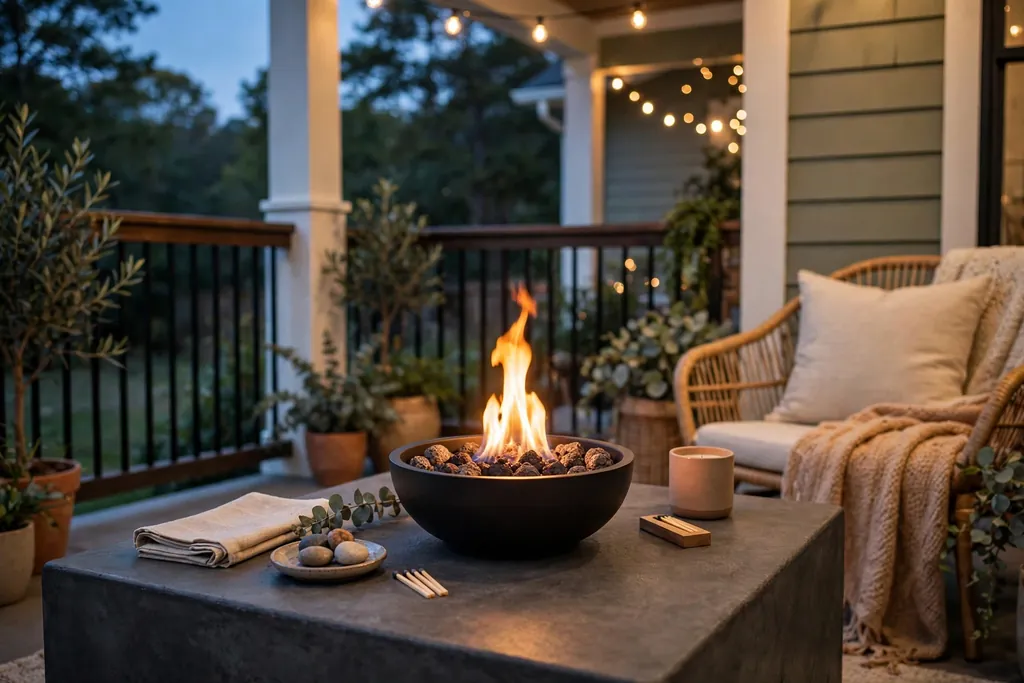
    A tabletop fire bowl adds warmth and a focal point to a back porch on cool evenings. Set a small, stable fire bowl on a heat safe table, away from curtains, cushions, and overhanging plants, and follow the maker instructions for fuel and use. The flame gives the seating group a center to gather around after sunset.

    Keep the fire bowl clear of fabric and dried plants, and never leave it burning when you go indoors or go to bed. Choose a bowl size that suits the table, so it does not crowd drinks or plates, and let it cool fully before moving it. On a small porch, a single fire bowl can replace several lanterns as the evening light source.

    17. Outdoor Ceiling Fan for Airflow

    Outdoor ceiling fan mounted over a back porch seating group.

    An outdoor ceiling fan keeps a back porch comfortable on warm, still days. Mount a fan rated for damp or wet locations on the porch ceiling, centered over the seating group, and run it at a low speed for a gentle breeze. The moving air makes the porch usable in heat that would otherwise push everyone indoors.

    Choose a fan size that suits the porch: a small fan for a narrow porch, a larger fan or two fans for a wide porch. Clean the blades now and then, since porch dust settles on them, and check the mount each season for wear. A fan also helps keep flying insects from settling over the seating area on calm evenings.

    18. Rolling Drink Cart for Easy Serving

    Rolling drink cart with glasses and a pitcher beside back porch seating.

    A rolling drink cart makes serving on a back porch simple, since drinks, glasses, and snacks move in one trip. Set a cart with two shelves beside the seating group, stock the top shelf with glasses and a pitcher, and keep the lower shelf for extra supplies. The wheels let you roll the cart indoors when rain arrives.

    Keep the cart off the main walking path, and lock the wheels when it is in place so it does not roll on a sloped floor. Wipe the shelves clean after use, and avoid overloading the top shelf, since a heavy cart tips more easily. A cart also works as a plant stand or a book holder when it is not serving drinks.

    19. Small Fountain for Gentle Sound

    Small fountain with gentle water flow near back porch seating.

    A small fountain adds gentle water sound to a back porch, which helps mask street noise and makes the space feel calm. Choose a tabletop or floor fountain that suits the porch size, set it on a level, waterproof base near the seating, and keep the water level topped up so the pump runs quietly. The sound suits a porch used for reading and resting best.

    Place the fountain where splashes cannot reach cushions, rugs, or wood floors, and clean the pump and basin now and then so the water stays clear. In cold weather, drain the fountain and bring it indoors if frost is forecast, since frozen water can crack the basin. A solar fountain suits a sunny porch edge with no nearby outlet.

    20. Trellis Screen with Climbing Plants

    Trellis screen with climbing plants giving privacy on the side of a back porch.

    A trellis screen with climbing plants gives a back porch privacy and green in one structure. Set a freestanding or wall mounted trellis on the side facing neighbors or the street, and train climbing plants such as jasmine, ivy, or clematis up the frame. The screen softens a plain railing and frames the seating area.

    Fix the trellis firmly so wind cannot topple it, and trim the plants often so they do not block the path, the light, or the house numbers. Choose plants suited to your light and climate, and water them at the base so the roots stay damp. A trellis also works as a backdrop for string lights in the evening.

    21. Reading Nook with a Storage Bench

    Reading nook with a storage bench, cushions, and books on a back porch.

    A reading nook with a storage bench turns one end of a back porch into a quiet retreat. Set a bench with storage underneath at the far end of the porch, add a seat cushion and two back pillows, and keep books, a blanket, and a small lamp or lantern in the bench. The storage keeps the nook tidy, while the pillows make it a seat guests return to.

    Keep the bench close to good light, near a window or under a porch light, and choose a bench lid that lifts with ease. Empty the storage now and then, so it does not fill with items that belong indoors. A reading nook suits a porch with a calm corner away from the dining table, where one person can sit apart from the group.

    Conclusion

    A relaxing back porch does not need new furniture or a full redesign. Pick comfortable seating, one shade idea, soft light, and plants at varied heights, then repeat a small palette through cushions and pots and keep the path to the yard clear. Start with one idea from this list this week, and add shade or light next, so the porch grows into a place you use every day.

    FAQs

    What is the best seating for a relaxing back porch?

    A relaxing back porch needs seating you want to sit in for an hour, such as deep lounge chairs, a porch swing, or a daybed with thick outdoor cushions. Pair the seating with a small side table and a rug, keep the path to the yard clear, and add a throw for cool evenings so the seat stays inviting in every season.

    How do I decorate a small back porch?

    Decorate a small back porch with one chair or a bistro set, one planter group, a rug, and string lights, keeping the path to the door and steps clear. Choose vertical pieces, such as hanging planters or a trellis screen, for height without floor space, and skip large dining groups that block movement.

    What colors work best for a relaxing back porch?

    Cream, warm white, sage green, soft grey, and natural wood tones work best for a relaxing back porch, with one accent color, such as navy, rust, or muted blue, in cushions or pots. Repeat each color at least twice, across textiles, pots, and the rug, so the porch reads as one plan rather than a set of separate pieces.

    How do I add shade to a back porch without a roof change?

    Add shade to a back porch with outdoor curtains, a large patio umbrella, or a trellis screen with climbing plants, none of which need a roof change. Curtains suit a covered porch edge, an umbrella suits a dining spot beyond the roof line, and a trellis suits a side that needs privacy as well as shade.

    How do I keep back porch cushions and throws in good shape outdoors?

    Keep back porch cushions and throws in good shape by choosing outdoor rated fabrics with removable, washable covers, and bringing them indoors in rain and overnight in wet weather. Shake cushions out weekly, store them in a dry box when not in use, and pick quick dry foam fills for chairs outside the roof line.

    What plants suit a back porch?

    Ferns, trailing ivy, potted herbs, climbing jasmine, and sun loving flowers suit a back porch, since they suit plain pots and need only regular water and trimming. Match the plant to the light: ferns and ivy for shade, herbs and flowers for sun, and evergreen plants for color through winter.


  • 23 Farmhouse Front Porch Ideas for a Warm Welcome

    23 Farmhouse Front Porch Ideas for a Warm Welcome

    A farmhouse front porch feels warm and welcoming when you layer natural wood, soft textiles, and living plants around a clear path to the door. Start with comfortable seating, a wreath or sign at the door, layered mats, and warm light, then add planters and simple seasonal touches that suit your porch size and climate.

    The 23 ideas below work for small stoops as well as wide wraparound porches, since most of them scale down to one chair and one planter, or up to a full seating group. Pick one idea at the door and one for seating first, then add plants and light. The same layered approach that makes a fall front porch feel inviting works all year, with the seasonal pieces swapped in a farmhouse fall palette when autumn arrives.

    Key Takeaways

    • Start at the door: a wreath, layered mats, and one pair of planters set the tone for the whole porch.
    • Keep the path to the door clear, with seating and decor grouped to the sides, so guests can reach the door with ease.
    • Repeat two or three colors, such as cream, sage green, and warm wood, across textiles, pots, and cushions.
    • Choose outdoor rated fabrics and finishes, or bring cushions and throws indoors in rain, so the porch stays tidy.
    • Add warm light with lanterns, sconces, or string lights, since porches are used most in the early evening.
    • Swap only the small seasonal pieces, such as wreaths and door mats, and keep the seating and planters in place all year.

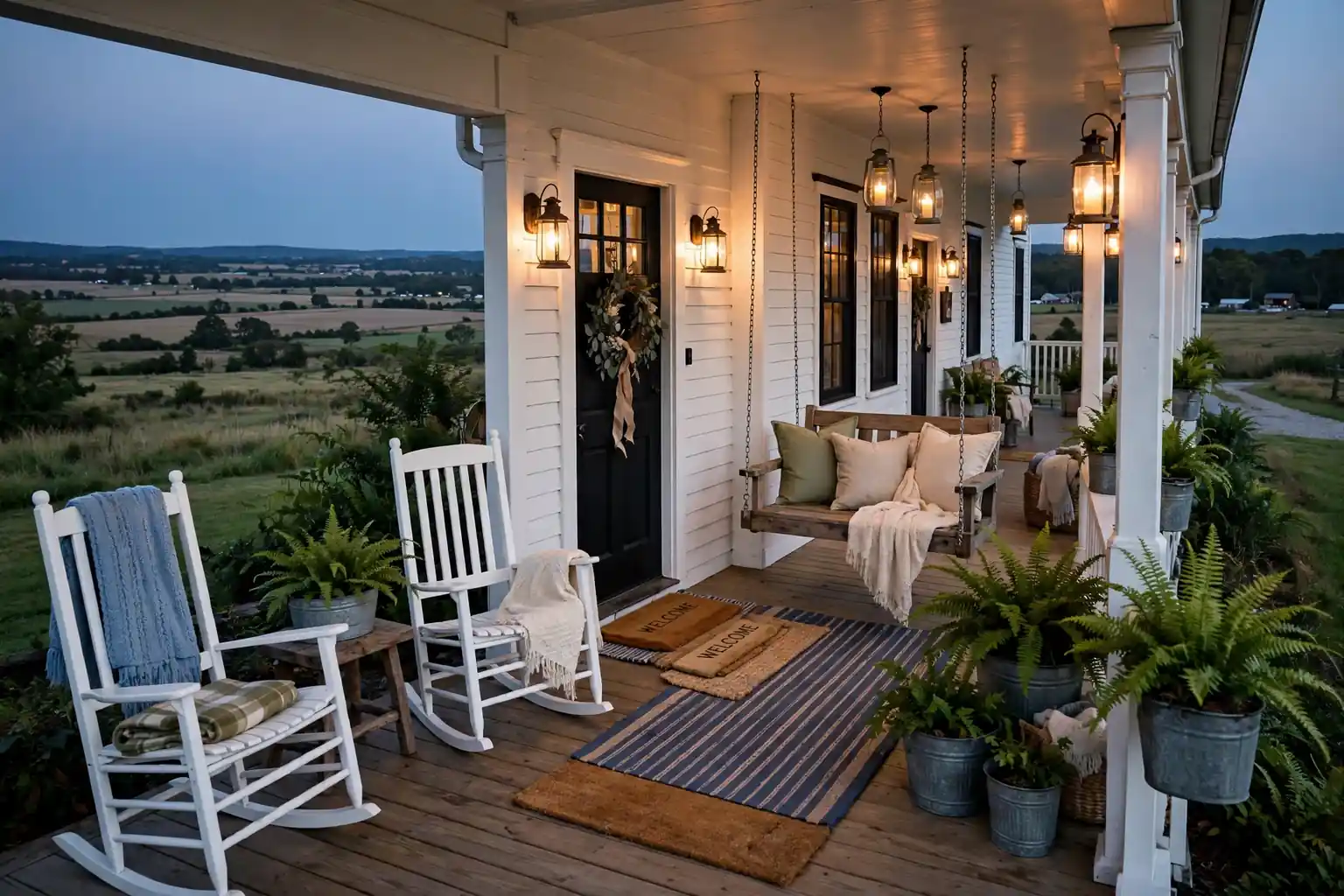
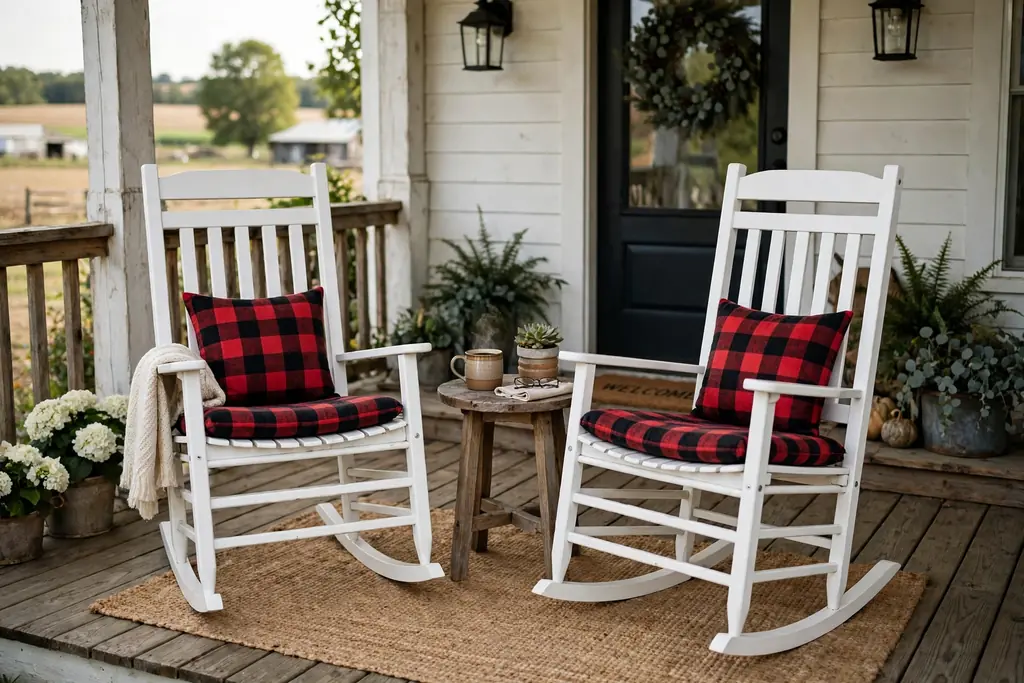
    1. White Rocking Chairs with Plaid Cushions

    Two white rocking chairs with plaid cushions and a small table on a farmhouse front porch.

    Two white rocking chairs with plaid cushions are the classic farmhouse porch welcome. Set them side by side near the railing, facing the yard or the street, with a small table between them for drinks. The white paint keeps the porch bright, while the plaid cushions add pattern without a new furniture purchase.

    Choose cushions with removable, washable covers, since porch cushions gather dust and pollen. If your porch is narrow, one rocking chair still gives the same welcome, placed beside the door with a small side table. Add a folded throw over one chair arm for cool evenings.

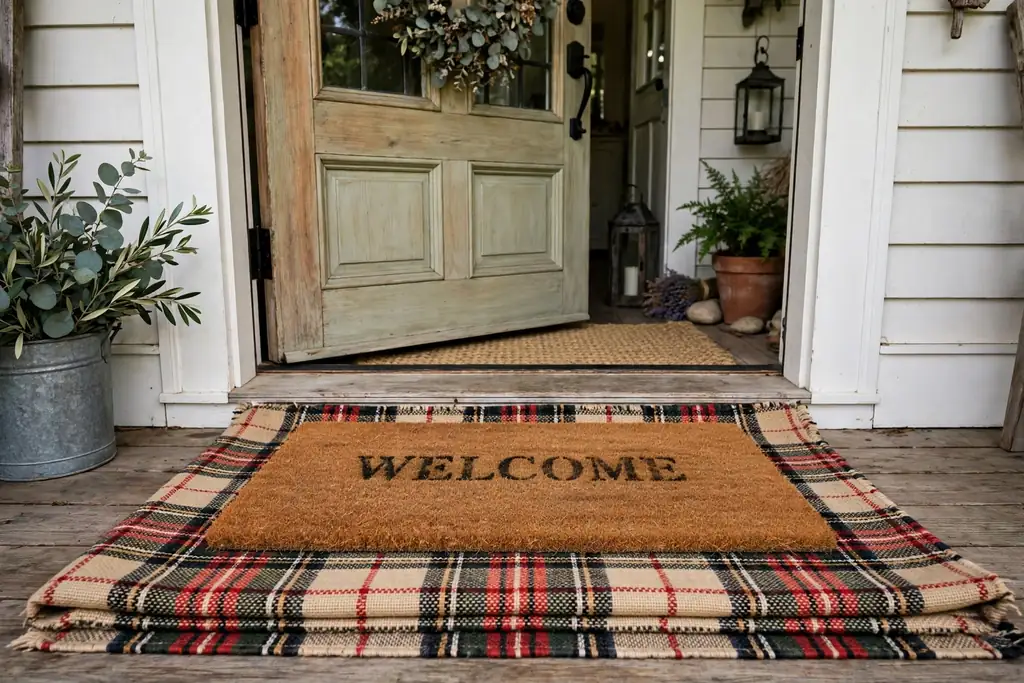
    2. Layered Doormats and a Plaid Rug

    Layered plaid rug under a coir doormat at a farmhouse front door threshold.

    Layering a larger patterned rug under a smaller coir doormat dresses the threshold in one step. Lay a flat outdoor rug in muted plaid or stripes first, then center the coir mat on top, leaving an even border of pattern showing on all sides. The layers catch dirt and give the doorway a finished look.

    Keep both mats low and flat so the door opens freely over them. Shake them out weekly, and move the patterned rug to a dry spot in heavy rain if it is not rated for outdoor use. Swap the top mat for a seasonal version later in the year while the base rug stays put.

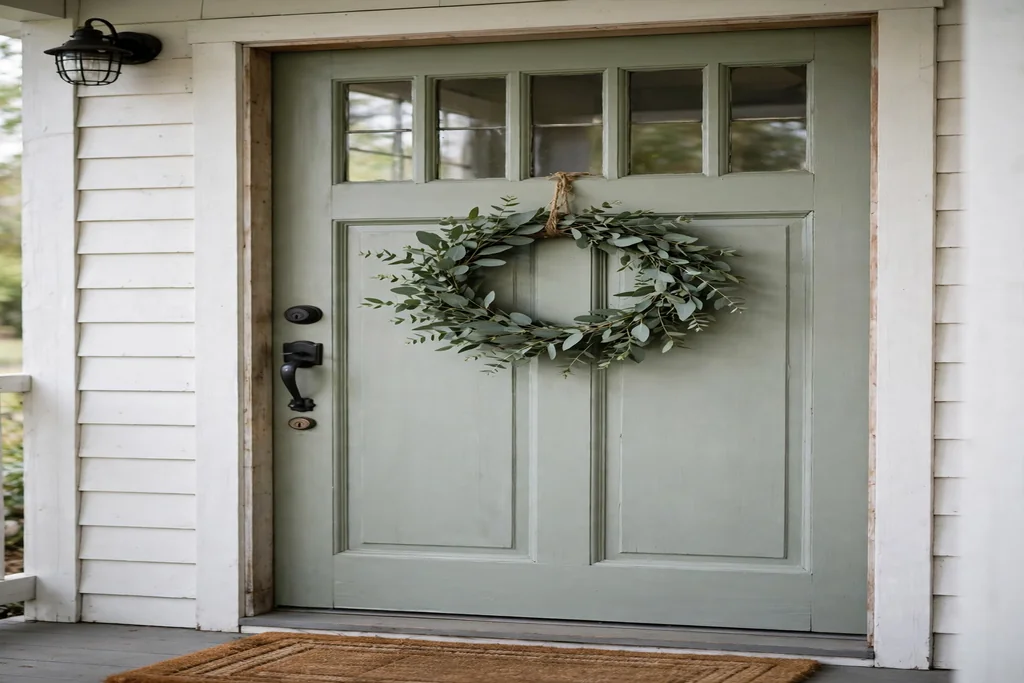
    3. Eucalyptus Wreath on a Painted Door

    Simple eucalyptus wreath hanging on a painted farmhouse front door.

    A simple eucalyptus wreath suits a painted farmhouse door in any season. Choose a full, round wreath in soft green, sized to the door so it does not cover the handle or the letterbox, and hang it from an over door hook. The green softens a bold door color and adds a fresh note at eye level.

    Check that the door still closes fully and that the wreath does not catch on the frame. If your door faces strong sun, pick a wreath with fade resistant leaves, and bring a dried wreath indoors during heavy rain to keep it looking fresh. A plain twig wreath with a few eucalyptus stems can stay up all year.

    4. Galvanized Planters with Ferns

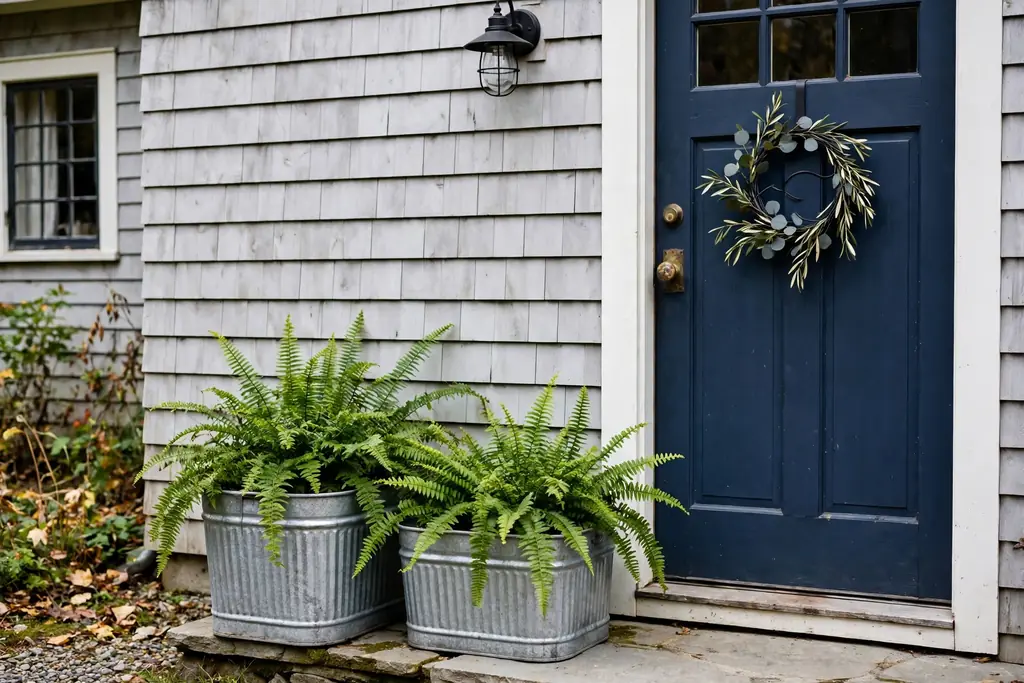
    Galvanized metal planters with green ferns beside a farmhouse front door.

    Galvanized metal planters filled with ferns give the porch living color with a clear farmhouse note. Set one planter on each side of the door, or group three planters of different heights on one side for a fuller display. The grey metal contrasts with wood siding and white trim, and ferns stay green through much of the year.

    Water ferns when the top of the soil feels dry, and set each planter on a saucer or a flat stone to protect steps and decking. In a sunny spot, swap ferns for trailing ivy or ornamental grass, which handle direct light better. When the plants finish, the same planters can hold evergreen cuttings for winter.

    5. Wooden Porch Swing with Cream Cushions

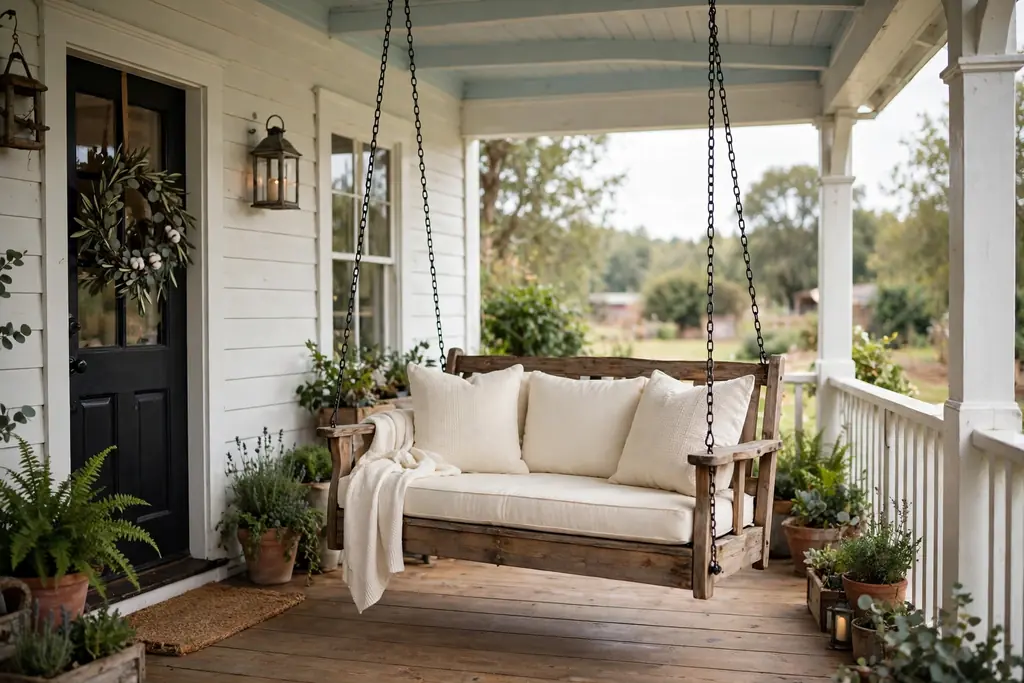
    Wooden porch swing with cream cushions hanging on a farmhouse front porch.

    A wooden porch swing with cream cushions turns the porch into a place to sit and stay. Hang the swing from sturdy ceiling joists, with chains rated for the weight, and add a seat cushion and two back cushions in cream or natural linen. The swing suits a wide porch best, where it can move freely without hitting the wall or railing.

    Check the chains and hooks each season for rust or wear, and tighten them as needed. If the swing faces rain, use quick dry foam cushions or bring the cushions indoors at night. Keep one end of the swing clear of planters, so guests can step on and off with ease.

    6. Lanterns Along the Steps

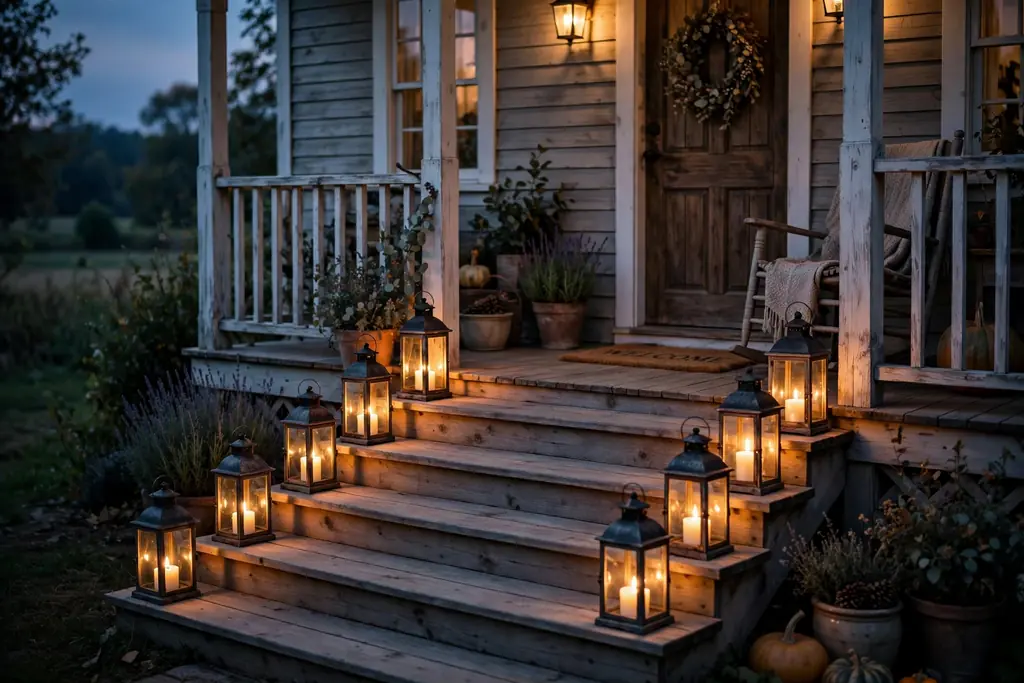
    Lanterns with warm candles lined along farmhouse front porch steps.

    Lanterns along the steps add warm light to the porch after dark, when guests most often arrive. Place one lantern on each step, or group three lanterns of varied heights at the base of the steps, with battery candles inside for safety. The glow softens the whole entrance and makes the house number and door easier to find.

    Use battery candles on porches where wind or children make real flames risky, and keep real candles inside glass with a stable base if you use them. Bring lanterns indoors in storms, and wipe the glass clean so the light stays bright. Black metal lanterns suit most house styles, while wood or brass lanterns warm a rustic porch.

    7. Farmhouse Bench with Baskets Underneath

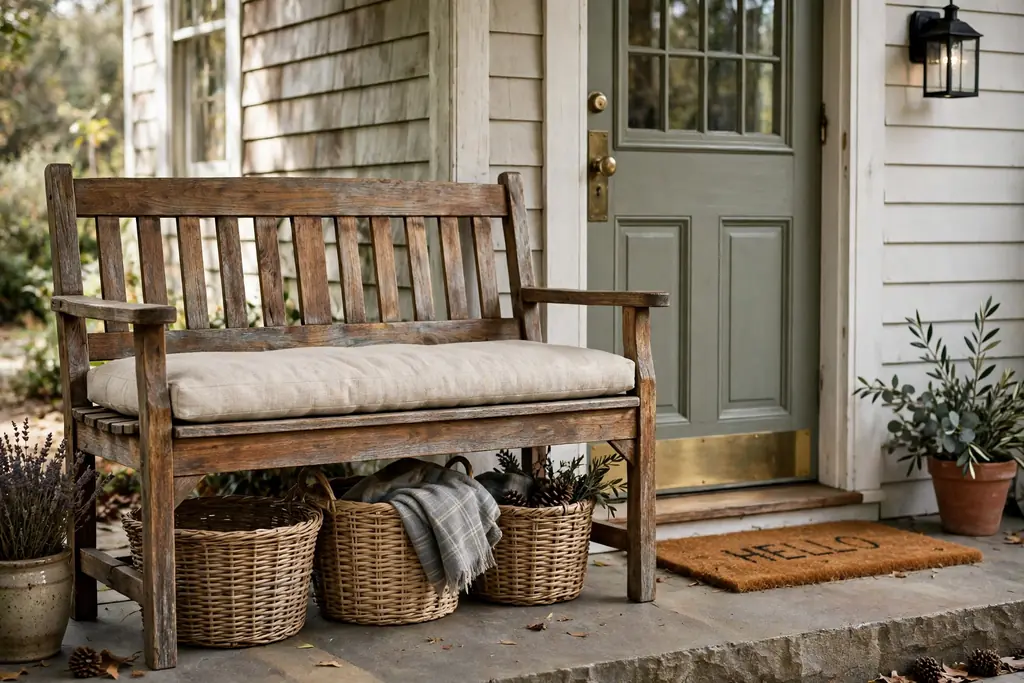
    Wooden farmhouse bench with woven baskets underneath and a cushion on the seat.

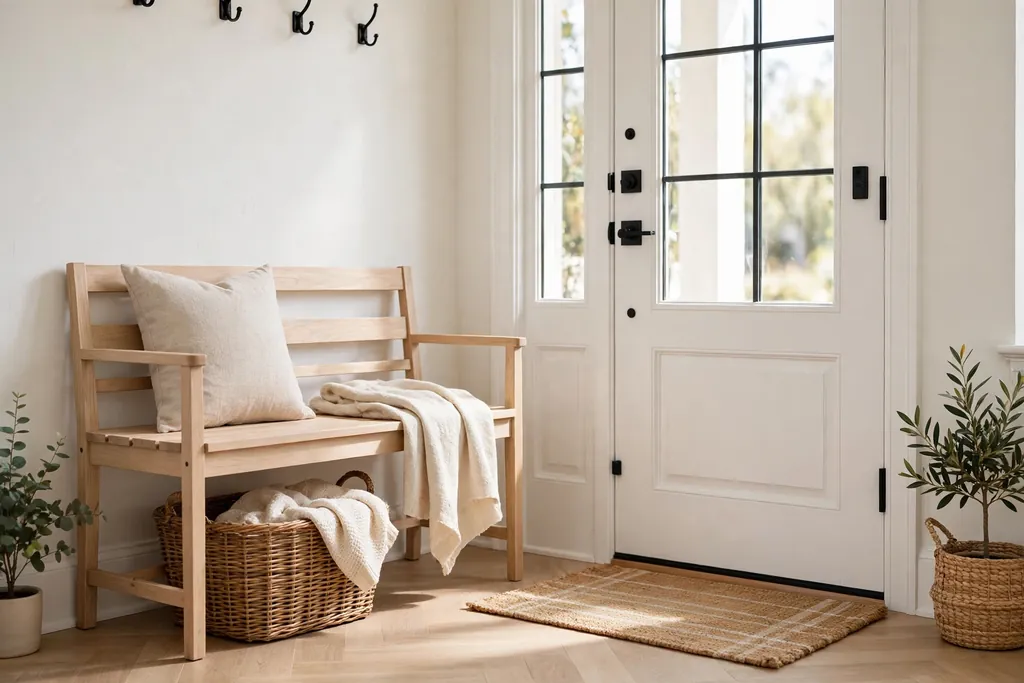
    A farmhouse bench with woven baskets underneath gives guests a place to sit and gives you hidden storage. Set a wood bench beside the door, with two baskets below for shoes, dog leads, or small garden tools. Add one cushion and a folded throw on the bench seat, so it reads as seating rather than storage alone.

    Keep the baskets tidy and empty them weekly, so they do not become a dumping spot. Choose baskets that fit the bench frame with a small gap on each side, so they slide out with ease. If the bench sits outside the roof line, use outdoor rated baskets or bring them indoors in wet weather.

    8. Milk Can with Dried Stems

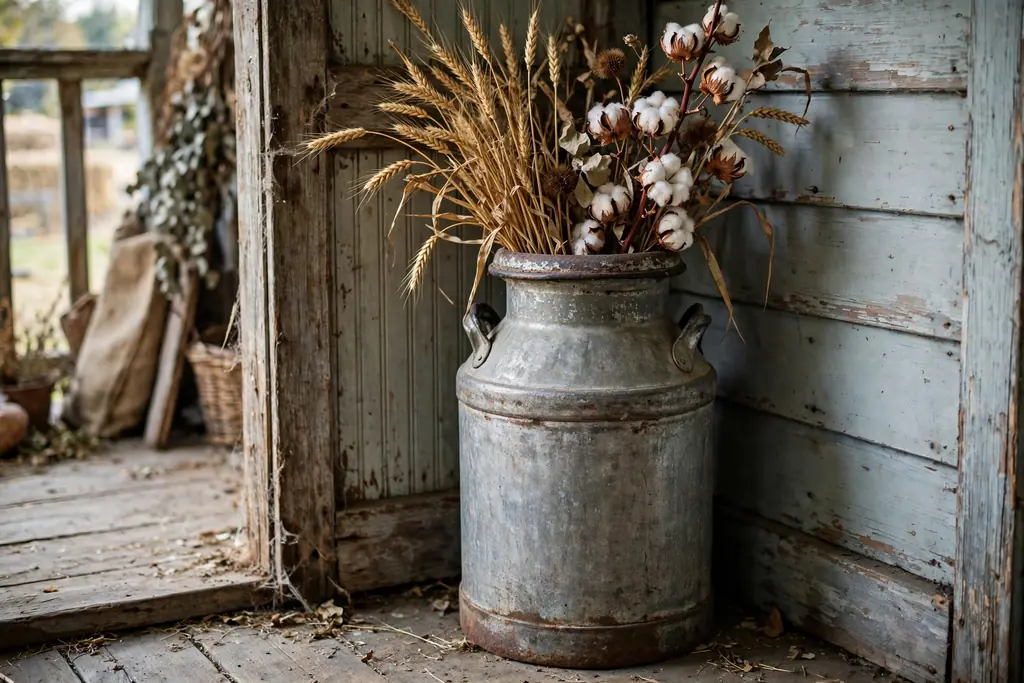
    Old milk can filled with dried stems standing in a farmhouse porch corner.

    An old milk can filled with dried stems adds height and a collected farmhouse note to a porch corner. Set the can beside the door or bench, fill it with a bundle of dried wheat, cotton stems, or tall branches tied at the base, and let the stems fan out above the rim. The tall shape suits a corner that pots alone cannot fill.

    Weigh the can down with stones at the base so wind cannot tip the tall stems. Trim stems to a height that clears the porch roof and does not block windows. Keep dried stems away from open flames, and shake them outdoors once a month so dust does not build up.

    9. Tall Wood Welcome Sign by the Door

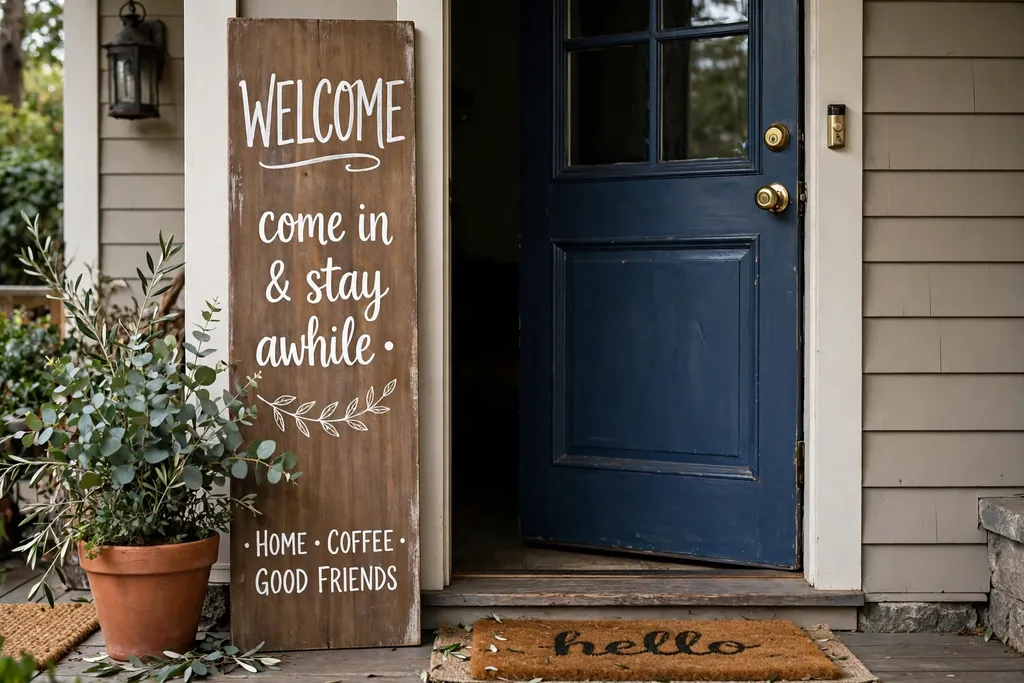
    Tall weathered wood welcome sign leaning beside a farmhouse front door.

    A tall wood welcome sign leans beside the door and greets guests before they knock. Choose a sign in weathered wood with simple painted lettering, and lean it against the wall or porch post at a slight angle. It fills a narrow gap beside the door that pots alone cannot fill.

    Secure the sign so wind cannot topple it, with a small stake behind it or a heavy base pot at its foot. Keep the lettering simple and easy to read from the walkway, and avoid signs with long phrases that crowd the board. A plain welcome sign works in every season, so it is one of the longest lived porch pieces.

    10. Hanging Baskets with Trailing Plants

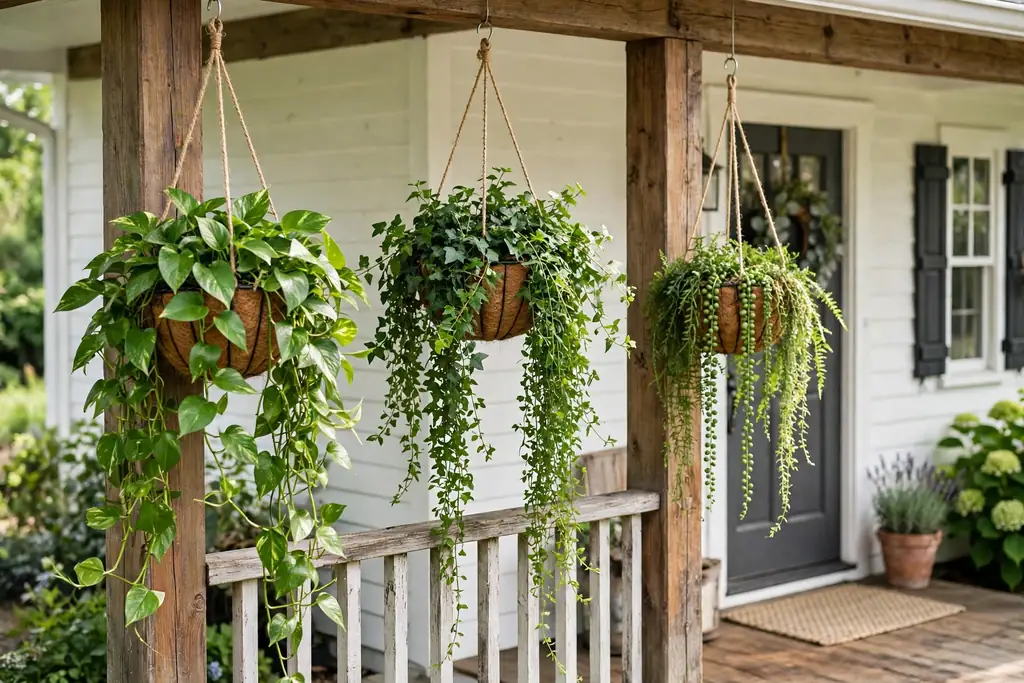
    Hanging baskets with trailing green plants hanging from farmhouse porch posts.

    Hanging baskets with trailing plants add green at eye level and above, where floor space is short. Hang one basket from each porch post or ceiling hook, with trailing ivy, petunias, or ferns that spill over the rim. The baskets soften plain posts and draw the eye up to the porch roof.

    Water hanging baskets more often than floor pots, since they dry out faster in wind and sun. Check the hooks and chains for weight, and bring baskets indoors in frost or storms. For a matched look, use the same plant in each basket, and vary only the basket liner or hanger.

    11. Striped Outdoor Rug Under the Seating

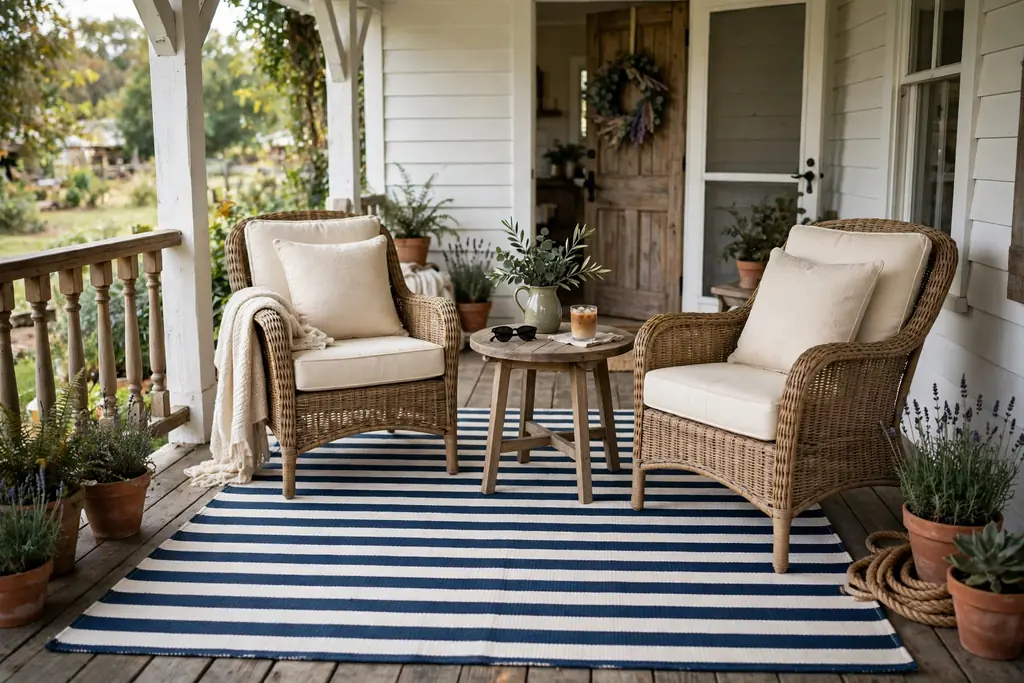
    Striped outdoor rug under porch chairs and a small table on a farmhouse porch.

    A striped outdoor rug under the seating group defines the porch living area in one move. Lay a flat, washable rug in cream and sage, navy, or rust stripes, large enough to sit under the front legs of chairs and a table. The rug marks the seating zone clearly, even on a long porch with more than one use.

    Pick a rug rated for outdoor use, so it dries quickly after rain, and shake it out weekly so leaves and dirt do not build up underneath. If the rug sits on painted wood, lift it now and then to check for damp marks. A striped rug pairs well with plain cushions, since the rug carries the pattern.

    12. Potted Topiary by the Door

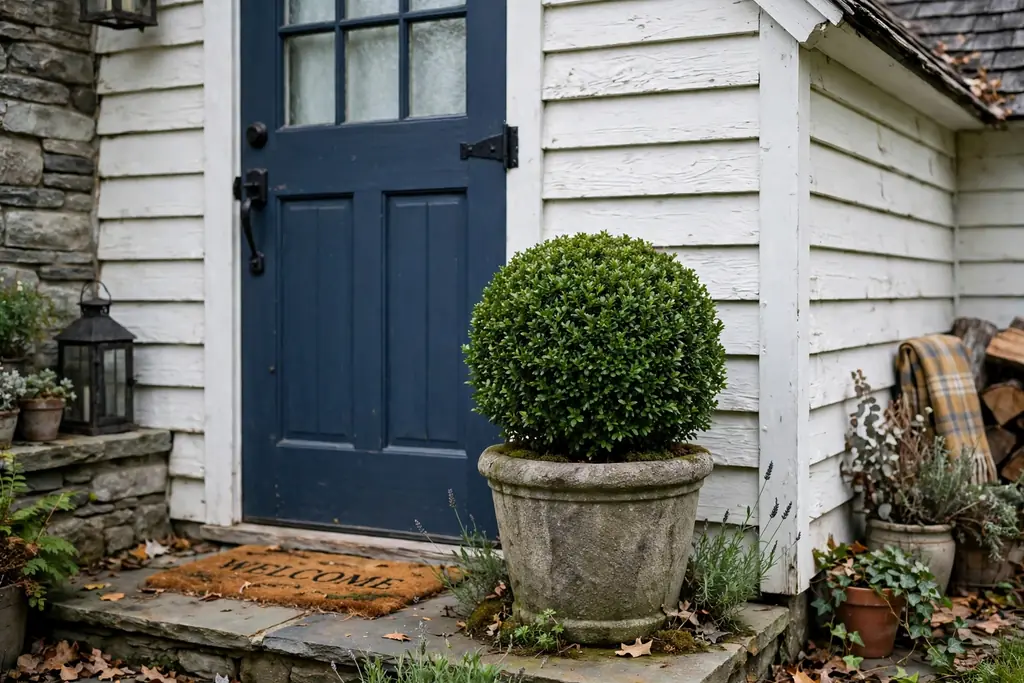
    Potted ball topiary in a stone pot beside a farmhouse front door.

    A potted topiary by the door gives the entrance a tidy, formal shape. Choose one ball or cone topiary in a plain terracotta or stone pot, and set one on each side of the door for symmetry, or a single topiary beside a bench for a quieter look. The clipped shape contrasts with looser plants nearby.

    Water topiary when the top of the soil feels dry, and trim stray shoots with small shears to keep the shape neat. In a sunny spot, boxwood topiary holds its shape well, while a rosemary topiary adds scent near the door. Bring tender topiary indoors in hard frost, or cover it with cloth overnight.

    13. Vintage Ladder with Folded Throws

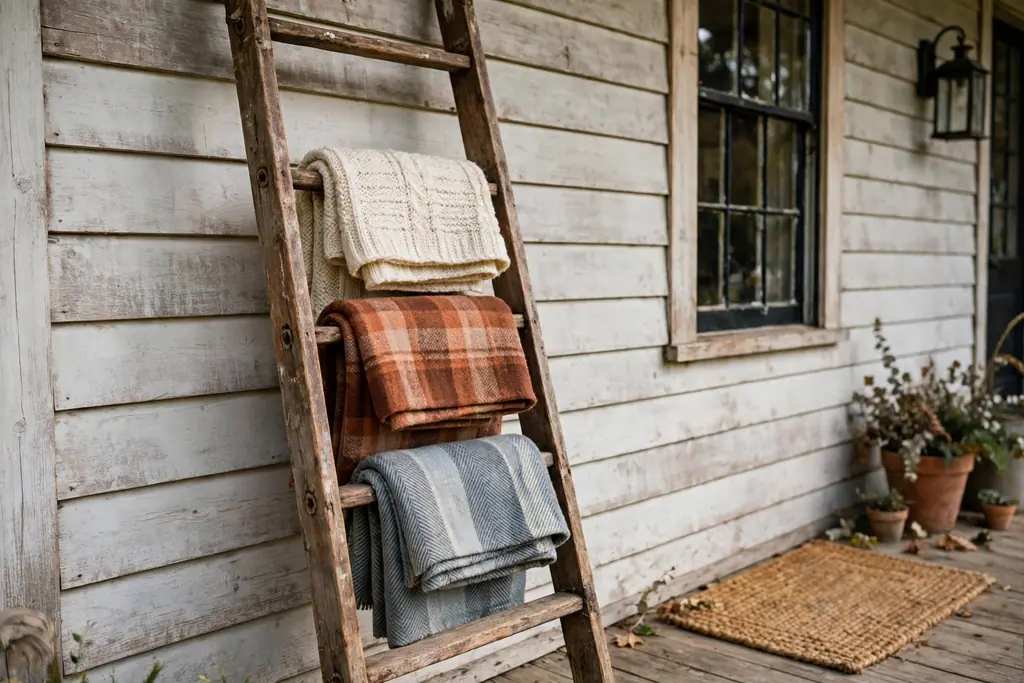
    Vintage wood ladder with folded throws leaning against a farmhouse porch wall.

    A vintage wood ladder leaning against the porch wall holds folded throws within easy reach. Lean the ladder at a slight angle, with the feet firm on the porch floor, and drape one throw over each rung, in cream, rust, and a muted check. The ladder adds height to a blank wall and keeps throws off the chairs.

    Secure the ladder so it cannot slide, with small pads under the feet and a hook at the top if needed. Keep the throws light, so the ladder does not tip, and bring them indoors in rain. This idea suits a covered porch best, where the ladder and throws stay dry through the day.

    14. Window Boxes with Seasonal Flowers

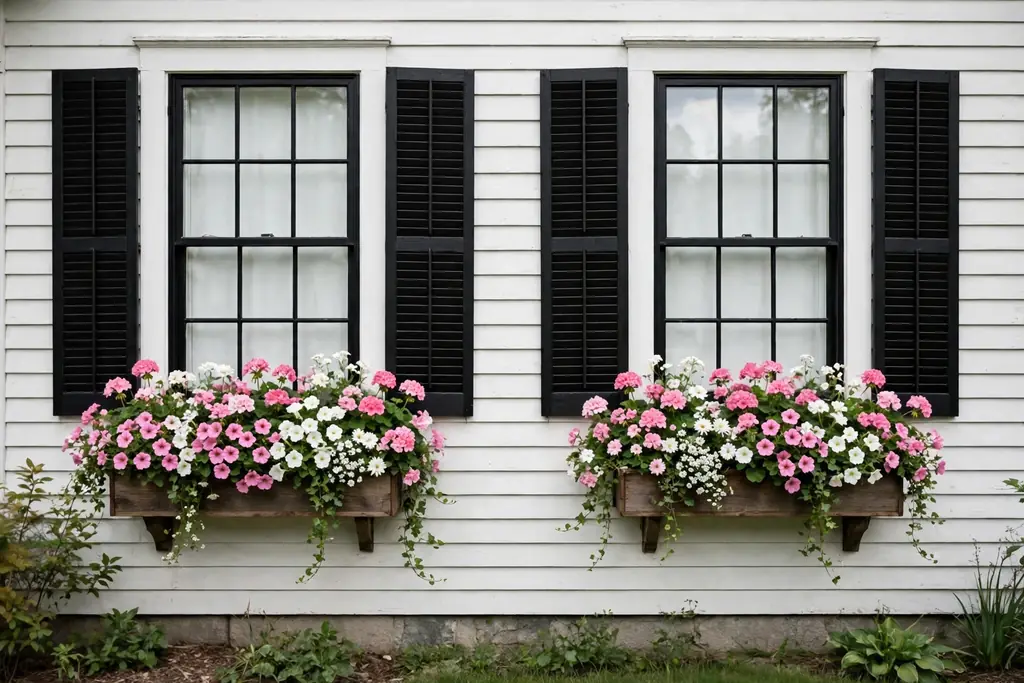
    Window boxes with pink and white flowers under farmhouse front windows.

    Window boxes with seasonal flowers dress the porch from the street as well as from the chairs. Fit a wood or metal box under each front window, line it, and fill it with flowers in your porch palette, such as white petunias, pink geraniums, or trailing lobelia. The flowers soften the house front and tie the porch to the garden.

    Water window boxes often, since shallow boxes dry out fast, and deadhead spent blooms to keep new buds opening. Choose boxes with drain holes, and set a tray beneath them if they hang over seating. Swap the flowers with the season, and keep the box itself in place all year.

    15. Warm String Lights Along the Porch Ceiling

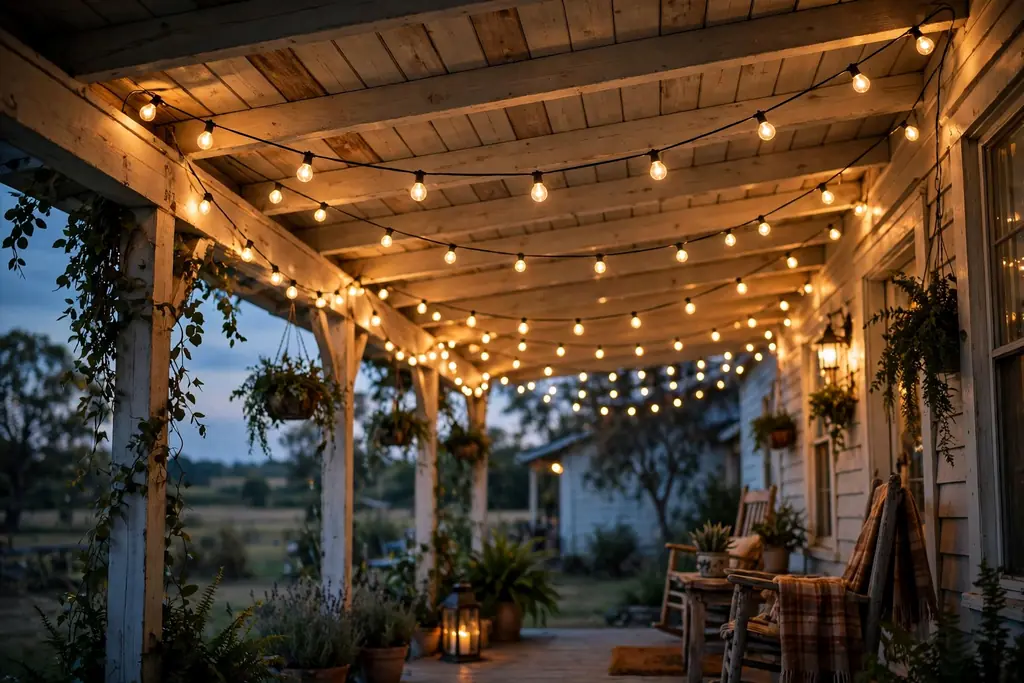
    Warm string lights draped along a farmhouse porch ceiling at dusk.

    String lights along the porch ceiling give the porch a gentle glow that flatters every other piece on display. Drape warm white lights along the ceiling edge, around posts, or across a beam, with the cord tucked out of the walking path. The light makes the porch usable after sunset and highlights the wreath and planters.

    Choose outdoor rated lights and a timer so they switch on at dusk without daily effort. Keep bulbs clear of dried leaves, garlands, and fabric, and check the cord each season for wear. Warm white suits a farmhouse porch better than cool white, since it echoes candlelight and keeps the porch feeling calm.

    16. Wicker Chairs and a Small Side Table

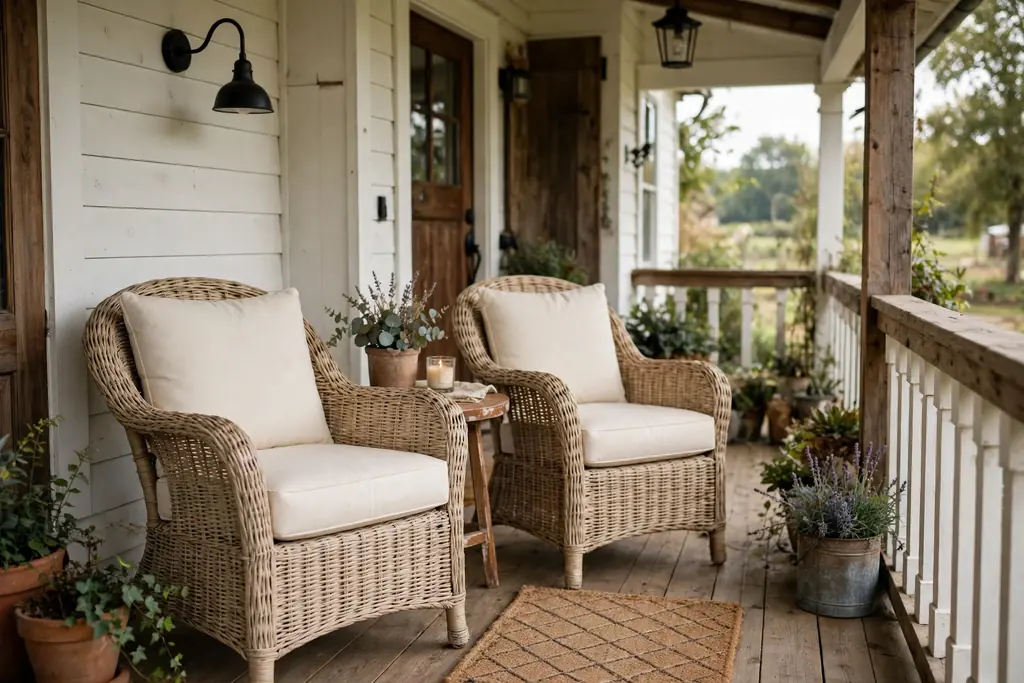
    Wicker chairs with cream cushions and a small side table on a farmhouse front porch.

    Wicker chairs with a small side table make a compact porch seating group for morning coffee or evening chats. Set two wicker chairs at a slight angle, with a round side table between them, and add plain cushions in cream or sage. The woven texture suits a farmhouse porch and reads lighter than solid wood chairs.

    Choose wicker rated for outdoor use, or bring the chairs under cover in heavy rain, and wipe them clean so dust does not settle in the weave. If the chairs are used daily, pick washable cushion covers and shake them out each week. A small table also gives guests a place for keys and parcels.

    17. Boxwood Wreath for All Seasons

    Plain deep green boxwood wreath hanging on a farmhouse front door.

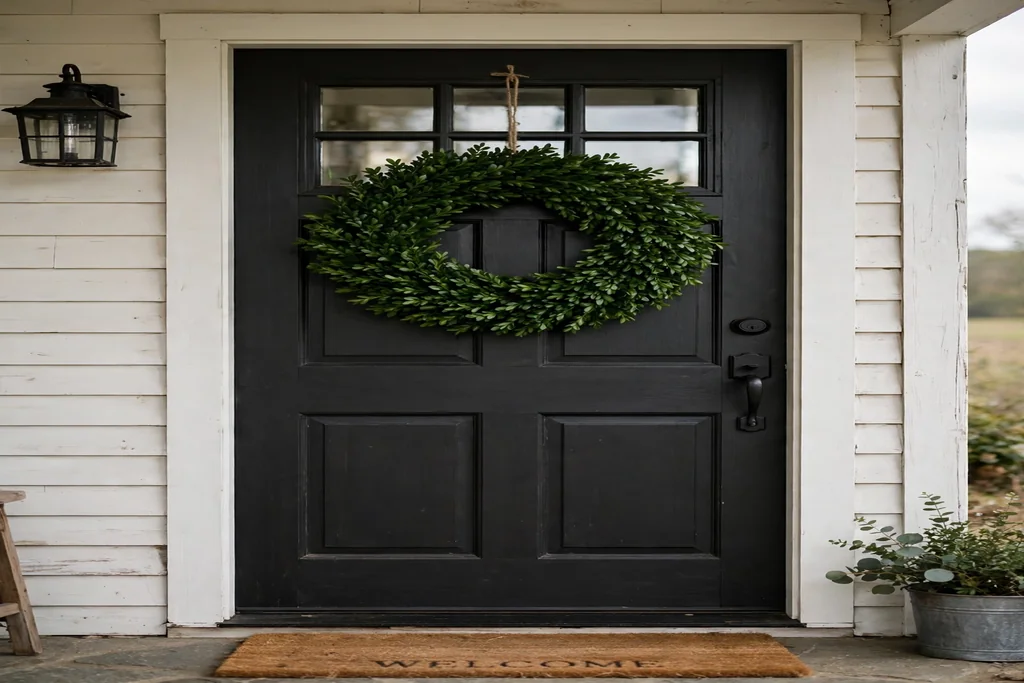
    A boxwood wreath is the year round option for a farmhouse front door. Choose a full wreath in deep green, with no seasonal extras, and hang it at eye level from an over door hook. The plain green suits every season, so you only change the door mat or the planters when you want a seasonal shift.

    Keep the wreath clean by shaking it outdoors and wiping faux leaves as needed. If you use a fresh boxwood wreath, mist it lightly and bring it indoors in hard frost to slow drying. Pair it with a plain welcome mat, so the door stays calm rather than crowded with competing pieces.

    18. Terracotta Pots with Herbs by the Steps

    Terracotta pots with green herbs grouped beside farmhouse porch steps.

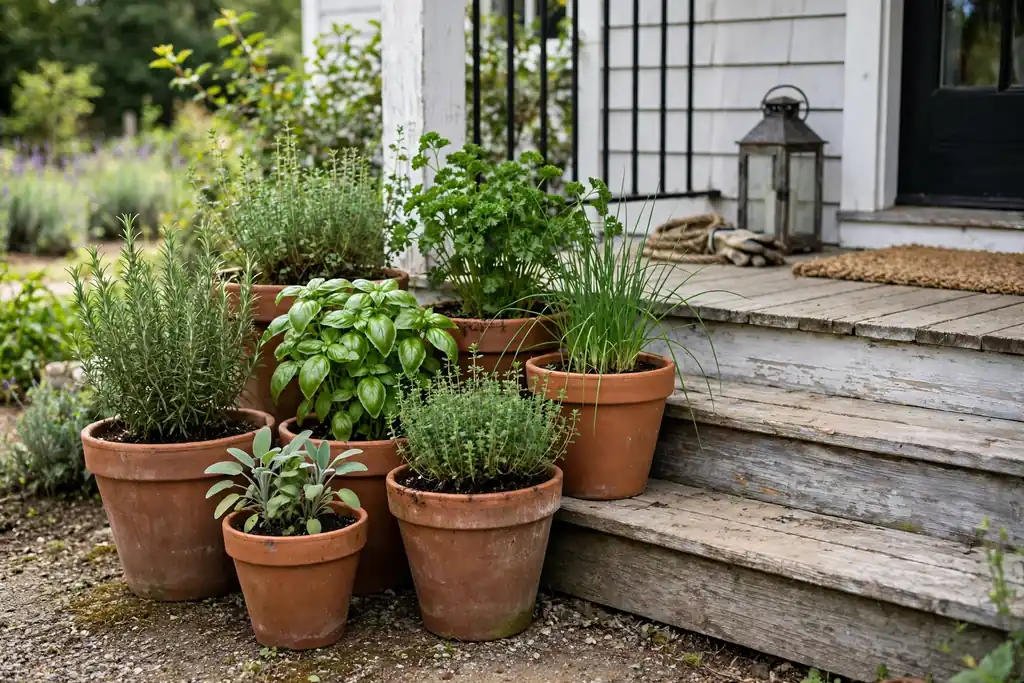
    Terracotta pots with herbs by the steps add scent and useful green to the entrance. Group three pots of different heights near the steps, with rosemary, thyme, and mint, and water them in the morning so the soil stays damp but not soaked. Guests brush past the scent on the way to the door, and the herbs can go to the kitchen after.

    Set each pot on a saucer to protect steps and decking, and trim herbs often, since regular picking keeps the plants bushy. Mint spreads fast, so keep it in its own pot rather than sharing a planter. In cold weather, move tender herbs close to the house wall for shelter.

    19. Painted Porch Ceiling in Soft Blue

    Farmhouse porch ceiling painted soft blue with white posts and a rocking chair below.

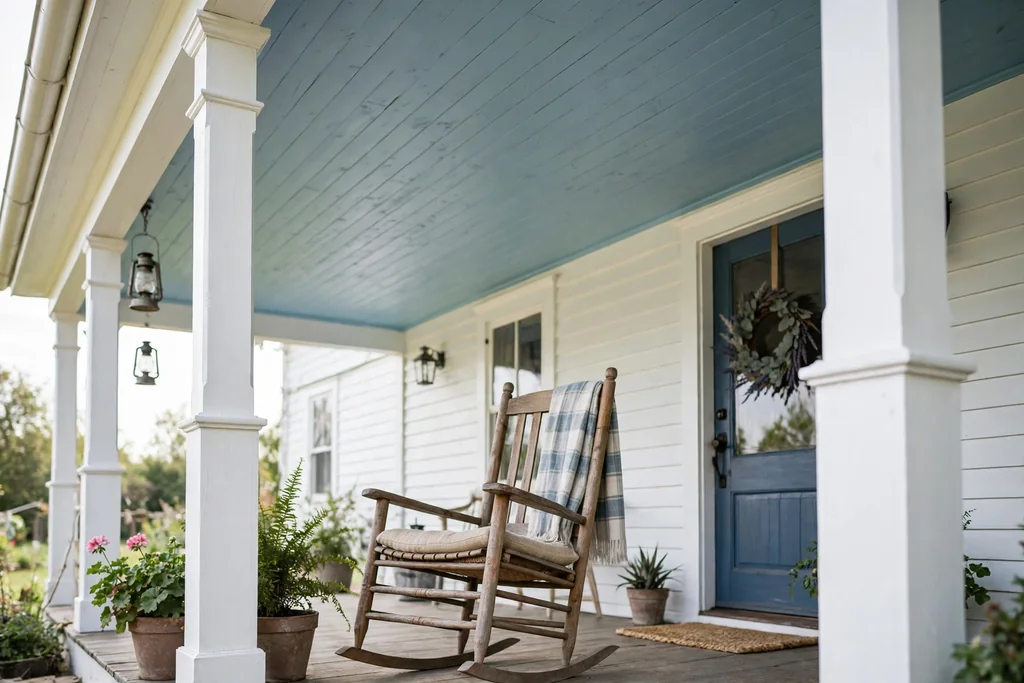
    A porch ceiling painted in soft blue is a classic farmhouse detail that guests notice without knowing why the porch feels calm. Paint the ceiling boards in a pale blue, such as a soft sky or haint blue, and keep the posts and trim white. The pale color brightens a shaded porch and reflects light onto the seating below.

    Use exterior paint rated for ceilings, and clean the boards before painting so the finish lasts. If repainting feels like a large job, test the color on one board first, and check it in morning and evening light. The blue ceiling pairs well with white rocking chairs and natural wood floors.

    20. Crate Side Table with Candles

    Wood crate side table with a candle and small plant beside a farmhouse porch chair.

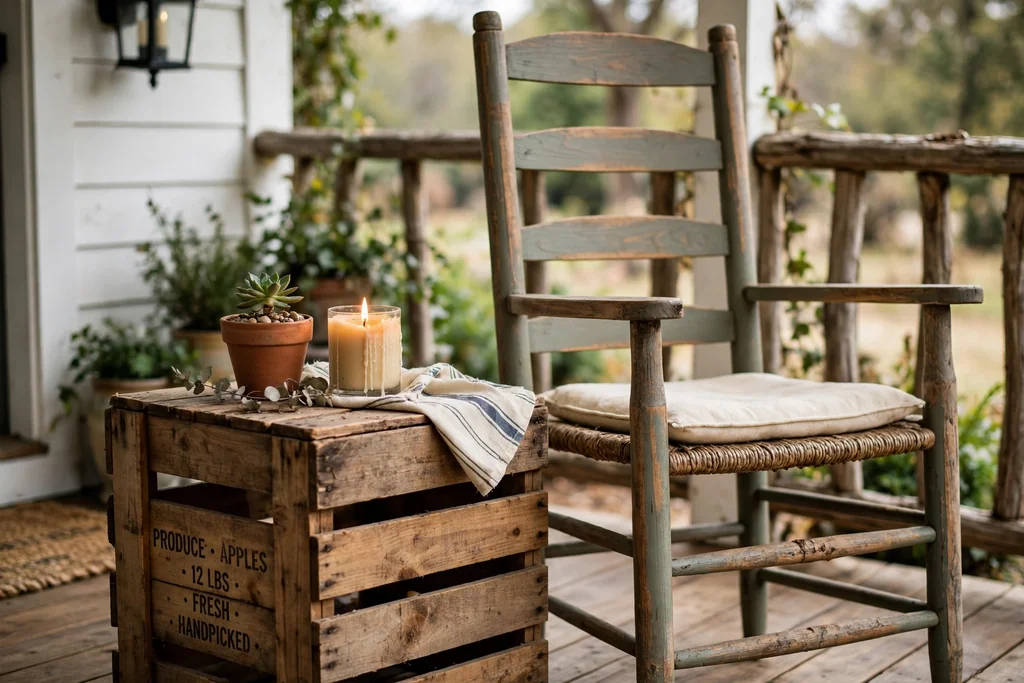
    A wood crate turned on its side makes a simple porch side table with a farmhouse feel. Set the crate beside a chair, line the inside with a small cloth if needed, and top it with a candle in a glass holder and a small potted plant. The crate costs little and suits a porch where a formal table would look out of place.

    Keep the crate off the main walking path, and set it on small feet or a stone slab in rain, so the wood stays dry. At the end of the season, the crate can hold garden tools or firewood, so it earns its keep beyond summer. Use a battery candle if the table sits near fabric or dried stems.

    21. Wall Lanterns Beside the Door

    Black metal wall lanterns mounted on each side of a farmhouse front door.

    Wall lanterns beside the door give the entrance steady light and a finished look. Mount one lantern on each side of the door, at eye level or just above, in black metal or aged brass, with warm bulbs inside. The pair frames the door and lights the lock and handle for evening guests.

    Choose outdoor rated fixtures, and check that the lanterns clear the door swing and any wreath or sign nearby. If wiring a new fixture feels like a large job, use solar or battery wall lanterns in the same style. Wipe the glass clean often, since porch dust dulls the light fast.

    22. Small Bistro Table with a Gingham Cloth

    Small bistro table with a gingham cloth and two chairs on a farmhouse front porch.

    A small bistro table with a gingham cloth makes a casual porch spot for breakfast or a drink. Set a round metal or wood table near the railing, with two chairs, and cover it with a gingham cloth in cream and sage or cream and rust. The cloth adds pattern at table height, while the chairs stay plain.

    Weight the cloth or use clips at the corners, so a breeze does not lift it onto plates. Keep paper or fabric clear of candles, and bring the cloth indoors after meals, since damp fabric can stain if left out overnight. For everyday use, skip the cloth and use two woven placemats instead.

    23. Bold Front Door with Brass Hardware

    Bold sage green farmhouse front door with brass handle, knocker, and house numbers.

    A bold front door with brass hardware is the simplest way to make a farmhouse porch stand out. Paint the door in a deep, welcoming color, such as sage green, navy, or warm red, and add a brass handle, knocker, and house numbers. The color draws the eye to the entrance, while the brass warms the whole porch.

    Test the paint color on the door in daylight before committing, since porch shade can dull a color. Keep the rest of the porch calm, with white trim and plain planters, so the door stays the focus. Clean brass hardware with a soft cloth, and check screws each season so the handle stays firm.

    Conclusion

    A warm farmhouse front porch does not need new furniture or a full redesign. Pick comfortable seating, one door detail, layered mats, and warm light, then repeat a small palette through planters and textiles and keep the path to the door clear. Start with one idea from this list this week, and add plants or light next, so the porch grows into a place guests enjoy and you use every day.

    FAQs

    What makes a front porch look farmhouse?

    A farmhouse front porch uses natural wood, white or cream paint, woven textures, simple metal accents, and living plants, with a calm palette and comfortable seating. The look comes from plain, useful pieces, such as rocking chairs, a wood bench, and galvanized planters, rather than ornate or glossy decor.

    How do I decorate a small farmhouse front porch?

    Decorate a small farmhouse front porch with one chair, one pair of small planters, layered mats, and a wreath on the door, keeping the path clear. Choose vertical pieces, such as a tall sign or hanging baskets, for height without floor space, and skip large seating groups that block the door.

    What colors work best for a farmhouse front porch?

    Cream, warm white, sage green, soft grey, and natural wood tones work best for a farmhouse front porch, with one accent color, such as rust, navy, or muted red, at the door or in cushions. Repeat each color at least twice, across textiles, pots, and the door, so the porch reads as one plan.

    How do I keep porch cushions and throws in good shape outdoors?

    Keep porch cushions and throws in good shape by choosing outdoor rated fabrics with removable, washable covers, and bringing them indoors in rain and overnight in wet weather. Shake cushions out weekly, store them in a dry box when not in use, and pick quick dry foam fills for chairs outside the roof line.

    What plants suit a farmhouse front porch?

    Ferns, trailing ivy, boxwood topiary, potted herbs, and seasonal flowers suit a farmhouse front porch, since they suit plain pots and need only regular water and trimming. Match the plant to the light: ferns and ivy for shade, herbs and geraniums for sun, and evergreen cuttings for winter color.

    What is the easiest farmhouse porch idea to start with?

    The easiest farmhouse porch idea to start with is layered mats, a wreath on the door, and one pair of planters flanking the entrance. It needs no tools or new furniture, takes under an hour to set, and gives the porch a finished welcome that you can build on with seating and light later.


  • 25 Beach House Decor Ideas for Relaxed Coastal Rooms

    25 Beach House Decor Ideas for Relaxed Coastal Rooms

    Beach house decor works best with a light base, natural texture, and a restrained coastal palette. Start with white walls, pale wood, and linen, then add rattan, driftwood, seagrass, and sea glass accents in blue, sand, and white. Keep rooms bright, leave open floor space, and repeat one or two coastal materials so each room feels relaxed rather than themed.

    The 25 ideas below cover living rooms, dining rooms, kitchens, bedrooms, bathrooms, entries, and porches, so you can style one corner or plan a whole house. Start with the largest pieces, such as the sofa, the rug, and the dining table, then add smaller coastal details in the same palette. For more coastal styling in a seasonal palette, see Coastal Fall Decor, and browse the full range of room ideas from the Dwell Ovell home page.

    Key Takeaways

    • Keep the base light: white or pale walls, pale wood floors, and linen in white, sand, or soft blue.
    • Repeat two or three natural materials, such as rattan, driftwood, seagrass, and linen, through the house for a calm, collected look.
    • Use blue, sand, and white as the core palette, and let one of the three lead in each room.
    • Choose washable slipcovers and outdoor rated fabrics for seats that get daily or porch use.
    • Leave open floor space and clear walkways, since a relaxed coastal room needs breathing room.
    • Add coastal detail in small doses, such as shells, sea glass, or rope, rather than in every corner.

    1. White Slipcovered Sofa as the Room Base

    A white slipcovered sofa with blue and sand throw pillows in a bright coastal living room.

    Start with a white or off white slipcovered sofa, since it sets the light base for the whole living room and suits a coastal palette. Slipcovers also make sense in a beach house, because they can be removed and washed after sandy feet, wet towels, and summer guests.

    Keep the sofa shape simple, with straight arms and plain cushions, so the room stays calm. Add color through two or three throw pillows in blue, sand, or soft stripe, and keep the rest of the seating in pale wood or rattan.

    2. Driftwood Coffee Table in the Living Room

    A driftwood coffee table with a stack of books and a glass candle holder in a coastal living room.

    Place a driftwood coffee table, or a pale wood table with a weathered finish, in front of the sofa as the main living room surface. The rough, bleached wood gives the room a shore reference without needing themed accessories on top of it.

    Style the table lightly, with one stack of books, a small bowl, and a candle in a glass holder. Leave most of the surface clear, so the table stays useful for cups, games, and feet up at the end of the day.

    3. Rattan Lounge Chairs by the Window

    A pair of rattan lounge chairs with pale cushions beside a bright window.

    Add a pair of rattan lounge chairs near a window or facing the sofa, with pale cushions in white or sand. Rattan keeps the seating light in both weight and color, and it pairs well with linen, wood, and woven rugs.

    Place a small side table between the chairs for books and drinks, and add one floor lamp with a linen shade for evening reading. If floor space is tight, use one chair instead of a pair and keep the window area clear.

    4. Sheer Linen Curtain Panels on the Windows

    Sheer white linen curtain panels on tall living room windows in soft daylight.

    Hang sheer linen curtain panels in white or soft sand on the living room windows, so daylight filters through while the room keeps some privacy. Linen moves gently in a breeze, which suits a beach house better than heavy drapes or dark fabric.

    Hang the panels high and wide, so the windows look larger and the light reaches further into the room. Keep the hardware simple, in pale wood or brushed metal, and skip valances or heavy tiebacks.

    5. Whitewashed Plank Accent Wall

    A whitewashed plank accent wall behind a sofa with one large framed shore print.

    Add a whitewashed plank wall behind the sofa or the bed, using horizontal boards in a pale, washed finish. The planks add texture and a beach cottage feel, while the whitewash keeps the wall bright and easy to pair with other colors.

    Keep the rest of the walls plain white, so the plank wall reads as one clear feature. Hang one large piece of art or a mirror on the planks, and leave the surrounding wall space empty.

    6. Seagrass Area Rug Under the Seating Group

    A seagrass area rug under a sofa and coffee table in a bright coastal living room.

    Lay a seagrass or sisal area rug under the sofa and coffee table, large enough that the front legs of the sofa and chairs sit on the rug. The woven texture grounds the seating group and adds a natural layer that suits bare feet in summer.

    Choose a rug in a natural sand tone with a simple border, and keep the pattern quiet so pillows and art can carry the color. Shake the rug out often, and blot spills quickly, since natural fiber rugs stain more easily than synthetic ones.

    7. Rope Pendant Lights Over the Dining Table

    Rope wrapped pendant lights hanging over a pale wood dining table.

    Hang two or three rope wrapped pendant lights over the dining table, spaced evenly along its length. The rope adds a nautical detail at eye level, while the warm bulbs keep the table inviting in the evening.

    Hang the pendants low enough to light the table, but high enough that seated guests can see across it, usually about 30 to 36 inches above the tabletop. Use dimmable bulbs, so the same lights work for a bright family meal and a quiet dinner.

    8. Framed Shore Print Gallery Wall

    A gallery wall of framed shore prints in pale wood frames on a white wall.

    Build a small gallery wall with framed shore prints, such as beach scenes, dune grass, boats, and simple sea charts, in matching pale wood or white frames. Keep the prints in a limited palette of blue, sand, and white, so the wall looks calm rather than busy.

    Lay the frames on the floor first, and plan even gaps before hanging anything. Hang the largest print slightly off center to anchor the group, and keep the gallery to one wall, so the rest of the room stays quiet.

    9. Woven Basket Storage Beside the Sofa

    A large woven seagrass basket with folded throws beside a coastal sofa.

    Set a large woven basket beside the sofa for throws, magazines, and beach gear, so everyday items have a home and the room stays tidy. Baskets in seagrass, rattan, or rope add texture at floor level, where a room often needs warmth.

    Choose one large basket rather than several small ones, and keep the contents to items used often. A basket with handles is easy to carry to the porch or the car, and a lid helps when the basket holds items you want out of sight.

    10. Weathered Wood Dining Table for Gatherings

    A weathered wood dining table set with white plates and linen napkins in a bright dining room.

    Choose a weathered or pale wood dining table with a simple plank top for the beach house dining room. The worn finish suits a relaxed house, hides small marks from daily use, and pairs with white chairs, rattan chairs, or a bench on one side.

    Keep the table setting simple, with white plates, clear glasses, and linen napkins in sand or soft blue. A bench on one side seats extra guests and slides under the table when not in use, which helps in a smaller dining room.

    11. Glass Hurricane Lanterns on the Mantel

    Glass hurricane lanterns with candles and sea glass on a white mantel.

    Group two or three glass hurricane lanterns on the mantel, in different heights, with candles inside and a few pieces of sea glass at the base. The glass softens the candlelight and gives the mantel a coastal detail without a large display.

    Use battery candles in homes with children or pets, or where the mantel sits near curtains. Keep the lanterns away from the mantel edge, and leave the center of the mantel low, so a mirror or art above it stays visible.

    12. Open Kitchen Shelving with White Ceramics

    Open kitchen shelving with white ceramics, clear glasses, and wooden boards.

    Replace one run of upper kitchen cabinets with open shelving, and display white ceramics, clear glasses, and a few wooden boards on the shelves. The open shelves make a small beach house kitchen feel larger, and white dishes keep the look calm.

    Keep each shelf to one row of items, with space between groups, so the shelves read as storage rather than clutter. Place daily dishes on the lowest shelf for easy reach, and keep lesser used pieces higher up.

    13. Striped Cushions on Porch Rocking Chairs

    Porch rocking chairs with blue and white striped cushions and a small side table.

    Add blue and white striped cushions to porch rocking chairs, with one plain sand cushion on each chair for balance. The stripes read as coastal from the street, while the plain cushions keep the chairs comfortable for long sits.

    Use outdoor rated fabric for chairs that stay outside, and bring cushions in during heavy rain. A small side table between the chairs holds drinks and books, and a folded throw on one chair covers cool evenings.

    14. Striped Linen Bedding in the Main Bedroom

    A bed with blue and white striped linen bedding and plain white pillows in a bright bedroom.

    Dress the main bed with striped linen bedding in blue and white, layered over plain white sheets. The stripes carry the coastal theme in the bedroom, while the white sheets and plain walls keep the room restful for sleep.

    Fold a light throw in sand or soft blue across the foot of the bed, and use plain pillowcases in white behind the striped shams. Choose breathable linen or cotton for warm nights, and keep bedside tables clear except for a lamp and a small vase.

    15. Driftwood Framed Mirror and Sand Towels in the Bathroom

    A bathroom with a driftwood framed mirror, rolled sand towels on a wooden tray, and white walls.

    Hang a mirror with a driftwood or pale wood frame in the bathroom, and roll sand and white towels on a wooden tray or open shelf. The mirror becomes the coastal focal point, while the towels add soft color without a full bathroom makeover.

    Keep the counter clear apart from the tray, a soap dish, and one small plant or bundle of dried stems. Use a glass holder for a candle only if it sits well away from towels and curtains, and choose towels that match the wall tiles.

    16. Built-In Window Seat with Linen Cushions

    A built-in window seat with a thick linen cushion and blue striped pillows beside a bright window.

    Build or style a window seat with a thick linen cushion in white or sand, plus two or three pillows in blue and soft stripe. A window seat turns an unused stretch of wall into a reading spot, a guest seat, and storage in one piece.

    Add drawers or baskets under the seat for blankets, games, and beach towels, so the seat stays useful year round. Keep the window clear of heavy curtains, and use a sheer panel on each side if privacy is needed.

    17. Entryway Bench with Hooks and Baskets

    An entryway bench with wall hooks, woven baskets below, and a flat weave rug.

    Place a pale wood bench in the entryway, with wall hooks above it for hats and beach bags and woven baskets below for shoes and sandals. The bench gives everyone a place to sit and change shoes, which matters in a house where sand comes in daily.

    Keep one hook per person where possible, and label baskets by use, such as beach gear, dog gear, and everyday shoes. A small tray on the bench holds keys and sunglasses, and a flat weave rug under the bench catches sand.

    18. Hall Console Vignette with Ceramic Coral and Books

    A hall console styled with a ceramic coral replica, stacked books, and a small vase of dried stems.

    Style a hall console with a ceramic coral replica, a stack of two or three books, and a small vase of dried stems. The vignette gives a plain hallway a coastal focal point, and the console itself stays useful as a drop spot for keys and mail.

    Keep the display to one end of the console if the other end holds a lamp, and repeat one color from a nearby room, such as sand or soft blue, to link the spaces. Use a replica coral rather than real coral, and keep the surface clear of small daily clutter.

    19. Rattan Bar Stools at the Kitchen Island

    Rattan bar stools with pale cushions at a white kitchen island.

    Set rattan bar stools with pale cushions at the kitchen island, choosing a backless or low back style so the stools slide under the counter. Rattan stools warm up a white kitchen and give guests a casual seat while meals are prepared.

    Measure the counter height before buying, and leave about 10 to 12 inches between the seat and the countertop for leg room. Space the stools evenly, with room to pull each one out, and wipe the rattan often in a kitchen where steam and spills occur.

    20. Sunroom Daybed with White Linen

    A sunroom daybed with white linen bedding and blue and sand cushions in bright daylight.

    Place a daybed in the sunroom with white linen bedding, a bolster pillow, and two or three cushions in blue and sand. The daybed works as a sofa by day and a guest bed at night, which suits a beach house with flexible sleeping needs.

    Use a light throw in a woven texture for cool mornings, and keep a small side table nearby for books and drinks. Sheer panels on the sunroom windows soften bright sun while keeping the view, which is the main reason to sit in the room.

    21. Wooden Tray Centerpiece with Shells and Candles

    A long wooden tray centerpiece with shells, sea glass, and glass candle holders on a dining table.

    Build a low dining centerpiece on a long wooden tray, with a few shells, a small pile of sea glass, and candles in glass holders along its length. The tray keeps the display contained, so the table still has room for plates and serving dishes.

    Keep the centerpiece low, so guests can talk across the table, and lift the whole tray off in one piece when the table needs to be cleared. Use battery candles if the table sits near linen napkins or dried stems, and vary shell sizes rather than lining up matching pieces.

    22. Pale Wood Desk Nook in a Quiet Corner

    A pale wood desk nook with a simple chair, a small lamp, and a framed shore print in a bright corner.

    Set a pale wood desk in a quiet corner, with a simple chair, a small lamp, and one shelf for books and supplies. A desk nook gives a beach house a work spot without taking over a bedroom or a living room, and pale wood keeps the corner bright.

    Keep the desk surface clear apart from a laptop, a notebook, and a small plant, and use a basket under the desk for cords and papers. Hang one framed shore print above the desk, and place the desk near a window for daylight when possible.

    23. Porch Swing with Striped Cushions and a Throw

    A porch swing with blue and white striped cushions and a folded throw in daylight.

    Hang a porch swing with a wooden or painted frame, striped cushions in blue and white, and a folded throw for cool evenings. A swing turns a porch into a destination, and the gentle motion suits a relaxed beach house better than a fixed bench.

    Check the porch ceiling supports before hanging the swing, and use rated hardware with chains or rope sized for the swing and its users. Keep the swing clear of railings and walls, and bring cushions inside during storms.

    24. Deck Dining Set Under a Canvas Umbrella

    An outdoor dining table and chairs on a deck under a large white canvas umbrella.

    Set an outdoor dining table and chairs on the deck, shaded by a large canvas umbrella in white or sand stripe. Deck dining makes the most of a beach house in warm weather, and the umbrella keeps the table usable through the middle of the day.

    Choose outdoor rated chairs with cushions that dry quickly, and keep a small storage box nearby for cushions during rain. Leave a clear path from the kitchen door to the table, so serving food stays easy, and anchor the umbrella base firmly on windy days.

    25. Whitewashed Brick Fireplace Surround

    A living room with a whitewashed brick fireplace surround, linen seating, and a light mantel display.

    Whitewash a brick fireplace surround to lighten a living room focal point and tie it to the rest of the coastal palette. The washed brick keeps its texture, which adds warmth, while the pale finish stops a dark fireplace from dominating a bright room.

    Style the mantel lightly, with lanterns or a small vase, and keep the hearth clear of extra pieces. Pair the whitewashed brick with pale wood floors and linen seating, so the fireplace feels part of the room rather than a separate feature.

    Conclusion

    Beach house decor does not need a full room makeover or a house full of themed pieces. A white slipcovered sofa, pale wood, linen, and a few natural textures can change how a home feels, and the same palette works across living rooms, bedrooms, kitchens, and porches. Pick the ideas that fit your rooms and your routine, repeat rattan, driftwood, and seagrass in two or three spots, and leave the rest of the house calm. Save this list and revisit it when a room needs a refresh, since a light base makes small changes easy to try.

    FAQs

    What is beach house decor?

    Beach house decor is a relaxed coastal style built on a light base of white walls, pale wood, and linen, with natural textures such as rattan, driftwood, and seagrass and a palette of blue, sand, and white. It favors bright rooms, open floor space, and simple furniture over themed accessories, so the house feels calm and lived in rather than staged.

    What colors work best for beach house decor?

    White, sand, soft blue, and pale wood tones work best as the base for beach house decor, with navy or sea glass used as accents in pillows, art, and bedding. Keep bright color to small doses, and let one color lead in each room, so the house stays calm from room to room.

    How do I decorate a beach house on a small budget?

    Start with paint, linen curtains, a seagrass rug, and washable slipcovers, since these large pieces set the coastal base for less than new furniture. Add thrifted pale wood pieces, woven baskets, and shells or sea glass you already own, and change one room at a time, beginning with the living room where guests spend the most time.

    How do I keep a beach house from looking themed?

    Use coastal materials rather than coastal motifs, choosing rattan, linen, driftwood, and woven textures over repeated anchors, shells, or signs. Limit themed pieces to one or two per room, keep the palette to blue, sand, and white, and leave plenty of plain wall and floor space, so the room reads as relaxed rather than decorated for a single idea.

    What furniture suits a beach house living room?

    A white slipcovered sofa, rattan lounge chairs, a pale wood or driftwood coffee table, and a seagrass rug suit a beach house living room, since they are light in color, natural in texture, and easy to clean. Choose simple shapes, washable fabrics, and pieces that can move to the porch in summer, and keep the seating group open rather than crowded.

    How do I style a small beach house?

    Choose light colors, sheer curtains, and low furniture, and use pieces that serve two purposes, such as a window seat with storage, a daybed that sleeps guests, and baskets that hide beach gear. Keep one focal point per room, leave walkways clear, and use mirrors and open shelving to make small rooms feel larger without adding more furniture.


  • 21 Halloween Decor Ideas for a Festive Home

    21 Halloween Decor Ideas for a Festive Home

    The best Halloween decor mixes a few bold focal points with warm light: carved pumpkins at the door, a spooky mantel, a themed table, and glowing touches in the yard. Keep one palette, such as black, orange, and cream, repeat it in two or three rooms, and leave paths, seats, and table space clear for guests.

    The 21 ideas below cover porches, entryways, living rooms, kitchens, bedrooms, bathrooms, and yards, so you can style one spot or dress the whole house. Start with the pieces guests see first, such as the door and the porch, then add smaller touches indoors. For more seasonal styling ideas, visit the Dwell Ovell home page, see how a limited palette holds a season together in Fall Decor Ideas, and borrow porch layering ideas from Fall Front Porch Decor.

    Key Takeaways

    • Pick one palette, such as black, orange, and cream, and repeat it in two or three rooms so the house reads as one plan.
    • Style the door and porch first, since guests see those areas before anything indoors.
    • Use battery candles and string lights for evening glow, and keep open flames away from fabric, paper, and dry plants.
    • Group decor to the sides of walkways, steps, and table edges so paths, seats, and serving space stay clear.
    • Mix one bold piece per room, such as a mantel garland or a yard scene, with smaller accents rather than filling every surface.
    • Store pumpkins, garlands, and fabric pieces in a dry box after the season so they are ready to use again next year.

    1. Carved Pumpkin Cluster on the Porch Steps

    A cluster of carved pumpkins on porch steps glowing from battery candles inside at dusk.

    Group three to five carved pumpkins on the porch steps, with the largest at the bottom and smaller ones higher up. Mix classic jack-o-lantern faces with simple cutout shapes, such as stars or moons, and place a battery candle inside each one for a steady glow after dark.

    Keep one side of each step clear so guests can walk up safely. Real pumpkins last well in cool autumn air, and you can swap any that soften before a gathering. Faux pumpkins work well if you want to carve once and reuse the same faces next year.

    2. Ghost Lanterns Along the Walkway

    White ghost lanterns with glowing battery candles lining a front walkway at dusk.

    Line the walkway with ghost lanterns made from white fabric draped over small frames or from frosted jars with painted ghost faces. Set a battery candle inside each one so the path glows softly and guides visitors to the door.

    Space the lanterns evenly, about two or three steps apart, and keep them off the walking surface itself. White ghosts suit any porch color, and they read clearly from the street once the light is on. Bring fabric ghosts inside during heavy rain to keep them clean.

    3. Black Bat Garland Across the Mantel

    A garland of black bats draped across a fireplace mantel with plain black candle holders.

    Drape a garland of black paper or felt bats across the mantel, with the bats sized from small at the ends to larger in the middle. Add a few bats flying up the wall above the mantel for a sense of movement, and keep the rest of the mantel plain so the bats stay the focus.

    Fix the garland with small removable hooks so it does not mark the mantel. Bats suit a mantel because they are light, flat, and easy to store folded flat after the season. Pair them with plain black candle holders at each end for balance.

    4. Spider Web Corner in the Living Room

    A large faux spider web stretched across a living room upper corner with plastic spiders.

    Stretch a large faux spider web across one upper corner of the living room, anchoring it to the wall, the ceiling, and a nearby shelf. Add two or three plastic spiders of different sizes, with the largest near the center of the web.

    Choose a corner that does not block a doorway or a light switch, and keep the web high enough that guests do not walk through it. A single web makes a strong statement, so leave the rest of the room calm and let the web carry the spooky note.

    5. Haunted Dining Table with a Black Candelabra

    A dining table with a tall black candelabra, dark runner, small pumpkins, and black plates.

    Build the dining table around a tall black candelabra with dripping-style candles, set on a dark runner down the center of the table. Add small pumpkins, black plates, and deep purple napkins around it, and keep the arrangement low enough that guests can talk across the table.

    Use battery taper candles if the table will be used for a meal, since real flames near fabric and paper need watching. A candelabra suits a formal table because it adds height without covering the whole surface, leaving room for plates and glasses.

    6. Witch’s Apothecary Shelf in the Kitchen

    A kitchen shelf styled as a witch's apothecary with amber and green labeled bottles and dried herbs.

    Turn one kitchen shelf into a witch’s apothecary with labeled bottles, small jars of dried herbs, and a mortar and pestle. Use amber and green glass bottles with simple paper labels, such as “eye of newt” or “pumpkin spice,” and add a small cauldron or black pot at one end.

    Keep everyday items at the front of the shelf and decorative bottles at the back, so the shelf still works for cooking. This idea suits open shelves best, where the bottles read as a display, and it needs no carving or outdoor setup.

    7. Skeleton Greeter Beside the Front Door

    A friendly skeleton figure seated beside a front door with a small pumpkin at its feet.

    Place a life-size or half-size skeleton beside the front door, seated on a chair or leaning against the porch post, with a small sign or a pumpkin at its feet. Pose the arms in a welcoming wave so the figure reads as playful rather than grim.

    Secure the skeleton so wind cannot topple it, with a chair, a heavy pot, or a stake behind it. A friendly pose works best for homes with trick-or-treaters, while a darker pose suits an adults-only gathering. Bring the figure inside in heavy rain to keep joints working.

    8. Pumpkin Topiary in an Urn at the Entry

    A pumpkin topiary stacked in a large urn beside a front door with moss at the base.

    Stack three pumpkins that decrease in size from bottom to top inside a large urn beside the front door, with a dowel through the center for stability. Tuck moss or dried leaves around the base pumpkin to hide the urn rim and give the stack a finished look.

    Use lighter faux pumpkins for the top tiers if real pumpkins feel heavy or unstable, and keep the urn base wide so wind cannot tip it. Place one topiary on each side of the door for symmetry, or a single topiary beside a bench for a quieter look.

    9. Halloween Wreath with Mini Pumpkins and Black Ribbon

    A Halloween wreath of black ribbon, dried leaves, and mini pumpkins hanging on a front door.

    Hang a wreath of black ribbon, dried leaves, and mini pumpkins on the front door, with a small bat or spider accent near the top. Keep the wreath flat against the door so it does not block the handle, and hang it at eye level for the clearest view.

    A wreath suits a painted door in black, white, or deep orange, since the mini pumpkins stand out against a plain background. Pair it with a simple doormat and skip extra door decor, so the wreath stays the focus of the entry.

    10. Eerie Window Silhouettes After Dark

    Black paper silhouettes of cats and bats taped inside a front window glowing at night.

    Cut black silhouettes of cats, bats, witches, or a haunted house from card or craft paper and tape them inside the front windows. After dark, place a lamp or a string light behind them so the shapes glow against the glass and read clearly from the street.

    Silhouettes suit windows that face the street or the walkway, and they cost little while making a big impact at night. Tape them flat so they do not curl, and remove the tape gently after the season to protect the glass and the frames.

    11. Trick-or-Treat Candy Station by the Door

    A candy station table by a front door with a bowl of treats, black cloth, and a glowing lantern.

    Set a small table or crate by the front door as a candy station, with a large bowl of treats, a black cloth, and a sign that says “take one” or “happy Halloween.” Add a small pumpkin and a lantern beside the bowl so the station looks dressed rather than bare.

    Keep the table to one side of the door so trick-or-treaters can reach the bowl without blocking the path. If you expect many visitors, use two bowls and refill the second one from inside, so the station never sits empty during the evening.

    12. Black Cat Vignette on the Console Table

    A console table with black cat figurines of different sizes, books, and a black candle holder.

    Style a console or hall table with black cat figurines of different sizes, a small stack of books, and a battery candle in a black holder. Place the tallest cat at the back and smaller ones in front, and leave space for keys and mail so the table still works day to day.

    Black cats suit a narrow console because they are compact and read clearly against a light wall. Mix materials, such as ceramic, wood, and metal cats, so the group looks collected rather than matched, and add one orange accent, such as a mini pumpkin, for contrast.

    13. Harvest Porch with Hay Bales, Mums, and Lanterns

    A harvest porch with a hay bale topped with pumpkins, potted mums, and a glowing lantern.

    Build a harvest porch by setting a hay bale at the side of the porch, topping it with a wood board, and arranging pumpkins, potted mums, and a lantern on top. The bale gives the display height, while the mums add living color that lasts for weeks in cool weather.

    Keep the bale out of the walking path and away from open flames, since dry straw catches fire with ease. Cover the bale in heavy rain, or set it under the porch roof, to slow it breaking down. At the end of the season, the bale can go to garden beds as mulch.

    14. Ghost Throw Pillows and Blanket on the Sofa

    A sofa with ghost print pillows and a black throw draped over one arm.

    Swap everyday sofa cushions for ghost print pillows and drape a black or cream throw over one sofa arm. The textile swap changes the living room mood in minutes, and it works even in a small room where larger displays would crowd the space.

    Choose washable pillow covers so the look lasts through the season, and keep one plain cushion in the mix so the sofa still feels comfortable for sitting. A throw in the basket beside the sofa gives guests an extra layer on cool evenings.

    15. Floating Witch Hats from the Entry Ceiling

    Black witch hats hanging from an entry ceiling at varied heights, appearing to float.

    Hang three to five black witch hats from the entry ceiling at varied heights, using clear fishing line and small ceiling hooks, with a battery light inside one or two hats for a soft glow. The hats appear to float above guests as they walk in, which makes the entry feel magical.

    Hang the hats high enough that tall guests do not bump them, and keep them clear of ceiling fans and light fixtures. This idea suits an entry with a plain ceiling, where the hats stand out, and it takes down in minutes after the season.

    16. Pumpkin Vase with Autumn Flowers

    A hollowed pumpkin vase filled with mums, sunflowers, and dried wheat stems on a table.

    Hollow out a medium pumpkin, place a jar of water inside, and fill it with autumn flowers such as mums, sunflowers, or dried wheat stems. Set the pumpkin vase on the dining table, the mantel, or the entry console as a centerpiece that mixes harvest color with Halloween shape.

    Line the pumpkin well so water does not soak the shell, and change the water every two days to keep the flowers fresh. A pumpkin vase lasts about a week indoors, so make it close to a gathering rather than at the start of the month.

    17. Spooky Bathroom Accents

    A bathroom with black hand towels, a potion-style soap dispenser, and a small bat accent.

    Give the bathroom a light spooky touch with black hand towels, a potion-style soap dispenser, and a small spider or bat accent on the mirror frame. Swap the usual towels for black or deep purple ones, and add a small bowl of candy or a mini pumpkin on the counter if space allows.

    Keep the changes small, since the bathroom still needs to work for daily use. A soap dispenser and towels are enough to carry the theme, and they take seconds to swap back after the season. Avoid loose pieces near the sink that could fall into the basin.

    18. Halloween Bedding Swap in the Bedroom

    A bedroom with Halloween bedding in black and orange and a dark throw at the foot of the bed.

    Change the bed to Halloween bedding in black, orange, or a subtle ghost or pumpkin print, and add a dark throw across the foot of the bed. The bedding swap brings the theme into the bedroom without any carving, hanging, or outdoor work.

    Layer the throw over a plain duvet so it stands out, and add one or two cushions in a matching tone while keeping the rest of the bedding calm for sleep. Choose washable fabrics, since themed bedding gets daily use through the season.

    19. Front Yard Graveyard Scene

    A front yard graveyard scene with foam tombstones, skeleton hands, and a green spotlight.

    Create a small graveyard scene in the front yard with foam tombstones, a low fence or stones marking the edge, and a few skeleton hands or bones poking out of a mulch bed. Add a green or purple spotlight at night so the scene glows after dark.

    Keep the scene to one corner of the yard so the lawn still looks cared for, and keep tombstones clear of the walkway and the mailbox. Foam stones are light and easy to store, and they survive rain better than cardboard versions.

    20. Halloween Tiered Tray on the Kitchen Counter

    A tiered tray on a kitchen counter with mini pumpkins, a ghost figurine, and a black candle holder.

    Style a two or three tiered tray on the kitchen counter with mini pumpkins, a small ghost figurine, a black candle holder, and a tiny sign. Place larger pieces on the bottom tier and smaller ones on top, and leave one tier partly clear so the tray does not look crowded.

    A tiered tray suits a kitchen counter because it contains the display in one footprint and leaves the rest of the counter free for cooking. Swap one or two pieces each week, such as a fresh mini pumpkin, to keep the tray looking fresh through the season.

    21. Mummy Wrapped Porch Columns

    Porch columns wrapped in white gauze like mummies with large googly eyes near the top.

    Wrap porch columns or posts in white gauze or cheesecloth, layering the strips loosely and tucking in two large googly eyes near the top of each column. The columns read as friendly mummies from the street, and the gauze moves gently in the breeze.

    Secure the gauze with tape or pins at the top and bottom so wind does not unwind it, and keep it clear of lantern flames and light bulbs. Mummy columns suit a porch with plain posts, where the wrapping stands out, and they come down fast after Halloween night.

    Conclusion

    The best Halloween decor does not need a full house makeover. A carved pumpkin cluster at the door, a bat garland on the mantel, a themed table, and a glowing touch in the yard can change how a home feels for the whole season. Pick the ideas that fit your rooms, your budget, and your daily routine, and repeat a small palette of black, orange, and cream so the look holds together. Save this list and revisit it next October to see which ideas you want to repeat.

    FAQs

    What is the best Halloween decor for a front porch?

    Carved pumpkins, a wreath, lanterns, and a welcome figure such as a skeleton make the strongest porch display, because guests see them first. Group pieces to the sides of the steps and door, keep one side of each step clear for safe footing, and add battery candles or string lights so the porch glows after dark.

    How can I decorate for Halloween on a small budget?

    Start with paper cutouts, fabric ghosts, and a pumpkin vase, since these cost little and make a visible difference. Style one focal point per room, such as a mantel or a table, and reuse baskets, jars, and candle holders you already own. Add a few new pieces each year instead of buying a full set at once.

    How do I decorate for Halloween in a small space?

    Choose compact ideas like a wreath, a tiered tray, ghost throw pillows, and window silhouettes, and style surfaces you already use, such as a console, a windowsill, or a shelf. Skip large yard scenes and tall displays that block walkways, and use vertical space with hanging hats or a web in an upper corner. One clear focal point per room is enough in a small home.

    Are real or faux pumpkins better for Halloween decor?

    Real pumpkins suit carved displays and pumpkin vases, since they look natural and last well in cool autumn air, but they soften after a week or two indoors. Faux pumpkins suit topiaries, wreaths, and stacks, since they are light, stable, and reusable year after year. Many homes mix both, using real pumpkins at the door and faux ones indoors.

    How early should I put up Halloween decor?

    Most homes put up Halloween decor in late September or early October, which leaves time to enjoy it before Halloween night. Outdoor pieces such as graveyard scenes and mummy columns hold up best when set out in mid-October, while carved pumpkins last longest when carved in the final week. Indoor swaps like bedding and pillows can go up as early as you like.

    How can I make Halloween decor safe for trick-or-treaters?

    Keep walkways, steps, and paths clear of cords, props, and low displays, and use battery candles instead of open flames near fabric, paper, and dry plants. Secure tall figures and yard pieces so wind cannot topple them, and add enough light along the path that visitors can see where they are walking. Check the display after dark to spot any trip hazards you missed in daylight.


  • 17 Memorial Day Decorating Ideas for Your Home and Porch

    17 Memorial Day Decorating Ideas for Your Home and Porch

    Memorial Day decorating works best with a calm red, white, and blue palette used in a few clear spots: the front porch, the front door, the dining table, and the living room. Add a flag, fresh flowers, and warm evening light, keep one pattern dominant in each display, and leave room for guests to sit, eat, and move around.

    The 17 ideas below cover porches, entries, living rooms, kitchens, dining tables, and the backyard, so you can style one spot or dress the whole home for the day. Memorial Day is a day of remembrance, so keep the mood calm and respectful: one flag, one wreath, or one vase of flowers can say more than a house full of decorations. For more seasonal styling ideas, visit the Dwell Ovell home page, and see how a limited palette holds a season together in Fall Decor Ideas.

    Key Takeaways

    • Use red, white, and blue in a few focal spots, such as the front porch, the front door, and the dining table, rather than in every corner.
    • Choose navy, bright red, and white as the core palette, and let one of the three lead in each display.
    • Mix flags, stars, and stripes, but keep one pattern dominant in each room so the look stays calm.
    • Add a quiet remembrance note, such as a single candle or a small vase of flowers, to mark what the day means.
    • Use battery candles and outdoor rated string lights for evening glow, and keep open flames away from fabric, paper, and dry plants.
    • Style surfaces you already use, such as the porch, the kitchen counter, and the dining table, before adding new displays.
    • Store flags, bunting, and fabric pieces folded flat or rolled in a dry box, so they are ready to use again next year.

    1. Flag Display on the Front Porch

    A flag hanging from a porch bracket beside a plain doormat and planters.

    Hang a full size flag from a porch bracket, or place a garden flag near the steps, so the porch reads as festive from the street. A single flag works best with a plain doormat and one or two planters, since the flag itself carries the theme.

    Check that the flag hangs free and does not catch on the rail or the door. Fix the bracket firmly, and take the flag inside during strong wind or heavy rain to keep it in good shape.

    2. Red, White, and Blue Wreath on the Front Door

    A wreath of red, white, and blue flowers and stars hanging on a front door at eye level.

    Hang a wreath made with fabric flowers, wood stars, or ribbon in red, white, and blue on the front door. Keep the wreath flat against the door so it does not block the handle, and hang it at eye level for the clearest view.

    A wreath suits a painted door in navy, white, or red, since the colors stand out against a plain background. Pair it with a simple doormat and skip extra door decor, so the wreath stays the focus of the entry.

    3. Striped Bunting Across the Porch Rail

    Red and white striped bunting with navy pennants draped along a porch rail.

    Drape striped bunting in red and white along the porch rail, with a gentle dip between posts and the ends tied neatly at each side. Add small navy pennants between the stripes to bring in the third color.

    Bunting suits a porch rail because it is light and easy to fix with small removable ties. Keep it clear of walkways and steps, and balance it with plain planters at each end of the porch.

    4. Quiet Remembrance Corner Indoors

    A small remembrance table with a single white candle

    Set aside a small table or shelf as a remembrance corner, with a single white candle, a small framed photo or printed remembrance note, and a small vase with one red flower. Keep the display simple and uncluttered, so it feels calm rather than busy.

    This corner works well in a living room or hallway where guests pass through. Use a battery candle if the corner sits near fabric or paper, and keep the rest of the surface clear.

    5. Red, White, and Blue Flower Planters by the Door

    Porch planters with red geraniums, white petunias, and blue lobelia flanking a front door.

    Fill porch planters with red geraniums, white petunias, and blue lobelia for a living patriotic display that lasts past the holiday. Place one planter on each side of the door for balance, and water the plants in the morning so they look fresh through the day.

    Choose planters in a plain color, such as white, navy, or terracotta, so the flowers carry the color. Deadhead spent blooms during the week to keep the planters looking tidy.

    6. Layered Doormats at the Entry

    A striped outdoor rug layered under a coir doormat with a star design at a front door.

    Layer a larger striped outdoor rug under a smaller coir doormat at the front door. The two layers add texture and help catch dirt, and the combination looks planned rather than bare.

    Keep the top mat flat and low so the door opens freely. A simple star design or a plain striped pattern works well, and the rug underneath can stay in place for the whole summer.

    7. Porch Chairs with Navy Cushions and Striped Throws

    Porch chairs with navy cushions and folded red and white striped throws.

    Add navy seat cushions and a folded red and white striped throw to each porch chair, so the seating feels ready for guests. The chairs become a spot for morning coffee or an evening chat once the day’s gatherings wind down.

    Use outdoor rated fabric if the chairs stay outside in rain. Bring cushions inside overnight in wet weather to keep them fresh, and store throws in a basket by the door.

    8. Star String Lights Along the Porch or Patio

    Star shaped string lights hanging along a porch roof edge in the evening.

    Hang star shaped string lights along a porch roof edge, a pergola, or a patio fence, spacing the stars evenly so the line reads clearly after dark. Warm white bulbs suit a calm evening, while red, white, and blue bulbs give a bolder party feel.

    Check cords for damage before hanging lights, and keep cords clear of walkways. Switch lights off when you leave the house or go to sleep.

    9. Mason Jar Lanterns with Battery Candles on the Steps

    Mason jars with battery candles and twine tied around the necks on porch steps.

    Place battery candles inside clear mason jars, tie twine or ribbon in red, white, or navy around the neck of each jar, and set the jars along the porch steps or a windowsill. The glass softens the light and gives the display a relaxed, handmade feel.

    Use jars of the same size for a neat row, or mix two sizes and group them in threes. Battery candles are the safe choice here, since the jars sit near fabric, paper, and plants, and they can stay lit through the evening without attention.

    10. Striped Table Runner Centerpiece for the Dining Table

    A dining table with a striped runner, a white vase of red flowers, and a navy candle holder.

    Lay a striped or star print runner down the center of the dining table, then build a low centerpiece on top of it with a white vase, red flowers, and a small navy accent such as a candle holder. Keep the arrangement low so guests can talk across the table.

    A runner defines the table without covering it, which leaves room for plates and glasses. Choose a washable fabric if the table will be used for a cookout meal, and fold the runner away after the day to keep the print fresh.

    11. Star Place Cards for the Cookout Table

    A dinner table place setting with a star shaped place card on a white plate.

    Place a star shaped place card on each plate or beside each napkin, with a guest name written in plain lettering. The cards add a personal touch to a cookout table without taking up much space.

    Use card stock in white or navy, and keep the stars small so they do not crowd the plate. Guests can take the cards home, which makes them a simple favor as well as decor.

    12. Patriotic Throw Pillows on the Sofa

    A sofa with navy striped, red star, and plain white throw pillows.

    Swap everyday sofa pillows for covers in navy stripes, red stars, and plain white, mixing two patterns with one plain cover so the sofa stays calm. A pillow swap changes the whole living room in minutes, with no other changes needed.

    Choose washable covers if the sofa gets daily use, and store the swapped covers flat in a dry box. One or two patterned pillows per sofa is enough; a full set of patterned covers can feel busy.

    13. Mantel Display with Small Flags and Candles

    A mantel styled with small flags, battery candles, and a framed print above.

    Style the mantel with two small flags in plain holders, a row of battery candles, and one framed print or simple wreath above. Keep the display low and spaced out, so the mantel reads as calm and balanced.

    Balance the flags with plain vases or candle holders at each end, and keep paper and fabric clear of any open flame. A mantel display suits a living room gathering, since guests see it as soon as they sit down.

    14. Patriotic Tiered Tray in the Kitchen

    A tiered kitchen tray styled with a tiny flag, a star ornament, and a white candle holder.

    Style a two or three tier kitchen tray with a tiny flag, a star ornament, a small white candle holder, and a few red berries or small flowers. The tray keeps small pieces contained on a counter or island, and it is easy to move when you need the space.

    Group items in odd numbers on each tier, and leave one small gap on each level so the tray does not look crowded. Swap the tray pieces out after the holiday and reuse the tray for summer fruit or herbs.

    15. Paper Star Garland Across a Window

    A garland of red, white, and navy paper stars strung across a bright window.

    String paper stars in red, white, and navy across a bright window, spacing them evenly so daylight shows through the gaps. A window garland adds color to a room without taking up any surface space.

    Use lightweight paper stars and clear tape or small hooks, so the garland comes down cleanly after the day. Pair it with plain curtains, so the stars stay the focus of the window.

    16. Backyard Picnic Table with a Striped Cloth

    A backyard picnic table with a red and white striped cloth, white plates, and a vase of red and white flowers.

    Set a backyard picnic table with a red and white striped cloth, plain white plates, and a low vase of mixed red and white flowers. A picnic setup suits a relaxed outdoor meal, and the striped cloth carries the theme on its own.

    Weigh the cloth down with clips or small stones at the corners on a breezy day, and keep serving dishes in the shade. Fold the cloth away after the meal so the stripes stay crisp for the next gathering.

    17. Entry Console Vase with Red, White, and Blue Flowers

    A tall vase with red roses, white daisies, and blue delphinium on an entry console table.

    Place a tall vase of red roses or geraniums, white daisies, and blue delphinium on an entry console, so guests see fresh color as soon as they step inside. A single large arrangement suits a console better than several small ones, since it reads clearly from the door.

    Trim stems so the arrangement sits about one and a half times the height of the vase, and change the water daily to keep the flowers fresh. Keep the rest of the console clear, with room for keys and mail.

    Conclusion

    Memorial Day decor does not need a full room makeover. A flag at the porch, a wreath on the door, a dressed table, and warm light in the evening can change how a home feels for the day, while a quiet candle or a single flower marks what the day means. Pick the ideas that fit your rooms and your routine, repeat navy, red, and white across two or three spots, and leave the rest of the house calm. Save this list and revisit it next spring to see which ideas you want to repeat.

    FAQs

    What colors should I use for Memorial Day decorating?

    Use navy, bright red, and white as the core colors for Memorial Day decorating, since they read clearly as patriotic and pair with most room colors. Pick one color as the main tone in each display, use the second as an accent, and keep the third for small details, so no single room feels crowded with all three at full strength.

    How can I decorate for Memorial Day in a respectful way?

    Keep the mood calm by using one flag, one wreath, or one vase of flowers as the focus, and add a quiet note such as a single candle or a small remembrance display. Avoid loud or crowded displays, and leave space for guests to gather and talk, since the day is about remembrance as well as time with family.

    How do I decorate a small space for Memorial Day?

    Choose small scale items like a paper star garland, a single vase of red and white flowers, and one striped throw, and style surfaces you already use, such as a windowsill, a shelf, or a side table. Skip large displays that block walkways, and use vertical space with a door wreath or a window garland, since one clear focal point per room is enough in a small home.

    How can I decorate for Memorial Day on a small budget?

    Start with a flag, bunting, paper stars, and pillow covers, since these pieces cost little and make a visible difference in a room. Style one focal point per room, such as the mantel or the front door, and reuse vases, jars, candle holders, and baskets you already own, adding a few new pieces each year instead of buying a full set at once.

    Are real or faux flowers better for Memorial Day decor?

    Fresh flowers are better for a one day centerpiece, since they look and smell their best on the day of the gathering, while faux flowers are better for a display that stays up for a week or more. Fresh stems need daily water and shade from direct sun, while faux stems need only a quick dust and can be stored and reused next year.

    Can I reuse Memorial Day decor next year?

    Yes, you can reuse Memorial Day decor next year if you store flags, bunting, fabric covers, and faux flowers folded flat or rolled in a dry box, with paper between layers to stop prints from sticking together. Fabric and metal pieces store well, while paper stars need a flat box and gentle handling, and battery lights should be stored with the batteries removed.


  • 21 DIY Fourth of July Decor Projects You Can Make at Home

    21 DIY Fourth of July Decor Projects You Can Make at Home

    You can make Fourth of July decor at home with paint, fabric, wood, paper, and jars, turning supplies into flags, wreaths, garlands, lanterns, and table pieces. Start with one focal project for the porch or table, repeat navy, red, and white across two or three spots, and use battery candles and outdoor-safe finishes so the pieces are safe and reusable.

    The 21 projects below use different materials and techniques, so you can pick a wood project for the porch, a fabric project for the table, and a paper or jar project for the evening. Most can be finished in an afternoon with basic tools, and many can be stored flat or in a box for next summer. For more seasonal styling ideas, visit the Dwell Ovell home page, and see how simple handmade pieces carry a whole season in DIY Fall Home Decor.

    Key Takeaways

    • Start with one focal project, such as a porch sign or a table runner, and add smaller pieces around it.
    • Repeat navy, red, and white across two or three spots, and keep one color dominant in each display.
    • Match the material to the spot: sealed wood and outdoor fabric for the porch, paper and glass for sheltered tables.
    • Use battery candles in jars, lanterns, and paper lights, and keep open flames away from fabric and paper.
    • Seal painted outdoor pieces and store fabric pieces dry, folded flat, so they last for next year.
    • Pick projects that fit your tools and time, and reuse jars, crates, and scrap wood you already own.

    1. Scrap Wood American Flag Wall Sign

    A painted scrap wood American flag sign hanging on a porch wall.

    Join three to five scrap boards side by side, sand the edges smooth, and paint red and white stripes across the boards. Paint a navy rectangle in the top left corner and add white stars with a stencil or a small brush, then seal the sign for outdoor use.

    Hang the sign on a porch wall, lean it on a bench, or mount it above a console indoors. A wide, flat sign suits a wall that needs one clear focal piece, and it pairs well with plain planters and a simple doormat.

    2. Sewn Fabric Pennant Bunting Garland

    A sewn fabric pennant bunting garland in red, navy, and white along a porch rail.

    Cut triangles from red, navy, and white cotton fabric, fold the top edge of each triangle over bias tape or ribbon, and stitch along the tape to form a garland. Mix solid and striped triangles so the garland reads clearly from across a yard or room.

    Hang the garland along a porch rail, a mantel, or a fence, with a gentle dip between fixing points. Sewn fabric holds its shape better than paper outdoors, and the garland folds flat for storage after the holiday.

    3. Punched Tin Can Star Lanterns

    Punched tin can lanterns with star holes glowing on porch steps in the evening.

    Fill clean tin cans with water and freeze them so the cans hold their shape while you work. Punch a star pattern through the sides with a nail and hammer, let the ice melt, dry the cans, and paint the outside in red, white, or navy.

    Place a battery candle inside each can and set the cans on porch steps or a patio table. The punched holes throw a star pattern of light in the evening, and the cans cost little beyond paint and candles.

    4. Hand-Painted Star Terracotta Pots

    Hand-painted terracotta pots with red stripes and navy stars holding red flowers by a front door.

    Paint terracotta pots white, then add red stripes around the rim and navy stars on the sides with a stencil or a fine brush. Seal the paint with a clear outdoor finish so the pots can stay outside through the holiday week.

    Plant red geraniums, white petunias, or small green herbs in the pots and group them by a front door or on porch steps. Painted pots work as a pair flanking a door, or as a row of three in different sizes along a walkway.

    5. No-Sew Bandana Table Runner

    A dining table with a no-sew bandana table runner in red and navy and plain white plates.

    Lay two or three bandanas in red and navy end to end down the center of a table, overlap the edges slightly, and press the seams flat. Add a plain white runner underneath if the bandanas do not cover the full table length.

    This runner needs no stitching and no special tools, so it suits a last minute table. Pair it with plain white plates and simple glassware, and wash the bandanas after the meal so the runner is ready for the next gathering.

    6. Rolled Paper Firework Wall Art

    Rolled paper firework wall art in red, white, and navy framed above a console table.

    Roll narrow strips of red, white, and navy paper into tight coils, then glue the coils to a plain board in bursts that radiate from a central point, like fireworks. Use a white or navy board so the paper colors stand out, and frame the finished piece in a simple frame.

    Hang the art above a console, a sofa, or a mantel as a seasonal picture. Rolled paper gives texture that flat prints do not, and the project uses only paper, glue, and a board.

    7. Painted Wooden Star Door Hanger

    A large painted wooden star door hanger in navy with a red and white striped band on a front door.

    Cut a large star shape from plywood or buy a plain wood star, sand the edges, and paint it navy with a red and white striped band across the middle. Add a loop of twine or ribbon at the top point for hanging.

    Hang the star on a front door, a porch post, or an interior door, and keep it flat against the surface so the door opens freely. One large star makes a clearer statement than several small ones on a busy door.

    8. Fabric Paint Star Pillow Covers

    A sofa with plain cotton pillow covers painted with red and navy stars.

    Lay plain cotton pillow covers flat, place a star stencil in the center, and dab fabric paint through the stencil in red or navy. Let the paint dry fully, heat set it if the paint instructions call for it, then slip the covers onto inserts.

    Place two painted covers at the ends of a sofa and keep the middle pillows plain, so the stars read as accents. Painted covers wash and store flat, which makes them easy to reuse each summer.

    9. Painted Mason Jar Candle Lanterns

    Painted mason jar candle lanterns with red and white stripes grouped on a table in the evening.

    Paint the outside of clean mason jars with red and white stripes, leaving a few unpainted patches so light can show through, or paint the whole jar and add a navy star on the front. Tie twine around the neck of each jar for a finished edge.

    Place a battery candle inside each jar and group the jars in threes on a table, a windowsill, or porch steps. Painted jars suit evening tables, since the glass softens the candlelight and the stripes carry the theme after dark.

    10. Paper Pinwheel Garden Stakes

    Paper pinwheels in red, white, and navy on wooden dowels in a garden bed.

    Cut squares of red, white, and navy card, fold the corners toward the center, and pin each pinwheel to a wooden dowel with a bead or button at the center so it spins freely. Push the dowels into garden beds, planters, or a row along a walkway.

    Pinwheels add movement to a garden, since they turn in a light breeze. Use sturdy card rather than thin paper outdoors, and bring the pinwheels inside during heavy rain so they hold their shape.

    11. Wooden Bead Garland with Painted Stars

    A wooden bead garland with red, white, and navy beads and small painted stars draped on a mantel.

    Paint wooden beads in red, white, and navy, thread them on twine with small painted wood stars spaced along the length, and knot the twine at each end. Add a loop at each end for hanging.

    Drape the garland along a mantel, a shelf, or a table edge, or wrap it around a vase as a table accent. Bead garlands suit small surfaces, since they add color without taking much space, and they store well coiled in a bag.

    12. Chalk-Painted Crate Centerpiece

    A chalk-painted wooden crate centerpiece with small flags, a jar of flowers, and a candle holder on a table.

    Paint a small wooden crate white or navy with chalk paint, sand the edges lightly for a worn look, and fill it with small flags, a jar of flowers, and a battery candle holder. Set the crate in the center of a dining or patio table.

    A crate keeps the centerpiece contained and easy to move when food is served. Keep the arrangement low so guests can talk across the table, and change only the small pieces inside the crate for other holidays.

    13. Star Stencil Tea Towels

    Plain cotton tea towels stenciled with red and navy stars hanging on an oven handle.

    Lay plain cotton tea towels flat, stencil a row of stars across one end in red and navy fabric paint, and let the towels dry before heat setting the paint if needed. Fold the towels so the stenciled end shows when they hang.

    Hang the towels on an oven handle or fold them in a basket near the sink. Stenciled towels add seasonal color to a working kitchen without changing the layout, and they wash with the rest of the kitchen linen.

    14. Yarn-Wrapped Star Wreath

    A yarn-wrapped star wreath in navy with small red and white bows hanging on a door.

    Wrap a star shaped wire or foam frame tightly with navy yarn, overlapping each pass so no frame shows through. Add small red and white yarn bows or felt stars at one corner, and attach a loop at the top for hanging.

    Hang the wreath on a front door, an interior door, or above a mantel. Yarn gives a soft, handmade texture that suits a sheltered door or an indoor wall, and the wreath is light enough for a removable hook.

    15. Painted Rock Garden Markers

    Painted flat rocks with red stars placed along a garden walkway edge.

    Paint smooth flat rocks white, then paint a red star or a short word such as “USA” or “July 4” on each rock with a fine brush. Seal the rocks with a clear outdoor finish so the paint holds up in a garden bed.

    Place the rocks along a walkway, at the edge of a flower bed, or in planters as small accents. Painted rocks suit a garden that already has plants and pots, since they add color at ground level without blocking the plants.

    16. Ribbon and Dowel Flag Windsock

    A ribbon windsock with red, white, and navy ribbons hanging from a porch ceiling.

    Cut strips of red, white, and navy ribbon in different lengths, tie them around a small embroidery hoop or a dowel ring, and hang the ring from a porch hook with twine. The ribbons hang down and move in the breeze like a windsock.

    Hang the windsock from a porch ceiling, a tree branch, or a patio umbrella frame, clear of walkways. Ribbon windsocks suit a covered porch, since the ribbons stay dry and keep their color through the holiday week.

    17. Cut Denim Star Placemats

    Cotton placemats with cut denim star appliques set on a cookout table with white plates.

    Cut star shapes from old denim jeans, stitch or glue each star onto a plain cotton placemat, and press the placemat flat. Use one large star per placemat, or a row of three small stars along one edge.

    Denim stars add a casual, sturdy accent to a cookout table, and the placemats wipe clean or wash with other table linen. Pair them with plain white plates so the denim stands out, and keep the rest of the table setting simple.

    18. Painted Bucket Firework Bouquet

    A painted navy bucket with white stars holding wooden dowels topped with stars and small flags by a front door.

    Paint a metal bucket or large tin in navy, add white stars with a stencil, and fill it with wooden dowels topped with painted wood stars, paper bursts, and small flags. The dowels stand at different heights, like a bouquet of fireworks.

    Set the bucket on a porch floor, beside a front door, or at the end of a buffet table. A bucket bouquet suits a floor or a wide table, since it is taller than most centerpieces, and it can be moved outside for the evening.

    19. Folded Paper Star String Lights

    Folded paper stars slipped over battery string lights hanging along a mantel in the evening.

    Fold small paper stars from red, white, and navy card, leaving a small opening at the back of each star, and slip one star over each bulb of a battery string light set. Space the stars evenly along the cord.

    Hang the lights along a mantel, a shelf, or a patio rail for evening glow. Use battery lights and keep the paper stars clear of any heat source, and switch the lights off when you leave the room or go to sleep.

    20. Hand-Lettered Wood Porch Sign

    A tall hand-lettered wood porch sign beside a front door with a potted plant.

    Paint a tall, narrow board white or navy, then letter a short phrase such as “Land of the Free” by hand or with a stencil, using the opposite color for the letters. Add a small painted star above or below the wording.

    Lean the sign beside a front door, on a porch bench, or against a wall near the entry. A tall sign suits a narrow spot beside a door, and it pairs well with a potted plant and a plain doormat.

    21. Torn Fabric Rag Wreath

    A torn fabric rag wreath in red, white, and navy hanging on a front door.

    Cut or tear red, white, and navy fabric into strips about one inch wide and eight inches long, then tie the strips tightly around a wire wreath frame until the frame is fully covered. Fluff the strips outward so the wreath looks full from the front.

    Hang the rag wreath on a front door or above a mantel with a loop of twine. Rag wreaths suit a casual porch, since the torn edges give a relaxed look, and the fabric strips can be untied and reused for other projects.

    Conclusion

    DIY Fourth of July decor works best when you pick one focal project, repeat navy, red, and white in a few spots, and choose materials that suit the place they will sit. A painted sign at the door, a fabric garland on the porch, and a dressed table can carry the whole holiday without a full room change. Start with a project that fits your tools and time, seal outdoor pieces, store fabric pieces dry, and revisit this list next summer to see which projects you want to make again.

    FAQs

    What are the easiest 4th of July DIY decor projects for beginners?

    The easiest projects are the no-sew bandana table runner, the painted rock garden markers, and the paper pinwheel garden stakes. Each one needs only a few supplies, no special tools, and less than an hour of work, so they are good starting points before trying sewn, built, or painted wood projects.

    What materials do I need for DIY Fourth of July decor?

    You need paint, brushes, and stencils for wood, pots, and jars; cotton fabric, ribbon, and twine for garlands, runners, and wreaths; paper and card for pinwheels, wall art, and string lights; and jars, crates, and dowels for lanterns and centerpieces. Start with supplies you already own, such as scrap wood, old denim, and clean jars, and buy only the colors you are missing.

    How do I make DIY Fourth of July decor safe for outdoor use?

    You can make DIY decor safe outdoors by sealing painted wood, pots, and rocks with a clear outdoor finish, using outdoor fabric or bringing fabric pieces inside during rain, and using battery candles in jars, lanterns, and paper lights. Keep paper pieces under cover, fix hanging pieces firmly, and bring light pieces inside during strong wind.

    Can I make Fourth of July decor with kids?

    Yes, you can make Fourth of July decor with kids by choosing paper pinwheels, painted rocks, rolled paper firework art, and torn fabric wreaths. These projects use safe, simple steps such as cutting, painting, gluing, and tying, while adults handle hammers, nails, saws, and hot glue. Keep small beads and pins away from very young children.

    How long do DIY Fourth of July decorations last?

    DIY Fourth of July decorations last one season or several seasons, depending on the material. Sealed wood signs, fabric garlands, pillow covers, and bead garlands often last for years with dry storage, while paper pinwheels, paper stars, and unsealed painted rocks usually last one season and are best remade each summer.

    How do I store DIY Fourth of July decor for next year?

    Store DIY Fourth of July decor dry, clean, and protected from crushing, with fabric pieces folded flat in a labeled box, wood signs stored upright, and paper pieces in a flat box with paper between layers. Remove batteries from string lights and battery candles before storage, and keep the box in a dry spot so paint and fabric stay in good shape.


  • 23 Fourth of July Home Decor Ideas for a Festive Celebration

    23 Fourth of July Home Decor Ideas for a Festive Celebration

    Fourth of July home decor works best when you repeat red, white, and blue in a few clear spots: the front door, the mantel, the table, and the porch. Use flags, bunting, stars, and stripes in those places, keep the rest of the room calm, and add warm light in the evening for a festive look that feels like home.

    The 23 ideas below cover porches, living rooms, kitchens, bedrooms, bathrooms, and patios, so you can dress one spot or style the whole house. Pick a small palette of navy, bright red, and white, repeat it in two or three rooms, and leave everyday paths, seats, and table space clear. For more seasonal styling ideas, visit the Dwell Ovell home page, and see how a limited palette holds a season together in Fall Decor Ideas.

    Key Takeaways

    • Repeat red, white, and blue in a few focal spots, such as the front door, the mantel, and the table, rather than in every corner.
    • Choose navy, bright red, and white as the core palette, and use one of the three as the main color in each display.
    • Mix flags, stars, and stripes, but keep one pattern dominant in each room so the look stays calm.
    • Use battery candles and string lights for evening glow, and keep open flames away from fabric, paper, and dry plants.
    • Style surfaces you already use, such as the porch, the kitchen counter, and the dining table, before adding new displays.
    • Store flags, bunting, and fabric pieces folded flat or rolled in a dry box, so they are ready to use again next year.

    1. Classic Flag Display on the Front Porch

    A flag hanging from a porch bracket beside a plain doormat and planters.

    Hang a full size flag from a porch bracket, or place a garden flag near the steps, so the porch reads as festive from the street. A single flag works best with a plain doormat and one or two planters, since the flag itself carries the theme.

    Check that the flag hangs free and does not catch on the rail or the door. If you use a bracket, fix it firmly and take the flag inside during strong wind or heavy rain to keep it in good shape.

    2. Star Wreath on the Front Door

    A wreath of red, white, and blue stars hanging on a front door at eye level.

    Hang a wreath made with fabric stars, wood stars, or metal stars in red, white, and blue on the front door. Keep the wreath flat against the door so it does not block the handle, and hang it at eye level for the clearest view.

    A star wreath suits a painted door in navy, white, or red, since the stars stand out against a plain background. Pair it with a simple doormat and skip extra door decor, so the wreath stays the focus of the entry.

    3. Striped Bunting Across the Mantel

    Red and white striped bunting with navy stars draped across a mantel.

    Drape striped bunting in red and white across the mantel, with a gentle dip in the middle and the ends trailing slightly at each side. Add small navy stars or plain navy pennants between the stripes to bring in the third color.

    Bunting suits a mantel because it is light and easy to fix with small removable hooks. Keep it clear of candles and lamps, and balance it with plain vases or candle holders at each end.

    4. Mason Jar Lanterns with Battery Candles

    Mason jars with battery candles and twine tied around the necks on a table.

    Place battery candles inside clear mason jars, tie twine or ribbon in red, white, or navy around the neck of each jar, and set the jars along a table, a porch rail, or a windowsill. The glass softens the light and gives the display a relaxed, handmade feel.

    Use jars of the same size for a neat row, or mix two sizes and group them in threes. Battery candles are the safe choice here, since the jars sit near fabric, paper, and plants, and they can stay lit through the evening without attention.

    5. Red, White, and Blue Table Runner Centerpiece

    A dining table with a striped runner, a white vase of red flowers, and a navy candle holder.

    Lay a striped or star print runner down the center of the dining table, then build a low centerpiece on top of it with a white vase, red flowers, and a small navy accent such as a candle holder. Keep the arrangement low so guests can talk across the table.

    A runner defines the table without covering it, which leaves room for plates and glasses. Choose a washable fabric if the table will be used for a cookout meal, and fold the runner away after the day to keep the print fresh.

    6. Star String Lights on the Patio

    Star shaped string lights hanging along a patio fence in the evening.

    Hang star shaped string lights along a patio fence, a pergola, or the edge of a porch roof, spacing the stars evenly so the line reads clearly after dark. Warm white bulbs suit a relaxed evening, while red, white, and blue bulbs give a bolder party feel.

    Check that the lights are rated for outdoor use and that the cord reaches an outlet without crossing a walkway. Use clips rather than nails on painted wood, and set the lights on a timer so they switch off on their own.

    7. Bandana Print Table Setting

    A table setting with red and navy bandana print napkins and plain white plates.

    Use bandana print napkins or placemats in red and navy on the table, paired with plain white plates and simple glassware. The bandana print carries the theme, so the rest of the setting can stay plain and the table still looks dressed for the day.

    Fold the napkins in a simple rectangle or roll them with a napkin ring, and keep one print per place setting. Mix red and navy bandanas at alternate seats for a livelier table, or use one color for a calmer look.

    8. Patriotic Throw Pillows on the Sofa

    A sofa with navy striped, red star, and plain white throw pillows.

    Swap two or three sofa cushions for covers in navy stripes, red stars, or plain white with a small flag motif. Place the boldest pillow at each end of the sofa and a plain one in the middle, so the sofa looks styled rather than crowded.

    Pillow covers are a fast change, since the inserts stay the same and only the covers are swapped. Choose washable covers if the sofa gets daily use, and store the holiday covers flat in a drawer when the season ends.

    9. Firework Print Gallery Wall

    A gallery wall of framed firework and star prints in red, white, and blue above a sofa.

    Hang a small group of framed prints showing firework bursts, stars, or abstract red, white, and blue shapes on one living room wall. Use simple frames in white, navy, or natural wood, and keep the spacing even between frames.

    A gallery wall works best in one clear stretch of wall, such as above a sofa or a console. Plan the layout on the floor first, hang the largest print in the middle, and swap only the prints, not the frames, when the season changes.

    10. Layered Doormats at the Entry

    A striped outdoor rug layered under a coir doormat with a star design at a front door.

    Layer a larger striped outdoor rug under a smaller coir doormat with a star or flag design at the front door. The two layers add color and texture, and the combination looks planned rather than bare.

    Keep the top mat flat and low so the door opens freely, and choose a rug that can handle rain. Shake both mats out after the holiday weekend, and store the top mat flat if you plan to reuse it next year.

    11. Patriotic Tiered Tray in the Kitchen

    A tiered kitchen tray styled with a tiny flag, a star ornament, and a white candle holder.

    Style a two or three tier kitchen tray with small patriotic pieces: a tiny flag, a star ornament, a small jar of red and white candy, and a plain white candle holder. Keep each tier light, with one main piece and one small filler, so the tray does not look crowded.

    A tiered tray suits a kitchen counter or an island because it takes up little space and can be moved for cooking. Change only the small pieces for each holiday, and keep the tray itself in place through the summer.

    12. Paper Star Garland Across a Window

    A garland of red, white, and navy paper stars strung across a bright window.

    Cut paper stars in red, white, and navy, string them on twine or thread, and hang the garland across a window or along a shelf. The stars catch daylight and cast a soft pattern, which suits a bright room.

    Use card stock rather than thin paper, so the stars hold their shape and do not curl. Hang the garland with small removable hooks at each end, and keep it clear of curtains that could tangle with the string.

    13. Red, White, and Blue Flower Arrangements

    A white vase with red geraniums, white daisies, and blue delphinium on a table.

    Arrange red geraniums, white daisies or carnations, and blue delphinium or cornflowers in a plain white or glass vase for a table, a mantel, or a porch. Group the colors in blocks rather than mixing every stem, so each color shows clearly.

    Fresh flowers suit a centerpiece for a single day, while faux stems suit a display that stays up for a week. Trim fresh stems at an angle, change the water daily, and keep the arrangement out of direct sun so it lasts through the evening.

    14. Navy and Red Patio Cushions

    Patio chairs with navy and red cushions and one striped cushion on each chair.

    Swap patio chair cushions for navy and red covers, and add one striped cushion to each chair for contrast. The bold colors hold up well outdoors and make a plain patio set look ready for guests.

    Use outdoor rated fabric if the chairs stay outside, and bring cushions in overnight during rain. Store the covers in a dry box at the end of summer, and wash them before storing so stains do not set.

    15. Letter Board with a July 4th Message

    A felt letter board reading Happy Fourth on a mantel beside a plain vase.

    Write a short July 4th message on a felt letter board, such as “Happy Fourth” or “Stars and Stripes”, and place the board on a mantel, a console, or a kitchen shelf. Keep the message to a few words so it reads clearly from across the room.

    A letter board suits a small surface, since it adds the theme without taking much space. Pair it with one plain vase or candle holder, and change the message for each holiday to reuse the board through the year.

    16. Striped Bedding Swap in the Bedroom

    A bed with navy and white striped bedding and a red throw across the foot.

    Change the bed to striped bedding in navy and white, and add one red throw or a pair of red pillowcases for the holiday accent. The stripes carry the theme, while the plain walls and furniture keep the bedroom calm for sleep.

    Layer the throw across the foot of the bed rather than covering the whole bed, so the look stays light in summer. Choose breathable cotton or linen bedding for warm nights, and keep the rest of the bedding plain.

    17. Outdoor Buffet Table for a Cookout

    An outdoor buffet table with a striped cloth, white serving dishes, and small flag picks.

    Set a buffet table on the patio with a striped cloth, plain white serving dishes, and small flag picks marking each dish. Place drinks at one end and plates at the other, so guests move along the table in one direction.

    Keep the table clear of tall decor that blocks the food or the serving space. Use weighted covers for dishes left outside, and bring paper goods inside at the end of the evening to keep the patio tidy.

    18. Firecracker Picks in a Console Vase

    A tall vase with red, white, and navy firecracker style picks on a console table.

    Place red, white, and navy firecracker style picks in a tall vase on a console or an entry table, mixed with a few plain white stems. The picks add height and color without taking up much table space.

    This display suits a narrow console, since the vase itself is the only piece needed. Keep the picks away from open flames, and use unlit decorative picks only, so the display stays safe indoors.

    19. Striped Window Panels in the Living Room

    Living room windows with navy and white striped panels and white sheers behind them.

    Hang striped panels in navy and white on the living room windows for the holiday week, paired with plain white sheers behind them. The stripes frame the view and bring the theme into the room without changing the furniture.

    Use lightweight fabric so the panels hang straight and let daylight through. Hang the panels high and wide, so the windows look larger, and swap them back to plain panels after the holiday.

    20. Star Place Cards for the Dinner Table

    A dinner table place setting with a star shaped place card on a white plate.

    Cut star shapes from card stock, write one guest name on each star, and place a star on each plate or beside each napkin. The stars double as a place setting accent and a small favor guests can take home.

    Use one color for all the stars, or alternate red, white, and navy around the table. Keep the stars flat and small, so they do not crowd the plate, and use a pen that reads clearly on dark card.

    21. Red, White, and Blue Towel Swap in the Bathroom

    A bathroom with red, white, and navy hand towels and a striped towel on a ring.

    Swap hand towels for red, white, and navy towels in the bathroom, and fold a striped towel over the towel ring as the main accent. The change gives the bathroom a festive feel with very little effort.

    Choose towels that match the bathroom tiles or the shower curtain, and keep a spare set ready for guests. Wash the holiday towels after the weekend and store them with the rest of the seasonal linen.

    22. Porch Chairs with Patriotic Cushions and Throws

    Porch rocking chairs with striped cushions and folded red throws in the evening.

    Add striped cushions and a folded red or navy throw to each porch chair or rocking chair, so the porch becomes a comfortable spot for the evening. The chairs then look dressed even before guests arrive.

    Use outdoor rated fabric for chairs that stay outside, and bring throws inside overnight in wet weather. Keep one chair clear of decor, so there is always a plain seat ready for use.

    23. Small Flag Garden Along the Walkway

    A front walkway lined with small flags on short sticks leading to a front door.

    Line a front walkway or a garden bed edge with small flags on short sticks, spacing them evenly and pushing each stick firmly into the soil. The row of flags leads the eye to the front door and marks the path for evening guests.

    Use flags of the same size for a neat line, and place them clear of the walking surface so no one trips. Collect the flags after the holiday, dry them if they got wet, and store them upright in a bundle for next year.

    Conclusion

    Fourth of July decor does not need a full room makeover. A flag at the door, bunting on the mantel, a dressed table, and warm light on the patio can change how a home feels for the holiday. Pick the ideas that fit your rooms and your routine, repeat navy, red, and white across two or three spots, and leave the rest of the house calm. Save this list and revisit it next summer to see which ideas you want to repeat.

    FAQs

    What colors should I use for Fourth of July home decor?

    Use navy, bright red, and white as the core colors for Fourth of July home decor, since they read clearly as patriotic and pair with most room colors. Pick one color as the main tone in each display, use the second as an accent, and keep the third for small details, so no single room feels crowded with all three at full strength.

    How can I decorate for the Fourth of July on a small budget?

    Start with flags, bunting, paper stars, and pillow covers, since these pieces cost little and make a visible difference in a room. Style one focal point per room, such as the mantel or the front door, and reuse vases, jars, candle holders, and baskets you already own, adding a few new pieces each year instead of buying a full set at once.

    How do I decorate a small space for the Fourth of July?

    Choose small scale items like a star garland, a single vase of red and white flowers, and one striped throw, and style surfaces you already use, such as a windowsill, a shelf, or a side table. Skip large displays that block walkways, and use vertical space with a door wreath or a window garland, since one clear focal point per room is enough in a small home.

    Are real or faux flowers better for Fourth of July decor?

    Fresh flowers are better for a one day centerpiece, since they look and smell their best on the day of the gathering, while faux flowers are better for a display that stays up for a week or more. Fresh stems need daily water and shade from direct sun, while faux stems need only a quick dust and can be stored and reused next year.

    How do I keep Fourth of July decor safe around candles and lights?

    Keep open flames away from fabric, paper, bunting, and dry plants, and use battery candles and outdoor rated string lights wherever decor sits close to flammable material. Check cords for damage before hanging lights, keep cords clear of walkways, and switch lights off when you leave the house or go to sleep.

    Can I reuse Fourth of July decor next year?

    Yes, you can reuse Fourth of July decor next year if you store flags, bunting, fabric covers, and faux flowers folded flat or rolled in a dry box, with paper between layers to stop prints from sticking together. Fabric and metal pieces store well, while paper stars need a flat box and gentle handling, and battery lights should be stored with the batteries removed.


  • 21 Summer Table Decoration Ideas for Indoor and Outdoor Dining

    21 Summer Table Decoration Ideas for Indoor and Outdoor Dining

    Summer table decorations work best with a low centerpiece, a light palette, and pieces that handle heat, wind, and spills. Start with a washable runner or placemats, light plates, and one low group of citrus, herbs, or flowers, then add candles for evening meals. The 21 ideas below cover indoor tables and outdoor patios for everyday meals and summer gatherings.

    Start with the base you already own: plain white or cream plates, clear or light glasses, and a runner or placemats you can wipe or wash. Then add one summer layer at a time, such as a bowl of lemons, a pot of basil, or a striped cloth. Keep the centerpiece low enough to see across, leave room for serving dishes and drinks, and choose pieces you can lift off in one move when rain starts or the table needs to clear. For outdoor tables, weight matters: use heavier pots, glass hurricanes, and cloth napkins that will not blow away.

    Key Takeaways

    • Keep the centerpiece low and narrow, so guests can see each other and serving dishes still fit.
    • Pick a light palette of white, cream, soft blue, and green, with one bright accent such as coral, lemon yellow, or terracotta, repeated at least twice.
    • Start with washable textiles: a runner, napkins, and placemats carry most of the summer color and clean easily after outdoor meals.
    • Use one main centerpiece per table, not several competing groups, and leave empty space at each place for plates and glasses.
    • For outdoor dining, choose weighted, wind resistant pieces: heavy pots, hurricane lanterns, and cloth napkins over paper.
    • For evening meals, add candlelight in glass holders, kept clear of fabric, paper, and dry material, and never left burning unattended.

    1. Low Citrus Bowl Centerpiece for Everyday Summer Meals

    Wide shallow bowl filled with lemons, limes, and oranges with green leaves as a centerpiece on a summer dining table.

    Fill a wide, shallow bowl with lemons, limes, and a few oranges, and set it in the center of the table as a centerpiece you can also cook with later. The fruit gives clear summer color and shape, and the bowl takes up only one spot, leaving the rest of the table free for plates and serving dishes. Add a few green leaves between the fruit to break up the round shapes.

    Check the fruit every few days and move any soft piece to the kitchen, since one spoiling lemon can mark the rest. Keep the bowl low and wide rather than tall, so it does not block sightlines. At the end of the meal, the bowl can move to the counter, which makes clearing the table a single step.

    2. Blue and White Coastal Table for Outdoor Dining

    Outdoor dining table with a white cloth, blue striped napkins, white plates, and clear glasses in bright daylight.

    Set a white tablecloth or runner with blue striped napkins, white plates, and clear glasses for a coastal look that suits a patio or a bright dining room. The blue and white pairing reads clean in strong summer light, and it works with wood, rattan, and rope details without needing new dishes. Add one natural accent, such as a driftwood piece or a small shell, at the center.

    Repeat the blue at least twice, such as striped napkins with a blue glass or a blue candle, so the table looks planned rather than random. Keep the stripes to one scale, since mixing wide and narrow stripes on the same table can look busy. For a windy patio, use a tablecloth with clips or choose a runner and placemats instead.

    3. Lemon Napkin Rings with Fresh Herbs

    Folded linen napkin wrapped with twine and a fresh rosemary sprig beside a white plate on a summer table.

    Wrap a length of twine or thin ribbon around each folded napkin, tie it in a simple knot, and tuck a real sprig of rosemary, mint, or thyme under the twine. This small detail dresses an everyday place setting in minutes, adds scent at each place, and costs little, since herbs grow well in a pot by the kitchen door.

    Fold napkins in a simple rectangle or roll so the twine sits flat, and keep the herb sprig short so it does not brush the plate. For a gathering, use the same herb at every place, so the table looks matched. Remove the herb before washing napkins, and replace wilted sprigs with fresh ones just before guests sit down.

    4. Woven Placemats and Wood Chargers for Patio Dining

    Round woven placemats with wood chargers under white plates on a patio dining table.

    Use round woven placemats under each plate, with wood chargers or plain white plates on top, for a patio table that feels relaxed and still looks set. Woven texture suits outdoor light and hides small marks from outdoor meals, while the wood adds warmth that plastic alone cannot give. Center one placemat at each place, with cutlery in its usual spots.

    Choose placemats that wipe clean or wash easily, since outdoor meals bring dust, juice, and crumbs. Wipe wood chargers after meals and do not soak them, since wood can warp when left damp. If placemats vary in color, put the same color at every place for a tidy look, and save mixed colors for a casual family lunch.

    5. Tall Glass Hurricane Lanterns for Evening Tables

    Glass hurricane lanterns of different heights with candles down the center of an evening summer table.

    Set two or three glass hurricane lanterns of different heights down the center of the table, each holding a pillar or battery candle, for evening light that stays steady in a light breeze. The glass shields the flame from wind, so the table keeps its glow through a long outdoor dinner, and the lanterns look just as good indoors on a dining table.

    Keep lanterns low enough to see over, and set them on a tray or runner if the table surface marks easily. Use battery candles inside closed lanterns or near fabric, and real candles only in proper holders on a stable surface. Wash the glass before the meal, since fingerprints and dust show more on clear glass in candlelight.

    6. Fresh Herb Pots as Living Centerpieces

    Small terracotta pots of basil, mint, and rosemary grouped down the center of a summer dining table.

    Group three small pots of basil, mint, and rosemary down the center of the table, so the centerpiece smells good, looks green all summer, and can be snipped for cooking. Herb pots suit both indoor dining tables and patios, and they last far longer than cut flowers in summer heat. Use pots in one material, such as terracotta or white ceramic, so the group reads as one display.

    Water the herbs before the meal and set each pot on a small saucer, so the table stays dry. Keep pots small enough to see over, and trim tall stems before guests arrive. If mint spreads fast, keep it in its own pot, since mint can crowd out basil and rosemary in a shared planter.

    7. Bright Coral and White Table for a Summer Party

    Summer party table with white plates, coral napkins, coral candles, and a bowl of coral flowers.

    Set white plates and a white runner with coral napkins, coral candles, and one coral accent at the center, such as a bowl of coral flowers or coral paper fans on a sideboard. The coral and white pairing gives a party table a clear summer note without needing patterned plates or a new dinner set. Keep the rest of the table plain, so the coral stands out.

    Repeat the coral at least twice, such as napkins with candles, and keep other colors to white, cream, and light wood. For a large party, use the same coral napkin fold at every place, so the table looks matched from the end of the room. Choose washable napkins if the menu includes sauces or grilled food.

    8. Seagrass Runner with Shell Accents

    Seagrass runner on a dining table with a few shells, driftwood, and short candles in glass holders.

    Lay a seagrass or woven grass runner down the table, then set two or three shells, a small piece of driftwood, or a rope knot at the center, with short candles in glass holders at each end. The woven runner adds texture without pattern, so it suits tables that already have patterned plates or colored glass. Keep shell accents to a small number, so the table still looks tidy.

    Use shells large enough to see but small enough to leave room for serving dishes, and wash and dry them before setting them out. Keep the runner flat and trimmed to fit the table, leaving room at each end for platters. For everyday meals, use the runner alone and skip the shells, so clearing the table stays quick.

    9. Mason Jar Flower Centerpieces for Casual Gatherings

    Mason jars with short stems of summer flowers set down the center of a casual gathering table.

    Fill two or three mason jars with short stems of summer flowers, such as zinnias, cosmos, or wildflowers, and set the jars down the center of the table. The jars suit a casual gathering, a brunch, or a patio lunch, and they cost little, since one bunch of flowers fills several jars. Use jars of the same size for a matched look, or mix two sizes for a relaxed group.

    Trim stems so the flowers sit just above the jar rim, and keep the total height low enough to see across. Change the water every day or two, and remove any stem that wilts, since one cloudy jar can spoil the group. For a windy patio, add a few stones to the bottom of each jar to weight it down.

    10. Indoor Garden Table with Potted Greens

    Indoor dining table with potted green plants down the center, white plates, and linen napkins.

    Set a long indoor table with potted green plants at intervals down the center, such as small ferns, trailing pothos in pots, or potted succulents, with plain white plates and linen napkins at each place. The green plants give an indoor table a garden feel without cut flowers that wilt in warm rooms, and they can move to a windowsill after the meal.

    Vary the pot heights slightly, with one taller plant in the middle and shorter ones at the sides, and leave space between pots so each shape shows. Water plants before the meal and set each pot on a saucer, so the table stays dry. Wipe leaves clean before setting them out, since dust shows more on green leaves in daylight.

    11. Watermelon and Berry Fruit Centerpiece

    Wide bowl of watermelon slices, strawberries, blueberries, and grapes with mint leaves on a summer table.

    Fill a wide bowl or a low tray with watermelon slices, strawberries, blueberries, and grapes, and set it in the center of the table as a centerpiece guests can eat from during the meal. The fruit gives bold summer color and a clear seasonal note, and the bowl takes up only one spot, leaving the rest of the table free for plates and drinks. Add mint leaves on top for a fresh green note.

    Serve fruit chilled and keep the bowl on ice or in the shade for outdoor meals, since cut fruit warms fast in summer heat. Use a shallow bowl so guests can reach the fruit without standing, and keep a serving fork or spoon with the bowl. At the end of the meal, cover leftovers and refrigerate them promptly.

    12. Terracotta Pots with Summer Blooms

    Terracotta pots of geraniums and petunias grouped down the center of a summer dining table.

    Group three terracotta pots of summer blooms, such as geraniums, petunias, or marigolds, down the center of the table, so the centerpiece brings real garden color indoors or onto a patio. Terracotta suits white, cream, and wood tables, and the pots can move outside after the meal, where the plants keep growing. Use pots in one size for a matched group, or one larger pot with two smaller ones.

    Water the plants before the meal and set each pot on a saucer, so the table stays dry and soil does not mark the cloth. Trim spent blooms before guests arrive, and keep pots clear of elbows and serving dishes. If blooms drop petals, shake the pots outside before bringing them in, and sweep the table after the meal.

    13. White Plates on a Bare Wood Table

    Bare wood dining table with white plates, clear glasses, and folded white linen napkins.

    Leave a wood table bare, with no runner or cloth, and let the grain do the work, then set white plates, clear glasses, and folded linen napkins in white or soft blue at each place, with one low centerpiece, such as a citrus bowl or herb pots. This approach suits a farmhouse or coastal dining room, and it keeps the table easy to wipe after everyday meals.

    Use placemats under plates if the wood marks easily, and keep the centerpiece to one low group, so the wood still shows. Fold napkins the same way at every place for a tidy look, and iron linen napkins before a gathering, since creases show more on bare wood than under a patterned cloth. Wipe the wood after meals to guard against juice rings.

    14. Pastel Table for a Summer Brunch

    Summer brunch table with pastel napkins, white plates, clear glasses, and a small vase of pastel flowers.

    Set a brunch table with pastel plates or pastel napkins in soft pink, pale yellow, and mint, with white plates, clear glasses, and a small vase of pastel flowers at the center. The soft colors suit morning light and a light menu of fruit, pastries, and eggs, and they work well in a bright dining room or on a shaded patio. Keep the palette to two pastels plus white, so the table stays calm.

    Repeat each pastel at least twice, such as pink napkins with pink flowers, and keep other colors to white and light wood. For a brunch gathering, use the same napkin fold and flower at every place, so the table looks matched. Choose washable napkins, since brunch menus often include juice and berries.

    15. Candlelit Pergola Table for Warm Evenings

    Dining table under a pergola with string lights above, hurricane lanterns, and linen napkins in the evening.

    Set a table under a pergola or a shaded patio cover with string lights above, hurricane lanterns down the center, and linen napkins at each place, for an evening table that glows after sunset. The overhead lights and lanterns together give soft light without harsh overhead bulbs, and the covered setting keeps the table usable on warm evenings. Add one low green centerpiece, such as herb pots, so the light has something to fall on.

    Keep flames in glass holders, clear of fabric, paper, and dry leaves, and never leave candles burning unattended. Use battery candles inside lanterns near fabric or under a low cover, and real candles only in proper holders on a stable surface. Bring linen napkins inside after the meal if dew is likely, so they stay dry overnight.

    16. Picnic Style Table with a Checkered Cloth

    Patio table with a red and white checkered cloth, simple plates, mason jar glasses, and a jar of flowers.

    Cover a patio or garden table with a red and white or blue and white checkered cloth, then set simple plates, mason jar glasses, and cloth napkins at each place, with a low jar of flowers at the center. The checkered cloth gives an instant picnic note, suits grilled food and casual menus, and hides small marks from outdoor meals. Keep the rest of the setting plain, so the cloth carries the pattern.

    Weight the cloth with clips or a runner on top if wind is likely, and choose a washable cloth, since outdoor meals bring crumbs and spills. For a large picnic table, use one long cloth rather than two short ones, so plates sit level. Fold napkins in a simple rectangle, so the table still looks set rather than thrown together.

    17. Tropical Leaf Placemats and Bamboo Details

    Dining table with tropical leaf placemats, bamboo chargers, white plates, and clear glasses.

    Use placemats printed or woven in a tropical leaf pattern, with bamboo cutlery or bamboo chargers, white plates, and clear glasses, for a table with a warm, holiday feel. The leaf pattern suits a patio, a sunroom, or a bright dining room, and it works with plain white plates, so no new dinner set is needed. Add one green centerpiece, such as a large leaf in a vase or a pot of green plants.

    Keep the leaf pattern to the placemats alone, and keep napkins, plates, and glasses plain, so the table does not look busy. If placemats are printed, choose a wipe clean surface for outdoor meals. For a gathering, use the same placemat at every place, so the table looks matched from the end of the room.

    18. Simple White and Green Table for Small Spaces

    Small round table with white plates, white napkins, clear glasses, and one small herb pot centerpiece.

    Set a small round or square table with white plates, white napkins, clear glasses, and one small green centerpiece, such as a single herb pot or a short vase of green stems, for a summer table that fits a small dining area or a balcony. The white and green pairing keeps a small table bright and open, and the single centerpiece leaves room for plates, glasses, and a serving dish.

    Keep the centerpiece to one small pot or vase, not a group, since a small table has little spare room. Fold napkins flat beside the plate rather than standing them up, so sightlines stay open. Choose a light runner or no runner at all, so the table surface still shows and the setting feels larger.

    19. Drink Station at the Table End

    Tray at the end of a summer dining table with a water jug, glasses, lemon slices, and mint.

    Set a tray or a small board at one end of the table with a jug of water, glasses, lemon slices, and mint, so guests can help themselves to drinks without leaving the table. A drink station suits a summer gathering, since guests drink more in warm weather, and it keeps the main table clear of extra jugs and bottles. Add a small bowl of ice if the meal will run long.

    Keep the tray stable and clear of the main serving path, and put heavier items, such as the jug, at the back of the tray. Refill the jug before guests sit down, and keep a cloth nearby for drips. If children are at the table, use sturdy glasses on the tray and keep the tray at the adult end of the table.

    20. Mixed Glassware and Colored Tumblers

    Summer table place setting with clear glasses mixed with soft blue and amber tumblers beside white plates.

    Mix clear glasses with colored tumblers in soft blue, green, or amber at each place, so a plain white table gains summer color without new plates or a new cloth. Colored glass suits both indoor and outdoor tables, and it catches light well in bright rooms and in evening candlelight. Use the same color mix at every place, such as one clear glass and one colored tumbler, so the table looks planned.

    Wash colored glass before the meal, since fingerprints show more on colored glass than on clear glass. For outdoor meals, choose sturdy tumblers over thin stemware, since outdoor tables get knocked more often. Keep the total glass count to two per place, so the table does not crowd.

    21. Sunset Tablescape with Amber Glass and Candles

    Dining table centerpiece of amber glass bottles and small vases with short candles in warm evening light.

    Set amber glass bottles, small vases, or drinking glasses down the center of the table, with short candles in holders between them, so the glass catches the low evening light and warms the whole setting. Amber glass suits white, cream, and wood tables, and it works with plain white plates as well as patterned ones. Add one green sprig in a vase to keep the group from looking too warm.

    Mix heights, with one taller bottle and two shorter glasses, but keep the total group low enough to see across. Use battery candles inside narrow bottles, and real candles only in proper holders on a stable surface. For a sunset meal outdoors, set the table so guests face the light, and keep candles sheltered from wind in glass holders.

    Conclusion

    Summer table decorations do not need a large centerpiece or a new dinner set to work. A low runner or placemats, light plates, one low centerpiece of citrus, herbs, or flowers, and candlelight for evening meals will carry most tables through everyday meals and summer gatherings. Start with washable textiles, add one seasonal group at the center, and leave room for serving dishes, drinks, and conversation.

    For more table ideas in another season, see fall table decor ideas, and for the whole house, see fall decor ideas for home. Keep what you use often, store the rest together in one box, and let the table return to a simple, usable base when summer ends. Save this list on Pinterest for your next meal, and work through it one idea at a time.

    FAQs

    How do I decorate a summer table without blocking conversation?

    Keep the centerpiece low and narrow, below eye level when guests are seated, and leave the middle of the table partly open. A citrus bowl, herb pots, or a row of short candles all sit low enough to see across. If a taller arrangement is needed for a large table, use slim stems in a narrow vase, so guests can see around them.

    What colors work best for summer table decorations?

    White, cream, soft blue, and green work well together, because they suit wood tables, white plates, and clear glass in bright summer light. Repeat each color at least twice, such as blue napkins with a blue glass, or green herbs with green placemats, so the table looks planned. Keep one bright accent, such as coral or lemon yellow, to a few pieces, so the table stays calm enough for everyday meals.

    How do I keep an outdoor summer table from blowing away?

    Use weighted pieces: heavy pots, glass hurricane lanterns, cloth napkins, and a tablecloth with clips or a runner and placemats instead of a loose cloth. Set jars and vases on a tray, add stones to the bottom of light jars, and skip paper napkins and tall, light centerpieces on windy days. Bring linen and light pieces inside if strong wind or rain starts.

    What is the simplest summer table for everyday meals?

    Start with washable placemats or a runner in a light color, cloth napkins in white or soft blue, and one low centerpiece, such as a bowl of lemons or a pot of basil. That set takes minutes to lay out, washes easily, and lifts off in one move when the table is needed for homework or work. Add candles in the evening, and the same base works for a weeknight dinner and a weekend meal.

    How do I scale summer table decor up for a gathering?

    Add place cards, a drink station at the table end, and a consistent napkin fold at every place, while keeping the same runner and centerpiece base. Use the same herb sprig or flower at every place, and add one warm element, such as amber glass or hurricane lanterns, only if the table is long enough to keep sightlines open. Keep serving dishes in mind, and leave space at the table ends for platters.

    How do I store summer table decor after the season?

    Wash runners, napkins, placemats, and tablecloths, dry them fully, and store them folded together in one box. Wash and dry glassware, shells, and terracotta pots before packing, keep dried material in a separate bag so it does not shed onto linen, and move live herb pots to a windowsill or outside. Storing the set together makes next summer setup a single short job.


  • 25 Summer Decor Ideas for a Light and Airy Home

    25 Summer Decor Ideas for a Light and Airy Home

    Summer decor ideas work best when you keep rooms light, pale, and uncluttered: white and sand tones, sheer curtains, natural fibers, clear glass, and fresh greenery let daylight move through the home. The 25 ideas below use those elements room by room, so each space feels cool, bright, and easy to live in all summer.

    Start with the largest surfaces first: sofa covers, curtains, bedding, and rugs set the tone, and smaller pieces such as vases, bowls, and baskets finish the look. Keep most of the room in white, cream, sand, and pale blue, and let one natural texture or one green plant carry the interest. For seasonal styling in other parts of the year, see the fall decor ideas on Dwell Ovell, and for a pale coastal base that works in summer too, see the coastal fall decor guide.

    Key Takeaways

    • Keep two thirds of each room in white, cream, sand, or pale blue, so daylight stays the main feature.
    • Swap heavy fabrics for linen, cotton, rattan, and seagrass, which read light and breathe well in warm weather.
    • Use sheer curtains, mirrors, and clear glass to move light deeper into the room.
    • Add fresh greenery or a bowl of citrus for color, rather than adding many small colored objects.
    • Leave clear space on tables, shelves, and floors, so each display has room around it.
    • Repeat one or two natural materials through the home, so rooms feel linked without matching exactly.

    1. White Linen Slipcovers on the Sofa

    Sofa covered in a white linen slipcover with sand and pale blue cushions in a bright living room.

    Cover a dark or patterned sofa with a white or cream linen slipcover to lighten the whole living room at once. Linen wrinkles a little, which suits a relaxed summer room, and a washable cover can be laundered when it needs freshening.

    Keep the rest of the seating simple while the slipcover is on. Plain cushions in sand or pale blue sit well against white linen, and a light throw folded over one arm adds softness without adding weight.

    2. Sheer White Curtains at Every Window

    Sheer white curtains filtering daylight at a large living room window.

    Hang sheer white curtains on the windows you use most, so daylight filters in while the room still has privacy. Sheers soften strong summer sun and make a room feel taller, since the eye follows the fabric from rod to floor.

    Hang the rod close to the ceiling and let the panels fall to just above the floor. Keep the fabric plain, with no heavy pattern, so the light stays even and the window remains the focus.

    3. Pale Blue and Sand Throw Pillows

    Light sofa styled with pale blue and sand throw pillows in linen and cotton.

    Swap dark winter pillow covers for pale blue and sand covers in linen or cotton. Two or three pillows are enough on a standard sofa, and a mix of one solid, one stripe, and one plain textured cover keeps the group from looking flat.

    Place the darkest pillow at each end of the sofa and the lightest in the middle, so the eye moves across the seat. Store the winter covers together in one bag, so the swap is easy to reverse.

    4. Lightweight White Cotton Throw

    Lightweight white cotton throw folded over the arm of a light sofa.

    Replace a heavy knit throw with a lightweight white cotton throw, folded neatly over a sofa arm or across the foot of a chair. Cotton is easy to wash, and white reads cool against wood, rattan, and pale upholstery.

    Use the throw as a practical layer for cool evenings rather than as a thick blanket. Folded, not bunched, it looks tidy during the day and is ready to use at night.

    5. Rattan Accent Chair in a Bright Corner

    Rattan accent chair with a pale cushion beside a bright window and a small side table.

    Place a rattan accent chair near a window, with a small side table and a pale cushion. Rattan brings an open, woven texture that suits summer, and the chair gives a bright corner a clear purpose.

    Keep the chair away from direct midday sun if the cushion fabric fades easily, and add a small plant beside it. One chair is enough in a small room; a pair works in a larger living room with space between them.

    6. Clear Glass Coffee Table

    Clear glass coffee table with a small vase and books on a light rug in a living room.

    Use a clear glass coffee table, or a glass top on a light wood base, to keep the center of the living room open. Glass lets the rug and floor show through, so the room feels larger than it does with a solid dark table.

    Style the top with only two or three items, such as a small vase, a stack of books, and a candle in a glass holder. Wipe the glass often in summer, since fingerprints and dust show more on a clear surface.

    7. Whitewashed Wood Side Tables

    Whitewashed wood side table beside a light armchair with a small vase.

    Add a whitewashed wood side table beside the sofa or an armchair, in place of a dark wood table. The pale washed finish keeps the wood grain visible while lightening the piece, and it pairs well with linen, glass, and rattan.

    Keep the tabletop clear except for a lamp or a small vase, so the table stays useful for a drink or a book. In a small room, choose a round top, which is easier to walk past than a square corner.

    8. Seagrass Baskets for Everyday Storage

    Seagrass baskets holding folded throws beside a light sofa.

    Set seagrass baskets beside the sofa, by the door, and in the bedroom for throws, magazines, toys, and shoes. Baskets hide daily clutter while adding a natural woven texture that suits summer.

    Choose baskets with handles, so they are easy to move for cleaning, and keep one basket per job rather than filling one large basket with mixed items. Empty each basket once a week, so it does not slowly fill with things that belong elsewhere.

    9. Fresh Greenery in Clear Glass Vases

    Fresh green eucalyptus stems in a clear glass vase on a light wood table.

    Cut fresh greenery from the garden, or buy a bunch of eucalyptus or olive stems, and place it in a clear glass vase on a table or shelf. Green leaves against clear glass give instant summer color without paint, pattern, or new furniture.

    Trim stems so the arrangement sits about one and a half times the height of the vase, and change the water every few days. One tall vase makes a stronger statement than several small vases crowded together.

    10. Lemon and Lime Bowl on the Dining Table

    Shallow white bowl filled with lemons and limes in the center of a dining table.

    Fill a shallow white or glass bowl with lemons and limes, and set it in the center of the dining table. Citrus adds fresh yellow and green color, smells clean, and can be used in cooking, so the display is practical as well as decorative.

    Use whole fruit, not cut fruit, and replace pieces as they soften. Keep the bowl low and narrow, so guests can still talk across the table and pass serving dishes easily.

    11. White Linen Table Runner

    Dining table with a white linen runner, plain plates, and a low green centerpiece.

    Lay a white linen table runner down the center of the dining table, in place of a full tablecloth. A runner protects the middle of the table, frames a centerpiece, and leaves the wood visible at each side, which keeps the table looking light.

    Pair the runner with plain white or cream plates and simple glassware. For a meal, the runner can stay in place under a low centerpiece, as long as serving dishes still have room at each end.

    12. String Lights on the Porch or Patio

    Warm white string lights hung along a porch rail in the early evening.

    Hang warm white string lights along a porch rail, a patio fence, or under a pergola, so outdoor evenings have soft light without harsh bulbs. Battery or solar strands work well where there is no outdoor outlet nearby.

    Space the strands evenly and fix them with small clips rather than nails, so they can come down easily at the end of the season. Use one set of lights as the main outdoor glow, and keep other outdoor decor simple.

    13. Crisp White Cotton Bedding

    Bedroom with crisp white cotton bedding, pale pillows, and a light throw at the foot of the bed.

    Change the bed to crisp white cotton sheets and a white or cream duvet cover, with pillowcases to match. White bedding makes a bedroom feel clean and cool, and it gives a clear base for one or two pale accent pillows.

    Fold a light cotton throw across the foot of the bed for cool nights, and keep the bedside tables clear except for a lamp and a small vase. White bedding shows dust and marks more readily, so wash it on a regular cycle.

    14. Woven Straw Placemats at the Table

    Dining table set with woven straw placemats, plain plates, and linen napkins.

    Use woven straw or seagrass placemats under each place setting, instead of a full tablecloth or dark mats. Straw adds texture and a warm natural tone, and each mat defines a place without covering the whole table.

    Wipe mats clean after meals and store them flat, so they do not curl at the edges. Pair straw mats with plain plates and linen napkins for a table that looks dressed but still relaxed.

    15. White Ceramics on Open Kitchen Shelves

    Open kitchen shelves styled with white ceramic bowls, plates, and mugs.

    Style open kitchen shelves with white ceramic bowls, plates, and mugs, grouped by size and shape. White ceramics reflect light and make a kitchen feel tidy, even when the shelves hold everyday dishes.

    Keep everyday items at the front, where they are easy to reach, and decorative pieces at the back. Leave breathing room between groups, so the shelves look styled rather than crowded, and keep the total number of pieces low.

    16. Large Mirror Opposite a Window

    Large mirror with a light wood frame on a wall opposite a bright window.

    Hang a large mirror on the wall opposite a window, so it reflects daylight and the view back into the room. A mirror doubles the sense of light in a room that gets sun from only one side, and it makes a small room feel wider.

    Choose a simple light wood or white frame, and hang the mirror at eye level, centered on the window opposite. Keep the wall around the mirror plain, so the reflection stays the main feature.

    17. Natural Fiber Rug Over Bare Floors

    Flatweave jute rug over a bare wood floor under a light sofa and coffee table.

    Lay a flatweave jute or sisal rug over bare wood or tile floors, in place of a thick pile rug. A natural fiber rug adds warmth underfoot while keeping the floor visible at the edges, which suits a light summer room.

    Choose a rug large enough to sit under the front legs of the sofa or dining chairs, and use a rug pad underneath to stop it slipping. Shake the rug outside regularly, since natural fibers trap dust and sand in summer.

    18. Light Coastal Prints in Pale Frames

    Light coastal prints in pale wood frames hung as a small gallery wall.

    Hang two or three light coastal prints, such as shore scenes, botanical drawings, or pale landscapes, in pale wood or white frames. Light art keeps walls bright, while the pale frames link the prints into one group.

    Lay the frames on the floor first to plan spacing, then hang the largest print slightly off center to anchor the group. If a wall already holds art, swap one or two prints for summer, rather than adding a whole new wall of frames.

    19. Potted Herbs on the Kitchen Windowsill

    Potted basil, mint, and parsley in white pots on a bright kitchen windowsill.

    Grow potted herbs such as basil, mint, and parsley on the kitchen windowsill, in plain white or terracotta pots. Herbs add fresh green color, smell pleasant, and can be picked for cooking, so the display earns its place.

    Water pots based on the plant label and the weather, and check drainage so pots do not sit in standing water. Keep the pots in a row with even spacing, and trim the herbs often so they stay full rather than leggy.

    20. White Lanterns with Battery Candles

    White lanterns with battery candles grouped on a patio table in the evening.

    Group two or three white lanterns on a porch, a patio table, or a mantel, each holding a battery candle. Lanterns give soft evening light, and white frames blend with pale summer decor in a way dark metal does not.

    Use different lantern heights, so the group looks collected rather than matched, and keep lanterns away from table edges and curtains. Battery candles are a safer choice than real flames near fabric, plants, and outdoor cushions.

    21. White and Sea Blue Towels in the Bathroom

    Bright bathroom with rolled white towels and one sea blue towel on open shelves.

    Swap dark bathroom towels for white towels with one sea blue accent towel, folded or rolled on open shelves or a towel rail. White towels make a small bathroom feel cleaner and brighter, while the blue towel adds a hint of summer color.

    Roll towels rather than folding them into thick stacks, so they take less shelf space and are easy to grab. Wash towels often in summer, and keep a spare towel on a ring or hook for guests.

    22. Entry Bench with a Woven Basket

    Light wood entry bench with a woven basket underneath beside a front door.

    Place a light wood bench by the front door, with a woven basket underneath for shoes, sandals, or a beach bag. The bench gives a place to sit while putting on shoes, and the basket keeps entry clutter out of sight.

    Keep the bench top clear except for a small dish for keys, so the entry stays useful as well as tidy. One basket is enough in a narrow entry; a second basket only helps if the entry is wide enough to stay clear.

    23. White Patio Umbrella Over Outdoor Dining

    White patio umbrella shading an outdoor dining table with light chairs.

    Set a white patio umbrella over an outdoor dining table, so summer meals have shade without a dark canopy that heats up in the sun. White fabric reflects light and keeps the patio feeling bright, even under cover.

    Choose an umbrella large enough to shade the table and chairs, and use a weighted base so it stays steady in a breeze. Close the umbrella in strong wind, and store it dry at the end of the season.

    24. One Simple Vignette Per Surface

    Console table styled with one simple vignette of a vase, a candle, and stacked books.

    Style each table, shelf, and mantel with one simple vignette: three items at most, such as a vase, a candle, and a small stack of books. One vignette per surface keeps rooms calm, and the empty space around it lets each piece show.

    Step back and look at the surface from across the room before adding anything else. If the display feels busy, remove one item first, and only add a new piece if the surface still looks bare after that check.

    25. Breezy Reading Nook by the Window

    Breezy reading nook with a light armchair, small side table, and books beside a bright window.

    Create a reading nook by a window with a light armchair, a small side table, a pale cushion, and a floor lamp for evenings. A window nook uses daylight for reading and gives a bright corner a clear use through the summer.

    Place the chair at an angle to the window, so light falls on the book without glare, and keep the side table small so the chair stays easy to get in and out of. A woven basket beside the chair can hold a throw and a few books when the nook is not in use.

    Conclusion

    A light and airy summer home does not need new furniture or a full room makeover. White linen, sheer curtains, rattan, seagrass, fresh greenery, and a pale palette do most of the work, and one simple vignette per surface keeps the result calm. Pick the ideas that fit your rooms and your daily routine, repeat one or two natural materials through the home, and leave clear space around each display. The rooms will feel brighter, cooler, and easier to live in all summer.

    FAQs

    What colors make a home feel light and airy in summer?

    White, cream, sand, pale blue, and soft sage make a home feel light and airy in summer, because pale colors reflect daylight instead of absorbing it. Keep two thirds of each room in those tones, and use one stronger accent, such as sea blue or leaf green, in small doses through pillows, towels, or plants.

    How do I make a small room feel airy in summer?

    You make a small room feel airy in summer by using sheer curtains, a mirror opposite the window, a clear glass or light wood table, and one simple vignette per surface. Remove extra furniture and heavy textiles first, then add pale colors and natural fibers, since a small room shows clutter faster than a large one.

    What fabrics are best for summer decor?

    Linen and lightweight cotton are best for summer decor, because they breathe well, wash easily, and drape softly in pale colors. Use linen for slipcovers, curtains, and table runners, cotton for bedding and throws, and rattan or seagrass for baskets and chairs, so the room stays light in both color and texture.

    How can I decorate for summer without buying new furniture?

    You can decorate for summer without buying new furniture by swapping textiles, changing pillow covers and bedding to white or pale tones, adding sheer curtains, and styling surfaces with greenery, citrus, or white ceramics you already own. A slipcover can lighten a dark sofa, and a mirror or a natural fiber rug can change how a room feels without replacing any large piece.

    How do I keep a light summer room from looking bare?

    You keep a light summer room from looking bare by adding texture rather than color: woven baskets, rattan, linen, jute, clear glass, and fresh greenery all add interest while keeping the palette pale. Use one vignette per surface, repeat one natural material through the home, and add plants at different heights, so the room feels layered instead of empty.

    What should I do first when styling a home for summer?

    Start with the largest surfaces first, since sofa covers, curtains, bedding, and rugs set the tone for the whole room. Once those are pale and light, add smaller pieces such as vases, bowls, and baskets, and finish by editing each surface down to one simple vignette, so the home feels bright without feeling crowded.


  • 19 Spring Tablescapes for Everyday Dining and Special Gatherings

    19 Spring Tablescapes for Everyday Dining and Special Gatherings

    Spring tablescapes work best when the centerpiece stays low, the palette stays fresh, and each place has room to eat. Use a light runner or cloth, one low floral centerpiece, and plates, napkins, and candlelight in soft green, blush, cream, and pale yellow. The 19 ideas below cover everyday dining and special gatherings.

    Start with the base you already own: a plain cloth or runner, everyday plates, and cloth napkins in a pale neutral. Then add one spring layer at a time, such as a tulip vase, a lemon runner, or a set of herb pots. Keep the centerpiece low enough to see across, leave room for serving dishes, and choose pieces you can lift off in one move when the table needs to clear. The same low centerpiece rule that keeps a fall table usable applies here, with lighter colors and fresh flowers in place of pumpkins and dried leaves.

    Key Takeaways

    • Keep the centerpiece low and narrow, so guests can see each other and serving dishes still fit.
    • Pick a palette of soft green, blush, cream, and pale yellow, and repeat each color at least twice.
    • Start with textiles: a cloth, runner, napkins, and placemats carry most of the spring color and wash easily.
    • Use one main centerpiece per table, not several competing clusters, and leave empty space at each place.
    • Choose fresh flowers with care: trim stems, change the water often, and keep pollen heavy blooms clear of food.
    • For gatherings, add place cards, a drink tray, or a small favor at each place, so the table also helps guests settle in.

    1. Low Tulip Centerpiece in a Glass Vase

    Short wide glass vase with pink tulips on a spring dining table with white plates.

    Set a short, wide glass vase in the center of the table and fill it with tulips in one color, such as soft pink, pale yellow, or white, with the stems trimmed so the blooms sit just above the rim. The low height keeps sightlines open, and the clear glass suits almost any plates or napkins you already own.

    Change the water every two days and trim a small piece off each stem at an angle when you refresh it, so the tulips last through the week. If one tulip opens faster than the rest, move it to a small bud vase at the end of the table rather than letting it droop over the main group.

    2. Pastel Linen Cloth with White Plates

    Pastel blush linen tablecloth with plain white plates and cream napkins on a bright dining table.

    Lay a pastel linen cloth in blush, mint, or pale blue over the table, then set plain white plates at each place so the cloth carries the color and the plates stay calm. This simple pairing suits both a weeknight dinner and a spring lunch with guests, since it needs no patterned dishes.

    Iron or steam the cloth before a gathering, since creases show more on pastel linen than on a patterned cloth. If the cloth is light in color, use a plain undercloth or table protector beneath it, so a spill does not mark the table during the meal.

    3. Lemon and Leaf Runner Down the Center

    Leaf runner with whole lemons and short candles down the center of a spring dining table.

    Lay a light green leaf runner down the center of the table, then set whole lemons and small leaf sprigs along it at uneven intervals, with two short candles in holders to anchor the ends. The yellow and green pairing reads fresh and bright, and the lemons can go back to the kitchen after the meal.

    Keep the lemons clear of plates and glasses, and wash them before setting them out, since guests may pick them up. If real lemons feel too heavy for a small table, use three or four only, grouped at the center, and let the leaf runner carry the rest of the color.

    4. Wildflower Jars Down the Center

    Small glass jars with mixed wildflowers spaced down the center of a spring dining table.

    Fill three or five small glass jars with mixed wildflowers, such as daisies, buttercups, and small white blooms, and set the jars down the center of the table at even spacing. The small scale suits a narrow table, and each jar can move to a sideboard or windowsill after the meal.

    Use jars of the same height so the line looks planned, and keep the stems short enough to see over. If you gather flowers from a garden, check each stem for insects before bringing it inside, and keep wildflowers clear of food, since some blooms shed petals onto plates.

    5. Herb Pots at Each Place

    Small potted herbs in terracotta pots at each place on a spring dining table.

    Set one small potted herb, such as basil, mint, or parsley, at each place, in a plain terracotta or white pot, so each guest has a green place marker that doubles as a take home gift. The pots add scent and color without a large centerpiece, and they work well for a spring dinner with friends.

    Water the herbs lightly before guests arrive, and set each pot on a small saucer so damp soil does not mark the table. For everyday meals, keep two or three herb pots as a centerpiece group instead of one per place, and move them back to a sunny windowsill after dinner.

    6. Woven Placemats with Floral Plates

    Woven seagrass placemats under floral plates with plain napkins on a spring table.

    Use woven placemats in natural straw or seagrass under floral plates, so the table gains texture at each place while the pattern stays on the plates. This pairing suits a spring lunch, since the woven mats read casual and the floral plates carry the season.

    Wipe the placemats after meals and store them flat, since woven mats can bend if folded damp. If your floral plates are busy, keep napkins and glasses plain, so the table does not feel crowded with pattern at every place.

    7. Fresh Sprig Napkin Rings

    Folded napkin with a simple ring and a short fresh herb sprig beside a plate on a spring table.

    Wrap a simple napkin ring around each folded napkin, then tuck a short fresh sprig, such as rosemary, mint, or a small eucalyptus stem, under the ring. This small detail dresses an everyday place setting in minutes, and the scent adds a fresh note as guests sit down.

    Keep the sprig short so it does not brush the plate, and use the same sprig at every place for a matched look at a gathering. Remove the sprig before washing napkins, and compost fresh stems when they start to wilt, rather than storing them with the linen.

    8. Blue and White Porcelain with Tulips

    Blue and white porcelain plates with a vase of white tulips and white napkins on a spring table.

    Pair blue and white porcelain plates with a vase of white or pink tulips, and keep the rest of the table plain, with white napkins and clear glasses. The blue and white pattern gives the table a classic spring look, while the tulips soften it and tie the colors together.

    Let one patterned piece lead at each place, such as the dinner plate, and use plain bowls or side plates beside it, so the pattern does not repeat at every layer. If you only own a few blue and white plates, mix them at the ends of the table with plain white plates between, for a collected look.

    9. Blush Candles for a Spring Evening

    Blush pillar candles in glass holders with small pink blooms down the center of a spring dinner table.

    Set blush or cream pillar candles in glass holders down the center of the table, with a few small pink blooms or rose petals scattered between them, for a spring dinner after dark. The candlelight warms the pastel palette, and the low holders keep the table open for conversation.

    Use battery candles if the table will sit near fabric or paper, or if children will be at the table. For a real flame, keep candles in holders, clear of petals and napkins, and never leave them burning unattended. Trim wicks before lighting so the flames stay steady.

    10. Rustic Wood Table with Wildflowers

    Bare rustic wood table with a jar of wildflowers, cream plates, and sage green linen napkins.

    Leave a wood table bare, with no cloth, and let the grain show, then set a low jar of wildflowers at the center, with plain cream plates and linen napkins in sage green. This approach suits a farmhouse dining room, and it keeps the table easy to wipe after everyday meals.

    Use placemats under plates if the wood marks easily, and keep the centerpiece to one low group, so the wood still shows. Fold napkins the same way at every place for a tidy look, and iron linen napkins before a gathering, since creases show more on bare wood than under a patterned cloth.

    11. Outdoor Garden Party Table with Pastel Bunting

    Outdoor garden table with a pale cloth, white plates, pastel bunting, and a low vase of garden flowers.

    Set an outdoor table with a pale cloth, white plates, and pastel bunting strung above or along the edge, then add a low vase of garden flowers at the center. The bunting marks the occasion clearly, while the low flowers and plain plates keep the table practical for serving food outside.

    Weight the cloth or use clips at the corners, so a breeze does not lift it onto plates. Keep paper bunting clear of candles or a grill, and bring fabric bunting inside after the meal, since damp fabric can stain if left out overnight.

    12. Speckled Egg Place Cards

    Speckled decorative egg beside a plate with a small handwritten place card on a spring table.

    Set one speckled decorative egg at each place, with a small card tucked beside it showing the guest name or a short welcome note. This idea works for a spring gathering as well as a family dinner, because it marks each seat and doubles as a small seasonal detail guests notice right away.

    Choose eggs small enough to sit beside a plate without crowding the glass, and write names in clear, large lettering. For everyday meals, skip the names and use the eggs alone as a simple place marker, grouped in a small bowl at the center when the table is not set for guests.

    13. Green and White Minimal Tablescape

    White cloth and plates with a green leaf runner, green napkins, and white blooms on a spring table.

    Use a white cloth, white plates, and clear glasses, then add green only, through a leaf runner, green napkins, or a vase of green stems and white blooms. This restrained palette suits a bright dining room and works well with wood, glass, and pale stone.

    Vary the greens, with one deep leaf green and one soft sage, so the table does not look flat. Wipe white plates clean before setting them out, since marks show more on white than on patterned dishes, and keep one green accent at each place, such as the napkin, to tie the places together.

    14. Vintage Mixed Floral Plates

    Mixed vintage floral plates in pink, cream, and pale blue with plain napkins on a spring table.

    Mix vintage floral plates in soft, related colors, such as pink, cream, and pale blue, with one plate pattern per place, and keep napkins and glasses plain. The mixed plates give a collected, spring feel without buying a new set, and they suit a lunch with friends who enjoy an unfussy table.

    Group plates by tone, not by exact pattern, so a pink plate sits near a cream one rather than next to a strong blue. If a plate is chipped, use it as a side plate or under a serving dish, rather than at a place where a guest will eat from it.

    15. Tiered Stand for a Spring Brunch Table

    Tiered stand with mini flower pots, pastel eggs, and small candles at the end of a spring brunch table.

    Set a two or three tier stand at one end of the table or on a sideboard, and fill it with small spring details, such as mini flower pots, pastel eggs, and small candles in holders, so the brunch table gains height without blocking the center. A tiered stand also works for serving, with scones, fruit, or small bites on the tiers at a buffet style meal.

    Keep the stand stable and clear of the main serving path, and put heavier items on the bottom tier. If the stand will hold food, use it for food only, and set the decor version on a separate stand or tray, so crumbs and wax do not mix.

    16. Pink Peony Bowl Centerpiece

    Wide shallow bowl filled with pink peonies and green leaves in the center of a spring dining table.

    Fill a wide, shallow bowl with pink peonies and a few green leaves, and set it in the center of the table as a single, full centerpiece. The bowl shape keeps the peonies low and round, so the table gains a clear spring focus without a tall arrangement blocking views.

    Check peonies for insects before bringing them inside, and keep the bowl on a small mat if the table marks easily, since water can drip from fresh stems. If peonies are not in season where you live, use garden roses or ranunculus in the same wide bowl for a similar full, soft shape.

    17. Gingham Cloth for a Casual Spring Table

    Pale pink gingham tablecloth with plain white plates on a casual spring dining table.

    Lay a gingham cloth in pale pink, mint, or sky blue over the table, then set plain white or cream plates, so the check pattern carries the spring color and the plates stay simple. Gingham suits a casual family meal, a picnic style lunch indoors, and a table with children, since it hides small marks better than a solid pastel cloth.

    Match the check size to the table: a small check suits a round breakfast table, while a larger check suits a long dining table. If the cloth is thick, use it alone and skip a runner, so plates sit level, and wash it promptly after meals with tomato or berry dishes.

    18. Clear Glass and Gold Airy Tablescape

    Clear glass vases with single stems, gold cutlery, and white plates on a pale spring table.

    Use clear glass vases, gold cutlery, and white plates on a pale cloth, with a few single stems in tall, narrow vases spaced down the center. The clear glass and pale gold keep the table light and open, which suits a small dining room or a table near a bright window.

    Space the narrow vases so they do not crowd serving dishes, and keep each stem short enough to see over when guests are seated. Polish gold cutlery before a gathering, since marks show more on metal than on plain steel, and use plain napkins so the gold stays the main accent.

    19. Small Round Table Spring Breakfast Nook

    Small round table with a plain cloth, a bud vase with spring stems, and cream mugs and plates.

    Dress a small round table for two or four with a plain cloth, a single bud vase with one or two spring stems, and simple plates and mugs in cream or pale green. The small scale suits a breakfast nook or a kitchen corner, where a large centerpiece would crowd the table and leave no room for coffee and plates.

    Keep the vase at the center and the mugs to one side of each plate, so the small table still has a clear path for serving. For a weekend breakfast with guests, add a small plate of fruit or a tiny vase at each place, and skip the runner, since a runner can bunch on a round table.

    Conclusion

    A good spring tablescape does not need a new dinner set or a tall arrangement. Pick one low centerpiece, one fresh palette, and textiles you can wash, then repeat the same colors at each place and leave room for food and conversation. Start with one idea from this list for your next everyday meal, and add place cards, a drink tray, or a tiered stand when guests come, so the table grows with the occasion without getting crowded.

    FAQs

    What is a spring tablescape?

    A spring tablescape is a styled dining table for spring, with a low floral centerpiece, a light cloth or runner, and place settings in soft green, blush, cream, or pale yellow. It covers the whole table look, from the centerpiece to the napkins, rather than one single decoration.

    How do I keep a spring centerpiece low enough for conversation?

    Keep the centerpiece below eye level when guests are seated, which usually means blooms no higher than about 30 centimeters above the table. Use a wide, shallow vase or bowl, trim stems short, and test the height by sitting at the table before guests arrive.

    What colors work best for spring tablescapes?

    Soft green, blush pink, cream, white, and pale yellow work best for spring tablescapes, since they read fresh in daylight and pair well with fresh flowers. Pick two or three of these colors, repeat each one at least twice, and keep the rest of the table plain so the palette stays calm.

    Can I use a spring tablescape for everyday meals?

    Yes, you can use a spring tablescape for everyday meals by keeping one simple layer, such as a runner, a jar of flowers, or pastel napkins, and skipping place cards and favors. Choose washable textiles and a centerpiece you can lift off in one move, so the table still clears fast after dinner.

    How long do fresh flowers last in a spring centerpiece?

    Fresh flowers in a spring centerpiece usually last five to seven days if you trim the stems, change the water every two days, and keep the vase out of direct sun and away from fruit bowls. Remove wilted stems promptly, since one wilting stem can cloud the water and shorten the life of the rest.

    What is the easiest spring tablescape for a first gathering?

    The easiest spring tablescape for a first gathering is a plain cloth, white plates, a low vase of tulips, and a fresh sprig at each napkin. It needs no special dishes, takes under half an hour to set, and leaves the table open for food, glasses, and conversation.