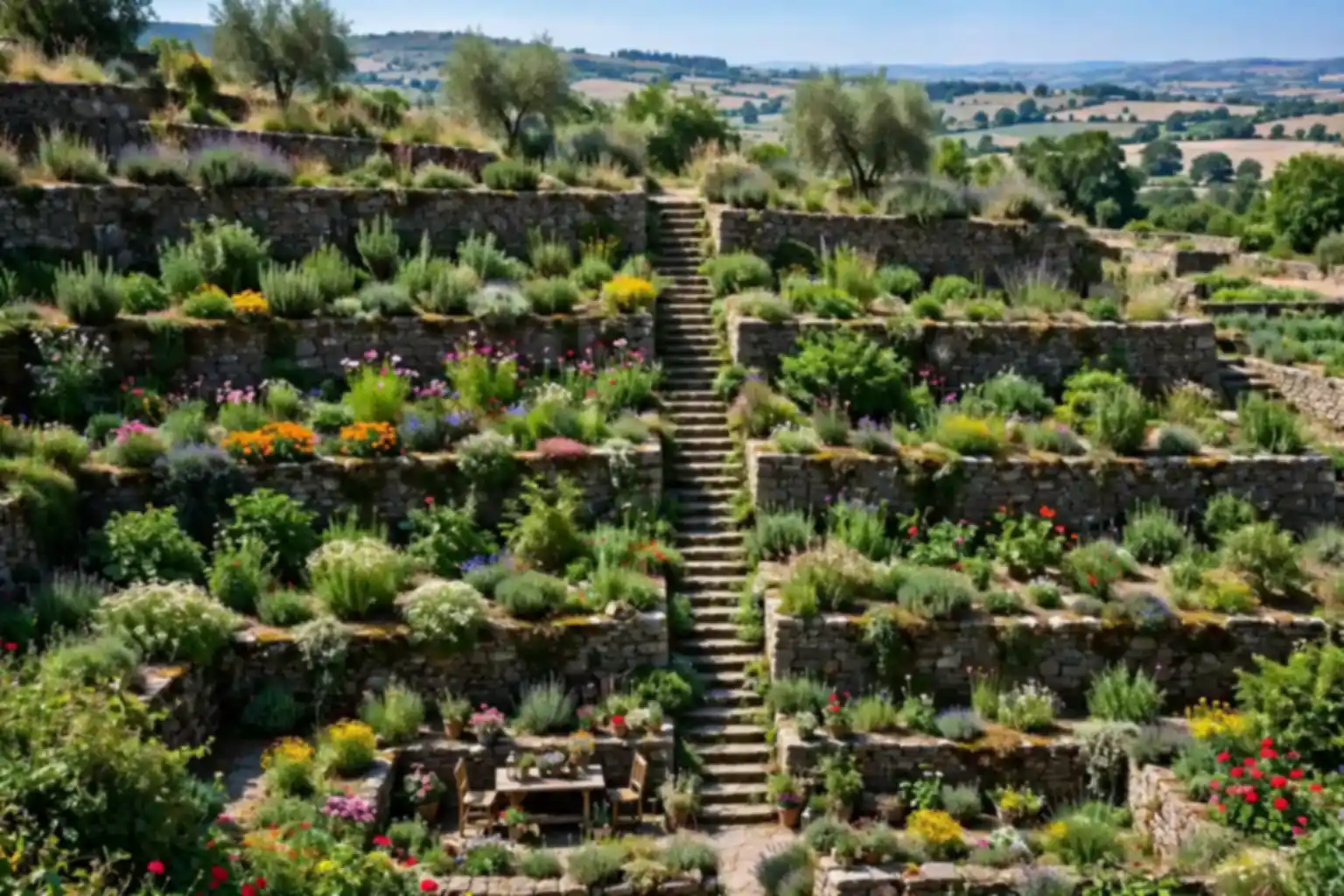
A slope does not have to mean washed out soil and a lawn that is hard to mow. Tiered gardens turn that slope into a series of flat, usable levels, each with its own job, whether that job is growing vegetables, holding a seat in the sun, or simply keeping rainwater where it can soak in. These 29 tiered garden ideas cover stone walls, timber beds, water, seating, and planting plans for large slopes and small yards alike. Start with the level you use most, keep each terrace wide enough to work on, and build from the bottom up so every level has solid support.
Key Takeaways
- Build tiers from the bottom up so each level supports the one above it.
- Make every terrace wide enough to stand on, plant in, and reach across without stretching.
- Give each level a clear job, such as food, flowers, seating, or drainage, instead of filling every level the same way.
- Plan water first: level beds, drainage behind walls, and a path for heavy rain to leave safely.
- Use steps, landings, and handholds on steep slopes so every level stays easy and safe to reach.
- Small yards can tier too, with stacked planters, stepped beds, and pots on sturdy steps.
1. Build Stone Retaining Wall Terraces
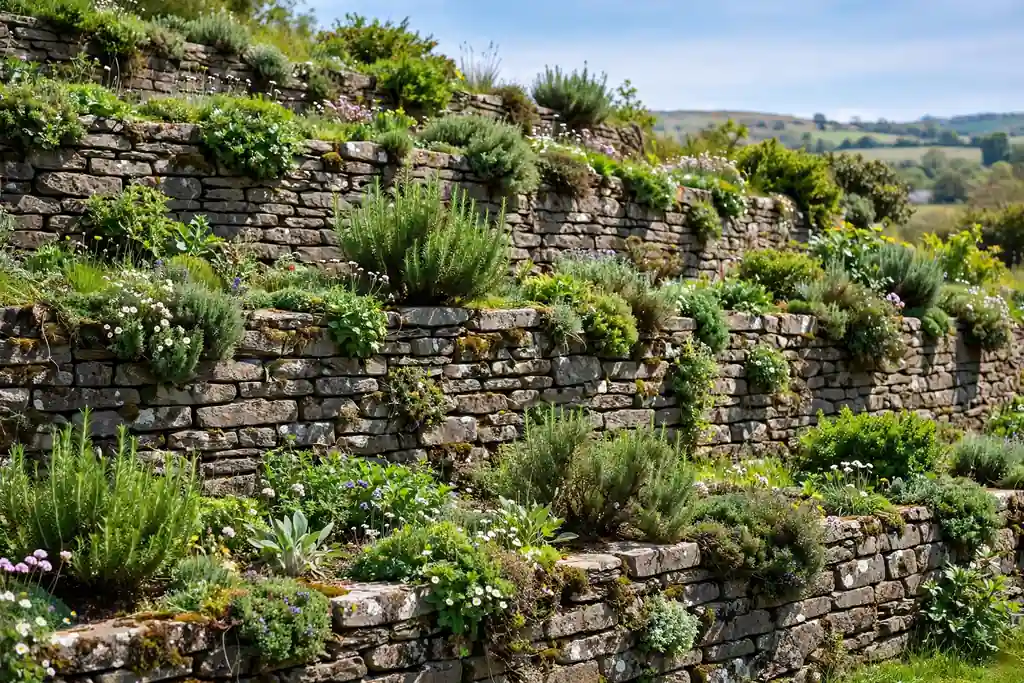
Dry stone or mortared stone walls are the classic way to hold a terraced slope, and they suit gardens where you want the structure itself to look good all year. Start at the lowest level, dig a firm footing, and lean the wall slightly back into the bank so the weight of the soil presses it into place rather than pushing it out. Leave gaps or a drainage pipe behind the wall so water can escape instead of building up pressure after heavy rain.
Stone also gives planting pockets of its own. Low wall plants such as creeping thyme, aubrieta, and small sedums can root in the gaps near the top of a dry stone wall, softening the hard edge without weakening it. Keep tall walls, generally anything above knee height, in the hands of a professional, and check local rules before you build, since height limits and drainage rules vary.
2. Use Timber Sleepers for Warm, Simple Steps
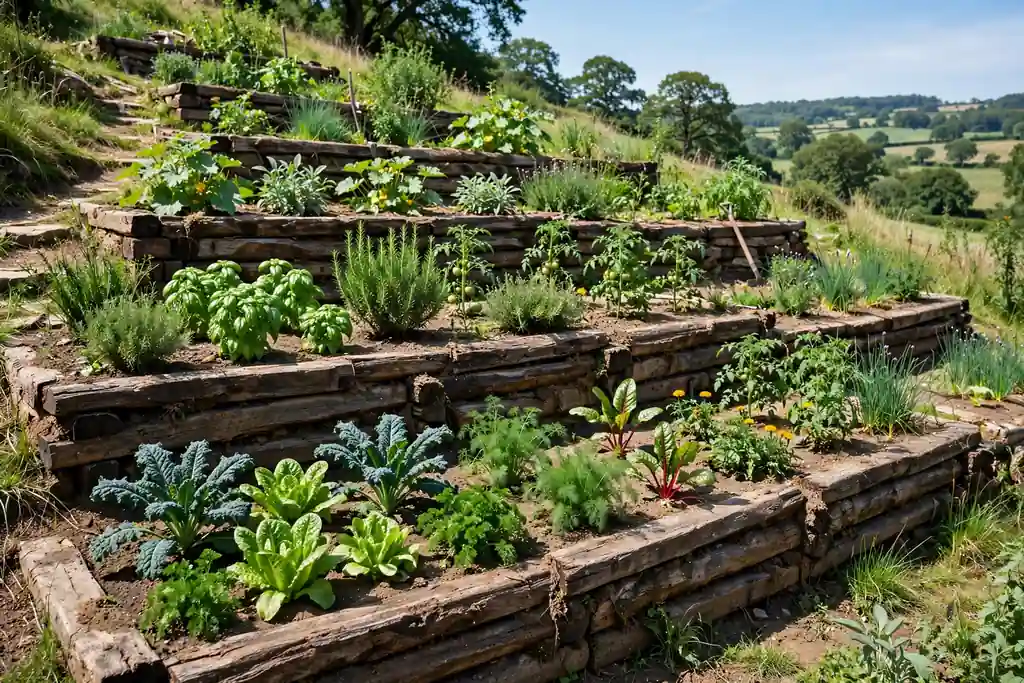
Timber sleepers give a softer, warmer look than stone and are easier for a confident home gardener to handle on low terraces. Stack sleepers horizontally to form the front of each level, pin them with stakes driven into the ground behind, and backfill with soil in layers, firming each layer as you go. Two or three sleepers high is a comfortable height for a single terrace; higher walls need stronger posts and proper drainage.
Timber suits vegetable beds, herb tiers, and informal cottage gardens, and it weathers to a grey tone that sits well beside lawn and gravel. Choose treated timber rated for ground contact, keep soil from sitting directly against a house wall or fence, and plan to replace the lowest sleeper first, since it stays dampest. If sleepers are new, let rain wash them before planting edibles right against them, and check the treatment label for food growing use.
3. Try Gabion Walls for a Sturdy, Open Look
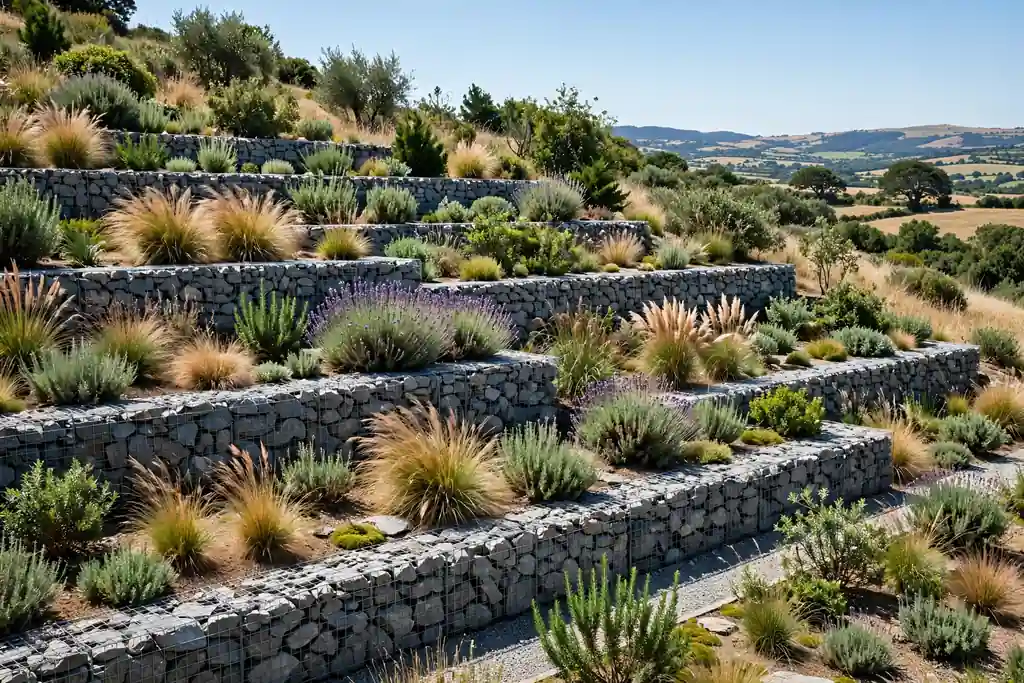
Gabion walls are wire cages filled with stone, and they make strong, free draining terraces with a modern, open texture. Because water passes straight through the gaps between stones, gabions cope well with wet slopes where a solid wall would need careful drainage pipes. Fill the cages in layers, packing the face stones neatly so the front looks tidy, and use smaller stone in the middle so the cage stays full and firm.
Gabions suit contemporary gardens, drive edges, and slopes where stone is already part of the local landscape. They also make useful seating: a wide, flat topped gabion at the end of a terrace doubles as a bench base with a timber top. Wear gloves when handling cut wire, cap sharp ends, and keep the cages level as you build, since a tilted cage is hard to correct once it is full of stone.
4. Edge Terraces With Brick for a Tidy Finish
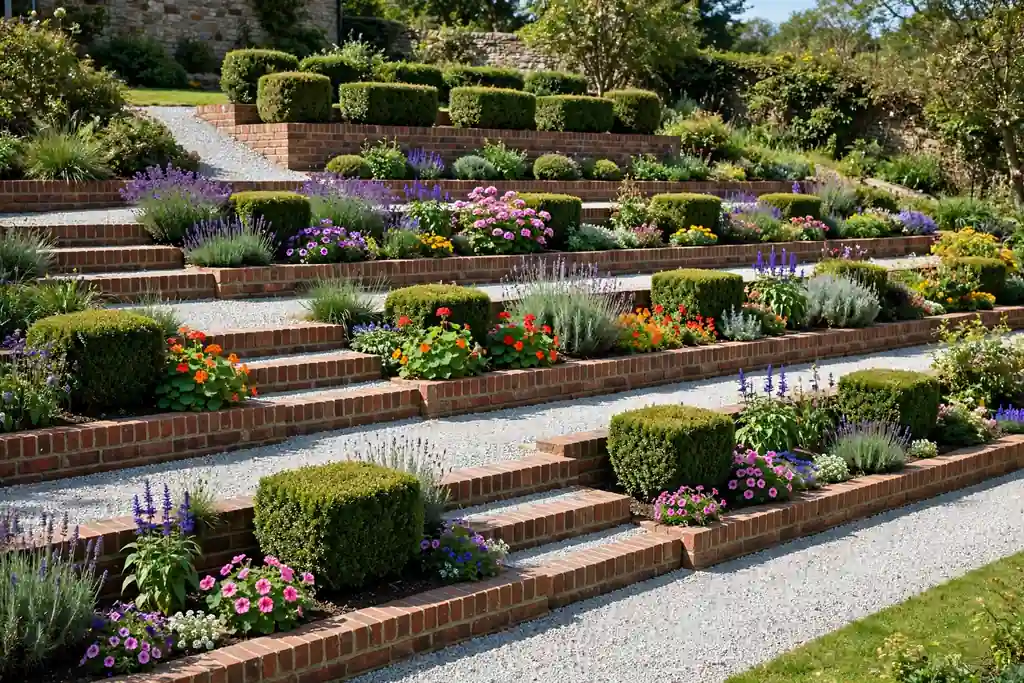
Brick edging gives terraces a clean, finished line that works well near a house, a path, or a formal front garden. Lay bricks on edge or flat along the front of each level, set on a shallow concrete or compacted gravel footing so frost does not lift them out of line. A single brick course suits a gentle step of a few inches, while two or three courses can hold a low bed edge.
Brick pairs well with gravel paths and clipped hedging, and reclaimed bricks add warmth and variation to a new garden. Keep the top of the edging level along each run, and leave small gaps or a drain point at the lowest corner so water does not pool on the terrace behind the bricks. For a softer look, plant low edging plants such as lavender or thrift just behind the brick line so flowers spill slightly over the edge.
5. Step Wooden Raised Beds Down a Slope
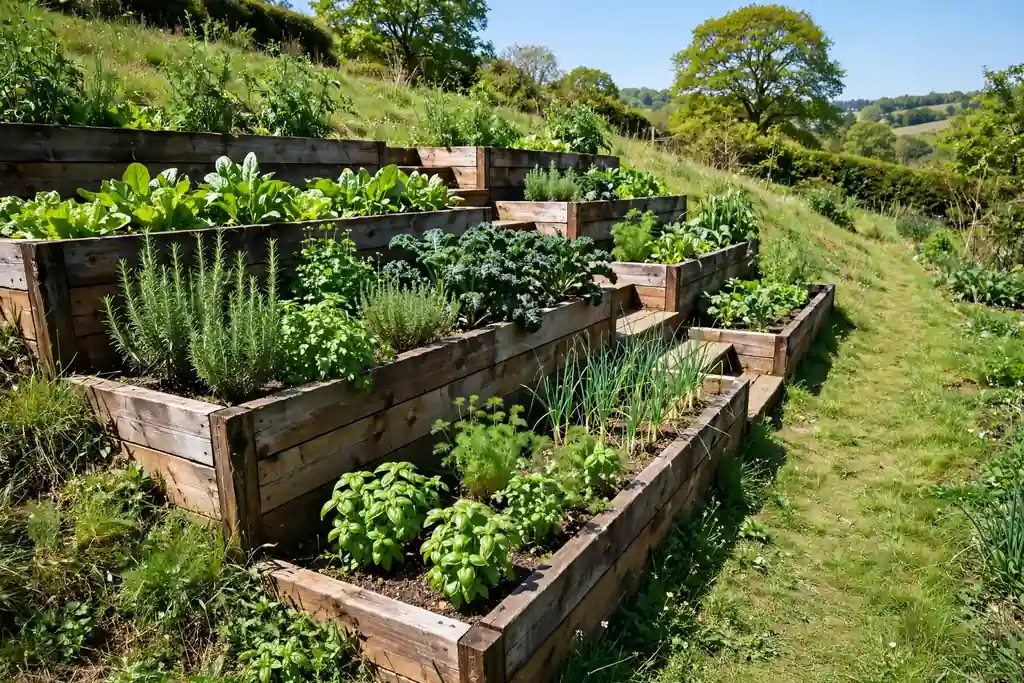
Instead of one tall retaining wall, step a series of wooden raised beds down the slope like a staircase, with a path or grass strip between each bed. Each bed stays at a comfortable working height, the soil stays level inside each box, and you can reach the middle of every bed from the path beside it. Make the beds no wider than you can reach across from one side, usually about four feet, and leave paths wide enough for a wheelbarrow.
Stepped beds suit a slope that is too steep for a single lawn but not steep enough to need engineering. Put the beds you visit daily, such as salad leaves, nearest the house, and beds you visit weekly further down. Number the beds or keep a simple sketch of what is planted where, so crop rotation is easy to track from year to year.
6. Plant a Terraced Herb Garden by the Kitchen Door
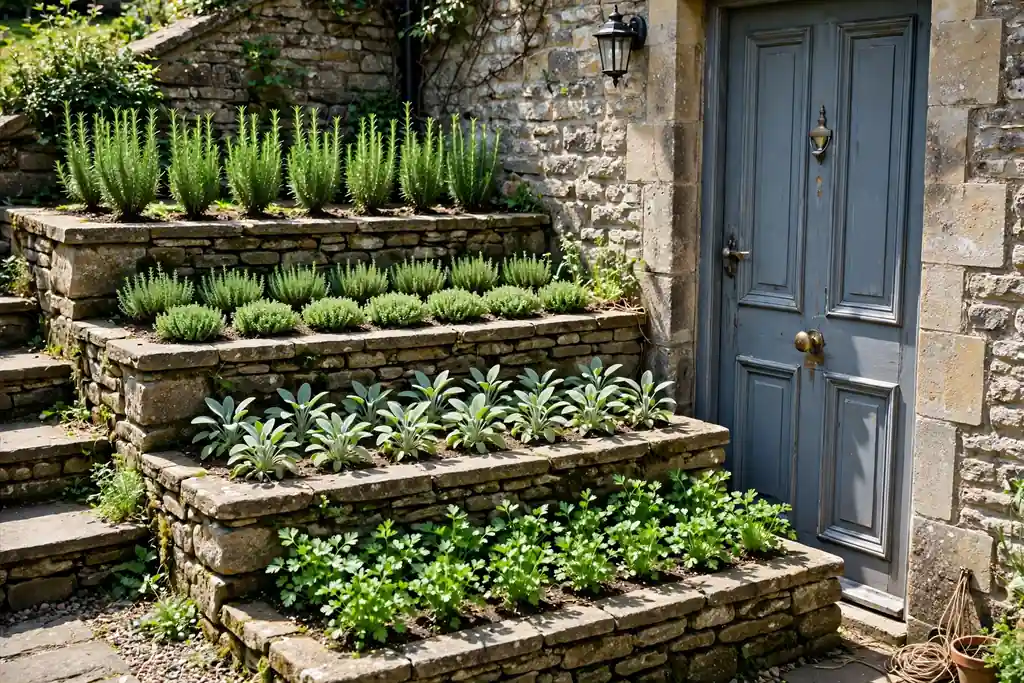
A small terraced herb garden near the kitchen door puts fresh leaves within a few steps of cooking, and tiers keep each herb in the soil it likes best. Put Mediterranean herbs such as rosemary, thyme, and sage on the highest, sunniest, best drained level, and moisture loving herbs such as mint, parsley, and chives lower down where water settles. Grow mint in its own pot sunk into the bed so it does not spread into its neighbors.
Keep the paths between herb tiers clear and flat, and add a small flat stone or paver as a standing spot for picking. Label the herbs while they are young, since many look alike before they flower. For ideas on keeping the kitchen side of this garden tidy, see these tips on how to style open shelves, which use the same group by use habit that works for herb tiers.
7. Grow a Terraced Vegetable Garden by Level
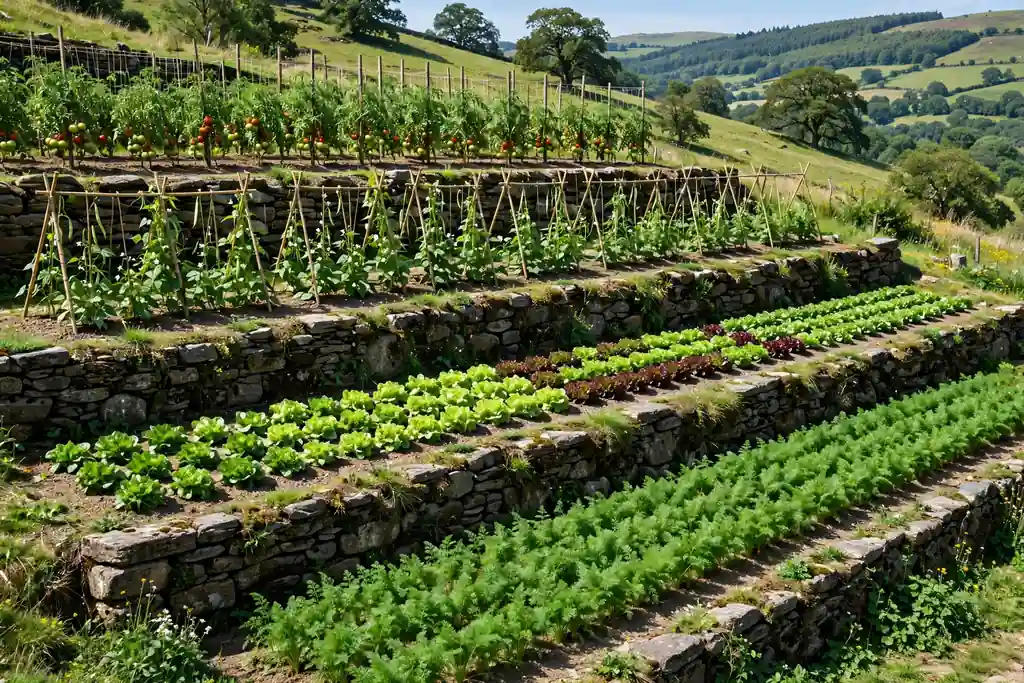
Terraced vegetables work best when each level has a different job in the growing year. Use the sunniest top terrace for heat loving crops such as tomatoes and peppers in summer, the middle levels for beans, peas, and brassicas, and the lowest level for salads and root crops that prefer cooler, moister soil. Rotate crops between levels each year so the same family does not grow in the same soil season after season.
Level beds also make watering fairer, since water no longer runs straight downhill past the plants. Water the top terrace slowly so it soaks in rather than spilling over the edge, and mulch the surface to hold moisture. A simple cold frame or cloche on one level extends the season for salads, and a shared thanksgiving kitchen decor harvest display is an easy reward for a well planned vegetable terrace.
8. Layer a Terraced Flower Border by Height
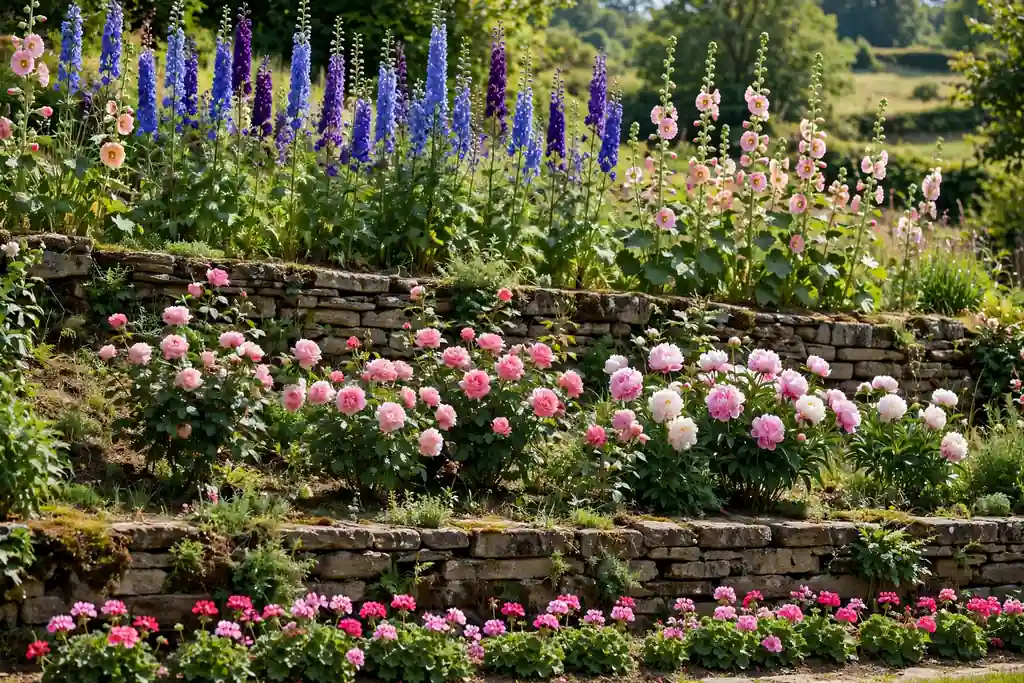
A terraced flower border lets you use height as a design tool instead of fighting it. Put tall flowers such as delphiniums, hollyhocks, and sunflowers on the top level where they catch the light, medium flowers such as roses, peonies, and salvias in the middle, and low edging plants such as geraniums and catmint at the front of the lowest level. Seen from below, the whole slope reads as one full border rather than a set of thin strips.
Repeat one or two colors on every level to tie the tiers together. For a pink-led scheme, the planting ideas in these pink flower garden ideas show how drifts of one color, rather than single plants, make the color read clearly. Leave a narrow access strip behind the tallest level so you can stake, deadhead, and cut back without stepping on the plants in front.
9. Give Roses Their Own Terraced Bed
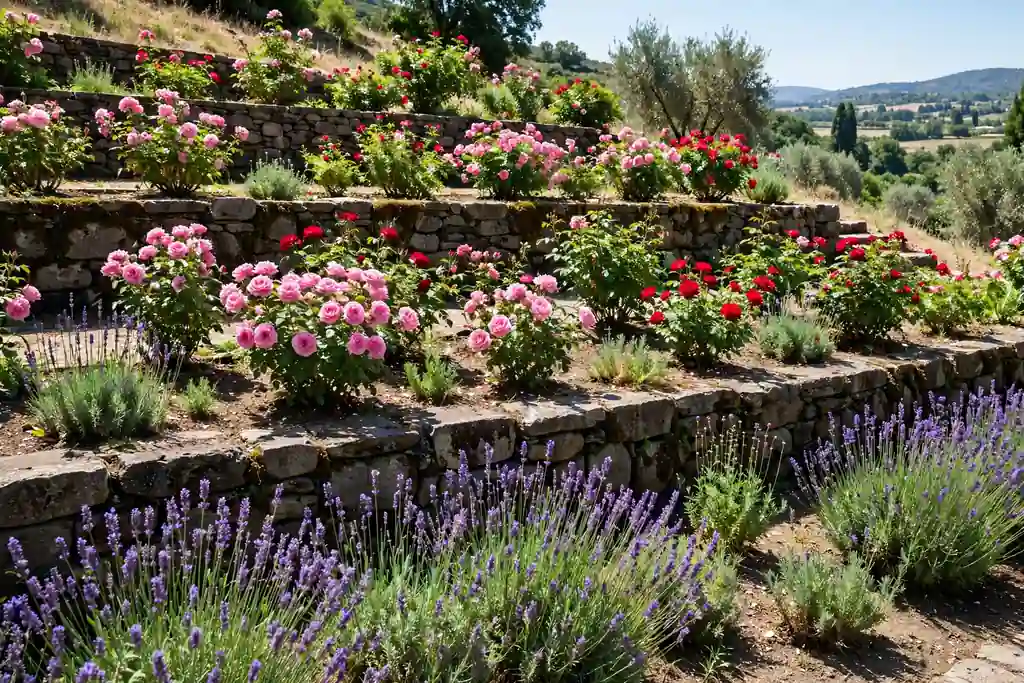
Roses suit a dedicated terrace because they like sun, air, and soil that does not stay wet, all of which a raised level provides. Plant shrub or climbing roses along the back of the top terrace, where air moves freely and morning sun dries the leaves early, and keep shorter companion plants such as lavender or catmint in front to cover bare stems. Space the bushes by the label, not by how they look in the pot, since a crowded rose bed invites disease.
Feed and mulch in spring, prune by rose type in late winter or early spring, and water at the base rather than over the leaves. A terraced rose bed near a seat means you can enjoy the scent without walking the whole garden, and a few cut stems brought indoors work well with everyday dining table decor for a simple, seasonal centerpiece.
10. Make a Terraced Rock Garden for Sun and Drainage
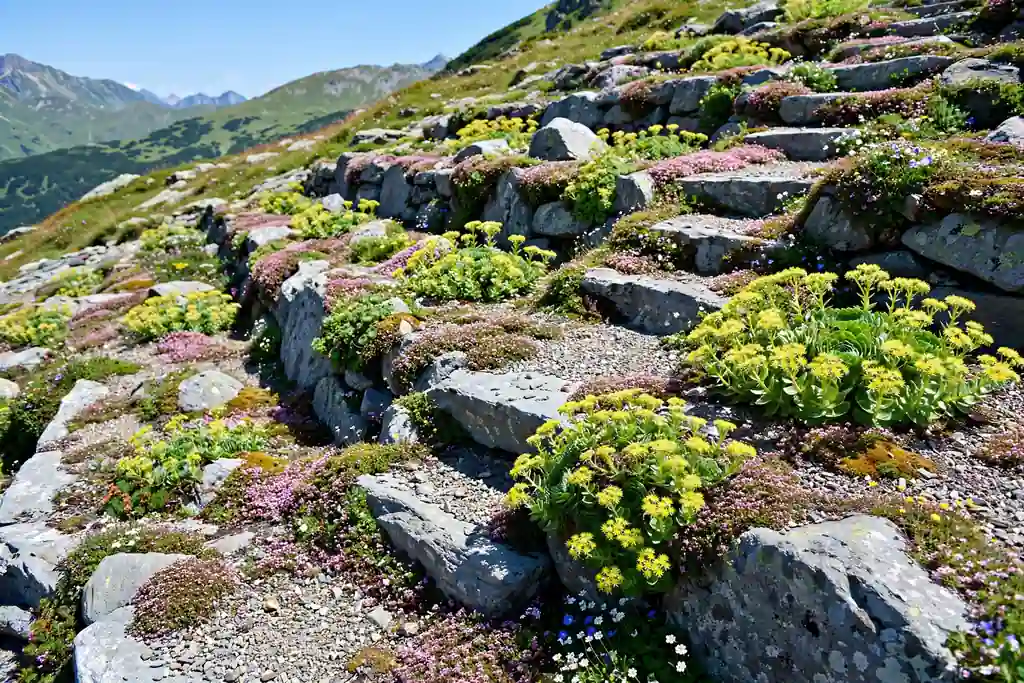
A rock garden is a natural fit for a terraced slope, because alpine plants want sharp drainage and sun, and stones hold heat and shelter small plants. Build each level with a mix of large feature stones and smaller rocks, burying at least a third of each large stone so it looks settled rather than perched. Fill behind the stones with gritty, free draining soil, and plant alpines, small sedums, and creeping thyme in the pockets between rocks.
Keep the planting low and open so the stones stay visible, and avoid rich compost that holds water around alpine roots. A rock terrace near a path gives you a close up view of small flowers that would be lost in a big border. Top dress with gravel to keep the crowns dry, suppress weeds, and show off the stone colors in dry weather.
11. Run a Cascading Water Feature Down the Tiers
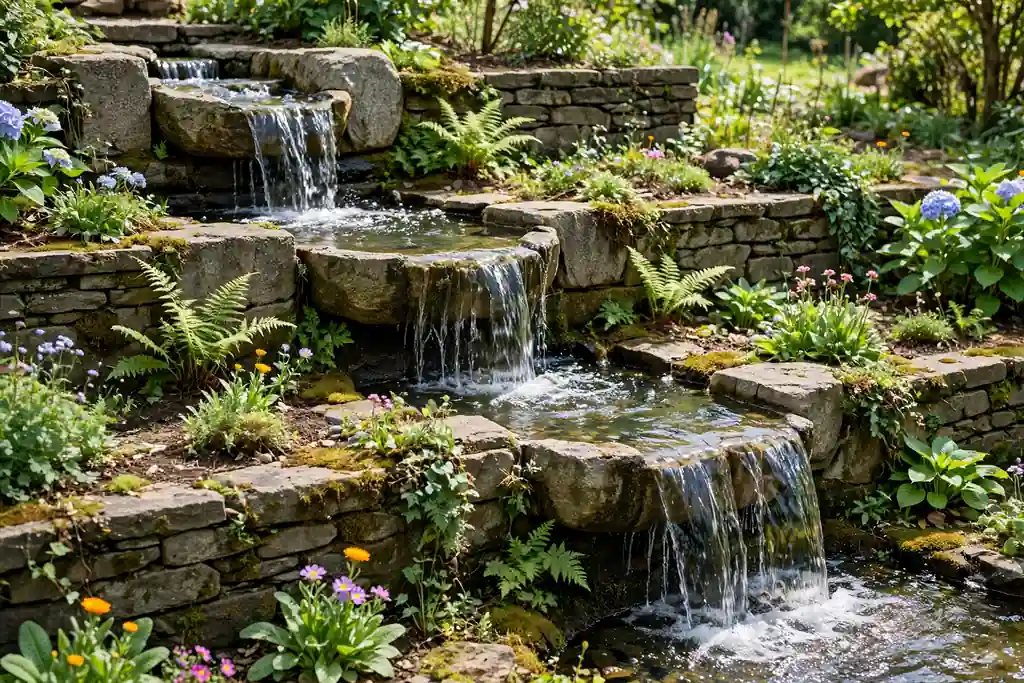
Water moving down a series of small falls turns a slope into a feature instead of a problem, and each tier can hold a shallow basin that spills into the next. A small pump recirculates the water from the lowest basin back to the top, so the feature uses the same water again and again. Keep the basins shallow, level, and easy to reach for cleaning leaves and algae, and site the pump where you can reach it without climbing.
A rill, a line of small stone basins, or a chain of terracotta pots with water trickling between them all suit different garden styles. In a family garden, keep the water shallow and the edges rounded, and add a simple on and off control near the house so the feature runs when you are there to enjoy it. Moving water also masks street noise, which makes a terraced seating area nearby feel more private.
12. Plant a Terraced Orchard on a Sunny Slope
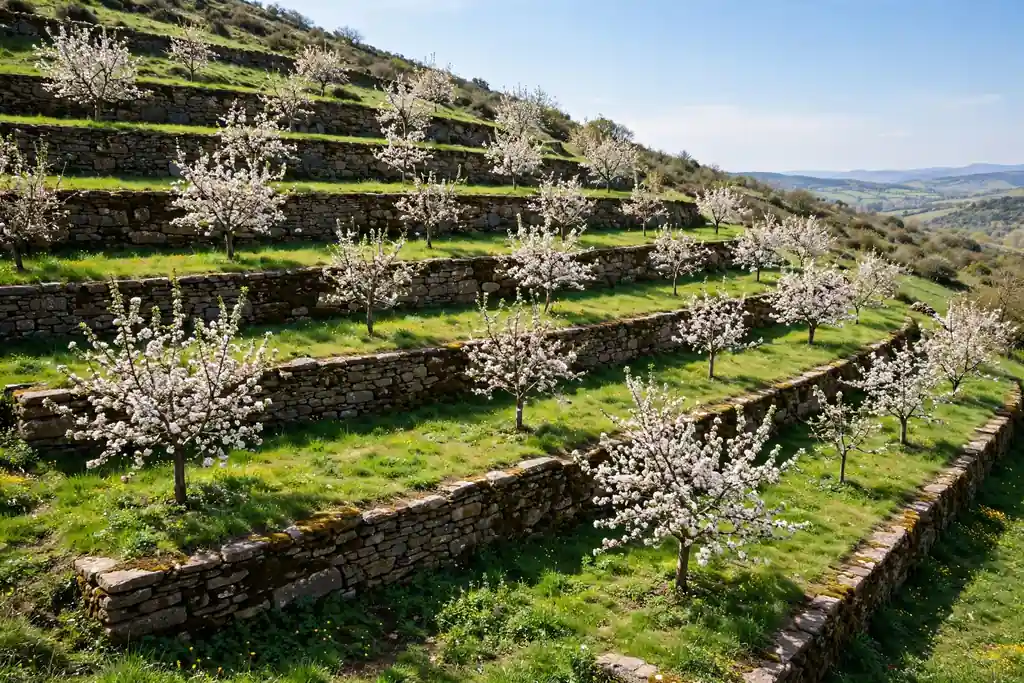
A sunny slope is a good place for fruit, because cold air drains downhill away from blossom, and each terrace gives a tree its own level patch of soil. Plant small or dwarf fruit trees, one or two per terrace, with enough space for their mature spread and for a ladder or picking step beside each tree. Fan trained or espaliered trees against a low wall on a terrace take even less room and are easy to prune and pick.
Underplant the trees with low herbs or wildflowers that suit the soil, and keep grass or mulch clear of the trunks. Choose varieties suited to your area and ripening in different months so the harvest spreads across the season. A terraced orchard needs the same yearly care as any fruit tree, pruning, feeding, and pest checks, but the level ground makes every one of those jobs easier.
13. Cut Grass Terraces for Play and Mowing
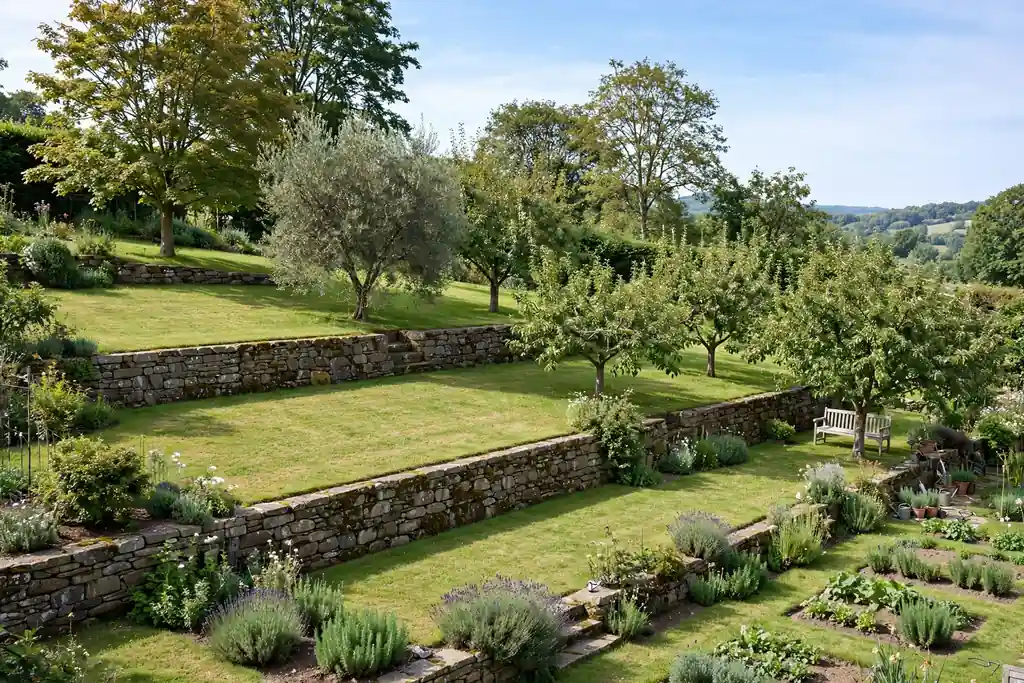
Not every tier needs a wall. Wide, gently sloped grass terraces give children and pets flat places to play and make mowing safer, since you mow across each level rather than up and down a steep bank. Shape each grass level with a slight fall toward the back so rain soaks in instead of running over the edge, and keep the step between levels low enough to walk up comfortably.
Grass terraces suit family gardens where planting beds would be trampled, and they pair well with a single planted terrace near the house for color. Edge the grass levels with a mowing strip of pavers or a low stone line so the mower can finish each edge cleanly. If a level is too steep to mow safely, widen it or add a planted terrace instead, since a slope you dread mowing will soon look untidy.
14. Set Seating Into a Terraced Patio
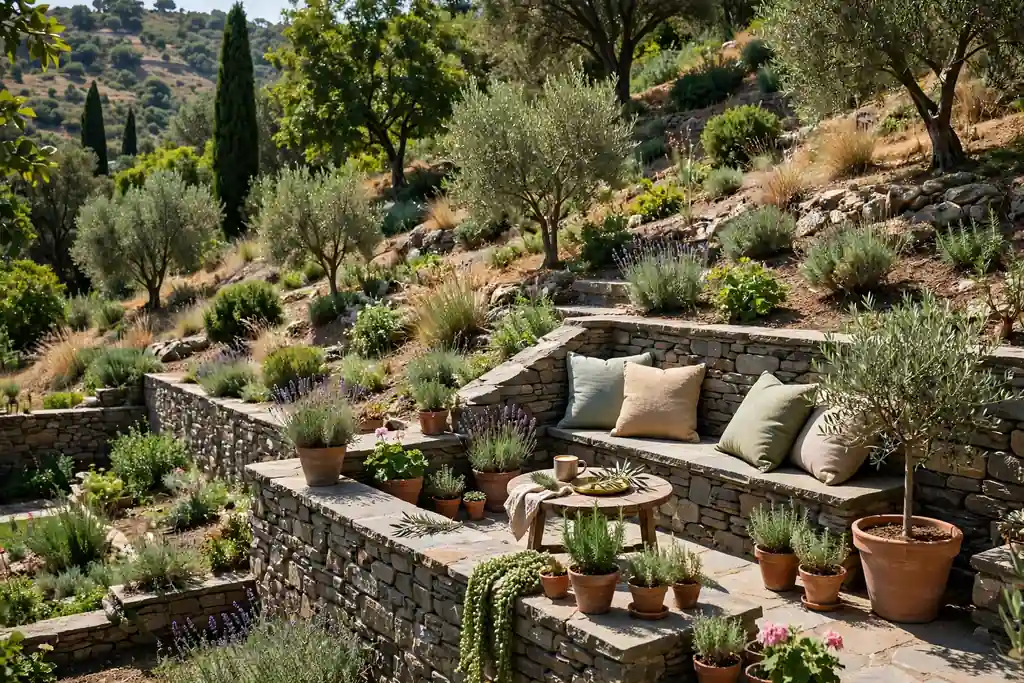
Building seating into the terrace itself saves space and makes the levels feel like outdoor rooms. A wide, flat topped retaining wall at sitting height becomes a bench along one side of a patio level, and a sunken level ringed by a low wall gives a sheltered corner out of the wind. Add loose cushions and a small table rather than fixed furniture, so the space can change from morning coffee to evening meals.
Place the seating terrace where it catches sun at the time you use it most, and leave a clear, level route from the house so carrying food and drinks is easy. For layout ideas that work outdoors as well as in, these fireplace seating ideas show how grouping seats around a focal point makes a space feel welcoming. Keep the wall top wide enough to sit on comfortably, about the depth of a seat cushion, and round or cap sharp edges.
15. Link Levels With Gravel Paths and Landings
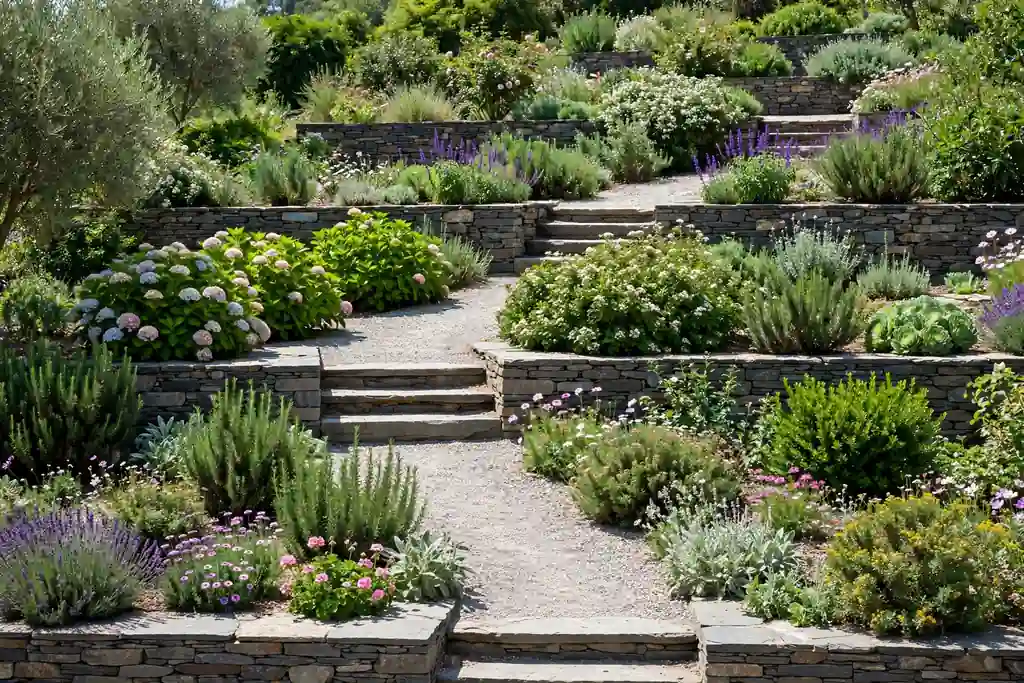
Paths are what make a terraced garden usable, and gravel is a forgiving surface for linking levels. Lay a compacted gravel path with a solid edging, and add a flat landing at the top and bottom of every flight of steps so you can pause, turn, and set down a watering can or trug. Keep each step rise low and even, since one taller step is the one people trip on.
Gravel drains well, suits most garden styles, and can be topped up easily when it thins. Use larger gravel on slopes so it does not wash downhill, and add a strip of pavers or stepping stones where the path meets a lawn or bed. Light colored gravel brightens a shaded slope, while warm toned gravel suits brick and timber terraces. Sweep leaves off the path in autumn so wet leaves do not make the surface slippery.
16. Stack Containers on Steps for a Small Yard
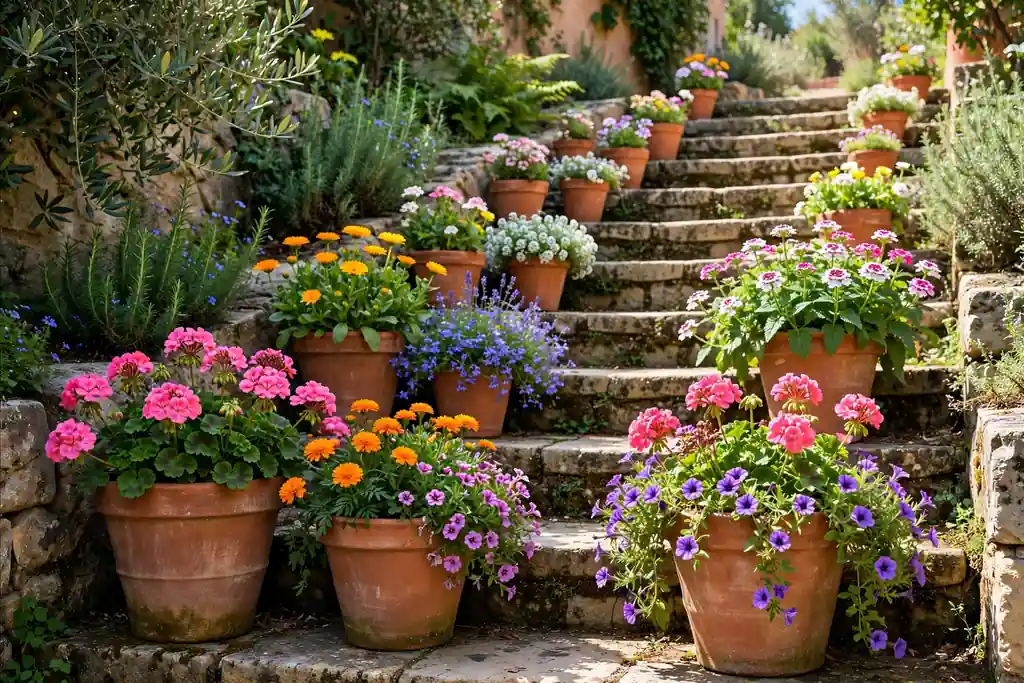
A small yard with even a short flight of steps can hold a tiered garden made of containers. Place large pots at the bottom of the steps, medium pots on the middle steps, and small pots at the top, so each plant gets light and the display reads as one stepped arrangement. Use the same pot material and two or three flower colors across all the steps to keep the display calm rather than busy.
Containers need more watering than beds, so group plants with similar water needs and check pots daily in hot weather. Heavy pots stay at the bottom for stability, and saucers protect steps and paving from stains. This idea also suits renters, since the whole garden can move. For more small space planting ideas, see these kitchen balcony ideas, which use the same stack and group habits on a balcony scale.
17. Grow Strawberries on Tiered Levels
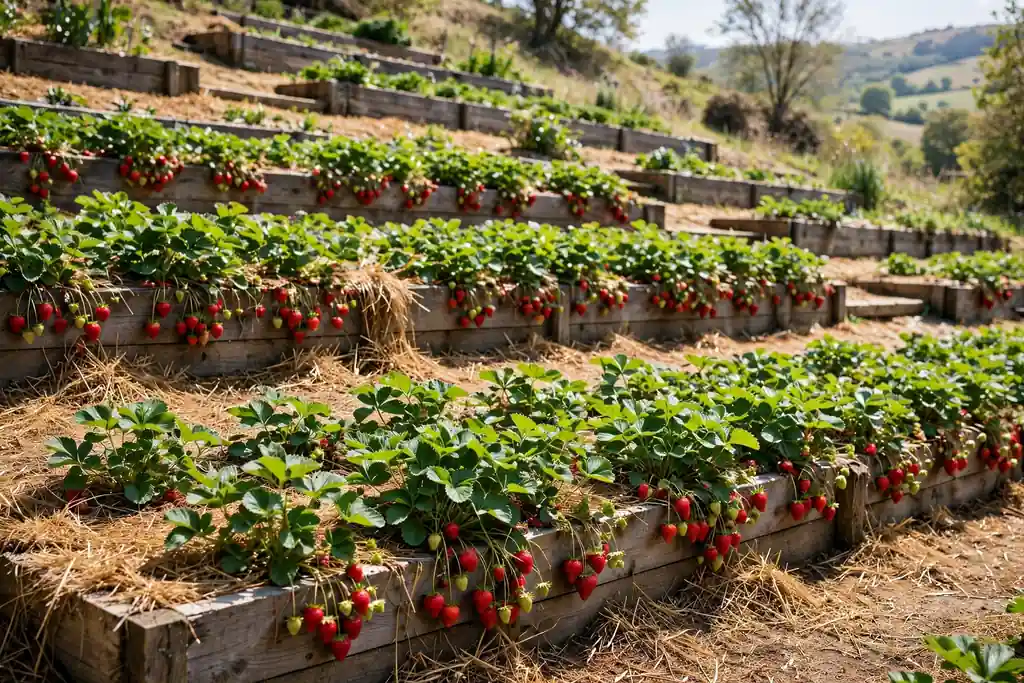
Strawberries are made for tiers: each level gives the plants sun, drainage, and air, and the fruit hangs over the edge of the bed where it is easy to pick and less likely to rot on wet soil. Plant one row of strawberries along the front edge of each terrace, with the crowns at soil level and straw or a mat beneath the fruit to keep it clean. Space plants by the label so air moves between them and disease has less chance to spread.
Use a different variety on each level, such as an early, a midseason, and a late type, to stretch the harvest across weeks. Net the plants when fruit starts to color if birds visit your garden, and renew the bed every few years, since strawberry yields fall as plants age. A strawberry terrace near a path means children and guests can pick as they pass, which is often the point of growing them.
18. Build a Dry, Sunny Terraced Succulent Garden
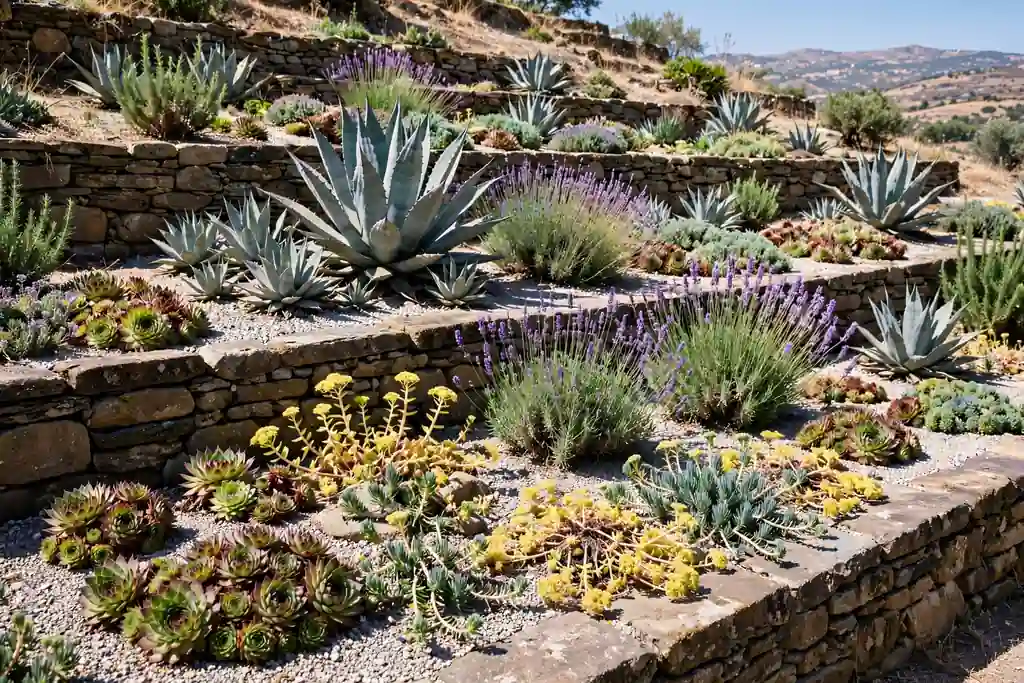
Succulents and drought tolerant plants suit the hottest, driest terrace, where other plants struggle and watering is a chore. Build low, wide levels with gritty soil and plenty of gravel, and plant sedums, sempervivums, agaves in mild areas, and lavender at the back where it can grow taller. Space the plants so each rosette and mound has room to spread, and leave gravel visible between them as part of the design.
A dry terrace needs very little feeding and almost no mowing, which makes it a good choice for a slope far from the house or a front garden you want to keep simple. Avoid planting succulents in a dip where water collects, since wet roots in winter kill more succulents than cold alone. Top dress with gravel each spring to refresh the look and keep weeds down.
19. Plant a Shaded Terraced Fern Garden
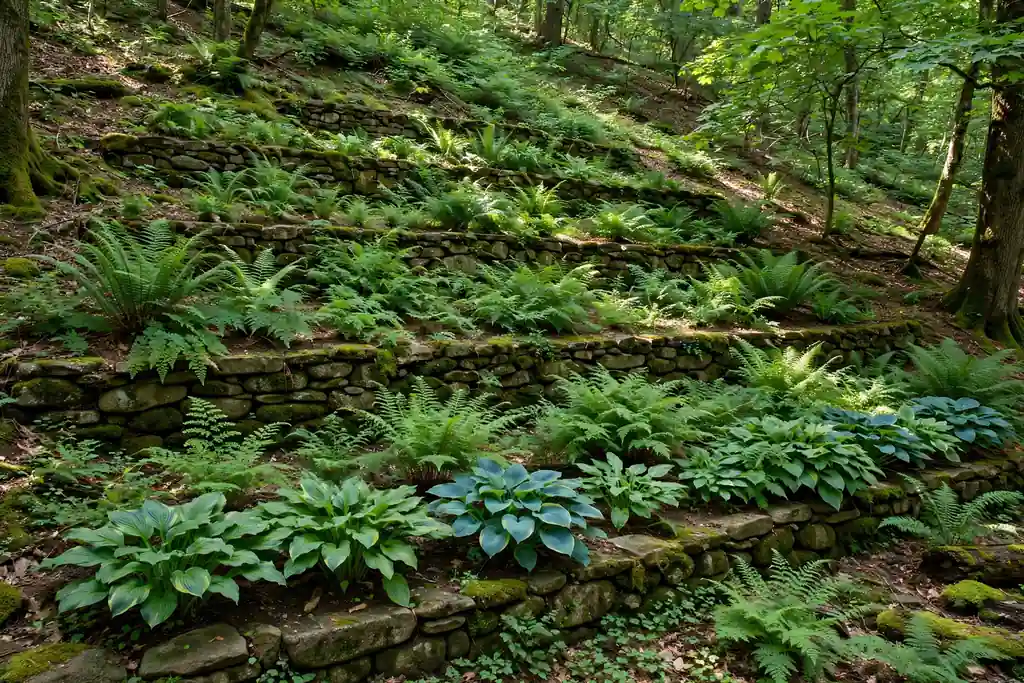
Shady slopes often stay damp and awkward, but ferns, hostas, and other shade lovers turn that damp shade into an asset. Terrace the slope into wide, level beds, enrich the soil with leaf mold or compost, and plant ferns at the back of each level, hostas in the middle, and low ground cover such as sweet woodruff or creeping Jenny at the front edge. The layers of green give the shade garden depth even when little is in flower.
Keep the soil evenly moist in the first season while plants settle, and mulch each spring to hold moisture and feed the soil. Avoid planting ferns where foot traffic crosses the bed, since their fronds break easily. A shaded terrace near a seating area stays cool on hot days, and the sound of water from a small rill, as in Idea 11, suits this quiet corner well.
20. Design a Terraced Pollinator Garden
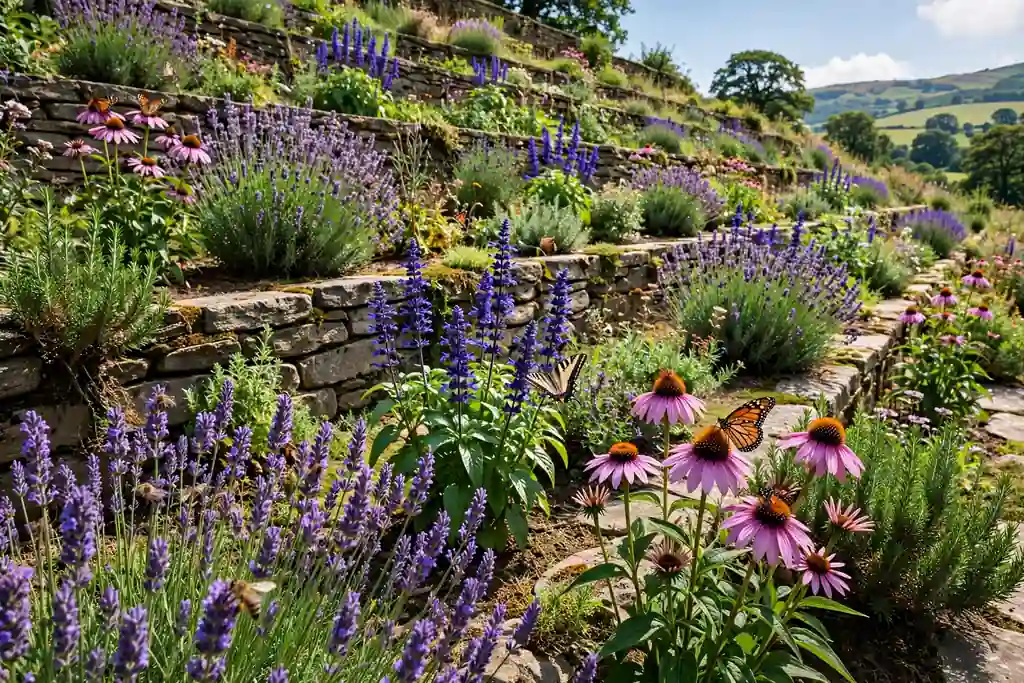
A terraced pollinator garden uses each level to offer a different food source across the season. Plant early flowers such as crocus and pulmonaria on the lowest, most sheltered level, summer flowers such as lavender, coneflower, and salvia in the middle, and late flowers such as aster and sedum on the top level where they catch autumn sun. Bees and butterflies then find food from spring to autumn without leaving the slope.
Choose single, open flowers over double types where possible, since open flowers give insects easier access to nectar and pollen. Leave a few bare patches of soil on a sunny level for ground nesting bees, and avoid spraying the whole slope at once if you need to treat a pest. Let some seed heads stand over winter for birds, then cut back in spring. A pollinator terrace near a vegetable garden, as in Idea 7, also helps crops set fruit.
21. Keep a Terraced Cutting Garden for the House
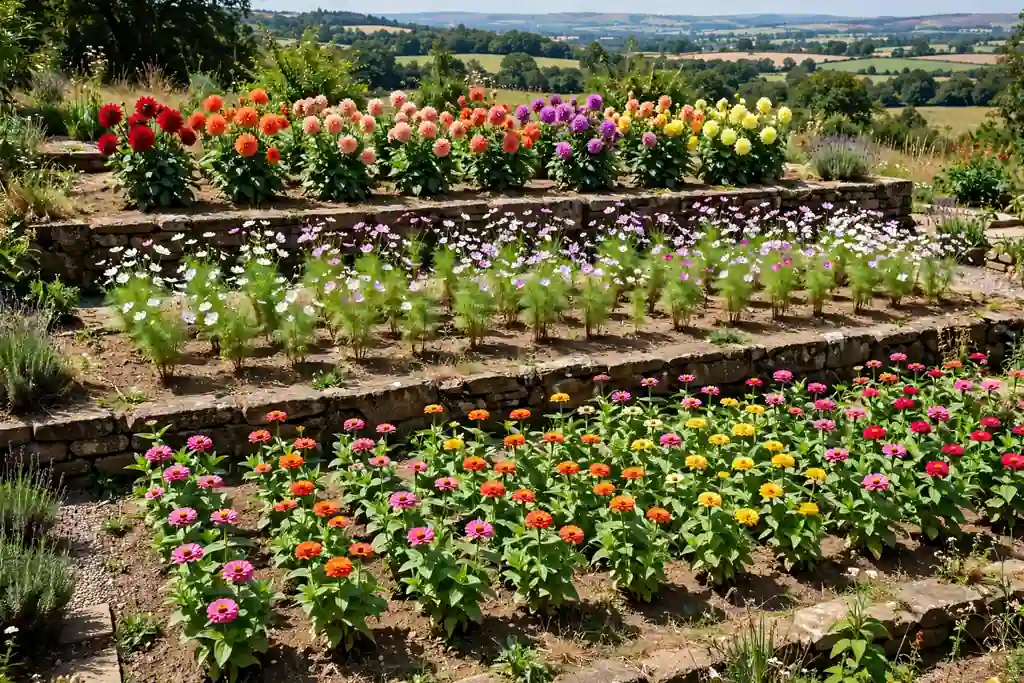
A cutting terrace grows flowers for picking, so the display borders stay tidy while you still bring color indoors. Plant rows of zinnias, cosmos, sweet peas, and dahlias on one sunny level, spaced for picking rather than for looks, and cut in the morning into a bucket of water. Because this bed is for cutting, you can pick hard without worrying about gaps in a display, and the plants respond by making more buds.
Keep the cutting terrace near a path and a tap, since you will visit it often with a bucket and secateurs. A few stems from this level dress a table with no need to buy flowers, and the same simple styling works for fall living room decor ideas, where a small vase of garden flowers suits the season. Re-sow fast annuals such as cosmos if gaps appear by midsummer, and leave a few stems to set seed for next year.
22. Add Compost Access to a Terraced Kitchen Garden
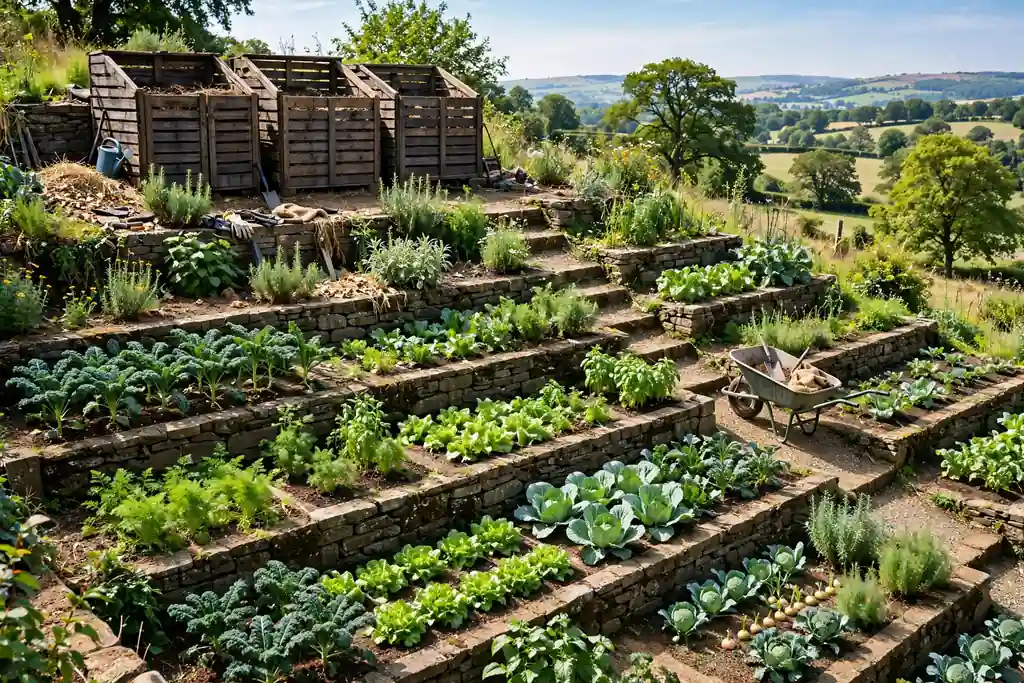
A terraced kitchen garden works better when compost can reach every level without a long carry uphill. Place the compost heap or bins at the top of the slope, with a path or chute that lets you barrow compost downhill to each bed, since gravity helps on the way down and the empty barrow is easy to push back up. Alternatively, put a small compost bin on the widest terrace, near the beds it feeds most.
Keep kitchen waste, leaves, and grass clippings in separate bays if space allows, and turn the heap when you pass it with a fork. A tidy compost corner also keeps the kitchen garden looking cared for, which matters when the beds sit near the house. For the kitchen side of the harvest, the seasonal ideas in thanksgiving kitchen decor ideas show how home grown produce can dress a table without extra shopping.
23. Hold a Steep Bank With Ground Cover Tiers
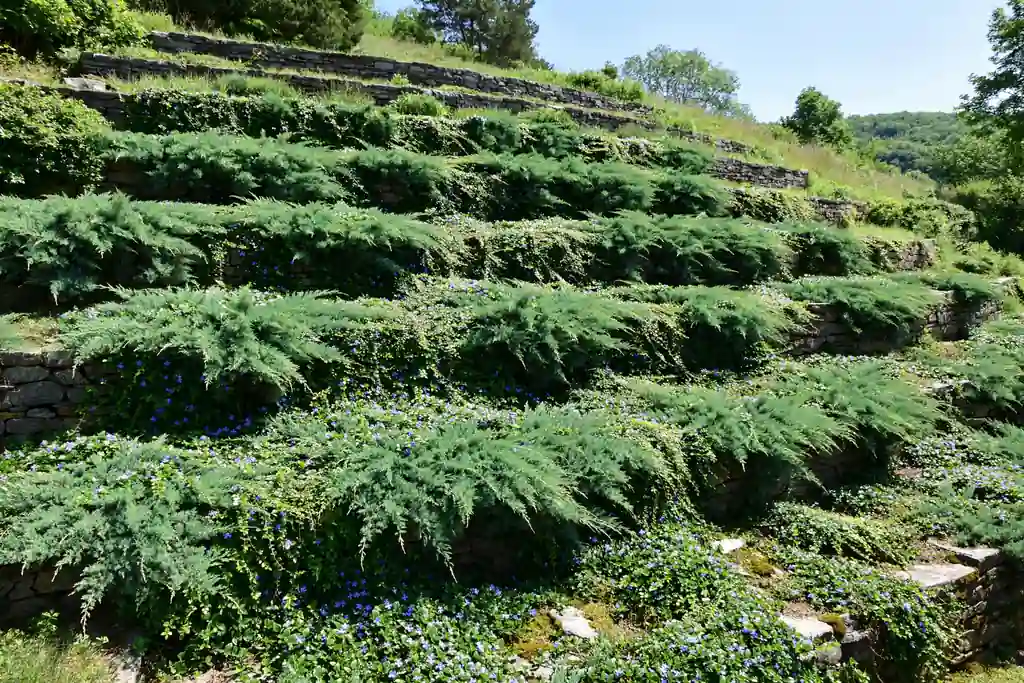
On a bank too steep for beds, low ground cover planted in wide tiers holds soil, cuts weeding, and looks cared for without constant work. Shape the bank into two or three broad, gently sloped levels, and plant each with a tough ground cover suited to the light, such as creeping juniper or vinca in sun, and ivy or pachysandra in shade. Plant closely so the cover knits together quickly and leaves little bare soil for weeds.
Water the new planting well in the first season, and mulch between plants until the cover closes. Avoid planting ground cover right up to a path edge where it will spill and need constant trimming; leave a narrow mowing or gravel strip instead. Once established, a ground cover bank needs only an annual trim and a check for weeds, which makes it a good choice for a slope you see but rarely walk on.
24. Tier a Balcony or Tiny Yard With Planters
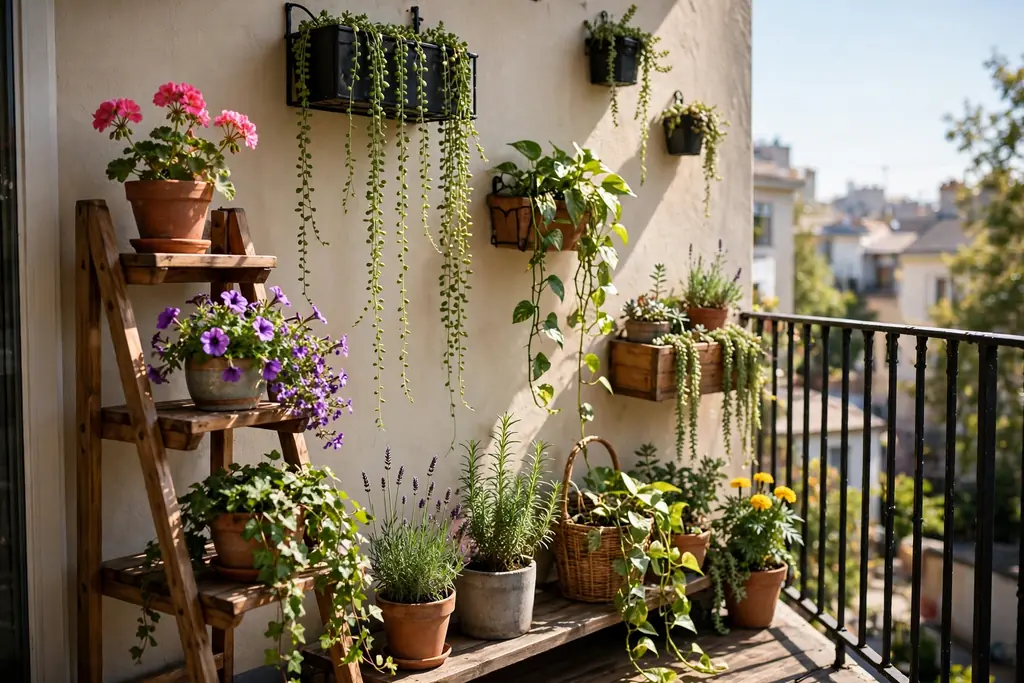
A balcony or tiny yard can tier without any building work, using a stepped plant stand, a ladder shelf, or wall mounted planters at different heights. Put the largest, heaviest planters on the floor, medium pots on the stand, and trailing plants at the top so they spill down and soften the structure. Check the weight limit of a balcony before adding soil filled planters, and use lightweight pots and compost where weight matters.
Small space tiering follows the same rule as a big slope: each level needs light, drainage, and a way to reach every plant for watering. Group plants by water need, and keep a watering can or small hose nearby so the top level does not get skipped. For layout habits that suit a compact space, these small living room layout ideas use the same group by use and leave clear paths approach that keeps a tiny garden usable.
25. Shape a Terraced Front Yard for Curb Appeal
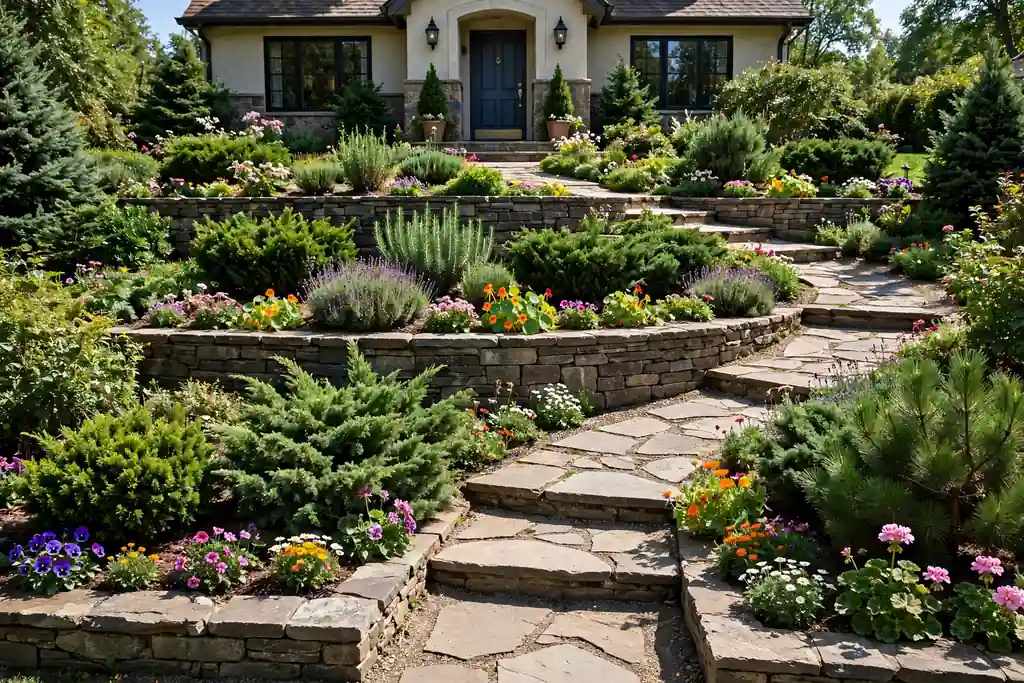
A front yard slope is the first thing visitors see, so terraces there should look tidy from the street as well as from the house. Use two or three low, even levels with a clear path to the door, and plant each level in a simple scheme, such as evergreen shrubs at the back and seasonal color at the front. Repeat the same edging material and one or two plant colors across all levels so the front reads as one design.
Keep plants below window height near the house, and leave the path and steps clear of overhanging growth. A terraced front yard also helps with parking and bin access, since level areas give bins and bikes a stable place to stand. Choose plants that need little trimming near the path, and add a low light at each step so the entrance stays safe after dark, a habit that links to the lighting plan in Idea 29.
26. Edge a Woodland Garden in Gentle Tiers
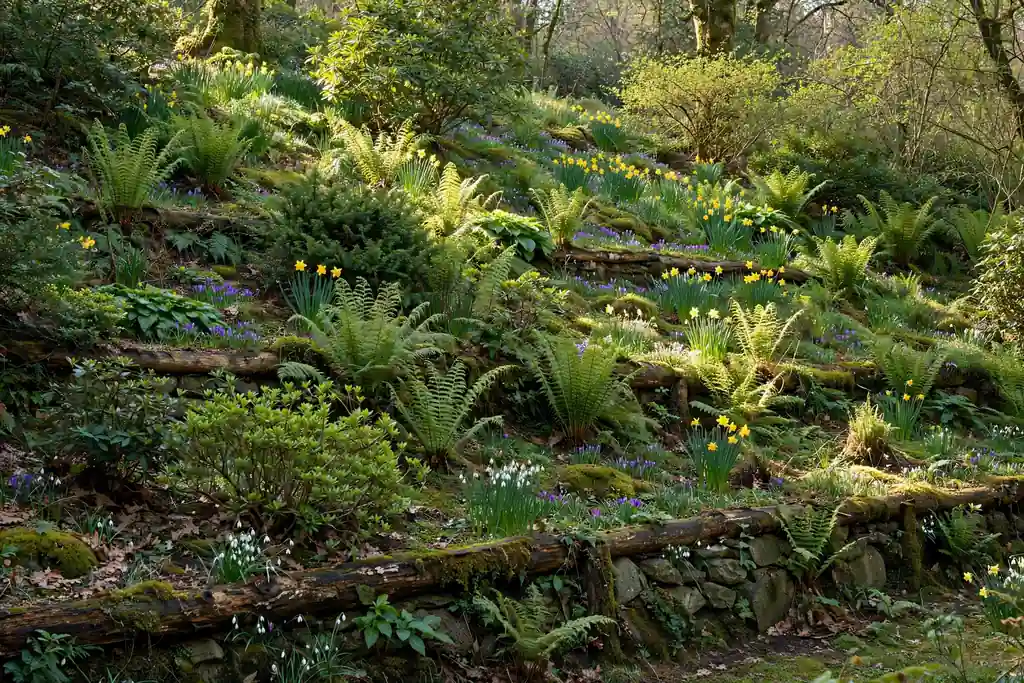
A woodland garden on a gentle slope suits soft, low tiers rather than formal walls. Use logs, low stone lines, or simple grass banks to mark each level, and plant shade tolerant shrubs, ferns, and spring bulbs in drifts that follow the natural shape of the ground. Keep the tiers wide and the edges informal, so the garden still feels like woodland rather than a built structure.
Leave fallen leaves in place on woodland tiers where they do no harm, since they feed the soil and shelter insects. Clear leaves only from paths and steps. Plant spring bulbs such as snowdrops and bluebells in drifts on the upper levels, where they catch light before the tree canopy fills in, and let them naturalize over the years. A woodland terrace needs patience, since the planting improves as trees and shrubs settle, but the result is a quiet garden that largely looks after itself.
27. Plant a Terraced Mediterranean Garden
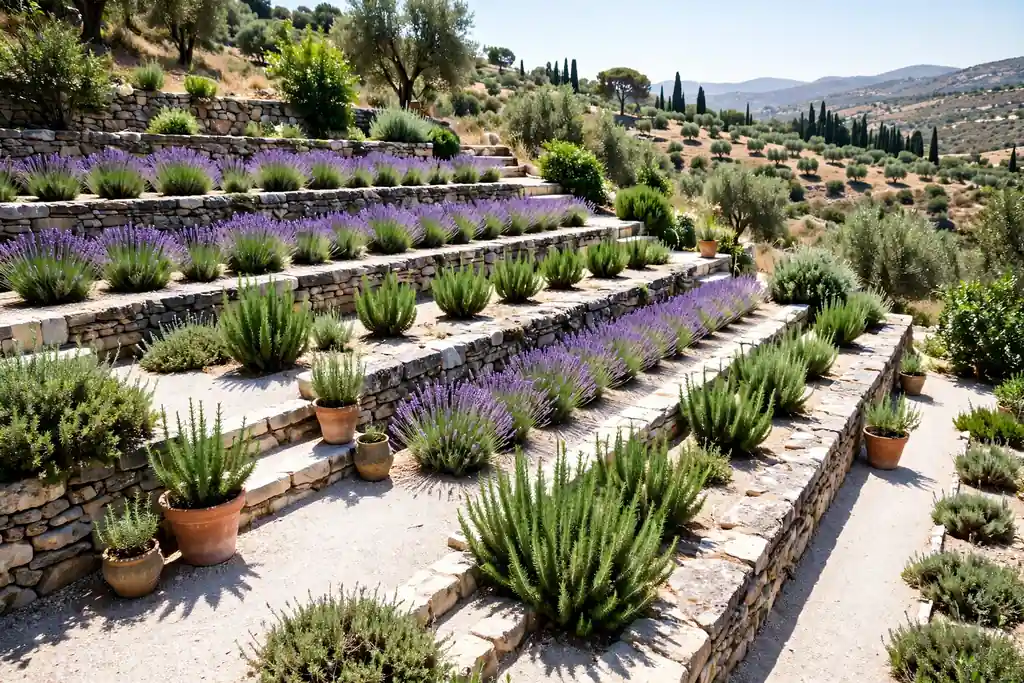
A sunny, dry slope is the right place for a Mediterranean terrace, with lavender, rosemary, olive trees in pots, and santolina arranged on gravel levels. Use pale stone or terracotta for walls and pots, and gravel rather than lawn between levels, since gravel suits the dry look and needs no mowing. Plant in drifts, with lavender along the front edge where its scent meets the path, and taller rosemary or a small olive behind.
Mediterranean plants need sun and drainage above all else, so keep them out of damp dips and give each level a gritty soil mix. In cold areas, grow olives and tender herbs in pots that move under cover for winter, while hardy lavender and rosemary stay in the ground. A Mediterranean terrace near a seating level, as in Idea 14, gives a warm, scented corner for summer evenings.
28. Slow Rain With a Terraced Rain Garden
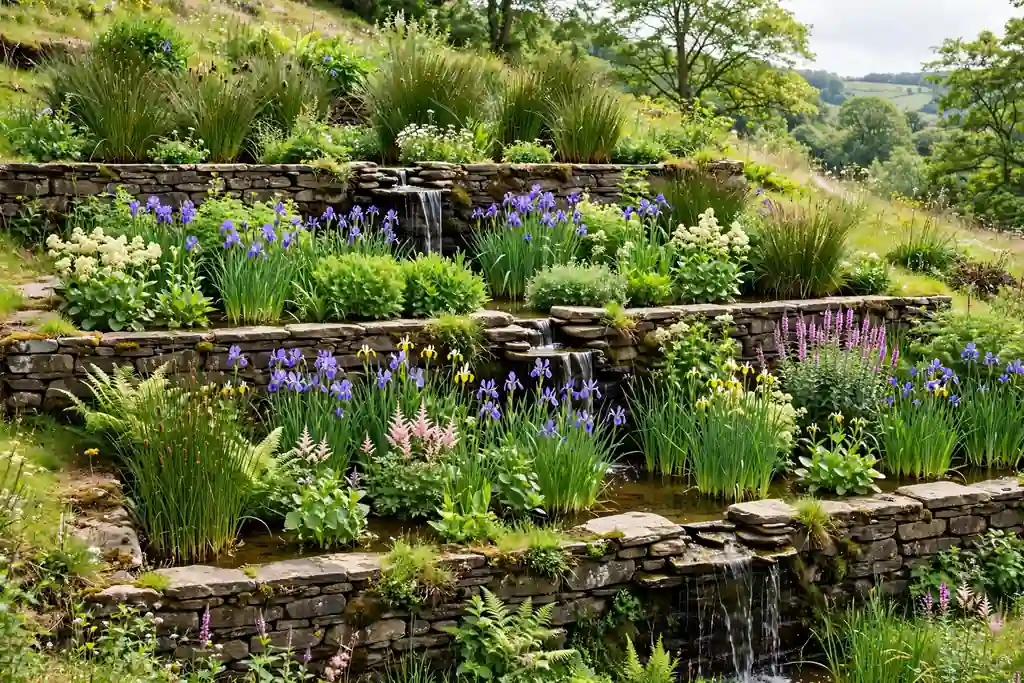
A terraced rain garden turns heavy rain from a problem into a resource by slowing water as it moves downhill. Shape each level as a shallow, level basin planted with moisture tolerant plants, and let water spill gently from one basin to the next through a stone lined overflow point. The soil and plants filter the water, and much of it soaks in instead of running onto paths or drains.
Site a rain garden away from house foundations and septic systems, and size the basins for the roof or slope area that drains into them. Plant rushes, irises, and moisture loving perennials in the lowest, wettest spots, and drier tolerant plants on the higher edges. Check the basins after heavy rain in the first year, and clear any silt from the overflow points so water keeps moving slowly rather than ponding in one place.
29. Light Terraces for Evening Use
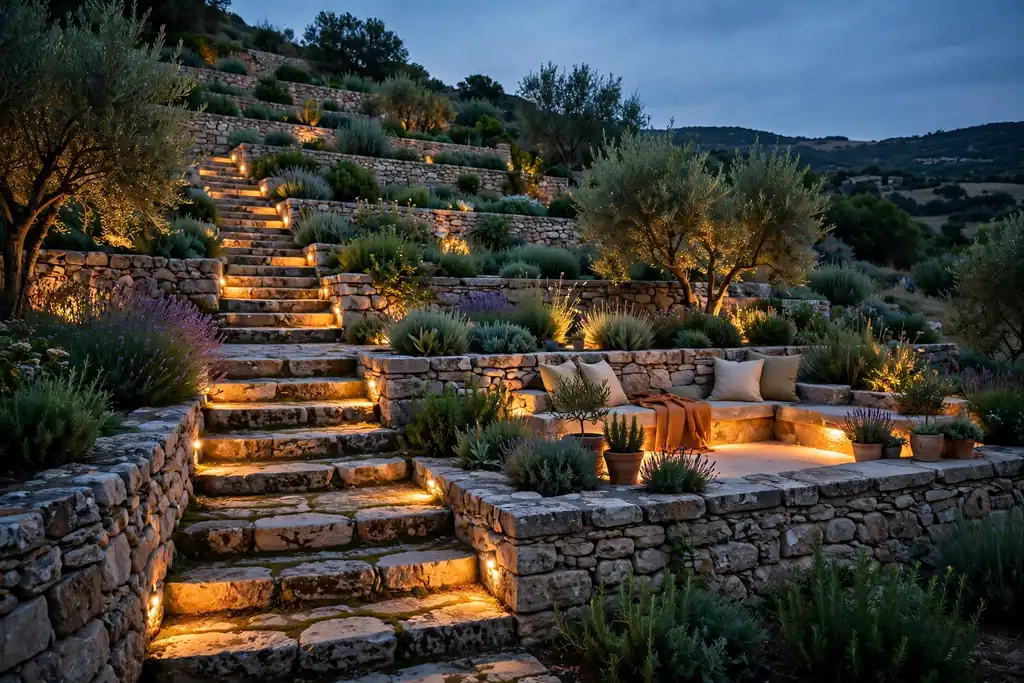
Lighting is what turns terraced levels from a daytime garden into an evening space. Put a low light at the top and bottom of every flight of steps, a soft wash of light on the seating terrace, and small lights along the path edges so each change of level is visible after dark. Solar lights suit most gardens, but wired low voltage lights give a steadier glow on steps you use every night.
Keep the light warm and low, aimed down at paths and plants rather than up into neighbors windows or the sky. Light the plants you like best, such as a small tree or a stone wall, and leave darker corners for a calm, natural feel. Check the lights from the house and from the path after installation, since a light that looks fine in daylight can glare badly at night. For the indoor side of evening light, the warm schemes in fall living room decor ideas use the same low, warm approach that works outdoors.
Conclusion
Tiered gardens work when each level earns its place. A stone wall that holds soil, a vegetable bed at a comfortable height, a seating terrace in evening sun, and a rain garden that slows water all do a job, and together they turn a slope from a chore into the most interesting part of the garden. Start small, with the level you use most, and add tiers as time and budget allow. Measure twice, build from the bottom up, and keep paths, drainage, and light in the plan from the start. Then plant each level for its sun, soil, and water, and let the garden grow into its shape season by season. Save this post to Pinterest to keep the ideas handy when your slope project begins.
FAQs
How do I start a tiered garden on a slope?
Start by walking the slope after rain to see where water runs and pools, then sketch the levels on paper, working from the bottom up. Mark the path, the steps, and the widest, flattest spot for the first terrace, and build that one level before adding more. A single well built terrace teaches you how your soil, drainage, and plants behave, and it is easier to extend a good first level than to fix several rushed ones.
How high can each terrace be?
For a home built terrace, keep each level between one and three feet high, with the wall or edge no taller than you can comfortably step onto and work from. Lower terraces are easier to build, safer to use, and simpler to drain. Taller walls need proper footings, drainage, and often professional advice, and local rules may limit wall height, so check before you plan a tall structure.
What is the best material for a terraced garden wall?
There is no single best material; the choice depends on your slope, budget, and garden style. Stone suits a long lasting, natural look and drains well, timber is warmer and easier to handle for low beds, gabions cope with wet slopes, and brick gives a tidy finish near a house. Match the material to the job: use the strongest option where the bank is steepest or wettest, and simpler edging where the slope is gentle.
How do I stop soil washing off a terraced slope?
Keep each bed level, mulch the surface, and plant ground cover or dense planting quickly after building, since bare soil washes fastest. Add drainage behind walls so water does not build up pressure, and give heavy rain a safe overflow route from one level to the next, as in a rain garden. Avoid working the soil when it is very wet, since that breaks its structure and makes erosion worse.
Can I build a tiered garden in a small yard?
Yes. A small yard can tier with stepped raised beds, a plant stand, wall planters, and pots on sturdy steps, without any retaining wall at all. The same rules apply at a small scale: each level needs light, drainage, and a way to reach every plant. Start with one stepped bed or a set of containers on steps, and add levels only where they stay easy to water and reach.
Do terraced gardens need more watering than flat gardens?
Terraces can need more watering at the top, since water drains downhill, and less at the bottom, where water collects. Water the top levels slowly so the water soaks in rather than spilling over, mulch every bed to hold moisture, and group plants by water need on each level. A drip line or soaker hose on the upper levels gives even watering with less waste, and a rain garden level at the bottom puts spare water to use.