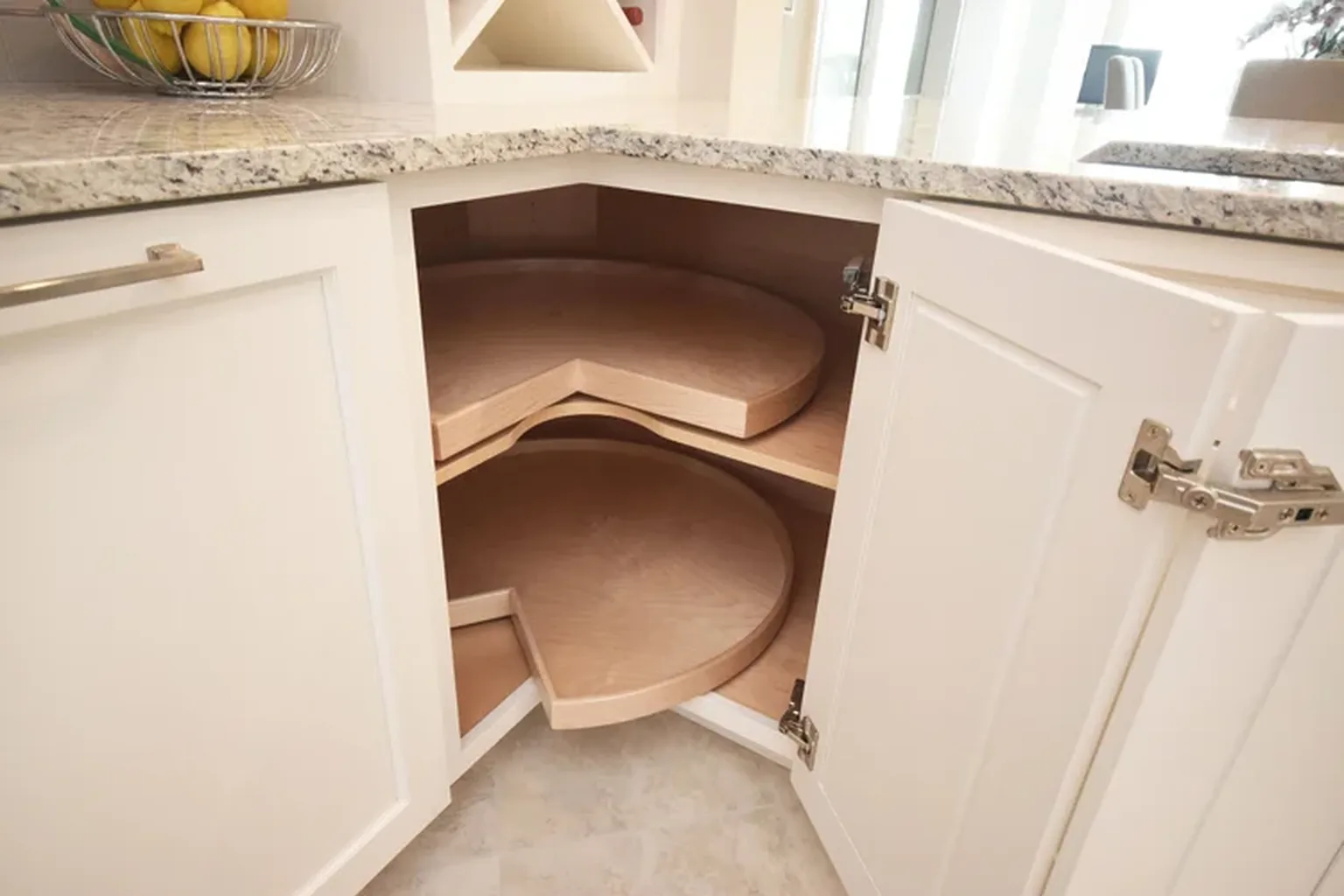
Every kitchen corner asks the same question: how do you reach the back without emptying the front? These 26 corner kitchen cabinet ideas answer it with turntables, pull-outs, drawers, and door styles that bring items toward you, plus a few display and lighting ideas that make the corner look deliberate. Some options suit a full cabinet order, while others are simple inserts you can add to cabinets you already own. Start by measuring your corner, noting which way the doors open, and listing what you actually store there, from heavy pots to tall bottles.
Key Takeaways
- Match the fix to the corner type: blind corners suit pull-outs and turntables, while diagonal corners suit drawers and curved or bi-fold doors.
- Bring items to you instead of reaching in. Moving shelves, spinners, and shallow drawers all reduce lost space at the back.
- Use the upper corner for lighter jobs, such as display, plates, mugs, and a pull-down shelf for items stored high.
- Keep heavy pots low, leave clearance for doors and handles, and check measurements twice before ordering any insert.
- Small touches, such as under cabinet light, hooks, and a toe-kick drawer, make a standard corner feel planned.
1. Add a Two-Tier Turntable to a Blind Corner
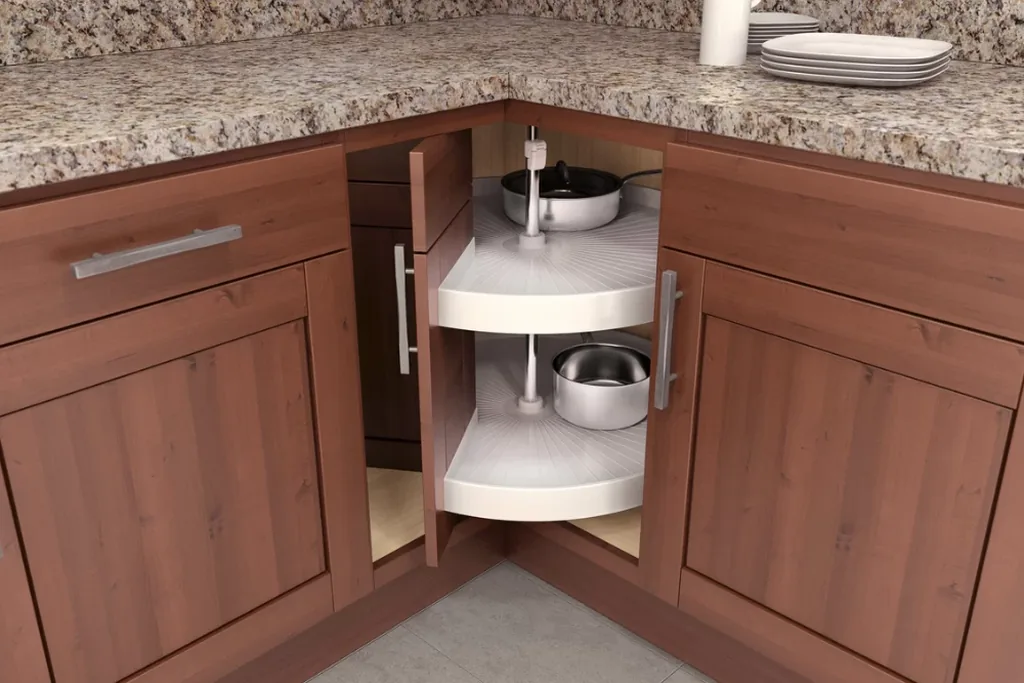
A two-tier turntable, often called a lazy Susan, spins the back of a blind corner around to the front, so cans, jars, and small appliances stop getting lost. Choose a diameter that clears the door opening and any hinges, and load heavier items on the lower tier. Round shelves leave small gaps at the edges, so keep tiny items in a bin on the shelf rather than loose.
2. Choose a Diagonal Corner Base Cabinet
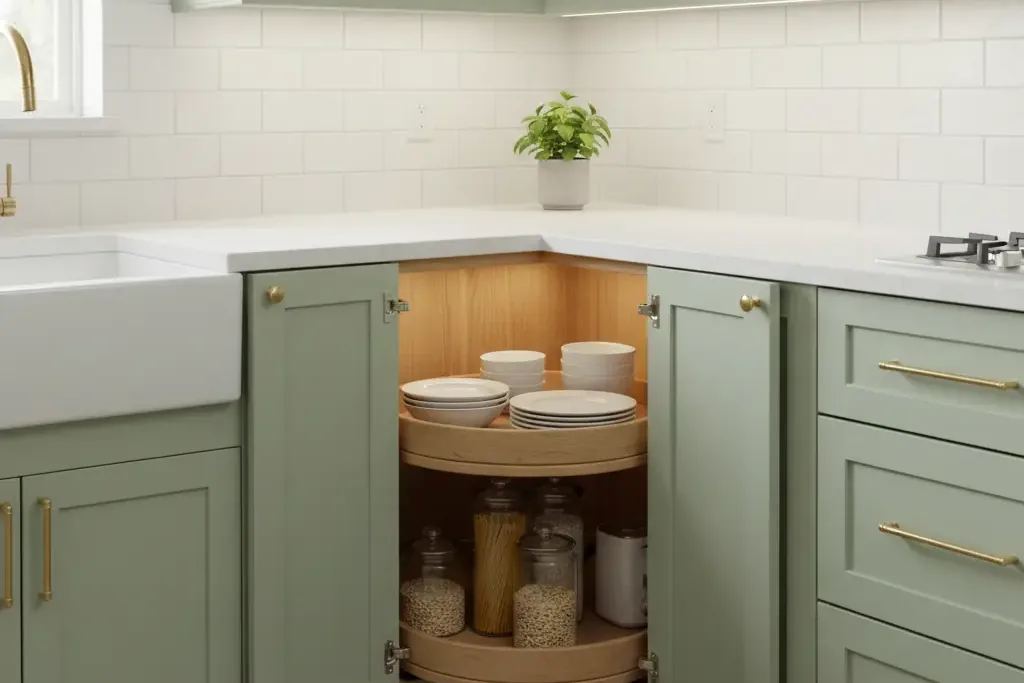
A diagonal corner cabinet cuts across the corner at an angle, giving you one wide door and a straighter reach inside than a blind corner allows. It suits new layouts where the counter can follow the same angled line. The trade-off is counter shape: the angled front takes a little more floor space and the worktop needs a matching diagonal cut. Inside, one or two fixed shelves hold mixing bowls, slow cookers, and bulk food tubs well.
3. Fit Pull-Out Shelves That Slide Into the Corner
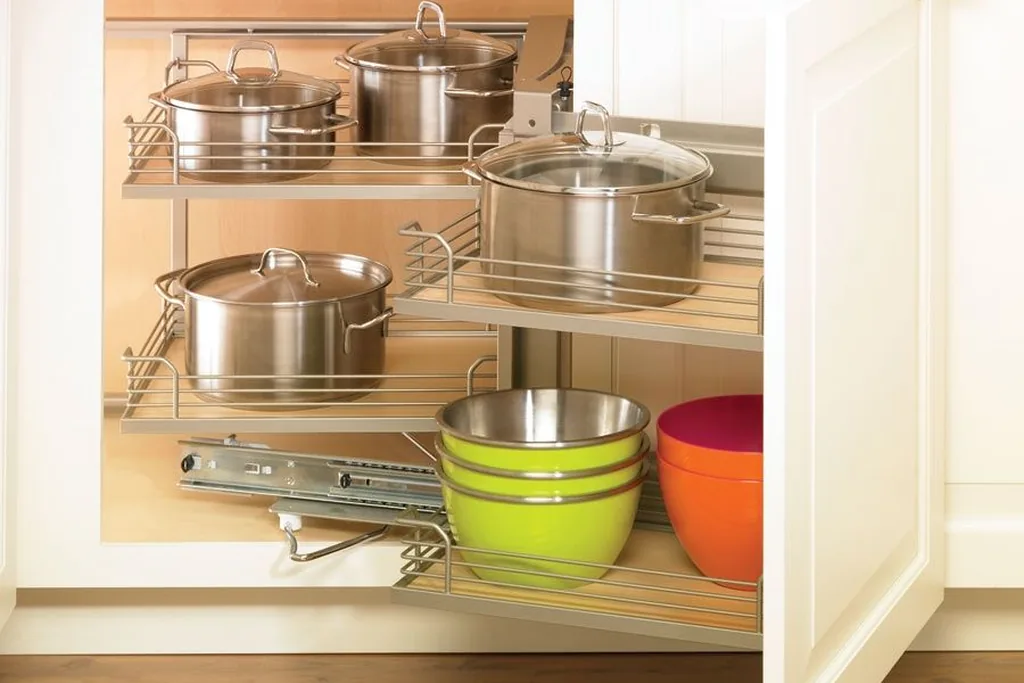
Pull-out corner systems use linked trays that slide forward, then sideways, bringing the full contents out into the room. They make good use of a blind corner because nothing stays hidden at the back. Check the minimum cabinet width and door opening before you order, because the mechanism needs clear space to travel. Keep the heaviest pots on the lowest tray, and avoid stacking items taller than the tray sides.
4. Use L-Shaped Corner Drawers
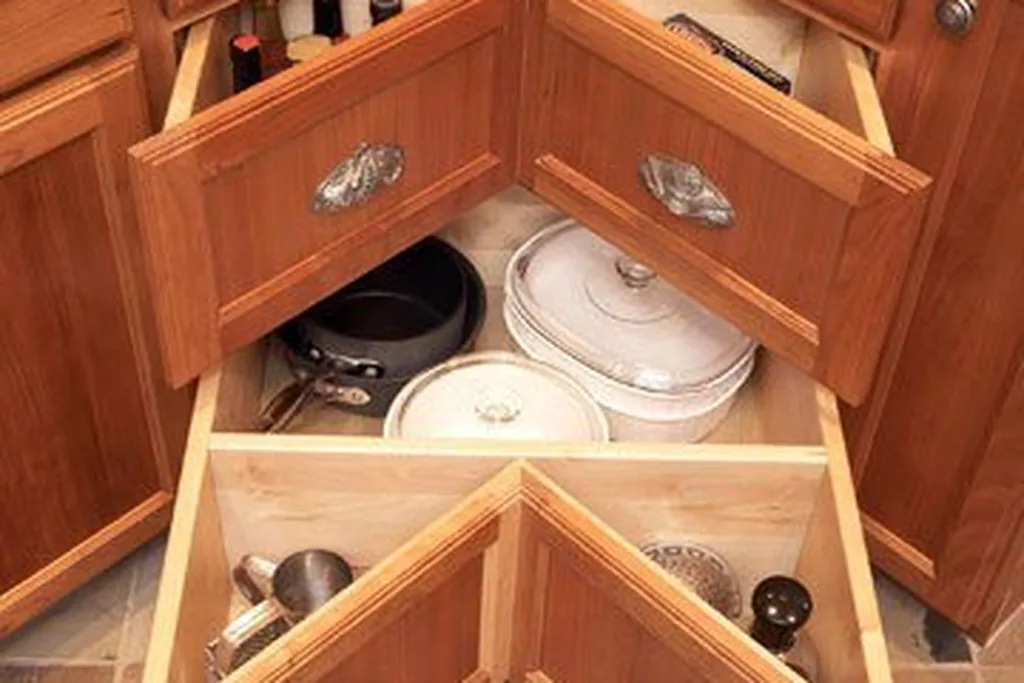
Corner drawers are built in an L or angled shape so the drawer box follows the corner instead of stopping short of it. A stack of three gives you cutlery and utensils on top, then pans or containers below, all opening with one pull. They need precise cabinet work, so they suit a remodel more than a quick fix. Add drawer dividers, because the unusual shape lets small items drift into the point of the L.
5. Install Kidney-Shaped Shelves on a Center Pole
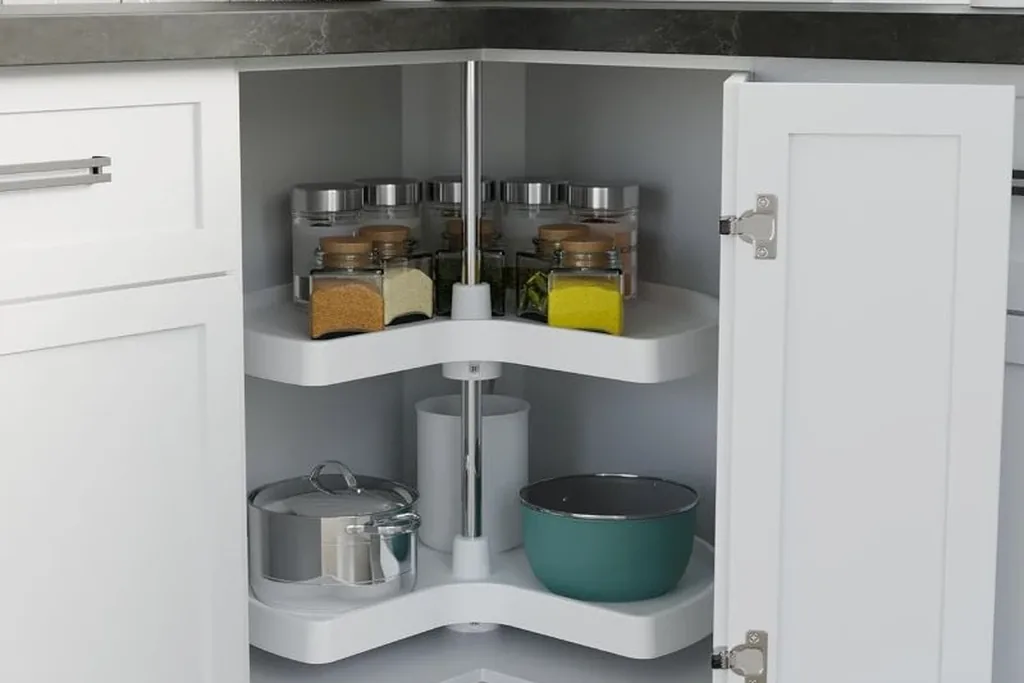
Kidney-shaped shelves wrap around a center pole and rotate, and their cut-out notch lets the cabinet door close against them. They fit standard corner base cabinets and are a common upgrade when a plain fixed shelf feels wasted. Measure the cabinet depth and door swing before choosing a size. Wipe the pole and shelf edges during cleaning, because flour and crumbs collect where the shelf meets the cabinet wall.
6. Open the Upper Corner With Shelves
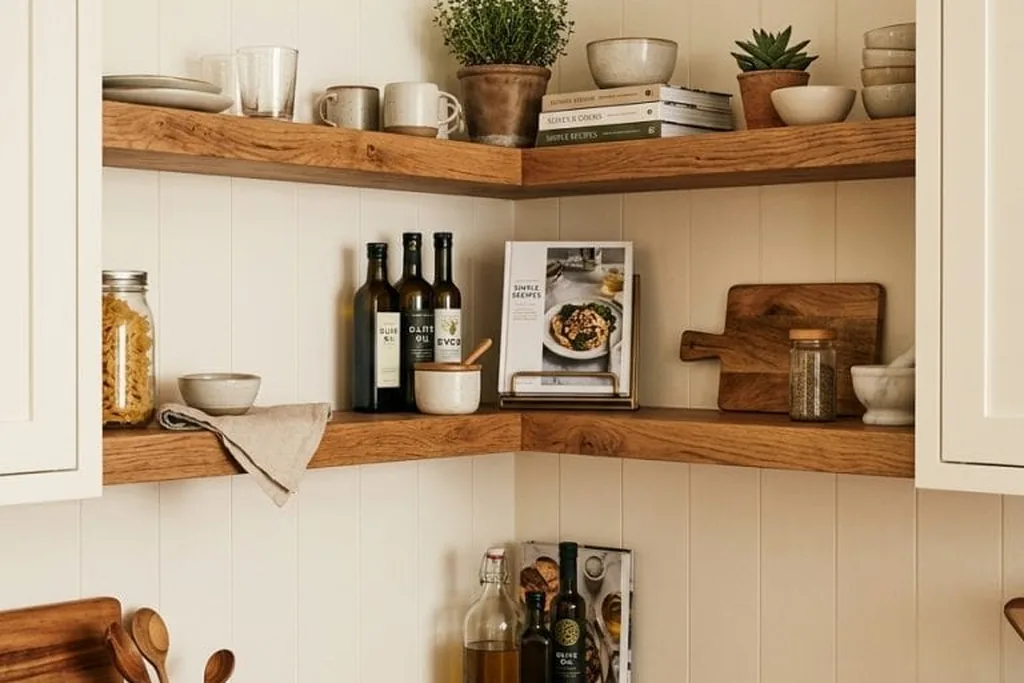
Removing the doors, or skipping them in a new plan, turns a dark upper corner into open shelves for everyday bowls and glasses. Open storage only works if the contents look calm, so keep one type of item per shelf and leave gaps. Our guide to how to style open shelves explains the grouping in more detail. Dust reaches open shelves faster, so store items you use and wash often here, not rarely used pieces.
7. Make the Corner a Glass-Front Display Cabinet
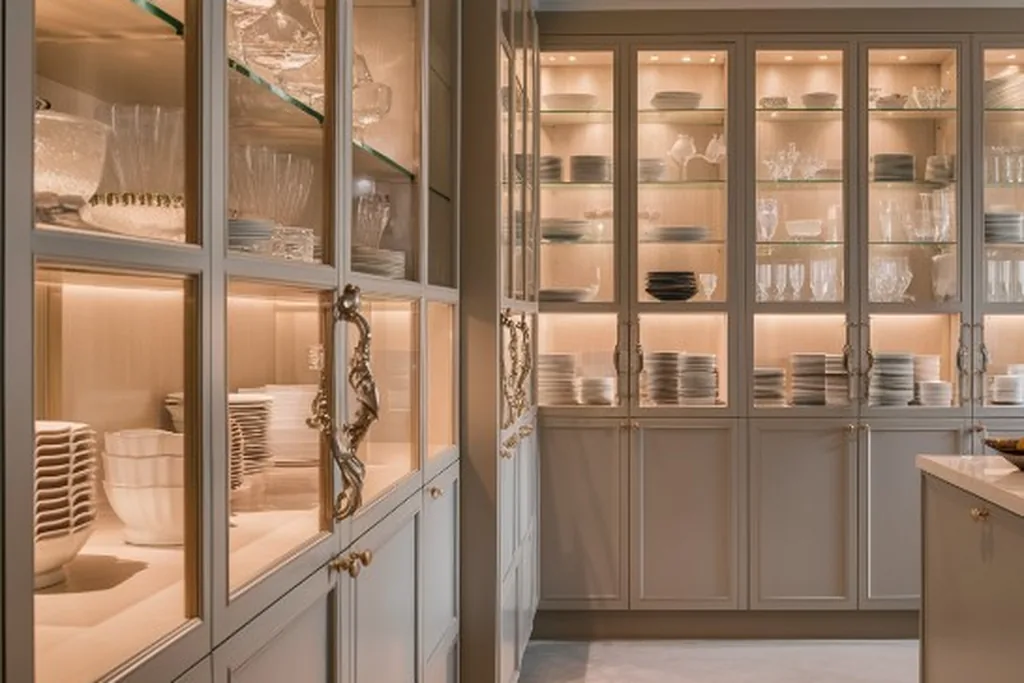
A glass-front door on the corner upper cabinet lightens the whole run and gives favorite dishes a clear place. Angle the cabinet diagonally if you can, because a flat corner door can look pinched between two runs. Keep the contents simple: stacked white plates, clear glasses, or one color family reads tidy through glass. Frosted or reeded glass hides a mixed collection better if your shelves hold everyday clutter.
8. Put the Sink in the Corner
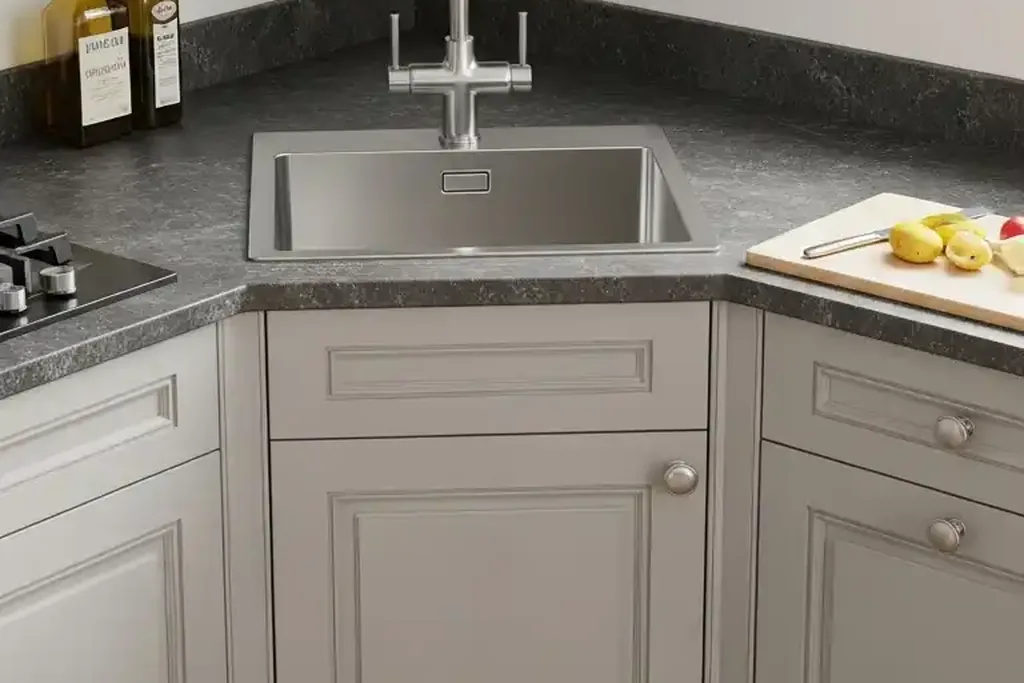
A corner sink frees the straight runs for prep space and often lines up with a window on each wall in an L-shaped room. The cabinet below is deep, so use it for cleaning supplies in a caddy you can lift out, rather than loose bottles at the back. Check that the faucet reach and the dishwasher door still work with the angled front. A tilt-out tray under the sink edge holds sponges out of sight.
9. Build an Appliance Garage in the Counter Corner
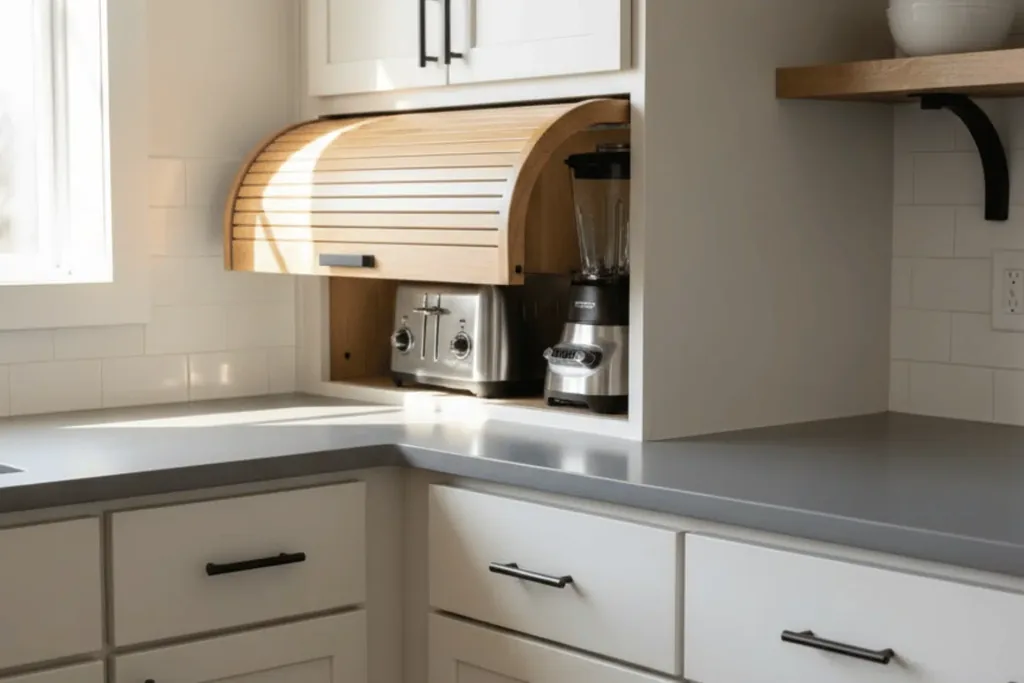
The counter corner under the upper cabinets is the natural home for an appliance garage: a section with a door that hides the toaster, blender, or coffee maker when they are not in use. Keep the items you use daily at the front and leave air space around anything that gets hot. Plan a socket inside or just beside the garage so cords stay short. If a built-in version is too much work, a lidded box or a curtain panel gives a softer version of the same idea.
10. Store Trays and Boards in Vertical Dividers
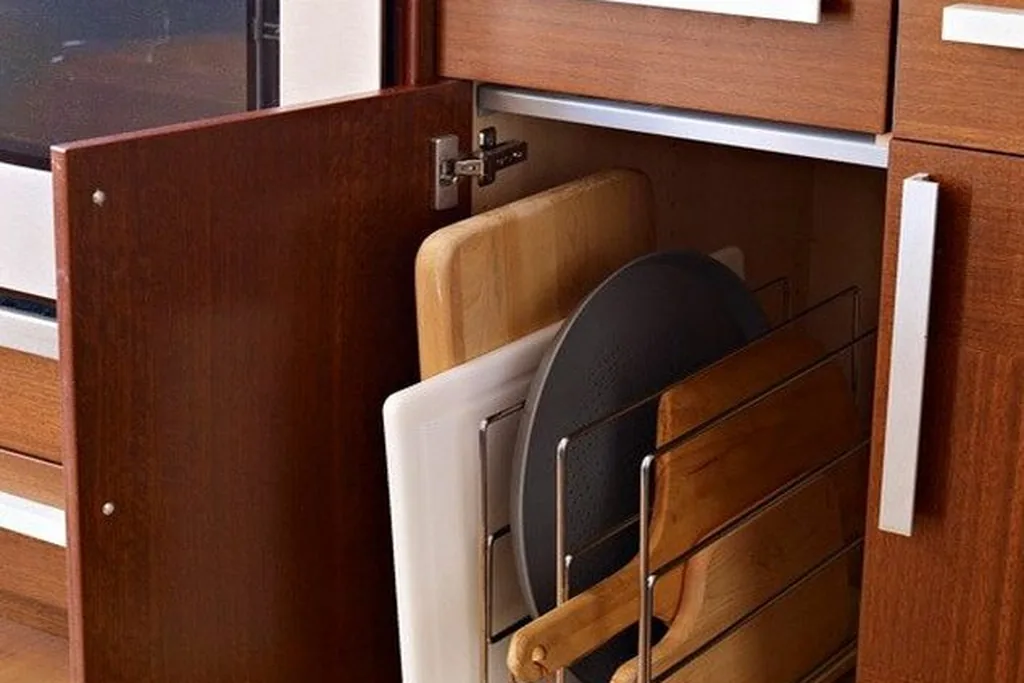
Tall, flat items waste a corner when they lean in a pile. Fit vertical dividers in the corner base or the cabinet above the oven area so baking trays, cutting boards, and cooling racks slide in upright, one per slot. Measure your widest board before fixing divider spacing. This is one of the cheapest corner upgrades, because simple tension dividers and tray racks need no cabinet changes, and it keeps heavy boards from sliding when the door opens.
11. Soften the Run With a Curved Corner Door
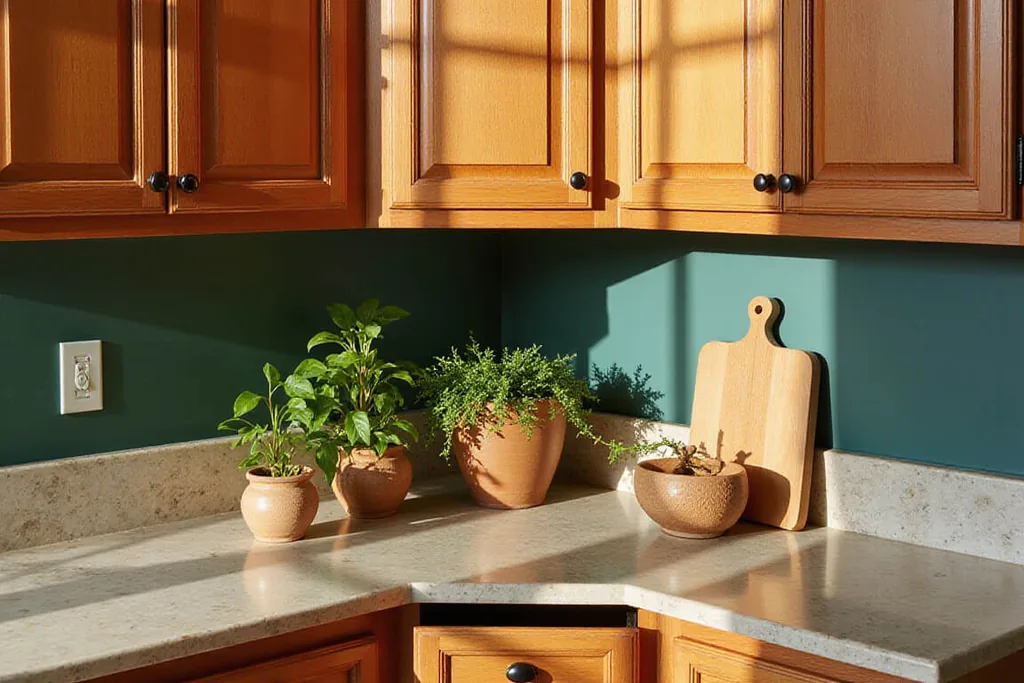
A curved corner cabinet rounds off the turn between two runs, which helps in a tight kitchen where hips and elbows catch on square corners. The gentle profile suits traditional and transitional kitchens, and it makes a good display spot for a plant or a bowl on the counter above. Curved doors are a cabinet-maker item, so expect them in a remodel rather than a weekend update. Inside, curved shelves or a turntable make the rounded space easier to use.
12. Use Bi-Fold Doors on a Corner Cabinet
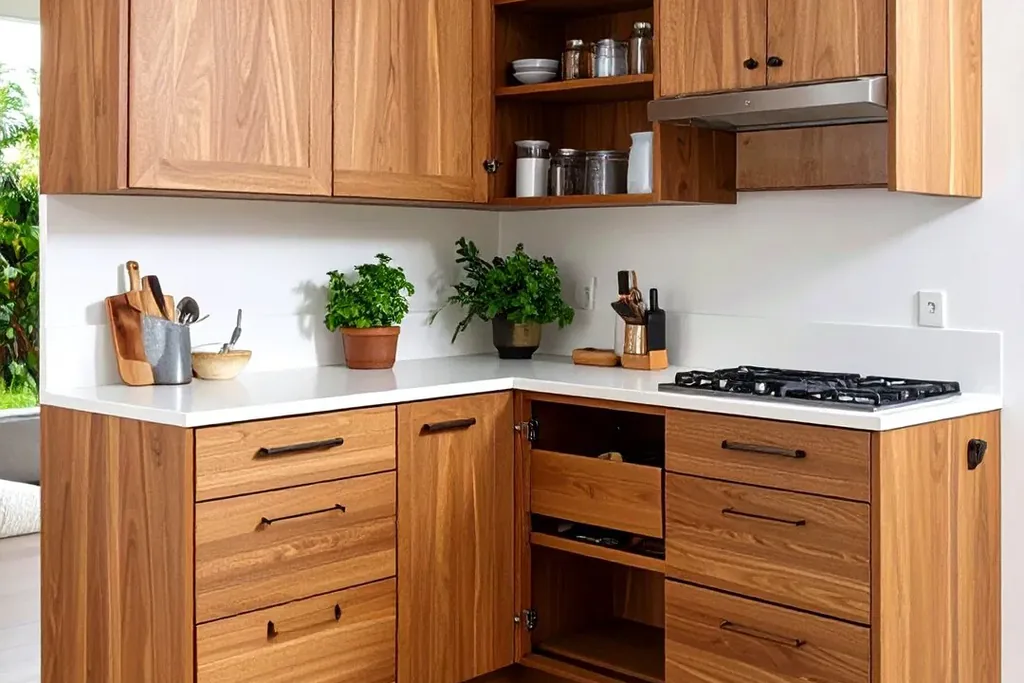
Bi-fold doors fold back on themselves, so a corner cabinet opens wide without a door swinging into the walkway or blocking the cabinet beside it. They are common on diagonal and L-shaped corner units. Keep the hinges adjusted, because a dropped bi-fold door drags and then will not close flush. This is a practical choice when two people cook at once and doors are often open at the same time.
13. Slot Wine Cubbies Into the Corner
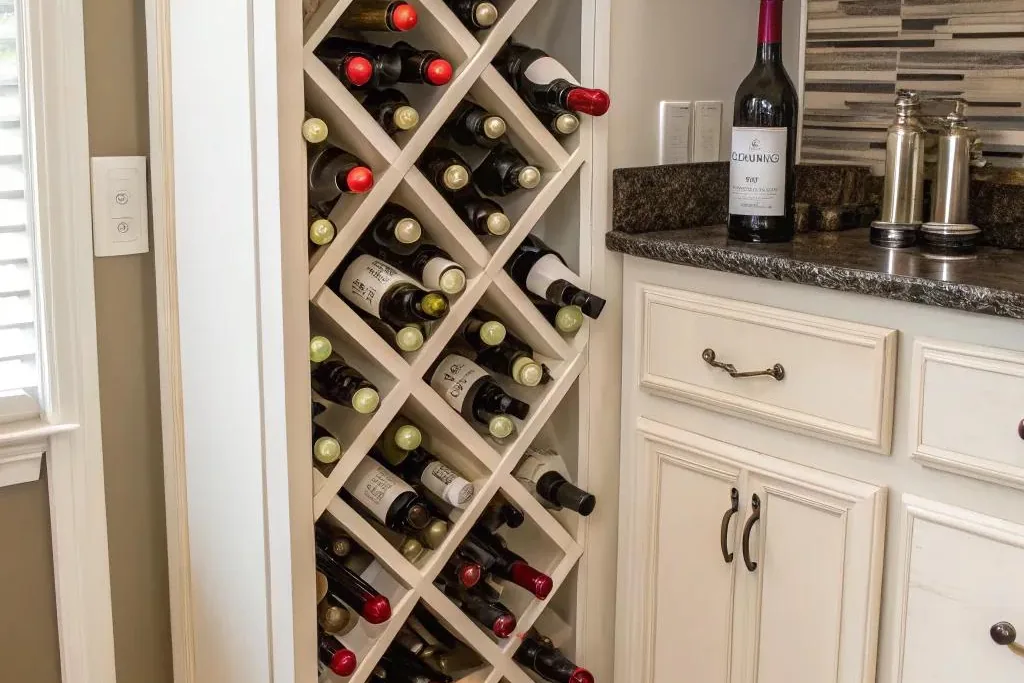
A small grid of wine cubbies uses the narrow diagonal face of a corner upper or the end of a run where a full cabinet would be too deep. Bottles store on their sides, and the grid pattern adds detail to plain doors nearby. Keep wine away from the oven wall and direct sun, because heat and light are unkind to it. If wine is not your thing, the same cubbies hold rolled linens, water bottles, or cookbooks stood upright.
14. Stand a Pantry Tower in the Corner
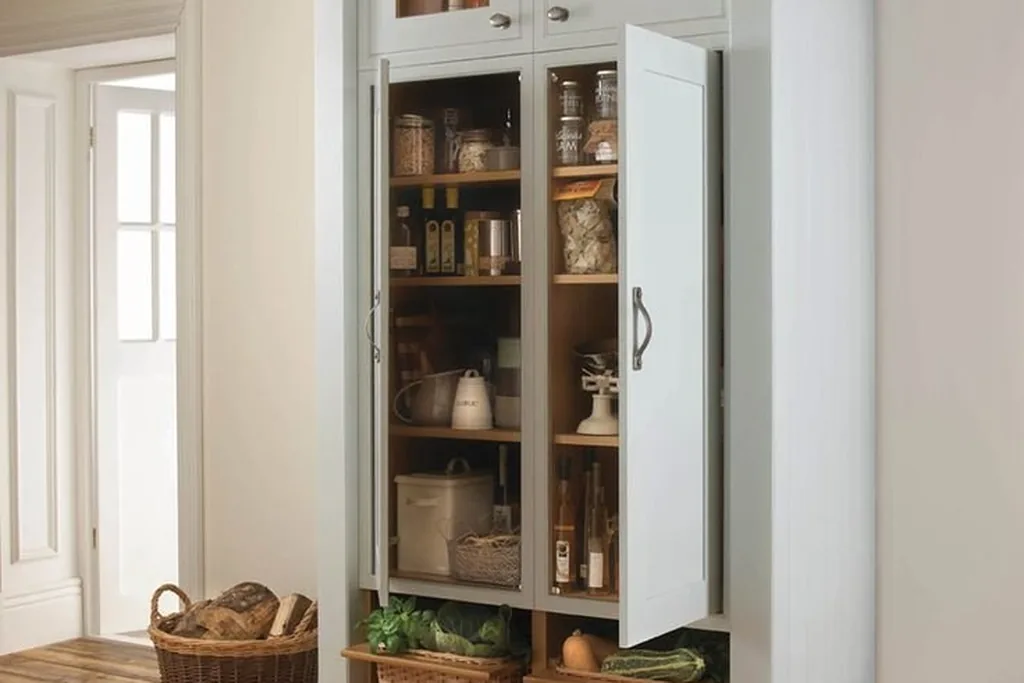
A tall pantry unit placed in the corner turns dead vertical space into the main food store, with shelves or pull-outs from knee height to above the shoulder. It works in new layouts and in older kitchens where a freestanding unit fills an awkward gap. Put daily items between waist and shoulder height, and reserve the top shelf for light, rarely used boxes. Make sure the door or drawers clear the counter edge as they open.
15. Wrap the Corner With Floating Shelves
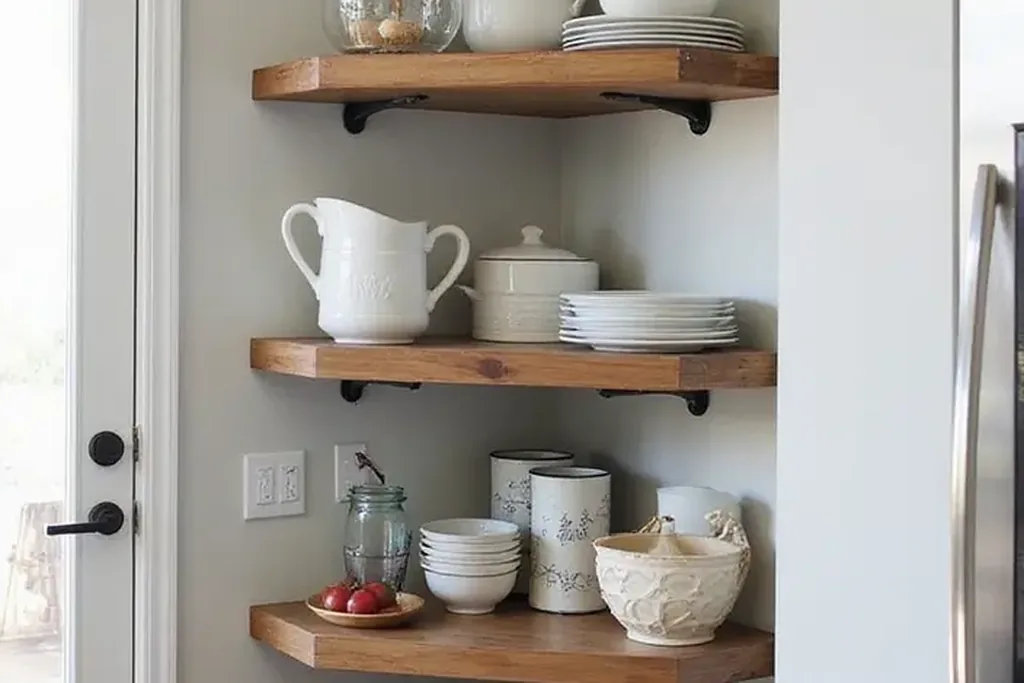
Floating shelves that turn the corner give you display and storage without the bulk of an upper cabinet, which can help a small kitchen feel lighter. Follow the same wood tone or paint color on both walls so the turn looks planned. Keep heavy items, such as stacked stoneware, on the lowest shelf and close to the wall brackets. This is also a good spot for a plant and a few cookbooks, as long as steam from the stove does not reach them.
16. Make the Corner Cabinet the Two-Tone Accent
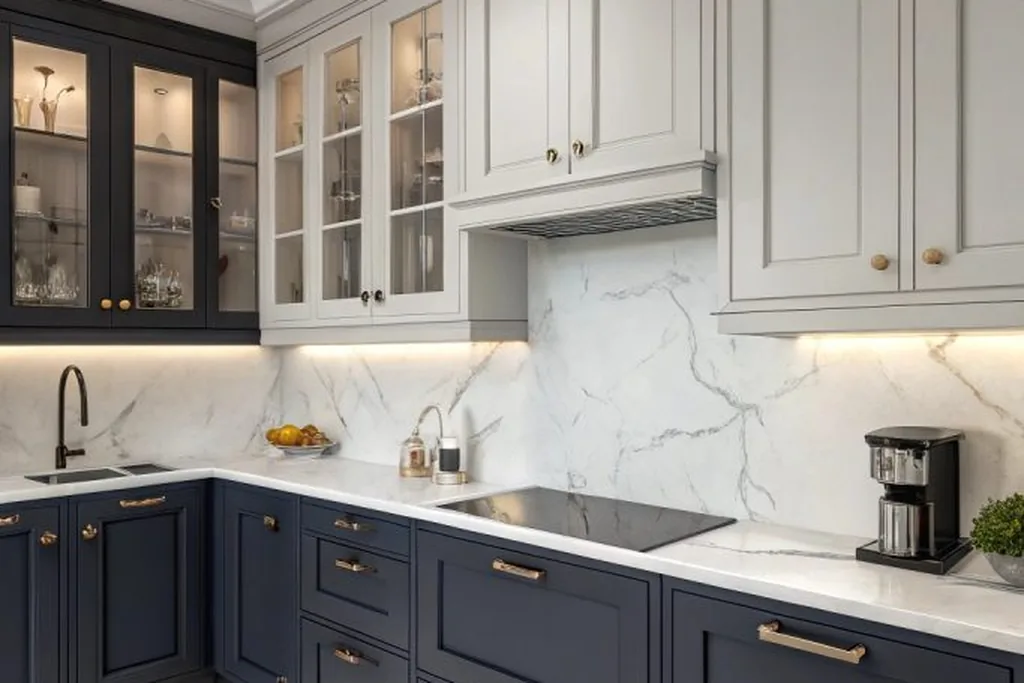
If you like two-tone cabinets but worry about contrast everywhere, limit the second color to the corner unit. A deeper shade on a diagonal corner cabinet, or warm wood on the corner tower, marks the turn in the room and looks deliberate. Repeat the accent color once more, in a stool, a blind, or an everyday dining table centerpiece nearby, so it does not sit alone. Keep handles the same across both colors to hold the run together.
17. Hang a Plate Rack in the Corner Upper
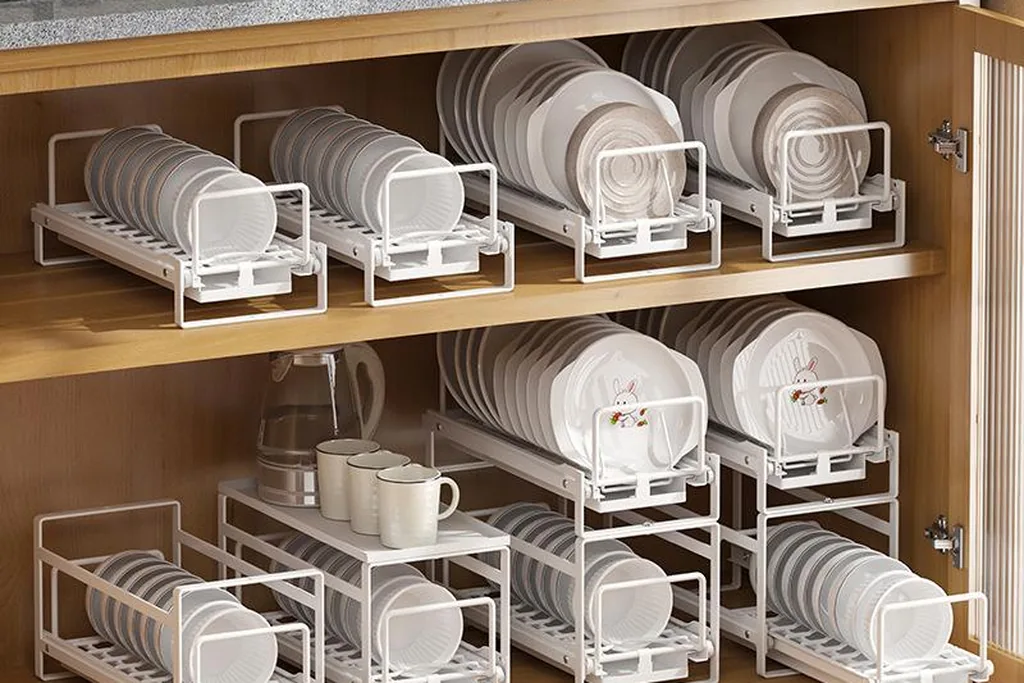
A plate rack stores dinner plates upright in slots, which suits a diagonal corner upper that is too shallow for stacked piles. Plates are easy to lift out one at a time, and the rack turns plain white dishes into a quiet display. Check the slot width against your thickest plate rim before ordering. Keep the rack for plates you use weekly; rarely used serving pieces are better wrapped in a base cabinet where dust cannot settle on them.
18. Light the Corner From Under the Cabinet
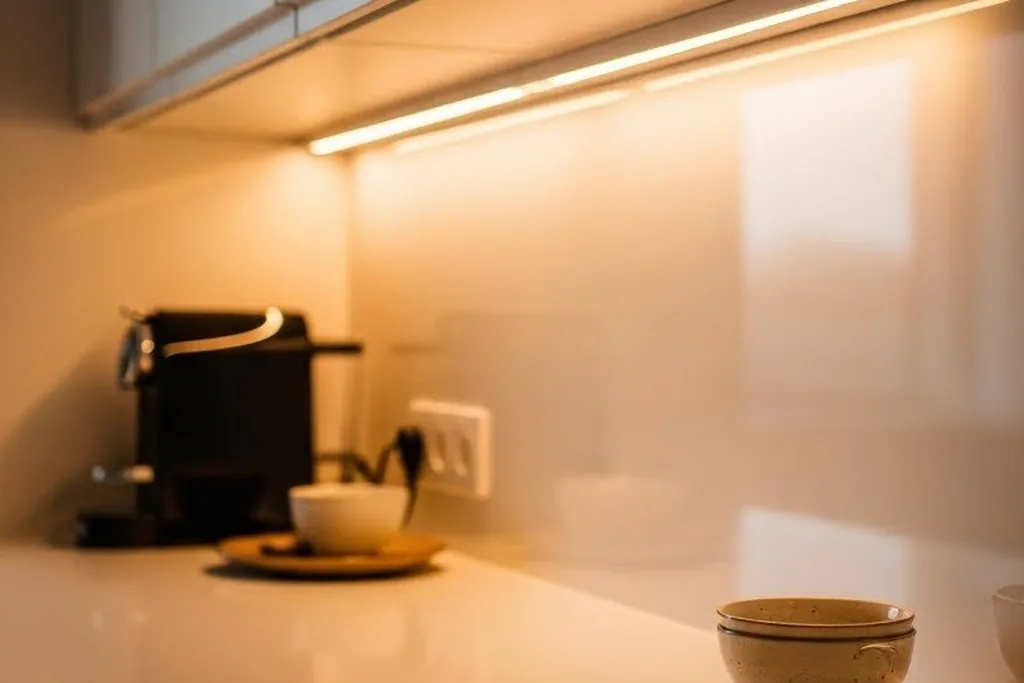
Corners fall into shadow because light from the ceiling lands behind you while you work. A strip or puck light under the upper cabinet, aimed at the counter corner, fixes the dark patch and makes labels easier to read inside a glass-front or open unit. Choose warm white to match the rest of the room, and hide the cable along the cabinet underside. Battery lights are a simple first test before you commit to wired fittings.
19. Give the Microwave Its Own Corner Cabinet
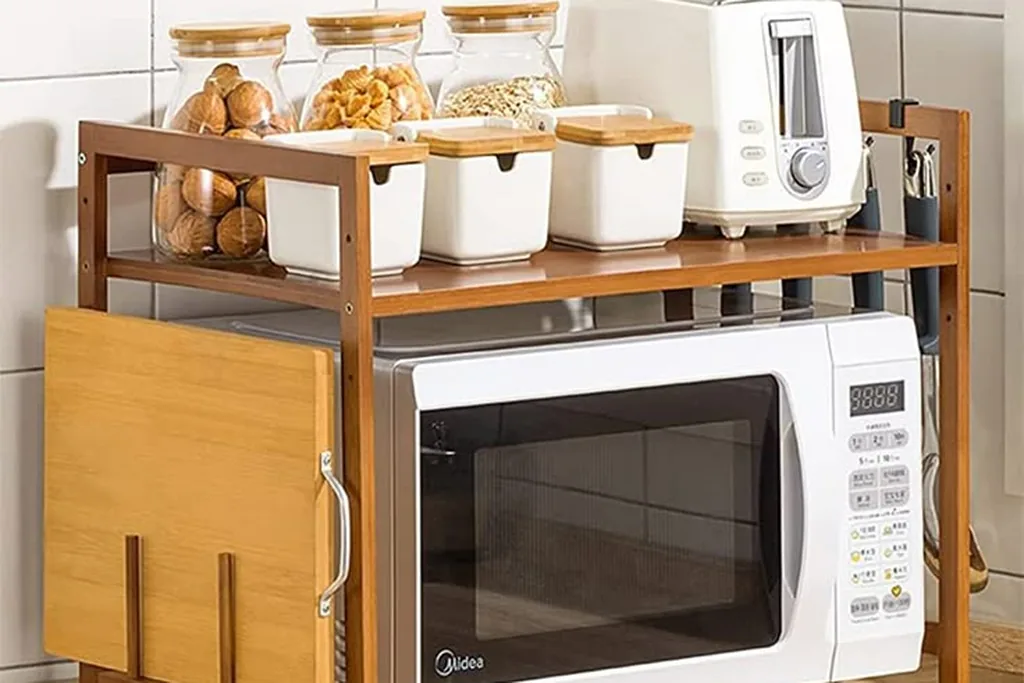
A microwave shelf cabinet in the corner keeps the appliance off the main prep counter and at a set height. Build or choose a unit with open space around the microwave for ventilation, following the appliance maker’s clearance guidance, and a shelf or drawer below for wraps and containers. This suits a diagonal corner where the angled face gives the door room to open. Keep the counter in front clear so hot dishes have a landing spot.
20. Lower High Items With a Pull-Down Shelf
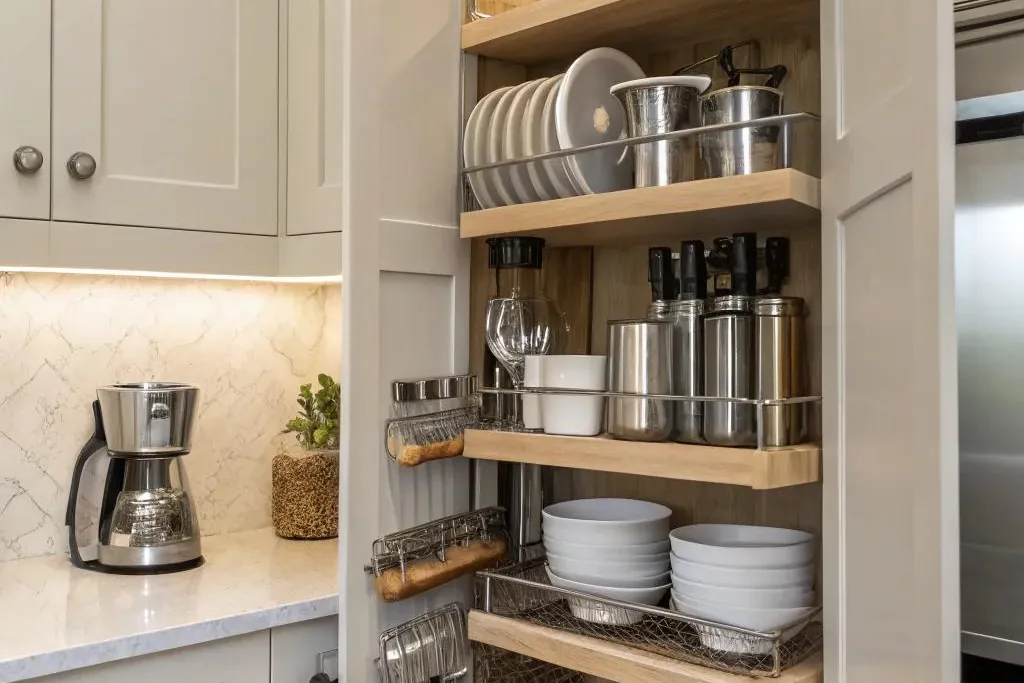
A pull-down shelf unit fitted inside a high upper corner brings the shelf down and toward you with a handle, then lifts back up. It helps anyone who finds the top shelf hard to reach, and it uses a corner that often holds little. Respect the weight limit of the mechanism and store lighter items, such as packets, plastic containers, and spare glasses, on it. Keep the handle path clear of tall items on the shelf below.
21. Spin a Turntable Inside the Upper Corner
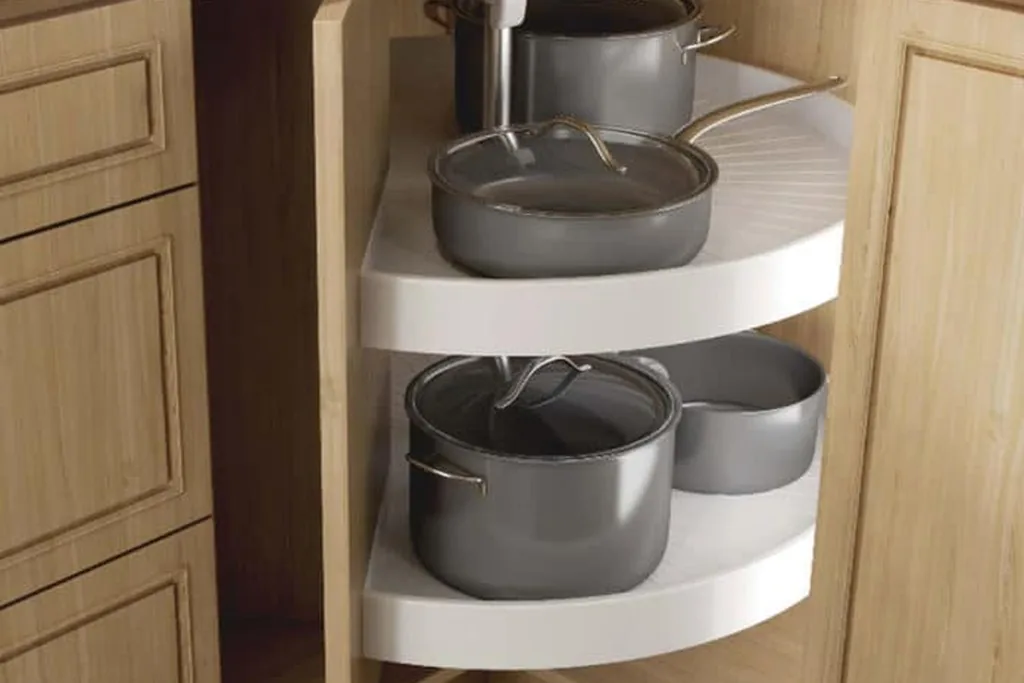
A single turntable on an upper corner shelf stops small jars and spice bottles from vanishing behind taller items. Pick a size that leaves a finger gap to the cabinet sides so it spins freely, and choose a rimmed or non-slip surface for bottles. Group one category per shelf, such as baking items above and spices below. In a very deep upper corner, two smaller turntables side by side can work better than one large one.
22. Leave the Base Corner Open With Baskets
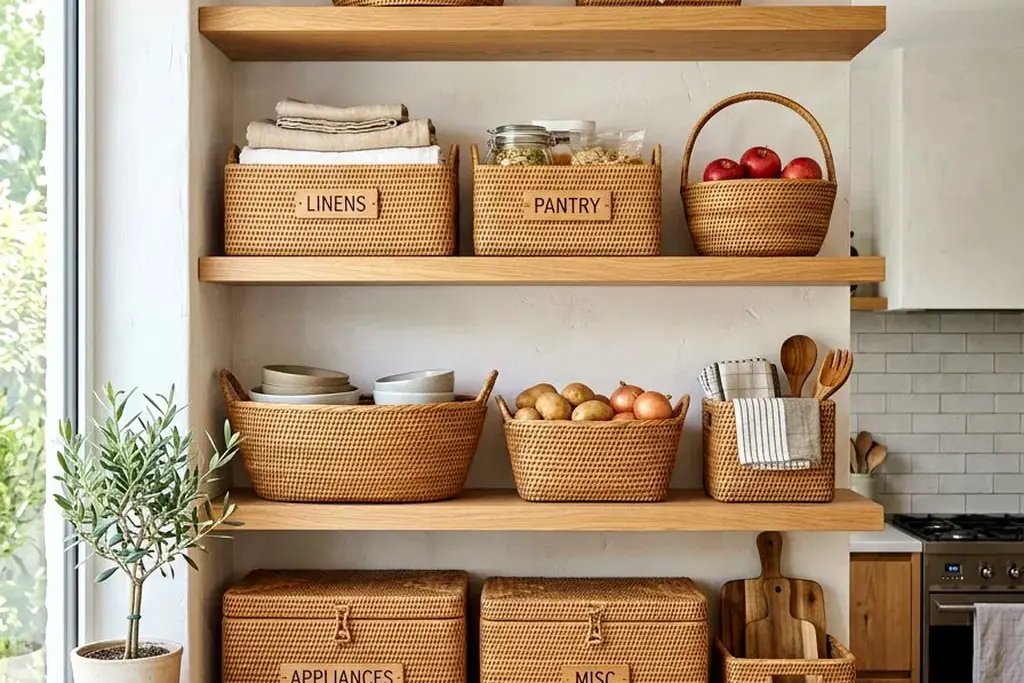
Removing a sticking door and using the open corner with baskets gives a softer, farmhouse feel and instant access. Baskets suit onions, potatoes, clean linens, and pet supplies, and they slide out like drawers. Line the cabinet floor, because produce and grit mark bare shelves, and choose baskets with handles that clear the opening. This option is not ideal for heavy pots, which are awkward to lift from a basket at floor level.
23. Hide the Counter Corner Behind a Lift-Up Door
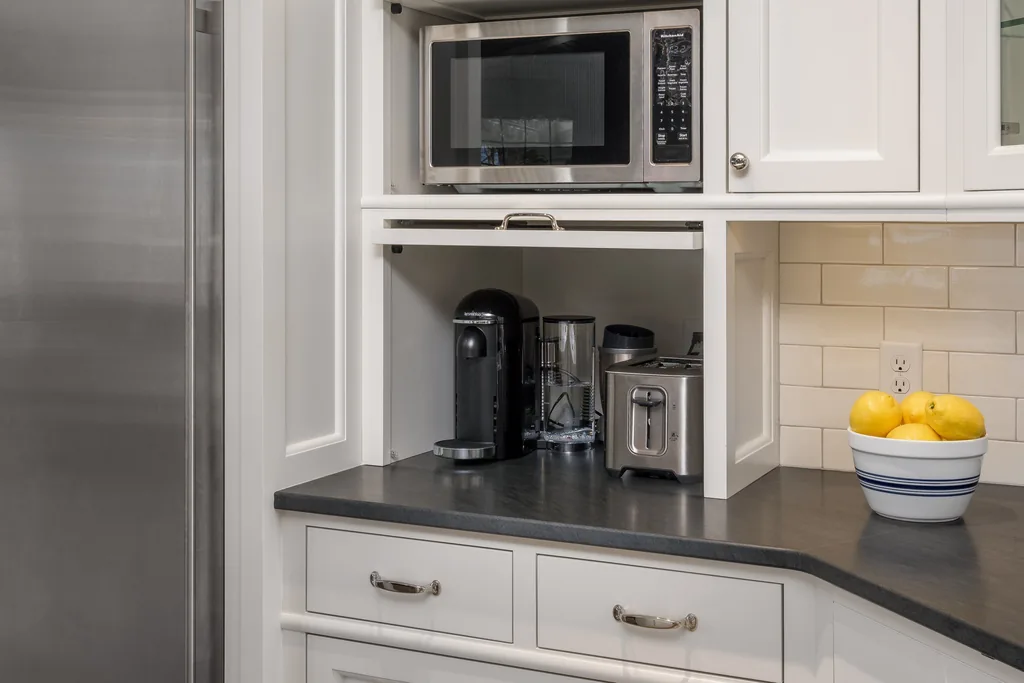
A lift-up or pocket door on a counter corner unit raises and parks out of the way, so the opening stays clear while you cook. It avoids the swing of a normal door in the busiest part of the kitchen. This style suits an appliance spot or a breakfast station with a kettle and cups. Check the door has room to travel upward without hitting the cabinet above, and keep the track clean so it keeps moving smoothly.
24. Add Hooks and a Rail Under the Corner Cabinet
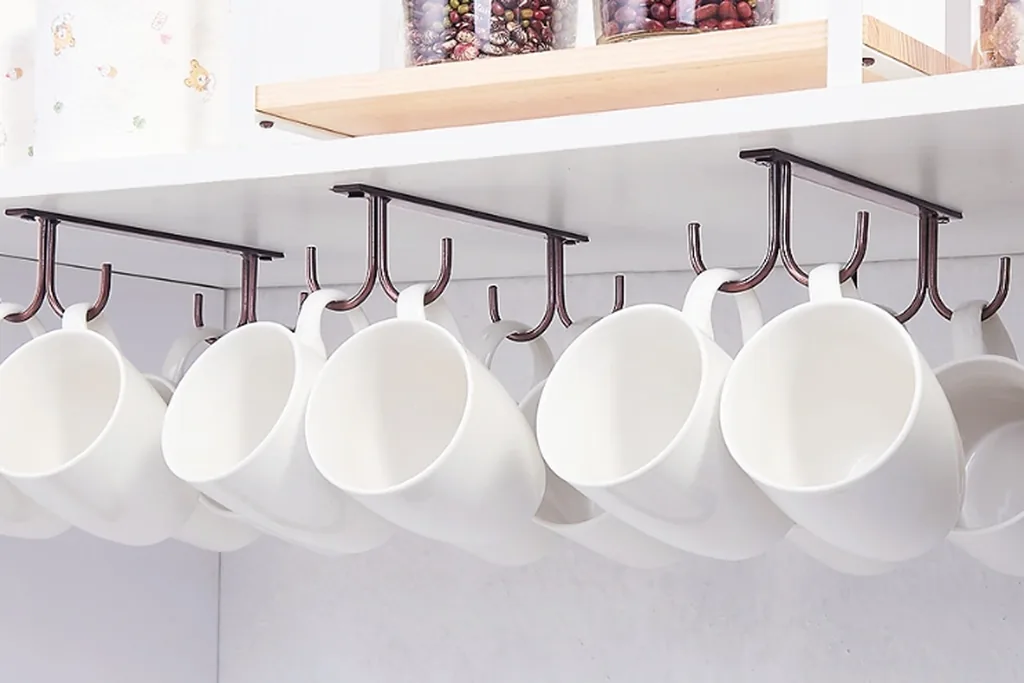
The underside of the corner upper cabinet is wasted in most kitchens. A short rail or a row of hooks there holds mugs, measuring cups, or small utensils within reach of the counter corner. Keep heat and steam in mind: do not hang items directly over a hob. Screw fixings into the cabinet frame, not just the thin base panel, and test the weight with your heaviest mug before filling the row.
25. Slide a Spice Pull-Out Beside the Corner
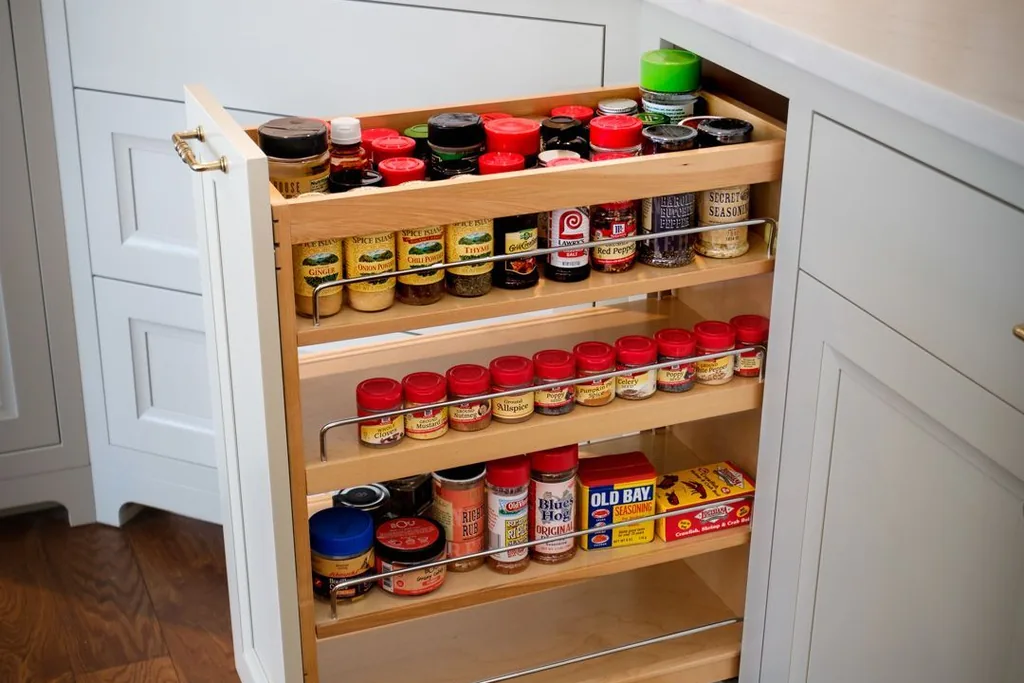
When the corner itself is hard to fit, use the narrow gap beside it. A slim pull-out on casters or runners holds spice jars in two or three tiers, each jar visible at a glance. It turns a filler space into one of the most used spots in the kitchen. Label the jar tops if you look down on the pull-out, and keep refills elsewhere so the rack stays one layer deep and easy to scan.
26. Claim the Toe-Kick With a Shallow Drawer
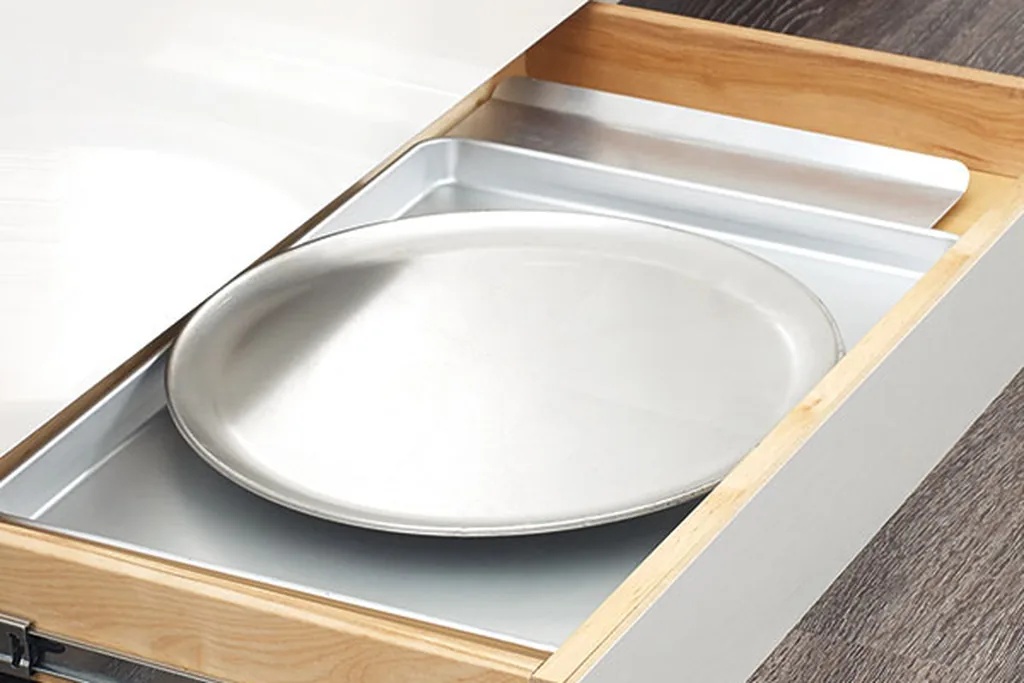
The plinth under the corner base cabinet hides a few inches of unused height. A shallow toe-kick drawer claims it for flat items: baking sheets, table linens, pet bowls, or a folding step for reaching high shelves. Push-to-open runners keep the front clean and match the plinth line. It will not hold much weight, and it sits at floor level, so save it for light items you use now and then rather than daily tools.
Conclusion
A good corner cabinet is one you can empty with your eyes closed: everything visible, nothing buried. Start by deciding what the corner should hold, then pick the mechanism that suits it: a turntable or pull-out for a blind base, drawers or a diagonal door for a planned remodel, and open shelves, hooks, and light for the upper corner. Measure carefully, keep heavy items low, and leave clearance for every door and handle. With those basics settled, even the deepest corner can earn its place in a warm, well-run kitchen.
Save this list on Pinterest before you measure your corner, and work through it one cabinet at a time: base corner first, then the upper corner, then the small finishes such as light and hooks.
FAQs
What is the best solution for a blind corner cabinet?
Pull-out trays and turntables are the two most practical fixes. Pull-outs bring everything into the room and suit pots and appliances, while a two-tier turntable costs less and suits cans, jars, and bottles. Measure the door opening as well as the cabinet interior, because the opening is usually the tightest limit. If the cabinet is very deep, a pull-out usually wastes less space at the sides than a round shelf.
Can I improve a corner cabinet without replacing it?
Yes. Add a turntable, shelf risers, bins, or vertical dividers to the cabinet you have, fit a battery light under the upper unit, and adjust or rehang a dragging door. These changes need no new cabinet work. If reaching the back is still a struggle after that, a retrofit pull-out unit is the next step, and many are made to fit standard corner base cabinets through the existing door opening.
Are corner drawers better than a lazy Susan?
They do different jobs. Corner drawers give flat, divided storage that is easy to organize and suit cutlery, utensils, and pans, but they need new cabinet work. A lazy Susan fits an existing cabinet and keeps round items moving, though the round shelves leave small gaps at the edges. Choose drawers in a remodel if you want drawer storage most; choose a turntable for a faster upgrade to a cabinet you already own.
How do I stop items getting lost at the back of the corner?
Store one category per corner and keep it in a container you can lift or slide out: a bin for packets, a caddy for cleaning supplies, a tray for oils. Avoid stacking unlike items in front of each other. A quick check each month, when you wipe the shelves, keeps strays from settling in. If items still disappear, the corner is holding too much, and moving the least used pieces to a high shelf or another room will help more than another organizer.
What should I store in an upper corner cabinet?
Light, easy-to-grip items: glasses, mugs, plates in a rack, mixing bowls, and food packets. Avoid heavy stacks of stoneware or cast iron overhead, because lifting them down from a deep corner is awkward. If the top shelf is hard to reach, use a pull-down shelf or keep only seasonal items there. Glass-front or open corners work best with items you use often, so dust does not build up.
Do corner cabinets work in a small kitchen?
Yes, and they matter more in a small kitchen because wasted space costs more. Favor options that use depth without blocking movement: slim pull-outs, open shelves, hooks under the cabinet, and a toe-kick drawer. Avoid large diagonal units if floor space is tight, because the angled front takes extra room. Keep the corner’s contents to things you use weekly, and the small kitchen will feel less crowded.