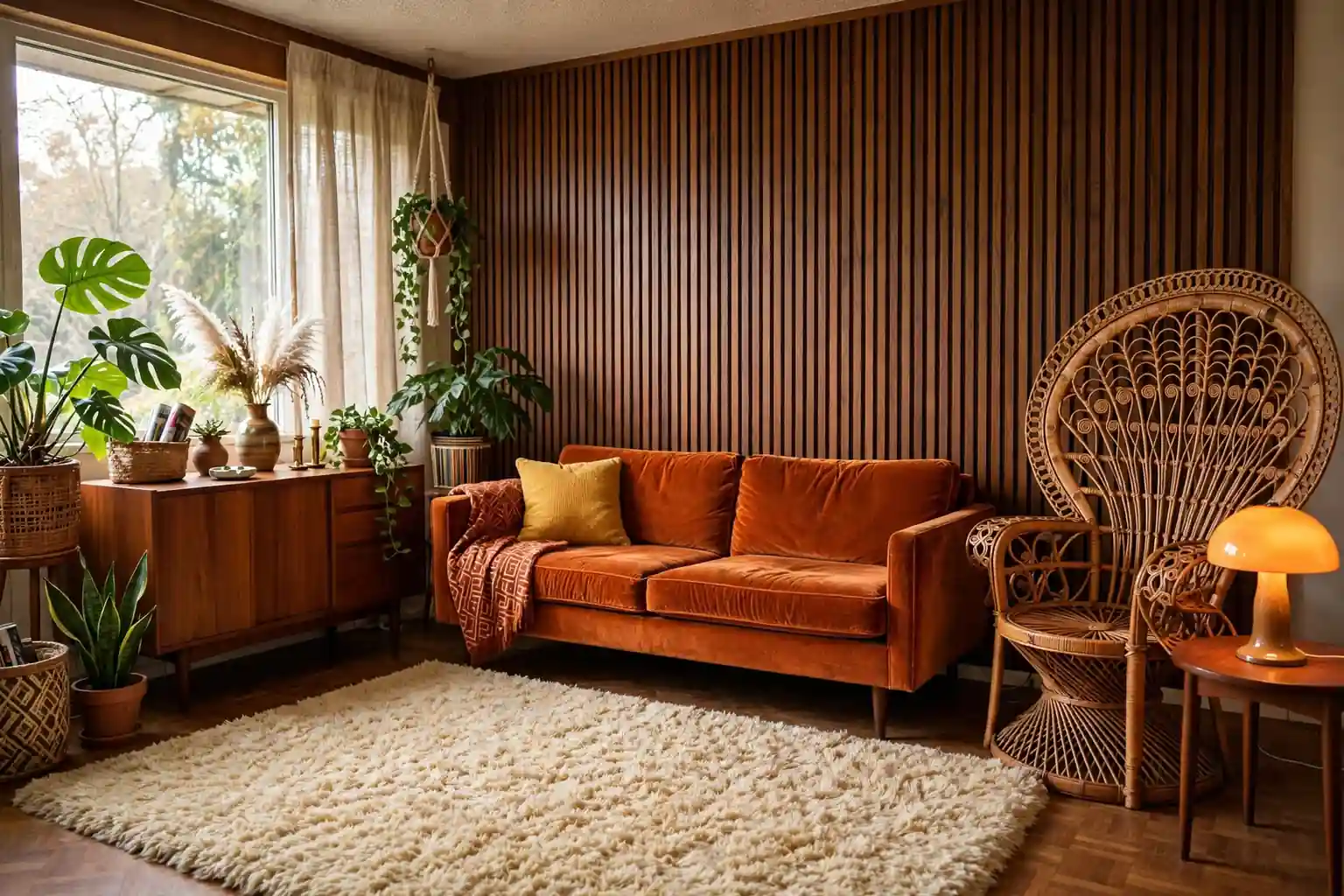
A 70s living room was built for sitting close, talking, and staying a while, which makes it a natural fit for a small space. Low seats, warm wood, soft rugs, and lamps at every level give a compact room a relaxed feel without a long list of furniture. These 13 70s living room decor ideas focus on pieces that do two jobs at once: a sideboard that stores and displays, a chair that seats and shapes the room, a wall treatment that adds warmth without taking floor space. Start with one anchor, a sofa or a rug, then add pattern and light in small doses, so the room stays warm and easy to move through.
Key Takeaways
- Pick one warm anchor first: a low sofa, a shag rug, or a walnut wall, and keep the rest of the room quieter around it.
- Choose low, rounded furniture in a small room, since it keeps sight lines open and leaves wall space for art and storage.
- Let storage do double duty: sideboards, credenzas, and nesting tables hold daily items and keep surfaces clear.
- Layer light at sofa height and floor level with globe, mushroom, and arc lamps, rather than relying on one bright ceiling light.
- Repeat one 70s palette in small amounts: burnt orange, mustard, avocado, warm brown, and cream, tied together with wood and rattan.
- Keep pattern to one strong note per zone, such as a geometric wall or a patterned rug, so a small room reads as warm, not busy.
1. Low Slung Sofa in Burnt Orange Velvet
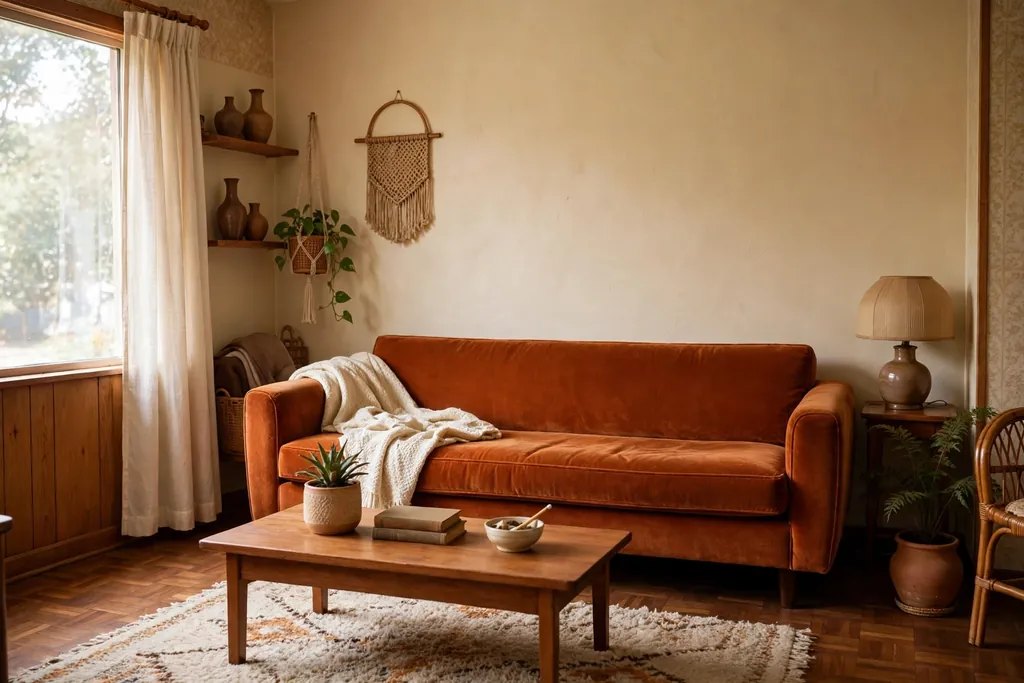
A low slung sofa is the classic 70s anchor, and it suits a small room because its low back keeps the wall behind it visible. Burnt orange velvet gives warmth without a loud print, and rounded arms soften the shape so the sofa reads as inviting rather than bulky. Choose a two seat or a compact three seat size, and measure the wall and the walkway in front of it before you buy.
Keep cushions in the same orange or in a close rust tone, and add one cream throw for contrast. A low sofa pairs well with a low coffee table, so cups and books stay within easy reach. If orange feels strong for the whole sofa, try the same low shape in rust, camel, or warm brown, and bring orange in through cushions instead.
2. Rattan Peacock Chair as a Single Statement Seat
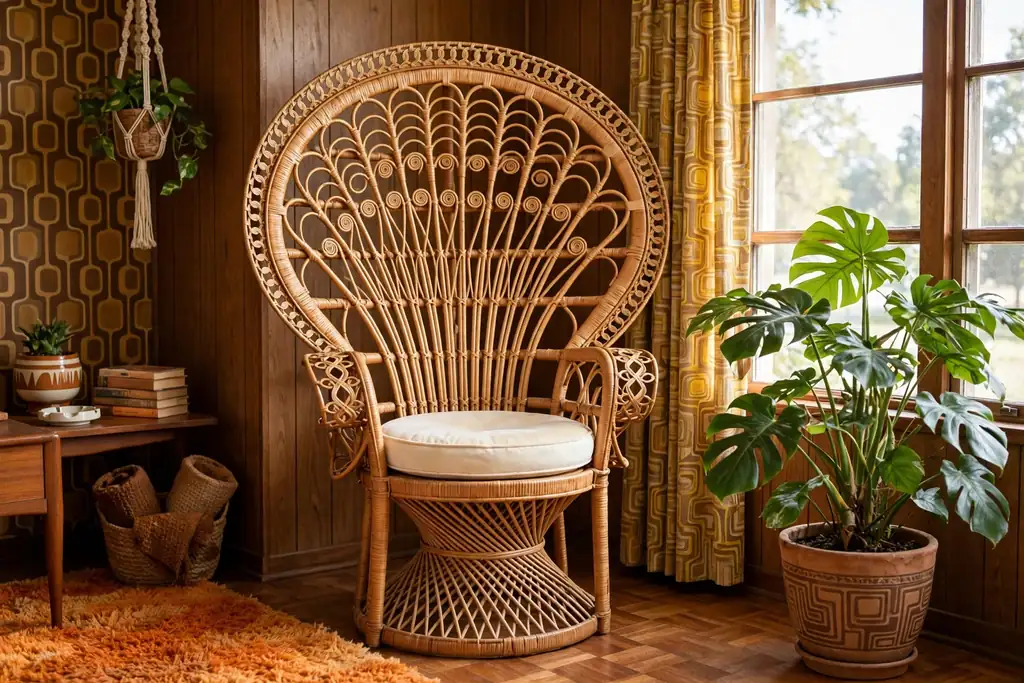
One rattan peacock chair gives a small room a clear focal point without a full set of new furniture. The tall, fanned back draws the eye up, which helps a low ceiling feel taller, and the open weave keeps the chair from looking solid or heavy in a corner. Place it where it gets daylight, angled toward the sofa, so it becomes a real reading seat and not just a display piece.
Add a round cushion in cream or mustard for comfort, and keep the floor around the chair clear so the shape can be seen. Rattan needs little care beyond dusting and keeping it out of constant damp, and a secondhand chair often suits this look well. One statement chair is enough: a second large chair can crowd a small seating group.
3. Walnut Slat Wall Behind the Sofa
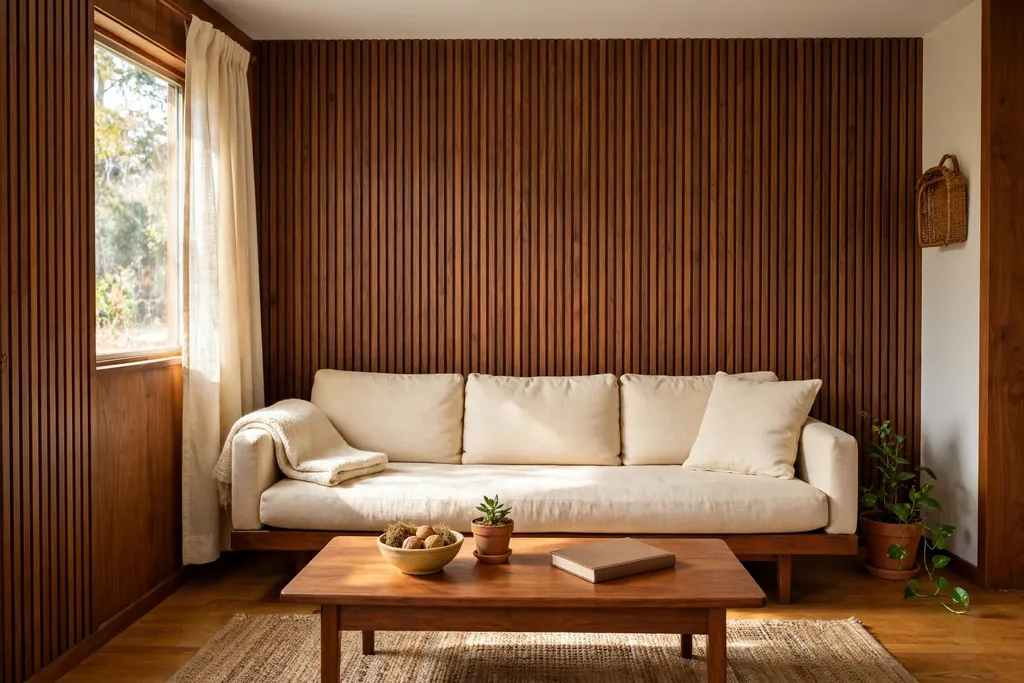
A walnut slat wall adds the warm wood tone of the 70s without taking any floor space, which is exactly what a small room needs. Vertical slats in walnut or a walnut look finish run from floor to ceiling behind the sofa, giving the wall depth and a rhythm that flat paint cannot match. The slats also make a plain sofa look planned, since the wood frames the seating zone.
Fix slats to a batten or a panel system suited to your wall type, and keep the finish consistent across the wall so it reads as one feature. Leave the slats plain, with no shelves across the middle, so the sofa can sit close to the wall. If a full wall feels like too much, run slats on a narrower panel behind the sofa only, and paint the rest of the wall warm white.
4. Shag Rug in Warm Cream to Anchor the Seating Zone
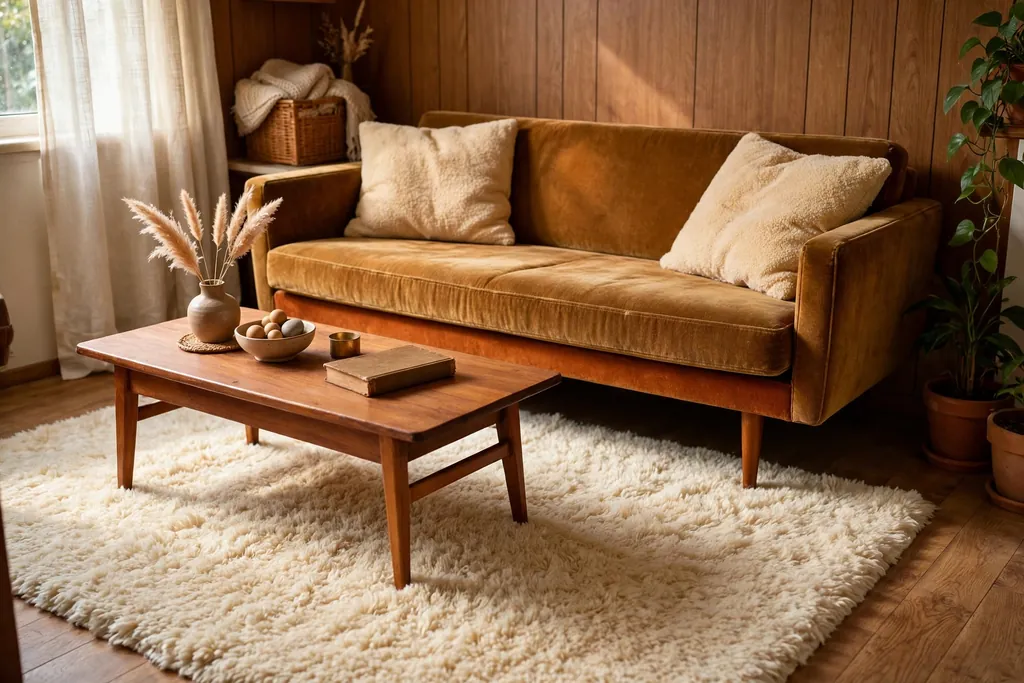
A shag rug in warm cream anchors the seating group and adds the soft texture people link with 70s rooms. The deep pile feels good under bare feet and warms up a wood or laminate floor, while the pale color keeps a small room light. Size the rug so the front legs of the sofa and chairs rest on it, which links the group into one zone.
For more help with size and placement, see these living room rug ideas. Vacuum a shag rug with a suction only setting where the maker advises it, and shake it outside now and then to clear dust from the pile. Keep the rug away from a dining area if you can, since food spills are harder to clean from deep pile. A cream rug also lets stronger colors, such as orange cushions or a mustard throw, stand out.
5. Sunburst Mirror Above a Low Console
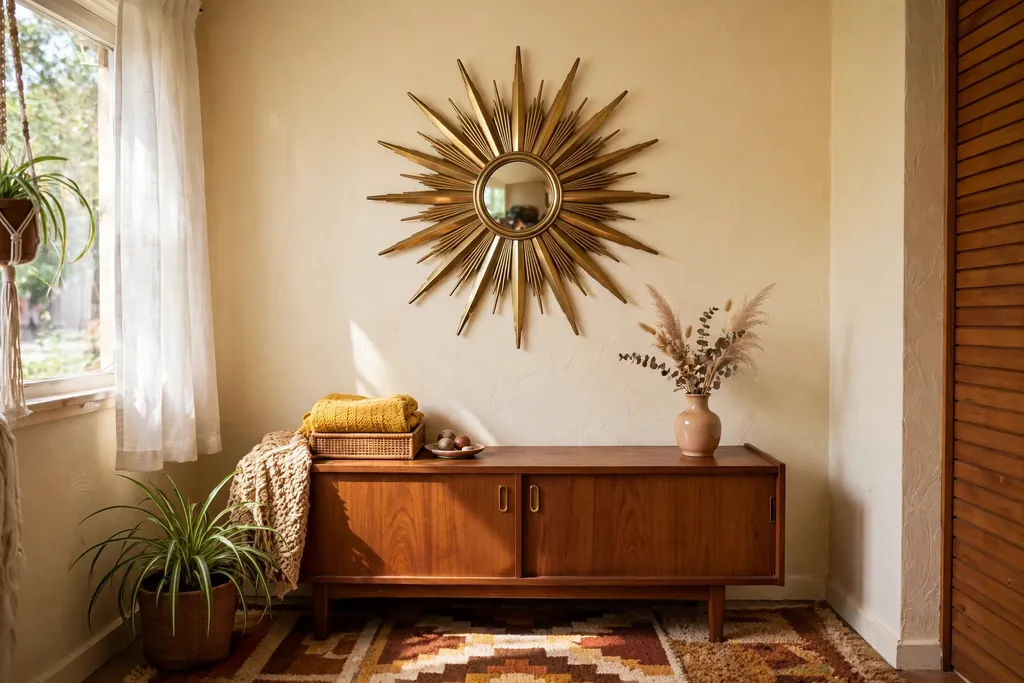
A sunburst mirror above a low console brings 70s shape to a wall without using floor space, and it bounces light across a small room. The rays, in brass, wood, or a mix of both, give a plain wall a clear center, while the round mirror itself keeps the look open. Hang it above a console, a sideboard, or a low bookcase, with its center at eye level from standing.
Keep the console top simple, with one lamp or one vase, so the mirror stays the focus. Check the weight and fixings before hanging, especially on plasterboard, and place the mirror where it reflects a window or a plant rather than a cluttered corner. In a narrow room, a sunburst mirror works better than a large rectangular mirror, since its shape adds interest without a heavy frame.
6. Mushroom Lamp on a Side Table
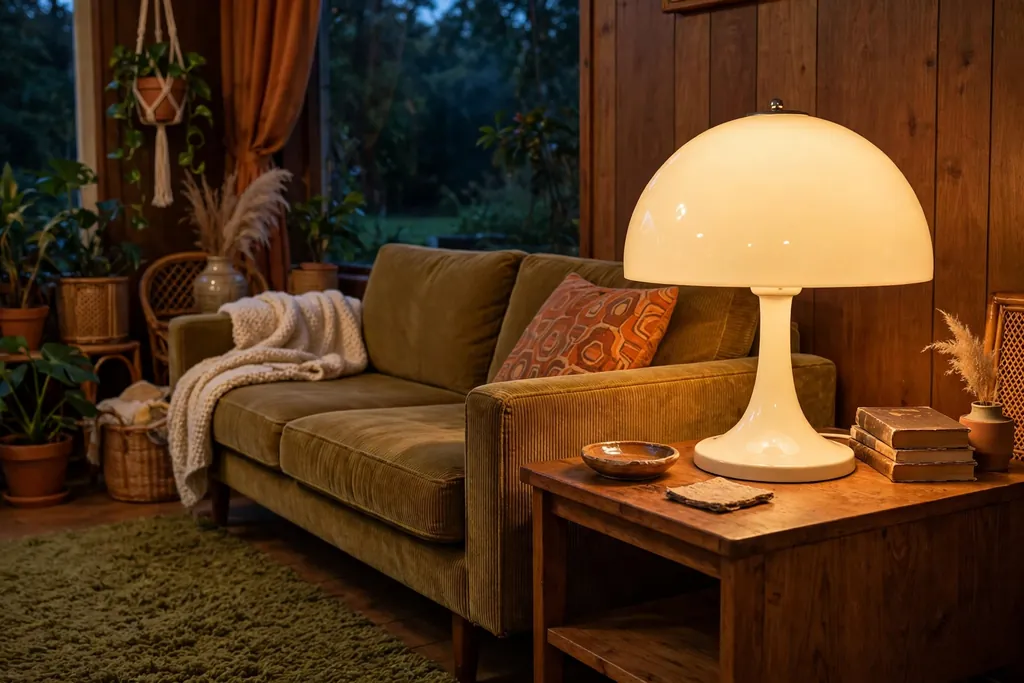
A mushroom lamp, with its rounded dome shade over a short stem, gives a small room soft light at seat height, which is where 70s rooms did most of their lighting. Place one on a side table beside the sofa, or on a low bookcase, and use a warm white bulb so the glow stays gentle in the evening. The lamp also works as a small sculpture by day, in cream, orange, or smoked glass.
Keep the lamp close to where you sit, so it lights a book or a cup without lighting the whole room harshly. Pair it with a floor lamp on the other side of the sofa for balance, and keep the main ceiling light off in the evening where you can. A mushroom lamp suits a small room because it is compact, and its dome shape echoes the rounded sofa and chair shapes around it.
7. Teak Sideboard for Storage and Display
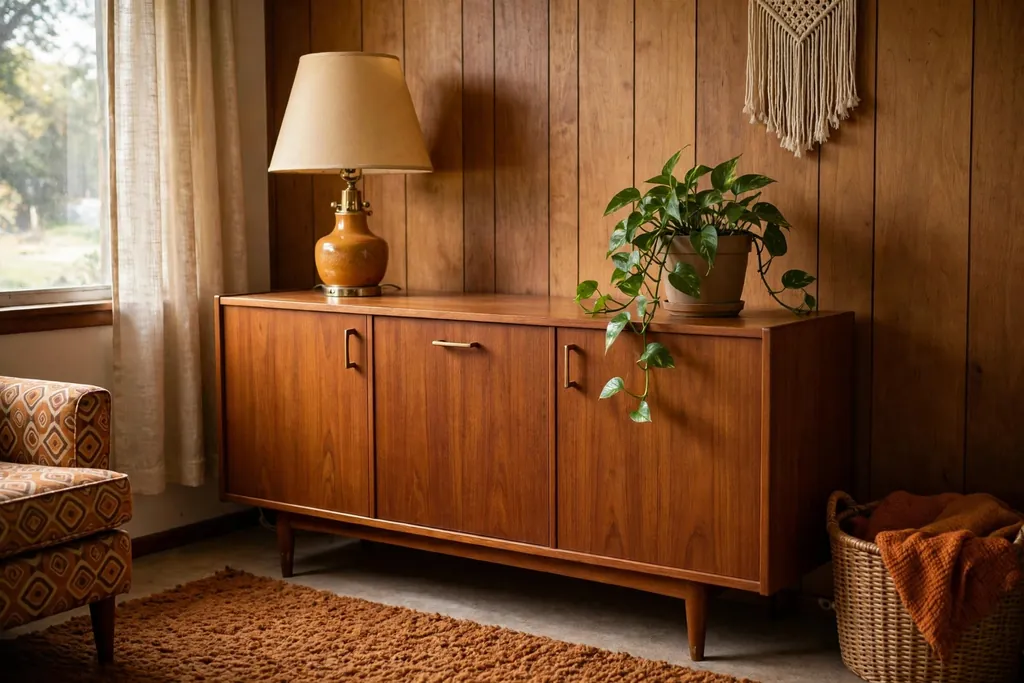
A teak sideboard is one of the hardest working 70s pieces for a small room: it stores games, chargers, and table linens behind closed doors, and its top holds a lamp, a plant, and a few books. Teak brings a warm, mid brown tone that suits orange, mustard, and cream, and sliding doors or simple handles keep the front clean. Choose a sideboard that fits its wall with room to open doors fully and walk past it.
Keep the top mostly clear, with one tall item at one end and one low item at the other, so it can take a serving tray when guests visit. Inside, use small boxes or baskets to sort cables and small items, since a sideboard only helps if you can find what is in it. For a room that must also hold a dining table, the shared storage advice in these small living room dining room combo ideas shows how one sideboard can serve both zones.
8. Geometric Wallpaper on One Accent Wall
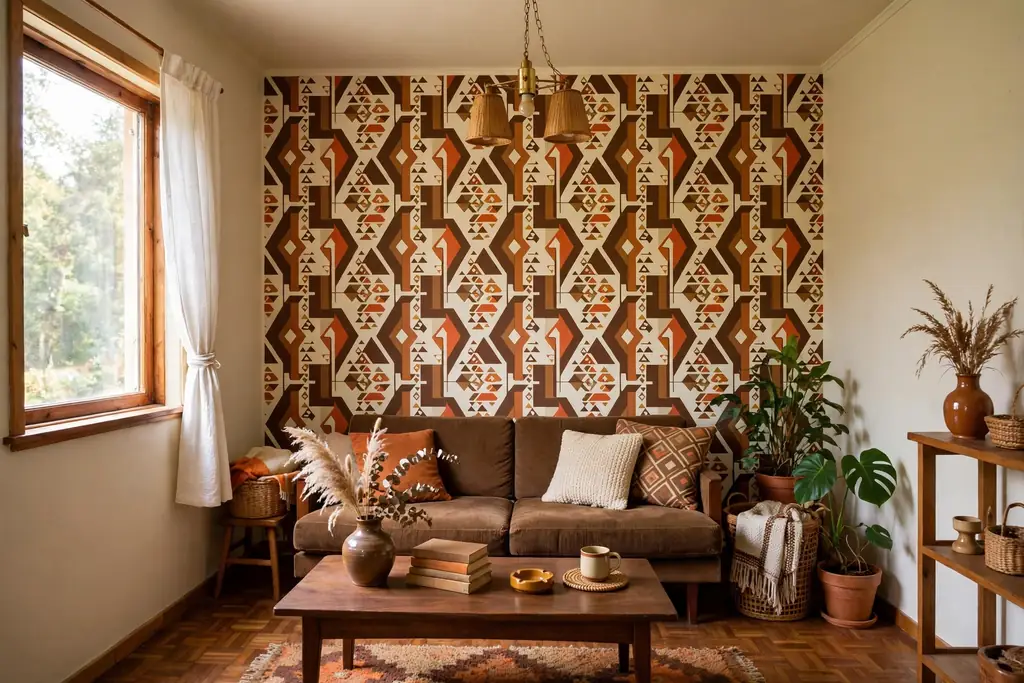
Geometric wallpaper on one wall gives a small room a clear 70s pattern note without covering every wall. Choose a repeat in brown, orange, and cream, with a scale that suits the wall: a medium repeat suits most rooms, while a very large repeat can overwhelm a short wall. Paper the wall behind the sofa or the wall you see first when you enter, and keep the other walls in warm white or pale cream.
Hang the paper straight and match the repeat at the seams, or use a paste the wall paper that is easier to remove if you rent. Keep art on the papered wall to a minimum, since the pattern is the decoration, and let plain cushions and a plain rug balance it. If full wallpaper feels like a commitment, try a single framed panel of the same paper, hung like art, for a reversible version of the look.
9. Rattan Pendant Light Over the Coffee Table
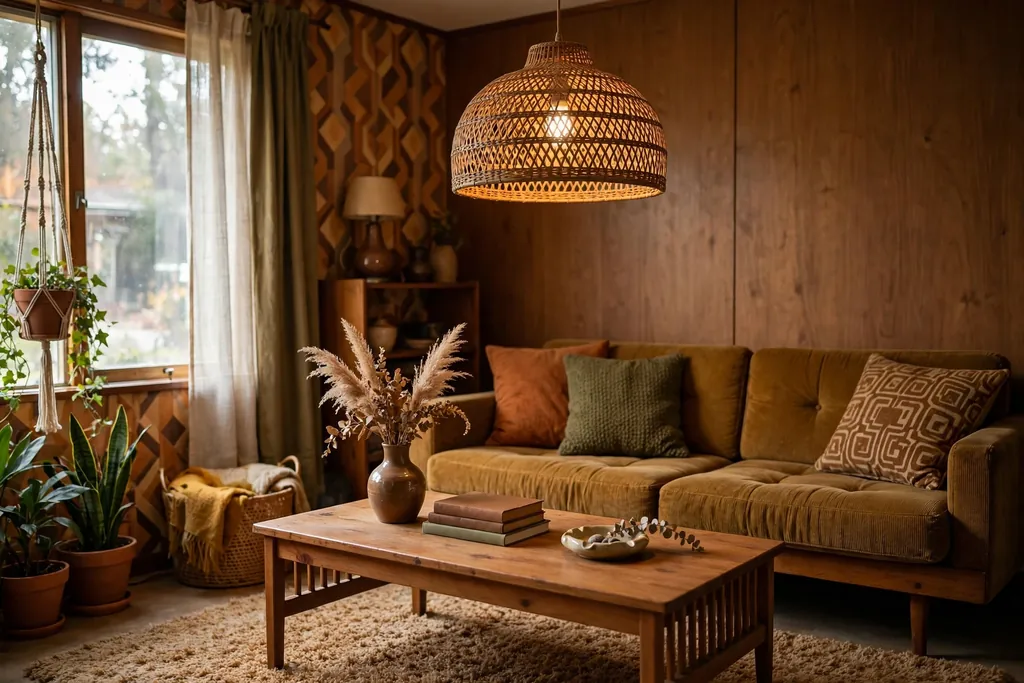
A rattan pendant light over the coffee table gives a small room a warm center from above, without a heavy chandelier. The woven shade throws a soft, patterned light in the evening and adds natural texture by day, and its open weave keeps it from blocking sight lines across the room. Hang it low enough to feel close to the seating group, but high enough that seated people can see each other under it.
Use a warm white bulb and a dimmer where one is already fitted, so the light can drop for the evening. Keep the pendant centered over the coffee table, not over the middle of the whole room, so the seating zone feels gathered. One pendant is enough in a small room: a row of pendants can crowd a low ceiling and compete with the sunburst mirror or slat wall.
10. Nesting Tables That Tuck Away
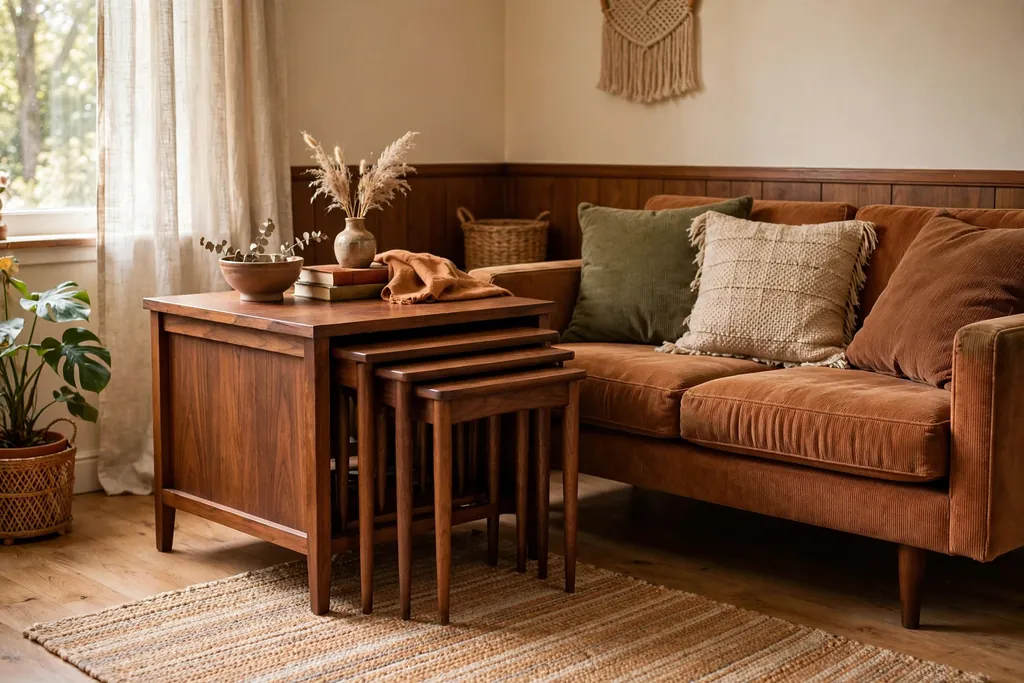
Nesting tables are a small room classic from the 70s, and they solve a daily problem: you need a table beside every seat when guests visit, but not every day. A set of two or three tables in teak or walnut nests under one larger table, so they take the floor space of one table when not in use. Pull one out beside a chair for a cup, then slide it back when the room needs to breathe.
Choose tables with a similar finish to the sideboard or coffee table, so the set reads as part of the room rather than a spare set. Keep the smallest table light enough to move with one hand, and avoid glass tops in a room with small children where a wood top is safer. Nesting tables also work beside a bed or in a hallway, so they earn their keep even when the living room is quiet.
11. Floor Cushions and a Low Coffee Table for Extra Seats
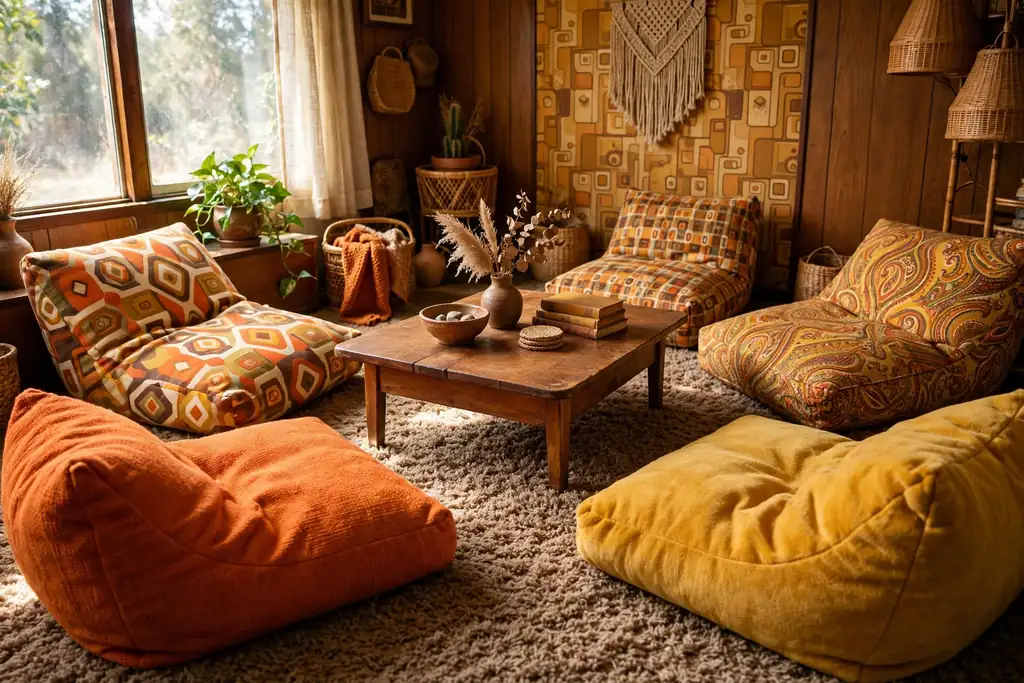
Floor cushions around a low coffee table give a small room extra seats without extra chairs. Large cushions in velvet, corduroy, or woven cotton, in orange, mustard, or patterned 70s fabric, stack in a corner or on a low shelf when not in use, then spread out for a film night or a casual meal. The low table keeps the group at cushion height, so everyone sits at the same level and the room feels relaxed.
Choose cushion covers you can wash, and fill them firmly enough that they hold their shape for an evening. Keep a basket or a low shelf near the seating group for the stacked cushions, so they do not end up on the sofa. This setup suits renters and small households well, since it adds seats for guests without buying chairs that need floor space all year.
12. Vinyl Console with Record Storage
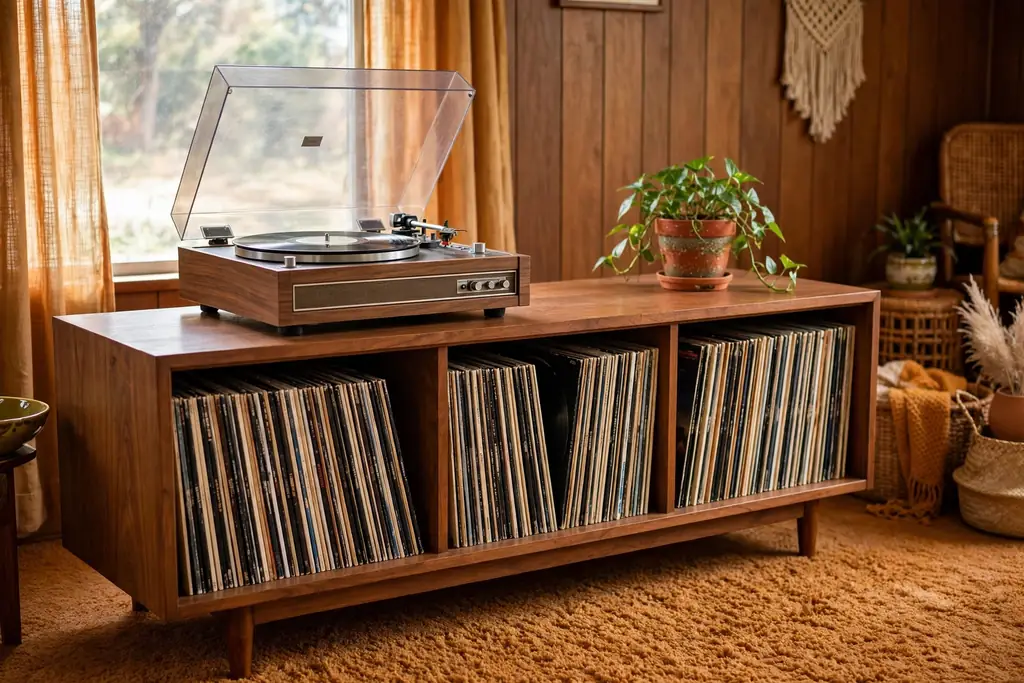
A vinyl console, a low credenza with space for a record player on top and records below, gives a small room music, storage, and a display surface in one piece. The player sits at a height that is easy to use from standing, records stand upright in the lower section or in crates beside it, and the top holds a small plant or a lamp. Choose a console with doors or open shelving that suits how often you play records, and keep the player away from direct sun and radiators.
Store records upright, not stacked flat, so sleeves stay in shape, and keep the console near a power point with a cable tidy so leads do not cross a walkway. If you do not own records, the same low console works as a media unit with books and games below and a lamp above. The warm wood and low shape link it to the sideboard and nesting tables, so the room keeps one wood story.
13. Macrame Divider That Zones Without a Wall
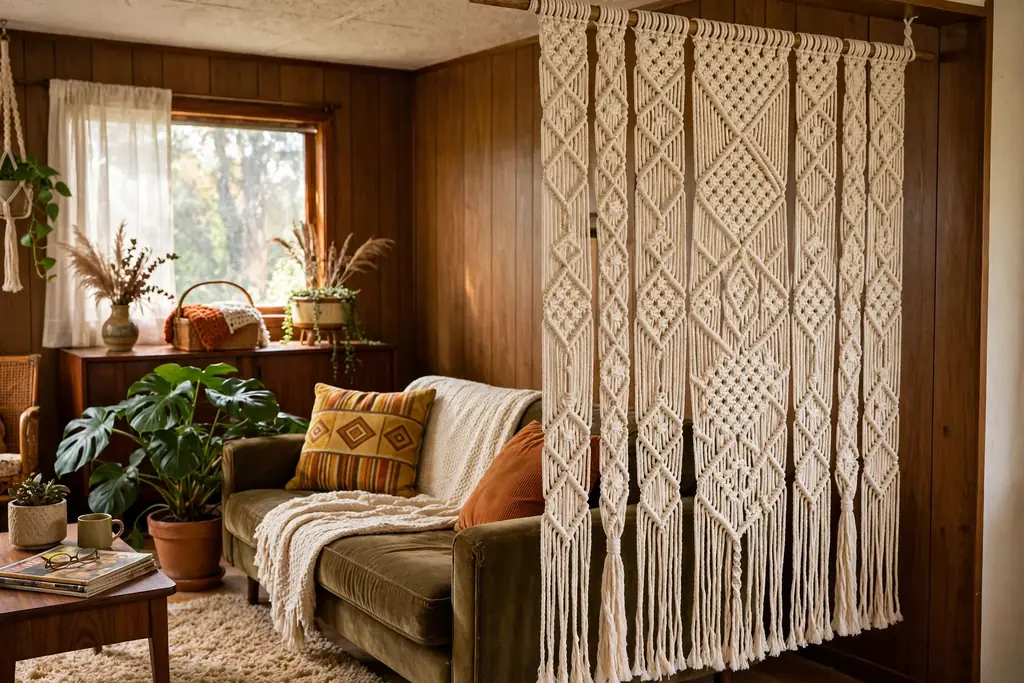
A macrame divider, hung from a ceiling beam or a tension rod, zones a small room without building a wall or blocking light. The knotted cotton hangs in an open pattern, so daylight still passes through, while the texture marks where the seating zone ends and a work or dining corner begins. Hang it across a doorway, beside a sofa, or at the edge of an open plan room, with enough clearance to walk past it.
Keep the divider to one panel, not a full curtain of panels, so the room still feels open, and pair it with a plant at its base to ground the soft edge. Dust it by shaking it outside or vacuuming on a low setting, and keep it clear of heaters and open flames. For a renter friendly version, hang macrame from a freestanding frame or a rod that needs no ceiling fixings, and take it down when the room needs to feel larger.
Conclusion
A small 70s living room works best when every piece earns its place. Start with a low sofa or a shag rug, add one warm wood piece for storage, then bring in pattern and light in small, repeatable notes: one geometric wall, one rattan light, one sunburst mirror. Keep the palette warm and limited, keep walkways clear, and let seating that stacks, nests, or tucks away handle guests. Pick one idea from this list to try first, live with it for a week, and add the next layer only where the room still feels bare or hard to use.
Save this list on Pinterest before your next small room project, and work through it one zone at a time: seating first, then storage, then light and pattern.
FAQs
What defines a 70s living room?
A 70s living room is defined by low, rounded seating, warm wood such as teak and walnut, natural textures like rattan and shag pile, and a warm palette of orange, mustard, brown, and cream. Pattern is often geometric, lighting is low and layered with lamps rather than a single ceiling light, and furniture tends to sit low to the ground. You do not need every element: two or three of these notes, used consistently, give a room a clear 70s feel.
How do you decorate a small living room in 70s style without crowding it?
Choose low furniture, keep one strong pattern per zone, and pick pieces that store or stack away. A low sofa, a shag rug, and a teak sideboard give the look, while nesting tables and floor cushions add seats only when you need them. Wall pieces such as a slat wall, a sunburst mirror, or a macrame divider add style without floor space, and a limited warm palette keeps the room calm.
What colors work best for a small 70s living room?
Warm, muted colors work best: burnt orange, mustard, rust, avocado, warm brown, and cream, with wood and rattan to tie them together. Use one strong color for the sofa or rug, repeat a second color in cushions or a throw, and keep walls pale so the room stays light. Avoid adding a new strong color in every corner, since a small room needs repetition to look planned.
Is a shag rug practical in a small living room?
A shag rug is practical if it sits in the seating zone only, away from dining spills and main doorways. Choose a size that fits under the front legs of the seating, vacuum on a suction only setting where the maker advises it, and shake it outside to clear dust. In a home with pets, a shorter pile or a washable rug in a similar warm tone may be easier to keep clean.
How can I add 70s style on a budget?
Start with textiles and light, which cost less than new furniture: floor cushions, a shag style rug, a mushroom lamp, and a macrame hanging give a fast 70s note. Look for secondhand rattan chairs, teak sideboards, and nesting tables, and try one geometric wallpaper panel or a framed piece of patterned paper before papering a wall. One well chosen secondhand wood piece often sets the tone for the whole room.
Does 70s decor suit a modern small apartment?
Yes, if you keep the shapes low and the palette limited. Low sofas, rattan, walnut, and warm lamps sit well beside modern kitchens and plain white walls, as long as pattern stays to one wall or one rug. Modern storage, such as a media console with closed doors, can carry the 70s wood tone without looking like a period set, and nesting tables and floor cushions suit apartment living well.