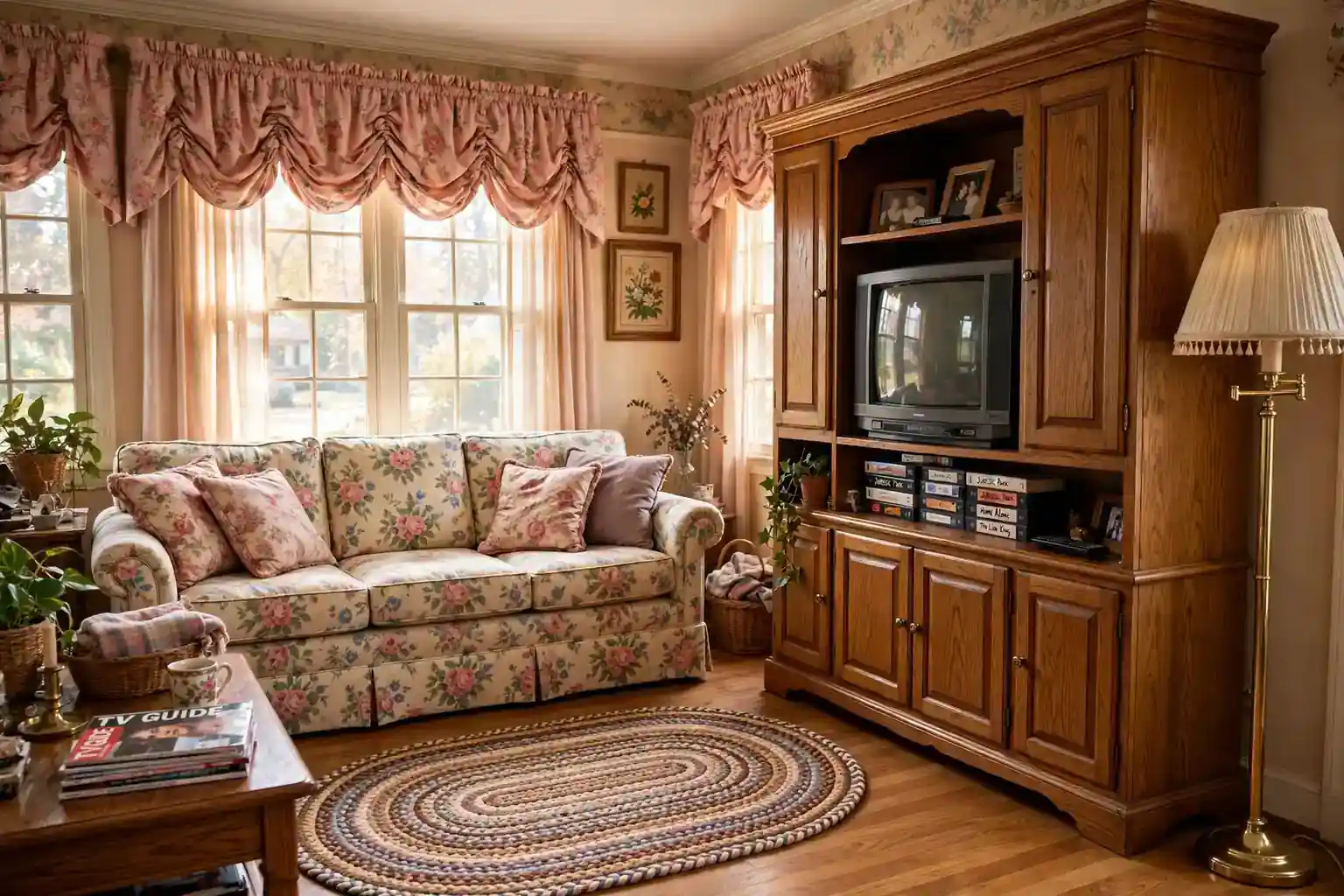
A 90s living room was made for settling in: a deep sofa, a lamp that gave warm light, a rug underfoot, and shelves full of books and things collected over time. That comfort still works today, and it suits a seasonal update well, because most of the look comes from fabric, light, and small details you can change without buying new furniture. These 32 90s living room decor ideas cover seating, tables, storage, windows, walls, lighting, floors, and autumn touches, so you can pick the changes that fit your room. Start with one comfortable seat and one warm light, then add pattern and seasonal layers where daily life actually needs them.
Key Takeaways
- Start with comfort: a deep sofa, a chair you want to sit in, and a table within reach set the tone for the whole room.
- Let one pattern lead: floral chintz, plaid, or gingham in two or three places looks planned, while a new pattern in every corner looks busy.
- Use warm light at more than one height: a floor lamp, a table lamp, and candles together make a 90s room feel cozy after dark.
- Keep wood visible: oak, brass, and wicker give the room its 90s warmth, so balance them with plain cushions and clear table surfaces.
- Change the season with small things: throws, a garland, and a table centerpiece refresh the room without a remodel.
- Leave room to live: clear floors, a free table surface, and shelves with gaps keep a collected room calm and easy to tidy.
1. Anchor the Room With a Floral Chintz Sofa
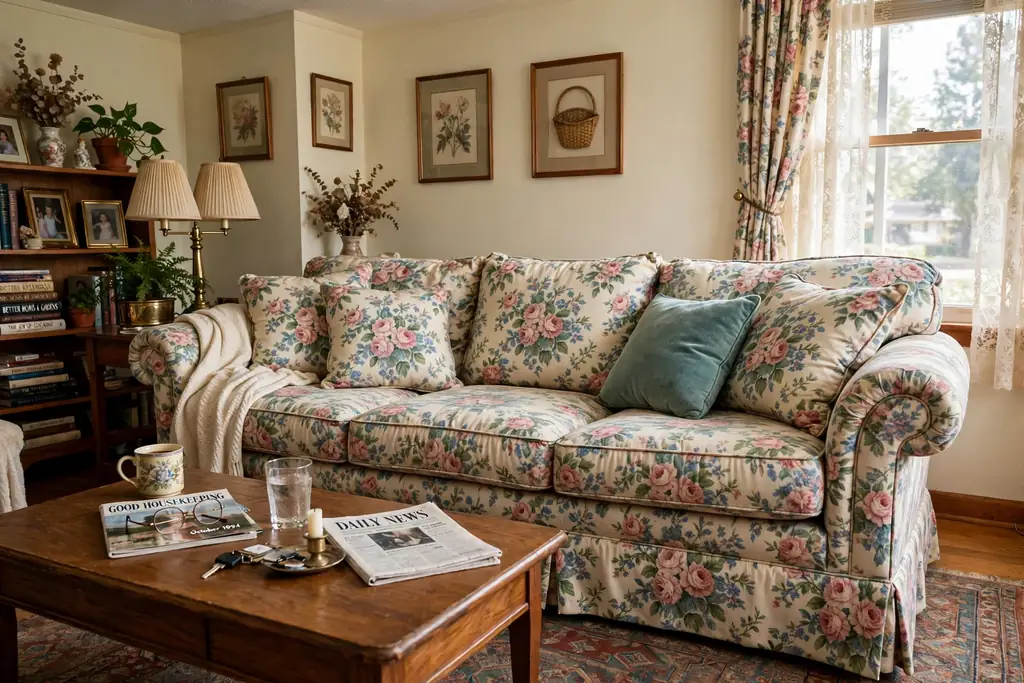
Choose an overstuffed sofa in floral chintz as the anchor of the room, with rolled arms and deep cushions you can sink into. Floral chintz was a signature 90s fabric, and a sofa in that print sets the color story for cushions, curtains, and art in one step. Pick a print with a cream or pale background so the room stays light, and let one flower color repeat in a cushion or a throw.
Keep the rest of the seating simpler so the sofa stays the focus. A plain armchair, a wood coffee table, and a pale rug give the print room to breathe. If a full floral sofa feels like too much, use the same idea on a loveseat or on cushions, and keep the main sofa in a solid color drawn from the print.
2. Pair a Plaid Armchair With a Solid Sofa
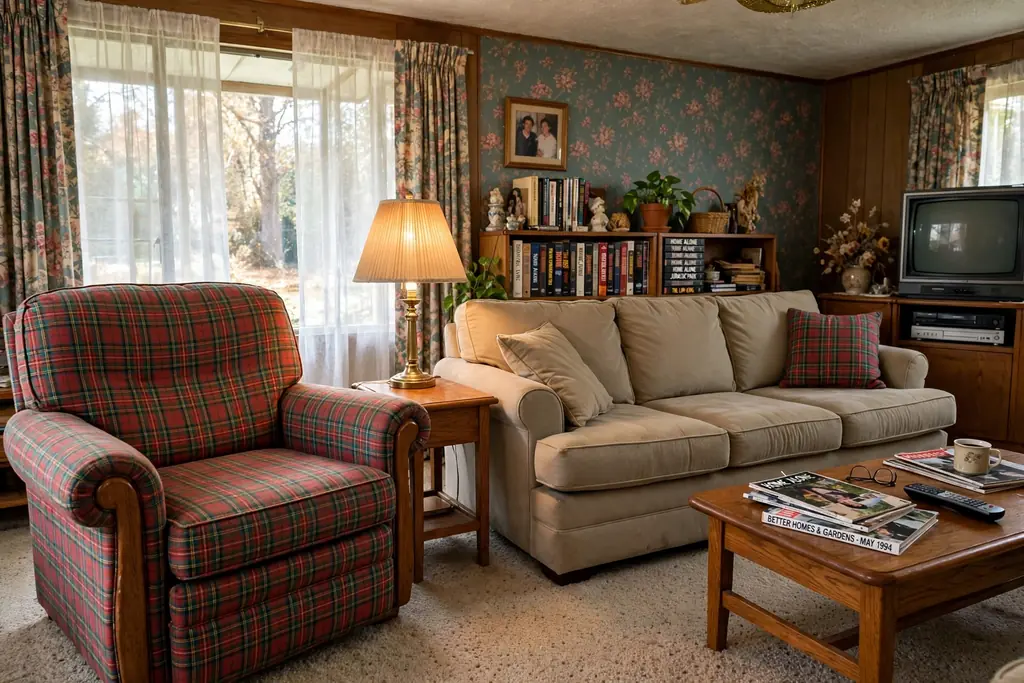
Add a plaid armchair beside a solid sofa to bring in 90s pattern without covering the whole room in print. Plaid in red, green, or navy and cream suits a country 90s look, and a single chair is enough to carry it. Place the chair at an angle to the sofa, with a small side table between them, so the two seats form a conversation corner.
Match one plaid color to a cushion on the sofa, and keep other cushions plain, so the chair and sofa clearly belong together. A plaid chair also works as a reading seat by a window, where the pattern can stand on its own. Check the chair joints and cushion fill before buying secondhand, since a good frame matters more than a fresh cover.
3. Arrange a Rolled Arm Sectional for Conversation
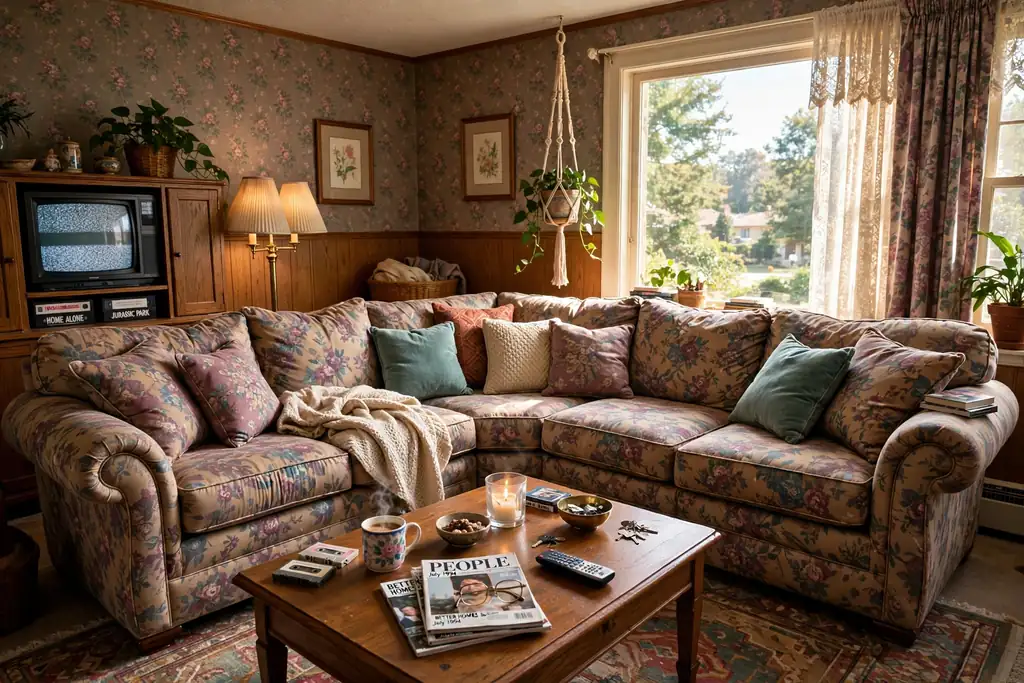
Arrange a large rolled arm sectional in an L shape around a coffee table, so seating faces inward for talk rather than lining up in a row. A sectional was a 90s family room staple, and its deep seats and soft arms suit long evenings, games, and reading. Leave a clear walking route behind the open end, and keep the coffee table close enough to reach from every seat.
Use plain cushions on a sectional, since its size already fills the room, and let one throw add color. If the sectional is very large, keep the rug plain and the curtains simple, so the room does not feel crowded. A sectional suits a room where the television is not the only focus, since people can sit facing each other as well as the screen.
4. Refresh a Sofa With a Washed Cotton Slipcover
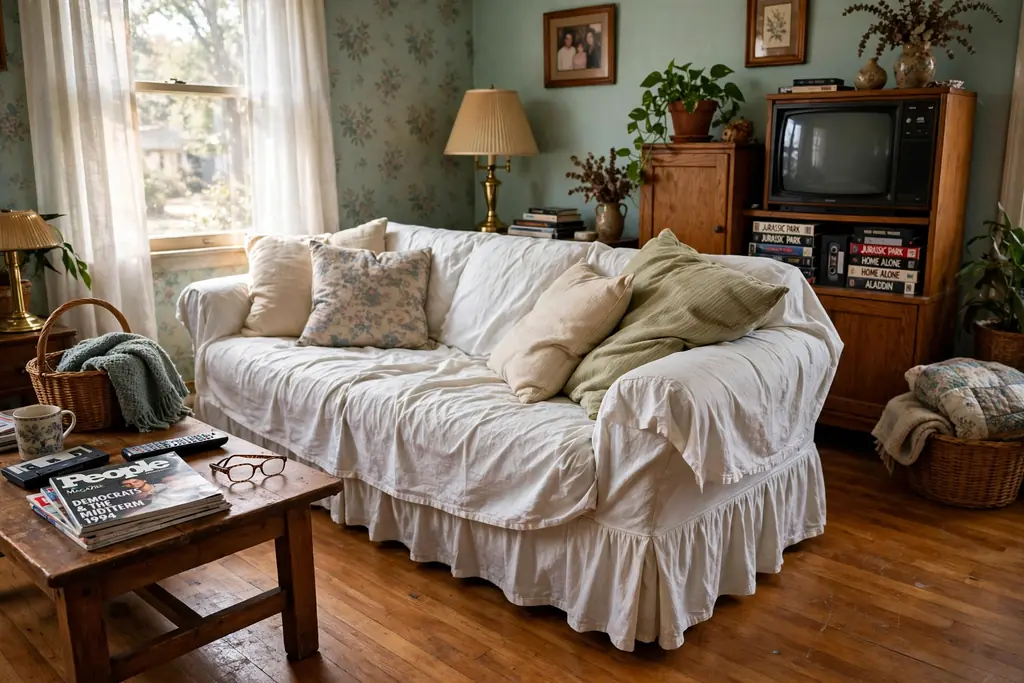
Cover a tired sofa in a loose washed cotton slipcover, in white, cream, or natural, for a relaxed 90s look that is easy to change by season. A slipcover softens a dark or dated frame, hides worn arms, and can be removed for washing, which helps in a room used every day. Choose a cover made for your sofa shape, with a skirted base that falls to the floor.
Tuck the fabric into the seat and back creases, and smooth the skirt after sitting, so the cover looks cared for rather than loose. For more ideas on pairing a covered sofa with cushions and rugs, see these grey couch living room ideas. A slipcover is also a low cost way to test a lighter room before repainting or buying new furniture.
5. Hide the Television in an Oak Entertainment Armoire
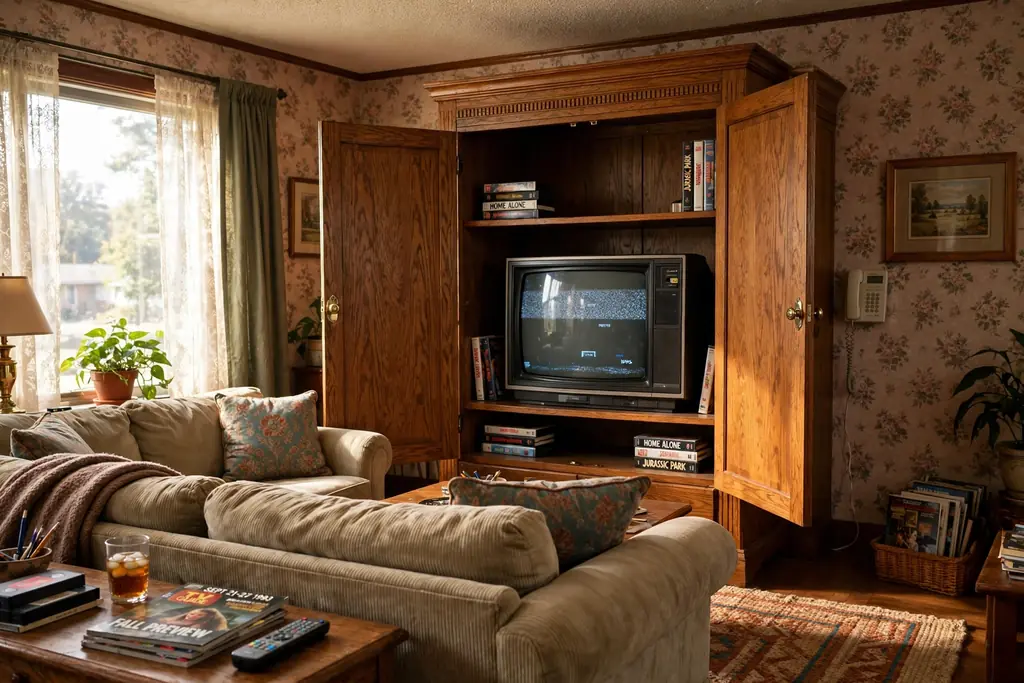
Use a tall oak entertainment armoire to hold the television, with doors that close to hide the screen when it is not in use. The armoire was the 90s answer to a big television, and it gives a living room a furniture focal point instead of a blank screen. Keep the armoire on the main wall, with seating facing it, and store media items and games on its shelves.
Measure the television and any sound equipment before buying, and check that cables can run out the back without pinching. When the doors are closed, the room reads as a sitting room, not a media room, which suits a seasonal update where candles and a garland take over the focus. Keep the top clear except for one plant or a small stack of books.
6. Lighten the Center With a Glass and Brass Coffee Table
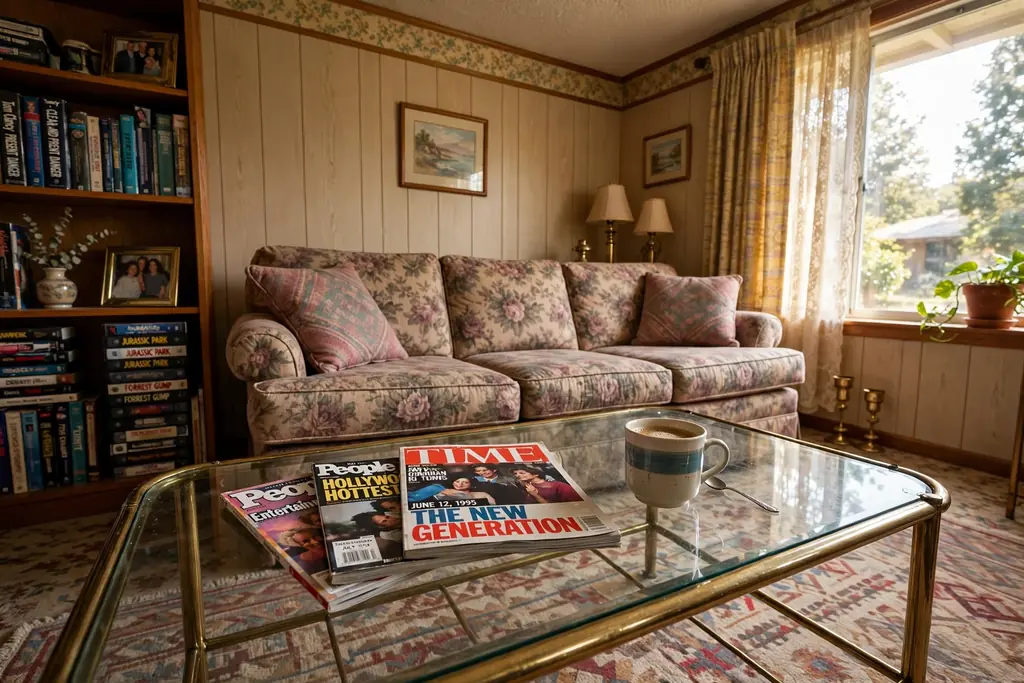
Choose a rectangular glass top coffee table with a brass frame to keep the center of the room light. Glass shows the rug below, brass adds the warm metal tone of the 90s, and the open look suits a room where the sofa and curtains already carry pattern. Keep the top mostly clear, with a book, a candle, and a small tray, so the glass stays useful.
Wipe the glass after use, since it shows rings and dust more readily than wood, and use coasters under cups. A glass table suits a smaller room, since it does not block the eye the way a solid wood table can. Pair it with a plain rug if the sofa is patterned, so one piece leads and the other supports it.
7. Use an Oak Coffee Table With a Lower Shelf
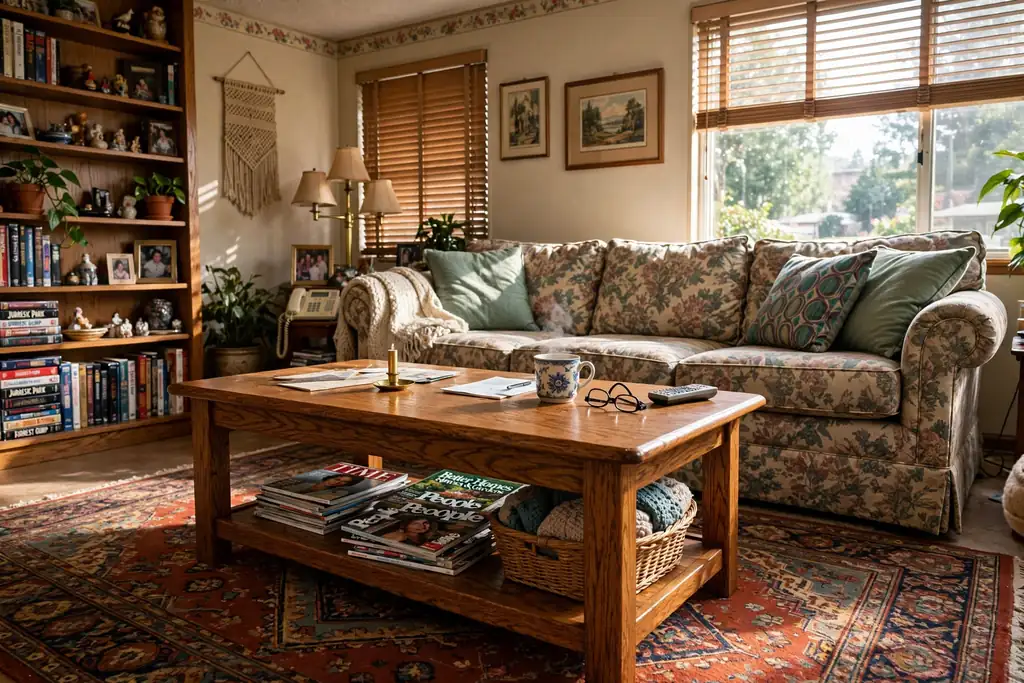
Pick a sturdy oak coffee table with a lower shelf for magazines, books, and a basket, so everyday items have a place that is not the table top. Oak was a workhorse 90s material, and a lower shelf keeps the room tidy without a separate cabinet. Choose a table height close to the sofa seat height, so cups and books are easy to reach.
Put heavier books low and a basket for remotes on the shelf, and keep the top clear except for a tray. If the floor is also oak, pick a table tone a step darker or lighter than the floor, so the two do not blend into one flat surface. Use felt pads under the legs on a wood floor, and wipe the top after use, since pale oak shows rings.
8. Display Collections in a Glass Door Wall Unit
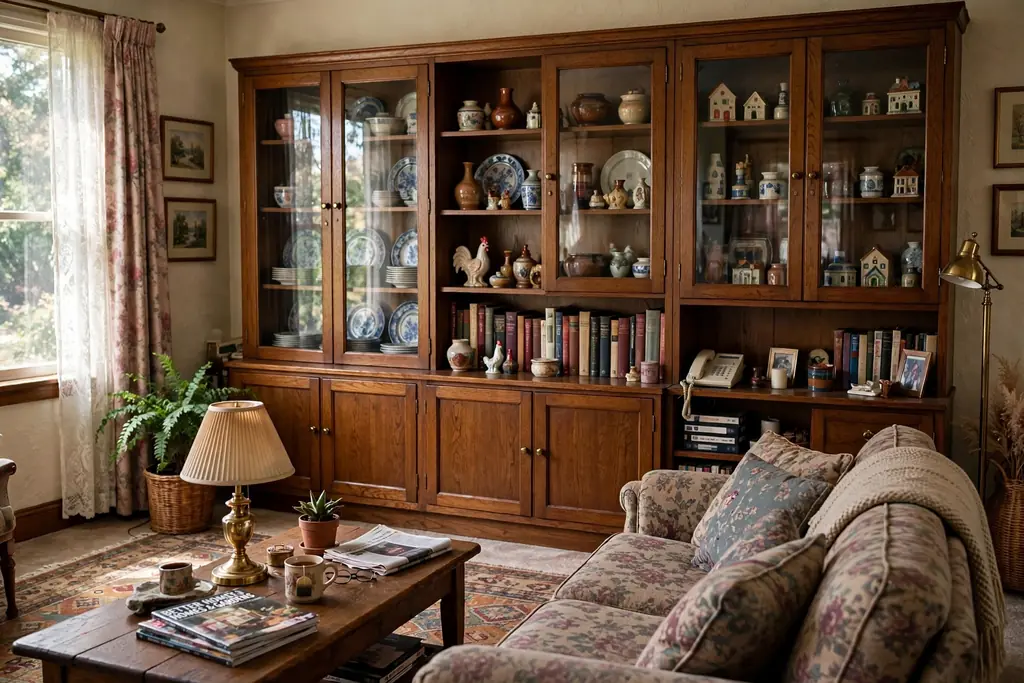
Fit a wooden wall unit with glass doors along one wall, and use it for books, ceramics, and collections gathered over time. A wall unit was a 90s living room anchor, and glass doors keep the contents visible while holding back dust. Keep the unit on one wall, rather than spreading cabinets around the room, so the seating group keeps its focus.
Group books by height, leave gaps between groups, and put heavier items low and lighter ceramics higher. Anchor the unit to the wall if it is tall enough to tip, and check the weight rating before loading it with books. A wall unit also gives a seasonal display spot: swap one shelf to autumn leaves or candles in fall, and back to plain ceramics after.
9. Layer Vertical Blinds With Side Drapes
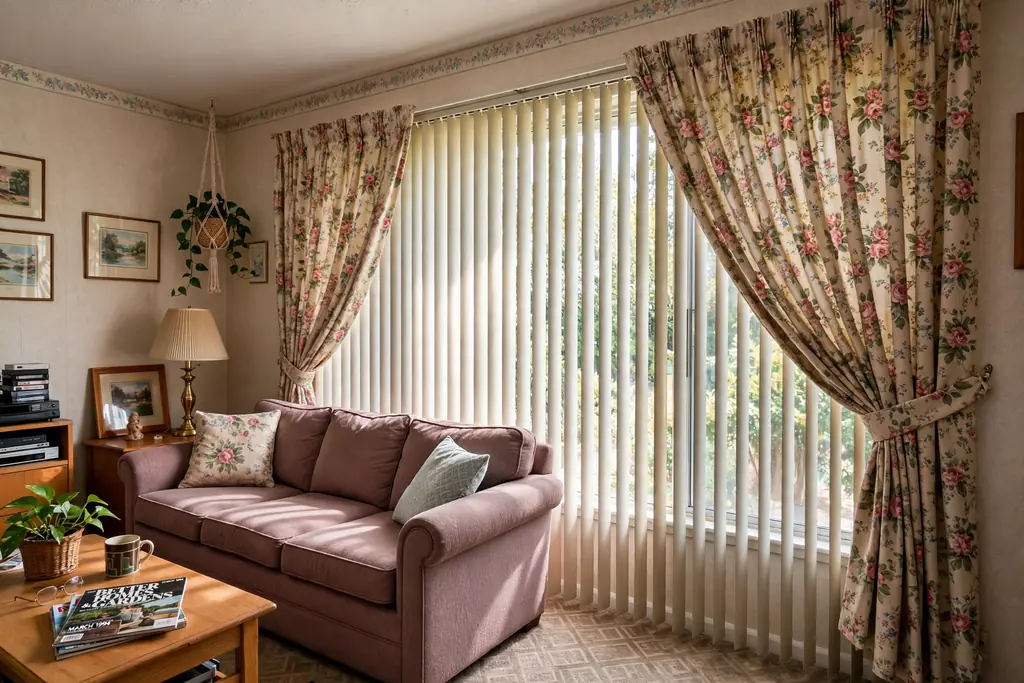
Hang vertical blinds on a wide window or sliding door, then add fabric side drapes at the edges to soften the straight lines. Vertical blinds were a common 90s window treatment, and they give good light control, while drapes add color and warmth that blinds alone lack. Choose drapes in a color drawn from the sofa or rug, and hang them from close to the ceiling to the floor.
Keep the blinds in white, cream, or pale grey, so they do not fight the drapes, and test the blind tilt at different times of day before settling the drape width. Clean the blind slats now and then, since they collect dust faster than a plain curtain. This pairing suits a room with a large window where privacy and daylight both matter.
10. Top Sheer Panels With a Balloon Valance
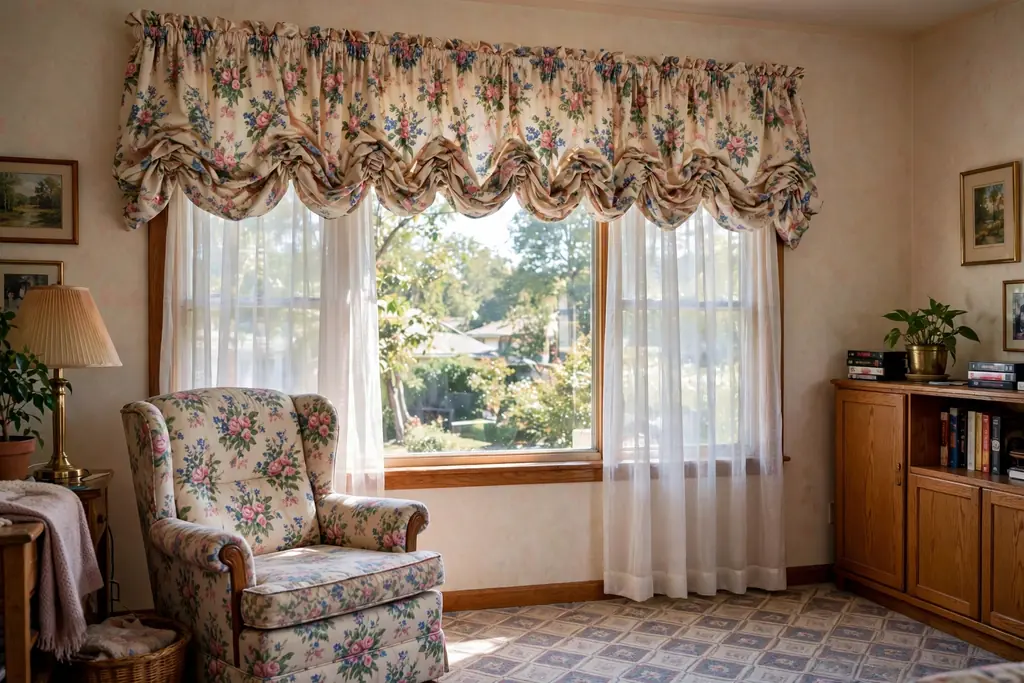
Hang sheer panels on a window, then top them with a gathered balloon valance in a floral or striped fabric, for a soft 90s window that still lets in light. The valance adds shape at the top of the window, while the sheers give daytime privacy without shutting out sun. Choose a valance fabric that repeats a sofa or cushion color, and keep the valance depth in proportion to the window height.
Use a simple rod for the sheers and a separate rod or board for the valance, so each layer can be taken down for washing. Keep the rest of the window simple, with no extra side drapes, so the valance stays the detail. Wash the sheers now and then, since pale fabric shows dust faster than a darker curtain.
11. Use Lace Cafe Curtains on the Lower Window
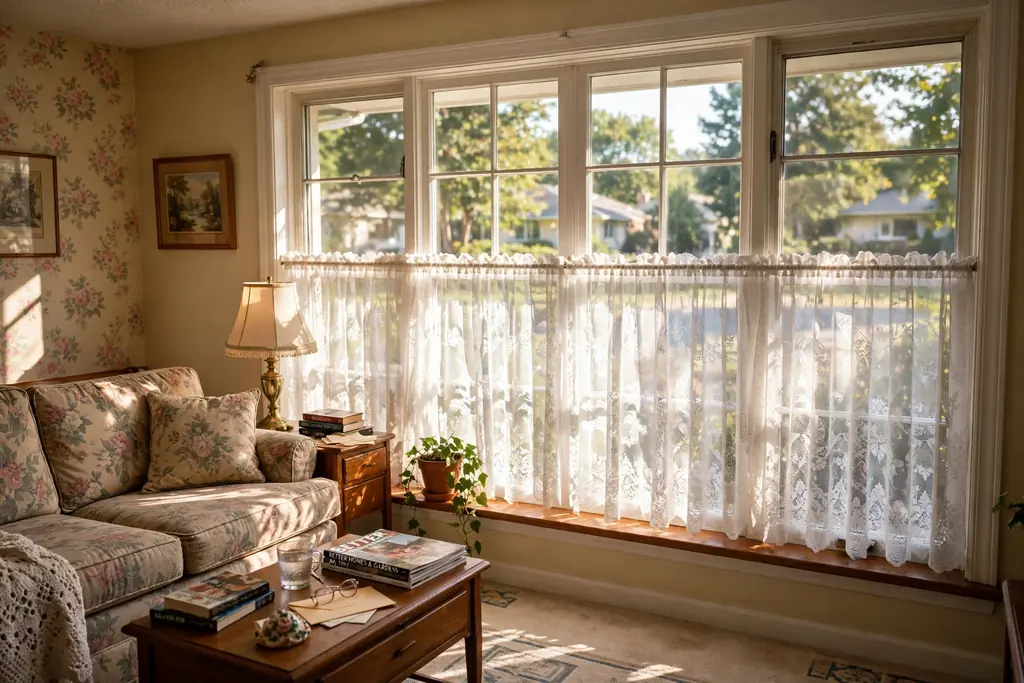
Hang white lace cafe curtains across the lower half of a living room window, on a tension rod at mid height, for privacy with light still coming over the top. Lace cafe curtains were a 90s country touch, and they suit a window that faces a street or a neighbor, where full curtains would darken the room. The lace pattern adds detail without a strong color.
Pair lace cafe curtains with a plain upper window, so the room keeps its daylight, and keep the lace clean, since white lace shows dust and cooking marks. A cafe curtain also works on a small window beside a reading chair, where it gives privacy without a heavy treatment. If the lace feels too formal, a simple cotton voile panel gives a similar effect in a plainer fabric.
12. Run a Wallpaper Border Along the Ceiling Line
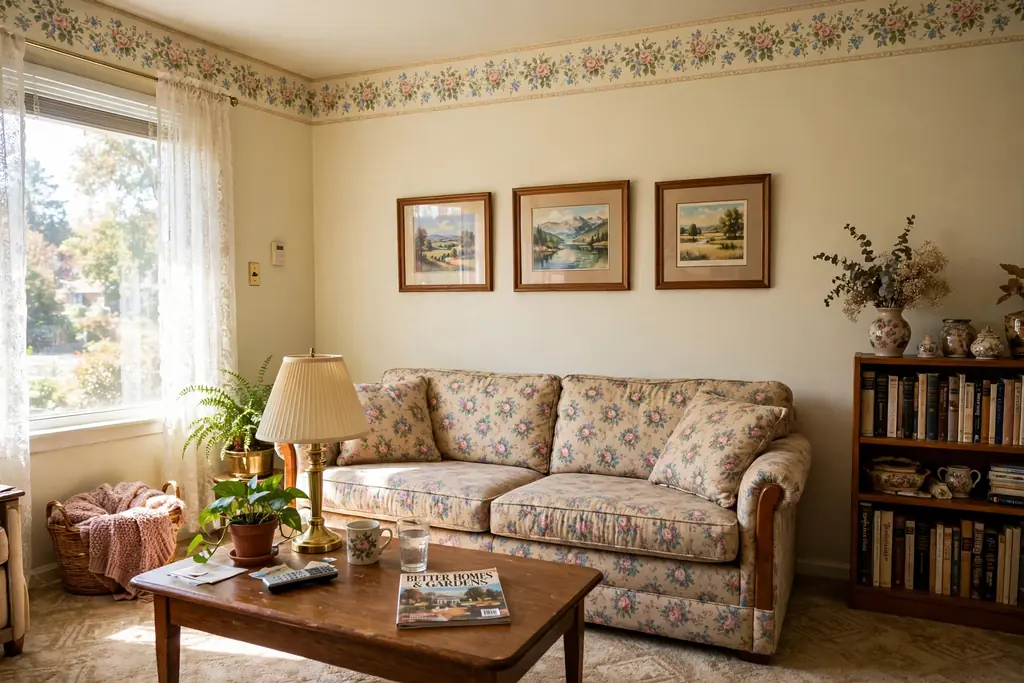
Run a floral or striped wallpaper border along the top of the walls, just below the ceiling, to add a 90s finishing line to a plain room. A border frames the walls without papering the whole room, and it links the wall color to the curtains or sofa print. Choose a border with a cream background and one color from the room, and keep the border width in proportion to the ceiling height.
Paste the border straight, using a level line as a guide, and match the pattern at the corners as closely as you can. A border suits a room where the walls are otherwise plain, since it adds pattern at eye level only at the top. If full wallpaper feels like too much work, a border gives a smaller taste of the same detail, and it can be removed later without repainting the whole wall.
13. Sponge Paint One Accent Wall in Warm Tones
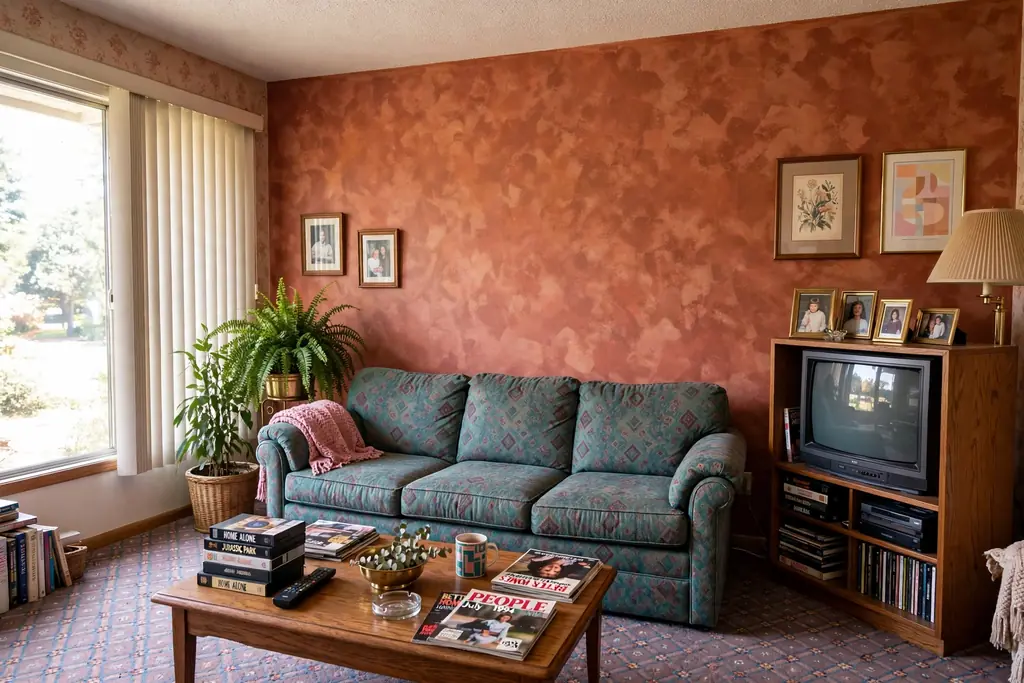
Sponge paint one accent wall in warm tones, such as terracotta over cream, for a soft mottled texture that was common in 90s rooms. Sponging adds depth without a bold flat color, and it suits a wall behind a sofa or fireplace, where the texture can be seen up close. Start with a pale base coat, then dab a second color on with a natural sponge, working in small sections.
Test the technique on a board first, and step back often, since sponging looks patchy up close and even from across the room. Keep the other walls plain, and use plain cushions on the sofa against the sponged wall, so the texture stays the detail. A sponged wall also takes a seasonal swap well: plain art in summer, a garland or wreath in fall, against the same warm base.
14. Paint the Walls Hunter Green With Cream Trim
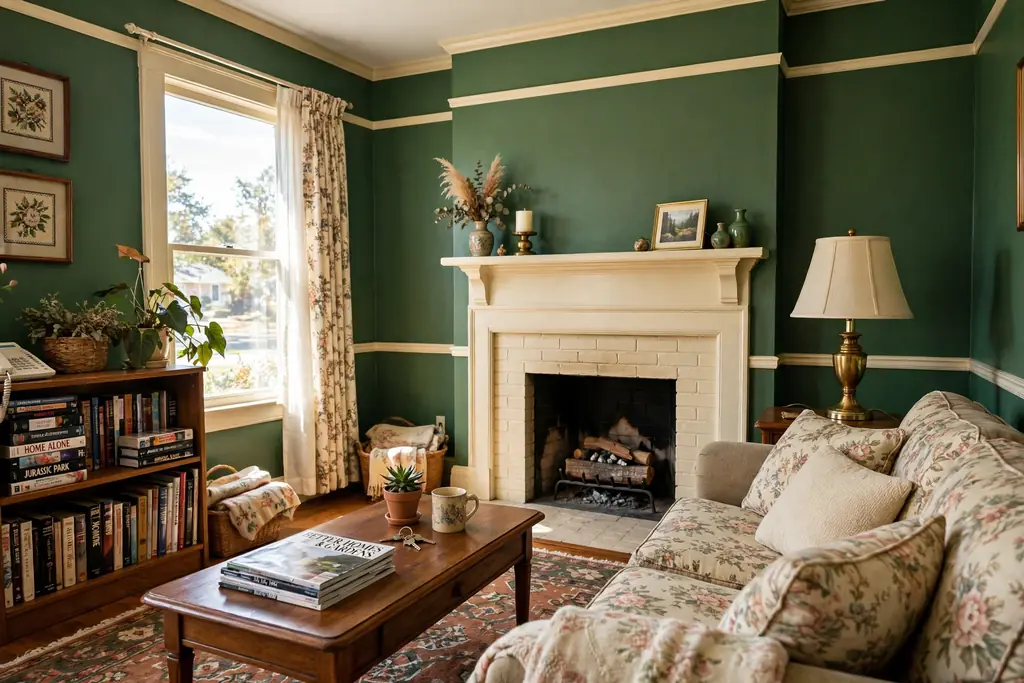
Paint the living room walls a deep hunter green, with cream trim on doors, windows, and the mantel, for a classic 90s color pairing. Hunter green gives a room depth and warmth, and cream trim keeps it from feeling dark, especially in a room with good daylight. This pairing suits wood furniture, brass lamps, and floral cushions, which all sit well against green.
Test the green in daylight and lamplight before painting the whole room, since deep colors shift a lot between the two. Keep the ceiling and trim cream, and use a pale rug and light cushions to balance the dark walls. If a full green room feels too strong, paint one wall green and keep the rest cream, with green repeated in cushions and a throw.
15. Stencil a Motif Around the Mantel
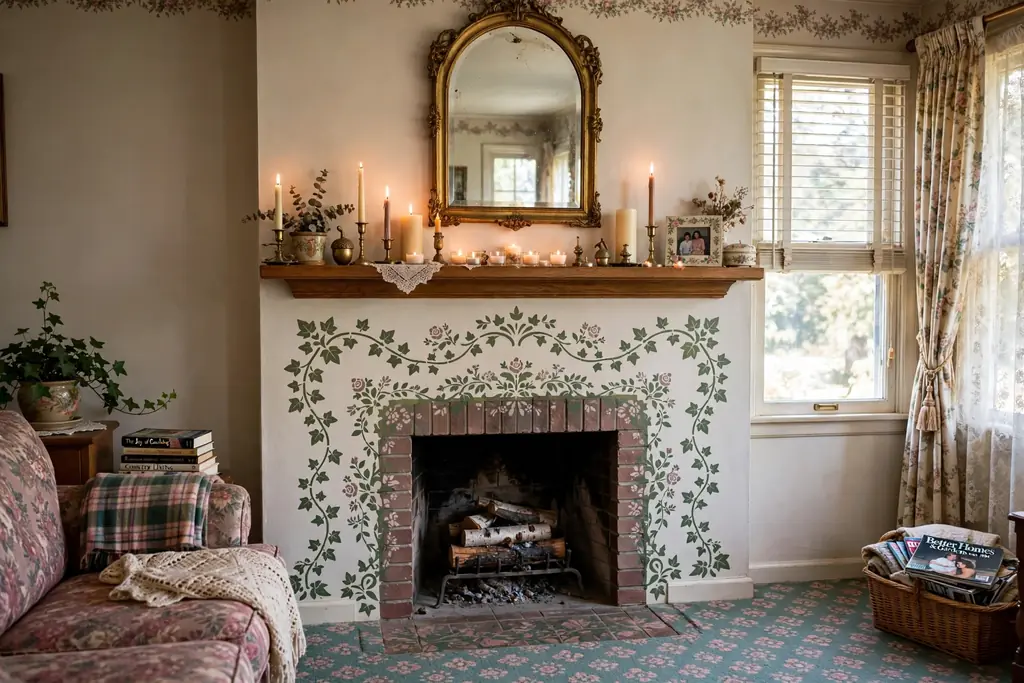
Stencil a simple ivy or floral motif around the fireplace mantel and opening, in a soft gold or cream over the wall color, for a hand painted 90s detail. Stenciling adds pattern exactly where you want it, without papering a wall, and the mantel is a natural place for it, since the eye already lands there. Choose one motif and repeat it evenly, rather than mixing several patterns.
Fix the stencil flat with low tack tape, dab the paint on lightly, and lift the stencil straight off, so the edges stay crisp. Keep the mantel display simple, with candles and a mirror, so the stencil is not hidden behind clutter. A stenciled motif also suits a door frame or a shelf edge, where a small repeat gives the same hand painted feel in a smaller area.
16. Add a Brass Torchiere Floor Lamp
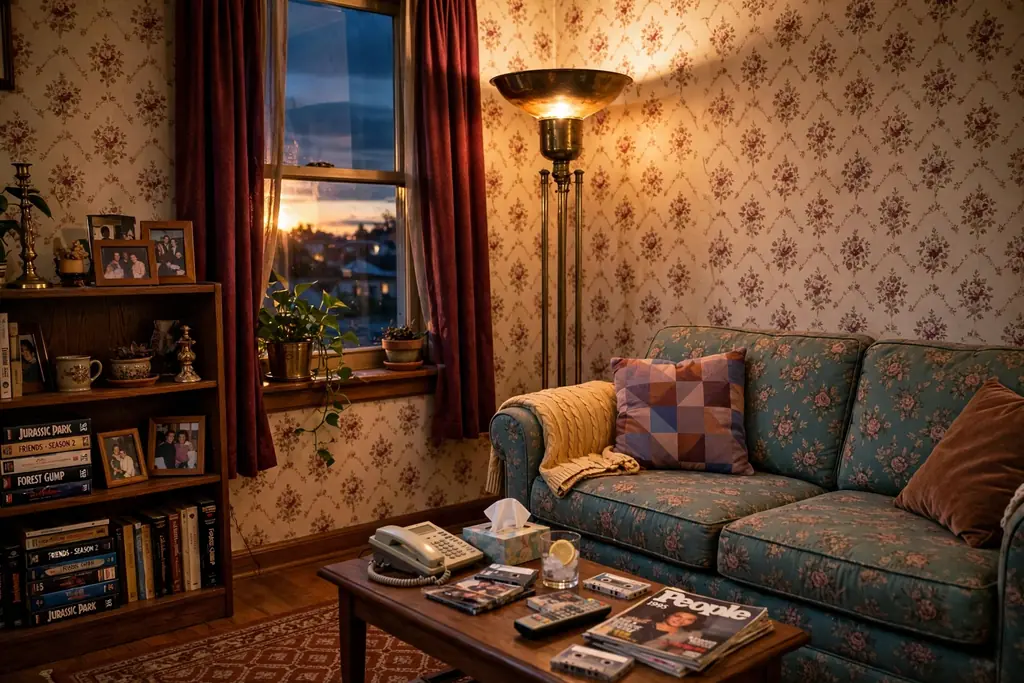
Place a tall brass torchiere floor lamp beside the sofa or in a corner, with its upward facing bowl shade bouncing light off the ceiling. The torchiere was a 90s lighting staple, and its soft upward glow makes a room feel warm in the evening without a harsh ceiling light. Choose a lamp height that clears the sofa back, and put it where it will not be bumped in a walking route.
Use a warm white bulb, and pair the torchiere with a table lamp at seat height, so light comes from more than one level. Dust the bowl shade now and then, since an upward shade collects dust. A brass torchiere suits a room with other brass details, such as a coffee table frame or picture frames, which tie the metal tone together.
17. Warm a Side Table With a Stained Glass Lamp
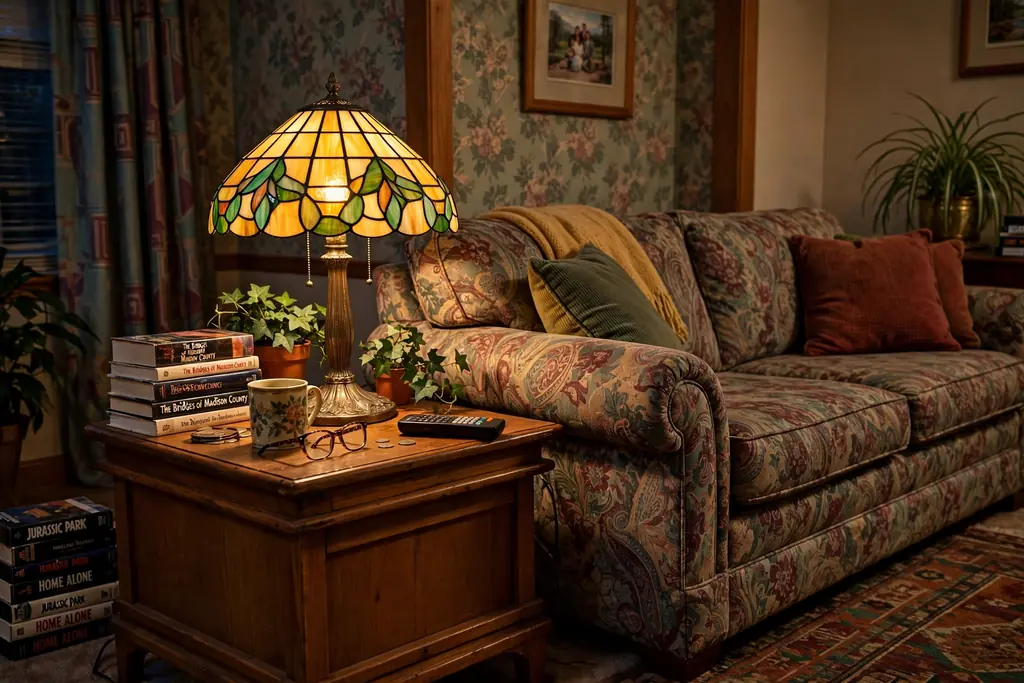
Set a stained glass table lamp, in warm amber, green, or a floral pattern, on a side table beside the sofa, for colored light in the evening. A stained glass shade was a popular 90s accent, and its warm glow suits a room with wood and brass, where plain white shades can feel flat. Keep the lamp base simple, in brass or dark wood, so the shade stays the detail.
Use a warm white bulb inside the shade, and keep the table clear except for the lamp and one small item, such as a book. A stained glass lamp suits a reading corner or a side table that gets used at night, rather than a table that holds drinks all day. If the shade feels too strong in daylight, it still reads as a decorative piece when switched off.
18. Aim Track Lighting at Art on the Wall
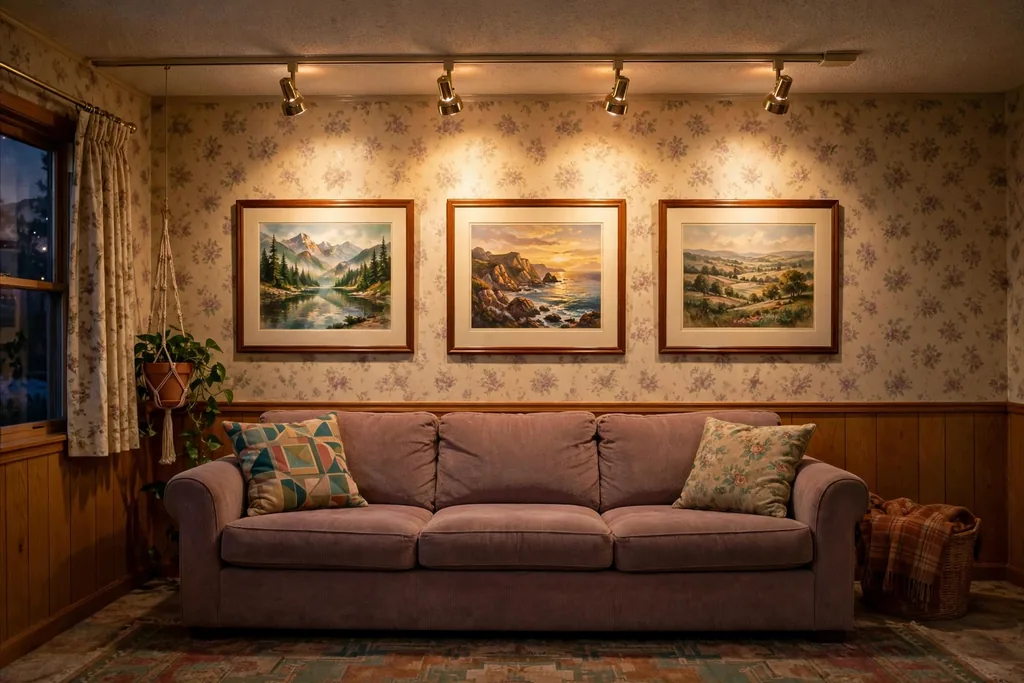
Fit a ceiling track with adjustable heads, and aim them at framed art above the sofa or along one wall, so the art gets its own light. Track lighting was a practical 90s choice, and it lets you change the focus as art changes, without rewiring. Keep the track straight and close to the ceiling, and angle each head so it lights one piece without glare on the glass.
Use warm white bulbs in the track, so the art light matches the lamps in the room, and put the track on a dimmer if you can, so the room can shift from bright to calm. Track lighting suits a gallery wall or a single large print, where one ceiling light would leave the art in shadow. Keep the rest of the ceiling plain, so the track reads as a tool, not a decoration.
19. Lay an Oval Braided Rug Under the Seating Group
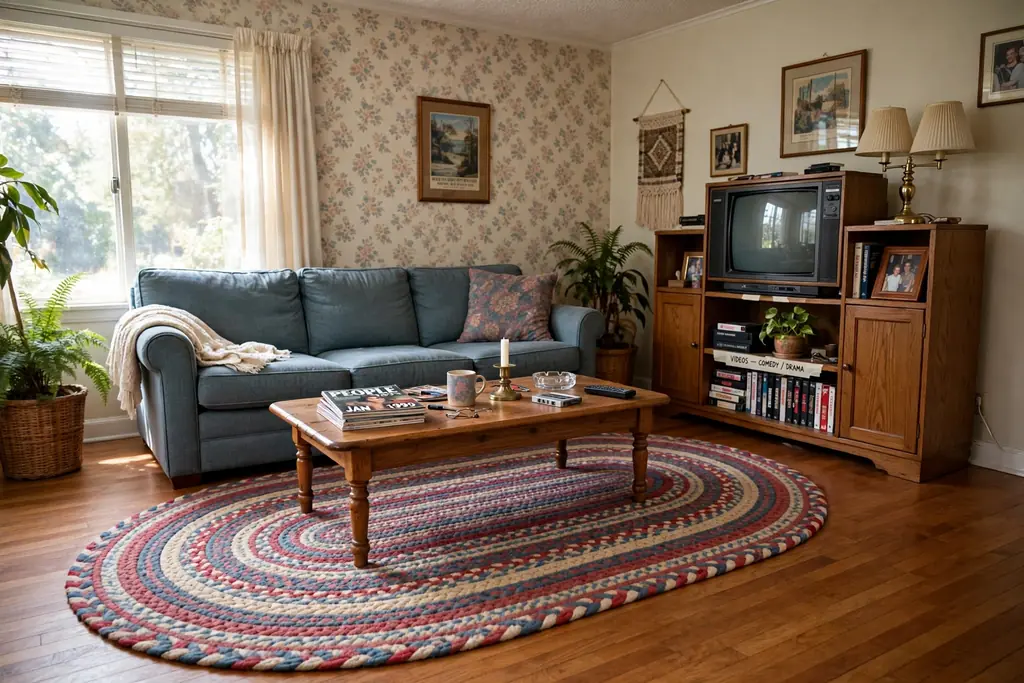
Lay a large oval braided rug, in muted red, blue, and cream, under the sofa and coffee table, with a border of floor showing around it. A braided rug was a 90s country staple, and its woven texture adds warmth underfoot, while the oval shape softens a room full of straight lines. Size the rug so the front legs of the sofa and chairs rest on it.
Use a rug pad underneath on a smooth floor, so the rug does not slide, and vacuum across the braiding to lift dust from the weave. For more help with size and placement, see these living room rug ideas. A braided rug suits a room with wood furniture and floral or plaid fabric, since its muted colors tie those patterns together without adding a new one.
20. Layer a Patterned Rug Over Berber Carpet
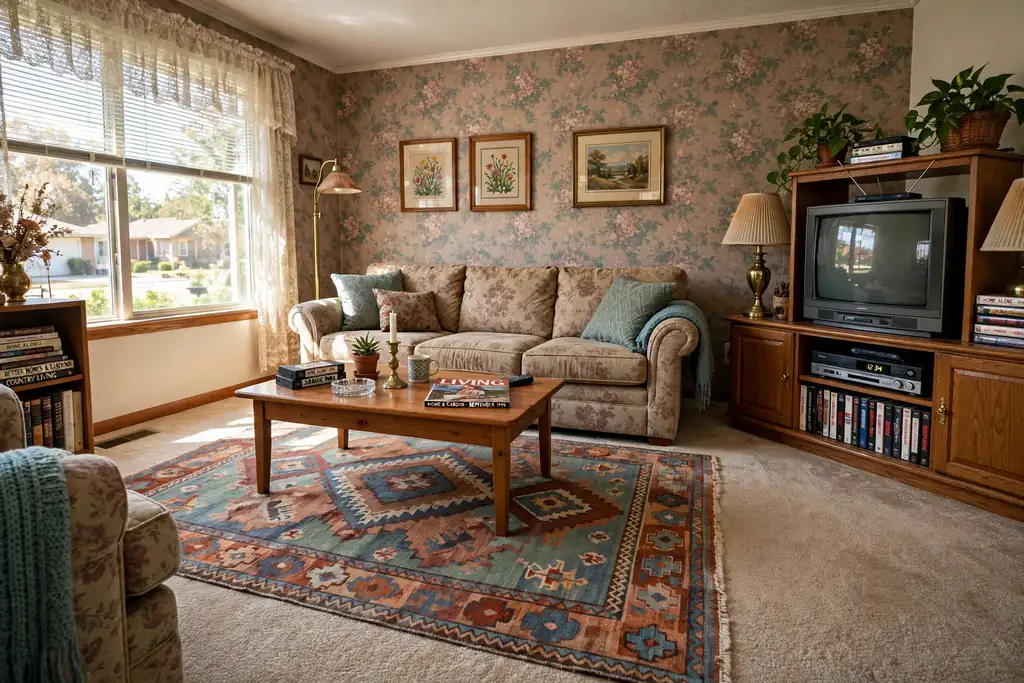
Layer a patterned area rug over beige berber carpet, so the seating group gets color and a clear zone without replacing the carpet. Berber carpet was common in 90s homes, and a rug on top gives the room a focal point, while the carpet below still softens the floor. Choose a rug with one color from the sofa or curtains, and keep its pattern simple if cushions already carry print.
Tape the rug outline on the floor first, and check walking routes and door swings, since a rug over carpet can shift more than a rug on wood. Use a rug pad made for carpet, and keep the rug edges flat, so chairs slide over them without catching. This layering also makes a seasonal swap easy: a plain rug in summer, a warmer patterned rug in fall.
21. Hang Floral Watercolors in Oak Frames
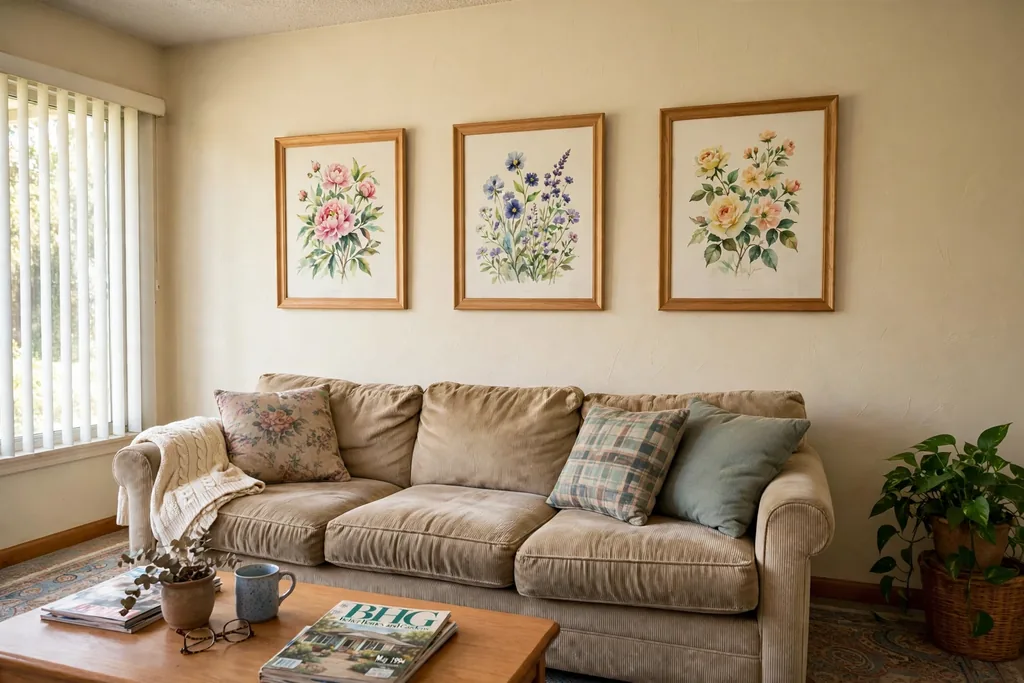
Hang two or three floral watercolor prints in light oak frames above the sofa, in a row or a small group, for soft 90s wall art. Floral watercolors suit a room with chintz or plaid fabric, since they repeat the flower theme in a quieter form, and oak frames tie the art to oak furniture in the room. Hang the center of the group at eye level when seated, and keep the outer edges inside the width of the sofa.
Use art with pale backgrounds and soft colors, so the wall stays light, and start with two or three pieces, adding over time rather than filling the wall at once. Picture ledges are a renter friendly option, since they let you lean frames and swap them without new holes each time. Keep other wall art simple on the same wall, so the watercolors stay the focus.
22. Fill a Brass and Glass Etagere With Plants and Books
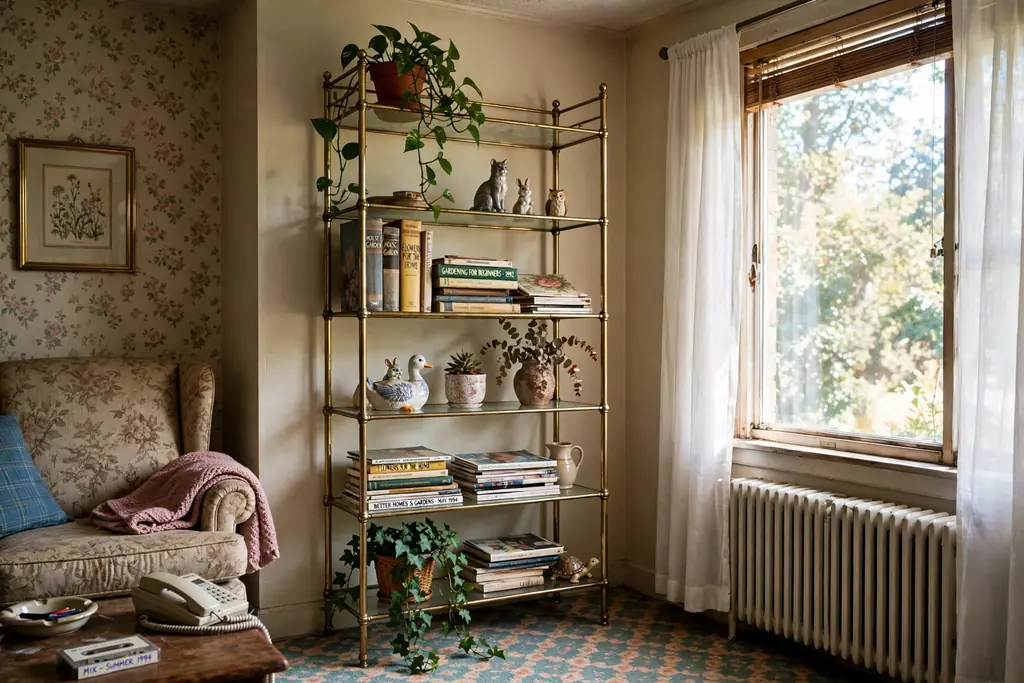
Place a tall brass and glass etagere in a corner, and fill its open shelves with plants, books, and a few ceramic pieces, for a light 90s display that does not block light. An etagere suits a corner that would otherwise stay empty, and its open shelves keep the display airy, unlike a closed cabinet. Put heavier books low, plants at mid height where they get light, and lighter ceramics up high.
Dust the glass shelves now and then, since open shelves show dust faster than closed ones, and check that each plant suits the light it will actually get. Keep one shelf partly empty, so the display reads as collected, not crowded. An etagere also works beside a window, where plants on its shelves catch daylight through the glass.
23. Store Throws and Magazines in Wicker Baskets
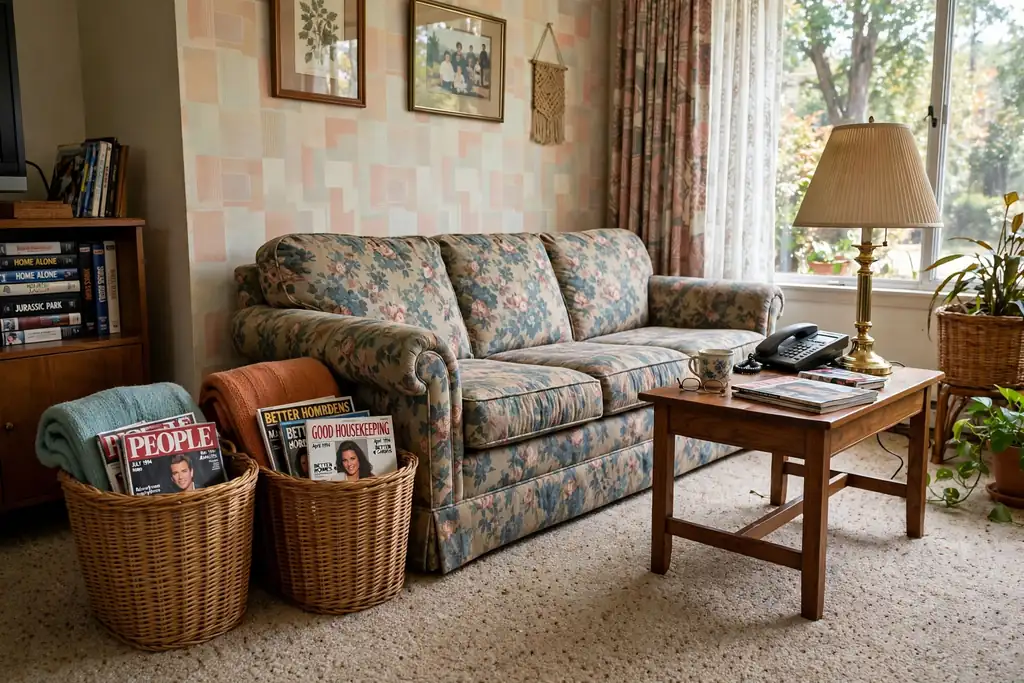
Store throws, magazines, and games in wicker baskets beside the sofa and under a side table, so everyday clutter has a place that is not a closed cabinet. Wicker baskets suit a 90s room because they add natural texture and hide clutter without a bulky piece of furniture. One large basket for throws and one smaller basket for magazines are usually enough.
Choose baskets with handles, so they can be carried to tidy quickly, and line a basket used for magazines with a plain cloth if the weave snags paper. Keep one basket empty on purpose, as a quick tidy basket for a ten minute reset before guests arrive. A basket for the spare throw keeps the second layer close without piling it on the seat.
24. Set a Dried Flower Arrangement With Potpourri
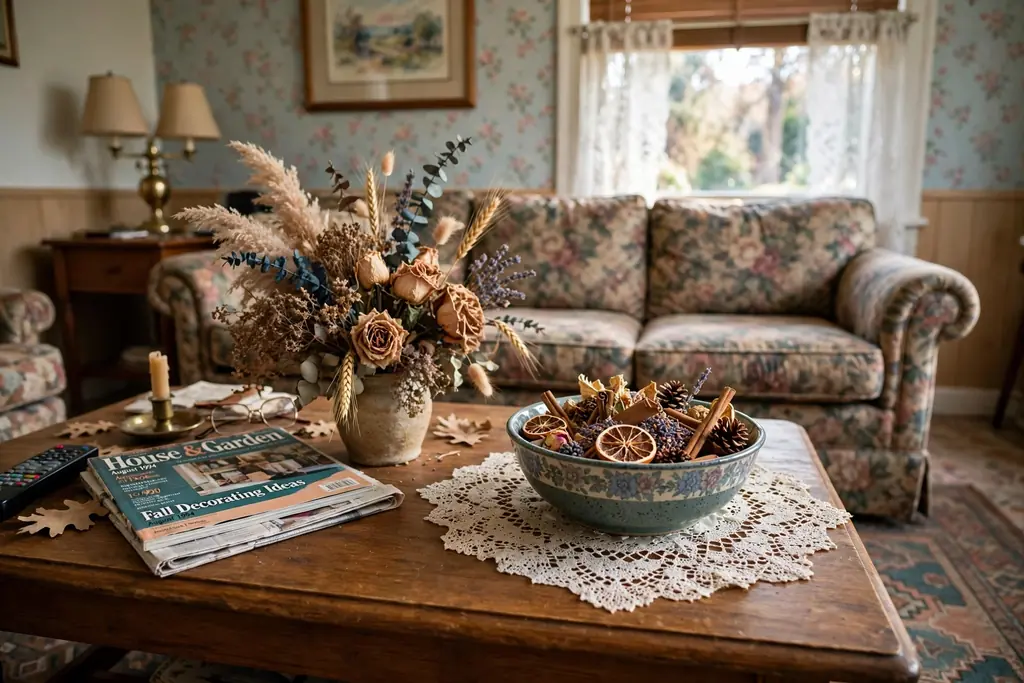
Set a dried flower arrangement in a basket or ceramic vase on the coffee table or mantel, with a bowl of potpourri beside it, for a classic 90s scent and color detail. Dried flowers last far longer than fresh ones, and potpourri adds scent without a flame, which suits a table that holds books and drinks. Choose dried flowers in muted tones, such as cream, rust, and dusty pink, so they sit well with floral fabric.
Keep dried flowers clear of the fire and out of direct sun, since both fade and dry them faster, and dust them gently now and then. Refresh potpourri with a few drops of scented oil when the scent fades, rather than replacing the whole bowl. A dried arrangement also suits a shelf or etagere, where it adds height without blocking light.
25. Group Candles on a Mirrored Tray
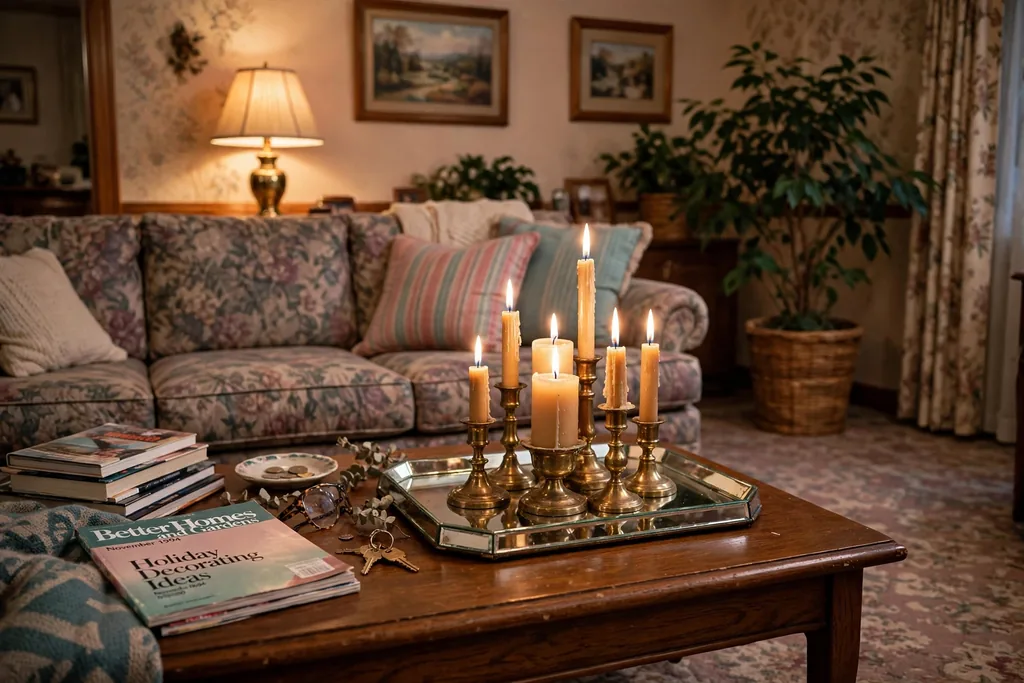
Group candles in brass holders on a mirrored tray on the coffee table, and light them in the evening for a warm, low glow. A mirrored tray was a 90s table detail, and it doubles the candlelight, while keeping wax, matches, and holders in one tidy place. Plain white or cream candles in simple holders suit the look best, and the tray makes it easy to move the whole group when you need the table surface.
Use sturdy holders that cannot tip easily, keep candles clear of curtains, throws, and paper, and never leave them burning in an empty room. Battery candles give a similar glow where real flames are not practical, such as a shelf near books. A tray also protects a wood or glass table top from wax marks.
26. Build a Family Photo Wall in Brass Frames
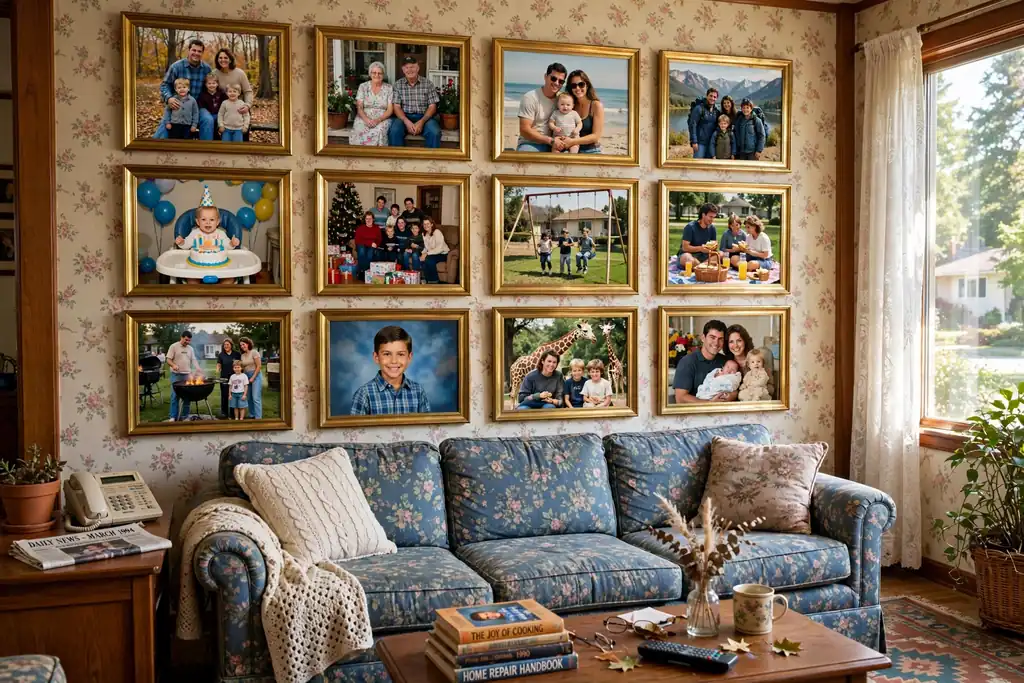
Hang family photos in matching brass frames in a grid above the sofa or along a hallway wall, for a personal 90s gallery wall. Brass frames tie the photos together, even when the photos themselves vary in age and size, and a grid layout keeps the wall calm rather than busy. Hang the center of the group at eye level when seated, and keep the outer edges inside the width of the sofa if the wall is above it.
Use the same frame size for most photos, with one larger frame as a center point, and start with a small grid, adding rows over time. Keep the photo mats in cream or white, so the brass frames stay the detail. A photo wall suits a room where the sofa and rug are plain, since the photos then carry the personal color and story.
27. Add Gingham Check Cushions for a Country Note
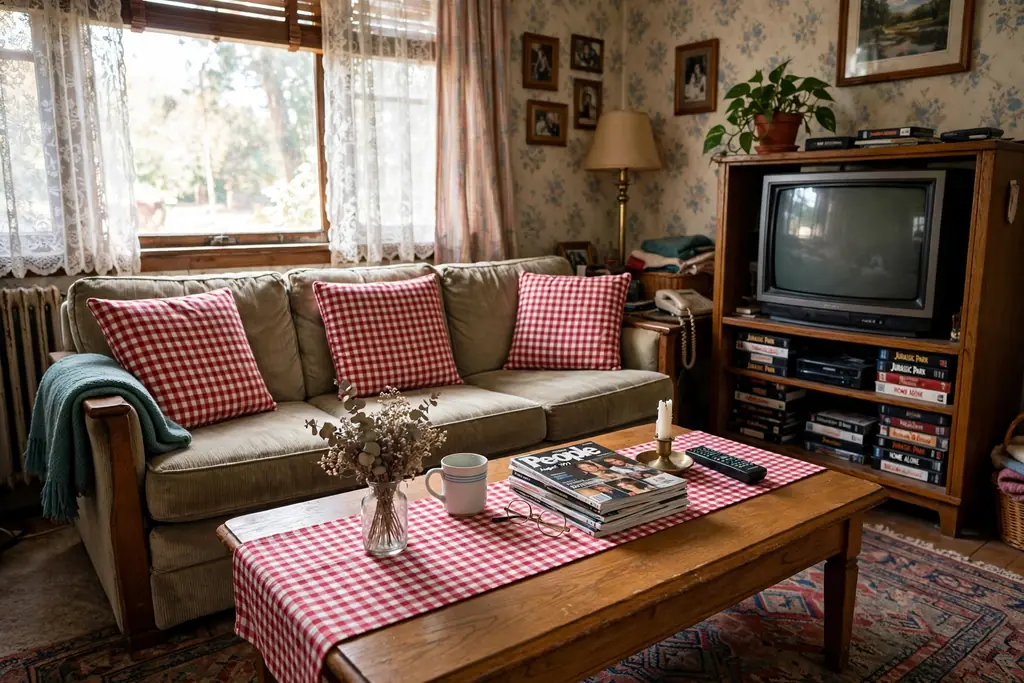
Add gingham check cushions in red and white, blue and white, or green and white to a plain sofa, with a matching check runner on the coffee table, for a country 90s note. Gingham is a simple check that reads as relaxed and homely, and it pairs well with floral chintz, since both come from the same country tradition. Two check cushions among plain ones are enough for most sofas.
Keep the check size in proportion to the sofa: a small check suits a small sofa, while a larger check suits a large sectional. Choose removable covers, so checks can be washed, since light check fabric shows marks. A gingham cushion also suits a wooden rocking chair, where it softens a hard seat without hiding the frame, and it swaps easily by season.
28. Drape Chunky Knit and Flannel Throws for Autumn Evenings
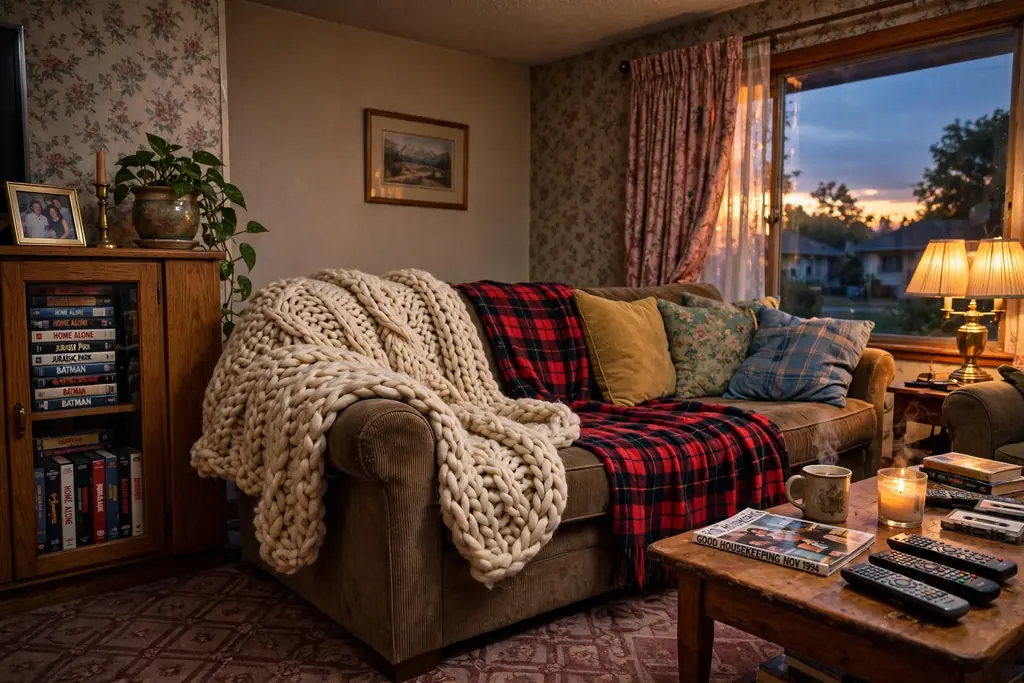
Drape a chunky knit throw and a plaid flannel throw over the sofa arms, ready for autumn evenings, so the room feels cozy as soon as the light fades. Knit adds texture that smooth fabric alone cannot give, and flannel adds a soft plaid layer that ties back to the 90s palette. Keep the throw colors warm and muted, such as cream, rust, and forest green, so the sofa stays calm.
Choose throws you can wash, since knit traps dust and crumbs more than smooth fabric, and fold, rather than draping loosely, so the sofa still looks tidy when no one is sitting there. Store spare throws in a wicker basket beside the sofa, so the second layer is close without piling on the seat. Swap the flannel throw for a lighter cotton throw in warm months, and the room shifts season without new furniture.
29. Set a Wooden Rocking Chair by the Window
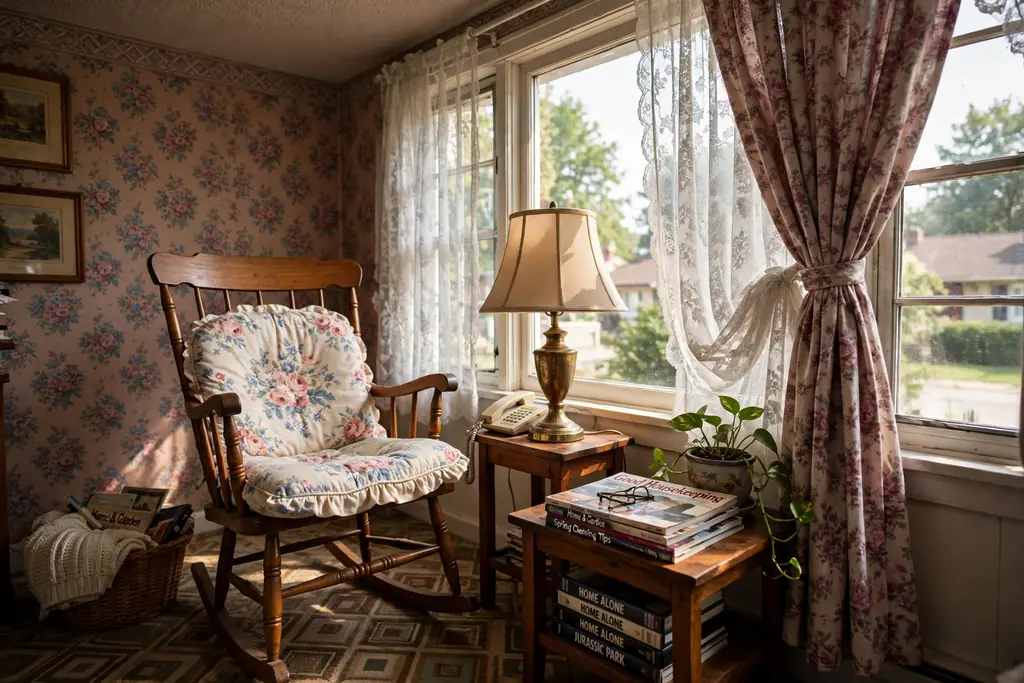
Set a wooden rocking chair by the window, with a floral or gingham cushion on the seat, a small side table beside it, and a lamp behind one shoulder. A rocking chair was a 90s living room corner piece, and the window end of a room is a natural reading spot, with daylight by day and a view to rest the eyes on. Angle the chair toward the room, so the corner feels part of the living space, not cut off from it.
Leave clear floor behind and in front of the chair, so it can rock freely without hitting the wall or a table, and use felt pads under the rockers on a wood floor. Add a basket for the current book and a throw, and keep the table surface clear for a cup. If the chair sits in direct sun, choose a fabric that fades slowly, or move the chair a step back from the glass.
30. Dress the Mantel With a Seasonal Garland
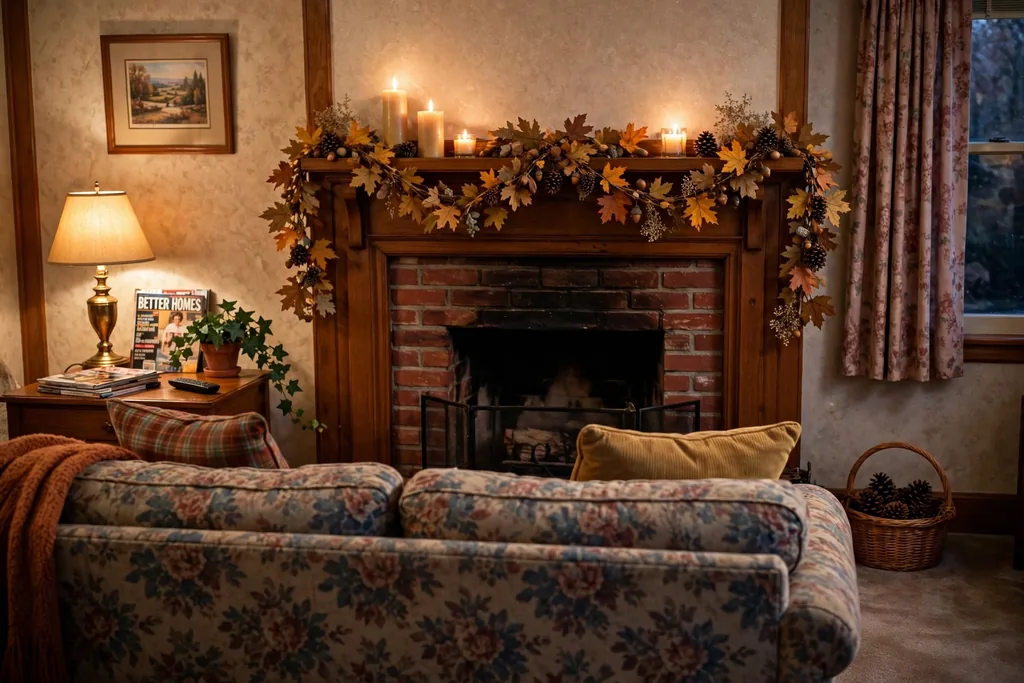
Dress the fireplace mantel with a leaf garland in autumn tones, plus candles and pinecones, for a seasonal 90s mantel that changes with the year. A garland gives the mantel a full, gathered look without a large display, and pinecones and candles add texture and warm light. Keep the garland to the mantel top, with ends falling a little at each side, rather than draping it down the wall.
Keep candles clear of the garland and any dry leaves, and never leave them burning in an empty room, since dry foliage catches easily. Swap the garland by season: autumn leaves in fall, evergreen in winter, and plain candles and a mirror in between, so the mantel stays the focus all year. Keep throws and cushions clear of the fire opening for safety.
31. Style a Bookshelf With Books, Baskets, and Collectibles
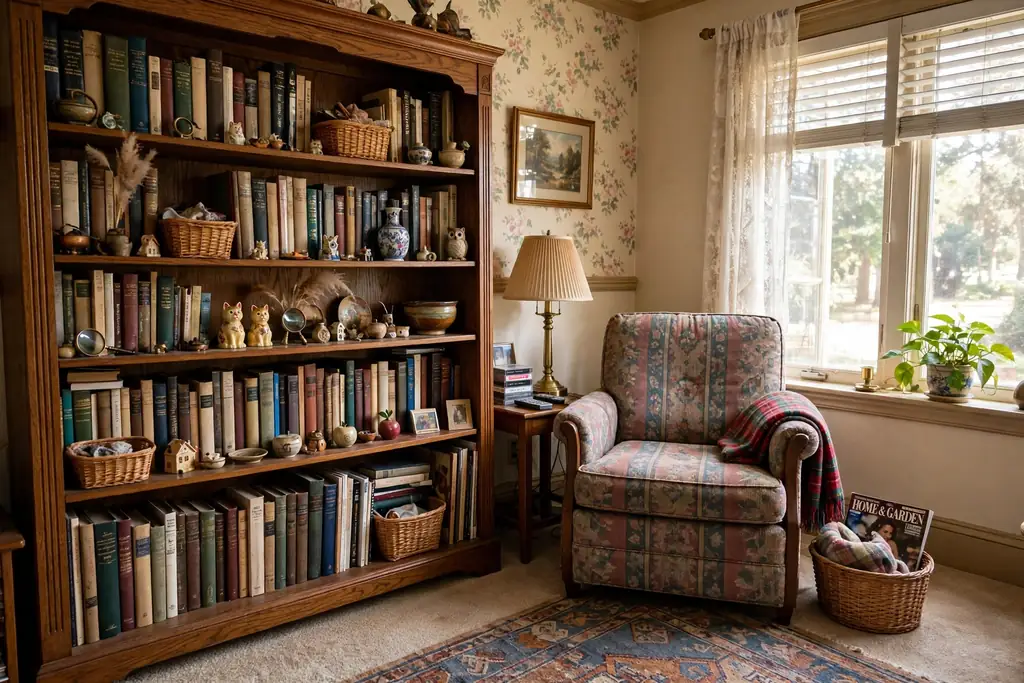
Style a wooden bookshelf with rows of books, small baskets, and a few ceramic collectibles, for a lived in 90s display that also stores what the room uses. A bookshelf suits a reader, a home with many books, and a room where a wall would otherwise look bare. Group books by height, leave gaps between groups, and put heavier items low and lighter ceramics higher.
Anchor the bookshelf to the wall if it is tall enough to tip, and check the weight rating before loading it with books. Use baskets on the lower shelves for games and magazines, so the shelf stays tidy, and leave one shelf partly empty, so the display reads as collected, not crowded. A bookshelf beside the sofa also gives a reading chair a place for the current book.
32. Finish With an Autumn Centerpiece on the Coffee Table
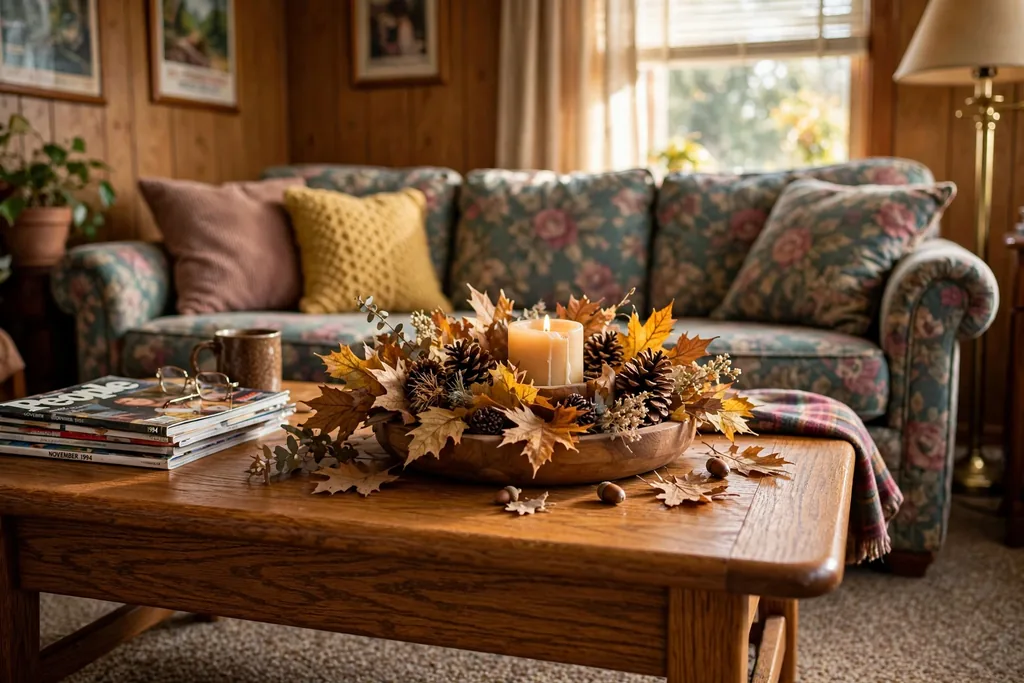
Finish the seasonal update with an autumn centerpiece on the coffee table: a wooden bowl or tray holding dried leaves, pinecones, and one candle, with room left for cups. A centerpiece ties the room together, since it repeats the mantel garland colors and the throw colors in one small spot, and it can be lifted off the table in one move when you need the surface for food or work.
Keep the centerpiece low, so it does not block talk across the table, and keep the candle clear of dry leaves, using a battery candle if the leaves sit close. Refresh the leaves when they dry out and shed, and swap the bowl contents by season: pinecones in fall, plain candles in winter, and a small plant in spring. A centerpiece that moves as one tray is the easiest seasonal change in the whole room.
Conclusion
A 90s living room that feels cozy for a seasonal update starts with comfort, warm light, and one pattern done well, then adds only the details daily life actually uses. Choose a deep sofa or a plaid chair, hide the television in an oak armoire when you can, and add brass lamps, a braided rug, and wicker baskets within reach. Repeat one pattern, keep wood visible, and layer throws, a garland, and a table centerpiece for autumn. Try one or two ideas this weekend, such as a balloon valance and a candle tray, live with them for a week, and add the next layer only when the room asks for it. If an idea here helped your space, save this post to your 90s living room board on Pinterest so you can find it when you are ready for the next change.
Frequently Asked Questions
What defines 90s living room decor?
Deep overstuffed seating, oak and brass, floral chintz and plaid fabric, wallpaper borders, balloon valances, braided rugs, and warm lamp light define the 90s living room. The look was comfortable and collected, with books, baskets, and family photos on show, rather than bare and minimal. Use two or three of those traits, not every one at once, so the room feels like a nod to the decade, not a museum set.
How do I add 90s style without making the room look dated?
Pick the comfortable parts and leave the heaviest parts out. A deep sofa, brass lamps, a braided rug, and warm light age well, while a full floral sofa, a wallpaper border, and a wall unit all at once can feel dated. Keep walls pale, use plain cushions beside one pattern, and leave clear table surfaces and floor space, so the 90s pieces read as warm choices, not as clutter.
What colors work best in a 90s living room?
Cream, hunter green, burgundy, navy, and muted red and blue, with wood and brass as warm neutrals, work best in a 90s living room. Start with a cream base, add one deep color on a wall or in cushions, and repeat it in two or three places, such as a throw, a rug, and a piece of art. Keep other colors muted, so the room stays calm and the deep color can carry its job.
Can I mix 90s decor with modern furniture?
Yes, and a mix often works better than a full 90s room. A modern plain sofa pairs well with a 90s oak coffee table, brass lamps, and a braided rug, since the wood and metal add warmth to clean lines. Keep the 90s pieces to two or three, such as lamps, a rug, and baskets, and let the modern sofa and plain walls keep the room current. The mix works when one palette links the old and new pieces.
How do I update a 90s living room for fall without buying new furniture?
Change the small layers: swap in chunky knit and flannel throws, add a leaf garland to the mantel, set an autumn centerpiece on the coffee table, and switch cushion covers to gingham or plaid. Those four changes cost far less than new furniture, and they can be stored and reused next year. Keep the sofa, rug, and lamps the same, so the seasonal layer reads as a refresh, not a new room.
What 90s window treatment suits a small living room?
Lace cafe curtains suit a small living room best, since they cover only the lower window, give privacy, and still let light in over the top. A balloon valance over sheer panels also works, as long as the valance depth stays in proportion to the window height. Avoid heavy side drapes plus a valance plus blinds all at once in a small room, since layered treatments can close the space in. Pick one main treatment, and keep the rest of the window simple.