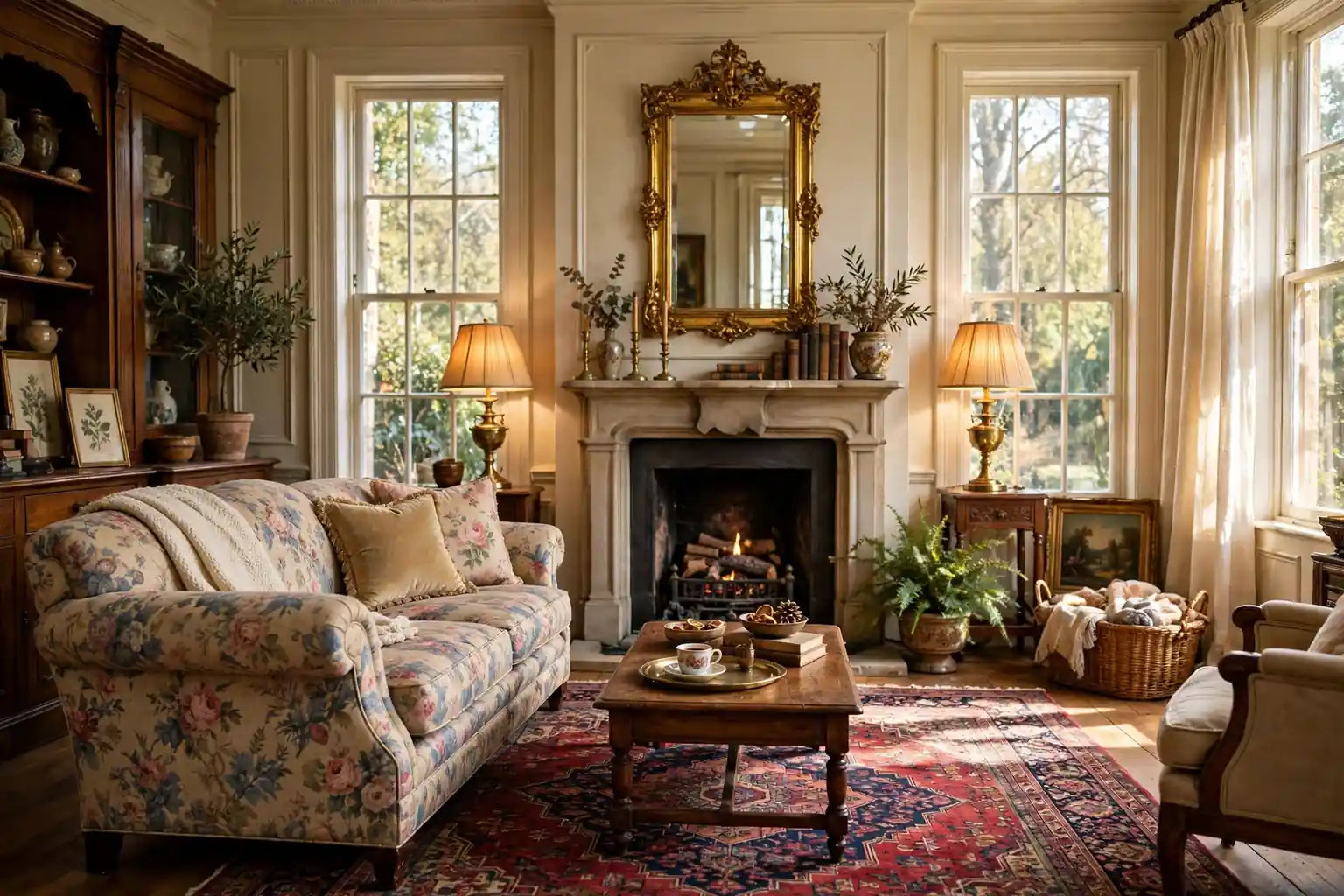
A vintage living room earns its charm from pieces with a past: a sofa with soft curves, a rug with a worn pattern, a mirror with a frame that has seen a few homes. The trick is to let one or two old pieces lead and keep the rest calm, so the room feels collected rather than crowded. These 22 vintage living room decor ideas cover seating, rugs, tables, walls, light, and small corners. Start with the largest piece you love, then add pattern and light around it. If your room already has ornate bones, the pairing advice in these modern Victorian living room ideas shows how old details can sit beside simpler modern pieces.
Key Takeaways
- Let one large vintage piece lead the room, such as a sofa, a rug, or a sideboard, and keep the other large pieces plain.
- Mix only two or three old materials at a time, for example wood, brass, and velvet, so the room stays calm.
- Check old furniture before you buy: sit on it, open every drawer, look under the base, and check joints and legs.
- Repeat one colour or one metal in three places to link pieces from different eras.
- Layer light at several heights with lamps and candles, rather than relying on one ceiling light.
- Leave clear walking routes and one empty surface, so a collected room still feels easy to use.
1. Start With a Rolled-Arm Sofa in Faded Floral Fabric
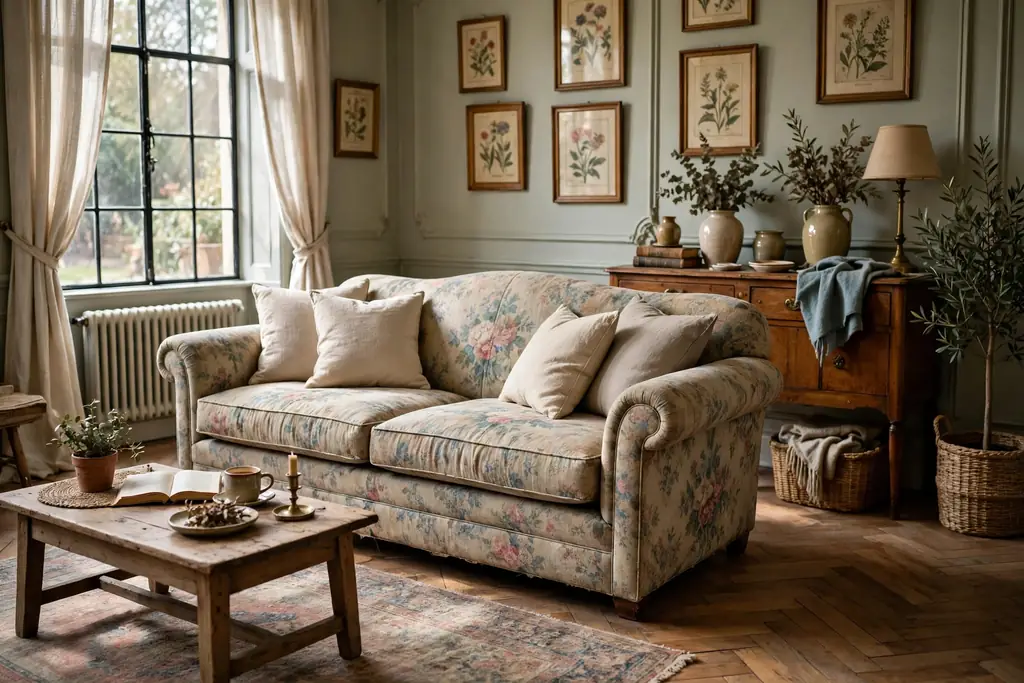
A rolled-arm sofa in a faded floral fabric sets a vintage tone at once, without needing a room full of antiques. The rolled arms and soft skirt or short turned legs give the sofa an old shape, while a faded print keeps it gentle rather than loud. This suits a room where the sofa is the main seat and the owner wants pattern without repainting or changing the walls.
Keep cushions plain in a colour pulled from the floral print, such as sage, dusty rose, or cream, so the sofa stays the main pattern. Check the frame and springs before buying an old sofa, and plan for washable or removable covers if the room gets daily use. If the floral feels strong, pair it with plain curtains and a plain rug.
2. Add a Leather Chesterfield Chair for a Reading Corner
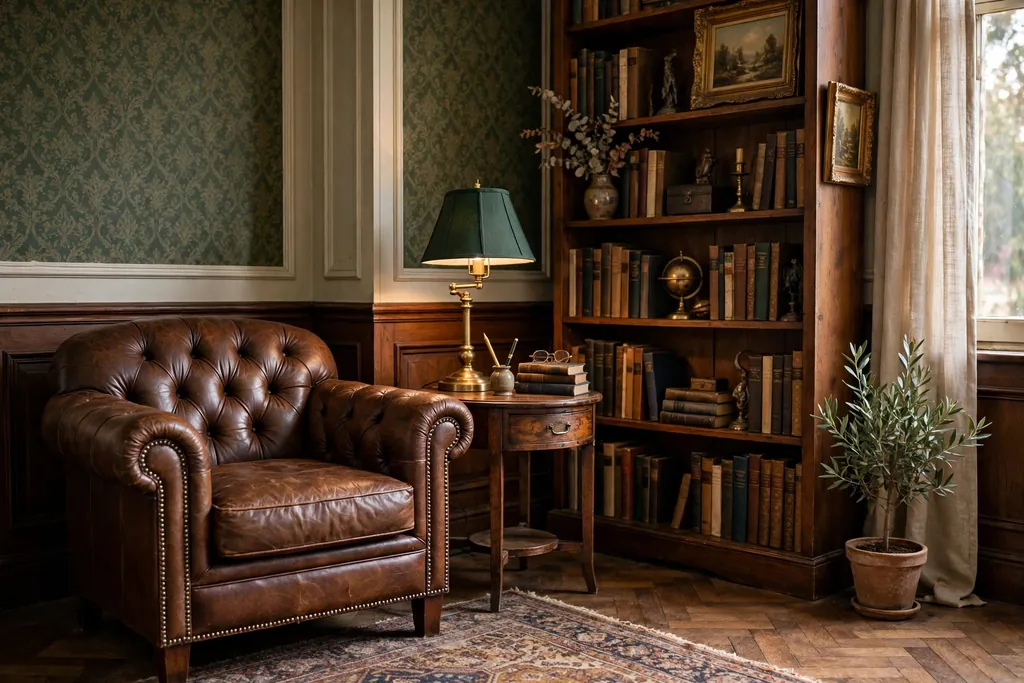
A leather Chesterfield chair, with deep buttoning and rolled arms, makes a strong reading corner in a small space. One chair is enough, since a full Chesterfield suite can dominate a room. The dark leather adds weight and age beside a lighter sofa, and it suits a corner by a window or a fireplace where someone will sit with a book.
Pair the chair with a small side table and a floor lamp behind one shoulder, so the corner works for reading, not just for show. Condition old leather as advised for its finish, and keep the chair out of strong direct sun, which can dry and fade it. A plain cushion in wool or linen softens the leather without hiding its shape.
3. Anchor the Seating Group With a Persian Rug
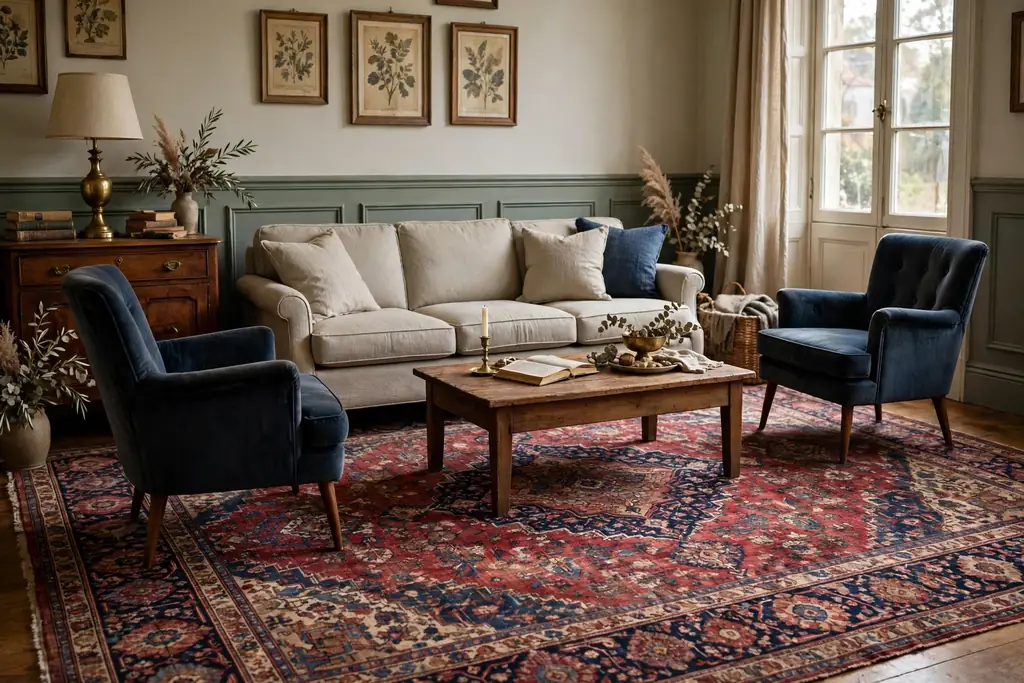
A Persian rug in deep reds, navy, and cream anchors a vintage seating group and hides daily wear well. Its detailed pattern gives the floor a story, while plain upholstery above it keeps the room calm. This suits a room with a wood floor that needs warmth and a clear zone for the sofa and chairs.
Size the rug so the front legs of the sofa and chairs rest on it, and use a rug pad to stop sliding and protect the floor. For more help with size and placement, see these living room rug ideas. If you buy a genuine old rug, check the back and edges, and plan for professional cleaning rather than a harsh home wash.
4. Use an Old Wooden Trunk as a Coffee Table
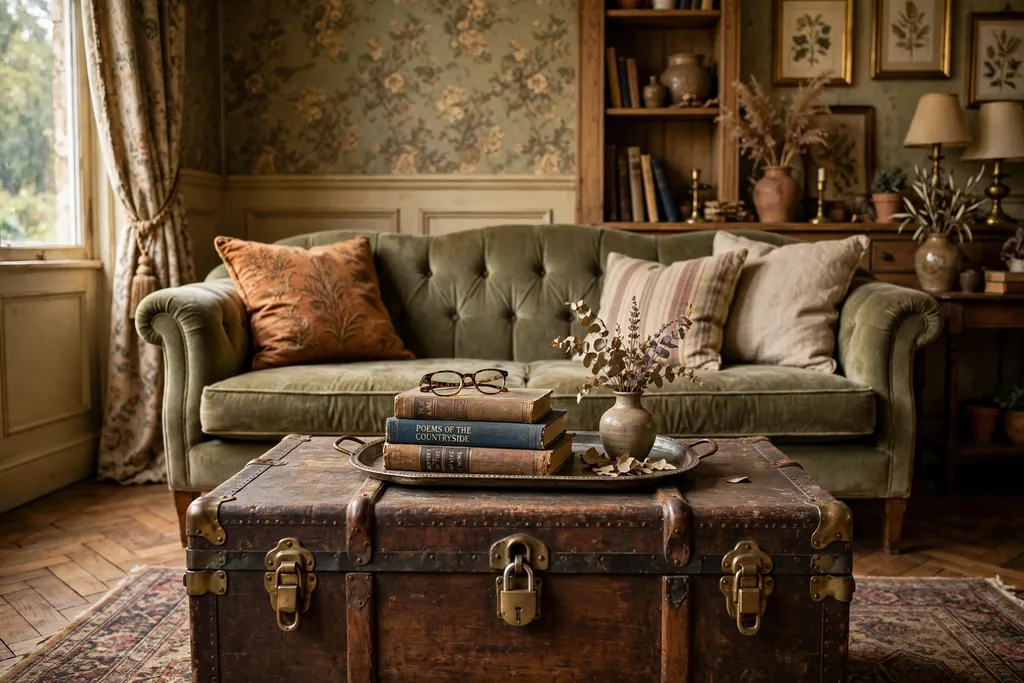
An old wooden trunk makes a coffee table with storage built in, which suits a vintage room that also needs a place for throws, games, or photo albums. Brass latches, leather straps, and worn wood give the table character, and a flat top holds a tray, a book, and a cup. This works best in a room where the seating group is low and relaxed.
Check that the lid stays open safely or remove the lid stay risk by keeping the trunk closed for daily use, and line the inside with a plain cloth if it holds fabric. Keep the top mostly clear, with one tray to gather small items, so the trunk stays useful. Measure the height against the sofa seat, since trunks vary more than standard tables.
5. Hang a Gilded Mirror Over the Fireplace
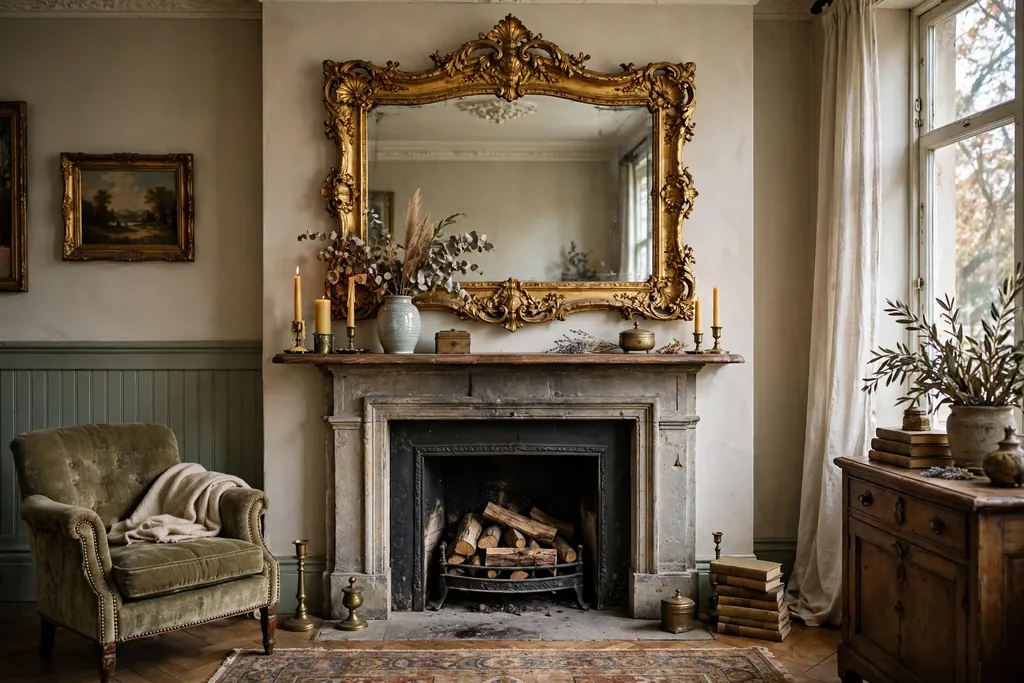
A large gilded mirror over the fireplace draws light into the room and gives a plain mantel a focal point. The ornate frame suits a vintage room, while the mirror itself keeps the wall feeling open, since it reflects the window or the seating group rather than adding another picture. This suits a room where the fireplace is the natural center.
Hang the mirror with fixings rated for its weight, and check what it reflects before fixing it in place: a window, a plant, or a pleasant wall reads better than clutter. Keep the mantel to a few simple objects, such as candles and one vase, so the frame stays the detail. Clean gilt gently, without harsh polish that can lift the finish.
6. Light the Room With a Crystal Chandelier
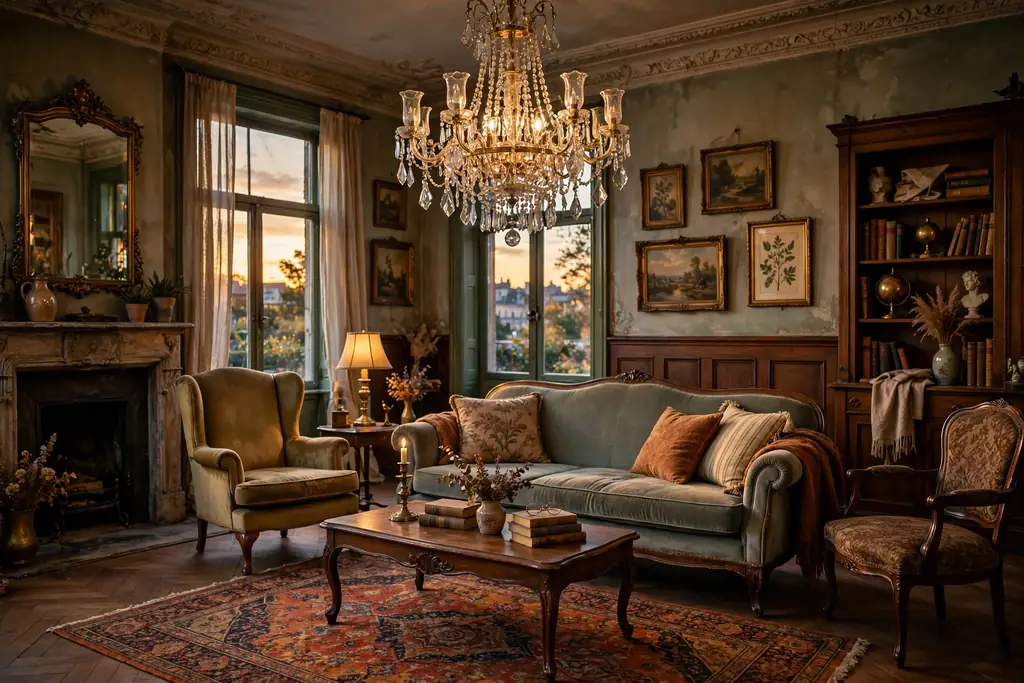
A crystal chandelier adds sparkle and a sense of occasion to a vintage living room, even when the rest of the furniture is simple. Hung over the seating group, it gives warm evening light and a clear center to the ceiling. This suits a room with enough ceiling height for a chandelier to hang clear of heads and sight lines.
Use warm bulbs and a dimmer, so the light can shift from bright daytime use to a soft evening glow. Keep the rest of the ceiling plain, and pair the chandelier with lower lamps, so the room is lit at more than one height. Dust the drops now and then, since crystal shows dust faster than a plain shade.
7. Build a Gallery Wall From Mismatched Vintage Frames
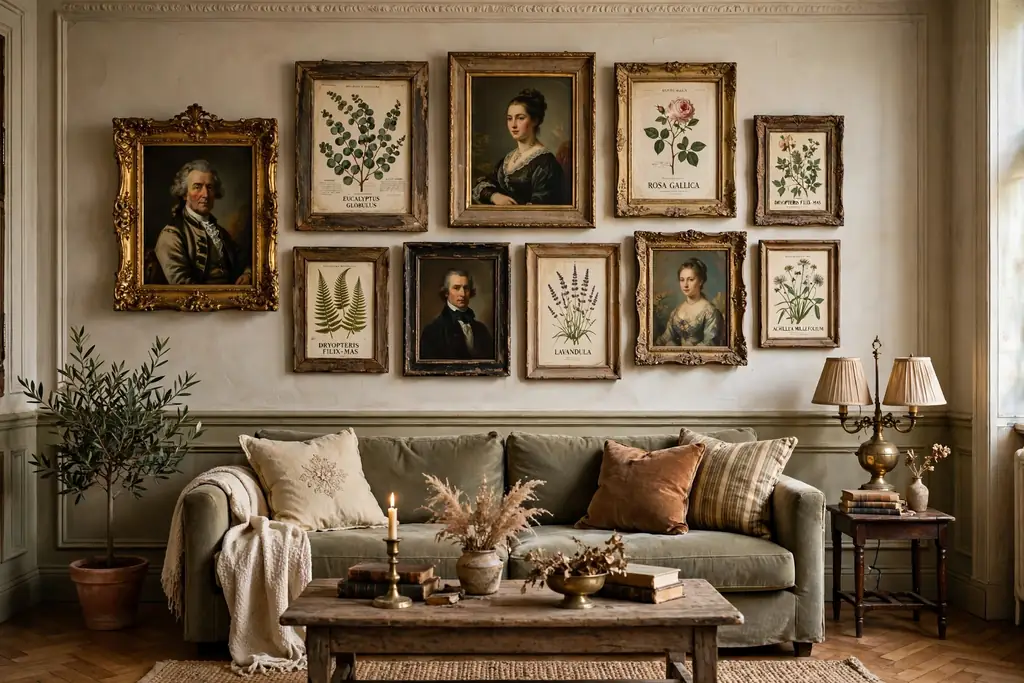
A gallery wall in mismatched vintage frames, in gilt, dark wood, and painted finishes, suits a vintage room better than a row of identical frames. Mix oil portraits, botanical prints, old photographs, and small landscapes, and let the frames, rather than a strict grid, link the group. This suits a sofa wall or a hallway wall where one large picture would feel flat.
Plan the layout on the floor first, and hang the center of the group at eye level when seated. Keep the outer edges inside the width of the sofa below, and leave small gaps between frames so each piece can breathe. Use picture fixings rated for each frame weight, and check the group in daylight and lamplight before fixing every piece.
8. Store Everyday Items in an Antique Sideboard
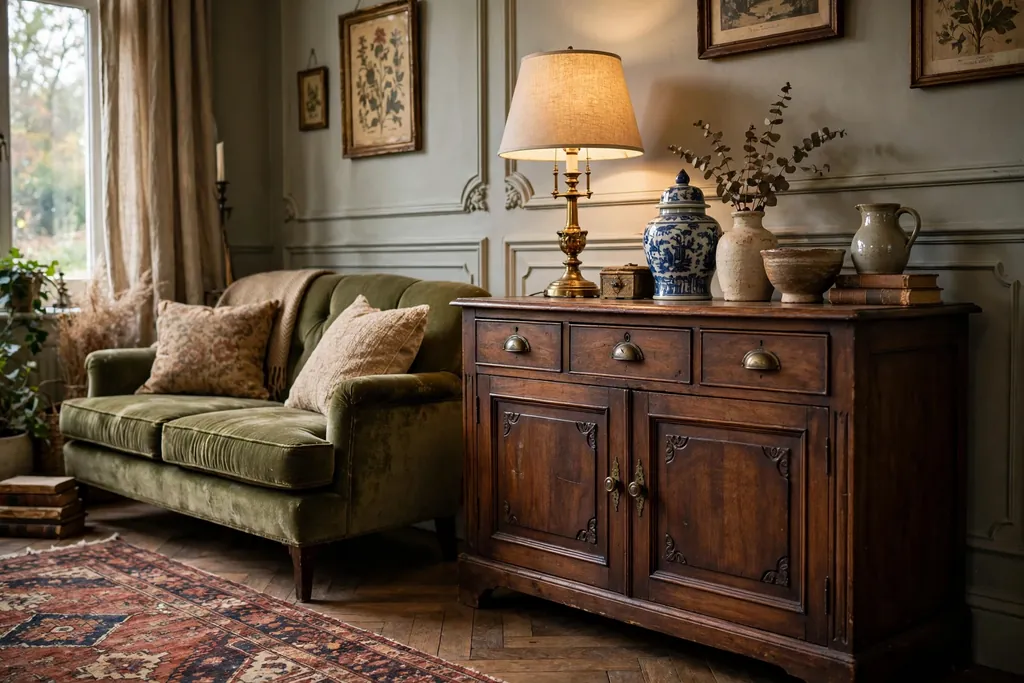
An antique sideboard with drawers and cupboards gives a vintage living room closed storage for items that do not suit open shelves, such as chargers, games, and spare throws. Dark wood, brass handles, and panelled doors add age to a wall, while the top gives a place for a lamp and a few display pieces. This suits a room that needs storage but cannot spare floor space for a large cabinet.
Open every drawer and door before buying, and check for a musty smell, loose joints, and drawers that stick. Keep heavy items low, everyday items at hand height, and the top to a lamp, one vase, and a small dish, so the sideboard stays useful rather than becoming a display shelf. Anchor a tall piece to the wall following the maker instructions where needed.
9. Paper One Wall in a Muted Damask or Toile Pattern
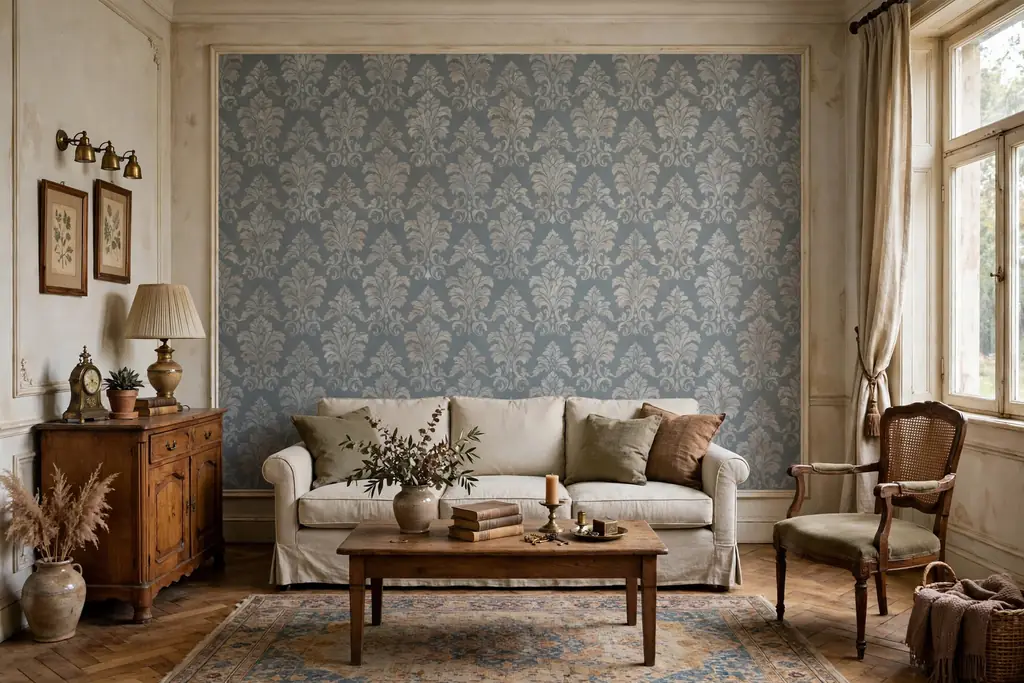
One accent wall in a muted damask or toile pattern gives a vintage room depth without covering every wall in pattern. A soft colour, such as sage on cream or dusty blue on pale grey, reads as texture from a distance and as detail up close. This suits a sofa wall or a fireplace wall where plain paint feels flat.
Keep the other walls plain in a colour pulled from the paper, and keep large furniture plain, so the pattern has room to show. If you rent, a similar effect can come from a large framed panel of vintage fabric hung on the wall, without pasting paper. Test a sample in daylight and lamplight, since pattern scale changes how a room feels.
10. Layer Heavy Velvet Curtains Over Sheer Lace
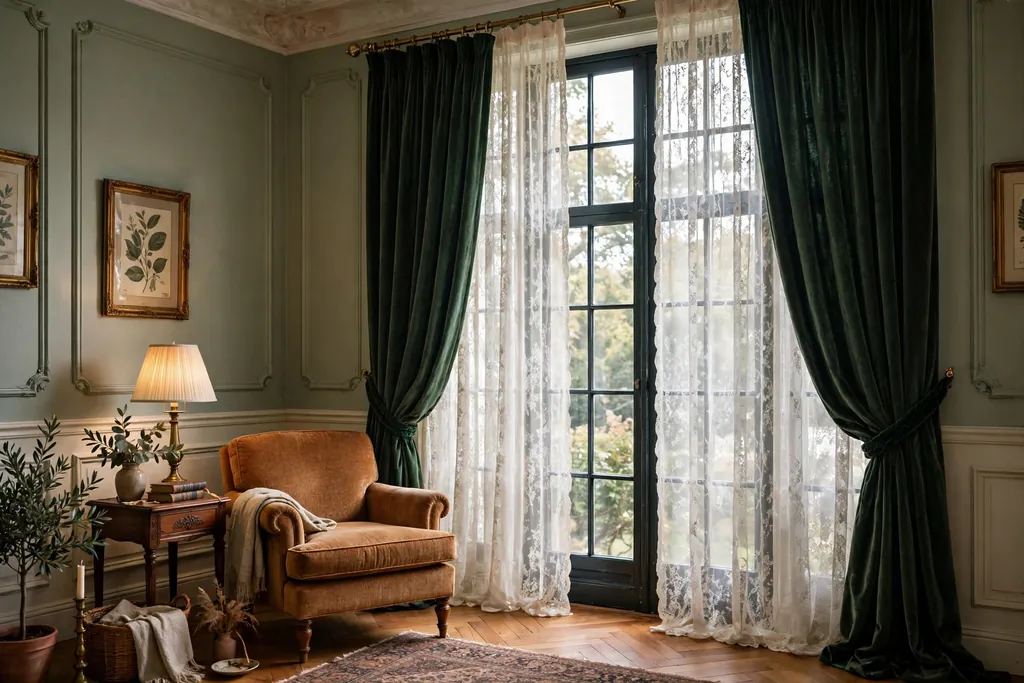
Heavy velvet curtains layered over sheer lace give a vintage window both privacy and softness. The lace filters daylight and gives daytime privacy, while the velvet adds warmth, colour, and a formal edge in the evening. This suits tall windows in a room used from morning to night.
Hang the rod close to the ceiling and wider than the frame, so the panels stack on the wall when open and the window looks larger. Choose velvet in a colour already in the room, such as a cushion or rug tone, and keep the lace plain. Wash or clean both layers as advised on their labels, since window fabric collects dust.
11. Warm the Evening With Brass Table and Floor Lamps
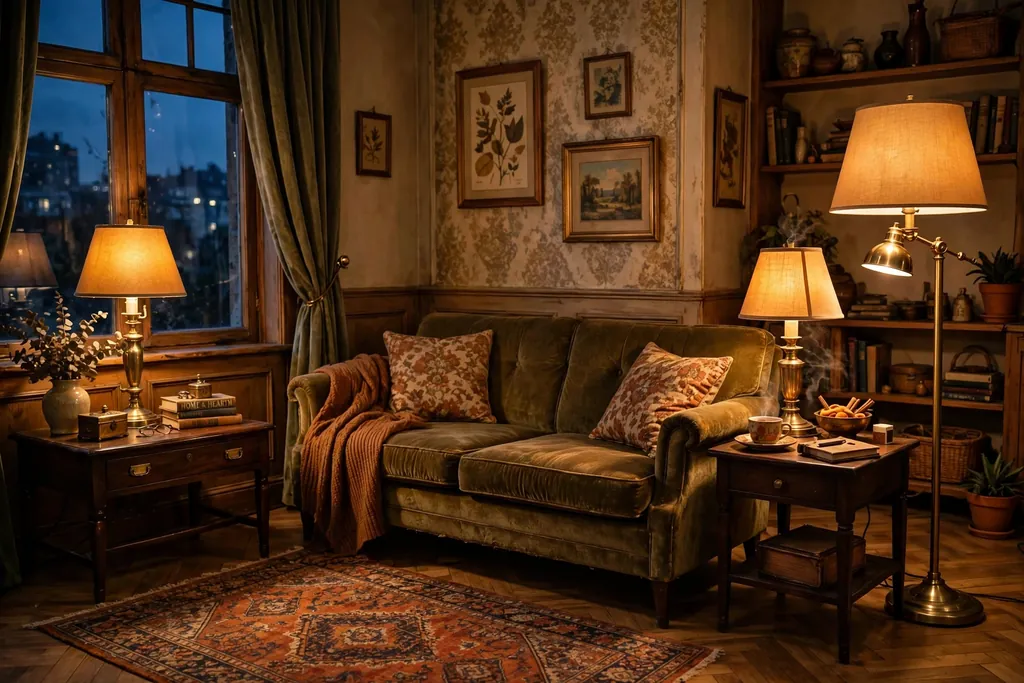
Brass table lamps and a brass floor lamp give a vintage living room warm, low light that suits old wood and soft fabrics. Aged brass, with a soft patina rather than a bright shine, reads as old rather than new, and linen shades keep the light gentle. This suits a room used in the evening for reading, talking, and relaxing.
Place a floor lamp behind the main reading seat and a table lamp on a side table or sideboard, so light sits at more than one height. Use warm bulbs, and keep shades plain, so the light itself, not the shade pattern, does the work. Check old lamp wiring before use, and replace worn cords and plugs through a qualified repairer where needed.
12. Style Open Shelves With Old Books, Brass, and Ceramics
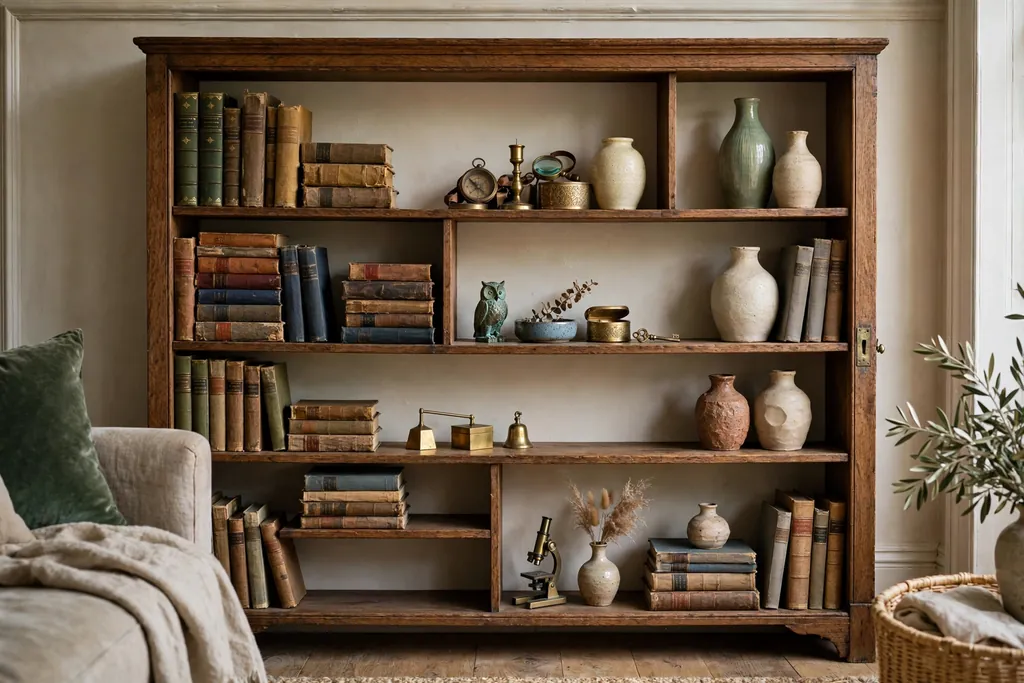
Open shelves styled with old clothbound books, small brass objects, and plain ceramics suit a vintage living room, since they show a collection without a glass door in the way. Group books by height, leave gaps between groups, and put heavier items low and lighter pieces higher. This suits one wall where a bookcase would block light or a walkway.
Start with the largest pieces, vary the shapes, and leave visible gaps, so the shelves read as collected rather than packed. For a calm base that lets old pieces show, the pale walls and simple storage advice in these Swedish living room ideas works well even in a vintage room. Anchor shelves into studs or with fixings suited to your wall type, and check the weight rating before loading them with books.
13. Make a Listening Corner With a Record Player

A record player on a wood cabinet, with vinyl records in a crate beside it, makes a listening corner that suits a vintage room better than a hidden speaker system. The cabinet gives the player a stable home, the crate keeps records easy to browse, and an armchair nearby turns listening into a seated activity. This suits a corner away from the television, where music can be the focus.
Keep the player level, clear of direct sun and heat, and give the cabinet a door or drawer for small accessories. Store records upright, not stacked flat, and handle them by the edges to limit marks. If the room is small, one armchair plus a small side table gives most of the same comfort with less floor space used.
14. Fit a Small Antique Writing Desk Into a Quiet Corner
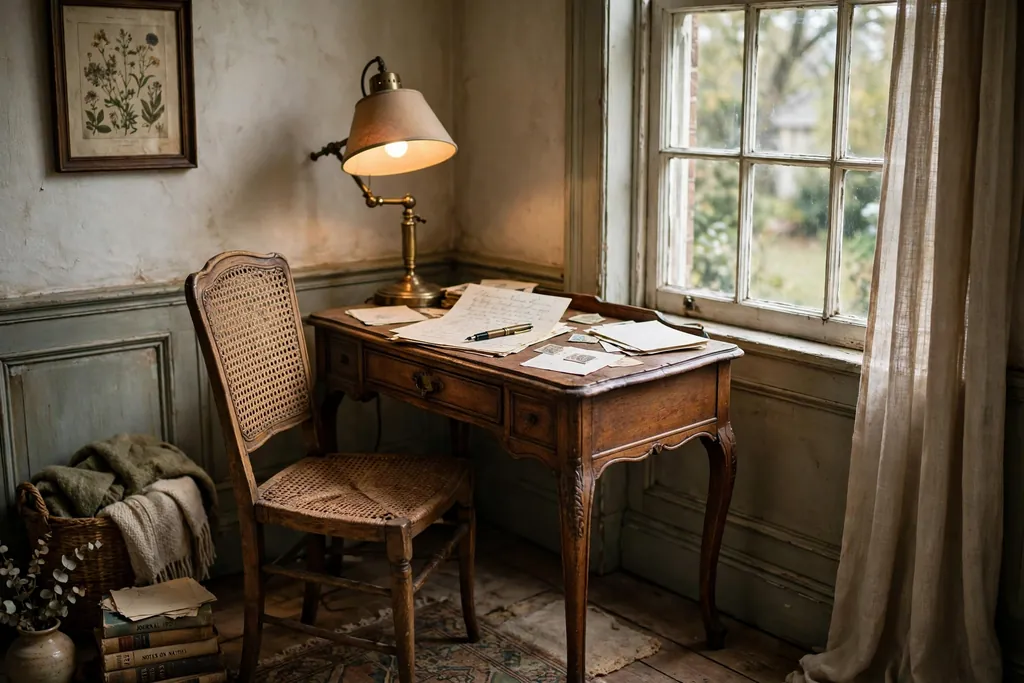
A small antique writing desk, with a drawer and a fold-down or flat top, fits a quiet corner of a vintage living room without needing a separate study. It gives a place for letters, a notebook, and a lamp, and its old wood and brass details add age to a wall that might otherwise stay empty. This suits a window corner where daylight helps for writing.
Keep the desk top mostly clear, with a lamp, a pen pot, and one small plant, so it stays ready to use. Check that drawers open smoothly and the desk sits level, and use a chair at the right height for the desk. If the desk is also used for a laptop, add a small tray for cables so the corner stays tidy.
15. Stack Vintage Suitcases as a Side Table
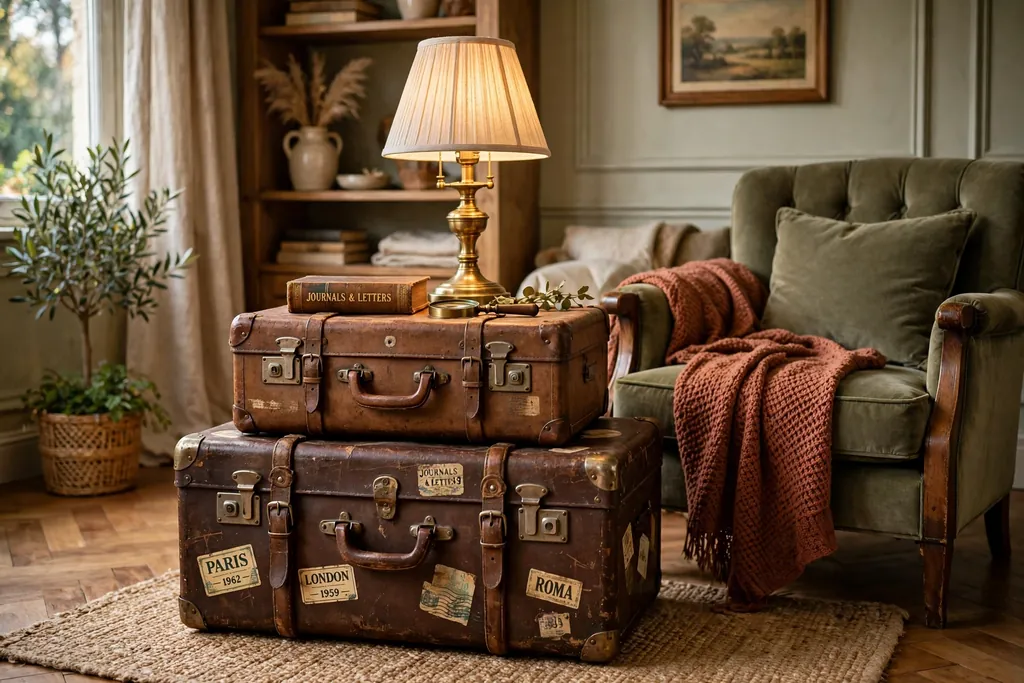
Two stacked vintage suitcases, in leather or hard-sided canvas, make a side table with a travel story and hidden storage. Placed beside an armchair, they hold a lamp and a book on top, while the cases themselves can store throws, photo albums, or seasonal items. This suits a room where a standard side table would feel too plain.
Choose cases in similar tones but different sizes, so the stack looks planned, and check that the stack is stable before placing a lamp on top. Keep the top case closed for daily use, and line the inside if it holds fabric. If the cases smell musty, air them outside and clean them as suited to their material before bringing them into the living room.
16. Hang a Woven Tapestry as a Soft Focal Point
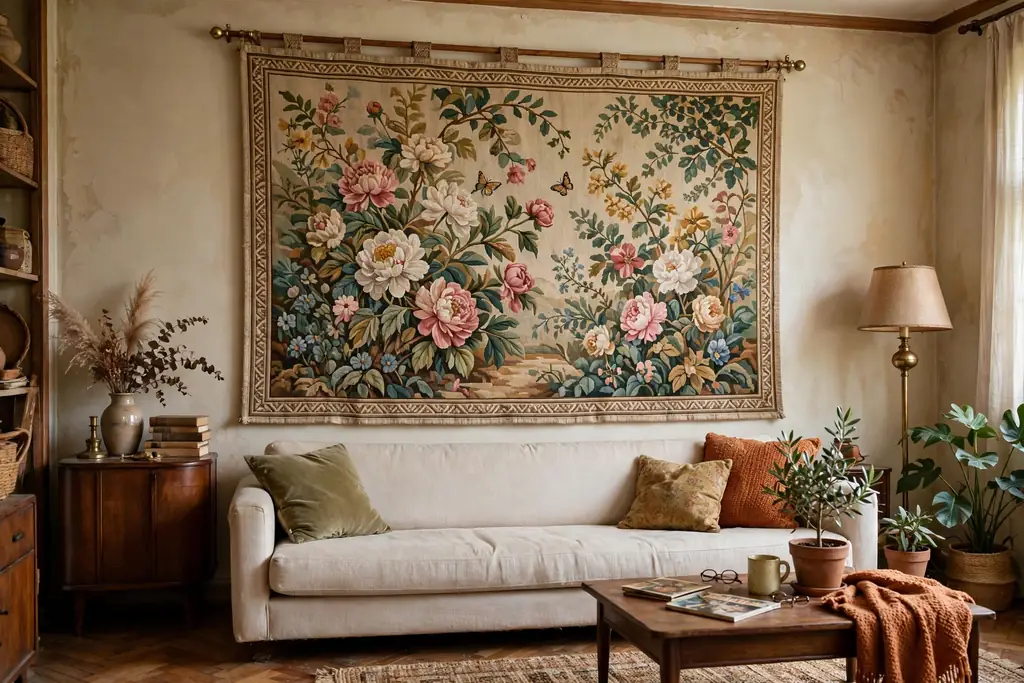
A large woven tapestry, with a floral or landscape scene, gives a vintage wall a soft focal point that a framed print cannot match. The textile texture suits old wood and velvet, and it absorbs sound a little, which helps in a room with hard floors. This suits a sofa wall where a large picture would feel formal or flat.
Hang the tapestry from a rod or a sleeve, rather than pinning it, so the weight spreads evenly and the fabric is not damaged. Keep it clear of direct sun, radiators, and damp walls, and vacuum it gently with a brush attachment now and then. Pair it with plain cushions in a colour pulled from the tapestry, so the wall and the sofa link.
17. Add a Rattan Peacock Chair for Texture
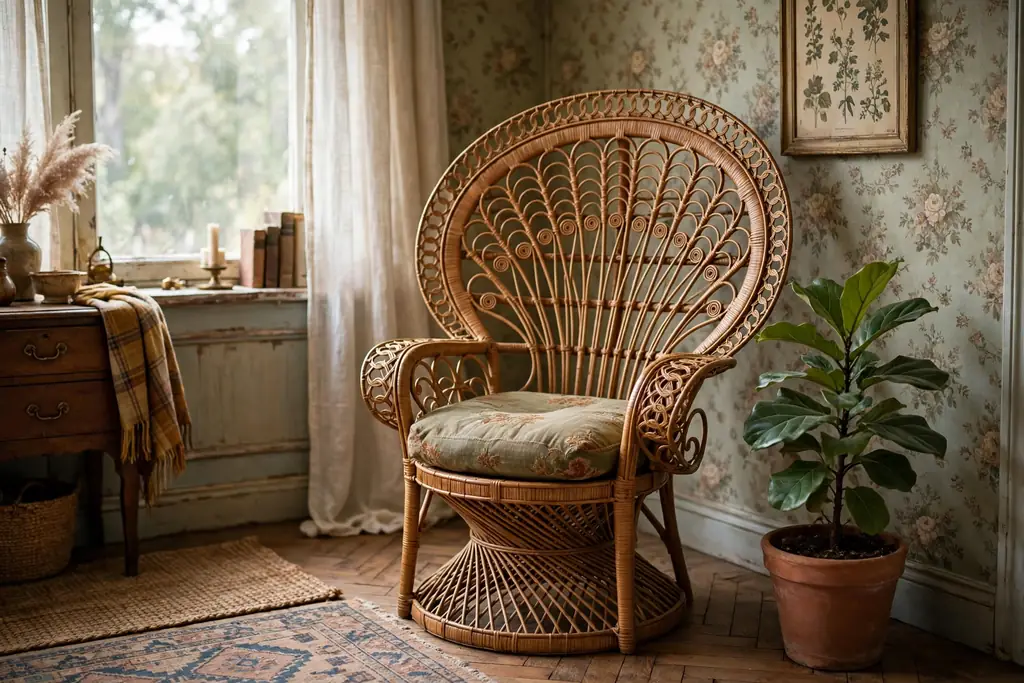
A rattan peacock chair, with its tall fanned back, adds texture and a lighter vintage note beside heavier wood and leather. It suits a bright corner or a bay window, where its open weave lets light through and does not block the view. A plain cushion makes it comfortable for sitting, while the frame itself stays the detail.
Check the weave for breaks and the joints for looseness before buying an old rattan chair, and keep it out of damp spots, which can weaken the fibres. Dust the weave with a soft brush, and pair the chair with a plant and a small side table, so the corner feels like a seat rather than a display piece. One rattan chair is usually enough in a room that already has a sofa and an armchair.
18. Display Blue and White Porcelain in a Cabinet

Blue and white porcelain plates and vases, grouped in a glass-fronted cabinet, give a vintage living room a collected display that stays tidy behind glass. The blue repeats well with cushions, a rug border, or a print elsewhere in the room, while white keeps the group from feeling heavy. This suits a wall where open shelves would gather dust.
Group pieces by shape, with taller vases at the back and plates on stands at the front, and leave gaps so each piece can be seen. Fix the cabinet to the wall where needed, and keep it clear of direct sun, which can fade any painted detail over time. If you use the pieces daily, keep everyday items on a lower shelf and display-only pieces higher.
19. Place a Wooden Rocking Chair by the Window
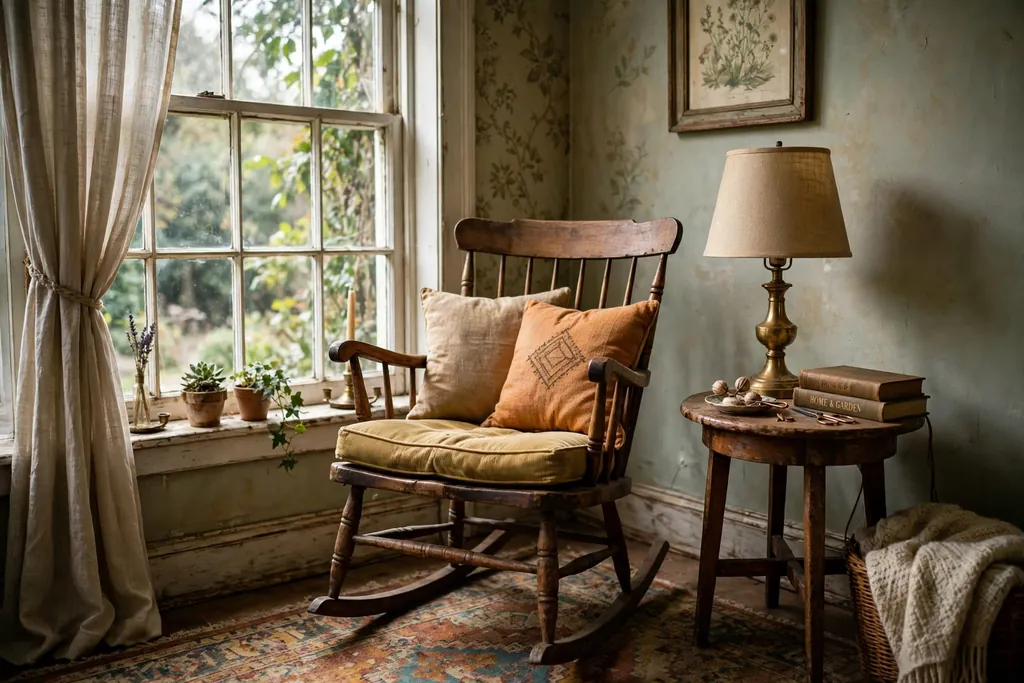
A wooden rocking chair by the window gives a vintage living room a slow, comfortable seat for reading, talking, or watching the street. The curved rockers and spindled back suit old wood floors and soft curtains, and the chair needs little floor space. This suits a window corner that stays empty because a large armchair would block light.
Check that the rockers are even and the joints are tight, and place a small rug under the chair to protect the floor and soften the rocking sound. Add a cushion in a plain fabric and a small side table for a cup, so the corner works for sitting, not just for show. Keep the chair clear of curtains and cords, so it can rock freely.
20. Use a Distressed Painted Armoire for Closed Storage
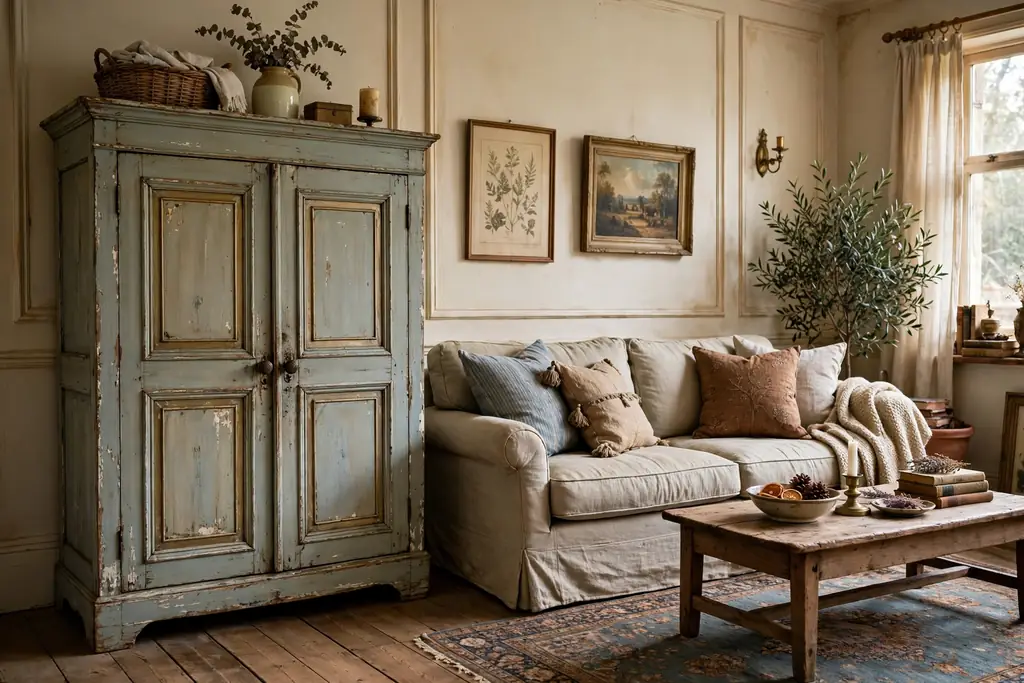
A distressed painted armoire, in cream, sage, or pale grey, gives a vintage living room tall closed storage for blankets, games, or media items, without the weight of dark wood. The worn paint and old handles add age, while the pale colour keeps a large piece from dominating the wall. This suits a room where a sideboard alone is not enough storage.
Check the doors, hinges, and interior shelves before buying, and plan what will live inside so the armoire earns its floor space. Keep heavy items low, and anchor a tall armoire to the wall following the maker instructions, especially in a home with children or pets. Pair it with plain walls and a simple rug, so the painted finish stays the detail.
21. Hang a Neat Row of Old Botanical Prints
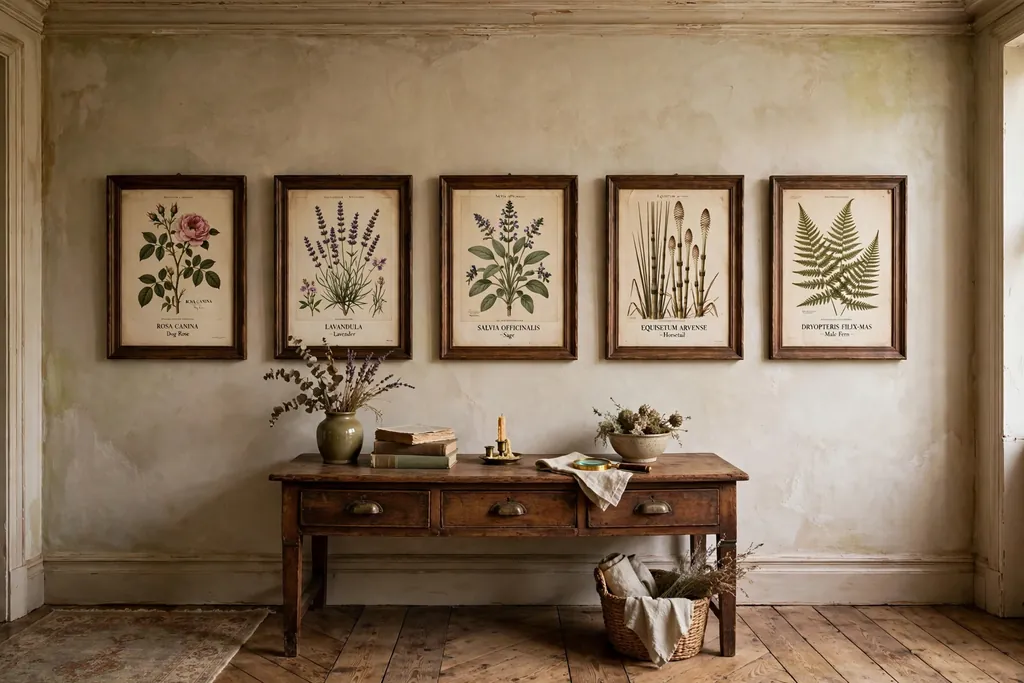
A neat row of old botanical prints, in dark wood frames with wide mounts, gives a vintage wall a calm, collected look. The repeated frame and mount link prints that may come from different sources, while the plant subjects add soft colour without a strong pattern. This suits a console wall, a hallway, or the wall above a sideboard.
Hang the row at eye level, with even gaps between frames, and check the line with a level before fixing every piece. Use prints with pale backgrounds and muted colours, so the row stays calm, and repeat one colour from the prints in a cushion or a vase nearby. If the wall is long, two rows of smaller prints can work, as long as the spacing stays even.
22. Style the Mantel With Aged Brass and Candlelight
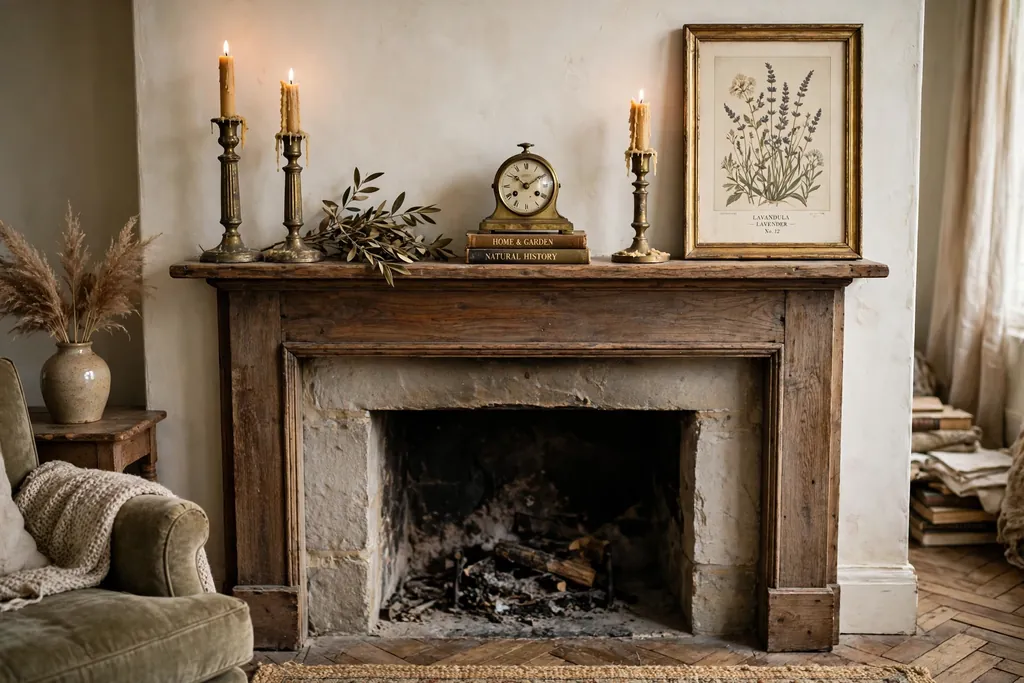
A mantel styled with aged brass candlesticks, candles, a small clock, and one framed print gives a vintage fireplace a finished look without clutter. The brass repeats the metal used in lamps and frames elsewhere in the room, while candlelight gives a warm evening glow. This suits a fireplace in use or not, since candles give a quiet purpose to an unused opening.
Keep the mantel to a few pieces, with the tallest at the ends or in the center and smaller pieces between, so the arrangement reads as a group. Use sturdy holders that cannot tip easily, keep candles clear of curtains, throws, and paper, and never leave them burning in an empty room. Battery candles give a similar glow where real flames are not practical, such as a shelf near books.
Conclusion
A vintage living room works when old pieces are chosen for daily use, not just for show. Start with one large piece you love, add a rug and light that suit it, and repeat one colour or one metal to link pieces from different eras. Check old furniture well, keep walking routes clear, and leave one surface empty, so the room stays easy to live in. Then add small layers over time, a print, a lamp, a throw, and let the room grow into a collected space that feels personal. Save this post on Pinterest to keep the ideas close when you are ready to change one corner at a time.
FAQs
1. How do I mix vintage furniture with modern pieces without the room looking messy?
Let one vintage piece lead, such as a sofa or a sideboard, and keep the other large pieces plain and low. Repeat one colour or one metal in three places, and keep the walls and rug calm, so old and new link rather than compete.
2. What should I check before buying vintage living room furniture?
Sit on seating, open every drawer and door, look under the base, and check joints, legs, and springs. Smell for damp or smoke, check for woodworm holes or loose veneer, and measure doorways and the room before you buy, since old pieces vary in size.
3. Can a vintage living room work in a small space?
Yes, if you choose one or two vintage pieces rather than a full suite. A single Chesterfield chair, a trunk coffee table, or a vintage rug can give the look, while plain walls, a clear floor, and closed storage keep a small room feeling open.
4. How many patterns can a vintage living room hold?
One strong pattern at a time works best, such as a floral sofa, a Persian rug, or a patterned wall. Keep the other patterns small or plain, and repeat one colour from the main pattern in cushions or art, so the room feels planned.
5. How do I care for old wood, leather, and brass in a living room?
Clean each material as suited to its finish, and avoid harsh cleaners on gilt, veneer, or old leather. Keep old pieces out of strong direct sun and damp spots, condition leather as advised for its finish, and polish brass gently only where a shine is wanted, leaving a soft patina elsewhere.
6. Is it better to buy genuine vintage pieces or new pieces in a vintage style?
Genuine pieces often have better wood and joints, and they bring a worn finish that is hard to copy, but they may need repair and cleaning. New pieces in a vintage style are easier to size and maintain, and they suit items that get hard daily use, such as a sofa. Many rooms mix both: genuine pieces for display and storage, and new pieces for daily seating.