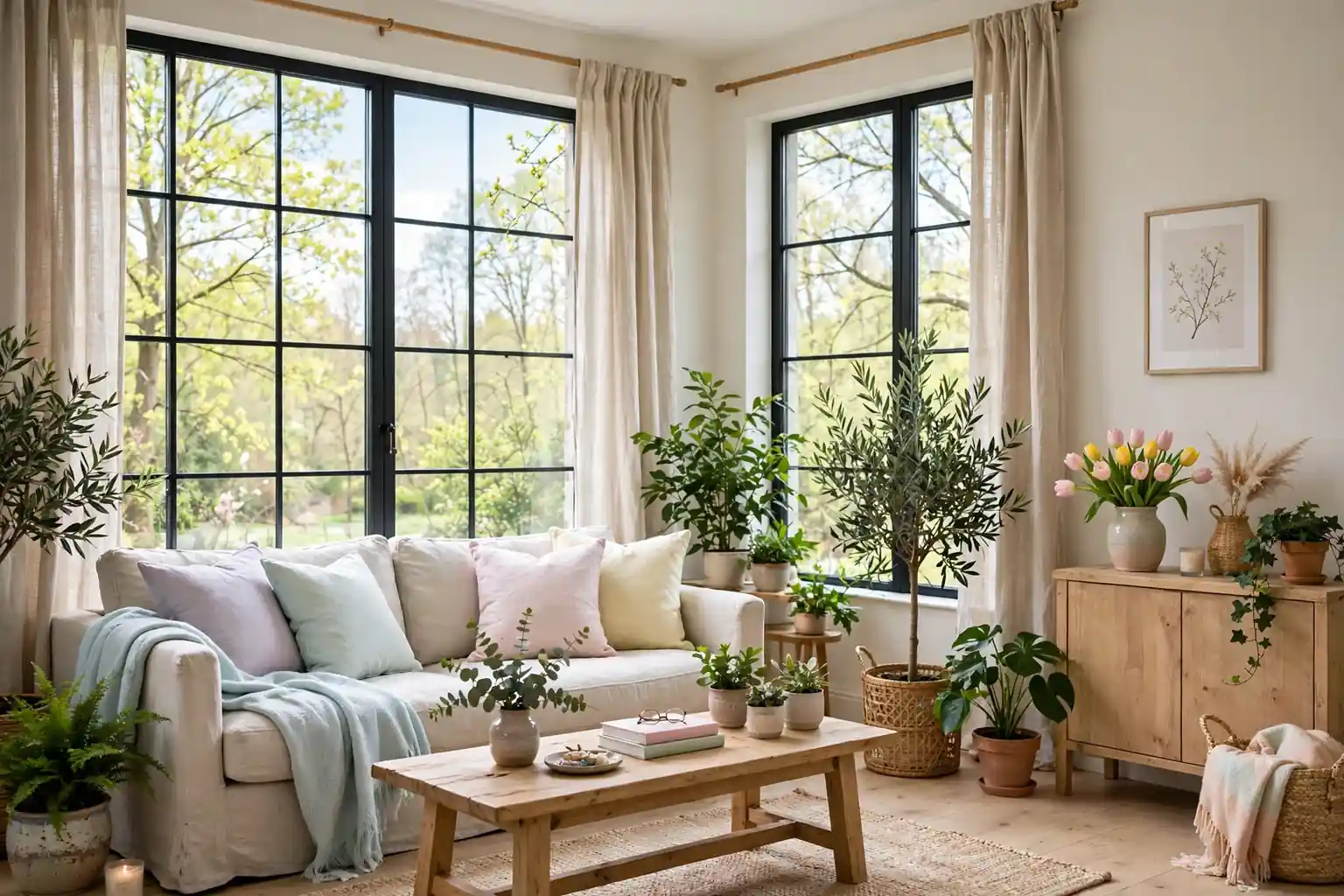
A spring refresh does not need new furniture or a full redecoration. It needs lighter layers, more daylight, and a few personal details that make the room feel current again after winter. Swap one heavy textile, bring in green life, move a chair toward the light, and the whole room can feel brighter without a large budget or a long project list. These 26 spring living room refresh ideas cover windows, walls, seating, storage, light, and small seasonal details, so you can pick the changes that suit your room, your light, and the way you actually live in it. Start with light and one comfortable seat, then add color and plants where they will be seen daily.
Key Takeaways
- Start with light: lighter curtains, clear windowsills, and a mirror placed to bounce daylight do more than a new decoration.
- Keep one calm base and change the small layers: cushion covers, throws, and art are the easiest spring swaps.
- Add green life at more than one height, with floor plants, shelf plants, and a small arrangement on the table.
- Give every seasonal swap a storage home, so winter pieces are packed away rather than piled in a corner.
- Repeat one or two spring colors in three places, such as a cushion, a vase, and a print, so the room reads as planned.
- Pick one idea, live with it for a few days, and add the next change only after the first one feels right.
1. Light Linen Curtains in Place of Heavy Drapes
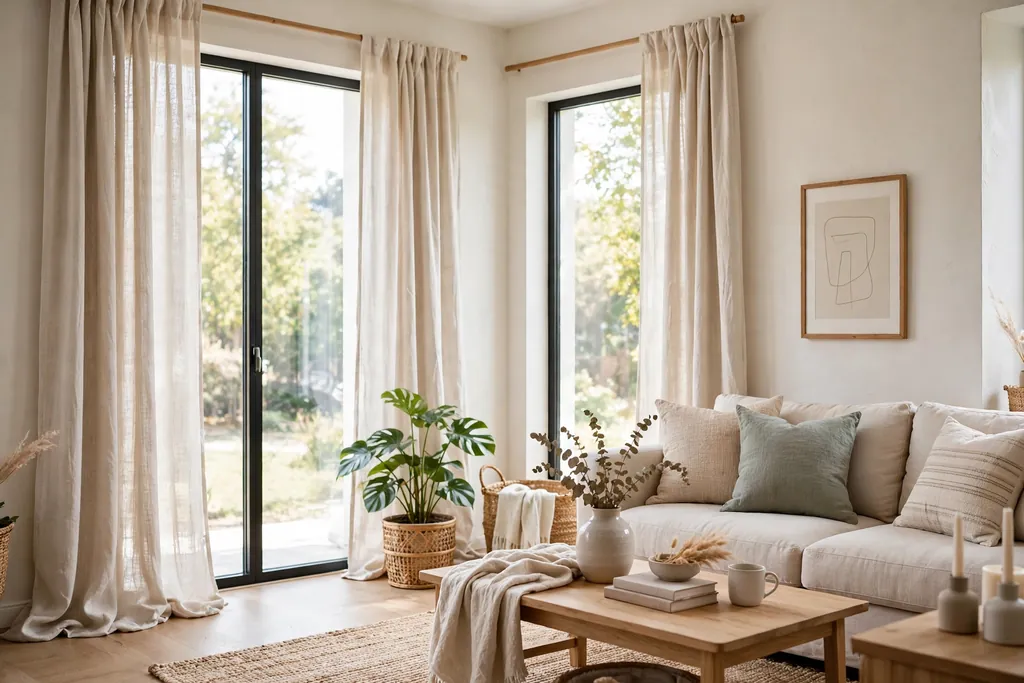
Swap heavy winter drapes for light linen curtains that let daylight filter in while still giving daytime privacy. Hang the rod close to the ceiling and let the panels fall to the floor, so the window looks taller and the room feels less closed in. White, cream, or pale grey linen suits most sofas, and a simple rod in wood or black metal keeps the focus on the light, not the hardware.
Wash or shake out the panels before hanging them, since pale linen shows dust after winter. If the room needs evening privacy, keep a heavier pair at the sides and draw only the light layer during the day. For a pale, light-led room built around linen and wood, these Swedish living room ideas show how sheer curtains, pale floors, and soft layers work together.
2. One Pale Accent Wall in Soft Sage
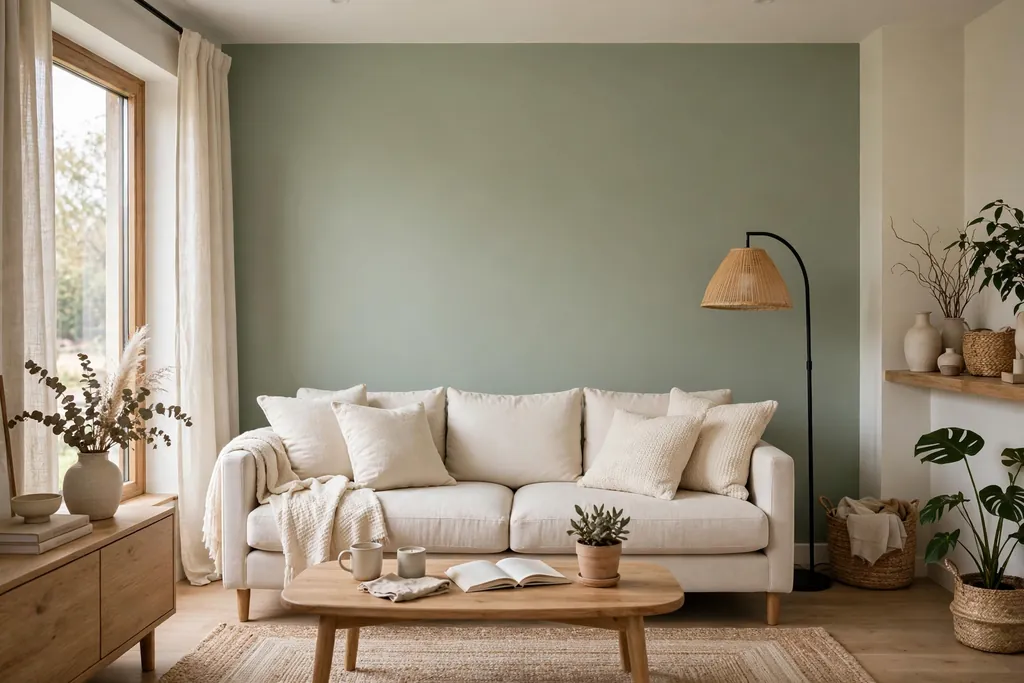
Paint one wall in soft sage to give the room a spring note without repainting the whole space. Choose the wall behind the sofa or the wall you see first when you enter, so the color sets the mood at once. Soft sage pairs well with cream, pale wood, and white trim, and it lets plants and pastel cushions stand out without competing with them.
Test two or three sage samples on the wall and check them in morning light and evening lamplight before painting the full wall. Keep the other walls calm, and repeat the sage once in a cushion or a vase so the accent wall feels linked to the rest of the room. If you rent and cannot paint, a large sage throw, a set of sage cushion covers, and a framed sage print give a similar note with no paint at all.
3. Light Woven Rug for the Seating Zone
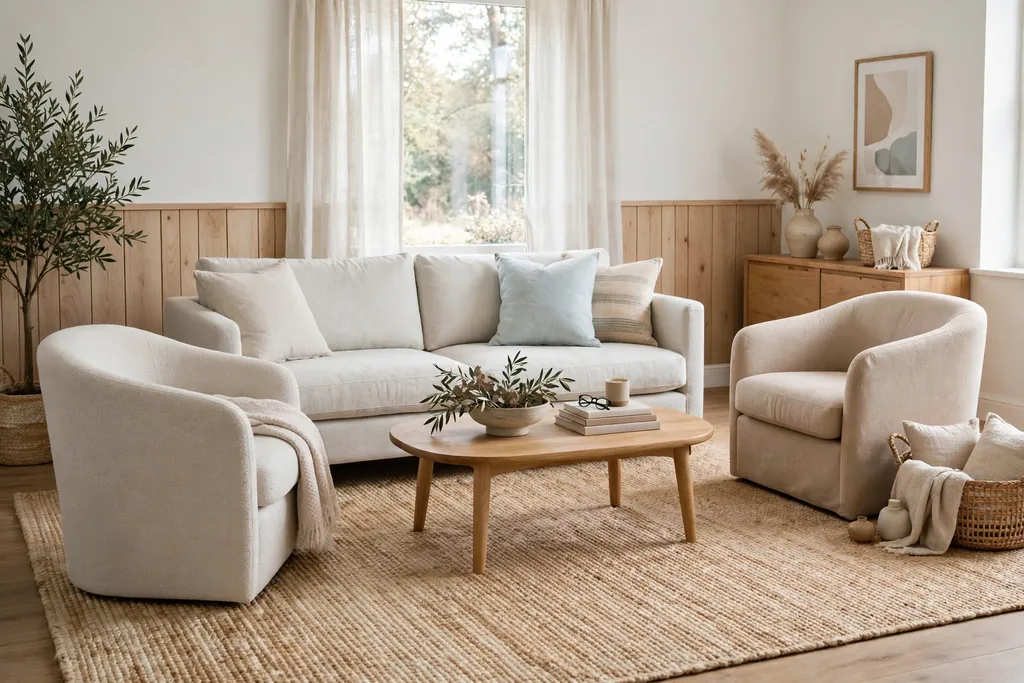
Swap a dark, heavy rug for a light woven rug in jute, cotton, or flatweave wool to lift the whole seating zone. A pale rug makes the floor feel brighter, defines where the sofa group sits, and gives bare feet a softer surface in warmer months. Size it so the front legs of the sofa and chairs rest on it, with a clear border of floor around the edges.
Tape the rug outline on the floor before buying, and walk the routes around it to check door swings and chair movement. For more help with size and placement, see these living room rug ideas. Vacuum a pale rug often, since it shows crumbs and dust faster than a dark one, and use a rug pad on smooth floors so it stays flat and does not slide.
4. Grouped Potted Plants at Three Heights
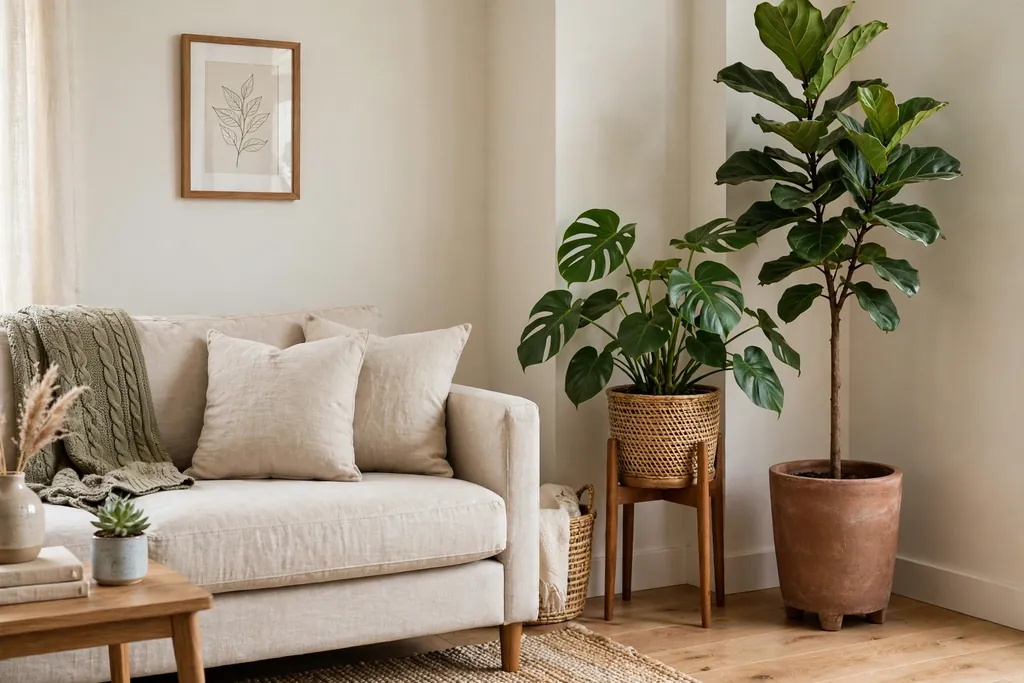
Group potted plants at three heights so green life fills the room without crowding one surface. Place a tall floor plant in an empty corner, a trailing plant on a shelf, and a small pot on a side table or coffee table. The mix of heights keeps the eye moving through the room, and it stops the plant corner from looking like a single crowded shelf.
Match each plant to the light it will actually get, and check the plant label before buying, since a bright window plant and a dim corner plant need different care. Use pots in cream, terracotta, or rattan so the group looks planned, and put saucers under pots on wood floors. Start with three or four plants rather than a dozen, so watering and care stay manageable through spring.
5. Low Fresh Flower Arrangement for the Coffee Table
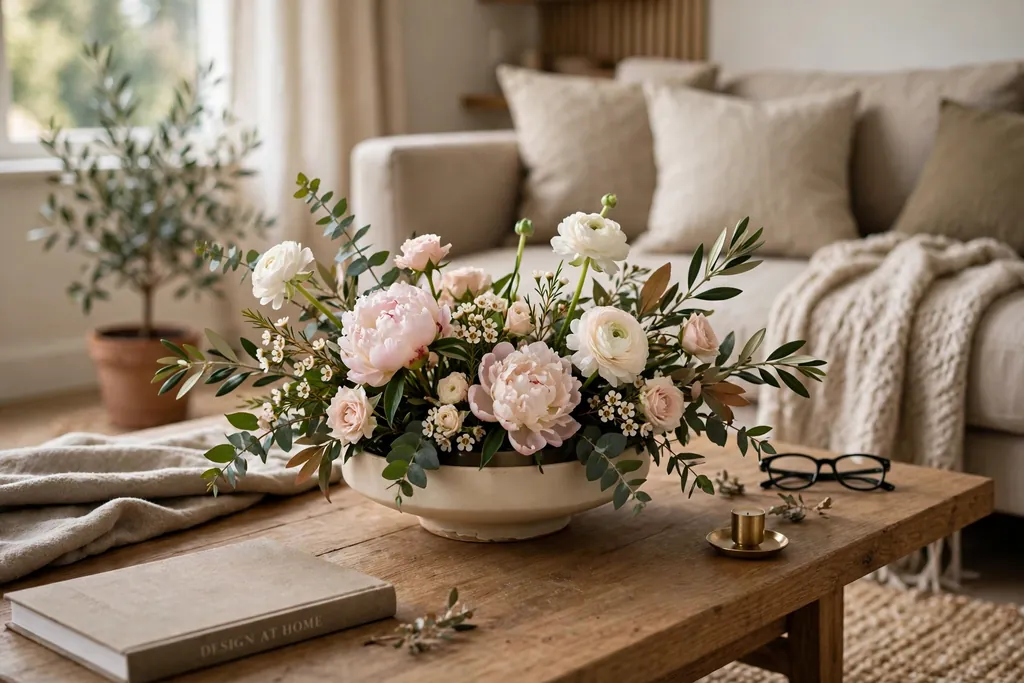
Set a low fresh flower arrangement on the coffee table as the spring centerpiece of the seating group. Keep it low enough that people can see across the table and talk without leaning around stems, and use a wide, shallow vase or bowl so the flowers spread out rather than standing in a tall bunch. Spring stems in soft pink, cream, and pale yellow suit most rooms, and one or two green stems add shape without extra color.
Change the water every couple of days and trim the stems when you refresh it, so the arrangement lasts longer and stays fresh looking. If fresh flowers are not practical every week, keep the same low vase and rotate in a small potted plant or a bunch of green stems, so the table keeps its spring focal point between flower buys.
6. Pastel Cushion Covers in Mixed Textures

Swap winter cushion covers for pastel covers in mixed textures, such as linen, cotton, and a light knit. Pastel pink, butter yellow, soft blue, and pale mint all suit spring, but pick two pastels at most and keep the rest neutral, so the sofa looks fresh rather than sugary. Vary the texture rather than adding more colors, since a linen cover beside a knit cover gives more interest than two identical covers in different pastels.
Choose covers you can wash, and rotate them through the season so the sofa does not look flat. Keep one plain cover in cream or oatmeal among the pastels, so the eye has a calm place to rest. Store the winter covers in a labeled bag, so the swap back in autumn takes minutes and the spring covers stay clean and ready for next year.
7. Lightweight Cotton Throw Instead of a Heavy Blanket
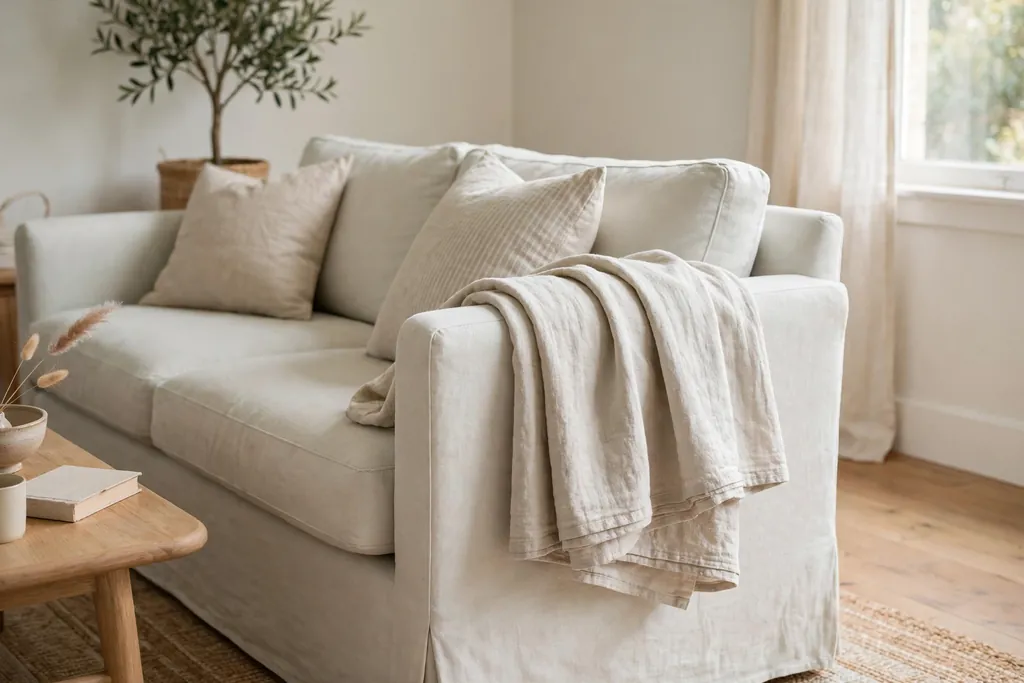
Replace a heavy winter blanket with a lightweight cotton throw in cream, pale stripe, or a soft spring color. A cotton throw is easy to wash, light enough for a cool spring evening, and neat enough to fold over one sofa arm without making the sofa look piled up. Choose a throw you will actually use, not one kept only for show, so it stays part of daily sitting.
Fold the throw rather than draping it loosely, so the sofa still looks tidy when no one is sitting there. Keep a second throw in a basket beside the sofa for guests, and wash both throws at the start of the season so they smell fresh. If the room still feels cool in the evening, pair the cotton throw with a warmer lamp glow rather than bringing the heavy blanket back out.
8. Restyled Coffee Table Tray
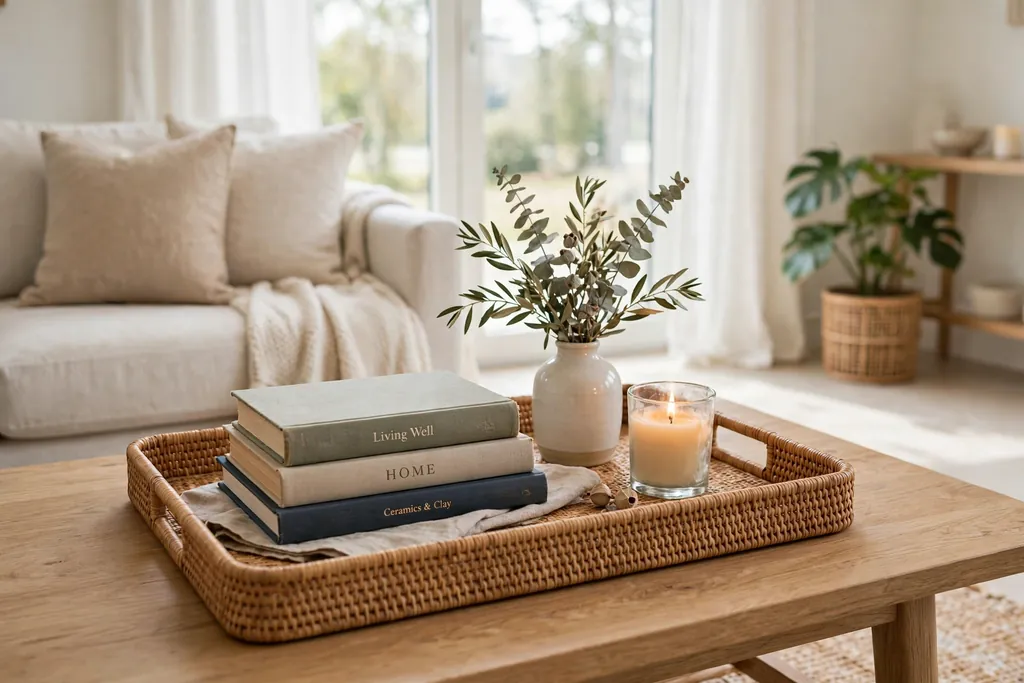
Restyle the coffee table with a tray that gathers the small items into one tidy group. Set a tray in wood, rattan, or painted metal on the table, then add three things only: a small vase or plant, a book or magazine stack, and a candle or small bowl. The tray keeps remotes, coasters, and small items from spreading across the table, and it makes clearing the table for food or work a one-move job.
Leave most of the table surface clear around the tray, so cups and books have room without crowding the display. Change one item in the tray with the season, such as swapping a winter candle for a small spring plant, so the table feels current without a full restyle. If the table is small, use a round tray and keep the group to two items, so the table still works for daily use.
9. Sofa Turned Toward Light and Conversation

Turn the sofa a few degrees, or move it closer to the window, so the main seat faces daylight and the people sitting in it. A sofa that faces the light feels brighter by day, and a sofa angled toward the chairs, rather than flat against one wall, makes conversation easier in the evening. Measure the new footprint with tape on the floor first, and keep the main walking route clear on at least one side.
If the sofa cannot move far, try swapping the chairs instead: move one chair toward the window and angle it toward the sofa, so the group still opens to the light. Keep a side table and a lamp within reach of the moved seat, so it works as a real sitting spot, not just a display corner. Small layout moves often change how a room feels more than a new decoration does.
10. Large Mirror Opposite the Window
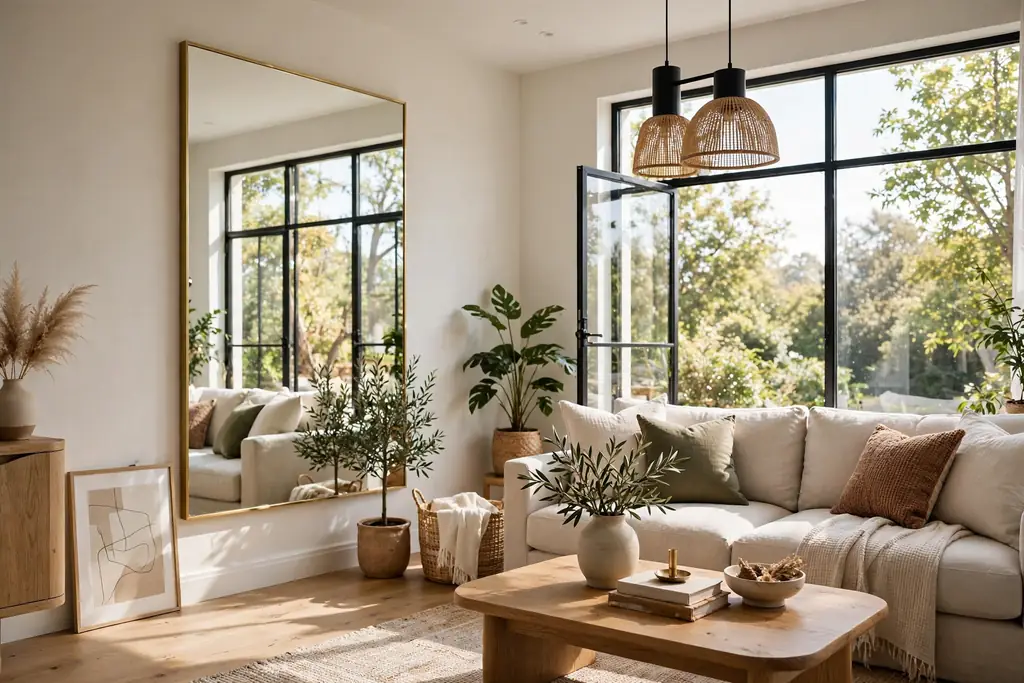
Hang a large mirror opposite or beside a window to bounce daylight deeper into the room and give the eye a second view of the space. Choose a mirror large enough to reflect something pleasant, such as the window view or a plant, rather than a blank wall or clutter. A simple frame in pale wood, white, or black keeps the mirror calm, and the reflected light makes a small or north-facing room feel wider.
Fix the mirror with hardware suited to its weight, and check for glare at different times of day before settling on a final position. If a large mirror feels too strong, try a pair of smaller mirrors hung together, or a mirror above a console table where it reflects the spring display below it. Keep the wall around the mirror simple, so the reflected view stays the detail.
11. Rattan Baskets for Everyday Tidy Storage
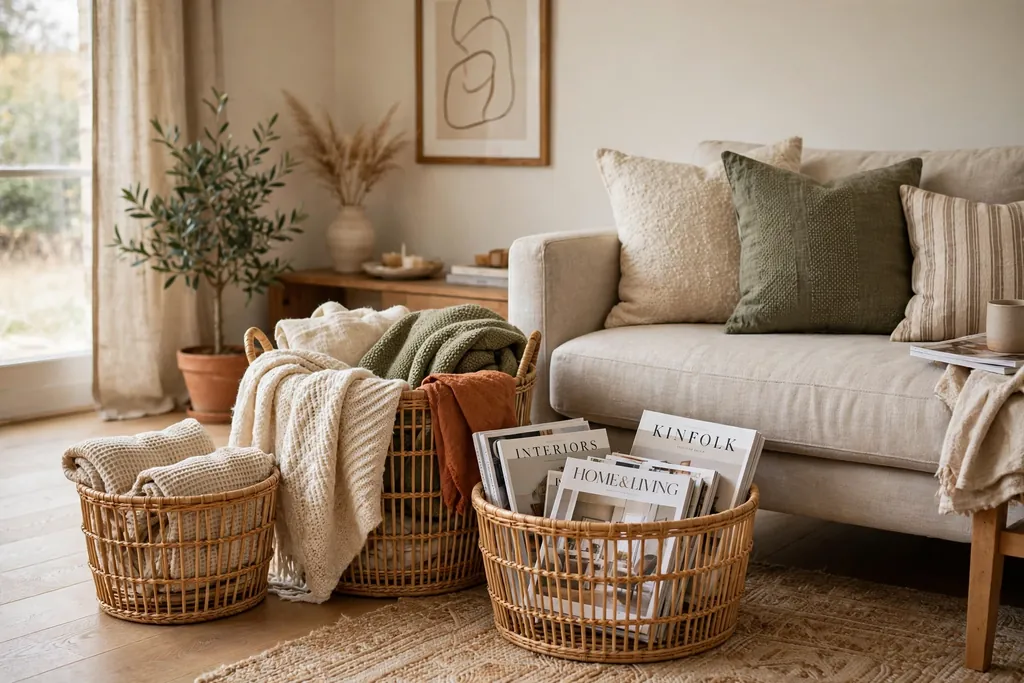
Set rattan baskets beside the sofa and under a side table to give throws, magazines, and small toys a home that still looks like part of the room. Baskets add natural texture, hide everyday clutter without a closed cabinet, and can be carried to another room for a quick tidy. One large basket for throws and one smaller basket for magazines are usually enough for a living room.
Choose baskets with handles, and line a basket used for paper with a plain cloth if the weave snags pages. Keep one basket empty on purpose, as a quick tidy basket for a ten minute reset before guests arrive. When everything has a home, tidying becomes putting things back rather than deciding where they belong, which keeps the spring refresh looking fresh after the first weekend.
12. Lighter Lampshades and Warm White Bulbs
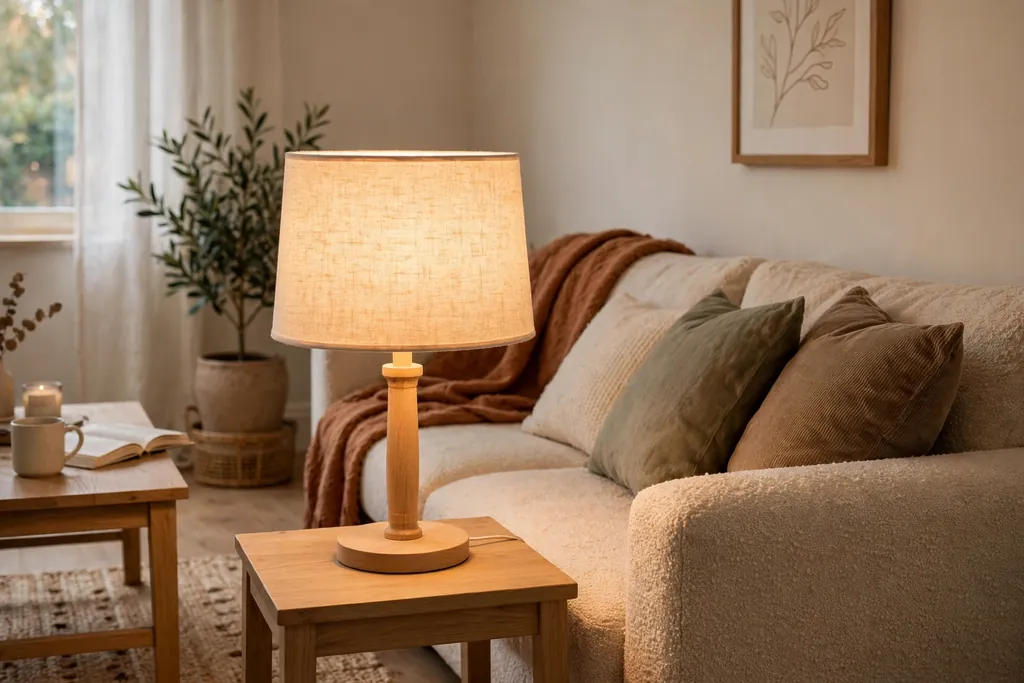
Swap dark or heavy lampshades for lighter shades in white, cream, or pale linen, and check that the bulbs give a warm white light rather than a cool, harsh one. Lighter shades let more light through, so the same lamp feels brighter in spring, and warm white light keeps a pale room feeling soft in the evening rather than cold. This is a low cost change that affects the room every evening, not just in daylight.
Clean the shades and wipe the lamp bases while you swap them, since dust dulls light more than most people expect. Keep the brightest lamp where you read or work, and use a dimmer or a lower wattage bulb for a small shelf lamp, so the room can shift from bright daytime to calm evening without rewiring. Avoid relying on a single ceiling light, which tends to flatten a room after dark.
13. Botanical Prints in Pale Frames
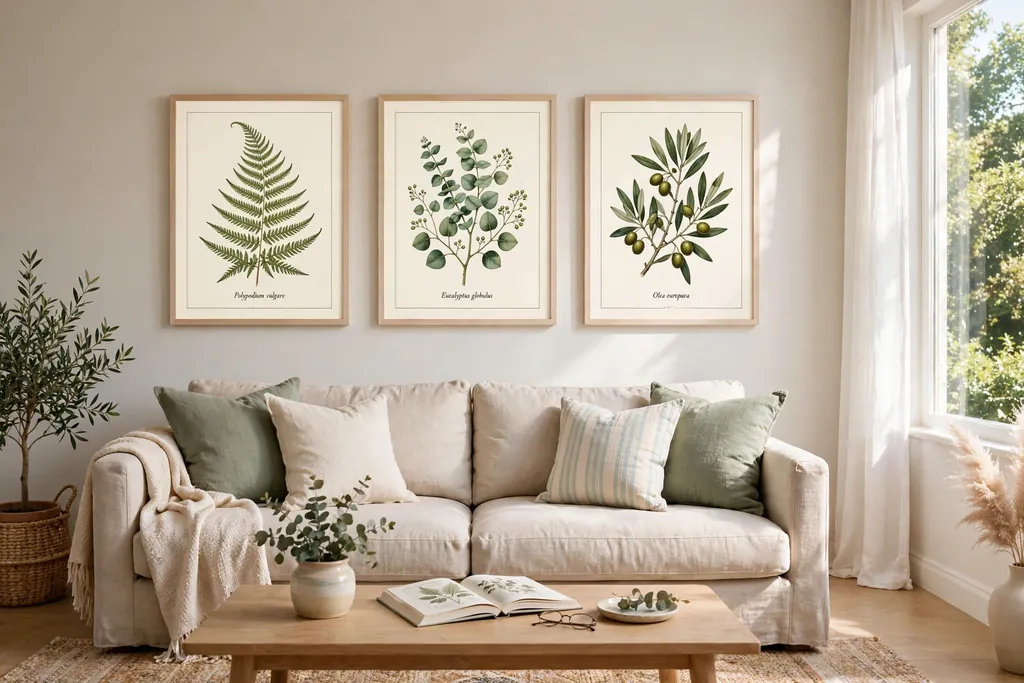
Swap dark or winter art for botanical prints in pale frames to bring a spring note to the walls without new furniture. Choose prints with pale backgrounds and soft greens, such as leaf studies, garden sketches, or pressed flower style art, and keep the frames consistent in pale wood or white so the group reads as calm rather than busy. Hang the center of the group at eye level when seated, and keep the outer edges inside the width of the sofa if the prints hang above it.
Start with three or four prints and add over time, rather than filling the wall in one go. Picture ledges are a renter friendly option, since they let you lean frames and swap them without new holes each time. Store the winter art flat and wrapped, so the spring prints can be swapped back without damage when the season changes.
14. Washable Light Slipcover for the Sofa
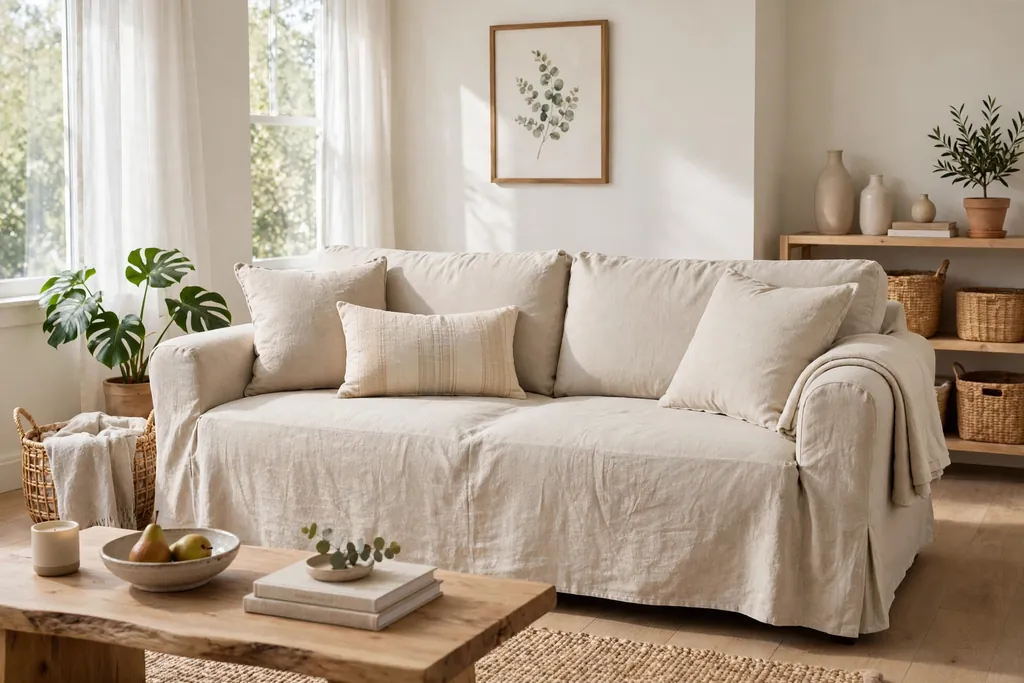
Fit a washable light slipcover to a dark or tired sofa for the fastest spring change a seating group can get. A slipcover in natural, oatmeal, or pale grey lightens the whole room, protects the sofa underneath, and can be washed when spring use leaves marks. Measure the sofa carefully before ordering, including arm height and seat depth, so the cover fits without constant tucking.
For more ideas on living with a grey sofa under a light cover, see these grey couch living room ideas. Keep the cushions simple in plain linen or a soft stripe under the cover, and let throws and one accent color add interest. If a full slipcover feels like too much, start with light cushion covers and a pale throw, and add the slipcover later if the room still feels dark.
15. Cane and Light Wood Accent Chair
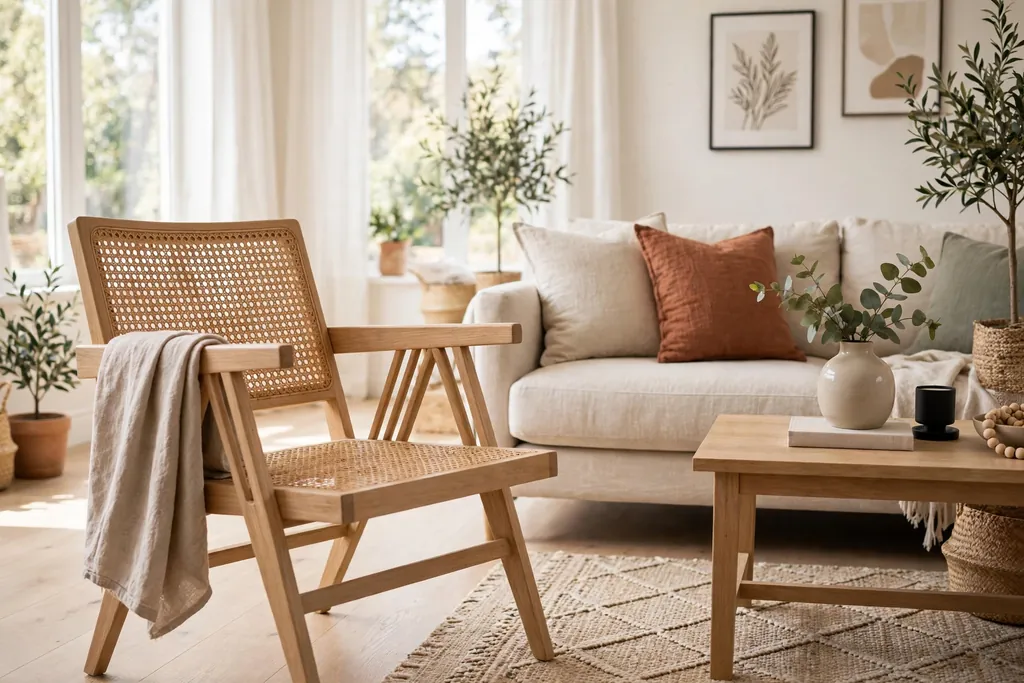
Add a cane and light wood accent chair as a second seat that brings spring texture without a large piece of furniture. Cane adds an open, airy weave that suits spring light, and light wood keeps the chair from looking heavy beside a sofa. Place it at an angle to the sofa, with a small side table beside it, so it becomes a real reading seat rather than a display piece.
Pair the chair with a plain cushion in linen, so the cane frame stays the detail, and keep a basket for a book and a throw beside it. Check secondhand shops for a cane chair with good joints, since an older frame often suits this look well. One accent chair is enough in most rooms, since a full set of cane pieces can make the room feel themed rather than refreshed.
16. Spring Display on Open Shelves

Restyle one run of open shelves with a spring display of books, plain ceramics, and a few small plants. Group books by height, leave gaps between groups, and put heavier items low and lighter ceramics higher, so the shelves read as storage with breathing room rather than a packed wall. A spring display needs only a few changes: swap a dark vase for a pale ceramic, add a small plant, and turn a stack of books to show a light colored spine.
Anchor shelves into studs or with fixings suited to your wall type, and check the weight rating before loading them with books. Keep the shelves on one wall, rather than spreading displays around the room, so the spring note stays focused. Leave one shelf partly empty on purpose, so the display looks intentional and there is room for a new spring find later.
17. Herb Pots on the Windowsill
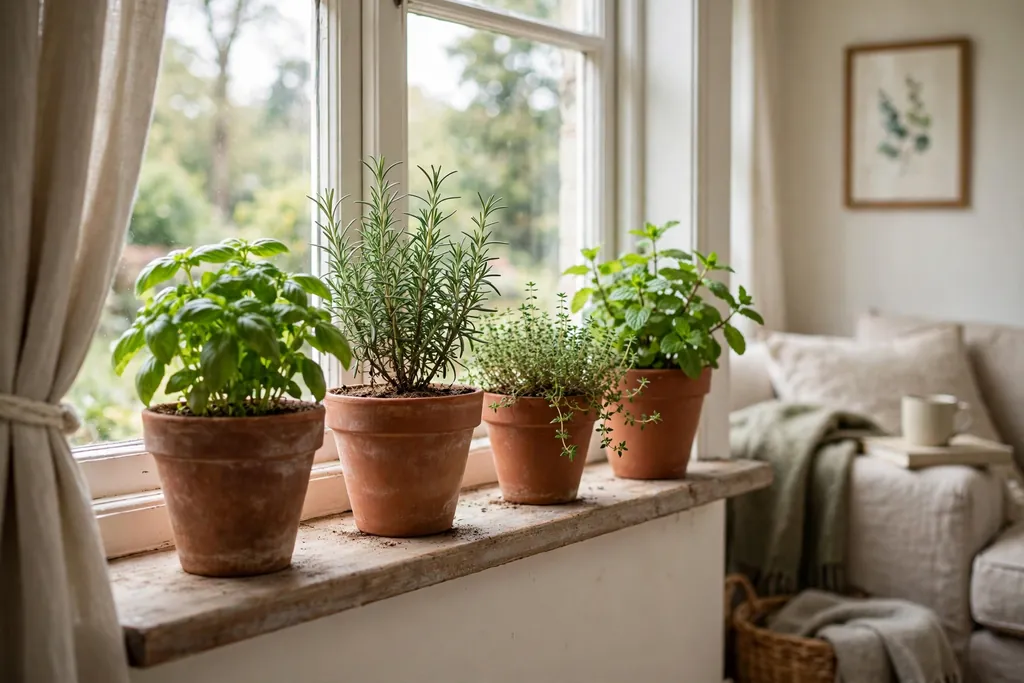
Set herb pots on the windowsill for green life that is useful as well as pretty. Basil, mint, chives, and parsley all grow well in a bright living room window, and their green leaves add a fresh note at eye level when you sit down. Use matching pots in terracotta or cream, and put saucers under them so water does not mark the sill.
Group herbs that need similar watering together, and turn the pots every few days so the plants grow evenly toward the light. Snip herbs for cooking rather than letting them grow tall and leggy, and replace any plant that stops thriving rather than keeping a tired pot on display. If the windowsill is narrow, use a small tray to hold the pots together and catch drips.
18. Cleared Windowsills for More Daylight
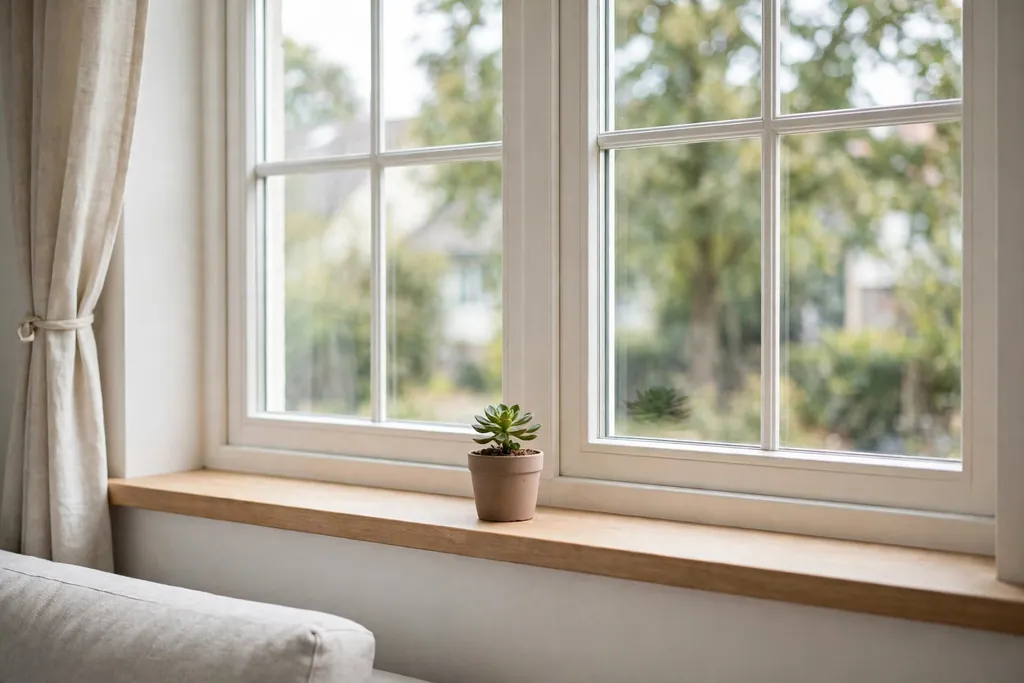
Clear the windowsills of winter clutter, heavy ornaments, and stacked items so daylight reaches the room without a barrier. A clear sill lets the window do its job, and it makes the room feel larger even before any new decoration is added. Keep at most one or two items per sill, such as a small plant or a single candle holder, and move the rest to a shelf or a basket.
Wash the inside of the windows while the sills are clear, since clean glass adds more light than most people expect. Check the window locks and seals at the same time, and note any repair needed before summer. A cleared sill also gives plants a better home, since they get light without competing with ornaments for space.
19. Woven Pendant Light Over the Seating Area
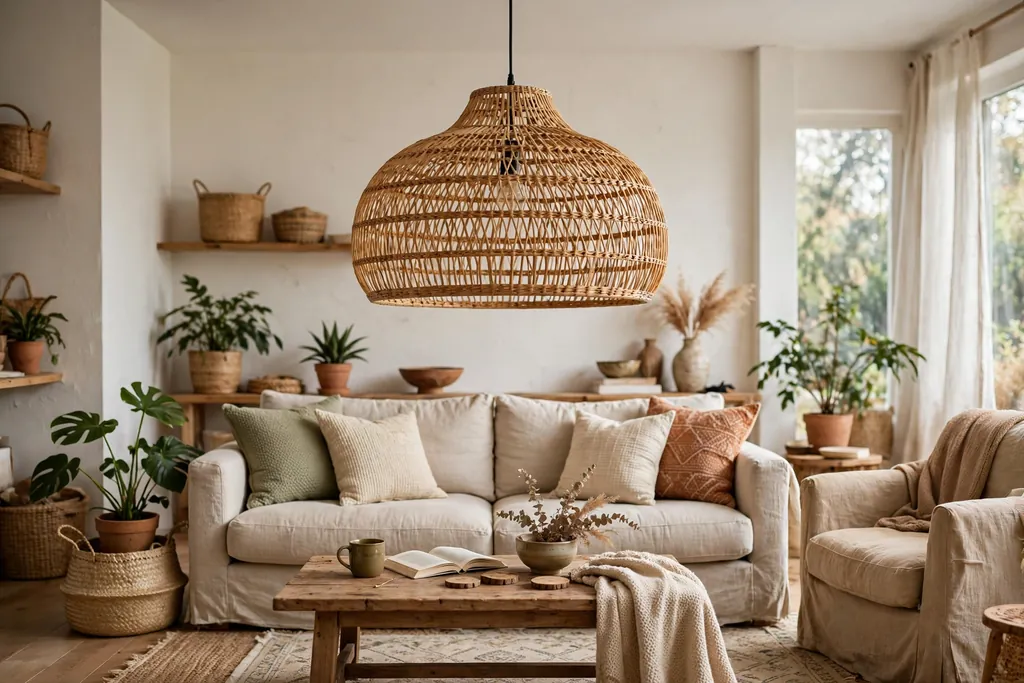
Hang a woven pendant light over the seating area, or over a side table, to add spring texture at ceiling level. A pendant in rattan, seagrass, or woven paper gives a soft, diffused glow, and its natural weave suits the lighter textiles and plants used elsewhere in a spring refresh. Hang it high enough that no one bumps it when standing, and low enough that it reads as part of the seating group rather than a distant ceiling fitting.
If wiring a new pendant is not practical, a plug-in pendant or a woven shade fitted to an existing cord can give a similar look with less work. For any electrical change, follow maker guidance and ask a professional if the wiring is old or unclear. Keep the pendant shade clean and dust free, since woven shades show dust in bright spring light.
20. Spring Styling for the Mantel
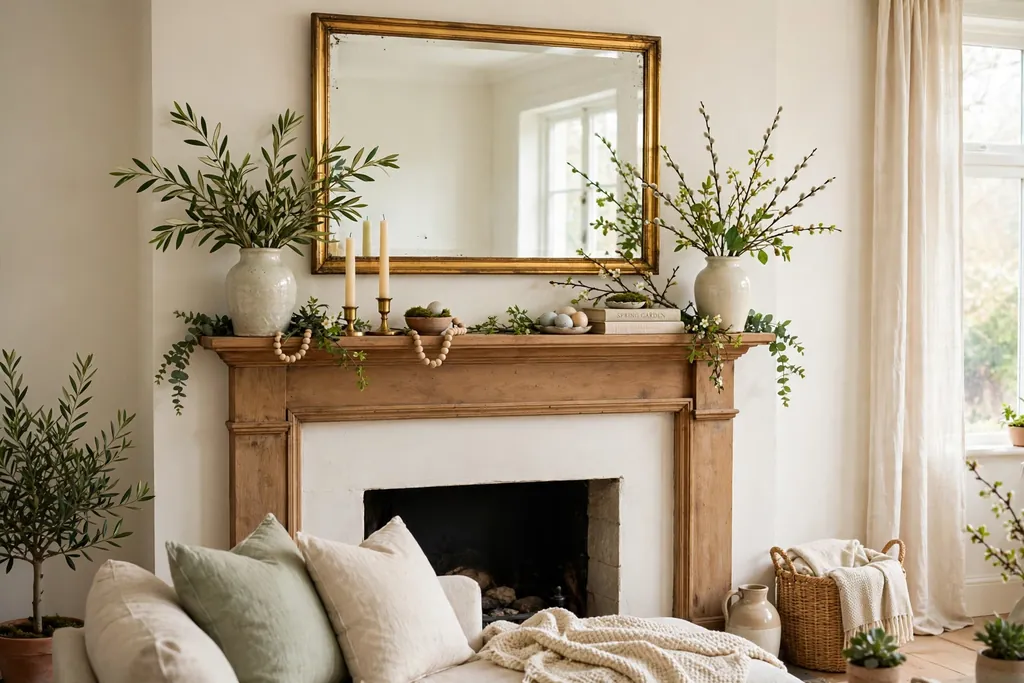
Style the mantel for spring with a light, low arrangement that leaves the wall above it clear. Use a mirror or one large print as the anchor, then add a low vase of green stems, a pair of pale candles, and a small stack of books, with space between each group. The mantel should feel like a spring shelf, not a crowded display, so leave gaps where the eye can rest.
Keep candles and paper clear of any fire opening, and never place throws or fabric near a working fire. If the fireplace is not in use, a row of candles in the opening and a plant on the hearth can give the same gathered feel without a flame. Change one mantel item each month through spring, so the display stays current without a full restyle.
21. Patterned Runner on the Console Table
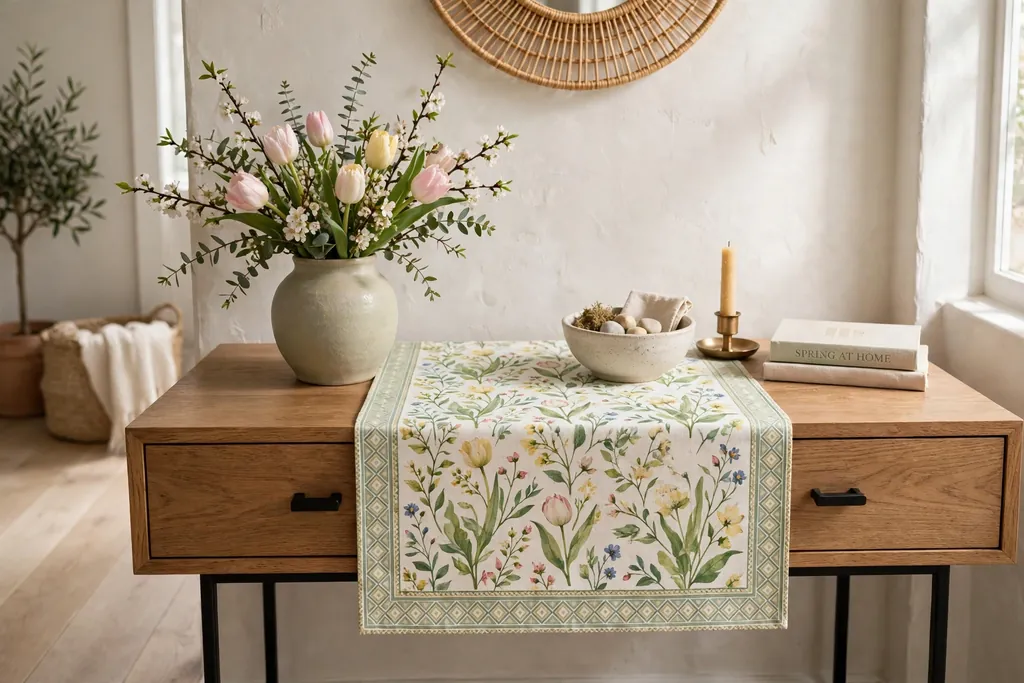
Lay a patterned runner in spring colors on the console table, sideboard, or entry table in the living room to add color at table height. A runner in a soft floral, stripe, or block print gives a plain table a spring note, protects the surface, and ties the table to the cushions or art nearby. Choose a runner that hangs a short way over each end, rather than one that pools on the floor or stops short of the edges.
Keep the display on the runner simple: one vase, one small bowl, and one book or candle, so the pattern stays visible. If the table holds a television or a lamp, keep the runner clear of cables and heat, and choose a washable runner if the table is used for food or drinks. Swap the runner with the seasons, and store the winter runner clean and folded.
22. Pale Wood Side Table Swap
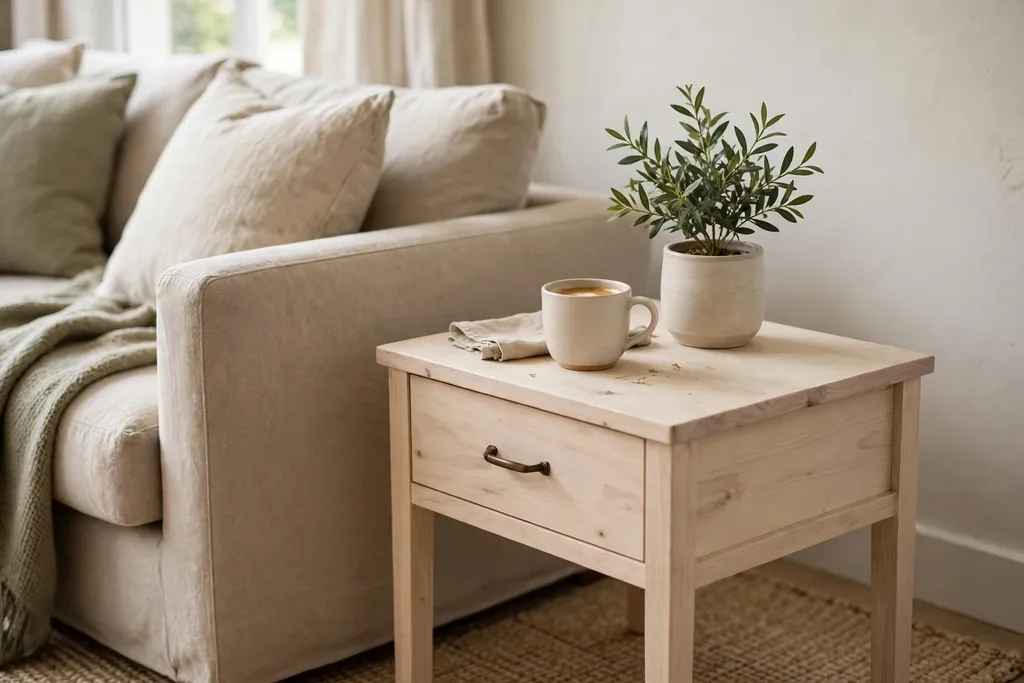
Swap a dark side table for a pale wood side table beside the sofa to lighten the seating group at arm height. A pale wood table in oak, birch, or whitewashed pine keeps the center of the room light, and a plain top leaves room for a cup, a book, and a small plant without looking crowded. Choose a table just tall enough to reach easily from the sofa, so it works for daily use.
Keep the table top mostly clear, with one lamp or one small item beside the cup space, so it stays useful rather than becoming another display shelf. A table with a lower shelf can hold a book or a basket underneath, which keeps the top clear. If a new table is not in the budget, sanding and repainting an existing side table in a pale finish can give a similar lift with less cost.
23. Woven Wall Hanging as Soft Art

Hang a woven wall hanging as soft art on a wall that needs texture rather than another framed print. A wall hanging in cotton, wool, or jute adds warmth and movement, softens a plain wall, and suits a spring room because its fibers echo the linen, rattan, and cotton used elsewhere. Hang it where it will not be brushed by passing traffic, and keep the wall around it simple so the weave stays the detail.
Choose a size that suits the wall: a large hanging suits a wide empty wall, while a small hanging suits a narrow space beside a window or a shelf. If the hanging is handmade, follow the maker care guidance and keep it out of direct sun, which can fade fibers over time. A woven hanging also helps a rented room feel personal without new holes for a heavy frame.
24. Colorful Bowl of Citrus on the Sideboard
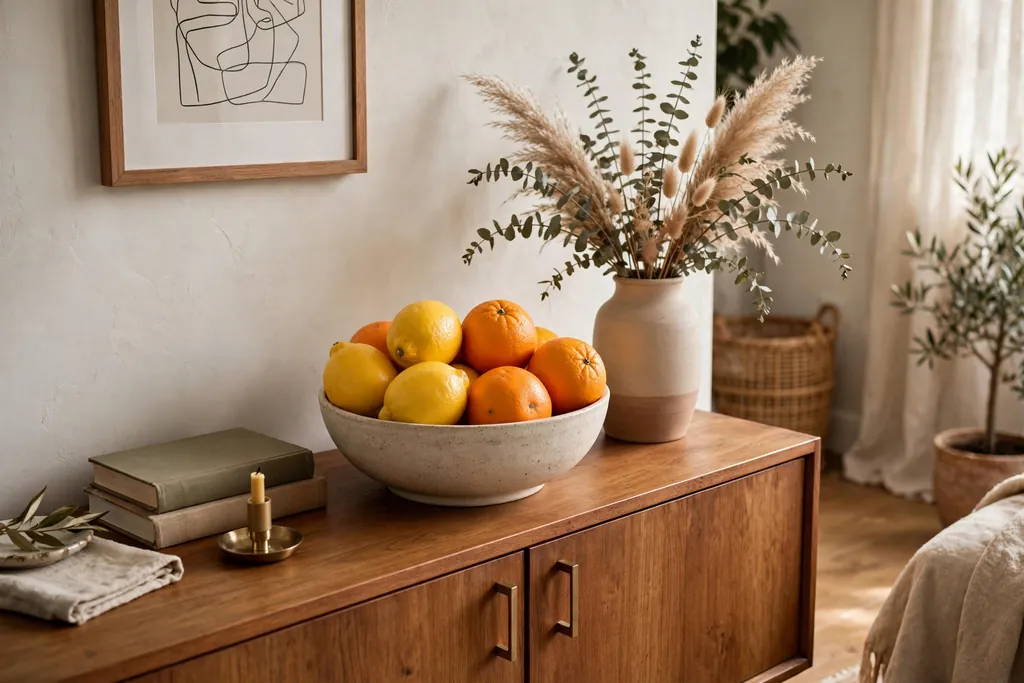
Set a colorful bowl of citrus fruit on the sideboard or console table for a simple spring color accent that can be eaten and replaced. Lemons, oranges, and limes add bright yellow, orange, and green to a pale room, and a wide, shallow bowl keeps the fruit visible without hiding the table surface. This is a low cost accent that changes with the week, since the bowl is refreshed when the fruit is used.
Use a bowl that suits the room, such as ceramic, wood, or glass, and keep it away from direct sun, which can dry the fruit quickly. Replace any fruit that softens, and wash the bowl before refilling it. If citrus does not suit the household, a bowl of green apples or a small potted plant in the same spot gives a similar fresh note without food waste.
25. Personal Photos in a Fresh Gallery Row

Hang a fresh gallery row of personal photos in matching pale frames to give the room personality that no shop-bought print can match. Choose photos from recent trips, family gatherings, or everyday moments that make you smile, and print them in similar tones so the row reads as one group rather than a random mix. Hang the row at eye level along one wall, with even gaps between frames, and keep the outer edges inside the width of the furniture below it.
Start with five or six photos and add over time, rather than filling the wall in one go. If you rent, picture ledges let you lean frames and swap photos without new holes each time. Rotate one or two photos each season, so the gallery stays current and the room keeps a personal, lived-in feel through spring and beyond.
26. Winter Decor Packed Away, One Spring Box Kept
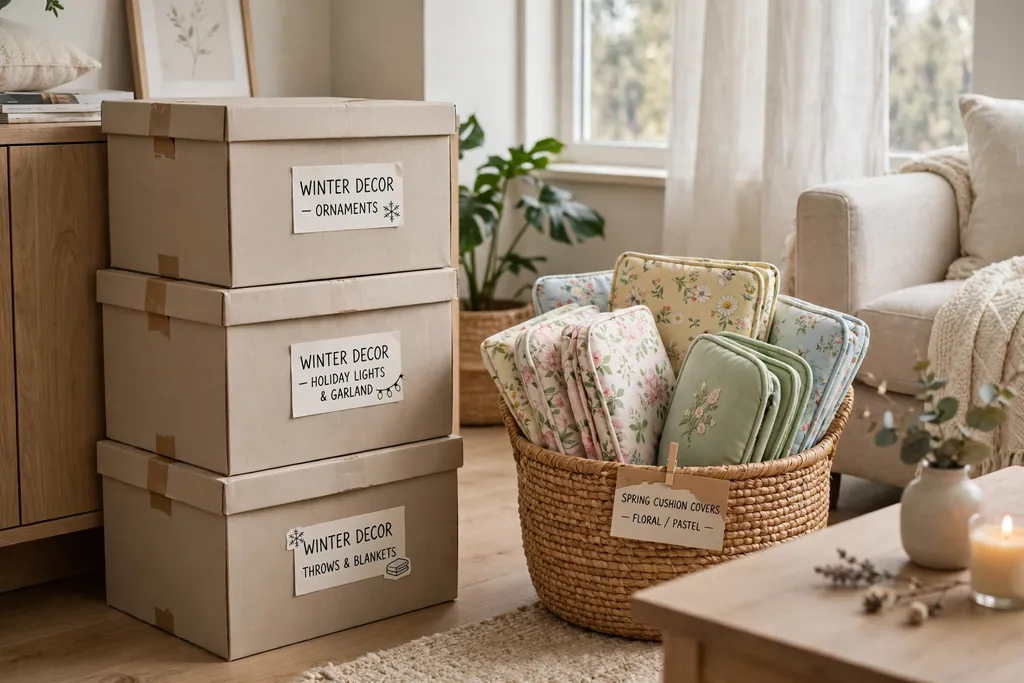
Pack winter decor away in labeled boxes, and keep one spring box for the small items you rotate through the season. Winter throws, dark cushion covers, heavy candles, and winter art go into storage clean and dry, so they are ready for autumn and do not clutter the spring room. Label each box by room and season, and store boxes where they are easy to reach when the season changes again.
Keep one spring box close at hand with spare cushion covers, a light throw, a small vase, and a few spring prints, so a quick refresh later in the season takes minutes. Walk the room once with an empty basket and return anything that has drifted out of place, since a ten minute reset keeps the spring refresh looking calm without a deep clean. A room that starts the season tidy is far easier to keep tidy through it.
Conclusion
A good spring living room refresh starts with light, not with a shopping list. Clear the windows, lighten one textile layer, add green life at more than one height, and give the room one or two personal details that make it yours. Pick one idea from this list, try it where you will actually sit, and add the next change only after the first one feels right. Small, planned changes last longer than a full room overhaul done in a rush, and they leave room for the season to grow into the space.
Save this list on Pinterest before your next spring tidy, and work through it one area at a time: windows first, then seating, then the shelves, mantel, and small displays that make the room feel personal.
FAQs
How can I refresh my living room for spring without buying new furniture?
Start with light and textiles, since those changes cost the least and affect the room the most. Swap heavy curtains for light linen, change cushion covers and throws, clear the windowsills, and add plants and fresh flowers. Move the sofa or a chair toward the light, and restyle one shelf or the coffee table. These steps refresh the room without replacing any large piece, and they can be done over one weekend.
What colors work best for a spring living room refresh?
Soft sage, pale blue, butter yellow, blush pink, and pale mint all suit spring, paired with a calm base of cream, oatmeal, or pale grey. Pick one or two spring colors and repeat them in three places, such as a cushion, a vase, and a print, rather than adding a new color in every corner. Keep walls, sofa, and rug calm, so the spring colors read as accents rather than competing for attention.
How do I add personality to a living room without making it cluttered?
Add personality through items with a story, such as personal photos, a favorite book stack, a handmade bowl, or a plant you have grown, rather than through many small decorations. Give each item a clear home, leave gaps on shelves and tables, and remove one item for every new decorative piece you add. A room with a few personal pieces and clear surfaces feels more personal than a room crowded with decorations that have no meaning.
How often should I change cushion covers and throws for spring?
Once at the start of spring is enough for most rooms, with a wash or a shake out when the season changes. Choose washable covers and throws, and store the winter set clean and labeled, so the swap back in autumn is quick. If the room gets heavy daily use, wash the spring covers mid-season as well, and rotate cushions so wear stays even across the set.
Can a spring refresh work in a small living room?
Yes, and small rooms often benefit most, since light and layout changes have a larger effect in a small space. Use a mirror to bounce daylight, keep furniture low and few in number, and use baskets and trays to give clutter a home. Choose one spring color, one light rug, and plants at two heights, rather than trying every idea at once, so the small room stays calm and easy to move through.
What should I do first if I only have one weekend for a spring refresh?
Start with light and tidying, since those steps make every later change look better. Clear the windowsills, wash the windows, swap the curtains and cushion covers, and pack winter decor away. Then add one plant group and restyle the coffee table. If time remains, paint one accent wall or hang new art, but a clean, light room with fresh textiles already feels refreshed even before paint or art is added.