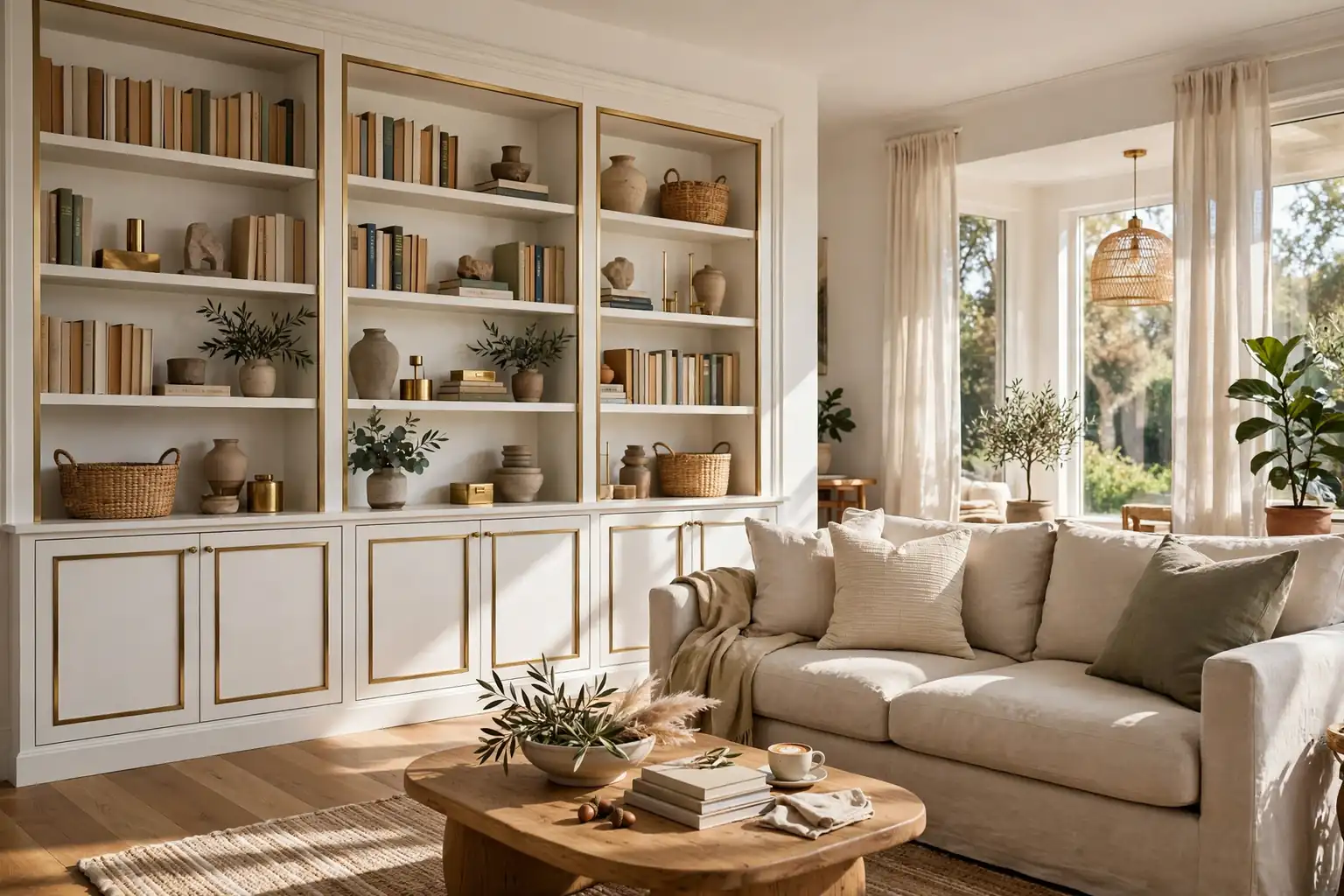
A book shelf can set the tone for a whole living room. When the shape is clean, the color is calm, and the books have room to breathe, the shelf looks planned rather than crowded. When it is packed edge to edge, even good books can look like clutter. These 22 chic book shelf ideas cover built-ins, arches, glass doors, floating shelves, soft color, lighting, and styling, so you can pick one that fits your wall, your books, and your budget. Measure the wall first, note sockets and skirting boards, and start with the books you reach for most. These living room rug ideas show how to size a rug to the seating group, so the shelf wall and the seating work as one room.
Key Takeaways
- Measure the wall, including skirting boards, sockets, and door swings, before you buy or build a bookshelf.
- Anchor tall, heavy, or freestanding shelves to the wall, and put heavy books low so the unit stays stable.
- Pick one clear look per shelf wall: one frame color, one accent metal, and one or two display materials, repeated with restraint.
- Leave breathing room on every shelf, with gaps between book groups and one partly empty shelf for new titles.
- Add warm light at shelf level, since a dark shelf will stay unused even with good books on it.
- Style with a mix of upright books, horizontal stacks, ceramics, and one plant per shelf run, and keep walkways clear.
1. White Built-In with Brass Trim
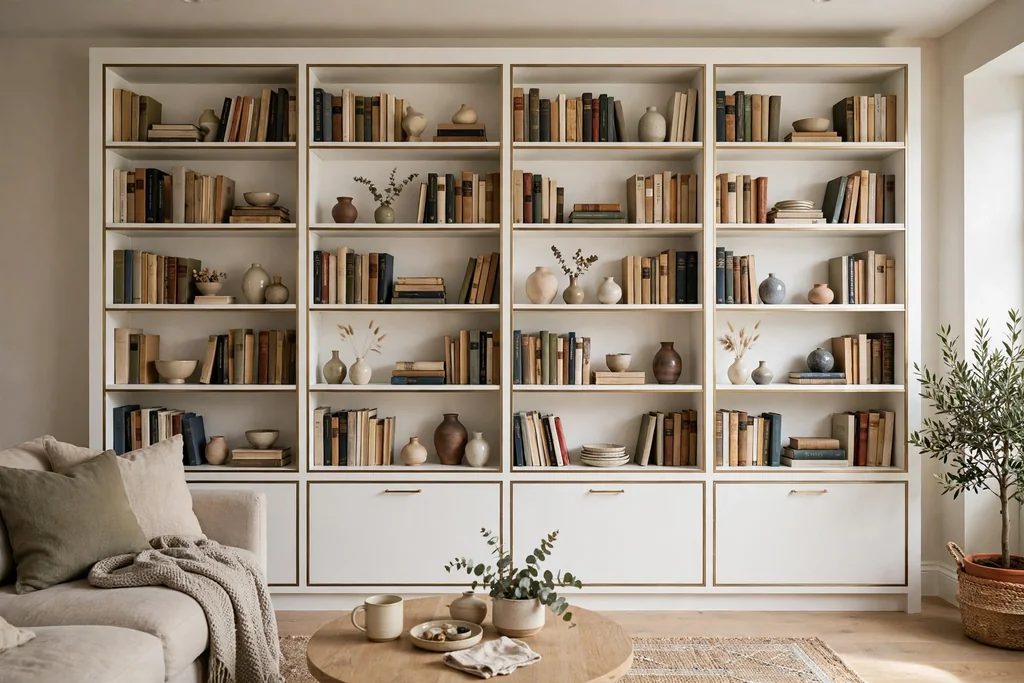
Build or paint a white built-in bookshelf and add slim brass trim, handles, or picture lights for a quiet, polished finish. White keeps a large shelf wall calm, while brass gives it a warm detail that stops it from looking plain. Paint the unit the same white as the trim for a fitted look, or use a soft warm white if the walls are cool.
Put heavy hardbacks low, everyday paperbacks at eye level, and lighter items such as small vases up high. Keep brass to one or two details per unit, such as slim edge trim and matching handles, so it reads as a detail rather than a theme. This idea suits a living room with pale walls and wood floors, where a full wall of books needs to feel light.
2. Arched Bookshelf Niche
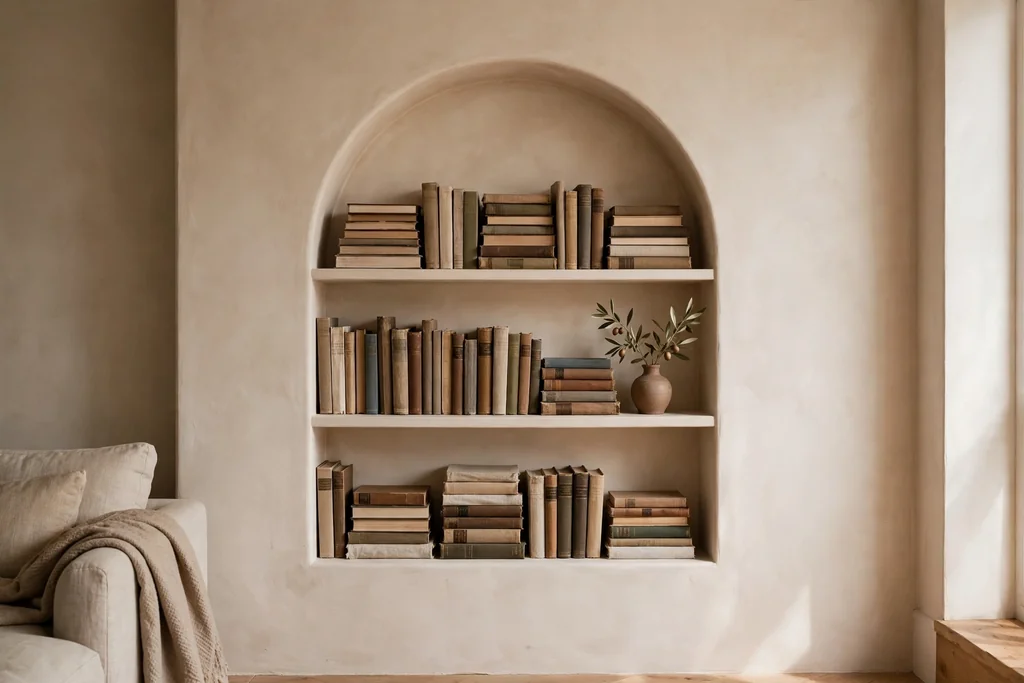
Use an arched bookshelf, or add an arched frame around a straight bookcase, to soften a room full of square furniture. The curve draws the eye up and gives the shelf a furniture feel, even when the shelves themselves are simple. An arch suits a tall, narrow wall, a hallway end, or a wall beside a fireplace.
Keep the books inside the arch simple, with upright rows and one horizontal stack per shelf, so the curve stays the main detail. Paint the arch the same color as the shelf for a calm look, or paint the wall inside the arch one shade deeper for contrast. Measure the arch height against the ceiling before you buy, since a tall arch needs clear space above it.
3. Black Lacquer Bookcase with Gold Details
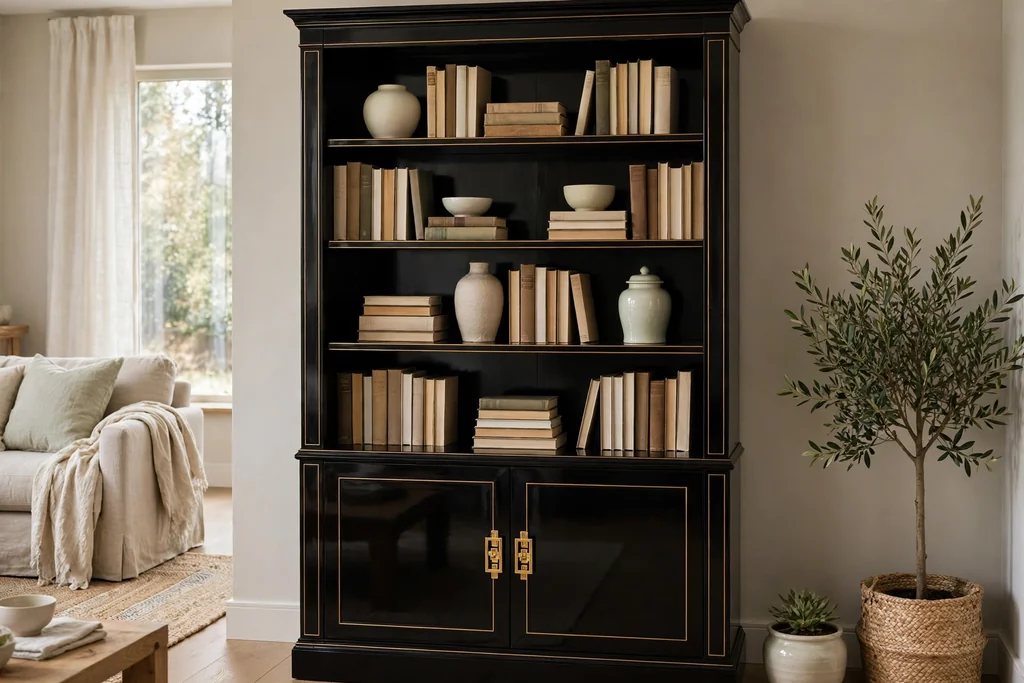
Choose a black lacquer bookcase with gold handles, slim gold trim, or a gold picture light for a bold, evening-ready shelf wall. Black makes book spines and pale ceramics stand out, and gold keeps the dark finish from feeling flat. This pairing suits a living room used in the evening, where lamplight warms both finishes.
Keep the walls around it pale, so the dark unit reads as a feature rather than a shadow. Put the heaviest books on the lowest shelves, and use bookends that match the gold or the black in the room. Dust black lacquer often, since dust shows clearly on it, and wipe it with a soft cloth as the maker advises.
4. Glass-Door Display Bookcase
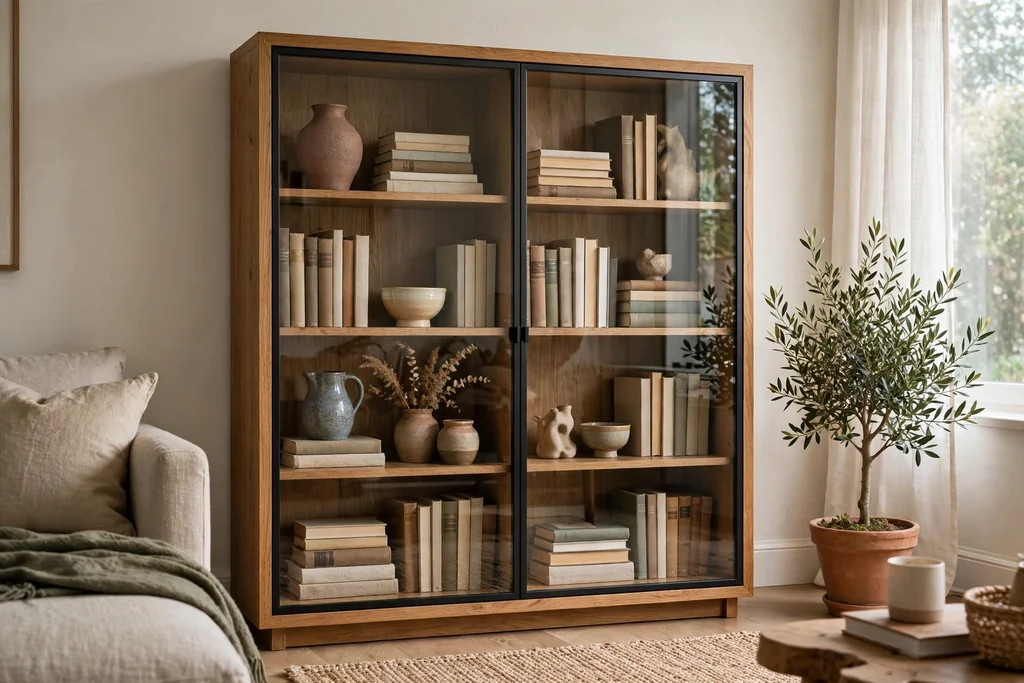
Choose a bookcase with glass doors when you want to show a collection but keep dust, pets, and small hands off the books. Clear glass keeps the spines visible, while reeded glass softens the view of a busy collection. This is the best choice for a shelf near a busy doorway, where open shelves would collect dust fast.
Keep the doors closed when the room is dusty, and wipe the glass inside and out when you clean the room. Inside, sort books by author or by subject, and leave a little space on each shelf so you can remove a book without pulling the whole row forward. A glass-door case also suits signed books, photo books, and sets you want to keep together.
5. Floating Oak Shelves with Ceramics
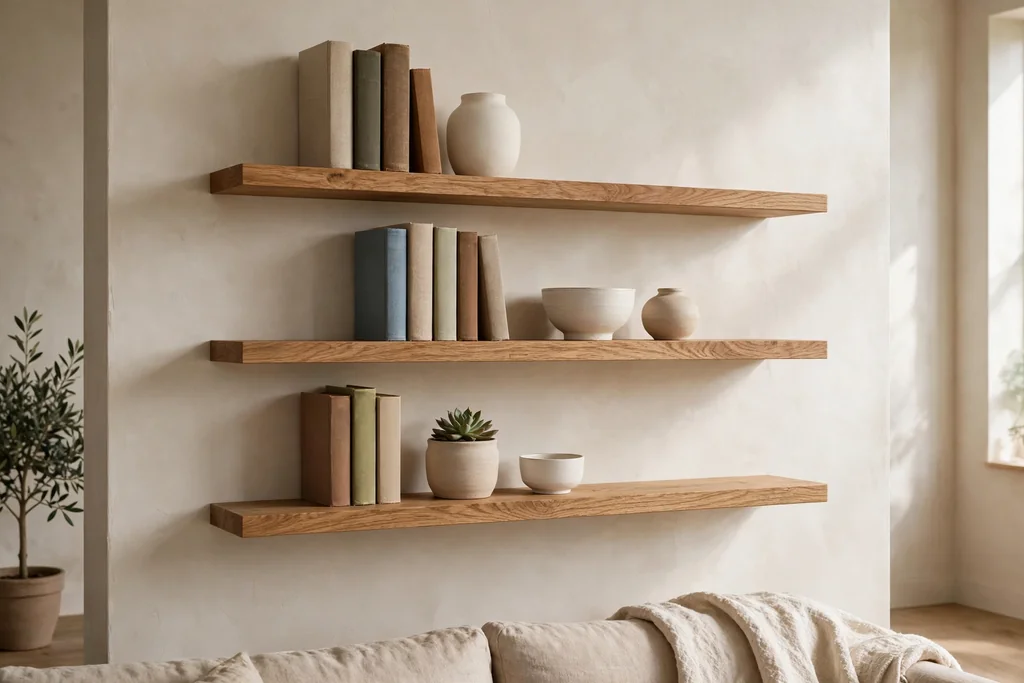
Fix floating oak shelves on one wall and style them with upright books and a few plain ceramics for a light, open shelf wall. Floating shelves keep the floor clear, which helps a small living room feel open, and oak adds warmth to pale walls. Two or three shelves are usually enough, since more can make the wall look crowded.
Fix floating shelves into studs or use fixings rated for the weight, since a shelf of hardbacks is heavier than a shelf of ornaments. Keep a bookend or a small rail at each open end so books do not slide off. Reserve floating shelves for favorites and for books with covers you enjoy seeing, since they hold fewer books than a full bookcase.
6. Sage Green Painted Bookcase
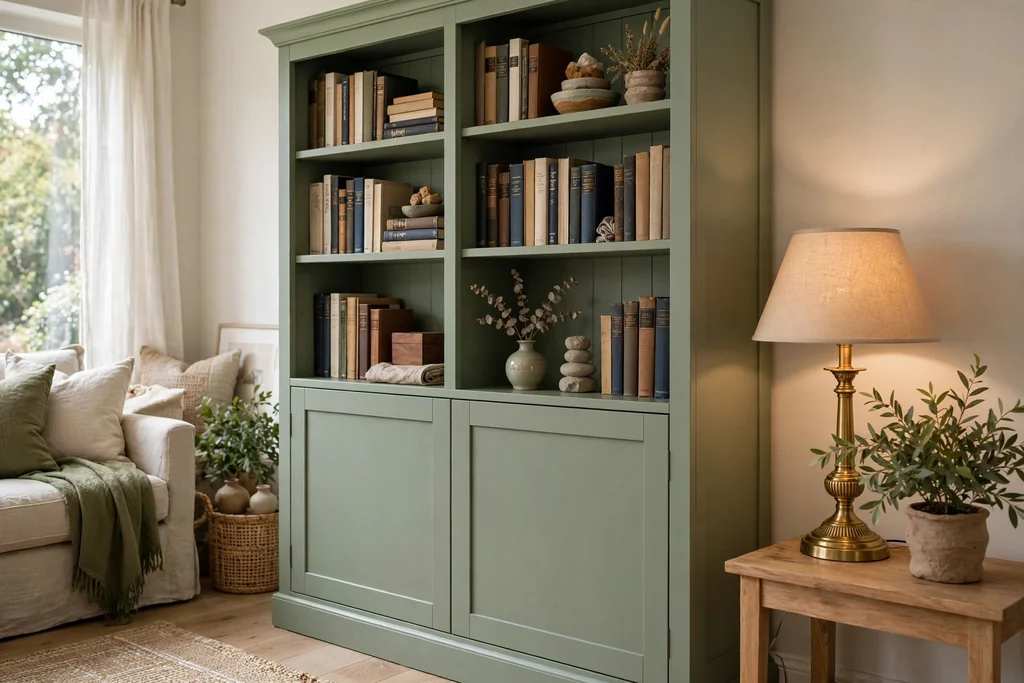
Paint a bookcase sage green for a soft, calm color that suits wood, linen, and brass without shouting. Sage works well in a room that already has plants, since the shelf color and the leaves sit easily together. It also suits a pale room that needs one gentle color note, rather than a bold accent wall.
Pair sage with cream walls, pale wood, and one warm metal, such as brass, for handles or a lamp. Keep the styling simple, with books grouped by height and one ceramic or plant per shelf. For a calm, pale base around the shelf, these Swedish living room ideas show how light walls, soft layers, and a chair placed where the light is best can warm a whole room.
7. Slim Black Metal Frame Bookshelf
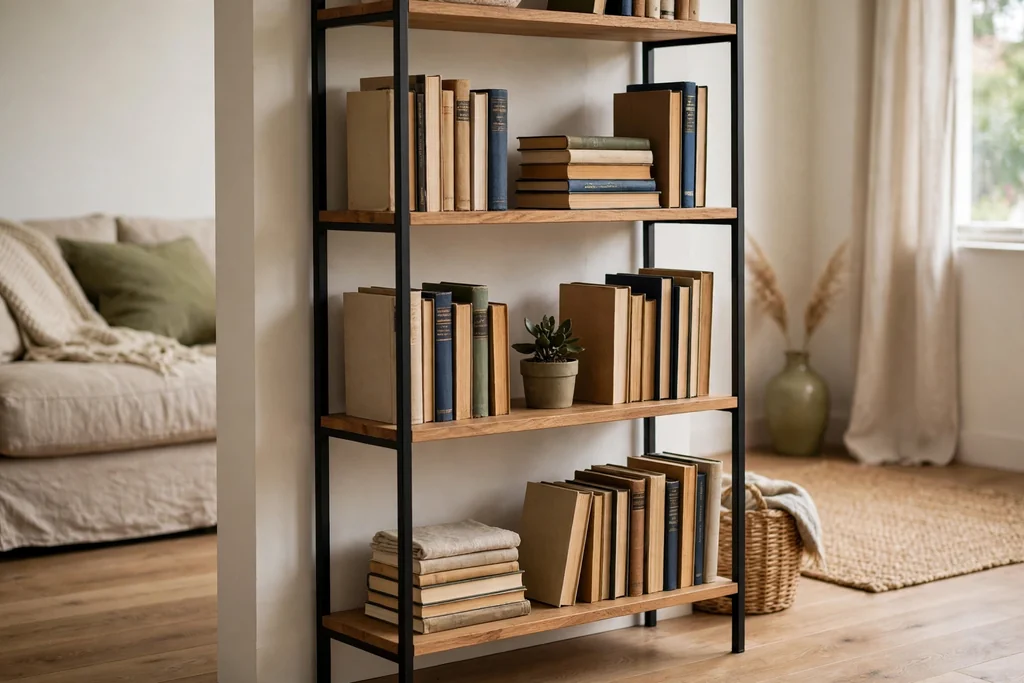
Use a slim black metal frame bookshelf when you want an open, airy unit that still holds a large collection. The thin frame keeps both walls visible, so the shelf feels lighter than a closed bookcase, which suits a small or dark living room. Black metal also pairs well with wood shelves, glass, and leather.
Place it against a plain wall, where the frame lines stay clear, and keep heavy books on the lowest shelves for stability. Anchor the top to the wall, even if the unit feels steady, since a tall open frame can tip if pulled. Leave one shelf partly empty, so the frame reads as furniture rather than as packed storage.
8. Bookshelf with a Reading Bench Below
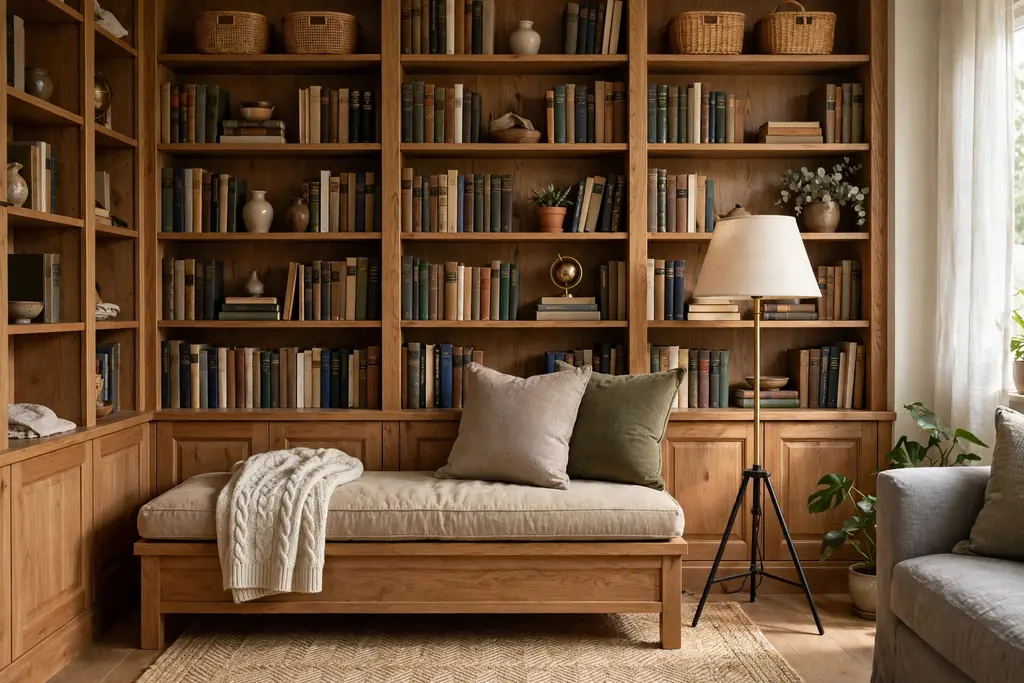
Set a low bench or a window seat below a bookshelf, with a cushion on the seat and the current book within reach, to make a reading spot that gets used daily. The bench gives the shelf wall a purpose beyond storage, and the shelf above keeps the next books close at hand. Angle a floor lamp behind one shoulder of the seat, so evening reading is easy.
Add a small basket beside the bench for the book you are reading now, and keep a throw on the seat for cooler evenings. Keep the bench depth shallow enough that you can reach the shelves without standing on the seat. This idea suits a wall with a window nearby, where daylight does most of the work by day.
9. Rounded Edge Bookcase
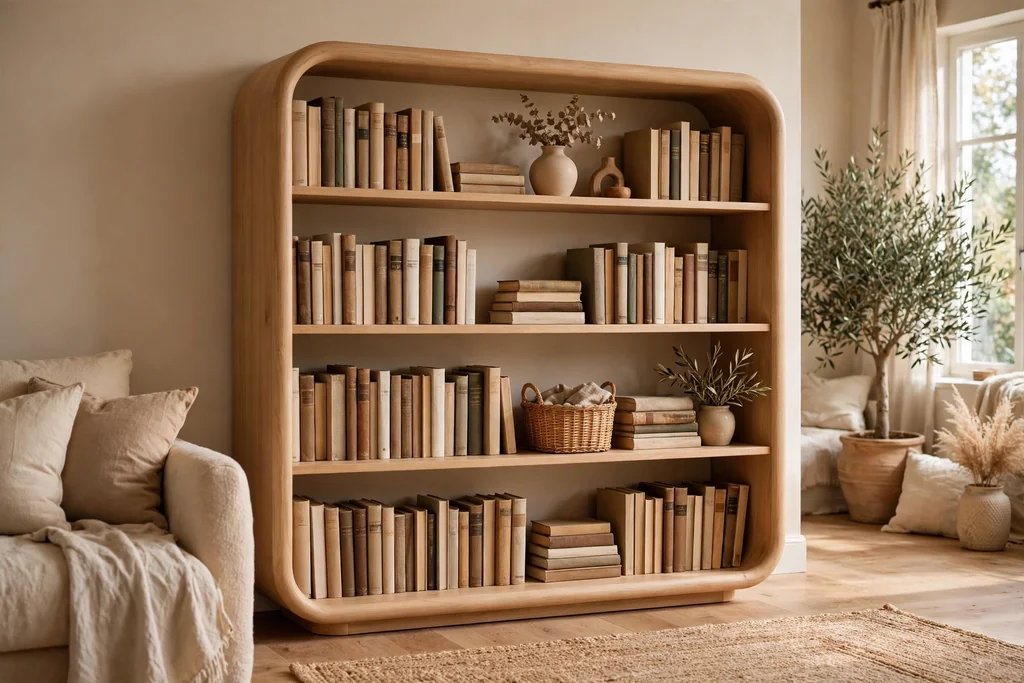
Choose a bookcase with rounded corners and soft edges for a gentle, modern look that suits a family room. Rounded edges soften the straight lines of a shelf wall, and they are kinder in a room where people walk past the shelf often. A rounded unit also pairs well with a round coffee table and curved armchairs.
Style it with books grouped by height and one soft item per shelf, such as a small vase or a woven basket, so the curves stay visible. Avoid sharp, angular ornaments on a rounded shelf, since they fight the shape. Wipe the curved edges often, since dust gathers on a curve just as it does on a flat shelf.
10. Pale Ladder Shelf with Linen Baskets
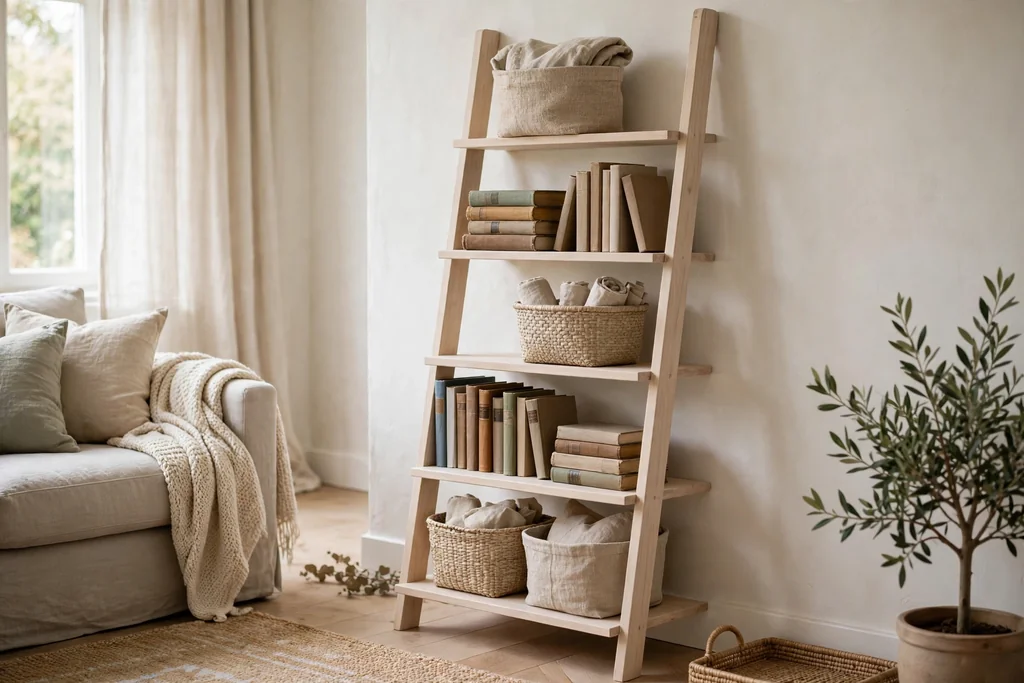
Lean a pale wood ladder shelf against a wall for a light, renter friendly option that needs little fixing beyond a small anchor. The shelves get deeper toward the bottom, so place large books low and smaller books and plants higher up. Linen baskets on the lower shelves hide chargers, notebooks, and small clutter.
Check that the feet sit flat on the floor and that the top rests evenly against the wall, and anchor the top if children use the room. Keep heavy items off the top two rungs, and leave one shelf for a plant that trails a little, so the ladder reads as lived in. This idea suits a first home or a rented room, where a built-in is not practical.
11. Bookshelf Backed with Patterned Wallpaper
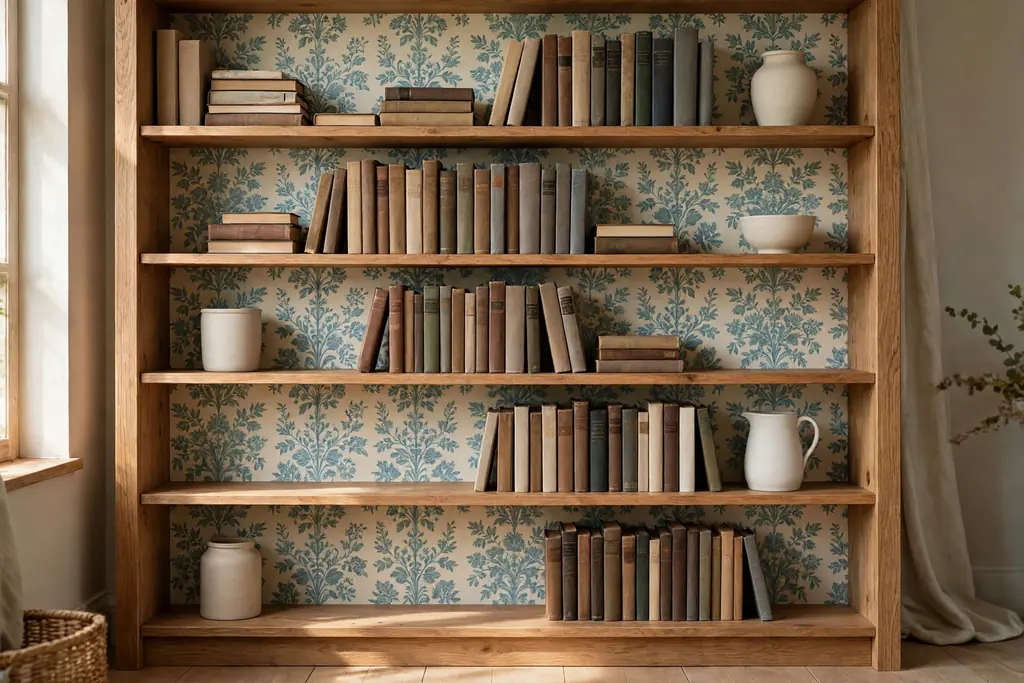
Line the back of an open bookshelf with patterned wallpaper to give plain shelves a finished, collected look. Wallpaper behind books adds color and pattern without painting the whole wall, and it can be changed later with less work than a full repaint. Choose a small, calm pattern, since a large, busy print will fight the book spines.
Measure each back panel before you cut, and use a paste suited to the shelf material, with edges pressed flat so pages do not catch. Keep the shelf styling simple, with books upright and one plain ceramic per shelf, so the wallpaper stays visible in the gaps. This idea suits a plain white or pale wood bookcase that needs one quiet detail.
12. Low Credenza Bookshelf under Art
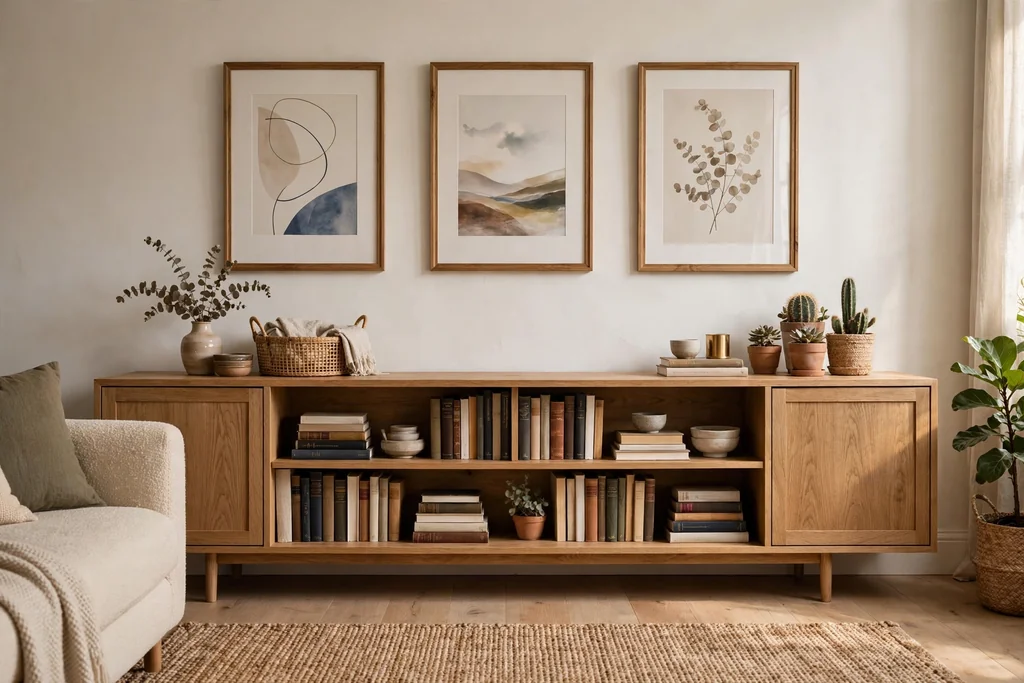
Use a low, wide credenza as a bookshelf, with books laid flat or upright on its top and inside its open sections, and art hung above it. A low unit keeps the wall above free for art, which suits a room where the shelf wall is also a gallery wall. The credenza top also gives a place for a lamp, a vase, and the book you are reading now.
Keep the books on the credenza to one or two neat groups, so the top still looks like a surface rather than a pile. Hang the art with its center at eye level when seated, and leave a gap between the credenza top and the lowest frame, so you can lift books out without knocking a frame. This idea suits a long, low wall under a window or beside a sofa.
13. Two-Tone Bookcase with Painted Frame and Wood Shelves
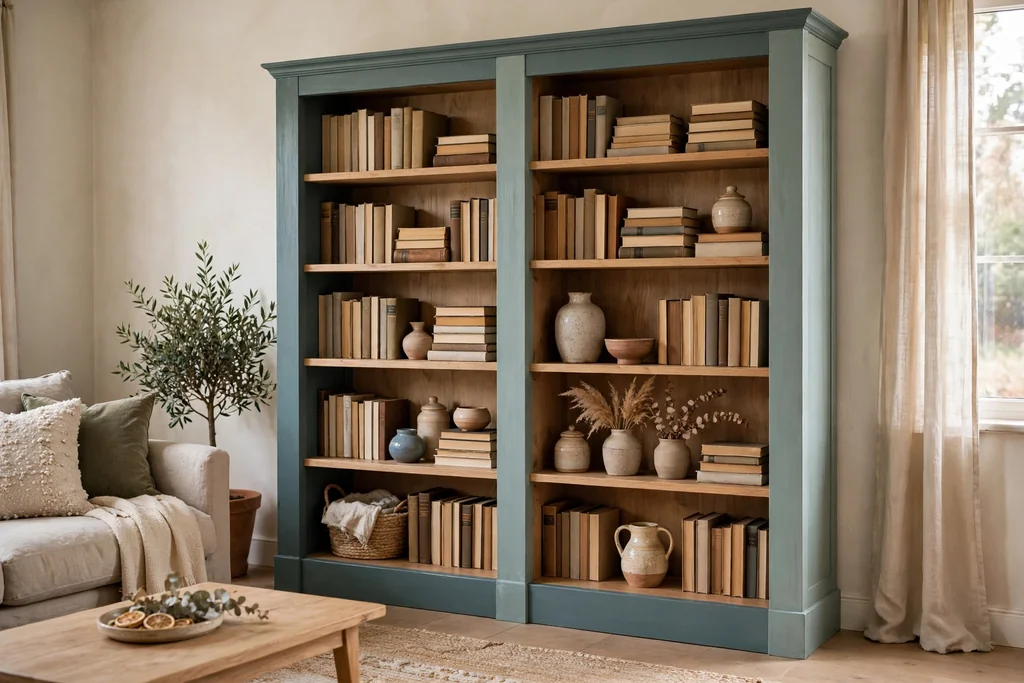
Combine a painted frame with natural wood shelves for a bookcase that feels both finished and warm. The painted frame gives the unit a clean edge, while the wood shelves add grain and warmth that paint alone cannot. This mix suits a room with both painted trim and wood furniture, since it links the two.
Paint the frame in the room trim color for a fitted look, or use a soft neutral such as warm grey if the trim is white. Keep the wood shelves matte rather than glossy, so they read as natural rather than new. Group books by height on the wood shelves, and use plain ceramics that suit both the paint and the wood.
14. Bookshelf with a Small Desk Nook
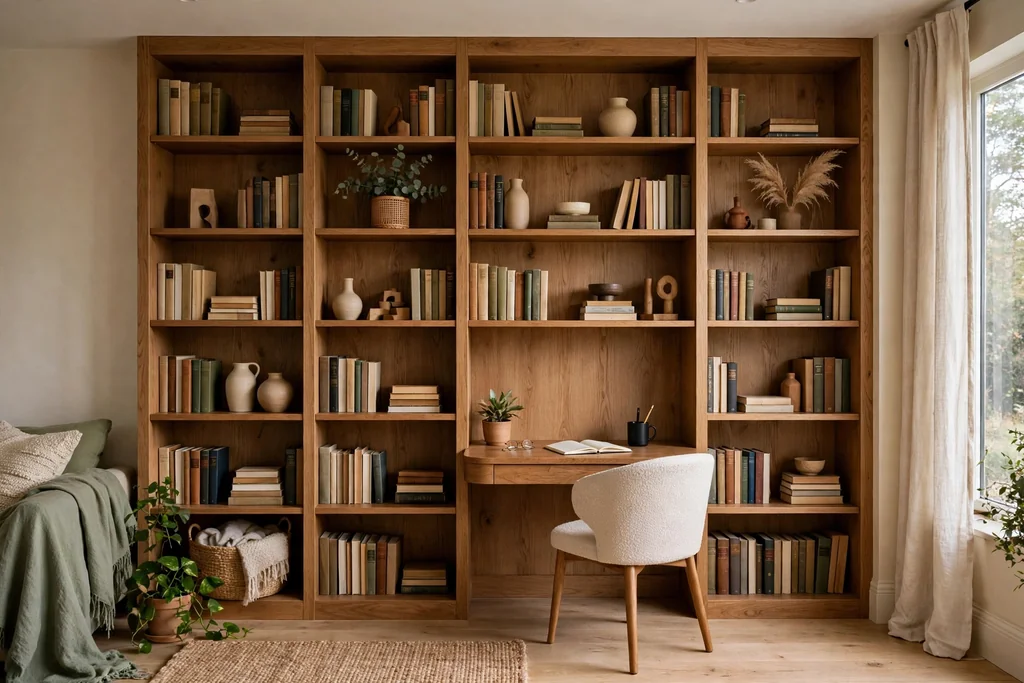
Fit a small desk into a bookshelf wall, with books on the shelves above and a chair that tucks under the desk, so the wall works for reading and for writing. Books on the shelves above stay close to the desk, which suits reference books and notebooks you check often. Keep the desk depth shallow enough that you can reach the shelves without standing up and leaning across the work surface.
Add a task lamp, a cable tidy, and one drawer or basket for pens and paper, so the desk stays clear for work. Keep the chair light enough to pull out without hitting the shelves. This idea suits a living room wall that must also serve as a home office, since it gives work a defined place without taking a whole wall.
15. Tall Narrow Bookshelf for a Tight Wall
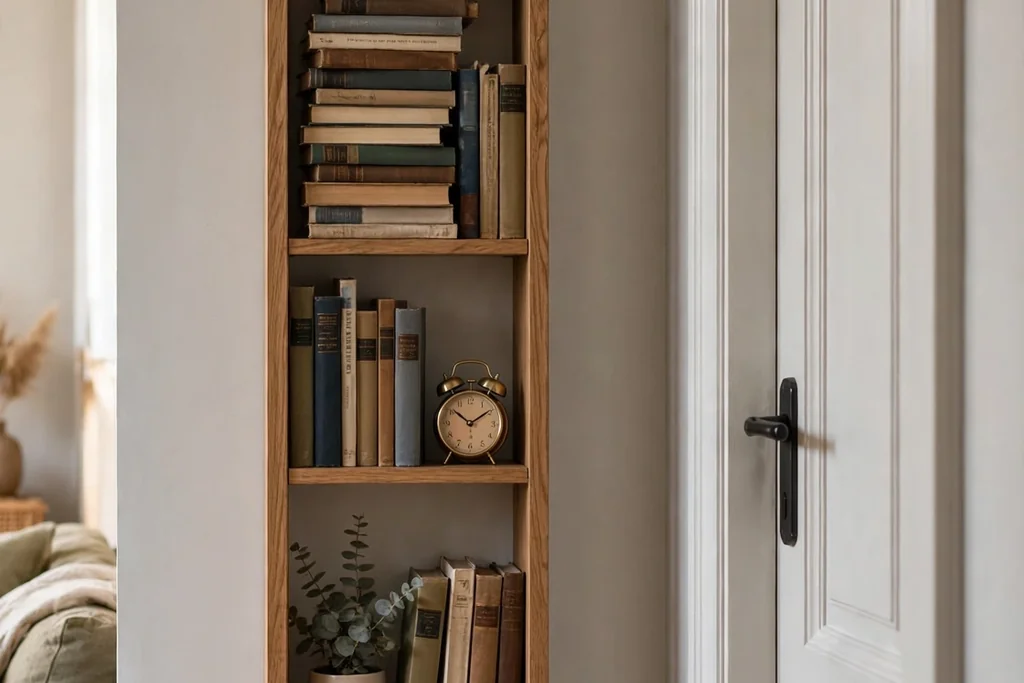
Use a tall, narrow bookshelf on a wall that is too slim for a wide bookcase, such as a wall beside a door, a fireplace, or a window. A narrow unit holds a surprising number of books when the shelves are adjustable, especially if you mix upright rows with one horizontal stack per shelf. Measure the width from both sides, including skirting boards and door frames, before you buy.
Use the top shelf for a light plant or a small clock, and keep the middle shelves for books you use weekly. A narrow shelf also works well in a pair, one on each side of a door or a fireplace, where two slim units frame the feature. Choose adjustable shelves if your collection mixes tall art books and small paperbacks.
16. Muted Color-Blocked Book Display
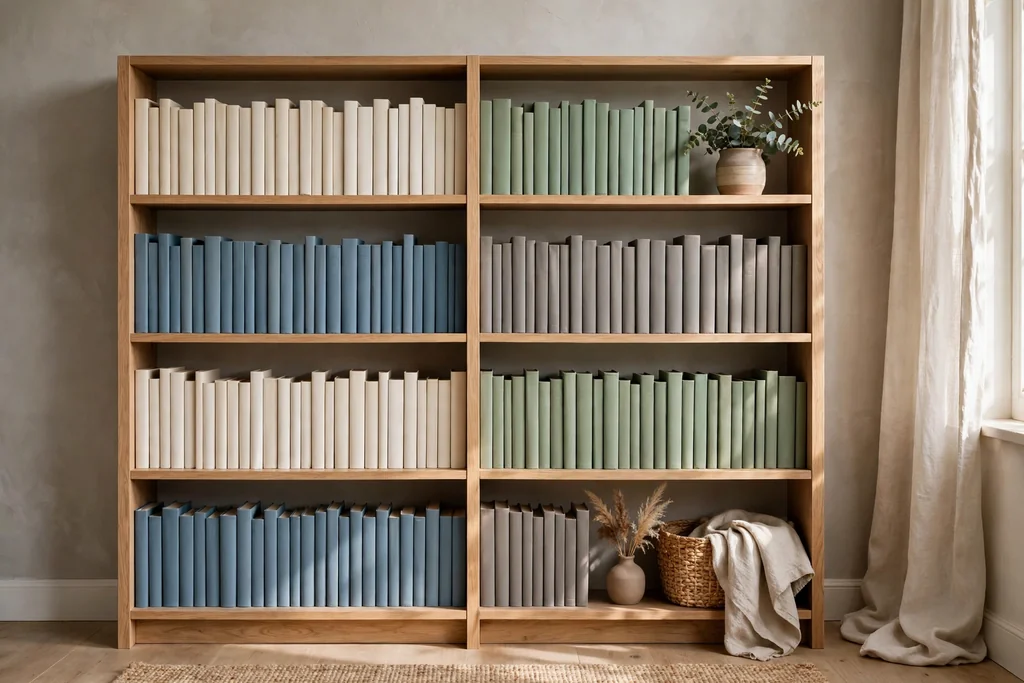
Arrange books by spine color in soft, muted blocks, such as cream, sage, dusty blue, and warm grey, for a shelf that works as calm display as well as storage. Muted color blocking suits a chic room better than bright blocks, since the colors stay close to the room palette. Work shelf by shelf, and keep one neutral block for books that do not fit any color group.
Accept that color order is not subject order, so keep a small group of daily reference books together at eye level regardless of color. Step back and check the blocks from the sofa, since a block that looks even up close can look patchy from across the room. Re-sort only when you add a batch of new books, not after every single purchase, or the system becomes a chore.
17. Bookshelf with Warm Shelf Lighting
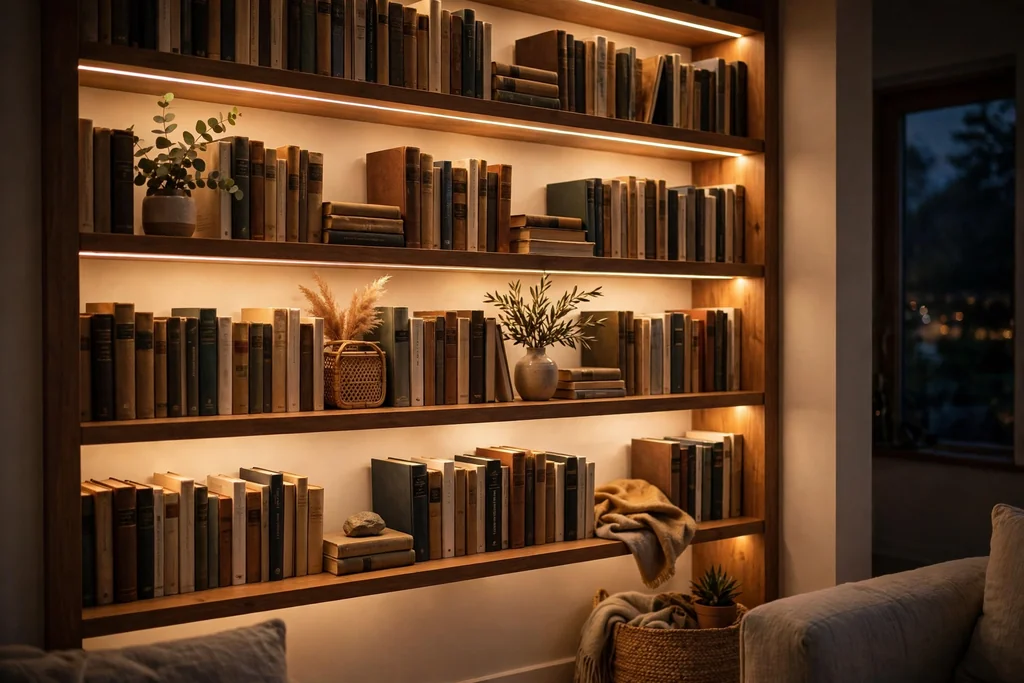
Add warm light to a bookshelf with slim shelf lights, a small picture light, or a lamp placed to wash across the spines. Light matters on a shelf wall because shelves are often in the darker part of a room, and a dark shelf will stay unused even when the books are good. Warm white light suits a living room better than cool white, which can make wood and paper look harsh.
Place lights under each shelf or along the top, and hide cables behind the unit or in a cable channel. Battery lights suit a rented home, while wired lights suit a built-in shelf planned in advance. Test the light level at dusk, and add one brighter reading light beside the chair if the shelf light alone is not enough to read by.
18. Vintage French Style Gilt Bookcase
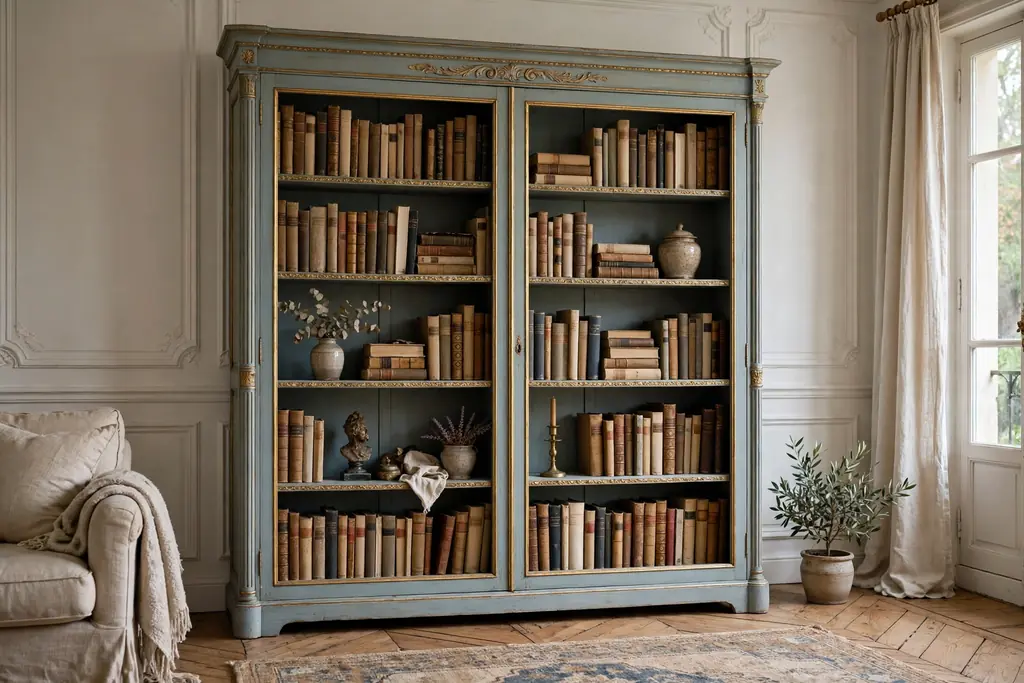
Choose a vintage French style bookcase, with a painted frame, carved details, and slim gilt trim, for a room with classic furniture and soft colors. The carved frame gives the shelf a furniture feel, while the gilt detail keeps it from looking plain. This style suits leather-bound books, pale ceramics, and a linen armchair nearby.
Keep the walls around it pale, so the carved frame stays the detail, and avoid crowding the shelves, since a carved unit already carries a lot of visual detail. Put the heaviest books on the lowest shelves, and use bookends that match the gilt or the painted frame. Check secondhand shops for a frame with good joints, since an old frame often suits this look better than a new copy.
19. Bookshelf as an Open Plan Divider
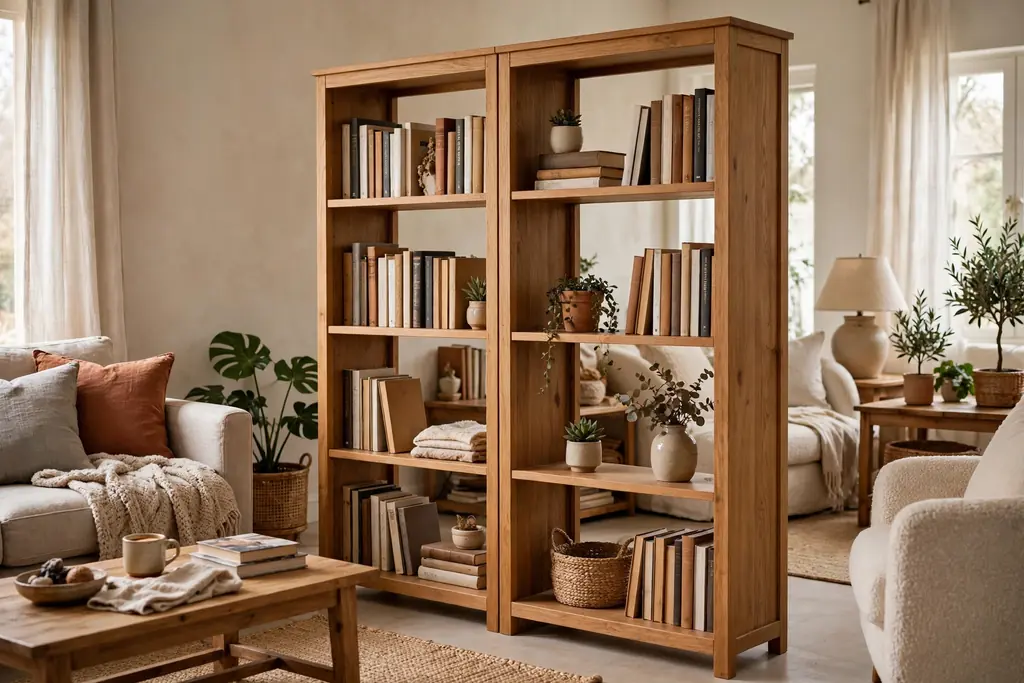
Place a freestanding double-sided bookshelf at an angle to a wall to divide a living area from a dining or work zone. Books visible from both sides make the divider feel like furniture, not a barrier, and the unit gives both zones their own storage. Choose a unit open on both sides when you want light to pass through, and with a solid back on one side only if you need to hide one zone.
Anchor the divider to the floor or to a wall bracket where possible, since a freestanding unit can tip if a child climbs it. Keep heavy books low on both sides, and leave the top shelf for light items. This idea suits an open plan room where the shelf marks the edge of the living zone, and it works best when the divider is no taller than eye level from the seating side.
20. Bookshelf with Closed Cabinets Below
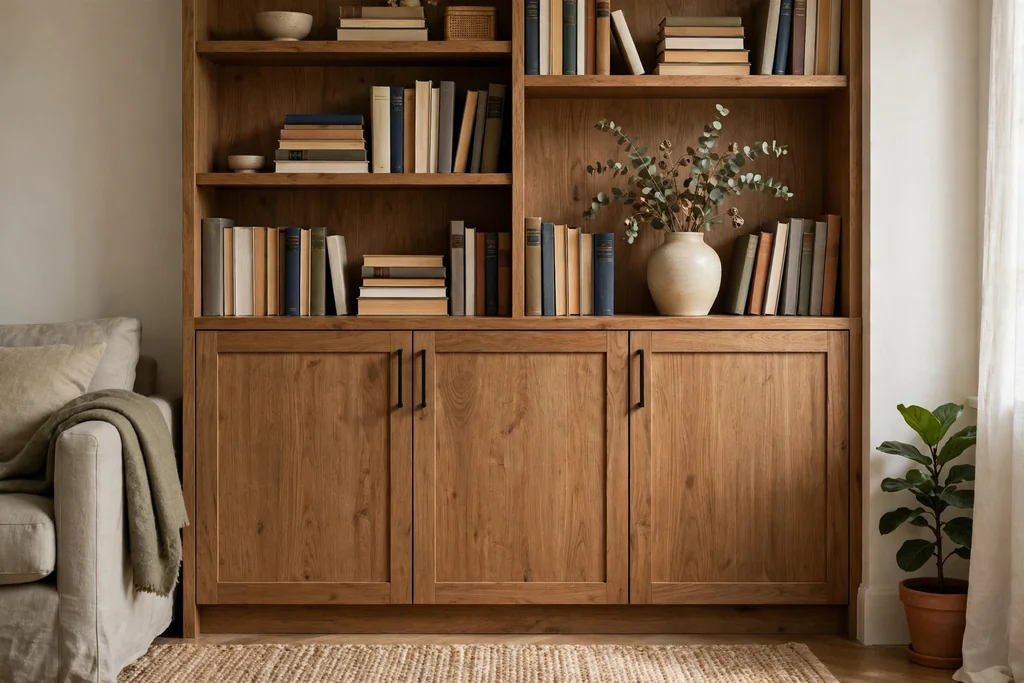
Combine open shelves above with closed cabinets below, so the wall holds books you want to see and clutter you want to hide. Cabinets below suit board games, chargers, photo albums, and oversized books that do not stand well on open shelves. Keep the cabinet doors plain and matched to the shelf color, so the unit reads as one piece.
Put the books you reach for most on the open shelves at eye level, and use the cabinets for items you need weekly rather than daily. For spacing and grouping lessons that carry over from other rooms, the corner shelf advice in these kitchen bookshelf ideas shows how to measure a tight space and keep books within easy reach. Label the inside of a cabinet door if the household shares the storage, so games and albums go back to the right place.
21. Bookshelf with a Drinks Cabinet Section
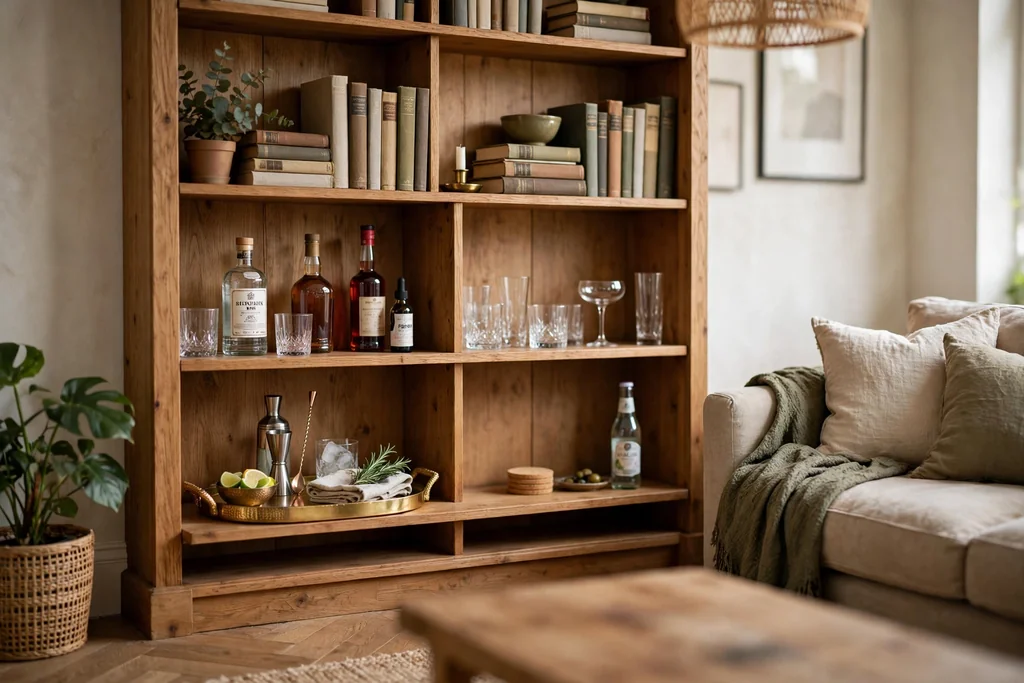
Give one section of a bookshelf a second job as a drinks cabinet, with glasses on one shelf, bottles on a lower shelf, and a small tray for serving. A drinks section suits a living room shelf used for hosting, since guests can help themselves without a separate bar cart. Keep the drinks section to one bay of the unit, so the wall still reads as a bookshelf first.
Store bottles low and upright, keep glasses away from the shelf edge, and wipe the shelf after use, since spills damage paper fast. Use a small tray to gather bottles and glasses, so the section stays tidy between gatherings. Keep this section out of reach of small children, and keep it clear of candles and open flames.
22. Bookshelf Gallery Wall with Art Above
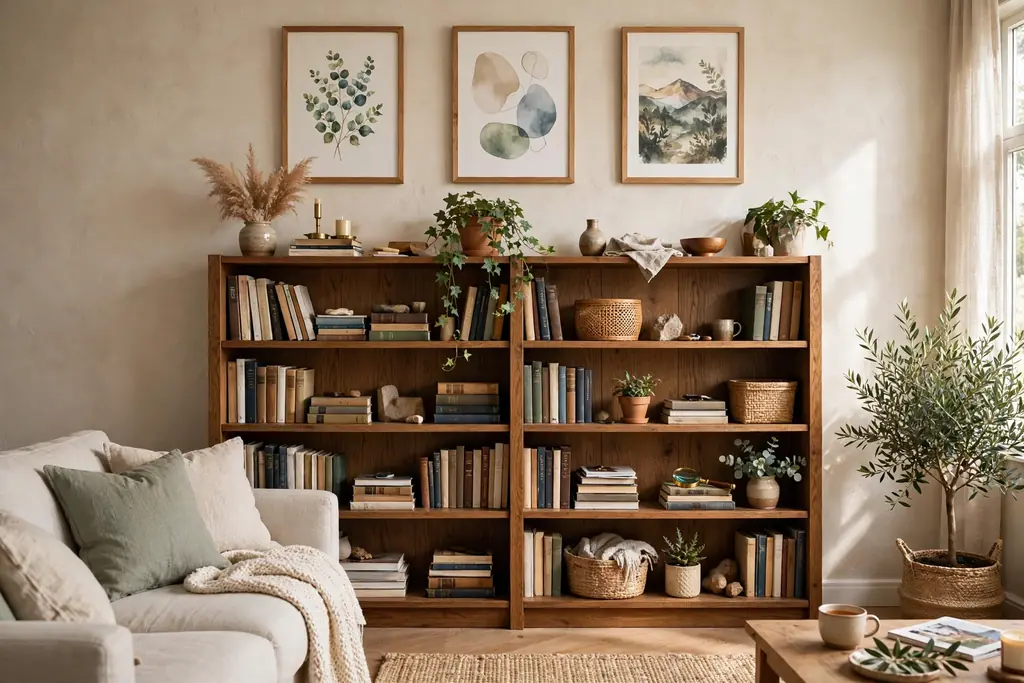
Hang framed art, prints, or photos on the wall above a bookshelf, so the wall reads as a small gallery as well as a library. Art above the shelves draws the eye up and stops the shelf wall from feeling like storage alone. Keep the frames consistent in color or material, and hang the center of the group at eye level when seated, so it suits the chair below.
Start with three or four pieces and add over time, rather than filling the wall in one go. Use art with pale backgrounds and soft colors if the shelves are already colorful, or bold prints if the books are mostly neutral. Leave a gap between the top shelf and the lowest frame, so you can lift books out without knocking a frame.
Conclusion
A chic book shelf starts with the wall itself, not the shopping list. Measure the wall, decide what the shelf must do, and pick one idea from this list that fits that job. Anchor tall units, put heavy books low, leave breathing room, and add warm light so the shelf gets used after dark. Start with the books you reach for most, style one shelf at a time, and let the shelf grow as your collection grows. A shelf that holds books you love, a chair you sit in, and a lamp you switch on each evening will feel lived in because it is lived in.
Save this list on Pinterest before your next living room refresh, and start with the wall closest to your favorite seat.
FAQs
How do I make a bookshelf look chic rather than cluttered?
Leave gaps on every shelf, group books by height, and limit non-book items to about one per shelf. Pick one frame color and one accent metal, and repeat them with restraint, rather than adding a new color on each shelf. A shelf that is packed edge to edge looks like storage, while a shelf with gaps, one plant, and one ceramic looks like a room you live in.
What color bookshelf looks most chic in a living room?
White, sage green, and black are the safest chic choices, since each gives a clear base for books and ceramics. White suits a pale room, sage suits a room with plants and wood, and black suits a room used in the evening, where lamplight warms the finish. Test a painted sample in daylight and lamplight before you paint a full unit, since color shifts a lot between the two.
How do I light a bookshelf without wiring?
Use battery shelf lights under each shelf, a battery picture light above the top shelf, or a floor lamp placed to wash light across the spines. Battery lights suit a rented home, while wired lights suit a built-in shelf planned in advance. Test the light at dusk, keep cables or battery packs behind the unit, and add a reading lamp beside the chair if shelf light alone is not enough to read by.
How many books should I put on each shelf?
Leave about a tenth of each shelf empty, so you can slide books out and add new titles without restacking the whole row. Group books by height, use bookends at open ends, and mix upright rows with one horizontal stack per shelf for a relaxed look. A partly empty shelf is not wasted space: it is the space that lets you use the shelf without a restack each time.
Can a chic bookshelf work in a small living room?
Yes, if you choose a light option and keep the floor clear. Floating shelves, a ladder shelf, or a low credenza suit a small room better than a floor-to-ceiling built-in, which can crowd the wall. Use pale colors, leave gaps on the shelves, and keep the seating small enough that the walking route past the shelf stays clear. A small shelf that holds the books you read now is more useful than a large one that blocks the room.
How do I anchor a tall bookshelf safely?
Fix tall or freestanding shelves to the wall with brackets or straps rated for the unit weight, using fixings suited to your wall type. Put heavy books low, keep the unit level, and check the fixings after the first few weeks of use. Anchor even low units in a home with children, since a child may climb or pull on a shelf. If you rent, ask about approved fixings before you drill.