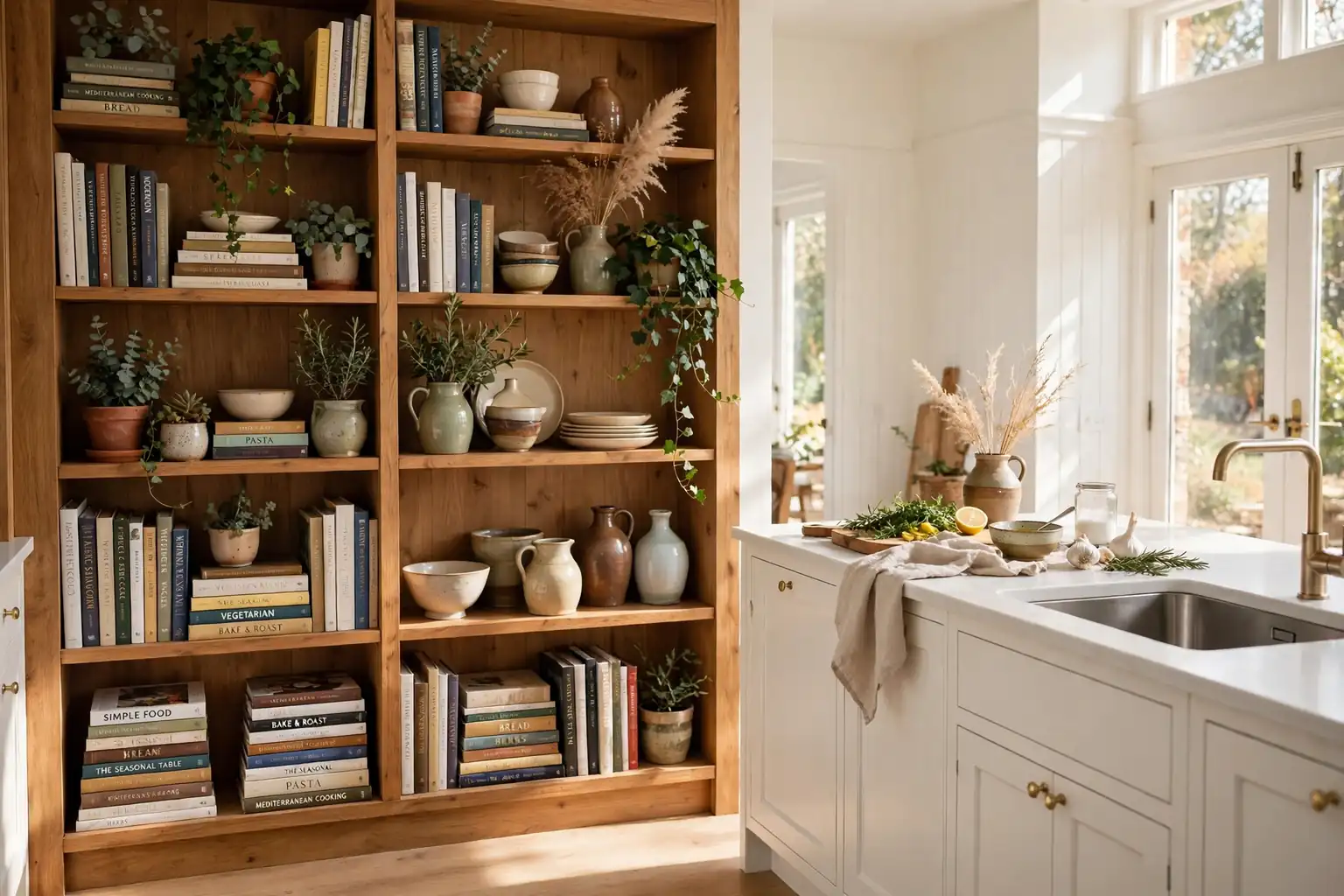
Cookbooks, food magazines and recipe binders tend to pile up in kitchens, even in homes with plenty of cabinets. A bookshelf made for the kitchen gives that collection a clear home, keeps the books you reach for most within arm’s reach, and adds warmth to a room that is often full of hard surfaces. These 16 kitchen bookshelf ideas cover built-in walls, small corners, movable carts and slim gaps, so you can find one that fits your layout, your budget and the way you cook. Start with the spot you already use, measure it, and choose a shelf that holds real books rather than a display you have to work around.
Key Takeaways
- Put cookbooks where you actually cook, near the counter, the stove or the prep zone, not in another room.
- Measure shelf height and depth before buying, since tall cookbooks and deep binders need more room than paperbacks.
- Keep heavy books low, leave breathing room on each shelf, and anchor tall or freestanding shelves to the wall.
- Mix books with a few useful items, such as jars, plants or bowls, but leave space so books slide out easily.
- Protect books from steam, splashes and direct heat by keeping shelves away from the stove and sink.
- Choose a movable or adjustable option first if you rent or if your kitchen layout may change.
1. Use Open Shelves for Everyday Cookbooks
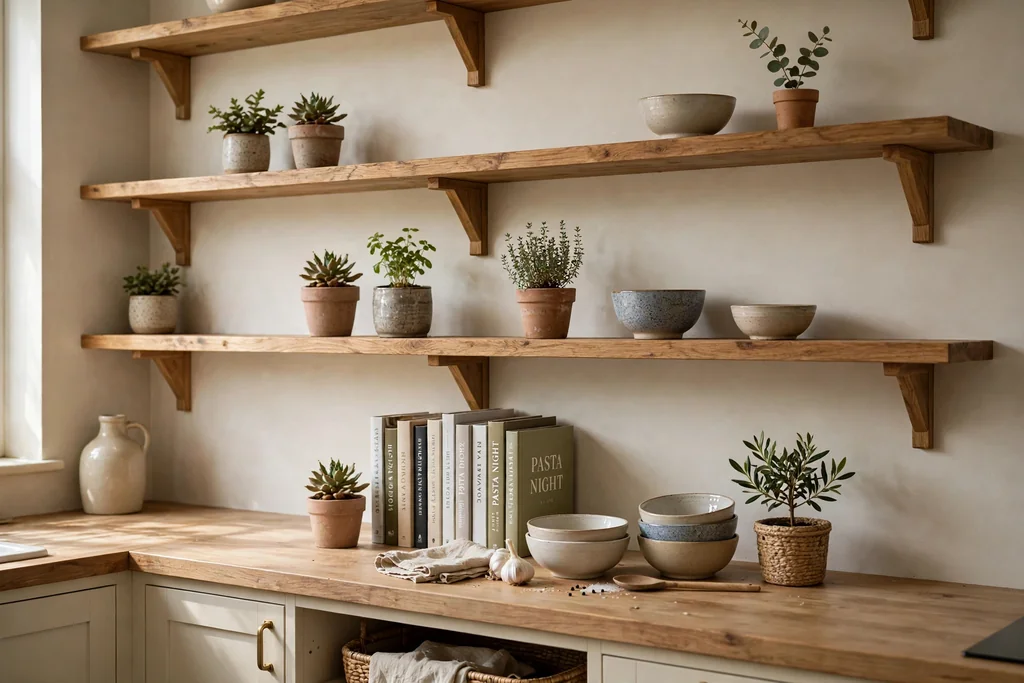
Open shelves above a counter keep your most used cookbooks visible and easy to grab while you cook. Choose one or two shelves at a height you can reach without a step stool, and group books by how often you use them, with daily favorites at eye level and occasional titles higher up. Leave a gap at each end of a row so you can pull a book out without knocking its neighbors over.
Keep the shelf near the prep counter but clear of the stove, so steam and grease do not reach the pages. A small plant or a jar of wooden spoons at one end adds life without crowding the books. For spacing and grouping tips, see our guide to how to style open shelves.
2. Build a Floor to Ceiling Bookshelf Wall
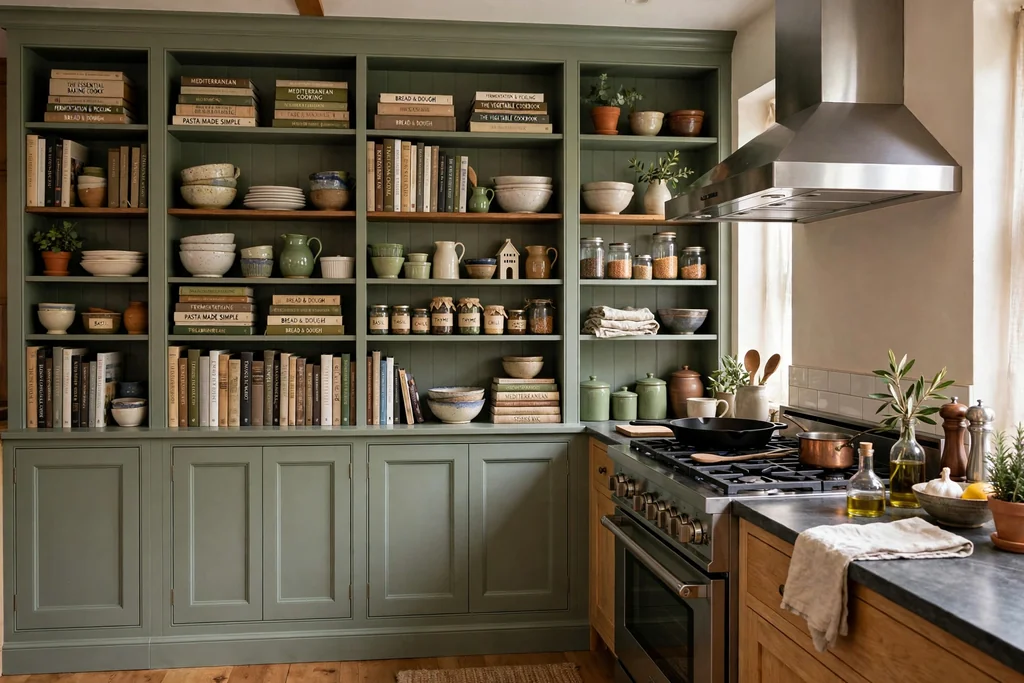
A floor to ceiling bookshelf wall turns a blank kitchen wall into the room’s main storage and display feature. Paint it the same color as nearby cabinets for a fitted look, or use natural wood for contrast against painted walls. Put heavy reference books and large baking books on the lower shelves, everyday cookbooks at middle height, and lighter items such as baskets and vases up high.
This idea suits a wall beside the fridge or at the end of a galley kitchen, where a full wall unit will not block a walkway. Anchor the unit firmly, check that cabinet doors and drawers still open fully, and leave one shelf partly empty so new books have a place to go.
3. Fit a Bookshelf Into a Dead Corner
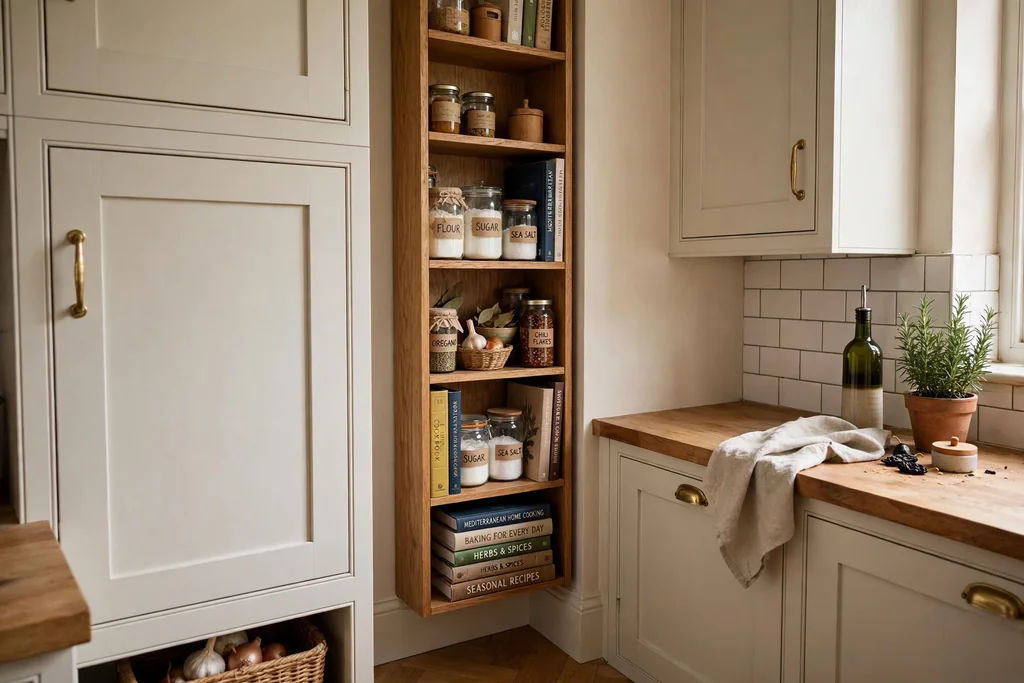
Many kitchens have a corner that is too small for a cabinet but large enough for a tall, narrow bookshelf. A triangular or slim rectangular shelf fits into that space and holds a surprising number of books, especially if the shelves are adjustable. Measure the corner from both walls, and allow room to pull books out without hitting a handle or a door frame.
Use the top shelf for a plant or a small clock, and keep the middle shelves for books you use weekly. A corner shelf also works well beside a tall pantry unit, where it softens a hard edge and fills a gap that would otherwise collect dust.
4. Place a Freestanding Bookcase by the Dining Table
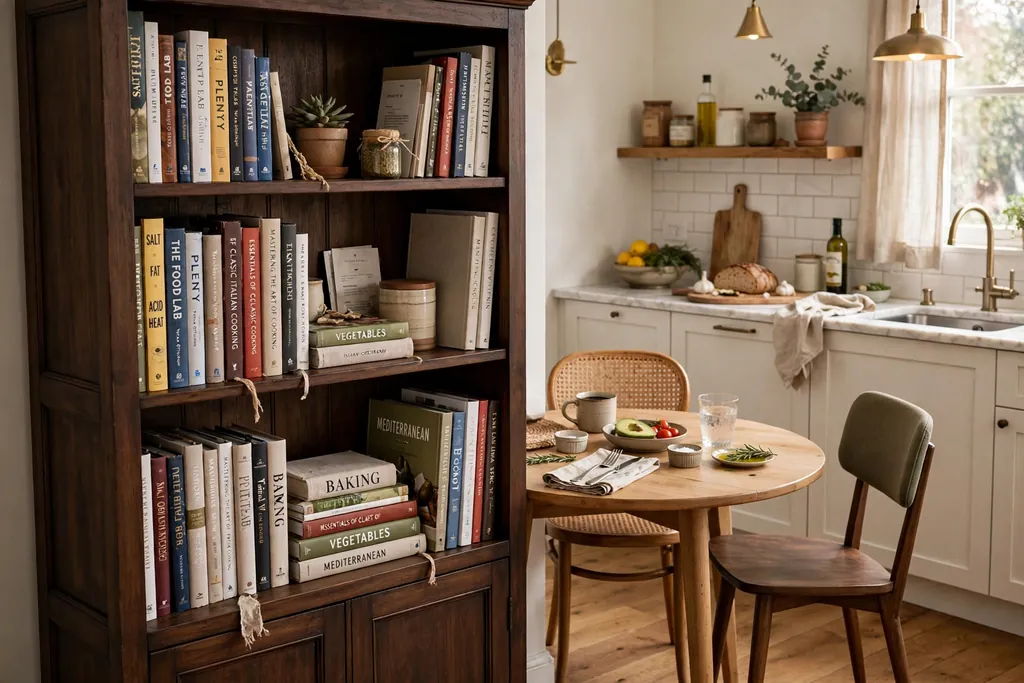
A freestanding bookcase beside the kitchen table gives diners something to browse and keeps meal planning books close to where menus are discussed. Choose a bookcase that matches your table in height and tone, so the two pieces read as a set rather than as leftovers from different rooms. Keep the bookcase against a wall, not floating in a walkway, and anchor it if children use the table.
Style the top with a small lamp or a bowl for keys, and use the lower shelves for heavier books and binders. This setup works well in eat-in kitchens and open plan rooms, where the bookcase also marks the edge of the dining zone.
5. Add Bookshelves to the Ends of a Kitchen Island
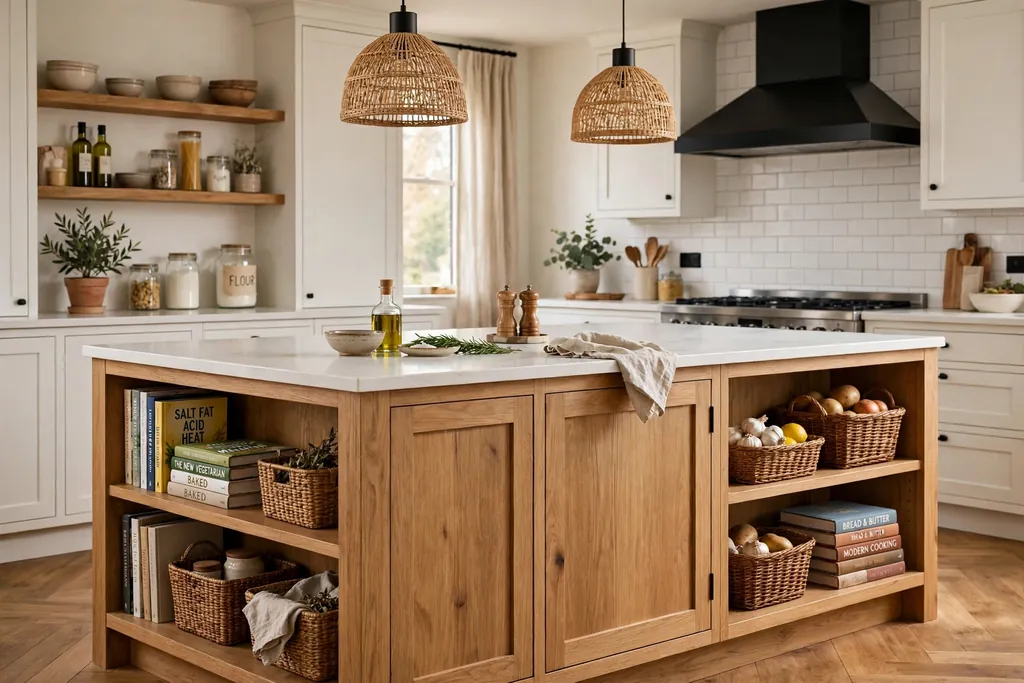
The ends of a kitchen island are often plain panels, yet they can hold shallow bookshelves for cookbooks and magazines. A shelf depth of about 20 to 25 centimeters suits most cookbooks, and a small lip or rail stops books from sliding out when someone bumps the island. This placement keeps books at hand height while you stand at the counter, which is ideal for recipes you check mid-prep.
Use one end for cookbooks and the other for children’s books or magazines, if your household needs both. Keep the shelves clear of the seating side if stools tuck under the island, so knees and books do not compete for space.
6. Build Bookshelves Under a Window Seat
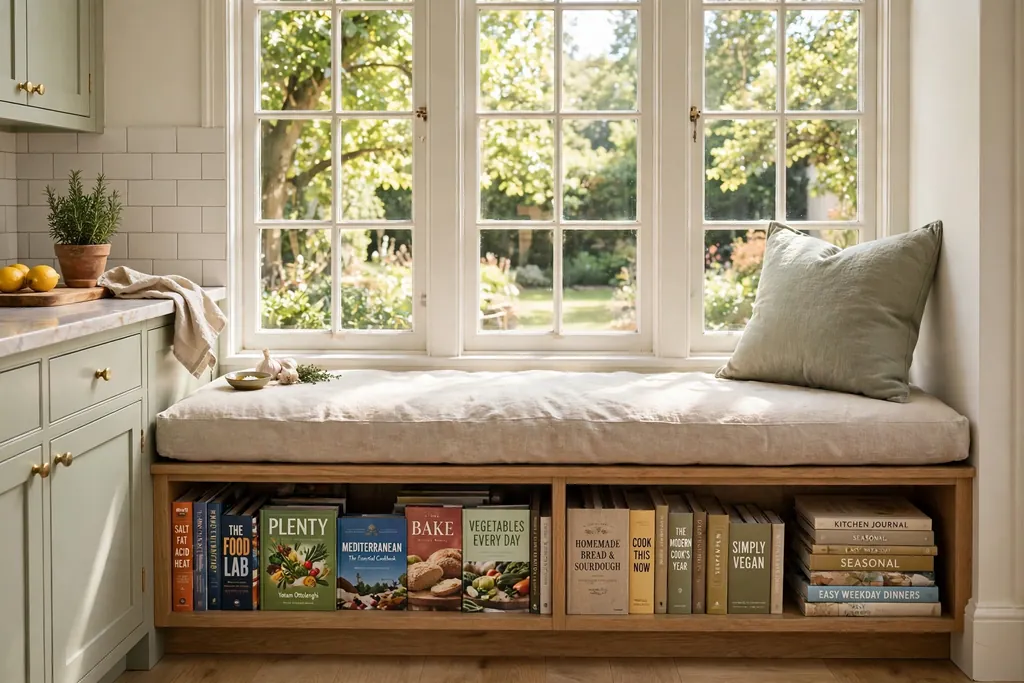
A window seat with bookshelves below it makes a quiet reading and planning corner in the kitchen. The seat gives you a place to sit with a cookbook and a cup of tea, while the shelves below hold the rest of the collection. Add a cushion and a washable cover, since a kitchen seat takes more wear than a living room chair.
This idea suits a kitchen with a wide window and a wall long enough for a bench. Keep the shelf openings facing the room, not the window, so books stay dry and easy to reach. Store oversized baking books on the lowest shelf, where their weight is stable and they will not topple onto the seat.
7. Lean a Ladder Shelf Against a Spare Wall
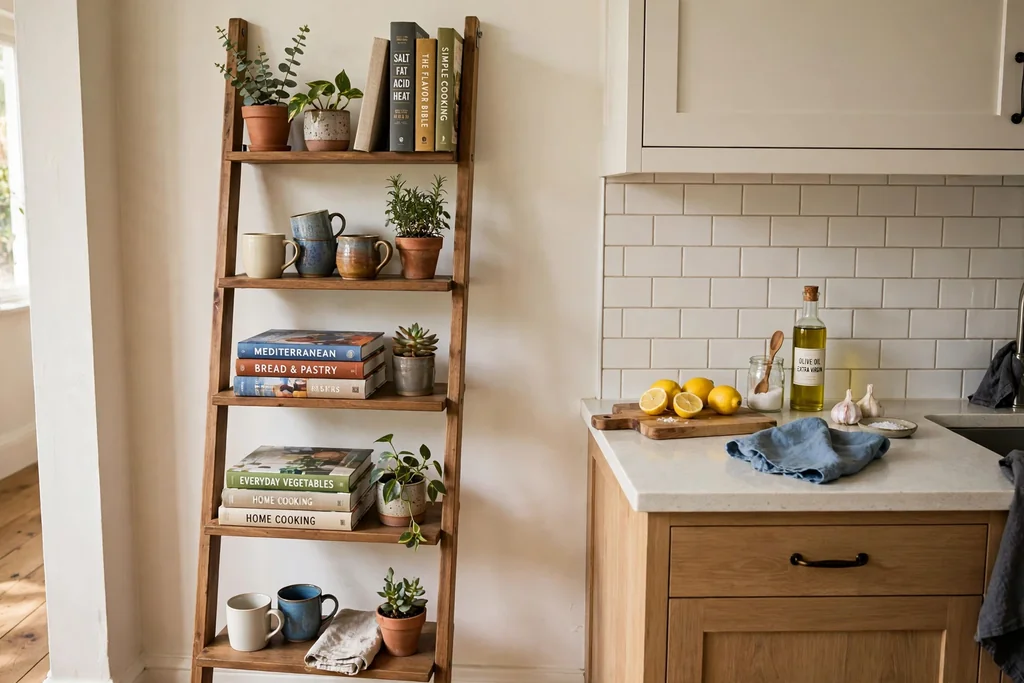
A leaning ladder shelf needs no fixing to the wall beyond a small anchor, which makes it a good choice for renters and for kitchens where drilling is limited. The shelves get deeper toward the bottom, so place large cookbooks low and smaller books and plants higher up. The open frame keeps the wall visible, so the shelf feels lighter than a closed bookcase.
Place it beside a counter or near the dining table, where it can hold books without blocking light from a window. Check that the feet sit flat on the floor and that the top rests evenly against the wall, and keep heavy items off the top two rungs.
8. Run a Cookbook Row Above Pantry Storage
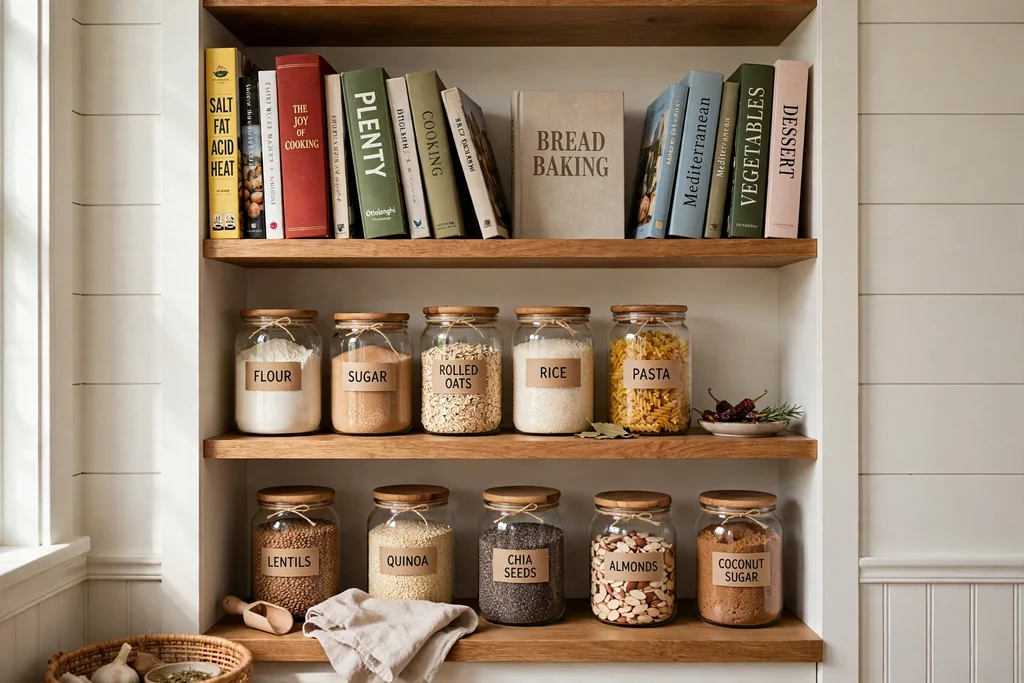
If your pantry shelves already hold jars and dry goods, add a dedicated cookbook row above them, at eye level or just above. This keeps recipe books separate from food storage, so you can find a book without moving jars, and it puts the books where ingredients are close at hand. Use bookends or a small rail to stop books from falling when the pantry door closes.
Label the row if you share the kitchen, and keep a notebook or a folder of printed recipes at one end. This idea works best in a walk-in pantry or a pantry wall with a shelf run that is not already full to the ceiling.
9. Use Floating Shelves as a Book Ledge
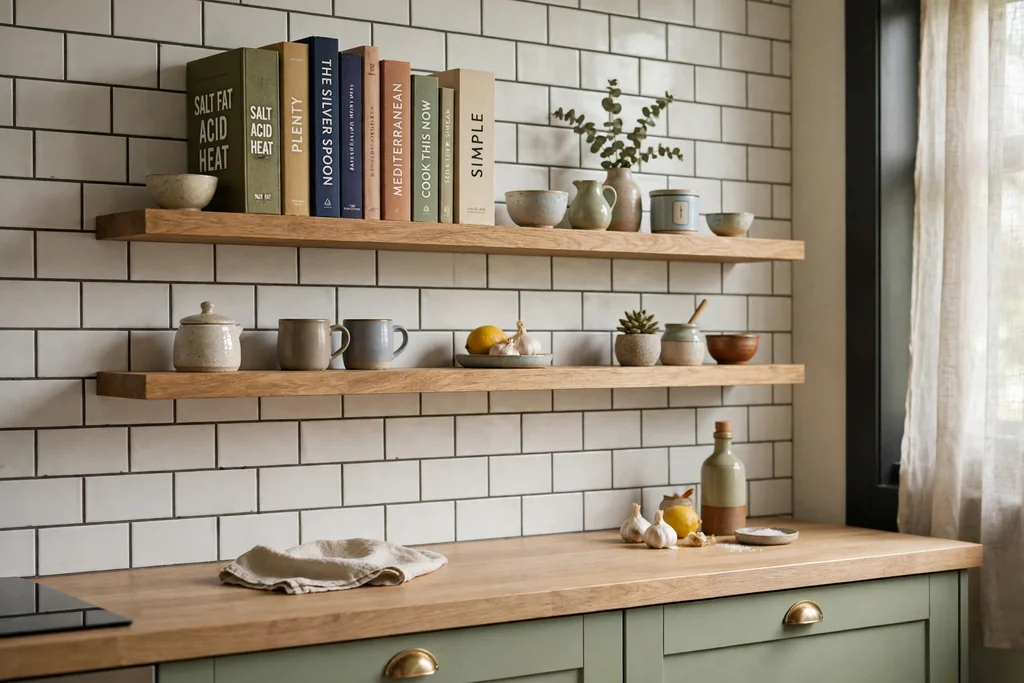
Floating shelves act as a book ledge when they are deep enough for books to stand upright, with a small lip or a bookend at each end. Two or three short floating shelves, staggered rather than lined up in one long row, suit a wall with a window, a door or an awkward gap. They hold fewer books than a bookcase, so reserve them for favorites and for books with covers you enjoy seeing.
Fix floating shelves into studs or use fixings rated for the weight, since a shelf of cookbooks is heavier than a shelf of ornaments. Keep the shelves away from the sink splash zone, and wipe the shelf tops often, since kitchen dust settles on open surfaces.
10. Choose a Glass Door Bookcase for Steam Protection
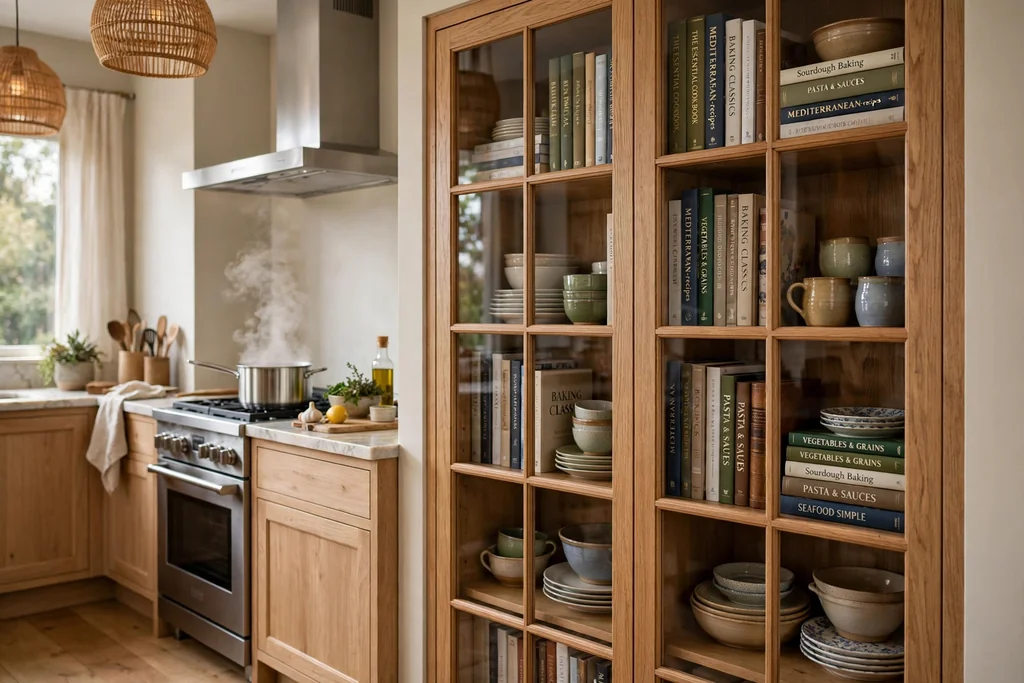
A bookcase with glass doors protects cookbooks from steam, cooking smells and splashes while still letting you see the spines. This is the best choice for a shelf near the stove or the dishwasher, where open shelves would collect grease. Choose clear glass for a light look, or reeded glass if you prefer to soften the view of a busy collection.
Keep the doors closed while cooking, and wipe the glass inside and out when you clean the kitchen. Inside, sort books by cuisine or by course, and leave a little space on each shelf so you can remove a book without pulling the whole row forward.
11. Add a Small Bookshelf to a Breakfast Nook
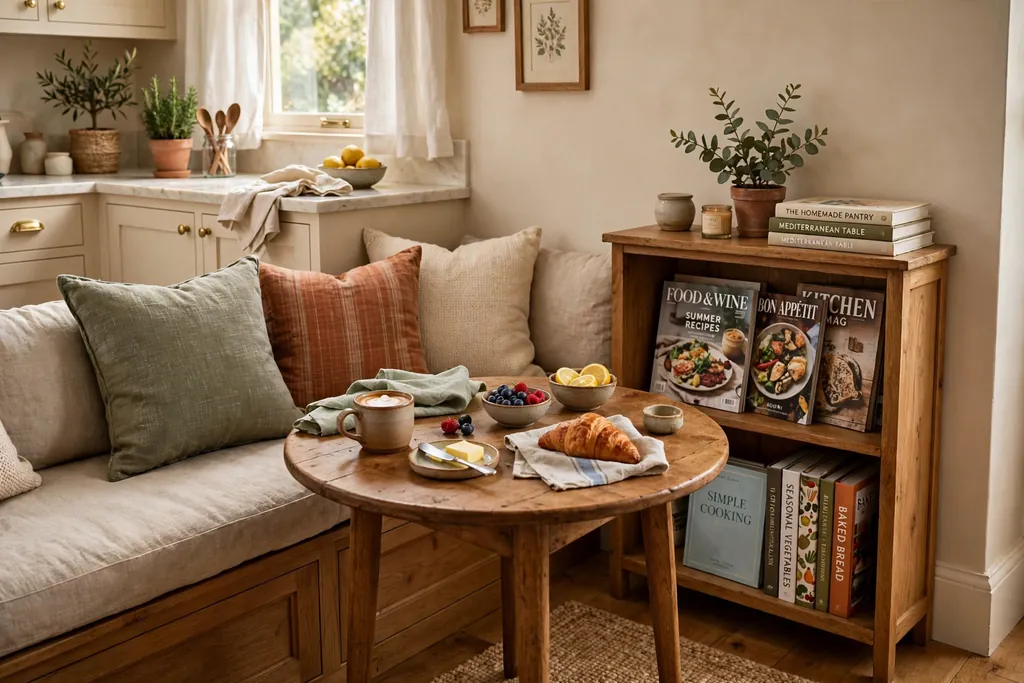
A breakfast nook already invites slow mornings, so a small bookshelf beside the bench completes it. A two or three shelf unit holds morning reading, children’s books, a recipe notebook and a small plant, all within reach of the table. Keep the unit low enough that it does not block light from the nook window, and anchor it to the wall if the bench moves.
Use baskets on the lowest shelf for magazines and loose papers, so the nook stays tidy between meals. This idea suits families who eat most meals at the nook table, since the books get used daily rather than stored for display.
12. Roll a Book Cart Where You Need It
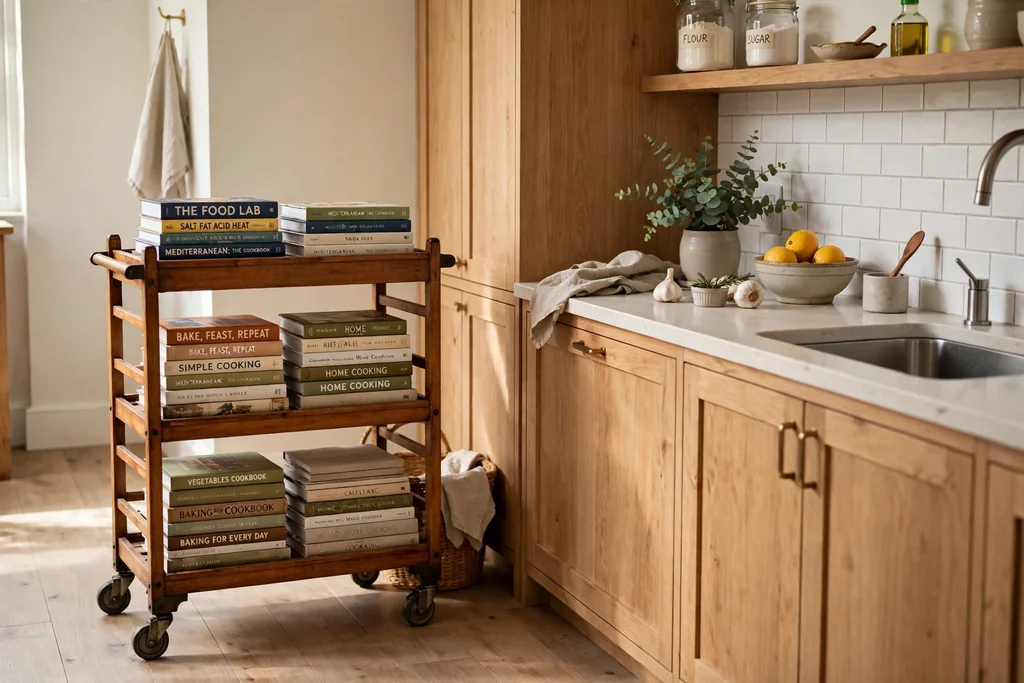
A rolling book cart holds cookbooks on a frame with wheels, so you can move it to the counter while cooking and park it beside the table at mealtimes. Lock the wheels before you start work, and keep heavy books on the bottom shelf so the cart stays stable when it moves. A cart with a handle is easier to steer through a narrow kitchen than a wide bookcase.
This option suits small kitchens, shared homes and anyone who cooks in more than one spot. When the cart is not in use, it can tuck into a gap beside the fridge or under a counter overhang. Choose a cart with a wipe clean surface, since kitchen carts pick up spills.
13. Run a Shelf Above a Doorway
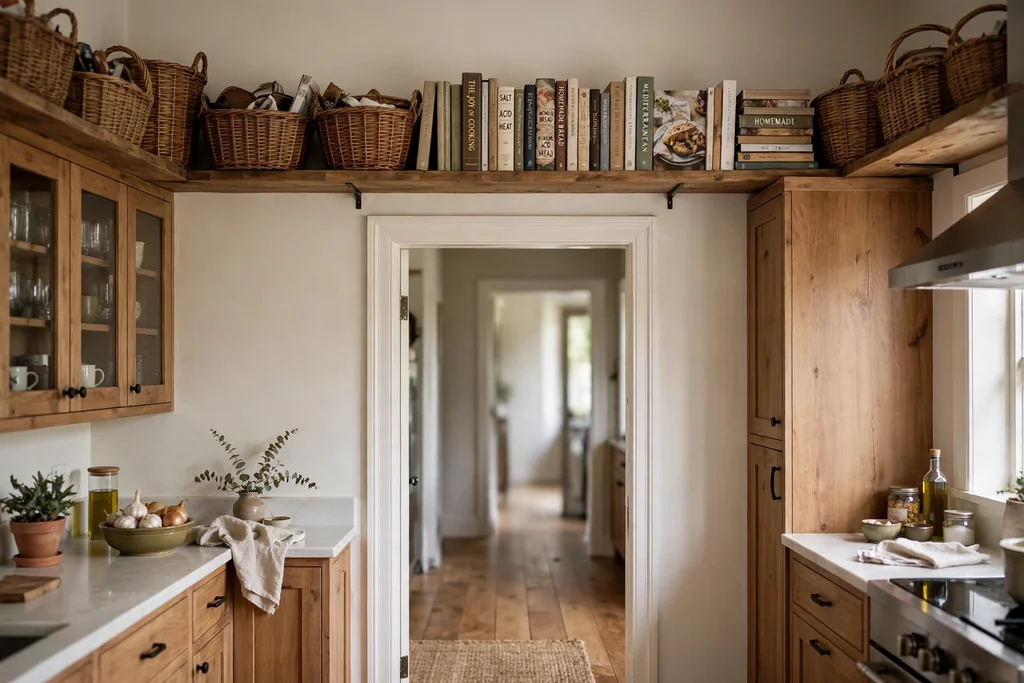
The wall above a kitchen doorway is often empty, yet it can hold a single long shelf for books you use less often, such as holiday baking books and large reference volumes. A shelf at this height needs a step stool for access, so reserve it for titles you reach for a few times a year, not for daily cooking. Add a small rail or bookends to keep books in place.
Measure the doorway trim first, and fix the shelf into studs, since it will carry a long row of books. This idea works well in small kitchens, where every wall counts, and it pairs well with a lower, everyday shelf near the counter.
14. Keep a Low Shelf for Family Cooking
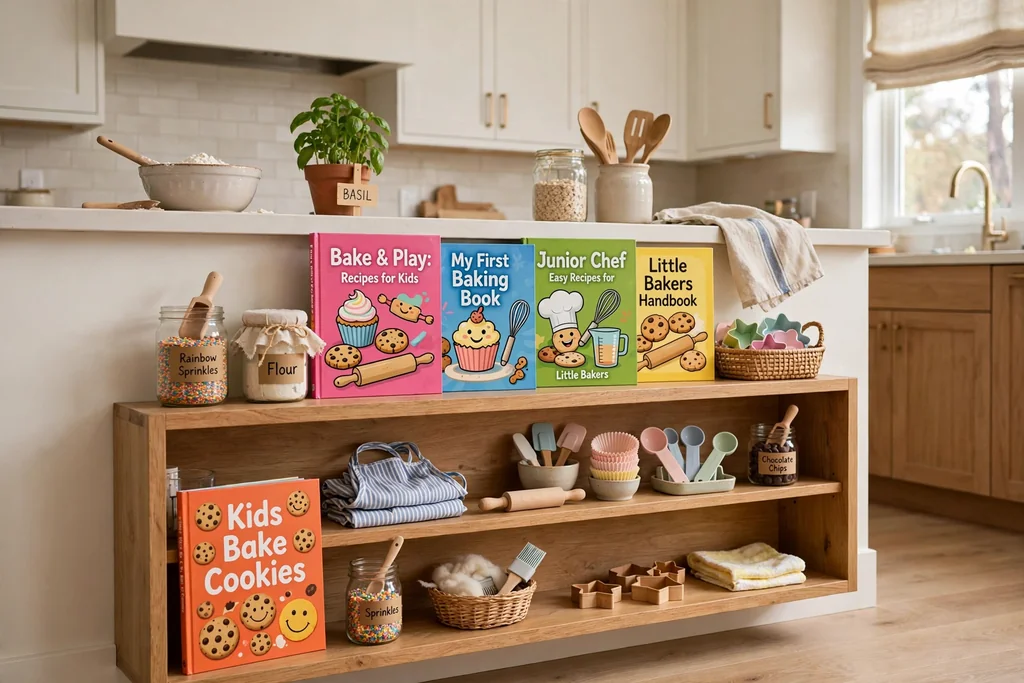
A low, open shelf at child height lets younger family members choose their own cookbooks and join in baking projects. Place it away from the stove and sharp tools, near a counter where children can work with an adult. Use sturdy, wipe clean shelves, and keep the books upright with bookends, so small hands can pull one out without toppling the row.
Stock the shelf with a few children’s cookbooks, a measuring guide and a notebook for family recipes. Rotate the books every few months, so the shelf stays inviting and the collection does not outgrow the space. This shelf also teaches children where books belong, which keeps the rest of the kitchen tidier.
15. Combine Books With Herbs on One Shelf
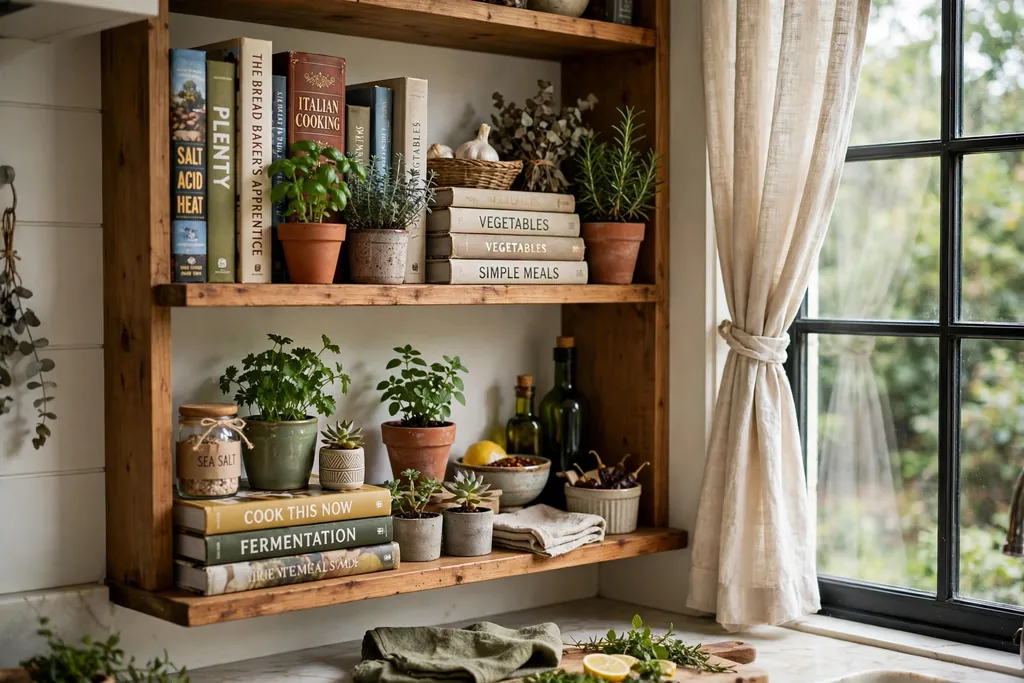
A shelf that holds both cookbooks and potted herbs links the recipe to its ingredients. Place herbs in pots with saucers, so watering does not damage book pages, and keep the pots at one end of the shelf, with books at the other. Herbs such as basil, mint and parsley suit a bright kitchen shelf, but check that they get enough light and are not too close to a hot stove.
Water herbs over the sink, not on the shelf, and wipe the shelf after watering. This combination works best on a wide windowsill shelf or a shelf near the prep counter, where you can snip herbs while a recipe is open beside you.
16. Fit a Slim Pull-Out Shelf in a Narrow Gap
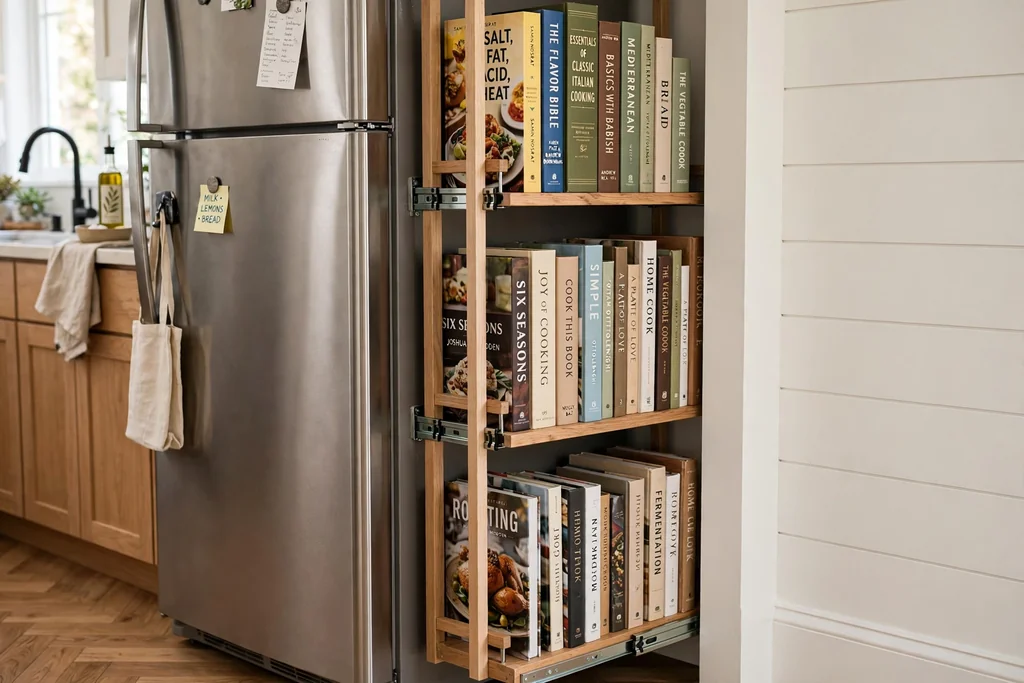
A narrow gap beside the fridge, the oven housing or a tall cabinet can hold a slim pull-out shelf for cookbooks stored spine up. The pull-out design means you can reach books at the back without moving everything in front, which is the main drawback of a deep fixed shelf in a tight space. Measure the gap carefully, including skirting boards and door handles, before ordering or building the unit.
Use this shelf for slim paperbacks, magazines and recipe binders, and keep heavier hardbacks on a sturdier shelf elsewhere. A pull-out shelf also works in a gap between two cabinets, where a standard bookcase would never fit.
Conclusion
A kitchen bookshelf works best when it fits the way you cook, not just the wall it stands against. Pick one idea from this list that matches a spot you already use, measure that spot, and start with the books you reach for most. Keep heavy books low, protect pages from steam and splashes, and leave a little empty space for new titles. Once the first shelf is working well, you can add a second spot, such as a cart, a nook shelf or a row above the pantry, and the whole collection will stay easy to find.
Save this list on Pinterest before your next kitchen refresh, and start with the shelf closest to your prep counter.
FAQs
Where is the best place for a kitchen bookshelf?
The best place is near where you prep food, such as beside the counter, at the end of the island or near the dining table, but away from the stove, sink and dishwasher. Books need a dry spot with enough light to read spines, and a shelf you can reach without moving hot pans or wet dishes out of the way.
How do I protect cookbooks from kitchen steam and grease?
Use a glass door bookcase near the stove or dishwasher, keep open shelves on a wall away from direct steam, and wipe shelf tops and book spines often. Never store books directly above the stove, and keep them clear of the sink splash zone. A shelf with doors, closed while you cook, gives the most protection.
How deep should a kitchen bookshelf be?
A depth of about 20 to 25 centimeters suits most cookbooks, while large baking books and binders may need up to 30 centimeters. Measure your tallest and thickest books before choosing a shelf, and allow a little extra depth so books sit fully on the shelf rather than hanging over the edge.
How can I fit a bookshelf in a small kitchen?
Use a corner shelf, a slim pull-out shelf in a narrow gap, a shelf above a doorway, or a rolling cart that tucks away when not in use. A floating shelf or a ladder shelf also adds storage without a large footprint. Start with one small shelf for daily favorites, rather than a full bookcase that crowds the room.
How do I style a kitchen bookshelf for a season?
Swap a few books for seasonal titles, add a small plant or a jar of seasonal ingredients, and change a dish towel or a small ornament on the top shelf. For seasonal kitchen styling ideas, see our Thanksgiving kitchen decor ideas. Keep the change small, so the shelf still works as everyday storage.
Should I sort kitchen books by color or by use?
Sort by use first, since a kitchen shelf is a working tool. Group books by cuisine, course or how often you cook from them, and keep daily favorites at eye level. Color grouping looks neat in photos, but it slows you down when you are mid-recipe and need a specific book quickly.