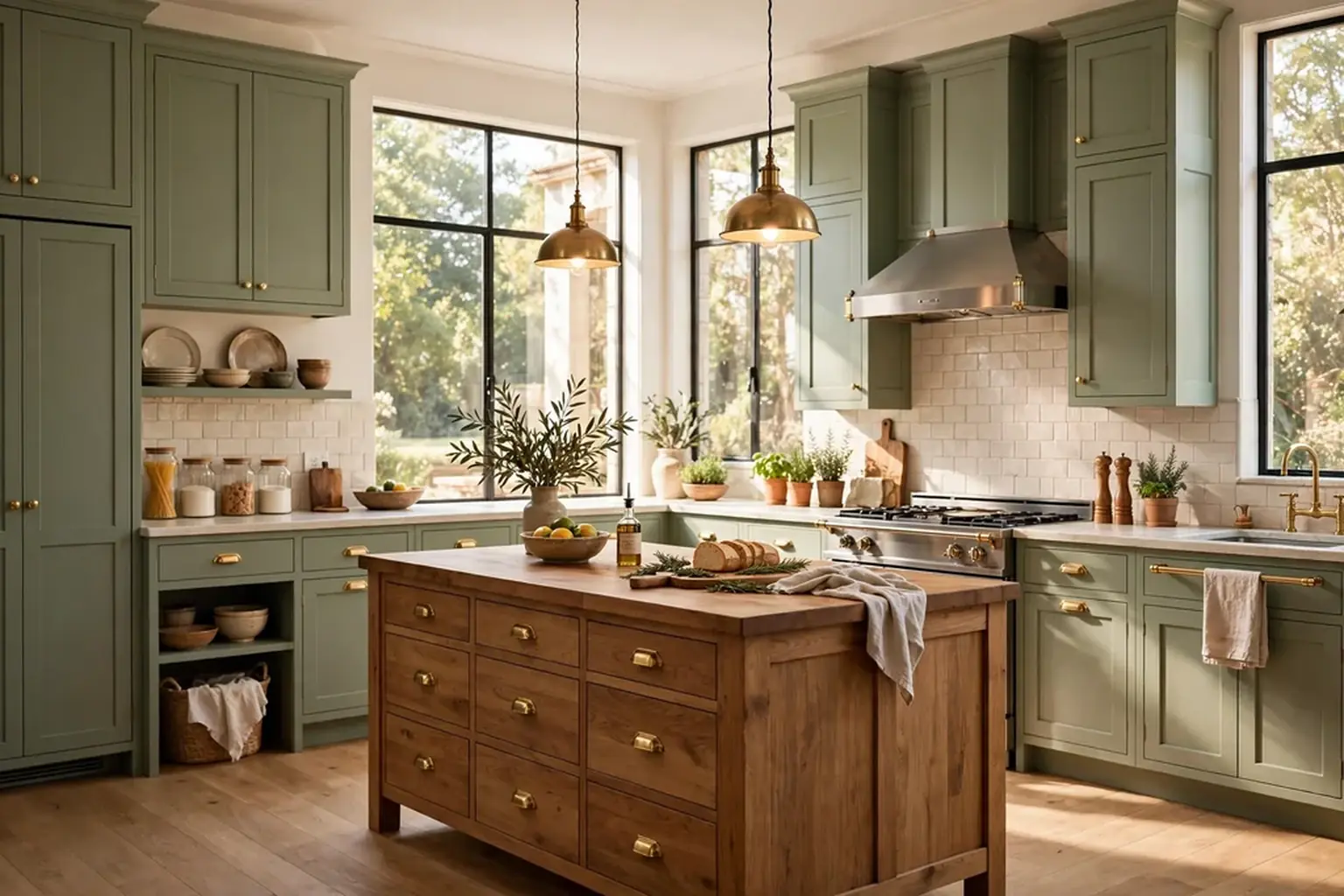
Sage green gives a kitchen color without noise. It is muted enough to live with every day, yet clear enough to set the tone for cabinets, walls, tile, and wood. These 32 sage green themed kitchen ideas cover full cabinet runs, two tone layouts, islands, backsplashes, hardware, seating, and lighting, so you can plan a whole room or change one layer at a time. Start with the largest surface you see first, usually the cabinets, then repeat the sage once or twice in smaller spots so the room reads as planned. If you want to compare sage with other cabinet colors first, these colors for your kitchen cabinets set out undertones and pairings to check beside your floor and counters.
Key Takeaways
- Start with one main sage surface, such as the cabinets, the island, or one wall, and repeat the tone once or twice in smaller items.
- Pair sage with warm white, cream, light oak, pale stone, and one metal finish so the room stays soft and settled.
- Test paint and tile samples in morning and evening light, since sage shifts between cool daylight and warm lamplight.
- Mix textures, such as painted wood, linen, woven baskets, and stone, so a muted palette still has depth.
- Keep work surfaces clear and storage closed where possible, since a tidy sage kitchen reads as more polished than a decorated but crowded one.
- Choose washable finishes near the stove and sink, and keep one darker accent, such as black hardware or a wood stool, in a few small places for shape.
1. Classic Sage Shaker Cabinets All Over
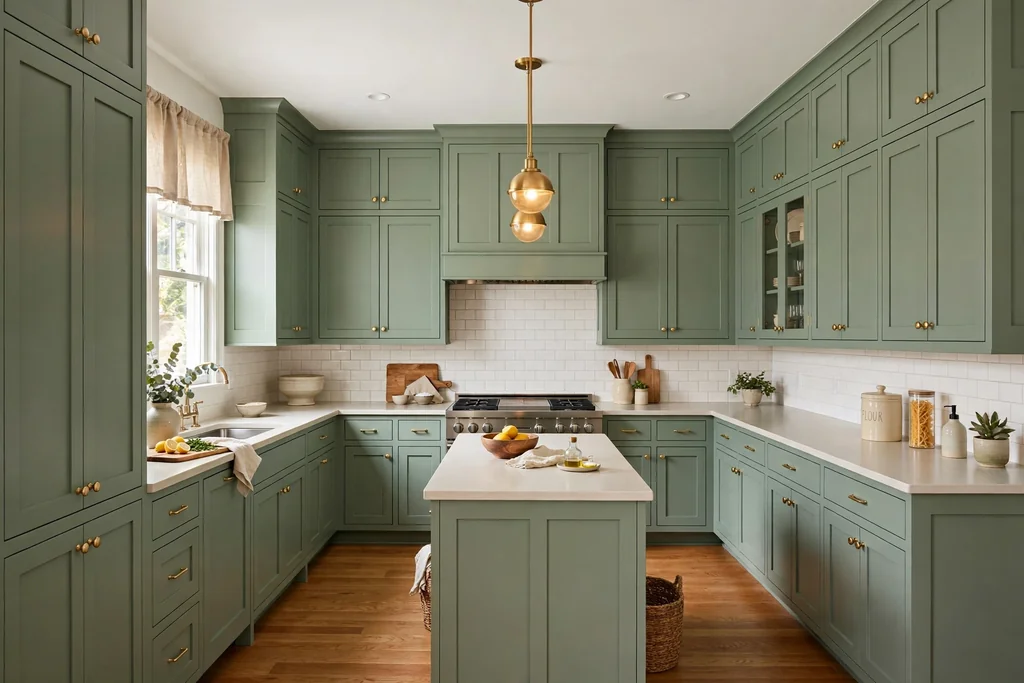
Use sage Shaker cabinets on every wall for the most reliable version of this look. The recessed panel adds just enough detail to avoid a flat wall of color, while the muted green keeps the room calm. This suits almost any home, and it gives you a steady base for wood floors, a pale counter, and brass or black taps.
Keep the walls warm white or cream, and repeat one warm material, such as light oak stools or a wood board, in two spots. Choose a satin or semi gloss finish near the stove, since flat paint shows splashes and is harder to wipe. The result is a kitchen with clear color that still feels easy to cook in every day.
2. Two Tone Sage Lowers and White Uppers
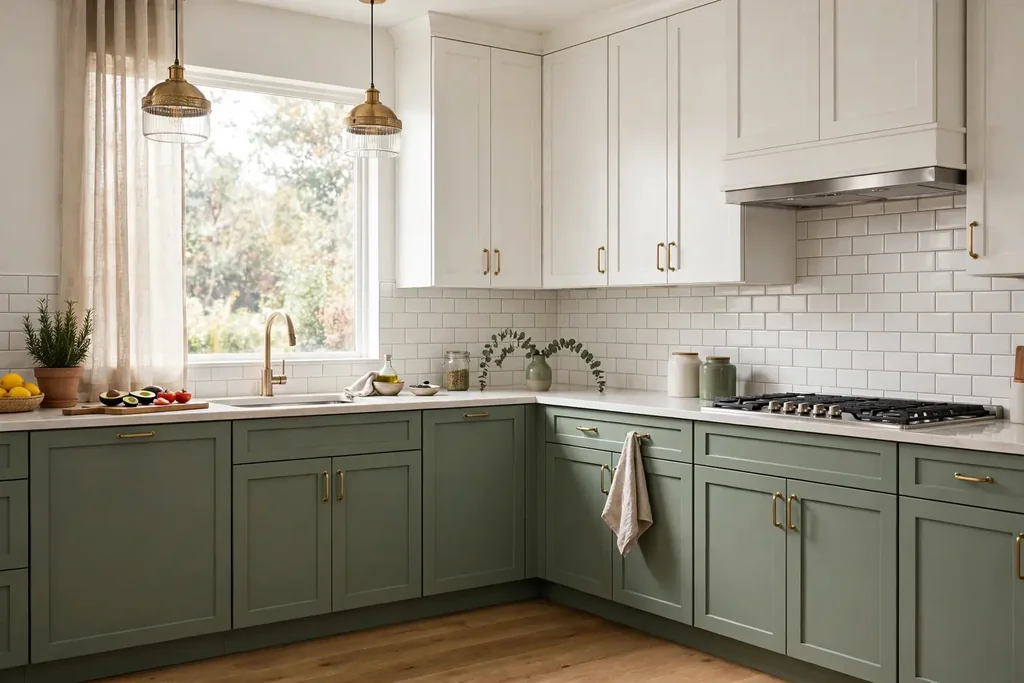
Paint the lower cabinets sage and keep the uppers white for a lighter take on a full sage kitchen. The sage grounds the room at floor level, where scuffs and marks are most common, while the white uppers keep the wall bright and open. This split suits smaller kitchens and rooms with low ceilings.
Repeat the sage once more, in stools, a runner, or a vase, so the lower color looks planned rather than random. Keep the counter pale and the backsplash simple, so the two cabinet colors stay the clear feature. If you later want more sage, repainting only the uppers is a smaller job than starting over.
3. Sage Island with Warm White Cabinets
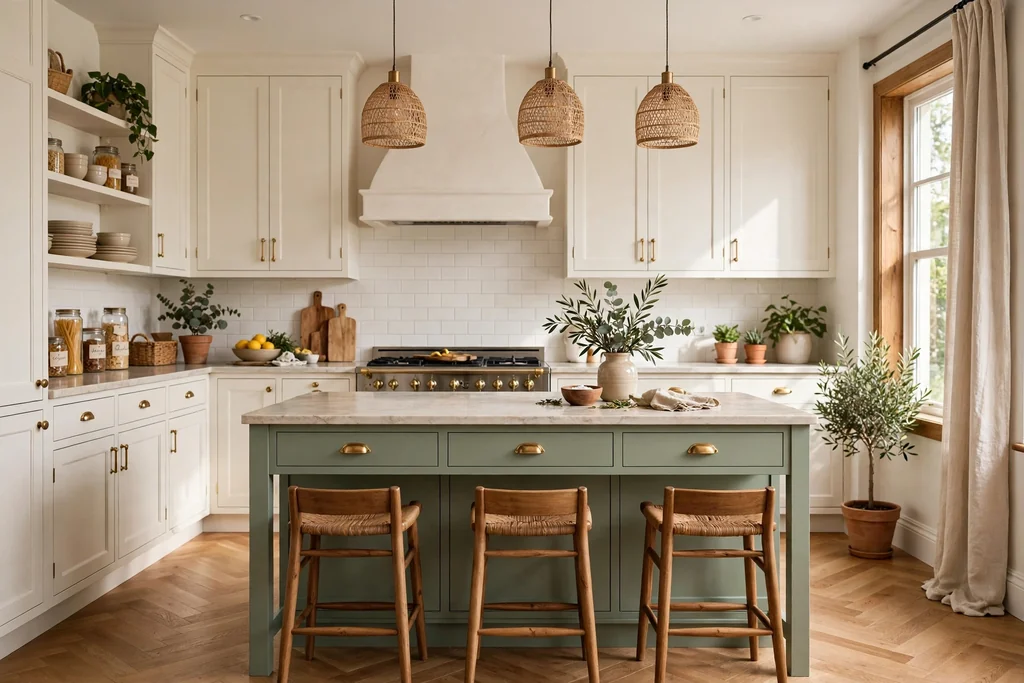
Keep the main cabinets warm white and paint only the island sage for a clear focal point with low risk. The island becomes the color anchor of the room, and the rest of the kitchen stays calm, which makes the change easier to live with and easier to repaint later. A sage island also hides scuffs better than a white base at kick height.
Repeat the island color once more, in a stool cushion, a runner, or a plant pot, so it links to the room. Choose a hard wearing paint for the island base, since it takes kicks, bags, and stool legs. For budget ways to make a single change like this count, these kitchen ideas on a budget show how paint, hardware, and lighting do most of the work.
4. Sage Beadboard Cabinets for a Cottage Kitchen
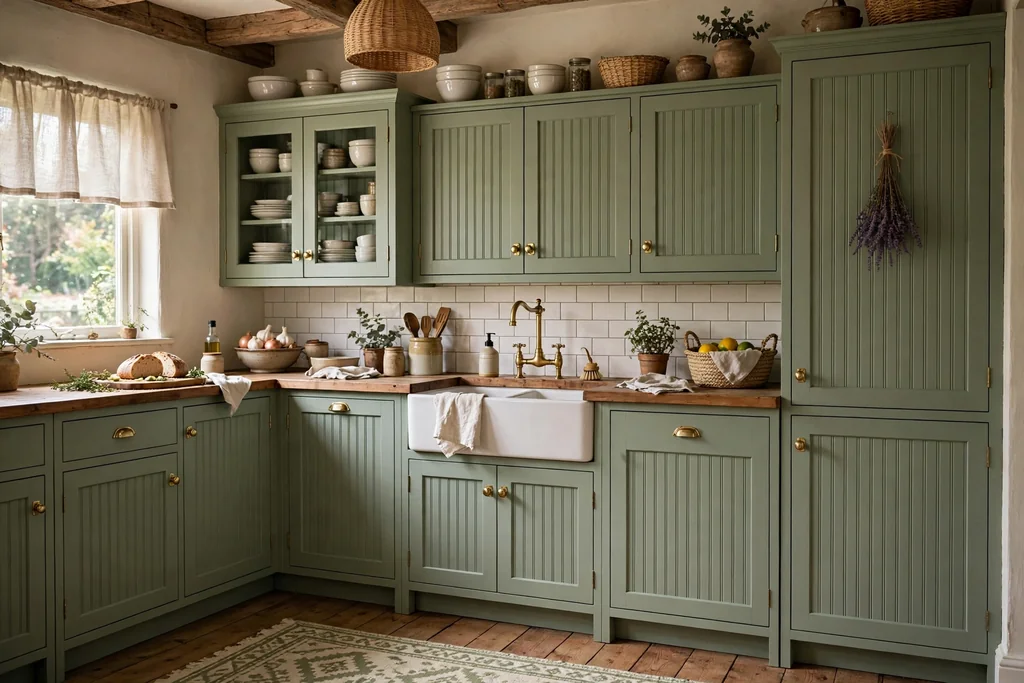
Choose beadboard door fronts in sage for a cottage kitchen, with narrow vertical grooves that add texture without a new color. Beadboard suits a farmhouse or coastal home, and it pairs well with a farmhouse sink, wood counters, and woven baskets. The texture stops sage from looking flat, even in a kitchen with little pattern elsewhere.
Keep counters and the backsplash plain, so the beadboard can carry the detail. Wipe the grooves with a damp cloth, since crumbs and dust settle in the lines. If full beadboard doors feel like too much, use them on the island or on one pantry wall, and keep the rest of the cabinets in plain Shaker style.
5. Flat Front Sage Cabinets for a Modern Kitchen
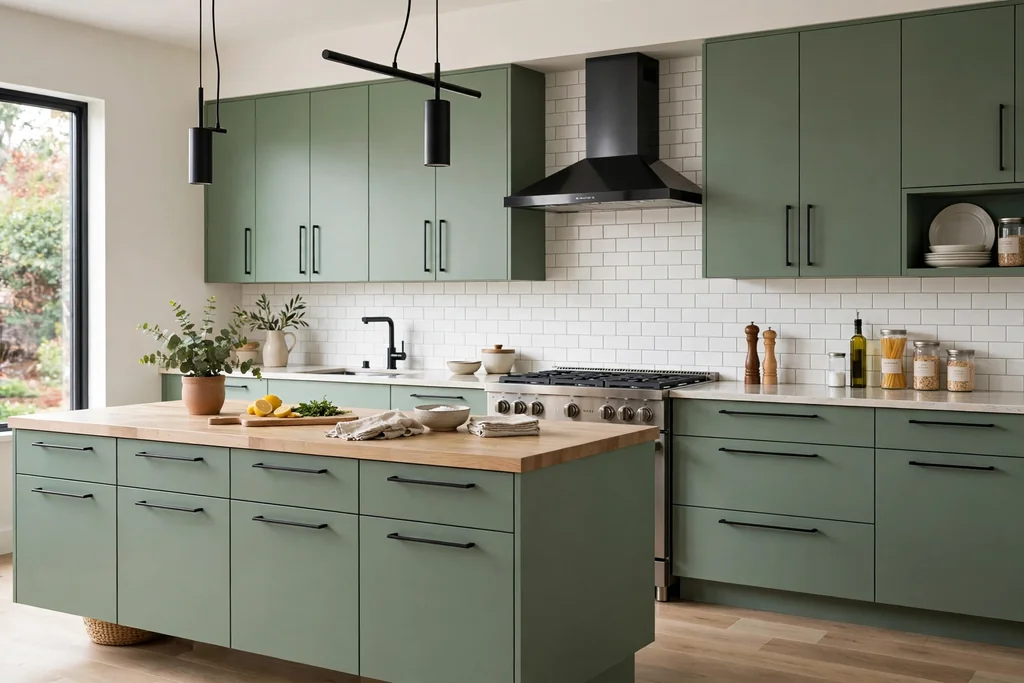
Use flat front sage cabinets for a modern kitchen, with no panel detail and long, simple pulls. The flat doors let the color itself do the work, and they suit handleless runs, integrated appliances, and pale stone counters. This is a good choice when you want sage to feel current rather than cottage style.
Keep the rest of the room quiet, with a plain backsplash and one wood tone, so the flat fronts read as calm rather than bare. Wipe fingerprints near handles often, since flat doors show marks more than framed doors do. Add warmth with wood stools or open wood shelves, so the modern lines still feel lived in.
6. Glass Front Sage Uppers for Display
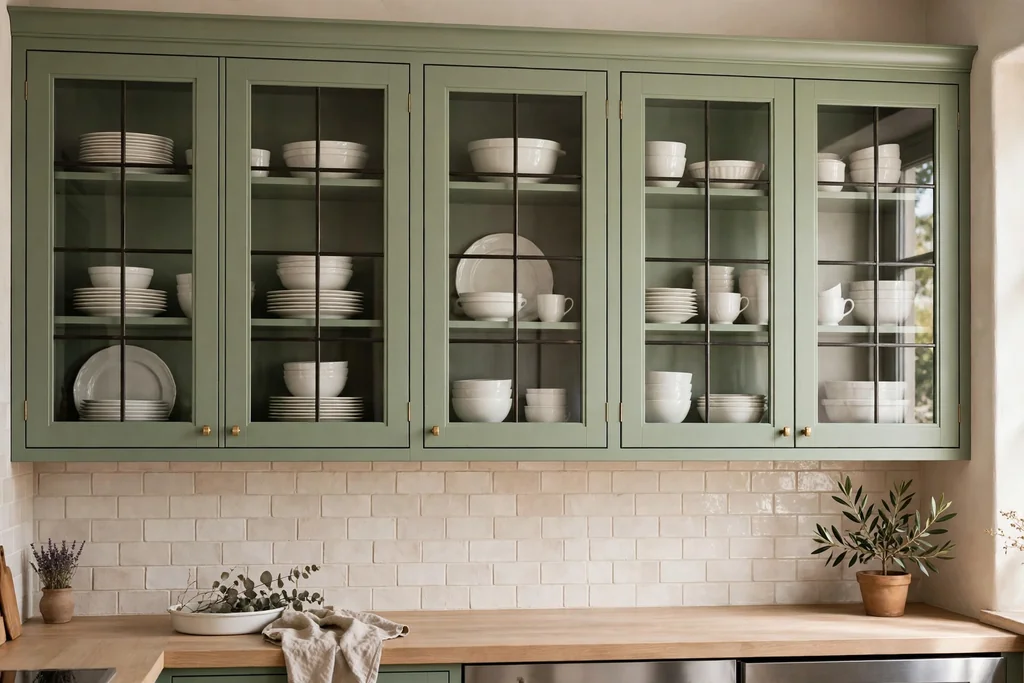
Swap a few sage upper doors for glass fronts, and display white dishes, clear glasses, and a few wood boards behind them. Glass breaks up a long run of sage doors, adds depth, and makes everyday pieces easy to find. It suits a kitchen with one straight run, where two or three glass doors are enough to change the whole wall.
Keep the display simple, with one stack per shelf and space between groups, so the cabinets read as tidy. Put daily dishes at easy reach and rarely used pieces higher up. If glass feels too exposed, use reeded or frosted glass on one cabinet for a softer version of the same idea.
7. Floor to Ceiling Sage Pantry Wall
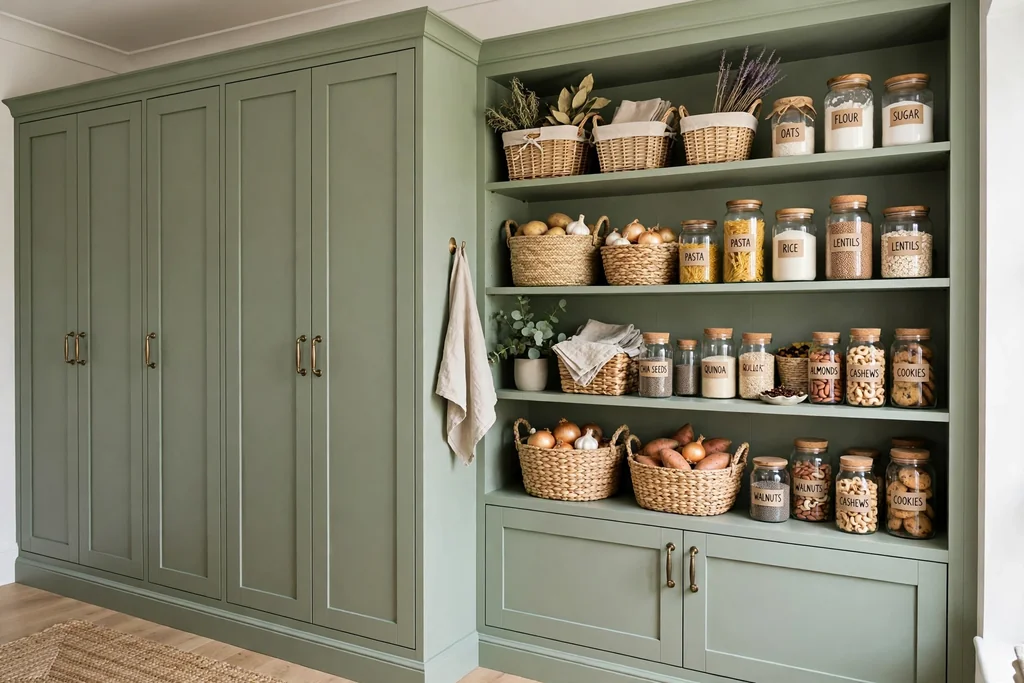
Dedicate one wall to tall sage pantry cabinets, floor to ceiling, for dry goods, small appliances, and cleaning gear in one place. A pantry wall keeps the rest of the kitchen free of tall units, so the cooking wall can stay low and open. It also makes meal planning easier, since everything is visible at a glance.
Fit the pantry with adjustable shelves, a few baskets for loose items, and labels on each shelf zone. Keep heavy items at waist height and light items up high. Put the pantry near the fridge or the main prep counter, so ingredients travel a short distance to the cooker.
8. Sage Cabinets with Butcher Block Counters
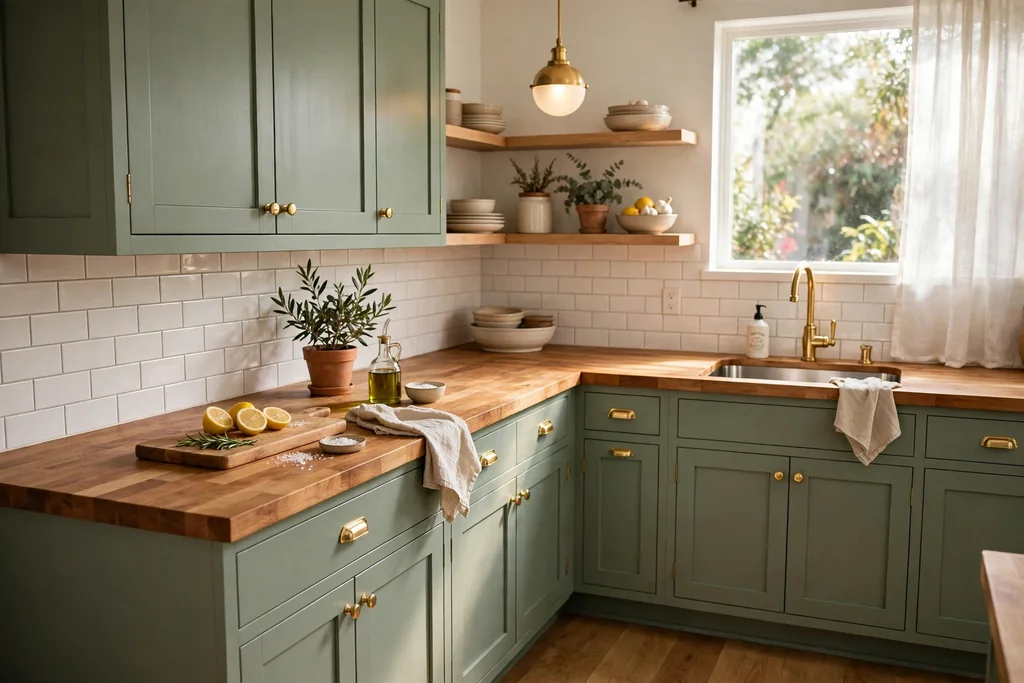
Pair sage cabinets with butcher block counters for warmth that stone alone cannot give. Wood softens the green, suits farmhouse, Scandinavian, and transitional rooms, and works with white, cream, and beige walls alike. A wood counter also makes the island or prep run feel like furniture rather than a fitted block.
Seal the wood as advised for kitchen use, and wipe spills promptly so water does not sit on the surface. Use the butcher block for prep and keep hot pans on trivets, since heat marks wood. Sand and reseal a worn section rather than replacing the whole top, which keeps this a long lasting choice.
9. Sage Cabinets with Pale Stone Counters
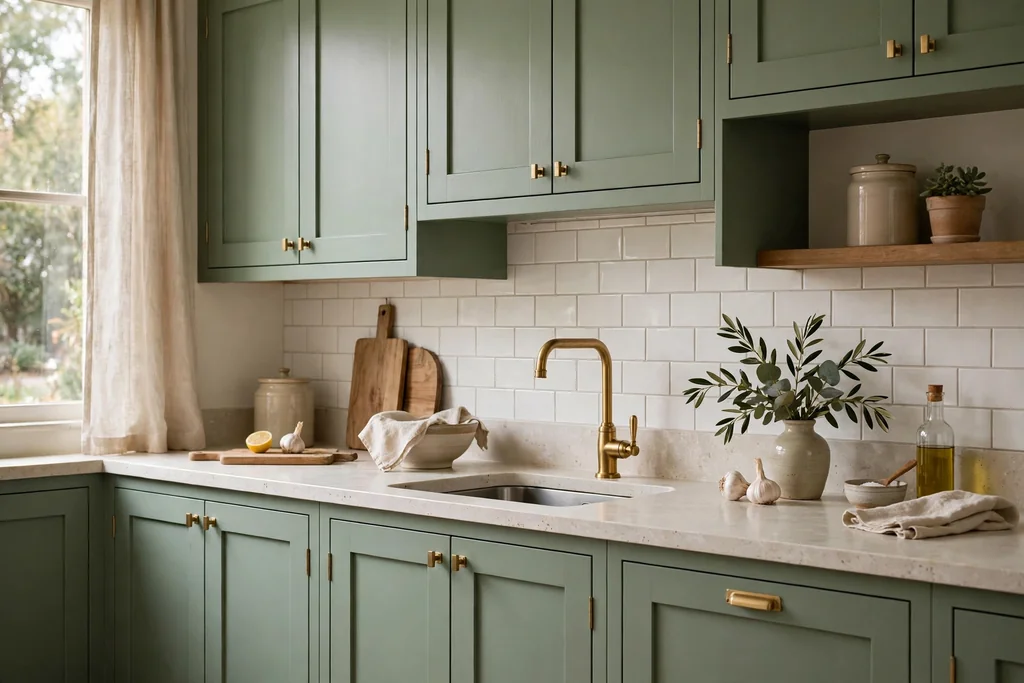
Pair sage cabinets with a pale stone or stone look counter for a quiet, classic backdrop. The pale surface lifts the green, keeps the work zone bright, and pairs well with brass taps, wood stools, and cream tile. This suits a kitchen where you want the cabinets to carry the color and the counter to stay calm.
Keep the backsplash plain, so the counter pattern stays clear. Seal grout and stone as advised, and wipe splashes promptly near the sink and cooker. If a full stone slab is out of reach, large stone look tiles give a similar effect with more grout lines to clean.
10. Brass Hardware on Sage Cabinets
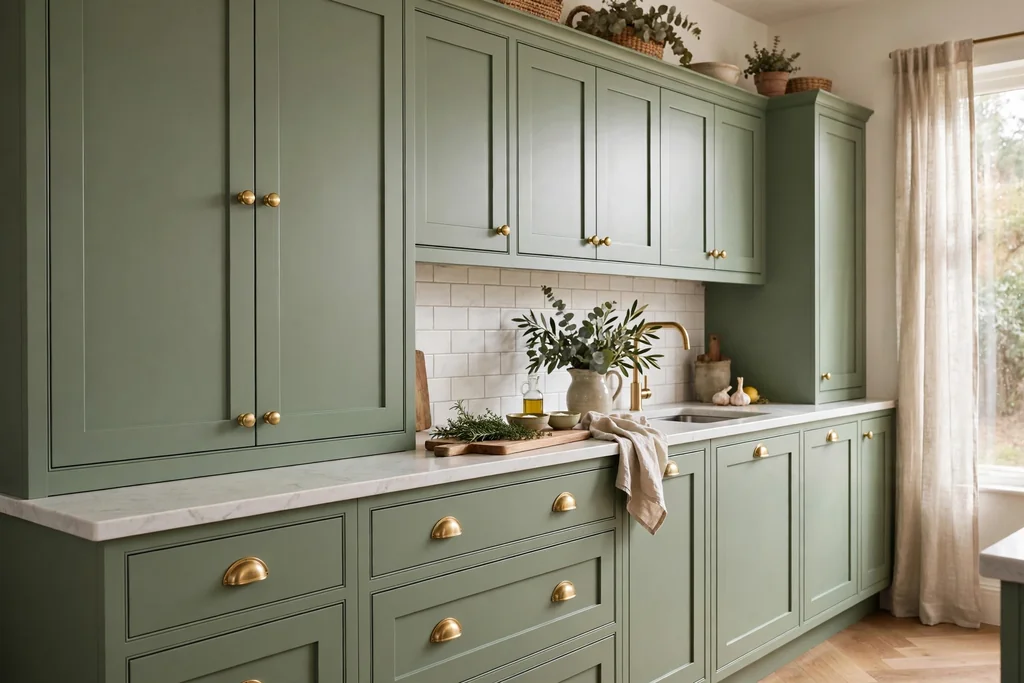
Warm sage cabinets with brass knobs, cup pulls, and a matching tap for a soft golden thread through the room. Brass warms sage in a way that chrome cannot, and it suits wood floors, cream walls, and both Shaker and beadboard doors. This is one of the easiest updates, since hardware swaps need no painting and no building work.
Keep all the brass in the same finish, so knobs, pulls, and the tap read as one set. Save the old hardware in a labelled bag if you rent or may want to swap back. Wipe brass with a soft cloth to keep the finish even, and repeat brass once more in a light fitting or a frame so it does not look isolated.
11. Matte Black Hardware on Sage Cabinets
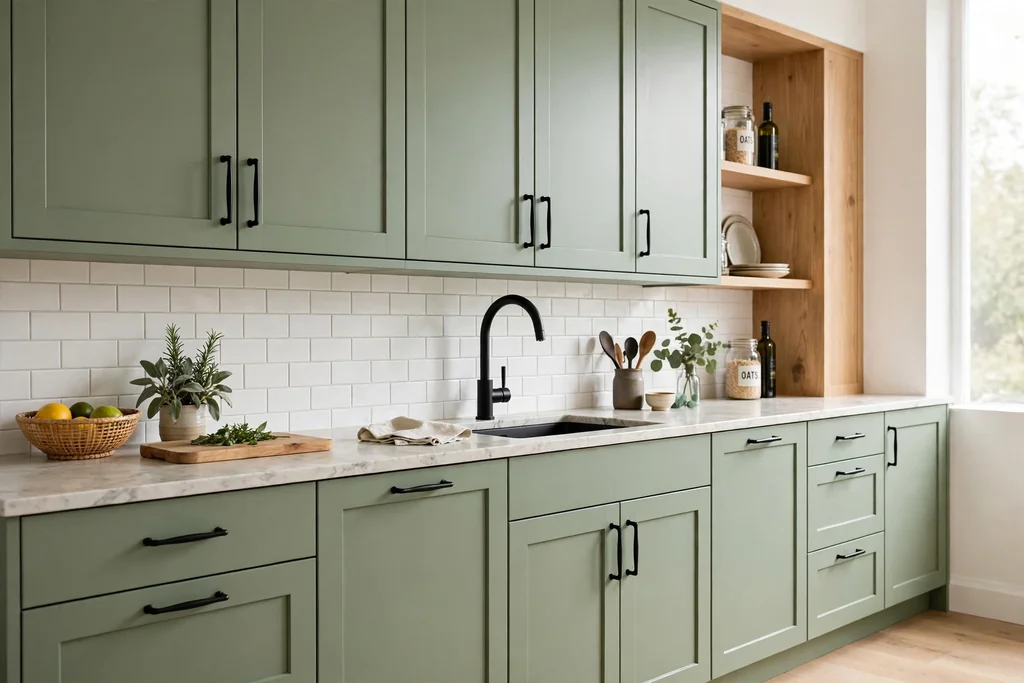
Use matte black handles, hinges, and a black tap against sage cabinets for a sharper, modern farmhouse edge. Black outlines each door, adds contrast without a new color, and pairs well with dark counters, wood stools, and a black framed window. This suits a kitchen that needs definition, such as a large sage room that feels washed out.
Repeat black once or twice more, in a light fitting, a stool frame, or a rug border, so the hardware does not look isolated. Keep the rest of the room pale, so black stays an accent rather than a theme. Matte black shows fingerprints less than polished black, which helps on doors used many times a day.
12. White Subway Tile Backsplash with Sage Cabinets
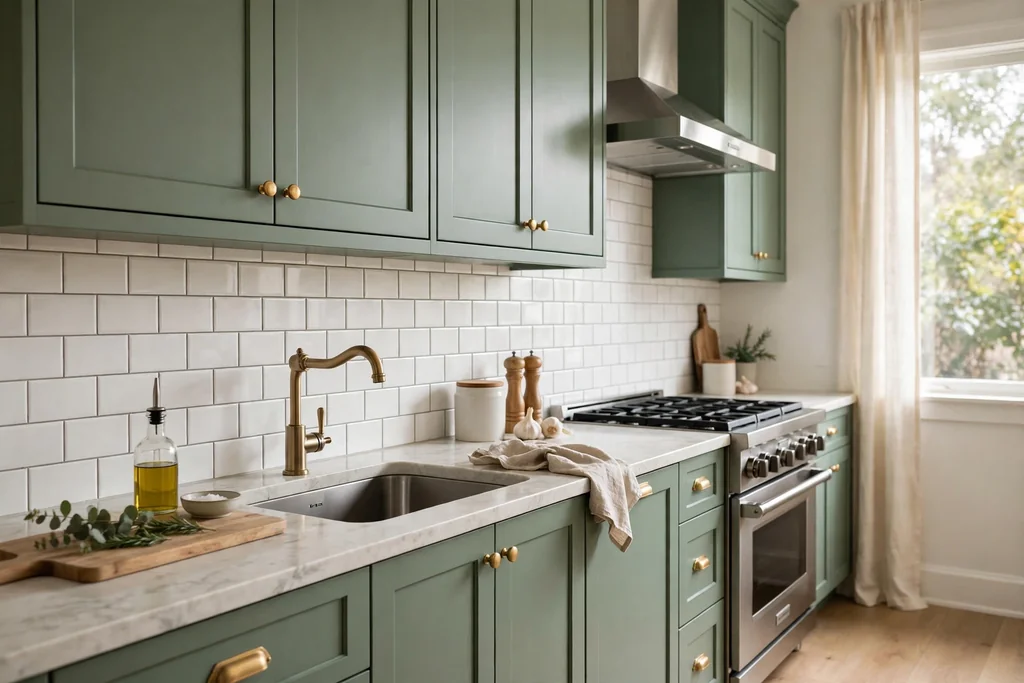
Use a white subway tile backsplash behind sage cabinets for a clean, classic wall that lets the green stay the feature. The white tile brightens the work zone, reflects light back into the room, and pairs with almost any counter. A simple brick pattern keeps the wall calm, while a stacked pattern gives a slightly more modern feel.
Seal grout in the splash zone behind the sink and cooker, and wipe splashes promptly. Keep the counter plain, so the tile pattern stays clear. If white tile feels too plain, use a handmade look tile with slight variation in tone, which adds interest without a new color.
13. Patterned Tile Backsplash with Sage Cabinets
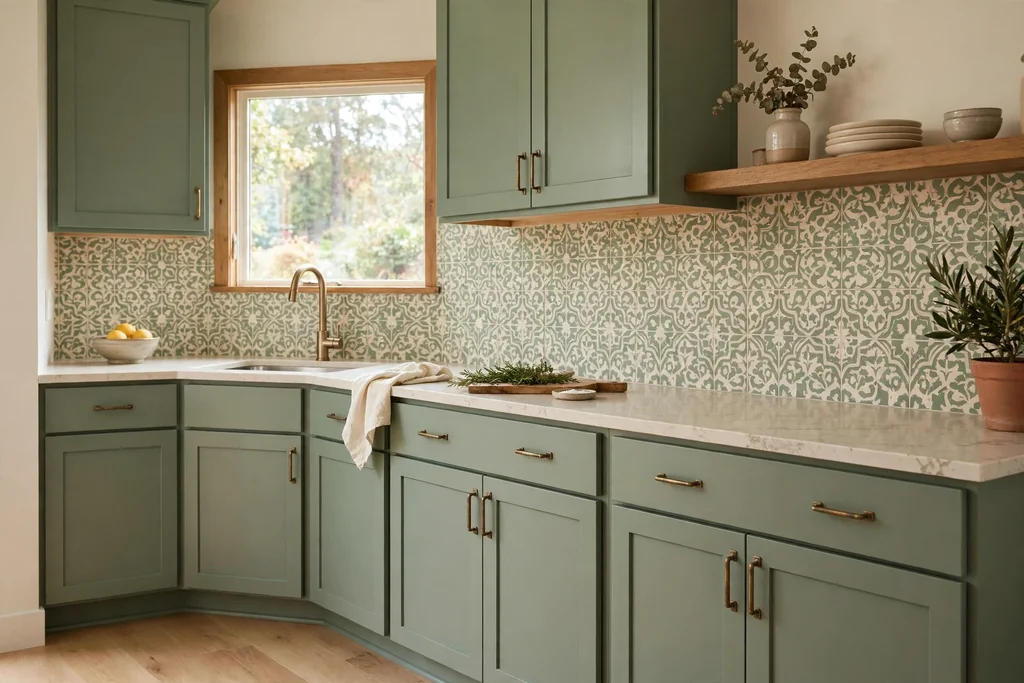
Pair sage cabinets with a patterned tile backsplash for a wall with clear character, using a pattern in sage, cream, and one accent such as terracotta or navy. The pattern gives the kitchen a focal point behind the cooker or sink, and it suits a room where the cabinets are plain and the counters are simple. Keep the pattern to one wall run, not every wall, so it reads as a feature.
Choose a tile size that fits the wall without awkward cuts at the edges, and test a few tiles beside the sage cabinets in daylight. Keep other patterns quiet, such as a plain runner and solid towels, so the backsplash does not compete with a second strong print. Seal the tile as advised for the splash zone.
14. Sage Walls with White Cabinets
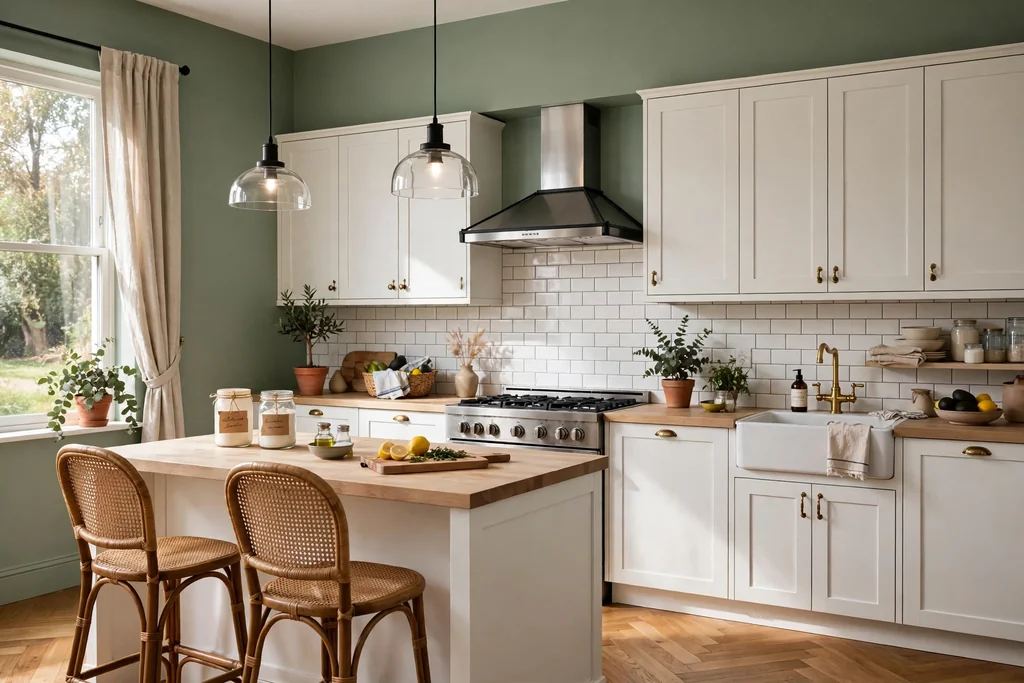
Paint the walls sage and keep the cabinets white for the reverse of a sage cabinet kitchen. This suits a kitchen where the cabinets are already white and in good shape, since paint alone changes the room. The sage walls give warmth and color at eye level, while the white cabinets keep storage bright.
Choose a sage a shade deeper than you first like for the sample, since wall color often reads paler once it covers a full wall. Keep the ceiling and trim white, and repeat the sage once in towels or a runner so the wall color links to the room. This is also a good test: live with sage walls for a season, then decide whether to use it on cabinets later.
15. Sage Window Frame with Cafe Curtains
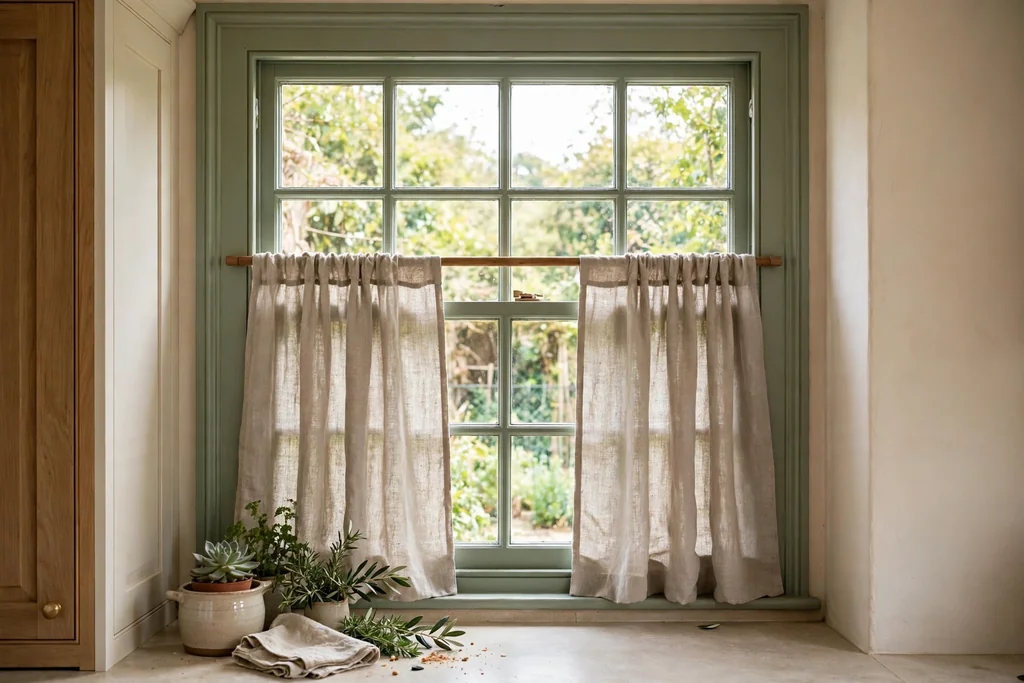
Paint the kitchen window frame sage and hang linen cafe curtains on the lower half for privacy at counter height with daylight above. The sage frame turns a plain window into a feature, and the cafe curtains soften the glass without blocking the top light. This suits a window over the sink, where full curtains would crowd the counter.
Hang the panels on a slim tension rod inside the frame if you rent, and keep the hem just above the sill so fabric does not sit in water. Choose washable fabric, since kitchen curtains pick up grease film over time. For more window treatments that suit a working kitchen, see these kitchen window decor ideas.
16. Open Wood Shelves Beside Sage Cabinets
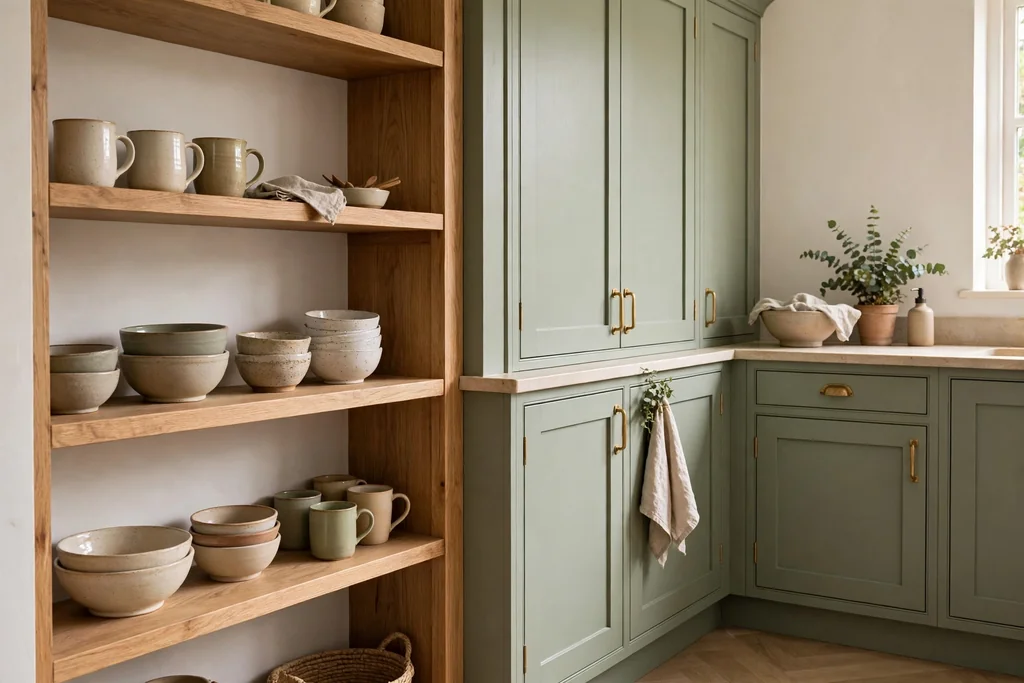
Replace one short run of sage uppers with open wood shelves, and keep the rest of the cabinets closed. The shelves give you a spot for daily mugs, bowls, and plants, while the closed cabinets hide the less pretty storage. This mix is practical in a small kitchen, where a full wall of uppers can feel heavy.
Keep shelf items to pieces you use weekly, and dust them often, since open storage collects cooking film. Put the shelves near the sink or cooker, where daily dishes are most useful. Use light oak shelves for warmth against sage, and leave breathing room between groups so the shelves read as calm, not crowded.
17. Sage Range Hood Cover as a Focal Point
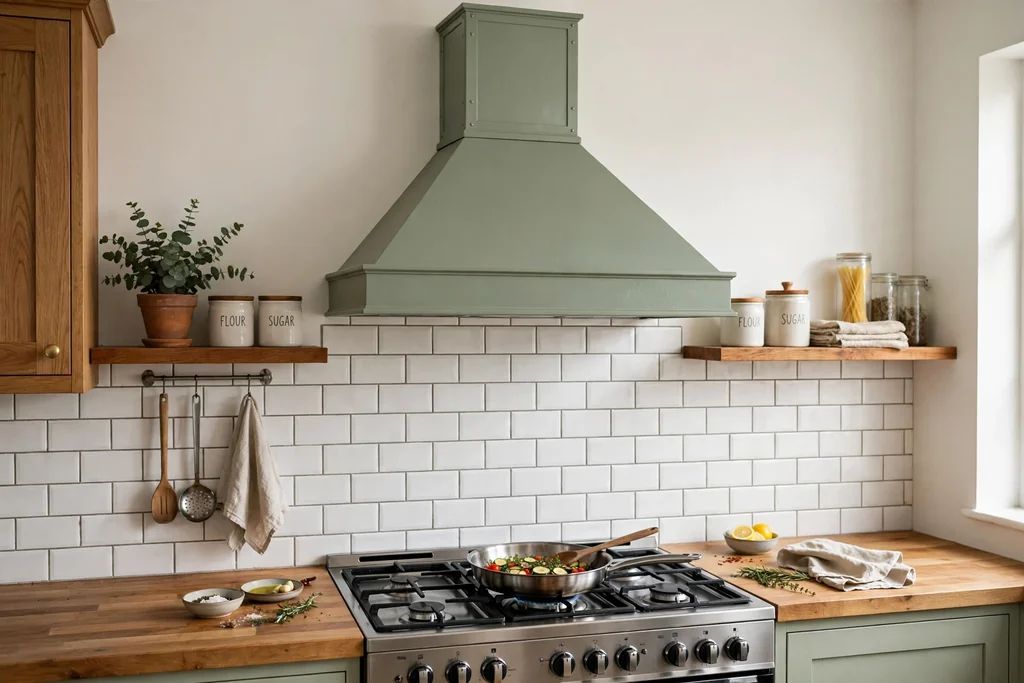
Build or paint the range hood cover sage so the cooking wall has a clear focal point above the cooker. A sage hood cover links to sage cabinets or a sage island, and it suits a kitchen with a plain backsplash, where the hood can carry the detail. Keep the shape simple, such as a straight or gently tapered cover, so it reads as part of the cabinetry.
Choose a washable paint finish, since the hood sits in steam and cooking film. Keep the backsplash behind the cooker plain, so the hood shape stays clear. If a full hood cover is too large a job, painting only the hood trim in sage gives a smaller version of the same idea.
18. Sage Bench Seat in a Breakfast Nook
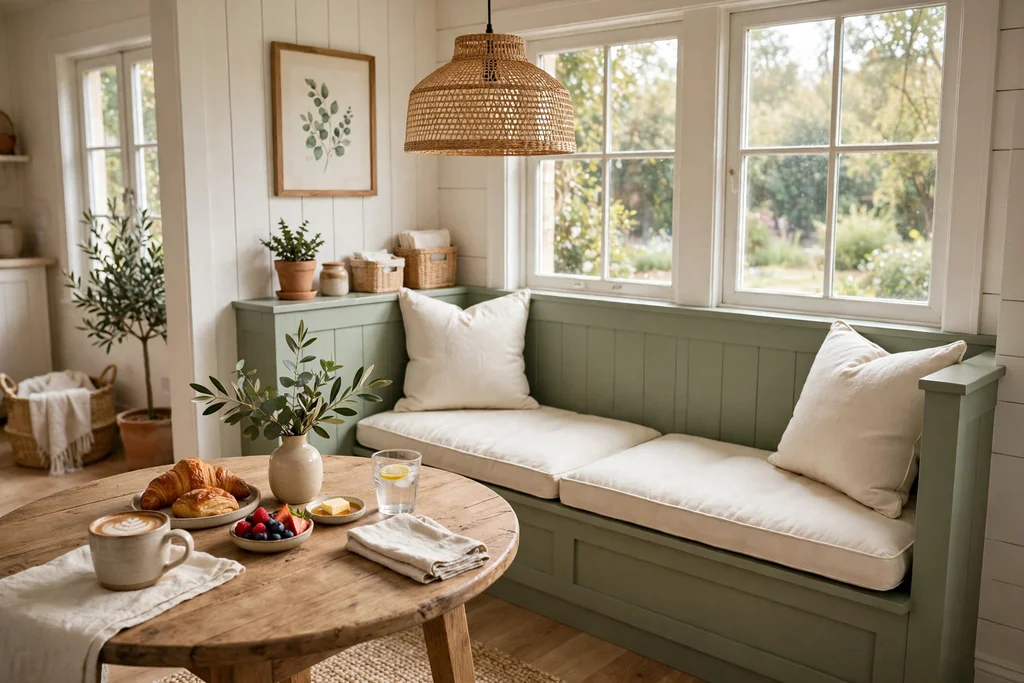
Build a sage bench seat into a breakfast nook, with storage drawers below and cream cushions above, for seating that also hides table linens and board games. The bench uses a corner well, seats more people than chairs alone, and gives the nook a clear color anchor. This suits a kitchen with a window corner that currently holds only a small table.
Keep the table wood or white, so the sage bench stays the feature, and add one sage cushion pattern repeated in a runner or a vase. Choose a wipeable cushion fabric near the table, since breakfast seating takes daily spills. Leave a gap at one end of the bench so people can slide in without moving the table.
19. Sage Bar Stools at a Wood Island
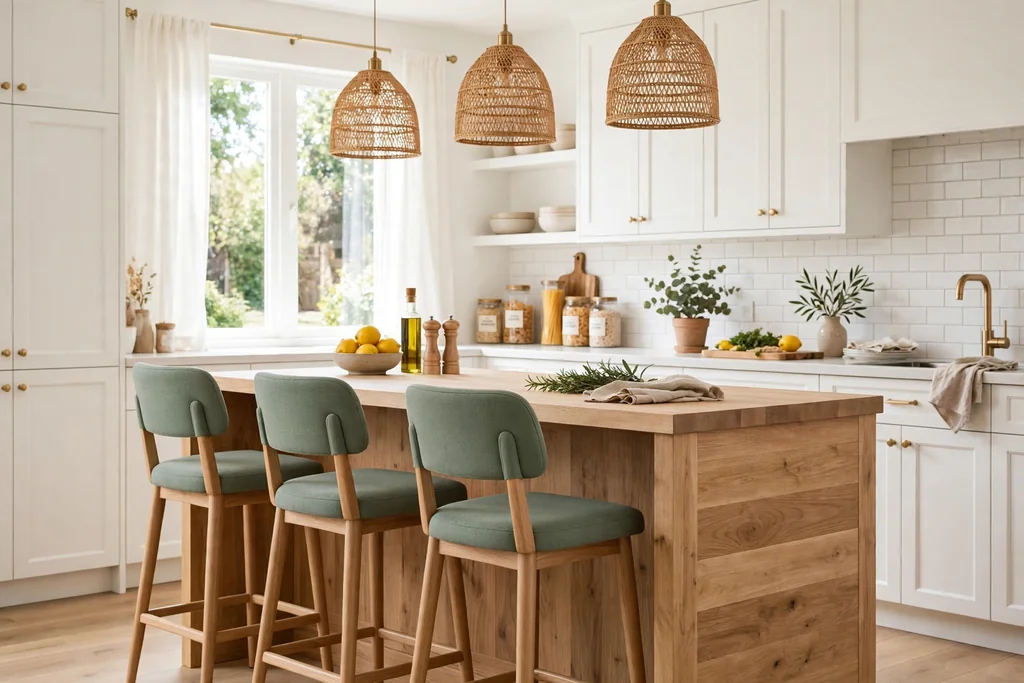
Pair a wood island with sage bar stools for color at seat height, where you see it every time you sit down. Sage stools suit a kitchen where the cabinets are white or wood, since the stools add color without repainting a single door. Choose stools with a footrest and a seat height that fits the island, and test one stool before buying a full set.
Repeat the sage once more, in a runner or a plant pot, so the stools look planned. Wipe stool legs often, since they take kicks and floor dust. If the stools have fabric seats, choose a washable cover or a wipeable seat, since kitchen seating takes spills.
20. Sage Farmhouse Sink Wall
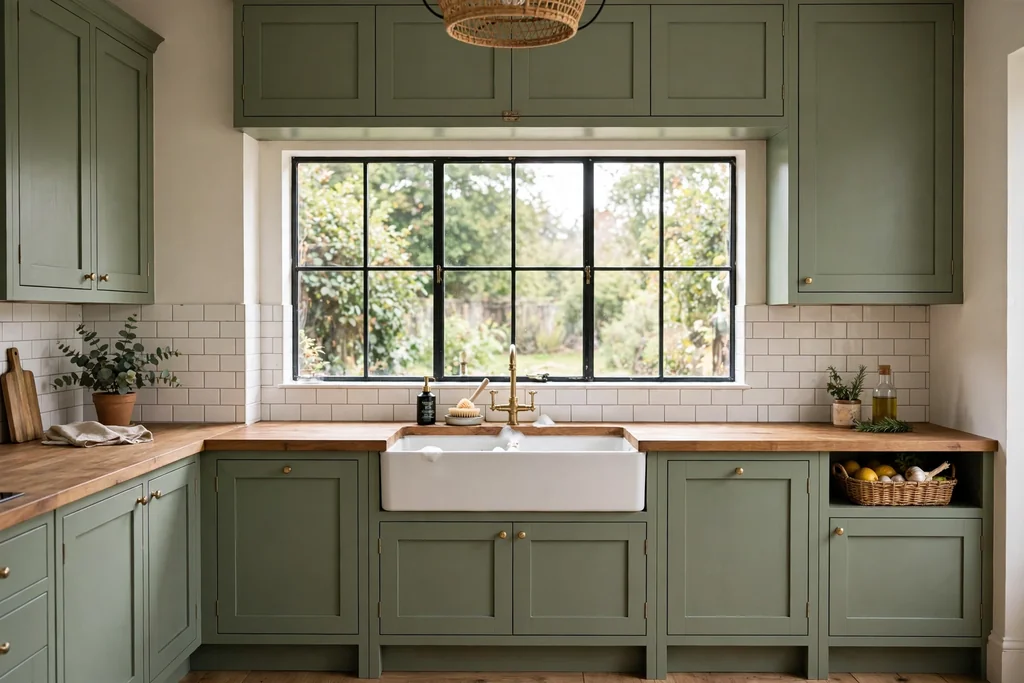
Build the sink wall around a deep farmhouse sink, with sage cabinets on either side and the sink front on show. The sink becomes a focal point, the deep bowl suits large pots and baking trays, and the sage cabinets keep the wall calm. This suits a kitchen with a window over the sink, where daylight makes the sage and the sink front glow.
Choose a tap finish that matches your cabinet hardware, and keep the counter around the sink plain for wiping. A farmhouse sink needs a cabinet made to fit it, so check sizes before ordering. Clean the sink with a soft cloth and mild cleaner, and keep a wood board or a drying rack nearby for daily use.
21. Sage Coffee Station in a Cabinet Nook
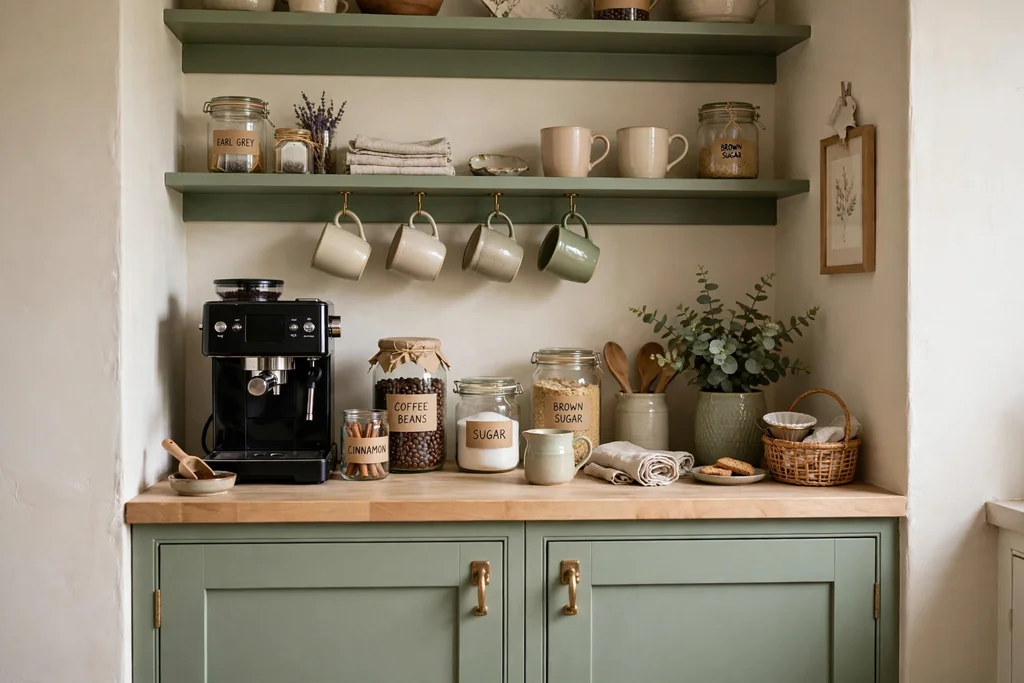
Turn one sage cabinet run into a coffee station, with an appliance garage or a niche for the machine, mugs on hooks or a shelf, and jars for beans and sugar. Keeping coffee gear in one spot frees the main counter for cooking, and it gives mornings a clear routine. This suits a kitchen with a short run of cabinets near the dining table or a window.
Keep the station near a power point, and leave a heat safe surface for the machine. Store mugs you use daily at hand height, and keep spare filters and beans in a closed drawer below. Wipe the station each morning, since coffee splashes show quickly on sage doors, just as they do on white.
22. Hanging Herb Planters on a Sage Wall
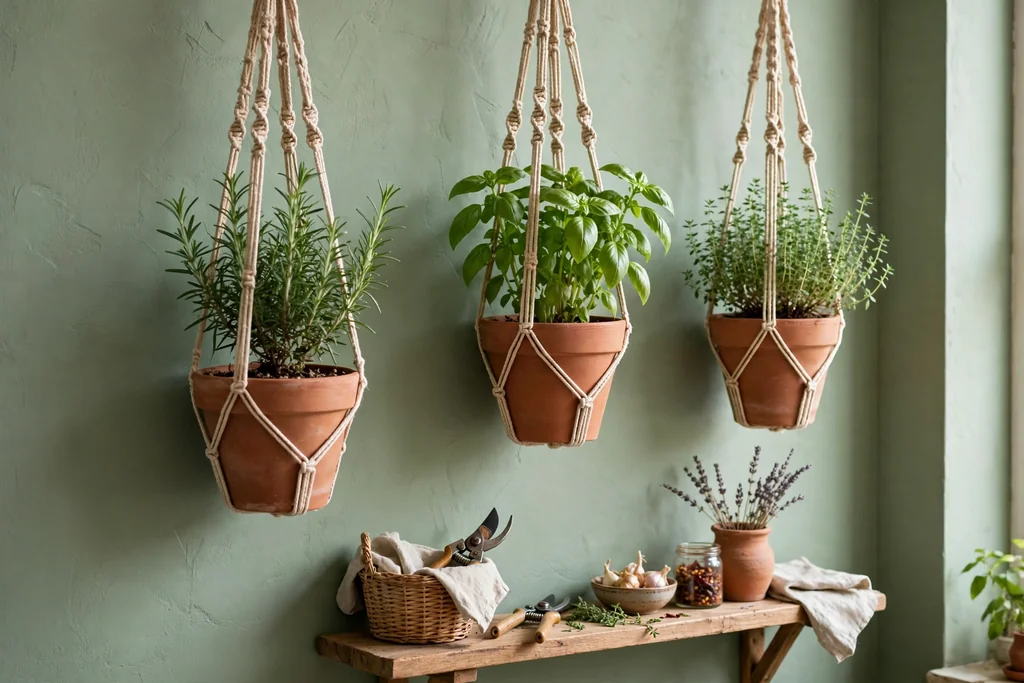
Hang small herb planters on a sage wall, in matching terracotta or white pots, so the wall gains living color and cooking herbs stay within reach. The green of the herbs sits naturally against sage paint, and the planters suit a wall near the cooker or prep counter. Use a rail or individual hooks fixed into studs, with pots light enough to lift for watering.
Choose herbs based on the light your wall actually gets, and keep a tray or saucer under each pot to protect the wall. Water at the sink and let pots drain before hanging them back, since drips mark paint. If the wall gets little light, use one trailing plant in a hanging pot instead of a full herb row.
23. Sage Dining Table and Chairs in an Eat In Kitchen
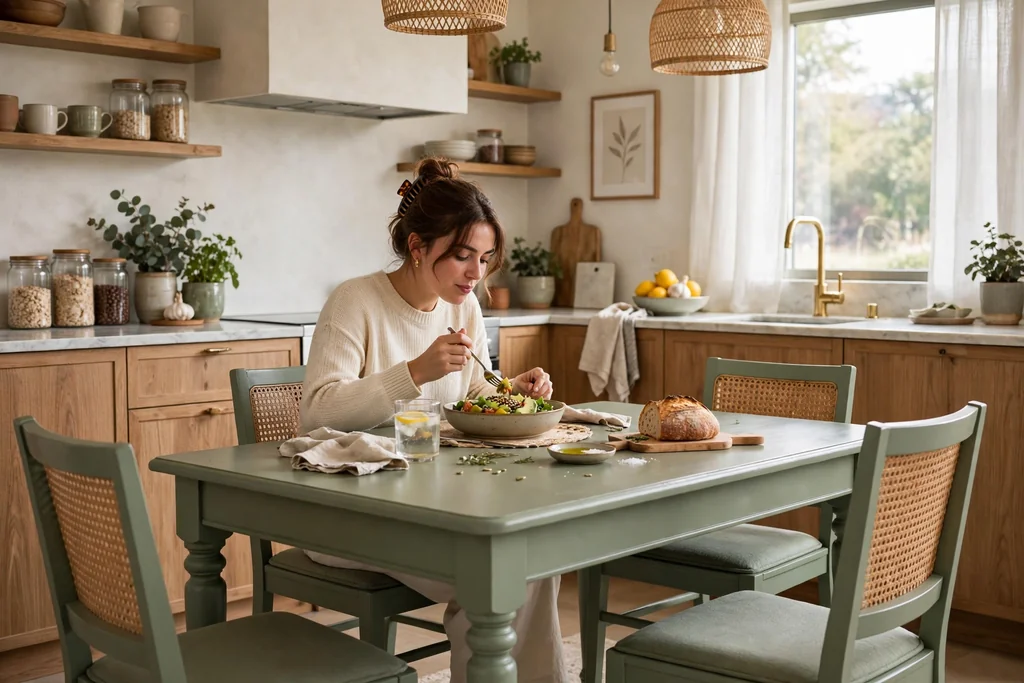
Paint a dining table base or a set of chairs sage in an eat in kitchen, and keep the table top wood for warmth. The sage seating marks the dining zone clearly inside an open kitchen, and it suits a room where the cabinets are white or wood, since the table adds color without a repaint. This is a good weekend project, since chairs are easy to repaint later.
Keep the table top wood or white, and add cream seat cushions so the sage does not feel heavy. Repeat the sage once more, in a runner or a vase on the table, so the dining zone links to the kitchen. Choose a hard wearing paint for chair legs, since they take daily kicks.
24. Sage Cabinets with Light Oak Floors and Accents
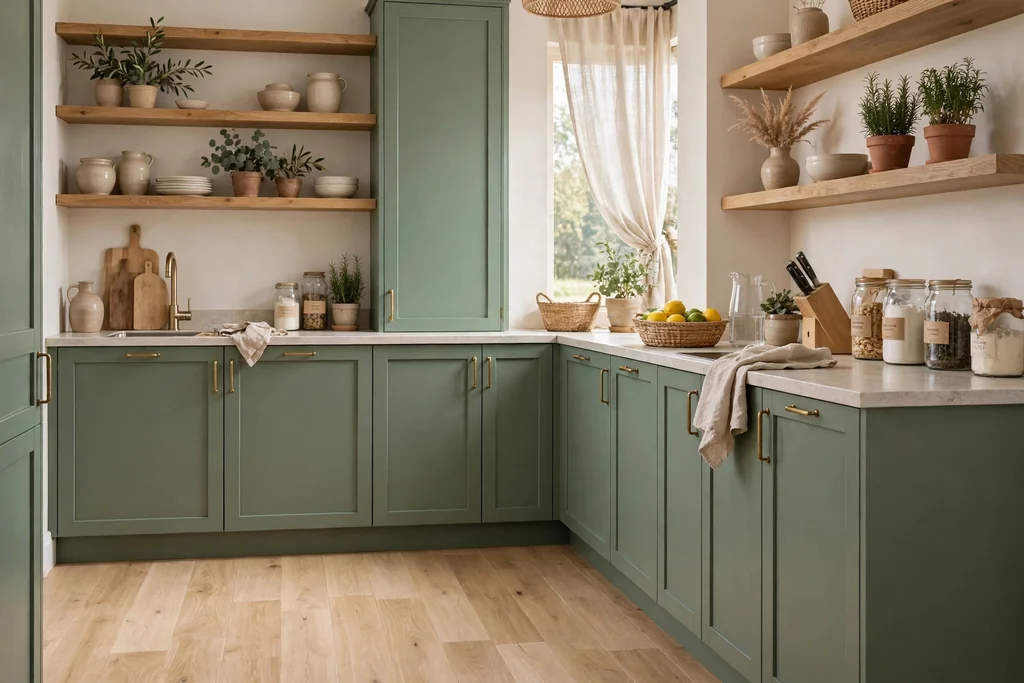
Pair sage cabinets with light oak floors, open oak shelves, and oak stool seats for warmth that painted cabinets alone cannot give. The oak grain softens the green, suits farmhouse, Scandinavian, and transitional rooms, and works with white, cream, and beige walls alike. A simple oak tone across the main pieces keeps the room settled rather than busy.
Match the oak tone to your floor if you can: pale oak with pale sage, warmer oak with a deeper sage. Keep the finish matte or satin rather than high gloss, which can look harsh next to soft linen and cotton. The same warm pairing shapes these sage green bedroom ideas, where light oak and sage sit together in a calm room.
25. Cream and Sage Checkerboard Floor
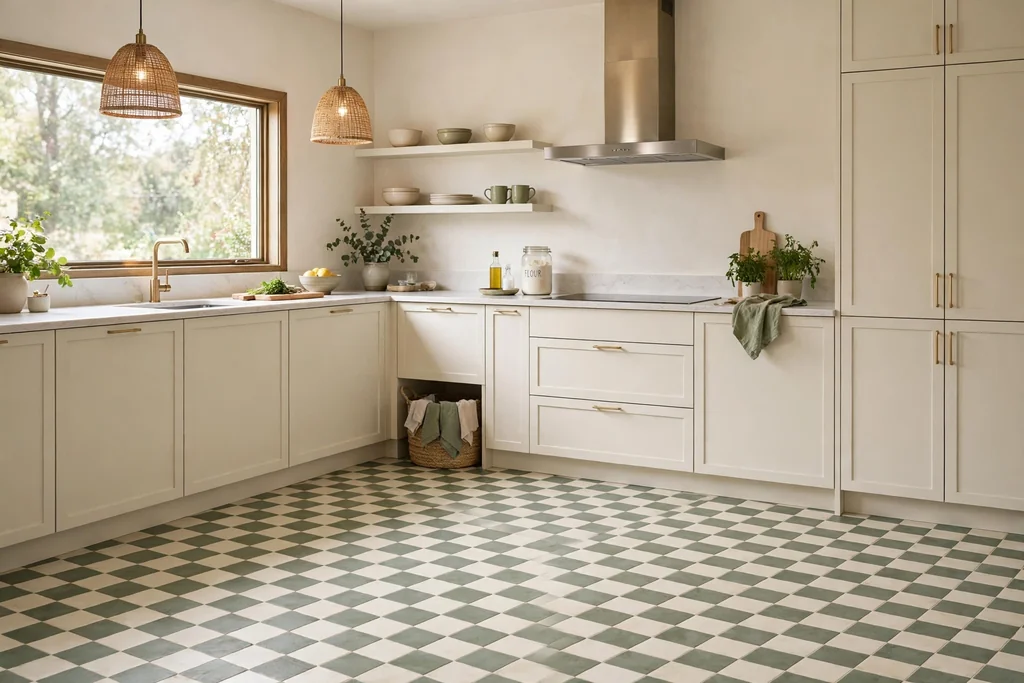
Lay a cream and sage checkerboard floor for a kitchen floor with clear pattern and a vintage note. The checkerboard suits a cottage or farmhouse kitchen, and it pairs well with plain sage or white cabinets, since the floor carries the pattern. Keep the checks a modest size in a small kitchen, so the floor does not crowd the room.
Choose a floor material that suits a kitchen, such as tile or a wipeable vinyl, and seal grout if you use tile. Keep walls and counters plain, so the floor stays the feature. A washable runner over the main walkway softens the pattern underfoot and protects the floor in the busiest spot.
26. Sage Pendant Shades over the Island
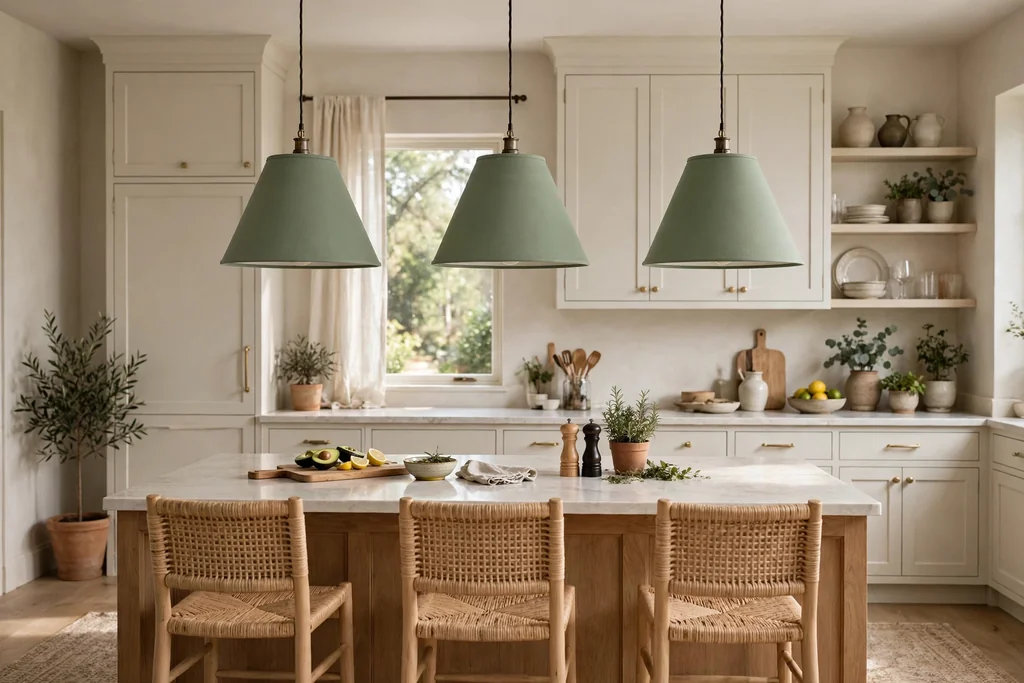
Hang pendant shades painted sage over the island for color at eye level, where you notice light most. Two or three simple dome or drum shades, spaced evenly over the island, read as a plan, and the sage links to cabinets or stools below. This suits a kitchen where the cabinets are white or wood, since the pendants add color without paint on a large surface.
Hang them high enough to clear heads and steam, and keep the lowest point well above the counter. Match the pendant metal, such as brass or black, to the tap or handles. Use warm white bulbs so the light feels soft in the evening and the sage reads as warm, not grey.
27. Sage Panels on an Integrated Fridge Wall
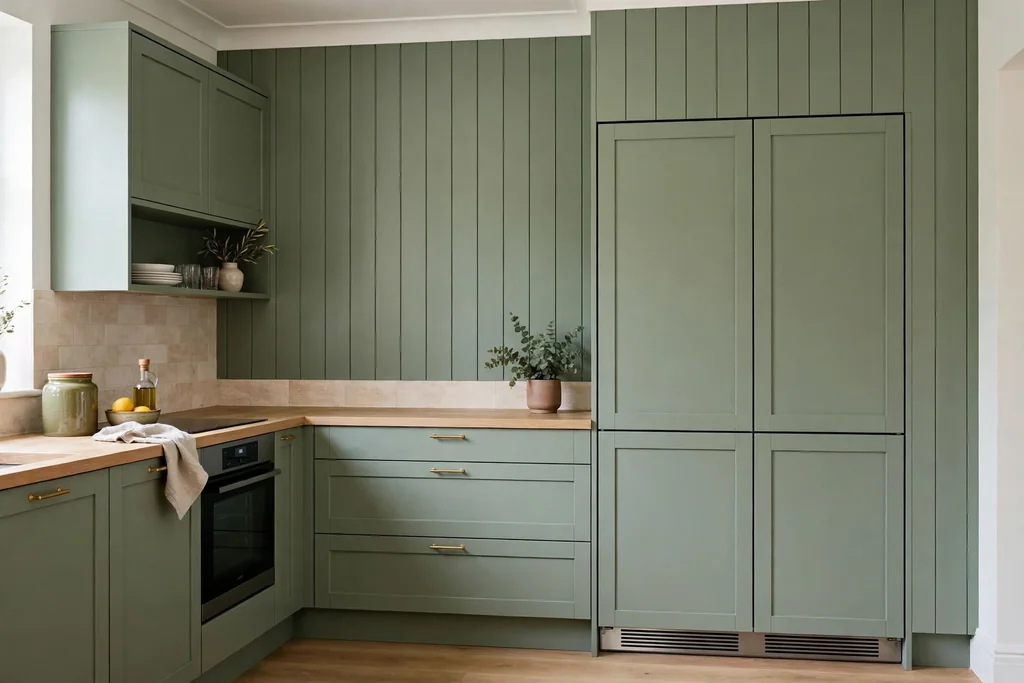
Fit sage panels on an integrated fridge so the appliance wall reads as cabinetry rather than a block of steel. The panels link the fridge to sage cabinets beside it, and they suit a kitchen where the fridge sits in a full run of tall units. Keep the panel style the same as the cabinets, with matching handles, so the fridge disappears into the wall.
Check the panel sizes and hinge clearances before ordering, since integrated panels must fit the appliance maker guidance. Keep the panels wipeable, since the fridge doors are used many times a day. If full panels are too large a job, a sage panel on a tall pantry beside the fridge gives a similar linked look.
28. Sage Plate Rack on an Open Wall
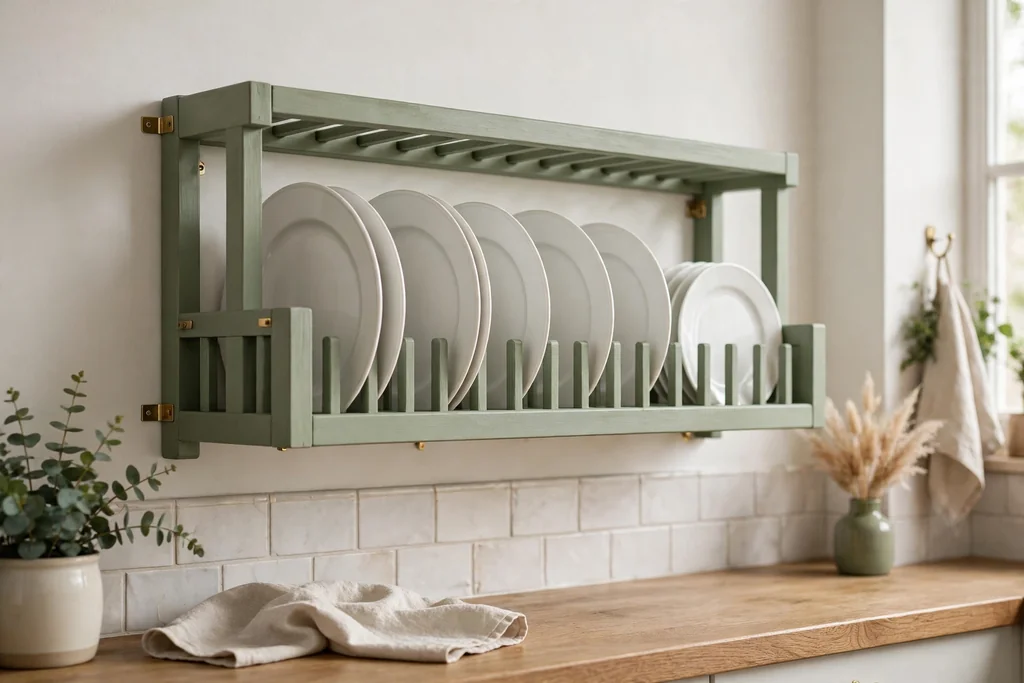
Fit a sage plate rack on an open wall, with slots for plates and a small shelf for bowls, for storage that also acts as decor. The rack suits a kitchen with a blank wall near the dining table, and it keeps daily plates within reach without a full cabinet run. Paint the rack the same sage as the cabinets, so it reads as part of the room.
Keep the plates in one color family, such as white or cream, so the rack reads as tidy. Fix the rack into studs or with fixings rated for the load, since plates are heavy. Leave space below the rack for a small shelf or a rail, so the wall works for bowls and cups as well as plates.
29. Sage Memo Board for Menus and Notes
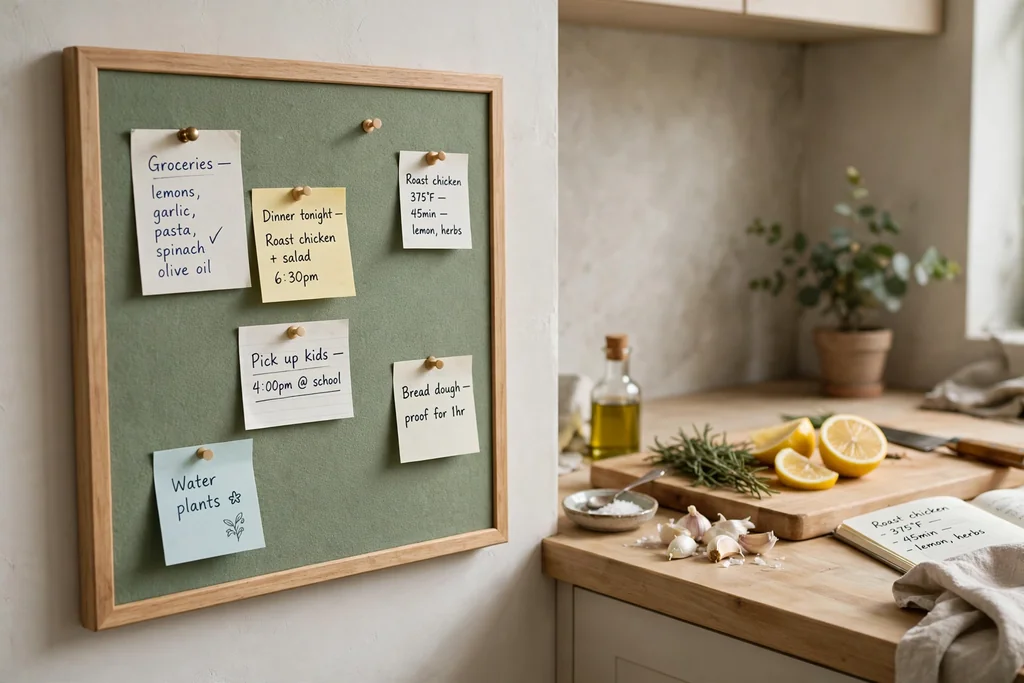
Hang a sage memo board near the prep counter or the fridge for menus, shopping lists, and notes, framed in wood or painted to match the cabinets. The board keeps paper off the fridge and the counter, and it gives the kitchen a working hub that still looks planned. This suits a family kitchen where lists and school notes otherwise pile up.
Keep the board a modest size, and clear it weekly so it stays useful rather than crowded. Use pins or clips that suit the board surface, and keep one small pot for pens beside it. If you rent, hang the board from a picture rail or adhesive fixings rated for its weight, so it comes down with no heavy repair.
30. Sage Textiles: Runner, Towels, and Curtains
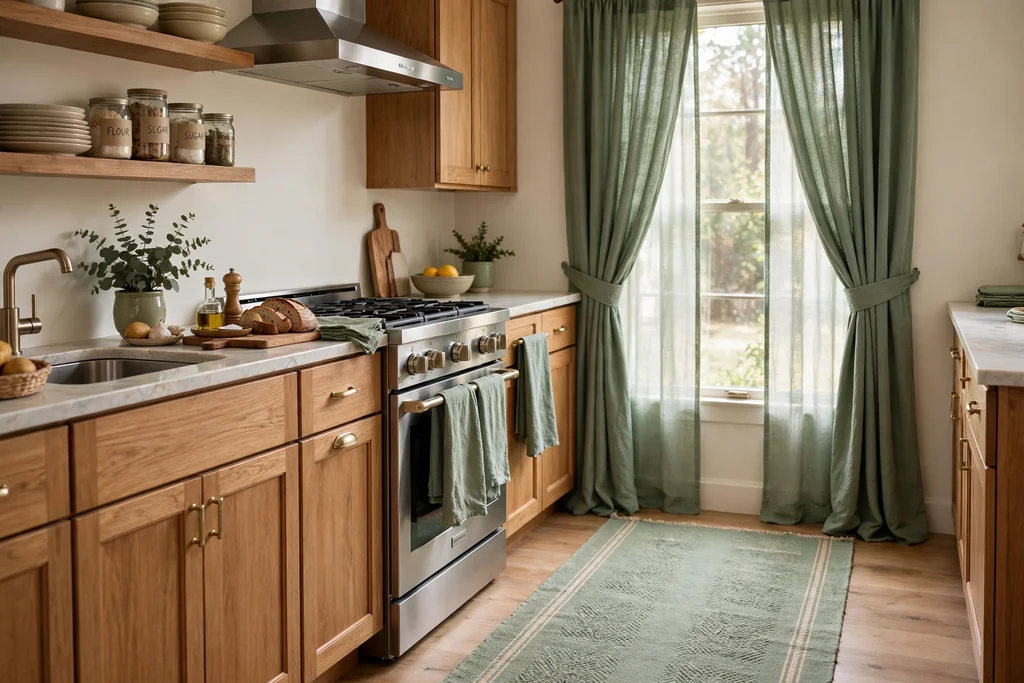
Use sage textiles for a no paint refresh: a washable runner by the sink, towels on the oven rail, and curtains or a valance at the window. Textiles change the room in an afternoon, and they suit renters and anyone testing sage before painting cabinets. Choose one sage tone across the pieces, with cream or white mixed in, so the group reads as a set.
Keep the runner low pile and washable, since the sink area takes water and food spills. Wash towels and curtains on a regular cycle, since pale sage shows dust and marks sooner than darker colors. If the textiles alone feel too soft, add one hard sage item, such as a stool or a vase, to anchor the color.
31. One Wall Sage Galley for a Small Kitchen
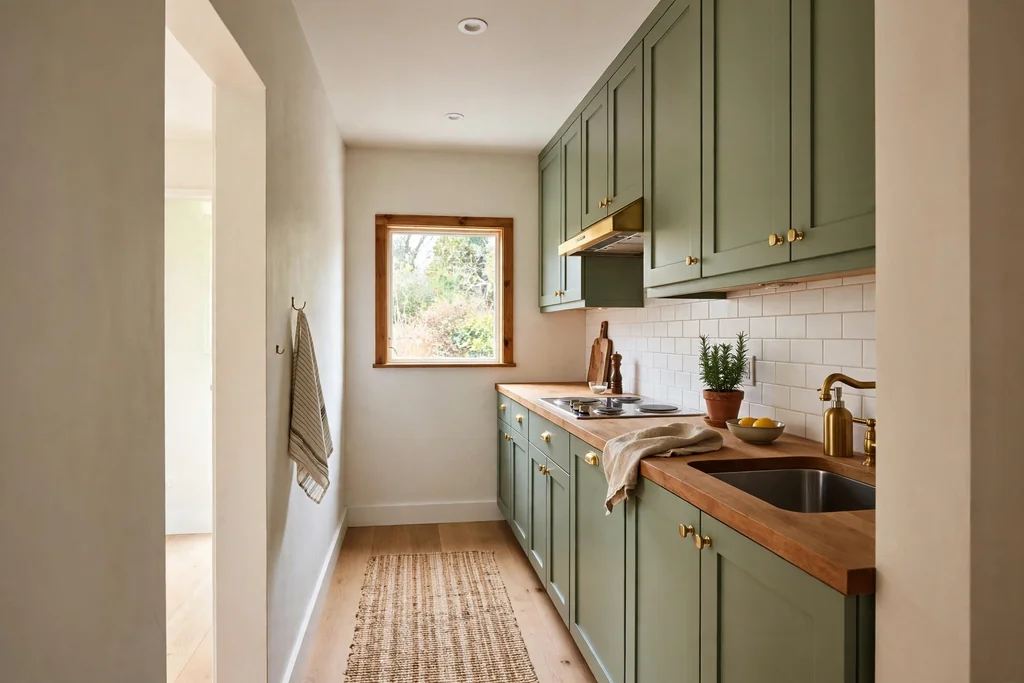
Paint one wall of sage cabinets in a small galley kitchen, with the opposite wall kept white or open, so the room gains color without feeling closed in. The sage run holds the cooker, sink, and main storage, while the white wall keeps light bouncing back into the narrow room. This suits a galley where a full sage kitchen would feel heavy.
Keep the counter pale, the backsplash simple, and the floor light, so the narrow room stays bright. Use deep drawers for pots and a tall pantry at one end, since galley storage must work hard. For more small kitchen planning, these white kitchen cabinet ideas show how white uppers and open elements keep a tight room feeling open.
32. Warm Under Cabinet Light in a Sage Kitchen at Night
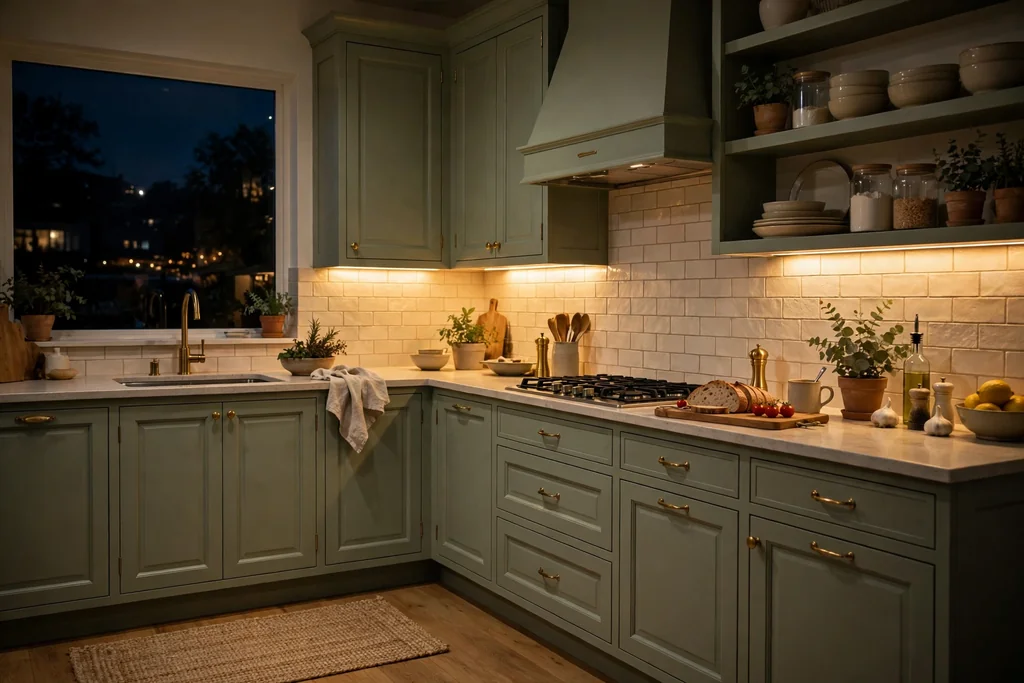
Add warm under cabinet lighting to a sage kitchen so the green reads as soft, not grey, after dark. Light removes shadows from sage doors, makes prep safer, and lets the kitchen glow in the evening instead of looking flat. This is a small change with a large effect on how lived in the room feels.
Use warm white bulbs, not cool daylight bulbs, so sage paint reads as warm. Put prep lighting on a separate switch from ceiling lights, so you can light only the work zone in the evening. Wipe the light covers often, since kitchen grease dulls the light over time, and check that strips sit clear of the cooker and steam.
Conclusion
A polished sage kitchen rarely needs a full remodel in one go. Start with the largest surface, test the sage in your own light, pair it with warm white, light oak, and one metal finish, and repeat the tone once or twice in smaller spots. Add one storage fix and one lighting fix, since a tidy, well lit kitchen reads as more polished than a decorated but cluttered one. Save this list on Pinterest before your next kitchen refresh, and try one idea first: a wall, an island, or a set of stools this week, and a backsplash or hardware change when you are ready for the next step.
FAQs
What sage green shade works best in a kitchen?
Choose a muted, grey green rather than a bright green, since a muted sage stays calm across a full run of cabinets and in both daylight and evening light. Test a large sample beside your floor, counter, and appliances, and check it in the morning and at night. Some sage paints lean blue and others lean yellow, and that undertone shows clearly beside wood floors and stone counters.
Does sage green work in a small or dark kitchen?
Yes, if you keep the sage to one run, an island, or the lower cabinets, and keep the uppers, walls, and counters pale. Light sage with white uppers and a pale backsplash keeps a small kitchen bright, while a full run of deep sage can feel heavy in a dark room. Add warm under cabinet light and a light floor to keep the room feeling open.
What colors go with sage green kitchen cabinets?
Warm white, cream, light oak, pale stone, and soft beige all sit well with sage. Brass adds warmth, matte black adds definition, and wood counters or oak shelves keep the room from feeling flat. Keep one metal finish through the room, and limit strong accent colors to one or two small items, such as a runner or a vase, so sage stays the clear feature.
What backsplash suits sage green cabinets?
A white subway tile backsplash is the safest pairing, since it brightens the work zone and lets sage stay the feature. A handmade look white tile adds texture without a new color, while a patterned tile in sage, cream, and one accent gives the wall more character. Keep the counter plain when you choose a patterned tile, so the two patterns do not compete.
Is sage green hard to keep clean in a kitchen?
Sage hides light marks better than white, but it still shows cooking splashes near the stove and sink. Choose a satin or semi gloss washable finish for cabinets, wipe doors near the cooker each week, and keep textiles washable. A matte finish looks soft but marks more easily, so save flat paint for walls away from the splash zone.
Can I add sage green to a kitchen without repainting cabinets?
Yes. Start with sage stools, a runner, towels, curtains, a memo board, or pendant shades, and repeat the tone in two or three spots so it reads as a plan. Painting one island, one pantry wall, or a window frame is a larger step that still leaves the main cabinets untouched. Test textiles first if you are unsure of the shade, then move to paint when the tone feels right in your light.