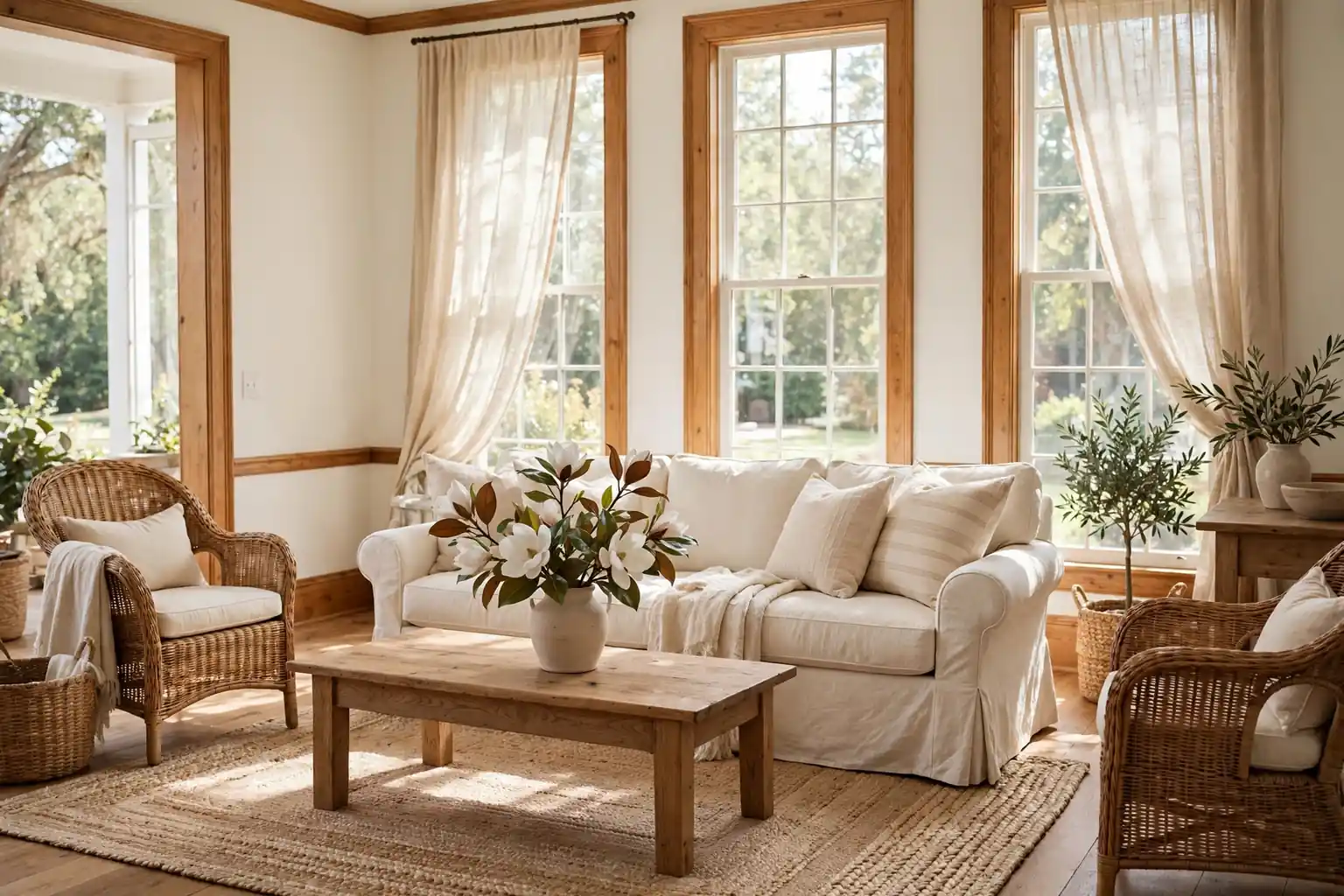
Southern style is less about one look and more about a feeling: rooms that welcome people in, stay comfortable through long summers, and still look cared for on an ordinary Tuesday. It leans on light paint, natural wood, washable fabrics, and pieces with a clear job, from a porch chair built for sitting to a quilt folded at the foot of the bed. These 16 Southern home decor tips work room by room, and most need no building work at all. For a related take on warm, wood filled rooms, these aesthetic farmhouse living room ideas show the same calm base applied to a small space.
Key Takeaways
- Start with a light base: warm white walls, natural wood, and one calm rug color keep a Southern room bright without feeling cold.
- Choose fabrics you can live with: washable linen, cotton quilts, and sheer curtains suit heat, pets, children, and frequent guests.
- Give the porch and the entry the same care as the living room, since those are the first rooms a visitor meets.
- Repeat one accent, such as blue and white or natural wood, in at least two places so the room looks planned.
- Layer light and air: a ceiling fan, sheer curtains, and lamps at more than one level make a room usable all day.
- Keep surfaces easy to tidy: open shelves, baskets, and a drinks cart only work when each item has a home.
1. Start With Warm White Walls and Natural Wood Trim
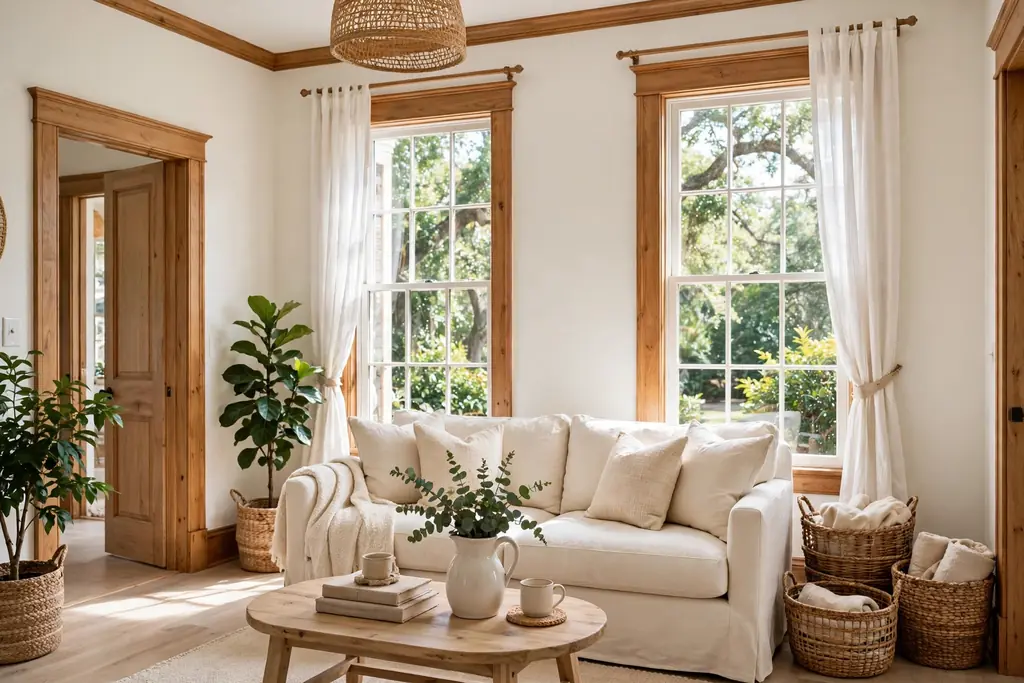
Warm white walls give a Southern room its light base, and natural wood trim keeps that base from feeling plain. Paint the walls a warm white rather than a cold, blue white, and let wood show in door frames, window trim, baseboards, or a mantel shelf. The wood adds warmth at the edges of the room, where the eye rests, while the light walls bounce daylight around the space.
This suits almost any room, since paint and trim paint are easier to change than furniture. Test the white on a large board in morning and evening light before you buy a full can, because warm whites can look yellow under some bulbs. For help pairing wall tones with trim, these wall color combinations show how one main color and one supporting color share a room.
2. Add One Beadboard or Shiplap Wall
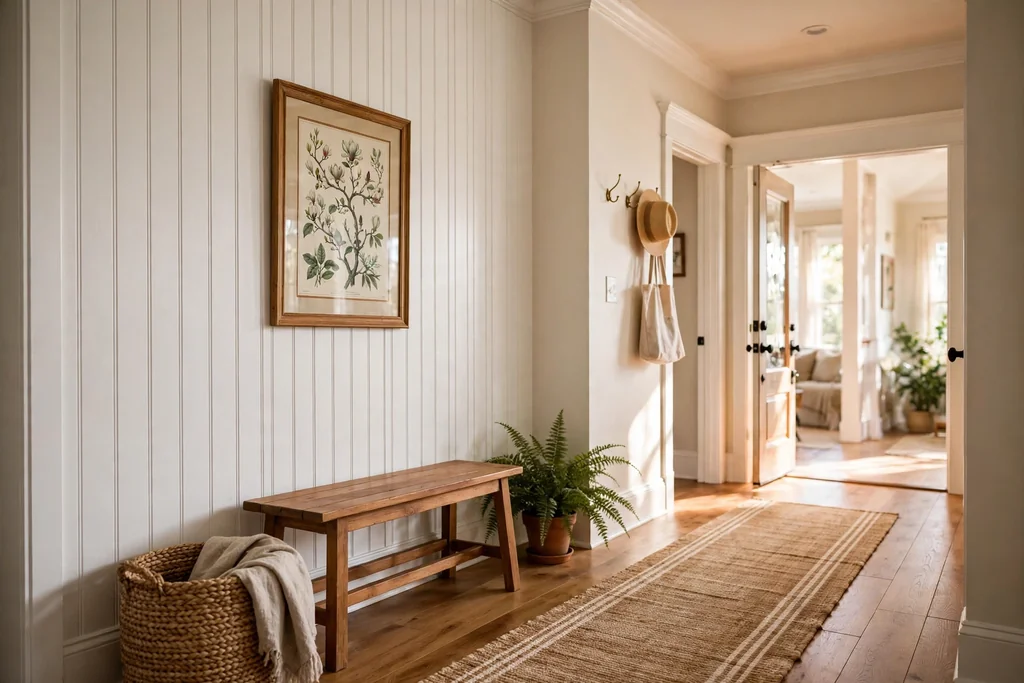
One beadboard or shiplap wall gives a room clear Southern character without closing it in. Pick the wall behind the sofa, the bed, or the entry bench, and run the boards vertically for beadboard or horizontally for shiplap, in warm white. Keep the other walls plain so the texture reads as a feature, not as a pattern repeated everywhere.
This suits a flat room that needs a focal point, or a hallway that feels unfinished. In a rental, use removable panels and check your lease before fixing anything to the wall. Paint the boards the same warm white as the other walls if you want texture without contrast, or one shade deeper for gentle definition. Keep the board height in proportion to the room: full height suits a small entry, while a chair rail height suits a long dining wall.
3. Choose a Slipcovered Sofa in Washable Linen
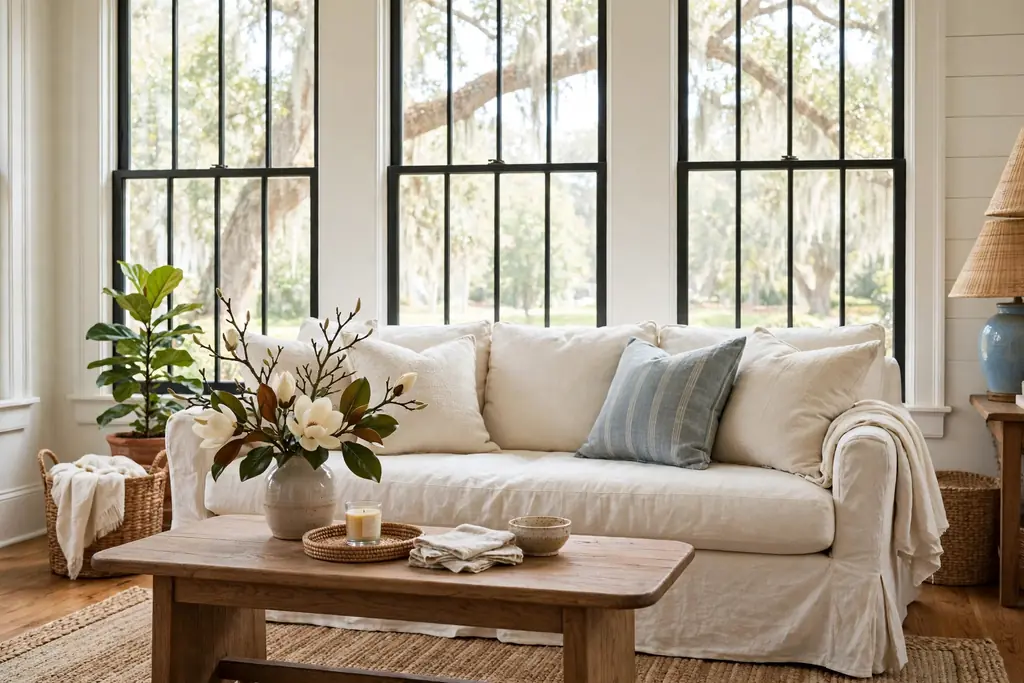
A slipcovered sofa is a practical Southern choice, because the cover can be removed and washed after muddy shoes, pets, or a summer gathering. Choose a sofa with slim arms, raised legs, and a seat depth that lets you sit upright comfortably, then add cushions in linen or cotton for softness. A light cover in cream, oatmeal, or pale sage keeps the seating group from dominating the room.
This suits a family room or a room that hosts guests often. Measure the wall and the rug zone first, and leave room to walk past both ends of the sofa. Wash the cover as advised on the label, and keep a spare set if the sofa gets daily use, so the room never waits on laundry day. A slipcover also lets you change the room color later by changing covers, not furniture.
4. Layer a Jute Rug Under a Patterned Cotton Rug
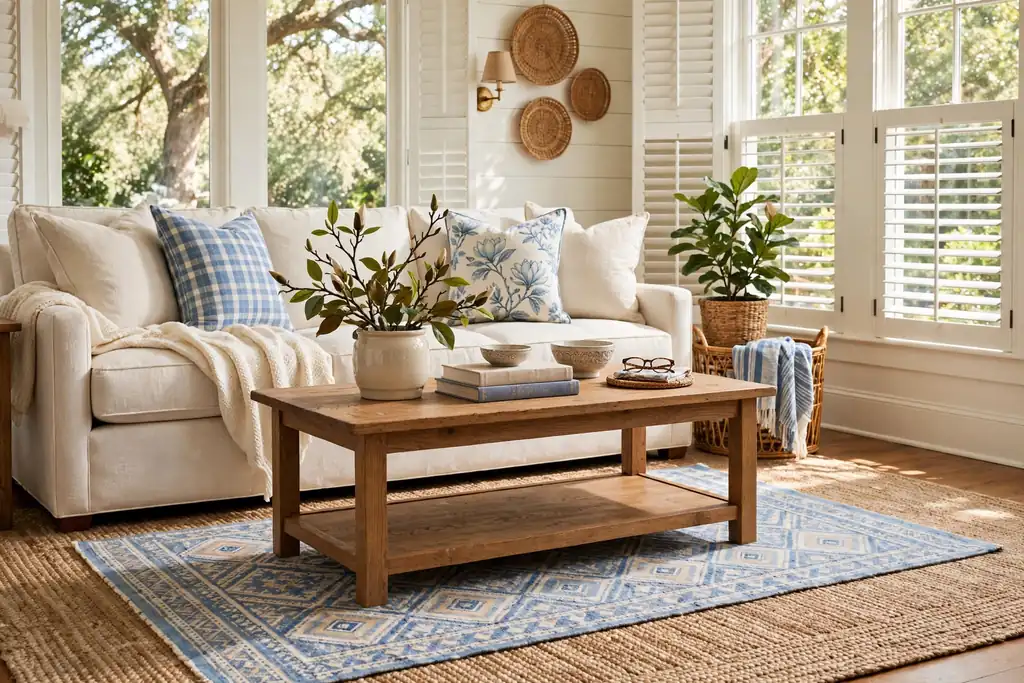
Layering a flat jute rug under a softer patterned cotton rug gives a Southern seating area texture underfoot and a clear zone for chairs and a table. Start with a jute rug large enough to sit under the front legs of the sofa and chairs, then layer a smaller cotton rug on top, straight or at a slight angle. The jute adds a natural, relaxed feel, while the cotton layer softens the floor for bare feet.
This suits hard floors that feel cold or echoey, and it works well when you cannot change the flooring. Choose a low pile cotton rug so chairs slide easily and doors still open over it. Use a rug pad under the jute to stop it sliding, and shake both rugs out regularly, since layered rugs collect dust between the layers. The same layering method appears in these brown and cream living room ideas, where two rugs set the whole seating balance.
5. Hang Linen Curtains High and Wide
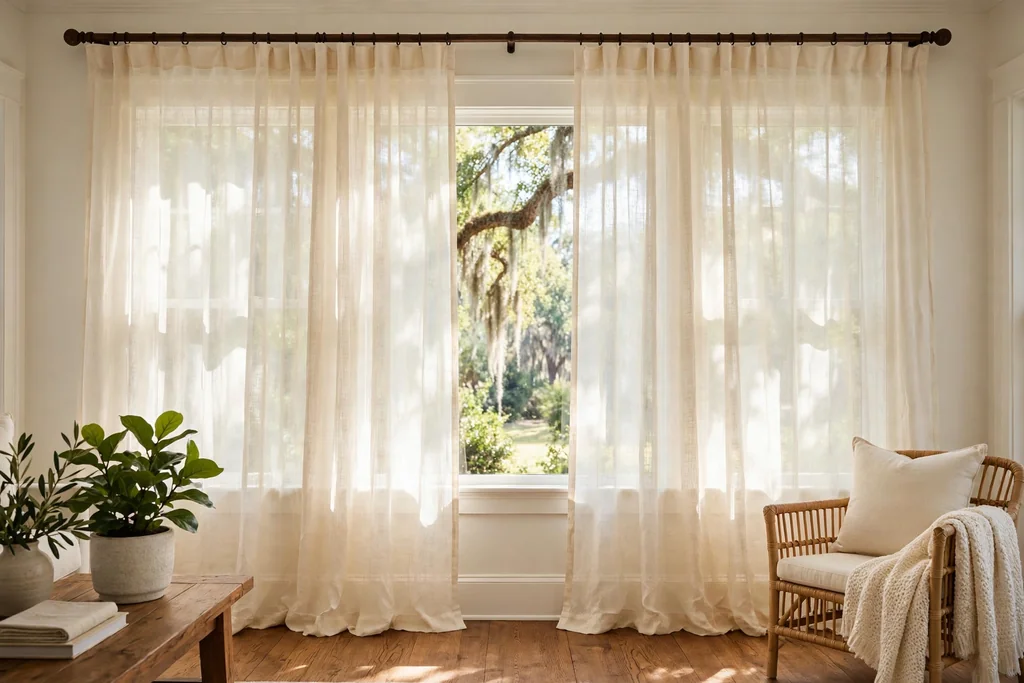
Linen curtains hung high and wide make a window look larger and let in more daylight, which matters in a Southern room built around light and air. Mount the rod close to the ceiling and wider than the frame, so the panels stack on the wall when open and cover the full frame when closed. Choose a plain or sheer linen in cream or oatmeal, and let the panels fall to just above the floor.
This suits a room with a small window or a low ceiling, where the window needs help to feel generous. Keep the fabric light enough to move easily in a breeze, and wash it as advised on the label, since linen near a window collects dust. If privacy matters at night, add a simple blind behind the curtains rather than a second heavy layer. A sheer layer alone suits a window that faces a garden or a porch.
6. Make a Rocking Chair Nook on the Porch
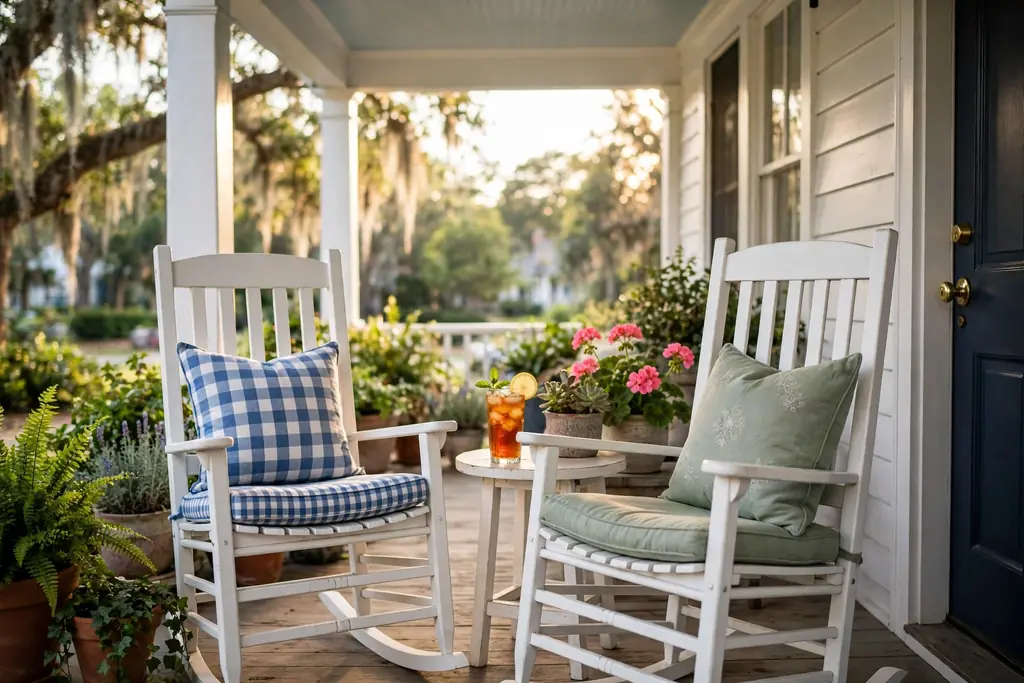
Two rocking chairs and a small side table turn a porch into a room, not just a passage to the front door. Place the chairs where they catch a breeze and a view, add a cushion to each seat, and keep a small table within reach for a drink and a book. A porch rug in an outdoor fabric defines the sitting zone and softens wood or concrete underfoot.
This suits any porch with room for two chairs to rock without hitting the wall or the rail. Check that the chairs sit level, and use outdoor cushions with removable covers so rain does not ruin them. Add one potted plant on each side of the nook to frame it, and keep the path to the door clear. Even a small porch can hold one rocker and a stool, which is enough to make sitting outside a daily habit.
7. Bring Wicker and Rattan Seating Indoors
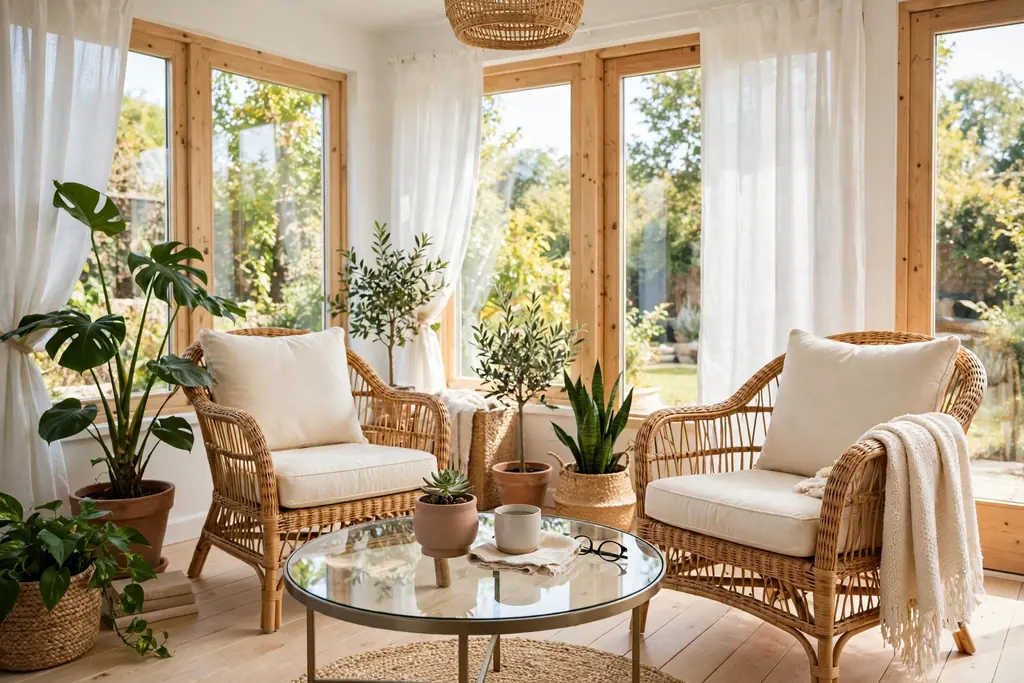
Wicker and rattan chairs bring porch ease indoors, and they suit a sunroom, a living room corner, or a bedroom reading spot. Choose chairs with a sturdy frame and a cushion in a washable cover, since natural weave shows wear if cushions are thin or loose. Pair wicker with wood, linen, and one plant, so the chair reads as part of the room rather than as a piece left over from outside.
This suits a room that feels too formal or too heavy, since woven texture lightens the whole seating group. Keep wicker out of strong direct sun indoors where it can dry and crack, and dust the weave with a soft brush. One wicker chair beside a sofa is often enough; a full set can make a living room feel like a porch. Use a small side table beside the chair so it works as a complete reading spot.
8. Use Blue and White in the Dining Room
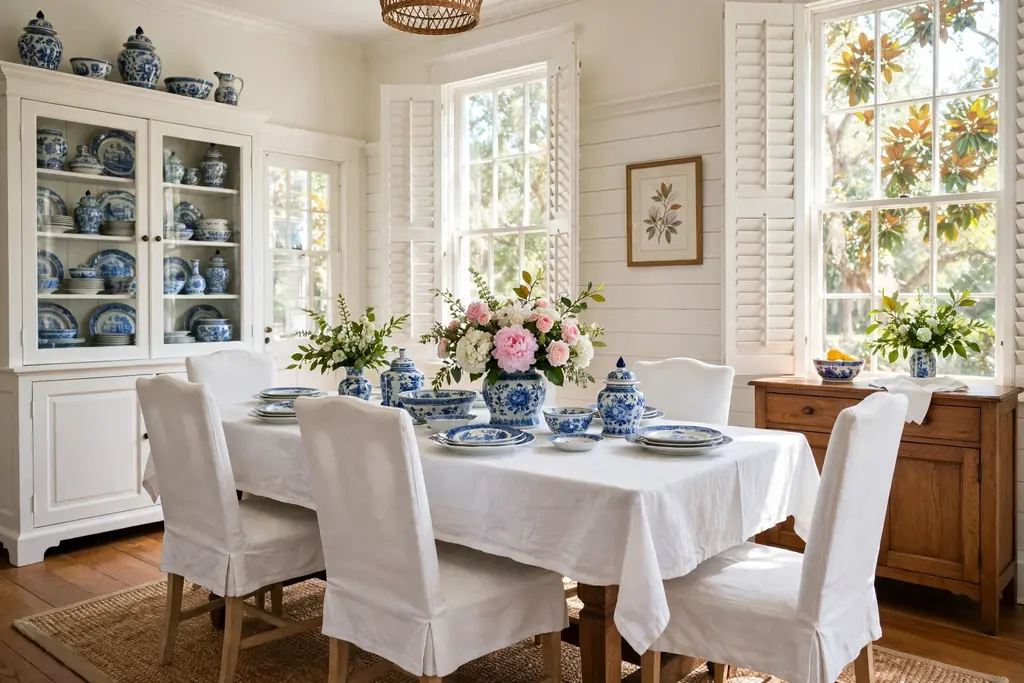
Blue and white is a classic Southern dining pairing, because it feels fresh in summer and calm in winter. Use it in a tablecloth or placemats, in plates or a serving bowl, and in one larger note such as blue cushions on dining chairs or a blue painted sideboard. Keep the rest of the room in warm white and natural wood, so the blue reads as an accent, not as a theme that takes over.
This suits a dining room used for both family meals and guests, since blue and white tableware works for both. Mix one pattern, such as a stripe or a simple floral, with plain white pieces, so the table looks collected rather than matched. Wash table linens after use, and store the blue pieces together so setting the table stays quick. A single blue vase of fresh flowers can carry the pairing on a day when the full set stays in the cupboard.
9. Dress the Bed With a Cotton Quilt
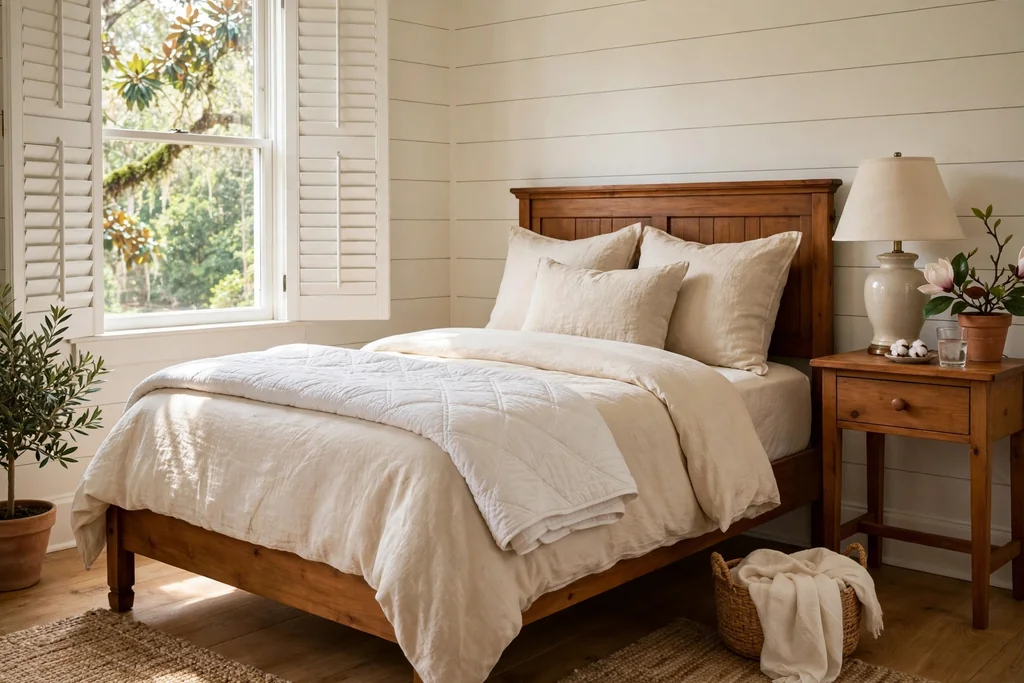
A cotton quilt folded across the foot of the bed, or layered over plain bedding, gives a Southern bedroom a finished look without heavy blankets. Choose a quilt in white, cream, or a soft pattern, and pair it with plain linen or cotton sheets and two sleeping pillows plus one or two decorative pillows. The quilt adds pattern and warmth at the foot of the bed, where it is easy to pull up on a cool night and easy to fold back in the morning.
This suits a bedroom that feels plain in solid bedding, or a room where a thick duvet is too warm for most of the year. Wash the quilt as advised on the label, and keep it out of strong direct sun if the pattern could fade. A quilt also suits a guest room, since it looks made even when the bed is simply dressed, and guests can add or remove it as they like.
10. Style a Magnolia and Greenery Centerpiece
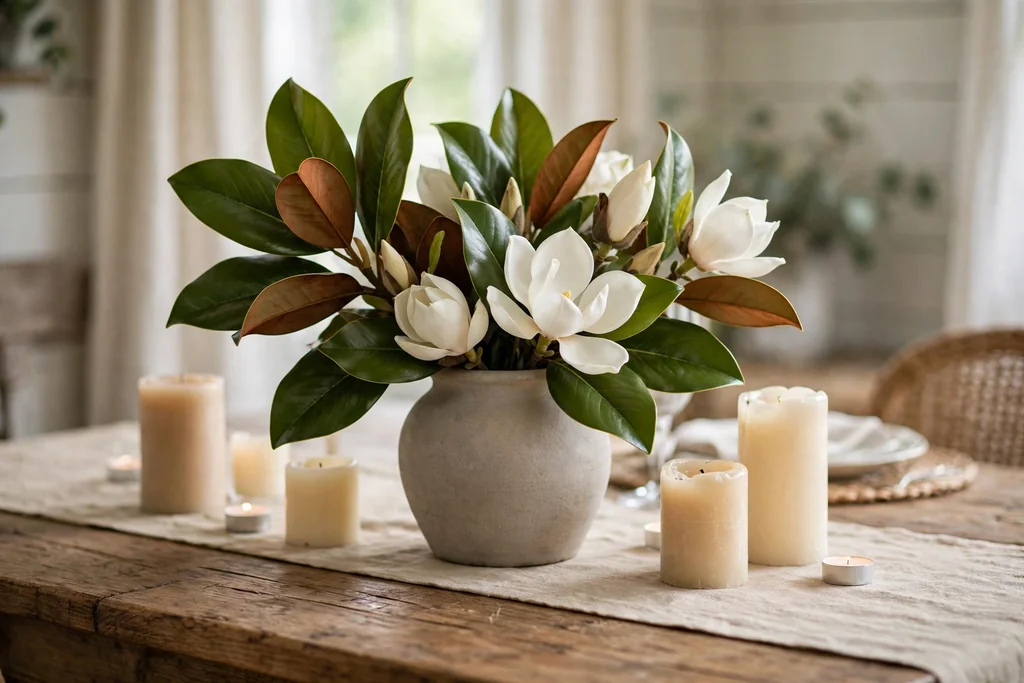
A centerpiece of magnolia leaves, or other sturdy greenery, with a few white blooms gives a Southern table a natural focal point that lasts longer than cut flowers alone. Use a low, simple vase or bowl so guests can see across the table, and keep the arrangement wide rather than tall. Add one candle on each side if the table is long, and keep all greenery clear of flames.
This suits a dining table, a console, or a coffee table, and it works in every season if you swap the blooms and keep the greenery. Trim stems at an angle, change the water often, and remove any leaves that sit below the water line. If fresh magnolia is hard to find where you live, use any sturdy local greenery with large leaves and the same low, wide shape. Keep the arrangement simple: one vase, one type of greenery, and one bloom type is enough.
11. Hang a Woven Pendant Light Over the Table
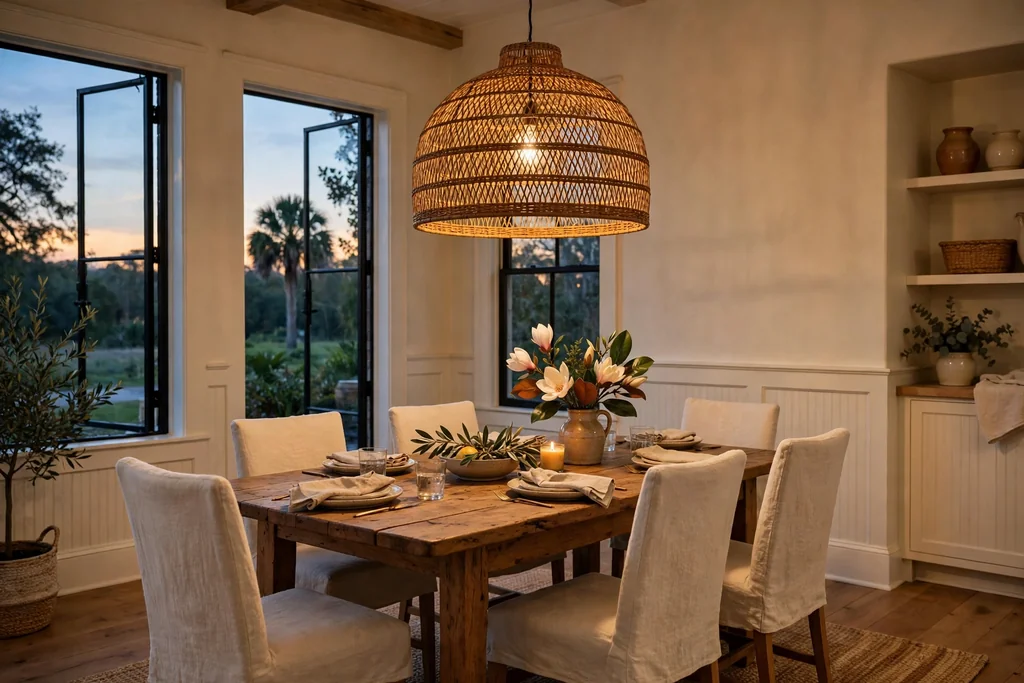
A woven rattan or wicker pendant over a dining table or kitchen island adds warmth and texture at eye level, and it softens a room with hard surfaces. Hang one large pendant over a round table, or two or three smaller pendants in a row over a long table or island. The bottom of the pendant should sit high enough to see across the table, and low enough to pool light where people eat or work.
This suits a dining room or kitchen that relies on one harsh ceiling light. Use a warm white bulb, and check the fitting and wiring guidance before you hang a new light, or ask an electrician if the wiring is old. A woven shade also casts a soft pattern on the ceiling in the evening, which adds atmosphere without extra lamps. Keep the shade dust free with a soft brush, since weave collects dust over time.
12. Style Open Shelves With Ironstone and Wood Boards
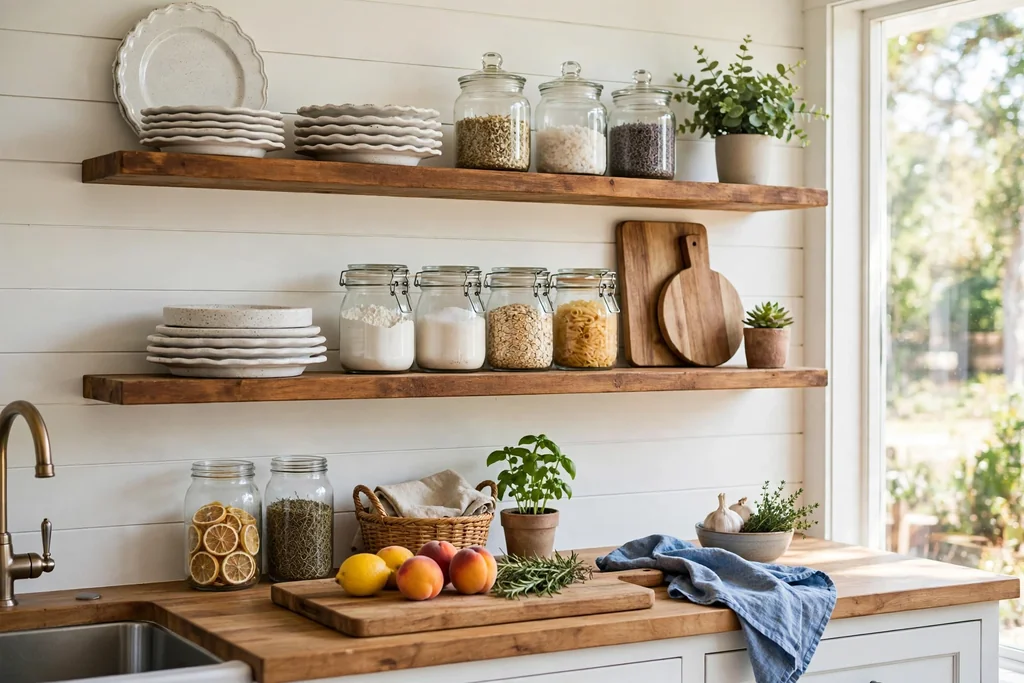
Open shelves in a kitchen or dining area give everyday pieces a display job, and white ironstone with wood boards is a calm Southern mix. Fit two or three shelves on one wall, anchor them into studs or suitable fixings, and keep everyday plates and bowls at arm height with lighter display pieces up high. Mix stacks of white plates, a wood board leaned upright, a glass jar, and one small plant, and leave open space on each shelf so the wall reads as styled rather than packed.
This suits a kitchen that needs storage but cannot spare floor space for a cabinet. Keep heavy items low, and use the shelves for pieces you actually use, so they stay clean and useful. Dust the shelves weekly, since open storage shows dust faster than a closed cabinet. If open shelves feel too exposed for your whole kitchen, try one short run beside the stove or sink first.
13. Set Up a Sweet Tea and Lemonade Corner
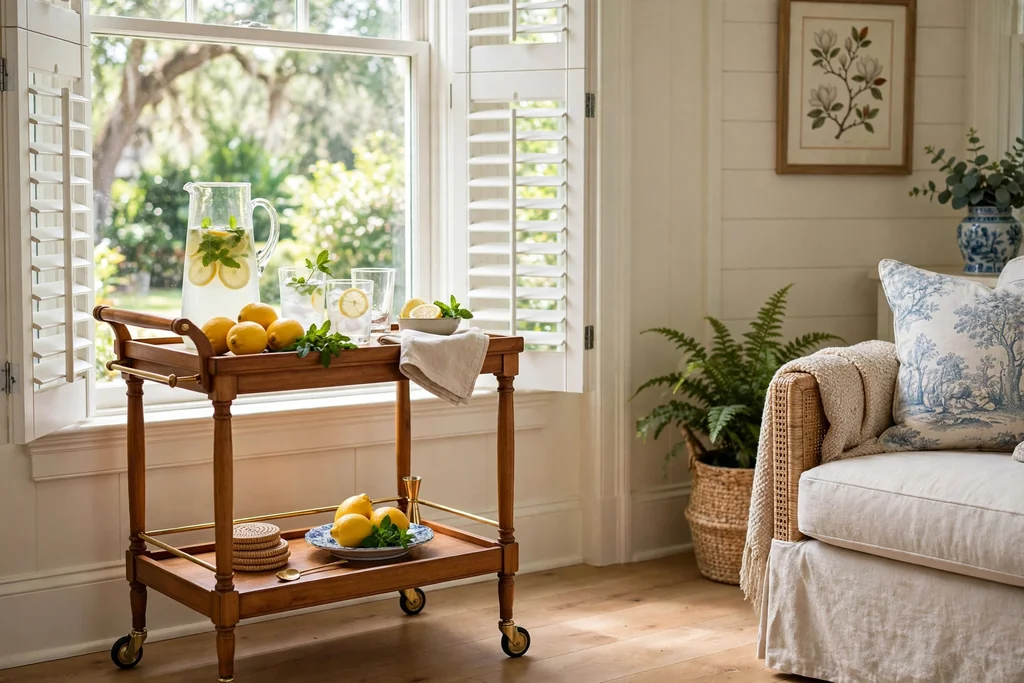
A small drinks corner makes Southern hospitality easy, because guests can help themselves without a full kitchen tour. Use a bar cart, a sideboard, or one shelf near the seating area, and keep a glass pitcher, glasses, a bowl of lemons, and a small jar of mint together on a tray. Add a stack of coasters and a cloth for spills, so the corner stays tidy after guests leave.
This suits a living room, a porch, or a dining room used for gatherings. Keep the corner near seating but out of the main walking route, and refill the pitcher before guests arrive rather than during the visit. In cooler months, the same corner can hold a kettle, mugs, and tea, so the setup earns its place all year. Wash glasses after each use, and keep the tray clear of anything that does not belong to drinks.
14. Hang a Botanical Gallery Wall in Wood Frames
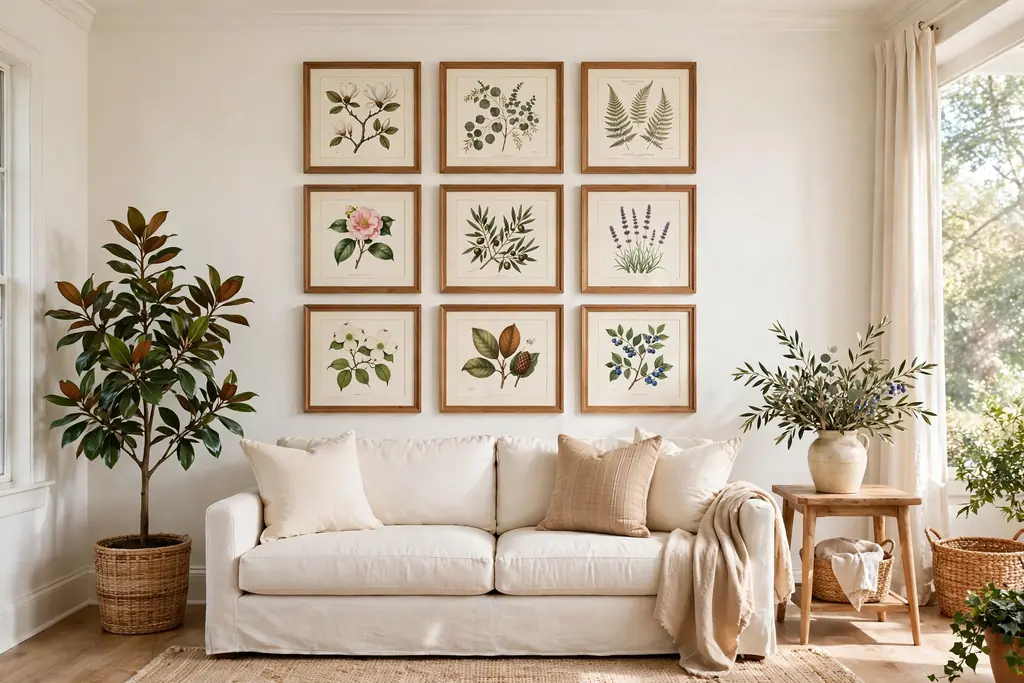
A gallery wall of botanical prints in matching wood frames adds Southern character to a plain wall without a large piece of art. Use frames in one wood tone, mix two or three sizes, and lay the arrangement on the floor first so the spacing stays even. Include leaf prints, a simple landscape, and one family photo if you like, and keep the overall shape roughly rectangular so the wall looks planned.
This suits a sofa wall, a hallway wall, or a stair wall that leads into the living room. Use picture hanging strips rated for each frame weight, or hooks suited to your wall type, and hang the center of the group at eye level. Leave one frame out at first, so you can adjust the spacing without rehanging the whole wall. Keep the prints in the same color family, such as green, cream, and soft brown, so the mix looks linked.
15. Fit a Wood Blade Ceiling Fan
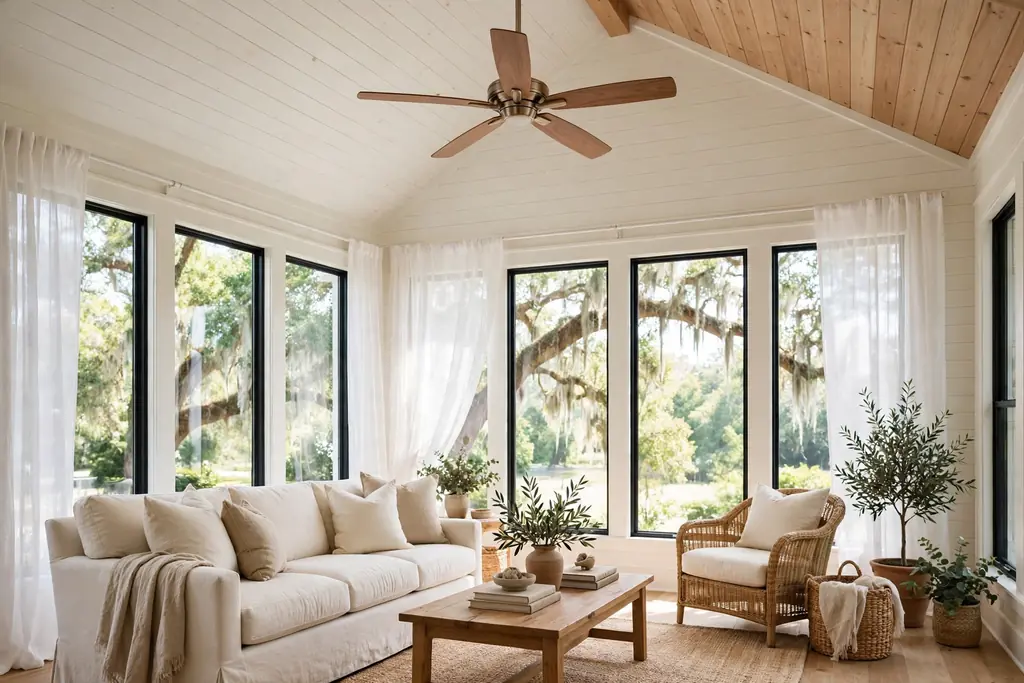
A ceiling fan with wood blades is both a Southern staple and a practical cooling aid, since moving air makes a warm room feel cooler without lowering the temperature. Choose blades in a wood tone that matches your trim or furniture, and a fan size suited to the room: a small fan in a small bedroom will not move enough air, while a very large fan can dominate a small room. Fit the fan so the blades sit clear of doors, beams, and tall furniture.
This suits a living room, bedroom, or porch with a suitable ceiling and wiring. Follow the maker guidance for fitting and balance, and ask an electrician if the ceiling box is not rated for a fan. Run the fan with windows open on mild days for a breeze, and with air conditioning on hot days to spread cool air. Dust the blades regularly, since a fan spreads whatever sits on them.
16. Finish With a Welcoming Entry Landing
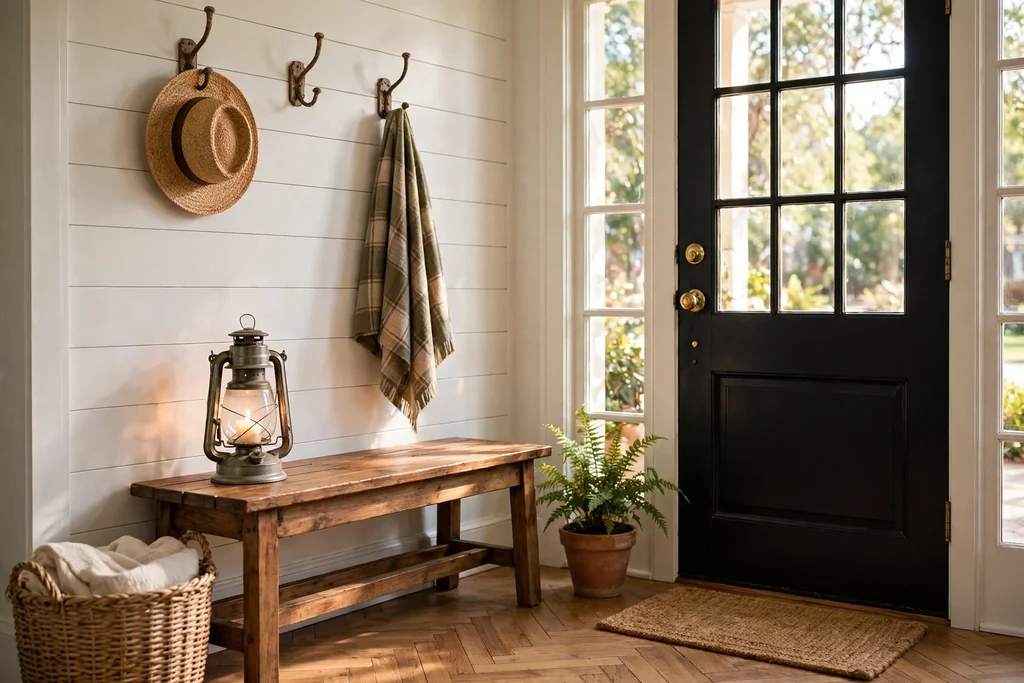
An entry landing gives coats, bags, and keys a home, so the rest of the house stays tidy. Place a wood bench or a small console by the door, add wall hooks for coats and bags, a woven basket for shoes or throws, and a lantern or small lamp for warm light. Keep a small dish or tray on the console for keys, so they are found in one place every time.
This suits any entry, large or small: a narrow console and two hooks work in a tight hall, while a bench and baskets suit a wider entry. Keep the walking route clear, and empty the basket once a week so it does not become a dumping spot. A fresh plant or a small vase of greenery on the console makes the landing feel cared for, and it gives visitors a warm first sight of the house.
Conclusion
Southern decor works best when it starts with comfort and ends with care: light walls, wood that warms the edges, fabrics you can wash, and a porch and entry that welcome people before they reach the living room. You do not need all 16 tips at once. Start with the base, add one seating idea and one textile idea, then let the smaller details, such as a centerpiece, a gallery wall, or a drinks corner, follow as you live in the room.
Save this list on Pinterest before your next room refresh, and work through it one area at a time: walls and light first, then seating and textiles, then the porch and entry details that make the whole house feel welcoming.
FAQs
What defines Southern home decor?
Southern home decor leans on warm white walls, natural wood, washable linen and cotton, woven textures such as wicker and jute, and rooms built for gathering, from porches to dining tables. It favors light, air, and practical comfort over formal pieces that cannot be used daily. The tips in this guide apply that base room by room, so you can take the parts that suit your house and leave the rest.
How can I get a Southern look on a small budget?
Start with paint, textiles, and layout, which cost less than new furniture. Paint one wall or refresh trim in warm white, swap cushion covers for linen or cotton, layer a jute rug you already own under a patterned rug, and move a chair to the porch for a sitting nook. Add greenery from the garden for a centerpiece, and hang prints you already own in matching wood frames for a gallery wall.
Does Southern decor only suit large houses?
No. The same ideas scale down well: a slipcovered loveseat instead of a large sofa, one beadboard wall instead of four, a single rocking chair on a small porch, and a narrow console with hooks in a tight entry. The key is to pick fewer, larger moves and leave walking routes clear, so a small room still feels open and easy to use.
What colors work best for Southern decor?
Warm white, cream, natural wood tones, soft sage, and dusty blue form the calm base, with blue and white as a classic accent in dining rooms and bedrooms. Keep strong color to one or two notes per room, such as blue cushions or a blue sideboard, and repeat that color once more in a vase or a throw. Test paint in daylight and lamplight, since warm tones shift a lot between the two.
How do I keep a Southern room from looking too themed?
Limit themed items to a few, and let the rest of the room stay plain and useful. One woven pendant, one gallery wall, or one blue and white table setting is enough per room, while the sofa, rug, and curtains stay in calm neutrals. Avoid matching every item to one motif, and mix in pieces you already own, such as wood furniture, plain linen, and real plants, so the room looks lived in rather than staged.
Can Southern decor work in a rental?
Yes, most of these tips need no building work. Use removable beadboard panels, slipcovers, layered rugs, linen curtains on a tension rod or existing rod, wicker chairs, a drinks cart, and a gallery wall hung with strips rated for each frame weight. Check your lease before fixing shelves, fans, or panels to walls or ceilings, and keep original fittings safe so you can restore the room when you leave.