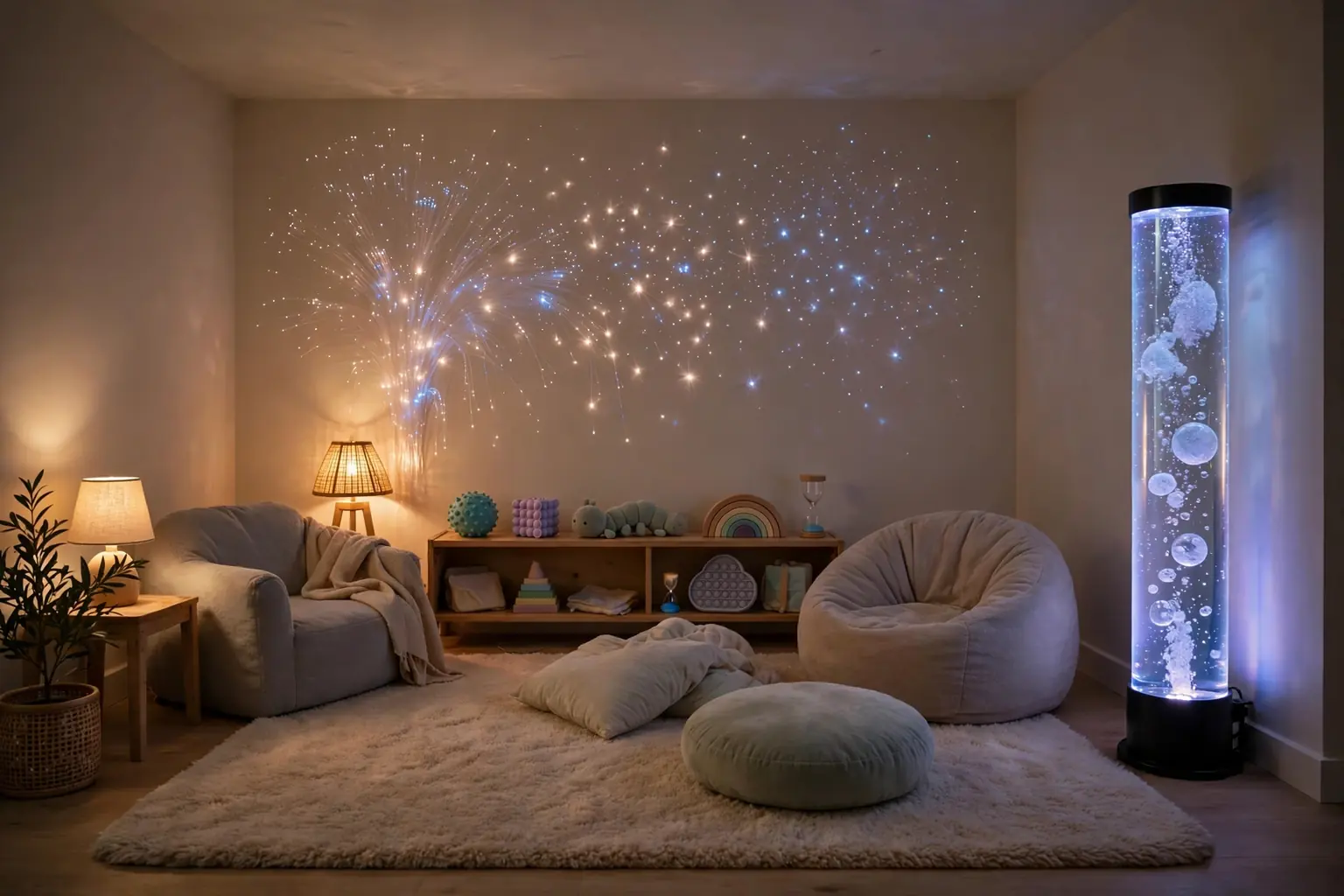
A sensory room is a place where light, sound, touch, and movement are kept gentle on purpose. It can be a whole spare room, a corner of a living room, or a small nook by a window, and it does not need specialist equipment to work well. The best rooms start with one calm base, soft light, a comfortable seat, and a clear floor, then add one or two features that suit the person using it. These 11 sensory room ideas cover lighting, texture, sound, scent, and movement, so you can build a room that helps someone rest, focus, or settle after a busy day.
Key Takeaways
- Start with a calm base: soft light, a plain rug, and one comfortable seat, before adding any special features.
- Choose one sense at a time, such as light or touch, and test it for a week before adding another.
- Keep the room uncluttered, since too many bright items at once can undo the calm you are trying to create.
- Give everything a home, such as a basket or a low shelf, so the room is easy to reset after use.
- Make controls easy to reach, so lights, sound, and seating can be adjusted without help.
- Use washable covers and wipe clean surfaces where hands, feet, and play materials touch them daily.
1. Soft Glow Lighting Corner
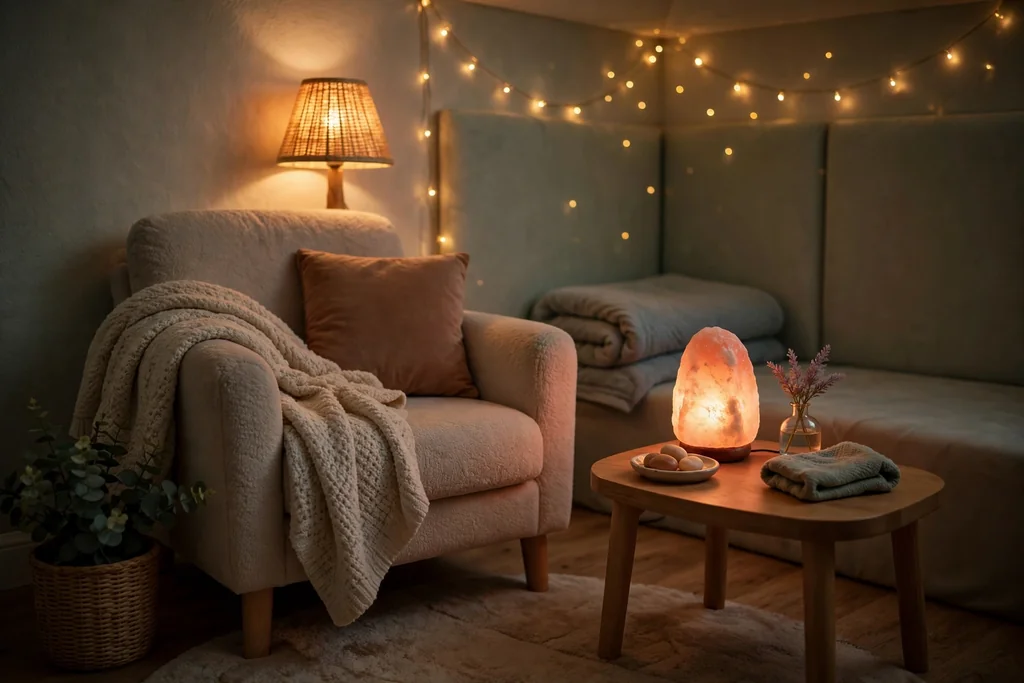
Set the lighting low and warm first, since bright overhead light is often the first thing that makes a room feel harsh. Use two or three small lamps with warm bulbs, a salt lamp, or a string of fairy lights, and put them on a dimmer or a smart plug so the level can change through the day. This suits almost any sensory room, because soft light calms the whole space before a single feature is added.
Keep the lamps at different heights, such as one on a low table and one on the floor, so the glow spreads evenly instead of pooling in one spot. The layered lighting approach in these cozy apartment living room ideas works well here, even in a larger room. Avoid flashing or fast color changing modes for the main lights, and save stronger color for one feature, such as a bubble tube, so the room keeps one clear focal point.
2. Bubble Tube Focal Point
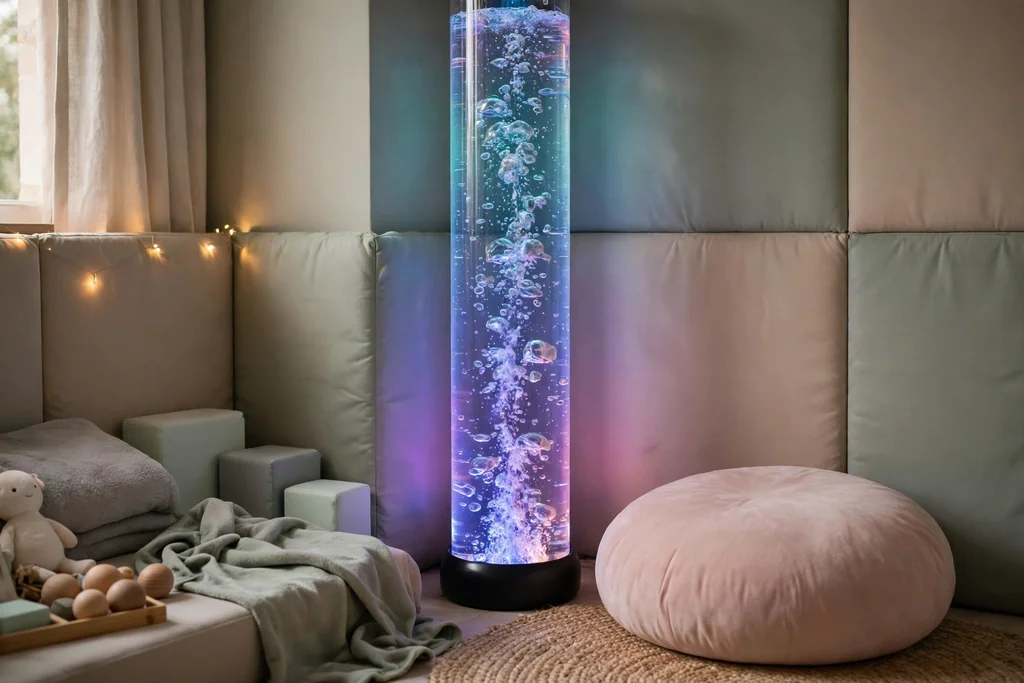
A tall bubble tube gives the room a slow, steady focal point to watch, with bubbles rising through color changing water. Place it in a corner where it can be seen from the main seat, on a stable base, and keep the area around it clear so the tube is easy to reach for switching it on and off. It suits children and adults who like to watch movement, and it works as a quiet activity on its own.
Choose a tube size that fits the room, since a very tall tube can dominate a small corner. Keep a towel nearby for small splashes when the tube is filled or cleaned, and follow the maker guidance for water changes and cleaning. If a real bubble tube is out of budget, a tall lamp with a slow color fade, or a jar of water with a light beneath it, gives a similar slow glow at a much lower cost.
3. Touch and Texture Wall
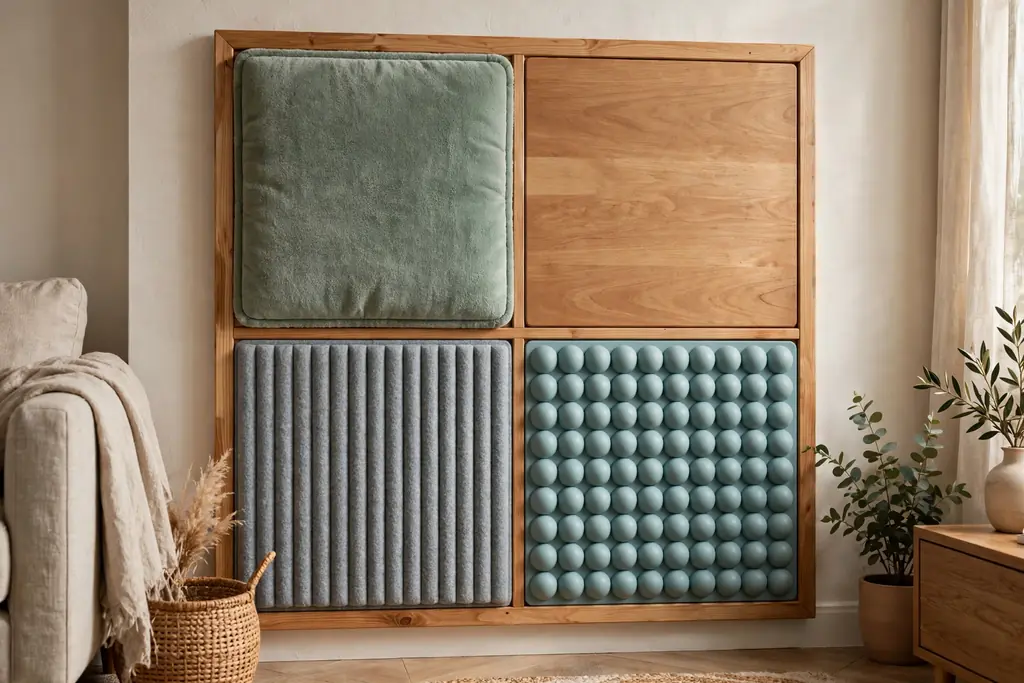
Fix a panel of different textures to one wall at hand height, using sections of soft fabric, smooth wood, ribbed felt, bumpy silicone, and cool metal. A texture wall invites touch without needing a table full of loose items, and it suits a hallway end, a bedroom wall, or the side of a play corner. Keep each section large enough to explore with a whole hand, not just a fingertip.
Mount the panel firmly, with no sharp edges or loose pieces that could come away, and check the fixings often if children use the wall daily. Mix only four or five textures to start, since too many in one panel can feel busy rather than interesting. Label nothing on the panel itself, and let the person using it find their favorites by touch, then add more sections only for textures they return to often.
4. Calm Corner Nook
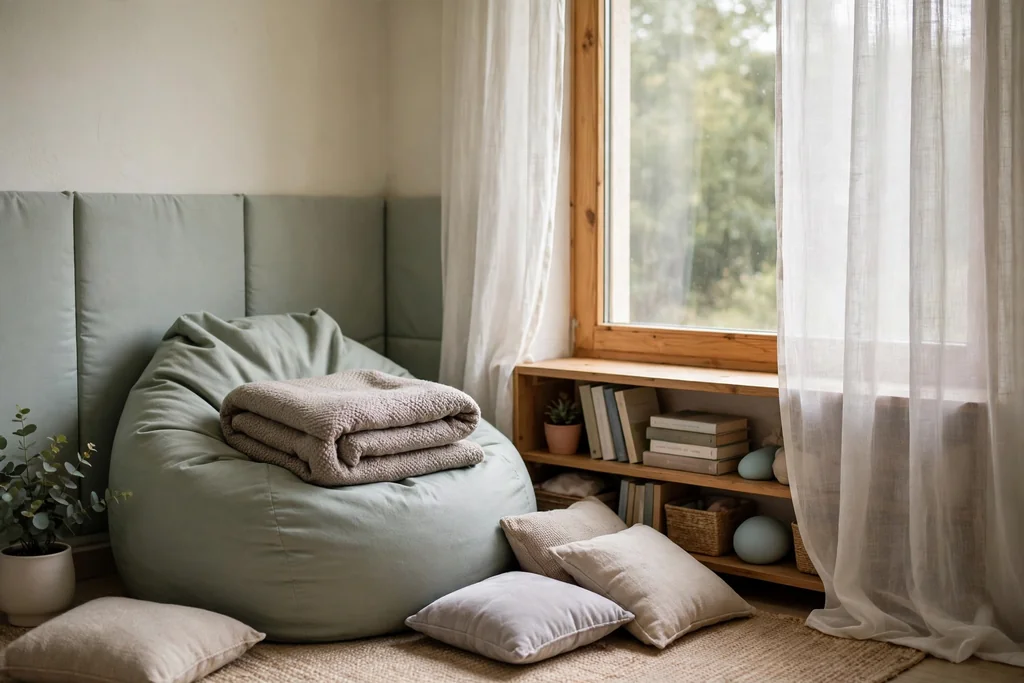
Build a small nook with a beanbag or a deep floor cushion, a weighted blanket, and a low shelf holding two or three quiet items, such as books or a soft toy. Tuck it into a corner or beside a window, and use a rug to mark where the nook begins, so the rest of the room can stay open. This suits small homes well, since a nook needs only a corner, not a whole room.
The zoning advice in these studio apartment decorating ideas helps a nook share a room with sleeping or living areas, using a rug and a curtain rather than a wall. Keep the nook free of screens and noisy toys, and keep the blanket within reach so the person using it can choose pressure and warmth for themselves. A basket beside the seat holds the blanket and books when the nook is not in use.
5. Fiber Optic Star Ceiling
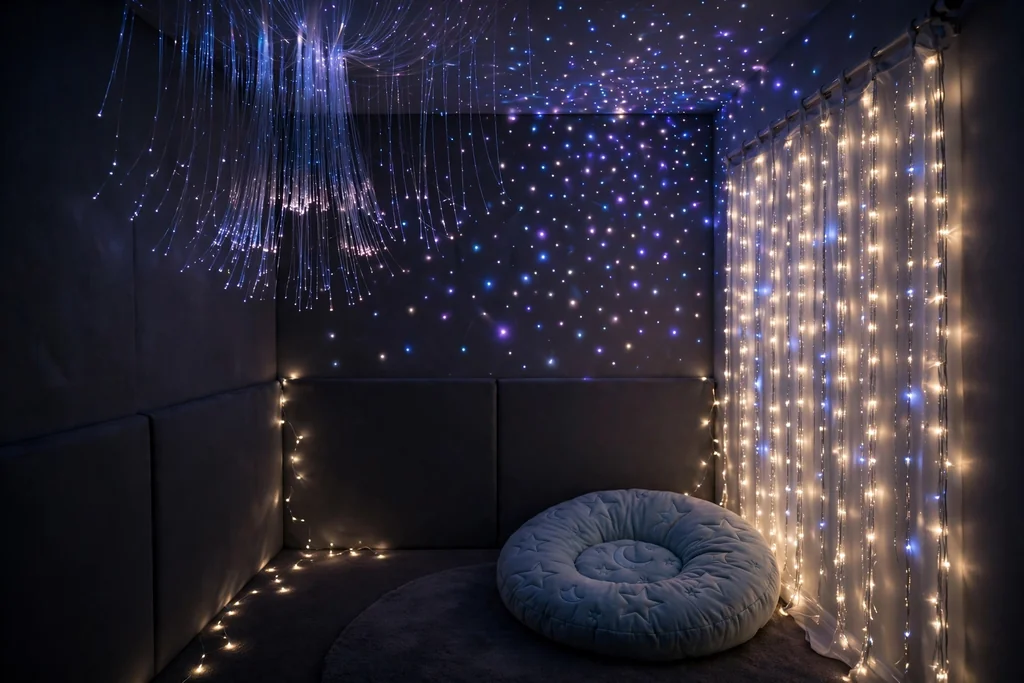
Hang fiber optic strands from the ceiling, or fix a star light panel above the main seat, so the room has a field of tiny twinkling lights to lie under. This works best in a room that can be darkened, since the stars show up most clearly when other lights are low. It suits bedtime wind downs, quiet reading, and anyone who likes to look up and rest.
Keep the light source box out of reach and easy to switch off, and choose a slow twinkle setting rather than a fast flash. A dark curtain over the window helps the stars show during the day, and a plain ceiling color makes the points of light stand out. If ceiling fixing is not allowed, a fiber optic lamp on a side table, or a star projector aimed at the ceiling, gives a similar effect without any drilling.
6. Sound Zone for Listening
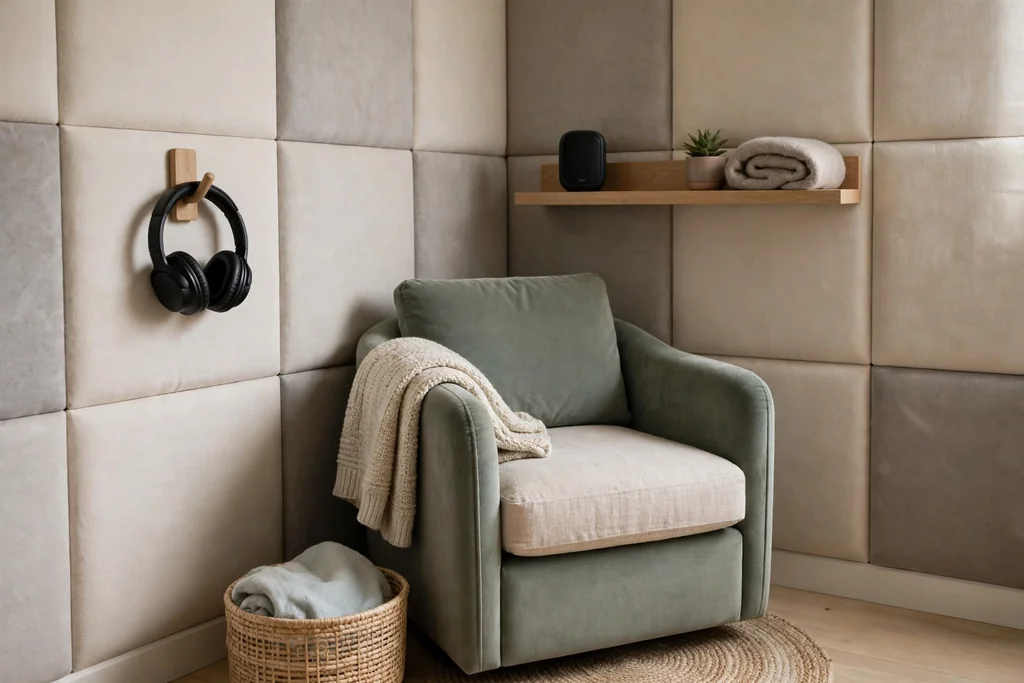
Give sound its own zone with a comfortable chair, a small speaker, and a pair of headphones hung on a hook nearby. Play slow nature sounds, soft instrumental music, or white noise at a low volume, and keep the controls simple, such as one speaker with a single volume dial. A sound zone suits people who settle best with steady background sound, and it keeps audio from filling the whole house.
Add soft wall panels or a thick rug in the zone, since hard floors and bare walls make sound echo and feel louder than it is. Keep a short list of favorite sounds near the speaker, so the choice is quick and does not become a long search. If headphones are used, set a volume limit where the device allows it, and keep the listening time short for young children, with breaks for quiet.
7. Gentle Swing or Hammock Chair
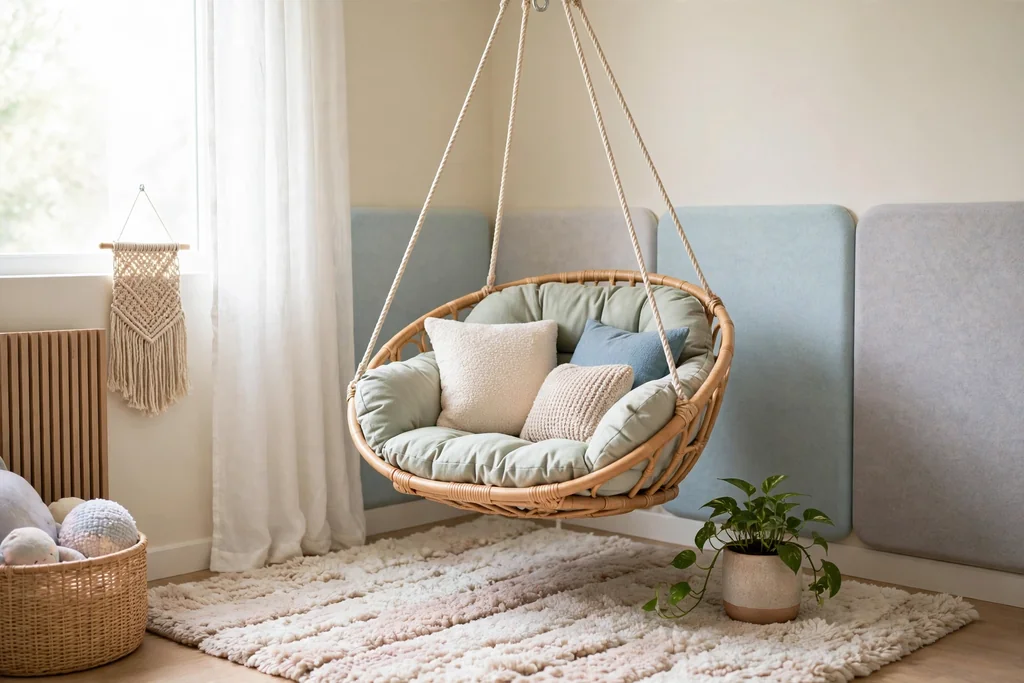
Hang a hammock chair or a pod swing from a ceiling joist or a sturdy freestanding frame, with a thick rug underneath and cushions inside. Slow swinging gives gentle movement that many people find settling, and a pod shape adds a sense of enclosure without closing the room off. This suits a corner with clear space around it, so the swing can move without hitting furniture.
Fix the swing only with hardware rated for the weight it will carry, following the maker instructions, and test it with an adult before a child uses it alone. Keep the swing low enough that feet can touch the floor to stop it, and keep the floor beneath it soft. If ceiling fixing is not allowed, a freestanding frame gives the same movement and can move rooms when the layout changes.
8. Tactile Table for Hands-On Play
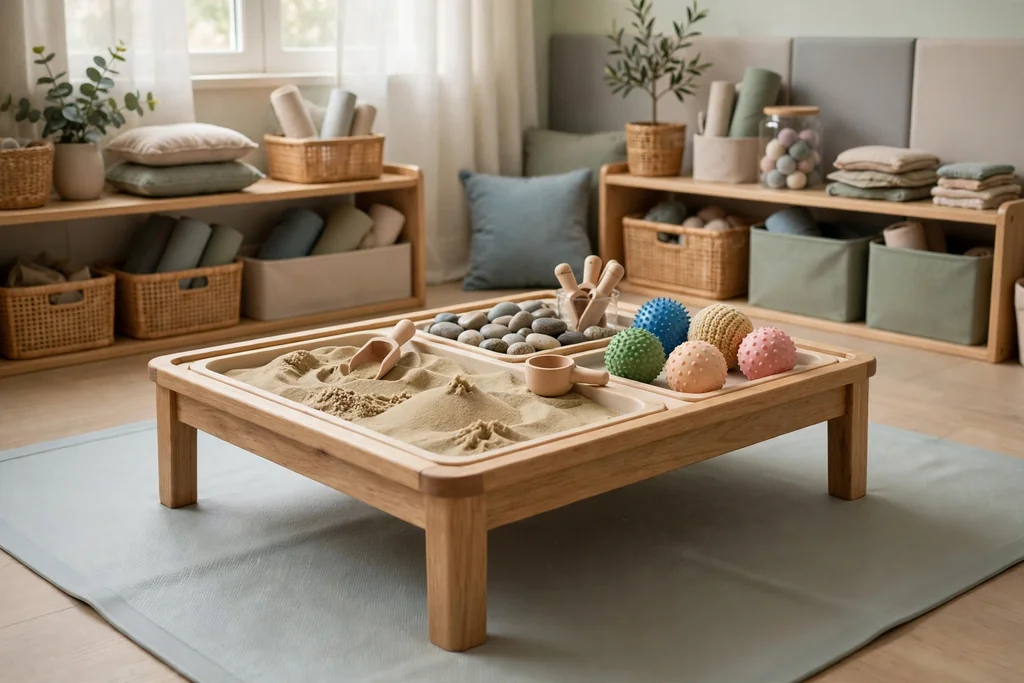
Set up a low table with trays for hands-on materials, such as kinetic sand, smooth stones, dried beans in a closed tray, textured balls, and scoops. A tactile table suits children who learn through touch, and it keeps messy materials in one place with a wipe clean mat underneath. Change only one tray at a time, so the table stays inviting rather than overwhelming.
Store the materials in lidded boxes on a low shelf beside the table, using the closed storage approach in these bedroom storage ideas to keep small items sorted and dust free. Keep a damp cloth nearby for quick cleanups, and check small items often for wear, removing anything cracked or broken. A timer on the table can help end play calmly, since a clear finish is part of what makes the table work day after day.
9. Slow-Moving Projected Visuals
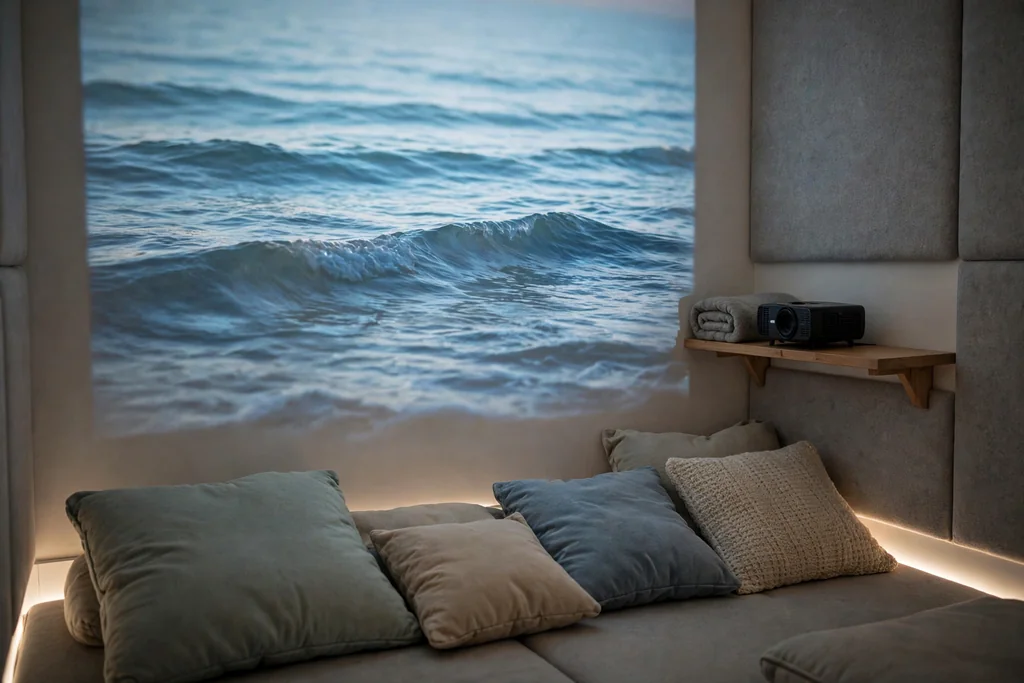
Aim a small projector at a plain wall to show slow-moving visuals, such as ocean waves, drifting clouds, or an aurora scene, with the sound off or very low. Projected visuals suit a room where a screen would feel too bright or too busy, since the image is large, soft, and easy to watch from floor cushions. This works well in the evening, when the room can be darkened.
Keep the projector on a stable shelf out of the walking route, and keep the image slow, since fast cuts and bright flashes undo the calm effect. Choose one scene per session, rather than flipping between scenes, and set a clear end time. If a projector is not available, a slow-moving lava style lamp, or a light that casts moving water patterns on the wall, gives a smaller version of the same gentle motion.
10. Gentle Scent Station
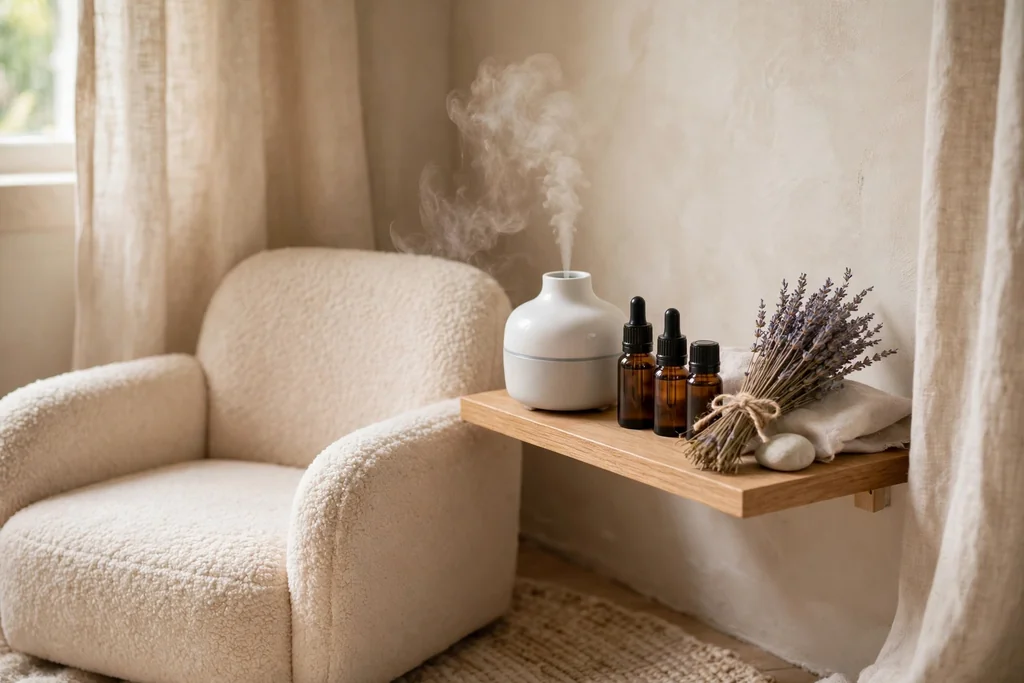
Set up a small scent station on a shelf with an aroma diffuser, two or three mild scents, and a dried lavender bundle, placed near the main seat but out of reach of small hands. Scent can help mark the room as a place to rest, since the same gentle smell each time becomes part of the routine. Keep the scent light, since a strong smell can be as tiring as a loud noise.
Use only scents the person using the room enjoys, and test one scent at a time for a few days before adding another. Keep the diffuser clean following the maker guidance, and never leave it running in a closed room for long periods. If anyone in the home has asthma, allergies, or scent sensitivity, skip the diffuser and use a plain cloth pouch of dried lavender instead, which gives a faint scent with no mist.
11. Texture Path for Bare Feet
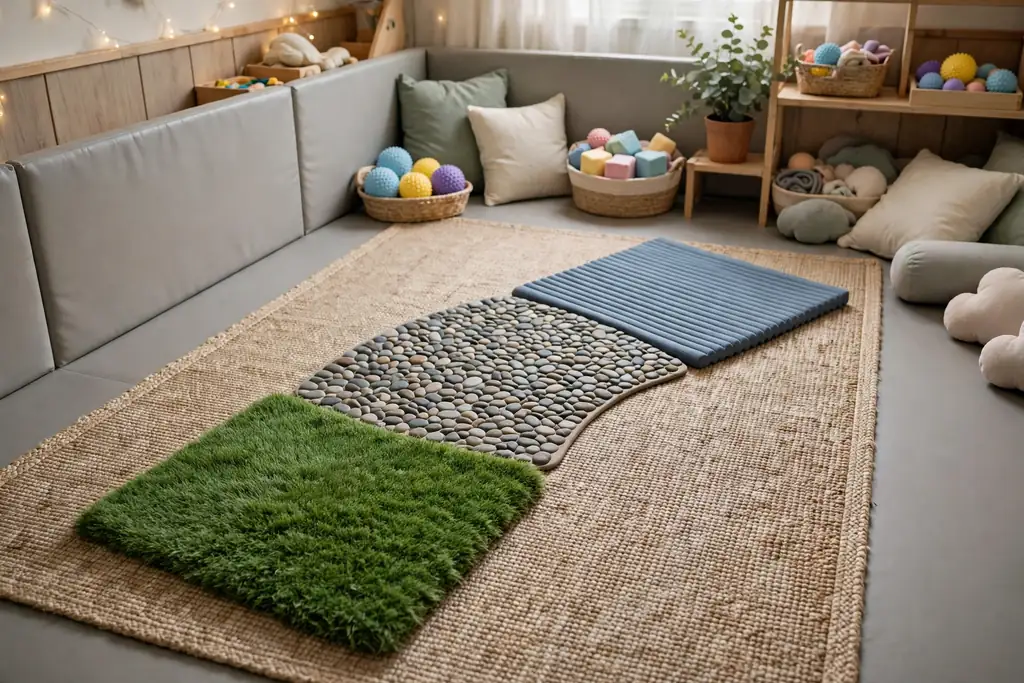
Lay a gentle path of flat texture mats across the rug, such as a soft grass-like mat, a smooth pebble mat, a ribbed foam mat, and a cork mat, arranged in a curve that can be walked in bare feet or socks. A texture path suits children who seek touch through their feet, and it adds movement to the room without needing large equipment. Keep the path short, with only three or four mats to start.
Fix the mats to the rug or floor with a non-slip backing, so they do not slide when stepped on, and check the edges often for curling. Walk the path slowly the first few times, and remove any mat that feels painful rather than interesting, since the goal is pleasant touch, not a test of endurance. Store spare mats in a basket at the end of the path, so the route can change shape without new purchases.
Conclusion
A good sensory room is built slowly, one calm choice at a time, not bought in a single order. Soft light, a comfortable seat, and a clear floor do most of the work, and one or two favorite features, such as a bubble tube, a texture wall, or a swing, give the room its character. Start with the idea that suits the person using the room best, live with it for a week, and add another only when the first one earns its place. The storage ideas in these bedroom storage ideas and the zoning tips in these studio apartment decorating ideas pair well with this guide when the sensory room shares space with a bedroom or a studio. Pick the ideas that fit your room, your budget, and the person using it, and save this guide to Pinterest so you can find your favorite setup again.
FAQs
What is a sensory room?
A sensory room is a space where light, sound, touch, scent, and movement are kept gentle and easy to control. It can be a whole room or a small corner, and its purpose is to give someone a place to rest, focus, or settle. The room usually has soft lighting, comfortable seating, and a few chosen features, such as a texture wall or a bubble tube, rather than a large collection of equipment.
How much space do I need for a sensory room at home?
A corner of a room is enough to start. A calm nook needs only space for a seat, a rug, and one feature, such as a lamp or a texture panel. A whole spare room gives more choice, such as a swing or a projector, but it is not required. Start with the space you have, and add features that fit it, rather than clearing a room before you begin.
What is the best lighting for a sensory room?
Soft, warm, dimmable light works best for most sensory rooms. Use two or three small lamps at different heights, rather than one bright ceiling light, and keep flashing or fast color changing modes off for the main lights. Save stronger color for one feature, such as a bubble tube or a star ceiling, so the room keeps one clear focal point.
How do I build a sensory room on a small budget?
Start with free or low cost changes: dim the lights, add a rug and cushions you already own, and make a texture panel from fabric and cardboard. Then add one low cost feature at a time, such as fairy lights, a scent pouch, or a tactile tray with sand and stones. A bubble tube, a swing, or a projector can wait until you know which sense the person using the room responds to most.
Are sensory rooms only for children?
No. Sensory rooms suit children, teens, and adults, and the features change with the person using the room. A child may use a tactile table and a texture path, while an adult may prefer a sound zone, a scent station, and a swing chair for winding down after work. The same calm base, soft light, a comfortable seat, and a clear floor, works at any age.
How do I keep a sensory room calm instead of overstimulating?
Add one feature at a time, and keep the rest of the room plain. Limit bright colors, loud sounds, and strong scents, and give every item a home so the room can be reset quickly. Watch how the person using the room responds, and remove anything that causes restlessness or avoidance. A room with three well chosen features usually works better than a room filled with ten.