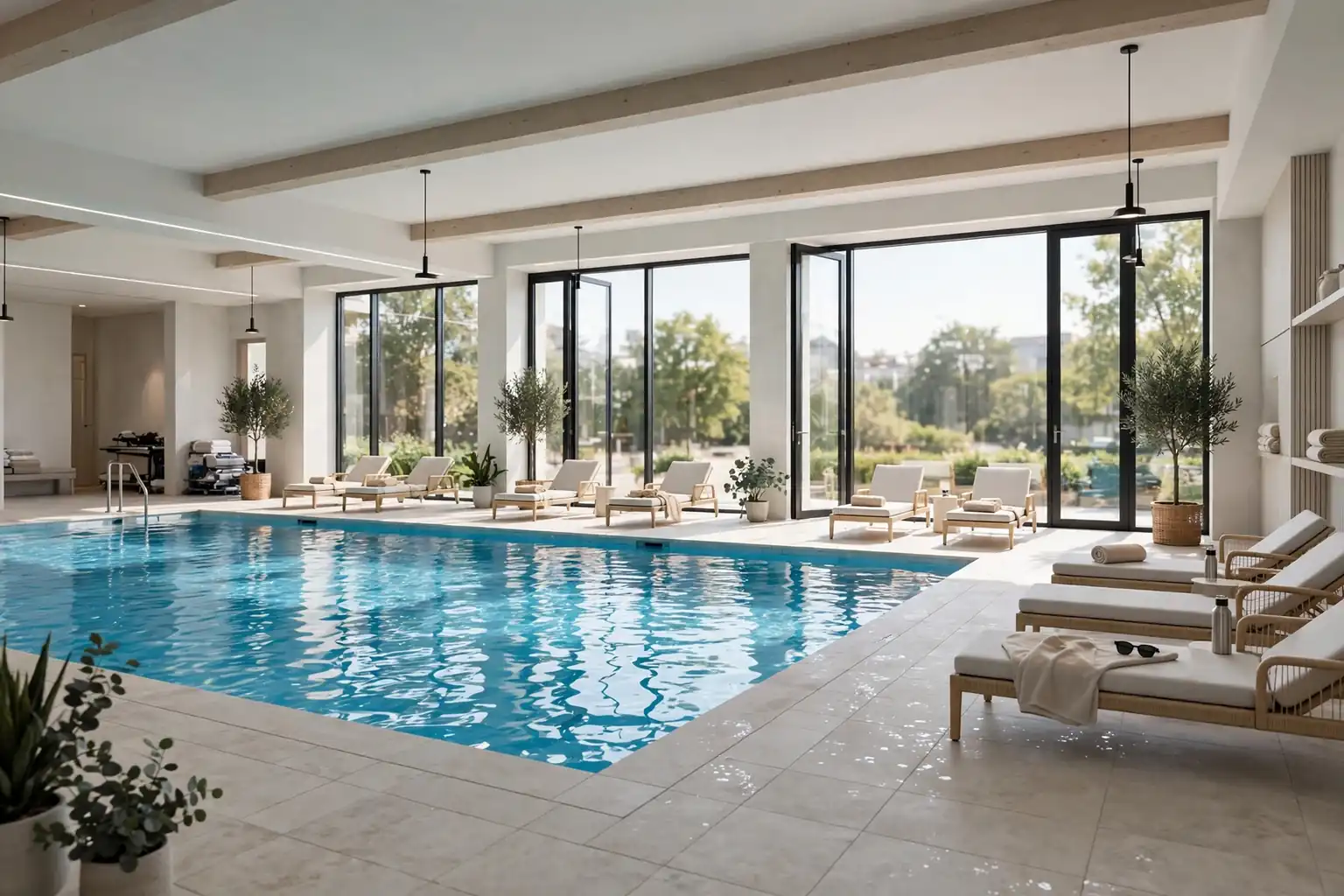
An indoor pool brings swimming, gentle exercise, and quiet downtime into daily life, whatever the weather outside. It does not need a mansion or a huge extension. A compact plunge pool, a narrow lap lane, or a bright basement pool room can work in a modest home, while a larger room can hold a lounge corner, a sauna, and space for family swims. These 29 indoor pool ideas for home cover layouts, materials, lighting, heating, safety, and upkeep. Use them to shape a room that fits your floor plan, your budget, and the way your household actually swims.
Key Takeaways
- Start with the swim you will do most: short laps, gentle exercise, play, or soaking, then size the pool to that use.
- Plan moisture control, ventilation, and a slip resistant deck from the start, since a pool room stays humid every day.
- Keep a clear, dry route from the changing area to the pool steps, with towels and storage close at hand.
- Use light in layers: daylight where you can get it, plus bright light for swimming and softer light for evening soaks.
- Choose finishes that handle water, chlorine or salt, and bare feet, such as tile, stone, and treated wood.
- Add a cover, a fence or door control, and a step entry plan if children, guests, or older swimmers will use the pool.
1. Basement Pool Room with Skylights
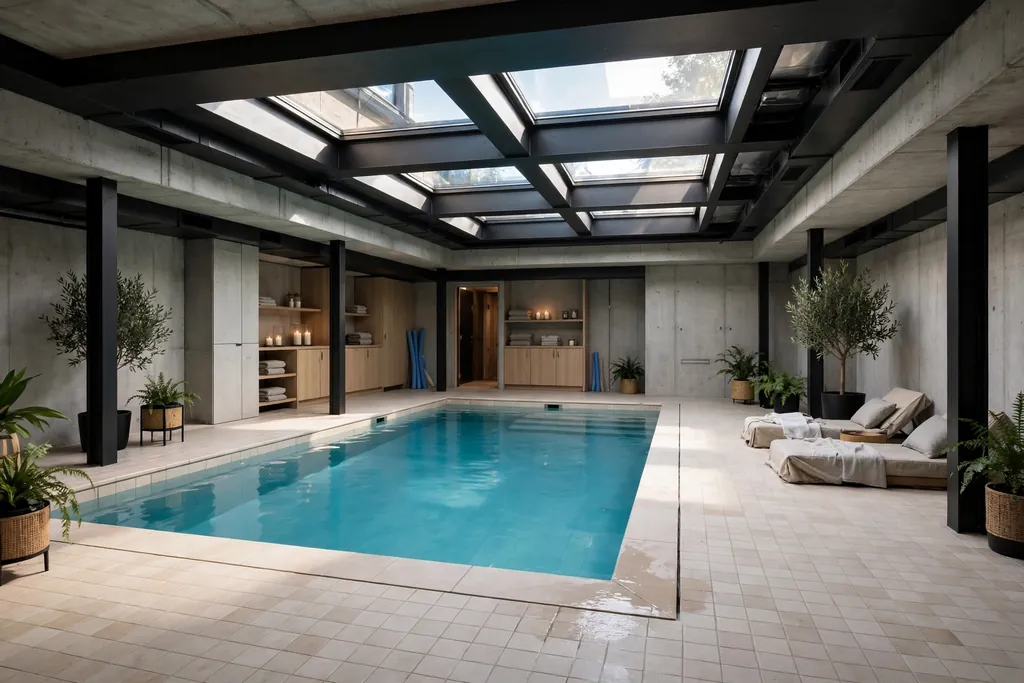
Turn a basement into a pool room and use skylights or light tubes to bring daylight down into the space. Daylight makes a basement feel less closed in, and it helps you see the water clearly during daytime swims. A rectangular pool along the longest wall leaves a walkway on at least one side for entry, cleaning, and seating.
Check ceiling height, drainage, and access for building work before you commit, since a basement pool needs a solid floor, a way to handle splashes, and room for plant equipment. Keep the deck in a pale, slip resistant tile so the room stays bright, and add wall lights for evenings when the skylights go dark.
2. Glass Pool Room that Opens to the Garden
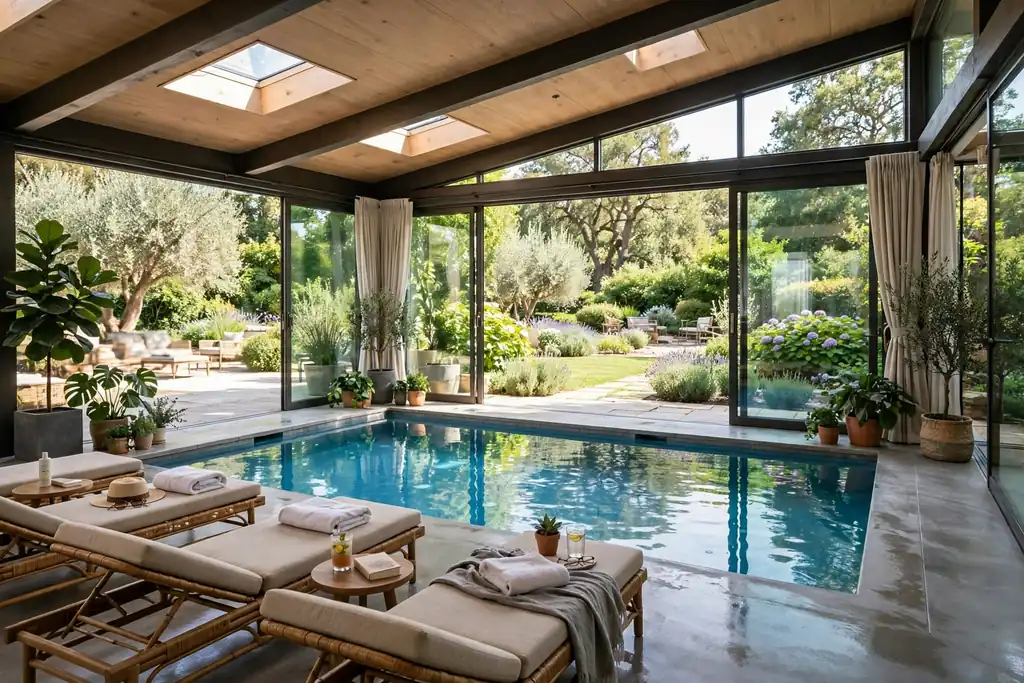
Build the pool in a glass walled room so you can watch the garden while you swim and still stay warm in winter. Large panes, a sliding door, and a view of trees or a lawn make the room feel open, even when the pool itself is modest. Place loungers near the glass, but keep a clear path around the pool edge.
Glass needs regular cleaning in a humid room, so choose panes and frames made for wet rooms and keep a squeegee close by. Add blinds or curtains for privacy at night, and check that the glass and roof can handle condensation, since warm pool air meets cold glass in winter.
3. Compact Plunge Pool for a Small Home
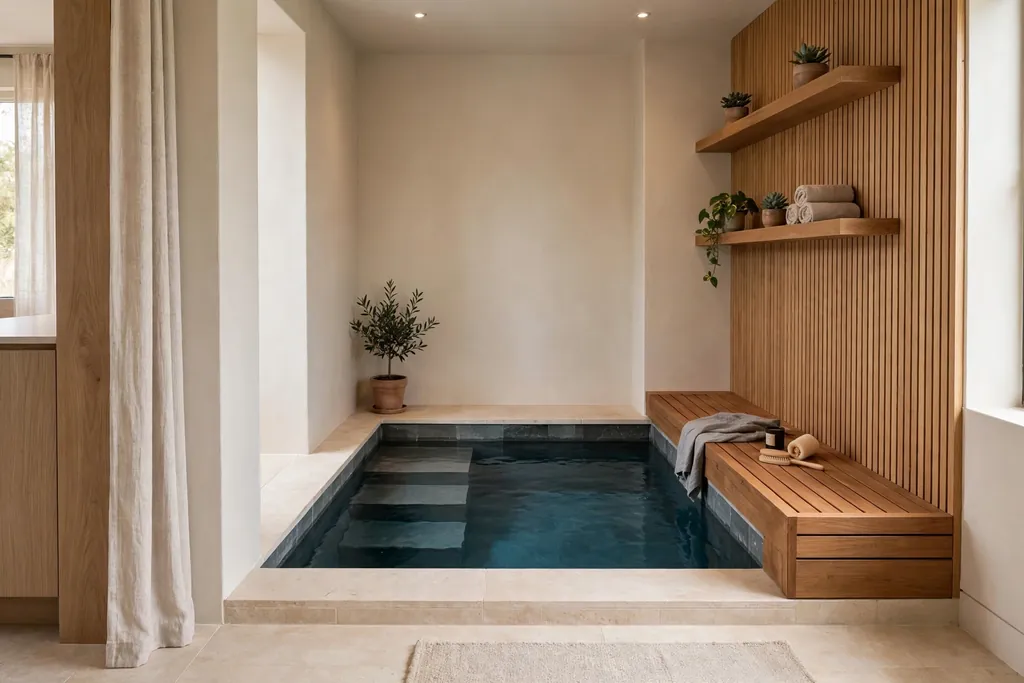
Choose a compact plunge pool when you want cold water dips, gentle exercise, or a soak, but you do not have room for laps. A small, deep pool fits a corner, a former utility room, or a short extension, and it uses less water and less heating than a full size pool. Keep one wide step or a built in seat inside the pool for easy entry.
Pair the plunge pool with a shower nearby so swimmers rinse before and after. A cover keeps heat in and keeps dust out between uses, and a simple bench beside the pool gives you a place for towels and a robe. This is a good first step if a larger pool feels like too much work to maintain.
4. Narrow Lap Lane in a Basement
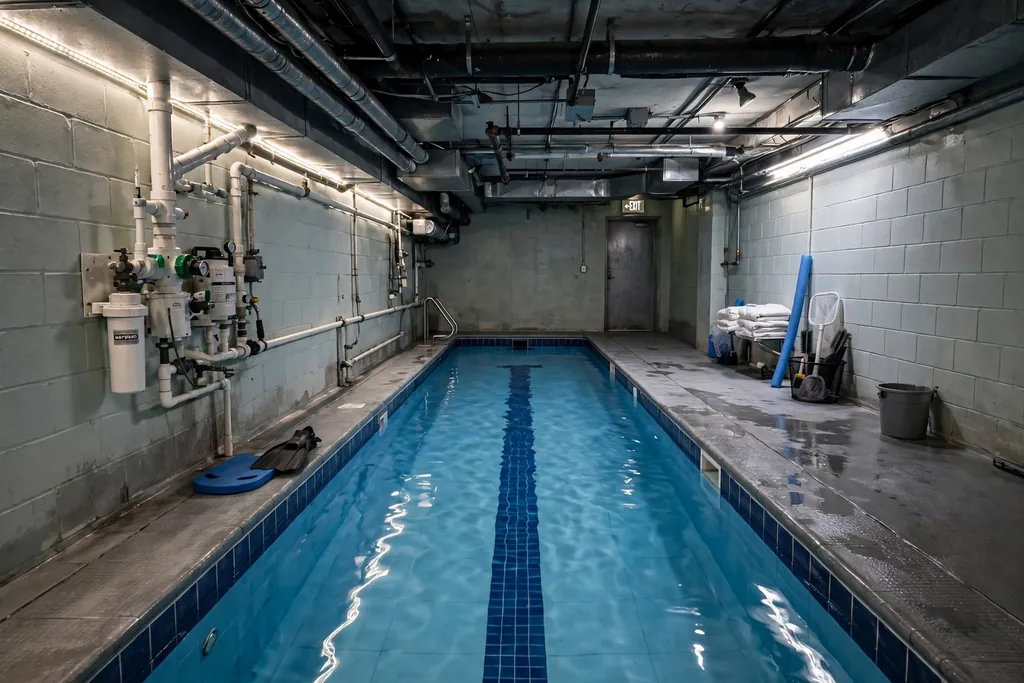
Fit a narrow lap lane into a long basement or a side extension when swimming for fitness is the main goal. A single lane, even a short one, works well with a swim jet or a tether for continuous swimming, so you do not need a full length pool to get a workout. Mark the lane with a contrasting tile line on the pool floor.
Keep the deck clear along one side for walking and for getting in and out safely. Add a wall clock or a small timer shelf at one end, and store kickboards and pull buoys in a wall basket. If you share the house, agree on swim times so laps are not cut short by play sessions.
5. Pool Under a Vaulted Timber Ceiling
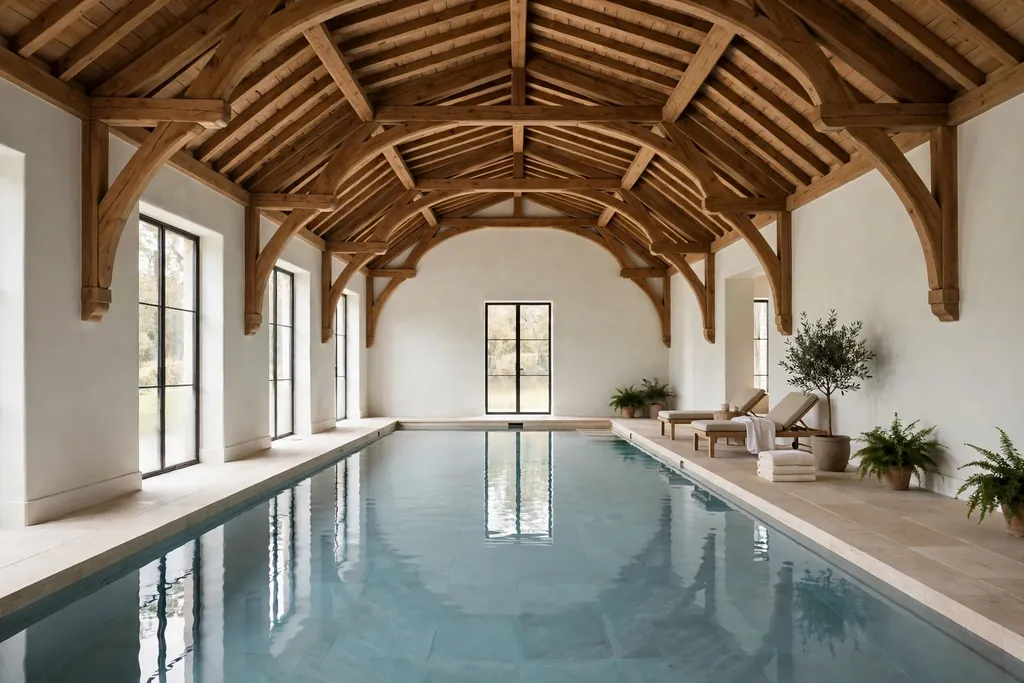
Give a pool room warmth with a vaulted timber ceiling, where wood beams and boards soften the sound of water and make a tall room feel welcoming. Timber suits a pool room that also holds a lounge corner, since it reads more like a living space than a leisure center. Keep the timber treated for humid air and fixed with a gap for air flow behind it.
Balance the wood with pale walls and a light tile deck, so the room does not feel dark. Add high windows or a skylight in the vault if the roof allows it, since warm air rises and a high vent helps clear steam. Wipe beams now and then to stop dust and moisture from settling.
6. Courtyard Pool with a Retractable Roof
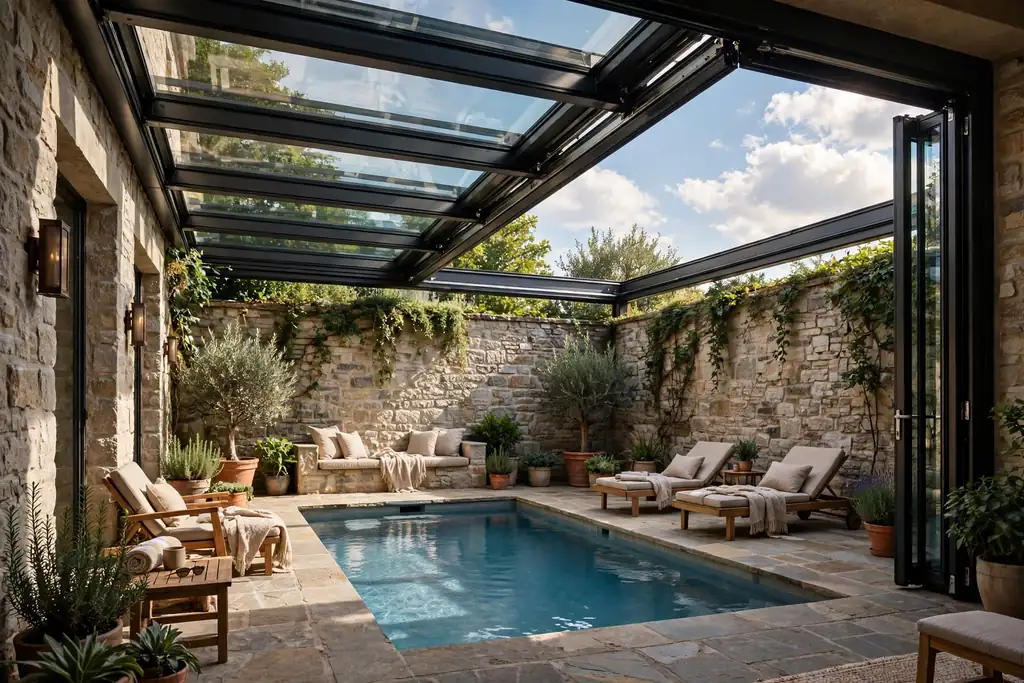
Place a pool in a courtyard with a retractable roof so you can swim under open sky in summer and close the roof in rain or cold weather. A courtyard gives privacy from neighbors, and the roof keeps leaves and rain out when the pool is closed. Choose a roof that opens in sections, so you can open just part of it on a mild day.
Plan drainage for the courtyard, since rain that falls on a closed roof and splash water both need somewhere to go. Keep the deck in a stone or tile that stays grippy when wet, and store outdoor cushions under cover when the roof is closed, since humidity can build up in an enclosed courtyard.
7. Pool Beside Floor to Ceiling Windows
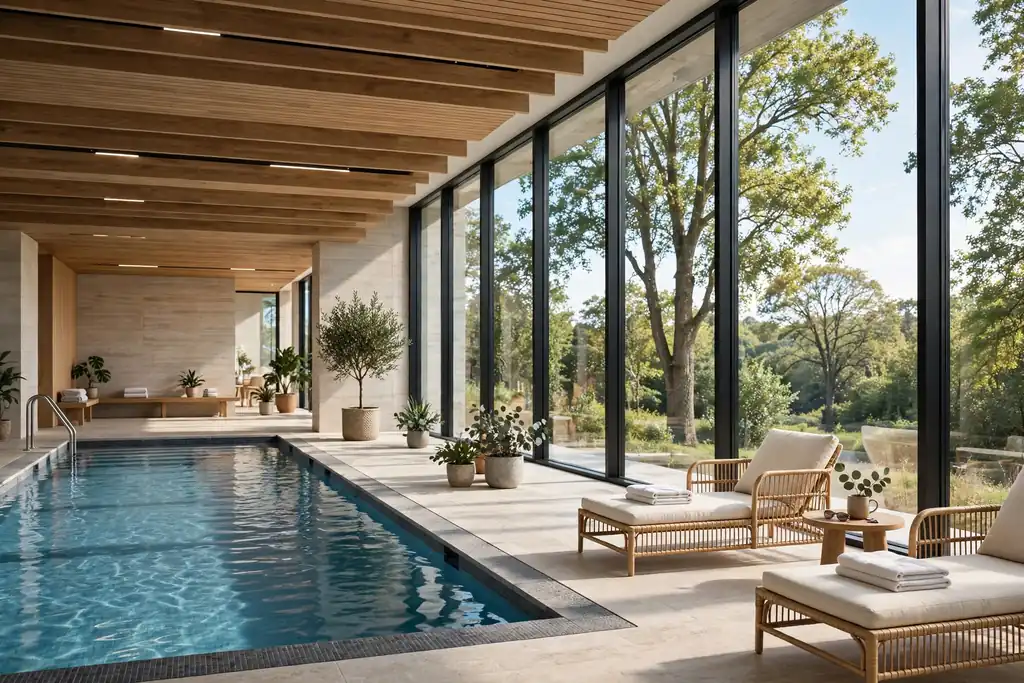
Set the pool beside floor to ceiling windows for a bright room and a view that makes short swims feel pleasant. This layout suits a ground floor extension, where the pool runs parallel to the glass and a deck strip sits between the water and the windows. Morning light on the water also helps the room feel fresh.
Use window frames and seals rated for humid rooms, and plan a way to clean the glass from inside. Keep furniture back from the glass so splashes do not reach cushions, and add sheer blinds for glare on bright days. A low hedge or fence outside keeps the view pleasant without losing privacy.
8. Spa Style Pool with a Warm Wood Deck
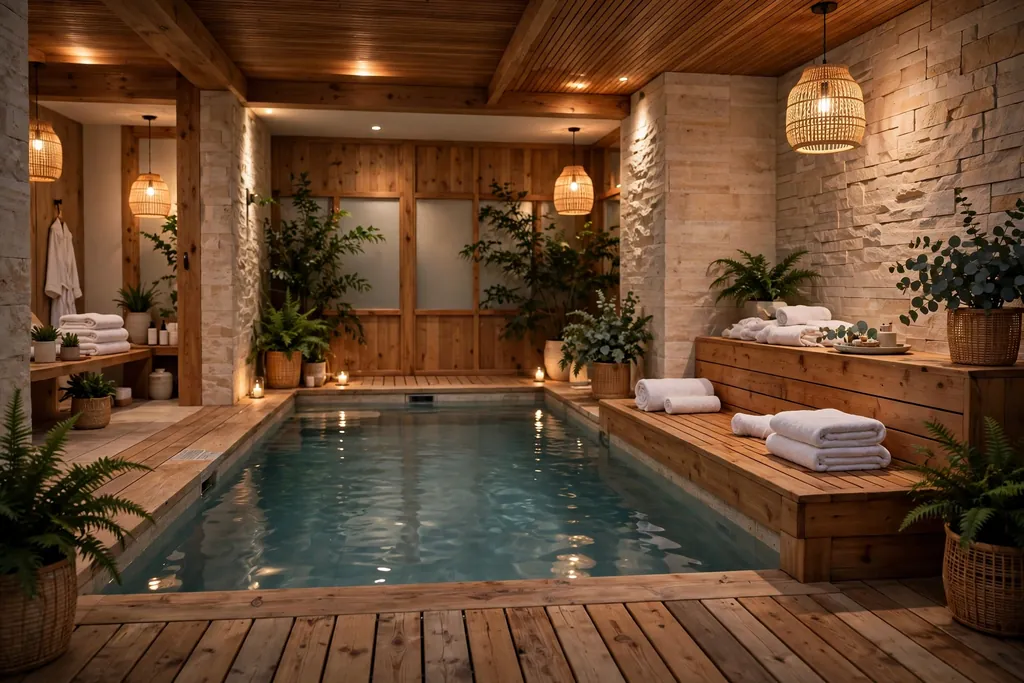
Build a spa style pool room around a warm wood deck, with a small pool, a bench, and a calm color palette. Wood decking feels kind under bare feet, and it suits slow swims, soaking, and stretching after a swim. Choose deck boards made for wet areas, with gaps for drainage and a finish that resists pool chemicals.
Keep the deck swept and rinsed, since wood in a wet room can get slippery if algae or soap builds up. Add a towel rail and a small stool near the pool steps, and use soft wall lights for evening soaks. Pair this layout with the zoning ideas in these home gym ideas if your pool room also needs a stretching or exercise corner.
9. Family Pool with a Shallow Play Shelf
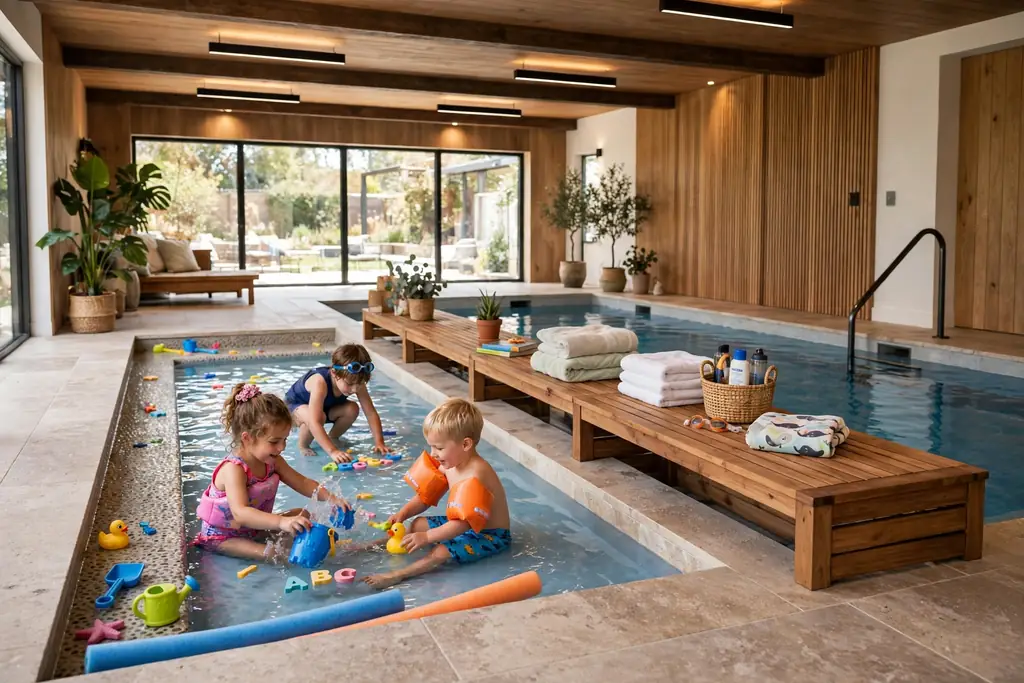
Add a shallow play shelf at one end of a family pool, where younger swimmers can sit, splash, and build confidence in ankle deep water. The shelf keeps play in one zone, while deeper water stays clear for older swimmers. A contrasting tile edge marks the drop from the shelf to the main pool, so the change in depth is easy to see.
Keep toys in a mesh basket on the deck, so they dry between uses and do not drift into the filter. Add a bench on the deck for an adult to sit and watch, and set clear house rules for the shelf, such as no running on the deck and no swimming without an adult present. A cover adds safety when the pool is not in use.
10. Pool with Built In Bench Seating
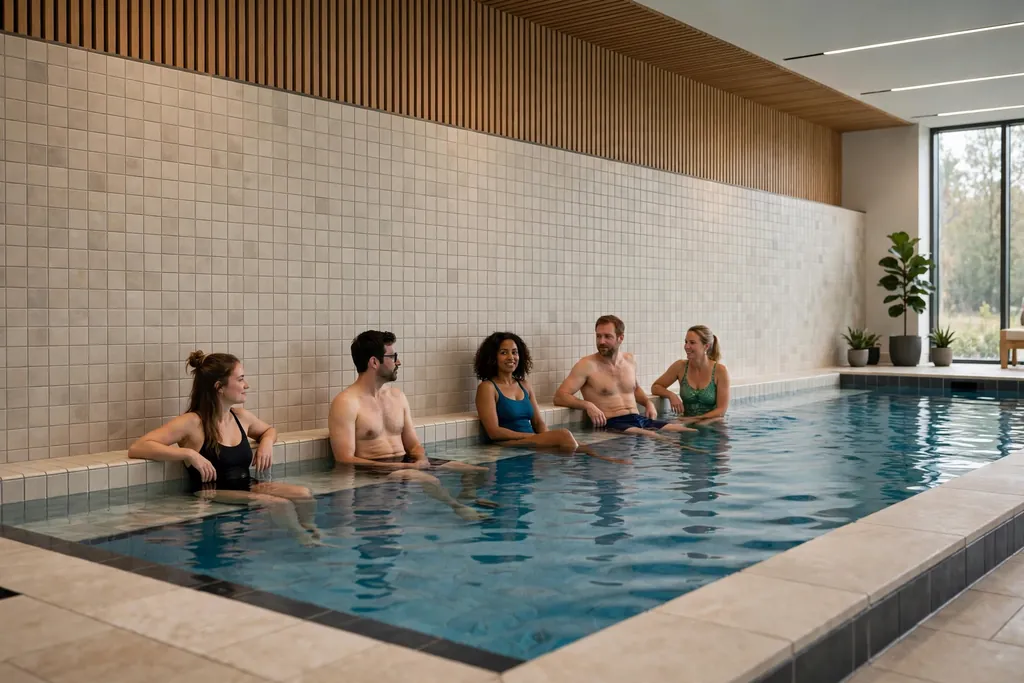
Add built in bench seating along one pool wall, so swimmers can sit in the water, chat, and rest between laps without leaving the pool. A bench at sitting depth suits older swimmers, guests who want to paddle, and anyone who likes to soak after exercise. Build the bench in tile to match the pool, with a rounded edge for comfort.
Keep the bench away from the main swim path, so laps are not blocked. Add a handrail near the bench steps if anyone in the household needs extra support getting in and out. In a small pool, one short bench is enough, since a long bench can eat into swim space fast.
11. Swim Jet Pool for Exercise in a Short Pool
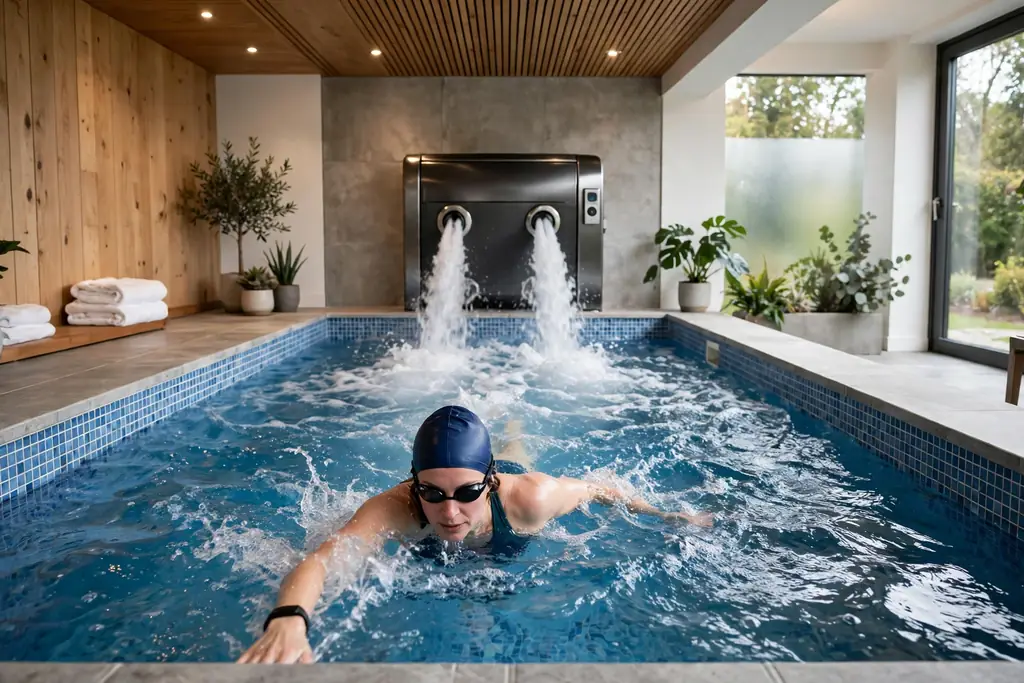
Fit a swim jet to a short pool so you can swim against a current in place, which suits fitness swimming in a small room. A jet system lets you change the current strength, so the same pool works for gentle walking in water, steady laps, and harder intervals. Place the jet at the deep end, facing the longest clear stretch of water.
Keep the area in front of the jet free of steps and benches, since swimmers need room to hold position. Add a grab rail near the entry for steady starts and stops, and store a kickboard and fins nearby. Check noise and power needs with the maker, since jets need a pump and a power supply that a pool builder should plan for.
12. Pool in a Converted Garage
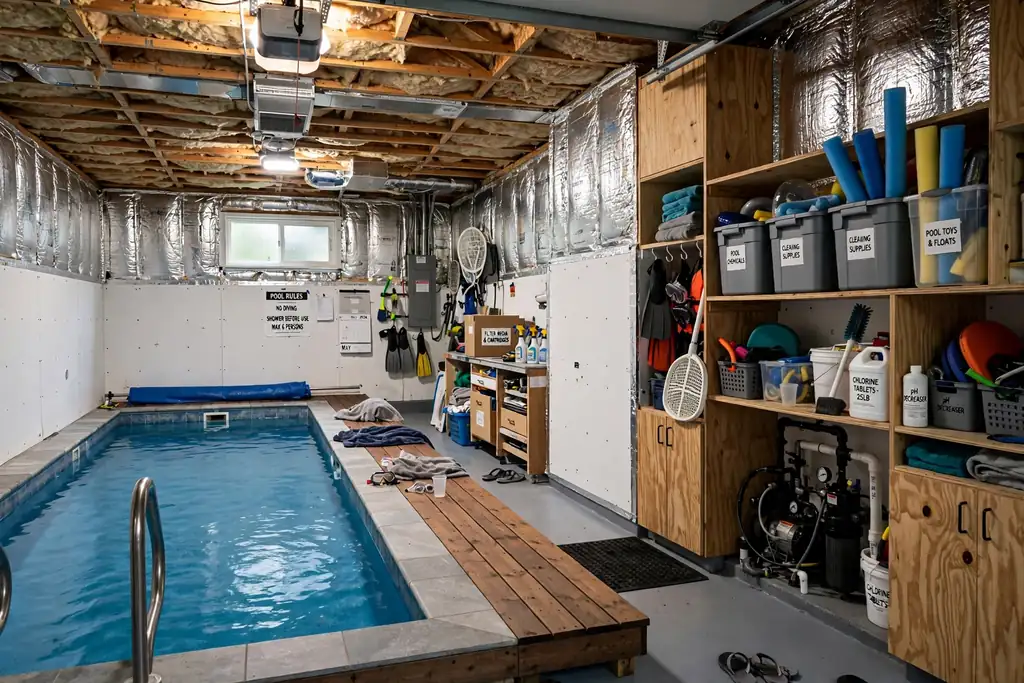
Convert a garage into a pool room when the footprint is right and the structure can carry the weight of water, which is heavy and needs a proper check. A garage conversion can give a home a pool without a new extension, and the existing walls help with privacy and wind shelter. Keep the pool to one side, with a deck and storage along the other wall.
Plan insulation, ventilation, and a damp proof floor from the start, since garages are often cold and prone to damp. Add a door from the house into the pool room if you can, so swimmers do not walk through the garden in winter. A dehumidifier and an extractor fan help keep the air fresh in a converted space.
13. Pool with a Mosaic Tile Feature Wall
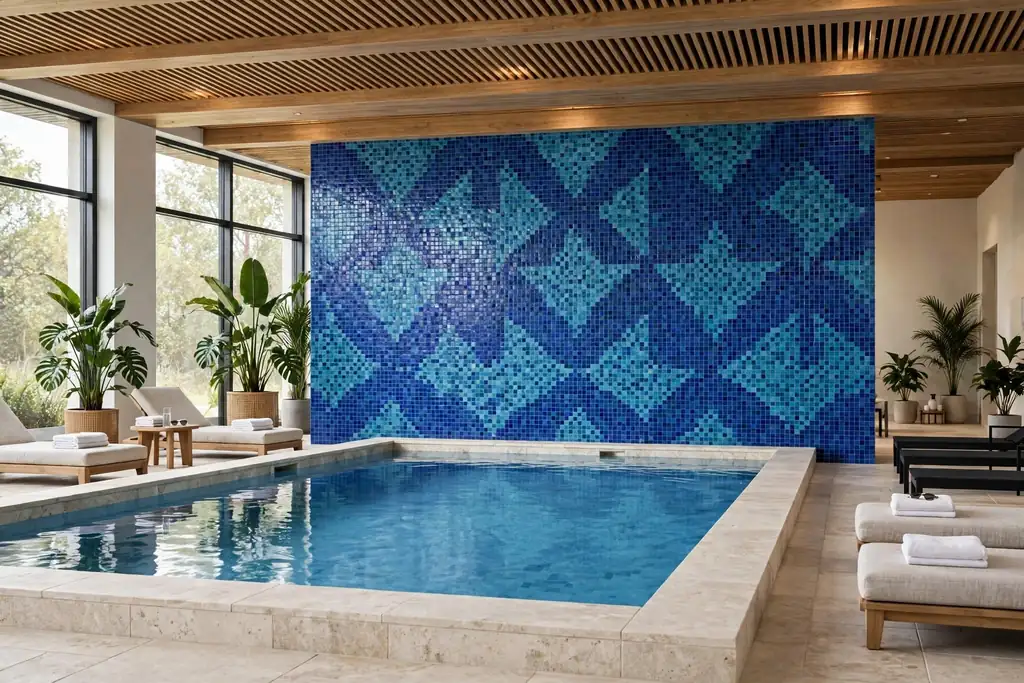
Use a mosaic tile feature wall behind the pool to add color and pattern without painting a wet room wall. Small tiles handle curves and damp well, and a feature wall gives the room a focal point even when the pool is covered. Choose a pattern in blues, greens, or earth tones that suits the rest of the room.
Keep the grout sealed and clean it with a product suited to pool tiles, since grout in a humid room can stain. If you want a calmer room, use the mosaic on one wall only and keep the other walls plain. A feature wall also photographs well, which helps if you share the room with guests or renters.
14. Dark Tiled Pool for Calm Evening Swims
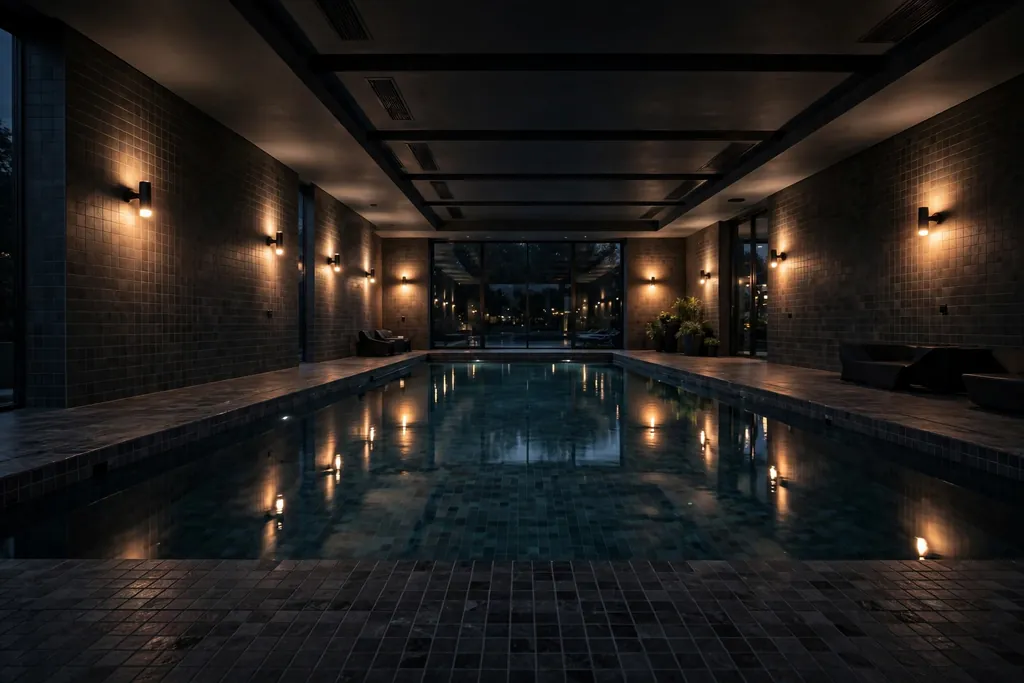
Choose dark tiles for a pool that feels calm and still in the evening, with water that looks deep and reflective under soft light. Dark tile suits a pool room used mainly for relaxing swims and soaking, rather than bright family play. Pair the dark water with warm wall lights and a pale deck, so the room does not feel too dark overall.
Keep the water clean and balanced, since debris shows more clearly on dark tile than on pale tile. Add underwater lights to keep the pool visible and safe after dark, and use a light colored step edge so swimmers can see where to get in and out. A dark pool also hides small marks better than a white pool.
15. Pale Stone Pool Room for Bright Days
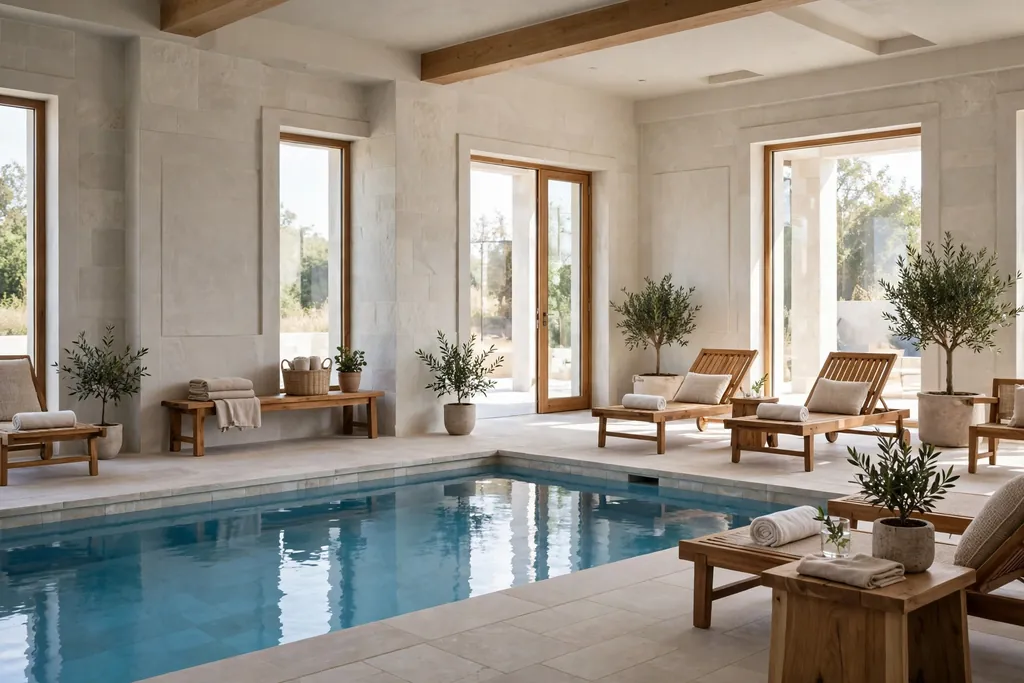
Use pale stone on the floor and walls for a pool room that feels bright and airy, even on a grey day. Pale stone reflects light, suits a coastal or country style home, and pairs well with wood furniture and green plants. Choose a stone finish with a textured surface, since smooth stone can be slippery when wet.
Seal the stone as the supplier advises, and rinse the deck after swims to stop pool chemicals from marking it. Keep the palette simple, with one stone tone and one wood tone, so the room feels calm rather than busy. Pale stone also shows water marks, so a quick squeegee after use keeps it looking fresh.
16. Pool Room with a Sauna Next Door
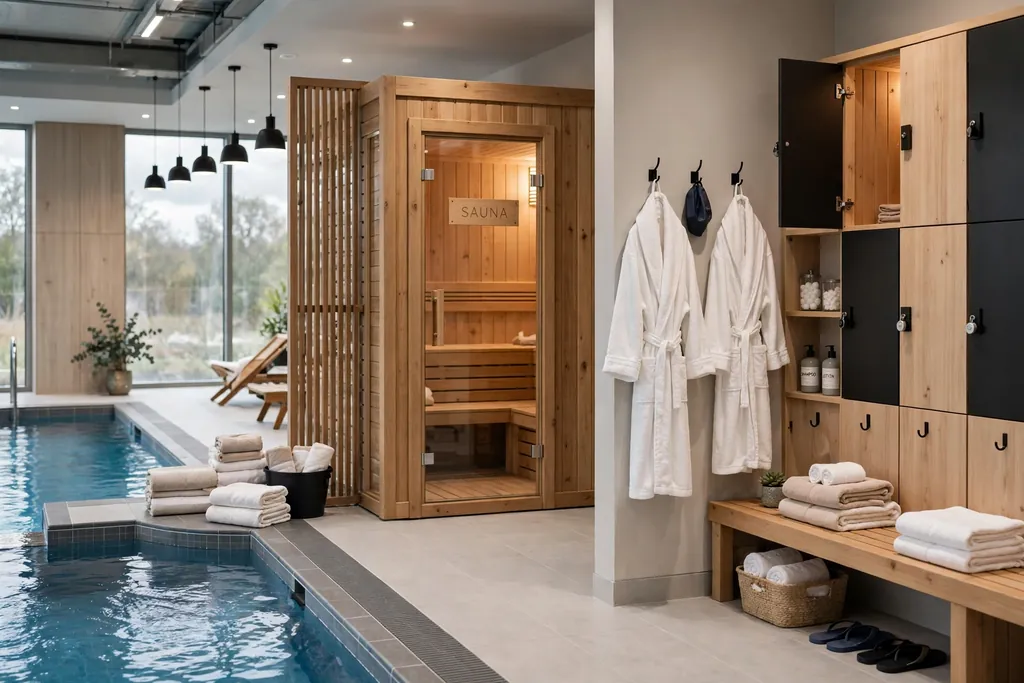
Place a sauna next to the pool room, with a shared changing area and a shower between them, so you can move from swim to heat to cool down in a short loop. A sauna suits households that like slow, warm routines, and it gives the pool room a second use on days when no one swims. Keep the sauna door opening toward the shower, not straight onto the pool deck.
Use wood and stone in both rooms for a linked look, and keep towels and robes in the shared changing area. Plan ventilation for both rooms, since a sauna adds heat and steam to the same part of the house. If space is tight, a small two person sauna still gives the same routine in a smaller footprint.
17. Pool with a Shower and Changing Suite
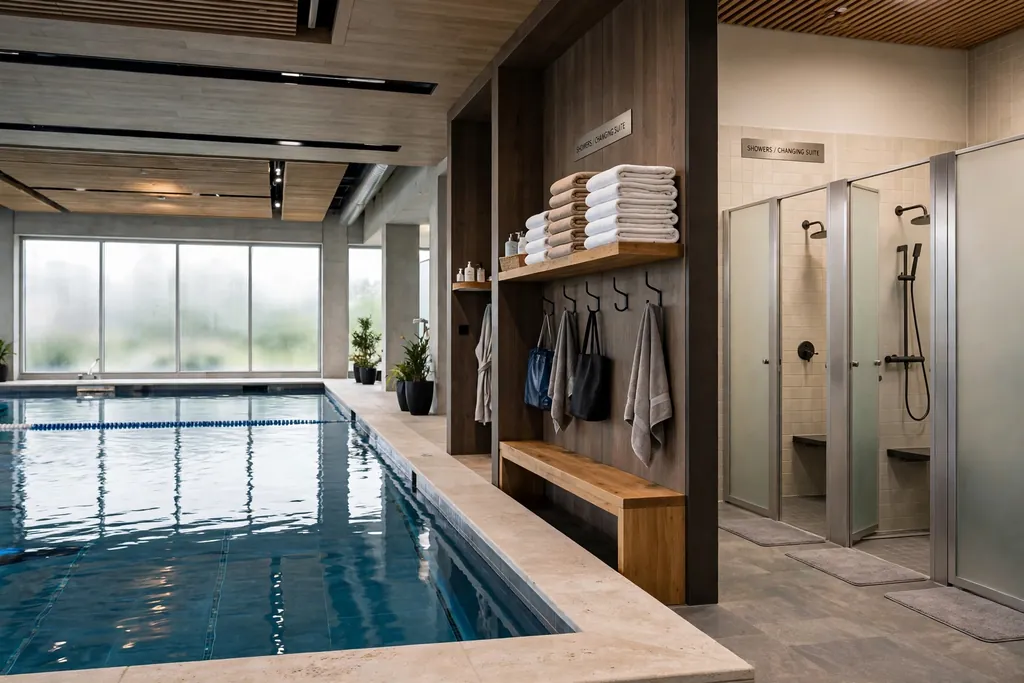
Add a shower and changing suite beside the pool, so wet swimmers do not walk through the house to rinse and change. A simple suite with a shower, a bench, hooks, and a towel shelf keeps the rest of the home dry and makes the pool easier to use daily. Place the shower near the pool entry, with a drain and a slip resistant floor.
Keep the suite warm in winter, since cold changing rooms put people off swimming. Add a laundry basket for wet towels, and a small cupboard for pool chemicals kept locked and away from children. A changing suite also helps guests, since they have a clear place to change without using a family bathroom.
18. Poolside Lounge Nook with Loungers
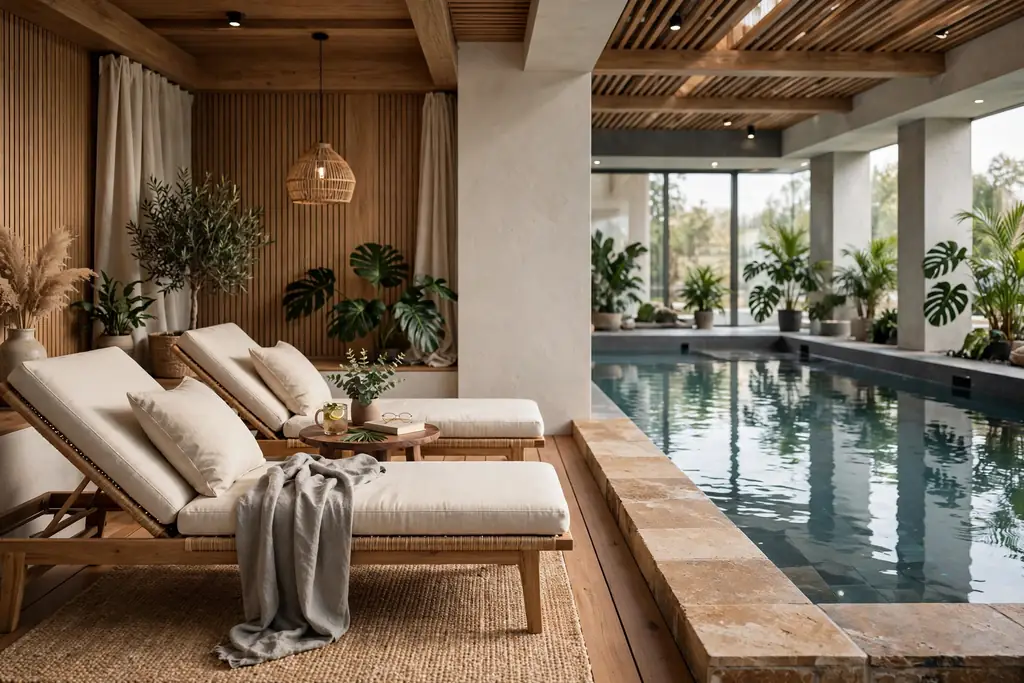
Set a lounge nook beside the pool with two loungers, a small side table, and a reading light, so the pool room works for relaxing as well as swimming. A lounge nook suits households where one person swims and another reads, and it gives swimmers a place to rest between sets. Keep the loungers on a dry part of the deck, back from splash zones.
Choose loungers in a material that handles humidity, such as treated wood, resin, or metal with outdoor cushions that dry fast. Add a basket for books and a towel hook nearby, and keep drinks in covered bottles to avoid spills near the water. A rug is best avoided right beside the pool, since it stays damp.
19. Poolside Daybed Corner for Reading
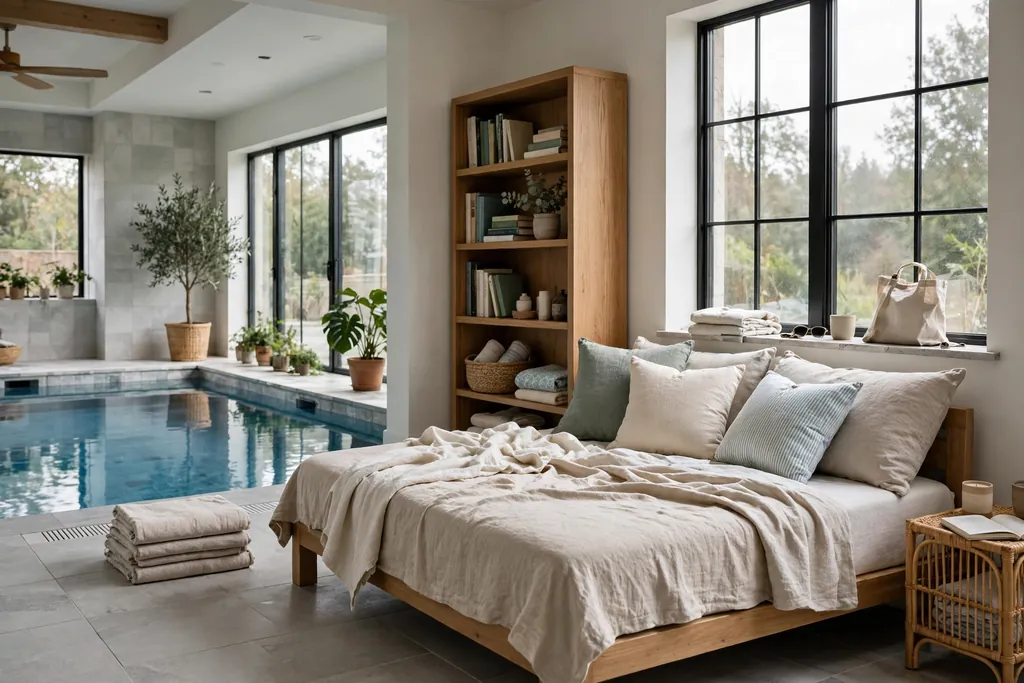
Place a daybed in a quiet corner of the pool room for reading, resting, and watching swimmers, which suits a larger pool room that doubles as a retreat. A daybed with washable covers and a few cushions feels more like a living room than a pool hall, and it invites longer stays in the room. Put the daybed near a window or a lamp, away from the main splash area.
Keep a small shelf or stool beside the daybed for a book, glasses, and a drink. Use covers you can wash, since pool air can leave a damp smell on fabric over time. If the room is small, a single lounge chair gives the same rest spot in far less space.
20. Pool with a Glass Viewing Panel
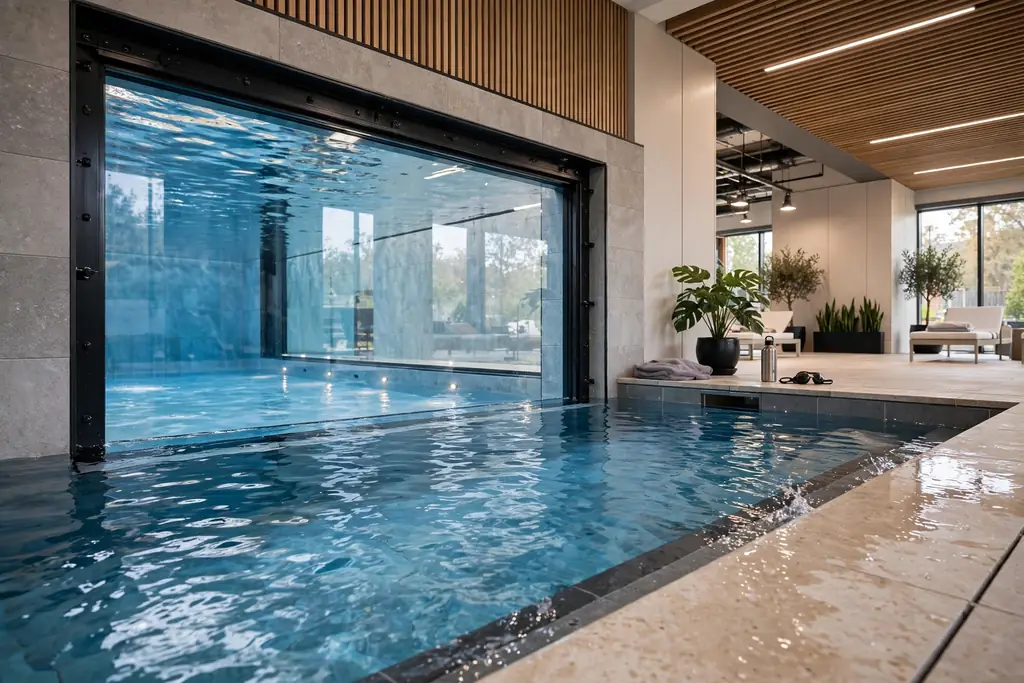
Fit a glass viewing panel into one pool wall, so you can see swimmers underwater from a lower room or a side passage. A viewing panel suits a basement pool seen from a games room, or a pool built into a slope, and it adds a striking detail that guests notice at once. The panel needs a specialist build and a proper seal, so plan it with the pool builder from the start.
Keep the panel clean on both sides, and check the seal as part of routine pool care. Add a light inside the pool near the panel, so the view stays clear in the evening. If a full panel is too much work, a small round window in the pool wall gives a similar glimpse at lower cost.
21. Indoor Outdoor Pool with a Sliding Glass Wall
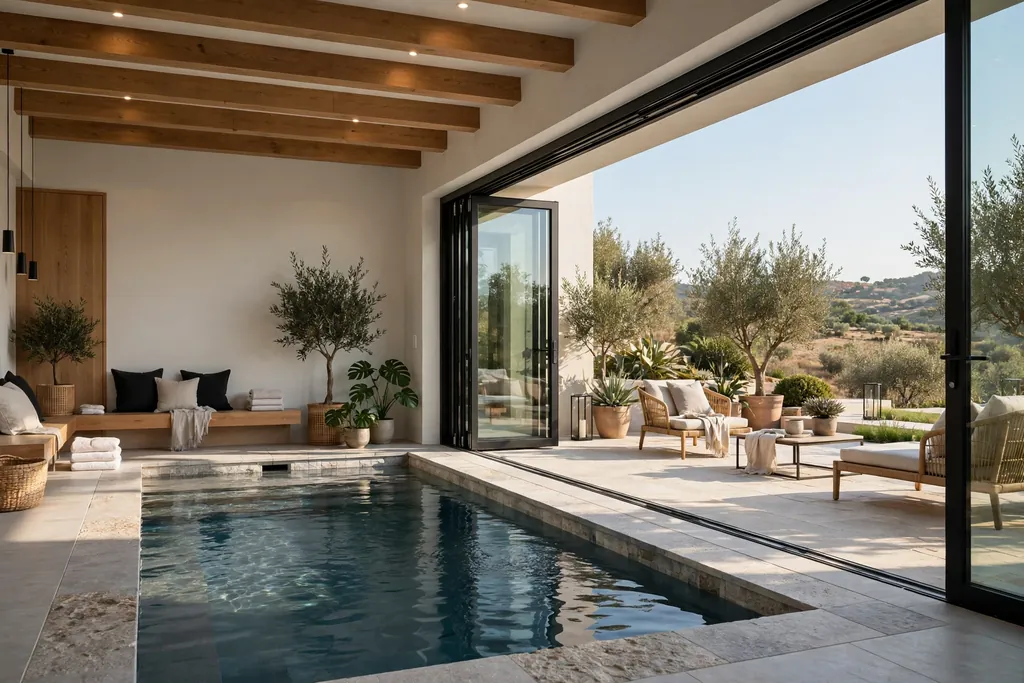
Build an indoor outdoor pool with a sliding glass wall that opens fully, so the pool can feel like an outdoor pool in summer and a warm indoor pool in winter. The wall should slide or fold away cleanly, with a track that stays clear of deck water. Place the pool so half sits inside and half outside, or keep the whole pool inside with the wall opening onto a terrace.
Plan heating for the indoor part, since an open wall lets warm air out fast. Add a windbreak or hedge outside, so the terrace stays pleasant when the wall is open. Keep the deck level across the threshold, with a drain at the door line, so water does not run into the house.
22. Upper Floor Pool with a Checked Structure
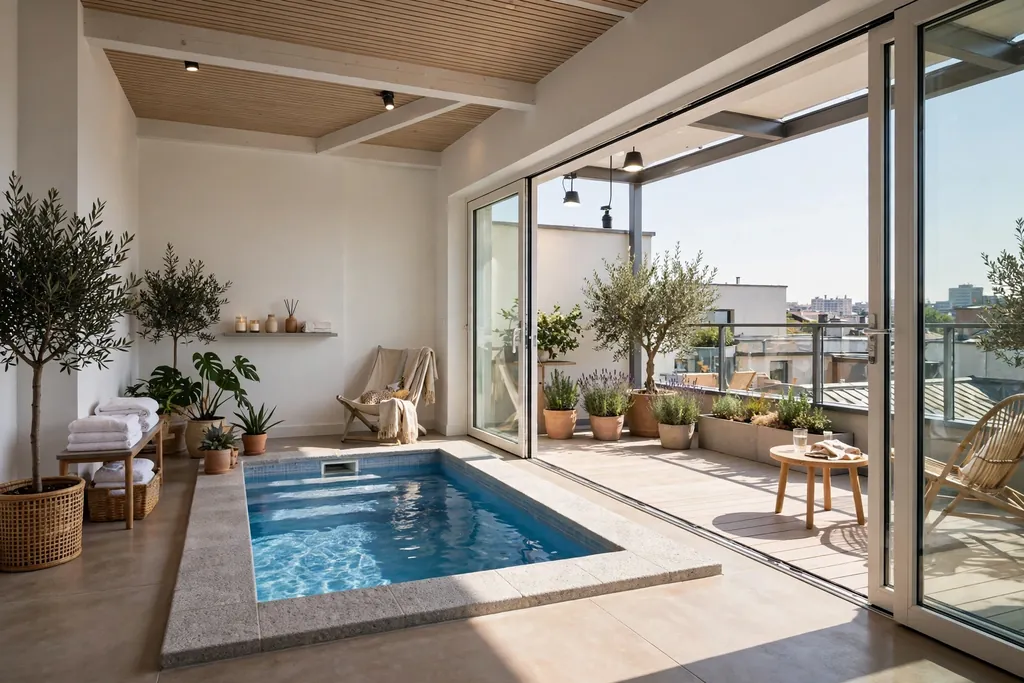
Place a small pool on an upper floor only after a structural engineer checks that the floor, walls, and foundations can carry the full weight of water, swimmers, and the pool shell. An upper floor pool can suit a house built into a hill, where the upper level opens onto a terrace, or a large extension with a strong frame. This is a specialist build, not a standard room change.
Plan a leak detection layer and a drain route under the pool, so a small leak does not damage rooms below. Keep access clear for maintenance, and add a cover to limit evaporation into the rooms below. If the check shows the structure is not suitable, a ground floor or basement pool is a safer route to the same swim.
23. Pool with Underwater Lighting
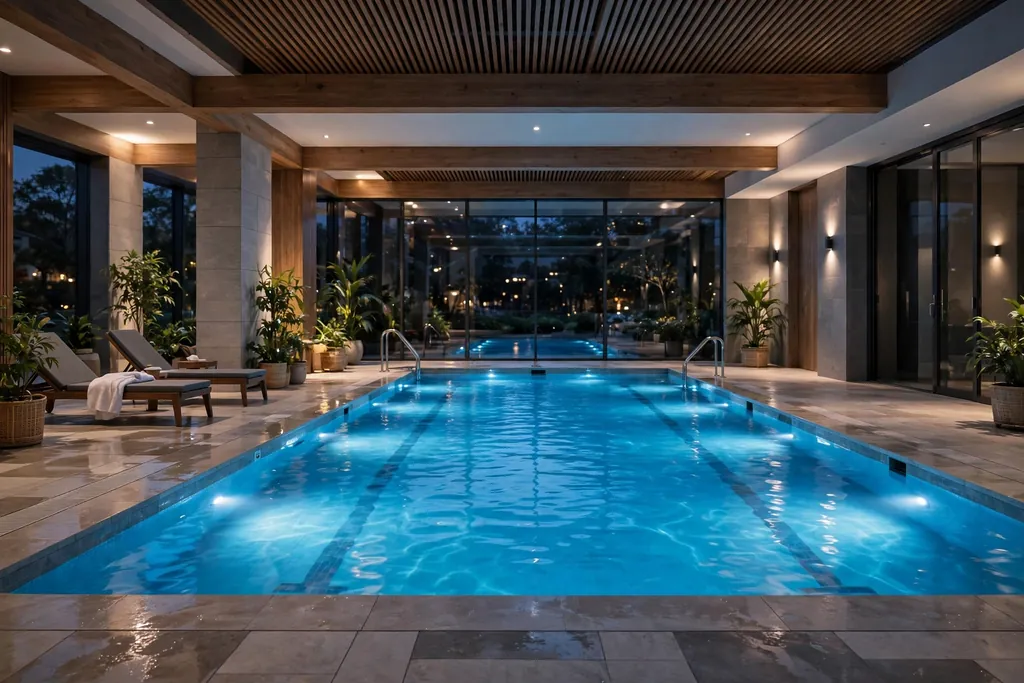
Add underwater lighting to a pool room so evening swims feel safe and the water looks inviting after dark. Lights in the pool wall, set at even spacing, help swimmers see the steps, the bench, and the pool edge clearly. Choose lights made for pool use, with a low voltage supply fitted by a qualified electrician.
Use warm white light for a calm room, or a color changing light if the household likes a playful evening pool. Keep the light fittings accessible for bulb or unit changes, and clean the lenses as part of pool care, since film on a lens dims the light fast. A dimmer on the room lights lets you balance pool light with wall light.
24. Pool with a Waterfall Feature Wall
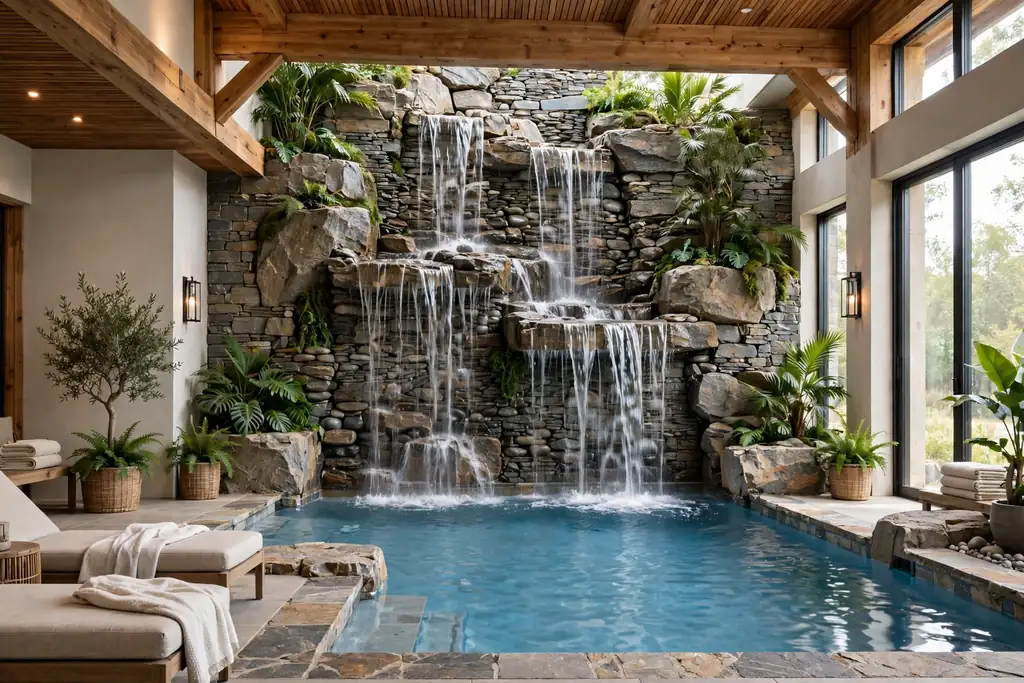
Add a waterfall feature wall at one end of the pool, where water runs down a stone or tile face into the pool. The sound of falling water suits a relaxing pool room, and the feature gives the room a focal point that does not need extra furniture. Keep the waterfall on a separate pump control, so you can run it only when you want it.
Check splash range, since a waterfall can wet the deck beyond the pool edge. Add a drain in that deck area, and keep seating back from the splash zone. Clean the feature face often, since mineral marks show on stone and tile where water runs daily. A waterfall also helps mask noise from pumps and filters.
25. Saltwater Pool System for Softer Water
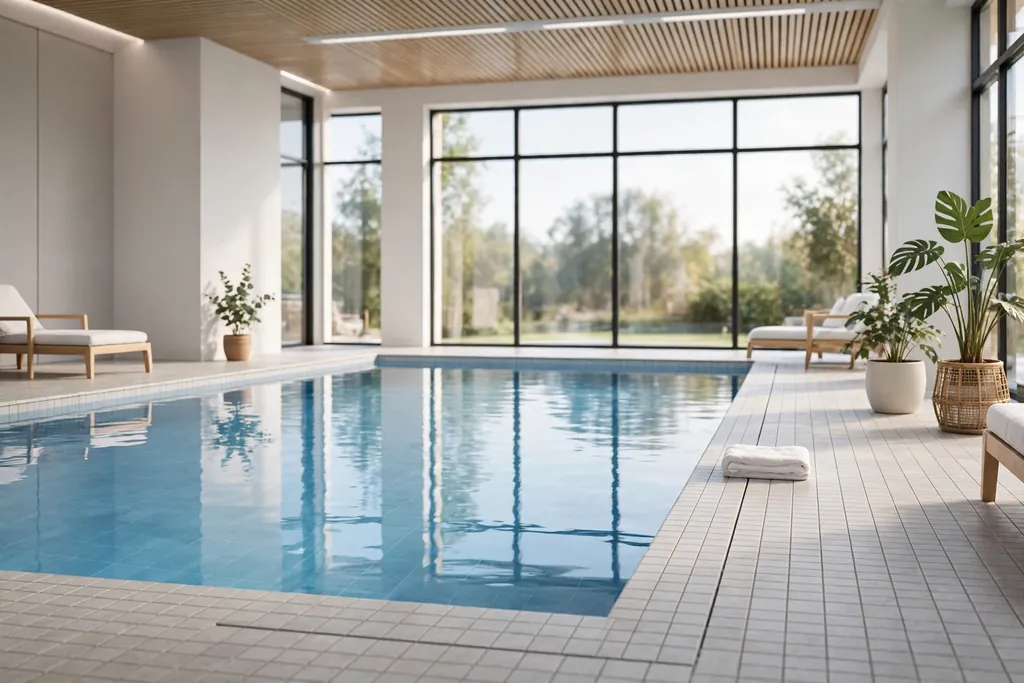
Choose a saltwater system for an indoor pool when you want softer feeling water and less handling of chlorine products. A salt cell turns salt in the water into chlorine, which keeps the pool sanitized with a steadier dose. The water often feels gentler on skin and eyes, which suits frequent swimmers.
Check that pool fittings, heaters, and covers suit salt water, since salt can affect some metals. Test the water often, especially in the first weeks, and follow the system maker guidance for salt levels. Salt systems still need care, so keep a test kit and a routine for checking pH and chlorine, just as with a standard pool.
26. Pool with a Retractable Safety Cover
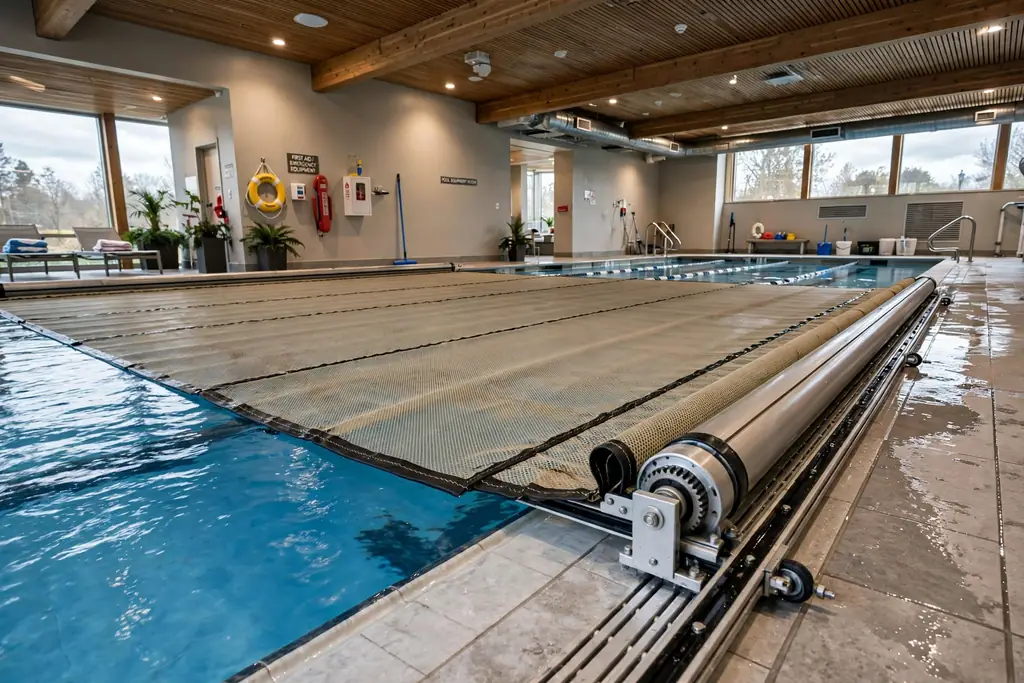
Fit a retractable safety cover that rolls or slides over the pool when it is not in use, to keep heat in, cut evaporation, and add a barrier for children and pets. A cover that runs on a track or a roller can be opened by one person in a minute or two, which makes daily use far more likely. Choose a cover rated as a safety cover if child safety is a main reason for fitting it.
Keep the cover track clean and check the motor or handle as part of routine care. Store the cover dry when it is open for long periods, and never let children play on a closed cover. A cover also cuts heating costs, since an uncovered indoor pool loses heat to the room air all day.
27. Pool Deck with Underfloor Heating
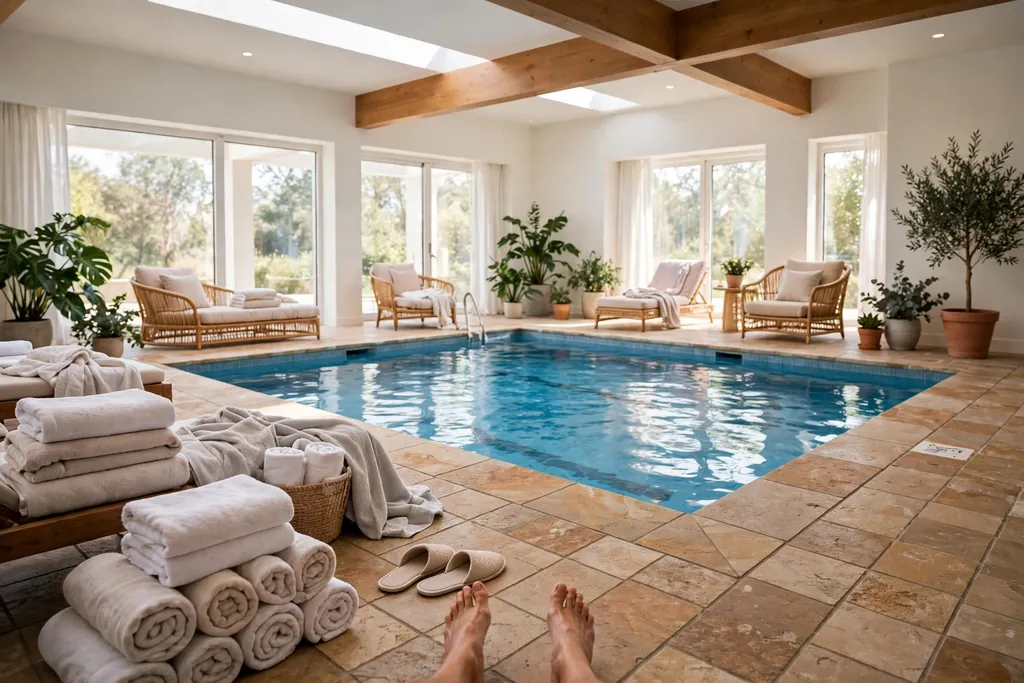
Add underfloor heating to the pool deck, so bare feet stay warm on cold mornings and the deck dries faster after swims. Warm decks suit basement and ground floor pool rooms, where stone and tile floors can feel cold. A heated deck also helps the room feel comfortable for loungers and readers, not only swimmers.
Plan the heating with the pool build, since pipes or mats sit under the deck finish. Use a thermostat for the deck zone alone, so you can warm it before a swim and turn it down between uses. Keep the deck finish suited to both heat and water, such as tile or sealed stone, and check the supplier guidance before choosing wood over a heated deck.
28. Tropical Plant Pool Room with Good Ventilation
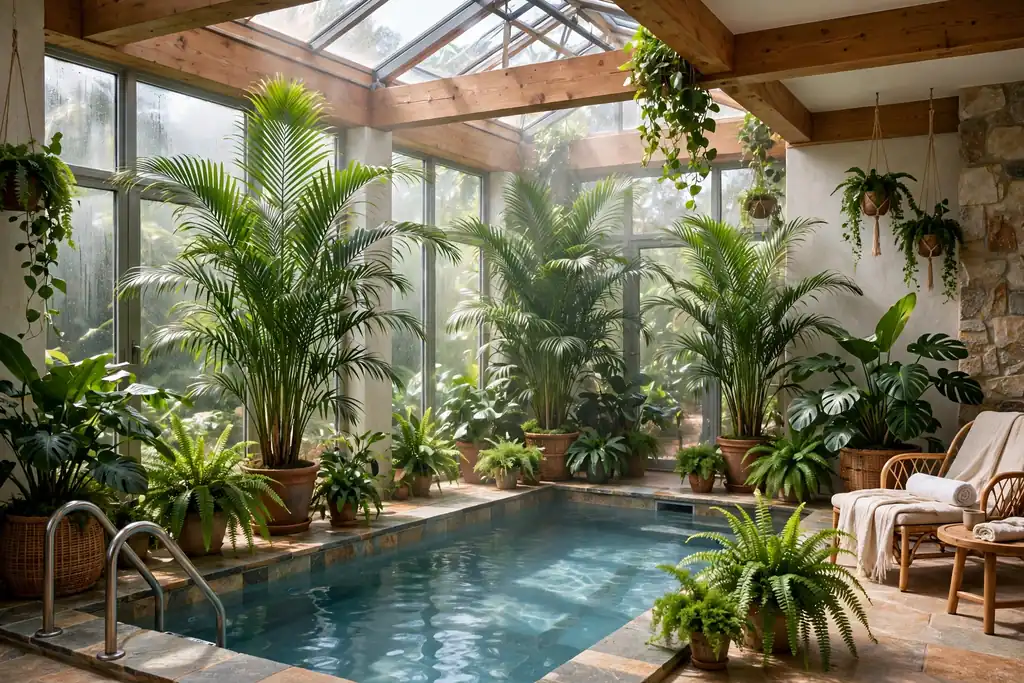
Fill a pool room with tropical plants, such as palms, ferns, and monstera in large pots, for a lush room that feels like a warm holiday spot. Plants suit a bright pool room with good light, and they soften tile and glass. Keep plants in pots with drainage trays, so watering does not flood the deck, and choose plants that cope with humid air.
Ventilation matters more in a planted pool room, since plants add moisture and pool air is already humid. Add an extractor fan or a ventilation system sized for the room, and open a window or vent after swims when weather allows. Move plants back from splash zones, and wipe large leaves now and then to stop dust and pool chemicals from settling.
29. Step Entry Pool for Easy Access
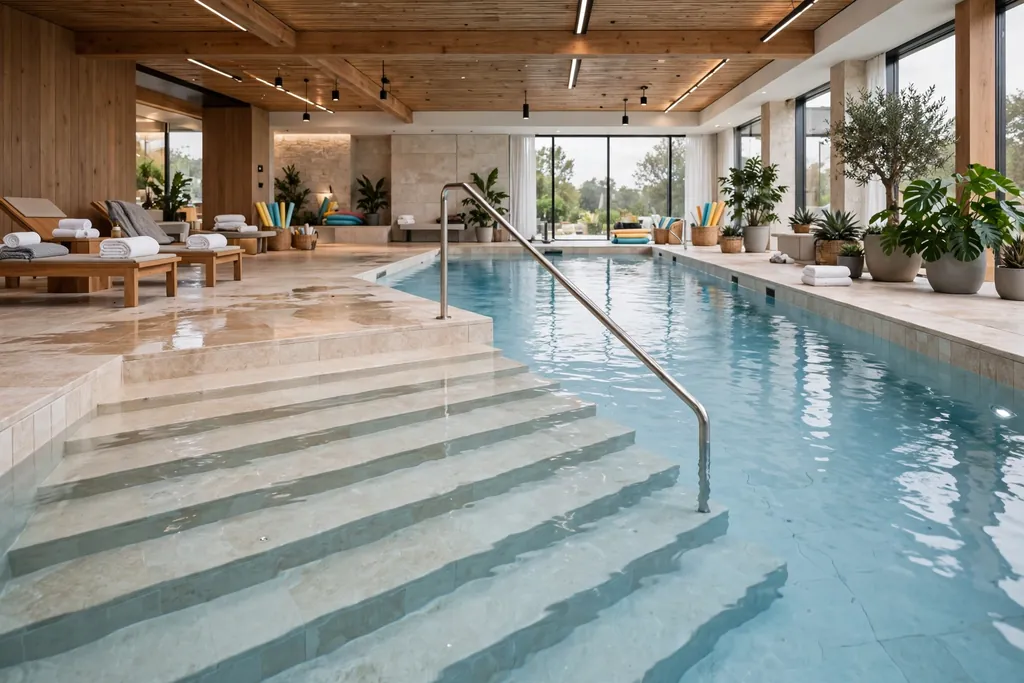
Build a pool with a wide, shallow step entry, so swimmers of all ages can walk into the water gradually instead of using a ladder. Wide steps suit older swimmers, children, and anyone with stiff joints, and they double as a place to sit in shallow water. Add a handrail on one or both sides of the steps, fixed firmly into the pool wall or deck.
Mark the step edges with a contrasting tile strip, so each step is easy to see underwater. Keep the steps clear of toys and floats, and add a non slip finish to the step surface. A step entry takes more pool length than a ladder, so plan it early in the layout, not as an add on at the end.
Conclusion
An indoor pool works best when the room fits the way you swim, not only the size of the house. A small plunge pool or a narrow lap lane can give daily swims in a modest home, while a larger room can add a sauna, a lounge nook, and space for family play. Start with moisture control, a safe entry, and a deck that stays warm and grippy under bare feet, then add light, plants, and seating to make the room a place you want to spend time in. Pick one idea from this list that matches your floor plan, check the structure and services with qualified professionals, and build outward from there. Save this post on Pinterest to keep the layout, material, and safety ideas close while you plan.
FAQs
Can I fit an indoor pool in a small home?
Yes, if you choose a compact design. A plunge pool, a short swim jet pool, or a narrow lap lane can fit a small extension, a basement corner, or a converted garage, as long as the structure, drainage, and ventilation are checked first. A small pool is also easier to heat, cover, and maintain than a large one.
How much room does an indoor pool need around it?
Allow a clear walkway on at least one long side of the pool for entry, cleaning, and safety, plus space for a shower, towel storage, and a cover roller if you fit one. A pool that fills a room wall to wall leaves no dry place to stand, change, or sit, so plan deck space as part of the pool size, not as leftover space.
What is the best floor for an indoor pool room?
Slip resistant tile and sealed stone are common choices, since both handle water and pool chemicals well. Add underfloor heating if the room is cold, and keep a drain in the deck near the pool edge and the shower. Avoid smooth stone, polished tile, and rugs right beside the pool, since they get slippery when wet.
How do I control humidity in an indoor pool room?
Use a ventilation system or dehumidifier sized for the room and the pool surface, keep a cover on the pool when it is not in use, and open a vent after swims when weather allows. Good ventilation protects walls, timber, and metal fittings from damp, and it keeps the air fresh for swimmers.
Is a saltwater system better for an indoor pool?
A saltwater system can feel softer on skin and eyes, and it doses chlorine more steadily than manual dosing. It still needs regular water testing, and fittings, heaters, and covers should be checked for salt suitability. The best system depends on how often you swim, your maintenance routine, and advice from a pool professional.
Do I need planning permission or a structural check for an indoor pool?
Rules vary by location, so check local planning and building rules before you start. A structural check is important for any pool, and essential for an upper floor pool, a basement pool, or a converted garage, since water is heavy and a leak can damage the structure. Ask a qualified local professional early, before you order a pool shell or book building work.