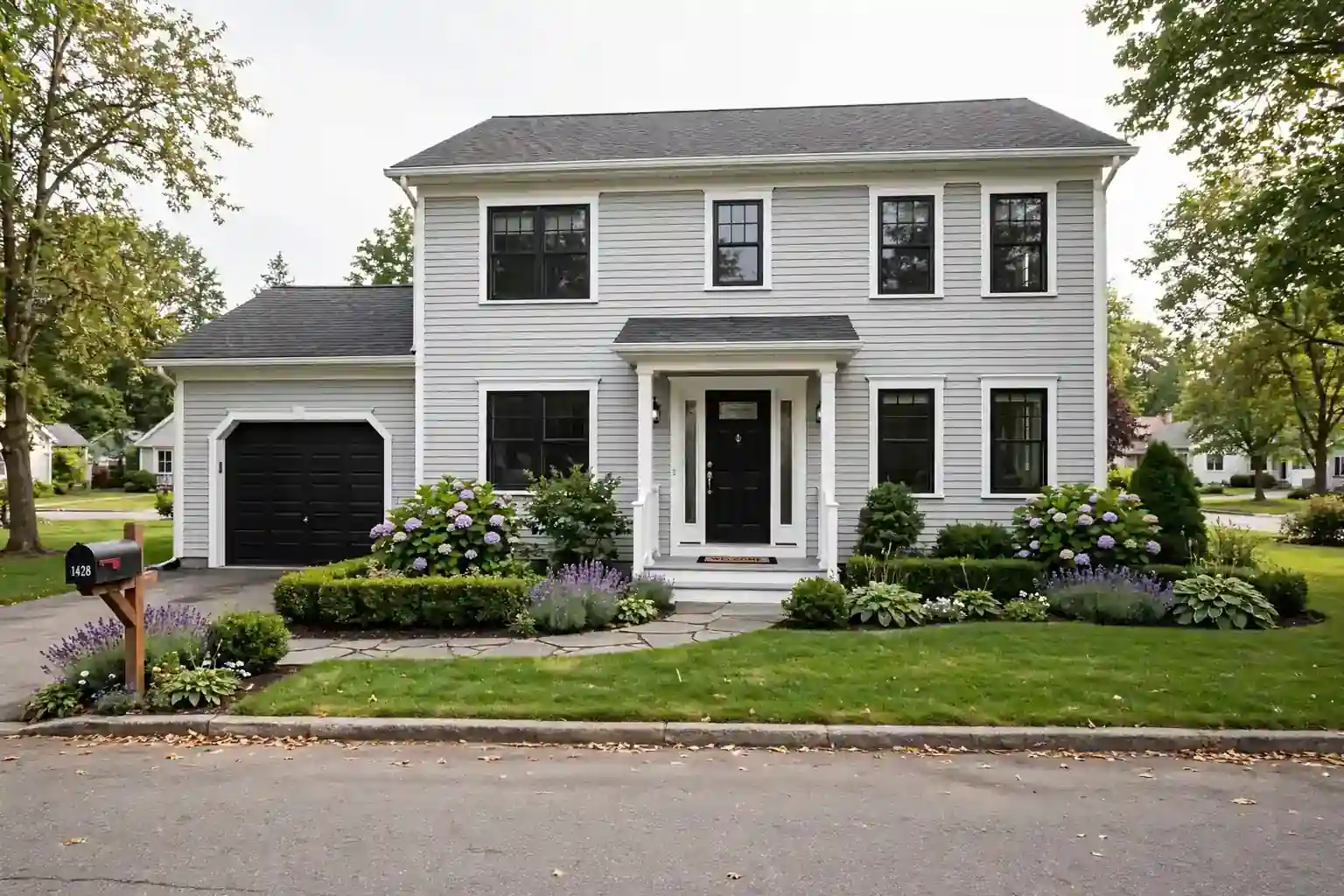
Grey is a forgiving exterior color because it can read cool, warm, light, or dark depending on what sits beside it. The schemes below each name the main siding color, the trim, the door, and one accent material, so you can picture the whole front of the house rather than a single paint swatch. Before you commit, paint large samples on two sides of the house and check them in morning light, midday sun, and evening shade, since grey shifts more outdoors than it does on a paint chip. For a sense of how grey behaves with wood, stone, and metal indoors, these grey kitchen ideas show the same careful pairing at room scale.
Key Takeaways
- Give grey a partner: white trim, warm wood, stone, or a bold door color keeps a grey house from looking flat.
- Match the grey to your light: pale and warm greys suit shaded or north facing fronts, while charcoal and slate suit bright, open sites.
- Repeat the accent color at least twice, such as on the door and the shutters, or the door and the planters, so the scheme looks planned.
- Keep the roof in the plan: a black, brown, or terracotta roof changes which grey works, so test siding samples beside the actual roof color.
- Paint large samples on two walls and check them at three times of day before buying full cans.
- Use one metal finish for lights, handles, and house numbers so the details read as a set.
1. Light Grey Siding With White Trim and a Black Door
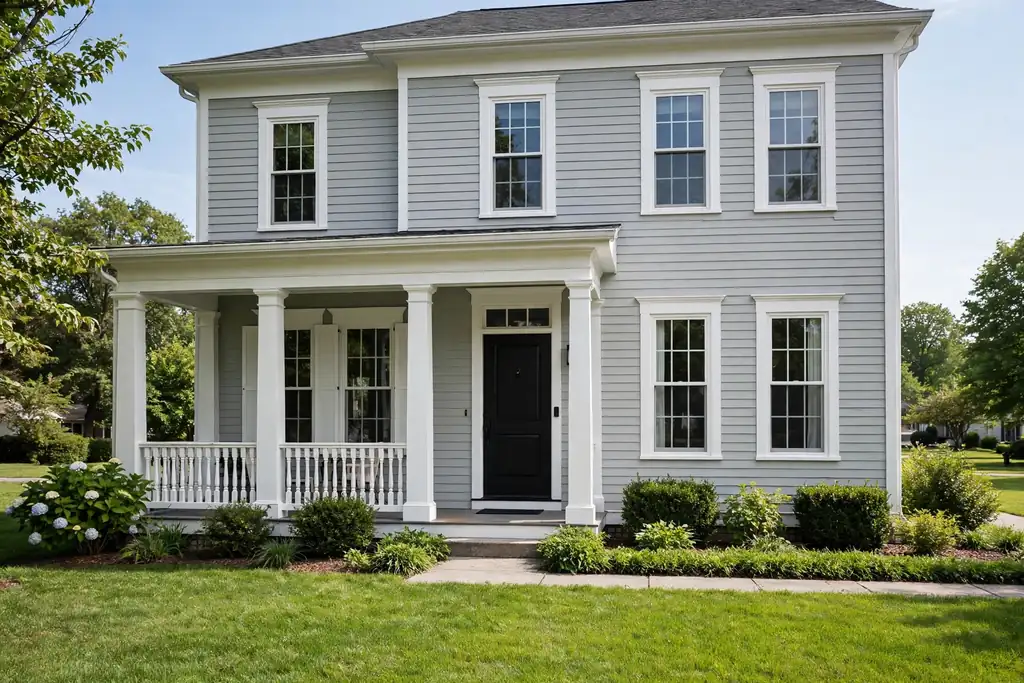
Paint the siding light grey, keep all trim, window frames, and porch columns bright white, and finish with a black front door. This is the most reliable grey scheme, and it suits almost any house style, from a suburban ranch to a two story colonial. The white trim draws clean lines around the windows and roof, so the light grey reads as fresh rather than dull.
Use black hardware on the door and black lantern lights beside it to repeat the door color at two heights. A green lawn and simple shrubs give the pale front its warmth, and a white porch rail keeps the entry bright. If the house faces north or sits under trees, pick a light grey with a warm undertone so the front does not turn cold in shade.
2. Charcoal Grey With Warm Wood Cladding
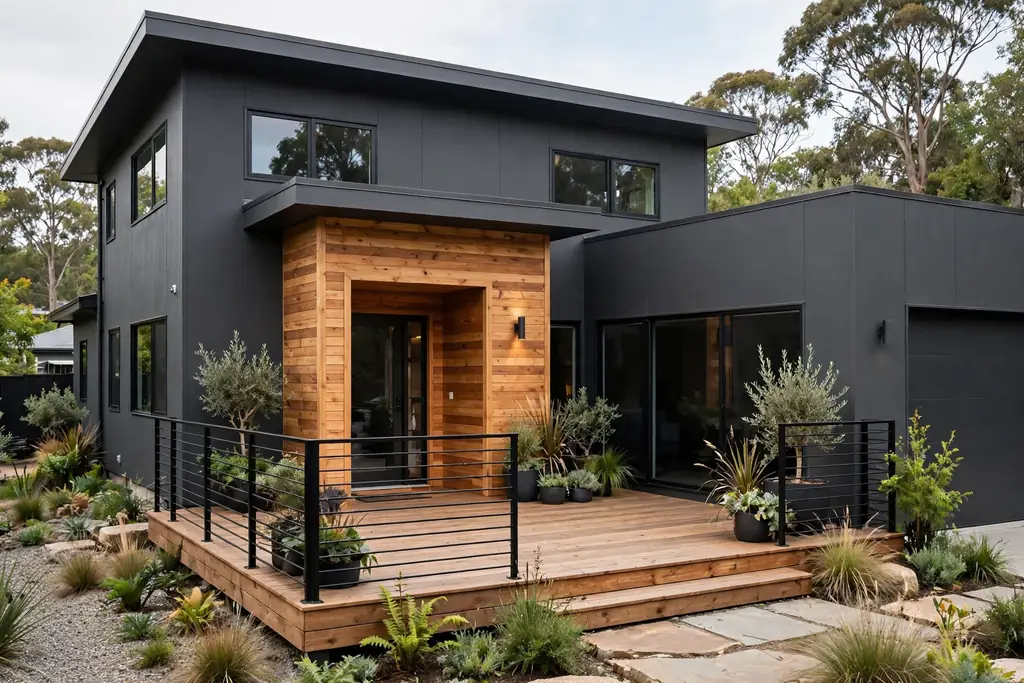
Pair dark charcoal siding with warm natural wood cladding around the entrance, on a porch wall, or as a garage surround. The wood breaks up the dark surface and gives visitors a warm place to look, which stops a charcoal house from feeling closed in. This scheme suits modern and craftsman style homes with simple, straight lines.
Keep trim in a soft black or a dark bronze so the edges stay quiet, and use warm porch lighting to make the wood glow in the evening. Seal or oil the wood on a regular schedule, since unsealed cladding greys unevenly in sun and rain. If the whole house in charcoal feels too heavy, use the dark grey on the main walls and the wood on the entry section only.
3. Warm Greige With Cream Trim and a Terracotta Door
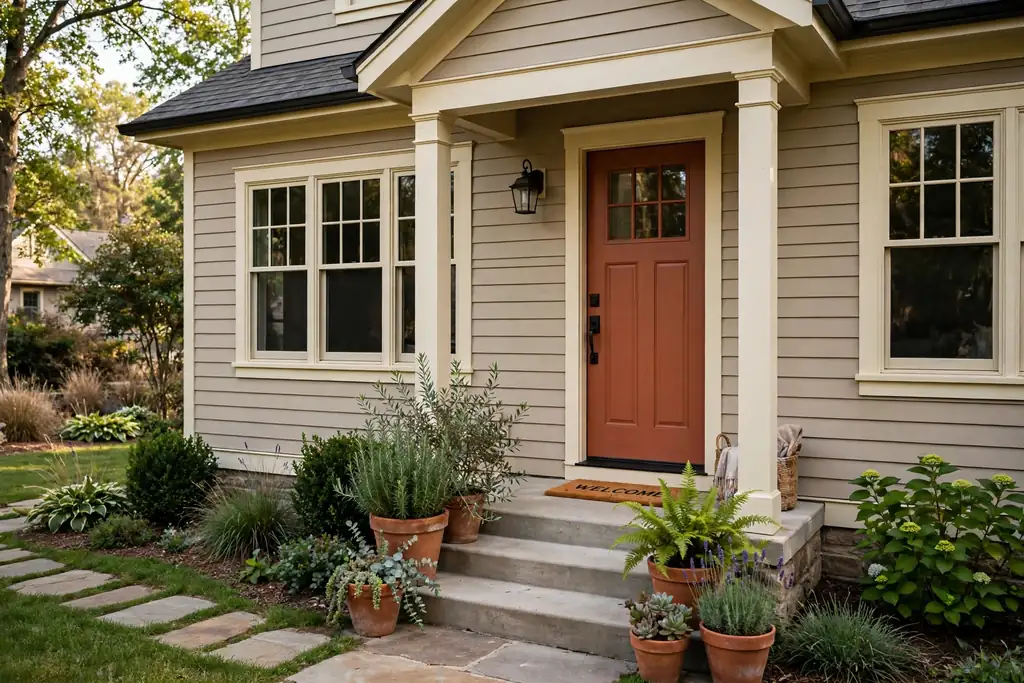
Paint the house warm greige, a blend of grey and beige, and use cream trim, doors frames, and porch details. A terracotta front door adds a sun warmed accent that suits the beige in the greige. This scheme works well on houses with warm brick paths, clay pots, or brown roofs, where a cool grey would clash.
Keep the roof and gutters in a soft brown or bronze so the warm family stays together. Add terracotta pots by the steps to repeat the door color at ground level, and keep shrubs green and simple so the front stays calm. Greige shifts through the day, looking greyer in morning light and warmer at night, so test it on a sunny wall and a shaded wall before you decide.
4. Blue Grey With White Trim and a Navy Door
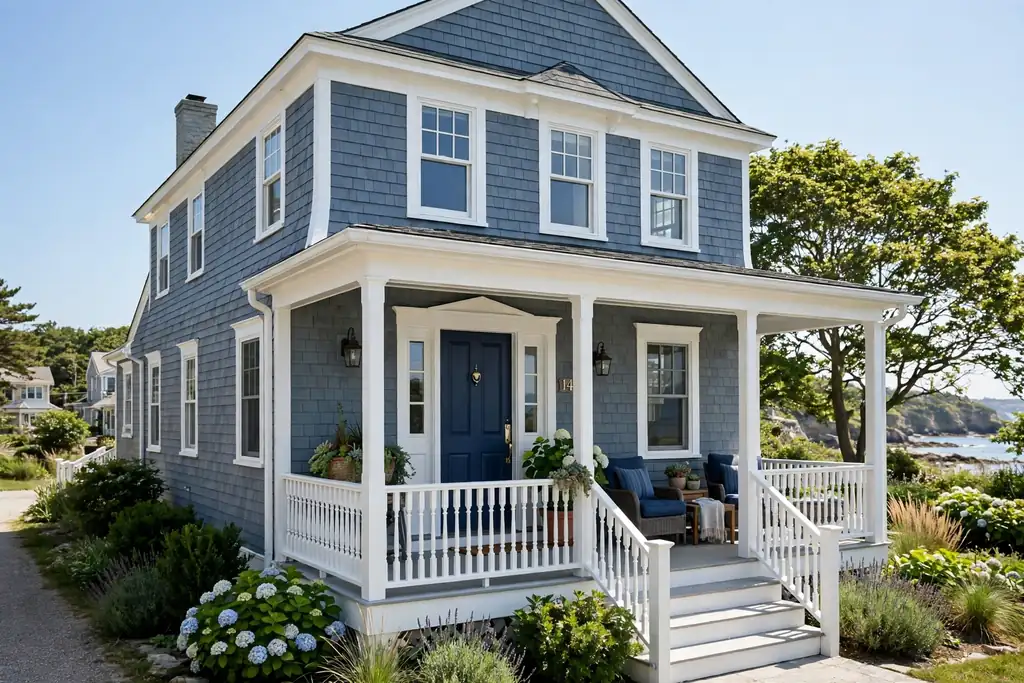
Choose a blue grey siding color, bright white trim, and a navy front door for a coastal leaning scheme that still suits inland homes. The blue in the siding keeps the house feeling cool and clean, while the navy door gives the entry depth without the weight of black. White porch railings and white window boxes complete the seaside read.
This scheme needs good daylight to show its blue tone, so it suits open, sunny fronts best. In shade, pick a blue grey with a lighter value so it does not read as plain grey. Repeat the navy once more, on a bench cushion, a mailbox, or a pair of planters, and keep the roof in a soft grey or white so the palette stays breezy.
5. Light Grey Brick With Black Shutters
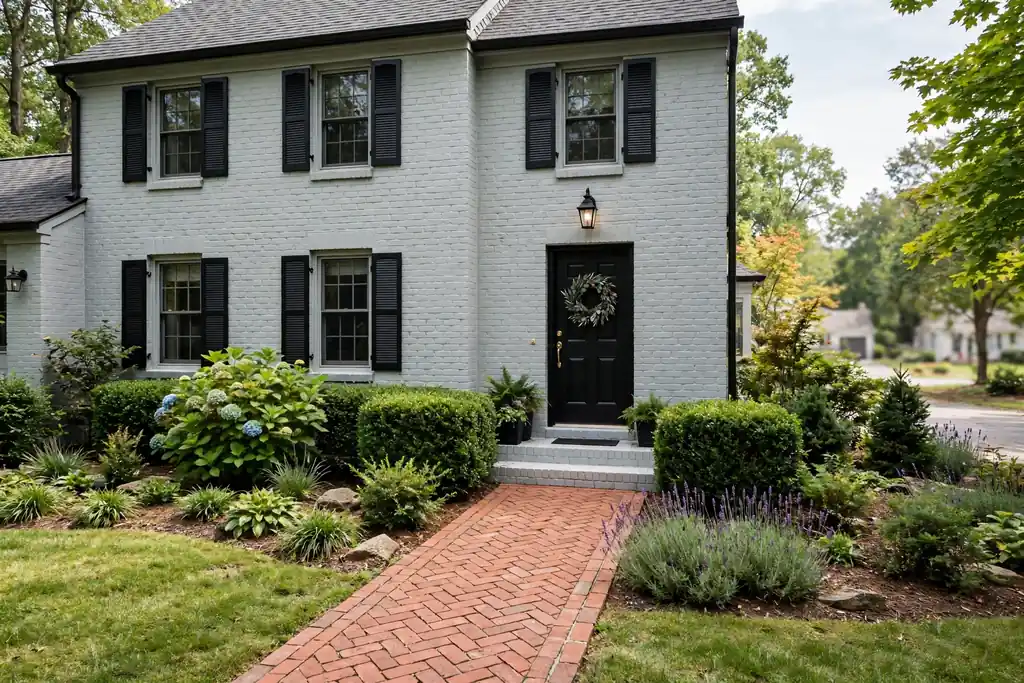
Paint existing brick light grey, or choose grey brick for a new build, and add black shutters and a black front door. The brick texture gives the grey surface depth that flat siding lacks, and the black shutters frame each window with a strong, tidy outline. This scheme suits traditional homes, townhouses, and cottages with symmetrical fronts.
Keep mortar lines visible rather than covering them with a thick coat, since the texture is the point of brick. White trim around the windows keeps the black shutters from feeling heavy, and a brick or stone walk repeats the wall material at ground level. Check that the paint or limewash you use suits brick, since brick needs to breathe and a sealed coating can trap moisture.
6. Medium Grey With a Stone Veneer Base
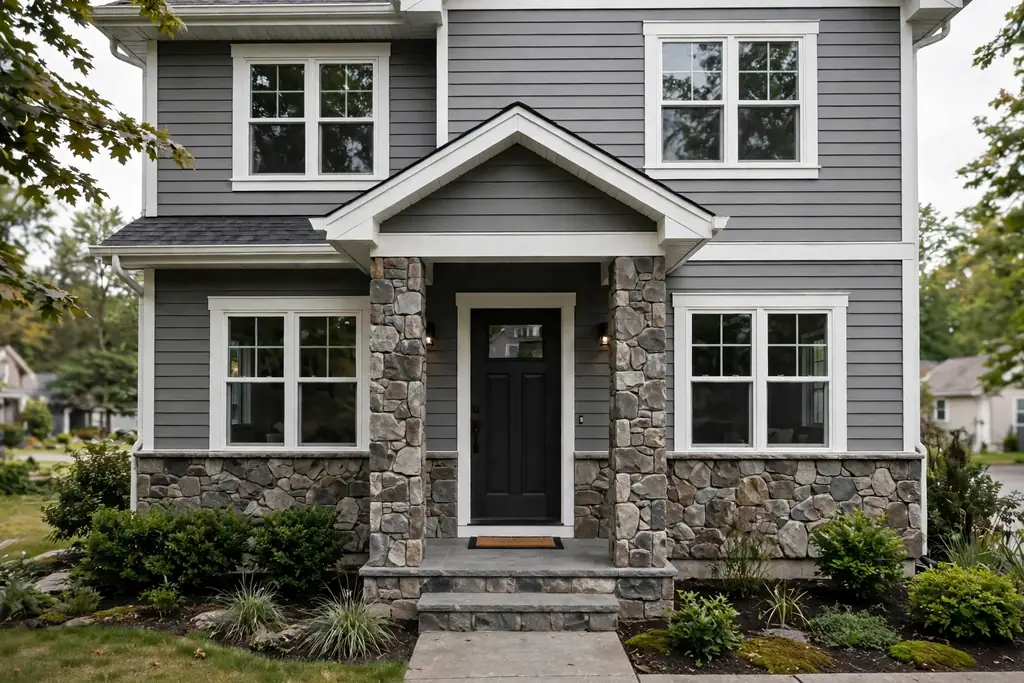
Run medium grey siding on the upper walls and natural stone veneer around the base, the porch piers, and the foundation line. The stone grounds the house and adds a hand built texture that plain siding cannot give, which suits craftsman, ranch, and farmhouse styles. A dark front door and white trim keep the middle of the house crisp.
Pick a stone with grey and warm tones mixed, so it links to both the siding and any brown or tan elements nearby. Keep the stone to the lower third of the walls and the porch, since stone carried too high can overwhelm a small house. Seal the stone if your climate brings heavy rain, and check that the veneer meets the siding with a clean flashing detail that sheds water.
7. Two Tone Grey and White Siding
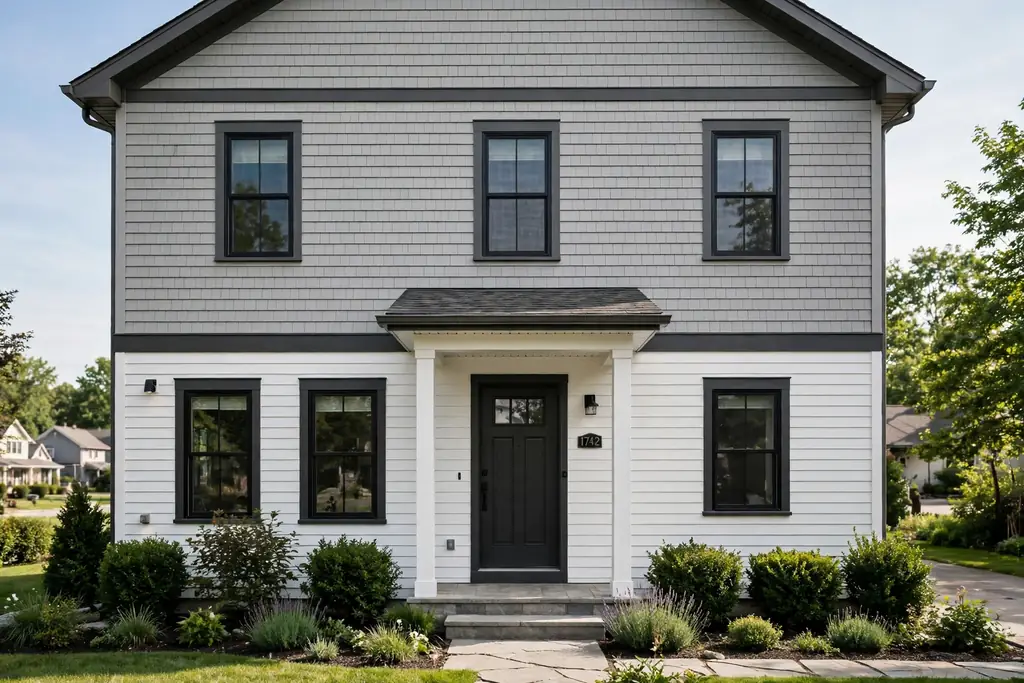
Use grey siding on the upper story and white siding on the lower story, or the reverse, with a crisp trim board marking the change. This two tone split breaks a tall front into two calmer bands and suits two story homes, split levels, and houses with a clear horizontal line such as a porch roof. Put the darker tone on top if you want the house to feel grounded, or on the bottom if you want the upper story to feel lighter.
Keep the trim board, window trim, and porch details in the same white as the lighter tone so the split reads as deliberate. Use one door color, such as black, navy, or a warm wood stain, so the entry does not compete with the split. Measure the split line against the window heights before painting, since a line that cuts through a window looks like a mistake.
8. Silver Grey With Cedar Shingle Accents
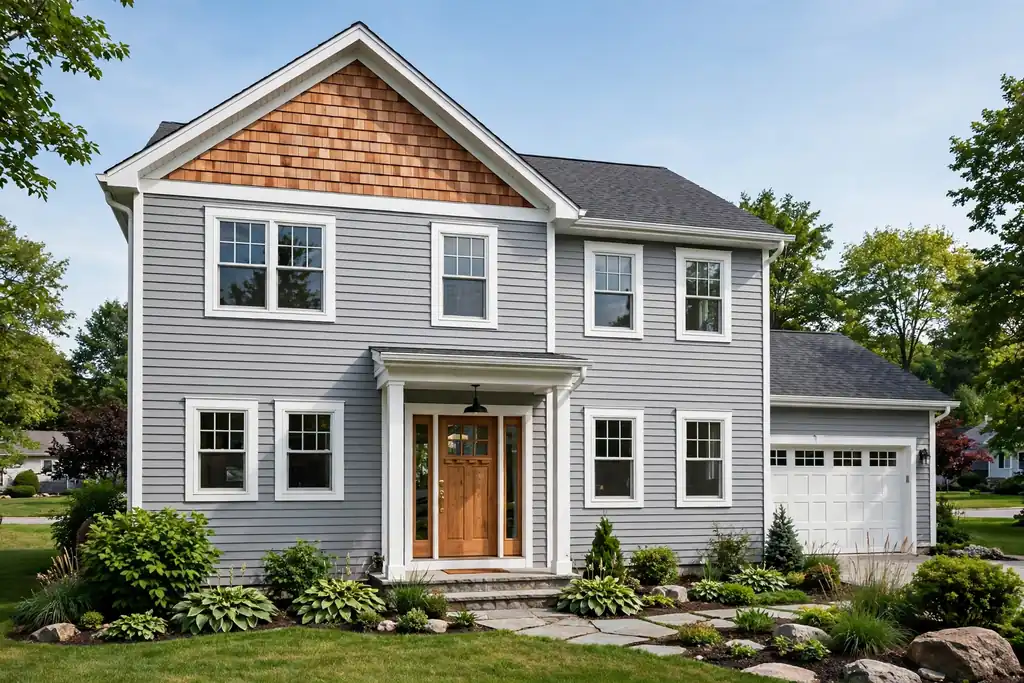
Paint the main walls silver grey and add cedar shingles on the gables, a dormer, or an entry gable. The cedar brings a warm, natural texture that softens the cool silver, and the shingle pattern gives the upper part of the house a hand crafted detail. This scheme suits coastal, cottage, and shingle style homes.
Let the cedar weather naturally if you like a silvery finish, or seal it to hold its warm honey tone. White trim and a wood stained door tie the cedar to the entry, and a grey or silver roof keeps the palette quiet. Because cedar shingles need airflow behind them and regular checks for damp, fit them with the maker’s recommended gap and keep gutters clear above them.
9. Dark Grey With Copper Gutters and Fixtures
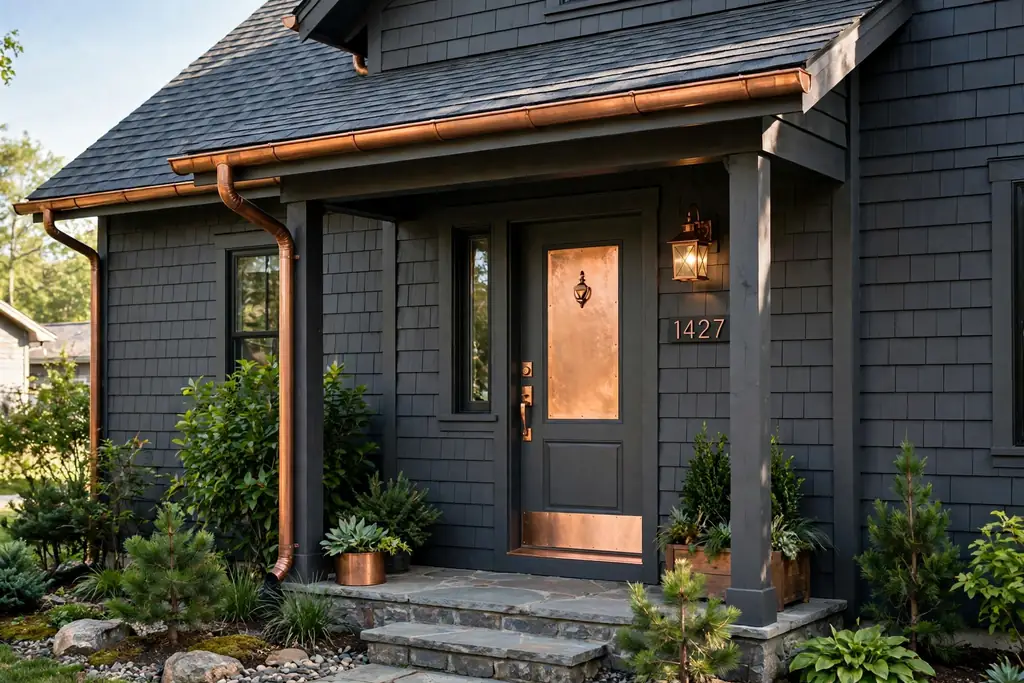
Paint the house dark grey and add copper gutters, copper porch lights, and a copper toned door handle set. Copper warms a dark front in a way black hardware cannot, and it ages to a soft patina that suits traditional and modern homes alike. This scheme works best when the copper appears at least three times, so it reads as a chosen finish rather than a single odd fitting.
Keep trim in white or pale grey for contrast, since copper needs a light backdrop to show up against dark siding. For ideas on pairing dark surfaces with warm metals indoors, these black and gold kitchen ideas show the same repeat the metal rule at room scale. Budget for copper as a long term finish, since it costs more than painted metal, and check that downspouts and gutters match so the roofline stays consistent.
10. Pale Grey With a Sage Green Door and Shutters
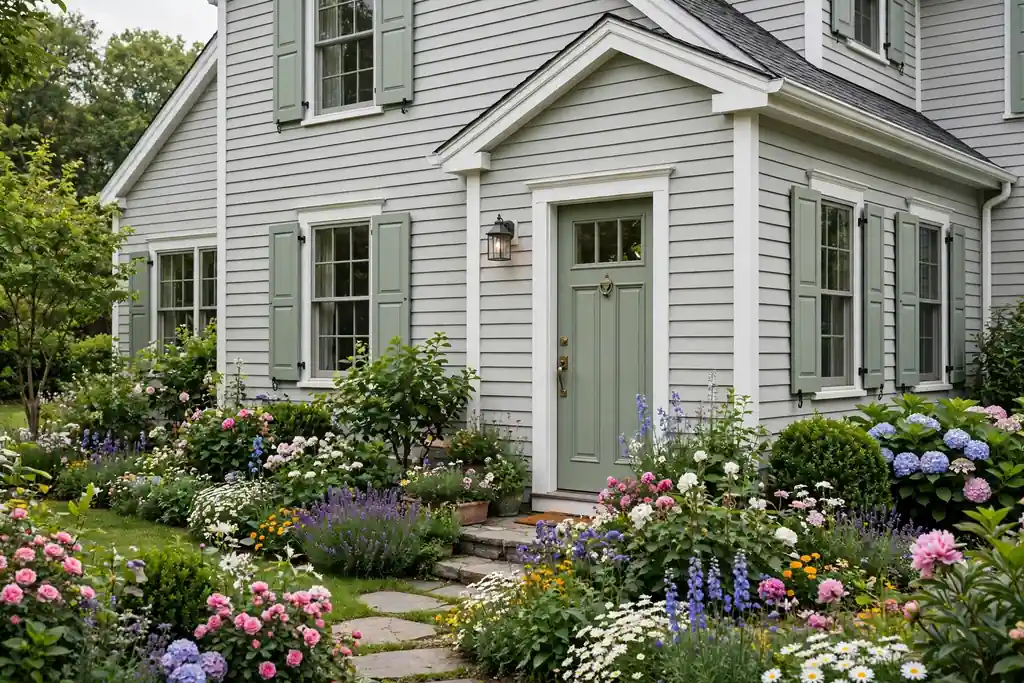
Pair pale grey siding with sage green shutters and a sage green front door for a soft, garden friendly front. Sage sits between green and grey, so it reads as a color in daylight and as a quiet neutral in the evening. White trim keeps the pairing gentle, while a flower filled garden gives the front its life.
This scheme suits cottages, bungalows, and homes with generous planting, where the green door links the house to the garden. Keep the roof in a soft grey or pale brown, and avoid adding a third strong color, since sage works best with only grey and white beside it. If the front is shaded, pick a sage with a lighter value so the door does not disappear into the grey walls.
11. Grey Stucco With a Terracotta Tile Roof
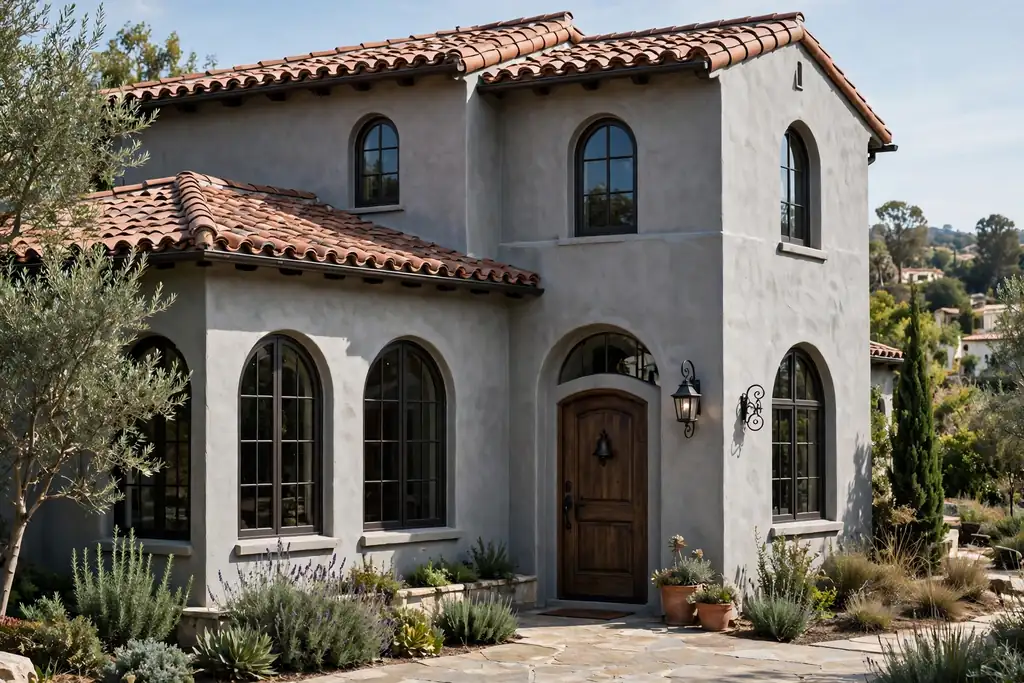
Use grey stucco on the walls and a terracotta tile roof for a Mediterranean leaning scheme with warmth built into the roofline. The grey stucco keeps the house cooler looking than cream or white stucco, while the terracotta tiles give the roof a rich, sun baked color. Arched windows, a dark wood door, and iron details complete the look.
Keep trim in a warm white or pale stone tone, and use terracotta pots and tiles at the entry to repeat the roof color at ground level. Stucco needs a sound, crack free surface before painting, so repair hairline cracks and check drainage at the base of the walls first. This scheme suits warm, sunny climates best, where the tile roof and stucco walls match the local building tradition.
12. Graphite Grey Panels on a Modern Home
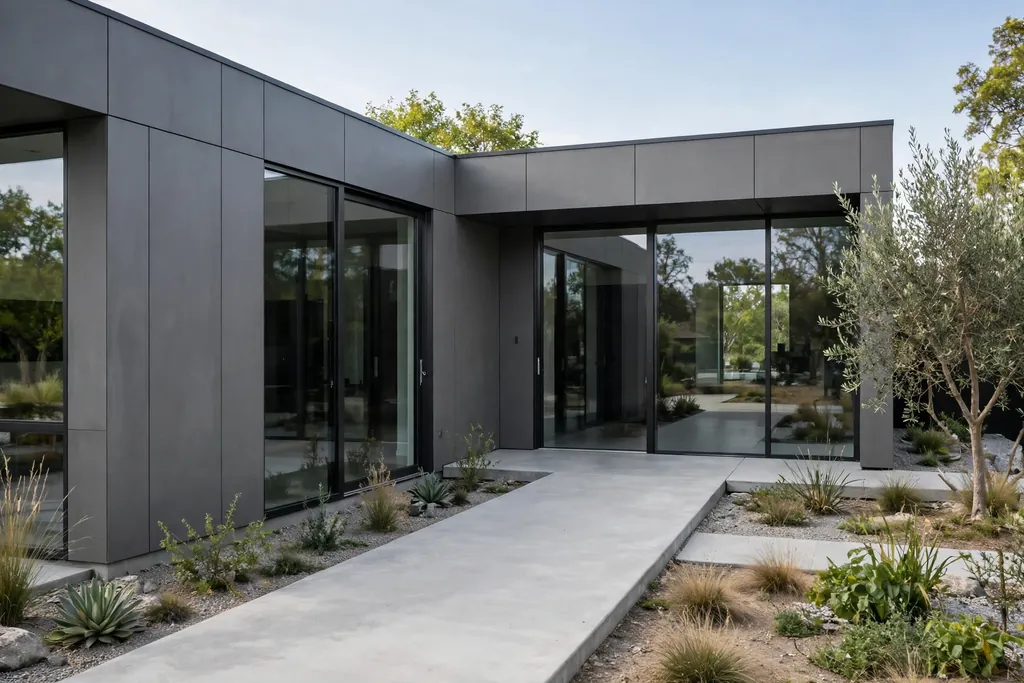
Clad a modern, flat roofed house in graphite grey panels with large glass windows and minimal trim. The panel joints give the walls a grid rhythm, and the glass reflects sky and garden, which keeps the dark surface from feeling solid. A concrete path, a single sculptural plant, and a flush front door in the same graphite tone complete the minimal look.
Keep the palette to graphite, glass, and one warm material, such as a wood entry panel or a timber screen, so the house stays calm. Use recessed lighting at the entry rather than decorative lanterns, since the style relies on clean lines. Panel cladding needs precise fitting and sealed joints, so check the maker’s guidance on weatherproofing and leave access for future panel replacement.
13. Grey Siding Paired With Existing Red Brick
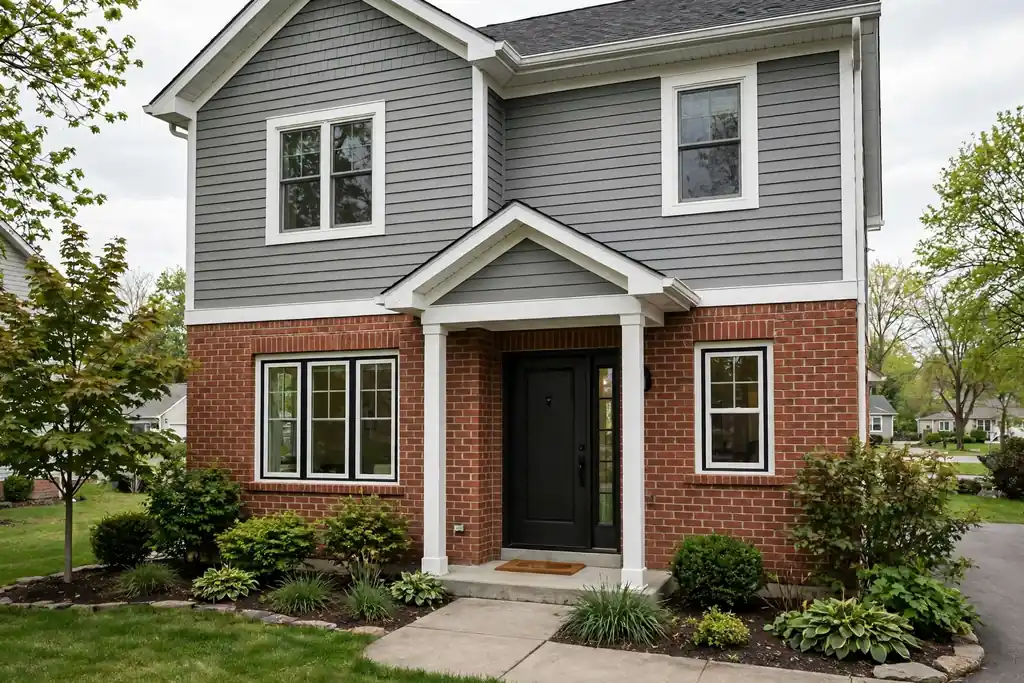
Keep an existing red brick section, such as a chimney, a porch wall, or a lower story, and paint the remaining siding medium grey. The grey cools the red brick without hiding it, and white trim gives both materials a shared frame. This scheme suits older homes where removing the brick would cost too much, and it lets you update the front without a full rebuild.
Test the grey beside the actual brick, since red brick ranges from orange red to deep brown, and a cool grey suits orange brick while a warm grey suits brown brick. Repeat the brick once more, in a path, a planter wall, or porch steps, so the brick reads as a feature rather than a leftover. Keep the door in a deep, muted tone such as black, navy, or dark green so it does not fight the brick.
14. Warm Grey With a Black Roof and White Porch Columns
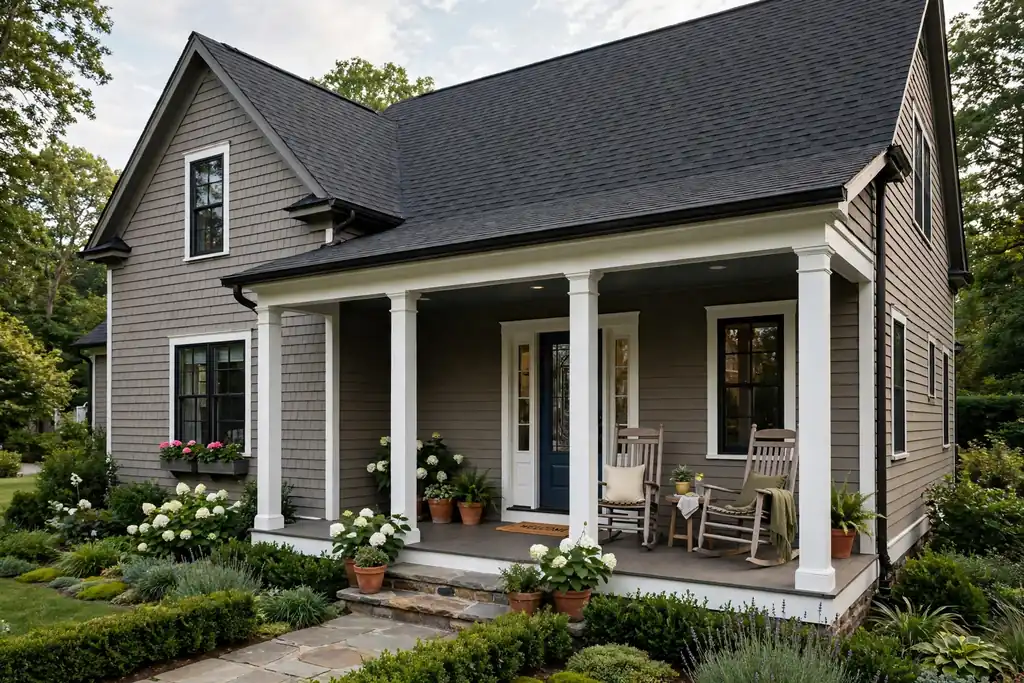
Paint the siding warm grey, fit a black shingle roof, and keep the porch columns, railings, and window trim bright white. The black roof gives the house a crisp top edge, while the white columns make the porch the brightest part of the front. This classic scheme suits colonial, farmhouse, and traditional homes with a covered porch.
Add rocking chairs or a porch swing in a dark wood or black finish to repeat the roof color at porch level. Keep the front door in black or a deep color so the entry holds its own against the white columns. Check the roof color against the siding sample in full sun, since a black roof can make a warm grey look lighter by contrast than it does on a paint chip.
15. Light Grey With a Bright Yellow Door
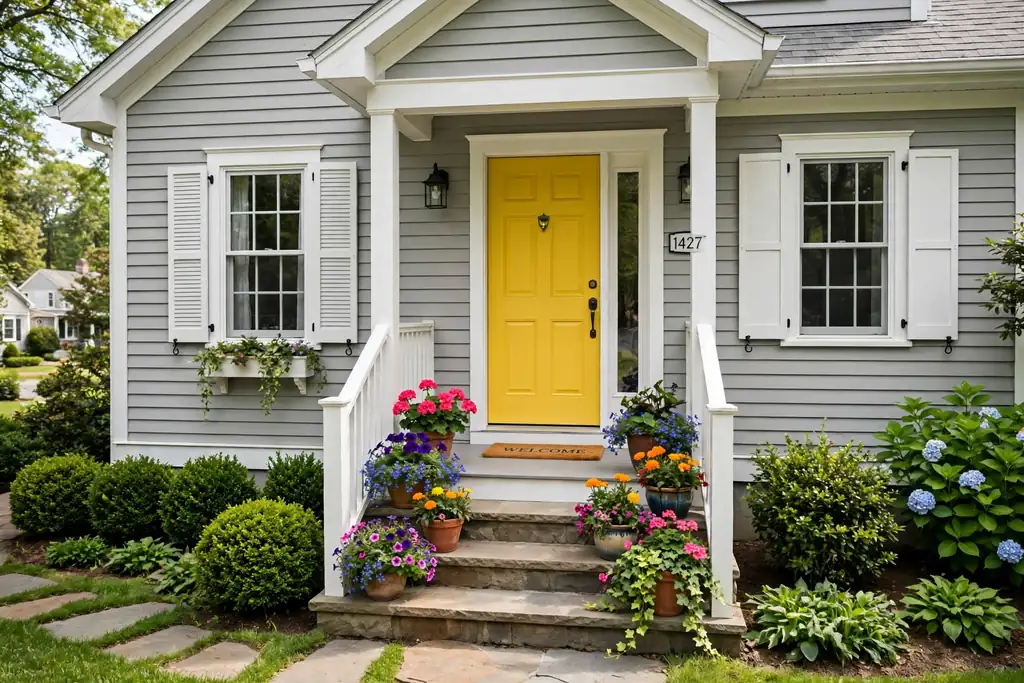
Paint the house light grey with white trim and finish with a bright yellow front door for a cheerful, welcoming entry. Yellow is the one accent that stays visible from the street on a grey house, and it suits cottages, bungalows, and family homes where the front should feel friendly. The grey keeps the yellow from feeling loud, and the white trim keeps the pairing clean.
Repeat the yellow once, in a pair of pots, a mailbox, or a bench cushion, and keep the rest of the front in grey, white, and green. Choose a yellow with a warm, sunny tone rather than a neon one, since exterior light makes bright colors look stronger than they do indoors. If the house is large, a yellow door still works, because the accent stays small against a big grey surface.
16. Grey Board and Batten With Black Hardware
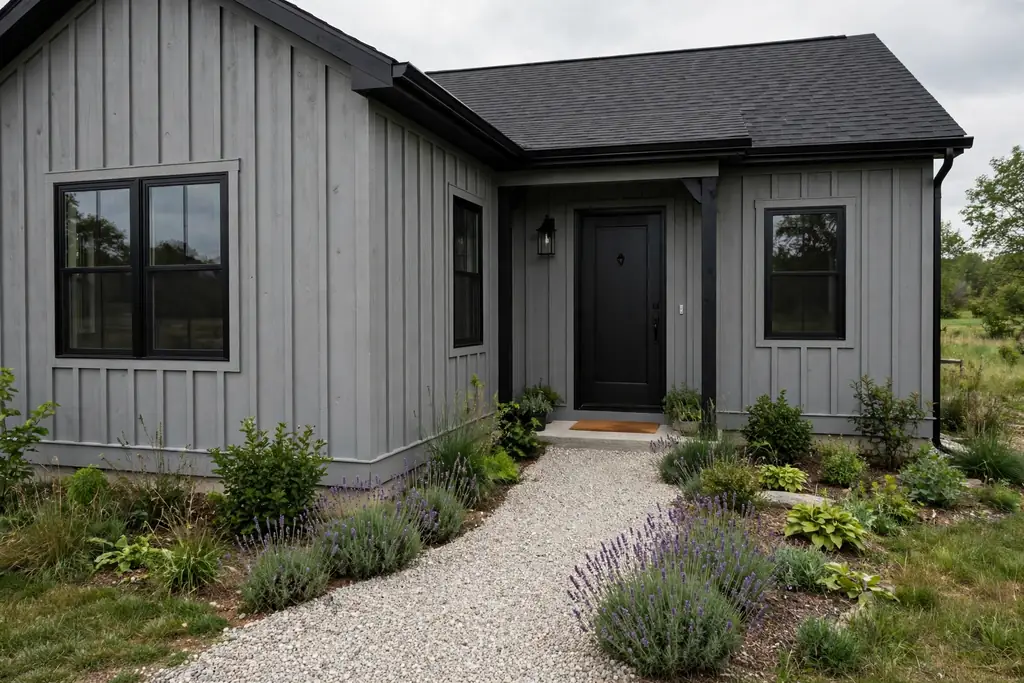
Use grey board and batten siding, with its vertical boards and narrow battens, and finish with black window frames, black door hardware, and black lantern lights. The vertical lines make a low house feel taller, and the black details give the farmhouse look a modern edge. This scheme suits farmhouses, barns converted to homes, and rural new builds.
Keep the roof in a dark grey or black so the black details link upward, and use a gravel or stone path rather than a formal brick walk to match the rural feel. Seal the board joints well, since vertical siding can channel rain into seams if the battens are loose. A wood front door in a natural stain softens the scheme if the black and grey together feel too stark.
17. Mid Grey Coastal Cottage With a Pale Blue Door
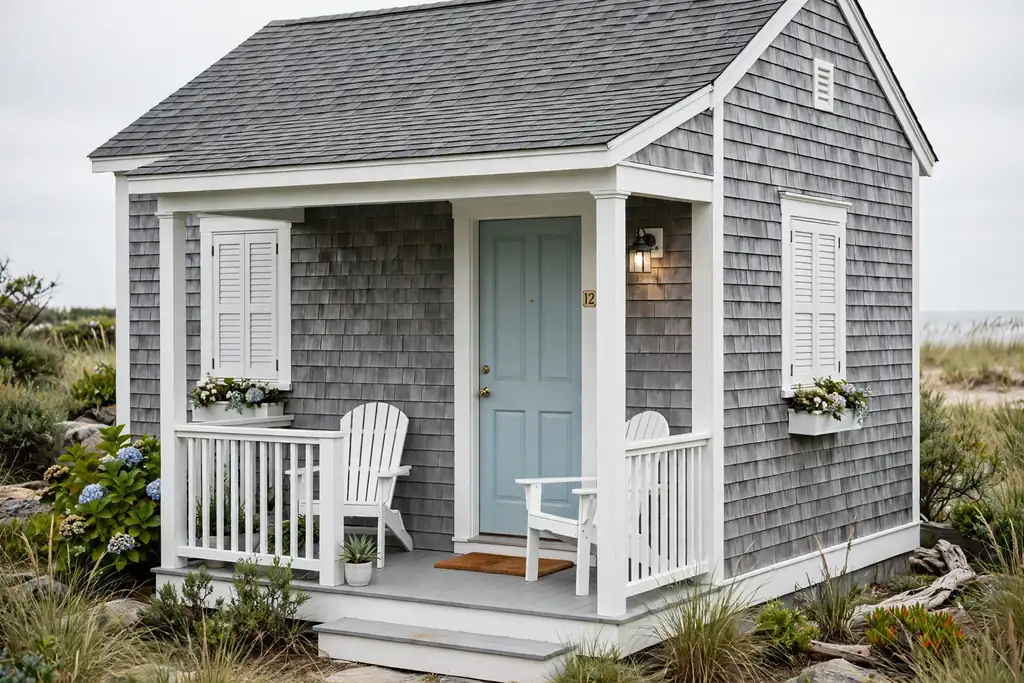
Paint a coastal cottage mid grey, keep trim white, and add a pale coastal blue front door. The pale blue reads as a sea washed accent that suits beach towns, lake houses, and any home with white porch furniture. White porch chairs, a white picket detail, or white window boxes keep the front light and airy.
This scheme needs a light to mid grey, since a dark grey would make the pale blue door look washed out. Keep the roof in a pale grey or white, and use natural fiber mats and light wood planters at the entry. If the house sits inland, the same pairing still works, because the blue door reads as a calm accent rather than a themed coastal statement.
18. Grey Siding With a Stone Gable and Chimney
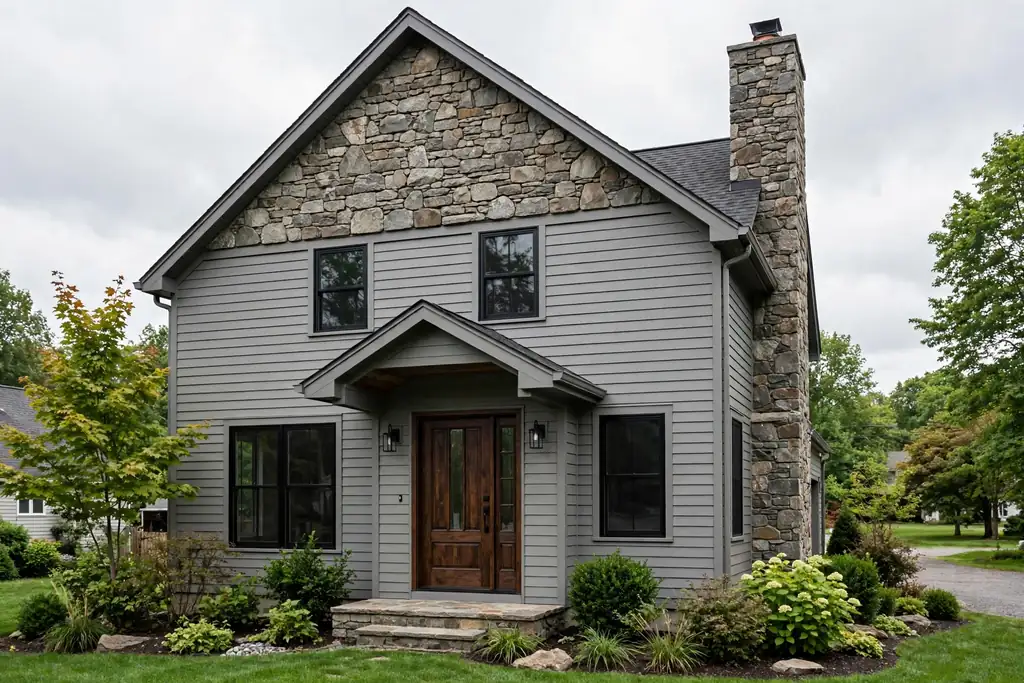
Use grey siding on the main walls and natural stone on a front gable, a chimney, or both. The stone gives the tallest part of the house a solid, built to last feel, and it draws the eye upward in a way plain siding cannot. This scheme suits Tudor leaning, craftsman, and traditional homes with a prominent front gable.
Pick a stone mix that includes grey tones so it links to the siding, and keep the rest of the trim white or cream so the stone stays the feature. A dark wood or black door grounds the entry beneath the stonework. Stone adds weight and cost at height, so check that the gable framing and footings suit the load, and plan access for repointing the chimney mortar over time.
19. Dark Grey With a Warm Wood Porch
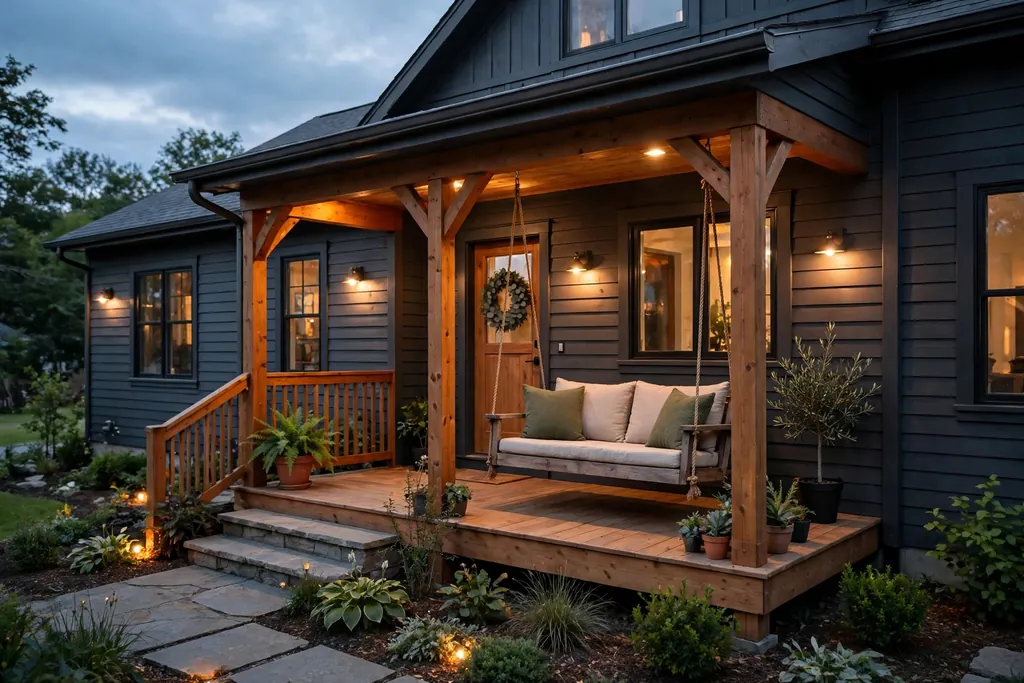
Paint the house dark grey and build the porch from warm wood, including the deck boards, the porch swing, and the entry steps. The wood porch becomes the welcoming part of an otherwise dark front, and it gives visitors a warm surface to stand on. This scheme suits craftsman homes, cabins, and modern houses with a deep covered porch.
Use warm porch lighting and a wood stained door to extend the wood tone from the floor to the entry. Keep railings in wood or black metal so the porch reads as one warm zone, and oil or seal the deck boards on a regular schedule. If the porch is small, a wood door and wood planters can give a lighter version of the same warmth without a full wood deck.
20. Soft Grey With a Deep Wine Red Door
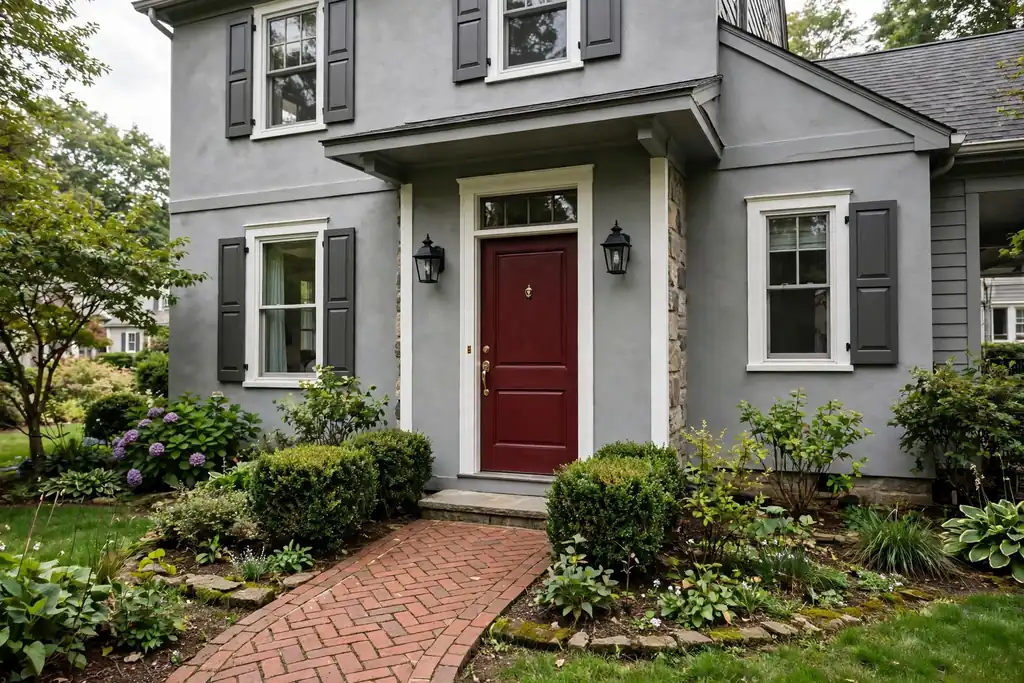
Paint the house soft grey with white trim and finish with a deep wine red front door. Wine red is richer and quieter than bright red, so it suits traditional and colonial homes where a bold door should still feel grown up. Black lantern lights beside the door repeat the dark tone and keep the entry tidy.
Add a brick path or brick planters to link the wine door to a warm, earthy material at ground level. Keep the roof in a dark grey or black so the deep door color does not compete with a brown or red roof. If the front is small, wine red still works, because the door is a single controlled accent against a calm grey field.
21. Light Grey With Black Window Frames
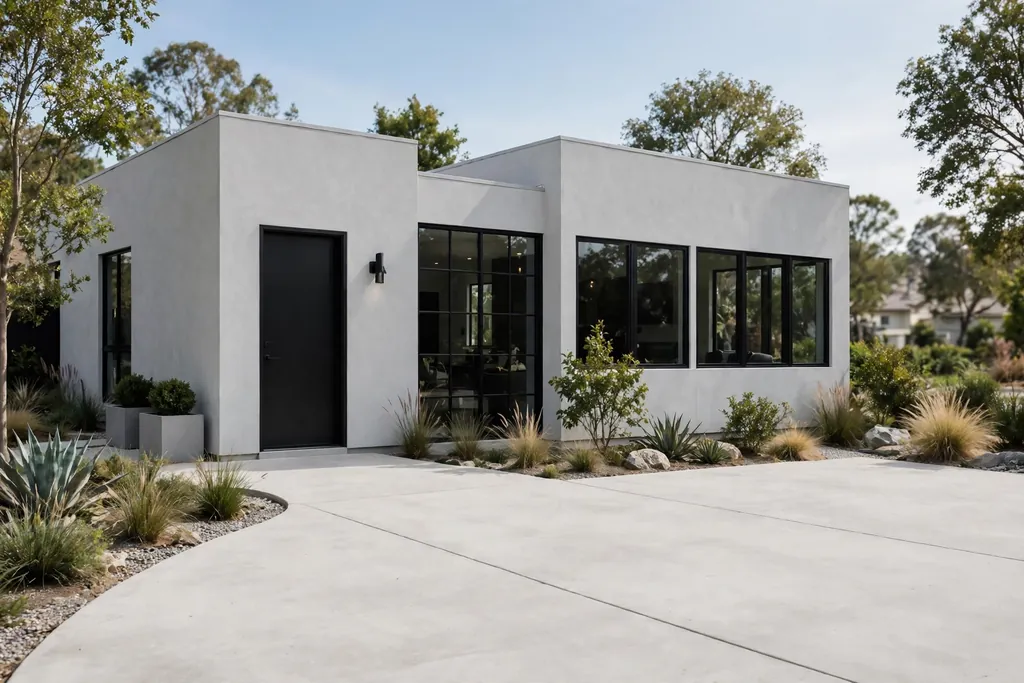
Paint the walls light grey, keep the trim white, and fit black window frames for a modern outline on a traditional house shape. The black frames draw the eye to the windows and give the front a graphic, tailored feel without repainting the whole house dark. This scheme suits renovated older homes, new builds, and houses with large or numerous windows.
Match the front door hardware and the porch lights to the black frames so the dark details read as one set. Keep curtains or blinds pale inside the windows, since dark frames with dark interiors can make the glass look blank from the street. If full frame replacement is too much, painting existing frames black gives a similar outline at lower cost, provided the paint suits the frame material.
22. Tonal Grey: Pale Walls, Mid Trim, Dark Roof
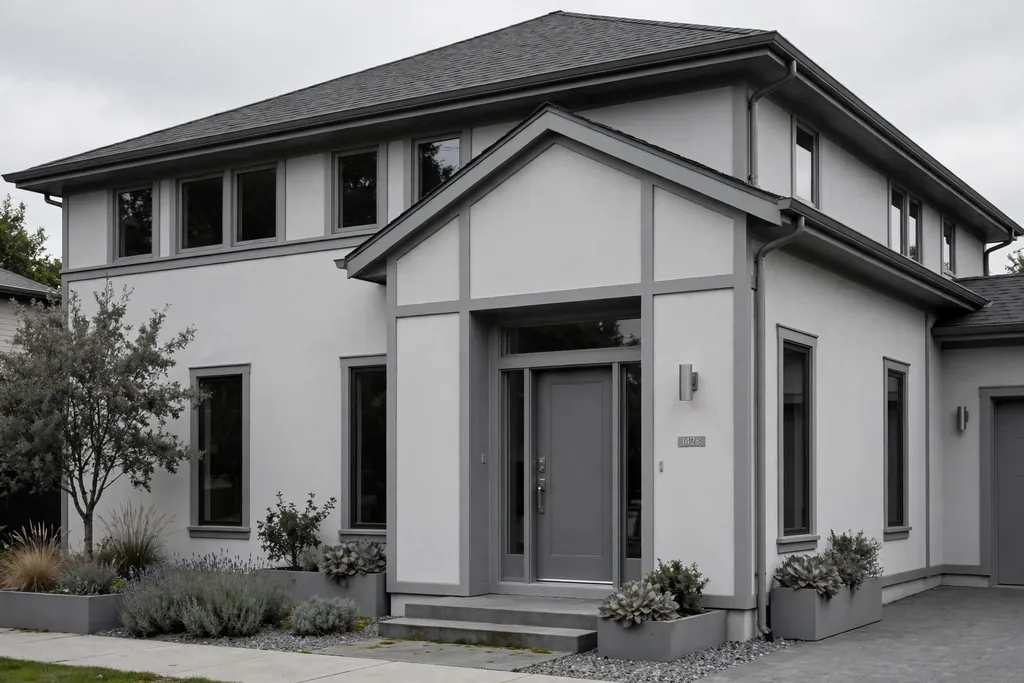
Build the whole scheme from grey alone: pale grey walls, mid grey trim and shutters, a dark grey roof, and a grey front door with a brushed metal handle. The tonal layers give the house depth without any second color, which suits minimal, modern, and Scandinavian leaning homes. Texture does the work here, so mix smooth siding with a rougher trim board or a standing seam roof profile.
Keep the planting green and simple, since the garden becomes the only color in the scheme, and use warm porch light to stop the front from feeling cold at night. Test the three grey values together on one wall, because greys that look distinct on chips can merge outdoors in flat light. If the tonal scheme feels too quiet, one warm wood bench or a pair of terracotta pots adds a small accent without breaking the grey family.
Conclusion
A good grey exterior scheme is a set of decisions, not a single paint color: siding, trim, door, roof, and one accent material, all checked together in real daylight. Start with the roof and any brick or stone you already have, then pick a grey that sits well beside them, and give the door a color with a clear job. Paint large samples, look at them at three times of day, and keep one detail, such as the metal finish or the trim color, consistent across the whole front. Save the schemes that fit your house style and light, and use them as a shortlist when you talk to a painter or a siding supplier.
FAQs
How do I pick a grey exterior color that will not look blue or purple?
Check the undertone by holding the sample against a pure white card in daylight. A blue grey will show its blue clearly beside white, while a warm grey will show beige or taupe. Test the sample on two walls, since a grey that looks neutral in sun can turn blue in shade, and pick the sample that stays closest to grey in both lights.
Should the trim be white or a darker grey on a grey house?
White trim suits most grey houses because it draws clean lines around windows and roofs and keeps the front bright. Dark grey trim suits modern or tonal schemes where you want a quiet, minimal outline. Avoid matching the trim exactly to the siding, since the house will lose its architectural detail.
What front door color works best with a grey house?
Black is the safest choice, navy suits coastal and traditional homes, and a bold color such as yellow or wine red works when it is the only strong accent. Repeat the door color once more, in pots or a mailbox, so it looks planned. Avoid adding a second bold color, since two strong accents will fight the grey.
Does a dark grey exterior make a house hotter?
Dark siding absorbs more sun than pale siding, so a dark grey front can feel warmer in strong sun, especially on south and west walls. Good insulation, roof ventilation, and shade from trees or a porch reduce the effect. In hot climates, a light or mid grey is the safer choice for large sun facing walls.
Can I paint over brick with grey paint?
Yes, but use a paint or limewash made for masonry, since brick needs to breathe and a sealed coating can trap moisture. Clean the brick, repair mortar, and test the coating on a small area first. Keep mortar lines visible where possible, since the brick texture is part of the look.
How often does grey exterior paint need repainting?
Most exterior paint lasts several years, but the exact life depends on climate, sun exposure, and surface preparation. South and west walls fade and wear first, so check them each spring for peeling, chalking, or hairline cracks. Touch up trim and door paint more often than siding, since those small areas take the most handling and weather.