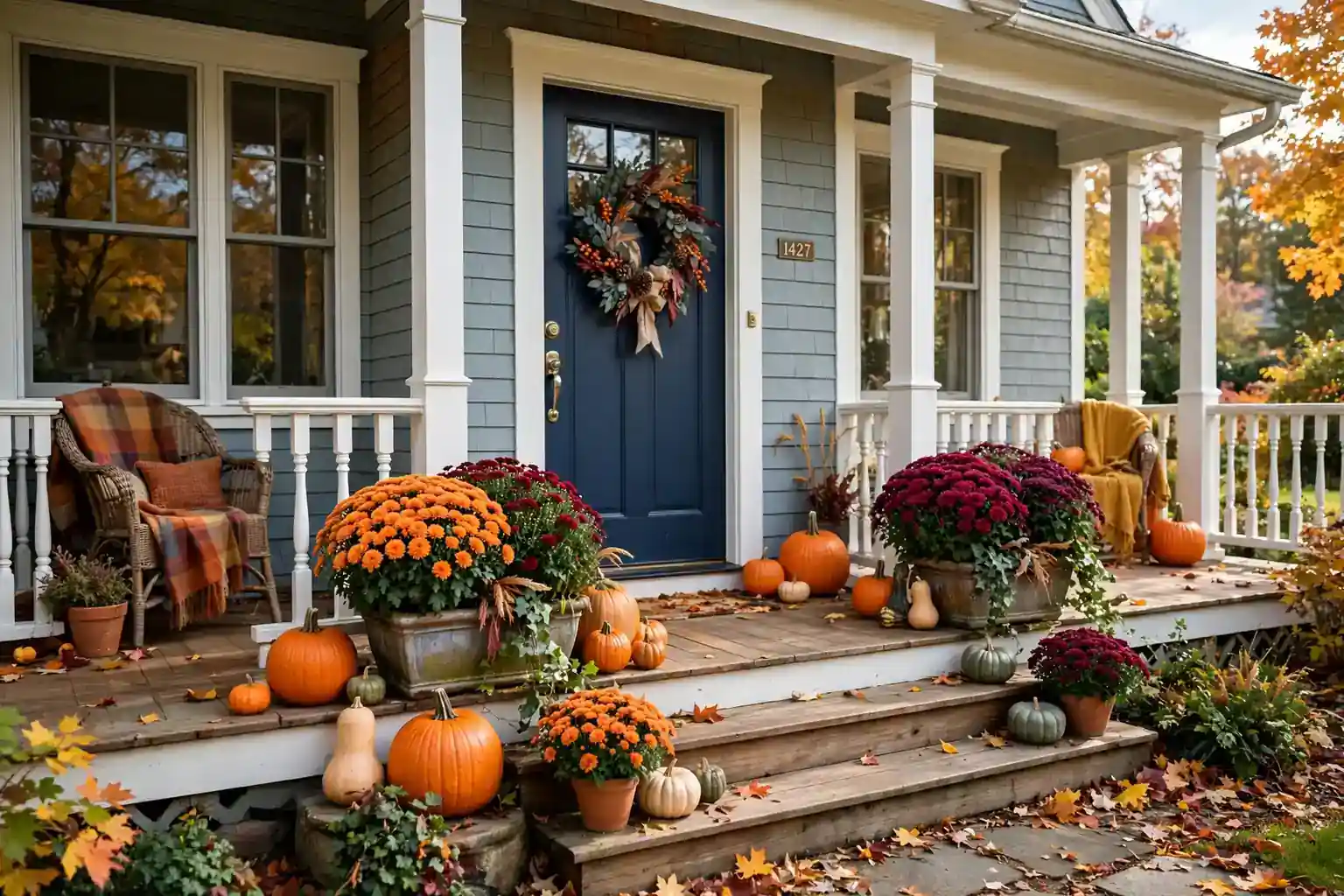
A front porch planter does more work in fall than at any other time of year. It is the first thing guests see, it frames the door, and it can carry color long after summer flowers fade. These 34 fall front porch planter ideas cover mums, pumpkins, ornamental kale, grasses, herbs, and rustic containers, with notes on sun, watering, and scale. Start with the size of your porch and the light it gets, then pick one planter style to repeat. For color at the door itself, these blue front door colors show how a painted door can set the whole palette.
Key Takeaways
- Match the planter to the porch: tall urns suit wide entries, while small pots and hanging planters suit narrow porches and steps.
- Use a simple structure in each pot: one tall plant, one full mid layer, and one trailing plant at the edge.
- Mums, ornamental kale, grasses, and hardy foliage hold up best in cool fall weather, while tender summer plants fade fast.
- Repeat one color or one container material across the porch so a mix of planters still looks planned.
- Check drainage, weight, and sun before planting, and water less often as nights cool.
- Plan for late fall too, with evergreens, pinecones, and birch stems that carry a planter past the first frost.
1. Matched Mum and Pumpkin Pair by the Door
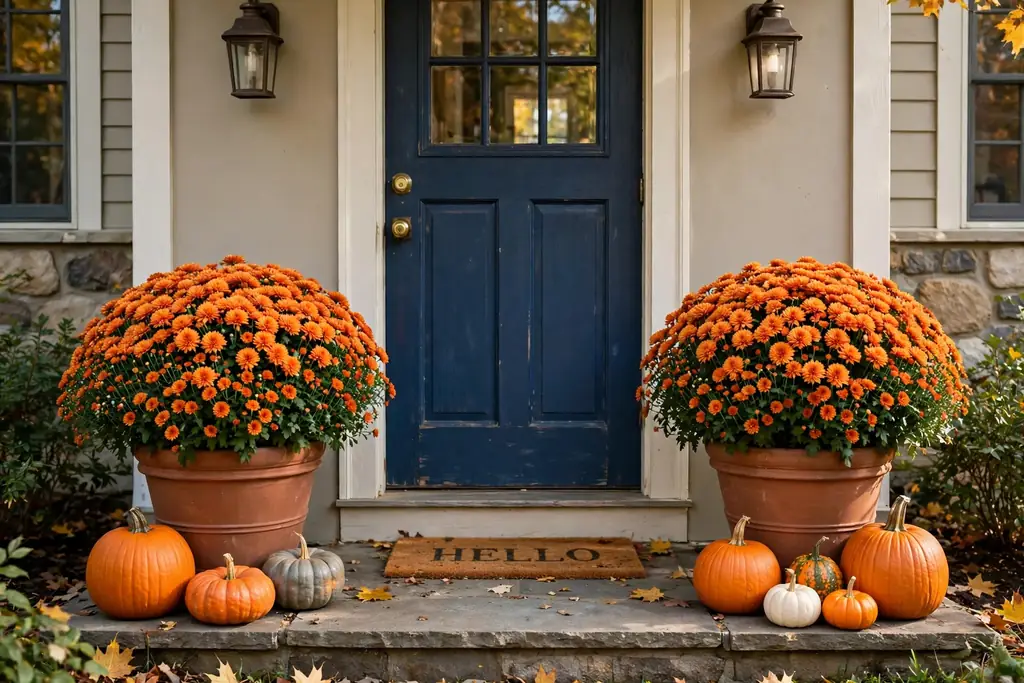
Place a matching pot on each side of the door, fill each with one full mum, and set a pumpkin at the base of each pot. Symmetry suits a centered door and a straight path, and it reads clearly from the street. Choose pots large enough that the mums do not look lost beside the door, and keep the path clear so guests can pass without brushing the plants.
Pick mums in one color, such as rust, gold, or burgundy, and repeat that color in a door mat or wreath if you like. Water mums at the soil level and deadhead faded blooms to keep them going. Swap the pumpkins for plain gourds late in the season if the first set softens.
2. Thriller, Filler, and Spiller in Tall Urns
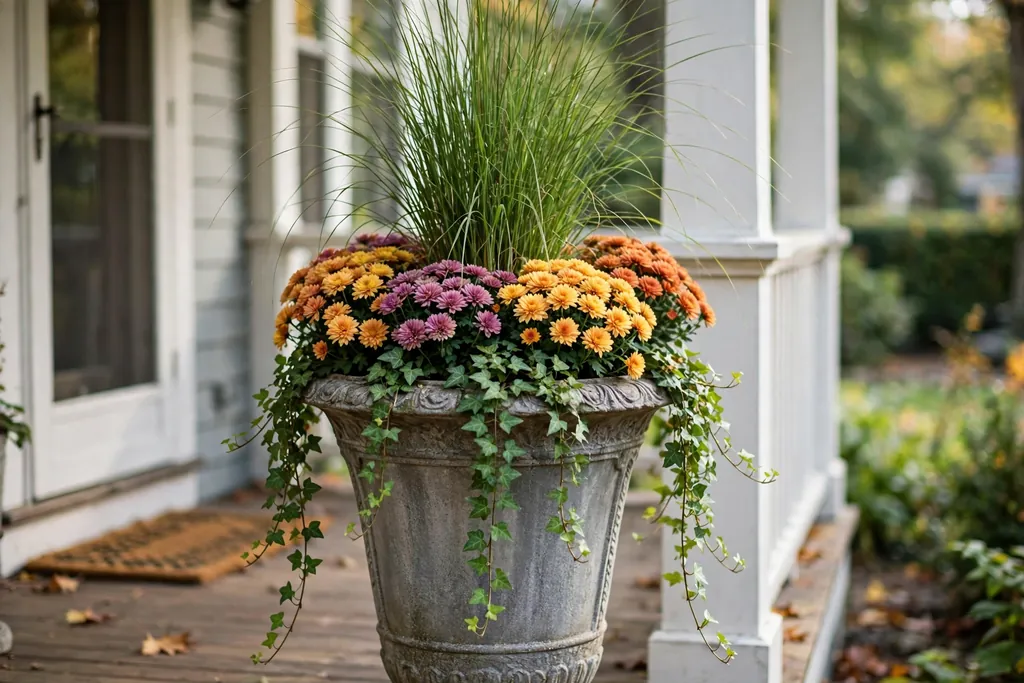
Use tall urns and build each one in three layers: a tall grass or upright plant in the center, full mums or kale around it, and ivy or trailing sedum spilling over the edge. This classic formula works because each layer has a job, and the tall center gives the planter height without a second pot. It suits wide porches and flanks a door well.
Keep the thriller in proportion to the urn, about one and a half times the pot height at most, so it does not topple in wind. Plant fillers close enough to look full on day one, and trim trailers that block the path. Water the whole pot evenly, since the center plant dries out first in sun.
3. White Pumpkins and Sage Greenery in Stone Planters
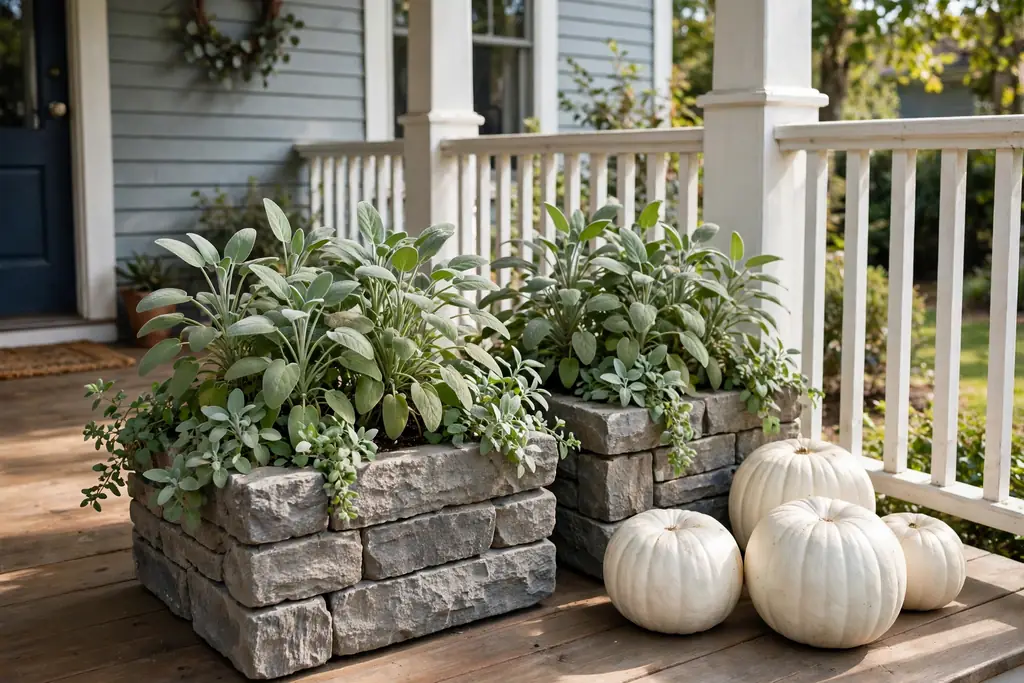
Pair white and pale green pumpkins with sage toned foliage in stone or concrete planters for a calm fall look. The pale palette suits light colored houses, grey siding, and porches that already have a lot of color elsewhere. Stone planters also add weight, which helps on windy porches.
Use dusty miller, sage, or pale ornamental cabbage as the green base, and set one white pumpkin beside each pot rather than inside it, so the planting has room to grow. Wipe stone planters clean before planting, and raise them on feet if the porch surface stains easily. This look lasts well into late fall, since the foliage does not depend on blooms.
4. Ornamental Kale and Cabbage Border Planters
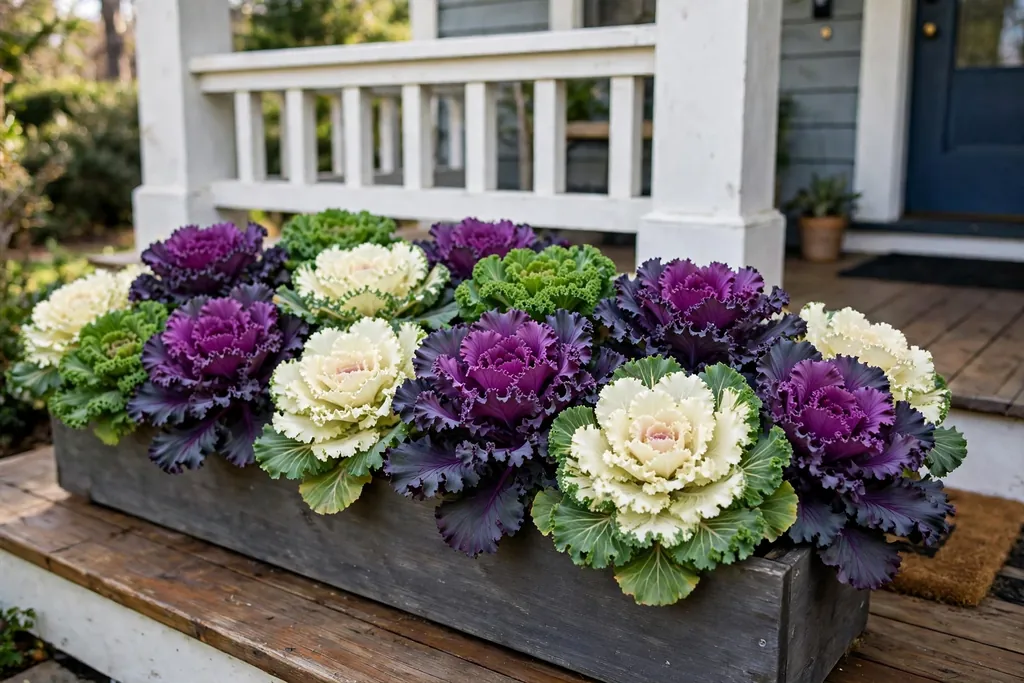
Fill low, wide planters with ornamental kale and cabbage in purple, cream, and green for color that improves as nights cool. These plants are grown for their leaves, so they keep their shape after mums fade, and they suit porches that get at least a few hours of sun. Plant them close together for a full, ruffled edge.
Water at the base and remove yellow lower leaves as they appear. Kale and cabbage look best with a simple pot, such as plain terracotta or dark grey, so the leaves stay the focus. If a hard frost is forecast, cover the pots overnight with cloth, and they will often recover by morning.
5. Rustic Wooden Crate Planters on the Steps
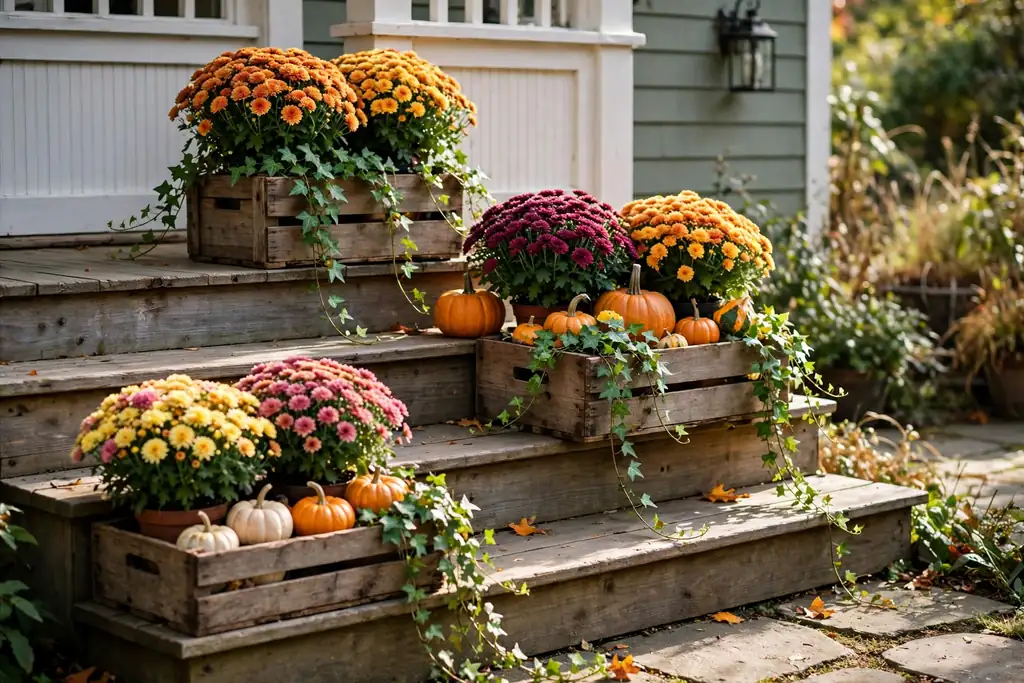
Set wooden crates on porch steps and fill them with potted mums, small pumpkins, and trailing ivy, keeping the plants in their nursery pots inside the crate. Crates suit farmhouse and cottage porches, and they let you change plants without repotting. Line the crate with plastic with drainage holes cut in it, so wood stays drier.
Place one crate per step or group two crates at the bottom step, and keep at least one step tread clear for safe footing. Choose crates in similar wood tones, and add a small pumpkin or pinecone on top of the soil for a finished look. Store crates under cover in winter to slow weathering.
6. Galvanized Bucket Trio at Different Heights
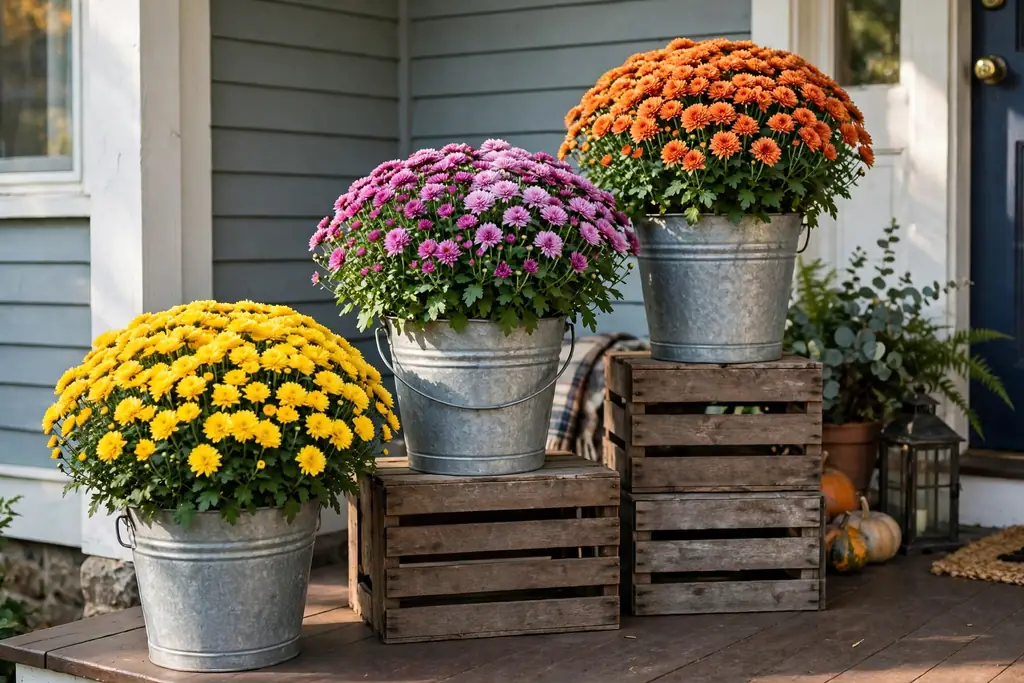
Group three galvanized buckets at different heights, using an upturned pot or a small stool under the tallest one, and plant each with mums in one color family. The metal finish suits rustic and modern porches alike, and the height change keeps the group from looking flat. Drill drainage holes if the buckets do not have them, and set a saucer underneath on painted wood.
Use one plant type per bucket for a tidy look, or mix a mum with a trailing plant in the tallest bucket only. Galvanized metal heats up in sun, so check soil moisture more often on warm days. Wipe the buckets dry after rain to slow rust at the seams.
7. Black Urns with Burgundy Mums and Trailing Ivy
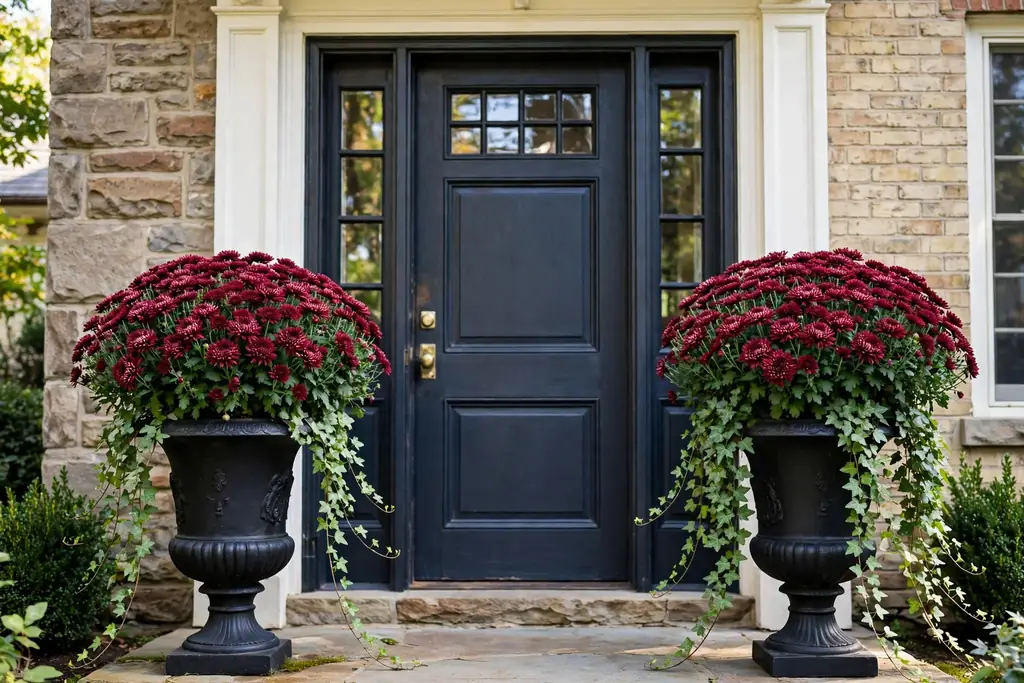
Choose black urns, plant burgundy or deep red mums in the center, and let ivy trail down the sides for a formal fall entry. Black containers suit brick, white siding, and dark doors, and they make warm flower colors stand out. Keep both urns the same size and plant them the same way for a balanced look.
Ivy needs little care in fall, but trim it before it reaches the ground or blocks the door swing. Water mums regularly until the soil stays cool and damp, then water less. If ivy is not hardy in your area, use it as a seasonal trailer and compost it at the end of fall.
8. Hay Bale Base with Pots on Top
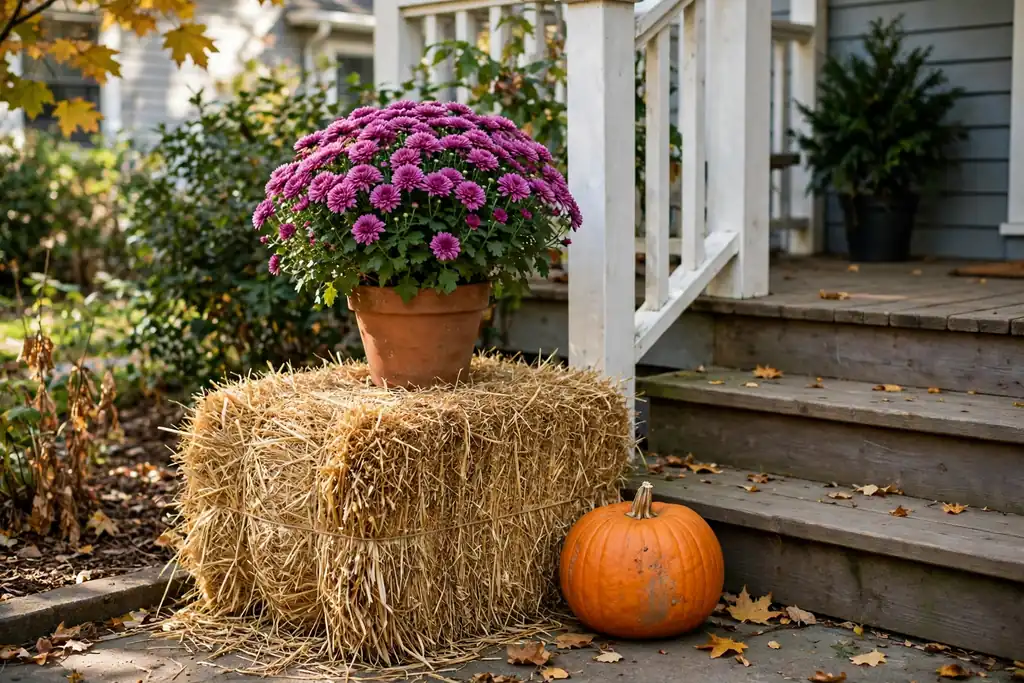
Set a small hay bale beside the porch steps, top it with two or three potted mums and a pumpkin, and tuck dried grasses around the base. A hay bale lifts plants to eye level and adds a harvest note without a large build. It suits country porches and wide front yards, but keep it clear of the walkway.
Place the bale on a flat surface and set a board under the pots if the bale surface is uneven. Hay breaks down in rain, so use this display for a few weeks rather than the whole season, and move it under cover in heavy storms. Check the bale for dampness at the base, and replace it if it starts to smell musty.
9. Wicker Basket Planters with Dried Grasses
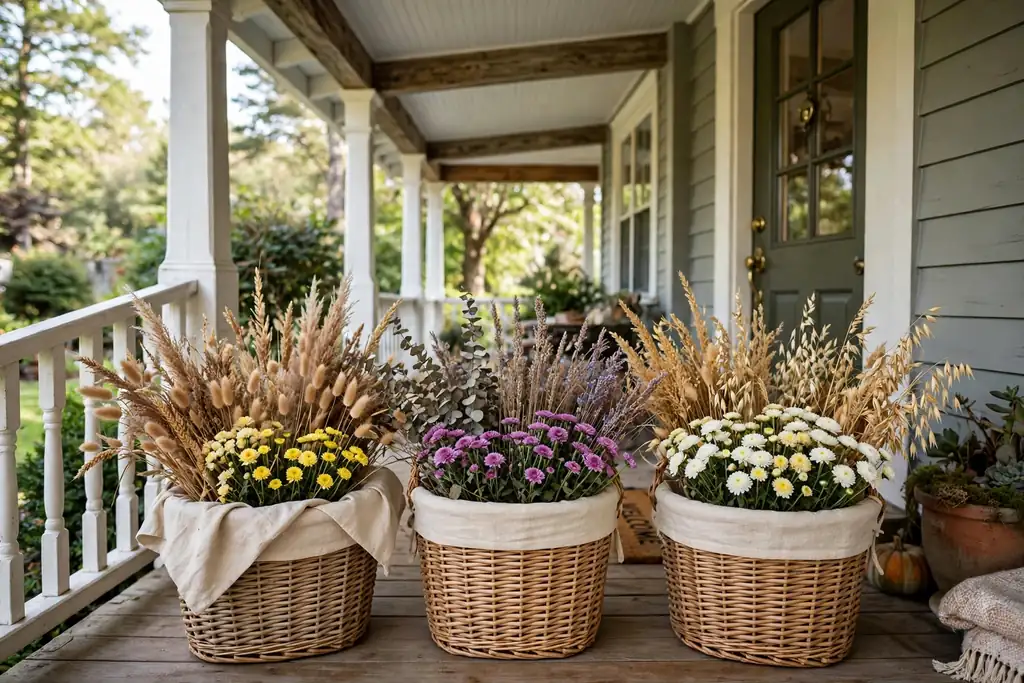
Use lined wicker baskets as planters, filled with dried grasses, wheat stems, and a small mum or two for color. Baskets suit covered porches best, since rain softens wicker, and they add a soft, woven texture next to wood and stone. Line each basket with plastic, cut drainage holes, and set the plants in their pots inside.
Keep baskets on a bench or a step rather than directly on wet ground, and bring them inside in heavy rain. Dried grasses need no water, so water only the live plants, and keep dried stems away from open flames such as candles or lanterns. This planter works well as a short term display near the door.
10. Chalk White Terracotta Pots with Mixed Mums
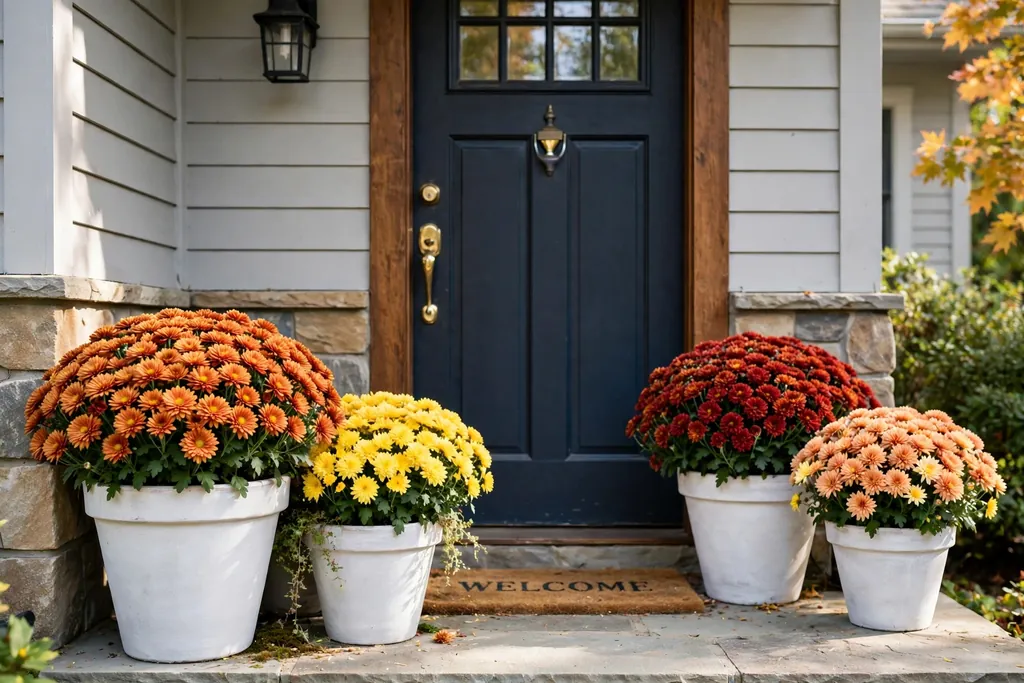
Paint plain terracotta pots in chalk white, or buy whitewashed pots, and plant them with mums in mixed warm colors. The pale pots calm a busy mix of flower colors and suit white trim, light brick, and coastal style porches. Use exterior paint made for masonry or terracotta, and let pots dry fully before planting.
Group three white pots of different sizes near the door, and repeat the white in a door mat frame or a lantern. Terracotta dries out faster than plastic or glazed pots, so check soil daily in warm spells. Bring painted pots inside before a hard freeze, since terracotta can crack when wet soil freezes.
11. Stepped Pots Down the Porch Steps
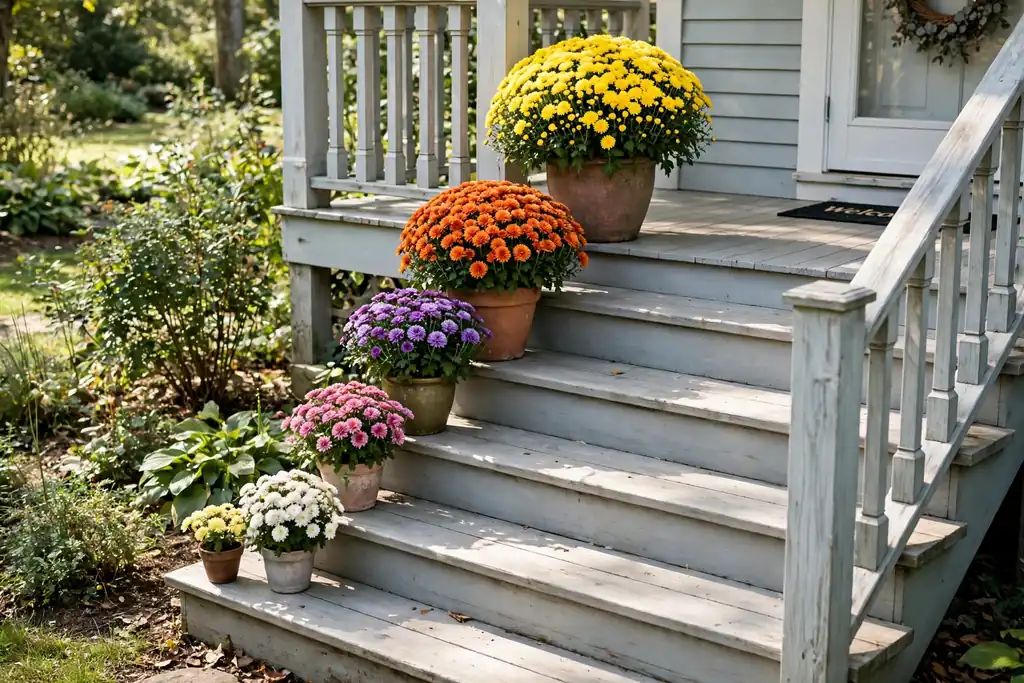
Line porch steps with pots that get smaller as they rise, so the planting climbs toward the door in a clear sequence. This idea suits porches with wide steps and a straight approach, and it uses space that often stays bare. Keep the outer edge of each step clear, and place pots against the house side or the rail side, not the middle of the tread.
Use one plant family, such as mums, in every pot, and change only the pot size or the flower color as you go up. The stepped line echoes tiered planting, and the ideas in these tiered garden ideas show how levels can give each planting a clear job. Water from the top step down, and catch runoff before it stains the steps.
12. Hanging Planters Beside the Door
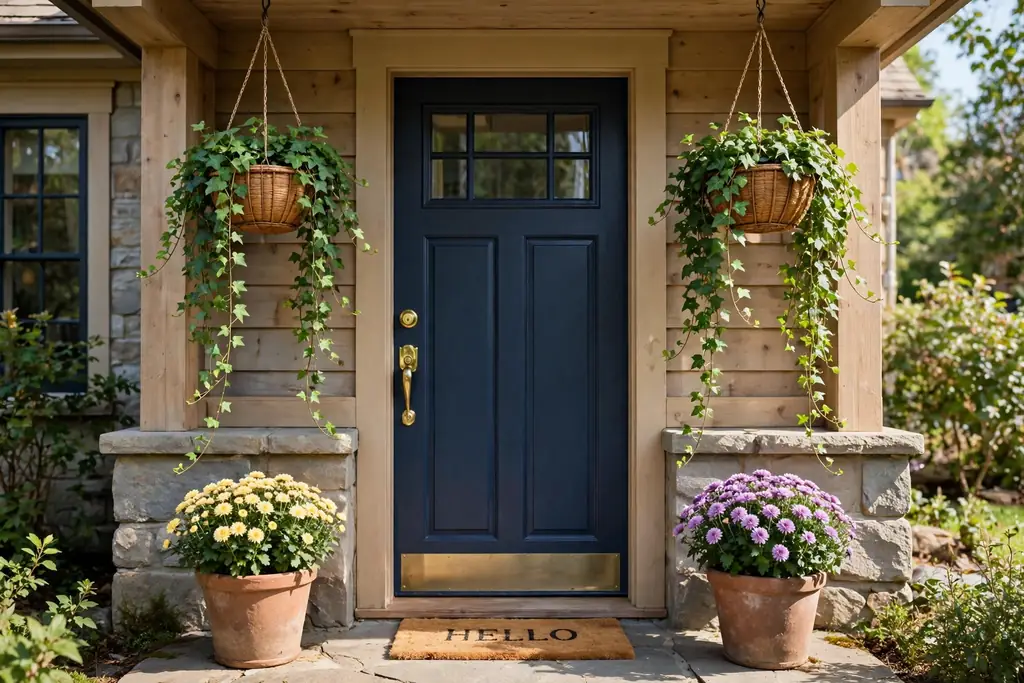
Hang two planters from porch hooks, one on each side of the door, filled with trailing ivy, small mums, and a few dried stems for height. Hanging planters suit small porches with no floor space for large pots, and they draw the eye up to the door. Hang them high enough to walk under without ducking, and use sturdy hooks rated for a watered pot.
Water hanging pots more often than floor pots, since they dry out fast in wind. Choose light containers, such as resin or lined baskets, to keep the weight down. Turn the planters every week or two so growth stays even, and bring them inside before a frost if the plants are tender.
13. Railing Planters Along the Porch Rail
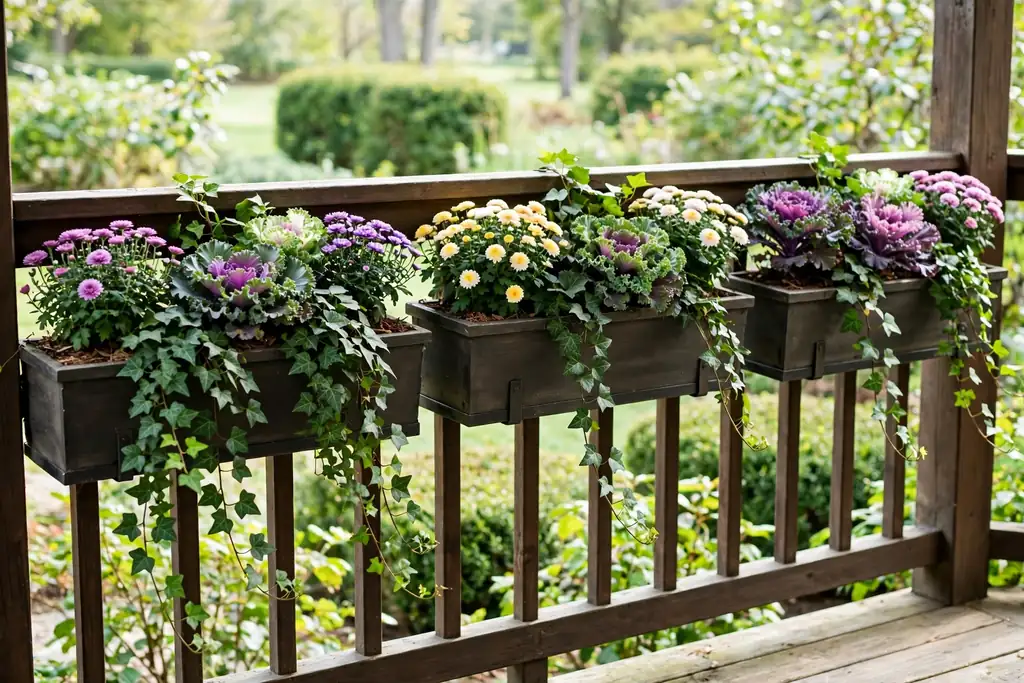
Fix long planters to the porch rail and fill them with trailing ivy, small mums, and ornamental kale for a planted edge at hand height. Railing planters suit porches with a long rail and a view worth framing, and they leave the floor clear for chairs and foot traffic. Use brackets made for rail planters, and check that the rail can carry a watered planter.
Plant trailers at the outer edge so they spill outward, and keep upright plants toward the porch side. Water slowly, since rail planters are shallow and dry out fast, and empty drip trays after rain. Choose plants that suit the rail light, with sun lovers on a south rail and foliage plants on a shaded rail.
14. Tall Grasses with Pumpkins at the Base
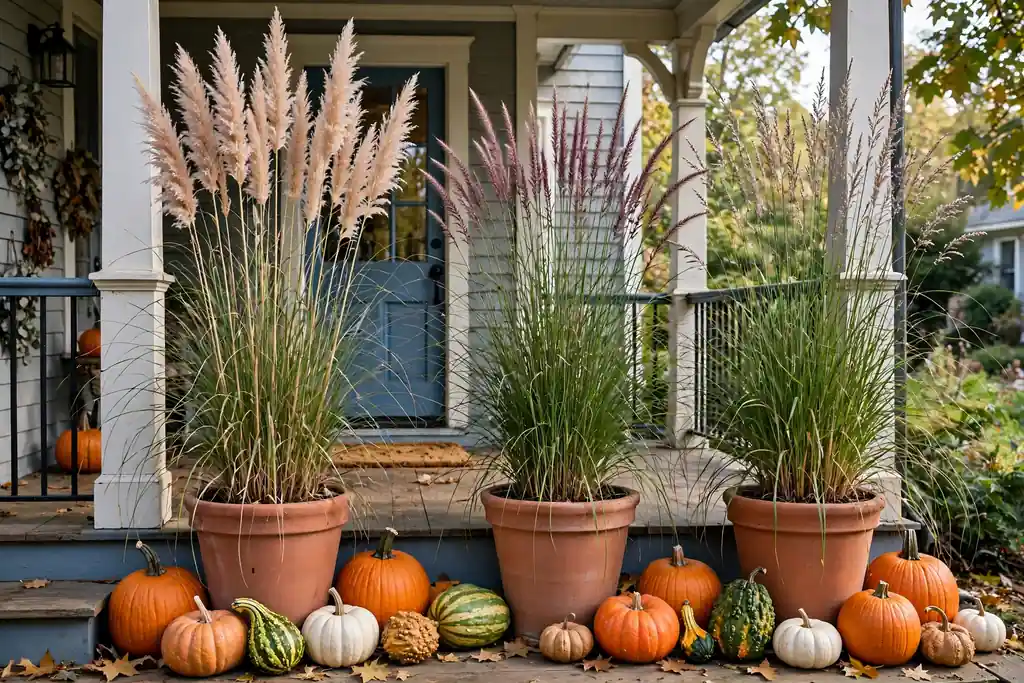
Plant tall ornamental grasses in large pots, and set pumpkins and gourds around the base for a simple, strong fall shape. Grasses give height and movement, while pumpkins add color at ground level, and the pairing needs little upkeep. This suits modern porches and houses with a plain facade, where one strong shape reads better than many small pots.
Choose grasses that stay upright in wind, and cut back any stems that flop over the path. Pumpkins at the base should sit on a flat surface, not on soil that stays wet, so set them on a board or a stone. Replace pumpkins as they soften, and leave the grasses standing until late fall for texture.
15. Succulent and Sedum Planters for a Dry Porch
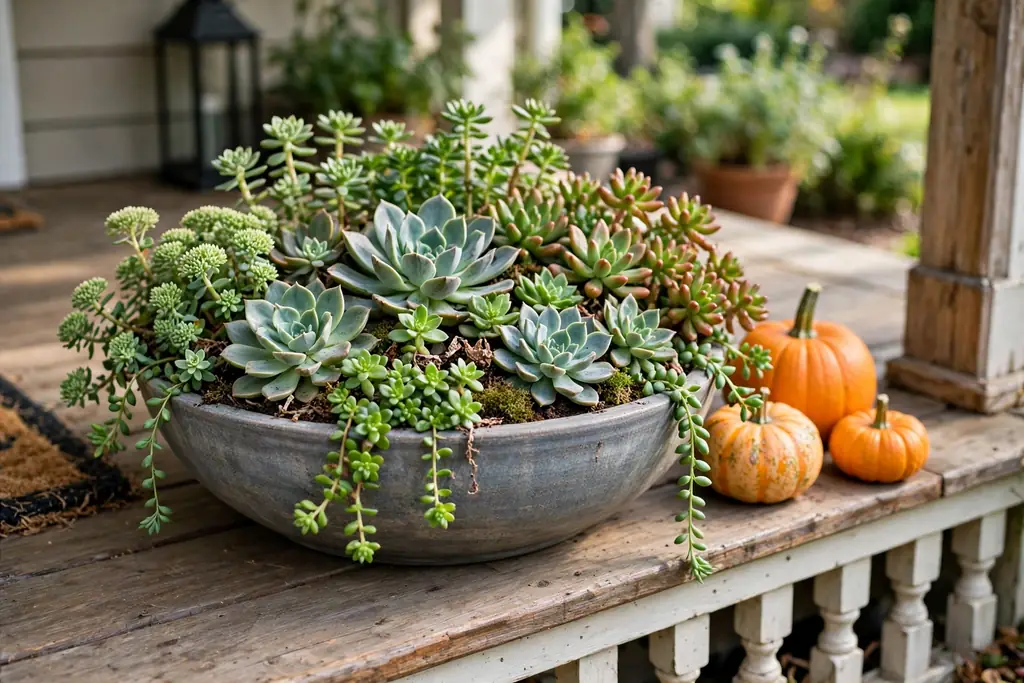
Build a fall planter from sedums, hens and chicks, and other succulents in a shallow bowl or a wide pot, with a few small pumpkins beside it for seasonal color. This suits covered or dry porches, and porches where watering is easy to forget, since succulents need far less water than mums. Use a gritty, free draining mix, and a pot with drainage holes.
Keep succulents in sun if possible, and water only when the soil is dry to the touch. Add autumn toned sedums, which color up in cool weather, for fall interest without flowers. Bring tender succulents inside before frost, and leave hardy sedums outside with a little shelter from standing water.
16. Fall Herb Planters for the Kitchen Door
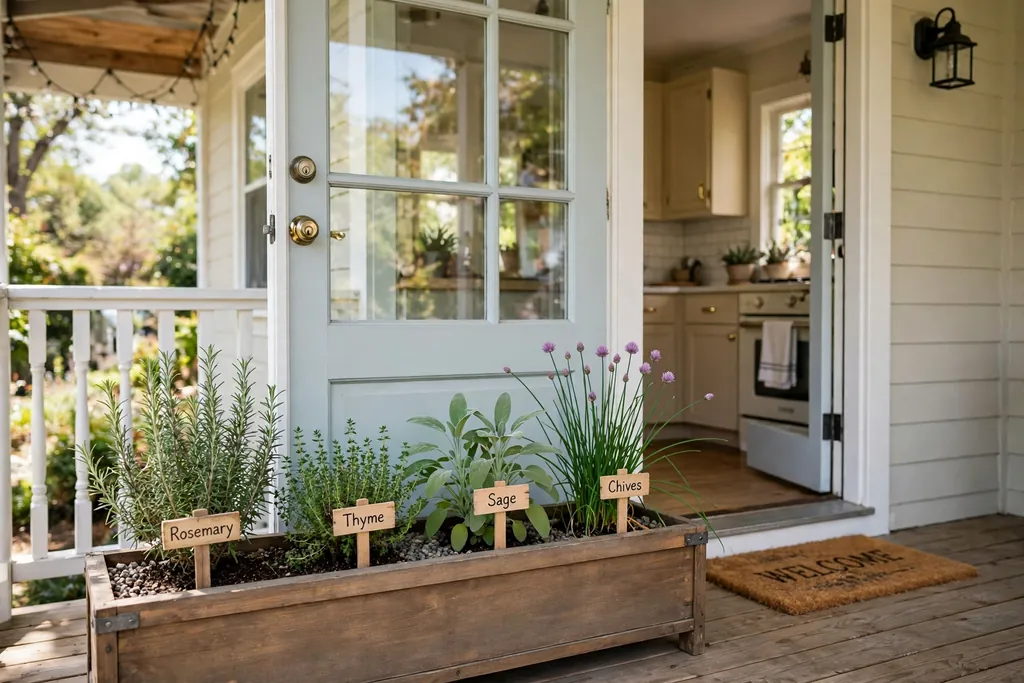
Plant rosemary, thyme, sage, and chives in a long planter by the kitchen door or the porch steps, so fall cooking herbs stay within reach. Herbs add scent and green structure, and many cope well with cool fall days. Use a free draining mix, and keep mint in its own pot, since it spreads fast and crowds neighbors.
Pick little and often to keep plants bushy, and snip stems in the morning when oils are strongest. Move tender herbs inside before a hard frost, and leave hardy rosemary and thyme outside with shelter from cold wind. Label young herbs, since many look alike before they grow, and water at the base rather than over the leaves.
17. Berry Branches and Birch Stems in Tall Pots
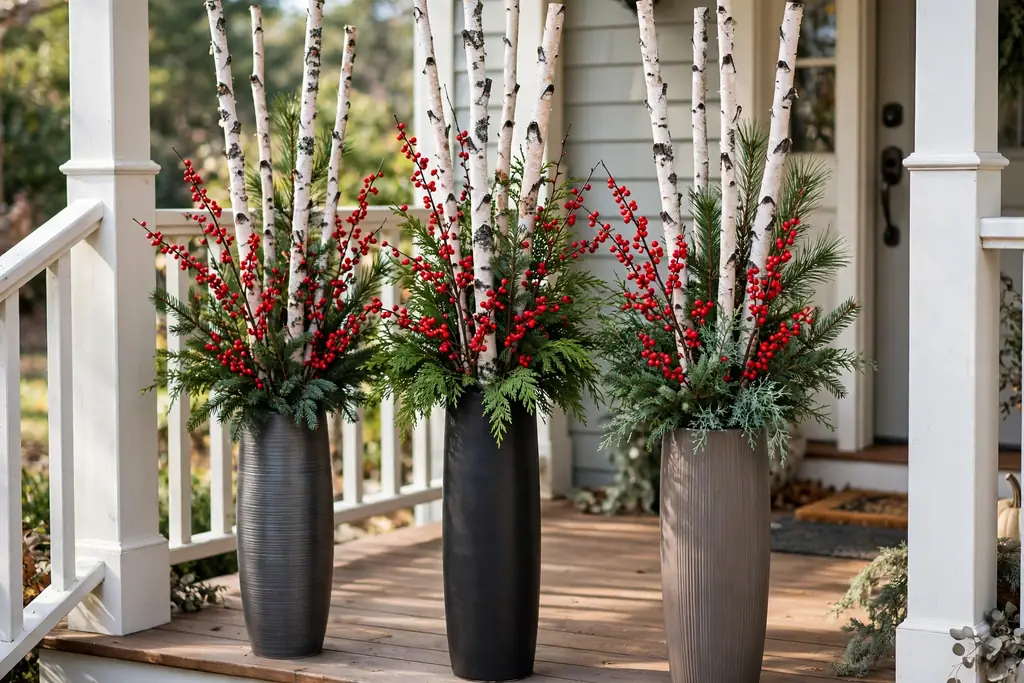
Fill tall, narrow pots with birch stems, berry branches, and a few evergreen sprigs for a vertical fall display that needs no flowers. This suits narrow porches and entries where a wide pot would block the path, and it lasts well into late fall. Push stems firmly into soil or floral foam, and brace them if wind is strong.
Use real or good quality faux berry branches, and keep the color palette to red berries, cream birch, and green sprigs for a clear look. Add a small pumpkin at the base to ground the tall stems. Check stems after storms, and replace any that snap or fade, since one broken stem shows clearly in a tall arrangement.
18. Lantern and Planter Pairings on Each Side
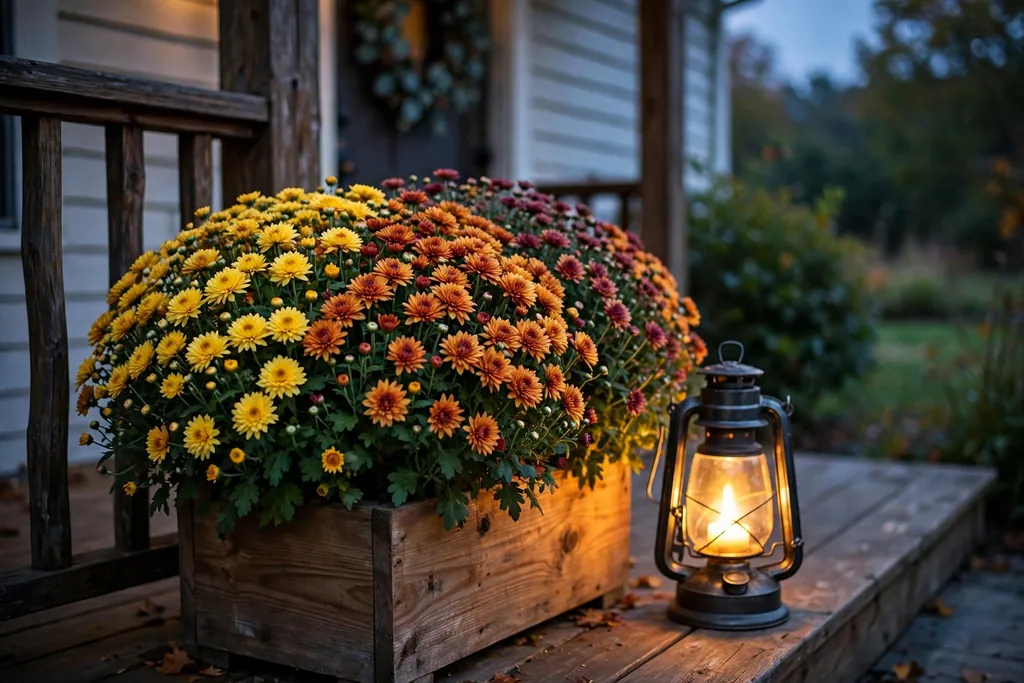
Place a lantern beside each porch planter, rather than inside it, so light and planting work together at dusk. Use battery candles in the lanterns for safety, and plant the pots with mums or kale in a color that shows up in low light, such as gold or cream. This pairing suits porches used in the evening, and it frames the door after dark.
Keep lanterns on a stable, flat surface, and clear of dry leaves and dried grasses. Choose lanterns in the same finish as your door hardware for a linked look. Turn lights on at dusk for a welcoming entry, and store real candles away from plants and fabric, since dry foliage catches fire easily.
19. Copper Pots with Copper Toned Foliage
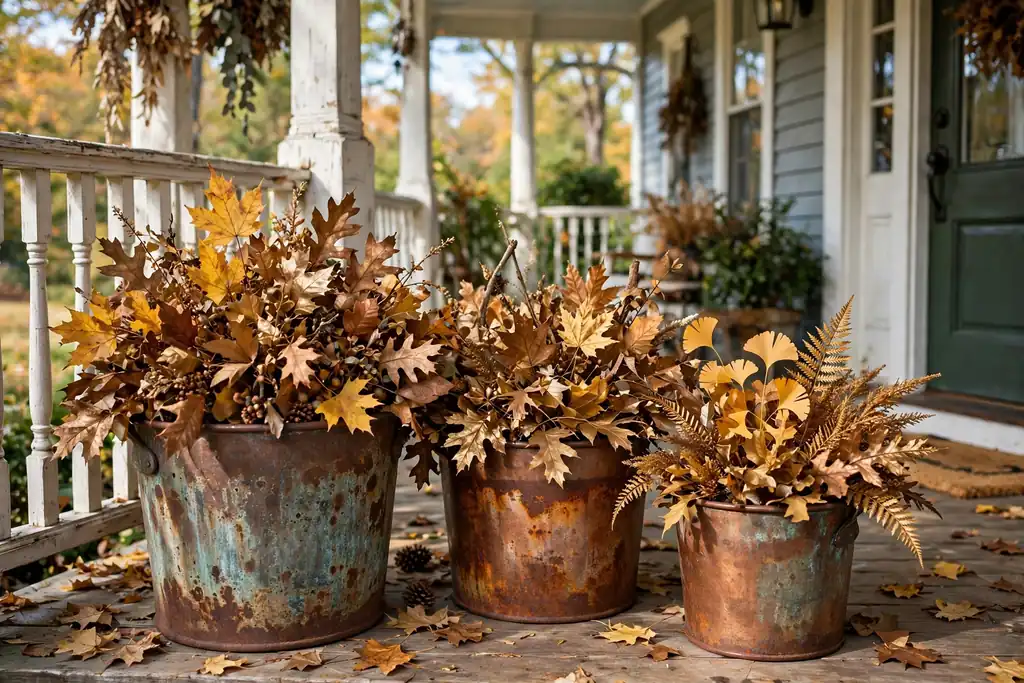
Use copper or copper toned pots, and plant them with foliage in rust, bronze, and deep gold for a warm, metal led fall display. Copper suits brick houses, warm wood doors, and porches with brass hardware, and it ages to a soft patina that still reads as fall. Use real copper only where the budget allows, and copper toned resin elsewhere for the same color at lower weight.
Pair copper pots with plain green foliage, such as ivy or ornamental grasses, so the metal stays the warm note. Wipe pots clean after rain, and set them on feet to avoid stains on stone. If the patina darkens more than you like, a gentle clean with a soft cloth restores some shine without harsh chemicals.
20. Blue and White Ceramic Pots with Orange Mums
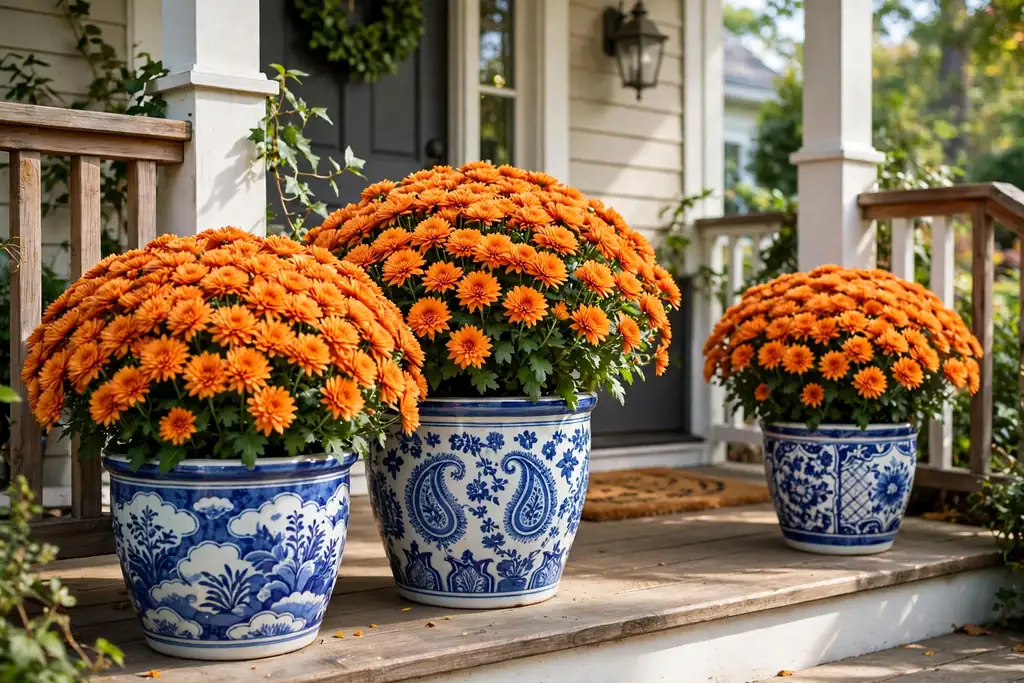
Set orange mums in blue and white ceramic pots for a sharp color contrast that stands out from the street. The blue and orange pairing suits white houses, coastal porches, and entries that need one bold note. Use glazed ceramic for a clean finish, and keep the pot size large enough that the mum fills it without crowding.
Place the pots where they get sun, since mums bloom best with light, and water at the base to keep blooms dry. Bring glazed ceramic inside before a hard freeze if the pots are not rated for frost, since trapped water can crack them. Repeat the blue once more, in a door mat or a house number plaque, to link the pots to the house.
21. Vintage Wagon Planters for a Country Porch
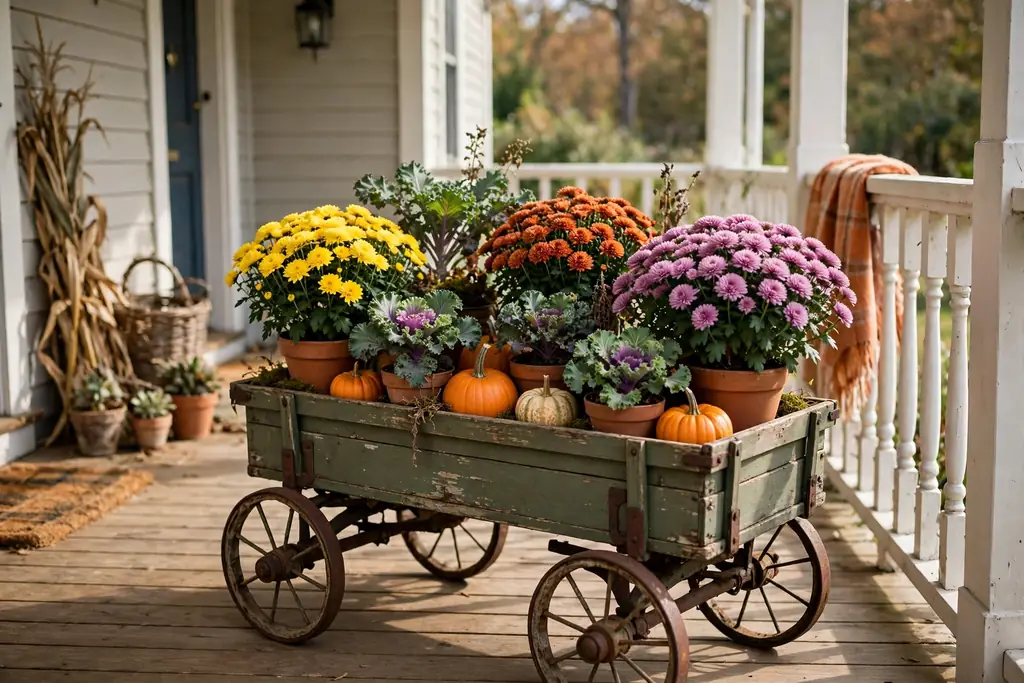
Use a small vintage style wagon or a wooden wheelbarrow as a planter, filled with potted mums, kale, and a few pumpkins. A wagon suits a wide porch or a front yard edge, and it gives a long, low display that reads as one piece. Keep plants in their pots inside the wagon, so you can lift them out for watering and winter storage.
Set the wagon on level ground, and chock the wheels so it does not roll. Line the bed with plastic to protect wood, and drill or leave drainage gaps so water does not pool. This display works best as a seasonal feature, so move the wagon under cover in winter and store the plants separately.
22. Milk Can Planters by the Steps
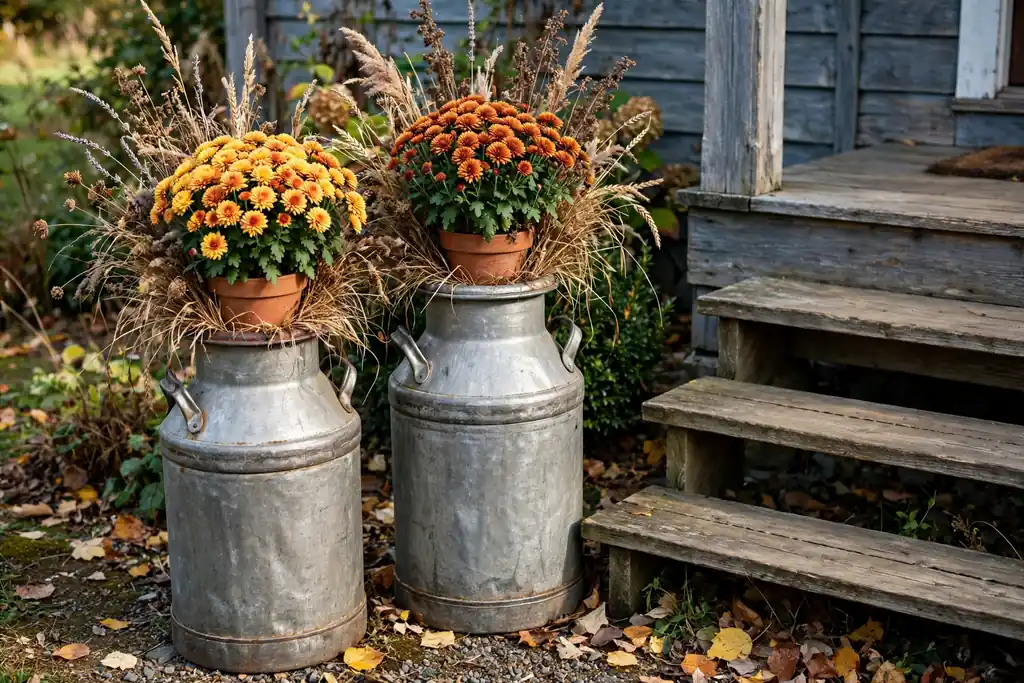
Place one or two old style milk cans beside the porch steps, and set a potted mum or a bunch of dried grasses in the top of each can. Milk cans suit farmhouse porches and narrow entries, since they are tall and slim, and they add height without a wide footprint. Use cans with a stable base, and set the plant pot inside the can opening, not loose soil in the can itself.
Add a small pumpkin at the base of each can to ground the tall shape. Check cans for rust inside, and line them if needed, so rust does not stain the porch. Bring cans inside in winter, since standing water inside a metal can can freeze and split seams.
23. Stacked Pot Towers for Small Porches
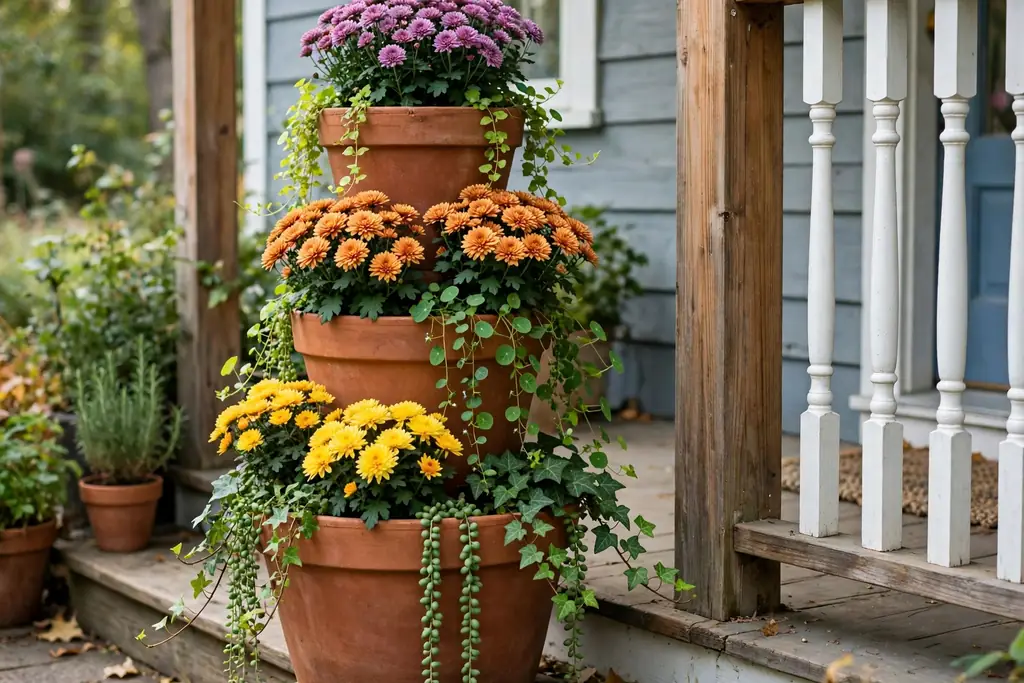
Build a pot tower by stacking three pots of decreasing size, with a rod through the center for stability, and plant mums and trailers in each level. A tower suits a small porch corner, since it gives three layers of planting in the footprint of one large pot. Use light pots, such as resin or plastic, to keep the tower stable and easy to move.
Plant trailers in the top and middle levels so they spill over each pot edge, and keep upright plants in the bottom pot for balance. Water each level slowly, since water runs down through the tower, and check that the rod stays straight after rain. Take the tower apart for winter storage, and store pots nested to save space.
24. Half Barrel Planters with Mums and Kale
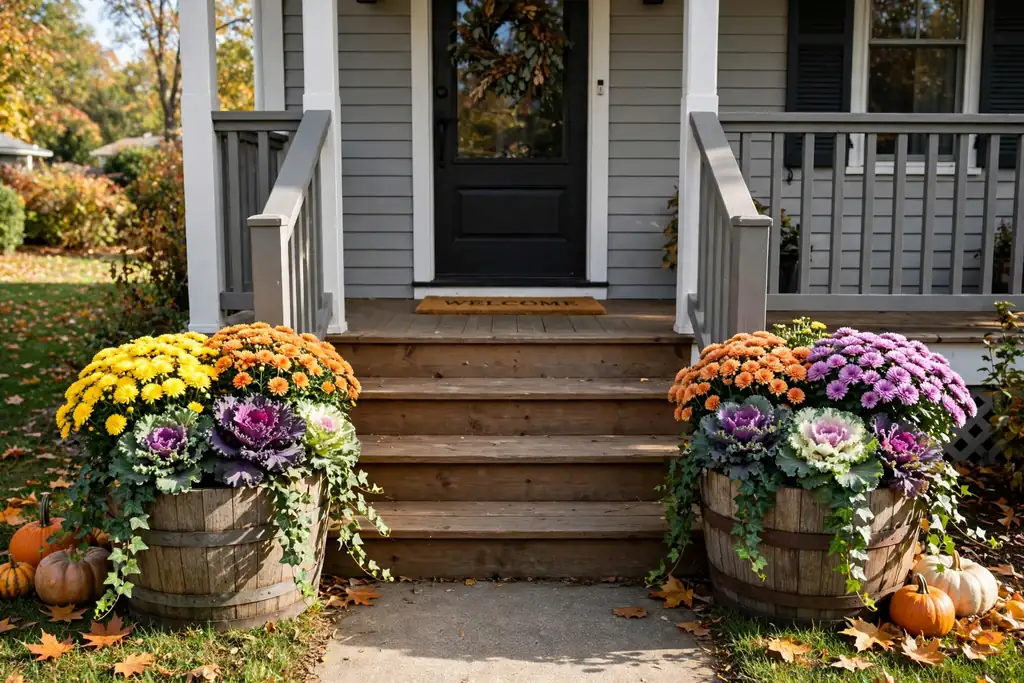
Fill half barrels with a mix of mums and ornamental kale, and set one barrel on each side of the steps for a full, rustic entry. Half barrels hold a lot of soil, so they suit large porches and houses with a wide facade, and they dry out more slowly than small pots. Line the barrel with plastic, cut drainage holes, and raise it on bricks for airflow.
Plant the tallest kale in the center, mums around it, and a trailer at the front edge for a finished shape. Water deeply but less often, since barrel soil stays damp longer, and check the base for rot each season. Half barrels are heavy when watered, so place them where they will stay for the season.
25. Cream and Green Monochrome Planters
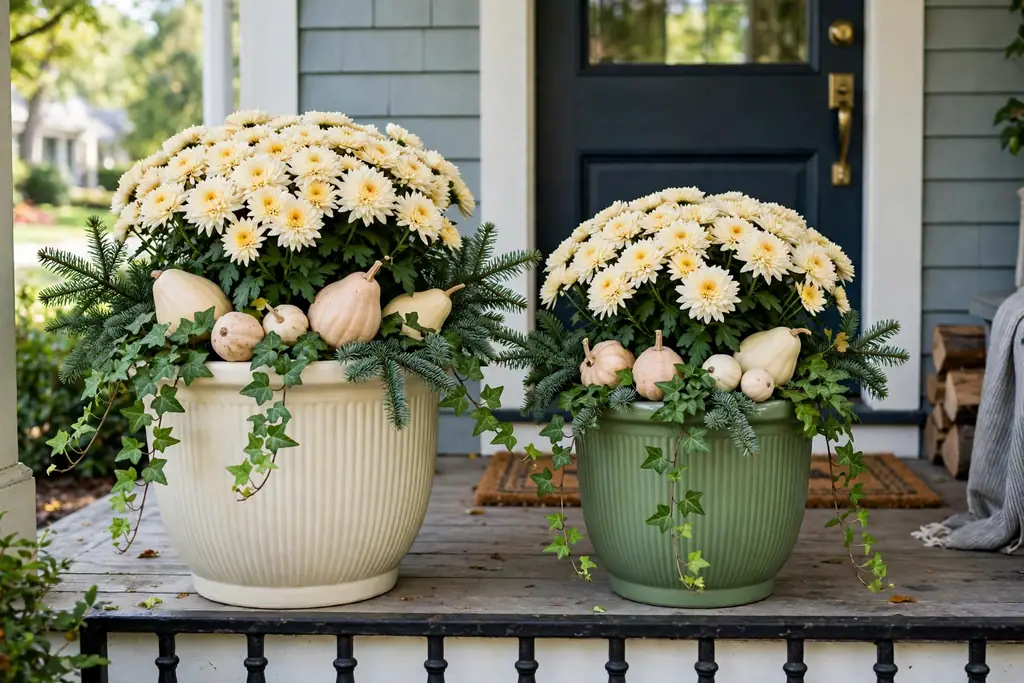
Keep the whole porch to cream and green, with cream mums, pale gourds, ivy, and evergreen sprigs in plain cream or sage pots. A monochrome scheme suits houses with a lot of pattern elsewhere, such as patterned brick or a busy door, and it looks calm from the street. Use foliage for texture, since color contrast is low, with ruffled kale, smooth ivy, and spiky grasses side by side.
Repeat cream in at least two pots, and green in every pot, so the scheme holds together. Cream mums show dirt fast, so deadhead often and keep pots clear of muddy paths. This scheme carries well into late fall, since evergreen sprigs and ivy stay green after blooms fade.
26. Jewel Tone Planters with Purple and Orange
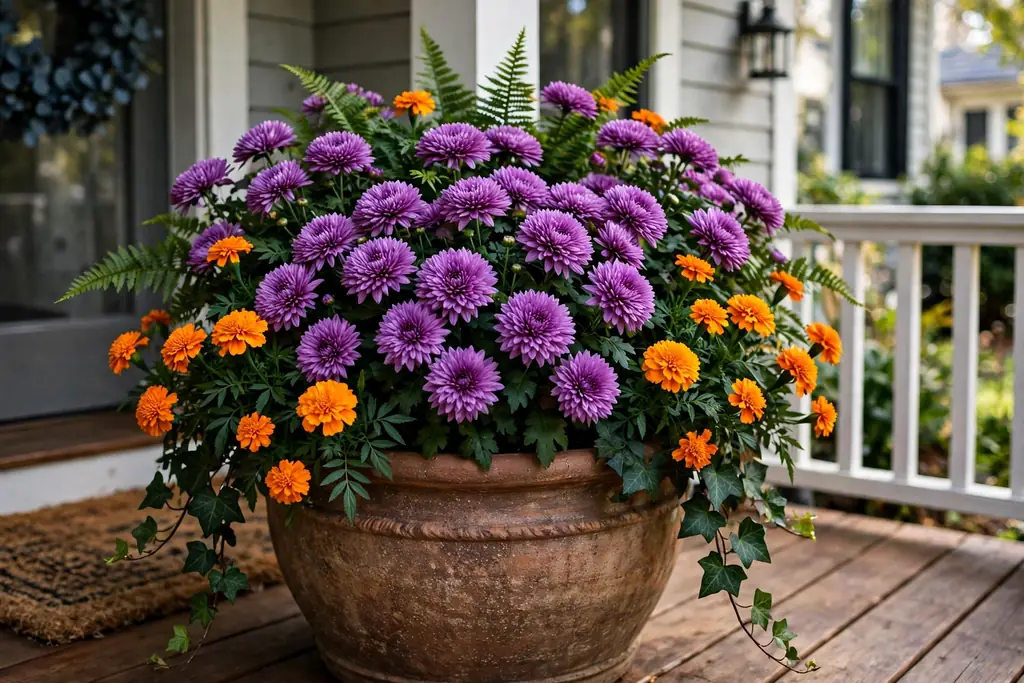
Mix purple mums, orange marigolds or mums, and deep green foliage in one or two large pots for a jewel tone display. Jewel tones suit grey houses, dark doors, and porches that need warmth, and they photograph well in autumn light. Keep the mix to two flower colors plus green, so the pot looks rich rather than busy.
Plant purple at the back or center, orange around it, and green trailers at the edge for depth. Water evenly, since mums and marigolds dry out at different rates, and deadhead both to keep blooms coming. If one color fades early, replace just that plant, and the pot keeps its jewel tone balance.
27. Mini Pumpkin Topiary in an Urn
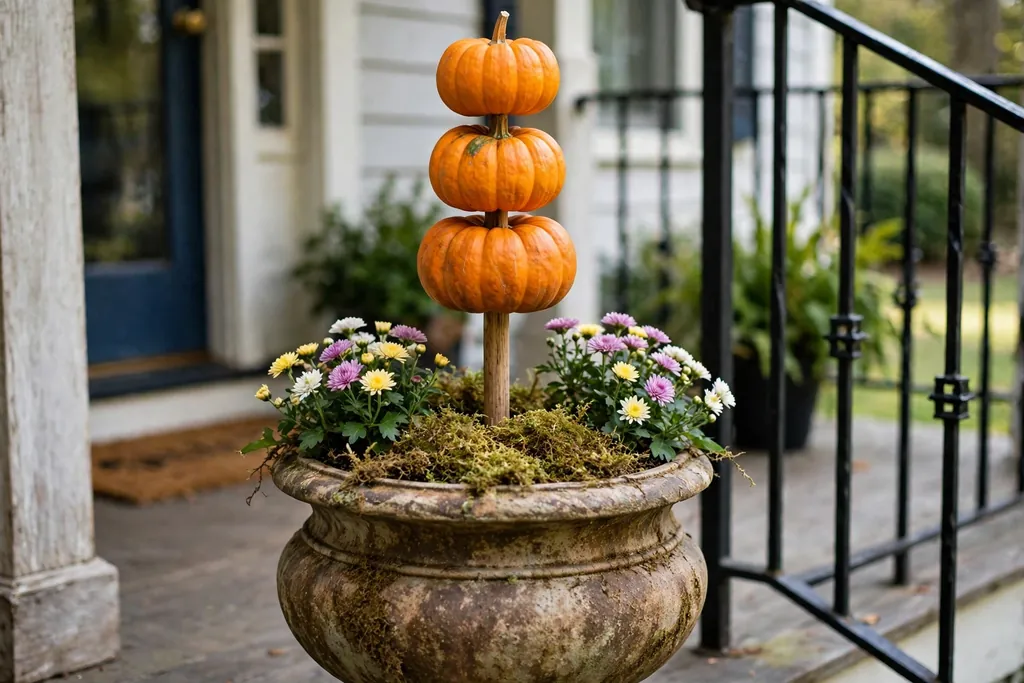
Stack three mini pumpkins of decreasing size on a dowel in an urn, with moss and small mums around the base, for a topiary shape that needs no pruning. This suits a formal porch or a narrow entry, since it gives height in a small footprint, and it is easy to build in an afternoon. Use firm, unblemished pumpkins, and a dowel that fits snugly through their centers.
Set the urn where it will not be bumped, since the stack is top heavy, and keep it under cover in rain to slow softening. Replace pumpkins as they soften, and compost them at the end of the display. For a longer lasting version, use faux mini pumpkins on the dowel and live mums at the base.
28. Pinecone and Evergreen Transition Planters
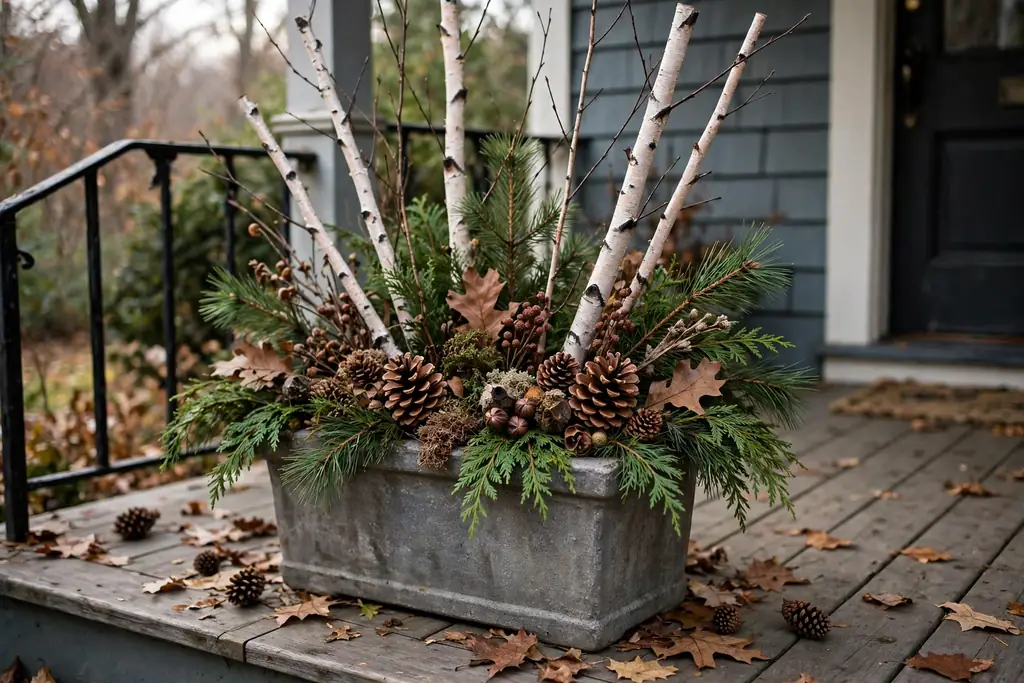
Build a late fall planter with evergreen sprigs, pinecones, and birch stems, with one or two mums left for early color. This planter bridges fall and winter, so you do not need to replant in November, and it suits porches that stay decorated into the holiday season. Push evergreen stems firmly into soil, and nest pinecones among them at different heights.
Water the soil lightly to keep stems fresh, and mist evergreens on dry days. Keep pinecones dry where possible, since wet cones close up and lose their shape. Add a ribbon or a small lantern beside the pot, not inside it, if you want a holiday note without changing the planting.
29. Wheat and Dried Flower Planters
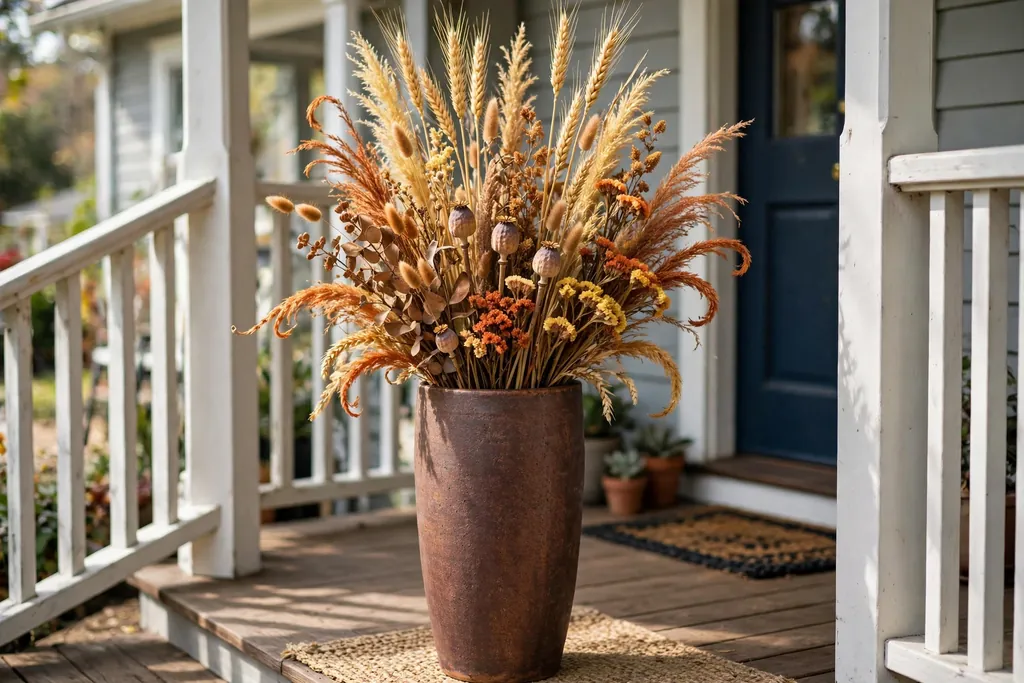
Fill tall pots with wheat stems, dried grasses, and dried flowers in gold, rust, and cream for a harvest planter that needs no watering. Dried planters suit covered porches and sheltered entries, where wind and rain will not break stems, and they last the whole season with no upkeep. Bundle stems in small groups, and push them into soil or foam at varied heights.
Keep dried planters away from open flames, heaters, and lanterns with real candles, since dry stems catch fire easily. Dust stems gently with a soft cloth, and replace any that snap. This planter pairs well with a live mum pot beside it, so the porch still has fresh color next to the dried display.
30. Bench Flanked Planters for a Sitting Porch
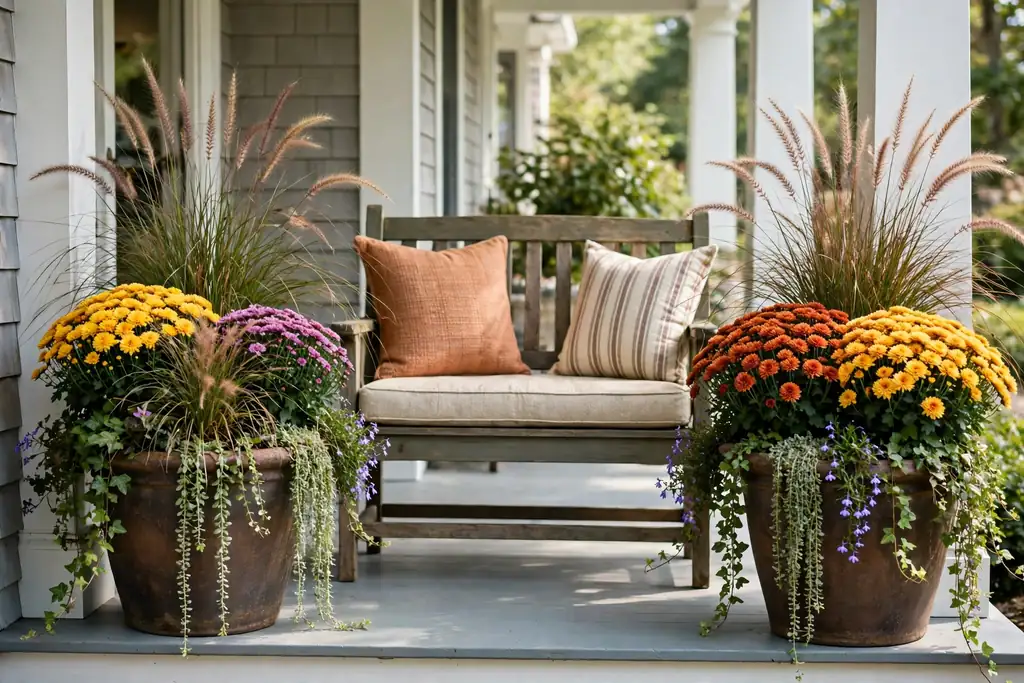
Place a bench on the porch, and set a large planter on each side of it, filled with mums, grasses, and trailers that soften the bench ends. This idea suits porches used for sitting, since planting frames the seat rather than blocking it, and it gives a reason to pause at the door. Keep planters clear of the bench legs, so the bench stays stable and easy to move.
Choose planters at bench seat height or slightly lower, so they do not block the view from the bench. Water at the base, and trim trailers before they cover the bench seat. A cushion in a fall color on the bench links the seat to the planters without more pots.
31. Color Blocked Pot Row Along the Path
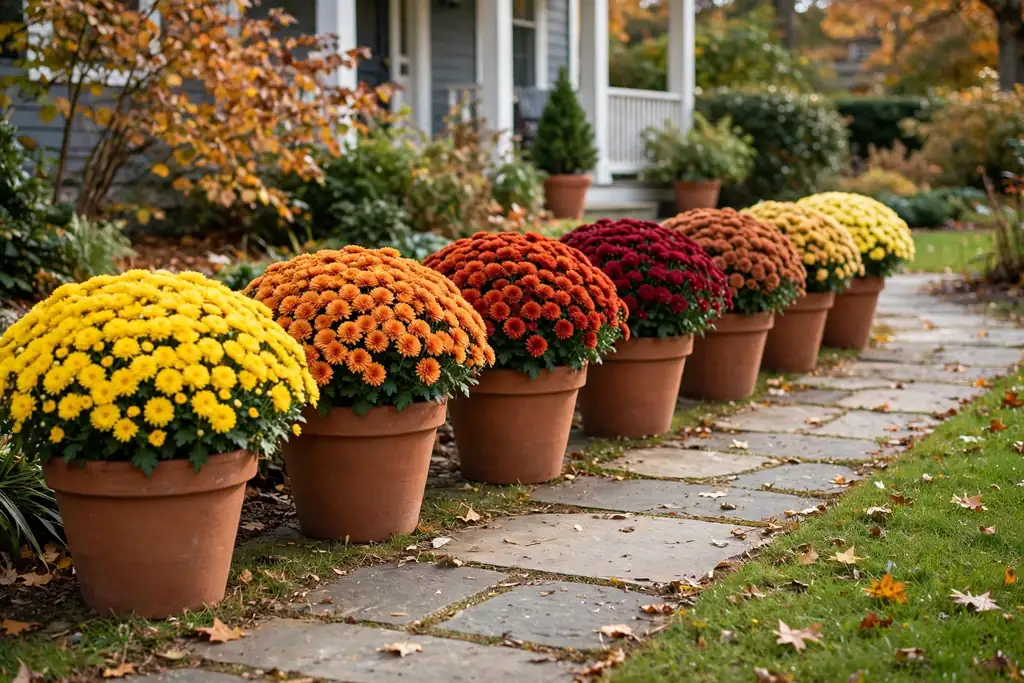
Line the front path with pots in a single color each, such as gold mums in the first pot, rust in the second, and burgundy in the third, for a color blocked walk to the door. This suits long, straight paths and plain facades, where a row of color guides the eye to the entry. Use pots in the same size and material, so color, not container shape, does the work.
Space pots evenly, and keep them clear of the path edge so guests can pass. Water each pot on the same schedule, and replace a faded pot with a fresh plant in the same color to keep the row even. This row works well with a plain door mat, since the pots already carry the color story.
32. Shade Porch Planters with Ferns and Heuchera
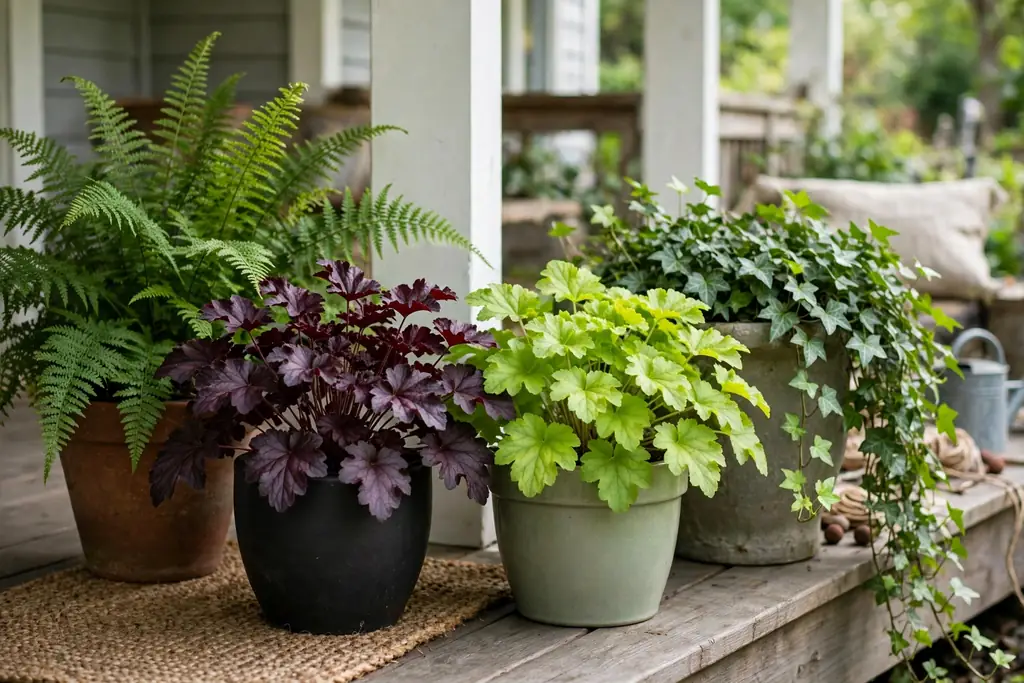
Plant shade tolerant fall pots with ferns, heuchera in burgundy and lime, and ivy for porches that get little direct sun. North facing and covered porches need foliage first, since mums bloom poorly in shade, and heuchera gives leaf color all season. Use a moist, free draining mix, and water when the top inch of soil feels dry.
Group three shade pots near the door, and repeat heuchera color in at least two of them for a linked look. Ferns need shelter from wind, so place them in the most protected corner. Bring tender ferns inside before frost, and leave hardy heuchera outside with a mulch layer over the soil.
33. Sunny Porch Planters with Peppers and Marigolds
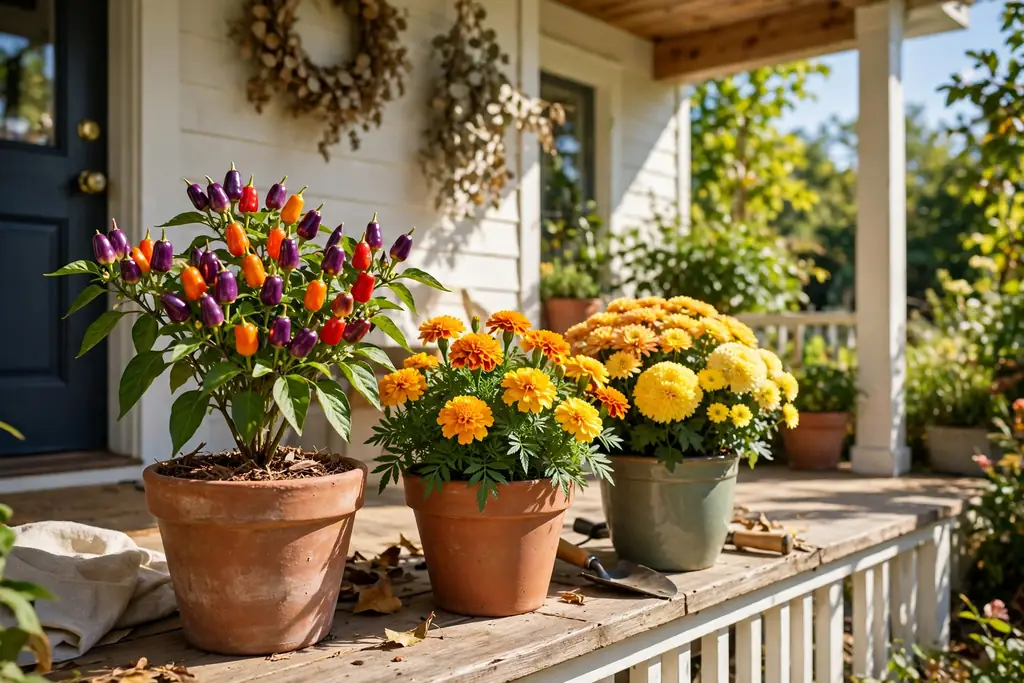
Use ornamental peppers, marigolds, and sun loving mums in pots on a sunny south facing porch, where heat and light keep blooms going into fall. Ornamental peppers add small, bright fruits in red, orange, and purple, and they suit porches that stay warm late in the season. Plant them in full sun, and water when the soil dries, since pots in sun dry out fast.
Keep ornamental peppers away from young children and pets if you are unsure whether a variety is edible, and label the pot if needed. Deadhead marigolds often to keep blooms coming, and replace plants that fade with fresh mums in the same color. Sunny pots need a saucer on painted wood, since frequent watering can stain surfaces.
34. Refreshed Summer Pots Without Repotting
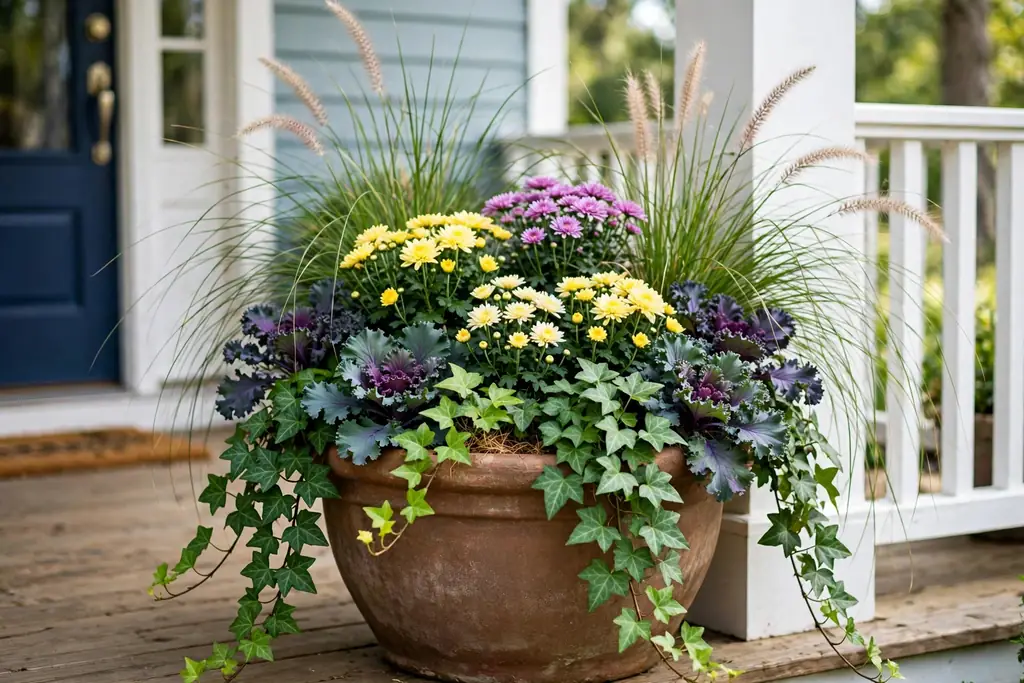
Refresh summer pots for fall by lifting out faded annuals, dropping in potted mums and kale, and topping the soil with fresh mulch, without emptying the whole pot. This suits gardeners with good pots already in place, and it saves time, soil, and cost. Check that the pot still drains well, and clear blocked holes before you add new plants.
Keep any healthy summer foliage, such as ivy or grasses, and build fall color around it, so the pot does not look bare while new plants settle. Water the refreshed pot well on day one, then follow fall watering, less often as nights cool. This is the fastest fall planter on this list, and it works on any porch with pots already in place.
Conclusion
Fall front porch planters work best when you start with porch size and light, then repeat one container or one color across the entry. Mums and kale carry early fall color, grasses and berries add height, and evergreens, pinecones, and birch stems carry the display into late fall. Pick two or three ideas from this list that fit your porch, build them first, and add more pots only if the entry still looks bare. Save this list on Pinterest before your next porch refresh, and carry the same fall palette indoors with these fall bedroom decor ideas when you move inside.
FAQs
What plants last longest in fall front porch planters?
Ornamental kale and cabbage, heuchera, ivy, ornamental grasses, and evergreen sprigs usually last longest, since they are grown for leaves or structure rather than blooms. Mums last well too if you buy plants with many buds still closed, water at the base, and deadhead faded flowers. Tender summer annuals fade fastest in cool nights, so replace them first when you refresh a pot.
How often should I water fall porch planters?
Water when the top inch of soil feels dry, which may be every two or three days in warm, sunny spells and once a week or less as nights cool. Pots in sun and wind dry out faster than pots on a covered porch, and small pots dry out faster than large ones. Water at the base in the morning, let excess drain away, and empty saucers so roots do not sit in water.
Can I use the same pots for fall that I used in summer?
Yes, if the pots drain well and are not cracked. Empty out faded annuals, clear blocked drainage holes, top up with fresh mix, and drop in potted mums, kale, or grasses. Keep healthy trailers or grasses from summer if they still look good, and add fresh mulch to finish the pot. Bring terracotta and glazed ceramic pots inside before a hard freeze if they are not rated for frost.
What is the easiest fall planter for a small porch?
Start with one matched pair of pots by the door, or a single pot tower in a corner, filled with mums and a trailer. A pair needs little space, reads clearly from the street, and can be built in under an hour. Hanging planters and railing planters are also good for small porches, since they use vertical space and leave the floor clear.
How do I keep pumpkins in planters from rotting too fast?
Choose firm pumpkins with no soft spots or cuts, set them on a dry board or stone rather than wet soil, and keep them out of standing water. Wipe pumpkins dry after rain, and turn them every week or two to check the underside. Replace any pumpkin that softens right away, since one rotting pumpkin can mark a pot and attract insects to nearby plants.
Do fall porch planters need full sun?
Not all of them do. Mums, marigolds, and ornamental peppers bloom best in sun, while ferns, heuchera, ivy, and many foliage plants do well in shade. Check the light on your porch through the day, and match plants to it: sun lovers on a south facing porch, foliage plants on a north facing or covered porch. A pot in the wrong light will fade fast, even with good watering.