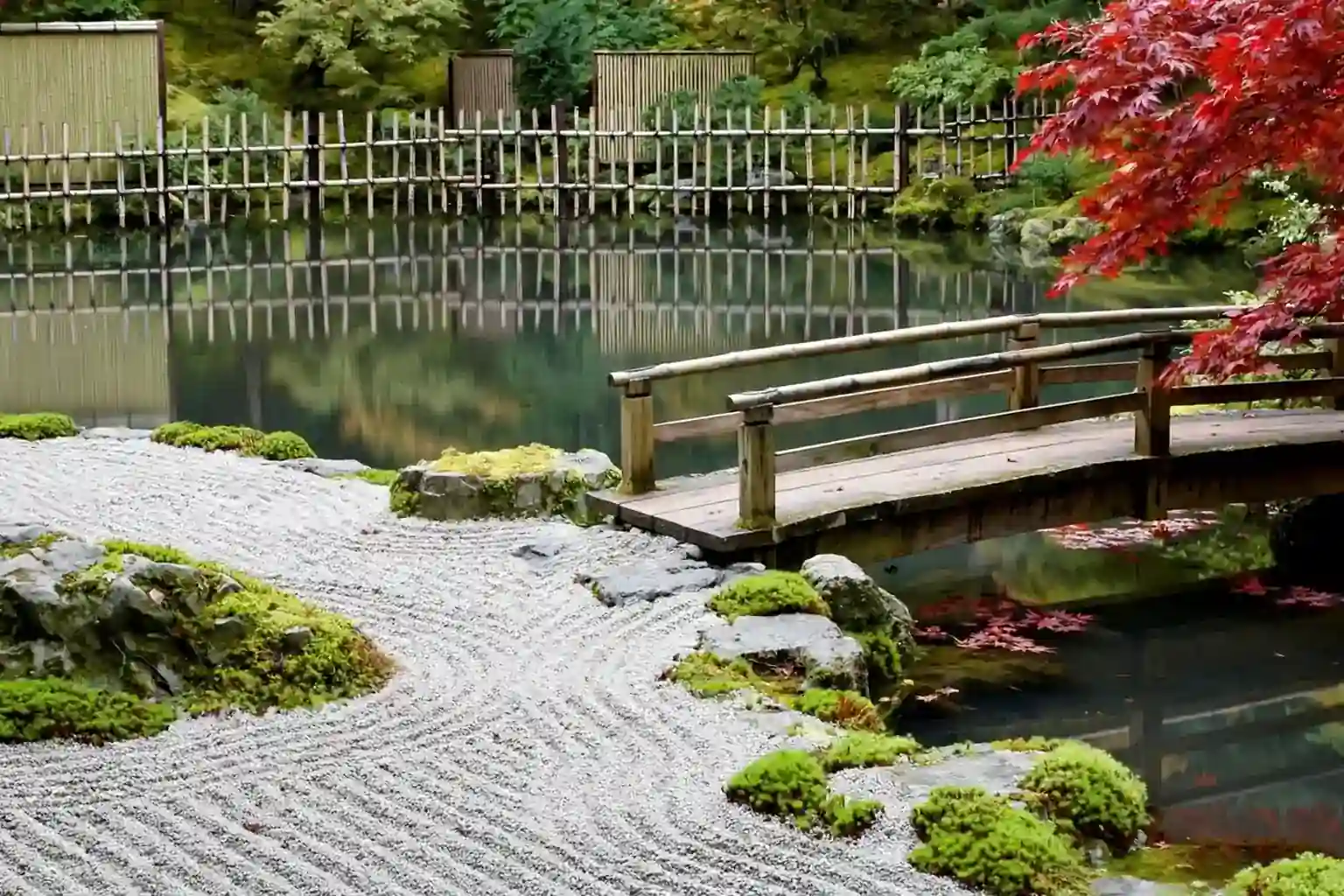
A Japanese garden works because it keeps things simple: a few natural materials, one clear focal point, and open space that lets each plant and stone be seen. Gravel, moss, bamboo, and water do most of the work, while a maple or a pruned pine gives the garden its shape through the seasons. These 12 Japanese garden ideas cover dry gravel gardens, paths, fences, water features, and quiet seating spots, so you can start with one corner or plan a whole yard. Pick the structure first, then the plants that suit your sun, shade, and watering routine, and repeat one or two materials so the space feels settled rather than busy.
Key Takeaways
- Start with structure: a path, a focal stone, a water feature, or a seating spot, then add plants around it.
- Use a small palette: gravel, stone, bamboo, moss, and green foliage carry the Japanese look without clutter.
- Give every feature a job: a lantern marks a turn, a basin sits by a path, and a bench faces the best view.
- Repeat one or two materials through the garden so separate areas read as one design.
- Choose plants for your light and climate, and check the label for sun, spacing, and your growing zone before you buy.
- Leave open space: a Japanese garden needs empty gravel or moss as much as it needs planting.
1. Rake a Gravel Dry Garden
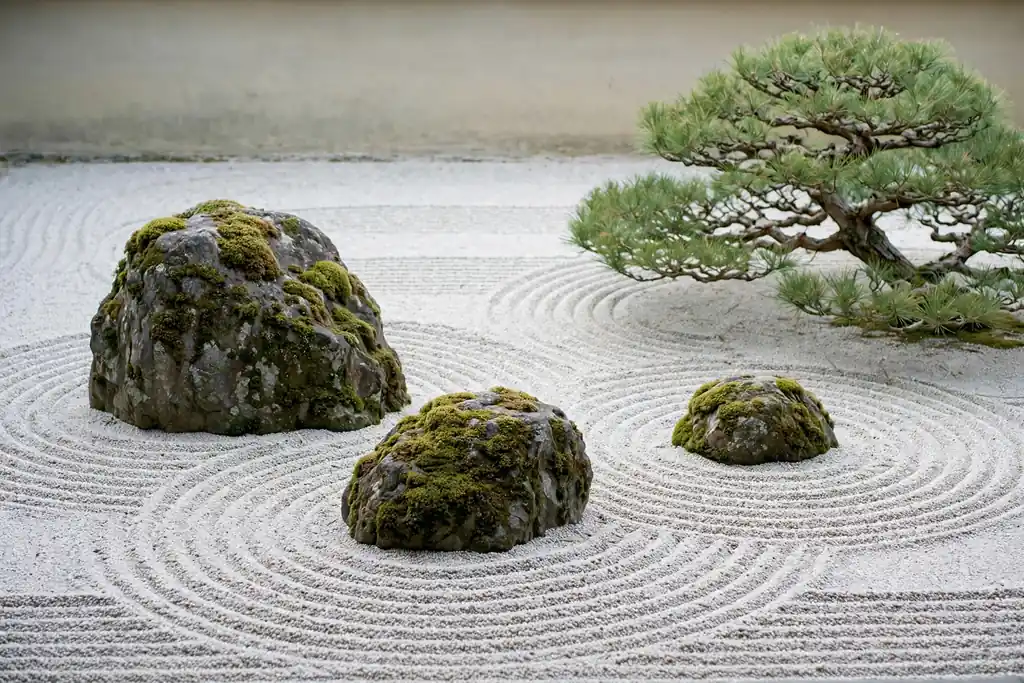
A raked gravel bed is the simplest Japanese garden to build, and it suits a small front yard, a side passage, or a courtyard where lawn struggles. Spread pale gravel over a weed membrane, set three or five rocks of different sizes as a group, and rake curved lines around them. The pattern gives the bed movement even when nothing is in flower, and the gravel keeps weeds down and drainage open.
Rake the lines again after rain or wind, which takes only a few minutes and keeps the bed looking cared for. Keep the rock group off center, with one tall stone, one low stone, and one reclining stone, so the arrangement reads as natural rather than lined up. Add one low plant, such as a small pine or a clump of mondo grass, at the edge, and leave the rest of the gravel clear.
2. Place Stone Lanterns as Focal Points
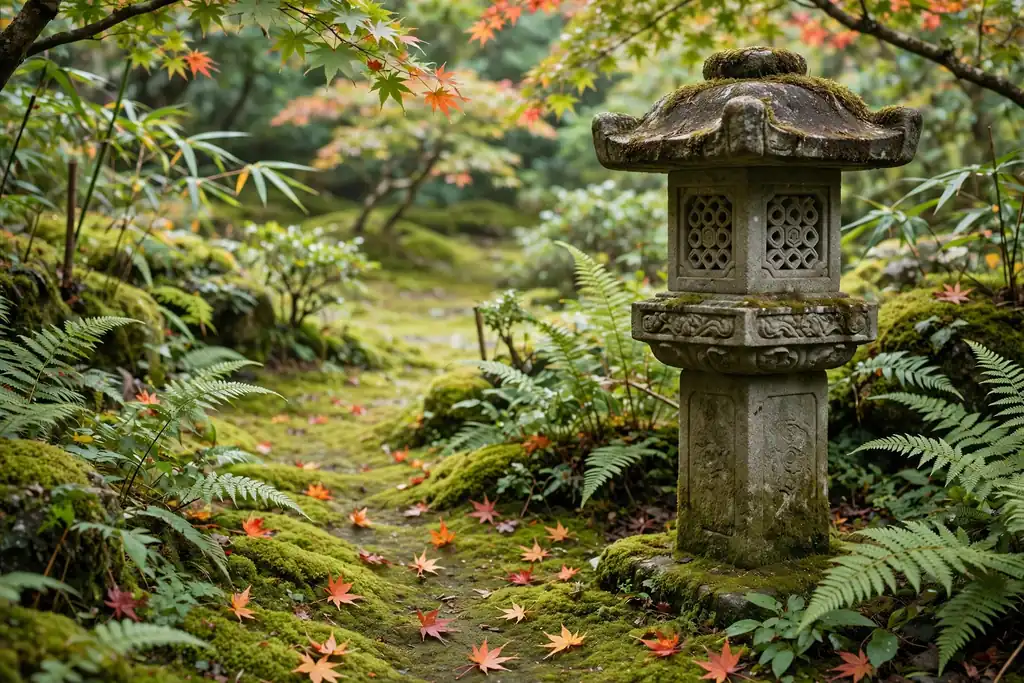
A stone lantern marks a turn in a path, the edge of a pond, or the end of a view, and it gives a garden structure in winter when planting is bare. Choose one lantern as the main focal point, and use smaller ones only where a second marker is truly needed, since too many lanterns crowd a small space. Set the lantern on a firm, level base of gravel or a flat stone so it does not lean or sink.
Look for a lantern with a simple shape that suits the scale of your garden: a tall lantern suits a wide lawn edge, while a short lantern suits a path or a moss bed. Keep planting low around the base so the shape stays visible, and wash the stone once a year to clear algae. At night, a small light inside or beside the lantern gives a soft glow without lighting the whole yard.
3. Add a Bamboo Water Feature
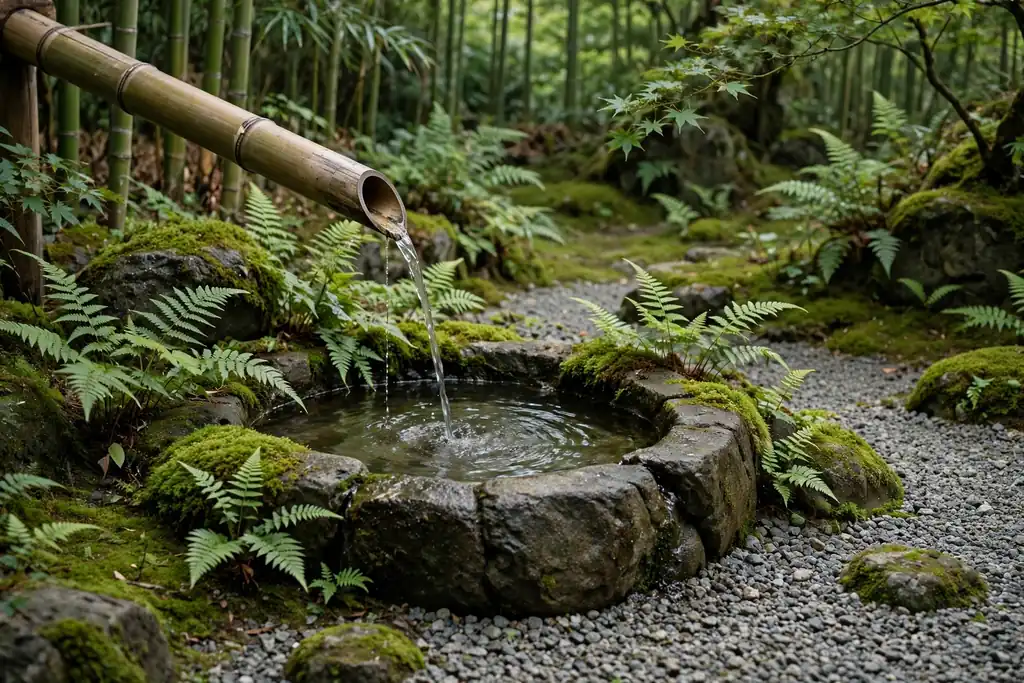
A bamboo water feature brings sound and movement to a quiet corner, and it needs only a small pump, a basin, and a water supply. A bamboo pipe that tips and fills, known as a shishi-odoshi, gives a soft knock as it empties, while a steady bamboo spout gives a constant trickle. Both suit a shaded corner near a seat, where the sound can be heard from the house.
Set the basin on level ground, keep the pump access clear for cleaning, and top up the water in hot weather. Clean the basin regularly to stop algae, and drain the feature before hard frost if the pump and basin are not frost proof. If plumbing is a problem, a solar pump in a shallow bowl gives a similar trickle without a mains connection.
4. Lay a Stepping Stone Path
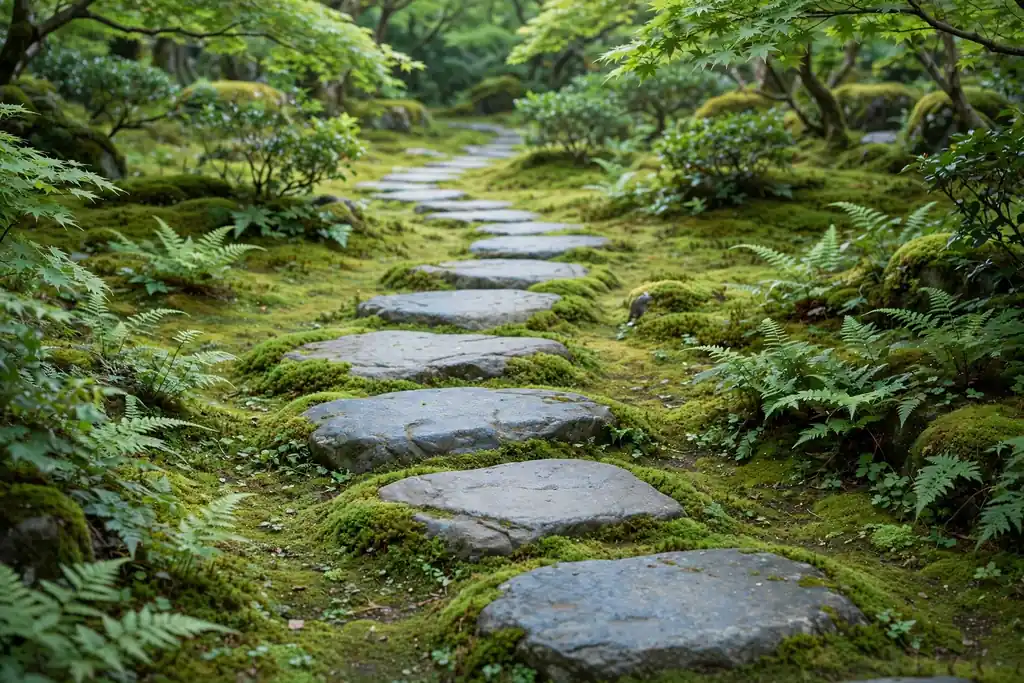
A stepping stone path slows the walk through a garden and turns a plain route into part of the design. Lay large, flat stones with a comfortable stride between them, set into moss, gravel, or low ground cover, and keep the tops level so the path is safe in wet weather. The path should curve gently rather than run straight, so each step reveals a new view.
Choose stones in one tone, such as grey or warm sandstone, and keep the gaps even so the path reads as a plan. Walk the route yourself before fixing the stones, and adjust any stone that wobbles or sits too high. Keep plants trimmed back from the path edges so walkers do not brush wet foliage, and sweep leaves off the stones in autumn so they stay safe underfoot.
5. Plant a Japanese Maple as a Focal Tree
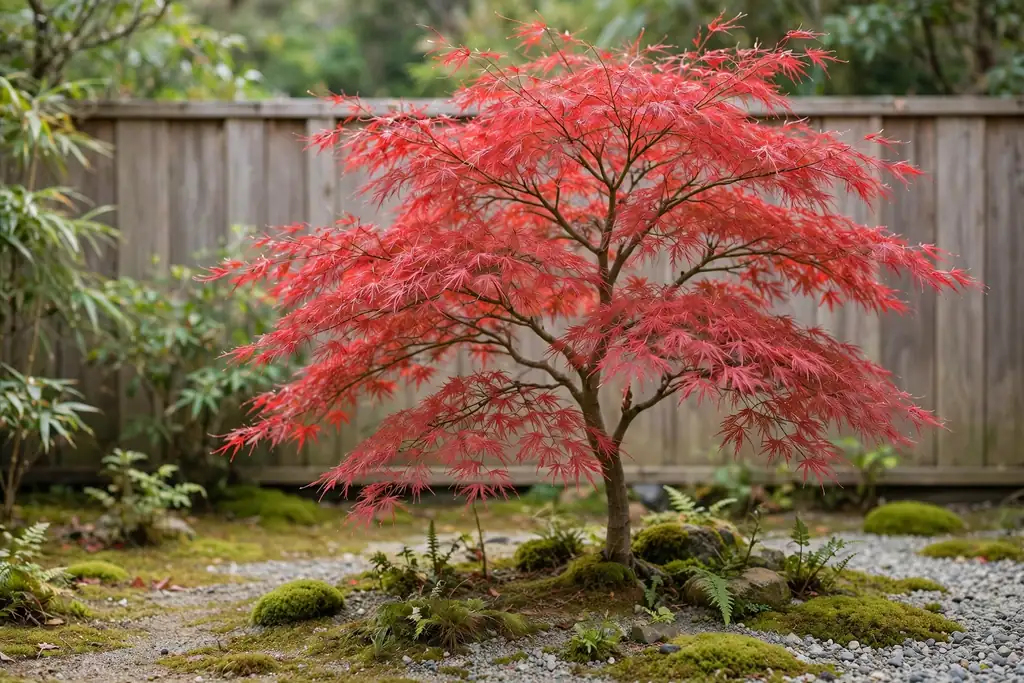
A Japanese maple gives a garden its seasonal color: fresh green or red leaves in spring, full shade in summer, and strong autumn color before leaf fall. Plant one maple as the main focal point, where it can be seen from a window or a seat, and give it room to spread, since a cramped maple loses its shape. Maples suit a sheltered spot with morning sun and afternoon shade in hot areas, and soil that drains freely.
Water well through the first dry season while the roots establish, and mulch the base to hold moisture. Prune lightly in late summer or winter to remove crossing branches and keep an open shape, but avoid heavy cutting, which spoils the natural form. Underplant with moss or low ferns so the ground below earns its place after leaf fall.
6. Grow a Moss Carpet
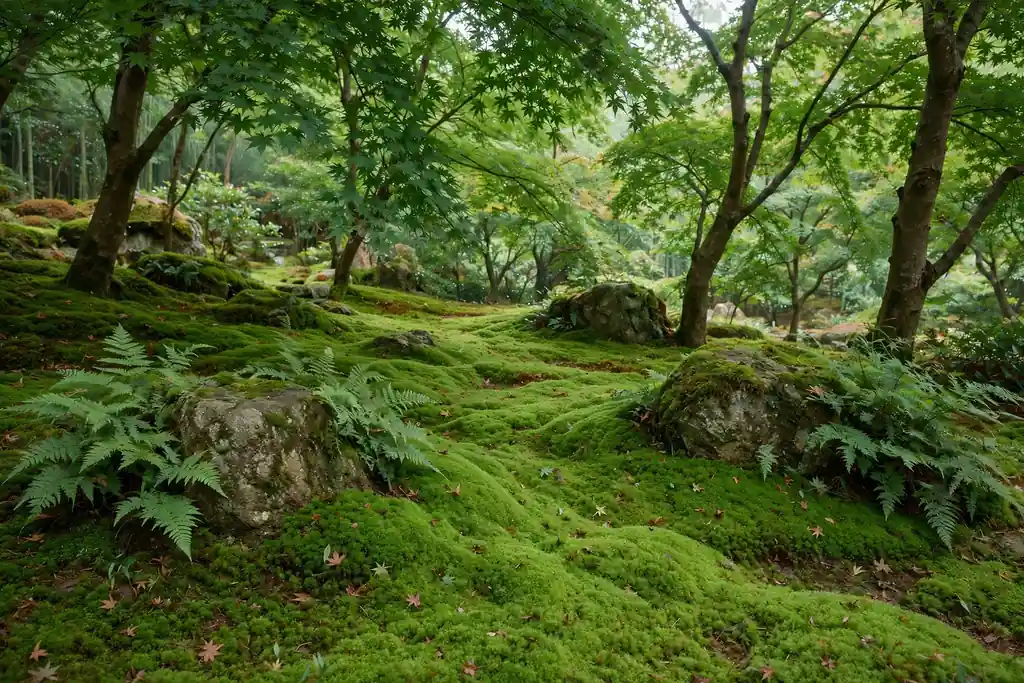
A moss carpet gives a shaded garden a soft, green floor that needs no mowing and stays green through winter. Moss suits damp, shaded spots where lawn struggles, such as under trees or on the north side of a house. Clear weeds from the area, press moss pieces or moss fragments onto bare, moist soil, and water them until they root and knit together.
Keep foot traffic light while the moss settles, and use stepping stones on the main route so the carpet is not worn thin. Moss needs moisture, so water in dry spells and keep fallen leaves cleared in autumn, since a thick leaf layer can smother it. If your garden is sunny and dry, choose gravel or ground cover plants instead, because moss will struggle without shade and damp soil.
7. Build a Small Wooden Bridge
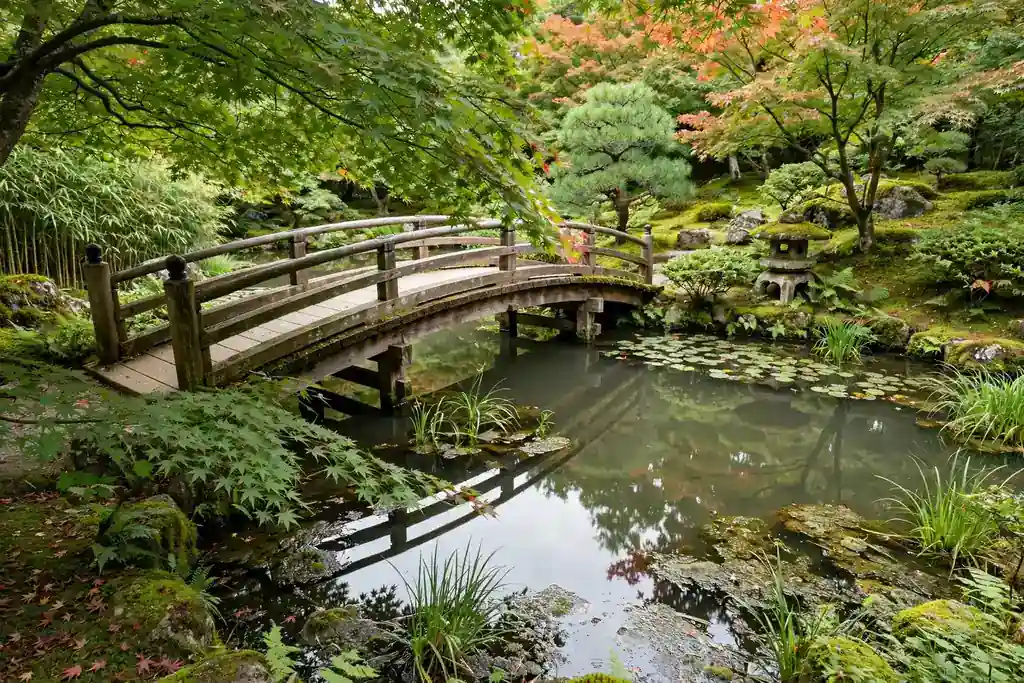
A small wooden bridge over a pond, a dry gravel stream, or a low boggy patch gives a garden a crossing point and a view worth stopping for. Build the bridge from weather resistant wood, with a gentle arch and a handrail if the span is wide or the drop is more than a step. Keep the deck boards close together and level, and fix the ends on firm footings so the bridge does not rock.
Site the bridge where the view from the middle is the best in the garden, such as across water toward a maple or a stone group. The same practical thinking used in these garden bench ideas applies here: give the crossing a reason, such as a seat or a focal point on the far side, so people use it rather than walk around it. Oil or seal the wood as the maker directs, and check the fixings each spring.
8. Screen the Space With a Bamboo Fence
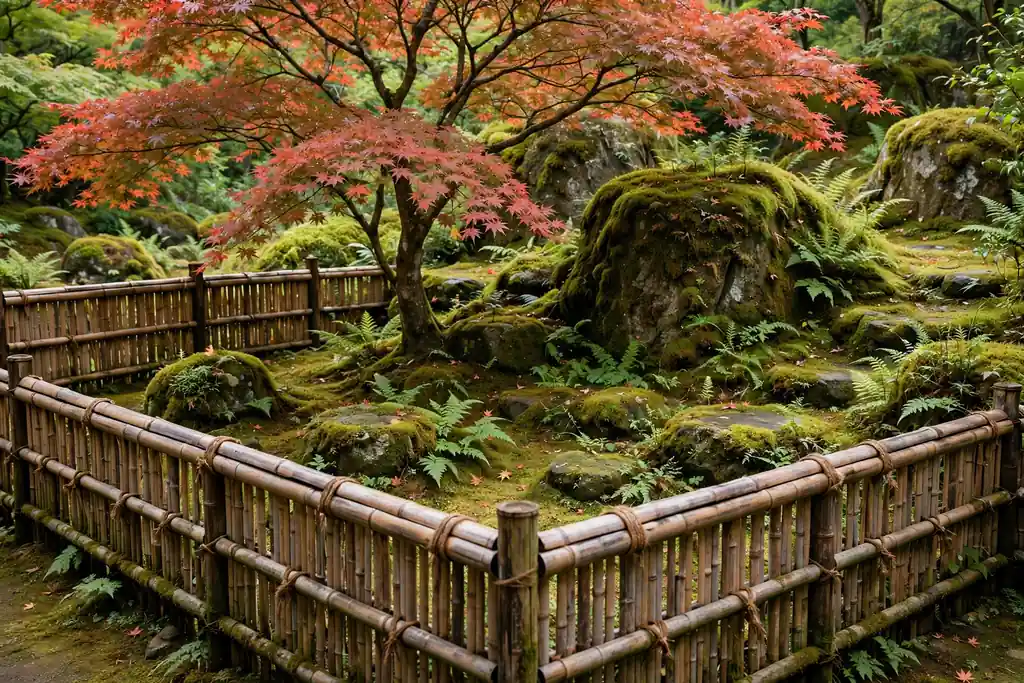
A bamboo fence gives privacy, hides a plain wall or a neighbor’s view, and sets the tone for the whole garden in one step. Fix bamboo poles or ready made bamboo panels to sturdy posts, with a small gap at the base for air movement so the fence dries after rain. A fence about head height screens a seating area without shutting out light, while a taller fence suits a boundary that needs full cover.
Keep the fence line straight and the posts level, since a leaning bamboo fence is hard to ignore. Treat cut ends and check the ties each year, replacing any pole that has split or softened. Plant low ferns or moss at the base to soften the line, and keep climbing plants off the fence unless you want the bamboo hidden, since the fence itself is part of the look.
9. Shape a Cloud Pruned Pine
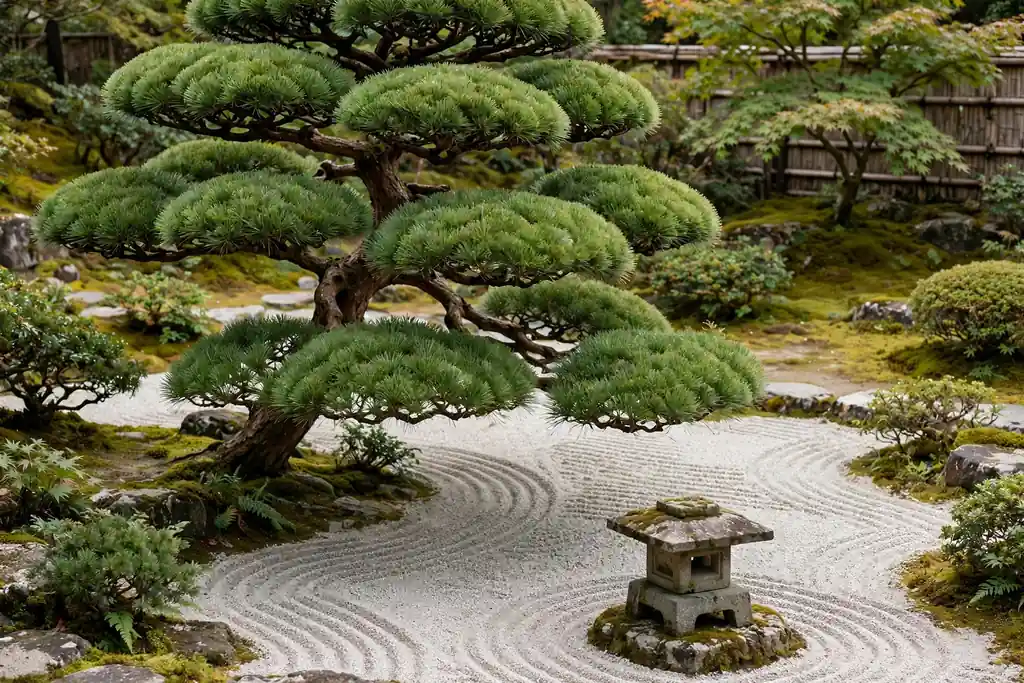
A cloud pruned pine, with its foliage clipped into rounded pads, gives a Japanese garden a sculptural tree that holds its shape all year. Start with a young pine that has a clear trunk and several branches, and clip each branch tip into a soft, rounded pad, leaving open space between pads so the branch structure shows. This pruning, called niwaki, takes patience, but a little work each year keeps the shape tidy.
Clip in late spring or early summer, after new growth has hardened, and step back often to check the shape from the viewing point. Remove dead or crossing shoots as you go, and avoid cutting into bare old wood, which may not regrow. A cloud pruned pine suits a gravel bed or a moss garden, where its shape can be seen clearly against open ground.
10. Set a Stone Water Basin by the Path
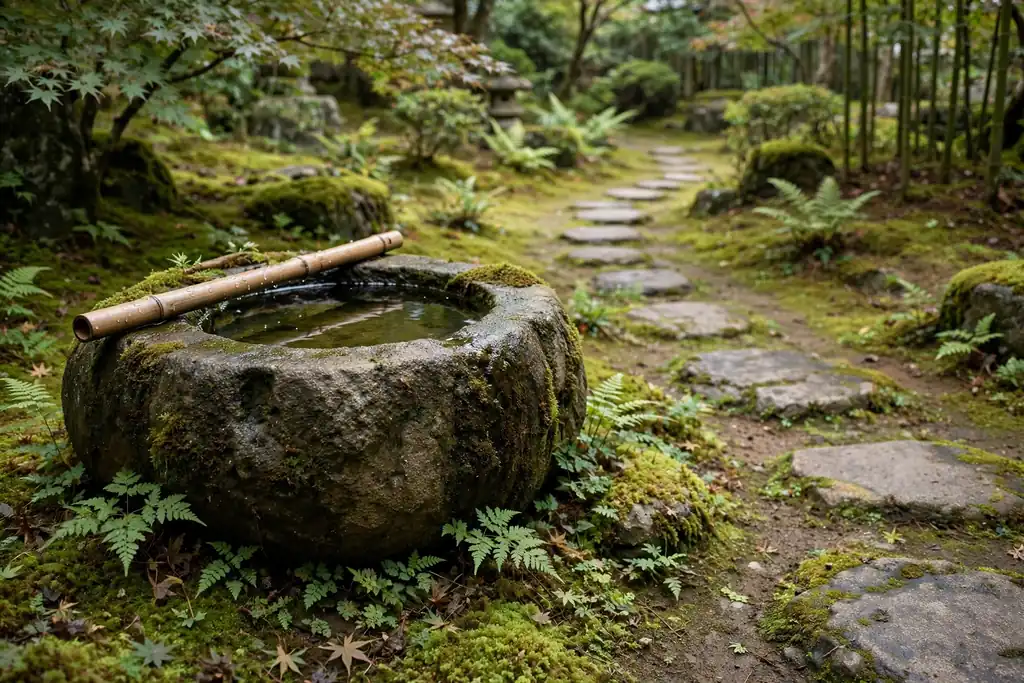
A stone water basin beside a path or near a seating spot gives a garden a quiet water note without a pump or a pond. Choose a basin with a simple carved shape, set it on a firm base of gravel or flat stones, and keep a bamboo ladle or a small dipper nearby for the traditional hand washing ritual. The basin suits a spot where visitors pause, such as a path junction or the edge of a tea nook.
Top up the water as it evaporates, clean the basin to stop algae, and drain it before hard frost if the stone could crack. Plant moss or small ferns around the base to settle the basin into the garden, and keep the area around it clear so the water stays clean. If a full pond is too much work, a basin gives the same calm water detail on a small scale.
11. Make a Tea Garden Seating Nook
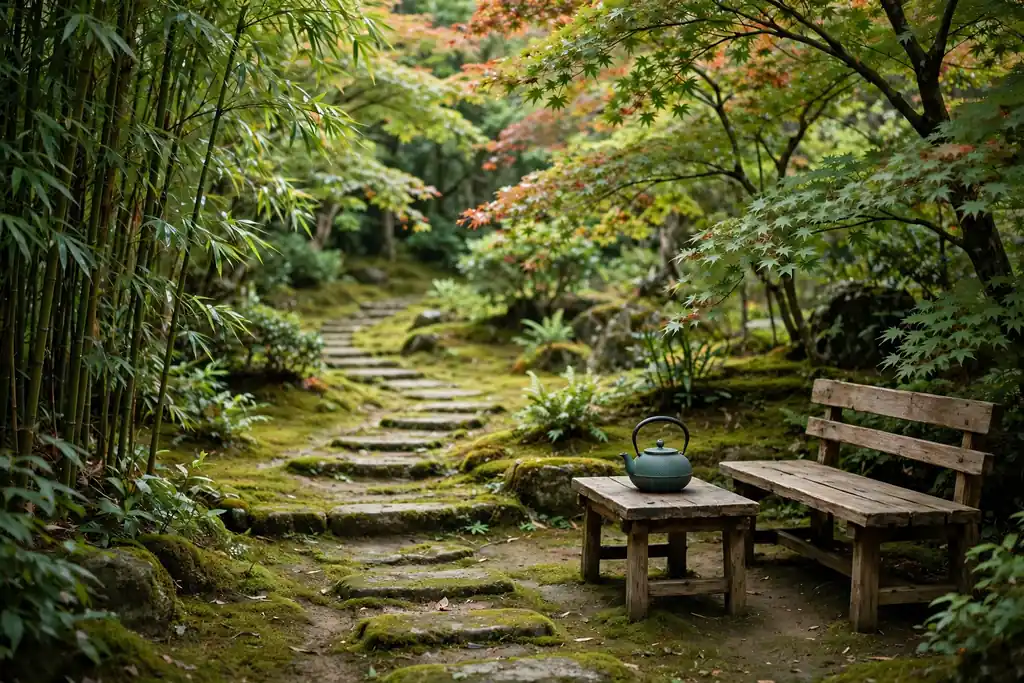
A tea garden seating nook is a small, sheltered seat placed for quiet sitting, not for meals or large gatherings. Choose a spot with shade, a view of water or a maple, and a dry path to it, then set a simple wooden bench or a pair of low seats on gravel or flat stones. Keep the nook small: one seat, one side surface for a cup, and planting close enough to feel enclosed without blocking the view.
For layout ideas for the seating itself, see these garden bench ideas, which cover spot, material, and footing for outdoor seats. Add scented planting nearby, such as jasmine or a small pine, and keep the path to the nook clear and dry so the seat gets used in all seasons. Bring cushions inside during wet spells, and sweep leaves from the seat so it is ready without a long tidy up.
12. Plan Planting for Four Seasons
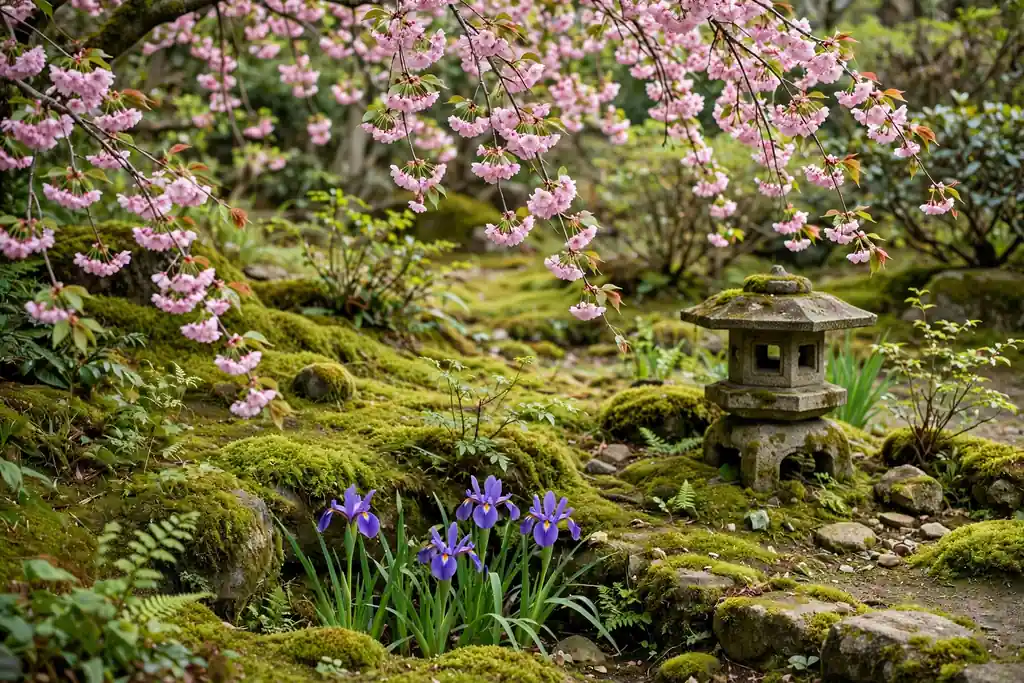
A Japanese garden earns its place when it looks good in every season, not only in spring. Plan by season rather than by plant alone: cherry blossom and fresh maple leaves in spring, iris and lush moss in summer, maple color and ornamental grasses in autumn, and pine, bamboo, and stone in winter. This spread means the garden never has a bare month, and each season gives a reason to step outside.
For color that pairs with the spring and summer planting, these pink flower garden ideas show how to group flowers in drifts rather than scattering single plants. Keep the structure, such as paths, fences, and stone, in place all year, and let the planting change around it. Check each plant label for sun, spacing, and your growing zone, and leave room for plants to reach their mature size.
Conclusion
A Japanese garden does not need every idea on this list. Pick one structure, such as a gravel bed, a stepping stone path, or a water feature, then add two or three supporting pieces, such as a stone lantern, a maple, and a moss carpet. Keep the material palette small, leave open space between features, and let the garden settle over a season before adding more. One well placed feature, seen every day from a window or a seat, will do more for a garden than several features crowded where nobody stops. For a related example of structure first planting, see these Greek garden ideas, which use stone, gravel, and a few strong plants in a similar calm way.
Save this list on Pinterest before your next nursery trip, and work through it one area at a time: structure first, then water and paths, then the planting that suits your light and climate.
FAQs
What is the easiest Japanese garden idea to start with?
A raked gravel bed or a stepping stone path is the easiest place to start. Both need only gravel or stones, a weed membrane, and a few hours of work, and neither needs plumbing or power. Start with one small area you see every day, such as a side passage or a corner by the door, and add a stone lantern or a maple only after the gravel or path feels settled.
How much space do I need for a Japanese garden?
A Japanese garden works in a space as small as a courtyard or a balcony corner, as long as you scale the features to fit. A gravel bed with three rocks, a bamboo water feature in a pot, and a moss patch can fit a tiny plot, while a pond, a bridge, and a maple need a larger yard. Choose one focal feature for a small space, and leave open gravel or moss around it so the area does not feel crowded.
Which plants suit a Japanese garden in a cold climate?
Pines, bamboo in a pot or a hardy variety, moss, ferns, and Japanese maples suit many cold climates, but tenderness varies between types, so check the label for your growing zone. In very cold areas, grow tender plants such as Japanese iris in a sheltered spot, and drain water features before hard frost. Stone, gravel, and fences give the garden structure in winter when planting is bare.
How do I keep a raked gravel garden tidy?
Rake the gravel lines again after rain or wind, which takes only a few minutes, and pull weeds as soon as they appear so they do not root through the membrane. Top up the gravel every year or two where it has thinned, and keep leaves cleared in autumn so they do not rot into the surface. A gravel bed needs far less work than a lawn, but a short weekly tidy keeps it looking deliberate.
Can I build a Japanese garden on a budget?
Yes, if you start with the cheapest structure first. Gravel, stepping stones, and a bamboo fence cost less than a pond or a bridge, and a small maple or a moss patch can be added later. Use local stone where possible, keep the feature count low, and repeat one material, such as gravel or bamboo, so a small number of pieces still reads as a full design.
Do Japanese gardens need a pond?
No, a pond is not required. A bamboo water feature, a stone water basin, or a dry gravel stream gives the same calm water note on a smaller scale and with less upkeep. A pond suits a larger garden with room for a pump, a liner, and safe edging, but a basin or a bamboo spout fits a courtyard and still brings sound and movement to the space.