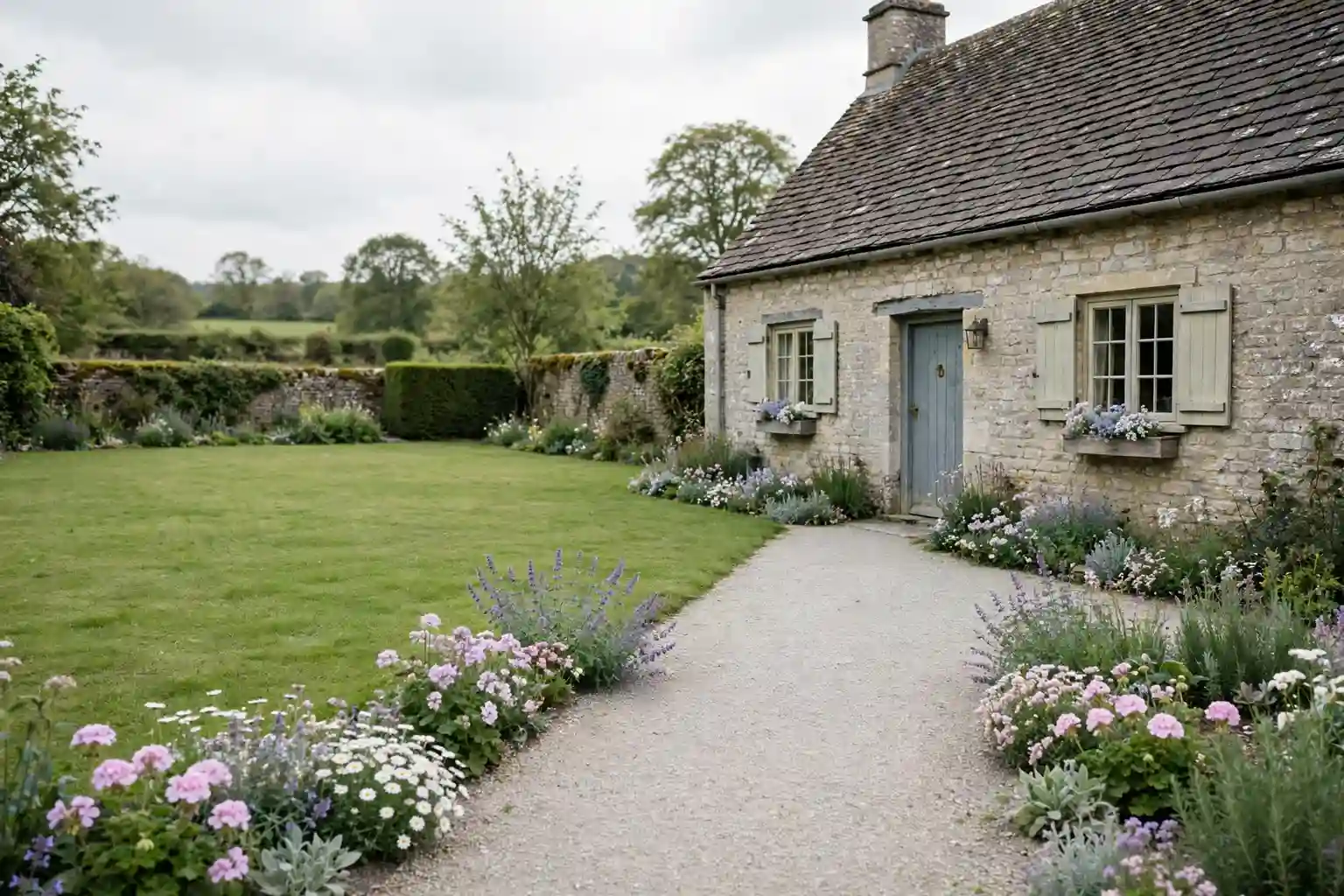
An English cottage garden looks full, soft, and a little untidy in the best way, because plants spill over paths, climb walls, and fill every border. The look comes from layering rather than from buying more plants: tall flowers at the back, roses and perennials in the middle, and low edging plants at the front, with structure from a path, a fence, and one or two seats. These 27 ways to create an English cottage garden cover borders, roses, paths, walls, scent, fruit, and wildlife, so you can start with one bed and add the rest over time.
Key Takeaways
- Layer every border by height, with tall plants at the back, medium plants in the middle, and low plants at the front.
- Give the garden structure first: a path, an edge, a fence or hedge, and a seat, then fill the beds with planting.
- Plant in groups and drifts, not single plants, so color and shape read clearly from the house and the street.
- Repeat a small palette of colors and materials, such as soft pink, white, stone, brick, and wood, through the whole garden.
- Add scent near paths and seats, with roses, lavender, sweet peas, and jasmine where you will brush past them.
- Plan for every season: spring bulbs, summer roses, late flowers, and evergreen shape for winter.
1. Layer a Cottage Border by Height
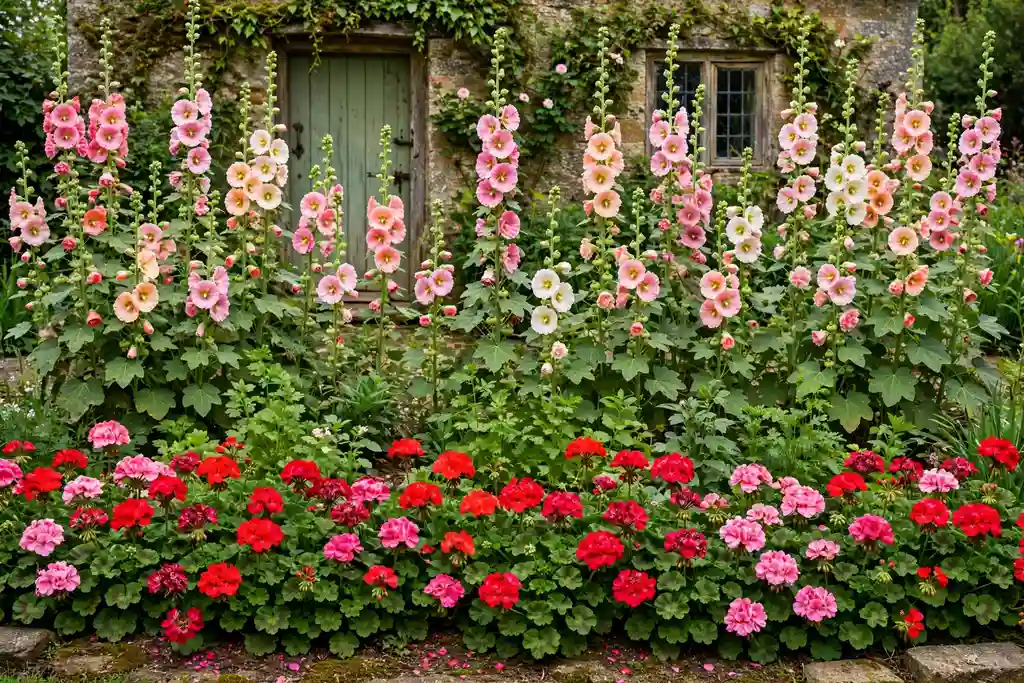
A layered border is the base of a cottage garden. Put tall plants at the back, medium plants in the middle, and low edging plants at the front, so the border reads as one deep planting rather than a row of single plants. Tall hollyhocks, delphiniums, and foxgloves go at the back, roses, peonies, and salvias sit in the middle, and hardy geraniums, catmint, and thyme edge the front.
Repeat one or two colors through the layers to tie the border together, and leave a narrow access strip behind the tallest plants so you can stake, deadhead, and cut back without stepping on the plants in front. For color led planting, the ideas in these pink flower garden ideas show how drifts of one color make a border read clearly.
2. Grow Climbing Roses Over an Arch
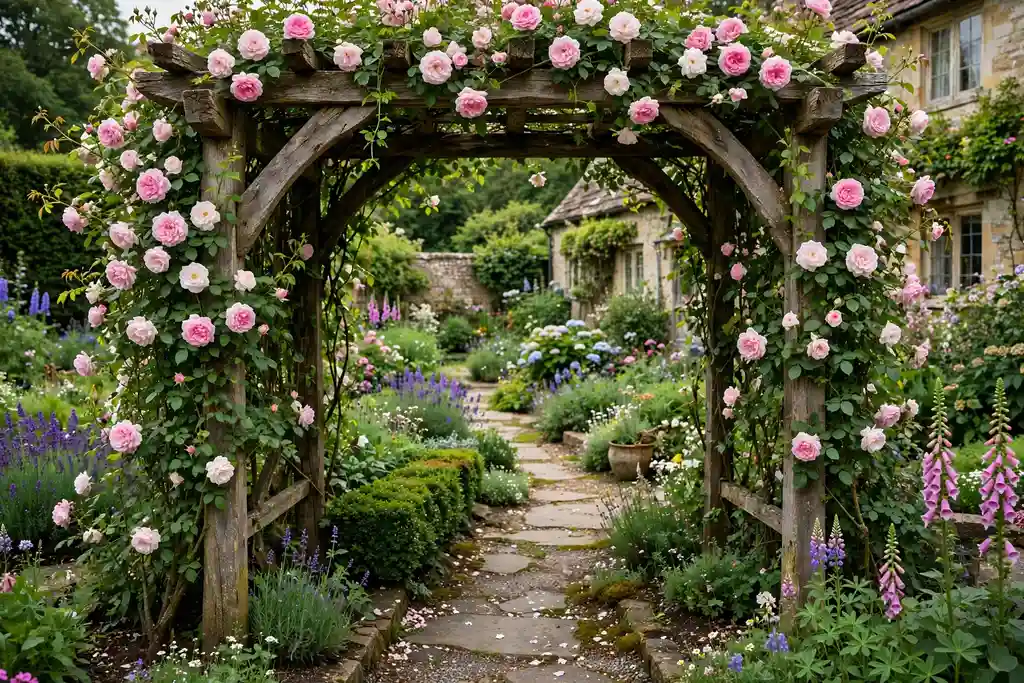
A rose arch over a path turns an ordinary walk into a garden moment. Fix a sturdy arch to firm footings, and train one climbing rose up each side so the stems meet at the top. Repeat flowering roses give flowers and scent through summer, while the arch itself gives structure in winter when the planting is bare.
Tie stems loosely to the frame as they grow, and prune after flowering as the rose type requires. Keep the path beneath the arch clear and level, and train stems away from the walking line so thorns do not brush visitors. A narrow arch suits a small garden better than a wide one, since the roses already take up visual space.
3. Lay a Winding Gravel Path
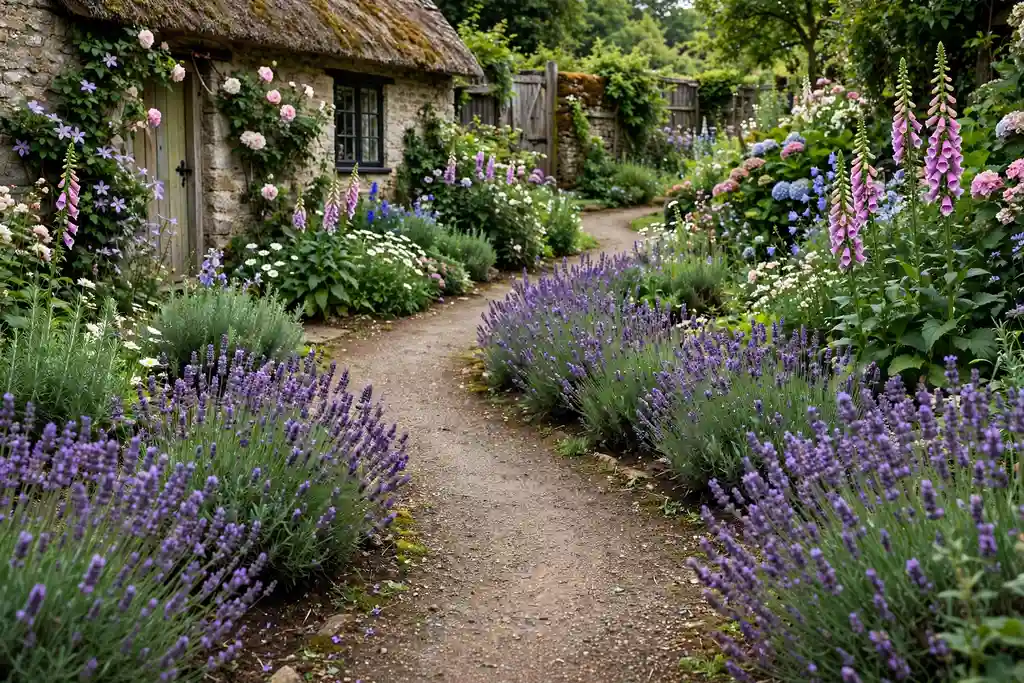
A winding gravel path suits a cottage garden better than a straight paved walk, because the eye follows the bend instead of stopping at a hard line. Lay the path on a shallow base of compacted gravel, edge it with stone or brick to keep the gravel in place, and let low plants spill slightly over the edge.
Make the path lead somewhere worth reaching, such as a bench, a gate, or a sunny corner, and keep it wide enough to walk comfortably with a watering can. Rake it level after heavy rain, and plant lavender or thyme along the edges for scent. Avoid a curve so tight that it feels awkward to walk.
4. Edge Beds With Stone or Brick
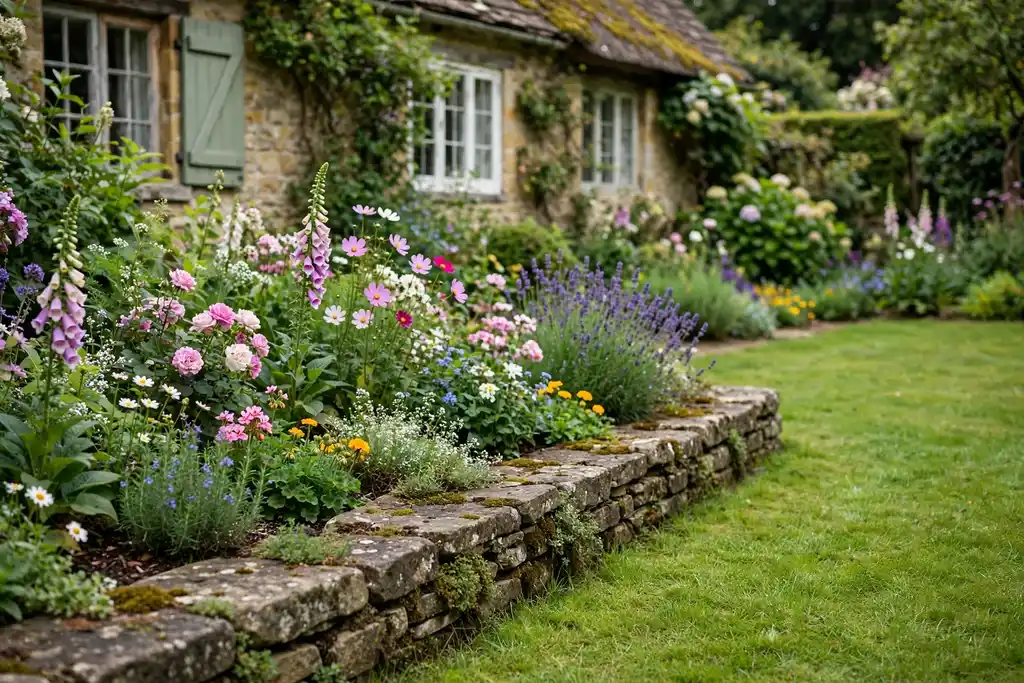
Stone or brick edging gives cottage beds a finished line that keeps soil and mulch in place. Lay flat stones, cobbles, or reclaimed bricks along the bed edge, set firmly on a shallow gravel footing so frost does not lift them out of line. The edge also gives the lawn or path a clean cut.
Choose a material already used elsewhere in the garden, such as a wall or a path, so the materials repeat. Keep the top of the edging level along each run, and plant low edging plants such as thyme or sedum just behind the stone so the edge softens without hiding it.
5. Build a White Picket Fence and Gate
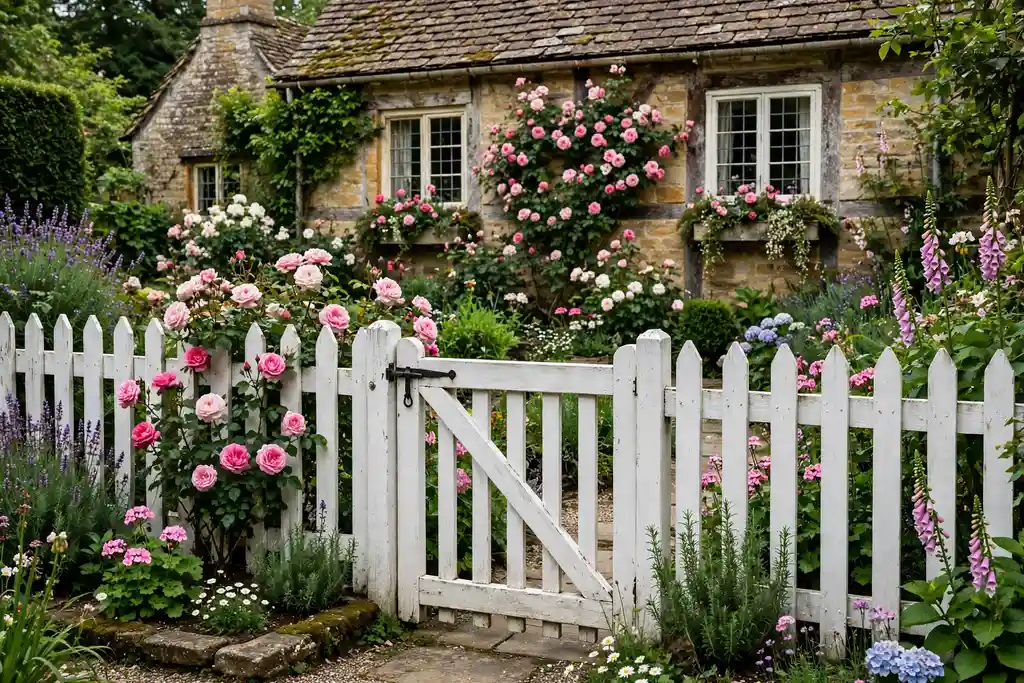
A low white picket fence frames a cottage front garden and marks the boundary without shutting the garden off from the street. Keep the fence low enough to see the planting over it, and pair it with a simple wooden gate that opens onto the path to the door.
Paint or treat the wood as the maker directs, and check the gate hinges each spring so the gate still closes cleanly. Plant roses, hollyhocks, or lavender just inside the fence so flowers show through the pickets, and keep the path to the gate clear of overhanging stems.
6. Plant Hollyhocks and Foxgloves for Height
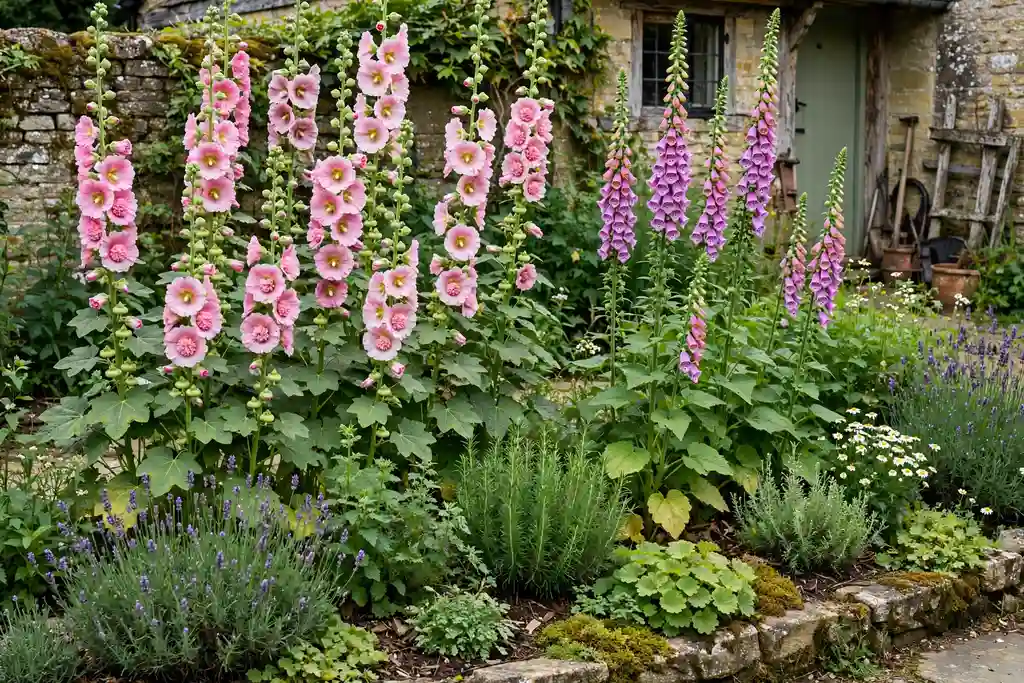
Tall spires give a cottage border its classic height. Plant hollyhocks and foxgloves toward the back of a border, with lower flowers such as hardy geraniums in front to cover their base. Both plants often self seed, so once they settle you may get new plants each year without buying more, though colors can shift over time.
Stake hollyhocks in windy gardens, and note that foxgloves are biennial, flowering in their second year. Keep foxgloves away from areas where toddlers or pets might eat the leaves, as the plant is toxic if eaten. Sow a new batch each year so there is always a flowering generation coming.
7. Grow a Shrub Rose Border
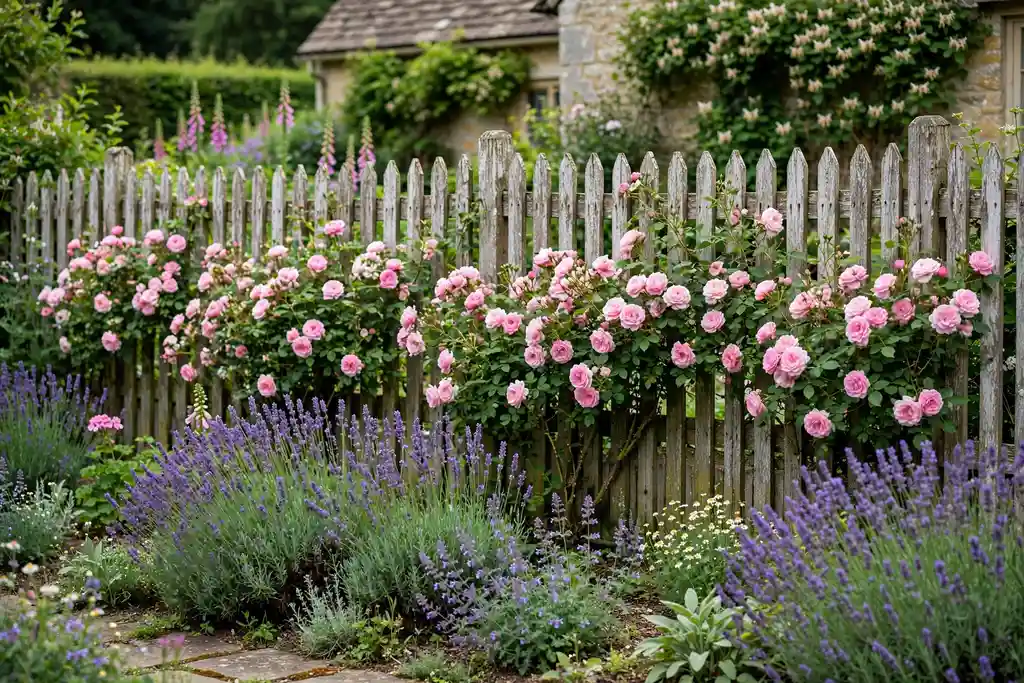
Shrub roses give a cottage garden repeat flowers, scent, and a clear backbone through summer. Plant them in groups along a fence or at the back of a border, spacing bushes by the label rather than by how they look in the pot, since a crowded rose bed invites disease.
Feed and mulch in spring, prune by rose type in late winter or early spring, and water at the base rather than over the leaves. Keep shorter companions such as lavender or catmint in front to cover bare stems, and deadhead spent blooms where the rose type benefits from it.
8. Edge a Walk With Lavender
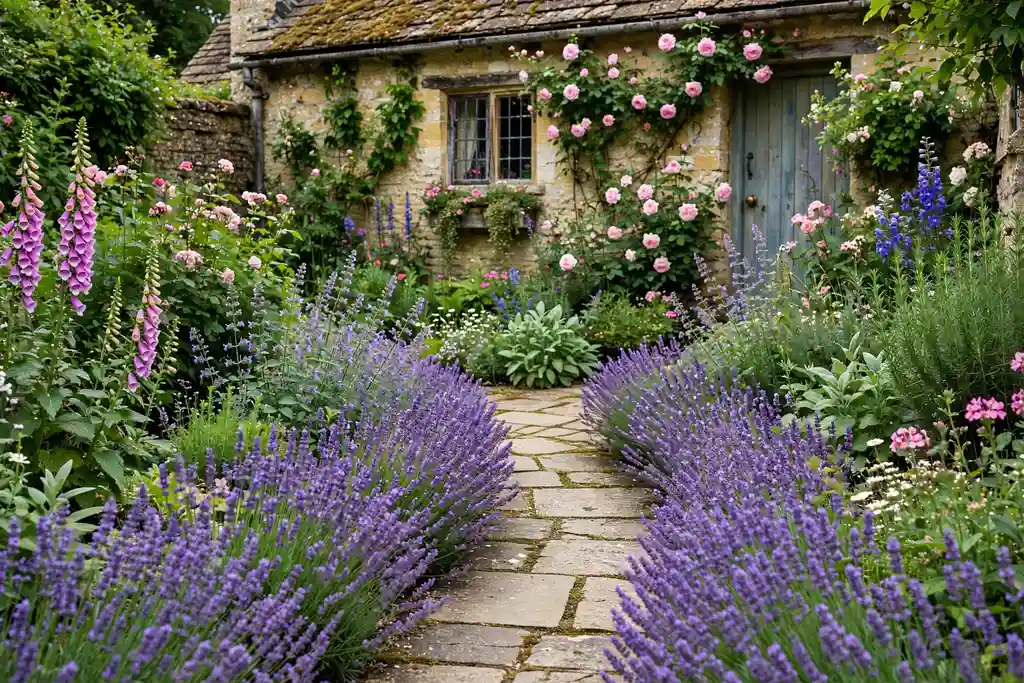
A lavender edged walk gives scent every time you brush past it, and it puts a soft grey green line along the path. Plant lavender in full sun and free draining soil, in a single row about a hand span from the path edge, and keep the variety the same along the whole run so the line looks deliberate.
Trim lightly after flowering to keep plants bushy, and replace plants that turn woody in the center after a few years. Lavender suits dry, sunny spots best, so in damp or shaded soil choose catmint or hardy geraniums for the same edging job.
9. Build a Sweet Pea Wigwam
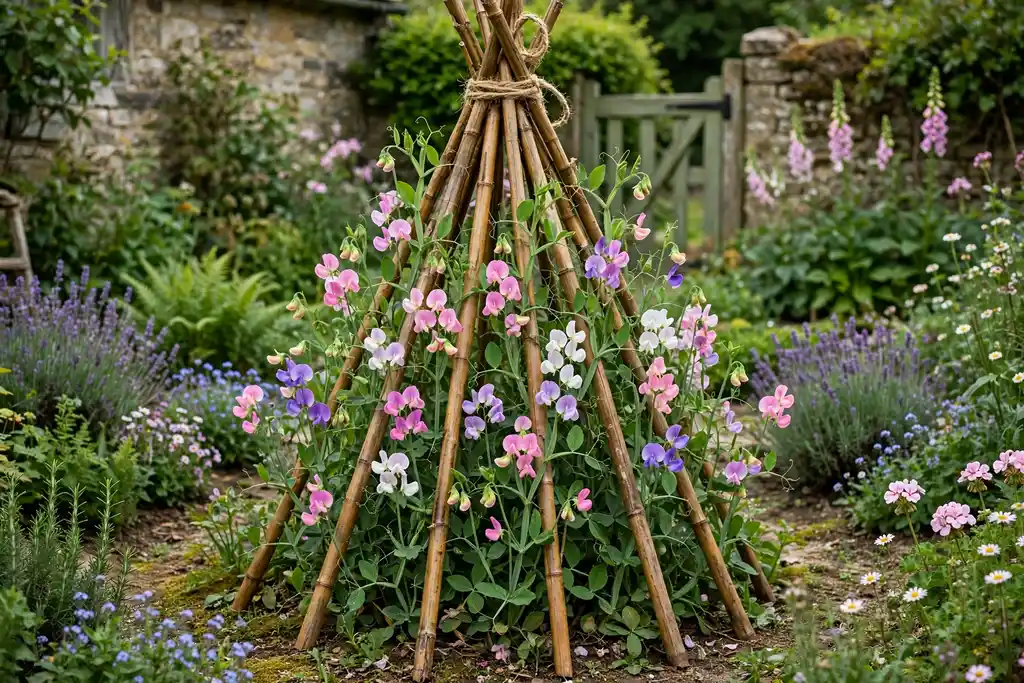
Sweet peas bring flowers and scent to a small footprint by growing upward. Build a wigwam from tall canes tied at the top, or use an obelisk in a large pot, and sow sweet peas in pots or directly in the ground in spring. Tie young stems in loosely as they grow, and water at the base.
Pick the flowers every few days, because regular picking is what keeps more buds coming. A wigwam in a border or a large pot works on a patio if you have no bed, and a group of three wigwams in a row makes a simple screen for a vegetable or cutting area.
10. Group Terracotta Pots by the Door
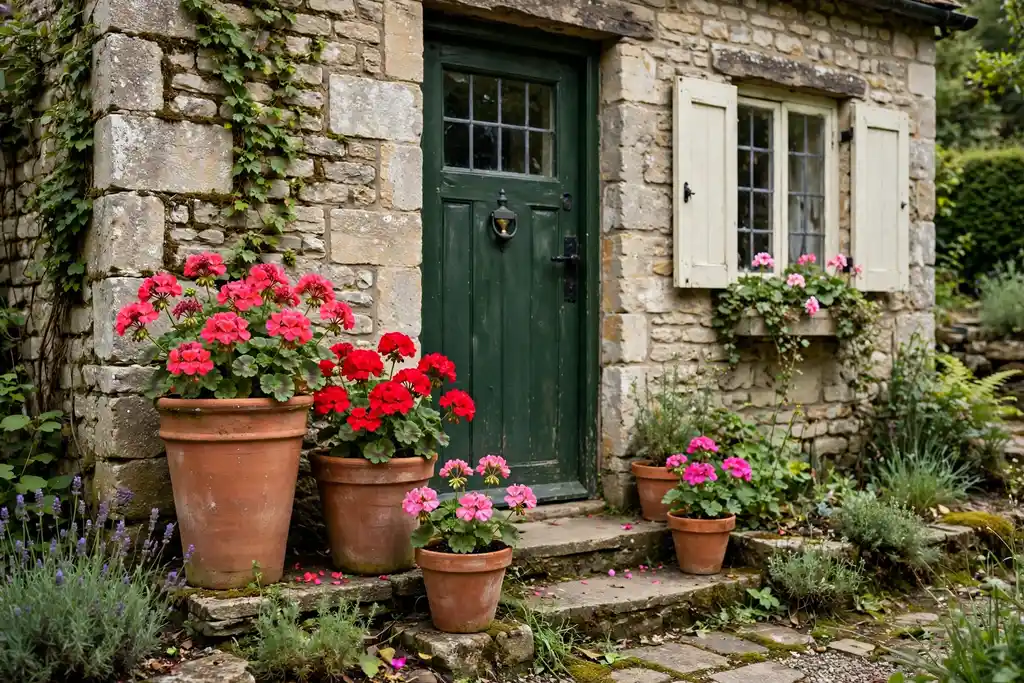
Terracotta pots by the door give a cottage garden a welcoming entrance without replanting a whole bed. Use three pots of different heights with the same plant family, such as geraniums, herbs, or small shrubs, so the group reads as one display. Terracotta warms in the sun and suits cottage planting.
Choose pots with drainage holes, raise them on feet so water drains freely, and check the soil with a finger before watering, since terracotta dries out faster than plastic. Plant the tallest pot at the back or center, depending on the view, and move the group to follow the sun or to frame the entrance as the seasons change.
11. Sow a Wildflower Strip for Pollinators
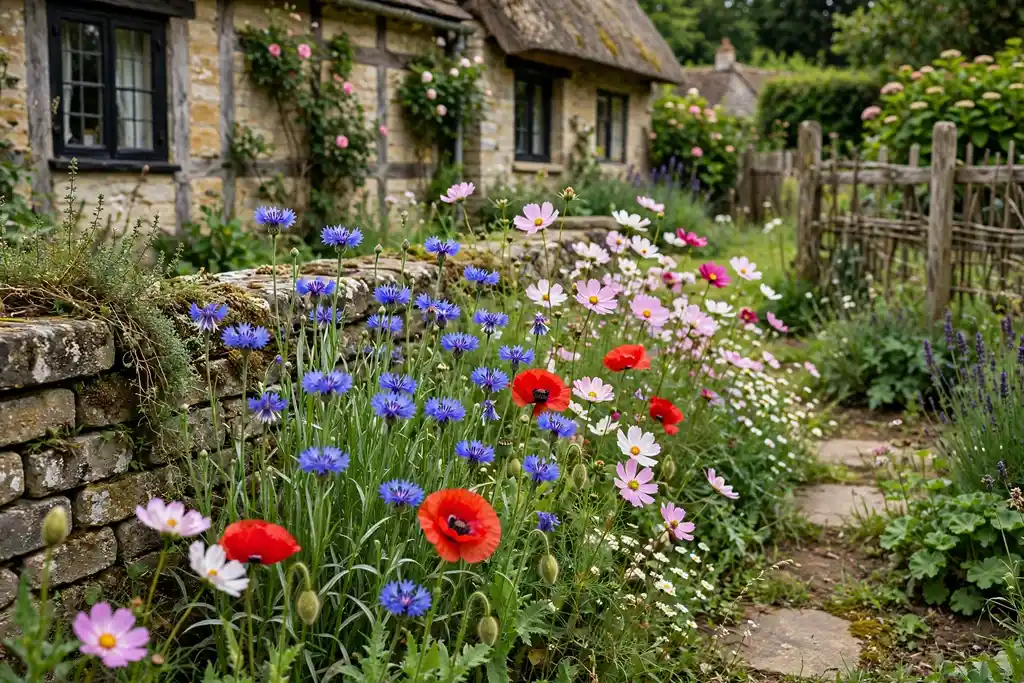
A wildflower strip brings a loose, natural look to a cottage garden and feeds bees and butterflies through summer. Clear a patch of weeds, sow a seed mix suited to your soil and region on bare, raked soil, and add a simple mown or gravel edge so the strip reads as a choice rather than neglect.
The first year can look patchy while perennials establish, so leave the strip uncut until late in the season to let plants self seed. Keep the strip away from formal beds if you prefer tidy edges, and sow thinly, since crowded seedlings compete and flower less well. Cornflowers, poppies, and cosmos give color across summer.
12. Clip Boxwood Topiary for Year Round Shape
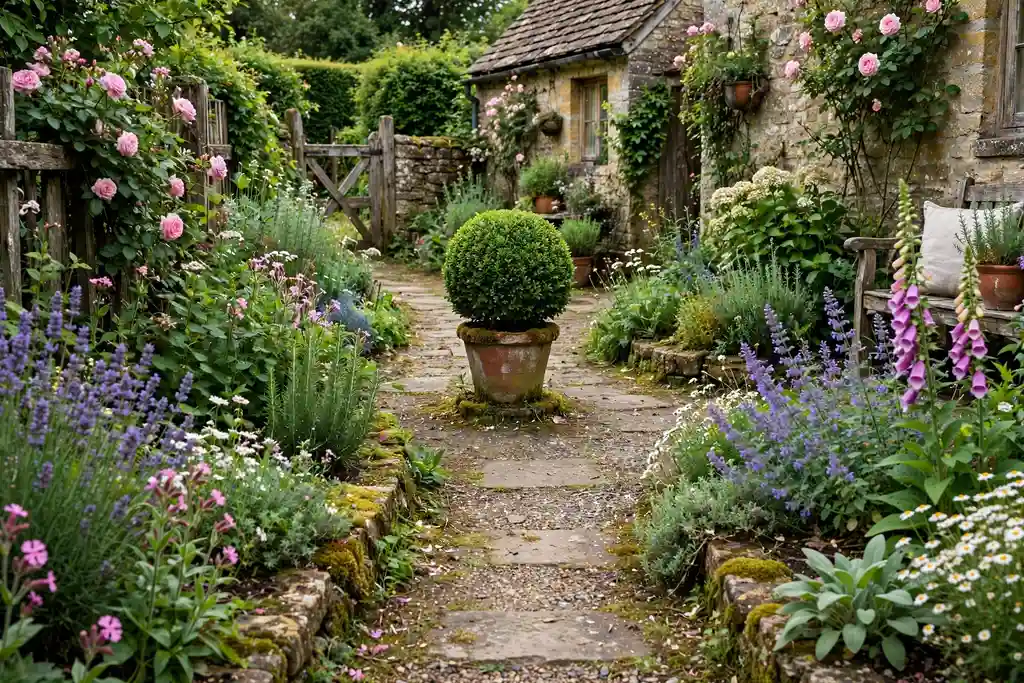
Clipped boxwood gives a cottage garden shape that holds all year, even when flowers are finished. A ball, cone, or low hedge in boxwood suits a pot by the door, the end of a path, or the edge of a border, and a clean, simple shape reads better than a fussy one.
Clip little and often through the growing season, using sharp shears, and feed and water the plant well after clipping. Place topiary where it has room to be seen from all sides, and keep the ground beneath it clear of clutter. If boxwood blight is a problem in your area, choose yew or another alternative and check local advice before buying.
13. Set a Bird Bath in a Wildlife Corner
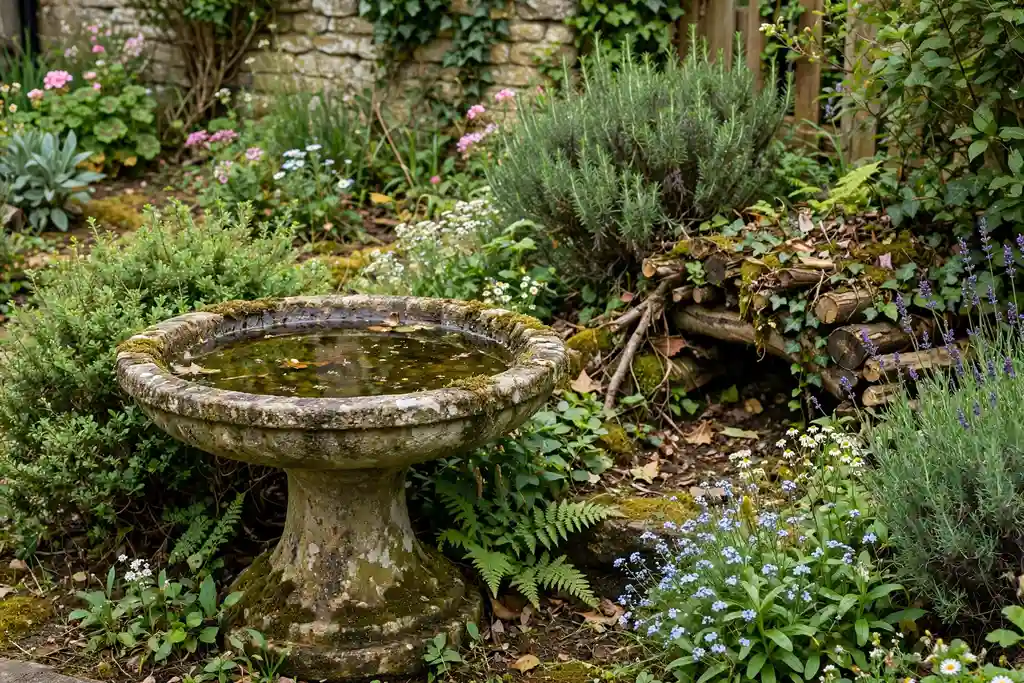
A bird bath adds wildlife and gentle life to a cottage garden. Place the bath on a level, firm base near shrubs or a tree, but with open space around it so birds can see cats approaching. Keep the water shallow, with a sloping edge or a stone in the middle so small birds can stand safely.
Change the water every few days, scrub the basin to stop algae, and keep the bath full in hot weather and in winter when natural water freezes. Site the bath where you can see it from a window or a seat, and avoid placing it under a feeder, since falling seed fouls the water quickly.
14. Dig a Small Wildlife Pond
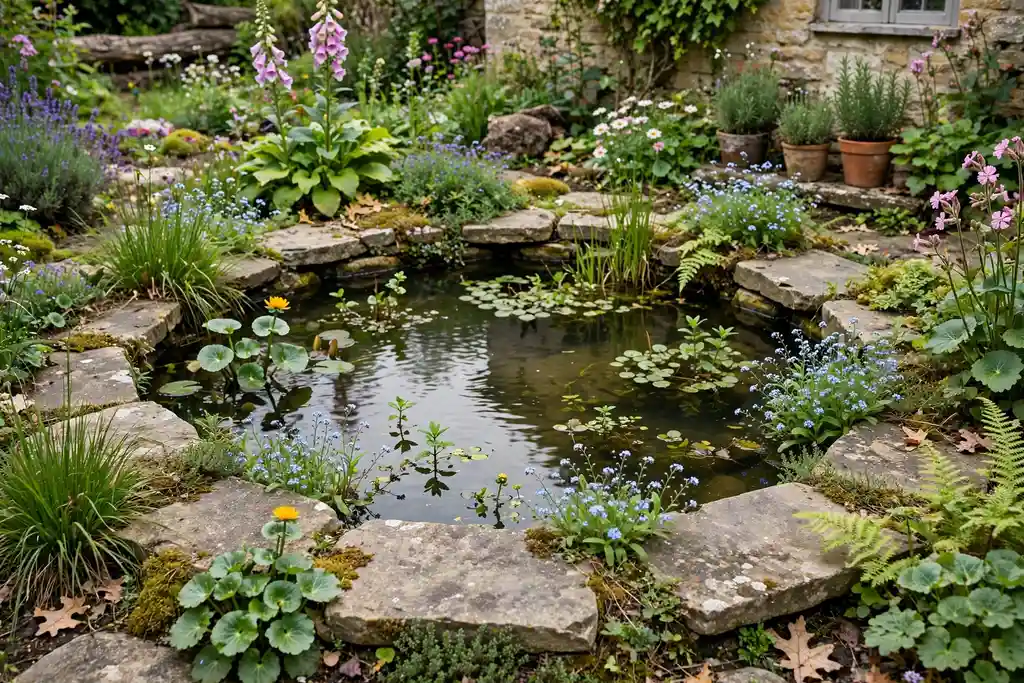
A small pond, even one made from a sunk container, brings frogs, dragonflies, and birds to a cottage garden. Dig a shallow basin with sloping sides so wildlife can climb out, line it, and add native water plants and a flat stone at the edge for access. Keep the water shallow and the edges rounded in a family garden.
Site the pond where it gets some sun but not all day heat, and keep it clear of heavy leaf fall from overhanging trees. Add no fish to a tiny wildlife pond, since fish eat tadpoles, and let the planting settle before judging the look. A bench nearby turns the pond into a viewing point.
15. Place a Wooden Bench in the Border
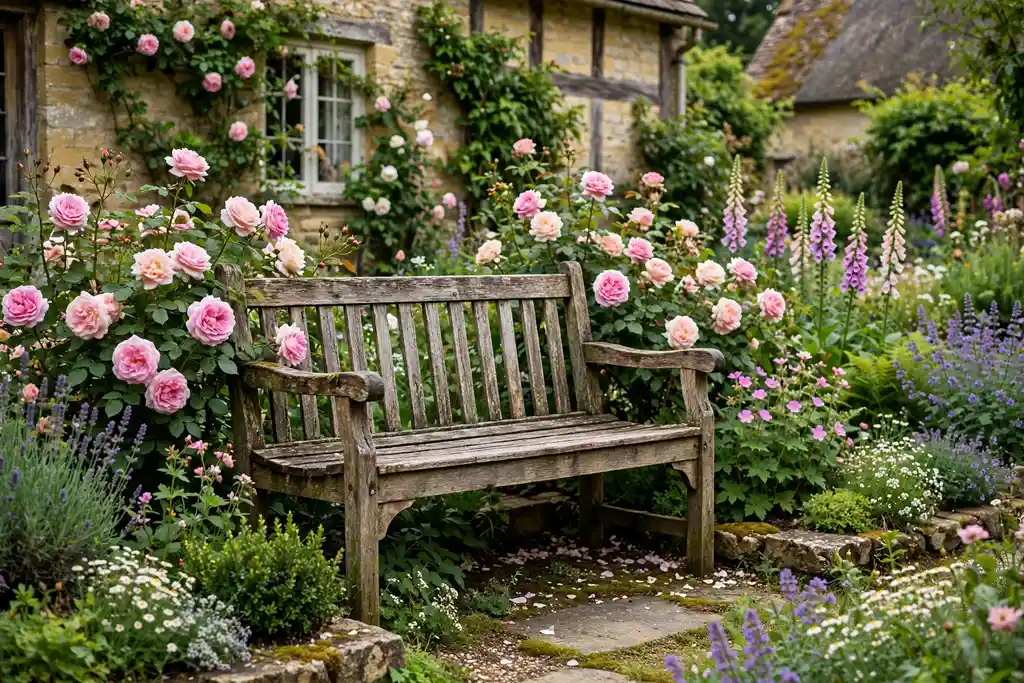
A wooden bench in the border turns a garden walk into a place to pause. Choose the spot before the bench: light at the time you will sit, a view worth looking at, and a dry path matter more than the bench style alone. A simple wooden bench suits soft cottage planting, while a stone bench suits a formal focal point.
Add one comfort detail, such as a cushion or a small table for a cup and a book, and keep plants clear of the seat edges so the bench stays easy to use. For layout ideas for the seating itself, see these garden bench ideas, which show how to choose a spot first and match the seat to it.
16. Train Espalier Fruit on a Sunny Wall
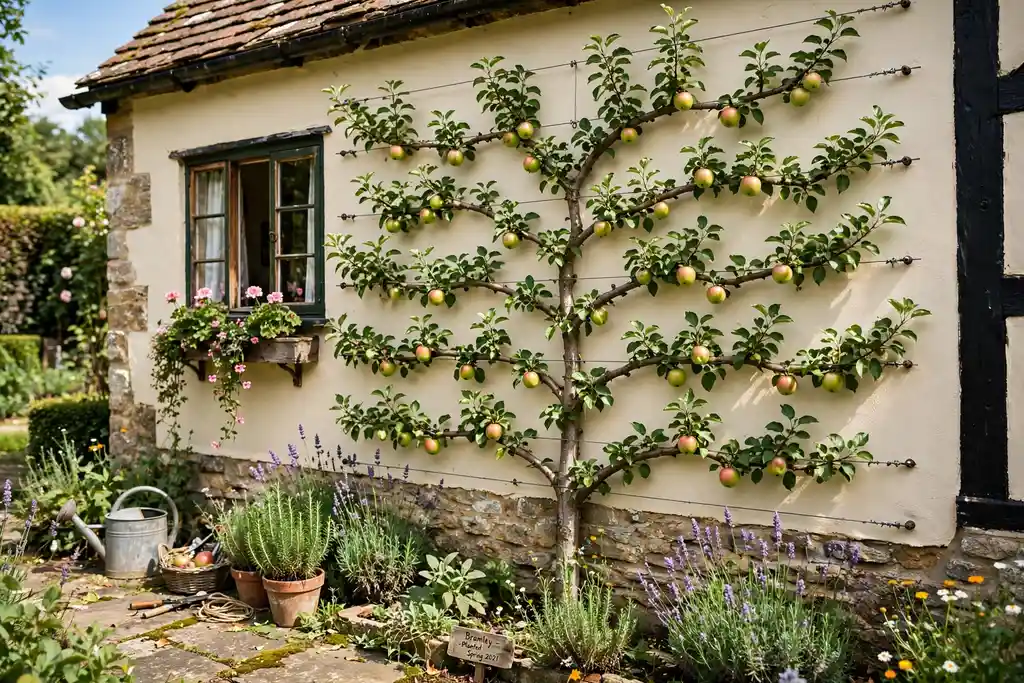
Espalier fruit trees give a cottage garden fruit without taking bed space, because the tree grows flat against a wall or fence. Fix horizontal wires to a sunny wall, and train an apple or pear tree along them, pruning in summer to keep the shape flat and open.
Choose a variety suited to your area, and keep grass or mulch clear of the trunk. Underplant the wall with low herbs or spring bulbs so the ground below it earns its place, and pick fruit as it ripens rather than leaving it to fall. Fan trained trees against a low wall work the same way in a smaller space.
17. Set Aside a Cutting Garden Row
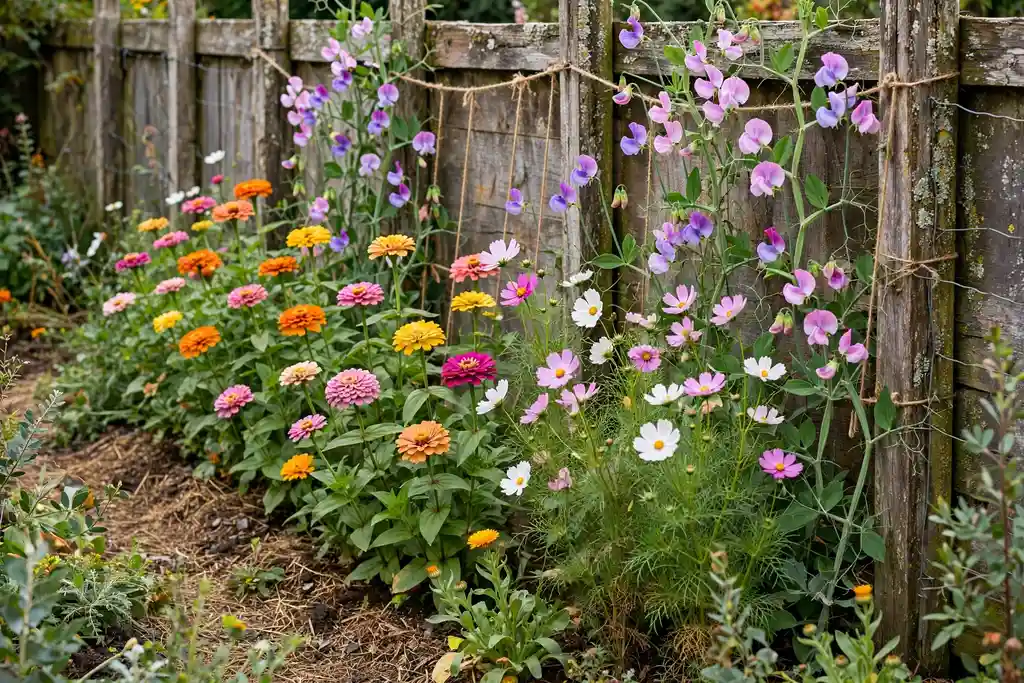
A narrow cutting row, even a single row along a fence, keeps display borders tidy while giving you flowers for the house. Grow rows of zinnias, cosmos, dahlias, and sweet peas spaced for picking rather than for looks, and cut in the morning into a bucket of water.
Keep the cutting row watered and fed more than the display borders, and re-sow fast annuals such as cosmos if gaps appear by midsummer. Bringing your own stems indoors links the garden to the house, and a cutting row means you never have to strip a display border bare for a vase.
18. Layer Spring Bulbs in Drifts
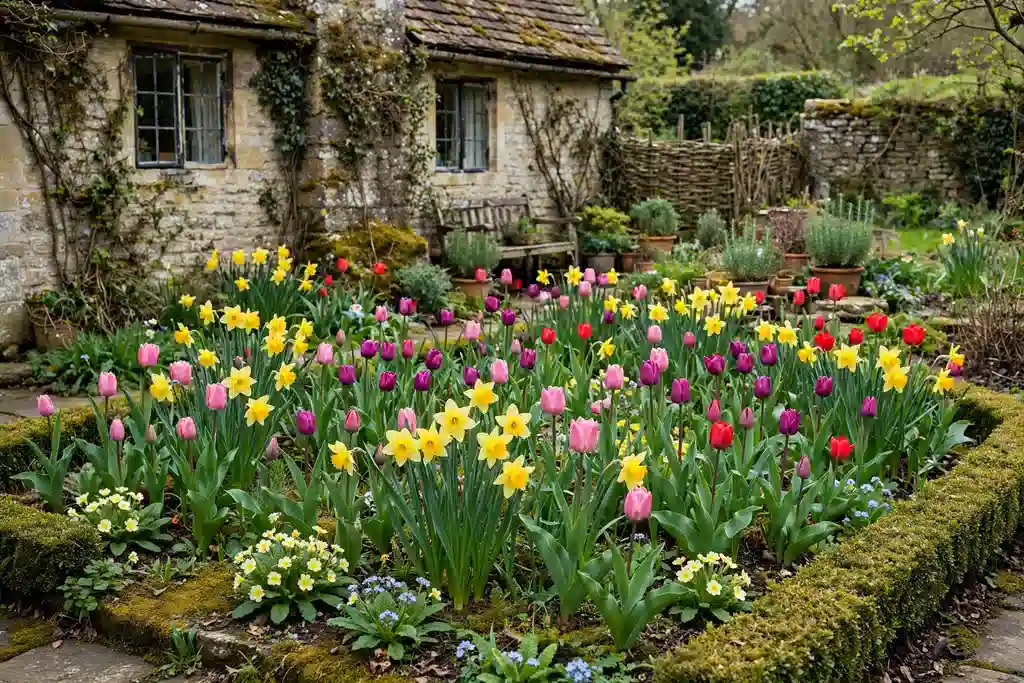
Spring bulbs give a cottage garden its first color, and they look best planted in loose drifts rather than in straight single rows. Set tulips, daffodils, and crocus in autumn, pointed end up, at about three times their own depth, in soil that drains freely so they do not rot over winter.
Mix an early and a late variety to stretch the display, and let the foliage die back naturally after flowering so the bulbs feed for next year. In small beds, plant bulbs between later perennials so their leaves hide the fading bulb foliage. A drift of nine or more bulbs of one variety reads far better than singles.
19. Plant Peony and Geranium Drifts
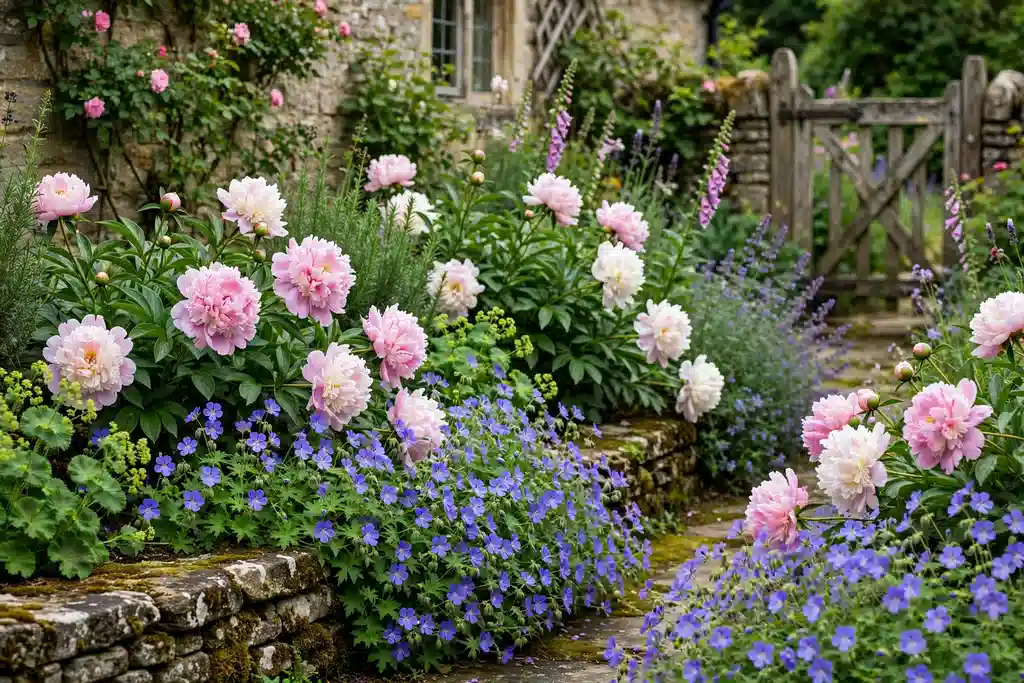
Peonies and hardy geraniums are cottage garden workhorses: peonies give a short, rich show in late spring, and geraniums carry the border through summer. Plant peony roots in autumn or early spring with the buds just below the soil surface, since planting too deep is a common reason peonies fail to flower.
Give peonies full sun, room for air to move around the leaves, and a support ring before the heavy blooms open. Plant hardy geraniums in groups of three or five around them to cover bare ground and to link the border, and deadhead geraniums lightly to encourage a second flush.
20. Keep Late Color With Dahlias and Asters
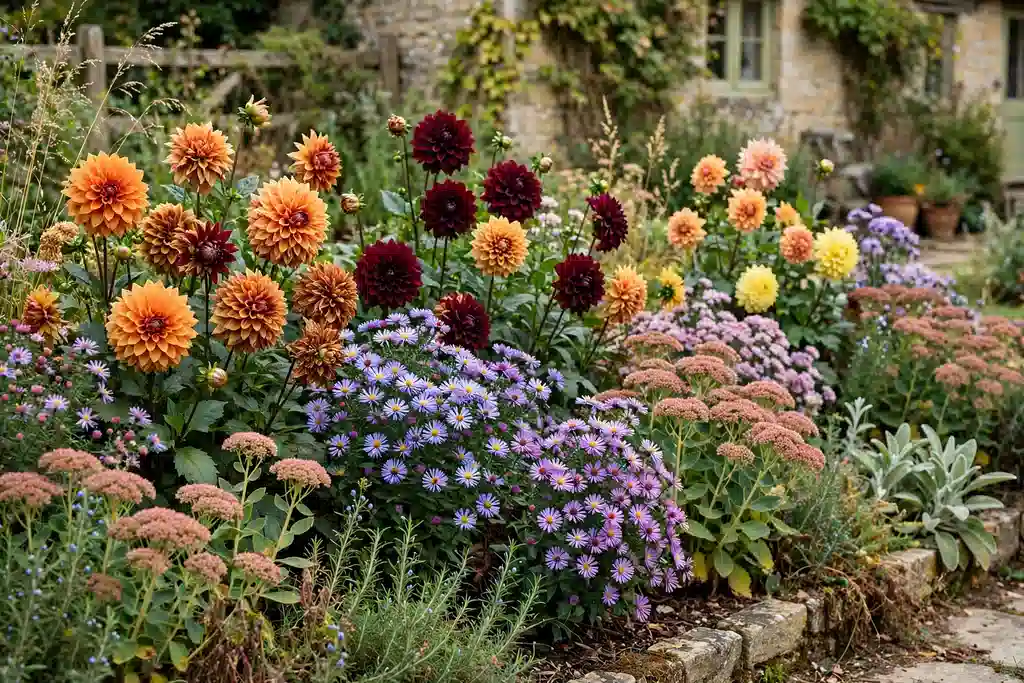
Dahlias and asters fill the gap from midsummer until the first frost, when many cottage perennials are finished. Start dahlia tubers in pots under cover or plant them out after frost risk has passed, in a sunny bed with rich soil, and stake tall types early, before the stems get heavy.
Pick or deadhead dahlias often to keep new buds coming, and plant asters nearby for late color that bees still visit. In cold areas dahlia tubers are usually lifted and stored dry over winter, so check the advice for your zone. A row of dahlias along a fence gives a strong late show.
21. Add Evergreen Shape for Winter
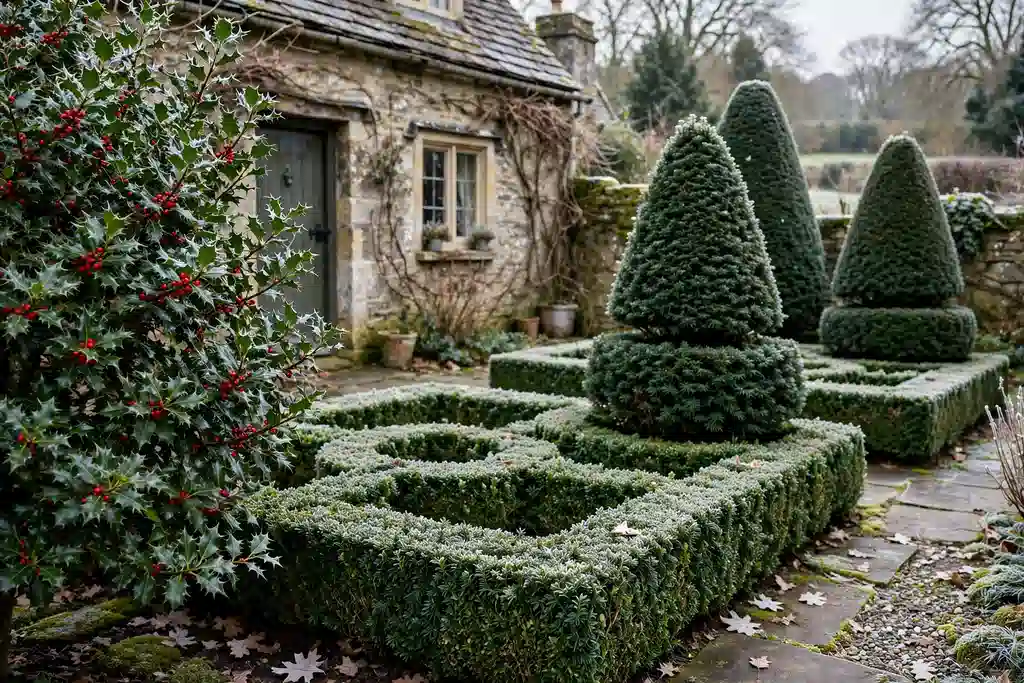
A cottage garden needs evergreen shape for winter, when flowers are gone. Plant holly, yew, boxwood, and ivy for structure, and keep a few evergreen shrubs near the house and along the path so the garden still reads as cared for in January.
Use evergreens as a backdrop for spring bulbs and summer roses, rather than as a separate formal area, so the winter shape and the summer color belong to the same garden. Trim hedges and topiary in late spring or summer as the plant type requires, and leave seed heads standing in autumn for birds and winter shape.
22. Feed the Soil With Compost and Mulch
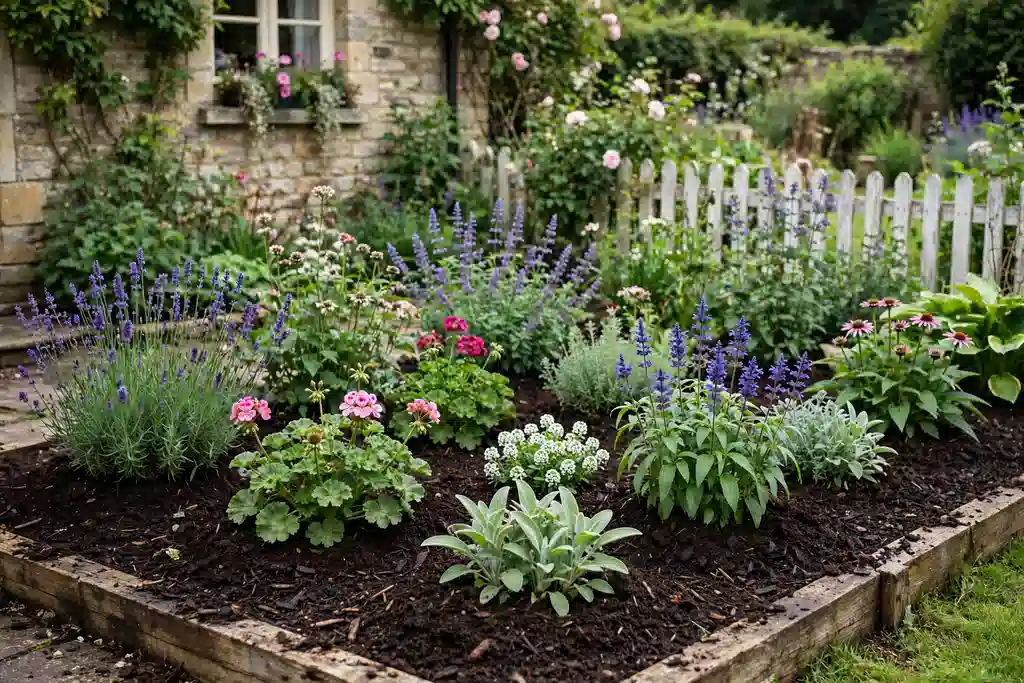
Cottage gardens look full because the soil is fed, not because plants are forced. Spread garden compost over beds in autumn or spring, and mulch the surface with bark, leaf mold, or compost to hold moisture, suppress weeds, and feed the soil as it breaks down.
Keep mulch clear of plant stems and tree trunks so damp does not sit against them, and water beds well before mulching in dry weather. A simple compost heap at the back of the garden turns prunings and kitchen waste into the feed the borders need, and it costs nothing beyond a little space.
23. Grow Clematis and Jasmine on the House Wall
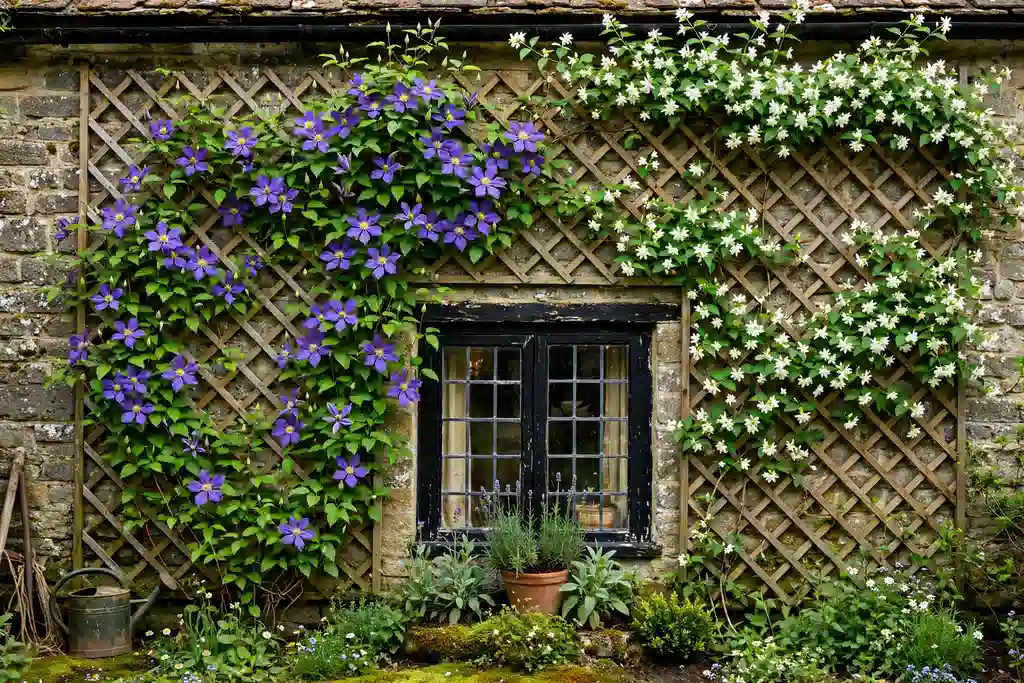
Clematis and jasmine soften a house wall and bring flowers and scent close to windows and doors. Fix a trellis with a gap behind it so air can move and the wall can dry, and train one climber up each section so the planting covers the wall without blocking gutters or windows.
Choose clematis types by pruning group, and prune as the label directs, since cutting at the wrong time can remove a season of flowers. Grow jasmine where you will smell it in the evening, near a door or a seat, and tie stems loosely to the trellis as they grow.
24. Fill Window Boxes and Hanging Baskets
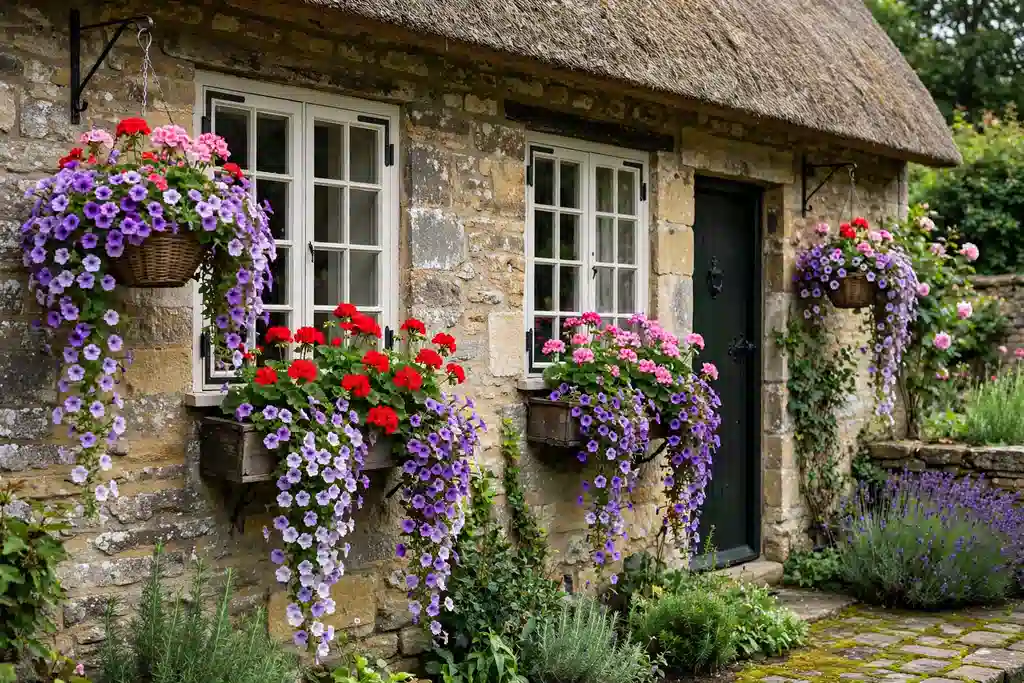
Window boxes and hanging baskets put cottage flowers at eye level and finish an entrance faster than any bed change. Use a box or basket with drainage holes, fill it with fresh potting mix, and combine one upright flower, such as geraniums, with a trailing one, such as trailing petunias or verbena, so the display looks full from the street.
Boxes and baskets dry out quickly in sun and wind, so expect to water daily in hot weather. Feed lightly through the season, swap tired plants out as needed, and refresh the whole display each spring. Hang baskets on brackets rated for the weight of a watered basket, which is heavier than most people expect.
25. Make a Small Gravel Seating Nook
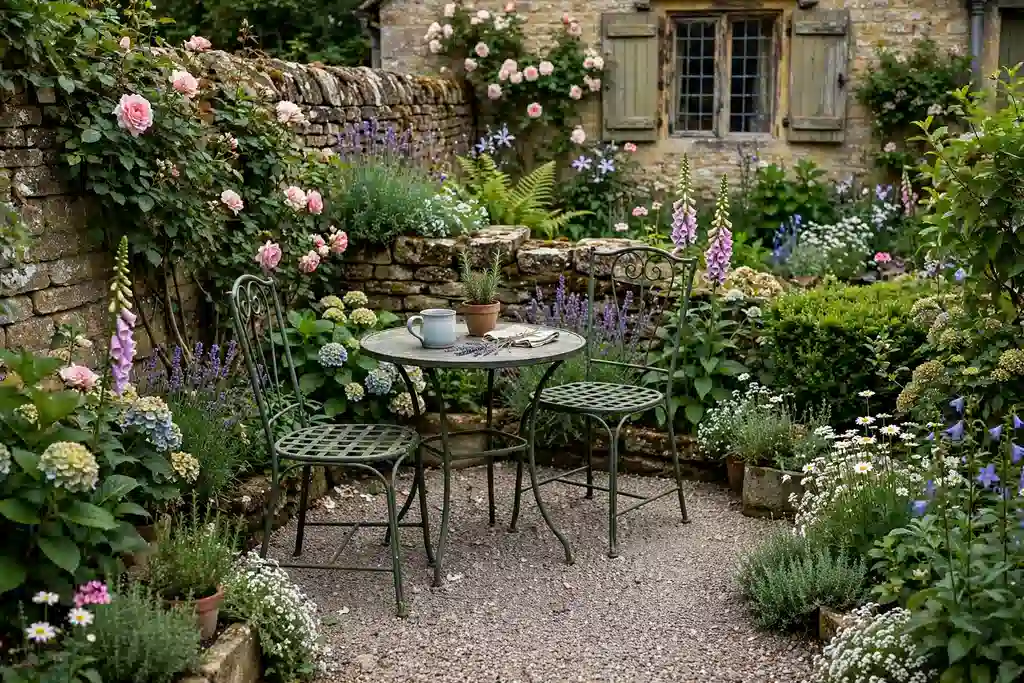
A small gravel nook with a table and two chairs turns an unused corner into a daily habit. Lay a level gravel pad on a firm base, edge it with stone or brick, and place the seats where they catch morning or evening light rather than deep shade all day.
Add one scented plant nearby, such as a rose or jasmine, and keep the rest simple: a small table, a cushion, and a clear path from the house. For ideas on working with levels and structure around a seating area, the ideas in these tiered garden ideas show how to give each level a clear job.
26. Plant a Mixed Flowering Hedge
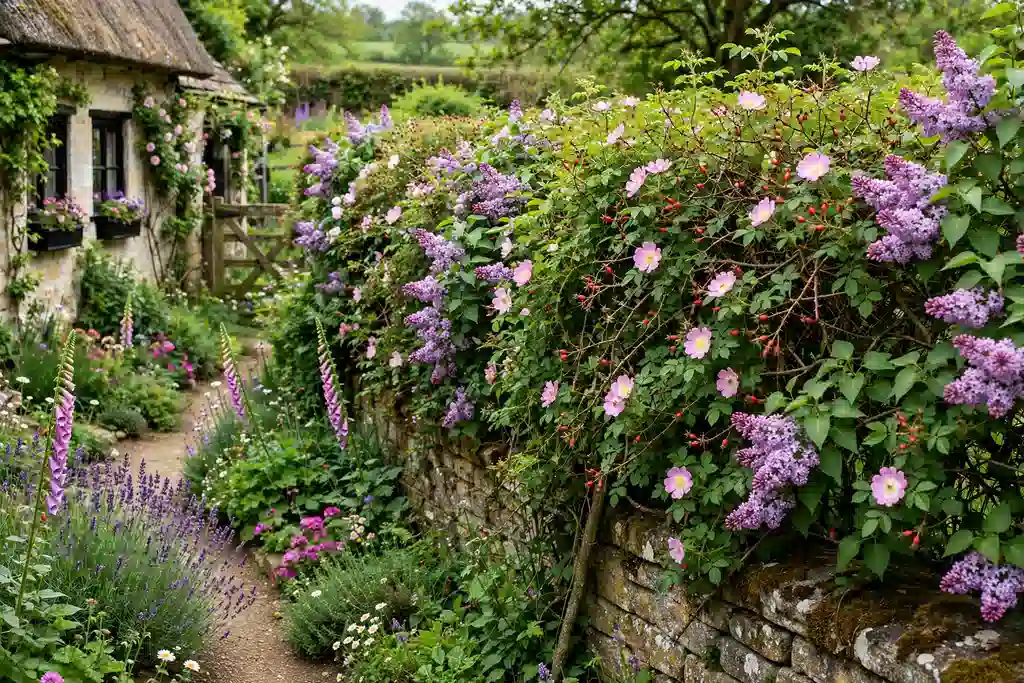
A mixed flowering hedge makes a softer boundary than a fence, and it feeds birds and pollinators through the year. Plant a row of hawthorn, hazel, wild rose, and lilac, spacing plants by the label, and let the hedge grow a little wider than a clipped formal hedge so flowers and berries have room.
Trim after flowering as each plant type requires, and leave some berries standing in autumn for birds. A mixed hedge suits a cottage garden boundary better than a single species hedge, since it gives flowers in spring, leaf cover in summer, and berries and color in autumn.
27. Add a Rustic Potting Bench by the Shed
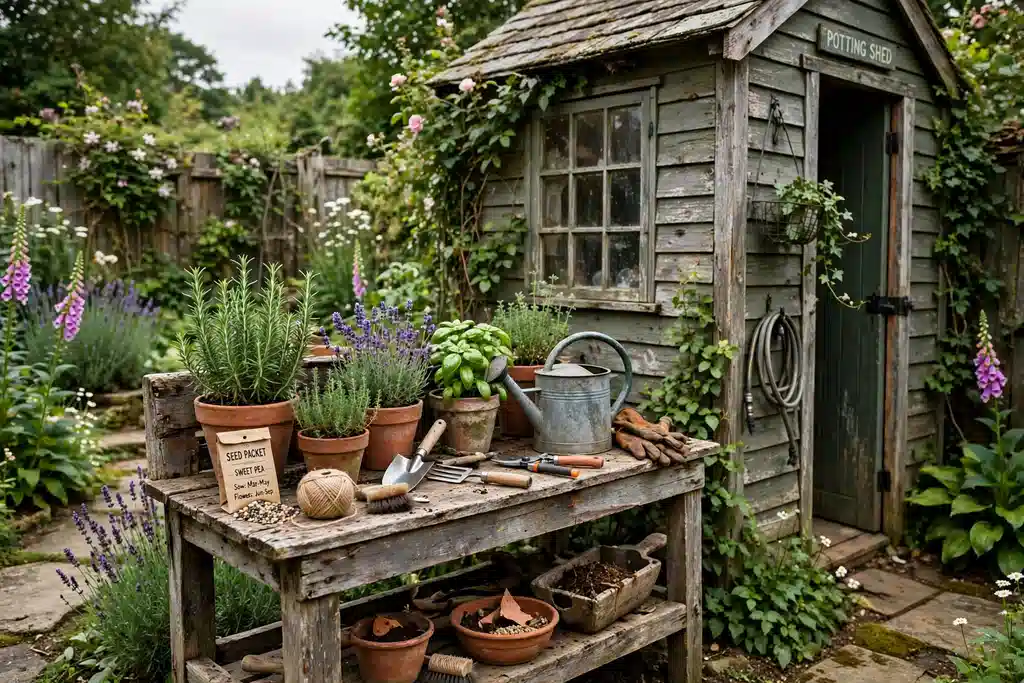
A rustic potting bench by the shed turns garden work into part of the cottage garden, not a chore hidden away. Build or buy a simple wooden bench with a shelf below for pots and a hook for twine and snips, and place it where it catches light and stays dry under a shed overhang or a simple roof.
Keep the bench surface clear enough to pot on, store soil in a covered bin nearby, and sweep the area after potting so the corner stays tidy. A potting bench near the beds means seedlings, cuttings, and tools are close at hand, and a few pots of herbs on the bench keep the work area looking planted.
Conclusion
An English cottage garden does not need every idea on this list. Pick one structure first, such as a layered border, a rose arch, or a gravel path, then add two or three supporting pieces, such as pots by the door, a bench, and a scented walk. Repeat one or two colors and materials through the garden, plant in groups rather than singles, and keep one seat comfortable and easy to reach. Spread interest across the seasons, so the garden looks cared for in winter as well as in summer. When you add scent, fruit, and wildlife, the garden becomes a place you use every day, not just a view from the window.
Save this list on Pinterest before your next nursery trip, and work through it one area at a time: structure first, then planting, then the small details that make the garden yours.
FAQs
How do I start an English cottage garden from scratch?
Start with structure: a path, bed edges, and one seat, then plant one layered border by height. Choose plants that suit your sun, soil, and zone, plant in groups of three or five, and add roses, scent, and a second border the following season. A cottage garden improves each year as plants settle and self seed.
What are the easiest cottage garden plants for beginners?
Hardy geraniums, catmint, lavender, roses, hollyhocks, and foxgloves are forgiving choices. They flower for a long season or return reliably, cope with basic care, and show quickly whether a spot suits them. Start them in a sunny border with compost rich soil, and add bulbs in autumn for spring color.
How do I keep a cottage garden from looking messy?
Give the garden structure: clear paths, tidy edges, one clipped hedge or topiary, and a mown or gravel edge to wildflower areas. The planting itself can stay loose and full, but the edges, paths, and seats should stay tidy. Deadhead spent flowers where the label advises it, and cut back overgrown plants after flowering.
Can I create a cottage garden in a small space?
Yes. Use vertical space with a rose arch, an obelisk, and wall climbers, group pots by the door, and plant one layered border instead of several thin beds. A small gravel seating nook, a window box, and a wildflower pot give the cottage look without needing a large yard.
Which plants give scent in a cottage garden?
Roses, lavender, sweet peas, jasmine, and lilac give the classic cottage scent. Place them near paths, seats, and doors where you will brush past them, and choose repeat flowering roses and night scented jasmine for evening use. Scent carries best in still air and warm sun, so shelter scented plants from strong wind where you can.
How do I plan a cottage garden for all four seasons?
Plan by season: bulbs for spring, roses and peonies for summer, dahlias and asters for late color, and evergreen holly, yew, and boxwood for winter shape. Add fruit for autumn, seed heads for birds in winter, and seasonal pots by the door to refresh the entrance through the year.