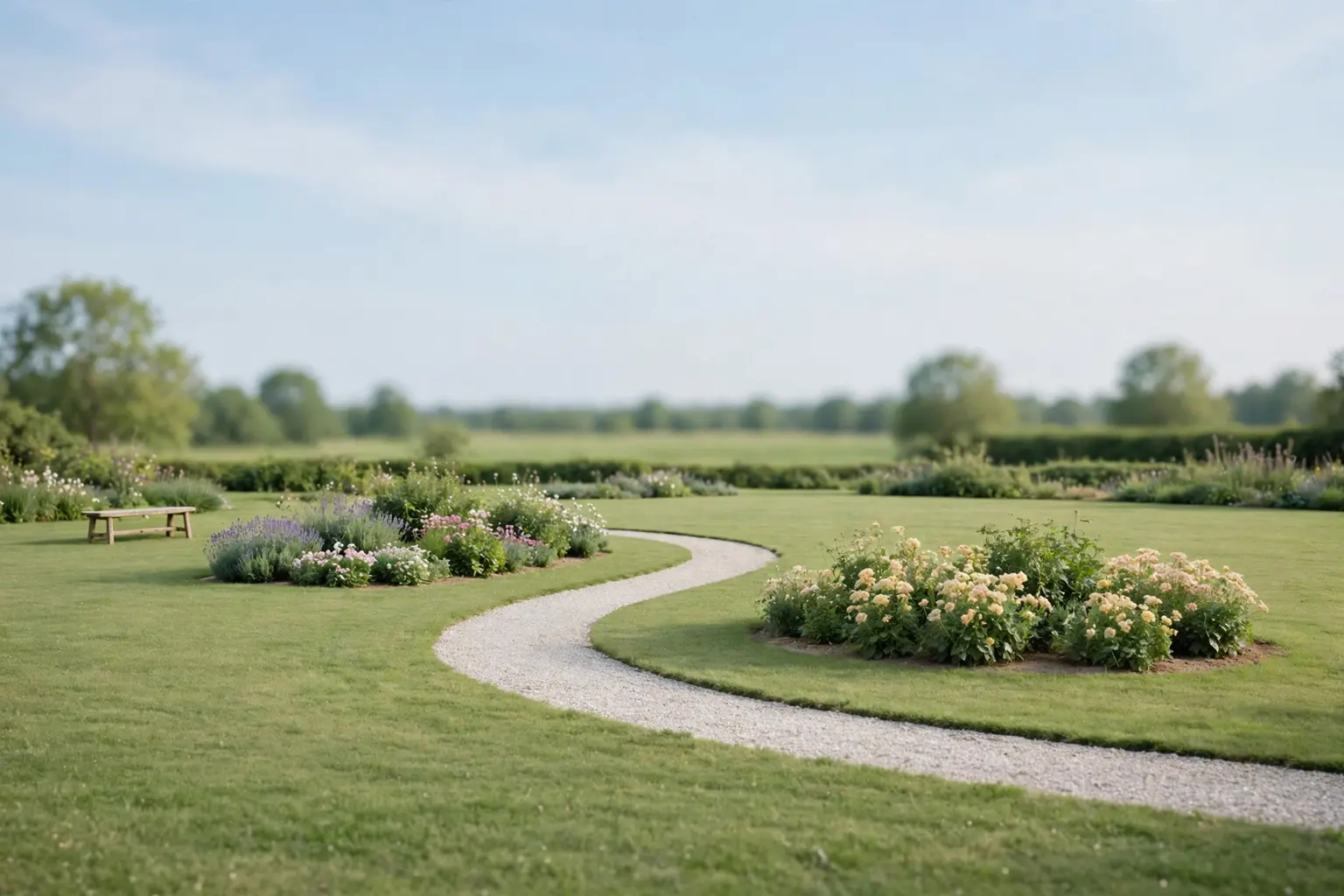
A garden looks aesthetic when every part has a reason to be there: a path that leads somewhere, planting that fills a bed without crowding it, and a seat placed where the light is good. Small, deliberate choices, such as a curved path, a repeated pot, or one strong focal point, can change how the space reads from the house. These 22 aesthetic garden ideas cover paths, borders, structure, water, scent, and evening light. Start with the structure you see every day, then add planting around it. For lessons on working with levels and structure, the ideas in these tiered garden ideas show how to give each level a clear job.
Key Takeaways
- Start with structure first: paths, edges, one focal point, and a seat, then fill in with planting.
- Repeat one or two materials, such as stone, wood, or terracotta, so the garden reads as one design.
- Plant in groups and drifts, not single plants, so color and shape show clearly from a distance.
- Give the garden something for every season: evergreen shape, spring bulbs, summer flowers, and autumn color.
- Keep paths clear, edges tidy, and one seat comfortable, since use matters more than decoration.
- Add scent and sound, such as herbs by a path or moving water, for a garden that feels good as well as looks good.
1. Curve a Gravel Path Through Soft Planting
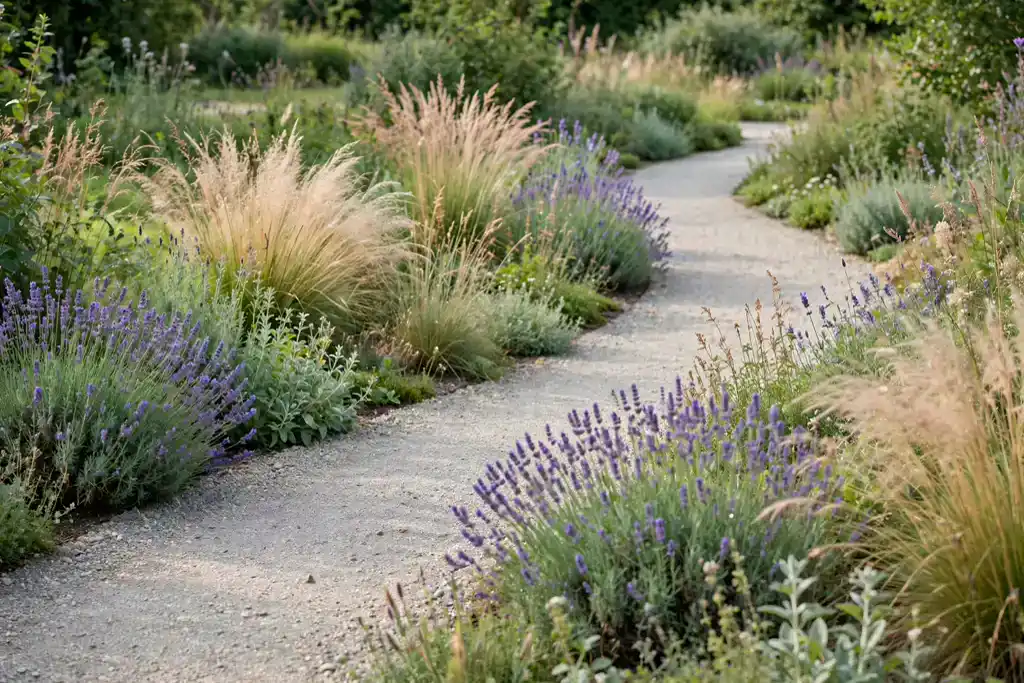
A curved gravel path softens a garden at once, because the eye follows the bend instead of stopping at a straight line. Lay the path on a shallow base of compacted gravel, edge it with stone or steel strips to keep the gravel in place, and let low plants spill slightly over the edge. The curve works best when it leads to something worth reaching, such as a bench, a tree, or a sunny corner.
Keep the path wide enough for two people to walk side by side where space allows, and rake it level after heavy rain. Plant lavender, catmint, or low grasses along the edges for scent and movement. Avoid a curve that is so tight it feels awkward to walk, and keep the surface firm enough for a wheelbarrow and for wet weather.
2. Layer a Cottage Flower Border by Height
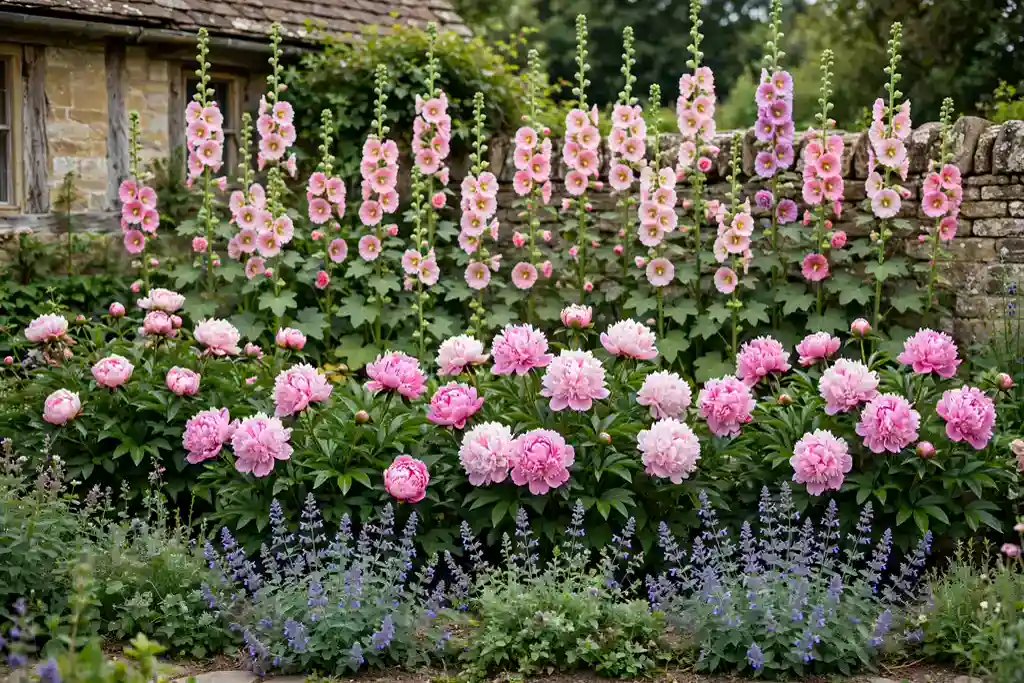
A cottage border looks full because it is layered: tall plants at the back, medium plants in the middle, and low edging plants at the front. Put hollyhocks, delphiniums, or tall roses at the back, peonies, salvias, and hardy geraniums in the middle, and catmint, thyme, or low geraniums at the front. Seen from the lawn, the whole border reads as one deep planting rather than a row of single plants.
Repeat one or two colors through the layers to tie the border together. For a pink led scheme, the planting ideas in these pink flower garden ideas show how drifts of one color, rather than single plants, make the color read clearly. Leave a narrow access strip behind the tallest plants so you can stake, deadhead, and cut back without stepping on the plants in front.
3. Clip One Sculptural Topiary Focal Point
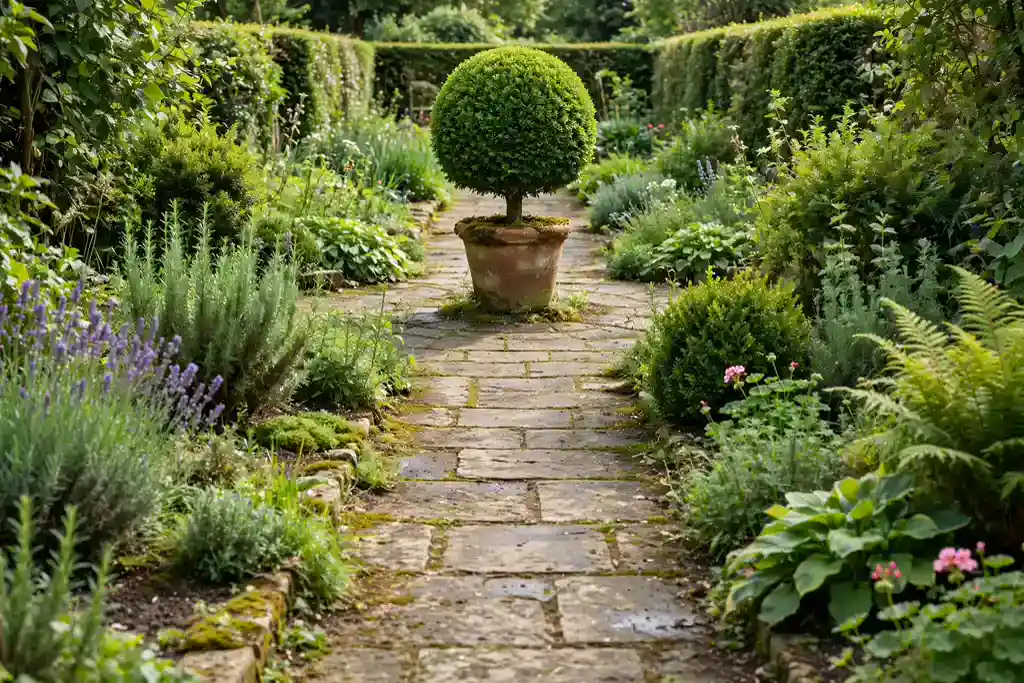
One clipped topiary gives a garden a focal point that holds all year, even when flowers are finished. A cone, ball, or spiral in boxwood, yew, or privet suits a pot by the door, the end of a path, or the center of a small bed. Choose a plant that clips well and suits your climate, and keep the shape simple, since a clean shape reads better than a fussy one.
Clip little and often through the growing season, using sharp shears, and feed and water the plant well after clipping. Place the topiary where it has room to be seen from all sides, and keep the ground beneath it clear of clutter. If boxwood blight is a problem in your area, choose yew or another alternative and check local advice before buying.
4. Edge Beds With Natural Stone
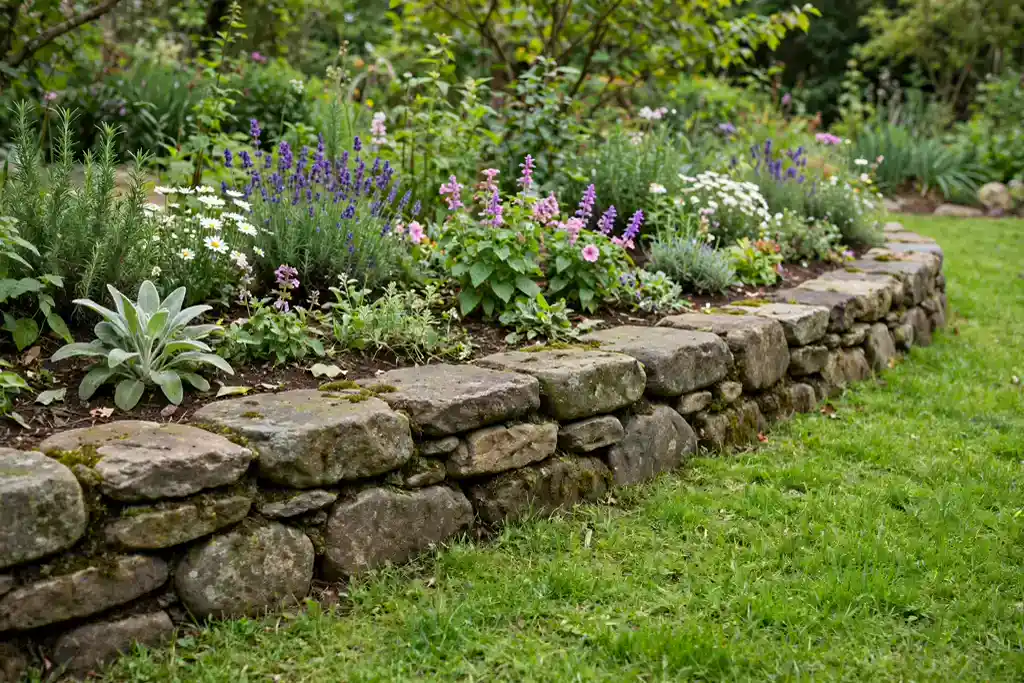
Natural stone edging gives beds a finished line that suits both cottage and modern gardens. Lay flat stones, cobbles, or a low dry stone line along the bed edge, set firmly on a shallow gravel footing so frost does not lift them out of line. Stone also keeps mulch and soil in the bed and gives the lawn edge a clean cut.
Choose stone that matches stone already in the garden, such as a wall or a path, so the materials repeat. Keep the top of the edging level along each run, and leave small gaps at the lowest corner so water does not pool behind the line. Plant low edging plants such as thyme or sedum just behind the stone so the edge softens without hiding the stone itself.
5. Grow Climbing Roses Over a Wooden Pergola
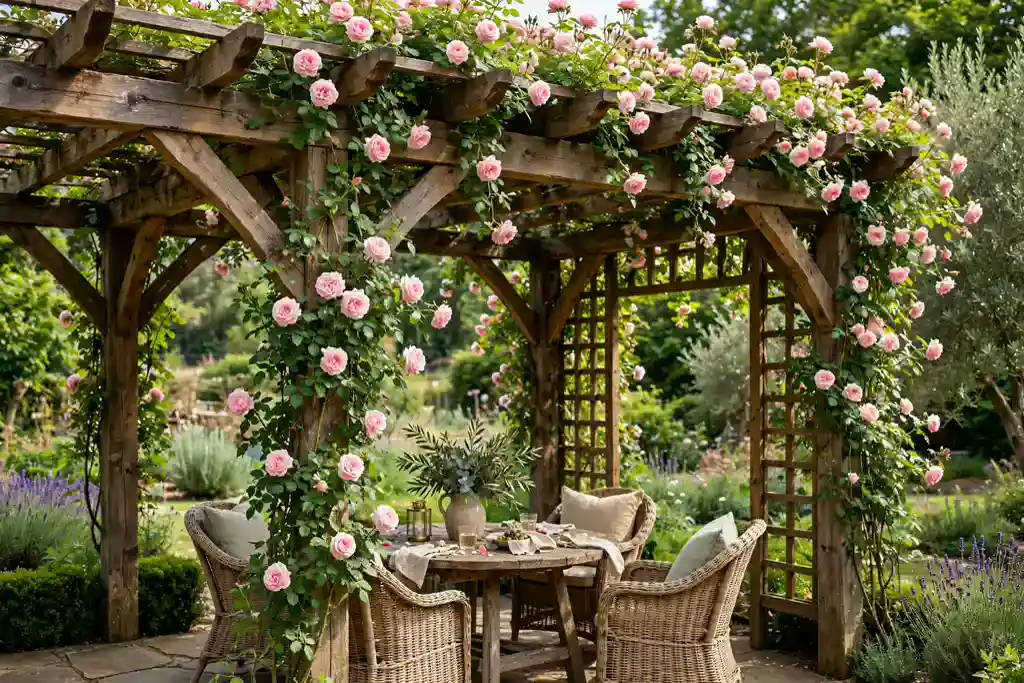
A wooden pergola with climbing roses turns a seating area or a walk into a garden room with scent and shade. Build or buy a sturdy frame, anchor it firmly, and train one or two repeat flowering climbers along the top and sides. Roses give flowers and scent in summer, while the frame itself gives structure in winter.
Tie stems loosely to wires or the frame as they grow, and prune after flowering as the rose type requires. Keep climbers clear of gutters and drains, and site the pergola where it catches morning or evening light rather than deep shade all day. A simple timber frame suits most gardens better than an ornate one, since the roses provide the detail.
6. Hang a Garden Mirror on a Sheltered Wall
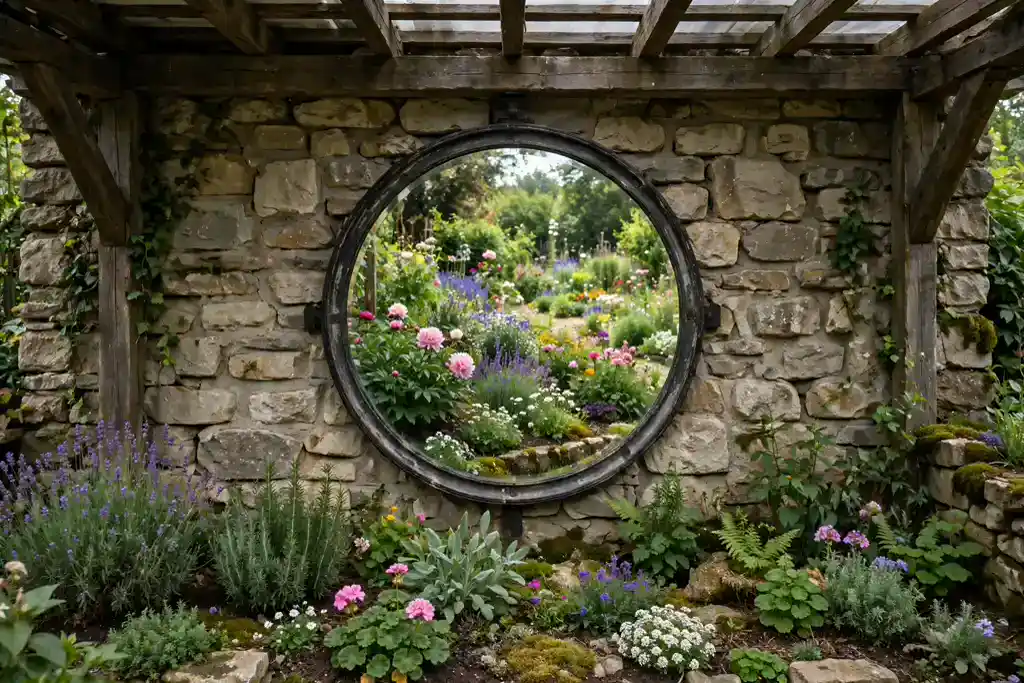
A garden mirror on a sheltered wall makes a small garden feel larger, because it reflects planting and light back into the space. Fix an outdoor rated mirror to a wall or fence in a spot that reflects a planted bed rather than a blank fence or a neighbor window. A round or arched mirror suits most walls, and a simple frame in wood or metal keeps the look calm.
Fix the mirror firmly, since a falling mirror is heavy and sharp, and check the fixings after storms. Keep the glass clean and place plants in front of it at a distance, so birds are less likely to fly toward the reflection. Avoid placing a mirror where it throws strong reflected sun onto seating or into a house window.
7. Sow a Loose Wildflower Corner
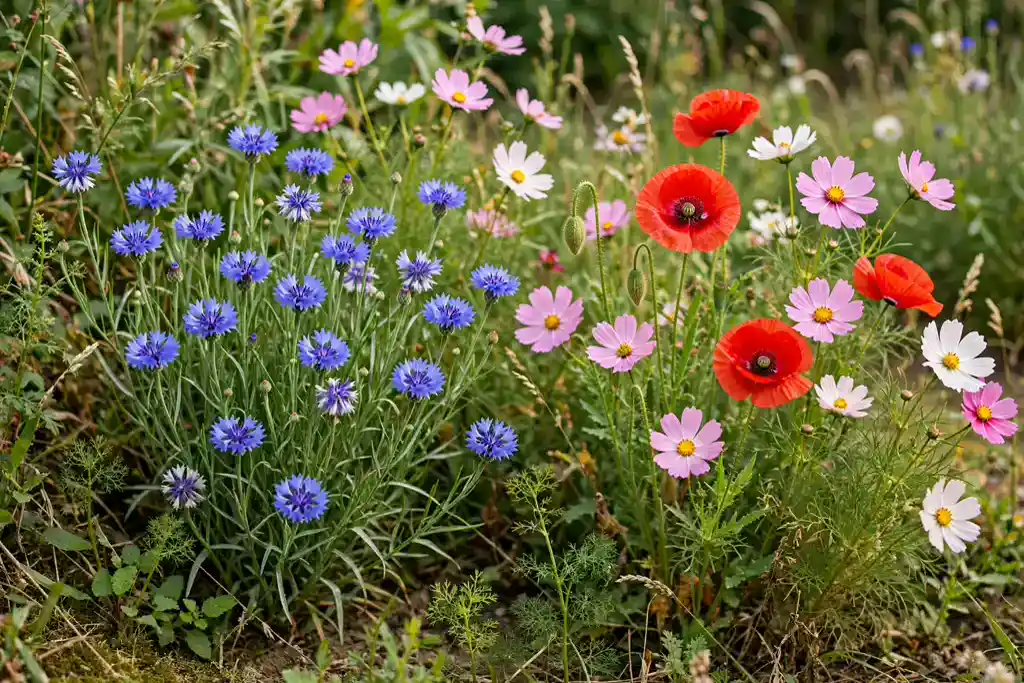
A wildflower corner brings a loose, natural look to a garden with little upkeep once it is established. Clear a patch of weeds, sow a seed mix suited to your soil and region on bare, raked soil, and add a simple mown or gravel edge so the patch reads as a choice rather than neglect. Cornflowers, poppies, cosmos, and oxeye daisies give color across summer.
The first year can look patchy while perennials establish, so set expectations and leave the patch uncut until late in the season to let plants self seed. Keep the patch away from formal beds if you prefer tidy edges, and sow thinly, since crowded seedlings compete and flower less well. Water only while seedlings establish, then let the patch largely look after itself.
8. Plant a White and Green Moon Garden
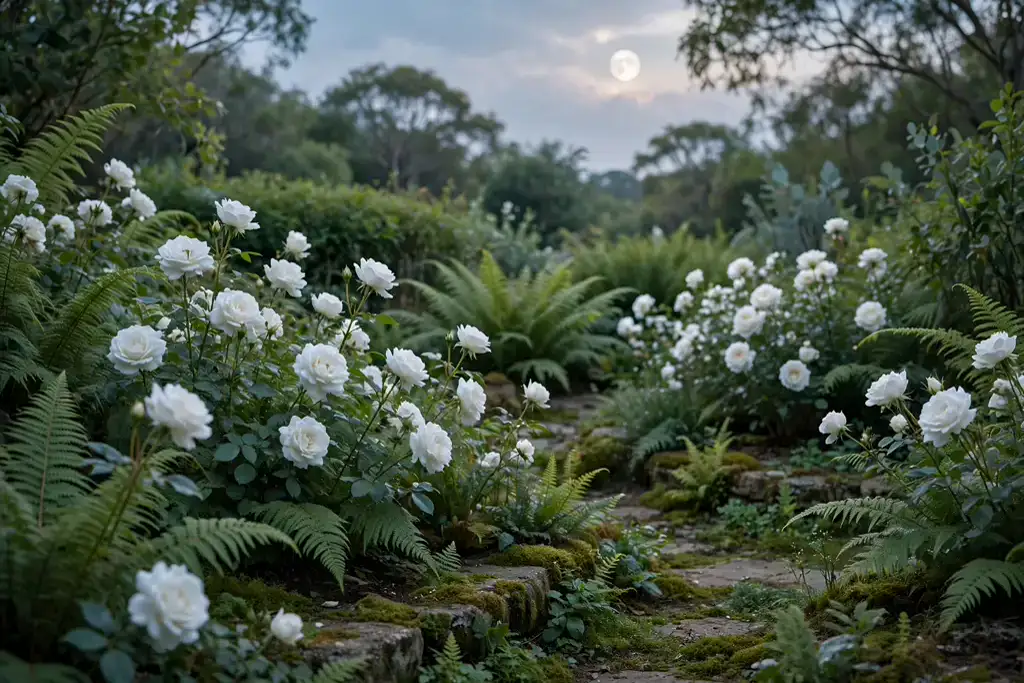
A white and green garden glows in the evening, because white flowers and pale foliage catch the last light. Plant white roses, white foxgloves, white cosmos, and night scented stock with green ferns, hostas, and grasses for contrast. The palette stays calm in daylight and comes alive at dusk, which suits a garden used for evening meals or quiet sits.
Site the moon garden near a seat or a path you use in the evening, and add pale gravel or light stone to lift the light level further. Keep the foliage mostly green and avoid adding a strong third color, so the bed stays restful. Include at least one scented plant, such as jasmine or night scented stock, since scent carries well in still evening air.
9. Group Terracotta Pots in Threes
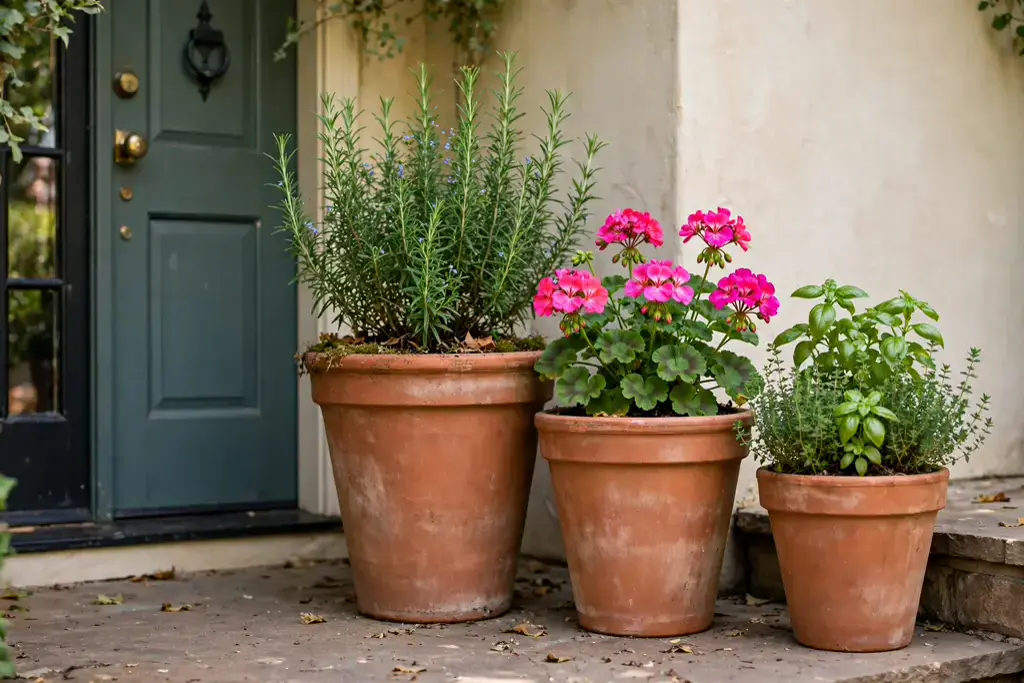
Terracotta pots grouped in threes give instant structure to a door, a step, or a patio corner. Use three pots of different heights with the same plant family, such as herbs, geraniums, or small shrubs, so the group reads as one display. Terracotta warms in the sun and suits both cottage and Mediterranean planting, and the group can move with the seasons.
Choose pots with drainage holes, raise them on feet so water drains freely, and check the soil with a finger before watering, since terracotta dries out faster than plastic. Plant the tallest pot at the back or center, depending on the view, and keep trailing plants trimmed back from paths. In cold areas, move tender plants indoors before hard frost.
10. Set a Stone Water Bowl as a Centerpiece
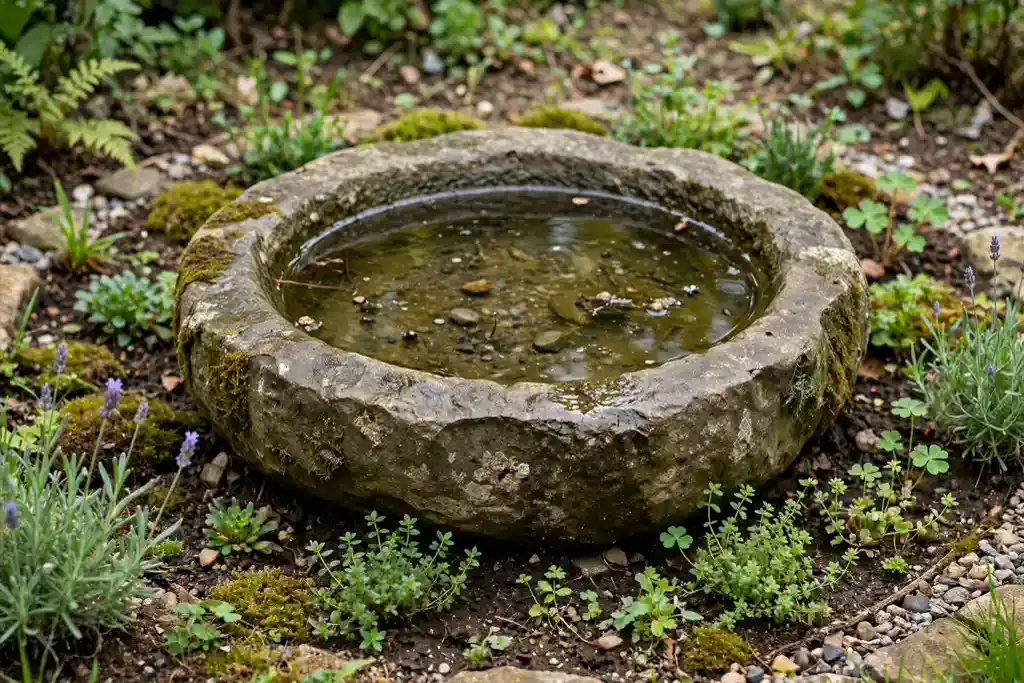
A shallow stone water bowl makes a calm centerpiece for a small bed, a patio, or a path crossing. The still surface reflects sky and planting, and the bowl itself gives weight and shape even when the garden is quiet. Set the bowl on a level, firm base, fill it with rainwater where possible, and keep the water shallow enough to clean easily.
Change the water regularly to stop algae and mosquitoes, and add a few floating leaves or a single water plant only if the bowl is deep enough. In a garden used by small children, keep the bowl shallow and the edges rounded, and place it where it is seen but not tripped over. A bowl near a seat also gives birds a drinking spot, which adds life to the garden.
11. Frame an Entry With an Arched Trellis
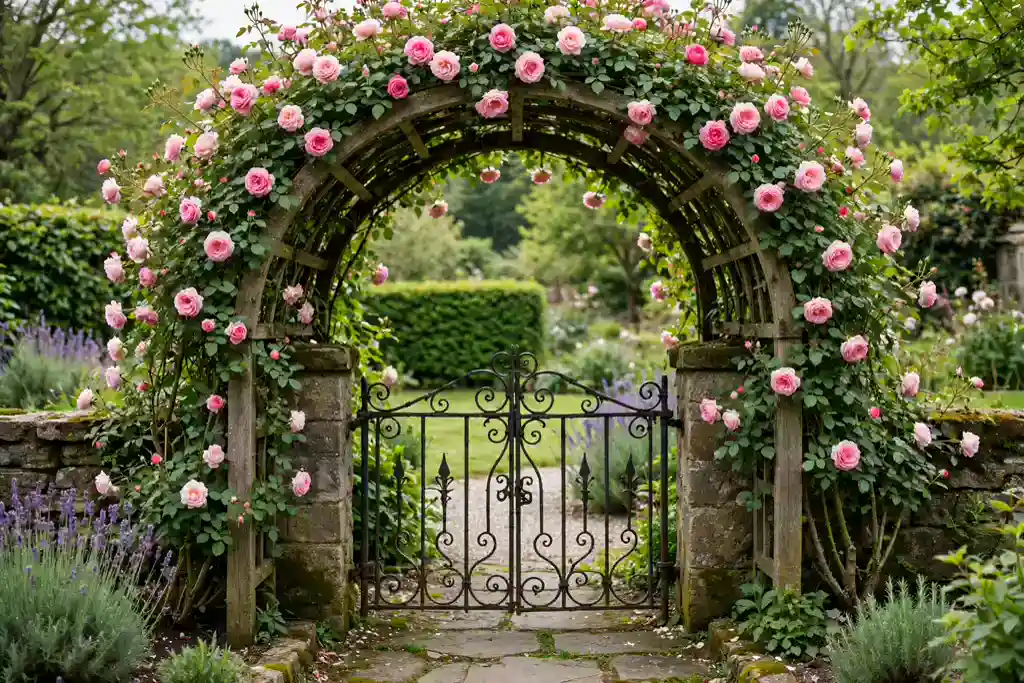
An arched trellis over a garden entry turns an ordinary gate into a moment of arrival. Fix a sturdy arch to firm footings, and grow one climber, such as a rose, clematis, or jasmine, up each side so the planting meets at the top. The arch frames the view beyond it and gives the entry a clear sense of place.
Anchor the arch firmly so it does not lean as the planting grows heavier, and train stems away from the walking line so thorns and stems do not brush visitors. Prune after flowering as the plant type requires, and keep the path beneath the arch clear and level. A narrow arch suits a small garden better than a wide one, since the planting already takes up visual space.
12. Make a Shaded Reading Nook With a Bench
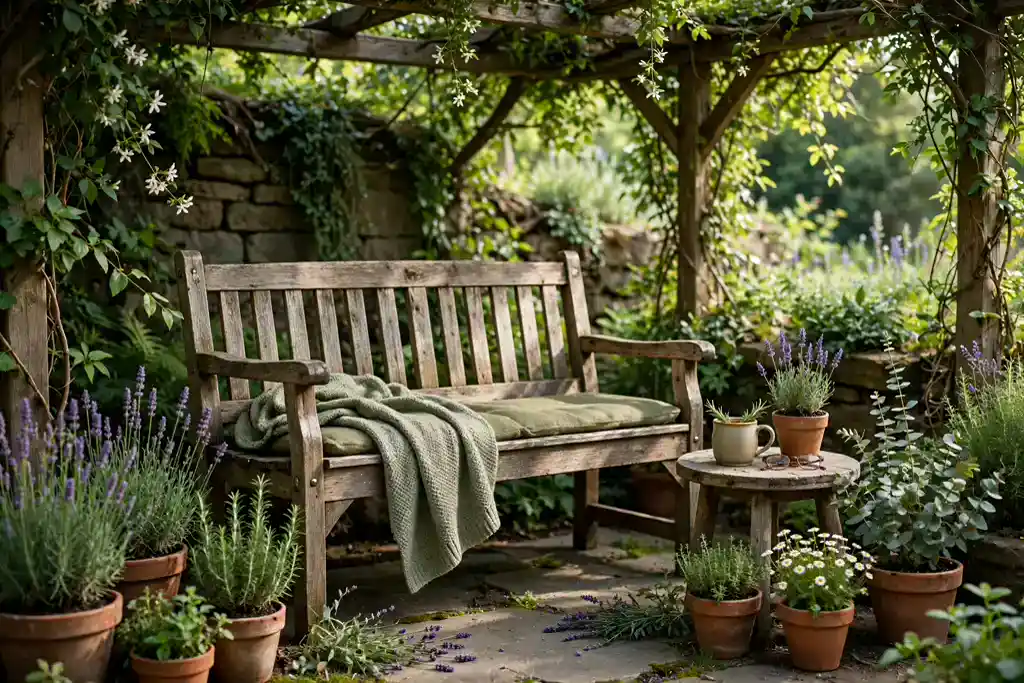
A bench in a shaded corner, with a small side table and scented planting nearby, turns an unused corner into a daily habit. Choose the spot before the bench: light at the time you will sit, a view worth looking at, and a dry path matter more than the bench style alone. A simple wooden bench suits soft planting, while a stone bench suits a formal focal point.
Add one comfort detail, such as a cushion or a small table for a cup and a book, and keep the rest simple. For layout ideas for the seating itself, see these garden bench ideas, which show how to choose a spot first and match the seat to it. Keep plants clear of the seat edges so the bench stays easy to use, and leave room to stand up comfortably.
13. Plant a Scented Herb Border Beside the Path
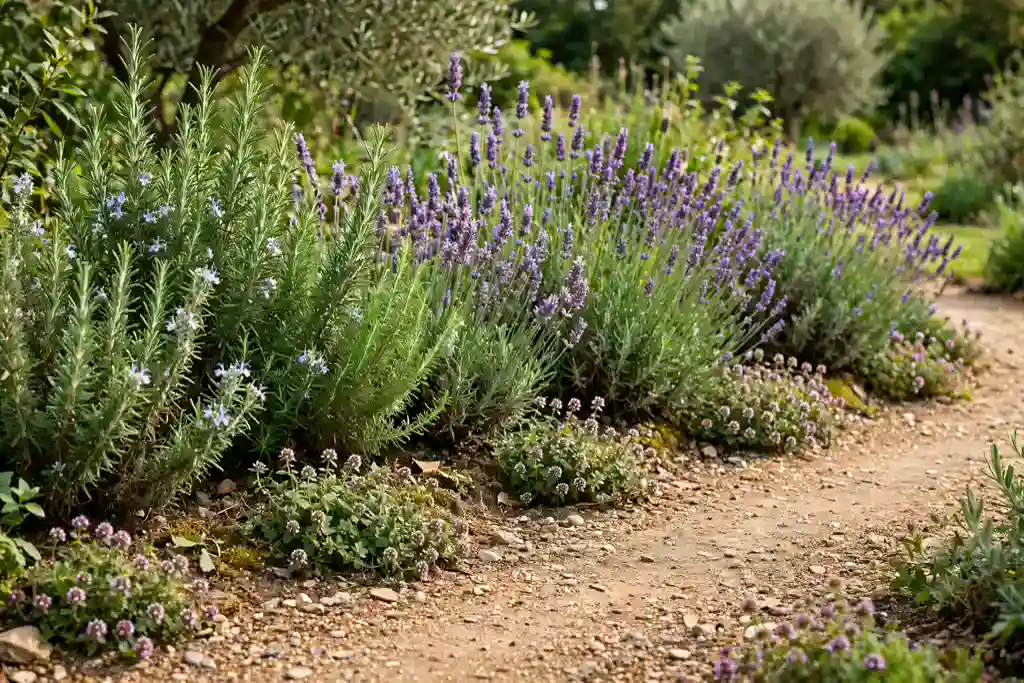
A herb border beside a path gives scent every time you brush past it, and it puts fresh leaves within reach of the kitchen. Plant rosemary, lavender, thyme, and sage in full sun and free draining soil, with chives and parsley where the soil stays a little moister. Grow mint in its own pot sunk into the bed, since it spreads fast and can take over its neighbors.
Label herbs while they are young, water them often in hot weather, and pick little and often to keep plants bushy. Edge the border with low stone or brick so soil stays off the path, and keep the path itself clear for walking. In winter, move tender herbs to a sheltered corner or indoors, and replace annual herbs each spring.
14. Build Layered Raised Beds for Mixed Planting
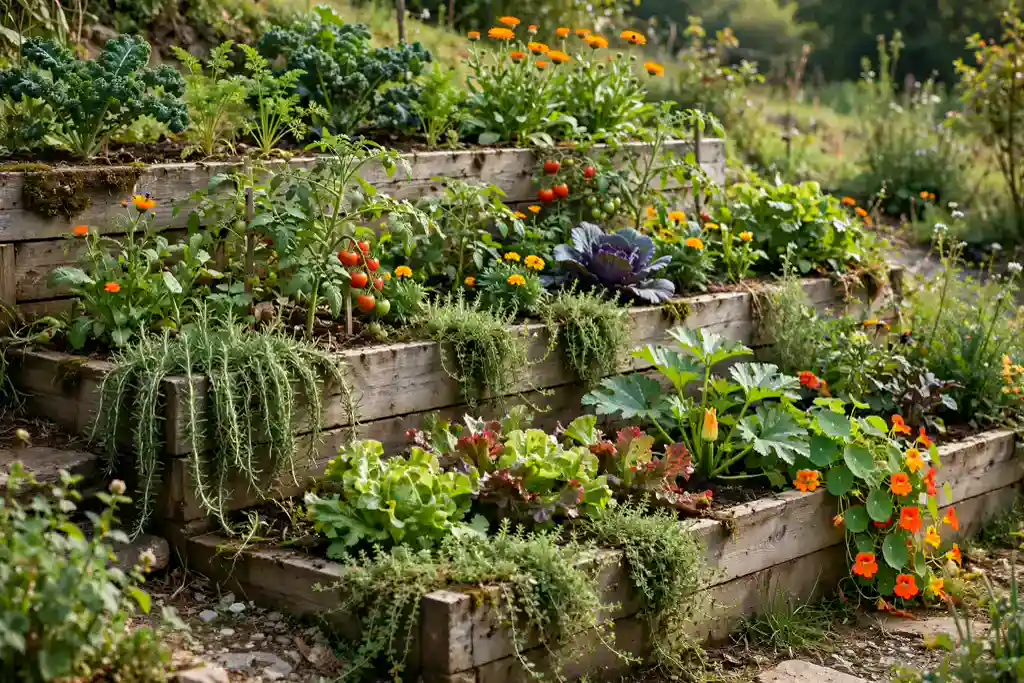
Raised beds with mixed planting give a garden structure and make growing easier on backs and on heavy soil. Build beds no wider than you can reach across from one side, fill them with good soil mixed with compost, and plant each bed in layers: tall plants at the back, flowers and vegetables in the middle, and trailing herbs or flowers at the front. The layers make each bed look full from every angle.
Keep paths between beds wide enough for a wheelbarrow, and leave one bed for cutting flowers so display beds stay tidy. Water raised beds more often than ground beds, since they dry out faster, and mulch the surface to hold moisture. Rotate crops between beds each year so the same family does not grow in the same soil season after season.
15. String Warm Lights for Evening Gardens
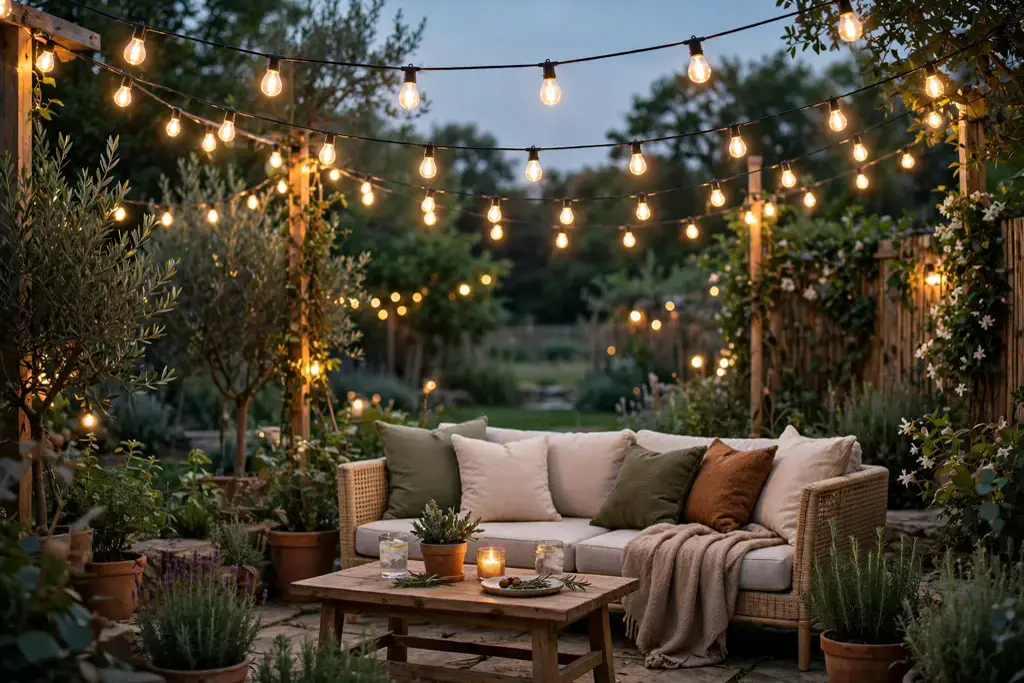
Warm string lights along a pergola, a fence, or a tree branch keep a garden usable after sunset and make evening sits feel inviting. Choose warm white lights, hang them high enough to walk under, and keep cables out of walkways. Solar lights suit gardens with no outdoor power, but they need sun on their panels during the day.
Add lanterns along paths and near seats to mark steps and edges, and keep the light level soft and low so it feels cozy rather than harsh. Test the light at dusk before guests arrive, and add one brighter task light near a reading or cooking spot if needed. Bring battery lights inside in winter if the maker advises it.
16. Plant Single Color Drifts for a Calm Look
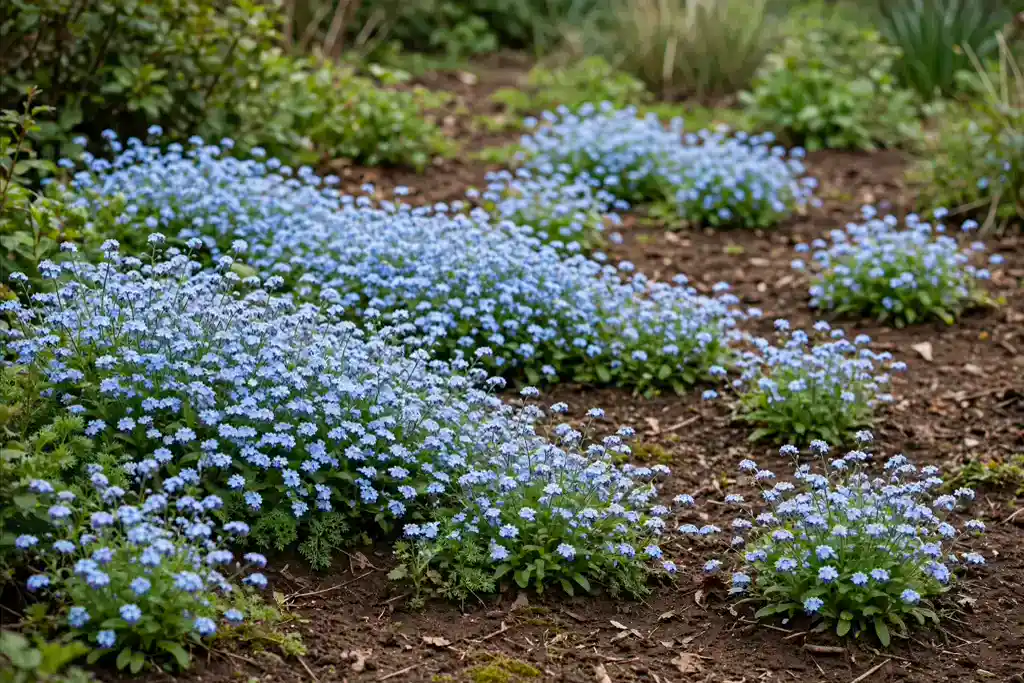
Planting one color in drifts, rather than scattering many colors, gives a bed a calm, designed look. Choose a color that suits your house and light, such as soft blue, warm pink, or pale yellow, and plant groups of three or five of the same flower across the bed. The repeated color links separate parts of the garden and makes the planting read clearly from the house.
Pair the main color with white flowers and green foliage to rest the eye, and avoid adding a third strong color. Spread flowering across the season by mixing spring bulbs, summer perennials, and late annuals in the same color family. Deadhead spent flowers where the label advises it, so new buds keep coming.
17. Shape a Gravel and Stone Corner in a Japanese Style
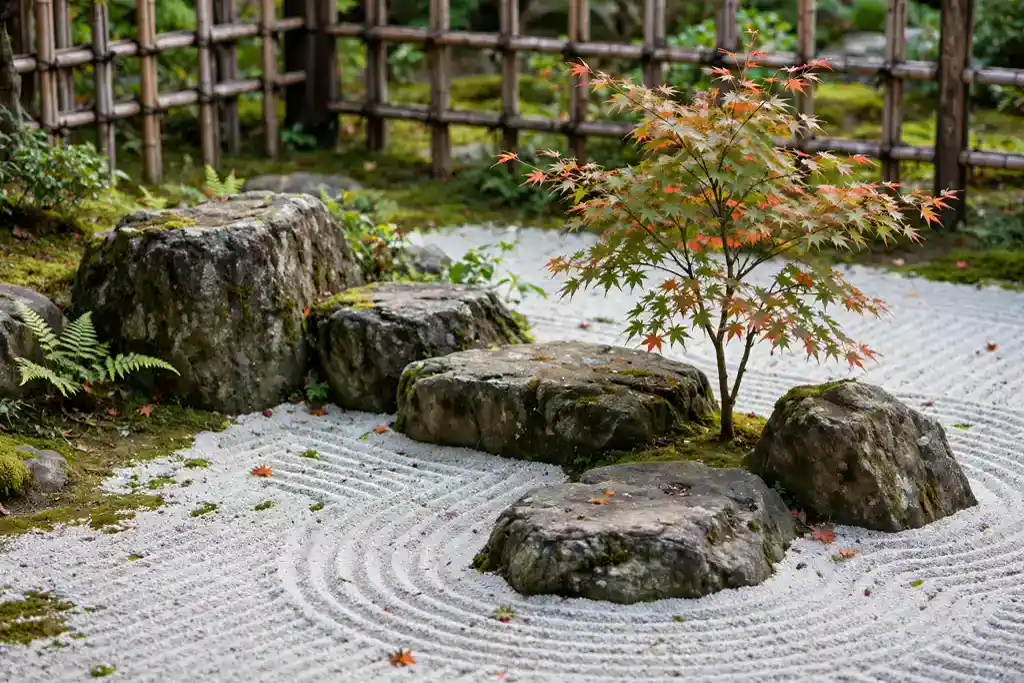
A gravel and stone corner in a Japanese style gives a garden a quiet, contemplative spot with very little planting to maintain. Rake pale gravel into gentle patterns around a few large feature stones, add one maple, pine, or bamboo in a pot or bed, and keep the rest of the corner simple. The stones give weight and shape, while the gravel gives a calm, open surface.
Bury at least a third of each large stone so it looks settled rather than perched, and keep the planting low and open so the stones stay visible. Rake the gravel after rain or wind, and add a single stone lantern or water basin only if it suits the scale of the corner. This style suits a small, shaded, or awkward corner where a full flower border would struggle.
18. Grow a Living Wall on a Sunny Fence
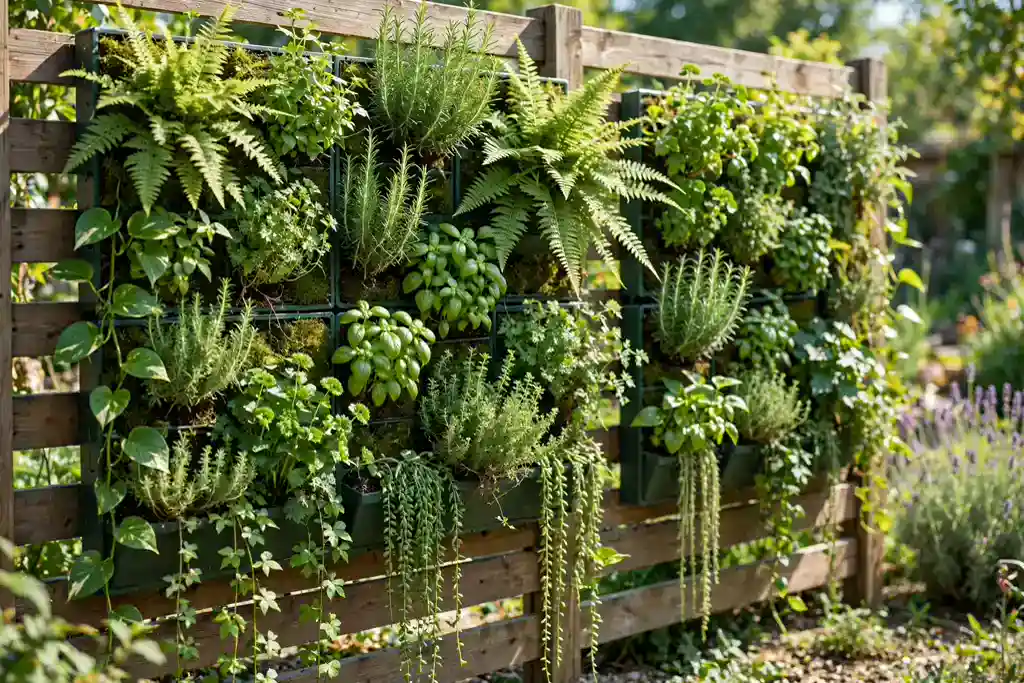
A living wall on a fence grows a green wall without using bed space, which suits small gardens and courtyards. Fix panels with individual pockets or trays to a sturdy fence, so you can replace one plant without disturbing the rest. Plant ferns and trailing plants in shade, and herbs, strawberries, and small perennials in sun, to suit the light on that fence.
Water from the top so moisture reaches each pocket, and check the fixings and the weight of the panels when wet, since a planted wall is much heavier after watering. Keep panels away from vents and access points, and leave room to reach the plants for trimming. Feed container plants regularly, because pockets run out of food faster than beds.
19. Turn Vintage Pieces Into Planters
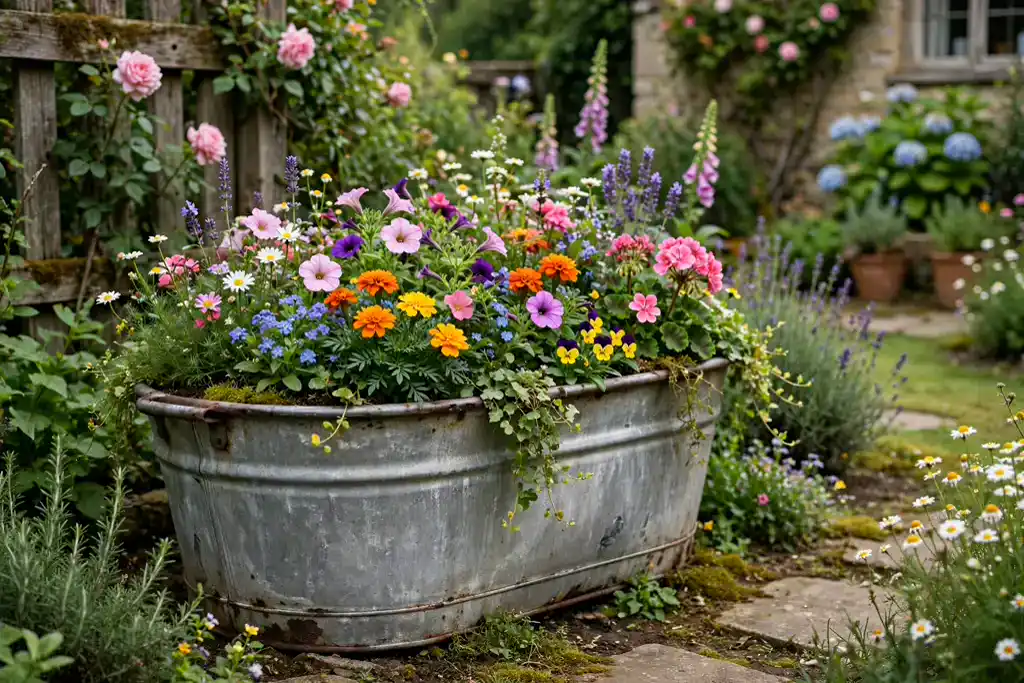
Vintage pieces used as planters, such as an old sink, a wooden crate, a metal tub, or a wheelbarrow, give a garden character that new pots cannot match. Choose pieces that are sturdy, add drainage holes where possible, and line wood or metal with a waterproof layer so soil does not rot or rust the piece from inside. One vintage planter as a feature works better than several scattered pieces.
Plant the piece with a mix that suits its depth: shallow pieces suit succulents and herbs, deeper pieces suit shrubs and small trees. Keep the planter where it can drain freely and where its weight will not damage paving. Check old painted pieces for lead paint before planting edibles in them, and use them for flowers only if you are unsure.
20. Rotate Seasonal Containers by the Door
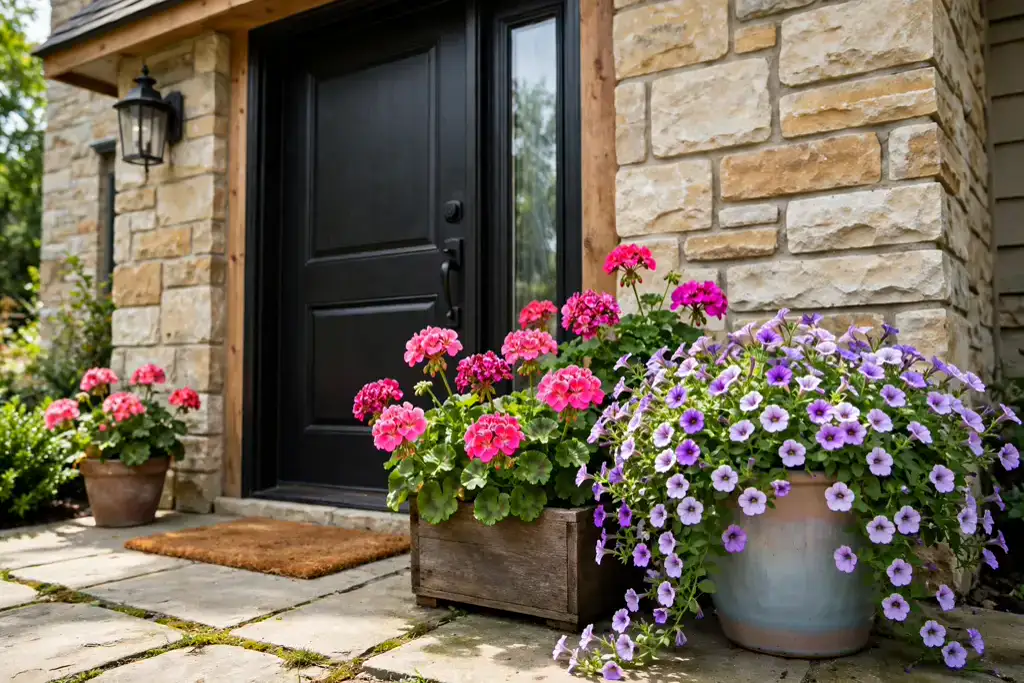
Seasonal containers by the door give a garden a fresh look four times a year without replanting a whole bed. Plant spring bulbs and primulas in spring, geraniums and trailing petunias in summer, asters and ornamental grasses in autumn, and evergreen shrubs with winter berries in winter. Swap the whole container or just the top planting, depending on the season.
Use one upright plant, one mid height plant, and one trailing plant in each container for a full look, and keep the container style the same through the year so the display reads as one design. Water containers daily in hot weather, feed lightly through the season, and refresh the soil each spring. Move the containers to follow the sun or to frame an entrance as the seasons change.
21. Let Ornamental Grasses Bring Movement
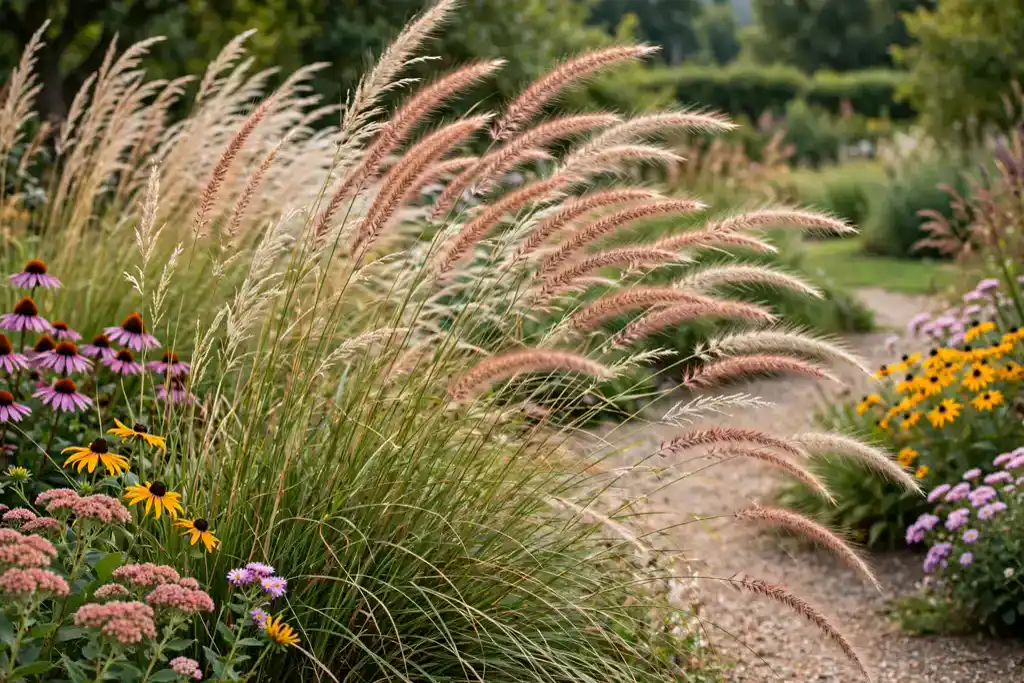
Ornamental grasses bring movement and sound to a garden, because their seed heads sway in the lightest breeze. Plant miscanthus, fountain grass, or feather reed grass in groups along paths, at the back of borders, or in large pots, where wind can reach them. Grasses also give winter structure, since many hold their shape and color long after flowers are finished.
Choose grasses sized for the space, since mature spread varies a lot between types, and cut them back in late winter or early spring before new growth starts. Pair grasses with late flowers such as asters or sedums for autumn color, and keep them away from paths where tall seed heads might block the way. In small gardens, one large grass in a pot gives the same movement without taking bed space.
22. Add a Bird Bath for Wildlife and Sound
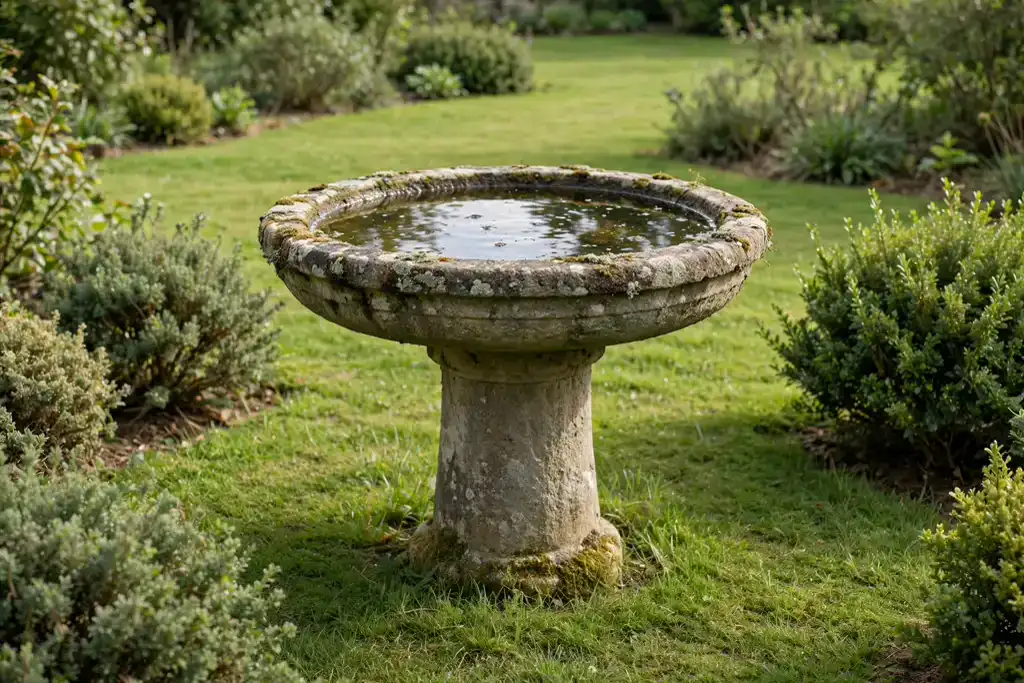
A bird bath adds wildlife and gentle sound to a garden, and it gives birds a drinking and bathing spot close to cover. Place the bath on a level, firm base near shrubs or a tree, but with open space around it so birds can see cats approaching. Keep the water shallow, with a sloping edge or a stone in the middle so small birds can stand safely.
Change the water every few days, scrub the basin to stop algae, and keep the bath full in hot weather and in winter when natural water freezes. Site the bath where you can see it from a window or a seat, so the visitors become part of the garden. Avoid placing the bath under a feeder, since falling seed fouls the water quickly.
Conclusion
An aesthetic garden does not need every idea on this list. Pick one structure first, such as a curved path, a pergola, or a stone edge, then add two or three supporting pieces, such as pots by the door, a scented border, and warm evening lights. Repeat one or two materials through the garden, plant in groups rather than singles, and keep one seat comfortable and easy to reach. Spread interest across the seasons, so the garden looks cared for in winter as well as in summer. When you add scent and sound, the garden becomes a place you use every day, not just a view from the window.
Save this list on Pinterest before your next garden trip, and work through it one area at a time: structure first, then planting, then the small details that make the garden yours.
FAQs
What is the easiest way to make a garden look aesthetic?
Start with structure: a clear path, tidy edges, and one focal point, such as a topiary, a water bowl, or a bench. Then repeat one or two materials, such as stone or terracotta, and plant in groups rather than singles. These changes cost little and change how the whole garden reads, before you spend on larger features.
How do I make a small garden look aesthetic?
Use vertical space and reflection: a living wall, an arched trellis, and a garden mirror all add interest without taking bed space. Group pots in threes, keep one seat comfortable, and choose a single color drift so the small space reads as one design rather than a collection of separate pieces.
Which garden style is easiest to maintain?
A gravel and stone corner, a wildflower corner, and a grass led border are among the lowest upkeep options, since they need little watering or feeding once established. Raised beds with mixed planting are also easy to care for, because the soil is contained and weeds are easy to spot. Avoid high maintenance features, such as a large lawn or a complex water feature, if time is short.
How can I make my garden look good in every season?
Plan by season: evergreen shrubs and topiary for winter shape, bulbs for spring, roses and grasses for summer, and asters and seed heads for autumn. Seasonal containers by the door let you refresh the entrance four times a year, and a moon garden with white flowers gives evening interest in summer.
Do I need a large budget for an aesthetic garden?
No. The most effective ideas on this list, such as a curved gravel path, grouped terracotta pots, a scented herb border, and string lights, cost far less than a full redesign. Spend first on structure and on one comfortable seat, then add planting over time as budget allows, and reuse vintage pieces as planters where you can.
How do I choose plants for an aesthetic garden?
Check the plant label for sun, soil, spacing, and your growing zone before you buy, and choose plants that suit the spot rather than forcing a favorite plant into the wrong place. Plant in groups of three or five, repeat the same plant in two or three places to link the garden, and include a mix of evergreen structure and seasonal color so the bed never looks bare.