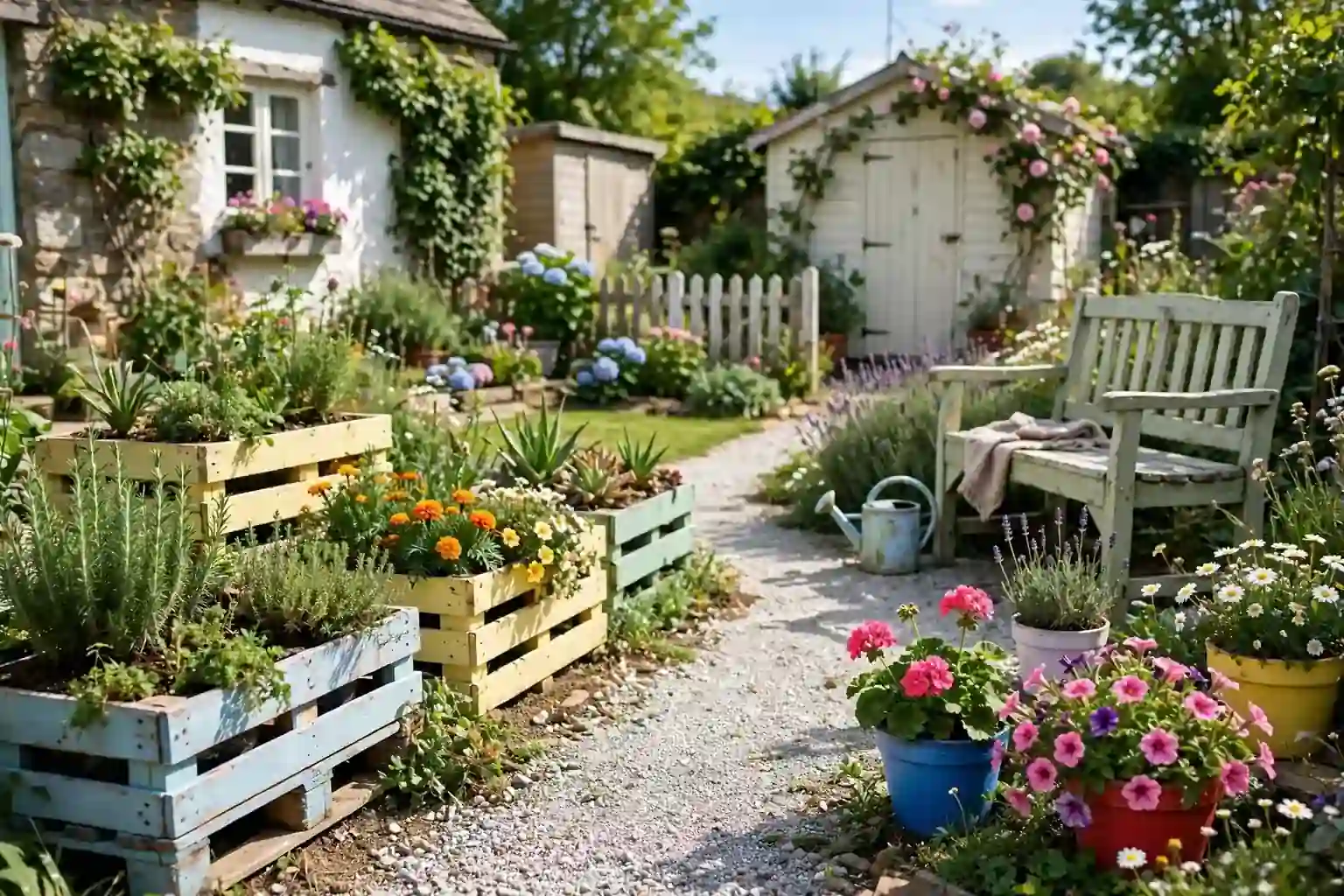
A garden with personality does not need a large budget. It needs a few clear choices, repeated with care: one color you love, one place to sit, and planting that fills the space you actually use. These 14 garden ideas on a budget use paint, pallets, seeds, cuttings, and secondhand finds to add color and character step by step. Start with the spot you see most from the house, pick one idea that fits your time and tools, and let the rest grow from there. For color that reads clearly from the path, the planting groups in these pink flower garden ideas show how drifts of one color work better than single plants scattered about.
Key Takeaways
- Start with one area, not the whole garden, and repeat one color or material so the result looks planned.
- Reuse first: pallets, tins, bricks, and secondhand furniture cost little and suit a garden that changes over time.
- Seeds, cuttings, and swaps fill beds for far less than buying full grown plants, if you allow a season for them to settle.
- Paint is the fastest budget change for pots, fences, and old furniture, and it ties mixed pieces together.
- Keep paths, light, and one comfortable seat in the plan, since those decide whether you use the garden daily.
- Feed the soil with compost and mulch, so cheap plants grow well instead of struggling in poor soil.
1. Painted Pallet Planters on a Fence
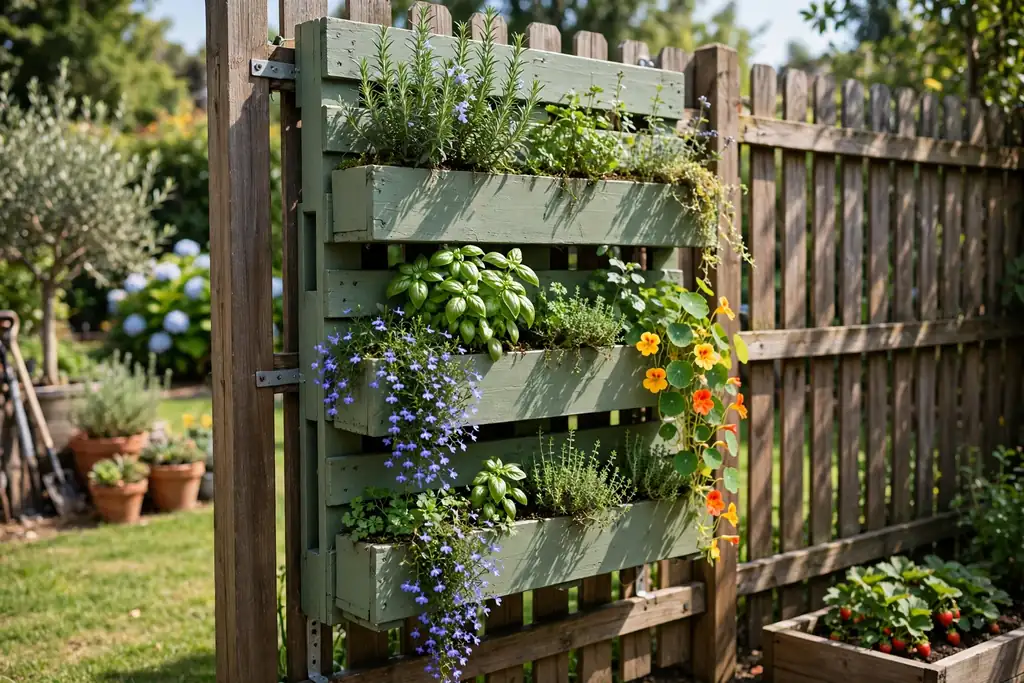
Fix a cleaned pallet to a sturdy fence and turn its slats into planting pockets for herbs, trailing flowers, and small salads. Pallets are often free from local shops and markets, and one pallet gives several planting rows without taking any ground space. Check the pallet for stamps or marks that show it is safe for garden use, sand rough edges, and line each pocket with landscape fabric so soil stays in place while water drains out.
Paint the pallet in one color that suits your fence, then plant the top row with upright herbs and the lower rows with trailing plants that soften the wood. Water pallet planters often, since shallow soil dries fast in sun and wind. For a similar stacked approach on a slope, these tiered garden ideas show how giving each level a clear job keeps planting tidy.
2. Cuttings and Seed Swaps for Free Plants
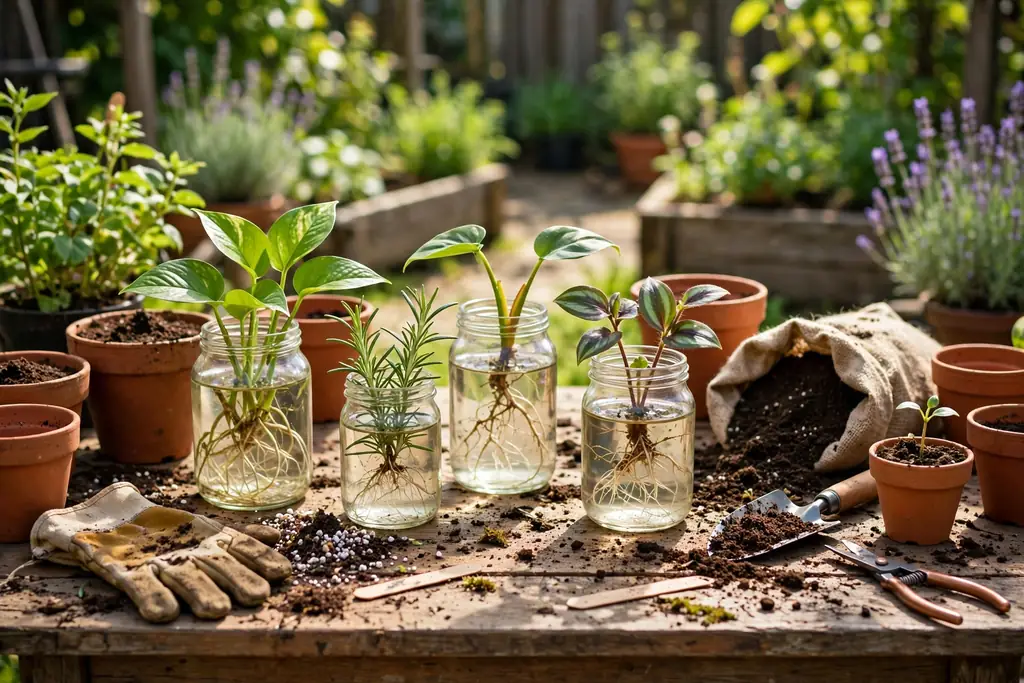
Grow new plants from cuttings and swap seeds and spare plants with neighbors, friends, and local gardening groups. Many herbs, geraniums, fuchsias, and houseplants root in water or damp compost, and one healthy parent plant can give several new plants in a season. Label each cutting with the plant name and date, keep the compost damp but not wet, and move rooted cuttings into small pots before they outgrow their jar.
Seed swaps work the same way for annual flowers and vegetables. Sow a little more than you need, pot up the spares, and trade them for plants you do not yet grow. This idea takes patience, since cuttings and seedlings need weeks to establish, but it fills beds with plants you already know suit your garden.
3. Gravel Path With Reclaimed Brick Edging
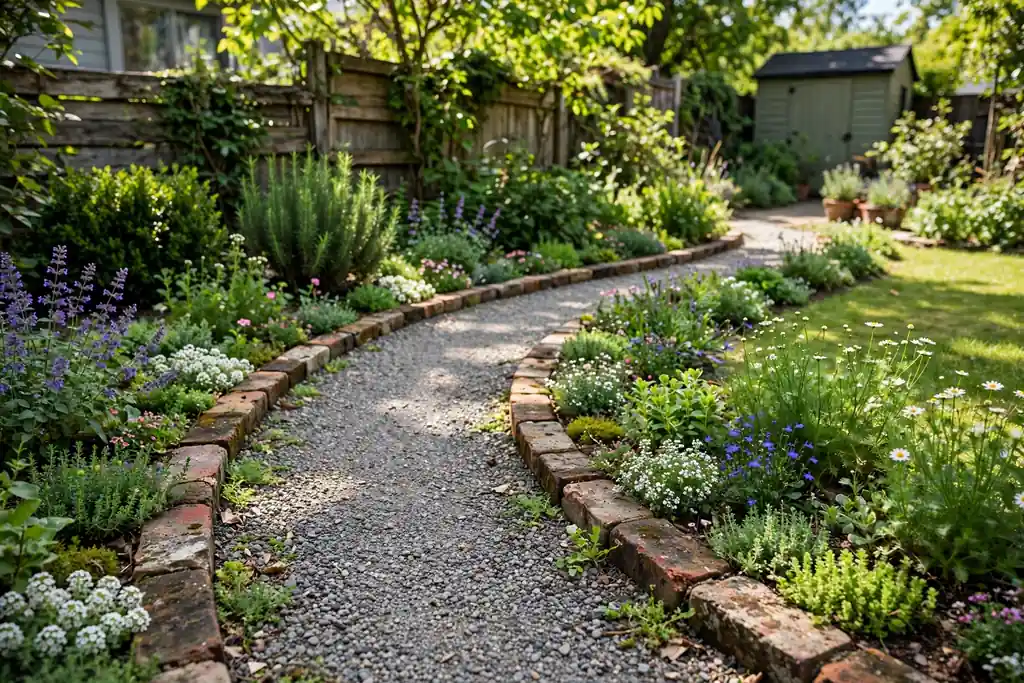
Lay a gravel path edged with reclaimed bricks to give the garden structure for the price of gravel, fabric, and a little digging. Mark the route you already walk, dig a shallow trench, lay weed suppressing fabric, and spread gravel in a thin, even layer. Set bricks on edge along each side, level as you go, so the path edge stays firm and the gravel stays where it belongs.
A clear path makes the whole garden feel cared for, even before the beds are full. It also keeps feet dry after rain and gives a neat line for planting to follow. Rake the gravel level each spring, top it up where it thins, and pull weeds that root in the edges before they spread into the beds.
4. Painted Pots in One Color Story
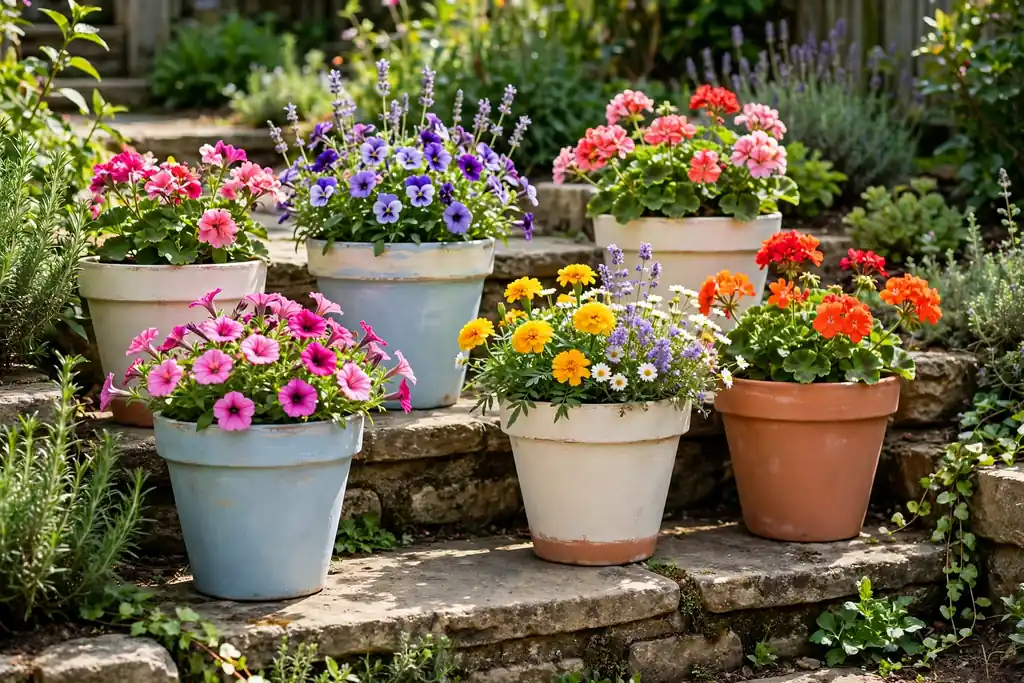
Paint plain terracotta pots in one color story, such as sage green, cream, and soft blue, to make mixed pots look like a set. Use outdoor paint made for pots, clean and dry each pot first, and leave the inside unpainted above the soil line if the paint maker advises it. Group pots in threes or fives by doors, steps, and path corners, with one tall plant, one mid height plant, and one trailing plant in each group.
One color story does more for a small garden than many scattered colors, since the eye reads the groups as one design. Keep drainage holes clear, raise pots on feet so water runs away, and repaint chipped pots at the end of the season so the set stays fresh for another year.
5. Bamboo Cane Wigwams for Climbers
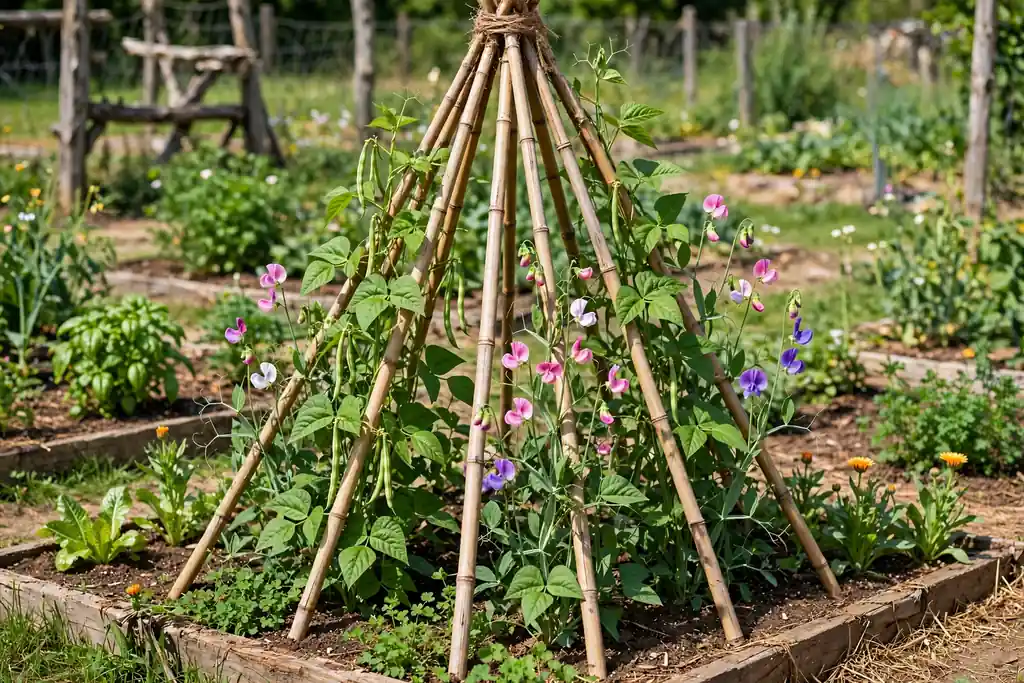
Build wigwams from bamboo canes for beans, sweet peas, and other climbers, and you get height, flowers, and food from a handful of canes and some twine. Push six to eight canes into the soil in a circle, tie them together at the top, and wind twine around the frame in rings so young stems have something to grip. Plant one climber at the base of each cane and water well until roots settle.
Wigwams suit small beds and large pots, and they can move to a new spot each year as part of crop rotation. Tie stems in loosely as they grow, pick beans and sweet pea flowers often to keep more coming, and take the canes down, dry them, and store them under cover for next season.
6. Secondhand Bench With Fresh Paint
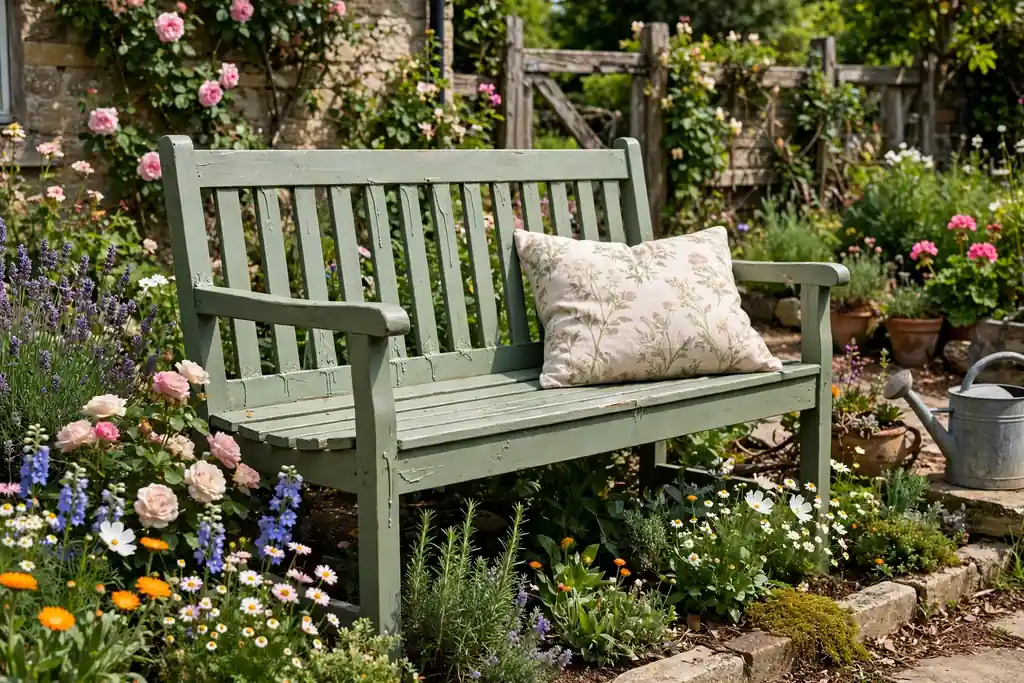
Find a secondhand wooden bench, sand it back, and paint it in a color that suits your planting, and you get a garden seat with character for far less than a new one. Check the joints and legs before you buy, since a wobbly frame costs more time than it saves. Sand rough spots, fill small cracks with exterior filler, and apply primer and outdoor paint as the maker directs, letting each coat dry fully.
Place the bench where you will actually sit, facing a view or a bed you love, with firm footing underfoot and a path to reach it in wet weather. For help choosing the spot before the seat, these garden bench ideas cover light, view, and shade in a practical order. Add one cushion and a small side table, and the bench becomes a daily habit rather than an ornament.
7. Jar Lanterns and Solar String Lights
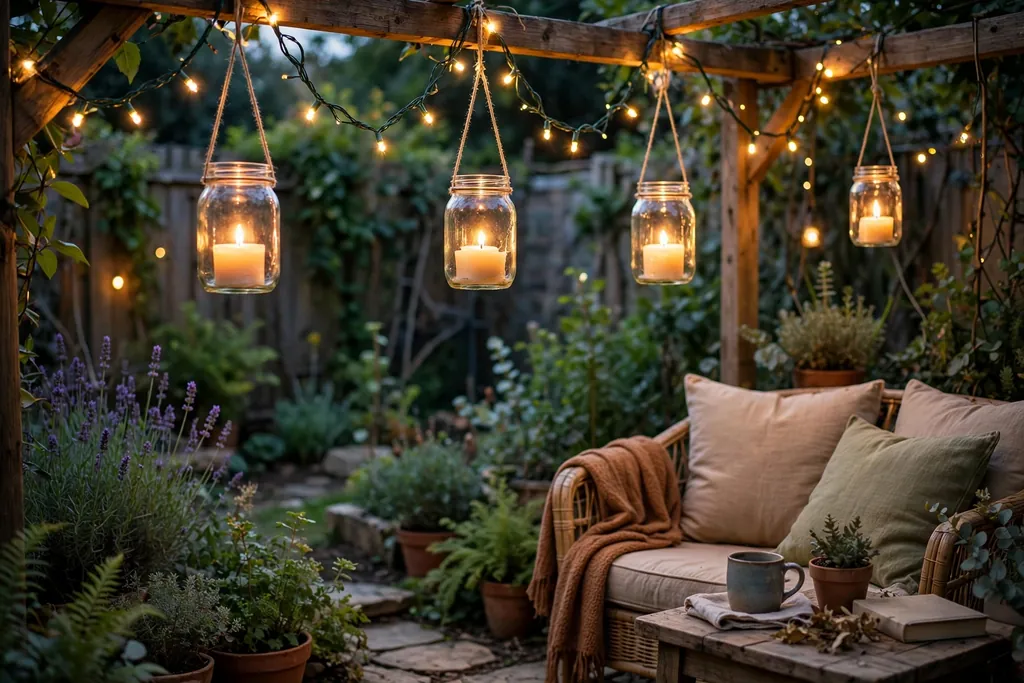
Hang jar lanterns and solar string lights to make evenings in the garden feel welcoming without wiring or a large spend. Use clean glass jars with wire handles, a battery candle or tealight inside, and hang them from hooks, branches, or a simple line. Add one set of solar string lights along a fence, trellis, or seating area, placed where the solar panel gets sun during the day.
Warm, low light suits a garden better than one bright bulb, since it lets planting and seating stay the focus. Keep flames away from dry planting and cushions, bring jars inside in high wind, and check solar lights after dull weeks, since they charge more slowly without direct sun. Light the seating area first, then add lanterns along the path.
8. Tin Can Herb Wall by the Door
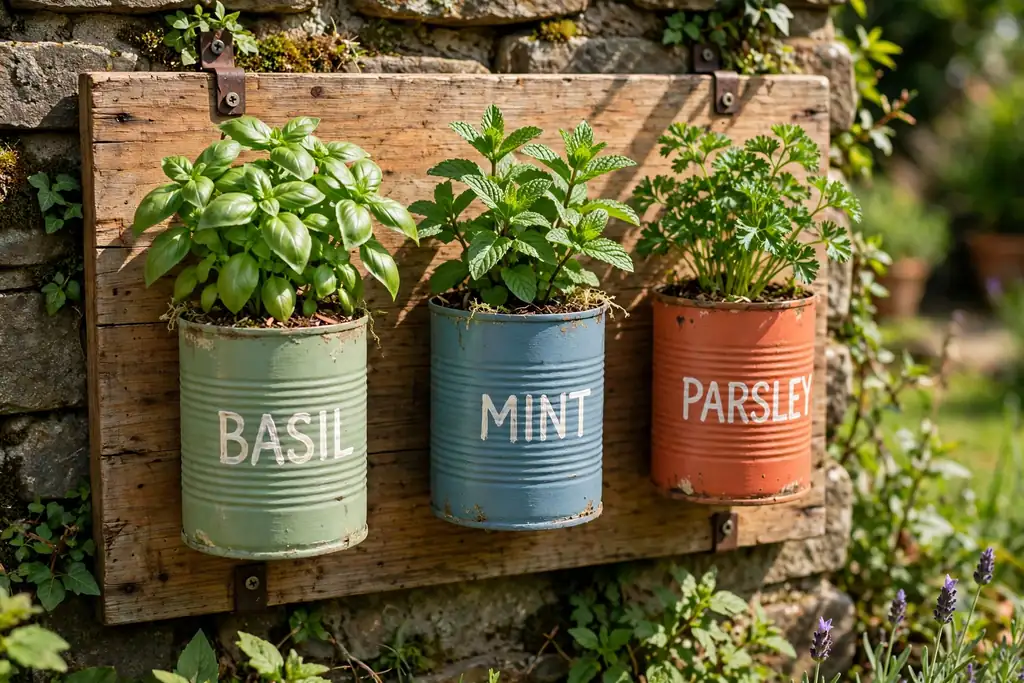
Turn clean tin cans into a herb wall by the back door, so fresh leaves sit within a few steps of cooking. Punch drainage holes in the base of each can, paint the outside in your chosen color, and fix the cans to a wooden board or directly to a fence with screws through the back. Fill with potting mix and plant basil, parsley, chives, thyme, and mint, keeping mint in its own can since it spreads fast.
Water small cans often in hot weather, feed lightly through the season, and pick little and often to keep plants bushy. Label each can while plants are young, since many herbs look alike before they grow. At the end of the season, empty tired annual herbs, refresh the compost, and replant for the next round.
9. Wildflower Patch Instead of More Lawn
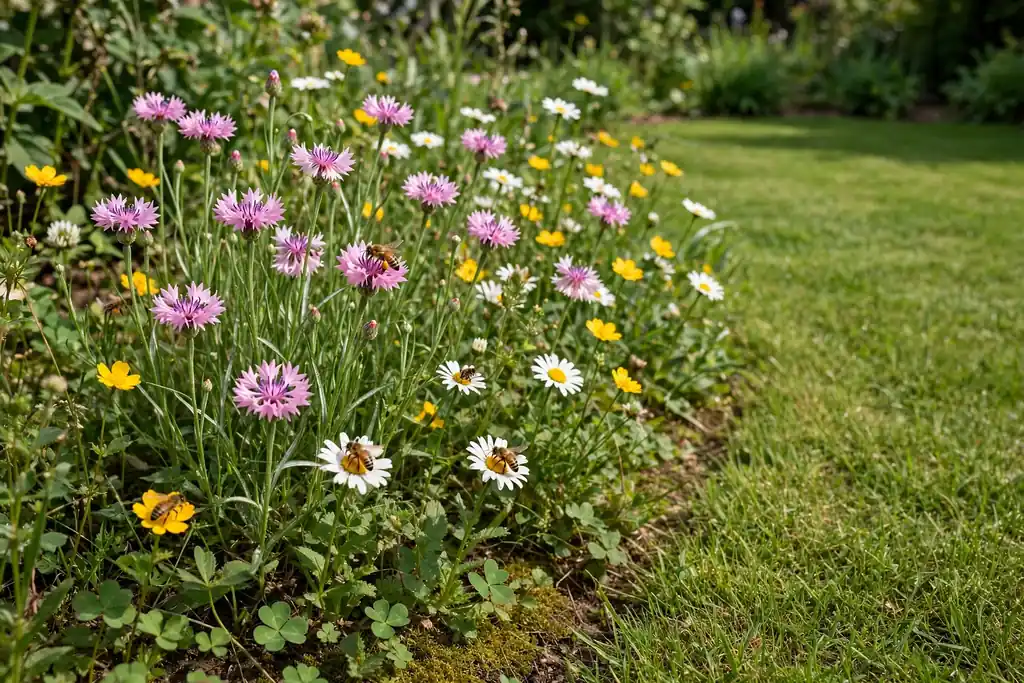
Sow a wildflower patch in place of a strip of lawn to add color, scent, and pollinators with one packet of seed and a little preparation. Clear the chosen area of grass and weeds, rake the soil to a fine tilth, and sow thinly as the packet directs, in spring or autumn for your mix. Water gently until seedlings establish, then leave the patch mostly alone, since wildflowers prefer poor soil to rich, fed soil.
A wildflower patch suits a sunny corner, a bank, or the far end of a garden where a formal bed would need more care. Edge it with a mown strip or gravel so it reads as a choice, not neglect, and cut it down late in the season after plants have set seed. Expect the first year to look patchy while perennials settle, and the second year to fill out.
10. Compost Corner That Feeds the Beds
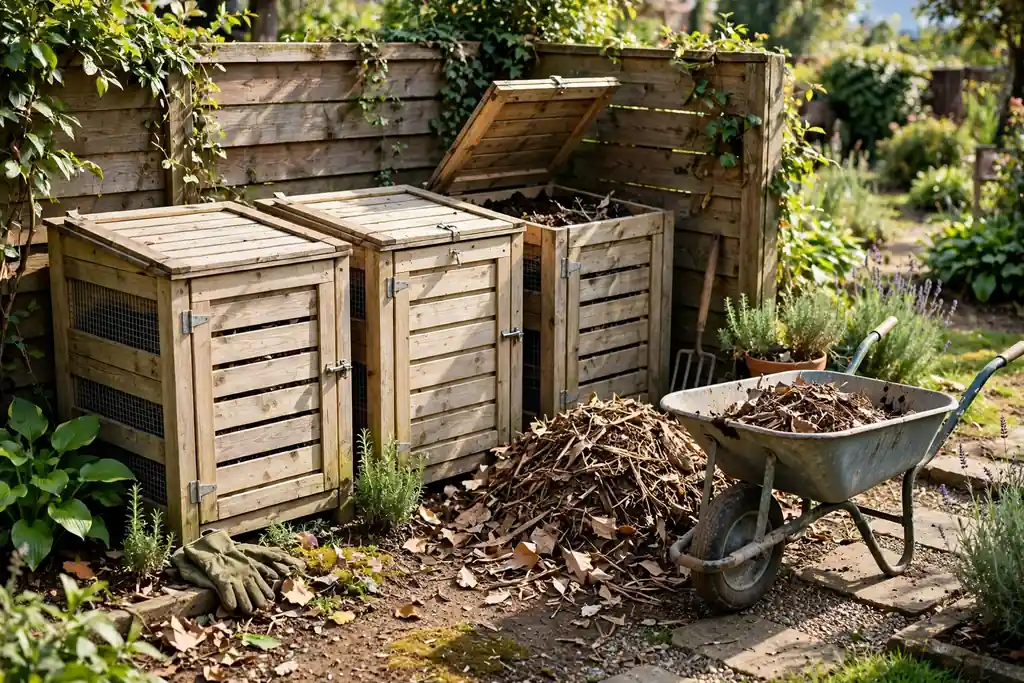
Set up a compost corner with one or two simple bins, and you turn kitchen peelings, leaves, and garden trimmings into free soil food for every bed. Site the bins on bare soil in a corner with easy access, layer green material such as peelings and grass with brown material such as leaves, straw, and torn cardboard, and keep the heap damp like a wrung out sponge. Turn it with a fork every few weeks to let air in and speed the process.
Finished compost smells earthy and looks dark and crumbly, and it works as a mulch or a soil improver in spring. Do not compost cooked food, meat, or diseased plants in a home heap, and keep the bins tidy with a lid or cover so the corner looks cared for. Good compost is the quiet reason cheap plants often outgrow expensive ones.
11. Painted Fence Panels for Instant Color
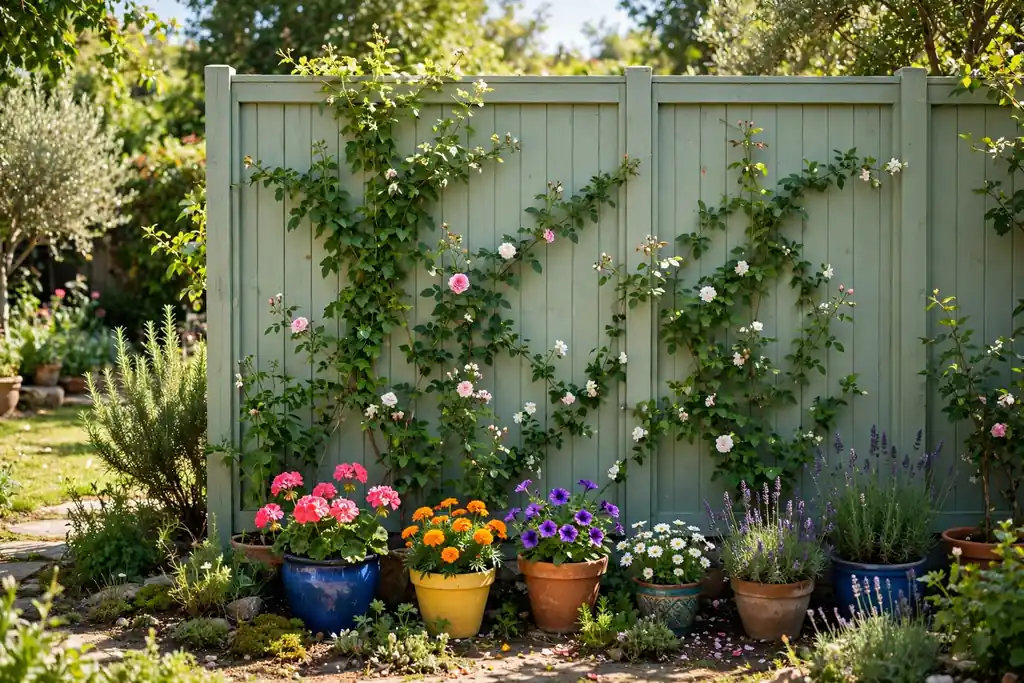
Paint fence panels in a soft, garden friendly color to change the whole garden backdrop in a weekend. Clean the fence first, brush off algae and loose paint, and apply exterior fence paint on a dry day, working panel by panel so drips do not dry in streaks. A sage green, warm cream, or soft grey backdrop makes green foliage stand out and helps pots and furniture look like part of one design.
Paint only the panels you see most from the house if time is short, and leave the rest for a later weekend. Keep paint off planting by covering beds with an old sheet while you work, and check with neighbors before painting a shared fence, since boundary rules and shared costs vary. One painted run often makes the rest of the garden feel brighter by contrast.
12. Handmade Stepping Stones in the Grass
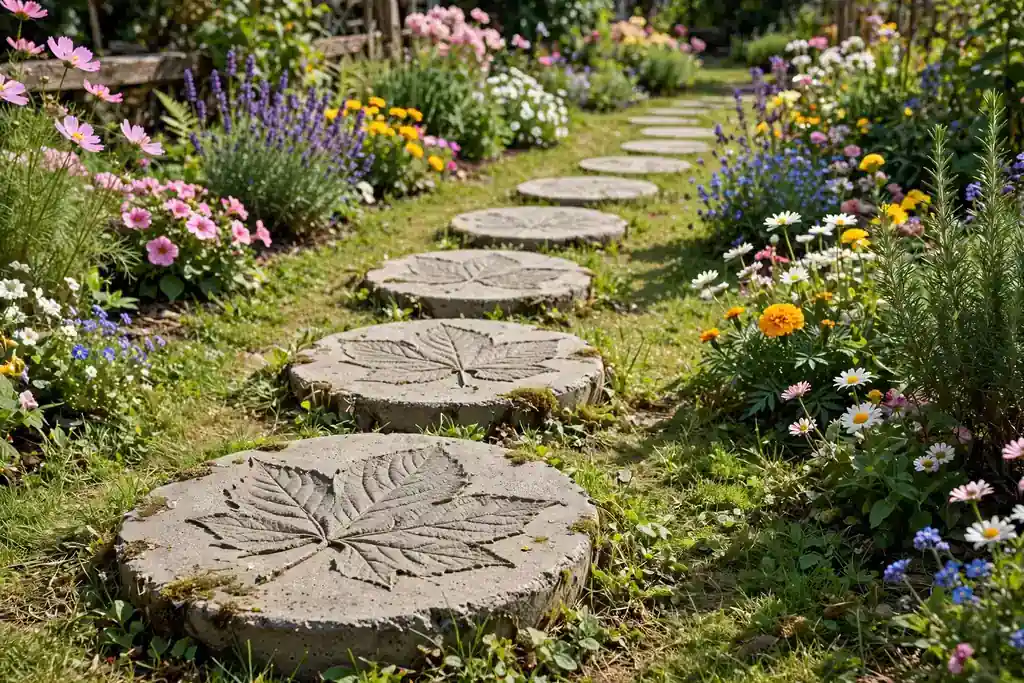
Make stepping stones from a simple concrete mix in old cake tins, trays, or a shallow box mould, and lay them as a path through grass or a bed. Press a leaf, a shell, or a few small pebbles into the top of each stone before it sets, for a personal pattern that suits your garden. Let the stones cure fully, then set them level in the grass with soil packed around each edge so a mower passes over them safely.
Space the stones at a natural walking stride, and test the route by walking it before you fix them in place. Handmade stones cost little, suit curved routes that straight paving cannot follow, and give children a path they helped make. Lift and relevel any stone that rocks, since a stable path is the point of the whole idea.
13. Upcycled Bird Bath as a Focal Point
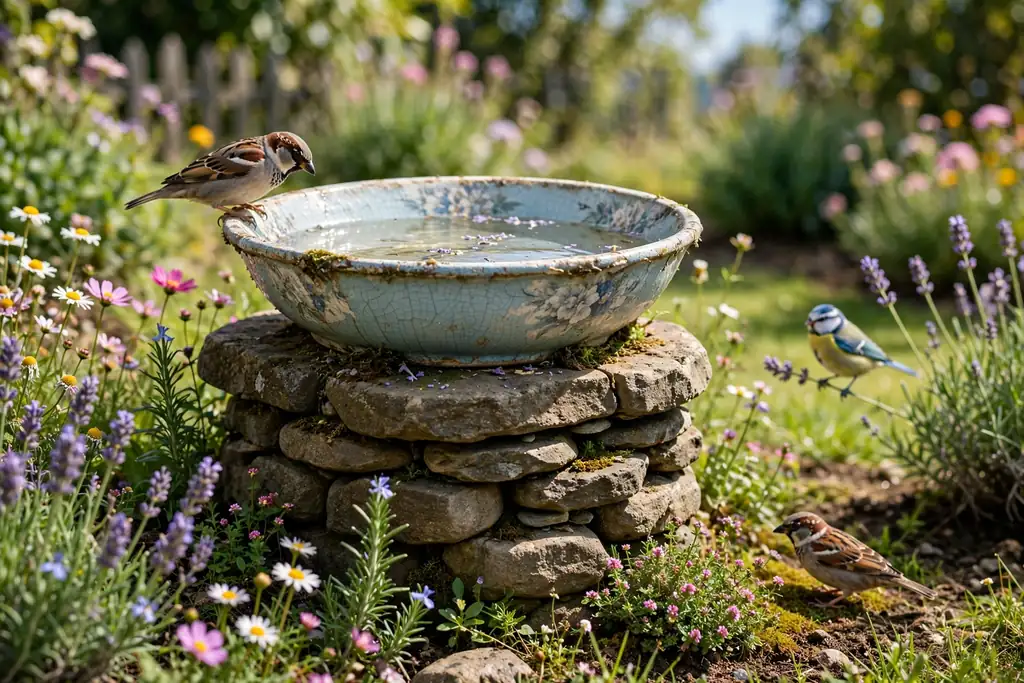
Make a bird bath from an upcycled ceramic bowl, an old sink, or a shallow dish set on a stone or brick pedestal, and you get a focal point that brings birds into the garden. Choose a shallow bowl, no deeper than a few inches at the center, with a rough edge birds can grip, and set it level where you can see it from the house but away from dense shrubs where cats hide. Fill it with fresh water and top it up in hot weather.
Clean the bowl weekly with a brush and fresh water, and empty it in hard frost if the material could crack. A bird bath suits a path end, a bed corner, or the center of a small lawn, where it gives the eye somewhere to rest. Birds visit most when water is shallow, clean, and in a spot with a clear view around it.
14. Cutting Row for Flowers Indoors
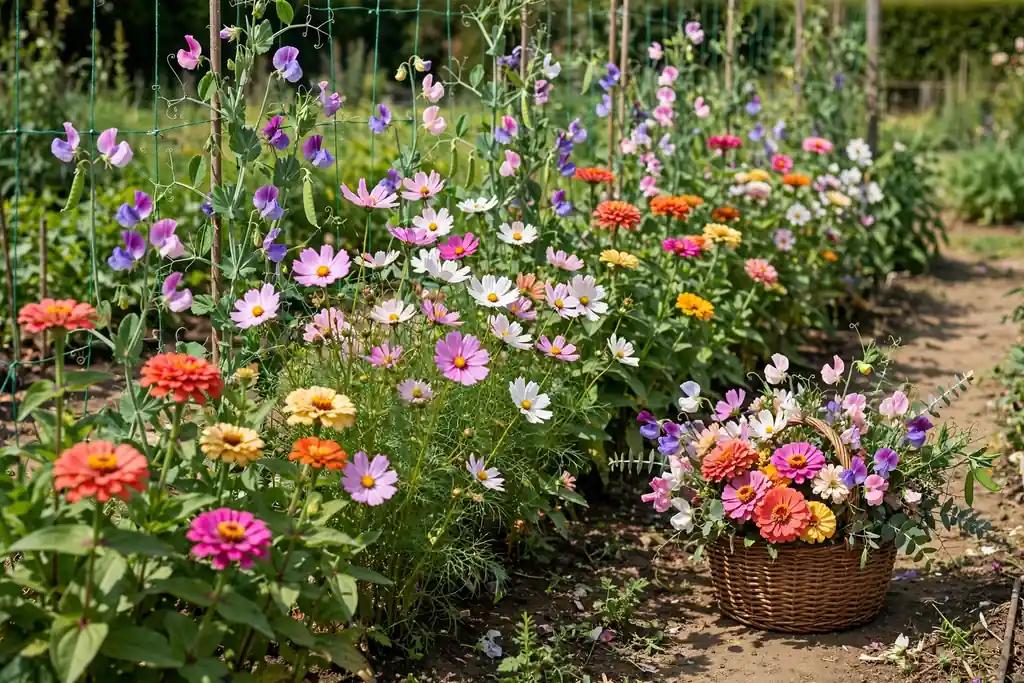
Set aside one narrow row, even along a fence, as a cutting garden, and you get flowers for the house all season without cutting into your display beds. Sow or plant zinnias, cosmos, sweet peas, and dahlias in rows spaced for picking rather than for looks, and cut stems in the morning into a bucket of water. Pick often, since regular cutting keeps new buds coming and stops plants from running to seed too soon.
Keep the cutting row watered and fed more than the display borders, and re-sow fast annuals such as cosmos if gaps appear by midsummer. A cutting row suits a sunny strip that would otherwise sit empty, and the flowers you bring inside link the garden to the rooms you live in. One row, picked weekly, often gives more stems than a whole bed cut only once.
Conclusion
A budget garden with personality comes from a few decisions made well, not from buying everything at once. Pick one color, one seat, and one planting idea from this list, set them where you will see and use them every day, and add the next idea only when the first one feels settled. Seeds, paint, reuse, and compost do most of the work over time, and the garden will look more like yours with each season that passes.
Save this list on Pinterest before your next garden trip, and work through it one area at a time: structure first, then planting, then the comfort details that make the garden yours.
FAQs
What is the cheapest way to start a garden with personality?
Start with paint, seeds, and one seat. Paint pots or a secondhand bench in one color, sow a wildflower patch or a cutting row, and place the seat where you will use it daily. Those three changes cost little and give the garden color, a focal point, and a reason to spend time outside, which matters more than filling every bed at once.
How can I garden on a budget with no experience?
Begin with easy plants and one small area. Herbs in tins, wildflowers from seed, and pot groups need only sun, water, and regular checks, and they show quickly whether a spot suits them. Ask neighbors for cuttings, read the plant label for sun and spacing, and add one new idea at a time instead of changing the whole garden in a weekend.
Do budget garden ideas last, or will they look cheap?
They last when the basics are sound: firm paths, level stones, weatherproof paint, and healthy soil. Cheap plants in good compost often outgrow expensive plants in poor soil, and a well painted secondhand bench looks better than a new bench placed where nobody sits. Reuse looks intentional when one color or material repeats, and care, such as deadheading and repainting, keeps it that way.
How do I keep a budget garden looking tidy?
Give every area a clear edge: a mown strip around a wildflower patch, brick edging along a gravel path, and pots grouped rather than scattered. Keep paths clear, compost tidy, and one area finished before starting the next. A garden with a few finished areas and one work in progress looks cared for, while many half finished projects do not.
What should I spend money on first in a budget garden?
Spend first on soil, compost, and a comfortable seat, since those affect everything else. Good soil helps cheap plants thrive, and a seat decides whether you use the garden. Save on plants through seeds, cuttings, and swaps, and on structure through paint, pallets, and secondhand finds, until you know which areas earn a larger spend.
Can I make a small or rented garden feel personal on a budget?
Yes, because most of these ideas move with you or leave little trace. Pots, pallet planters, tin herb walls, jar lanterns, and a painted secondhand bench all lift out or come with you, and a wildflower patch or cutting row can be sown in a single season. Focus on containers, color, and light, and avoid fixed changes to fences or soil until you know the rules for your home.