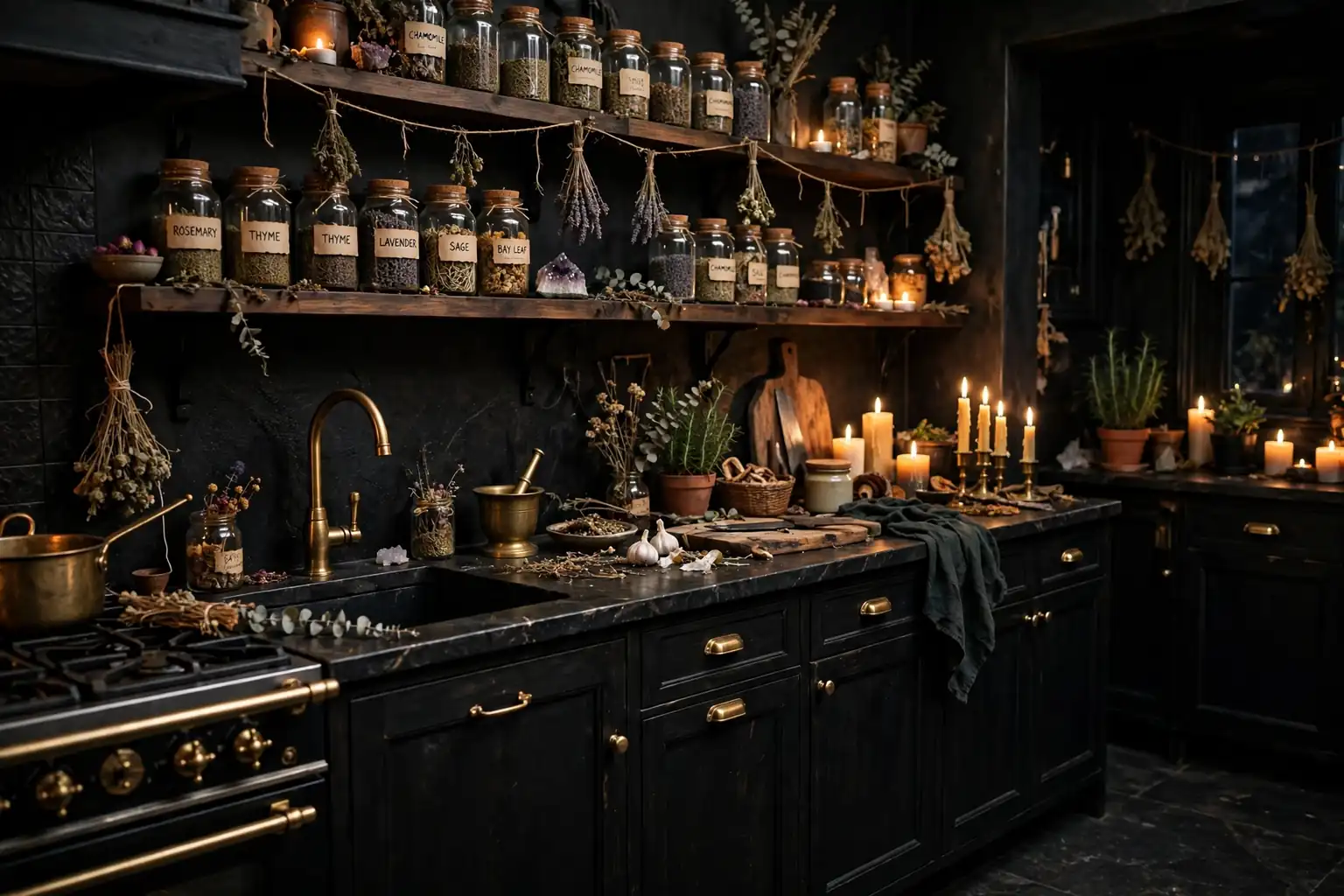
A witchy kitchen is less about costumes and more about mood: dark cabinets, warm wood, dried herbs, brass details, and soft evening light. The look suits everyday cooking when each moody detail also earns its place, whether it stores something, adds light, or keeps a work surface clear. These 31 witchy kitchen aesthetic ideas cover cabinets, shelves, herbs, lighting, and table settings, so you can pick one change, live with it, and add another only if the room still feels calm and easy to cook in. For dark kitchen styling that also helps small rooms work harder, these gothic kitchen ideas pair well with the ideas below.
Key Takeaways
- Pick a small set of witchy details, such as black, brass, moons, and dried herbs, and repeat them so the room looks planned.
- Keep at least one light surface, such as a pale counter, a light wall, or a bright window, so dark colors do not close the room in.
- Give every decorative group a job: jars hold herbs, trays hold candles, and baskets hold linens or pantry goods.
- Use flameless candles and battery lights near towels, paper, and dried plants, and keep real flames away from cooking areas.
- Store daily items where you can reach them, and put purely decorative pieces higher or behind glass.
- Change textiles and small details first, since towels, runners, and jars give a big shift without new cabinets.
1. Matte Black Base Cabinets with Brass Pulls
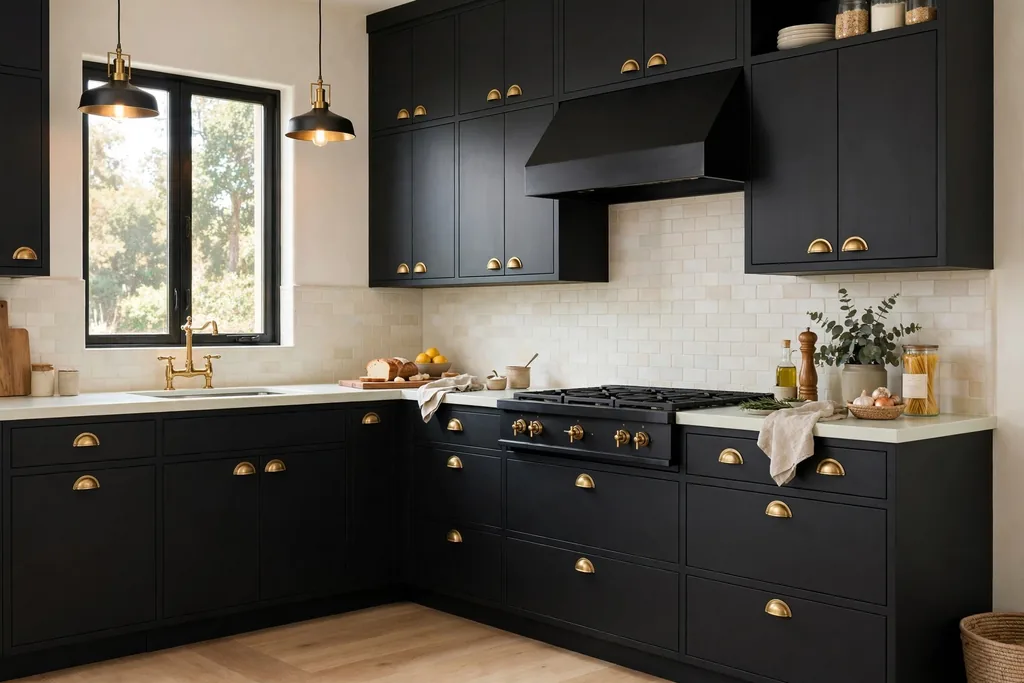
Matte black base cabinets give a witchy kitchen a clear anchor without changing the layout. Keep the upper cabinets pale, or leave one stretch of wall light, so the dark lower half does not make the room feel low. Brass cup pulls soften the black and make the cabinets easy to open with wet or floury hands.
Paint only after cleaning and lightly sanding the doors, and use a paint made for cabinets so the finish stands up to daily use. Try one door first and check it in daylight and evening light. If black on every base cabinet feels heavy, paint the island or one run only and keep the rest pale.
2. Deep Green Cabinets with Butcher Block Counters
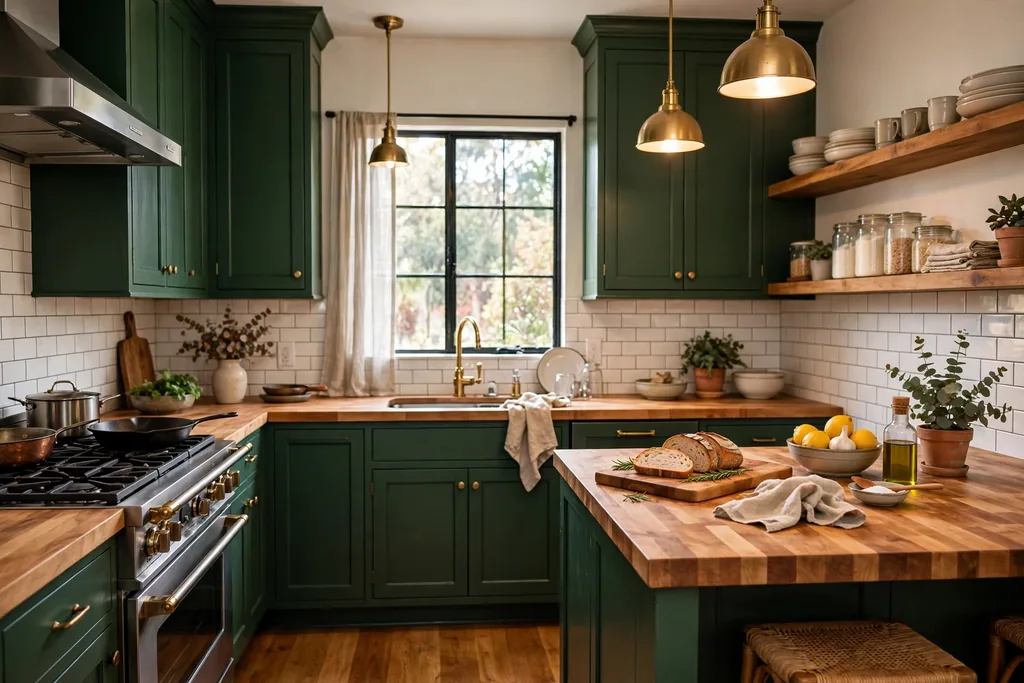
Deep green cabinets bring a forest note to the kitchen, and warm butcher block counters keep the green from feeling cold. This pairing suits cooks who want the moody look but still want a warm, natural work surface for chopping and rolling dough.
Keep the counters oiled and use boards for cutting, since wood marks easily. Pair the green with black hardware or brass knobs, and keep the backsplash plain so the cabinet color stays the main detail. If full cabinet painting feels like too much, paint one run or the island in green and leave the rest in a pale neutral.
3. A Plum Island as the Room Anchor
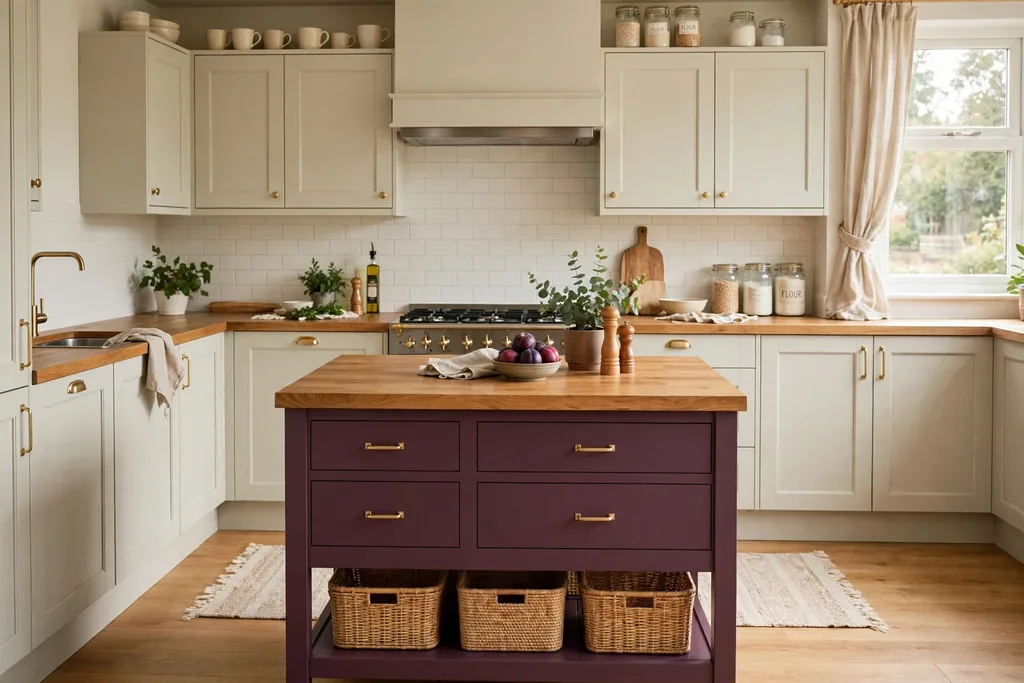
A plum or aubergine island can anchor a witchy kitchen while the surrounding cabinets stay quiet. The island becomes the piece people notice first, and it gives you a clear spot for prep, serving, and gathering without painting the whole room dark.
Keep the island top in wood or a pale stone so the plum reads as a color accent rather than a dark block. Add a shelf below for baskets, and keep the walkway around the island clear. If plum feels bold, test a painted board leaned against the island for a week before you commit to the color.
4. Open Shelves for Jars and Everyday Dishes
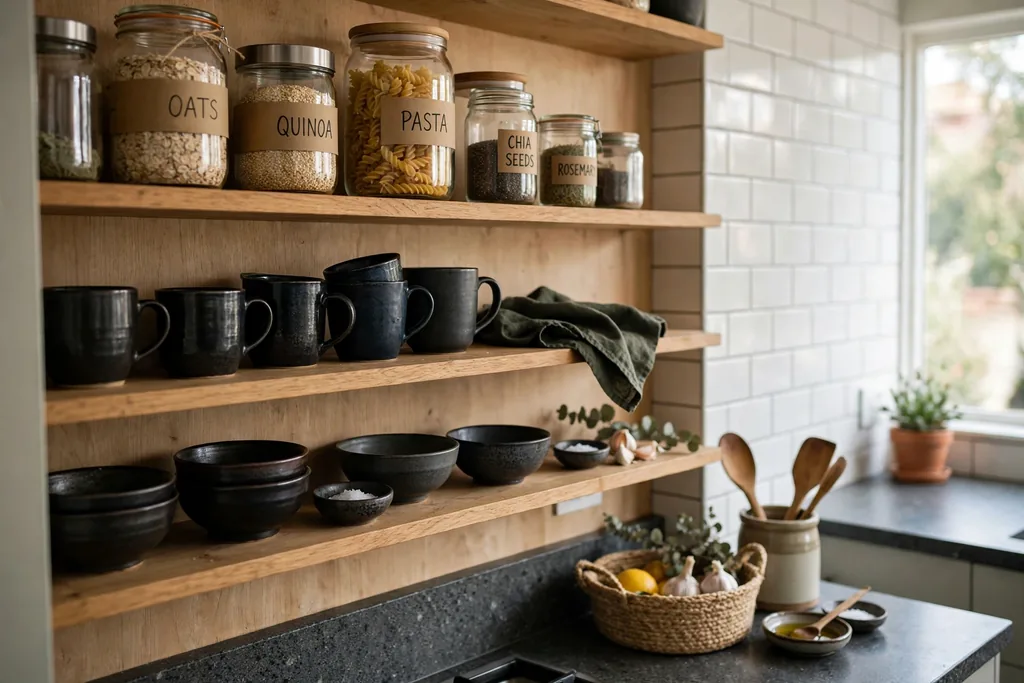
Open shelves put witchy kitchen pieces on show: glass jars, dark mugs, bowls, and a few dried stems. They also use wall space that a closed cabinet would make feel heavy, and they keep daily dishes where you can reach them.
Keep each shelf to one or two groups, such as bowls on one shelf and mugs on another, and leave a gap at each end. The spacing advice in our guide on how to style open shelves helps keep a full shelf looking calm. Fix shelves into studs, keep heavy stacks low, and limit open shelves to one wall so the room still has closed storage for messier items.
5. Labeled Apothecary Jars for Herbs and Dry Goods
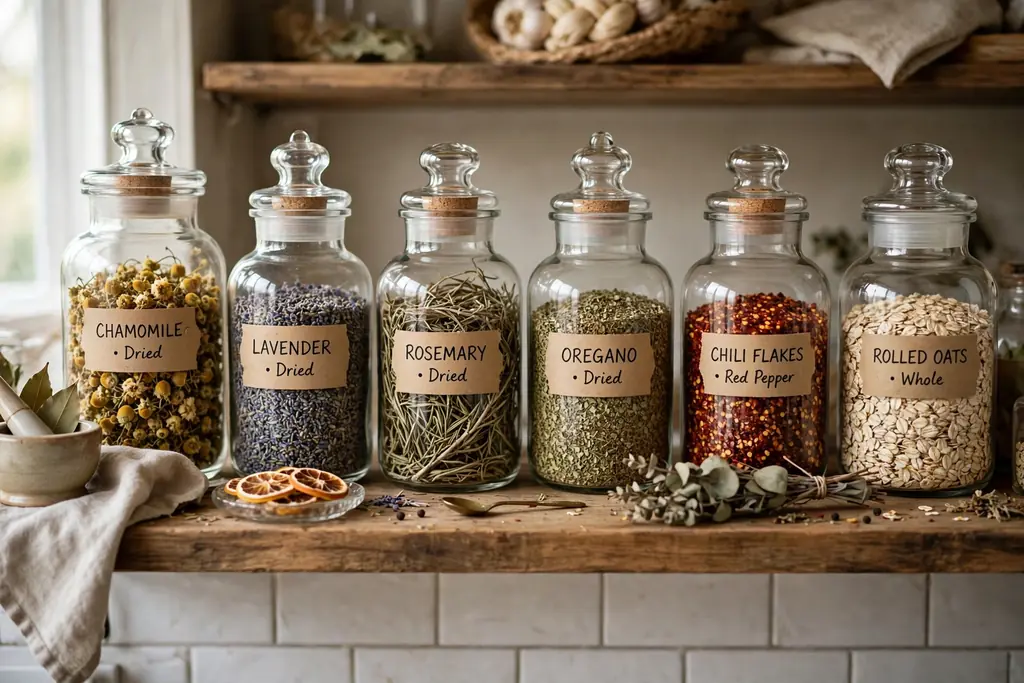
Clear apothecary jars with simple labels turn pantry storage into a witchy display. Use them for dried herbs, teas, rice, beans, and baking goods, so the jars look good and you can see at a glance what needs restocking.
Choose jars with tight lids, and keep them away from the stove, where steam and heat shorten the life of dried herbs. Label the front of each jar, and put daily herbs at hand height and rarely used goods higher. Decant only what fits, and keep the rest in its original bag in a closed cupboard until the jar empties.
6. A Hanging Herb Drying Rack Near a Window
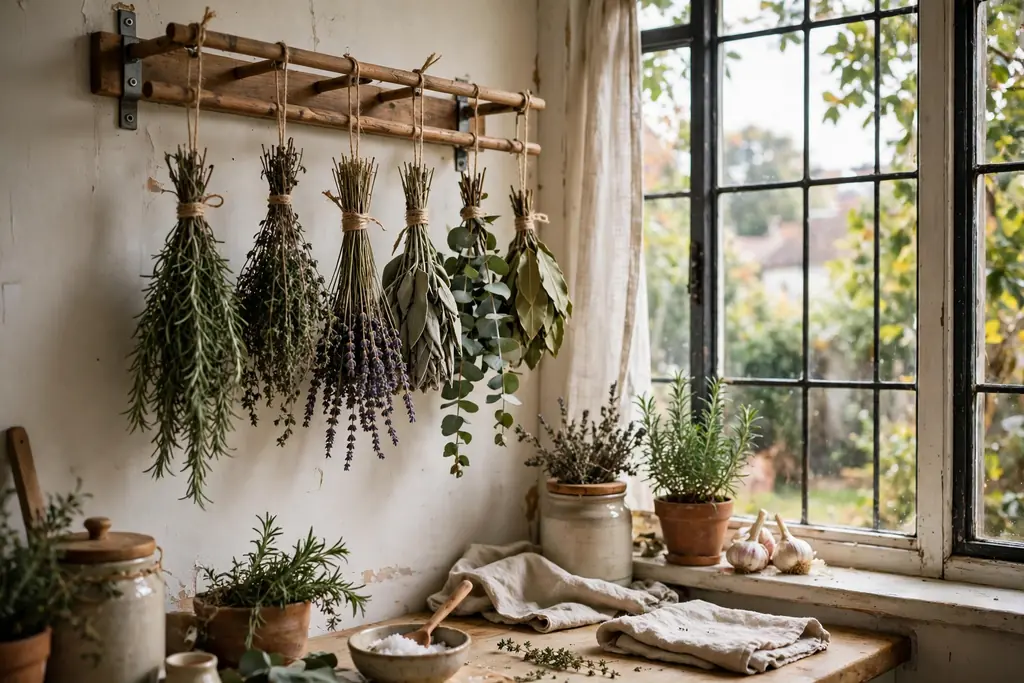
A small hanging rack for drying herbs adds a practical witchy touch and gives you herbs for cooking all winter. Hang bundles of rosemary, thyme, mint, or oregano upside down in a dry spot with air moving around them, away from direct stove steam.
Tie bundles loosely with twine, and leave space between them so air can reach each stem. Check bundles weekly, and crumble dried leaves into labeled jars once they feel crisp. Keep the rack clear of the stove and out of the main walkway, so no one brushes against falling leaves while carrying a hot pan.
7. Potted Herbs in Dark Pots on the Windowsill
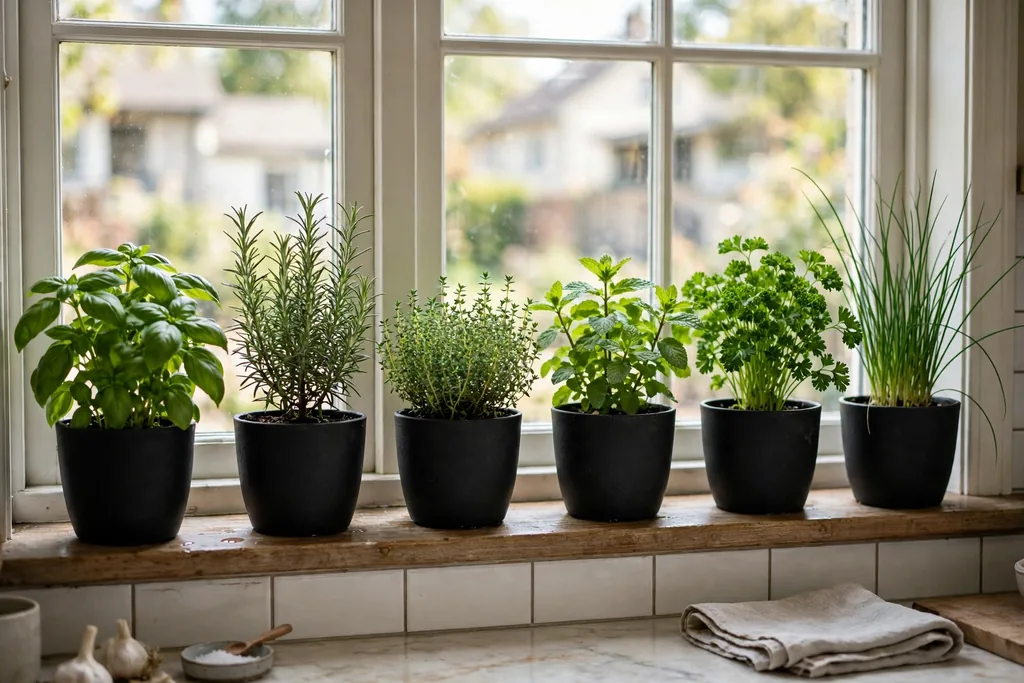
Move everyday herbs such as parsley, chives, mint, and basil into black, charcoal, or deep green pots and line them along the windowsill. The dark pots supply the witchy note while the herbs keep earning their place in daily cooking.
Check each pot has drainage or an inner pot so roots do not sit in water. Keep the sill arrangement low and narrow so the window still opens and the sink area below stays easy to clean. Snip herbs from the top of each plant, and rotate pots weekly so growth stays even.
8. Crescent Moon Cabinet Knobs and Drawer Pulls
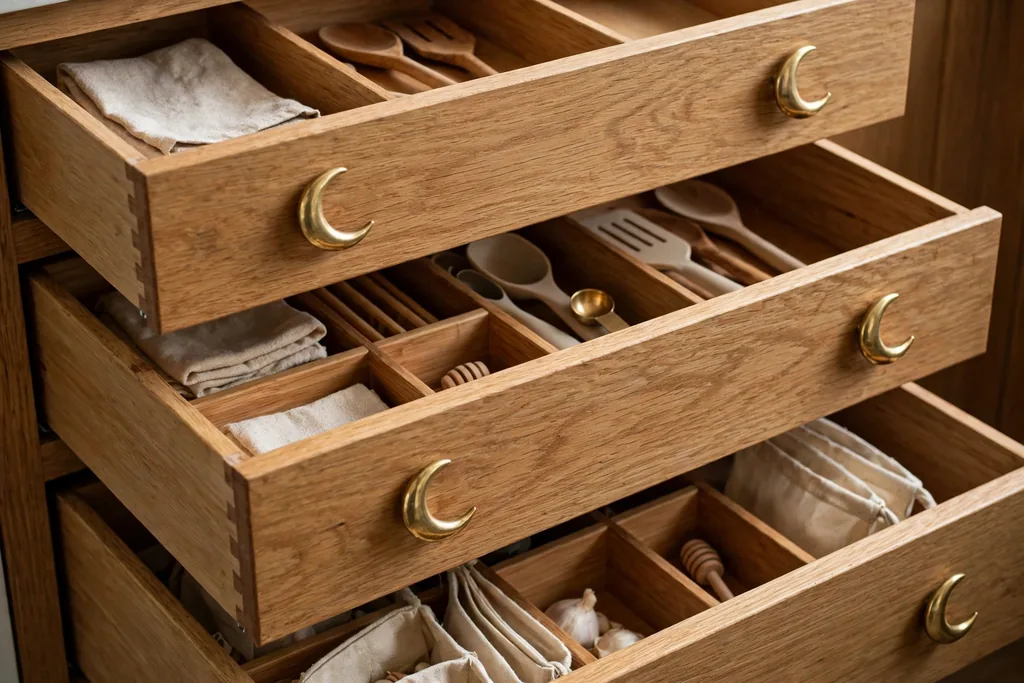
Crescent moon knobs on a few cabinets or drawers add a witchy detail at hand level, where you notice it every day. Use them on one run, such as the island drawers or the pantry doors, rather than on every cabinet, so the moons stay special.
Match the finish to your other hardware, such as brass or matte black, so the knobs link to the rest of the room. Check the size and grip before buying a full set, since small decorative knobs can be awkward on heavy drawers. Keep the remaining knobs plain, and let the moons carry the theme on their own.
9. Moon Phase Wall Art Above a Counter or Table
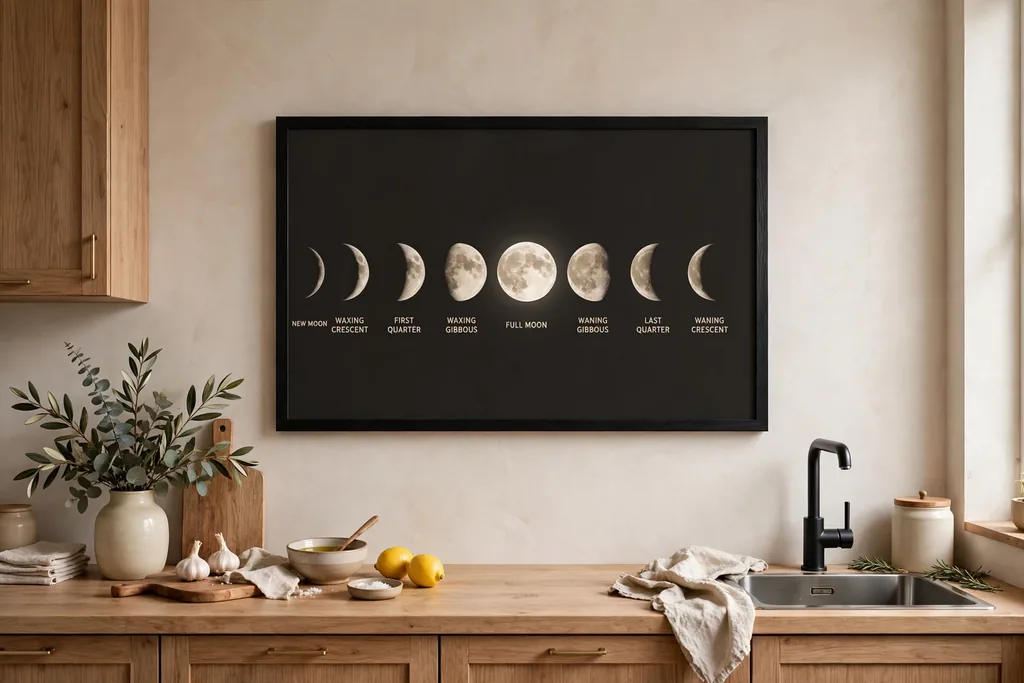
A moon phase print or a small row of moon plaques above a counter or table gives the kitchen a clear witchy focal point without taking any work space. Choose one piece, in a black frame, and hang it where you see it while cooking or eating.
Keep the wall around the art plain, so the moon phases stand out, and hang the piece at eye level. If you rent, lean a framed print on a shelf instead of hanging it. Pair the moons with one other moon detail, such as the knobs in Idea 8, and keep the rest of the wall quiet.
10. A Star and Moon Backsplash Accent
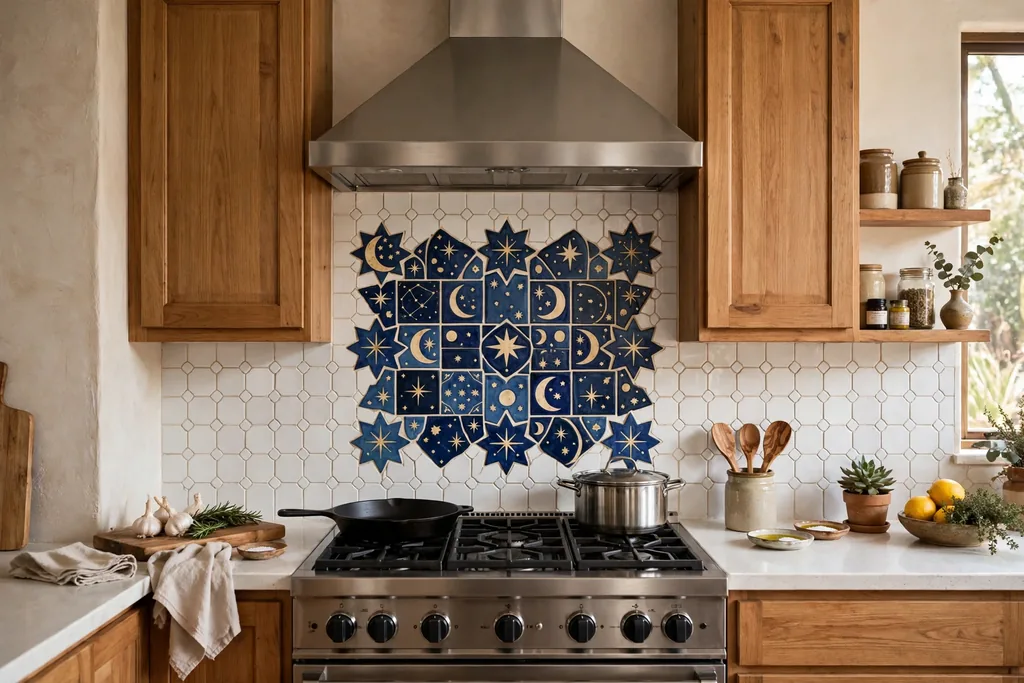
A small star and moon tile accent behind the stove or sink turns a plain cooking wall into a focal point, and it needs only a small area of tile. Mark the shape on the wall first, tile inside it, and keep the rest of the backsplash plain so the motif reads clearly.
Use tiles that wipe clean and a grout sealer near the stove, since this wall sees steam and splashes. If full tiling feels like too much work, a peel-and-stick star and moon panel on one section gives a similar effect and can be removed later. Keep the panel width close to the stove or sink width, so it frames the zone rather than spreading across the whole wall.
11. Black and White Checkerboard Floor
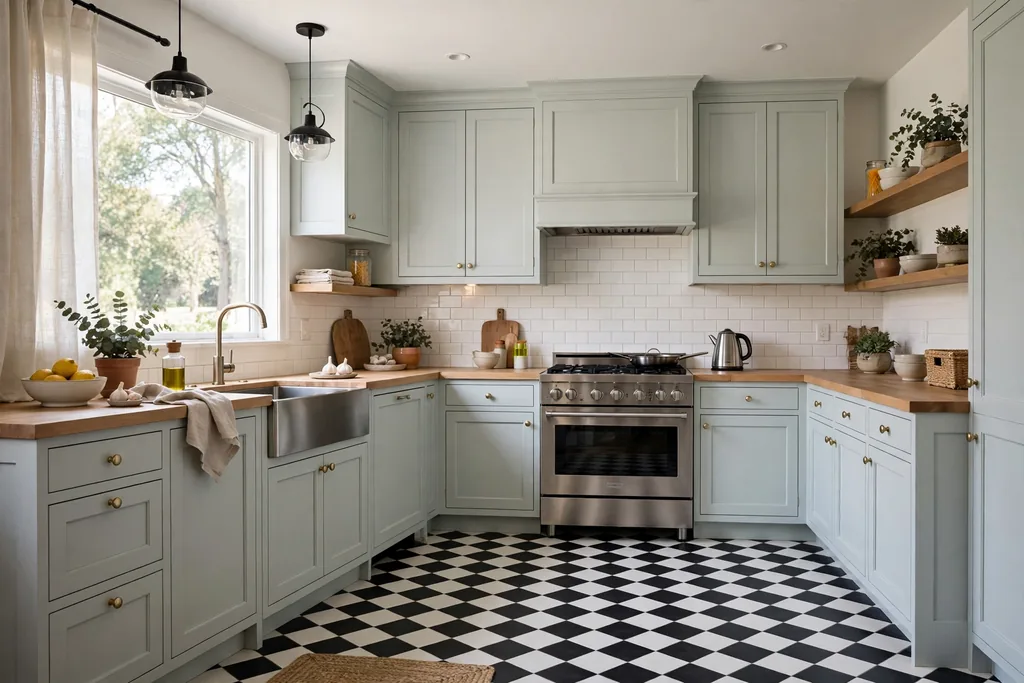
A black and white checkerboard floor adds a classic pattern underfoot and helps a witchy kitchen feel planned rather than plain. Small tiles suit a compact room, since large tiles can make the pattern feel out of scale.
Use tiles that suit a kitchen floor, with grout sealed against spills, and keep a spare box of tiles for repairs. If new tiling is too much work, peel-and-stick checkerboard tiles on a sound existing floor give a similar look and can be removed later. Keep the walls and cabinets quiet, so the floor carries the pattern on its own.
12. Candle-Style Pendant Lights Over the Island or Table
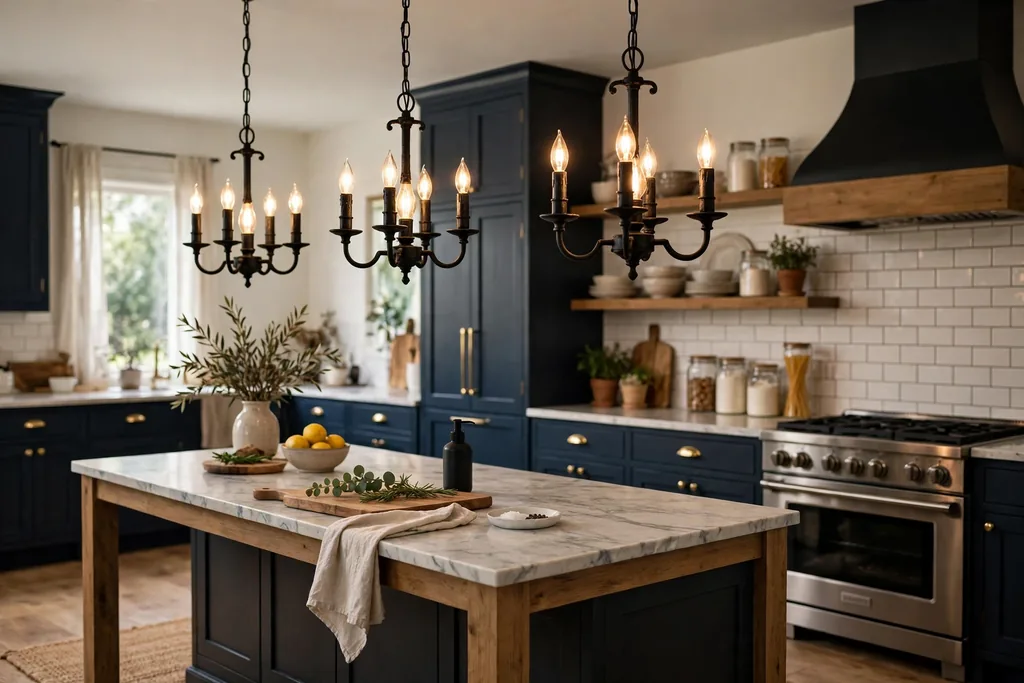
Pendant lights shaped like candle holders give evening light a witchy feel without real flames near curtains or paper. Use warm bulbs on a dimmer, and hang two small pendants over an island or one over a small table, rather than a large fitting that crowds a low ceiling.
Choose a simple iron or black metal fitting so the light, not the shade, does the work. If you cook under the pendants, add under-cabinet light for the work surface, since candle-style bulbs alone are too dim for safe chopping. Keep spare bulbs in a drawer, since warm candle-style bulbs can be harder to find than standard bulbs.
13. Flameless Candle Cluster on a Heat-Safe Tray
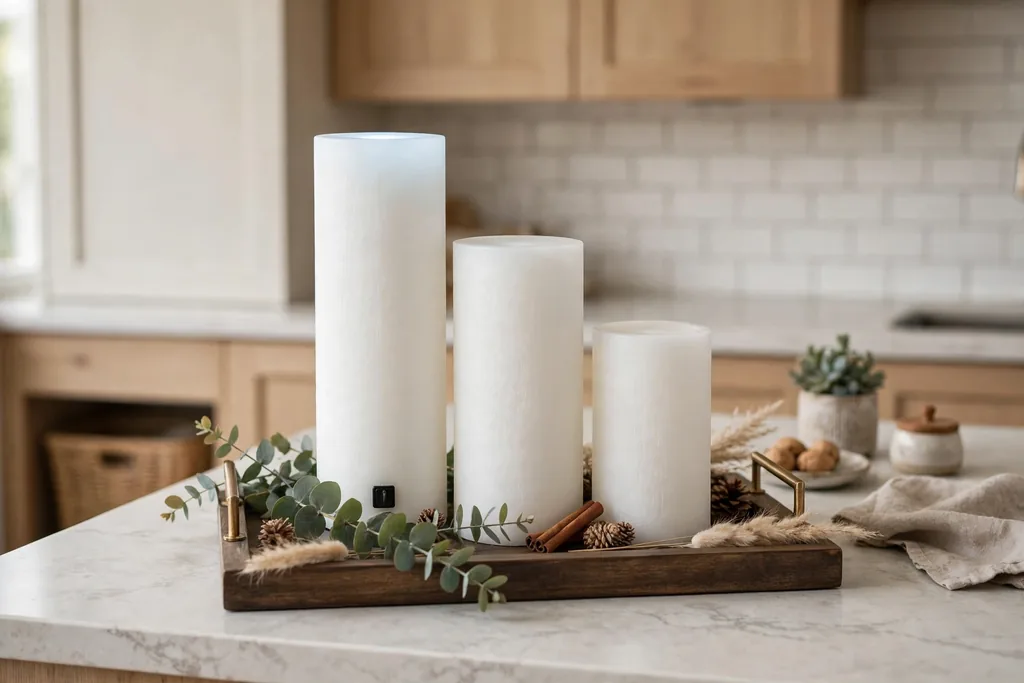
Group two or three flameless candles in different heights on a tray on the island or a side counter, away from the stove. You get a warm evening glow while you cook or clear up, with no live flame near towels, paper, or dried plants.
Set a timer if the candles offer one, and replace batteries before a gathering. Keep the tray clear of the sink splash zone, and move the whole tray in one motion when you need the counter for prep. A tray also stops wax-free candles from drifting across the counter into cooking zones.
14. Wrought Iron Pot Rail with Cast Iron Pans
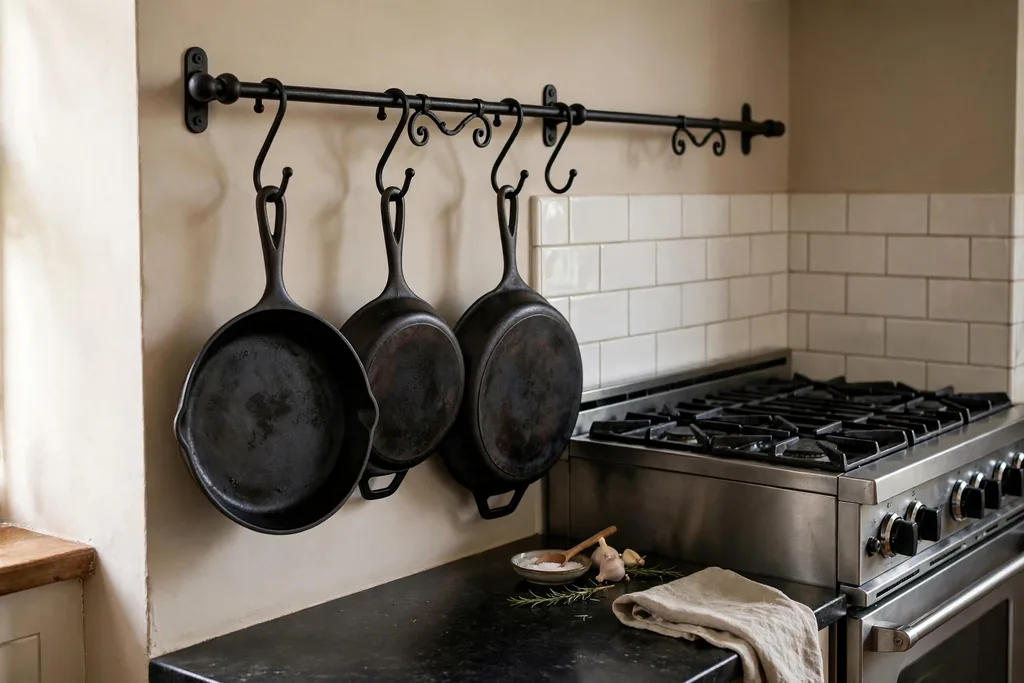
A wrought iron rail with hooks frees a whole cabinet shelf and puts pans where you grab them while cooking. Fix the rail into studs, hang the heaviest pan nearest a bracket, and leave space between pans so you can lift one off without knocking the next.
Keep lids in a separate spot, since lids hung with pans tangle. This idea suits a wall beside the stove or a short stretch above a counter, but keep pans clear of the main walkway so no one brushes against a handle. Wipe the rail often, since steam leaves a film on iron near a stove.
15. A Black Dutch Oven Left on the Stove as a Working Display
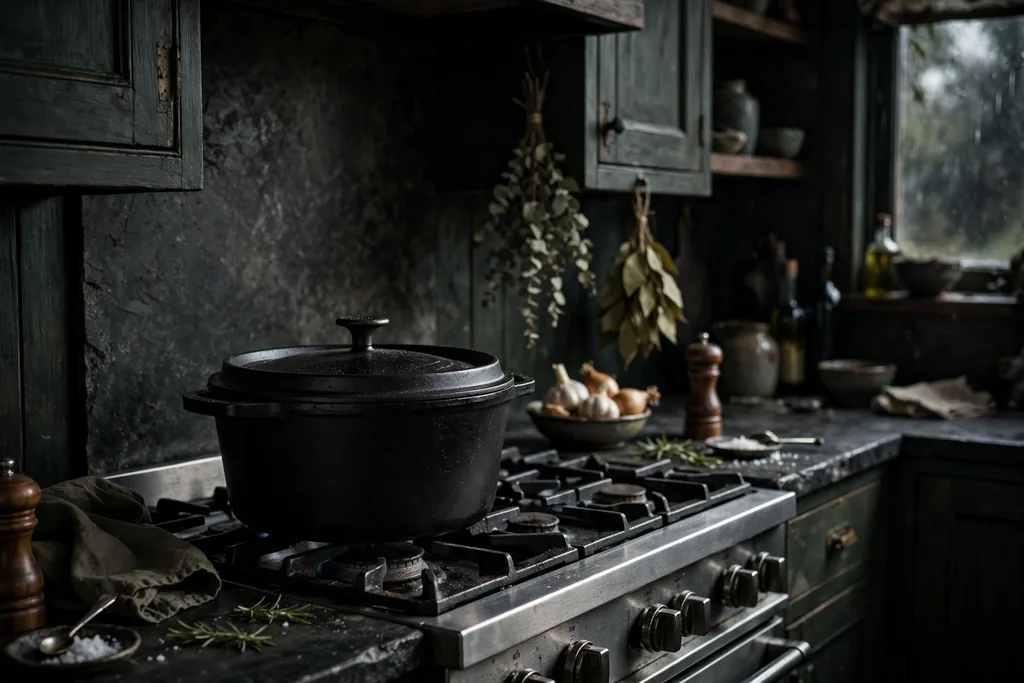
A black Dutch oven or a dark stockpot left on the stove works as a witchy centerpiece and as real cookware. Choose one heavy pot you use weekly for soups, stews, and braises, and keep its lid nearby so the pot stays ready for cooking rather than gathering dust.
Wipe the outside after cooking, and keep the pot clear of the burners you use daily if it blocks a burner you need. If the stove is small, store the pot on a shelf by the stove instead, and bring it out for cooking days. One dark pot is enough; a row of unused pots quickly turns a work surface into storage.
16. A Mortar and Pestle Station for Spices

A mortar and pestle station gives the kitchen a hands-on witchy corner and a real tool for grinding spices, herbs, and garlic. Set the mortar on a small board or tray with two or three spice jars, so grinding stays in one spot and crumbs do not spread across the counter.
Choose a heavy mortar that stays still while you grind, and keep it away from the counter edge. Rinse and dry it after use, since damp spice residue stains stone. If you grind spices weekly, keep the station out on the counter; if you grind rarely, store it in a cupboard and bring the tray out for cooking sessions.
17. A Tea Station on One Tray
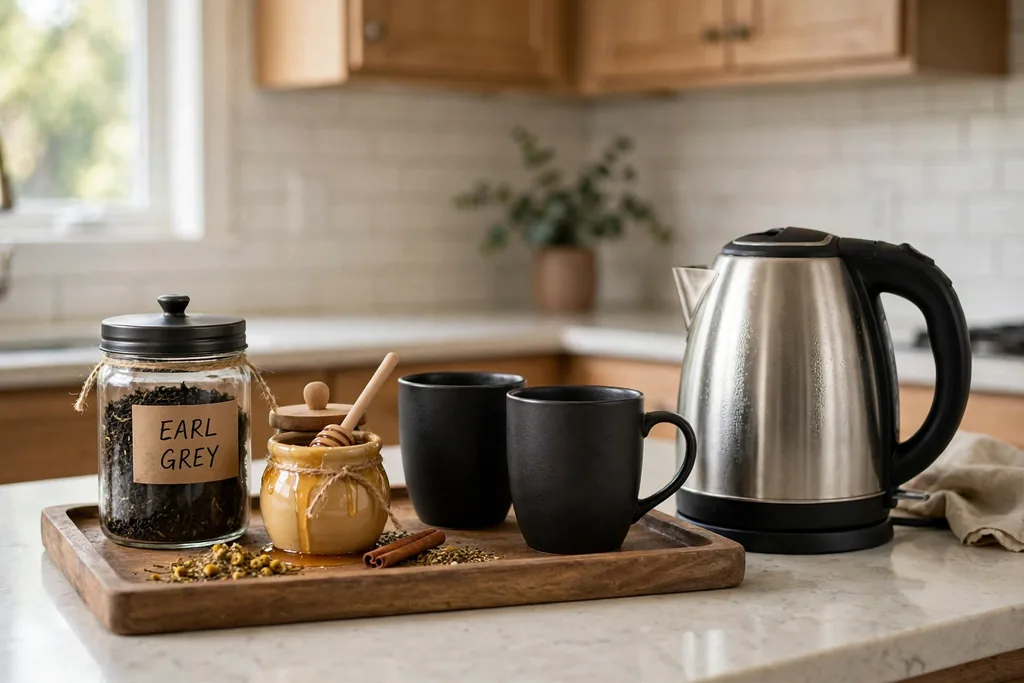
Set up one tray near the kettle with mugs, a small jar for tea, a honey pot, and a folded towel. A defined station keeps morning and evening drinks in one spot and stops supplies spreading across the counter, and it suits the witchy look when the mugs are dark and the jars are labeled.
Restock the tray during your weekly shop so it never turns into clutter. Guests can help themselves without opening every cabinet, and the tray lifts off in one motion when you need the counter for prep. Keep the tray away from the stove, and wash mugs back to the tray after use so the station stays complete.
18. A Small Display Shelf for Polished Stones and Found Objects
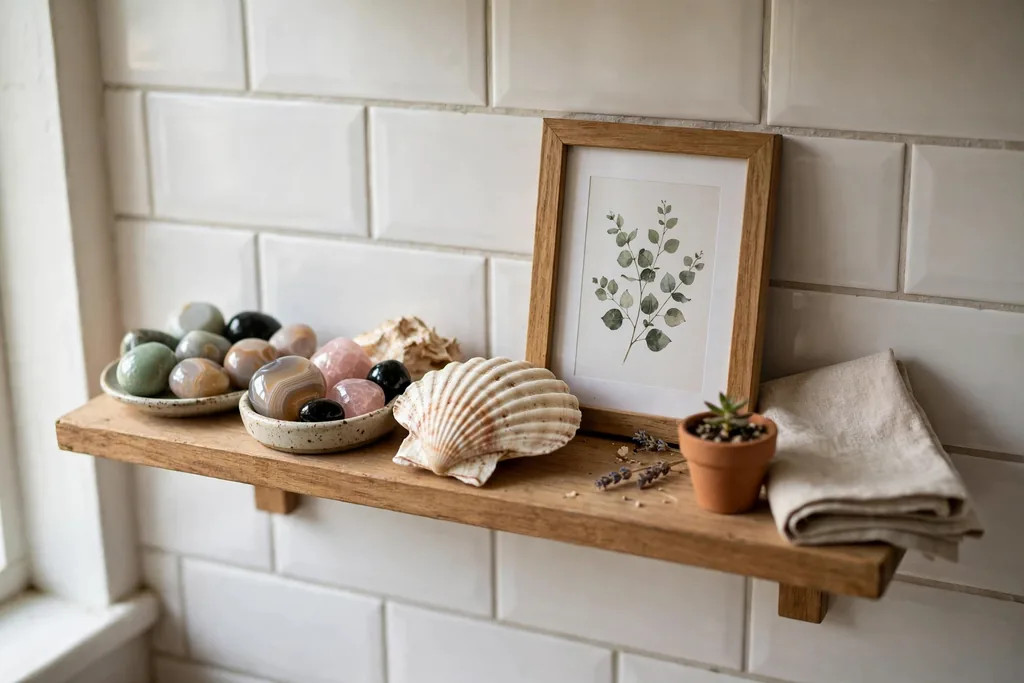
A single small shelf for polished stones, a shell, a pinecone, and one or two small framed pictures adds a personal, collected feel to a witchy kitchen. Keep the shelf small and the group to a handful of pieces, so it reads as a display rather than clutter.
Put the shelf away from steam and splashes, such as on a side wall or above a table, and dust it weekly, since kitchen grease settles on open surfaces. Choose objects you already own or find on walks, rather than buying a full set at once, so the shelf grows slowly and feels personal.
19. A Dried Botanical Garland Along a Shelf Edge
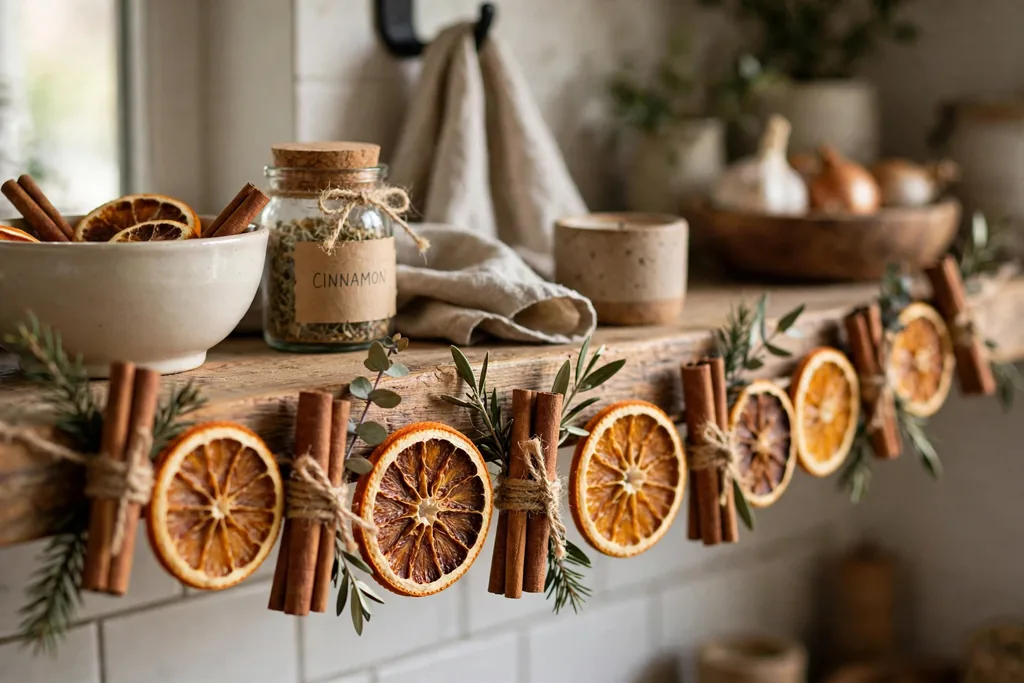
Run a garland of dried orange slices, cinnamon sticks, and dried herbs along the front edge of a shelf or across the top of a window frame. The garland adds scent and color without taking counter space, and it suits the witchy palette of warm browns, rust, and deep green.
Fix it with removable hooks or small clips, and keep it well clear of the stove, steam, and open flames, since dried plants and heat do not mix. A single run is enough; more than one can make a working kitchen feel busy. Replace pieces that fade or shed, and store the garland flat in a box between seasons.
20. One Black Cat Accent, Used Sparingly
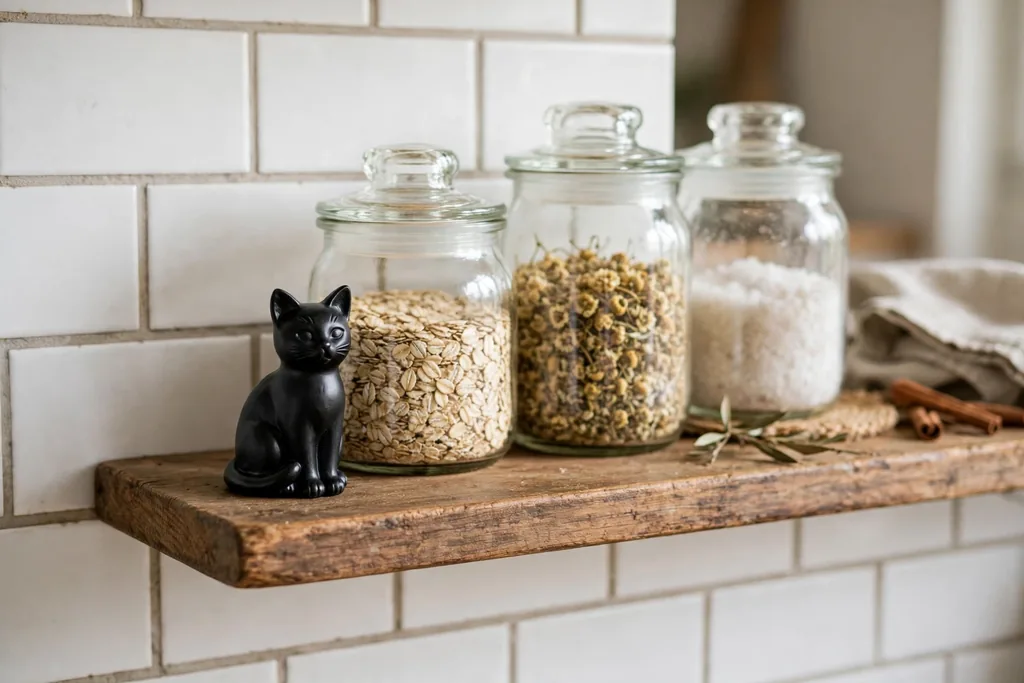
One black cat accent, such as a small figure on a shelf or a simple silhouette print in a frame, gives a witchy kitchen a playful note. Keep it to one piece, so the kitchen still feels like a place to cook rather than a themed display.
Place the figure on a shelf away from steam, or hang the print where it is seen from the table. If you already have a cat print elsewhere in the home, skip this idea and use the shelf space for jars or cookbooks instead. The seasonal dark-kitchen styling in these Halloween kitchen decor ideas shows how one dark accent can carry a room without crowding it.
21. Vintage Cookbooks and Old Books on a Shelf
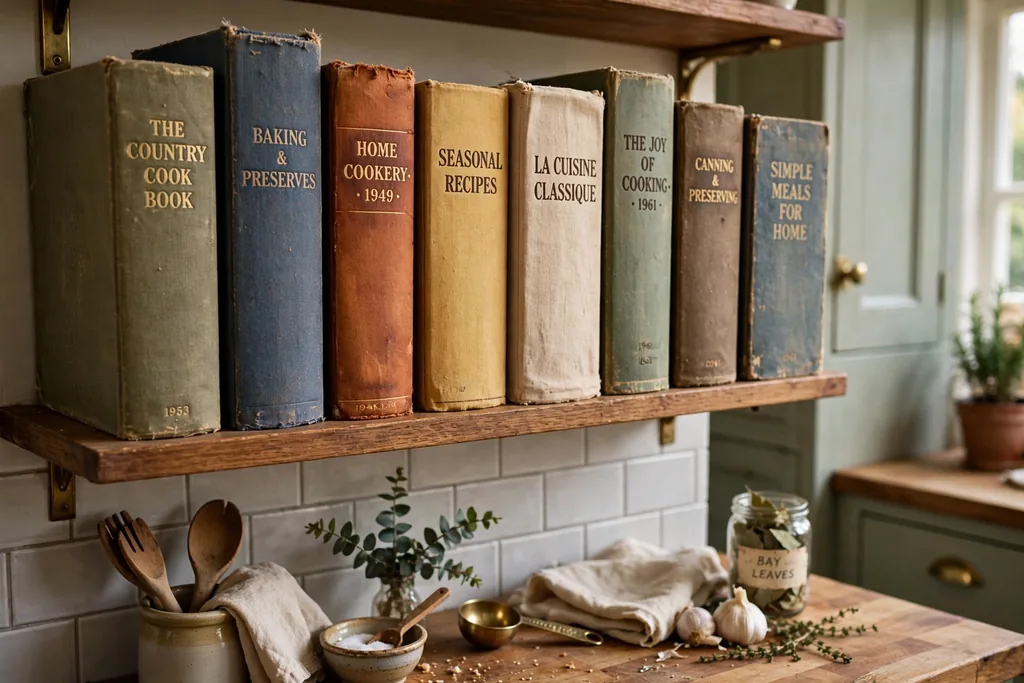
A shelf of old cookbooks, with cloth covers and worn spines, gives a witchy kitchen the look of a well-used recipe library. Stand books upright in one group, and keep the cookbooks you actually use at hand height, with purely decorative old books higher.
Use a bookend to stop the row from toppling, and keep books away from the stove and sink, where steam and splashes damage covers. If a book is fragile, lay it flat on top of the row rather than pulling it in and out daily. A few books are enough; a full wall of books belongs in a library, not above a work counter.
22. A Dark Stone-Look Countertop with Pale Veining
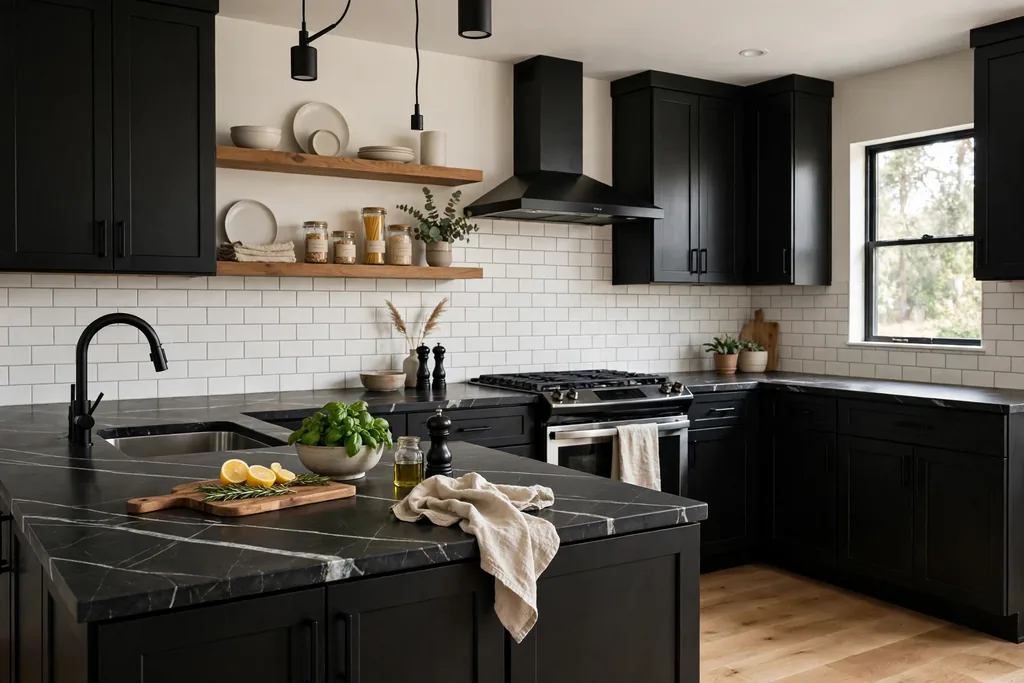
A dark grey countertop with pale veining gives a witchy kitchen a solid work surface that still shows crumbs and spills less than a plain black top. The pale lines break up the dark surface and link it to a light sink, light dishes, or a pale wall.
Wipe the top daily and use boards for cutting, since dark surfaces show scratches in bright light. Pair the top with one warm detail, such as wood boards or brass handles, so the kitchen does not feel cold. If a full new countertop is out of reach, a dark stone-look worktop cover on one run gives a similar look for less work.
23. Amber and Smoked Glassware for Evening Meals

Set out amber, smoked, or simple black stemmed glassware for evening meals. Colored glass catches low light and makes an ordinary weekday dinner feel special without any extra objects on the table.
Keep everyday clear glasses for mornings if the darker glass feels heavy in daylight. Wash colored glass by hand if the maker advises it, and store it where it will not chip against heavier mugs. One set of six is enough; you do not need a full cabinet change to get the effect.
24. A Matte Black Faucet with Matching Hardware
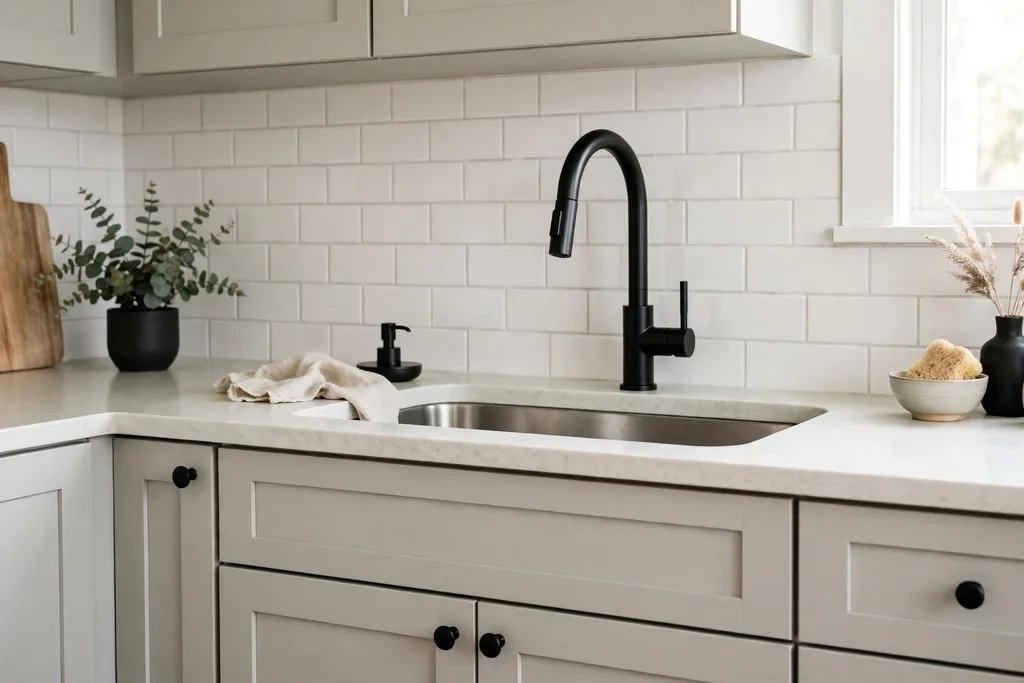
A matte black faucet, with matching knobs and pulls, is a low-cost way to link dark cabinets, an iron rail, and a black hood into one scheme. Swap the faucet and hardware together, so the finishes match, and keep the sink and counter pale so the black details stand out.
This change needs no new cabinets and takes an afternoon for most kitchens. Check the faucet fits your sink holes before buying, and keep the old hardware in a bag in case you move and want to refit it. Wipe the black finish with a soft cloth, since hard water marks show on matte black.
25. An Arched Mirror or Arched Cabinet Detail
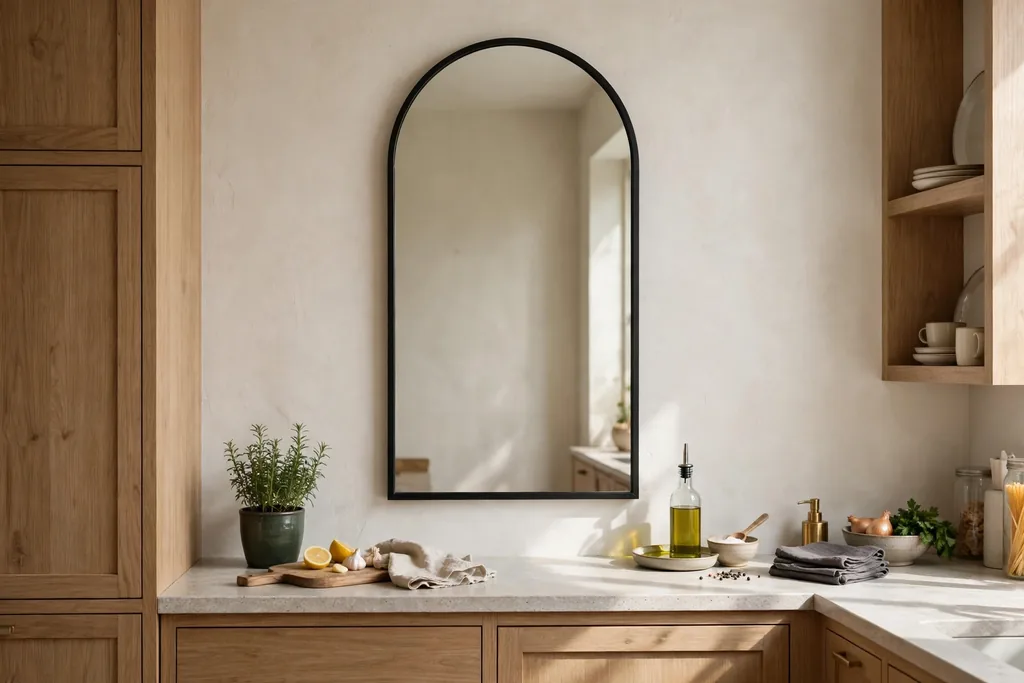
A tall arched mirror over a side counter, or arched trim on one or two cabinet doors, brings a soft gothic shape into the kitchen at eye level. The arch shape reads as witchy and old-world even when the rest of the room is plain and modern.
Choose one arch detail, not both, so the shape stays special. Fix a mirror with fixings rated for its weight, and keep it clear of the faucet swing if it hangs near the sink. For cabinet doors, keep the arch shape the same on each door so the run looks planned.
26. Botanical Prints in Black Frames
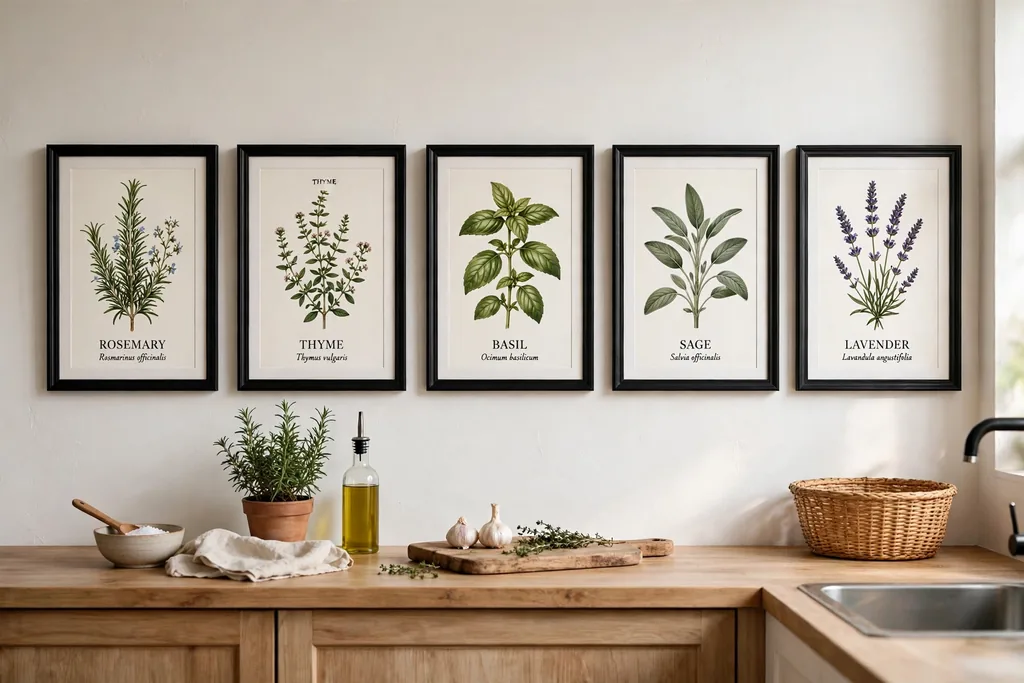
Botanical prints of herbs, mushrooms, and leaves in thin black frames suit a witchy kitchen and link the herb jars and dried plants into one story. Hang two or three prints in a row on a side wall, or lean one large print on a shelf.
Keep the frames the same color and the spacing even, so the group looks planned. Hang prints away from the stove, where steam and grease mark glass, and use prints of plants you actually grow or cook with, so the wall feels personal rather than generic.
27. A Cozy Breakfast Nook with Dark Cushions
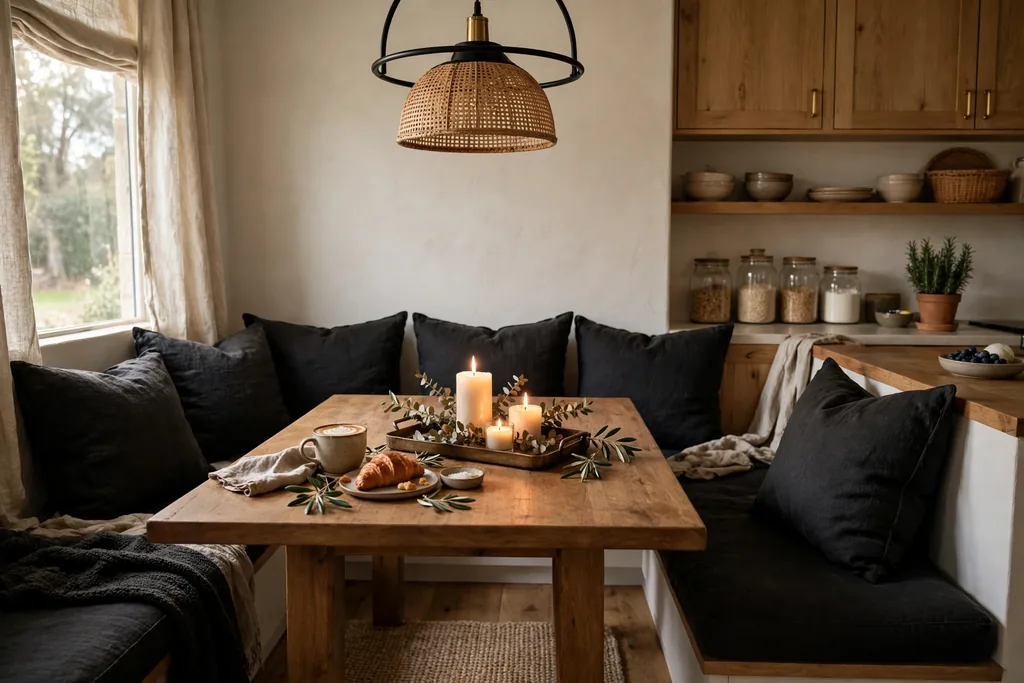
A small breakfast nook with dark cushions, a wood table, and a flameless candle on the table gives the witchy kitchen a place to sit and linger. Choose washable cushion covers in charcoal, plum, or deep green, and keep the table clear except for the candle tray.
Add a basket under the bench or beside the table for placemats and napkins, so the nook stays tidy. If the nook is small, one bench and two chairs suit it better than a full set, and a cushion on the bench alone still gives the dark, cozy feel.
28. Woven Baskets for Pantry and Linen Storage
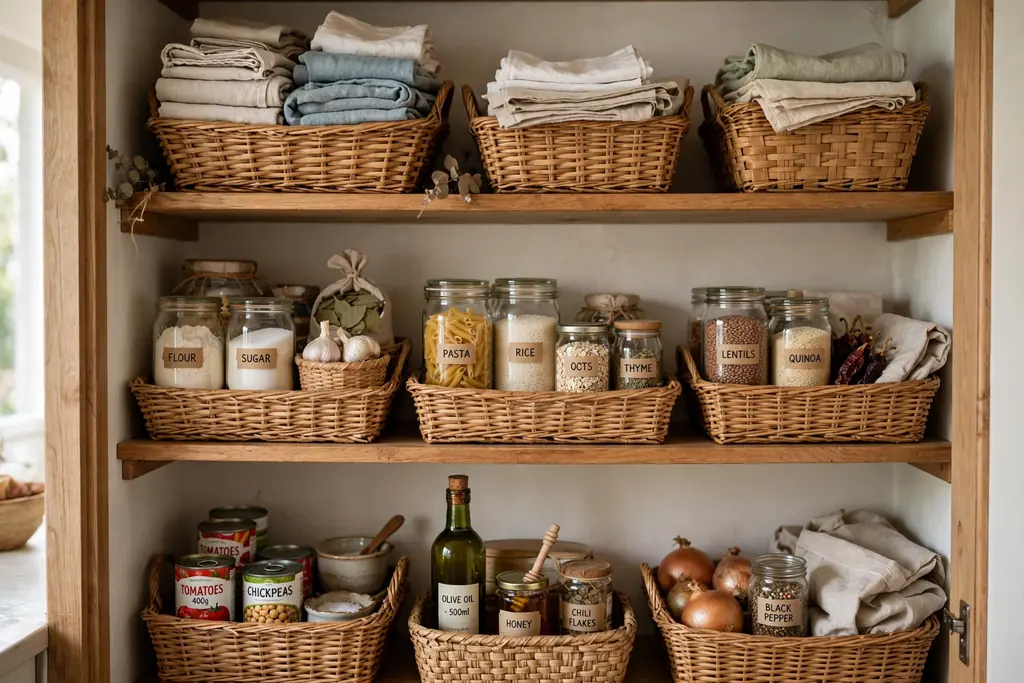
Woven baskets on pantry shelves, on top of cabinets, or under a bench hide linens, placemats, and pantry overflow while adding warm texture to a dark kitchen. Label each basket on the front, so you can find things without pulling every basket out.
Choose baskets that fit the shelf with room to slide in and out, and keep heavy pantry goods low. Wash or wipe baskets seasonally, since kitchen dust settles in woven fibers. One basket per shelf is enough; a row of empty baskets quickly becomes clutter.
29. A Chalkboard Menu Board for Weekly Meals
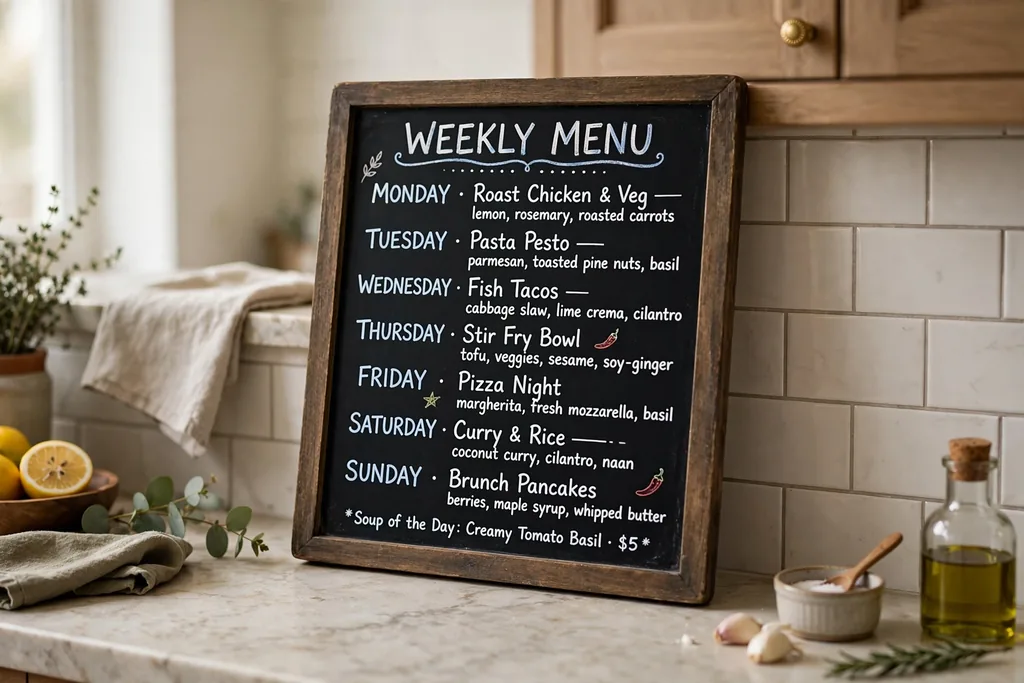
Lean a small chalkboard or letter board on the counter against the backsplash, or hang it on a side wall, with the weekly menu, a shopping list, or a simple moon drawing. It is a practical piece the family can use for lists and notes all year; only the message changes with the season.
Keep chalk dust away from open food by placing the board near the door or fridge rather than beside the stove. Wipe it fully clean at the end of each week, and keep chalk in a small pot beside the board so it does not roll across the counter.
30. A Simmer Pot Ingredients Jar by the Stove

Keep a labeled jar of simmer pot ingredients, such as dried orange slices, cinnamon sticks, cloves, and star anise, on a shelf by the stove. When you want a warm scent while you cook, simmer a spoonful in water on the stove while you are in the room, and never leave the pot unattended.
Keep the jar sealed and away from direct heat, and refill it from a larger pantry store. If anyone at home dislikes fragrance, skip the simmer pot and use the jar as a display piece only; fresh air from an open window works just as well. Keep scent light so it does not fight with food smells.
31. A Witchy Table Setting for Gatherings
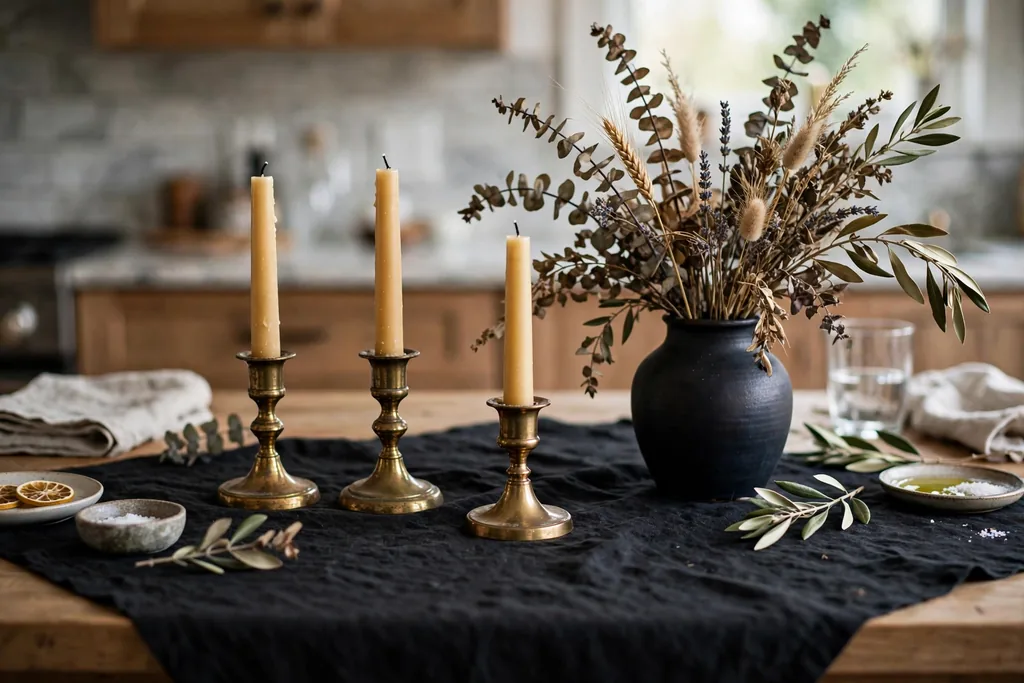
For a gathering, set the table with black or charcoal linen, brass candle holders with flameless candles, and a low centerpiece of dried stems in a dark vase. The setting feels witchy and special, but every piece is reusable and the table stays clear enough for serving dishes.
Keep the centerpiece low so guests can see each other across the table, and build it on a tray so the whole setting lifts off in one motion before serving. Use plain plates and clear water glasses, so the dark linen and brass carry the theme without a full tableware change. After the meal, fold the linen back into the basket from Idea 28, so the setting stores as one set.
Conclusion
A witchy kitchen works when mood and cooking share the room. Start with one change, such as black cabinets, open shelves, or a tea tray, and add moon details, herbs, and candlelight only where they also store something, add light, or keep a surface clear. Keep one light surface in the room, use flameless light near towels and dried plants, and let daily items stay within reach. Work through this list in order: color first, then storage, then herbs, then light, then the table, and adjust after a week of real cooking. For more dark-kitchen styling, the gothic kitchen ideas and Halloween kitchen decor ideas guides pair well with the ideas above, and the shelf spacing in our guide on how to style open shelves helps keep every display calm.
Keep this list handy for your next free hour at home, and build your witchy kitchen one shelf, one jar, and one candle at a time.
FAQs
What is a witchy kitchen aesthetic?
A witchy kitchen aesthetic uses dark colors, natural materials, and old-world details, such as black cabinets, brass hardware, dried herbs, moon motifs, and candlelight, to give a kitchen a moody, collected feel. The look stays practical when each detail also has a job: jars store herbs, trays hold candles, and shelves hold daily dishes. Start with a small set of details and repeat them, rather than filling every surface at once.
How do I make a witchy kitchen without painting all my cabinets?
Change textiles and small details first: dark dish towels, a runner, labeled jars, a tea tray, moon knobs on one run, and a print or two on a side wall. These changes give a big visual shift without new cabinets. If you want a larger change later, paint one run or the island only, and keep the rest pale so the room stays bright enough to cook in.
How do I keep a dark kitchen bright enough for cooking?
Keep at least one light surface, such as a pale counter, a light wall, or a bright window, and layer your light: bright under-cabinet light for chopping, plus softer candle-style or lamp light for evenings. A mirror on a side wall can bounce window light around the room. Dark cabinets on the lower half with pale uppers also keep the room from feeling low and closed in.
Are real candles safe in a witchy kitchen?
Real candles and cooking are a risky mix, since towels, paper, dried plants, and curtains sit close to work surfaces in most kitchens. Flameless candles and battery lights give the same warm glow with no flame near those materials. If you use real candles, keep them on a heat-safe tray, well clear of the stove, towels, and dried plants, and never leave them burning in an empty room.
What herbs work best for a witchy kitchen display?
Use herbs you actually cook with, such as rosemary, thyme, mint, oregano, parsley, and basil, so the display earns its place. Keep fresh herbs in dark pots on the windowsill, dried bundles on a hanging rack away from stove steam, and crumbled dried leaves in labeled jars. Herbs kept near heat and steam lose flavor faster, so store jars away from the stove.
How can renters get a witchy kitchen look without permanent changes?
Use removable and freestanding pieces: peel-and-stick tile accents, a stained glass style film on part of a window, dark towels and linens, labeled jars, a tray-based tea station, freestanding shelves, and framed prints leaned on shelves. Removable hooks hold garlands and tea towels without new fixings. Keep the larger pieces portable, so the look moves with you.
How do I stop a witchy kitchen from looking cluttered?
Give every group a container and a limit: one tray for candles, one shelf for jars, one basket per pantry shelf, and one accent piece per wall. Leave gaps between groups on open shelves, and put daily items at hand height and decorative pieces higher. Step back across the room after each change, and remove one item if a shelf or counter looks crowded.