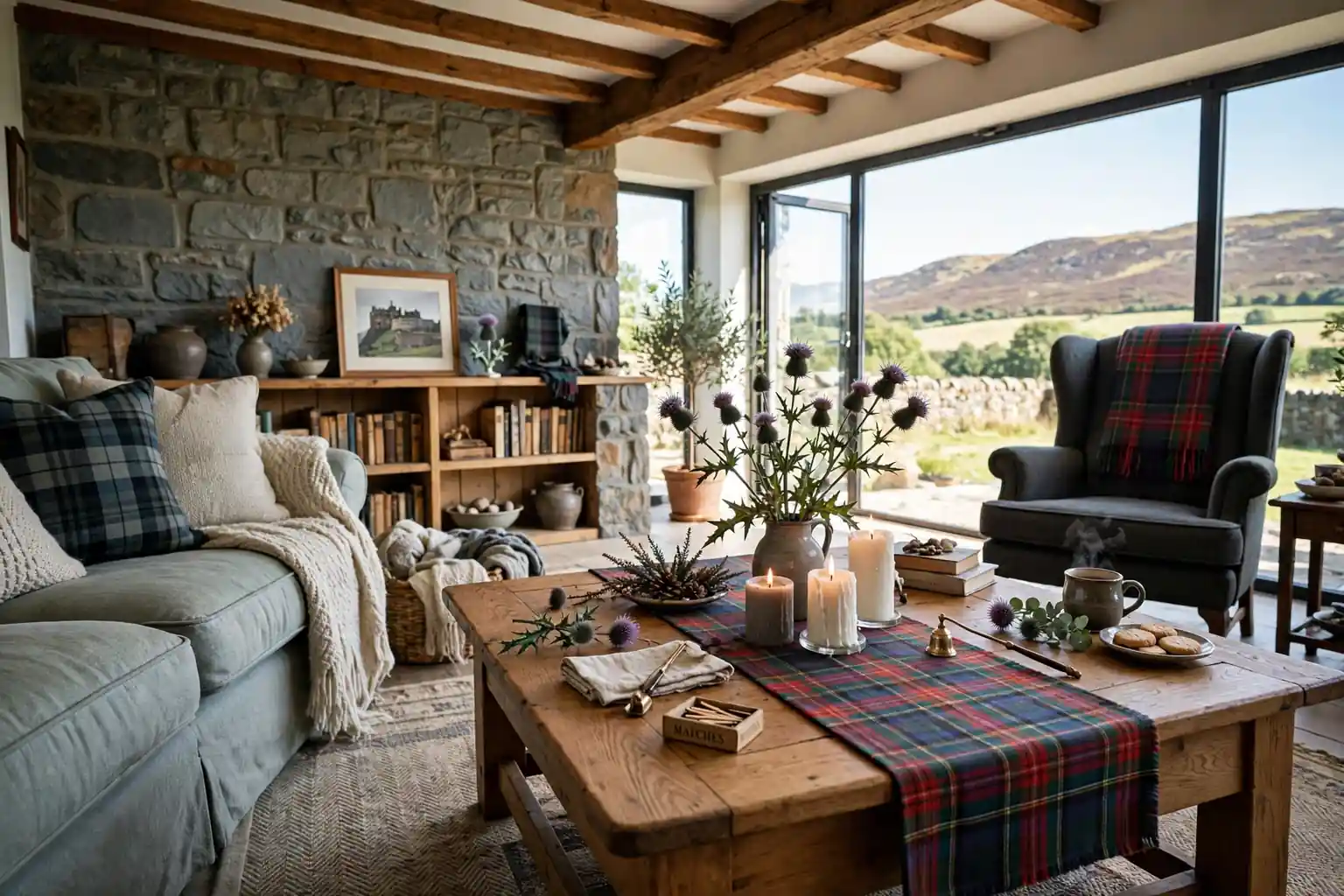
A coffee table in a Scottish living room should feel warm, useful, and easy to live with. Tartan, wool, oak, and stone bring that feel without needing a full room change, and they pair well with plain sofas and wood floors. The trick is to give the table one clear centre, keep daily items in a tray or box, and leave space for mugs, books, and feet up at the end of the day. These 28 Scottish coffee table styling ideas cover runners, trays, flowers, candles, books, and seasonal swaps, so you can pick a look that fits your table size, your household, and the way you use the room. If the floor under the table still needs work, these living room rug ideas help you size a rug so the sofa, chairs, and table sit as one group.
Key Takeaways
- Start with one centre: a tray, a runner, or a vase, then add only two or three smaller pieces around it.
- Repeat one Scottish material or pattern, such as muted tartan, oak, or wool, in at least two places so the table looks planned.
- Keep daily items corralled in a tray or a lidded box, and leave at least a third of the table clear for mugs and books.
- Use low, sturdy pieces near the table edge and taller stems only at the centre, so sight lines across the sofa stay open.
- Choose washable, wipeable surfaces for tea, shortbread, and everyday use, and keep fragile pieces away from busy walkways.
- Swap stems and throws by season instead of restyling the whole table, and store the spare set in the basket under the table.
1. Lay a Muted Tartan Runner Down the Centre
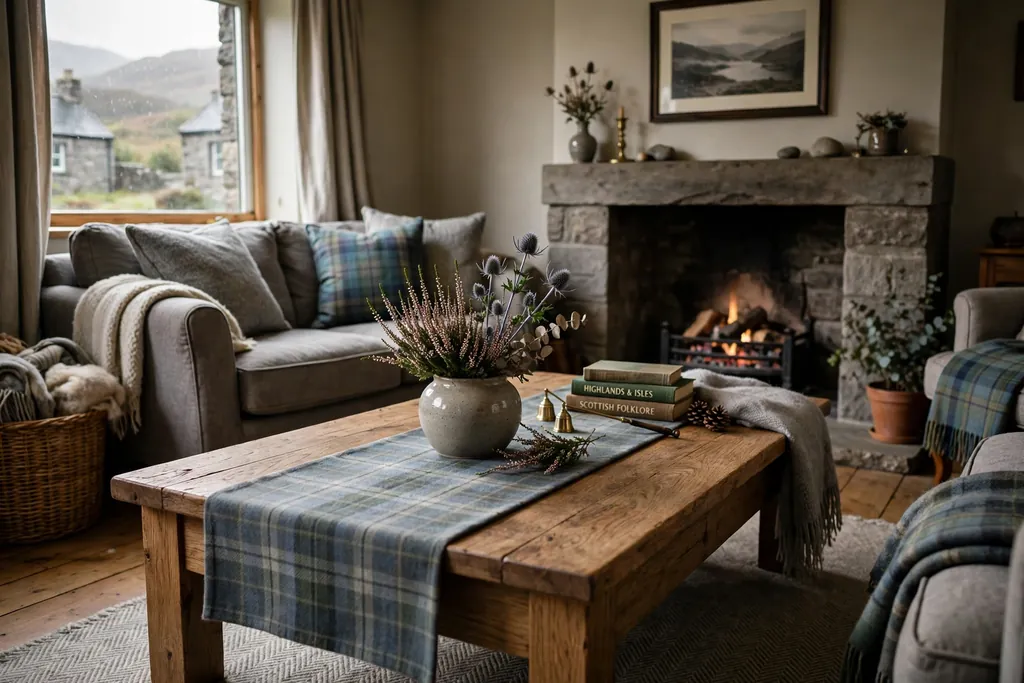
Lay a muted tartan runner down the centre of a rectangular coffee table to set a Scottish base in one move. Choose a muted green, navy, or brown tartan rather than a bright red, so the pattern sits calmly beside a plain sofa. The runner should leave bare table at both ends for mugs and books.
Centre a tray or a low vase on the runner, and keep the ends clear. A runner also protects a wood top from mug rings. Shake it out weekly, and wash it as the maker advises, since a table runner picks up crumbs and tea drips fast.
2. Corral Daily Items on an Oak Tray
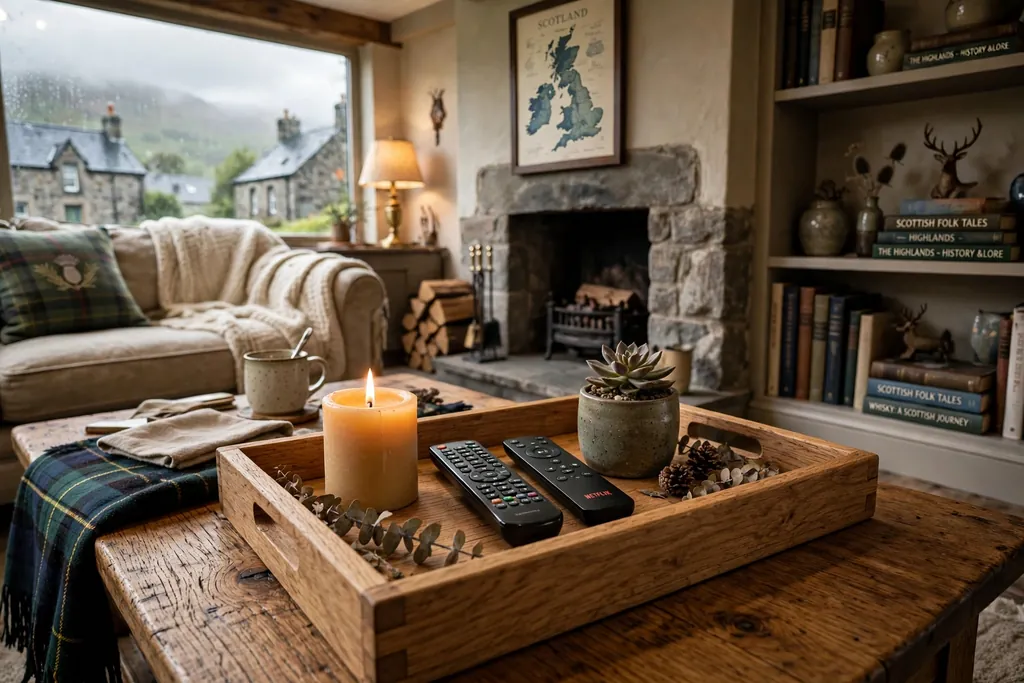
Set a rectangular oak tray in the centre of the table and group remotes, a candle, and a small plant inside it. The tray gives loose items a clear edge, so the table reads as tidy even on a busy day. Oak suits a Scottish room because its warm grain pairs with wool, tartan, and stone.
Keep the tray to one layer of items, with nothing stacked on top of anything else. Lift the whole tray off in one move when you need the full table for a board game or a large puzzle. Wipe the tray often, since it catches most of the table dust and drips.
3. Stand Thistle Stems in a Stone Vase
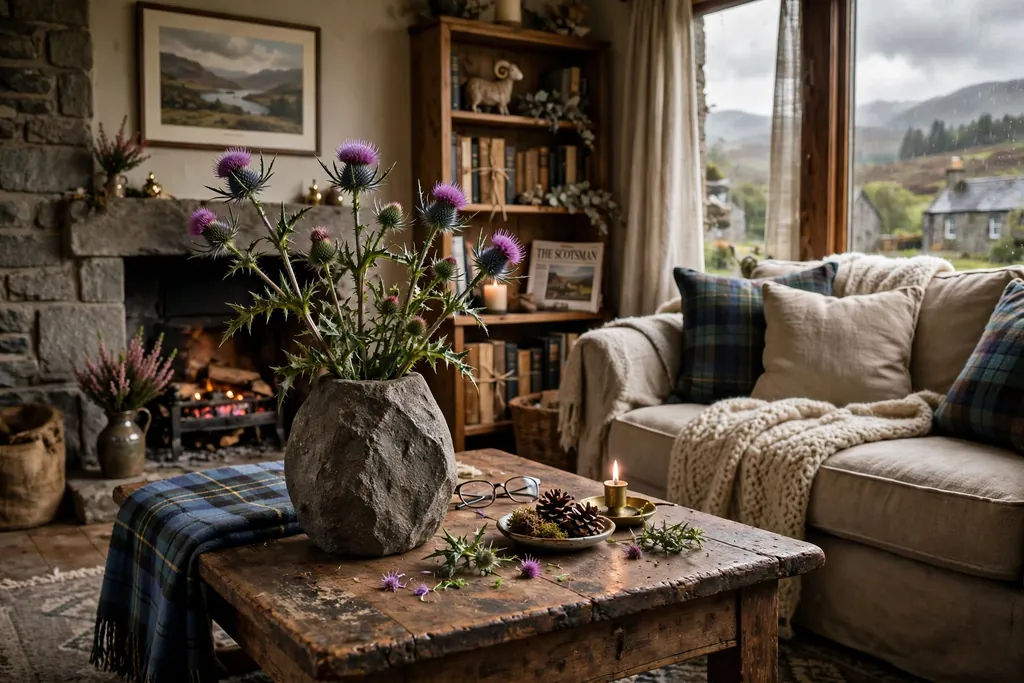
Stand three or five thistle stems in a short stone or grey ceramic vase for a centrepiece that is clearly Scottish and easy to keep. Thistles have a strong shape, so a small number is enough, and a heavy vase stops the arrangement from tipping when someone reaches across the table.
Trim the stems so the flower heads sit just above seated eye level from the sofa, or lower if the vase sits near a television sight line. Use dried thistles if fresh stems are hard to find, and dust them gently. Keep the vase at the centre, with mugs and books kept to the sides.
4. Fill a Shallow Bowl With Heather Sprigs
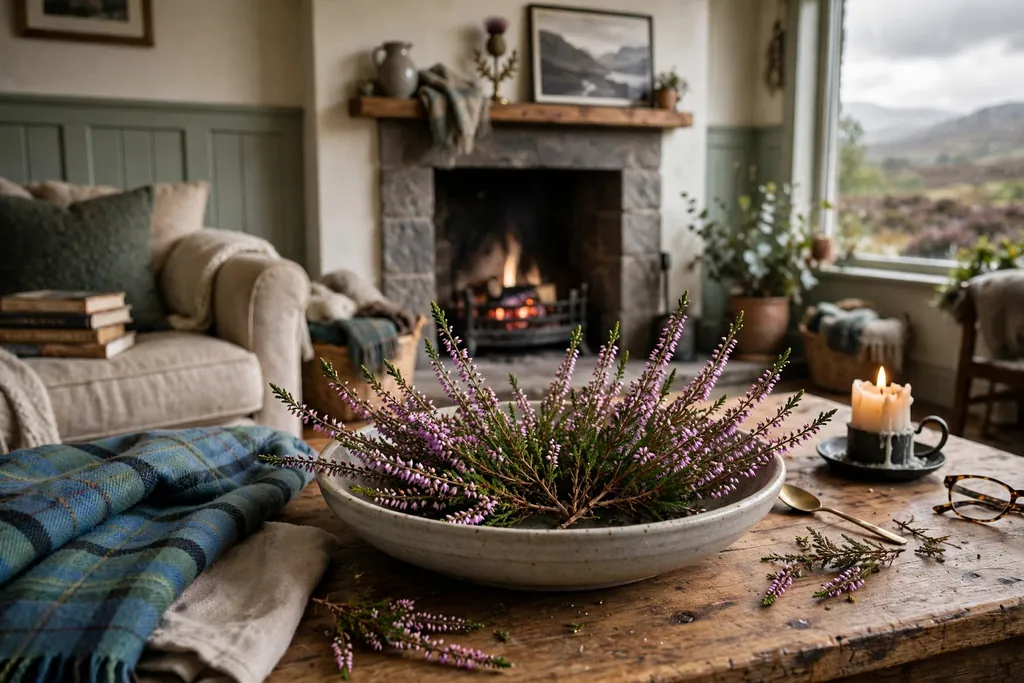
Fill a shallow stone or wood bowl with short heather sprigs for a low, soft centrepiece that never blocks conversation. Heather suits a low bowl because its small flowers read as texture rather than as a tall bouquet, and the low height keeps the table open for daily use.
Cut sprigs to a similar length, pack them loosely, and add a little water only if the sprigs are fresh and the bowl is watertight. Place the bowl on a coaster or a small mat to protect the table. Replace sprigs when they dry out, and keep the bowl away from the table edge where sleeves can catch it.
5. Stack Highland Books for Height and Colour

Stack two or three books about the Highlands, Scottish walks, or Scottish history, largest at the bottom, to give the table height and a reading choice. A book stack adds colour through its spines and gives guests something to pick up, which suits a room used for long evenings by the fire.
Turn the top book so its cover faces up, and keep the stack to three books at most so it does not topple. Put a small object, such as a stone or a candle, on top only if the stack is stable. Choose books you actually like, since a stack of unread display books looks staged.
6. Cluster Pewter Candle Holders at One End
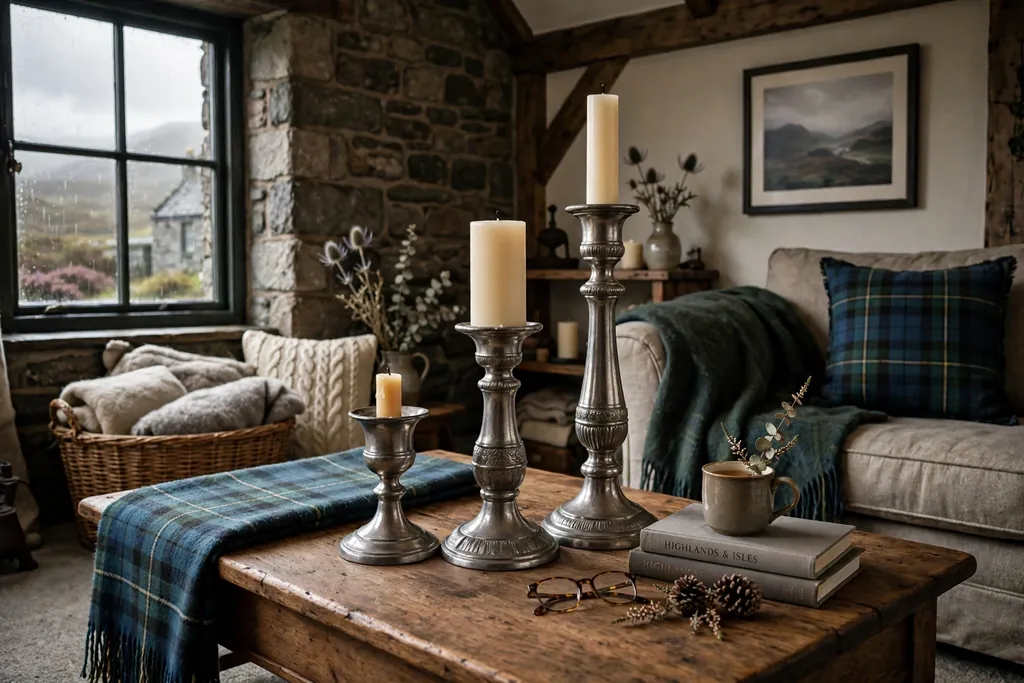
Group three pewter candle holders of different heights at one end of the table for evening light that feels old fashioned and calm. Pewter suits a Scottish room because its soft grey tone sits well beside oak, wool, and stone, and it does not shout against a tartan runner.
Use flameless candles if children or pets use the room, and real candles only where they sit clear of throws, books, and sleeves. Keep matches or a lighter in the tray nearby, and trim wicks before lighting. Never leave lit candles unattended, and keep the cluster away from the table edge.
7. Fold a Wool Throw Over One Corner
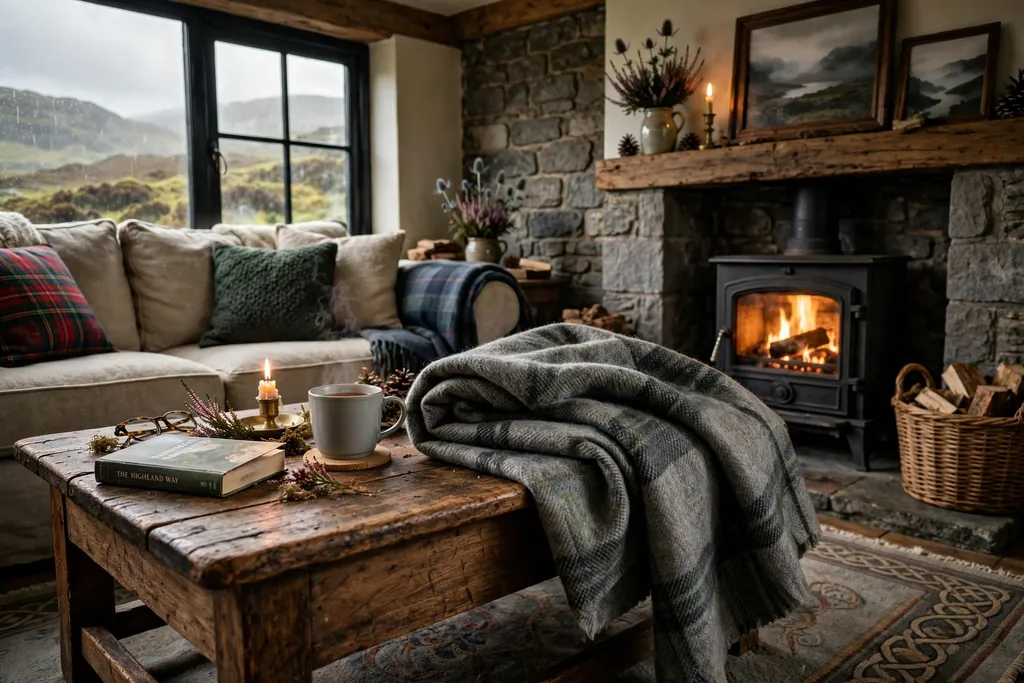
Fold a wool throw in half, then in half again, and lay it over one corner of the table or across one end. The folded throw adds softness and warmth at once, and it stays within reach for cold evenings without covering the whole table. A plain grey, oatmeal, or muted green wool works best beside tartan.
Keep the throw folded neatly, with its edges lined up, so it reads as a styled layer rather than as laundry left out. Shake it out and refold it when you tidy the room. If the throw is thick, use it on a larger table only, since a small table can look buried under heavy wool.
8. Set Tweed Coasters Beside Everyday Mugs
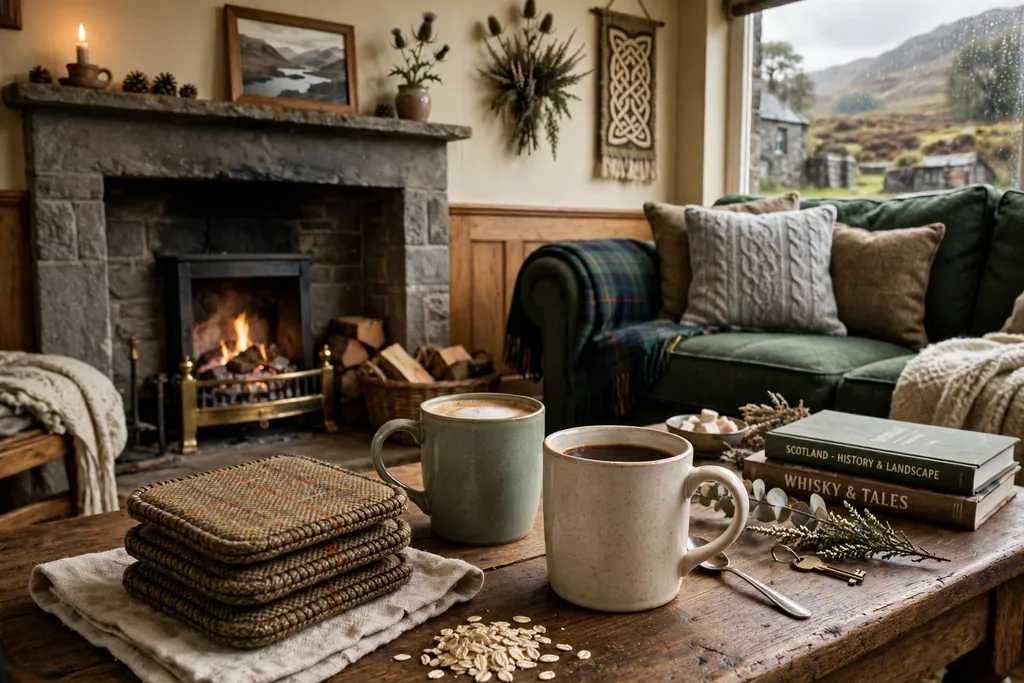
Set a small stack of tweed or wool felt coasters beside the usual mug spot, with one coaster out for each regular seat. Coasters protect a wood or oak table from rings, and a tweed cover adds a Scottish textile note without a large piece of fabric. This idea suits a table used for tea every day.
Keep the coaster stack in a small holder or tied with twine, so it does not slide apart. Wipe or brush coasters when tea drips dry on them. If the table is glass or stone, use felt backed coasters so they grip and do not scratch the surface.
9. Serve Tea and Shortbread From a Small Tray
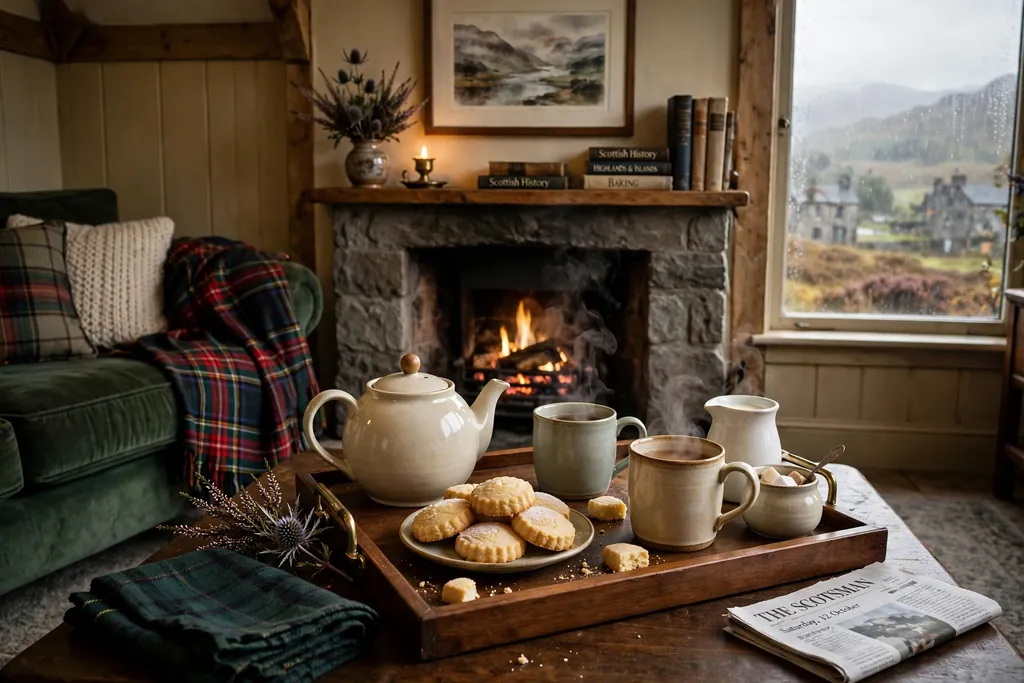
Set a small tray with a teapot, two mugs, and a plate of shortbread for afternoon tea at the coffee table. The tray turns an everyday tea break into a small occasion, and it keeps cups, crumbs, and spoons in one place. A wood or tartan lined tray suits the Scottish theme and is easy to carry from the kitchen.
Keep the tray to tea items only, and clear it after tea so the table is free for the evening. Use a tray with raised edges so mugs do not slide off when the tray is carried. If the table is small, serve tea for two only, and keep the main table surface clear beside the tray.
10. Display a Whisky Decanter for Evening Sitting

Place a whisky decanter and two small glasses on a stone coaster or a small silver tray at one end of the table for evening sitting. The decanter adds a warm amber note and a clear Scottish link, and the tray keeps glasses from sliding on a wood top. This suits a room used mainly by adults in the evening.
Keep the decanter capped and the glasses upside down or covered when not in use, so dust stays out. Move the display to a high shelf if children visit, since glass and spirits do not belong at child height. Wipe the tray after use, since drink drips mark wood fast.
11. Keep Remotes in a Small Stone Dish

Set a small stone, slate, or ceramic dish near one corner of the table for remotes, keys, and a phone charger lead. A dish stops small daily items from spreading across the table, and a heavy stone dish stays put when someone grabs a remote in a hurry. Choose a dish wide enough for two remotes side by side.
Empty the dish each evening, and return items that belong elsewhere, such as keys or mail, to their proper place. Keep the dish shallow, so items are easy to see and grab. If the table is small, use the dish in place of a tray, not as well as one, to avoid crowding.
12. Slide a Woven Basket Under the Table
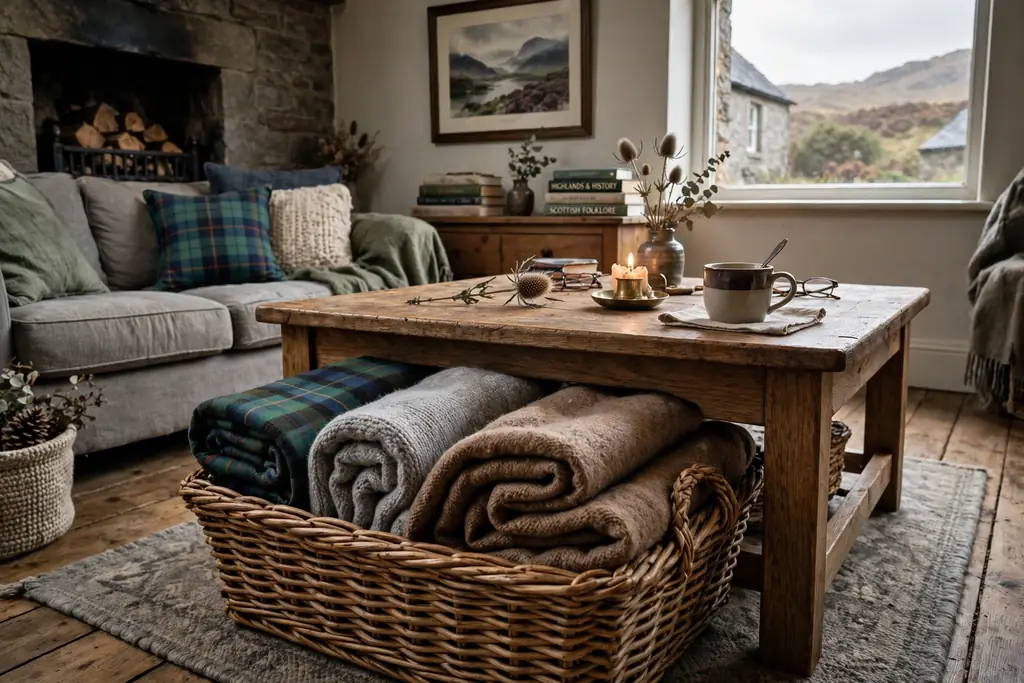
Slide a low woven basket under the coffee table for spare throws, magazines, and seasonal stems. Under table storage uses space that often goes to waste, and a basket keeps spare items out of sight while still close at hand. A seagrass or willow basket suits a Scottish room beside oak and wool.
Measure the gap under the table before buying, and leave room to slide the basket out without lifting the table. Keep the basket to one category, such as throws only, so it does not become a general dumping place. Shake out the basket monthly, since dust gathers under low furniture.
13. Lean a Small Highland Print Against a Book Stack
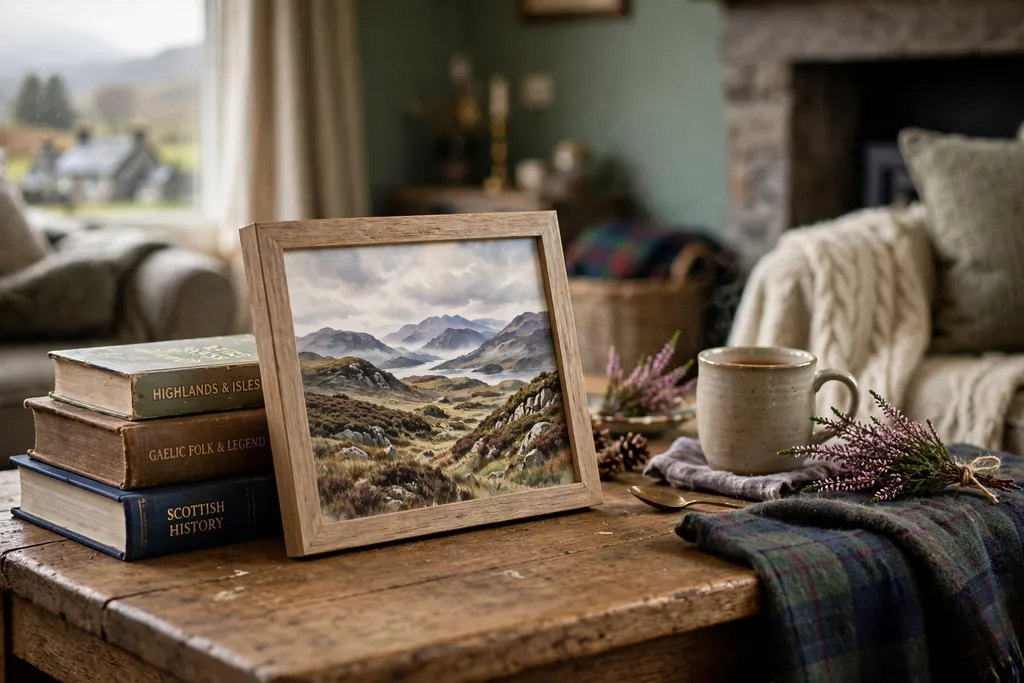
Lean a small framed Highland print against a book stack or a wall behind the table for art at table height. A leaning print suits a coffee table because it adds a picture without a nail in the wall, and it can move with the seasons. Choose a landscape print in muted greens and greys.
Lean the frame at a slight angle, with its bottom edge secure on the table, and keep it clear of mugs and candles. Use a small frame only, since a large frame can topple and can block the television. If the table sits in a walkway, skip a leaning frame and hang the print on the wall instead.
14. Light the Table With a Small Lantern
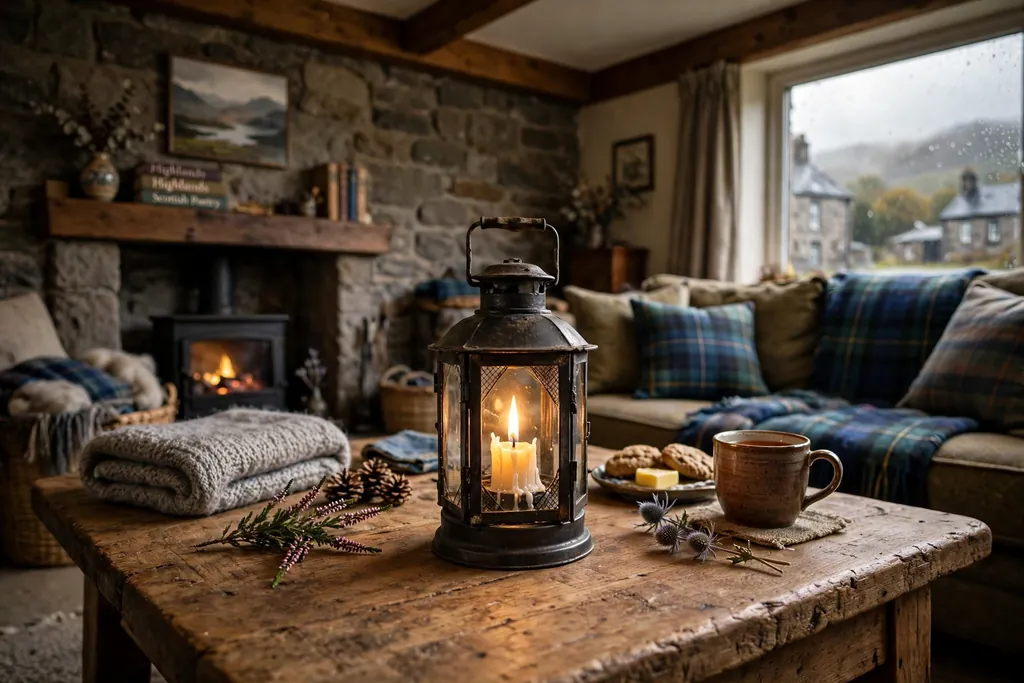
Set a small metal or glass lantern with a flameless candle inside at the centre of the table for soft light that also acts as a centrepiece. A lantern suits a Scottish fireside room because its enclosed shape echoes an old cottage lamp, and the glass protects the flame from draughts near a door.
Keep the lantern low and centred, with books and mugs kept to the sides. Use a flameless candle for safety if the room is busy, and check that the lantern door closes fully. Wipe the glass often, since fingerprints show fast on a lantern in lamplight.
15. Cover Pine Cones With a Glass Cloche
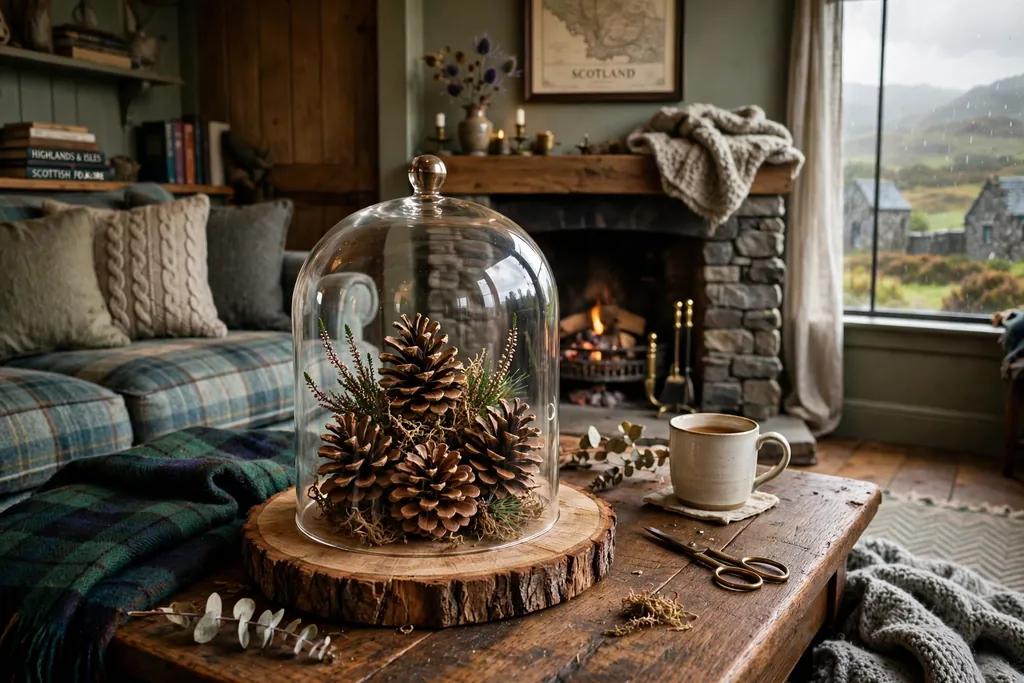
Place three or four pine cones on a wood slice or a small plate, then cover them with a glass cloche for a woodland centrepiece that stays dust free. A cloche adds height and a finished look without a tall vase, and pine cones bring a Highland forest note to the table in any season.
Keep the cloche base flat and stable, and lift it by its knob, not by its glass sides. Dust the glass weekly, since a cloche shows every mark. If the table is used by small children, place the cloche at the centre, well back from the edge, or skip glass and use an open bowl instead.
16. Hide Clutter in a Tartan Lidded Box
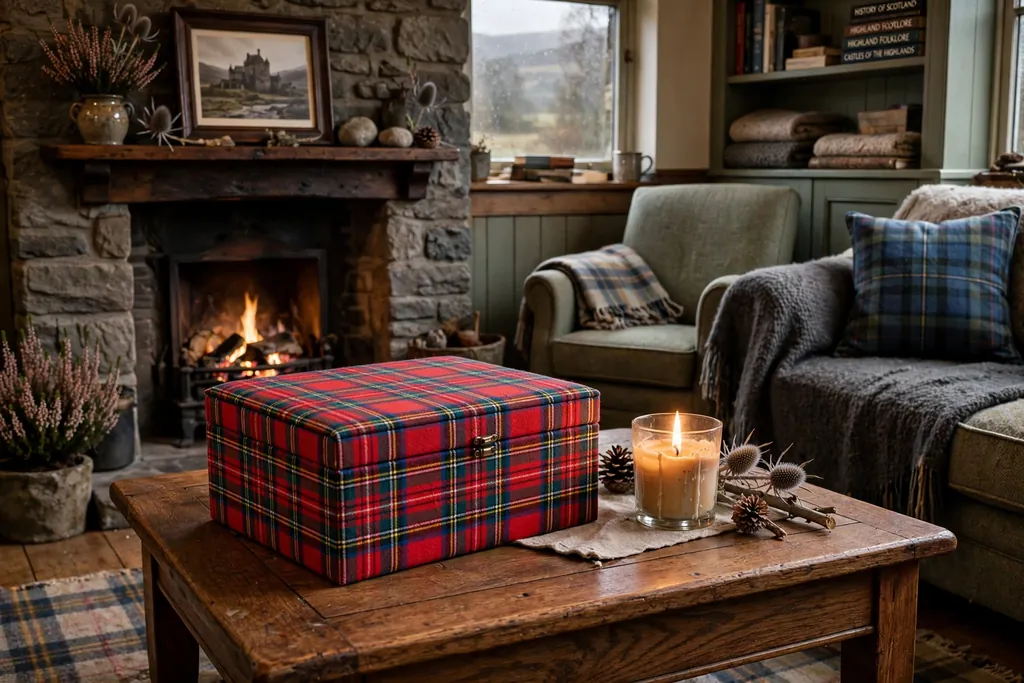
Set a tartan covered lidded box on the table for chargers, batteries, and small items that spoil a styled look. A lidded box hides clutter in one move, and the tartan cover keeps the Scottish theme going even when the box is closed. Choose a box that fits the table scale, not a large storage chest.
Label the inside lid or keep a short list of what lives in the box, so items can be found fast. Empty the box monthly, since hidden boxes fill up fast. Keep the box at one end of the table, with the centre left for a vase, a tray, or a book stack.
17. Layer a Sheepskin Pad Under the Tray
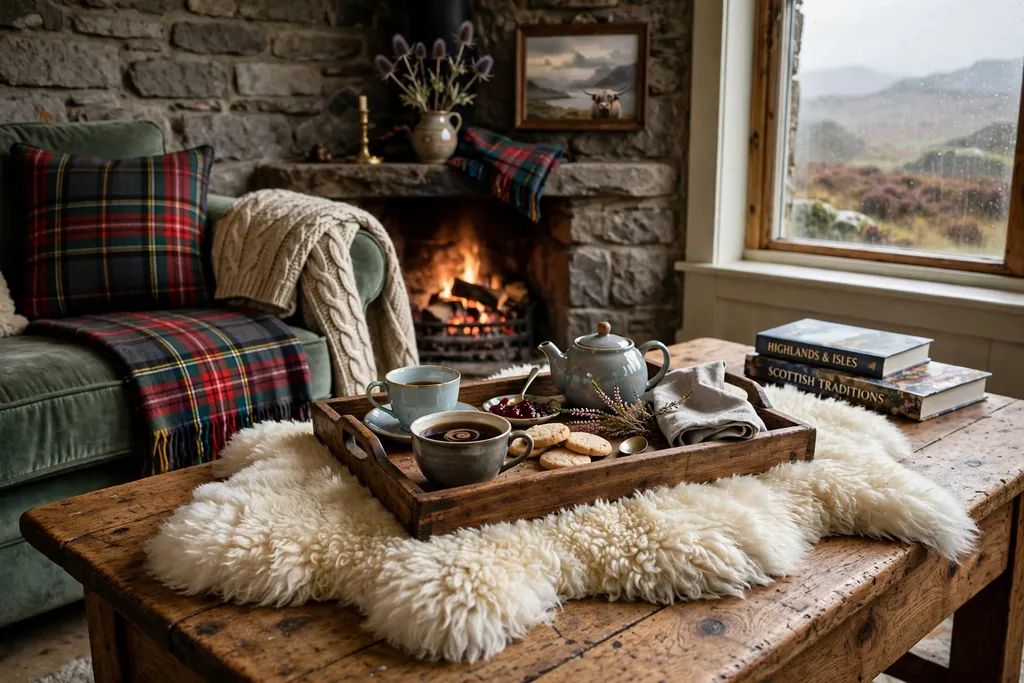
Lay a small sheepskin or wool pad under the tray to add soft texture beneath hard objects. The pad softens the look of oak, stone, and pewter, and it protects a wood table from a heavy tray. A cream or natural sheepskin suits a muted tartan scheme and a plain sofa.
Cut or fold the pad so it sits just larger than the tray, with a small border showing all round. Shake the pad out weekly, and brush it lightly to keep the pile even. Keep the pad away from tea drips, and use a coaster under any mug that sits on the pad itself.
18. Serve Snacks From a Carved Wooden Bowl
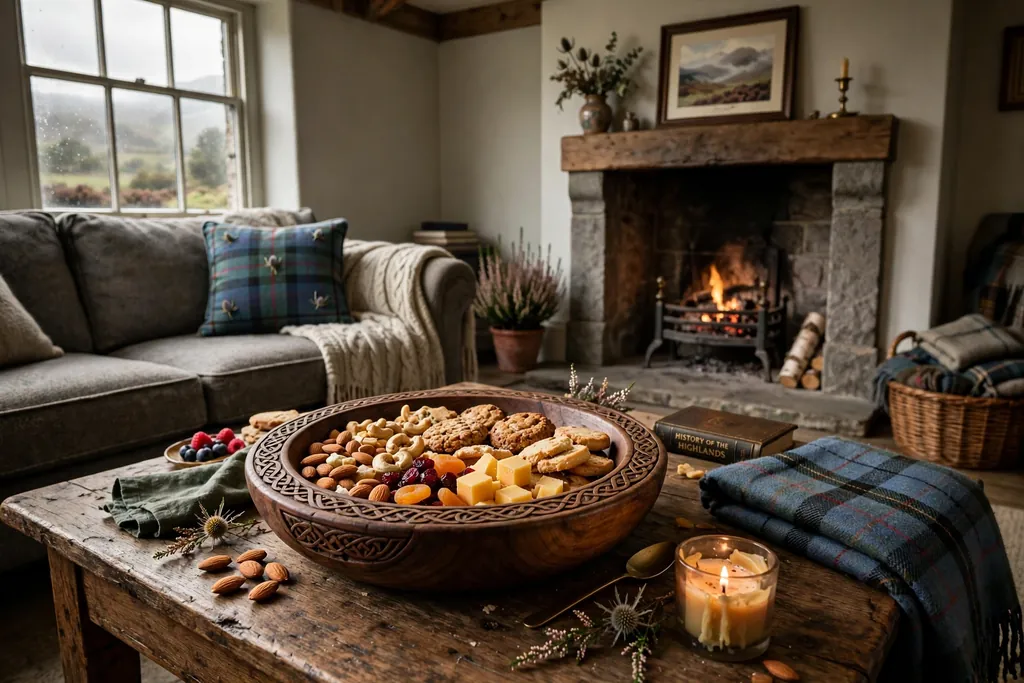
Set a carved wooden bowl on the table for nuts, crisps, or dried fruit when guests visit. A carved bowl adds a hand made, Highland craft note, and it is easy to carry to and from the kitchen. Choose a bowl with a flat base so it sits steady on the table.
Line the bowl with a small cloth napkin for dry snacks, and wash the bowl as the maker advises. Keep the bowl empty between visits, so it does not collect crumbs all week. If the bowl is deep, fill it only halfway, so guests can reach snacks without tipping it.
19. Build a Winter Fireside Centrepiece

Build a winter centrepiece from a tartan runner, a pine branch garland laid flat, and a cluster of flameless candles in the middle. This full seasonal scene suits cold months, when the table sits near a fire and the room is used for long evenings. Pine gives scent and shape, tartan gives colour, and candles give evening light.
Keep pine branches flat and trimmed, with no branch hanging over the table edge. Check branches weekly and replace them when needles drop. Keep candles clear of dry pine, and use flameless candles if real flames would sit close to branches. Clear the scene after winter, and store the runner and candles for next year.
20. Put Spring Daffodils in a Stoneware Jug
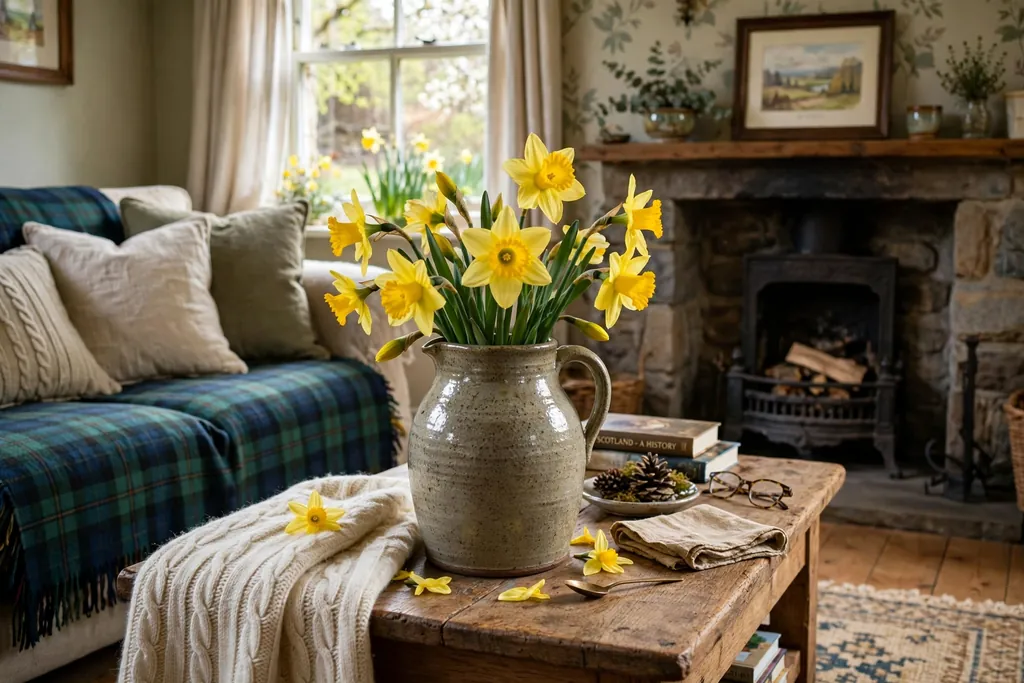
Put a bunch of daffodils in a stoneware jug for a spring coffee table that feels fresh after winter. Daffodils are a cheerful Scottish spring flower, and a stoneware jug keeps the look simple and sturdy beside oak and wool. Choose a jug with a wide base so it does not tip.
Fill the jug only halfway with water, trim stems at an angle, and change the water every two days. Keep the jug at the centre, away from the table edge, and wipe drips at once, since stoneware can mark a wood top. Replace daffodils when heads droop, and compost the old stems.
21. Fill an Open Bowl With Acorns and Pine Cones
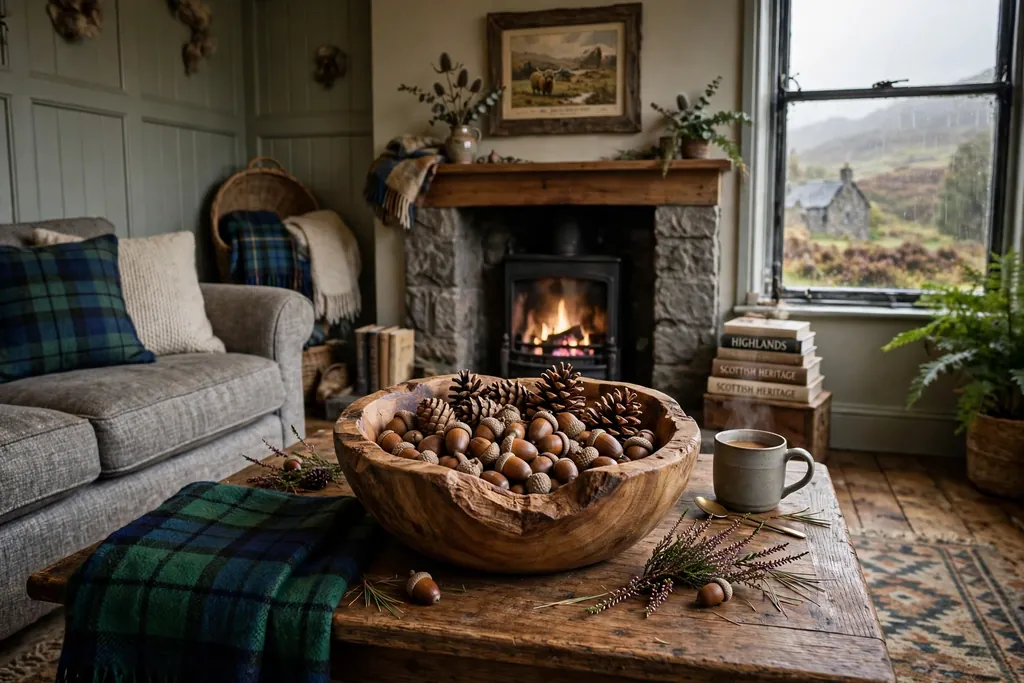
Fill an open wood bowl with acorns and pine cones for an autumn centrepiece that differs from a covered cloche by being touchable and easy to refill. Guests can pick up a cone and put it back, which suits a relaxed family room. An open bowl also shows the shapes and colours of autumn clearly.
Choose cones and acorns of a similar size, and fill the bowl loosely so it does not look packed. Dust the bowl contents monthly, and replace any cone that sheds heavily. Keep the bowl at the centre, with mugs kept to the sides, so sleeves do not knock cones onto the floor.
22. Set a Game Night Tray With Boards and Snacks
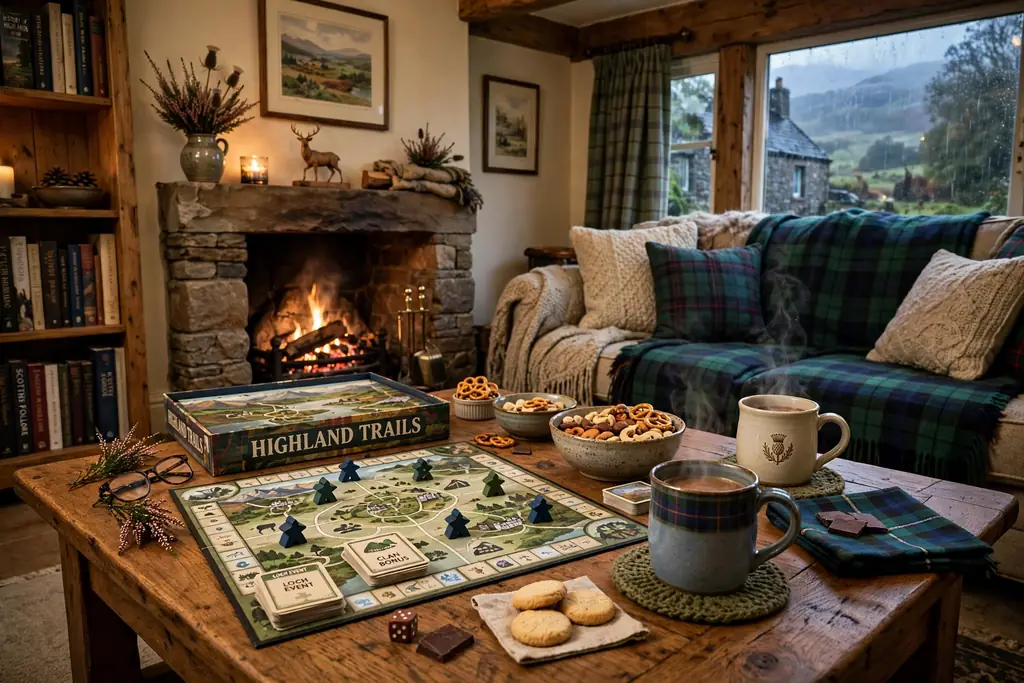
Set a game night tray with a card game or a small board game, a snack bowl, and two mugs for an evening at the coffee table. A game tray turns the table into a shared activity space, and it keeps game pieces, snacks, and drinks in one zone. A tartan lined tray suits the theme and is easy to clear.
Choose games with few small pieces if the table is small, and keep the snack bowl away from the game board. Clear the tray after the game, so the table returns to its daily look. Store the game in the under table basket, so the next game night starts fast.
23. Make a Reading Corner With Glasses and a Bookmark

Set a reading corner at one end of the table with a current book, reading glasses in a small case, and a bookmark on top. This functional corner differs from a display book stack because every item is in daily use, and it marks the table as a reading spot as well as a display. A small candle beside the book adds evening light.
Keep the reading corner to one seat’s reach, so it does not spread across the table. Return glasses to their case when not in use, so lenses stay clean. If two people read in the room, mirror the corner at the other end with a second book and glasses case.
24. Keep a Work Tray With Notebook and Pen Pot
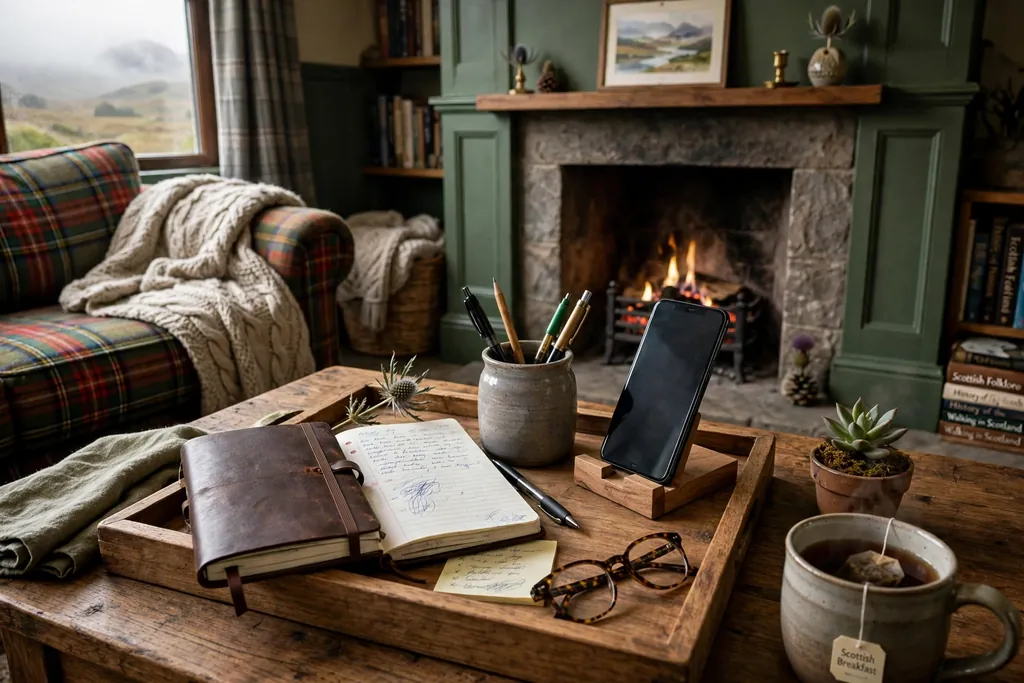
Set a work tray with a notebook, a pen pot, and a phone stand for short spells of writing or planning at the coffee table. A work tray keeps paper and pens from spreading, and it lifts off in one move when work ends. A plain oak or leather tray suits a Scottish room without adding a new pattern.
Keep the work tray to writing items only, and clear it at the end of each work spell, so the table returns to a living room look. Use a pen pot with a heavy base, so pens do not roll onto the floor. If laptop work is common, use a larger tray with a flat base, and keep cables in the tartan box.
25. Flank a Book Stack With Matching Candle Holders

Place two matching candle holders, one on each side of a book stack, for a formal, balanced look. Symmetry suits a larger rectangular table and a room with a fireplace or a large sofa, where a balanced centre reads as calm. Matching holders in pewter, brass, or wood keep the look simple.
Space the holders evenly from the stack, and keep their heights equal, so the balance is clear. Use flameless candles for safety, and keep the holders clear of throws and books. If the table is small, skip symmetry and use a single candle cluster instead, since a balanced trio needs room to breathe.
26. Style a Low, Unbreakable Table for Pets and Children
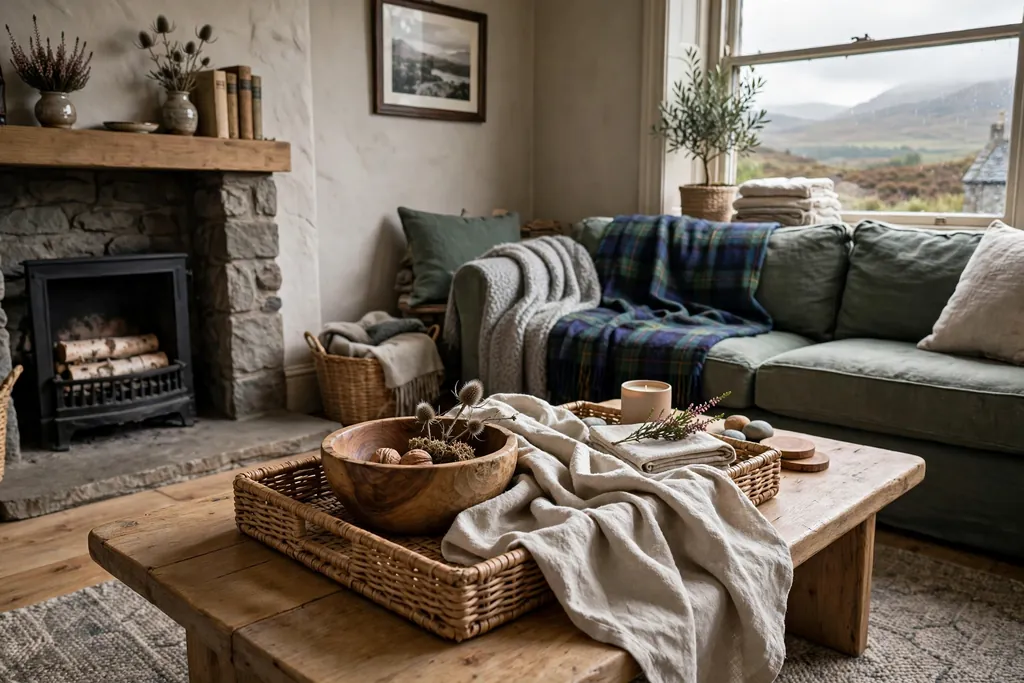
Style a table for pets and children with low, unbreakable pieces only: a woven tray, a wool coaster set, a soft fabric runner, and a wood bowl. Nothing glass, nothing sharp, and nothing that tips easily, so the table stays safe when a dog tail or a small hand sweeps across it. This idea suits a busy family room.
Keep the centre low and centred, with no tall vase or lantern near the edge. Use washable fabrics, and wipe the tray after meals and play. Store fragile pieces, such as a decanter or a cloche, on a high shelf, and bring them out only for adult evenings.
27. Style a Small Round Table With One Statement Piece
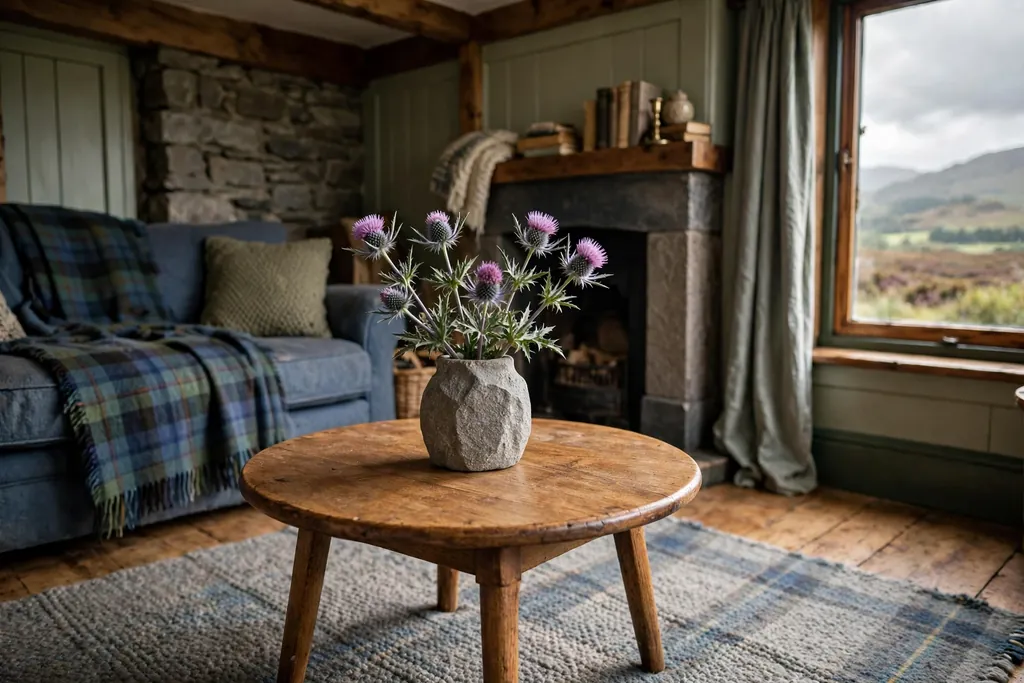
Style a small round table with one statement piece only, such as a single stone vase with thistles, a carved bowl, or a small lantern. One piece suits a round table because a round top has no corners to fill, and a single object keeps the table usable for mugs and a book. This idea suits a small living room or a reading chair corner.
Centre the piece exactly, and leave the rest of the top clear. Choose a piece with a strong shape or texture, since it must carry the whole look alone. If the room feels bare, add a small rug under the table instead of adding more objects to the top, since floor pattern fills the space without crowding the table. For more small room plans, see these small living room dining room combo ideas.
28. Run a Seasonal Swap System on One Tray
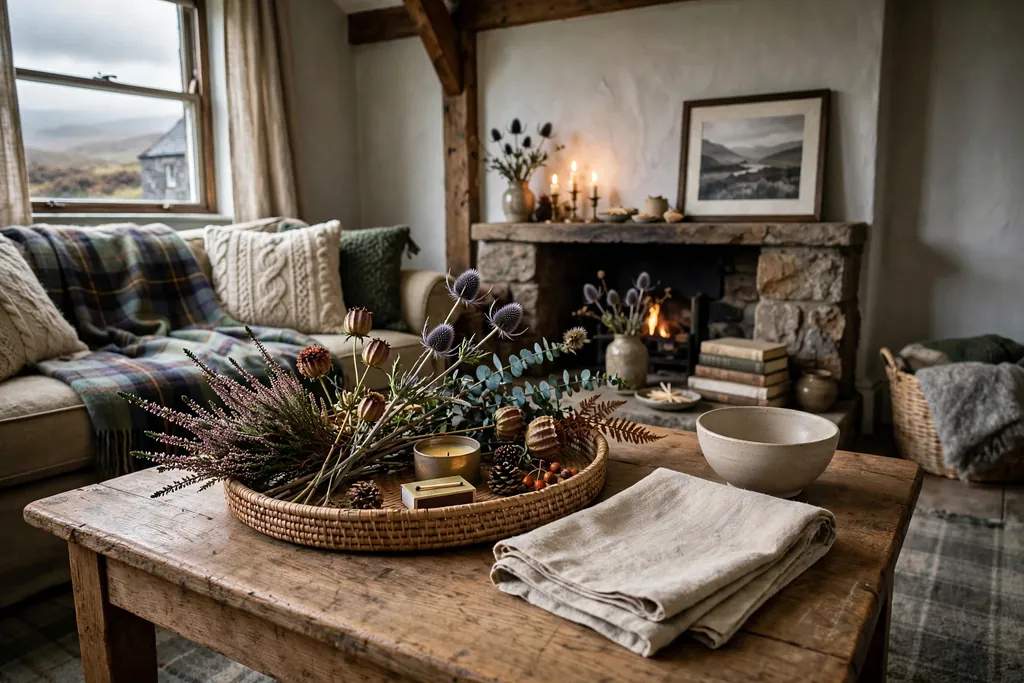
Run a seasonal swap system on one tray: keep the same oak tray and candle holders all year, and swap only the stems, runner, and small bowl each season. Spring daffodils give way to summer heather, autumn cones, and winter pine, while the tray stays put. This system saves time and money, since only small items change.
Store spare stems, runners, and bowls in the under table basket, labelled by season, so a swap takes ten minutes. Photograph each seasonal version once, so you can repeat a look you liked. Clear the tray fully before each swap, wipe it, and then build the new season from the centre out. For a calm sofa to pair with any season, see these grey couch living room ideas.
Conclusion
A Scottish coffee table works best when one clear centre leads, daily items stay corralled, and soft materials do most of the talking. Start with a runner or a tray, add tartan, wool, oak, or stone in two places, and leave room for mugs, books, and conversation. Low pieces near the edge and taller stems at the centre keep sight lines open, while a basket under the table holds spare throws and seasonal stems. Swap small items by season, keep fragile pieces for quiet evenings, and let the table change with the household, not against it.
Save this list on Pinterest for your next free hour in the living room, and work through it in order: base layer first, then tray and centrepiece, then candles and books, and finally the seasonal swaps and family friendly changes.
FAQs
How do I style a Scottish coffee table without making it look themed or crowded?
Start with one Scottish note, such as a muted tartan runner or an oak tray, and keep the rest plain. Use one pattern and one or two materials, such as wool and oak, and leave at least a third of the table clear. Add pieces one at a time, and step back after each addition to check sight lines from the sofa. If the table looks busy, remove the smallest item first, since small clutter builds up fastest.
What is the best centrepiece for a Scottish coffee table?
A low centrepiece works best for daily use: a stone vase with thistles, a shallow bowl of heather, or an oak tray with a candle cluster. Low pieces keep conversation open across the sofa, and they leave room for mugs and books at the sides. Tall vases suit a large table or a formal room, but they block sight lines on a standard coffee table. Choose a centrepiece that fits your table size, and keep it centred.
How much should I leave clear on a coffee table?
Leave at least a third of the table clear, and more if the table is small or used for meals, games, or work. A clear zone gives mugs a safe place, books room to open, and hands space to reach without knocking a vase. Use a tray to group small items, and keep the clear zone at the table ends or along one long side, where seated people reach most easily. If every spot is filled, remove one group of items and store it under the table.
How do I keep a styled coffee table tidy with children or pets?
Use low, heavy, unbreakable pieces, such as a woven tray, a wood bowl, and washable fabric, and keep glass, tall vases, and lit candles off the table. Store fragile pieces on a high shelf for adult evenings only. Wipe the tray after meals and play, and keep a basket under the table for quick tidying. A table that is easy to clear will stay tidy, since tidying takes seconds rather than a full restyle.
Can I use tartan on a coffee table in a modern living room?
Yes, if the tartan is muted and used in a small dose. A muted green or navy runner, a tartan box lid, or a tartan lined tray adds a Scottish note without turning a modern room into a themed room. Pair tartan with plain furniture, a plain rug, and simple materials such as oak and stone, and keep other patterns to a minimum. One tartan piece is enough in a modern room, so let it be the single pattern on the table.
How often should I change coffee table styling by season?
Change small items four times a year, or twice a year if that suits your routine better. Swap stems, the runner, and the small bowl, while keeping the same tray and candle holders all year. Store spare seasonal items in a labelled basket under the table, so each swap takes only a few minutes. A seasonal swap keeps the room feeling fresh without a full restyle, and it gives you a reason to clear and wipe the table regularly.