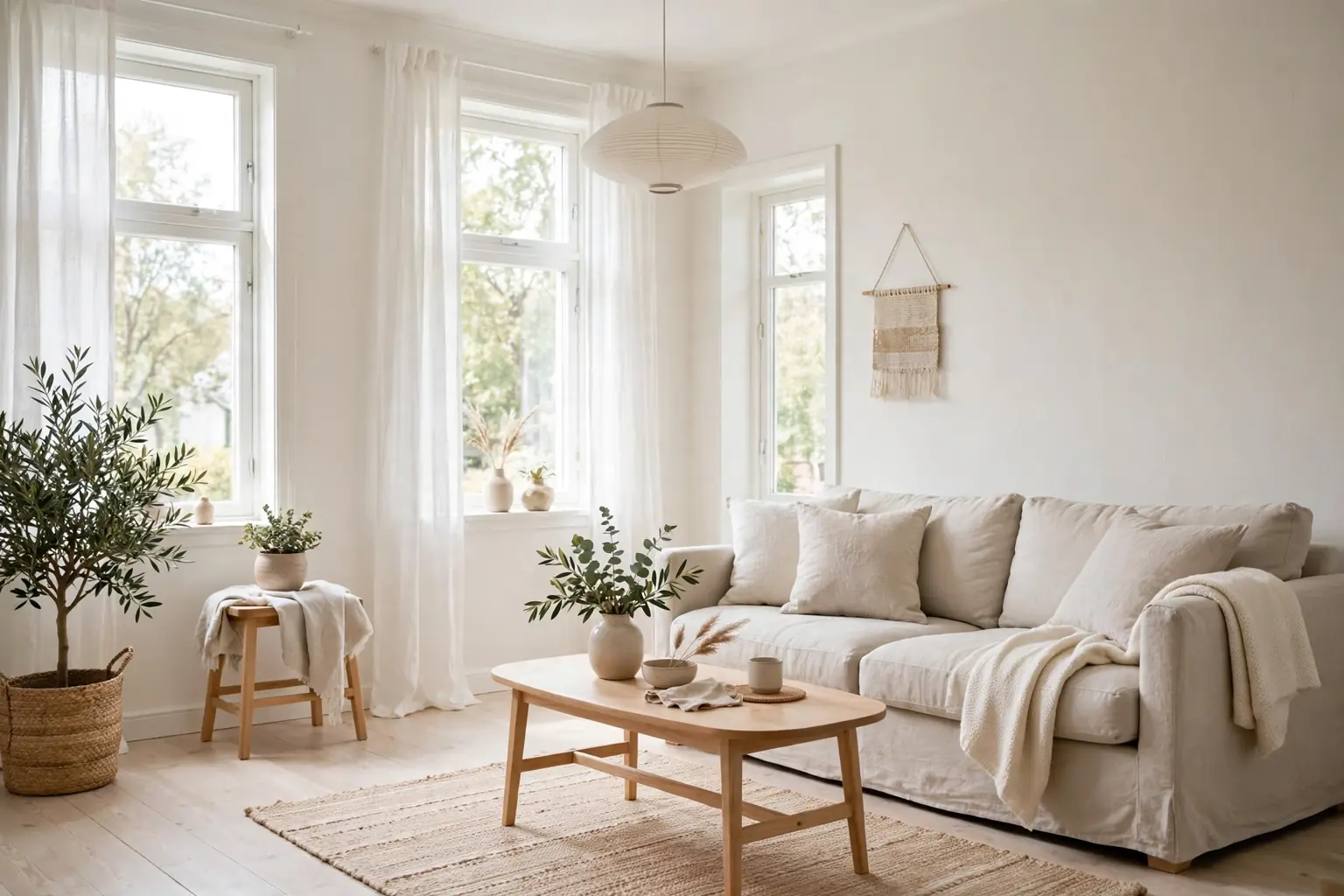
A Swedish living room earns its welcome from light, wood, and soft layers, not from a long list of decorations. Pale walls bounce daylight, wood floors stay visible, and linen, wool, and sheepskin add warmth you can feel when you sit down. The lived in part matters too: books left on a shelf, a basket for throws, and a chair placed where the light is best. These 29 Swedish living room ideas cover walls, floors, seating, storage, light, and small folk details, so you can pick the changes that fit your room. Start with light and one comfortable seat, then add texture and storage where daily life actually needs them.
Key Takeaways
- Keep the base pale and calm: warm white walls, pale wood floors, and a light sofa give every later layer room to show.
- Add warmth through touch, not color alone: linen, wool, sheepskin, and woven baskets make a pale room feel lived in.
- Use light at more than one level: daylight by day, plus lamps and candles in the evening, keeps a Swedish room soft after dark.
- Choose furniture that works daily: a low sofa, a sturdy coffee table, and storage baskets beat pieces that only look good in a photo.
- Repeat one or two accents, such as blue and white or a small red note, rather than adding a new color in every corner.
- Leave space to live: clear floors, a free table surface, and shelves with gaps keep the room calm and easy to tidy.
1. Paint the Walls Warm White
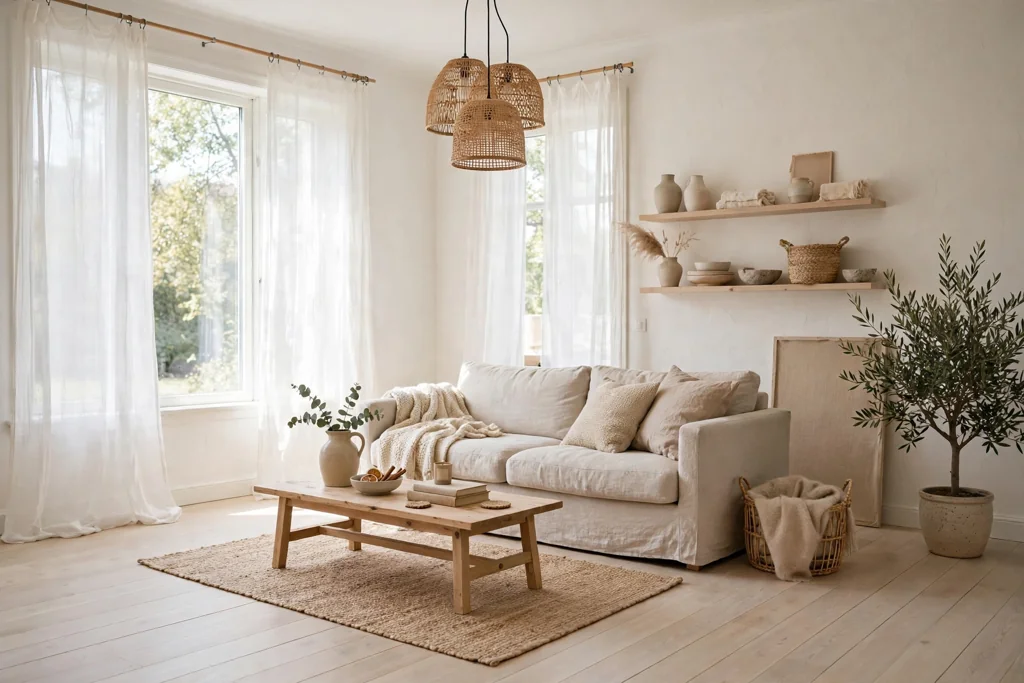
Paint the walls a warm white rather than a cold blue white, so daylight feels soft instead of stark. Warm white suits pale wood, linen, and grey, and it lets art and plants stand out without a strong wall color behind them. This is the simplest base for a Swedish living room, and it suits both small rooms and open plan spaces.
Test two or three warm white samples on the wall and check them in morning light and evening lamplight before painting the whole room. Keep the ceiling and trim in a matching warm white so the room reads as one calm space. If you rent and cannot paint, large linen curtains and a pale rug can soften a cooler wall color in a similar way.
2. Let Pale Wood Floors Show
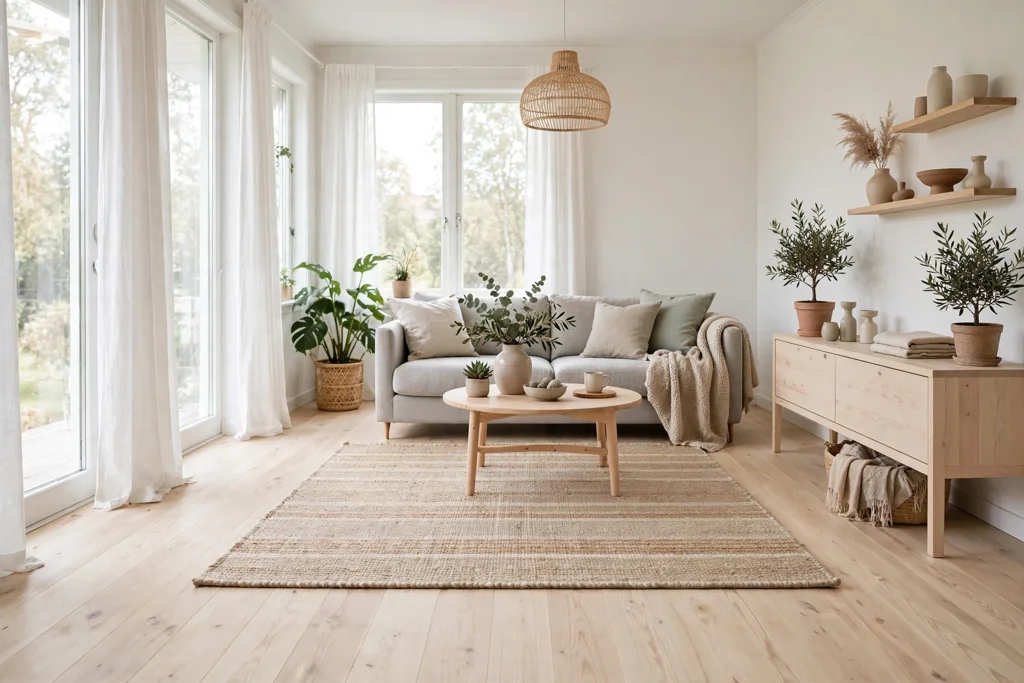
Leave as much pale wood floor visible as you can, rather than covering it wall to wall. A wood floor in oak, birch, or pine is a core part of the Swedish look, and it keeps a light room feeling natural and grounded. Place rugs only where seating or walking needs softness, and leave a clear border of wood around them.
Clean wood floors with a method suited to their finish, and use felt pads under chair and table legs to limit scratches. If your floor is dark, a large pale rug and pale furniture can still give the room a Swedish feel, but the floor itself will read as a stronger anchor. Keep the floor clear of extra small furniture so the wood can do its quiet work.
3. Choose a Low Light Linen Sofa
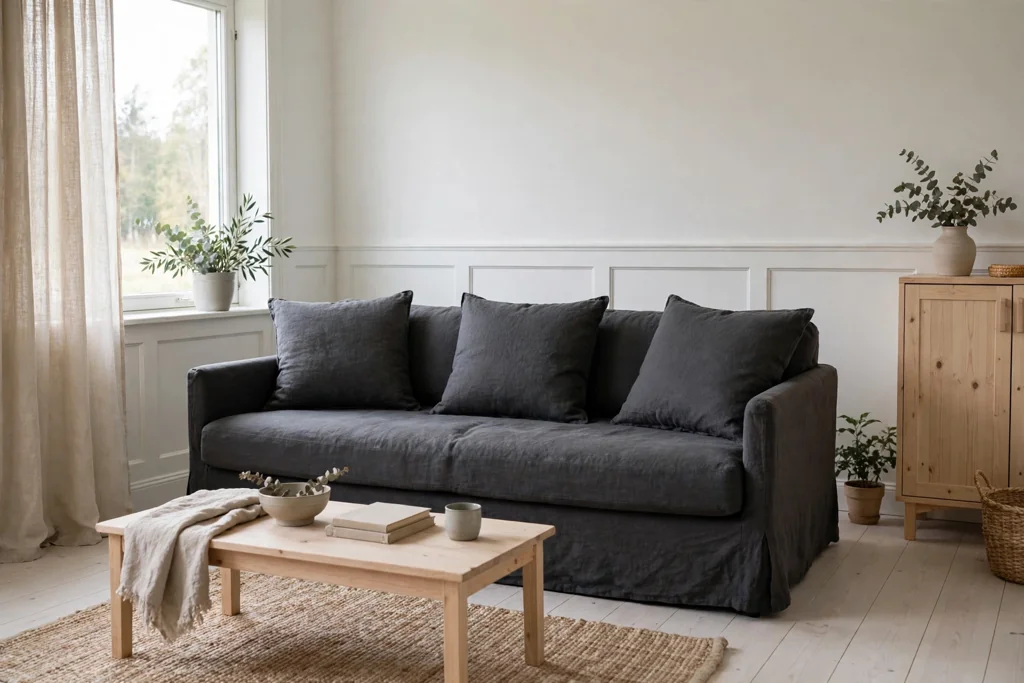
Choose a low sofa in light linen, in natural, oatmeal, or pale grey, as the main seat in the room. A low back and slim arms keep the sofa from blocking light, and linen wrinkles in a way that suits a lived in room rather than fighting it. A two or three seat sofa, sized to the wall or rug zone, works better than an oversized sectional in most Swedish rooms.
Pick washable or removable covers where you can, since a light sofa sees daily use. Keep the cushions simple, in plain linen or a soft stripe, and let throws and one accent color add interest. If you already own a darker sofa, a light slipcover is a lower cost way to test the look, as shown in these ideas for a grey couch living room.
4. Drape a Sheepskin Over a Chair
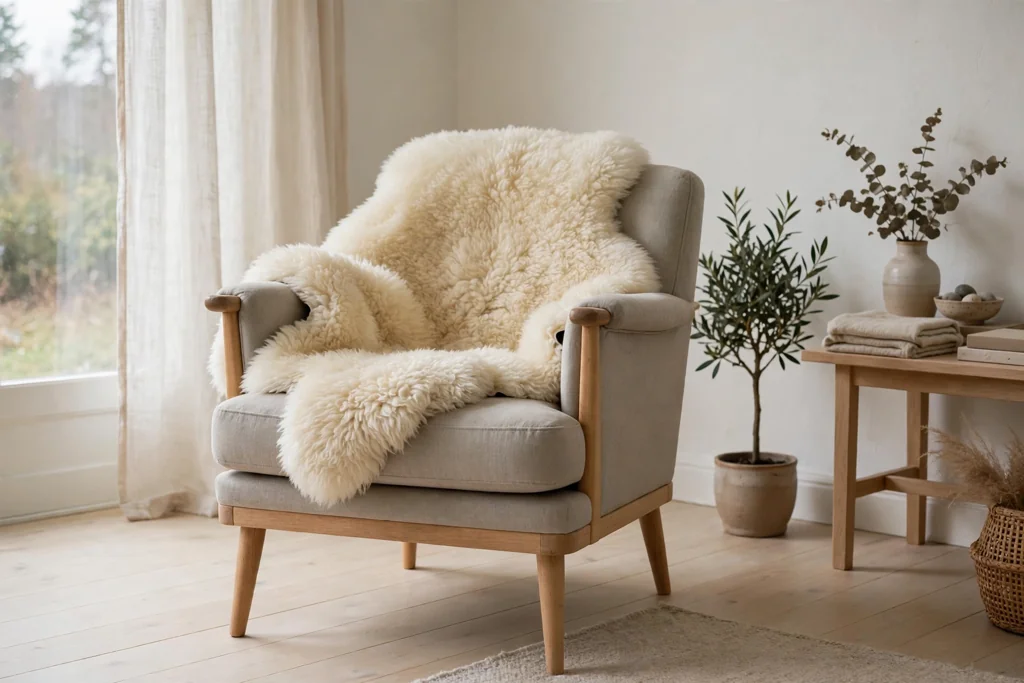
Drape a sheepskin over an armchair, a dining chair pulled into the living room, or a bench by the window. Sheepskin adds instant warmth to a wooden chair, and it is a classic Swedish touch that costs far less than new furniture. The soft texture also breaks up a room full of smooth wood and linen.
Use a real or good quality faux sheepskin in cream or natural grey, and shake it outside now and then to keep it fresh. Keep it on the chair you actually sit in, not on a chair kept only for show, so it stays part of daily life. In warm months, fold it over the chair back instead of removing it, so the room keeps its soft layer.
5. Layer Wool Throws Within Reach
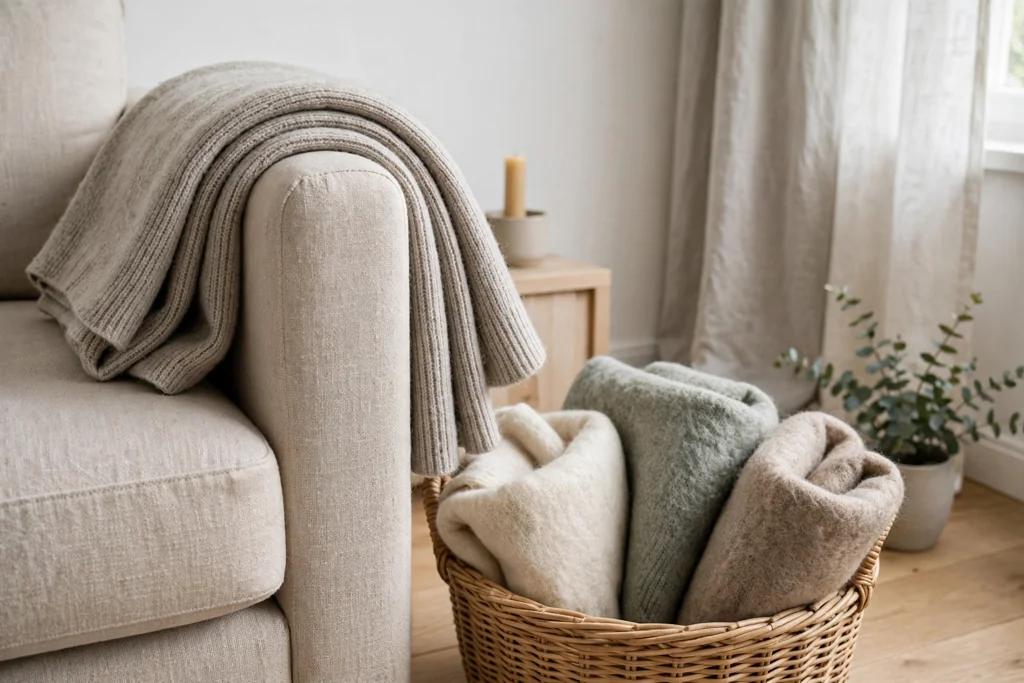
Keep two wool throws within reach of the sofa, one folded over an arm and one in a basket beside it. Wool throws in cream, grey, or a soft stripe suit a Swedish room, and they turn a pale sofa into a seat people actually settle into. A throw also protects a light sofa arm from daily wear.
Choose throws you can wash, and vary the weave rather than the color: one smooth wool throw and one chunky knit throw give more interest than two identical pieces. Fold, rather than draping loosely, so the sofa still looks tidy when no one is sitting there. A basket for the spare throw keeps the second layer close without piling it on the seat.
6. Lay a Flatweave Wool Rug
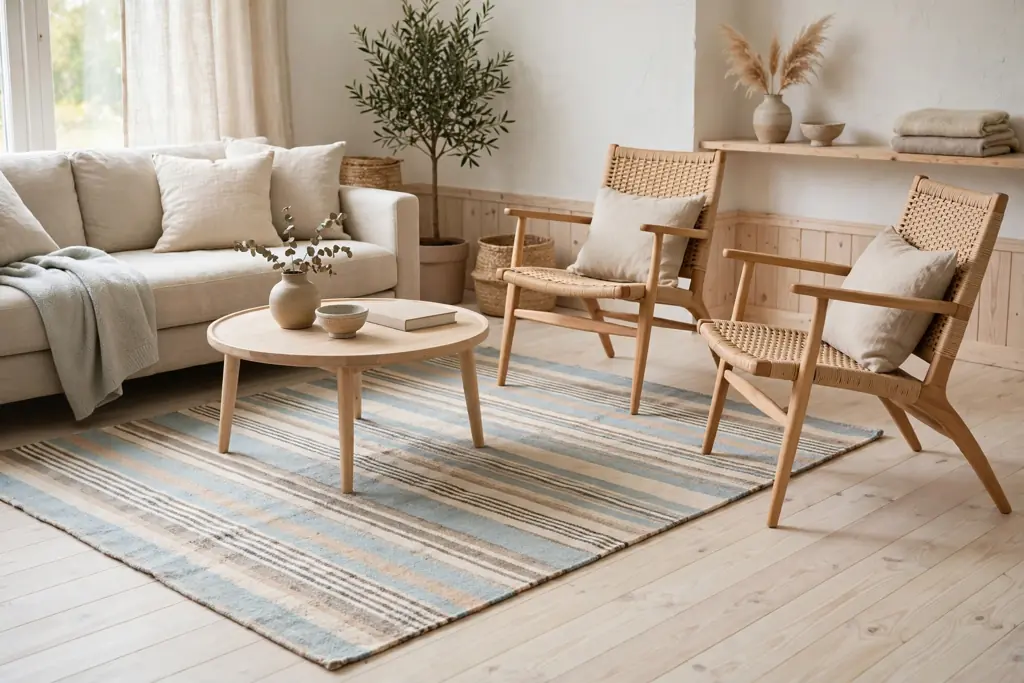
Lay a flatweave wool rug under the seating group, large enough for the front legs of the sofa and chairs to rest on it. A flatweave rug in cream, grey, or a soft stripe keeps the floor feeling light, and its low pile is easy to vacuum and to move chairs across. This is the rug style most often seen in Swedish rooms, where the floor itself stays part of the look.
Measure the seating zone before buying, and tape the rug outline on the floor to check walking routes and door swings. For more help with size and placement, see these living room rug ideas. Keep the rug pattern simple if cushions or art already carry pattern, and use a rug pad underneath on a smooth wood floor.
7. Hang Sheer Linen Curtains to the Floor
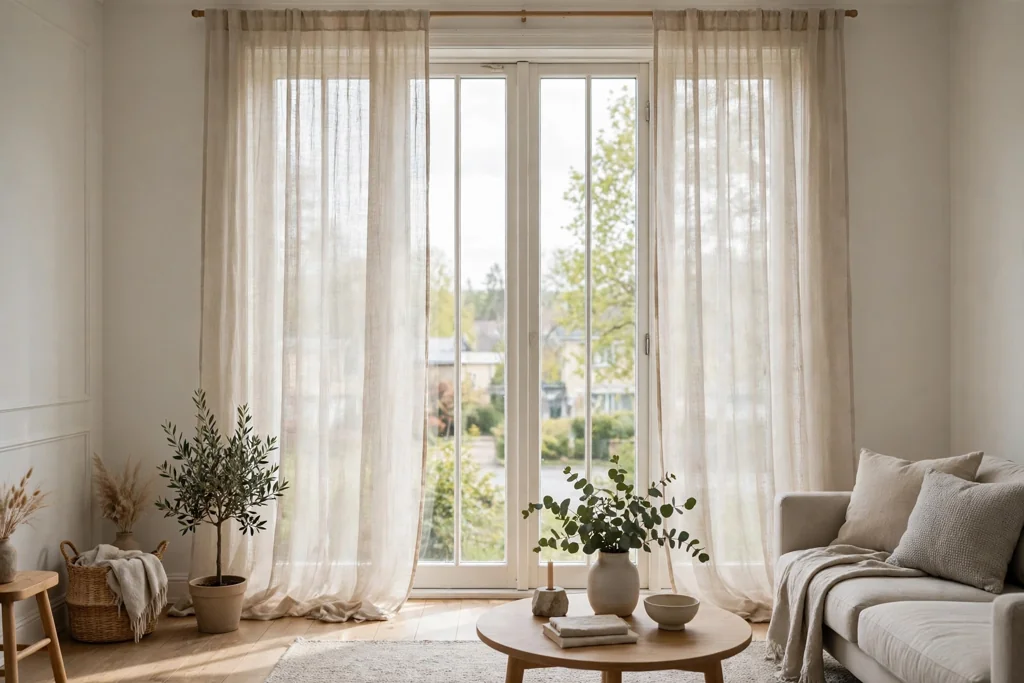
Hang sheer linen curtains from close to the ceiling to the floor, so daylight filters in softly and the window feels taller. Sheer linen suits a Swedish room because it gives privacy in the daytime without shutting out light, which matters in rooms that need every bit of sun they can get. White, cream, or pale grey linen works best.
Use a simple rod in wood or black metal, and let the curtains fall straight rather than pooling heavily on the floor. Add a heavier linen pair at the sides only if the room gets cold drafts or needs evening privacy. Wash the sheers now and then, since pale linen shows dust faster than a darker curtain.
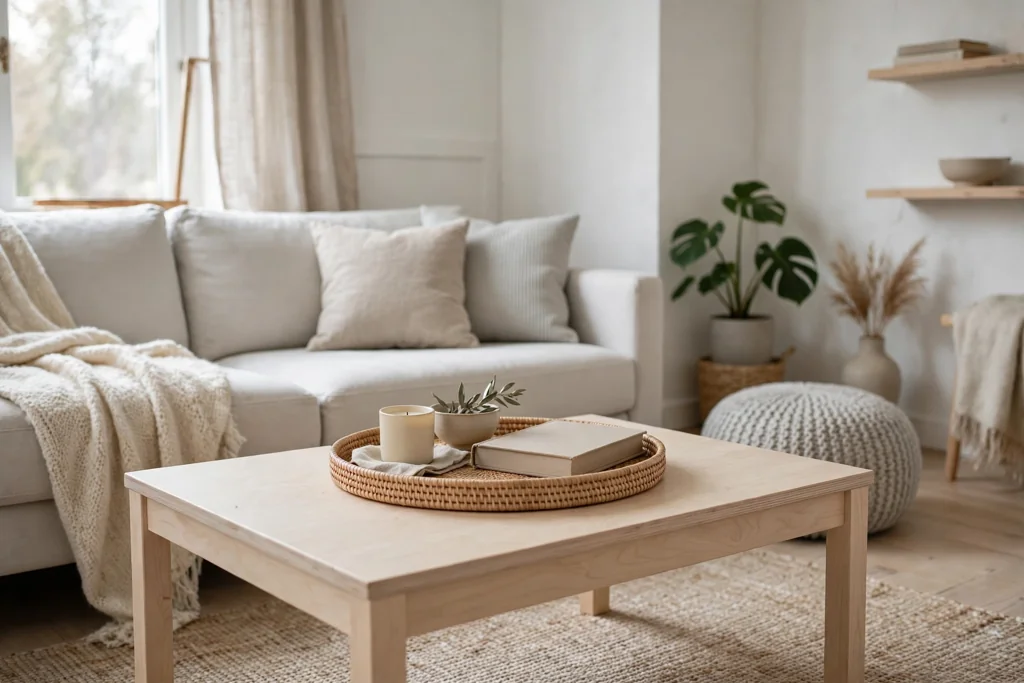
8. Group Candles on a Tray
Group candles on a tray on the coffee table, windowsill, or side table, and light them in the evening for a warm, low glow. Candlelight is a daily habit in many Swedish homes, especially in darker months, and a tray keeps wax, matches, and holders in one tidy place. Plain white or cream candles in simple holders suit the look best.
Use sturdy holders that cannot tip easily, keep candles clear of curtains, throws, and paper, and never leave them burning in an empty room. Battery candles give a similar glow where real flames are not practical, such as a shelf near books. A tray also makes it easy to move the whole group when you need the table surface for food or work.
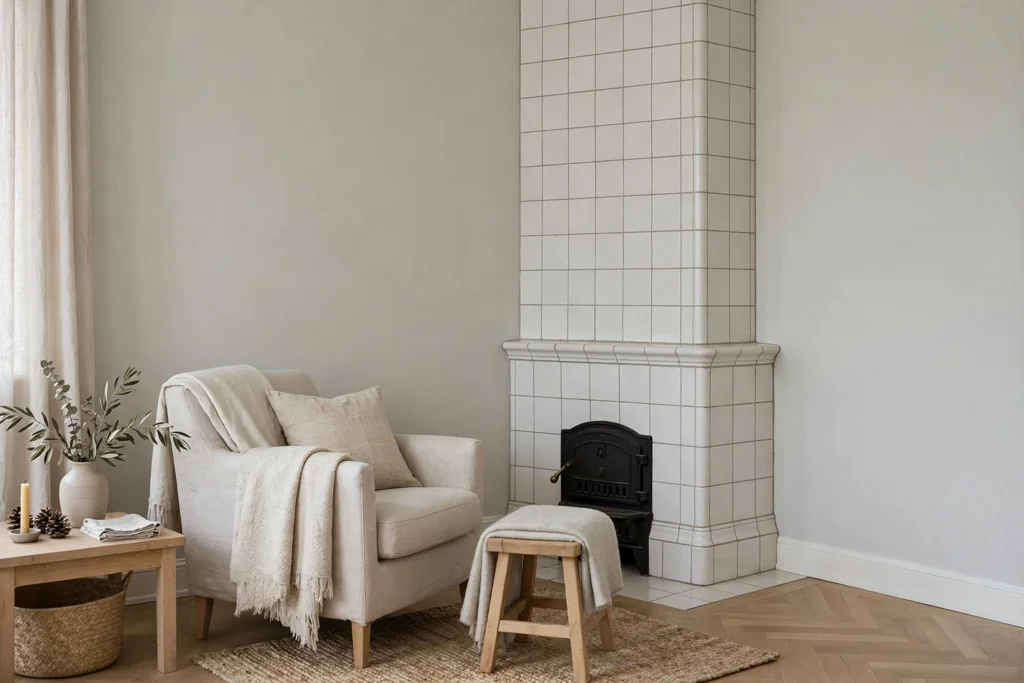
9. Make a Tile Stove or Wood Burner the Corner Focus
Make a tiled stove, a simple wood burner, or a plain fireplace the focus of one corner, with seating turned toward it. The traditional Swedish kakelugn, a tall tiled stove, warms a room slowly and gives it a clear heart, while a modern wood burner gives a similar focal point in a plainer shape. Either way, the fire corner invites people to sit and stay.
Keep the hearth area clear, use a heat safe rug distance, and store firewood in a neat basket or log holder rather than a loose pile. If you have no working fire, a plain mantel with candles, a mirror, and a stack of books can give the same sense of a gathered corner. Keep throws and cushions clear of the fire opening for safety.
10. Add a Painted Gustavian Armchair
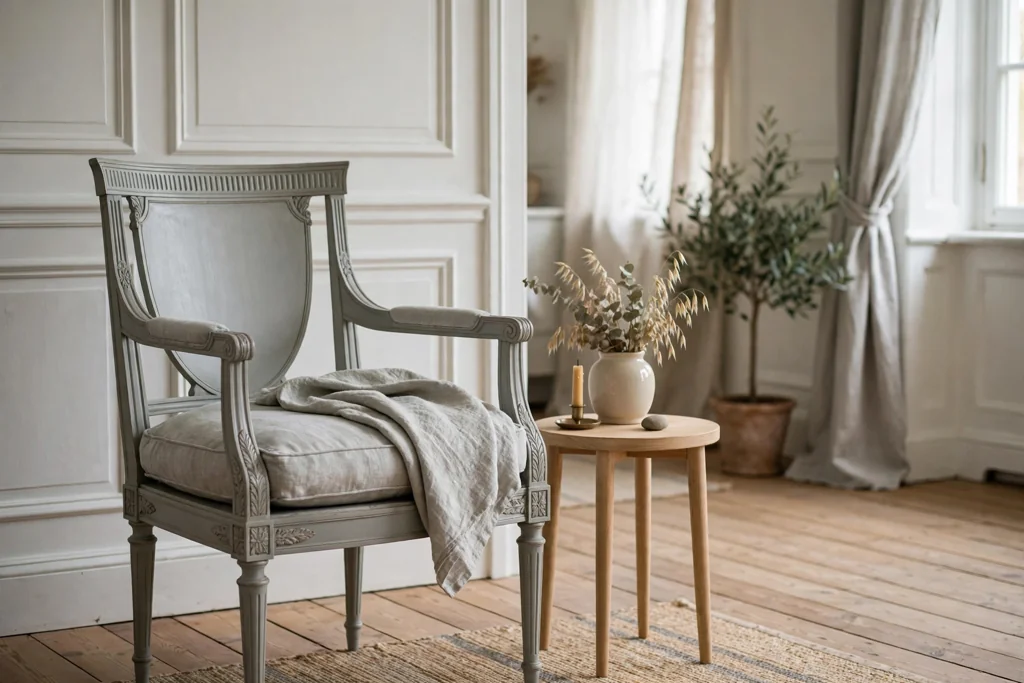
Add a painted Gustavian armchair, in soft grey, cream, or pale blue grey, as a second seat beside the sofa. Gustavian chairs have a light, carved frame and a simple upholstered seat, and they bring a Swedish historic note without making the room feel formal. One chair is enough in most rooms, since a full set can feel like a museum display.
Pair the chair with a small side table and a lamp, so it becomes a real reading seat rather than a display piece. Check secondhand shops and auction listings for a painted chair with good joints, since an old frame often suits this look better than a new copy. Keep the chair cushion in plain linen so the painted frame stays the detail.
11. Pick a Pale Wood Coffee Table
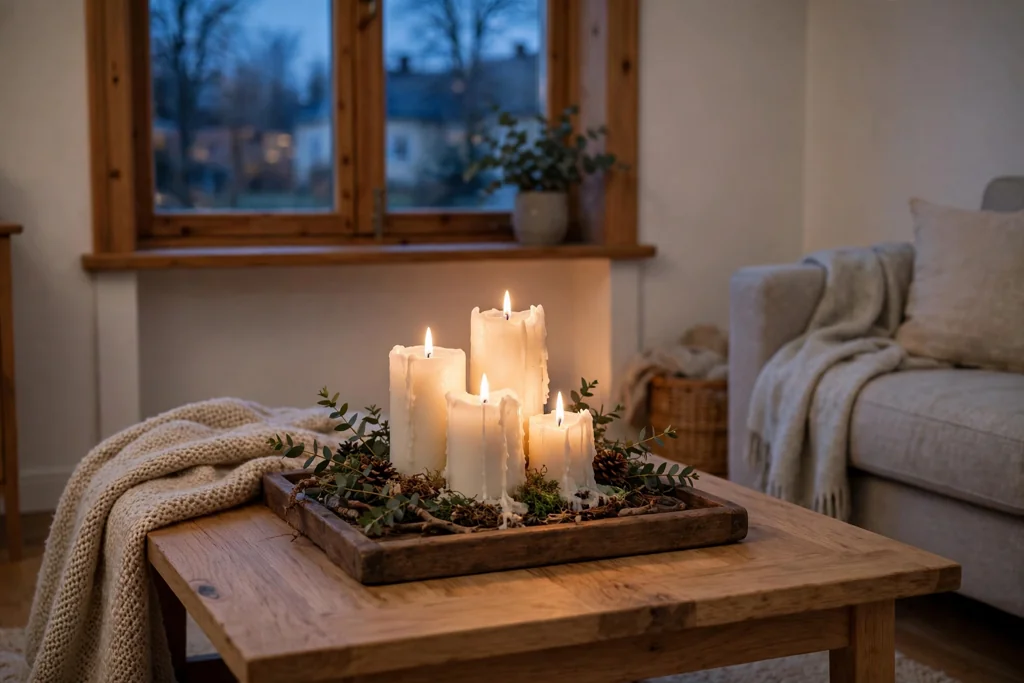
Pick a pale wood coffee table in oak, birch, or whitewashed pine, with a simple rectangular or round top. A pale table keeps the center of the room light, and a plain top leaves room for a tray, a book, and a cup without looking crowded. Round tables suit small rooms and rooms where people walk past the seating group often.
Keep the table top mostly clear, with one tray to gather small items, and store magazines and remotes in a basket or drawer if the table has one. Choose a table height close to the sofa seat height, so cups and books are easy to reach. Wipe the top after use, since pale wood shows rings and marks more readily than dark wood.
12. Use Open Wall Shelves for Books and Ceramics
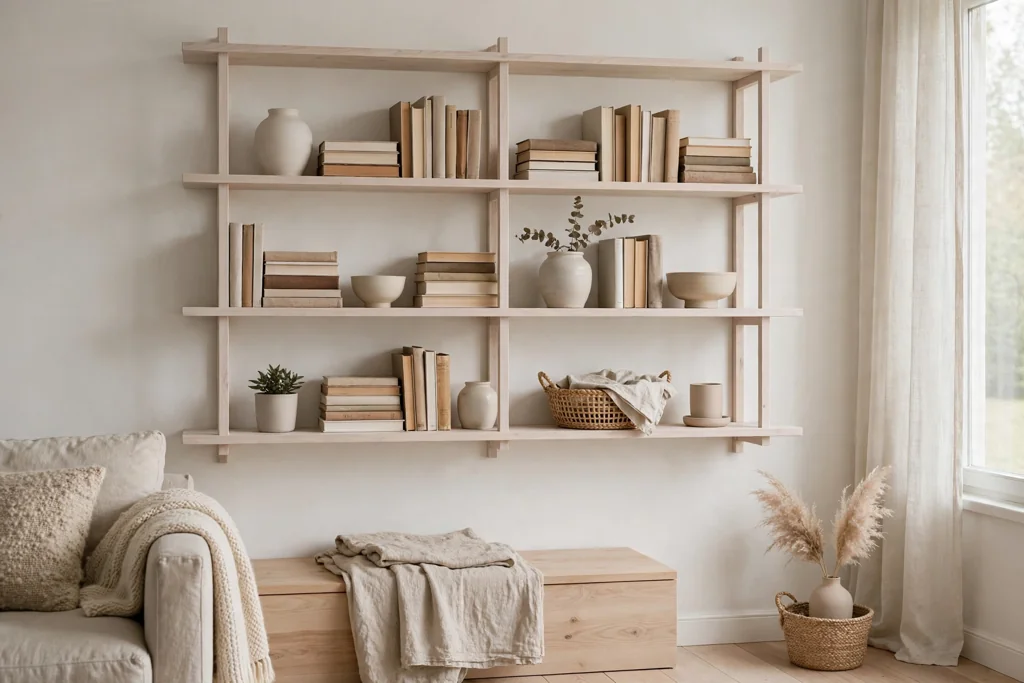
Fit one or two runs of open wall shelves in pale wood or painted white, and use them for books, ceramics, and a few plants. Open shelves suit a Swedish living room because they keep storage visible and easy to reach, and they let a collection of plain ceramics add quiet color. Keep the shelves on one wall, rather than spreading them around the room.
Group books by height, leave gaps between groups, and put heavier items low and lighter ceramics higher. Anchor shelves into studs or with fixings suited to your wall type, and check the weight rating before loading them with books. For a tidy method that works on any open shelf, the grouping advice in these cozy apartment living room ideas helps: start with the largest pieces, vary the shapes, and leave visible gaps.
13. Hang a Simple Gallery Wall in Matching Frames
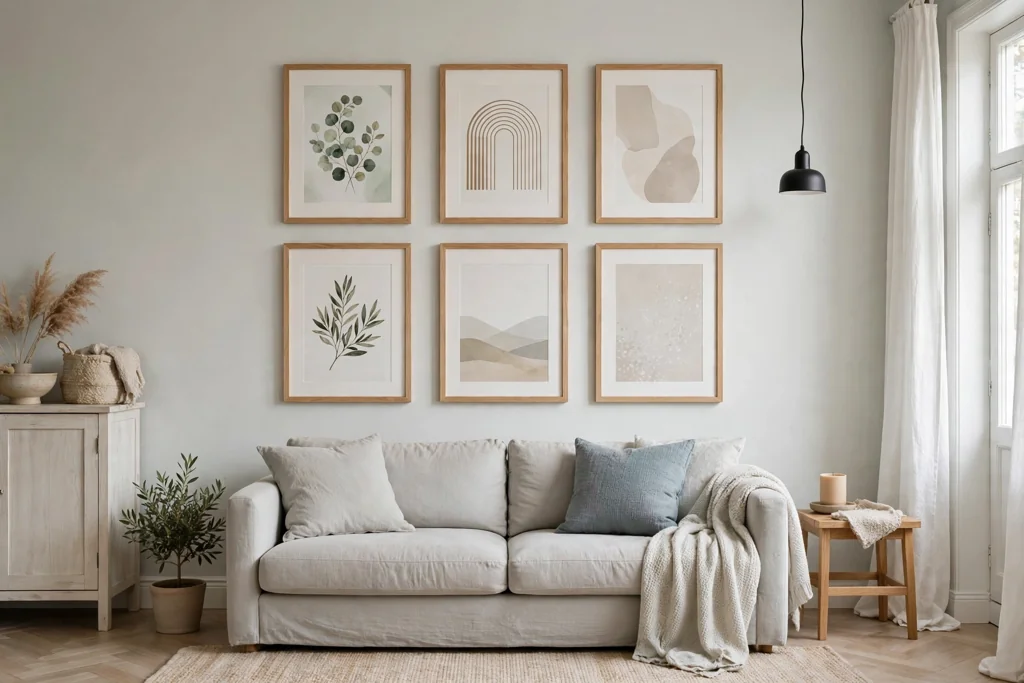
Hang a simple gallery wall above the sofa or along one wall, using matching frames in black, white, or pale wood. A Swedish gallery wall usually mixes prints, photos, and simple art, but keeps the frames consistent so the group reads as calm rather than busy. Hang the center of the group at eye level when seated, and keep the outer edges inside the width of the sofa.
Start with three or four pieces and add over time, rather than filling the wall in one go. Use art with pale backgrounds and soft colors, such as landscapes, botanical prints, or family photos in muted tones. Picture ledges are a renter friendly option, since they let you lean frames and swap them without new holes each time.
14. Set a Reading Chair by the Window
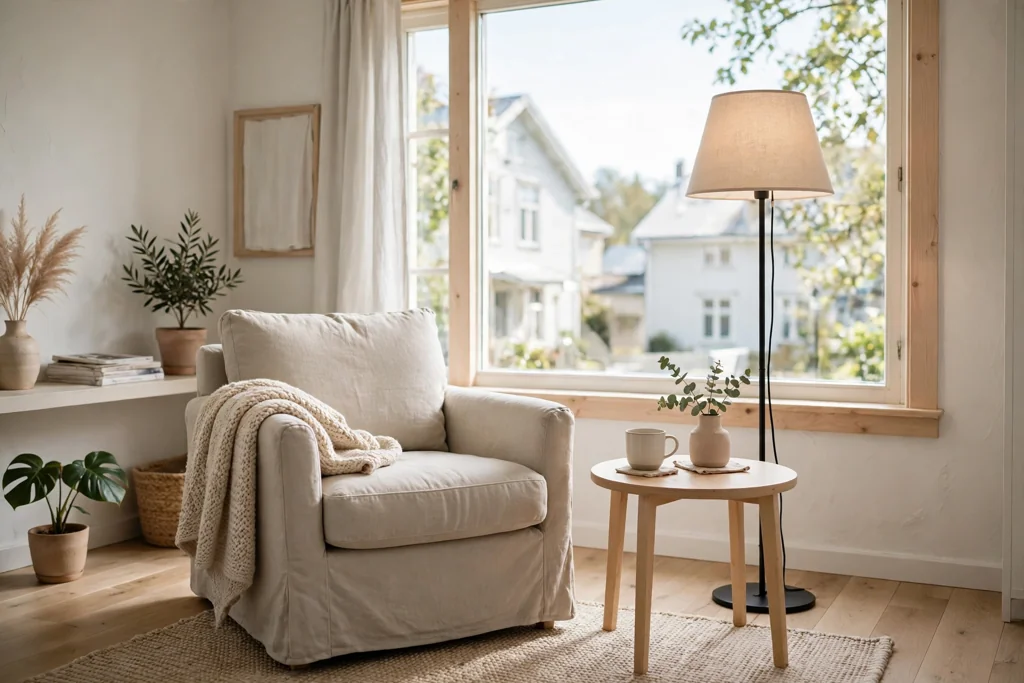
Set a comfortable armchair by the window, angled slightly toward the room, with a floor lamp behind one shoulder and a small table beside it. The window end of a living room is a natural reading spot, with daylight by day and a view to rest the eyes on. A chair here also makes use of a corner that often stays empty.
Add a basket for the current book and a throw, and keep the table surface clear for a cup. If the chair sits in direct sun, choose a fabric that fades slowly, or move the chair a step back from the glass. Angle the chair toward the room so the corner feels part of the living space, not cut off from it.
15. Store Throws and Magazines in Woven Baskets
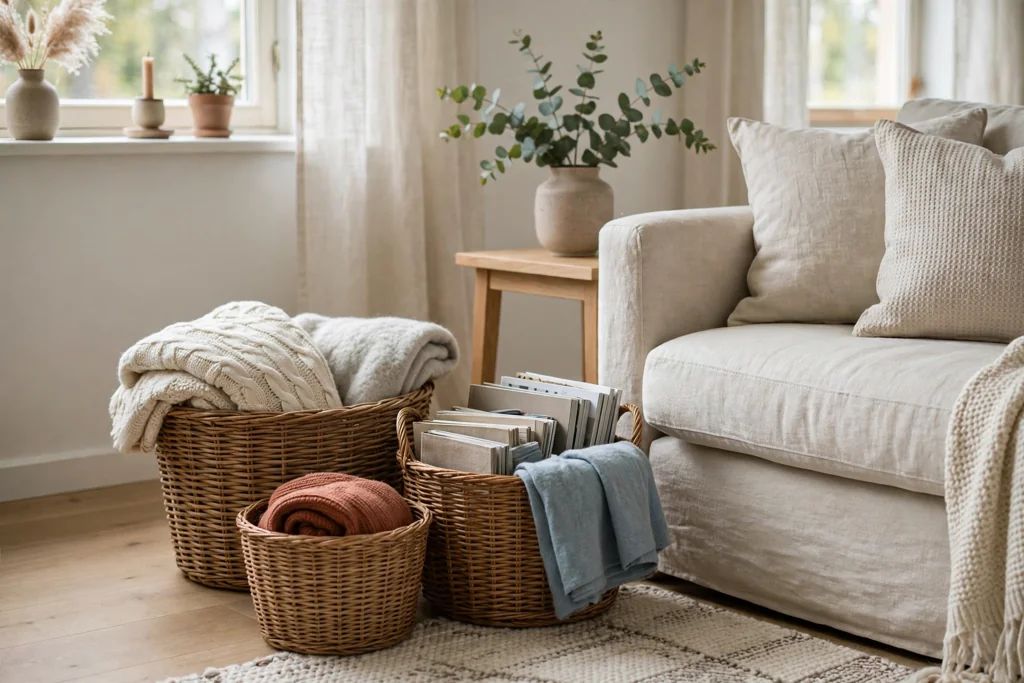
Store throws, magazines, and toys in woven baskets in seagrass, rattan, or willow, placed beside the sofa and under a side table. Baskets suit a Swedish room because they add natural texture and hide everyday clutter without a closed cabinet. One large basket for throws and one smaller basket for magazines are usually enough.
Choose baskets with handles so they can be carried to the laundry or tidied quickly, and line a basket used for magazines with a plain cloth if the weave snags paper. Keep one basket empty on purpose, as a quick tidy basket for a ten minute reset before guests arrive. Label nothing, since the contents should be plain to see and easy to put back.
16. Add a Light Wood Side Table and Lamp
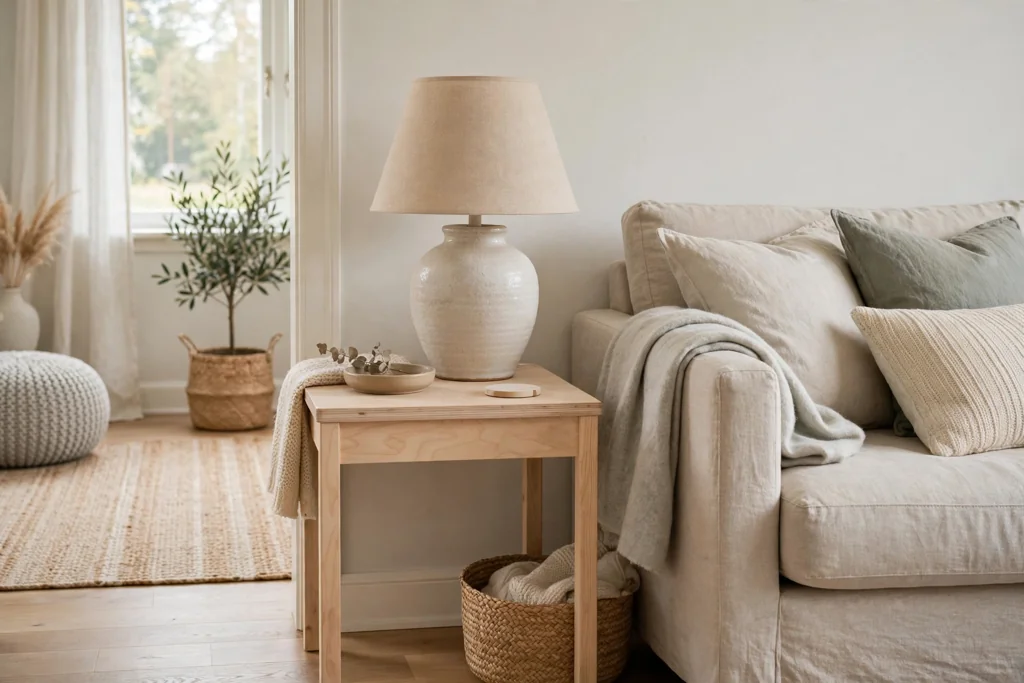
Add a light wood side table beside the sofa, with a table lamp in ceramic, wood, or plain linen shade. A side table gives every seat a place for a cup and a book, and a lamp at seat height adds the low light that makes a pale room feel warm in the evening. Choose a table just tall enough to reach easily from the sofa.
Keep the lamp shade in white or cream so the light stays soft, and use a warm white bulb rather than a cool one. Clear the table to one lamp and one small item, such as a book or a small plant, so it stays useful rather than becoming another display shelf. A table with a lower shelf can hold a book or a basket underneath.
17. Repeat Blue and White Through the Room
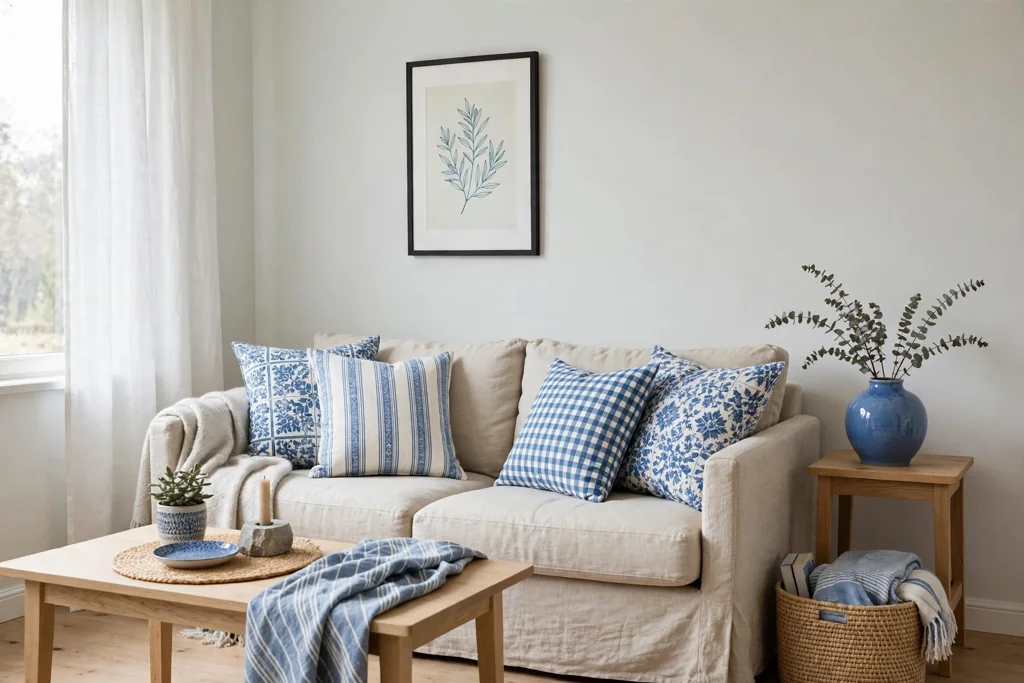
Repeat blue and white through the room in cushions, ceramics, and art, as a quiet nod to Swedish folk patterns and coastal homes. A soft Swedish blue, rather than a bright navy, keeps the room calm, and white keeps the blue from feeling heavy. Use the blue in three places, such as a cushion, a vase, and a print, so it reads as a plan.
Keep other colors muted while blue leads, and let wood and linen do the rest of the work. A blue and white striped cushion, a blue glazed vase, and a simple blue print are enough; adding blue curtains, a blue rug, and blue chairs at once will crowd the scheme. Wash blue cushion covers separately the first time, since darker dyes can run.
18. Add One Small Red Note
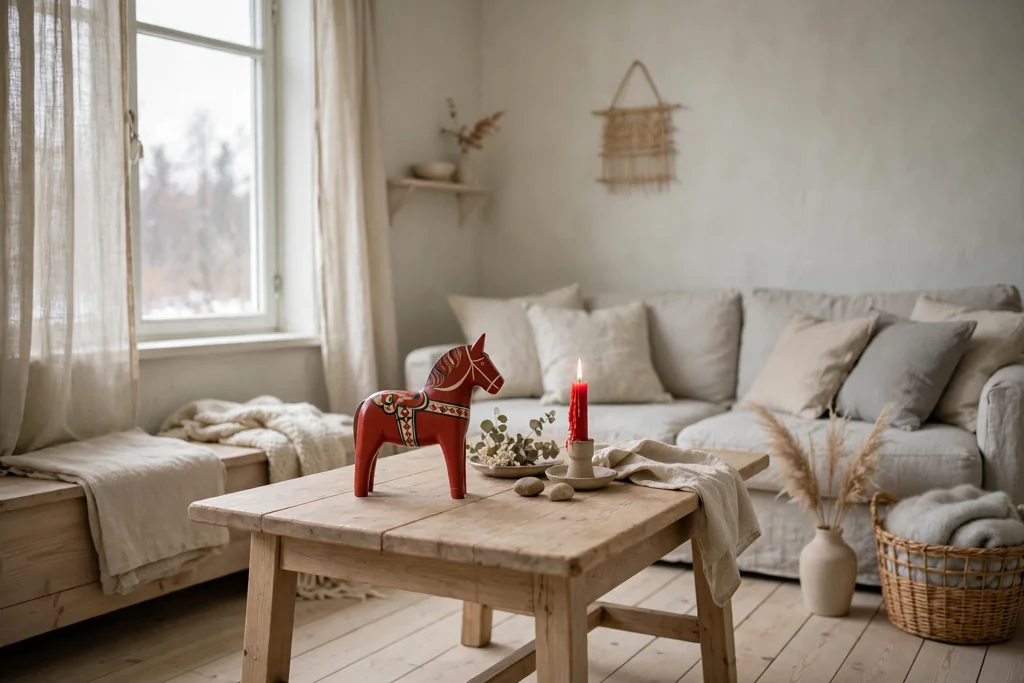
Add one small red note, such as a red candle, a folk horse, a red cushion trim, or a red book spine on a shelf. A touch of falun red, the deep red used on Swedish cottages, gives a pale room a warm focal point without changing the whole scheme. The key is restraint: one red object, repeated at most once more in a smaller form, such as a red thread in a throw.
Place the red note where the eye lands naturally, such as the coffee table tray or the mantel, rather than hiding it in a corner. If red feels too strong, try a muted brick red first, and live with it for a week before adding a second piece. Keep the rest of the room pale so the red can carry its small job.
19. Use Ticking Stripe Cushions
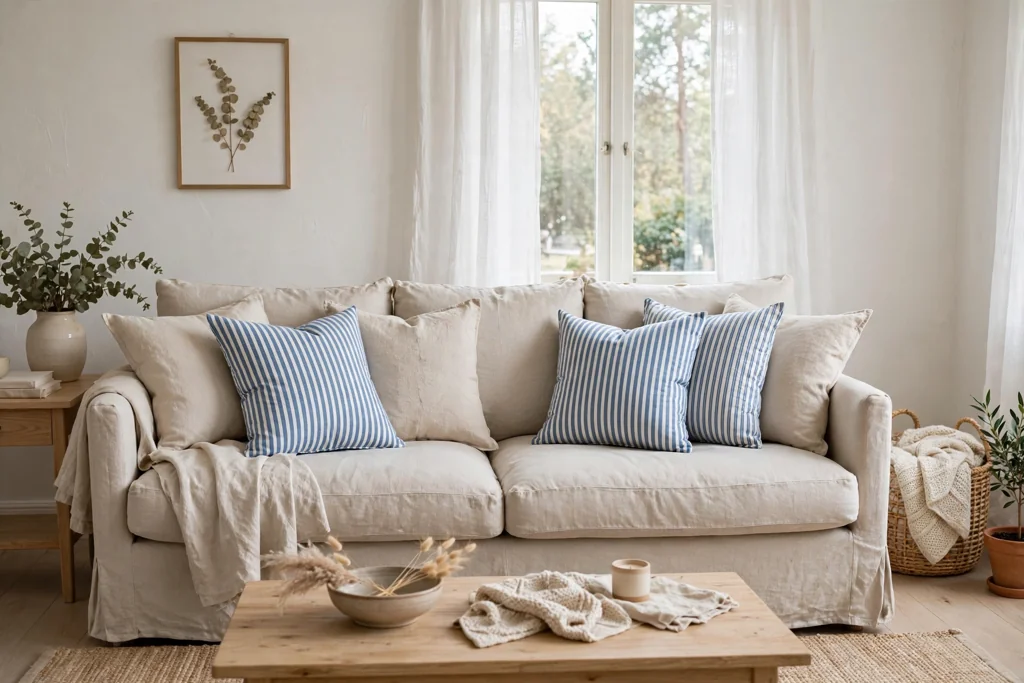
Use ticking stripe cushions in blue and white, grey and white, or red and white on the sofa and chairs. Ticking stripes, the narrow stripes once used on mattress fabric, suit Swedish rooms because they add pattern without a bold print, and they mix well with plain linen. Two striped cushions among plain ones are enough for most sofas.
Mix stripe widths rather than matching every cushion exactly, and keep the stripe colors drawn from the room, such as the blue accent or the wood tone. Choose removable covers so stripes can be washed, since light striped fabric shows marks. A striped cushion also suits a wooden chair, where it softens a hard seat without hiding the frame.
20. Bring in Birch Branches and Natural Wood
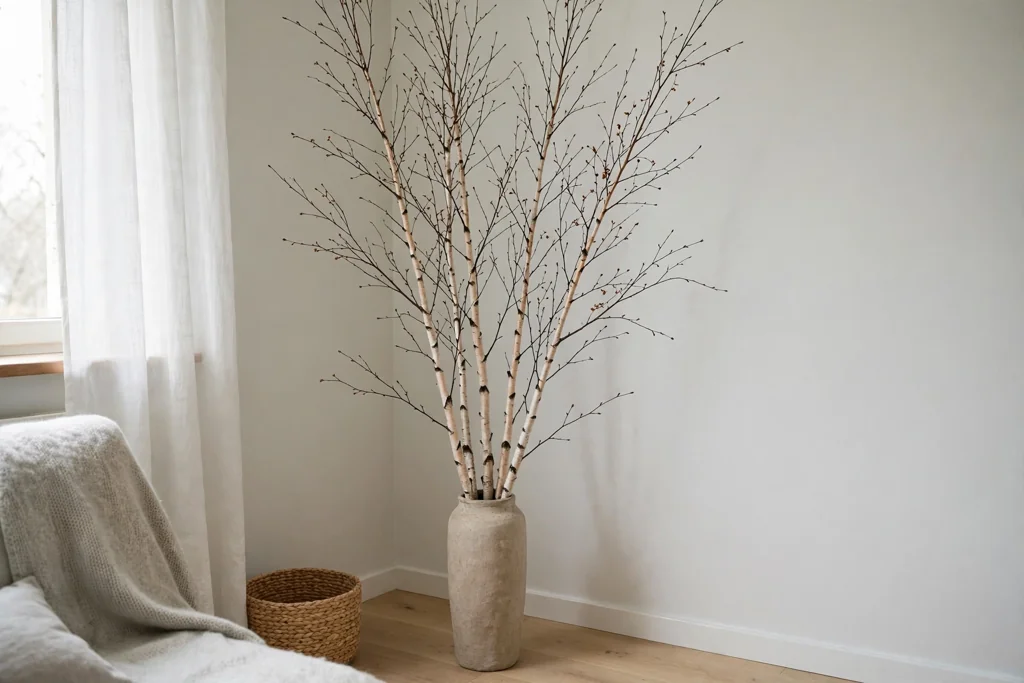
Bring in birch branches in a tall vase, a birch log side table, or a simple piece of driftwood on a shelf. Natural wood and branches add a Swedish forest note to a pale room, and they cost little compared with new furniture. A tall vase of birch stems suits an empty corner, while a small branch arrangement suits a mantel or shelf.
Keep natural pieces dry and clear of the fire, and check stems for loose bark before placing them near light fabric. Replace branches when they dry out and shed, and keep one natural piece per area rather than filling every surface with wood. A birch bark candle holder or a wood slice coaster set can carry the same idea in a smaller form.
21. Grow Plants on the Windowsill
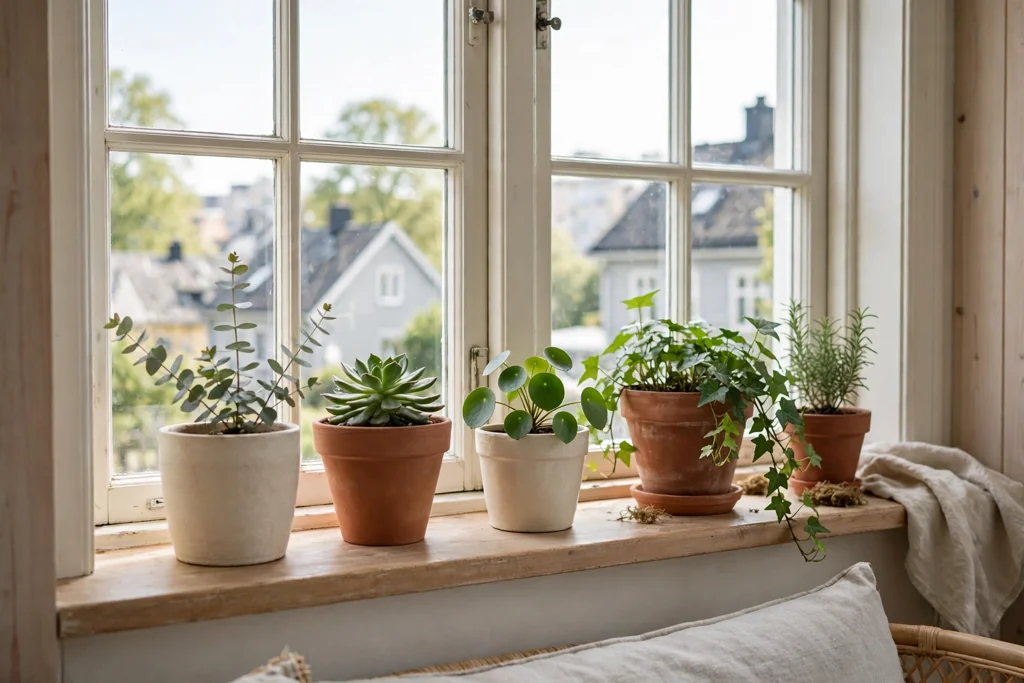
Grow plants on the windowsill and at two other heights, such as a tall floor plant in a corner and a trailing plant on a shelf. Plants suit a Swedish living room because they add green life to a pale scheme, and a windowsill row of herbs or small pots feels lived in rather than staged. Match each plant to the light it will actually get.
Use pots in cream, terracotta, or rattan, and put saucers under pots on wood sills and floors. Start with three or four plants rather than a dozen, so watering stays manageable, and group plants that need similar water together. Check that each plant is safe for pets and children before placing it at sofa height.
22. Divide an Open Room With a Low Bookcase
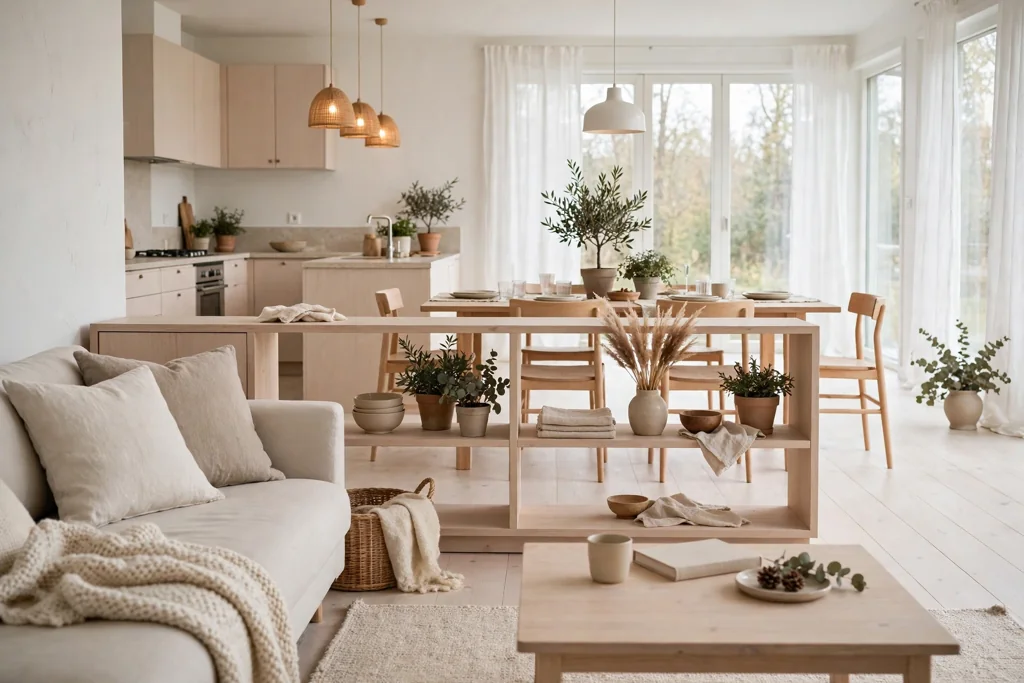
Divide an open plan room with a low bookcase, placed with its back to the sofa or across the room, so the living zone has a boundary without a wall. A low bookcase keeps light moving across the room, adds storage on both sides, and gives the sofa a sense of backing. This suits a studio or an open living and dining space.
Keep the bookcase low enough to see over when seated, and anchor it to the floor or wall if it is tall enough to tip. Put books and baskets on the lower shelves and lighter display pieces up high, and leave a clear walking route around at least one end. A low bookcase also works as a TV bench in a small room, with books and baskets below the screen.
23. Set a Fika Tray for Coffee Breaks
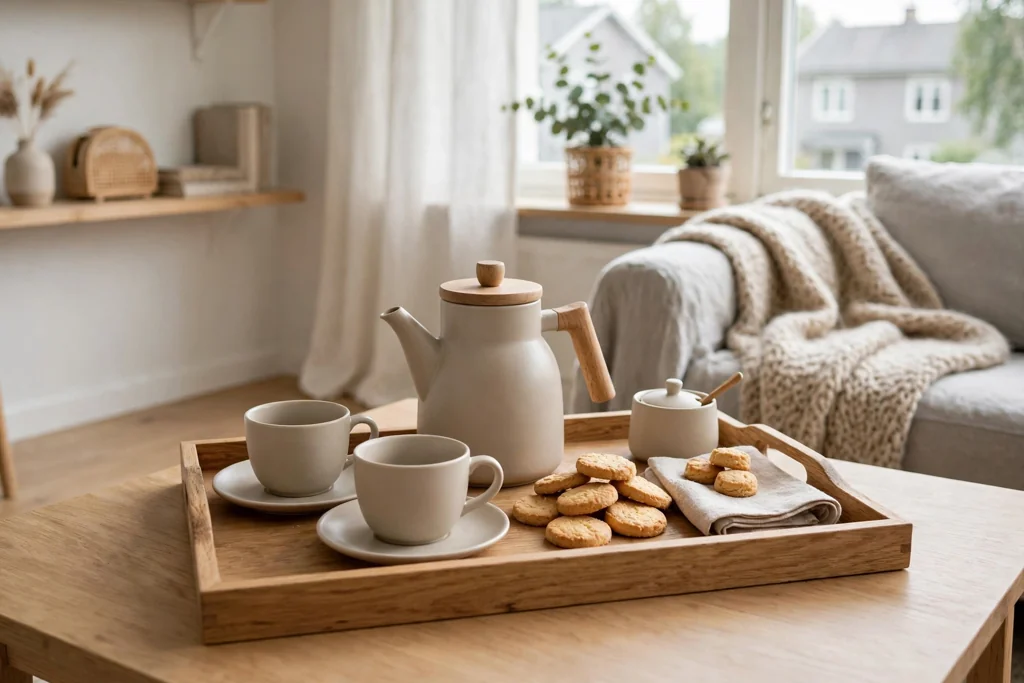
Set a fika tray on the coffee table or a side table, holding a small pot, two cups, and a plate for biscuits. Fika, the Swedish coffee break, is a daily pause rather than a formal event, and a ready tray makes it easy to sit down with a guest or take a quiet break alone. Keep the tray simple, in wood or plain ceramic, so it fits the room.
Store the tray items together in a cupboard near the seating area, so setting the tray takes a minute rather than a search through the kitchen. Use cups you like to hold, not cups kept only for guests, since fika works best as a daily habit. Clear the tray after the break, so the coffee table stays free for the next use.
24. Hang a Woven Pendant Light
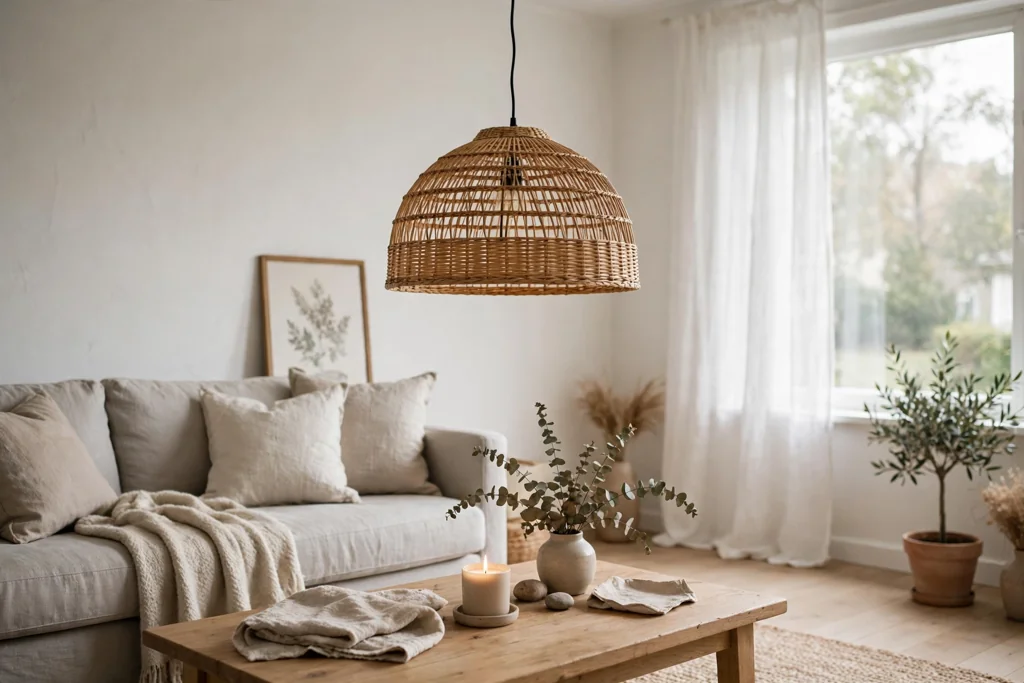
Hang a woven pendant light in rattan, bamboo, or paper over the coffee table or in a corner, for soft light and natural texture at ceiling height. A woven shade diffuses light gently, which suits a pale room in the evening, and its shape adds interest without a strong color. Hang it high enough to see under when seated, and clear of head height in walkways.
Use a warm white bulb inside the shade, and dust the weave now and then, since woven shades collect dust faster than a plain shade. One woven pendant is usually enough; pair it with floor and table lamps rather than hanging several pendants in one small room. Check the shade size against the table below, so the light feels in proportion.
25. Use a Low Media Bench in Pale Wood
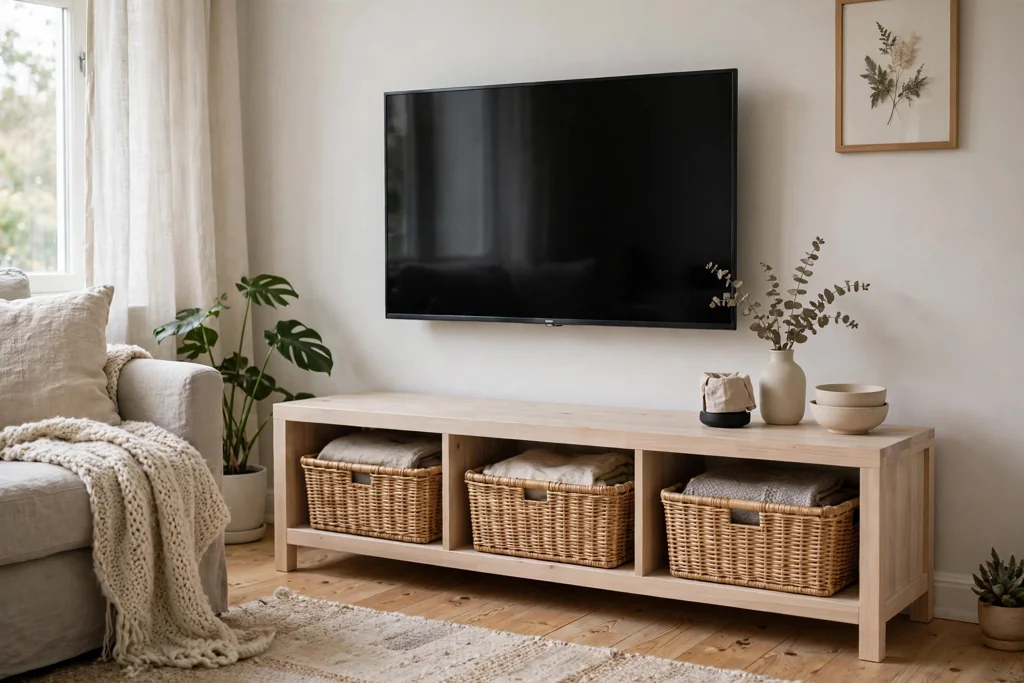
Use a low media bench in pale wood or painted white under the television, with closed baskets or doors for cables and media items. A low bench keeps the TV wall calm, and its pale finish matches the rest of a Swedish room better than a tall dark cabinet. Keep the bench length close to the TV width, so the wall reads as balanced.
Hide cables in a channel or behind the bench, and keep the top clear except for one plant or a small stack of books. Store remotes and game controls in a basket or drawer, so the bench top stays free. If you do not want a TV as the focus, place the bench under a mirror or art instead, and use it as a display and storage piece.
26. Mix Knit Cushions With Linen
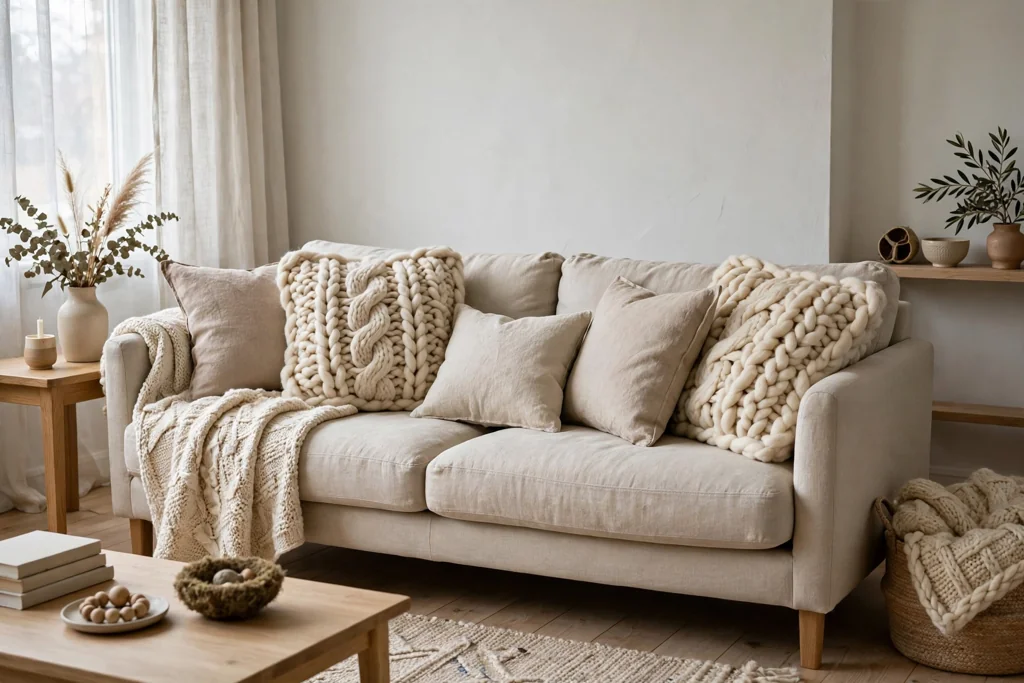
Mix knit cushions with linen cushions on the sofa, using one or two chunky knit covers in cream or grey among plain linen ones. Knit adds a cozy texture that linen alone cannot give, and the mix suits a Swedish room in colder months, when soft layers matter most. Keep the knit colors pale, so the sofa stays light.
Choose knit covers that can be washed or spot cleaned, since knit traps dust and crumbs more than smooth linen. Rotate knit cushions with plain ones by season if you like: knit in winter, all linen in summer, with the spare covers stored in a basket. A knit throw over the sofa arm can carry the same texture if you prefer plain cushions.
27. Use a Secondhand Wood Chest as a Table
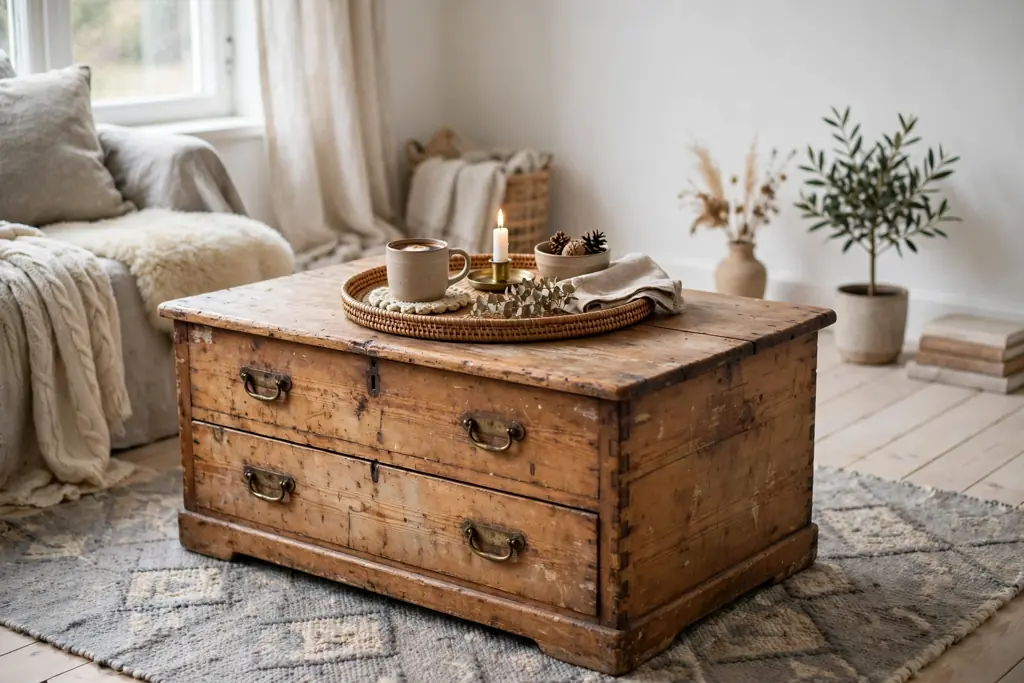
Use a secondhand wood chest, in pine or painted white, as a coffee table or as storage beside the sofa. An old chest suits a Swedish lived in room because it carries marks of use, holds blankets or games inside, and gives the room a piece with a past. A chest with a flat lid works as a table, while a domed lid suits storage beside a chair.
Check the hinges, lid stay, and interior smell before buying, and clean the inside before storing blankets in it. Keep the top clear except for a tray, so the chest can still serve as a table, and use felt pads under its feet on a wood floor. If the chest is painted, touch up chips with a matching paint rather than repainting the whole piece at once.
28. Paint One Wall in Pale Paneling
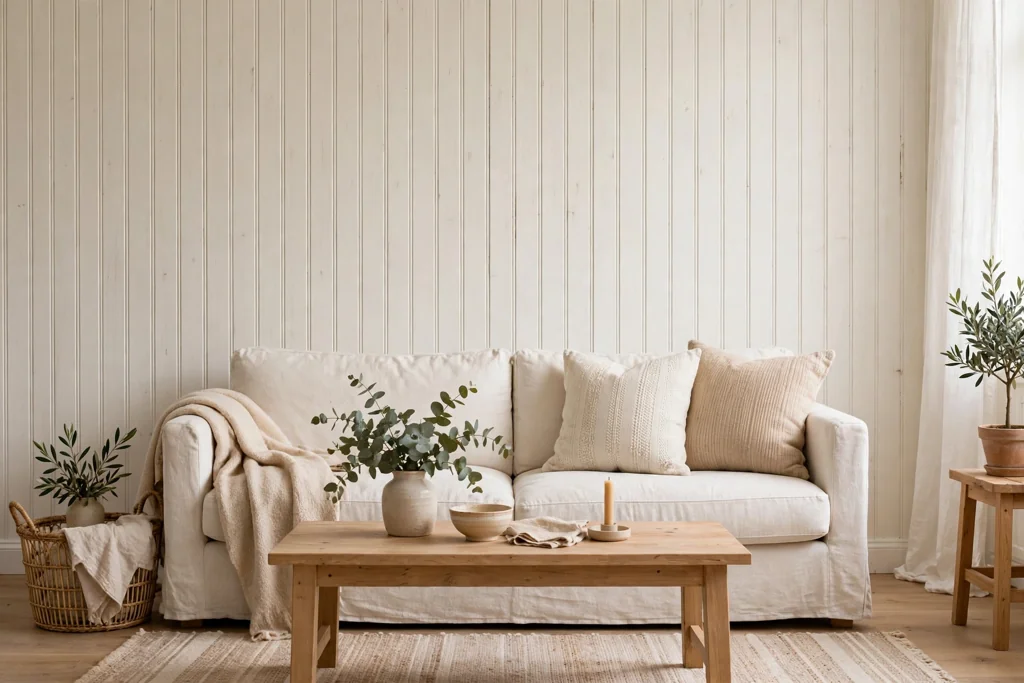
Paint one wall, or the lower half of one wall, in pale beadboard or tongue and groove paneling in warm white or pale grey. Paneling adds texture to a plain wall without a strong color, and it suits a Swedish cottage look, especially behind a sofa or around a fireplace wall. Keep the paneling to one wall, so the room stays light.
Fit the panels straight and paint them after fitting, so joints and nail holes disappear under the paint. Keep art and shelves simple on a paneled wall, since the panels already give the eye texture to follow. If full paneling feels like too much work, a paneled radiator cover or a paneled cupboard door can give a smaller taste of the same detail.
29. Layer Lamps for Evening Light
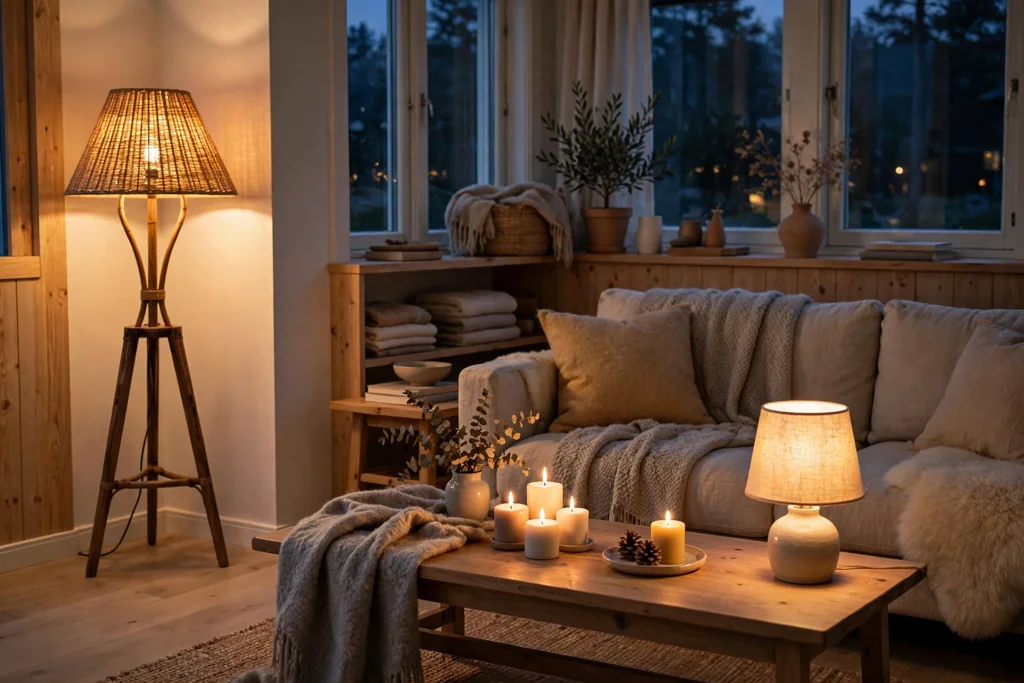
Layer lamps for evening light: a floor lamp behind the sofa or chair, a table lamp beside the seat, and a small lamp or candle glow on a shelf. Three levels of light make a pale Swedish room feel warm after dark, while a single ceiling light can make the same room feel flat and harsh. Put the brightest light where you read, and keep the overall level soft.
Use dimmable bulbs or smart plugs where you can, so the room can shift from bright daytime light to a calm evening mood without rewiring. Keep lamp shades in white or cream, and use warm white bulbs through the room so the light color stays consistent. Turn on the low lamps first in the evening, and add the brighter task lamp only where you need it.
Conclusion
A Swedish living room that feels welcoming and lived in starts with light, pale wood, and soft layers, then adds only the details daily life actually uses. Paint the walls warm white, let the wood floor show, choose a sofa you want to sit on, and add wool, sheepskin, and baskets within reach. Repeat one accent color, keep storage simple, and layer lamps and candles for the evening. Try one or two ideas this weekend, such as sheer curtains and a candle tray, live with them for a week, and add the next layer only when the room asks for it. If an idea here helped your space, save this post to your Swedish decor board on Pinterest so you can find it when you are ready for the next change.
Frequently Asked Questions
What colors define a Swedish living room?
Warm white walls, pale wood floors, and a light sofa form the base, with soft grey, cream, and natural linen as supporting tones. Add one accent, such as Swedish blue or a small red note, in two or three places, and keep other colors muted so the room stays calm. The goal is a pale room with warmth from wood and texture, not a white room with no color at all.
How do I keep a pale Swedish living room from feeling cold?
Add warmth through touch and light, not through darker paint. Wool throws, a sheepskin, a flatweave wool rug, and woven baskets soften a pale room, while lamps at three levels and candles add warm evening light. Wood furniture, plants, and a basket of logs or books also keep the room from feeling bare. If the room still feels cold, add one warm cushion color, such as rust or mustard, in a small amount.
What sofa works best in a Swedish living room?
A low sofa in light linen, in natural, oatmeal, or pale grey, with slim arms and removable covers, suits most Swedish rooms. Size it to the wall or rug zone, leaving clear walking routes on at least two sides, and keep the cushions plain so throws and one accent color can add interest. A slipcover over an existing darker sofa is a good low cost way to test the look before buying a new sofa.
Can I get a Swedish look in a small living room?
Yes, and a small room often suits the Swedish approach well, since it favors light colors, low furniture, and storage that uses walls and baskets. Use sheer curtains, a pale rug sized to the seating group, a low sofa, and one tall shelf run rather than several small cabinets. Keep floors clear, use a low bookcase as a divider only if the room is open plan, and add plants and lamps at different heights rather than filling every surface.
What is the difference between Swedish and general Scandinavian decor?
Scandinavian decor is a broad family covering Denmark, Norway, Sweden, Finland, and Iceland, with shared traits such as light wood, pale colors, and simple forms. Swedish decor within that family leans toward Gustavian painted furniture, folk details such as blue and white patterns and a small red accent, tiled stoves, and a strong candlelight habit. In practice, most rooms mix traits from across the region, so use the Swedish details you like and leave the rest out.
How do I add Swedish style without buying all new furniture?
Start with light and texture, which cost less than new furniture. Paint one wall warm white if you can, add sheer linen curtains, a flatweave rug, wool throws, and a sheepskin over an existing chair. Swap cushion covers for linen and ticking stripes, add candles on a tray, and tidy clutter into woven baskets. Paint an existing wood chair or chest in soft grey or cream for a Gustavian note, and add plants and lamps before replacing any large piece.