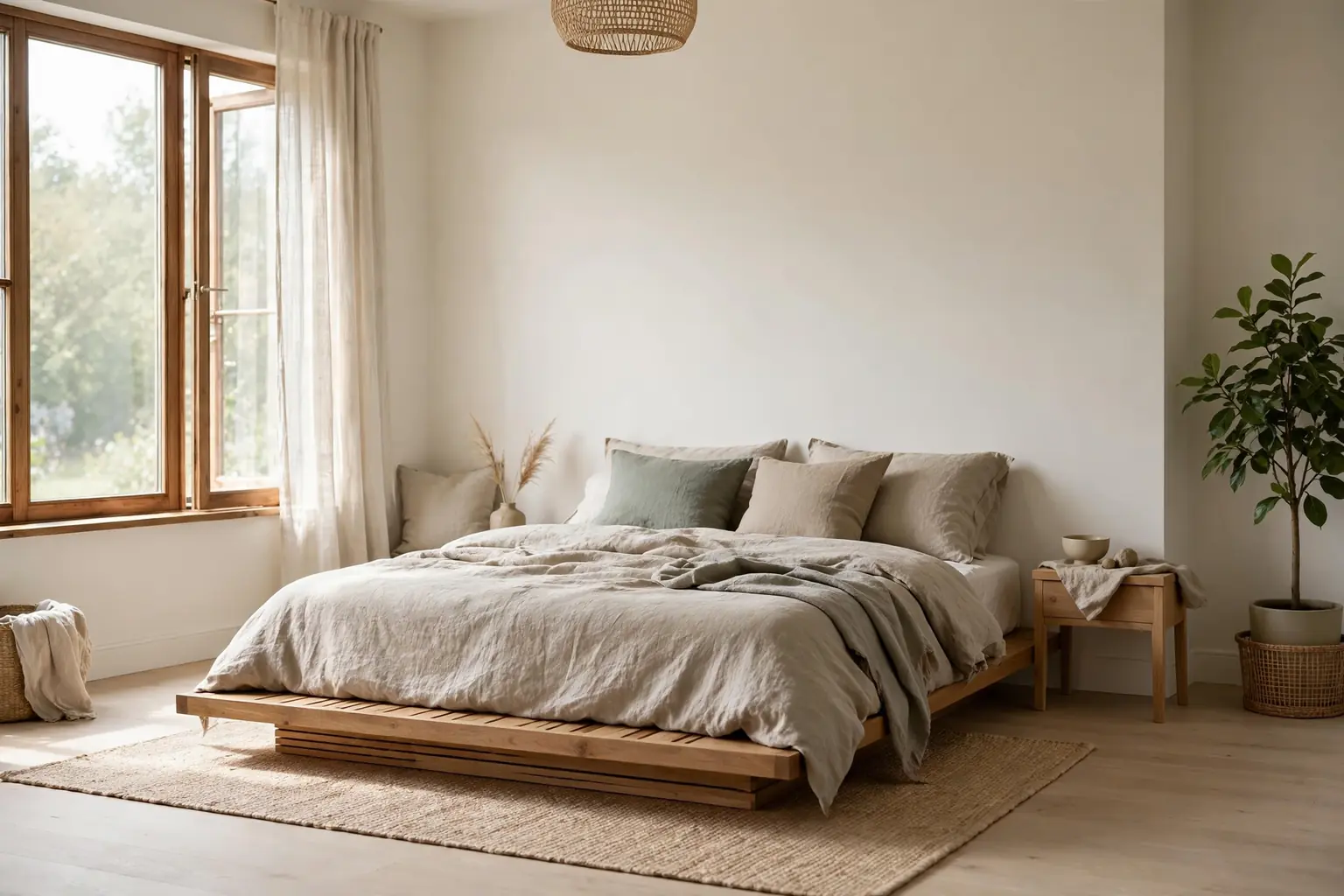
A zen bedroom is not an empty room. It is a room where each piece has a job, the colors stay quiet, and the eye has somewhere calm to rest. Natural wood, soft linen, warm low light, and clear surfaces do most of the work, while one plant or one piece of art adds life without noise. These 22 zen bedroom ideas cover beds, bedding, walls, windows, storage, and small corners you can change in stages. Start with the change that helps you sleep better, such as bedding or light, then clear one surface at a time until the room feels settled when you walk in.
Key Takeaways
- Keep the palette quiet: warm white, soft beige, pale grey, muted sage, and one natural wood tone carry the whole room.
- Choose a low bed, layered linen bedding, and one soft rug, so the room feels grounded and calm from the door.
- Use warm, low light in the evening and soft daylight in the morning, rather than one bright overhead light all day.
- Give every daily item a closed home, and keep nightstands, dressers, and floors mostly clear.
- Add nature in small doses: one plant, one wood piece, and one woven texture are enough to warm a plain room.
- Start small: bedding, curtains, or one cleared surface can shift the mood before any larger change.
1. Low Platform Bed Close to the Floor

A low platform bed sets the calm tone for a zen bedroom at once, because it lowers the visual height of the room and leaves more wall space above it. Choose a simple wood frame in a pale or mid tone, with clean lines and no tall footboard, so the bed reads as a quiet base rather than a large piece of furniture. This suits small rooms well, since a low bed makes the ceiling feel higher and the floor feel more open.
Check that the height still lets you sit and stand with ease, and that the mattress sits firmly on slats with room for air below it. Keep bedding in soft, muted tones and fold the top layer back in the morning, so the bed looks made without a pile of cushions. A low bed pairs well with a soft rug beside it, which warms the first step of the day.
2. Warm White and Soft Beige Walls
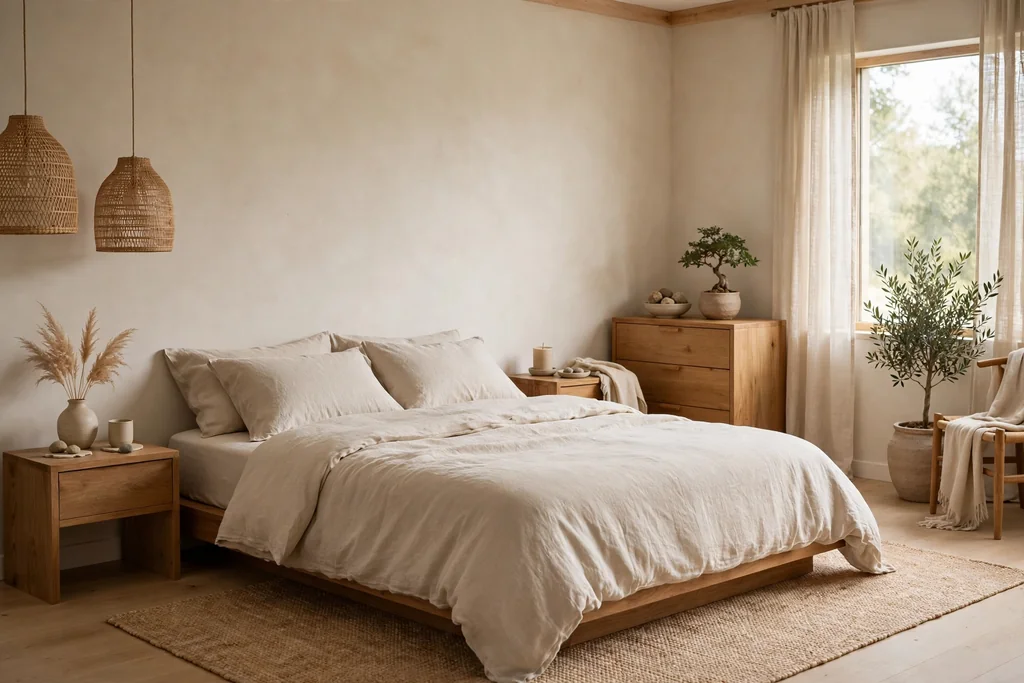
Warm white and soft beige walls give a zen bedroom a calm backdrop that suits wood, linen, and plants alike. Choose a warm white with a hint of cream, rather than a stark bright white, so the room feels soft in lamplight as well as daylight. Paint the main walls in one tone and keep trim in a close warm white, so edges stay gentle rather than sharp.
Test a large swatch on the wall behind the bed and look at it in morning and evening light, since warm shades shift through the day. If you rent and cannot paint, carry the same palette through bedding, curtains, and a rug instead. For a warm neutral scheme to pair with these walls, see these beige bedroom ideas.
3. Slatted Natural Wood Headboard
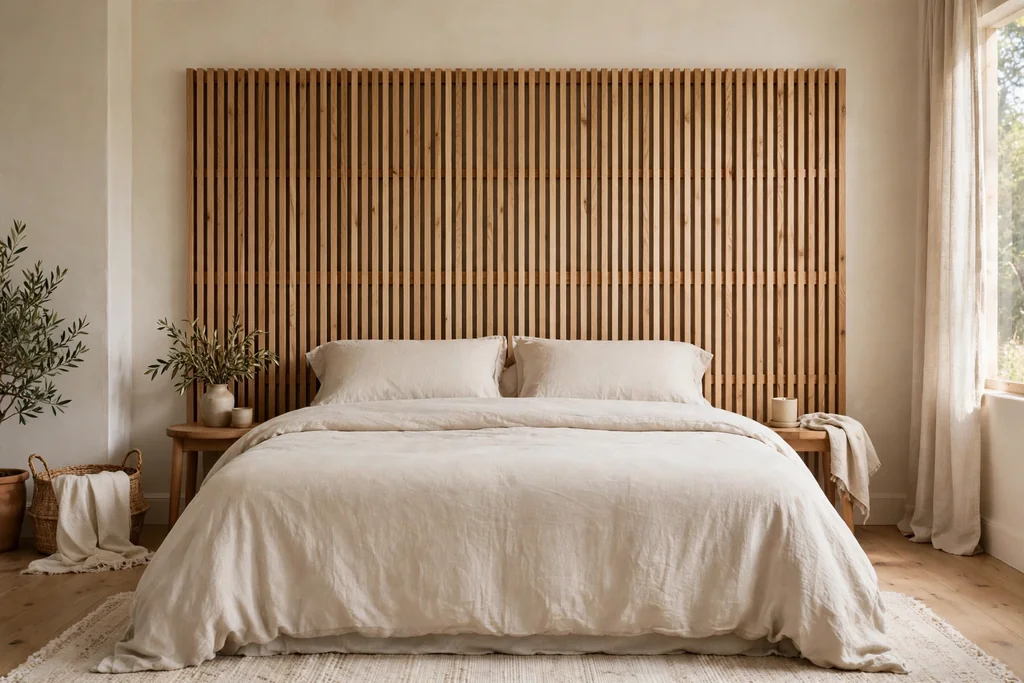
A slatted natural wood headboard gives the bed a clear center and brings grain and warmth into a plain room. The open slats keep the headboard light in look, which suits a zen bedroom better than a tall, solid panel, and the wood links to floors, nightstands, and benches elsewhere in the room. Choose a simple vertical or horizontal slat design in pale oak or warm pine.
Leave enough room to sit up with a cushion behind you, and keep the wall behind the headboard plain so the wood stands out. Dust the slats with a dry cloth, since open wood collects dust in the gaps. If a new headboard is not practical, a wide wood framed textile hung low behind the pillows gives a similar visual anchor with less change.
4. Layered Linen Bedding in Muted Tones

Layered linen bedding in muted tones is the fastest zen change, because the bed takes up the most visual space in the room. Start with plain sheets in warm white or pale grey, add a light duvet in a close tone, then fold a linen throw across the foot of the bed. Keep cushions to two or three at most, in knit, linen, or cotton, so the bed stays easy to make.
Linen softens with washing and looks softly rumpled rather than stiff, which suits a calm room. Wash and rotate two sets so the bed always feels fresh, and keep the palest shade closest to your face. Avoid a bold pattern on both the duvet and the cushions, since a zen bed works best when texture, not pattern, does the talking.
5. Woven Floor Mat Beside the Bed
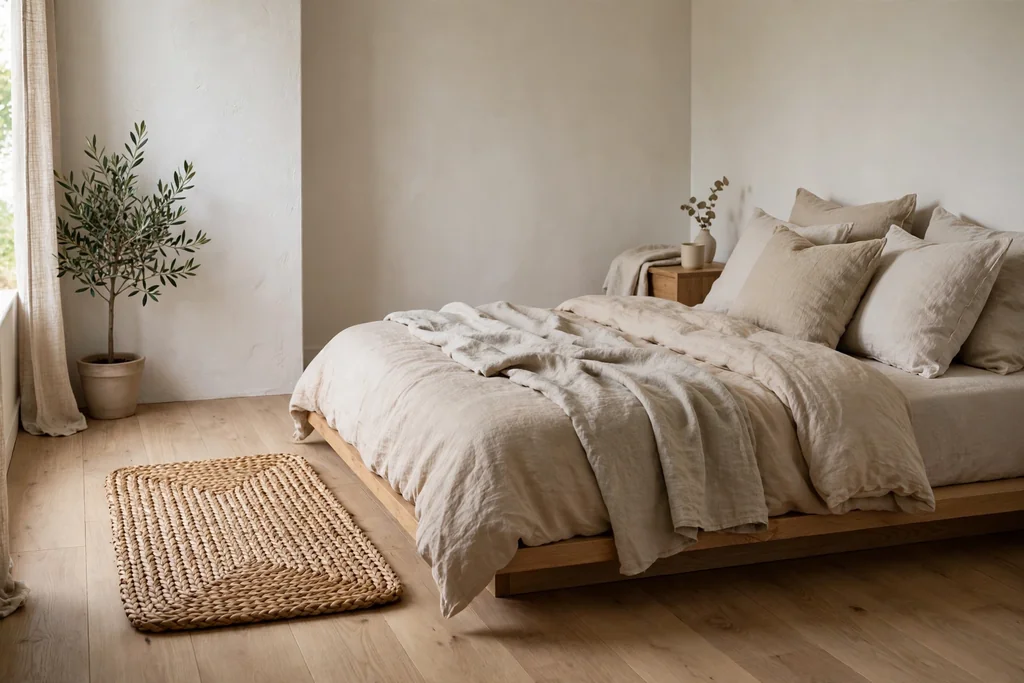
A woven floor mat beside the bed gives a zen bedroom a natural, grounded layer underfoot. Choose a flat weave mat in jute, cotton, or a grass weave, in a plain tone that sits close to the bedding colors, and place it where your feet land in the morning. The mat adds texture without a bold pattern, and it suits wood floors that might otherwise feel cold.
Keep the mat low in pile so doors clear it and it stays easy to vacuum. Shake it outside when you can, and use a thin pad underneath if it slips on a smooth floor. In a small room, one runner on the side you use most gives the benefit without covering the whole floor, and it leaves the rest of the room feeling open.
6. Paper Lantern Light for Soft Evenings
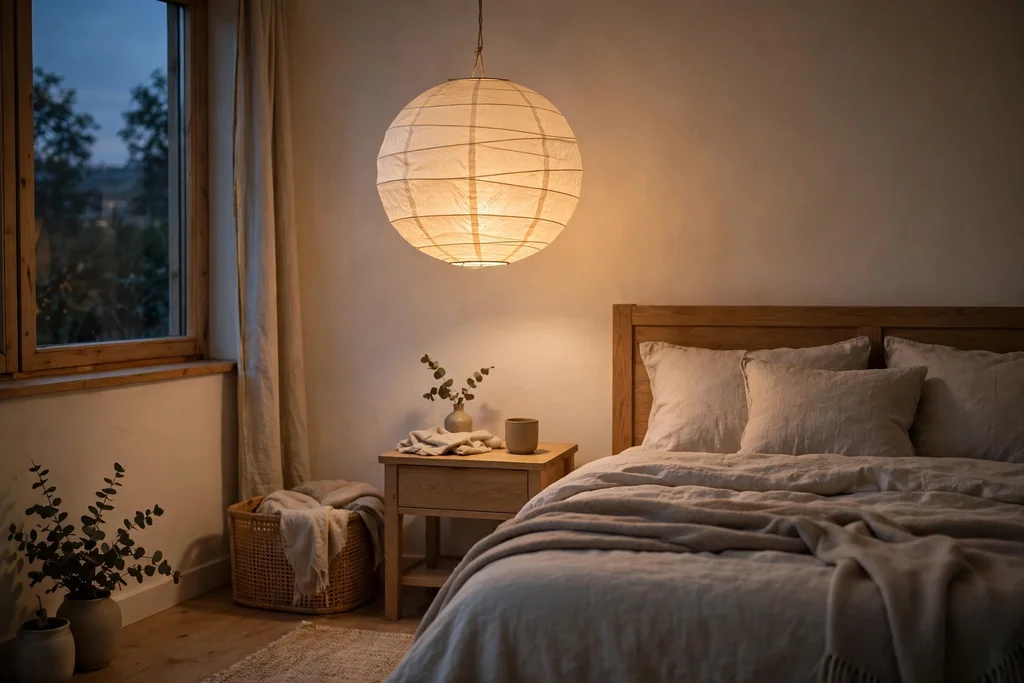
A paper lantern gives a zen bedroom soft, even light in the evening, because the paper spreads the glow instead of pointing it at one spot. Hang one lantern as a pendant over a corner, or set a small lantern lamp on a dresser, and use a warm white bulb so the room reads warm rather than cold. This suits a room where a bright ceiling light feels harsh at night.
Keep the lantern clear of bedding, curtains, and anything that could catch heat, and follow the lamp maker guidance on bulb type. Pair the lantern with one bedside lamp, rather than several bright lights, so the evening light stays low and calm. A lantern also works well in a reading corner, where soft light helps you wind down.
7. Shoji Style Sliding Panels at a Doorway
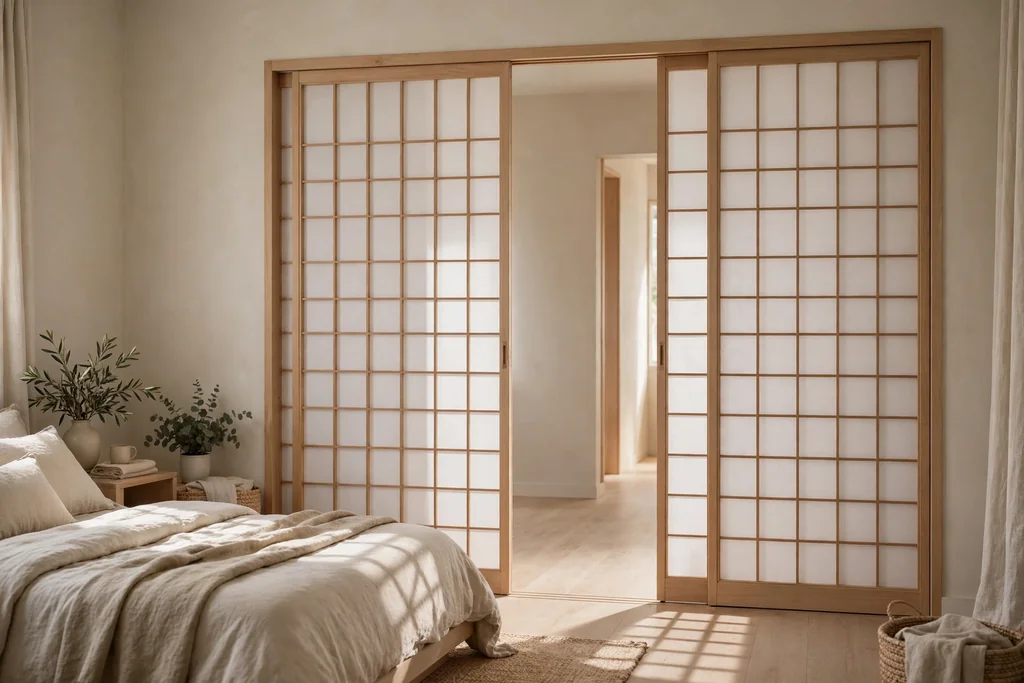
Shoji style sliding panels bring a calm, Japanese note to a bedroom doorway or closet front. The light wood frame and pale translucent panel let light through while hiding what sits behind them, which suits a closet, a dressing area, or a wide doorway between the bedroom and a sitting corner. Sliding panels need no swing space, so they suit tight rooms.
Measure the opening carefully and check that the track runs clear of the floor, so panels slide without catching a rug. Keep the panels plain, with no bold pattern, so they stay quiet in the room. Wipe the frames with a dry cloth, and keep the panels clear of damp walls, since wood and paper style panels suit dry rooms best.
8. One Potted Plant in the Corner
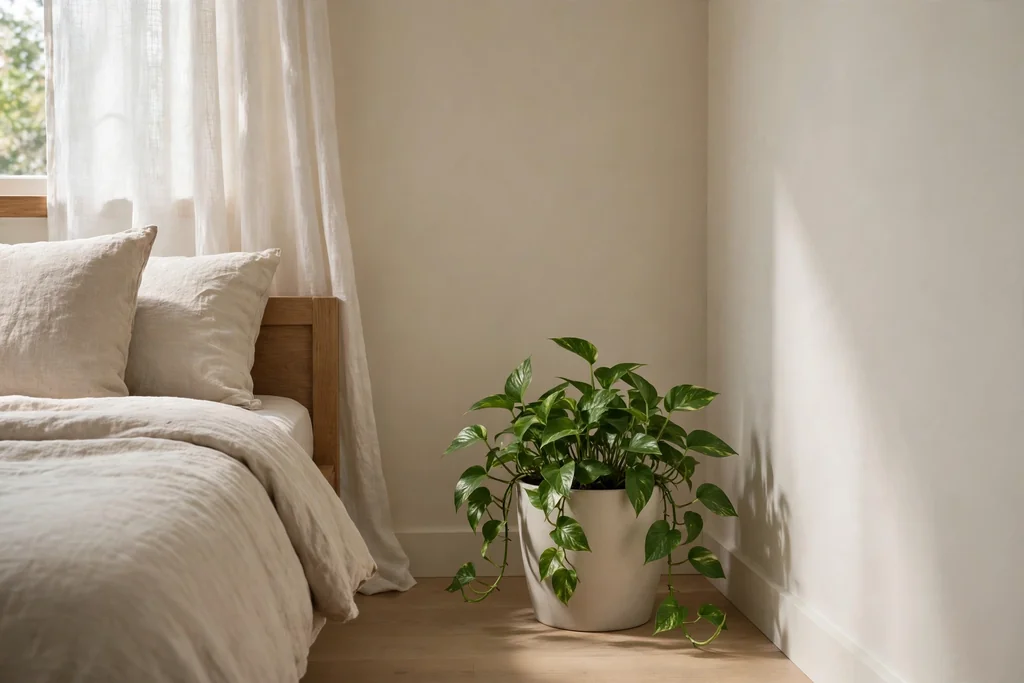
One potted plant in a corner adds life to a zen bedroom without turning it into a display. Choose an easy care plant that suits the light in your room, such as a plant that tolerates low light for a north facing corner, and set it in a simple pot in clay, stone, or plain ceramic. One plant, placed where you see it from the door, gives the room a natural focal point.
Water only as the plant needs it, and check that the pot drains, so water does not mark the floor. Keep plants out of reach if pets chew leaves, and check that a plant suits your home before you bring it in. If you have little daylight, a small plant on a dresser near the window gives the same green note in a smaller footprint.
9. Stone Tray on the Nightstand
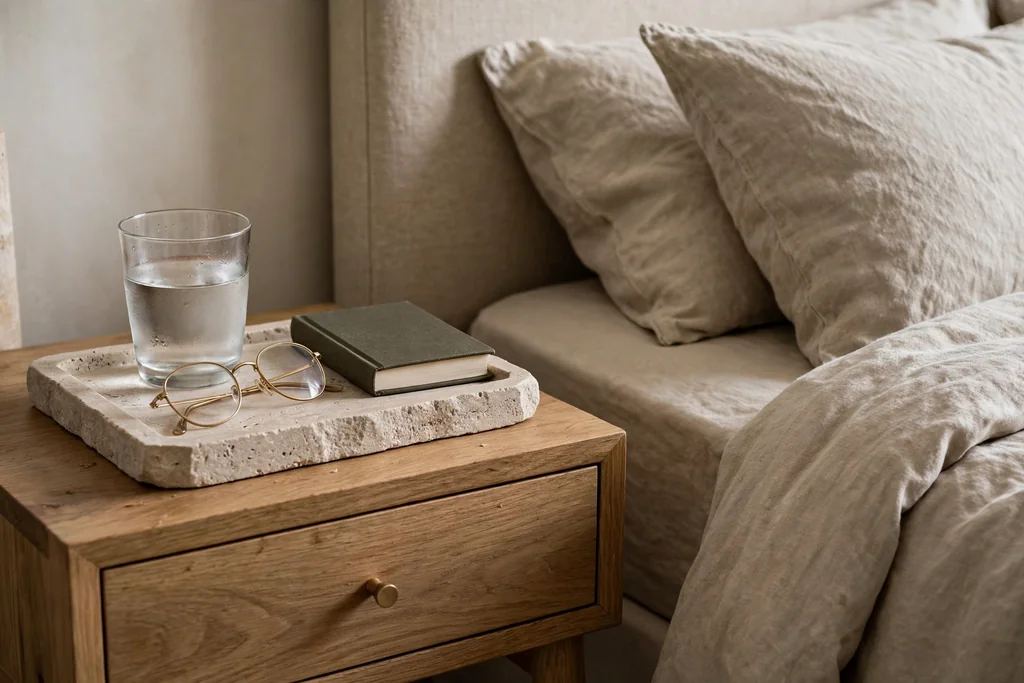
A stone tray on the nightstand groups small evening items in one calm place, so the surface stays tidy. Set a tray in stone, wood, or plain ceramic on the nightstand and keep only daily items on it: a glass of water, glasses, and a small book. The tray edge stops items from spreading, and lifting the whole tray aside in one move makes dusting simple.
Choose the smallest tray that fits your regular items, since a large tray collects extras. Keep chargers and work papers elsewhere, so the nightstand stays a rest zone rather than a second desk. A stone tray also suits a dresser top, where it can hold a watch, keys, and one small plant in a tidy group.
10. Clear Nightstand With Only Evening Essentials
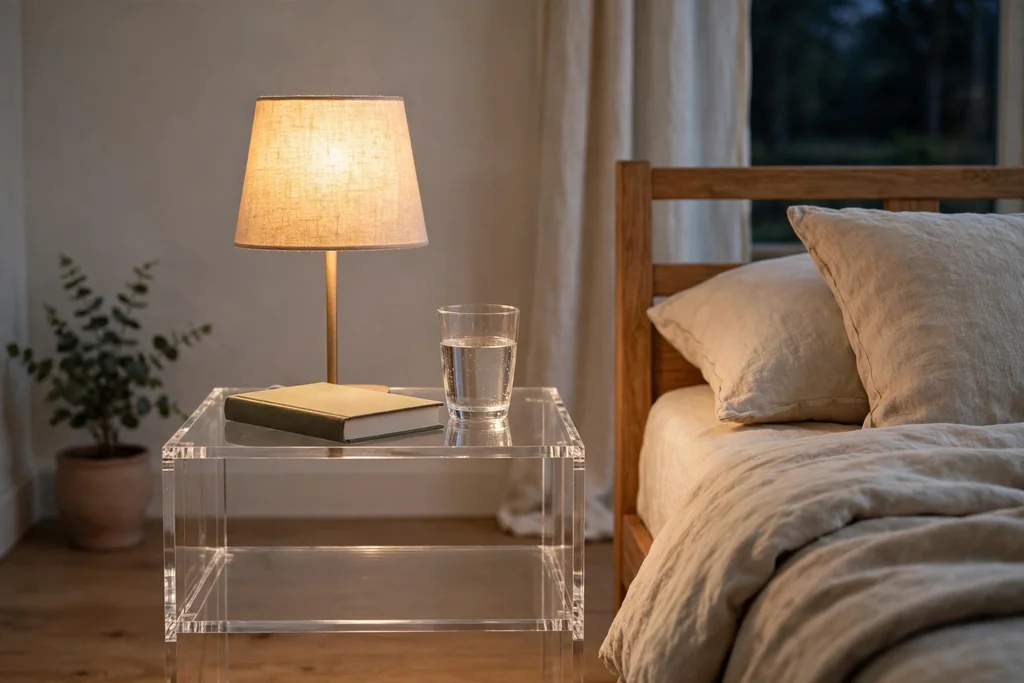
A clear nightstand helps a zen bedroom feel calm at night, because the bed area is the last view before sleep. Keep the top to three items at most: a lamp, a glass of water, and a book, and move everything else into a closed drawer or another room. This change costs nothing and often shifts the mood of the whole room in one evening.
Sort the drawer once, keep only daily items in it, and move anything you reach for less than once a week elsewhere. If two people share the room, give each side the same clear rule, so neither side becomes the dumping ground. For more closed storage planning, see these bedroom storage ideas.
11. One Natural Rug to Anchor the Room

One natural rug anchors a zen bedroom and warms a hard floor, without adding a bold pattern. Lay a large rug in wool, cotton, or jute under the bed, so it extends at least a foot beyond each side, or place a single rug beside the bed where your feet land. A plain rug in warm beige, pale grey, or a soft natural tone keeps the floor calm.
Keep the pile low near the door swing, and use a rug pad underneath so the rug does not slip. Vacuum the rug weekly, since natural fibers collect dust, and shake a smaller rug outside when you can. Avoid layering two patterned rugs in a zen room, since one plain rug gives the floor a clear job and leaves the rest of the room quiet.
12. Bamboo Shades at the Window

Bamboo shades give a bedroom window a natural texture and soft filtered light. The woven slats let daylight through in a gentle wash, while still giving daytime privacy, which suits a room where heavy curtains would feel too much. Mount the shade inside the frame for a clean fit, or just above the frame to make a short window look taller.
Pair the shade with a sheer linen panel if you need night privacy, and keep the panel in warm white so the window stays light. Dust the shades with a soft brush, since woven textures collect dust in the gaps. For more window ideas that soften a bedroom, see these bedroom curtain ideas.
13. One Large Calm Landscape Print

One large calm landscape print gives a zen bedroom a focal point without a busy gallery wall. Choose a print of misty hills, a quiet shore, or a simple forest scene in muted tones, and hang it above the bed or on the main wall you see from the door. A single large piece lets the eye rest, while several small prints can make a calm room feel busy.
Hang the print at eye level, with its center near your standing eye height, and keep the frame simple in wood or matte black. Leave the walls around it plain, so the print has room to breathe. If you rent and cannot hang a large frame, lean the print on a dresser against the wall for a similar effect with no fixings.
14. Floor Cushion Corner for Sitting and Reading
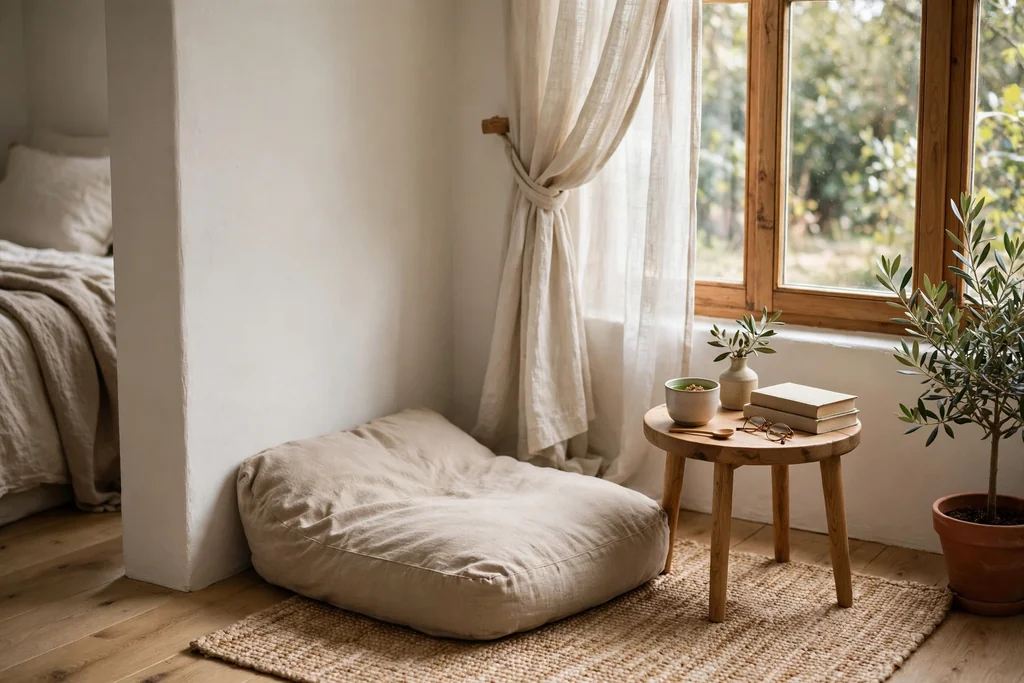
A floor cushion corner gives a zen bedroom a second use that stays quiet: a place to sit, read, or stretch. Set a large floor cushion or a low meditation cushion in a corner near daylight, add a small side table or a low stool for a book and a drink, and keep the corner clear of other furniture. The low height keeps the room feeling open.
Choose a cushion cover in a washable fabric, since floor cushions collect dust, and store a folded throw nearby for cooler evenings. This corner suits a bedroom with an unused window corner, and it works in a small room where a full chair would crowd the floor. Keep the corner to one cushion and one small table, so it stays an invitation rather than a storage spot.
15. Low Wooden Bench at the Foot of the Bed

A low wooden bench at the foot of the bed gives you a place to sit while dressing, lay out clothes for the morning, and set a folded throw, without adding a tall piece of furniture. Choose a bench in the same wood tone as the headboard or floor, with a simple slatted or solid top, and leave clear walking space at the sides so you can pass at night.
Keep the bench top mostly clear, with one folded throw or a single cushion, so it does not become a clothes pile. In a short room, a narrow bench or a small stool does the same job in less depth. Check that the bench does not block a heat vent or a door swing before you place it, and wipe the wood weekly to keep dust from settling.
16. Woven Baskets for Soft Storage

Woven baskets turn open storage into calm storage in a zen bedroom. Use baskets in seagrass, cotton, or willow, in one material and two sizes at most, for throws, scarves, and spare bedding, and place them beside the bed, under a bench, or on a shelf. Matching baskets make a group of items read as one planned set rather than clutter.
Label the front of each basket if more than one person uses the room, and keep baskets light enough to lift with one hand. Line a basket with fabric if it holds small items that slip through the weave. Replace a basket when the weave frays, since a damaged basket snags clothes, and keep one basket partly empty at the start so new items have a place.
17. Closed Wardrobe for a Calm Wall
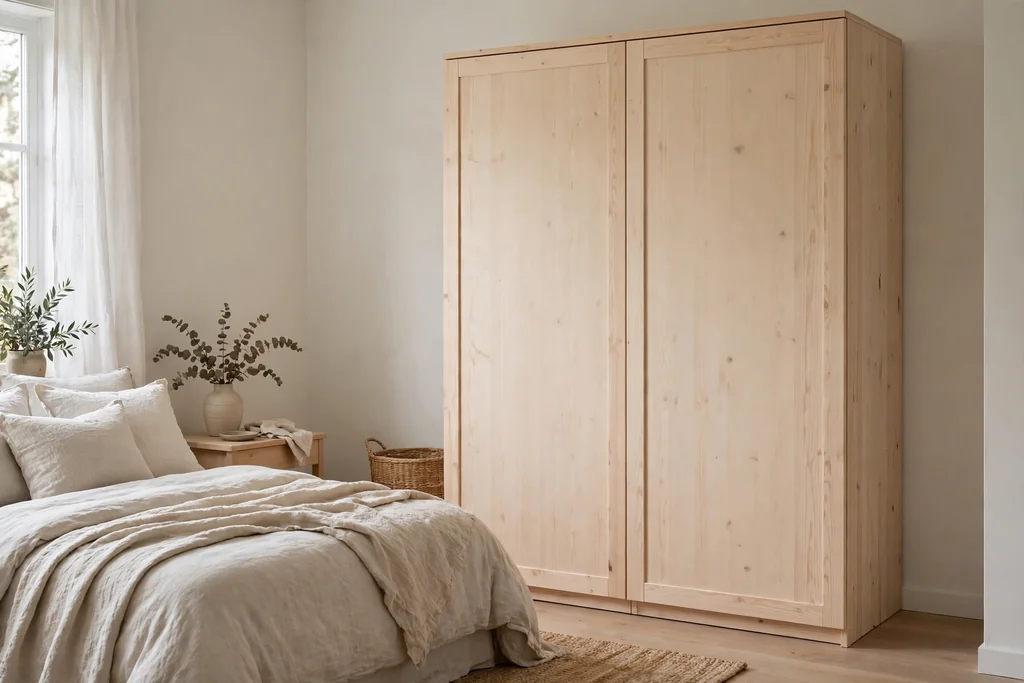
A closed wardrobe gives a zen bedroom a calm wall, because clothes, bags, and shoes stay behind doors instead of spreading across chairs and floors. Choose a wardrobe in a pale wood or a warm white that sits close to the wall color, with plain doors and one handle style, so the unit reads as part of the room rather than a block of furniture.
Plan the inside before the doors: hanging space at one end, drawers in the middle, and high shelves for seasonal bedding. Leave one shelf partly empty at the start, so new clothes have a place without pushing older items onto the bed. Sliding doors suit a tight room, since they need no swing space, while hinged doors suit a room with clear floor in front.
18. Warm Bedside Lamps on Both Sides
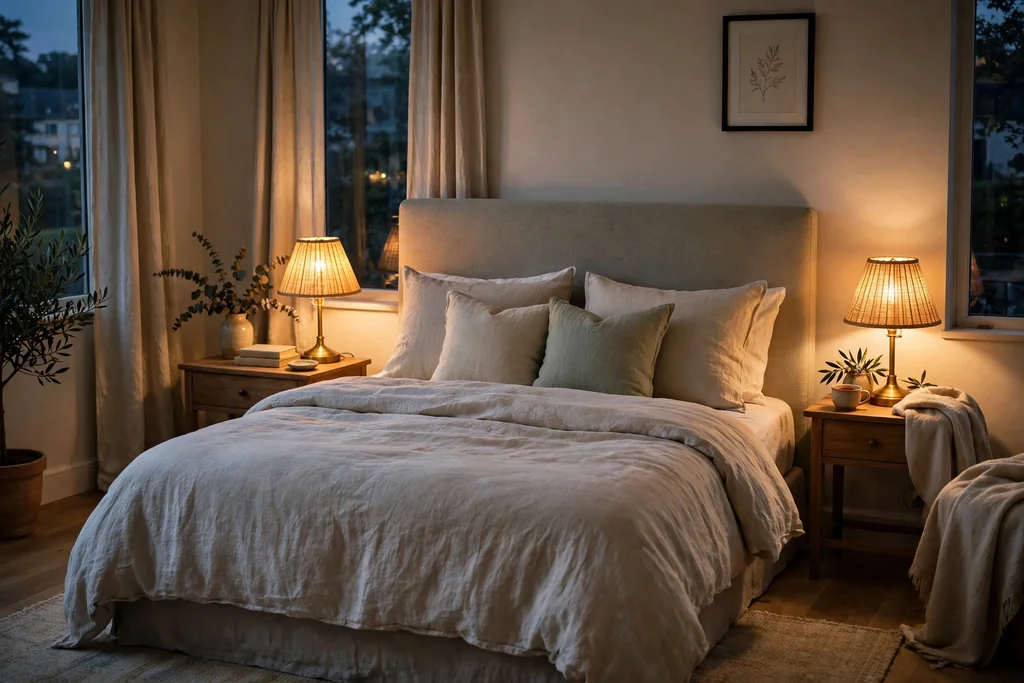
Warm bedside lamps on both sides of the bed give a zen bedroom low, even light in the evening. Turn off the ceiling light at night and use two lamps with warm bulbs at about bed height, so light pools near the bed and leaves the corners in soft shadow. Put the switches where you can reach them without getting up, and use the same lamp style on both sides for balance.
Choose lamp bases in stone, ceramic, or wood, in a plain shape, and keep the shades in warm white linen so the glow stays soft. Avoid cool white bulbs here, since they can make soft colors look grey. For a warm, relaxed bedroom scheme built on low light, see these hygge bedroom ideas.
19. Sheer Linen Curtains for Soft Daylight
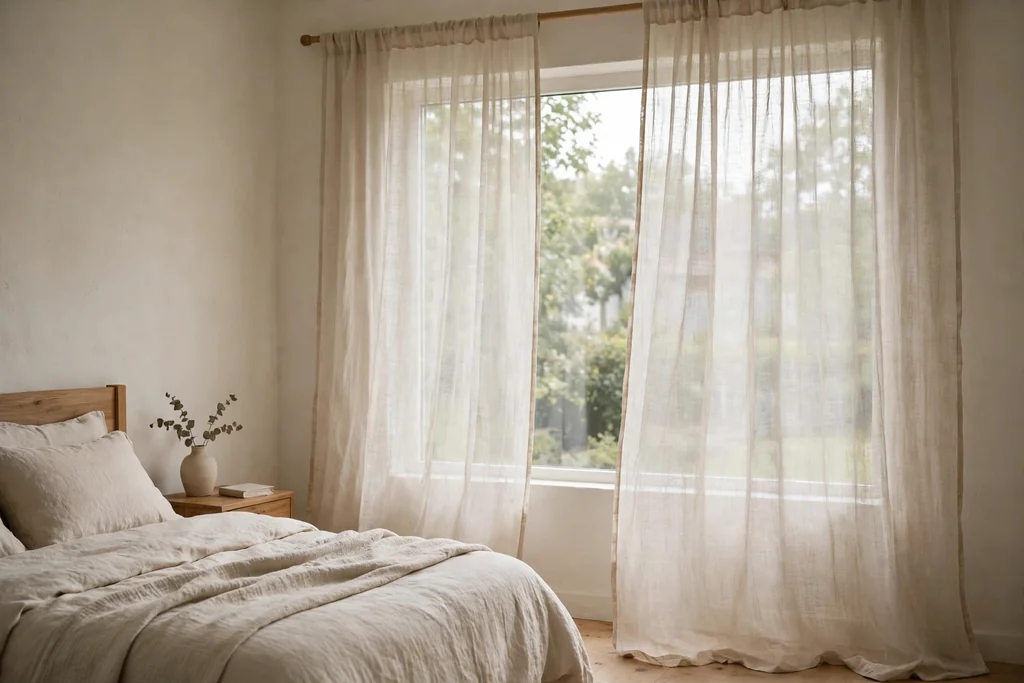
Sheer linen curtains give a zen bedroom soft daylight and daytime privacy at once. Hang sheer panels in warm white or natural linen from a simple rod, close to the ceiling and wide enough that the panels clear the window frame when open, so daylight still fills the room. The loose weave lets light through in a gentle wash, which suits pale walls and wood floors.
Keep the rest of the window plain, with no heavy valance, so the sheer can do its work. Wash the panels often, since sheer linen shows dust more than a heavier fabric. Pair the sheer with a bamboo shade or a blackout panel behind it if you need darkness for sleep, and keep the sheer as the layer you see in daylight.
20. Wood and Paper Room Divider Screen
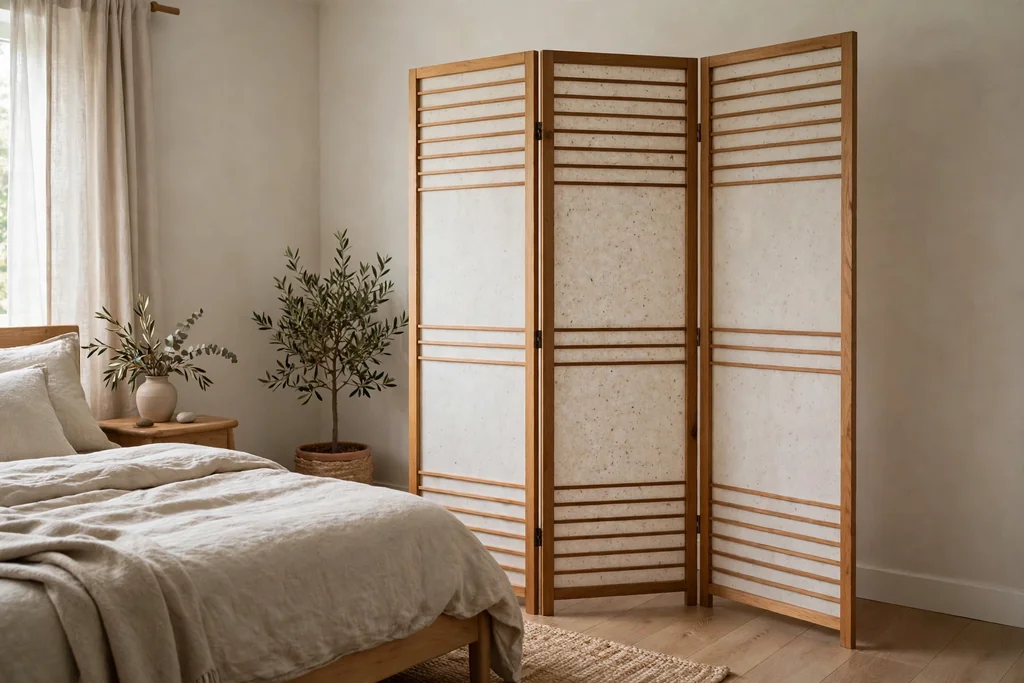
A wood and paper room divider screen creates a calm zone inside a larger bedroom, such as a dressing corner or a work nook, without building a wall. Choose a three panel screen in light wood with pale panels, and place it where it blocks a direct view of a desk or a wardrobe, while still letting light through. The screen adds height and structure without closing the room in.
Fold the screen flat against a wall when you do not need it, and keep it clear of walkways so it does not tip. A screen suits a rented room well, since it needs no fixings and moves with you. Keep the panels plain, so the screen stays a quiet backdrop rather than a patterned feature, and dust the frame with a dry cloth.
21. Low Open Shelf With a Few Chosen Objects
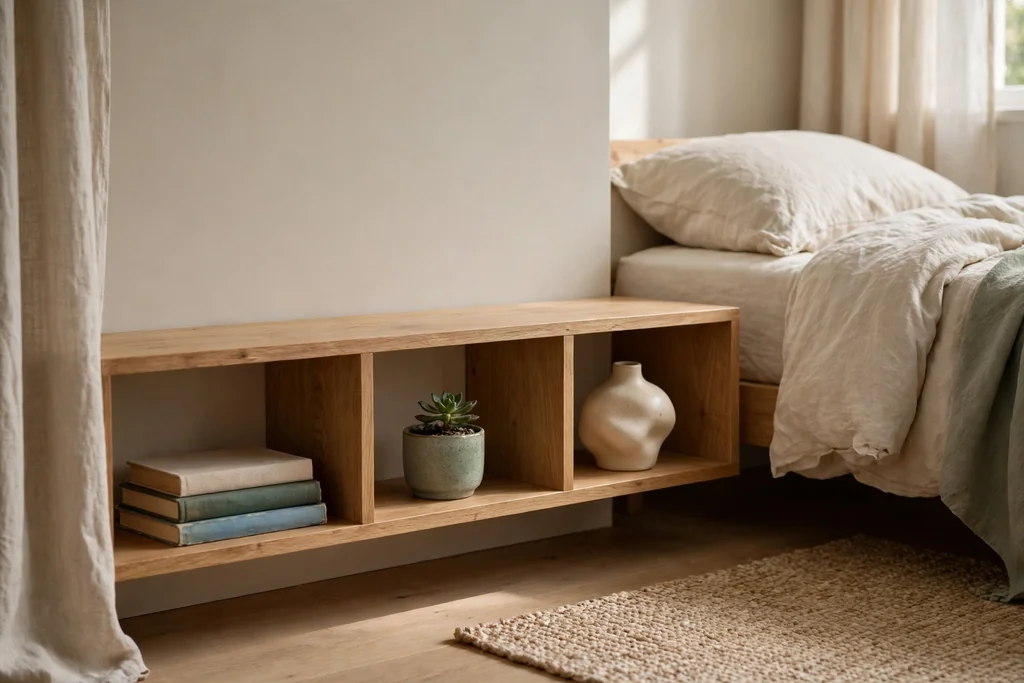
A low open shelf with a few chosen objects gives a zen bedroom a place for display that stays calm. Fix one low shelf, or use a low bookcase, and set out a small group: two or three books lying flat, a small plant, and one stone or ceramic piece. Limit the group to items in a tight palette of wood, stone, and linen tones, and leave clear space around each piece.
Keep the shelf at a height where you can reach items without stretching, and dust it weekly, since open shelves collect lint fast. If the shelf starts to fill, remove one item for each new item you add, so the display stays a small group rather than a second storage wall. This shelf suits a wall that feels empty beside the bed or the door.
22. Calm Dressing Corner With Mirror and Stool
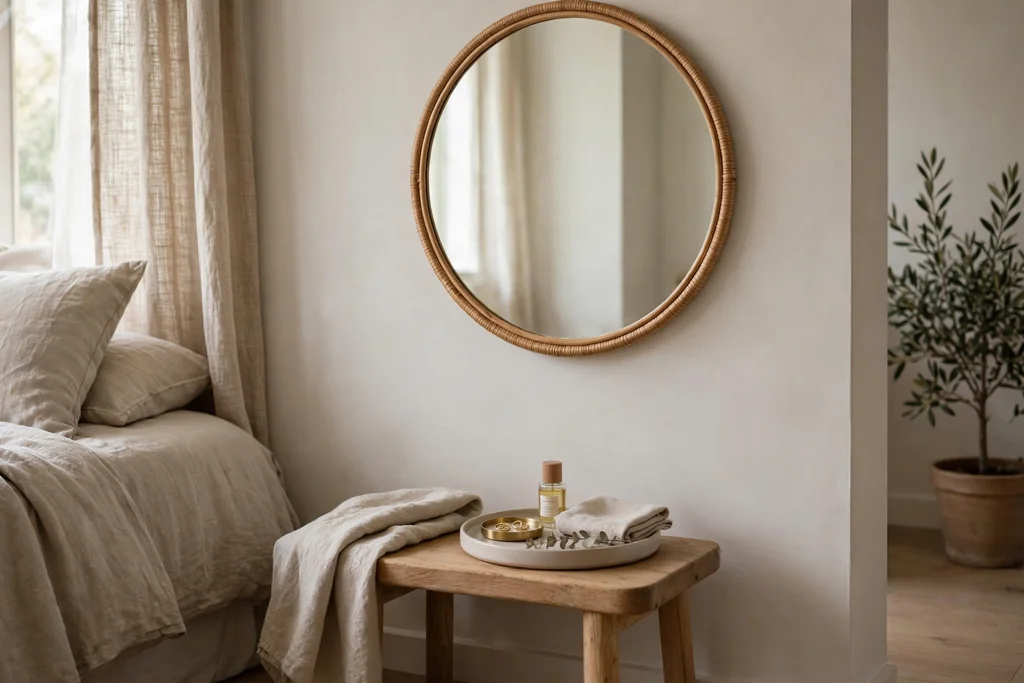
A calm dressing corner gives a zen bedroom a useful morning spot without a full vanity build. Place a simple mirror on the wall or leaning on a dresser, add a low stool or a small chair, and keep a small tray on the dresser for daily items such as a watch, glasses, and a brush. The corner stays tidy when it holds only what you use each morning.
Choose a stool in wood that matches the bed or bench, and keep the mirror frame plain so it does not compete with the rest of the room. Sit the corner near daylight if you can, since natural light suits morning routines, and keep a small basket nearby for scarves or bags. Clear the tray each evening, so the corner starts each day as calm as the rest of the room.
Conclusion
A zen bedroom comes down to a few calm choices repeated well. Start with a low bed and layered linen bedding, add warm white walls and one natural wood tone, and use warm low light in the evening and soft daylight in the morning. Keep storage closed where it counts, give one plant and one print room to breathe, and leave floors and nightstands mostly clear so the room feels restful rather than staged. For more warm neutral bedding and wall ideas, see these beige bedroom ideas.
Save this list on Pinterest before you start, and work through it one idea at a time: bedding and light first for a quick shift, then curtains and one storage change, then walls and larger furniture when you have a weekend to spare.
FAQs
What makes a bedroom feel zen rather than just plain?
A zen bedroom feels calm because each piece has a job and the senses get little noise: a quiet palette, natural materials, soft light, and clear surfaces. A plain room can feel empty if it lacks texture and warmth, so add linen, wood grain, a woven rug, and one plant. The difference is not fewer items alone, but items chosen for use and comfort, arranged with space around them.
What colors work best for a zen bedroom?
Warm white, soft beige, pale grey, muted sage, and natural wood tones work best, because they stay gentle in both daylight and lamplight. Keep the main palette to two or three colors plus one wood tone, and repeat each color at least twice so the room feels pulled together. Use a deeper tone, such as charcoal or dark wood, only in small items, so the room stays restful.
Can I create a zen bedroom in a small room or a rental?
Yes, since most zen ideas need no building work. Start with linen bedding, sheer curtains, a woven rug, a clear nightstand, and one plant, all of which move with you. Use a folding screen, a low bench, and baskets for storage, and carry the palette through bedding and curtains if you cannot paint. A small room often suits zen ideas well, since low furniture and clear floors make it feel larger.
How do I keep a zen bedroom tidy day to day?
Give every daily item a closed home, keep nightstands and dresser tops to a few items, and spend a few minutes each evening returning throws, books, and clothes to their places. One basket for blankets, one tray for nightstand items, and one closed wardrobe make the routine simple. If a surface fills up, remove one item for each new item you add, so the room stays calm rather than slowly filling again.
Is a zen bedroom only for minimalist style homes?
No, zen ideas suit many styles, since they focus on calm color, natural materials, and clear space rather than one strict look. A traditional room can use a wood headboard, linen bedding, and warm lamps, while a modern room can use a low platform bed, a plain rug, and a single print. Keep the palette quiet and the surfaces clear, and add one or two pieces that reflect your own taste, so the room feels personal as well as calm.
What should I change first for a calmer bedroom?
Start with bedding and light, since they affect how the room feels at night and in the morning. Switch to layered linen bedding in muted tones, turn off the bright ceiling light in the evening, and use warm bedside lamps instead. Then clear the nightstand and one dresser top, and add a soft rug beside the bed. These four changes often shift the mood before any larger purchase.