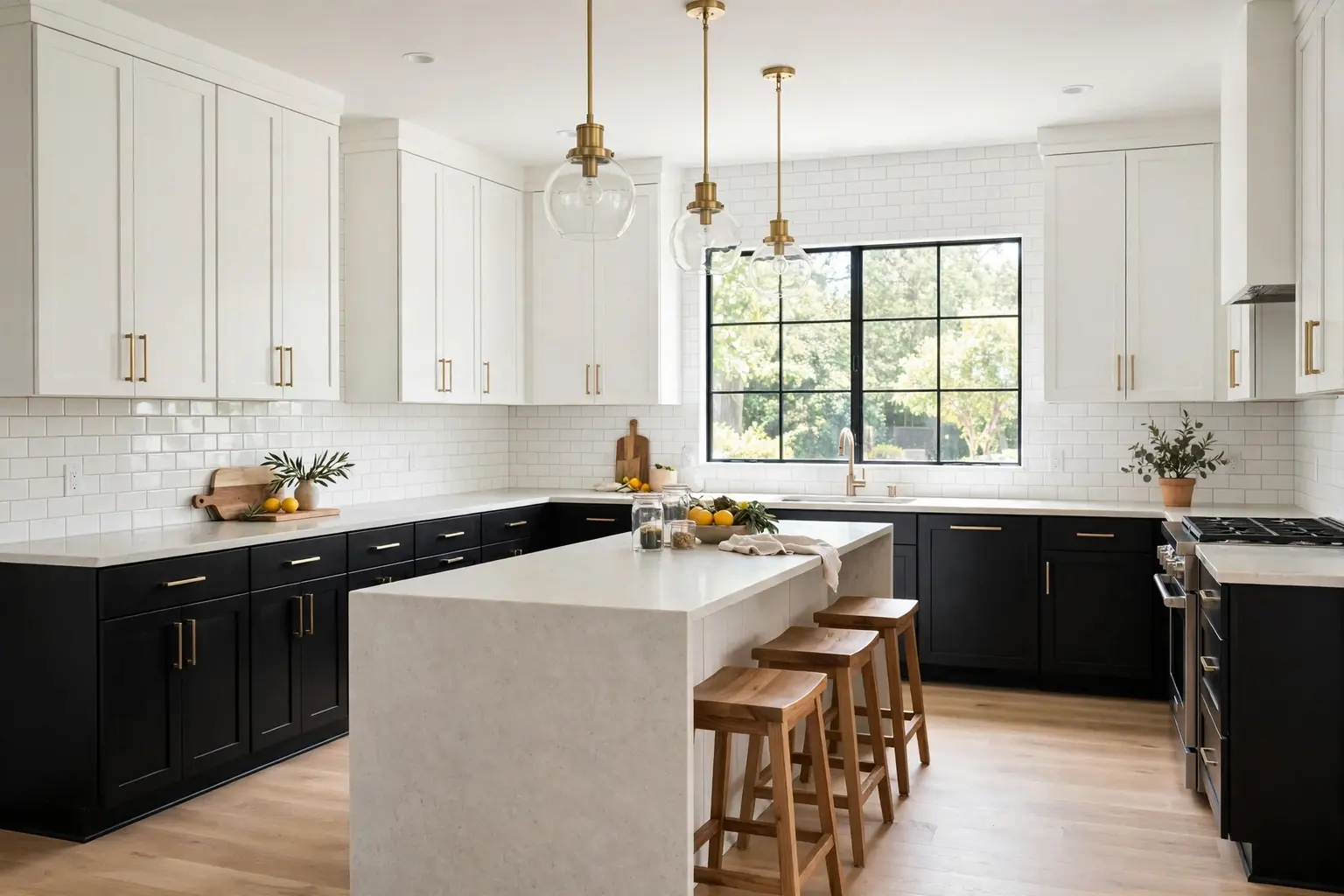
Black and white is the most forgiving cabinet pairing in the kitchen, because each color covers what the other misses. White keeps a small or dim room bright, while black adds depth, hides scuffs at kick height, and gives the eye a place to rest. The trick is deciding how much of each color to use, and where to put it, so the room feels calm instead of split in half. These 22 black and white kitchen cabinet ideas cover two-tone layouts, islands, pantry walls, door styles, hardware, and lighting. Start with the layout that fits your light, then pick finishes you can keep clean. For single-color guidance first, see these black kitchen cabinet ideas.
Key Takeaways
- Put the darker color low and the lighter color high in most rooms, since that keeps walls bright and floors grounded.
- Use one counter material across a two-tone run so the cabinet split reads as planned, not patched together.
- Repeat the minority color at least once more, in hardware, a hood, stools, or a light fitting, so it does not look isolated.
- Matte black hides fingerprints better than gloss, while gloss white bounces light in a dim kitchen.
- Test large black and white samples beside your floor and counters in morning and evening light before ordering.
- Keep the backsplash simple when both cabinet colors are already doing a lot of work in the room.
1. Black Lower Cabinets with White Upper Cabinets
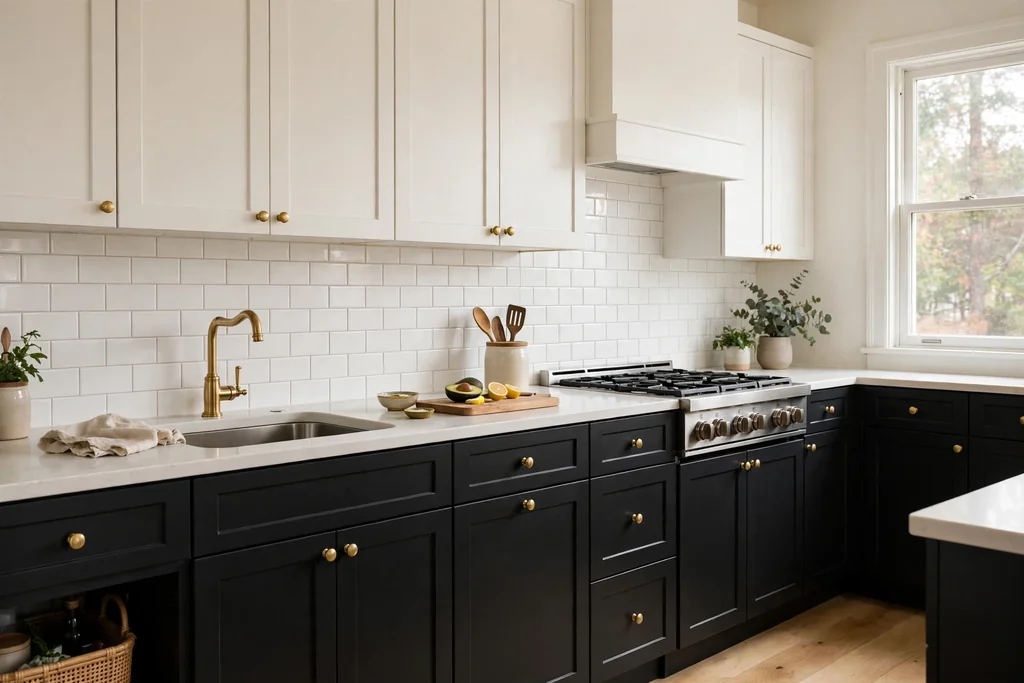
Keep black on the base cabinets and white on the wall cabinets for the classic two-tone kitchen. The dark base grounds the room and hides scuffs from feet, pets, and the vacuum, while the white uppers keep the wall feeling light and open. This split suits small kitchens well, because the eye reads the pale upper wall first.
Use one counter material across both runs, such as pale stone or light wood, and repeat the black once more in bar stools or pendant lights. Choose matte black for the lowers if fingerprints worry you, and wipe the doors near the prep area once a week with a damp cloth.
2. White Perimeter Cabinets with a Black Island
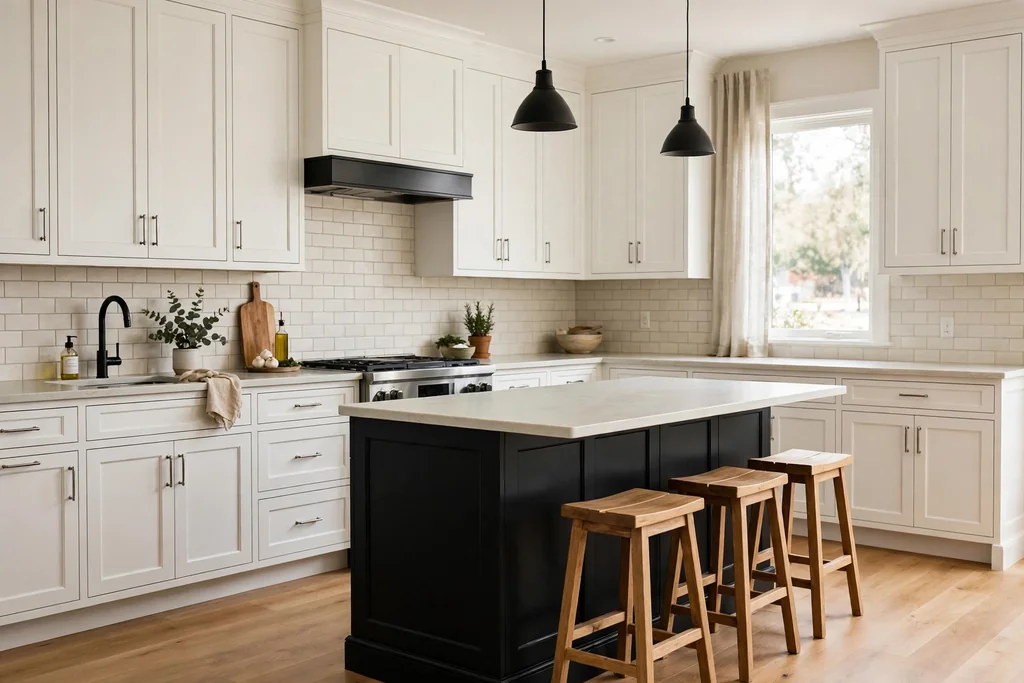
Keep the wall cabinets white and build the island base in black for a clear contrast that feels like furniture, not a fitted block. The black island becomes the work zone and the gathering spot, while the pale perimeter keeps the walls light. This split is easier to live with than two cabinet colors on every wall.
Use a pale counter on the island so chopping, homework, and serving stay visible, and add seating on one side if space allows. Repeat the black in pendant lights or stool frames so the island ties back to the room, and keep the island hardware simple so the dark base stays calm.
3. Black Pantry Wall in a White Kitchen
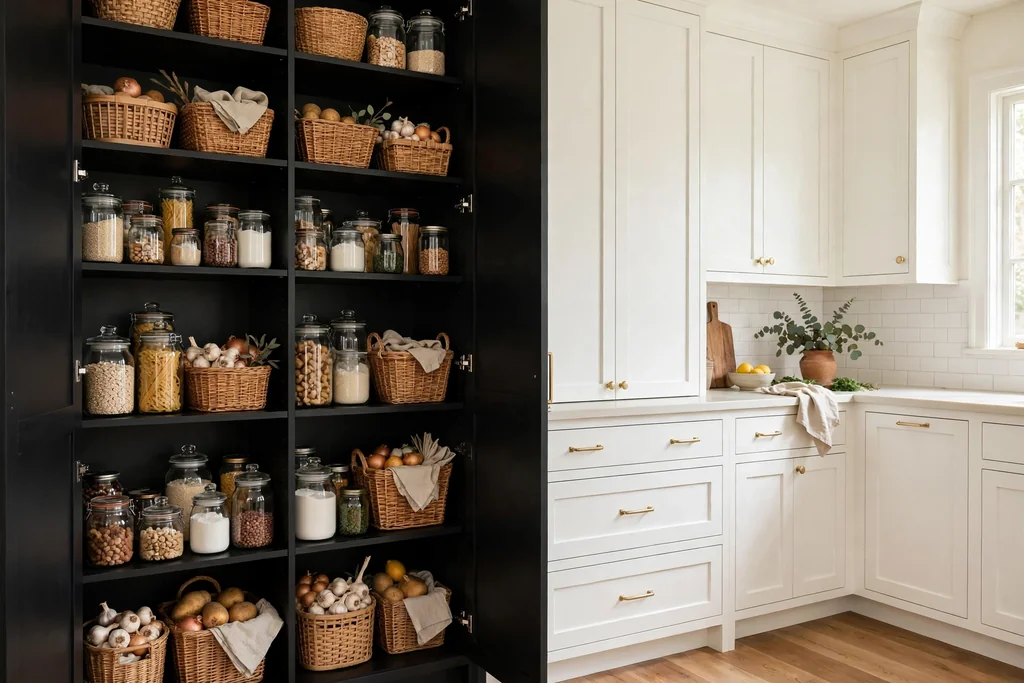
Dedicate one wall to tall black pantry cabinets in an otherwise white kitchen, and the storage wall becomes a deliberate feature instead of a bulky afterthought. A pantry wall hides food, small appliances, and cleaning supplies behind closed doors, and it frees the main cooking run from tall units.
Fit the pantry with adjustable shelves, pull-outs for cans and jars, and one tall section for a broom or vacuum. Keep daily items between waist and shoulder height, and keep a pale counter nearby for unpacking shopping bags. A black pantry wall also pairs well with the single-color pantry advice in these white kitchen cabinet ideas.
4. Matte Black Shaker Doors with Pale Counters
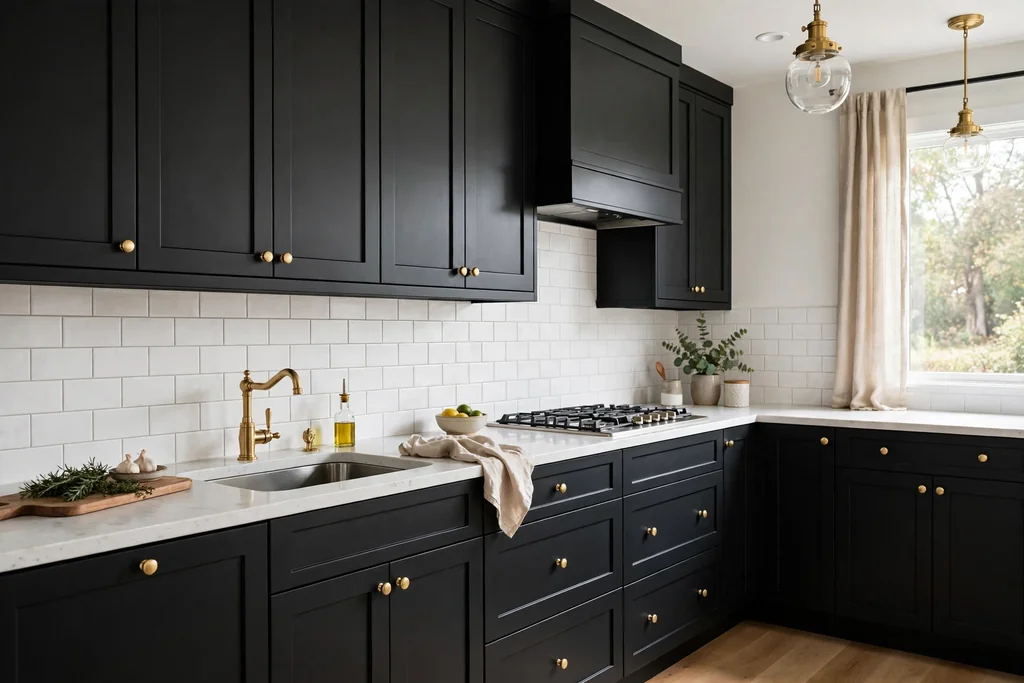
Choose matte black Shaker doors with pale counters for a soft version of the black and white pairing. The simple framed panel suits older homes and new builds alike, and the flat finish softens the black so the room does not feel stark. Pair the doors with white subway tile, pale stone counters, and brass knobs for warmth, or with black bar pulls for a quieter look.
Matte paint hides fingerprints better than gloss, but it shows dust and flour, so wipe the doors near the prep area weekly. Keep the wall color warm rather than stark, such as soft cream, so the white in the room does not turn cold beside the black.
5. Gloss White Flat Fronts with Black Bar Pulls
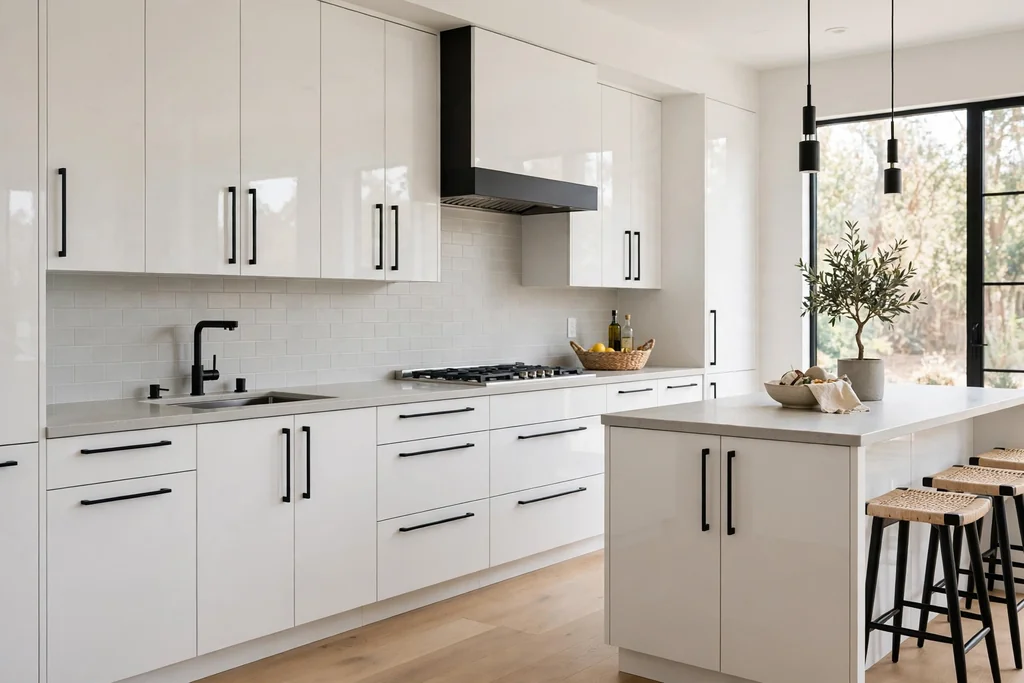
Use gloss white flat-front cabinets with long matte black bar pulls for a clean, modern version of the pairing. The shine reflects light, which helps a small or north-facing room, and the flat fronts are quick to wipe down. Black pulls outline each door and add definition without adding a second cabinet color.
Keep the counter pale and the backsplash plain, so the hardware can carry the contrast. Choose pulls in one length for drawers and a shorter matching length for doors, and check the grip in your hand before ordering a full set, since bar pulls are touched many times a day.
6. White Shaker Cabinets with Matte Black Hardware
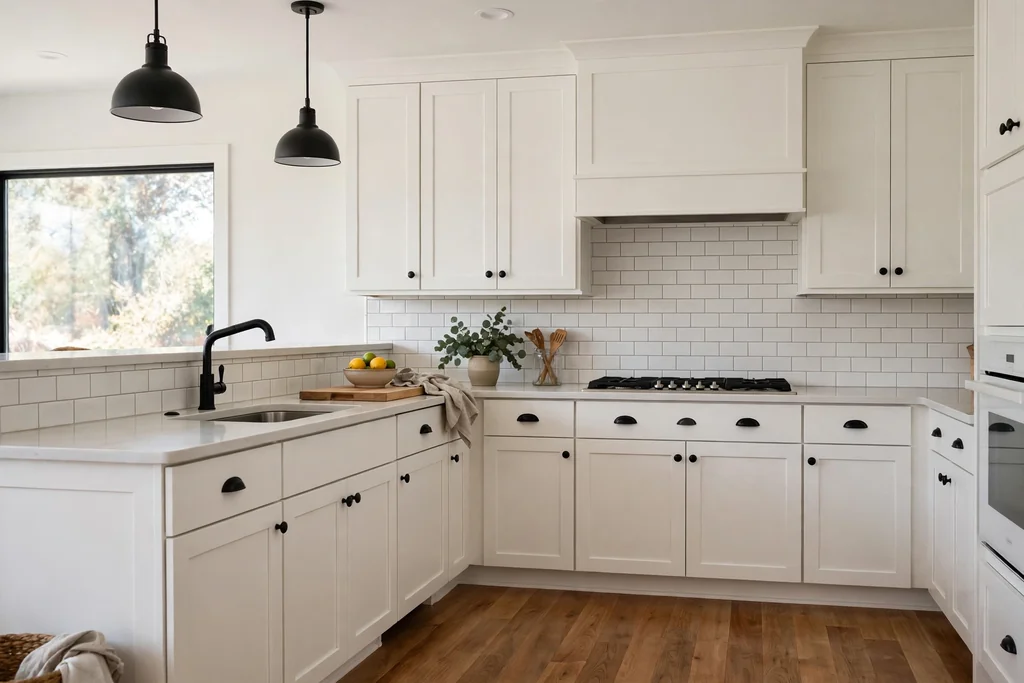
Give white Shaker cabinets matte black knobs, cup pulls, and a matching tap for a sharper edge that needs no painting. Black outlines each door, adds contrast without color, and pairs well with dark counters, wood stools, and a black framed window. This is one of the easiest updates in this list, since a hardware swap needs no building work.
Keep all the black hardware in the same finish, so knobs, pulls, and the tap read as one set, and save the old hardware in a labelled bag if you rent. Repeat black once more, in a light fitting or a stool frame, so the hardware does not look isolated against all that white.
7. Black Glass-Front Uppers over White Base Cabinets
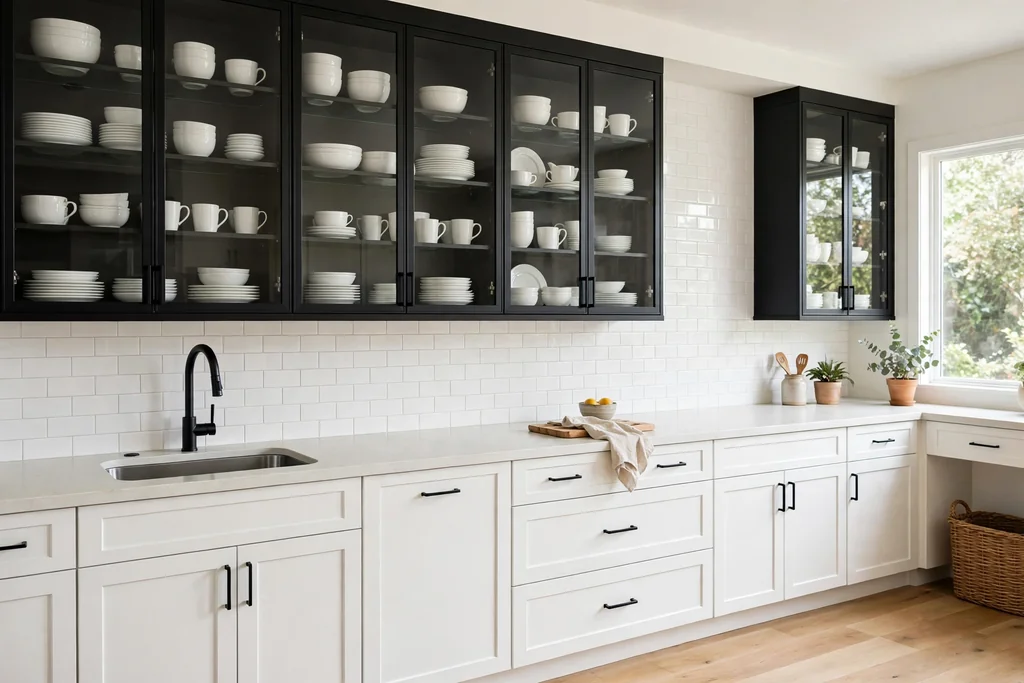
Swap a few black upper doors for glass fronts above white base cabinets, and display white dishes, clear glasses, and a few wood boards behind them. Glass breaks up a long run of dark doors, adds depth, and makes everyday pieces easy to find, while the white bases keep the lower wall bright.
Keep the display simple, with one stack per shelf and space between groups, so the cabinets read as tidy. Put daily dishes at easy reach and rarely used pieces higher up. If clear glass feels too exposed, use reeded or frosted glass on one cabinet for a softer version of the same idea.
8. White Cabinets Paired with Black Open Shelves
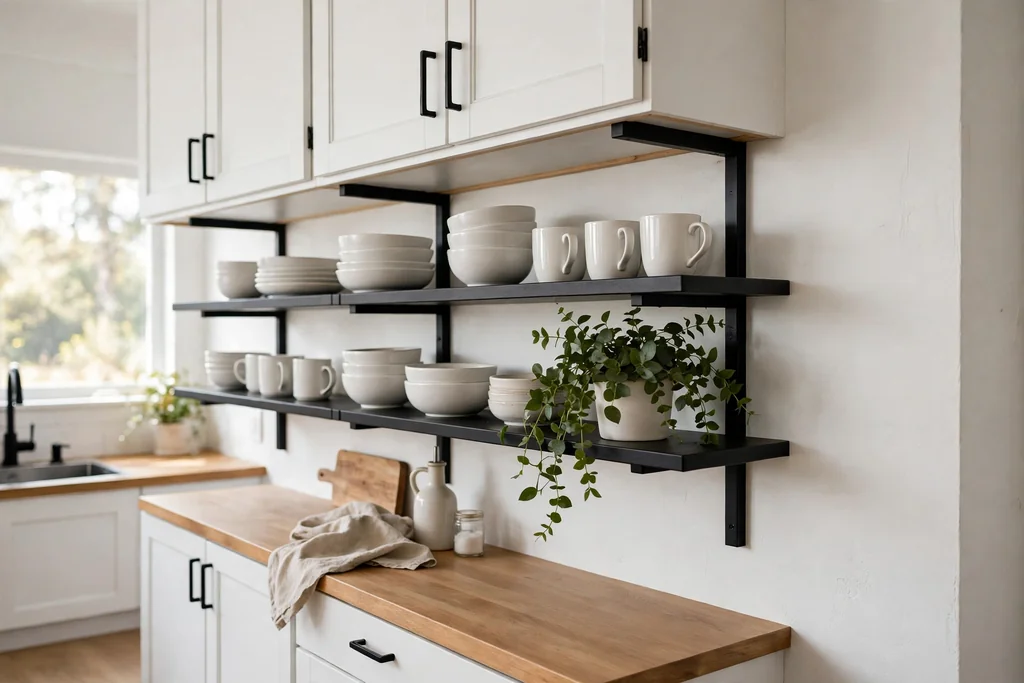
Replace one short run of white uppers with black open shelves, and keep the rest of the cabinets closed. The black shelves give you a spot for daily mugs, bowls, and plants, while the closed white cabinets hide the less pretty storage. This mix is practical in a small kitchen, where a full wall of uppers can feel heavy.
Keep shelf items to pieces you use weekly, and dust them often, since open storage collects cooking film. Put the shelves near the sink or cooker, where daily dishes are most useful, and leave breathing room between groups so the black shelves read as calm, not crowded.
9. Black Beadboard Island in a White Kitchen
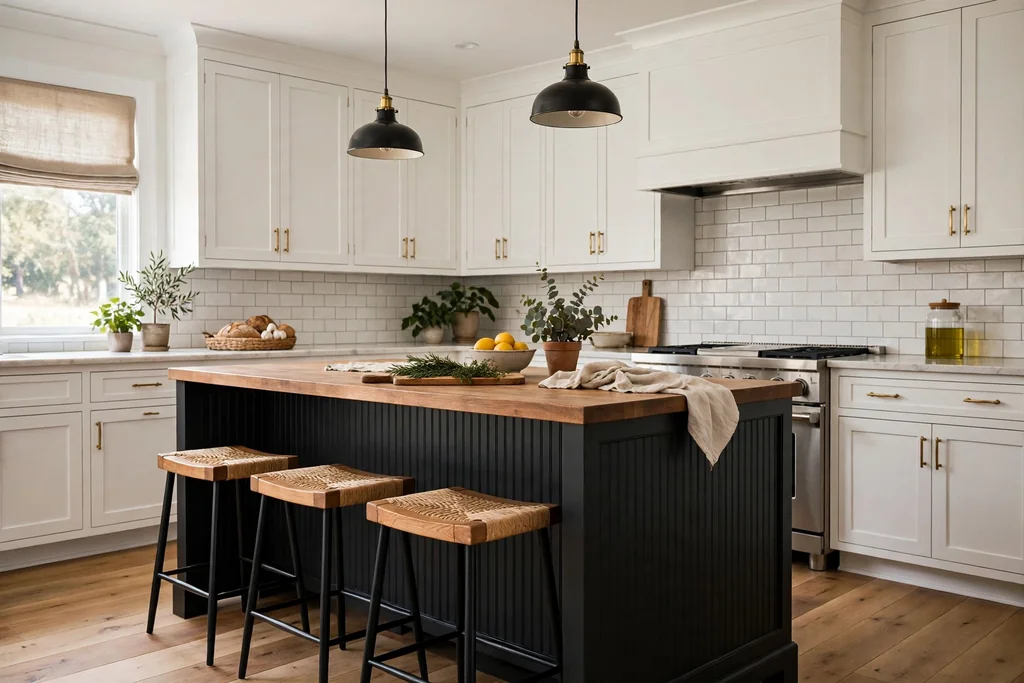
Build the island in black beadboard while the perimeter stays white, for a cottage version of the two-tone kitchen. The narrow vertical grooves add texture without color, and the black island reads as a freestanding furniture piece rather than another fitted run. Pair it with a wood counter or a pale stone counter, plus a farmhouse sink nearby if your layout allows.
Keep the perimeter counters and backsplash plain, so the beadboard can carry the detail. Wipe the grooves with a damp cloth, since crumbs and dust settle in the lines, and repeat the black once more in stools or pendant lights so the island ties back to the room.
10. Galley Split: Black on One Side, White on the Other
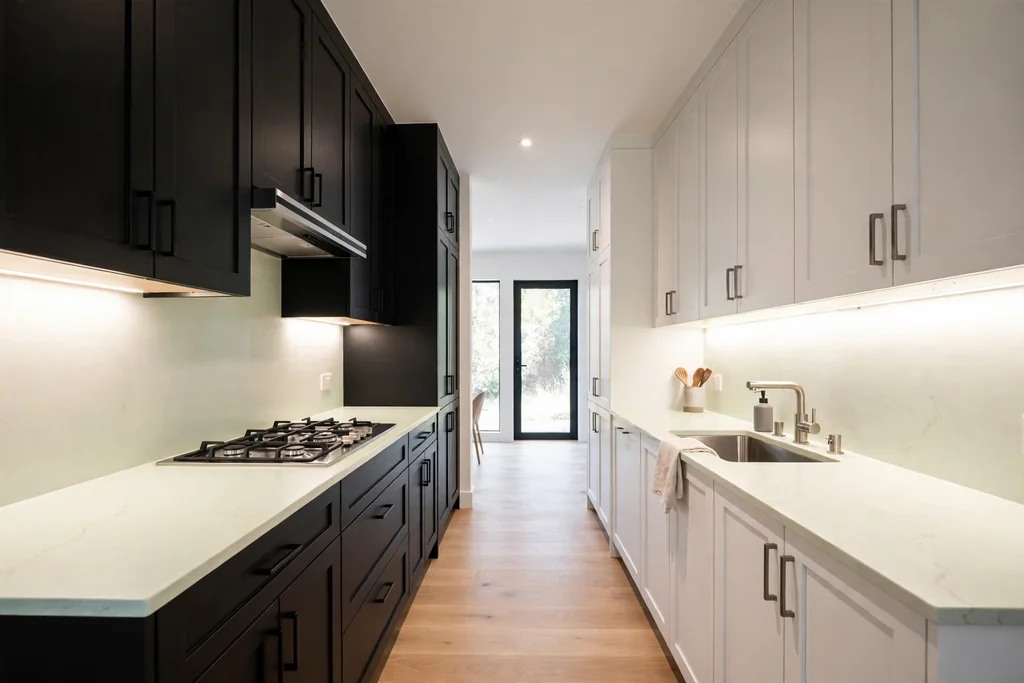
In a galley kitchen, put black cabinets on one side and white cabinets on the other, rather than splitting top and bottom on both sides. The white side keeps the passage feeling open, while the black side adds depth and hides marks where people pass most. Add pale counters and bright under-cabinet lighting on both sides, since galleys need light more than most layouts.
Keep the passage clear of stools and bins so the galley stays easy to move through, and avoid dark counters here, because a dark floor, dark cabinets, and dark counters together will close the space in. A pale floor helps the narrow room feel wider.
11. Black Cabinets with White Marble-Look Counters
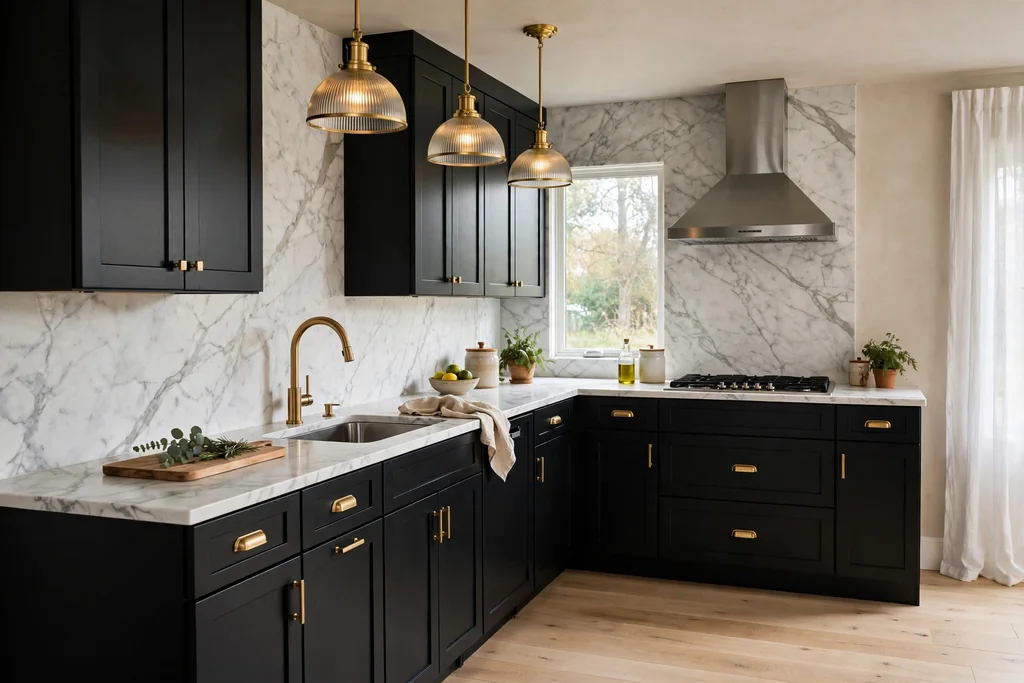
Pair black cabinets with white marble-look counters and carry the same material up the wall as a backsplash for a calm, continuous look. The pale veined surface keeps the contrast crisp, and brass or polished nickel hardware warms the pairing. This is the most classic version of black and white, and it suits both Shaker and flat-front doors.
Real marble marks and etches more easily than quartz, so seal it, wipe up acidic spills quickly, and use trivets under hot pans. If upkeep worries you, a marble-look quartz gives a similar look with less care, and it keeps the white bright beside the black.
12. White Cabinets with a Black Countertop
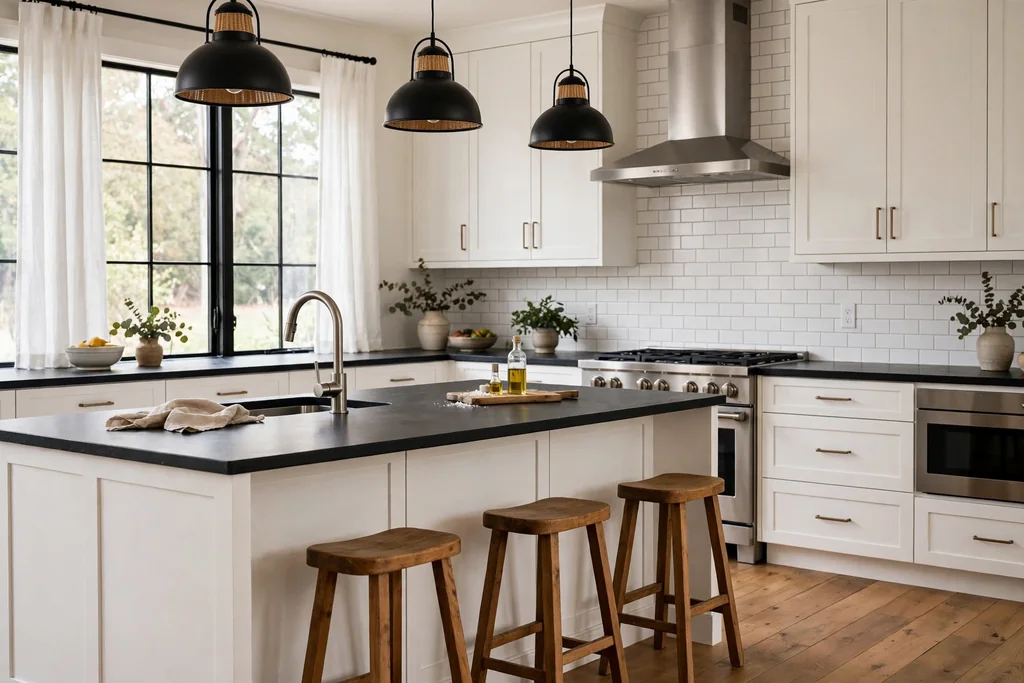
Pair white cabinets with a black countertop, such as charcoal stone or a dark stone look, for a clear contrast that anchors the room. The dark surface makes white doors look brighter, hides stains better than a pale counter, and suits a kitchen with wood floors or black hardware. This pairing works in both classic and simple modern kitchens.
Keep the backsplash pale, in white tile or a light plaster tone, so the dark counter does not make the room feel heavy. Wipe the counter after cooking, since dust and crumbs show more on dark surfaces, and keep the rest of the room pale so black stays an accent rather than a theme.
13. Fluted Black Island Fronts with a White Perimeter
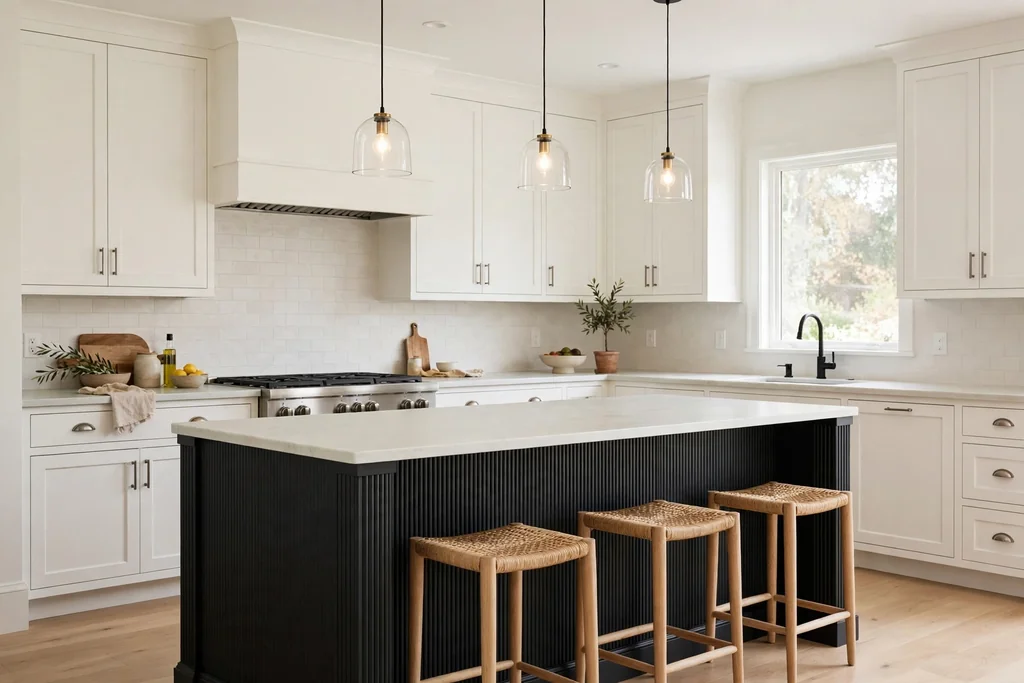
Use fluted or reeded fronts on a black island while the perimeter cabinets stay white and flat. The vertical grooves catch light and shadow, so the island doors look richer than flat black paint, and the texture gives the room a focal point without a third color. Keep the remaining cabinets flat so the texture stays special.
Dust can settle in the grooves, so a soft brush or a vacuum brush attachment helps at cleaning time. Pair fluted fronts with simple hardware, because busy handles fight the texture, and keep the island counter pale so the black grooves stay readable in daylight.
14. White Cabinets with Black-Framed Glass Doors
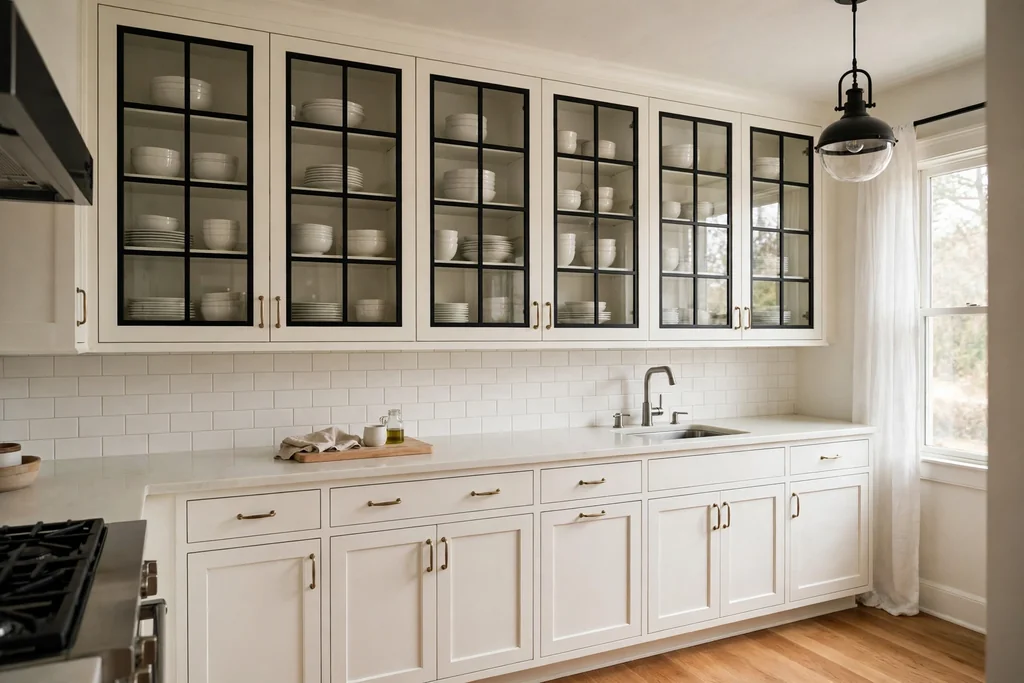
Frame glass upper doors in black above white base cabinets for a crisp outline that suits modern and classic rooms alike. The black frame defines each door, the glass shows white dishes inside, and the white bases keep the lower wall light. This works well on a single run, where two or three framed doors are enough to change the whole wall.
Keep the contents simple and grouped by type, since glass shows everything, and add a small light inside each cabinet so the contents glow in the evening. Keep the rest of the uppers solid so the framed display stays a feature rather than a demand to curate every shelf.
15. Black Cabinets Warmed by Wood Open Shelves
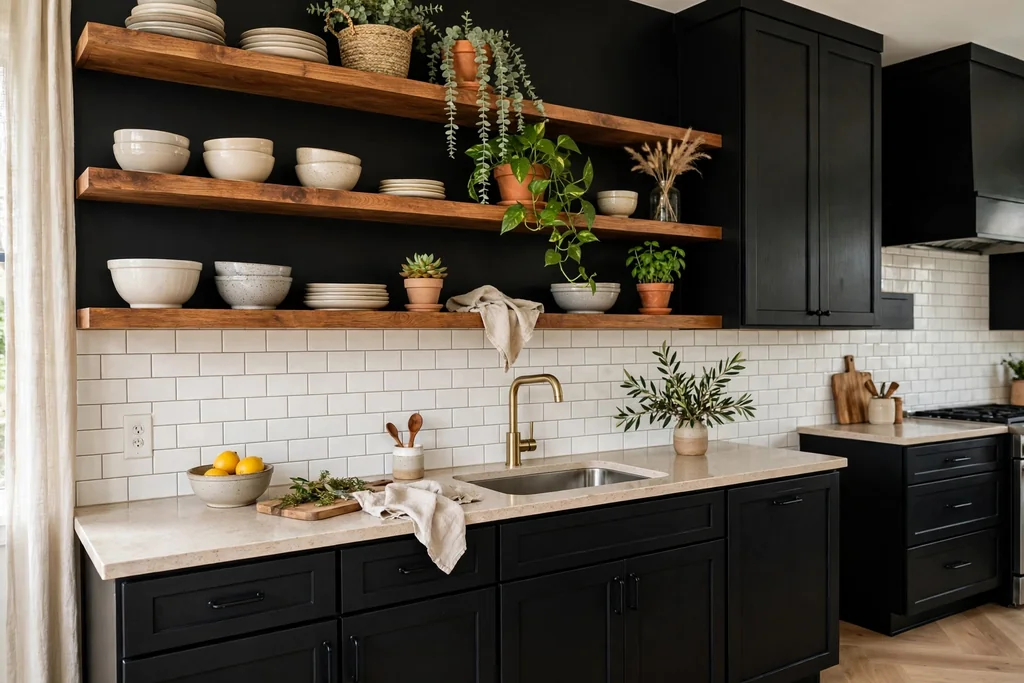
Pair black cabinets with warm wood open shelves to stop the room feeling cold. The wood warms the black, the open shelves make a small kitchen feel less boxed in, and the shelves give a spot for daily dishes, plants, and cookbooks. Keep shelves to one or two runs, style them loosely, and leave breathing room between groups.
Open shelves collect dust and cooking grease, so put everyday items there and keep rarely used pieces behind closed doors. Repeat the wood once more, in stools, a chopping board, or a counter section, so the shelves look planned beside the black cabinets.
16. White Cabinets Around a Black Range Hood Wall
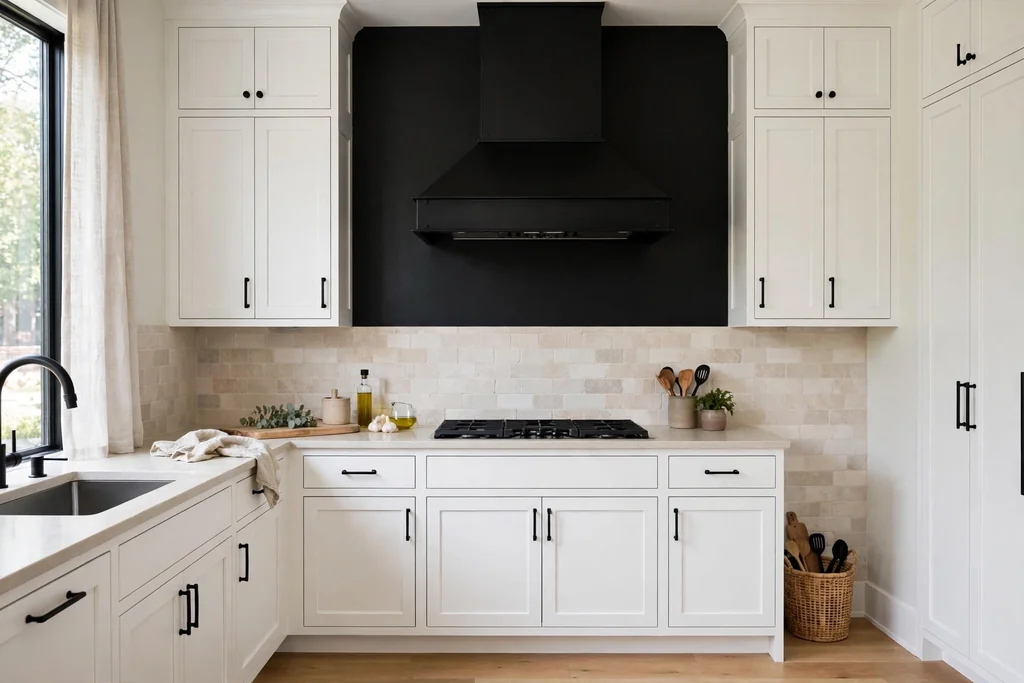
Build the cooking wall around a black range hood, with white cabinets flanking a bold hood in black metal or plaster painted to match. The hood becomes the focal point, so keep the surrounding cabinets simple and the hardware quiet. A pale stone backsplash behind the range keeps the cooking zone readable and easy to clean.
Check the hood size against your range before ordering, and plan ducting early, because a statement hood is hard to resize later. This idea suits a room with a long, uninterrupted cooking wall, and it pairs the black accent with white in a way that feels balanced from across the room.
17. Inverse Split: Black Uppers, White Lowers
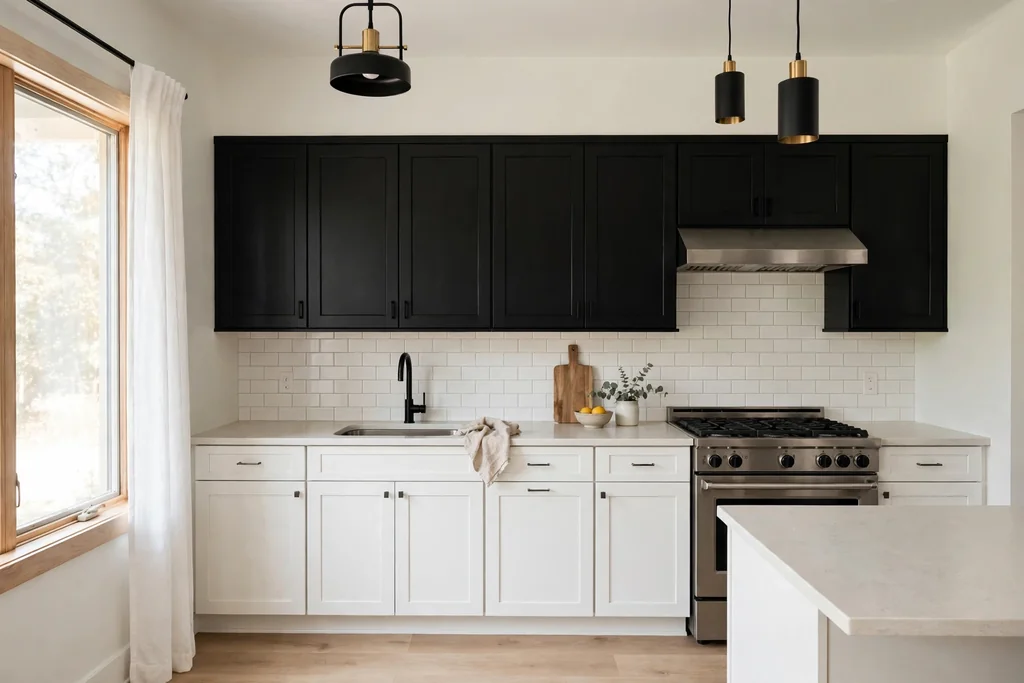
Flip the usual split and put black on the upper cabinets with white on the lowers, for a look that suits rooms with strong daylight and pale floors. The white bases keep the working height bright, while the black uppers add depth at eye level and frame the wall like a picture rail. This split needs good light, since dark uppers can feel heavy in a dim room.
Add bright under-cabinet lighting so the counters stay well lit, and keep the backsplash pale to break up the two bands of color. Use the black uppers for lighter items, such as glasses and bowls, and keep heavy pots in the white base drawers below.
18. Black Corner Cabinet as a Two-Tone Accent
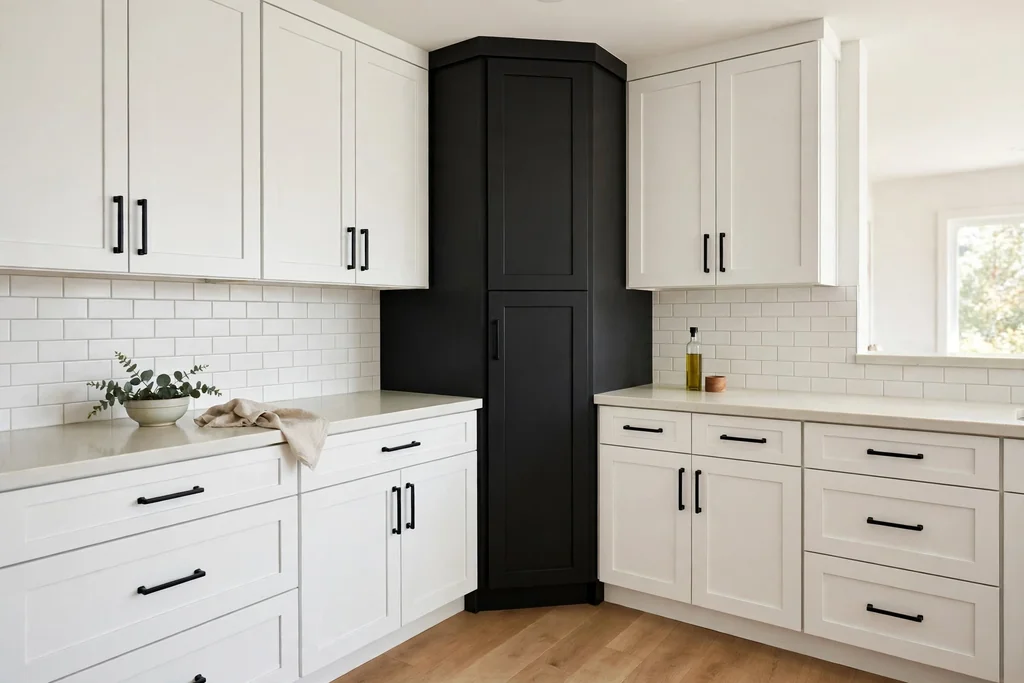
If a full two-tone kitchen feels like too much, limit the second color to the corner unit. A black diagonal corner cabinet, or a black corner tower, marks the turn in the room and looks deliberate, while the rest of the run stays white. Repeat the black once more nearby, in a stool, a blind, or a table centerpiece, so it does not sit alone.
Keep handles the same across both colors to hold the run together, and use the corner well: a turntable or pull-out inside stops the deep corner wasting space. For more corner storage ideas, see these corner kitchen cabinet ideas.
19. White Cabinets with a Black Toe-Kick and Soft Lighting
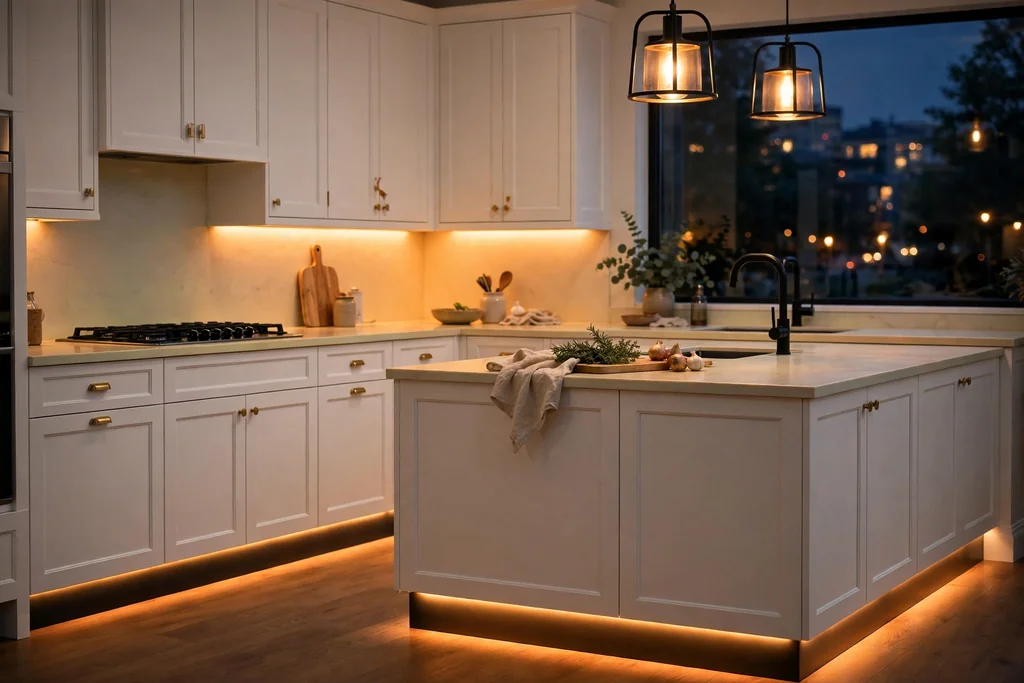
Give white cabinets a black toe-kick, the recessed strip at the base, and add soft lighting under the cabinets and along the toe-kick in the evening. The black base outlines the run and hides scuffs at floor level, while the lighting makes the cabinets appear to float and keeps the room practical after dark.
Use warm white bulbs, not cold blue light, so white paint reads as warm. Put the lighting layers on separate dimmers so you can brighten the room for cooking and soften it for dinner, and check the effect at night before finalizing, because white changes the most after dark.
20. Black and White Cabinets with a Patterned Tile Backsplash
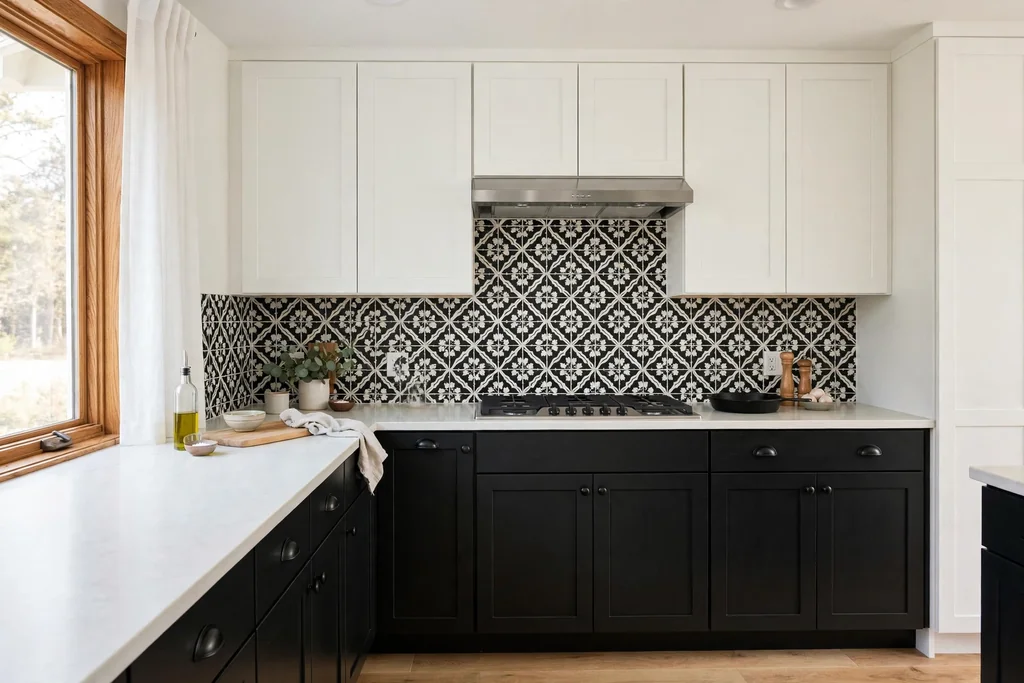
Use black and white patterned tile on the main cooking wall or the sink wall, with plain cabinets elsewhere, so the pattern reads as a feature rather than noise. Geometric tiles suit a modern room, while hand-painted style tiles suit a softer, collected kitchen. Keep the pattern to one wall, and use plain tile elsewhere, so the room stays calm.
Patterned tile hides splashes well, but grout lines need a scrub now and then, so choose a grout color that will not show every mark. Pale counters keep the tile as the star, and black hardware ties the tile back to the cabinets.
21. Black Cabinets with a White Farmhouse Sink Wall
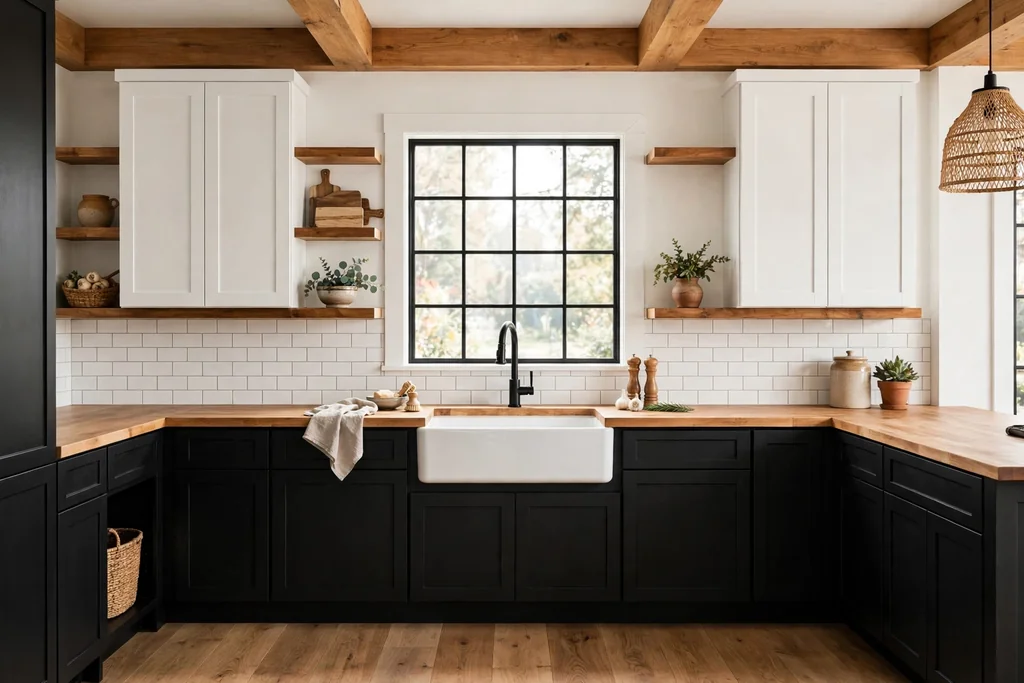
Pair black cabinets with a white farmhouse sink, with the sink front on show between black base cabinets and white uppers above. The white sink breaks up the dark run and gives a practical, deep basin for large pots and baking trays. Add a wood counter or wood shelf, a simple bridge faucet, and black hardware to hold the scheme together.
A farmhouse sink needs a cabinet made to fit it, so check sizes before ordering, and wipe the sink surround often, because water marks show on black paint near the tap. This pairing suits a room with some natural texture, such as a wood floor, which stops the black from feeling flat.
22. Two-Tone Repaint for Cabinets You Already Own
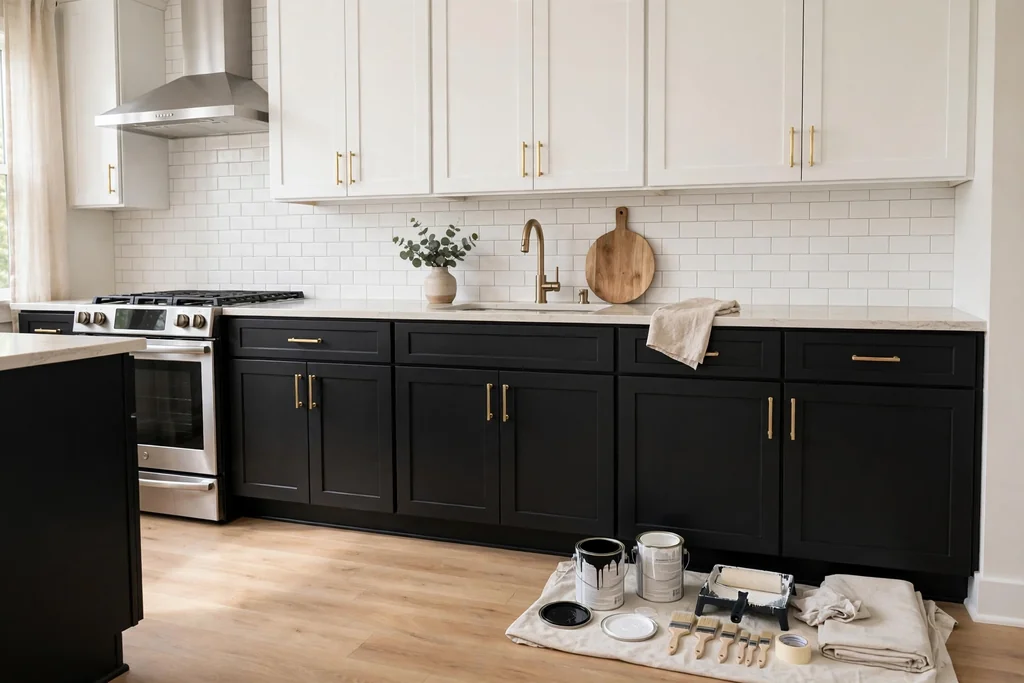
Repaint cabinets you already own in two tones, black below and white above, for the lowest cost route to this look. Good prep matters more than the paint brand: clean, sand, prime, and paint doors off their hinges in a dust-free spot, and label each door so it goes back in the right place. A washable satin or semi-gloss finish suits kitchen doors, since it wipes clean near the stove.
Paint a large sample door first and live with it in morning and evening light, since black reads very differently in a bright room and a dim one. Swap the hardware at the same time, in matte black or brass, so the repaint reads as a planned update. For more color pairings to test, see our guide to colors for your kitchen cabinets.
Conclusion
Black and white cabinets work when the split is planned, not even. Pick one color to lead, usually white in a small or dim room and black as the accent, then repeat the second color in at least one more spot so the room feels joined up. Test large samples in your own light, keep counters and backsplashes simple, and choose finishes whose upkeep you will actually keep up with. Work through this list in order: layout first, then door style, then hardware, then lighting, and adjust after a week of real cooking. For single-color starting points, revisit these black kitchen cabinet ideas and white kitchen cabinet ideas before you commit.
Keep this list handy for your next free hour at home, and start with the smallest change that proves the pairing for you: new hardware, a painted island, or one black pantry wall.
FAQs
Can black and white cabinets work in a small kitchen?
Yes, if white leads and black stays low or limited to one feature, such as an island or a pantry wall. Keep counters pale, add bright under-cabinet lighting, and use a pale floor so the room stays open. Avoid dark counters plus dark floors plus dark cabinets together, since that combination closes a small room in quickly.
Which color should go on top, black or white?
White on top suits most kitchens, because it keeps the wall bright and the room feeling tall. Black on top can work in a bright room with pale floors and strong under-cabinet lighting, but it feels heavy in a dim room. If you are unsure, start with white uppers and put black on the lowers or the island, which is easier to change later.
Is matte or gloss better for black and white cabinets?
Matte black hides fingerprints better than gloss, while gloss white bounces light around a dim kitchen, so many kitchens mix the two: matte black lowers with gloss or satin white uppers. Gloss shows smudges more, so keep a microfiber cloth handy near the fridge and dishwasher, and choose a washable finish for doors near the stove either way.
What countertop suits black and white cabinets best?
A pale counter, such as white stone, a marble look, or light wood, suits most black and white kitchens, because it keeps the contrast crisp and the work surface visible. A black counter can work with white cabinets if the backsplash stays pale. Use one counter material across a two-tone run so the cabinet split reads as planned.
What hardware finish goes with black and white cabinets?
Matte black hardware sharpens white cabinets and blends quietly into black ones, while brass warms the pairing and suits Shaker and beadboard doors. Polished nickel or chrome suits a cooler, modern version. Keep one hardware finish across the room, so knobs, pulls, and the tap read as one set, and repeat the finish in a light fitting or stool frame.
How do I keep black and white cabinets looking clean?
Wipe black doors weekly near the prep area, since they show dust, flour, and water marks, and wipe white doors near the stove, since they show splashes and scuffs. Use a soft cloth and mild cleaner, and avoid abrasive pads on painted doors. A washable satin or semi-gloss finish makes both colors easier to live with, and touch-up paint from the same batch keeps small chips invisible.