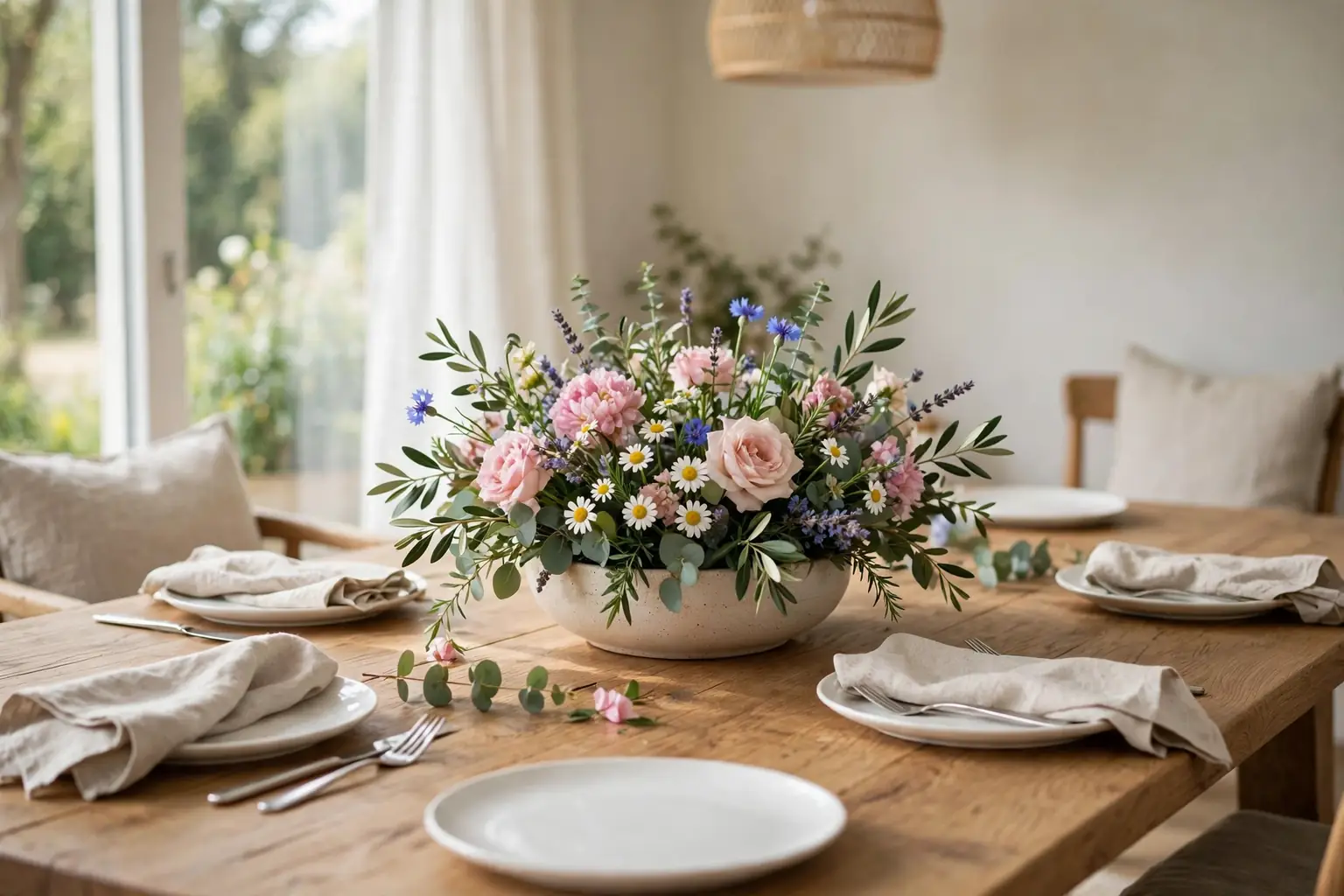
A simple flower centerpiece works best when it stays low, uses one container, and holds a small number of stems you can arrange in minutes. Pick a jar, bowl, or vase you already own, trim the stems short, and keep the height below eye level so guests can talk across the table.
Start with the container, not the flowers. A low bowl suits a dining table, a row of small vases suits a long table, and a single pitcher suits a sideboard or a kitchen counter. Trim each stem at an angle, remove leaves that would sit below the waterline, and fill the container with cool water. Step back and check the shape from a seated view before the meal, and move any stem that blocks a face or crowds a plate. For more seasonal flower ideas, see these fall flower arrangements, and for spring tables, see these spring tablescapes.
Key Takeaways
- Keep the centerpiece low and narrow, so guests can see each other and serving dishes still fit.
- Use one container and a small number of stems, rather than a large mixed bouquet, for the simplest result.
- Trim stems at an angle, remove leaves below the waterline, and change the water every two days.
- Repeat one flower or one color at least twice, so the arrangement reads as planned rather than random.
- Choose a heavy or wide container for a dining table, so the centerpiece stays steady when dishes are passed.
- For a long table, repeat one small arrangement along the center instead of building one very large display.
1. Bud Vase Trio in a Row
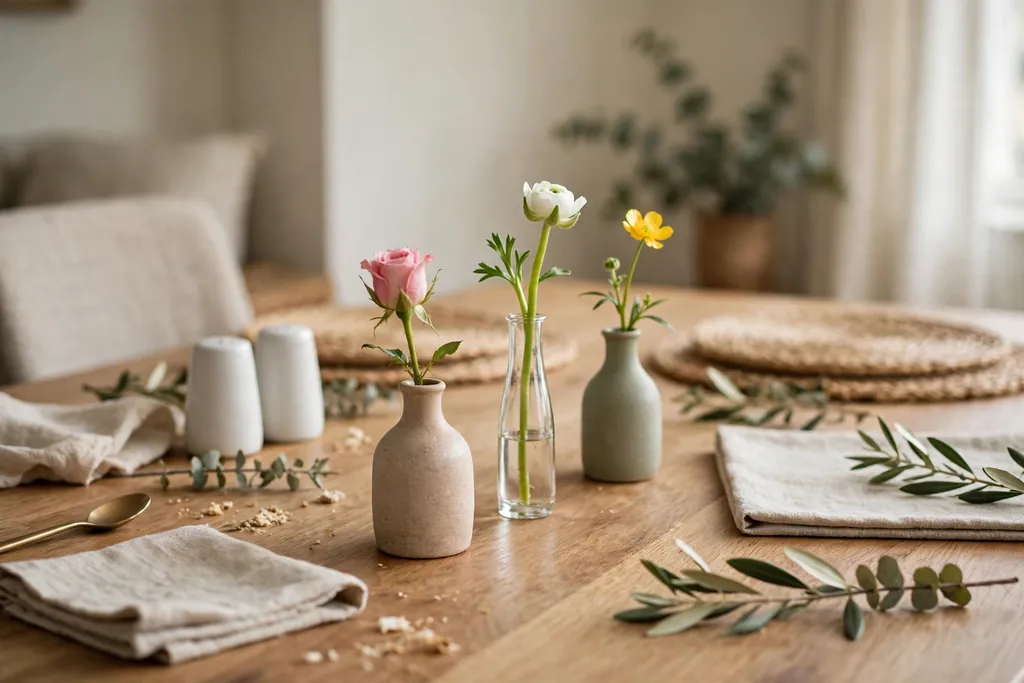
Set three small bud vases in a row down the center of the table, each holding one or two short stems of the same flower. The small scale suits a narrow table, a breakfast nook, or a windowsill, and each vase can move to a sideboard after the meal. Use vases of the same height for a matched row, or three heights with the tallest vase in the middle.
Keep the stems short, so each bloom sits just above the rim, and use the same flower in every vase for a calm look. Top up the water before guests arrive, since small vases run dry fast, and change it every two days if the row stays out through the week.
2. Mason Jar Garden Posy
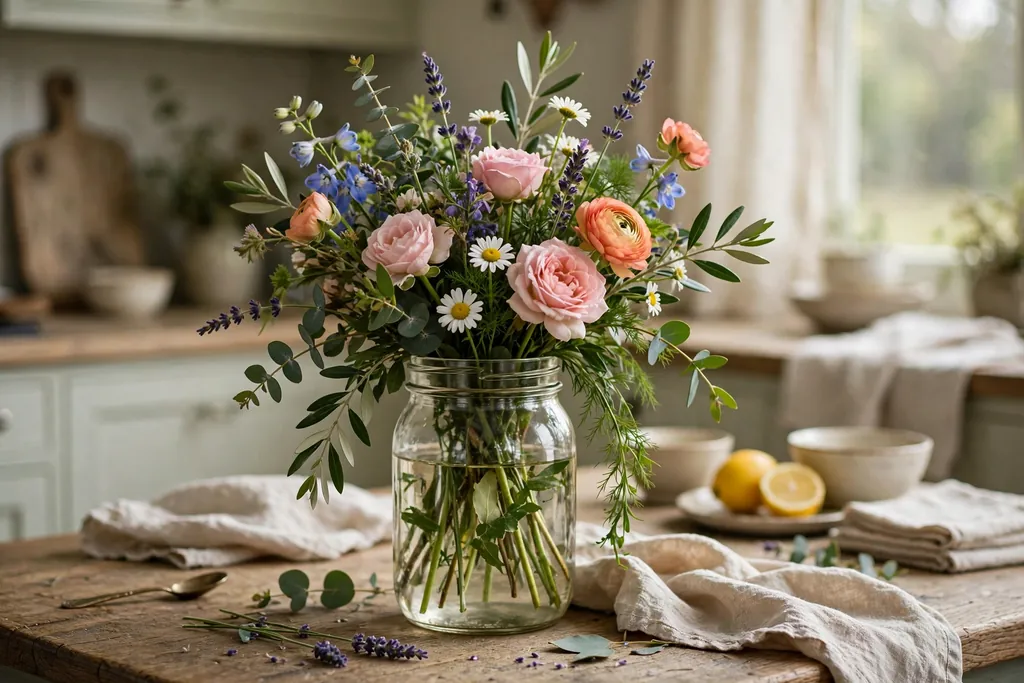
Fill a wide mouth mason jar with a small bunch of garden flowers, such as daisies, zinnias, and a few sprigs of greenery, trimmed to one height. The jar suits a kitchen table, a porch table, or a casual lunch, and it costs nothing if you already own jars. Tie a short length of twine around the neck for a plain finish, and keep the twine dry.
Trim stems so the blooms sit just above the rim, and keep the total height low enough to see across. Change the water every two days, and remove any stem that wilts, since one cloudy jar can spoil the group. If the jar will sit in sun, move it to indirect light so the water stays cool.
3. Low Bowl of Garden Roses
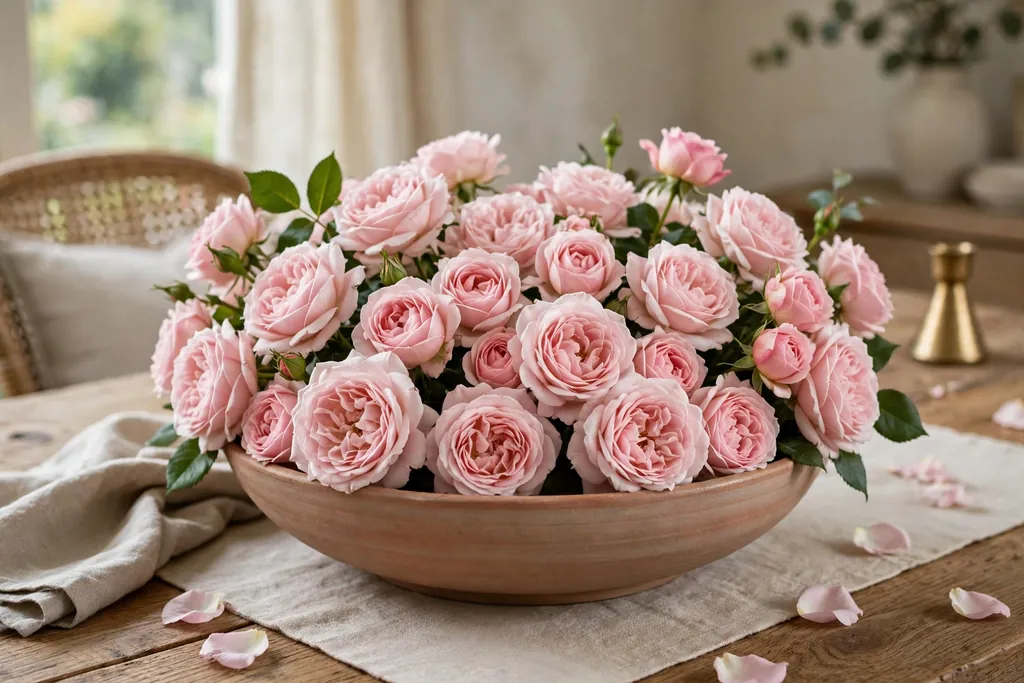
Fill a low, wide bowl with garden roses in one color, trimmed short, and add a few green leaves to soften the edges. The bowl shape keeps the roses low and round, so the table gains a clear focus without a tall arrangement blocking views. This idea suits a dining table, a coffee table, or a sideboard where guests see the flowers from above.
Set the bowl on a small mat if the table marks easily, and change the water daily for roses, which drink heavily. Remove any petal that drops into the water, and replace a drooping rose before guests arrive, so the bowl stays full and fresh.
4. Tulips in a Tall Glass Cylinder
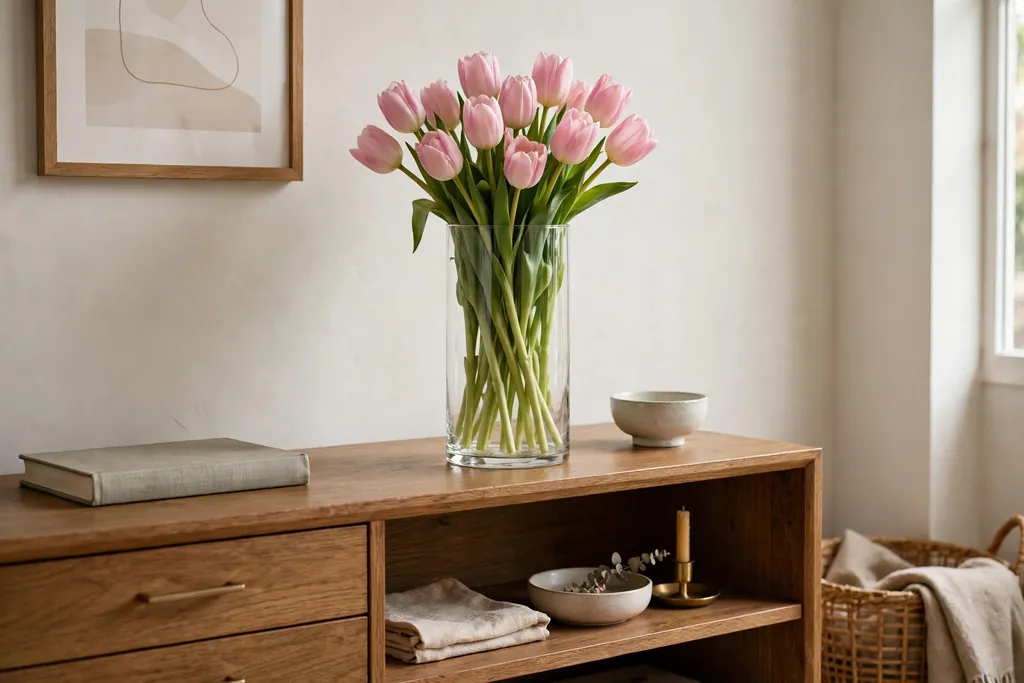
Stand a bunch of tulips in one color in a tall, straight sided glass cylinder, with the stems trimmed so the blooms sit well above the rim. The clear glass suits almost any plates or napkins you already own, and the single flower type keeps the look simple. This idea suits a console, a sideboard, or one end of a long table, where height is welcome.
Change the water every two days and trim a small piece off each stem at an angle when you refresh it, since tulips keep growing and can lean toward light. Keep the vase out of direct heat, and move a tulip that opens faster than the rest to a small bud vase, rather than letting it droop over the group.
5. Daisies in a White Pitcher
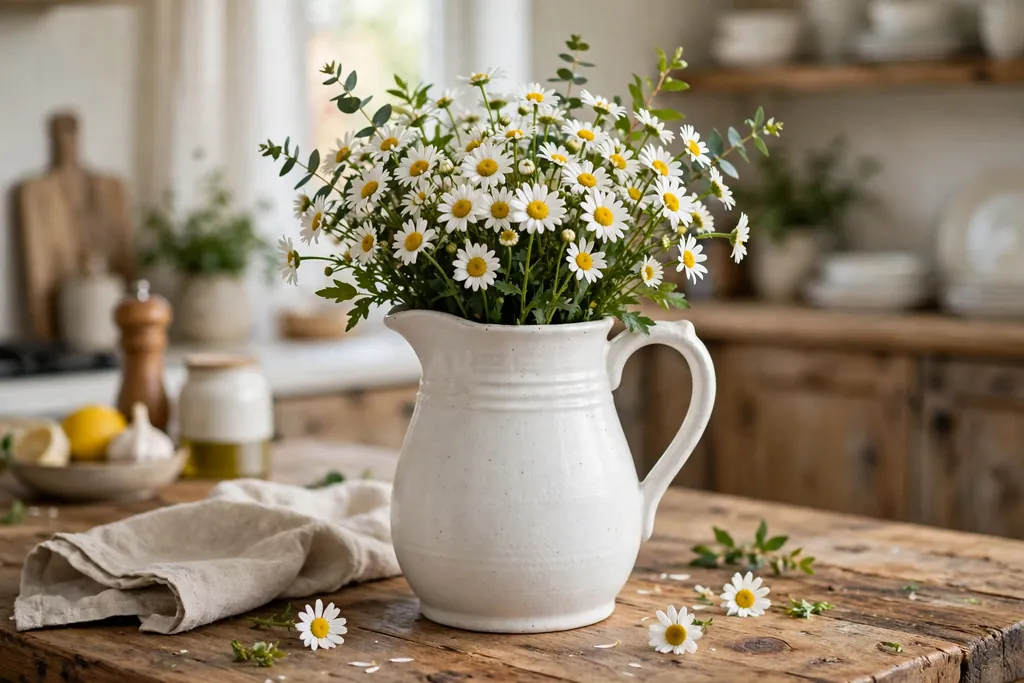
Fill a white ceramic pitcher with white or yellow daisies, trimmed to one height, and set it in the center of a kitchen table or on a sideboard. The pitcher shape suits a farmhouse or cottage room, and the handle makes the whole arrangement easy to lift off the table when serving needs the full surface. Use one flower type, so the white pitcher stays the second note, not a competing pattern.
Fill the pitcher only partway with water, so it stays steady when carried, and trim stems so the blooms sit just above the rim. Change the water every two days, and wipe the outside of the pitcher dry after watering, since drips show on white ceramic.
6. Sunflowers in a Tin Bucket
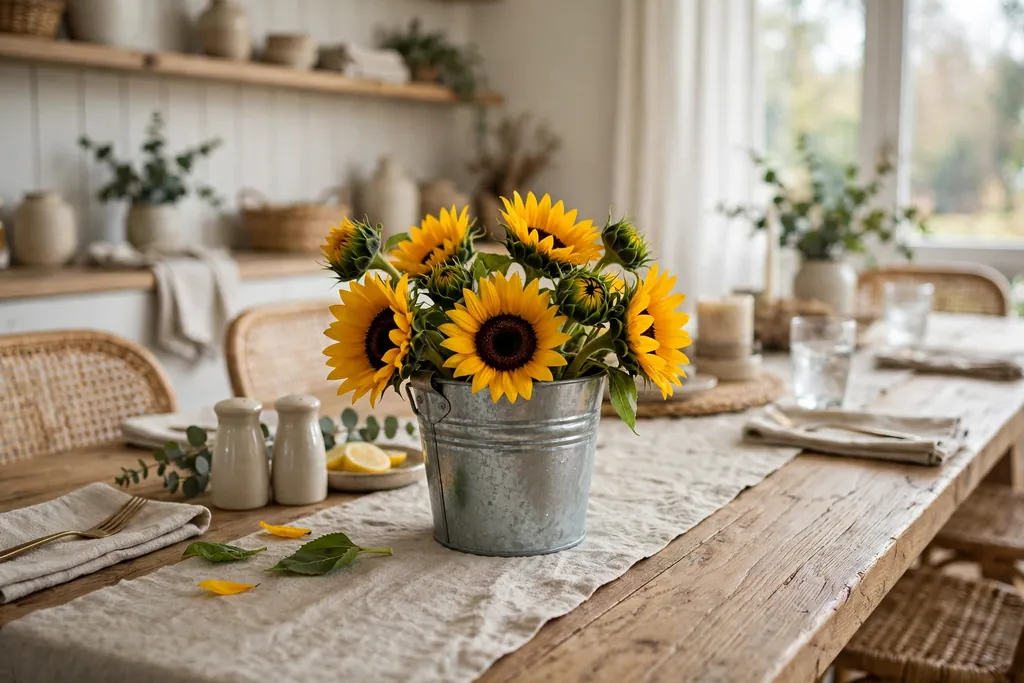
Set a small galvanized bucket or tin pail of sunflowers in the center of a long table, or at one end of a round table, for a clear summer note. Sunflowers give strong color with a single bunch, and the bucket keeps the stems contained and easy to move. Use one bunch for a small table, or two buckets at each end of a long table.
Trim stems so the flower heads sit below eye level when guests are seated, and fill the bucket with enough water to keep stems fresh through the meal. Weight the bucket with a stone in the bottom if the table is light, and move it to shade if the table sits in strong sun.
7. White Carnations and Eucalyptus in a Ceramic Vase
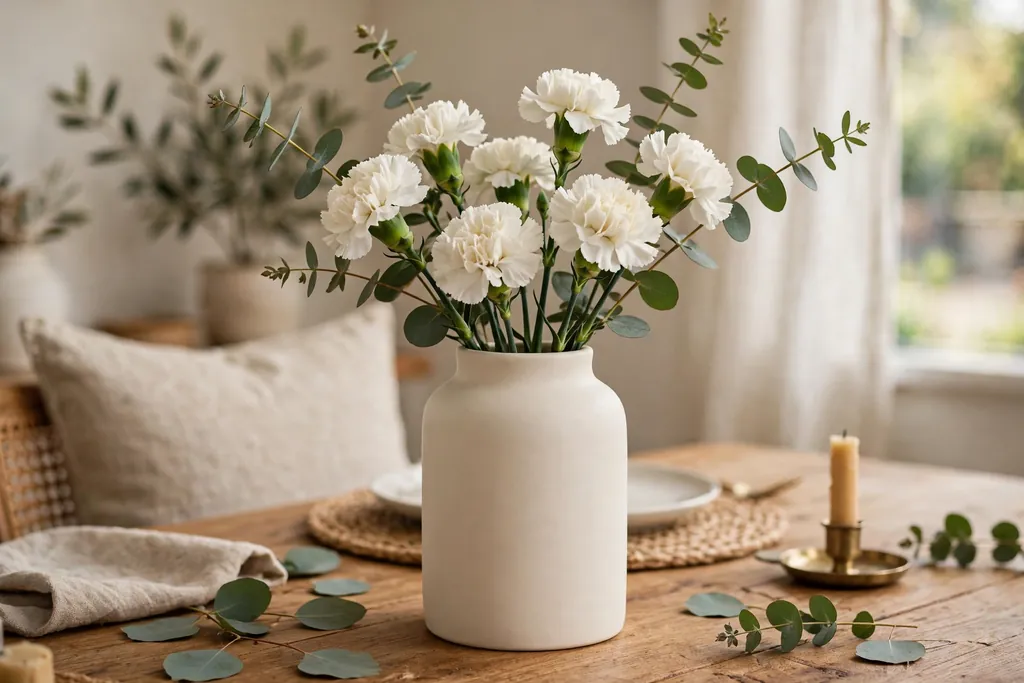
Stand white carnations and a few stems of eucalyptus in a plain ceramic vase, in white, cream, or pale grey, and set it on a dining table or a bedroom dresser. Carnations last well in water and hold their shape, so they help the arrangement look full for several days, and the eucalyptus adds scent and a soft green shape. This pairing suits a calm room, where a mixed bright bouquet might feel too loud.
Trim the eucalyptus so it stays inside the table area and does not brush plates or glasses. Change the water every two days, and trim carnation stems at an angle when you refresh them. If the vase feels light for the stems, add a few stones to the bottom to weight it.
8. Lavender Bundles in Small Glass Bottles
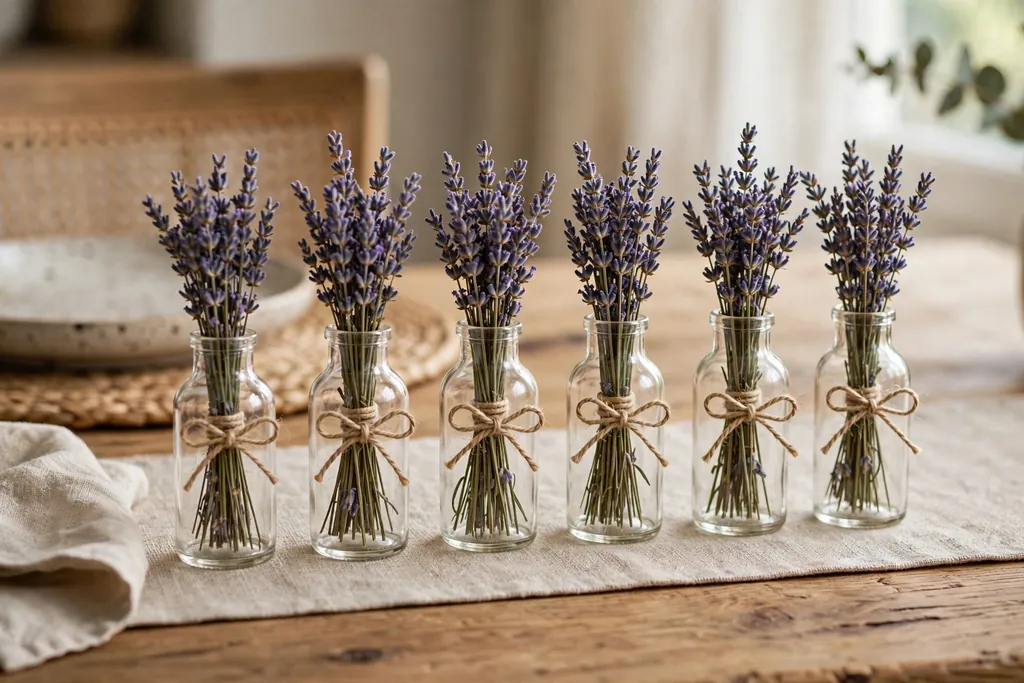
Tie small bundles of lavender with twine, and stand one bundle in each of three or four small glass bottles lined down the center of the table. The bottles suit a cottage table, a brunch gathering, or a bathroom shelf, and the lavender gives color and scent in one small step. Use bottles of the same shape for a matched line, or varied heights for a looser look.
Keep the bundles short, so the lavender sits just above the bottle rim, and top up the water before guests arrive, since small bottles run dry fast. Shake the bundles outside before bringing them in, and sweep the table after the meal if buds drop. For a no water version, use dried lavender in the same bottles.
9. Ranunculus in a Footed Compote Bowl
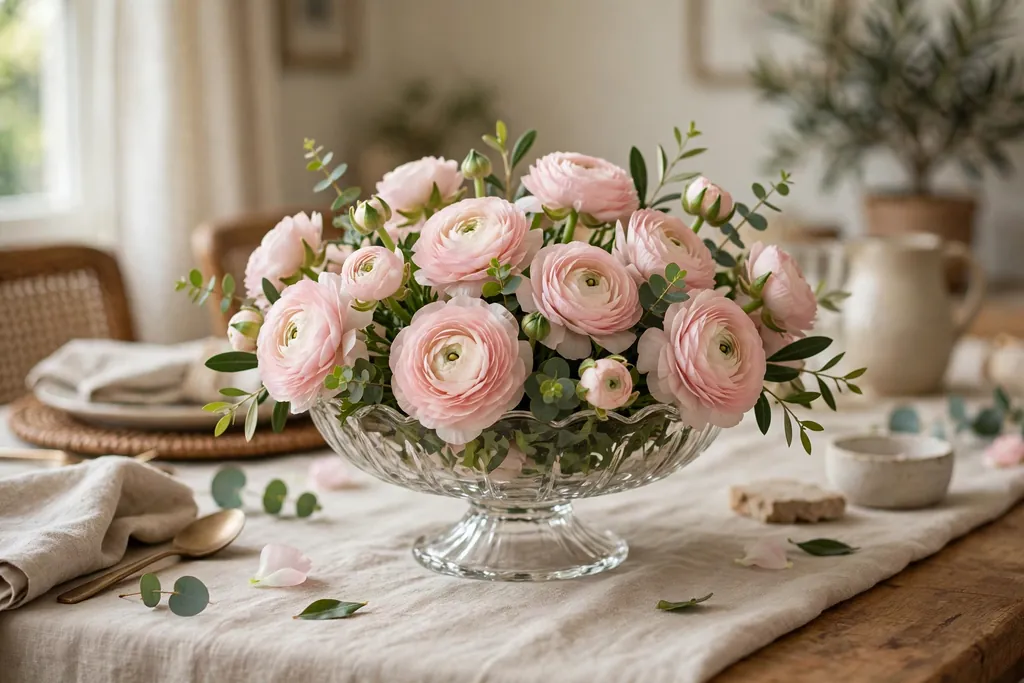
Fill a low footed compote bowl with ranunculus in one soft color, such as blush, cream, or pale yellow, trimmed short, and add a few small green leaves. The foot lifts the flowers just above the table surface, which suits a dressed up dinner, while the low bowl keeps sightlines open. This idea suits a dining room table or a sideboard, where guests see the layered petals from above.
Buy ranunculus slightly closed if the meal is two or three days away, since they open over a few days, and keep them in cool water out of direct heat. Mix the stems through the bowl rather than grouping one color at one side, and replace any stem that droops before guests arrive.
10. Hydrangeas in a Woven Basket
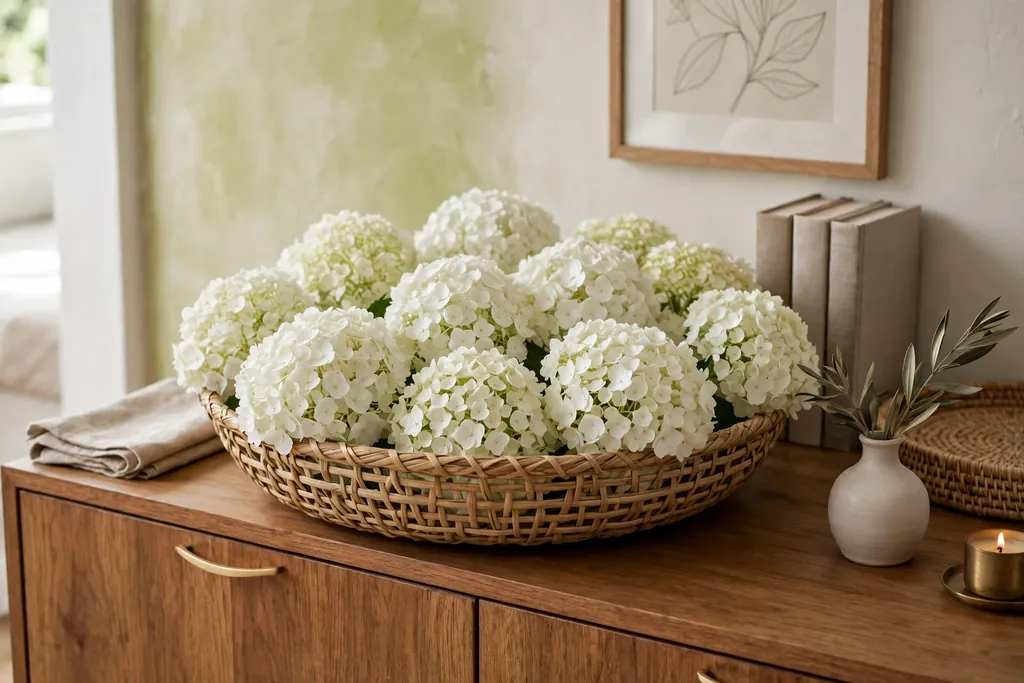
Line a shallow woven basket with a waterproof tray, set a jar of water inside, and fill it with hydrangea heads in one color, such as white, blue, or soft pink. The basket suits a sideboard, a coffee table, or a porch table, and the wide shape lets a few large heads fill the display with little arranging. Let one or two stems lean over the basket edge for a gathered look.
Check the water level daily, since baskets hide the jar from view, and keep the arrangement low enough to see over from a sofa. When the hydrangeas fade, lift the jar out and swap in fresh stems without rebuilding the whole display. Keep the basket out of damp rooms, so the weave stays dry.
11. Carnations in Vintage Teacups
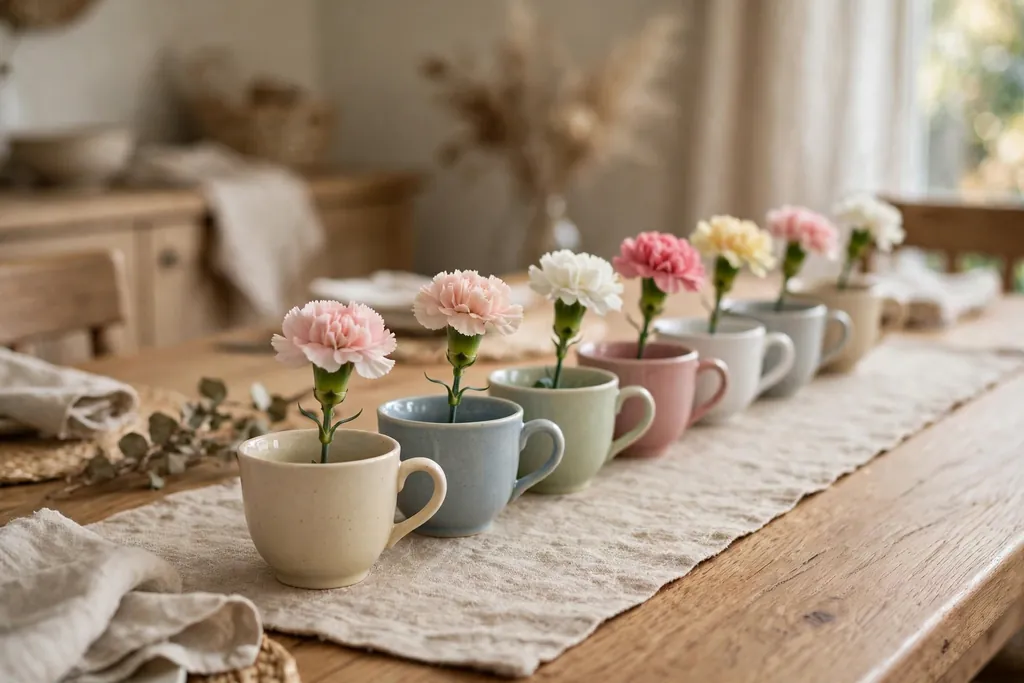
Set three or four small teacups down the center of the table, each holding one short carnation stem in water, with even spacing between cups. This idea suits a small table or an afternoon tea style meal, because each cup is a small focal point rather than one large arrangement. Use teacups of the same pattern for a matched row, or mix patterns in the same color family for a collected look.
Keep each stem trimmed so the bloom sits just above the cup rim, and top up the water before guests arrive, since teacups hold little. For a longer table, add more cups, but keep the spacing even, so the row reads as one centerpiece. Wash the cups after use, since flower water can stain pale china if left standing.
12. Wildflowers in a Low Wooden Crate
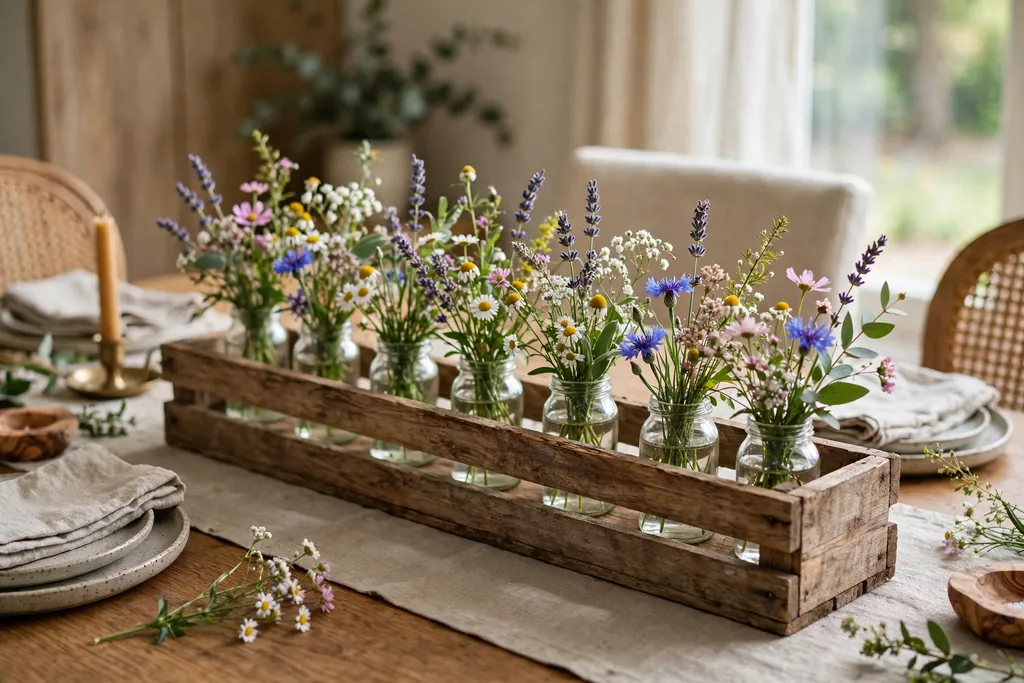
Fill four or five small jars with short stems of wildflowers, such as zinnias, cosmos, or daisies, and set the jars in a low wooden crate down the center of the table. The crate keeps the jars upright and lifts off in one move when the table needs to clear, and the group looks relaxed, which suits a brunch, a lunch, or a family dinner. Use jars of the same size for a matched group, or mix two sizes for a looser look.
Trim stems so the flowers sit just above the jar rims, and keep the total height low enough to see across. Add a few stones to the bottom of each jar to weight it, and change the water if the flowers will stay out for more than a day. Remove any stem that wilts, since one cloudy jar can spoil the group.
13. Single Orchid Stem in a Narrow Vase
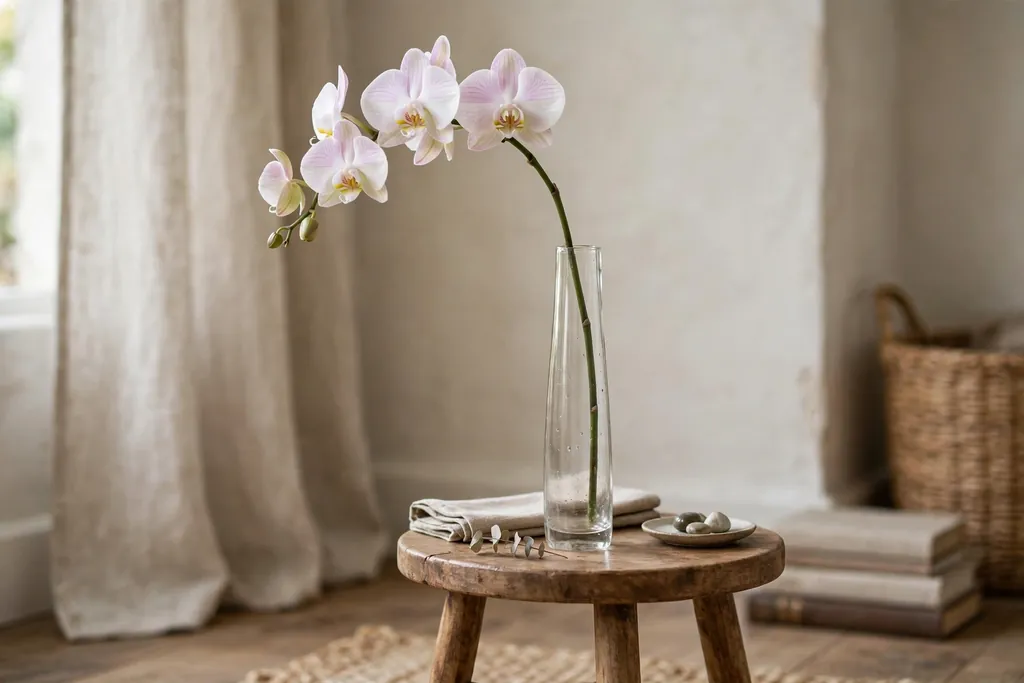
Stand one orchid stem in a tall, narrow vase, with a small amount of water, and set it on a small table, a bathroom shelf, or one end of a console. A single stem suits a small space, where a full bouquet would crowd the surface, and the slim shape leaves room for a tray, a candle, or a small stack of books beside it. Choose a heavy vase, so the tall stem cannot tip it forward.
Keep the vase out of direct sun and away from heat vents, and change the water every few days. If the stem leans, turn the vase a quarter turn each day, so the bloom faces the room rather than one wall. When the bloom fades, keep the vase for a fresh single stem, since the container suits this use year round.
14. Zinnias in Painted Tin Cans
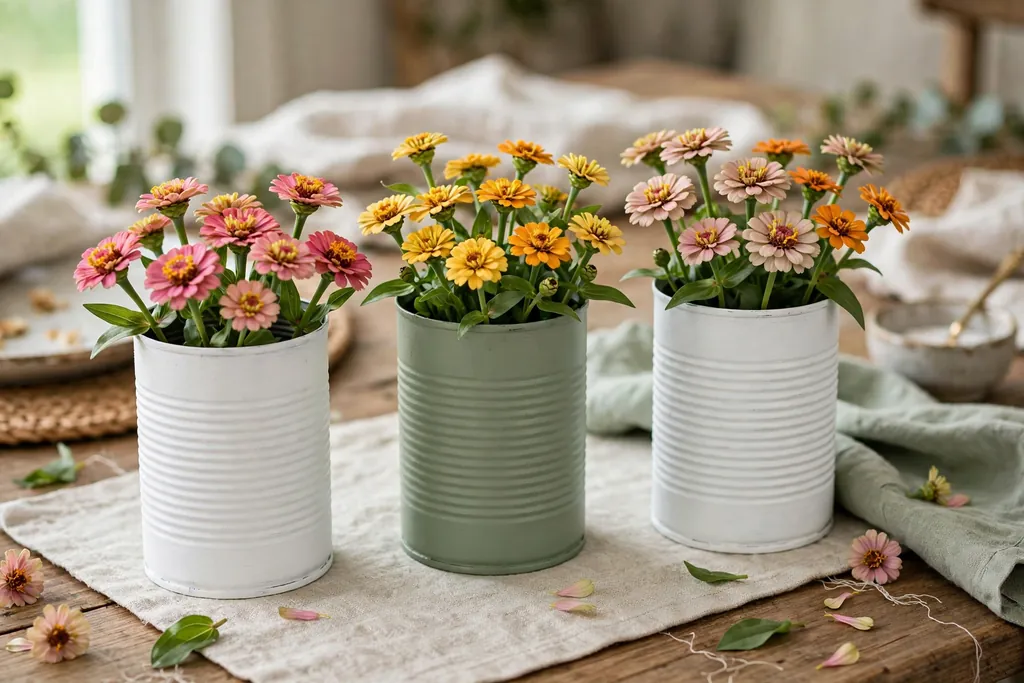
Clean three tin cans, paint them in one color such as white, sage, or terracotta, and fill each with short stems of zinnias, then set the cans down the center of the table. This idea costs little, reuses cans you already own, and suits a casual family gathering or a backyard lunch. Use cans of the same size for a matched group, and smooth any sharp rim before use.
Add a few stones to the bottom of each can to weight it, and trim stems so the flowers sit just above the rim. Change the water if the flowers will stay out for more than a day, and remove any stem that wilts. For a windy spot, set the cans on a tray, so the group lifts off in one move.
15. Roses and Greenery in a Wooden Dough Bowl
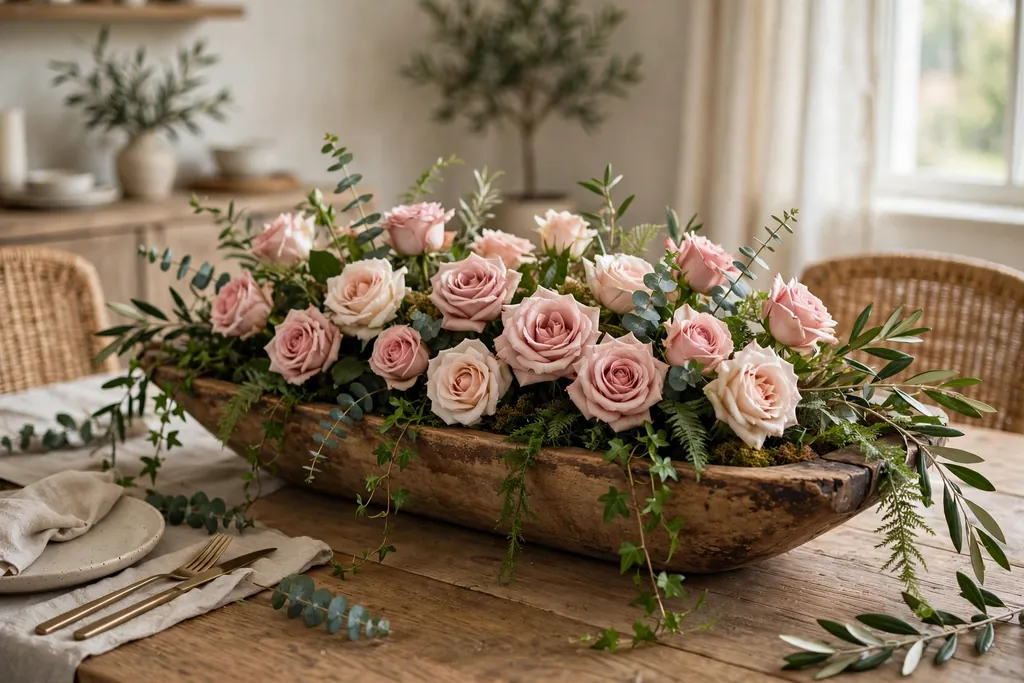
Fill a long, low wooden dough bowl with roses and trailing greenery, trimmed short, and set it down the center of a rectangular table. The bowl shape gives a full, low display along the table without height, and the wood suits a farmhouse dining room or a rustic kitchen table. Use roses in one color, with greenery in one or two tones, so the bowl reads as one plan.
Line the bowl with a waterproof tray or a jar, so water cannot mark the wood, and keep the tallest stem below eye level when guests are seated. Change the water every two days, and wipe the outside of the bowl dry after watering. For a longer table, repeat a smaller dough bowl at the far end, rather than stretching one bowl across the whole table.
16. Baby’s Breath in Tall Slim Vases
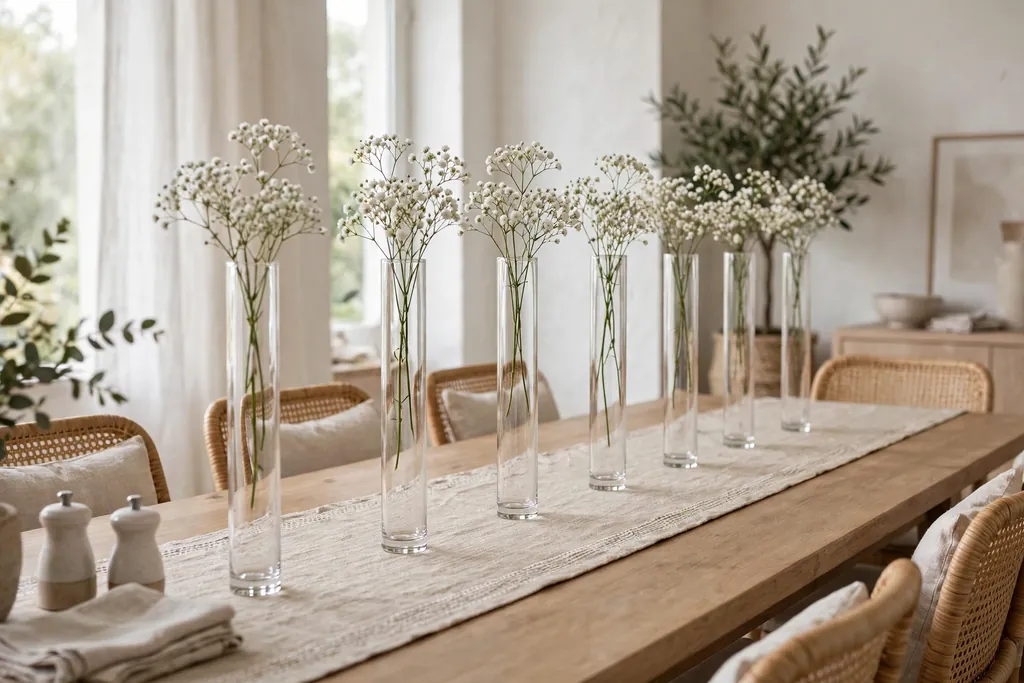
Stand small bunches of baby’s breath in three tall, slim vases, spaced down the center of the table, with the stems trimmed to one height. The fine white blooms suit a soft table, a wedding style dinner at home, or a room where a colorful bouquet would compete with patterned plates. Use vases of the same height for a matched line, or two heights set in an alternating pattern.
Keep the stems short enough to see over when guests are seated, and leave space between the vases, so serving dishes still fit. Change the water every two to three days, and shake the bunches outside before setting them out, since tiny blooms can shed. For a fuller look, add one rose stem to the middle vase only, and keep the outer vases plain.
17. Gerbera Daisies in a Square Glass Vase
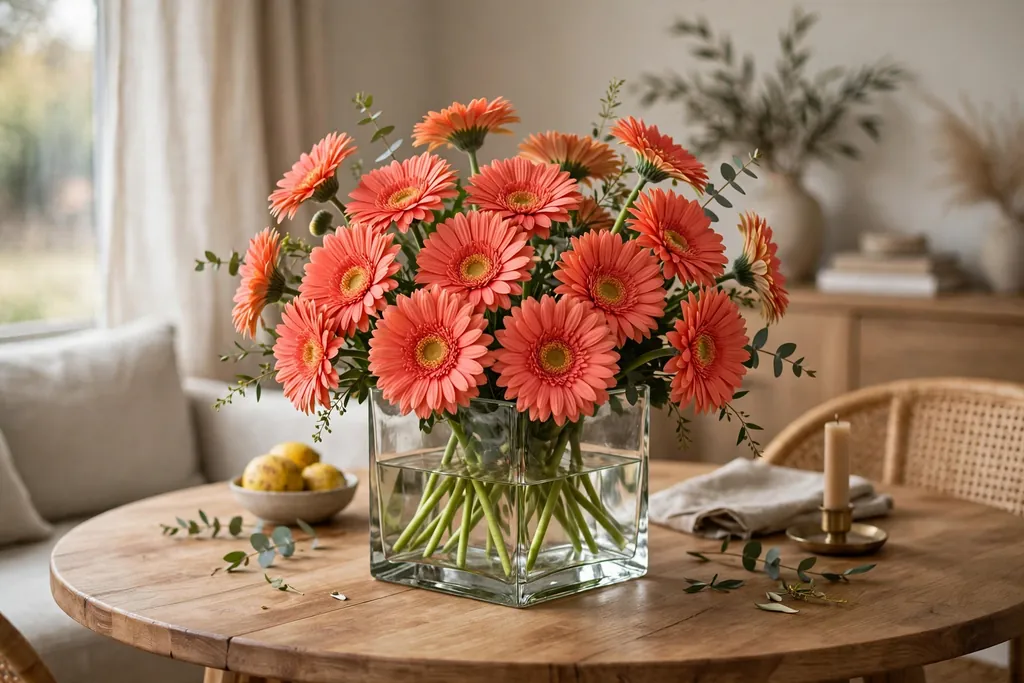
Fill a square glass vase with gerbera daisies in one bright color, such as coral, yellow, or pink, trimmed to one height, and set it in the center of a round table or a kitchen island. The square shape suits a modern room, and the single color keeps the look simple, even though gerberas are bold. Use one vase for a small table, or two matching vases for a long table.
Trim stems at an angle and keep them in cool water, since gerberas can droop if the water runs low. Change the water every two days, and support any stem that bends by trimming it shorter and moving it to the center of the bunch, where neighboring stems hold it upright.
18. Flower and Herb Mix in Terracotta Pots
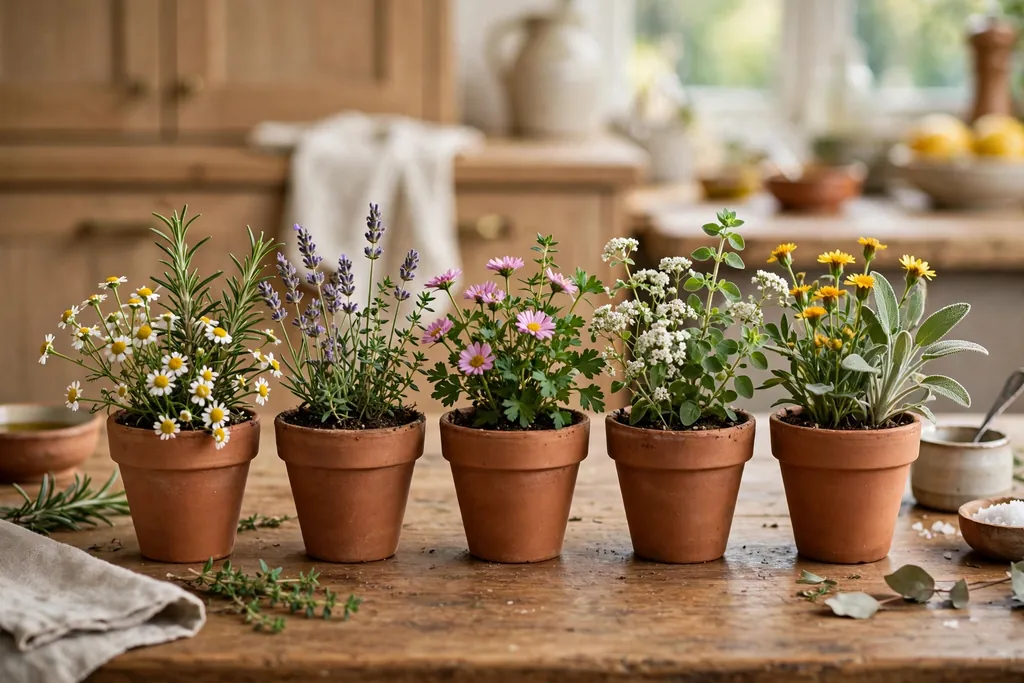
Group three small terracotta pots down the center of the table, each holding a small flowering plant or a short bunch of cut flowers mixed with herb sprigs, such as rosemary or mint. The pots suit a kitchen table or a brunch gathering, and they move back to a windowsill or garden bed after the meal. Use pots in one material, so the group reads as one display, even if the flowers differ.
Water potted plants before the meal and set each pot on a small saucer, so the table stays dry. Keep pots small enough to see over, and trim tall stems before guests arrive. Keep mint in its own pot, since mint can crowd out other plants in a shared planter.
19. Floating Blooms in a Shallow Dish
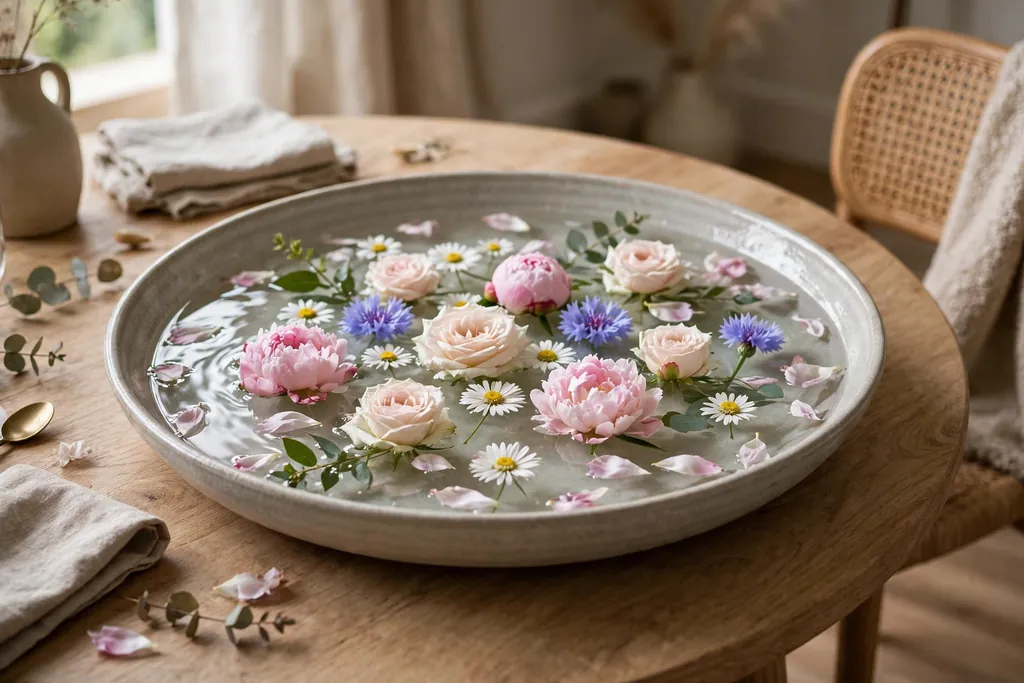
Fill a wide, shallow dish with water, and float a small number of flower heads, such as roses, dahlias, or gardenias, on the surface, with a few green leaves between them. The dish stays low, so this centerpiece suits a round table or a dinner for two, and it needs no arranging skill, since the water holds each bloom in place. Set the dish on a tray or mat, since water can splash when the dish is moved.
Fill the dish only three quarters full, and choose blooms with flat, open faces, so they sit steady on the water. Replace any bloom that sinks or browns before guests arrive, and carry the dish with both hands to the sink at the end of the evening. For a longer table, repeat the same dish at each end, rather than building one very large bowl.
20. Dried Flowers in a Stoneware Jug
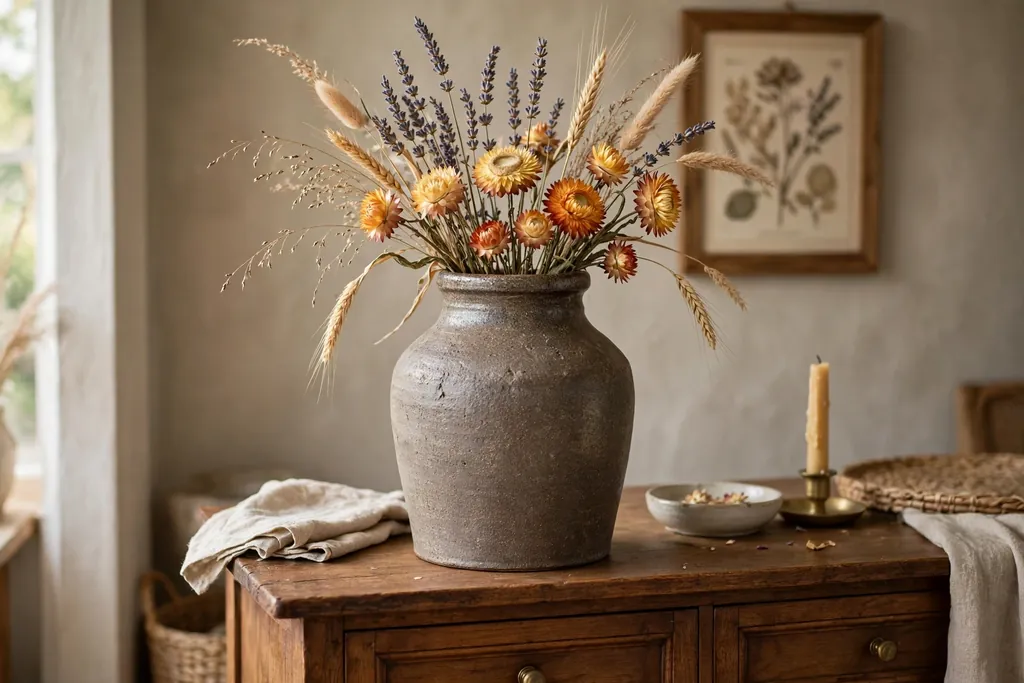
Stand a bunch of dried flowers, such as lavender, strawflowers, and grasses, in a heavy stoneware jug at the center of a table or on a sideboard. Dried flowers need no water and last for months, which suits a spot you rarely tend, such as a guest room, a high shelf, or a hallway console. Use a jug heavy enough to hold the bunch steady, and fan the stems out so the bunch fills the opening.
Keep dried flowers away from open flames and out of damp rooms, and dust them gently with a soft brush now and then. Shake the bunch outside to remove dust, and store it in a box between seasons to protect the stems. For a dining table, keep the bunch short, so it does not block sightlines.
21. Market Bunch in a Glass Milk Bottle
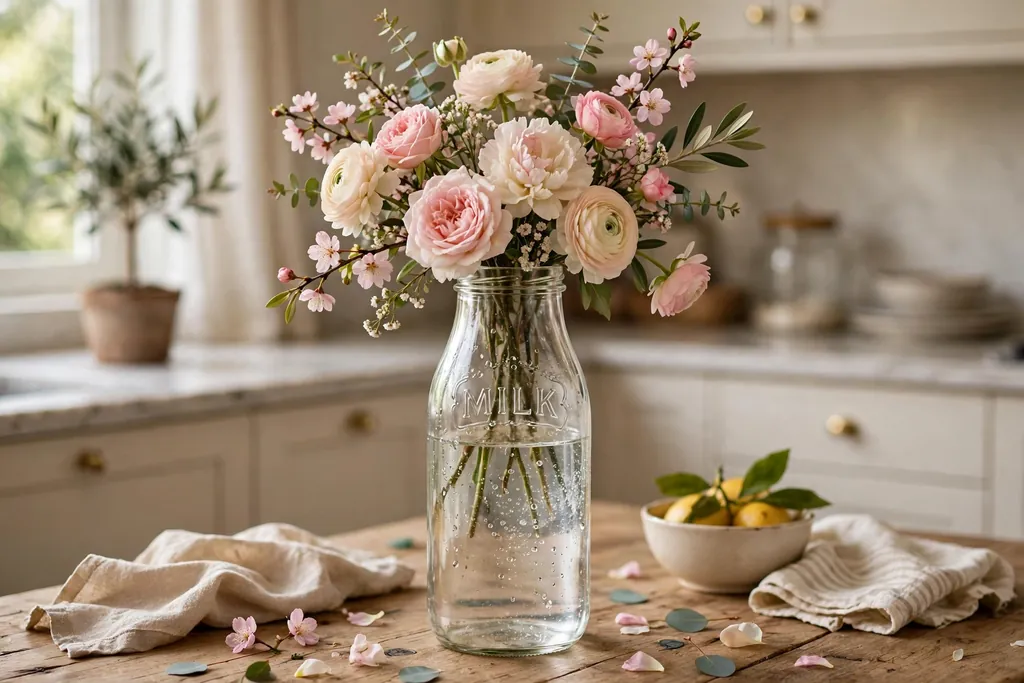
Stand a wrapped market bunch, such as mixed garden flowers in soft pink, cream, and green, in a tall glass milk bottle, with the paper wrap removed and the stems trimmed to one height. The bottle suits a kitchen table, a breakfast nook, or a bedside table, and the single bunch needs no extra arranging, which makes this the fastest centerpiece in the list. Use one bottle for a small table, or three bottles in a row for a long table.
Trim stems at an angle and remove leaves below the waterline before setting the bunch in the bottle. Change the water every two days, and remove any stem that wilts, so the bunch stays fresh through the week. If the bunch feels top heavy, add a few stones to the bottom of the bottle to weight it.
Conclusion
Simple flower centerpieces do not need a large bouquet or a new vase. One low container, a small number of stems, and a short trim will carry most tables, from a weeknight dinner to a small gathering with friends. Pick the ideas that fit your table size, your light, and your daily routine, and keep serving space in mind first. For holiday tables, see these Thanksgiving flower arrangements, and for a romantic table, see these Valentine centerpieces. Save this list, and work through it one idea at a time.
FAQs
What is the simplest flower centerpiece to make at home?
The simplest centerpiece is a single bunch of one flower type in a jar, pitcher, or bottle you already own, trimmed short and set in cool water. Start with one container and five to seven stems, keep the height below eye level when seated, and add greenery only if the bunch looks thin. This takes minutes, costs little, and suits almost any table.
How many stems do I need for a simple centerpiece?
Five to nine stems are enough for most simple centerpieces, with one focal flower and a few supporting stems or sprigs of greenery. A small table needs only one vase with five stems, while a long table suits three small vases with three stems each. Fewer stems also make the arrangement easier to trim, water, and replace when blooms fade.
How do I keep a flower centerpiece low enough to talk across?
Trim stems so the tallest bloom sits below eye level when guests are seated, and use a low, wide container such as a bowl, a crate, or a dough bowl for a dining table. Test the height by sitting at the table before guests arrive, and move any stem that blocks a face to the side of the group or to a bud vase at the table end.
How long will a simple fresh flower centerpiece last?
Most fresh centerpieces last five to seven days with cool water, a fresh angled trim every two days, and a spot out of direct sun and heat vents. Carnations and chrysanthemums often last longer, while tulips and peonies open fast and fade sooner. Remove spent blooms promptly, so they do not cloud the water or stain nearby petals.
Can I make a simple flower centerpiece with grocery store flowers?
Yes, a grocery store bunch works well for a simple centerpiece, since one bunch already holds a planned mix of focal blooms and filler. Remove the wrap, trim the stems at an angle, strip leaves below the waterline, and stand the bunch in a clean jar, pitcher, or bottle. Replace any stem that wilts, and keep the bunch in cool water out of direct sun.
What container works best for a simple flower centerpiece?
A low, wide container works best for a dining table, since it keeps flowers below eye level and stays steady when dishes are passed. Mason jars, pitchers, bowls, and crates all work well, as long as the container holds water or a jar that does. For a sideboard or console, a tall vase or a pitcher suits taller stems, since no one needs to see across it.