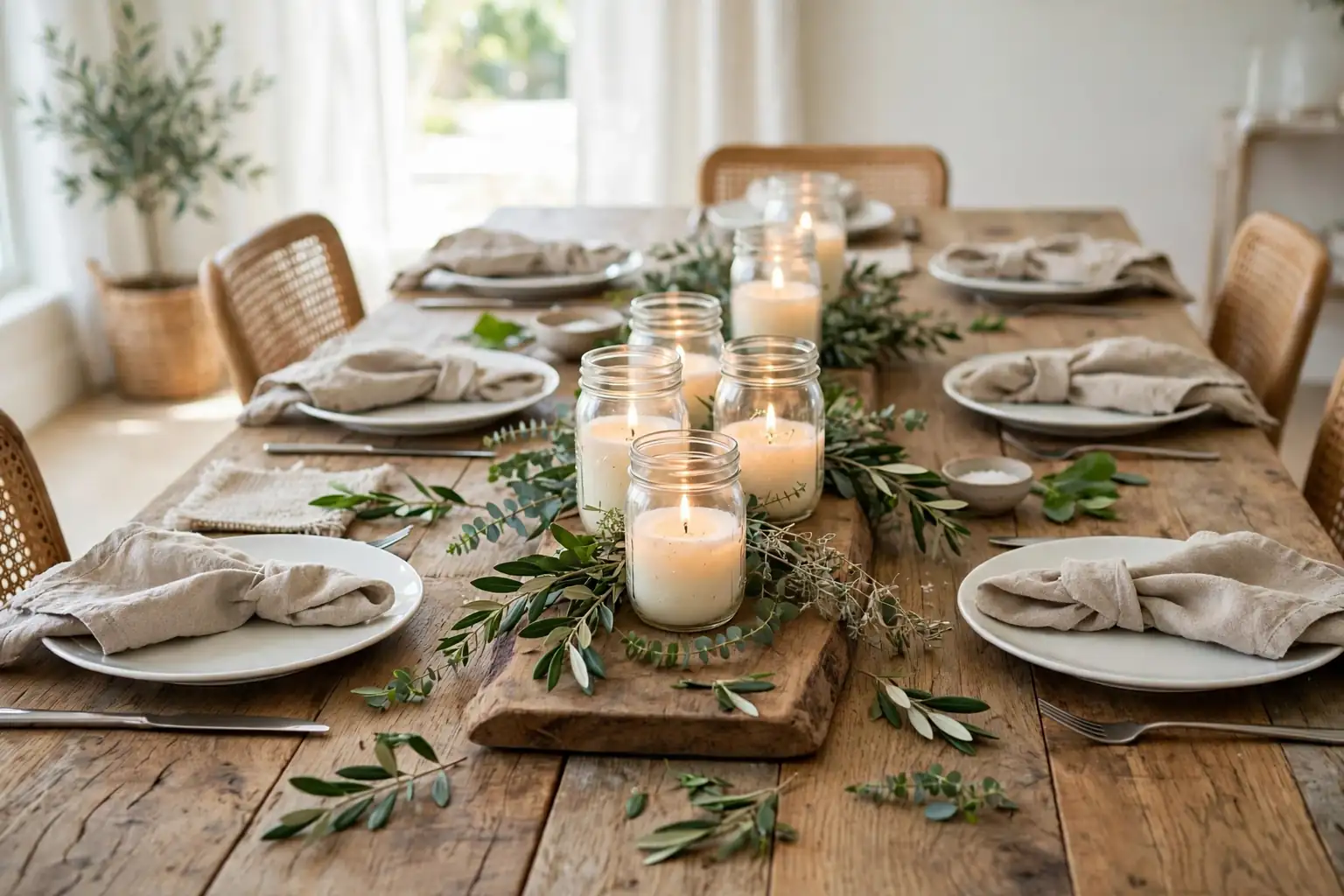
Affordable centerpieces work best when you start with pieces you already own, such as jars, trays, candles, and plain vases, then add one low-cost natural layer like greenery, fruit, or single stems. Keep the group low, narrow, and easy to lift off, so guests can talk across the table and serving dishes still fit.
Start with the table you already set: everyday plates, clear glasses, and a plain cloth or runner. Then add one centerpiece group, not three, and test the full setting before guests arrive. Leave room for serving dishes, keep flames in holders and clear of paper and fabric, and use battery candles near children, paper, or dried material. Many of these ideas use items from the kitchen, the garden, or a drawer, so the table can change for the next meal without a new purchase.
Key Takeaways
- Keep the centerpiece low and narrow, so guests can see each other and serving dishes still fit.
- Start with what you own: jars, trays, boards, candles, and plain vases carry most of these ideas.
- Use one main centerpiece group per table, and repeat one small palette at least twice for a finished look.
- Choose one low-cost natural layer, such as greenery, fruit, single stems, or stones, rather than several competing layers.
- Keep flames in holders, clear of paper, fabric, and dried material, and use battery candles near children or paper.
- Pick ideas that lift off in one move, so clearing the table stays quick after the meal.
1. Mason Jar Candles on a Wood Board
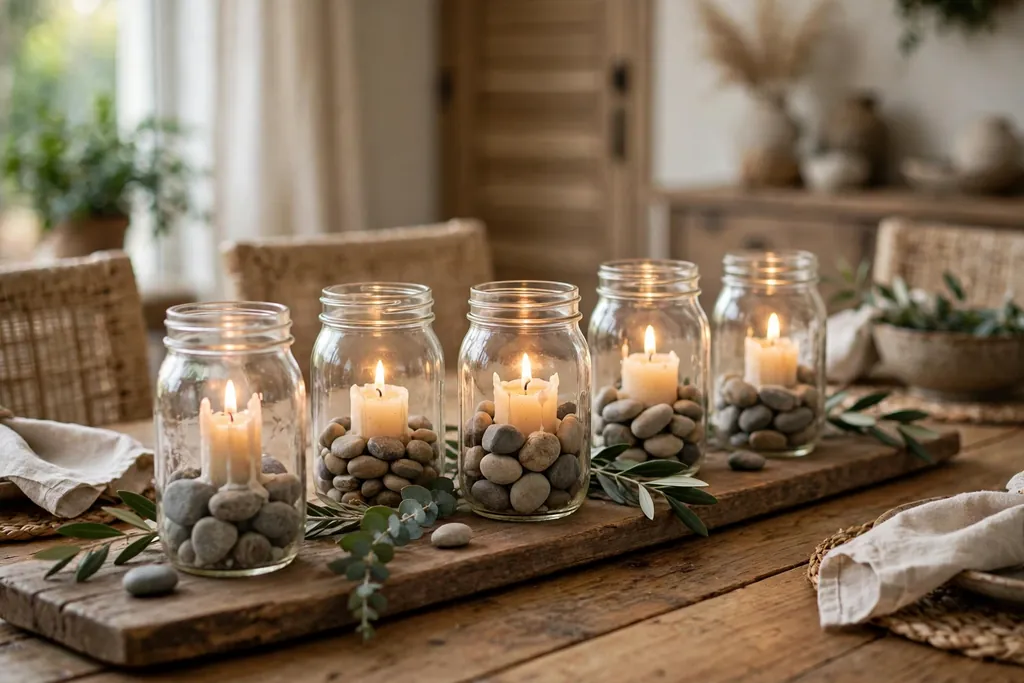
Set three mason jars on a long wood board down the center of the table, each holding a short candle in a holder or a battery candle, with a few stones in the bottom of each jar to weight it. The board keeps the group contained as one centerpiece, and it lifts off in one move when the table needs to clear. This idea suits everyday dinners as well as larger gatherings, because the jars and board are plain and easy to reuse.
Use jars of the same size for a matched look, or mix two sizes with the tallest jar in the middle. Wipe the glass before the meal, since fingerprints show more on clear glass in candlelight. For a table with children, use battery candles only, and keep real flames in proper holders on a stable surface, never left burning unattended.
2. Single Stem Bud Vases in a Row
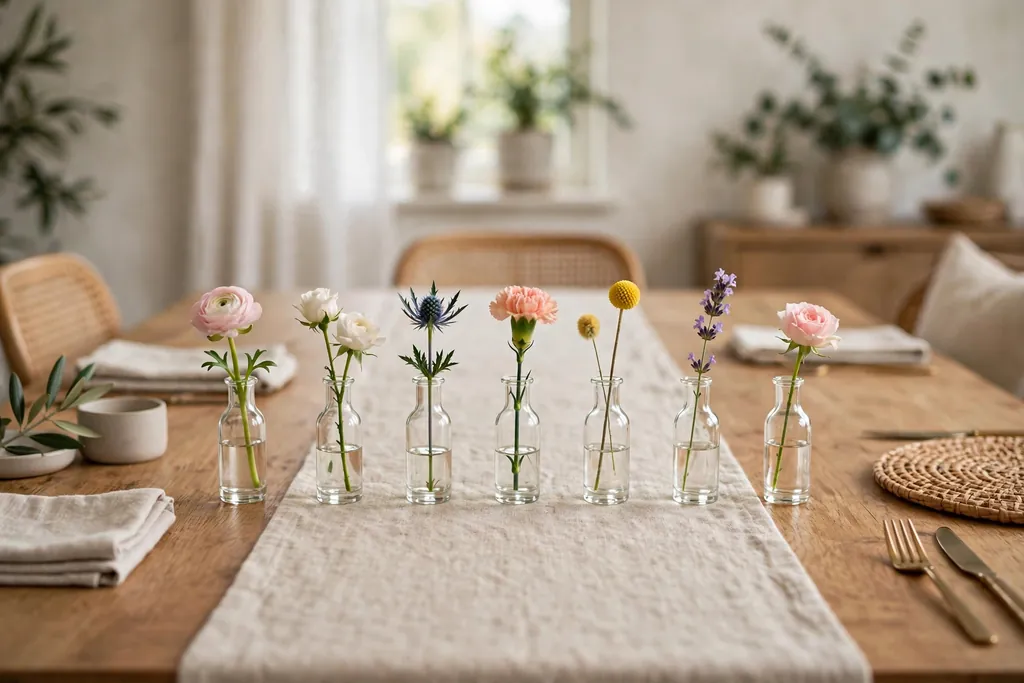
Set four or five small bud vases in a row down the center of the table, each holding one short stem, such as a rose, a carnation, or a sprig of greenery. One stem per vase keeps the flower cost low, while the row still reads as a full centerpiece. This idea suits a small table, a dinner for two, or a long table where a row can run the full length.
Use vases of the same shape for a matched row, or mix clear glass shapes in one height range. Trim each stem so the flower sits just above the vase rim, and change the water before guests arrive. If one stem wilts, swap that single stem rather than rebuilding the whole row.
3. Citrus Bowl for Everyday Meals
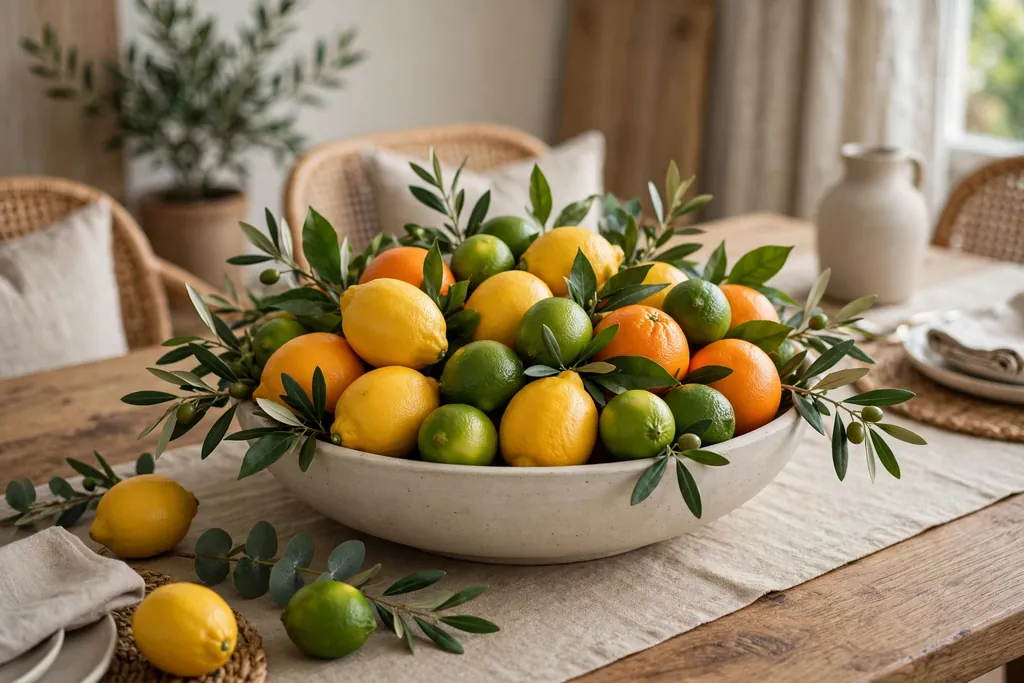
Fill a wide, shallow bowl with lemons, limes, and a few oranges, and set it in the center of the table as a centerpiece you can also cook with later. The fruit gives clear color and shape, and the bowl takes up only one spot, leaving the rest of the table free for plates and serving dishes. Add a few green leaves between the fruit to break up the round shapes.
Check the fruit before the meal and move any soft piece to the kitchen, since one spoiling lemon can mark the rest. Keep the bowl low and wide rather than tall, so it does not block sightlines. At the end of the meal, the bowl can move to the counter, which makes clearing the table a single step.
4. Potted Herb Row You Can Cook With
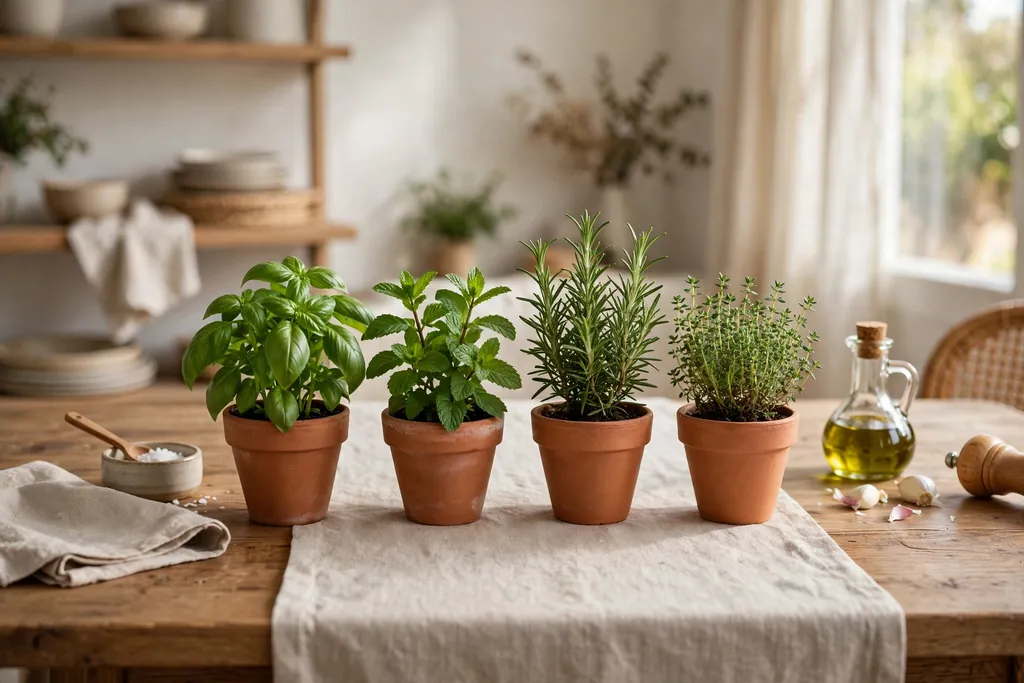
Group three or four small pots of basil, mint, rosemary, and thyme down the center of the table, so the centerpiece smells good, looks green, and can be snipped for cooking. Herb pots last far longer than cut flowers in a warm room, and they move back to a windowsill or garden bed after the meal. Use pots in one material, such as terracotta or white ceramic, so the group reads as one display.
Water the herbs before the meal and set each pot on a small saucer, so the table stays dry. Keep pots small enough to see over, and trim tall stems before guests arrive. Keep mint in its own pot, since mint can crowd out other herbs in a shared planter.
5. Floating Candles in a Wide Bowl
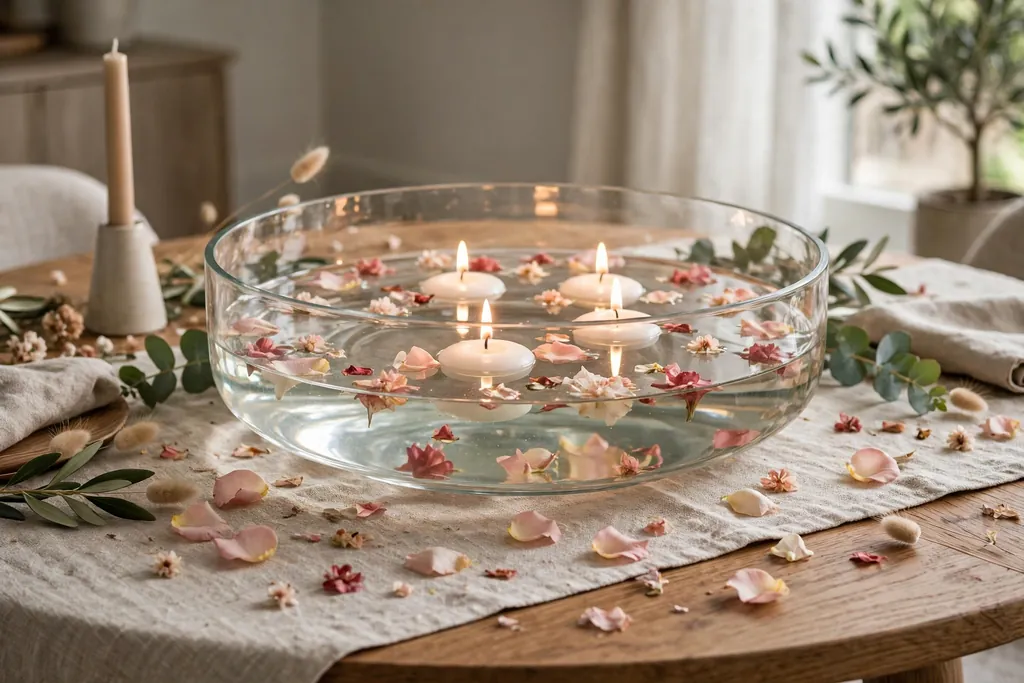
Fill a wide, shallow glass bowl with water, float two or three small floating candles on the surface, and scatter a few fresh petals or leaves around them. The water reflects the candlelight, and the bowl stays low, so this centerpiece suits a round table or a dinner for two. It needs no flowers at all, which keeps the cost down for an evening meal.
Set the bowl on a tray or mat, since water can splash when the bowl is moved, and fill it only three quarters full to leave room for the candles. Use floating candles made for water, not ordinary tea lights, and keep petals clear of the flames. At the end of the evening, lift the candles out first, then carry the bowl to the sink.
6. Garden Greenery Runner
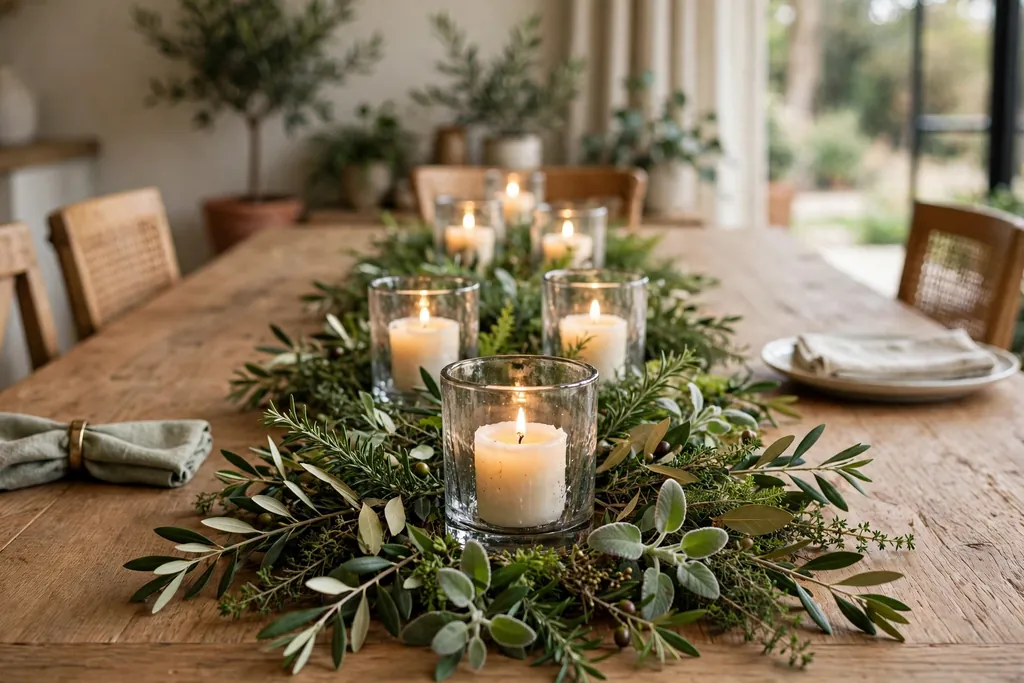
Lay a low runner of greenery down the center of the table, using clippings from the garden, such as eucalyptus, olive branches, or plain green leaves, then set short candles in heavy holders along it at uneven intervals. The greenery gives color along the whole table without height, and the heavy holders stay put. This idea suits a long table, where one long centerpiece reads better than several small groups.
Trim the runner so it stays inside the table edges and does not brush plates or glasses. Keep real flames clear of the leaves, and use battery candles if the runner will sit near fabric or dry material. Shake the branches outside before laying them out, and remove any shedding leaves before the meal.
7. Painted Tin Cans with Garden Flowers
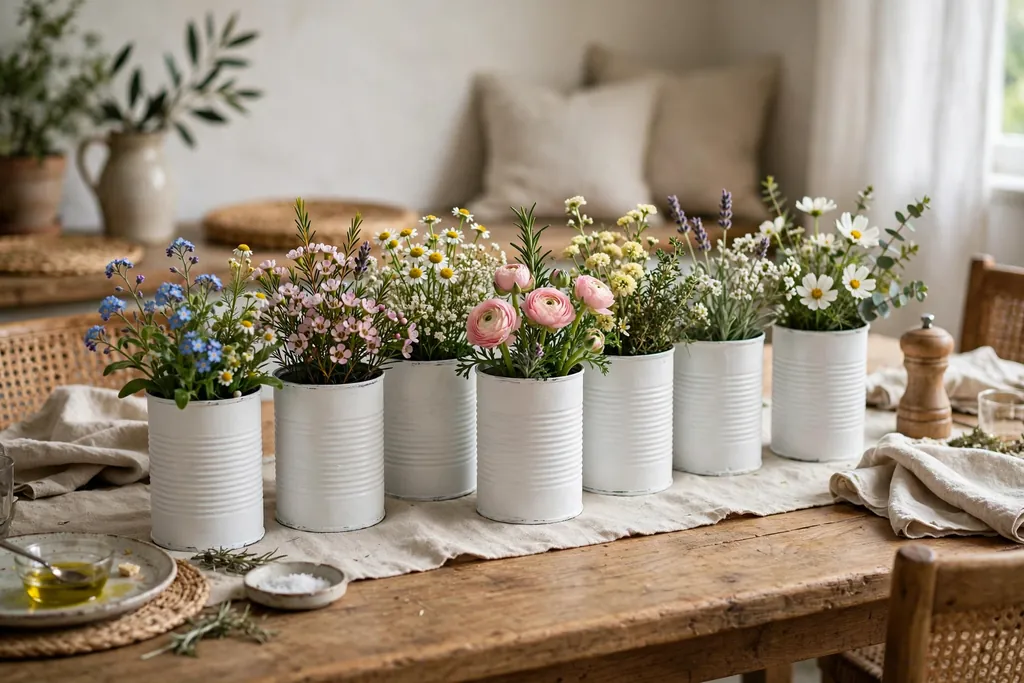
Clean three tin cans, paint them in one color such as white, sage, or terracotta, and fill each with short stems of garden flowers, then set the cans down the center of the table. This idea costs little, reuses cans you already own, and suits a casual family meal or a backyard lunch brought indoors. Use cans of the same size for a matched group, and smooth any sharp rim before use.
Add a few stones to the bottom of each can to weight it, and trim stems so the flowers sit just above the rim. Change the water if the flowers will stay out for more than a day, and remove any stem that wilts. For a table that needs to clear fast, set the cans on a tray, so the group lifts off in one move.
8. Paper Bag Luminaries with Battery Candles
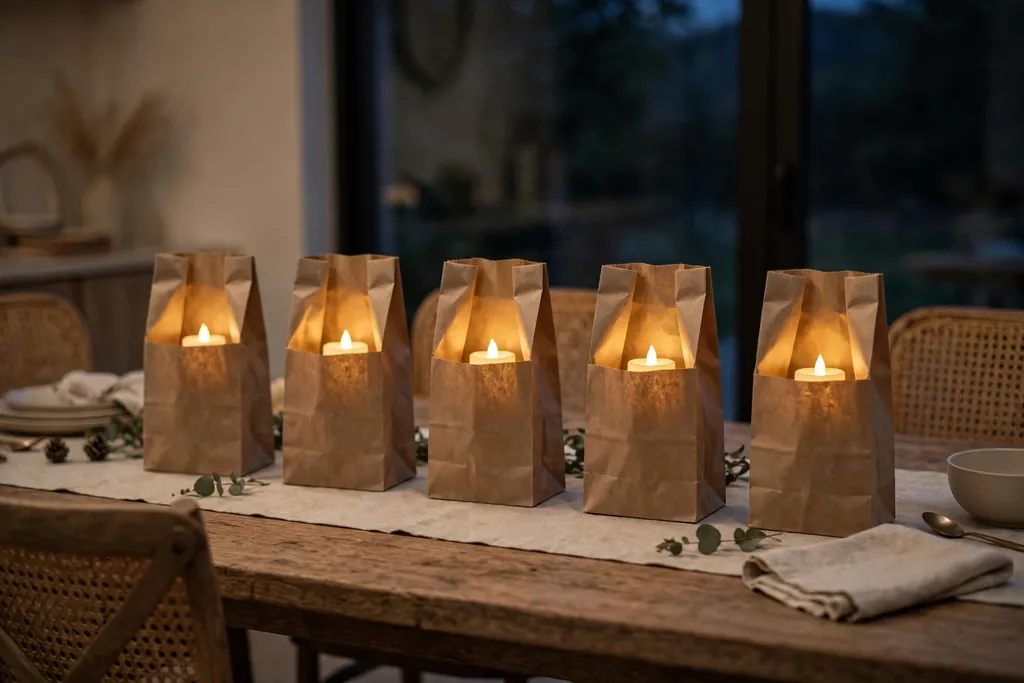
Fold down the top of three plain paper bags, set a battery candle inside each one, and place the bags down the center of the table for a soft evening glow. The bags cost little, store flat, and suit a casual evening meal, because the light through the paper looks warm without a large arrangement. Use plain bags in one size, and keep the folded edge even across all three.
Use battery candles only in paper bags, never a real flame, and keep the bags clear of the stove, heaters, and serving dishes that give off heat. Switch the candles on before guests sit down, and keep spare batteries nearby if the gathering will run late. For a daytime meal, leave the lights off and let the plain bags and a few leaves beside them carry the look.
9. Stacked Books with a Candle and a Small Plant
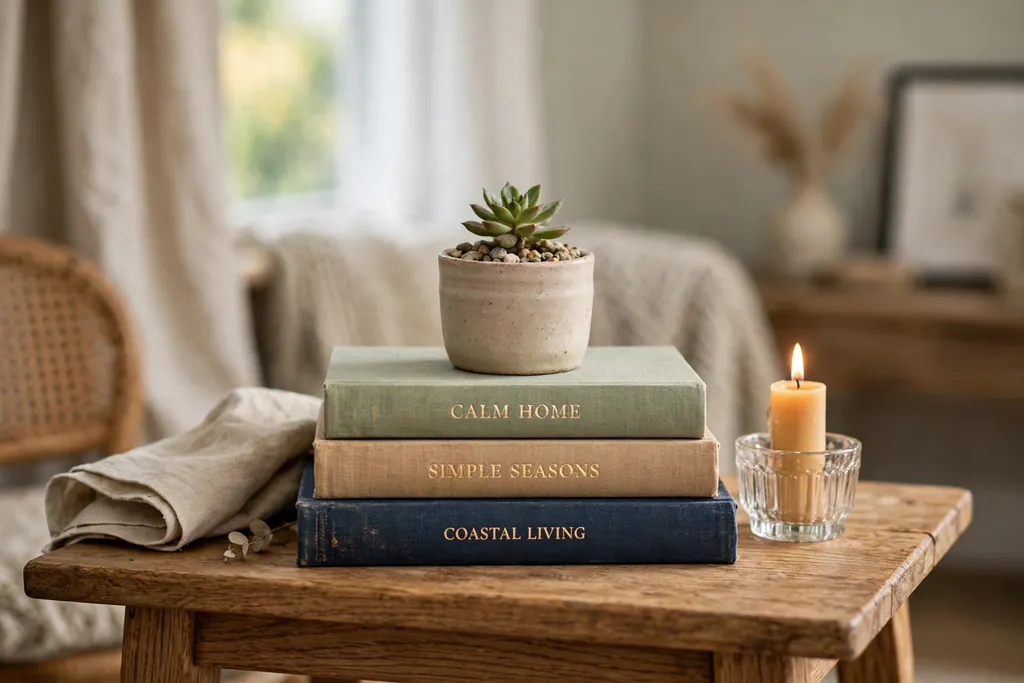
Stack two or three books on the table, top the stack with a small potted plant or a short candle in a holder, and set the stack in the center of a small table or at one end of a long table. The books add height without a tall vase, and the stack uses items already on a shelf. This idea suits a reading room table, a small dining table, or a side table set for two.
Leave at least half the table surface clear for plates and glasses, and choose books with plain covers in colors that match the table. Set a small plate or coaster under the candle holder, so wax or water does not mark the top book. Rotate the books by color when the season changes, and keep the plant small enough to see over.
10. Fruit and Candle Tray
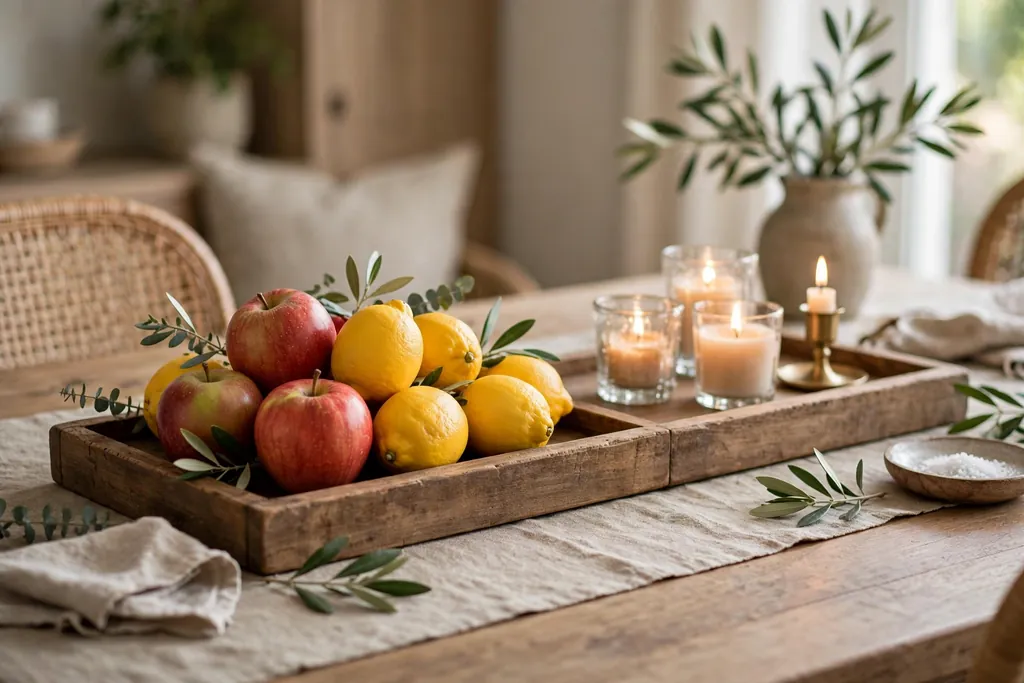
Set a tray down the center of the table, fill one side with apples, pears, or lemons, and place two or three short candles in holders on the other side of the tray. The tray keeps the group contained, the fruit gives color, and the candles give evening light, all in one low group. This idea suits autumn and winter tables, when fruit bowls already sit in the kitchen.
Use a tray with a raised edge, so fruit does not roll when plates are set down. Keep candles in holders, clear of the fruit stems and any paper, and use battery candles near children. Check the fruit before the meal, and move any soft piece to the kitchen. At the end of the meal, the tray lifts off in one move, and the fruit goes back to the kitchen.
11. Painted Glass Bottles as Candle Holders
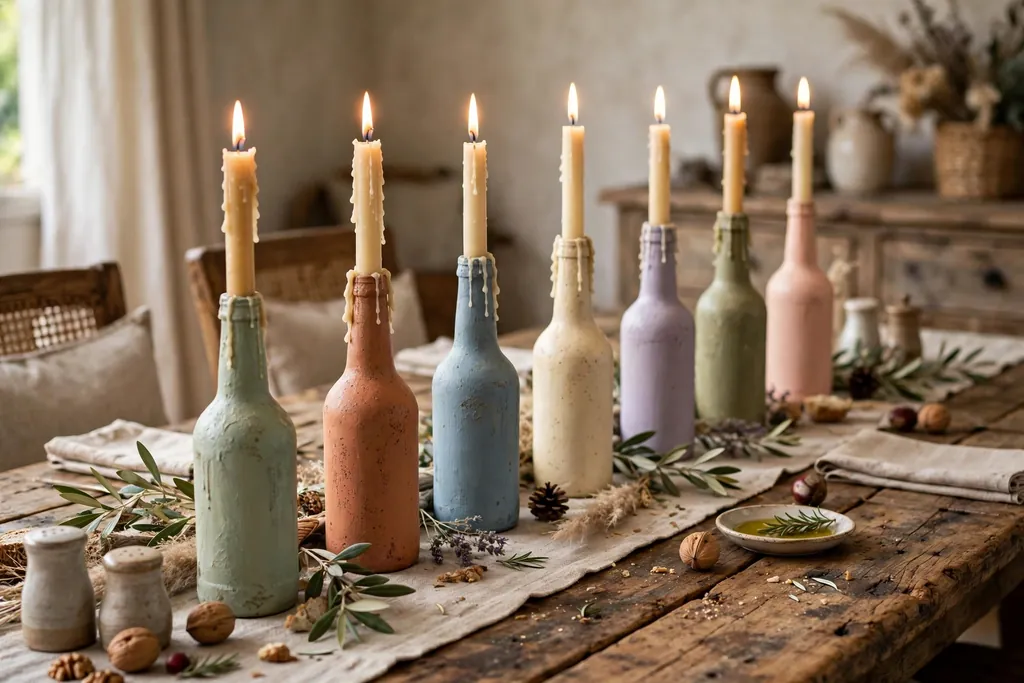
Clean three glass bottles, paint them in one color or leave them clear, and use them as candle holders with taper candles fitted snugly, or set short candles beside them on a tray. Bottles you already own give height and color without buying new vases, and the group stays narrow enough to see across. This idea suits a rustic table, a casual dinner, or a gathering where matching vases would cost more than the meal allows.
Check that each bottle sits level and that tapers fit snugly, so candles do not lean or drip onto the table. Use a tray under the bottles if wax drips are a concern, and trim wicks before lighting. For a table with children, use flameless tapers in the same bottles for the same shape without a flame.
12. Terracotta Pots with Seasonal Flowers
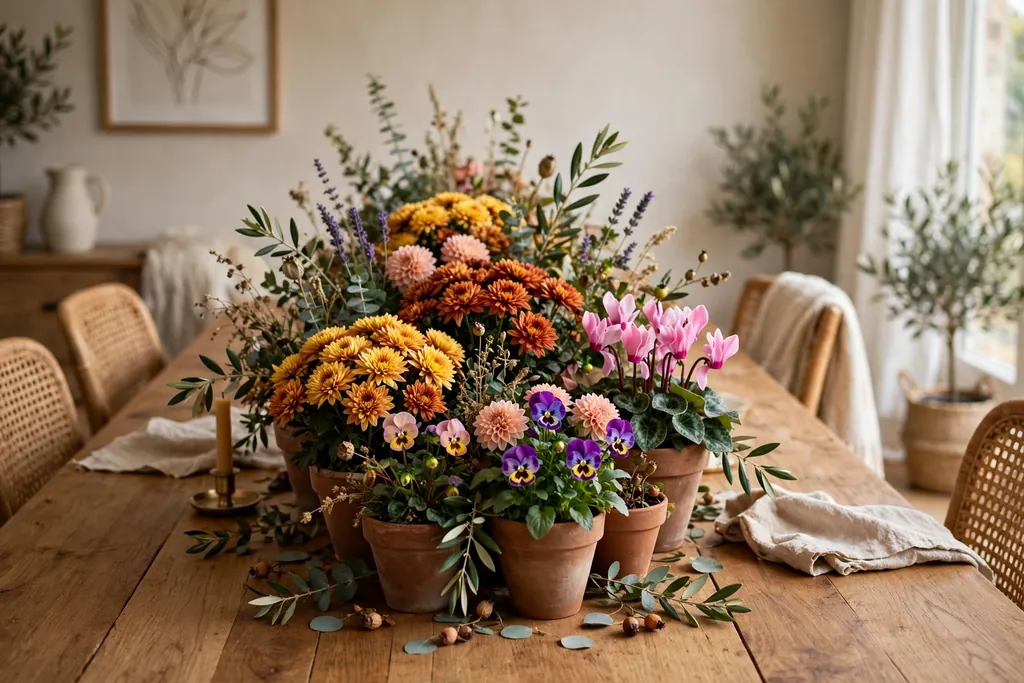
Group three terracotta pots of seasonal flowers down the center of the table, so the centerpiece brings real garden color at a low cost. Terracotta suits white, cream, and wood tables, and the pots can move back outside or to a windowsill after the meal, where the plants keep growing. Use pots in one size for a matched group, or one larger pot with two smaller ones.
Water the plants before the meal and set each pot on a saucer, so the table stays dry and soil does not mark the cloth. Trim spent blooms before guests arrive, and keep pots clear of elbows and serving dishes. If blooms drop petals, shake the pots outside before bringing them in, and sweep the table after the meal.
13. Pebble and Candle Bowl
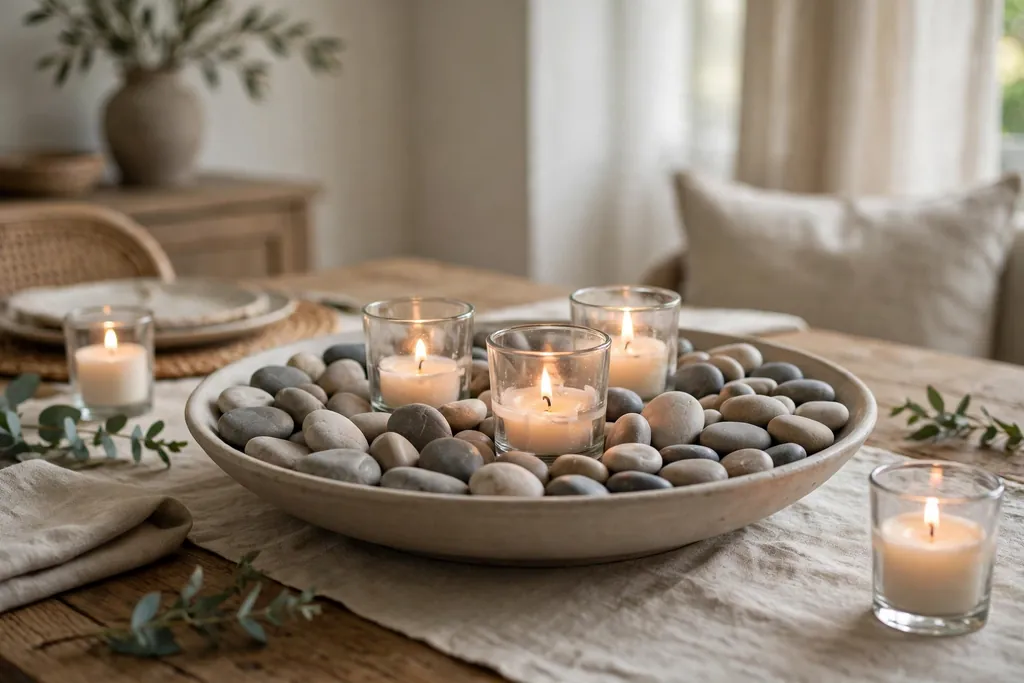
Fill a wide, shallow bowl with smooth pebbles or river stones, and set two or three short candles in glass holders among the stones, so the centerpiece stays heavy, low, and steady. The stones weight the bowl, and the candles give evening light without a tall arrangement that could topple. This idea suits a neutral table, where natural shapes and candlelight carry the look.
Use stones large enough to stay put, and keep candles in holders, clear of any fabric or paper. Wipe stones clean before setting them out, since dust shows on smooth stone in daylight. For a table with young children, use battery candles in the same holders for the same look without a flame.
14. Scrap Fabric Runner Down the Center
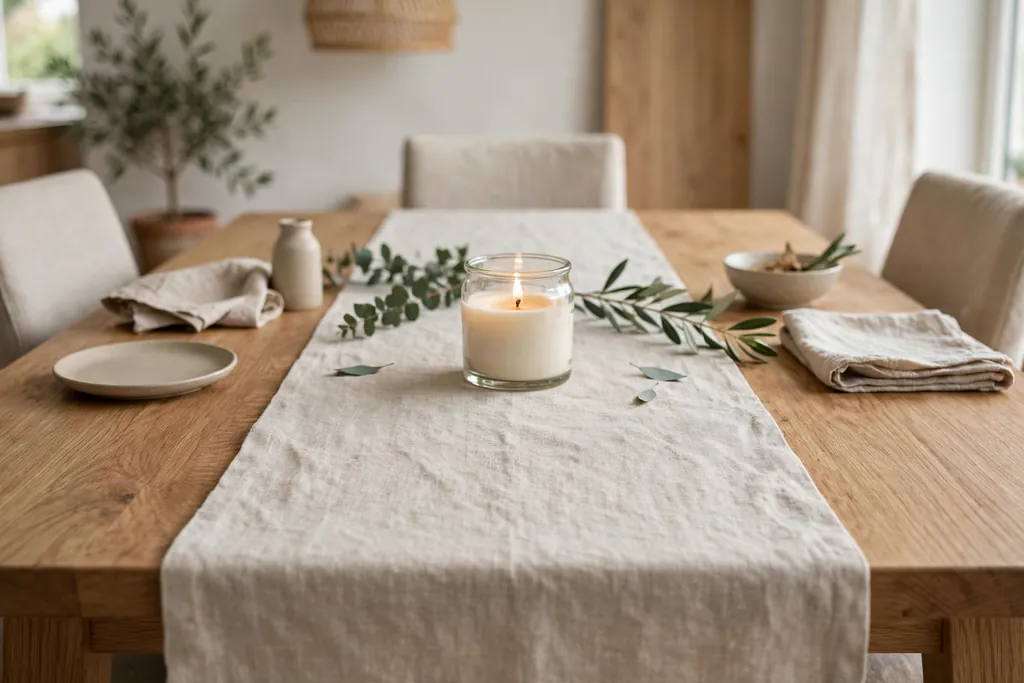
Lay a length of fabric you already own down the center of the table, such as a plain linen cloth, a cotton scarf, or a remnant in one calm color, and set one low group on top, such as jars, a bowl, or a small plant. The fabric gives the table a finished base without buying a new runner, and it washes easily after the meal. This idea suits tables where the cloth or runner carries most of the color.
Lay the fabric so it hangs evenly at both ends or sits flat inside the table edges, then center the group on it. Keep the fabric flat under plates if it runs wide, or keep it narrow so plates sit on the bare table. Iron or smooth the fabric before a gathering, since creases show more on a plain length than under a patterned cloth.
15. Pinecones and Candles on a Plain Runner
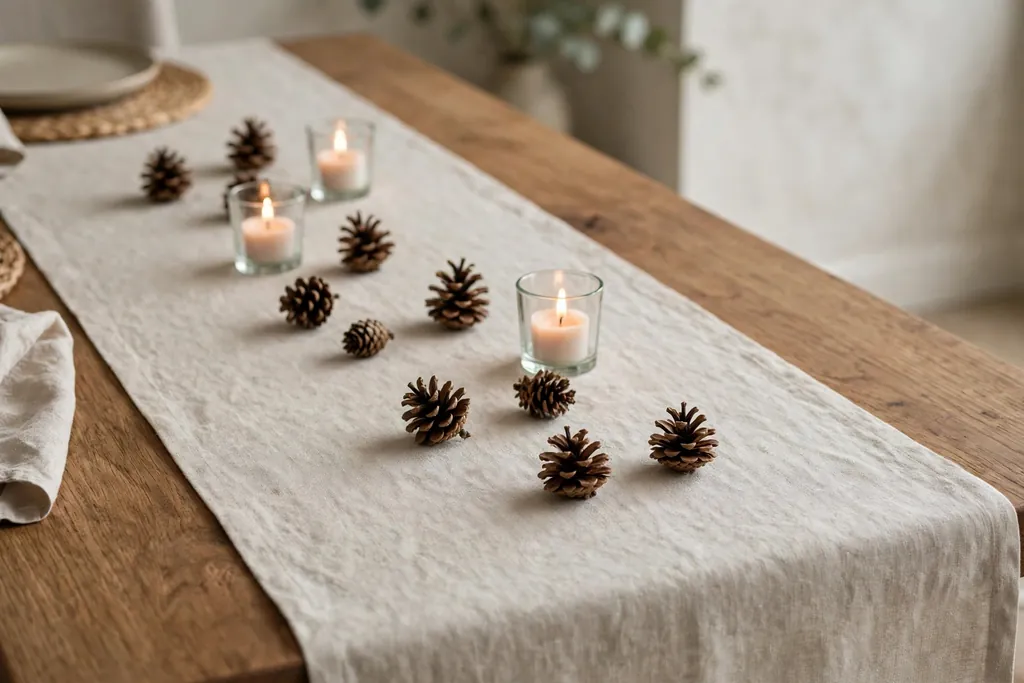
Scatter a small number of pinecones along a plain runner, then set two or three short candles in glass holders among them, so the table gains a woodland note without a large arrangement. This idea suits a neutral table in autumn and winter, where the natural shapes and candlelight carry the season. It costs little if pinecones come from the garden, and the runner keeps the group tidy.
Use pinecones sparingly, about a handful along a long table, and keep them clear of plates and food. Clean gathered pinecones fully and check them for insects before bringing them inside, and keep them clear of real flames. If small pieces worry you with young children at the table, use larger pinecones only.
16. Sand and Shell Tray for a Coastal Table
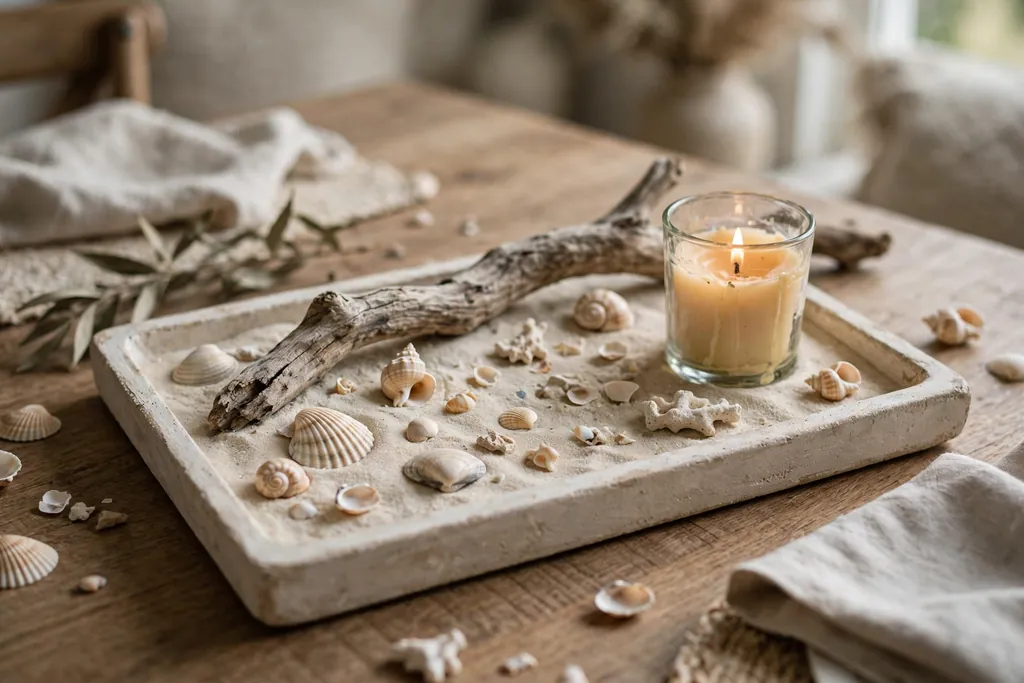
Fill a shallow tray with a thin layer of sand, add two or three shells, a small piece of driftwood, and one short candle in a glass holder, for a coastal note that suits a bright dining room or a summer table. The tray keeps the sand contained, and the small group leaves plenty of room for plates and drinks. Keep shell accents to a small number, so the table still looks tidy.
Wash and dry shells and driftwood before setting them out, and check driftwood for rough edges that could snag a cloth. Use shells large enough to see but small enough to leave room for serving dishes. For everyday meals, use the tray with sand and one shell alone, so clearing the table stays quick.
17. Teacups with Single Blooms
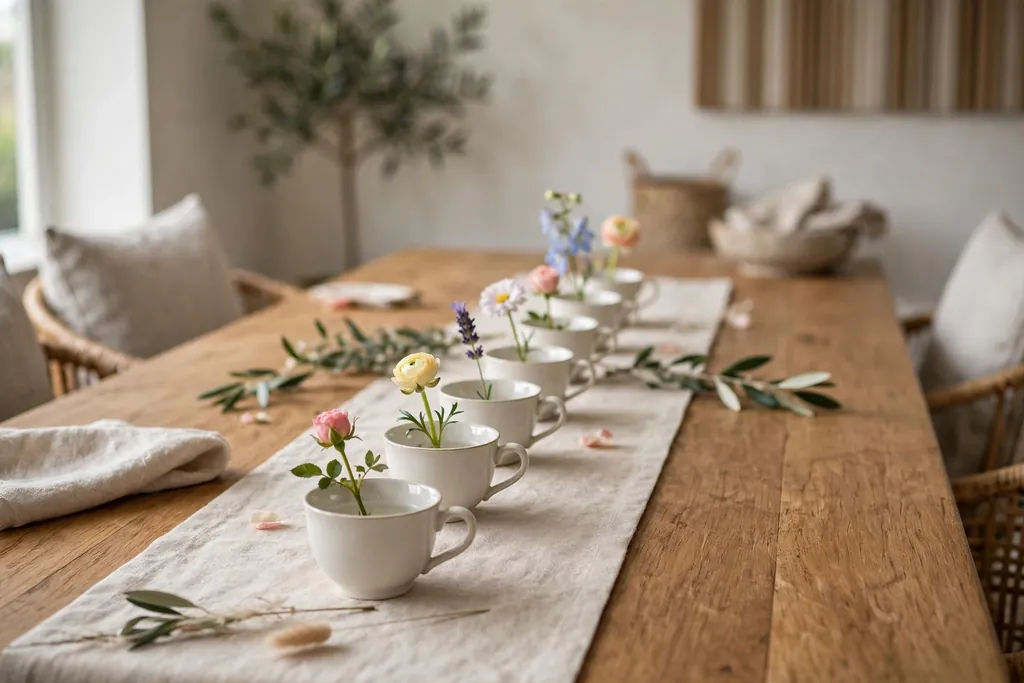
Set three or four small teacups down the center of the table, each holding one short flower stem in water, with a small candle in a holder between every second cup. This idea suits a small table or an afternoon tea style meal, because each cup is a small focal point rather than one large arrangement. Teacups from a cupboard cost nothing extra, and single stems keep flower costs low.
Use teacups of the same pattern for a matched row, or mix patterns in the same color family for a collected look. Keep each stem trimmed so the flower sits just above the cup rim, and top up the water before guests arrive, since teacups hold little. For a longer table, add more cups, but keep the spacing even so the row reads as one centerpiece.
18. Lantern with Fairy Lights
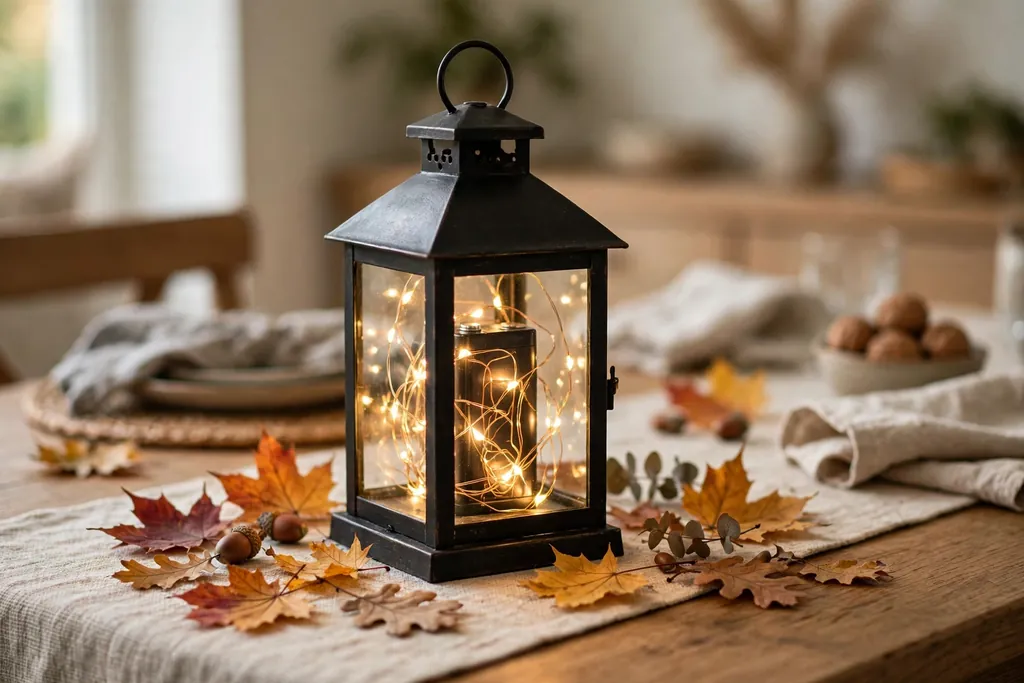
Set one or two lanterns in the center of the table, with battery fairy lights coiled inside, and scatter a small number of leaves or petals around their bases. The lanterns give a warm, steady glow, and they lift off the table in one move when serving needs the full surface. This idea suits evening meals, because the light carries the table without flowers or a large arrangement.
Choose lanterns short enough to see over when guests are seated, and use battery lights only inside closed or narrow lanterns. Keep leaves and petals clear of any real flame, and set the lanterns on a tray or runner to protect the table and keep petals contained. For a daytime meal, leave the lights off and let the lantern shape carry the look.
19. Bare Branches in a Tall Vase
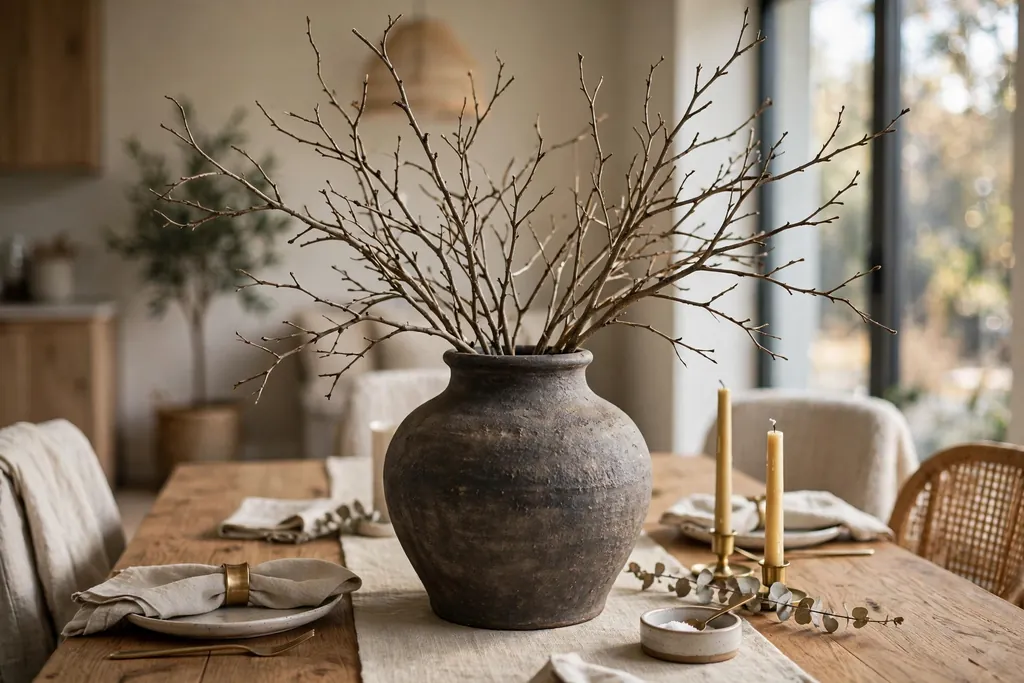
Stand a few bare branches in a heavy vase, trimmed so they clear light fixtures and stay narrow, not wide, and set the vase in the center of the table or at one end of a long table. Branches from the garden cost nothing, give height without blocking conversation, since guests can see between slim branches, and suit a plain table in any season. Add a ribbon tied at the vase neck if you want one small color note.
Choose a heavy vase that will not tip, and trim branches so they do not brush serving dishes passing down the table. Shake the branches outside before bringing them in, and remove any loose bark before the meal. For a softer look, add two or three short stems of greenery at the base, but keep the total group narrow.
20. Tiered Stand with Fruit and Candles
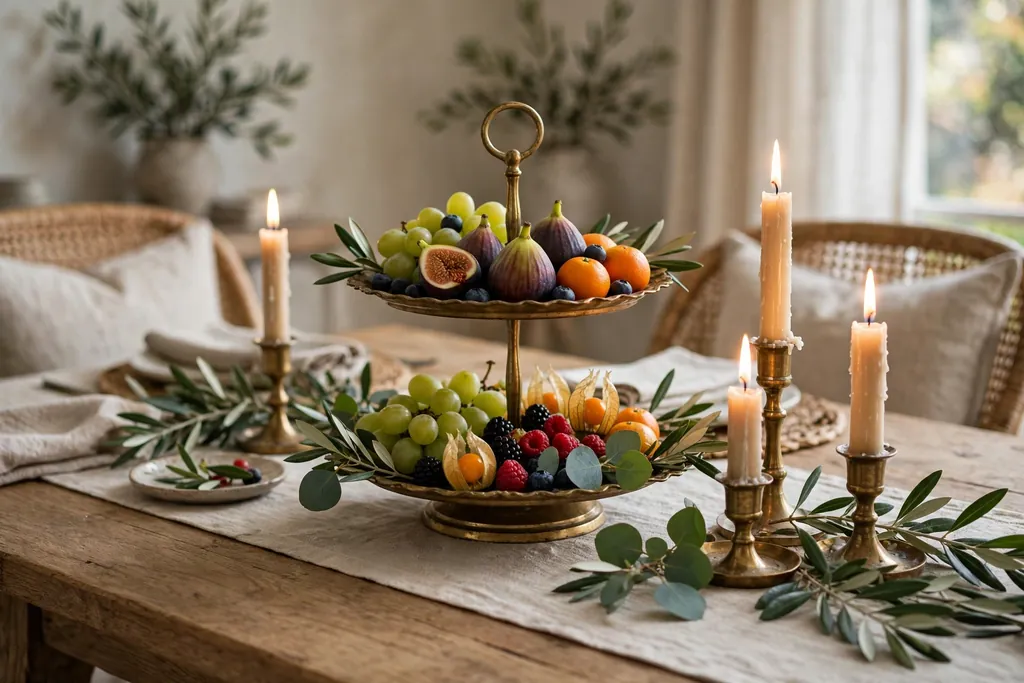
Set a two tier stand at one end of the table or on a sideboard, and fill it with small fruit, candles in holders, and a few leaves, so the table gains height without blocking the center. A tiered stand also works for serving, with small bites on the tiers at a buffet style meal, but keep the decor version separate from food if the stand will hold both uses at different times.
Keep the stand stable and clear of the main serving path, and put heavier items on the bottom tier. If the stand will hold food, use it for food only, and set the decor version on a separate stand or tray. Wipe the tiers after use, since candle wax and leaf dust collect in the rims.
21. Mirrored Tray with Candles and Petals
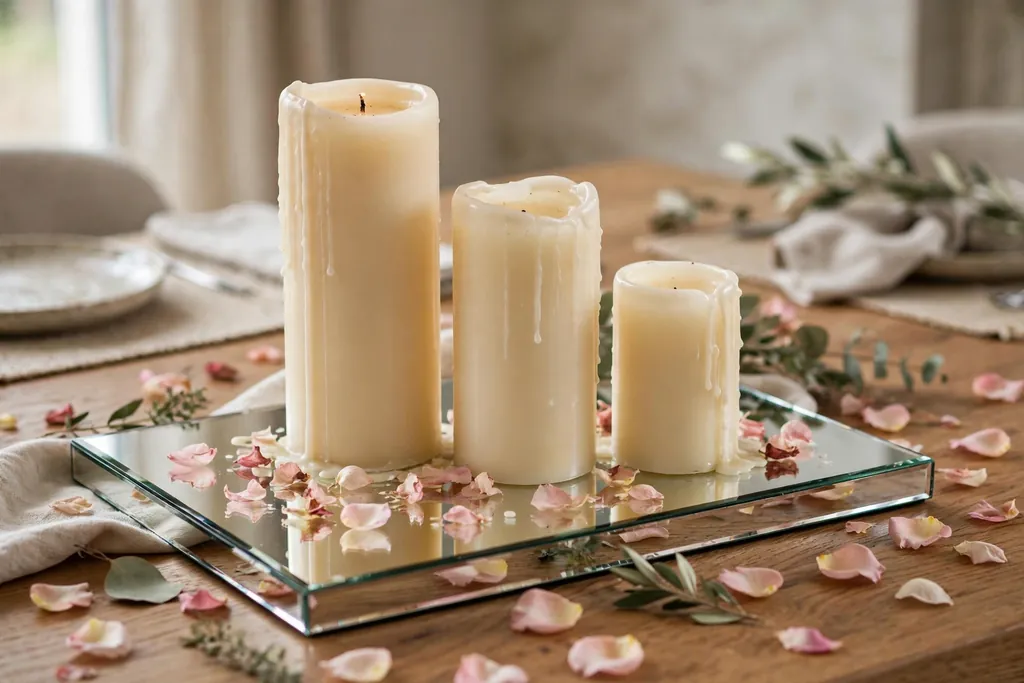
Set three pillar candles of different heights on a round or rectangular mirrored tray, then scatter a small number of fresh petals around their bases. The mirror reflects the candlelight, so the centerpiece glows without a large flower arrangement, and the tray lifts off in one move when the table needs to clear. This idea suits an evening meal, a dinner for two, or a small gathering table.
Use candles in glass holders or on heat-safe plates, and keep petals clear of the flames. Choose unscented candles if food will be served close by, since strong scent can compete with the meal. For a table with children, use flameless pillar candles in the same tray for the same glow without a flame.
22. Woven Basket with Gourds and Leaves
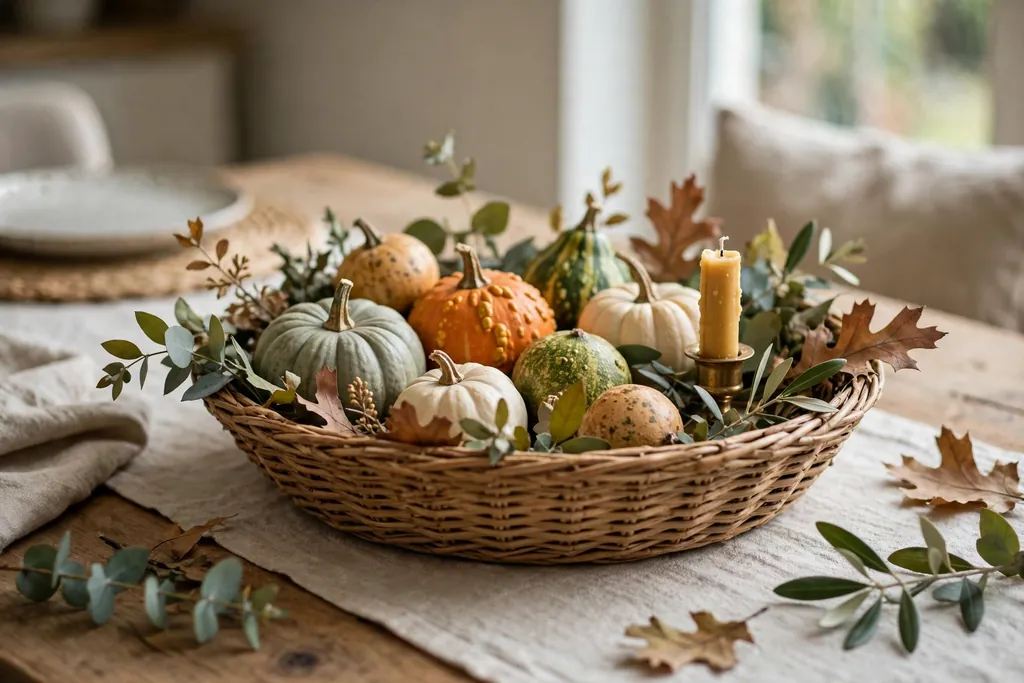
Set a low woven basket in the center of the table, fill it with small gourds, a few leaves, and one short candle in a holder at one side, for a seasonal centerpiece that costs little and moves off the table in one piece. The basket keeps the group contained, and the gourds give clear seasonal color without a flower arrangement. This idea suits autumn tables, harvest meals, and everyday dinners in the cooler months.
Line the basket with a cloth if the weave is rough, so it does not snag the tablecloth. Keep the candle in a holder, clear of the leaves and the basket edge, and use a battery candle if the basket is dry or near fabric. Move the basket to a sideboard after the meal, and the table clears in a single step.
23. Cake Stand with Candles and Greenery
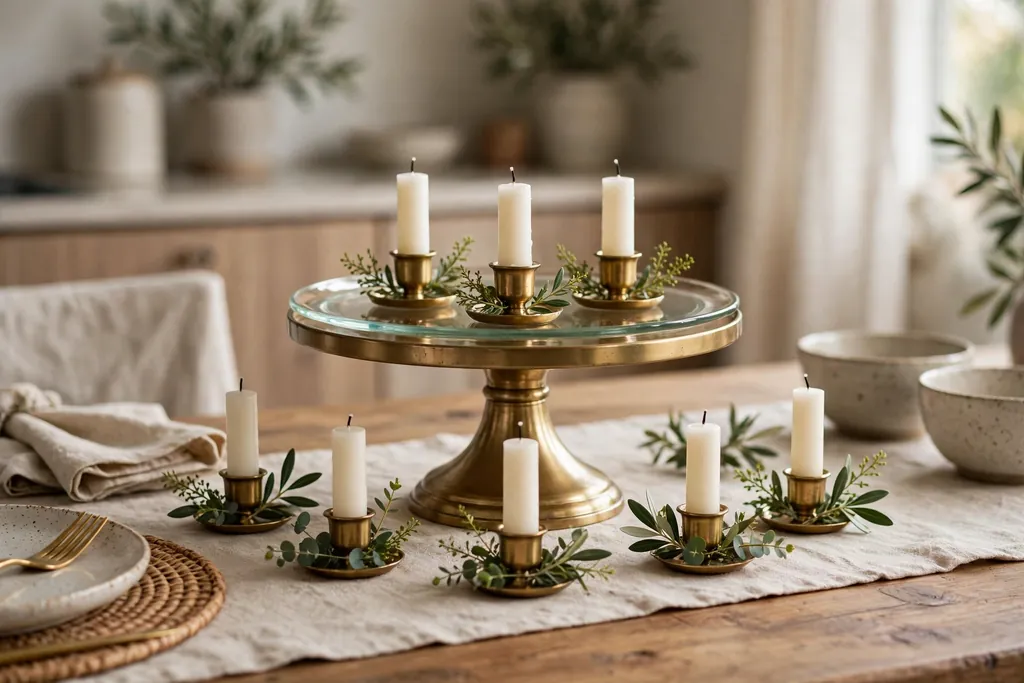
Set a cake stand in the center of the table, place a few short candles in holders on the plate, and tuck short sprigs of greenery around their bases, so a serving piece you already own becomes the centerpiece. The raised plate gives the group a clear shape without height that blocks sightlines, and the greenery softens the edges. This idea suits a small table, a dessert table, or a dinner where a low, neat group works best.
Keep the stand stable, center it so plates still fit on both sides, and set it on a mat if the base could mark the table. Keep greenery clear of real flames, and use battery candles if the sprigs sit close to the holders. After the meal, the stand goes back to the kitchen, and the greenery can be composted.
Conclusion
Affordable centerpieces do not need a large arrangement or new dishes. One low group, a small palette repeated at least twice, and pieces you already own will carry most tables, from a weeknight dinner to a larger gathering. Pick the ideas that fit your table size, your season, and your daily routine, and keep serving space in mind first. For more table ideas in another season, see fall table decor ideas, and for centerpieces made for one occasion, see Valentine centerpieces. Save this list for your next meal, and work through it one idea at a time.
FAQs
What is the cheapest way to make a table centerpiece?
Start with pieces you already own, such as jars, a tray, a board, or a plain vase, then add one low-cost natural layer like garden greenery, fruit from the kitchen, or single stems. That combination gives a finished centerpiece without buying a full new set, and most of the pieces can be reused for the next meal.
How do I keep a budget centerpiece looking finished rather than plain?
Use one main group, not several small groups, and repeat one small palette at least twice, such as white and green, or cream and wood. Keep the group low and narrow, wipe glass and trays before the meal, and leave empty space at each place, since a tidy table reads as planned even when the pieces are simple.
What height should an affordable centerpiece be?
Keep the centerpiece below eye level when guests are seated, so people can talk across the table without leaning around it. A low group of jars, a shallow bowl, or a short tray works best, with the tallest piece in the middle and shorter pieces at the sides. If a centerpiece blocks sightlines, move it to the table ends or swap it for a lower group.
Can I use real candles in a budget centerpiece?
Yes, but keep real candles in glass holders on a stable surface, clear of paper, fabric, dried leaves, and greenery, and never leave them burning unattended. Use battery candles inside paper bags, near children, or near dried material, and use a tray under candle groups so wax does not mark the table. Put candles out fully at the end of the meal.
How do I make a centerpiece for a small table on a budget?
Choose one vase, one bowl, or one lantern, and let the rest of the table stay plain. A single stem in a teacup, a small bowl of citrus, or one lantern with battery lights gives a small table a focal point without crowding plates and glasses. Keep the piece low, center it, and leave room for serving dishes at the table ends.
How do I store budget centerpieces after a meal?
Wash jars, vases, trays, and pots, dry them fully, and store them together in one box, so next setup is a single short job. Move live herb and flower pots to a windowsill or outside, compost spent flowers and leaves, return fruit to the kitchen, and store candles with their lids on. Keeping the set together makes the next meal easier to lay out.