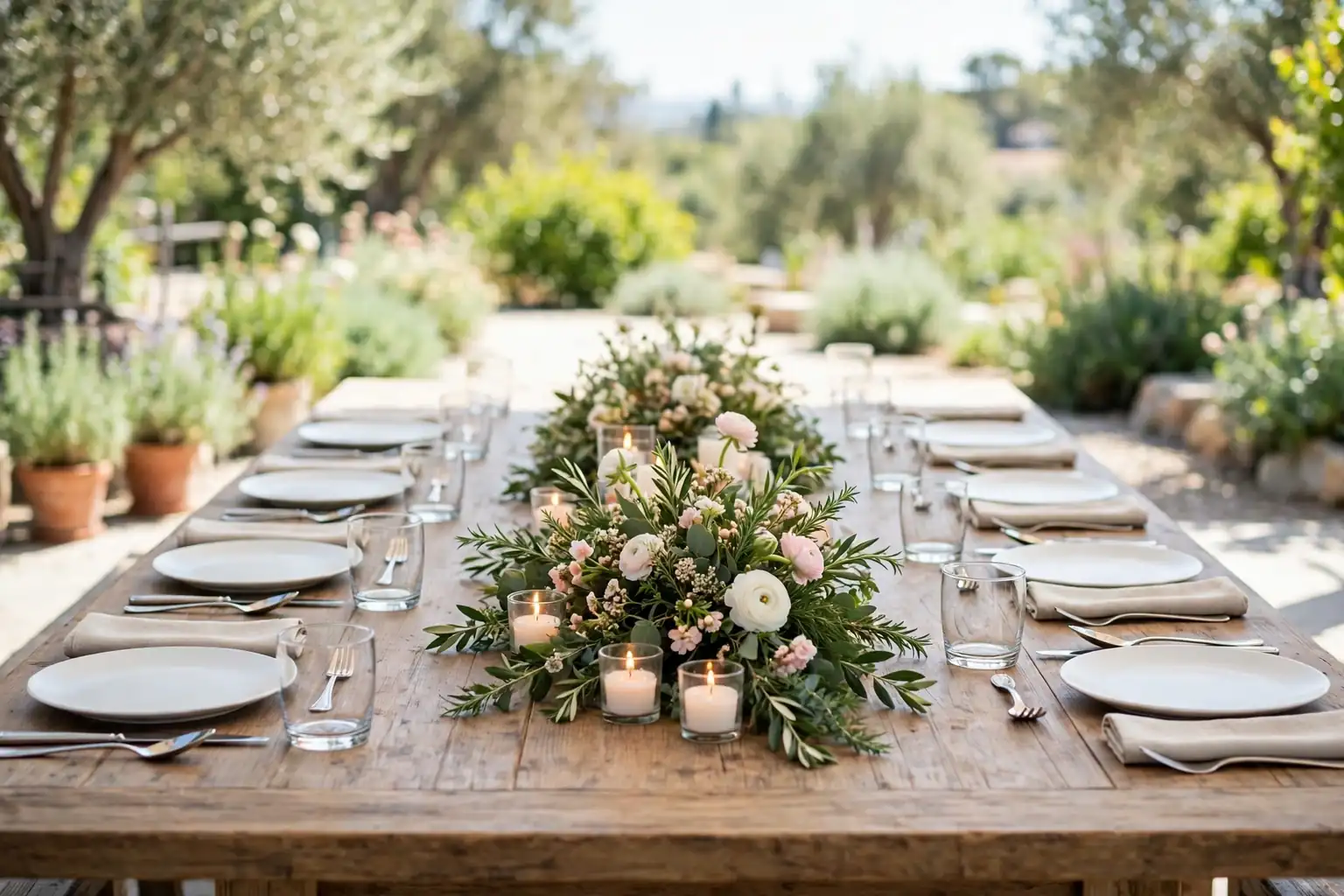
A good table centerpiece stays low, narrow, and easy to lift off, with one main group at the center and room left for plates and serving dishes. Choose fresh flowers in spring and summer, fruit or pumpkins in autumn, and evergreen with candles in winter, then keep the palette to two or three colors so the table stays calm.
Start with a base you already own, such as a tray, a wood board, or a runner, then add one main group and stop. Keep the centerpiece below seated eye level, leave space at each end for serving dishes, and pick pieces you can lift off in one move when the table needs to clear. For autumn tables in a warm palette, see the fall table decor guide, and for a calm table after the holidays, browse the winter table decor guide.
Key Takeaways
- Keep every centerpiece low and narrow, so guests can see each other and serving dishes still fit.
- Use one main group per table, on a tray or board, so the whole centerpiece lifts off in one move.
- Change the season with flowers, fruit, or greenery, and keep the tray, candles, and vases the same.
- Pick two or three colors per table and repeat each one at least twice, such as napkins plus one vase.
- Keep flames in holders and clear of dried material, fabric, and paper, and use flameless candles near children or dried stems.
- Leave empty space at each place for elbows, glasses, and serving dishes, and test the full table before guests arrive.
1. Low Greenery Runner with Pillar Candles
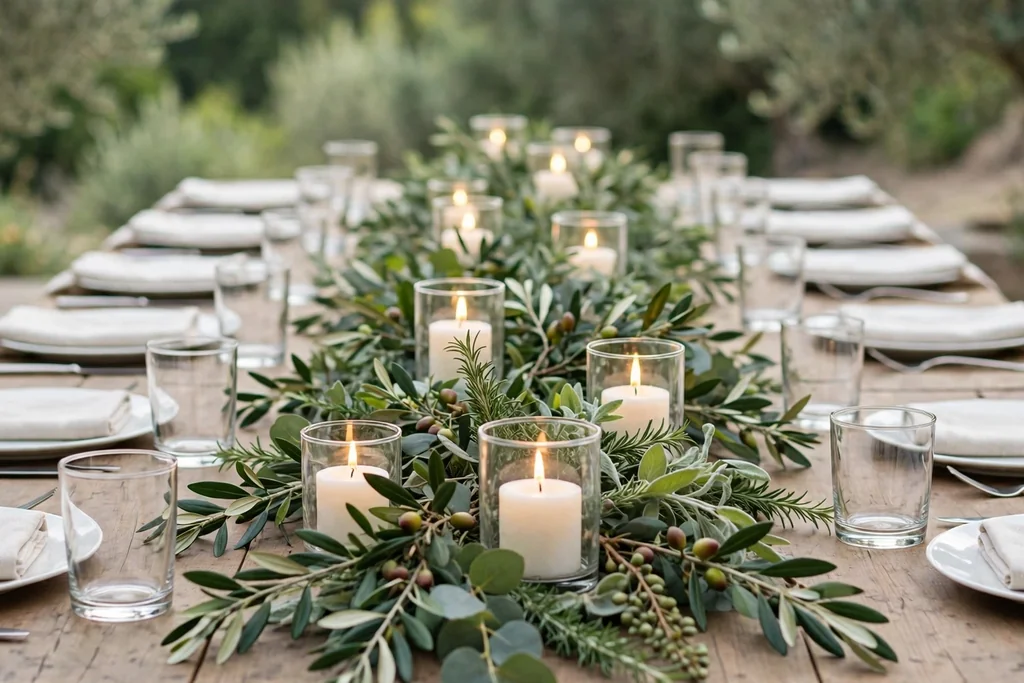
Lay a loose greenery runner, such as eucalyptus or olive branches, down the center of the table, then set short pillar candles in glass holders along it at uneven intervals. The greenery carries color along the whole table without adding height, and it suits a long dining table for a gathering as well as a simple weeknight meal. Trim the stems so they stay inside the table edges and do not brush plates or glasses.
Secure the runner so it does not slide when plates are set down, and keep real flames clear of dry leaves. Use flameless candles if the runner will sit near curtains or if children will be at the table. Swap the greenery with the season: fresh eucalyptus in spring, olive in summer, dried leaves in autumn, and evergreen in winter, while the candles and holders stay the same.
2. Spring Tulip Bowl
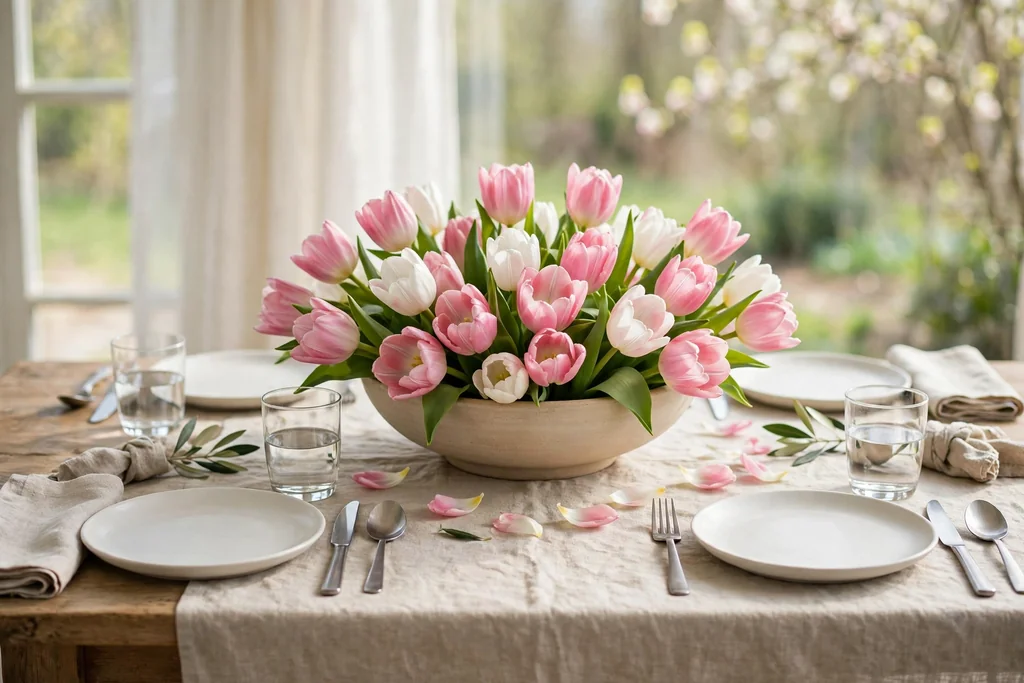
Fill a low, wide bowl with tulips trimmed short, so the flowers sit just above the rim, and add a few green leaves for shape. The low height keeps sightlines open, and the spring color suits a bright dining room better than a tall, formal bouquet. Use one color for a calm table, or mix two close colors, such as pink and white, for a softer look.
Trim tulip stems at an angle and keep them in cool water, since tulips keep growing and can lean toward light. Set the bowl on a small mat if the table marks easily, and replace any drooping tulip before guests arrive. For a longer table, use two small bowls spaced apart rather than one large bowl, so the flowers read as one matched centerpiece.
3. Summer Citrus Bowl
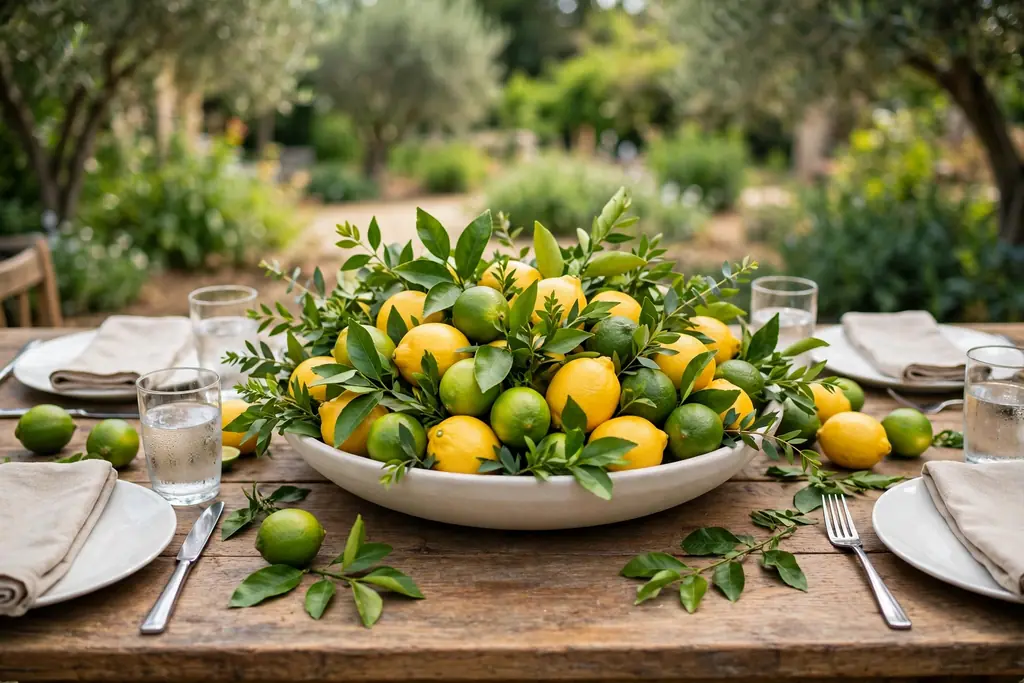
Fill a wide, shallow bowl with lemons, limes, or oranges, and tuck a few green leaves or small white flowers between the fruit. The citrus gives real color and shape, and the bowl takes up only one spot, leaving the rest of the table free for plates and serving dishes. This idea suits a summer lunch or a bright kitchen table, and the bowl can move to the counter after the meal.
Keep the bowl low and wide rather than tall, so it does not block sightlines, and check the fruit every few days, moving any soft piece to the kitchen. For a cooler look, use lemons with white flowers; for a warmer look, use oranges with green leaves. At the end of the meal, the fruit can be used in cooking or drinks, so nothing is wasted.
4. Autumn Pumpkin and Candle Board
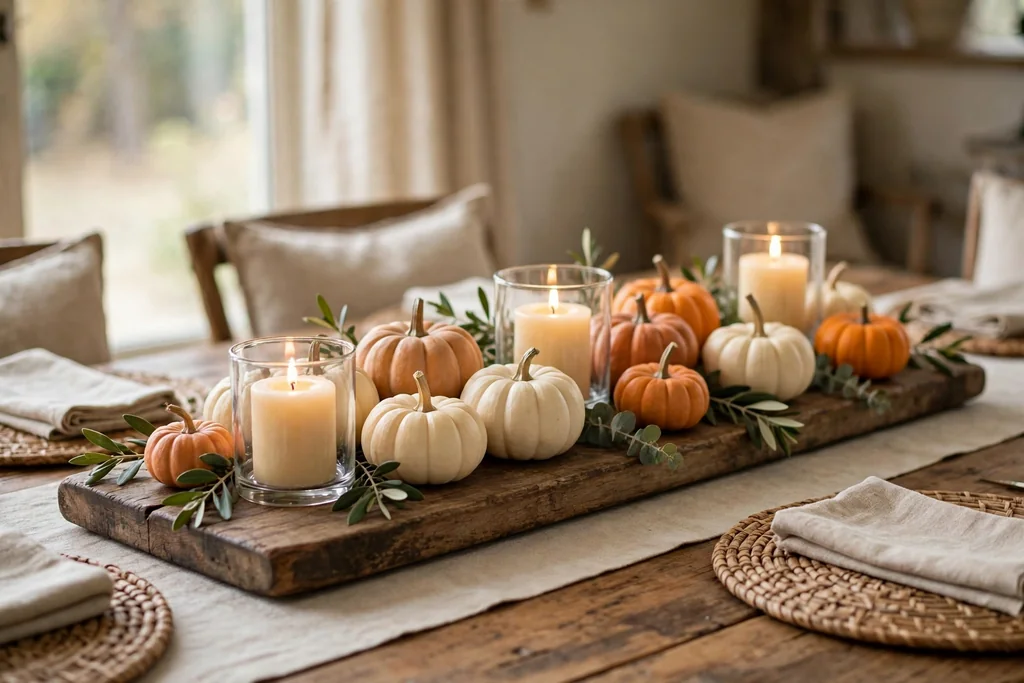
Set a long wood board down the middle of the table, then group three to five small pumpkins in cream, muted orange, and pale green along it, with short pillar candles in glass holders between them. The board keeps the group contained, so it reads as one centerpiece, and it lifts off in one move when you need the full table for serving. For more autumn table ideas, see the fall table decor guide.
Use battery candles if the board will sit near dried leaves or if children will be at the table. For a real flame, keep candles in holders, clear of pumpkin stems and any fabric, and never leave them burning unattended. Swap one pumpkin for a small vase of dried stems if the group looks too round and flat.
5. Winter Evergreen and Pinecone Tray
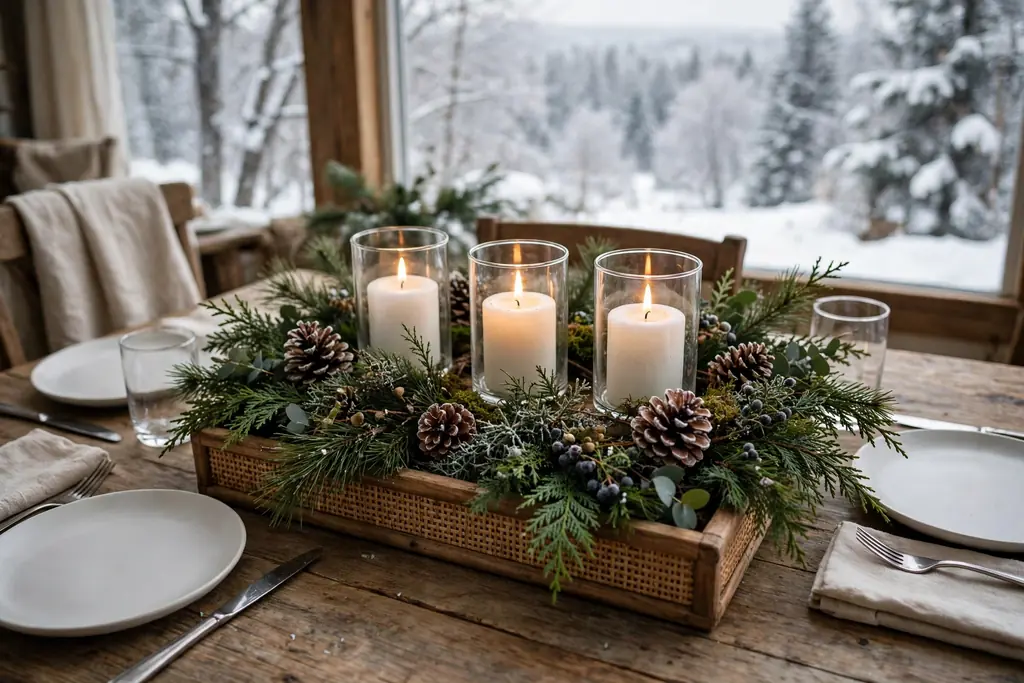
Lay a short length of evergreen greenery on a tray, add a few pinecones and short pillar candles in glass holders, and set the tray in the center of the table. The tray keeps the group contained, so it reads as one centerpiece, and it lifts off in one move when you need the full table for serving. The evergreen and pinecone mix suits winter meals after the holidays, when the table needs a calm, natural look.
Use battery candles if the tray will sit near dried greenery or if children will be at the table. Clean gathered pinecones fully and check them before bringing them inside, and keep them clear of real flames. Swap one pinecone for a small vase of fresh sprigs if the group looks too flat, and shake the greenery outdoors before laying it out.
6. Single Stem Bud Vases in a Row
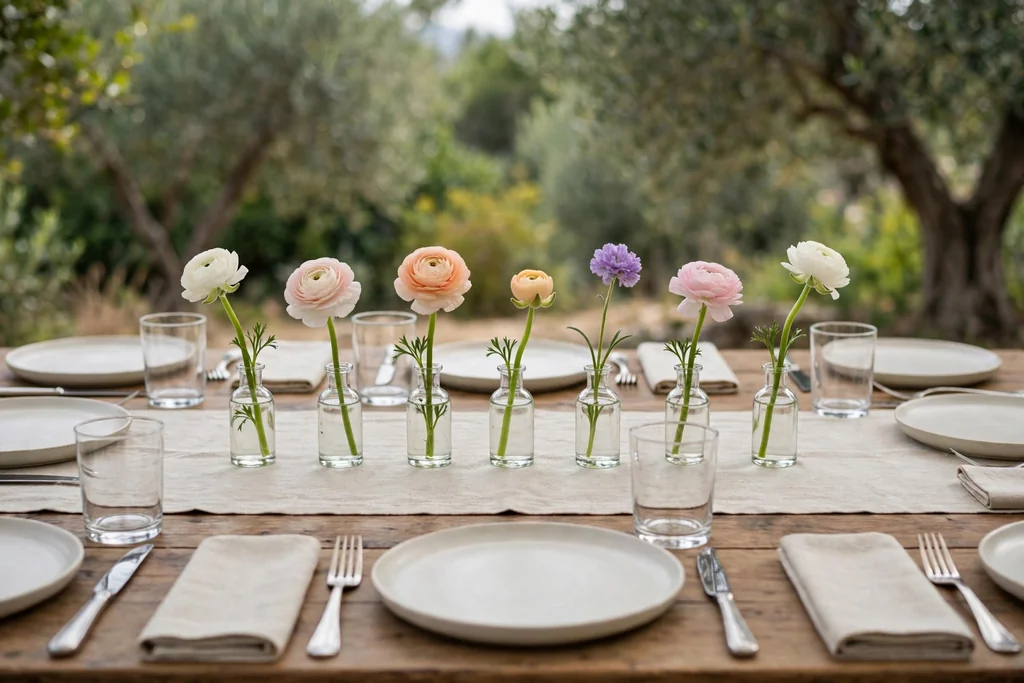
Set a row of small bud vases down the center of the table, each holding one stem, such as a rose, a daisy, or a sprig of herbs. The single stems give a light, fresh centerpiece that leaves sightlines open, and they suit a small table as well as a long one, since you can add or remove vases to fit the length. Use the same vase shape at every spot, so the row reads as one centerpiece.
Keep the vases low and the stems short, so guests can see across the table. Fill vases with fresh water before the meal and trim stems at an angle, so they drink well. Change the stems with the season: tulips in spring, daisies in summer, dried stems in autumn, and evergreen sprigs in winter, while the vases stay the same.
7. Lantern Group with Battery Candles
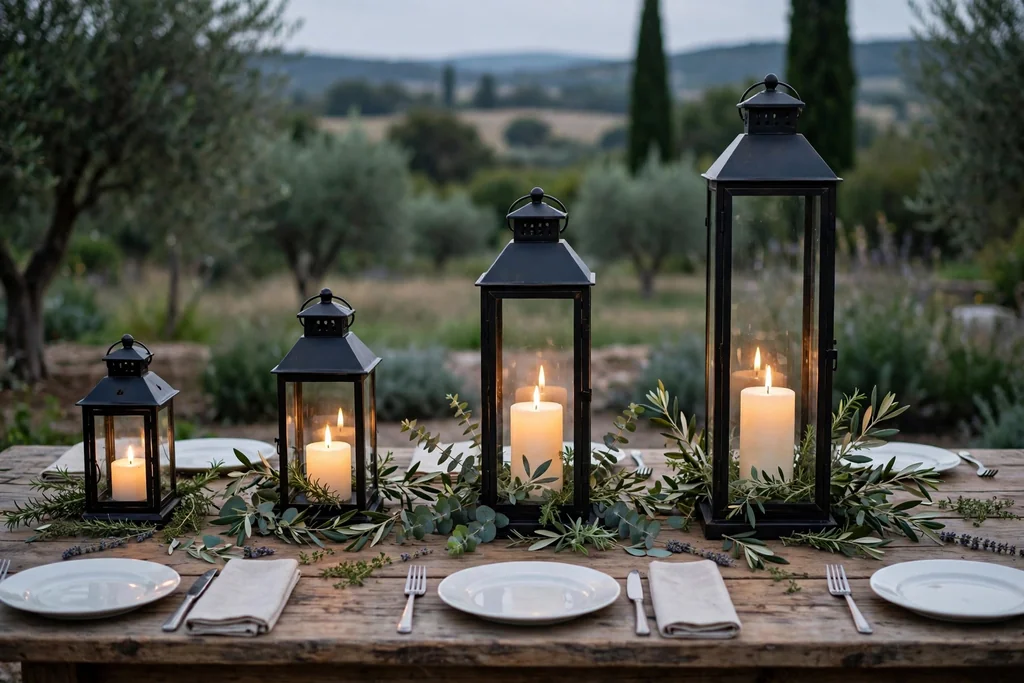
Set two or three lanterns of different heights down the center of the table, with battery candles inside and a few sprigs or small stones grouped around the bases. Lanterns give a warm, steady glow and a clear focal point, and they lift off the table in one move when serving needs the full surface. Choose lanterns short enough to see over when guests are seated.
Place a small tray or runner under the lantern group to protect the table and to keep the sprigs contained. Use battery candles inside closed or narrow lanterns, since a real flame needs air and a safe holder. Wipe lantern glass before the meal, since fingerprints show more on glass than on wood, and swap the sprigs with the season.
8. Mason Jar Flowers on a Wood Board
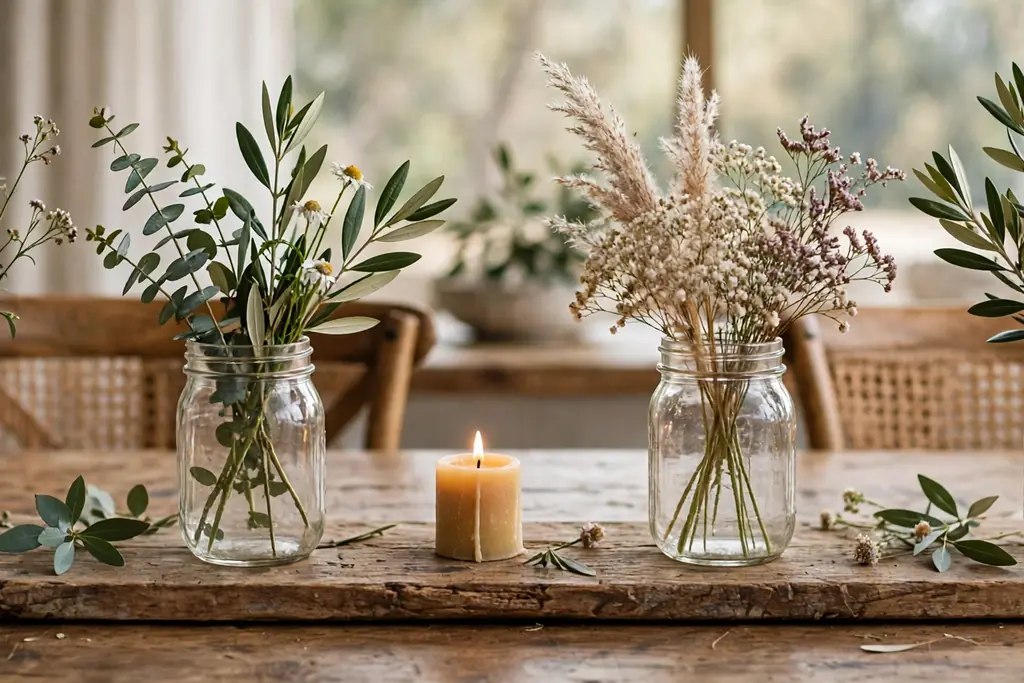
Set three mason jars on a long wood board down the center of the table, with two or three flower stems in each jar, and add a short candle in a holder between the jars. The board keeps the group contained as one centerpiece, and the jars suit a rustic or casual table in any season. Use jars of the same size for a matched look, or mix two sizes with the tallest jar in the middle.
Tie twine around each jar neck for a simple finish, and fill jars only halfway so stems stay steady. For a longer table, add a fourth jar, but keep the board narrow enough that plates still fit on both sides. Change the flowers with the season, and keep the board and jars for the next table.
9. Seasonal Fruit Bowl Centerpiece
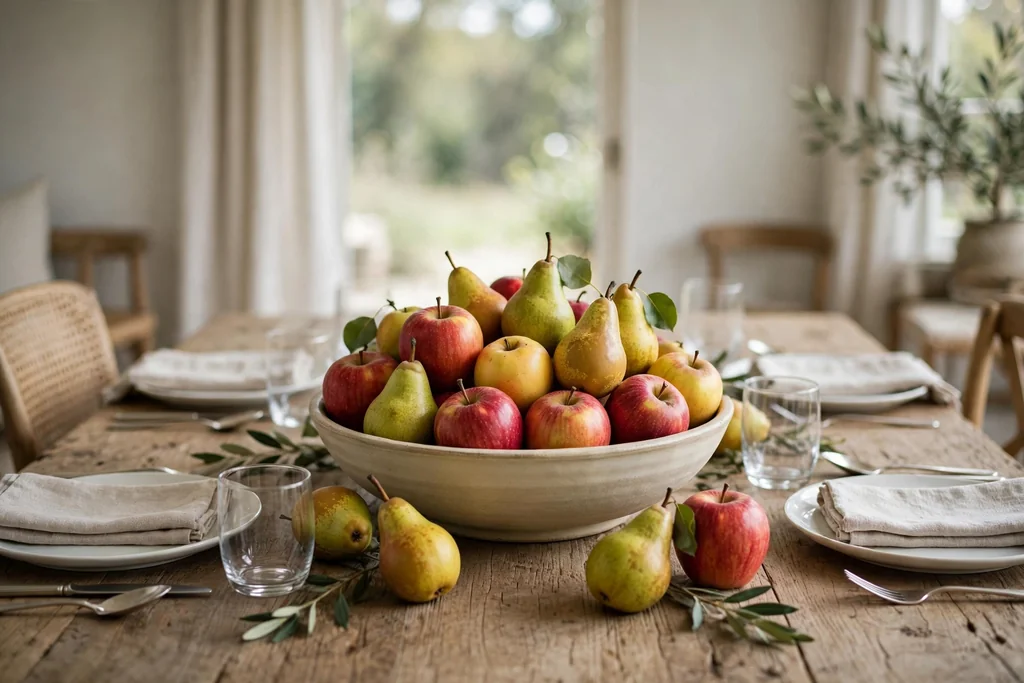
Fill a wide, shallow bowl with fruit in season, such as apples and pears in autumn, citrus in winter, berries in summer, and stone fruit in late spring, and set it in the center of the table as a centerpiece you can also eat from. The fruit gives real color and shape, and the bowl takes up only one spot, leaving the rest of the table free for plates and serving dishes.
Keep the bowl low and wide rather than tall, so it does not block sightlines, and set it on a small mat if the table surface marks easily. Check the fruit every few days and move any soft piece to the kitchen, since one spoiling piece can mark the rest. At the end of the meal, the bowl can move to the counter, which makes clearing the table a single step.
10. Herb Pots on a Tray
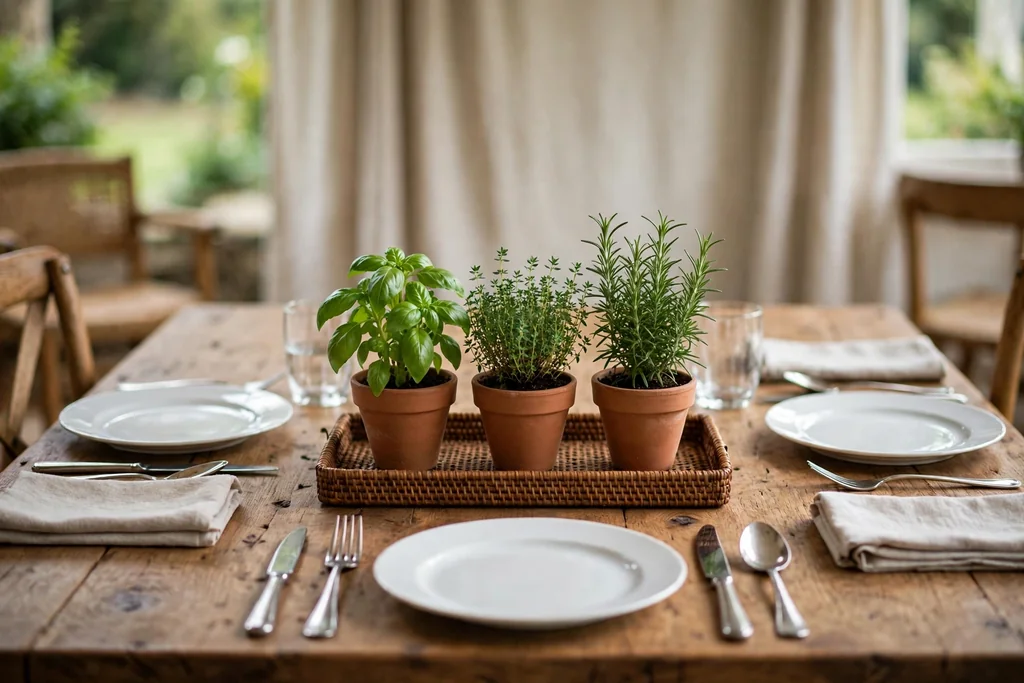
Group three small potted herbs, such as rosemary, thyme, and basil, on a tray in the center of the table. The herbs give a fresh green centerpiece that suits everyday meals, and they keep growing after the meal, so the centerpiece lasts far longer than cut flowers. Choose pots in the same material, such as plain clay, so the group reads as one centerpiece.
Water the herbs before the meal and set the tray on a mat, since pots can leave rings on wood. Snip a few leaves for cooking, and keep the pots in bright light between meals. For a gathering, add a small candle in a holder beside the pots, and keep the herbs clear of the flame.
11. Brass Taper Candlesticks
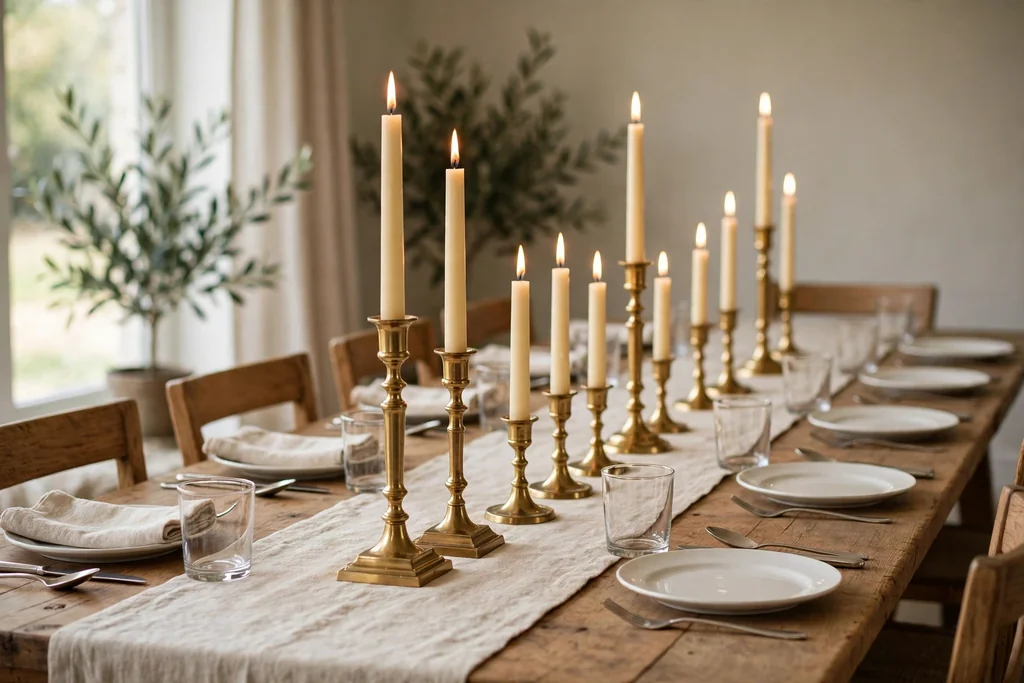
Set brass candlesticks of two heights down the center of the table, with cream taper candles in each, and keep the rest of the centerpiece simple, such as a short runner or a few small sprigs at the base. Brass adds a warm metal note that suits both everyday dinners and larger gatherings, and it works with blue, green, cream, and gold palettes.
Check that candlesticks sit level and that tapers fit snugly, so candles do not lean or drip onto the table. Use a tray or small plates under the candlesticks if wax drips are a concern, and trim wicks before lighting. For a table with children, use flameless tapers in the same brass holders for the same look without a flame.
12. Floating Candles in a Wide Bowl
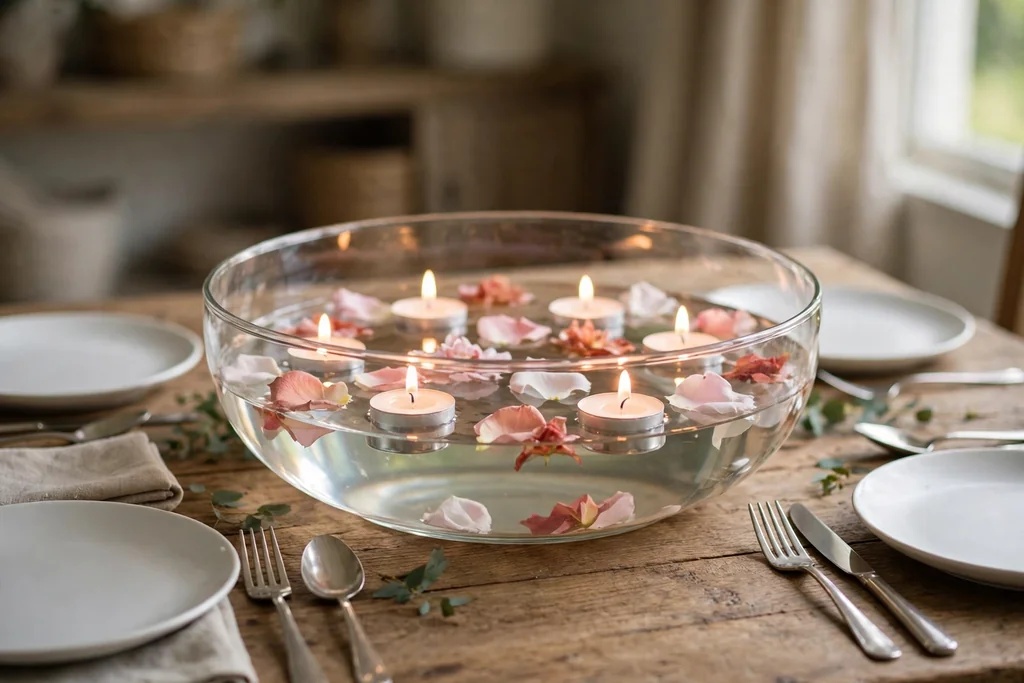
Fill a wide, shallow glass bowl with water, float two or three small floating candles on the surface, and scatter fresh flower petals or small leaves around them. The water reflects the candlelight, and the bowl stays low, so this centerpiece suits a round table or a dinner for two. Change the petals with the season: rose petals in spring, white petals in summer, and cranberries in winter.
Set the bowl on a tray or mat, since water can splash when the bowl is moved, and fill it only three quarters full to leave room for the candles. Use floating candles made for water, not ordinary tea lights, and keep petals clear of the flames. At the end of the evening, lift the candles out first, then carry the bowl to the sink.
13. Tiered Stand Centerpiece
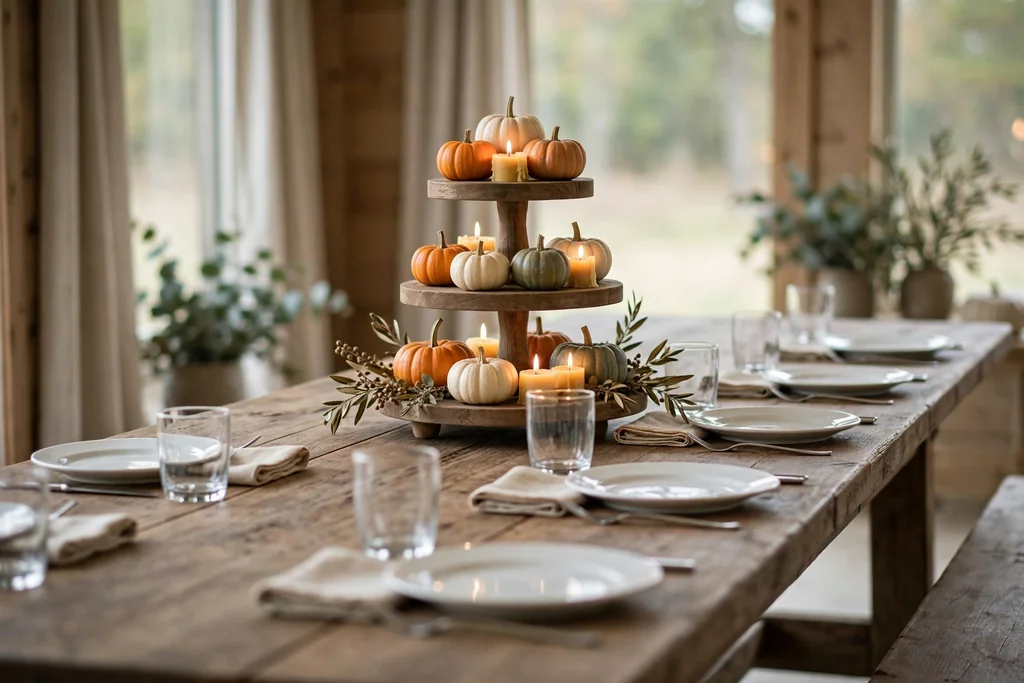
Set a two or three tier stand at the center of the table or at one end of a long table, and fill it with small seasonal pieces, such as mini pumpkins in autumn, small flowers in spring, or candles and pinecones in winter. The stand gives height without blocking the center, since the tiers sit at one spot rather than across the whole table. Put heavier items on the bottom tier, so the stand stays stable.
Keep the stand clear of the main serving path, and wipe the tiers after use, since candle wax and leaf dust collect in the rims. If the stand will hold food, use it for food only, and set the decor version on a separate stand. Swap the small pieces with the season, and keep the stand itself all year.
14. White and Cream Monochrome Group
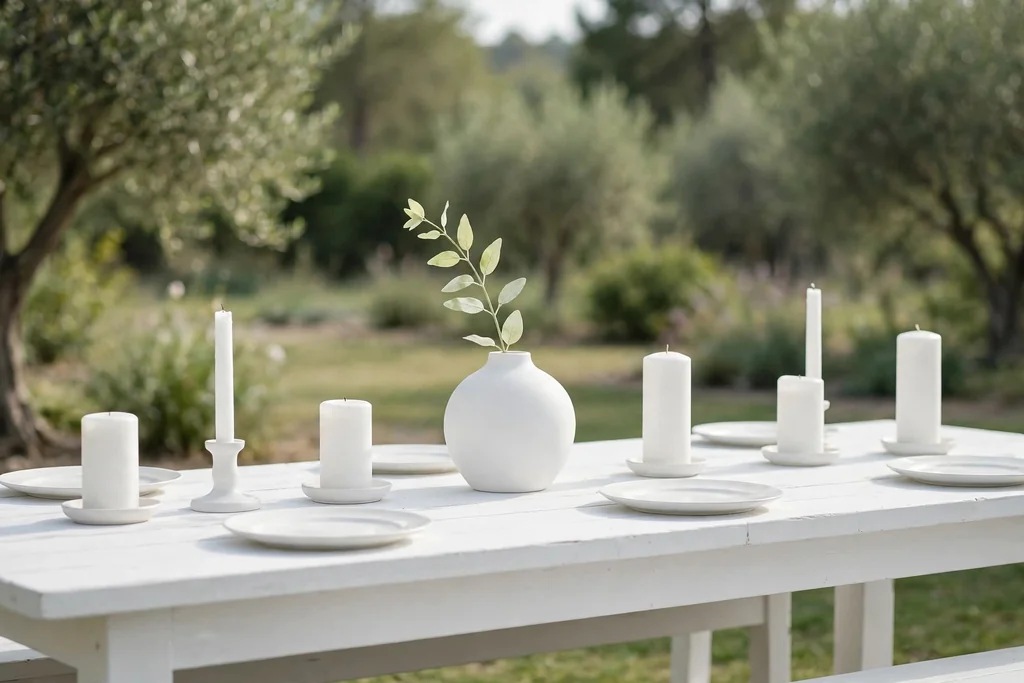
Set white plates on white or cream placemats, and keep the centerpiece to white candles, a white vase, and one pale green sprig group at the center. The all white palette suits a bright dining room and a calm mood, and it pairs well with glass, pale wood, and silver cutlery. Add one soft accent, such as a single green sprig, so the table does not look flat.
Use clear glasses so the white shows through, and keep the candle group low enough to see across. Iron white napkins before the meal, since creases show more on white than on color. For a seasonal change, swap only the sprigs: white flowers in spring, green leaves in summer, cream pumpkins in autumn, and evergreen in winter.
15. Blue and White Coastal Shell Tray
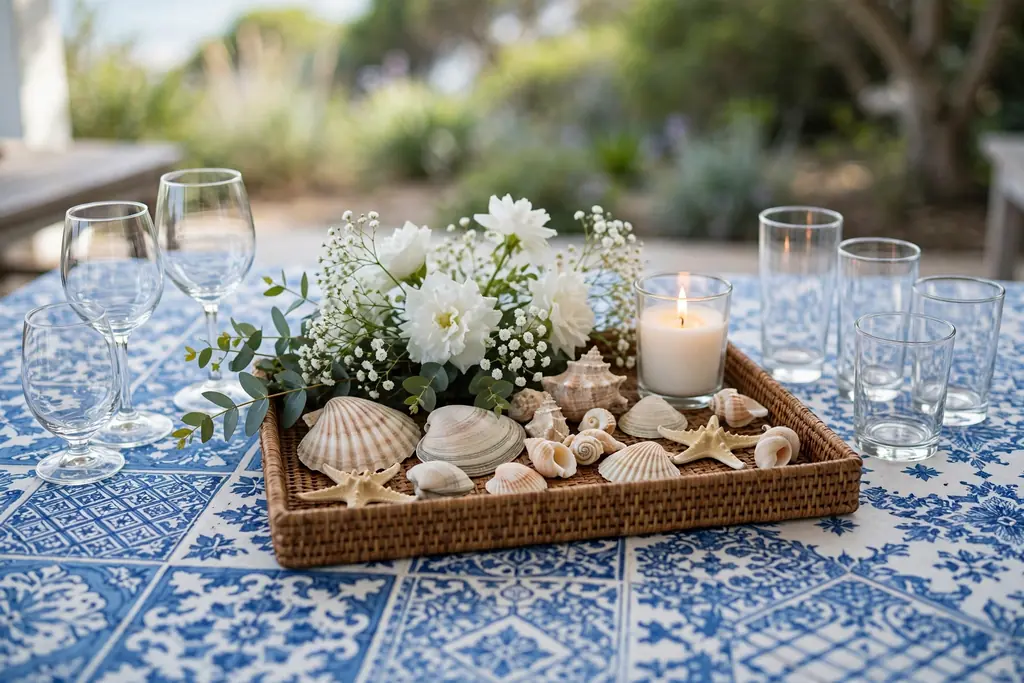
Set blue and white plates or white plates with blue napkins, and keep the centerpiece to a tray with a few shells, a small vase of white flowers, and one short candle in a holder. The blue and white pairing suits a bright room and a relaxed coastal mood, and it works for everyday meals as well as summer gatherings. Keep the blue to napkins, plates, and one centerpiece accent, so the table stays fresh rather than busy.
Use a light runner, such as cream linen, so the blue stands out, and keep cutlery plain silver. Rinse shells before setting them out, and keep them clear of food, since small pieces can end up on plates. For a winter version, swap the shells for white candles and keep the same blue and white base.
16. Wildflower Jars on Wood Slices
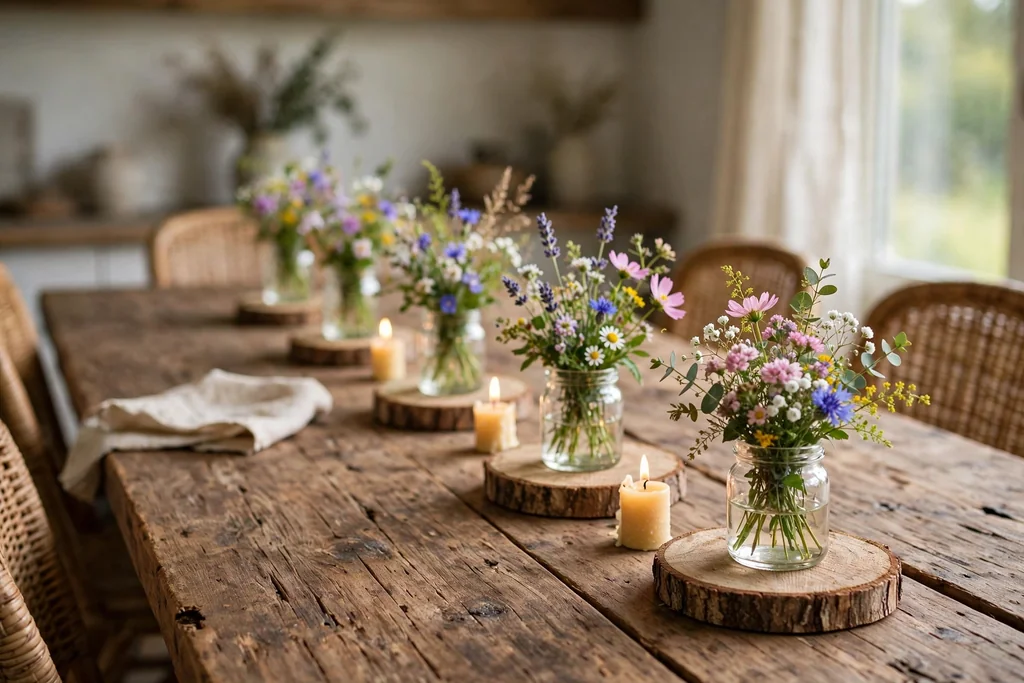
Set small jars of wildflowers or garden flowers on round wood slices down the center of the table, with one short candle in a holder between every second jar. The wood slices give a rustic base, and the mixed flowers suit a casual summer table or a spring gathering. Use jars of the same size, so the row reads as one centerpiece, even though the flowers differ.
Choose wood slices with a flat, sanded top, so jars sit level and do not wobble. Wipe slices clean after meals and do not soak them, since wood can warp when left damp. For a longer table, add more jars in the same pattern, and keep the spacing even so the row stays matched.
17. Cranberry and Candle Cylinders
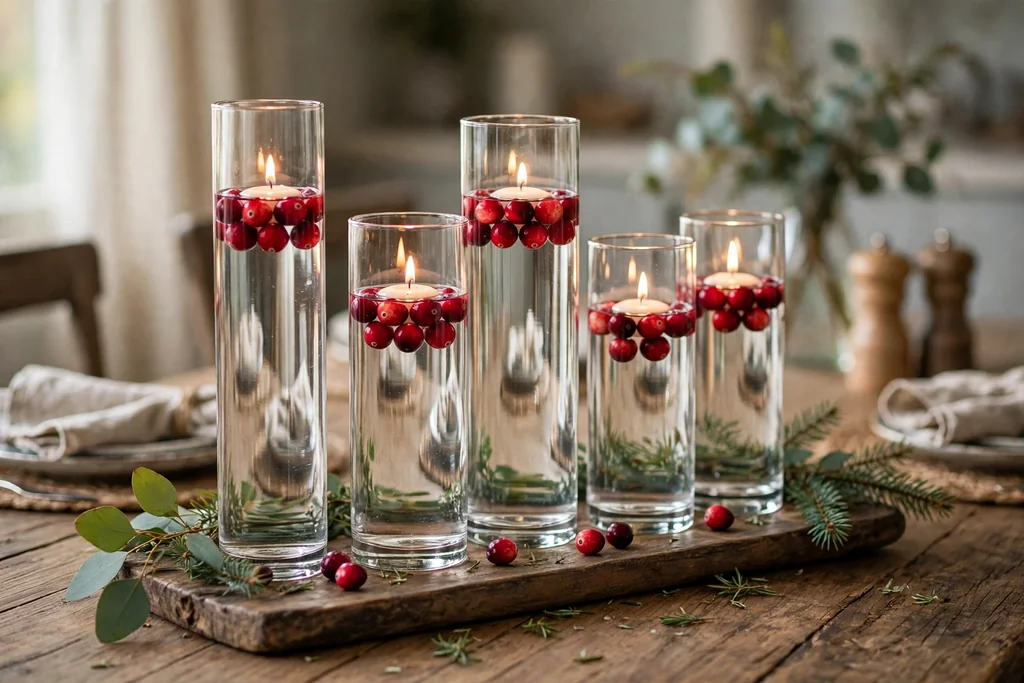
Fill two or three tall glass cylinders partway with water, add a handful of fresh cranberries and a few small leaves, then float a candle on top of each one. The red berries and soft light give a clear winter and holiday color, and the glass keeps the whole group narrow and easy to see around. For a Thanksgiving version of this table, browse the Thanksgiving table decorating ideas.
Set the cylinders on a tray, so any drips stay contained and the group lifts off in one move. Keep the water level below the rim, and change the water if it clouds before guests arrive. Use flameless floating candles if children will be near the table, since the glass can tip if bumped.
18. Sunflower Bucket Centerpiece
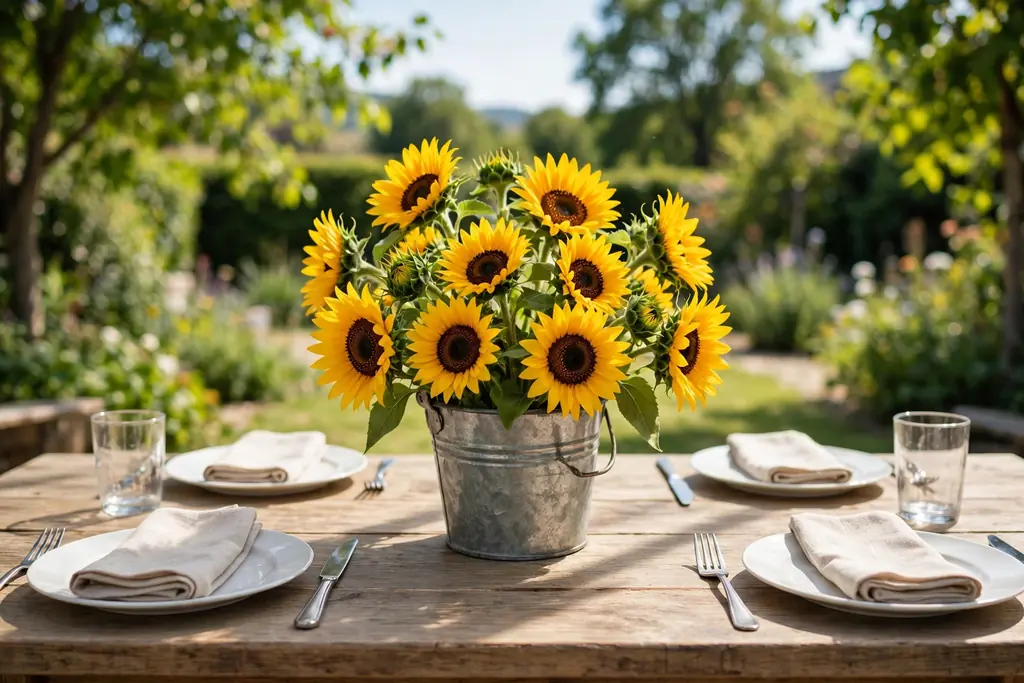
Set a small metal bucket or tin pail in the center of the table, filled with sunflowers trimmed to one height, and add a few green leaves for shape. The sunflowers give a clear summer note, and the bucket suits a casual table, a patio meal, or a late summer gathering. Keep the stems short enough to see over when guests are seated.
Set the bucket on a small mat if the table marks easily, and fill it with fresh water before the meal. Trim stems at an angle, and replace any drooping flower before guests arrive. For a smaller table, use one sunflower in a small jar instead of a full bucket, and keep the rest of the table plain.
19. Dried Wheat and Pampas in a Jug
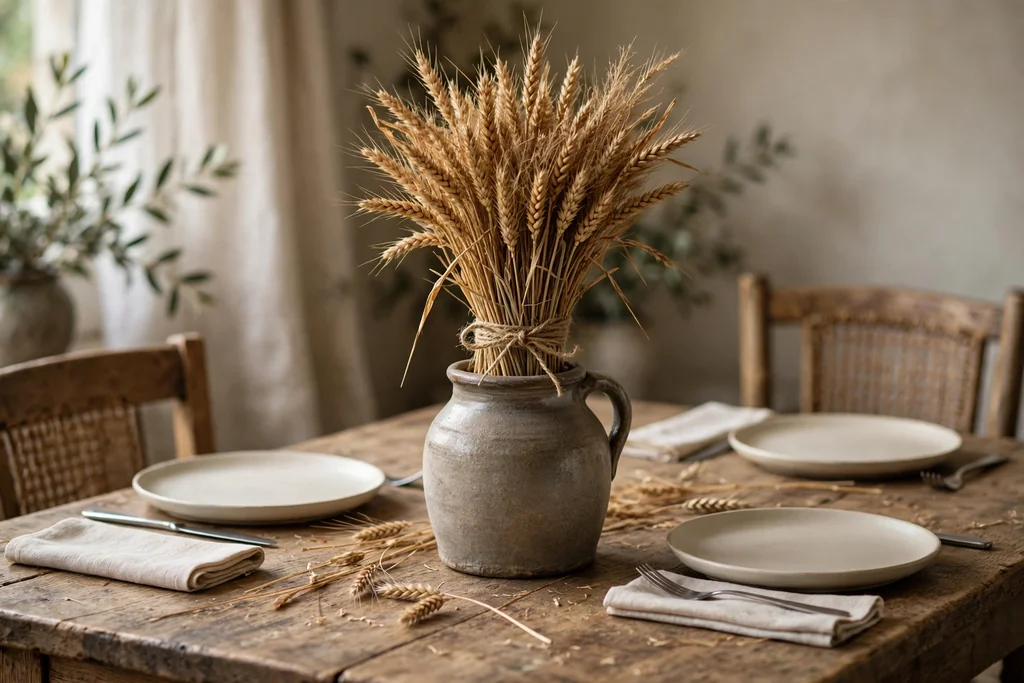
Tie a bundle of dried wheat or pampas stems with twine and stand it in a heavy stoneware jug at one end of a long table, or in the center of a round table. The dried stems give height and a clear autumn shape, while the jug keeps the bundle steady and easy to move. Trim the stems so the heads sit below eye level when guests are seated.
Keep the jug clear of elbows and serving dishes, and shake the bundle outside before bringing it in, since dried stems shed. Keep dried material clear of real flames, and use flameless candles nearby instead. If shedding bothers you, use faux stems in the same jug, and keep the jug for spring branches later in the year.
20. Cherry Blossom Branches in a Vase
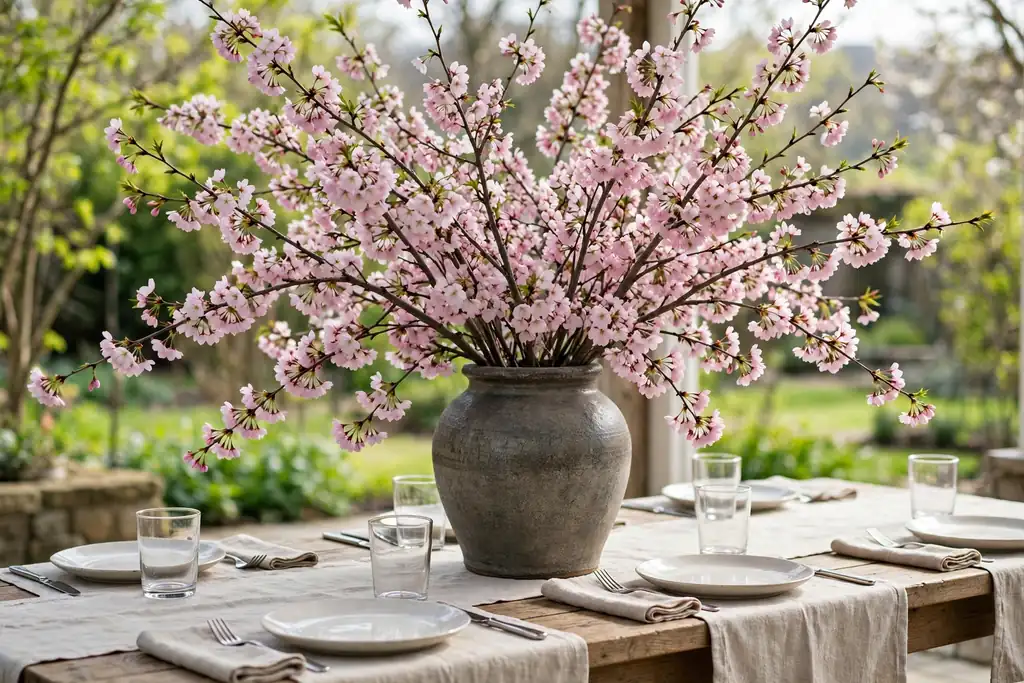
Stand a few cherry blossom branches, real or faux, in a heavy vase in the center of the table, and keep the rest of the centerpiece plain, such as a small candle in a holder beside the vase. The branches give height without blocking conversation, since guests can see between slim branches, and the pale blossoms suit a spring table. Choose a heavy vase that will not tip.
Trim branches so they clear light fixtures, and keep the arrangement narrow, not wide. Set the vase where it will not be brushed by serving dishes passing down the table. For a longer lasting version, use faux branches in the same vase, and swap them for bare branches in winter or gold branches for a holiday table.
21. Pinecone and Moss Runner
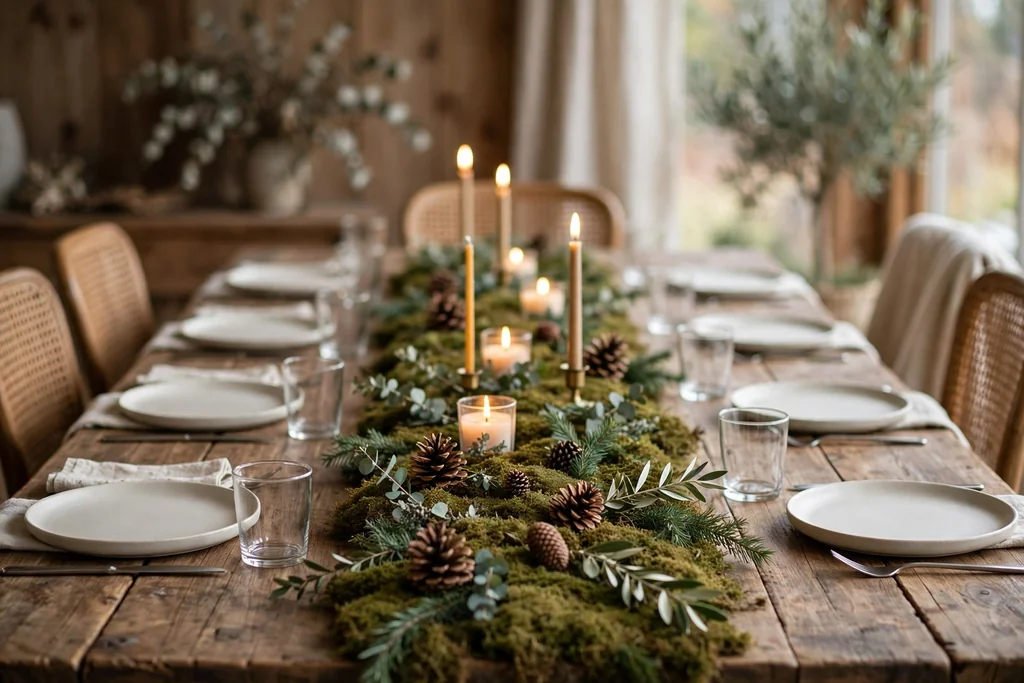
Lay a narrow runner of moss or plain green fabric down the center of the table, then set pinecones, a few sprigs, and one or two candles along it. The woodland mix gives a natural winter note without a large arrangement, and it suits a neutral table where texture carries the season. Use pinecones sparingly, about a handful along a long table, and keep them clear of plates and food.
Clean gathered pinecones fully and check them before bringing them inside, and keep them clear of real flames. If small pieces worry you with young children at the table, use larger pinecones only. For a spring version, swap the pinecones for small white flowers and keep the same moss runner.
22. Rose and Peony Low Bowl
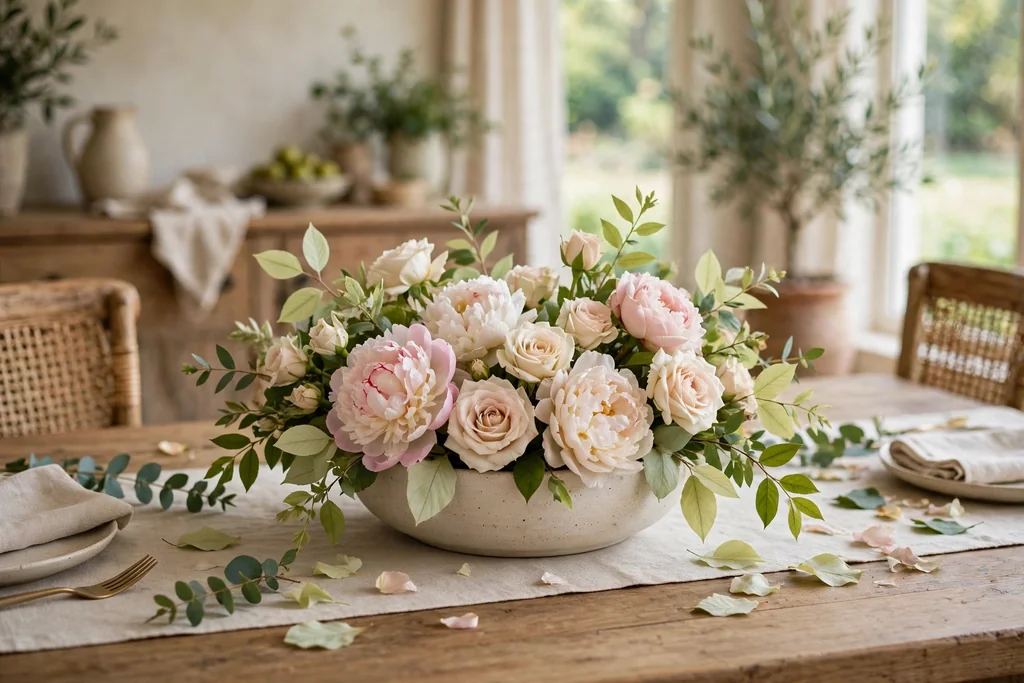
Fill a low ceramic bowl with roses and peonies trimmed short, and add a few pale green leaves to soften the edges. The layered petals give a soft, full look, and the blush and cream palette suits a spring or early summer table that does not want a strong color contrast. Set the bowl where guests can see the flowers from above, since the shape reads best from a seated view.
Peonies open over a few days, so buy them slightly closed if the meal is two or three days away, and keep them in cool water out of direct heat. Rose stems are sturdier, so mix them through the peonies rather than grouping them at one side. For a Valentine table in the same style, see the Valentine centerpieces.
23. Succulent Planter Box
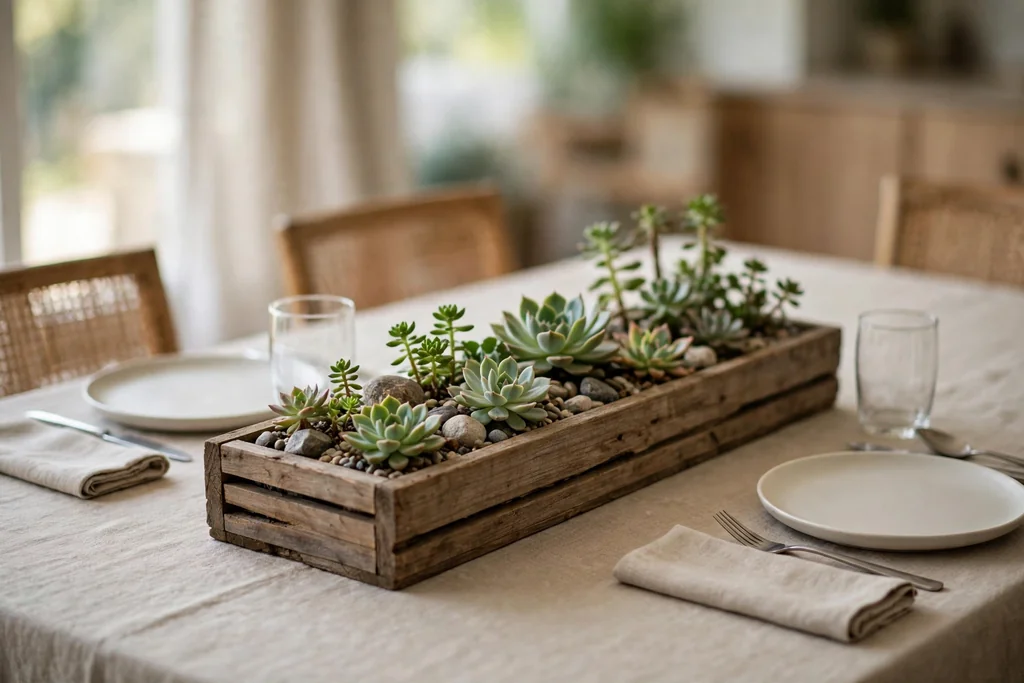
Set a low wooden planter box in the center of the table, filled with small succulents in plain pots or planted straight into the box, with small stones between them. The succulents give a green centerpiece that needs little water, lasts for months, and suits a modern or casual table in any season. Choose succulents in mixed shapes but one green palette, so the box reads as one centerpiece.
Water sparingly, and set the box on a mat, since soil and water can mark wood. Keep the box low and narrow, so guests can see across, and move it to a bright spot between meals. For a seasonal change, add one small candle in a holder beside the box, or swap one stone for a small seasonal piece, such as a pinecone in winter.
24. Hurricane Candle with Seasonal Filler
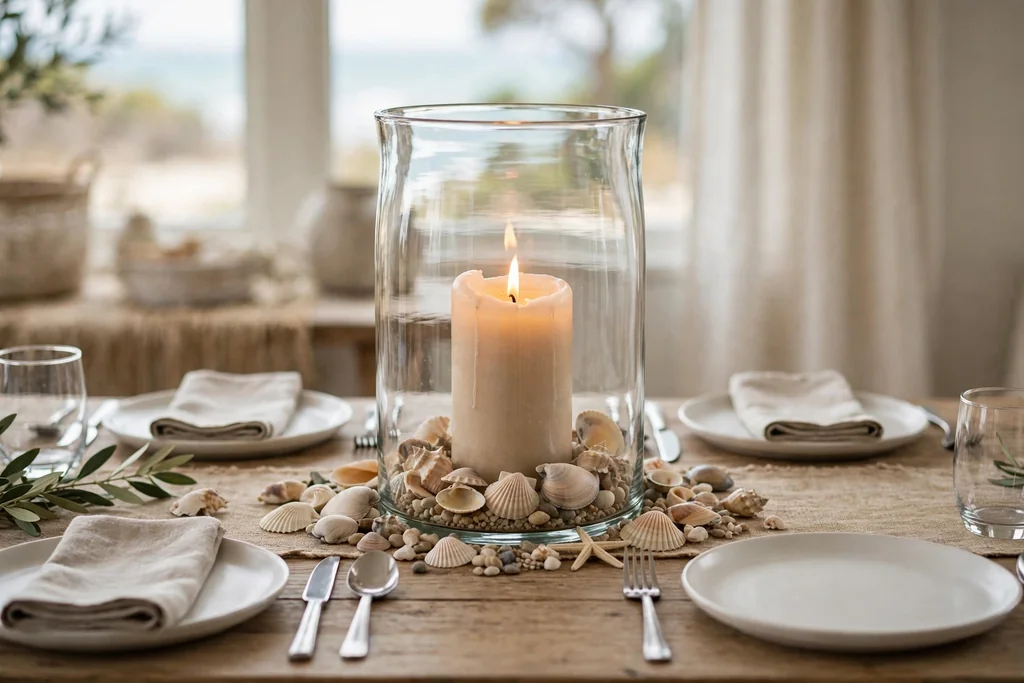
Set one or two large glass hurricanes in the center of the table, with a pillar candle inside each, and fill the base around the candle with a seasonal filler, such as sand and shells in summer, small pumpkins in autumn, cranberries in winter, or petals in spring. The glass keeps the group narrow and safe, and the filler is the only part that changes with the season.
Use battery candles inside narrow hurricanes, and real candles only in proper holders on a stable surface. Keep the filler clear of the flame, and use a tray under the hurricanes if the filler could spill. Wash the glass before the meal, since fingerprints show more on glass than on wood, and store the fillers in labeled bags for next year.
25. Vintage Teacups with Single Blooms
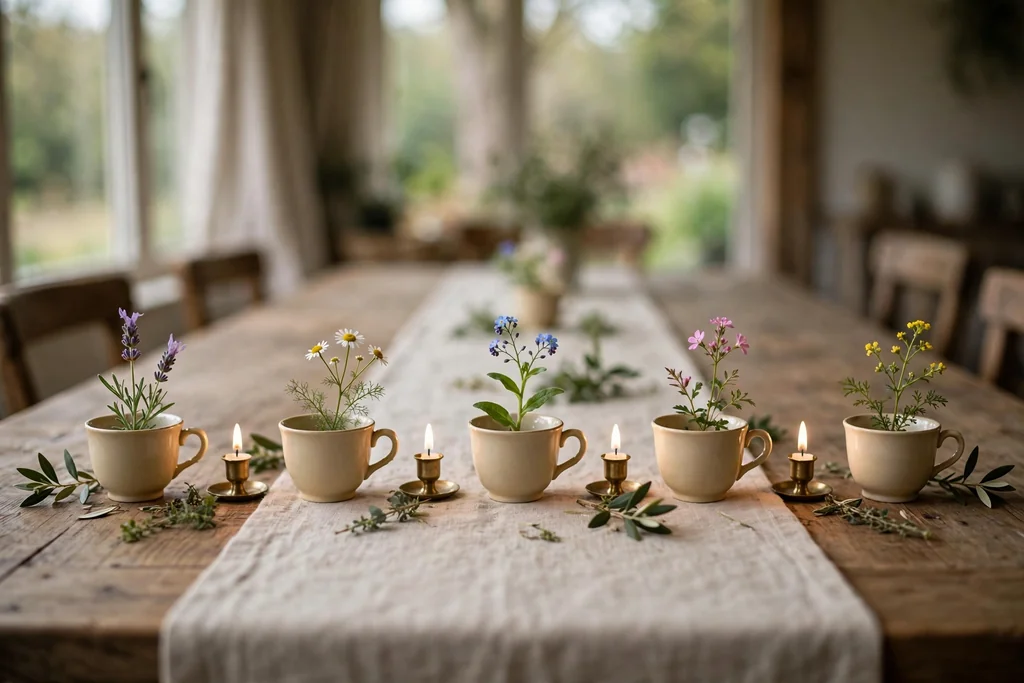
Set three or four small teacups down the center of the table, each holding one short flower stem in water, with a small candle in a holder between every second cup. This idea suits a small table or an afternoon tea style meal, because each cup is a small focal point rather than one large arrangement. Use teacups of the same pattern for a matched row, or mix patterns in the same color family for a collected look.
Keep each stem trimmed so the flower sits just above the cup rim, and top up the water before guests arrive, since teacups hold little. For a longer table, add more cups, but keep the spacing even so the row reads as one centerpiece. Change the flowers with the season, and keep the teacups for the next table.
26. Olive Branch and Stoneware Jug
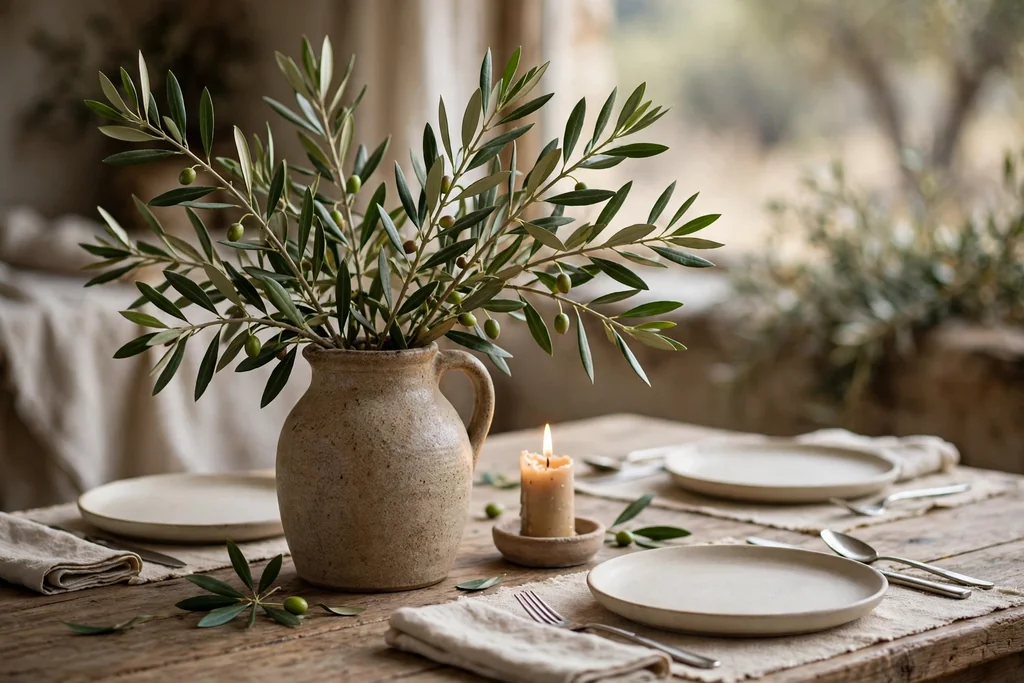
Stand a few olive branches in a heavy stoneware jug at one end of a long table, or in the center of a round table, and keep the rest of the centerpiece plain, such as a short candle in a holder beside the jug. The olive branches give a calm, Mediterranean note that suits spring and summer tables, and the jug keeps the branches steady and easy to move.
Trim the branches so they stay inside the table area and do not brush plates or glasses. Keep the jug heavy enough to hold the tall stems steady, and change the water every two days if the branches are fresh. For a winter version, swap the olive branches for evergreen sprigs and keep the same jug.
27. Single Tray Centerpiece for a Small Table
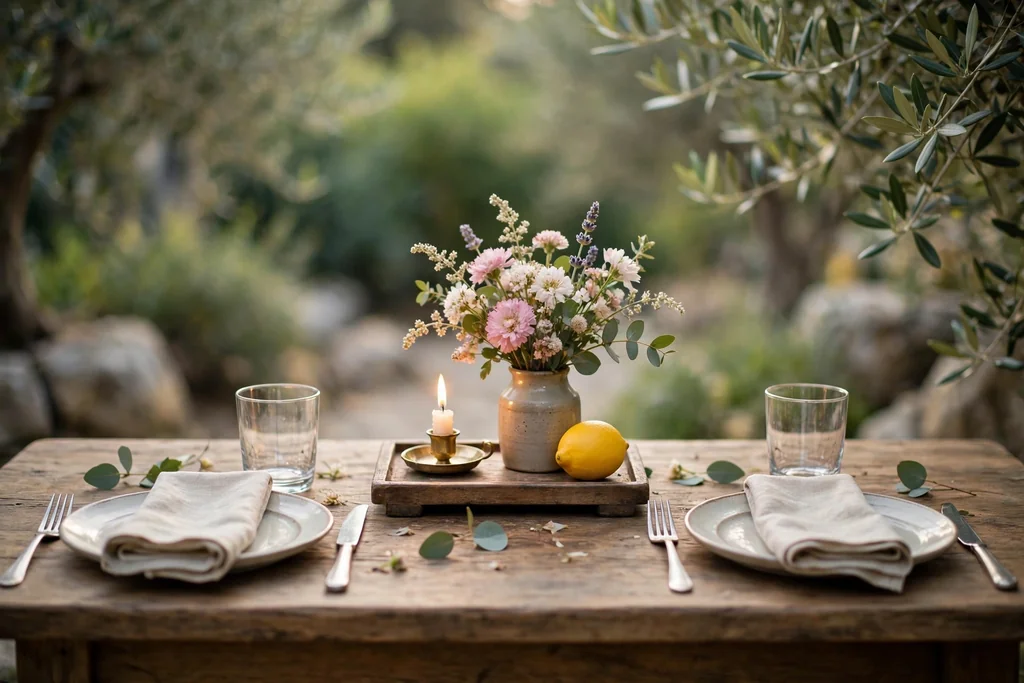
On a small table, use one centerpiece only, such as a small tray with one candle, a short vase of flowers, and one small seasonal piece, such as a pinecone in winter or a lemon in summer. The single tray keeps the table usable, since a small table has little spare room, and it lifts off in one move for serving. Keep the tray small enough that plates and glasses still fit around it.
Keep the vase short so it does not block sightlines, and use a plain runner or a single round placemat under the tray if the table marks easily. For daily use, leave just the candle on the tray and add flowers when guests come. Swap only the small seasonal piece with the season, and keep the tray, candle, and vase all year.
Conclusion
A good table centerpiece does not need a new set of pieces for each season. Start with a tray or board, keep the centerpiece low, and change only the flowers, fruit, or greenery while the candles, vases, and holders stay the same. Spring tables suit tulips and blossom branches, summer tables suit citrus and sunflowers, autumn tables suit pumpkins and dried stems, and winter tables suit evergreen, pinecones, and candlelight. Try one idea from this list at your next meal, keep what works for your table, and change only one layer at a time until the centerpiece feels like yours.
Frequently Asked Questions
What is a good table centerpiece for every season?
A good table centerpiece for every season is one low group on a tray or board, with candles and vases that stay the same all year and only the flowers, fruit, or greenery changed with the season. This setup keeps the table easy to clear, leaves room for plates and serving dishes, and suits spring flowers, summer fruit, autumn pumpkins, and winter greenery alike.
How low should a table centerpiece be?
A table centerpiece should stay below seated eye level, so guests can see each other across the table without leaning around it. Use low bowls, short vases, and candle groups on a tray, and place tall pieces, such as branches, at one end of a long table or in the center of a round table, where they block fewer sightlines.
What centerpiece works best for a small table?
The best centerpiece for a small table is a single small tray with one candle, one short vase, and one small seasonal piece, such as a pinecone or a lemon. Skip runners and large groups on a small table, fold napkins flat, and set extra dishes on a sideboard, so the table stays free for eating.
How do I make a centerpiece with things I already own?
Start with a tray, a wood board, or a runner you already own, then add candles in holders, a vase or jars, and one seasonal piece, such as fruit from the kitchen, herbs in pots, or greenery from the garden. Keep the palette to two or three colors, use one main group, and swap only the seasonal piece when the season changes.
What is the simplest centerpiece for a dinner party?
The simplest centerpiece for a dinner party is a low greenery runner with short pillar candles in glass holders, or a row of bud vases with one stem each. Both ideas leave sightlines open, suit a long table as well as a small one, and lift off in one move when serving needs the full table.
How do I keep candles safe in a table centerpiece?
Keep candles in holders on a stable surface, clear of dried material, fabric, paper, and greenery, and never leave a lit candle unattended. Use flameless candles near children, dried stems, or paper, and inside closed or narrow lanterns and hurricanes, where a real flame needs air and a safe holder.