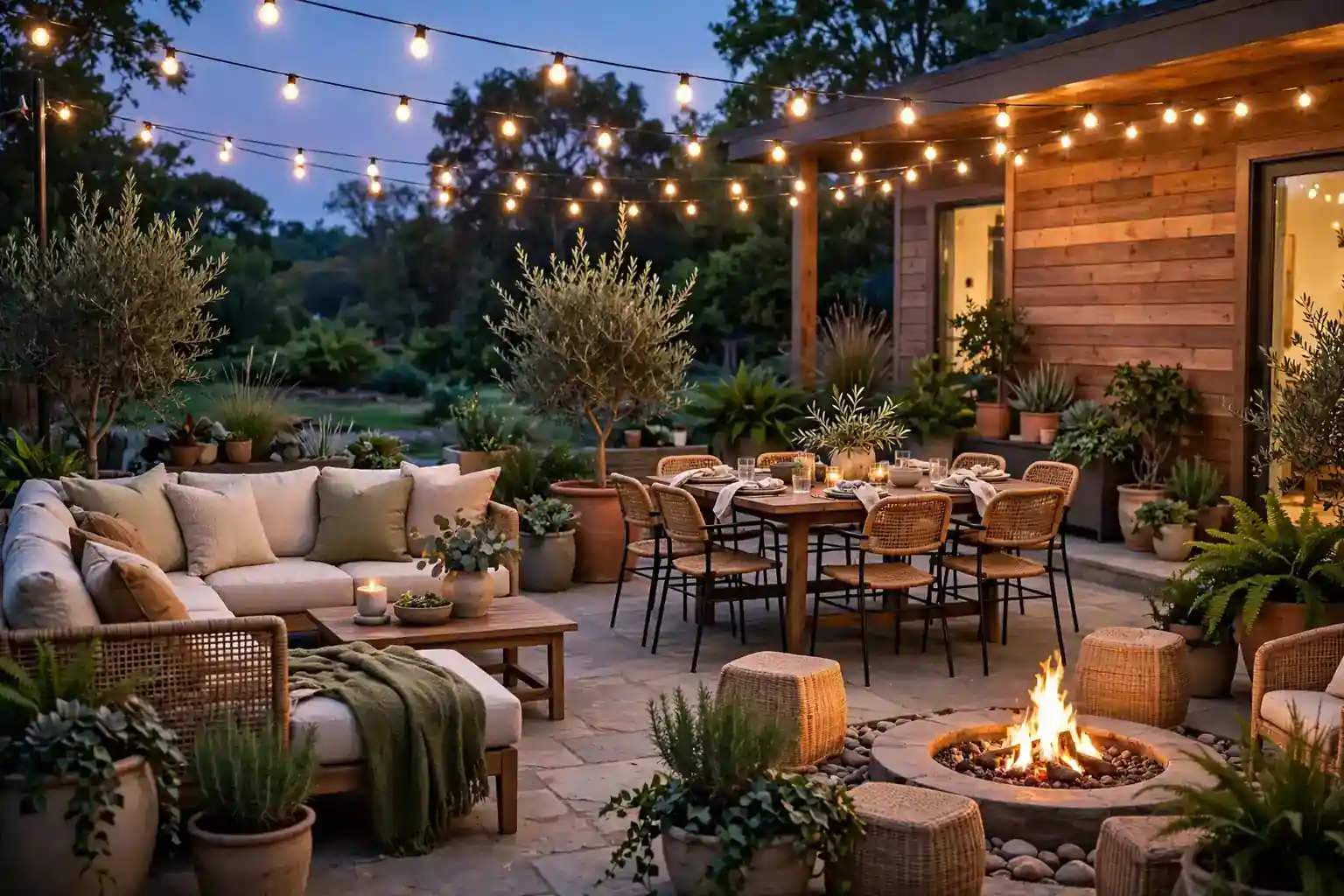
A comfortable outdoor patio starts with shaded seating, a clear place to eat, soft light for evenings, and plants that soften hard edges. Choose weatherproof furniture sized to your patio, add a rug to mark the seating area, layer light with string lights and lanterns, and finish with pots, shade, and a heat source for cool nights.
The 25 ideas below work for a small concrete slab as well as a large paved patio, since most of them scale down to one chair and one pot, or up to a full seating and dining group. Start with seating and shade, then add light and plants. Keep a clear path from the house door to the seating area, and leave room to pull out chairs and walk around the table with ease.
Key Takeaways
- Start with seating and shade, since a patio that is too hot or has nowhere comfortable to sit will go unused.
- Size furniture to the patio, leaving clear walkways around chairs, tables, and planters.
- Use an outdoor rug to mark the seating area and to make hard paving feel softer underfoot.
- Layer light with overhead string lights, lanterns, and solar path lights, so the patio works after dark.
- Repeat two or three colors across cushions, pots, and throws, so many separate pieces read as one planned space.
- Choose weatherproof fabrics and finishes, or store cushions and throws in a bench or basket when rain is expected.
- Add plants at different heights, from ground pots to a trellis wall, to soften fences and walls.
1. Deep Seat Sofa Group with Washable Cushions
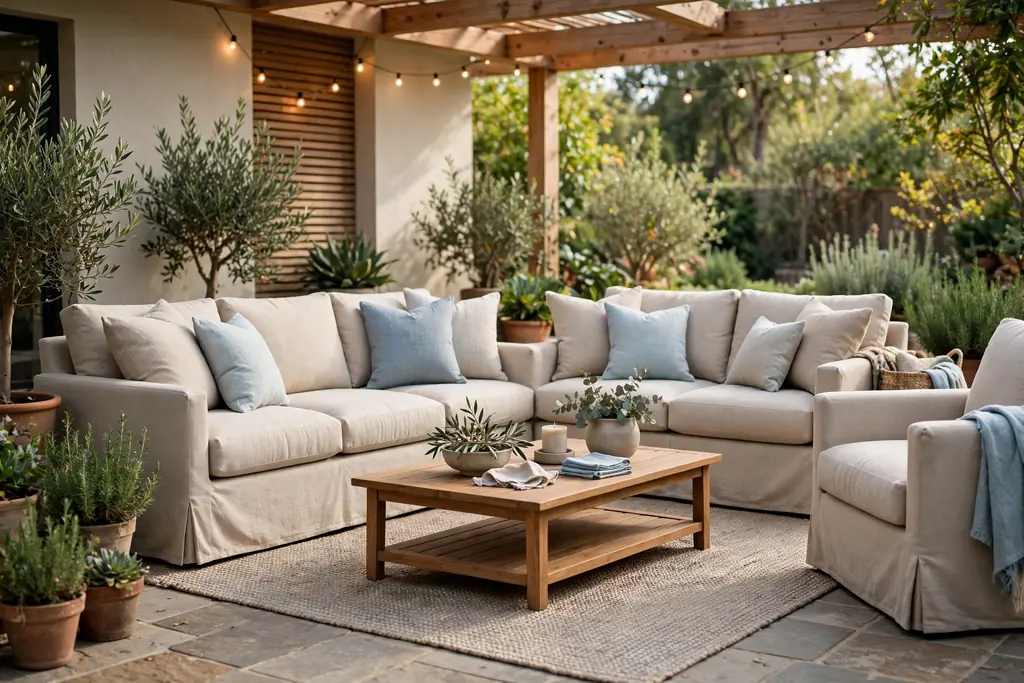
A deep seat sofa group turns a patio into an outdoor living room. Set a two or three seat sofa with two armchairs around a low coffee table, facing each other so conversation feels natural. Thick seat cushions make the group comfortable for long sits, and a coffee table holds drinks, books, and a small lantern within reach.
Choose cushions with removable, washable covers, since outdoor cushions gather dust, pollen, and spills. Measure the group before buying, and leave at least 60 centimeters of walking space around the seating. If the patio is small, a loveseat with one chair gives the same living room feel in less space.
2. Layered Outdoor Rugs for a Softer Floor
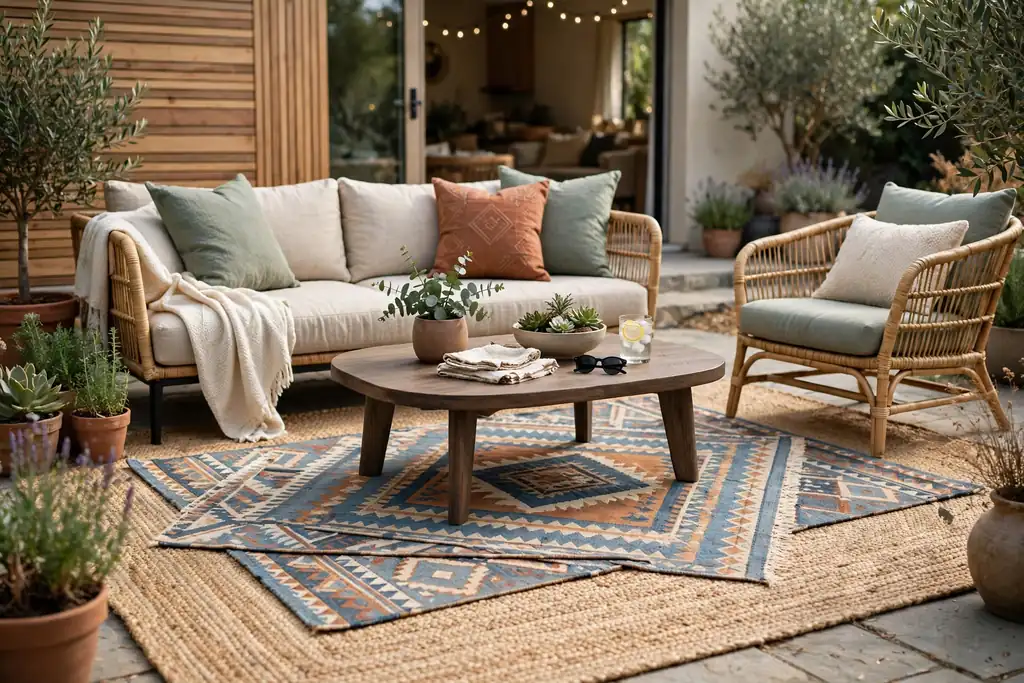
Layered outdoor rugs soften a concrete or stone patio in one step. Lay a larger flat rug in a plain color first, then add a smaller patterned rug on top, centered under the coffee table. The layers mark the seating area clearly, even on a long patio that also holds a dining table and a grill.
Pick rugs rated for outdoor use, so they dry after rain and resist fading in sun. Shake them out weekly, and lift them now and then to check for damp marks on the paving below. A rug with a simple stripe or border pairs well with plain cushions, since the rug carries the pattern.
3. Overhead String Lights for Evening Glow
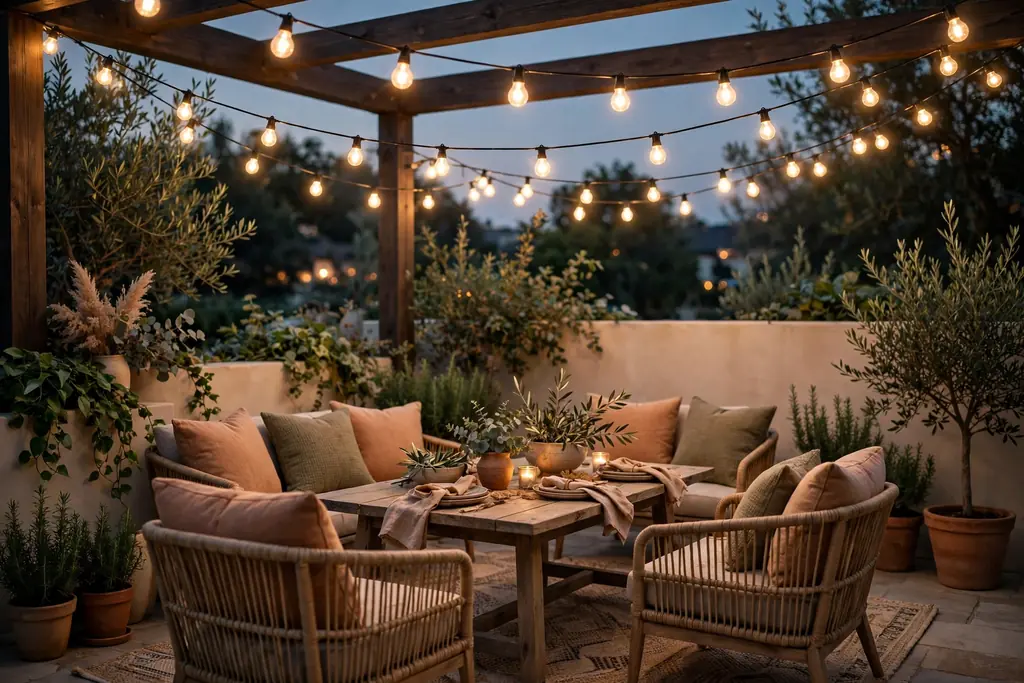
Overhead string lights give a patio a warm glow after dark and make evening sits feel planned rather than improvised. Hang them in straight lines or a gentle zigzag from the house wall to posts, a pergola, or a fence, high enough that no one walks into them. Warm white bulbs suit most patios and flatter wood, stone, and plants alike.
Use outdoor rated lights and a weatherproof outlet or timer, and check the span before fixing hooks so the lights do not sag into the seating area. Keep one run over the seating group and another over the dining table, so both areas are lit. In winter, take the lights down or check them for damage before switching them on again.
4. Pergola with Climbing Vines for Natural Shade
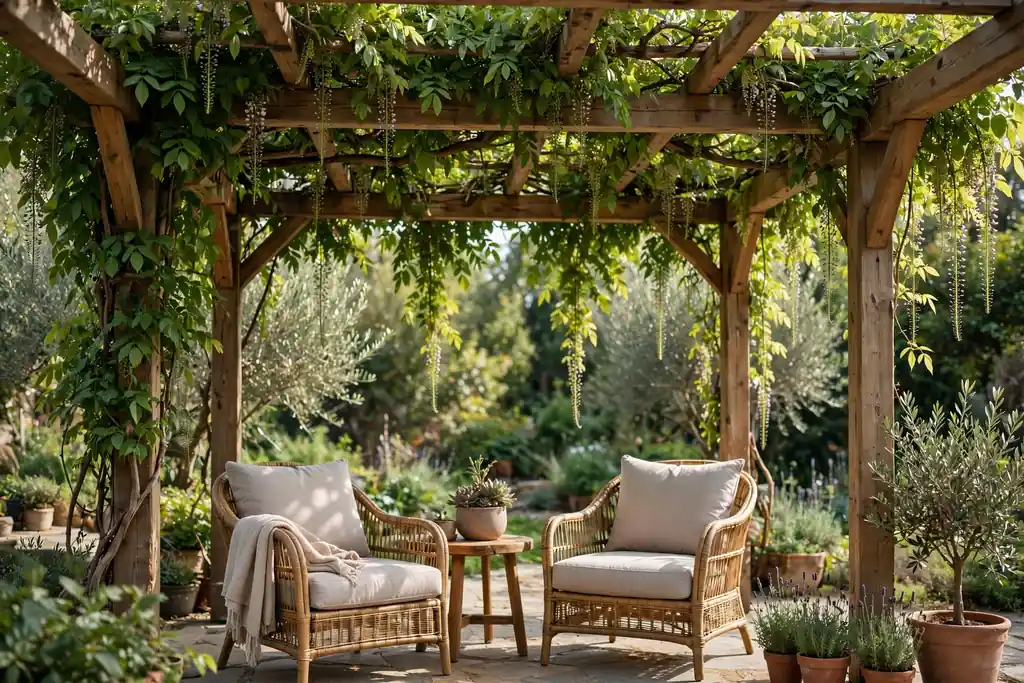
A pergola with climbing vines gives shade that grows fuller each year and softens a plain patio roofline. Set the pergola over the seating area, with posts fixed firmly to the patio or to footings, and train vines such as jasmine, grape, or climbing roses along the top beams. The leaves filter sun in summer and let more light through when they thin in cooler months.
Prune the vines once or twice a year to keep growth off gutters and to stop heavy stems from pulling on the beams. Choose a vine suited to your light and climate, and give it a trellis or wires to climb at first. A pergola also gives a clear place to hang string lights and outdoor curtains.
5. Cantilever Umbrella for Flexible Shade
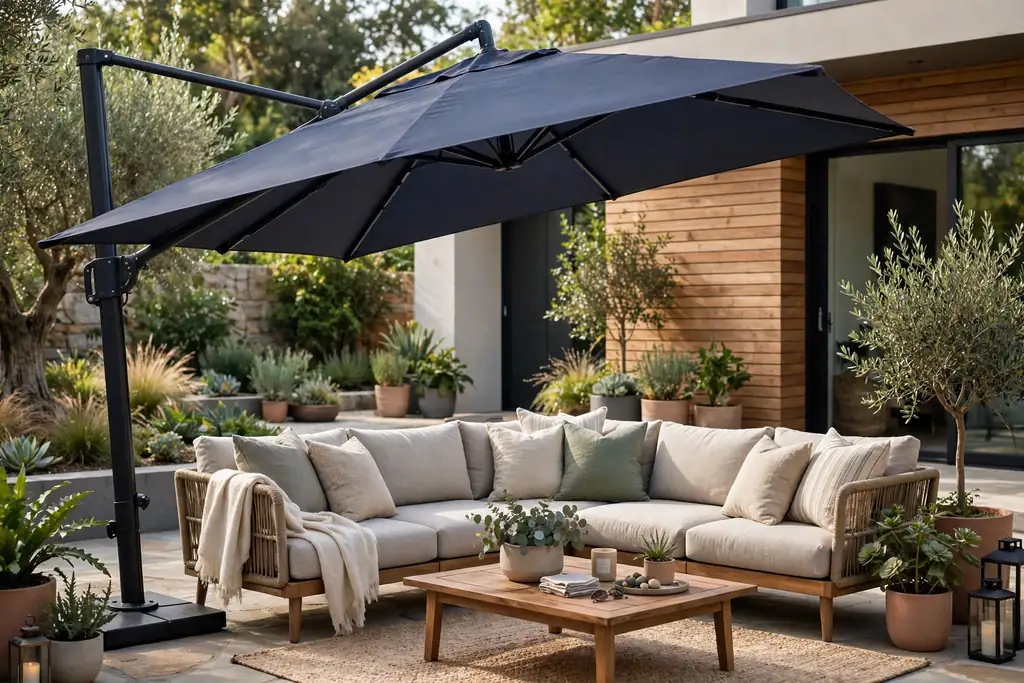
A cantilever umbrella shades a seating group without a pole in the middle of the table or chairs. The offset pole stands to one side, with a heavy base, and the canopy swings over the sofa or dining table as the sun moves. This makes it easy to shade a corner seat in the morning and a dining table at midday with the same umbrella.
Choose a base weight rated for the canopy size, and close the umbrella in strong wind so it cannot tip or lift. A light colored canopy reflects heat and keeps the shade cooler, while a tilt function lets you angle the shade as the sun drops. Keep the base clear of walkways so no one trips over it.
6. Fire Pit Conversation Circle
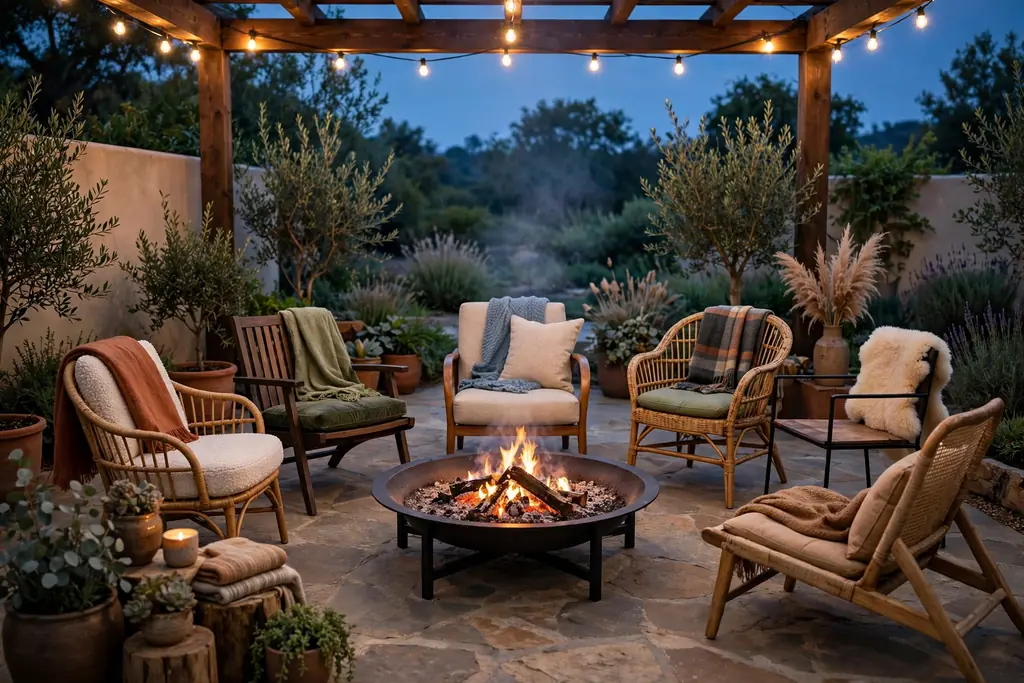
A fire pit conversation circle gives the patio a clear evening focus. Set low chairs in a circle around a fire pit, with enough room to stretch legs and to reach a side table for drinks. The circle suits cool evenings, when guests gather around the heat, and it works on a paved area away from overhangs and dry plants.
Follow local rules for open flames, and keep the fire pit on a nonflammable surface with a safe distance from furniture, fences, and house walls. Use a spark screen when the fire is lit, and let ashes cool fully before clearing them. A portable fire bowl gives the same circle on a smaller patio, with chairs pulled in close.
7. Outdoor Dining Table for Shared Meals
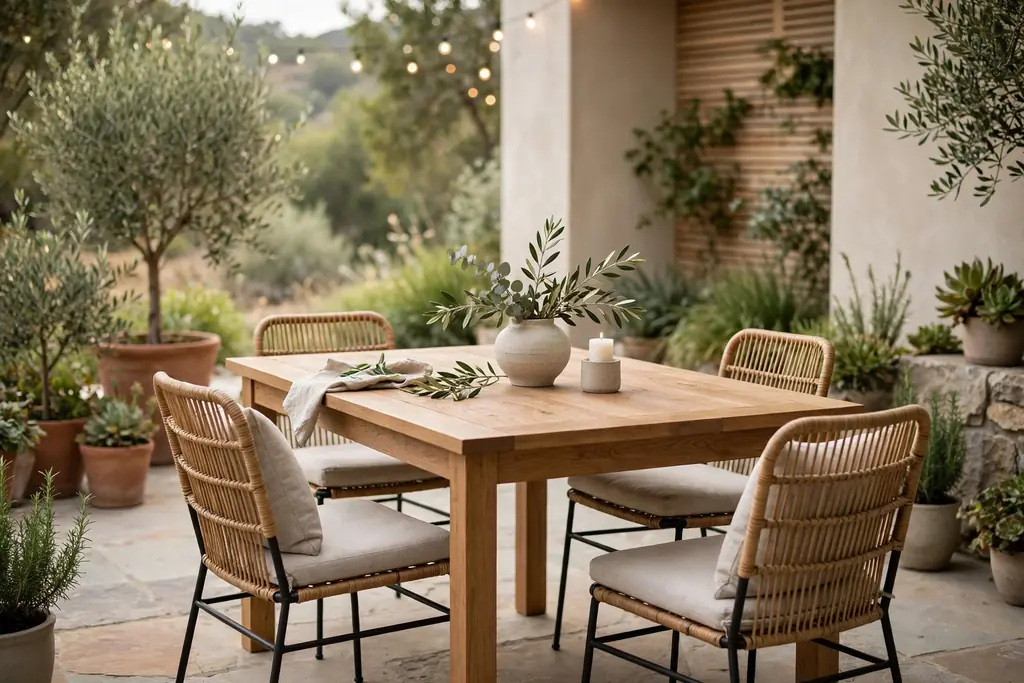
An outdoor dining table makes the patio a place for shared meals, not only for sitting. Choose a table sized to your usual group, with chairs that slide out with ease and leave walking room behind them. A wood or metal table with a simple centerpiece, such as a low bowl of lemons or a small potted herb, keeps the table usable without a full table setting every day.
Protect the table with a cover in heavy rain if the finish needs it, and wipe spills promptly so they do not stain. If the patio is narrow, a rectangular table against a wall with a bench on one side seats more people in less space. Add a shade umbrella or pergola over the table so midday meals stay comfortable.
8. Bistro Set for a Small Patio
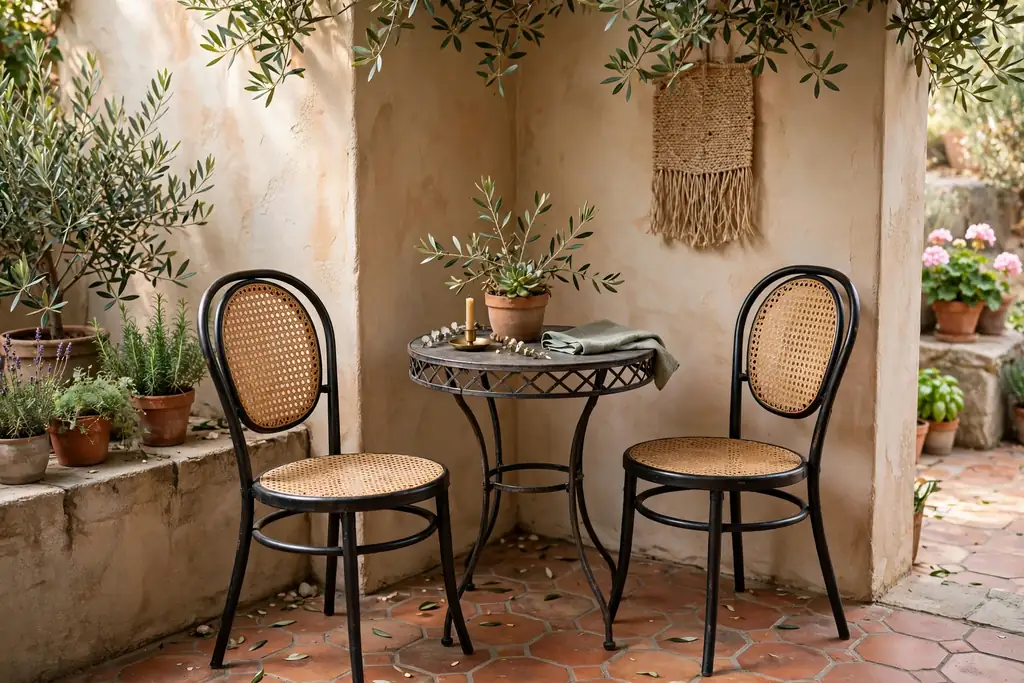
A bistro set suits a small patio, a balcony edge, or a narrow side yard where a full dining set would crowd the space. Two chairs and a small round table fit in a corner, leaving room for a pot or two and a clear path to the door. The set works for morning coffee, reading, and a light lunch for two.
Choose folding chairs if the set must be stored in winter, and pick a table top that wipes clean after meals. A bistro set in metal or wood suits most house styles, and a single patterned cushion on each chair adds color without extra pieces. Keep the set near the door, so it is easy to use on a short break.
9. Hanging Egg Chair for a Cozy Corner
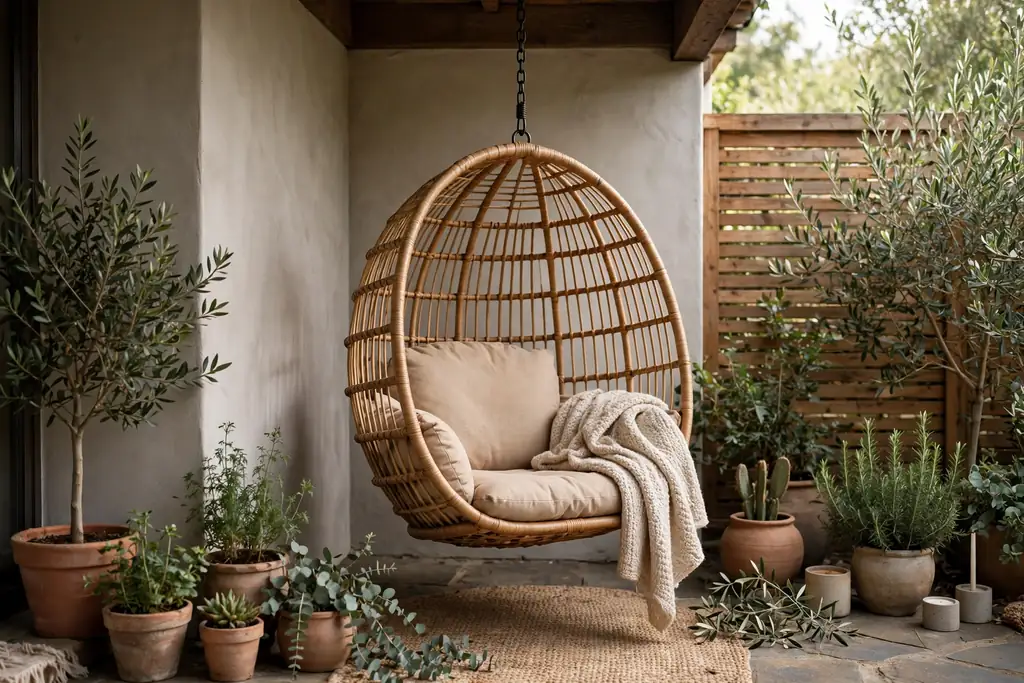
A hanging egg chair fills a patio corner with a cozy seat that feels separate from the main group. Hang the chair from its own sturdy stand, with a thick seat cushion and a small throw, and place it where it can swing a little without hitting a wall, a planter, or a railing. The curved shape shelters the sitter and suits reading and quiet breaks.
Check the stand and hanging point for weight rating and wear each season, and keep the swing path clear of children running past. A cushion in a plain color lets the chair shape stand out, while a patterned throw adds warmth on cool evenings. If the chair sits in rain, bring the cushion indoors or use a quick dry fill.
10. Hammock for Lazy Afternoons
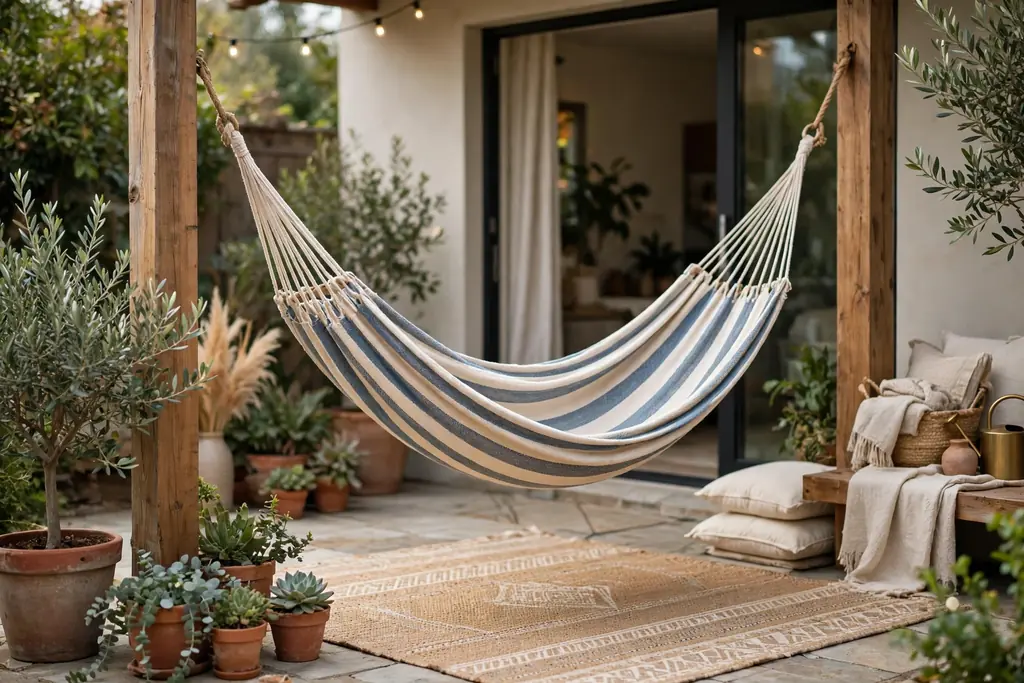
A hammock gives a patio a relaxed seat for lazy afternoons and naps. Hang it between two sturdy posts, trees, or a freestanding stand, with the ends fixed at a height that lets the middle hang low enough to sit into with ease. A striped or plain cotton hammock suits most patios, and a small pillow at one end makes it comfortable for reading.
Check ropes, hooks, and fabric for wear before each season, and take the hammock down in storms or winter. Keep the ground below clear of sharp stones and pots, so stepping out of the hammock is safe. A hammock with a stand works where there are no trees or posts, and it can move to follow shade through the day.
11. Sun Loungers with a Shared Side Table
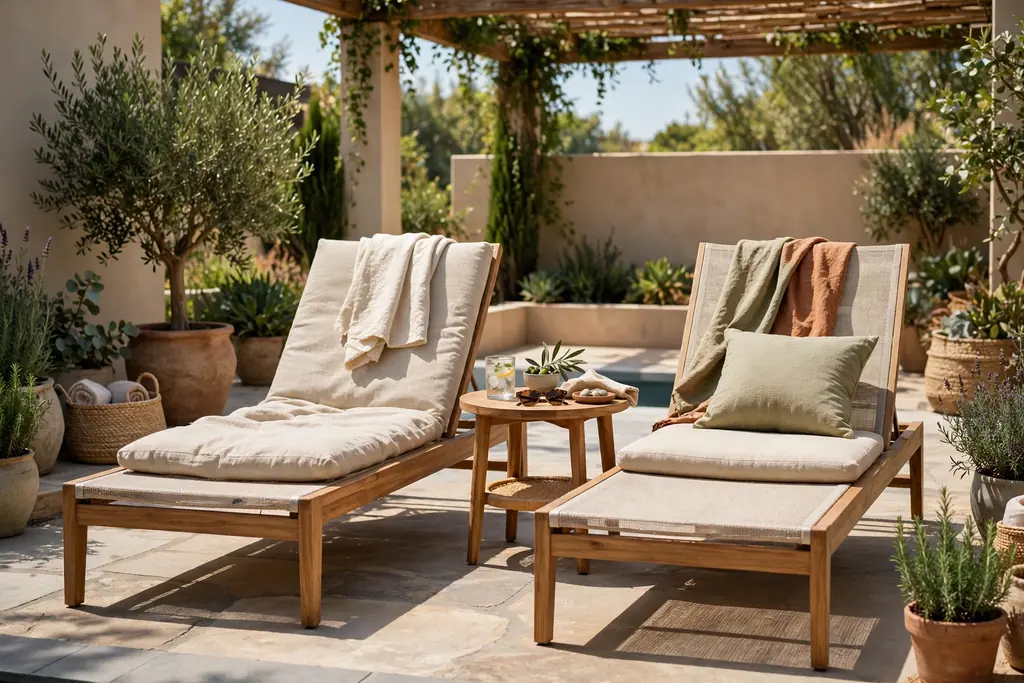
Sun loungers with a shared side table make a sunny patio corner easy to use all afternoon. Set two loungers side by side, facing the sun or the garden, with one low side table between them for drinks, sunscreen, and a book. Adjustable backs let each person sit up to read or lie flat to rest, without moving the whole lounger.
Choose loungers with weatherproof frames and quick dry cushions, and fold or stack them in winter if storage is tight. A small side table with a lower shelf holds extra towels and keeps the top clear. Place loungers where they do not block the path to the dining area, and leave room to walk around the foot of each lounger.
12. Planter Clusters at Different Heights
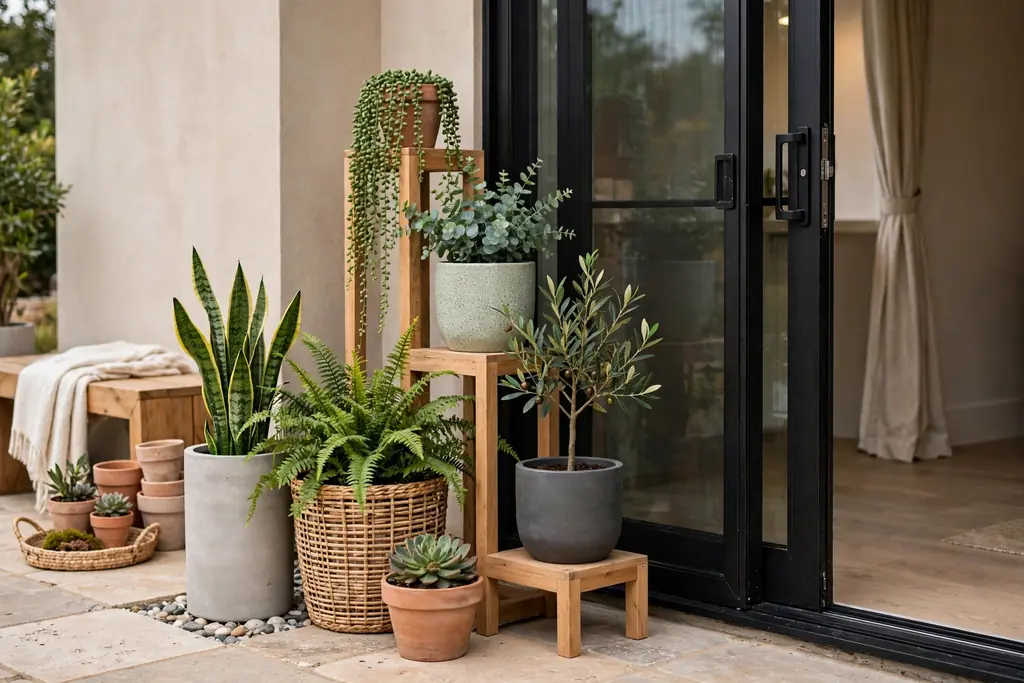
Planter clusters at different heights add green to a patio without a garden bed. Group three or five pots of varied heights in a corner or beside the door, with a tall plant at the back, medium plants in the middle, and trailing plants at the front. The mix of heights draws the eye up and softens a plain wall or fence.
Use pots with drain holes and saucers, and match the plants to the light the spot gets, with sun lovers in open spots and shade plants near walls. Water when the top of the soil feels dry, and feed plants through the growing season as the pot label directs. Keep the cluster clear of walkways, and move tender pots indoors before frost.
13. Trellis Garden Wall for Green Privacy
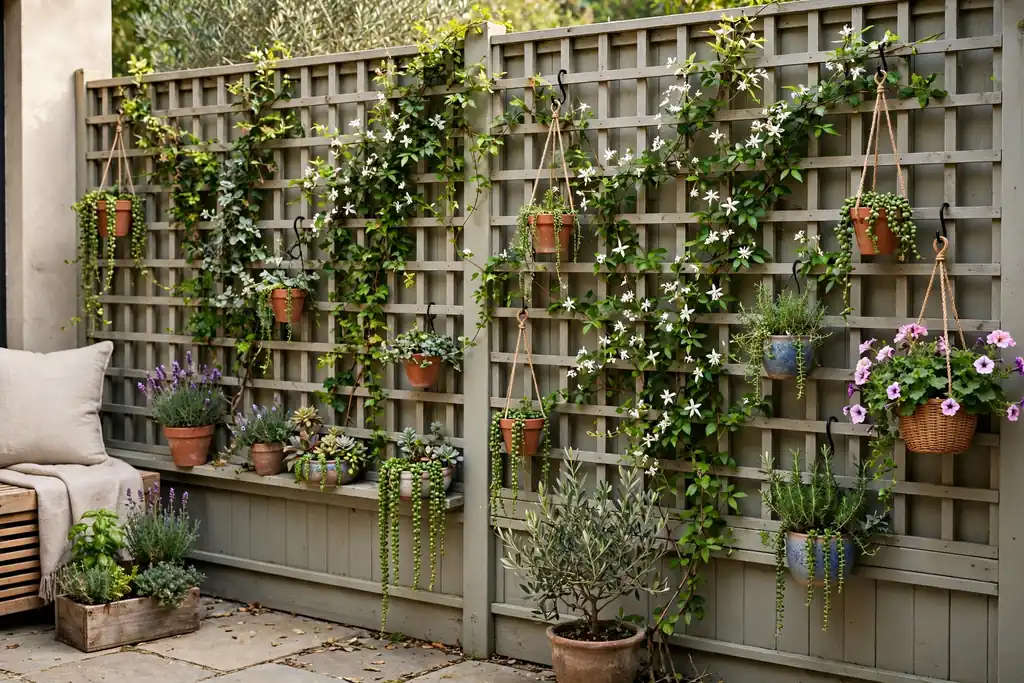
A trellis garden wall covers a plain fence or wall with living green and gives a patio a garden feel in a small footprint. Fix a wood or metal trellis to the wall, with a small gap behind it for air, and plant climbers at the base or hang small pots from the trellis frame. The wall suits narrow patios where floor space for pots is short.
Water climbers at the base, and tie new stems to the trellis as they grow so the cover stays even. Prune once a year to keep the wall tidy and to stop growth from blocking windows or lights. A trellis with potted herbs and small flowers gives color at eye level, while a climber alone gives a fuller green screen.
14. Herb Pots by the Door for Cooking and Scent
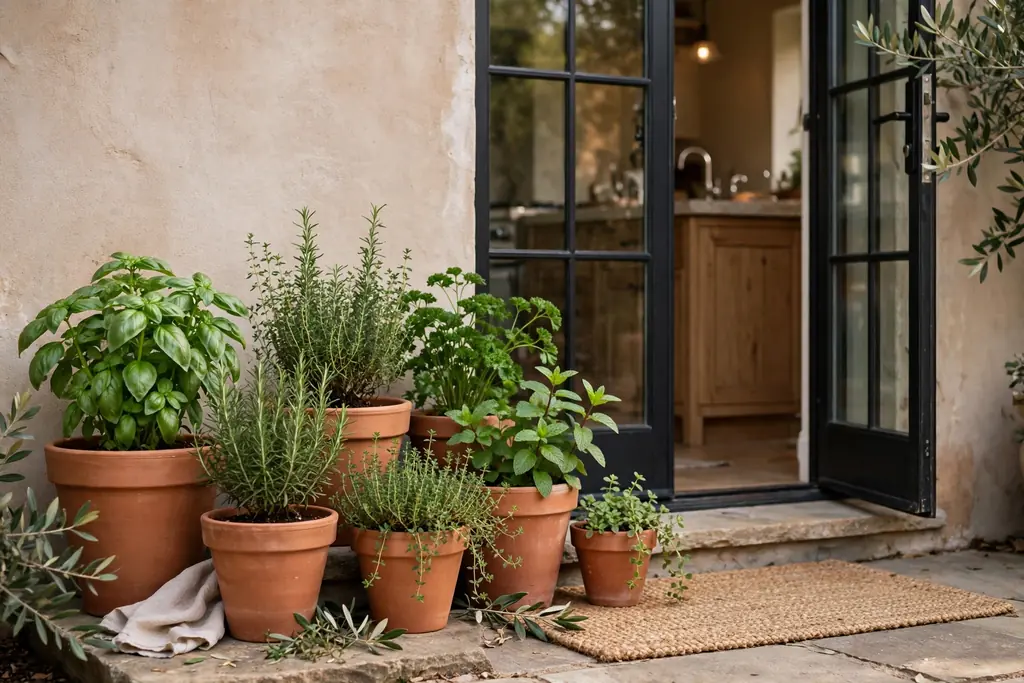
Herb pots by the door give a patio scent, green, and fresh leaves for cooking in one small group. Set pots of basil, mint, rosemary, thyme, and parsley near the kitchen door or beside the dining table, where they are easy to reach while cooking. Mint grows fast, so give it its own pot to stop it from crowding other herbs.
Water herbs when the top of the soil feels dry, and snip leaves from the top so the plants stay bushy. Most herbs need sun for at least part of the day, so place the pots where they get morning or midday light. Label the pots if guests cook with you, and bring tender herbs indoors before frost.
15. Privacy Lattice Screens for a Sheltered Feel
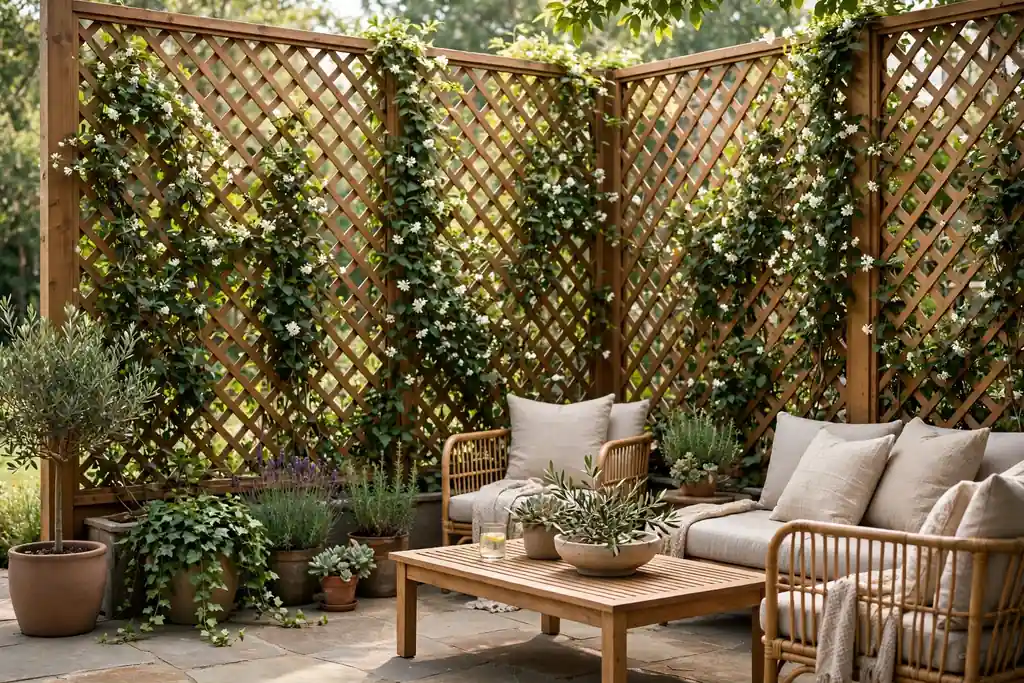
Privacy lattice screens shelter a patio from neighbors and wind without building a solid wall. Set freestanding lattice panels along one side of the patio, fixed to posts or heavy planters, and let climbing plants or hanging pots soften the frame. The open pattern lets air and light through while breaking the direct view.
Check that the screens are stable in wind, with posts set firmly or bases weighted, and keep them clear of walkways and fire pits. A lattice screen also gives a place to hang lanterns, small pots, or outdoor art. Paint or stain the lattice to match the fence or furniture, so it reads as part of the patio rather than a temporary fix.
16. Outdoor Curtains for Soft Shade and Privacy
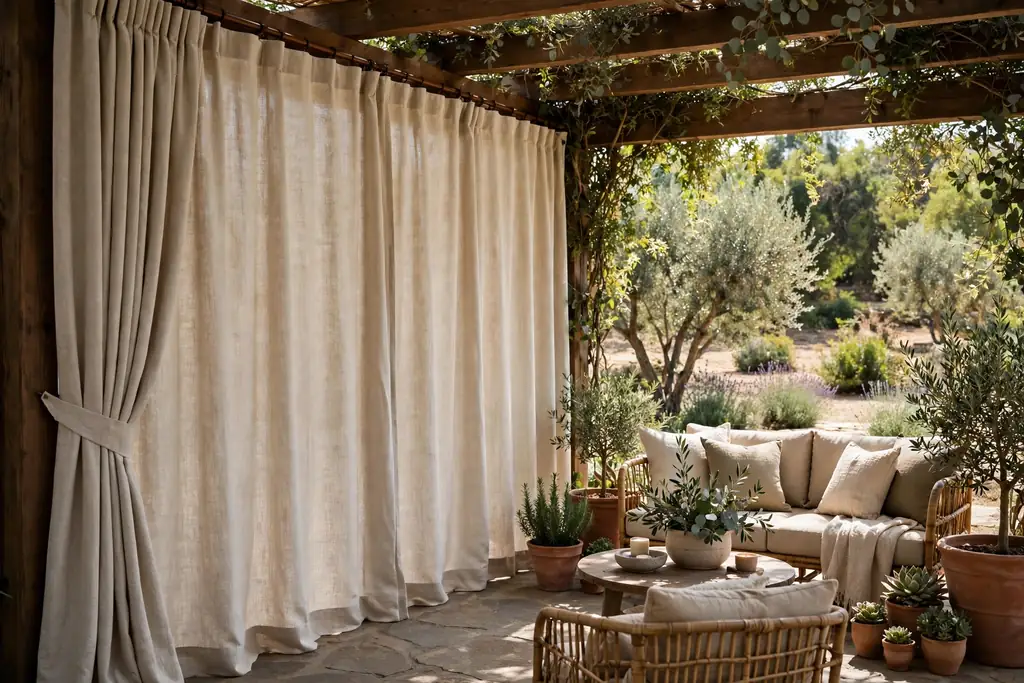
Outdoor curtains on a rod or wire give a patio soft shade and privacy that can be opened or closed as needed. Hang weatherproof curtains from a pergola beam, a wall mounted rod, or a freestanding frame, and draw them across the sunny or overlooked side in the afternoon. Light colors keep the shade bright, while a heavier weave blocks more sun and wind.
Use curtains rated for outdoor use, and tie them back in strong wind so they do not pull on the rod. Wash or hose them down at the start of the season, and take them down in winter to keep the fabric fresh. Curtains pair well with string lights, since the fabric softens the light in the evening.
17. Lanterns with Battery Candles for Table Light
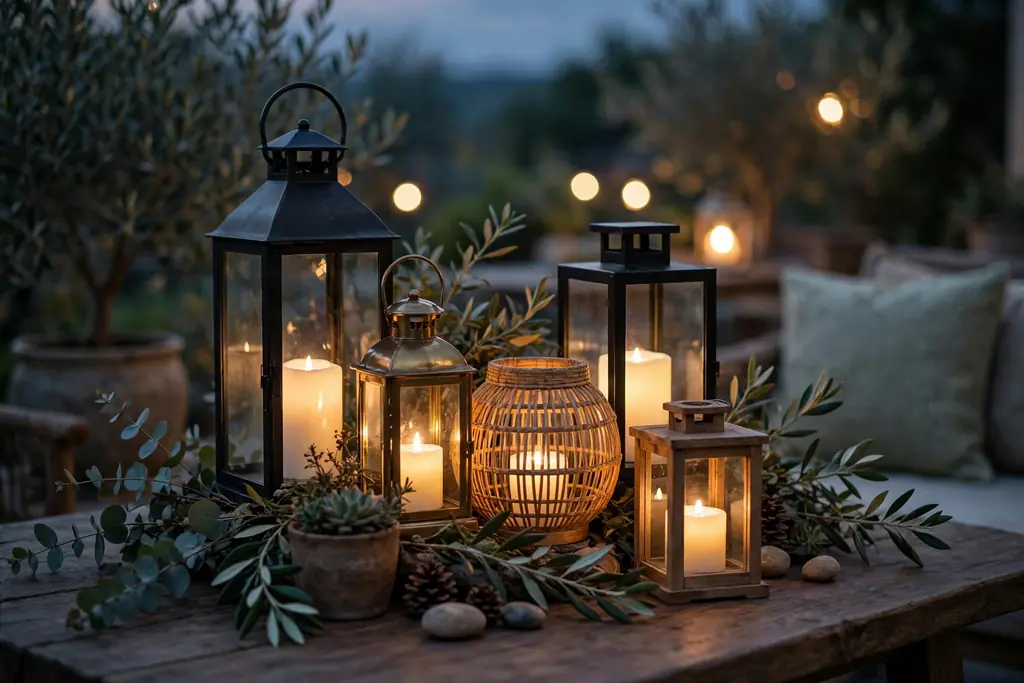
Lanterns with battery candles give a patio safe table light that can move from the dining table to the seating group as the evening goes on. Group three lanterns of varied heights on a table or along a low wall, with battery candles inside for a steady glow. The glass protects the flame effect from wind, and the light flatters food, faces, and plants alike.
Use battery candles where wind, children, or pets make real flames risky, and keep real candles inside glass with a stable base if you use them. Bring lanterns indoors in storms, and wipe the glass clean so the light stays bright. Black metal lanterns suit most patios, while wood or brass lanterns warm a rustic space.
18. Solar Path Lights Along the Walkway
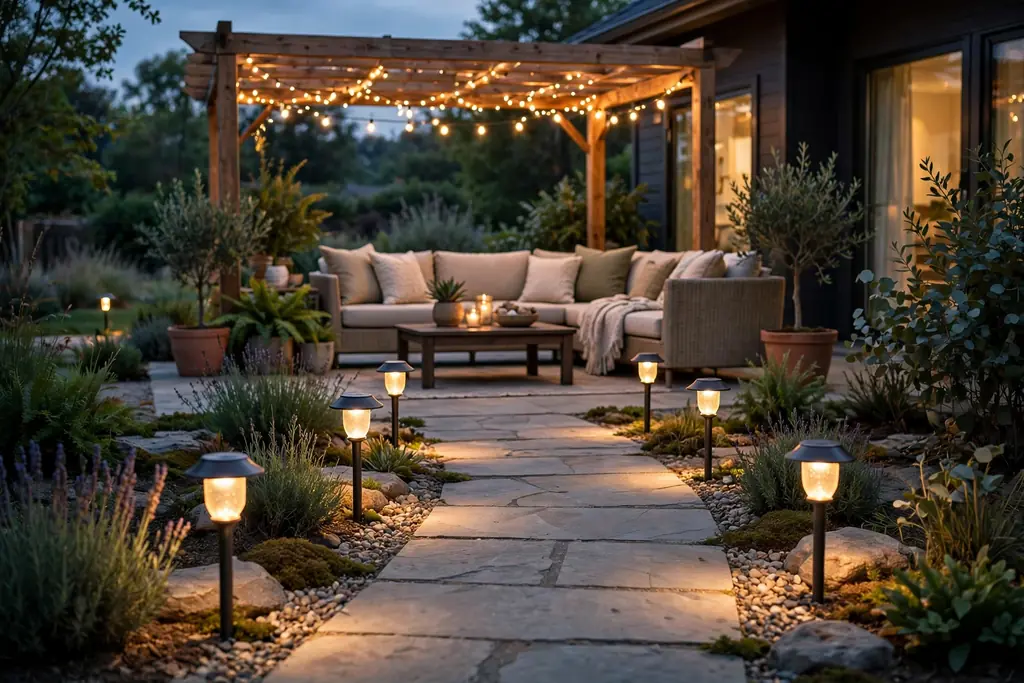
Solar path lights along the walkway make a patio safe and welcoming after dark, without wiring or running costs. Set small stake lights along the path from the door to the seating area, spaced evenly and clear of mowing and foot traffic. The lights charge in daylight and switch on at dusk, marking the edges of the path.
Choose lights with a warm white glow, and keep the solar panels clear of leaves and shade from pots. Replace rechargeable batteries when the light fades, and move a light that sits in deep shade to a sunnier spot. Path lights work best as a guide, with string lights or lanterns giving the main light in the seating area.
19. Chiminea for Warmth on Cool Evenings
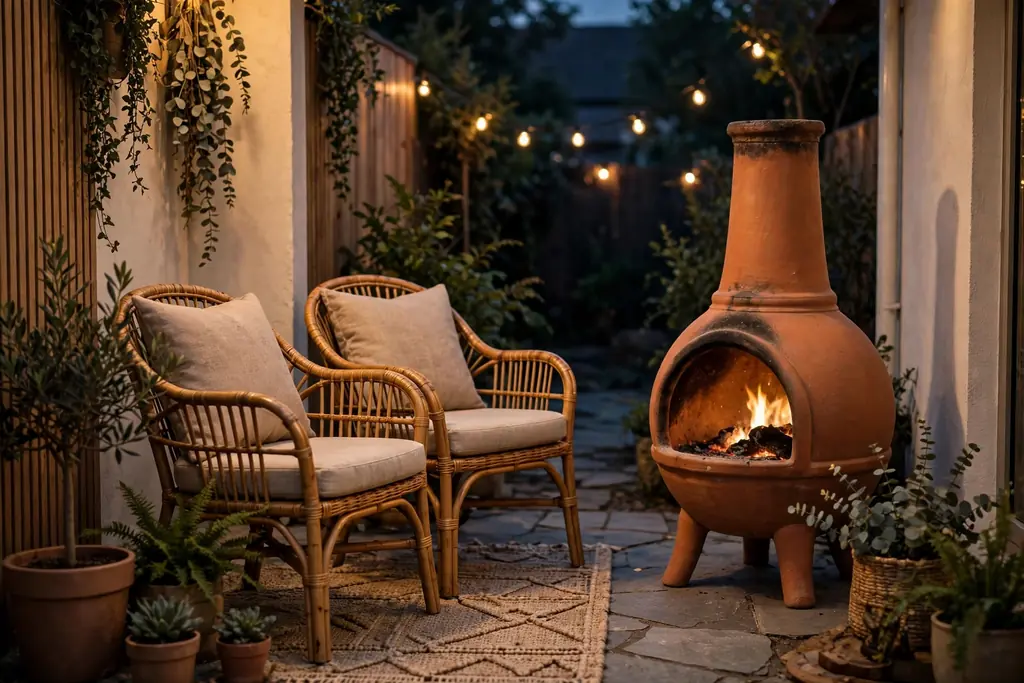
A chiminea gives a patio warmth on cool evenings in a compact shape that suits smaller spaces than a full fire pit. Set the chiminea on a nonflammable surface, away from overhangs, fences, and dry plants, with a clear space around it for safety. The chimney directs smoke up and away from seats, so guests can sit close without smoke in their faces.
Burn only dry wood suited to the chiminea, and let ashes cool fully before clearing them. Cover the chiminea in rain to protect the finish, and check the chimney and body for cracks each season. A chiminea beside one or two chairs makes a quiet evening corner, while a larger fire pit suits a full group.
20. Storage Bench for Cushions and Throws
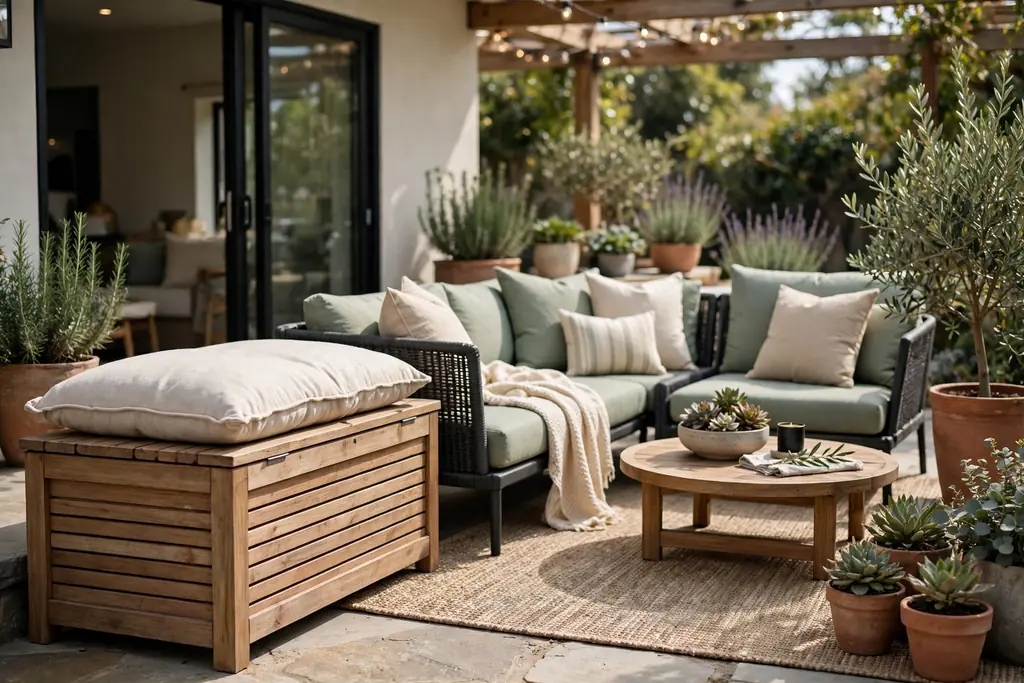
A storage bench holds cushions, throws, and small outdoor games, and gives guests an extra seat. Set a wood or resin bench beside the seating group or against a wall, with a hinged lid that lifts with ease. Inside, keep cushions in a dry bag or basket, so they stay clean and ready to use.
Check the bench lid for water leaks after rain, and wipe the inside dry if needed. A bench with a cushion on top reads as seating, while a plain bench top can hold a tray of drinks or a lantern. Keep heavy items at the bottom of the bench, and leave the top clear so the bench can seat guests at short notice.
21. Side Tables at Every Seat
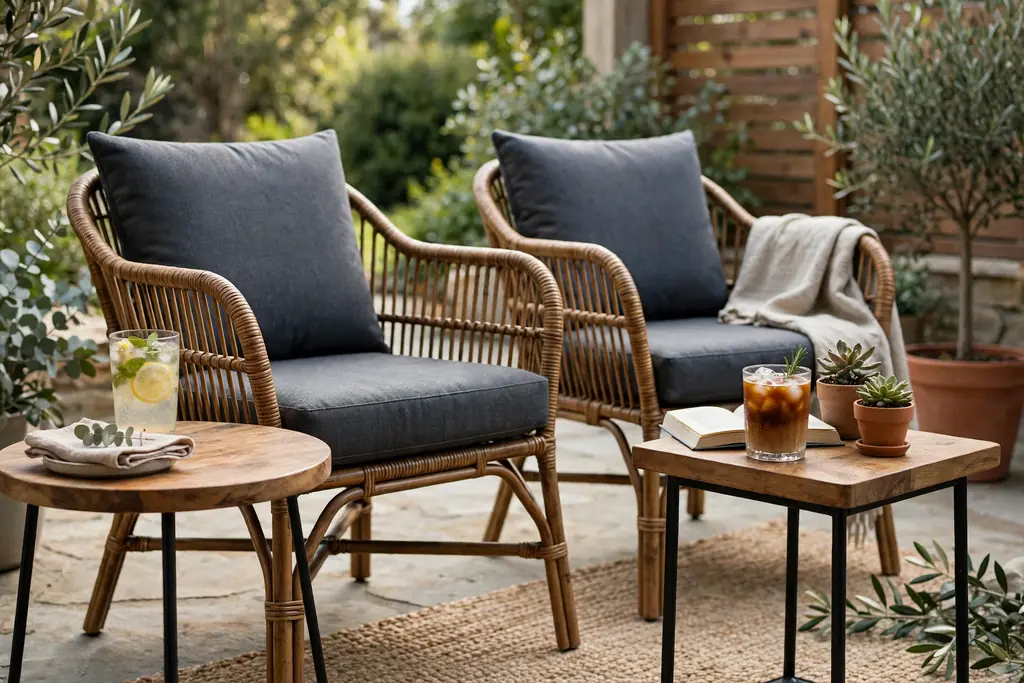
Side tables at every seat mean no one has to balance a drink on an armrest or the ground. Place a small table beside each chair and at each end of a sofa, sized to hold a drink, a book, and a phone. Tables in the same material as the main furniture tie the group together, while a mix of wood and metal adds a collected look.
Choose tables with a stable base that will not tip on uneven paving, and keep the tops clear of clutter so guests can set things down. A side table with a lower shelf holds a spare throw or a small lantern. On a small patio, one shared table between two chairs still gives each seat a place within reach.
22. Drinks Station on a Rolling Cart
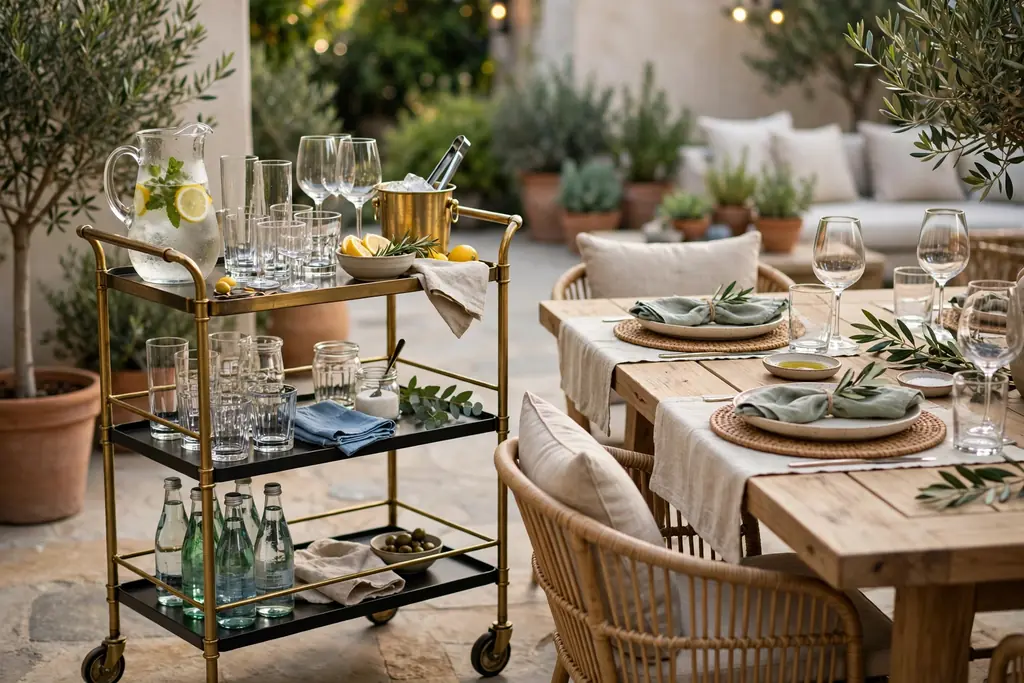
A drinks station on a rolling cart keeps glasses, a pitcher, and snacks in one place and lets the host stay with guests. Set a bar cart or a small side table near the dining area, with glasses on top, bottles or a pitcher below, and a small tray for napkins. The cart rolls to the table for meals and back to a corner when the meal ends.
Keep the cart stable on level paving, and lock the wheels when it is in use. Use unbreakable glasses outdoors where children play, and bring glassware indoors at night. A cart with a removable tray doubles as a serving tray, so food and drinks can move from the kitchen to the patio in one trip.
23. Basket of Throws for Cool Evenings
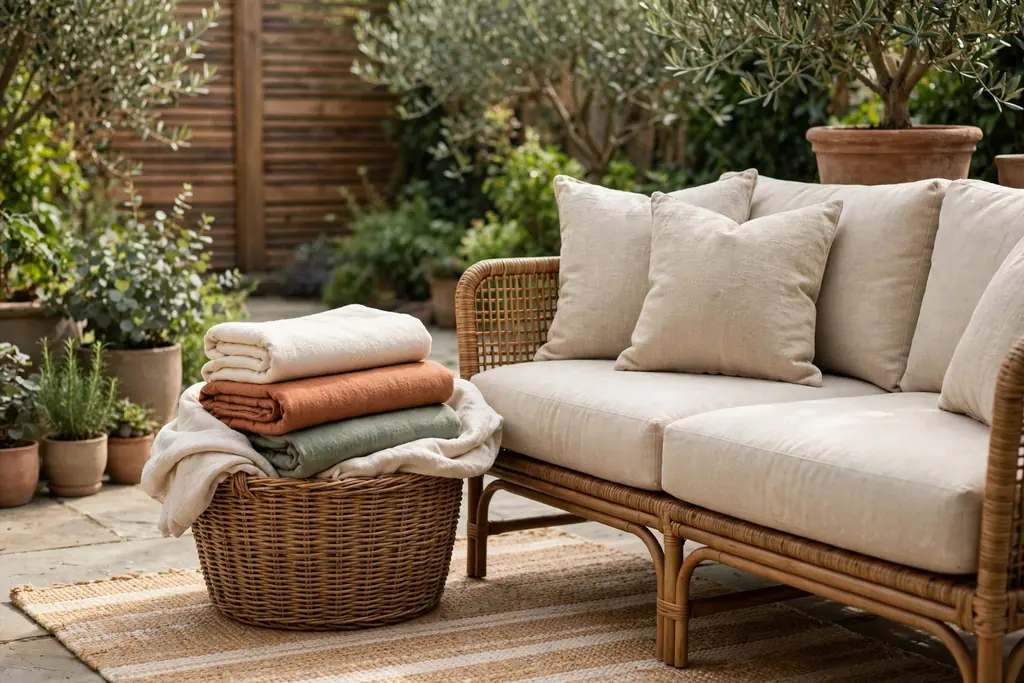
A basket of throws keeps a patio usable when the temperature drops after sunset. Set a large woven basket beside the sofa or the fire pit, filled with two or three washable throws in the patio palette. Guests can take a throw as they sit down, and the basket keeps the throws tidy during the day.
Choose throws that wash well and dry quickly, and bring the basket indoors in rain. A basket with handles moves from the seating group to the fire pit as the evening goes on. Keep the basket clear of walkways, and fold the throws neatly so the basket reads as decor, not storage alone.
24. Tabletop Fountain for Gentle Sound
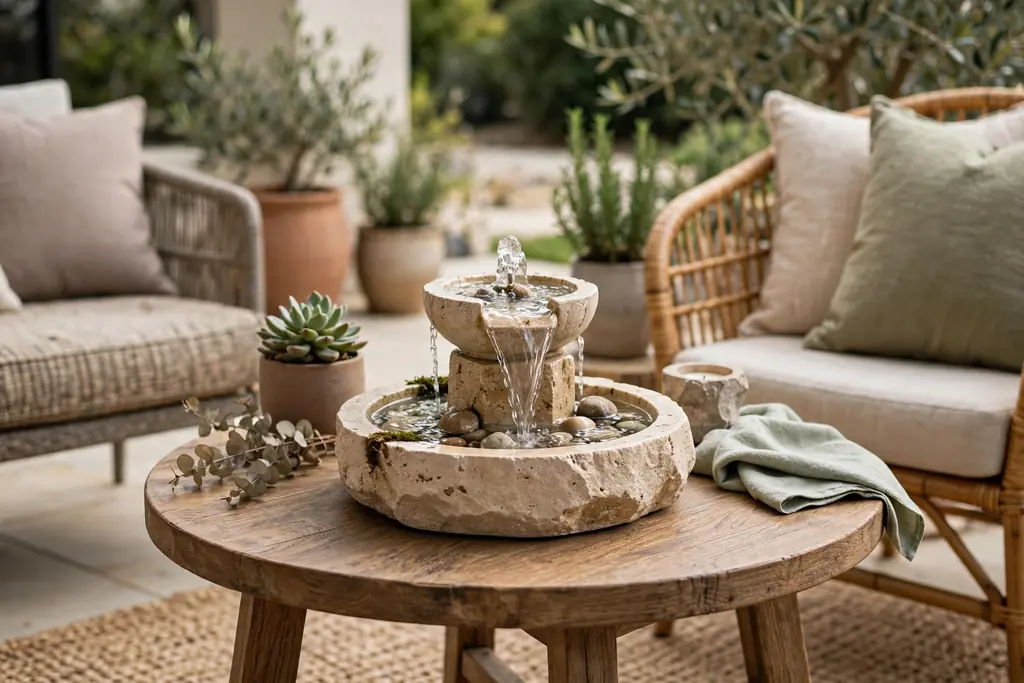
A tabletop fountain adds gentle water sound to a patio and masks street noise without taking floor space. Set a small solar or plug in fountain on a side table or a low wall, where the sound can be heard from the seating group but the splash stays clear of cushions. The moving water also draws birds to the patio during the day.
Keep the water level topped up, and clean the pump and basin as the maker directs so the flow stays steady. Place the fountain on a level surface with a tray beneath it if it sits near wood furniture. In frost, empty the fountain and store it indoors so ice cannot crack the basin.
25. Outdoor Mirror and Wall Decor for Light
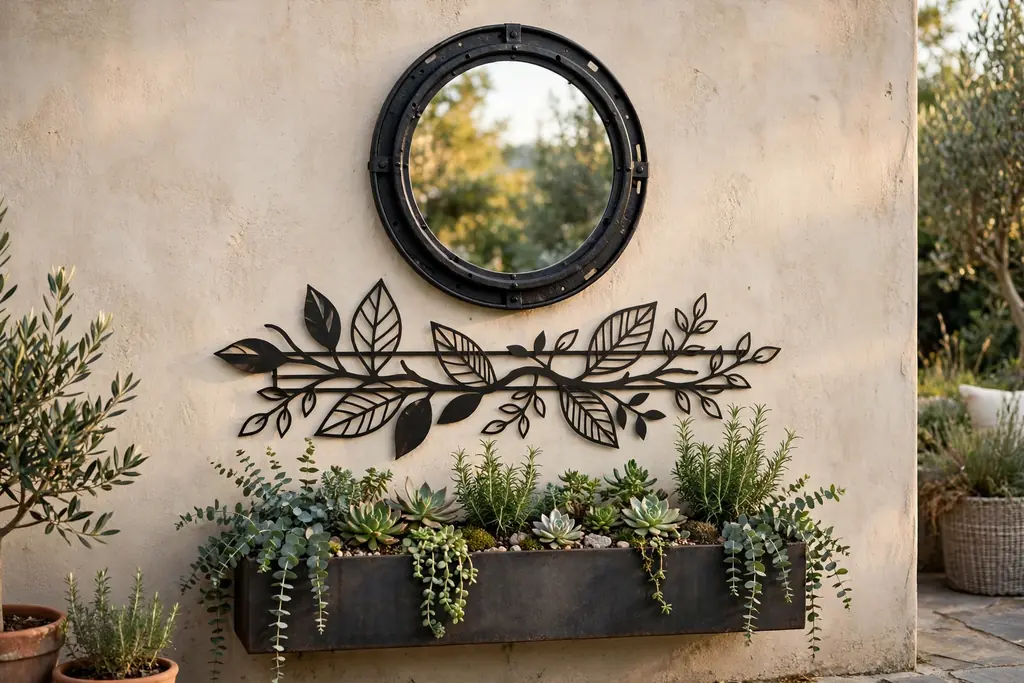
Outdoor mirror and wall decor reflect light and give a plain patio wall a focal point. Hang a weatherproof mirror or a set of metal wall pieces on a sheltered wall, facing the seating area so it reflects plants and light rather than a fence. The reflection makes a small patio feel wider and brighter, especially in a shaded corner.
Fix wall decor firmly, with fixings suited to the wall material, and check them after storms. Choose pieces rated for outdoor use, since indoor mirrors and art can tarnish or warp outside. Keep wall decor clear of the fire pit and the grill, and pair it with a planter below so the wall display feels grounded.
Conclusion
A comfortable patio does not need a full redesign. Pick seating that fits the space, add shade for the hottest part of the day, layer light for evenings, and finish with plants and a heat source. Start with one seating group and one shade idea, then add the smaller touches, such as lanterns, a throw basket, and herb pots, as you learn how you use the patio. With those layers in place, the patio can serve as a second living room through much of the year, for quiet mornings, shared meals, and relaxed evenings outside.
FAQs
What is the first step in decorating an outdoor patio?
The first step is to measure the patio and decide how you will use it, for sitting, eating, or both. Seating and shade come next, since they set the size and layout of everything else, from rugs to planters and lights.
How do I make a small patio feel comfortable?
A small patio feels comfortable with a bistro set or a loveseat, one shade source, and plants at different heights. Keep walkways clear, use a rug to mark the seating area, and choose folding or stackable pieces that can be stored when not in use.
What kind of furniture lasts best on a patio?
Weatherproof furniture lasts best on a patio, with frames in metal, teak, or resin and cushions in outdoor rated fabric. Removable, washable cushion covers help, since outdoor cushions gather dust and spills, and a storage bench keeps cushions dry in rain.
How can I add shade to a patio without a pergola?
You can add shade to a patio without a pergola with a cantilever umbrella, a shade sail, or outdoor curtains on a frame. Each option shades a seating or dining area, and an umbrella or sail can move or come down as the sun and seasons change.
What lighting works best for a patio at night?
String lights, lanterns, and solar path lights work best together for a patio at night. String lights give the main glow over seating and dining areas, lanterns add movable table light, and solar path lights mark the walkway safely.
How do I keep patio plants alive through the season?
Patio plants stay alive with the right light, drain holes, and watering when the top of the soil feels dry. Match plants to the sun the spot gets, feed them through the growing season as the pot label directs, and move tender pots indoors before frost.